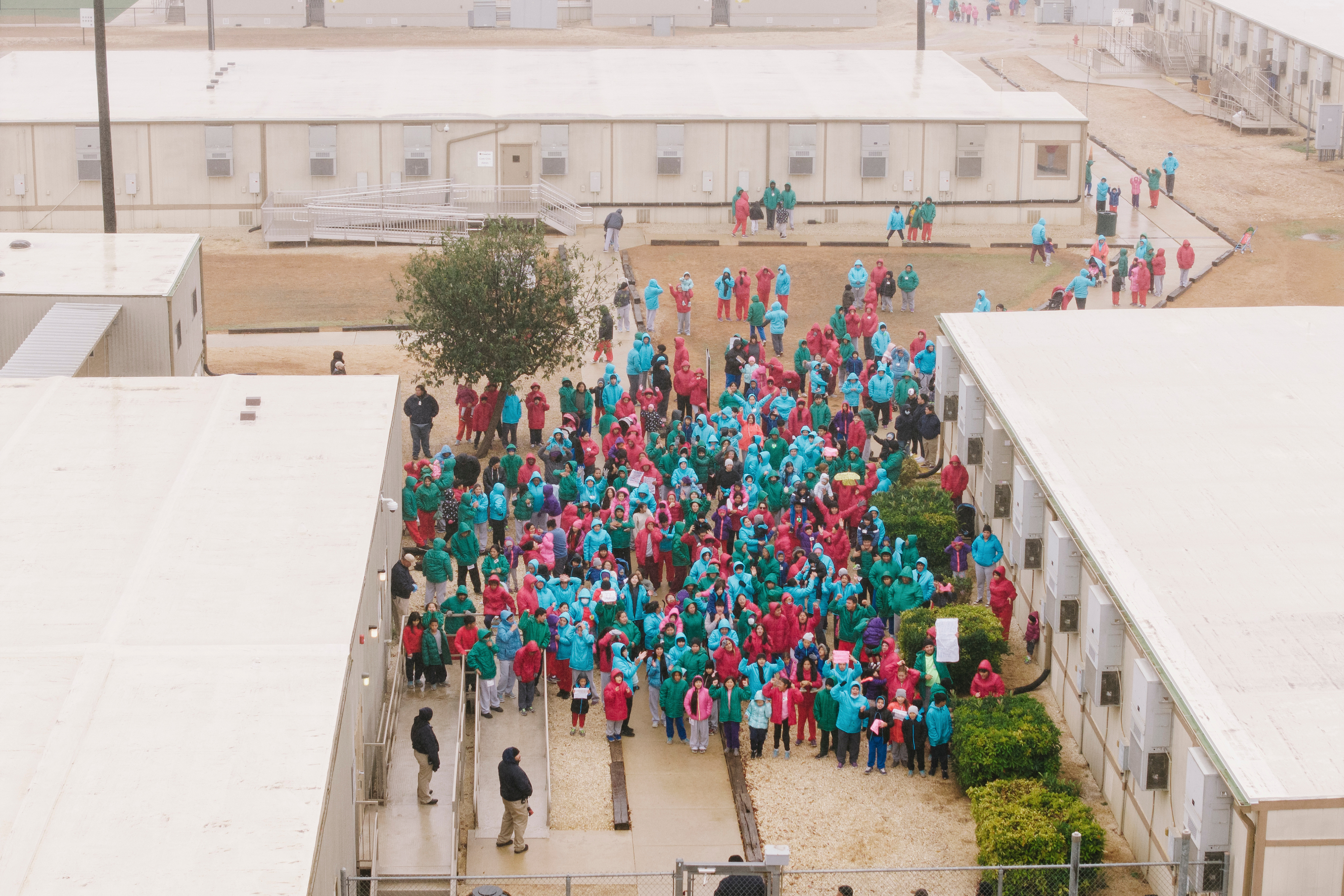
The Trump administration has awarded a $158 million contract to represent unaccompanied migrant children to a nonprofit group founded by a former immigration agent who inspired the film Sound of Freedom, a federal contracting database shows.
A notice of the award to the Minneapolis-based group Our Rescue, which combats child trafficking, was posted online late Friday. The contract is with the Office of Refugee Resettlement, which oversees the care of minors who cross the border without authorization and without a parent or guardian. The award could increase up to $244 million, the contract notice showed.
President Donald Trump’s administration in recent weeks has pivoted away from working with advocacy groups that previously represented the minors. Last week, a small Texas law firm with ties to the Trump administration was awarded a $150 million no-bid contract to represent unaccompanied minors in their immigration court proceedings.
That firm, Burke Law Group, is helmed by Marcella Burke, a former Trump appointee. Immigration advocates criticized the contract and the Trump administration’s decision to cut ties with groups that had two decades of experience in legally representing minors.
Our Rescue was founded in 2013 by Tim Ballard, a former U.S. Immigration and Customs Enforcement agent who quit his job and embarked on efforts to rescue children from sex trafficking rings in countries including Colombia, Haiti, Mexico, and Thailand. His work was loosely fictionalized in Sound of Freedom, a 2023 film starring actor Jim Caviezel that drew acclaim from conservatives.
Others, however, criticized the movie for catering to unfounded conspiracy theories, including those peddled by the far-right group QAnon.
During Trump’s first term, Ballard was appointed in 2019 as a co-chair of a council tasked with making antitrafficking recommendations to the White House.
Ballard abruptly left Our Rescue in July 2023, days before Sound of Freedom was screened at Trump’s private club in Bedminster, N.J.
Three months later, a group of five women filed a lawsuit in Utah state court alleging Ballard had coerced them into sexual acts as part of his trafficking rescue missions tied to the organization, then known as Operation Underground Railroad (OUR).
A separate federal lawsuit in 2024 accused him of sex trafficking and forced labor. Both lawsuits remain active.
The Office of Refugee Resettlement and Ballard’s attorney did not respond to requests for comment.
Our Rescue’s website states that it works with law enforcement and other partners around the world to provide services to people who are vulnerable to trafficking and exploitation. It is not clear whether the organization employs immigration attorneys with expertise in providing legal counsel to minors.
Derek Benner, the organization’s chief executive, said in a statement that ensuring unaccompanied minors have access to support and are protected from exploitation aligns with his group’s mission.
“These are among the most vulnerable children in the world, and they deserve nothing less than the full weight of our experience,” said Benner, who is also a former ICE agent. “We welcome this responsibility and are working on their behalf.”
Michael Lukens, executive director of the Amica Center for Immigrant Rights, which provides legal representation to children in the Washington, D.C., area, accused the Trump administration of seeking to ramp up deportations of minors by going after their legal representation.
The administration is trying to “make sure that the kids have an attorney on paper but are not actually providing meaningful legal advocacy,” Lukens said.
Lukens said his organization has not received notice from the government about transferring the immigration cases of minors to the new contract holders. He said his group continues to represent unaccompanied children in cases where they have been retained.
When President Bill Clinton deplaned in Islamabad, the sleight of hand became clear.
A decoy jet with all of the markings of Air Force One touched down in view of the news media, and a Secret Service agent resembling the president emerged. Then, an unmarked plane landed, and the real president disembarked.
It was March 2000, and Susan Page, a White House reporter covering the trip for USA Today, was one of a small group of people who knew about the ruse.
Before the India-to-Pakistan flight, White House officials called Page, then the White House Correspondents’ Association president, and summoned her for an off-the-record conversation. There, White House press and security officials explained the operation, informing her of the president’s location and safety measures in place for journalists on the trip, Page said in messages with the Washington Post.
“They told me about the extraordinary security procedures being taken because of the dangers in flying there, including use of the decoy plane,” she said. “Of course, the dangers threatened the journalists covering the trip as well as President Clinton.”
Page’s briefing, which has not been previously reported, meant at least one journalist in the traveling press corps knew the president would not be aboard Air Force One.
More than 25 years later, the White House faced a similar security dilemma — but handled the press very differently.
On Monday evening, the Post reported on an extraordinary maneuver in which security personnel in Turkey secretly moved President Donald Trump from a plane marked as Air Force One to a smaller, unmarked Air Force plane, using an airport catering truck. The operation, which took place last month, was prompted by a credible Iranian threat to Trump, the Post reported.
As the swap took place, reporters aboard the decoy plane, who were instructed to lower their window shades, were unaware of the president’s maneuver, according to the Post’s reporting.
The incident could further degrade the already-fraught rapport between the Trump White House and the press corps, a relationship marked by name-calling, threats, legal restrictions, and lawsuits from Trump.
Page, now USA Today’s Washington bureau chief, declined to comment on the newly revealed incident but broke a decades-old agreement with the Clinton White House to describe her experience.
“I haven’t spoken about this episode before, because of the off-the-record ground rules of that discussion,” Page said in a text message. “But since more than a quarter-century has passed — and since the ruse became evident as soon as President Clinton disembarked in Pakistan — I think it’s OK for me to relay it now.”
Jacqui Heinrich, current president of the WHCA, declined to comment.
The White House did not respond to a request for comment on the operation’s impact on the journalists aboard the decoy plane.
“As the President has said recently, there are many enemies of America who have their sights on him, and we use every tool at our disposal to address those threats,” White House Communications Director Steven Cheung previously told the Post.
The White House press pool consists of a rotating group of journalists who send reports, photos, and footage of the president’s activities for the entire press corps. This formal system has existed since 1937, though the White House first brought in a pooler in 1881 after President James Garfield was shot. Associated Press reporter Franklin Trusdell sat outside of the president’s room, monitoring his breathing and sharing updates with his colleagues.
The system is designed to ensure that someone from the press is present to observe the president’s movements and activities, giving the public an independent accounting.
Because the press was seemingly in the dark about the operation, Garrett Graff, a journalist and historian, said that the Post’s reporting describes an event that is probably unprecedented in modern presidential history.
“That the White House would lie to the press corps in its entirety about where the president is,” he said. “That’s a new Rubicon that’s being crossed.”
The breach was not merely one of journalistic access, according to Graff. The details of the threat that prompted Trump’s operation are unknown, so it’s impossible to calculate the risks to the press pool. However, the reporters aboard the plane were probably exposed to the very threat that had prompted the extraordinary security measures, Graff said.
“Knowing that this was a series of actions that the White House and the military took precisely because of a threat that they were deeply worried about, it makes it all the more egregious that the press was kept out of the loop,” he added.
Former CNN Pentagon correspondent Barbara Starr said that the press fully understands and respects the security requirements of covering the president.
But, she said, “there will be a level of distrust now that we have not seen before … their own lives were potentially at risk without them even knowing it, without them having the option of making a different choice of how to get home.”
Politico reporter Megan Messerly was the print pooler on the day of Trump’s trip. “We are wheels up from Ankara as of 8:43 p.m.,” she reported. “We have been advised to keep our window shades in the press cabin closed. See you on the other side.”
After landing, she wrote that the flight was “uneventful” with “no visitors to the press cabin.”
Hours later, a reporter peppered Trump with questions about whether there was a security threat to Air Force One that warranted the shades being closed, according to Messerly’s pool report.
“Well, I have a threat all the time. I’m number one on their list, before you,” Trump responded. “But if I go, you go. Right? Perhaps someday you want to change professions.” Messerly did not respond to a request for comment.
The disclosure quickly prompted a scramble among White House reporters for more information.
“We (and no doubt every other newsroom in Washington) are asking the White House and sources for more info,” NBC chief White House correspondent Garrett Haake wrote on X.
ABC’s Michelle Stoddart, who was the TV pool producer aboard the flight, sent WHCA members additional details on the trip, following the Post’s reporting.
“Upon arrival to the airport, the events did not seem particularly out of the ordinary to the travel pool,” she wrote. “Our photographer noted that the stairs were quickly pulled away as the press loaded.”
She said that a photographer seated behind her opened a shade on board and was quickly instructed to close it again by a White House staffer who said it was a “request from Secret Service.”
One White House reporter, speaking on the condition of anonymity because they weren’t authorized to speak publicly, said that they were outraged to learn about an operation that might have put the press corps in danger.
“When you sign up to work at the White House, even as a civilian, part of your job is to defend the president,” the reporter said. “That’s not my job. I cover the president. Reporters take risks as part of the job, but not on behalf of the president.”
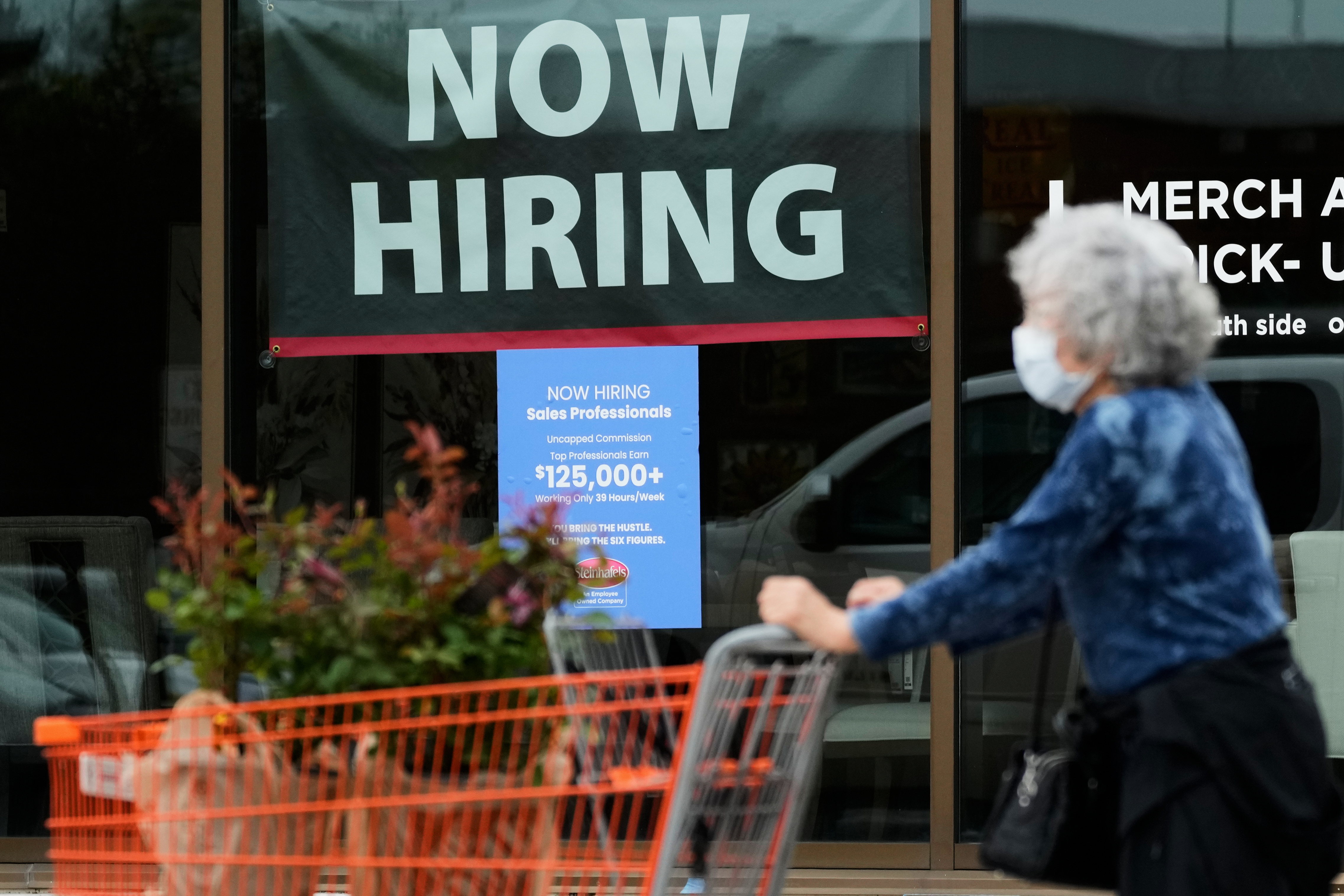
The U.S. economy shed jobs in July, yet the unemployment rate improved — an unusual pairing that points to a worrying story unfolding behind the numbers for some economists.
That’s because even as the U.S. economy lost jobs, American workers left the labor market faster.
“This is one of the very, very few times where you see the number of jobs shrink but the unemployment rate falls,” said Stephen Moore, a conservative economist. The explanation, he said, is fewer people looking for jobs. “That’s a big economic story: Where are the workers?”
The share of adults working or looking for work slipped to 61.4% in July, extending a weakening in the labor force participation rate this year. That rate has reached the lowest level since February 2021, during the pandemic.
Employers shed 23,000 jobs in July, according to Labor Department figures released Friday, and the unemployment rate fell slightly to 4.1% from 4.2%, due in large part to fewer workers in the labor market.
The aging population is one of the bigger forces leading to fewer workers. As baby boomers retire, they pull down the share of adults either working or looking for work. But that doesn’t explain the full drop this year in the labor force participation rate.
The share of workers in their “prime working years,” ages 25 to 54, fell sharply between May and June, and only partially recovered in July, leaving economists to fear that young and middle-aged people are abandoning job searches.
Men in particular have been seeing a sharp decline in the workforce, with participation at an all-time low outside of the peak of the pandemic, at 66.8% in July, with both older men and the youngest men in the workforce driving the decline. That’s concerning for both social and economic reasons, Moore said. “That is not a good trend.”
“We’re just not seeing males working as much, and I don’t have a good explanation for why that is,” he said.
A shifting economy plays one role. Most recent job growth has come in healthcare and private education, fields long dominated by women. Several male-dominated industries, including manufacturing, transportation, and mining, have shed jobs over the past year. That leaves a mismatch between the skills many men have and the jobs available.
The decline is a potential warning sign, many economists say.
“We like to see the unemployment rate go down typically, right?” said Alexander Bick, an economist at the Federal Reserve Bank of St. Louis. But that’s because it normally indicates employment is going up.
Bick has watched the labor force participation rate fall for months, and he said it’s “a worrying trend.” The fear is that discouraged workers are giving up.
But the picture is not yet clear, because other factors are also playing a role, including the Trump administration’s big push to seal borders, stop immigration, and deport immigrants, which has led to a decline in foreign-born workers.
Teens and young adults have also fallen out of the workforce. The share of 16- to 19-year-olds working or looking for work has fallen this year, hovering near the lowest levels since the pandemic after teen employment surged in 2023 and 2024. The share of 20- to 24-year-olds in the workforce has also fallen in recent months.
One reason some teens are not working: More are graduating high school, reflected in rising high school graduation rates, experts say. But another reason is weaker hiring in the hospitality and retail sectors, which tend to employ young people.
Growth in artificial intelligence and other technologies may also be creating new barriers to entry-level roles. For example, self-service kiosks have taken the roles of many cashiers, said Sara Estep, an economist at the Center for American Progress, a liberal think tank in Washington. Also, AI applicant screening tools could be favoring more experienced workers.
Estep said she worries young people are missing out on work experiences that could help them gain a foothold in the labor market for years to come.
There is one bright spot from the latest jobs report, said Guy Berger, director of economic research at the Burning Glass Institute, a Philadelphia think tank that studies the labor market. Even as workers have left the workforce, the number of people who say they want a job but have given up searching over the past month has ticked slightly down.
“The things that would make me really worried about labor force exits aren’t showing up,” Berger said. “People aren’t telling us, ‘I want a job but can’t find one.’”
An Iranian assassination threat against President Donald Trump prompted an extraordinary operation last month in which he flew secretly from Turkey on an alternate military aircraft while the White House said he was aboard Air Force One, the Washington Post has learned.
The clandestine mission, which has not been reported previously, was carried out unbeknownst to journalists and some White House staff members who believed they were on the same plane as the president, according to material reviewed by the Post, a U.S. official familiar with the operation, and another person with knowledge of the president’s travel. These people spoke on the condition of anonymity because they were not authorized to talk about the matter.
The administration has claimed that Trump departed Turkey on July 8 on the former Air Force One. Trump announced on social media that he would use the “former Air Force One” rather than the plane that flew him there, a newer Boeing 747-8 gifted to the United States by Qatar. The security of the Qatar-provided aircraft has been called into question, and Trump said last month after the trip that it would undergo additional upgrades.
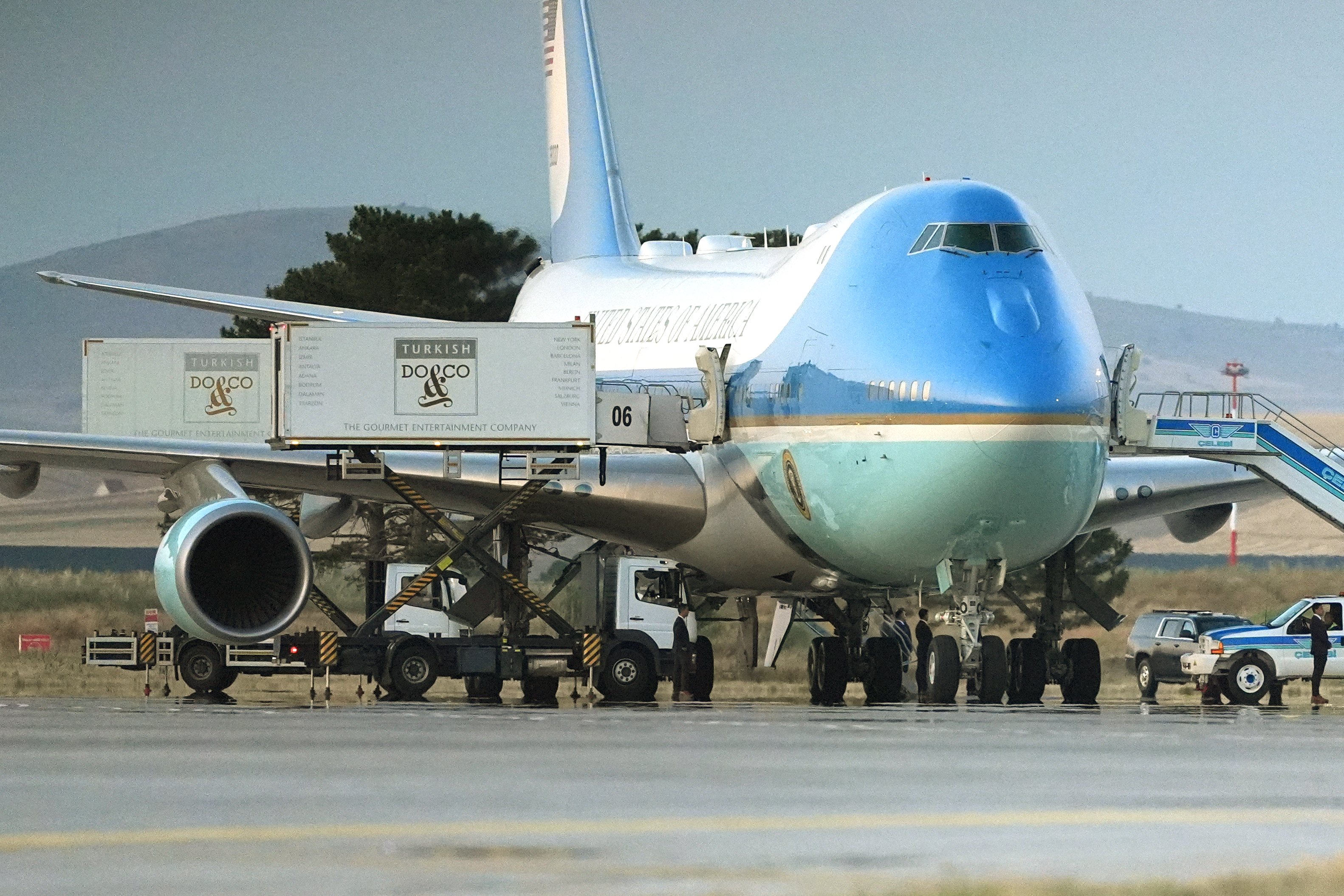
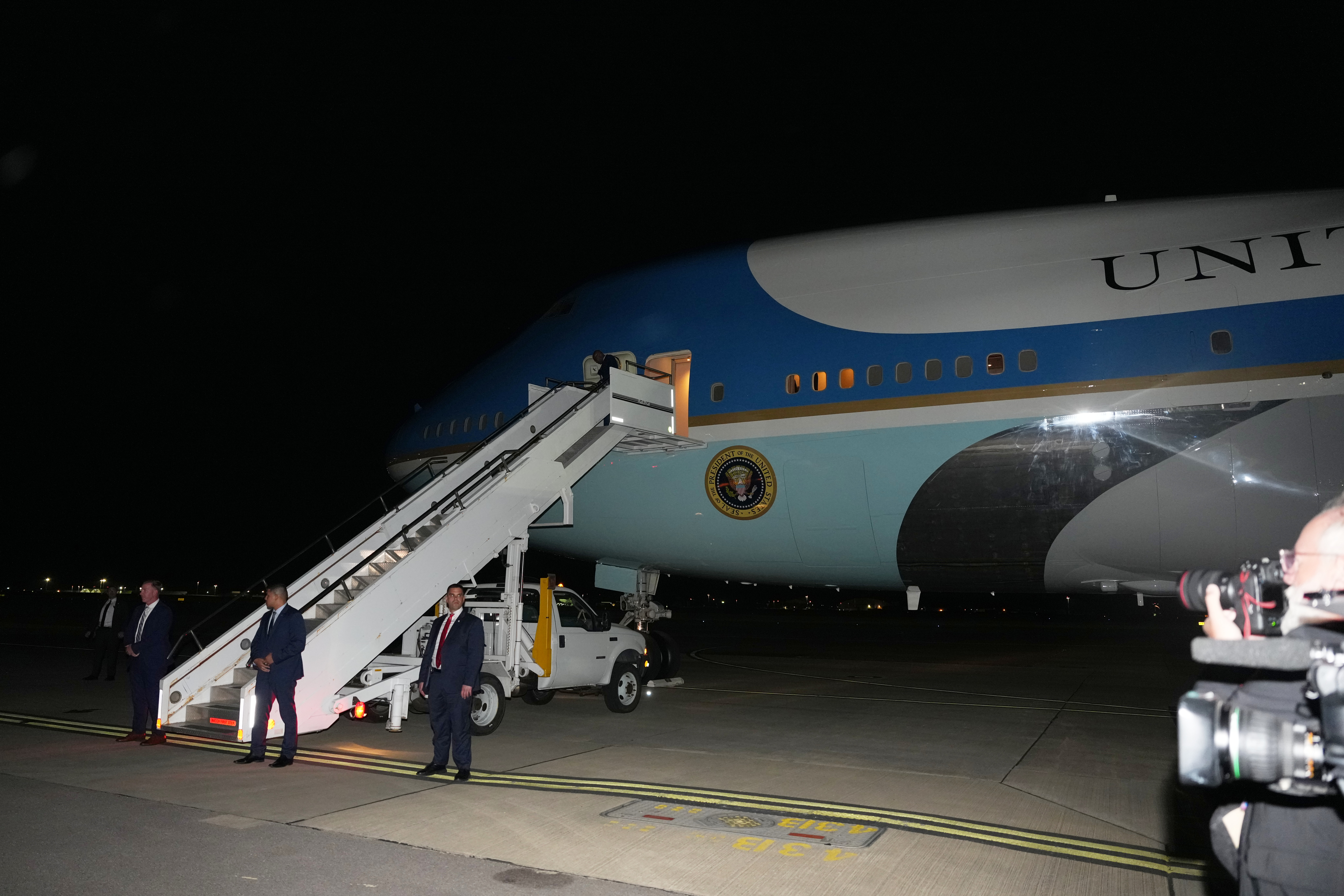
In Ankara, Trump boarded the old Air Force One jumbo jet in view of television cameras. He was secretly shuttled minutes later to a smaller plane — an Air Force C-32A — via an airport catering truck typically used to load meals and other supplies preflight, according to the U.S. official and corroborating material reviewed by the Post. That made Air Force One a “decoy” with media and some White House staff aboard, the official said.
Trump had been in Ankara for a NATO summit with world leaders. The operation occurred a night after U.S. forces renewed military strikes on Iran at Trump’s direction following a breakdown of negotiations between Washington and Tehran to end their monthslong war.
The maneuver meant that Trump’s actual location was concealed from the American public and many senior U.S. officials for hours. Weeks later, it remains unclear how widely the administration has disclosed the operation.
The Post provided the White House with the details from its reporting, along with a list of questions. In response, White House communications director Steven Cheung issued a statement defending the jet gifted by Qatar.
“The new Air Force One is a state-of-the-art aircraft that has been fitted with high-level security protocols that ensure the safety of the President and his staff,” Cheung’s statement said. “As the President has said recently, there are many enemies of America who have their sights on him, and we use every tool at our disposal to address those threats.”
A spokesperson for the Pentagon referred questions to the White House. A Secret Service spokesperson did not respond to a request for comment.
Air Force One sits on the tarmac as President Donald Trump switches planes at U.S. Air Force Base, RAF Mildenhall in Suffolk Eastern England, on his way back to Washington from the NATO summit in Ankara, Turkey ,Wednesday, July 8, 2026. (AP Photo/Alex Brandon)Alex Brandon
Publicly, the White House has repeated its account that the president left Turkey on the legacy blue-and-white Boeing 747 that served as Air Force One before Trump began using the former Qatari jet.
For decades, it has been rare for U.S. presidents to travel without members of the White House press corps accompanying them in their roles as proxies for the American public. Journalists have traveled into war zones with numerous presidents, including Trump, Joe Biden, Barack Obama, and George W. Bush.
In the first hours after the terrorist attacks on Sept. 11, 2001, Bush administration officials did not immediately disclose the president’s whereabouts, saying only that he had been taken to an “undisclosed location.” But they did not say he was somewhere he was not, and within hours officials revealed that he had been flown to a military facility in Nebraska.
The Trump operation unfolded quite differently, highlighting the depth of concern that U.S. security officials had about his safety leaving Turkey amid hostilities with Iran. Turkey, a key U.S. ally and member of the NATO military alliance, shares a border with Iran.
A credible threat to Trump involving Iran set the “deception operation” in motion, the U.S. official said. The New York Times and CBS News reported last month that intelligence officials flagged a specific threat of an attack on the president or his jet, triggering additional precautions.
There are decades-old concerns in the U.S. government of Iranian terrorism plots against American officials, including Trump. Those fears have escalated recently as a result of Washington’s role in the killing of Iranian military and political leaders.
The operation, and the Iranian threat, came days after the president began using the newer Boeing 747-8 gifted by Qatar for use as Air Force One. Trump flew to Turkey on that aircraft after the red, white, and blue jet underwent upgrades costing hundreds of millions of dollars. It was fielded by the Air Force in July but lacks some of the defensive countermeasures included in the legacy Air Force One.
To transport the president out of Turkey, U.S. officials relied in part on a technique that has occasionally become public knowledge. One such mission occurred in March 2000, when President Bill Clinton visited Pakistan. With television cameras recording in Islamabad, Clinton disembarked from a plain white jet that followed the blue-and-white Air Force One, clarifying where he had been.
There have been other times in the last 30 years when Air Force One served as a decoy for the president because of a serious threat or because he was flying to a dangerous location, another U.S. official said, declining to elaborate. The legacy jet is highly secure, but also highly visible, so putting the president on an alternate plane instead can be considered safer, that former official said.
Ronald L. Rowe Jr., a former acting director of the Secret Service, said that the president’s protection is paramount and that the details of his movements are shielded for good reason.
“We need to keep the ‘secret’ in Secret Service,” said Rowe, now with the Chertoff Group, a security advisory firm. “The public should know what the president is doing on a daily basis, but when it comes to the methods by which the Secret Service keeps the president safe, that should remain out of public view.”
When Trump first announced that he would leave Turkey on the legacy Air Force One, he touted the decision on social media as an opportunity for U.S. troops stationed in Britain to see the former Qatari aircraft. He would instead take “the former Air Force One” from Turkey for “old time’s sake,” Trump posted.
But that did not happen, according to the material reviewed by the Post and the U.S. official. Numerous people participated in the deception, some unwittingly, and journalists who thought they were traveling with the president aboard the legacy Air Force One were not notified that he had changed aircraft or made aware of the extent of the threat on Air Force One, the U.S. official said.
The new Air Force One jet gifted by Qatar departed Turkey first, early in the evening of July 8. Trump then boarded the legacy blue-and-white Air Force One at dusk, waving goodbye on camera.
To exit that plane without being seen by those uninvolved in the operation, Trump and several aides stepped aboard an airport catering truck, which was elevated planeside using hydraulics and positioned at a door on the opposite side of Air Force One’s entrance, according to the U.S. official and other corroborating material.
Imagery captured by the news media at the Turkish airport shows a staircase on one side of the legacy Air Force One and the catering truck on the other, with its container elevated to the level of the plane. Trump arrived in a limousine, climbed the staircase and waved toward the tarmac as he boarded, video shows.
A few minutes later, as members of the White House press corps boarded near the back of the plane, a man in a suit entered the catering truck’s cab, according to media pool video of the departure process. The container was lowered into the bed of the vehicle, which then pulled away from Air Force One and drove to the smaller C-32A nearby, the video appears to show. The truck is out of view for about 40 seconds when the camera pans away and is briefly hidden while behind the C-32A’s engines.
Catering trucks are parked at Air Force One on the tarmac as the motorcade carrying U.S. President Donald Trump arrives on the tarmac to depart following the NATO summit at Ankara International Airport in Ankara, Turkey, Wednesday, July 8, 2026. (AP Photo/Alex Brandon)Alex Brandon
The video shows that the container was lifted to the level of the plane for several minutes. After the container was lowered, a person in a suit stepped out of the truck’s cab, which remained at ground level, and ascended the stairs leading up to the C-32A, disappearing from the camera’s view.
The blue-and-white C-32A, a modified Boeing 757 used to transport U.S. government officials, had been flown to Turkey along with the legacy Air Force One and the former Qatari jet to support the president’s visit, the U.S. official said. Like Air Force One jumbo jets, it is emblazoned with the words “United States of America” and can be used to transport the president or vice president. But it typically does so with the “Air Force One” or “Air Force Two” call sign, not a nondescript moniker.
Defense Secretary Pete Hegseth boarded the C-32A separately using external stairs, part of an attempt to make the flight appear typical, according to the U.S. official and other materials reviewed by the Post. Hegseth flew with Trump to Britain on the same plane, this person said.
As journalists boarded the legacy Air Force One, White House staff directed them to close their window shades, according to a media pool report.
The New York Times reported last month that the former Qatari jet lacks the defensive capabilities of legacy U.S. presidential transport jets. That report prompted the Trump administration to take the unusual step of issuing subpoenas to several journalists in a bid to learn the identities of their confidential sources.
Administration officials cast the government’s actions against the New York Times as necessary to investigate a national security breach, while the Times described the move as an effort to avoid transparency, intimidate journalists, and scare their sources. The administration later withdrew the subpoenas, acknowledging missteps in the case.
In deflecting criticism of the new jet, the White House also released a statement from the Air Force.
“The aircraft is safe, secure, and equipped with the most advanced technologies necessary to meet requirements of the presidential mission,” the statement said. “Those requirements were carefully crafted to prioritize mission over aesthetics, leaving much of the previous head of state interior layout minimally changed.”
“No risk was taken in security, safety, or mission communications, but the collective team made trades on some of the less commonly used mission sets that Boeing must deliver to support the next 40 years,” the statement added.
Though the 747 jumbo jets that carry the president are commonly referred to as “Air Force One,” the term is technically an air-traffic-control call sign for any plane which the president is aboard.
In this instance, however, the president’s whereabouts were obscured on the C-32A flight to Britain using the nondescript call sign “Reach 18” or “RCH18,” according to a person familiar with the mission and other material reviewed by the Post.
The aviation account “Thenewarea51″ noted the C-32A’s arrival in Britain and its call sign, reporting that night that systems allowing for the aircraft to be easily tracked while in the air had been switched off. “Reach” call signs are often used for personnel transport flights and those that haul military equipment, according those familiar with the mission.
Publicly available flight tracking data shows that the former Qatari jet flew to Britain’s Mildenhall air base while bearing the call sign “SAM 33,” using a common abbreviation for “special air mission.” It landed at Mildenhall at 6:26 p.m. local time on July 8, data shows.
The legacy Air Force One plane carrying White House staff and journalists appeared on radar near Istanbul on its way to Britain, initially with no call sign listed. Despite the president not being aboard, it then took the Air Force One call sign, “AF1,” midflight and arrived at Mildenhall about 10:29 p.m. local time, the tracking data shows. A media pool report that night said the flight was “uneventful” with “no visitors to the press cabin.”
No flight tracker data could be found for the C-32A, but videos posted by the YouTube accounts RankUpAviation and Military Aviation Channel show the former Qatari jet landing, followed by a C-32A hours later at about 10:20 p.m. and the legacy Air Force One several minutes later.
Videos show the legacy Air Force One, after landing, coming to a stop in a place where the C-32A had briefly been parked. The hobbyist videos on YouTube do not show Trump exiting the C-32A or entering the legacy Air Force One, as the stairway entries faced away from the plane spotters’ cameras.
It’s not clear how Trump moved from the C-32A to the legacy Air Force One after landing, but he appeared before television cameras and descended external stairs from the legacy Air Force One about 10:56 p.m., according to a media pool report.
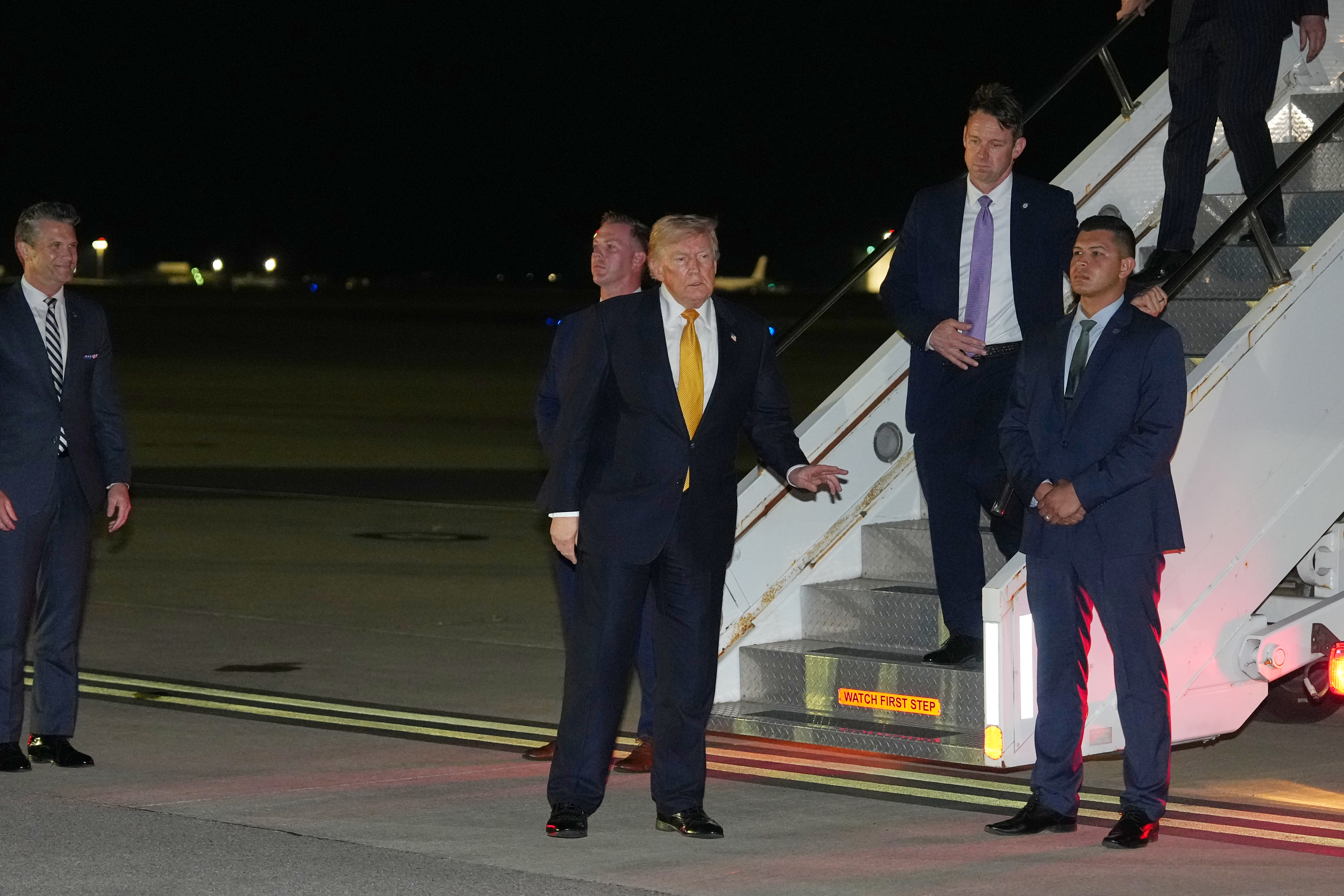
After greeting U.S. service members, the president embarked on the newly gifted Air Force One to travel back to Washington, with staff and press aboard after a transfer from the legacy Air Force One, at about 11:01 p.m. A social media post from the White House that night said that Trump had landed at the British base “aboard the former Air Force One,” and included a picture of the legacy plane.
Aboard the new Air Force One, Trump spoke to journalists for about 15 minutes, highlighting the threat Iran poses but not acknowledging the subterfuge that had occurred earlier.
Asked why reporters had been instructed to lower the window shades on the plane in Turkey, Trump said that it was “because you’re probably on a dangerous flight because of the sleaze bags that we have to deal with.” Trump said that he has a “threat all the time” against his life, and that he is “number one” on Iran’s “list.”
“But if I go, you go. Right?” Trump suggested to reporters. “Perhaps someday you want to change professions.”
Food company executives intervened in recent weeks to persuade the Trump administration not to release a proposed definition of ultra-processed food, according to people familiar with the discussions.
Chief executives and trade group representatives sent letters and called the White House in a bid to delay the release of a white paper marking the first federal effort to define the controversial food category. The industry argued that laying out the definition would open it up to litigation, increase costs, and hurt business, according to the people, who weren’t authorized to speak publicly.
Leaders have been airing their concerns for several weeks, arguing the definition could make processed food more expensive and impact federal nutrition programs, an industry official said.
The administration has been working on a definition of ultra-processed food that is expected to focus on whether it includes certain “cosmetic” ingredients aimed at altering a food’s appearance, according to others familiar with the discussions, who asked to remain anonymous because the conversations aren’t public. The definition is also expected to take into account whether the products include ingredients that aren’t commonly used in home kitchens, they said.
The effort to define ultra-processed food remains on track, an administration official told Bloomberg. The only special interest guiding the effort is the best interest of the American people, they said.
The Health and Human Services Department held an event Monday billed as a celebration of two major food policy announcements, but then unveiled only one proposal targeting new food ingredients.
Acting Food and Drug Administration Commissioner Kyle Diamantas told reporters on a call Monday that the administration has “submitted for final review a proposed definition of ultra-processed foods aimed at creating a stronger foundation for future federal nutrition research.” Additional information will be shared “at a future time,” he said.
The white paper with the definition has not yet been cleared by the White House budget office, leaving many in the food industry uncertain as to when the administration is planning to release it.
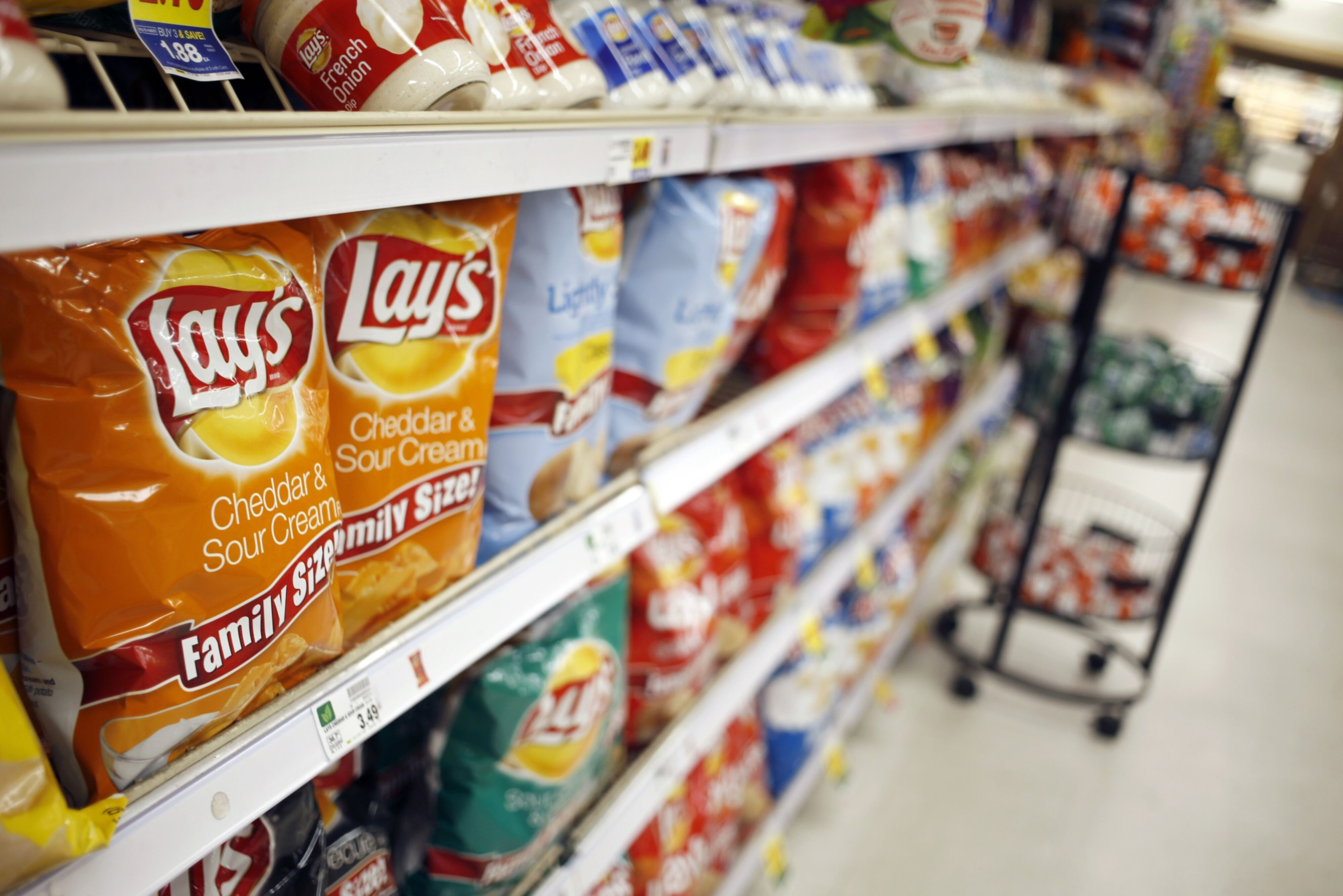
Top health officials have said Americans are getting sick from ultra-processed food, a broad category of largely packaged products that account for much of what’s sold in U.S. supermarkets. But the federal government has not yet mapped out what it considers ultra-processed food.
The definition will take the form of a white paper, rather than a formal regulation, according to a regulatory notice published when HHS submitted it for review to the White House budget office.
It is expected to include an exemption for foods that meet an already-established “healthy” criteria by the Food and Drug Administration. That carve-out may spare foods with nutritional benefits, such as some yogurts and whole-grain breads, from being classified as ultra-processed.
White House and HHS spokespeople said discussions about any changes should be considered speculation unless they are officially announced.
“The policy remains under interagency review and has not been finalized,” the HHS spokesperson said.
Americans currently get more than half of their daily calories from ultra-processed foods, which account for about 62% of childhood diets, according to a nutrition survey from the U.S. Centers for Disease Control and Prevention.
The food industry has been closely watching the administration’s efforts to craft the definition that could affect a broad swath of packaged foods. More than 92% of U.S. retail sales from Hershey Co. come from ultra-processed foods, according to an analysis from BNP Paribas. It found that at least 77% of retail sales for Kraft Heinz Co., Mondelez, Conagra, General Mills, and Campbell’s Co. come from ultra-processed products.
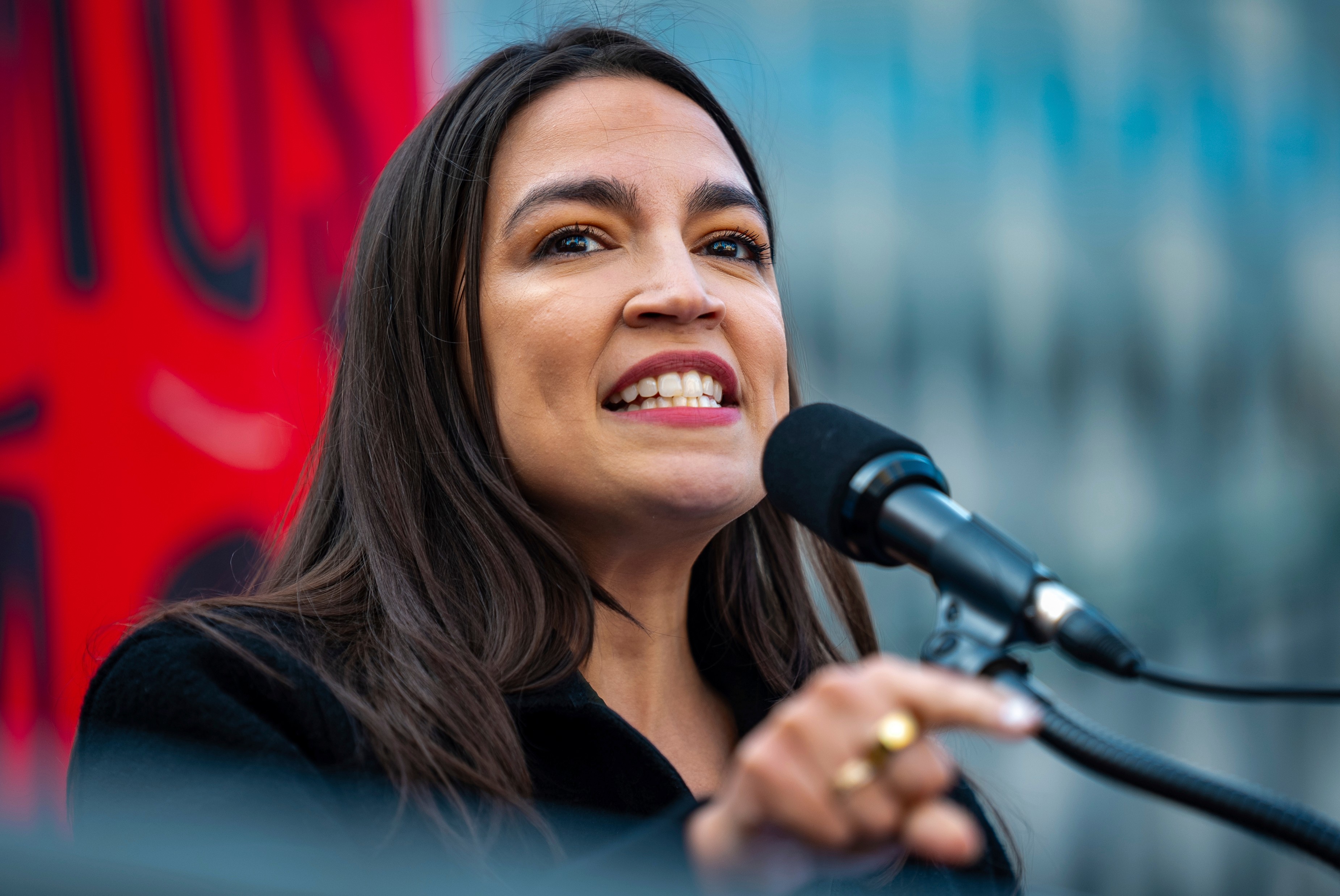
Rep. Alexandria Ocasio-Cortez (D., N.Y.) made a public video announcement over the weekend about a private matter: The congresswoman is freezing her eggs.
Ocasio-Cortez, 36, posted a series of videos on social media in which she said this is a decision she made to “feel more in control of my life.” She said she had been weighing the decision and saving up for the pricey fertility procedure, which often isn’t covered by insurance, for a long time.
The congresswoman said she was going public with her decision against the backdrop of steps by the Trump administration to curtail abortion access and some forms of reproductive care across the country. It also comes amid speculation that she could seek higher office. She said that she was making the egg-freezing decision in a “privileged position” and said that, unlike men, women applying for jobs or running for office face intense scrutiny about when, or if, they will have children.
“I think it’s important for us as leaders to have these conversations and share these processes, especially for working women across the country, and normalize them,” Ocasio-Cortez said on ABC’s This Week With George Stephanopoulos on Sunday morning.
Egg freezing is an increasingly popular procedure in which a woman’s eggs are extracted from her body, frozen, and then stored. Those eggs can later be fertilized. The fertilized eggs then grow, and when the embryos are ready, they are transferred into the uterus in the hope that the woman becomes pregnant, according to UCLA Health.
Women opt to have the procedure for many reasons, including to preserve their eggs and reproductive ability if they are undergoing chemotherapy or other medical treatments that could affect their fertility.
But many healthy women who are not ready to have children during their biologically prime reproductive years also use the process.
A 2025 UCLA study found that between 2014 and 2021, there was a sharp increase in the number of planned elective egg-freezing cycles. In that period, women began freezing their eggs at younger ages, with the average age dropping from 36 years in 2014 to 34.9 in 2021.
The study also landed on the surprising finding that only a small number of women — 5.7% who froze their eggs between 2014 and 2016 — returned to use their eggs in the next five to seven years.
In her videos, Ocasio-Cortez showed viewers the array of medications she is required to self-administer for the process.
The medication process typically lasts 10 to 12 days, with women injecting themselves with two or three hormone medications every day, according to Johns Hopkins Medicine. During that time, women will have frequent bloodwork and four to six pelvic ultrasounds.
Once the eggs have matured, a medical professional will retrieve them in a 20-to-30-minute ultrasound-guided surgical procedure during which the patient is under anesthesia.
Ocasio-Cortez filmed herself injecting hormones into her abdomen, jokingly telling her viewers: “Don’t be weird about this. Even though I know all of you will be.”
President Donald Trump nominated Project 2025 author and former political appointee Dennis Kirk to lead the Interior Department’s inspector general office, raising concerns about the independence of the watchdog that has been asked to review the troubled Reflecting Pool renovation.
Kirk, who was nominated Friday, previously had been working within the office of the inspector general of the intelligence community while serving as an adviser to then-Director of National Intelligence Tulsi Gabbard as of last year. At the time, lawmakers and watchdog advocates raised concerns that his dual roles blurred the lines between Gabbard and the office investigating the use of the Signal messaging app to discuss a pending U.S. military strike.
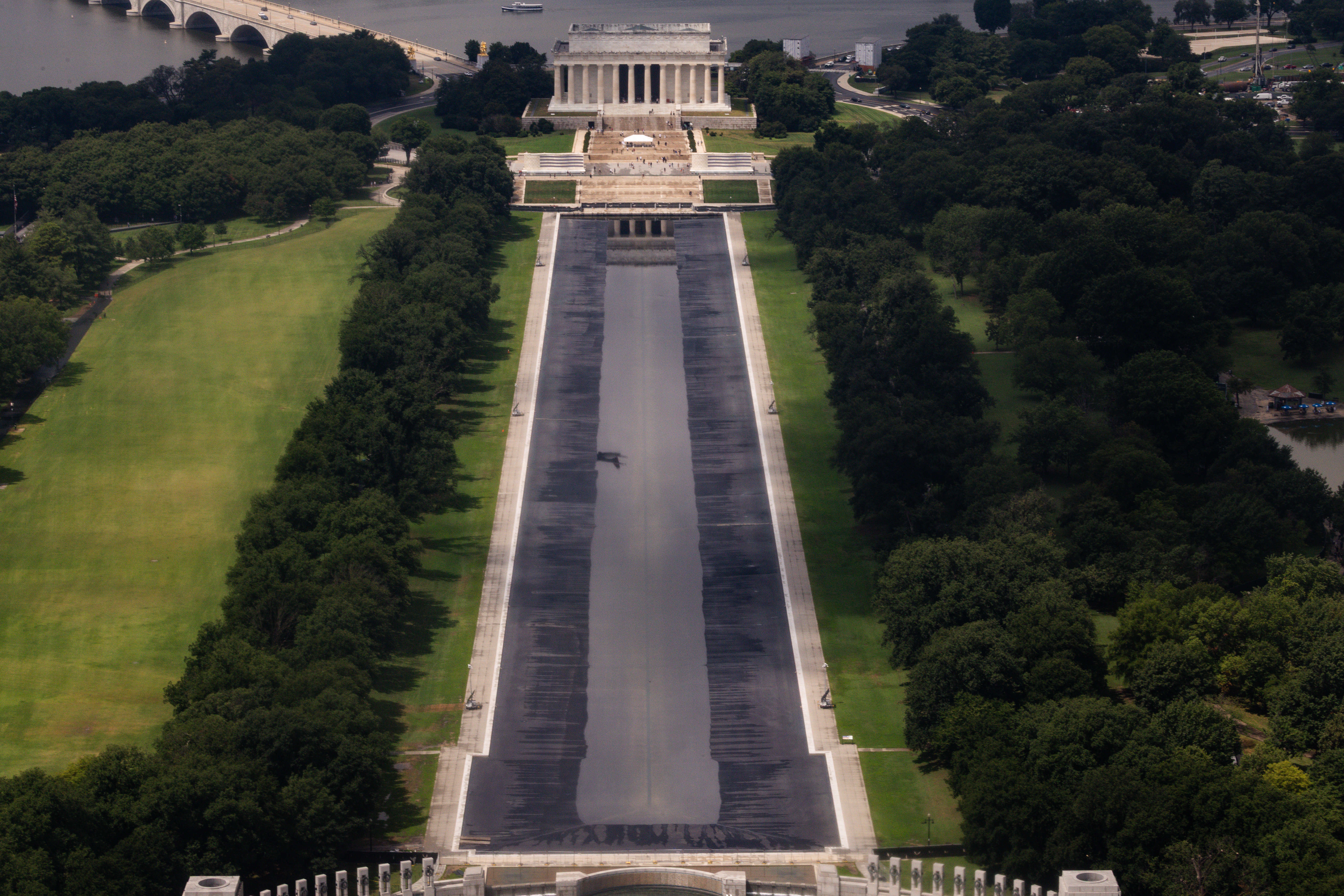
The Interior Department’s inspector general’s office recently has been receiving inquiries from Democrats to investigate the troubled Reflecting Pool renovation. Democrats also have sought investigations into senior administration officials’ potential conflicts of interest. One of those officials, Interior Associate Deputy Secretary Karen Budd-Falen, acknowledged in a video that she was involved in changes to grazing policies that benefited ranching businesses such as her family’s, The Washington Post previously reported.
Rep. Jared Huffman (Calif.), the top Democrat on the House Natural Resources Committee, called Kirk a “fake and fraudulent watchdog” and a “political puppet” who shouldn’t be in the office overseeing ethics and corruption investigations that involve senior administration officials. “It’s no surprise the White House suddenly wants its own man inside the one place that Trump’s cronies still have reason to fear,” Huffman said in a statement.
A spokesperson for the inspector general’s office declined to comment on Kirk’s role. White House spokesperson Taylor Rogers said in a statement that “Kirk has consistently demonstrated loyalty to the rule of law during his long career within government.” The Interior Department and Kirk did not immediately respond to requests for comment.
Kirk co-wrote a key section about the federal workforce for Project 2025, the blueprint for Trump’s second term. In the first Trump term, Kirk held senior roles at the Office of Personnel Management and was nominated to serve as chairperson of the Merit Systems Protection Board, though he faced steep opposition from unions that said he lacked experience, and his nomination was withdrawn by President Joe Biden.
Mark Lee Greenblatt, a former Interior Department inspector general who was fired amid Trump’s purge of inspectors general early last year, called on the Senate to reject Kirk’s nomination. Greenblatt, who was nominated by Trump in his first term, said Kirk’s involvement would damage the credibility of the office’s investigations amid controversy related to recordkeeping and chill whistleblowers’ openness to speaking out.
“This is a particularly fraught moment with respect to the Interior Department in light of the very public allegations that are flying around regarding the Reflecting Pool and the arch,” Greenblatt said in an interview, referring to the monument Trump wants to build near Arlington National Cemetery. “I would think that the White House and President Trump would want an independent review, an independent actor in that position, because otherwise those reports won’t have credibility.”
The Center for Western Priorities, a conservation advocacy organization, also condemned Kirk’s role and called on Congress to use its subpoena power to compel records after Politico reported that Interior Department staffers had routinely shredded documents and used disappearing Signal messages.
“Interior’s watchdog was fired, left vacant for 18 months, and is now hosting one of the architects of Project 2025,” said the center’s executive director, Aaron Weiss. “At least five investigation requests from members of Congress are sitting in that office right now, and its integrity has been compromised.”
President Donald Trump has named Will Scharf as the next top White House lawyer, replacing David Warrington, who is “going on to the Private Sector,” Trump wrote in a social media post Sunday.
The change in the office of White House counsel will take place Sept. 1.
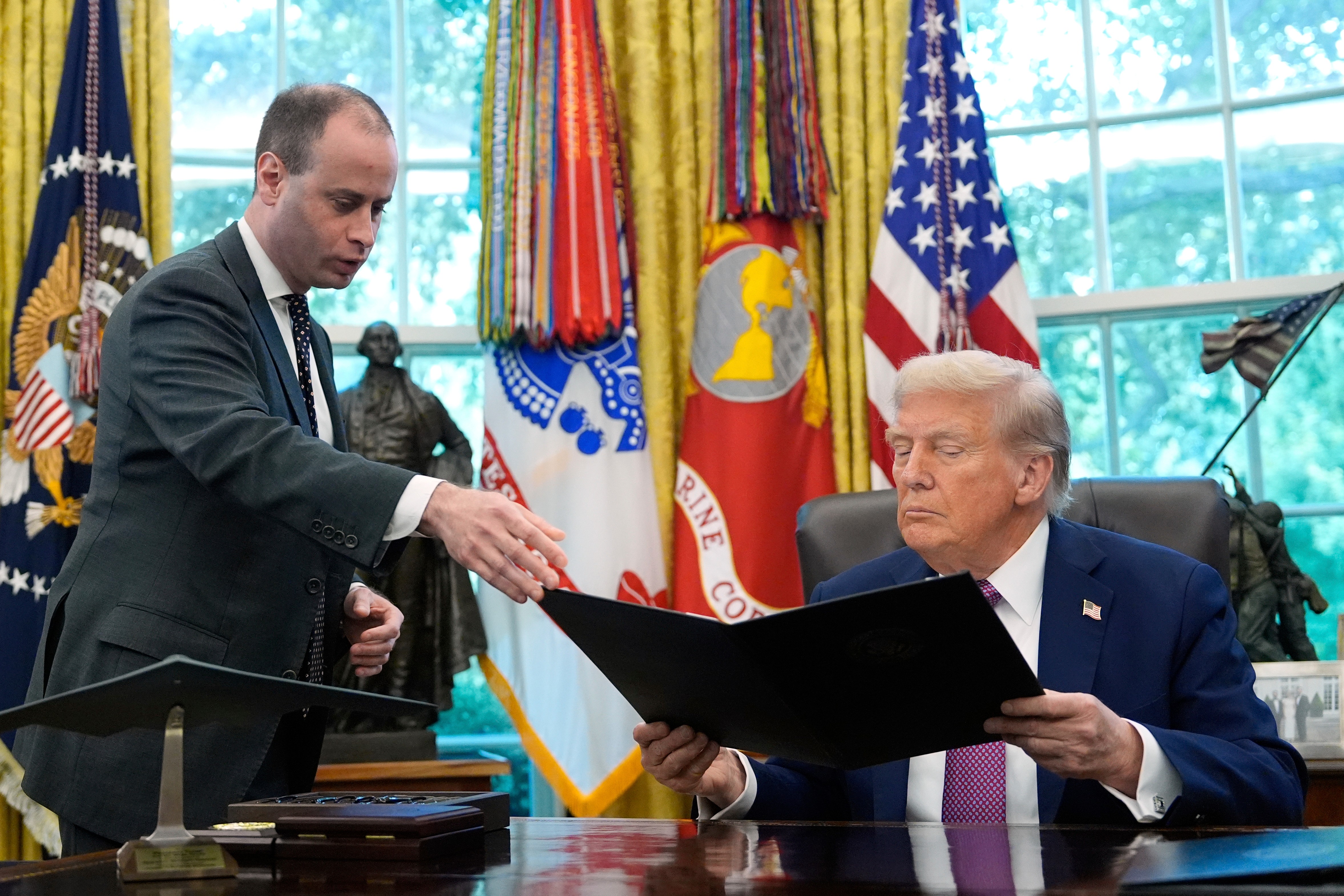
Scharf, currently the White House staff secretary, is perhaps best known as the lawyer frequently standing over Trump’s shoulder in the Oval Office when he signs executive orders and explaining their details.
Before that, Scharf, 40, was an unsuccessful candidate for Missouri attorney general in 2024, who also worked as one of Trump’s personal lawyers.
“I know Will well! He previously represented me in numerous cases, including at the Supreme Court, during the Biden Administration’s corrupt and illegal campaign of Weaponization,” Trump wrote on his Truth Social website.
Trump added that Warrington did “a truly outstanding job” as counsel. The change is the latest example of Trump White House staff — many of whom have had longer tenures than aides in Trump’s first term — increasingly leaving the administration in recent months.
Before being brought on at the White House, Warrington served as Trump’s campaign general counsel during the 2024 election, after joining Dhillon Law Group, the firm owned by current Assistant Attorney General Harmeet K. Dhillon. There, he represented controversial Trump allies like Michael Flynn and Sebastian Gorka.
Scharf has also served since last year as the chairperson of the National Capital Planning Commission, a low-profile federal agency charged by Congress with overseeing federal construction projects in the Greater Washington region. In that role, Scharf has expedited several of Trump’s handpicked projects, including the president’s planned White House ballroom, which the commission approved in April.
Scharf has also sped up the commission’s reviews of Trump’s planned triumphal arch, which is expected to be approved by the commission at its next public meeting in September.
Trump, who is seeking to complete the projects before he leaves office in January 2029, has cheered the commission’s swift approvals. The commission historically has taken much longer to review significant changes to the White House and new monuments around Washington.
In his role as the commission’s chairperson, Scharf has also argued that the planned 250-foot-arch and other federal projects should not be subject to a federal law that restricts most construction in Washington to a maximum height of 130 feet, a position echoed by the Trump administration but opposed by historic preservationists.
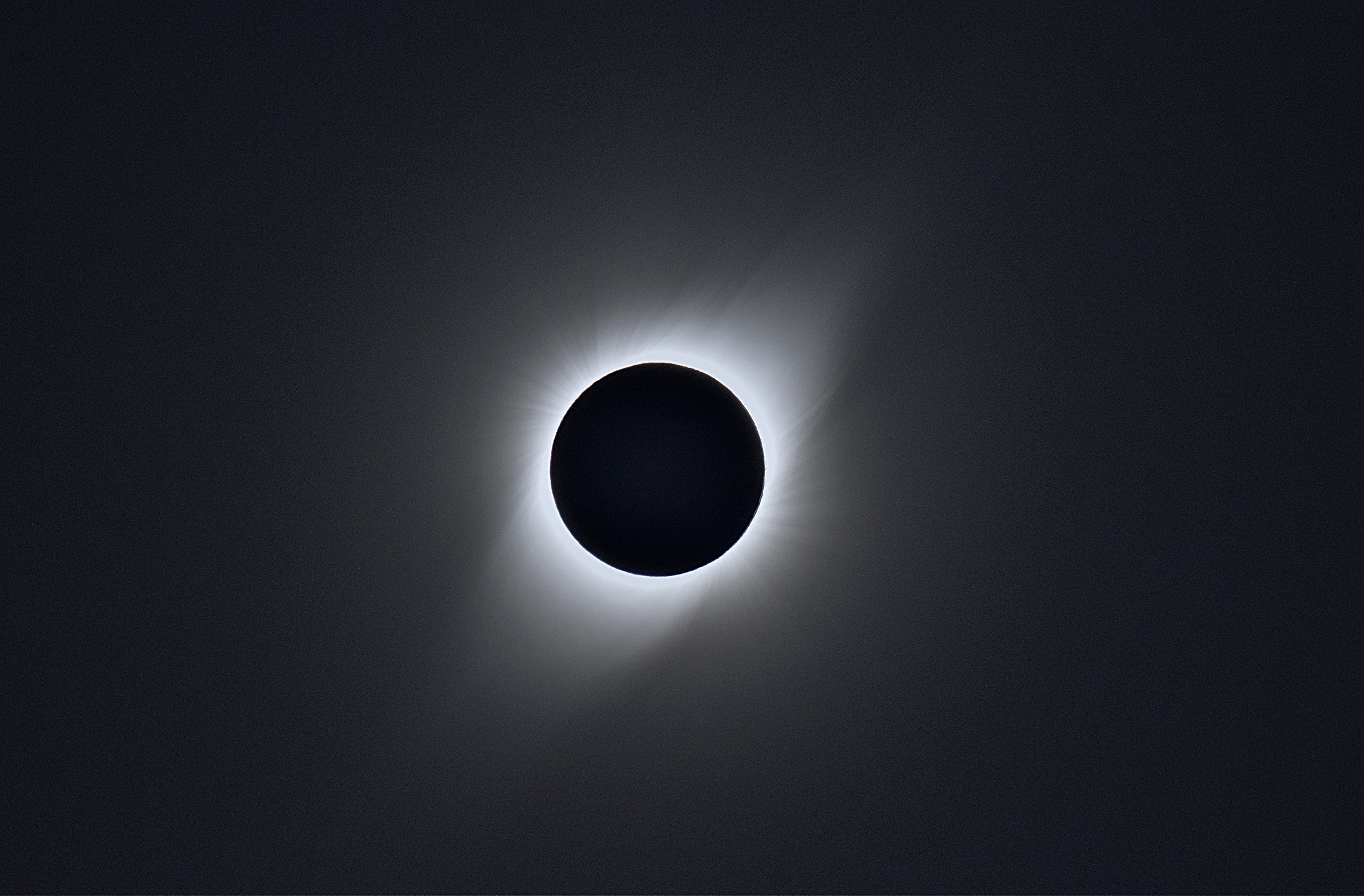
On Wednesday, a total solar eclipse will plunge a swath of Greenland, Iceland, and Spain into a sudden midafternoon darkness. A deep twilight azure will descend over the landscape. Venus will shine as daylight disappears.
But the most stunning spectacle will be as scientifically valuable as it is visually scintillating: the corona, or the sun’s atmosphere.
The corona is the outermost part of the sun’s atmosphere. It’s normally obscured by the sun’s brightness. It’s never visible from Earth unless the sun’s light is somehow extinguished. That can happen only during a total solar eclipse. (The northern portion of the United States, from Alaska to North Carolina, will see only a partial eclipse.)
The corona is beautiful. It radiates millions of miles into space, appearing as hairlike silver tendrils blowing away from the sun. The light is sculpted by the sun’s ever-evolving magnetic field; it traces currents of the solar wind. Witnessing it is magical.
But despite advances in science, the corona remains mysterious. Heliophysicists, or scientists who study the sun, still aren’t sure why it’s so hot. The visible surface of the sun, known as the photosphere, is about 10,000 degrees Fahrenheit. But the corona? About 1.8 million to 5.4 million degrees.
“It’s a fundamental question that we’re still working on,” said Jon Linker, a heliophysicist and the president of Predictive Science, a group that models the sun’s magnetic field. “It’s called the coronal heating problem. I think to a large extent that we know that heating is coming from the solar magnetic field itself, and that also ties into how the solar wind is accelerated.”
The solar wind carries high-energy particles and magnetic energy toward Earth. That can have implications for terrestrial navigation systems, satellites and aviation.
“On a very large scale, [magnetic fields] get twisted up, and we see flares and coronal mass ejections,” Linker said. Coronal mass ejections, sometimes nicknamed “solar storms,” are akin to shock waves in the solar wind. Strong coronal mass ejections interact with Earth’s magnetic field, often producing widespread displays of the aurora.
But on the small scale, Linker said, contortions in the sun’s magnetic field help to dissipate heat, potentially making the corona hotter.
“The field is also getting braided and twisted and things, and that leads to current sheets that can then dissipate heat,” he said.
That’s why scientists are anxiously awaiting this latest eclipse, eager to get a glimpse of — and document — the intricacies of the corona. In the meantime, Linker’s team has built an ultracomplex model to predict what the corona will look like.
After all, as the sun’s magnetic field changes, so does the shape of the corona.
“We model that with what are called the magnetohydrodynamic equations,” Linker explained, likening the process to how meteorologists use weather models. “But [solar magnetism] equations are actually far more complex, and have more surprises and difficulties.”
The sun’s magnetic field is most complicated every 11 years, at the peak of the solar cycle. During what’s known as solar maximum, the sun is blotted in sunspots, or bruiselike discolorations that spew magnetism. The more sunspots, the more chaotic the magnetic field and the wonkier the corona.
The last solar maximum was in late 2024. We’re now in the descending phase of the solar cycle, but there are still lots of sunspots.
“We’re still in a phase of the sun that is very active” Linker said. “I think it’ll probably still have more of a structure … with perhaps some [streamers] that are a little bit more pronounced.”
That’s exactly what Linker’s model depicts — the north and south poles of the sun’s magnetic field are visible, but lots of loops and hairlike streamers fan out in all directions. That should make Wednesday’s eclipse memorable.
In the meantime, Linker is looking forward to watching the eclipse in — of all places — the town of A Coruña, Spain. That’s where a cosmology, or solar physics, conference will be running from Monday to Friday.
A Coruña translates to crown, or corona, and the town is in the heart of the path of totality.
The waters off the coast of South Florida were already growing warm by late June — ominously warm to Ken Nedimyer and other scientists and conservationists still scarred by a devastating 2023 marine heat wave that led to the worst mass coral bleaching event on record in the state.
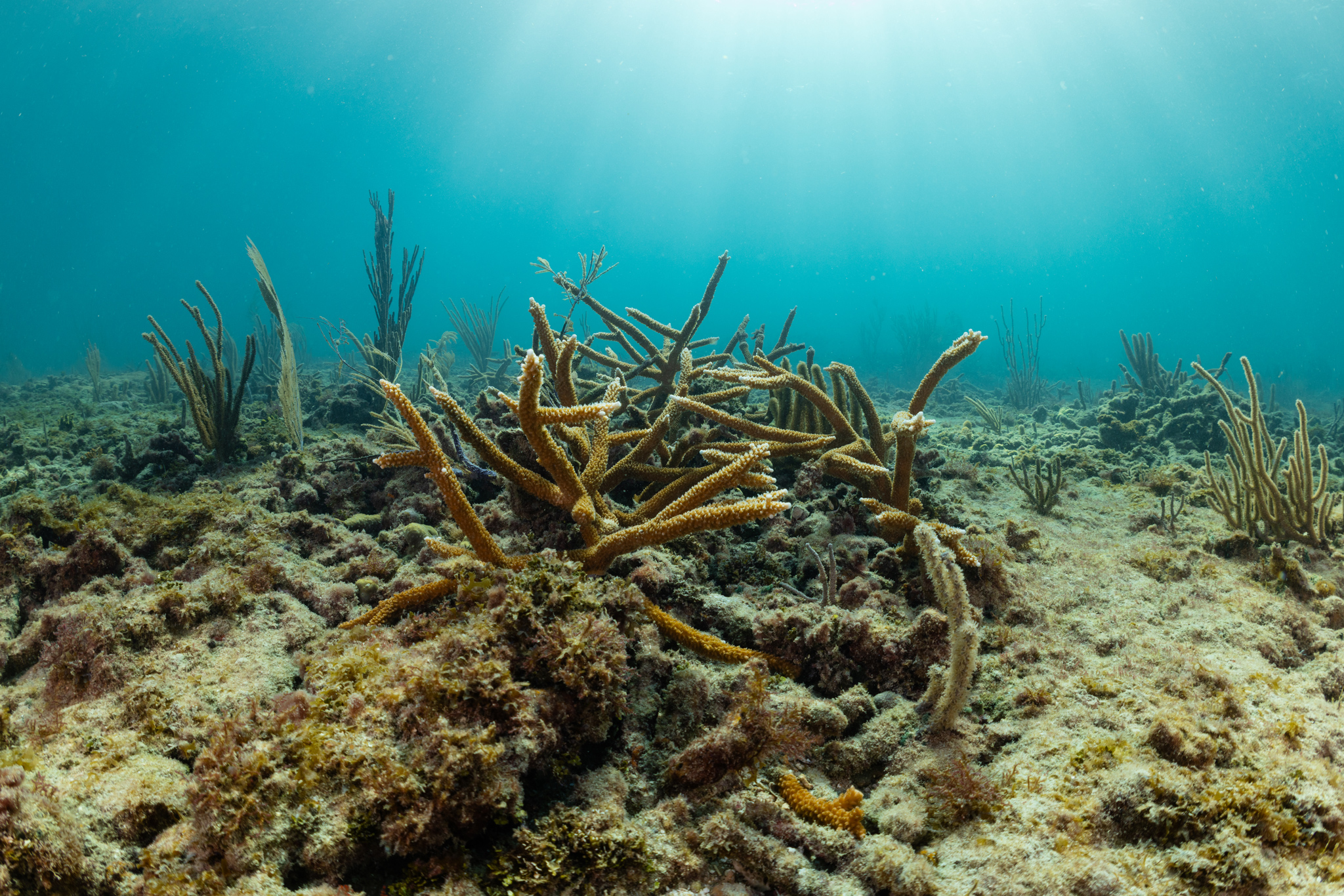
Nedimyer, technical director for the nonprofit Reef Renewal USA, and other colleagues kicked into gear. They moved dozens of vulnerable elkhorn and staghorn corals from offshore nurseries into deeper, cooler water. They took other specimens to onshore labs, where temperature-controlled systems will offer refuge until ocean temperatures return to safer levels.
“It was like Noah’s ark,” Nedimyer, weary from a late night spent off Key Largo, monitoring corals during their annual spawning, said of the recent effort. “Keeping them alive is our main focus right now.”
Three years after a blistering marine heat wave created a full-blown emergency along the only living coral barrier reef in the continental United States, researchers determined to protect coral species from extinction are taking steps to be better prepared as another potentially scorching summer unfolds.
The National Oceanic and Atmospheric Administration has warned that the most intense El Niño event in 150 years is contributing to exceptionally warm waters. Already, the agency has issued an “alert level 2” for parts of the Florida Keys, meaning there is a risk for reef-wide bleaching and mortality, particularly among heat-sensitive corals. An even higher alert level could soon follow.
Climate models predict that perilously warm seas could linger into fall, and the stress on corals could continue.
“The temperatures we are seeing right now are basically mimicking what we saw at this same time in 2023,” said Cynthia Lewis, director of the Florida Institute of Oceanography’s Keys Marine Laboratory. “It’s the calm before the storm.”
For Lewis and others who work on coral conservation, the memory of that catastrophic marine heat wave and the damage it inflicted on Florida’s roughly 360-mile-long reef — the third largest on the planet — looms large.
“It was traumatic. It was horrible. I’ve never seen anything like it in my life,” Lewis said, recalling the monthslong frenzy to rescue and rehabilitate as many stressed corals as possible in land-based labs around the state.
Coral bleaching is a stress response. It occurs when heat upends a coral’s metabolism, causing it to turn white as it expels the symbiotic algae that provide it with nutrients and color. Prolonged bleaching, which scientists say rising sea temperatures is making more frequent and severe around the globe, can lead to mortality.
That is what happened along much of Florida’s reef in 2023, one of multiple bleaching events the region has faced in the past decade. Underwater temperatures reached 93 degrees in some spots, more than five degrees above normal.
A NOAA-led study published last year found that around the Florida Keys and Dry Tortugas, the event left ecologically critical elkhorn and staghorn corals functionally extinct — at least 98% of their colonies died. Along southeastern Florida where cooler sea temperatures remained, mortality was lower but still nearly 40%.
Derek Manzello, coordinator of NOAA’s Coral Reef Watch program, later described the episode as “unprecedented,” saying it “started earlier, lasted longer, and was more severe than any previous event in that region.”
The ripple effects are shaping how scientists around the state are responding.
“Everybody who experienced that in 2023 has a little PTSD from it,” Lewis said. But, she added, “I think we are better prepared mentally and physically, as well as structurally.”
At her laboratory on Long Key, that preparation has meant the recent completion of a new temperature-controlled system, which added 20 more seawater tables to support coral restoration. Each is equipped with the machinery needed to keep rescued corals thriving until they can be returned to the reef.
“It’s keeping them as happy as possible, keeping them growing so they can propagate,” Lewis said.
Meanwhile, a group of 11 of the state’s leading coral conservation and restoration organizations recently announced an effort to team up during what could prove to be another record-breaking summer for ocean temperatures.
In recent days, dive teams from the groups have headed out repeatedly into the waters near Key Largo to collect coral eggs and sperm before transporting them to a temporary laboratory set up by Mote Marine Laboratory at nearby John Pennekamp Coral Reef State Park.
The effort is part of a NOAA-funded partnership to collect, fertilize, and grow a more resilient generation of elkhorn and staghorn corals. Many of the corals selected for the effort survived the crippling 2023 heat wave, making them among the most heat-tolerant in Florida’s waters.
“We have the parents of the corals of the future, if we just take care of them,” Nedimyer said.
Katey Lesneski, research and monitoring coordinator for a NOAA program created to restore iconic reefs throughout the Keys, said other scientists will soon experiment with a different approach, placing shading structures above corals off Big Pine Key to try to reduce the sunlight and heat they receive.
“This is the first real field trial during an actual bleaching event,” she said. “This is a perfect opportunity to test this new intervention.”
The approaches unfolding all along the reef matter more than ever, say advocates who are intent on preventing another disaster like the one in 2023.
“Nobody is giving up,” said Lewis, because so much is at stake.
The sprawling reef, she said, protects the state’s coastline against hurricane-fueled storm surges. It attracts tourists that boost the economy and supports fisheries. The reefs are also “are an incredibly diverse ecosystem of all kinds of plants and animals and fish,” she said.
For all those reasons, Nedimyer said, the long days and significant investment he and many others have put in to prepare is worth it.
“The outcome if we do nothing,” he said, “is pretty clear.”