Category: Washington Post

  • 3 minutes of this activity may cut the risk of 13 cancers, study finds

    3 minutes of this activity may cut the risk of 13 cancers, study finds

    To reduce your risks for at least 13 types of cancer, jog up and down the nearest steps for three minutes or stand up from your desk or couch for 30.

    Either strategy might help drop your risks of certain cancers by as much as 7%, according to a new study of how the ways we move — and don’t move — during the day affect our chances of malignancies.

    The study, published in July in BMC Medicine, is one of the first to examine in detail how replacing sitting time with almost any kind of activity alters cancer risk.

    Relying on extensive activity data from nearly 60,000 men and women, it used statistical models to determine which movements, from standing to strolling to rushing around the block, seem most strongly associated with fewer cancer cases, including breast, colorectal, and lung cancers.

    “The reassuring finding is that every movement contributed,” said John J. Mitchell, a senior research fellow at University College London’s Institute of Sport, Exercise & Health, and the study’s lead author.

    But they didn’t contribute equally.

    “Some choices,” Mitchell said, “proved more beneficial than others.”

    Is standing up good for us?

    On average, American adults sit for nearly 10 hours a day, studies show. Being so sedentary is not good for us. Substantial evidence links uninterrupted sitting with heightened risks for heart disease, Type 2 diabetes, obesity and other conditions.

    Sitting also makes us more vulnerable to many cancers, studies show.

    Ideally, we should reduce the amount of time we spend seated every day and be more physically active instead.

    But how? Does standing up count? Do we need to move around? Is it enough to meander slowly down the hallway? Or should we raise our heart rates and break a sweat?

    Those questions matter because many of us are tied to our desks and schedules. In that case, what are the most realistic and efficient options for sitting less?

    The link between activity and cancer risk

    Past studies of sitting and health generally focused on one change, such as standing more often, and not multiple types of movement and how they might affect sitting’s health risks in comparison to one another.

    They didn’t tell us, in other words, if standing up for a few minutes would undo the effects of sitting as potently as climbing stairs.

    So, for the new study, the scientists drew records for 59,218 adult men and women who’d joined the large-scale UK Biobank health study and worn a sophisticated activity tracker for a week.

    Using machine learning algorithms, the researchers parsed everyone’s activity data and determined how much time they spent sitting (generally around 10 hours) or in other activities on most days, including standing up; light movement, such as leisurely walks; moderate activity, meaning brisker walks; or vigorous activities, which would get people breathing hard, such as running to catch a bus.

    They also checked medical records for eight years or so after people joined the Biobank, to see whether they’d developed any of 13 cancers that have been associated with inactivity.

    The best ways to break up sitting

    With those mountains of data, the researchers then created complex, statistical models of what theoretically would happen if people replaced some of their normal sitting time with movement.

    First, they looked at standing. Compared to nonstop sitting, standing up for any period of time reduced the cancer risks associated with sitting.

    But standing was about half as potent as moving. In general, moving in any way, even short, gentle strolls, for about 15 minutes dropped cancer risks to the same extent as half an hour of standing.

    The gains were even more striking when the researchers focused on different intensities of movement. Again, standing was better than sitting and light activity was better than standing.

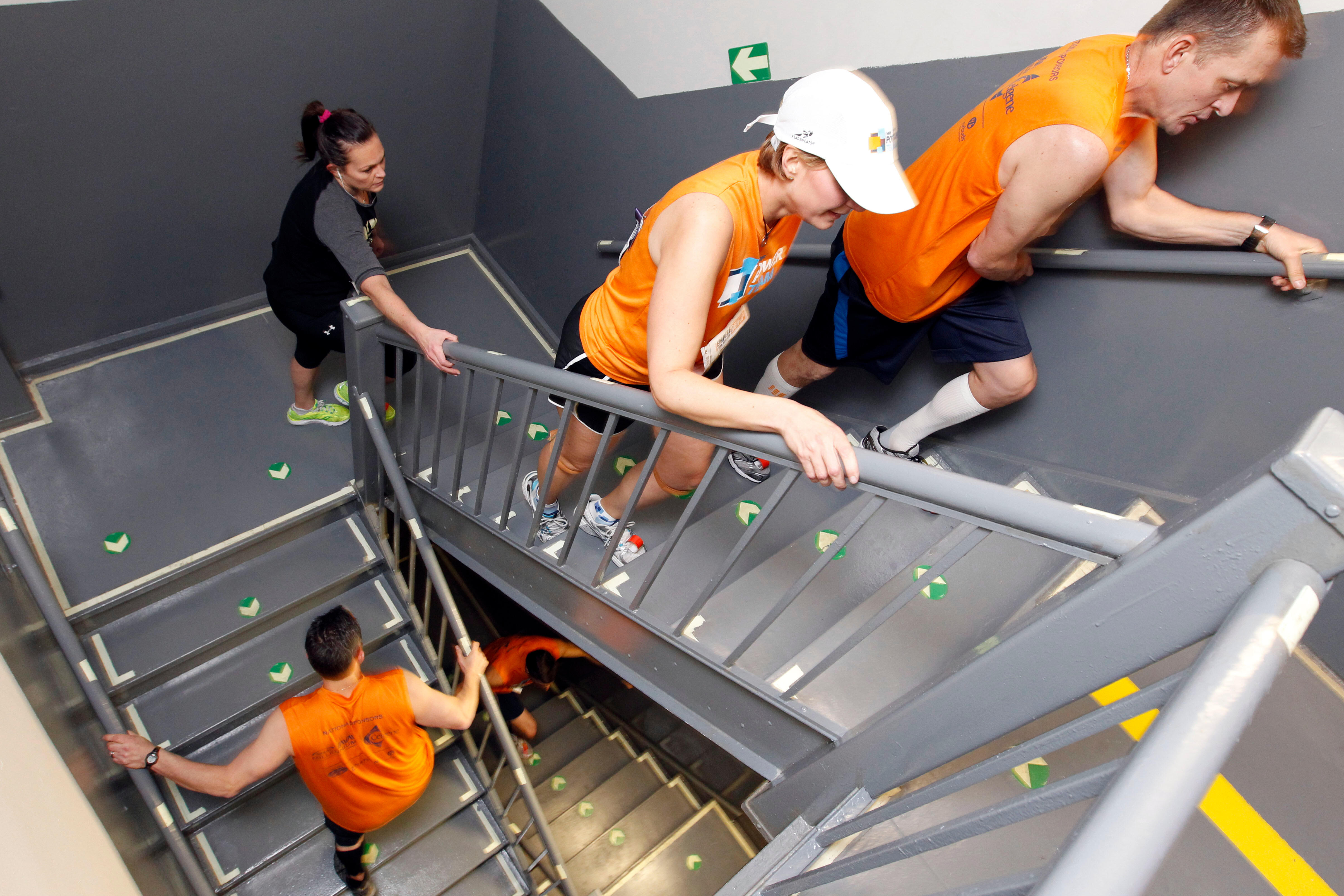
    But vigorous movement — such as hurrying up and down the stairs or rushing to the subway station — was, by far, the most effective. Three minutes of daily vigorous activity dropped cancer risks to the same extent as 90 minutes of light-intensity movement.

    Pick the routine that works for you

    “I think these results show there can be different routes” to the same goal, said Emmanuel Stamatakis, a professor of physical activity and health at Monash University in Australia, and senior author of the new study.

    If we can’t find 90 minutes to wander around the block or from cubicle to cubicle, we could instead head for the nearest stairwell and jog up and down for a few minutes.

    “This is a really interesting paper,” said Lora Giangregorio, an exercise scientist at the University of Waterloo in Canada. She studies physical activity and health but wasn’t involved with the new study. “It is really encouraging that adding movement or standing is associated with reduced risk of cancer. But what stuck out for me was the finding that ‘only three minutes of additional vigorous physical activity in place of any other intensity was associated with lower cancer risk.’”

    Many of us can probably find a way to fit those three strenuous minutes into our day.

    ‘Any movement counts’

    The study was observational and shows links between more activity and lower cancer risk but doesn’t prove the additional movement directly caused that effect.

    It also doesn’t explain how moving instead of sitting changes the likelihood of cancer, though muscles release a slew of biochemicals when they contract, Stamatakis said. Some of them likely jump-start physiological processes that dampen the development or progression of cancer.

    The study doesn’t say, either, whether we should lump our movement time into a single session or spread those three minutes of speedy or 90 minutes of laid-back activity throughout the day.

    More study is needed, Stamatakis and Mitchell agree.

    But, for now, the takeaway is to rise from your chair whenever you can, Stamatakis said, even if it’s just to stand.

    “Any movement,” he said, “counts.”

  • Some Americans say they’re starting to cut corners as inflation persists

    Some Americans say they’re starting to cut corners as inflation persists

    As the war in Iran barrels toward the six-month mark, many Americans are growing weary of persistent inflation and high prices at the pump. While many still hope for relief, they are starting to think about tightening their belts.

    Consumers still haven’t slashed spending dramatically. Overall, spending remains resilient in the face of elevated inflation, which cooled slightly to 3.4% in the year ending in July, according to data released Wednesday.

    Still, in interviews, families across the country say they are looking for ways to keep their budgets in check, including by curbing gas usage, eating cheaper meals, and taking on DIY projects they once would have outsourced.

    “It absolutely still makes sense to pay for some things, but you just have to be a lot more deliberate,” said Lydia Royce, a 38-year-old mother of two in Norman, Okla., who works in financial tech.

    Royce said she’s privileged — her family isn’t worried about paying their mortgage or filling up their cars. But she also wants to be able to retire one day, so she’s cutting back where she can. For now, that means choosing less expensive extracurriculars for the kids, stretching out her salon appointments and learning to install a French drain herself instead of hiring an expensive landscaping team.

    In Chattanooga, Tenn., 43-year-old Sarah Bailey said her family has switched from seafood to cheaper proteins for dinner — lately, often pork. She’s drinking filtered water instead of spring water, and she’s being mindful about driving — planning purposeful, fuel-conscious routes on days full of work, errands, and kid-related activities.

    “I’m just moving through life a bit differently,” said Bailey, a drug and alcohol counselor and author.

    The same is true for Donny Plumley, 55, a nurse in Huntington, West Va. He and his wife rarely eat at restaurants anymore, he said. They grow vegetables in raised beds and occasionally buy whole steer in bulk to save on groceries. Plumley also equipped his house with solar panels and conducts a penny-saving meal prep each week.

    “We’re making a lot of little changes,” he said. “We have to seriously consider each thing because there’s just less money.”

    This quiet economizing has yet to show up in national data. Consumer spending ticked up slightly in June, as people’s purchases continue to defy high prices. Some of the increase is simply because gas, groceries, and other necessities cost more. But spending data from at least two major banks also show discretionary spending is solid, with consumers finding ways to afford extras despite rising prices.

    Mark Zandi, chief economist at Moody’s Analytics, said wealthy Americans benefiting from a strong stock market are contributing heavily to the overall economic picture even as the less well-off are feeling the strain.

    “The well-to-do are still driving the train,” Zandi said.

    And even middle-class Americans are still reluctant to make big adjustments, said Diane Swonk, chief economist at KPMG.

    “It’s not just that consumers will resist with everything in their power reductions in their standard of living, but they resist a reduction at the pace at which they accumulate stuff,” Swonk said. She added: “Even if they’re able to keep spending going, it’s not as easy and you’re not getting as many things as you once did.”

    Those cracks are starting to show. In the Federal Reserve’s most recent “beige book,” a report released in July that includes anecdotal evidence of economic conditions around the country, several Fed districts reported people seeking out more affordable alternatives and cutting discretionary spending.

    Meanwhile, the larger-than-usual tax refunds that helped prop up spending this spring are now gone for most families. In June, the personal savings rate — which measures how much of their disposable income people dedicate to savings — dipped to 2.7%, the lowest level in four years.

    That’s where Chase Johnson, a 38-year-old insurance sales operations manager in Maxwell, Iowa, is feeling the pinch. He said he and his wife haven’t cut back on everyday purchases or vacations, but they expect to save about 10% less this year.

    “We’re not going to quit living because prices are going up,” Johnson said. “The economy is the economy. We’re going to make it work either way.”

    By many metrics, the U.S. economy is stable, if not inspiring. Overall growth was somewhat sluggish in the second quarter, slowing to a 1.5% pace, but the unemployment rate remains low. And wages are still growing, though a Washington Post analysis found paychecks are stagnant compared to a year ago when inflation is taken into account.

    New data from the Bank of America Institute shows consumers remain solid financially and the gap between higher income and middle- and lower-income groups’ spending and wage growth is narrowing.

    Still, many Americans feel the economy isn’t working for them. Multiple polls showing a decline in consumer confidence. And the cost of living has dominated campaign rhetoric in the run-up to this fall’s midterm elections, with even some Republicans joining the chorus of online complaints about a viral $20 burrito.

    As the war drags on, Zandi said, people might finally have to spend down savings or rack up more debt, which could eventually lead to sagging consumer spending. But as long as the labor market remains steady, he said, it’s unlikely people will pull back too far.

    And for now, consumers at all income levels are navigating higher prices well — still spending on extras, said Michelle Meyer, chief economist at Mastercard. Higher-income families have been able to spend faster, but across the board, the stable labor market has propped people up.

    “There’s a lot of uncertainty,” she said. “But uncertainty is also our new normal.”

  • Chatbots are doing the work of Congress with little oversight

    Chatbots are doing the work of Congress with little oversight

    The amendment was one of hundreds filed this summer to an annual defense bill making its way through Congress. Along with her proposed change, Rep. Anna Paulina Luna’s office had sent a summary of what it would do.

    But the first line made no sense.

    “increasing example specific factors. Identical to H.R. 100 (118th Congress).11:25 AM????Claude responded:”

    One of Luna’s staffers had copied a chatbot’s answer — timestamp and all — and pasted it into the public record of the National Defense Authorization Act.

    As a screenshot of the garbled text circulated on social media, the Florida Republican was nonchalant.

    “Not a shocker,” she wrote. “Most staff use it.”

    Asked later about the incident, Luna went further. “A lot of staff will use ChatGPT, Claude, Grok. I personally like Grok better, but my staffer prefers Claude,” she told the Washington Post. “I’m not going to knock him for that. There’s nothing illegal about him doing a summary.”

    Across the Capitol, lawmakers and staffers are using artificial intelligence to write speeches and news releases, sort constituent mail, prepare questions for congressional hearings, and draft amendments.

    Even as politicians are debating how to govern AI for the rest of America, Congress has already settled how it will use the technology: quickly, broadly, and with little oversight.

    Both chambers have cleared members and staff to use chatbots — Copilot, ChatGPT, Gemini, and, in the House, Claude — for official work, with more under review. The House bought 6,000 Microsoft Copilot licenses last year and encouraged staff to use them.

    Having someone else put words in a lawmaker’s mouth is nothing new. For almost as long as Congress has existed, staffers have been ghostwriting speeches for their bosses. But a speechwriter can be summoned or fired. Chatbots are products built by the tech companies that lawmakers are in charge of regulating.

    Amid the rapid adoption of AI on the Hill, lawmakers face a key question: How much of their responsibilities are they willing to hand over?

    Interviews with more than two dozen lawmakers and staffers — some of whom spoke on the condition of anonymity to discuss internal operations — along with internal House and Senate policies obtained by the Post show that the institution has left that question largely unanswered. The few House and Senate rules that exist are poorly understood and seldom enforced. In practice, AI use is left up to the hundreds of individual congressional offices to settle for themselves. It’s not clear how many offices have internal written policies on AI.

    And no one the Post asked knew of any instance where a staffer was formally disciplined by the House or Senate for breaking its rules.

    Luna was right. There was nothing illegal about having AI edit, spell-check — or even write — legislative materials. It wasn’t against House rules, either.

    Her staffer’s only mistake was letting Claude sign its work for others to see.

    Congress’ newest staffer

    Sen. Tommy Tuberville has found a new way to pass the long drives across Alabama: talking to ChatGPT.

    He asks it about Medicare and Medicaid, and listens as the machine’s voice talks back.

    “It’s kind of like you can sit there and talk to an expert,” said the Alabama Republican. “You don’t know whether or not they’re 100% correct. But they put you on the right path.”

    Rep. Mike Flood (R., Neb.) said he consulted a chatbot while working on a bipartisan housing bill that passed this year, asking it where private equity was buying up single-family homes. Sen. Elizabeth Warren (D., Mass.), who has proposed stricter legislation on tech companies, uses ChatGPT to look up demographic information.

    One GOP staffer’s boss uses chatbots to generate the occasional cartoon of himself, she said with a laugh. Her explanation: “He’s a boomer.”

    But the real power users are the thousands of staffers who do most of Congress’s work.

    Earlier this year, Rep. Cleo Fields (D., La.) had a town hall coming up in Natchitoches, a city in his district that his press secretary didn’t know well.

    So that aide, Sydney Broome, asked Claude for a list of TV stations in town, its newspapers, and reporters’ names and contacts. Then, she started calling each one.

    At 22, Broome is the youngest full-time staffer and only press secretary for Fields. AI saves her three or four hours of work a week, she said. Her boss does not use it at all.

    ChatGPT first emerged when Broome was still in college. Her professors, unable to stop students from using AI, urged restraint and ran their assignments through AI detection. Students could use it for research, they warned, but never to write from scratch.

    Congress has no such checks. So Broome has imposed them herself.

    She’ll use Claude to find a reporter’s email, but not to write to them. She doesn’t use it to produce anything in her boss’s name. “That’s just kind of a bit of a gray area,” she said.

    Many staffers say they are aware of AI’s limitations. The tools occasionally invent nonexistent bills. Other times, the writing is formulaic and clunky. Still, chatbots help speed up their work.

    A GOP aide in another office said he uses Copilot to write appropriations amendments. The subcommittee he works for used AI to suggest witnesses for a hearing and to help generate the questions lawmakers should ask them.

    Another Republican aide has taken AI even further. He exported all his phone contacts and text messages — years of conversations — into a personal Claude account and told it to build a database of every reporter he has ever dealt with: what he pitched them, which ones they accepted, which exchanges went badly. The chatbot auto-updates itself with each new conversation.

    Recently, his boss wanted to do a TV interview about surveillance law. The aide asked Claude whether he had ever pitched a TV booker on that topic and how it went. It came back instantly with a contact.

    Claude also runs that staffer’s office’s communications budget — the taxpayer-funded mail and ads sent to constituents. “I don’t really have to touch the data in Excel much anymore,” he said.

    The aide said he’s not sure what exactly is permitted by congressional rules. “You’re still not supposed to put constituent data into AI,” he said. “There are weird things around where the rules are. I don’t know all of them.”

    When nobody’s looking

    In 2024, the House Administration Committee convened a private, bipartisan meeting with House officers and outside AI experts to talk through how far to let AI into the legislative process. About 150 chiefs of staff attended.

    Out of it came the first AI guidance for Capitol Hill.

    Internal House and Senate policies obtained by the Post and interviews with people familiar with them show how Congress has embraced the use of AI.

    Last summer, the House bought 6,000 Copilot licenses. The tool was a natural fit for a chamber that already ran on Microsoft and a more secure way to keep congressional work inside a single system, officials believed. Starting in January, offices could sign up for access.

    They came with a major guardrail built into the system: Copilot is designed to refuse political requests. Ask it to criticize a party, politician, or political group, and the machine declines.

    “I can’t create content that criticizes or condemns political parties, politicians, or political groups,” read one Copilot response shared by a staffer. “That includes writing tweets that attack Democrats, Republicans.”

    Roughly half the licenses are now in use, and House officials have extended the deal.

    The rules Congress wrote for itself are loose. Off limits under current House guidance: putting sensitive material such as constituent information into a chatbot, generating deepfakes, making personnel decisions, and finalizing legislation.

    A machine may help write a bill but may not be the last hand on it. It may draft a reply to a constituent but can’t be told who the constituent is.

    In theory, a staffer breaking those rules can be stripped of access to AI tools, suspended, fired, even fined and imprisoned.

    But no one could name a single case of that happening. People familiar with House operations said they’re not aware of any enforcement action by the chief administrative officer. A spokesperson for the CAO said the office can’t comment on potential enforcement actions. A spokesperson for the Senate sergeant-at-arms didn’t respond.

    Catching violations largely falls on staffers, who would have to report a colleague, or themselves.

    Most said in interviews that they don’t know the rules. A former senior Republican House staffer said that his office subscribed to both ChatGPT and Claude and that staff used them however they liked. He wasn’t sure what the rules were, or whether his team followed them. “We just had a free-for-all,” he said.

    The House and Senate encourage individual offices to implement their own written AI policies. If a House office wants Copilot, in theory, it must have a policy in place.

    One reason Congress has moved so quickly to adopt AI tools is to keep pace with the executive branch, said people familiar with internal House operations. The Trump administration has spent the past year and a half pushing AI into every corner of the government.

    “If we are not keeping pace with how the executive branch is functioning,” one person said, “then we’re not performing effective oversight.”

    AI for everything

    The new frontier has left some lawmakers pondering how to proceed.

    “We want to make sure we’re using AI, and AI isn’t using us,” said Rep. Jamie Raskin (Md.), a constitutional law professor and the top Democrat on the House Judiciary Committee.

    Sen. Elissa Slotkin (D., Mich.) recently worked with her staff on a new policy for her office. They can use AI to “enhance and streamline” work but not to generate “final products” — like floor speeches or public remarks. They have to take AI training. Nothing with personal information about constituents or the senator can be uploaded. And her office is holding unannounced “spot check” inspections.

    “We didn’t want to prohibit the use of the newest tools, but we also didn’t want absolute schlock showing up in my memos,” Slotkin said. “What I’m not willing to do is put my head in the sand and pretend that my young staff aren’t going to find new and interesting ways of doing this.”

    In recent months, one Democratic staffer said his office has been exploring something new: feeding AI his boss’ past statements so the tool can write in the lawmaker’s voice. He heard another office was pulling it off and wanted to try himself.

    In the same building, a GOP press secretary whose office has stricter AI limits said it’s unfair other offices get an advantage. “We could churn out so many op-eds if we were more comfortable with AI,” she said.

    Recently, she found her own press assistant using AI in violation of their office’s policy. “We had to have a very robust conversation about how not to use AI for things in [the boss’s] voice,” she said.

    A preview of what more rampant AI use could look like already exists in state legislatures — many of which have no rules or policies at all.

    Amber Hulse serves in the South Dakota state Senate, where money is tight and lawmakers have no full-time staff. Hulse, a Republican, uses AI for almost everything — policy research, constituent email, speeches, writing legislation.

    Lately, she said, the signs of AI’s effects are getting easier to spot.

    “It’s funny,” Hulse said, “how your ears will start to pick up on the floor someone who’s giving a speech that was very clearly written by AI.”

  • Flock unveils changes after Post report on police misuse of its network

    Flock unveils changes after Post report on police misuse of its network

    The country’s most prominent seller of automated license-plate readers said Thursday it will enact major changes in hopes of more proactively preventing abuse by police officers.

    Flock, the maker of a vast roadside camera network that maps cars’ movements into a database searchable by law enforcement, said it would for the first time start requiring officers to label every search with a criminal case number and automatically review all searches for “abnormal activity,” a previously voluntary feature that the company said was used by about a third of its 7,000 law enforcement agencies nationwide.

    Flock also said it would reduce the default setting for how long license-plate data is stored, from 30 days to seven, and give police departments more control over how their data is shared with other agencies.

    The announcement comes roughly a week after the Washington Post reported that at least 50 officers had been accused, charged with, or convicted of misusing Flock’s system and other license-plate readers to spy on people’s locations, including to stalk their girlfriends and ex-wives. Since publication, the Post has confirmed more than a dozen additional cases of license-plate-reader misuse.

    The case number and automated-review features were previously offered to agencies as optional settings. Policing experts and civil liberties advocates identified those two features in the Post report as key product shifts that could help combat misuse.

    Flock chief executive Garrett Langley said in an interview that the changes reflected the system’s “continual evolution of Flock’s responsibility to the communities we help serve.” Company executives, he said, had declined to mandate them sooner because they expected more local officials would activate the antiabuse features on their own.

    “I had this hope that local lawmakers at the state and local level would move very quickly and they’d look at the things that we’re recommending as optional and say, ‘Great, we’re going to force it.’ And they haven’t,” he said. “Instead of waiting, we said, ‘Look, we should just move faster.’”

    Max Isaacs, director of technology law and policy at the New York University School of Law’s Policing Project, said the shift was a “welcome change” but that he questioned what had taken the company so long to implement it.

    “There is no reason the system shouldn’t have been designed that way to begin with,” he said of the case number requirement. “Ultimately, though, this kind of safeguard should be required by law. It’s completely backward that we are relying on this one company to implement the kinds of things that ought to just be standard everywhere.”

    Flock, which is based in Atlanta, has installed more than 120,000 of the artificial-intelligence-enabled cameras across the U.S. since 2017. The company said the 20 billion plate scans recorded every month by its cameras have helped officers investigate 1 million crimes a year.

    Although Flock’s training guides encourage officers to use the search tool exclusively for official police work, the company only began offering agencies the option to require that officers tag every search with a criminal case number in July 2025.

    In misuse-case records reviewed by the Post, some officers frequently looked up car locations without providing any details linking the searches to legitimate criminal investigations.

    In April, Flock announced an automatic review feature, known as Audit Assistance, and said the tool would scan officers’ searches for suspicious behavior, such as repeated targeting of a single plate or bursts of searches in the middle of the night. Flock officials declined to share the criteria the system uses to look for abnormal behavior, arguing that sharing the details would help bad actors avoid detection.

    The company has announced that some officers have been charged with misusing the system following an Audit Assistance report. But Isaacs recommended treating the system with “a healthy dose of skepticism,” given that it relies on artificial intelligence, not human experts, to find suspicious conduct.

    “It’s good to see vendors developing accountability features,” he said, “but until we have some evidence that this tool does what it says it does, I don’t think we should rely on it to replace any human auditing measures.”

    Flock also said it would reduce the default length of time for how long plate scans are saved to seven days. Agencies can choose to ignore that default and increase their data-retention policies to as long as a year with prior approval from an elected official or governing body, the company’s evidence policy said.

    It also will launch a feature called Evidence Mode that will allow officers to preserve license-plate data beyond that retention window “for cases that need more time,” a company announcement said.

    Flock currently allows police departments to share their license-plate data with other agencies beyond city, county, or state lines. But as part of the changes, the company said it would begin allowing agencies to determine the types of investigations for which its data can be shared. A city could, for example, allow its camera data to be searched for violent crimes but not for immigration enforcement, the announcement said.

    Langley said he spoke to 100 police chiefs in the last week to preview the changes and that all were supportive of the shift. He argued that the cases of misuse reported by the Post showed that Flock’s long-running strategy of recording all officer searches into audit logs that agency leaders can examine to investigate misconduct helped fight abuse.

    “It’s not that people abuse Flock,” he said. “It’s that Flock actually found cops that abused their power, and I want to find all of them.”

    Flock said it was still considering additional changes, including a function that would automatically lock out officers whose activity met the “criteria for abnormal behavior” until their searches were reviewed by an agency administrator, according to the announcement.

    In some towns, however, the agency’s Flock administrators are the police chiefs themselves, and some chiefs have been fired or charged with criminal misconduct in cases of Flock misuse previously reported by the Post. Langley said he hoped that, given the “increased level of attention” to the problem, local mayors and city managers would take a more proactive role in pushing for regular agencywide audits or supervision by outside law enforcement.

    Marci Bakely, an Air Force veteran in Georgia whose police chief ex-boyfriend searched her plate hundreds of times and was charged with stalking and misuse of a license-plate reader, said in an interview that she hoped the changes would curb abuse but that she worried it was mostly a “temporary Band-Aid” to shield the company from criticism.

    “They knew before that stuff like this would happen. So now they want to wait until after it’s been brought to the public’s eye?” she said. “Now it’s a big deal, whereas before it didn’t mean anything? They weren’t worried about it, but now it’s been brought to the light.”

  • We’ll soon get a glimpse of future temperatures, thanks to this record El Niño

    We’ll soon get a glimpse of future temperatures, thanks to this record El Niño

    This year’s record-smashing El Niño will do more than just shift and enhance patterns of heat, extreme rainfall, and drought around the world.

    It will also give the planet a preview of the late 2030s.

    That’s because this El Niño will act like a climate time machine, temporarily pushing global temperatures to levels that might not otherwise be reached for another decade or so.

    According to an analysis by climate scientist Zeke Hausfather that was shared with the Washington Post, there’s around a 95% chance that 2027 will become Earth’s hottest year on record — soaring past the last record in 2024 — because the combination of El Niño and climate change could spike global temperatures to around 3.17 degrees Fahrenheit above preindustrial averages.

    Described as “stunning” by Hausfather, who researches and analyzes the climate for Stripe, Carbon Brief, and Berkeley Earth, this value would be so far above the warming trend of the past decade that it could bring global temperatures to levels not otherwise expected under that trend until around 2037.

    “I’m not sure folks have realized just how crazy the second half of 2026 and 2027 will be for global temperatures — on the back of a record-smashing El Niño event,” wrote Hausfather on X.

    It’s currently close to a coin flip whether 2026 would become the warmest year on record, according to Hausfather’s analysis, which considers the average of several different temperature data sets. It’s possible that 2026 sets a record in some, but not all, of these data sets.

    Jim Hansen, director of the Program on Climate Science, Awareness, and Solutions at Columbia University, said he expects 2026 to become the warmest year, but to hold that crown only until 2027 exceeds it.

    There is a much stronger signal for record warmth in 2027 because increasing air temperatures caused by El Niño lag slightly behind increasing ocean temperatures.

    A global temperature of 1.76 degrees Celsius above preindustrial levels in 2027 would be about 0.29 degrees Celsius higher than what’s expected based on the warming trend of the past decade.

    According to Hausfather’s temperature predictions for next year, the middle 50% of forecasts range from 1.67 degrees Celsius to 1.85 degrees Celsius above the preindustrial average.

    At the high end of that range, global temperatures in 2027 would jump roughly 13 years ahead of the recent warming trend, reaching levels that might otherwise become typical around 2040. The low end would represent a 7-year boost, to around 2034.

    Hausfather said that this El Niño event is happening on top of a “strong acceleration in the rate of warming associated with continued emissions of greenhouse gases.”

    Both Hausfather and Hansen also mentioned that decreasing atmospheric aerosols — which have historically offset some warming — are contributing to the acceleration in warming.

    Although Hausfather expects 2028 to be cooler than 2027, he added that “human emissions are adding a permanent El Niño worth of heat to the climate system each decade.”

    In other words, global temperatures in 2027 will take a big but temporary upward stairstep, and they are unlikely to permanently continue at or above those levels for now.

    These temperature increases will also have consequences for atmospheric water vapor. Because the water vapor-carrying capacity of air increases at a rate of 7% per degree Celsius, it’s possible — if not likely — that 2027 also sets a new global moisture record, surpassing 2024. In 2025, the Post mapped the planet’s rising moisture zones and showed how they are closely connected to an increasing risk for rainfall extremes.

    The role of El Niño

    During El Niño, huge stores of ocean heat from the western Pacific spread eastward, eventually reaching the west coast of South America. Thunderstorm activity shifts with that warmth, transferring heat from the ocean and pumping it high into the atmosphere. Winds and atmospheric circulation then redistribute that heat beyond the tropical Pacific and around the globe, raising global temperatures.

    That’s why strong El Niño events often appear as an upward stairstep in long-term plots of global temperatures.

    But this El Niño isn’t just going to be strong. Boosted by the planet’s long-term warming trend, it’s probably going to dwarf the six strongest that came before it in 2015, 1997, 1982, 1972, 1888, and 1877 — the latter contributing to a global famine that caused 3% to 4% of the global population to perish.

    Ocean temperatures in the central equatorial Pacific, where El Niño’s strength is measured, have already broken records for 75 days straight.

    That streak isn’t expected to end anytime soon.

    Temperatures in the equatorial Pacific Ocean may surge more than 7.2 degrees F above average by December, breaking the previous record.

    Those weather effects will vary from place to place.

    But the temperature spike will briefly push the entire planet into its warmer future.

  • U.S. military has lost roughly 25% of its Reaper drones as Iran war depletes arsenal

    U.S. military has lost roughly 25% of its Reaper drones as Iran war depletes arsenal

    The U.S. military has lost at least 45 MQ-9 Reaper drones during the war with Iran, or roughly 25% of its fleet, according to three U.S. officials familiar with the matter.

    The Reaper is used to conduct surveillance and targeted strikes, and it can cost between $30 million to $50 million depending on the type of sensors and weapons it carries, according to the Air Force. The potential taxpayer cost of recent losses is over $1.3 billion for that weapon system alone.

    The aircraft have seen heavy use around the Strait of Hormuz, the vital shipping route that has become a major flash point in the conflict — and a key obstacle to negotiating a lasting peace deal. But the drones fly slowly and often at low altitudes, making them relatively easy targets for Iran’s military and its regional proxies in Yemen and Iraq.

    A fourth U.S. official, who like the others spoke on the condition of anonymity to discuss Pentagon data, said that not all of the lost Reapers were shot down. An unspecified number crashed after their operators’ communications link to the drones failed, the official said.

    The Reaper joins a growing list of U.S. weapons and munitions that have been drained by the Iran war and years of American military support for Ukraine in its conflict with Russia. As the Washington Post and others have reported, the shortages have constrained President Donald Trump’s military options as tensions with Iran remain high.

    The Pentagon, which declined to comment for this article, has consistently denied reports that its weapons stockpiles are running low. At the same time, the Trump administration has asked Congress for tens of billions of dollars in funding to offset costs incurred by the Iran war and to replenish supplies.

    As the Post reported last week, Trump confronted Defense Secretary Pete Hegseth about the state of the U.S. stockpile. The encounter occurred July 31, on the sidelines of a cabinet meeting at Camp David, the presidential retreat in Maryland.

    The shortages have appeared to embolden Iran, which has intensified its demands for control of the Strait of Hormuz and reparations for damage the country has sustained since Trump ordered the start of hostilities on Feb. 28.

    There were approximately 185 Reapers in the U.S. military fleet — 165 in the Air Force and 20 in the Marine Corps — before the conflict began, according to public budget data and the services. That figure does not include Reapers operated by U.S. intelligence agencies. To date, none of the Marines’ Reapers have been lost, a spokesperson, Lt. Col. Joshua Benson, said in a statement. Those operate primarily in the Asia-Pacific.

    In May, Lt. Gen. David Tabor, a senior Air Force officer at the Pentagon, told the Senate that the number of remaining drones had fallen to about 135. At the time, Tabor told lawmakers he was “concerned” about the losses and that the Air Force was exploring how to quickly replenish its fleet.

    The Pentagon is phasing out the General Atomics-produced Reaper and envisions a replacement fleet of less expensive armed surveillance drones that can swarm their targets.

    Meanwhile, the Trump administration is trying to shore up lawmaker support for a $67 billion Iran war supplemental budget that it says is vital to restocking the Pentagon’s arsenal. Even if Congress approves the funding, it will be years before stockpiles depleted by the conflict in Iran and the munitions sent to Ukraine are reconstituted.

    Hegseth told the Senate in July that the Pentagon would have to curtail military trainings without a quick infusion of additional funding as the Iran war strains the defense budget. He estimated that the conflict would cost $37.5 billion through the end of September, though that total does not include the cost of rebuilding U.S. bases in the Middle East damaged by Iranian strikes.

    Republicans in Congress are divided on the best strategy to secure the war-related funding and have left Washington for their August recess.

    This week, the right-leaning American Enterprise Institute think tank released a report examining the military’s effort to increase production of critical munitions. It found that in some cases the Pentagon’s plans have “key dependencies,” including a significant expansion of the defense industry’s factory output.

    For example, it could take years to replenish Terminal High Altitude Area Defense (THAAD) interceptors used throughout the war, the report found. The missile defends against incoming ballistic missiles and, as the Post reported previously, U.S. forces have used hundreds of them during the conflict.

    The U.S. Missile Defense Agency’s maximum production rate is 96 a year — but the Pentagon seeks 857 of them in next year’s defense budget, and almost 2,600 total over the next five years. At current production rates, it would require “approximately 27 years” to the fulfill the request, AEI found.

    It takes almost three years to manufacture a single THAAD interceptor, said AEI senior fellow Todd Harrison, the report’s author.

    “Even if you ordered them today, delivery wouldn’t be until President Trump leaves office,” Harrison said.

    Other U.S. munitions reviewed by AEI had similar timelines, the report showed.

    Although Hegseth has met with many of the companies responsible for building key munitions, and secured what the Pentagon calls framework agreements to increase production, there are no contracts or funding yet for those firms to move forward.

  • Rep. Max Miller’s ex-wife sues after sensitive image of child was publicly shared

    Rep. Max Miller’s ex-wife sues after sensitive image of child was publicly shared

    Rep. Max Miller’s ex-wife filed a federal civil rights lawsuit Wednesday against the Ohio Republican and his attorney, alleging that they “recklessly published” a nude image of Miller’s 2-year-old daughter online.

    The claim stems from a livestream Miller hosted this month to defend himself against charges of domestic violence by his ex-wife, Emily Moreno. In an attempt to support his assertion that Moreno made up the allegations, Miller released a trove of documents through a publicly accessible Dropbox account.

    In her lawsuit, Moreno says the folder included a picture of their daughter in which her genitalia was visible, and which remained available for anyone to download for 23 hours.

    Miller’s lawyer, Aaron Minc, apologized the following day in an email, included in the lawsuit, writing that he inadvertently published an unedited version of the image and deleted it as soon as he found out. He later disputed the characterization that genitals were visible.

    Moreno is seeking $150,000 in damages for each time the photo of her daughter was downloaded from the Dropbox account, which she says in the lawsuit was viewed hundreds of thousands of times.

    “This child is an entirely innocent victim who has become collateral damage to her father’s political ambition,” Moreno’s attorney, Subodh Chandra, said in a statement.

    Miller and Minc did not immediately respond to requests for comment.

    Following their divorce last year after three years of marriage, Moreno has alleged in court filings that Miller threw hot water on her from a pan of eggs he had just cooked, once held a gun to her head, and hurt their daughter, who suffered a fractured collarbone in February. Miller has dismissed the accusations, which are now being investigated by the House Ethics Committee, as fabrications during a messy custody battle.

    Some Republicans subsequently sought to pressure Miller, who represents a conservative House district stretching south from the Cleveland suburbs, to drop his bid for a third term. But Miller vowed to push ahead with his campaign, saying that he did not want his daughter to view him as “a quitter.”

    National Democrats are now taking greater interest in the race, sensing an opportunity to flip what would have been a safe Republican seat. The Democratic Congressional Campaign Committee, the political arm for House Democrats, announced Tuesday that it is adding Miller’s challenger, Brian Poindexter, to its priority Red to Blue program.

    The designation, which has been given to 30 other candidates seeking to flip GOP-held districts in November, opens up additional party resources, strategic guidance, and fundraising support for Poindexter, a union ironworker and city council member in a Cleveland suburb.

  • Senate Democrats request audit of Trump’s ballroom project

    Senate Democrats request audit of Trump’s ballroom project

    Minority Leader Chuck Schumer and other top Senate Democrats are requesting an audit of spending on the White House East Wing and ballroom, saying in a letter Wednesday that the Trump administration’s handling of the project raises “serious concerns about transparency, accountability, and stewardship of this national landmark.”

    The D.C. Circuit Court ruled Friday that Trump needed congressional approval to continue work on the ballroom, setting up a likely Supreme Court showdown.

    For months, President Donald Trump said the project would be fully funded by private donors; more recently, he has said that taxpayers will be paying for major security components of the East Wing. The White House maintains that the ballroom itself will be privately funded.

    On Wednesday, the Washington Post, citing confidential contracts and other documents, reported that the administration is now planning to spend at least $927 million on White House campus projects, including the East Wing, with most of the money coming from taxpayers. Over $500 million of that is coming from the Secret Service and the White House Military Office, records show.

    In their letter to the Government Accountability Office, an independent, nonpartisan agency that works for Congress, the eight senators took issue with the administration using public funds in ways that they say Congress did not approve.

    Led by Sen. Jeff Merkley of Oregon, the top Democrat on the Budget Committee, the lawmakers said the administration has not “provided any planning details or justifications that would allow for informed consideration of the White House’s plans that would be a prerequisite for authorization or appropriation of funds.”

    In a statement to the Post, White House spokesperson Davis Ingle said that the renovations are “long-overdue and necessary.”

    In response to questions from the Post for its report Wednesday, the White House did not give a tally of the total expected construction costs or funding sources but said all the public dollars were being spent in a “manner consistent with” Congress’ original intent.

    The Circuit Court decision halts East Wing construction but does not go into effect until 14 days from the Aug. 7 ruling, giving the administration time to appeal.

  • What doctors want you to know about ‘catch-up’ sleep

    What doctors want you to know about ‘catch-up’ sleep

    You’ve spent Monday through Friday running on five hours of sleep, working late nights, and waking up early just to do it all over again. On Saturday, you get 12 glorious hours of shut-eye and feel instantly refreshed when you wake up. You’re all caught up on your sleep, right?

    Actually, not quite. The idea that a single morning or weekend spent logging extra hours in bed can wipe away a week’s worth of sleep deprivation is one of the most persistent sleep myths out there.

    Here’s what sleep experts wish everyone understood about how “catch-up” sleep actually works and why your z’s can’t just be topped off like a gas tank.

    Sleep debt explained

    Sleep debt is essentially the difference between how much sleep your body needs and how much it gets, according to Kimberly Fenn, professor of cognition and cognitive neuroscience at Michigan State University. Put another way, it is the cumulative amount of lost sleep an individual has experienced.

    In general, you should aim to get at least seven hours of sleep each night, and most people need between seven and nine hours of sleep to function well the next day, said Ulysses Magalang, board-certified physician and director of the Sleep Medicine Program at Ohio State University. The ideal amount for you is whatever allows you to wake up feeling rested and like you have enough energy to make it through the day, according to Fenn.

    Each night you don’t sleep a sufficient amount, it adds to the “debt,” Fenn explained. For example, if you need eight hours of sleep every night to feel your best and on Sunday night you sleep for only six hours, on Monday, you’ll have a debt of two hours. If this pattern continues all week, then by Saturday, your cumulative amount of sleep debt would be 10 hours.

    Short-term side effects of not getting enough shut-eye include tiredness, trouble concentrating, difficulty paying attention, irritability, and memory impairment, Magalang said. Long-term sleep deprivation is associated with health issues such as a weakened immune system, high blood pressure, heart disease, stroke, increased inflammation, cognitive impairment, and insulin resistance, according to research.

    There’s also some evidence to suggest that people who consistently get fewer than six hours of sleep each night have shorter lifespans than those who get more than six hours of sleep each night.

    Why catching up on sleep isn’t the best strategy

    While you might feel refreshed in the short-term after a morning of sleeping in, changing your bedtime and wake-up time drastically can make you feel even groggier or more fatigued, according to Fenn. “Sleep consistency is important for feeling well rested, and straying too far off course can throw off your internal clock,” she said.

    She emphasized that maintaining the same bedtime is especially important. If you go to bed at your normal time but have accumulated sleep debt, you can let yourself sleep an additional hour or so in the morning.

    “Typically, due to the strength of the circadian rhythm, unless there are other factors involved — like alcohol or other drugs, or extreme sleep loss — most people won’t sleep more than an hour past their habitual wake time,” Fenn said.

    But your health might still be compromised, depending on the severity of your sleep debt, according to Fenn. For instance, a small 2019 study in Current Biology found that a weekend of recovery sleep isn’t a good way to prevent the metabolic damage associated with chronic sleep deprivation.

    “We know that sleep deprivation is associated with high blood pressure, but there’s really no definitive study that says if you have developed high blood pressure [due to chronic lack of sleep], and then you lengthen your sleep, your high blood pressure will be reversed,” Magalang added.

    Additionally, sleep consistency is just as important for your health as the amount of sleep you get, according to Magalang. Sticking roughly to the same bedtime and wake time daily is essential for aligning your body clock, or circadian rhythm, which moderates everything from hormone levels and metabolism to digestion. One large study found that people with the most irregular sleep schedules were 26% more likely to experience a major cardiovascular event, including heart attack and stroke. Another linked irregular sleep to a higher risk of early death compared to those with consistent routines.

    What to do instead

    The best way to combat the health effects of sleep deprivation, according to both experts, is to do your best to aim for that sweet spot of seven to nine hours of shut-eye each night. Prioritizing sleep isn’t always possible though, Fenn acknowledged.

    If you do have a few nights where you can’t get the sleep you need and find yourself craving a sleep-in to make up for it, a 20-minute nap during the day can be an effective way to power through the day and maintain your consistent sleep and wake time, according to Fenn.

    “This length is considered optimal because it’s sufficient to increase energy, mood, and attention, but is typically not long enough to get into deep sleep,” Fenn said. With lengthier naps, there’s a high probability that you’ll wake up in the midst of deep sleep and experience sleep inertia, which is a state of grogginess and reduced cognitive and neuromuscular function, she said.

    “That’s why people say that they awake from a nap more tired than they started,” she said. “Being in a state of sleep debt also increases sleep inertia, so taking a long nap after insufficient sleep is even more problematic.”

    Sleep is like any other biological necessity — if you skimp on it here and there, you’ll probably be fine in the long term, Fenn said. Your body is resilient and will find ways to manage and forge ahead. But being sleep-deprived for months on end is going to do some serious damage, she said, which is what you want to try to avoid as best as you can.

  • CIA had ‘low confidence’ in Iranian threat before Trump switched planes in Turkey

    CIA had ‘low confidence’ in Iranian threat before Trump switched planes in Turkey

    U.S. intelligence officials were skeptical of an Iranian assassination threat against President Donald Trump that was relayed by Israel and prompted an extraordinary clandestine maneuver that saw him secretly fly out of Turkey in an alternate military aircraft, current and former U.S. officials familiar with the intelligence said.

    The assassination threat was relayed by the Israeli government to the CIA, where analysts did not view the intelligence as compelling and conveyed that skepticism to Trump administration officials, one of the officials said.

    Another official called the reports of threats against Trump’s life “Israeli-derived, not U.S.-generated, and viewed as low confidence.”

    The doubts in some quarters about an imminent threat to the president add a new element to the White House’s decision last month, first reported by the Washington Post, to shield Trump’s whereabouts as he departed a NATO summit in Ankara, Turkey, on July 8.

    As the Post first reported this week, after concerns arose about whether the new 747-8 plane gifted by Qatar had sufficient security measures to transport the president out of a potentially hostile environment, Trump boarded a legacy Air Force One in Ankara. But he secretly left that aircraft and was shuttled in an airport catering truck to a third plane, an Air Force C-32A, that flew him and a few key aides to Britain.

    The White House on Wednesday did not directly answer questions about the intelligence the United States received or how it was perceived by U.S. officials.

    “As the President has said, he has faced numerous threats on his life, including ones from Iran, and every measure is taken to ensure his safety,” a U.S. official said in a statement, speaking, like others in this report, on the condition of anonymity because of the sensitivity of the issue. “The United States Secret Service’s core mission is protecting the President, which they achieved.”

    The CIA declined to comment. The Israeli Embassy in Washington did not immediately respond to a request for details.

    Ultimately, the White House and the Secret Service appear to have decided they could take no chances.

    The Iranian threat to kill Trump and other senior U.S. officials has been a major concern since the 2020 U.S. assassination of Qasem Soleimani, the head of Iran’s Quds Force. Those worries have only grown since the killing of Iran’s supreme leader in February along with scores of other top officials at the start of the Iran war.

    Trump has survived three known assassination plots dating back to his 2024 presidential campaign, although there is no known link between any of the suspects in those instances and Iran.

    Despite questions about the Israeli intelligence, the elaborate plan enacted by the Secret Service in Ankara was done out of an abundance of caution, the first U.S. official said. “The Secret Service has had three near misses with this president, so they’re not taking any chances,” the official said. “They did what they had to do.”

    The Wall Street Journal first reported last month that Israel had shared intelligence with the U.S. government on the Iranian threat.

    The aircraft that ferried Trump from Ankara to Britain’s Mildenhall air base was escorted by F-16 fighter jets, according to two U.S. officials and other material reviewed by the Post.

    Trump, in his first public comments on the clandestine operation, said Tuesday night that the decision for him to take an alternate airplane was made by the Secret Service.

    “It’s really just up to Secret Service. I just follow what they like to do,” Trump told reporters. “They wanted me to go on a different flight, a different plane, equal safety. … I do what they say.”

    Some U.S. intelligence officials saw Israel’s sharing of the warning about threats to Trump’s life as designed less to inform than to influence the president’s decision-making and U.S. policy in the region, a current and a former U.S. official said.

    Israel views Iran as by far its most urgent near-term threat. But it views Turkey as a medium- to long-term threat and is anxious about warming ties between Washington and Ankara, bolstered by the personal rapport between Trump and Turkish President Recep Tayyip Erdogan, the current official said.

    It “fit a broader pattern of Israeli intelligence reporting that some officials see as designed as much to shape presidential decision-making as to inform it,” the former official familiar with the matter said.

    This person said he understood that Secretary of State Marco Rubio was briefed on the Israeli threat intelligence, as well as the subterfuge planned by the Secret Service, and nonetheless opted to board the legacy Air Force One, which presumably would have been a target for Iran.

    Another U.S. official familiar with the security discussions also questioned the seriousness of the threat, noting that tens of thousands of Turkish security personnel were incorporated into the NATO summit.

    Democrats have pushed the administration to provide more clarity on the extraordinary deception operation.

    “I am very curious about the extent to which the Israeli-provided intelligence was not only credible but independently verifiable,” Sen. Chris Van Hollen (D., Md.) told the Post. “I have no doubt that Iran would like to see the president gone, but this all seems a little fantastical.”