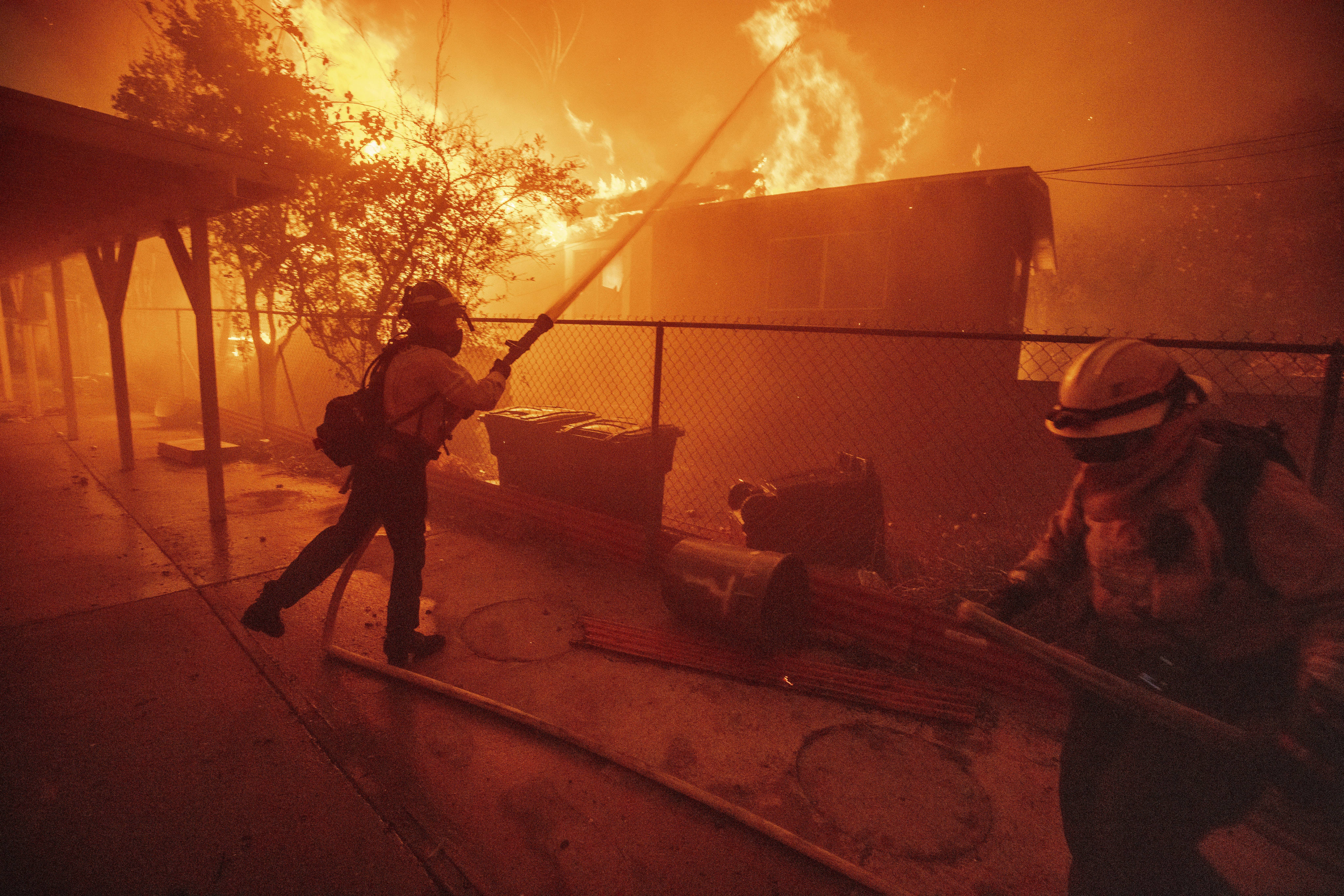
Category: Washington Post

  • Why more homeowners across the U.S. are turning to an insurance that offers less coverage

    Why more homeowners across the U.S. are turning to an insurance that offers less coverage

    A last-resort insurance policy with fewer homeowner protections and less government oversight is booming, a Washington Post analysis finds, as traditional insurers continue to back away from areas of the country most vulnerable to extreme weather.

    The policies are growing fastest in California, Florida, Texas, and South Carolina because increasingly intensifying weather and massive disasters are putting more insurers on the hook for substantial claim payouts. Last year in California, insurance companies paid out $23 billion in homeowners claims, according to industry data.

    The amount of premiums written under what is known as “surplus” or “excess” insurance lines has nearly tripled nationwide in the past five years, from about $1.5 billion in 2021 to $4.1 billion in 2025, according to data from the National Association of Insurance Commissioners (NAIC) — which insurers submit to the organization — and analyzed by the independent firm Weiss Ratings and provided to the Post. The Post reviewed the data and the Weiss analysis.

    While this represents only a small share of the total $187 billion in premiums written in the United States each year, according to the Weiss data, industry experts say they reflect a problem where Americans living in the most weather-exposed places are becoming harder to insure.

    In 2025, the Treasury Department’s Federal Insurance Office released a report showing how, due to climate-related events, millions of Americans were finding it harder to obtain insurance and had to pay more for it.

    And as more insurers pull back or limit coverage, more Americans have struggled to find it and have sought out surplus line plans. Independent brokers often steer homeowners to surplus policies when they cannot obtain a traditional plan, though carriers also advertise directly to consumers.

    These once-niche policies, which date to the late 1800s, historically covered commercial, high-risk, or unusual properties.

    They can sometimes be more expensive and often have more limitations and restrictive clauses, including arbitration clauses stating that homeowners cannot select their own contractors or price adjusters.

    Experts said they have fewer consumer protections, prompting some advocates and state regulators to warn that homeowners may get lower payouts in the event of a disaster.

    California’s surplus line industry is expanding more than almost any other state, according to the Post and Weiss analysis of NAIC data, which only includes insurers based in the U.S. Since 2021, the amount of surplus premiums written in California increased tenfold from $135 million to nearly $1.3 billion, now accounting for 7% of all homeowners premiums in the state compared with just 1% five years ago.

    California’s insurance crisis has been spreading beyond wildfire-prone regions, according to new Stanford University research, which found that the number of residents having to get coverage from the state’s backup insurance option, the Fair Plan, has tripled since 2020.

    A Post review of domestically based surplus line carriers across the U.S. found that 10 companies account for slightly more than half of all premiums, most of which are owned by major insurance companies.

    Major insurance providers, such as Lloyd’s of London and Berkshire Hathaway, dominate the industry, but smaller companies have also been proliferating.

    Some industry experts say these policies fill a void created by carriers pulling out or limiting coverage, and that without them, markets would be in greater distress. These companies are exempt from certain rules, allowing them to change what their plans cover and how much they charge faster than standard carriers.

    “The industry is built on two things: freedom of rate and form,” said Benjamin McKay, CEO of the Surplus Line Association of California, a nonprofit organization that advises the California Department of Insurance on law and policy. “You can charge what you want to charge and then have the contract say whatever it needs to say. You can exclude and include whatever.”

    The push-pull with surplus lines, McKay explained, is that while they are needed, they are a “reactive function of what’s happening in the admitted market.”

    McKay said the “proper role” for these less-conventional homeowners plans is “as a safety valve, not becoming the default option. Bottom line: We just need a healthy market.”

    State officials also have less insight into surplus carriers’ financial conditions, because they are not subject to the same financial requirements and tests that states such as California impose on admitted carriers.

    However, surplus lines still have to follow California laws, said Michael Soller, deputy commissioner of the California Department of Insurance’s communications and public relations branch.

    The Post recently found that some major surplus line companies such as AIG had been including separate “wildfire deductibles” in their policies, which Soller said violated state consumer codes and warranted a review.

    AIG — which has three subsidiaries offering surplus line policies to high-net-worth properties, all of which are operating in California — stopped offering its standard, regulated insurance for high-end properties in the state due to what the company said in a statement was “part of AIG’s multi-year transformation to streamline its portfolio.” In 2021, nearly 8,000 wildfires burned nearly 2.6 million acres of land across California.

    Over the years, according to California insurance officials, AIG asked for rate increases that were substantially lower than what their own data reflected was necessary for its exposure to risk. In 2020, after the state approved two subsequent raises, AIG asked to bump rates by nearly 42% before withdrawing that request.

    One of its subsidiaries, Lexington Insurance Co., is the seventh-largest surplus line carrier nationally, a Post review of data shows. AIG said its plans for “high-net-worth homeowners’ insurance” are primarily issued through that company.

    From 2020 to 2025, AIG’s standard homeowners business plummeted to zero in California, according to data obtained by Weiss Ratings and reviewed by the Post. Meanwhile, its surplus line business grew from $24 million to $119 million, data shows. The carrier announced in January 2022 that it was pulling back coverage but would still offer surplus line insurance to high-net-worth, specialty clients.

    “AIG has switched its entire California homeowners business to surplus line insurance,” said Martin Weiss, founder of Weiss Ratings.

    Over that six-year period, the insurance company’s surplus line premiums grew by 394% in California.

    “AIG has participated in California’s surplus lines market for more than 60 years, providing coverage for specialized risks that generally cannot be placed in the admitted market,” the company said. It added that while its surplus line business for high-net-worth homeowners has grown along with the rest of the market, “it represents less than one percent of total California homeowners insurance premiums.”

    Isaac Park, who runs the Los Angeles-based Excel Adjusters with his father, said he has seen an increased number of clients over the past decade shifting to the state-backed Fair Plan, who are then forced to get a second policy for risks such as water damage. Park added that he has also seen more surplus line firms operating in the state.

    “They have more limitations of coverage,” he said.

    Some consumer advocates worry that since surplus line carriers don’t participate in state guarantor funds, which help support policyholders if their insurer goes insolvent, people are at greater risk of bad-faith behavior or not getting paid out on their claims.

    Companies are paying out less to homeowners with surplus line policies compared with traditional ones, according to the NAIC data provided to the Post. In the past five years, surplus insurance lines paid out an average of 36 cents in claims for every dollar in premiums they collected, compared with 58 cents for admitted carriers. In 2024, carriers paid out 15 cents on each dollar of premiums they collected from surplus line policyholders.

    Payouts from surplus line insurers spiked in 2025 because of the L.A. fires, according to experts.

    “They are the perfect loophole for an insurer who wants to evade regulation,” said Amy Bach, executive director of United Policyholders.

    Bach described surplus lines’ ability to avoid regulation as a “powder keg” for the industry. But she added, “They are also doing a good thing by providing protection that other insurers are not willing to provide.”

    A new report from Climate Cabinet Education, a nonprofit advocacy group, charts how this explosive growth happened. Most states, for example, require insurance agents and brokers to demonstrate that they made a “diligent effort” to place policyholders within the admitted market. In California, three carriers have to deny a resident before they can seek out a surplus line plan. But last year, Florida — where surplus lines in the homeowners market grew 74% between 2020 and 2025 to $888 million, according to the NAIC data — became the fifth state to scrap that requirement.

    Jayson O’Neill, spokesperson for the insurance reform advocacy group Unlocking America’s Future, said that several consumer advocacy groups are working with lawmakers in Texas and North Carolina on stronger regulations that could include barring insurers from removing some protections from basic coverage.

    Park, the public adjuster who helps represent Californians in battles with their carriers over claims, said that even before last year’s fires in L.A., he was seeing “a lot of insurance companies dropping my clients after just one claim.” Now the landscape seems even more dire.

    Ben Taggart lives in Oakland Hills, Calif., near the site of a massive fire in 1991 and a community identified as a high-risk zone for wildfires. He found his current surplus line insurer two years ago, which aggregator sites identified as the only other option aside from the state-backed Fair Plan.

    Taggart said in an email that he wished he could get a policy through an insurer admitted into the California market, and that he is reluctant to file any claims given that his deductible is $10,000 and he worries the company would drop him if he made a claim.

    “The only people I know on our block who are still with admitted insurers are boomers who have been in their house a really long time,” he said. “Everyone who moved here recently is on surplus or Fair.”
  • Trump moves to allow ranchers and hunters to kill gray wolves

    Trump moves to allow ranchers and hunters to kill gray wolves

    President Donald Trump on Friday ordered the Interior Department to begin the process of removing endangered-species protections for gray wolves, again intervening in a long-running fight between conservationists and ranchers who say the predators threaten their operations.

    Trump also ordered the Interior and Agriculture departments to make it easier for ranchers to kill the wolves if necessary. The measures, long sought by GOP lawmakers from Western states, elicited a swift rebuke from animal rights groups and could draw legal challenges.

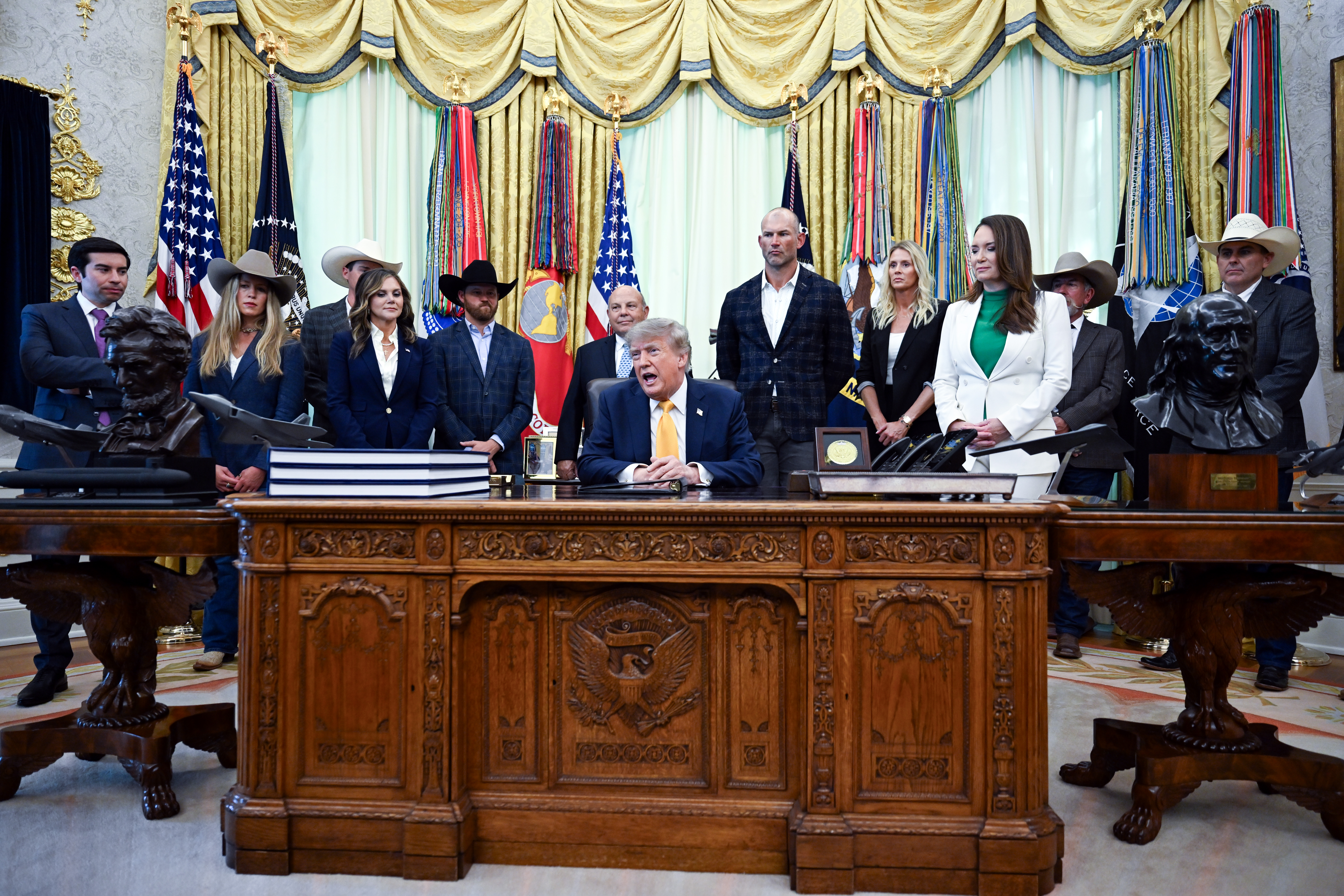
    “You’re not allowed to protect yourself, right? Or your company, your cattle,” Trump said at an Oval Office event, flanked by ranchers who shared stories of watching wolves tear through their herds. “So how do you like the idea that I’m letting you do that?”

    Under Trump’s order, Interior Secretary Doug Burgum will prepare a recommendation to fully delist or downlist the gray wolf and the Mexican wolf under the Endangered Species Act. The order also includes other measures intended to give states, ranchers, and hunters greater latitude to kill the animals.

    “Rolling back federal protections now — or setting that process in motion — would jeopardize decades of recovery and open the door for brutal killing,” Kitty Block, president and CEO of Humane World for Animals, said in a statement.

    The gray wolf and several subspecies were first listed as endangered under federal rules in the 1960s and 1970s, after centuries of westward settlement and government-backed eradication campaigns reduced their historical range in the Lower 48 states by an estimated 95%.

    Federal protections and reintroduction efforts helped lift that population from about 1,000 during the early listings to more than 6,000 by 2020, according to the U.S. Fish and Wildlife Service.

    But that recovery has fueled a long-running dispute over whether the wolves still deserve strict protections. Presidents of both parties have moved to lift at least some protections, only to have those efforts stymied, and sometimes overturned, in court.

    The Trump administration in 2020 stripped gray wolves of their endangered-species designation in the Lower 48 states, declaring the species recovered. A federal judge vacated that rule in 2022, and the wolves remain officially endangered in much of the country.

    Congress has also entered the fray. The GOP-led House in December passed a bill to end gray wolf protections. The Senate is still considering the legislation.

    “The science has been clear for years: Gray wolves are fully recovered, and their resurgence deserves to be celebrated as a true conservation success story,” Rep. Lauren Boebert (R., Colorado.), who authored the legislation, said in a statement after her bill passed the House. “It’s long past time to delist them and empower states to set their own management policies.”

    Ranchers on Friday discussed their frustrations with the status quo.

    “The problem is, because they’re on the Endangered Species List, they can’t shoot them. They have to sit and watch them destroy their herd,” Agriculture Secretary Brooke Rollins said in the Oval Office.

    “But you can shoot them as of today,” Trump mused, to laughter.

    “Well, Secretary Burgum has to do a project, but, yes,” Rollins responded.

  • Maria Bartiromo’s attorney denies reports she was fired from Fox News

    Maria Bartiromo’s attorney denies reports she was fired from Fox News

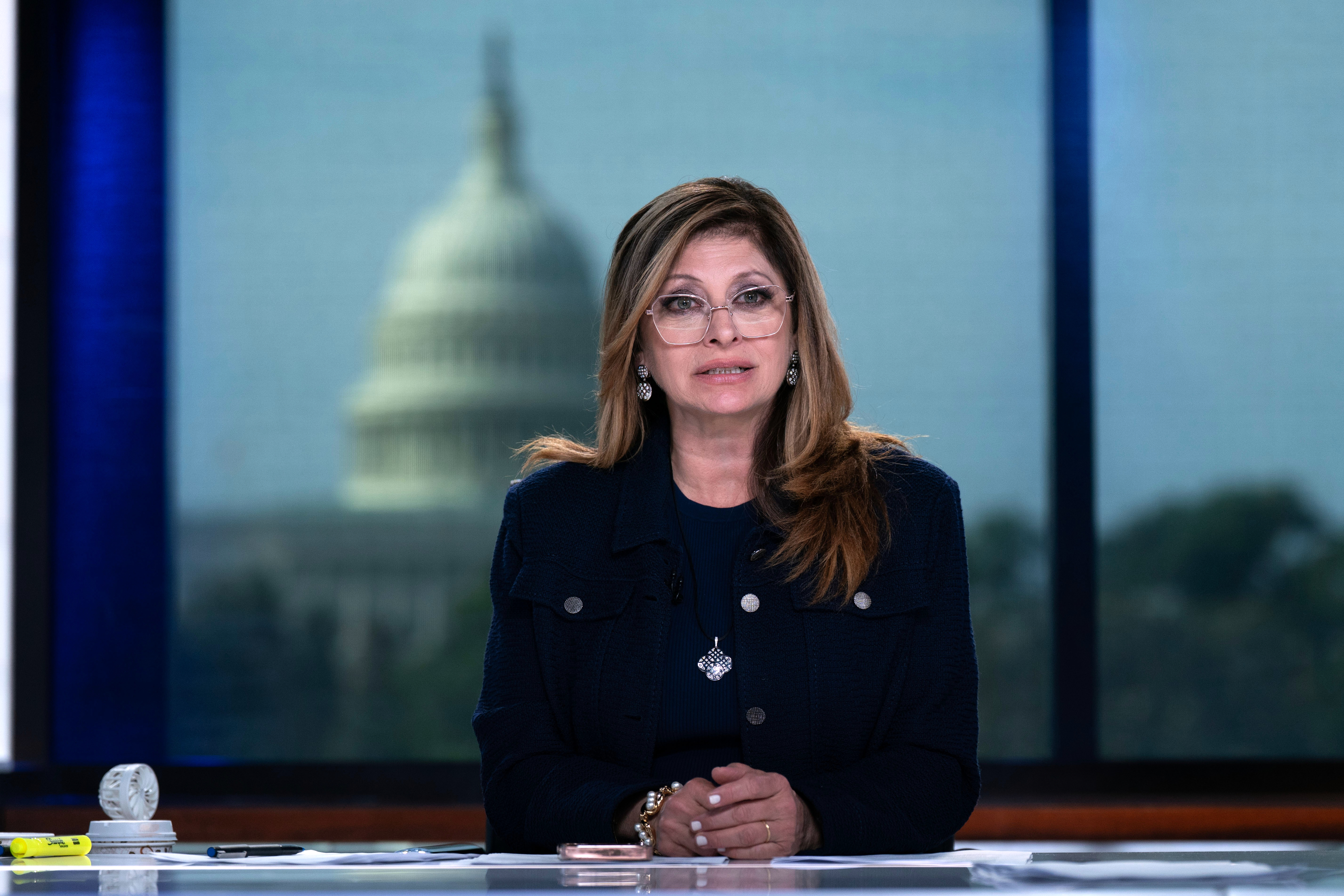
    The attorney for Maria Bartiromo, the longtime Fox News anchor, Friday denied media reports that she was fired from the network.

    Fox News on Thursday announced the departure of the host, who was one of its biggest backers of President Donald Trump. The network did not provide a reason for the abrupt exit after more than 12 years, but it later described the move as a “business decision.”

    Status, a publication focused on the media industry, and Puck News reported that Bartiromo was fired after sending White House officials sensitive internal Fox communications. The Washington Post has not corroborated their reporting.

    However, a person familiar with the details, who spoke to the Post on the condition of anonymity to discuss personnel matters, said that “Bartiromo’s departure was Fox’s decision.”

    Bryan Freedman, Bartiromo’s attorney, said Friday that his client was “still employed by Fox.”

    “The irresponsible reports that have been published stating that Maria Bartiromo was fired or is no longer an employee of Fox are absolutely and unequivocally false,” Freedman said in a statement.

    “Make no mistake, we have the receipts and witnesses and they will come out whether through the courthouse or otherwise. Those reporting her firing or the incredulous facts supporting that fiction have exhibited a complete and utter reckless disregard for the truth.”

    Freedman has previously represented high-profile journalists ousted by their networks, including CNN’s Don Lemon and Fox’s Tucker Carlson.

    Bartiromo was the host of Mornings With Maria and Maria Bartiromo’s Wall Street on Fox Business. On Sundays, she also anchored Sunday Morning Futures on Fox News.

    She promoted Trump’s false claims about fraud in the 2020 election and came under scrutiny in a defamation suit against the network over claims made about Dominion Voting Systems’s software, which resulted in Fox settling Dominion’s claim for $787 million.

    Status reported that Bartiromo was alleged to have told White House officials about Fox guidance to employees to avoid giving credence to false claims Trump made in a July speech about 2020 election fraud. Freedman’s statement did not address the specific allegations.

    Fox News declined to comment on Freedman’s statement.

  • Trump to use Qatari plane for international trip despite security worries

    Trump to use Qatari plane for international trip despite security worries

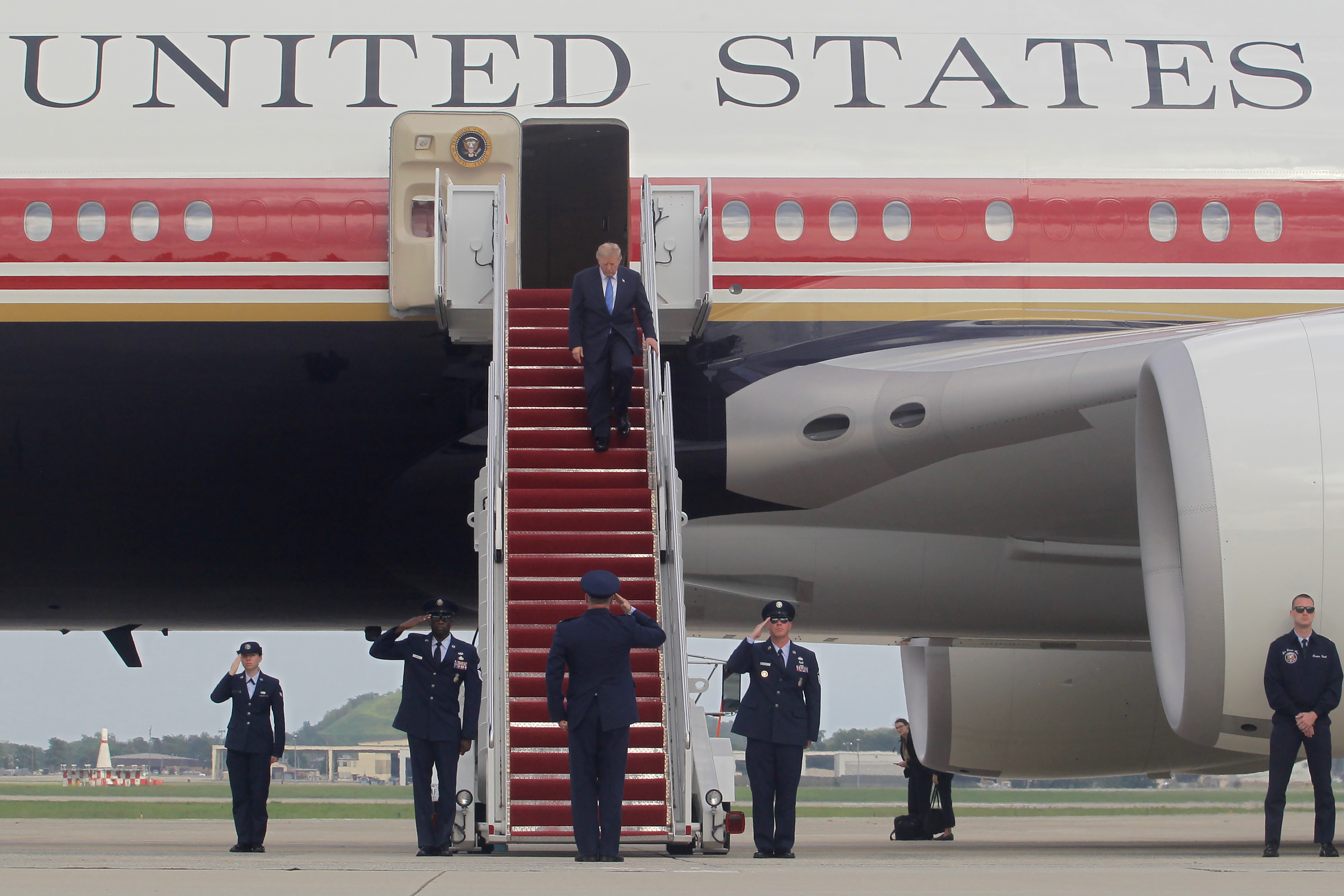
    President Donald Trump plans to fly to Ireland next week aboard the Boeing 747 gifted to him by Qatar, a senior White House official said, marking his first international trip on the jet since a security threat in July prompted him to leave Turkey secretly aboard an alternate aircraft.

    The trip underscores Trump’s continued fondness for and reliance on the Qatari jet despite concerns that it lacks some of the security features of the highly customized, heavily fortified Boeing 747-200B jumbo jets that have carried presidents for decades.

    Trump said in July that the new plane would be sent away to be “maxed out” to address those concerns. Despite suggestions that the security upgrades would be made this fall, the White House has not announced a schedule for the work, which could slip until after the midterm elections.

    “We don’t comment on specific upgrades or modifications to Air Force One,” said a senior administration official in a statement. “We maintain a consistent posture that ensures a safe, secure, and reliable capability for the President of the United States and routinely evolve the capability as required to maintain that posture.”

    In the absence of those upgrades, Trump is poised to use the Qatari-gifted plane more frequently as he ramps up his campaign-season travel. He is scheduled to travel to Texas next week to headline the Republican miniconvention in Dallas and said this week that he will be traveling to Alaska and other states with tight races before the Nov. 3 elections.

    The Ireland trip, however, is more personal to Trump. He plans to attend the Irish Open, which is being held at his golf course in Doonbeg. Officials say he also will hold some official meetings. The BBC has reported that he plans to meet with Irish President Catherine Connolly and Prime Minister Micheál Martin.

    The United States already has spent $400 million retrofitting the Boeing 747 from Qatar. The administration has not said how much more it will need to pay to improve the jet in the coming months.

    Former White House press secretary Karoline Leavitt previously told the Washington Post that the modifications would begin in the fall and take about a month to complete, but security experts have been skeptical that the necessary upgrades could be made on that fast a timeline.

    The gift of the plane from the Qatari government and royal family is an unprecedented arrangement largely intended to address Trump’s frustration with delays in replacing the fleet of decades-old planes that are known as Air Force One when ferrying the president. The Air Force awarded a contract to Boeing in 2017 to purchase two 747s for use as presidential transports. It is not clear if they will be ready before Trump’s term ends in January 2029.

    The Government Accountability Office has estimated that the costs to enhance the 747s now exceed $5.6 billion. Lawmakers have questioned why those upgrades have cost so much more than the changes made to the Qatari jet, and whether the jet is as secure as the government-purchased planes.

    In early July, Trump began traveling on the new plane with the red, white, and navy livery to events celebrating the 250th anniversary of the nation’s founding, including the opening of the Theodore Roosevelt presidential library in North Dakota.

    But questions about the security of the aircraft emerged just weeks into its use, when the president traveled on it internationally for the first time to the NATO summit in Ankara, Turkey.

    He did not take the jet on his return flight after the government received intelligence about a potential Iranian threat to attack it.

    Trump initially claimed that he departed Turkey on the “former Air Force One,” writing on social media that he took the trip for “old time’s sake” and so that U.S. troops stationed in Britain could see the former Qatari aircraft.

    Reporting by the Post revealed that Trump did not actually take that plane out of Turkey. After boarding the old Air Force One in front of TV cameras, he was secretly shuttled to an Air Force C-32A on a catering truck.

    Trump flew the C-32A to Britain with a few personal aides and Defense Secretary Pete Hegseth. Several other Cabinet members, White House staff, and the traveling pool of reporters scheduled to fly with Trump remained on the old Air Force One, which had become a decoy. The press and at least some of the government officials on board were not aware of the switch.

    After the operation, the White House defended the security of the Qatari plane.

    “The new Air Force One is a state-of-the-art aircraft that has been fitted with high-level security protocols that ensure the safety of the President and his staff,” White House communications director Steven Cheung told the Post last month.

  • New study reveals a major perk of being single

    New study reveals a major perk of being single

    Marriage has been well-studied and has even been linked with certain mental and physical health benefits. But new research suggests that singlehood comes with its own boon.

    In a series of three studies, which included two diary studies followed by an experimental one, researchers examined what they call “singlehood self-expansion potential,” or the belief that being single offers opportunities to broaden your sense of self via exposure to new experiences, perspectives, and relationships in a way that has previously been associated with being in a partnership.

    “Self-expansion theory has assumed that self-expansion happens in the context of close relationships,” said Yuthika Girme, an associate professor at Simon Fraser University and co-author of the study published in August 2026 in the Personality and Social Psychology Bulletin. “While that is true, our findings also highlight the potential benefits of personal growth and expansion during solo activities.”

    With this research, “we hoped to deviate from the existing social narrative that romantic relationships are the key to living a fulfilling life and personal growth, and recognize singlehood itself as an opportunity for self-expansion,” said Elina Moreno, the study’s lead author who conducted the research as a social-personality undergraduate mentee at Simon Fraser University and is now a graduate student at the University of Toronto.

    The value of self-expansion while single

    Psychologists have extensively studied self-expansion, or the idea that people are wired to want to develop new perspectives, abilities, and identities throughout life. Much of that existing research has focused on romantic relationships, with findings showing that a partner can introduce you to new people, interests, and ideas.

    Researchers set out to see how this concept may apply to single people, in particular. “The lived experiences of single people are understudied despite the rising numbers of folks who are delaying romantic relationships and choosing to remain single instead,” Moreno said.

    Across three studies, the researchers measured how strongly single participants believed their relationship status offered them opportunities for expansion and examined how those beliefs affected their experiences and emotional well-being.

    Here’s what they found: People with stronger beliefs in singlehood’s potential for growth engaged in more self-expanding activities, from hiking and trying new restaurants to learning skills and playing sports. Those beliefs were also linked to greater satisfaction with singlehood and life overall, less fear of being single, and stronger feelings of autonomy, competence, and connection to others.

    But single people weren’t always engaging in these enriching experiences by themselves. Up to 82% relied on friends and family to join them in these moments of self-expansion — no romantic relationship required.

    Why mindset matters

    Generally, how you look at a situation can influence how you respond to it. “So much of what we experience and perceive in daily life is influenced by our mindset,” Moreno said. But there’s some nuance to that idea when it comes to this study’s findings.

    People who already had higher self-esteem and felt happier about being single were more likely to view singlehood as an opportunity for expansion. Similarly, those who were more anxious about remaining single or felt a romantic relationship was necessary for their happiness were less likely to see that potential.

    “The important variable may not simply be whether someone is single, but what being single means to that person,” said psychologist Avigail Lev, director of Bay Area CBT Center, who was not involved in this research.

    In the third study, the researchers asked participants to imagine specific scenarios meant to encourage them to see singlehood as an opportunity for growth. They found that this did little to change people’s preconceptions.

    “Although people reported engaging in more self-expanding activities and positive mood after our intervention, we were not able to increase people’s singlehood self-expansion potential scores,” Girme said. “This was surprising and highlights that shifting people’s overall mindsets about singlehood may be more challenging than anticipated.”

    Other research on singlehood points in a similar direction. One study of lifelong singles found that those who chose to remain single viewed their relationship status as a source of autonomy and self-fulfillment, while those who felt forced into that choice expressed more regret. Another study on young adults found that those who attributed being single to self-enhancing motivations or a lack of interest in relationships reported greater well-being than those who reported “self-defeating” reasons.

    That distinction is important, said Mandolin Moody, an associate therapist at Gateway to Solutions in New York City who was not part of this research. Singlehood can create room to explore interests and identities independently, but that doesn’t mean everyone experiences it positively, particularly when being single isn’t what they want.

    The study series has a few limitations: Most participants were young adults, Girme said. People in this group may have more time or social permission to prioritize exploration than older adults who may be juggling more responsibilities. More research is needed to determine whether the findings apply across different stages of life.

    Additionally, the well-being boost from solo self-expanding activities — such as an increase in life satisfaction and strong feelings of autonomy and competence — was short-lived. “The research showed that benefits were largely limited to same-day associations rather than indicating prolonged benefits,” Moody said.

    How to make singlehood more expansive

    Self-expansion doesn’t require booking an expensive bucket-list vacation, for instance. Trying a new hiking trail, sampling a cuisine that’s new to you, or joining a pickup pickleball game can count, Girme clarified. What matters is allowing yourself to try something new and step outside your usual routines. Consider the following tips:

    • Try something new. Take an online class, pick up a new hobby, or start learning about new subjects you’ve always been curious about.
    • Get to know yourself better. Journaling can create space to reflect on what interests you and what you’re learning about yourself. “Therapy can be a great resource for enhancing self-discovery and for evaluating belief systems that may be impacting your self-esteem or personal singlehood self-expansion potential,” Moody said.
    • Find new communities. Look for opportunities to meet people who share your interests, whether that’s through a recreational sports team, book club, sewing circle, or community garden. Moody recommends staying consistent and open-minded as you build connections outside of romantic ones.
    • Travel solo. “Solo travel is known to be a great opportunity for self-expansion, as it fosters the full exercise of personal freedom, decision-making, self-reliance, and socializing outside of your usual environment,” Moody said.

    Think of being single as an opportunity to focus more of your time and energy inward, Moody added.

    Ultimately, the goal isn’t to decide whether being single or partnered is better than the other, Lev said. “It’s to stop treating singlehood as a state that must be escaped. When we approach it as an opportunity rather than a deficiency, we gain the freedom to use it for exploration, connection, and growth, and to become more intentional about who we want to be.”

  • Trump officials say work will start on triumphal arch within two weeks

    Trump officials say work will start on triumphal arch within two weeks

    Administration officials Thursday announced they would soon begin work to build President Donald Trump’s planned 250-foot-tall triumphal arch, his most significant change to Washington’s skyline.

    “We are preparing to start, over the next two-week period, the excavation work necessary,” Interior Secretary Doug Burgum wrote on X.

    The announcement comes three days after the Supreme Court allowed Trump to keep building his planned White House ballroom, with a 5-4 ruling that historical preservationists who sought to block that project lacked legal standing to bring their case to court.

    That decision created new hurdles to other court challenges of Trump’s projects, legal experts warned, and Justice Department lawyers invoked it Thursday as they sought to dismiss a legal challenge to the arch.

    The administration plans to build the arch in Memorial Circle, a traffic roundabout tucked inside Washington’s boundaries near Arlington National Cemetery. Trump has said that the arch will honor the nation’s 250th anniversary, vowing that it will be the largest triumphal arch in the world — about 86 feet taller than France’s famed Arc de Triomphe.

    Historical preservationists, Democratic lawmakers, and some Washington residents have opposed the project, calling it an oversize and inappropriate structure that will disrupt the historically solemn corridor between the military cemetery and the Lincoln Memorial.

    It is also the subject of a lawsuit brought by several military veterans who say the towering structure would alter their experience when visiting the nearby military cemetery.

    Administration lawyers Thursday asked a federal court to throw out the military veterans’ challenge to the arch, citing the Supreme Court ruling on the ballroom as precedent.

    “Plaintiffs’ distaste for the perceived symbolism of the proposed arch does not establish a concrete and particularized injury,” Justice Department lawyers wrote.

    Administration officials have laid out an aggressive timeline to potentially complete the arch within two to three years, saying that crews would work 20 hours per day, year-round. Trump and his deputies also contend that they do not need approval from Congress because lawmakers authorized a somewhat similar project a century ago that was never built.

    “It was meant to be built for many years,” Trump said in the Oval Office in May. “The land is owned by secretary, by the Interior Department. We don’t need anything from Congress.”

    The project already has received approval from the Commission of Fine Arts, a federal panel that reviews local design projects. The National Capital Planning Commission, a second federal panel that has been reviewing the project, has yet to issue final approval.

    Democratic lawmakers have said that the arch must go through congressional review.

    Lawyers for Public Citizen, a watchdog group that is representing the military veterans, have urged a federal judge to halt the project, too.

    “Frankly, I’m befuddled as to what sort of legal authority the administration thinks it has behind it,” Nicolas Sansone, Public Citizen’s lead attorney on the case, said Thursday, citing the lack of final approval from the National Capital Planning Commission.

    Trump administration lawyers had told the judge that the project should not be halted because it had not officially begun. Officials also told the judge that they would provide the public at least 14 days’ notice before beginning construction.

    Fifty-two percent of Americans are against the planned arch, compared with 21% who favor it, according to a Washington Post-ABC-Ipsos poll conducted in April.

    Trump has prioritized construction of the arch, along with the ballroom and other Washington-area projects.

    “When completed, it will be, without question, the Greatest Arch of them all!” the president wrote on his Truth Social platform in June.

  • Republicans fear Trump will keep super PAC money and not spend on the midterms

    Republicans fear Trump will keep super PAC money and not spend on the midterms

    With early voting about to begin in competitive midterm races, President Donald Trump has kept most of his super PAC money on the sidelines, causing Republican leaders to conclude that it’s too late to fully deploy the cash in the midterms and that he intends to hold on to much of it for his own purposes.

    Trump’s political advisers have been assuring anxious allies that MAGA Inc., the president’s super PAC that had more than $400 million on hand as of July 31, will come to the rescue during the peak campaign season after Labor Day. But Republicans are increasingly skeptical and suspicious that Trump — who must personally approve the spending — has other ideas.

    The president has not revealed his plans, and his political advisers consistently say they will not share them with reporters. Some people around Trump have concluded that he has little interest in spending the bulk of his super PAC funds on this year’s midterm races, according to a person with knowledge of internal conversations.

    Theories about what Trump wants to do with the money cover a broad range of possibilities, including protecting his political influence in the next presidential race by passing on the money to his chosen successor, and saving up for legal fees, postpresidential travel, events, and pet projects, such as his library. Trump’s Miami library is projected to cost at least $1 billion, the most expensive presidential library construction to date.

    The person with knowledge of internal discussions, who spoke on the condition of anonymity to talk about those conversations, said Trump and his team believe their ability to rake in massive donations will take a hit after the midterm elections, giving the president an incentive to keep hold of the money he has raised so far.

    Fundraising accounts associated with the president — such as his super PAC and funds for his inauguration, White House ballroom and Freedom 250 events — have been inundated with donations from companies looking to get in Trump’s good graces, a dynamic that is likely to change as he becomes a lame duck.

    Some donors have started holding back on giving more money to the super PAC while it sits on earlier contributions, according to people familiar with the matter who, like others interviewed for this article, spoke on the condition of anonymity because they were not authorized to speak to reporters.

    Trump’s reticence surrounding how he will use MAGA Inc. money has caused particular worry for Republicans in this fall’s elections.

    GOP candidates and officials still avoid criticizing the president on the record. Privately, however, some operatives have complained that MAGA Inc. has already missed valuable opportunities to lock in airtime at lower advance rates and define candidates before attitudes harden.

    Allies have also criticized Trump’s preference for promoting his own record, arguing that super PACs are most effective at attacking opponents, as MAGA Inc. did in 2022.

    The nonprofit arm of Trump’s political operation, Securing American Greatness, premiered its first midterm ads on Wednesday, spending just under $1 million, according to the tracking firm AdImpact. The ads, set to air nationwide, feature video clips of Trump talking about tax breaks in his domestic spending legislation and lower prices for eggs and prescription drugs. One spot uses Trump’s friend Dana White, the chief executive of the Ultimate Fighting Championship.

    “Like, they think he’s popular or something,” a Republican ad maker scoffed when shown the videos. “He’s not.”

    Multiple public and private polls show Trump’s approval rating mired in the mid-30s, at or near historic lows for a president facing a midterm election.

    The ads adhere to Trump’s instruction to advisers to promote his record, and the super PAC could take a different approach with future ad buys, people familiar with the discussions said.

    A large lead in available cash has been one of the few bright spots for Republicans in this election cycle, because many of the swing constituencies that helped Trump win back the White House have drifted away amid disappointment with persistent inflation and the Iran war. Leaving a large portion of MAGA Inc.’s money on the sidelines threatens to neutralize that advantage, as individual Democratic campaigns outraise their GOP counterparts.

    “I worry about that, for sure,” Senate Majority Leader John Thune (R, S.D.) told his home state’s CBS affiliate about the possibility of losing the Republican majority in the upper chamber. “I’m a realist, and I just think you — I don’t ever try and sugarcoat things. I think it’s a competitive environment right now.”

    While some Republicans have given up on waiting for the MAGA Inc. cavalry, Democrats continue to warn that they expect Trump’s super PAC and Elon Musk’s political outfit to outgun them.

    “All of that takes the advantage that Democrats have in terms of individual small-dollar donors, and it really will just swamp it,” said Rep. Chris Pappas (D, N.H.), who is running for an open Senate seat in a tight race against Republican former senator John E. Sununu.

    “We are going to get outspent in this race,” he said.

    Musk’s super PAC, which spent more than $260 million to back Trump and other Republicans in 2024, just reported $800,000 in midterm spending on GOP candidates, federal campaign filings show. The PAC also started advertising online in the battleground Senate races in Texas, Michigan, New Hampshire, and Maine, according to Meta’s disclosures of political ads on Facebook and Instagram. A spokesman declined to comment.

    With the availability of broadcast airtime dwindling, MAGA Inc. may spend more heavily on ads placed on digital streaming services, according to three people familiar with the plans. Those people said streaming services can be more cost-effective for targeting younger and less-frequent voters, like those who helped Trump in 2024, a constituency that Republicans will need to mobilize again this fall.

    The PAC is also likely to pay for events and get-out-the-vote operations, one of the people said.

    Skeptics of MAGA Inc.’s promises point to Trump’s history of viewing money that he raised as his own and resisting using it to help others. So far this year, the super PAC has spent less than $900,000 supporting Sen. Darline Graham (R, S.C.) in her primary and less than $20,000 sending text messages for Rep. Clay Fuller (R, Ga.), according to federal campaign finance disclosures.

    “I’m not affected by the election,” Trump told reporters in the Oval Office on Wednesday while discussing the Iran war. “I’m not running. But my party is running, and I’m going to help my party.”

    At an event in the Rose Garden with congressional Republicans, Trump on Wednesday night previewed what he described as nonstop travel in the last 30 days before the elections, including a trip to Alaska to stump for Sen. Dan Sullivan (R), but he made no mention of super PAC spending.

    “We’re going to be helping you, and I’ll be going around and doing a lot of speeches,” he said. “We’re going to take that little, that final 30 days. You don’t want to go too much before then because people forget.”

  • Texas sees extreme flooding as more than a foot of rain falls in areas

    Texas sees extreme flooding as more than a foot of rain falls in areas

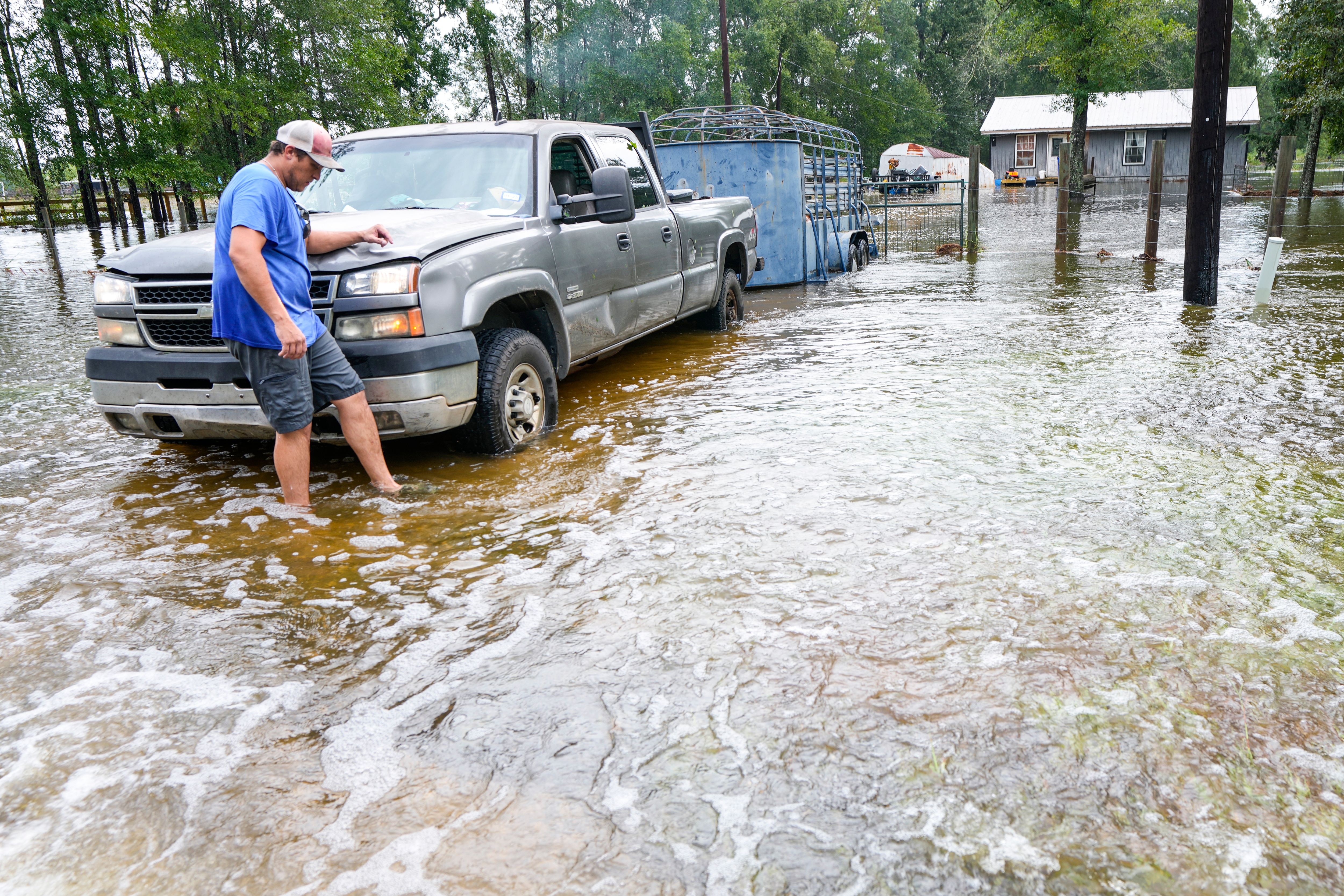
    HOUSTON — An extreme flood scenario was underway Wednesday in Southeast Texas with the remnants of Edouard.

    The storm, now a tropical depression, has dumped an estimated 15 to 22 inches of rain in spots, and some areas could experience rain totals of 25 to 30 inches.

    A flash flood emergency was issued for Hardin and Tyler counties until 10:45 a.m. local time. By noon local time, a weather station near Saratoga, Texas, was up to 17.75 inches — 5.91 inches of which fell between 5 and 6 a.m. A station south of Ivanhoe, Texas, near Warren, has recorded 15.68 inches of rain. Another near Wildwood is up to 16.52 inches. And considerably more has probably fallen in the rural areas away from weather stations.

    At least one person had to be evacuated in the East Texas town of Kountze after water entered a structure as heavy rain swept the area, according to staff at the National Weather Service office in Lake Charles, Louisiana.

    Forecasters urged people to get to higher ground as rain continued to fall early Wednesday, delaying damage assessments.

    “Move to higher ground now!” wrote the National Weather Service in Lake Charles. “This is an extremely dangerous and life-threatening situation. Do not attempt to travel unless you are fleeing an area subject to flooding or under an evacuation order.”

    Texas deployed rescue aircraft, boats and high-water vehicles, and the state’s emergency operations center has been activated, along with 1,500 state personnel.

    “We are getting it pretty good over here,” Kountze Mayor Glenn Matthews said by phone from his home, which has been without power since Tuesday night, noting crews were out doing welfare checks for the roughly 2,000 residents.

    Matthews said he had not heard any reports of injuries or deaths related to the storm, and there were no evacuation orders for the area. But there was concern about elderly residents like his parents who were without power and sometimes need oxygen.

    “What we’re doing now is making sure everyone is okay. Then we can try to assess the damage after the rain has let up some,” Matthews said. “It’s still raining as we speak. The city is pretty much flooded because this much rain at one time, there’s nothing the drainage can do about it. But it dissipates pretty well when it stops. This is not our first rodeo: We’ve been through this before many times.”

    He noted that the rains came after a lengthy dry spell: “We had just declared a burn ban. Be careful what you ask for.”

    At least 80,000 people were without power Wednesday morning across hard-hit areas of East Texas, the majority – about 50,000 — in coastal Port Arthur, an industrial refinery town of about 56,000.

    “We’re out doing damage assessments this morning in between wind and rain bands. It’s still an organized storm, albeit moving to our north. The winds are stronger than what had been forecast,” said Jeff Branick, chief executive for Jefferson County surrounding Port Arthur.

    Branick said the areas has “mostly debris issues, very little flooding” compared with Kountze and other areas to the north, where the state’s emergency management division has sent search-and-rescue boat teams.

    But he noted that the area has “some industrial upsets because of the loss of power,” including widespread complaints overnight of gas and burning rubber odors near refineries.

    “The investigation is still ongoing. Fortunately, after the odor appeared they determined one of their flares that’s used to offset the loss of power had not ignited and they got it ignited and the issue went away,” Branick said of a Valero refinery.

    Downtown Houston has seen only about a tenth of an inch of rain, if that. The edge of the heaviest rain is razor-sharp, with a flood disaster 50 to 75 miles away.

    Rainfall totals of 5 to 6 inches per hour are common in the heaviest bands. A staggering 5.91 inches fell in a single hour along Highway 787 west of Lumberton, Texas.

    Edouard is a waterlogged system, making for extremely efficient precipitation processes. Not only is there more water in the atmosphere to work with, but the saturated atmosphere means there’s little to no evaporation of the raindrops on the way down.

    There are even some indications that Edouard intensified a bit overnight. That’s because of several factors.

    For starters, diurnal — day/night — processes often lead to enhanced convection, or thunderstorm, activity after nightfall. That sometimes allows tropical cyclones to strengthen a bit after dark, even if they’re moving inland.

    The system also has an umbilical cord of moisture and instability, or thunderstorm fuel, feeding it from the southeast. That Gulf of Mexico connection helped fuel the storm, even far inland.

    But the tiny core has remained remarkably intact. It’s not often a well-defined eye is present 115 miles inland. Edouard’s decay may also be slowed by something called the “brown ocean effect,” a rare phenomenon in which a tropical system that has made landfall behaves as if it’s over water.

    It occurs when hot, saturated soils mimic a tropical ocean, allowing a cyclone to extract heat energy.

    That may seem surprising considering there’s a drought in Texas. But the hot, sunbaked soils may have become a bit warmer due to the drought. Then they were resaturated by the initial rains from Edouard’s outer bands. Soil temperatures in the top 6 inches of ground in Southeast Texas were between 82 and 85 degrees as Edouard made landfall.

    Marshall Shepherd, a researcher at the University of Georgia and a specialist on this process, likened it to a “flash brown ocean feedback.” In an email, he suggested the initial dry environment may have played a role.

    Something similar happened with the remnants of Tropical Storm Erin, which came back to life over Oklahoma on Aug. 18, 2007. Research from 2021 noted that dry conditions preceded Erin but that the storm re-wet the hot soils, allowing the brown ocean effect to occur.

    In the case of Edouard, the storm’s small size made it extra prone to interacting with the landscape, noted Brad Johnson, a research meteorologist and specialist on the role of land type.

    In the interim, Edouard will continue to dump prolific moisture.

    Steering currents are very weak, so there’s not much to scoot the system along. The storm was moving northwest at 5 mph — a brisk walking pace.

    An additional 6 to 14 inches of rain may still fall in some spots.

  • Advocacy groups, fearing federal intimidation, plan to deploy poll watchers

    Advocacy groups, fearing federal intimidation, plan to deploy poll watchers

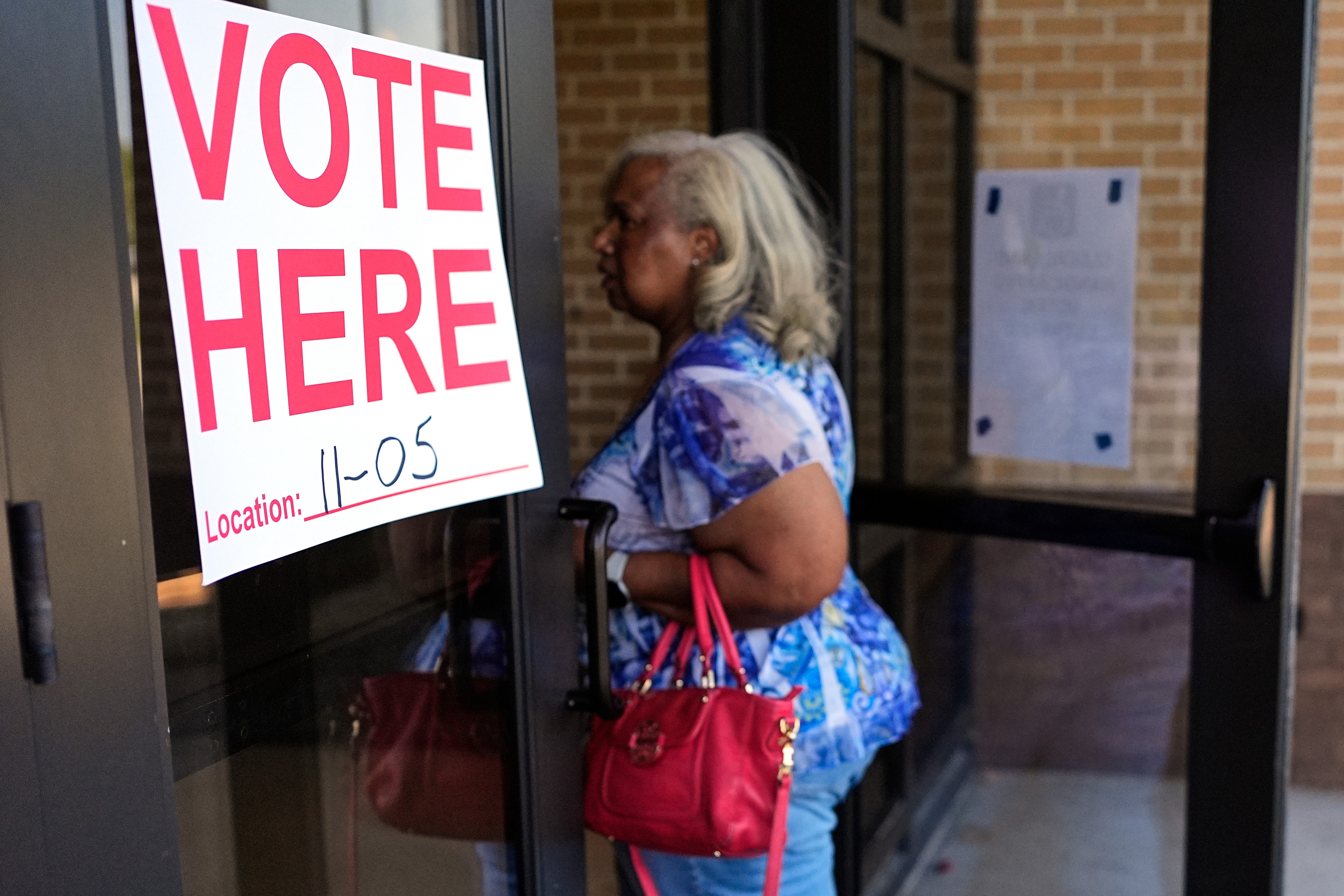
    A coalition of civil rights and advocacy groups plans to deploy hundreds of poll watchers this fall at heavily minority precincts to counter what organizers say is a threat of voter intimidation from President Donald Trump’s administration.

    The National Action Network, the American Federation of Teachers, and the Save America Movement are launching the Vote Safe project, which they described as a nonpartisan initiative set to begin during early voting and culminate in the Nov. 3 midterm elections. They are focusing on Michigan, Ohio, Georgia, and North Carolina, all of which are competitive in the battle for control of the Senate.

    Trump has routinely raised alarms about the threat of voter fraud this fall, stoking fears among his followers and prompting calls for preemptive action. He has urged Republicans to nationalize elections, and some administration officials haven’t ruled out deploying agents to polls, even though federal law prohibits doing so.

    “There is really an unprecedented threat to our elections this year, and it’s coming from our own government,” Mary Corcoran, executive director of the Save America Movement, said in an interview. Corcoran co-founded the group along with Lincoln Project co-founder Steve Schmidt to counter what they see as the excesses of Trump’s MAGA movement.

    Those locations were chosen as politically significant areas with large populations of people of color that could be vulnerable to intimidation, she said. The idea is to have trained community members — such as faith leaders, teachers, veterans, and firefighters — at polling places, so voters “can go there with confidence,” Corcoran said. “We want to replace that fear with comfort and knowledge.”

    Homeland Security Secretary Markwayne Mullin said at a news conference Tuesday that Immigration and Customs Enforcement agents aren’t meant to patrol polling places but may be present if they are serving a warrant or responding to a threat. Then-White House spokeswoman Karoline Leavitt said at a news conference this year that she “can’t guarantee that an ICE agent won’t be around a polling location in November” but added that she hadn’t heard Trump discuss plans to do so.

    Former Trump strategist and podcaster Stephen K. Bannon has suggested that ICE deployments at airports could serve as a “test run” for similar efforts at election sites.

    While both political parties have increasingly deployed poll watchers since 2020, recent years have seen clashes over charges of voter intimidation. During 2022’s midterm elections, a court order stopped armed, masked individuals from photographing people casting early ballots in Arizona. This year, the Justice Department has said it plans to send 1,000 monitors to the polls.

    Organizers said they modeled the Vote Safe initiative after a project the Save America Movement undertook last year to station observers and videographers in areas of the country with a heavy ICE presence in hopes of preventing violence.

    Corcoran said volunteers are being trained in local election laws and techniques to de-escalate tense situations. They will be clearly identified with Vote Safe insignia, she said, and none will be armed.

    Vote Safe plans to deploy poll watchers around Detroit, Atlanta, Cleveland, and Charlotte, in the 20 precincts in each area with the highest expected turnout of racial-minority voters.

    Citing the Supreme Court’s recent weakening of protections for minority voters in the Voting Rights Act, the organizers said they want to ensure that voters of every ethnicity feel welcome at polling places. They also want to protect voters from having their immigration status inappropriately challenged.

    “No voter should have to wonder whether exercising their constitutional right will put them at risk,” the Rev. Al Sharpton, founder of the National Action Network, said in a statement. “If anyone thinks the presence or threat of federal agents will frighten our communities away from the polls, they are badly mistaken.”

    Randi Weingarten, president of the American Federation of Teachers, said in a statement that the coalition’s goal is for voters to feel there is “someone standing beside them who knows their rights and knows the law,” so they can cast a ballot with confidence.

  • Poll shows nearly 90% of Americans believe government corruption is widespread

    A record number of Americans believe there is widespread corruption in the U.S. government, reaching the highest level of distrust in two decades, according to a Gallup poll released Wednesday.

    The survey of 1,000 people conducted in May and June reflects the surging bipartisan frustration with the country’s political institutions and the people who run them.

    Nearly 90% of U.S. adults said corruption was widespread in the government, a 10 percentage point jump from last year, according to Gallup’s poll. The United States also has the highest level of perceived government corruption compared with other countries with advanced economies as of 2025, the year of the latest available data.

    Since 2006, the percentage of Americans perceiving widespread corruption stayed mostly in the 70s, Gallup’s data shows. It began to sharply rise in 2024.

    In 2024, when Joe Biden was president, 57% of Democrats said government corruption was widespread. In 2025, after President Donald Trump returned to the White House, that percentage rose to 76 and climbed to 91 this year, according to Gallup’s data.

    As November has grown nearer, Democratic leaders have homed in on anti-corruption messages in their quest to retake Congress. Democrats repeatedly accused the president of breaking his promise to get rid of waste, fraud, and abuse in Washington, instead enriching himself, his family and his allies through the federal government.

    During an event to mark the final 100 days before the midterm elections, House Minority Leader Hakeem Jeffries,(D, N.Y.) debuted a new line in his stump speech: “We are going to hold the crooks accountable.”

    On the other side of the aisle, Republicans’ view of corruption has stayed relatively steady since 2024, suggesting that their perception of the issue does not hinge on the party in power as much as it does for Democrats. This year, 83% of Republicans and 90% of independents said corruption was widespread.

    That finding suggests that Americans are accessing political news and information — and that corruption is breaking through as an issue, said David Szakonyi, a political science professor at George Washington University.

    “There is a broad base consensus for the fact that something is broken in Washington,” Szakonyi said.

    The new poll does not shed light on where exactly Americans believe the corruption is. It posed a very broad question — “Is corruption widespread throughout the government in this country, or not?” — without identifying specific people, agencies or administrations.

    But over the last year, Democratic voters and lawmakers have criticized the Trump administration for what they have called “self-dealing” initiatives — including a $1.8 billion payout fund to compensate administration allies who felt they were unfairly investigated that was later abandoned and no-bid contracts given to Trump allies.

    During his presidency, Trump has made historic financial gains, charged by ventures including cryptocurrency that his administration is tasked with regulating. White House officials have said the president and his relatives have not nor would they engage in conflicts of interests.

    No formal federal public corruption charges have been brought against Trump administration officials since the president retook the office in 2025.

    Democrats have dealt with high-profile corruption investigations within their party in recent years. Among them was the case of former senator Bob Menendez of New Jersey, who was sentenced to 11 years in prison for a corruption case involving bribes that totaled nearly $1 million in cash and other items. More recently, Rep. Henry Cuellar (D, Texas) was facing bribery, money laundering and conspiracy charges before Trump pardoned him.

    In June, another poll had similar findings about government corruption views among American political groups. The Brennan Center for Justice survey, which polled 2,000 registered voters, found that majorities of Republicans, Democrats, and independents viewed corruption as “a very big problem” facing the federal government.