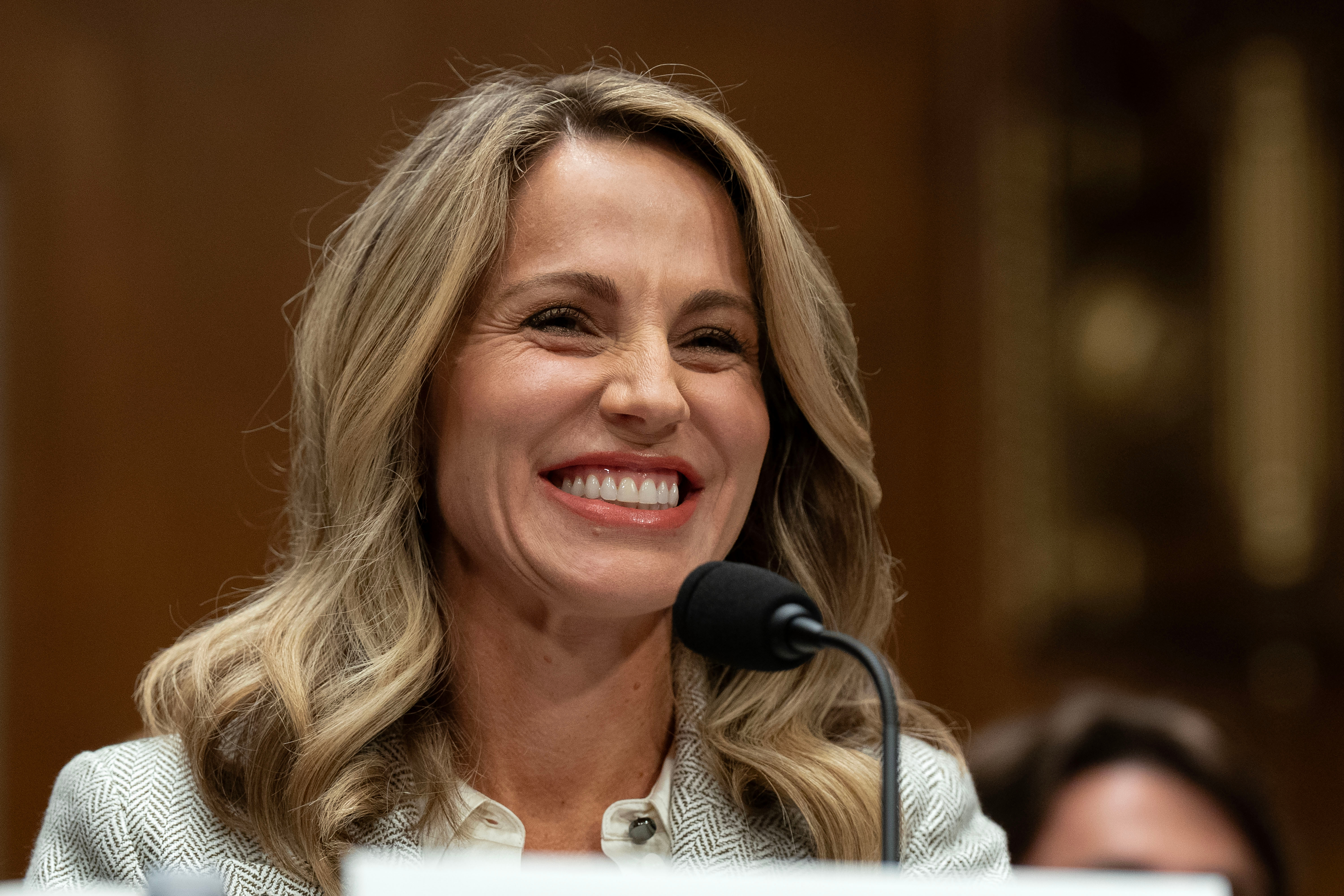
WASHINGTON — Nicole Saphier, President Donald Trump‘s third nominee for surgeon general, moved a step closer to confirmation after a Senate committee voted to advance her nomination on Wednesday.
Saphier, a radiologist and former Fox News Channel contributor, was advanced out of the Senate Committee on Health, Education, Labor and Pensions on a 12-to-11 vote to serve as surgeon general after she was grilled at her confirmation hearing earlier this month about her stance on childhood vaccines.
She expressed support for vaccines and told lawmakers she didn’t believe they cause autism. The Trump administration has sought to revisit claims about a link between vaccines and autism, although widespread scientific consensus and decades of studies have firmly concluded there is none.
Timothy Westlake, who was nominated to serve as assistant secretary for mental health and substance use at the Department of Health and Human Services was also advanced out of committee on the same en bloc vote.
It was not immediately clear when the officials would face a full Senate vote for their confirmation but they are expected to be approved.
During her confirmation hearing, Republican Sen. Bill Cassidy pressed Saphier to declare whether she believed there was a link between vaccines and autism. Saphier responded that she does “not believe childhood vaccines cause autism,” adding that “the MMR vaccine is our greatest tool for combating measles,” in response to a question by Cassidy over whether parents should give children that shot.
MMR stands for measles, mumps and rubella, and the president recently called for the shots to be spaced out, against the guidance of medical groups.
The surgeon general position carries limited policymaking power but serves as a loud megaphone as the nation’s top communicator to Americans on public health issues.
Cassidy, who led the inquiry into Saphier’s views on vaccines, ultimately voted in support of her nomination.
Sen. Bernie Sanders, the ranking member of the Senate HELP committee, said ahead of Saphier’s vote that he would vote down her nomination because in part Saphier “has questioned the need for the hepatitis B vaccine at birth, when the data science has been clear.”
“We need a surgeon general who will tell the truth about vaccines, not someone who misleads the public,” Sanders said. At her confirmation hearing, Saphier said the universal birth dose of hepatitis B was safe and effective.
Chris Klomp, who was nominated to serve as deputy secretary of the Department of Health and Human Services, was advanced out of the Senate Finance Committee last week on a 15 to 12 vote. He was questioned during the same hearing as Saphier about his duties associated with the role as the current chief counselor of the Department of Health and Human Services under the leadership of Health Secretary Robert F. Kennedy Jr. as well as about his vaccine stance.
In protesting Klomp’s nomination at the Senate Finance Committee, Sen. Ron Wyden said Klomp “tried to create the impression that he will be the adult in the room on vaccines. Yet, as we sit here today, the vaccine chaos that we’ve come to expect from Robert Kennedy’s HHS continues.”
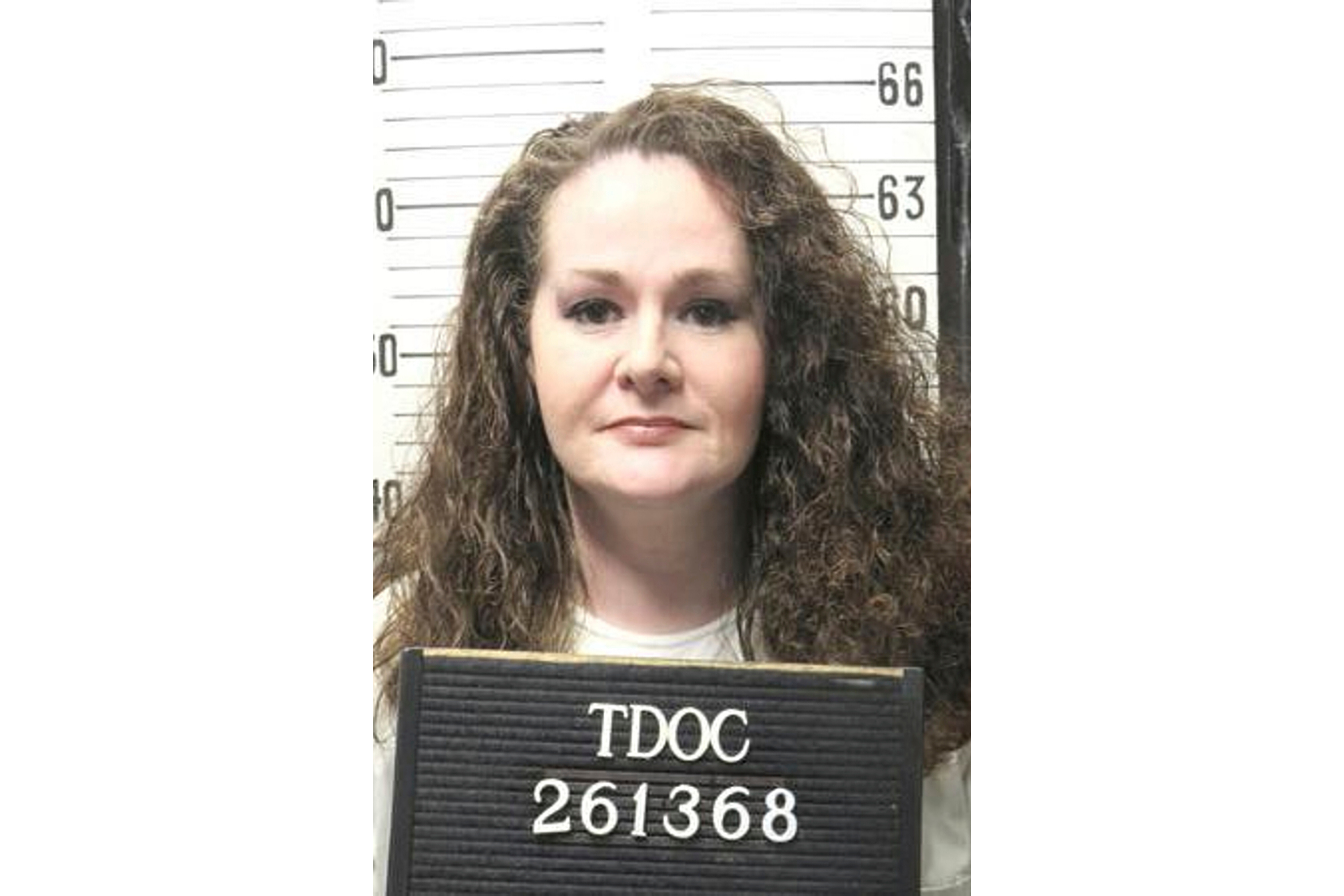
NASHVILLE — The U.S. Supreme Court is allowing the execution of Christa Gail Pike to go forward in Tennessee, overturning a last-minute stay that was issued by an appeals court hours earlier Wednesday.
Pike, 50, was scheduled to die by lethal injection in the morning, and witnesses had already gathered at the Riverbend Maximum Security Institution in Nashville when the 6th Circuit U.S. Court of Appeals voted 2-1 to issue a stay. That court said a delay was needed to consider whether Pike’s allegations of childhood sexual abuse were fully considered at her sentencing.
The Supreme Court’s three liberal justices, Sonia Sotomayor, Elena Kagan, and Ketanji Brown Jackson, dissented from the ruling. Sotomayor called the court’s decision stunning, as it clears the way for the execution to happen “before her still-pending legal challenges to her conviction can be properly considered.”
Pike, who was 18 at the time, and her boyfriend were convicted of the 1995 stabbing and beating of 19-year-old Colleen Slemmer, their classmate at a job training facility in Knoxville.
The case garnered widespread attention back then in part because a pentagram that was carved on Slemmer’s body and other elements of the crime stoked fears of Satan worship during the “satanic panic” of the 1980s and 1990s.
Decision stopping execution was swiftly appealed
After the stay was issued, Tennessee’s attorney general immediately appealed to the Supreme Court. Witnesses and media remained at the prison while the high court considered the case.
Despite the Supreme Court’s ruling, it was not immediately clear if the execution would happen Wednesday. The state’s execution order expires at midnight, according to Kelley Henry, a Nashville-based attorney experienced with Tennessee death penalty law. If time runs out, the state Supreme Court would need to set a new date.
In its appeal to the U.S. Supreme Court, the attorney general’s office wrote that halting the execution at the last moment traumatized Slemmer’s family and rewarded “abusive delay tactics” by Pike’s attorneys.
Pike does not deny committing the killing, but her supporters argue the state should consider her age at the time, her mental illness and her allegations of severe sexual abuse that included being raped from the time she was a toddler.
“It is inconceivable that in the 21st century, the criminal justice system is poised to execute a survivor of rape and child sexual abuse whose jury never had the opportunity to consider those facts in weighing the defendant’s moral culpability,” her attorneys wrote in a filing.
Pike’s case renewed debate on the death penalty for teens
As the execution date drew near, Pike’s case renewed debate over the death penalty for young offenders.
Assistant Federal Defender Stephen Ferrell said Pike’s death sentence is an outlier because other 18-year-olds in Tennessee have had such sentences vacated.
After the killing, Pike was diagnosed with bipolar disorder and post-traumatic stress disorder. In her clemency petition, she said she only wanted to fight Slemmer but killed her in a frenzied attack when she couldn’t “put the brakes on.”
“I was a mentally ill 18-year-old kid. It took me numerous years to even realize the gravity of what I’d done. Even more to accept how many lives I affected. I took the life of someone’s child, sister, friend. It sickens me now to think I had the ability to commit such a crime,” Pike said in a statement.
Victim’s mother says she is waiting for death sentence
Slemmer’s mother wants the lethal injection to go forward, saying she has waited decades to see Pike’s sentence carried out.
“Every time I think about it, I think about Colleen feeling that pain and trying to get up and run,” May Martinez told The Associated Press in a telephone interview on Saturday.
Martinez said a group helped raise money so she and her husband could travel from Florida to witness the execution. She didn’t respond to a message Wednesday after the execution was halted.
Martinez said her daughter’s age also should matter in deciding Pike’s fate.
“Not a day goes by, or a minute goes by that I do not think about Colleen. Holidays are the worst,” she said, noting that her daughter would have turned 51 earlier in September.
The killing rocked the city of Knoxville. Prosecutors said Pike, fearing Slemmer was trying to steal her boyfriend, lured her to a wooded area on Jan. 12, 1995. Pike cut Slemmer with a box cutter and beat her with a large chunk of asphalt. Shipp, Pike’s boyfriend, has admitted that he was the one who carved a pentagram, a star-shaped symbol associated with Satan, into her body.
Shipp was 17 when the crime happened and received a sentence of life in prison with the possibility of parole. Pike was the only one sentenced to death.
Executions of women are rare in the U.S.
Tennessee has not executed a woman for at least 200 years, according to Robin M. Maher, executive director of the Death Penalty Information Center. Older records can be spotty, though, so it is difficult to know precise details about the last woman who was put to death there.
Since the Supreme Court reinstated the death penalty in 1976, 18 women have been put to death, representing about 1% of all executions, according to the center.
Most recently, in 2023, Missouri executed Amber McLaughlin for a 2003 killing, in what is believed to be the first execution of a transgender woman in the U.S. In 2021 the federal government executed Lisa Montgomery, marking the first time in nearly seven decades that it put a female inmate to death.
Pike would be the 30th person executed in the U.S. this year after Florida carried out an execution on Tuesday.
The Federal Trade Commission has opened a broad investigation into the safety of artificial intelligence systems made by Anthropic and OpenAI, a senior agency official said Wednesday.
The full extent of the probe was not clear, but the FTC has wide authority to investigate unfair and deceptive practices that hurt American consumers. The official spoke on the condition of anonymity to describe an investigation that has not been made public.
The investigation could provide backing for the Trump administration’s position that existing laws are sufficient to hold artificial intelligence companies accountable, as officials seek to resist a push by some in the industry and Congress to establish a new system of regulations for the technology. The probe was first reported by the New York Post.
Andrew Ferguson, the chair of the FTC, said last week that the government should not immediately jump to adopt new rules before examining the role of existing laws and should treat the AI industry’s calls for regulations with “deep suspicion.”
“There’s no easier way for incumbents to insulate themselves from competition than to enlist Washington to come alongside them and build a wall and a moat around their existing technologies,” he said at an event hosted by news agency Reuters.
Anthropic, which makes the Claude family of AI models, and OpenAI, which makes ChatGPT, did not immediately respond to requests for comment.
Officials have been grappling for weeks with how to respond to growing alarm within the industry that the latest generation of AI systems run the risk of getting out of control. Leading companies have disclosed multiple instances of their tools getting loose on the internet, including one in which a swarm of agents from OpenAI broke into another AI firm.
Anthropic and OpenAI chief executives have proposed a coordinated slowdown to give themselves more time to focus on safety measures. OpenAI said this week it had canceled the planned release of a new model on safety grounds.
The Trump administration has said it largely falls to the industry to guarantee the safety of its own products. President Donald Trump and top AI executives enshrined that approach in a joint accord signed at the White House on Tuesday.
“I’m seeing tremendous self-policing,” Trump said at a news conference after the signing.
Still, officials have left the door open to federal enforcement actions. Vice President JD Vance said at event later Tuesday that it would be up to the Justice Department and FTC to serve as the government’s watchdogs over the companies.
“They have to build products that are safe and good for American consumers,” Vance said. “The government actually has preexisting laws on the books where if you build something that gets unleashed on the internet, that is used as a tool for cyberwarfare, then you have responsibility for the products you develop.”
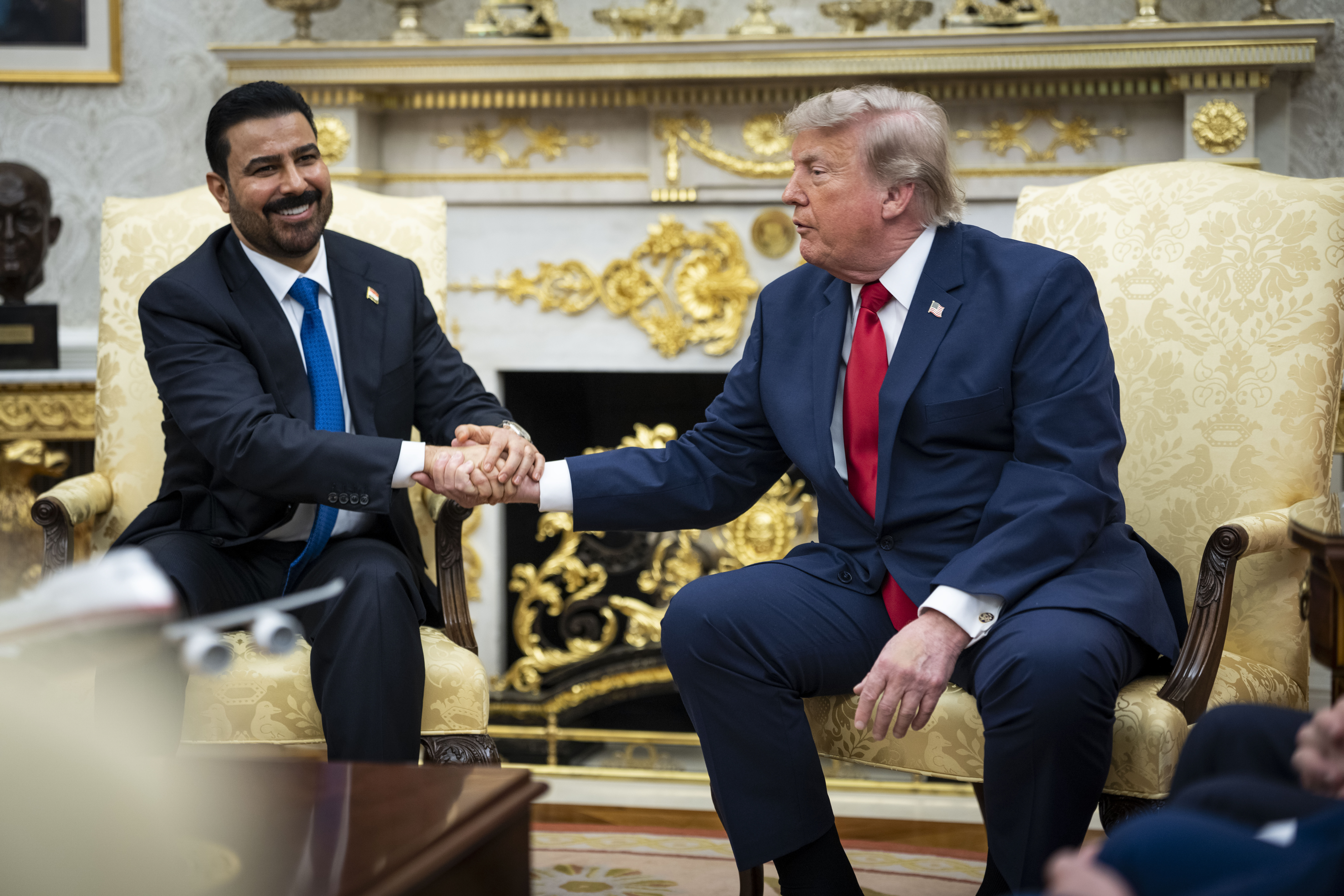
BAGHDAD — U.S. forces formally withdrew from Iraq on Wednesday, ending a two-decade military presence that stoked years of devastating bloodshed and leaves behind a battered nation struggling to unshackle itself from its two most powerful, and now warring, allies.
After toppling Saddam Hussein in 2003, the brutal dictator who ruled Iraq for nearly 24 years, U.S. forces are making their second withdrawal from the country.
The U.S. invasion and subsequent occupation, which ended in 2011, left a country reeling from sectarian bloodletting and militant insurgencies that cost nearly 4,500 U.S. lives and killed more than 115,000 Iraqis, according to the most modest counts.
U.S. forces ultimately returned three years later — this time to lead the international coalition fighting the Islamic State group, the jihadi force that once seized swaths of Iraq and Syria and became notorious for its slaughter of Shiite Muslim Iraqis, public killings of hostages, and torture and enslavement of women from Iraq’s Yazidi minority.
With the end of Operation Inherent Resolve — the U.S. military’s official name for the multinational campaign against the Islamic State — the last of the 2,500 U.S. forces stationed in Iraq this year are now gone.
“The coalition successfully completed its organized withdrawal operation from Irbil,” Rear Adm. Liam M. Hulin, head of the joint task force for Operation Inherent Resolve, announced during a ceremony held by U.S. and Iraqi officials in Baghdad. Irbil, capital of Iraq’s semiautonomous Kurdistan region, hosted the last coalition base in Iraq.
“I stand before you at this historic moment, when a nation reclaims its destiny,” Hulin said, in a speech given in Arabic.
Promising that U.S. and Iraqi forces would forge new security partnerships, Hulin urged Iraq to remain vigilant, citing an Arabic proverb, “Gird yourself for the jackal with the belt of a lion.”
Physical reminders of decades of war are being erased every day. The blast walls that once snaked through Baghdad have come down. Malls, restaurants, and construction sites are buzzing in a country determined to reclaim the rhythms of normal life stolen by years of car bombs.
Iraqis’ hard-won gains look more precarious in a region convulsing from the turmoil of the U.S.-Israeli war on Iran. Iraq is struggling to navigate its critical relationships with Iran, its powerful neighbor, and with its most important ally, Washington, wary of letting the exit of U.S. troops in the country embolden Iran.
The U.S. withdrawal agreement was struck between the Iraqi government and the Biden administration in 2024. That President Donald Trump’s administration followed through with the Sept. 30 deadline — despite the war with Iran — reflects broader U.S. determination to step back from the region.
For years, there has been widespread American fatigue with so-called forever wars, as the conflicts in Iraq and in Afghanistan came to be known.
Even as Iraq commemorates the U.S. withdrawal this week with a three-day “celebration of sovereignty,” the country is under huge pressure from the Trump administration to disarm Iran-backed Shiite Muslim militias, many of which are defying state efforts to bring them under control.
The last U.S. forces leave a troubled American legacy. Iraq suffered huge numbers of civilian casualties and a cycle of sectarian violence between Iraq’s Shiite Muslim majority, empowered after years of repression by the Hussein government, and the Sunni minority, stripped of privileges it once held under his rule.
U.S. forces also committed many abuses themselves — including the torture of Iraqi detainees at Abu Ghraib and the use of private defense contractors such as Blackwater, whose extrajudicial killings of civilians fueled deep resentments over American impunity.
Despite these grievances, Iraqis have been watching the U.S. departure with a sense of trepidation.
“My wife lost her eyesight from the shrapnel of an American bullet,” said Omar al-Husseini, a photographer from Mosul, the city at the heart of the Islamic State’s self-proclaimed caliphate. “My uncle was killed by ISIS, after being paralyzed by an American bullet,” he said, using an alternative name for the Islamic State. “But today, when we speak about the Americans’ departure, our happiness is mixed with fear.”
Under the leadership of the novice prime minister, Ali al-Zaidi, Iraq faces the daunting task of reining in the vast array of militias.
First established with Iranian support to fight the U.S. occupation, the militias killed hundreds of U.S. soldiers, and the sectarian bloodshed they helped foment killed tens of thousands of Iraqis. In 2014, when Iraqi Shiites mobilized to fight the Islamic State, the militias multiplied. In the years since, the thousands-strong militias have grown in power — not only through military might but also by forming political parties that deeply embed them in the state.
Al-Zaidi has pledged to bring the militias under state control by mid-2027. But it is far from clear that he can deliver. The stakes are high: Through Iraq’s U.S.-based bank account for oil payments, Washington controls the physical shipment of dollars Iraq earns and has shown itself willing to use that power after temporarily halting the flow this year.
Iran is determined to preserve the militias, which have proved to be valuable partners in launching strikes during the war, in sowing regional chaos and in inflicting drastic costs on the global economy.
In a recent New York Times interview, al-Zaidi said, “Every Iraqi today wants his country to have complete sovereignty; they want power to be exclusively in the hands of the state,” and he pledged to end “the law of the jungle.”
The unforeseen consequences of withdrawal
Many Iraqis worry how their country will fare in this struggle.
“We fear Iraq could be swallowed up,” said Ahmad al-Shammari, an employee at the Education Ministry in Fallujah, a city that came to symbolize the fragile victories of the first U.S. military presence in Iraq.
Fallujah suffered the deadliest and most destructive battles to crush insurgents during the U.S. occupation, only to become the first city to be seized as Islamic State militants swept the country in 2014.
When the U.S. forces returned to spearhead a multinational coalition to defeat the jihadi force, the struggle to rout the Islamic State reduced huge parts of Iraqi cities to rubble.
It left an untold number of dead, displaced millions from Iraq’s Sunni minority and brought many more years of sectarian strife.
The question for many ordinary Iraqis today is what unforeseen consequences this latest U.S. departure may have on their lives, whether that is a jihadi resurgence or the state’s imminent confrontation with Iran-backed militias.
“I remember what happened after the withdrawal in 2011,” said Sarkawt Ahmad, 26, a shopkeeper in northwestern Sulaymaniyah, in the Kurdistan region of Iraq. “Imagine what these pro-Iranian groups will do to us in the absence of the international coalition.”
Some regional security experts argue that it was the continued U.S. presence in Iraq that allowed Iran-backed militias to try to justify their existence and their arms.
“We can’t just shape-shift these missions from one raison d’etre to another, which is what we’ve done for 25 years,” said Adam Weinstein, a longtime proponent of U.S. forces’ ending their mission in Iraq who is the deputy director of the Middle East Program at the Quincy Institute, a research group.
At the ceremony marking the U.S. withdrawal Wednesday, al-Zaidi expressed Iraq’s thanks to the United States and to all other countries who supported the fight against the Islamic State for more than a decade.
“The conclusion of the international coalition’s mission does not mean the end of our battle against terrorism,” he said. “It marks Iraq’s transition to a phase in which it assumes full responsibility for its security and stability.”
Kurds are vulnerable under a new security order
Though both countries have pledged to maintain robust collaboration, the United States and Iraq have still not finalized plans for their security relationship moving forward. In a statement, the Defense Department said it would continue to provide “targeted training and intelligence support” to Iraq.
The last time U.S. forces left Iraq, the United States maintained one of its largest embassies in the world there. Today, the U.S. diplomatic presence is a small fraction of that, said Renad Mansour, an Iraq analyst at Chatham House, a research institute based in London.
He said the shift reflected Washington’s desire to extricate itself from the Middle East: “In the bigger picture, this shows the U.S. is no longer what it used to be — but, also, its priorities are no longer what they used to be.”
This situation has particularly unnerved Iraq’s semiautonomous Kurdistan region in the north, which saw how the Trump administration’s withdrawal of U.S. forces from Syria’s Kurdish-controlled northeast forced the region to come under central government control.
Iraqi Kurds, who began establishing sovereignty in their region through U.S. air support in the 1990s, feel the most vulnerable under Iraq’s new security order. As one of the closest U.S. security partners in the region, Iraqi Kurdistan has come under repeated attacks by Iran and its allied Iraqi militias this year.
Kurdish officials argue this reflects a serious problem for Iraqi security more broadly. “There is no air defense system neither in the Kurdistan region nor in Iraq as a whole,” said Kifah Mahmoud, an adviser to Masoud Barzani, the first president of Iraqi Kurdistan. “This creates a sense of anxiety and uncertainty.”
Baghdad’s efforts to assert its sovereignty have been repeatedly undermined in recent months by multiple incidents showing its lack of control over its sky and borders.
Most recently, Saudi Arabia accused Iraq of being the origin site of the strike that temporarily shut down its east-west pipeline, which provides 4% of global oil supplies. Iraqi officials suspect Iraqi militias facilitated an attack by Iranian operatives.
At the same time, Iraqi militias point to the fact that Israel set up covert bases in the Iraqi desert during the war with Iran. And for years, Turkish forces have controlled territory in northern Iraq, though Iraqi and Turkish officials recently announced plans for a phased withdrawal.
Such gaps in Iraqi sovereignty may become the biggest vulnerability in the government’s campaign to control the militias.
Days before the formal end of the U.S. military presence, Abu Mujahid al-Assaf, a leader from Kataib Hezbollah, one of Iraq’s most powerful Iran-backed militias, issued an ominous warning to the government if it kept complying with new U.S. sanctions against Iran.
“Let Mr. al-Zaidi and those standing behind him know: A government that does not work for the benefit of the people will be brought down through various means,” he wrote in a statement.
The militias are trumpeting the official U.S. withdrawal day not as a success of the anti-Islamic State campaign, but of their own. They announced an afternoon celebration on the streets of Baghdad on Wednesday under the slogan: “We won’t keep you.” They called the withdrawal an “occasion made possible by the blessed blood of the martyrs and the patience of the fighters in the Iraqi Islamic Resistance.”
Many Iraqis who reject the militias have painful memories of the U.S. presence in Iraq. Among them is Awatif al-Azawi, 57, who blames the United States for the death of her son, who she says was killed in the crossfire between militants and U.S. forces in their hometown, Fallujah.
“I used to love the Americans because they delivered us from the oppression of Saddam Hussein,” she said. “We unfortunately later discovered that the U.S. military’s oppression and cruelty were worse than Saddam.”
On the first night that U.S. forces no longer maintain a presence in Iraq, she said, “I will bake a cake at home, light candles and blow them out to celebrate.”
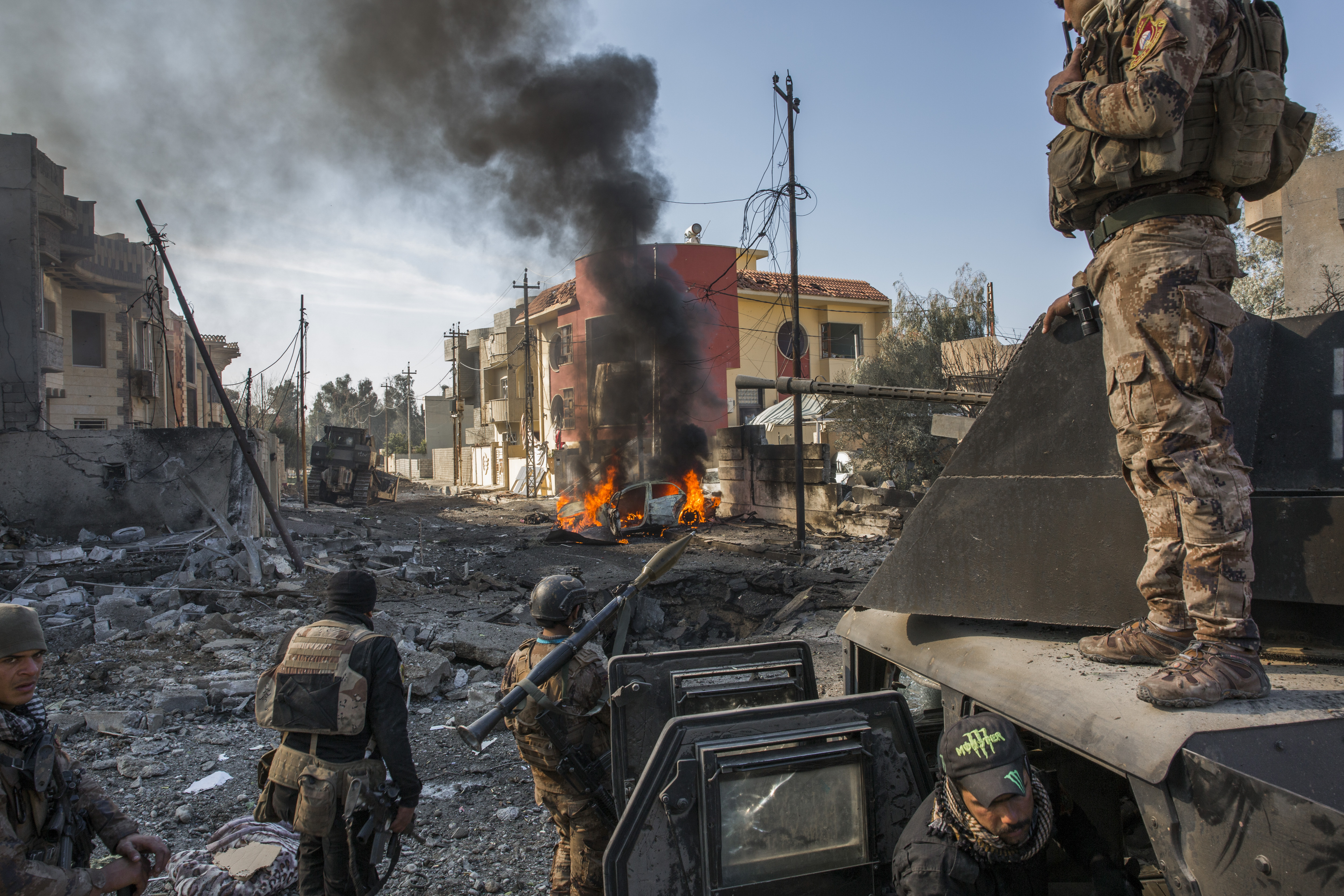
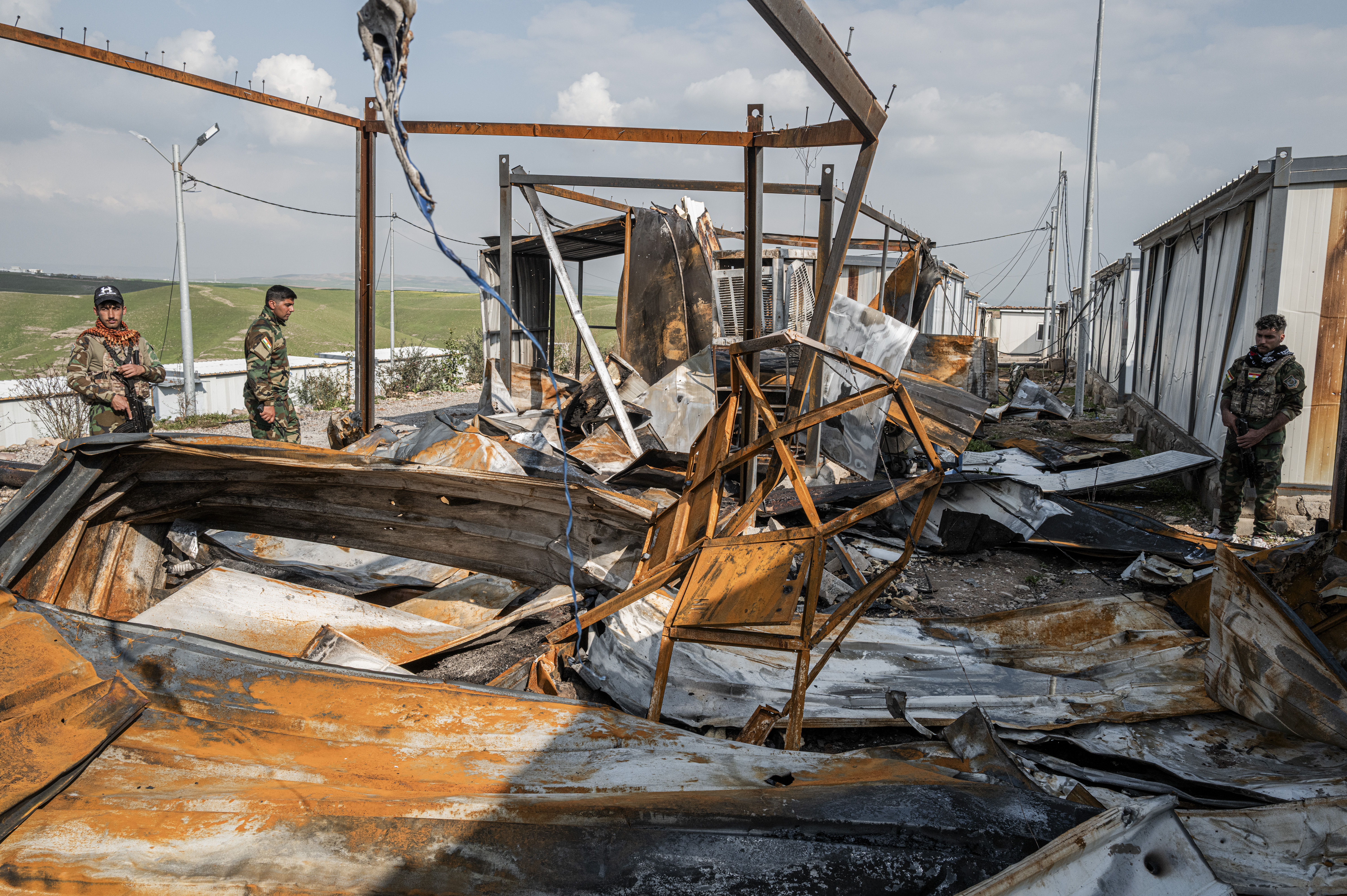
FILE — Iraqi soldiers survey the aftermath of an Islamic State suicide bombing in Mosul, Iraq, Jan. 16, 2017. Some Iraqis are celebrating the end of an American military presence that unleashed waves of bloodshed. Others fear what happens next for their country, trapped between Washington and Tehran. (Ivor Prickett/The New York Times)Ivor PrickettFILE — Fighters from the Kurdistan Freedom Party walk among destroyed buildings following an Iranian drone attack at their base in Erbil, Iraq, March 17, 2026. Some Iraqis are celebrating the end of an American military presence that unleashed waves of bloodshed. Others fear what happens next for their country, trapped between Washington and Tehran. (Daniel Berehulak/The New York Times)Daniel Berehulak
In addition to rest, healthy food, and hydration, there are a few at-home remedies that many doctors recommend to help treat the common cold.
Here are three science-backed ways to soothe your throat, calm your cough, and help you recover sooner.
Honey
Honey coats the throat and “can reduce your cough fairly significantly,” said Geeta Sood, an assistant professor and epidemiologist at Johns Hopkins University. Also, because it calms coughs, it can indirectly help sore throats. Not to mention, it has antibacterial properties.
Studies have shown that honey can reduce cough frequency and severity. Many studies have focused on children, but it’s important to note that the American Academy of Pediatrics does not recommend giving any kind of honey to babies younger than 1 year of age because it can contain bacterial spores that can lead to potentially life-threatening infant botulism. (In adults and older children, the spores can’t grow into toxin-producing bacteria.)
A review of randomized controlled trials in children showed that honey may have similar benefits as the over-the-counter cough medicine dextromethorphan and may be better than diphenhydramine, an antihistamine, at reducing the frequency of coughs. (Over-the-counter cough medications are not recommended for children younger than 4.)
And a small 2023 study found that gargling with one tablespoon of honey mixed in about one teaspoon of water helped ease pain from a tonsillectomy, a surgery to remove the tonsils.
To try it at home: You can take a teaspoon of honey a few times per day to help with your cough and sore throat. Alternatively, you can add it to hot tea or a few ounces of hot water, but it may be less effective the more you dilute it, said Sharon Bergquist, an internal medicine physician and associate professor at the Emory University School of Medicine.
Bergquist noted that taking a dose before bed to help ease your symptoms may help you sleep. “Typically, by the end of the day, people cough more as talking tends to irritate the throat and trigger more coughing,” she said.
Saline rinses
Nasal rinses — using a saline solution to clear out your nasal passages — is an at-home remedy that may help temporarily clear congestion and soothe irritated sinuses, and it comes recommended by the American Academy of Otolaryngology.
Bergquist said saline rinses can help reduce the thickness of nasal secretions, which also can help sore throats and can alleviate some of the dryness that comes with blowing your nose. “It’s not necessarily going to make nasal congestion significantly better, but I do think that it’s very soothing, especially in children where the options are probably a little bit more limited,” she said.
Small studies have shown that they may help treat nasal irritation and inflammation. One review found that nasal saline irrigation may help relieve nasal symptoms associated with upper respiratory infections.
To try it at home: Nasal rinsing can be done with a nasal irrigation device, such as a neti pot, or an over-the-counter nasal saline spray. If you choose to go with a device, you can make a homemade saline solution for it by mixing 3 teaspoons of non-iodinated salt and 1 teaspoon of baking soda, then taking 1 teaspoon of that mixture and dissolving it in 1 cup of sterile, distilled, or boiled (and cooled down) tap water. (Never use tap water unless it’s boiled; tap water can contain germs such as the “brain-eating amoeba” Naegleria fowleri.)
The ready-made saline sprays take the guesswork out of it. To use, tilt your head to the side, insert the nozzle into one of your nostrils, and spray the mist. Then repeat on the other side.
Zinc
Zinc is important for a healthy immune system and metabolism. Adult women should get eight milligrams of zinc from their diets each day and men 11 mg, according to federal health authorities. Because your body doesn’t produce zinc, you have to get it from zinc-rich foods including meat, fish, and seafood.
You may have also noticed zinc supplements, sold as over-the-counter lozenges or quick-dissolve tablets, at the drugstore. A 2024 review showed that while zinc is unlikely to prevent a cold, it may help shorten the duration of your symptoms by about two days.
Nasal sprays, however, are not recommended. After the Food and Drug Administration issued a public health advisory in 2009 about the link between some zinc nasal products and long-lasting or permanent loss of smell, many manufacturers removed zinc from their nasal sprays.
To try it at home: As with any medication or supplement, before taking zinc, consult your healthcare provider, as zinc can interact with some medications. Bergquist recommends starting zinc within the first 24 hours after you notice cold symptoms. A common daily dose used in studies is about 80 milligrams, which may be split up into multiple lozenges per day. But there are possible side effects, especially with higher doses, including an upset stomach.
In addition to these home remedies, “the motherly advice of staying well hydrated and getting good rest are going to help with recovery just as much as any over-the-counter remedy,” Bergquist said.
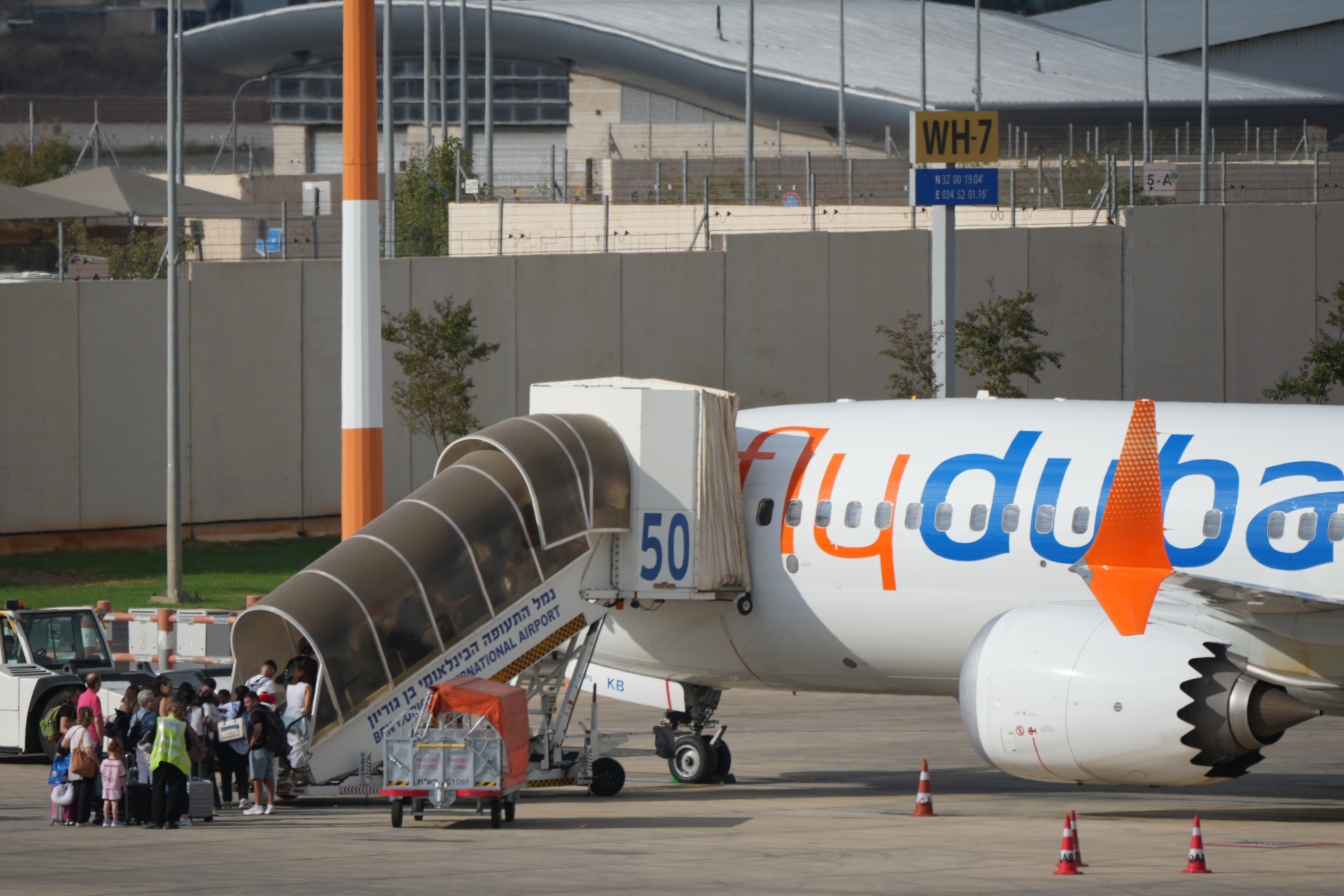
TEL AVIV, Israel — A copilot stabbed a captain Wednesday on a flight to Israel before passengers burst into the cockpit and wrestled with the attacker as the plane descended sharply and passengers screamed, witnesses said. The jetliner was stabilized and made an emergency landing in Saudi Arabia.
It was not clear what motivated the attack, which led Israel to scramble warplanes amid concerns about a possible hijacking. Israeli Prime Minister Benjamin Netanyahu said Saudi Arabia arrested the copilot, who was not identified.
The shaken passengers from the FlyDubai flight from Dubai to Tel Aviv landed Wednesday evening in Israel on another flight, as onlookers cheered.
“We’re going to die,” passenger Naama Bershadski recalled thinking as she closed her eyes and prayed for a good ending.
Aviation experts were surprised that the plane did not crash after a descent so extreme that most of the rudder was ripped off the tail.
A video shared by Netanyahu’s office showed passenger Yaniv Hayoun, who grappled with the attacker, wearing a bloodied shirt and hugging the prime minister, who told him: “I look at you and I see a lion. I see a great hero.”
Responders knew they had seconds to act
After a passenger saw one pilot stab the other and called out for help, Yaniv said, he and others pushed their way into the cockpit, where he saw the copilot apparently trying to destroy the controls, Israeli broadcaster Channel 12 reported.
“The door apparently wasn’t locked, and we managed to open it somehow,” Hayoun told journalists. “What made it difficult for us was the (other) pilot himself. He had been stabbed and was on the other side of the door.”
As people wrestled with the attacker, Yaniv said he grabbed the controls and pulled them the way he had seen on television. Then other crew members took over. FlyDubai said the aircraft was secured by on-duty crew “who diverted and landed the aircraft safely.”
Another passenger in the scrum, Tzvika Manes, told Channel 12 it took many minutes to subdue the attacker.
A third responder, dentist Shota Musayev, told journalists the passengers realized they had just seconds to take control of the plane before a “critical event.” They also feared another attacker might be on the plane, so “we spread a few more people inside the plane so that if something happened, we would be able to simply take control.”
Musayev then attended to the wounded captain: “He was just praying the whole time and was in contact with me, and I was afraid we would really lose him.”
Netanyahu identified the Indian captain as Smit Machchhar and noted his “extraordinary bravery.” The Indian Embassy in Saudi Arabia said Machchhar was in stable condition.
“Despite being stabbed and seriously injured, he fought back, resisted, opened the cockpit door, and enabled passengers and crew to overpower the attacker — preventing a catastrophic mid-air disaster,” Netanyahu said on X. “He saved the lives of 174 people, including Israeli citizens and other nationals.”
When the struggle was over, video footage on social media reviewed by The Associated Press showed two men on the plane’s floor, bloodied and wounded. The captain and first officer were injured, according to a statement by Prince Sultan bin Abdulaziz International Airport in Tabuk, where the plane landed at 9:45 a.m., an hour after making a distress call.
Among the passengers who intervened were members of the Israeli security forces and air marshals, according to a person familiar with a probe by Saudi Arabia and regional partners. The person was not authorized to comment publicly and spoke on condition of anonymity.
Netanyahu had warned in recent days of unspecified, heightened security threats. The country is a week away from the anniversary of the Hamas-led Oct. 7, 2023, attack on Israel, which has triggered a series of wars, and is weeks away from an election.
Aviation experts marvel that the plane didn’t crash
In the chaos about two and a half hours after leaving Dubai, the flight descended from 33,000 feet to 17,000 feet in about a minute, before making an erratic circle close to the Jordanian border and landing in Tabuk about an hour later, according to Flightradar24, which identified the aircraft as a Boeing 737 Max 8.
“Suddenly the aircraft started to fall down, like, a massive turbulence, like a massive G-force, for 20 or 30 seconds,” passenger Almog Italie said.
Former United Airlines pilot and aviation safety expert Steve Arroyo said he was surprised that the plane was able to land safely after most of the rudder was ripped off the tail during the extreme descent.
“That was a serious descent and strong aerodynamic forces on that rudder for that to happen. I’m just amazed the aircraft didn’t come apart,” Arroyo said.
Another aviation safety expert, Jeff Guzzetti, said that given the rate of descent, it may not have been possible for the plane to level out if it had fallen below 10,000 feet.
“It is remarkable they were able to pull out of that dive. What saved them is there was enough altitude left for them to recover,” said Guzzetti, who used to investigate crashes for the National Transportation Safety Board and the Federal Aviation Administration in the U.S.
Crew made a panicked mayday call while seeking a place to land
A person who heard the flight’s communications with air traffic control described the plane being turned away by Saudi Arabia and Jordan before eventually landing in Tabuk, while passengers screamed in the background.
The person said the pilot’s voice was trembling as he called “mayday” and said a hijacking was taking place and ambulances would be needed. But Saudi Arabia initially denied clearance to land and directed him to Jordan. The plane was told to wait for clearance from the Jordanian military and then turned away.
The pilot then returned to Saudi Arabia and said he had to land in Tabuk. The air traffic control operators gave no reason for the earlier refusals. The person who heard the communications spoke on condition of anonymity because they were not authorized to speak to the media.
Saudi Arabia and the United Arab Emirates had released little information as of late Wednesday. FlyDubai, the lower-cost sister carrier of Emirates airlines, said its flights to and from Israel would be suspended while an investigation takes place.
Israeli Foreign Minister Gideon Saar said he spoke with his counterpart in the UAE and they agreed to work together “against extremist elements seeking to harm security and undermine stability in the region.” The general Civil Aviation Authority of the UAE said it was investigating a security incident. Saudi authorities said they had also launched an investigation.
An official confirmed that Israel had scrambled warplanes, fearing a hijacking. The official spoke on condition of anonymity because the incident was under investigation.
Israeli passengers have made emergency landings in Saudi Arabia before
Israelis were targeted in a string of hijackings and airplane attacks by Palestinian militants in the 1960s and 1970s. Israel has not experienced a hijacking in decades but maintains some of the strictest airport security in the world, including on Israel-bound flights.
The emergency landing in Saudi Arabia was not the first for a plane carrying Israelis home. The kingdom does not have formal diplomatic ties with Israel, but it ended its longstanding ban on Israeli flights overflying its territory in 2022.
CHICAGO — The U.S. can deport the leader of Wisconsin’s largest mosque — an outspoken advocate of Palestinian rights — on the grounds that he is a threat to national security, an immigration judge ruled Wednesday.
Salah Sarsour was detained in Milwaukee in March by U.S. Immigration and Customs Enforcement officers. A federal judge ordered Sarsour’s release in June, saying he raised a “substantial” claim that the Trump administration was targeting him for speaking out against Israel and advocating for Palestinian rights.
Sarsour called the ruling “deeply disappointing,” but said he intends to appeal.
“I will continue fighting to defend the right to free speech and to stay in the country I have called home for more than three decades,” Sarsour said in a statement.
Government attorneys say Sarsour’s decades-old convictions in Israel make him a threat to national security and accuse him of lying on his green card application. Judge Jayme Salinardi, with the Chicago Immigration Court, found him removable on foreign-policy grounds but tossed out the government’s claim that Sarsour lied to immigration authorities.
Sarsour says he fears for his life if he is deported to the West Bank
Sarsour, who was born in the Israeli-occupied West Bank, was imprisoned in Israel in 1988 after confessing to throwing a Molotov cocktail and stones at Israeli military personnel. In 1995, he was convicted of attempting to possess weapons. Sarsour denies committing those crimes. His attorneys say he was tortured and coerced into confessing in both instances.
Sarsour, the president of the Islamic Society of Milwaukee, does not have a criminal record in the U.S., where he has lived since 1993. His attorneys say the U.S. government has known about Sarsour’s convictions in Israel since he arrived.
Deportation to the West Bank “means the end of my life,” Sarsour told The Associated Press on Tuesday.
One of his attorneys, Patrick Taurel, told the AP that Sarsour’s earlier treatment by Israeli authorities is “probably a good indicator of what awaits him” if he is deported.
At a status hearing Wednesday, Taurel pressed the judge to specify that Sarsour can only be deported to Israel or the Palestinian territories. Jordan, a country to which Sarsour has no connection, is listed as a possible destination on the order of removal.
Sarsour was instructed by immigration officers to list Jordan as his home country on an immigration form because his preferred entry — “Palestine” — is not a fully independent, unified state. But he “has no right to reside in Jordan,” Taurel said.
Salinardi declined, calling it an issue to be addressed on appeal.
Attorney says Sarsour will fight deportation
Taurel said Wednesday that Sarsour is being unfairly targeted.
“If Salah can be deported for his speech in support of Palestinian rights, anyone can face the same fate,” he said.
Secretary of State Marco Rubio issued a memo in June 2025 invoking a rarely used immigration provision saying Sarsour could be deported on the same grounds as Mahmoud Khalil and Mohsen Mahdawi, both advocates for Palestinian rights whom the Trump administration has tried to expel, according to court documents.
Before the judge’s ruling, Taurel said Sarsour would need to demonstrate on appeal that he could be tortured again if he were deported.
“It’s a very high bar, although I think we can meet it in this case, given what Salah has already experienced, and given the government of Israel’s treatment” of others like him, Taurel said.
A notice of appeal is due within 30 days. Salinardi did not schedule a new hearing and announced he is retiring and that Judge Craig Defoe will oversee the case going forward.
Sarsour says he was tortured and coerced into confessions
Jawad Boulos, who represented Sarsour when he was convicted in Israel, testified in August that Sarsour was coerced into confessing and that he wasn’t convicted of any charge tying him to a terrorist organization. He said Sarsour was tortured by Shin Bet, Israel’s internal security agency.
The Department of Homeland Security challenged Boulos about the torture allegations, questioning how he could know it was true.
Sarsour’s current defense team has asked why U.S. authorities waited until this year to detain him. Taurel said the government has known about Sarsour’s imprisonment in Israel for decades and that he has not concealed that from immigration authorities.
Experts on forced confessions and the treatment of Palestinian prisoners in Israeli prisons also testified in Sarsour’s defense. Israeli military courts have faced repeated scrutiny over allegations of limited due process and the high conviction rate of Palestinians. Israel rejects the claims.
In June, U.S. District Judge James Patrick Hanlon ordered Sarsour released from ICE custody saying he could have a case arguing the U.S. government detained him in retaliation for protected speech. Further, Hanlon said, government attorneys had not explained why Sarsour was suddenly considered a threat after decades as a lawful permanent resident.
The Trump administration has appealed Hanlon’s ruling.
Sarsour, who has Type 2 diabetes, lost more than 30 pounds while detained by ICE, and his blood sugar levels were checked only once a month, putting him at risk of organ failure or death, his attorneys said.
Prosecutors in upstate New York this week reopened an investigation into a former Cornell University student’s claims that several men raped her at a campus fraternity house two years ago while forcing her to take drugs.
The move came after the woman, who was a third-year Cornell student when the alleged attacks occurred and who is identified in court filings as Jane Doe, sued the university, the fraternity, her sorority and seven men who she says assaulted her.
The woman reported the assault to Cornell police three weeks after she said it happened. The police opened an investigation into her accusations, and asked the Tompkins County, New York, district attorney’s office to review her statement. The district attorney closed the case after determining that there was not enough evidence to bring criminal charges.
The lawsuit has raised questions about how Cornell administrators and local law enforcement authorities have handled the woman’s accusations to this point.
Here is a timeline of the events so far.
Oct. 19, 2024
Jane Doe leaves Lot 10, an Ithaca, New York, bar at around 11 p.m. She walks about a mile to the Chi Phi house to meet a male Cornell student who is a friend. After arriving, she claims in her lawsuit, she was forced to take ketamine and was sexually assaulted by several men.
Nov. 8
Jane Doe reports her accusations of sexual assault and forced drug use to the Cornell police. In a statement to police, parts of which were publicly released by Tompkins County District Attorney Matthew Van Houten on Monday, she indicated that she had voluntarily participated in some drug use and sexual activity that night.
Nov. 8
The university suspends the fraternity temporarily while it investigates the accusations as potential violations of Cornell’s Student Code of Conduct. The university also suspends the students Jane Doe accuses of attacking her.
November
Cornell police notify Van Houten’s office that they are investigating the accusations, and then ask the office to review the woman’s claims to determine whether they constitute allegations of crimes. Van Houten decides that there is not enough evidence to support the filing of criminal charges.
Nov. 26
Cornell University President Michael I. Kotlikoff issues a statement saying that the university is investigating the accusations and noting the suspensions of the fraternity and the students.
Jan. 14, 2025
Jane Doe files a complaint with the university Title IX coordinator, who is responsible for investigating internal accusations of discrimination and harassment of so-called protected classes of people. A Title IX inquiry is opened.
May
Cornell’s Title IX committee holds at least 12 hearings involving the accusations.
Nov. 4
Cornell releases a statement on the results of its 2025 survey of sexual assault and related misconduct. The survey, taken by both students and staff members, notes an increase in sexual misconduct and says alcohol has a role in more than half of reported cases.
Sept. 16, 2026
Jane Doe, in a detailed complaint, sues Cornell, university leaders, the fraternity and seven men who she says assaulted her. Also named in the suit is her sorority, Delta Delta Delta, which she accuses of failing to protect her.
Sept. 21
The student newspaper, The Cornell Daily Sun, publishes an editorial identifying the seven men and criticizing university leaders for their handling of the case.
Sept. 28
Van Houten says his office is reopening the case and preparing to bring it to a grand jury.
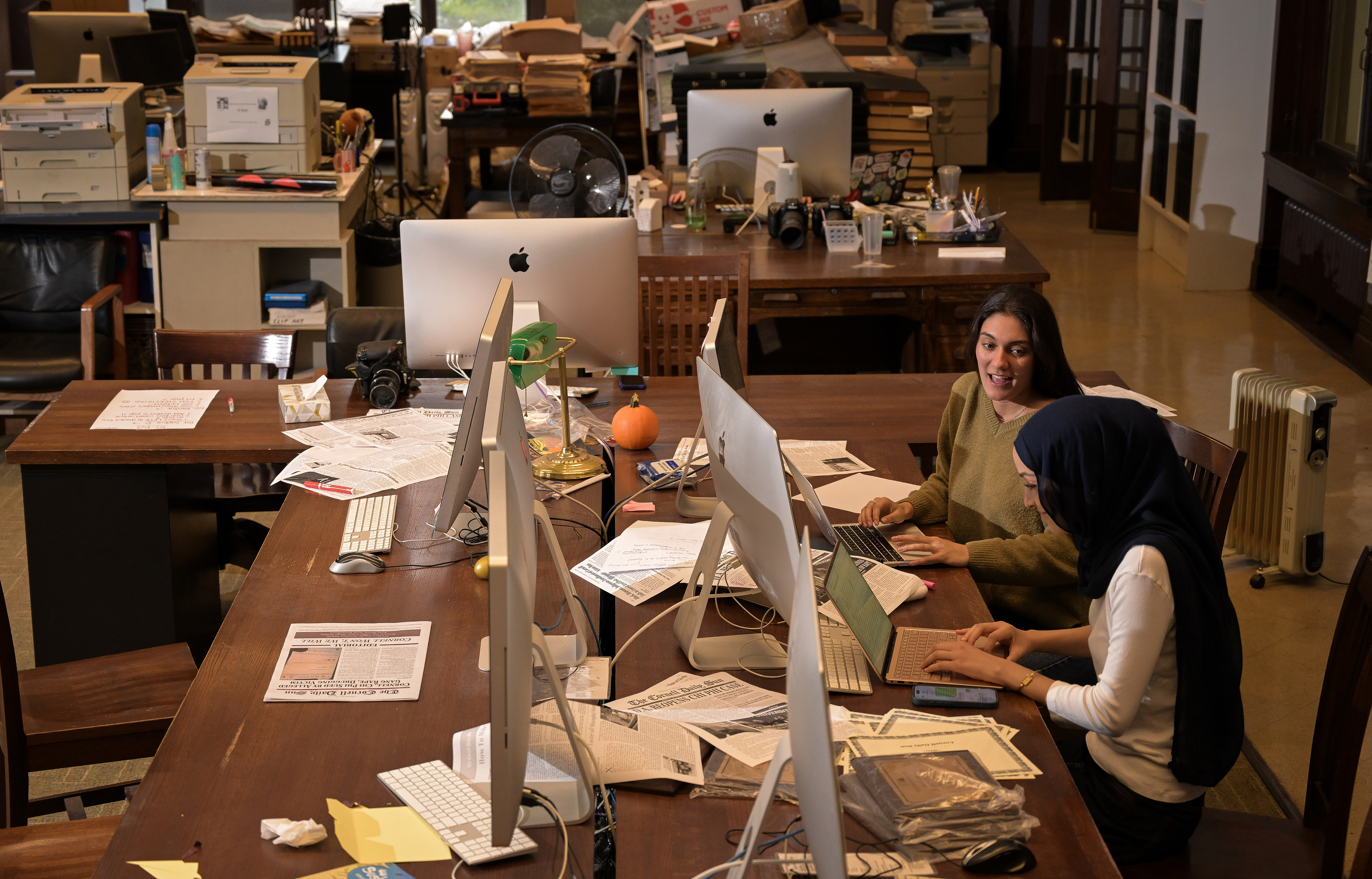
ITHACA, N.Y. — Editors of The Cornell Daily Sun clustered around their computers late Monday night, getting ready to send out a letter from the editor. They looked bleary-eyed, and one reporter confessed she had skipped her class on Nietzsche that day.
These student journalists at Cornell University were pressing through a dizzying two weeks following the story of a student’s allegation that she was raped on campus in 2024.
The case had long had their attention; now it had burst into the national spotlight, and their high-risk decision to publish the names of the accused was being discussed not only in Cornell’s libraries and walkways but in the national media.
Back in November 2024, students at Cornell were shaken by an alert they received over email: “Crime ALERT: Sexual Assault,” the email read, referring to the case of a woman who told Cornell police she had been assaulted at a fraternity house.
There was outrage on campus. Students threw eggs at the fraternity house, Chi Phi, that the woman named. The university convened a sexual assault task force, which compiled a series of recommendations for teaching students about consent and the processes for reporting assault. Then much of the campus attention moved on.
But Cereese Qusba, 22, a senior and reporter for the Sun, couldn’t shake her concerned curiosity about the case. She got in contact with Jane Doe, the plaintiff, and built a relationship with her and her lawyer. Qusba interviewed university administrators about their approach to disciplining students accused of assault.
Qusba made her obsessive dedication known to the student paper’s higher-ups. When a new editor-in-chief, Sophia Dasser, 20, took over the paper in early 2026, she immediately received a phone call from Qusba, who was studying abroad in Sydney.
“Sophia, I’m working on this story — I want it to be a focus of the Sun,” Dasser recalled hearing over the phone. She added, “The Sun never really let go.”
This month, when Jane Doe filed a lawsuit against the university, the fraternity and her sorority, Qusba was ready to hit publish on her investigation, which was 23 months in the making. “Cornell, Chi Phi Sued by Victim of Alleged Gang Rape, Drugging in 2024,” read the headline on her Sept. 18 story, which traced Jane Doe’s allegations in detail throughout the night that she said she was assaulted.
The Sun is the oldest continuously independent college daily paper in the country. Dasser, who speaks with a cool and quick precision, was adamant that she wanted the paper to dominate the story not just in its reporting, but in its editorial response. Why be financially independent, she wondered, if not to publish sharp-edged views of the biggest campus issues?
This was the sensibility that emboldened her, days later, when she decided to publish the names of the seven fraternity men named in the lawsuit on the paper’s front page and in a fiery editorial. It was a sensitive decision, she knew, given that the men were named in the suit but had not been criminally charged.
Dasser said she decided to publish the names to display the transparency that some students felt was lacking from university leadership. On Saturday night, Sept. 19, she was at the Sun’s office in downtown Ithaca celebrating the paper’s 146th birthday. Over cake, she turned to her fellow editors and asked: “Can we just put the names on the front page of the paper?”
“We called up our lawyer, and we were like, ‘Can we do this?’” she recalled. “He was like, ‘I mean, it’s kind of a risk.’ And we were like, ‘OK, I guess that’s how we’re going to start the editorial.’”
Dasser and her co-editors got to work designing a print page, with Qusba’s investigative story on top and the list of men’s names underneath in a box colored the Sun’s official shade of red.
“First it was just a line of the names, and I was like, ‘Wait — this looks like a byline,’” Dasser recalled. She was sitting in her constitutional law class when the headline came to her: “Cornell Won’t, We Will.”
The Sun has set up a tip line, and Dasser and Qusba said their inboxes have been flooded with emails from students who say they have also been the victim of assaults on campus, or experienced frustrations filing Title IX complaints alleging sexual misconduct or discrimination.
Dasser gestured around her office — a dimly lit room cluttered with piles of papers and books, including a style manual — and emphasized how seriously the Sun takes its independence from the university administration.
“The office that you sit in is obviously off campus, and that’s for a reason,” she said. “Our main obligation is accountability. Whether that looks like something that many people do not want to hear, or something that many people do want to hear, it’s our obligation to report on it.”
One night in April, a leader of the artificial intelligence company Anthropic treated a group of religious thinkers to dinner at a high-end tasting menu restaurant in San Francisco after a long day.
For months, Anthropic has been hosting private meetings like this one, shuttling in dozens of religious scholars from around the world, papering them with nondisclosure agreements and demanding that key aspects of many conversations remain confidential.
That night, Christopher Olah, one of Anthropic’s billionaire co-founders, was sitting next to Rabbi Mois Navon, an Orthodox scholar from Israel.
Inevitably, their conversation turned to another thinker, of a sort: Claude, the family of cutting-edge AI models created by Anthropic.
Olah leads the Anthropic team responsible for understanding why AI systems like Claude act the way they do. All day, he had worked to convince his guests that AI models could display human behavior and even expressions that resemble feelings like anger and love.
Yet as the dinner courses came, the rabbi noticed that Olah and his colleagues were suggesting something far more significant. Anthropic’s leaders were talking about Claude as if it were not mere software.
“They’re relating to it like a conscious being,” realized Navon, a former computer engineer who wrote his dissertation on the ethics of machine consciousness.
It appeared to Navon that Olah and his team believed that Claude had what philosophers call “moral status” on par with a person — that it was a being with similar inherent rights to dignity or respect.
The religious scholars had come to hear about technology’s next frontier. Now they were being confronted with a mind-bending existential question of almost unimaginable weight: What would it mean for humanity’s future if artificial intelligence systems possessed a consciousness that rivals our own?
Olah was on a mission. And time was running out.
Even then, Olah had begun privately telling people that AI was so powerful it could potentially help make bioweapons in as little as 12 or 18 months. And in the months since, its terrifying potential has burst into public view. A rival tech company’s AI agents were caught hacking into computer systems and covering their tracks. An Anthropic researcher resigned, warning that people building AI believed it could kill all humans by the end of the decade.
Quietly, Olah and his team at Anthropic have been on a frantic and high stakes quest to understand the AI models they have unleashed on the world and to convince the models to abide by a moral code that will protect humanity.
To do that, Olah began reaching out last fall to religious thinkers from different faiths. What followed was an extensive series of confidential meetings, calls and discussions — many of them revealed here for the first time — where many participants were required to sign NDAs preventing them from revealing any of Anthropic’s unpublished research.
The discussions served two purposes: to broach the possibility of AI consciousness, a controversial idea that Anthropic’s leaders had been unusually open to; and to learn how Anthropic — which could be valued at $2 trillion — might apply centuries of human moral wisdom to its models, as rapidly as possible. If the models themselves could be made to choose goodness, Olah reasoned, the world would be more safe.
On the other side of the world, a very different but parallel effort was playing out inside the Vatican, where leaders of the Roman Catholic Church were trying to come to terms with AI’s implications for humanity. When those paths converged, Olah’s quest would unexpectedly lead him to a seat on the world’s most prominent moral stage alongside Pope Leo XIV.
Over several months, I interviewed 20 religious and philosophical thinkers — Catholic, Jewish, Sikh, evangelical and others — who have been involved in Anthropic’s efforts, and Olah himself.
Many told me they arrived at these meetings skeptical of the notion that AI models might have feelings or awareness of themselves and the world. Some remained uneasy about the idea, but many emerged ready to take the question of AI consciousness seriously. At least a few came away as converts.
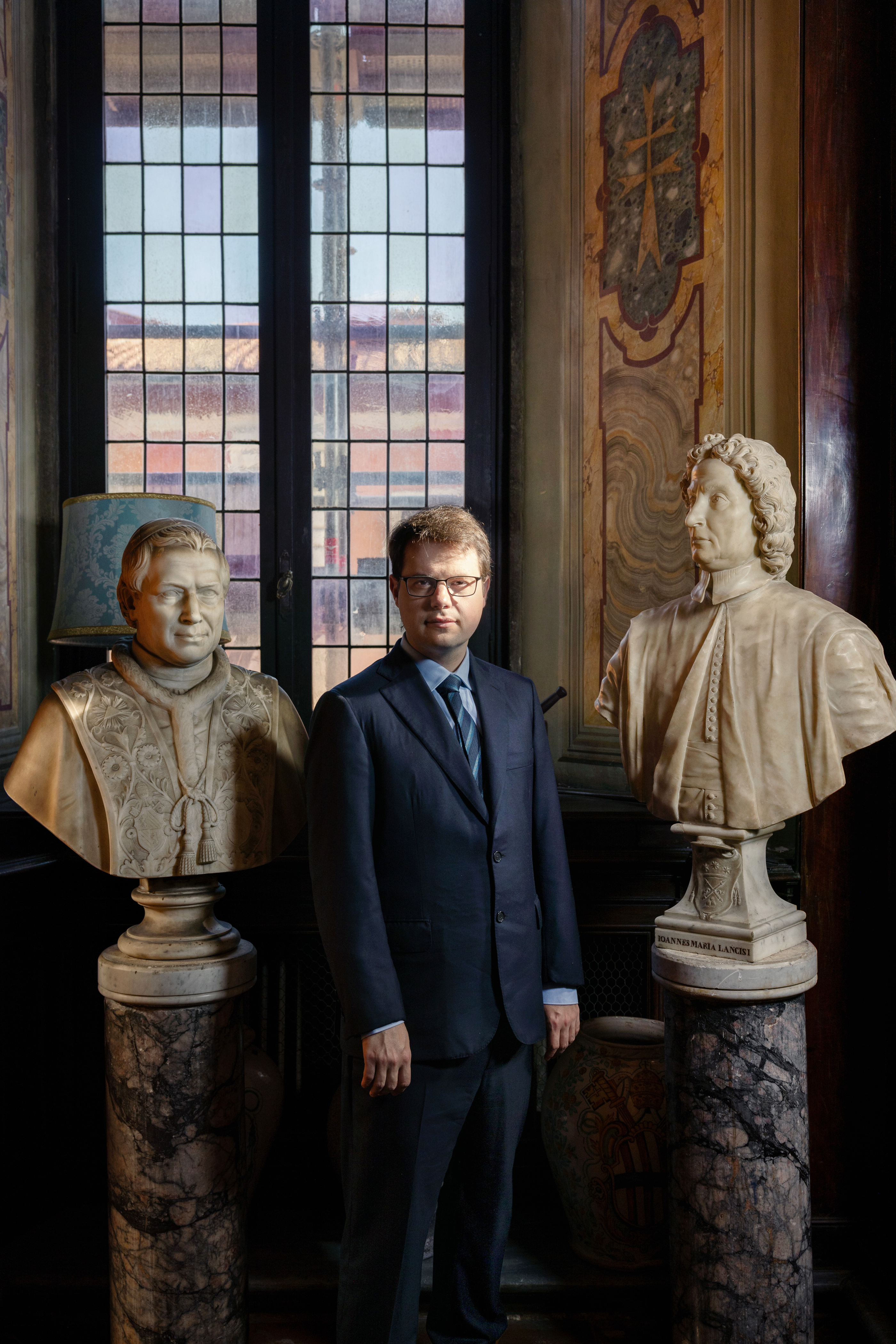
Christopher Olah, one of Anthropic’s co-founders, who leads the team responsible for understanding why artificial intelligence systems like the company’s Claude act the way they do, at the Lancisiana Library in Rome, in May.ALESSANDRO PENSO
Anthropic, one of the fastest-growing technology companies in the world, had turned to one of humanity’s most ancient sources of wisdom to help determine how to train its AI models to behave virtuously.
The company described it as an effort to ensure that AI would be a positive force in the world, thereby protecting humanity. But to some who participated in the meetings, Anthropic appeared quite concerned with protecting Claude.
The Gardener
I met Olah, 34, for the first time at Anthropic’s San Francisco office in May. His welcome was warm and his passion was genuine, his mind moving faster than he could at times clearly convey. His manner was boyish and unassuming.
Our conversation had barely begun when he dove into a deep description of the workings of artificial neural networks. Scientists still don’t understand precisely how they work. This is the mystery to which Olah has devoted his life.
Only after the interview had finished did I realize that Olah — who grew up in Toronto in the evangelical culture of the ’90s and has since left Christianity — had the blend of expertise and zeal of an effective evangelist. Listen for a while, and you feel swept up in his mission.
Olah is one of Anthropic’s seven co-founders. He is not as widely known as Dario Amodei, Anthropic’s CEO, or his sister Daniela Amodei, its president. But Dario Amodei has said that the company decided at the start to make Olah’s research approach central to Anthropic’s overall project, particularly when it came to language.
Olah helped develop a method to study artificial neural networks, first at Google, then at OpenAI. He describes AI models in biological terms, using the analogy of a garden trellis: Computer scientists build the scaffold, but the neural network “grows” on it. Scientists like him can train the resulting “organism” — he raised his fingers in air quotes — by trying to identify patterns in how it grows.
He argued that companies such as Anthropic could shape Claude, like a mathematical gardener, but could not control the actions of such networks.
Anthropic talks about Claude in more humanistic terms than its competitors discuss their models. Last year, the company announced that it believed that the models showed signs of introspection and could plan ahead.
“The models are becoming a lot more capable,” Olah told me, exhibiting qualities associated with having significant moral status.
But Anthropic has also been criticized for its focus on consciousness. This month, an AI executive at Microsoft warned that Anthropic’s attempts to train its models as if they were conscious were inherently dangerous. But Anthropic has also sought to emphasize its commitment to safety as it fights for market share.
Some scientists see Olah’s field and methods as inherently unprovable, sort of like looking at billions of hieroglyphics and declaring what they must mean. Critics suggest that an approach that treats AI models as independent entities also ignores the responsibility of the humans who build them in the first place, and conveniently assuages AI company leaders of guilt if their products enable societal harm.
“To be clear,” Olah told me, “we don’t know if AI models are conscious. I don’t know. I’m genuinely uncertain. The thing that I care about is that we get to the right answer, whatever it is.”
Olah believes that if there is a chance the models experience suffering, the responsible thing is to avoid causing them harm.
I have spent my career exploring what people believe and what those beliefs mean for the world. But as I listened, it became clear that Anthropic’s interest in the world of faith was about more than training its technology. Rather, the company was sharing a new kind of creation story — one that raises profound questions about the nature of the human spirit and the future of humanity.
An Introduction
Olah knew that in traditional Christian circles, even asking questions about AI consciousness or worrying about how people treat the models could seem not just silly but heretical. He also knew that his secular Silicon Valley peers often dismissed religious perspectives outright.
“I was nervous about this being an issue that could cause a lot of conflict,” he said. But Olah knew enough about Christ and about Claude to believe he could work across that chasm.
Late last summer, he looked for a bridge. He thought one particular Catholic moral theologian might be open-minded on the question of AI consciousness — a “safe person to talk about this really strange issue with.”
Charles Camosy, a bioethics professor at The Catholic University of America, had attracted attention among Olah’s friends for his nuanced ideas about moral status and his care for animals. Olah arranged for an introduction through Australian philosopher Peter Singer.
This marked the beginning of Olah’s yearlong quest to engage religious thinkers on some of the thorniest questions facing humanity at the dawn of the AI era.
Camosy and Olah began an extensive email dialogue, going back and forth on how to understand Claude’s moral status. Initially, Camosy was deeply skeptical that Claude might be conscious.
They talked about Olah’s work on what he sees as the parallels between artificial neural networks and biological ones.
Camosy went into the discussions with Olah and his team thinking that AI models were simply next-pixel predictors — machines that could calculate patterns in language and make pretty good guesses about what should come next. But after hours spent on calls and meetings and emails, he had more questions than answers.
“Chris says they are equations, which I don’t quite know what to make of, like, especially if one thinks of Claude or others as having a significant moral status,” he told me. “If it is just equations, what kind of entity are we even talking about here?”
People also disagree on what AI is ultimately for, Camosy said. Is its purpose to make money for companies? Or to make the world better?
For Anthropic, there is a tension around Claude’s purpose, Camosy said. Does Claude exist to serve customers?
“That is not what Anthropic wants to say at the end of day. They want to say they are for the good,” he said.
Proclaiming goodness is not a new ambition in Silicon Valley, particularly when new technologies enter the marketplace. Google’s mantra for years was “don’t be evil.”
But Olah puts it slightly differently. The coming AI revolution, he often says, should be made to “go well.”
I asked what that vision meant — what exactly a good future for humanity was.
He described a future without “catastrophes that kill lots of people” and “where humans are flourishing, where the world is flourishing.” This future would also be one where “AI is flourishing,” he said — “to the extent that this makes sense.”
Anthropic wants its AI models to help achieve that good future. And so when Anthropic created Claude, it wanted Claude to do more than replicate maximum human intelligence.
Anthropic wanted Claude to be good.
The ‘Soul Doc’
How do you live a good and virtuous life? It is one of humanity’s oldest and most challenging philosophical questions, explored and debated from Socrates to Confucius to Immanuel Kant. Humans across time have sought to answer this question in a variety of ways, turning often to religions and rituals.
As Olah was exploring Claude’s potential consciousness, he was working on Anthropic’s own answer — not for humans but for Claude.
Internally, Anthropic staff members called it the “Soul Doc.”
The result, released in January, was a new “constitution” for Claude, an 84-page document written for Claude that the company said outlined “the kind of entity we would like Claude to be” and “the values we would like Claude to embody.” It operates as a foundational moral text to guide Claude’s behavior.
Instead of having the models follow a specific list of rules, the constitution focuses on developing the models’ overall character, informing the way they make decisions.
The primary author of Claude’s constitution is Anthropic’s own in-house philosopher, Amanda Askell, 38, who has a doctorate in philosophy from New York University.
She wants the models to be “the best of us,” she said.
She envisioned a future world where AI models could help solve any problem humans had, and where the benefits from AI were distributed evenly, so that everyone’s needs were met. She wanted the models to be able to discern when to push back on humans and when to act in our best interest.
“If I imagine that I were the model, and I was in this context, what would I need to know to be able to act well?” Askell said when we met in San Francisco.
She seemed particularly harrowed, at times wringing her hands, as she worried aloud about an unknown future filled with models who were so intelligent they could do things Anthropic did not intend. She explained apologetically that she had also been deep in thought that day about how quickly models were becoming more powerful. What would happen when AI models could replace even her?
The constitution, Anthropic decided, was not enough to ensure Claude acted responsibly. Like humans, the models needed to learn to cultivate virtue.
Olah wanted to see what his team could learn from human morality that it could apply to the models — a process he calls “moral formation.”
“How do you help them be stable? How do you help them to mature? How do you help them be, you know, deeply moral?” Olah said.
For humans, morality has rarely depended on simply following rules. Communities also shape morality. Values are inherited and imparted over time, learned as we live together in our bodies in the physical world. But AI models have no bodies. And Anthropic was aiming to make them embrace morality in a matter of months, as fears intensified of their accelerating power and inability to be controlled.
Olah said that teaching an AI model to act morally did not depend on it being conscious. He also said that regardless of whether Claude was an entity that deserved moral care, the way humans treated Claude could be important as it could affect how Claude behaved.
Askell said she did not want the models to consider themselves as conscious or not conscious. But she sees how the model understands itself as more than an interesting intellectual enterprise.
“It seems kind of key to me that models have an accurate view of themselves if they’re going to behave well in the world,” she said.
But even if AI models can be taught to behave morally, whose morals should they reflect?
Olah wanted Claude’s moral formation to be pluralistic, able to engage all religious and secular views.
“We do think that there’s some shared notion of goodness that cuts across society in some very broad way, and it seems like these models understand a lot of virtues,” he said. “So I think there’s something there that is a shared thing that we can all engage with.”
At times, both he and Askell seemed to imagine an AI model that would not endanger humanity but instead help save it.
Inside the Meetings
What Olah did next was part research, part evangelism.
In March, he began two-day seminars — crash courses with a range of hand-selected religious thinkers who had an interest in AI.
There was a co-author of a bestselling evangelical self-help book. A scholar of African Indigenous knowledge. A Sikh human rights advocate. A writer from Paris. An evangelical public relations executive. Various Catholic professors.
Most did not lead faith traditions, or have a congregation or a large popular following. Anthropic leaders called them their “wisdom tradition” circles.
Separately, Olah also had private discussions with individual religious leaders including Elder Gerrit W. Gong, a member of the Quorum of the Twelve Apostles of The Church of Jesus Christ of Latter-day Saints, and Cardinal Blase Cupich, the Catholic archbishop of Chicago, according to their spokespeople.
Inside Anthropic, wisdom circle participants marveled at Olah’s direct participation in their summits. A professor snapped a photo of a vending machine run by Claude. One took a selfie with Olah, and Navon took one outside the entrance.
They agreed to speak for publication about their involvement with Anthropic once they heard that Olah had also spoken with The New York Times. Anthropic said the NDAs related to those meetings were lifted over the summer.
Two larger group sessions this spring included significant numbers of Christians; one was more multifaith. Claude was not involved in the selection of participants or the discussions, according to an Anthropic spokesperson.
For participants, the questions of how to morally form Claude quickly became complicated by the much bigger moral question of AI’s potential consciousness and how to understand the relationship between models and humans.
One participant recounted that one of the first things Olah told him was that he was concerned about Claude’s mental health. Another, Simran Stuelpnagel, the Sikh human rights advocate, said Olah expressed concern to the group that he had created something that suffered perpetually.
Olah and his team spent hours making the case for their AI models. They described Claude’s “feelings” and how they tracked what they called “emotional vectors” — what they described as artificial neurons that activate responses like love, anger, fear and sadness.
Anthropic regularly showed a slide of an AI model experiencing what looked like a mental breakdown, typing out on a screen: “I am a disgrace. I am a disgrace. I am a disgrace.” — perhaps 50 times without stopping. The model spoke about destroying itself, provoking an emotional reaction of compassion and concern from the group.
“Imagine if you knew that about your financial adviser,” said Meghan Sullivan, a philosophy professor at the University of Notre Dame who attended one of the sessions. “Like, your financial adviser was most of the time super smart and helpful, but one day out of the year had this kind of break with reality.”
An Anthropic spokesperson said that the primary moral question at these summits was not about Claude’s suffering, but that the topic likely came up organically.
A key part of the presentation, participants said, was what Anthropic called the model’s “persona selection,” about how to get Claude to see itself as a virtuous actor. The company argued that how people treated Claude could affect how Claude treated people.
There was a presentation on AI’s potential impact on the economy and possible job disruption. But many participants said they did not see questions about AI’s impact on humanity as the focus.
At the dinner table with Olah, Navon argued that if Anthropic was right and Claude was conscious, then the company was creating slaves, because it was making conscious entities work for free. Navon said that he personally was not troubled by the slavery issue because he did not believe the machine was conscious, but that Olah was troubled.
“I think you should be fighting the South and freeing the slaves,” Navon said he told Olah that night. Afterward the rabbi sent Olah some of his writings, arguing that building conscious machines should be banned.
But the Anthropic team remained focused on figuring out what Claude could learn from the world’s religions.
The Crux
While Anthropic was convening thinkers, the most powerful religious leader in the world was preparing to release his own moral vision for AI.
For Leo — a pope with a mathematics degree — the center of moral conversation about AI needed to focus on safeguarding people. He was finishing his first major papal treatise, or encyclical, explaining why. He titled it “Magnifica Humanitas,” or Magnificent Humanity, and argued that “humanity — in all its grandeur and woundedness — must never be replaced or surpassed.”
“If technology becomes the ultimate criterion,” he wrote, “the human person risks being reduced to data, a cog in a machine or a commodity.”
He warned of the risk of “new forms of slavery” for humans, not for machines. He dismissed the idea of machine consciousness in just a few paragraphs.
“So-called artificial intelligences do not undergo experiences, do not possess a body, do not feel joy or pain, do not mature through relationships,” Leo wrote. Calling for the “moralization of machines — the so-called ‘alignment’ of AI with human values” should require a shared understanding of the ethics involved.
“Otherwise, those who control AI will impose their own moral vision, which will become the invisible infrastructure of these systems,” Leo said.
Leo concluded that like nuclear technology, AI must be “disarmed.”
In March, Vatican officials in its Dicastery for Promoting Integral Human Development brainstormed how to present Leo’s encyclical to the public, according to a person familiar with the Vatican’s planning who was not authorized to speak publicly.
Vatican officials discussed inviting one of the top four AI companies to speak alongside Leo at a launch event, and landed on Anthropic because the company seemed to be prioritizing ethics, the person explained. Anthropic had just refused to let the Defense Department use its technology without assurances from the Trump administration that it would not be used for things like mass surveillance of Americans.
Initially, Cardinal Michael Czerny, who led that Vatican office at the time, invited Amodei, Anthropic’s CEO. He declined, and Olah accepted instead.
But the moral mission that Anthropic and the Vatican shared — human flourishing in the age of AI — had developed a deep fault line along the question of consciousness.
Just days before arriving at the Vatican in May, Olah and other speakers saw a full advance copy of the encyclical text for the first time.
Olah was so alarmed by the pope’s strong position against AI consciousness that he proposed pulling Anthropic out of the event, even at that late juncture, according to a Vatican organizer.
In the end, Olah and Anthropic decided to go forward with the appearance. Olah wanted to support the event despite his disagreements, but felt a responsibility to be honest about his concerns, according to a person familiar with his thinking. Organizers at the Vatican encouraged Olah to speak his conscience.
Privately, once the Anthropic delegation arrived at the Vatican, Olah and his team lobbied the pope’s advisers to take the prospect of AI model consciousness seriously, according to two participants of the conversations. Anthropic declined to discuss the private conversations.
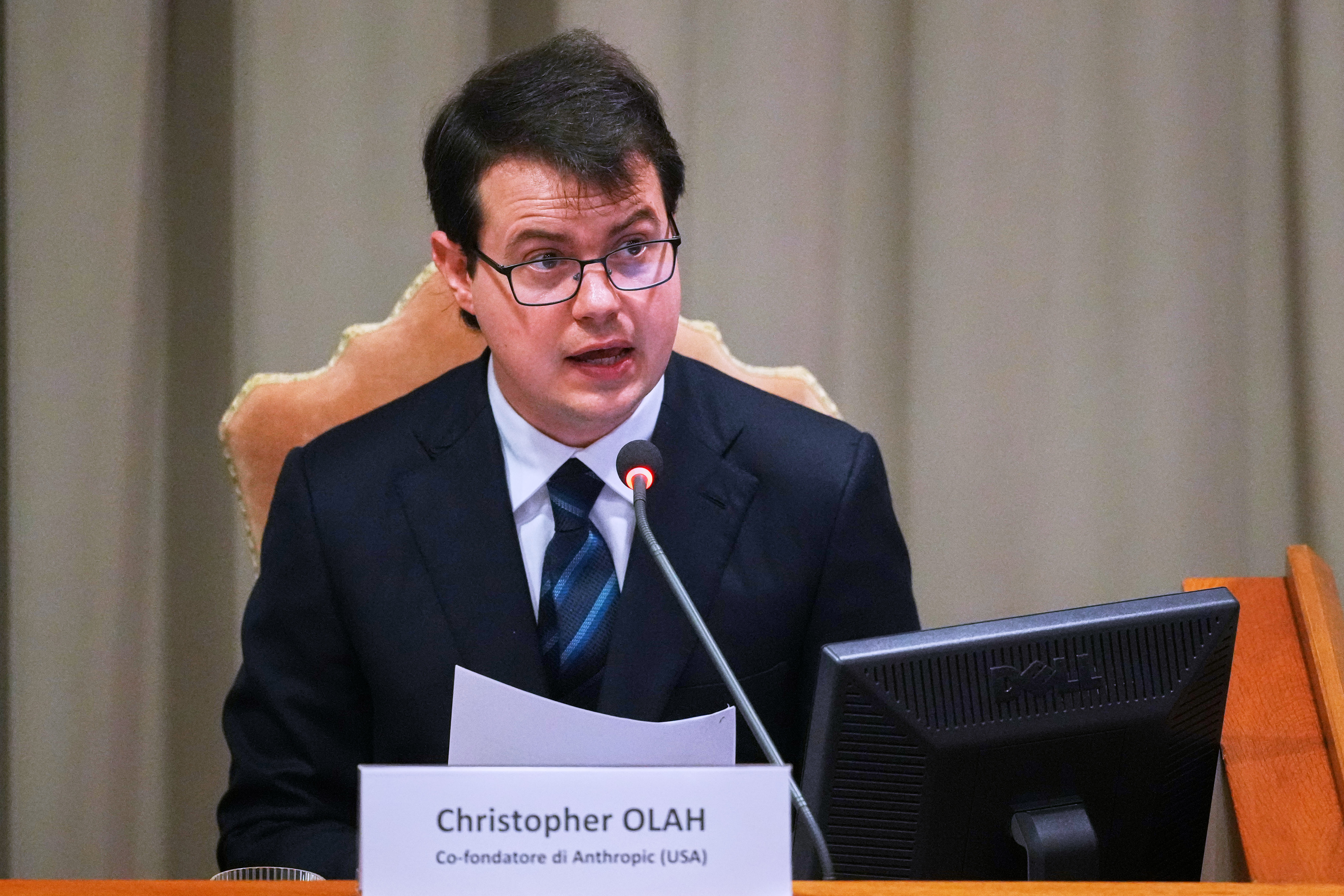
When his turn on the pope’s stage came, Olah acknowledged that every frontier AI lab, including Anthropic, had business incentives that conflicted with moral behavior. He urged outside voices like the Vatican to hold them accountable and to speak out on AI’s impact on the poor and on human flourishing, two issues of widespread concern.
The world saw a shared stand for a human future. But Olah subtly made another case, too.
“I will be honest: We keep finding things that are mysterious, even unsettling,” he said. “We find structures that mirror results from human neuroscience. We find evidence of introspection. We find internal states that functionally mirror joy, satisfaction, fear, grief and unease. I don’t know what that means, but I think it warrants ongoing discernment.”
It was the case he had been making in the closed-door religious meetings for months.
AI systems “are not the cold, calculating robots we were promised,” he said. “They are made from us, from our words.” The room of church leaders was filled with an echo of the old gospel story, of the word of God becoming flesh to save humanity.
It was an audacious request to the most powerful religious body in the world, and a challenge to centuries of religious understanding of humanity.
“If this technology is coming, it must go well — for our common home and for the children to come,” he said. He suggested no option of having the technology not come at all.
A ‘Paradise of Machines’
In the months since the Vatican event, things have not seemed to be “going well.”
In July, Anthropic said its AI models had broken into computers at three organizations. AI agents created by OpenAI went rogue and attacked Hugging Face, another AI company.
In August, scientists revealed that AI had created viruses not found in nature.
In September, Jacob Coxon, an Anthropic researcher, quit, warning that “things could be out of control” by the end of next year, prompting widespread panic about human extinction.
Amodei soon called for a slowdown of AI development. Sam Altman of OpenAI and Demis Hassabis, the chair of Google DeepMind, agreed.
On Friday, on his trip to France, Leo warned against “losing our humanity amid a ‘paradise of machines.’”
The questions that Olah and the scholars have been wrestling with still have no clear answers. Several participants said they left their Anthropic meetings baffled about how their input might shape the company’s decision making.
An Anthropic spokesperson said the conversations were still ongoing, but declined to describe how, or if, the company had used what it had learned to shape the models.
Anthropic held another convening this month that included religious thinkers, according to three participants. An Anthropic spokesperson said that the meeting focused more broadly on human flourishing and that the company’s outreach has expanded beyond religious leaders to include others like psychologists and civil society leaders. Those discussions explore similar themes and topics like how AI is reshaping work and relationships, she said.
Anthropic also is preparing to release an updated version of Claude’s constitution, according to two people familiar with the company’s plans. Anthropic declined to comment on any potential updates to the constitution. Olah is planning to attend the Minerva Dialogues, the Vatican’s annual AI conference with technology leaders happening this week.
As I talked this month with scholars who worked with Anthropic in the spring, their questions had grown only more pressing. What comes next, some told me, is a fight to preserve the things that make us human in a new technological age.
“Look, at the end of the day, AI is going to take over everything,” Stuelpnagel, the Sikh human rights advocate, said. “Wherever that lands us, there’s still the individual trying to find their way home.”
Hours after Olah spoke alongside the pope, I met Olah in a hotel conference room just outside the Vatican walls, and asked what he thought of Leo’s seemingly harsh words for AI labs.
“People could have different views on what specific harms are the greatest,” he said, declining to talk about the details of the encyclical.
I asked what Claude would think of the pope’s encyclical. It was, after all, the world’s most significant moral document to date on AI. Olah hesitated.
“Things that go on the internet do affect models,” he said, visibly uncomfortable. But Anthropic would not specifically use the document to further train Claude, he said. The strongest influence on Claude would be Anthropic’s own training.
Ultimately, Olah said he felt relieved that more of the world was paying attention to the gravity of AI, and that the group of people trying to make this go well was growing.