Category: Wires

  • A 7.8 magnitude quake in the Philippines kills at least 35, collapses buildings, and sparks tsunami

    DAVAO, Philippines — An offshore earthquake with a magnitude of 7.8 hit the southern Philippines on Monday, killing at least 35 people, injuring more than 200 others mostly in ruined buildings, and sending a 3-foot tsunami into nearby coasts.

    Several mostly low-rise buildings collapsed or sustained heavy damages in the hard-hit city of General Santos. Tsunami damage was reported in at least one southern coastal village. Smaller waves were measured in Indonesia and Palau and as far away as southern Japan.

    The quake also triggered a landslide in Glan, a municipality in the province of Sarangani, that killed 13 villagers, Rene Punzalan, a provincial disaster-mitigation official, told the DZBB radio network. Four other villagers died in Sarangani, he said.

    The major earthquake was the strongest to hit the Philippines this year, Teresito Bacolcol, the director of the Philippine Institute of Volcanology and Seismology, said. He warned people to seek advice before returning to damaged buildings and houses, which could collapse due to aftershocks.

    The United States, a treaty ally of the Philippines, said it was coordinating with Manila and was ready to support Philippine response efforts. France, Japan, and New Zealand also expressed support.

    “Our pickup truck suddenly jerked and I thought we had a flat tire,” Rod Sosmeña, a regional director of the Office of Civil Defense, told the Associated Press from General Santos, where he was traveling when the quake struck at 7:37 a.m.

    “The shaking was very strong and people dashed out of houses into the streets,” Sosmeña said.

    Epicenter in sea off Mindanao

    More than 100 students in uniforms and a dozen teachers had gathered for a flag-raising ceremony in a coconut tree-ringed grade school compound in the rural town of Malita in Davao Occidental province when the ground shook, turning the first day of school after a two-month summer break into chaos.

    “Their excitement on the first day of school turned to trauma,” school principal Rosavel Cachuela told the AP.

    Some of the young students screamed in panic and wept but most remained seated and still, preventing any injuries, Cachuela said, adding that a motorcycle was damaged when a shed crumbled to the ground.

    At least four people remained missing in General Santos, a port city of more than 700,000 people and a regional hub for the tuna export industry. Search and rescue teams worked to find people who may have been trapped in a supermarket, a warehouse, a grade school, and other small buildings that either collapsed or were severely damaged, officials said.

    The international airport in General Santos was temporarily shut due to the earthquake and 17 domestic flights were canceled, the Civil Aviation Authority of the Philippines said.

    The quake was centered at sea off Mindanao, the second most populous island in the Philippine archipelago. According to Bacolcol, the quake occurred at a depth of 20 miles, about 20 miles southwest of Maasim town in Sarangani province.

    Assessing damage and casualties

    President Ferdinand Marcos Jr. ordered the cancellation of classes and directed disaster-response agencies to immediately get to work in quake-hit provinces, saying, “The national government is moving and we will not leave Mindanao behind.”

    The Pacific Tsunami Warning Center said the threat of a tsunami largely passed about five hours after the quake. Philippine officials also lifted a tsunami warning by mid-afternoon. Six shanties on stilts were damaged in a coastal village in Zamboanga del Sur province due to the quake and taller waves, officials said.

    Aside from the landslide in Sarangani, most of the other deaths were caused by collapsing buildings and falling debris, including in a damaged mosque, in the southern provinces of South Cotabato and Davao Occidental, and on Balut Island, according to Sosmeña and another disaster-mitigation official, Ednar Dayanghirang.

    The DZRH radio network in Manila reported that a four-story commercial building where its provincial station was located partly collapsed and staffers dashed to the ground floor without injuries.

    Tsunami waves near 3 feet measured

    Waves of 3 feet were monitored in the provinces of Sultan Kudarat and Sarangani. A 4.6-foot wave hit at one time in Kiamba town, Bacolcol said.

    The quake was also felt in Malaysia’s Sabah state on Borneo island. Sabah is just a boat ride away from southern Philippines. A 2.7-foot tsunami was measured by a gauge off Indonesia’s Sulawesi island, and the PTWC said 1-foot waves were measured in Palau.

    Waves up to 7.8 inches were detected on the remote Japanese island of Chichijima and the central Japanese town of Kushimoto, the Japan Meteorological Agency said.

    The Philippines is often hit by earthquakes and volcanic eruptions due to its location on the Pacific “Ring of Fire,” an arc of seismic faults around the ocean.

    The archipelago is also battered by about 20 typhoons and tropical storms each year, making it one of the world’s most disaster-prone countries.

  • How the drive to find a conspiracy against Trump rocked the Justice Department

    WASHINGTON — It was an investigation long sought by Kash Patel, the FBI director, and it was announced not in court papers, but through a haze of cigar smoke on Joe Rogan’s podcast in early June 2025.

    Patel’s prized criminal inquiry, known as “the grand conspiracy case,” sought to tie together actions by a group of people that President Donald Trump blamed for various investigations into him, going back to the examination of possible ties between his 2016 campaign and Russia, and extending into events surrounding the 2020 election and the criminal prosecutions of Trump in 2023 and 2024. In the view of Trump and his supporters, there was a “deep state” cabal that had sought across multiple administrations and agencies to bring him down.

    Patel told Rogan he had found a secret room of evidence inside FBI headquarters confirming his long-held suspicions.

    “You know how I caught these guys?” Patel asked. “Because these guys were so arrogant, they would write everything down, and I found the documents.”

    To Patel, those documents, found in government burn bags — large brown paper bags with red and white stripes used to store papers designated for destruction — justified a sweeping investigation of former officials. To the former officials and the career investigators who looked at the evidence, the papers in the burn bags were nothing like a smoking gun. The administration’s efforts to find prosecutors willing to pursue such theories became a defining feature of the Trump administration’s politicization of the Justice Department — and the internal resistance to it.

    New details of how that period unfolded show how Patel’s drive to target critics of the president set off cascading crises with U.S. attorneys’ offices, derailed distinguished careers, and undercut the Justice Department’s credibility with judges. This account is based on interviews with multiple people with knowledge of the effort, all of whom requested anonymity because they were not authorized to speak publicly.

    Asked for comment on this account and the roles of Patel and other officials, a Justice Department spokesperson, Emily Covington, said the department “enforces federal law fairly, consistently, and without regard to politics,” adding that all investigative and prosecutorial decisions “are grounded in evidence and the law.”

    On July 14, barely a month after Patel told millions of podcast listeners about a supposed vault of dirty secrets, Todd Gilbert became the interim U.S. attorney for the Western District of Virginia.

    Hours after he was sworn in, Gilbert got a phone call from Patel that would wreck his new job. On his first day, when most employees are still getting their work email set up, the new U.S. attorney was told by Patel to pursue the grand conspiracy.

    Patel instructed him to investigate how classified documents had been placed inside the burn bags found inside Room 9582 of FBI headquarters.

    Some of the documents related to events from 2016 and 2017 that Patel wanted examined, specifically the actions of James Comey, who was the FBI director at the time, and John Brennan, who had been the CIA director. Patel wanted both men investigated for lying to Congress and suggested that the documents supported charging them.

    His call to Gilbert was unusual. FBI directors do not typically assign U.S. attorneys to open cases. Such a directive, particularly for high-profile investigations, would normally come from Justice Department headquarters. And investigations that involved purported lies to Congress were assigned to prosecutors in Washington, not in Roanoke, Va. It was also strange to give such a weighty assignment to a U.S. attorney with little authority to question orders because he was still awaiting confirmation by the Senate.

    But the administration had good reason to think of Gilbert as a loyal and willing hunter. A lifelong Republican with strong ties to Virginia’s GOP leaders, he had given up a powerful position in the state legislature to become the U.S. attorney.

    The premise of the “grand conspiracy” was that Comey and his allies had concocted the FBI’s investigation of Russian interference in the 2016 presidential contest to damage Trump, and that conspiracy extended into the 2020 election and the 2022 appointment of Jack Smith as special counsel to investigate him.

    To Patel, the case consolidated years of his complaints and accusations about Democrats and national security officials.

    To many career Justice Department veterans, the case looked more like Frankenstein’s monster — a motley assortment of long-dead investigations that were now supposed to be stitched together and brought to life.

    From the start, FBI leadership wanted near-daily updates on the case — a level of attention usually reserved for national crises. The Virginia prosecutors were confused why the case received so much interest from Patel and so little from their actual boss, Deputy Attorney General Todd Blanche, who had been Trump’s personal lawyer.

    Gilbert tried repeatedly to get advice and instruction from Blanche, even driving to Washington unannounced to try to speak to him. Instead, one of Blanche’s deputies, Aakash Singh, urged Gilbert to pursue the case aggressively. But Singh did not address many of Gilbert’s legal and factual questions. One senior Justice Department official said Gilbert and Blanche eventually did speak about the case.

    Gilbert’s team decided that the law gave his office jurisdiction over only one of the issues Patel had directed him to investigate — whether the documents in the burn bags had been mishandled as part of a criminal scheme to hide them.

    The other two prongs he was assigned — whether Comey had lied in congressional testimony in 2020 about leaks and Russia-related intelligence, and whether Brennan had lied to Congress about a 2017 intelligence assessment of Russian election interference that referenced a dossier compiled by a former British spy — had no legitimate venue in western Virginia, they concluded.

    Gilbert angered the administration by resisting pressure to impanel a grand jury to investigate the burn bag case, since he and his team did not believe there was yet a sufficient factual basis for that step.

    A related disagreement over personnel assignments in his office also hurt his standing. In mid-August, Sergio Gor, a powerful White House official, called Glenn Youngkin, then Virginia’s Republican governor, and told him that Gilbert was going to be fired and that the governor should not try to stop it.

    Gilbert lasted just 37 days as a U.S. attorney. After his departure, prosecutors in his office wrote a lengthy legal analysis, called a declination memo, detailing why no criminal charges were warranted in the burn bag case. The senior FBI agent on the investigation endorsed the memo’s conclusions.

    At that point, a number of current and former law enforcement officials concluded that the administration had embarked on a new kind of fishing expedition — not for dirt on the people they did not like, but to find a prosecutor willing to file charges based on the threadbare evidence they already had.

    Resistance by officials in western Virginia did not stop the pressure campaign from senior administration officials. Instead, that pressure simply migrated across the state, to the federal prosecutor’s office in Alexandria, Va.

    Trump’s pick to lead that office, Erik Siebert, was an experienced lawman, and unlike Gilbert, he had allies among the Justice Department’s leaders. Siebert’s law enforcement career began as a D.C. police officer, and he heartily embraced Trump’s agenda.

    But in the summer of 2025, Siebert suddenly found himself on thin ice, having inherited not just the Comey case but a separate investigation of Letitia James, the New York attorney general who successfully sued Trump over his business accounting. Bill Pulte, the head of the Federal Housing Finance Agency, had made a criminal referral to the Justice Department against James in April 2025, accusing her of having falsified information in mortgage paperwork to get a more favorable interest rate.

    Pulte leveled a similar allegation against Sen. Adam Schiff (D., Calif.), who while in the House had led impeachment proceedings against Trump. Pulte suggested that Schiff had claimed two different places as his primary residence.

    In July, Blanche summoned FBI agents, Virginia prosecutors, and senior FHFA officials to a meeting at the Justice Department to talk about the James investigation. The meeting began with a detailed presentation from FBI agents, emphasizing the lack of evidence of criminality surrounding James’ mortgages.

    Then Blanche declared that the evidence simply did not support a criminal case against James for either property. When Pulte’s aides tried to argue or interject, Blanche shot them down.

    The agents and prosecutors on the case were encouraged to see the deputy attorney general back them up. Their optimism, however, was short-lived. Within days of the meeting, law enforcement officials were told that the White House still wanted to see James charged. (One senior Justice Department official who was not authorized to speak publicly disputed that characterization of the meeting as “inaccurate and oversimplified,” saying that investigators still wanted to pursue the case against James.)

    The administration was not giving up on the Comey investigation either. Siebert had been handed the case in mid-August, after the federal prosecutors in western Virginia successfully argued that they did not have jurisdiction. It was the second time in months that Siebert and his team were pressured by superiors to investigate Comey.

    In May, deputies to Blanche had pushed Virginia prosecutors to open a criminal investigation of the former FBI director for posting a photo on Instagram of seashells arranged on a beach to read “86 47,” the slang reference “86” meaning “get rid of” — in this case the 47th president.

    Trump and his supporters called the message a criminal threat of violence. Comey denied that was his intent, saying he knew it as a restaurant term for nixing items on a menu, or removing an unruly patron.

    The morning after Comey’s post, Blanche’s deputies told prosecutors in Siebert’s office to investigate the seashells. Secret Service agents tracked Comey and his wife as they traveled from the North Carolina seashore to their home in Virginia — a level of surveillance that some agents said they felt was overkill.

    Comey quickly agreed to sit down with Secret Service agents for an interview, and he insisted again that he had no intention whatsoever of threatening Trump. Given Comey’s cooperation and statements, Secret Service investigators concluded there was no point in opening a full investigation.

    Blanche’s deputies disagreed and pressed both the Secret Service and the FBI to pursue the case. The Secret Service is part of the Department of Homeland Security and therefore did not report to Blanche. Their agents refused to pursue the case, a decision that made it easier for the FBI and prosecutors in Virginia also to say no.

    The seashell case revealed just how badly administration officials wanted to arrest Comey. That June, Trump had declared himself “the hunter,” and federal law enforcement officials came to believe that Comey was the president’s most sought-after prey.

    Just two months later, Siebert was again pressed to go after him — this time over his statements to Congress on Sept. 30, 2020, the investigation initially given to Gilbert. Siebert was under the gun, since the five-year statute of limitations gave him less than two months to investigate and indict a former FBI director.

    Through deputies, Blanche pressured the Virginia prosecutors to be “tough” and see the Comey case through. Personally, though, Blanche kept a certain distance from the conversations, relying on aides to relay his wishes. Three Blanche deputies, Singh, Christopher-James DeLorenz, and Diego Pestana, were most involved in the discussions about the Comey case. (The senior Justice Department official insisted the case against Comey was strong, and denied that Blanche’s office pressured career prosecutors to file criminal charges.)

    When Virginia prosecutors outlined the ways in which the evidence was weak, Pestana suggested the prosecutors were weak — a particularly galling critique to the prosecutors given that Pestana had never worked as a prosecutor. Inside the Justice Department, experienced lawyers chafed at being hectored by the deputy attorney general’s younger, greener aides, who often came across as cocky and uninformed. Behind their backs, some career lawyers referred to them as “Blanche’s bros.”

    The pressure from Blanche’s office to indict Comey intensified in early September. FBI officials were told to draft a criminal complaint against Comey, while prosecutors were told to draft an indictment. One senior department official denied prosecutors were pressured to bring charges, and also insisted the case against Comey was strong.

    On the weekend of Sept. 13, 2025, Patel told officials that Comey would be charged in three days. When no charges were produced in that window, it seemed that his big talk had served only to ratchet up the pressure on Siebert to deliver.

    Siebert would happily have charged Comey with crimes if he thought the evidence warranted it, but he felt it was not even a close call, according to colleagues.

    On Thursday, Sept. 18, Singh called Siebert to warn him that the president planned to fire him, and the hammer fell one day later.

    In a social media post that was written as if it was a private message to Attorney General Pam Bondi, the president expressed outrage that Comey, James, and Schiff hadn’t been charged with any crimes.

    “We can’t delay any longer, it’s killing our reputation and credibility,” he wrote, adding, “JUSTICE MUST BE SERVED, NOW!!!”

    Trump then picked Lindsey Halligan, a White House aide with no prosecutorial experience, to replace Siebert. She quickly secured indictments of Comey and James, though those cases were dismissed by a judge who found Halligan’s appointment was unlawful.

    The spree of firings and indictments showed just how much control Trump had over basic Justice Department functions long considered off-limits to the White House. Blanche had pushed for the Comey indictment, and fought against the James indictment, but in the end it did not much matter because prosecutorial discretion was superseded by presidential directive.

    The president’s fishing expedition for his kind of prosecutor continued. The “grand conspiracy” case was transferred to the U.S. attorney in Miami, Jason Reding Quiñones.

    In April, prosecutors in North Carolina indicted Comey over the “86 47” photo. Blanche, by then the acting attorney general, declared the seashell charges were the product of work by career agents and prosecutors. He never mentioned that other career prosecutors and agents had previously rejected the case.

    This article originally appeared in the New York Times.

  • The Kennedy Center drops ‘Trump’ branding as Bill Maher’s Twain Award guests are revealed

    NEW YORK — John Mellencamp, Jay Leno, and Whitney Cummings will be among the guest speakers when Bill Maher receives the Mark Twain Award for American Humor during a June 28 ceremony at the Kennedy Center.

    The center disclosed the list Monday in an email sent to members, who were offered packages ranging from $99 for a seat reservation to $1,500 and more for seating and admission to pre- and post-show receptions. The announcement also marks a notable change in how the center is identifying itself: The news came from the Kennedy Center, not the “Trump Kennedy Center,” a switch that also appears on the center’s home page.

    Last month, a federal judge ruled that President Donald Trump’s handpicked board of trustees had acted illegally when they voted to add Trump’s name to the venue, which Congress in 1964 named for the recently assassinated President John F. Kennedy.

    “The Kennedy Center’s organic statute makes crystal clear that the Center is to be named for President Kennedy, and it cannot bear any other formal name or public memorial based on the Board’s unilateral say-so. Congress gave the Kennedy Center its name, and only Congress can change it,” wrote U.S. District Judge Christopher Cooper.

    Although a Kennedy spokesperson suggested the venue might appeal the decision, the center received an email last week from its general counsel that laid out steps for cooperation, including the removal of Trump’s name.

    After mostly ignoring the Kennedy Center during his first term, Trump soon made the center a key part of his overall mission to purge federal cultural institutions of so-called “woke” influences. He ousted the leadership, filled the board of trustees with supporters, and presided over such signature events as the Kennedy Honors ceremony.

    In response, numerous performers canceled planned appearances at the center, including Issa Rae, Bela Fleck, and Renée Fleming.

    Maher is the 27th recipient of the Twain Award, which has previously been given to Leno, Steve Martin, and Tina Fey, among others. Trump and Maher have publicly feuded in recent years, but the HBO host is otherwise the kind of comedian that many Republicans have found palatable — a self-styled independent who regularly attacks Hollywood as “woke” and has interviewed everyone from liberal stalwarts like Jane Fonda to conservative commentators like Ben Shapiro and Charlie Kirk to such “canceled” cultural figures as Woody Allen.

    Other guests expected at the Twain ceremony include the comedian Louis C.K., who has been touring regularly since allegations of sexual misconduct briefly upended his career after they were reported in 2017, and the controversial ESPN personality Stephen A. Smith, whose blunt comments on sports and beyond have led to fierce exchanges with NBA star Jaylen Brown and commentator Keith Olbermann, among others.

  • Americans’ spending is fueling the economy, but it might not last

    Americans’ spending is fueling the economy, but it might not last

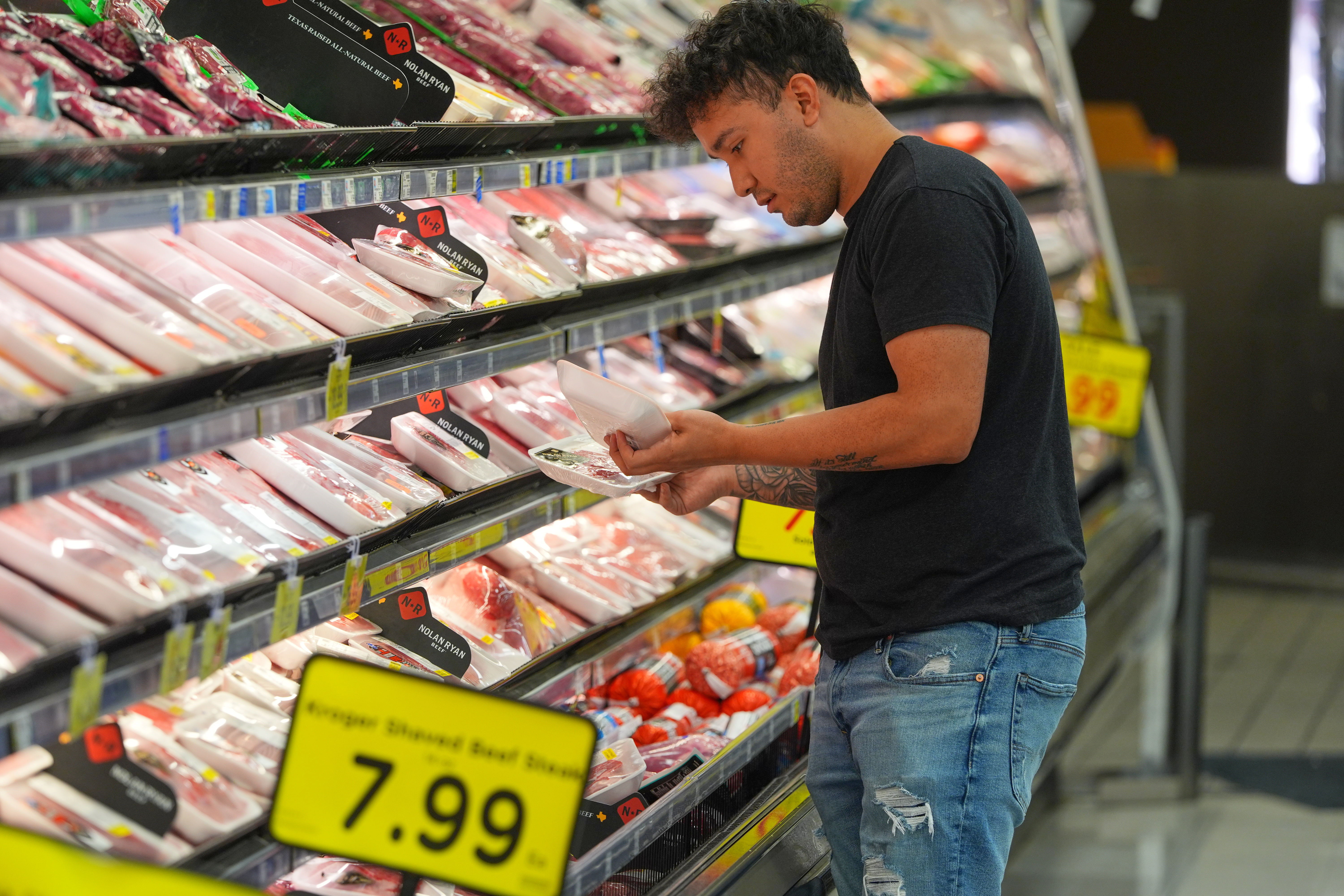
    Americans are still spending money so strongly it’s steering the economy through surging inflation, but rising prices are starting to take a toll on savings accounts and summer vacation plans.

    While gas prices have surged since the Iran war began, raising costs for groceries and transportation, tax refunds and stock market gains have been helping buffer the pain for some Americans who are still spending. Although, many Americans are reducing how much money they are saving, data shows.

    Overall, consumer spending, which fuels two-thirds of the economy, rose half a percent in April, down slightly from March but a resilient showing, experts say. The strong spending helped the labor market pick up 70,000 jobs in May in leisure and hospitality, much higher than at any point over the past year.

    Other signs of strong spending appeared this past week with Macy’s and discount stores Dollar General and Five Below all reporting stronger than expected sales for their most recent quarters. That accelerated a trend of decent sales already reported weeks ago by retail behemoths like Walmart and Home Depot.

    However, the spending data obscures a growing list of concerns, and economists expect things could get rockier for spending in the coming months, especially if energy prices remain elevated. On Friday, gas cost $4.22 a gallon on average, much higher than $3 a gallon in December.

    Generally, people feel pretty terrible about the economy — consumer sentiment dropped 10% in May, according to a gauge measured by the University of Michigan, falling to a record low.

    One significant warning sign is flashing: Consumers are dipping into their savings and setting less aside to keep up with their spending. The personal savings rate fell to 2.6% in April, the lowest level in nearly four years, and the second poorest showing since the height of the Great Recession.

    Inflation, which has remained persistently high and hit 3.8% in April, is the likely culprit of the lower savings rate.

    “The economy has been somewhat insulated, and everyone has been willing to draw down savings to keep spending going,” said Mark Zandi, chief economist at Moody’s Analytics. “But if things keep going up, increasingly consumers are going to have to pull back.”

    Greg Tresley, 54, said he generally aims to save $700 to $800 each month. But with rising prices on gas and groceries, plus a couple unexpected larger expenses, he’s only been able to break even the past few months.

    “Basically the air has been coming out of my checking account little by little over the past year,” said Tresley, an IT manager in Langhorne, Bucks County.

    The toll of rising prices and global uncertainty is weighing on his family. His wife decided against a trip to Arizona to see family, and they’ve stopped driving their 2011 Mustang to avoid any unexpected repairs.

    “It’s all home cooking these days,” he said. “We have changed our grocery habits; we look at sale items first.”

    Consumer wariness is also starting to show up in other parts of the economy. When Dollar General reported earnings, officials said that they’re seeing more shoppers making more than $100,000 a year, as higher-income families seek out discounts.

    “Many of our core customers reported cutting back on other household expenses, including food purchases, due to rising gas prices,” Dollar General CEO Todd Vasos said on the company’s quarterly call, adding that the company was stocking more $1 items to appeal to customers. Dollar General increased net sales by more than 3% from the same period last year.

    Inflation also continues to hit lower-income families especially hard. A May report from the Federal Reserve’s Board of Governors reported that lower-income households showed greater financial strain, while higher-income households remained more resilient. Middle-income families are “squeezing more life out of every dollar before deciding to spend it.”

    Higher-income earners are being bolstered by a strong stock market — the S&P 500 is up more than 10% for the year — and might not feel the need to save as much each month.

    The increase in spending early this year was helped by higher-than-normal tax refunds doled out to taxpayers in the wake of President Donald Trump’s massive spending bill passed last year. Data from banking giant Chase shows that people are spending significantly more at gas stations this month, compared with last year, but that they haven’t really cut back on discretionary spending. Savings levels are also remaining largely stable, Chase said.

    But those tax refunds have peaked and are now slowing, said Bank of America economist Aditya Bhave. He has learned not to bet against the U.S. consumer, he said, noting that people find a way to keep spending. But, he said, the risks are now massive.

    “I think the true test of consumer resilience is still ahead of us,” he said.

    Karen Jenkins, a 54-year-old project manager in Houston, said she deliberately moved close to her office when she recently relocated to the city to avoid putting excess wear and tear on her car. She and her husband generally take a trip to Europe each December, but this year they are on the fence if they’ll make it. They’re watching flights and overall prices and will make a game-time decision this year, she said.

    Americans are also increasingly relying on credit cards to buy essentials. Since the pandemic, the National Foundation for Credit Counseling has seen an increasing reliance on credit cards as a “gap filler” for budgets.

    “This isn’t a story of people taking exotic vacations or buying nice vehicles,” said Bruce McClary, senior vice president for media relations and membership for the organization.

    The payments are piling up for many. Credit card delinquencies for those who are more than 90 days late making a payment hit a 15-year high in the first quarter of the year, according to the Federal Reserve Bank of New York. However, newer delinquencies, for those who are more than 30 days late, held about steady.

    As prices rise, Americans are increasingly hunting out deals and sales to save money. In Bay Shore, N.Y., Sofia Delta, 50, often visits multiple stores to search for deals as she grocery shops for herself and her four children. Delta, who works in banking, said she is cooking at home more and putting groceries on her credit card before paying it off and repeating the cycle.

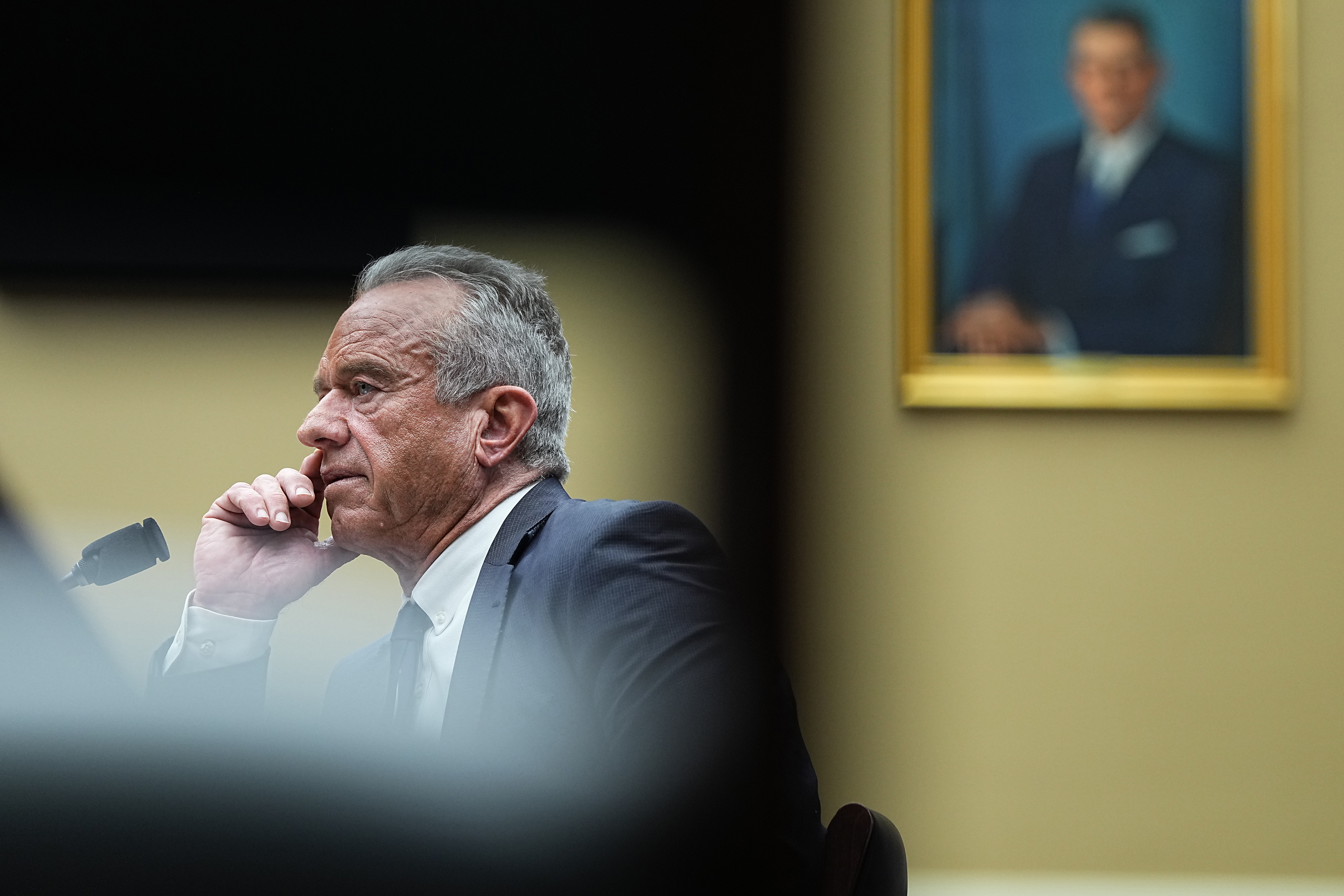
  • Kennedy shows minimal engagement with vast health portfolio

    Kennedy shows minimal engagement with vast health portfolio

    WASHINGTON — Shortly after the World Health Organization declared the Ebola outbreak in Africa a public health emergency, a reporter asked Health Secretary Robert F. Kennedy Jr. if he was worried about the virus. Six Americans had already been exposed. His response was brief: “Yeah, we’re working on it.”

    In the nearly three weeks since, as the Centers for Disease Control and Prevention imposed travel restrictions to keep the virus from coming to the United States, Kennedy has made no public comments about the spreading outbreak. He has received few briefings about the virus from CDC scientists, although he speaks daily to the acting director, according to people familiar with his response.

    Kennedy’s approach to the crisis reflects his broader management of the Department of Health and Human Services, which affects the health of 340 million Americans and provides healthcare to 40% of the population through Medicare and Medicaid.

    Kennedy has shown little interest in managing the details of work in his department, according to multiple colleagues. Instead, they say, he is single-mindedly focused on his top priorities, including food recommendations and pesticide exposures, and hunting for evidence to support his long-held beliefs that vaccines are harmful.

    Deeply mistrustful of career civil officials, the secretary has surrounded himself with a close circle of handpicked advisers and stacked agencies with political appointees aligned with his views. While major posts have sat vacant and a wave of veteran health experts and scientists have departed, Kennedy has remained isolated from much of the department’s top staff.

    He rarely engages with members of Congress, colleagues said, unless he is asked to testify. He has made just one known visit to the CDC, after a gunman opened fire on its headquarters and killed a police officer last August.

    This examination of Kennedy’s leadership style is based on the accounts of a dozen people who have had direct contact with him as secretary, as well as other health department employees, all of whom spoke on the condition of anonymity to avoid retribution.

    Kennedy and the department did not directly address questions about his leadership style.

    The secretary’s detachment from much of the work of the agency, along with the administration’s deep staff cuts and his attacks on career staff, have driven down morale, they say. It’s a dynamic that could threaten the department’s ability to protect Americans in a crisis, according to public health experts and former secretaries.

    Critics say one of the most urgent problems is Kennedy’s failure to act more swiftly to address a leadership vacuum. There is no surgeon general. About half of the 27 institutes and centers at the National Institutes of Health are run by acting directors. The acting chief of the National Institute for Allergy and Infectious Diseases was recently fired, as was the nation’s top drug regulator.

    The leader of the Food and Drug Administration quit last month under pressure over tobacco policy. Kennedy fired the CDC director last August; it is now run on an acting basis by Jay Bhattacharya, who has another huge job as director of the NIH.

    “You would never accept a major corporation operating this way,” said Michael T. Osterholm, director of the University of Minnesota Center for Infectious Disease Research and Policy, who has advised health secretaries of both parties.

    “If the CEO lacked deep expertise in the company’s business and the leaders of its most important divisions were missing, investors would revolt,” Osterholm said. “Here, the stakes are much higher. The mission is protecting the health and safety of the American people, and we’re confronting serious disease threats without permanent leadership in some of our most important public health agencies.”

    To address the management gaps, the White House and Kennedy initiated a shake-up in February, elevating Christopher Klomp, a department official and former healthcare executive, to serve as the secretary’s chief counselor and smooth out operations. In a statement, Courtney Spencer, who left the Labor Department two weeks ago to become Kennedy’s top spokesperson, said the health department was “aggressively recruiting top talent to fill every remaining vacancy,” adding, “Nothing has slowed our ability to execute.”

    Kennedy’s allies say that while his management style may be different from that of his predecessors, he is leading in other ways by taking stands on matters of importance to Americans, including healthy eating and tackling chronic disease.

    “You do not come to Washington to challenge powerful interests, disrupt decades of business as usual, and demand accountability to make friends,” Mehmet Oz, director of the Centers for Medicare and Medicaid Services and a close ally of Kennedy’s, said in a statement provided by the health department. “You do it to deliver results.”

    Other advisers say Kennedy is also running into the realities of Washington, including a Congress that has refused to confirm some of President Donald Trump’s nominees.

    “Very predictably, you get into governing, you get into a toxic political environment, and a situation where there’s trillions of dollars of interest and you have the burden of having to do policy,” Calley Means, a close adviser to Kennedy, said at a recent forum hosted by Harvard University. “Nobody executes perfectly.”

    A remote presence

    Kennedy keeps a low profile at the health department’s headquarters, a hulking building that faces the National Mall near the U.S. Capitol.

    When he is in town, he exercises at his gym before work, then usually arrives at about 10 a.m. and leaves by 4 p.m., his colleagues say. He spends much of his day in closed-door meetings, according to those who work with him, and has little direct engagement with his staff.

    Every Tuesday at 10:30 a.m., the chiefs of the department’s 13 operating divisions gather in the secretary’s suite to update leadership on their activities. At the outset of his tenure, Kennedy was rarely there, either virtually or in person, according to three people familiar with his schedule. Since Klomp’s elevation, he now shows up once a month. But when he does attend, he often appears disengaged and spends the time scrolling on his phone, according to people in attendance. Several described him as “checked out.”

    Once, when he arrived to the meeting 15 minutes late, Kennedy offered a self-deprecating apology, according to one person in the room: “Thank you for putting up with my dysfunctional self.”

    Health department officials did not respond to a request for comment about the meeting or Kennedy’s remark.

    His lack of interest in matters that are not high on his priority list has meant that he has not engaged at critical moments, colleagues said.

    When measles killed two children in Texas early last year, Demetre Daskalakis, who led the response but has since left the agency, asked repeatedly to brief Kennedy but was rebuffed, he said.

    Susan Monarez, who briefly served as Kennedy’s CDC director before she was fired, had little direct interaction with the health secretary until she ran afoul of him on vaccine policy. She later told senators that during a series of tense meetings with the secretary, she was “directed to only work with the political appointees that he had put in place at CDC, and not to speak or work with the career scientists.”

    In the current Ebola crisis, Kennedy has left the department’s response to Bhattacharya, a health economist with no prior experience in public health even though he is leading the CDC. Bhattacharya, who also led the response to a recent outbreak of hantavirus, wrote an opinion essay published in the Wall Street Journal on Wednesday saying that while the “risk to the American public remains low, Ebola is dangerous.”

    A White House spokesperson, Kush Desai, said the agency’s “rapid and comprehensive response” to the Ebola outbreak proved that “under Secretary Kennedy’s leadership, HHS continues to safeguard the health and wellness of the American people.”

    Spencer, the HHS spokesperson, said the health department had “executed an immediate and coordinated response” under Kennedy’s leadership.

    But key vacancies inside the health department have made the response more challenging, people familiar with the situation said.

    The Administration for Strategic Preparedness and Response, responsible for pandemic preparedness and for standing up field hospitals and quarantine facilities in Kenya, is currently run on an acting basis by John Knox, a former Los Angeles firefighter who founded the group Firefighters4Freedom during the pandemic to fight vaccine mandates.

    As the Ebola outbreak has spread, Secretary of State Marco Rubio offered a tacit rebuke of Kennedy’s move last year to withhold funding from an international vaccine alliance, suggesting the State Department was taking back management of the U.S. relationship with the alliance.

    “We are going to reengage,” Rubio told lawmakers last week. “We need to drive this to an outcome.”

    A daunting portfolio

    Under any circumstances, the Department of Health and Human Services is difficult to run. It has 13 operating divisions covering a vast array of issues, such as child welfare and pandemic preparedness. Past secretaries from both political parties say there are three main ingredients for success: understanding the work of the divisions, strong crisis communication, and muscular coordination with state, local, and international health leaders.

    Tommy G. Thompson, who as health secretary to President George W. Bush faced complaints about his management of the 2001 anthrax crisis, spent a week at each one of the operating divisions at the outset of his tenure, and made frequent trips to Capitol Hill to advocate for the department. In an interview last year, he said he “would strongly suggest” Kennedy do the same.

    “The department is so vast and so complex,” Thompson said, “and you have to be prepared.”

    Kathleen Sebelius, a former Kansas governor who resigned as President Barack Obama’s health secretary after the flawed rollout of the healthcare.gov website, said she met with the division chiefs regularly, likening them to her cabinet.

    “My goal was to really be informed by the scientists, to make sure that NIH was at the table, that FDA was at the table, that our global health people were at the table,” Sebelius said in an interview. “I was really schooled by the people who had been there before and who knew what the hell they were doing.”

    Kennedy, by contrast, has delegated broad authority to Stefanie Spear, a longtime adviser who has been with him since his days as an environmental lawyer and functions as his protector and defender, according to people who know them.

    Spear runs meetings for the secretary, accompanies him on official trips, and keeps a list of his policy projects on a private spreadsheet to which his policy team has no access. There are more than 50 items on the list, one person who has seen it said.

    All requests for the secretary’s decisions and meetings go through Spear. When Kennedy is asked a question, his frequent response is “just run that by Stefanie.”

    Colleagues say that her tight control has slowed department operations.

    After Kennedy promised Congress that the FDA would investigate the safety of the abortion pill mifepristone, the agency proposed updating a set of sophisticated databases of electronic records it needed for the research. But the project was delayed for months by Kennedy’s office, according to two people with detailed knowledge.

    When a gunman opened fire on the CDC last August, Kennedy was fishing with Native American leaders in Alaska. Health department officials wanted to get a statement out to the news media. But it was held up for hours, several said, while Spear sought approval from the White House.

    Frustration with Spear, who served as Kennedy’s communications director during his campaign and oversees his public comments, has fueled some key departures.

    Kennedy is on his third top spokesperson; the first two quit in frustration, according to people familiar with their decisions. The secretary has also run through two chiefs of staff; he fired the first one, and the second was pushed aside in favor of Klomp.

    In a statement, Kennedy praised Klomp and Spear as “two of the most effective leaders in government.” He said Klomp had ”been instrumental in driving operational excellence, strengthening accountability, and ensuring HHS delivers results for the American people,” and that Spear “keeps our team focused on results and ensures the president’s and my priorities get across the finish line.”

    Klomp has moved quickly in the search for a new CDC director, with a nominee now awaiting Senate confirmation, as well as for other top leaders for the agency. He also brought in a new team of policy advisers to the secretary and instituted daily meetings between Kennedy and the leaders of the “Big Four” agencies: FDA, CDC, NIH, and the Centers for Medicare and Medicaid Services, according to three people familiar with the department’s operations.

    He has also sought to address low morale by starting a regular newsletter in which Kennedy addresses employees as “the dedicated professionals of HHS.”

    The secretary, however, has been out of the loop on some key decisions. When Tracy Beth Hoeg, the FDA’s top drug regulator, was fired by FDA leaders in May, the secretary did not learn of it until after it happened, according to three people familiar with the events.

    There is no question that Kennedy is changing the national conversation around health in America, especially healthy eating. While his vaccine agenda has so far been stymied by court decisions, he has scored “wins,” as he likes to call them, notably by flipping the food pyramid, persuading medical schools to revamp nutrition education, and convincing some food makers to abandon artificial dyes.

    He travels often and makes aggressive use of his platform to promote his priorities, including on social media and The Secretary Kennedy Podcast, which began in April. Last week, he made stops in Wisconsin to spotlight the work of dairy farmers and faith-based groups working in addiction recovery, and New Hampshire to announce an effort to combat Lyme disease.

    Colleagues say he also makes visits to Scottsdale, Ariz., where his son and daughter-in-law live, and Florida, where he stays at the Palm Beach mansion owned by Oz.

    After Memorial Day, the public got a glimpse of him there. Kennedy posted video of himself, in a suit and tie, capturing two black racer snakes on Oz’s patio. One of them bit him.

    This article originally appeared in the New York Times.
  • Israel says Iran launched missiles at it in first such bombardment since fragile ceasefire

    JERUSALEM — Iran launched missiles at Israel in the first such bombardment since a fragile ceasefire took effect in early April, raising the possibility of a return to heavy fighting and complicating mediation efforts to end the war.

    Iran’s state broadcaster confirmed the launches, and Iran closed its western airspace to brace for a possible response. Tehran had warned of retaliation after Israel struck Beirut’s southern suburbs without warning earlier Sunday in defiance of Washington’s request days ago to stand down. Israel said the Iranian-backed Hezbollah fired at northern Israel earlier in the day.

    “Should these acts of aggression be repeated, the responses will be broader in scope and will encompass all American and Zionist targets throughout the region,” Iran’s Revolutionary Guard said in a statement that referenced attacks in Lebanon and on Iran’s coast and vessels around the Strait of Hormuz.

    Sirens sounded in several areas of Israel, sending millions running for shelter. Israel’s military said it intercepted the missiles, and multiple explosions were heard in the north. Less than an hour later, the military said people could leave areas reinforced against missile attacks.

    “Iran has made a grave mistake,” Israel military spokesperson Brig. Gen. Effie Defrin said. The military’s chief of staff, Lt. Gen. Eyal Zamir, said it will “strike the enemy with determination as soon as the order is given.”

    But Israel’s public broadcaster, Kan, said U.S. President Donald Trump told it that he doesn’t think Israel needs to respond further. And Trump told the Financial Times: “I call all the shots. He (Netanyahu) doesn’t call the shots.”

    U.S. official: Netanyahu to hold off attack ‘for the time being’

    A senior U.S. official said Trump had called Netanyahu to urge him not to retaliate immediately for the Iranian missile attack. The official, who spoke on condition of anonymity to describe a private phone call, said that Trump believed he had convinced Netanyahu to wait.

    Trump “got Bibi to hold off for the time being,” the official said. The official would not offer any other details of the call, and there was no immediate comment from Netanyahu’s office.

    Iran had warned that an attack on Beirut would renew full-scale war across the Mideast, even as Pakistan and other mediators try to restart talks between Tehran and Washington.

    “U.S. forces across the Middle East remain vigilant and ready,” the U.S. Central Command posted on X shortly before the missile launches. The U.S. Embassy in Israel later directed employees and family members to shelter in place.

    Israel’s attack on Beirut came a few days after the Lebanese and Israeli governments agreed to a ceasefire in U.S.-hosted talks, though Hezbollah rejected the deal. The strike on a residential building killed two people and wounded 20, Lebanon’s health ministry said.

    “The army will continue to act in all of Lebanon,” the Israel military spokesperson said.

    Israel’s strikes and ground invasion in Lebanon in pursuit of Hezbollah, and the militant group’s resistance to disarming, have complicated an overall deal to end the war in the Middle East.

    Iran says any deal must include an end to fighting in Lebanon.

    Trump told a Fox News Channel reporter that he wanted the Iranians to stop firing missiles and return to the negotiating table. He also said that Israel’s strikes earlier Sunday were not coordinated with the U.S. and “I’m not happy about it.”

    Israel last week had announced it would strike the southern suburbs of Lebanon’s capital, but urgent talks via Washington halted that on the condition that Hezbollah stop targeting Israeli border towns.

    Hezbollah, which claimed responsibility for firing at Israel earlier Sunday, wants the direct talks between Lebanon and Israel to end. Instead, it supports Iran’s stance that an overall ceasefire deal between Tehran and Washington include the situation in Lebanon.

    Netanyahu, who seeks reelection later this year, is under heavy domestic pressure to respond to both Iran and the Hezbollah threat, which has paralyzed life for thousands of residents along Israel’s northern border.

    But Trump has made clear he does not want to see the war resume.

    Trump said earlier Sunday in an interview with NBC’s “Meet the Press” that he would like to see a “more surgical attack on Hezbollah.” He also said he was “not demanding” that Lebanon be part of an overall ceasefire deal in the Iran war.

    Iran continues to assert its grip on the Strait of Hormuz and the U.S. continues its blockade of Iranian ports, with shipments of oil, natural gas and fertilizer affected and the global economy in pain.

    Iran since the ceasefire took effect has launched missiles and drones at Gulf nations and said it was targeting the U.S. military presence. After its launches against Israel, Iraq’s Civil Aviation Authority announced that the country’s airspace would close for 72 hours and Syria’s aviation authority announced a 12-hour airspace closure.

    All flights from Tehran’s main international airport were suspended, the civil aviation authority said, according to the official Mizan news agency.

    Diplomacy continues before and after missile launches

    Pakistan’s interior minister, Mohsin Naqvi, was in Tehran on Sunday delivering a message to Iranian Supreme Leader Ayatollah Mojtaba Khamenei from Pakistan’s army chief Field Marshal Asim Munir, according to Iran’s state-run IRNA news agency. There were no details on the message’s contents.

    Khamenei has not been seen in public since he was named the Islamic Republic’s ruler after his father was killed on Feb. 28 as Israeli and U.S. strikes sparked the war.

    Pakistani authorities have said Islamabad, with support from regional countries including Qatar, Turkey and Egypt, is working to help bridge differences.

    In Cairo, the Egyptian and Qatari foreign ministers discussed “proposed elements” of a potential agreement between the U.S. and Iran, the Egyptian foreign ministry said, without details.

    And after Iran’s missile launches at Israel, Iranian Foreign Minister Abbas Araghchi spoke with counterparts in France, Qatar, Saudi Arabia, Britain, Egypt and Turkey as well as Pakistan’s army chief, Iran’s state TV said.