Category: Wires

  • Mortgage rates keep climbing, leading some buyers to riskier loans

    Mortgage rates keep climbing, leading some buyers to riskier loans

    Mortgage rates continue to creep higher, compounding an affordability crunch that has squeezed many Americans’ wallets. Now soaring rates are prompting some homebuyers to roll the dice that they will fall in a few years.

    The average 30-year, fixed-rate mortgage, the most popular home loan in the United States, rose to 7.28% this week, up from 7.03% last week and the highest since November 2023, mortgage financing giant Freddie Mac said Thursday.

    “Mortgage rates jumped to their highest level in almost three years, pushing borrowers to the sidelines,” said Joel Kan, deputy chief economist at the Mortgage Bankers Association, a trade group.

    Mortgage rates had fallen below 6% at the end of February but began to inch higher after the United States and Israel attacked Iran on Feb. 28. The war in Iran has driven up energy costs, which in turn has stoked inflation fears. In response, investors have pushed up the yield on the 10-year Treasury note, which on Thursday reached its highest level since 2002.

    The 10-year Treasury yield underpins a wide range of consumer and corporate borrowing, including mortgages. With the yield climbing quickly, the jump in mortgage rates this week was the biggest since October 2022.

    Adjustable-rate mortgages can be significantly lower than their fixed-rate counterparts, real estate experts say, sometimes as much as a full percentage point, a difference that can potentially save homebuyers thousands of dollars annually. The ARM, as the loan is known, also comes with the risk that rates will continue to climb, hurting owners when the loan resets.

    ARMs are an increasingly enticing option among buyers put off by the jump in fixed-rate mortgages, Kan said, adding, “They are looking for more ways to get into that home.”

    The association reported a recent uptick in the share of ARM applications, to 10.3% of overall mortgage applications, the highest in a year.

    Here’s what you need to know about adjustable-rate mortgages.

    How does an adjustable-rate mortgage work?

    Fixed-rate mortgages lock in one rate over the lifetime of the loan, usually 30 years. ARMs, on the other hand, offer a low “teaser” rate for a set time, typically five, seven, or 10 years, after which they readjust to the market rate, often annually, for the remainder of the loan. This helps owners keep their monthly payments lower during the introductory period.

    Borrowers who use ARMs are betting that mortgage rates will eventually fall, giving them the opportunity to refinance their loan at a lower rate or sell their home before the introductory period ends and the rate begins to fluctuate.

    ARMs make up a small portion of the overall mortgage market, which is dominated by fixed-rate products. But now that fixed-rate mortgages have climbed above 7%, interest in ARMs is starting to grow, said Archana Pradhan, the principal economist at Cotality, a provider of housing market data.

    The national average rate for an ARM with a five-year introductory rate that resets annually is 6.56%, according to Bankrate.com.

    “The wider the gap between ARM rates and the fixed rates, the stronger the incentive to choose an ARM,” Pradhan said.

    How safe is an ARM?

    ARMs offer savings for borrowers, but they also introduce market volatility.

    The loans were popular during the early 2000s housing bubble, peaking at around 36% of overall mortgage applications in 2005, according to data from the Mortgage Bankers Association. After the housing market crashed in 2008, the share of applications for ARMs plunged to about 6%.

    Stricter underwriting standards have made ARMs safer for consumers, who are protected by regulatory limits that prevent the variable rate from jumping too high.

    Still, they are not for everyone, said Nick Rocco, a mortgage loan officer in the Baltimore area. Borrowers need to have a plan for what to do after the introductory period ends regardless of where mortgage rates are. “There is no crystal ball,” he said.

    Who should apply for an ARM?

    Nearly 72% of homebuyers who take out an ARM have a chance within five years to refinance it into a 30-year fixed-rate mortgage that is at least 0.5 percentage points lower than their original rate, according to a report from Redfin, an online real estate marketplace.

    That can translate into big savings every month for some borrowers, Pradhan said. “It’s more meaningful for higher loans, because they are able to save hundreds of dollars compared to the lower amount of loans,” she said.

    Rocco said he recently worked with a couple who used an ARM to finance the purchase of a $750,000 home. The buyers had experience with ARMs, he said, and knew to put 20% down, which lowered their introductory rate.

    “They have a little more risk tolerance, and they’re a little bit more comfortable knowing the fact that they can refinance out of that adjustable rate,” he said.

    But Pradhan said ARMs made better sense for buyers who intended to sell after the introductory period ended. “You are not intending to live in the house forever,” she said.

    “Refinancing may be an exit strategy, but it’s not a guarantee,” she added. “One of the risks of an ARM is the higher payment in the future.”

    This article originally appeared in the New York Times.

  • France gripped by spreading student protests as PM calls crisis meeting

    France gripped by spreading student protests as PM calls crisis meeting

    PARIS — France’s prime minister convened a crisis meeting Thursday and canceled ministers’ trips to focus on the nationwide spread of protests, some violent, by high school students venting about under-resourced schools, long hours, and other complaints.

    The demonstrations erupted in Paris-region schools last week and have snowballed, with police making hundreds of arrests in clashes with the young protesters. Authorities have reported many dozens of injuries, including from hurled objects but also, in some suspected cases, from police riot-control projectiles.

    The protests are quickly blowing up as a hot topic in the election campaign to replace President Emmanuel Macron, who is constitutionally barred from seeking a third consecutive term next May. They are also heightening pressure on the government beset by France’s growing financial problems, and overshadowing the release on Thursday of its proposed cost-cutting budget for 2027.

    At a Paris high school where students barricaded an entrance, 18-year-old Salama Gargouri said protesters want to target “overloaded schedules, the system, the teachers, people who don’t listen to us, the university application process.”

    High school students in France often start classes at 8 a.m. and remain at school until late afternoon.

    “Older people say, ‘Kids, go to school from 8 a.m. to 6 p.m. every day.’ But you don’t know what that does mentally,” said Janna Tahari, another Paris high school student.

    Arson, thrown projectiles, and other violence on the margins of some protests have caused mounting injuries and recriminations. The interior minister has issued orders for police to break up blockades that prevent pupils from attending classes and to put a stop to violence and vandalism.

    Juliette Estiville, a high school Spanish teacher, said that the repression of the protests led her to join the students.

    “So, I’m here just to provide protection, to form a barrier between the police and the students,” she said. “And indeed, today went well, it’s going well, but I really think that the teachers who come to the blockades are really just there to protect our young people.”

    Education Minister Edouard Geffray said Thursday’s violence included a school set on fire and staff doused with gasoline. He said he issued instructions that classes be held remotely when blockades or damage to schools put students at risk.

    “Violence will not deprive our students of their fundamental right to education,” Geffray said in a post on X.

    Far-left presidential hopeful Jean-Luc Mélenchon has denounced the government response as repressive. His critics have accused Mélenchon’s party of inciting violence and using the unrest to score points ahead of the presidential election.

    The office of Prime Minister Sébastien Lecornu said he asked ministers to cancel any planned official trips in the coming days, to enable authorities and police to focus on dealing with the demonstrations.

  • This Head Start center teaches in two languages. A Trump overhaul would require one: English

    This Head Start center teaches in two languages. A Trump overhaul would require one: English

    IMMOKALEE, Fla. — It’s almost noon, and after playing on the playground, working with clay and washing their hands, the 2-year-olds are ready for lunch.

    The eight children and their Head Start teachers pray in English, thanking God for the meal. Then, the adults bring over several bowls.

    “Hoy tenemos arroz. Eduardo, ¿puedes servir tu arroz, por favor?” In Spanish, the teacher announces the children are having rice, asking Eduardo to start serving. The little boy grabs a ladle and scoops rice onto his plate.

    Both English and Spanish are core to daily life in this Head Start preschool in Immokalee, Florida — an agricultural area about 120 miles northwest of Miami. The center serves more than 50 children from mostly Guatemalan families, ages six months to 5 years. Most students arrive speaking little or no English.

    Children who speak a language other than English at home account for at least a third of the enrollment in Head Start, a federally funded early childhood program serving roughly 700,000 low-income children and their parents. For decades, Head Start has supported these kids by hiring multilingual teachers to teach them English, while using their home languages as a foundation.

    But an overhaul of Head Start’s standards proposed by President Donald Trump’s administration would amend that approach.

    If finalized, the proposal would require Head Start programs to conduct all education in English, though programs could seek waivers, and certain Tribal-language instruction would be exempt. The administration argues emphasizing English will expand children’s future economic opportunities and their ability to participate in American communities.

    “A firm foundation in the English language” is critical to preparing kids for school, said the Department of Health and Human Services, which oversees Head Start, in response to questions from The Associated Press.

    The administration says the change would allow programs to reduce multilingual services and redirect resources toward English-language education and “assimilation.” But it also estimates tens of millions of dollars in one-time costs to make the switch to English instruction, including nearly $47 million to replace curricula, books, and other classroom materials containing other languages.

    How Head Start teaches in multiple languages

    Toys line shelves in the Immokalee classrooms, labeled in English and Spanish — helicopters, airplanes, tower builders. Bilingual signs show shapes in different colors and list children’s birthdays.

    Every day, teachers sing and read in both languages, with offerings like “La Vaca Lola” (Lola the Cow), “The Wheels on the Bus,” “El Camioncito Azul” (Little Blue Truck) and “Pete the Cat.”

    One afternoon, a group of children is eating muffins when it suddenly grows dark outside and thunder rolls. Noticing the preschoolers look worried, a teacher explains in English, “When you see it, it’s lightning. When you hear it, it’s thunder. What was it?”

    “Thunder,” a boy responds. Another answers the question in Spanish, noting the danger: “Es muy peligroso.”

    “Si te cae un rayo muy fuerte, te puedes lastimar,” the teacher responds. (If a very strong bolt of lightning hits you, you could get hurt.) Then she adds in English: “So we don’t go outside.”

    The children cover their ears. “¡Lo escuché!” one shouts. (I heard it!)

    Speaking in English, the teacher tries to calm them down. Everything is fine, she explains. They are safe inside the classroom.

    This is part of Head Start’s Planned Language Approach in action. Educators help children learn English while also using the language they speak at home — not simply as an accommodation, but as a teaching strategy. Research shows skills and knowledge developed in a child’s home language can provide a foundation for learning English.

    If a child already knows the word for “yellow” in Spanish, she doesn’t have to completely rediscover the concept behind the color when learning the word in English. Rather, Spanish becomes a bridge to English.

    Asked for research supporting the proposed English-only requirement, the Department of Health and Human Services pointed to a section of the proposal that cites Trump’s executive order designating English as the country’s official language. “The changes set forth in the proposed Head Start rule help achieve these goals by exposing children to English earlier, during a critical time in children’s development,” a department spokeswoman said.

    But education studies don’t back up the administration’s claim, said Michael López, a child psychologist who has spent more than three decades researching early learning and leading Head Start studies for the federal government and non-governmental organizations.

    “There’s really not any credible research basis that suggests that English-only instruction will produce stronger English academic outcomes,” López said. “It’s a mistake. It’s really going back 30 years.”

    Dual-language instruction produces better academic outcomes, he said, including in subjects like mathematics. And, he said, studies suggest instruction in both languages can produce better Spanish skills without sacrificing English-language development.

    Francisco Rodriguez, who attended Head Start in Florida as a child, said he spoke English at home with his mother, but often couldn’t communicate with his father, who speaks only Spanish. Head Start helped him build a foundation in Spanish to deepen his relationship with his dad. Today, he is fluent in both languages.

    “Knowing how to read or write in English, it was easy for me to pick up Spanish words,” said Rodríguez, now 32, who holds a master’s degree in architecture and creates interactive experiences in museums. “And because I’ve heard them at home, I can easily put two and two together.”

    In the 1970s, Head Start began requiring centers with significant numbers of non-native English speakers to hire at least one staff member fluent in their home language — a regulation still in place today.

    The Trump administration wants to drop that requirement, saying it could help centers more easily staff classrooms.

    The language changes are part of a broader effort by the Trump administration to eliminate or rewrite many federal Head Start requirements for classroom conditions, curriculum and safety. Instead, state and local regulations — which are often more lenient — would apply. The administration says the change would give Head Start centers more flexibility over how they operate.

    The proposed changes do not require a vote in Congress, but the administration is required to seek and consider feedback from the public. Comments are due Oct. 6.

    Thus far, most comments related to the English-only proposal oppose that approach.

    Multilingual approach allows parents to participate in learning

    At Immokalee, teachers give daily notes to parents when they pick up their children, writing in both English and Spanish. A recent note to the family of a girl named Deleiza, for example, said she’d eaten almost all her breakfast and lunch. “Hoy estuve sonriente,” it said. (Today I was smiling.)

    Beyond these simple reports are monthly parent meetings on campus to discuss topics like security, plus four in-person parent-teacher conferences every year — two at the children’s homes and two at school. (Those conferences would become optional under the Trump administration proposal.)

    In all of these interactions, parents and staff currently speak in Spanish with each other.

    The executive director overseeing the Immokalee center said she is unsure what the English-only proposal would mean in practice, particularly for parents’ involvement.

    “I don’t know how you’re going to keep people from … speaking Spanish, because it is the home language,” said Isabel Garcia, who, as executive director of the Redlands Christian Migrant Association, supervises 26 Head Start and Early Head Start locations. “It is important that (family members) feel comfortable understanding what is happening with their child.”

    HHS told the AP the English-language requirement would apply only to instruction. Head Start teachers could continue using kids’ home languages in non-instructional contexts — explaining safety rules or providing comfort, for example — and when communicating and engaging with families, the department said. In fact, the law requires Head Start centers to communicate with parents in a language they understand, “to the extent practicable,” which wouldn’t change.

    But communicating thoroughly may be more difficult without a staff member who speaks the language. The department acknowledged that eliminating requirements for bilingual staffers “may negatively affect communication with non-English-speaking families and weaken family engagement.”

    “Technology-based translation tools may help mitigate some of these impacts,” the department said.

    López, the researcher, noted parents help advance their children’s learning by being teachers at home, even when they’re using a language other than English. They help kids by counting, referencing different colors, and repeating stories and songs.

    “We are going to lose that bridge,” López said.

    During naptime at the Immokalee center, a mother opens the door to pick up a sick child. The teacher greets her in Spanish, reporting her daughter didn’t want to sleep or eat.

    “No quiso dormir. No quiso comer,” the teacher says.

    The mother lifts her daughter from the mat, rests her little head on one of her shoulders, and says to her: “It is OK, bebé.”

    “Hasta mañana,” the teacher whispers. “Hope you feel better.”

  • Trump and Vance hit the campaign trail in deep-red areas where GOP candidates seek a boost

    Trump and Vance hit the campaign trail in deep-red areas where GOP candidates seek a boost

    WASHINGTON — President Donald Trump and Vice President JD Vance both hit the campaign trail on Thursday, but they headed to heavily Republican areas to shore up lagging enthusiasm in their party ahead of next month’s midterm elections.

    Trump’s travel to Texas and Oklahoma kicks off what the president said will be a 32-day campaign blitz leading up to Nov. 3.

    Vance stumped in Florida, putting the Republican Party’s highest-ranking officials in areas where GOP candidates once expected to have glide paths to victory but are now facing tougher races. The vice president tried to cast the GOP as representing common sense in the face of a Democratic push to the left.

    “I have the easiest job in the world,” Vance said in Lakeland, Florida. “I get to talk about how crazy the Democrats are.”

    Trump and Vance could have their work cut out for them, though.

    A new poll from The Associated Press-NORC Center for Public Affairs Research finds that only 17% of U.S. adults approve of Trump’s handling of the cost of living. Just 26% approve of his handling of the economy overall, marking a new low.

    Republicans have expressed growing pessimism about their chances in the election, which will determine control of Congress, as the president has repeatedly dismissed concerns about high costs and gas prices as his unpopular war in Iran drags on.

    According to Trump, his party’s headwinds are merely a matter of poor public relations about a job he says is well done.

    “I give us an A+ on the government, on economics, on everything,” Trump said Thursday, as he left the White House, while blaming the press for not covering the positive aspects of his administration.

    Landing in Texas, he said “we have to get the message” out, while vowing “to go campaigning all over the country.”

    Democrats say Trump and the Republicans are desperate

    Delanie Bomar, a spokesperson for the Republican National Committee, said in a statement that “the president is barnstorming the country, energizing our base, and supercharging Republican candidates in battleground districts and beyond.”

    The Democratic National Committee said Trump and Vance are “desperately trying to rally their base as the midterm elections approach and Republicans face defeat.”

    “Donald Trump and JD Vance started a deadly and costly war with Iran that sent the economy spiraling and pushed prices even higher, and now — in the final stretch to the midterms — they’re desperately pleading with voters to ‘give (them) another chance,’” said DNC deputy communications director Kendall Witmer.

    In Oklahoma, Trump will campaign with Republican Mike Mazzei, who is running against Democratic state House Minority Leader Cyndi Munson in the race for governor.

    Democratic Governors Association spokesperson Kevin Donohoe said Trump’s campaign rally shows that Republicans “are in full-on panic mode.”

    “This race continues to get more competitive — and national Republicans are right to be worried about Mazzei,” he said.

    The event will be held on the Choctaw Nation of Oklahoma, putting Trump in the company of just a handful of U.S. presidents who have visited tribal nations while in office.

    Before his evening Oklahoma stop, Trump toured a truck manufacturing facility and chatted briefly with workers in Texas, where Republicans are spending heavily to try to bolster state Attorney General Ken Paxton in a Senate race. Paxton faces a very competitive challenge from Democratic state Rep. James Talarico.

    Paxton planned to attend the event.

    Vance also stumped for GOP candidates

    Trump will be campaigning in more politically competitive areas in the days and weeks ahead as he embarks on his travel blitz, but Republican officials will not send him to places where they think his presence could drag down their candidates, according to a person familiar with the party’s strategy who was not authorized to speak publicly and spoke on the condition of anonymity.

    Trump’s Oklahoma visit, and likewise one on Friday to Alabama, are aimed at hitting two targets with one stop, the person said.

    Republican officials have noted that Durant is close to the Dallas and Fort Worth media market, meaning Trump’s message will also be carried to Texas voters, and he’s expected to talk about Paxton even while addressing voters in the neighboring state.

    His Friday stop in Mobile, Alabama, is aimed not only at boosting Sen. Tommy Tuberville as he runs for Alabama governor but also at shoring up support in Florida’s adjacent panhandle for Republican Rep. Byron Donalds. Donalds is running for Florida governor against David Jolly, the Republican-turned-independent who is now running as a Democrat.

    Donalds’ campaign in heavily GOP Florida comes as Republicans there have faced some turbulence and voter concerns about affordability and artificial intelligence data centers have become central issues.

    While Trump is in Oklahoma and Texas, Vance campaigned for Donalds in central Florida. That came a day after the vice president campaigned in Texas, rallying with Republican candidate Eric Flores, who is in a tight U.S. House race in south Texas.

    Vance, speaking in Harlingen, Texas, on Wednesday, acknowledged broader discontent over the high prices in the U.S. but shifted the blame away from Trump and Republicans.

    “I know that there are people out there who are frustrated by the pace of progress,” he said, but “we have spent every single day fighting for you, digging ourselves out of the hole that Joe Biden left us in.”

    Trump will also campaign on Saturday in Vandalia, Ohio, and on Monday in Grand Island, Nebraska.

    Trump is expected to campaign for the GOP almost daily

    In a meeting on Capitol Hill this week, White House chief of staff Susie Wiles described privately to GOP senators that Trump will have a near-daily sprint of campaigning ahead of the Nov. 3 midterms.

    Wiles showed Republicans the president’s upcoming travel schedule, which attendees described as extensive and almost every day, all across the country.

    West Virginia Republican Sen. Shelley Moore Capito said that White House officials are “acknowledging the headwinds” but that “they have a strategy, and we have a strategy,” including money that the president’s operation will continue to deploy.

    Capito also defended the White House’s plan to send Trump to traditionally conservative territory, arguing that he can motivate the Republican base not just where he travels but elsewhere in the country because he has such a broad reach.

    “He can get more of his voters out — that are going to be our voters — than anybody else,” Capito said.

  • Christa Pike is in critical condition after Tennessee’s failed execution attempt, her lawyers say

    Christa Pike is in critical condition after Tennessee’s failed execution attempt, her lawyers say

    Christa Pike was in critical condition Thursday and receiving “lifesaving care” at a hospital, her lawyers said, a day after a failed attempt to execute her in what Tennessee’s governor called a “deeply disturbing” outcome.

    Pike, who was sentenced to death in a 1995 murder, was taken to a hospital Wednesday night after she received a double dose of the drug Tennessee uses to execute prisoners but survived.

    “We don’t have a sense of her prognosis or much update on her health at the moment,” attorney Randy Spivey said during a news conference. ”But we know she is alive right now.”

    The failed execution, which one death penalty expert described as unprecedented, led Republican Gov. Bill Lee to order a review and to indefinitely postpone Pike’s execution and Tennessee’s lone other one scheduled for this year. It also reignited the debate over the state’s execution procedures, including its single-drug lethal injections.

    Spivey called the process cruel and tortuous, saying he was “haunted” by what he saw after the execution team struggled to find a vein for the lethal drugs. He said he counted at least seven needles in her left arm.

    During the struggle to locate a vein, Pike even suggested where they might find a spot, he said.

    “Please try here, please try here,” Spivey recalled her saying. “She told them over and over, please try higher on my shoulder.”

    An execution fails

    The state tried to execute Pike by lethal injection, but neither the initial nor backup dose of pentobarbital killed her and she was still snoring when the execution chamber’s microphone was cut off more than an hour into the attempt. She was later taken to a hospital for treatment.

    At one point during the execution attempt, she asked prison officials if her arm was supposed to feel that way, though it’s unclear if it was after the first dose entered her body, as officials don’t share that information. Later, more than an hour after the process began and nearly 30 minutes after a backup dose of pentobarbital was administered, she could be heard snoring loudly.

    Another of Pike’s attorneys, Steve Ferrell, said she feared there would be complications with the lethal injection because of a lifelong blood disorder that made it tough to get needles into her veins. “Throughout her life, she’s explained to us that she had trouble having blood drawn,” he said.

    It was quite possible, Ferrell said, that the IV line didn’t enter her vein properly and that the drug was filling her arm instead of entering her bloodstream.

    Her lawyers called for her death sentence to be commuted, saying what she went through Wednesday amounted to torture.

    May Martinez, whose daughter was murdered by Pike and her boyfriend and who traveled to Nashville to watch the execution, told NBC News “it was a mess.”

    Pike, 50, was sentenced to death for a murder she committed at age 18. She would have been the first woman executed in Tennessee in more than 200 years.

    An appeals court stopped the lethal injection an hour before it was scheduled to begin, but the U.S. Supreme Court overturned that stay hours later.

    It was the second time this year that Tennessee was unable to complete an execution. In the other case, officials couldn’t find a suitable vein for an IV line so the drugs weren’t administered.

    Governor halts another 2026 execution

    The governor said it appeared prison staff followed procedure, but he described what transpired as “deeply disturbing.”

    “There are very few answers this morning. It’s very early,” Lee told reporters Thursday. “The people of our state deserve to have those questions answered.”

    Officials gave Pike two doses of pentobarbital, her attorneys said in court filings late Wednesday. The drug has been used in executions in multiple states and by the federal government, but there have been concerns raised about the potential for “unnecessary pain and suffering.”

    The Tennessee Department of Correction said in a statement that it “followed every step of the State’s lawful, established execution protocol approved by the Attorney General’s Office.”

    The state changed its execution method two years ago

    Tennessee announced in 2024 that it was switching from a three-drug series for lethal injections to a single drug, pentobarbital. That came more than two years after the state abruptly halted the execution of Oscar Smith and acknowledged it had failed to ensure its lethal injection drugs had been tested properly.

    Robin M. Maher, executive director of the Death Penalty Information Center, said what Pike experienced is “singular and unparalleled” in that she survived long enough to be moved to a hospital.

    Seven other people have survived medical problems due to an execution team’s failure to access a vein to administer lethal injection drugs, but no one has stayed alive after receiving the drugs used in such executions, she said.

    Executions in the U.S. have fallen sharply since the beginning of this century amid growing public opposition and concerns about the costs and the drugs used. But the number of executions nearly doubled last year behind a record increase in Florida.

    Pike would have been the 30th person executed in the U.S. this year.

    Pike was awake in the chamber

    Strapped to a gurney in the execution chamber, Pike described herself as at peace.

    When asked if she had any last words, Pike said several things, including, “I’m at peace. I’m ready to be free. … This is a happy day.”

    But she remained awake, and at one point complained about the feeling in her arm. The chamber’s curtains were closed briefly, suggesting it had been five minutes since the first dose was administered. But they were reopened three minutes later.

    An hour after officials first raised the curtains, witnesses reported that a second dose of pentobarbital was administered. Pike could still be heard snoring behind a closed curtain until the microphone was cut off almost 30 minutes later.

    Her lawyers filed an emergency motion with the Tennessee Supreme Court seeking to immediately halt and stay the execution, saying she was in “unnecessary agony” and the procedure violated her right to be executed free of cruel and unusual punishment.

    Last May, Tennessee officials called off the lethal injection of Tony Carruthers, who was convicted of kidnapping and killing three people in 1994, after executioners tried for over an hour but failed to find a suitable vein for a secondary IV line.

    Pike didn’t deny her role in the killing

    Pike and her boyfriend were convicted of the fatal stabbing of 19-year-old Colleen Slemmer, a classmate. The killing stoked fears of Satan worship because of a pentagram carved on Slemmer’s body.

    Pike’s boyfriend wasn’t eligible for the death penalty because he was 17 at the time of the killing and received a sentence of life in prison. He was denied parole last year.

    Pike didn’t dispute that she helped kill Slemmer, but supporters argued that Pike’s age at the time of the murder, her mental illness and her allegations of severe sexual abuse should be considered. She was diagnosed with bipolar disorder and post-traumatic stress disorder after the killing.

    “It took me numerous years to even realize the gravity of what I’d done,” she once said.

  • Iran indicates it’s received an official U.S. response to its latest offer on ending the war

    Iran indicates it’s received an official U.S. response to its latest offer on ending the war

    Iranian officials indicated Wednesday they have received an official U.S. response to Tehran’s latest proposal to end the seven-month war, which U.S. President Donald Trump had publicly rejected just days earlier.

    The officials did not say what the response contained and whether it was a rejection.

    Iranian Foreign Minister Abbas Araghchi presented the U.S. response to President Masoud Pezeshkian at a Cabinet meeting, government spokesperson Fatemeh Mohajerani told the state-run IRNA news agency.

    “We will make every effort to bring the agreement to fruition and will firmly stand up for the rights of the Iranian people,” Pezeshkian said. “The agreement must now be based on a win-win strategy.”

    The Cabinet meeting followed Araghchi’s return to Iran after travelling to New York for last week’s U.N. General Assembly, where officials held indirect talks with U.S. officials and also met with Qatari and Pakistani mediators on the sidelines of the annual gathering of world leaders.

    Araghchi briefed the Cabinet on his trip to New York and the meetings he held there, including Iran’s conditions for reopening the Strait of Hormuz, which Mohajerani said had been conveyed through mediators.

    Araghchi last week said he floated the proposal to reopen the strait in a week if the U.S. agreed to lift its blockade of Iranian ports, release frozen Iranian assets and waive sanctions on Iranian oil sales, among other conditions.

    Trump swiftly rejected the proposal, saying Iran wanted to make a deal because it was “losing so badly” but that its offer “would not be acceptable.” Despite Trump’s public rebuffing, mediators continued working with Iran and the U.S. to try to broker a deal to end the fighting and open the strait, according to officials who were not authorized to comment publicly and spoke on condition of anonymity.

    Meanwhile, the U.S. Treasury Department unveiled new sanctions on Tuesday targeting people and companies around the globe that it accuses of being financial facilitators or enablers of Iran’s military supply chain.

    The latest action is part of the Trump administration’s “Operation Economic Outcast” campaign aimed at severing “critical financial lifelines” for the already heavily sanctioned Iranian government.

    Ten people and entities based in Iran, Hong Kong and Pakistan now face sanctions over accusations of procuring weapons and weapon components for Iran’s defense ministry as it fights its now seven-month war against the U.S.

    Iran’s economy is spiraling further

    Iran’s economy, under heavy strain before the war started, has been in a freefall since the conflict began in late February.

    The country’s currency fell to a new record low on Tuesday, with traders in Tehran exchanging more than 2.5 million rials to the U.S. dollar in a stark reflection of how the war in the Middle East has steadily eroded the Iranian economy.

    The latest decline came just 27 days after the rial hit its previous record low of 2.2 million to the dollar on Sept. 2. The currency has repeatedly reached new lows since the war began in February.

    Trump on Tuesday said that Iran is “failing very badly, very badly” and predicted anew that the war will be “over with very, very soon.”

    At the onset of the conflict, he predicted that the war would last just weeks. More recently, Trump said he expects it won’t end until after the Nov. 3 midterm elections in the U.S.

    Iranians face soaring prices for medicine amid U.S. blockade, sanctions

    Medication prices are soaring in Iran and some treatments have become hard to find, leaving patients and their families scrambling as a U.S. blockade and stepped-up sanctions squeeze the country’s pharmaceuticals industry.

    Some medicines have more than tripled in price, further straining Iranians’ finances seven months into the country’s war with the United States and Israel. Prices for food and other goods have skyrocketed even as unemployment has risen and the currency, which hit a record low this week, has lost half its value.

    The war has become an economic endurance test. Iran has tried to push world energy prices higher with attacks on the region’s oil shipping routes; the United States, in turn, has aimed to wreck Iran’s economy by blockading its ports since June and slapping it with increasingly tough sanctions.

    Iran executes 2 men on charges of violence during January protests

    Also on Wednesday, two men were executed in Iran over their role in violence during nationwide anti-government protests in January, the state-run IRNA news agency reported.

    Citing the country’s judiciary, IRNA said the men took part in unrest in the northeastern city of Mashhad that left four members of the security forces dead earlier this year. Their death sentences were upheld by Iran’s Supreme Court before being carried out Wednesday morning.

    The unrest began Dec. 28 amid anger over Iran’s collapsing currency and worsening economy and quickly spread across the country, with demonstrators increasingly calling for the overthrow of the Islamic Republic. Iranian authorities responded with a deadly crackdown.

    Rights groups say thousands were killed and tens of thousands arrested, while Iranian authorities have reported a substantially lower death toll.

  • Trump administration considers scaling back border project in Texas’ Big Bend National Park

    Trump administration considers scaling back border project in Texas’ Big Bend National Park

    WASHINGTON — The Trump administration is considering reducing the scope of a planned border project through Big Bend National Park in Texas, a contentious undertaking that has drawn bipartisan opposition over concerns it will irrevocably mar the remote, majestic area.

    The announcement on plans for the national park, made in two court filings late Tuesday, gave no details on what the government may do. In August, the Republican administration initiated a pause on construction-related activity in the park as it engaged in outreach efforts to opponents of the project. The pause ends Wednesday.

    Customs and Border Protection is “actively considering adjustments” to the work ”that would reduce its scope and avoid or minimize potential impacts, based on input received from the National Park Service and other stakeholders,” the government said in the court filing.

    The agency said it will make a final decision the first week in October and will take “several weeks” after that announcement before any “ground-disturbing work” starts.

    After intense opposition from environmentalists and local residents and business owners, CBP backed off plans this year to build a 30-foot-tall bollard wall through the park. But its intention to move forward with other measures such as a new road, lights, vehicle barriers and technology did not quell local resistance.

    After bulldozers were spotted in August clearing land in Big Bend, CBP Commissioner Rodney Scott announced a pause on all activity there and it was later expanded to the area upstream of the park. The agency has said it was only carrying out design and planning work, not full-scale construction activities.

    Opponents of the border project called on the administration Wednesday to continue the pause while coming up with a new plan.

    Bob Krumenaker, head of Keep Big Bend Wild and a former NPS superintendent at the park, said in a statement that the Border Patrol already works with the park service and local sheriffs to operate an “effective surveillance system” in Big Bend that includes ground sensors and patrols. The Coalition to Protect America’s National Parks said building in the park would be “mutilating an extraordinary landscape.”

    The project is part of a $46 billion plan by the administration to line the U.S.-Mexico border with steel bollard walls, vehicle barriers and surveillance technology to deter migrants and smugglers.

    The government has also paused work on a 61-mile piece of land stretching north of the national park along the Rio Grande River, most of which is owned by private landowners. In that area, the government plans to build a 30-foot-tall steel bollard wall designed to prevent people on foot from crossing, roads and various types of surveillance technology where appropriate, according to the court filing.

    CBP has started building the wall in a West Texas part of the broader Big Bend region, but has run into intense opposition there, including from landowners challenging the project in court.

    Also in the court filing Tuesday, the government suggested it was facing resistance in getting permission from landowners to survey and build on their property and would be referring some cases to the Department of Justice to pursue condemnation.

    The government also detailed efforts it had made to meet with people potentially affected by Big Bend projects and shared with them incidents of cartel-related violence that concerned the Border Patrol.

    The administration has been pushing forward with the border wall projects that have long been a key part of President Donald Trump’s vision for border security. The agency said it is building 12 miles of wall per week.

    But lining up against the work are private landowners, Native American tribes, environmental groups and others who question the necessity and cost of the project at a time when illegal immigration has fallen dramatically. Opponents also have accused the government of damaging Native American sites and sensitive ecology locations in its rush to finish construction.

  • A knife and a pledge: Brazil’s candidates court women with promises to combat violence

    A knife and a pledge: Brazil’s candidates court women with promises to combat violence

    RIO DE JANEIRO — Clutching an oversized knife onstage during a recent campaign stop, Brazilian presidential candidate Sen. Flávio Bolsonaro vowed to inflict chemical castration on “rapists and child abusers,” drawing thunderous applause.

    The tough-on-crime message comes as Bolsonaro seeks to appeal to women, who account for 53% of the electorate and played a decisive role in handing President Luiz Inácio Lula da Silva a narrow 2022 victory over Bolsonaro’s father, former President Jair Bolsonaro.

    “Women are starting to have a perception of their role in elections,” said Rachel Ripani, co-founder of the movement Levante Mulheres Vivas, or Rise Alive Women. “They’re seeing their vote as something that they don’t want to be manipulated.”

    Polls show Lula with a narrow lead over Sen. Bolsonaro in the Oct. 4 vote, but neither candidate is expected to win outright, making a runoff likely. Both have been courting swing voters, including women, with proposals to combat gender-based violence, a major campaign issue as violence against women reaches record levels and several high-profile cases draw attention.

    “We’re building a Brazil (…) free of femicide, where no woman, inside or outside the home, lives under the threat of violence,” Lula told heads of state at last week’s United Nations General Assembly in New York. “This is a cause that the entire world needs to embrace.”

    More than one in three women in Brazil was a victim of sexual or gender-based violence over the course of a year, the highest number since tracking began in 2017, according to a 2025 report by the think tank Brazilian Forum on Public Safety. In 2025, 1,571 women were victims of femicide, the highest annual total since Brazil defined the crime in law in 2015, the forum said. Femicide is defined as the killing of a woman in a domestic setting or out of contempt for women.

    Cases over the past year have drawn widespread public condemnation, including the alleged gang rape of a 17-year-old girl in Copacabana; the death of a woman after her ex-boyfriend ran her over, trapped her beneath his car and dragged her over concrete for one kilometer, and the alleged killing of a military police officer by her husband, a member of the same institution.

    Feminists are seeking guarantees

    Along with chemical castration, Sen. Bolsonaro proposes expanding spaces that provide shelter for victims of violence and the creation of an AI assistant that would allow victims to file reports, request a protective order, and receive guidance and support.

    Meanwhile, Lula pledged to expand protections introduced during his administration, particularly at the end of last year after a series of cases sparked demonstrations. Those measures include real-time monitoring of perpetrators of violence wearing electronic ankle bracelets.

    Both Lula and Sen. Bolsonaro have advocated for tougher penalties for those who commit the crimes of violence against women, measures that would require parliamentary approval.

    Aware of women’s electoral weight, activists are seeking to leverage that power to seek guarantees that such promises will not later be shelved.

    Feminist groups are asking that candidates sign a letter committing to tackling gender-based violence as a priority and voting for a bill that seeks to criminalize misogyny, conducting surveys to define priorities, spotlighting female candidacies on websites and putting forward a shared legislative agenda.

    Carmen Silva, a 61-year-old feminist who lives in the northeastern city of Recife, said this year her group Forum of Women of Pernambuco has two priorities: defending the limited right to abortion and a pledge to tackle the problem of gender-based violence through a multipronged approach including the introduction of education programs.

    “Of course it’s easier to get commitments during the electoral period, but when women candidates are elected, we will cash in on those demands,” she said. “It’s not only about guaranteeing that women aren’t assassinated, but about giving them the possibilities of living a dignified life.”

    Experts say part of the problem is a lack of funds to deploy protective measures and enact laws that already exist, an argument put forward by feminist candidates such as Luciana Boiteux, who is running for Rio’s state legislature.

    “We have enough laws. As lawmakers, we will be vigilant with regards to the execution of these public policies,” said Boiteux at a recent campaign event in front of Rio de Janeiro State University.

    Unequal representation by women

    As with efforts to combat violence against women, calls for increased political representation cross party lines.

    Despite Brazilian women’s electoral weight, only around 19% of lawmakers and senators are women. Brazil also has Latin America’s lowest level of female representation in politics, according to a study by Esfera Institute.

    “Women have a long history of social mobilization in Brazil, but lately it became clear to these movements that the state matters and that they need to dispute that power,” said Marlise Miriam de Matos Almeida, a political scientist at the Federal University of Minas Gerais.

    “Feminist movements have understood that it’s necessary to organize the female vote and mobilize forces to transform this quantitative power into something that allows more women to be elected,” she said.

    The assassination of local councilwoman Marielle Franco inspired some Black women to run for office, Matos Almeida said, but political violence and insufficient resources continue to hinder the participation of women in politics.

    The number of female candidates for Brazil’s lower house dropped by 24% in 2026 compared to 2022, according to the Chamber of Deputies.

    Ripani said her movement is willing to work across party lines as long as candidates and those elected declare support for their policies.

    “The priority for this election is voting for more women who fight for women,” she said. “We need to vote for people who understand our experience.”

  • Trump’s shift from ‘Housing First’ is causing upheaval for homelessness programs and many they serve

    Trump’s shift from ‘Housing First’ is causing upheaval for homelessness programs and many they serve

    LOUISVILLE, Ky. — Light streamed through stained-glass windows in a former church, illuminating long white tables where weary men gathered. Johnny Henderson was glad for the rest. The 71-year-old — who has one arm, heart disease, and vision problems — slept on the street the night before.

    Henderson is a regular at the St. John Center men’s day shelter. So are a great-grandfather in a wheelchair who has prostate cancer, a 54-year-old with four psychiatric disorders, and a 66-year-old with a walker who wears a hospital bracelet warning “fall risk.”

    All are potential candidates for permanent, government-subsidized apartments under a “Housing First” approach, a model rooted in the belief that people need a stable place to live before addressing other problems. But the approach that’s been central to federal government policy for more than a decade is disappearing under President Donald Trump’s administration. The upheaval, providers and advocates say, threatens the lives of some of the most vulnerable people in the nation.

    “Housing is healthcare,” said St. John executive director Ra’Shann Martin, whose organization provides housing and outreach in addition to the shelter. “The longer people stay unhoused, the more fragile they become.”

    Housing organizations across the U.S. that depend on federal funds are now reluctantly making changes to comply with new government policies that favor a “Treatment First” approach and short-term “transitional” housing — changes they fear will push people with extreme health risks back on the street or keep others, like Henderson, there.

    Planned housing projects have been scrapped in communities such as Corbin, Kentucky. Less housing is available for homeless people in places including Santa Cruz County, California. And in cities such as Louisville, nonprofits are looking at making some permanent housing temporary, including most of St. John’s 200 apartments.

    U.S. homelessness numbers have trended upward

    Across America, nearly 750,000 people were homeless last year, according to an estimate compiled by the U.S. Department of Housing and Urban Development. That number is down slightly from 2024 but up 31% from 2019.

    The portion considered chronically homeless — having a disability and long-term or repeated episodes of homelessness of at least a year — has also risen since 2019. It’s now about a quarter of the total.

    Overall, research shows, roughly half of homeless adults live with a disability, up to two-thirds have mental illness, and 2 in 5 have substance use disorder. Rates of disability, heart disease, and diabetes are two to three times higher than in the general population.

    In Louisville, outreach specialist Angel Sivado said such statistics are reflected in the people she serves, whose living conditions make it extremely difficult to care for themselves, get to doctors, or keep up with medications.

    On a recent day, she parked a St. John van near a fast-food restaurant and hiked into the woods to visit a couple living in a tent. Later, she and a colleague walked toward encampments surrounded by trees just off a highway, yelling “outreach” over the low roar of cars.

    One of their main jobs is to shepherd clients through the process for getting housing.

    “They’re not just homeless people; they’re people,” Sivado said. “They’re somebody’s son. They’re somebody’s mother. They’re someone’s daughter.”

    Occasionally, Sivado savors a victory. Before heading home, she stopped under a downtown overpass to see James Myers, 66, who is blind, has congestive heart failure, and is undergoing treatment for prostate cancer. She told him he should be in an apartment soon.

    “I’m tired. I mean, the streets will beat you down, and I think they put a few years on me,” he said, standing near his busted guitar. “I can’t wait to get off the street.”

    Others are not so lucky. Henderson, the St. John regular, survived a train accident that cost him an arm and led to a yearslong opioid addiction. Recently, he’s been dealing with heart disease, an eye problem, spinal surgery, and auditory hallucinations.

    “I’m going to die sleeping outdoors,” he said, choking up. “But I got nowhere to go.”

    The Trump administration favors ‘Treatment First’ and short-term housing

    Each person’s path to homelessness is unique. Determining the “best” solutions depends on the lens used to judge what’s best. The answer may be different if the goal is reducing overall homelessness, helping people into the job market, spending as little taxpayer money as possible, improving health outcomes — or just keeping people alive.

    The Housing First idea was pioneered by a New York nonprofit in the 1990s and has been at the heart of federal homelessness policy since 2013. Today, there are roughly 173,000 “permanent supportive housing” beds for chronically homeless people, and 235,000 for other populations, including veterans. These are long-term apartments paired with voluntary services. Tenants often must contribute 30% of their income, after certain expenses, to rent and utilities.

    Studies have consistently shown that Housing First programs keep people stably housed. Some research says they do so better than other models, including “Treatment First,” which favors mandatory services for addiction and serious mental illness. But findings on health outcomes have been mixed.

    Last year, Trump signed an executive order calling for an end to federal support for Housing First policies. His proposed budget for fiscal 2027 calls for eliminating the federal initiative that goes mostly to Housing First programs. The administration favors housing lasting up to two years, during which people would be required to get treatment.

    “Housing First has failed our most vulnerable and enabled addiction,” HUD said in an email. “HUD’s proposed reforms seek to address the root causes of homelessness and advance recovery, self-sufficiency, and competition that drives accountability.”

    Many opponents of Housing First policies don’t think services including addiction and mental health treatment should be optional.

    “That is the biggest difference between Housing First and not Housing First,” said Devon Kurtz, the director of public safety policy for the Cicero Institute. Kurtz is also concerned that permanent supportive housing was becoming a “one-size-fits-all approach,” including for populations better served by transitional housing.

    Service providers say short-term housing won’t work for some people

    Service providers acknowledge that transitional housing is a good option for some people, such as those getting on their feet after evictions. But they say most chronically homeless people can’t pull their lives together within two years and would likely wind up homeless again.

    “If you want to gradually work on reducing social services that are funded by the federal government, OK,” said Jennifer Clark, CEO and executive director of St. Vincent de Paul Louisville, which offers permanent and transitional housing. “But you cannot make a huge sweeping change and big cuts and take an ax to everything and think that there aren’t going to be consequences for some people who are really in need.”

    John Franklin, 58, said transitional housing wouldn’t work for him. He spent nearly 14 years on the streets dealing with severe alcoholism, and it took a long time to adjust to normal life. He now gets by on disability, as a throat cancer survivor with heart failure, and can’t imagine either having to fully pay for housing or surviving the streets.

    “I could not make it,” said Franklin, who shares a permanent supportive apartment in suburban Louisville with his orange tabby, Moe. “This is my safe haven.”

    Housing First provides homes and other help

    The welcome mat outside Phillip Sieveking’s permanent supportive apartment says “Home Sweet Home,” a sentiment precious to him after a couple of years on the streets.

    Sieveking lives at St. John’s Sheehan Landing, a complex with 80 furnished one-bedroom apartments plus a clinic space, food pantry, meeting rooms, and a community garden that he spends much of his free time tending.

    The former chef has diabetes but didn’t take care of it while homeless. Doctors had to amputate part of one leg. On a recent morning, he put on his prosthetic, grabbed his crutches, and slowly made his way to the garden to check on the roses, sunflowers and vegetables.

    He credits his caseworker with encouraging him to keep up with medical care and navigate systems for getting disability and food benefits. He also attends meetings at the complex, including one where residents discuss wellness and sobriety while working on art projects.

    “They have helped me, you know, go from being homeless to being a part of society,” said Sieveking, 47. “I feel blessed to be here.”

    In New Jersey, Tatiana Velez has been in permanent supportive housing since 2021, soon after connecting with the Camden Coalition, which serves people with complex health and social needs.

    After spending 18 years in prison for robbery, she had lived in abandoned buildings and struggled with opioids for a couple of years. Velez had never signed a lease or opened a bank account when, in her late 30s, she learned she was pregnant and decided she was ready to make changes.

    “I didn’t know what it was to have a roof over my head or pay the bills,” said Velez, who receives disability payments for psychological and educational disabilities.

    She now shares a first-floor suburban apartment with her daughter, 5, and a formerly homeless cat named Snowball. A preschool graduation certificate hangs on the wall.

    Policy changes rock communities

    After HUD tried to rework its homelessness grants to fit the administration’s favored policies, a consortium of local governments and advocates for homeless people sued. A federal judge agreed with them. But this month, an appeals court said the administration could move ahead.

    Meanwhile, Trump’s proposed budget calls for eliminating the $4 billion Continuum of Care program, which in 2024 awarded money to 6,500 projects. At that time, more than 60% went to permanent supportive housing, mostly to continue existing efforts. Just 1% went to transitional housing.

    Trump’s proposed changes have left homelessness organizations scrambling to figure out how to alter their housing strategies so they can keep getting federal money.

    “It’s like psychological warfare the last two years, trying to figure out how to navigate these changes that are looming right over us,” Martin, the St. John director, said.

    Dr. Robert Ratner, director of housing for health in Santa Cruz County, California, said losing permanent supportive housing funds would exacerbate problems caused by the winding down of another federal program: pandemic-era emergency housing vouchers. People set to lose those vouchers are being prioritized for available housing, meaning the county can’t help as many people who are homeless now.

    A similar dynamic is playing out at The Delores Project in Denver, which serves women and transgender and nonbinary people. Program leaders expect people already in the permanent housing on their campus will stay because they won’t have access to vouchers to move out into the community. That will mean fewer spots for new people.

    In Louisiana, the state housing agency applied to redirect federal money away from rental assistance and toward the establishment of a 200-bed shelter with strict mandates for participants. That effort was rejected by local coalitions in charge of the money, but local housing advocates worry it’s a harbinger of what’s to come.

    Some communities are seeing planned projects nixed. For 18 months, Volunteers of America Mid-States worked with Eastern Kentucky University and others on a permanent supportive housing project in Corbin that would have included childcare and access to college classes. “That project is now dead,” said CEO Jennifer Hancock.

    Many nonprofit leaders feel forced to shift toward transitional housing. In Louisville, St. Vincent de Paul and Family Health Centers-Phoenix Health Care for the Homeless are looking at converting some permanent supportive housing apartments into transitional units. St. John would only be left with Sheehan Landing after converting its 120 community apartments to transitional housing.

    The result for people like Henderson? More time on the streets as they grow older and sicker.

    “The lady in the housing office told me, she said, ‘Mr. Henderson, you got a stent in your heart. You got one eye and one arm. Something’s going to have to happen for you.’”

    But with “just a little life left,” he said, it may not happen soon enough.
  • As violence falls, crime isn’t paying as a Republican line of attack

    As violence falls, crime isn’t paying as a Republican line of attack

    A central line of attack in the waning weeks of the 2026 midterms comes straight out of the tried and true Republican playbook: Democrats are soft on crime.

    But as crime rates plummet across the country, it’s been a hard case to make. In Michigan and Georgia, North Carolina and Texas, Republicans have struggled to pull voters back to the violence and disorder that followed the onset of COVID-19.

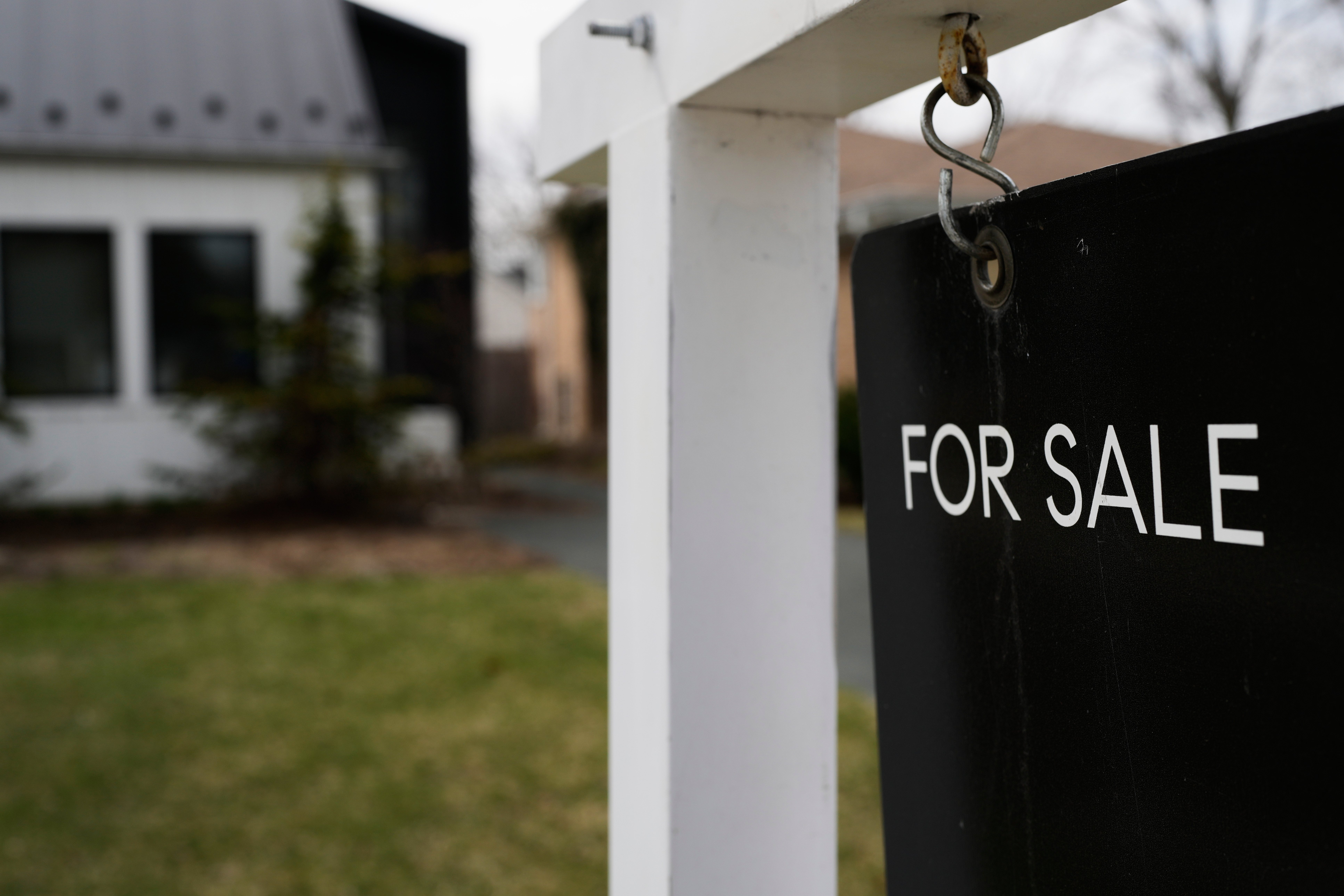
    Nowhere is that clearer than in the Senate race in North Carolina. One Republican ad there tried to blame Roy Cooper, the former governor running for Senate, for a murder that took place in the wrong Carolina, the one to the south. Another asserted that he had given the man who fatally stabbed a Ukrainian woman on a light rail train in Charlotte, N.C., last year an early release from prison; he did not.

    A third presented the story of a man whose son had been murdered, implying that Cooper’s policies were responsible. After it was released, the father, a Democrat, complained that he had been “swindled, hoodwinked” into making a political endorsement when he had been told the topic was gun violence.

    Republicans have soldiered on, spending $18.5 million in North Carolina on ads about lawlessness and murder. But polls show Cooper, a former governor and attorney general, consistently leading his Republican opponent, Michael Whatley.

    “It really does not seem to be having much traction at this point, and the folks who are long schooled and well versed in North Carolina politics have wondered why Michael Whatley didn’t take a different approach,” said Mitch Kokai, a senior political analyst at the John Locke Foundation, a free-market think tank based in Raleigh, N.C..

    For Republicans, that different approach is proving elusive. The chaos at the border — a reliable political target since 2018 — has calmed. State laws barring transgender students in athletics have taken some of the sting out of that issue as well. The war on Iran is unpopular. Voters say they are most concerned about the high costs of everyday necessities.

    And crime — usually a winning issue for Republicans, who are generally more trusted to keep law and order — is seeing a staggering drop. The downward trend that began during the Biden administration has only accelerated. One analysis found that the murder rate last year was the lowest it has been since 1900.

    “This is the first election really in my lifetime where I have felt that it’s not an issue,” said Holly Harris, a veteran Republican strategist who is now the executive vice president of advocacy at Arnold Ventures, a philanthropy with a focus on criminal justice. “I remember when I was at the Republican Party years ago, every ad that we wrote was focused on crime. And it’s just not hitting the same mark.”

    The good news on crime has posed a challenge for Republicans. How do you take credit for the peace while simultaneously blaming the other side for what President Donald Trump has called “American carnage?” At a recent campaign rally in Gastonia, N.C., Trump pivoted from blaming Cooper for the “blood-soaked killing fields” of North Carolina to hailing his own record within half an hour.

    “Last year, we achieved the largest drop in violent crime ever recorded,” he said.

    In The Charlotte Observer, Andrew Dunn, a conservative political commentator, wrote that the president’s description of the state as “one of the most violent and one of the worst in the whole nation” would backfire, even with those who agreed that Cooper had a poor record on crime.

    “Who is buying that description of North Carolina?” Dunn asked.

    Violent crime in North Carolina this year is down 22% compared with the same period in 2024, outpacing the national decline of 14%, according to data collected by the Crime Index. Property crime is down 18% compared with 2024, about the same rate as the national decline.

    Republicans have spent $105 million on ads about crime, more than a quarter of total spending, compared with $35.5 million spent by Democrats, according to an analysis of spending on federal races in the general election by AdImpact, a media tracking firm.

    In the previous two election cycles, attempts to tie all Democrats to far-left positions like defunding the police and abolishing prisons proved effective, in part because crime had spiked to alarming highs right after the pandemic and the police brutality protests in 2020.

    Such attacks were often met with an uncomfortable silence, and Republicans were able to connect crime to a border that appeared to be exceptionally porous. Candidates repeatedly raised examples of violence committed by immigrants without permanent legal status and rising rates of fentanyl overdoses.

    Those links have broken as drug overdoses drop, the border grows quiet, and even some Republican lawmakers say the president’s immigration crackdown has gone too far.

    In the current climate, soft-on-crime attacks risk looking out of tune with the electorate’s deeper concerns, “especially when voters feel that they’re getting robbed at the gas station every day,” said Jim Kessler, the executive director of Third Way, a centrist Democratic organization in Washington.

    Cooper, who was first elected to statewide office 26 years ago, as attorney general, has noted that many of Whatley’s accusations were found to be false and has defended his record. A campaign spokesperson said, “Roy spent his career putting rapists and violent criminals behind bars and signing tough-on-crime laws.”

    “Most people look at Cooper, they don’t see somebody that is soft on crime,” said Carter Wrenn, a veteran Republican political consultant.

    But for candidates without Cooper’s profile, strategists have counseled against trying to out-tough Republicans on crime. “If you’re going to be Republican lite, then people are going to pick Republicans,” said Celinda Lake, a longtime Democratic strategist.

    The Vera Institute, a nonprofit that works to reduce mass incarceration and has used focus groups to test messaging on criminal justice policies, has offered “serious about safety” as a rival slogan. The idea was initially met with some mockery — one social media post said it sounded like a college sex talk — but candidates have increasingly adopted safety as a buzzword, with a new set of talking points to go with it.

    James Talarico in Texas and Dr. Abdul El-Sayed in Michigan, both Democratic candidates for the Senate, talk about recruiting and training police officers and explicitly link public safety to increased spending on housing, education, mental health care, and drug treatment.

    El-Sayed, the former health director for Wayne County, Mich., has gone from praising the “defund the police” movement for wanting to devote more resources to fighting poverty, to offering “a vision for public safety that I think all of us can agree with.”

    “We want to know that we can get home safely,” he told CNN in June. “We don’t want to worry about being the victim of somebody’s violence, whether it’s from a neighbor or the state itself.”

    Harris, the veteran GOP strategist, said, “Democrats are adopting some of the Republican talking points, to be candid.” Both sides are retreating from more extreme positions, she said, creating an opportunity for lawmakers to return to more nuanced, evidence-based policies. She characterized tough-on-crime attacks as “outliers.”

    This week, El-Sayed’s Republican opponent, Mike Rogers, who has touted his experience as a former FBI agent, dropped his own crime attack ad. “It’s Abdul El-Sayed who would surrender our borders to the drug cartels,” a father whose son died as a result of opioid use says.

    But Democrats are also playing offense this year, with ammunition from the Jeffrey Epstein scandal. Republicans, they charge, are protecting child predators, and Trump’s pardons of drug traffickers, fraudsters, and the rioters of Jan. 6, 2021, have been grist for their own soft-on-crime attacks.

    In Nebraska a political action committee supporting Dan Osborn, an independent, unveiled an ad this week attacking the Republican incumbent, Sen. Pete Ricketts, for pardoning a man who had raped a woman three decades earlier.

    Talarico has accused his Republican opponent, Ken Paxton, Texas’ attorney general, of an “Epstein-style sweetheart deal” that initially would have allowed a child molester to spend just one day in jail. Paxton’s office has said that the deal, which required the man to surrender his law license for five years but did not require him to register as a sex offender, was reached because the victim was unwilling to testify.

    In North Carolina, skirmishes over “pedophile protectors” have proliferated, spurring lengthy examinations of the sex crime rap sheets of pastors, board presidents, and party operatives.

    In July, a Democratic PAC spent more than $2 million on ads about Harvey Lee West Jr., a child sex offender who did time in prison and then ascended the ranks of the state Republican Party, winning influence and committee appointments while Whatley was the chair.

    Whatley’s campaign spokesperson said that the candidate had never hired West for a paid position. But the ads accuse Whatley of “putting politics over safety.”

    FILE — Michael Whatley, Republican’s candidate for a U.S. Senate seat in North Carolina, joins President Donald Trump on stage during a campaign rally at the airport in Gastonia, N.C., Sept. 16, 2026. Across the country, and especially in the North Carolina Senate race, Republicans have charged opponents with being soft on crime, even as President Trump brags over plunging crime rates. (Kenny Holston/The New York Times)KENNY HOLSTON