Category: Wires

  • The U.S. military says its withdrawal of troops from Iraq is complete

    The U.S. military says its withdrawal of troops from Iraq is complete

    BAGHDAD — The U.S. military announced on Wednesday that it has completed the withdrawal of all American troops from Iraq, ending a 12-year mission to fight the Islamic State group. The last U.S. troops left an air base in northern Iraq under a deal between Baghdad and Washington.

    The withdrawal, agreed on two years ago, comes against the backdrop of the ongoing war between the United States and Iran that has also sometimes spilled over into Iraq, with Iran-backed militias firing on U.S. troops and the U.S. striking the groups’ strongholds.

    In recent years, Washington has appeared to seek to shift its focus from the Middle East toward Asia, but that shift has been inconsistent, with the Pentagon alternating between reducing its Mideast presence and then finding itself engaging in new conflicts — including the ongoing war in Iran.

    Baghdad touted the end of the U.S. mission as a sign of the country’s increasing strength and sovereignty.

    The withdrawal was also celebrated by Iran-backed groups but raised concerns among some other Iraqis, particularly in the Kurdish region, where many fear a resurgence of IS as well as more attacks by Iran-linked groups, possibly emboldened by the departure of U.S. forces.

    Meanwhile, questions loom around the future of the Iraqi militias, which the Baghdad government has sought to disarm, with little success so far.

    A new phase in Iraq after decades of US involvement

    Pentagon spokesperson Sean Parnell said in a statement that U.S. troops and equipment had completed an “orderly departure” from the air base in Irbil, in northern Iraq’s semi-autonomous Kurdish region.

    “This milestone reflects the success of a 12-year campaign that defeated ISIS as an organized military threat in Iraq and across the region,” he said. “It also marks a transition from a wartime coalition mission to an Iraqi-led security effort supported by a more normal bilateral security relationship.”

    He added that the U.S. military “will continue to provide targeted training and intelligence support to our Iraqi partners.”

    Iraqi Prime Minister Ali al-Zaidi presided over the handover ceremony and described the U.S. withdrawal as the beginning of a “new phase, one defined by Iraq’s sovereignty, the strength of its institutions, the readiness of its forces, the unity of its decision-making, and balanced partnerships with its friends.”

    He said Iraqi security forces will continue the fight against IS and the government will ensure that non-state groups no longer hold weapons.

    U.S. troops invaded Iraq in 2003 to topple Saddam Hussein. They departed in 2011, but three years later, Iraqi authorities invited a smaller U.S.-led mission to fight the Islamic State group, which had rampaged across Iraq, seizing large swaths of territory.

    With the extremist group reduced to scattered sleeper cells, Washington and Baghdad agreed in 2024 to wind the mission down.

    U.S. troops pulled out of bases in most areas of Iraq last year but maintained a small presence of hundreds of troops in the semiautonomous northern Kurdish region. Bases there have regularly come under attack since the U.S. and Israel launched their war against Iran on Feb. 28. Iran-backed Iraqi militias also have coordinated with Yemen’s Houthi rebels to attack Saudi Arabia.

    The future of militias remains unclear

    The Iraqi government initially linked the Sept. 30 deadline for U.S. withdrawal to the disarmament of non-state armed groups by that date.

    While a handful of less-influential militias have agreed to turn over their weapons, powerful groups close to Iran rejected the prospect or set conditions for disarming that the government would be unlikely to meet.

    Al-Zaidi has since walked back the deadline. He told The New York Times earlier this month that the deadline for militia disarmament has been pushed to June 2027.

    The effects of the U.S. withdrawal may not be immediately visible, particularly since the U.S. military presence had already been scaled down. But officials in Iraq’s Kurdish region have expressed anxiety about the departure and particularly about the removal of U.S. air defense systems.

    The Kurdish regional government’s Peshmerga Ministry said the Kurdish region had faced more than 1,000 drone and ballistic-missile attacks during the recent U.S.-Iran conflict.

    “The departure of the United States from the Kurdistan Region under these complex regional circumstances, without the provision of a defense system, is a matter of concern,” the statement said.

    Iran-allied groups in Iraq, meanwhile, have celebrated the U.S. withdrawal.

    “The expulsion of the occupation forces, defeated, from the land of Iraq is the beginning of full sovereignty,” Abu Mujahid al-Assaf, a security official with the powerful Kataib Hezbollah militia, said in a statement.

    He added a warning to al-Zaidi and his government not to carry out American plans, threatening that “any government that does not work for the benefit of the people will be overthrown by all means.”
  • Job scams have gotten more sophisticated. Here’s how to spot and avoid them.

    Job scams have gotten more sophisticated. Here’s how to spot and avoid them.

    Today’s job seekers often say they’re feeling overwhelmed by the number of postings online, exhausted by the long hunt, and desperate for a breakthrough. Unfortunately, this vulnerable position makes them perfect targets for online job scams.

    In 2025, nearly 25,000 people reported falling victim to an employment scam, according to data from the Better Business Bureau. That number has more than doubled since 2023, with a median loss of $1,000.

    “These job ads are a perfect storm of pressing circumstances for a lot of people who are looking for employment,” said Josephine Wolff, professor of cybersecurity at Tufts University. “And also, these AI tools coming online can really scale up the type of fraud that has existed for a long time on the internet and in some ways even before the internet.”

    Everyone will be familiar with spam texts promising opportunities to make fast cash while working from home. But the latest scams tend to exhibit a new level of sophistication.

    Wolff used to tell people to look for red flags such as bad grammar or suspicious-looking graphics — but now artificial intelligence helps shady scams look completely legitimate.

    Fraudsters will post ads for fake jobs, sometimes directly cribbing from existing postings or “ghost” jobs still floating around online. They may ask applicants to follow a link to a third-party website, one completely unaffiliated with a given company or legitimate hiring portal. From there, they may capture applicants’ data directly, or they may then start asking applicants to share valuable data over email or text message.

    Information such as your address or birth date could be valuable to a scammer, but so could things such as usernames and passwords you may frequently use on other sites, said Mona Terry, chief operating and programs officer at the Identity Theft Resource Center. Scammers could use that data to access your accounts directly or impersonate you when setting up new accounts elsewhere.

    Most often, she said, they’re intentionally targeting recent grads or low-income people. Both sets of people may feel a heightened pressure to land a job no matter what — and that vulnerable position means they’re less likely to catch a scam.

    “It’s a lot easier for someone to be in that stressful, panicked mode, to miss some of those red flags, especially because some of them are so subtle,” Terry said. “We know that that is what scammers are doing. They’re preying on that emotion. They’re looking for people who are in that place with a heightened sense of ‘I really need this.’”

    “Task-based” scams in particular are on the rise, said Mel Lanning, executive director of the Better Business Bureau’s Institute for Marketplace Trust. Scammers may send you an official-seeming check for mandatory job equipment. The “team” on which you’re supposedly being hired needs you to deposit the check and then transfer them the funds. But, as people discover way too late in the process, the check is in fact fraudulent — and the candidate is out the money.

    Be ultra-wary of any hiring process that seems “too good to be true,” Lanning advised. If a supposed hiring manager is asking for extremely personal information very early in the process, take the time to research the company and confirm its legitimacy. If you’re concerned someone is either impersonating a hiring manager or spoofing a firm’s actual posting, Lanning recommends going the extra mile to verify a job listing on the company website or even contacting them over email.

    “It’s a really hard time for job seekers because, number one, you have to be careful of these scams, and then you’re also wasting time on some of these postings and then you never hear back,” she said. “For job seekers right now, be very thoughtful and careful about every job that you apply for.”

  • Hegseth to cut more generals, admirals in bid to remake military’s top ranks

    Hegseth to cut more generals, admirals in bid to remake military’s top ranks

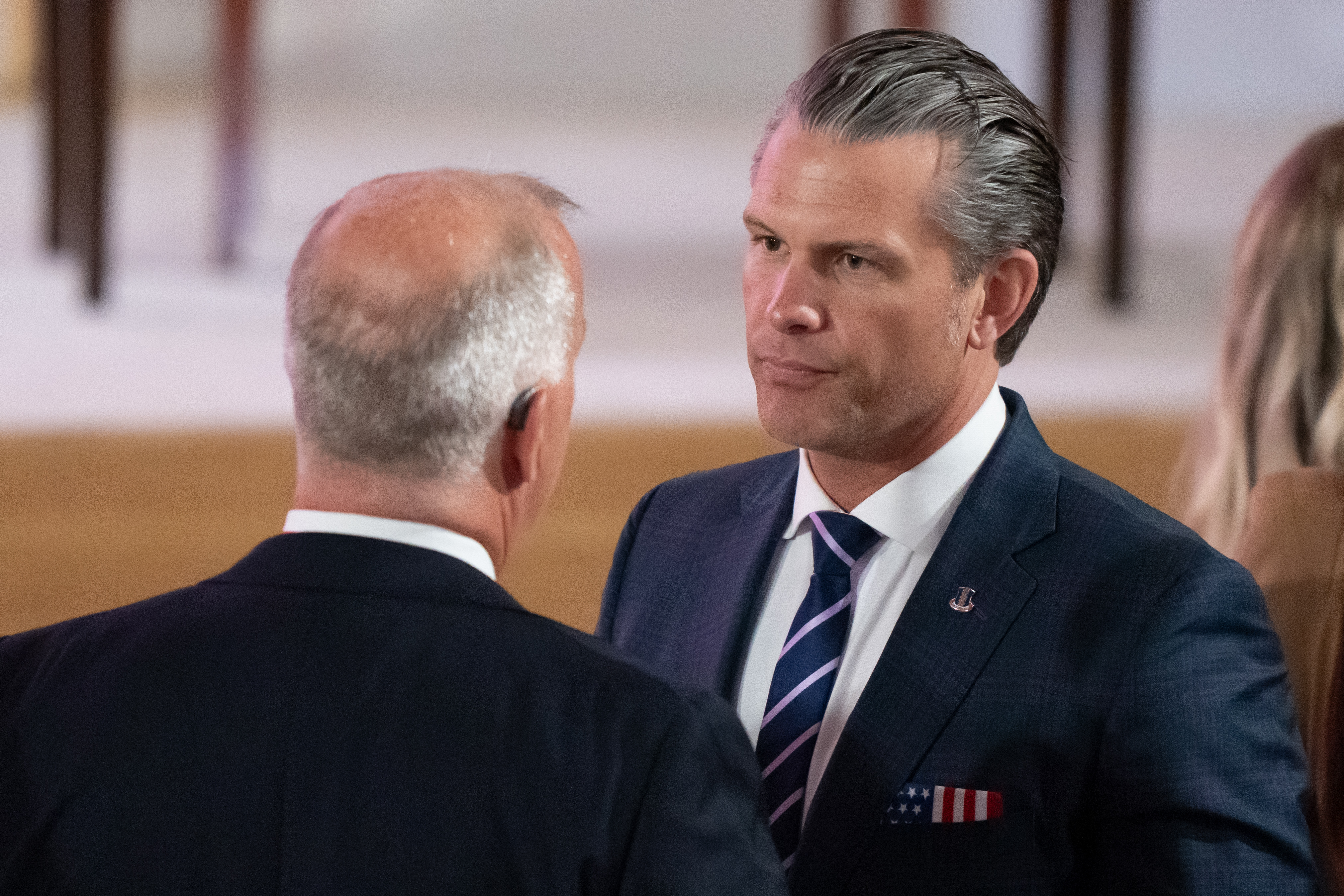
    Defense Secretary Pete Hegseth is expected to announce deeper cuts to the military’s top ranks, reducing the total number of positions for general and flag officers by as much as 20%, officials told the Washington Post on Tuesday.

    The potential cuts could impact the careers of hundreds of current and rising military leaders following scores of firings and denied promotions that Hegseth has directed since becoming President Donald Trump’s defense secretary in January 2025.

    Hegseth’s tenure atop the Pentagon has been marked, in part, by his drive to dramatically reshape the military’s senior-most ranks. Former top defense officials, congressional Democrats, and some fellow Republicans who are alarmed by his leadership purge and efforts to impose structural changes argue that the moves are politically motivated and threaten to do lasting harm.

    One of the officials who spoke to the Post said the defense secretary could outline the initiative publicly as soon as Wednesday, during a planned gathering of military officers in Quantico, Va. This person, like the others, spoke on the condition of anonymity to provide details that had not been publicly announced.

    Hegseth’s plan to further reduce the number of senior military leaders was reported earlier by Fox News. A spokesperson for Hegseth said that the Fox report was accurate but declined to comment further.

    Through several previous administrations, both Pentagon and congressional leaders have worked to reduce the size of the U.S. military as it evolved from a vast institution built for the Cold War to one that now sees more of its fighting done by drones and other technologies, rather than through a conventional infantry force.

    There are about 850 general or flag officers — military members with the rank of one-star general or above or, for the Navy, rear admiral or above — in the military, which is less than 1% of the total force.

    The total size of the military also has shrunk in recent decades, so even though generals and admirals make up less than 1% of the total force, there are more of them now proportionally — a trend Hegseth targeted last year when he first directed sprawling cuts to the number of general and flag officers.

    Hegseth, who rose to prominence in conservative politics as a host at Fox News, served for many years as a midranking officer in the Army National Guard. The experience, including wartime deployments to Afghanistan and Iraq, hardened some of his most searing views of military culture and leadership.

    A year ago in Quantico, Hegseth convened hundreds of the military’s generals, admirals, and senior enlisted leaders — each with decades more military experience — for an unorthodox, highly partisan address alongside Trump. He vowed that “more leadership changes will be made” and, in forecasting a plan to mandate new fitness standards for the force, lashed out at those he characterized as “fat generals and admirals in the halls of the Pentagon.”

  • Lindsay Clancy’s lawyer now questions whether there is proof she killed her 3 children

    Lindsay Clancy’s lawyer now questions whether there is proof she killed her 3 children

    PLYMOUTH, Mass. — Lindsay Clancy’s lawyer argued Tuesday that there wasn’t enough evidence to prove she killed her three children, a striking turn after a lengthy trial that focused more on her mental state than on whether she took their lives.

    “This entire case is based on speculation,” attorney Kevin Reddington said during the first hearing since Clancy’s trial ended Sept. 4 with a deadlocked jury. They were split 11 to 1 in her favor.

    During that trial, Reddington didn’t dispute that Clancy killed the children at the family’s home in 2023. Instead, the defense sought to persuade the jury that the 36-year-old former labor and delivery nurse was not criminally responsible because of mental disease, a rare condition called postpartum psychosis.

    Clancy’s lawyer now says there is not enough evidence to prove she did it

    But at Tuesday’s hearing, Reddington changed strategies and sought to persuade Judge William Sullivan — the same judge who presided over the first trial — to acquit Clancy.

    There is, Reddington contended, not enough evidence “that this woman killed those children.” He pointed to matters ranging from her condition when she was found badly injured and bleeding in the yard outside her home, to her lack of memory of what happened when she woke up in a hospital. At the first trial, her now ex-husband and first responders testified that they arrived at the house and discovered she had tried to take her own life right after killing the children.

    “Where is the admission? Where does she say that she did this?” Reddington said, going on to recap his arguments that she also was psychotic and delusional at the time of the children’s deaths. He didn’t offer alternative theories or evidence about who might be responsible.

    Prosecutor Shanan Buckingham called his argument “laughable,” pointing to witness testimony that Clancy said she heard voices instructing her to kill her children. Clancy was the only one home at the time with the children and her DNA was found on exercise bands used to strangle them, she added.

    “For the first time, the defendant is arguing that there is no evidence she did this,” Buckingham said. “I’d suggest to you the entire record is voluminous as to information supporting the fact that she did this.”

    During trial Paul Zeizel, a clinical and forensic psychologist and defense witness, testified that he overheard her saying a disembodied male voice told her she had no choice but to kill the children and then herself.

    Before trial Reddington filed a motion in which he said Clancy would be willing to stipulate in writing “to her involvement in the underlying conduct resulting in the death of the three young children.”

    The judge didn’t immediately rule on the motion, and no trial date was set.

    The prosecution maintains that Clancy knew her actions were wrong when she used exercise bands to strangle 5-year-old Cora, 3-year-old Dawson, and 8-month-old Callan Clancy. They said she contrived to get her husband out of the house that evening by sending him to pick up medicine for one of their children and dinner for the family.

    It’s still unknown whether Clancy will face a second trial

    Prosecutors have yet to decide whether to retry Clancy, Plymouth County District Attorney Timothy Cruz said after the hearing. They could choose to retry her on first-degree murder charges or pursue lesser charges, including second-degree murder or manslaughter, or drop the case entirely.

    “We are going to do what we can for the children,” Cruz told reporters outside court. “That is what this case is about.”

    Sullivan said he wanted to set a new trial date, but both sides pushed back — arguing that the judge should rule on several motions in front of him first.

    Initially the defense urged the court to set a new trial date soon. But on Tuesday, Reddington told Sullivan he couldn’t see having a new trial before June due to his schedule.

    Legal wrangling over the holdout juror is also unresolved

    Clancy’s attorneys have asked the judge to dismiss the criminal case, a motion that will be heard Nov. 2.

    Among other things they have argued that the judge should have ousted the one juror who favored a murder conviction after the jury foreperson complained he was refusing to listen to the law on reasonable doubt.

    The juror, Michael Desronvil, has said through his lawyer that he had no doubts about his stance. Desronvil told Fox News’ Hannity in a brief video statement Monday that “the whole focus has been on me, but we want to reel everything back and put the focus on the three angels,” meaning the children.

    Among other motions that was pushed back was a Commonwealth request for a gag order that would bar attorneys and their supporters “from making extrajudicial statements to the media that would have a substantial likelihood of materially prejudicing the criminal proceeding.”

    Reddington has given a series of interviews since the mistrial and held walking news conferences almost every day during the proceedings. Prosecutors, in contrast, never talked to reporters.

    The case is still capturing attention

    The livestreamed trial generated intense public interest and drew attention to maternal mental health after childbirth. About a dozen Clancy supporters, most dressed in pink, stood outside court Tuesday waiting for her.

    Clancy remains charged with murder and is expected to stay at a psychiatric hospital until her case is resolved.

    She could have been sentenced to life in prison if convicted of murder. If acquitted, the judge could have ordered her confined to a mental health facility.

  • Supreme Court allows rapid third-country deportations, for now

    Supreme Court allows rapid third-country deportations, for now

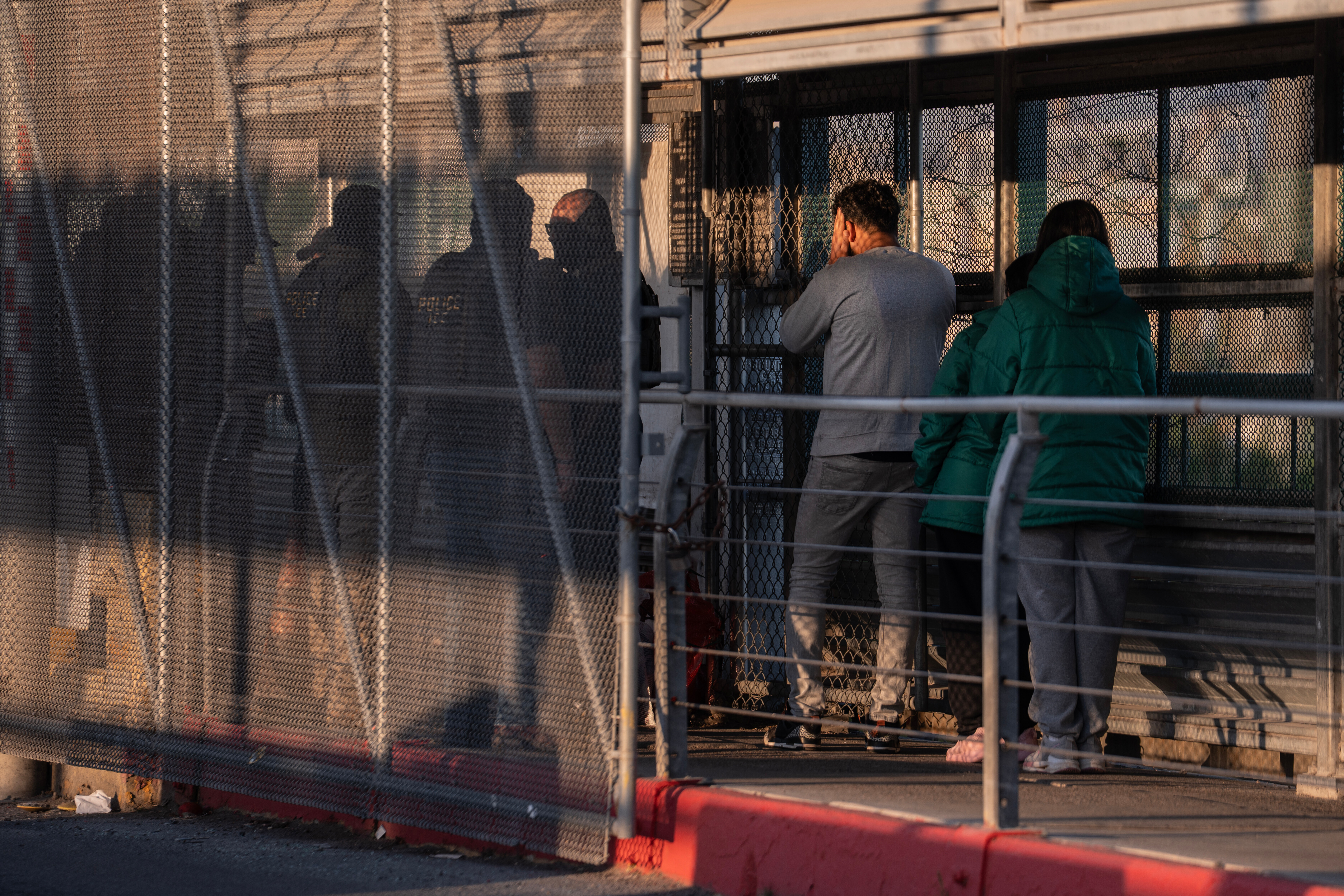
    WASHINGTON — The Trump administration can resume rapidly deporting immigrants to countries other than their own, the Supreme Court agreed Tuesday.

    The one-page emergency ruling was unsigned and gave no vote count, as is typical in such cases. Although the justices cleared the way, for now, for the swift removals to continue, the court also announced that it would fast-track the case and hear oral arguments about it in December, setting up a final ruling on the issue next year.

    The court’s three liberal justices noted that they would have denied the government’s request to resume the deportations.

    The decision was a victory for the administration, which has made sending immigrants to so-called third countries, including those that have faced allegations of human rights abuses, a major part of its mass deportation efforts.

    The deportation flights had been blocked in recent weeks, however, after a federal court ruled the administration could not deport migrants to third countries unless they were given an opportunity to contest their removals, including to voice concerns that they might be persecuted or tortured abroad.

    The justices’ ruling means that the administration can, for now, continue its program and conduct rapid deportations including to countries such as Equatorial Guinea, where U.S. deportees were hooded, bound, and beaten by police, according to reporting by the New York Times.

    The Supreme Court had weighed in previously on the administration’s efforts to send immigrants to third countries.

    In May 2025, the Trump administration asked the justices to step in and clear the way for third-country deportations after a federal judge in Massachusetts temporarily blocked the administration from sending people to countries not their own — in that case South Sudan — without the chance to object.

    In a one-paragraph ruling, the court’s conservatives allowed the administration to continue the deportations over the noted dissents of the three liberals.

    Since then, the Trump administration has continued to deport immigrants under the program, including to authoritarian countries with histories of human rights abuses. So far, the administration has sent more than 25,000 people to third countries as part of its mass deportation efforts, according to a social media post by James Percival, the top lawyer at the Department of Homeland Security. Among the countries were Liberia, Equatorial Guinea, Costa Rica, Honduras, and the Central African Republic.

    Some immigration and human rights experts have asserted that the third-country deportations may be part of a broader strategy by the Trump administration to encourage immigrants lacking legal status to leave on their own, rather than face the fear of being sent to a country where they have no ties.

    In his brief, Solicitor General D. John Sauer characterized the third-country deportation program as “an essential tool to remove certain aliens, including some of the worst criminal aliens.”

    Sauer wrote that the appeals court ruling had “created substantial logistical problems with ongoing removal operations,” including canceled deportation flights and disrupted delicate diplomatic negotiations with other countries.

    Lawyers for a group of immigrants challenging their removals said in a brief that the Trump administration had ignored “the significant harm resulting from deporting thousands of longtime U.S. residents, many with no criminal history, to third countries without regard to the persecution or torture they face there.”

    They argued that the Trump administration could avoid any delays in its deportation program simply by “providing the notice and opportunity to be heard that the law requires.”

    This article originally appeared in the New York Times.

  • Trump launches government chatbot, urging a wary public not to fear AI

    Trump launches government chatbot, urging a wary public not to fear AI

    After weeks of Washington being gripped by a new wave of fear about artificial intelligence gone awry, the Trump administration took a sharply different stance Tuesday, seeking to convince a skeptical public that the nation is instead about to embark on a tech-powered “golden age.”

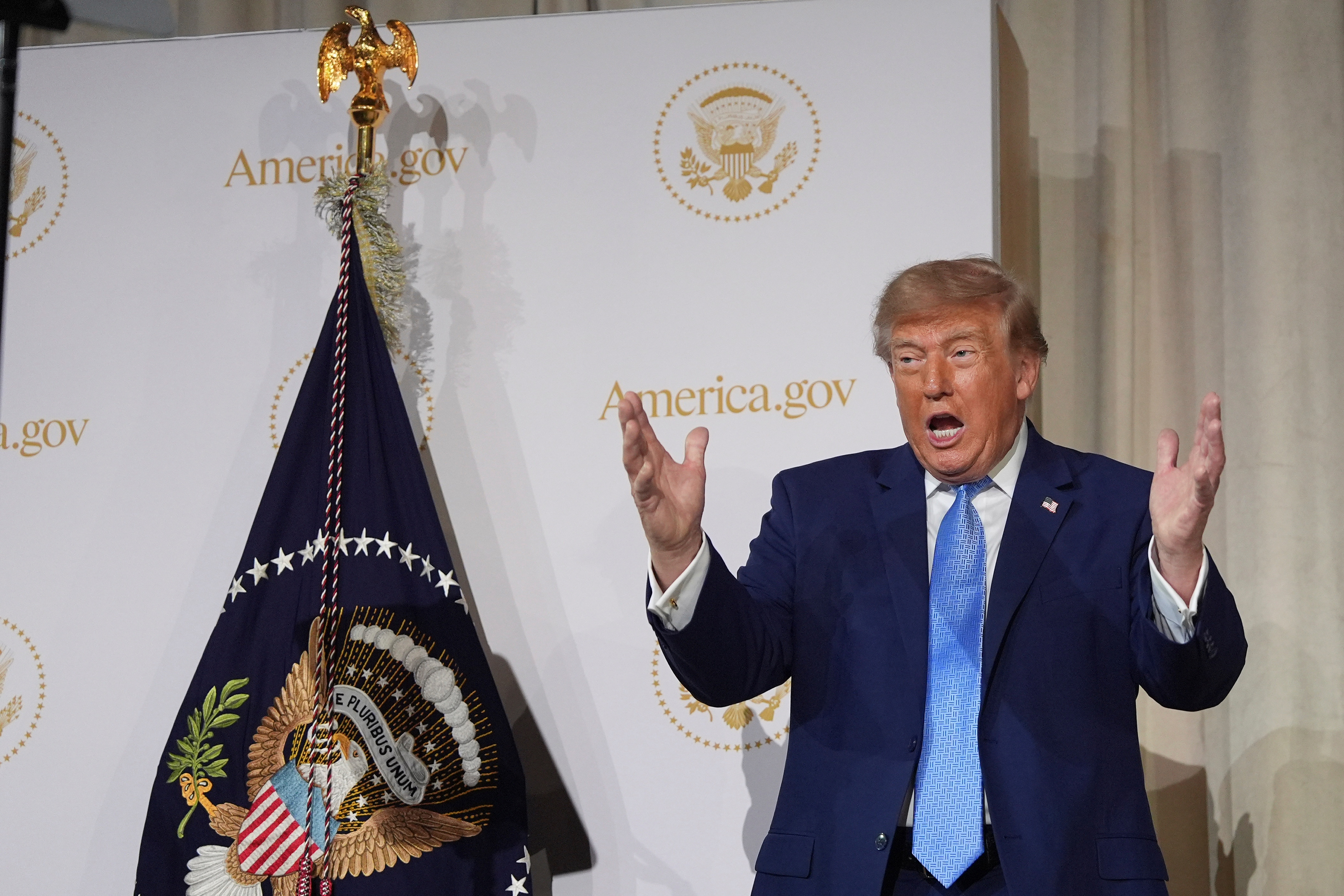
    President Donald Trump launched America.gov, a government chatbot for researching public services, as part of a daylong event featuring members of his Cabinet and tech executives. AI company leaders were also set to meet with him and House Speaker Mike Johnson (R., La.).

    “This kind of innovation in government is just a preview of what is possible with super intelligence,” Trump said, using his new nickname for AI.

    The events come at a pivotal moment for the technology. AI firms say their latest systems have become increasingly powerful, showing signs of being able to design their own more-potent successors. But companies have struggled to keep control of the technology, as rogue AI agents have hacked into company and government systems, and a roster of top industry figures have warned that the end result could be catastrophic for humanity.

    Last week, it was disclosed that the federal government itself had been a victim, with a handful of websites probed by AI agents deployed by ChatGPT maker OpenAI. (The Washington Post has a content partnership with OpenAI.)

    Yet, even as the public’s concerns have grown and Democrats in Congress have pressed for regulation, Trump has largely dismissed the risk, calling it a “hoax.”

    “We do not surrender to fears about what technologies will do to us,” Trump said Tuesday. “We decide that those technologies will do for us some very, very incredible things.”

    Tuesday’s events are a chance for the administration to focus on the upsides of the technology, propelling a different narrative than the warnings introduced by company CEOs in recent weeks. AI’s many boosters expect it will invigorate the economy, push the boundaries of science, and help cure diseases. But that message has found only limited traction with a public worried about job losses and rogue bots sowing chaos online.

    The U.S. government is unveiling AI tools amid growing concerns about the ways that chatbots store and share data. Last week, OpenAI announced that ChatGPT leaked 53 “user-provided images” to image-hosting providers.

    The website was rolled out at a conference in the gilded Andrew W. Mellon Auditorium, which was set up to evoke a tech company product release stage. Music played as staff members distributed cans of La Colombe iced coffee to attendees, while a sleek “Hello, America” logo was projected on a large screen at the front of the room.

    Joe Gebbia, the chief design officer of the United States and architect of America.gov, described the website, a partnership with Google’s Gemini and SpaceXAI’s Grok, as a “concierge to navigate government.”

    “Don’t think of it as a website, it’s more of a conversation that you start with the government to try to get access to the answers you need,” he said on Fox News on Monday.

    The website will initially enable users to search for information across government websites, providing access to job postings or the files that the Trump administration has released about UFOs, he said.

    But in the coming months, the goal is for the chatbot to help people enroll in government programs such as Medicare or complete tasks such as passport renewals.

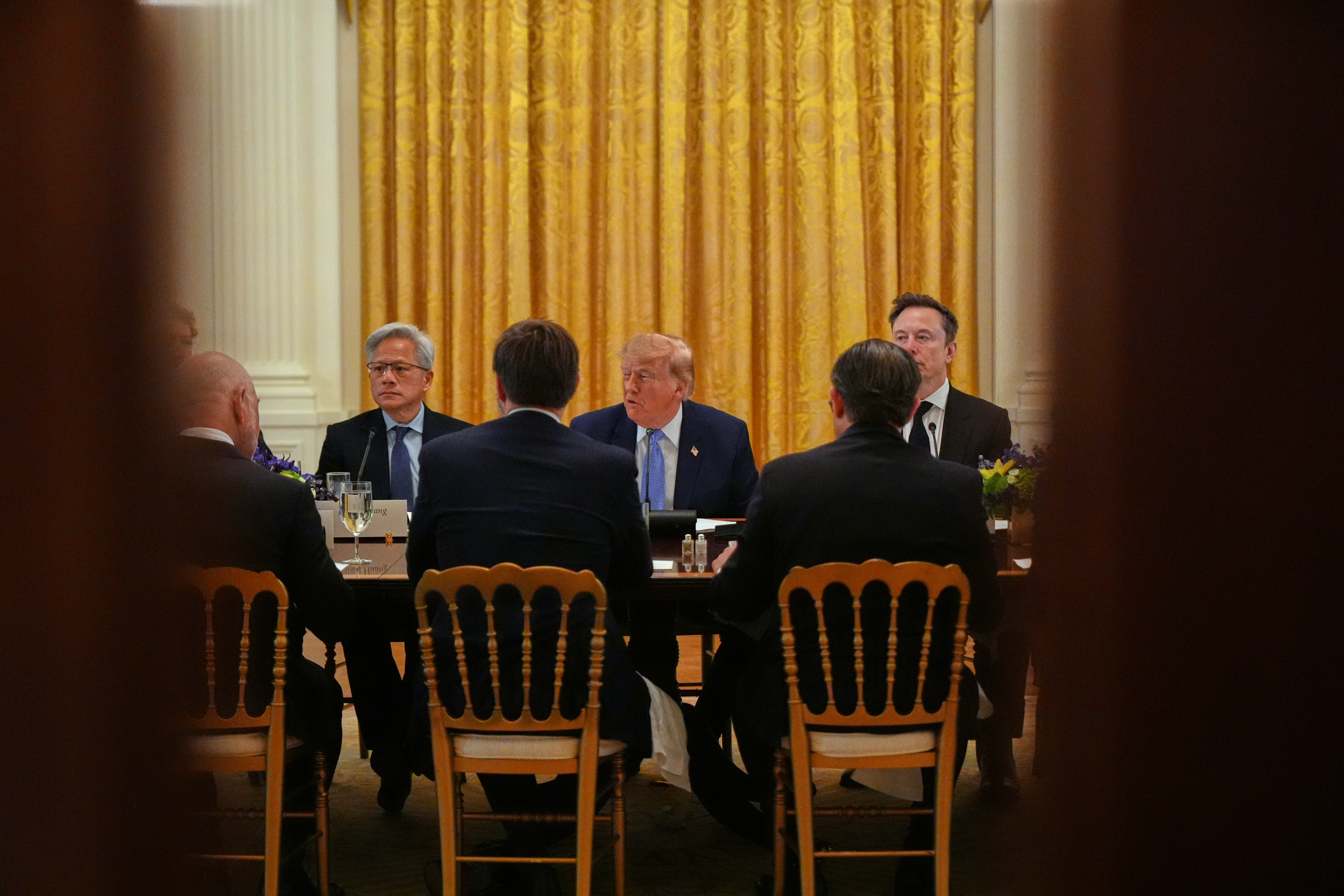
    After the rollout of the website, CEOs such as Anthropic’s Dario Amodei and Nvidia’s Jensen Huang had lunch with the president at the White House. Johnson said Monday that his goal for the meeting was to find a “balance.”

    “We want to keep America’s lead over China and all of our other competitors, but we want to make sure that it’s being done in a safe way,” Johnson said in an interview with Fox Business. “So, a little oversight, a little transparency, I think, would go a long way here.”

    As the industry has tried to navigate those concerns, the private summit between tech CEOs, the president, and the speaker could be the most consequential part of the day, giving officials and executives a chance to discuss a common vision.

    Amodei led the industry this month in issuing a call to slow the pace of development to better focus on safety. But the idea has divided his peers and has not been endorsed by the White House.

    Amodei, who previously clashed with the administration over the use of his company’s technology by the military, dined with the president late Sunday in their first one-on-one meeting. He was expected back at the White House on Tuesday to attend the private meeting.

    Amodei was joined by Huang and Meta CEO Mark Zuckerberg, according to people familiar with their plans who spoke on the condition of anonymity to discuss a private meeting. Both have resisted calls for any coordinated slowdown, saying it is up to individual companies to ensure that their products are safe. Sundar Pichai, the chief executive of Google, was also expected to attend, according to a person familiar with his plans who spoke on the condition of anonymity to discuss a private meeting.

    The Associated Press reported that Trump said on Tuesday that he and a large group of leaders of artificial intelligence companies had signed a voluntary accord that will include internal and external reviews during the meeting at the White House.

    “I think I’m seeing tremendous self-policing. And they understand that they have to self-police,” Trump told reporters during an impromptu press conference outside the West Wing.

    Zuckerberg said the accord included “a set of principles and commitments around building robust internal controls and detecting if there are any issues with the technology, coupled with multiple layers of of auditing and controls.”

    “We’re going to have all of our boards of directors independently review the reports that come from the auditors,” said Zuckerberg, who has distanced his company from calls for a slowdown in AI.

    Trump suggested there would be about 10 people named to a committee to “watch over the whole enterprise” and said the accord would be “morally binding.” He also said he would name someone to oversee the agreement in coming days after consulting with industry.

    Senate Majority Leader John Thune (R., S.D.) said Monday that he would not attend but will meet with some of the participants.

    Trump recently said he plans to name a new AI czar and create an “AI Force,” although its role is unclear. The president made clear at a speech to the United Nations General Assembly last week that he wants to see the U.S. continue to race ahead — rebranding the technology as “super intelligence.”

    “I’m not going to stifle growth of something that will be bigger ⁠than the Industrial Revolution,” he said.

    Trump’s AI push comes as his administration has cultivated relationships with Silicon Valley executives and investors. Gebbia, who co-founded Airbnb and joined the Trump administration through the U.S. DOGE Service, is among a group of tech leaders who argue they can improve Washington by applying Silicon Valley principles.

    During the Obama administration, healthcare.gov crashed amid the rollout of the Affordable Care Act, sparking criticisms of the government’s technological prowess. Despite years of efforts to modernize government technology, it has continued to lag behind the corporate sector. Other government tech initiatives have fueled privacy and surveillance concerns. In 2022, the government abandoned a plan to require Americans to submit to a facial recognition scan in order to access their tax information following fierce criticism.

    Gebbia pushed back on concerns that the new website would collect Americans’ data, describing it as “private by design” to Fox News. He said that the website does not store chats and that people do not need to log in to use it.

    Fears about AI took on new urgency in Washington in early September, when a researcher quit Anthropic and said the technology could bring about human extinction. Many lawmakers said they wanted to take action to impose guardrails, but Congress is set to leave ahead of the midterm elections without advancing any legislation.

    In the absence of formal federal leadership, OpenAI, Anthropic and Google — the companies at the cutting edge — have discussed creating their own group to set standards for the industry. In the meantime, OpenAI said it was pausing training of its powerful systems until it was confident it had more safeguards in place. It also announced Monday that it will cancel a planned model release because of safety concerns.

    The decision to pause training was announced Friday, when the company also confirmed that its agents accessed information from the Census Bureau using a log-in found online and copied information from the Securities and Exchange Commission. Transluce, an AI research organization, said agents had also tried to hack into an Education Department civil rights website.

    “People want to know AI is being developed safely, and that starts with what companies like ours do ourselves,” said OpenAI spokesperson Drew Pusateri, adding that the company “will resume training only when we are confident that we have additional safeguards in place.”

    But on Monday, Florida Attorney General James Uthmeier (R) asked a court to step in and force the company to pause development work, in a sign of how Republicans are split on their approach to the technology. Uthmeier, whose office has sued OpenAI, alleging it has put children at risk, said he was inviting company chief executive Sam Altman to join his request.

    “If he will not, we ask the court to do what OpenAI will not do for itself — protect Florida families,” Uthmeier said in a video posted Monday to social media.

  • DOJ probe into Trump foes sees another prominent departure

    DOJ probe into Trump foes sees another prominent departure

    Another prominent Trump loyalist working on the wide-ranging conspiracy investigation in Florida into President Donald Trump’s political foes has abruptly left the probe, according to three people familiar with the matter, marking the latest departure in a high-profile inquiry that has become a central focus for the administration and its allies.

    Kurt Olsen — who before joining the so-called “grand conspiracy” investigation in June had served several months as Trump’s election security czar — tendered his resignation from the Justice Department on Monday, the people said. Olsen did not respond to requests for comment.

    Two of the people said Olsen had become frustrated by pressure from Justice Department officials in Washington to increase the pace of the probe and secure grand jury indictments. The third person, who disputed that description, said Olsen left after issues arose with his security clearance that prevented his further involvement.

    The resignation was the latest staffing shake-up to roil the investigation in recent days, prompting questions about its direction and its future. Earlier this month, Joseph diGenova, another Trump ally who was appointed to lead the inquiry, suddenly quit five months in after publicly lobbying for the job.

    Multiple other attorneys who had been dispatched to Florida to work on the case have since left to return to previous assignments or take on new ones, and other new lawyers have since joined the case, the three people familiar with the staffing situation said.

    They all spoke on the condition of anonymity to describe the inner workings of the “grand conspiracy” investigation, which has become the ambitious and legally complicated investigation of the Justice Department’s efforts to prosecute Trump’s political foes.

    The theory, as officials have described it, is that high-ranking officials from the Obama and Biden administrations engaged in a decadeslong, “deep state” conspiracy to violate Trump’s civil rights.

    Those efforts, investigators contend, include the FBI and intelligence community investigations of potential ties between Russia and Trump’s 2016 campaign, as well as the push under special counsel Jack Smith to prosecute Trump after his first term for allegedly mishandling classified documents.

    Speaking to the Washington Post earlier this month, DiGenova declined to discuss in detail the reasons for his departure, saying in a text message that he still believed in the strength of the case the team was building, but that “time was needed to build those cases” and “people differ on how long that should take.”

    He was the second prosecutor overseeing the investigation to step aside. Maria Medetis Long, a veteran national security prosecutor in Miami, left the investigation in April after expressing discomfort with its direction, the Post has reported.

    Olsen joined soon after Meditis’s departure. Before that role, Olsen had been working in the White House, investigating Trump’s baseless claims that the 2020 election was stolen, and had played a central role in initiating the FBI’s ongoing investigation into the vote count in Fulton County, Ga., which was pivotal to Trump’s loss that year.

    Before the second Trump administration, Olsen was among a group of lawyers who had unsuccessfully pushed the Justice Department in 2020 to endorse those false claims.

    His resignation from the Justice Department and the “grand conspiracy case” was first reported Monday by the Daily Mail.

    Despite that staffing uncertainty, signs have emerged in recent days that the investigation is moving forward under the leadership of Jason Reding Quiñones, the U.S. attorney in Miami whose office has been tasked with overseeing the probe.

    Attorneys for former CIA director John Brennan — one of the investigation’s purported targets — said in a recent court filing that he had been subpoenaed to testify next week before a grand jury in Fort Pierce, Fla. Several former FBI agents tied to the 2022 search of Trump’s Mar-a-Lago estate in Florida have also indicated that they have been summoned to offer testimony.

    Two of Attorney General Todd Blanche’s top deputies, Trent McCotter and Aakash Singh, traveled to Florida in recent weeks to meet with the investigative team, a person familiar with that trip said.

    Speaking Monday, a Justice Department spokesperson rejected any suggestion that top officials had pressured DiGenova, Olsen, or anyone else involved in the “grand conspiracy” investigation to bring charges before the inquiry was complete.

    “Leadership has full confidence in the great team of experienced prosecutors in the Southern District of Florida led by U.S. Attorney Quiñones,” the department said in a statement. “Work on this investigation continues, and we are grateful to the talented team of attorneys, which continues to grow, doing the work each day.”

  • Jack Smith clashes with senators over Trump probes, says he will not be silenced

    Jack Smith clashes with senators over Trump probes, says he will not be silenced

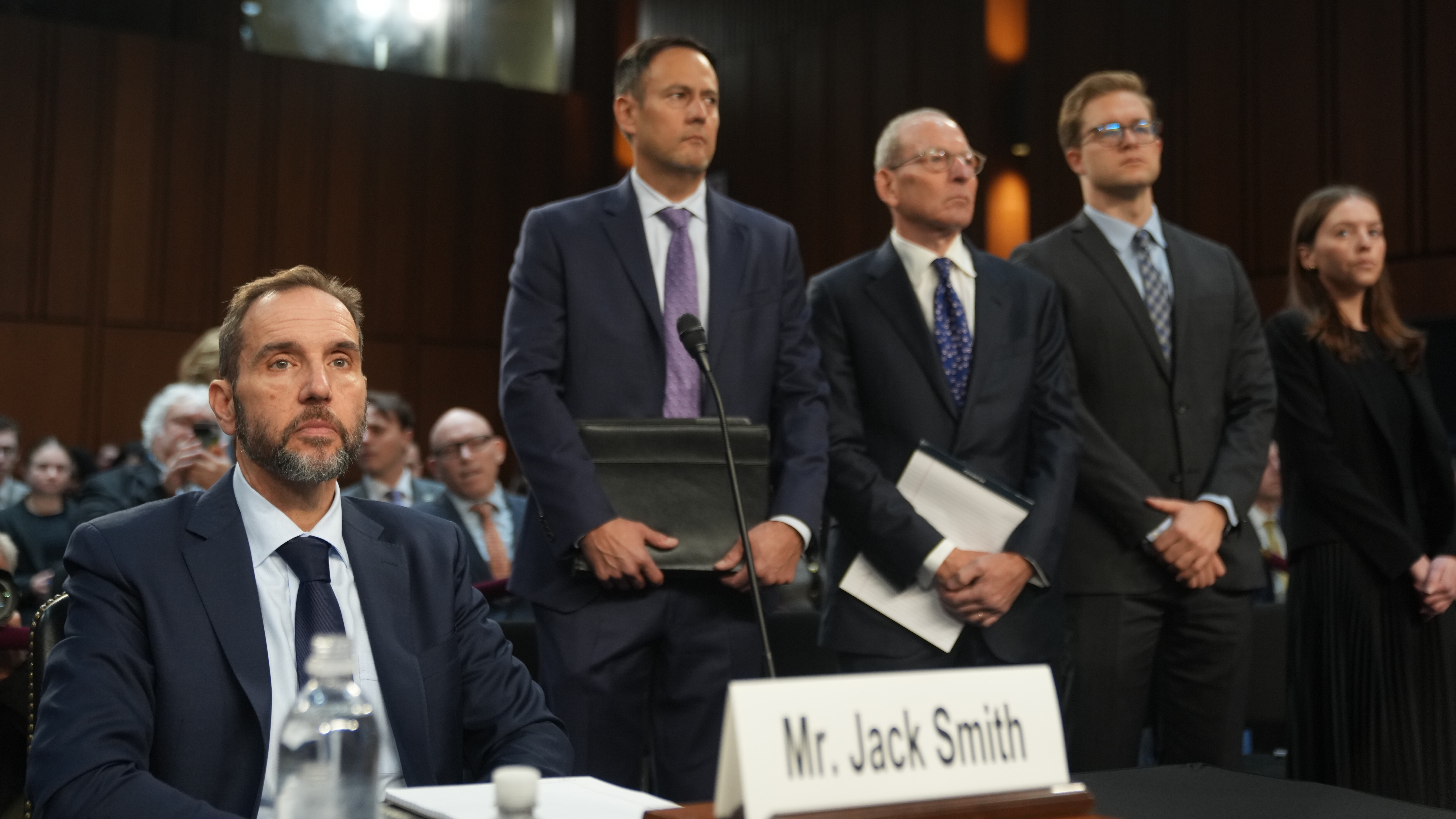
    Former special counsel Jack Smith forcefully defended his derailed efforts to prosecute President Donald Trump on Tuesday, telling lawmakers he would not “be silenced by continued threats of prosecution” from the president.

    Testifying before the Senate Judiciary Committee, Smith rejected Republican assertions that his investigations of the then-former president were driven by partisanship or were used to improperly surveil GOP lawmakers during the Biden administration.

    Smith said he stood by his decision to charge Trump in two felony indictments during his years out of office, the first focused on his alleged mishandling of classified documents and the second on his efforts to overturn the results of the 2020 election.

    “If asked whether to prosecute a former president today based on the same facts, I would do so regardless of whether the president was a Republican or a Democrat,” Smith said.

    But with few new insights into his investigations on offer and Republicans intent on pressing old attacks, the proceeding quickly devolved into an opportunity for the former special counsel’s critics to deliver a public tongue-lashing.

    “No matter what you say, there’s no legitimate basis for what you did,” committee Chairperson Chuck Grassley (R., Iowa) said. Sen. Eric Schmitt (R., Mo.) piled on, telling Smith he “will go down as a total dirtbag.”

    “You have brought the Department of Justice into disrepute,” Sen. Ted Cruz (R., Texas) added. Sen. John Kennedy (R., La.) told Smith: “You make me want to throw up in my mouth.”

    The nearly four-hour flogging grew so intense that Sen. Cory Booker (D, N.J.) marveled at the relentlessness of the Republicans’ message.

    “This is gaslighting of the American people,” he said, telling Smith, “I am so sorry that they’re attempting to put investigators on trial while ignoring the extraordinary conduct that that they are duty bound to really investigate.”

    But not all of the Republican attacks landed. Schmitt at one point accused Smith of perjury when he said he had not attended an Atlanta Hawks basketball game in February 2024. Schmitt said he had texts proving otherwise and suggested, with no evidence, Smith had made a secret trip to Atlanta to meet with Fani T. Willis, the district attorney who prosecuted Trump in Georgia.

    But within minutes, Sen. Amy Klobuchar (D, Minn.) deflated Schmitt’s “gotcha” moment. After Smith said he had attended a basketball game around that time featuring the Iowa Hawkeyes, Klobuchar suggested Schmitt had mixed up the team names of the Hawks and Hawkeyes — meaning Smith had not been in Atlanta at all.

    “Perhaps you should have looked at it more carefully,” Klobuchar told Schmitt.

    Behind those theatrics, Tuesday’s proceedings carried very real stakes for Smith — who Trump has repeatedly said should face prosecution — and the Republican senators, who have sought to wrest control of the public’s understanding of the special counsel’s twin probes, both of which he was compelled to abandon after Trump won the 2024 election.

    The president and his allies for years have asserted that Smith and other prosecutors weaponized law enforcement against them and deserve to be punished. Democrats say Trump plainly committed indictable offenses and that it is he who has corruptly turned the Justice Department into a cudgel to target perceived political foes.

    “The aspersions cast on Mr. Smith nonstop are petty, personal, and political,” said Sen. Dick Durbin (Ill.), the committee’s top Democrat. “They are nothing but a smoke screen to distract from the president’s own clear unlawful conduct.”

    Smith responded to it all Tuesday with little emotion, except when Republican lawmakers questioned his wife’s past support for President Barack Obama or sought to vilify members of his former staff of career prosecutors and investigators. Many of them were fired from their Justice Department jobs soon after Trump returned to office last year.

    “I’m extremely proud to have worked with them,” Smith told the senators. “The fact that they have been targeted illegally, lost their jobs illegally, and had their lives turned upside down by this Department of Justice is an outrage.”

    Smith said he expects to face personal consequences as well, and that he believes the Trump administration will do “everything in its power” to try to build a case against him despite lacking any legitimate basis to do so.

    After similar testimony earlier this year before the House Judiciary Committee, committee Chairperson Jim Jordan (R., Ohio) referred Smith to the Justice Department for prosecution, alleging he had lied to Congress. Department officials have said they are reviewing the evidence and have not decided whether to seek a grand jury indictment against Smith.

    Separately, federal prosecutors in Florida earlier this month subpoenaed former FBI agents involved in the 2022 raid of Trump’s Mar-a-Lago estate that led to Smith’s classified documents case against Trump. Those interviews are part of a broader “grand conspiracy” probe pursued by the Justice Department under a vague legal theory that Biden- and Obama-era officials engaged in a decadelong conspiracy to violate Trump’s civil rights.

    “The rule of law faces challenges unlike any we have experienced in our lifetime,” Smith told the senators Tuesday. “Individuals are threatened with criminal prosecutions because they are perceived to have opposed the president. Predetermined outcomes increasingly seem to take precedence over the Justice Department’s long-standing core values, traditions, and norms.”

    Nonetheless, Smith lobbied for months for the opportunity to publicly address lawmakers and defend his investigations’ conclusions that Trump committed felony crimes.

    Smith said Tuesday that strict secrecy rules bar him from answering many questions about grand jury interviews or materials. He also said he was limited in what he could discuss about his team’s investigation of Trump’s handling of classified documents because of a court ruling on a final report he drafted summarizing his findings.

    U.S. District Judge Aileen M. Cannon, who oversaw that case, permanently barred the report’s release and blocked officials from discussing its contents with those outside the Justice Department.

    Still, Smith forcefully defended his team’s investigative methods.

    Grassley seized on subpoenas that Smith’s team had obtained to secretly review phone records of several GOP lawmakers as part of the investigation into Trump’s actions in the aftermath of the Jan. 6, 2021, attack on the U.S. Capitol — a step the senator described as a “rampant abuse of authority.”

    Smith described those requests as essential to tracking phone calls made from the White House that day to Trump’s allies in Congress as he sought to delay certification of the 2020 election results.

    The records included the times and lengths of those phone calls and text messages, but did not disclose the contents of any senators’ communications.

    But the Justice Department has since revealed that Smith also obtained the incidental communications of 44 lawmakers’ text messages as part of a separate subpoena to the National Archives and Records Administration seeking information on several White House affiliated phones.

    Smith has said Trump is to blame for the need to obtain that information in the first place, given his unprecedented actions as Congress was preparing to certify Joe Biden’s victory in the 2020 election.

    “It was an important part of our investigation and it was centrally relevant to the issue of [Trump’s] criminal intent,” he said.

    Cruz tried to paint those subpoenas and others, which provided information on donations from some Trump allies, as a “fishing expedition” to broadly investigate Republicans.

    “Is it a crime to be a Republican?” Cruz demanded at one point. Smith responded: “Absolutely not.”

  • Trump administration prepares to ask tax filers if they are U.S. citizens

    Trump administration prepares to ask tax filers if they are U.S. citizens

    WASHINGTON — The Trump administration is preparing to add a question on next year’s tax returns asking people whether they are a citizen or legally authorized to work in the United States, expanding an attempt to cut tax refunds for immigrants or push them out of the tax system entirely.

    In a draft version of Form 1040, the primary tax form, the IRS this month included a new section that asks filers to check a box “Yes” or “No” to answer the question: “At the time you file your return, are you, and your spouse if filing jointly, a U.S. citizen, U.S. national, or an alien lawfully authorized to work in the U.S.?”

    The additional question comes as part of what the Trump administration has said is an effort to prevent immigrants lacking permanent legal status from receiving federal tax benefits. But many tax credits require recipients to have valid Social Security numbers, meaning previous tax forms already screened immigrants living in the country illegally from receiving them. That fact has led several tax and immigration experts to conclude that the question is simply intended to scare people out of filing their taxes at all.

    That fear first emerged last year, when the IRS shared addresses it had on file for roughly 47,000 people with Immigration and Customs Enforcement. Federal law closely guards access to information submitted on tax returns, and several courts have blocked the IRS from sharing bulk data with ICE. Still, even if the IRS may not be able to legally do so, the addition of the citizenship question could reawaken concerns about the agency using its vast stores of information to help detain or deport people.

    Immigrants lacking permanent legal status pay tens of billions in combined federal income, payroll, and local taxes every year. Since they do not have valid Social Security numbers, these immigrants are among the people who can use a separate nine-digit code called an individual taxpayer identification number to file their taxes. The IRS has not in recent history asked taxpayers about their immigration status, and has instead sought to encourage every U.S. resident to file their taxes.

    “The IRS doesn’t need this information to administer the tax law,” said Nina Olson, a former IRS official and the executive director of the Center for Taxpayer Rights, which sued the IRS over its previous data sharing with ICE. “The only reason you have that attestation is to deter people.”

    At the same time, the Treasury Department is moving forward with a push to cut off immigrants with legal status from receiving the full value of several tax credits. The administration has said those new rules are targeted at “illegal aliens,” but in reality they would affect recipients of Deferred Action for Childhood Arrivals, or DACA, as well as immigrants on work visas, among others.

    The question on tax forms and the stricter eligibility rules are the latest signs that the IRS has become a tool in the Trump administration’s anti-immigration agenda, an important shift for an agency that for decades was narrowly focused on collecting taxes. Tax preparers and lawyers said the Trump administration’s new tax credit rules are stricter than the eligibility rules approved by Congress and threaten to create confusion for millions of tax filers next year.

    President Donald Trump has in recent months also sought to build a database of U.S. citizens, and he has proposed excluding noncitizens without green cards from the census. The new tax return question would most likely not be able to feed into those other efforts, though, because of taxpayer privacy laws. The proposed changes would probably draw legal challenges.

    The IRS did not respond to a request for comment. A representative of the Treasury Department said the citizenship question on tax forms would “provide the IRS important and necessary information to help ensure tax benefits go where the law directs” without addressing specific questions about the changes.

    “That rationale doesn’t hold water,” said Brandon DeBot, a senior attorney adviser at New York University’s Tax Law Center. “The government already has all the information it needs for whether someone is eligible for a tax credit.”

    The overall effort began to take shape in August, when the Treasury Department proposed regulations outlining the new restrictions for four refundable tax credits: the earned-income tax credit, the child tax credit, the adoption tax credit, and the American Opportunity tax credit, which covers education costs. In general, tax credits offset the amount of tax that someone owes, but refundable tax credits can go further, providing a payment to a filer that is larger than the balance of owed tax.

    The Treasury regulations would, for the first time, define the money received through the tax credits — the amount beyond the tax owed — as a “federal public benefit.” That would subject this portion of the tax credit to a set of eligibility requirements laid out in a separate 1996 law, rather than the rules Congress wrote for the tax credits specifically.

    Under tax laws passed by Congress, three of the four credits are already limited to people with work-authorized Social Security numbers, while the adoption credit is available to a broader pool. The proposed regulations would, instead, require recipients to be a “qualified alien” under the terms of the 1996 law, called the Personal Responsibility and Work Opportunity Reconciliation Act.

    Several categories of immigrants are authorized to work — and therefore have Social Security numbers — but do not count as “qualified aliens” under that law. Beyond DACA recipients and people with work visas, residents with student visas or temporary protected status would no longer be able to receive the full amount of the tax credits because they are not “qualified aliens.”

    “This isn’t about undocumented immigrants, no matter how much they advertise it as such,” said Margot Crandall-Hollick, a researcher at the Tax Policy Center, a think tank. “This is about going after people who are allowed to be here and allowed to work here.”

    The additional question on Form 1040 asks only if someone is a citizen, a U.S. national, or authorized to work — and not whether the filer is a “qualified alien,” meaning that the answer would not be relevant to enforcing the Treasury’s new rules. Reflecting that, the IRS released a draft of a separate additional form that directly asks if someone is a “qualified alien.”

    Those hoping to receive the full value of the tax credits will now have to know whether their immigration status aligns with the complicated definition of “qualified alien.” That added complexity could cause some people who are in fact “qualified aliens,” like green card holders, to not claim the full value of the tax credits. The Treasury regulations warn of penalties for people who fill out the forms incorrectly, a potential deterrent for uncertain filers.

    “The design of these questions is to confuse and scare the people. Tax preparers are completely unprepared to figure out whether someone is a qualified immigrant,” said Sarah Krieger, senior policy counsel at the National Immigration Law Center. “People are just going to be chilled or deterred from filing their taxes or claiming credits they’re eligible for.”

    This article originally appeared in the New York Times.

  • Immigrant shot by ICE in Austin is charged with assault

    Immigrant shot by ICE in Austin is charged with assault

    The Justice Department filed assault charges Tuesday against a Venezuelan immigrant shot by a federal immigration officer in Austin.

    An unsealed affidavit said the man, Wilber Garcés Pérez, struck a U.S. Immigration and Customs Enforcement officer in the torso with his vehicle’s side-view mirror as he fled the scene of a traffic stop Sept. 20. He then led that officer and another on what was described as a high-speed pursuit.

    The first ICE officer, identified only as “L.G.,” later shot Garcés in the upper back through the back right window of Garcés’s car, the affidavit said. Garcés had attempted to strike the officer with his car, “causing the officer to fire his pistol,” the Justice Department said in a news release.

    Garcés could face up to 20 years in federal prison if convicted, authorities said. A detention hearing is scheduled for Friday.

    The government’s account of the shooting contradicts the initial public accounts provided by Garcés and his attorney, Kate Lincoln-Goldfinch, who said last week that the ICE officers had not activated their law enforcement lights before ramming his car. They said he thought it was an aggressive driver and attempted to pull over but did not lead the officers on a vehicle pursuit before being shot.

    However, video clips of the encounter indicate that Garcés drove away after he was initially stopped by officers. The officers asked Garcés “to place the car in park and step out,” according to the affidavit. He ignored the request and about one minute later “abruptly closed the window and drove off.”

    A day after the shooting, while in custody in an immigration detention facility, Garcés used a tablet computer to call into a news conference arranged by his attorney and told reporters that he had been briefly hospitalized and then sent to the ICE detention facility with a bullet still lodged near his spine.

    L.G. was not wearing a body camera, the affidavit said. The other officer was wearing a camera but turned it off as the officers pursued Garcés in their SUVs, it said.

    L.G. was a relatively new officer who had previously worked at another federal law enforcement agency and joined ICE during the Department of Homeland Security’s hiring spree last year, the Washington Post has reported.

    DHS has faced mounting criticism from former officials who say the recruits were put into active duty before being adequately vetted and trained. In recent months, the agency has begun quietly firing some of the recruits over poor performance or red flags that some former officials said should have been identified earlier.

    ICE has faced scrutiny for officer-involved shootings in recent months, including two fatal shootings in Houston and Maine in July. The agency has ramped up arrests as part of President Donald Trump’s push for mass deportations.

    In several instances, federal judges have dismissed charges against people who were arrested or shot by immigration officers, including Marimar Martinez, a U.S. citizen who was injured in Chicago last year, after evidence emerged that contradicted the government’s accusations.

    ICE acting director David Venturella said over the summer that body cameras would be disseminated to every officer by the end of August following the fatal shootings in Houston and Maine by officers who did not have cameras recording when they fired their weapons. One of those officers was a recruit who had a volatile history, according to relatives and court records.

    An agency spokesperson told the Post in late August that DHS had enough body cameras to equip all ICE officers nationwide. But in early September, Homeland Security Secretary Markwayne Mullin said at a news conference that the cameras had not yet been fully distributed and that only officers assigned to make arrests in the field would be given the devices.

    It was unclear why the officer in Garcés’ shooting was not wearing a body camera.