Category: New York Times

  • No end in sight for U.S. military mission along border with Mexico

    No end in sight for U.S. military mission along border with Mexico

    WASHINGTON — For more than a year, the Pentagon has deployed about 9,000 active-duty troops along nearly 2,000 miles of the southwest border to confront migrants, smugglers, and drug cartels.

    The troops are still there — at a cost of tens of millions of dollars each week — even though the Trump administration months ago largely achieved its goal of slashing illegal crossings.

    The military patrols, working closely with Customs and Border Protection as well as the Mexican military, have pushed Mexican cartels and smugglers into more remote mountainous areas to evade detection.

    But threats to U.S. troops are on the rise, U.S. officials say.

    Some members of Congress have questioned whether the patrols are the best use of active-duty troops who would otherwise be training for deployments to Eastern Europe, the Middle East, or the Indo-Pacific. Lawmakers and independent analysts have voiced concerns that the border missions will distract from training, drain resources, and undermine readiness.

    The mission marked a milestone late last month when its third commander, Maj. Gen. Curtis D. Taylor of the Army’s 1st Armored Division, took control of one of the centerpieces of the Trump administration’s Western Hemisphere security policy.

    Challenges abound for the troops involved in the mission, which the military calls Ardent Vanguard.

    Cartel activity increased along the border in February after Mexican forces, aided by the CIA, killed a notorious Mexican cartel leader known as El Mencho. Soon after, U.S. service members discovered that their phones had been hacked, and they began receiving threatening messages, congressional officials said.

    “I’m very concerned about this operation and the safety of our Marines,” Rep. Sara Jacobs (D., Calif.), who sits on the Armed Services Committee, said at a hearing in March. “Our service members did not sign up for immigration enforcement, and this political stunt is putting their lives at risk.”

    While U.S. forces deployed to the southern border use several counterdrone systems, the general in charge of helping defend U.S. territory said that many troops lacked adequate technology for patrols.

    “It presents us a different challenge,” Gen. Gregory M. Guillot, head of the military’s Northern Command, said at a security conference in Tampa, Fla., last month. He noted the overall increase in anti-drone technology.

    Unlike the drone wars on the battlefields of Ukraine or Iran, there have been no drone attacks on either side of this border conflict and no U.S. casualties, military officials say.

    The mission to detect and interdict illegal activity across hundreds of miles of desert and mountainous frontier has also become a high-stakes proving ground for emerging technology, including counter-drone devices, remotely guided sea vessels, and advanced sensors.

    Guillot said at a change-of-command ceremony in Arizona last month that the military had for the first time conducted joint patrols with Mexican soldiers using encrypted radios and high-energy lasers to knock down potentially hostile cartel-operated drones.

    “My mission is to control the border,” Maj. Gen. David W. Gardner, commander of the 101st Airborne Division, said in a phone interview from Fort Huachuca, Ariz., before handing off the operation to Taylor. “We remain focused on the mission of sealing the border.”

    Asked about confronting the drones and other security threats posed by Mexican cartels, Gardner said that U.S. forces had disabled or knocked down drones that the cartels use to find new smuggling routes around the U.S. patrols.

    “The illicit actors are finding it more and more difficult to accomplish their objectives,” Gardner said.

    Sen. Jack Reed (D., R.I.), the top Democrat on the Armed Services Committee, expressed concern at a hearing last month that the border mission was siphoning money from important training missions. He said the Army faced a nearly $2 billion budget shortfall largely because the Department of Homeland Security had not reimbursed it for border-support missions.

    “I have received concerning reports about the potential for canceling training rotations, grounded flight hours, and reduced Guard and Reserve training resources,” Reed said, referring to the National Guard and Army Reserve. “These are real costs for real units.”

    But several commanders and some troops stationed along the border said in interviews — some of them recent — that serving in one of Trump’s highest-priority missions gave them purpose. They are using many of their skills — route planning, mission rehearsals, patrols, and surveillance flights — in the real world against criminal smuggling gangs and Mexican drug cartels, instead of just practicing at their home bases or in exercises, they said.

    There is no end in sight for the military mission on the border. The Pentagon said last May that the first four months of the operation cost $525 million. But the department declined to say what the total cost was now.

  • James Burrows, master of the TV sitcom, dies at 85

    James Burrows, master of the TV sitcom, dies at 85

    James Burrows, the genre-shaping master of the television situation comedy who was a creator of Cheers and directed more than 1,000 episodes of that show and other TV classics like The Mary Tyler Moore Show, The Bob Newhart Show, Taxi, Frasier, Friends, and The Big Bang Theory, died Friday. He was 85.

    His agent, Rick Rosen, confirmed the death but did not say where he died or specify a cause.

    Mr. Burrows earned a reputation as the “Steven Spielberg of sitcoms,” winning 11 Emmy Awards and receiving 47 nominations in a career that spanned five decades. In 1995, Bill Carter, writing in the New York Times, described him as “the man whose visual style and comedic instincts have helped create more comedy hits than anyone else in television.”

    With a unique flair for the multicamera sitcom, Mr. Burrows won audiences by focusing on the laughs.

    “When I direct a television show, I try to reach that sweet spot where the best script meets the best performance and the best chemistry between performers,” Mr. Burrows wrote in his 2022 autobiography, Directed by James Burrows, written with Eddy Friedfeld. “Hitting that exact moment, where these factors land in combination, results in the sweetest and most enduring laugh.”

    Whatever the setting, whether a New York taxi garage or a neighborhood bar in Boston, he sought to nurture his actors into ensembles. “I guess I have a gift for creating families,” he told the Times in 2023.

    Distinctly different from film directors, who control every aspect of a movie’s creative development, television directors often act as traffic cops on a set and toil in relative anonymity. They are part of a creative team led by a writer and executive producer, who also acts as the showrunner.

    Television directors don’t usually exert control ahead of the writers. But Mr. Burrows defied that tradition. He was so skilled that he became the most sought-after and highly paid sitcom director during the golden age of network comedies in the 1980s, ’90s, and early aughts.

    “I’m concerned about believability and the economy of the comedy, the shortest distance between the character and the laughter,” Mr. Burrows wrote in his autobiography. “When I direct an episode, I have lots of notes. I am apt to tell writers: ‘50 percent of what I say is gold and 50 percent is garbage. It’s your job to figure out which is which.’”

    He grew up immersed in the world of New York City theater as the son of Broadway playwright and director Abe Burrows, who helped create such hits as Guys and Dolls and How to Succeed in Business Without Really Trying.

    He even started his career approaching television episodes as if he was directing a stage play, and the ensemble casts, including such stars as Mary Tyler Moore, Bob Newhart, Judd Hirsch, Ted Danson, Jennifer Aniston, Sean Hayes, and Kelsey Grammer, loved working with him.

    “He is without a doubt the person any actor wants calling the shots when the cameras are rolling,” Grammer, who played psychiatrist Frasier Crane on Cheers and Frasier, said in a 2019 episode of Inside the Actors Studio.

    Because of his intuitive understanding of the timing and structure of a successful sitcom episode, Mr. Burrows was in constant demand, often working on more than one series at a time. He directed a staggering 75 pilot episodes that became series.

    “I try to break down those barriers between writer and actor and director, and make everybody feel like they’re all a part of the process, without incurring the wrath of a writer,” Mr. Burrows said in a 2023 interview on the public radio station KCRW.

    In 1994, for example, Mr. Burrows not only directed but also helped cast Friends. Before shooting the pilot, he gathered the group of mostly unknown young actors — Lisa Kudrow, Courteney Cox, Matt LeBlanc, David Schwimmer, Matthew Perry, and Aniston — and flew them on a private plane to Las Vegas for a dinner at Spago at Caesars Palace.

    He wanted to ensure that the cast members bonded. At dinner, he told them, “This is your last shot at anonymity. Once the show comes on the air, you guys will never be able to go anywhere without being hounded.”

    James Edward Burrows was born in Los Angeles on Dec. 30, 1940, to Abe and Ruth (Levinson) Burrows. When he was 5, the family moved to New York City, where he grew up. His mother was a homemaker and social activist who instilled a lifelong sense of social justice in James and her daughter, Laurie.

    His parents divorced when Mr. Burrows was 8, a trauma he said he carried into adulthood. His father’s success exposed him to theater luminaries. Having a famous father, however, was a mixed blessing.

    Mr. Burrows knew he would always be considered “Abe’s kid,” so to avoid his father’s long shadow, he decided he had no interest in a theater career. Nonetheless, he attended New York’s High School of Music and Art and eventually found himself unable to resist show business. Countless visits to his father’s productions and rehearsals left an indelible impression about how to work with actors and crews.

    Mr. Burrows graduated from Oberlin College in 1962 and the Yale School of Drama in 1965. There, he realized he couldn’t sing, dance, or write, but he became intrigued with the idea of directing.

    After graduating, he became an assistant stage manager for Breakfast at Tiffany’s, a short-lived 1966 musical that featured Moore. After working as a stage director at dinner theaters for the next few years, Burrows realized that television situation comedies — which in essence are short stage plays in front of a camera — might be a perfect outlet for his skills.

    In 1974, he wrote to Moore asking for a chance to work for her company, MTM, which produced her hit show. Her husband, Grant Tinker, invited Mr. Burrows to come to Los Angeles, where he was given his first shot at directing a sitcom. There, he met veteran TV director Jay Sandrich, who became a mentor.

    After The Mary Tyler Moore Show, he directed episodes of the spinoffs Rhoda and Phyllis and later The Bob Newhart Show, Laverne & Shirley, and Taxi. In 1982, he teamed up with writer-producer brothers Glen and Les Charles, whom he knew from Taxi, to create Cheers, which changed the trajectory of his career and eventually brought him vast wealth through syndication and residuals.

    Of the 275 episodes of the series over 11 seasons, Burrows directed all but 35. Its finale, in 1993, drew the second-largest audience for a series finale in television history. (Only the finale of M*A*S*H in 1983 drew more viewers.)

    In 1981, he married Linda Solomon, with whom he had three daughters, Kat, Ellie and Maggie. The couple divorced in 1993. Mr. Burrows married Debbie Easton in 1997; she survives him, along with his daughters; a stepdaughter, Paris; and seven grandchildren.

    Working into his 80s, Mr. Burrows maintained unabated enthusiasm for his craft.

    “The laughter behind me is so rewarding for my soul, I would almost do it for free,” he told the Times in 2023. “And it’s nice to be able to go back to what happened to me 50 years ago and still have this feeling of creativity. When pilot season comes this year, I hope there is a pilot that I like.”

    This article originally appeared in The New York Times.

  • Daveigh Chase, ‘Lilo & Stitch’ voice actor and ‘The Ring’ villain, dies at 35

    Daveigh Chase, an actor known for voicing the character of Lilo in the hit animated film Lilo & Stitch and for her deeply unnerving turn as the child villain Samara in the horror movie The Ring, died on Tuesday in Los Angeles. She was 35.

    Her death, in a hospital, was confirmed by her father, John David Schwallier, who said the cause was complications of bacterial meningitis and a blood infection. Schwallier said his daughter had been homeless and living in Los Angeles with her boyfriend near the hospital where she died.

    Lilo & Stitch, released in 2002 when Ms. Chase was almost 12, told the story of an orphaned Hawaiian girl, Lilo, who brings home an impish blue space alien, Stitch, from the dog pound. Much wackiness ensues.

    The Disney film was a hit, grossing more than $274 million worldwide, according to Box Office Mojo (roughly $500 million when adjusting for inflation). And Ms. Chase, who had brought the plucky Lilo to life, won a Young Artist Academy Award for best performance in a voice-over role, age 10 or younger.

    Her breakout role, however, was in the live-action thriller The Ring, released in the United States roughly four months later, alongside Naomi Watts. Ms. Chase played Samara, a longhaired mystery girl who terrorized unsuspecting viewers of a certain VHS tape.

    The film, a remake of a Japanese film, Ringu, received mixed reviews, but the image of Samara crawling through a blurry television screen became seared in the cultural memory, and Ms. Chase won the award for best villain at the 2003 MTV Movie Awards.

    That year she returned to Lilo in the sequel Stitch! The Movie and in the Lilo & Stitch TV series, which ran from 2003-06.

    She then transitioned to her biggest TV role yet. In HBO’s Big Love — which chronicled the trials and tribulations of Mormon polygamists — she starred as Rhonda Volmer, a cunning 14-year-old bride in waiting, in 32 episodes between 2006 to 2011.

    Daveigh Elizabeth Schwallier was born July 24, 1990, in Las Vegas. Her father was a cook and helped to build motor homes. Her mother, Cathy Annette (Chase) Schwallier, went to nursing school but did not work a regular job.

    The family moved to Albany, Ore., where Ms. Chase would grow up, a few weeks after her birth. Ms. Chase was homeschooled, and at age 6 she won the Little Miss Oregon beauty pageant.

    She starred in a Campbell’s Soup commercial soon after, and then landed the voice-over role in Lilo & Stitch. She would go on to star as Samantha Darko, the younger sister of Jake Gyllenhaal’s Donnie, in Donnie Darko (2001) and in a little-noted sequel, S. Darko (2009). She also voiced Chihiro Ogino in Hayao Miyazaki’s 2001 animated classic, Spirited Away.

    After 2016, she largely stopped acting, and troubles with the law soon followed. In 2017, she was charged with riding in a stolen BMW, according to TMZ; in 2018, she was charged with possession of a controlled substance, according to the New York Post.

    Schwallier, 61, said in an interview Wednesday that Ms. Chase had struggled with drugs since the age of 13. He said that he hadn’t spoken with her since she was 19 and that she had a terrible falling-out with her mother around the same time. Her parents divorced 32 years ago.

    Schwallier had been in touch with Ms. Chase’s boyfriend, Roy Hernandez, and arrived at Los Angeles General Medical Center, where she was being treated, just before she died.

    “Him and her were destitute,” he said, describing the couple’s living conditions.

    In one of at least three GoFundMe pages set up to support Ms. Chase in recent days, Hernandez described her worsening condition: “The doctors say she may not survive, and when she leaves the hospital, we have nowhere to go. My hope is to raise enough money to find a place where we can be together and make her comfortable during her last days.”

    At the premiere of Lilo & Stitch in 2002, the Honolulu Star-Bulletin asked an 11-year-old Ms. Chase if she thought she could handle all the publicity that was sure to come her away after the movie’s release.

    “Well, it is just my voice,” she demurred. “But some people who worked for Disney have recognized me already. I don’t think people will really know who I am. I guess I’ll have to deal with it!”

    This article originally appeared in the New York Times.

  • Secret vetting and blocked promotions: Inside Hegseth’s war on diversity

    WASHINGTON — The Navy’s top leadership believed that Rear Adm. Stephen D. Barnett was by far the best choice to lead the command that oversees the Navy’s bases at home and abroad.

    He had more experience than the other candidates and had successfully managed the aftermath of one of the Navy’s biggest messes, a fuel spill that contaminated an aquifer on a base in Hawaii, sickening thousands.

    The final decision this spring fell to Defense Secretary Pete Hegseth.

    To many in the Navy, Barnett’s promotion seemed like a foregone conclusion.

    The officer, however, had a big strike against him. Like other Black military leaders, he had been encouraged by his superiors to help the Navy recruit and retain minority officers, who remain significantly underrepresented in the force. His years-old remarks on the importance of diversity had been flagged in a secret vetting process designed to weed out senior leaders whom Hegseth and his team pegged as a problem.

    Instead of Barnett, Hegseth selected a white officer who was the Navy leadership’s third choice.

    So far this year, Hegseth has blocked the promotions of at least 40 senior officers to general and admiral ranks. About half of those are women or members of minority groups.

    This article, based on interviews with 15 current and former military and administration officials, is a look inside the process Hegseth and his team have used to halt the advancement of senior officers for reasons that have nothing to do with fighting wars or job performance.

    It tells the story of one Black officer — Barnett — whose blocked promotion shocked and angered senior Navy officials.

    The officials discussed sensitive personnel matters on the condition of anonymity. Barnett, who is expected to retire, declined a request for comment. A Pentagon spokesperson did not respond to a detailed list of questions.

    In books and speeches, Hegseth has maintained that the Pentagon’s push over the past decade to build a more diverse force had elevated women and minority officers to senior jobs that they had not earned.

    “When I think about my career in uniform, in almost every instance where there has been poor leadership or people in positions they’re not qualified for, it was based on either the reality or the perception of a ‘diversity hire,’” Hegseth, a former major in the Army National Guard, wrote in his 2024 book The War on Warriors.

    As defense secretary, he has promised to install a new promotion system that will be “ruthlessly meritocratic” and “focused squarely” on “warfighting ability.”

    In practice, though, his approach has made it harder for Black and female officers to get promoted to senior ranks, even when their records are exemplary.

    Such was the case with Barnett. In 2021, he was invited to speak at a Black History Month event at a naval base in Maryland.

    He talked about his career as a flight officer on Navy P-3 Orions, which track enemy submarines. “Just one generation before me, it was nearly unthinkable for a Black person to become a naval aviator,” he said.

    He reflected on his mentors, downplaying the importance of race. “What helped me was people who didn’t look like me,” he said.

    And he spoke about building a force that better represented the nation it serves.

    “As the country becomes more diverse, it makes sense for our military to become more diverse,” Barnett said. “Monolithic organizations cannot and will not survive.”

    At the time, the country was wrestling with the aftermath of the death of George Floyd, an unarmed Black man who was murdered by a white Minneapolis police officer nine months earlier. The Navy had just released a 142-page report with recommendations to remove barriers that had held back high-performing women and minority sailors.

    Five years later, Hegseth was leading the Pentagon. Now Barnett’s remarks were being cited as a reason to deny him a promotion that senior Navy officials said he deserved.

    “It’s Black over white”

    Hegseth has argued that the troops most likely to suffer discrimination in the military are white.

    He traced the problem to the protests and racial reckoning that followed Floyd’s murder. The Pentagon’s generals and admirals, he wrote in his 2024 book, started searching for evidence of institutional bias that did not exist. In the process, he argued, they destroyed the military’s meritocratic culture.

    “It’s Black over white. Female over male. Gay over straight,” Hegseth wrote.

    Internal Pentagon studies told a different story. Nearly a third of Black U.S. military troops reported experiencing racial discrimination, harassment, or both during a 12-month period, according to a survey conducted during President Donald Trump’s first term.

    In his book, Hegseth dismissed such data.

    As secretary of defense, he has fired or sidelined more than two dozen generals and admirals. Among those dismissed were Gen. Charles Q. Brown Jr., the second Black man to serve as chair of the Joint Chiefs of Staff, and Adm. Lisa Franchetti, the first woman to lead the Navy.

    Those ousters were all publicly announced. The extent of Hegseth’s vetoing of generals and admirals selected for promotion has remained secret until now.

    By law, one-star and two-star officers are chosen by promotion selection boards made up of senior military officers. The meetings are so confidential that board members are not permitted to tell others that they are part of the process.

    Last year, Hegseth and his top aides ordered the Army, Navy, Air Force, and Marine Corps to do online searches of the officers selected by the boards, to look for photos, videos, or news articles that might draw Hegseth’s ire, current and former defense officials said.

    The officials undertaking the reviews hoped that if they could show that the officers had been following previous Pentagon policies that Hegseth would allow their nominations to go forward to the White House and Congress for final approval.

    Inside the Pentagon, such material was referred to as “D-ROG,” short for derogatory material.

    Once the reviews led by each military service were complete, Hegseth’s staff conducted their own searches to make sure that the services had not missed or intentionally ignored anything.

    It was not clear whether Hegseth had the authority to pull names off the list. Congress had entrusted management of one-star and two-star promotion boards to the service secretaries, not the secretary of defense.

    The first test case was with an Army one-star promotion board. Last fall, Hegseth ordered Army Secretary Daniel P. Driscoll to remove two Black and two female officers from a 29-person promotion list. Driscoll, citing their decades-long records of exemplary service, repeatedly refused. The standoff lasted months.

    Finally, in March, Hegseth removed the officers’ names from the list and forwarded it to the White House.

    Around the same time, a senior aide to Hegseth accused the Navy, in a handwritten note, of promoting candidates that the defense secretary believed should have been blocked.

    Hegseth’s aides wanted the Navy to form a new promotion board that would choose a new list, Navy officials said.

    The Navy pushed back. Hegseth instead removed nine officers from the Navy’s original 31-person list.

    Soon, Hegseth was pulling officers from nearly every active duty and reserve officer promotion list. Officers who had spoken publicly about the importance of diversity in the ranks were removed from lists. So too were those who had strongly urged their troops to get the COVID vaccine.

    Hegseth has removed a total of 32 officers from Air Force and Navy one-star and two-star promotion lists, defense officials said. The only Black officer and the only female officer were removed from a Marine Corps promotion list. The two Marines’ promotions are in limbo.

    Much of the vetting process has remained shrouded in secrecy. In some instances, officers up for promotions were not told that they had been removed from the lists. Hegseth also has refused to give Congress the names of officers pulled from the lists, officials said. The Senate’s version of the 2027 defense bill would require Hegseth to provide “a written justification and notification” when removing an officer from a promotion list.

    Even the services often are not told why individual officers are vetoed.

    Military officials, though, said they have noticed patterns. Officers who had commanded aircraft carriers or amphibious assault ships have been especially vulnerable. The reason: Those ships have public affairs sailors on board who documented their skippers participating in events related to diversity or the COVID vaccine.

    Now those articles, videos, and photos, posted on the Navy websites, were being used against them, current and former Navy officials said.

    Among those targeted was Vice Adm. Sara Joyner, a three-star fighter pilot who military officials wanted to move to a higher-profile job in the Pentagon.

    Joyner had spoken at events designed to encourage and mentor female aviators and submariners. She also had appeared in a Navy recruiting ad describing her childhood and her trailblazing career as the first woman to command a carrier air wing.

    “One day, everyone will see that I’m not just a girl with a dream,” her character in the 2021 ad said. “I’m a sailor with one.”

    To Hegseth, the appearances and the ad were a big problem.

    Unlike with the one- and two-star ranks, there are no promotion boards for most three-star and four-star generals and admirals. Typically, the service secretaries and service chiefs identify their preferred candidate among two or three choices and present them to the chair of the Joint Chiefs of Staff, who can weigh in. Then the candidates are sent to the defense secretary, who picks a nominee from the shortlist.

    Joyner worked for Gen. Dan Caine, the chair of the Joint Chiefs of Staff, running a team that conducted classified war games and assessments of new weapon systems. Caine urged Hegseth to nominate her for the new position, current and former officials said. He also asked John Phelan, then the Navy secretary, to help persuade Hegseth to reconsider her promotion.

    Their interventions failed. Senior officers who are not promoted are usually expected to leave. The Times was unable to reach Joyner for comment. She retired last fall.

    A high-flying Navy career

    When Barnett joined the Navy in 1991, he never expected he would become an admiral. He didn’t come from a family with a deep history of military service and had not attended the U.S. Naval Academy.

    In 2023, he shared the story of his life and career in an interview with his hometown radio station in Columbia, Tenn.

    Barnett’s interest in the Navy was piqued by one of his fraternity brothers at Tennessee State University, a historically Black college. At the time, he was married with a child. The Navy offered a good salary, adventure, healthcare, and stability.

    “So, one day after thermodynamics class, I joined,” he told the radio host. “I kind of did it on a whim.”

    Barnett, who went by the call sign “Big Daddy,” recalled how much he enjoyed being part of a team. His P-3 surveillance plane had a crew of 11 sailors who flew sorties lasting as long as 10 hours. He rose through the ranks flying more than 250 missions in Iraq and serving in increasingly sensitive commands.

    Then, in 2021, the Navy’s Red Hill Bulk Fuel Facility leaked petroleum into an aquifer in Hawaii that tens of thousands of residents depended on for their drinking water.

    Adm. Samuel Paparo, who was serving as commander of the U.S. Pacific Fleet, asked Barnett to rush to Joint Base Pearl Harbor-Hickam in Hawaii to lead the cleanup.

    “I only need you there for 12 months,” he recalled Paparo telling him. Barnett remained for more than three years, working to decontaminate the aquifer and win back the trust of scared and angry residents.

    In a statement, Sen. Mazie Hirono (D., Hawaii) recalled him as “an important and trusted partner.”

    “He was proactive, communicative, and professional,” she said.

    Barnett’s work fixing Red Hill and experience overseeing three large regional commands made him the Navy’s top pick for a third star and the job running its bases.

    Before senior Navy officials recommended Barnett for the promotion, they searched the internet for anything in his public record that might offend Hegseth. Navy officials hoped that, if they put Barnett’s remarks in context, Hegseth might overlook them.

    Barnett had spoken at a few Black History Month events and talked in interviews about the legacy of service members, like Doris “Dorie” Miller, who became the first Black recipient of the Navy Cross for his heroics at Pearl Harbor. A photo of Miller hung in Barnett’s Hawaii office.

    In 2018, Barnett had appeared at a Navy-sponsored event during LGBTQ Pride month. “Together, we can make the world safer, freer, and more equal for everyone,” he said, according to an article posted on a Navy website.

    His statements were in line with Pentagon policy at the time, the Navy concluded.

    “If one were scrutinizing with extreme sensitivity, the only potential ‘signals’ are those of empathy and inclusivity,” according to an internal review obtained by the New York Times. “His digital footprint is remarkably disciplined and issue focused.”

    Phelan, the Navy’s senior civilian leader, and Adm. Daryl Caudle, its highest-ranking officer, picked Barnett to lead Navy Installations Command. Caine agreed.

    The final decision, though, did not fall to the Navy or the chair. It was made by Hegseth, who decided that Barnett should not advance.

    This article originally appeared in the New York Times.

  • Trump administration backs off plan to end ocean monitoring

    Trump administration backs off plan to end ocean monitoring

    WASHINGTON — The Trump administration is abandoning its plan to dismantle a $368 million ocean monitoring system critical to understanding climate change and marine ecosystems, bowing to a bipartisan backlash on Capitol Hill.

    The National Science Foundation had said in May that it would begin this month to remove hundreds of underwater instruments that collect data on coastal flooding, marine heat waves, and other climate and weather events.

    But the agency announced Thursday that it will pause efforts to take apart the system, known as the Ocean Observatories Initiative, while convening an expert panel to determine its future.

    “Effective immediately, NSF will not proceed with further removal or descoping of equipment,” the agency said in a statement.

    The Senate passed a measure Wednesday that would block the government from dismantling the system, with lawmakers in both parties warning that the action would be illegal and would threaten the safety of coastal communities. The Trump administration had also tried to cut the program’s funds the last two years, but Congress restored the money both times.

    In May, the science foundation had said it would send ships to start pulling up instruments anchored to the seafloor off the coasts of Oregon, Washington state, Alaska, North Carolina, and an area between Greenland and Iceland known as the Irminger Sea.

    For the past decade, scientists have used data from these instruments to understand how the ocean is absorbing greenhouse gases from the atmosphere, how marine heat waves could affect fisheries, and how soon a vital ocean current could collapse.

    Fishermen have also checked the real-time, publicly available data on wind and wave conditions before heading to sea. And meteorologists have used these observations to improve forecasts of disasters like hurricanes and tsunamis.

    The National Science Foundation said Thursday that it already had pulled some buoys, sensors, and other instruments from the water off the coasts of Oregon and Washington state, but it was “developing plans to redeploy the equipment after servicing.”

    Edward Dever, a professor of oceanography at Oregon State University who helps manage the instruments off Oregon and Washington, said the agency had removed six of the area’s seven moorings, or deep-sea platforms equipped with sensors. He said finding boats to replace the moorings could take several months.

    “I believe we could have one mooring ready to go before the end of the summer and 1-2 others ready by fall,” Dever said in an email, adding, “Ships are generally scheduled about a year in advance. Scheduling cruises on short notice can sometimes be done, but it is a challenge.”

    The Senate on Wednesday passed the measure to preserve the system by unanimous consent, essentially an agreement by all senators to bypass debate. Though the measure faced an uncertain fate in the House, it was the latest moment when Congress flexed its power of the purse to thwart the Trump administration’s attempts to cut climate and environmental programs.

    The measure was sponsored by Sens. Jeff Merkley (D., Ore.) and Lisa Murkowski (R., Alaska). In an interview Thursday, Murkowski criticized the Trump administration for failing to consult Congress before beginning to remove some monitoring equipment.

    “NSF moved forward on their own, not only unilaterally, but really with no warning, no heads-up,” she said. “They didn’t even bother to check in,” she added, “and that’s where the real foul was.”

    Murkowski said fisheries in Alaska relied on the ocean data to determine how increasing temperatures were threatening certain species. She said other data was crucial to understanding El Niño, the powerful weather pattern that formed this month in the tropical Pacific and could supercharge extreme weather events around the globe.

    The National Science Foundation had said in May that dismantling the monitoring system would save $48 million in operating costs each year. But lawmakers had accused the administration of wasting the $368 million in taxpayer dollars that had funded the installation of the instruments in 2016. And the operating costs represent a tiny fraction of overall government spending.

    “Dismantling the OOI was supreme stupidity,” Merkley said in a statement Thursday.

    Rep. Zoe Lofgren of California, the top Democrat on the House Committee on Science, Space, and Technology, welcomed the administration’s reversal but said she would continue fighting to save the system.

    “This pathetic scheme was illegal,” Lofgren said in a statement Thursday, adding: “My oversight team and I will be following closely what NSF does next. NSF’s next steps must be nothing short of replacing any of the instruments that have already been removed and ceasing all activities to descale until legitimate expert advice has been sought.”

    Backlash had also come from overseas. After the Trump administration announced the plan to dismantle the system, the European Union said it would bolster its own observation of the world’s oceans with an investment of 92 million euros ($107 million).

    Though that move had been planned long before the U.S. retreat, officials in Brussels emphasized the contrast.

    “Extremely worrying signals are coming from the other side of the Atlantic,” Costas Kadis, the EU’s commissioner for fisheries and oceans, said at the time.

    A spokesperson for Kadis did not immediately respond to a request for comment Thursday.

    This article originally appeared in the New York Times.

  • Mangione withdraws emotional disturbance defense in New York case

    NEW YORK — In an abrupt reversal, Luigi Mangione’s lawyers said Thursday that they had withdrawn their intent to argue that he was experiencing “extreme emotional disturbance” at the time he was accused of killing a UnitedHealthcare executive in midtown Manhattan in 2024.

    The withdrawal came one day after the New York state judge overseeing the case, Justice Gregory Carro, revealed at a pretrial hearing that Mangione’s legal team had filed a motion in September notifying the court that it was considering the defense.

    In a one-sentence letter, Mangione’s lawyers wrote, “The defense respectfully withdraws CPL [Section] 250.10 notice at this time,” referring to psychiatric evidence.

    Because of the withdrawal, Carro put the documents and transcript that exposed the defense strategy back under seal.

    Mangione, 28, is accused of killing Brian Thompson, the executive, on the morning of Dec. 4, 2024. Surveillance footage showed a man in a hooded sweatshirt emerge from between parked cars, point a handgun affixed with a silencer, and fire at Thompson as he walked toward the entrance of a Hilton Hotel in midtown to prepare for an investor conference.

    Mangione faces federal charges of stalking and multiple state charges, including second-degree murder. In New York state, if defense lawyers can convince a jury that strong emotions resulted in a “profound loss of self-control,” leading to a homicide, the highest charge their clients can be convicted of is manslaughter, which has a maximum sentence of 25 years. The murder charge carries 25 years to life.

    Thursday was the deadline set by Carro for Mangione’s legal team to provide prosecutors with documents related to the psychiatric defense and to explain “what malady it is that this defendant suffers from.”

    The team responded with the withdrawal, and Mangione’s defense strategy now remains publicly unclear. The state trial is scheduled for September, and his federal trial will follow.

    At the pretrial hearing Wednesday, where the potential defense was disclosed, his lawyer, Karen Friedman Agnifilo, made several arguments to keep the psychiatric evidence under seal. She said concealment was essential because “this defense is not available federally.”

    “Mr. Mangione is being prosecuted federally, and this is prejudicial to his federal case about the exact same facts,” she said.

    Joel Seidemann, a prosecutor with the Manhattan district attorney’s office, said at the hearing that his office would “vigorously” fight any request for postponement of the trial’s start date if Mangione’s lawyers continue to explore the extreme emotional disturbance defense.

    Friedman Agnifilo said Seidemann’s statements were “completely unnecessary” because she had not requested a delay.

    As the two lawyers argued, Mangione appeared incredulous throughout the exchange, shaking his head.

    This article originally appeared in the New York Times.

  • Some GOP allies have harsh views of Trump’s Iran deal

    WASHINGTON — Republican leaders on Capitol Hill, including top national security figures, were voicing strong reservations Thursday — and some outright condemnation — of the Trump administration’s agreement to end the fighting in Iran.

    The memorandum of understanding signed by President Donald Trump started a 60-day negotiating clock to reach a final deal on the future of Iran’s nuclear program. While Trump allies noted the agreement is not final, the lifting of economic sanctions on Iran’s sale of oil and the plan for a $300 billion fund to rebuild Iran and its economy were met with criticism from Republican leaders and conservative influencers, including some close Trump supporters.

    “President Trump has pursued peace through strength. I hope the intermediaries working on this deal are not undermining that objective,” said Mississippi Sen. Roger Wicker, the chairperson of the Senate Armed Services Committee, who has urged Trump to keep up the pressure on Iran and last month warned against striking a bad deal.

    “The $300 billion fund for the reconstruction and economic development of Iran — though not funded by U.S. taxpayers — would make Iran’s payoff under President Obama’s 2015 deal look like a pittance by comparison,” Wicker said, referring to the Democratic administration’s Iran agreement that Trump withdrew from during his first term.

    The criticism from within Trump’s own party — though hardly unanimous — comes as he is trying to bring an end to the unpopular war fewer than five months from midterm elections, where Republicans are facing headwinds in their effort to hold their narrow majorities.

    Trump calls his critics “fools”

    Wicker’s points were backed by a number of his colleagues, many of whom supported the war when it began.

    “History demonstrates giving billions of dollars to the theocratic lunatics who want to kill you is an exceptionally bad idea,” said Texas Sen. Ted Cruz, a staunch supporter of the war. “And so I hope we don’t do that.”

    Trump on Truth Social called his critics “fools” and said the $300 billion payment to Iran by the United States is “fake news.” The interim pact promises a $300 billion fund for postwar reconstruction. It’s not clear where that money will come from — but Trump said, as Wicker noted, the U.S. would not contribute.

    “All there is for the U.S. is Success, Lower Oil Prices, and Victory,” he posted.

    Some senators question financial provisions

    As the memorandum was released to Congress on Thursday, several Republican senators said it left them with questions, many of them about its financial provisions.

    Majority Leader John Thune and fellow South Dakota Sen. Mike Rounds were seeking clarity on how financial incentives to Iran and conditions barring funding terrorism would be enforced, because “right now, a lot of money’s going to go to Iran,” Rounds said.

    To be sure, there were Republicans more closely aligned with Trump’s America First policies in the Senate and elsewhere who were giving him the benefit of the doubt.

    Sen. Roger Marshall stressed the point in the memorandum that supporters say gives the U.S. the upper hand. In a social media post, the Kansas Republican said one of the most important provisions “lays out a key commitment that strengthens regional security and ensures that Iran can never have a nuclear weapon.”

    Louisiana GOP Senate candidate John Fleming, who has focused on Trump’s most loyal supporters ahead of a June 27 Republican primary runoff, said that means Trump has suggested that the U.S. will strike Iran again if it does not live up to the agreement.

    “The criticism may be worthy if there isn’t follow-through,” Fleming said. “He’s using the speak-softly-and-carry-a-big-stick in offering them plenty of help, but at the same time he’s got that stick ready if they don’t live up to their agreements.”

    MAGA voices send a warning

    Still, some of Trump’s strongest supporters in conservative media have warned against the agreement.

    Conservative radio host Mark Levin suggested a strategic rethinking to hold off on an agreement with Iran until after the midterms.

    “We should consider slow-walking the enemy, building up our munitions, our oil reserves, get the price of gasoline down, get through the midterms, then knock them out,” he said in a social media post. Instead, the U.S. seemed to be “rushing to a deal, building up their oil industry” and agreeing to governments “transferring billions to them.”

    Right-wing social media influencer Laura Loomer, who has long supported Trump while also promoting conspiracy theories, was more pointed in her criticism.

    “Who is giving the President tainted, pro-Islamic intel?” she posted on X.

    What all the critics shared is an abiding distrust of the Iranian regime, no matter their relationship to Trump.

    “It does smack of the kind of appeasement,” said former Vice President Mike Pence, whose relationship with Trump was fractured after the Jan. 6, 2021, attack on the U.S. Capitol. “Bottom line. I don’t trust the Iranians.”

  • Israel, stunned by Trump’s Iran deal, sees it as a ‘catastrophic capitulation’

    Israel, stunned by Trump’s Iran deal, sees it as a ‘catastrophic capitulation’

    JERUSALEM — Israel awoke to a frightening new reality Thursday as it absorbed, with disbelief and largely in silence, the terms of President Donald Trump’s preliminary agreement to end the war with Iran.

    It accomplishes none of Israel’s war aims, analysts and officials said, and arguably leaves the country in worse shape on each of them.

    Regime change? The government in Tehran is emerging from the war even more hard-line and emboldened, despite being decapitated at the outset of the conflict in late February. The deal’s requirement that U.S. forces retreat from the “proximity” of Iran within 30 days means that Iran can boast that it has chased the U.S. military out of the region.

    Ballistic missiles and proxy militias? The agreement does nothing to address Iran’s missile arsenal or its support of Israel’s enemies, like Hezbollah in Lebanon and the Houthis in Yemen.

    Worse still for Israel, by constraining its military in Lebanon — indeed, by requiring that Israel withdraw its forces from that country — the agreement seeks to handcuff Israel in a way that it was not limited before the war.

    The hundreds of billions of dollars that Iran may receive in sanctions relief, unfrozen assets, or reconstruction aid could wind up funding more missiles in Iran and aiding Iran’s militia allies around the Middle East.

    And Iran’s nuclear program? The existential threat to Israel that Prime Minister Benjamin Netanyahu of Israel has tried to eliminate throughout his career, and which was Trump’s primary reason for joining the wars on Iran, was left for a later stage of U.S.-Iran negotiations.

    “It’s a bad agreement in which the Americans are paying with cash, and got, at the maximum, a letter of intent,” Yaakov Amidror, a hawkish former national security adviser to Prime Minister Benjamin Netanyahu of Israel, said in an interview.

    David Horovitz, the editor of the Times of Israel, called it “a catastrophic capitulation,” in the headline of a fiery opinion column.

    And Nir Dvori, an analyst for Israel’s Channel 12 News, likened the deal to a “diplomatic Oct. 7” — a cataclysmic disaster for which Israel was wholly unprepared.

    Netanyahu and top officials in his government offered no public comment on the agreement overnight, leaving minor ministers and backbench lawmakers to put the best possible face on it.

    Amichai Chikli, the diaspora affairs minister, speculated in a radio interview that Netanyahu would know how to say no to Trump about pulling out of Lebanon just as he knew how “to bring the United States into this war.”

    But others more soberly grappled with the degree to which Netanyahu’s triumphalist rhetoric from early in the war had proved fantastical. He had repeatedly and confidently assured Israelis that the country and its alliance with the United States were “changing the face of the Middle East” to Israel’s advantage.

    “We are remaking the region,” Chuck Freilich, a former Israeli deputy national security adviser, said on Thursday.

    “Iran came out stronger, and I believe is now the regional hegemon,” he added. “They stood up to the U.S., the global superpower. They can have missiles, and there’s nothing in the agreement about the nuclear issue except we’ll talk about it. This is an Iranian victory over the U.S. and Israel.”

    Even as they reeled from the terms of the agreement, Israelis across the political spectrum seemed also to be reckoning with Trump, the nature of his support for Israel, and the degree to which Netanyahu has tied Israel’s fortunes to the American leader’s goodwill.

    On Wednesday at the Group of 7 summit in France, the president had again spoken of Netanyahu with disdain, suggesting he was excitable and prone to overreacting to Hezbollah’s attacks. He belittled him publicly as the “very small partner” in the relationship and saying that Israel would have been annihilated if it had not been for him.

    Trump suggested that Syria could do a better job than Israel of cracking down on Hezbollah in Lebanon without killing as many civilians. And he minimized the ballistic-missile threat from Iran — which forced millions of Israelis to run in and out of shelters throughout the war. He said it was only fair for Iran to have missiles because other countries in the region did as well.

    The reactions in Israel evoked a bad divorce.

    Hanoch Milwidsky, a lawmaker from Netanyahu’s Likud party, posted a video on social media of himself removing a red MAGA hat and replacing it with a blue one with the Hebrew words for “total victory.”

    Ben-Dror Yemini, a columnist at Yediot Ahronot, Israel’s largest newspaper, wrote that Netanyahu had led Israel into “the most severe collapse in its history.”

    “Trump reneged on every promise, turned Iran into a power, strengthened Hezbollah, and as a final flourish, gave Israel a kick and humiliation,” he wrote.

    Dahlia Scheindlin, an American-born Israeli pollster, said it was “slowly sinking in” for Israelis that Netanyahu had staked the entire U.S.-Israeli relationship on his personal bond with a president prone to “temper tantrums” over “simple slights.”

    “I think he was hoping that he could employ the tools that he has always employed with American presidents,” she said. “You know, tread carefully and strategically, but push the boundaries, and try to run circles around them if you can,” she added.

    “I think that with a bit of a back-and-forth dance, it was largely working for him with Trump,” she said. “But he hit his limit.”

    This article originally appeared in the New York Times.
  • Trump demanded Iran’s ‘unconditional surrender.’ He got a surprise instead.

    Trump demanded Iran’s ‘unconditional surrender.’ He got a surprise instead.

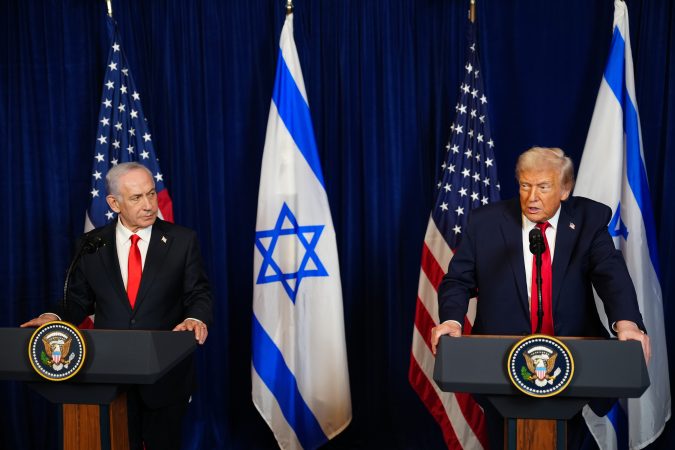
    WASHINGTON — It was less than 15 weeks ago when President Donald Trump, at the height of his bravado about how the war with Iran would end, declared “there will be no deal with Iran except UNCONDITIONAL SURRENDER.”

    When the text of the deal intended to wind down the conflict was finally released Wednesday, read aloud paragraph by paragraph by a senior administration official who stopped to defend each section, it read nothing like a surrender document. Instead, the Iranians emerged from a confrontation with the world’s most powerful military having not only survived, but with much to celebrate.

    It starts with the resumption of Iran’s ability to reap billions of dollars in oil sales, lifting pressure on the struggling regime even as negotiators prepare to begin haggling over a far more lengthy and critical document: the one Trump insisted in an interview Sunday will arrest Iran’s nuclear program for the next 15 or 20 years.

    For a president who prizes leverage above all else, that decision is just another mystery of the war. But the wording of the “Memorandum of Understanding” also suggests that, over time, Iran may negotiate some permanent way to exercise sovereignty over the Strait of Hormuz. That seems in contradiction to Secretary of State Marco Rubio’s declarations just a few weeks ago that anything other than the kind of free passage through the strait that the world knew before the war was “not acceptable” and “cannot happen.”

    And the memorandum, signed Wednesday evening by Iran’s president and Trump, describes a pathway in which Iran could begin receiving billions of dollars in assets that have been frozen for years. Trump insists the money will only be released in return for “good behavior.” But it is essentially the same concession that Barack Obama made 11 years ago, and that Trump has savaged ever since.

    As Trump reminds reporters — often angrily — the United States did have many accomplishments on the battlefield: It sank Iran’s less-than-impressive navy, wiped out its small air force, destroyed much of Iran’s defense industrial base and demolished some of its missile emplacements and mobile launchers. But that was not Trump’s goal. As he said at the opening of the campaign, he sought the total destruction of the nuclear and missile programs, the fall of the regime and, as he suggested later on, U.S. control of the country’s oil industry.

    In the next few days, the details of this agreement will be picked apart. Hard-liners in Trump’s party have already been expressing objections. So have the Israelis, frozen out of the negotiations and fearful they are being forced by Trump into a ceasefire with Hezbollah that will interfere with their ability to rip apart the terror group. Historians will grapple for years about the lessons of a conflict in which the United States spent tens of billions of dollars, with 13 Americans and more than 3,000 Iranians reported to have been killed.

    People chant the name of Hezbollah leader Sheikh Naim Kassem during his public address on Wednesday.David Guttenfelder

    But it was Trump himself who offered what may be the most clear-eyed answer about why he needed to end this war so fast. He didn’t want comparisons to Herbert Hoover, he told reporters Wednesday at the Hotel Royal in Évian-les-Bains, on the shores of Lake Geneva.

    “He was always the one I didn’t want to be,” Trump said of the 31st president, who presided over the market crash that ushered in the Great Depression. “I didn’t want to see economic catastrophe.” Later he noted that if the war continued, the world would have begun to run out of oil stockpiles.

    That combination — economic chaos and disrupted oil markets — is exactly what the Iranians viewed from the opening days of the war as their most potent weapon. They executed on that vision with precision, closing the strait and blowing up petrochemical facilities, desalination plants, hotels and air bases across the Persian Gulf. And by the president’s own testimony, it worked.

    If that was Phase 1 of Iran’s strategy, history suggests Phase 2 may be one of delay and more delay. In past negotiations, the Iranians refined the art of arguing over every paragraph, throwing in new obstacles to inspections or reinterpreting the meaning of “nuclear research” to embrace continued uranium enrichment. Few were more skilled at this process, former U.S. negotiators say, than Abbas Araghchi, the Iranian foreign minister, and a veteran of past talks.

    And Trump, eager to move on, seems to be paving the way for a long, slow process. On Tuesday, he said he wasn’t especially concerned with getting Iran’s nuclear fuel — now buried under the rubble of last year’s U.S. air attacks — out of the country. On Wednesday, he acknowledged the talks would probably go beyond 60 days.

    It is too early to say whether Trump will ultimately be able to claim more accomplishments. If, in the next stage of negotiations, he manages to get the Iranians to ship their stockpiles of nuclear fuel out of the country (as President Barack Obama did in 2015) and cease all enrichment activity for nearly two decades (which Obama failed to accomplish), then he may be able claim some long-term victory.

    If the war turns out to have destabilized the Iranian leadership and triggered protests and an uprising, as Trump called for at the beginning of the conflict, he could well claim credit.

    But for now it looks like the opposite is taking place. If anything, Trump has propped up the new leadership, ostensibly run by the new supreme leader, the injured and out-of-sight Mojtaba Khamenei, the son of Ayatollah Ali Khamenei, who was killed in the opening strike of the war.

    The Revolutionary Guard, which has overseen the nuclear program for years, seems firmly in control, though a senior administration official argued to reporters several days ago that by bringing about a peace, Trump is now forcing the elite military unit to face the travails of governing.

    Senior members of the Obama administration, having absorbed years of critiques from Trump about the shortcomings and loopholes in the agreement struck in 2015, saw their moment to exact a measure of retribution.

    “The only ‘achievement’ of the ceasefire is the likely reopening the Strait of Hormuz — which was open before the war started,” former Secretary of State Antony Blinken wrote online Wednesday. “And we will apparently pay Iran to do so, in the form of waivers for the export of Iranian crude oil. Iran has now demonstrated the capacity to stop or slow the passage of oil, natural gas, fertilizer and other critical products upon which so much of the world depend.”

    Blinken, an architect of the 2015 accord, concluded: “Going forward, it will almost certainly find ways to collect ‘fees’ for safe passage that will help entrench the regime.”

    While some Republicans expressed cautious optimism that Trump’s peace-through-negotiation strategy may yet work, a good number of Iran hard-liners and America First adherents could not bring themselves to repeat the talking points in support of the accord that were being e-mailed by members of the administration. Among the most outspoken were those protected by impending retirement.

    “Reagan is rolling over in his grave,” Sen. Bill Cassidy, R-La., who lost a primary last month after Trump targeted him for defeat, wrote on social media. He said that Iran’s nuclear ambitions “were not curbed” and that the war had taught the Iranians that they had more leverage over the Strait of Hormuz and the world economy than they knew. Cassidy termed the war “the worst foreign policy blunder in decades.”

    But the bigger risk may be this one: When Iran’s leaders begin to clear the rubble left by 40 days of bombing, and think about how to spend the billions in oil revenue that will soon resume, they may well question whether they had the right nuclear strategy.

    For more than two decades Iran walked right up to the edge of building a nuclear bomb, but never stepped over the line, figuring that a “threshold” capability was all it needed to deter the United States and Israel from attacking. That enabled it to stay in the nonproliferation treaty, and insist that it had only peaceful intentions, with the security of knowing that in months it could produce a weapon. The result was that it was bombed in June 2025 and attacked again in February 2026.

    North Korea, in contrast, raced for the bomb, setting off its first successful nuclear test in 2006, and now has an arsenal of 60 or more weapons, according to U.S. intelligence agencies. It has escaped no nuclear strategist that these days, Trump isn’t issuing threats to North Korea.

    On Sunday, when Trump called the Times, this reporter asked him whether Iran might now follow the North Korean model. “He’s got serious nuclear weapons,” Trump said of Kim Jong Un, whom he threatened with annihilation during the first Trump term, then met three times in a fruitless effort to convince him to disarm. “But that should not have been allowed,” he said, asking whether North Korea got the bomb under President Clinton or President Obama. (It made its first test under President George W. Bush.)

    But Trump evaded the question of whether his decision to attack Iran could ultimately drive it to follow North Korea’s model. And he insisted his deal would stop Iran, saying Prime Minister Benjamin Netanyahu should thank him for keeping Israel from nuclear annihilation.

    “Whatever it takes,” he said. “Forty-seven years,” he said, referring to the 1979 Iranian Revolution, “nobody was able to do it. And we did it. We did it the right way.”

    History may prove him right, but it is far too premature to make that claim. Maybe even he knows that, based on his statements Wednesday morning. If the accord didn’t stick, he had a plan, he insisted. He would “go back to bombing.”

    This article originally appeared in The New York Times.

  • There’s a bit of good news for coral reefs

    There’s a bit of good news for coral reefs

    NAIROBI, Kenya — As spiking ocean temperatures are devastating reefs around the world, a handful of scientists have found a reason for cautious optimism. They’ve used artificial intelligence to detect sheltered pockets where cool currents, reduced exposure to sunlight, and locations outside cyclone paths mean corals are more likely to survive.

    The study, led by the Wildlife Conservation Society and presented on Tuesday at the Our Ocean Conference in Mombasa, Kenya, is currently undergoing peer review for publication in the journal Environmental Research Letters.

    Five scientists identified 42 factors that create the conditions for the coral havens, called refugia, and then ran those through a program with nearly 38,000 human observations of coral cover and composition gathered over 65 years. The program identified more than 5,800 square miles of climate-resilient ocean in 72 countries.

    The work found three times as many refugia as a landmark 2018 assessment known as the 50 Reefs Study, the first paper to systematically identify areas around the globe where coral might still be saved. Scientists and environmentalists said the new assessment offered a more nuanced picture of the state of the world’s reefs and could help fine tune conservation priorities.

    “This study sharpens decades of work on reef resilience to climate change,” said David Obura, a former chairperson of IPBES, the global intergovernmental scientific panel on biodiversity, who was not involved in the new research. “It focuses attention on the critical question: Will climate refuges comprise 10%, 1%, or even less of the former extent of coral reefs?”

    Coral reefs are crucial ecosystems. They nurture an estimated quarter of ocean species at some point during their life cycles, supporting fish that provide protein for millions of people and protecting coastlines from storms.

    They are also vulnerable to bleaching, which occurs when heat causes corals to lose the algae they need to survive. Bleached corals can recover, but if the water they live in stays too hot for too long, they die.

    “Every tenth of a degree warming drives reefs to the limit,” Obura said.

    According to Australian researchers who study ocean heat, the demise of the Great Barrier Reef could occur within a generation unless humanity acts with far more urgency to rein in climate change. A study published in 2025 found that virtually all the corals in the Atlantic Ocean will stop growing and could succumb to erosion by the end of the century if global temperatures continue to rise.

    The newly identified refugia are not evenly spread around the world. More than half are in five countries: the Bahamas, Cuba, Australia, Indonesia, and the Philippines. Others cluster around small islands in places like Vanuatu, American Samoa, Christmas Island, and the Chagos Archipelago.

    These havens can protect coral from the effects of warming, but their concentration makes them vulnerable to other threats like overfishing and pollution. Although most are found in nominally protected zones, lack of funding means many of those areas are only “paper parks” lacking practical protections.

    The research is expected to fuel a central conservation debate: How much funding should go to protect refugia, some of which may eventually fail as the oceans heat further; how much into restoration work; and how much into halting greenhouse emissions and pollution?

    Despite warnings from scientists and pledges from world leaders, countries are burning more fossil fuels than ever and greenhouse gas emissions continue to rise.

    Traditionally, reef research has focused on areas that have avoided the worst overheating. Such reefs are usually dominated by large branching corals like Acropora, an expansive genus incorporating species like the staghorn and the flamethrower; or plating corals like Montipora, whose delicate whorls spiral out from a central stem. Globally, their numbers are crashing.

    But the new research broadened the focus to corals that could also resist and recover: the helmet-shaped towers of the Porites lutea or the luminous ridges and bumps of Echinopora. Coral communities dominated by fast-growing weedy varieties, such as the lime and flamingo pink Pocillopora, are also often more resilient.

    They will need to be. Subsurface conditions across the tropical Pacific are already significantly warmer than average, according to the World Meteorological Organization. And, an El Nino weather pattern that recently formed in the Pacific could exacerbate those hot conditions.

    “It’s not to say the maps are perfect, but they are better than starting with nothing,” said Joseph Maina, an associate professor at Macquarie University in Sydney, who helped coordinate the data analysis. “Governments shouldn’t use the maps blindly, but get their own experts to look here first.”

    This article originally appeared in the New York Times.