Category: Entertainment Wires

  • How extreme heat is changing Americans’ lives, according to a new AP-NORC poll

    How extreme heat is changing Americans’ lives, according to a new AP-NORC poll

    Elisa Bracamonte has lived in Arizona her whole life, so she’s used to adjusting her schedule and outdoor activities around high temperatures, especially during the summer months.

    But the 74-year-old retired nurse from Tucson said she feels the heat has been impacting more of her day-to-day: summer plans with family members across the region, meetups with friends, road trips and her daily morning walk routine.

    “I’ve noticed at least a 10 degree difference in the weather,” Bracamonte said. “Every summer, it seems to be getting hotter and hotter.”

    Like Bracamonte, Americans are increasingly feeling a personal impact from extreme heat, according to a new poll from The Associated Press-NORC Center for Public Affairs Research.

    According to the survey, U.S. adults are more likely to say extreme heat has had either a “major impact” or “minor impact” on their travel or vacation plans, electricity bills, their sleep, their family’s outdoor activities and more parts of their day-to-day life than in July 2024.

    Much of that shift was among people who live in the West or Midwest.

    Democrats are also more likely than Republicans to say that extreme heat has had a “major” impact on each item asked about.

    Warming has endangered the globe especially in recent years; scientists calculated that Earth’s average temperature in 2025 hovered among one of the three hottest on record, along with 2024 and 2023. The U.S. has sweltered under dangerous heat domes over the past few years, and unusually high temperatures even early in the year.

    The recent scorching weather has played a role in thousands of heat-related deaths — killing more people every year than all other weather-related events. It impacts wildfire risk, strains public infrastructure, devastates agriculture and wreaks havoc on gatherings such as sporting events.

    Now, the poll shows how extreme heat is reshaping Americans’ daily lives.

    “I have to get up at 5 in the morning to walk before 6, because by 7 it’s already in the 80s … I lose a couple hours of sleep because I’m having to wake up earlier,” added Bracamonte, who said she identifies as a very liberal Democrat. “You can’t stay outside without being sick unless you’re guzzling water the whole time — it’s just so, so hot.”

    Electricity bills going up

    About 8 in 10 Americans say their electricity bills have seen a “major” or “minor” impact from extreme heat over the last year, compared with 69% in July 2024, according to the survey.

    Just under half of Americans living in the Midwest, 44%, say extreme heat has had a “major” impact on their electricity bills, up from 29% two years ago.

    Rising household electricity prices have turned into an increasingly prominent political issue over the past few years. Extreme weather is just one factor that affects electricity bills, but it means that people are using more energy for air conditioning — or in the colder months, heat.

    “I feel like my utility costs probably doubled in the last three or four years,” said Daemien Williams, a 50-year-old bridge inspector living in Cahokia Heights, Illinois, who identifies as a Democrat. “I do look at my bills pretty in detail and see that the kilowatts and the usage is actually up, not just the price that they’re charging for it.”

    Travel and vacation plans impacted, along with family outdoor activities

    Extreme heat is affecting Americans’ lives in other ways, the survey found.

    Around 4 in 10 Americans say extreme heat has had either a major impact or a minor impact on their travel or vacation plans, up from about one-quarter in 2024.

    “It has affected my entire family because we usually get together a lot during the summer,” Bracamonte said. ”We have family in Texas and we have family in upper Arizona. And we’ve seen that there’s been a lot more fires, a lot of more flooding, all that. So that kind of inhibits our plans to travel.”

    Extreme heat waves increase wildfire risk, and a warmer world supercharges storms that could ultimately send more rainfall.

    Around 7 in 10 Americans say extreme heat has had either a major impact or a minor impact on their family’s outdoor activities, compared with about 6 in 10 in 2024.

    Sean Conway, a 41-year-old direct marketer in North Shore, Massachusetts, said his kids’ soccer practice might either be postponed or canceled due to extreme temperatures, for example.

    But to Conway, who considers himself a moderate independent, leaning Republican, this is minor. “Sometimes, you’ve got to just be out in the bad weather.”

    It’s not surprising many Americans say they are feeling the impacts, said Jennifer Francis, a climate scientist at the Woodwell Climate Research Center who was not involved with the polling.

    “Brutal, life-threatening heat waves have become more frequent, more intense, and more persistent in many parts of the globe, including our Western and Midwestern states,” Francis said. ”Extreme heat compounded with long dry spells have affected our health directly, along with indirect effects on our wallets.”

    Climate change belief remains largely stable

    Even as more Americans say they feel a personal impact from extreme heat, that does not mean an increasing number believe in climate change.

    About two-thirds, 66%, of Americans believe climate change is happening, a slight decline from 73% in September 2025. About 17% say they are not sure if climate change is happening, and about 15% say it is not happening.

    Williams, the Illinois resident, attributes his belief in climate change in part to extreme shifts in weather including very high and very cold temperatures.

    “My biggest indicator of the change in the climate is just the flooding is a lot more often,” Williams said, noting that he believes in both natural and human causes.

    John Hazel, a 33-year-old in Waco, Texas, says he’s noticed changes from when he was younger.

    “When I was a kid, that seemed like a very rare thing when it did hit 100, everybody was like, whoa. And now it’s just every day,” said Hazel, a crime scene investigator. “Seasons felt a little more balanced. Now it feels like summer’s a bit lingering, it starts earlier and lasts longer.”

    Hazel, who identifies as a conservative Republican and believes in climate change, said he plans around the heat.

    “As soon as you walk outside, you’re already sweating even if you’re not doing much of anything. I’ve definitely noticed you’re having to take breaks from being outside, you have to bathe, shower more often,” Hazel said. “It’s definitely a bigger consideration.”

    ___

    The poll of 1,165 adults was conducted July 23-27, 2026, using a sample drawn from NORC’s probability-based AmeriSpeak Panel, which is designed to be representative of the U.S. population. The margin of sampling error for adults overall is plus or minus 3.7 percentage points.

    ___

    Alexa St. John is an Associated Press climate reporter. Follow her on X: @alexa_stjohn. Reach her at ast.john@ap.org.

    ___

    Read more of AP’s climate coverage.

    ___

    The Associated Press’ climate and environmental coverage receives financial support from multiple private foundations. AP is solely responsible for all content. Find AP’s standards for working with philanthropies, a list of supporters and funded coverage areas at AP.org.
  • Tupac Shakur was killed in Las Vegas in 1996. Here’s who was there that night

    Tupac Shakur was killed in Las Vegas in 1996. Here’s who was there that night

    LAS VEGAS — New details about one of hip-hop’s most enduring mysteries — the 1996 killing of rap icon Tupac Shakur — could finally come to light in the upcoming trial of Duane “Keffe D” Davis.

    Davis, 63, is accused of orchestrating the drive-by shooting near the Las Vegas Strip that also wounded rap music mogul Marion “Suge” Knight. Davis’ jury trial will begin Monday, nearly three years after he was arrested in 2023. He pleaded not guilty.

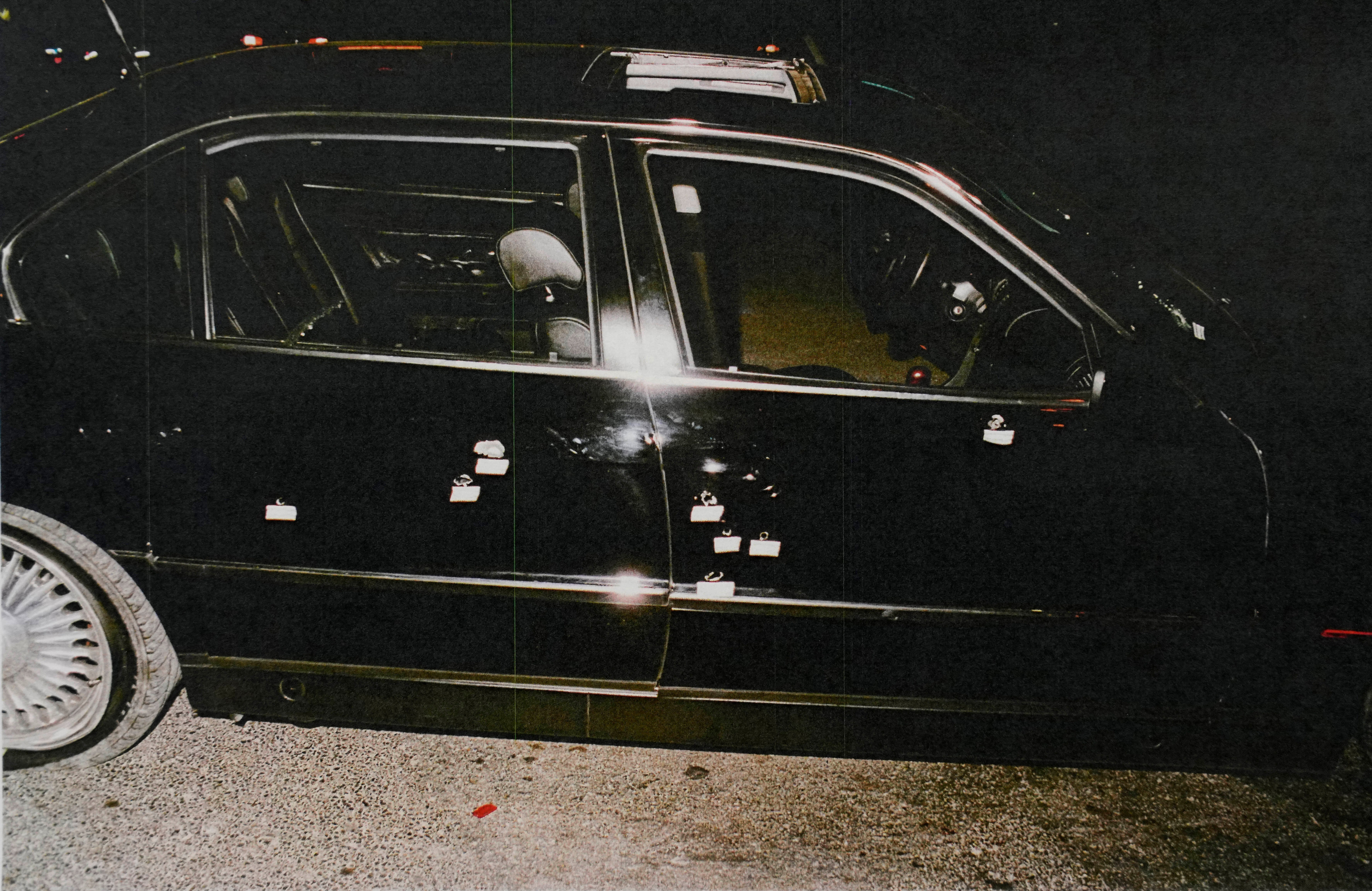
    On the night of Sept. 7, 1996, Shakur was in the passenger seat of a black BMW that Knight was driving when a white Cadillac pulled up on their right side and gunfire erupted. Knight was wounded but survived. Shakur died a week later at the age of 25.

    Police and prosecutors say the shooting stemmed from a fierce competition for dominance in a musical genre that pitted East Coast members of a Bloods gang sect against West Coast members of a Crips sect that Davis has said he led in Compton, Calif.

    That night, three others were with Davis in the Cadillac, but none of them faced charges in Shakur’s killing before they died.

    Here’s what we know about who was in both vehicles from authorities, court records, grand jury testimony, interviews, and Davis’ 2019 tell-all memoir, Compton Street Legend.

    Tupac Shakur

    Shakur is considered one of the most influential rappers of all time. He had five No. 1 albums, was nominated for six Grammy Awards, and was inducted into the Rock & Roll Hall of Fame in 2017. He received a posthumous star in 2023 on the Hollywood Walk of Fame and he will appear in the upcoming video game Stranger than Heaven.

    His death came as his fourth solo album, All Eyez on Me, remained on the charts, with some 5 million copies sold. He also used the stage names 2Pac and Makaveli. As an actor, he starred in several films.

    Shakur was born Lesane Parish Crooks in New York in 1971, and his name was changed a year later. His late mother, Afeni Shakur, and late stepfather Mutulu Shakur were active in the Black Panther Party in New York. Tupac Shakur was not close with his biological father, William “Billy” Garland.

    Two of the rapper’s siblings, Sekyiwa “Set” Shakur and Maurice “Mopreme” Shakur, have criticized authorities for inaction and slowness in charging anyone with their brother’s death.

    Marion “Suge” Knight

    Knight founded Death Row Records, a Los Angeles-based music label that represented Shakur at the time of his death. Knight’s moniker was shortened from “Sugar Bear,” his nickname growing up in Compton.

    Knight and Shakur were headed to a nightclub when their car was shot at near the Las Vegas Strip. Knight was grazed by a bullet or shrapnel.

    Now 61, Knight is serving a 28-year prison sentence in California for running over and killing a Compton businessperson outside a burger stand in January 2015. The case capped the former rap music mogul’s downfall from his heyday as one of the biggest — and most feared — names in the music industry.

    Davis said he and Knight knew each other growing up and even played on the same youth football team in Compton. Knight went on to play college football at the University of Nevada, Las Vegas. Briefly, during the 1987 NFL players’ strike, he was a replacement player for the Los Angeles Rams.

    In his memoir, Davis describes Knight and himself as the “only living eyewitnesses to what truly happened.”

    “Like two rams locking horns, Suge and I looked each other dead in the eye,” he writes when describing the moments right before the shooting.

    Orlando “Baby Lane” Anderson

    Law enforcement authorities long suspected that Anderson was the gunman. He was 22 at the time. Though Davis was his uncle and 12 years older, he described their relationship as that of brothers, friends, and even father-son.

    Shortly before the drive-by shooting, Anderson was beaten in a brawl at the MGM Grand casino involving Shakur and his associates, including Knight. Authorities, authors, and Davis himself say the shooting was an act of retaliation for beating up Anderson.

    “Them jumping on my nephew gave us the ultimate green light to do something,” Davis writes in the book.

    Davis said he obtained a handgun from an associate and tossed it into the back seat of the Cadillac but did not say who fired the fatal shots. Anderson was sitting in the backseat of the car, behind his uncle.

    Neither the Cadillac nor the gun used in the shooting were recovered, according to retired Las Vegas police Detective Clifford Mogg, who was assigned to the investigation in early 2018.

    “We were never able to identify the person who rented the car, where it was rented from, and then when it comes to the gun, we have never recovered as of this date, the weapon that was used in the murder,” Mogg said in testimony to the grand jury.

    Anderson, who denied involvement in Shakur’s killing, died two years later in what police said was an unrelated shooting at a Compton car wash.

    Deandrae “Freaky” Smith

    Also known as “Big Dre,” Smith was in the back seat of the car that night, sitting next to Anderson.

    Although authorities have said they believe Anderson pulled the trigger, the grand jury testimony challenged that theory.

    Denvonta Lee, a former associate of Davis, told the grand jury that it was Smith who shot Shakur and Knight. He said Anderson tried reaching over Smith but didn’t have a “clear shot” out the left-rear passenger window.

    The former associate, who wasn’t in the car but recounted a conversation he had with Smith days after the shooting, said Smith took the gun from Anderson, opened fire and let Anderson take credit for Shakur’s death.

    Smith was 30 when he died in 2004 of natural causes, according to the Los Angeles County coroner’s office.

    Terry “Bubble Up” Brown

    Brown was driving the Cadillac from which the shots were fired.

    Davis said in his memoir that they were driving toward Las Vegas Boulevard that night but spotted Shakur “hanging out of the window” of the BMW and waving to fans. Davis told Brown to make a U-turn, and they drove slowly past the rapper’s convoy until Davis said they “found who we were seeking.”

    Brown died in a 2015 shooting at a medical marijuana dispensary in Compton.

    The Los Angeles County coroner’s office said his full name was Terry Tyrone Brown, although Brown has been referred to as both “Terrence” and “Terrance” in investigative records.

  • The first small steps taken in Neil Armstrong’s childhood home inspired a giant leap for mankind

    The first small steps taken in Neil Armstrong’s childhood home inspired a giant leap for mankind

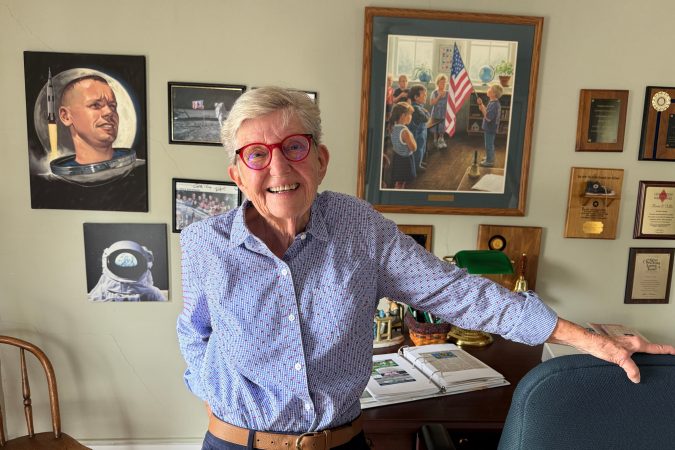
    WAPAKONETA, Ohio — Inside Neil Armstrong’s boyhood home, at the top of a creaky stairway, sits his bedroom where he launched model airplanes out of the rear window to measure how far they’d fly.

    Hanging in the room now are autographed photos of astronauts who have visited the privately kept house to see where Armstrong’s first steps to the moon began.

    Owned by a retired history teacher devoted to preserving its past and charming character, the home is for sale for the first time in nearly 40 years. What will become of it remains uncertain.

    All over Armstrong’s hometown of Wapakoneta, there are reminders of his history-making moonwalk. But few places played a bigger role early in his journey than 601 W Benton St. — the house where the Armstrong family settled in western Ohio when he was a young teenager.

    It’s where Armstrong built planes out of balsa wood and glue in the dining room and constructed a basement wind tunnel to test his models. He’d often pedal his bike from home to take flying lessons at an airstrip.

    At age 16, Armstrong made his first solo flight and got his pilot’s license. Just 20 years later, he rocketed into space for the first time. After the 1969 moon landing, he taught at the University of Cincinnati.

    A parade of astronauts has visited Armstrong’s house

    Today, Armstrong’s two-story boyhood home is an occasional stop for visitors to the Armstrong Air and Space Museum in Wapakoneta, even though the house isn’t open for tours.

    When Karen Mikesell bought the place in 1988, she had no idea who once lived there until another teacher soon told her.

    As a history teacher who later became a school principal, Mikesell felt a responsibility to “keep it like the Armstrongs had it,” she said.

    She’s hosted nine astronauts, including Buzz Aldrin, who flew to the moon with Armstrong and Michael Collins in 1969.

    Aldrin stepped inside the bedroom upstairs a few years after Armstrong died in 2012, Mikesell recalled, “and the tears just streamed down his cheeks.”

    Over the years, she’s been given a moon rock and received a piece of gold foil that covered the Apollo 11 capsule — a gift from one of the Navy frogmen who helped recover the command module and its crew.

    Some astronauts autographed their photos with personal messages to Mikesell — “thanks for taking such great care of Neil’s home!” wrote Mike Foreman, who flew on two space shuttle missions.

    “You can read books, but you can never have those kinds of experiences that I was able to have because I lived here,” she said. “I could go on and on.”

    House holds many reminders of the first man on the moon

    Armstrong’s family bought the home in 1944 after his father had moved them about a dozen times with his job as a government auditor. The oldest of three children, Neil was born in a farmhouse just outside Wapakoneta, today a city of just under 10,000 people.

    The house on Benton Street with its big front porch has changed little on the outside. Inside, the layout is similar too, though it has been updated.

    In the backyard, a garage that Armstrong and his father built with scrap lumber still stands, though a chicken coop where he and his friends gathered for Boy Scout meetings is long gone.

    Armstrong’s old bedroom is now decorated with photos and paintings of the moon landing. Hanging from the ceiling is a model of the Wright brothers’ first production airplane — the aviation pioneers were from nearby Dayton and an inspiration for Armstrong.

    Mikesell never met Armstrong, who was famously private. She did talk with his parents, siblings, and children about the 1908 home and its place in Armstrong’s upbringing.

    A part of American history is for sale

    Mikesell, who’s 82, said she hopes someone might be willing to buy the house and donate it to the Armstrong museum, which doesn’t have the funds to acquire the property, according to Logan Rex, its spokesperson.

    She is just one of a handful of people who’ve owned the home since the Armstrongs sold it in the mid-1960s. By the time she bought the house, the rooms were covered with wallpaper in a rainbow of colors, so she sought to restore its original look.

    While the house, which is listed at $430,000, isn’t legally protected from alteration, Mikesell is also optimistic that the new owners will respect it — whether it remains a private residence or becomes a place for overnight stays.

    “It’s time to let someone else have the opportunity to be as blessed as I’ve been,” she said, “and to take care of it and keep it as a part of history.”

  • Leonardo DiCaprio and Jeff Bezos lead $200M project to save 100 of globe’s most threatened species

    Leonardo DiCaprio and Jeff Bezos lead $200M project to save 100 of globe’s most threatened species

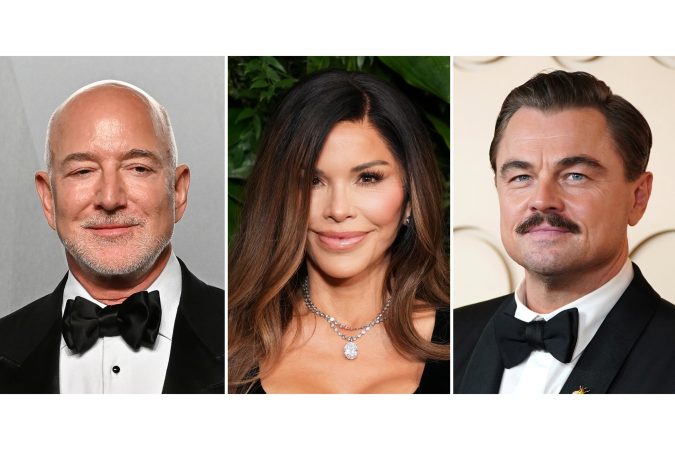
    LOS ANGELES — Foundations funded and co-founded by Leonardo DiCaprio and Jeff Bezos have launched an initiative committing $200 million to revive 100 of Earth’s most threatened species, including endangered lemurs, salamanders, pangolins, pigs, and echidnas.

    DiCaprio’s Re:wild and the Bezos Earth Fund are leading the Phoenix Species Project, the groups announced Tuesday. They call it the largest single fund in history dedicated exclusively to recovering critically endangered species.

    DiCaprio has for years been developing the idea of a major concerted effort to help species whose habitats and future existence are threatened by climate change.

    In 2021, he and Re:wild co-founder Wes Sechrest, a biologist who serves as the organization’s CEO, met with the Amazon-founding mega billionaire Bezos and his wife, former TV news reporter and host Lauren Sánchez Bezos. He serves as chair and she as vice chair of the Bezos Earth Fund.

    The meeting led to a series of conversations with local governments, environmental groups, and Indigenous people on how best to reverse the decline of their most vulnerable species. Those conversations eventually led to the Phoenix Species Project.

    Animals the initiative is seeking to sustain include:

    – The golden-crowned sifaka, a lemur from Madagascar

    – The Hickory Nut Gorge green salamander, a lungless tree-dweller that lives only in a small canyon in North Carolina.

    – The Visayan warty pig, endemic to islands in the Philippines.

    – Mexico’s Cozumel harvest mouse, which lives only on an island off the Yucatán Peninsula.

    – The pink land iguana, found only on Wolf Volcano in the Galápagos Islands.

    – The Malayan pangolin, also known as the Sunda pangolin, native to Southeast Asia.

    – Tanzania’s pancake tortoise, named for its flat, flexible shell.

    – The starry night harlequin toad, known and named for its black-and-white evening sky appearance, found only in the mountains of Colombia.

    – Attenborough’s long-beaked echidna, a monotreme, or mammal that lays eggs, from New Guinea named in honor of the 100-year-old naturalist and narrator-of-nature David Attenborough.

    The project’s goals include giving long-term sustenance to successful but fleeting smaller efforts.

    “We’ve protected the golden-crowned sifaka for years on a budget that would never match what this species deserves, but letting it go extinct was never an option,” Tiana Andriamanana, executive director of Association Fanamby, one of the groups getting a grant from the initiative, said in a statement. “This funding, this global platform, and technical support change what is possible.”

  • ‘Sopranos’ actor Vincent Pastore, known for playing mobsters and tough guys, dead at 80

    ‘Sopranos’ actor Vincent Pastore, known for playing mobsters and tough guys, dead at 80

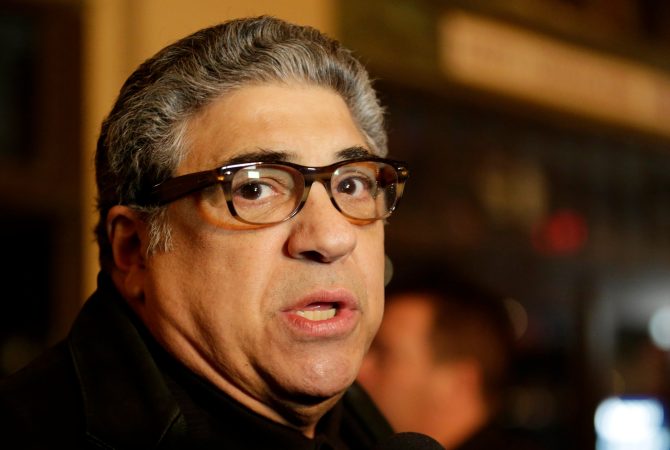
    NEW YORK — Vincent Pastore, a veteran actor who played mobsters and tough guys, and was best known for portraying Salvatore “Big Pussy” Bonpensiero on The Sopranos, has died. He was 80.

    Bob McGowan, who managed Mr. Pastore since his run on The Sopranos, told the Associated Press that he learned of his death Saturday from another client and actor on the show, Vincent Curatola.

    He said Mr. Pastore was found in his home on New York’s City Island after not being heard from for a few days.

    McGowan said he had been trying to reach Mr. Pastore about a possible job.

    “He was the most loyal client, and he always gave to charity,” McGowan said, “and he was the kind of guy who would help anybody, which is rare in my business.”

    Robert Attermann represented Mr. Pastore for more than 30 years, before his time on The Sopranos. While Mr. Pastore will be remembered as “Big Pussy,” he was so much more, Attermann said in an email to the AP.

    “Vinny was one of the kindest, most generous people I have ever known,” Attermann said. “He treated everyone with warmth and respect, never turning down a fan who wanted a photograph or an autograph. He genuinely appreciated the people who supported him and always made them feel valued.”

    Attermann said Mr. Pastore loved being an actor and was passionate about his craft while always encouraging young actors, “taking the time to offer guidance and support whenever he could.”

    Michael Imperioli, a longtime friend and collaborator, said on Instagram that it seemed as though he had known Mr. Pastore forever.

    “We did lots of work together and traveled all over the USA as well as Italy and Australia. Lots of good times. Lots of laughs,” Imperioli said. “Vinny was a kind-hearted brother who cared deeply about his family and friends. I will miss him always.”

    Mr. Pastore appeared in movies dating back to the 1980s including roles in big films such as Goodfellas and Awakenings, both in 1990.

    He often played gangsters. And it was one of those roles he is best known for: his 30-episode run as Bonpensiero, the friend of Tony Soprano who becomes an FBI informant.

    Mr. Pastore was born in the Bronx and grew up in suburban New Rochelle, N.Y. He enlisted in the Navy during the Vietnam War and later attended Pace University, according to his biography on IMDb.

    He is survived by his daughter, Renee Pastore.

  • Authorities release early ransom note in Nancy Guthrie case, hoping someone recognizes it

    Authorities release early ransom note in Nancy Guthrie case, hoping someone recognizes it

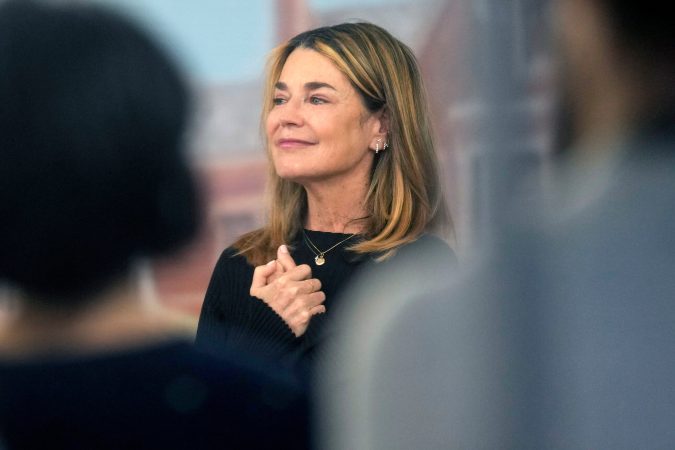
    TUCSON, Ariz. — Authorities released an early ransom note in the investigation into the disappearance of Nancy Guthrie in hopes that someone will recognize the writing style. A second note released Friday indicated Guthrie died shortly after she was kidnapped.

    Both notes initially went to a Tucson television station days after the 84-year-old mother of Today show host Savannah Guthrie went missing from her home outside Tucson on Feb. 1. Authorities have not said whether Nancy Guthrie is still alive.

    The Pima County Sheriff’s Department said, “We believe these distinctive linguistic characteristics may be recognizable to someone who knows or has interacted with the notes’ writer.”

    The first note, sent Feb. 2, said Guthrie was safe but scared and would be released unharmed once her captors received $4 million in cryptocurrency, with the ransom amount increasing if the first demand was not met.

    It said Guthrie would be released within 12 hours if the payment was received. It also included a threat to kill her if the ransom wasn’t paid.

    “Your mother is aware of this and her life is in your hands,” the first note read. “It is in the best interest of everyone to have this completed as soon as possible.”

    The second note to the family said Guthrie died shortly after she was taken. “She is buried in nature now,” the second note said. “Nothing you could have done could have changed the outcome.” The note ends with an apology, “We are truly sorry.”

    The sheriff’s department said the notes reveal a distinctive pattern of word choices and provide insight into the writer’s mindset. The agency said someone who knows the notes’ writer may recognize the patterns.

    In a statement, the sheriff’s department also went further to appeal to people who may know something about the case, saying it may be difficult to come forward due to a personal relationship with someone involved or just for their own safety.

    “We recognize relationships and loyalties change over time as do people and their perspectives,” the sheriff’s department wrote. “It is not too late to come forward.”

    The sheriff’s office also said Friday that two videos recovered from Guthrie’s doorbell camera might be from two separate days and indicate an unidentified male prepared ahead of when Guthrie was taken. Authorities are seeking information on anyone who was behaving differently, changed their physical appearance, suddenly left the Tucson area, or had a noticeable or unexplained interest or disinterest in the case.

    “Investigators continue to pursue every available technological and investigative lead,” the sheriff’s office said. “However, community members remain a vital resource as we seek to provide answers for Nancy’s family.”

    Also, two men detained and released early in the investigation into Nancy Guthrie’s disappearance are seeking a combined $3 million against a southern Arizona sheriff’s department. In a legal claim, they say they were wrongfully held by law enforcement.

    The claim made Thursday against Pima County Sheriff Chris Nanos’ department centers on the separate detentions of Carlos Alfredo Palazuelos and Daniel Maddow on Feb. 10. It said they were released hours later but have suffered from having been mentioned in the investigation.

    Nanos’ office declined to comment on the notice of claim, a necessary precursor to filing a lawsuit against government entities.

    Despite an intense search involving thousands of law enforcement officers and volunteers, there has been no sign of the mother of three since she was reported missing. Her children, including the NBC host, have made heartbreaking video pleas for help, but to no avail.

  • Romo on leave from CBS Sports after arrest on suspicion of operating vehicle under the influence

    Romo on leave from CBS Sports after arrest on suspicion of operating vehicle under the influence

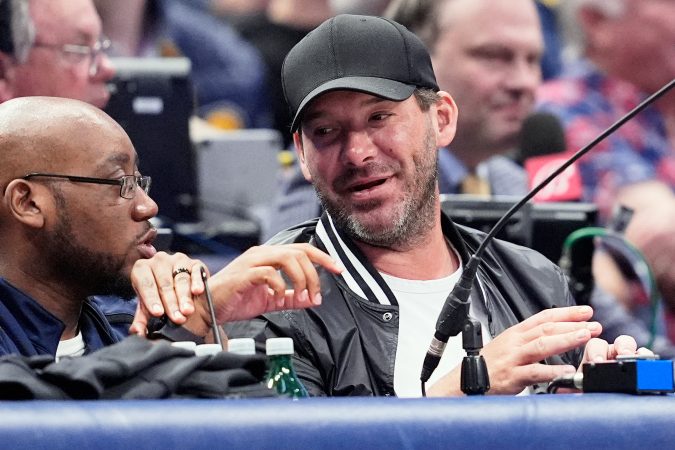
    Tony Romo has been placed on leave from his role as the lead analyst on CBS’s NFL coverage following his arrest last week on suspicion of operating a vehicle while under the influence.

    CBS Sports announced Friday that the former Dallas Cowboys quarterback was on leave “until further notice.” JJ Watt will join Jim Nantz and Tracy Wolfson as CBS Sports’ lead NFL team during Romo’s absence.

    Romo, 46, was arrested July 23 after he was stopped while driving south on Interstate 43 in Wisconsin. According to the Milwaukee County Sheriff’s Office report, Romo performed poorly on field sobriety tests before getting taken into custody, booked, and released.

    He has a court date set for Sept. 21.

    CBS Sports’ announcement comes after citations released by the Milwaukee County Sheriff’s Office indicated an open bottle of an alcoholic beverage was found in the passenger’s side of Romo’s black Jeep during an inventory before it was towed.

    According to the citations, police stopped Romo after he was seen passing cars in a gore area, which separates interstate traffic from cars entering from an on-ramp. Police said Romo questioned what a gore area was during the stop.

    Body camera footage released earlier this week showed Romo telling deputies he had been coming from a golf course and was on his way “to visit grandma and grandpa” when he was stopped. A deputy told Romo he suspected him of being impaired because he had “red glassy eyes” and an “odor of an intoxicating alcoholic beverage.”

    Romo went to high school about 35 miles from Milwaukee in Burlington, Wis.

    He has been the lead game analyst for CBS’s NFL coverage since 2017 after making four Pro Bowl appearances during an NFL career that ran from 2004-16 and was spent entirely with Dallas.

    Romo remains the Cowboys’ franchise leader in career touchdown passes with 248. He held the franchise record for career passing yards (34,183) until Dak Prescott overtook him last season.

    Watt joined CBS in 2023. He was an analyst on The NFL Today for two seasons before teaming with Ian Eagle on the network’s No. 2 crew beginning last season.

    Romo wasn’t expected to have his first game until the opening Sunday of the regular season on Sept. 13. CBS will air a preseason game between the Cincinnati Bengals and Philadelphia Eagles on Aug. 28.

    CBS likely will reveal its game assignments and announcer pairings for the first three weeks of the regular season in the next couple of weeks.

  • ‘Once’ Oscar winner and Irish musician Glen Hansard dies in motorcycle crash

    ‘Once’ Oscar winner and Irish musician Glen Hansard dies in motorcycle crash

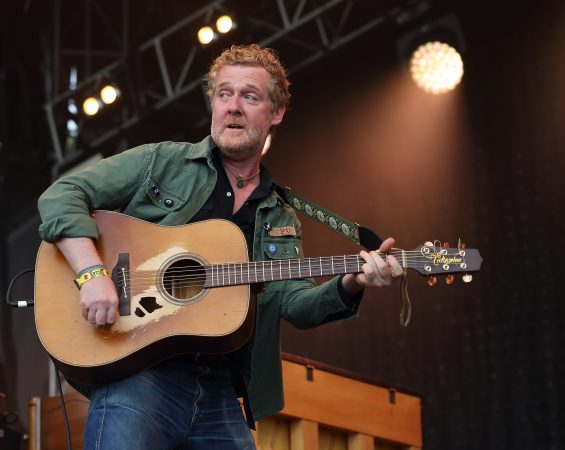
    LONDON — Irish singer-songwriter Glen Hansard, who won an Academy Award for the 2007 film Once, died in a motorcycle crash on the outskirts of Dublin early Wednesday, his management said. He was 56.

    ATC Management told broadcaster RTE that Mr. Hansard’s family was “deeply shocked and heartbroken.”

    News of his death brought tributes from fellow musicians including Bruce Springsteen, who said on Instagram he was “heartbroken” at the loss of “a great musician, a good friend and a generous and gracious man.”

    Irish police said a man in his 50s died in single-vehicle motorcycle crash in Lucan, on the western outskirts of the Irish capital, before 4:30 a.m. Wednesday. The man, who they did not name, was treated at the scene but pronounced dead a short time later.

    Mr. Hansard combined acting and a musical career. He played a member of a Dublin soul band in the hit 1991 movie The Commitments and won an Oscar in 2008 for the song “Falling Slowly,” which he co-wrote for the indie musical Once with co-star Markéta Irglová.

    Once, a love story about two struggling musicians, was later adapted for Broadway, again with songs by Mr. Hansard and Irglová. It won eight Tony Awards in 2012, including best musical.

    Mr. Hansard was long-serving front man for rock band The Frames, half of rock duo The Swell Season with Irglová, and released solo albums including Didn’t He Ramble, which was nominated for a Grammy for Best Folk Album in 2016.

    Ireland’s President Catherine Connolly said he was one of Ireland’s great singer-songwriters.

    “Glen was one of the vital driving influences of the Irish music world, bringing people together in the sharing of live music,” Connolly said. ”He will be sorely missed by all who knew him or experienced his work.”

    Actor-comedian Chris O’Dowd said Mr. Hansard’s “energizing melodies and soulful, searching voice made the tough times more manageable, the stagnant times more beautiful, and the joyful times even more memorable.”

    Mr. Hansard started out as a busker on the streets of Dublin. He became famous for leading the Christmas Eve busk outside Dublin’s Gaiety Theatre, where members of the public gathered to see famous Irish musicians perform in aid of a homelessness charity.

    Former Irish president Michael D. Higgins said Mr. Hansard was a “wonderful musician and performer” who also “placed great emphasis throughout his life to the importance of tackling the problems of society.”

    At the funeral of The Pogues frontman Shane MacGowan in 2023, Mr. Hansard performed a rousing version of The Pogues’ song “Fairytale Of New York” with Irish singer Lisa O’Neill that had the congregation dancing in the aisles of the church.

    Mr. Hansard is survived by his wife, Finnish poet Maire Saaritsa, and their 3-year-old son, Christy.

  • Judge rules singer D4vd must stand trial in killing of 14-year-old Celeste Rivas Hernandez

    Judge rules singer D4vd must stand trial in killing of 14-year-old Celeste Rivas Hernandez

    LOS ANGELES — A judge ruled Monday that there is enough evidence to put D4vd on trial in the killing and dismemberment of 14-year-old Celeste Rivas Hernandez, who authorities said had threatened to expose their relationship and crater the indie-pop singer’s rising career just a few days before his debut album dropped.

    “i will end ur career and ur life,” she told him in a text message sent the night before her death.

    Los Angeles Judge Charlaine Olmedo decided that evidence presented during a preliminary hearing provided probable cause for a trial on charges of murder, continuous sexual abuse of a child under 14, and unlawful mutilation of human remains.

    The dark and disturbing details presented over five days brought tears, gasps, and horror to the courtroom. The evidence included grisly autopsy photos, explicit descriptions and depictions of sexual abuse, and a stark picture of the final texts she sent minutes before she died and her phone went permanently silent.

    The ruling was a major step in the 10-month investigation and prosecution of D4vd that began when the dismembered and decomposing body of a girl was found in the trunk of his Tesla in the Hollywood Hills in September while he was on tour.

    D4vd shows no emotion as decision is read, and now heads to trial

    D4vd, the 21-year-old whose legal name is David Burke, showed no emotion when the judge issued her ruling, watching calmly and intently in his orange jail clothes and glasses as he had throughout the proceedings.

    He has pleaded not guilty. His lawyers argued that the murder evidence was insufficient, but did not argue against the other two charges. They declined to comment outside court.

    Prosecutors argued that the evidence was overwhelming.

    “Based on the mountains of evidence presented,” Deputy District Attorney Beth Silverman said, “all of the allegations have been proved way beyond the standard required.”

    Los Angeles District Attorney Nathan Hochman said outside court that prosecutors presented only a “small fraction” of the evidence they have. They are still weighing whether to seek the death penalty, but Burke is eligible for it after Olmedo also found probable cause for lying in wait, killing for financial gain, and killing a potential witness, special circumstances in a crime that allow for a death sentence.

    Olmedo ordered that Burke continue to be held without bail. An arraignment is to be held on Aug. 31, and a trial could happen as soon as 60 days later.

    The last night of Celeste Rivas Hernandez

    Before the decision, prosecutors gave a moment-by-moment account of Rivas Hernandez’s last night.

    As she neared his Hollywood home shortly after 10 p.m. on April 23, 2025, in an Uber he had sent to pick her up, she sent her final text: “girly pop i’m almost there open ur door if ur home.”

    Prosecutors allege Burke stabbed her to death when she came through the door.

    The night before, the two argued via text about his relationship with a woman. She sent him an angry and profanity-riddled text saying she will tell her dad so many lies about him and that she would “end ur career and ur life.” She had sent several similar messages around the same time.

    Prosecutors said that Burke met Rivas Hernandez when she was 11, and began sexually abusing her when she was 13 and he was 18. A year before her death, the pair also exchanged messages about how she had become pregnant — she assured him the baby was his — and that she had an abortion.

    During the preliminary hearing, prosecutors introduced photos of the two of them kissing and lying in bed. The pictures showed that she had “David” tattooed in red ink on a finger — one of two that had been cut off when her body was found.

    Prosecutors said they have records showing Burke ordered chain saws and wading pools that he used to dismember her body in his garage, and that her DNA was found there on blood stains.

    They said he then drove around for weeks and even months with the body in his trunk before the seemingly abandoned Tesla was towed from the Hollywood Hills.

    Defense argues there’s insufficient evidence for murder

    The defense argued that the evidence didn’t show the kind of malice that was required for murder.

    “There’s no evidence that Mr. Burke harbored a deliberate intent to kill Miss Hernandez,” said Burke’s attorney, Marilyn Bednarski.

    She said the communications between Burke and Rivas Hernandez showed “no threat, no evidence of a history of violence” and that he had “the opposite of homicidal malice” toward her.

    She argued that a medical examiner ruling that her death was a homicide from two puncture wounds was too vague and inconclusive to be evidence of murder. The defense did not directly give an alternative theory on how she died and isn’t required to.

    The defense also established that she had asked seven times to come to see him in the days before her death, and he reluctantly agreed only after she demanded it, and that she had threatened to kill Burke and to mutilate him.

    Silverman told the judge that “the defense tried numerous times throughout these proceedings to dirty up the victim” despite her being a child.

    Farrell, the detective, also said under defense questioning that the parents of both Burke and Rivas Hernandez knew about their relationship, that he had attended church with members of her family, and that her parents had given their consent for her to go to London with him for a week.

    Patrick Steinfeld, an attorney for Rivas Hernandez’s family, said after the hearing that they were “horrified that the defense attorneys brought up evidence to put the blame on a 14-year-old girl.”

    Her parents sat in the front row through most of the hearing, but sat out some of the more graphic parts and left in the middle of the sexual testimony after her mother began crying.

    D4vd’s career was reaching new heights at time of killing

    D4vd (pronounced “David”) became an online musical phenomenon as a teen with a blend of indie rock, R&B, and lo-fi pop. He had huge followings on TikTok, Soundcloud, and Spotify, where his top songs, including his 2022 breakthrough “Romantic Homicide,” have more than a billion plays.

    In 2024 he played the Coachella music festival and released his first full-length album, Withered, two days after authorities say Rivas Hernandez was killed.

  • Joe Biden interviews with memoir ghostwriter reveal him discussing sensitive information

    Joe Biden interviews with memoir ghostwriter reveal him discussing sensitive information

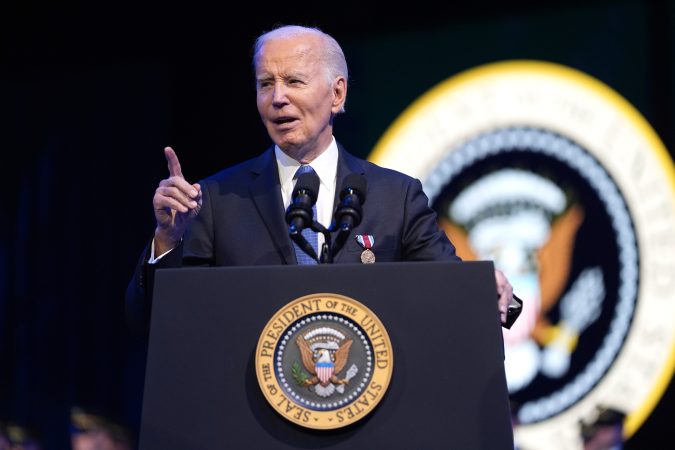
    Newly released audio tapes, disclosed by a conservative activist group, appear to show Joe Biden sharing classified information with a biographer and sometimes claiming memory lapses during interviews that occurred before his election to the presidency in 2020.

    About three hours of audio and 117 pages of transcripts — with many redactions — were released by the Oversight Project, an arm of the Heritage Foundation, after Biden lost a prolonged legal fight to keep his conversations with his memoir ghostwriter, Mark Lewis Zwonitzer, private.

    “They didn’t even know I had this,” Biden told Zwonitzer in October 2016, near the end of his second term as Barack Obama’s vice president, as he talked about sensitive foreign policy matters handled by the administration.

    In one 2017 session, after Biden had left the West Wing and before he’d launched his own presidential campaign, he appeared to admit retaining classified information from his time as vice president.

    “I just found all the classified stuff downstairs,” Biden said. “I wrote the President a handwritten 40-page memorandum arguing against deploying additional troops to Iraq — I mean, to Afghanistan on the grounds that it wouldn’t matter, that the day we left would be like the day before we arrived.”

    The potentially classified information itself is redacted in both the audio and transcripts that the Oversight Project released.

    The right-wing group first sued to obtain the tapes after Special Counsel Robert Hur decided in 2024 not to charge Biden for how he handled classified information. Biden cooperated with Hur’s inquiry and told the special prosecutor during his presidency that he did not intentionally mishandle any classified material.

    Hur, who obtained the tapes as part of his inquiry, said in announcing his decision that he believed a jury would find Biden a sympathetic figure because of his age and what Hur described as a “poor memory” — a statement that became a flashpoint in public debate about Biden’s age and fitness for the presidency.

    Biden was 74 when the interviews began. He was 81 and seeking reelection when Hur released his report in early 2024, though Biden later ended his campaign for a second term after a halting debate performance against Republican Donald Trump.

    The tapes contain instances of Biden being unable to recall some dates and details of topics he was discussing with Zwonitzer. Biden also showed a command of many details, recalling meetings and details of conversations referenced in the notes he shared.

    At the Oversight Project, vice president of litigation Jeff Clark insisted the tapes prove Biden’s decline.

    “The tapes have always belonged to the American People, the Oversight Project just delivered them to their rightful owner,” Clark said in a statement. “The knowledge of his deterioration was well-established.”

    A Biden spokesperson blasted the release as politically motivated.

    “President Biden’s conversations for a book a decade ago that discussed his late son are private, and were provided to the Department of Justice on the express condition they stay that way,” said TJ Ducklo. “Reversing course and making them public is just the latest example of this Administration weaponizing the DOJ for political retribution.”

    Biden initially sued to stop the Department of Justice from releasing the material, claiming the conversations were private. But he dropped his suit after a divided panel of appeals court judges rejected his bid. Biden could have petitioned the Supreme Court to intervene or asked for a rehearing by the full U.S. Court of Appeals for the District of Columbia Circuit.

    In a 2-1 ruling, a three-judge panel from the circuit court found a “substantial” public interest in disclosing the material.