Category: Entertainment Wires

  • As defaults on student loans surge, millions are trying to get their lives back on track

    As defaults on student loans surge, millions are trying to get their lives back on track

    Life after college did not go as Ashley Dreahn planned.

    After starting out as a teacher, she went back to school — and took out more loans — in hopes of landing a higher-paying job in the chemical processing industry. It never materialized, and then came Hurricane Harvey, a job loss, and a car breakdown. By 2022, she was so broke she filed for bankruptcy.

    She found work at a Texas prison and was rebuilding her life, saving up for weight-loss surgery, when this spring she heard from a credit-monitoring service. The student loans she thought had been discharged in bankruptcy had ballooned to $94,298 with interest, and she had to start making payments. She was in default.

    “I absolutely broke down,” said Dreahn, 40.

    Across the country, the number of borrowers with defaulted student loans jumped by more than 4.2 million from April 2025 to March 2026, according to an Associated Press analysis. The surge includes many who went off track in 2024, when loan payments started coming due again after a pandemic-era freeze.

    Hundreds of thousands more are months behind on payments, and another surge in defaults could be on the way. Millions of borrowers are facing higher monthly payments as the government dismantles its most affordable income-driven repayment option, the SAVE plan, one of several changes the Education Department says are intended to simplify a fragmented system.

    Borrowers enter default after missing payments for nine months, and the consequences can upend lives. Default hurts credit ratings and can lead to the debt being sent to collections.

    “I am seeing despair and outrage and despondency and just a very wide mix of pretty extreme emotions, the likes of which I have not seen before,” said Alan Collinge, the founder of Student Loan Justice and the author of The Student Loan Scam.

    The federal government can garnish wages and Social Security payments from borrowers in default, but the Trump administration in January walked back plans to begin collections on their loans. A Moody’s Analytics report this spring said garnishments are likely to begin within the next year, warning of “an additional headwind in an increasingly fragile economy.”

    Taking out student loans was all too easy

    Dreahn enrolled at Texas Woman’s University in 2004 as the first in her family to go to college. She cobbled together jobs, babysitting and working at a call center and an automotive shop. But she still needed to borrow heavily.

    “There was one point where they were like, ‘If you don’t come up with the money, we’re dropping you from your classes,’” said Dreahn, who earned a degree in history with an emphasis on education and social studies. “And it was, ‘OK, what do I need to sign?’”

    She said no one explained what taking out loans truly meant.

    “You just kind of trust these advisers and trust these financial aid people that this is what you’re supposed to do,” Dreahn said.

    While teaching, she took out more student loans to earn a pair of associate degrees from a public community college in Texas. She received a job offer at a chemical refinery, but it was rescinded because she was over the weight limit for the company’s safety equipment.

    She filed for bankruptcy in 2022 in hopes that it would “erase everything.” She checked her online credit report afterward. For each student loan, the report read: “Nice! You’ve paid off 100% of this loan.” The message is sometimes shared with borrowers when student loans are consolidated or transferred to new companies — even when the person still owes money.

    Student loans are rarely discharged in bankruptcy. Borrowers must prove the loans pose an “undue hardship.” The process is cumbersome, and few qualify, advocates say.

    But Dreahn didn’t know any of that.

    “I was so relieved, like, ‘OK, now I can start life over,’” she said. “‘I can save some money.’”

    She started working last year as a supervisor at a prison in Huntsville, about 70 miles north of Houston, and was living in an RV park to save money when she received the default notice.

    “I just feel like, where is that light at the end of the tunnel now that I thought I had?” Dreahn said.

    The wave of defaults started after pandemic

    As a pandemic relief measure, the federal government allowed borrowers to suspend student loan payments until 2023, and President Joe Biden’s administration then provided a one-year grace period. That ended in fall 2024, allowing loans to enter into default after nine months of missed payments.

    A surge in defaults followed, and today around 9.5 million borrowers — over 1 in 5 — are in default, including those whose loans were well past due before the pandemic, according to the AP analysis. The previous record for borrowers in default had been 8 million in December 2019.

    There are also 870,000 borrowers with loans between 181 and 270 days late, on the edge of default, according to federal data.

    Meanwhile, 33% of borrowers at for-profit schools nationally were at least 90 days late on payments, more than twice the rate of borrowers at public schools, additional federal data shows.

    Most private colleges that offer traditional degrees are nonprofit. For-profit colleges generally offer career-focused degrees and credentials and often serve students of color. Career Education Colleges and Universities, an association of private trade schools, has created a task force to reach out to students about the importance of loan repayment, said Jason Altmire, the group’s president and CEO.

    “We take it seriously,” he said.

    Borrowers struggle to make sense of changes

    Some borrowers are so overwhelmed by their debt and changes to the federal student loan system that they’ve stopped paying.

    Barbara Howaniec, a 63-year-old psychiatric nurse-practitioner from Auburn, Maine, already has defaulted. She borrowed around $62,000 for her master’s degree from New York University, graduating in 2001. But after two decades of payments, she still owes around $67,000 with interest. She had put her loans in deferment for short stints while her children were young, unaware that interest would continue to accumulate.

    Howaniec had hoped to have her loan forgiven after 25 years under an income-based repayment plan. But then came a letter saying the repayment schedule had changed and she owed 355 more payments. By the time she finished paying, she would be 91.

    She made call after call, but she said the advice varied by whoever picked up the phone. Last year, as she paid for her own children’s college, she quit paying her own loans.

    “I had already paid what I had borrowed. I’m like, no, I’m not going to pay anymore,” Howaniec said. As a self-employed person, she said she doesn’t have to worry about the government garnishing her wages.

    Shannon Khan, a 46-year-old mental health worker from Webster, Texas, hasn’t paid her student loan for two months as she investigates her options.

    She did not have to pay anything while enrolled in SAVE, but she was moved last fall to another income-driven repayment plan, with a required monthly payment of $847. She thought she was close to having her remaining balance forgiven, but she recently learned her payment will jump to $1,683 a month — an amount her loan servicer said she will need to pay for nearly a decade.

    She has spent hours on the phone trying to get answers.

    “It’s just a bunch of chaos and confusion,” Khan said.

    Some hunt pathways out of default

    Dreahn had never been entirely clear how much she was borrowing when she was a student. As an adult, the process remained opaque. She had multiple loans transferred to different loan servicers. And then her loans were deferred when she went back to school.

    “It’s a huge, huge mess,” Dreahn said. “It’s almost like it just gets sold off and you’re just lost in the system somewhere until you figure out that, ‘Oh, they want $700 this month. What?’”

    Now in default, she hopes she might one day qualify for Public Service Loan Forgiveness. It requires borrowers to make 10 years of payments while working at a nonprofit or for the government.

    “I’m trying to figure out: One, how I’m going to make it work. And two, what do I give up?” Dreahn said. ”How do I manage buying groceries as well as making sure the bills are covered and this payment never gets missed?”

    Lately, she thinks back on the chemical processing plant job she almost got.

    “That was a six-figure career that I lost due to my weight,” she said, her voice breaking. “The money that I’m trying to save now that was going to be for surgery is going to be paid to student loans instead.”

  • Cut the number of choices you make each day. Your brain will thank you

    Cut the number of choices you make each day. Your brain will thank you

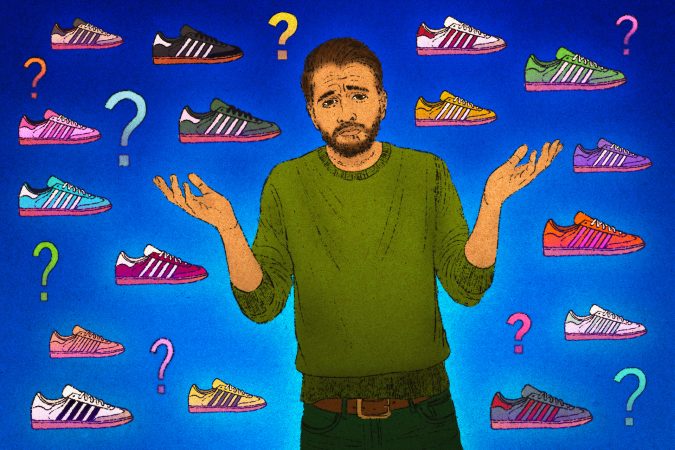
    Jeans that fit perfectly. The ideal Netflix show for a Tuesday night. Your one and only soulmate. Modern life promises that with enough options, you will happily find the best of everything.

    But behavioral scientists say the increasing flood of choices — whether it comes to shopping, social lives, or relationships — is doing the opposite.

    The idea that more choice is better is baked into Western culture, but research shows that having more options can make people anxious, indecisive and, paradoxically, less happy with what they pick, said Barry Schwartz, an emeritus psychology professor at Swarthmore University and author of The Paradox of Choice.

    “There have been hundreds of studies showing that there can be too much of a good thing,” Schwartz said.

    To minimize the mental noise, he said, limit the number of choices you make, and your brain will thank you for it.

    More is often more confusing

    Schwartz offered several examples of cases where more options left people worse off.

    In the case of Medicare Part D prescription drug plans, people in states with more choices were less likely to choose any of them, he said. The same goes for 401(k) investments. The more options a company had, the less likely employees were to sign up, even when the employer offered matching money.

    Less consequential choices are no different. Schwartz pointed to one often-cited study that showed shoppers at a gourmet grocery store bought more jars of artisanal jam when they were presented with six flavors rather than with a wider array of 24. In a follow-up study, students were more likely to complete an extra-credit assignment when they were given six topics to choose from instead of 30.

    Schwartz’s research expanded on those findings to learn the emotional responses to this phenomenon.

    “Instead of being liberated by all this choice, you’re paralyzed,” he said. “You can do anything, and you can’t figure out which of those many things to do.”

    People also often end up making worse decisions since more options suggest more potentially bad outcomes, he said. And once someone finally decides from all the possibilities, they may be less satisfied with even a good choice because they fear there was a better alternative.

    Schwartz said the satisfaction problem is especially acute for people whose aim is to get the best, whom psychologists call maximizers.

    “People who are maximizers especially suffer from the proliferation of options,” he said. “Only the best will do.”

    The tendency isn’t true for all people in all situations, Schwartz noted. Car buffs will gladly dive into the details of nearly unlimited choice when buying a new one.

    “But you don’t feel that way when it comes to buying jam,” he said.

    The brain doesn’t like making decisions

    Daniel Willingham, a psychology professor and neuroscience researcher at the University of Virginia, said the phenomenon occurs because the brain is designed to save people from having to think.

    Problem-solving requires more energy than relying on memory, a fact that has roots in evolutionary survival mode, Willingham said. When faced with a goal, whether it be an immediate need like responding to a threat or something longer term like finding shelter, the mind first searches for what’s worked before. The problem-solving part of the brain only kicks in afterward.

    “Another way to put it is that if you’re thinking, things are not going well,” he said.

    That explains why sometimes people move through parts of their day on autopilot, he said. Throughout the day, people are confronted with hundreds of situations where they could do something different, but they almost always take the same route to work.

    Schwartz said the proliferation of choices also has become tangled with identity in the social media age, where everyone can easily compare their choices to others.

    “When all you’ve got to choose from is Lee’s and Levi’s, nobody expects the jeans they buy to fit perfectly,” he said. “When there are 2,000 options, well, now, dammit, you do expect your jeans to fit perfectly.”

    Limit your choices and move on

    David Epstein said that after researching his book, Inside the Box: How Constraints Make Us Better, he began to shift away from his maximalist tendencies. Now, he limits his opportunities for making choices, such as when he bought 10 of the same well-fitting T-shirts in different colors.

    He was following the example of Herbert Simon, a psychologist and 1978 Nobel laureate in economics, who had three sets of clothes and ate nearly the same thing every day. Simon introduced the term “satisficing,” a combination of satisfying and sufficing that means setting good-enough criteria for decisions and moving on.

    Epstein sets satisficing rules for himself when shopping online by first focusing on the purpose of the purchase.

    “When I find one that does that, I’m buying it, instead of reading all the reviews and getting sucked into, ‘Well, this one has all these other features.’”

    Willingham and Schwartz suggested farming out some decisions. If you’re looking for a new phone, find a friend who is happy with theirs and buy that one.

    For larger decisions like financial planning, you’ll be happier if you rely on someone else’s professional expertise, Willingham said.

    “If you’re thinking, ‘Well, I’m a clever guy, I can figure that out,’ I think 9 times out of 10, you’re fooling yourself,” he said.

    Schwartz acknowledged that for people who have trouble making decisions, changing is difficult. But it’s worth it.

    “What happens over time is you find it easier to make decisions, you end up more satisfied with the decisions you make, and all of a sudden, you’ve got an extra two hours in every day,” he said.

  • JD and Usha Vance welcome a baby boy, the first child born to a sitting VP in more than 150 years

    JD and Usha Vance welcome a baby boy, the first child born to a sitting VP in more than 150 years

    WASHINGTON — Vice President JD Vance and his wife, second lady Usha Vance, on Sunday announced the birth of their fourth child, the first born to a sitting vice president in more than 150 years.

    Born Sunday, Alec Neel Vance joins older siblings Ewan, 9; Vivek, 6; and Mirabel, 4.

    Vance announced the birth on social media with a statement signed by him and his wife.

    “We are excited to announce that our baby boy, Alec Neel Vance, was born this morning. Usha and the baby are happy and healthy, and our kids are overjoyed to meet their little brother,” the statement said.

    They thanked doctors and staff at the Walter Reed National Military Medical Center and with the White House medical team.

    The Republican vice president’s growing family is in keeping with his passionate advocacy for Americans to have more children. He has also suggested that the 2025 killing of conservative activist Charlie Kirk, who was his friend, factored into the decision to have another child.

    Vance, a former U.S. Marine, repeatedly expressed alarm about declining birth rates in America as he launched his political career in 2021 with a bid for a U.S. Senate seat from Ohio. As vice president, he said in Washington at the 2025 March for Life anti-abortion rally, “I want more babies in the United States of America.”

    The vice president, who’s 41, has been accompanied on overseas trips by Usha Vance, 40, and their children, with the kids often pajama-clad as they board Air Force Two for the overnight flights.

    Usha Vance, the daughter of immigrants from India, had already been the subject of some public fascination because of her husband. Her pregnancy, which was announced in January, amplified that spotlight since it is rare for occupants of the United States’ highest public offices to add to their families while serving.

    The last time a sitting vice president became a new father was in the 1800s.

    Schuyler Colfax and his second wife, Ellen Wade, had a son, Schuyler Colfax III, in 1870 when Colfax was serving as vice president, according to the White House Historical Association. Decades before that, John C. Calhoun and his wife, Floride Bonneau, had a son, William, in 1829 when Calhoun was vice president, the association said.

    The newest addition to Vance’s family was part of a recent mini baby boom among top members of President Donald Trump’s administration. White House deputy chief of staff Stephen Miller’s wife, Katie Miller, recently gave birth to the couple’s fourth child, and White House press secretary Karoline Leavitt had her second child with her husband, Nicholas Riccio, in May.

    Usha Vance recently came under scrutiny after the New York Times’ fashion critic called attention to the stomach-hugging, coral maternity dress she wore for a Father’s Day episode of Storytime with the Second Lady, a video podcast she launched during the pregnancy.

    The Times wrote that the attention that Vance, Miller, and Leavitt had put on their pregnancies offered “an image of idealized womanhood that gives literal shape to the pronatalist movement,” which encourages couples to have as many children as possible to counter declining birth rates.

    The second lady responded on social media, writing, “Now that we know the political significance of my $8.75 coral maternity dress from Old Navy, can’t wait to hear what the New York Times has to say about my elastic-waistband pants and compression socks! In the meantime, enjoy my pregnancy fashion (or lack thereof) and a good story with your kids on Storytime with the Second Lady.” She later shared the receipt for the dress, and her husband applauded her frugality.

    “She bought a $50 dress for $8.75. America: meet your next director of the federal budget!” the vice president wrote on social media.

    JD Vance has said it was Kirk’s widow, Erika Kirk, telling them that she wished she’d had more than two children with her husband before he was assassinated last September in Utah that led him and the second lady to decide to grow their family. Usha Vance, a former attorney who once clerked for Supreme Court Chief Justice John Roberts, concurred — in part.

    “It was very powerful, what (Erika) said about her own family, and certainly very moving to both of us. I think I had already started to open my mind to the possibility,” Usha Vance said during a joint interview with her husband for CBS Sunday Morning that aired in June. “I wouldn’t say that this was, for me in any way, the decisive factor. But it came in the middle of a conversation that we were already having.”

  • Mount Olympus, home of the ancient Greek gods, vies for World Heritage status

    Mount Olympus, home of the ancient Greek gods, vies for World Heritage status

    LITOCHORO, Greece — Snow-capped for much of the year, Mount Olympus, mythological home of ancient Greece’s Olympian gods, has captured the imagination through the millennia. The mountain rises to 9,573 feet from a base practically at sea level, and the ancient Greeks believed the throne of Zeus, king of the gods, stood on the highest of its craggy, often mist-shrouded peaks.

    Now, modern Greeks hope their tallest mountain will be inducted into UNESCO’s World Heritage List as a mixed cultural and natural site. The nomination was set to be discussed as the World Heritage Committee meets in Busan, South Korea, from July 19 through July 29.

    “Olympus is our life. It is the place we grew up in,” said Evagelos Geroliolios, mayor of Dion-Olympus, based in Litochoro, the mountain’s main town. “It is the place we see every day, but at the same time, it is also a place which carries with it myth, history, biodiversity, extraordinary beauty, and a very great cultural weight.”

    Seat of the gods

    Few locations are as central to ancient Greek mythology as Mount Olympus. It was here that Zeus was said to have established his court after overthrowing his father, Cronus, in a 10-year war that ended the reign of the Titans.

    Interest in Olympus may receive another boost with the theatrical release of Christopher Nolan’s The Odyssey, a new adaptation of Homer’s epic, in which the mountain serves as the home of Zeus and the Olympian gods who influence Odysseus’ journey.

    On one of Olympus’ lower peaks, excavations have uncovered an open-air sanctuary, with the oldest finds dating to the Hellenistic period, which ran from 323 B.C. to 30 B.C. According to Greece’s original UNESCO nomination, the sanctuary is believed to have been one mentioned by the ancient philosopher and historian Plutarch, who in the 2nd century wrote of processions to one of Olympus’ peaks for animal sacrifices to Zeus.

    The mountain retained religious significance into the Christian era. A chapel on the peak of Prophet Elias, at 9,196 feet, is believed to be the highest altitude chapel in the Christian Orthodox world. The mountain’s Enipeas Gorge holds the remains of a monastery founded in 1542, while a roughly 20-minute walk from there leads to the Holy Cave of St. Dionysios, a chapel built into a cave from where a small spring flows, believed to carry holy water.

    The mountain’s slopes, which reach practically to the sea, also host a wealth of flora and fauna, including endemic species. It is this blending of culture, myth, natural beauty, and biodiversity that locals hope will see their mountain declared a World Heritage site.

    “It is a place we love. It is a place that many people from all over the world visit to see, to live, to experience. We want to protect it,” Geroliolios said. Its inclusion on UNESCO’s list would be “something very big that goes beyond not just local boundaries, but national boundaries. It is something that concerns the entire world. It is very important.”

    Inclusion in World Heritage List far from certain

    Greece began the process to have Mount Olympus recognized as a World Heritage site in 2014, inscribing it on its Tentative List — the mandatory first step in any nomination. The Tentative List is where countries include sites they can then formally nominate over the next five to 10 years.

    The nomination process includes a preliminary assessment followed by submission of a full nomination file, which is then evaluated over 14 months by advisory bodies, including the International Council on Monuments and Sites and the International Union for Conservation of Nature.

    Recommendations by the advisory bodies are then discussed during the World Heritage Committee’s annual meeting, where representatives of 21 countries vote on nominated sites.

    Greece’s Mount Olympus nomination is far from certain. A draft of the Busan meeting’s agenda indicates the committee will refer the nomination back to Greece and request further details.

    Still, locals hope the mountain’s cultural and natural wonders will secure it a place and will play a role in gaining more protection for the mountain.

    The need for protection

    The mayor, Geroliolios, said inclusion on the World Heritage list “places some greater obligations on our part to protect this environment.”

    Environmental protection is also foremost in the mind of mountain guide Babis Marinidis, president of the Alpine Club of Litochoro.

    Including Olympus on UNESCO’s World Heritage list would likely attract more people to the mountain and the surrounding area, Marinidis said. “How many people can this mountain, this ecosystem, bear?” he asked. Although much of Olympus was designated a national park decades ago and there are regulations in place, many are openly flouted, with Marinidis saying visitors regularly ignore “no swimming” or “no camping” signs.

    The ever-growing number of visitors had led local authorities to consider imposing entrance fees and registering visitor numbers. “I used to be against that,” Marinidis said. “But now with so many people, I believe some limit must be imposed.”

    Mount Olympus has claimed many lives

    The mythological home of the gods attracts hikers and mountaineers from across the world. While technical climbing experience isn’t mandatory to reach the summit, the mountain is also not to be trifled with.

    With its combination of changeable weather and treacherous terrain, it has claimed many lives. The most recent fatality was on July 11, when a 64-year-old Greek hiker died after collapsing on a trail. In May, rescue crews found the body of a 25-year-old Spanish man days after he went missing while attempting to reach the summit in the snow.

    “You need to be careful,” and safety measures must always be kept in mind, said 32-year-old hiker Triantafyllos Giannospyros, who was visiting the mountain for the first time. “But with care and with good organization, it isn’t something you should be afraid of.”

    Stavroula Vourou, who runs a hotel in Litochoro, the town from where many hikers set off, echoed his sentiment.

    “Everyone sets off to go up and conquer a mountain that needs respect,” she said. “You respect this mountain, it respects you too.”

  • The world wants more high-protein products, but there’s not enough whey to go around

    The world wants more high-protein products, but there’s not enough whey to go around

    Global consumers want more protein in every bite, but the dairy industry is struggling to give it to them.

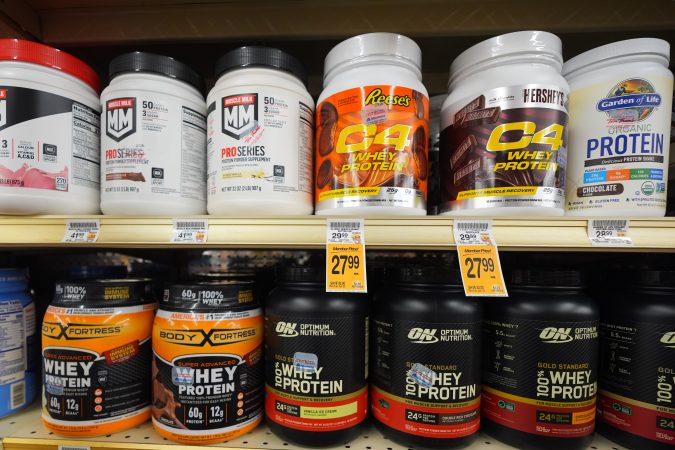
    Athletes and older adults have long used smoothies and shakes blended with whey protein concentrate — a powdered byproduct of cheese-making — to build or maintain muscle. More recently, food companies have sprinkled it into everything from breakfast cereals, Pop-Tarts, and potato chips to bagels, tortillas, and Starbucks drinks to meet growing consumer demand.

    The average U.S. supermarket now has 38,708 products advertising their protein content, according to NielsenIQ, a market research company. But the eagerness to appeal to ingredient-focused shoppers is causing shortages of food-grade whey protein and pushing prices to new records.

    “Demand is very firm and seemingly outpacing supply for right now,” said Kathleen Wolfley, vice president of Ever.Ag Insights, a data provider and consulting company for the agriculture industry.

    Wholesale prices for whey protein began rising in 2024, and the pace accelerated last year and so far this year, Wolfley said.

    Whey protein concentrate with 80% protein — the type often used by food makers and supplement companies as a booster — is trading on the dairy commodities market at more than $13 per pound in the U.S., up 250% from a year ago, according to Ever.Ag. Whey protein isolate, a more refined version that contains at least 90% protein, is 150% more expensive than last year, the company said.

    That’s raising prices for consumers. U.S. prices for whey protein concentrate powder have increased by around 15% over the past year, while more premium whey isolate powder has seen steeper gains, according to Datasembly, a price-tracking company.

    It’s a similar story in Europe. In late May, 80% whey protein concentrate hit a record average of 26,450 euros ($30,518) per metric ton, a price more than double from less than a year earlier, according to DCA Market Intelligence, a Netherlands-based commodity pricing firm.

    Here’s what’s happening with whey protein and when strained supplies might be alleviated.

    Curds and whey

    Milk contains two proteins: casein and whey. During the cheese-making process, the casein — which forms solid curds — is separated from the liquid whey, which is dried to form a powder. Every pound of cheese yields nine pounds of whey, according to the U.S. Department of Agriculture.

    U.S. milk consumption has fallen for decades as Americans shifted to beverages like sodas. But the appetite for cheese remained strong, Wolfley said. A nation of cheese-eaters generated a lot of whey protein, and some of the excess used to be exported to China and other countries.

    The domestic hunger for high-protein snacks and meals is now keeping more whey protein in the U.S. for use as a food additive or a nutritional supplement. U.S. exports of 80% whey protein concentrate and whey protein isolate to China fell 47% from January through April compared to the same four-month period a year ago, according to Vesper, an Amsterdam-based company that tracks commodity prices.

    “There simply isn’t enough product for the U.S. customer, and exports have therefore been paused as much as possible,” said Jasper Endlich, a Vesper dairy analyst.

    China is seeking more whey protein from Europe, which also is seeing shortages thanks to reduced U.S. exports, Endlich said.

    Whey and weight loss

    Use of GLP-1 weight-loss drugs is one of the factors that has supercharged demand for whey protein concentrate, Wolfley said.

    Obesity drugs like Wegovy and Zepbound are designed to suppress the appetites of people taking them. The foods they do eat need to be nutritionally dense, experts say. GLP-1 users often are advised to consume enough protein to help them feel full for longer and to retain muscle mass as they lose weight.

    Around 6% of obese and diabetic patients in the U.S. and 2% of obese and diabetic patients worldwide were using GLP-1 drugs last year, according to an estimate by the investment bank Morgan Stanley. Some estimates have put GLP-1 use as high as 12% of the U.S. adult population, since not everyone on GLP-1 drugs is obese or diabetic.

    Food and nutrition companies are creating added-protein products to attract those consumers as well as people who think drinking protein shakes to replace meals will help them lose weight.

    Pricey protein

    Tight supplies and higher costs have caused some manufacturers to increase the prices consumers pay for protein powder or protein-enriched products.

    Now Foods, an Illinois-based maker of health foods and nutritional supplements, said tubs of whey protein powder are consistently the biggest seller in its sports nutrition category. But after two years of paying more for raw ingredients, the company raised the price of its own whey protein products earlier this year.

    Bryan Morin, the sports brand manager at Now, said the company doesn’t anticipate further price increases on whey protein powder this year. It’s trying to absorb some of its increased costs by cutting back on discounts. It’s also considering expanding its portfolio to include products made with milk protein concentrate, a powder that contains less whey and is cheaper.

    “From our perspective, broader market dynamics continue to indicate a tight and evolving protein landscape,” Morin said.

    More on the whey

    Wolfley, at Ever.Ag, said manufacturers are investing in whey protein production, which should eventually improve supplies. But the relief won’t be immediate.

    Glanbia, an Irish nutrition company, said in November that it planned to increase its whey protein isolate production in New Mexico, but the additional capacity won’t be in place until 2027. In February, Canadian dairy company Agropur said it intended to increase whey protein manufacturing at plants in Quebec, Nova Scotia, South Dakota, and Wisconsin by 2029.

    In the meantime, higher prices could cause some consumers to stop buying whey protein powders, especially at a time when groceries are getting more expensive overall, Wolfley said. Reduced retail demand might reduce shortages at the wholesale level.

    “The supply-demand dynamics could start to improve, but I don’t know if that’s a tomorrow dynamic or within a year. Some of these things are going to take time,” Wolfley said.

  • Man charged with hate crimes after confrontation with ‘Today’ show’s Melvin at NBC studio

    Man charged with hate crimes after confrontation with ‘Today’ show’s Melvin at NBC studio

    NEW YORK — A 40-year-old New York man faces hate crime charges following a confrontation with Today show host Craig Melvin at NBC’s studio in Manhattan.

    The man was arrested Thursday morning inside 30 Rockefeller Center in Midtown by an officer responding to reports of a disorderly individual inside the building, police said Friday.

    NBC News says in a statement that an individual approached Melvin after entering an unauthorized area in a vestibule near Studio 1A. Melvin notified security, who held the man until police arrived, according to NBC.

    No altercation occurred and no injuries were reported. NBC did not say how the man gained access to the area.

    “We are reviewing the incident and our security protocols and remain committed to providing a safe and secure environment for everyone who works at and visits our studios,” the network said in a statement.

    The man has been charged with burglary, menacing, and criminal trespass as hate crimes, as well as harassment. It was not clear Friday if has appeared in court or if he has an attorney.

    Police did not say what led to the hate crime enhancements on the charges. Police records show a court date has been scheduled for Wednesday.

    Melvin, who is Black, discussed the incident on-air Friday morning.

    “Unfortunately, an intruder made his way into an unauthorized area here at Studio 1A,” Melvin said. “Thankfully, he was apprehended quickly. He was placed under arrest. We are just very happy that everyone is safe.”

    Melvin also posted about the incident on Instagram.

    “Hey everyone. I’ve heard from so many of you over the last few hours,” he wrote on Thursday. “I’m doing just fine. Thanks for reaching out.”

    Longtime Today show meteorologist Al Roker also took to social media to thank everyone reaching out to check on Melvin.

    “We are both okay,” Roker posted on Instagram. “It’s moments like these that serve to pull us together. You all, like Craig, said ‘You come after one of us, you come after all of us.’”

    Melvin and Roker are among a relatively small group of prominent Black journalists and anchors with regular, highly visible roles on national broadcast network news programs.

    Melvin joined NBC and MSNBC in 2011, according to the Today show’s website. He replaced Hoda Kotb in 2025 as co-host of the 7 a.m. to 9 a.m. hours of Today. He had been hosting the show’s third hour while serving as the news anchor during the first two hours.

    Roker also is a feature anchor on Today and co-host of the show’s third hour. He joined the show in 1996. Roker also co-hosted the Wake Up with Al morning show on the Weather Channel from 2009 to 2015.

  • Brenda Fricker, Irish actor who won Oscar for ‘My Left Foot,’ dies at 81

    Brenda Fricker, Irish actor who won Oscar for ‘My Left Foot,’ dies at 81

    LONDON — Brenda Fricker, who became the first Irish woman to win an Academy Award for her role as Bridget Fagan Brown in the 1989 film My Left Foot, has died. She was 81.

    The Irish character actor died Thursday night in Dublin after a period of ill health, her agent, Phil Belfield said in a statement.

    Ms. Fricker won the Academy Award in 1990 for best supporting actress for her portrayal of the determined mother of Christy Brown, a writer and painter who was born with cerebral palsy and could control only his left foot. Daniel Day-Lewis, who played Brown, won the award for best actor.

    “She was just an amazing actress, amazing character, forceful personality, great writer,” the movie’s director, Jim Sheridan, told Irish national broadcaster RTE. “She could be obsessive — in everything she did — life, work, love. But no real malice or anything, she was just a very strong personality and a good laugh.”

    Ms. Fricker said she was stunned when she won the Oscar, never thinking it was possible. In her acceptance speech, she thanked Brown “just for being alive” and paid tribute to his mother, saying “anybody who gives birth 22 times deserves one of these.”

    She later spoke of how the award doomed her to being typecast to forever playing roles as mothers. Later in life, she said she used the weighty statuette to prop open her bathroom door.

    Ms. Fricker, who appeared in more than 90 films and television shows between 1964 and 2024, was known for her role as the “pigeon lady” in the 1992 film Home Alone 2: Lost in New York, in which she played a homeless woman who befriended Macaulay Culkin’s character in New York’s Central Park.

    She also featured in the original cast of the BBC medical drama Casualty and appeared alongside Cate Blanchett in Veronica Guerin,” the story of an Irish investigative journalist who was murdered in 1996.

    “We will never see her like again and the world is lesser for the lack of her,’’ Belfield said. “I was honored to know, love, and work with her and she will always have a place in my heart and in the heart of so many film and TV fans the world over.”

    Born in Dublin in 1945, Ms. Fricker received the city’s highest honor earlier this year when she was awarded the Freedom of the City.

    In her autobiography She Died Young: A Life in Fragments, Ms. Fricker describes both happy childhood escapades with her sister Grania and her struggles to overcome sexual violence and mental health issues, which caused her to be institutionalized several times. Published in September 2025, the book appeared on the Irish Sunday Times bestseller list.

    Simon Harris, Ireland’s deputy prime minister, said the country had lost a national treasure.

    “She truly was among the greatest exports this country has ever produced and an ambassador for Irish talent on the world stage,’’ he said. ”Quite simply, we will never see the like of her ever again.

    Ms. Fricker was married to director Barry Davies from 1979 until they divorced in 1988. She became pregnant several times but suffered miscarriages, which led to severe depression much of her life.

  • Biden will publish ‘Promise Me, America’ memoir after the November midterm elections

    NEW YORK — Former President Joe Biden will publish a memoir, Promise Me, America, which he says will touch upon everything from the economy to his decision to drop his bid for reelection.

    The memoir is scheduled to come out Nov. 17, publisher Little, Brown and Company told the Associated Press. The timing of the book — two weeks after midterm elections in which Democrats seek to regain control of Congress — could raise concerns within Biden’s party by putting him back into the spotlight.

    Democrats remain divided on Biden’s legacy, with many blaming his ill-fated determination to seek a second term for Republican President Donald Trump’s return to the White House. Leaders hope to keep the fall campaign focused on Trump and his record, and any leaks or promotional efforts before votes are cast could draw frustration.

    “Promise Me, America is about the challenges we faced as a nation. It’s about the decisions I made and why I made them,” Biden said in a video statement accompanying Wednesday’s announcement. “It’s about why I chose to run for reelection and why I chose to step aside.”

    This book cover image released by Little, Brown and Co. shows “Promise Me, America” by Joe Biden.Uncredited

    Reports of Biden’s book have circulated for more than a year, and the former president himself has referred to it during public remarks, appearing to suggest it would be released before November’s election.

    Biden, who will turn 84 three days after the publication of Promise Me, America, has long presented himself as an upholder of standards and traditions; presidential memoirs are one of them. With a handful of exceptions, modern presidents since Harry Truman in the 1950s have published books about their White House years. Like virtually all of his predecessors, Biden did not work on the book alone but was helped by a “small editorial team,” according to the publisher. Little, Brown declined to release financial details for Promise Me, America, although presidents have usually reached deals worth at least seven figures.

    The book’s title echoes a 2017 memoir by Biden, Promise Me, Dad, which centered on the death of his son, Beau Biden.

    Vowing as a candidate to “restore the soul” of his country, Biden was sworn into office in the midst of the COVID-19 pandemic and in the aftermath of the Jan. 6, 2021, attack on the U.S. Capitol by Trump supporters seeking to stop his certification as president. Biden’s term was defined by a wide range of conflicts and achievements, from his handling of wars in Ukraine and the Middle East to the passage of ambitious infrastructure and economic aid bills. But many readers will likely want to know more about his health while president, including the disastrous debate in June 2024 against Trump that led to his giving up his reelection bid. Then-Vice President Kamala Harris, who ran instead, lost decisively to Trump.

    Former first lady Jill Biden wrote in her own book that her husband seemed so weak and disoriented during the debate that she feared he was having a stroke. In View from the East Wing, published in June, she noted that the White House had initially said he was suffering from a cold.

    “The biggest lesson for us, I think, was that if you don’t explain something well enough then the question won’t go away,” she wrote. “There was never a satisfying enough explanation offered for Joe’s debate performance, and a lot of people never got over it.”

    Biden was the oldest man to serve as president and his health was a source of speculation for much of his term; Biden and his White House advisers have faced intense criticism from Democrats and Republicans for allegedly concealing the extent of his problems. A notable book release from 2025, Jake Tapper’s and Alex Thompson’s Original Sin, was subtitled “President Biden’s Decline, Its Cover-Up, and His Disastrous Choice to Run Again.”

    That year, Biden announced he had been diagnosed with prostate cancer.

    Biden’s previous books also include Promises to Keep, a campaign work published to boost his run for president in 2008, when Barack Obama was the eventual nominee and Biden his running mate. Promise Me, America comes out during a year when nonfiction sales have declined and few political books have caught on, although recent bestsellers have included Vice President JD Vance’s Communion and an inside account of Trump’s second term, by New York Times reporters Maggie Haberman and Jonathan Swan, Regime Change.

    A Little, Brown spokesperson said that Biden plans to tour on behalf of the book and give interviews. In his video announcement, Biden said that many people had been asking him how he was doing.

    “I’ve been spending a lot of time with my family. I’m dealing with a cancer diagnosis, been getting treatment, and it’s going really well,” he said. “I want to thank all those who have offered their prayers and support and well-wishes. It’s meant the world to me and to Jill.”

  • U.S. airlines are redesigning travel around their highest-paying passengers

    U.S. airlines are redesigning travel around their highest-paying passengers

    They may arrive at the same destination, but two passengers on the same flight can have strikingly different travel experiences.

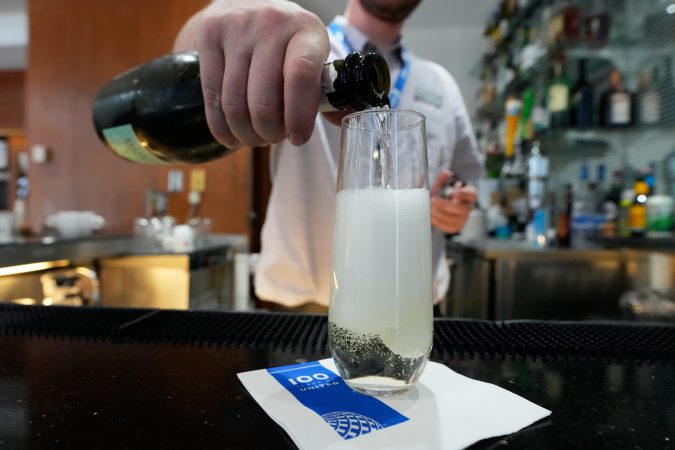
    One traveler breezes through a priority security lane and heads straight to an invite-only lounge for craft cocktails and a chef-prepared meal before boarding early. A flight attendant offering a glass of champagne and a warm hand towel welcomes the passenger to a spacious seat at the front of the plane.

    The other traveler stands in a line at every step — security screening, a café selling $16 sandwiches, a crowded gate — then boards with one of the final groups, hoping there’s still room for a carry-on in the overhead bin before folding into a cramped middle seat. After the cabin lights dim, sleep comes in fragments, and a travel pillow does little to ease a stiff neck.

    The contrasting journeys are no accident. Since the COVID-19 pandemic, the largest U.S. airlines have pulled out all the stops to court premium passengers who are willing to pay for comfort, convenience and exclusivity. Budget-conscious travelers may notice a widening gap between the back of the plane and up front as the carriers increasingly build their businesses around selling first-class, business-class, and premium-economy seats.

    “We can’t win by trying to provide the cheapest. We have to be able to win by providing the best,” Delta Air Lines CEO Ed Bastian said in a recent Fortune podcast interview.

    The strategy embraced by Delta and rivals American Airlines and United Airlines marks a notable evolution for an industry that spent decades making air travel more accessible. Now, the nation’s largest carriers are reconfiguring aircraft to expand premium seating, designing new fleets with larger premium cabins, and investing billions in amenities that extend the top-tier travel treatment beyond their jetliners.

    But United CEO Scott Kirby has pushed back on the idea that the industry has become solely focused on chasing big spenders. He said United’s premium investments are part of a broader strategy to boost the experience of every traveler, pointing to initiatives such as seatback entertainment and improvements to the airline’s mobile app.

    “We’re investing nose to tail for all customers,” Kirby said last month on financial firm Morgan Stanley’s Exceptional Leaders podcast.

    Premium cabins have become airlines’ most valuable real estate

    The premium playbook didn’t emerge overnight.

    Airlines used to fill empty first-class seats mainly by giving their most loyal frequent flyers free upgrades. Delta rewrote the rules in the early 2010s by using sophisticated pricing tools to offer more of those seats to coach passengers who were willing to pay a little more, said Henry Harteveldt, president of travel advisory firm Atmosphere Research Group.

    The strategy unlocked demand airlines hadn’t fully recognized, encouraging more travelers to trade up and laying the groundwork for today’s broader premium push.

    “Travelers could and would pay for noticeably more comfort, noticeably better service, noticeably more amenities, if the price was right,” Harteveldt said.

    Then came the pandemic. When business travel collapsed and Zoom replaced many corporate trips, airline analysts wondered whether carriers would once again have to lure travelers with cheap fares. Instead, eager leisure travelers proved willing to splurge on premium seats and perks, convincing airlines that demand extended well beyond the traditional business road warrior, Harteveldt said.

    That confidence has only grown. Premium demand is now a fixture of quarterly earnings calls, with airline executives regularly touting premium revenue as they compete for higher-spending travelers.

    “When you think about what’s different and what’s changed over the last 10 or 15 years, the premium products used to be loss leaders, and now they’re the highest-margin products,” former Delta president Glen Hauenstein said last summer. “That’s really the headline.”

    Analysts say premium cabins — a category that expanded with the introduction of premium economy seats featuring more legroom and amenities at a fraction of the cost — now generate a disproportionate share of airline revenue compared with the space they take up on commercial aircraft.

    On heavily trafficked transatlantic routes, business-class tickets can bring in nearly as much revenue as fares and fees paid by passengers in the much larger economy cabin, according to an analysis by consulting firm McKinsey & Co.

    Airlines are competing with chef-designed menus and high-end skin care

    The premiumization of air travel has become impossible to miss, even for travelers who only get a glimpse through an airport lounge door or while walking down an airplane aisle.

    Delta’s new first-class lounges resemble upscale restaurants, with open kitchens plating dishes such as hamachi crudo, cocktail bars serving made-to-order drinks, soundproof relaxation pods, and outdoor decks overlooking the tarmac.

    American has partnered with the James Beard Foundation to refresh its lounge menus with dishes like Thai basil and chili crispy shrimp. The airline also redesigned its newest Boeing 787-9 Dreamliners for long-haul international flights around individual business-class compartments with sliding privacy doors, lie-flat seats longer than a standard twin mattress and amenity kits that might include a celebrity facialist’s brand of sheet masks and under-eye patches.

    American Airlines’ premium in-flight seats on the airline’s Boeing 787-9 planes.Courtesy of American Airlines

    United’s newest business-class cubicles add oversized 27-inch entertainment screens, caviar service, luxury skincare products, and multicourse dining on long-haul international services. The airline said its revamped menus “feature flavors and dishes” inspired by cities across its network.

    “Marie Antoinette would feel very comfortable on any of the big three airlines these days,” said William J. McGee, senior fellow for aviation at the American Economic Liberties Project. “But instead of saying, ‘Let them eat cake’ in the back of the plane, she would say, ‘Let them eat Biscoffs.’”

    Air travel is getting more stratified as fuel costs increase fares

    The airlines’ pursuit of higher-paying passengers shows no loss of momentum. On board Delta’s next-generation Airbus A350-1000 aircraft arriving in 2027, nearly half the cabin will be devoted to premium seating. American has said it plans to expand premium cabins by 50% by the end of the decade.

    Yet the new era of luxury in the skies is unfolding alongside a very different reality for other U.S. travelers as broader inflationary pressures have added to the strain on household budgets.

    New York-based travel adviser Mary Auteri said more of her clients are “experiencing sticker shock” as fares and add-on fees have gotten more expensive since the Iran war broke out and pushed up the price of jet fuel, one of the largest operating costs for airlines.

    A group of friends in their 20s recently asked Auteri to price out flights to the sugar-white sand beaches of Punta Cana, a resort town in the Dominican Republic. After she sent them an itinerary, they said they had found what looked like the same flights on Google Flights for more than $100 less.

    But the cheaper fares were basic economy tickets that excluded seat assignments, checked bags, and flexibility to change plans. Once those costs were added back in, the trip no longer fit their budget.

    Baggage fees, seat-selection charges, and other add-on costs fall heaviest on economy travelers, McGee said. For wealthier travelers, those fees may amount to little more than an inconvenience. For budget-conscious travelers, they can determine whether a trip happens at all.

    “The idea that we’re all created equal? Not in the airlines’ eyes,” McGee said. “Not by any means.”

  • The Bayeux Tapestry is at the British Museum after a secret journey from France

    The Bayeux Tapestry is at the British Museum after a secret journey from France

    LONDON — After almost 1,000 years, the Bayeux Tapestry is back on English soil.

    In scenes like a heist movie in reverse, the priceless medieval artwork was spirited into the British Museum on Friday in the dead of night, after a high-tech, tight-security operation where any slip-up could have spelled disaster.

    On loan from its home in France, the tapestry will go on display at the London museum from Sept. 10 until July 2027. It’s a public homecoming for a vivid visual record of the 1066 Norman invasion, the last successful conquest of England.

    The tapestry’s arrival in London has been widely anticipated, but due to security concerns all details of when and how it would arrive were kept under wraps.

    “It feels extraordinary that after so much work and planning and care and thought that it’s actually happening,” British Museum director Nicholas Cullinan said as he waited outside the museum in the dark.

    “It’s the first time in 1,000 years that such an important piece of British — French too — history is going to be on these shores,” he said. “It’s incredibly exciting.”

    The 230-foot tapestry was folded accordion-style in a climate-controlled case that was placed inside a shock-absorbing cradle. That went into a truck that crossed from France on a vehicle shuttle train through the Channel Tunnel.

    After an 11-hour, 350-mile trip, escorted by police, the truck backed slowly into a loading bay at the museum, where workers gingerly eased the container, the size of a small car, to the ground. Museum staff and British and French diplomats who had been watching in hushed silence broke into applause.

    The priceless cargo will spend several days acclimatizing before it is carefully unpacked and unfolded for an exhibition that the museum expects to be one of the most popular in its 267-year history. Some 100,000 tickets were sold in their first day on sale this month.

    “It was like trying to get tickets to Glastonbury,” Cullinan said. “I don’t take for granted that people care that much about a 1,000-year-old embroidery. I think that’s an amazing thing.”

    Tapestry is a symbol of Anglo-French relations

    Stitched in wool thread on linen fabric — technically an embroidery, rather than a tapestry — the artwork depicts events leading up to the Battle of Hastings in October 1066, when William, Duke of Normandy, defeated King Harold’s Anglo-Saxon army. The invasion ended Saxon rule, made William the Conqueror the first Norman king of England and bound Britain and France more closely together.

    Historians believe the tapestry was commissioned by Bishop Odo of Bayeux, William’s half brother, and was probably sewn by women in England — possibly nuns — before being taken across the Channel. It has spent most of the last millennium in the town of Bayeux in northwest France, apart from two short periods at the Louvre in Paris.

    The tapestry symbolizes the sometimes fractious, intertwined histories of France and Britain, and securing the loan was a high-stakes diplomatic mission. It was announced during a state visit to the U.K. by French President Emmanuel Macron in July 2025.

    The loan coincides with renovations at the museum in Bayeux that houses it.

    In return, the British Museum will loan treasures from the Sutton Hoo hoard — artifacts from a 7th-century Anglo Saxon ship burial — and other items to museums in Normandy.

    Macron said in an article for Friday’s Times of London that “our two countries are not merely lending each other artworks: they are sharing the great narratives of European history’s origins.”

    Retired British diplomat Peter Ricketts, who helped cement the deal as the U.K.’s special envoy for the tapestry, said, “It’s an extraordinary mark of friendship and confidence in the U.K. to entrust this object to us for a year.”

    “Macron, when he offered us the tapestry, I think he understood that it would have far more impact in the U.K. than it does in France, because it’s more fundamental to our national story,” he said. “Everybody (in Britain) knows 1066.”

    It’s a vivid record of 11th-century life and death

    The tapestry features more than 620 people and 737 animals and tells its story in 58 scenes brimming with vivid and sometimes gory detail. There are scenes of hand-to-hand combat, mutilated bodies, and the unlucky Harold, felled by an arrow through his eye.

    “It has an emotional richness that is really difficult to get from written sources,” said Millie Horton-Insch, project curator for the British Museum exhibition. “It just brings people closer to this history than any other object can. It’s not the same as reading a text. You are looking at something that was handled by the people who lived through it and felt compelled to record these events in this way.”

    She said the document’s survival for 10 centuries despite myriad dangers — “moths, mice, mold, damp, fire” — is miraculous, and may be partly due to its humble materials.

    “It’s not really made of any blingy fabric,” she said. “It’s not gold, it’s not silver. There wasn’t the same temptation to cut it up and make it into vestments or repurpose it for anything.”

    Some French cultural figures opposed the loan, arguing that moving the tapestry was too risky. Cullinan said the expert teams went to great lengths to ensure its safety, including making two trial runs of the journey to show it would not cause the fragile item too much stress.

    “Such care has gone into it. I can’t think of a level of care for any other museum loan,” he said.

    He said he understands why there are concerns.

    “The tapestry arouses great interest and passion,” he said. “Which is a wonderful thing.”