Category: Entertainment Wires

  • Yayoi Kusama, who splashed polka dots across the art world, dies at 97 in Tokyo

    Yayoi Kusama, who splashed polka dots across the art world, dies at 97 in Tokyo

    TOKYO — Japanese artist Yayoi Kusama, who splashed her signature polka dots on paintings, sculptures and museum installations around the world, has died, her studio said Thursday. She was 97.

    Kusama died Aug. 14 at a hospital in Tokyo, Yayoi Kusama Studio said, without specifying the cause of death.

    “She continued to paint until her final days, never setting aside her brush, and continued exploration of forever love and eternal soul,” the studio’s statement said. “We will carry forward Kusama’s wishes and, through art, continue to bring hope and strength for the future to people around the world.”

    Kusama, one of Japan’s most respected contemporary artists, was widely exhibited around the world, including the Museum of Modern Art, the Whitney Museum of American Art in New York and the Museum Ludwig in Germany.

    Repetitive motifs were her trademark, in various shapes, resembling netting, swirls or worms, but most often dots, dancing proudly on her canvases, or as sparkling balls or dots of light in her installations, in all their vibrant psychedelic glory.

    “Polka dots are fabulous,” Kusama said in a 2012 interview with The Associated Press, appearing in her signature orange bob wig and polka dot attire.

    “I want to create a thousand paintings, maybe two thousand paintings, as many as I can draw,” she said in her childlike but matter-of-fact tone. “I will keep painting until I die.”

    Pursuing her vision of art over a lifetime

    Kusama insisted she drew the way she saw the world: covered with spots, part of the hallucinations she said she had from childhood. She was in and out of psychiatric institution for decades, although her sickness did not hold her back as she was one of the first Japanese women to go to New York to pursue her art, in 1957.

    Although soft-spoken and shy in her mannerisms, Kusama was always unabashedly bold in the assertion of her dotty vision, not only in sticking to the style for decades but also in making it accessible to the masses.

    In her later years, as the times caught up with her art, she enjoyed fame. She signed on with fashion brands like Louis Vuitton as well as other licensed products like teacups, T-shirts and key chains with her illustrations, including replicas of her likeness that were used in show windows and other marketing.

    In 2008, Christie’s auctioned her work for $5.8 million. In 2016, she won the most prestigious award Japan gives its artists, the Order of Culture.

    Upon receiving the award, she told reporters she was more determined than ever to pursue her art, stressing that the sincerity and devotion she had demonstrated in her personal life were crucial parts of her artistic legacy.

    “I feel there is little left in my life, but I am now still fighting to the death for my art,” she said. “I am giving all I have so that many people will continue to be interested in my art, even after I am dead.”

    Categories were not enough to represent her art

    Kusama was called pop, avant-garde, feminist, just to name some of the categories thrown at her, most of which Kusama brushed off as not quite representative of her art.

    She was born in a middle-class family but felt misunderstood, as her parents wanted her to simply get married. They wanted to buy her kimono, not paints and brushes. She knew she had to get away. She chose America.

    When she arrived in New York, the fad was “action painting,” characterized by dribbles, swooshes and smears, not dots. She suffered years of poverty and obscurity. But she kept painting dots.

    She put circles of paper on people’s bodies, and once a horse, in “happening” anti-war performances in the late 1960s, which got some people arrested for obscenity but helped get media attention for her art. While in New York, she befriended artists like Andy Warhol, Georgia O’Keeffe and Joseph Cornell, who praised her innovative style.

    Over the years, Kusama made quirky but stunningly celebratory works like “Macaroni Girl,” a female figure plastered with macaroni, which expresses the fear of food; “The Visionary Flowers,” giant sculptures of twisting tulips, and “Mirrored Corridor,” a room with mirrors that delivers an illusion of a field of phallic protrusions speckled with dots.

    Kusama, who has also made films and published several novels, said she wasn’t sure where she got her ideas. She just picked up her brush and started drawing. The process was so mysterious sometimes she surprised herself, she told AP.

    “I think, ‘Oh, I drew that? I was thinking that,’” she said.

    But she appeared happy to have her art be the focus of media attention and praise, reading one of her poems to a reporter or tackling her artworks with gusto for photos.

    But she was also a charmingly disarming mix of vulnerability and defiance, at one moment declaring herself “an artistic revolutionary,” and then the next, mumbling: “I am so afraid, all the time, of everything.”

    Fans around the world share messages of loss

    The news of her death was met with an outpouring of sadness from around the world, including museums that had exhibited her works.

    Fans and artists alike praised her courageous persistence in vowing to continue creating art that, she said, will be recognized thousands of years after her death.

    Messages recognizing her death were sent from people throughout Japan including Tokyo Gov. Yuriko Koike and Yoshitomo Nara, a younger Japanese artist who has exhibited widely abroad.

    “RIP Kusama-sensei,” Nara wrote on his X account, respectfully calling her a teacher in Japanese.

  • Tim Curry, star of ‘Rocky Horror’ and much more, dies at 80

    Tim Curry, star of ‘Rocky Horror’ and much more, dies at 80

    Tim Curry, the British-born actor whose gift for garish eccentricity lit up stage and screen, most notably as the outlandish, cross-dressing mad scientist in the midnight cult film The Rocky Horror Picture Show, died Tuesday at his home in Los Angeles. He was 80.

    The death was confirmed by Marcia Hurwitz, his longtime agent and manager. In 2012, Curry suffered a serious stroke, from which, he said last year, “I’ve been recovering for quite a long time.”

    With a mischief-maker’s good looks, a casual athletic grace, and a supple and resonant voice, Curry was a favorite in roles calling for expressive villainy or general cartoonishness.

    In the first screen version of Annie (1982), adapted from the comic strip turned stage musical and directed by John Huston, he brought more than a dollop of slime to the part of Rooster Hannigan, the con artist who concocts a plot to kidnap the plucky orphan of the title.

    In Clue (1985), a suspense spoof derived from the popular board game, he played Wadsworth, a logorrheic butler who leads a cast full of murder suspects (played by Madeline Kahn, Christopher Lloyd, Martin Mull, Eileen Brennan, and others) around a spooky mansion with the speed-talking fervor of a manic Sherlock Holmes.

    As a greedy gazillionaire presumed to be the chief malefactor in Charlie’s Angels, the 2000 movie adaptation of the television series about three female detectives, Curry laid on the oily self-satisfaction until the moment he was killed by the real bad guy.

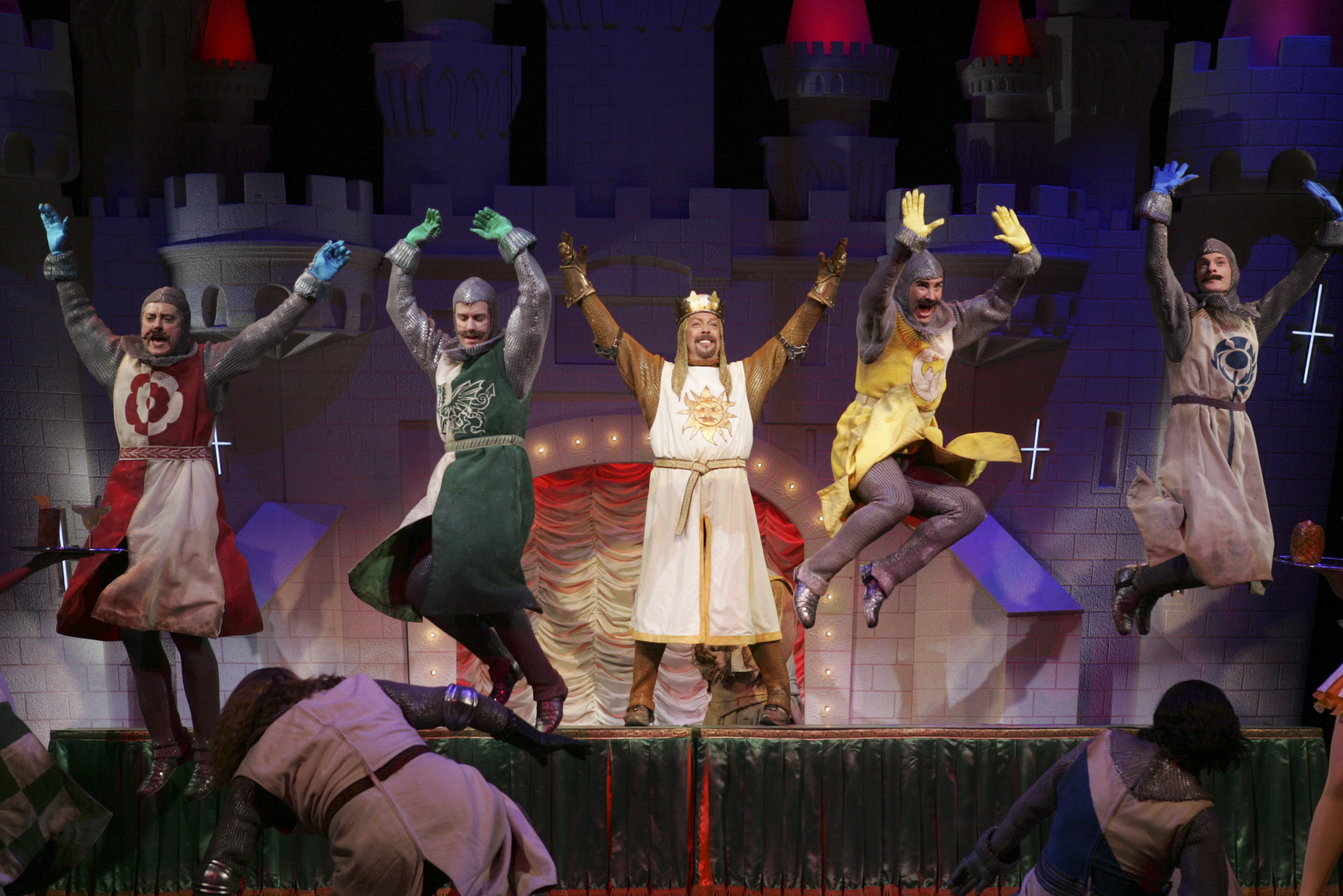
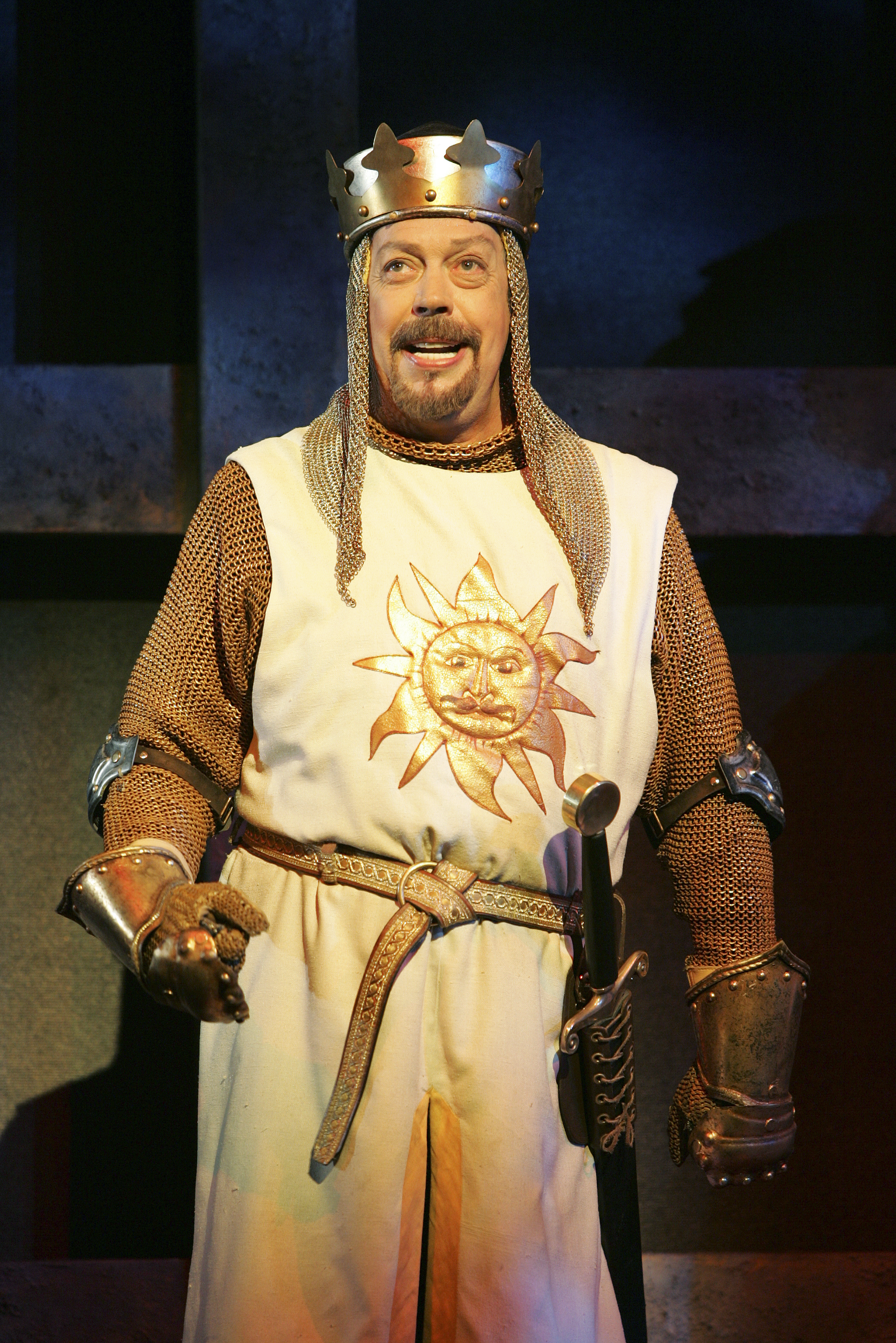
    And in Spamalot, the stage musical based on the Monty Python troupe’s bottomlessly goofy retelling of the King Arthur legend, which opened on Broadway in 2005, he played Arthur himself and was nominated for a Tony Award. It was the most straight-faced role in the show, and yet, as Ben Brantley wrote in his review in The New York Times, he was “the best of the cast at translating classic Python style into a musical-comedy idiom.”

    “His stalwart, plummy-voiced Arthur wears a smile as inflexible as armor,” Brantley wrote, “and it deflects any suggestion that this manly king is in on the show’s jokes.”

    No other role marked Curry’s career as emphatically, however, as Dr. Frank-N-Furter, the “sweet transvestite from Transsexual, Transylvania,” as he proclaimed himself in The Rocky Horror Picture Show, the 1975 screen adaptation of The Rocky Horror Show, the hit London stage musical that played for seven years in different theaters, and in which Curry originated the role in 1973. He also starred in the premiere American production in Los Angeles in 1974 and on Broadway in 1975, where it was a notable flop, closing after 45 performances.

    Although Frank-N-Furter would become Curry’s signature role, he initially had doubts about taking it. “I was hesitant in that, if it worked, it might be a difficult image to shake off,” he said in a television interview in England just as The Rocky Horror Picture Show was opening in 1975. “But then, really, I’ve always thought it wasn’t worth doing unless you took a risk, really. So I just took the risk.”

    Forty years later, when he received a lifetime achievement award from the Actors Fund, Los Angeles magazine asked him to reflect on his career-making role. How did he look at it in retrospect?

    “With a sort of bemused tolerance,” he said. “It’s neither a blessing nor a curse. I was lucky to get it.”

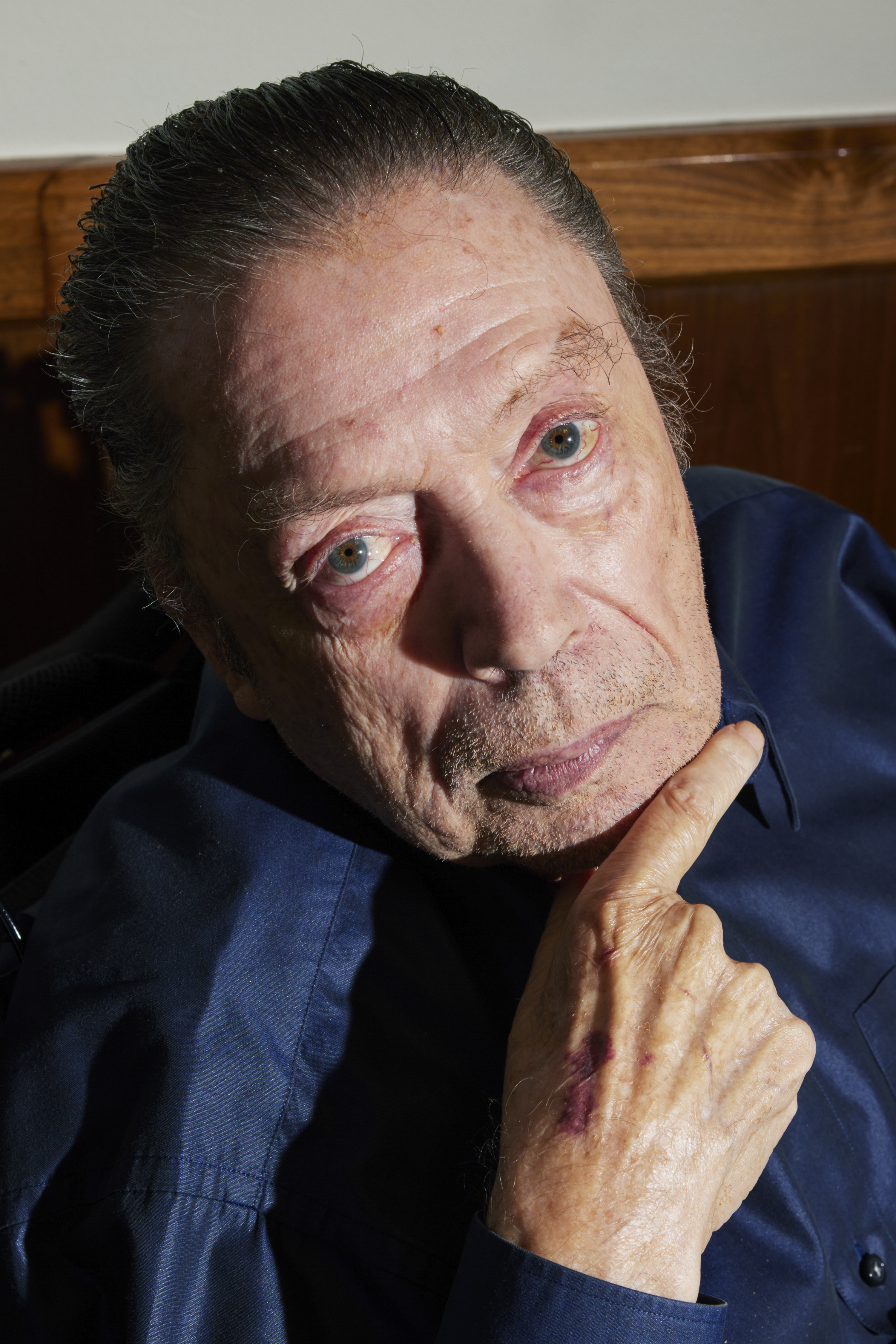
    FILE — British actor and author Tim Curry in Los Angeles, Sept. 18, 2025. Curry, the British-born actor whose gift for caricature and garish eccentricity informed a variety of performances on stage and screen, notably as the puerile Mozart in the original Broadway production of “Amadeus” and as the outlandish cross-dressing mad scientist in the midnight cult film “The Rocky Horror Picture Show,” died on Tuesday, Aug. 25, 2026. He was 80. (Maggie Shannon/The New York Times)MAGGIE SHANNON
    FILE — Michael McGrath, left, as Patsy and Tim Curry as King Arthur in “Spamalot” at the Shubert Theater in New York, Feb. 12, 2005. Curry, the British-born actor whose gift for caricature and garish eccentricity informed a variety of performances on stage and screen, notably as the puerile Mozart in the original Broadway production of “Amadeus” and as the outlandish cross-dressing mad scientist in the midnight cult film “The Rocky Horror Picture Show,” died on Tuesday, Aug. 25, 2026. He was 80. (Sara Krulwich/The New York Times)SARA KRULWICH
    FILE — Tim Curry, center, as King Arthur in “Spamalot” at the Shubert Theater in New York, Feb. 12, 2005. Curry, the British-born actor whose gift for caricature and garish eccentricity informed a variety of performances on stage and screen, notably as the puerile Mozart in the original Broadway production of “Amadeus” and as the outlandish cross-dressing mad scientist in the midnight cult film “The Rocky Horror Picture Show,” died on Tuesday, Aug. 25, 2026. He was 80. (Sara Krulwich/The New York Times)SARA KRULWICH
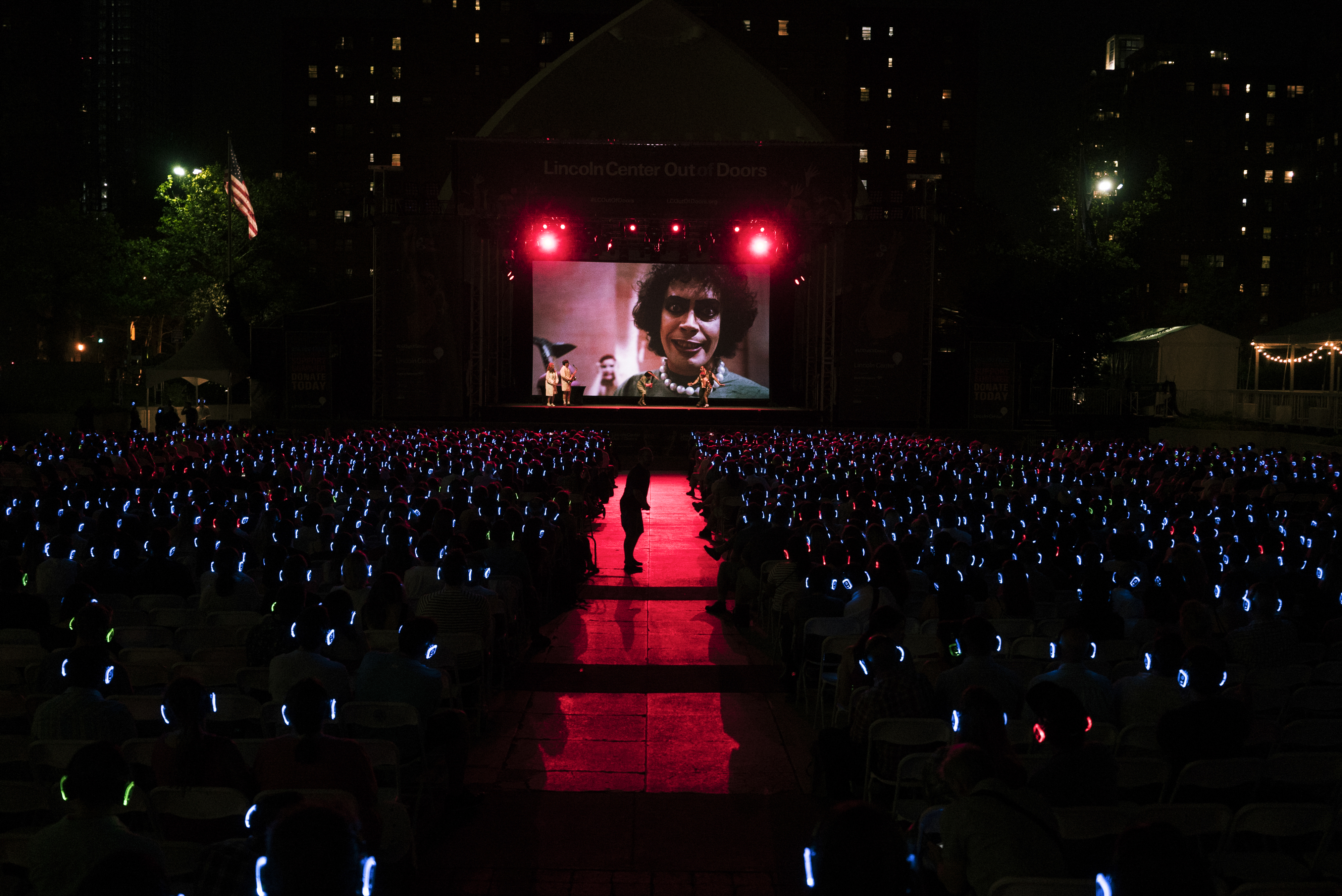
    FILE — Tim Curry on screen during a silent disco showing of “The Rocky Horror Picture Show” at Damrosch Park in New York, Aug. 7, 2015. Curry, the British-born actor whose gift for caricature and garish eccentricity informed a variety of performances on stage and screen, notably as the puerile Mozart in the original Broadway production of “Amadeus” and as the outlandish cross-dressing mad scientist in the midnight cult film “The Rocky Horror Picture Show,” died on Tuesday, Aug. 25, 2026. He was 80. (An Rong Xu/The New York Times)AN RONG XU
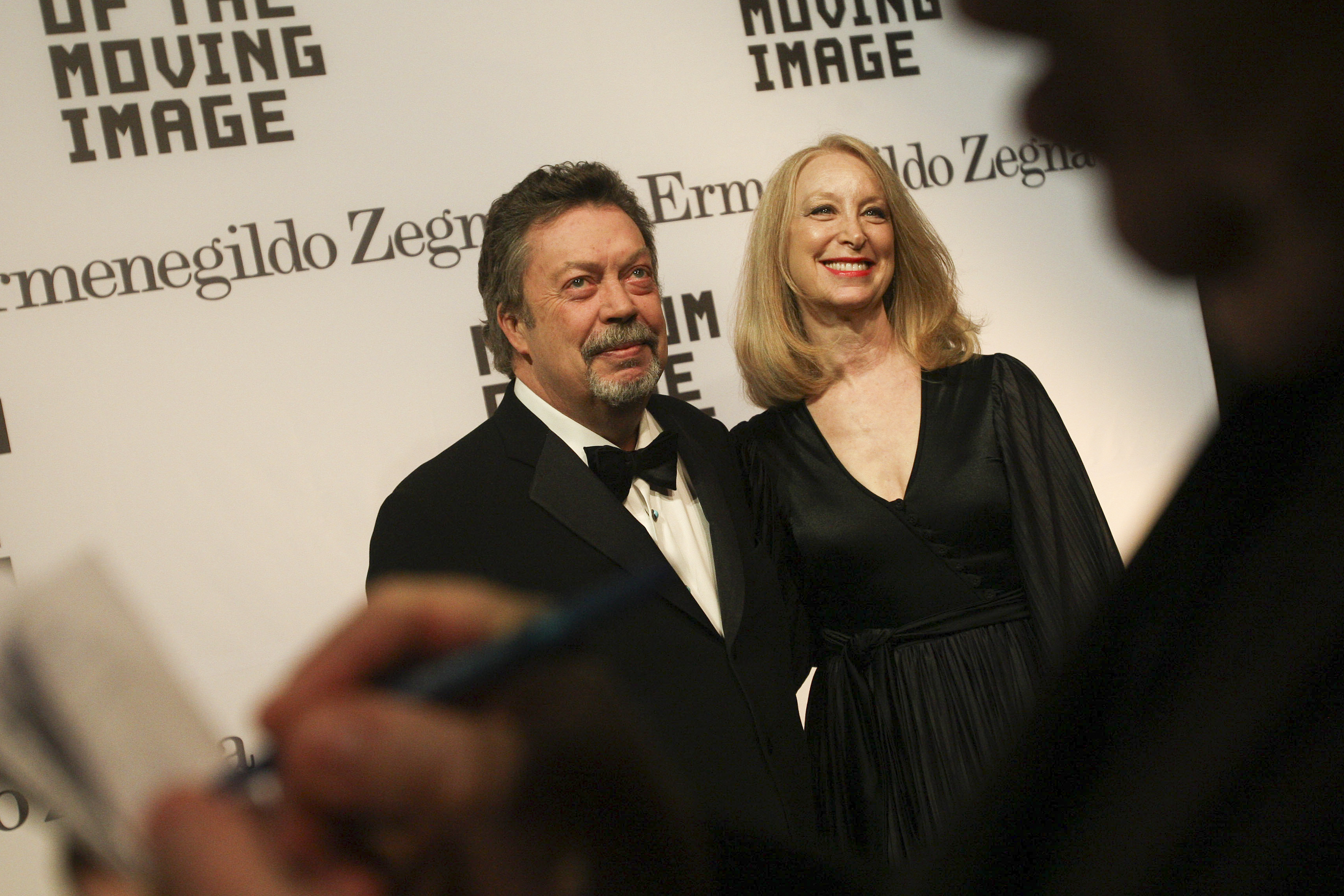
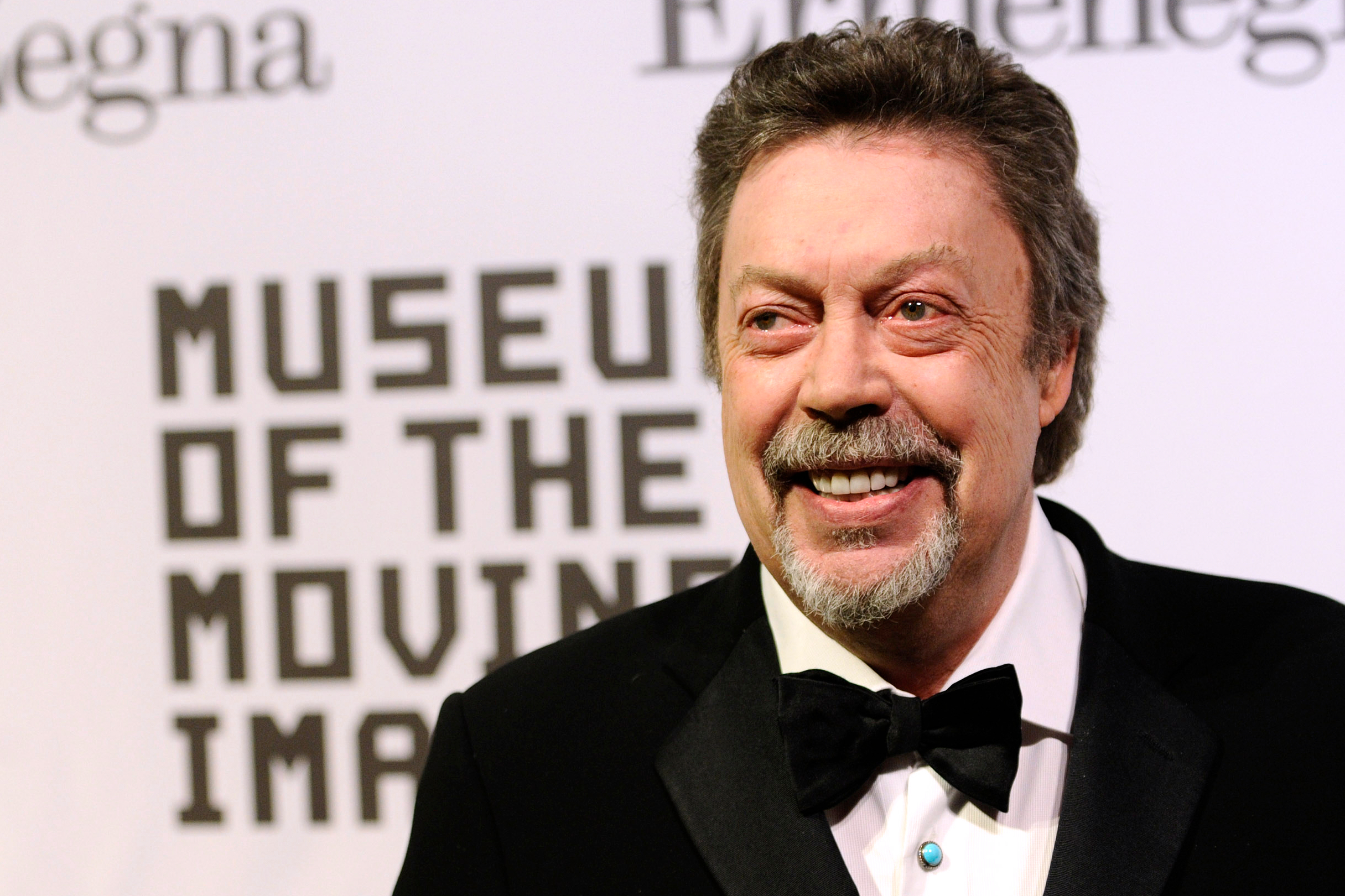
    FILE — Tim Curry and Marcia Hurwitz, his longtime agent and manager, at a Museum of the Moving Image event in New York, Feb. 11, 2011. Curry, the British-born actor whose gift for caricature and garish eccentricity informed a variety of performances on stage and screen, notably as the puerile Mozart in the original Broadway production of “Amadeus” and as the outlandish cross-dressing mad scientist in the midnight cult film “The Rocky Horror Picture Show,” died on Tuesday, Aug. 25, 2026. He was 80. (Hiroko Masuike/The New York Times)HIROKO MASUIKE
    FILE — Tim Curry as King Arthur in “Spamalot” at the Shubert Theater in New York, Feb. 12, 2005. Curry, the British-born actor whose gift for caricature and garish eccentricity informed a variety of performances on stage and screen, notably as the puerile Mozart in the original Broadway production of “Amadeus” and as the outlandish cross-dressing mad scientist in the midnight cult film “The Rocky Horror Picture Show,” died on Tuesday, Aug. 25, 2026. He was 80. (Sara Krulwich/The New York Times)SARA KRULWICH
  • Economists don’t expect reopening the U.S. to Mexican cattle imports to reduce high beef prices

    Economists don’t expect reopening the U.S. to Mexican cattle imports to reduce high beef prices

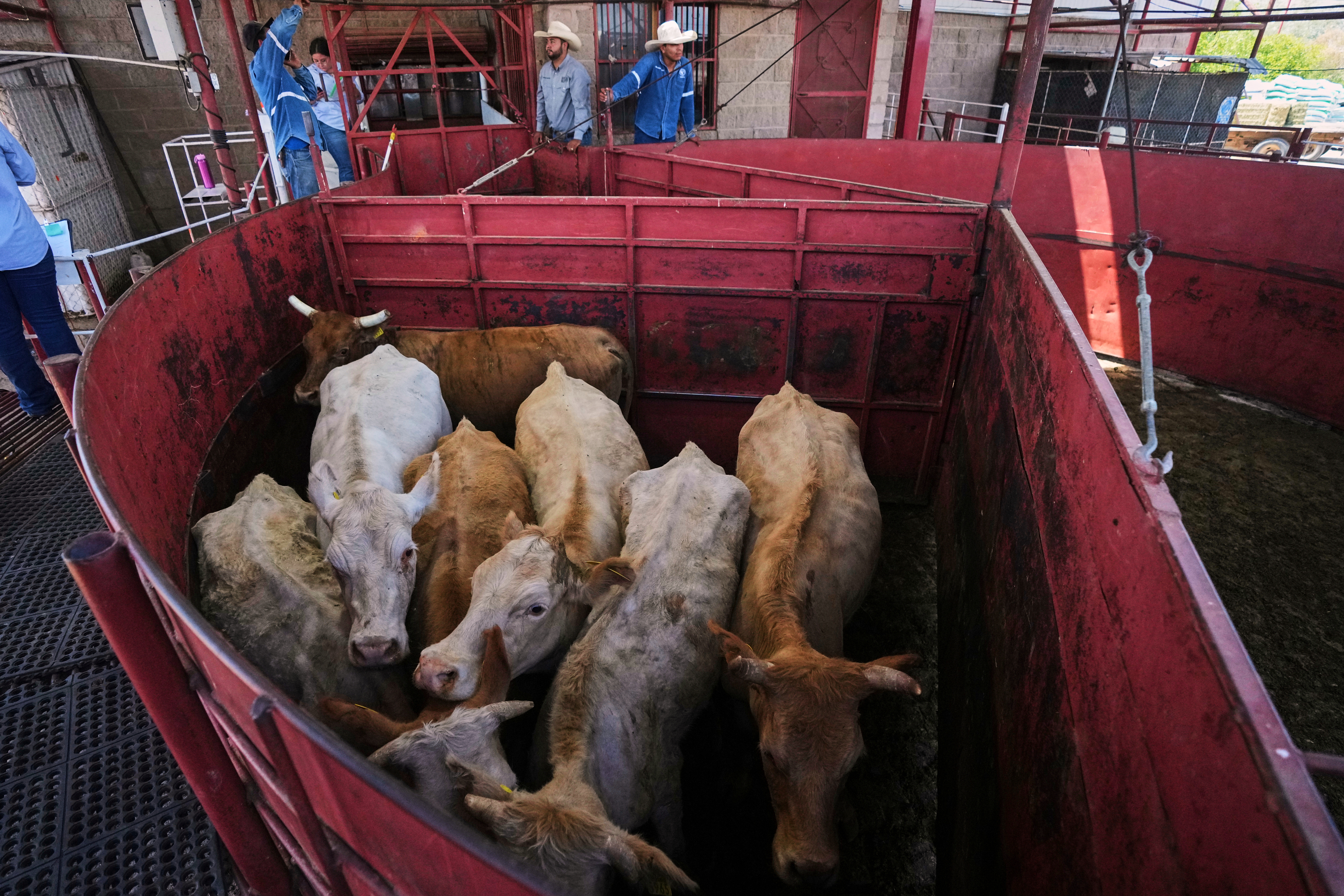
    The U.S. reopened a border crossing in Arizona to cattle from Mexico on Monday as part of a broader effort by the Trump administration to reduce record-high beef prices, though economists doubt the move will mean much to grocery store shoppers.

    The U.S. Department of Agriculture has said concerns about the New World screwworm’s spread lessened enough to allow the movement of cattle from Mexico at a crossing in Douglas, Ariz., about 230 miles southeast of Phoenix. Over time, it hopes to reopen other crossings in New Mexico and Texas.

    “Today, the border in Sonora is open for livestock,” Mexican President Claudia Sheinbaum said during a Monday morning news conference in Mexico City, referring to the Mexican state bordering Arizona.

    Cattle were coming across the border by mid-afternoon Monday.

    Beef prices clearly are a concern for President Donald Trump, who announced Friday that he would allow up to 331,000 tons (300,000 metric tons) of imported ground beef into the U.S., tariff-free, to be sold at below-market prices over the next 90 days. In February, the White House said closing the border to livestock imports from Mexico more than a year ago was “essential” to containing the screwworm, but it has exacerbated a shortage of cattle for slaughter in the U.S.

    “The administration obviously has a lot of incentive to try to be able to say that they’re doing something about high beef prices in particular,” said Derrell Peel, a professor of agribusiness at Oklahoma State University. “Beef has been singled out because it is an expensive product and because it’s just high profile.”

    The Trump administration closed the border to cattle imports in May 2025 as part of its response to the screwworm, a parasite with flesh-eating larvae that can infest and even kill cattle or other animals. The move came as the U.S. already was struggling to meet beef demand, thanks to a cattle herd that has been shrinking for five years and now is the smallest in decades.

    Because the USDA plans a phased reopening of the border, it will take months for Mexican imports to return to their traditional levels, Peel said. Mexico has traditionally provided 1.1 million head, or about 3% of the U.S. cattle supply.

    “I don’t expect to see any measurable impact on cattle prices or beef prices soon,” Peel said.

    The smallest U.S. herd in decades fueled record prices

    The USDA reported that on Jan. 1, the U.S. cattle herd had dropped to 86.2 million head, the lowest figure in 75 years. Beef prices skyrocketed over the past five years, rising significantly faster than food prices as a whole, according to the U.S. Bureau of Labor Statistics.

    The average price of a pound of ground beef rose nearly 57% from July 2021 to July 2026, from $4.39 to $6.89 — hitting a peak of $6.90 in May — with a 10% increase over the previous year. Food prices have risen about 25% overall in those five years, according to the bureau’s numbers.

    The price for a pound of uncooked steak rose 35% over the past five years, reaching a record $13.06 per pound in July, also 10% higher than a year before.

    But Glynn Tonsor, a professor of agricultural economics at Kansas State University, said the potential effect on beef prices from the smaller supply of cattle was lessened because the U.S. beef industry is more efficient and has been able to get more meat from each animal than in past years.

    The USDA says the reopening starts at a safe spot

    U.S. government and industry officials view the New World screwworm fly as a major threat to the nation’s $113 billion cattle industry. It was an annual warm-weather scourge for U.S. ranchers from at least the 1930s through the 1960s, until the U.S. largely eradicated it. The fly was contained for years near the Panama Canal, but returned to southern Mexico in late 2024 and advanced toward the U.S., with the first case in Texas since 1966 reported June 3.

    Since then, more than 40 cases have been confirmed in southern Texas and southeastern New Mexico, with infestations of cattle, sheep, goats, and dogs.

    In her July announcement of plans for a phased reopening of the border, U.S. Agriculture Secretary Brooke Rollins said it was possible to start with an Arizona crossing because the northern Mexican states of Sonora and Chihuahua had stronger animal health programs than other parts of Mexico. She also said each animal would be inspected and declared free of the parasite before crossing the border.

    U.S. Senate Agriculture Committee Chair John Boozman said the USDA is taking a “careful, science-based” approach to reopening the border and imposing strong animal health protocols.

    “This is an important step for America’s cattle producers, especially our feeders in the border states,” Boozman, an Arkansas Republican, said in a statement. “Restoring this long-standing trade is critical to strengthening our cattle supply and supporting a healthy, competitive beef industry.”

    Drought, low prices led to the smallest U.S. herd in 75 years

    Drought in cattle-producing regions of the U.S. is a major reason the national herd is so small, said David Anderson, professor of agricultural economics at Texas A&M University. If grass doesn’t grow, cattle have nothing to graze upon, forcing ranchers to sell them off. Low cattle prices over the past two decades also are a factor.

    “Where we are today is sort of the culmination of some 18, 19, 20 years of very low cattle prices,” he said. “That forces us to reduce our herds. Drought forces us to reduce them even further.”

    The shortage of cattle also has left beef processing plants operating below capacity.

    Tyson Foods, one of the nation’s largest meat processors, announced in November that it was reorganizing its beef operations and closing a plant in Lexington, Neb., about 220 miles southwest of Omaha. Earlier this month, it announced plans to close a plant in Utah outside Salt Lake City and another in Illinois about 150 miles southeast of Chicago.

    In June, another major U.S. processor, JBS USA, announced plans to close beef plants in Memphis and outside Philadelphia, though it later said it would keep some operations at the Pennsylvania plant to preserve 400 jobs there.

    Rebuilding the U.S. herd — and ultimately lowering prices — likely will take years, largely because a cow typically has only one calf a year, Peel said. In addition, breeding a heifer keeps her out of the food supply, tightening it further as the herd is rebuilt.

    Peel said prices will remain high for some time and for elected officials, “There’s nothing you can do.”

  • Dolly Parton, superstar whose songs spoke to millions, dies at 80

    Dolly Parton, superstar whose songs spoke to millions, dies at 80

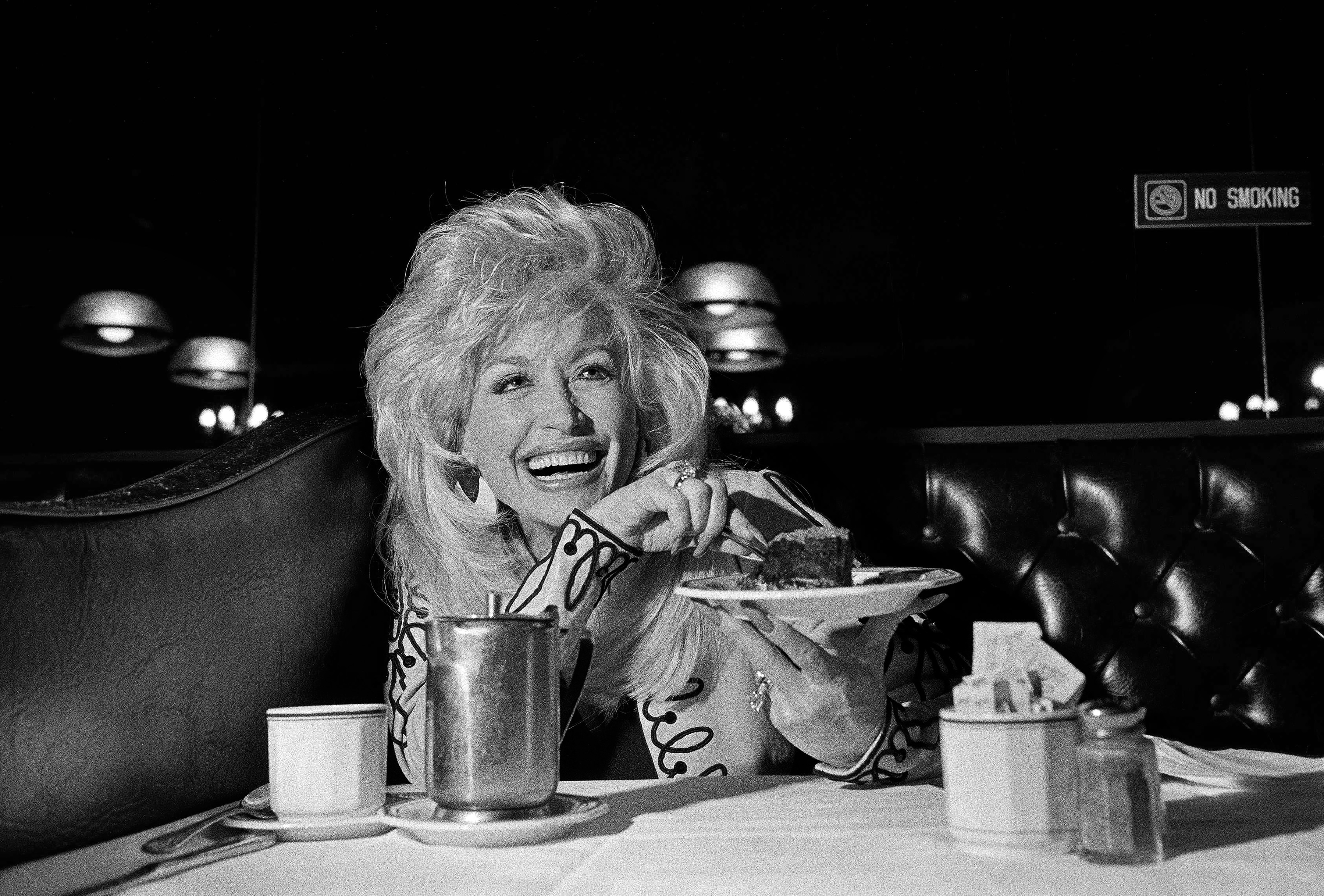
    Dolly Parton, the rhinestones-to-riches daughter of Appalachia who for six decades ruled country music with an outsize personality and country wit that enshrined her as one of the 20th century’s most cherished American originals, died Tuesday in Nashville, Tenn. She was 80.

    The death was announced in a video posted on social media by her nephew, Bryan Seaver. No cause was provided. Concerns about Ms. Parton’s health, which began last year as she postponed and later canceled a Las Vegas residency, grew to the point that she took to social media last fall to confirm that “I ain’t dead yet.” In May, she said she had responded well to treatment after, as she put it, her immune and digestive systems “got all out of whack” in recent years.

    Ms. Parton’s life, as depicted in autobiographical songs such as “Coat of Many Colors” and “My Tennessee Mountain Home,” was the stuff of make-believe, from her hardscrabble beginnings in Appalachia to her glittering stardom in Nashville and beyond.

    Writer Chet Flippo likened her to the Big Rock Candy Mountain, the Depression-era symbol of abundance personified by Ms. Parton’s voluptuous figure, rhinestone-studded stage costumes, and blond bouffant wigs. Her songs spoke to millions, confronting privation and loss even as they radiated possibility and hope.

    She was, quintessentially, a uniter of people. In 2019, the New York Times ran a story with the headline “Is There Anything We Can All Agree On? Yes: Dolly Parton.”

    Ms. Parton cannily exploited — and transcended — rural stereotypes and kitsch to fashion a down-home chic entirely her own. (“A country girl’s idea of glam,” she called it in the song “Backwoods Barbie.”) In the process, she became an international celebrity who headlined stadium tours, starred in Hollywood movies, built a business empire, and appeared on the cover of Rolling Stone. Her at times girlish soprano notwithstanding, she was anything but the “dumb blonde” invoked in the title of her 1966 single.

    “I’ve created this and played it up — the makeup, the whole persona,” Ms. Parton said, alluding to her plastic surgeries as well as her colloquial “Dollyisms” in a 2002 interview with the Times.

    “But this isn’t all I am,” she added. “It’s not even most of what I am. Hopefully people can see beneath the hair to know there’s a brain, beneath the boobs to know there’s a heart and behind all the other stuff to know there’s some talent.”

    Inducted into both the country music and rock ’n’ roll halls of fame, Ms. Parton was the top-ranking female singer on country radio from 1967 to 1993, and had a total of 25 No. 1 country singles.

    Her early breakthrough came in 1967 when she was hired as the “girl singer” on The Porter Wagoner Show, a syndicated country music television variety program. Several years later, she had No. 1 country hits with records including “Jolene” and “I Will Always Love You.”

    Both songs were among about 3,000 titles she published in her lifetime, hundreds of which have been recorded by other artists, including Tina Turner, Norah Jones, the White Stripes, Merle Haggard, RuPaul, and Whitney Houston.

    Featured in the 1992 movie The Bodyguard, Houston’s version of “I Will Always Love You” spent 14 weeks at the top of the pop chart. The song had previously been a No. 1 country single twice, in versions released by Ms. Parton in 1974 and 1982.

    With Loretta Lynn and Tammy Wynette, Ms. Parton blazed a trail for women in country music, inspiring such contemporaries as Linda Ronstadt and Emmylou Harris, as well as latter-day hitmakers including Carrie Underwood, Kacey Musgraves, and Taylor Swift. She recorded a pair of albums, Trio and Trio II, with Ronstadt and Harris.

    “I can’t imagine anybody, especially in country, who doesn’t try to emulate Dolly in some way,” Harris said on the occasion of Ms. Parton’s Kennedy Center Honors award in 2006.

    Ms. Parton was one of country music’s greatest ambassadors, but she also collaborated widely with artists outside traditional Nashville circles, including Mavis Staples, Queen Latifah, Julio Iglesias, and Ladysmith Black Mambazo. “Islands in the Stream,” a triple platinum-selling duet Ms. Parton recorded with Kenny Rogers, topped both the country and pop charts in 1983. (The song was written by Barry, Maurice, and Robin Gibb of the Bee Gees.)

    Stylistically, Ms. Parton’s music ran the gamut: mountain bluegrass and soul-inflected countrypolitan, disco-era pop and covers of classic rock touchstones written by Neil Young and Led Zeppelin — all of it rendered indelible by her irrepressible spirit and alternately keening and gossamer soprano drawl.

    She wrote unabashedly, in simple Southern vernacular, about growing up as the daughter of an illiterate sharecropper.

    “I’ve seen Daddy’s hands break open and bleed / And I’ve seen him work ’til he’s stiff as a board,” she sang over wistful harmonica and acoustic guitar in “In the Good Old Days (When Times Were Bad).” “I’ve seen Mama layin’ in sufferin’ and sickness / In need of a doctor we couldn’t afford. / Anything at all was more than we had / In the good old days when times were bad.”

    In “Coat of Many Colors,” maybe her most beloved original, Ms. Parton plumbed childhood feelings of pride and humiliation. In this case, the coat in question — quilted from rags and originally a source of delight and the expression of a mother’s love — becomes an object of ridicule when Dolly’s classmates poke fun at her for wearing it to school.

    So with patches on my britches

    And holes in both my shoes,

    In my coat of many colors

    I hurried off to school

    Just to find the others laughing

    And making fun of me

    In my coat of many colors

    My Mama made for me

    “That little song is like a world of things,” Ms. Parton said of “Coat of Many Colors” in Dolly Parton, Songteller: My Life in Lyrics (2020), written with Robert K. Oermann. “It teaches about bullying, about love, about acceptance, about good parents. That little story has even been written into a schoolbook to teach children about being different.”

    Empathy was a hallmark of Ms. Parton’s songwriting, perhaps nowhere so much as in “Down From Dover” and “Daddy Come Get Me,” harrowing Southern gothic ballads about teen pregnancy and how patriarchy blames and victimizes young women.

    Assertive women populated Ms. Parton’s songs, whether through her protofeminist rewrite of Jimmie Rodgers’ “Mule Skinner Blues (Blue Yodel No. 8)” or by advocating parity in the bedroom (“Touch Your Woman”) and in the workplace (“9 to 5”).

    “It’s a rich man’s game / No matter what they call it / And you spend your life / Putting money in his wallet,” Ms. Parton sang, with a mixture of fury and resolve, in the 1980 pink-collar comedy 9 to 5. Besides writing and performing the movie’s theme song, a No. 1 pop and country hit, she also starred in the film as a beleaguered secretary drudging for a sexist boss, alongside Jane Fonda and Lily Tomlin.

    Ms. Parton would go on to star in other films, among them The Best Little Whorehouse in Texas (1982), with Burt Reynolds; Steel Magnolias (1989), with Julia Roberts and Shirley MacLaine; and Straight Talk (1992), with James Woods.

    In 1976, she became the first woman in country music to host her own syndicated TV series; a decade later, she had an hourlong variety show on ABC. But for all her reach and command as an entertainer — including her ubiquitous appearances on TV talk shows and specials — Ms. Parton viewed herself, first and foremost, as a songwriter.

    “Writing’s just as natural to me as getting up and cooking breakfast,” she told the Times in 2002. “I ain’t never far away from a pencil and paper or a tape recorder. I write every day, even when I’m on a plane, in the tub or on the bus. It burns in me.”

    She continued: “Songwriting is my way of channeling my feelings and my thoughts. Not just mine, but the things I see, the people I care about. My head would explode if I didn’t get some of that stuff out. Not everything I write is good, but it’s all good for me — like therapy.”

    Dolly Rebecca Parton was born Jan. 19, 1946, the fourth of 12 children of Robert Lee and Avie Lee (Owens) Parton, in a one-room cabin on the banks of the Little Pigeon River in Sevier County, Tenn. Her father was a tenant farmer, and her mother was a homemaker who sang old Anglo-Celtic ballads and hymns while doing housework.

    The Partons were so poor that Dolly’s father had to pay the doctor who attended her birth with a sack of cornmeal. Ms. Parton may have grown up without plumbing, heat, electricity, and other modern conveniences, but she always insisted that she also grew up happy, and that music offered her a refuge from want.

    “Most of us in the household learned to play early on,” she said in Dolly Parton, Songteller. “Every time anybody showed up, any uncle or aunt who knew how to play an instrument, I’d have them show me how to play a little bit on the banjo, the guitar, the autoharp or whatever instrument was around.”

    When she was 5 or so, she wrote her first song, a ditty about a corncob doll with corn-silk hair called “Little Tiny Tasseltop.” She started singing on radio and on TV at 10, on the Cas Walker Farm and Home Hour in Knoxville, Tenn., securing bookings with the help of her uncle Bill Owens, who also bought her her first guitar. The two would go on to write many songs together.

    Ms. Parton made her recording debut in 1959, the same year she made her first appearance at the Grand Ole Opry. In 1962, she signed a songwriting deal with Tree International Publishing (now part of Sony Music Publishing). Two years later, she became the first person in her family to graduate from high school.

    In 1966, Ms. Parton married Carl Dean, an asphalt contractor who shunned the limelight. The couple had met two years earlier, at a laundromat in Nashville, when Ms. Parton was 18. Dean died in 2025.

    Ms. Parton is survived by six of her siblings: Willadeene Parton, Robert Lee Parton Jr., Stella Parton, Cassie Parton, Freida Parton, and Rachel Ann Parton George.

    In 1965, Ms. Parton signed a recording contract with Monument Records, not long before she and her uncle wrote two Top 10 country songs for singer Bill Phillips. She released the first of her roughly 90 Top 40 country hits — “Dumb Blonde,” a plucky denunciation of female stereotypes — in 1966.

    In 1967, she began her seven-year tenure with The Porter Wagoner Show. She and Wagoner would go on to release 21 hit duets together, including “Holding On to Nothin’” (1968) and “Just Someone I Used to Know” (1969).

    But with the arrival of the 1970s — and in no small part because of the national exposure she received on Wagoner’s show — Ms. Parton started to eclipse her employer in popularity.

    The tension that resulted was further aggravated when she began steadily producing No. 1 country singles such as “Joshua” and “Jolene.” Ms. Parton parted ways with Wagoner in 1974 to concentrate on her solo career, but not before writing “I Will Always Love You” as an expression of gratitude and farewell.

    The separation initially proved difficult for Ms. Parton, both emotionally and financially, but it also opened doors to new opportunities like the chance to host her own TV show. She was named female artist of the year by the Country Music Association in each of the two years (1975 and 1976) after her break with Wagoner.

    Embracing a more pop approach than she had earlier in her career, Ms. Parton continued her ascendance on the charts in the late ’70s with blockbuster hits including “Here You Come Again” and “Heartbreaker.” Both were No. 1 country singles that crossed over to the pop Top 40. The Country Music Association awarded her its top honor, entertainer of the year, in 1978.

    After her 1980 recording of “9 to 5” earned her two Grammy Awards and an Oscar nomination, Ms. Parton turned her attention to movies, TV appearances, and the development, in the mid-1980s, of Dollywood, her Smoky Mountain theme park, among other business ventures.

    In 1987, she released the first of her two albums with Ronstadt and Harris, the platinum-selling Trio. She hosted Saturday Night Live in 1989 and teamed up with Lynn and Wynette to record the album Honky Tonk Angels in 1993.

    She published her memoir, Dolly: My Life and Other Unfinished Business, a New York Times bestseller, in 1994. The next year, she established the Imagination Library, a philanthropic endeavor through which more than 200 million books have been distributed to babies and young children. A show about her life, Dolly: A True Original Musical, is scheduled to open on Broadway in early 2027.

    Endowed with a surfeit of creativity and an unflagging work ethic, Ms. Parton admitted in interviews to sleeping as few as three hours a night. She was nominated for more than 50 Grammy Awards, 10 of which she won, along with being recognized for lifetime achievement by the Recording Academy in 2011.

    Ms. Parton was inducted into the Country Music Hall of Fame in 1999 and the Songwriters Hall of Fame in 2001, and was awarded the National Medal of Arts in 2005. In 2022, she was inducted into the Rock & Roll Hall of Fame.

    But perhaps even more remarkable than the profusion of accolades and awards was Ms. Parton’s unstinting generosity of spirit — her commitment, born of deep religious convictions and an immense heart, to seeing the humanity in all people.

    Ms. Parton not only sang the traditional Southern gospel music her mother taught her; she also wrote and sang “Travelin’ Thru,” an Oscar-nominated song from Transamerica, the 2005 movie about a transgender woman seeking to connect with her son. In 2017, Parton collaborated with Miley Cyrus, her goddaughter, to record “Rainbowland,” a tribute to gay pride and liberation.

    “You have to accept everything and everybody,” she said in Songteller, talking about the lessons to be learned about open-mindedness and inclusion from “Coat of Many Colors.”

    Time and again in her career, Ms. Parton reflected on her impoverished upbringing and how she followed her dreams to escape it. “I wanted to be free,” she told Rolling Stone in 1977. “I had my songs to sing, I had an ambition, and it burned inside me.”

    She added: “It was something I knew would take me out of the mountains. I knew I could see worlds beyond the Smoky Mountains.”

  • Dolly Parton, music star, actor and beloved figure who spanned generations has died at 80

    Dolly Parton, music star, actor and beloved figure who spanned generations has died at 80

    Dolly Parton, the country music icon whose soaring vibrato vocals, poignant songwriting and sparkling costumes defined her rise from a log cabin in the Tennessee mountains to the height of stardom and acclaim, has died. She was 80 years old.

    Known for her curvy physique, massive blonde wigs and skin-tight outfits that served her self-deprecating wit, she was among the most beloved personalities in music and beyond — the rare celebrity whose appeal transcended generations, geography and politics.

    She wrote hundreds of songs, including classics like “Jolene,” “Coat of Many Colors” and “I Will Always Love You,” that totaled more than 100 million worldwide sales and more than 1 billion online streams. Parton, who plucked bejeweled banjos, guitar and dulcimers with her long fingernails during performances, was a generous philanthropist and successful businesswoman whose projects included a theme park in the Smoky Mountain foothills near her birthplace.

    Her career was forever influenced by her upbringing as one of 12 children born into what she called a “dirt poor” Tennessee family. She started her education nonprofit, Imagination Library, to send free books to children in Tennessee because her father, who quit school to work on the farm, struggled to learn to read.

    Parton’s first musical performances were in church, where her grandfather was a preacher. By age 10, she was learning guitar and singing on local television shows. At 13, she appeared on the Grand Ole Opry in Nashville, where Johnny Cash introduced her as “a little girl here from up in East Tennessee.”

    With a suitcase of songs, she followed her uncle, Bill Owens, also a songwriter, to Nashville after graduating high school in 1964. Fred Foster, who produced Roy Orbison, Willie Nelson and more, saw her potential and got her songs cut by other artists, as well as recording and releasing Parton singing her own material. By the mid-1970s, Parton was a Nashville queen.

    A key collaboration with Porter Wagoner

    Parton’s partnership with Porter Wagoner, a pencil-thin pompadoured star with flashy rhinestone outfits, was key to her career. She honed her acting skills on his syndicated TV show and he advocated for her to get a record deal at RCA. Their first duet, “The Last Thing On My Mind,” was released in 1967, the same year she started her own publishing company.

    While their duets were often big radio hits, Parton’s solo singles didn’t chart as high at first. With Wagoner as a co-producer, she began to adjust her country warble to a more polished, pop-leaning style.

    She got her first No. 1 solo single with “Joshua,” and reached the Top 5 with the ballad “Coat of Many Colors,” about how her mother sewed together scraps of clothes to make a coat Parton wore “so proudly” even as her peers mocked her for being poor. The song, with its Biblical references and ode to maternal love, was later made into a children’s book and a TV movie.

    In 1973, she had the hit that made her career — “Jolene,” a country music standard with its steady, churning rhythm and Parton’s repeated delivery of the title as she pleads for the woman not to steal her man.

    The song topped the country charts, crossing over to pop and later being released internationally, opening up new audiences for Parton. “Jolene” is one of her most covered compositions, including by Miley Cyrus (Parton’s goddaughter), Olivia Newton-John and The White Stripes.

    She left Wagoner’s show in 1974, amid reports of squabbling between the two, although they continued to record together and Wagoner stayed her producer for years after that. But the relationship turned litigious when Wagoner sued her in 1979 for millions in management fees and royalties.

    A pop crossover star

    She followed “Jolene” with a huge hit in 1974, “I Will Always Love You,” an ode and farewell to Wagoner that helped her win the Country Music Association’s female vocalist of the year back-to-back in 1975 and 1976. She famously turned down Elvis Presley, who wanted to record it, because she would not share publishing rights.

    Decades later, Whitney Houston’s version of “I Will Always Love You” became a smash for the soundtrack of her 1992 film “The Bodyguard,” and broke sales records. Houston won a Grammy for her performance in 1994, presented to her by Parton.

    “Here You Come Again,” a pop crossover hit and one of the few she didn’t write, further established Parton as a multi-genre entertainer and brought her first Grammy Award in 1979.

    “A lot of people thought I had totally lost my mind,” she told The Associated Press in 1979 of changing her singing style. “But I had no fear of change. I expected success, but I was braced for failure. I didn’t care if people thought I was wrong. In my own heart, I knew I was doing the right thing.”

    Parton’s other crossover hits included the title song from “9 to 5,” the 1980 comedy starring Parton, Jane Fonda and Lily Tomlin; and her duet with longtime friend Kenny Rogers, “Islands in the Stream,” written by brothers Barry, Maurice and Robin Gibb of the Bee Gees. In 1987, she collaborated with Linda Ronstadt and Emmylou Harris on the million-selling “Trio” album.

    Down home charm

    For millions of fans, she was simply “Dolly,” a mixture of Southern charm, humor and glamour. But she was also considered a feminist role model for holding the reins of her own career, writing her own songs, owning her content and looking after her finances in an entertainment world dominated by men.

    Parton was open to making fun of herself; when she hosted “Saturday Night Live” in 1989 she told the writers that her only restrictions were she wouldn’t curse and she wouldn’t make fun of Jesus. She regularly joked about her breasts or her dumb blonde appearance, but with a wink that she was the one controlling the laughs. In the memoir “My Life So Far,” Fonda remembered Parton’s way with a wisecrack, “usually high raunch,” and a laugh that was “somewhere between a girl’s giggle, an explosive shriek, and a cascade of little bells.”

    After her gown split down the front when she won CMA’s entertainer of the year in 1978, Parton quipped: “My Daddy said that’s what I got for putting 50 pounds of mud in a five-pound bag.”

    Throughout her career, she embraced her glamorous style, often wearing custom curve-hugging rhinestone dresses and bodysuits even if they drew tsk-tsks from others in the industry. Her look was always a part of her larger musical business plan.

    “I knew my songs were good even if I had been ugly as sin,” she told the AP in 2014. “So I thought, ‘Well, I would have probably chose to look this way even if I had been a waitress.’ I mean, this is my look. I mean, I like a lot of makeup. I like a lot of hair. I like flashy clothes. I like to show it off. But that’s just who I am.”

    She married Carl Dean, an asphalt paving contractor, in the mid-1960s; they were together until his death in 2025 at the age of 82. Though rarely seen in public, he was an influence on her career. She told NPR that she wrote “Jolene” about a flirty bank teller who seemed to take an interest in Dean.

    ‘9 to 5’ to Hollywood and Broadway

    In her first major film role, Parton played alongside Fonda and Tomlin as office workers who rebel against their tyrannical boss in “9 to 5.” Critic Roger Ebert called her a “natural-born movie star” and the title song earned her two Grammy Awards and a ranking of 78 on the American Film Institute’s list of top 100 movie songs. Starring roles in the “The Best Little Whorehouse In Texas” and “Steel Magnolias” followed.

    “I never thought of myself as a movie star,” she told AP’s Bob Thomas in 1979. “I knew I’d be a star, but as a singer or as a writer of songs or books or poetry. I wanted to be a famous performer and wear flashy clothes, but singing in movies was not one of my ambitions. My family lived in the mountains and we didn’t see movies.”

    Her love affair with TV and film continued for decades, with appearances alongside Cyrus on “Hannah Montana” and adaptions of her music for Christmas specials, films and streaming series. She also became an author, her books ranging from the memoir “Dolly” to a bestselling novel co-authored by James Patterson, “Run, Rose, Run,”

    The stage adaptation “9 to 5: The Musical” debuted in 2009, and “DOLLY: A True Original Musical” had been set to open in December 2026.

    United States of Dolly

    Beyond her music, Parton’s most lasting legacy might be her generosity and broad appeal.

    When a deadly wildfire swept through the Smokies in 2016, she held an all-star telethon and set up a foundation that sent monthly checks to residents whose homes were damaged or destroyed.

    She opened up her Dollywood theme park in East Tennessee, a major economic driver in Appalachia that draws tourists from around the country, and established the Dollywood Foundation. She wrote books and memoirs, was inducted into the Country Music Hall of Fame and was given a lifetime achievement award by the Recording Academy. She was selected for the Jean Hersholt Humanitarian Award from the Academy of Motion Picture Arts and Sciences in 2025.

    With 55 Grammy nominations and 10 wins, Parton is the third-most nominated woman in Grammy history, only behind Beyoncé and Taylor Swift.

    Parton spanned social and political divides, through multiple generations of fans, urban and rural and in between. In tumultuous election years, it wasn’t uncommon to see “Dolly for President” shirts. But she was strict in not voicing her own political beliefs, often turning aside questions about presidents, candidates, policies and other controversies.

    “I don’t do politics,” Parton told host Jad Abumrad on his hit podcast “Dolly Parton’s America.”

    “I have too many fans on both sides of the fence. Of course, I have my opinion about everything, but I learned years ago to keep your mouth shut about things.”

    When the Rock & Roll Hall of Fame Foundation sent out a ballot in 2022 with her name on it, though she said she felt she hadn’t earned it, the voters answered with a “Hello, Dolly.” Parton showed up to the induction ceremony, performed and then put out a rock album.

  • Shelley Fabares, ‘Johnny Angel’ singer and actor in ‘The Donna Reed Show’ and ‘Coach,’ dies at 82

    Shelley Fabares, ‘Johnny Angel’ singer and actor in ‘The Donna Reed Show’ and ‘Coach,’ dies at 82

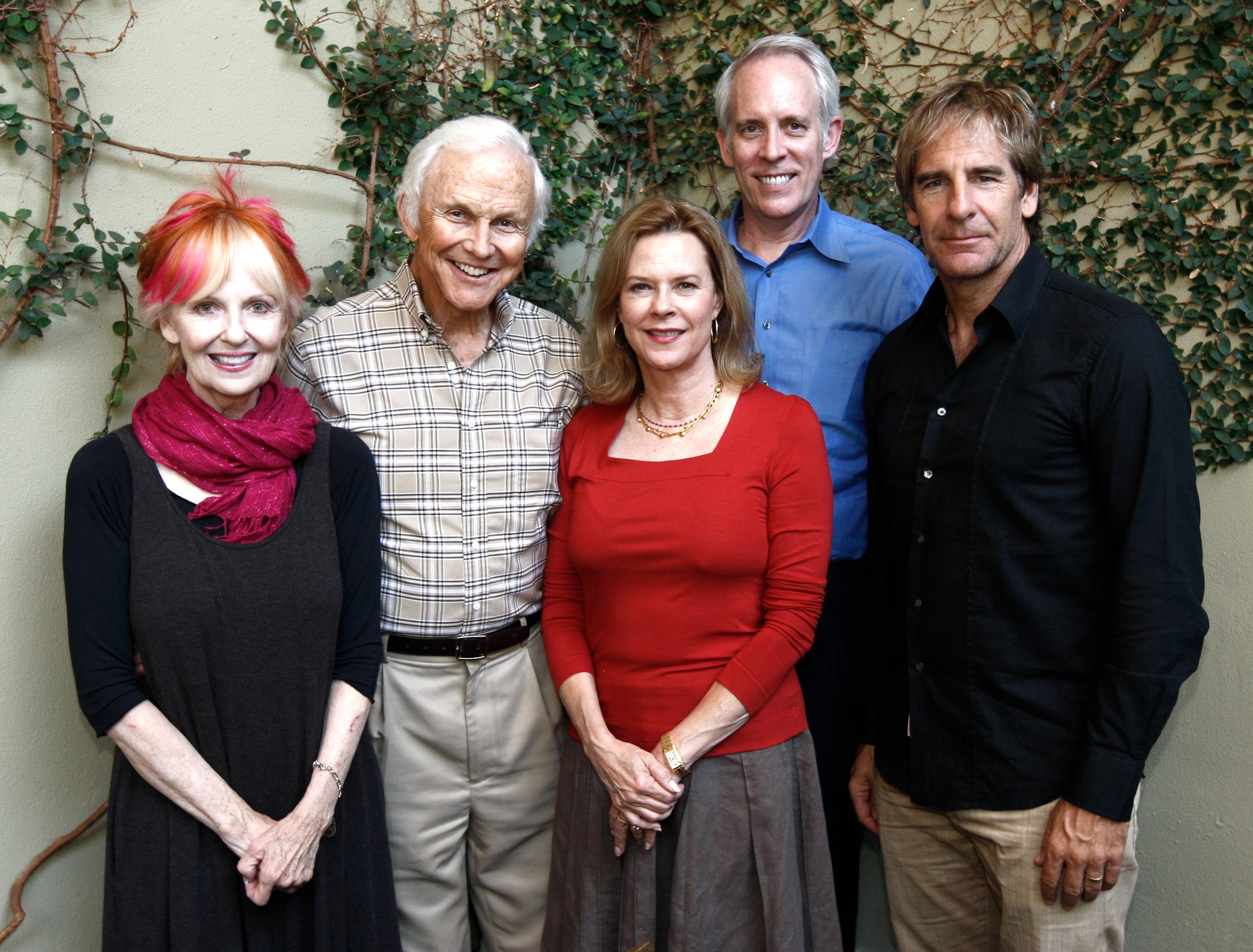
    Shelley Fabares, an actor who was a fixture on television for decades from her days as a young teenager on The Donna Reed Show, through One Day at a Time and Coach, has died. She was 82.

    She died Saturday in Los Angeles, her family said in a statement to the Associated Press. No cause was given.

    “To her family and friends, Shelley was a source of love, strength, laughter, and comfort,” her family wrote. “She had a remarkable ability to make people feel welcomed, valued, and cared for.”

    Ms. Fabares was born in Santa Monica, Calif., in 1944, and started acting as a young child. Her first television credit came at age 10 when she appeared on The Loretta Young Show. Many movies and television shows followed: She acted with Paul Newman, Frank Sinatra, and Eva Marie Saint in a Producers Showcase production of Our Town; was in the Rosalind Russell movie The Girl Rush and the Rock Hudson drama Never Say Goodbye. Other early credits include Annette, Captain Midnight and the “Black Leather Jackets” episode of The Twilight Zone.

    Her biggest break came when she was cast as Mary Stone on The Donna Reed Show, where she was a regular from 1958 through 1963. During that time she also got a recording contract and had two Top 40 hits including “Johnny Angel.” In the early 1960s, she also co-starred in three movies with Elvis Presley: Girl Happy, Spinout and Clambake.

    “I think the years on The Donna Reed Show, the years from 14 to 19, were so incredibly important,” Ms. Fabares told the Los Angeles Times in 1993. “Donna Reed was simply an extraordinary woman, a woman of great strength, kindness, integrity, and compassion. I am not trying to make her sound like a saint, but she had the most profound influence on me. I carry her with me today.”

    In the late 1970s, Ms. Fabares made an impression as Francine Webster on the CBS sitcom One Day at a Time. She also played James Caan’s wife in Brian’s Song. One of her biggest roles came when she was cast as Christine Armstrong in Coach, although the show took a minute to find its audience.

    “I did always feel from the very beginning if they could find the right spot for us, this was a show that would last,” she said in the 1993 Los Angeles Times interview.

    Ms. Fabares married twice, first to producer Lou Adler in 1964. She had been married to M*A*S*H actor Mike Farrell since 1984. She was also a devoted advocate for awareness of Alzheimer’s, which affected her mother.

    In early 1999, a visit to the emergency room for an esophageal bleed revealed that she had progressive liver failure. After spending 22 months on a waiting list, she had liver transplant surgery in October 2000.

    In an interview with Cedars-Sinai Medical Center in Los Angeles three years after the transplant, she said she’d been “changed by the experience” and was eternally grateful to Farrell, who was with her “every step of the way.”

    Her family, in their statement, said, “We will remember Shelley for her kindness, loyalty, wit, courage, and beautiful spirit. We will miss her deeply — not only as a celebrated performer, but as the loving and extraordinary person she was in our everyday lives.”

  • Trump urges court to reject BBC’s bid to secure records from his family in defamation case

    Trump urges court to reject BBC’s bid to secure records from his family in defamation case

    WASHINGTON — President Donald Trump has urged a federal judge to reject the BBC’s request for the court’s help in securing testimony and documents from three family members in response to his $10 billion defamation lawsuit against the British broadcaster.

    The BBC is trying to gain “politically-driven leverage” over Trump by serving subpoenas on daughter Ivanka Trump, son-in-law Jared Kushner and son Donald Trump Jr., personal lawyers for the Republican president argued in a court filing Friday.

    U.S. District Judge Jeffrey Kuntz in Miami did not immediately rule on the dispute.

    Kuntz, who was nominated to the bench by Trump, inherited the president’s lawsuit from another judge less than a week ago. Court filings did not immediately specify a reason for the case’s reassignment. The previous judge has set a February trial date.

    In May, a process server working for the BBC tried to serve subpoenas on Ivanka Trump and Kushner at their residence but encountered Secret Service agents who said they were not authorized to accept it, according to the president’s lawyers. They said the process server also visited Trump Tower in New York several days later in a failed attempt to serve Donald Trump Jr.

    In a court filing last week, the broadcaster asked for the court’s permission to serve subpoenas on Trump’s family members by certified mail instead of in person.

    Trump’s lawsuit, filed in December, accuses the BBC of deceptively editing portions of the speech that he delivered near the White House on Jan. 6, 2021, when a mob of his supporters attacked the Capitol to try to stop Congress from certifying Democrat Joe Biden’s victory over Trump. The suit claims the BBC spliced together separate parts of Trump’s speech to intentionally misrepresent what he said.

    The lawsuit alleges the BBC aired its documentary a week before the 2024 presidential election in “a brazen attempt to interfere in and influence” the outcome to Trump’s detriment.

    “The relief that the BBC’s Motion seeks cannot be segregated from the politically charged discovery campaign that it is based on, and which has already been ruled as improperly overbroad by this Court,” Trump’s lawyers wrote.

    The BBC has apologized to Trump for the misleading edit, but it denies defaming him.

  • An ‘influencer’ degree? Colleges bet on content creator major as critics question its value

    An ‘influencer’ degree? Colleges bet on content creator major as critics question its value

    Ask a teen what they want to be when they grow up, and there’s a fair chance being an influencer is on their list.

    Digital media and the people who star in it have been cultural mainstays for teens’ entire lives, so creating social media, video, or podcast content seems a natural, albeit nontraditional, career path. And now they can earn a college degree in that very field.

    Arizona State University recently launched a new bachelor’s degree in content creation, offered through its Walter Cronkite School of Journalism and Mass Communication. The curriculum overlaps with that of ASU’s mass communication and media studies degree, with the major departure being a slate of specialized electives on podcasting, studio production, and on-camera presence.

    ASU’s announcement was met with swift criticism from many sides — from people who feel content creation is not a legitimate profession to those who question the value of a college degree in launching a social media career.

    But the ASU program is not the first of its kind.

    And the university, which declined an interview request about the new program, is not the first to offer content-creation courses.

    Universities, eager to compete for a shrinking student population, are rolling out new majors intended to prepare students for today’s careers. Whether they lead to jobs can be up for debate.

    College courses in content creation have riled critics

    Many higher education institutions have started offering classes focused on the burgeoning content-creation industry over the past couple years, and several have certificate or minor programs. Syracuse University, Quinnipiac University, and Colorado State University offer minors, and St. Bonaventure University announced a content-creation major last winter.

    To Brooke Erin Duffy, a communication professor at Cornell University, these college programs represent an inflection point. During the past year, Duffy said, institutions in education and beyond have been acknowledging content creation as a viable career path — even if the term influencer itself hits a nerve.

    On social media, influencers are everywhere, sharing shopping recommendations and lifestyle content or promoting beliefs about health or politics. Because even influencers with relatively small followings have loyal audiences, brands also often pay them to talk about products.

    The image of a prototypical influencer, Duffy said, is usually a “young girl who is snapping selfies and just reaping in tremendous rewards for seemingly not doing anything.”

    But that’s not the reality for many content creators, who are working on media production, audience retention strategies, brand partnerships, and business relationships associated with their online presence.

    “It is a time-consuming, labor-intensive job that often doesn’t pay well — at least in the beginning,” Duffy said. “But a lot of that gets concealed behind … this assumption that it’s a dream job.”

    The creator economy is booming, but not everyone reaps the riches

    Even if someone has the skills to make it in content creation, it isn’t easy to break in.

    Social media is already a crowded field, and it’s going to get even more competitive in the coming years, said Max Willens, a principal analyst at Emarketer who covers the creator economy.

    Emarketer forecasts that social media creator revenue in the U.S. will climb above $20 billion this year, but Willens said it’s important to contextualize what that means for individual creators.

    “The overwhelming majority of that money is not going into creators’ pockets,” he said, even though their content and their followers form the foundation of the lucrative field.

    Influencers can earn money from social media platforms, which reward high engagement, and some earn commission if people buy a product they’re promoting. But the largest share of influencers’ earnings comes from sponsored content — getting paid to talk about a brand or product. Willens said he expects the amount brands spend distributing and amplifying creator content will eventually surpass the amount creators earn making it.

    The idea that a specialized college degree will “suddenly turn people into viral content machines deserves a bit of a reality check,” Willens said.

    Duffy noted that becoming an influencer often is perceived, incorrectly, as a path to get rich quick. Colleges that introduce content-creation degrees may be hoping to attract new students — and their parents — who are looking for “a job that will pay off,” Duffy said. “Whether or not it does is another story.”

    A degree’s price is also a factor: At ASU, base tuition for Arizona residents is about $12,000 per academic year, excluding scholarships, but the total cost of attendance can exceed $37,000 after factoring in room, board, and other fees. For students from outside of Arizona, tuition is more than $35,000 and the total cost of attendance is around $60,000 before scholarships.

    Creators see value and transferable skills in these programs

    While many content-creation students may be hoping to become viral sensations, Phoenix-based creator Aiesha Beasley said she could see programs like ASU’s being valuable even to those without that dream.

    “Having a digital presence and a personal brand is very important nowadays,” Beasley said. Building a platform and sharing that personal brand online can help a person network and gain entry to settings they may not have had access to otherwise, she said.

    Beasley, who has been a full-time content creator for three years after more than a decade posting online, works with small businesses to help optimize their social media presence. She noted that ASU’s courses would teach several transferable skills in fields such as communications and marketing.

    Content creator and actor Sammy Cristerna graduated from Arizona State University this spring with a degree in sociology and political science, but said he “absolutely” would have taken classes in the content-creation program and considered the major if it had been available.

    The courses, Cristerna said, would have been useful in learning how to negotiate brand deals, maximize monetization opportunities, and cultivate and keep an audience. Some of those skills can be self-taught through experience, he added. Still, “it’s nice to have that formal education.”

    The one thing Cristerna said he isn’t sure will translate in the classroom is personality.

    To connect on camera, a person needs to have “good energy,” he said. “That’s hard to teach.”

  • Prince Harry and 6 others must pay initial $13M over failed invasion of privacy case

    Prince Harry and 6 others must pay initial $13M over failed invasion of privacy case

    LONDON — Prince Harry and six others, including Elton John, have been ordered to pay an initial 9.5 million pounds ($13 million) to the publisher of Britain’s Daily Mail newspaper following their failed invasion of privacy case — and could face an additional 25 million pounds in legal costs.

    In a judgment Friday, Justice Matthew Nicklin said in a written statement that the payment to Associated Newspapers Ltd. will have to be made by Aug. 28. The payment is at the upper end of expectations and marks a vindication for the journalists at the Daily Mail and a defeat for the losing claimants and their lawyers.

    The claimants lost a High Court case in London last month during which they had alleged malpractice, such as the illegal hacking of phones, on the part of Associated Newspapers.

    The other high-profile figures behind the case were Doreen Lawrence, the anti‑racism activist whose son Stephen was stabbed to death in 1993 as he waited for a bus; Elton John’s film producer husband David Furnish; actors Sadie Frost and Liz Hurley; and politician Simon Hughes. Lawrence’s costs are expected to be covered by the others.

    In excoriating comments accompanying his award, Nicklin said “several features” were important in his decision, including the “speculative” nature of the claims and the failure of the claimants to “voluntarily” withdraw serious allegations that could no longer be backed up.

    “The conduct was unreasonable to a high degree,” he said.

    Claimants face additional 25-million-pound charge

    The publisher has said it incurred more than 34 million pounds during the case. Should it pursue the claimants for the remainder of the costs, and get the necessary legal approval to do so, then Harry and the six others will be liable for a further 25 million pounds or so.

    The claimants took out insurance for around half of that total, in line with the budget estimates provided at the outset by the lawyers working for Associated Newspapers.

    Though the judge said the costs appeared “excessive,” he said he would not impose a cap that would have limited the claimants’ liabilities as it would have been “too broad brushed, would risk unfairness, and would be vulnerable to the charge that it was arbitrary.”

    The amount that will be paid could well be determined in the future by costs judges, specialists who assess and determine financial outcomes in civil litigation when parties cannot agree.

    David Bailey-Vella, chairperson of the Association of Costs Lawyers, said the ruling “could not have gone much worse” for the claimants.

    He said the claimants will “surely try again before the costs judges to try and show they relied on Associated’s original budget when buying the insurance and so should not have to pay more.”

    Hughes, a former member of the centrist Liberal Democrats, said he was “disappointed and surprised” that Associated Newspapers’ recoverable costs were not limited.

    None of the other claimants have yet commented on the judge’s decision. They have until Oct. 2 to decide whether to appeal.

    Harry and the rest had failed to even win one of 97 claims

    The publisher had strongly denied the claims made during the 11-week trial in London earlier this year. In his July 7 judgment, Nicklin said there had been a shortage of evidence to support the 97 claims and found there was a possibility that the reporting came from legitimate sources.

    In a statement following the decision, Associated Newspapers said the judgment is a “devastating critique of an attempt to destroy a newspaper and the reputations of its journalists, editors, and executives.”

    “The truth is that these outrageous claims should never have been brought,” it said. ”That they were pursued raises disturbing questions about the conduct of elements of the legal profession.”

    Cost verdict comes days after Harry’s bombshell U.K. return news

    The judgment comes two days after it was made public that Harry and his wife, Meghan Markle, are moving back to the U.K. The Duke and Duchess of Sussex, who are no longer working royals, decamped to California more than six years ago but will relocate back later this month to live in a nonroyal residence outside London.

    Harry’s defeat against Associated Newspapers brought an end to a trio of lawsuits accusing tabloid publishers of using unlawful tactics, such as phone hacking or hiring private detectives to dig up dirt on his life.

    Harry won a judgment in 2023 that condemned the publishers of the Daily Mirror for “widespread and habitual” phone hacking. Last year, Rupert Murdoch’s flagship U.K. tabloid, the Sun, made an unprecedented apology for intruding on his life for years and agreed to pay substantial damages to settle his privacy invasion lawsuit.

    Harry has said his litigation — in which he broke with royal family tradition to seek relief in the courts — was a primary source of his falling out with his father, King Charles III, and brother Prince William.

    His grudge with the tabloids runs deep and his legal actions are part of his larger quest to reform the news media that he says damaged his relationships and made him “paranoid beyond belief.”

    He blames the press for the death of his mother, Princess Diana, who was killed in a car crash in 1997 while being pursued by paparazzi in Paris, and for attacks on his wife, Meghan, that led the couple to abandon royal life and move to the United States in 2020.

  • Kennedy Center tells court it won’t try to restore Trump’s name to the building before Sept. 8

    Kennedy Center tells court it won’t try to restore Trump’s name to the building before Sept. 8

    WASHINGTON — The Kennedy Center has told a federal court that it would not attempt to return President Donald Trump’s name to the building’s facade before at least Sept. 8 as another legal battle over the performing arts venue’s future takes shape.

    In a status report filed late Tuesday, opponents of the move said members of the Kennedy Center’s Trump-aligned board “seem intent” on defying an earlier court order requiring the Republican president’s name to be removed from the building. The Kennedy Center said it would not move forward with the plans until after Labor Day “at the earliest” to allow time for legal arguments.

    Lawyers for Rep. Joyce Beatty, an Ohio Democrat who is an ex officio member of the board, pressed U.S. District Judge Christopher Cooper for an earlier ruling, arguing there is “every reason to believe that Defendants will attempt to effectuate some or part of this latest unlawful resolution at the earliest opportunity after September 8.”

    A board meeting this month that was expected to largely focus on options to close the Kennedy Center for renovations instead transformed into another push to attach Trump’s name to the building, part of a broader move by the president and his supporters to leave a physical mark on the nation’s capital.

    The board passed a resolution to name the plaza in front of the building after Trump and add his name to the venue’s facade so it would read “The John F. Kennedy Center for the Performing Arts Restored and Renovated By President Donald J. Trump.” In the filing, Beatty said the board also agreed to add an additional reference to the president if the Trump Kennedy Center Fund reached $100 million.

    In that event, the facade would read “The John F. Kennedy Center for the Performing Arts Restored and Renovated By President Donald J. Trump Endowed by the Trump Kennedy Center Fund.”

    The board also voted to back a two-year closure for renovations, while some of the institution’s signature programming, including the Kennedy Center Honors and the Mark Twain Prize for American Humor, would take place at off-site locations. The National Symphony Orchestra announced this week it would split its upcoming season between six venues in and around Washington.

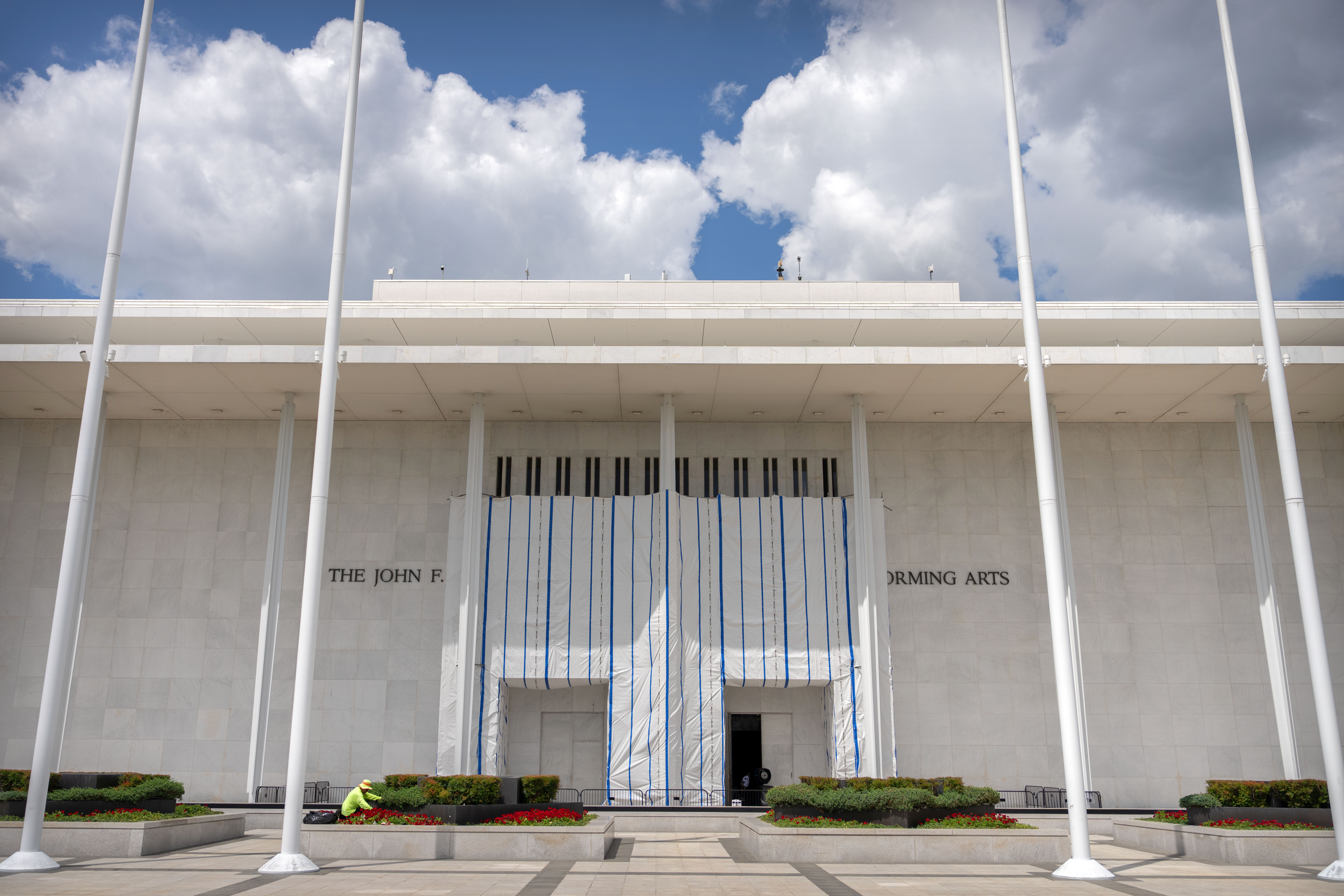
    Cooper ruled in May that letters affixed to the building spelling out Trump’s name were added illegally and he ordered their removal, a decision that the administration failed to persuade courts to overturn. Since then, a tarp has covered the area where the letters were once installed, frustrating those who sought to remove the president’s name from the building.

    Kennedy Center makes no commitment to removing tarp

    In the latest filing, the Kennedy Center made no commitment to remove the tarp, saying the covering was in place to facilitate the removal of Trump’s name and is part of a broader system needed for “water testing and structural repairs to the roof overhang.”

    More broadly, Beatty’s lawyers, Norm Eisen and Nathaniel Zelinsky, questioned the integrity of the board’s vote this month, echoing concerns Cooper raised when he called a March vote to shutter the building “ill-informed and seemingly preordained.”

    Heading into the August meeting, the Kennedy Center’s management said it would provide the board with three options, including a complete closure or a partial closure that would allow “some continued public access and limited programming in spaces unaffected” by the work. A third option would “consider a highly limited series of phased closures to address only the Center’s most serious infrastructure needs while scheduling and maintaining a full slate of programming.”

    In Tuesday’s filing, the Kennedy Center said a Delta Consulting Group analyst concluded that a partial closure that would play out over four years “would increase the length and cost of construction and lead to substantial safety concerns.”

    The analyst “recommended that the Board proceed with a full closure for two years, which would minimize total cost, minimize the amount of time that programming would be subject to disruptions from construction, and best preserve the Center’s reputation as world-class performing-arts venue,” the Kennedy Center said.

    Eisen and Zelinsky, however, noted that materials were provided to the board just two days before the meeting. They said some documents appeared to have been created before Cooper’s May ruling and referred to the Kennedy Center’s closure that was initially set to take effect on July 6.

    The August vote to close the Kennedy Center, Beatty’s lawyers argued, “exhibits the same flaws as the first vote.”