Category: Entertainment Wires

  • Gunther von Hagens, the German anatomist behind the ‘Body Worlds’ exhibition, dies at 81

    Gunther von Hagens, the German anatomist behind the ‘Body Worlds’ exhibition, dies at 81

    BERLIN — Gunther von Hagens, the German anatomist who generated both fascination and revulsion around the globe with his Body Worlds exhibits of preserved human corpses, has died. He was 81.

    Mr. von Hagens’ family and the Institute for Plastination, which he founded, said he died on Friday. A statement they issued on Monday gave no further details. Mr. Von Hagens had announced in 2010 that he was living with Parkinson’s disease.

    Mr. von Hagens trod a fine line between science, entertainment, and commerce with his touring exhibits, as well as headline-grabbing actions such as a public autopsy.

    At the heart of Mr. von Hagens’ work was the so-called plastination process — replacing body fluids with liquid plastic that then hardens. That technique, which he started developing in the 1970s, prevented decay, left tissues intact, and allowed him to display preserved corpses and their inner organs.

    The resulting exhibition, Body Worlds, first went on show in Japan in 1995.

    Two years later, the collection of partly skinless corpses went on display in Mr. von Hagens’ homeland, overcoming an attempt by local church leaders to block its opening on the grounds that it was disrespectful. Mr. von Hagens said he was helping viewers understand how their bodies work.

    The anatomist “is forced in his daily work to reject the taboos and convictions that people have about death and the dead,” Mr. von Hagens said of his work.

    “I touch here a taboo, which is our body, and nothing is so near as our body is to us,” he said.

    The shows used the corpses of people who agreed to donate their bodies for plastination. Critics argued that Mr. von Hagens bordered on sensationalism with his works, which included a corpse riding a plastinated horse, and a pregnant woman with an eight-month-old fetus inside.

    Mr. von Hagens “plays with the corpses like a child plays with dolls,” the Rev. Ernst Pulsfort, spiritual rector of Berlin’s Catholic Academy, said when the show first opened in the German capital in 2001. He argued that it catered to a “public lust for sensation.”

    During a Body Worlds show in London in 2002, the anatomist — wearing, as ever, his trademark black fedora — conducted Britain’s first public autopsy in 170 years before a sellout crowd of hundreds, defying government warnings that it might be illegal.

    Mr. von Hagens declared it a “huge success.” The British Medical Association’s head of ethics, Michael Wilkes, said it was “degrading and disrespectful.”

    The Body Worlds exhibits were shown in several American cities after making their U.S. debut in Los Angeles in 2004.

    Mr. von Hagens’ “Plastinarium,” where bodies are prepared, opened in the eastern German town of Guben in 2006.

    The anatomist was born Gunther Liebchen on Jan. 10, 1945, in what is now western Poland.

    He went to medical school in Jena in East Germany, but increasingly questioned the communist system and made a failed attempt to flee to the West. He was detained before West Germany bought his freedom in 1970, a regular practice at the time.

    He continued his medical studies at the University of Luebeck and, in the 1970s, began working at Heidelberg University’s pathology and anatomy institute. He married a former classmate, Cornelia von Hagens, and took her surname.

    His second wife, Angelina Whalley, heads his Heidelberg-based Institute for Plastination and curates his exhibitions, and he had three children from his first marriage.

    Monday’s statement said it was Mr. von Hagens’ wish that his body be made available for plastination and “his family will respect and carry out this wish.”

  • UNESCO adds France’s D-Day beaches, Greece’s Mount Olympus. U.S. Okefenokee Swamp to World Heritage List

    UNESCO adds France’s D-Day beaches, Greece’s Mount Olympus. U.S. Okefenokee Swamp to World Heritage List

    SEOUL, South Korea — World War II’s D-Day landing beaches in northern France and the iconic Mount Olympus in Greece were among the sites added to the World Heritage List on Sunday at a U.N. committee meeting in South Korea reviewing dozens of nominations.

    The UNESCO committee, which meets in Busan through Wednesday, also inscribed the ancient Japanese capitals of Asuka and Fujiwara and South Sudan’s Boma-Badingilo Migratory Landscape, host to one of the world’s largest land mammal migrations and the country’s first addition to the World Heritage List.

    Last week, the committee added Georgia’s Okefenokee Swamp to the list. The Okefenokee Swamp is regarded as one of the world’s largest freshwater ecosystems, encompassing a vast network of wetlands that supports exceptional biodiversity and serves as the source of two major rivers. Its largely undisturbed peat beds preserve a 5,000-year record of environmental change, making the swamp both a globally significant natural habitat and a valuable source of information on long-term environmental change, according to a UNESCO description.

    The French designation covers the five Normandy landing beaches — Omaha, Utah, Sword, Gold, and Juno — where more than 150,000 Allied troops came ashore on June 6, 1944, along with the Pointe du Hoc assault site, all central to the campaign to liberate Western Europe from Nazi occupation during World War II.

    The International Council on Monuments and Sites, which evaluates submissions to the heritage committee, said the sites contain extensive remnants, from German fortifications and bomb-scarred landscapes to Allied harbor structures and sunken vessels, marking an “event widely perceived as having enabled the return of freedom and heralded a lasting peace on the European continent.”

    ICOMOS also called for stronger monitoring and preservation efforts on the sites, citing potential threats posed by tourism, climate change, and rising sea levels, and the development of wind farms near the areas.

    Ahlem Gharbi, France’s permanent delegate to UNESCO, said the Normandy landings marked a turning point from global conflict toward a postwar order built on peace and security, and that the designation of the sites carries added significance at a time of escalating international crises and wars.

    “It’s probably the greatest amphibious landing there’s ever been. It ought to be remembered for that alone,” historian David Edgerton said in a recent interview with the Associated Press.

    The World Heritage inscription of Mount Olympus, the mythical home of the 12 Olympian gods, rewarded a 12-year effort by Greece to secure recognition for its tallest mountain as a mixed cultural and natural heritage site. Rising 9,573 feet from a base near sea level, the mountain was believed to be the throne of Zeus, king of the gods, while also harboring rich biodiversity.

    Evangelos Geroliolios, mayor of Dion-Olympus, a municipality at the foot of the mountain, said in a recent interview with the AP that inclusion on the World Heritage List “places greater obligations on our part to protect this environment,” citing the potential impact of increased tourism.

    “We reaffirm our unwavering commitment to safeguarding Mount Olympus for the benefit of present and future generations,” said Georgios Koumoutsakos, Greece’s delegate to UNESCO. “As Greek mythology wisely reminds us, it is always best to remain on good terms with gods.”

    The designated Japanese locations in the western prefecture of Nara cover 19 archaeological sites from the 6th to 8th century capitals of Asuka and Fujiwara, where Japan established its first centralized state modeled after Chinese systems. The sites preserve the largely buried remains of royal palaces, government offices, Buddhist temples, and tombs from capitals that influenced the later capitals of Nara and Kyoto.

    Japanese Vice Culture Minister Shigeki Kobayashi thanked the committee for inscribing the Asuka-Fujiwara sites and said Japan reaffirms its commitment to “transmitting this valuable property to the future generations.” Japanese Prime Minister Sanae Takaichi, a Nara native, wrote on X that she hopes the World Heritage designation will boost tourism to the site.

    Yoshiyuki Aihara, a Nara University archaeology professor, told AP the sites are significant because they show how Japan’s ancient state was formed through influences from China and the Korean Peninsula.

    “If you dig underneath these rice paddies about 1 meter, you start finding a stretch of ruins in this area, though that’s not easy for ordinary visitors to understand,” said Aihara, who is continuing excavation work at the site.

    South Sudan’s Boma-Badingilo site encompasses vast wetlands, flood plains, and savannas shaped by seasonal rainfall and flood dynamics, with an estimated 6 million white-eared kob, tiang, and Mongalla gazelles moving across the landscape in response to changing environmental conditions.

    It also provides habitat for elephants, lions, cheetahs, and other wildlife while supporting various ethnic communities that have lived by herding, farming, and fishing for centuries, according to UNESCO.

  • How the lighthearted social media trend of teen takeovers took a serious turn

    How the lighthearted social media trend of teen takeovers took a serious turn

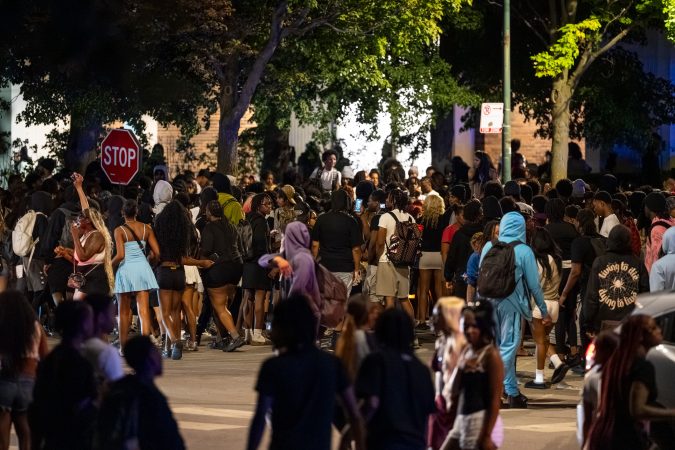
    When Damarion Spann, 18, saw an Instagram flier calling for a massive gathering on a beach near downtown Chicago, he immediately wanted to go. Thousands of others joined him that night on the sand, blasting music and dancing.

    The cultural trend of so-called teen takeovers has popped up across the U.S. in recent years, influencing local policing and national politics. The events, often hyped online and captured in videos on social media, have led to shootings, theft, and vandalism. City officials and police are concerned about an increase over the summer, and are under pressure to prevent similar gatherings or to punish those who participate.

    Over the July 4 holiday weekend, several thousand young people converged in two spots in Raleigh, N.C., police said. Nine people, including an adult who was not part of the gatherings, were shot and wounded.

    There were also takeovers in Pensacola, Fla., where a 19-year-old was shot and killed; and Newport Beach, Calif., where more than 400 were arrested after the police chief said teens launched “explosive mortars and other projectiles” at officers ordering them to disperse.

    But Spann and other teens say that the events are largely misunderstood. They point to formal curfews or limits on group size at malls and movie theaters that have made it harder for teens to gather, exacerbating a feeling of disconnection they trace back to remote learning during the coronavirus pandemic.

    How cities are tracking the social media trend

    Communities and police across the country are trying to identify organizers, fine parents of those involved, and impose curfews.

    In Detroit, officials say they “thwarted” 19 gatherings so far this year by monitoring time and location changes as young people coordinated across social media, said Teferi Brent, director of the Mayor’s Office of Neighborhood and Community Safety.

    “We have eyes on all the behaviors and activities of those who have expressed interest in trying to take over and we have done a good job of being way ahead of the curve and being able to prevent a lot of these things,” Brent said.

    Alderperson Jessie Fuentes, who chairs the Chicago City Council’s subcommittee on youth employment, said her office has tried to find solutions that don’t rely exclusively on police and instead coordinate with parents and community members to prevent conflict or crimes.

    Blue Island, a south Chicago suburb, has taken another tack: to fine parents or guardians and use the funds to cover cleanup after events. That might include debris left behind or other damages like cars dented from scores of teens clambering over them while fleeing police.

    Other places have taken harsher approaches, as in Florida, where state officials said prosecutors can apply racketeering laws, typically targeting criminal gangs or organized crime, if takeovers appear to be facilitated by “an organized network.”

    But some have pushed back on the idea that the threat of harsh legal punishment could prevent the gatherings in the first place.

    “What we know about adolescent brain development is that the stakes are not going to be what prevents a young person from engaging in risky behavior,” said Melissa Milchman, the executive director for the nonpartisan organization the Coalition for Juvenile Justice. Milchman added that mass arrests often ensnare those who are going for innocent fun without preventing others from breaking the law.

    Teens say there aren’t safe spaces for them to gather

    For Spann, the recent media attention on the events has largely failed to capture the appeal to young people.

    “You feel like a young person who has freedom, who’s not being held to something,” said Spann, who is Black. At the event he went to, he was able to catch up with people he hadn’t seen since 8th grade.

    He said that the events are a direct result of a cascade of school closures across Black neighborhoods over the past couple of decades in Chicago. To deter people from gathering even at basketball courts, where there were sometimes fights, officials have removed the nets. Spann said that his mom, who grew up in the same neighborhood, frequently talks about how much easier it used to be to hang out outside without a fear of gun violence.

    When Spann goes to malls in more affluent areas with his mostly Black group of friends, shoppers often stare and security guards question them. To avoid scrutiny, Spann and his friends sometimes sneak into outdoor shopping centers or areas downtown in smaller groups at staggered times.

    By contrast, in the same spaces, Spann said, “If I’m with my white friends, I feel like I belong.”

    Despite the physical dangers that come with takeovers and the threat of getting a ticket or even arrested, the allure is strong, according to Jeffrey Bernstein, a psychologist and author.

    “The kids still do it because they feel like it’s their second family,” which he said “really takes over as their primary sense of connection.”

    “They’re getting things from their peers that they can’t get from their parents.”

    Some cities have tried to meet that need head-on, instead of cracking down with law enforcement.

    In St. Louis, officers have started to bring some teens to community centers instead of jails so their parents can pick them up, and in Baltimore, officials have tried leaning on public schools to provide alternative programming. In Chicago, Spann received a $11,000 grant from the city and partnering nonprofits to host an event for his peers at the end of the summer, in an effort to give his community more places to gather.

    What cities are doing to address teen takeovers

    In April, Daveion Page, a 16-year-old in Detroit, was bored. He turned to his phone, creating a post on social media promoting a teen takeover. Hundreds of teens soon flocked to a site downtown and fights broke out by the end of the night. At another takeover in May, a 14-year-old was shot and wounded.

    After the Detroit event in April, Page told reporters that he didn’t intend for the takeover he organized to result in violence.

    “I just wanted to get out of the house, have fun, enjoy time with my family and my homeboys and my homegirls, too,” said Page, who was flanked by Detroit Mayor Mary Sheffield and other city officials at a news conference.

    He told city officials that young people might respond if there were more safe places to gather.

    Before the takeovers, there were already plans to use $1.5 million from the city’s budget for summer programming and to support violence prevention programs. In response to the takeovers, the city has launched an office of youth affairs, met and listened to students at schools, and created a youth advisory board comprised of teens and young adults.

    “We have brought them to the table and made them a part of our structure in regards to identifying what the needs and concerns are of the young people in the city,” Brent said.

    In Detroit, a late-night basketball league has formed as an alternative hangout spot for teens and young adults. Jerseys and sneakers are provided by the city.

    “This league just helps me find something to do,” Cameron Chandler, 21, said while playing basketball at the recreation center.

    He’s never participated in a takeover, but recently after practice, he stumbled on one near his home.

    “There were a lot of cops and some people got arrested,” Chandler said. “You just have to think, ‘that could easily be me.’”


  • Charles Gaines, author and screenwriter whose ‘Pumping Iron’ introduced the world of bodybuilding, dies at 84

    Charles Gaines, author and screenwriter whose ‘Pumping Iron’ introduced the world of bodybuilding, dies at 84

    NEW YORK — Charles Gaines, the author whose book and documentary Pumping Iron helped bring professional bodybuilding into the mainstream and introduce Arnold Schwarzenegger to the world, has died. He was 84.

    Mr. Gaines died Tuesday, according to Greta Gaines, the author’s daughter. She did not reveal a cause.

    “You always marched to your own drummer and inspired everyone around you to do the same,” she wrote in a tribute to her father. “Follow that bliss, catch that fish and kiss those lips while you can because my father was the live life to the fullest kinda guy.”

    Mr. Gaines collaborated with George Butler to write Pumping Iron: The Art and Sport of Bodybuilding, which led to the making of the documentary Pumping Iron, for which Butler and Mr. Gaines wrote the script.

    In the introduction to their 1974 book, Mr. Gaines wrote that he and Butler considered it “a sort of respectful report from the interior of an interesting, colorful and heretofore ignored region of American life.”

    In a 2022 edition, he admitted that neither author thought “many people outside of the bodybuilding world would be interested in” the book. Mr. Gaines wrote that Schwarzenegger almost single-handedly “brought bodybuilding out of the shadows it had languished in since its earliest days in America and into the limelight.”

    Schwarzenegger, who won seven Mr. Olympia and five Mr. Universe titles and who was pictured flexing on the cover of Pumping Iron, would harness the attention into a career, first in movies — including The Terminator, True Lies, Twins, and Predator — and then politics, becoming governor of California from 2003 to 2011.

    Mr. Gaines wrote that he’d been involved in bodybuilding in one way or another since he was 16, when he began lifting weights. Pumping Iron began as an article for Sports Illustrated in 1972 on a bodybuilding contest for Mr. East Coast.

    “If we felt at times a little like 19th century explorers, it was because we found bodybuilding to be as primeval and unmapped as parts of Labrador,” he wrote. ”Nobody, we discovered, had been back into it to send out a report on what it was like.”

    Mr. Gaines and Butler used the book as the basis for their 1977 documentary Pumping Iron, which centers on the rivalry between Schwarzenegger and fellow bodybuilder Lou Ferrigno in the competition for a Mr. Olympia title. Ferrigno would later star on TV in The Incredible Hulk.

    Mr. Gaines was raised in Alabama and earned a bachelor’s degree from Birmingham-Southern College and a Master of Fine Arts in writing from the University of Iowa.

    Mr. Gaines published numerous books throughout his career, including Waters Far and Near: Tales of Angling Adventure and Misadventure Around the World and the novels Stay Hungry, Dangler, and Survival Games. Stay Hungry was adapted into a movie starring Jeff Bridges, giving Schwarzenegger his first movie role.

    “He climbed mountains, trekked across ice, fished, and hunted on almost every continent, writing about every adventure in a way that captured people’s hearts and minds. He was interested in everything — and his interest was contagious,” Schwarzenegger wrote on Instagram. “I’m lucky that he was always looking for new frontiers, because that’s how he found me and our niche sport of bodybuilding.”

    In addition to his daughter Greta, Mr. Gaines is survived by his wife, the artist Patricia Ellisor Gaines, and two other children, Latham and Shelby Gaines.

  • Ford recalls more than half a million Broncos due to engine fire risk

    Ford recalls more than half a million Broncos due to engine fire risk

    WASHINGTON — Ford Motor Co. is recalling more than half a million Broncos because a wiring harness in the engine compartment can short circuit and increase the risk of fire.

    Ford said Thursday that 565,691 Ford Broncos and Bronco Raptors, model years 2021-2026, are included in the recall. The automaker estimates that around 1% of those vehicles have the wiring harness defect. Ford said it is not aware of any reports of accidents or injuries related to the issue.

    The problem is caused by insufficient protection on the wiring harness which can lead to exposed wires and short circuiting. In the event of a short, drivers may notice smoke in the air vents or a warning message on their dashboard followed by flames coming from the passenger’s side of the engine compartment.

    To fix the problem, dealerships will install new covers over the wiring free of charge.

    Ford’s number for this recall is 26S55. Vehicle identification numbers involved in this recall are now searchable on NHTSA.gov. NHTSA’s number for this recall campaign is 26V468.

    Owners may contact Ford customer service at 1-866-436-7332 or the National Highway Traffic Safety Administration Vehicle Safety hotline at 1-888-327-4236 (TTY 1-888-275-9171).

  • Government withdraws subpoenas of 3 reporters for the New York Times after admitting legal errors

    Government withdraws subpoenas of 3 reporters for the New York Times after admitting legal errors

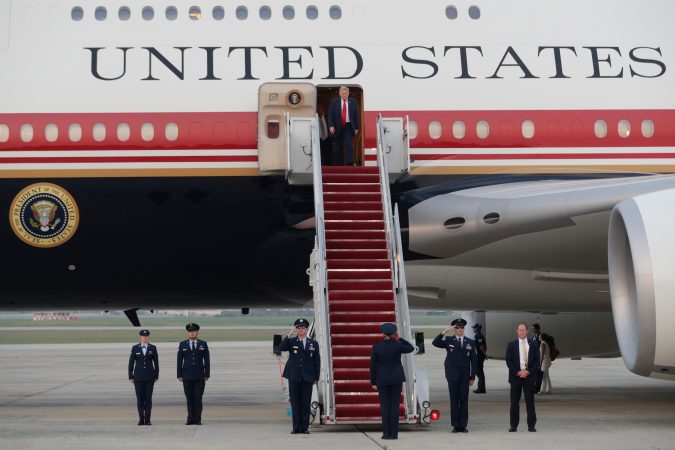
    NEW YORK — Criticized by a federal judge for sloppy legal work, the government on Thursday grudgingly withdrew subpoenas that would have compelled three New York Times reporters to testify about their sources for articles about President Donald Trump’s Qatari-gifted Air Force One jet.

    The withdrawals in U.S. District Court followed a remarkable back and forth between a visibly irritated Judge Arun Subramanian and government lawyers. They come at a time when the Trump administration is vigorously going after news organizations whose reporting and coverage it doesn’t like — and also trying to crack down on leaks inside the government.

    The government’s retreat in the face of vigorous legal opposition and a stern reprimand from a judge marked the latest instance of the Justice Department pulling back on its aggressive efforts to compel journalists to identify their sources before a grand jury. The administration recently withdrew similar subpoenas that sought to compel testimony in Virginia from journalists for the Washington Post and the Wall Street Journal related to separate national security coverage.

    Subramanian said he otherwise would have granted the newspaper’s request to reject the subpoenas because laws and regulations pertaining to subpoenas served on journalists maintain that they should be issued as a last resort in an investigation.

    “Subpoenas are the last step, not the first step, but the last step,” the judge said, citing rules set to protect against violations of the First Amendment. He said the government’s actions had turned the law and the regulations “on its head.”

    “When you see something like this, if this were a civil proceeding, what I would normally do is ask the parties to show causes why sanctions should not be issued,” the judge said, referencing punishment for lawyers for egregious actions.

    After the hearing, the Justice Department lashed out at the judge in a statement, saying he “threatened our attorneys with sanctions unless subpoenas were withdrawn, and blocked us from presenting the meticulous process of this investigation.”

    “The grand jury has a right to hear testimony from all material witnesses in a federal criminal investigation. This judge’s conduct overrides clear longstanding principles and common sense — blocking the grand jury from receiving core evidence in a national security investigation,” the statement said.

    “Make no mistake,” it added, “this investigation remains ongoing, and we will pursue justice against those threatening national security by leaking classified information, a serious federal crime.”

    Government attorneys upbraided by judge

    Subramanian noted that with protections for journalists at stake, the government was required to ensure it could not obtain what it needed from any other sources before issuing subpoenas to journalists.

    A Justice Department lawyer, Sean Buckley, cast the government’s missteps as inadvertent errors and said “no one was trying to pull a fast one.” Buckley apologized for other subpoenas that sought records for phone numbers belonging to one reporter’s mother and two of the journalists’ spouses.

    “That was an error, judge, which we own,” Buckley said. “It was a consequence of trying to move quickly.”

    “These things are starting to pile up,” Subramanian said, becoming increasingly testy.

    The hearing was held publicly despite efforts by the Trump administration to keep secret the litigation spawned by subpoenas it served on the Times’ journalists to try to get them to divulge their sources.

    The newspaper’s lawyers had challenged the validity of the grand jury subpoenas, along with subpoenas issued for phone records of several Times journalists and some of their relatives. Senior Times officials, including the paper’s managing editor and general counsel, sat in the gallery watching during Thursday’s proceedings.

    The request for phone records raised questions about the extent of the investigation being carried out by the Justice Department.

    David McCraw, the Times’ chief newsroom lawyer, said after the hearing in a statement that it “was an important affirmation of our country’s commitment to a free press.”

    “We are pleased that the government finally conceded that the subpoenas violated the law, but they should never have been issued in the first place,” he said. “We will not be deterred in the face of tactics like these.”

    Court action comes after reporting on new Air Force One jet

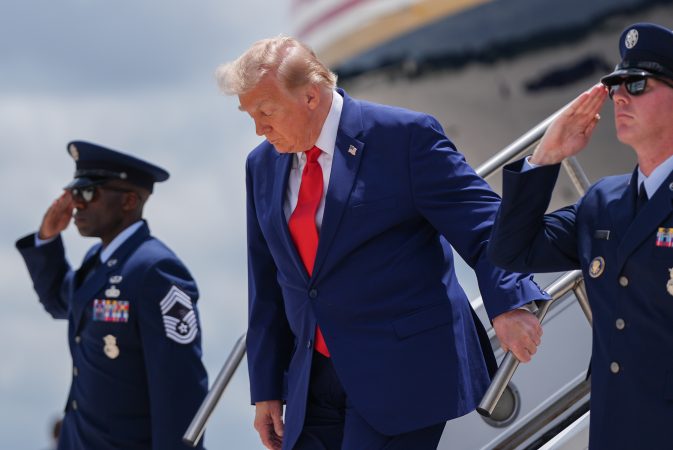
    The new jet in question, a present from Qatar that Trump’s administration spent $400 million to retrofit and upgrade, recently entered service. But Trump used an older model Air Force One jet to leave a NATO summit in Turkey earlier this month.

    The Times, citing anonymous sources, reported that the switch had come at the urging of the Secret Service and that the newer plane lacked some of the advanced security features of the older Air Force One aircraft, including antimissile capabilities. On social media, Trump rejected claims of security concerns.

    The Times wrote in a letter to the judge several days ago that two subpoenas seek records beginning on Jan. 1, long before the newspaper published articles on July 8 and July 9 that became the basis for the grand jury subpoenas.

    It said that lengthy stretch of records sought would indicate that the purpose of the subpoenas might have been “to forage for information about the Journalists’ source relationships more broadly.”

    The Times argued for the phone records subpoenas to be disallowed on the grounds that the government had acted in “bad faith” and ignored its own protocols by not giving the journalists advance notice that records were being sought and by demanding the information “without first conducting any serious investigation.”

    The Justice Department has justified the grand jury subpoenas by saying that “reporters are not the targets, those leaking classified information are.”

    The Justice Department also said it had complied with its own regulations in issuing the subpoenas and had taken investigative steps before seeking them. It said it was authorized to delay disclosing the subpoenas but decided to alert the journalists’ lawyers so they could challenge them.

    In fighting the subpoenas, the Times’ lawyers highlighted how the government’s carelessness could have exposed sensitive information that had nothing to do with the journalists. The mother whose phone records were mistakenly sought is a mental health professional with confidential client relationships and one of the two spouses is the general counsel of a law firm, the lawyers said.

    At Thursday’s hearing, a final rebuke from the judge to the government came when he asked its lawyers to assure him that it won’t repeat a scenario that left one journalist being served a subpoena by an FBI agent while he was home watching the family-friendly movie The Sheep Detectives, about sheep on a quest to solve the murder of their shepherd.

    Said the judge, to loud courtroom laughter: “I can’t think of anything more inconsistent with ‘Sheep Detective’ than an FBI agent showing up at your door.”

  • Gas, groceries, and back-to-school items are where shoppers might see higher oil prices surface

    Already feeling pinched since the start of the Iran war, consumers are likely to feel more pain ahead as oil prices pushed past $100 a barrel Thursday amid renewed fighting and military strikes that have left global oil supplies stranded in the Middle East.

    The elevated price marked a turn from lower oil prices enjoyed briefly when hostilities between the U.S. and Iran waned in June. Brent crude, the international standard, last reached $100 a barrel in May.

    Companies that produce and sell fresh food, school supplies, and anything that gets shipped using fuel reported cost impacts from an earlier spike in energy prices after the U.S. and Israel attacked Iran. They’re likely to continue passing some of their increased expenses to consumers.

    “In general, once you have an increase in costs, businesses are fast in increasing the price,” said Miguel Gomez, director of Cornell University’s Food Industry Management Program. But, he noted, “it takes more time to lower prices when the costs go down.”

    Here’s how higher oil prices could further impact consumers’ wallets.

    Drivers are paying more for gasoline at the pump

    Volatility along the Strait of Hormuz and broader regional instability pushed up the price of crude oil, the main ingredient in gasoline, and could continue to make driving costlier during the second half of summer, according to motor club AAA.

    The average U.S. price for regular gasoline reached $4.09 a gallon Thursday, up 15 cents from a week ago, with drivers in most states now paying $4 or more, according to AAA.

    “Given the typical lag along the oil industry’s supply chain, prices at the pump are poised to keep rising at least into next week,” said Pavel Molchanov, investment strategy analyst at Raymond James. But he noted that futures prices for oil delivered later this year and next year are lower, suggesting prices could fall once military action ends.

    For the most part, higher gasoline prices haven’t stopped Americans from driving. Gasoline demand rose 1% to 8.9 million barrels per day last week, according to the U.S. Energy Information Administration.

    Pressure on gasoline prices could persist because fewer refineries are available to process crude than before the conflict. Refineries in the Middle East have been damaged, and Ukrainian attacks have damaged refineries in Russia.

    Shoppers are paying more for a bag of groceries

    Grocery prices generally rise with oil because farmers use diesel fuel to power equipment, while many food products are transported by trucks that require fuel.

    “Oil at $100 doesn’t make food prices jump right away, but it does put upward pressure across the food supply chains, especially for categories that depend heavily on trucking, cold storage, and packaging,” Gomez said. Fresh produce and dairy could feel a larger impact because they require refrigeration during delivery.

    Imported goods are also vulnerable to higher shipping costs, Gomez said. “Things like olive oil that we produce very little here and are coming from mostly from Europe are going to be up.”

    Grocery chain Albertsons on Thursday lowered its 2026 fiscal outlook, citing pressure on its core grocery business and a pullback in consumer spending.

    Every product that moves will have higher costs baked into the price

    Higher fuel costs for ships, trucks, and air carriers can trickle down to consumers and businesses that depend on shipping. UPS, FedEx, and other shipping services introduced fuel surcharges and other fees as fuel prices increased.

    According to an AFS Logistics and TD Cowen Freight Index released July 14, truckload pricing is at a four-year high because of rising fuel costs and capacity constraints.

    Andy Dyer, CEO of AFS Logistics, said diesel prices in the second quarter were about 51% higher than in January and February, while jet fuel prices rose 90% from a year earlier.

    “Beyond the direct impact of higher freight bills paid by shippers, these price movements also have second-order effects that squeeze rates higher,” he said. “Smaller truckload carriers working on tight margins may park trucks and wait for fuel prices to revert to more palatable levels before returning to operation.”

    Retailers are noticing consumers pulling back

    Rural lifestyle retailer Tractor Supply Co. reduced its annual sales outlook on Thursday, citing in part higher fuel prices during its spring selling season that weighed on customer spending.

    ”Our customers often drive longer distances to shop frequently in pickup trucks, many of which are diesel-powered, making them especially sensitive to higher fuel costs,” CEO Hal Lawton told analysts.

    Lawton said customers are still investing in their pets, animals, farms, and properties, but shopping has become “more deliberate.” Customers are consolidating trips, prioritizing needs-based purchases, and taking a more measured approach to discretionary spending.

    Back-to-school shoppers may face higher prices

    The Footwear Distributors and Retailers of America trade group warned in a report Wednesday that increasing freight and material costs, along with rising tariffs costs, are creating big challenges for the footwear industry as companies prepare for the back-to-school shopping season and the remainder of the year.

    Matt Priest, CEO and president of the trade group, said some of its members have cited 25% price increases for petroleum-based materials used in footwear manufacturing due to the Middle East conflict. Those costs could eventually translate into roughly a 5% increase in the cost of finished footwear products sold to consumers, Priest said in the report.

    Footwear companies have been front-loading inventory and accelerating imports before President Donald Trump imposes new tariffs on foreign products, putting additional pressure on shipping rates, he said.

    “Container rates are spiking right now,” Priest said.

    Higher jet fuel costs lead to costlier flights

    Since the war began, airlines have responded to the jump in fuel costs by raising fares and add-on fees, and trimming flights or routes that are no longer profitable at higher fuel prices. Those moves can help protect the airlines’ margins, but also leave travelers facing higher prices and fewer options, particularly in smaller or less competitive markets.

    In the latest sign that the conflict is driving up costs for the travel industry, American Airlines on Thursday reported a sharp decline in second-quarter net income despite record revenue and strong spring travel demand.

    American said higher fares helped offset nearly half of its higher fuel bill but not enough to prevent it from lowering its full-year outlook.

    Despite higher prices, jet fuel demand in the last four weeks increased 9% compared to the same time last year, according to EIA.

    Associated Press writers Rio Yamat in Las Vegas, Wyatte Grantham-Philips, and Dee-Ann Durbin in Detroit contributed to this report.

  • As the president touts Trump Accounts, some families are still waiting for baby’s $1,000

    As the president touts Trump Accounts, some families are still waiting for baby’s $1,000

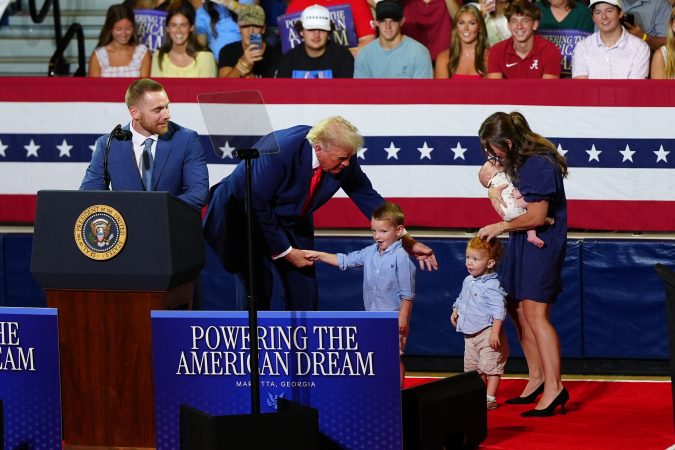
    WASHINGTON — At a rally Wednesday, President Donald Trump touted the $1,000 babies can receive when their parents open Trump Accounts in their names, seed money that Trump says will help give them “a really fair shot at the American dream.”

    “Think of that. The government is finally giving money back to our children,” Trump said to the crowd gathered at a Georgia high school

    Some parents who opened accounts earlier this month for their babies say they’re still waiting for their money. The accounts went live July 4, two days before Trump rang the opening bells for the New York Stock Exchange and the Nasdaq from the Oval Office.

    The tax-advantaged accounts can be opened for any child under the age of 18, and more than 7 million accounts are already active, Trump said Wednesday. Babies born between Jan. 1, 2025, and Dec. 31, 2028, get $1,000 in seed money from the U.S. Treasury. Most of those families receive their $1,000 in one or two days, the Treasury Department said.

    After the Trump Accounts are set up, parents, relatives, friends and employers can contribute to them. Some billionaires have also pledged philanthropic contributions to the accounts. The money is turned over to private firms that invest it in index funds, a type of mutual fund that tracks the performance of the stock market. The money can’t be accessed until the child turns 18, and only then for specific purposes, such as going to school, opening a business or buying a home.

    At the rally Wednesday, Rick Jackson, Georgia’s GOP nominee for governor, said he would push for state lawmakers to match the $1,000 in seed money from the federal government. Jackson, a wealthy businessman and CEO of a healthcare company, said he believes Georgia lawmakers will support that, but “if they don’t, I will personally donate it myself.”

    Boosters of the program say it’s a chance to give more Americans a stake in the stock market. They hope it will stem the rising popularity of democratic socialists, who seek to raise taxes on corporations and wealthy people to ease the cost of things like food and healthcare for low-income and middle-class Americans.

    Some parents were told it could take 4 weeks for the deposit

    For babies born since Trump took office last year, $1,000 from the U.S. Treasury is supposed to kick off the accounts. While some parents report receiving the money, others said in interviews and on social media they’re still waiting for their $1,000.

    Masaki and Kristina McLellan, new parents from Bergen County, N.J., said in an interview they were wary of signing up for the accounts because they worried it was a promotional stunt for the president. But the $1,000 incentive persuaded the couple, whose daughter Maya was born in late March, to start an account anyway.

    Masaki McLellan said he applied for the account July 6. At first, the application was rejected, but the account was activated after he called the Trump Account hotline. He was told he’d see the money in the account in 10 days. Now, he says, he’s been told it will take up to four weeks.

    Kristina McLellan said she was disappointed it was taking so long to fund her daughter’s account. But the infant has multiple other investments already compounding for her. Maya’s parents have already started a 529 college savings plan and a custodial brokerage account for her. The Trump Account is the third investment account in the little girl’s name.

    “We definitely want to give her options for her future and make sure she can choose what she wants to do,” said McLellan, a studio director for a local news station, who returns from maternity leave next week.

    The Treasury Department emphasized the McLellans’ case is unusual and said only a sliver of those who apply need customer support.

    Treasury says most parents wait only 1 or 2 days

    The Treasury Department said that the lag between opening an account and receiving the seed funding constitutes “standard processing time, like receiving a tax refund,” and that the overwhelming majority of parents are waiting only one to two days. But the department likes to give parents a conservative estimate for how long it might take for the money to be transferred, such as the estimate of up to four weeks given to the McLellans.

    “Trump Accounts level the playing field by allowing every parent to invest in their children’s future, not just wealthy families with trust funds,” the department said.

    The government also unveiled an initiative last month that permits child welfare agencies to open accounts on behalf of foster youth.

    “With roughly 1 million sign-ups per month before launch, Trump Accounts have become the most popular and successful government-backed savings product in U.S. history,” the Treasury Department said.

    On Wednesday, Trump called the accounts “the most consequential” part of his signature tax and spending cuts bill, also known as the One Big Beautiful Bill.

    Trump faces pressure over his handling of the economy

    Trump’s stop in Georgia comes as he and fellow Republicans face pressure in the midterm elections for their handling of the economy. Only 33% of U.S. adults approve of Trump’s economic leadership, among the lower ratings of his second term, according to a June survey by the Associated Press-NORC Center for Public Affairs Research. Trump pledged to lower costs, but his tariffs and the war in Iran have instead helped to increase prices.

    Trump Accounts are similar to baby bonds, championed by Democratic-led cities and states meant to shrink the wealth gap between low- and high-income children. But unlike most baby bonds, which generally target kids from disadvantaged backgrounds, Trump Accounts are available to families of all incomes.

    The program has faced criticism from those who say it does nothing to help families in a child’s first years of life, when children are most likely to experience poverty, homelessness, and hunger. And the Republican bill that created the program also slashed funding for programs that are disproportionately used by children, including Medicaid and the Supplemental Nutrition Assistance Program.

  • Appeals court rejects Biden’s bid to block release of recordings of ghostwriter interviews

    Appeals court rejects Biden’s bid to block release of recordings of ghostwriter interviews

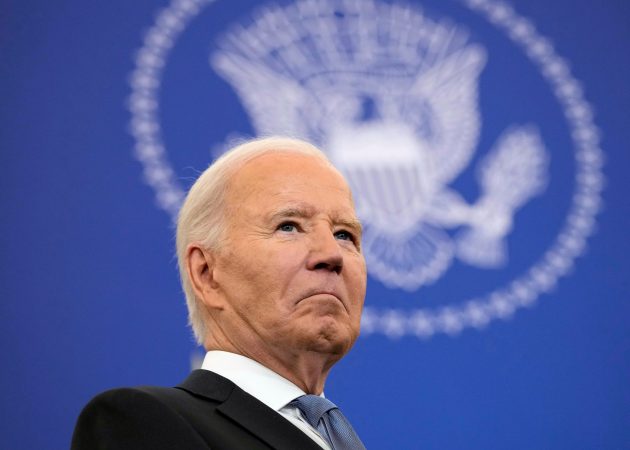
    WASHINGTON — A federal appeals court has rejected a request by former President Joe Biden to block the release of audio recordings and transcripts of his interviews with a memoir ghostwriter before he was elected president.

    A divided three-judge panel from the U.S. Court of Appeals for the District of Columbia Circuit suspended its decision until Aug. 3 to allow more time for Biden to consider another appeal.

    The panel’s 2-1 ruling late Monday found there is a “substantial” public interest in disclosing the material that Biden wants to keep under wraps. Redactions to the recordings would help protect Biden’s privacy, the majority noted.

    “We conclude that any remaining incursion on personal privacy from disclosure of the now-redacted materials likely does not outweigh the public interest in disclosure,” the ruling says.

    Judge Florence Pan, who was nominated by Biden, a Democrat, wrote a dissenting opinion in which she said Biden has shown a “substantial privacy interest” in keeping the material hidden.

    “The conversations at issue took place in Biden’s home, and the recordings of them were obtained by the government in the course of a criminal investigation that did not lead to an indictment,” she wrote.

    The appeal also was heard by D.C. Circuit Chief Judge Sri Srinivasan and Judge Gregory Katsas. Srinivasan was nominated by President Barack Obama, a Democrat who chose Biden as his vice president. Katsas was nominated by President Donald Trump, a Republican who as president lost to Biden in 2020 but was elected again to the White House in 2024.

    Mark Zwonitzer, who worked with Biden on two memoirs, 2007’s Promises to Keep and 2017’s Promise Me, Dad, interviewed him at his home in 2016 and 2017. Biden’s lawyers say the conversations were candid, personal, and intended to remain private.

    Biden spokesperson T.J. Ducklo said the former president disagrees with the ruling but “respects the courts and the vital role an independent judiciary plays in a healthy democracy.”

    “President Biden’s conversations for a book a decade ago that discussed his late son are private, and were provided to the Department of Justice on the express condition they stay that way,” Ducklo said in a statement. “Reversing course and making them public is just the latest example of this administration weaponizing the (Justice Department) for political retribution.”

    The recordings were obtained by special counsel Robert Hur, who investigated Biden’s handling of classified documents from his time as a senator from Delaware and as Obama’s vice president. Republicans in Congress demanded the material after Hur declined to file charges against the then-president.

    Biden sued and sought an injunction to prevent the Justice Department under Trump from releasing the recordings to Congress and the conservative Heritage Foundation. The department previously argued that the recordings were exempt from disclosure under public records law.

    Biden appealed after U.S. District Judge Dabney Friedrich, who was nominated by Trump, ruled in June that the public interest in the material outweighed whatever privacy rights Biden had.

    Pan noted that the majority is effectively ruling in favor of immediately disclosing the material by denying Biden’s request for an injunction pending appeal.

    “That, of course, will moot this case,” she wrote.

  • Officials sought phone records of Times journalists and their relatives in an effort to unmask sources

    Officials sought phone records of Times journalists and their relatives in an effort to unmask sources

    WASHINGTON — President Donald Trump’s administration sought phone records of several New York Times journalists and even those of some of their relatives, according to a motion unsealed Monday — an unusually aggressive attempt to unmask the confidential sources of reporters who wrote about Trump’s Qatari-gifted Air Force One jet.

    The efforts by the Republican president’s administration to compel the identity of sources in the form of additional subpoenas come at a time when the executive branch’s relationship with the press is increasingly contentious. The efforts, described in a letter-motion filed by the Times over the weekend, were more expansive than previously known, the newspaper noted. They also covered a time frame that exceeded the news articles in question.

    “Two of the subpoenas seek records beginning on January 1, 2026, long before the events that are purportedly the basis for the Department’s investigation,” lawyers for the Times wrote in the letter. “That time frame strongly suggests that the Department is using this investigation not to focus on any purported concerns arising from the July 8 and 9 articles, but instead to forage for information about the Journalists’ source relationships more broadly.”

    Government has said reporters aren’t the target

    The phone records subpoenas come on top of grand jury subpoenas that were served July 10 on three journalists, seeking testimony about the identify of their sources. The Times has separately challenged those grand jury subpoenas, and a judge is scheduled to hear arguments on Thursday.

    Lawyers for the newspaper noted that some of the phone records subpoenas were issued on the same day as the grand jury ones, an additional one was issued the following day, and another was issued on July 16 — after the Times had already moved to quash the grand jury subpoenas.

    The Times said the phone records subpoenas should be spiked, arguing that each instance demonstrated “bad faith” by the government. The lawyers argued that the Justice Department ignored its own guidelines by not giving the journalists advance notice that records were being sought and had issued subpoenas “without first conducting any serious investigation.”

    The newspaper’s lawyers said the additional subpoenas call “into question the accuracy” of testimony given last week by Jay Clayton, the U.S. attorney in Manhattan, where the grand jury subpoenas were issued. At his confirmation hearing to be the Trump administration’s director of national intelligence, Clayton said that “we followed the protocols” and that the government took “the least intrusive possible” steps.

    The Justice Department has justified the grand jury subpoenas by saying that “reporters are not the targets, those leaking classified information are.” Asked about the phone records subpoenas, the department said Monday: “Any subpoena issued by the Department of Justice is done so in full compliance with federal law and internal Department policy.”

    The additional subpoenas included a request for phone records of one reporter’s mother and two of the journalists’ spouses. The motion noted that the mother in question is a mental health professional with confidential client relationships and that one of the two spouses is the general counsel of a law firm.

    “The disclosure of additional subpoenas for confidential newsgathering information of the Journalists is deeply concerning, revealing yet another instance of the alarming pattern of conduct detailed in the Motion to Quash,” the news organization’s lawyers wrote.

    “These actions demonstrate abuse of the grand jury process, continued bad faith attacks on the Journalists, violations of the Department’s own internal regulations, and disregard for the law in this Circuit intended to protect critical First Amendment interests,” the motion stated.

    It’s part of an ongoing legal challenge

    The Times revealed the government’s actions as part of an ongoing legal challenge to quash subpoenas that the Justice Department served on three journalists who reported on security concerns involving the jet.

    The original subpoenas, delivered to reporters at their homes, marked a dramatic escalation of the Trump administration’s crackdown on media leaks that free press advocates swiftly condemned as a government effort to intimidate news organizations. It followed an FBI search earlier this year of a Washington Post reporter’s home and the seizure of her electronic devices.

    The new jet in question, a present from Qatar that Trump’s administration spent $400 million to retrofit and upgrade, recently entered service. But Trump used an older model Air Force One jet to leave a NATO summit in Turkey earlier this month.

    The Times, citing anonymous sources, reported that the switch had come at the urging of the Secret Service and that the newer plane lacked some of the advanced security features of the older Air Force One aircraft, including antimissile capabilities. On social media, Trump denied security concerns.

    He said Monday the Qatar jet would be taken out of service for about a month to be “maxed out” with unspecified additions.

    Trump’s administration has clashed with the press, from newspapers to TV networks to the Voice of America, on multiple fronts since he returned to office last year. The methods include lawsuits, administrative actions, and public threats.

    The First Amendment of the U.S. Constitution guarantees the press’ ability to operate free of governmental restrictions.