Category: Business Wires

  • U.S. stocks rally near a record as falling oil prices ease Wall Street’s worries about inflation

    U.S. stocks rally near a record as falling oil prices ease Wall Street’s worries about inflation

    NEW YORK — The U.S. stock market rallied to the edge of its all-time high on Monday after easing oil prices helped calm Wall Street’s worries that inflation could get even worse.

    The S&P 500 jumped 1.5% and is just 0.1% below its record set earlier this summer. It was coming off a frenetic July, where it swung up and down as oil prices shot higher because of the war with Iran, before ultimately ending the month just about where it started.

    The Dow Jones Industrial Average, which measures a narrower slice of the U.S. stock market, climbed 693 points, or 1.3%, to an all-time high, while the Nasdaq composite leaped 2.1%.

    Stocks got a lift as the price for a barrel of Brent crude sank 4.7% to $83.77. It dropped after President Donald Trump said over the weekend that he decided to hold off on new strikes against Iran at the urging of allies in the region.

    Brent’s price careened between $72 and $102 last month as worries rose and fell about when the war with Iran would allow oil tankers to freely exit the Persian Gulf again to deliver crude to customers worldwide. The latest acquiescence by Trump helped to ease worries about the global flow of crude, and Treasury yields correspondingly fell in the bond market.

    The yield on the 10-year Treasury sank to 4.68% from 4.75% late Friday. It, though, remains well above its 3.97% level from before the war with Iran.

    Higher yields threaten to undercut prices for stocks and other investments, while slowing the economy by making borrowing more expensive for U.S. households and businesses. The average long-term U.S. mortgage rate has already leaped to its highest level in a year.

    Monday’s ease in oil prices helped airlines and other companies with big fuel bills lead the market. United Airlines flew 5.8% higher, while American Airlines climbed 5%. Norwegian Cruise Line Holdings steamed 6.6% higher.

    Boeing jumped 8% after U.S. regulators certified its 737 MAX-7 planes, clearing them for commercial service.

    Tyson Foods rose 2.8% after the meat company reported a slightly stronger profit for the spring than analysts expected. CEO Donnie King said strength is continuing in the company’s chicken business and its prepared foods, which include brands like Jimmy Dean and Hillshire Farm.

    It joined a lengthening list of big U.S. companies to deliver a bigger profit for the spring than analysts expected. That’s imperative for Wall Street because stock prices tend to follow the path of corporate earnings over the long term, and worries were rising that U.S. stock prices may have broadly already shot too high.

    Companies in the S&P 500 are on track to deliver earnings per share for the spring that are 47% higher than a year before, according to FactSet, with more than half of the companies in the index having already reported. If that ends up being the case, it would be the strongest growth since the spring of 2021, when the economy was roaring out of the COVID pandemic.

    Also offering encouragement for profits was a report on Monday showing that growth for U.S. manufacturing accelerated to its strongest level since 2022.

    Keeping Wall Street unsettled, though, were swings for stocks of companies that make computer chips. They’ve been veering up and down for weeks on worries about whether their surging revenues because of the artificial-intelligence boom are sustainable.

    If AI ends up producing less profit and productivity than hoped, Big Tech companies could curtail their spending sprees on data centers that have helped chip stocks soar to tremendous heights.

    Micron Technology went from a drop of 6.4% to a gain of 1.7% through the day before ending with a gain of 0.8%, for example. It’s up roughly 190% for the year so far.

    All told, the S&P 500 rose 110.78 points to 7,600.50 and finished just shy of its all-time closing high of 7,609.78. The Dow Jones Industrial Average climbed 693.38 to 53,178.41, and the Nasdaq composite rallied 540.04 to 25,913.90.

    The manic swings for AI stocks have been most dramatic in South Korea, where the Kospi index is dominated by just two tech titans, Samsung Electronics and SK Hynix.

    Seoul’s Kospi fell 5.1% Monday, coming off Friday’s 17.9% surge that was its best day in history.

    In neighboring Japan, Tokyo’s Nikkei 225 fell 0.9% after the United States and Japan confirmed they had moved together to prop up the value of the Japanese yen against the dollar. A stronger yen would help to limit inflation in Japan, but it could also potentially hurt Japan’s exporters.
  • Trump bank accounts were closed due to concerns over possible money laundering, Capital One says

    Trump bank accounts were closed due to concerns over possible money laundering, Capital One says

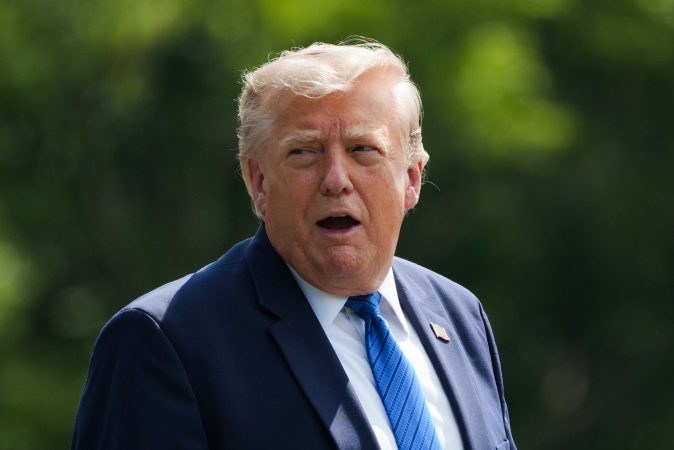
    NEW YORK — Bank accounts held by President Donald Trump were closed by Capital One in 2021 after it flagged financial activity that had characteristics of money laundering, the bank disclosed in a court filing over the weekend.

    The court filing is tied to a lawsuit filed against Capital One by one of Trump’s financial holding companies shortly after he was sworn into office a second time. Trump alleges that Capital One illegally closed his accounts for political reasons, following the Jan. 6 attacks on the U.S. Capitol.

    Capital One wants the lawsuit dismissed.

    “The closures were the result of months of analysis and a careful review by Capital One’s AML team in accordance with bank policies and regulatory guidance,” the bank said in the court filing. The term “AML” is an abbreviation for anti-money laundering.

    Trump has sued Capital One, as well as JPMorgan Chase, for allegedly debanking him after he left office in 2021. Debanking occurs when banks shut down customer accounts because they believe they pose financial, legal, or reputational risks to the banks.

    Both banks have denied they severed their relationships with the president, his sons, and other related businesses for political reasons. The lawsuit against JPMorgan Chase is seeking damages of $5 billion. JPMorgan has said it does not close accounts for political reasons, but closes accounts “with or without cause” and also accounts that create “legal or regulatory risk.”

    In July, after the original lawsuit had lain dormant for months, lawyers for the president filed an amended lawsuit that alleged the bank debanked him for political reasons. The bank says the new allegations are without merit, saying the complaint’s “new theories are based on cherry-picked quotations.”

    President Trump’s legal team dismissed that claim Monday, but did not address the internal findings by the bank.

    “Capital One, along with other major banks, de-banked President Trump, his family, and his businesses for blatantly political reasons,” a spokesperson for Trump’s legal team said. ”President Trump’s powerful lawsuit holds Capital One accountable for its disgraceful conduct, and we look forward to seeing this matter through to a just and proper conclusion.”

    Conservatives have long alleged that banks debank them and their political allies. The allegations became louder after Operation Choke Point, an initiative during the Obama administration when regulators pressed banks to cut off financial services to the firearm industry, tobacco, and payday lenders, among others. The cryptocurrency industry alleged it was also a victim of debanking during the Biden administration.

    Trump signed an executive order in August 2025 titled “Guaranteeing Fair Banking for All Americans” directing federal bank regulators to terminate examinations of banks over who they were doing business with. The Trump administration has also subpoenaed records of the biggest banks as part of an investigation into alleged debanking.

    Trump had more than 300 bank accounts with Capital One before they were closed. The bank accounts were for a variety of Trump-branded businesses, ranging from a golf course to a winery. Trump had banked with Capital One for more than a decade before the accounts were closed.

    In the court filing, Capital One said it had no reason to make a political statement with the closure of Trump’s accounts in 2021 and the move had everything to do with activity in the accounts being flagged by anti-money laundering experts with the bank.

    “Capital One never publicized the termination decision nor its confidential internal process giving rise to the closure, and it permitted Plaintiffs several months (and granted several extensions) to find new banking services, which they did,” the bank said.

  • Trump overhaul could gut Head Start preschool standards, leaving states to set the rules

    Trump overhaul could gut Head Start preschool standards, leaving states to set the rules

    WASHINGTON — President Donald Trump’s administration is planning a dramatic overhaul of Head Start that would gut its quality standards, upending the hallmarks of the early education program for impoverished children, two people familiar with the deliberations said.

    Head Start, established in the 1960s to help fight poverty, has long been considered by experts to be a gold standard early learning program. Its regulations, which stretch more than 100 pages, outline requirements on everything from child-to-teacher ratios and child health screenings to family engagement.

    Trump’s Republican administration would replace those regulations with around a dozen pages of rules, leaving most of the specifics up to state and local law, said the people familiar with the deliberations, who spoke on the condition of anonymity to discuss information that was not yet public and because they feared reprisal.

    In a post on X on Saturday night, the Department of Health and Human Services, which oversees Head Start, said to expect a rule to be published this week. The administration “remains committed to strengthening Head Start by preserving federal investment in the program while advancing reforms that expand access, increase local flexibility, reduce unnecessary administrative burden, and ensure services are delivered effectively to children and families in need,” department spokesperson Emily Hilliard said Monday in an email.

    The draft rules would require more documentation from parents who are homeless or unemployed, the people familiar with the deliberations told the Associated Press. An early version of the proposal also would have barred parents who are in the United States illegally from enrolling their children, even if the children are U.S. citizens. It’s unclear whether those provisions will make the final draft.

    Head Start, which operates in all 50 states, has long enjoyed robust bipartisan support. But some prominent conservatives in recent years have called for its elimination, saying the federal government should get out of the education business at every level. Deregulating the program would deliver a win for them and aligns with the Trump administration’s goals of scrapping rules it views as onerous or unnecessary.

    Head Start is designed to target poverty, experts say

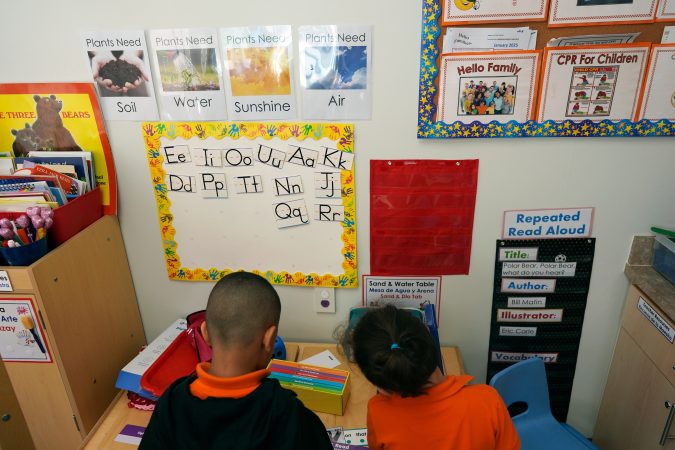
    Head Start serves more than half a million low-income babies, toddlers, and preschoolers nationwide. For families that qualify, it offers free preschool and screenings to identify developmental delays. It also offers supports for families.

    If the changes take effect, they could make Head Start unrecognizable, said Khari Garvin, who ran the Office of Head Start under Democratic President Joe Biden.

    “We’d have the carcass of Head Start,” Garvin said. “You might have a program that’s called Head Start, but in substance it will not be.”

    The proposed rules were originally reported in the Bulwark.

    Tommy Sheridan, deputy director of the National Head Start Association, said the organization has yet to see the proposed rules. But he said the potential for a massive overhaul has left the organization on edge.

    “We’re very anxious,” Sheridan said. “When it does come out … we’ll be ready to fight back where we need to fight back.”

    Still, he emphasized that Head Start centers might not be impacted for months, if the rules get on the books at all. Once the proposal is made public, federal law requires the administration to give at least a month for the public to weigh in on it. Then, once finalized, it may take more time for the rules to take effect. There’s also the potential for a lawsuit to halt implementation.

    Current rules cover dental screenings, staff-to-student ratios

    Head Start was created as part of President Lyndon B. Johnson’s War on Poverty and targets the myriad challenges that low-income households face. It serves children and adults alike, coaching parents on reaching their goals, connecting them with services, and even employing them.

    Head Start operators, which include school districts and nonprofit organizations, are required to provide medical, dental, and vision screenings for children and to monitor them for developmental delays. There’s also a curriculum framework and prohibitions on physical and emotional abuse of children.

    Many of the features that make Head Start distinct from mainstream preschools are spelled out in 122 pages of performance standards. The Trump administration’s proposal would toss most of that rule book and replace it with a much shorter version that eliminates or loosens many requirements, the people familiar with the proposal said. But the proposal also calls for some new regulations, such as requiring all instruction in English.

    Requirements around staff-to-student ratios and safety standards would be erased. Operators instead would be instructed to follow local and state laws, which are often far more permissive. And the new proposal also says nothing about suspensions and expulsions, the people said, making it easier for programs to kick out kids with disabilities who are difficult to educate.

    Jody Smith, a lead teacher for a Head Start program south of Seattle, said she’s seen firsthand how critical many of the requirements are, especially the ones for engaging with families and screening kids for disabilities. Smith was a high school dropout and a young mother when she enrolled her first child in Head Start, where she was encouraged to go back to school and inspired to become a teacher. Later, Head Start helped diagnose her youngest child with autism.

    Without Head Start, “I would have probably stayed as a poverty line,” Smith said. “And I don’t know that we would have gotten as far in life as we have.”

    Head Start has faced several threats

    The numerous standards are key to preparing Head Start kids for kindergarten, said Ruth Friedman, who helped President Barack Obama’s administration draft the regulations now in jeopardy.

    “If the administration strikes down those standards, it would set back our nation’s educational goals and our efforts to reduce poverty, and it is explicitly prohibited by the Head Start law itself,” Friedman said.

    Head Start, which has enjoyed robust bipartisan support for decades, has faced several threats since Trump took office last year. Project 2025, a conservative policy blueprint authored by the official who is now Trump’s budget chief, called for the federal government to get rid of the program altogether. Last year, in a draft budget, the administration proposed exactly that, saying: “The federal government should not be in the business of mandating curriculum, locations, and performance standards for any form of education.” After public outcry, Health Secretary Robert F. Kennedy Jr., whose department oversees Head Start, told Congress the program’s funding was safe.

    Funding for the program was disrupted not long after Trump took office, leading some programs to have to shutter temporarily. It was once again halted after a government shutdown in October that led some centers briefly to close their doors.

    Earlier this year, Trump officials also erased a Biden-era rule that mandated raises and greater benefits for Head Start employees. When the rule went in to effect in 2024, Head Start teachers, the majority of whom have bachelor’s degrees, earned less than $40,000 a year on average.

  • Trump stands to profit from U.S. policy announcements by selling fast access to his social media posts

    Trump stands to profit from U.S. policy announcements by selling fast access to his social media posts

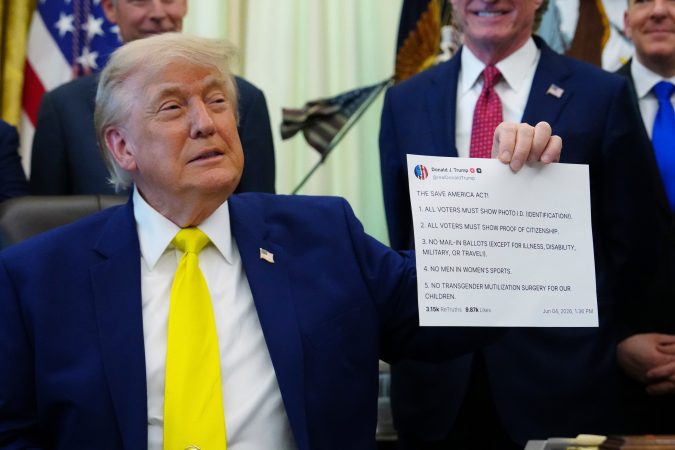
    NEW YORK — President Donald Trump knows the world hangs on his every word. Now he wants you to pay for it.

    The social media posts of the world’s most powerful man are going on sale Saturday when his Truth Social business begins offering sneak peeks of them to Wall Street traders willing to pay up. The move raises the prospect of big profits for Trump’s company and big questions about insider trading and using public office for private gain.

    Similar fast speed feeds are sold by other social media firms and media providers, but Truth Social doesn’t just distribute the news, it makes it, regularly rattling markets as Trump posts policy changes on everything from war to central bank leadership to tariffs.

    “If this was the CEO a public company, this would be jail time,” said Irene Aldridge, head of Able Alpha Trading, which doesn’t plan to buy the service. “We have a President of the United States who has the front seat to all the action, who makes all the decisions, and he’s disclosing this ahead of time to a select group.”

    Trump’s company says critics just aren’t capitalist enough

    Asked about the propriety of the new service and whether White House lawyers had vetted it, Trump’s press office declined to comment, referring questions to Truth Social’s publicly traded parent. That company, Trump Media & Technology, issued a statement blasting Democratic critics for mischaracterizing the service “out of ideological opposition to free markets or a failure to grasp the distinction between public and nonpublic information — or, quite possibly, both.”

    A prolific poster, Trump has sent stocks, bonds and currencies soaring and plunging with his online musings and threats. That presents opportunities for so-called high frequency traders that specialize in buying and selling within milliseconds, exploiting tiny, fleeting difference in prices.

    Profits aplenty betting on oil, stocks, and currencies

    Just this month, Trump has threatened on Truth Social to slap higher tariffs on Canada, kill a nuclear deal with Saudi Arabia, and widen the Iran war. With advanced knowledge, traders betting on a plunge in the Canadian dollar, a drop in nuclear energy stocks, and a jump in oil futures could have raked in big profits.

    “For the big guys, it’s going to be something they need,” said Joe Saluzzi, co-founder of Themis Trading, who estimates about 100 of high frequency firms might be willing to pay for the service. “It’s market-moving information.”

    Dubbed Truth API, the service comes as these firms are spending more on feeds and servers that bypass slower internet connections with direct lines to news and data sources. The chance for profits is greater than ever thanks to artificial intelligence’s ability to read posts and articles more accurately for market-making changes and Trump’s penchant for making news online.

    When Trump makes surprise announcements, traders pounce

    Traders profit when prices jump up and down, and with his taste for cliffhangers, threats, and policy reversals America’s first reality-TV president provides plenty of potentially market-moving content.

    The reversals are especially profitable, allowing traders to win both ways — jumping ahead of stocks moving up or down to a post threatening something, then cashing out within thousands of a second, then betting the other way.

    In addition to Trump, the service will include posts from other “high ranking” Truth Social contributors, including possibly his two oldest sons, Donald Jr. and Eric, who along with the father are heavily followed by users.

    Truth Social has said that the information will be released to the traders and the general public at the same time so there really isn’t an issue of fairness. But Themis Trading’s Saluzzi, a critic of high speed trading, says that’s a red herring because when the posts are received, not when they are released, is what matters.

    “Somebody who buys the info and has a system built to process it will be able to act quicker than you and me,” said Saluzzi, adding in reference to everyday, small stock buyers, “The loser is always the retail investor.”

    Trump posts about a company he likes, and stocks jump

    Aside from policy scoops, another reason to sign up has emerged in recent months: Trump is posting more about publicly traded companies, praising ones he likes in a way that sets off buying frenzies.

    “The pimping of specific companies — obviously Wall Street would like to know that before other people,” said Dylan Hedler-Gaudette, a federal ethics rule expert at the watchdog Project on Government Oversight. “It’s a real mess.”

    In April, moments after Trump praised Palantir Technologies in a post that included its stock symbol, the price briefly jumped the most it had in an entire year. Later that month, Trump posted, “Congratulations on Intel doing such a great job,” and the stock immediately jumped in after-hours trading.

    Just which firms are signing up for the feed is unclear. Asked for comment, none of the half dozen most well known high-speed traders, such as Citadel Securities and XTX Markets, replied. If just three sign up for the $100,000 a month fee, that would double revenue at Trump Media, which reported taking in $3.7 million last year.

    Trump Media needs big money customers

    The company can use their business.

    Stock in the Truth Social parent has plunged 75% since Trump took office last year as the company keeps reporting hundreds of millions in losses despite the president’s help driving traffic to its site by posting major decisions there.

    In fact, the president breaks news on Truth Social so often that the White House press office will copy his posts into an email when responding to questions from the media seeking details on policies. If his posts aren’t available yet, journalists are sometimes told, “Wait for the Truth.”

    Another problem for Truth Social is looming if the Democrats take control of Congress and launch investigations, as vowed by Massachusetts Senator Sen. Elizabeth Warren in a statement Friday specifically attacking the new service: “We will haul in those responsible for this open corruption to answer to the American people.”

    If the losses keep mounting for the company, though, some predict the president will push things further, using the platform even more for policy announcements.

    “That’s absolutely going to happen,” warns Craig Holman, a lobbyist for the good government group Public Citizen. “Trump knows how to sell products.”

  • U.S. stocks rise to finish a wild July as Amazon soars, Apple sinks, and inflation worries worsen

    U.S. stocks rise to finish a wild July as Amazon soars, Apple sinks, and inflation worries worsen

    NEW YORK — U.S. stocks rose Friday to finish a wild July for Wall Street as Amazon leaped, Apple sank, and rising oil prices worsened worries about inflation staying high.

    The S&P 500 climbed 0.7% after veering between gains and losses through the day. The Dow Jones Industrial Average added 276 points, or 0.5%, and the Nasdaq composite rallied 1% after briefly losing all of an early 1.3% jump.

    It’s a fitting finish to July for the U.S. stock market, which lurched up and down as oil prices shot higher because of the war with Iran and worries grew about whether Big Tech’s massive investments in artificial-intelligence technology will translate into profits and whether chipmaker stocks soared too high in the euphoria around AI.

    Friday’s gains sent the S&P 500 to its first winning week in three, but the main measure of the U.S. stock market nevertheless finished the month with a tiny loss.

    Amazon led the market with a leap of 15.3% after reporting much stronger profit for the latest quarter than analysts expected. Its profit more than tripled from a year earlier, thanks in part to an acceleration of growth in its cloud computing business.

    Analysts said that could be a signal Amazon’s huge AI investments are paying off, and Amazon increased its forecast for how much it will spend on investments this year.

    The reaction was similar to what Microsoft got a day before, when its stock soared to its best day in nearly 18 years on signals that its AI investments may also be yielding higher profits.

    Chip companies selling the processors and computer memory that such “hyperscalers” are scrambling to buy swung sharply again on Friday. Micron Technology, for example, went from an early jump of 6.4% to a loss of 6.5% before finishing with a fall of 5.9%.

    More firmly on the losing end of Wall Street was Apple, which dropped 7.4% despite reporting stronger profit for the latest quarter than expected. Its forecast for revenue growth in the current quarter fell short of expectations, which executives pinned on a supply crunch in components getting vacuumed up in the AI boom.

    All told, the S&P 500 rose 52.09 points to 7,489.72. The Dow Jones Industrial Average added 276.97 to 52,485.03, and the Nasdaq composite climbed 251.68 to 25,373.85.

    The gains came despite another rise in oil prices as uncertainty continues about when the war with Iran will allow crude to flow freely again from the Middle East.

    The price for a barrel of Brent crude rose 1.2% to settle at $87.93 after careening between $72 and $102 earlier in July.

    Higher oil prices have pushed the cost for a gallon of regular gasoline to an average of nearly $4.11 across the United States, up from $3.85 a month ago, according to AAA. More expensive oil also puts upward pressure on prices for virtually every product that rides on a ship, plane, or truck before getting to a customer.

    The worries about inflation sent yields in the bond market even higher.

    The yield on the 10-year Treasury rose to 4.71% from 4.68% late Thursday and from just 3.97% before the war with Iran sent oil prices shooting higher. That’s a notable move for the yield, which moves higher when investors’ expectations for inflation, economic growth, and other factors in upcoming years are rising.

    The leap for the 10-year yield has already sent the average long-term U.S. mortgage rate to its highest level in a year.

    Longer-term yields jumped on Wednesday after the Federal Reserve’s chairman, Kevin Warsh, promised again to get inflation back down to 2% but refused to say how he plans to get it there. The Fed voted again to keep its main interest rate steady on Wednesday, even though inflation remains well above 2%.

    Hikes to rates by the Fed could restrain inflation, but they could also slow the economy and undercut prices for stocks and other investments. President Donald Trump, who nominated Warsh to lead the Fed, has lobbied for lower interest rates instead of higher.

    Warsh has told financial markets that he does not want to give hints about what the Fed will do with interest rates, saying he wants to get direct, “unfiltered” messages from them rather than echoes back of what the Fed has suggested.

    “The Fed is facing a growing credibility problem,” economists at Bank of America wrote in a report. Unless data comes in showing less pressure on inflation in the interim, “it is imperative for the Fed to pass the September test by hiking rates and delivering an internally consistent narrative.”

    AP Business Writers Chan Ho-him and Elaine Kurtenbach contributed to this report.

  • Regulators propose overhaul to law governing how banks lend to low-and-middle income communities

    Regulators propose overhaul to law governing how banks lend to low-and-middle income communities

    NEW YORK — The Trump Administration has announced an overhaul to the rules governing a critical piece of Civil Rights-era legislation, most notably a reduction in the number of banks that will need to fully comply with the law.

    The Office of the Comptroller of the Currency and the Federal Deposit Insurance Corporation on Friday jointly announced the proposed changes to the Community Reinvestment Act, a law that requires regulators to document how well banks do in lending to low-to-middle income neighborhoods. It would be the first major revision of the law’s rules and regulations in nearly three decades.

    Under the proposed revisions, bank examiners would put more weight on the lending banks do in certain communities and geographies, and less on how many branches they open or how much in deposits they take in from a local community.

    The number of banks that would need to comply with the law would be reduced as well. The definition of a small bank will increase from banks with under $412 million in assets to banks with $1 billion in assets. Banks between $1 billion and $10 billion in assets will now be classified as an intermediate bank.

    This would reduce the number of banks who need to comply with parts of the CRA by 800 banks. Only 86 banks, or roughly 3% of all institutions, would be subject to the full extent of CRA under the new regulations.

    Another change that is likely to be fought over relates to how banks give money to community development groups. Under the CRA, banks can donate money to local organizations that do poverty or low-income housing work in their communities to show they are providing resources to a local community. The new regulations could narrow the groups and programs that banks could donate to in order to meet those obligations.

    In a summary of the changes, the bank regulators said these changes would ensure community development grants “are not diverted to activist causes or consumed by excessive operating costs.” Banks would also need to collect more detailed information on who gets their community grants, including addresses, which would give more transparency to who is receiving grants from banks.

    That change could negatively impact groups like the National Community Reinvestment Coalition, an umbrella group for community development groups that often receive money from banks under the CRA. The new rules discourage banks making grants to national organizations and instead focus their grants on local groups.

    Jesse Van Tol, the CEO of NCRC, said that it was “unfortunate” that the bank regulators were politicizing grant making under the CRA.

    “CRA was created to work for low-to-middle income people. A lot of these changes are going to discourage banks from making grants, particularly in rural areas, where I expect there will be significant drops in activity,” Van Tol said.

    The proposal announced Friday by the OCC and FDIC did not include the other major bank regulator, the Federal Reserve. Banking groups had been pushing for a joint proposal from all three regulators, to make sure all three were aligned on the same requirements under the CRA.

    The CRA was passed in 1977 to combat redlining, a practice whereby banks would discriminate against the poor and minorities by choosing not to lend or open branches in minority-majority neighborhoods or in poor neighborhoods.

    The law is complex, requiring banks to document how they do business in the cities and areas they operate in. Banks must sit for regular examinations to see whether they are complying with the law. A bad CRA examination could restrict a bank’s ability to open new branches or merge with another bank or have other consequences. The data collected through CRA is also used by the Department of Justice in redlining cases.

    The last major revision of the CRA’s regulations happened in 1995, and there have been repeated attempts by administrations of both parties to update the rules to reflect how banking and financial services have changed in the past 30 years. But those revisions have repeatedly failed, either due to opposition from other regulators, the banks, or community groups, or have been blocked by courts. The Biden administration tried its own revisions of the CRA rules but those changes were blocked by courts in Texas.

    The proposed rules will now go out for a 60-day comment period where they will be finalized after banks, community groups, and other parties have a chance to weigh in on the changes.

  • Social media companies sued over deaths of four teens as pressure, lawsuits over child safety mount

    Social media companies sued over deaths of four teens as pressure, lawsuits over child safety mount

    The families of four teenagers who died by suicide are suing Meta, TikTok, Snapchat, and YouTube over what they describe as “years of escalating harms” from using their platforms that eventually resulted in their deaths.

    The lawsuit, filed Thursday in the Superior Court of Delaware, is the latest in a flurry of suits filed against the social media giants that alleges their platforms are addictive and dangerous.

    The complaint was filed on behalf of four families from Texas, North Carolina, Minnesota, and Tennessee whose children died over a 14-month period starting in July 2024 through September 2025.

    The Social Media Victims Law Center is bringing the suit on behalf of the families, and its founding attorney, Matthew Bergman, said it’s “particularly salient” that the children in this case died “long after” similar suits had been filed.

    “These platforms continue to kill kids, despite the platitudes of their executives,” Bergman said in an interview. “This is a clear and present danger to the health and safety of children, not just in the United States but around the world.”

    The four teens who died by suicide each experienced harms including social media addiction, severe sleep deprivation, depression, anxiety, and suicidal ideation after years of using the social platforms, the complaint states. Livi Castro died at age 13, Riv Kelleher at 14, Nathaniel Chambers at age 17, and Dawson Holden at 18.

    The complaint alleges the social media companies knew they were causing harm to young users.

    A spokesperson for Google, which owns YouTube, said in a statement that “providing young people with a safer, healthier experience has always been core to our work. In collaboration with mental health and parenting experts, we’ve built services and policies to provide young people with age-appropriate experiences, and parents with robust controls. We send our deepest sympathies to the families and are reviewing the claims in this lawsuit.”

    Representatives for Meta, TikTok, and Snap did not immediately respond to requests for comment.

    Sacha Haworth, executive director of The Tech Oversight Project, said in a statement that parents, activists, and whistleblowers have come forward and met with lawmakers for years and “while Congress has dragged its feet, more children have died.”

    Federal legislation of social media has moved at a glacial pace. The Senate passed the Kids Online Safety Act — which had the support of parents’ groups and children’s advocacy organizations — exactly two years before this lawsuit was filed. The House of Representatives never voted on that version of the legislation, and the House and Senate are currently disagreeing on key provisions they think should be included.

    Meta, YouTube, TikTok, and Snap are facing numerous state and federal lawsuits over harms to minors. Meta is on trial in Tennessee this week for a lawsuit brought by the state attorney general claiming that the company deliberately designed its platforms, notably Instagram, to make them addictive to young people, and did not warn them of its dangers. And in August, Meta is heading to trial in federal court in Oakland, Calif., to face four of dozens of states that sued the company in 2023. That lawsuit says the company is contributing to the youth mental health crisis by designing addictive features and violated federal law by collecting data on kids under 13 without parental consent.

    Not all lawsuits are successful, and many are settled out of court. Last week, a Florida teenager dropped his case against Meta that was set to go to trial in state court in Los Angeles, without receiving any payment from the company. Meta had argued that the teen only used his Instagram and Facebook for just minutes a day, on average, and created most accounts only after hiring a lawyer in his case.

    Still, the mounting court cases can get expensive, even for a company like Meta Platforms. Earlier this week Meta said it had $2.4 billion in legal expenses in the second quarter, which contributed to a relatively unusual 14% profit decline.

  • Tax returns show California’s Newsom earning between $1.7 million and $2 million annually

    Tax returns show California’s Newsom earning between $1.7 million and $2 million annually

    SACRAMENTO, Calif. — California Gov. Gavin Newsom and his wife made between $1.7 million and $2 million annually from 2022 through 2024, and they paid about half a million a year in federal and state taxes, according to tax returns released by his office.

    The Democrat’s office released more than 700 pages of tax filings spanning four years for reporters to review, offering a window into Newsom’s finances as he prepares to leave office and considers a 2028 presidential bid. Newsom’s office did not release returns for 2025, because the couple filed for an extension and will complete those returns in October.

    The returns show the Newsoms’ income has remained relatively consistent since when he took office in 2019, when the couple reported $1.7 million in annual income. The exception was in 2021, when the family sold a house for nearly $6 million in Marin County, making roughly $800,000 from the sale. That year, they made $4.2 million and paid more than $1 million in federal and state taxes. They earned roughly $2 million in 2022.

    The release of the couple’s tax filings comes as their finances have been under scrutiny after the U.S. Justice Department launched investigations into the Newsoms, the governor announced last month. Newsom has blasted the probes as politically motivated.

    It was the first time Newsom released returns since 2022.

    Newsom made nearly $200,000 annually from serving as governor, but most of his income comes from winery and restaurant businesses that he put in a blind trust when he took office. The returns don’t name each individual business, making it impossible to know which ones gained and lost money.

    The PlumpJack Group, a company he owns that includes a suite of wineries and restaurants, is now run by his sister and cousin.

    His wife, Jennifer Siebel Newsom, a film director, lost money most years from Girls Club Entertainment, a production company she founded. The business produced Miss Representation, a 2011 documentary about disparaging portrayals of women and girls in media, and two other films.

    The Newsoms paid between roughly $14,000 and $44,000 a year for childcare for three of their four children, according to the tax filings.

    They gave between $40,000 and $65,000 in gifts to charity each year, mostly through monetary donations. They also donated thousands of dollars worth of clothing, toys, and other items to thrift stores and nonprofits, including in 2022, when they gave away Armani business wear they originally bought for $45,000 to a racial justice organization in Oakland.

  • A discarded SpaceX rocket is on a high-speed collision course with the moon

    A discarded SpaceX rocket is on a high-speed collision course with the moon

    CAPE CANAVERAL, Fla. — A drifting SpaceX rocket is on a collision course with the moon after launching a pair of lunar landers more than a year ago.

    The rocket’s upper stage will unintentionally slam into the moon on Wednesday, carving out a crater and sending up a plume of dust and rubble that scientists — and skygazers — are eager to observe.

    Space tracking expert Bill Gray predicts an impact of 5,400 mph — seven times the speed of sound — near Einstein Crater on the moon’s sunlit western limb. With the action unfolding in the wee hours, the eastern portions of the U.S. and Canada, and much of South America, should have the best views.

    While scientists are not too concerned about this particular piece of space junk, it highlights the growing threat as more and more items cram into orbit.

    “Things are getting crowded up there,” said Gray, who plans to view the aftermath from New Brunswick, Canada.

    It was never SpaceX’s intent to hit the moon. But space experts said the crash could have been avoided if the upper stage had been nudged into orbit around the sun.

    It will be the second dead rocket known to crash into the moon accidentally. A Chinese rocket segment dug out a pair of craters on the lunar far side in 2022.

    Lucky for astronomers, the upcoming smashup will occur on the moon’s near side, packing the equivalent energy of three tons of TNT.

    The impact flash, lasting less than a second, will probably be too dim to see, according to experts. But the stream of ejected material could stretch for several miles into space and remain visible to telescopes for tens of minutes.

    “The gravity on the moon is low and there is no wind to blow the dust away,” said Los Alamos National Laboratory’s Benjamin Fernando, who’s encouraging observations by professionals and amateurs alike.

    “Part of the reason for our interest in this event is to figure out how much of a hazard debris impacts pose to future astronauts,” he added in an email.

    Fernando anticipates an impact crater nearly 90 feet across and 16 feet deep, too small to see from Earth but visible to spacecraft.

    NASA’s Lunar Reconnaissance Orbiter and South Korea’s Danuri lunar orbiter will gather before-and-after shots of the crash scene. Danuri will stray within a mile or two of the SpaceX rocket just two minutes before impact, according to Fernando and his team.

    The abandoned rocket segment — measuring some 40 feet and weighing around 10,000 pounds — hoisted two private lunar landers on Jan. 15, 2025.

    One of them — Firefly Aerospace’s Blue Ghost — became the first private spacecraft to pull off a fully successful lunar touchdown. The other, Japan-based ispace’s lander, wrecked.

    With meteoroids and other natural objects offering little if any warning before walloping the moon, scientists said there’s much to learn by observing well-tracked strikes by human-made objects like the one coming up. NASA hurled rocket sections and lunar modules into the moon during the Apollo era for seismic measurements. Decades later, in 2009, NASA intentionally crashed its LCROSS spacecraft and upper stage in search of ice near the lunar south pole.

    With the moon as the new travel hot spot, scientists said it’s crucial to improve debris monitoring and traffic control before packs of robots and astronauts arrive.

    The United States and China are racing to land astronauts on the moon in the next few years. Elon Musk’s SpaceX and Jeff Bezos’ Blue Origin are vying to provide the lander for NASA’s yet-to-be-named moonwalkers of Artemis IV, who will succeed the 12 Apollo astronauts who strolled the lunar surface.

    “This impact will not be a problem,” retired astrophysicist Jonathan McDowell said in an email. “But in a future where there are long-term bases on the moon, similar impacts would be an issue and we need not to leave rocket stages in chaotic orbits of this kind.”

  • Microsoft’s best day since 2008 leads U.S. stocks, while inflation worries remain in the bond market

    Microsoft’s best day since 2008 leads U.S. stocks, while inflation worries remain in the bond market

    NEW YORK — A monster day for Microsoft’s stock following signals that its big spending on AI is translating into profits led a powerful rebound on Wall Street Thursday, while computer-chip companies regained some of their sharp recent losses. In the bond market, though, worries remained about inflation potentially remaining high for years.

    The S&P 500 rallied 1.7% and more than recovered its drop from the day before, which was its worst in seven weeks. The Dow Jones Industrial Average jumped 613 points, or 1.2%. The Nasdaq composite, which is full of artificial-intelligence stocks, rallied 2.8% a day after it fell 9.8% below its record set last month.

    Microsoft led the way and leaped 15.5% for its best day in nearly 18 years after reporting a stronger profit for the latest quarter than analysts expected. Growth was strong for its Azure cloud business, and CEO Satya Nadella said it reflects how customers are using Microsoft to move into AI.

    Perhaps just as importantly for Wall Street, Microsoft did not announce a big increase in how much it plans to spend on AI investments, something that several other Big Tech rivals have done. Worries are high that such spending is eating into companies’ cash flows and may not ultimately be worth it if AI does not produce as much productivity and profits as promised.

    Meta Platforms helped demonstrate such fears after falling 8%. The parent company of Facebook and Instagram reported a weaker profit for the latest quarter than analysts expected, even though it made slightly more in revenue than expected. It also raised the lower end of its forecasted range for spending on investments this year.

    Companies involved in the making of the computer memory and processors that such “hyperscalers” are buying to power their AI efforts rose Thursday, recovering some of the big losses they’ve taken on worries their stock prices shot too high in the euphoria around AI.

    Micron Technology jumped 18.4%, for example, to trim its loss for the week to 5%. It was the strongest force lifting the S&P 500 after Microsoft.

    Lam Research, a supplier to the semiconductor industry, soared 18% after reporting stronger profit and revenue for the latest quarter than analysts expected. Chip giant Advanced Micro Devices rallied 13%.

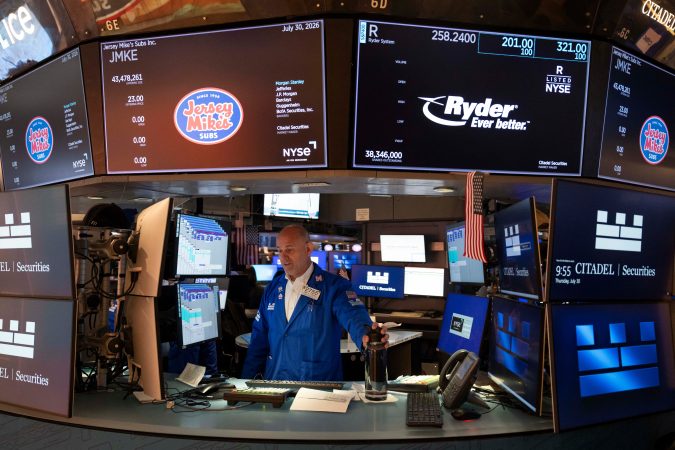
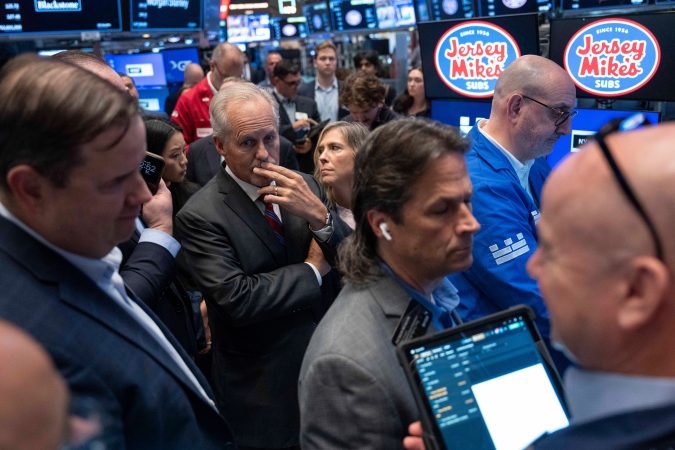
    On the losing end of Wall Street was Jersey Mike’s Subs. The sandwich chain’s stock fell 6% in its first day of trading on the New York Stock Exchange.

    All told, the S&P 500 rose 121.48 to 7,437.63. The Dow Jones Industrial Average climbed 613.92 to 52,208.06, and the Nasdaq composite leaped 679.24 to 25,122.18.

    In the bond market, longer-term Treasury yields held steadier following their sharp accelerations Wednesday. They had jumped after the chairman of the Federal Reserve, Kevin Warsh, gave few clues about what the central bank will do with interest rates to combat the painfully high inflation that continues to hurt the country.

    Higher rates could keep a lid on inflation, but they can also slow the economy and undercut prices for stocks and other investments.

    The yield on the 10-year Treasury was 4.67%, the same as late Wednesday. The 30-year Treasury yield ticked up to 5.22% from 5.20%, a day after it shot up from 5.09%. Those yields move with investors’ expectations for inflation and economic growth in upcoming years.

    Warsh reaffirmed on Wednesday the Fed wants to get inflation back to 2%, even though the central bank decided not to raise interest rates despite inflation remaining higher than that. He also implied the bond market may already be doing some of the Fed’s work to restrain inflation, and he pointed to how yields have climbed since the central bank’s last meeting six weeks earlier.

    That leaves investors questioning whether the Fed is prepared to act if inflation worsens, or whether it is relying on financial markets to achieve the same outcome, according to Seema Shah, chief global strategist at Principal Asset Management.

    “If investors conclude that the latter is true, the credibility of the Fed’s inflation-fighting commitment could come under increasing scrutiny. Arguably, it already is.”

    President Donald Trump, who nominated Warsh to lead the Fed, has lobbied for lower interest rates even though they could cause inflation to accelerate.

    Reports released Thursday suggested the U.S. economy’s growth slowed by more during the spring than economists expected. A measure of Inflation, meanwhile, remained worse last month than the Federal Reserve’s target, but it slowed from May’s level.

    In the oil market, prices eased. Brent crude, the international standard, fell 1.4% to settle at $86.88 per barrel.

    It had swung as low as $72 early this month and as high as $102 last week on uncertainty about whether the United States and Iran could reach a deal to allow oil tankers to move freely again from the Middle East to customers worldwide.

    In stock markets worldwide, indexes were mixed in Europe and Asia. South Korea’s Kospi fell 1.2%, and France’s CAC 40 rose 0.9% for two of the world’s bigger moves.

    Seoul’s market has been at the center of AI’s huge swings because it’s dominated by two tech titans, Samsung Electronics and SK Hynix. After more than doubling through this year’s first six months, the Kospi has plunged 34% so far in July.

    Its drop on Thursday came as Samsung Electronics dipped 0.7%. The tech giant reported a record profit for the spring and said demand for its chips continues to outpace supply, but its earnings nevertheless fell shy of analysts’ high expectations.