Category: Business Wires

  • A pillar of environmental enforcement is targeted by Trump and Musk’s AI company

    A pillar of environmental enforcement is targeted by Trump and Musk’s AI company

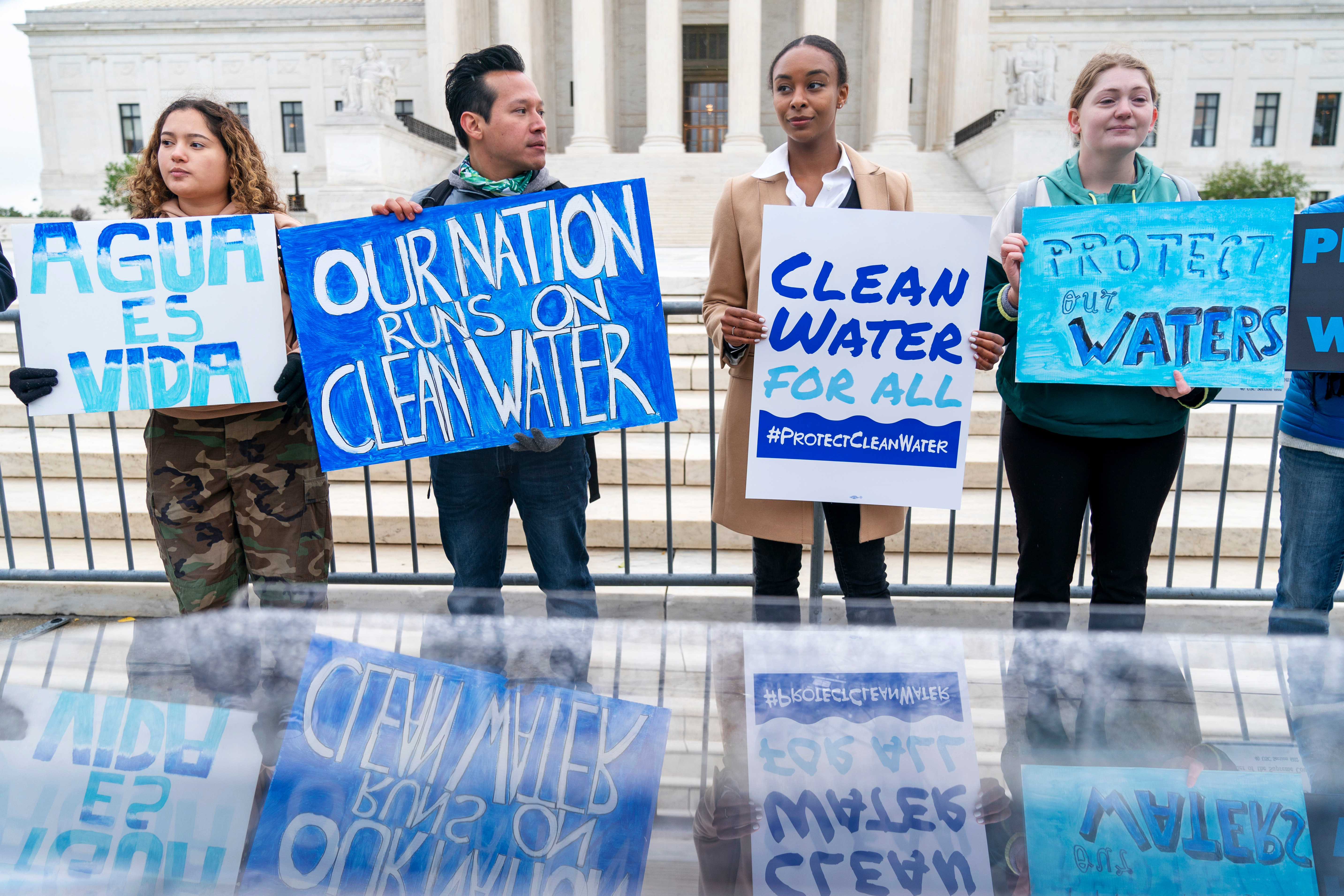
    WASHINGTON — Right-leaning legal activists along with Elon Musk ‘s artificial intelligence company have brought sweeping challenges against a cornerstone of legal enforcement in the United States: the right of private groups, people, and local governments to sue over violations of many major laws.

    Their argument, supported by the Trump administration, is that the Constitution reserves tremendous power for the president and federal agencies to decide how — or whether at all — to enforce federal law. They contend Congress should never have handed that power to others through so-called citizen suits that are part of environmental, campaign finance, and certain other laws.

    Environmentalists say it would be devastating to lose this essential, decades-old tool that is used to impose fines and halt lawbreaking by bad actors. Citizen suits, for example, have extracted millions from heavily polluting oil and gas operations, and ensured that lead pipes in Flint, Mich., would be removed after its water crisis.

    Legal experts say four pending federal cases — one of them filed last week — are moving forward at a time when the conservative majority on the Supreme Court gives opponents of citizen suits a greater chance than ever of success. The hard part for those opponents now is winning early federal cases and creating disagreement between the country’s appeals courts, which may help convince the Supreme Court the issue is important enough for a nationwide ruling.

    Back in 2000, a Supreme Court opinion opened the door for that possibility.

    “Many of us who worked in this area have been waiting basically 26 years for this shoe to drop,” said Richard Lazarus, a Harvard professor with decades of experience in environmental law.

    A more inviting Supreme Court could take up the issue

    Lazarus was referring to former moderate Justice Anthony Kennedy’s comments in a Clean Water Act case that citizen suits raised “difficult and fundamental” questions about whether they improperly dilute executive power. The late conservative Justice Antonin Scalia wrote in a dissenting opinion in the same case that citizen suits turn “over to private citizens the function of enforcing the law.” He avoided explicitly saying they were constitutional.

    “The court is more like Scalia’s court since he died than it ever was when he was there,” said Lazarus.

    He observed that those who lost cases where Scalia dissented are rushing back to today’s court hoping for a more favorable result.

    The critical issue for citizen suits is who — the government or private citizens — collects fines and has control. A person filing a citizen suit must tell the government ahead of time. The government can stop the suit if it sufficiently pursues the case itself, but its options are limited and the person suing can stay involved. Citizen suits can force compliance with the law and result in fines, which go to the U.S. Treasury.

    Prominent law firms, companies push against citizen suits

    Efforts to increase presidential power and limit who can sue have grown in recent years. They gained vital federal support this summer.

    That’s when the Pacific Legal Foundation, a right-leaning organization with recent Supreme Court success, chose a routine citizen suit in Tennessee federal court for a broader constitutional challenge.

    They signed on as attorneys for Springfield, a town of roughly 19,000 north of Nashville, that was in the early stages of fighting allegations brought by Tennessee Riverkeeper that it had let too much sewage flow from its treatment plant into a nearby creek, violating the Clean Water Act.

    It was the thirty-first citizen suit Tennessee Riverkeeper had filed under the Clean Water Act since 2010. Pacific Legal argued this was part of the problem — a private group of unelected activists had repeatedly forced others to expend resources defending themselves.

    It’s better when “the government is the one wielding the power because the government remains accountable to the people,” said Sean Radomski, a Pacific Legal Foundation attorney on the case.

    Radomski isn’t targeting every lawsuit a person can bring under federal law — he takes exception to those where fines go to the Treasury and where he says people are improperly taking on the government’s powers. Civil rights lawsuits, for example, where damages are paid directly to those wronged, wouldn’t be touched. Nor would many procedural challenges.

    Musk’s AI company also getting into the fight

    Elon Musk-led xAI argued many similar points in its ongoing bid to rid itself of the NAACP’s lawsuit accusing it of operating dozens of gas turbines near Memphis to power a data center without first getting permits. The civil rights group told a Mississippi federal court that the turbines are a pollution threat to those who lived nearby, many of whom are Black. One of their demands was to halt the gas turbines until the company complied with the law.

    The Trump administration intervened in support of Musk’s company, arguing that turning off the power to artificial intelligence that supports the Department of Defense would harm national security. Because the Trump administration wants the suit dismissed, the NAACP shouldn’t be allowed to proceed with it — prudent enforcement requires balancing interests, including national security, the DOJ said.

    Laura Thoms, director of enforcement at Earthjustice, which is representing the NAACP, said the government traditionally gets involved in cases to enforce the law, not to argue that it doesn’t matter if the law is broken.

    “This administration has determined that the company should be allowed to continue to pollute and that therefore, they should have the unilateral and unreviewable authority to veto our citizen suit,” she said.

    Changing the law would have profound consequences

    Citizen suits were written into foundational environmental laws because Congress understood that the federal government had limited resources to go after polluters and that the politics of some cases could be dicey — the government sometimes is the polluter. That’s why outside groups are necessary to fulfill the law’s purpose, according to Lazarus.

    Some argue that dynamic is especially important now. The Trump administration has slashed air and water protections and promoted fossil fuels. They’ve also constrained enforcement that could slow energy projects to only the most extreme cases, such as an “imminent and substantial threat to human health,” according to a federal guidance memo. Environmentalists say citizen suits are vital for filling the enforcement gap this administration created.

    Leaner budgets in many states make the problem worse.

    Thoms said the potential for corruption could increase, too — the president could unilaterally waive laws to benefit friends.

    She said that those who live in states with strong protections may be fine if citizen suits end, but other areas will be “sacrifice zones” where citizens have few options to fight pollution in their backyard. And the unprotected are more often poor and majority-minority communities.

    Many experts are skeptical of the challengers’ claims of a powerful president that gets to unilaterally shape enforcement even outside of criminal law. They argue the country’s history is rife with examples of that task falling to private individuals, too — a contention the challengers reject.

    David Adelman, a law professor at the University of Texas at Austin School of Law, said before the current conservative majority on the Supreme Court, he would have thought there was a close to zero percent chance the challenges would succeed.

    “But this court has been so protective of the executive branch’s complete control of implementation of federal law,” he said, “that it’s not implausible that something like this could prevail.”

  • Sydney Towle, content creator who documented life with cancer, dies at 26

    Sydney Towle, content creator who documented life with cancer, dies at 26

    Sydney Towle, a social media content creator who projected enduring optimism as she chronicled her life with a rare form of cancer, has died, according to her family. She was 26.

    Ms. Towle was diagnosed with cholangiocarcinoma, an aggressive form of cancer in the bile ducts, in August 2023. Her mother, Elizabeth Morrow, and brother, Austin Towle, posted a video to her TikTok account confirming she died Wednesday.

    “Syd went peacefully last night after an almost three-year long battle with cholangiocarcinoma,” her brother said. “She fought really hard, and we’re so proud of her, and we thank all of you for your support over the years.” Ms. Towle’s mother said they appreciated the messages of support and that “she will not be forgotten.”

    Her family described her as “an endless ray of sunshine” and a friend to many. Sydney Elizabeth Towle was born in Newburyport, Mass., on Nov. 15, 1999, and grew up in Hobe Sound, Fla., according to the New York Times. The newspaper reported that she died at the National Institutes of Health in Bethesda, Md.

    At the time of her diagnosis, Ms. Towle already had a presence on social media where she shared videos from her everyday life. She often posted from the beach and loved the outdoors. She was an avid surfer and runner.

    Once she received the diagnosis at age 23, she began posting her unvarnished reality of the disease and treatment while holding fast to her hobbies, style, and positive attitude. She had over 1 million followers on TikTok alone.

    In a video posted days after she was diagnosed, Ms. Towle said, “I’m in good spirits, I’m smiling. If anything, it just makes me appreciate life more.” That essentially became the ethos that guided her online presence, where she shared videos of herself running, going out with friends, and traveling alongside videos from a hospital bed or at chemotherapy appointments.

    In a column this year advocating for increased funding for research of the rare disease, Ms. Towle’s mother wrote that she had seen her daughter become “a beacon of hope for so many” through her candid online presence. “Thousands of people send her messages, stop her on the street, and leave comments on her videos, describing how her vulnerability has helped them through their own struggles,” Morrow wrote in February.

    Ms. Towle graduated from Dartmouth College in 2022, where she studied government and environmental studies. She worked as a social media manager at Epic Games.

    She had posted on her LinkedIn account about plans to run the 2026 New York City Marathon in November to raise money for the Cholangiocarcinoma Foundation. She had raised more than $10,000 for the nonprofit that advocates for research and provides patients and caregivers with resources.

    “I know it might seem crazy to try to run a marathon with everything going on,” she wrote on the platform months ago. But she noted the importance of hope in her experience with the disease. “Hope keeps us alive, it keeps us going, it makes the impossible seem possible.”

    Ms. Towle is survived by her mother and brother. Her father, Philip Towle, died in 2016.

  • U.S. suspends avocado inspections in Mexican state of Michoacan due to threat

    U.S. suspends avocado inspections in Mexican state of Michoacan due to threat

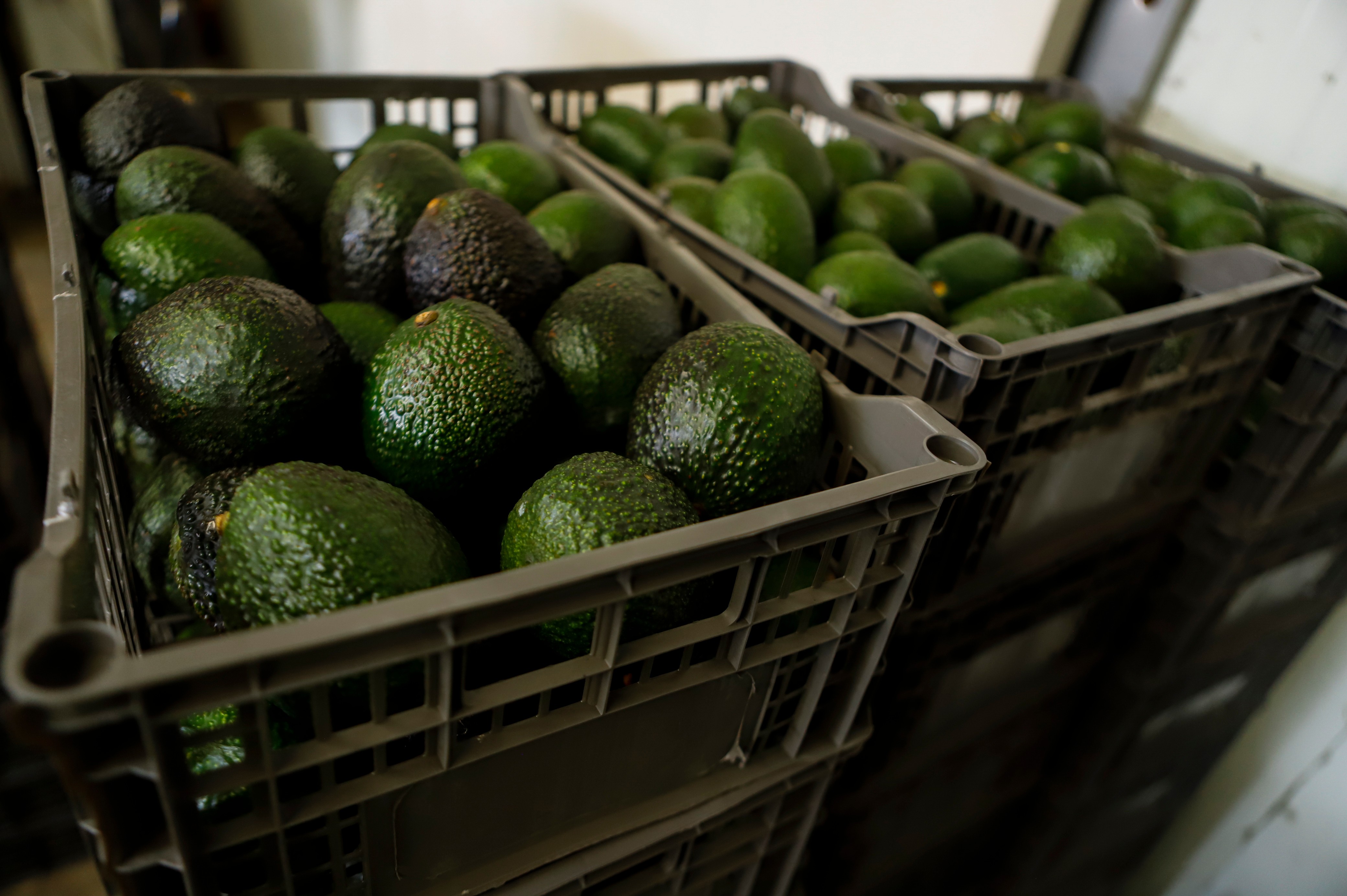
    MEXICO CITY — The United States announced Wednesday that it had suspended all government operations in the Mexican state of Michoacan because of a “threat to U.S. interests,” including a halt to the inspections of avocados required for their export.

    While the U.S. Embassy did not specify the nature of the threat in its security alert, Michoacan Gov. Alfredo Ramírez Bedolla said on social media that the temporary halt to inspections was intended to safeguard workers following recent arrests linked to extortion. The inspections are necessary for avocados to be shipped to the United States and their suspension could disrupt exports.

    The western state of Michoacan is the leading exporter of avocados to the U.S. and has a high level of organized crime activity with at least four cartels — designated as terrorist organizations by the Trump administration — operating in the region. Besides trafficking drugs, cartels also make money through extortion, including of the avocado industry.

    Michoacan State Security Secretary Antonio Cruz told The Associated Press that one of the arrests mentioned by the governor was of “El Poncho,” the alias of Alfonso Fernández Magallón, leader of a local cartel operating in the avocado-growing region around Los Reyes.

    U.S. Ambassador to Mexico Ronald Johnson welcomed the arrest, which came over the weekend. The U.S. government had offered a $5 million reward for Fernández Magallón’s arrest.

    Cruz said his department was unaware of any direct incidents involving the avocado inspectors. Nevertheless, 300 security personnel were deployed to the Los Reyes area as a preventive measure.

    The governor said the priority was to “ensure the security conditions necessary for these operations to resume normally,” as has happened in the past.

    Mexico supplies approximately 80% of U.S. avocado imports — a product known in the region as “green gold.” Its cultivation generates around 200,000 jobs in Michoacán alone.

    In 2025, Mexico sold $3.65 billion worth of avocados to the United States, and in the first four months of this year, those exports rose by 35% compared to the same period in the previous year.

    The U.S. Department of Agriculture sends inspectors in Mexico to monitor plantations and packing houses to ensure that exported produce is free of pests. Threats and violence against the inspectors have caused the U.S. to suspend inspections in the past.

  • How extreme heat is changing Americans’ lives, according to a new AP-NORC poll

    How extreme heat is changing Americans’ lives, according to a new AP-NORC poll

    Elisa Bracamonte has lived in Arizona her whole life, so she’s used to adjusting her schedule and outdoor activities around high temperatures, especially during the summer months.

    But the 74-year-old retired nurse from Tucson said she feels the heat has been impacting more of her day-to-day: summer plans with family members across the region, meetups with friends, road trips and her daily morning walk routine.

    “I’ve noticed at least a 10 degree difference in the weather,” Bracamonte said. “Every summer, it seems to be getting hotter and hotter.”

    Like Bracamonte, Americans are increasingly feeling a personal impact from extreme heat, according to a new poll from The Associated Press-NORC Center for Public Affairs Research.

    According to the survey, U.S. adults are more likely to say extreme heat has had either a “major impact” or “minor impact” on their travel or vacation plans, electricity bills, their sleep, their family’s outdoor activities and more parts of their day-to-day life than in July 2024.

    Much of that shift was among people who live in the West or Midwest.

    Democrats are also more likely than Republicans to say that extreme heat has had a “major” impact on each item asked about.

    Warming has endangered the globe especially in recent years; scientists calculated that Earth’s average temperature in 2025 hovered among one of the three hottest on record, along with 2024 and 2023. The U.S. has sweltered under dangerous heat domes over the past few years, and unusually high temperatures even early in the year.

    The recent scorching weather has played a role in thousands of heat-related deaths — killing more people every year than all other weather-related events. It impacts wildfire risk, strains public infrastructure, devastates agriculture and wreaks havoc on gatherings such as sporting events.

    Now, the poll shows how extreme heat is reshaping Americans’ daily lives.

    “I have to get up at 5 in the morning to walk before 6, because by 7 it’s already in the 80s … I lose a couple hours of sleep because I’m having to wake up earlier,” added Bracamonte, who said she identifies as a very liberal Democrat. “You can’t stay outside without being sick unless you’re guzzling water the whole time — it’s just so, so hot.”

    Electricity bills going up

    About 8 in 10 Americans say their electricity bills have seen a “major” or “minor” impact from extreme heat over the last year, compared with 69% in July 2024, according to the survey.

    Just under half of Americans living in the Midwest, 44%, say extreme heat has had a “major” impact on their electricity bills, up from 29% two years ago.

    Rising household electricity prices have turned into an increasingly prominent political issue over the past few years. Extreme weather is just one factor that affects electricity bills, but it means that people are using more energy for air conditioning — or in the colder months, heat.

    “I feel like my utility costs probably doubled in the last three or four years,” said Daemien Williams, a 50-year-old bridge inspector living in Cahokia Heights, Illinois, who identifies as a Democrat. “I do look at my bills pretty in detail and see that the kilowatts and the usage is actually up, not just the price that they’re charging for it.”

    Travel and vacation plans impacted, along with family outdoor activities

    Extreme heat is affecting Americans’ lives in other ways, the survey found.

    Around 4 in 10 Americans say extreme heat has had either a major impact or a minor impact on their travel or vacation plans, up from about one-quarter in 2024.

    “It has affected my entire family because we usually get together a lot during the summer,” Bracamonte said. ”We have family in Texas and we have family in upper Arizona. And we’ve seen that there’s been a lot more fires, a lot of more flooding, all that. So that kind of inhibits our plans to travel.”

    Extreme heat waves increase wildfire risk, and a warmer world supercharges storms that could ultimately send more rainfall.

    Around 7 in 10 Americans say extreme heat has had either a major impact or a minor impact on their family’s outdoor activities, compared with about 6 in 10 in 2024.

    Sean Conway, a 41-year-old direct marketer in North Shore, Massachusetts, said his kids’ soccer practice might either be postponed or canceled due to extreme temperatures, for example.

    But to Conway, who considers himself a moderate independent, leaning Republican, this is minor. “Sometimes, you’ve got to just be out in the bad weather.”

    It’s not surprising many Americans say they are feeling the impacts, said Jennifer Francis, a climate scientist at the Woodwell Climate Research Center who was not involved with the polling.

    “Brutal, life-threatening heat waves have become more frequent, more intense, and more persistent in many parts of the globe, including our Western and Midwestern states,” Francis said. ”Extreme heat compounded with long dry spells have affected our health directly, along with indirect effects on our wallets.”

    Climate change belief remains largely stable

    Even as more Americans say they feel a personal impact from extreme heat, that does not mean an increasing number believe in climate change.

    About two-thirds, 66%, of Americans believe climate change is happening, a slight decline from 73% in September 2025. About 17% say they are not sure if climate change is happening, and about 15% say it is not happening.

    Williams, the Illinois resident, attributes his belief in climate change in part to extreme shifts in weather including very high and very cold temperatures.

    “My biggest indicator of the change in the climate is just the flooding is a lot more often,” Williams said, noting that he believes in both natural and human causes.

    John Hazel, a 33-year-old in Waco, Texas, says he’s noticed changes from when he was younger.

    “When I was a kid, that seemed like a very rare thing when it did hit 100, everybody was like, whoa. And now it’s just every day,” said Hazel, a crime scene investigator. “Seasons felt a little more balanced. Now it feels like summer’s a bit lingering, it starts earlier and lasts longer.”

    Hazel, who identifies as a conservative Republican and believes in climate change, said he plans around the heat.

    “As soon as you walk outside, you’re already sweating even if you’re not doing much of anything. I’ve definitely noticed you’re having to take breaks from being outside, you have to bathe, shower more often,” Hazel said. “It’s definitely a bigger consideration.”

    ___

    The poll of 1,165 adults was conducted July 23-27, 2026, using a sample drawn from NORC’s probability-based AmeriSpeak Panel, which is designed to be representative of the U.S. population. The margin of sampling error for adults overall is plus or minus 3.7 percentage points.

    ___

    Alexa St. John is an Associated Press climate reporter. Follow her on X: @alexa_stjohn. Reach her at ast.john@ap.org.

    ___

    Read more of AP’s climate coverage.

    ___

    The Associated Press’ climate and environmental coverage receives financial support from multiple private foundations. AP is solely responsible for all content. Find AP’s standards for working with philanthropies, a list of supporters and funded coverage areas at AP.org.

  • Federal judge lets Utah enforce its anti-gambling laws on the prediction market Kalshi

    Federal judge lets Utah enforce its anti-gambling laws on the prediction market Kalshi

    SALT LAKE CITY — Utah can enforce its strict anti-gambling laws on prediction markets such as Kalshi and Polymarket, a federal judge ruled in a win for states seeking to rein in the popular betting platforms.

    Utah has been on the front lines of a battle between states and the federal government over who regulates the markets and whether they should be considered finance or gambling. The legal landscape is fragmented, with state and federal courts blocking restrictions in several states and allowing them in others.

    Kalshi sued Utah in February, asking a federal judge to prevent the state from enforcing its gambling restrictions on the platform. The lawsuit came as Utah was on the verge of enacting legislation intended to undercut prediction markets from doing business in the state.

    State law now bans proposition betting in sports — wagers on certain events happening in a game, rather than the game’s outcome — which is a significant source of revenue for the leading prediction markets.

    U.S. District Judge Robert Shelby rejected Kalshi’s request to block the Utah restrictions Tuesday, saying the federal law that Kalshi cited in its argument does not prevent the state from enforcing its laws.

    For now, Utah residents can still place bets on the platforms. The state’s attorney general, Derek Brown, said he will enforce state laws on Kalshi, but he was still exploring options.

    “Gambling is gambling, no matter what any company calls it,” Brown said.

    Kalshi said in a statement that it disagrees with the ruling and plans to appeal.

    The company maintains that prediction markets fall exclusively under federal jurisdiction and are not governed by a patchwork of state gambling laws. The Commodity Futures Trading Commission, the federal agency responsible for regulating financial markets, agrees and has defended prediction markets in court.

    Courts in Maryland, Nevada, Ohio, New York, and Wisconsin have ruled against Kalshi in similar lawsuits, while judges in New Jersey, Tennessee, Arizona and Minnesota have sided with the company. Other states have been allowed to restrict certain aspects of Kalshi’s operations without banning them entirely.

    The Trump Administration has been supportive of prediction markets, which allow anyone with a smartphone to wager on just about anything. The president’s eldest son is an adviser for both Kalshi and Polymarket, and an investor in the latter through his venture capital firm. Trump’s social media platform, Truth Social, is also launching its own cryptocurrency-based prediction market called Truth Predict.

    Utah leaders such as Gov. Spencer Cox have treated their fight to keep out anything they deem gambling as a moral crusade. The culture is rooted in the locally headquartered Church of Jesus Christ of Latter-day Saints, known widely as the Mormon church, which views gambling as a vice that leads to selfishness and addiction.

    Prediction markets are “causing tremendous harm to countless American families,” Cox said in celebrating the ruling.

  • New kind of flu shot is on the way as the FDA approves Moderna’s mRNA-based vaccine

    New kind of flu shot is on the way as the FDA approves Moderna’s mRNA-based vaccine

    WASHINGTON — The Food and Drug Administration has approved a new kind of flu vaccine for older people, the first made with the same mRNA technology that was key to ending the COVID-19 pandemic, manufacturer Moderna said.

    The shot, named mFlusiva, is intended for adults age 50 or older. Other brands of flu shots already have begun arriving in pharmacies ahead of fall vaccination season, and Moderna said late Wednesday that it expects some of its new version to be available soon at select retailers.

    While there already are multiple flu vaccine options in the U.S., including three specifically recommended for people age 65 or older, tens of thousands of Americans die from influenza every year, and older adults are among the most vulnerable.

    Flu vaccines must be updated annually to best match circulating strains of the virus. Vaccines made with the Nobel Prize-winning mRNA technology are faster to manufacturer than other types, and experts say this additional option might help if the shape-shifting flu virus mutates in a way that requires suddenly brewing new doses.

    Moderna said the FDA granted full approval for mFlusiva’s use in people ages 50 to 64, based on a study of 40,000 people that found 27% fewer flu cases among people who got the new shot compared with those who got a different common flu vaccine brand. For people 65 or older, the Cambridge, Massachusetts-based manufacturer said the FDA granted what’s called accelerated approval for the shot — based on a smaller study showing it generated a strong immune response compared with an existing high-dose vaccine for seniors — while it conducts an additional study.

    Moderna’s data showed no major safety issues although the shot did cause some temporary reactions including injection site pain, fever, headache, tiredness and aches that occurred somewhat more than with today’s flu shots.

    The FDA action comes after a highly unusual public dispute over mFlusiva earlier this year. A then-top FDA official blocked the company’s application, a sign of the agency’s heightened vaccine scrutiny under Health Secretary Robert F. Kennedy Jr. Days later, the agency changed course after Moderna publicly challenged the ruling — and in June a panel of independent advisers to the FDA unanimously recommended the vaccine’s approval.

  • Iran and Oman make progress on a deal to reopen the Strait of Hormuz, officials say

    Iran and Oman make progress on a deal to reopen the Strait of Hormuz, officials say

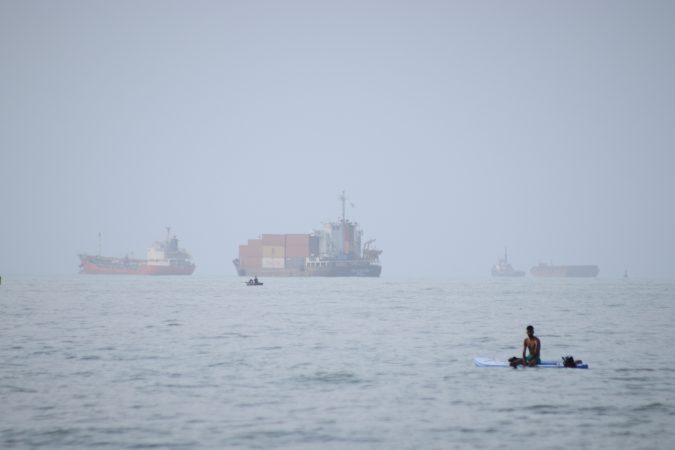
    CAIRO — Iran and the Gulf Arab state of Oman have made progress toward a deal to reopen the Strait of Hormuz, a potential breakthrough that could help wind down the war in the Middle East, regional officials said Tuesday.

    Under the emerging agreement, ships would enter the Persian Gulf through an Iranian-controlled route and exit through a route controlled by Oman, with service fees charged for providing security and preserving the maritime environment, two regional officials told the Associated Press.

    They said negotiations are still underway and that the final agreement could take a different form, with any deal linked to lifting the U.S. blockade on Iran’s ports. The officials spoke on condition of anonymity to discuss the sensitive negotiations unfolding behind closed doors.

    Any agreement formalizing Iran’s control of the strait would mark a significant strategic victory for Tehran. For that reason, the U.S. could seek to block the deal by refusing to lift the blockade. The strait was an open international waterway before the U.S. and Israel attacked Iran on Feb. 28.

    A U.S. official familiar with the negotiations said that any “temporary” routes established through the strait would not involve approvals by Iran or charges. The official, who was not authorized to comment publicly and spoke on condition of anonymity, said the U.S. remains committed to returning to the status quo in which “no party controls the lanes or the ability to transit through them.”

    U.S. President Donald Trump is under mounting pressure to end an unpopular war that has driven up gas prices ahead of midterm elections and drawn down U.S. supplies of some munitions. In recent days, he has again whipsawed between threatening massive strikes and voicing support for diplomatic efforts.

    In an exchange with reporters on Monday, Trump reiterated his public stance that he’s opposed to tolling in the strait. “I’m not going to let them charge,” Trump said. “Anybody’s going to charge, we’ll charge.”

    U.S. and Iranian officials confirm progress without giving details

    Iranian Foreign Ministry spokesperson Esmail Baghaei said the bilateral talks with Oman are focused on “establishing safe inbound and outbound shipping lanes,” routes that “uphold sovereign rights while also addressing the national security considerations of both Iran and Oman.”

    “The final results of these negotiations will be announced once concluded,” he added, in remarks carried by Iran’s state-run IRNA news agency.

    U.S. Secretary of State Marco Rubio, speaking to reporters at the State Department, said, “There’s been progress made in those talks, but not finality yet. We’re hoping that will happen very shortly.”

    Rubio has previously ruled out any deal that would give Iran control over the strait, saying last month that it would create a “very dangerous precedent” for other parts of the world.

    Treasury Secretary Scott Bessent told CNBC that “there is a chance we may have a deal today or tomorrow to open the strait and move towards a more normalized position in this conflict.”

    Asked whether there would be tolls for movement through the strait, Bessent said: “I think it would be freedom of movement.”

    The potential agreement between Iran and Oman was first reported by the New York Times.

    Cargo ship reports strike in Strait of Hormuz

    Meanwhile, a cargo ship reported being “hit by an unknown projectile” in the strait off the coast of Oman, the United Kingdom Maritime Trade Operations Center said, without providing further information on the ship, including what flag it was sailing under or whether it was carrying cargo.

    The ship sustained damage, according to British maritime security firm Ambrey, which did not elaborate.

    In recent weeks, Iran had repeatedly attacked ships using a route running close to Oman that is overseen by the U.S. military and intended to bypass Tehran’s control.

  • Chipotle pulls jalapeños from some restaurants as health officials investigate salmonella outbreak

    Chipotle pulls jalapeños from some restaurants as health officials investigate salmonella outbreak

    CHICAGO — Chipotle Mexican Grill said Tuesday that it had removed jalapeños from some of its restaurants after determining the peppers could potentially be tied to a salmonella outbreak public health officials are investigating.

    In a brief statement, Chipotle maintained that the “health and safety of our guests and employees is our highest priority” — and that it had pulled the jalapeños out of an abundance of caution and “replaced them with product from different growers” in all locations where a previous common lot had been distributed.

    The company did not specify where the initial peppers came from but noted that the jalapeños in question were sent across multiple states to several retailers.

    The Minnesota Department of Health on Tuesday confirmed that it was investigating a salmonella outbreak tied to several Mexican-style, quick-service restaurants — with jalapeños as the suspected source. Officials identified 110 cases in the state. Chipotle made up the majority of those where they were able to reach affected consumers for an interview — who ate at the chain between mid-June and mid-July — but not all.

    “Based on all the evidence so far, the food that made people sick was served at other restaurants as well,” Carlota Medus, senior epidemiologist supervisor in the MDH’s Health Foodborne Diseases Unit, said in a statement.

    Medus said Chipotle had been cooperative over the course of the investigation — and that given the measures the company put in place, his department was not concerned about the chain at this time. Still, he said it was “too soon for us to know if the outbreak is ongoing” and that it’s possible contaminated food is being served elsewhere.

    MDH noted that other states are contributing to the investigation, without elaborating further. On the federal level, the Food and Drug Administration is conducting the traceback probe — covering but not limited to jalapeños.

    The FDA on Tuesday confirmed it initiated its traceback investigation “of multiple ingredients” on July 22, in response to a cluster of salmonella illnesses identified by both state officials and the Centers for Disease Control and Prevention. In a statement, the agency said it appreciated Chipotle’s cooperation and that it would “provide additional information if and when there is an actionable public health update.”

    The CDC did not respond a request for further comments Tuesday afternoon.

    Symptoms of salmonella poisoning include diarrhea, fever, severe vomiting, dehydration, and stomach cramps. Most people who get sick recover within a week. Infections can be more severe in young children, older adults, and people with weakened immune systems, who may require hospitalization.

    Shares of California-based Chipotle Mexican Grill plunged nearly 10% on Tuesday.

  • 25 states sue over Trump’s new tariffs, calling them ‘pretext’ to replace his old ones

    25 states sue over Trump’s new tariffs, calling them ‘pretext’ to replace his old ones

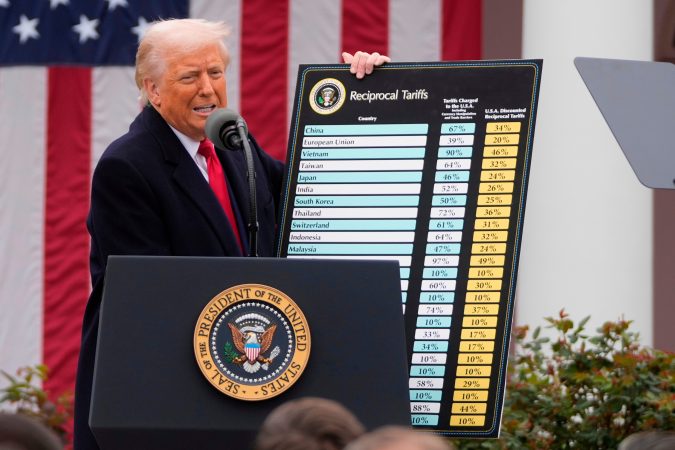
    WASHINGTON — Twenty-five states sued the Trump administration Monday over its latest tariffs, calling them a pretext for replacing import taxes the Supreme Court struck down in February.

    The United States last month imposed double-digit tariffs on 59 countries and the European Union, charging that they had not done enough to crack down on imports produced by forced labor. The new tariffs took effect just as the clock ran out on temporary tariffs President Donald Trump had turned to after the Supreme Court defeat.

    “After losing at the Supreme Court, the administration is once again trying to illegally raise taxes on families and businesses with a new round of tariffs,” said New York Attorney General Letitia James.

    Joining New York in the lawsuit announced Monday are Arizona, California, Colorado, Connecticut, Delaware, Hawaii, Illinois, Kentucky, Massachusetts, Maryland, Maine, Michigan, Minnesota, Nevada, New Jersey, New Mexico, North Carolina, Oregon, Pennsylvania, Rhode Island, Virginia, Vermont, Washington, and Wisconsin.

    Pennsylvania Gov. Josh Shapiro, who joined the suit in his official capacity, posted about in on X Monday afternoon.

    “Donald Trump is once again trying to impose his disastrous and illegal tariffs. So we’re taking him to court — again. The President’s tariffs have injected unnecessary chaos and confusion into Pennsylvanians’ lives — and have raised prices across the board for our farmers, small businesses, and families,” Shapiro said. “We’ve won in court before to protect Pennsylvanians from the costs of Trump’s disastrous trade war — and the Supreme Court has already ruled his tariffs unlawful — so now we’re going back to court to stop him yet again.”

    Trump, who argues that high tariffs will revive American manufacturing, last year overturned decades of U.S. policy that favored lower tariffs and ever-freer trade. Invoking the 1977 International Emergency Economic Powers Act, or IEEPA, he imposed double-digit tariffs on imports from almost every country, saying America’s longstanding trade deficit amounted to a national emergency.

    But the Supreme Court ruled that IEEPA did not authorize tariffs. The decision forced the administration to send refunds to importers who’d paid the tariffs. Eager to make up the lost revenue, Trump turned to temporary 10% worldwide tariffs. But they expired at midnight July 24.

    Now he’s tapping more durable tariffs under Section 301 of the Trade Act of 1974, which permits the president to impose import taxes and other sanctions against countries found to engage in unfair trade practices. Trump used Section 301 to impose big tariffs on China in his first term, and they survived court challenges.

    The administration this time invoked Section 301 to impose the forced-labor tariffs, which range from 10% to 12.5% and hit countries that provide 99% of American imports.

    “The United States is using its lawful authority to obtain the elimination of unreasonable acts, policies, and practices that burden U.S. commerce,” White House spokesperson Kush Desai said. “A foreign country’s failure to impose and effectively enforce a prohibition on the importation of goods produced with forced labor is unreasonable and burdens U.S. commerce, including American workers, and must be addressed. Section 301 tariffs have proven to be a legally durable tool since the President’s first term, and they remain so now.”

    The states’ lawsuit follows two other lawsuits filed in The Court of International Trade in July by small businesses that also challenged the 301 tariffs.

    Both of those lawsuits argue that the government didn’t adequately establish its case against each specific economy or spell how the tariffs will eliminate the specified practice they are being levied for, as required by Section 301.

  • FAA certifies Boeing’s new 737 Max 7 jetliner for flight after years of delays

    FAA certifies Boeing’s new 737 Max 7 jetliner for flight after years of delays

    The Federal Aviation Administration on Monday approved the smallest model of Boeing’s Max jetliners for commercial service nearly a decade after the aircraft manufacturer first unveiled the plane.

    Certification of the Boeing 737 Max 7 represents a milestone in the company’s work to overcome years of safety, quality, and production challenges. The long-delayed Max 7 is part of Boeing’s 737 family of commercial jets, which is the company’s bestseller and has been at the center of its troubles.

    The FAA said it cleared the new plane after years of additional testing, design changes, and an extensive review of its design and safety systems. The certification was delayed as Boeing addressed technical issues and heightened regulatory scrutiny following two crashes involving the larger Max 8 that killed 346 people in 2018 and 2019.

    Since the crashes off the coast of Indonesia and in Ethiopia, the FAA overhauled how it certifies Boeing aircraft. It said its oversight of the company would continue beyond the Max 7’s approval.

    Before signing off on the aircraft, the FAA said, it required Boeing to make several safety changes, including updating flight-control software, improving cockpit alerts for pilots and redesigning the engine anti-ice system to prevent overheating.

    “Our team of dedicated engineers and test experts worked through challenges, an extended pandemic, and the transition to new certification processes,” said Stephanie Pope, president and CEO of Boeing Commercial Airplanes.

    Safety inspectors will remain at Boeing production facilities to monitor manufacturing, including observing the company’s Safety Management System and overall safety culture, the agency said.

    The Max 7 is expected to be used primarily on short- and medium-haul routes. Several carriers, including Southwest Airlines, have outstanding orders for the plane.