Category: Business Wires

  • Clinton Foundation launches an institute to help state governments find nonpartisan solutions

    Clinton Foundation launches an institute to help state governments find nonpartisan solutions

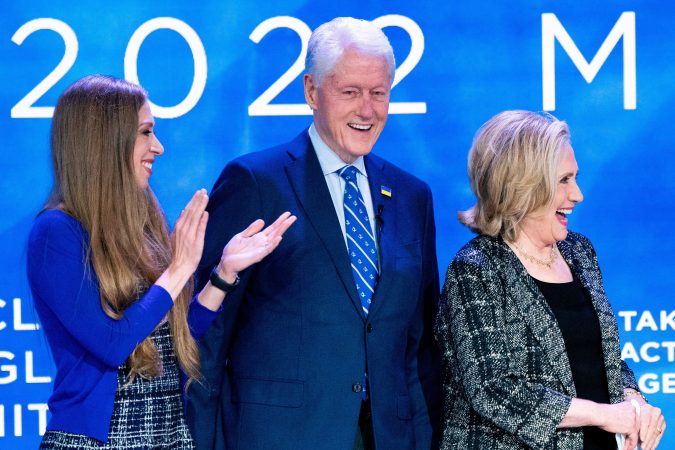
    The Clinton Foundation unveiled a new initiative Monday to help state and local governments develop and enact nonpartisan policy solutions to improve health outcomes, especially for women and children, economic security, and democracy.

    The foundation’s first new initiative in more than a decade, the Clinton Policy Institute has already begun convening political leaders from both parties, research experts, and Americans affected by the issues being studied to create new approaches to long-existing problems.

    “Rising costs, economic uncertainty, rapid technological change, and growing pressures on our public institutions are making it harder for families to get ahead,” former Secretary of State Hillary Rodham Clinton said in a statement to the Associated Press. “We created CPI because we believe there are still practical, evidence-based solutions that can improve people’s lives.”

    CPI is building on its work with New York state in banning cellphones from schools in the past academic year. Though the institute did not technically exist last year when it teamed with New York Gov. Kathy Hochul’s administration on creating distraction-free schools in the state, the Clinton Foundation saw promise in its approach and decided to expand it before publicly announcing CPI’s creation. It’s a strategy that the foundation, also led by former President Bill Clinton and public health expert Chelsea Clinton, used when it launched the Clinton Health Access Initiative in 2004.

    Zayn Siddique, former principal deputy director of the Domestic Policy Council, will serve as CPI’s chief executive officer. Jennifer Klein, who was director of the White House Gender Policy Council under former President Joe Biden, will be CPI’s chair.

    In New York, CPI helped create the Teen Tech Council so that students could help make the phone-ban program more effective. The result, according to Hochul’s office, was that educators found a marked improvement in classroom behavior and engagement.

    “CPI is bringing together policymakers, researchers, business leaders, and community organizations to identify what works, build stronger policy networks, and help turn those ideas into policy,” Hillary Clinton said. “We’re taking a particular focus on states and local communities, where so much innovation is happening.”

    Kansas Gov. Laura Kelly praises CPI’s nonpartisan approach

    Kansas Gov. Laura Kelly said a CPI conference on improving the lives of children earlier this month was “the best roundtable I’ve been involved with since becoming governor.”

    Kelly, who will leave office in January due to term limits after serving two consecutive terms, said she was inspired by CPI’s nonpartisan approach to solving problems affecting children.

    “I am a Democrat governor in what is considered a very red state,” Kelly told the Associated Press in an interview. “It became very clear to me that if I wanted to accomplish anything in my political life, I was going to need to do it in a bipartisan way.”

    Kelly believes that, despite political polarization, CPI can succeed in finding nonpartisan solutions — especially to issues involving children and healthcare — and giving state leaders the research and other support to implement them.

    “Every once in a while, you get people from both sides of the aisle who come together and crafted, maybe not sexy legislation, but something that really needed to be done,” Kelly said. “And they get it through.”

    Jerome Adams, former U.S. Surgeon General in President Donald Trump’s first administration, agrees that nonpartisan solutions are possible to find. But he says the nonpartisan nature of the solutions has to be intentional.

    “Health is inherently political,” said Adams. “When you talk about access to healthcare coverage, when you talk women’s health issues, particularly around the issue of abortion and contraception, when you talk about drug policy and whether you’re in favor of harm reduction, when you talk of firearm safety — all of these are inherently political issues.”

    Former Surgeon General Adams sees broad support for children’s issues

    That is complicated further, Adams said, because “we live in a country that is very binary, so every issue, no matter how nuanced, is, for purposes of elections, turned into black/white, yes/no, all or none.”

    However, Adams said CPI has already found a way to get bipartisan buy-in for some of its solutions to adverse childhood experiences (ACEs). In 2020, the state of California launched the ACEs Aware initiative to begin screening for ACEs — which include abuse, neglect, and household challenges — and treating them early to reduce the impact and the cost to the state later.

    Through CPI, Adams was asked to become the co-chair of the National Leadership Council for the ACE Resource Network in June in an effort to bring California’s work treating ACEs to other states.

    “I’m very interested in work that has proven and practical solutions,” he said. “We bring in states and say, ‘Hey, let’s look at the best evidence in terms of what works around adverse childhood experiences and state level policy and then try to implement it in your state’.”

    That strategy has led Republican-led states like Utah and Georgia to consider parts of Democrat-led California’s work on the issue, Adams said.

    He said it’s a sign that CPI’s approach works and can be expanded to other areas.

    The Clinton Foundation hopes that will be the case.

    “Too many people have lost faith that progress is possible,” Hillary Clinton said. “But across the country, leaders are developing innovative policies that are strengthening families and communities. Those ideas deserve to be shared and scaled.”

  • Your next job interview could be with an AI bot

    Your next job interview could be with an AI bot

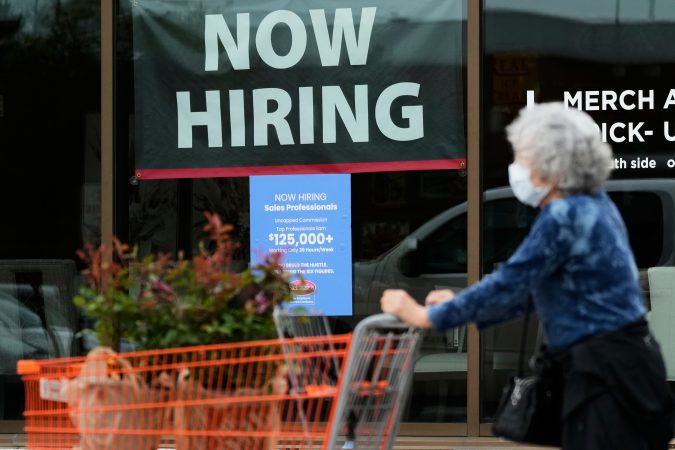
    Have you applied for a new job? If you’ve been shortlisted, get ready to be interviewed by artificial intelligence.

    Deluged by a flood of AI-generated job applications from easy-apply job boards, recruiters are turning to AI to cope. Companies are using chatbots to interview candidates, typically at the screening stage, through phone calls, text messaging, or video chats with onscreen avatars.

    Recruiters have been using AI-powered hiring tools for years to assess job applicants, and their use has been expanding in step with technology advances.

    Many people find AI job interviews unsettling, though the trend seems here to stay. According to recent research by hiring platform Greenhouse, more jobseekers are reporting they’ve faced AI job interviews. But many applicants have walked away from the hiring process because of it, which could be a sign that they’re either creeped out, or they could be fraudulent or were not serious candidates, depending on who you ask.

    Here’s what to expect from an AI job interview and how to do your best:

    Do your homework

    Whatever the interview format, the fundamentals still apply, said Amanda Augustine, a career coach at Careerminds, which helps companies support laid-off workers with resume writing and job search services.

    Ahead of the interview, review the job description, research the organization, and understand what it’s looking for.

    “The more prepared you are, the easier it will be to tailor your responses, even when you’re interacting with AI instead of a person,” she advised.

    Get used to the format

    If you’ve never done an AI job interview before, the first time could be unnerving or unsettling.

    I did a demo AI interview set up by Netherlands-based TestGorilla, one of numerous platforms providing recruitment tools for companies. First came two sets of questions, one that tested problem-solving skills and another gauging work experience. Then I faced an AI-generated female face.

    “My goal is to learn more about you and the experiences, skills, and competencies that you might bring to this role,” it said, adding that I should plan to spend about two minutes to answer each of three questions.

    Unlike a human interview, there was no warm-up chit-chat, no chance to build a rapport. There was no point in smiling or trying to break the ice.

    Experts say the best way to get over that is preparation.

    “You need to practice out loud,” said Priya Rathod, workplace trends editor at online job board Indeed. “And when I say practice out loud, I mean, say the actual answers out loud,” because the chatbot needs to record what you’re saying, she said.

    Also keep in mind you’re providing information about yourself to a machine, not having a conversation.

    “You have to be particularly descriptive and a very clear communicator in your language so that they can pick up on things that a regular interviewer might pick up through your facial expressions and tone,” Rathod said.

    An AI interviewer “cares less about my tone and more about what it is that I’m saying,” she added.

    Use an online interview simulator to prep — there are many available. They can record your answers and provide instant feedback on your content, delivery, or pacing. They’ll also help you get used to speaking into a camera, manage time limits, and give your answers in a structured way without the natural back-and-forth of a live conversation, Augustine said.

    Get ready for behavioral questions

    For my demo interview, the AI grilled me for a communications professional role.

    One question it asked was how I use AI in my “workflow,” including examples of both success and failure. When I replied that I saved lots of time with an AI transcription tool for interviews and other recordings, it summarized my answer and then asked me if I wanted to add anything else. I wasn’t sure whether I had answered satisfactorily.

    I scored “below average” on this question, according to TestGorilla’s assessment, which said I provided “no concrete metric” such as minutes saved. “The improvement claim is therefore vague,” it said.

    AI interviewers are asking these “behavioral questions” because they want candidates to provide examples of how they handled specific work situations, complete with numbers and metrics, Rathod said.

    “Those are the kinds of questions that AI relies heavily on. And the trap that we see a lot of people falling into is giving really vague answers,” she said.

    Candidates should still rely on tried and tested tactics like the STAR method — short for situation, task, action, result.

    So be prepared to talk about a specific work situation and the task assigned to you, the action that you took, and the result, Rathod said.

    “You want to use numbers as much as possible. Even if you’re not in a revenue driving role, there are ways in which you can say (how) you influenced something or impacted something within a group,” she said.

    Setup still matters

    Don’t neglect the physical setup of your desk and computer — it’s still important even if the video-based interview is with AI, and not a person.

    Test your audio and video in advance. Make sure the lighting is bright enough and is on your face. Raise your laptop to eye level so that you’re not looking down at the camera.

    “Small adjustments, such as using a stack of books or a ring light, can make a noticeable difference in how polished and professional you present,” Augustine said.

    Don’t be tempted to use AI shortcuts

    Jobseekers might be tempted to use AI to help come up with answers. After all, they’re so easy to use and if you’re not talking to a human, no one will be able to tell, right?

    “That’s a big no-no because it’s pretty obvious” to both the AI interviewing tool and anyone who might review the recording, said Rathod. Using AI for your answers “can sometimes immediately disqualify you.”

    If you’re having difficulty answering, you can always ask it to clarify or repeat the question.

    The question might even be designed to figure out if you’re using AI to cheat. TestGorilla’s head of marketing, Mehak Chowdhary, said it sometimes poses simple questions worded in a very convoluted way.

    “We do that intentionally to understand whether you are running an AI alongside, because the AI will then try and optimize for the length of the question,” she said. “But if you know your skill set, you will understand what’s being asked.

    “And we strongly recommend candidates put the AI devices aside. This is a test of your capability.”

  • Wildfires in France drive 250,000 people from their homes and creep toward wine city of Bordeaux

    Wildfires in France drive 250,000 people from their homes and creep toward wine city of Bordeaux

    LEGE-CAP FERRET, France — A raging wildfire in southwest France forced the evacuation of 55,000 people overnight Sunday, bringing the total forced out of their homes to a staggering 220,000 in one region alone, as flames crept ever closer to the wine region city of Bordeaux. Neighboring Spain oversaw its own fire evacuations on the country’s east coast.

    Shifting and gusting winds, as well as arid conditions, complicated massive efforts to limit the spread of the monster blaze burning out of control since midweek in France’s Gironde region, where Bordeaux is located. Authorities issued overnight evacuation orders for five more localities southwest of the historic city.

    “The situation remains very unfavorable,” French Interior Minister Laurent Nunez said after what he described as “another difficult night” for fire crews battling round the clock against the blaze that has burned an area four times the size of Paris.

    “The fire became extremely virulent again and unpredictable, generating its own winds and advancing erratically toward the Bordeaux metropolitan area,” Nunez posted on X.

    “It became calmer by the end of the night,” the minister added.

    Pope calls for prayers for victims of the ‘devastating wildfires’

    At the end of his Sunday Angelus prayer, Pope Leo XIV referenced “the devastating wildfires” in France and Spain and said: “I express my solidarity and invite everyone to pray for those affected and for the work of the rescue workers.”

    An estimated 162 square miles had burned in Gironde, the region’s prefecture said, much of it forests and scrubland made tinder-dry by successive heat waves. That is seven times the area of Manhattan island and four times the size of Paris.

    Firefighters raced in trucks to fight flare-ups and planes dropping water and retardants rotated in the smoke-filled air. Farmers delivered water in tanks to fire crews so they could fight the flames without interruption.

    “This allows firefighters to focus on the fire,” said Theo Hernandez, a wine grower. “It’s very strong, very virulent, it’s spreading everywhere.”

    The number of firefighters mobilized grew to 2,500, backed by 18 planes and helicopters, including from other European nations. Soldiers have also been called in. A giant A400M military cargo aircraft dropped plumes of ochre-colored retardant.

    The Gironde prefecture said 75 firefighters were treated for injuries. Hundreds of homes have been destroyed.

    Blaze has created firestorms

    In a first for France, the blaze alarmingly developed into a self-feeding firestorm on several occasions, most recently on Saturday night, generating lightning bolts that can start new flare-ups, authorities said.

    “It’s like being confronted by a hurricane,” said Gironde fire chief Marc Vermeulen.

    Forecast high temperatures starting Tuesday could complicate the firefighting, Gironde prefect Sophie Brocas said.

    Evacuees won’t be allowed back to their towns and villages until the blaze is brought under control, she warned. She urged holiday makers not to come to the region, which has popular Atlantic beaches and some of France’s largest woodlands.

    Fire creeps toward Bordeaux but the city isn’t evacuating

    Bordeaux Mayor Thomas Cazenave described the blaze as being “at the gates of the metropolitan area,” about 9 miles away at its closest point.

    But Cazenave said an evacuation of Bordeaux is not on the cards for now. The city is home to 268,000 people.

    Bordeaux turned an exhibition center into an emergency shelter, providing cots and food for thousands of evacuees, including hundreds of older people evacuated from care homes.

    A second fire burning farther south in the Landes region has also forced the evacuation of 36,000 people, driving the total number of displaced people in southwest France to more than 250,000.

    Fire crews have also been battling a blaze in the Var region of southern France on the Mediterranean. Nearly 3,000 people have been evacuated there.

    Tens of thousands of people also forced out of their homes in Spain

    In Spain, wildfires burned out of control around Madrid. Evacuations were also carried out Sunday in the Valencia region. A man was killed Saturday in a wildfire in Manises, a Valencia suburb, marking Spain’s first recorded death in the latest fires.

    “We still have some difficult hours ahead,” Prime Minister Pedro Sánchez said Sunday, but the night was “very positive in terms of bringing the flames under control.”

    A total of 76,000 people have been evacuated in Spain while 30,000 others have been confined to their homes, the government said.

    Evacuees fretted about what they’ll find when they’re allowed to return.

    “It looked like the apocalypse. You couldn’t see anything. Everything was covered in ash,” said Rocío Domínguez, who evacuated with her dog, Simba, from Chapinería, west of Madrid.

    “We don’t know when we get to the town, if we’ll have half the house burned down or we’ll have it intact or we won’t have a house,” she said. “All the clothes, all the memories, everything.”

  • A forced-labor crackdown or an end run around Congress? Dissecting Trump’s new tariffs

    A forced-labor crackdown or an end run around Congress? Dissecting Trump’s new tariffs

    NEW YORK — The Trump administration has imposed double-digit tariffs on more than 60 countries, using a legal justification that permits the president to levy import taxes and other sanctions against countries found to engage in “unjustifiable,” “unreasonable,” or “discriminatory” trade practices.

    The new tariffs announced in recent days take effect just as temporary 10% worldwide tariffs expired, and critics say they are less about cracking down on forced labor than they are a way to replace those tariffs. The expired tariffs were themselves a temporary replacement for worldwide tariffs the Supreme Court struck down in February.

    The tariffs were levied on countries that the U.S. says either don’t have or don’t effectively enforce a forced-labor import ban. The affected countries, which account for 99% of U.S. imports, were quick to protest, calling the Trump administration’s claims unfounded and arbitrary, as nations with vastly different records on forced labor received the same tariff level. The U.S. spent four months investigating but gave few details on how it arrived at the tariff rates, which are either 10% or 12.5%.

    Sidestepping Congress

    The tariffs were levied under Section 301 of the Trade Act of 1974 on countries that the U.S. determined had failed “to impose and effectively enforce a prohibition on the importation of goods produced with forced labor.”

    During President Donald Trump ‘s first term, he cited Section 301 to impose sweeping tariffs on Chinese imports amid a dispute over the sharp-elbowed tactics Beijing was using to challenge America’s technological dominance. The U.S. is also using 301 powers to counter what it calls unfair Chinese practices in the shipbuilding industry.

    “The 301s allow a permanent tariff without going to Congress to settle the dispute,” said Barry Appleton, a law professor and co-director of New York Law School’s Center for International Law. “That’s what all of this is about. The president doesn’t want to knock on the front door of Congress, so he’s trying every side door and every unlatched window to get in.”

    Little evidence that countries failed to enforce import bans

    The office of the United States Trade Representative said it consulted with all 60 economies under investigation and held two rounds of public hearings, elicited more than 2,100 public comments, and had “engagement” with its trading partners about what they were doing to combat forced labor bans.

    It didn’t detail its talks with the countries, saying those were confidential. Experts say it is fairly straightforward to investigate whether a country has a ban or not, but it is difficult to determine the government’s exact rationale for each country’s failure to enforce import bans.

    “There’s not a lot of hard evidence there,” said Scott Lincicome, vice president for general economics and trade policy at the Cato Institute, a libertarian think tank. “It’s pretty laughable on its face to think that a country like the ones in Europe or in Norway or Switzerland aren’t doing enough to police forced labor.”

    And even if countries do enact and enforce the forced-labor import bans the U.S. wants, they would still need to prove that they’re enforcing them to Washington’s satisfaction before the tariffs would be removed, said lawyer Patrick Childress, a partner at Holland & Knight and a former U.S. trade official.

    “This suggests that no short-term path for countrywide relief from the new Section 301 tariffs will be available,” he said.

    Countries and industries reject the forced labor argument

    Many countries have pushed back against the Trump administration’s findings.

    Brazil, which faces a 12.5% forced-labor tariff, called the U.S. move “arbitrary and unjustified.” The U.S. “chose to manipulate an issue of great importance to human rights and the struggles of workers worldwide in order to accuse 59 countries and the European Union of unfair practices,” it said in a statement.

    Australia also questioned the justification for its 12.5% tariff.

    “We believe that amongst all of the countries in the world, Australia does take the issue of slavery, modern slavery, seriously, and will continue to do that,” Trade Minister Don Farrell told reporters in Adelaide.

    Carve-outs have riled some industries. The National Council of Textile Organizations, which describes itself as the voice of the American textile industry, protested a mechanism that exempts the Section 301 tariffs for textile and apparel imports from Bangladesh, Cambodia, Indonesia, and Malaysia based on those countries’ imports of U.S. cotton and textiles.

    “No other industry has been more disadvantaged by forced labor than the U.S. textile industry, which employs 453,000 workers and has lost 41 plants over the past two plus years,” NCTO chief executive Kim Glas said in a statement. “We remain strongly concerned that USTR’s textile mechanism will harm the very domestic manufacturers the administration seeks to help.”

    U.S. forced-labor bans don’t always work

    The U.S. has two major pieces of legislation related to forced-labor import bans. The Tariff Act of 1930 gave Customs and Border Protection the authority to seize shipments where forced labor was suspected and to block further imports. But it had a big carve-out: If there was “consumptive demand,” meaning there wasn’t sufficient supply to meet domestic demand, imports were allowed regardless of how they were produced. The Trade Facilitation and Trade Enforcement Act that took effect in 2016 eliminated that loophole.

    In 2021, the Uyghur Forced Labor Prevention Act was passed. It blocks imports from China’s Xinjiang region unless businesses can prove the items were made without forced labor.

    But goods made with forced labor can still make it into the U.S. In 2015, an Associated Press investigation found that slave labor was used in the fishing industry in Southeast Asia. The seafood they caught made its way to supermarkets and pet food providers across the U.S.

    An investigation by the Associated Press in 2020 into the $65 billion palm oil industry found labor abuses among an invisible workforce consisting of millions of men, women, and children in Asia. The fruit they harvested made its way into the supply chains of major companies, including Unilever, L’Oreal, Nestle, and Procter & Gamble.

    Calls for a more comprehensive approach to combat forced labor

    During hearings on the tariffs this month, National Retail Federation vice president Jonathan Gold, who was representing the business coalition the Joint Association Forced Labor Working Group at the hearing, said that in order for the import bans to work, they would have to be much more extensive.

    He said there need to be “clear, measurable benchmarks” tied to tariffs for countries to hit, and that the U.S. should help countries build enforcement programs.

    Kenya Davis, a partner at the Boies Schiller Flexner law firm, said an effective ban needs a “comprehensive approach” that provides transparency about what the investigations consisted of, along with programs that provide countries aid in enforcing bans.

  • How the lighthearted social media trend of teen takeovers took a serious turn

    How the lighthearted social media trend of teen takeovers took a serious turn

    When Damarion Spann, 18, saw an Instagram flier calling for a massive gathering on a beach near downtown Chicago, he immediately wanted to go. Thousands of others joined him that night on the sand, blasting music and dancing.

    The cultural trend of so-called teen takeovers has popped up across the U.S. in recent years, influencing local policing and national politics. The events, often hyped online and captured in videos on social media, have led to shootings, theft, and vandalism. City officials and police are concerned about an increase over the summer, and are under pressure to prevent similar gatherings or to punish those who participate.

    Over the July 4 holiday weekend, several thousand young people converged in two spots in Raleigh, N.C., police said. Nine people, including an adult who was not part of the gatherings, were shot and wounded.

    There were also takeovers in Pensacola, Fla., where a 19-year-old was shot and killed; and Newport Beach, Calif., where more than 400 were arrested after the police chief said teens launched “explosive mortars and other projectiles” at officers ordering them to disperse.

    But Spann and other teens say that the events are largely misunderstood. They point to formal curfews or limits on group size at malls and movie theaters that have made it harder for teens to gather, exacerbating a feeling of disconnection they trace back to remote learning during the coronavirus pandemic.

    How cities are tracking the social media trend

    Communities and police across the country are trying to identify organizers, fine parents of those involved, and impose curfews.

    In Detroit, officials say they “thwarted” 19 gatherings so far this year by monitoring time and location changes as young people coordinated across social media, said Teferi Brent, director of the Mayor’s Office of Neighborhood and Community Safety.

    “We have eyes on all the behaviors and activities of those who have expressed interest in trying to take over and we have done a good job of being way ahead of the curve and being able to prevent a lot of these things,” Brent said.

    Alderperson Jessie Fuentes, who chairs the Chicago City Council’s subcommittee on youth employment, said her office has tried to find solutions that don’t rely exclusively on police and instead coordinate with parents and community members to prevent conflict or crimes.

    Blue Island, a south Chicago suburb, has taken another tack: to fine parents or guardians and use the funds to cover cleanup after events. That might include debris left behind or other damages like cars dented from scores of teens clambering over them while fleeing police.

    Other places have taken harsher approaches, as in Florida, where state officials said prosecutors can apply racketeering laws, typically targeting criminal gangs or organized crime, if takeovers appear to be facilitated by “an organized network.”

    But some have pushed back on the idea that the threat of harsh legal punishment could prevent the gatherings in the first place.

    “What we know about adolescent brain development is that the stakes are not going to be what prevents a young person from engaging in risky behavior,” said Melissa Milchman, the executive director for the nonpartisan organization the Coalition for Juvenile Justice. Milchman added that mass arrests often ensnare those who are going for innocent fun without preventing others from breaking the law.

    Teens say there aren’t safe spaces for them to gather

    For Spann, the recent media attention on the events has largely failed to capture the appeal to young people.

    “You feel like a young person who has freedom, who’s not being held to something,” said Spann, who is Black. At the event he went to, he was able to catch up with people he hadn’t seen since 8th grade.

    He said that the events are a direct result of a cascade of school closures across Black neighborhoods over the past couple of decades in Chicago. To deter people from gathering even at basketball courts, where there were sometimes fights, officials have removed the nets. Spann said that his mom, who grew up in the same neighborhood, frequently talks about how much easier it used to be to hang out outside without a fear of gun violence.

    When Spann goes to malls in more affluent areas with his mostly Black group of friends, shoppers often stare and security guards question them. To avoid scrutiny, Spann and his friends sometimes sneak into outdoor shopping centers or areas downtown in smaller groups at staggered times.

    By contrast, in the same spaces, Spann said, “If I’m with my white friends, I feel like I belong.”

    Despite the physical dangers that come with takeovers and the threat of getting a ticket or even arrested, the allure is strong, according to Jeffrey Bernstein, a psychologist and author.

    “The kids still do it because they feel like it’s their second family,” which he said “really takes over as their primary sense of connection.”

    “They’re getting things from their peers that they can’t get from their parents.”

    Some cities have tried to meet that need head-on, instead of cracking down with law enforcement.

    In St. Louis, officers have started to bring some teens to community centers instead of jails so their parents can pick them up, and in Baltimore, officials have tried leaning on public schools to provide alternative programming. In Chicago, Spann received a $11,000 grant from the city and partnering nonprofits to host an event for his peers at the end of the summer, in an effort to give his community more places to gather.

    What cities are doing to address teen takeovers

    In April, Daveion Page, a 16-year-old in Detroit, was bored. He turned to his phone, creating a post on social media promoting a teen takeover. Hundreds of teens soon flocked to a site downtown and fights broke out by the end of the night. At another takeover in May, a 14-year-old was shot and wounded.

    After the Detroit event in April, Page told reporters that he didn’t intend for the takeover he organized to result in violence.

    “I just wanted to get out of the house, have fun, enjoy time with my family and my homeboys and my homegirls, too,” said Page, who was flanked by Detroit Mayor Mary Sheffield and other city officials at a news conference.

    He told city officials that young people might respond if there were more safe places to gather.

    Before the takeovers, there were already plans to use $1.5 million from the city’s budget for summer programming and to support violence prevention programs. In response to the takeovers, the city has launched an office of youth affairs, met and listened to students at schools, and created a youth advisory board comprised of teens and young adults.

    “We have brought them to the table and made them a part of our structure in regards to identifying what the needs and concerns are of the young people in the city,” Brent said.

    In Detroit, a late-night basketball league has formed as an alternative hangout spot for teens and young adults. Jerseys and sneakers are provided by the city.

    “This league just helps me find something to do,” Cameron Chandler, 21, said while playing basketball at the recreation center.

    He’s never participated in a takeover, but recently after practice, he stumbled on one near his home.

    “There were a lot of cops and some people got arrested,” Chandler said. “You just have to think, ‘that could easily be me.’”

  • White House wants veterans to replace immigrant truckers who lost their licenses in crackdown

    White House wants veterans to replace immigrant truckers who lost their licenses in crackdown

    The Trump administration wants soldiers to consider becoming truck drivers when they leave the military to help replace the tens of thousands of immigrant drivers who lost their licenses in a crackdown this year.

    A new campaign launched Friday will promote programs that let veterans who recently drove large military vehicles skip the required skills test for a commercial driver’s license. Other soldiers can attend a commercial driving school during their last six months of active duty. The GI Bill will also pay for 100% of commercial driver’s license training and for some people even pay a housing allowance while they are in school.

    The campaign will be part of a broader interagency effort to help veterans find good civilian jobs that the White House plans to announce on Monday.

    The Transportation Department began enforcing existing English language requirements for truckers last summer. Concerns about truck driver qualifications then took on more urgency after an August crash in Florida, when a truck driver performed an illegal U-turn that killed three people. Transportation Secretary Sean Duffy said that driver, who is from India, should never have been licensed in the first place.

    Audits conducted in every state uncovered numerous nondomiciled commercial driver’s licenses that remained valid long after an immigrant’s work permits had expired or were issued without properly verifying their citizenship status.

    Since then, about 26,000 drivers have been pulled off the road for failing to demonstrate English proficiency, and the Transportation Department said 30,000 commercial licenses were canceled because they were issued illegally. The federal government has tried to withhold millions of dollars of highway funds from California and New York for failing to comply and revoke thousands more licenses, but that has wound up in court. Several other states — including Pennsylvania, Minnesota, and North Carolina — have been warned they are at risk of losing funding.

    “We are removing more and more dangerous foreign drivers off our roads every day and restoring the integrity of America’s trucking industry,” Duffy said. “Our new Freedom Haulers campaign will help build on these successes and get the word out that there’s never been a better time for America’s former service members to get behind the wheel of a big rig.”

    The federal government has been actively enforcing CDL rules

    The trucking industry has applauded the administration’s effort to get unqualified drivers off the road and close down sham CDL schools, and companies praised this new effort to get more veterans behind the wheel.

    “Veterans make up 15% of our workforce and bring the highest levels of leadership, discipline, and technical skills that are essential to our success. We are dedicated to providing them with meaningful careers and a supportive environment where they can thrive,” said Derek Leathers, who is chairperson and CEO of Werner Enterprises.

    Cole Stevens, who is chief strategy officer at the trucking company that bears his last name, said veterans’ backgrounds make them great drivers.

    “Some of the best drivers and industry leaders I’ve had the privilege of working with are military veterans,” Stevens said. “Their integrity, accountability, and mission-first mindset make them an incredible asset.”

    In addition to enforcing existing restrictions, the government announced plans to restrict which immigrants can qualify for a nondomiciled commercial driver’s license and require them to take the test in English, but those rules are being challenged in court.

    The only immigrant drivers who can get a license under the new rules are holders of an H-2A, H-2B, or E-2 visa. H-2A is for temporary agricultural workers while H-2B is for temporary nonagricultural workers, and E-2 is for people who make substantial investments in a U.S. business.

    Immigrants account for about 20% of all truck drivers, but all of these nondomiciled licenses for immigrants represent only about 5% of all commercial driver’s licenses, or about 200,000 drivers.

    Some immigrant groups have said they believe that many drivers are being unfairly targeted. The spotlight has been on Sikh truckers because the driver in the Florida crash and the driver in another fatal crash in California in October are both Sikh.

    Truck driving may appeal to veterans

    The Transportation Department plans to work with the Pentagon and Departments of Veterans Affairs and Labor to promote the career field as a good job that offers independence to veterans who don’t want a desk job in civilian life.

    Veterans still have to study the rules and pass the written test for a commercial driver’s license, but soldiers who recently drove big military vehicles over 2.5 tons can skip the skills test. The government said more than 40,000 veterans have already used that program, which can enable them to get on the road within a few weeks.

    The Transportation Department said that truck drivers currently make an average of $70,000 a year, as the truck market has tightened up and rates have increased.

    Veterans who served for at least three years can also use the money from the GI Bill program to pay for CDL training, and they might even qualify for a housing stipend.

  • Stocks waver on Wall Street while crude oil prices fall for the first time in a week

    Stocks waver on Wall Street while crude oil prices fall for the first time in a week

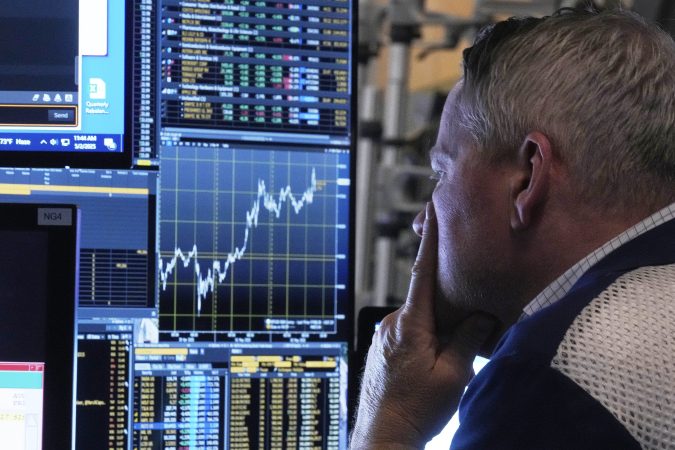
    NEW YORK — Stocks drifted to a mixed finish on Wall Street Friday as oil prices slipped for the first time in a week.

    Every major index lost ground overall for the week amid increasing pressure from a sharp escalation in the U.S. war with Iran. Investors are also contending with more tariffs and worries about the economy suffering under the weight of stubborn inflation.

    The S&P 500 barely budged in a day of uneventful trading. It rose 3.68 points, or less than 0.1%, to 7,411.98. The index notched its second consecutive losing week, which hasn’t happened since March.

    The Dow Jones Industrial Average rose 235.60 points, or 0.5%, to 51,947.25.

    The Nasdaq fell 161.87 points, or 0.6%, to 24,975.82. It was weighed down by sharp losses from several Big Tech stocks.

    Micron Technology fell 7% and Broadcom fell 2.7%. Both companies have large market values that tend to weigh more heavily on the market. They were big reasons for the technology-heavy Nasdaq lagging the market, and also why the market’s gains were kept in check despite more stocks rising than falling within the S&P 500.

    Heavy fighting in the Middle East throughout the week again threatened to slow the global flow of oil and gas. It has been an ongoing concern for Wall Street, and now many of the buffers in the energy market from earlier in the year, including strategic reserves in the U.S., have been weakened.

    “If escalation continues and the Strait of Hormuz remains closed, the impact will land on an energy market with far less resilience than in the spring,” wrote Theodore Bunzel, head of geopolitical advisory at Lazard Asset Management, in a report.

    Brent crude, the international standard, fell 3.9% to $96.78. It has generally been rising all week and moved back above $100 on Thursday before easing a bit. Before the Iran war began in late February it was trading around $72 per barrel.

    Bond yields also eased and relieved some of the pressure on stocks. The yield on the 10-year Treasury fell to 4.68% from 4.71% late Thursday.

    Markets in Europe gained ground, while Asian markets closed lower.

    The U.S. is also ramping up its global trade war with a fresh round of tariffs on dozens of nations. The new round of tariffs impacts nearly all U.S. imports and they are paid by companies importing those goods, who then typically pass the added costs along to consumers. That move came just as the clock was running out Friday on stopgap levies the president imposed after a stinging defeat for other tariffs at the Supreme Court.

    Rising energy prices and fresh tariffs could result in hotter inflation, which has been squeezing consumers and looming over the Federal Reserve’s interest rate policy.

    The Fed meets later this month and has been closely monitoring prices and their impact. Rising inflation dashed hopes earlier this year for an interest-rate cut. Wall Street has since leaned more toward a potential rate increase, which the central bank can use to help cool inflation.

    Wall Street is anticipating at least one rate hike by the end of the year, with a nearly 38% chance that could happen at the upcoming meeting next week, according to CME FedWatch.

    Higher energy costs threaten to take a bigger chunk out of household budgets, which means a shift in spending toward more basic needs, like gasoline. Nationally, a gallon of gasoline costs $4.10, according to AAA. That’s still lower than this spring as the conflict in Iran expanded, but it’s almost a dollar higher than last year at this time.

    Investors are worried about the impact to companies profits. Those profits and expectations for more growth are what typically justifies a stock’s value. The latest round of corporate earnings showed that companies are still notching growth, but concerns are growing.

    American Express fell 4.3% despite reporting a jump in profit during its most recent quarter. Amex maintained its profit forecast for the year and has been spending more heavily to keep wealthy individuals amid more competition.

    Worries about the sustainability of broader profits are on top of lingering concerns about AI-focused tech companies. Companies like Alphabet and Nvidia have been spending heavily on AI technology. Investors are increasingly questioning whether those investments will produce profits to justify the large stock values that have been steering the broader market higher throughout the year.

    AP Business Writers Elaine Kurtenbach and Matt Ott contributed to this report.

  • Ford recalls more than half a million Broncos due to engine fire risk

    Ford recalls more than half a million Broncos due to engine fire risk

    WASHINGTON — Ford Motor Co. is recalling more than half a million Broncos because a wiring harness in the engine compartment can short circuit and increase the risk of fire.

    Ford said Thursday that 565,691 Ford Broncos and Bronco Raptors, model years 2021-2026, are included in the recall. The automaker estimates that around 1% of those vehicles have the wiring harness defect. Ford said it is not aware of any reports of accidents or injuries related to the issue.

    The problem is caused by insufficient protection on the wiring harness which can lead to exposed wires and short circuiting. In the event of a short, drivers may notice smoke in the air vents or a warning message on their dashboard followed by flames coming from the passenger’s side of the engine compartment.

    To fix the problem, dealerships will install new covers over the wiring free of charge.

    Ford’s number for this recall is 26S55. Vehicle identification numbers involved in this recall are now searchable on NHTSA.gov. NHTSA’s number for this recall campaign is 26V468.

    Owners may contact Ford customer service at 1-866-436-7332 or the National Highway Traffic Safety Administration Vehicle Safety hotline at 1-888-327-4236 (TTY 1-888-275-9171).

  • FDA panel narrowly backs unapproved peptide drugs favored by RFK Jr. and wellness influencers

    WASHINGTON — A panel of federal health advisers on Thursday narrowly recommended easing access to several peptides popular with wellness influencers and celebrities, despite warnings from government scientists that the chemicals haven’t been shown to be safe or effective.

    In a series of votes, outside experts to the Food and Drug Administration advised the agency to drop current restrictions barring pharmacies from producing injectable peptides with names including BPC-157, TB-500, and KPV.

    The panel’s vote is not binding but is likely to embolden Health Secretary Robert F. Kennedy Jr., who has described himself as a “big fan” of peptides and vowed to overturn FDA restrictions put in place under President Joe Biden.

    Across several votes, the panelists voted 8-6, with one abstention, in favor of putting the peptides on FDA’s list of substances considered safe for pharmacy compounding. If FDA follows that advice, telehealth companies are expected to ramp up marketing of the chemicals for wellness and cosmetic uses.

    Thursday’s vote tally reflected the unusual makeup of the panel. Prior to the meeting, more than a half-dozen people with connections to the peptide industry were added to the group, including doctors, pharmacists, or consultants who work in the field.

    “I voted yes because it’s time to put this decision back in the hands of the patient, the physician, and the pharmacist,” said David Pope, chief pharmacy officer of Xifin Pharmacy Solutions, after the vote on BPC-157.

    The panel was set to vote Friday on three more peptides. The FDA isn’t required to follow the group’s advice, though it usually does.

    FDA scientists remain unconvinced of peptide safety and benefits

    The positive votes came despite highly critical reviews from FDA staff scientists, who said there was little data that BPC-157, TB-500, and the other chemicals can be safely used for medical purposes.

    Panel members with backgrounds in academia, rather than peptides, mostly voted against the substances, which are widely advertised on social media.

    “I’m concerned we’re responding to a market-induced demand rather than a decision based in solid science,” said Elizabeth Rebello of the University of Texas MD Anderson Center.

    Peptide supporters include podcaster Joe Rogan and longevity influencers such as Gary Brecka, a supporter of Kennedy’s Make America Healthy Again agenda who sells peptides through his website.

    But medical experts describe the marketplace as a “Wild West” of unproven, unregulated drugs that could cause serious harm, including infection, allergic reactions, or other problems.

    “This is really alarming,” said Rita Jew, a pharmacist and president of the Institute for Safe Medication Practices, in an interview ahead of the meeting. “There aren’t that many other substances people are injecting into themselves where you see that the clinical evidence is so lacking.”

    In recent years, the FDA has warned Americans about the risks of injecting peptides like BPC-157 and TB-500. In 2023, both were placed on a list of substances considered to be too high-risk for pharmacy compounding. But Kennedy announced their removal from that list earlier this year.

    Gap wide between FDA-approved drugs and wellness peptides

    Peptides are the building blocks of more complex proteins, triggering hormones inside the body needed for growth, metabolism, and healing. Drug companies have brought several to market as medications, including mainstay treatments for diabetes and weight loss.

    But most peptides sold online are promoted for unproven uses, often combined in “stacks,” to purportedly heal injuries, build muscle, rejuvenate skin, or increase energy.

    FDA scientists said they could find little data on the effectiveness of peptides for proposed medical uses like ulcerative colitis, wound healing, and opioid addiction.

    Five studies of BPC-157 reviewed by the agency “were of short duration, had small sample sizes, and evaluated doses that were likely exploratory in nature,” the staffers said.

    For TB-500, regulators said they could not find any human studies using the compound.

    Even determining which form of the peptides should be used was unclear to regulators, since substances like TB-500 aren’t recognized as official pharmaceutical ingredients in the U.S.

    “There’s no way to know what the substance actually is, was, or will be tomorrow because that name has no legal meaning,” said Russell Wesdyk, an associate director in FDA’s drug center.

    Peptide supporters push for easier access

    The panel votes are only one part of more than 18 hours of discussions and presentations scheduled across two days.

    During several public comment periods, the panel heard from more than two dozen speakers — including doctors, lawyers, and peptide entrepreneurs — urging that the substances be made more widely available.

    Brigham Buhler, a wellness clinic owner whose clients include Rogan and other celebrities, said allowing U.S. pharmacies to compound peptides would steer Americans away from unvetted products imported from China and other foreign countries.

    “It’s crucial to allow patients to have safe and effective access to these treatment options,” Buhler said. “Individuals who have gotten these resources are going to continue to utilize these products.”

    After the meeting, the FDA will review the votes, discussion, and public comments before making a decision on each of the peptides.

    FDA watchers say the most likely outcome may be a temporary policy reassuring pharmacies that they won’t be targeted for compounding the peptides under review. Formally placing the substances on FDA’s list of drugs that are safe for compounding would require new regulations, which can take months or years to draft.

    “We’re still going through this process, but I think it’s more than likely that the process will end up at the result that Secretary Kennedy wants,” said Nathan Beaver, an attorney specializing in FDA issues.

  • Trump says U.S. will investigate EU trade practices, claiming the bloc unfairly fined tech giants

    Trump says U.S. will investigate EU trade practices, claiming the bloc unfairly fined tech giants

    WASHINGTON — The United States will open a formal investigation into the European Union’s trade practices, President Donald Trump said on Friday, claiming the bloc has unfairly levied billions of dollars of fines against Google, Apple, and other U.S. tech giants.

    The Republican president made the announcement a day after the EU hit Google with a fine of 890 million euros, or $1 billion, after it said the technology behemoth broke digital antitrust regulations by setting up Google Play and its ubiquitous search engine to corral consumers toward its own services and apps to the detriment of competitors.

    In a lengthy post on social media, Trump said he has warned the EU about its practice of fining U.S. tech companies. He named Google, Apple, Meta, Amazon, and others.

    “The United States of America is not a ‘PIGGYBANK’ for Europe, nor will we allow it to be!” Trump said, adding that his post should serve as notice of an immediate trade investigation “into the practice of ‘ROBBING’ American Companies and, in turn, the American Taxpayer.”

    Trump’s move comes a day after the White House announced double-digit tariffs on imports from more than 60 countries, accusing them of inadequately enforcing bans on goods produced by forced labor. The new tariffs replace temporary 10% worldwide import taxes that Trump imposed after the Supreme Court struck down his biggest tariffs.

    The new tariffs are being implemented using Section 301 of the Trade Act of 1974, which permits the president to impose import taxes and other sanctions against countries found to engage in “unjustifiable,” “unreasonable,” or “discriminatory” trade practices.

    The EU’s billion-dollar fine against Google was the latest major crackdown on Big Tech by Brussels, which has led the world in reining in some of the world’s largest companies from Silicon Valley to Beijing.

    It has done so despite the risk of incurring the wrath of Trump, who has lashed out at the 27-nation bloc’s digital regulations amid a broader campaign against Europe: imposing high tariffs, making threats to seize Greenland from Denmark by force, and rattling trust within the NATO military alliance.

    Trump had threatened retaliation if American tech companies are penalized.

    Google had recently lost its appeal of a $4.5 billion antitrust fine imposed by the EU for throttling competition and reducing consumer choice through the dominance of its mobile Android operating system.

    The European Commission, the bloc’s executive branch and highest antitrust enforcer, said it was acting in the interest of consumers after an investigation of Google.

    “The best products should succeed because they’re better, not because they’re owned by the company running the search engine. And European consumers have a right to be told by app developers where to sign up to the best offers, even when the app store owner does not get a cut,” said Teresa Ribera, the commission’s executive vice president for clean, just, and competitive transition.

    Google’s president of global affairs, Kent Walker, blasted the fine as “product degradation driven by a small group of self-serving complainants” that will have a negative impact on European businesses and consumers.

    He said the EU’s Digital Markets Act forces Google “to strip away real-time search features Europeans love — like instant pricing and direct availability for hotels, flights, and restaurants — and dismantle safety protections on Google Play.”

    The EU describes some of the world’s leading tech giants — Amazon, Apple, Google parent Alphabet, Meta, Microsoft, and TikTok owner ByteDance — as “gatekeepers” that control access for consumers.

    “In the EU, businesses have the right to compete fairly. Gatekeepers have the obligation to ensure a level playing field and consumers the right to choose for cheaper alternative offers,” European Commission spokesperson Thomas Regnier said. Alphabet reported $403 billion in revenue last year.