Category: Business Wires

  • Pope hats, bloody shirts, and so many bobbleheads: The creative ways MLB teams lure fans to the park

    Pope hats, bloody shirts, and so many bobbleheads: The creative ways MLB teams lure fans to the park

    CHICAGO — It started as a limited promotion for a specialty theme night. Then the Chicago White Sox heard from their fans.

    Everyone wanted a pope-themed hat.

    “When things go bananas … that’s when it gets really fun,” said Brooks Boyer, the White Sox’s chief revenue and marketing officer.

    Fun is the overarching theme when it comes to stadium giveaways, and business has been good at major league ballparks this year.

    An array of creative promotions — everything from the New York Mets handing out fake glasses and mustaches for a Bobby Valentine Disguise Night to the Texas Rangers giving away a Nolan Ryan bloody lip jersey — has played at least a small role in an MLB-wide average attendance of 29,618 through Aug. 11, the highest such number for a full season since 2017.

    Bobbleheads remain popular — like the Brandon Nimmo Bull Riding bobblehead in Texas, or the butter-churning Nick Kurtz “Big Amish” bobblehead with the Athletics — but it’s not just those iconic figurines that are drawing big crowds. The Brewers handed out 25,000 bar dice sets to fans 21 and over on Saturday, and they had a crowd of 40,625 at American Family Field.

    The pitch clock and other innovative rules introduced by MLB in 2023 are often credited for spurring fan interest. But it’s clear from the long lines — and occasionally astronomical resale prices on eBay — what a clever giveaway can do for ticket sales, too.

    “I definitely think across the league, there’s been an increase in demand and desire, and even necessity, to do things that are outside of the box,” said Meagan Hermosillo, the director of marketing and promotions for the Arizona Diamondbacks. ”For us, we can’t really do a standard bobblehead or a standard anything. It has to have some kind of unique factor if we want it to move the needle.”

    Chicago’s pope hats took creative — and careful — planning

    The White Sox ended up giving the pope hats — shaped like the Pope’s miter, with the team’s sock logo in the middle — to everyone in the crowd of 38,113 for the Aug. 11 5-4 loss to the Cincinnati Reds. The tribute to Pope Leo XIV, a Chicago native and longtime White Sox fan, helped push the club’s season-long attendance to 1,460,383, surpassing its total of 1,445,738 for all of 2025.

    The team leaned into the theme. There were signs posted in the ballpark that read “LEO KNOWS MUNE” and “LEO KNOWS KONERKO,” referring to current White Sox first baseman Munetaka Murakami and former slugger Paul Konerko.

    “I thought it was a great idea, knowing that the Pope is from Chicago and he’s a Sox fan, which is great,” said Edward Lopez, 58, a truck driver from the south side of the city.

    Lopez was supposed to go to the game with his girlfriend, but she wasn’t able to make it. So he went through two different gates to make sure he secured two pope hats.

    “It was worth it,” he said.

    Promotions for the White Sox go through a committee led by senior director of marketing and promotions Mike Downey. They throw out ideas and concepts, and they also look at samples from different vendors.

    The team also is handing out wooden domino sets to 10,000 fans on Aug. 22 and magic wands to 20,000 fans on Sept. 4, a nod to the viral wand-waving dugout displays of injured reliever Mike Vasil.

    “We’ve always looked to have our giveaways be something that we know people would wear or use or value because it adds value to the ticket,” Boyer said. “So it starts with that.”

    While planning the pope hat night, religious sensitivities were part of the conversation for the promotions committee.

    “We haven’t done items that would be Pope Leo’s likeness,” Boyer said. “We wouldn’t do that without the permission of the Vatican. … We’ve been very careful. There is a little bit of nuance and finesse that needs to be done. And items, you know a lot of items may not be for everybody.”

    Teams are eagerly jumping on larger cultural moments for eye-catching promotions

    The Baltimore Orioles handed out a Tupac Shakur bobblehead in May. The New York Yankees gave out a KPop Demon Hunters bobblehead on Aug. 11, and they have a George Costanza calzone bobblehead — paying tribute to a 1996 Seinfeld episode — coming up on Aug. 27. Every MLB team except Toronto had a Star Wars Night this season.
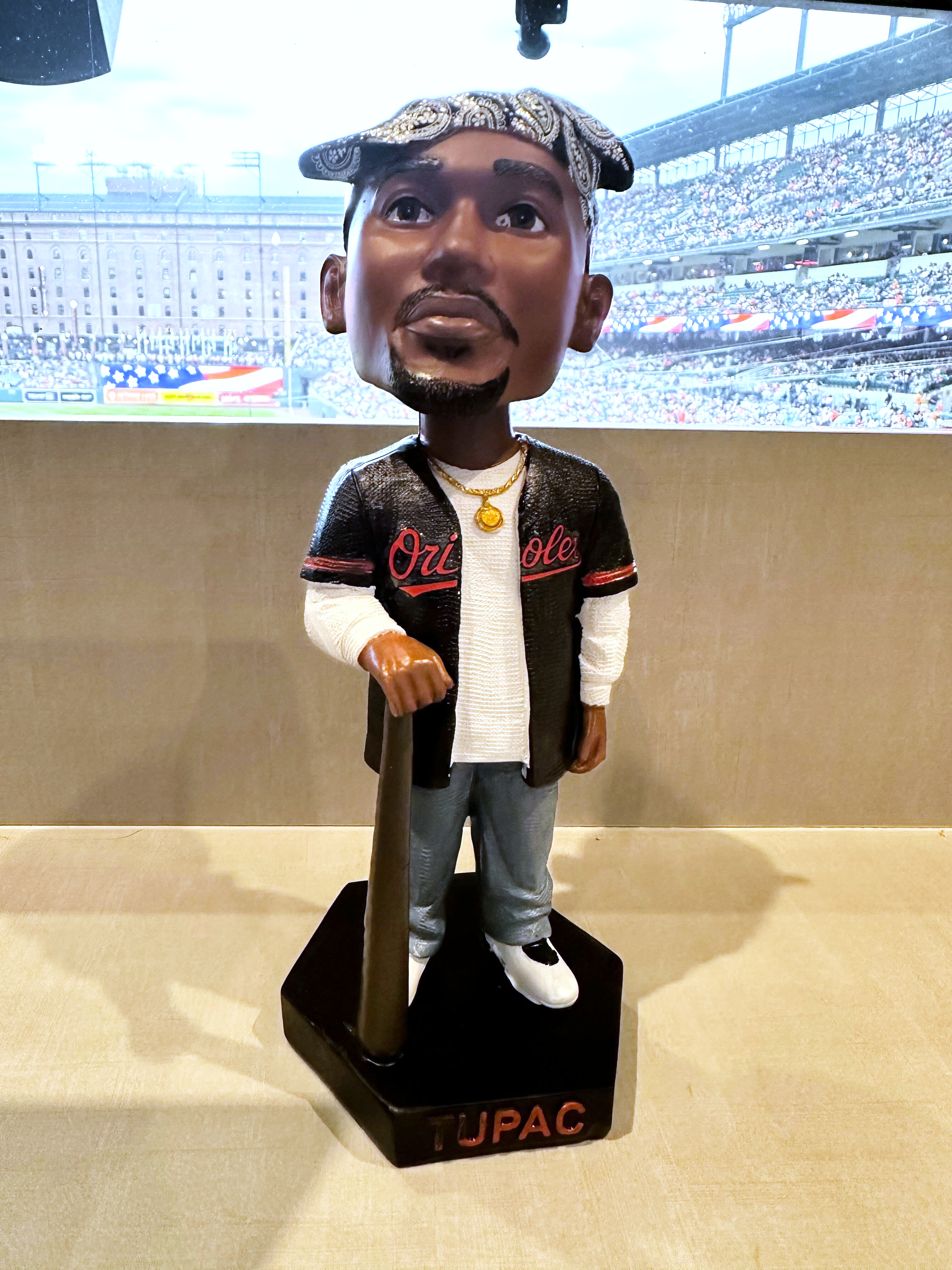
    A Tupac Shakur bobblehead is displayed for the Baltimore Orioles’ giveaway at a baseball game against the Athletics on May 8, 2026, in Baltimore. Noah Trister

    Following in the footsteps of the minor leagues in many cases, it’s not enough anymore to just feature a popular player for a giveaway.

    “You can see that teams are doing a much better job with their understanding [of] who they’re trying to target,” said Jim Strode, an associate dean and professor at Ohio University’s College of Business. “When I think of the Seinfeld one, I’m thinking, you know, they’re targeting Gen X, they are targeting some, you know, younger baby boomers to try to get out to the ballpark.”

    There is also what Lauren Anderson, the director of the Warsaw Sports Business Center at the University of Oregon, described as the “collector chase game.” There were multiple fans looking to buy additional pope hats at Tuesday night’s game, and there were several listings for the giveaway and the KPop Demon Hunters bobblehead on eBay the next day.

    “You want something that’s unique and cool and something that you can, you know, I’m one of 5,000 people to get these, I’m one of 10,000,” Anderson said. “I mean, there is also a bit of the game of people want something that’s limited so they can flip it and sell it, like on an eBay.”

    David Brandt contributed to this article.

  • Somalia faces another hunger crisis and the U.N. food agency head says it has far less funds to help

    Somalia faces another hunger crisis and the U.N. food agency head says it has far less funds to help

    MOGADISHU, Somalia — Six million people in Somalia are facing acute food insecurity while the World Food Program has only a tenth of the resources it had in 2022 when it helped avert famine in the drought- and conflict-stricken East African nation, the head of the U.N. agency told The Associated Press.

    “We can only do the bare minimum,” WFP executive director Carl Skau said Wednesday during a visit to a nutrition center on the outskirts of the capital, Mogadishu. “We’re only providing these nutrition supplies to the children that are really the worst hit.”

    The reduced funds, because of cuts in international aid by donors and the redirection of resources to other humanitarian crises, meant that the WFP is unable to expand its assistance in Somalia, Skau said.

    Millions of people at risk but far less aid

    The WFP projects that 1.9 million children under age 5 in the country will suffer acute malnutrition this year, including nearly 500,000 who will require urgent treatment for severe acute malnutrition. Overall, around 30% of the population faces critical levels of food insecurity, the U.N. has said.

    “We had 10 times more resources than now,” Skau said of the 2022 hunger emergency that was caused by a prolonged drought. “We were able to step in, and we prevented a famine here in Somalia.”

    “We know what’s going on, we have the capacity, we have the experience of dealing with this. We just need the resources now to do it.”

    The consequences of the current food shortage, which is also a result of drought, conflict and the displacement of people, are seen at the Feynuus Health Center in Mogadishu’s Kahda district. Dozens of women carrying babies waited beneath a large tree or crowded along the veranda of the corrugated-metal facility seeking help.

    Inside, health workers placed children in a blue weighing sling, screened them for malnutrition, and distributed therapeutic food.

    One desperate mother tells her story

    Halima Mohamed Hassan, a mother of six, had walked nearly 2 miles carrying her malnourished 4-year-old child. She is pregnant, but said she hadn’t eaten for two days. Her last meal was plain rice.

    Health workers treated the child she brought with a special nutrient-dense food, while Hassan said that her other children were also malnourished, but she wasn’t able to bring them to the center.

    “I could not carry all of them,” she said.

    Hassan fled the Lower Shabelle region four months ago after her husband died of malnutrition, she said. Food and water became scarce, and conflict made it increasingly dangerous for the family to stay.

    She and her children walked for four nights before reaching a camp for internally displaced people on Mogadishu’s outskirts.

    Hassan now shares a makeshift shelter with her widowed mother and her mother’s four other children. The two women look for occasional work washing clothes in nearby neighborhoods to feed their household of 12.

    A health center tries its best to help

    The Feynuus center receives between 250 and 350 patients daily, mainly displaced women and children from regions outside Mogadishu, said Abdirahman Barkhad, program director of Youth Link Somalia, which operates the center.

    Barkhad said that about 10 nearby health and nutrition centers had closed because of a reduction in humanitarian funding, increasing pressure on those that remain.

    “We have witnessed children collapsing, because their families do not have enough food,” he said.

    Mohamud Moallim Abdulle, commissioner of the Somali Disaster Management Agency, described the country’s food situation as “extremely alarming.”

    He said that an estimated 1.85 million children are malnourished, while around 6 million people are affected by drought, and 2 million urgently need assistance.

    They don’t know where their next meal is

    Skau said that mothers he met this week in the town of Burhakaba described drought, insecurity, and also rising food prices as the main drivers of the crisis. Some had lost their crops and fled their homes. Others walked for three or four hours to reach health facilities, because aid workers couldn’t reach them.

    “I spoke to women with eight to 10 children,” Skau said. “They don’t know where the next meal is going to come from.”

    Insecurity, with Somalia battling a 20-year-long insurgency by the al-Shabab militant group, also makes humanitarian operations more expensive. WFP must use aircraft in areas where staff and supplies can’t travel safely by road, and some communities are inaccessible, Skau said.

    He said that conflict in the Middle East was adding to the pressure by driving up fuel and food prices, limiting agricultural supplies, and drawing funding toward other emergencies.

    After her child received some food at the center, Hassan began the walk back to the camp they live in. Her five other children were still waiting and hungry, she said, and she would have to return with them one at a time.

  • Meta defends its child safety efforts, but critics say the social media giant falls short

    Meta defends its child safety efforts, but critics say the social media giant falls short

    CHICAGO — Meta insists it has a long history of protecting its youngest customers as it defends itself against a swath of lawsuits alleging its social media empire harms children.

    In the latest such instance, the social media giant is fighting allegations in a California federal court that it contributes to the youth mental health crisis by deliberately and stealthily designing features to get children hooked on its platforms Instagram and Facebook. Four states are seeking billions of dollars in damages as well as fundamental changes to how Meta runs those apps.

    Children’s mental health, and what they do and see on social media, are all issues “Meta takes seriously and tries to act on,” Paul Schmidt, a lawyer for the tech giant, said in opening statements this week.

    Critics say the company’s safety record falls short and that many of its protections simply don’t work.

    They include Marc Berkman, executive director at the Organization for Social Media Safety, who said Meta introduced safeguards promising to protect children in response to public pressure rather than out of concern.

    There’s been a “lack of real institutional willingness to act here,” Berkman said.

    Here’s a look at some of the changes Meta has introduced, along with the work advocates say could still be done.

    Access to users and content-focused protections

    Most of the changes Meta has introduced focus on addressing harassment and offensive content.

    Instagram users have always been able to block others — and, along with Meta’s oldest crown jewel, Facebook — the app has gradually added features for reporting problematic accounts and inappropriate content.

    In 2016, Instagram users were given the option to delete or filter comments they found offensive, and later added warnings that prompted users to reconsider posting potentially harmful content, as well as options to limit comments and tags on their posts.

    Meta also says it prevents adults from starting private chats with teens if they are not already connected, and has increased checks to make sure users under 13 — the minimum age for holding a Facebook or Instagram account — aren’t online. Schmidt said in his opening remarks that Meta recognizes some users still sign up using incorrect birthdays but that the company takes enforcement of age limits seriously.

    The company says it also posts warnings and resources at the top of Instagram search results related to suicide, self-harm and eating disorders, and touts its “Teen Accounts,” launched in 2024, as a safe space for teenagers online. It aligns photo and video restrictions for teen accounts with those for a PG-13 movie, unless there’s parental permission otherwise.

    Critics complain these changes amount to little more than corporate posturing.

    A September 2025 report from former employee and whistleblower Arturo Béjar and four online safety advocacy nonprofits accused Meta of not taking “real steps” to address youth safety, instead opting for “splashy headlines about new tools for parents and Instagram Teen Accounts for underage users.”

    “We really found that overall what Meta was marketing under Teen Accounts was very lacking in actual protections,” said Haley Hinkle, policy counsel at Fairplay, which co-authored the report. They evaluated 47 of Meta’s 53 safety features for teens on Instagram and found 60% of them were either not available or didn’t work as advertised, Hinkle said.

    Meta called the report’s findings “misleading” and “dangerously speculative.”

    Scrolling and core design

    Researchers say Meta’s efforts to reduce the risk of children becoming addicted to the scrolling features of social media platforms have been largely unsuccessful.

    Ashley Shea, a Ph.D. candidate specializing in social media and online spaces at Cornell University, points to what academics call “attention-capture deceptive designs” that are not exclusive to Meta’s platforms. They include infinite scrolling, “casino style” pulls to refresh content, push notifications and algorithmic recommendations. Those features “prey on the cognitive vulnerabilities” of young people with developing brains, in particular the need to feel rewarded.

    Meta has taken important steps to address problematic content, cyberbullies, and sexual predators, Shea said, but she has not seen the same level of effort to offset the addictive impact of attention-capture deceptive designs.

    Nudges and time management controls

    “There’s no question that some teens struggle to manage their time with social media,” Schmidt said Tuesday, adding that Meta’s time management tools prove its evolution on the issue. Those tools include parental supervision controls and in-app “nudges” for teen users who repeatedly look at the same type of content or spend too long on Instagram or Facebook late at night.

    Hinkle notes the “entirely voluntary” time management tools are not easy to set up, and amount to “far too little, too late.”

    Béjar, the former Meta employee and whistleblower, agrees. In testimony Wednesday, he said a tool called “Take a Break” is “designed to fail.” Users have to turn the feature on themselves and, he said, very few do.

    Across the board, tech companies exist to maximize revenue, said Berkman, and for almost every social media platform today, that means “maximizing children using their features for as long as they can.”

    Legal challenges focused on “the fact that these are defective products by design because of their features, not the content per se” is something new, Shea added. And beyond the courtroom, mounting pressure on lawmakers could bring more industrywide changes.

    “The momentum only continues to grow,” she said. “Ultimately, these are for-profit companies that respond to economic pressures. And so I think that the more economic pressure they’re confronted with through these litigations, the quicker they will have to adapt.”

  • Trump picks Heidi Overton, a top White House aide, to lead the Food and Drug Administration

    Trump picks Heidi Overton, a top White House aide, to lead the Food and Drug Administration

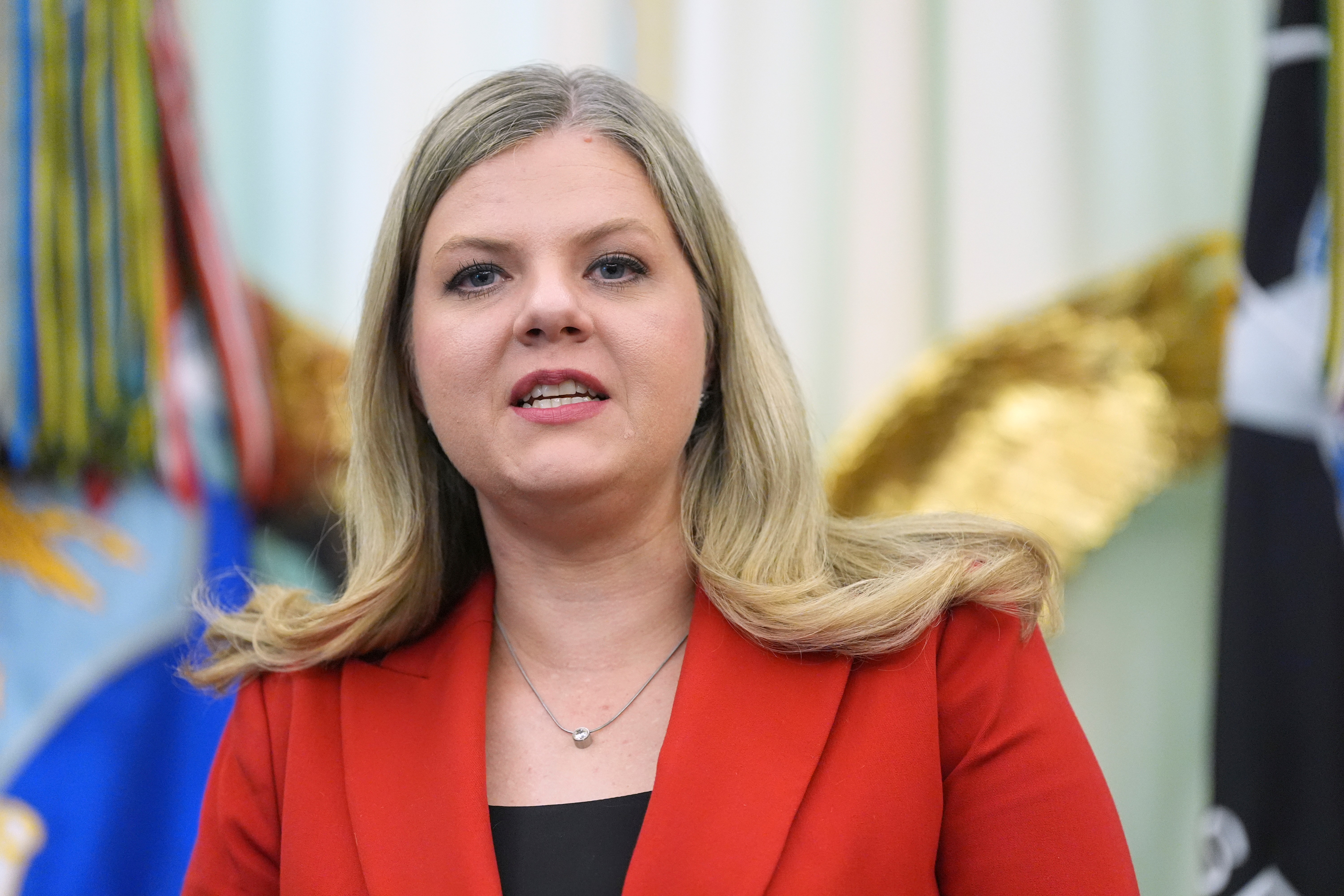
    WASHINGTON — Heidi Overton, a top White House aide, has been picked to lead the Food and Drug Administration, President Donald Trump announced Wednesday.

    Overton is a medical doctor and deputy director of the White House Domestic Policy Council who has worked on several of Trump’s second-term health initiatives. She has become a trusted administration figure and a champion of the Republican president’s goals.

    If confirmed by the Senate, she would have to balance a raft of competing priorities, including Trump’s fixations, the anti-regulatory interests of traditional Republicans, and the anti-corporate posture of Health Secretary Robert F. Kennedy Jr.

    Those challenges dogged the tenure of the previous FDA head, Marty Makary. He resigned in May, leaving behind unfinished projects such as work on ultraprocessed foods, antidepressants, and COVID-19 shots.

    Referring to her as “Dr. Heidi” in a Truth Social post, Trump said Overton was a smart and respected “rockstar” who would deliver on his priorities of faster cures, innovation, lower drug prices and more wins for Kennedy’s “Make America Healthy Again” movement.

    Kennedy posted on X that Overton has “exceptional judgment, professionalism, discipline and an unwavering commitment to the American people.”

    Overton has promoted Trump’s health priorities

    Overton attended medical school at the University of New Mexico and has a doctoral degree in clinical investigation from Johns Hopkins University, according to her LinkedIn profile. Before joining Trump’s second administration, she was the chief policy officer at the America First Policy Institute, a conservative think tank.

    In recent months, she has appeared with the president to announce major projects, including some of his “most favored nation” deals with drug companies to lower prices to those of other developed countries and his recent vaccine order that sought to split the combined measles, mumps and rubella (MMR) vaccine into three separate immunizations — against the advice of medical groups.

    At an Oval Office event to promote that order, she stood by Trump as he falsely suggested the number or timing of vaccines could play a role in rising rates of autism spectrum disorder. Scientific consensus and decades of studies have firmly concluded there is no link.

    Overton has been critical of abortion pills and, if confirmed, would be positioned to roll back FDA rules that made them more accessible. U.S. abortion opponents have expressed frustration that the administration has not acted to stem the flow of such pills prescribed online, a situation they view as undermining state abortion bans.

    Mifepristone is typically used with misoprostol in medication abortions that make up close to two-thirds of abortions in the U.S. Medical professionals call it “among the safest medications” ever approved by the FDA.

    To be confirmed, Overton must seek approval from a narrowly Republican-led Senate and face questions from the Senate Health, Education, Labor and Pensions Committee. Its chair, Republican Sen. Bill Cassidy, a physician from Louisiana, has been a vocal critic of some of Trump’s actions to sow doubt in vaccinations, including the MMR order.

    Democratic senators slammed the nomination on social media.

    “Heidi Overton is a far-right, anti-abortion extremist who has no business leading the FDA,” posted Washington Sen. Patty Murray, a committee member.

    Makary’s replacement will face challenges he left behind

    Before he left the FDA, Makary had drawn complaints from health industry executives and anti-abortion activists. The frustration with him came to a head over the agency’s lack of movement on flavored e-cigarettes. Companies such as R.J. Reynolds are seeking to market to adult smokers, but sweet-flavored vapes have long been blamed for the trend of teenage vaping. FDA scientists have hesitated to endorse those products to curb adult smoking.

    Days before Makary’s departure, the agency opened the door to allowing more unauthorized electronic cigarettes and nicotine pouches onto the U.S. market, in a policy change that essentially bypassed FDA experts.

    Pharmaceutical companies will be looking for changes at the agency, too, after rejections or reversals of biotech drugs intended for rare diseases. Complaints from biotech companies, investors and patient groups have grown and been taken up by conservative lawmakers.

    Makary tried to assuage industry grievances, in part by announcing new programs designed to streamline or accelerate drug approvals. Some of those initiatives, however, have meant new headaches for the agency.

    Several of Makary’s deputies also exited the agency.

    Vinay Prasad, the vaccine and biotech chief, stepped down in April following intense criticism from drugmakers, patients and investors. Tracy Beth Hoeg, who was involved in scrutinizing the safety of antidepressants, COVID-19 vaccines, and other widely used therapies, was replaced as FDA’s acting drug center director.

    MAHA has high expectations of FDA’s next head

    Overton would also need to tend to the priorities of Kennedy’s health movement, some members of which are already skeptical of her.

    Kelly Ryerson, an activist critical of pesticides who is known to her supporters as “Glyphosate Girl,” told The Associated Press that Overton parroted pesticide manufacturer Bayer’s talking points in a MAHA roundtable at the White House in April.

    “I was stunned by the blatant, undisguised corruption,” Ryerson said.

    One major decision for the next commissioner is what to do about peptide regulation. A panel of federal health advisers selected by Kennedy recently recommended easing access to several peptides that are popular with wellness influencers and celebrities, despite warnings from FDA scientists that the chemicals have not been shown to be safe or effective.

    The agency recently proposed a rule change that would require food manufacturers to notify regulators before introducing new ingredients or additives into processed or packaged foods. But it is still working with the White House to finalize a first-of-its-kind definition of ultraprocessed foods, which Kennedy blames for elevated rates of diabetes, obesity and other chronic conditions.

    Under Kennedy, the FDA has set up extra hurdles for vaccine testing and blocked the publication of research into the effectiveness of COVID-19 shots. Kennedy stood by Trump recently as the president signed the executive order aimed at upending childhood vaccinations in the U.S. despite unprecedented financial and logistical challenges.

    The FDA also has an ongoing review of widely used antidepressants, including whether they may increase the risk of autism and other disorders when used during pregnancy. The medicines have long been a target of Kennedy, who was a leader in the anti-vaccine movement before joining the government.

    In recent weeks, the agency has been investigating two summertime foodborne illness outbreaks: a cyclospora outbreak linked to tainted iceberg lettuce that has sickened thousands of people and a multistate salmonella outbreak linked to jalapeño peppers.

  • Trump says U.S. and Canada have reached last-minute deal to delay 50% U.S. tariffs on Canadian imports

    Trump says U.S. and Canada have reached last-minute deal to delay 50% U.S. tariffs on Canadian imports

    WASHINGTON — President Donald Trump said Tuesday he was delaying 50% U.S. tariffs on $20 billion worth of Canadian imports after the two countries reached a last-minute deal hours before the sanctions were to go into effect.

    The announcement, which Trump made on his social media platform, buys time for more negotiations and avoids, for now, another strain in already tense relations between the historic allies.

    “I have paused the 50% Tariffs against Canada, that were scheduled to kick in tomorrow morning for a three day period, based on the fact that Canada and the U.S.A., subject to the finalization of documents, have a DEAL!” Trump posted on Truth Social less than two hours before the 12:01 a.m. Wednesday deadline.

    If they had gone into effect as scheduled at 12:01 a.m. Wednesday, Trump’s import taxes would have hit Canadian products ranging from hockey sticks to tongue depressors.

    But the political impact would likely have been bigger than the economic one. Canada had threatened to retaliate against any new tariffs with levies of its own, aggravating a trade fight between countries that sold each other $880 billion worth of goods and services last year.

    Canadian officials did not immediately respond to requests for comment Tuesday night.

    Canadian Prime Minister Mark Carney and Trump had spoken twice by phone in the past two days about the ongoing negotiations, including a call Tuesday afternoon, Carney’s office said, underscoring the last-minute push for a deal.

    Both countries had reason to step back from the brink. Nearly 72% of Canada’s goods exports last year went to the United States. And the Trump administration would be taking a risk by imposing a hefty new tariff — paid by U.S. importers who try to pass along the cost to consumers via higher prices — ahead of November’s midterm elections. U.S. voters are already frustrated with the high cost of living.

    “I don’t think either side really wants these tariffs to come into effect,’’ Ryan Majerus, a partner at King & Spalding and a former U.S. trade official, said before the delay was announced. “There’s a pretty strong push on both sides to find an off-ramp here.’’

    Trump’s approach to dealing with Canada marks an extraordinary departure from the traditionally cooperative relationship between the two countries. Trump has hit Canadian goods with tariffs — in a push to bring manufacturing back to the U.S. — and has repeatedly made inflammatory comments about turning Canada into America’s 51st state.

    Trump has made tariffs the centerpiece of his second-term economic agenda. Last year, he imposed double-digit import taxes on almost every country, justifying them by declaring the longstanding U.S. trade deficit a national emergency. The Supreme Court in February ruled that he’d overstepped his authority, striking down those tariffs and setting the stage for the federal government to pay refunds to importers.

    So Trump has looked for other legal authority to impose tariffs.

    To hit Canada, he reached back to the Great Depression, invoking Section 338 of the Tariff Act of 1930 to threaten 50% tariffs on products that account for about 5% of Canadian exports to the United States.

    Nearly a century ago, with the U.S. and world economies in collapse, Congress passed the 1930 tariff law, imposing taxes on imports from around the world. Known as the Smoot-Hawley tariffs, named for their congressional sponsors, they are notorious among economists and historians for limiting world commerce and making the Great Depression worse.

    Section 338 tariffs have never been used before.

    Section 338 authorizes the president to impose tariffs of up to 50% on imports from countries that have discriminated against U.S. businesses. No investigation is required to justify the levies. Nor is there any limit on how long the tariffs can stay in place.

    The U.S. is renegotiating a North American trade pact — the US-Mexico-Canada Agreement — that Trump strong-armed America’s neighbors into accepting in his first term. The threat of Section 338 tariffs gives the United States leverage to seek fresh concessions from Ottawa.

  • Trump dwarfs his predecessors in the number of ultra-rich in his second White House, report shows

    Trump dwarfs his predecessors in the number of ultra-rich in his second White House, report shows

    Wealth, perhaps second only to loyalty, has been a prized attribute for Donald Trump during his second presidency.

    The number of people worth at least $100 million whom the Republican president has appointed to his administration is more than four times the combined total under the three previous presidents, according to a report from the consumer advocacy group Public Citizen.

    It’s the numbers for the Trump administration, in the context of previous administrations, that stand out in Public Citizen’s report, published on Monday. In all, 57 Trump officials are worth at least $100 million, including 17 ambassadors and the remaining 40 in senior posts across the executive branch.

    Look no further than Trump’s cabinet. Eight of its 23 members fit the category, notably Commerce Secretary Howard Lutnick and Education Secretary Linda McMahon, both billionaires.

    The president, himself a billionaire, has described his inclination toward appointing the ultrawealthy as deference to financial success. And yet, Trump, who owes his White House comeback to support from middle-income, working Americans drawn to his pledge to lower everyday costs, now faces a midterm electorate decidedly less keen on his handling of the economy.

    Presidents have long sought counsel from the nation’s wealthiest people and tapped some for high-profile administrative leadership roles. Likewise, presidents routinely reward wealthy and influential supporters with ambassadorships.

    Among the most notable examples is Andrew Mellon, the aluminum, oil, and banking tycoon who was among the handful of the nation’s wealthiest people in the 1920s and served as treasury secretary for three presidents.

    The Trump officials worth at least $100 million include Deputy Secretary of Defense Stephen Feinberg and Small Business Administration Administrator Kelly Loeffler, who are also billionaires, and Treasury Secretary Scott Bessent and special envoy Steve Witkoff, both worth hundreds of millions of dollars.

    By comparison, Republican George W. Bush’s administration and Democrat Joe Biden’s each included five members worth $100 million or more. Democrat Barack Obama’s included three, the report states.

    A government populated by so many of the economic elite presents potential problems, the report’s authors said.

    “When the people holding the reins of government are drawn overwhelmingly from the ranks of the ultra-rich, it leads to misplaced incentives and corruption, and begs the question, ‘Whose interests they are truly serving?” said Lisa Gilbert, Public Citizen’s co-president.

    The list does not include Trump, whose net worth Forbes estimates at more than $6 billion. Nor does it include space and social media giant Elon Musk, who advised Trump last year on an effort to reduce the federal government’s size, scope, and workforce and is the world’s wealthiest person, with a net worth Forbes estimates at about $860 billion.

    Trump’s views are well established: Financial success is evidence of executive mastery and negotiating strength.

    “They have great competence, those people. Incredible competence. Some of the smartest business leaders,” Trump said last year in explaining why he put considerable weight on advice from business executives.

    He has also pointed to investments by wealthy people as a signal of future economic growth. To encourage billionaires to deliver, Trump, in his first year back in the White House, pursued policies on artificial intelligence and financial regulation that could benefit wealthy people, along with tax cuts and reduced regulatory burdens for large-scale investments.

    Still, last month, only 32% of U.S. adults approved of Trump’s handling of the economy, down from 40% at the beginning of his second term and as his Republican Party faces headwinds in its attempt to hold both majorities in Congress in November.

  • A surprise credit after an overseas purchase: The tariff refunds now flowing through shippers

    A surprise credit after an overseas purchase: The tariff refunds now flowing through shippers

    NEW YORK — If you bought something from an overseas vendor last year, it might be time to check your bank account.

    Shippers including FedEx and UPS that acted as customs brokers for imported packages and received tariff refunds from the U.S. government have started to pass on those refunds to the customers that originally paid the tariffs.

    The refunds to consumers are the last step in a monthslong process that kicked off in February when the Supreme Court struck down sweeping tariffs implemented by President Donald Trump in March 2025 under the 1977 International Emergency Economic Powers Act on goods from almost every country. The court ordered the government to return the tariffs it collected.

    So far, about $100 billion in tariffs have been refunded to companies who paid them under a system set up by U.S. Customs and Border Protection.

    That doesn’t mean Americans will get anywhere close to what they paid in tariffs, since most were paid indirectly. In 2025, the Trump tariffs amounted to an average tax increase of $1,000 per U.S. household, according to the Tax Foundation, a Washington, D.C., group that studies taxes.

    But some consumers are getting some of what they paid directly back from shippers including UPS, DHL and FedEx. The refunds are being rolled out in phases based on what date they were paid. Shippers have said they’ll return the refunds on a rolling basis as they receive them.

    Tariff refunds from shippers will be directly refunded to credit cards or bank accounts

    Most big overseas retailers paid the tariffs themselves and passed them along to retailers with a line item in their invoice that was part of the total bill, or indirectly by raising prices. But some smaller sellers left the tariff to be paid when it reached the U.S. In those cases, shippers paid the bill and charged the recipient of the package.

    FedEx said it has begun the process of issuing $800 million in tariff refunds it received from the government back to the customers that paid them. Customers don’t need to apply to receive their refund, but they can enter tracking numbers for purchased items into a portal on the FedEx website to see whether or not they are due a refund.

    UPS said in April it had paid $5 billion in tariffs on behalf of clients and would begin the process of applying to the government for refunds. In the first phase, it applied for $500 million in refunds and said customers should get refunds one to three months after it receives reimbursement from the Treasury.

    DHL similarly said that it has filed claims for almost all eligible shipments where it served as the importer of record and is returning the refunds it has received.

    “The volume and pace of refunds continue to depend on CBP’s processing of claims,” DHL said in a statement.

    Major retailers say they could give back some refunds but mostly will use them to lower prices

    Unlike shippers who collected tariffs directly from customers, most big retailers passed on tariffs in indirect ways, changing their product lineups or partly absorbing higher costs, making a consumer refund unlikely.

    Amazon executives said last week the company received $600 million in tariff refunds in the second quarter.

    In a call with investors, Amazon CFO Brian Olsavsky said the company isn’t the importer of record on most of the goods it sells and that it has absorbed some tariff costs. But he said the company has “identified a limited set of circumstances where we can trace that we pass specific import charges on to customers.” In those circumstances, he added, “we will proactively contact affected customers and automatically issue refunds to them.”

    Otherwise, he said, Amazon will use tariff refunds to lower prices for customers.

    That echoes what other large retailers have said. In May, Cori Barrie, outgoing CEO of Best Buy, the nation’s largest consumer electronics chain, said the retailer is an importer of record of only about 2% to 3% of what it sells and that the company would use any refund it gets to “deliver value back to our customers.”

    And Costco CEO Ron Vachris said the company planned to return “in some form” the tariffs that were passed on to consumers.

    “How much we return and when depends on a variety of factors, including how much refund money we receive and when it arrives as well as developments in the lawsuit filed against the company regarding the return process,” he said in a quarterly earnings call in May.

    Dozens of class-action lawsuits have been filed

    Some shoppers are suing to get the tariffs they paid in the form of higher prices back from companies. More than 80 class-action lawsuits have been filed by customers across the country against retailers including Costco, Nike, Amazon, Walmart and others.

    The lawsuits will face difficulty because plaintiffs will have to prove they paid for price increases that were specifically tied to the tariffs, according to Lori Leskin, partner and co-chair of law firm Arnold & Porter’s Consumer Products Practice Group. None of the lawsuits have yet been certified as class action, which would mean they apply to all customers.

    “It’s going to be very hard for anyone to establish that the price increase they paid was due to tariffs and not some other market force,” she said. “Most of them are just talking about price increases, and to be able to trace a price increase due to a single factor is going to be really difficult given the multifactorial approach that most companies take.”

  • Luigi Mangione pleads guilty to federal stalking charges in the killing of UnitedHealthcare CEO

    Luigi Mangione pleads guilty to federal stalking charges in the killing of UnitedHealthcare CEO

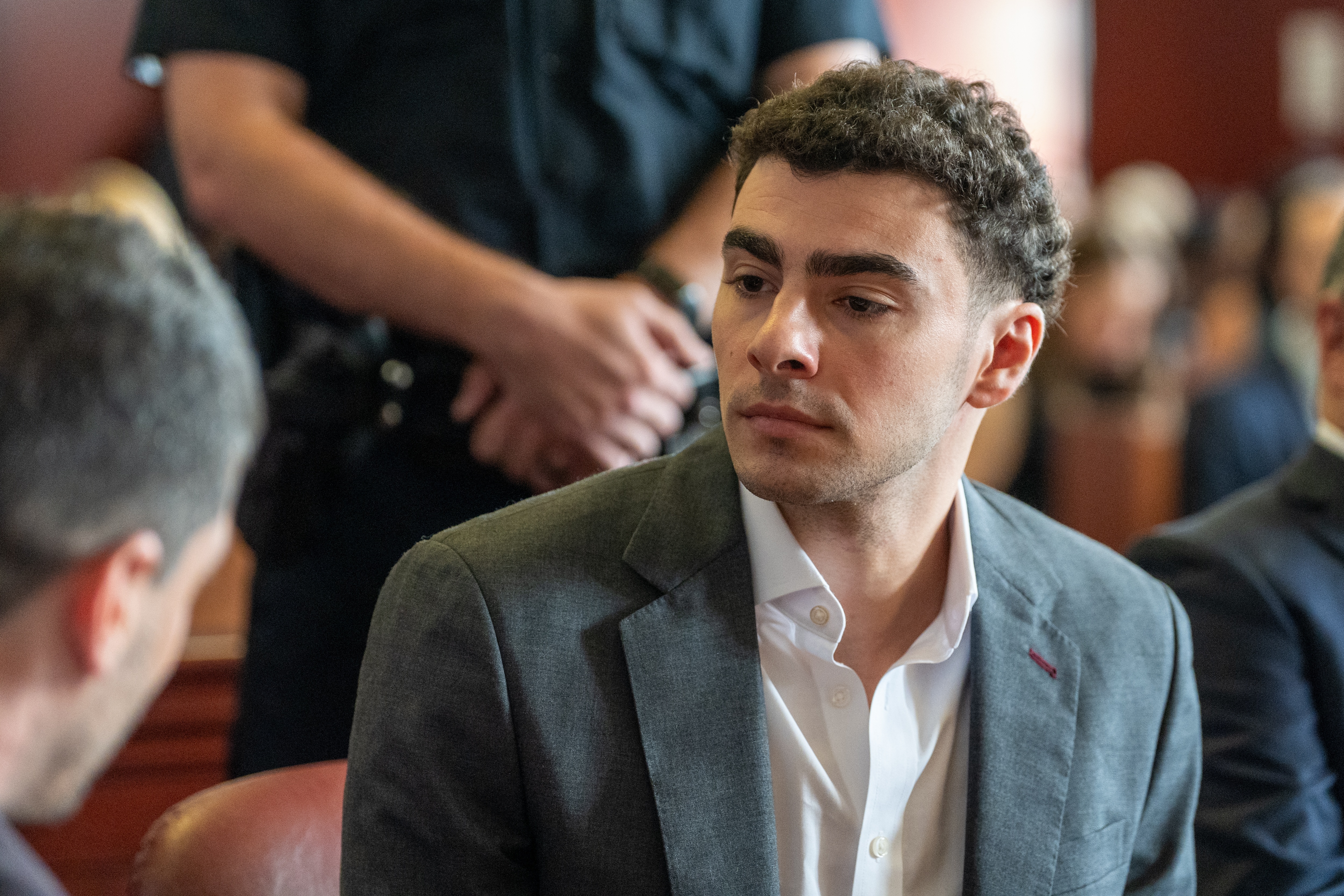
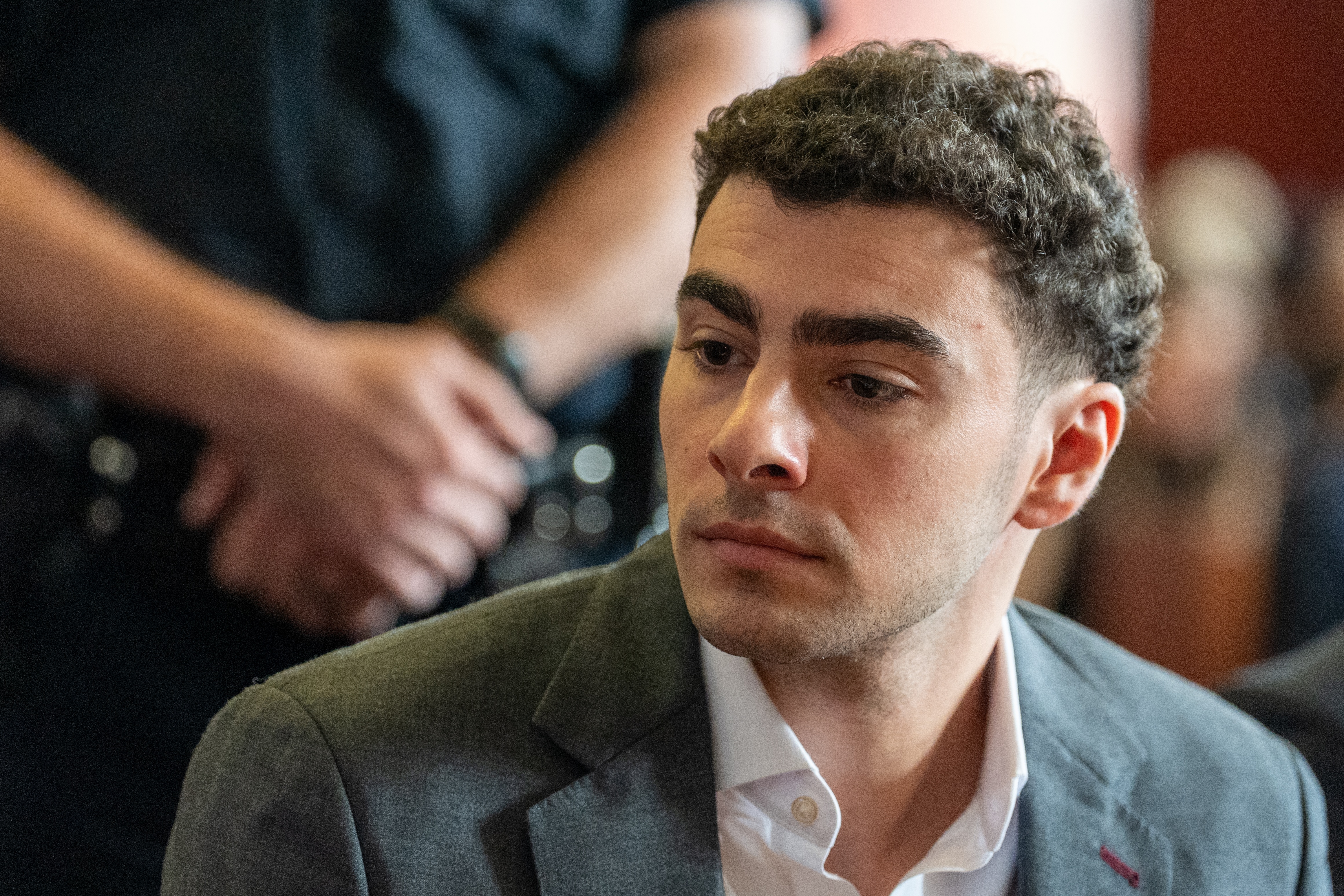
    NEW YORK — Luigi Mangione pleaded guilty on Friday to federal stalking charges in the killing of UnitedHealthcare CEO Brian Thompson, admitting matter-of-factly that he trailed the executive to an investor conference in 2024 and gunned him down on a New York City street.

    Mangione, 28, said he even used a ruse to glean information about the event, contacting the health insurance company ahead of time under the guise of being an investor at a multibillion-dollar firm.

    “On the morning of Dec. 4, 2024, I shot Mr. Thompson in Manhattan, and he died,” Mangione told the court as Thompson’s wife, Paulette, took several deep breaths and repeatedly wiped tears from her eyes. A supporter put an arm around the wife and held her tight.

    Mangione is set for sentencing Dec. 18. When U.S. District Judge Margaret M. Garnett asked whether he understood that he could spend the rest of his life in prison, Mangione answered neutrally: “Yes.”

    Mangione entered the plea at a hastily scheduled hearing in Manhattan federal court, resolving one of two cases against him in connection with Thompson’s death. Mangione’s lawyers could now seek to have his separate New York state murder case thrown out on double jeopardy grounds.

    Surveillance video of the ambush showed a masked gunman shooting Thompson, 50, from behind. Police say “delay,” “deny,” and “depose” were written on the ammunition, mimicking a phrase used to describe how insurers avoid paying claims. That detail — and revelations that Mangione’s private writings lambasted health insurers as greedy, according to authorities — made the case a fulcrum for debate about the industry and made Mangione a cause célèbre for some of its critics.

    Mangione told the court Friday that he pursued Thompson “after years of enduring severe pain from a broken back and navigating the obstacles of the health insurance system.”

    Mangione never was a UnitedHealthcare customer, according to police and the company. A University of Pennsylvania graduate from a wealthy Maryland family, he was arrested five days after the shooting, when he was spotted at a McDonald’s in Altoona, Pa. It’s about 230 miles west of Manhattan.

    Thompson led one of the United States’ largest health insurers, but he wasn’t well known outside the industry. Trained as an accountant, he had worked at parent company UnitedHealth Group Inc. for 20 years and became CEO of its insurance arm, UnitedHealthcare, in 2021. He and his wife had two sons, who were in high school when their father was killed.

    Both the federal and state cases could lead to a life prison sentence for Mangione. A federal judge earlier this year tossed out additional charges that could have exposed him to a potential death penalty.

    Mangione had complained about the prospect of two trials, telling a judge in February: “It’s the same trial twice. One plus one is two. Double jeopardy by any commonsense definition.”

    Under New York law, a state prosecution could potentially be barred if the federal case is resolved first.

    The state’s double jeopardy protections kick in if a jury has been sworn in a prior prosecution, such as a federal case, or if that prosecution ends in a guilty plea. Mangione’s cases involve different charges arising from the same course of conduct.

    In a letter last month, state prosecutors objected to the possibility of a guilty plea in the federal case wiping out the state case.

    Garnett has delivered some setbacks to the defense, including ruling in January that prosecutors could use items collected from Mangione’s backpack during his arrest as evidence against him.

    They included a 3D-printed pistol that investigators said matched the one used to kill Thompson and a notebook in which authorities say Mangione described his intent to kill an insurance executive.

    In June, Mangione’s lawyers said they would pursue a psychiatric defense in the state case but reversed course a day later. The defense, involving claims that he was suffering from extreme emotional disturbance at the time of the killing, isn’t allowed in federal court.

  • Some U.S. adults are using AI for financial guidance, but few trust it, Gallup poll finds

    Some U.S. adults are using AI for financial guidance, but few trust it, Gallup poll finds

    NEW YORK — Some U.S. adults are using artificial intelligence for financial guidance, but it’s far from the most trusted source of advice, according to a new Gallup survey conducted in partnership with Edward Jones, a financial services firm.

    About 1 in 5 Americans who have sought financial advice in the past year turned to AI, the survey found. But among U.S. adults overall, only about 3 in 10 have “a great deal” or “some” confidence in its expertise for managing money, according to the survey, including just 3% who trust AI “a great deal.”

    The poll, which was conducted in the spring and looked at the views of adults who are at least 21, found a disconnect between the resources Americans trust for financial advice and the ones they actually rely on. About 8 in 10 U.S. adults have at least “some” confidence in financial advisers. But only about one-third of U.S. adults who sought financial advice turned to a professional financial adviser, with far more, 73%, saying they relied on their own internet research.

    As the use of AI increases, financial experts say consumers should be cautious about fully trusting these tools. Using AI as a tool at the start of a learning journey and then combining this knowledge with other trusted sources can be the best way to engage with new and traditional financial guidance tools, said Taha Choukhmane, associate professor at MIT’s Sloan School of Management.

    “I would encourage people to use AI to explain and define,” Choukhmane said. “If you’re interested in knowing what the stock market is, what the difference between a mutual fund and an index fund is. Using AI to explain these concepts can be very useful because it can empower people to get the most out of these methods.”

    Most Americans have sought financial guidance from at least one source in the past year, the survey found. In addition to those who said they used internet research, financial advisers, or AI, 35% went to a parent, sibling, or relative, while 26% got information from news, media, or social media. About 2 in 10 said they turned to a friend or an author, speaker, or influencer, and fewer relied on an employer or retirement plan provider, a robo-adviser or a teacher or professor.

    Younger generations are more likely to say they’ve used AI for financial advice, while older adults are more likely to have turned to a professional financial adviser.

    Affordability can often deter younger adults from hiring a financial adviser. While doing research online, asking family and friends and using AI can have minimal costs, hiring a professional can require a bigger financial commitment. About a quarter of Gen Z and millennial adults who looked for financial advice in the past year went to AI, compared to 16% of Gen Xers and just 7% of baby boomers. But while only 14% of Gen Z adults and 21% of millennials who sought guidance turned to a professional financial adviser, that rose to 34% of Gen X adults and about half, 55%, of baby boomers.

    Since AI interacts with specific user prompts, the advice can vary depending on how questions are asked. But asking general questions about personal finance can help people understand complex financial terms. Choukhmane also recommends asking AI to provide references to trusted sources to verify the information provided.

    While AI can be utilized for research, some financial experts are skeptical about the legal responsibilities of the technology. Certified financial planners have a legal responsibility to give the most fitting advice while AI tools don’t. Ultimately, the decisions a person makes based on AI advice are their responsibility.

    “Fiduciary responsibility is very real,” said Bobbi Rebell, certified financial planner and founder of Financial Wellness Strategies. “There’s no AI that is a fiduciary. It doesn’t really know your life; it’s not asking you all the questions.”

    The poll of 5,075 U.S. adults ages 21 and older was conducted March 20-April 6, 2026, using a sample drawn from Gallup’s probability-based panel, which is designed to be representative of the U.S. population. The margin of sampling error for U.S. adults overall is plus or minus 1.8 percentage points.

    Amelia Thomson-Deveau contributed to this article.

  • Luigi Mangione expected to plead guilty in federal case in UnitedHealthcare killing, AP source says

    Luigi Mangione expected to plead guilty in federal case in UnitedHealthcare killing, AP source says

    NEW YORK — Luigi Mangione is expected to plead guilty as early as Friday in the federal case accusing him of stalking and killing UnitedHealthcare CEO Brian Thompson, according to a person familiar with the matter.

    The person, who was not authorized to talk publicly about the case and spoke to the Associated Press on the condition of anonymity, cautioned that Mangione could change his mind. If he follows through, it would be a stunning development in a case that rattled business leaders while galvanizing their critics.

    Mangione’s lawyers, and spokespeople for the Justice Department and Manhattan federal prosecutors, declined to comment.

    Mangione is accused of traveling to New York City to ambush Thompson, 50, then shooting him outside a Manhattan hotel on Dec. 4, 2024, as the executive walked to UnitedHealth Group’s annual investor conference.

    Mangione is due in court on Friday for a hastily scheduled hearing in the federal case, which involves two counts of stalking. It wasn’t clear what charge or charges Mangione is expected to plead guilty to. The hearing, in Manhattan federal court, comes as his lawyers have been talking with federal prosecutors about a possible resolution to one of two criminal cases against Mangione in Thompson’s death. Previous talks in June broke down.

    Mangione, 28, has been charged in both federal and state court in New York and still faces the possibility of a trial in his unresolved state case. Mangione’s state murder trial is set to begin Sept. 8. Both sets of charges carried the possibility of a life sentence.

    Mangione has pleaded not guilty and has spoken out publicly against the prospect of two trials, telling a judge in February: “It’s the same trial twice. One plus one is two. Double jeopardy by any commonsense definition.”

    Under New York law, a state prosecution could be barred if the federal case is resolved first, but it isn’t automatic.

    The state’s double jeopardy protections kick in if a jury has been sworn in a prior prosecution, such as a federal case, or if that prosecution ends in a guilty plea. Mangione’s cases involve different charges arising from the same course of conduct.

    Once Mangione pleads guilty, his lawyers could then ask the judge in the state case to throw out those charges on double jeopardy grounds. State prosecutors argue their case is distinct and double jeopardy shouldn’t apply.

    Mangione’s federal charges allege that he traveled across state lines by bus to stalk and kill Thompson and that he used means such as a cell phone, the internet, interstate highways, and staying at a hostel that serves out-of-state customers while planning and carrying out the attack. The state charges pertain to the killing itself, as well as firearms offenses.

    In a letter last month, state prosecutors objected to the possibility of a guilty plea in the federal case wiping out the state case.

    “Obviously, any guilty pleas in these matters must account for the seriousness of defendant’s offenses, the loss of an innocent life, the impact of those crimes on the victim’s family, and the other state interests that are implicated, including the sanctity of life principle that underpins the state homicide charges,” Seidemann wrote.

    Mangione’s apparent decision to plead guilty comes after a series of setbacks for his defense.

    In January, U.S. District Judge Margaret Garnett took the death penalty off the table but ruled that prosecutors could use items collected from Mangione’s backpack during his arrest as evidence against him.

    They included a 3D-printed pistol that investigators said matched the one used to kill Thompson and a notebook in which authorities say Mangione described his intent to kill an insurance executive.

    In June, Mangione’s lawyers said they would pursue a psychiatric defense in the state case but reversed course a day later. The defense, involving claims that he was suffering from extreme emotional disturbance at the time of the killing, isn’t allowed in federal court.

    Surveillance video of the killing showed a masked gunman shooting Thompson from behind. Police say “delay,” “deny,” and “depose” were written on the ammunition, mimicking a phrase used to describe how insurers avoid paying claims.

    Mangione, an Ivy League graduate from a wealthy Maryland family, was arrested five days later at a McDonald’s in Altoona, Pa., about 230 miles west of Manhattan.

    He has become a cause célèbre for people upset with the health insurance industry.

    An online fundraiser for his legal defense fund raised more than $1.5 million, and several dozen supporters have shown up to his court appearances, some wearing green clothing — the color worn by the Mario Bros. video game character Luigi — and “FREE LUIGI” T-shirts.