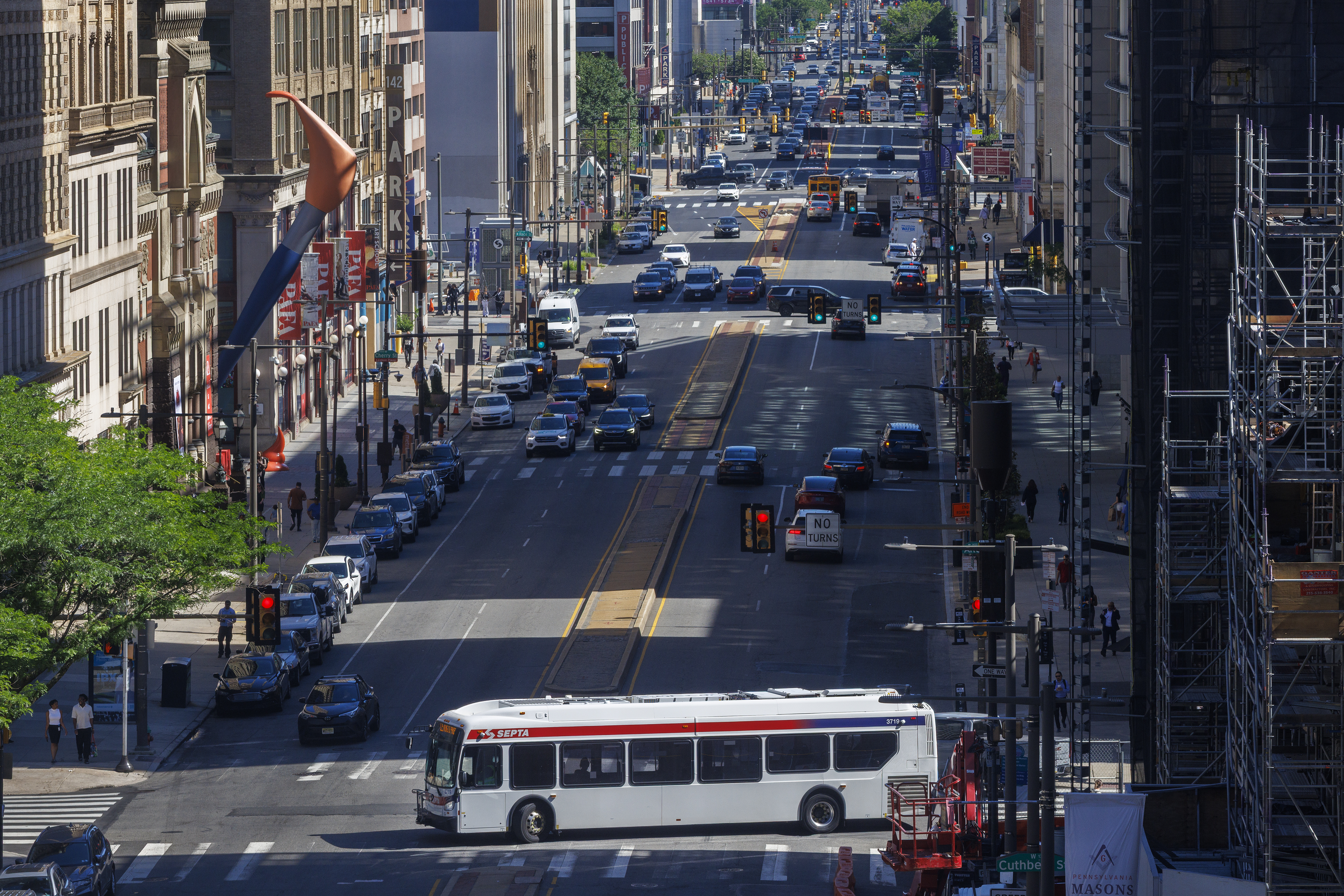
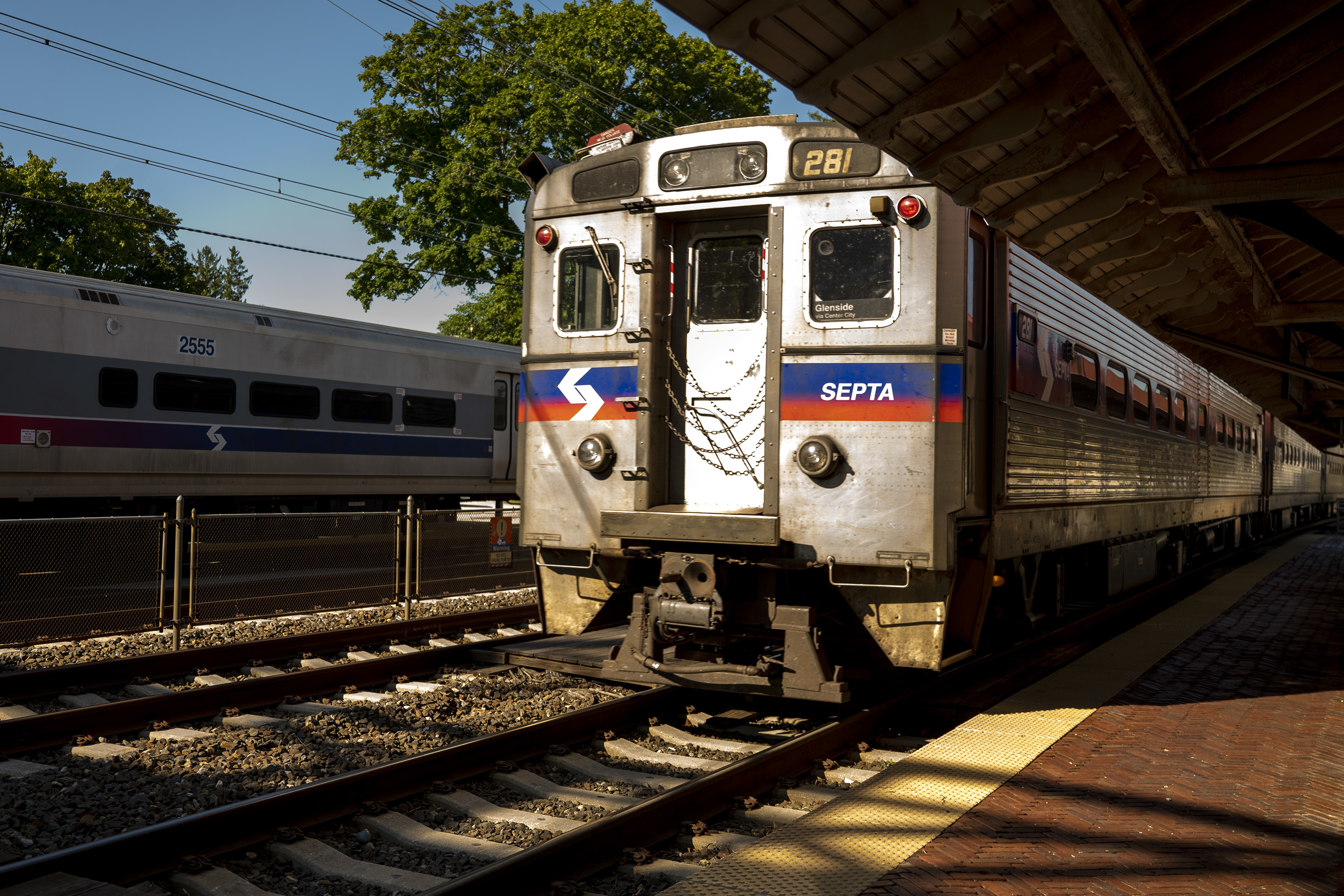
SEPTA’s average daily ridership in September passed 822,000 across all modes of transportation, according to new data the agency released Thursday. September also marked the seventh consecutive month of year-over-year ridership — up 8% compared with September 2025.
“Our focus on the fundamentals has raised our standards, and riders are noticing the difference,” SEPTA general manager Scott A. Sauer said. “They are seeing cleaner stations and vehicles, the system feels safer, and it is becoming easier to use and more accessible.”
Transit systems across the country are trying to bounce back ridership after years of decline due to rising costs of travel, hybrid work keeping more commuters at home, and the pace of post-pandemic economic recovery. SEPTA worked to address antisocial behavior, like smoking on the Market-Frankford Line, and is working to establish reliability on Regional Rail after fires on Silverliner IV trains took more than 200 railcars out of service.
More than 800,000 people rode SEPTA on 18 out of 21 weekdaysin September. Tuesday, Wednesday, and Thursdayare the most popular days to take transit. In late 2019 through early 2020, ridership was about 900,000 on an average weekday, according to SEPTA spokesperson Andrew Busch.
The agency credits theweekday ridership boom inpart to the New Bus Network, according to a new performance report covering the first five weeks of service.
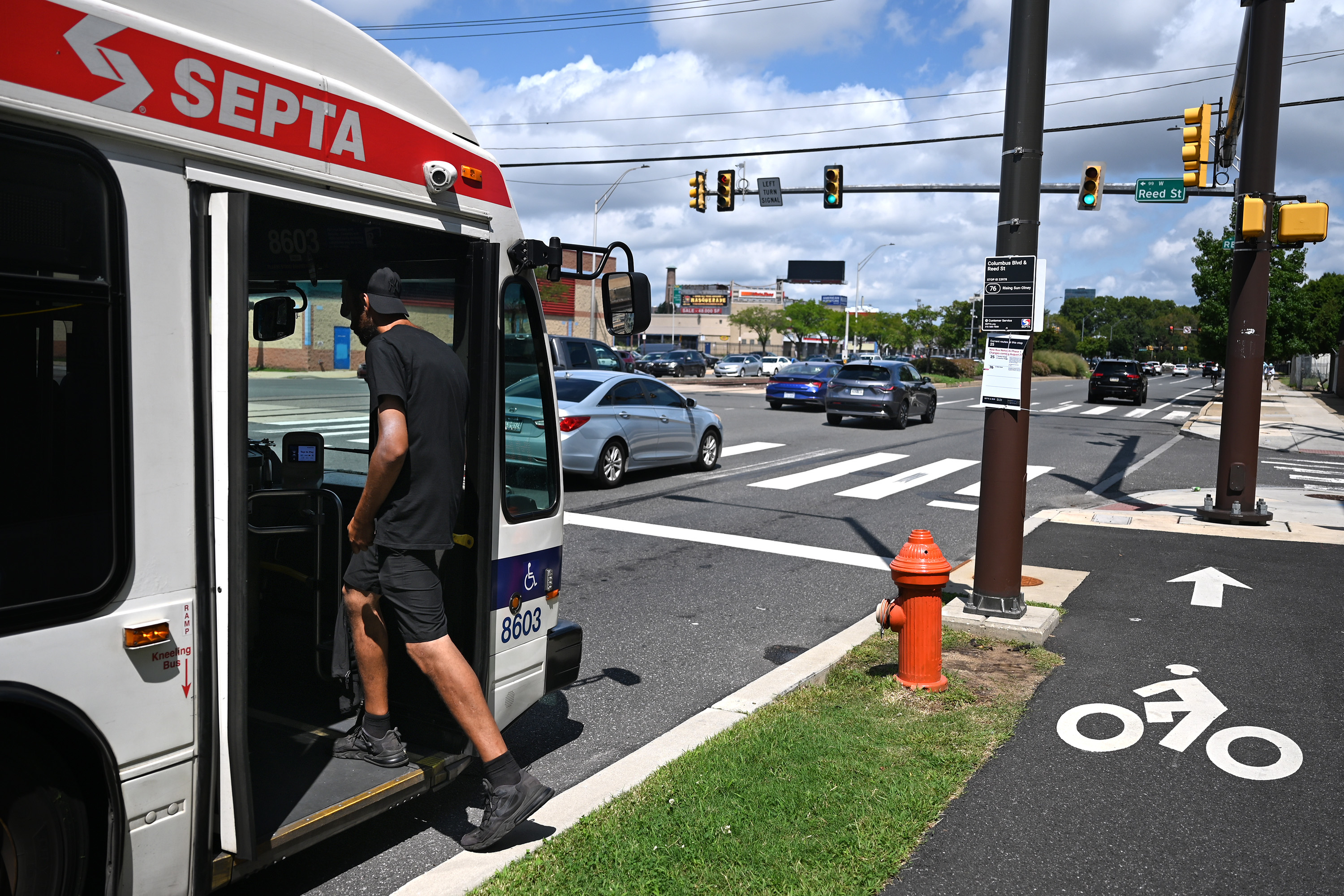
Passenger board the brand new #76 bus at Reed St. and Columbus Blvd. Sunday, Aug. 23, 2026 on the day the line is introduced as part of SEPTA’s “New Bus Network.” Tom Gralish / Staff Photographer
The network, SEPTA’s long-delayed streamlining of its bus system, brought changes to 30 routes, including more frequent service on routes with high ridership and buses coming less often on lower-performing routes. Impacted routes experienced a 7% increase in average weekday ridership, with weekend travel growing by 12% on Saturdays and 18% on Sundays.
“We’ve thought for some time that there’s pent-up demand, and I think we’re seeing that play out,” Busch said of the boom in weekend bus ridership. “The new bus network is aimed at making the trip more reliable by making it more frequent and making better, more convenient connections to other services.”
Bus riders, who account for more than half of SEPTA’s ridership, were up 14% overall compared with the same time last year.
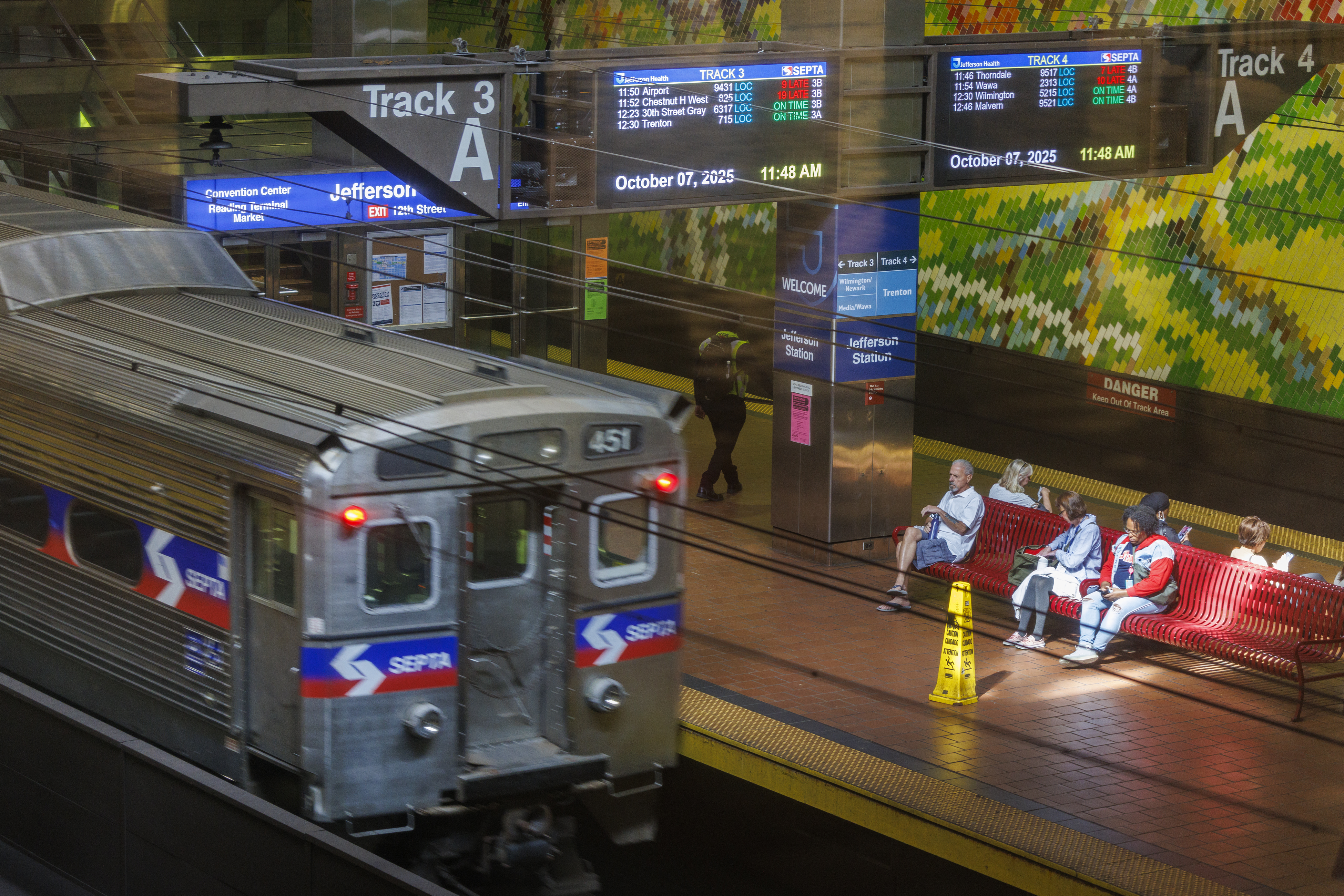
SEPTA Regional rail train passes riders waiting for their train at Jefferson Station, Philadelphia, Tuesday, October 7, 2025.Alejandro A. Alvarez / Staff Photographer
While buses, trolleys, and the Broad Street Line (now dubbed the B) have experienced stronger weekday ridership, Regional Rail is still trailing behind last year’s totals.
Buschattributed the lag to capacity and frequency issues, whichthe transit agency hopes to helpaddress with the purchase of 24 used railcars from the Montreal Transit Agency and the leasing of 10 others from Maryland Area Regional Commuter Rail (MARC) in December 2025.
Railcar procurement can take five years to complete, Busch said. The 34 used railcars will be put into service in early 2027.
An earlier version of this article incorrectly stated SEPTA ridership returned to pre-pandemic levels, when the ridership hit its highest level since February 2020.
SEPTA’s real-time tracking tool was back online Thursday morning after being disabled due to a global cybersecurity concern.
The real-time tracking tool, which does not house sensitive information but was disabled as a precaution, uses an open-source programming language called PHP that runs on 70% of websites.
On Wednesday, the developers behind PHP said they had identified a vulnerability in its code that could give hackers remote access to websites and other online tools. The organization advised all websites that utilize the PHP language to update to the latest versions of the software.
The PHP vulnerabilities, known as “php2shell,” provide remote access to websites, where hackers can place malicious code on computers or a network, according to the Cybersecurity and Infrastructure Security Agency.
This led to a global scramble on Wednesday in which government websites and other prominent online tools went offline to complete these security updates.
SEPTA took its real-time tracking tool offline at 1 p.m. Wednesday to allow for updates and patches to PHP in their systems, said SEPTA spokesperson Joe Leonard. These tools provide travel information and alerts through the SEPTA mobile phone app, social media, and SEPTA’s website. Leonard said that by 6 a.m. Thursday, real-time tracking was brought back online.
“We’re kind of part of just part of a larger global story,” Leonard said.
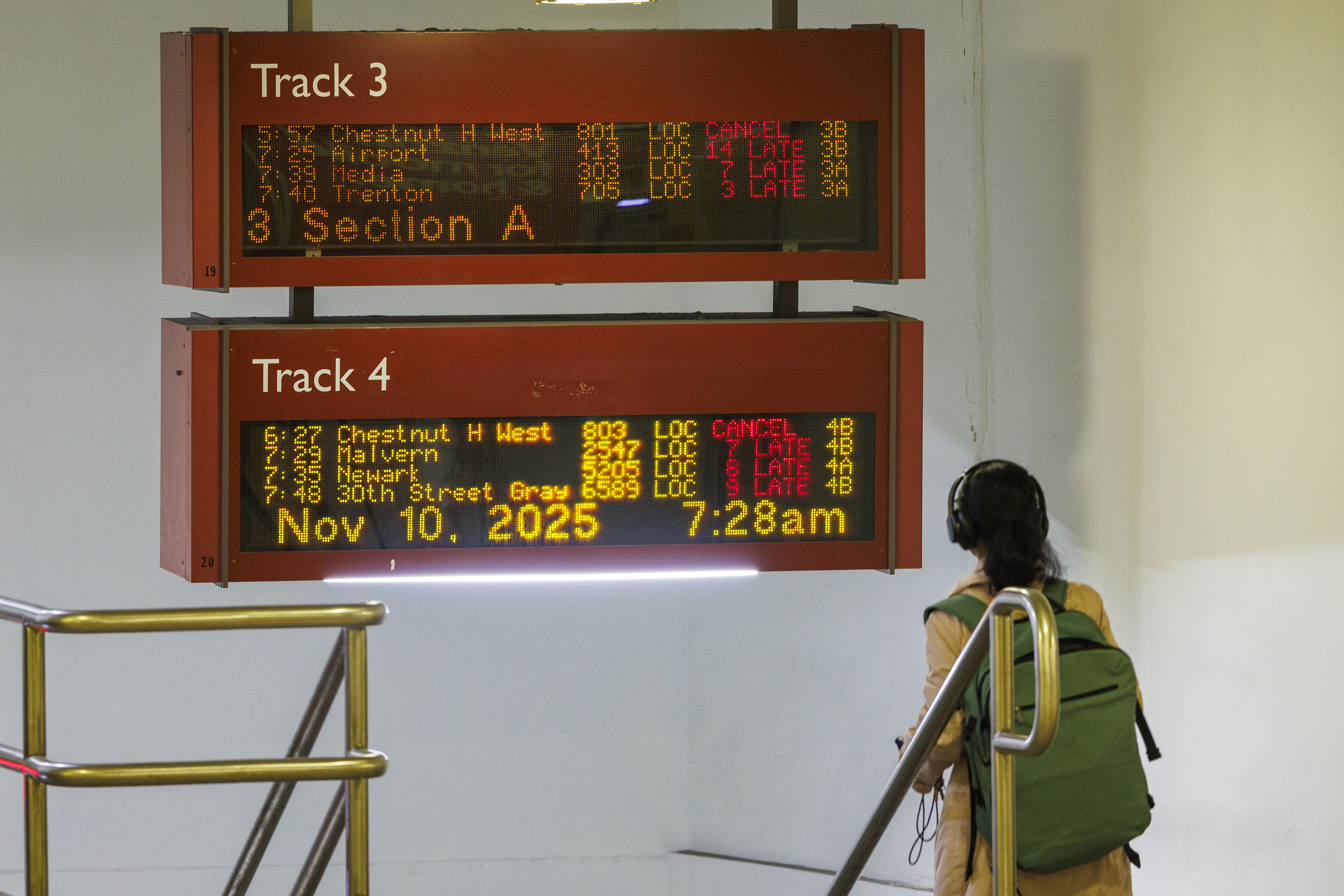
Commuters, check your train times this week! SEPTA introduced a modified Regional Rail schedule Sunday that will affect the Paoli/Thorndale Line and Wilmington/Newark Line, among others.
The regionaltransportation authority says it makes alterations to its rail schedule quarterly in an effort to improve reliability and accommodate capital projects and infrastructure changes.
Paoli/Thorndale Line
Work on Amtrak will continue to impact this line until Nov. 21. Inbound trains will run five minutes earlier to William H. Gray III 30th Street Station. Trains are also being rerouted between Overbrook and William H. Gray III 30th Street Stations. All trains will continue to board from normal locations and schedules have been modified by five minutes to account for expected delays on the rerouted stretch.
The Paoli/Thorndale train 5300, the 4:29 a.m. train from Malvern, will now operate as 9500 and depart 20 minutes later as a result of feedback from riders.
Wilmington/Newark Line
On weekdays, some train numbers on this routewill change. Some trains will be adjusted to operate between 21 minutes earlier to 16 minutes later. This new schedule will reflect the train times from before Amtrak work began between Marcus Hook and Center City.
Media/Wawa Line
Some train numbers will change and select trains will be adjusted to operate between 6 minutes earlier and 14 minutes later on weekdays. This line will also have new morning peak-hour express trains.
West Trenton Line
Some train numbers will change on weekdays. And certain trains will be adjusted to run between 2 minutes earlier and 12 minutes later.
Glenside Combined
Riders will see changes to train numbers and some trains will run between 2 minutes earlier to 12 minutes later than they did previously on weekdays.
Lansdale/Doylestown Line
On weekdays, certain trains will operate between 2 minutes earlier and 5 minutes later than they did before.
Chestnut Hill East Line
Some trains will operate between 3 minutes earlier and 4 minutes later on weekdays.
Warminster Line
On weekdays, some train numbers will be different and certain trains will operate between 4 minutes earlier and 1 minute later.
Manayunk/Norristown Line
On weekdays, certain trains will run between 2 minutes earlier and 3 minutes later than their previously scheduled times.
Fox Chase Line
Train 6844 will begin operating as 3892. Arrival and departure times will be adjusted up to 1 minute earlier on weekdays.
Airport, Chestnut Hill West, Cynwyd, and Trenton Lines
These lines are unchanged from the last set of modifications, which went into effect July 5.
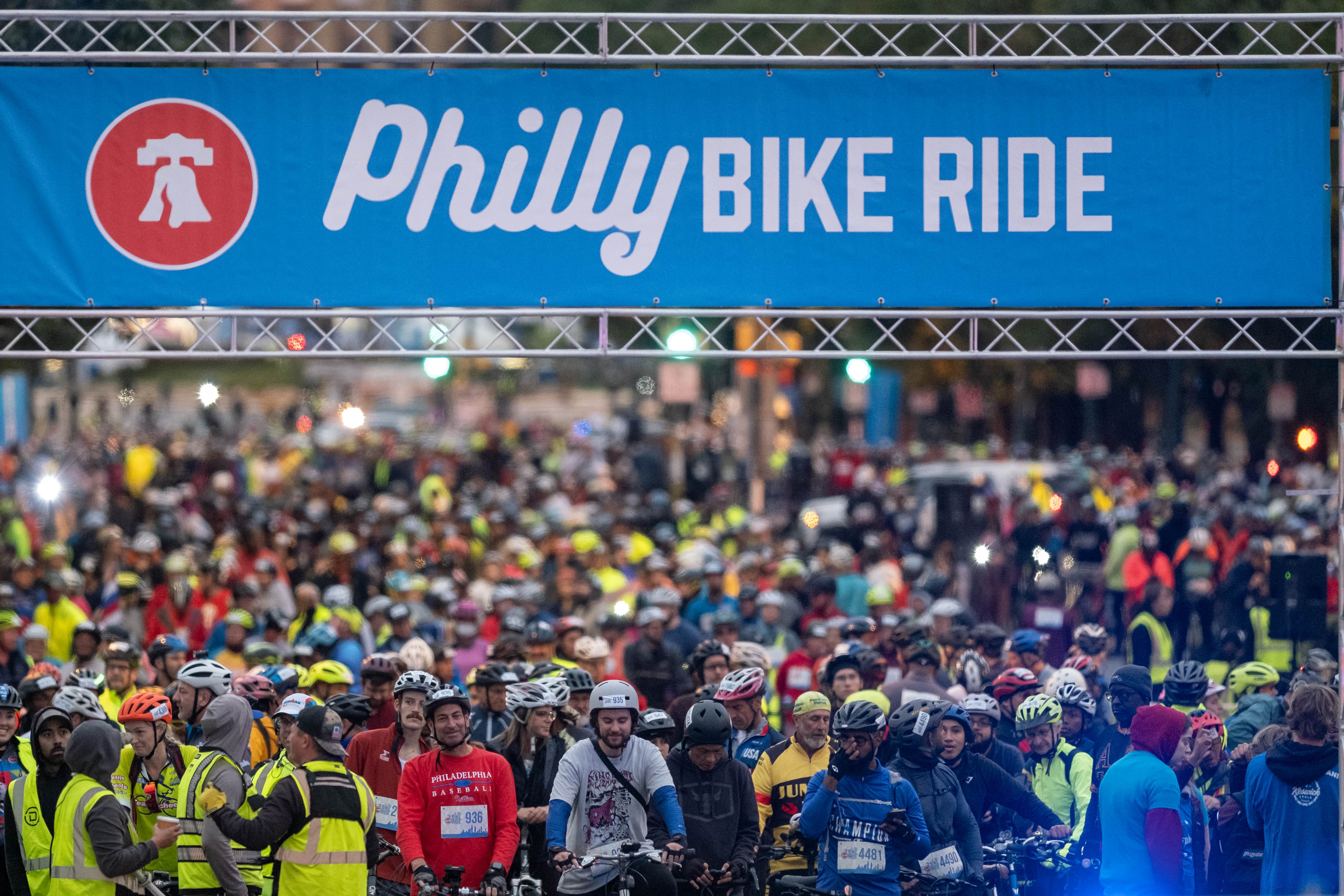
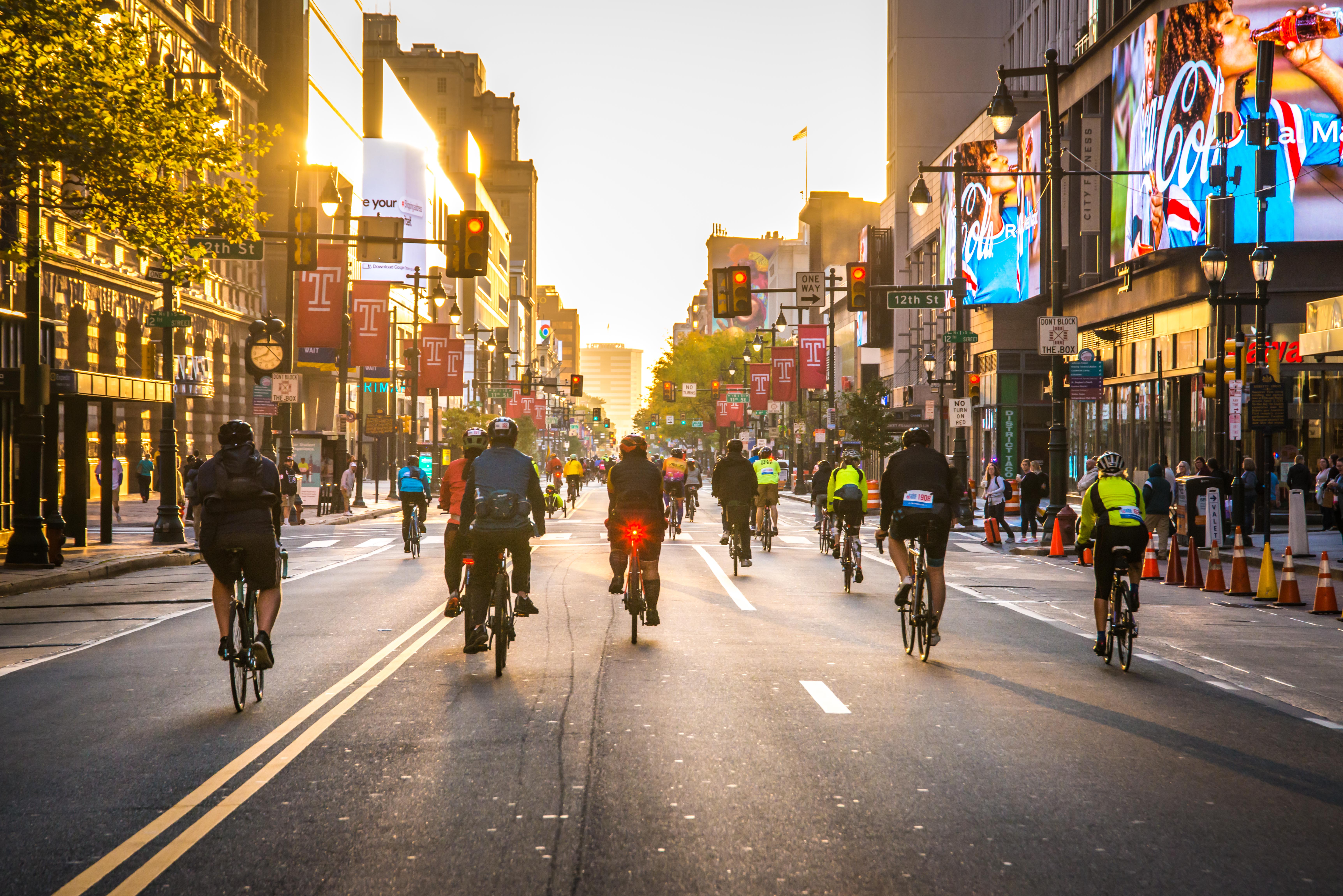
The annual Philly Bike Ride will bring thousands to Center City and up to Manayunk, resulting in major road closures throughout the city this weekend.
The 20-mile social bike ride, set for Saturday, begins on the Benjamin Franklin Parkway between 20th and 22nd Streets. Road closures provide a safer, car-free experience that attracts the regional cycling community and promotes healthy lifestyles and better accessibility for riders of all ages and abilities.
Roads will close as early as 3:30 a.m. and reopen as late as 2 p.m. The ride starts at 7:30 a.m. and will take riders through Center City to Penn’s Landing, along the Delaware, and then back to Kelly Drive, where the course goes up to Manayunk and circles back to the Philadelphia Museum of Art.
Road closures
The city’s Office of Special Events said these streets will be closed to vehicular traffic starting at 3:30 a.m. Saturday and will reopen no later than 2 p.m.
Eakins Oval in front of the Philadelphia Art Museum
Benjamin Franklin Parkway between Eakins Oval and 20th Street
Kelly Drive between Spring Garden Street and 25th Street
Spring Garden Street off-ramp exit at Eakins Oval
The following streets will be closed to vehicular traffic on Saturday from 6:30 a.m. to noon:
Benjamin Franklin Parkway between 20th and 15th Streets
Arch Street between Benjamin Franklin Parkway and 15th Street
15th Street between Arch Street and South Penn Square
Penn Square between 15th and Broad Streets
Broad Street between Penn Square and Race Street
Fifth Street between Market and Race Streets
Race Street between Broad Street and Christopher Columbus Boulevard
Sixth Street between Race and Market Streets
Market Street between Sixth and Fifth Streets
Fifth Street between Market and Race Streets
Christopher Columbus Boulevard between Race and Christian Streets
Christian Street between Christopher Columbus Boulevard and 22nd Street
22nd Street between Christian Street and Benjamin Franklin Parkway
Kelly Drive between 25th Street and Falls Bridge
Falls Bridge between Kelly and MLK Drives
MLK Drive between Falls Bridge and Black Road
Police may close additional streets to vehicular traffic and parking near the bike ride if conditions call for it.
The fourth annual Philly Bike Ride kicks off at the Philadelphia Art Museum on Saturday, Oct. 18.Courtesy of Philly Bike Ride
Parking restrictions
Temporary “No Parking” signs will be posted along the following streets from midnight to 1 p.m. on Saturday. During that time, no vehicles can be parked there, or they will be “courtesy towed” by police with a possible fine.
Benjamin Franklin Parkway between 22nd and and 16th Streets
Logan Square between 18th and 19th Streets
Arch Street between 16th and 15th Streets
15th Street between Arch andand Market Streets
Market Street between Sixth Street and Penn Square
Penn Square
Race Street between North Broad Street and Christopher Columbus Boulevard
Christian Street between Christopher Columbus Boulevard and 22nd Street
22nd Street between Christian Street and Benjamin Franklin Parkway
Art Museum Drive between Benjamin Franklin Parkway and Pennsylvania Avenue
Spring Garden Street between Pennsylvania Avenue and Kelly Drive
Public transportation
The city is encouraging participants and spectators to use the three SEPTA stations near the start line: Fairmount, Spring Garden, and Race-Vine, all along the Broad Street Line, known as the B.
There is a free transfer from the Market-Frankford Line, also called the L line, and trolley routes at 15th Street/City Hall station. Regional Rail stations like Suburban Station and Jefferson are within walking distance from the Broad Street Line.
PATCO riders can hop off at 12th/13th Street station and walk to the Walnut-Locust station for the Broad Street Line.
SEPTA detours
These SEPTA bus routes located along the course will be detoured starting at 5:30 a.m. Saturday: 2, 4, 7, 9, 12, 16, 17, 21, 23, 25, 27, 31, 32, 33, 38, 40, 42, 43, 44, 45, 47, 48, 49, 57, 61, 76, 124, and 125.
The Philadelphia City Hall bike lane is just a mayoral signature away from being permanent after a 16-month delay, as lawmakers Thursday unanimously gave final approval to the project.
City Councilmember Jeffery Young Jr. introduced legislation in June 2025 to remove a vehicle travel lane around City Hall and replace it with a dedicated bike lane. Then he held his own bill.
PennDot built the bike lane around Penn Square anyway while crews were milling and resurfacing the roads. Painted and marked by flexible posts, the bikeway opened in December.
Yet without an ordinance, it was temporary. Cycling advocates were concerned the project could later be undone.
Then, on Oct. 5, Young brought the bill up in the Streets and Services Committee that he chairs and members passed it to the full Council — a pleasant surprise to supporters who had received no answers to their questions about the delay.
“Just for the record, I want to note that when this bill was introduced, our office wanted to look at the data to see how the infrastructure would improve safety,” said Young, who represents the 5th District, centered in North Philadelphia.
“We wanted to give road users the opportunity to get used to this type of infrastructure,” Young added.
He said he got safety information that satisfied him but did not offer details.
“This new bike lane around City Hall has closed a critical gap in our bike network and made travel safer whether on foot, by bike, or in a wheelchair,” Corinne Lagermasini, executive director of 5th Square Advocacy, said.
The urbanist group is named for the land originally called Centre Square, the fifth public space in William Penn’s 1682 street plan for Philadelphia, meant for the seat of government. Penn’s design oriented the street grid around Logan, Franklin, Washington and Rittenhouse Squares.
Lagermasini thanked Young for advancing the bike-lane legislation.
“We hope Council will move more swiftly on critical safety infrastructure in the future,” Lagermasini said.
Meanwhile, two candidates have taken steps to challenge Young, a first-term Council member, in next year’s primary election — and several more have publicly discussed running. Young won the 2023 primary after other contenders were removed from the ballot after legal challenges to their nominating petitions.
Another delayed project: Installation of a red-light enforcement camera at 22nd Street and the Ben Franklin Parkway, studied and recommended by the Philadelphia Parking Authority. Council requested a hold on that location, PPA said in its 2025 report on the red-light program.
Staff writer Anna Orso contributed to this article.
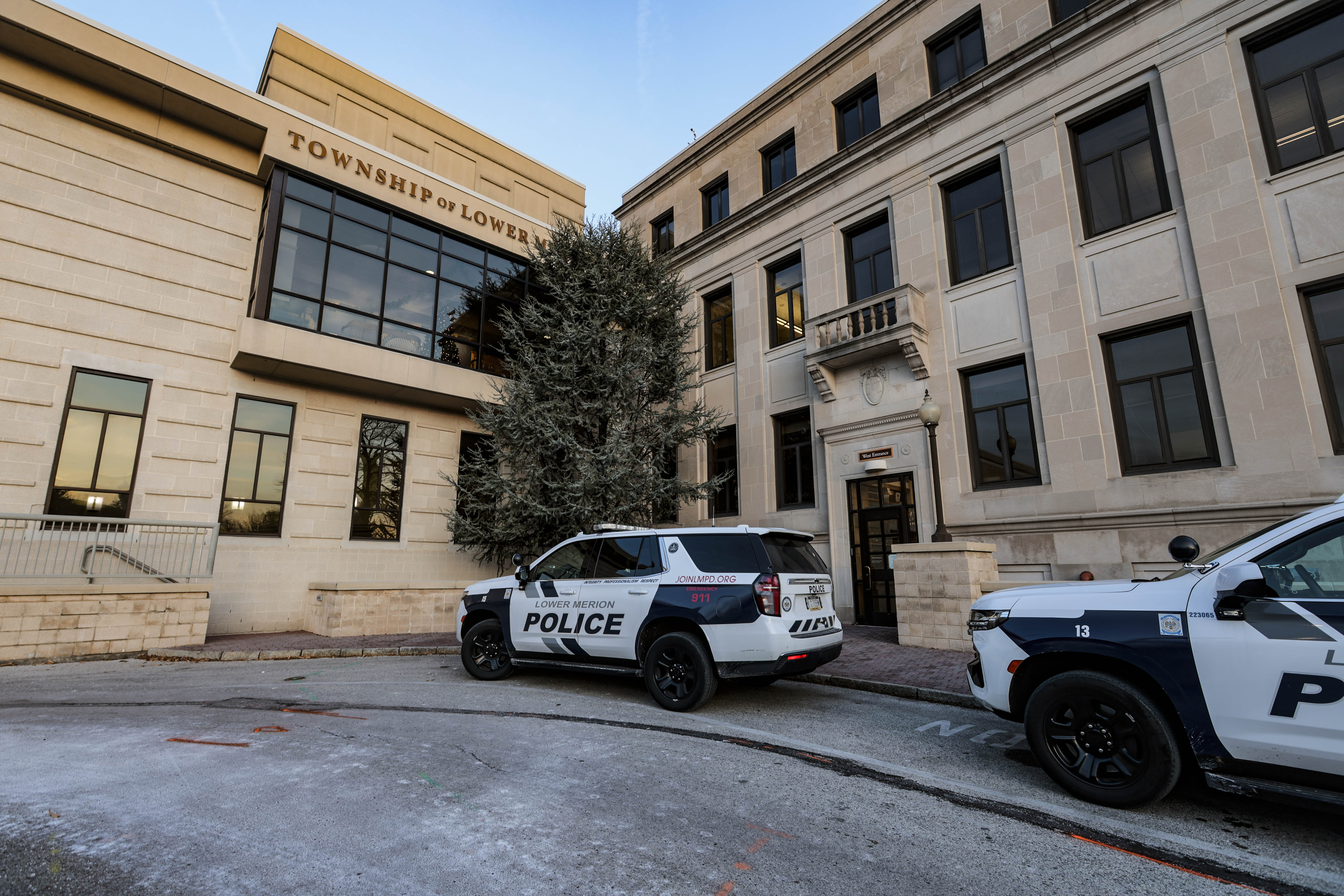
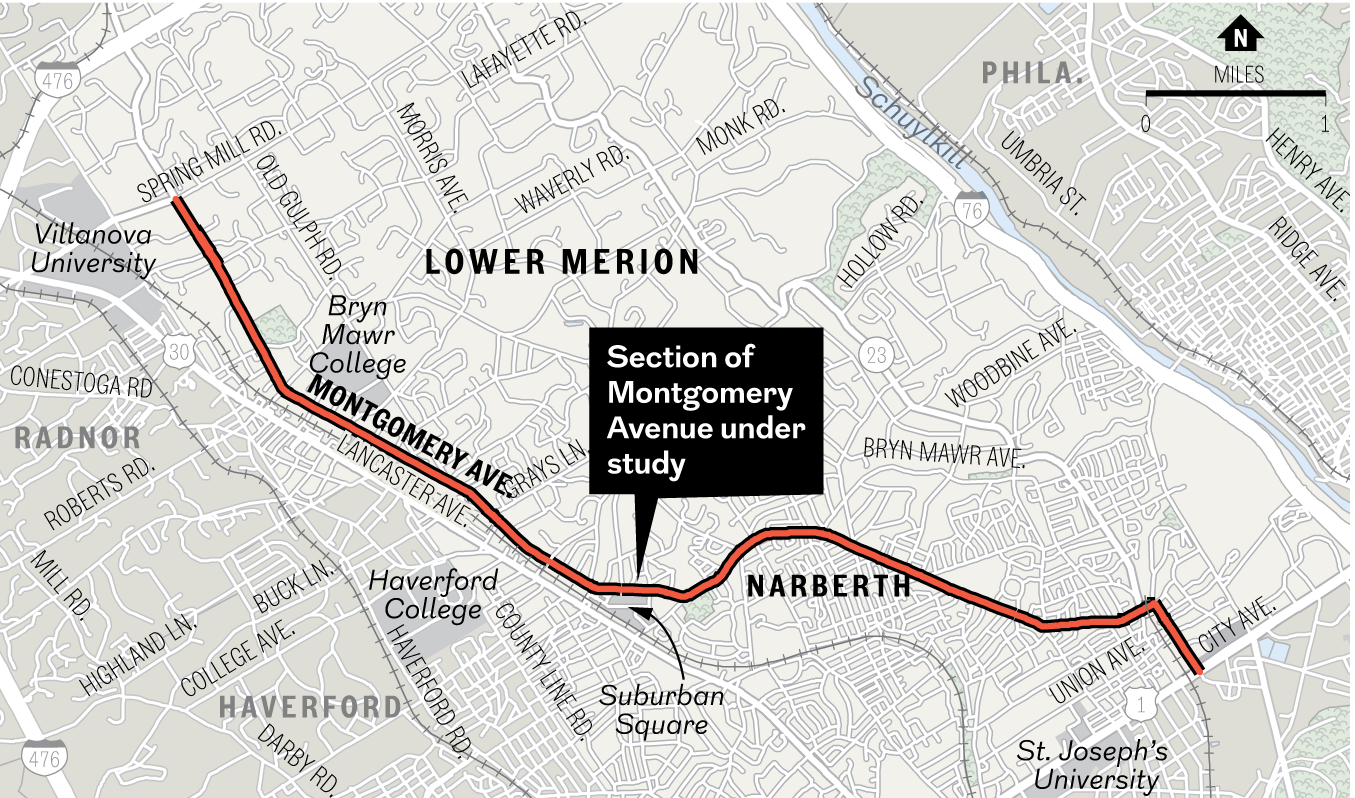
The recommendations are the culmination of the monthslong Montgomery Avenue Corridor Safety Study, an effort by Lower Merion and Narberth to identify and prioritize potential improvements along a seven-mile stretch of Montgomery Avenue, from City Avenue to Spring Mill Road.
Residents say the roadway has become unsafe for drivers, cyclists, and pedestrians. At a February meeting in Lower Merion, some recounted their own accidents and near misses while walking or driving along the key suburban artery.
The study’s recommendations, sent to Lower Merion residents via email Tuesday, include adding and updating a series of speed limit markings, street lights, crosswalks, stoplights, and lane configurations at dozens of intersections along Montgomery Avenue.
A map showing the section of Montgomery
Avenue in Lower Merion and Narberth that is the subject of a major traffic safety study. John Duchneskie
The township and borough received $340,540 through the federal Safe Streets and Roads for All program to fund the study. The initiative evaluated traffic and crash patterns, pedestrian and cyclist safety, intersection and roadway design, and access to transit, shopping districts, and neighborhoods, among other factors.
The recommendations are for planning purposes only, and any future improvements would need to be approved and funded.
Lower Merion recorded 3,767 crashes between 2019 and 2023, 13 of which were fatal and 68 of which involved “suspected serious injuries,” according to the township’s 2025 Comprehensive Safety Action Plan. The majority of crash-related serious injuries occurred on five major roadways: Conshohocken State Road, the Schuylkill Expressway, City Avenue, Montgomery Avenue, and Lancaster Avenue.
The number of reportable crashes (incidents that result in injury or vehicle damage requiring towing) along the section of Montgomery Avenue studied increased from 97 in 2022 to 142 in 2023, then dropped to 116 in 2024, according to data presented to Lower Merion and Narberth residents at the February meeting.
Lower Merion and Narberth residents are invited to learn about and provide comments on the Montgomery Avenue recommendations at an Oct. 26 meeting at 6 p.m. in the boardroom of the Lower Merion Township building. Comments can also be emailed to montavestudy@lowermerion.org.
The project team will review feedback on its preliminary recommendations before presenting final recommendations at a meeting later this year or inearly 2027.
This suburban content is produced with support from the Leslie Miller and Richard Worley Foundation and The Lenfest Institute for Journalism. Editorial content is created independently of the project donors. Gifts to support The Inquirer’s high-impact journalism can be made at inquirer.com/donate. A list of Lenfest Institute donors can be found at lenfestinstitute.org/supporters.
Prices are rising on everything, everywhere these days.
SEPTA, however, has cut the parking fee at its garages in half.
Until Dec. 31, it will cost only $2 a day to use the Frankford, Lansdale, and Norristown garages, instead of $4.
Fewer commuters are parking in the garages, which are about 5% to 10% full on weekdays, SEPTA spokesperson Andrew Busch said. The transit agency hopes the price break will entice riders.
“We want to see if there’s a demand we’re not serving,” Busch said. “Maybe we just landed on the wrong price point.”
In early 2020, SEPTA stopped charging for parking at Regional Rail stations and transportation centers as people adjusted to pandemic shutdowns and changed commuting patterns.
The transit agency began phasing in paid parking again in 2024 and doubled daily fees — to $2 to park in Regional Rail surface lots and $4 for garages.
SEPTA was tightening its belt during a period of fiscal crisis and looking for ways to generate new income. Officials believed that the price was still relatively low and would help the bottom line.
In fiscal 2019, the agency raised $3.5 million from parking fees, Busch said. For the 2026 fiscal year that ended June 30, SEPTA parking lots and garages took in $5.3 million, he said. That was the first full year after all parking was paid.
Most of Regional Rail’s parking capacity is in surface lots, which are often full or nearly so.
SEPTA says it has noticed more people using street parking around the 989-space Frankford garage instead.
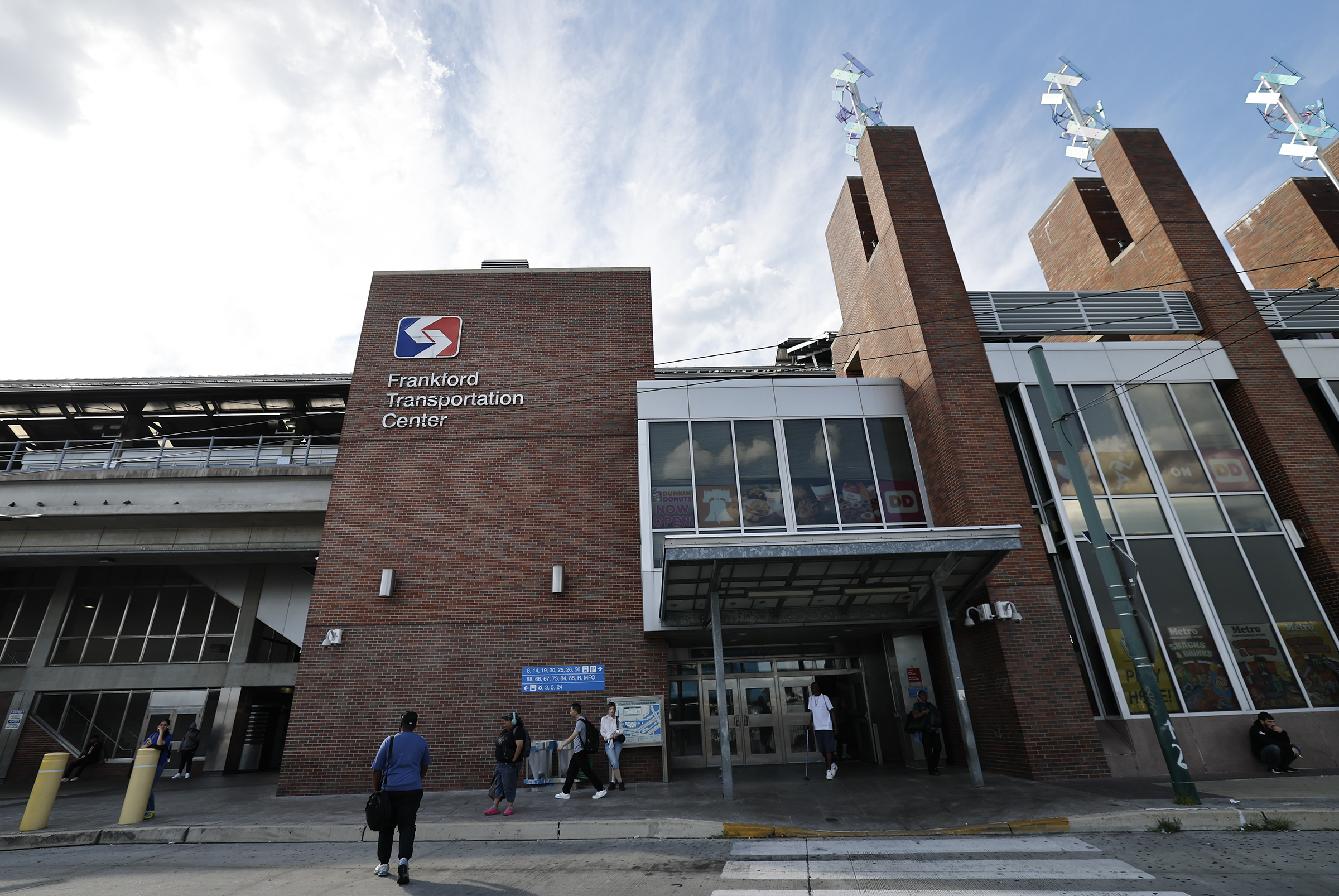
“We’ve heard from some people that they feel unsafe, particularly at the Frankford Transportation Center,” Busch said. SEPTA has added lighting and 30 blind-spot mirrors in the garage, he said.
In June, Lansdale police increased patrols around SEPTA’s parking garage after reports of fighting and underage drinking among teens and young adults using it as a gathering spot.
It is not clear whether customer concerns about the situation contributed to a drop in parking there.
The metrics did not take into account the actual friendliness of the drivers. Instead, they centered on more objective measures such as gas prices, time spent in traffic, and likelihood of getting into a crash.
Philadelphia ranked 100 out of 100, just below Washington, and a few spots under New York (97) and Baltimore (92).
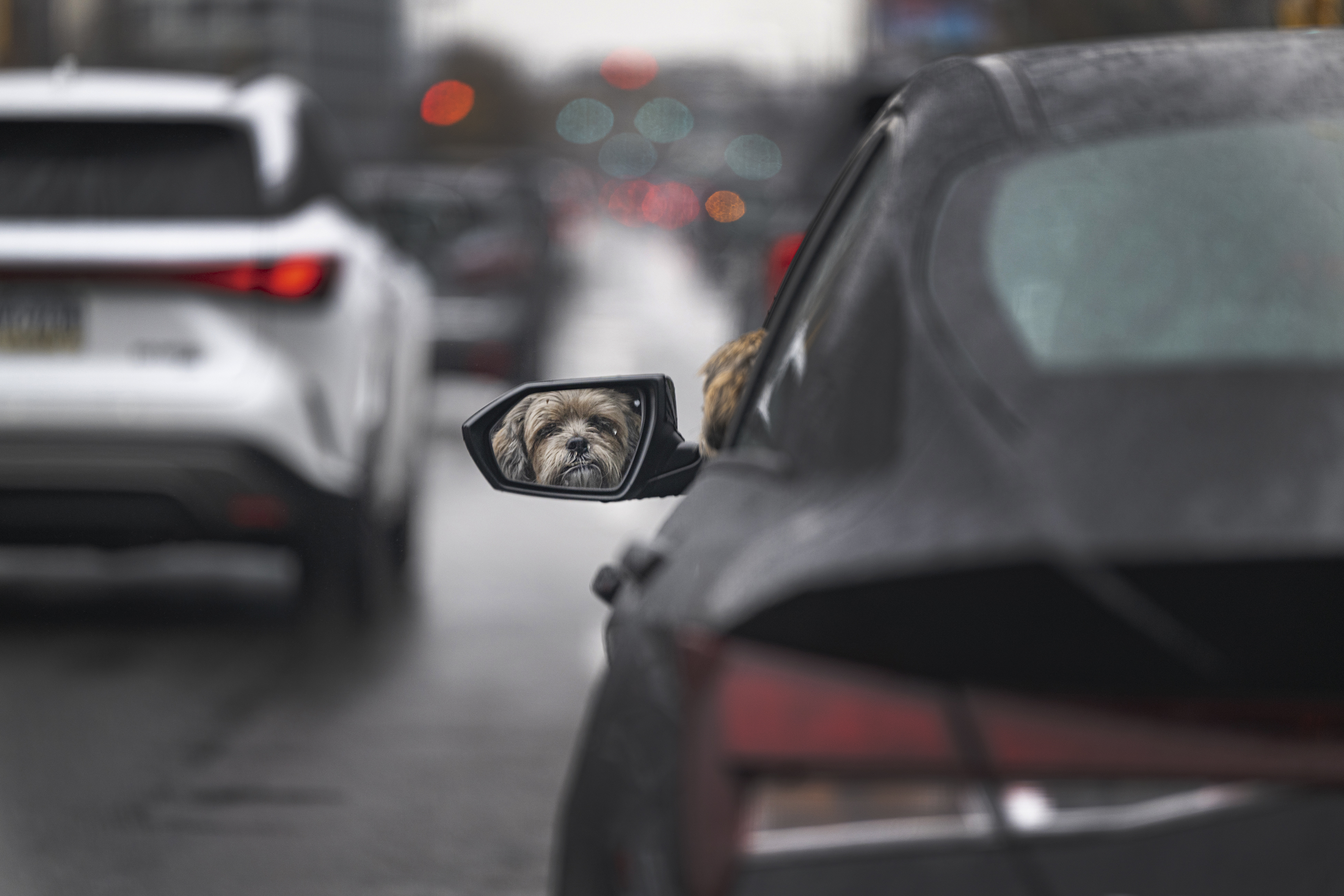
Philly was weighed down by particularly poor rankings in WalletHub’s “traffic and infrastructure” category — which includes hours spent in traffic, average commute time, and quality of roads and bridges — and in the “safety” category, which includes the likelihood of accidents, traffic fatality rate, and seat belt use. The city fared slightly better when it came to “cost of ownership and maintenance” and “access to vehicles and maintenance.”
The top three cities for drivers were Scottsdale, Ariz., where the costs of buying and parking a car are relatively cheap; Boise, Idaho, where drivers are least likely to have an accident; and Fort Wayne, Ind., which is inexpensive compared to other cities, according to the survey.
“Living in one of the best cities to drive in can make owning and maintaining a car much cheaper,” WalletHub analyst Chip Lupo said in a statement. “The best cities for drivers also minimize commute times and traffic congestion, have accident rates well below the national average, and keep their roads in good condition.”
Philly drivers lose more time than others sitting in traffic. The region’s roads were the nation’s third most congested last year, according to the annual global traffic scorecard by transportation analytics firm INRIX.
In 2025, Philly motorists lost 101 hours to traffic jams on average, an increase of 31% from 2024, according to the report. Only drivers in Chicago and New York fared worse.
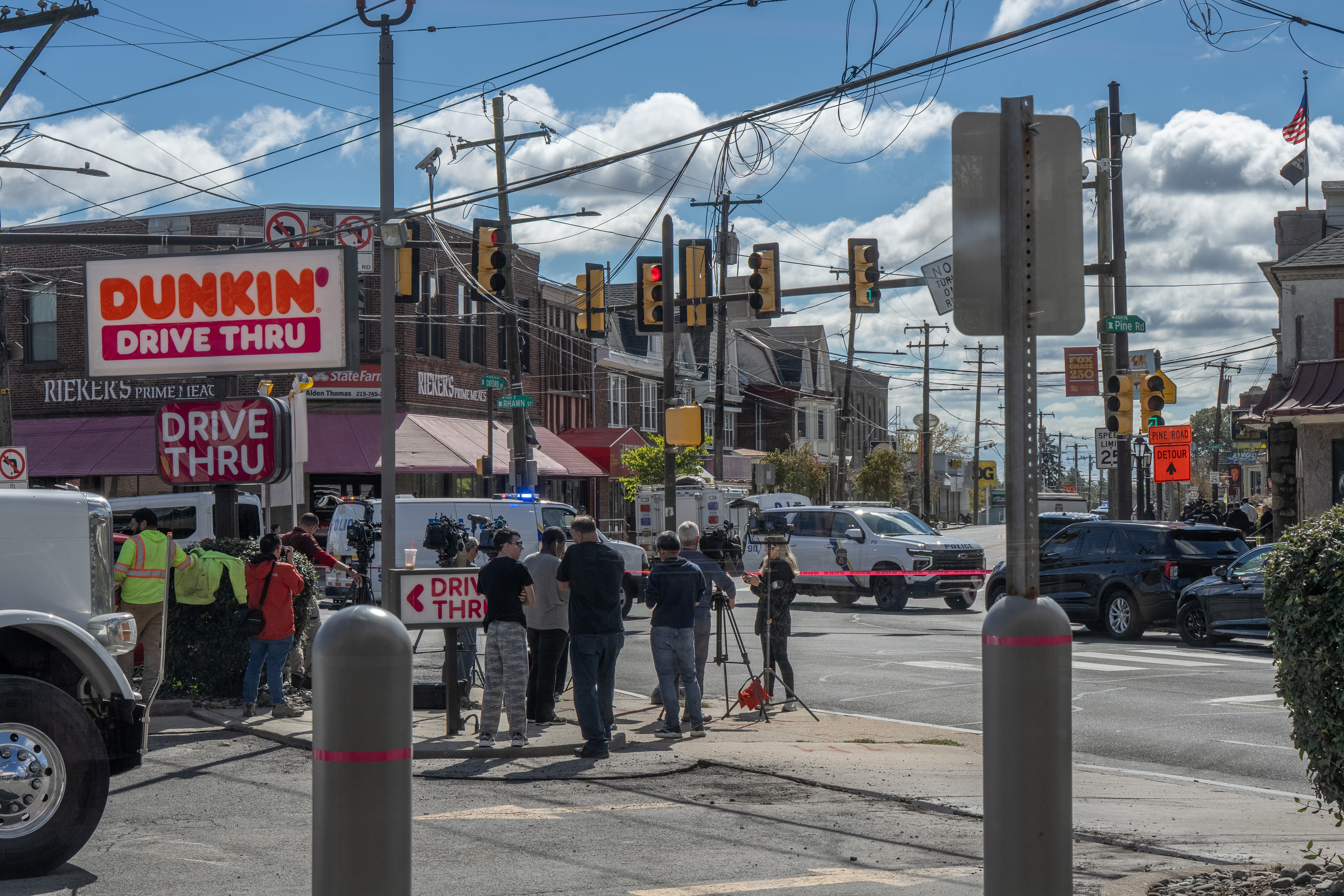
An armed man believed to be connected to an earlier double homicide — who then barricaded himself for hours inside a SEPTA bus in the city’s Fox Chase section — has died after shooting himself, police said.
The man, who was not officially identified, was transported to Jefferson Abington Hospital, where he was pronounced dead, police said. The barricade was declared over just after 5 p.m.
Shortly after 3:40 a.m., Philadelphia Fire Department responders removed two adult women from the scene of a house fire on the 8200 block of Williams Avenue in the city’s Cedarbrook section, police said.
Both women, who were not identified, had been shot, police said.
The women were taken to Jefferson Einstein Philadelphia Hospital, where they were both pronounced dead.
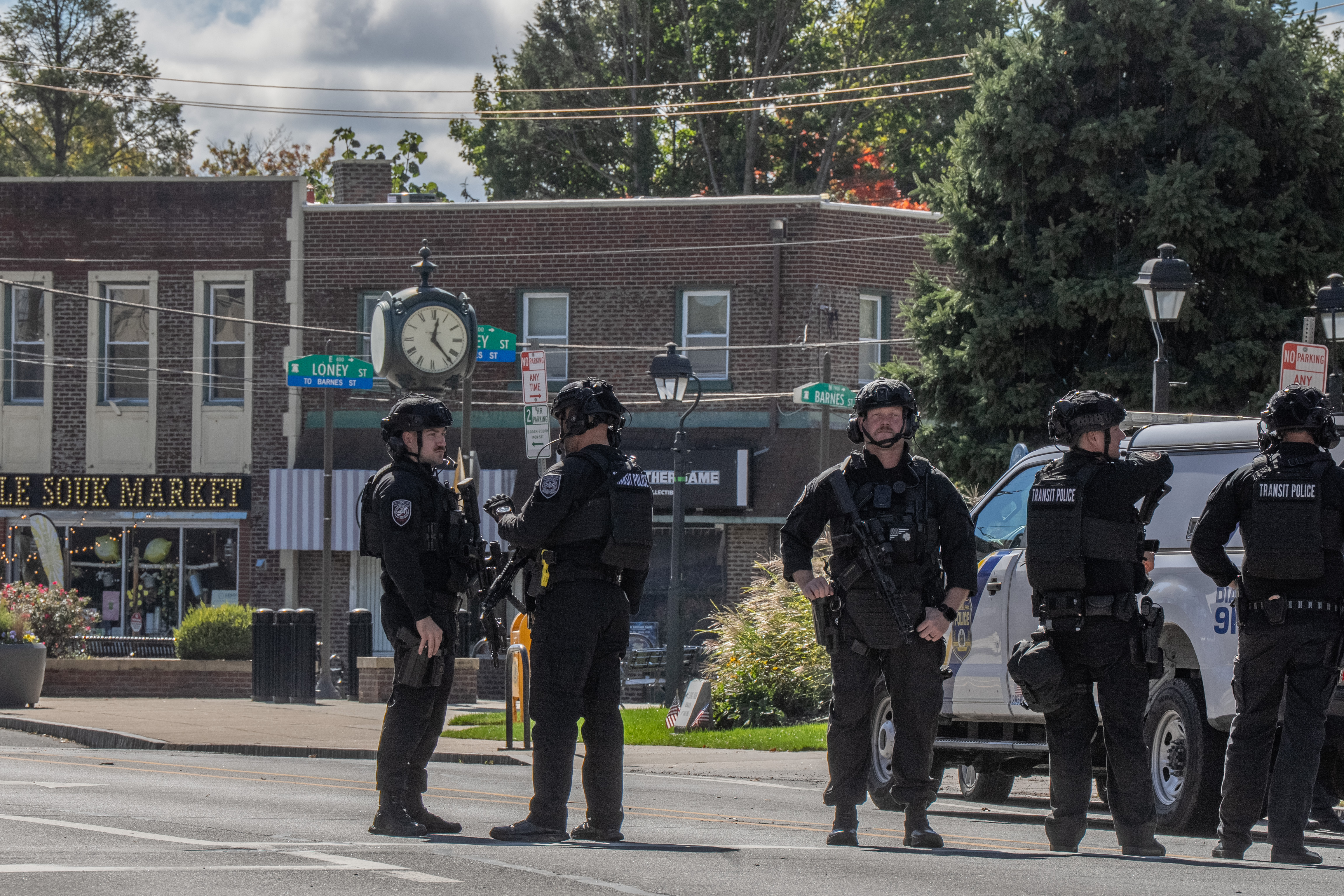
Around 5 a.m., a Route 18 bus pulled into the Fox Chase Loop at Oxford Avenue and Loney Street to drop off two passengers.
“At that time, there were just three people on board — the bus operator, the man who later barricaded himself on the bus, and another passenger,” SEPTA spokesperson Andrew Busch said.
“When the bus stopped for a layover at the loop, the man told the bus driver that he was not getting off the vehicle and to call the police. The other passenger exited the bus without incident and the operator did as well after calling for assistance,” Busch said.
Police in the city’s Fox Chase section near where a man barricaded himself on a SEPTA bus in Philadelphia on Monday.Jessica Griffin / Staff Photographer
The surrounding streets near the barricade were shut down, and SEPTA trains and buses were detoured away from the Fox Chase Loop transit hub.
Police said no officers were injured and the investigation was ongoing.
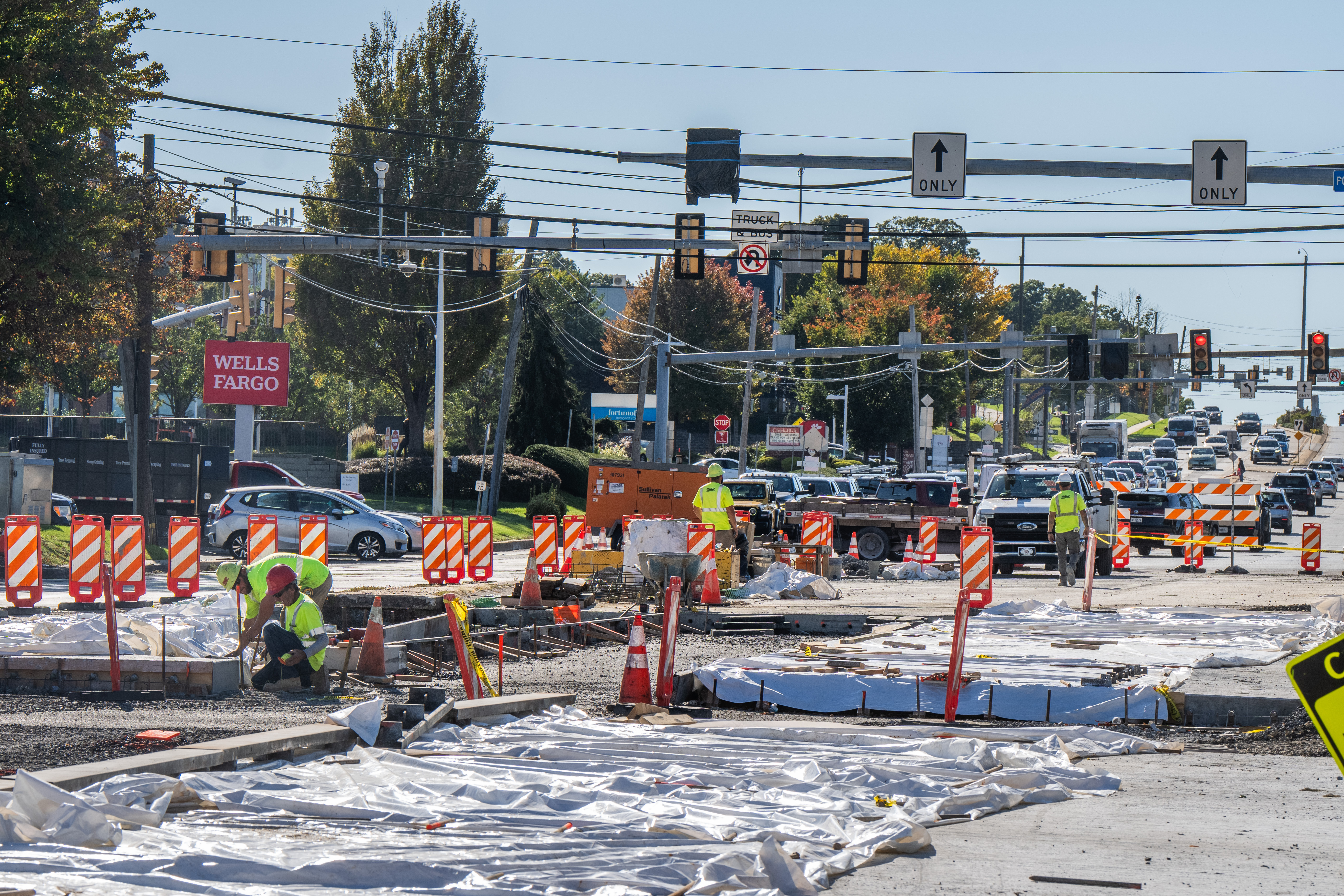
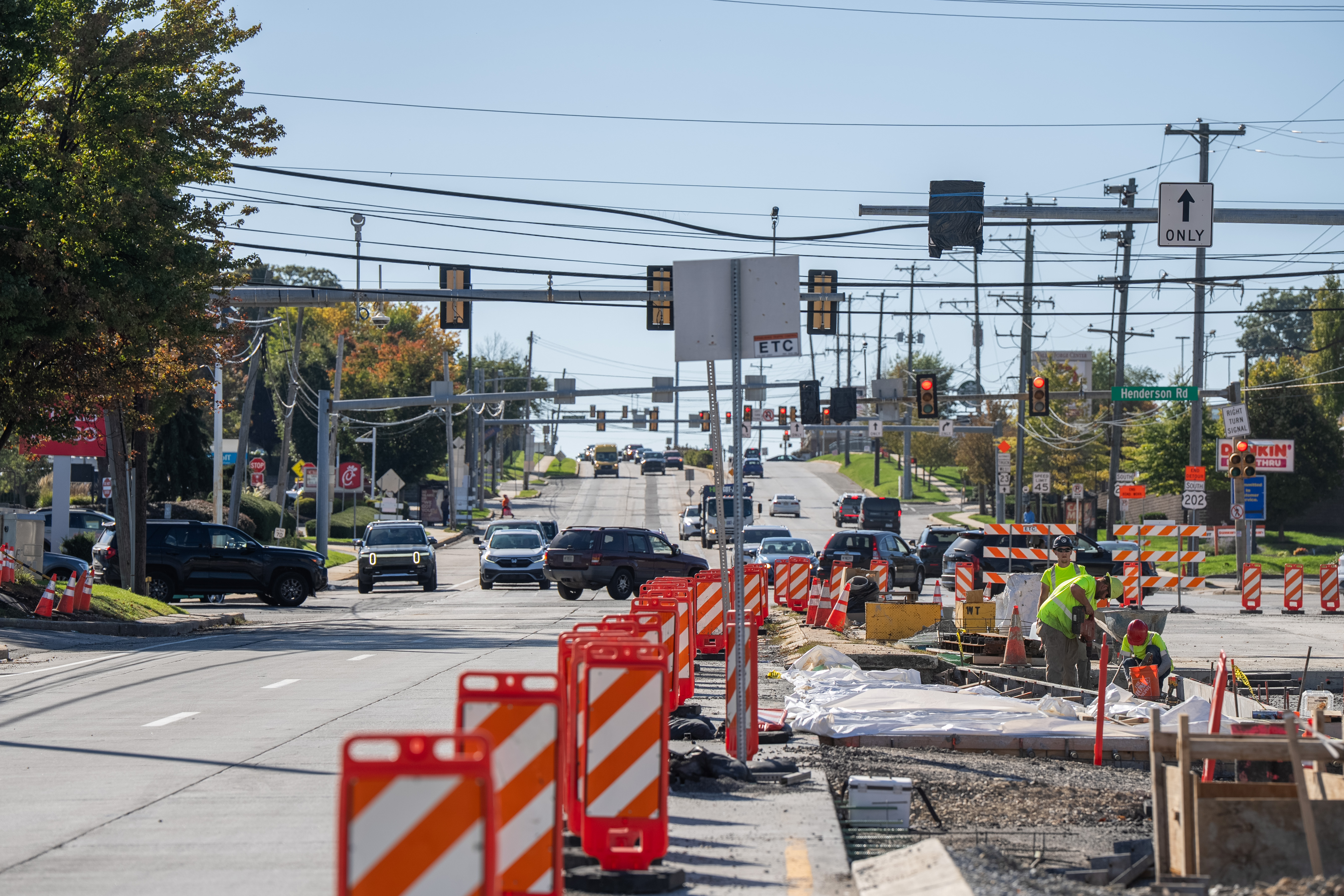
Among those who can’t wait for PennDot to withdraw its arsenal of drilling equipment and to finish repairing a troublesome patch of a bustling stretch of Route 202 in King of Prussia, Musa Jaffa might top the list.
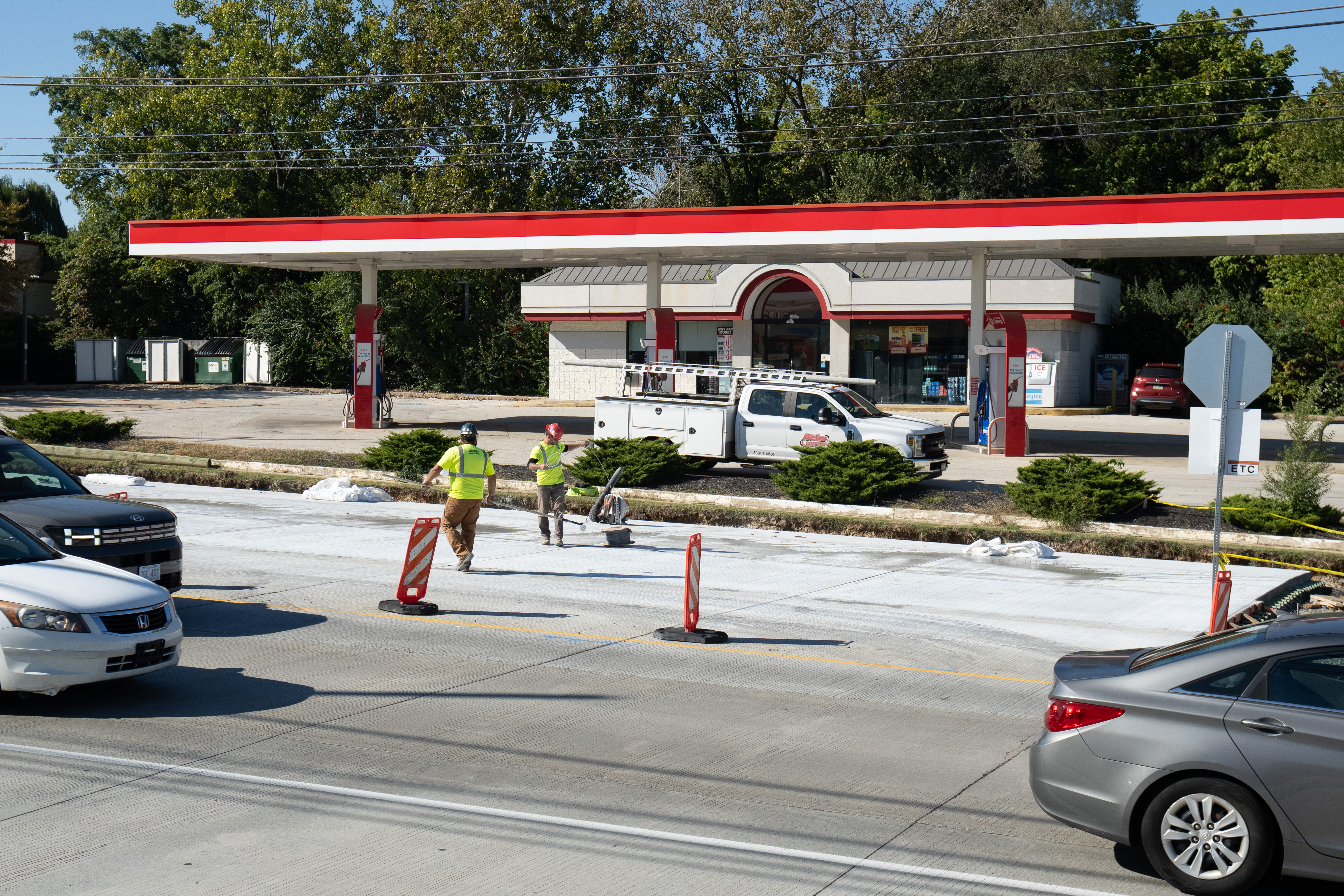
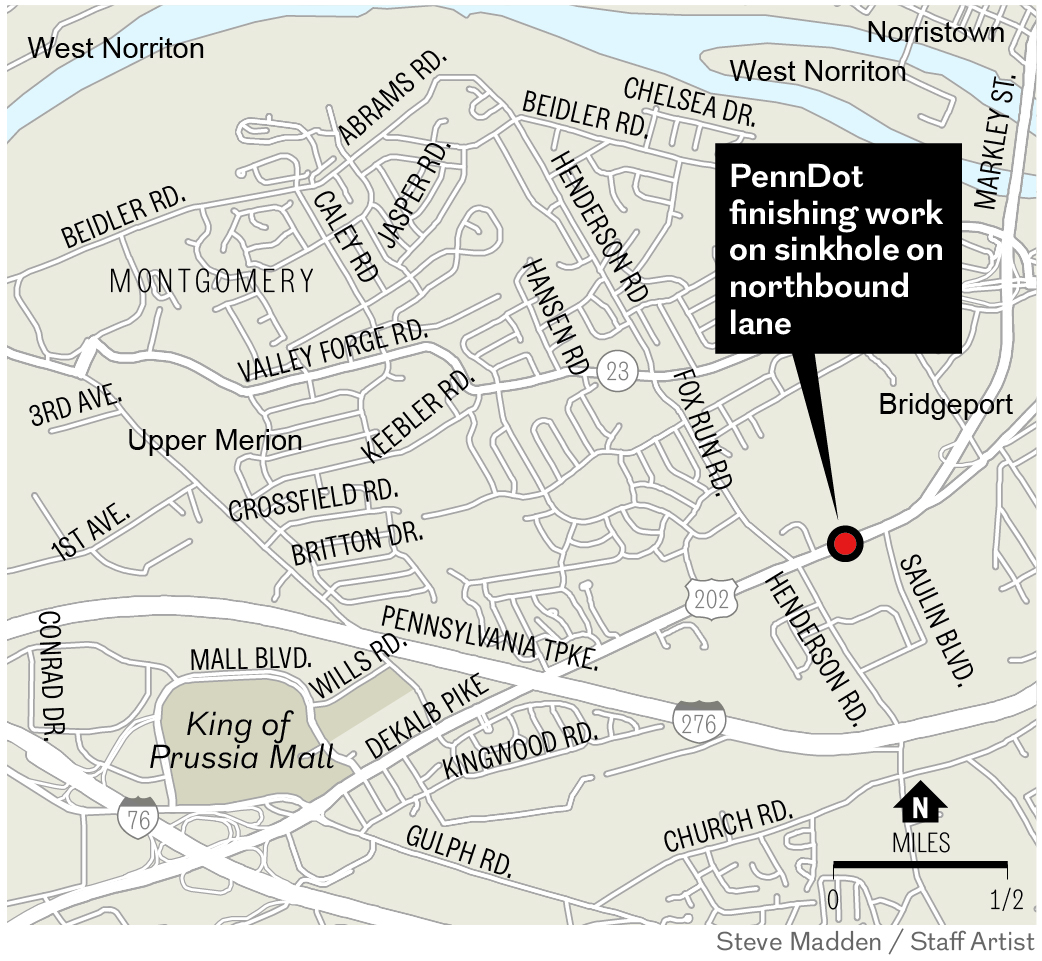
Jaffa is manager of the Joe’s Kwik Marts and gas station fronting the southbound lanes of 202 between Henderson Road and Saulin Boulevard that have been closed while PennDot attempts to repair a sinkhole under a 120,000-square-foot surface.
To say the least, he said, business is “slow.” He estimates daily revenues have plummeted from $16,000, to about $2,000. Andthe traffic complications of the two-yearproject have had immeasurable impacts on area businesses.
“Everyone knows someone who is affected by it,” said Pattie Malone, director of Marian’s Attic, a nonprofit thrift store, on the other side of the highway.
PennDot says the $22.4 million federally funded project, which involves burrowing down more than 100 feet to apply grout, should be finished by “late fall,” as in the astronomical fall. It might not be done until mid-December, an agency spokesperson said Wednesday. Route 202, or DeKalb Pike, is a critical access road for the King of Prussia Mall and scores of other businesses.
Upper Merion Township is a commercial and commuting nexus that has experienced a remarkable economic prosperity, in large measure due to its King of Prussia core. Township population has jumped 25% since 2010. Since then the aggregate market value of real estate has more than doubled, to $8.6 billion, according to state tax data. That’s No. 2 among all the towns in Philadelphia’s neighboring Pennsylvania counties — up from No. 9 in 2010.
The Joe’s Kwik Marts on Route 202 is routinely empty on a day last week. That has been the standard since the southbound lanes have been closed.Jessica Griffin / Staff Photographer
What is a ‘sinkhole’?
Upper Merion happens to be in the heart of a narrow geological corridor of limestone bedrock, a “karst” formation, that extends from central Chester County across southern Montgomery County.
(The limestone alleyway bypasses Philadelphia, whose numerous sinkholes have been the result of a variety of causes.)
An ancient sea once covered the area now occupied by the likes of the mall and Joe’s Kwik Marts. About 500 million years ago, explained Geoff Hickman, Upper Merion’s public works director, shells and other sediment settled on the sea floor and over time mutated into the limestone and dolomite underlying the area today.
Rain and groundwater can dissolve the limestone and create hollow pockets below the surface. That can cause the ground to collapse, creating sinkholes, a common experience in Upper Merion.
The source of the underground water isn’t always clear, as is the case with the 202 sinkhole.
King of Prussia is a king of sinkholes
It’s hard to get there from here: The construction has presented challenges to those seeking access to the businesses along the closed Route 202 southbound lanes.Jessica Griffin / Staff Photographer
About half the land in Upper Merion is situated in “high probability” zones for sinkholes, Hickman said, and the township has a lengthy history of incidents.
In 1961, The Inquirer carried a report of “land cave-ins” in Lower and Upper Merion, “where large areas of residential property have dropped as much as 15 feet.”
A decade later, PennDot altered the route of 202 after “a series of collapses,” Hickman said. A sinkhole as wide as 75 feet opened on 202 near Mall Boulevard in 2011.
When the mall was undergoing an expansion, “the ground collapsed 35 times” between 2014 and 2016, he said.
The most problematic sinkholes are those that occur in clusters, he said. “They show that the geology and drainage conditions in those areas continue to produce sinkholes.”
The ones currently under repair, he said, “are among the most significant in township history.”
What PennDot is doing on 202 in King of Prussia
Map of PennDot sinkhole project in Upper MerionSteve Madden
The repairs are a bit more complicated than a spackling operation.
PennDot says crews are drilling hundreds of holes, some of them through solid rock and deeper than 100 feet, and injecting pressurized grout into the subsurface.
The grout “stabilizes the ground mass beneath the roadway,” PennDot says, adding that it is a laborious and time-consuming process. It can take a minute to drill through a foot of rock.
All this effort should “help stabilize the ground beneath the pavement,” the agency said, and that will be followed by the installation of drainage piping and reconstructing the surface.
“We expect that this fix will be permanent,” the PennDot spokesperson said.
The geological future of King of Prussia, and the Philly region
Sinkholes will continue happening, but neither King of Prussia nor anyplace else around here is in danger of becoming subterranean, said Franklin Institute scientist Derrick Pitts, a geologist. Those involved in permitting are well aware of geological hazards.
“The geology of this entire region has been extensively mapped in excruciating detail for maybe a century,“ Pitts said. “They know where the trouble spots are.”
The resolution of the 202 trouble spot can’t come too soon for Jaffa and other merchants.
The road is closed for only about 0.2 miles, but getting around it requires navigating a detour of nearly a mile through often-heavy traffic.
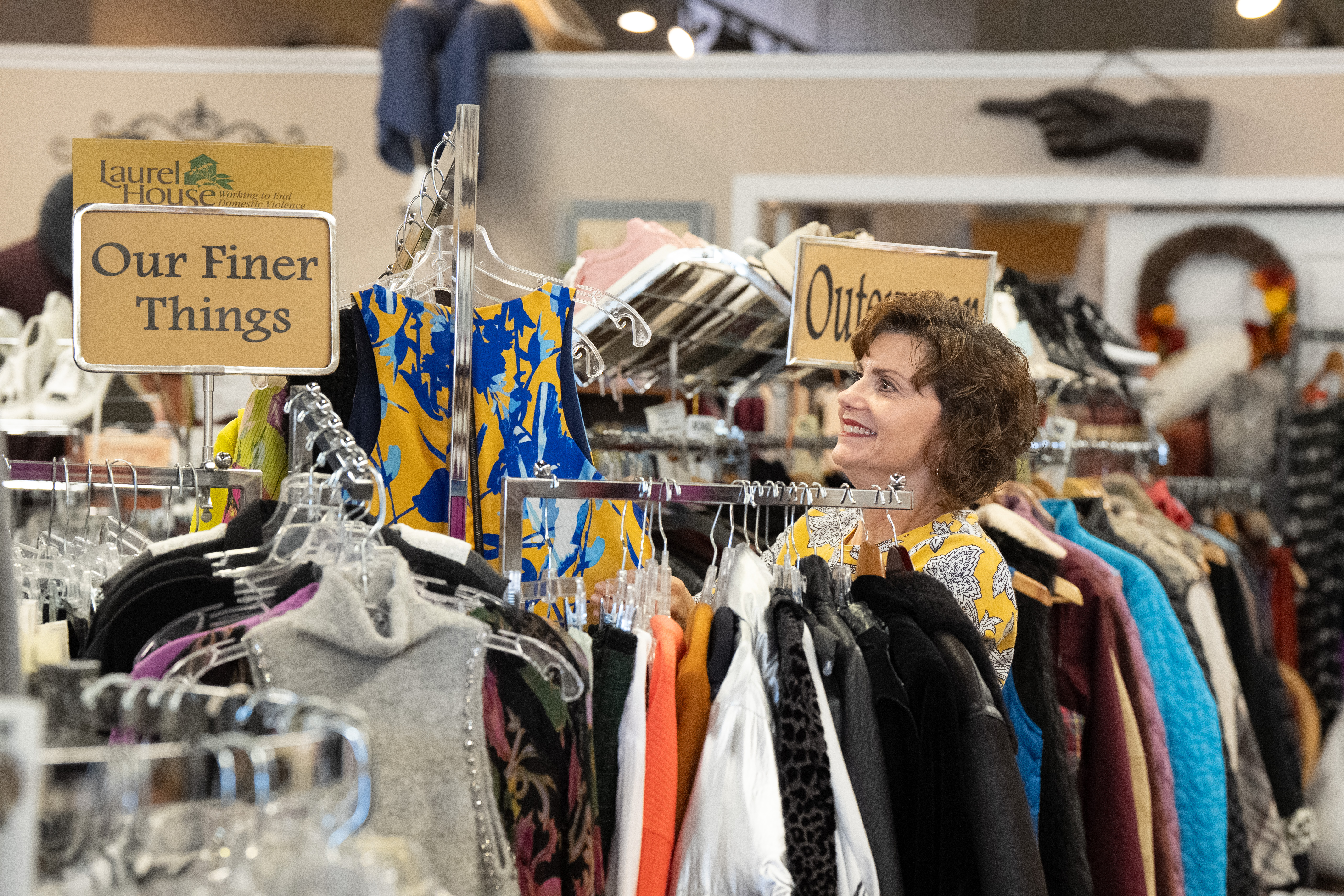
Malone said the traffic nuisances have discouraged some people from dropping off donated items to her thrift store, operated as charity benefiting Laurel House, an anti-domestic violence advocacy group.
Her assistant manager, Lisa Cristinzio, said the construction project has become a safety hazard for some people exiting the mall where their shop is located. Numerous crashes have occurred, she said.
“It’s a mess,” she said.
Assistant manager Lisa Cristinzio, at work at Marian’s Attic, a nonprofit thrift store on the northbound side of 202. Store manager Pattie Malone believes business would have been a lot better without the lane closures.Jessica Griffin / Staff Photographer
Through it all, business have remained opened. On the closed southbound side of 202, makeshift lanes have provided access to the businesses that include a Japanese restaurant and an auto-service center.
But Malone is convinced the construction and traffic signage have been a customer repellent for the entire area.
“We’re doing all right,” Malone said. But, “I cannot even imagine what we would be doing if that road was open.”