Category: Transportation

  • Pa. Turnpike begins $90.5 million widening near I-95 interchange in Bucks County

    Pa. Turnpike begins $90.5 million widening near I-95 interchange in Bucks County

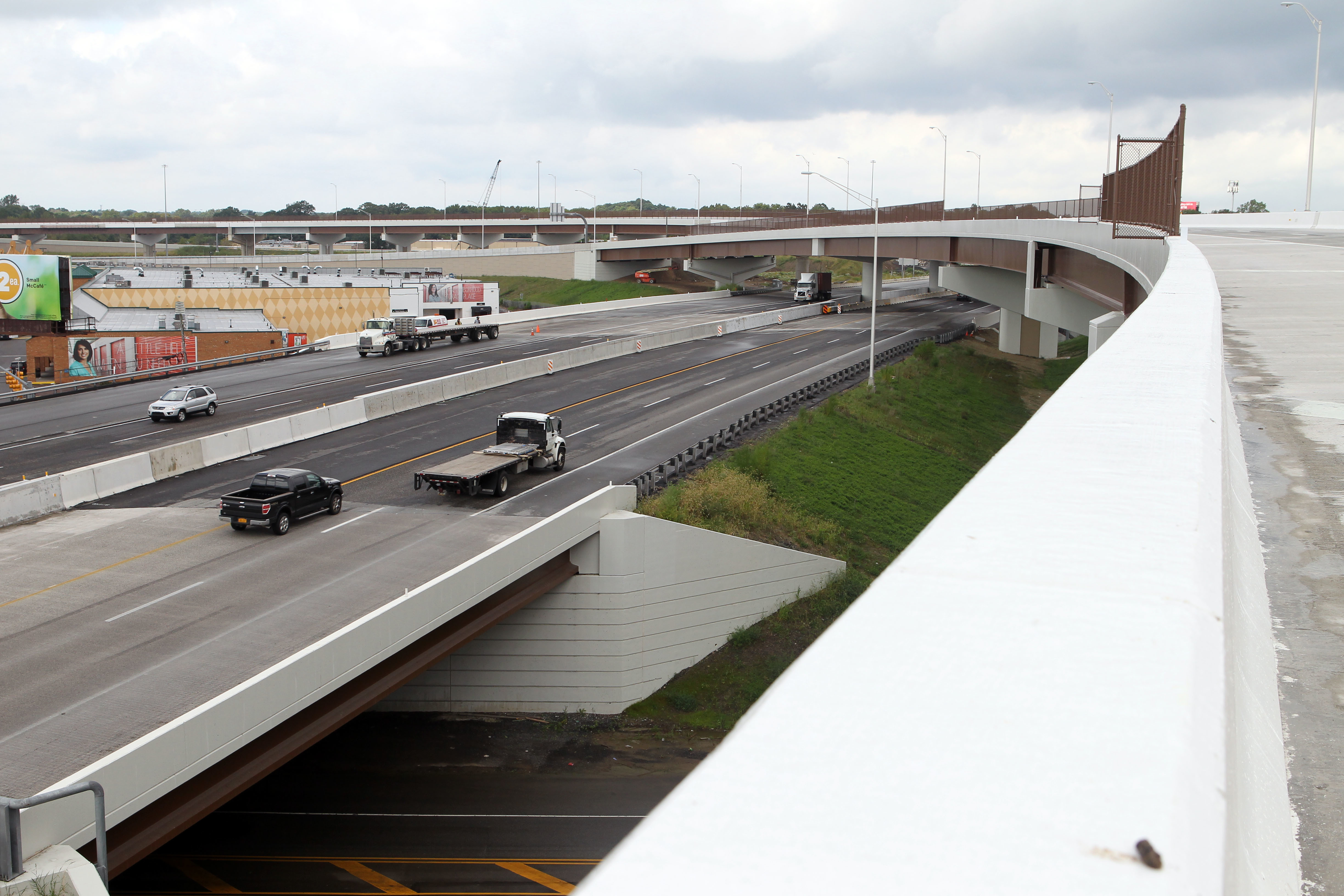
    The Pennsylvania Turnpike Commission is reconstructing and widening a 2½ mile section of I-276 between the Neshaminy Falls Toll Plaza and Bensalem Boulevard in Bucks County.

    Turnpike officials characterize the $90.5 million project as a supporting piece of the massive connection of I-95, a freeway, to the toll road in 2018.

    That connection closed the final gap in the Eastern Seaboard’s major interstate, between Florida and Maine’s border with New Brunswick, Canada, after more than six decades.

    It made shipping by truck more efficient, reduced congestion on local Bucks County roads, and eased traffic flow through the Philadelphia region and along the East Coast.

    “Opening the I-95 connection was a historic milestone, but it was not the end of our work,” Pennsylvania Turnpike Commission chief engineer Brad Heigel said in a statement.

    Starting this month, crews will reconstruct the turnpike’s center median to prepare for future traffic shifts, the agency said. Lane closures are expected through October, with work done mostly at night.

    Work on this portion of the roadway, called Section C of the I-95 Interchange Project, is expected to continue through 2029.

    Construction will proceed in phases:

    • First, temporary concrete barriers will be installed to establish long-term shoulder closures and create space for tree clearing, earthwork, and other construction activities beginning later in fall.
    • Crews will then build a new lane in each direction while traffic uses the existing lanes.
    • Once that is done, traffic will shift onto the new lanes so crews can rebuild the roadway in between. Two lanes of traffic will remain open in each direction in peak travel hours during construction, the turnpike said. 

    In addition, a new sound-barrier wall will be built, along with a stormwater management facility. The existing Neshaminy Falls Toll Plaza will be demolished and replaced by an Open Road Tolling gantry.

    The project will create new “capacity to support safer, more reliable travel through Bucks County and along one of the nation’s most important transportation corridors,” Heigel said.

    Work on the adjoining portion, Section D30, is scheduled to be finished this fall, but three-lane turnpike traffic won’t begin in the area until both sections are done.

    The project also will add new emergency access gates at milepost 355, cutting response time for local firefighters by 50%.

    In June, officials of the Pennsylvania and New Jersey Turnpikes picked their preferred design to replace the 70-year-old bridge over the Delaware River linking the toll roads: a six-lane span about 195 feet north of the existing one.

    The Pennsylvania Turnpike Commission, the lead agency on the joint project, next must complete an environmental impact study on the design.

    Engineers also must study the runner-up approach: constructing the new bridge in stages, about 40 feet north of the existing bridge — over eight years. (The preferred design could be built in four years.)

    The Federal Highway Administration is expected to decide in April 2028 which of the two options to use.

    When it is built, the I-95 Interchange Project will be done.

  • Tesla’s AI-powered Cybercabs have been spotted in Philly. Will you be able to try one soon?

    Tesla’s AI-powered Cybercabs have been spotted in Philly. Will you be able to try one soon?

    Tesla seems to be testing its autonomous Cybercabs in the Philadelphia area after launching them in Austin earlier this month.

    Local Cybercab sightings have been posted on Reddit and other social media in recent days, with photos and excited commentary reminiscent of trainspotters. Several people posted shots of the gold vehicles parked in the lot of a Devon Tesla dealership.

    One Reddit user reported being told at the dealership that vehicles are undergoing “training” for future deployment in Philadelphia.

    “We’re not at liberty to discuss that,” a person who answered the phone in the sales department said Friday.

    Tesla’s corporate media team did not respond to a request for comment about its Cybercab plans in the Philadelphia market.

    Competitor Waymo is already here, so if Tesla does make a Philly play, a robotaxi arms race is possible.

    On Sept. 3, two-seat Cybercabs began offering driverless rides to the public in parts of Austin, Texas. after a closed-door launch party attended by Tesla enthusiasts and influencers.

    The fully autonomous version has no steering wheel, pedals or mirrors, and is piloted by AI, using an array of cameras to navigate.

    Waymo has not announced when it will start carrying passengers in Philadelphia. Under state law, PennDot must approve before people can hail one of its autonomous taxis and pay for a ride.

    Waymo started manual testing and mapping in Philadelphia in July 2025 and in December shifted to testing autonomous driving with safety specialists behind the wheel as backup.

    The Cybercabs caught the attention of James Mosley this week.

    Mosley, a commercial and fashion photographer, was waiting for a Route 65 SEPTA bus on City Avenue for the second leg of his commute to work Wednesday morning when he saw the brassy gold, soundless EV with a Cybercab logo on the front bumper and a Texas license plate on back.

    “It was shock and awe,” Mosley said. “I thought, ‘This is crazy.’”

    He captured a short video clip of the autonomous vehicle passing through an intersection and changing lanes (with signal) to make a left turn at the next traffic light.

    Mosley said he didn’t see a person in the cab, which has tinted windows. In any case, he wouldn’t trust AI to drive him in a fully autonomous Cybercab.

    “I don’t even like the self-checkout at the grocery store,” he said.

  • Society Hill neighbors are spending $54,000 on a traffic study to examine bike lanes

    Society Hill neighbors are spending $54,000 on a traffic study to examine bike lanes

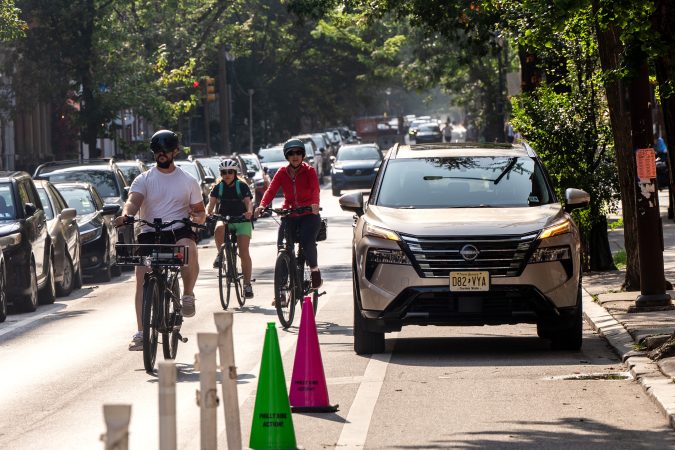
    The Society Hill Civic Association will spend about $54,000 for an engineering firm to conduct a new traffic study of neighborhood roads, including evaluation of the city’s proposal to enhance protections for users of bike lanes on Pine and Spruce Streets.

    Board members of the community organization approved hiring Dewberry Engineers Inc. for “fact-based recommendations” earlier this month in a special Zoom meeting, according to a Sept. 10 SHCA newsletter.

    Last year the Society Hill association contributed $25,000 to help fund a lawsuit against the city by Friends of Pine and Spruce (FOPS), a group of residents challenging the legality of a plan that includes curb-style concrete barriers to separate bike lanes from motor-vehicle traffic.

    The new traffic analysis is intended to update a 2018 “complete streets” study done for the civic association by the Howard Stein Hudson engineering firm, said Jay Borowsky, chair of the group’s streets committee.

    “Since that time, the city has implemented significant traffic and street changes beyond Spruce and Pine, and is now considering additional changes that could negatively affect the community without any updated objective data,” Borowsky said in an interview.

    The new study will also look at traffic counts and crash data on Third Street, where the city installed bike lanes in June, as well as Fifth Street and Lombard Street.

    “The streets don’t work in isolation,” Borowsky said. The 2018 study included information only from Pine and Spruce Streets in the civic association’s territory, he said.

    The Third Street bike lanes have drawn many of the same complaints and concerns that have arisen elsewhere. Some residents say that designated space set aside for bikes has clogged traffic and caused more difficulty getting deliveries and contractor services.

    But others are happy with the change.

    Questions of bias

    “In my experience, traffic moves at a more reasonable speed and the street is quieter,” Nawaf Bou-Rabee, a mathematics professor at Rutgers University-Camden and a member of SHCA, wrote in an email to board members. “Every neighbor I have spoken with about it has expressed support.” He also said he has had no difficulties with deliveries or contractors loading or unloading to work on his home.

    “The study should establish where arrangements are working and where specific improvements are needed,” Bou-Rabee wrote. He asked pointed questions about how data will be measured and evaluated and the impartiality of recommendations ensured.

    Members of FOPS sit on the civic association board. Society Hill residents who support the bike lane changes say that opponents are using the nonprofit to pursue their own agenda despite a diversity of opinion on cycling protections.

    A ban on stopping in bike lanes was enacted in 2024 after a physician, Barbara Friedes, was killed by a drunk driver while cycling on Spruce Street.

    The crash helped galvanize support for physical barriers on Pine and Spruce Streets, which the Philadelphia Office of Transportation and Infrastructure Systems has proposed.

    A Philadelphia Common Pleas Court judge in July blocked the city from resuming work to upgrade protections for the bike lanes along Pine and Spruce Streets, the latest ruling in the FOPS lawsuit.

    The city had asked the court to lift an August 2025 injunction freezing the OTIS project.

    Al Meinster, a member of SHCA and a cyclist who said he was on the board’s Zoom call, worries that opponents have the “deep pockets” to stretch out the litigation and delay safety changes.

    In the meantime “people are exposed to danger, and somebody could be hurt, or somebody could die as a result of this impediment,” Meinster said.

    Debate over cyclist safety

    The lawsuit is part of a growing backlash against bike lanes. Boston has canceled some planned projects. Nationally, the Trump administration has cut federal grants for building the lanes; Transportation Secretary Sean Duffy recently denounced “DEI bike lanes” and said they contribute to traffic congestion.

    Borowsky, of the SHCA, said the study would collect information that will help city officials, bike advocates, and anyone involved in the debate.

    “We’re looking at finding solutions that improve safety and access for everyone,” he said.

    Neighbors fighting the city’s plans are mostly “caring, responsible people” who simply “don’t know how dangerous it is to be on a bicycle on Spruce and Pine and Third Street,” Meinster said.

    FOPS has argued in court and elsewhere that serious crashes involving cyclists are rare in the neighborhood. As of last November, Spruce Street was listed among the 12% of roadways where 80% of traffic crashes with serious injuries or deaths occur.

    The metric, which measures injuries to all road users, is used in the city’s Vision Zero safety program.

    The Pine and Spruce bike lanes were built in 2009 under former Mayor Michael Nutter, whose administration made an agreement that residents would be able to park in front of their homes for up to 20 minutes for loading and unloading.

    Enforcement was spotty, and conflicts arose when vehicles, including delivery and contractor vans, parked inside the bike lanes for longer periods, forcing riders to veer into traffic.

    Members of FOPS contend that concrete barriers would block emergency vehicle access and violate the Americans with Disabilities Act by limiting access to transportation or those with mobility issues.

    Meinster said those arguments are exaggerated or have solutions that do not require opening up the bike lanes to motor vehicles.

    If the legal theory that protected bike lanes violate the ADA catches on, building could be frozen or blocked citywide, he said.

    “What’s happening here in Society Hill has great importance to the safer bicycling movement in the rest of the city because some precedents could be made here,” Meinster said.

    The article has been updated to reflect that only Spruce Street has been added to the city’s list of most dangerous roads for crashes.

  • SEPTA awarded $80 million to make three trolley stations more accessible

    SEPTA awarded $80 million to make three trolley stations more accessible

    A federal transit agency has awarded SEPTA $80 million to make three stations in the Center City trolley tunnel accessible to people with disabilities, officials said Monday.

    New elevators, raised platforms, and other improvements will make the 22nd Street, 33rd Street, and 36th Street stations fully accessible, officials said, bringing them into compliance with the Americans with Disabilities Act of 1990.

    Built in 1955, the stations are currently only accessible by stairs.

    “Ensuring that every customer can access transit service that is safe, clean and reliable is a core part of SEPTA’s mission,” SEPTA board chair Kenneth E. Lawrence Jr. said in a statement.

    Lawrence said Pennsylvania’s congressional delegation worked to secure the grant, which was made available under the Federal Transit Administration’s All Stations Accessibility Program. The program was established by the 2021 Infrastructure Investment and Jobs Act.

    SEPTA was awarded an earlier $56 million grant in 2022 through the same federal program. That funding was designated for elevators, ramps, and other enhancements at five subway stations on the Broad Street and Market-Frankford Lines. SEPTA began construction last month on one of those projects at the 11th Street Station.

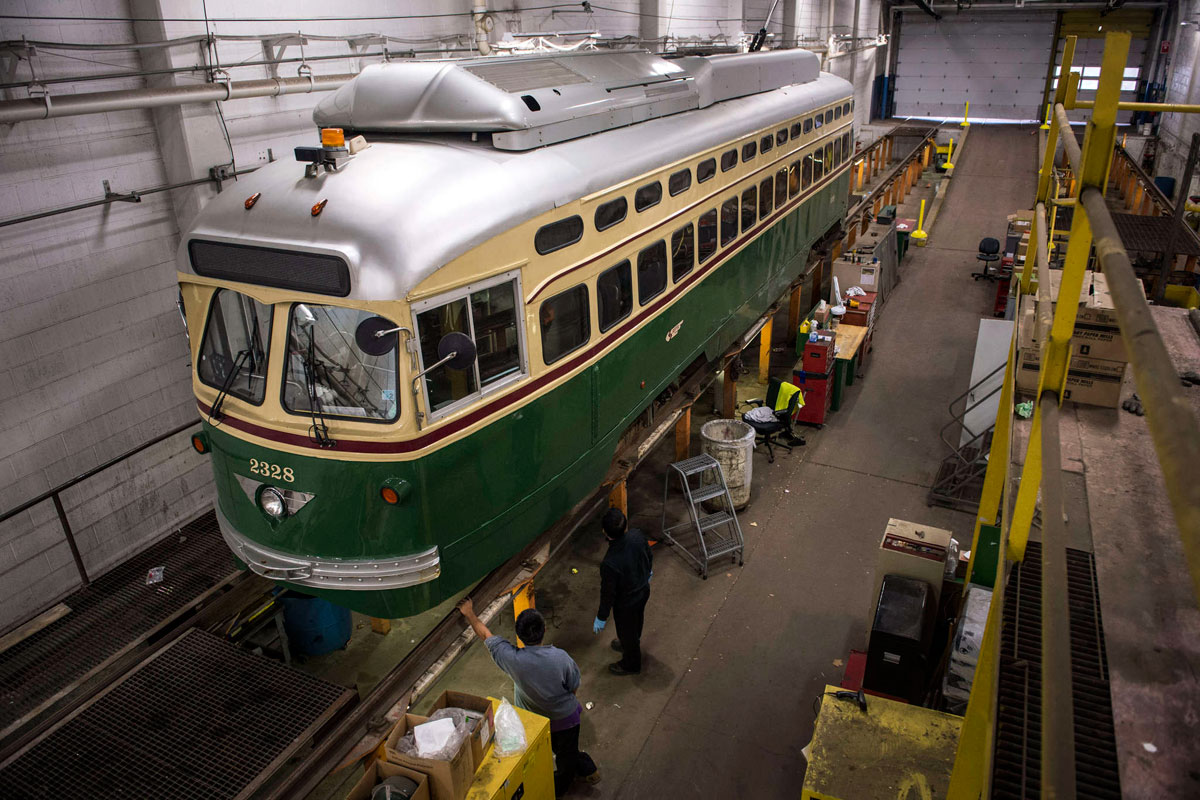
    SEPTA officials said the accessibility project was part of its $2 billion plan to modernize its eight trolley lines — an initiative that includes longer vehicles that hold more passengers, new on-street stations, and proposed line extensions.

  • Langhorne residents push back on Route 1 superhighway plan from PennDot

    Langhorne residents push back on Route 1 superhighway plan from PennDot

    Langhorne Borough wants a PennDot do-over.

    On Sept. 9, the borough’s council unanimously approved a resolution pushing PennDot to reconsider its $334 million plan to build a partial cloverleaf interchange with traffic signals at U.S. Route 1 and Pa. 413.

    A partial cloverleaf highway design features looping two-level ramps with shorter exits and is used in tight spaces.

    The plan would limit access to Route 1 via several miles of service roads that run alongside it, pushing traffic into the narrow streets of Langhorne Borough and its neighboring municipalities in densely populated Lower Bucks.

    “PennDot’s safety objectives on U.S. 1 could be achieved at less cost and at less danger to the community by keeping the service roads connected and not building the cloverleaf,” said Kathy Horwatt, president of Langhorne Borough Council. “We cannot advocate for any plan that trades the safety of our residents for the safety of through motorists.”

    Making Route 1, built in the 1950s, more like a superhighway for better traffic movement on a vital regional roadway has been a PennDot goal for years. Overpasses, ramps, and other infrastructure also need to be upgraded to modern safety standards, the agency says.

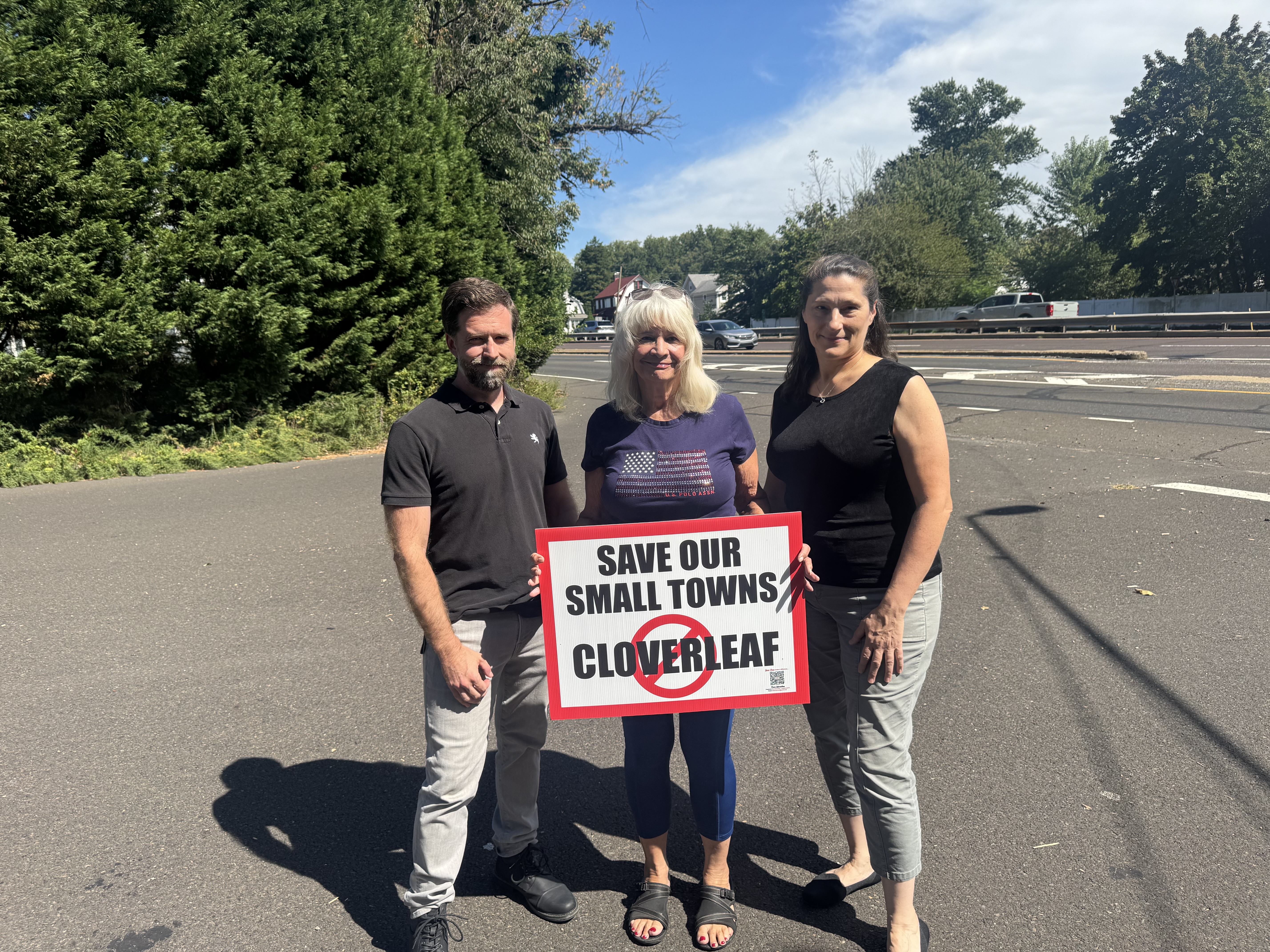
    The resolution is the latest in an expanding five-year battle against the proposal from borough residents, joined by people who live in Langhorne Manor and Middletown Township. A sizable number of lawns sport No Cloverleaf signs.

    PennDot’s original plan would have eliminated the service roads entirely.

    Then in June, State Sen. Frank Farry and State Rep. Joe Hogan, Republicans representing the area, announced that PennDot had confirmed to them that the frontage roads could be retained as part of the cloverleaf plan.

    It seemed like a big concession to local residents’ concerns.

    But it’s not clear that the roads would continue to provide the same level of access to Route 1, according to the grassroots No Cloverleaf coalition. Local motorists could be forced to use the cloverleaf interchange to get on and off the highway.

    “They’re really roads to nowhere” if the cloverleaf interchange is a central part of the Route 1 improvement plan, Langhorne Borough council member Paul Schneider said in an interview.

    “The roads’ reason for being then no longer exists,” he said.

    The borough’s resolution notes that PennDot traffic studies projected 9.2 crashes per year would occur at two planned signalized intersections on the cloverleaf interchange, at Woods Drive and at Gillam Avenue.

    Opponents want the agency to evaluate the option of keeping the service roads as they are and using roundabouts to control traffic through the interchange.

    Construction is not scheduled to begin until 2029, following additional environmental studies, detailed responses to community comments, and final engineering designs.

    A PennDot spokesperson said nothing is finalized about the project at this point.

  • Pilot injured after small plane crashes at Montgomery County airport

    Pilot injured after small plane crashes at Montgomery County airport

    A pilot was injured when his plane flipped upside down Wednesday night at a small airport in Montgomery County, authorities said.

    The plane accident happened around 7:20 p.m. at Heritage Field Airport just outside Pottstown, authorities said.

    The pilot, who did not appear to have life-threatening injuries, was briefly trapped upside down inside the plane but was extricated by emergency responders, authorities said.

    No other injuries were initially reported.

    The cause of the accident is under investigation.

  • Open Streets is returning to the Rittenhouse Square area on Sundays this fall

    Open Streets is returning to the Rittenhouse Square area on Sundays this fall

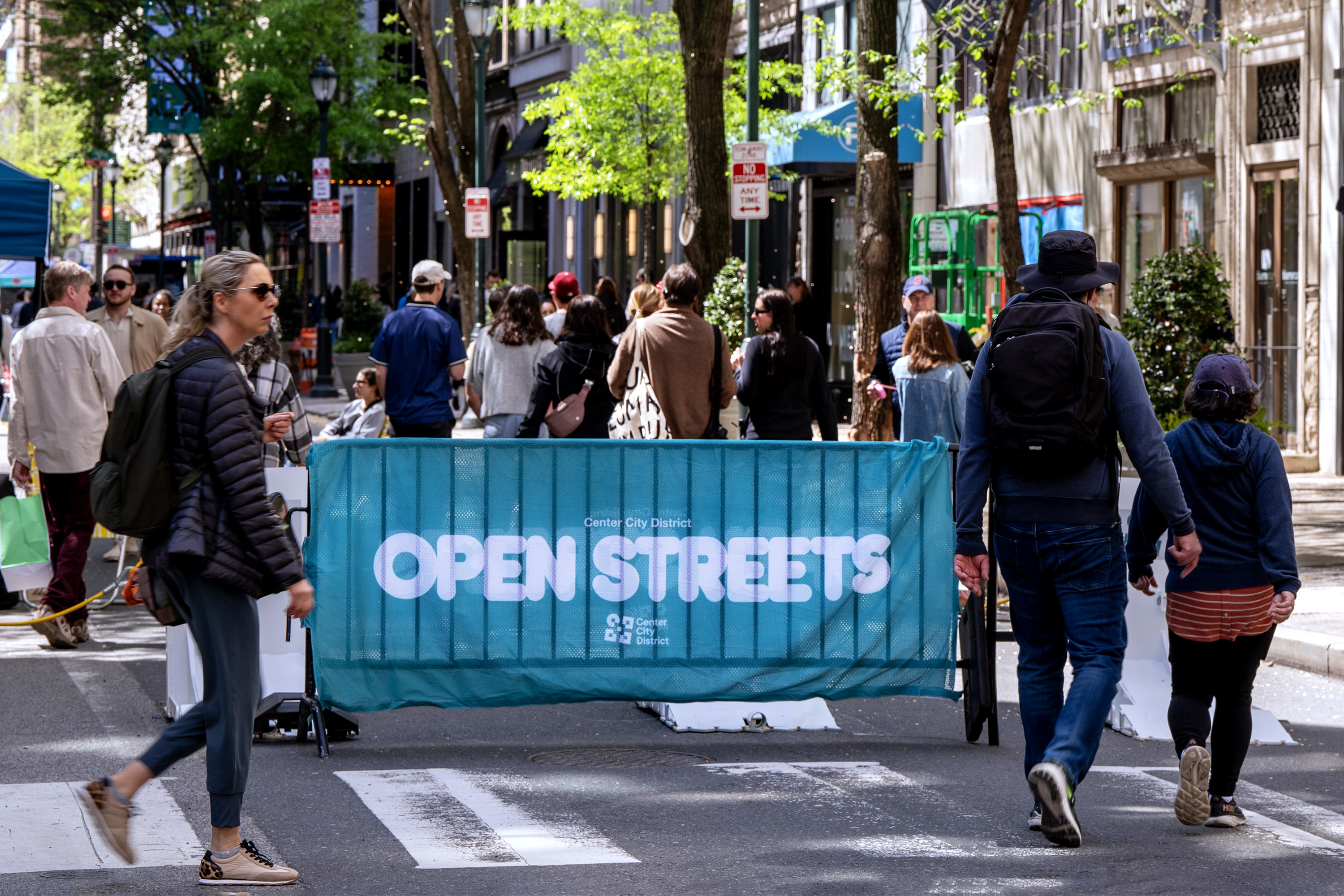
    Fall is near, and though peak foliage has yet to come, another autumn staple is waiting around the corner: the Center City District’s Open Streets program.

    Between Sept. 13 and Oct. 25, the street closure program shuts down car access to eight blocks in the Rittenhouse Square area on Sundays to let pedestrians enjoy more of the urban space.

    Open Streets runs along Walnut Street from Broad to 19th Streets, and on 18th Street between Locust and Chestnut Streets.

    From 10 a.m. to 5 p.m., Philadelphians will be able to walk in the car lanes, and have access to sidewalk retail and outdoor dining — featuring local vendors with special promotions or exclusive experiences, according to the Center City District.

    Every Sunday brings different activities, including double Dutch lessons, live music, mini golf, and broadcast of Eagles games at the Fulton Fun Zone at 18th and Chestnut Streets.

    Two things the event won’t have are restrooms and rain dates, so plan accordingly.

    Most activities are wheelchair accessible. However, bikes, e-bikes, scooters, skateboards, and similar devices can be in the area only if they are walked through the street.

    Sponsored by Fulton Bank, the program has been in place since 2024, bringing more than 10,500 visitors each Sunday, according to the Center City District.

    Fifteenth, 16th, 17th, and 19th Streets will remain open to cars, as will the 1700 and 1800 blocks of Sansom Street.

    Road closures and parking restrictions begin Sunday at 7 a.m. and go on until 6 p.m.

    Planning on taking SEPTA? From 6:30 a.m. to 6 p.m., detours will be in place for Routes 9, 12, 21, and 42. Check the bus system status at septa.org.

  • SEPTA Paoli/Thorndale suspended again because of wire problems

    SEPTA Paoli/Thorndale suspended again because of wire problems

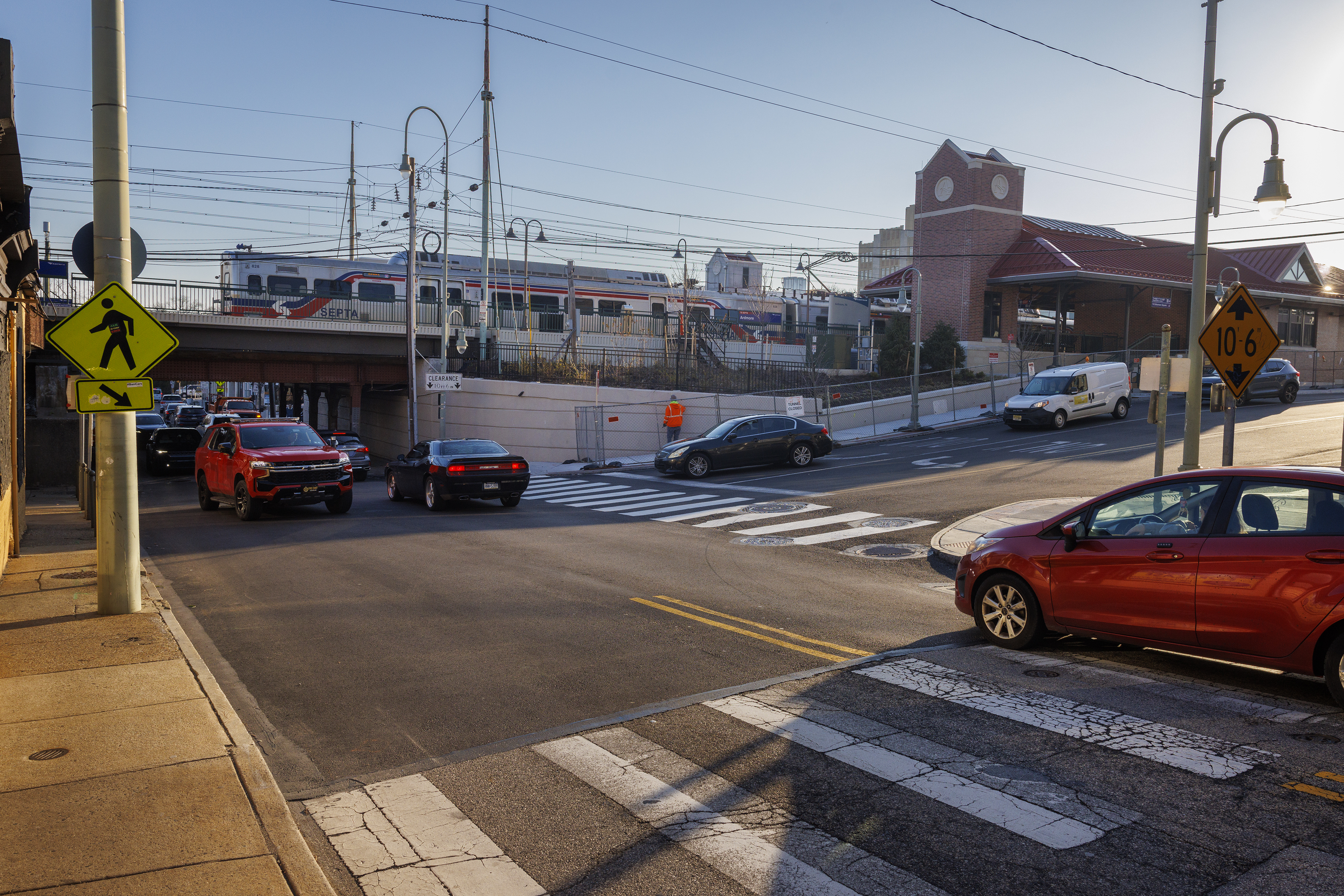
    Paoli/Thorndale outbound trains from Center City were suspended this morning right before morning rush hour and again Tuesday evening because of wire problems, a SEPTA spokesperson said.

    “We are having significant delays on the Paoli/Thorndale Line due to downed wires near 37th and Mantua. Amtrak is working on it, but we expect the delays will last through the evening,” SEPTA spokesperson Andrew Busch said in a 6:45 p.m. email.

    Service also was disrupted Tuesday morning on both the inbound and outbound Cynwyd Line, but that service has since resumed.

    Amtrak reported at least one train delay earlier in the day.

    Damage to overhead catenary wires at an Amtrak railway junction near the Philadelphia Zoo, which some SEPTA regional rail services like Paoli/Thorndale and Cynwyd share, delayed and suspended some rail service across the region, Busch said earlier on Tuesday.

    An Amtrak spokesperson said crews responded and restored service in both directions by approximately 7:25 a.m.

  • PPA voided more than 23,000 tickets due to missing street sign

    PPA voided more than 23,000 tickets due to missing street sign

    Enforcement cameras on Broad Street in Philadelphia caught about 800,000 motorists speeding in the first six months they were operating.

    But the Philadelphia Parking Authority had to throw out 23,195 tickets and refund $1.25 million in fines — all because of a missing street sign at one spot.

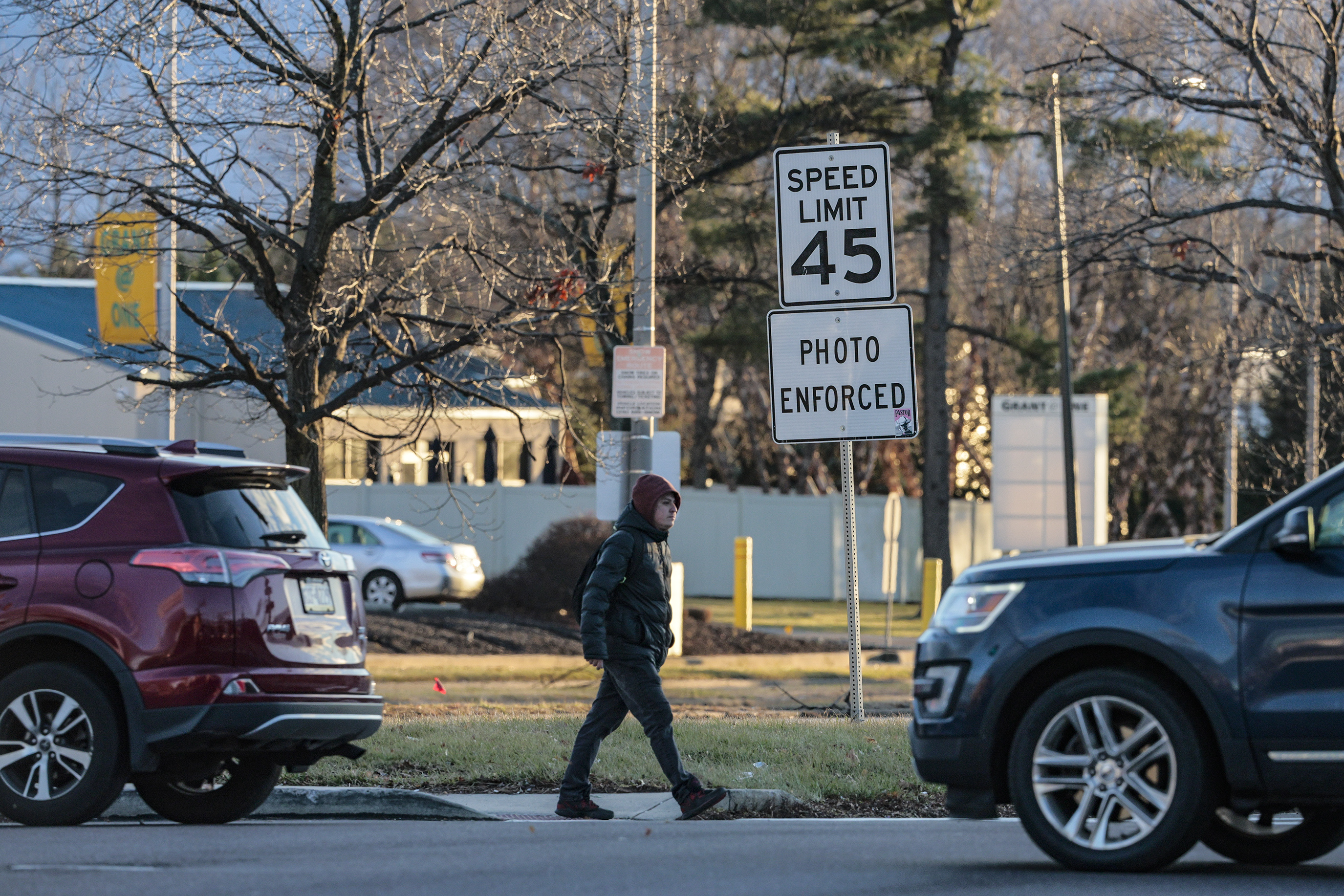
    A speed camera covering the southbound lanes in the 6500 block of North Broad Street operated for several months earlier this year without a required sign telling motorists that it was operating, PPA said last week in its annual speed-camera report.

    A construction crew dug up the sidewalk on the block, knocking down the curbside sign that says the speed limit is 25 mph and is “photo enforced,” said Corinne O’Connor, deputy executive director of the parking authority.

    “We did the right thing,” O’Connor said. The violation notices were canceled because, she said, motorists did not have proper notice of the speed limit and the presence of enforcement cameras at Broad Street and 65th Avenue. State law requires those signs at camera locations.

    Broad Street, also designated State Route 611, has 31 speed cameras at 15 locations spread out between Philadelphia’s northern and southern city limits. They began operating last September.

    Drivers who travel more than 11 mph over the posted speed limit will eventually be ticketed, with fines starting at $100 and rising to $150 for those driving more than 30 mph over the limit.

    A PPA staff member doing a regular check reported the signs near 65th Street missing in mid-January, but it took weeks to correct. Officials did not realize the cameras hadn’t been turned off, and did so on April 22, PPA said. The signs were replaced April 29.

    O’Connor said the delay was due in part to ongoing construction and red tape required to get utility clearance to install a new pole with signs.

    While the signs were missing, the cameras at that location clocked 23,195 speeding vehicles and issued violation notices.

    Before the cameras were turned off, the PPA had processed $1.25 million in payments for 12,214 of the tickets. The money is being refunded, PPA said.

    PPA spokesperson Marty O’Rourke said the drivers cited “were still speeding,” but the violations were annulled because the notification requirement of the law was not met. The tickets could have been canceled if a recipient appealed based on the missing signs.

    O’Rourke said it was a “proactive decision” to cancel them.

    Speed cameras were first installed on Roosevelt Boulevard in 2020 on a trial basis and more were added in the next two years.

    Speeding has dropped 95% on the roadway, based on the declining number of violations issued since the first month cameras were operating there, PPA said.

    A state law enacted in 2023 made the Roosevelt Boulevard speed cameras permanent and authorized Philadelphia to designate five more dangerous corridors on which to use the technology.

    Cameras were deployed last fall on Broad Street and recently on portions of U.S. Route 13 in North and West Philadelphia.

  • SEPTA bus drives through wet concrete outside of Termini Bros. in what locals say is the ‘most South Philly thing ever’

    SEPTA bus drives through wet concrete outside of Termini Bros. in what locals say is the ‘most South Philly thing ever’

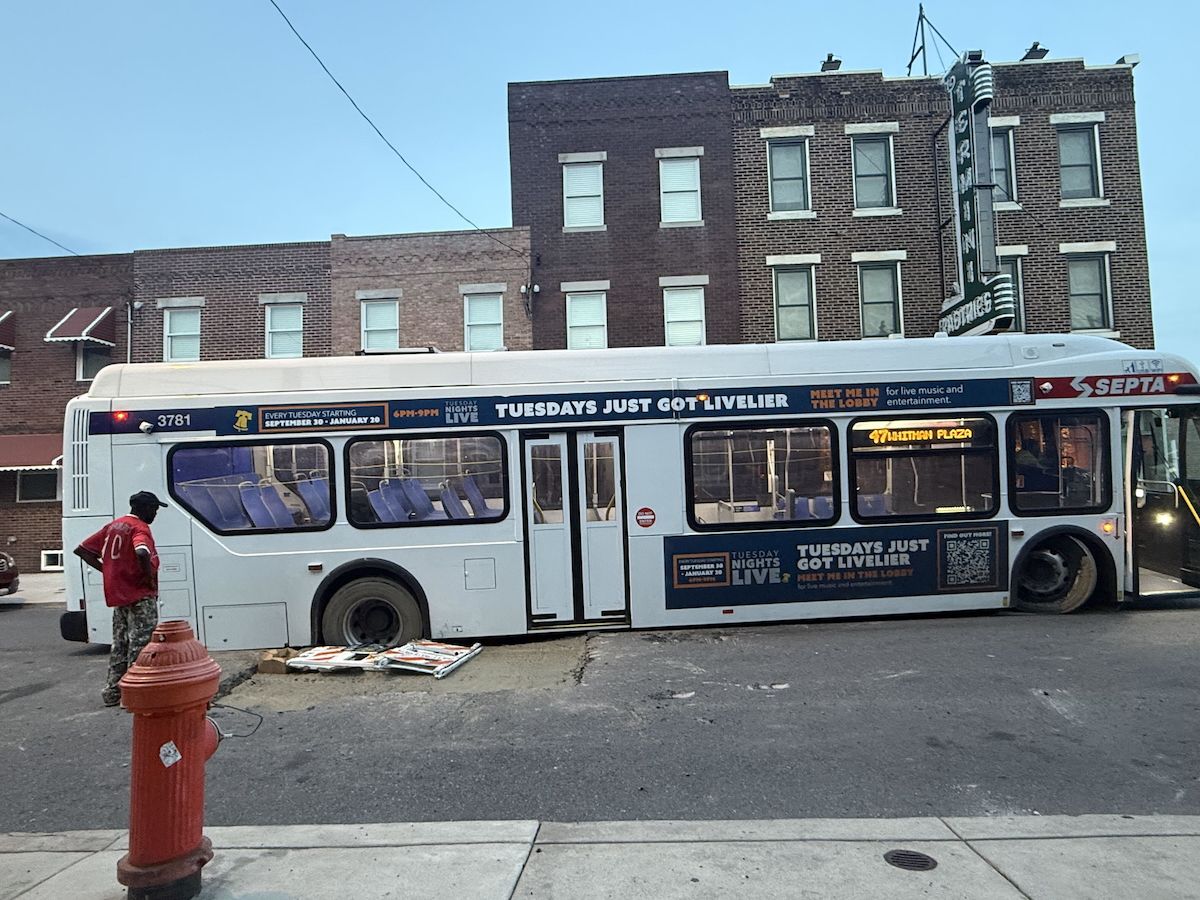
    In what Joey Termini of Termini Brothers Bakery is calling the “most South Philadelphia thing ever,” a Route 47 bus drove through wet concrete after two people reportedly hopped off to move street barricades so the bus could pass Thursday.

    The sinking bus, which tilted on a slight edge as it got stuck on South Eighth Street outside Termini Bros., drove through the concrete only two minutes after city crews poured it into the road.

    In surveillance footage provided by Termini, the bus, aptly adorned with Top Dog Law advertisements, slows to a halt in front of two A-frame street closure signs on Eighth Street. Two passengers are then seen hopping off the bus, casually moving the signs out of the way and directing the bus driver like air traffic controllers around the patch of concrete in the middle of the road. As the bus gets stuck and tilts to the side, smacking the pavement in the process, hardly any of the passengers on the bus can be seen visibly reacting.

    “In South Philly, people are like, “I’ll find a way,” Termini said. “At the time I was a little frustrated because we waited months to get that pothole fixed, but you know looking back at it now, it really is funny. I’m just glad nobody was hurt.”

    The brothers Termini have been coordinating with the city to get the pothole-turned-sinkhole resolved since it formed 14 months ago, Termini said. He knew it was getting bad when the sinkhole started swallowing traffic cones placed inside it — a time-honored Philadelphian quick fix.

    Their prayers were answered Thursday when city crews came in the afternoon to repair the street. But right after the concrete was poured and the street blocked off at 7:21 p.m., a 47 bus found its way into the concrete pit at 7:23 p.m., according to Termini’s surveillance footage.

    The bus was towed within about 45 minutes, SEPTA spokesperson Andrew Busch said. According to an inspection, the only damage to the bus was from cement on one tire, so it will not be out of service for an extended period of time, Busch said.

    The city posted notices about the scheduled maintenance along the street in the days preceding the repair and no-parking signs were posted. “This wasn’t something that they just decided to do on a whim,” Termini said.

    SEPTA had a detour in place for this block along Route 47 on Thursday, which is standard operating procedure during planned road maintenance, Busch said. All internal notices of the detour were made, including to operators working on the 47.

    “We have an internal review underway to determine exactly why this occurred,” Busch said. “We will also see what we can learn from it and possibly improve on moving forward.”

    Termini feels for the driver, who wasn’t the first to have trouble on Eighth Street, as he saw at least three other buses making difficult turns to move around detours — something he felt could have been coordinated better by the city and SEPTA.

    “I know the driver was probably really stressed out,” Termini said. “But the guy getting off the bus to move the barriers and then run back on the bus, even after the bus got stuck in concrete, I was like, ‘This is Philly.’”

    And to make the ending sweeter, when city crews came out Friday morning to repair the bus-botched repair job, Termini handed out cannolis to those working on the road.

    “There’s enough craziness going on in the world out there,” Termini said. “Sometimes, we just have to laugh.”