Category: Transportation

  • FIFA Fan Festival will be a once-in-a-lifetime moment, at the expense of neighbors, local groups say

    FIFA Fan Festival will be a once-in-a-lifetime moment, at the expense of neighbors, local groups say

    Only a few days into the World Cup, residents of Brewerytown and Fairmount, trapped inside the blast zone of the fan festival in their backyards, are seeing their fears realized.

    Drivers are clogging up roads, rerouting, and sometimes speeding through neighborhood side streets due to road closures. Uber and Lyft services are offline for residents directly next to the festival during operating hours. Many residents are forced to navigate parking nightmares, turning everyday life into an exhausting headache.

    It’s all for the sake of the FIFA Fan Festival, a 39-day, million-square-foot party taking over Lemon Hill and inviting 15,000 daily visitors to its picturesque fields. While city officials and event organizers roll out the red carpet and spend millions on World Cup fans, residents who for years have been pleading for Lemon Hill improvements say the festival will use their neighborhood and park at their expense.

    “The sentiment right now is just the complete disrespect for the residents and that this is all being done for tourists,” said Nissa Eisenberg, Fairmount resident and co-organizer of the Lemon Hill Neighbors Association, the organization disseminating festival information and communicating with the city. “Everybody’s feeling pretty resentful, maybe cautiously optimistic, but also just not feeling respected as residents.”
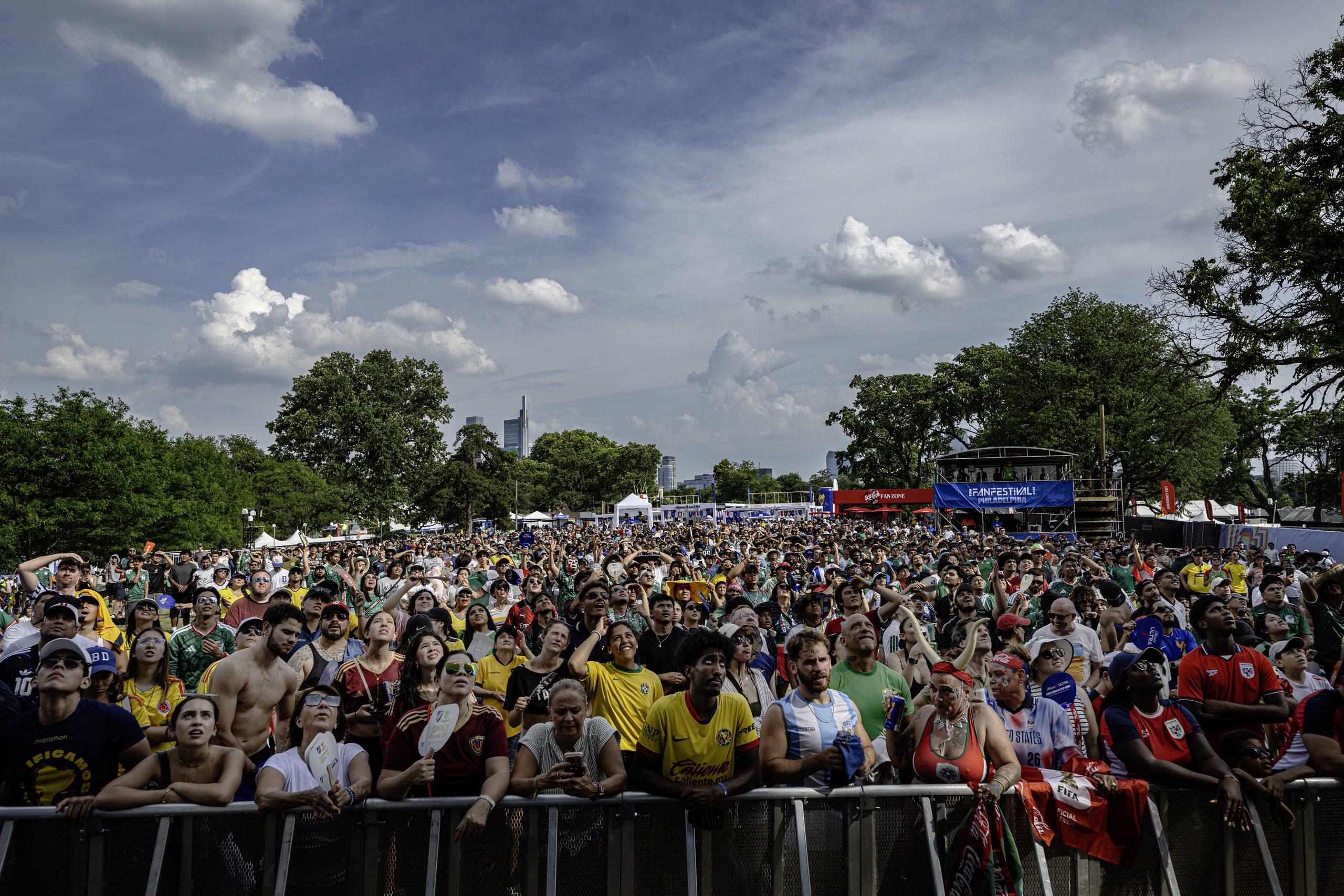
    Soccer fans gather to watch Mexico play South Africa on a giant screen during the opening day of the FIFA Fan Festival at Lemon Hill on Thursday, June 11, 2026, in Philadelphia.Jose F. Moreno / Staff Photographer

    The FIFA Fan Festival opened its gates to thousands of fans Thursday as not only the cheapest way to experience the revelry of a World Cup game (admission is free, though it requires registration), but also the melting pot of Philly’s best food and shopping. It is also the only fan festival across the 11 U.S. host cities that is open daily for the entire 39-day tournament, culminating on July 19.

    If these changes weren’t tough to navigate already, city officials gave residents a little more than three weeks to prepare.
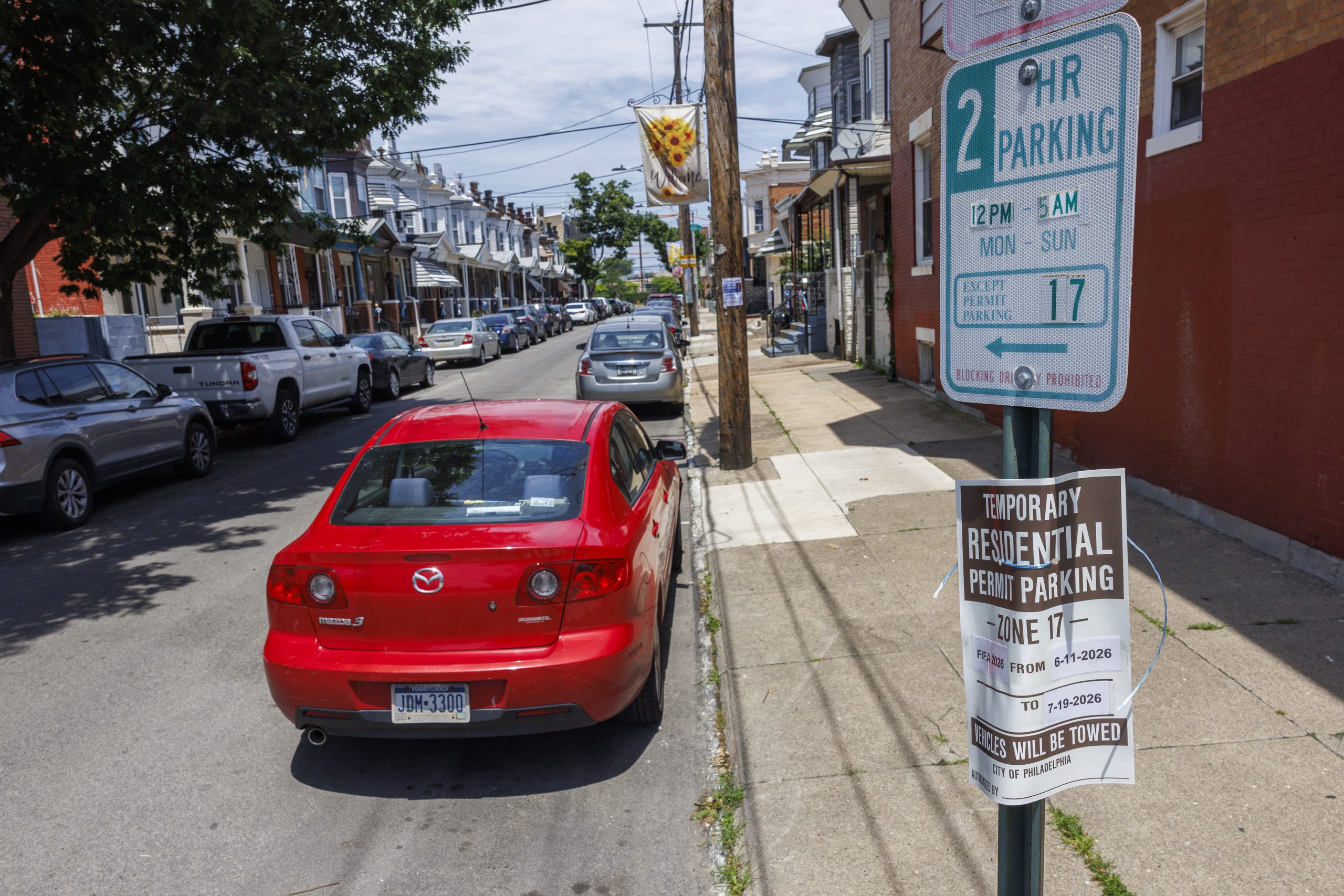
    Temporary Residential Permit Parking sign on pole along N. 30th Street and Oxford Street, Thursday, June 11, 2026. Philadelphia Parking Authority is in the area ticketing and enforcing during FIFA Fan Festival at Lemon Hill.Alejandro A. Alvarez / Staff Photographer

    “We’ve been talking with them for two years to engage neighbors with a plan, and they waited to communicate their plan until after people made their summer plans, after parents made driving schedules for their kids’ summer camps every week, and after people planned daily commutes,” Eisenberg said.

    Charlotte Burns, a Fairmount resident and veterinarian, fears for other residents who work in hospitals and are often on call for medical emergencies. “For months we’ve known this was going to happen, but there has been nothing from the city,” Burns said, referring to the fact that door-knocking, flyers, and posters did not begin in earnest until weeks before the tournament.

    (function() { var l = function() { new pym.Parent( ‘fifaroads2__graphic’, ‘https://media.inquirer.com/storage/inquirer/ai2html/fifaroads2/index.html’); }; if(typeof(pym) === ‘undefined’) { var h = document.getElementsByTagName(‘head’)[0], s = document.createElement(‘script’); s.type = ‘text/javascript’; s.src = ‘https://pym.nprapps.org/pym.v1.min.js’; s.onload = l; h.appendChild(s); } else { l(); } })();

    On May 18, the city unveiled its plan for how it would manage the festival for residents. Officials informed neighbors that thousands of them would need to swiftly apply for parking permits to allow them to park near their homes for two months, something many residents are still unclear on, said Shaun Cerborino of Lemon Hill Neighbors.

    Additionally, no rideshare services like Lyft and Uber will work at Lemon Hill and around six blocks of the surrounding residential areas during festival operating hours, sometimes spanning all day, in a practice called geofencing. Those without cars will have to walk blocks from their home to hail a ride, or use SEPTA, which is still operating in the neighborhood.

    City officials told residents last month that rideshare services will not be disabled for riders who require a wheelchair-accessible vehicle (WAV). However, after The Inquirer asked for clarification on how this exemption works in practice, the Philadelphia Office of Transportation and Infrastructure Systems (OTIS) found that a miscommunication between rideshare services occurred.

    The city was supposed to designate where WAVs can operate within the geofence, while the city was under the impression that rideshare services handled it.
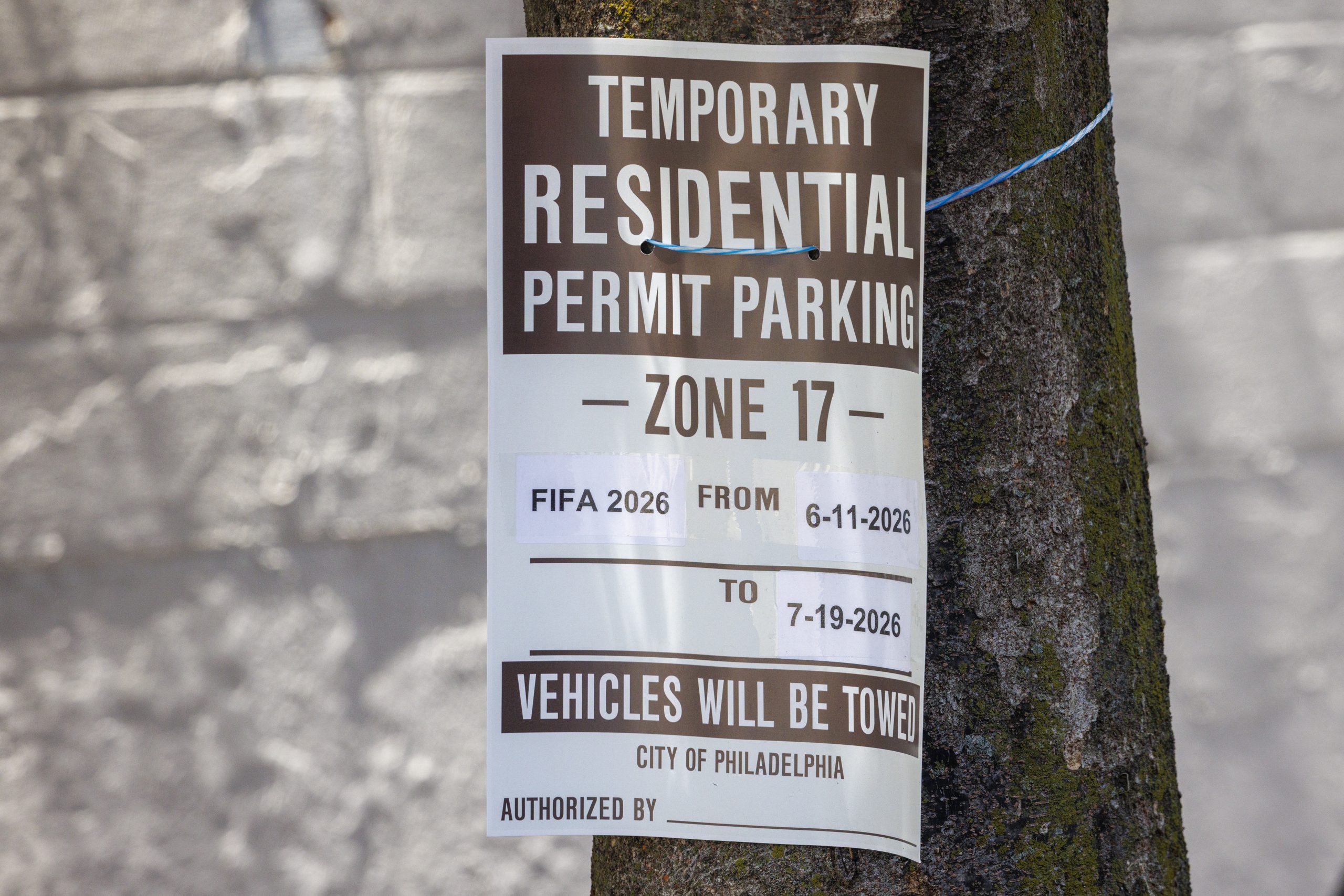
    Philadelphia Parking Authority, Zone 17, a temporary no park zone except for residents with special permit during FIFA Fan Festival at Lemon Hill, Thursday, June 11, 2026.Alejandro A. Alvarez / Staff Photographer

    “Now that we have that clarity, we’re going to evaluate some changes to the perimeter that is enclosed in the geofence area. We’ll try to act as quickly as we can to adjust the geofence,” said OTIS Deputy Managing Director Mike Carroll.

    City officials said they could not specify what these geofence adjustments will look like until they have finished talks with Uber and Lyft. But what was initially promised, that WAVs will pick up and drop off disabled riders at their homes, might not be possible. Instead, there is a chance WAV-only drop-off zones will be created in that geofenced area.

    “That challenge is too difficult for us to work through for any resident who needs it,” Carroll said. “It’s too bad that there’s not a more general way to have these vehicles come in, but we can’t really haggle with [rideshare services] at this point. We’ll just try to make it work as best we can.”
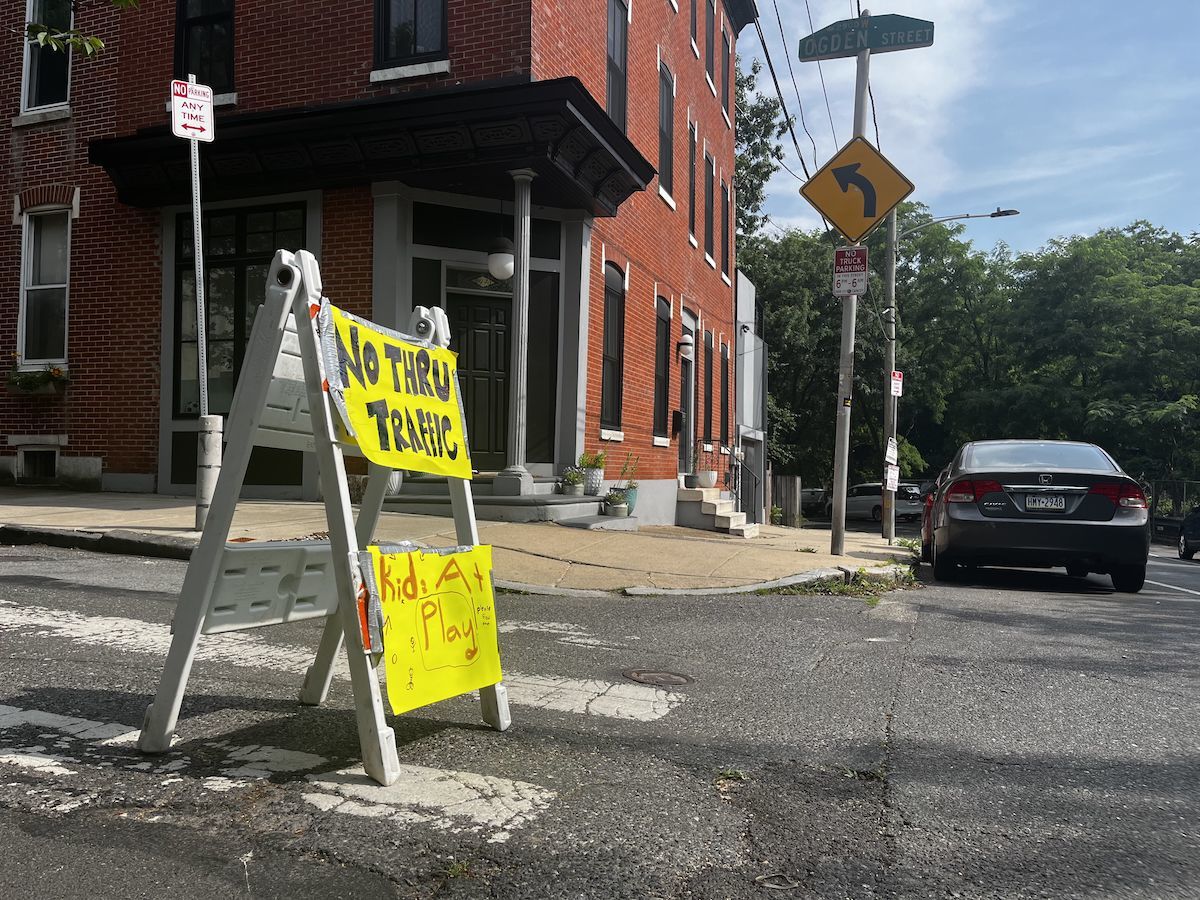
    A makeshift sign created by local neighbors, pictured on Wednesday, June 10, 2026, advises drivers not to use side streets for through traffic on Ogden Street, a narrow residential side street one block from the festival, which drivers have been racing down to avoid road closures and traffic.Henry Savage / Staff

    The work to calm neighborhood traffic

    Dustin Dove, president of the Fairmount Civic Association, points to the 2900 block of Ogden Street, a mere block from the festival, as a microcosm of the neighborhood’s concerns.

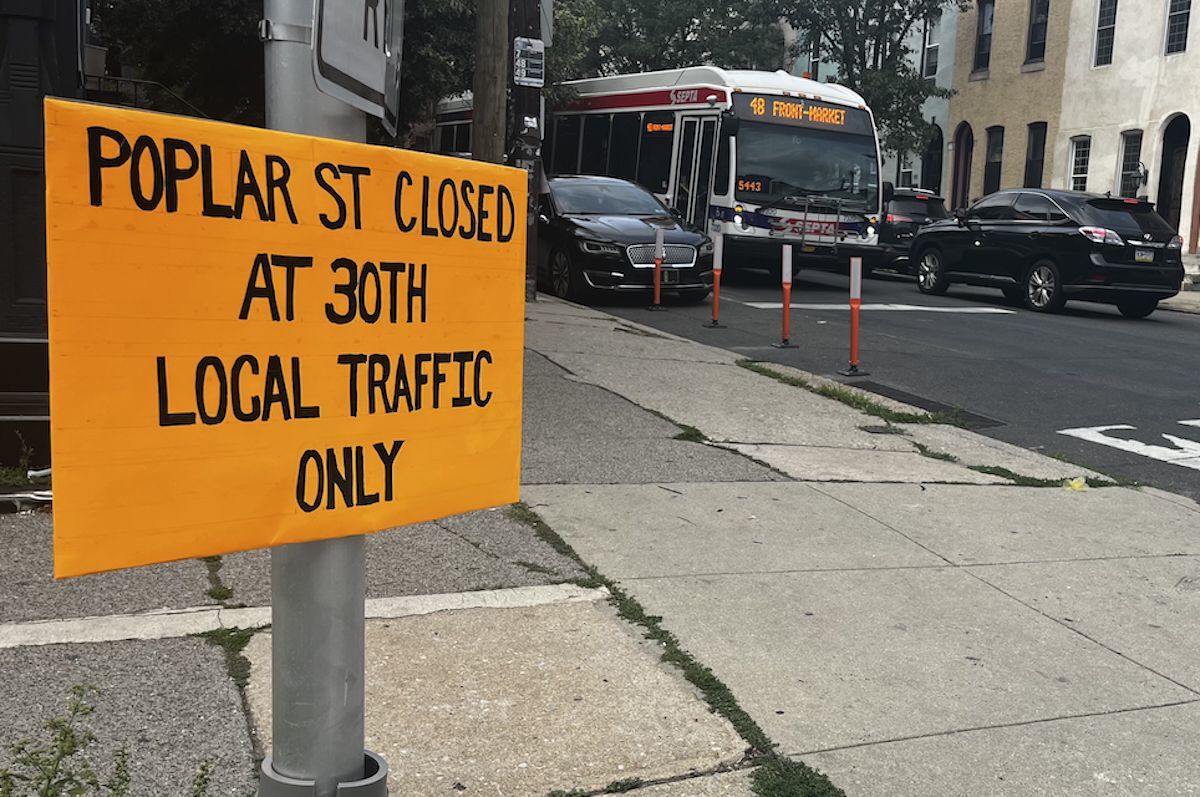
    Due to road closures on 30th and Poplar Streets, agitated drivers, stuck in traffic, are choosing to speed down narrow one-way Ogden Street to get around lines of cars, residents said. Neighbors have seen at least two incidents where a car rocketed down the street while young children were playing.

    Dove said residents have called every relevant city department and elected official who represents the area, including Councilmember Jeffery Young, requesting additional signage and traffic-control measures at 29th Street to dissuade drivers from using side streets.

    “We’re going to be welcoming a lot more people than usual, and we need Council members to come and look at this situation,” Dove said. “There are issues that need some sort of leadership at the top to get them fixed.”
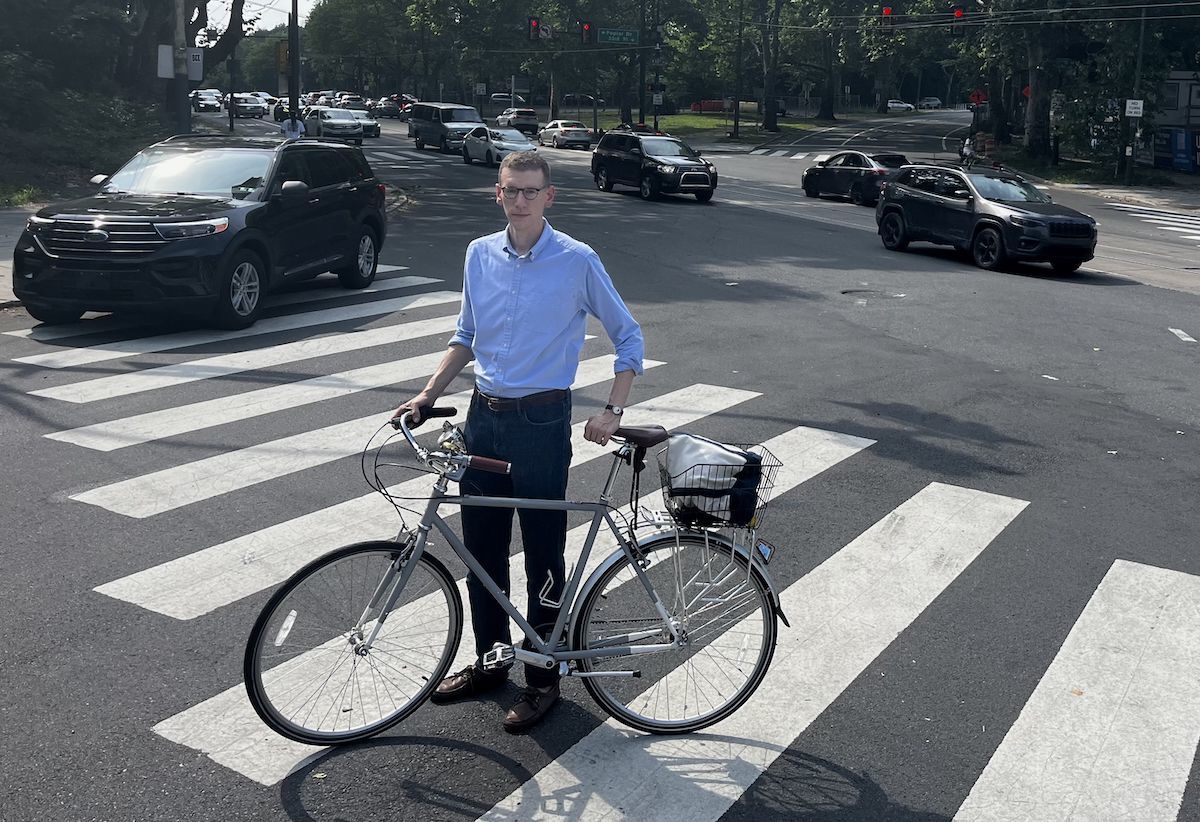
    Dustin Dove, a Fairmount resident and president of the Fairmount Civic Association, poses for a photo near one of the busiest intersections near the FIFA Fan Festival in Lemon Hill, at Girard Avenue and Poplar Drive, on Wednesday, June 10, 2026. The FIFA Fan Festival is forcing the local neighborhood to navigate parking restrictions, road closures, and the sacrifice of their summer green space in exchange for the once-in-a-generation World Cup in their backyards.Henry Savage / Staff

    Young said he and his office have heard from residents who are “understandably frustrated” by traffic being redirected onto neighborhood streets and confusing or insufficient signage.

    “When these concerns were brought to our attention, we immediately notified the appropriate city departments and event organizers and have already seen some additional signage and traffic-control measures put in place. However, more work remains to be done,” Young said.

    A city spokesperson said police officers will be stationed at 30th and Poplar Streets throughout the duration of the festival and will make adjustments as needed. The city also committed to installing additional signage where appropriate, the spokesperson said.

    Still, as the first day of the World Cup rolled around, neighbors near Ogden Street reported heavy traffic on side streets, Fairmount resident Nicole Ross said, with many residents saying they received parking tickets despite having registered temporary permits. Ross said the Philadelphia Parking Authority later told residents who were ticketed that it was a system error and would be resolved.
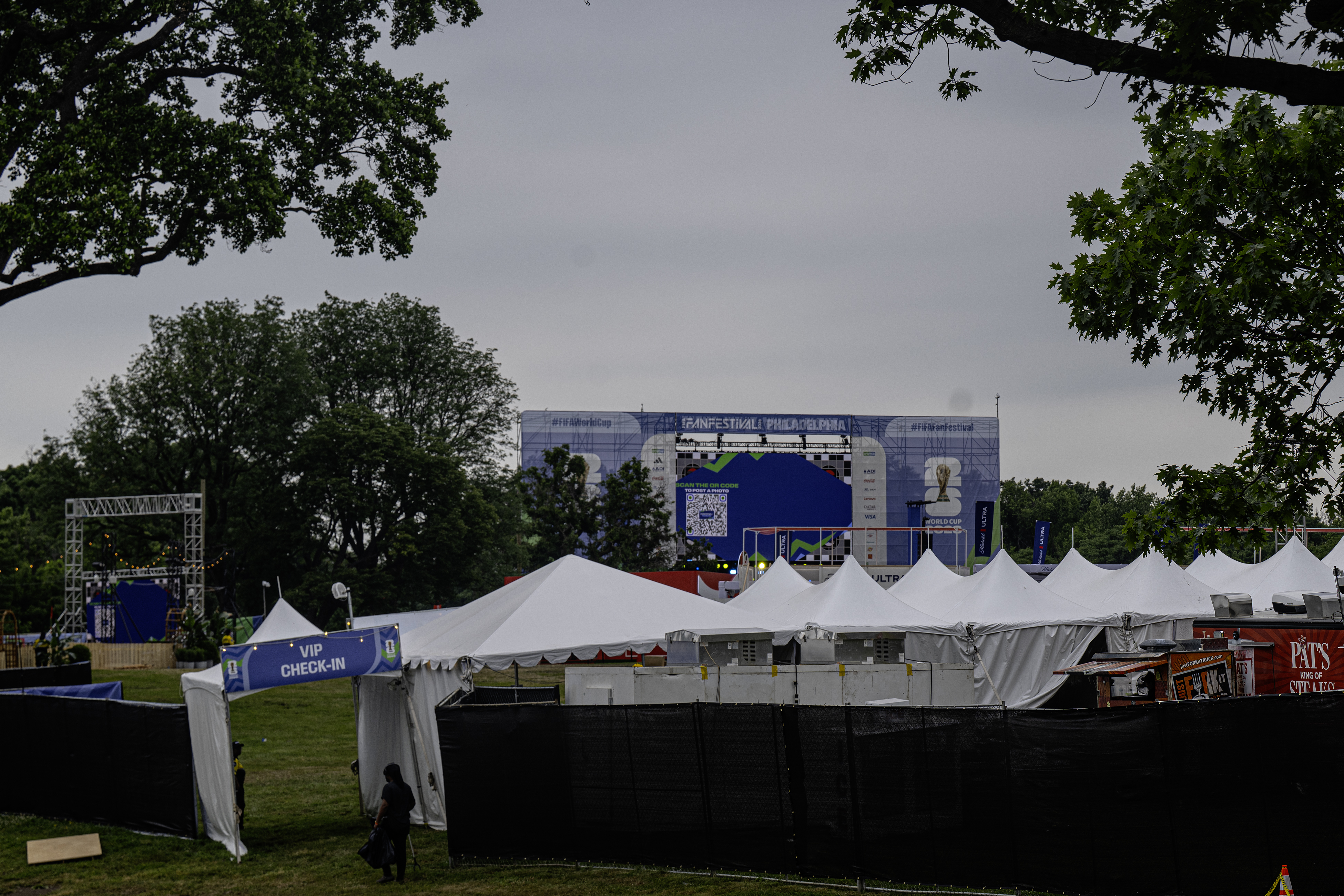
    Crew members make final preparations, including work on a 60-foot-wide screen, for a FIFA Fan Fest at Lemon Hill in Philadelphia on Tuesday, June 10, 2026.Jose F. Moreno / Staff Photographer

    The legacy of Lemon Hill Park

    Besides the short-term, everyday nuisances of the FIFA Fan Festival, there are deeper-rooted issues about care and longevity of the park. Park stewards, like Cerborino and Eisenberg, are volunteer workers who care for and maintain much of Lemon Hill.

    Across the city’s parks, stewards understand that Philadelphia Parks and Recreation is unable to perform some needed upgrades due to staffing and budgetary constraints. That’s where stewards spend their free time and money to try to keep the city’s nationally ranked parks in an idyllic state. But that often comes with yearslong discussions about proper park funding and upgrades, as recently reported by The Inquirer, where stewards are again pleading with City Council for more funding as they are tired of operating off “love and duct tape.”

    When pitching the festival to the city and residents, Philadelphia Soccer 2026 said it would be leaving lasting legacy improvements to the park in exchange for residents giving up their summer green space.

    “We will see this through during organizational wind-down following the tournament,” a festival spokesperson said.
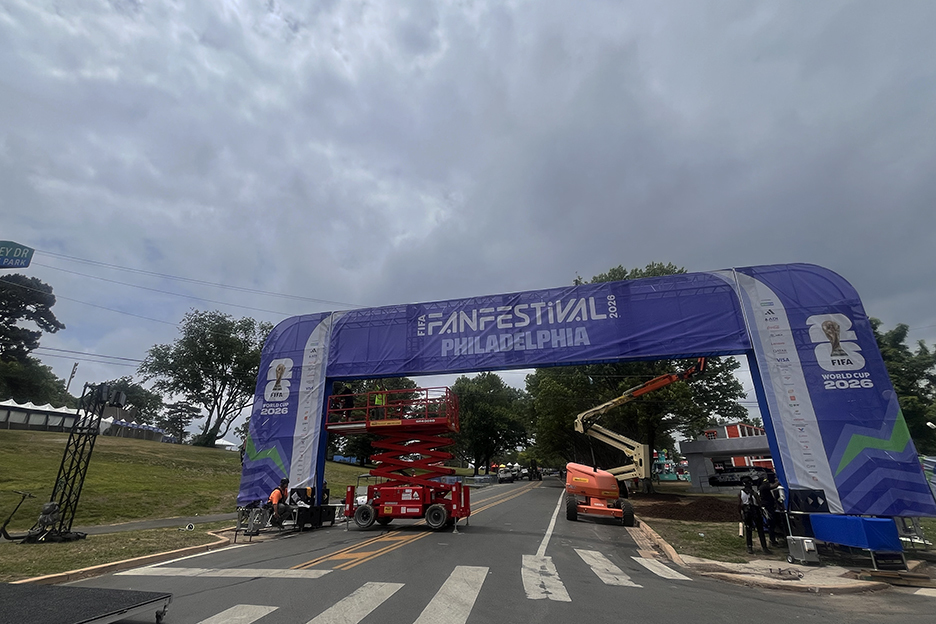
    Crew members make final preparations, including work on a 60-foot-wide screen, for a FIFA Fan Fest at Lemon Hill in Philadelphia on Tuesday, June 10, 2026.Jose F. Moreno / Staff Photographer

    Philadelphia Soccer 2026 is committing $4 million to install a new ADA-accessible sidewalk path, a new playground, and new lighting, as well as to rebuild the picnic pavilion, organizers said. Residents have begged the city for some of these improvements for years, Cerborino and Eisenberg said.

    “Residents deserve a clear understanding of what lasting benefits will remain after the crowds leave. I will continue advocating for transparency, accountability, and a concrete plan for legacy investments that benefit the Lemon Hill area and the city as a whole,” Young said.

    The city said it will work alongside Philadelphia Soccer 2026 to see these legacy commitments come to fruition, as well as have Philadelphia Parks and Recreation staff monitor the grasslands and trees to address any issues that appear during the festival, a spokesperson said.

    While stewards understand that park upkeep is not at the forefront of city budgetary concerns, it does hurt when it seems improvements to Lemon Hill Park will come only after an international or major sponsored event takes place there, Cerborino said.

    “Especially when the parks are primarily supported by public dollars, it doesn’t feel right for FIFA or Live Nation, or whatever company, to come in, have their way with our parks, make all the money on it — and the taxpayers foot part of that bill and get very little out of it,” Cerborino said. “The tradeoff is FIFA makes a few billion dollars, and we got a sidewalk.”
  • Parlez-vous ‘L’? Hablas Filadelfia? SEPTA transit ambassadors have your back.

    Parlez-vous ‘L’? Hablas Filadelfia? SEPTA transit ambassadors have your back.

    OK, this scenario looked easy. Maybe I have what it takes.

    A passenger approaches you during your shift asking for directions to get to Northern Liberties from NRG station.

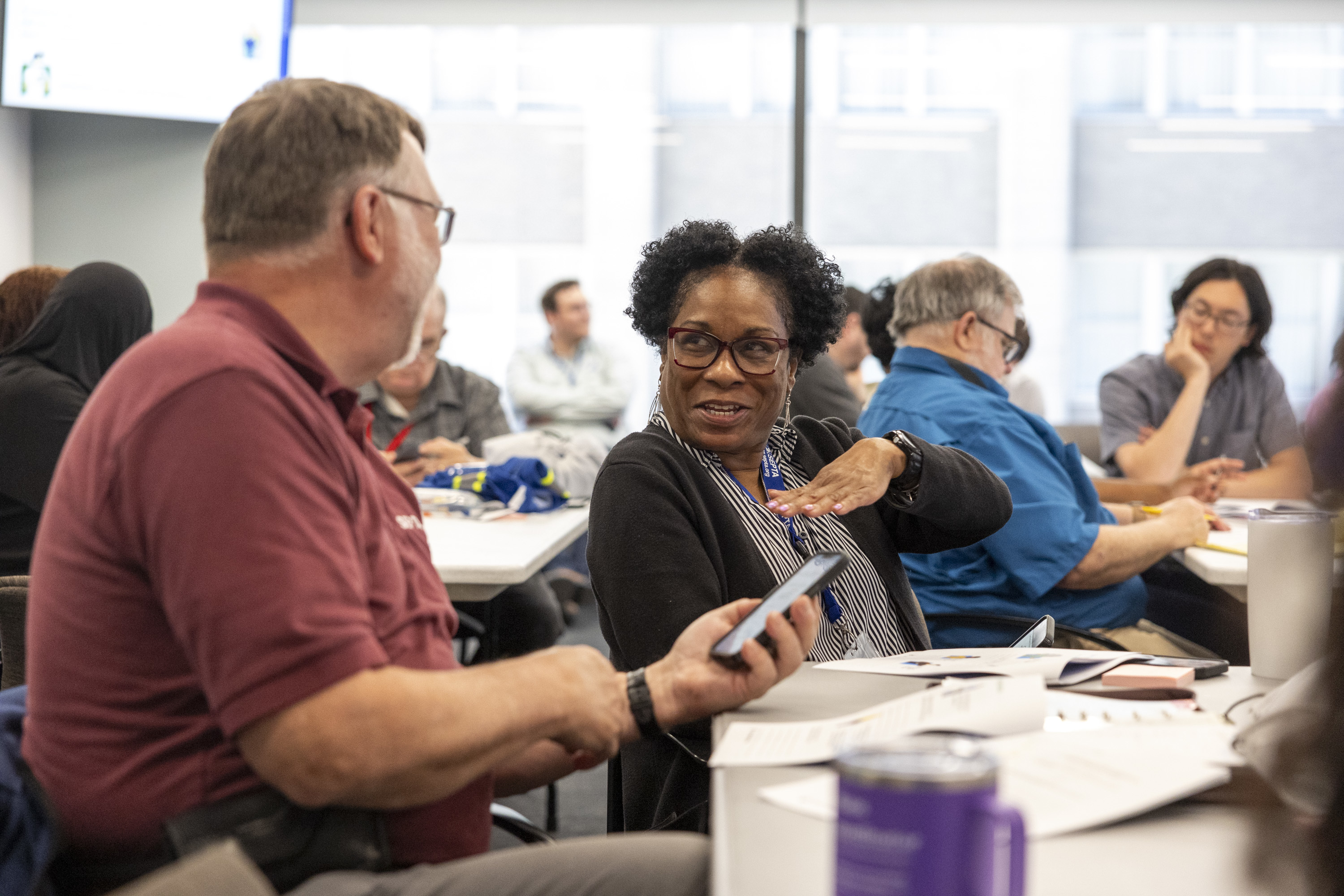
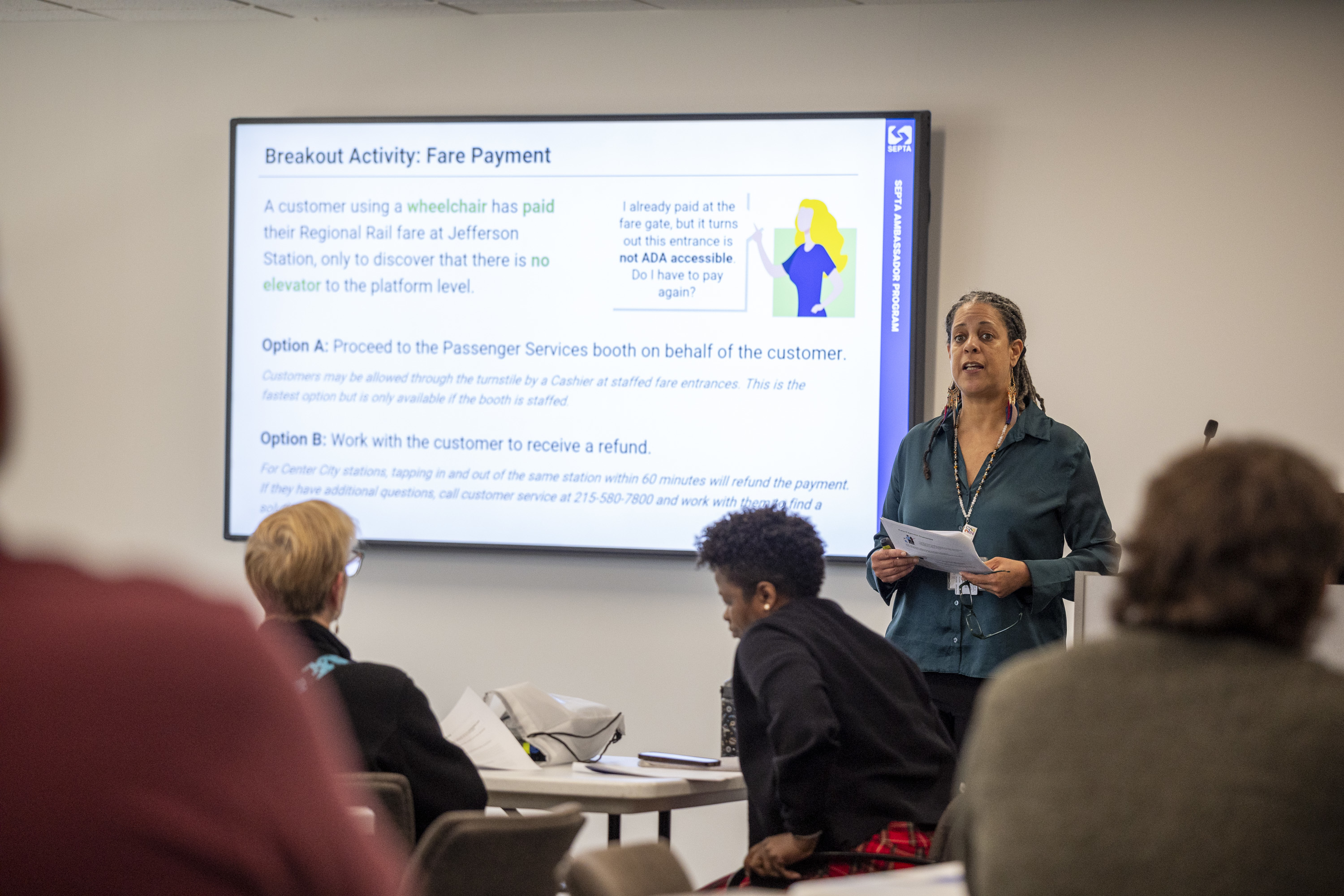
    I took the training class last week for SEPTA ambassadors alongside about 35 transit agency employees who had volunteered to help travelers find their way in a strange city during the World Cup.

    My tablemates asked what I would tell the person.

    Take the B (Broad Street) Line to 15th Street/City Hall, transfer to the eastbound L, and disembark at Spring Garden Station, on the southern edge of the neighborhood.

    Correct, to a point.

    “I didn’t say where I need to get to in Northern Liberties, right?” said Jena Burley, the SEPTA training facilitator teaching the class.

    Ack! Maybe the passenger would be better off taking the L for one more stop to Front-Girard, depending on the precise destination.

    “Ask for as much specific information as possible,” Burley said.

    SEPTA supervisors, administrators, and managers have been assigned 1,300 shifts as ambassadors in critical transit and Regional Rail stations from June 13 through July 19.

    Jena Burley leads the SEPTA ambassador class.Tyger Williams / Staff Photographer

    During that stretch Philadelphia will host six World Cup matches, the FIFA Fan Festival, the height of the nation’s 250th birthday bash, and Major League Baseball’s All-Star Week.

    Four to 12 ambassadors will provide information, directions, and, ideally, a friendly welcome in each designated station — along with crowd control, and de-escalation techniques for conflict.

    It’s a lot, which is why up to 1,000 employees have spent half a day in training with a detailed curriculum that feels like cramming for finals.

    I worked with them through scenarios of escalating severity to simulate situations they will encounter: sweaty, frustrated crowds on platforms; medical emergencies; confusion over SEPTA’s fares and methods of payment; and how to troubleshoot travel glitches. And scarier stuff.

    “This summer is an opportunity for SEPTA to shine, and you are such a big part of that,” said Lex Powers, chief officer for customer experience.

    The Disney approach

    This summer SEPTA is also debuting a new customer-service philosophy that subordinates other priorities to creating a safe and positive experience for people using the system.

    The approach is inspired by Disney’s iconic “four keys” of customer service, admired by general manager Scott A. Sauer, a Disney fan.

    The transit agency has used ambassadors since 2000 to help customers during special events like the Eagles Super Bowl parade last year, service changes, and the like. Officials rebooted the training program.

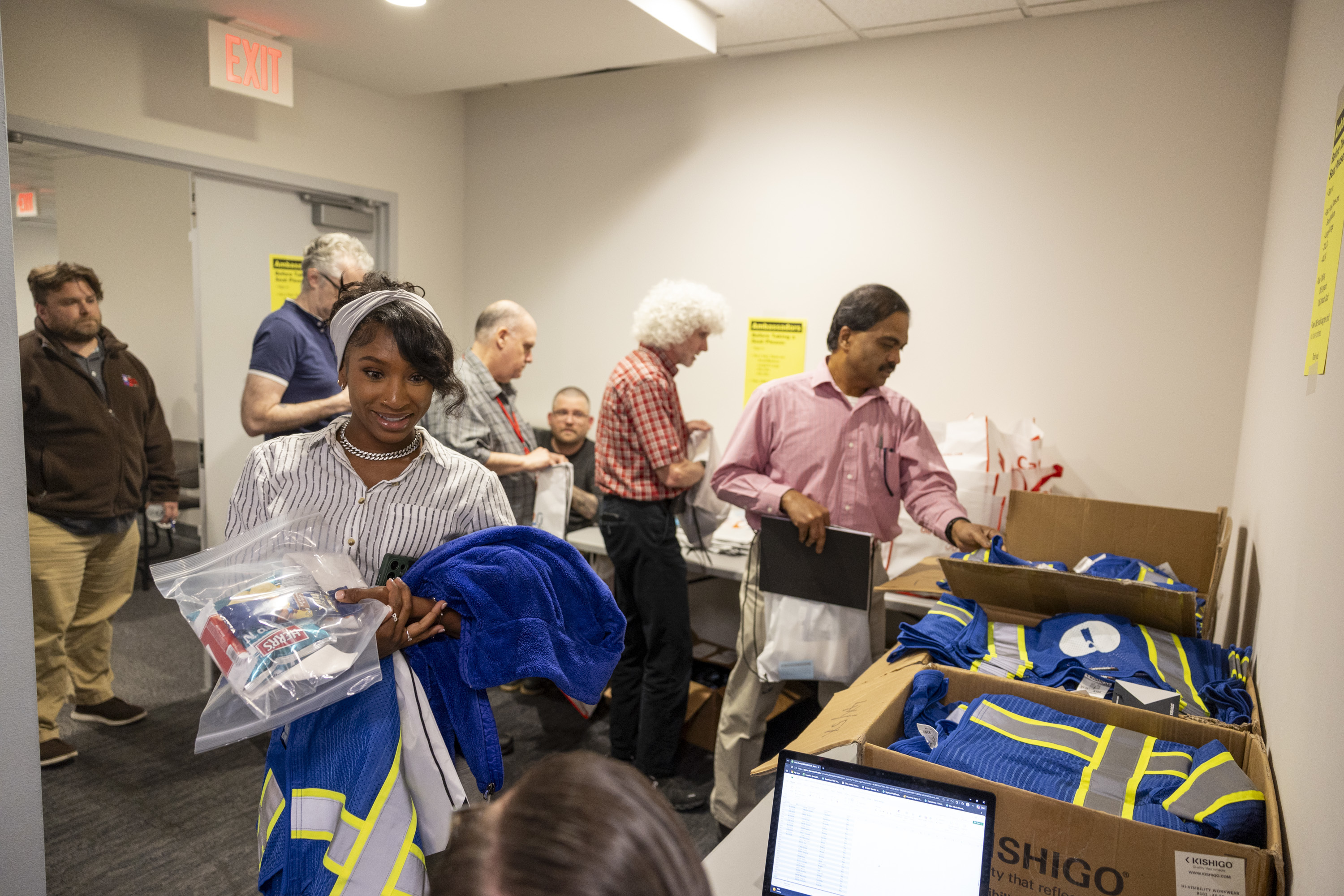
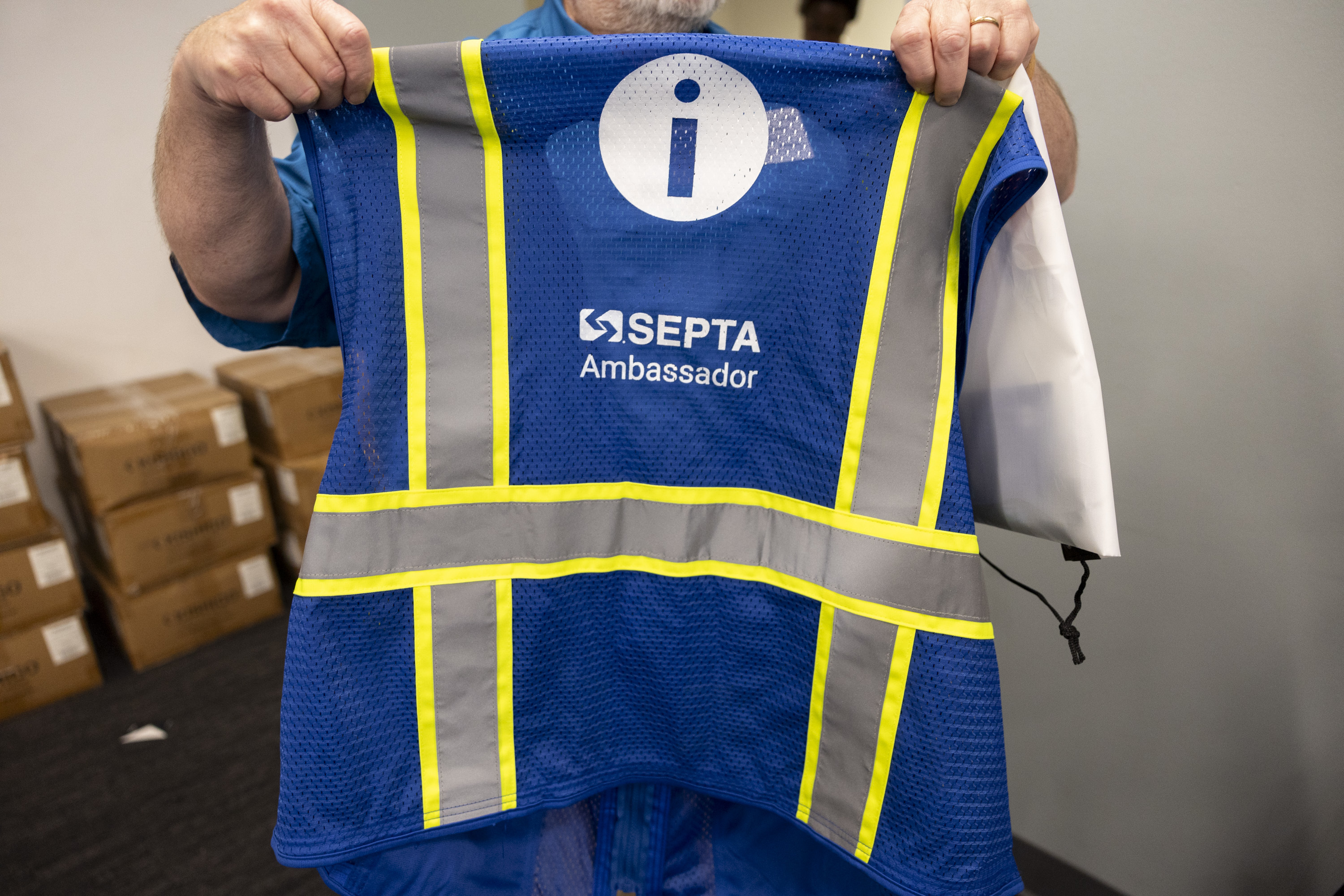
    This summer, ambassadors will carry “cheat sheet” cards and wear blue vests to differentiate them from other workers in typical yellow safety vests.

    I got my own blue vest at the start of the class — pretty snazzy — and tried to earn it.

    Brittany Davis, of Northeast Philadelphia, a service planner at SEPTA, gets her vest.Tyger Williams / Staff Photographer

    Cultural correctness

    The recent training included “cultural diplomacy” briefing sheets with guidance on customs and backgrounds of the countries with national teams playing here, prepared by the World Affairs Council of Philadelphia and protocol experts.

    For instance, I learned:

    • Never flash the “OK” hand gesture to a Brazilian. It’s offensive, like flipping the bird.
    • When greeting or handing things to a person from Ivory Coast, use your right hand. It is a social slight to use the left, which is reserved for personal hygiene.
    • In some cultures, such as Ghana, it is customary to exchange pleasantries before getting down to business. People from Curaçao, influenced by Dutch culture, can be more direct and, while friendly, value personal space.

    ‘Bring the temperature down’

    My fellow trainees and I shared tables in a conference room and huddled to work through often complex scenarios in a 24-page workbook.

    You notice a particularly long line forming at one fare gate and go to investigate. …

    A customer is tapping a credit card over and over, but it doesn’t work. Another customer tries to squeeze past them, increasing tension, and voices in the line start to rise.

    “You want to bring the temperature down,“ said Noah Lee, manager of service-information development, with whom I shared a table. ”Take the person whose card doesn’t work off to the side to figure it out, and let other people go through.“

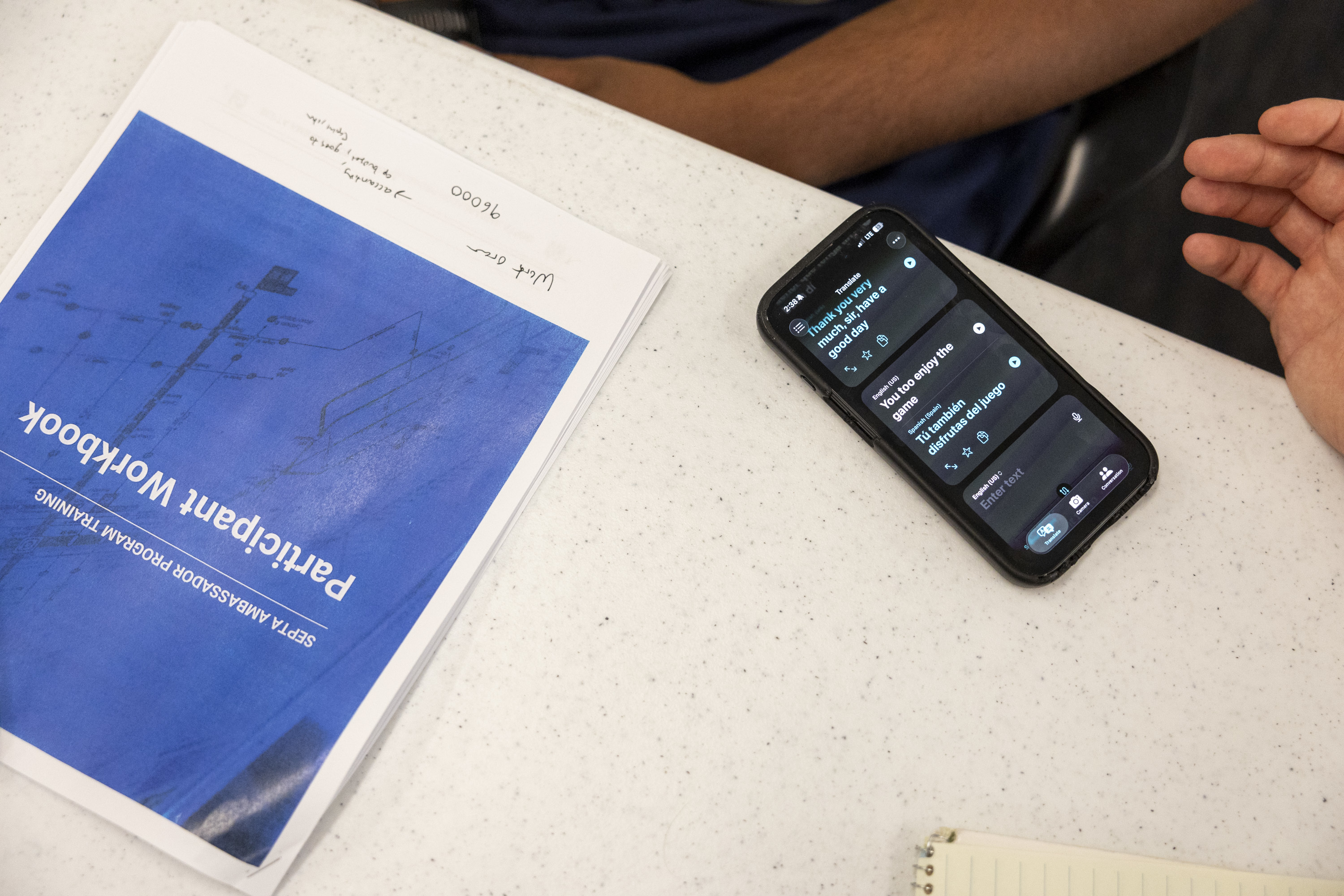
    Nithin Vejendla, an operation planner, speaks Spanish in the Google Translator app.Tyger Williams / Staff Photographer

    Nithin Vejendla said the bottleneck could be a two-person job and suggested bringing in another ambassador to wave people through the gate.

    “Try empathizing with them,” said Vejendla, a SEPTA operations planner who was at my table. “Like, ‘I know it’s frustrating. I’ve had times where [tapping] doesn’t work. … We’ll get you on the next train.’”

    Meanwhile, fix it. Is the person tapping incorrectly? Maybe the card reader’s bad, so try another turnstile. Consult a cashier.

    The situation worsens.

    A customer that has been held up in the line starts pushing and shoving the people in front of them. They are clearly agitated … [and] verbally threatening people.

    “If they keep escalating, at that point your responsibility shifts to keeping the other passengers safe,” Vejendla said. “Maybe you stay between them and the fare gates, a physical barrier.“

    Lee worked an ambassador shift during the 2025 Super Bowl parade and said he didn’t see anything like that.

    “The atmosphere was joyful, and it was in the morning,” Lee said.

    Vejendla, an operations planner who has worked at SEPTA for almost three years, was an ambassador for the Eagles parade and the Flower Show, and when SEPTA briefly cut and changed bus routes last year.

    Later, trainees downloaded Google Translate to practice.

    Vejendla speaks fluent Spanish and rough French. Powers, his boss, was teasing him about it.

    “Lex was like, and I quote, ‘I can’t believe the system understood you. That French accent was terrible.’”

    When emergencies arise

    Sometimes, the scenarios are more serious. People wind up in the track area, trying to retrieve an item or having fallen off a platform. What do you do?

    “Stop the train. Think about everything else later,” Burley said.

    Heather Jordan, employee relations manager, (right), and Kim Smith, senior project engineer and track engineering with SEPTA, (left), are looking at the SEPTA app to answer questions for an exercise during the SEPTA’s Ambassador class.Tyger Williams / Staff Photographer

    Go to the cashier and get them to push the Emergency Train Stop button, which activates a “stop” signal light. There are red flags in the booth to wave at incoming trains.

    Moving your arm back and forth at chest level is a traditional railroad stop signal. “Or go berserk,” Burley said, waving your arms over your head or flashing a phone flashlight.

    Do not enter the track area, and don’t try to pull a person up. The third rail carries 600 to 750 volts of electricity.

    “You’re there to keep customers safe, but if you’re not safe, you can’t help,” Burley said.

    As class ended and everyone left, I carried a deeper respect for the job of ambassador. I wished my fellow students good luck.

  • SEPTA is expanding daily bus service to the Navy Yard by extending Route 45

    SEPTA is expanding daily bus service to the Navy Yard by extending Route 45

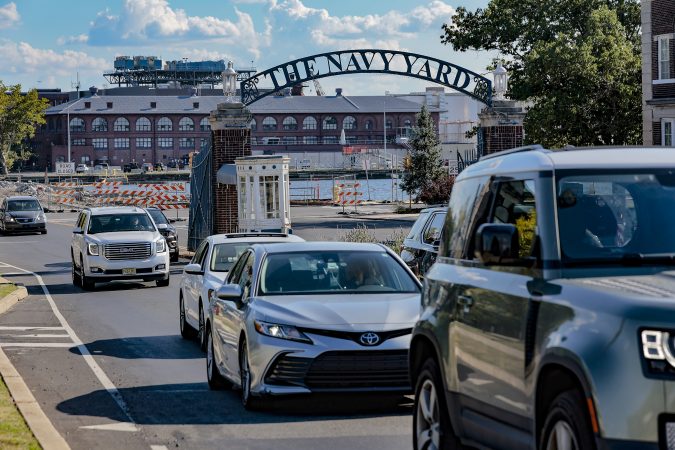
    SEPTA is extending Route 45 to provide direct daily bus service to the Navy Yard for the first time in more than a decade, a move aimed at helping to grow both the development and transit ridership.

    The new service is scheduled to begin in August, with buses operating at about 20-minute intervals, starting at 12th and Noble Streets in North Philadelphia, through Center City, and to stops inside the Navy Yard itself.

    More than 150 employers have facilities in the Navy Yard, with more than 16,000 people working on the campus. There are 614 units of housing and plans for more residential and commercial development.

    “Our goal is to provide as many safe, reliable, efficient ways to get to the Navy Yard as possible,” said Alex M. Smith, vice president of Navy Yard strategic initiatives at the Philadelphia Industrial Development Corp. It has built a path alongside South Broad Street to accommodate bike commuters and pedestrians.

    “The 45 just provides another level of service for folks that may think otherwise than to take an Uber or their own car,” Smith said.

    (function() {
    var l2 = function() {
    new pym.Parent(‘route45’,
    ‘https://media.inquirer.com/storage/inquirer/projects/innovation/arcgis_iframe/route45.html’);
    };
    if (typeof(pym) === ‘undefined’) {
    var h = document.getElementsByTagName(‘head’)[0],
    s = document.createElement(‘script’);
    s.type = ‘text/javascript’;
    s.src = ‘https://pym.nprapps.org/pym.v1.min.js’;
    s.onload = l2;
    h.appendChild(s);
    } else {
    l2();
    }
    })();

    The Navy Yard’s master plan projects about 3,000 people will be living there within 15 to 20 years. About 450 jobs are expected to be added at Rhoads Industries, a maritime company in the western part of the former military base.

    Colin Foley, the chief of service planning and schedules at SEPTA, said a 2023 survey of the Navy Yard workforce found that 86% did not use transit, and 60% of those said they would use SEPTA if more options were offered.

    SEPTA has been working for years to overhaul its bus network and recently adopted a plan that extends the 45 bus. The plan also beefs up service to University City.

    Currently, the Route 17 bus serves the Navy Yard, but only on weekends and from the west side of Broad Street, where development is less dense.

    An analysis of commutes by census tract showed that the largest share of people headed to the Navy Yard travel from east of Broad Street, Foley said.

    “This makes Route 45 an ideal route to extend to the site,” he said.

    NRG Station, the southernmost stop on the Broad Street Line, is about a mile north of the Navy Yard.

    For years, people have wanted to extend the subway to the Navy Yard, but there are no plans to do so. Even if it were feasible to build, it would be hugely expensive and take a long time, Smith said.

    Navy Yard Transit shuttle buses run two routes that this year are recording an average of about 17,200 rides monthly, PIDC said.

    In April, the Center City Express shuttle saw around 13,000 rides, and there were 6,500 for the shuttle connecting NRG Station to the campus.

    “It’s been a multiyear conversation with SEPTA to make this happen,” Smith said. PIDC, the city’s public-private economic development agency, is the master developer of the Navy Yard.

  • Philadelphia built a mass transit system. Now let people live next to it.

    Philadelphia built a mass transit system. Now let people live next to it.

    I grew up in the South Bronx, a short walk from the subway. I did not think of that as a privilege at the time, but it was. That train carried me to a good school, to my first job, and to internships across the city. The access I took for granted is exactly what hundreds of thousands of Philadelphians never get, not because the trains are not running, but because we have spent decades making it nearly impossible to build homes next to them.

    Bill 260517, now before City Council, begins to undo that. It would rename and expand the city’s public transit zoning restriction from 500 feet to a quarter mile around the entrances to subway stops, allow a modest number of homes near the train, trim parking requirements, and require new buildings to put shops and offices on the ground floor instead of garage doors.

    It is a sensible, overdue reform, and Council should pass it before the summer recess.

    But we should be honest about how small a step it is.

    The bill covers just 13 stations, all on the Market-Frankford Line. Most Philadelphians do not live near the El. I think about the family in the Northeast that cannot reach a steady job without a second car. I think about the retiree near Broad Street who cannot easily get to one of our region’s best hospitals. If the zoning change stops there, we will have passed a good policy and confined it to a footprint too small to reach them.

    We do not have to guess how that story ends. The Parking Reform Network, which tracks parking rules nationwide, has found that most cities that reform parking limit it to a handful of downtown blocks, blunting nearly all of the benefits, while housing reform lags behind commercial reform. The lesson is not that reform fails. It is that timid reform fails. The cities that get results match the scale of the policy to the scale of the city.

    Other states have figured this out. Last October, California enacted SB 79, State Sen. Scott Wiener’s Abundant and Affordable Homes Near Transit Act, which legalizes mid-rise housing within a half mile of major transit stops across the state’s largest urban counties.

    New Jersey’s Transit Village Initiative now includes 37 designated municipalities, with concrete results: Since 2020, Newark alone has approved nearly 6,800 housing units, far more than in the entire stretch from 2007 to 2019.

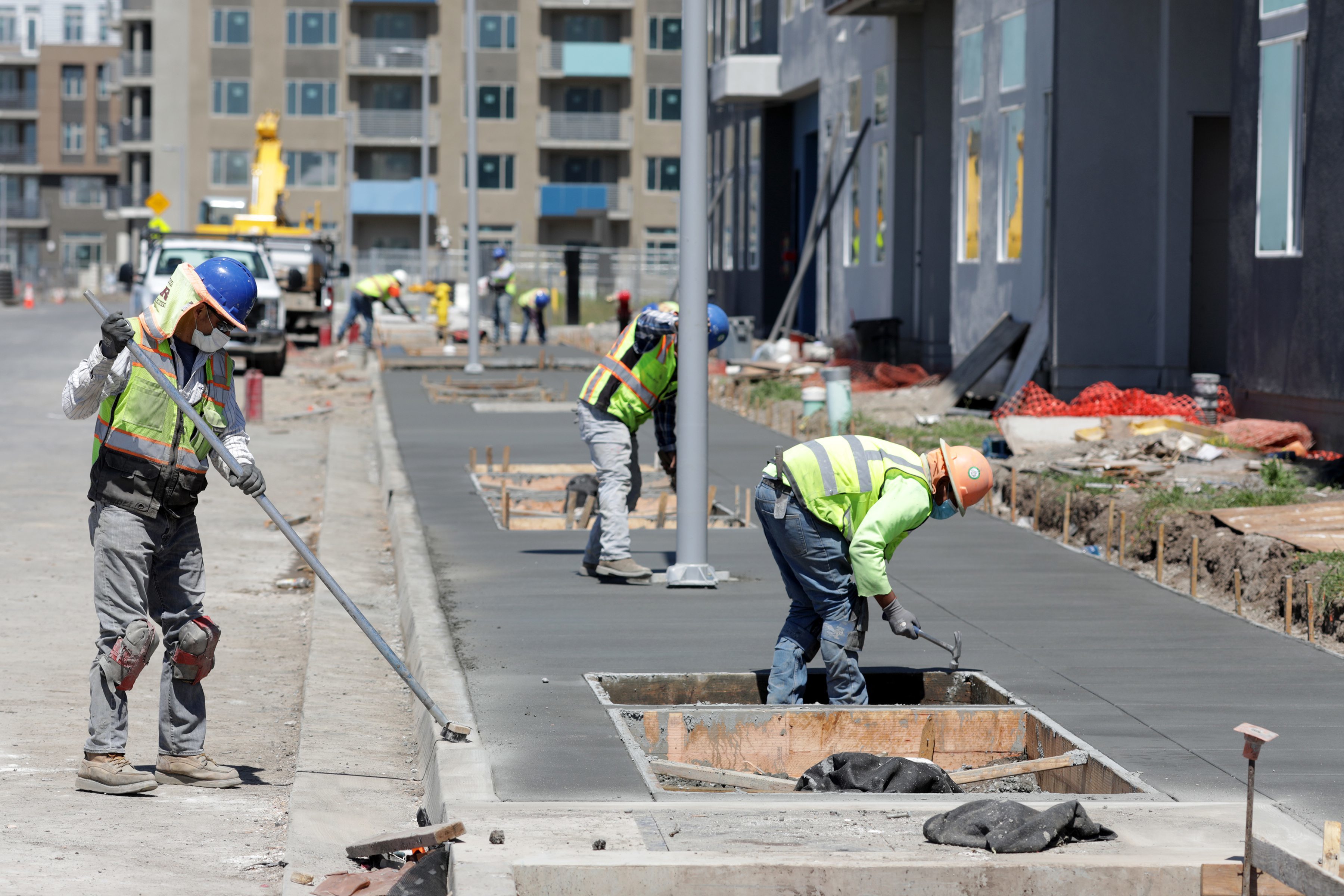
    In this photo from 2020, a construction crew works on a 290-unit transit-oriented, mixed-use affordable housing community with 7,200 square feet of nonresidential leasing space, seen to the right, in Fremont, Calif.Anda Chu / MCT

    States like Massachusetts, Colorado, and New York have done versions of the same thing. Transit-oriented housing is one of the most consequential planning movements in the country right now, and the Northeast is leading it.

    Philadelphia cannot afford to watch from the sidelines, and the stakes here run deeper than zoning. SEPTA is fighting for its financial life as state funding wavers, and every home built near a station adds riders and fare revenue at no cost to taxpayers. Every family that can live near mass transit and skip the cost of a second car keeps more of its paycheck. Building more homes doesn’t only help newcomers; it relieves pressure on the renters already here.

    This is, finally, a question of fairness. For generations, the neighborhoods cut off from fast, reliable transit have been the same ones cut off from opportunity. I know what that access made possible in my own life. Withholding it from whole sections of this city should anger us.

    Timid reform fails. The cities that get results match the scale of the policy to the scale of the city, writes the author.Alejandro A. Alvarez / Staff Photographer

    So pass Bill 260517, and pass it now.

    But do not treat 13 stations as the finish line. Council should follow this bill this fall with station-designation legislation extending the zoning change to the Broad Street Line, Regional Rail, the trolleys, and our busiest bus corridors.

    On North Broad, six fast-food drive-throughs sit directly atop subway stops on the Broad Street Line — businesses built for drivers, on land that belongs to riders. That is exactly the land transit-oriented communities are meant to put back to work.

    Philadelphia spent a century building a public transit system. The least we owe the next generation is the right to live next to it.

    Jay Arzu holds a doctorate in city and regional planning from the University of Pennsylvania. He is a housing organizer with 5th Square Advocacy and the founder of the Roosevelt Boulevard Subway Movement.

  • A new public safety hub brings police forces together on Market Street

    A new public safety hub brings police forces together on Market Street

    As Philadelphia prepares for a summer of pageantry with the World Cup and celebrations to mark the country’s 250th anniversary, a public safety hub is opening on Market Street to coordinate police responses in the area.

    The center at 1011 Market St. will be a place for three police forces — Thomas Jefferson University police, Philadelphia police, and SEPTA police — to coordinate.

    Officials expect that the hub will enable police to respond faster to incidents in the area both ahead of the World Cup and as part of a long-term effort to revitalize Market Street. Without an established place for collaboration, officers’ ability to work with different departments was hampered by the lack of physical infrastructure to coordinate.

    “We’ve never had anything like this before,” said Kevin Seta, the director for public safety for Jefferson. Before this hub, he explained, “everyone’s kind of working in silos. We do work very well together with these partner agencies, and we share as much as we can. But in this case, this will allow us to be all in the same room at the same time.”

    With the new center, police presence will increase on Market, Filbert, 11th, and 12th Streets. The hub will become the main headquarters for the Jefferson police force, which was previously on the other side of the Jefferson campus. Twelve officers from the Philadelphia Police Department have been assigned to East Market Street and will use the hub as needed, along with SEPTA officers who patrol the area. Jefferson CEO Joseph G. Cacchione said that with the new officers, he has already noticed a difference in vagrancy and panhandling.

    The city has allocated $1 million for the hub. Jefferson, which has a large presence in the area with its university and health system, will provide additional funds for the project.

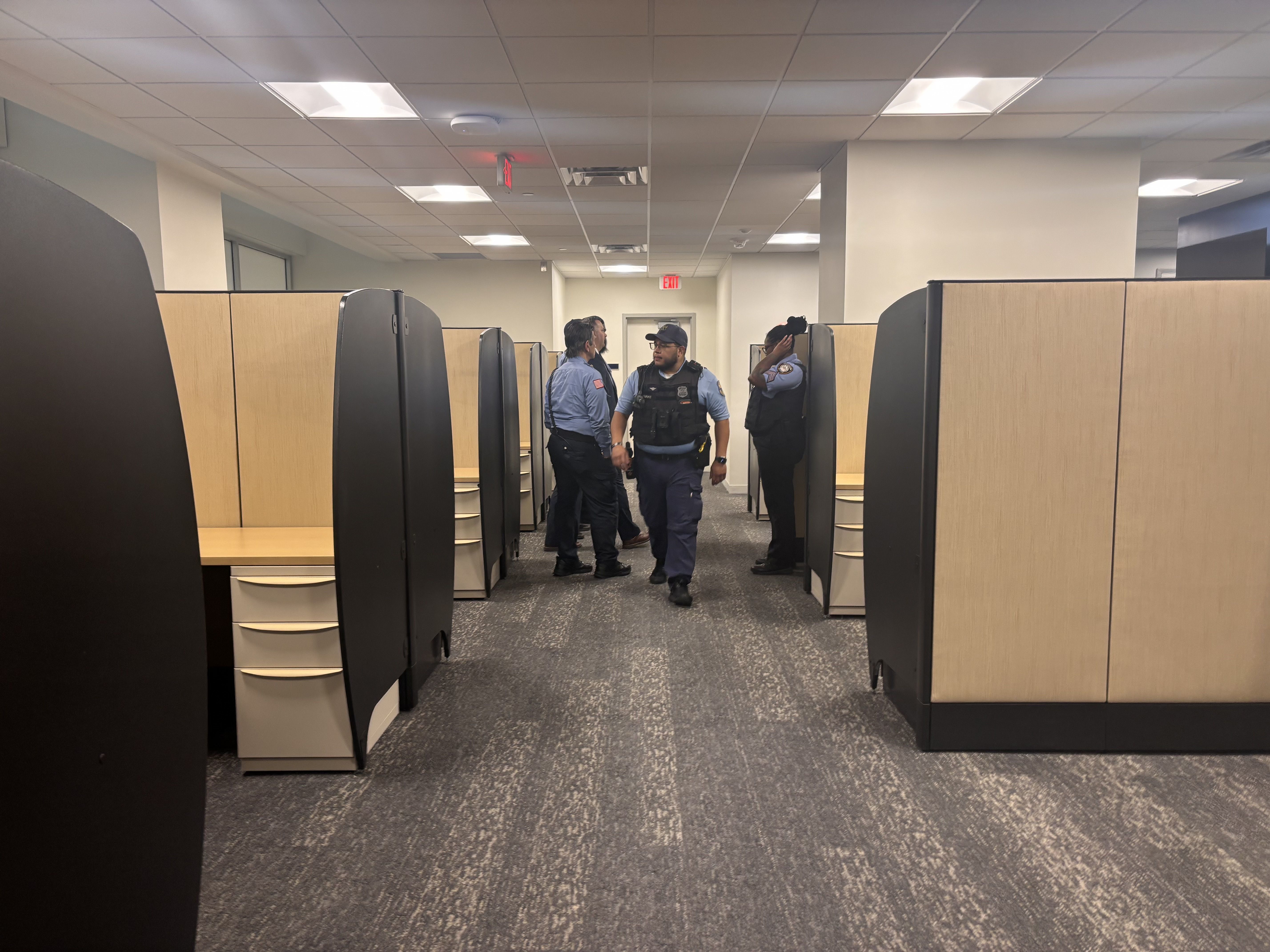
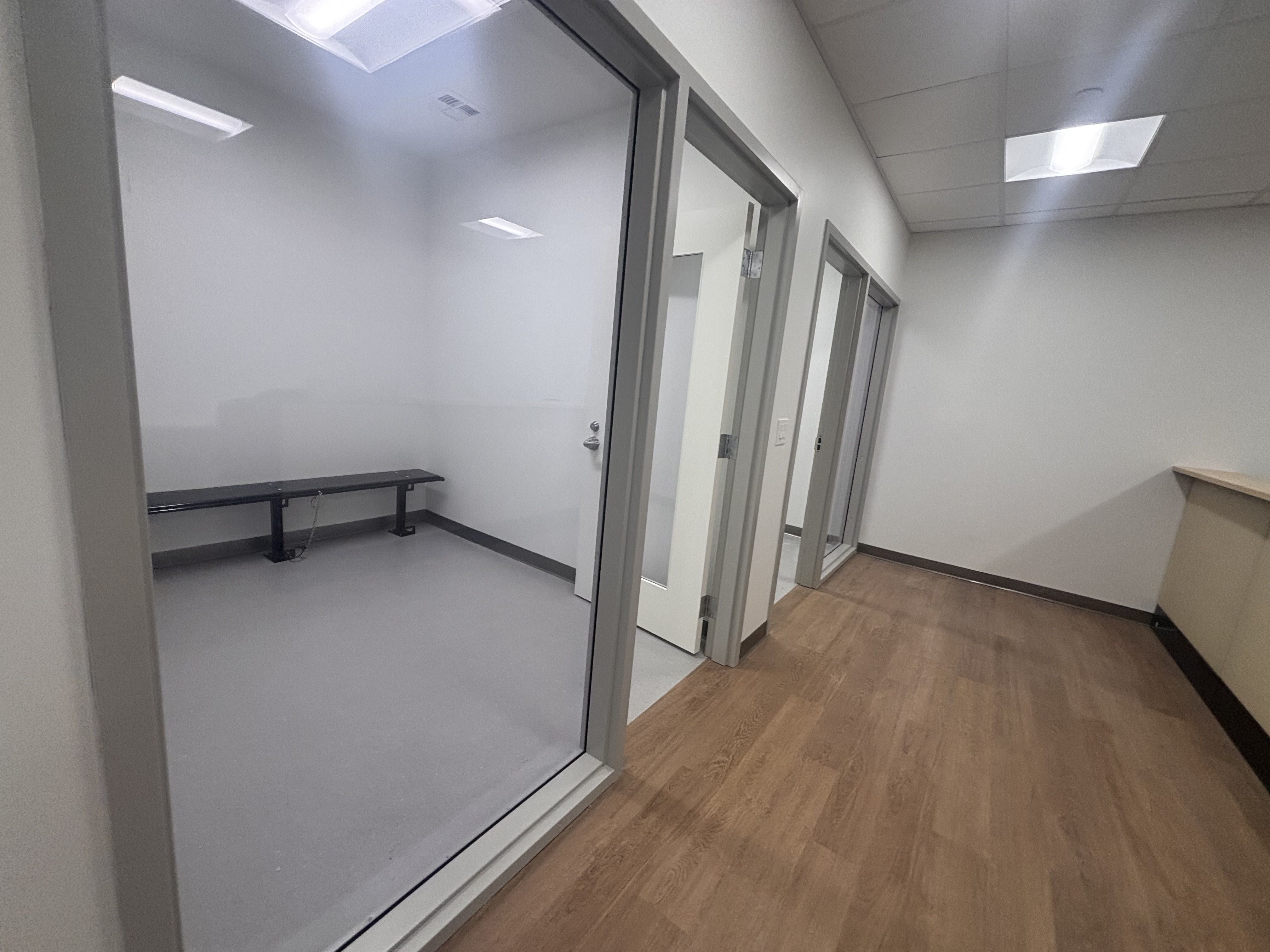
    A holding cell at the new public safety hub for Market Street on June 9, 2026.Isabel Maney / Staff

    East Market has been getting a sprucing up ahead of this summer’s festivities, with pop-up businesses, tree plantings, lighting, and other transformations. Also on Tuesday, officials unveiled an 18-month overhaul of Market Street in Old City that includes a new plaza.

    Mayor Cherelle L. Parker emphasized that the public safety hub was part of a larger project to make Market Street “safer, cleaner, and greener.”

    “We are strengthening our work here in Center City, creating a vibrant and thriving corridor where we have more than 60 partners from across the business, civic, and community sectors,” Parker said. As an expected tens of thousands of visitors begin to arrive, “this coordination right now is more important than ever.”

  • A new local improvement district may be needed to care for the Chinatown Stitch cap over I-676

    A new local improvement district may be needed to care for the Chinatown Stitch cap over I-676

    City officials and residents of the Callowhill neighborhood on Monday night discussed design options for a park atop the Chinatown Stitch, a planned cap over part of the Vine Street Expressway.

    The Philadelphia Office of Transportation and Infrastructure Systems is thinking about the day the project is complete, with preliminary exploration of a possible improvement district in the area to finance operations and maintenance.

    “We’ve come to the conclusion that there’s not really a city department or even nonprofit entity that’s ideally placed to take over that maintenance responsibility,” said Christopher Puchalsky, director of policy and strategic initiatives at OTIS.

    The meeting of the Callowhill Neighborhood Association was held at the Folk-Arts Cultural Treasures Charter School.

    In March, the Pennsylvania Department of Transportation moved $10 million in regional highway funds that, along with a $2.5 million match from the city, will pay for final design of the Chinatown Stitch.

    The Trump administration canceled $150 million in construction money, imperiling the project to rejoin two sections of Chinatown severed for decades by I-676.

    Republicans’ “big beautiful” domestic policy and spending bill last July killed most of the Neighborhood Access and Equity grant program in the U.S. Department of Transportation.

    The original grant was $159 million, but the city already had spent $8.4 million on preliminary engineering and design work. The rest was rescinded.

    Using either a Neighborhood Improvement District or a Business Improvement District would give the neighborhood control over the maintenance of the park and its planned connection to the Rail Park along the Reading viaduct, Puchalsky said.

    City money would be subject to a yearly appropriation, and the Stitch would be “not just competing against all the other parks that need to be maintained,” he said. “The Chinatown Stitch would be competing against firefighters and social workers and pothole crews and go down the list.”

    People expressed strong support throughout several rounds of community engagement for keeping a completed project safe, clean, and in good repair, Puchalsky said.

    He presented three possible annual maintenance and security budgets for a hypothetical improvement district: $1.3 million; $2.2 million; and $3.8 million. A budget would depend on the size of the district and the level of services involved.

    The largest budget could likely finance 24-7 security, robust maintenance, and some social service programs, while the smallest budget would provide much less.

    Improvement district assessments range from 1% to 7% in Philadelphia, which would be on top of property taxes. Based on rough back-of-the-envelope math, Puchalsky said, the owner of a $500,000 property would pay $140 a year on top of a $7,000 property tax bill at the lowest end of the range and $300 yearly at the highest end.

    He stressed that there is no formal proposal for an improvement district or firm estimate for assessments.

    “It is a goal to try to get some kind of a neighborhood consensus about what you would like to do,” Puchalsky said. “I’m not hearing anyone jumping up and down, either angrily or cheeringly” — just reasonable questions.