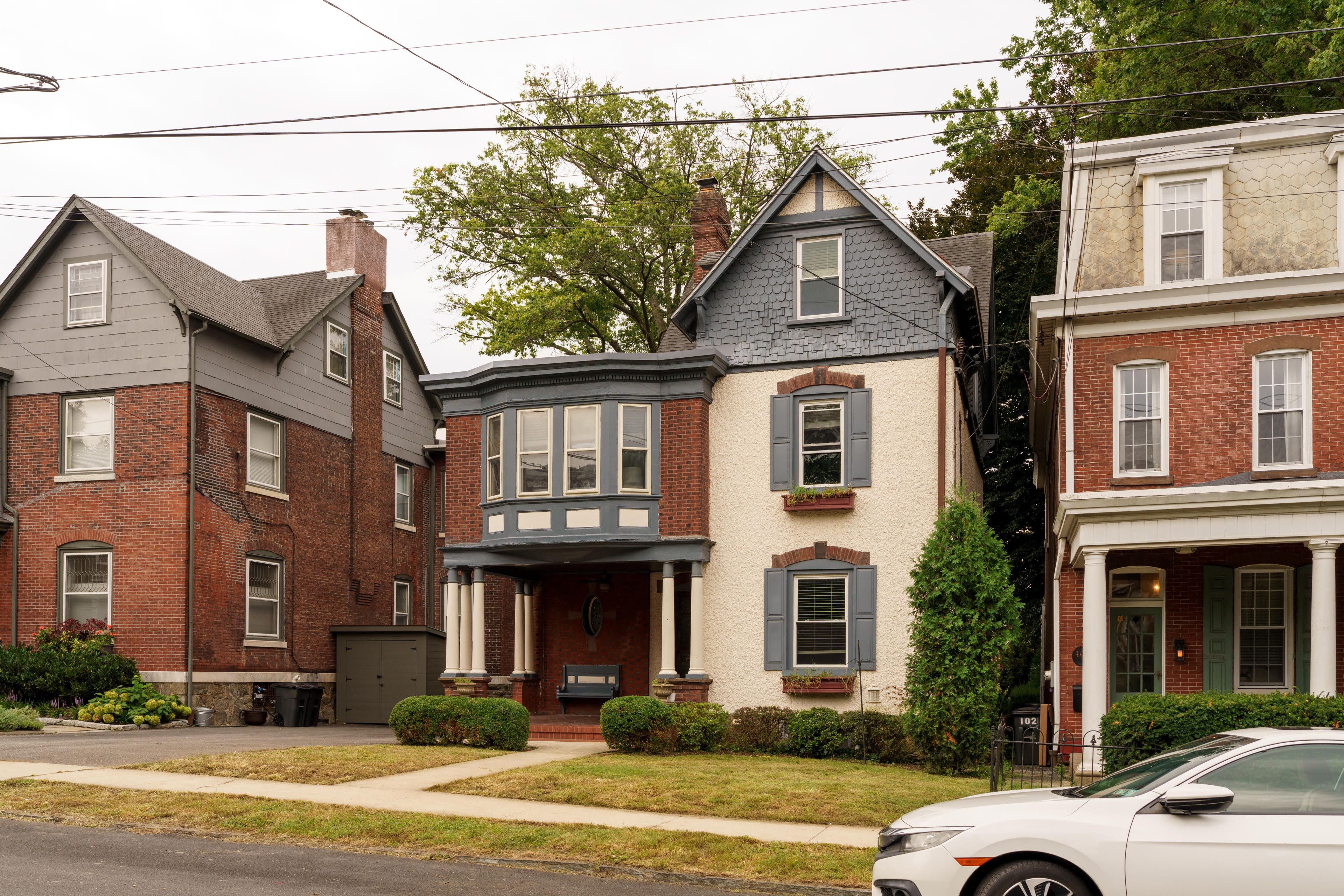
Toward the end of April, Noah Johnson’s street in Fairmount fills with pink cherry blossoms. The cherry trees may have been planted, he believes, when rowhouses were built in 1876.
Longtime Fairmounters call the block Centennial Boulevard. The homes were designed to showcase the latest trend in residential architecture as part of the celebration of the 100th anniversary of the signing of the Declaration of Independence.
The three-story homes were faced with stucco modeled to resemble stone and had tiled mansard roofs and enviable front gardens. Most houses in Fairmount, then and now, have small backyards but no front yards. Owners compensate with window boxes and planters.
A window box at Burns and Johnson’s Fairmount home.Sarah Silbiger / For The InquirerImpatiens and verdant potted plants line the front steps of the home.Sarah Silbiger / For The Inquirer
Over the last 150 years, the “Centennial” homes have been altered. Some have been re-stuccoed or faced with brick. But they all still have their front gardens.
Johnson and his wife, Charlotte Burns, like their neighbors, have planted their precious plot with flowers and greenery.
The floral motif begins at the east end of the block, where Brian Augustine has painted a mural on the garage wall adjacent to his house. Augustine, a contractor and amateur artist, copied a Claude Monet painting of the garden at Giverny, the famous impressionist’s home in France. Augustine planted white rocktrumpet vines in his garden to complement the white water lilies in the mural.
A mural by Brian Augustine, imitating a Monet painting, is seen in the neighborhood, known as Centennial Boulevard.Sarah Silbiger / For The Inquirer
Farther down the block Sam Cifelli has wound Christmas lights around the handrail going up his front steps next to shrubbery. He adds more lights during the holidays to the delight of Johnson and Burns, who live next door.
The couple purchased their four-bedroom, 2½-bath home in February 2025. Johnson said he let Charlotte do all the gardening.
By summer, Burns’ plantings were so lush a neighbor gave her a flier about the Flowering Fronts of Fairmount Competition sponsored by the Fairmount Civic Association. Burns entered the contest and won a prize. This summer she was a finalist in the Pennsylvania Horticultural Society’s Citywide Gardening Challenge.
A plaque from the Pennsylvania Horticultural Society 2026 Gardening Challenge sits in front of some purple liriope.Sarah Silbiger / For The InquirerColeus and Silver King Euonymus, with flowers behind.Sarah Silbiger / For The Inquirer
Burns’ success wasn’t just beginner’s luck. She grew up watching her landscape designer father, Brian Burns, at work. Before moving to Philadelphia she gardened at a house she and her husband rented in Georgia.
Burns kept the English ivy and the heavenly bamboo she found in the garden and purchased annuals including begonias, impatiens, vincas, and multihued coleus at the local Ace Hardware store.
Her father helped Burns choose and plant perennials such as spikes of purple liriope, Silver King Euonymus — which has green, leathery leaves edged in white and speckled with gold dust — red-tinged pieris japonica and glossy abelia.
Gardening is challenging. While Burns’ creeping Jenny, an annual, “grew back this year,” she said, the hydrangea did not bloom, and she had to use a pesticide “for the first time” to remedy a lace bug infestation on the Japanese hosta.
Charlotte Burns waters her prize-winning garden.Sarah Silbiger / For The Inquirer
Besides planting in the ground, Burns has filled window boxes and ceramic pots with colorful plants that line her front steps.
On the brick patio in the middle of the garden red begonias in a blue pot are centered on the white wrought iron table. She found the table and matching chairs at a Bucks County estate sale.
Burns embellished the garden with glass birds from the Pennsylvania Renaissance Faire and glass flowers from the Philadelphia Flower Show. A ceramic frog was purchased at the annual Fairmount Flea Market. The cat banner and front door wreath were gifts from her mother, Cheryl Cunningham.
Johnson helps his wife with the heavy lifting, spreading bags of mulch, and moving the pots to the basement for storage in the winter.
Burns, a veterinary anesthesiologist, and Johnson, a battery scientist, met as students at Drexel University and married in 2021.
A frog figurine peeks out from behind caladiums and other greenery.Sarah Silbiger / For The InquirerA rose in bloom among the coleus.Sarah Silbiger / For The Inquirer
The couple had permission to string lights around Mario and Anna Crociata’s oak tree next door.
Burns planted periwinkle and hosta in the tree well and created a miniature village with gnomes and tiny houses. If an enchanted child takes one of the gnomes, Burns will purchase more at the nearby dollar store.
They hope Fairmounters will enjoy the flowering fronts on Centennial Boulevard for another 150 years.
Is your house a Haven? Nominate your home by email (and send some digital photographs) at properties@inquirer.com.
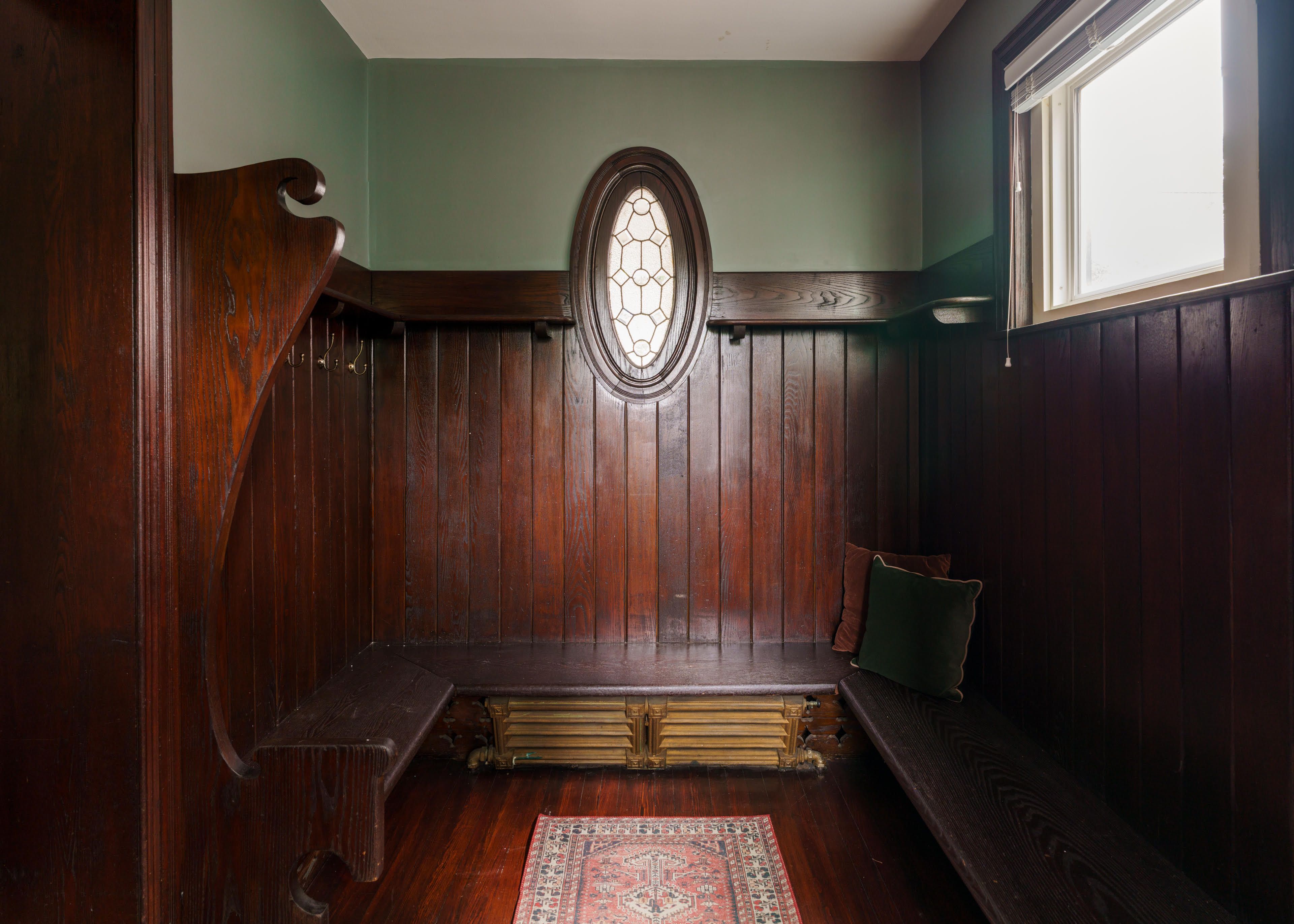
It isn’t often that a mudroom is the main attraction that sells a house.
But Adnan Zulfiqar says that is what drew him and his wife, Hajira, in 2017 when they were looking for a house for themselves and their three young children. It was the last stop at the end of an exhausting day of searching.
The mudroom in Adnan Zulfiqar’s house as shown in the for-sale listing in September 2026 in Philadelphia.Donkin Media/Thomas Donkin
“There was just a serene feeling,” he said. That the wood-paneled mudroom had been built by previous owners as a prayer room.
Careers took the family away from the home in 2022, but Hajira’s family is from Philadelphia, and Adnan said they always thought they might return, so they rented the house when they moved, instead of selling.
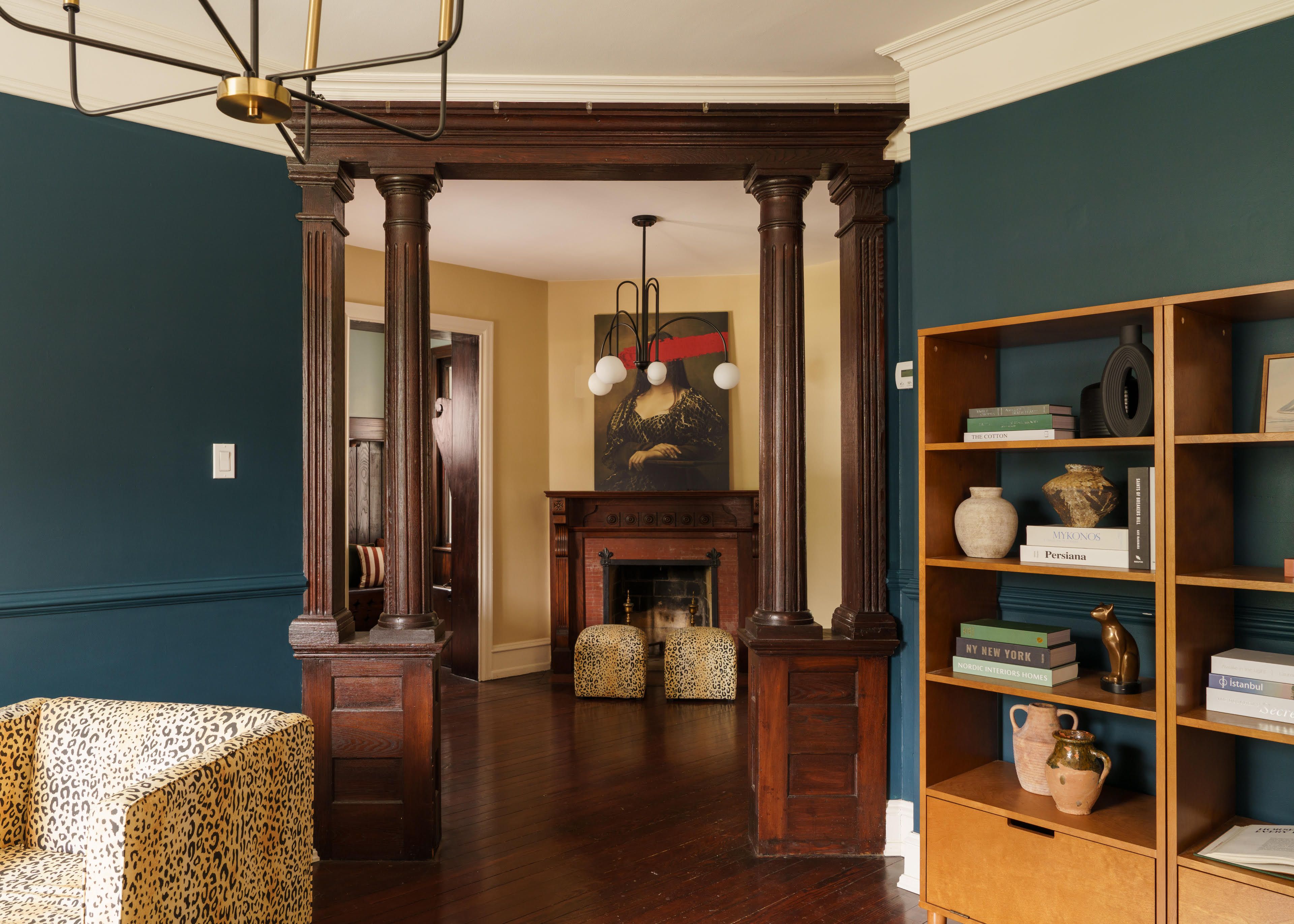
The house has original wood floors, crown and chair moldings, decorative fireplace mantels, and two usable fireplaces.Donkin Media/Thomas Donkin
It was perhaps “wishful thinking,” Adnan said. “We loved the house, and we loved the neighborhood.”
But the family has now settled in Northern Virginia. Adnan commutes to his job as a law professor at Boston College, and Hajira is a dentist.
he kitchen has granite countertops, stainless steel appliances, and a large island.Donkin Media/Thomas Donkin
The four-bedroom, 3½-bath Victorian is 3,101 square feet.
It has original wood floors, crown and chair moldings, decorative fireplace mantels, and two usable fireplaces.
The kitchen has granite countertops, stainless steel appliances, and a large island, and there is also a half bathroom.
A bedroom in Adnan Zulfiqar’s house as shown in the listing.Donkin Media/Thomas Donkin
The primary bedroom is on the second floor with an en suite bathroom. There is a second bedroom with full bath, laundry, and a bonus space, which Adnan used as an office.
The third floor has the other two bedrooms, a full bathroom, and additional bonus space that can be used as a reading nook.
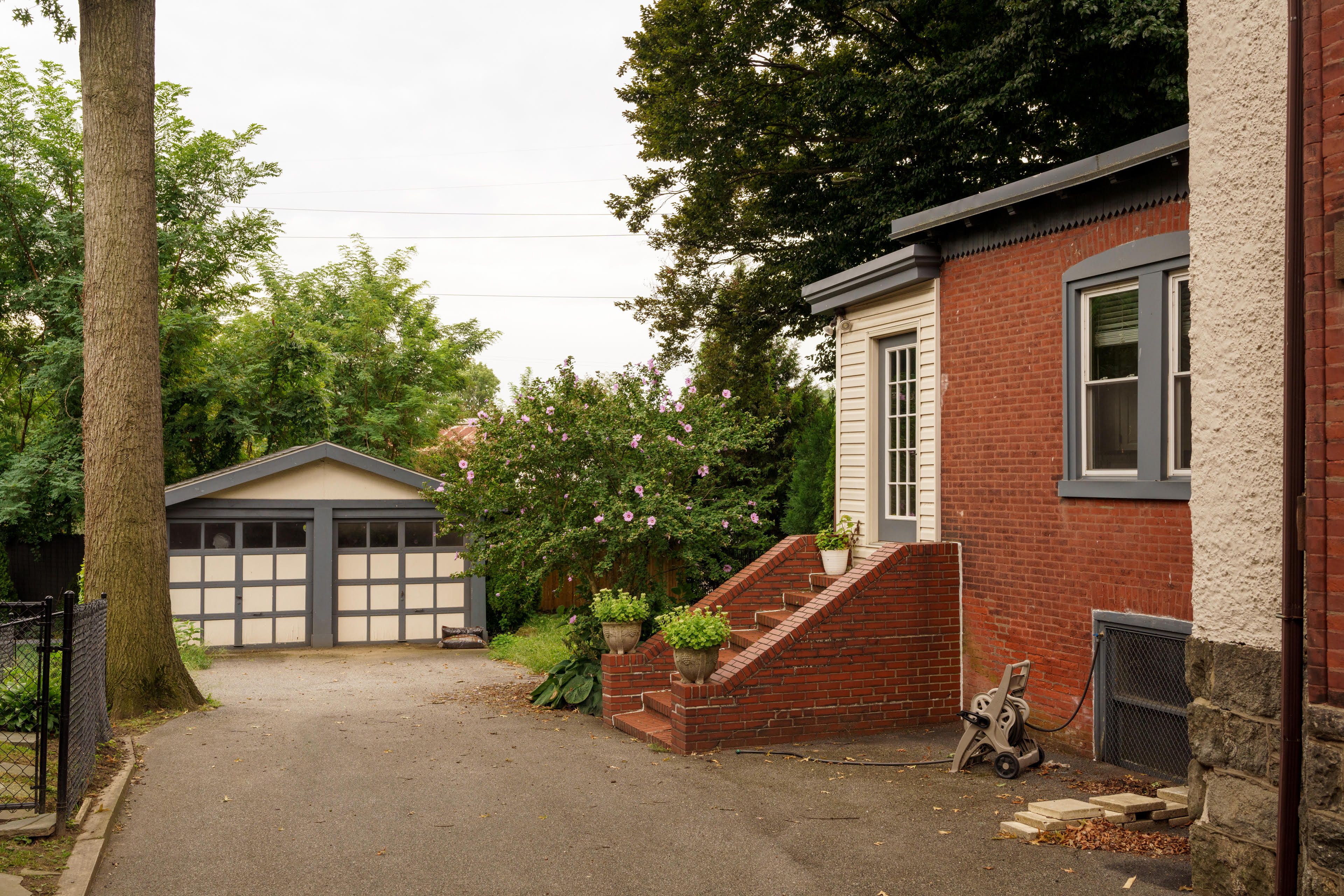
The driveway and detached garage.Donkin Media/Thomas Donkin
There is room to park four cars in the driveway and two more in the detached garage.
The home is close to the Wissahickon Regional Rail station, Kelly Drive, and I-76.
The house is listed by Kristin McFeely of Compass Realty for $750,000.
Philadelphia real estate developers see the writing on the wall.
As progressives have toppled centrist Democrats in nationally watched races, some local development interests are wary that the same trend could reshape Philadelphia City Council this spring, when every member is up for reelection. They see a growing progressive faction as a threat to business.
Enter the incumbent protection plan.
Nearly a dozen local developers are already pouring hundreds of thousands of dollars into Philly For Growth, a group that in the past two Council election cycles spent millions on advertising campaigns to back business-friendly Democrats, according to a source familiar with the planning.
Philly For Growth is an independent expenditure group, also known as a super PAC. It can raise and spend unlimited amounts of money to influence an election, but there are rules barring super PACs from most forms of coordination with the candidates they support.
In 2023, the group was the biggest special interest group involved in that year’s Council races, and it provided a substantial boost to its chosen candidates by outspending individual campaigns.
Ahead of the May primary election, Philly For Growth plans to spend $1.5 million to support pro-business Democrats, most of whom are sitting Council members, according to the source, who spoke on the condition of anonymity because they were not authorized to discuss the plans. The group will not fund negative advertising about Council’s four incumbent progressives, the source added.
Councilmember Kendra Brooks, of the progressive Working Families Party, speaks during a rally outside of the School District of Philadelphia headquarters in May. At left is Councilmember Rue Landau and at right is Councilmember Jamie Gauthier. All three are members of Council’s progressive faction.Monica Herndon / Staff Photographer
The idea is to keep progressives from growing their power on Council instead of spending money to knock off the leftists who are already there. There are currently four reliably progressive votes out of the total 17 on Council, but some members may be more likely to vote with that faction as Democratic voters nationally revolt against incumbents.
That’s a different strategy than in 2023, when Philly For Growth backed a slate of five candidates — two incumbents and three challengers. Both incumbents won, but all three challengers lost.
Philly For Growth has previously been affiliated with the Building Industry Association of Philadelphia, an advocacy group for development interests. Mo Rushdy, the BIA’s former president who leads the organization’s political activity, declined to comment.
The source said that Philly For Growth will fund advertising to support Council members Mark Squilla, whose 1st District includes parts of South Philly, Center City, and Fishtown; Cindy Bass, whose 8th District is based in North and Northwest Philadelphia; and Quetcy Lozada, whose 7th District includes much of North Philadelphia and Kensington.
All three are seen as more centrist members and have said they intend to run for reelection. No challenger has officially launched a campaign against any of them, but candidates who are aligned with the city’s left-leaning political organizations are expected to emerge as the primary — still eight months away — draws nearer.
The super PAC is making one exception when it comes to supporting incumbent district Council members, the source said. In the 5th District, currently represented by Councilmember Jeffrey Young Jr., the group will support a to-be-decided challenger.
Councilmember Jeffery Young Jr. speaks to other members of Council during a 2025 session.Tom Gralish / Staff Photographer
At least five people have said they are interested in running for the North Philly-based 5th District seat, and Young has drawn opposition from development interests for pushing proposals that would slow or halt some projects in his district.
Young said in a statement that building “sensible, affordable housing” is one of his top priorities and that he has supported city programs like Turn the Key, which provides mortgage support to first-time homebuyers.
“People are free to back those who share their values. These are my values,” Young said. “I am leaving it to the residents of the 5th to determine whose values best reflect them.”
The super PAC will also fund advertising backing four incumbent members who represent the city at-large: Isaiah Thomas, Katherine Gilmore Richardson, Jim Harrity, and Nina Ahmad. That group doesn’t include progressive at-large Councilmember Rue Landau, but Philly For Growth doesn’t plan to oppose her, the source said.
Council President Kenyatta Johnson laughs inside the caucus inside City Hall on June 11.Aidan T. Gallo / Staff Photographer
A spokesperson for Landau’s campaign arm said in a statement that the Council member “stands by her accomplishments for working people, small businesses and vulnerable communities in Philadelphia and looks forward to voters having the opportunity to make up their own minds next year.”
It’s unclear just how competitive the at-large race will be, and candidates have until the spring to decide — nomination paperwork is typically due in March. Seven of Council’s members represent the entire city at-large, and two of those seats are effectively reserved for members of minority parties under the city’s Home Rule Charter.
That has traditionally meant that five seats are held by Democrats, given the party’s massive voter registration advantage in the city. In recent years, Republicans and the progressive Working Families Party have battled for the remaining two seats during the fall general election, and the WFP currently holds both.
Mayor Cherelle L. Parker, who is also up for reelection, and Council President Kenyatta Johnson, who insiders do not expect will see a serious challenger, will likely be on Philly For Growth’s slate, too, the source said.
Property tax breaks from Lumberton Township are part of the redevelopment agreement for Lumberton Village, a $77-million project of 857 proposed residential units on undeveloped farmland and wooded acreage in the relatively small town.
National homebuilder D.R. Horton Inc.’s project, which the Burlington County town maintains is an essential part of its commitment to affordable housing, is scheduled to go before the Township Land Development Board on Thursday at 7 p.m. for preliminary and final site plan approval.
Despite requiring board approval, the Horton project is viewed as a lock because of the affordable housing component, Township officials said at a community meeting.
“We’re stuck. We’re under court order. We have to proceed,” the Township affordable housing lawyer, Michael Herbert, of the Parker McCay firm, told residents at the May meeting in Bobby’s Run School. Herbert said the property at Newbolds Corner and Eayrestown Roads has been part of the township’s affordable housing plan for many years.
Lumberton Village would include 506 market-rate townhouses, 179 senior citizen townhouses, 92 affordable family apartments, and 80 age-restricted affordable apartments.
A 30-year Payment in Lieu of Taxes (PILOT) program for the 172 affordable and age-restricted apartments and a five-year tax abatement/exemption plan for the 179 age-restricted market rate units are included in the township redevelopment agreement, which was signed in August.
The project would increase the number of housing units in the town by about 17%. The Census Bureau’s American Community Survey estimated that Lumberton had 5,036 housing units in 2024, when the population was estimated at 12,882.
Under the plan, not all of the 412 acres that D.R. Horton purchases at the Lumberton site would be used for development. The Burlington County Commission in June approved spending up to $3.73 million to buy and preserve 226 acres at the southern end of the property under the Farmland Preservation program.
A traffic light will be installed at one of the development’s two entrances on Eayrestown Road. D.H. Horton’s traffic consultant, Shropshire Associates LLC of Atco, projects that the residential development will generate 449 trips during the weekday morning peak hour and 435 trips during the afternoon peak hour.
70and73.com is a hyperlocal news site focused on South Jersey, including the communities of Cherry Hill, Evesham, Mount Laurel, Voorhees, Medford, Medford Lakes, and Moorestown.
A controversial Gloucester Township development plan for 743 residential units on the site of the nation’s first African American-owned, 18-hole golf course is scheduled before the zoning board on Wednesday.
Freeway Golf Course was purchased by four Black businessmen in 1967 and saw the last round of golf played in November 2015. The 154-acre property at 1858 Sicklerville Rd. was offered for sale in 2016.
Hamilton-based US Home LLC, doing business as Lennar, filed with the township as the developer of the $292 million project. Lennar Corp. is a national homebuilder founded in 1954 with national headquarters in Miami. Lennar is traded on the New York Stock Exchange. The property owner is Black Horse Properties LLC of Blackwood, according to the application.
Some neighbors have banded together to oppose the development, posting their objections on the Friends of Freeway Facebook page. A post on Saturday with the agenda of the 7 p.m. meeting says “Don’t let this builder determine the fate of OUR community! He’ll make millions and leave us to deal with the mess.”
“We have our research, we have our facts, we have our attorney and planner! The last thing we need is your attendance,” according to the page, which also featured photos of wildlife asking: “We are taking their homes. Where will they go?”
The proposed development would be “a mixture of 177 single-family detached homes with an average sales price of $497,000, 67 (now 63) age-restricted single family detached homes with a sales price of $469,000, along with 222 traditional townhouse units and 168 stacked townhouse units with estimated sales prices of $430,000 and $365,000, respectively,” according to Lennar’s plans.
Estimated monthly rent for the 113 affordable housing rental apartments would be $1,240.
A fiscal-impact analysis by Richard B. Reading Associates submitted with the application states that the Freeway Pointe development would add 2,086 residents and require $1,698,000 in municipal services, which would be offset by the estimated $2,542,230 in municipal tax revenue from the homeowners.
The financial study also expects that 214 students would live in Freeway Pointe and attend the Gloucester Township School District and 101 students would attend the Black Horse Pike Regional School District. The higher costs from the new students would be more than offset by property taxes, according to the analysis.
70and73.com is a hyperlocal news site focused on South Jersey, including the communities of Cherry Hill, Evesham, Mount Laurel, Voorhees, Medford, Medford Lakes, and Moorestown.
The Price Point compares homes listed for similar sale prices across the region to help readers set expectations about house hunting.
In the Philadelphia area, a home on the market for $1 million or moreis uncommon.
As of Sept. 2, roughly 1,070 homes across the Philadelphia metropolitan area were for sale at this price point, according to the multiple listing service Bright MLS. That was about 8% of all active home listings.
Many of these listings highlight elements that have become standardin luxury homes, such as double vanities and soaking tubs in the primary bathrooms and quartz or granite countertops in the kitchen.
Location, outdoor spaces, and special features make million-dollar homes stand apart.
Here’s what a buyer can get for $1 million in Solebury, Bucks County; Medford, Burlington County; and Philadelphia’s Queen Village neighborhood.
A large lot near New Hope with a pool
When it comes to this house in Solebury, “the neighborhood and the area and the school district are amazing,” said listing agent Lisa DePamphilis, broker associate with Berkshire Hathaway HomeServices Fox & Roach, Realtors.
The property, located between New Hope and Doylestown, is within walking distance of Peddler’s Village and nearby cafés and restaurants. And it’s just off Route 202.
The home is on one of the biggest lots in its development and has an in-ground pool and a large yard that includes a storage shed and a play set. There’s also an attached two-car garage.
The house includes hardwood floors, two fireplaces, two laundry rooms, a finished basement, a generator for the entire house, and a newly renovated kitchen with granite countertops. The primary suite’s bathroom has a soaking tub.
“It’s perfect for a family,” DePamphilis said. “It’s just a great house.”
One of the biggest draws to the area is the school district.
New Hope-Solebury School District’s high school was ranked No. 4 in Pennsylvania and No. 1 in Bucks County by U.S. News & World Report for the current school year.
The district’s middle school was one of three in Pennsylvania and 39 nationwide to be named a 2026 “school of distinction” by the Association for Middle Level Education.
Robert Playford, a salesperson for RealtyMark Properties and owner of this Medford home, fully renovated the property through his flipping business, Skyliner Homes LLC.
The home has a new roof and heating and cooling system and also new laminate flooring and carpeting. It has newly installed gas service and a finished basement.
The renovated kitchen includes quartz countertops, an island, and double ovens. The family room has vaulted ceilings with exposed, painted beams and a fireplace. The primary suite’s bathroom includes a soaking tub and separate makeup vanity.
A back patio with a fire pit looks out onto a large yard that includes a pond.
The property has an attached two-car garage, which isn’t unusual. But it also has a 2,400-square-foot heated detached garage. A buyer could use it as a garage or workshop or turn it into an indoor soccer field or pickleball court, Playford said.
“It’s a really nice home,” he said. “It’s a really nice location.”
The home is up the street from Johnson’s Corner Farm. It’s on Hartford Road, a main thoroughfare, but has a long driveway and is far enough from the road that the owner would have privacy.
The property is close to Routes 70 and 38 and a roughly 15-minute drive to the Centerton Square shopping center.
The home was listed for sale for $1.15 million at the end of April. In the months since, a sale fell through,and the price has dropped. As of Sept. 4, the property was listed for sale for $999,900.
Newly built townhouse in Queen Village
There aren’t a lot of newly built homes in the Queen Village neighborhood, so this townhouse presents buyers with a rare opportunity, said co-listing agent Arvind Balaji, associate broker with the Mike McCann Team.
The house is one of three that make up the Estates at Queen Village community, and it comes with a full 10-year tax abatement.
“It’s a good quality home,” Balaji said. “In years to come, it will just increase in value.”
Neighborhood residents can walk to restaurants, cafés, parks, the farmers market at Head House Square, and the Italian Market. The tree-lined blocks around the home have a residential feel, which “is very important to the person spending a million dollars on their home,” Balaji said.
In addition to the location, potential buyers have liked the size of the bedrooms and the amount of natural light.
The roof deck is also a draw. It offers “unbelievable unobstructed views,” he said.
The home also has a kitchen with an island and quartz countertops, two laundry areas, and a backyard patio. It was built with materials that muffle sound between floors and from the outside.
The primary suite spans the third floor and includes a bathroom with a soaking tub and heated floors.
A six-bedroom West Chester home with a two-story wine cellar and tasting room in a converted ice house has hit the market for $3.3 million.
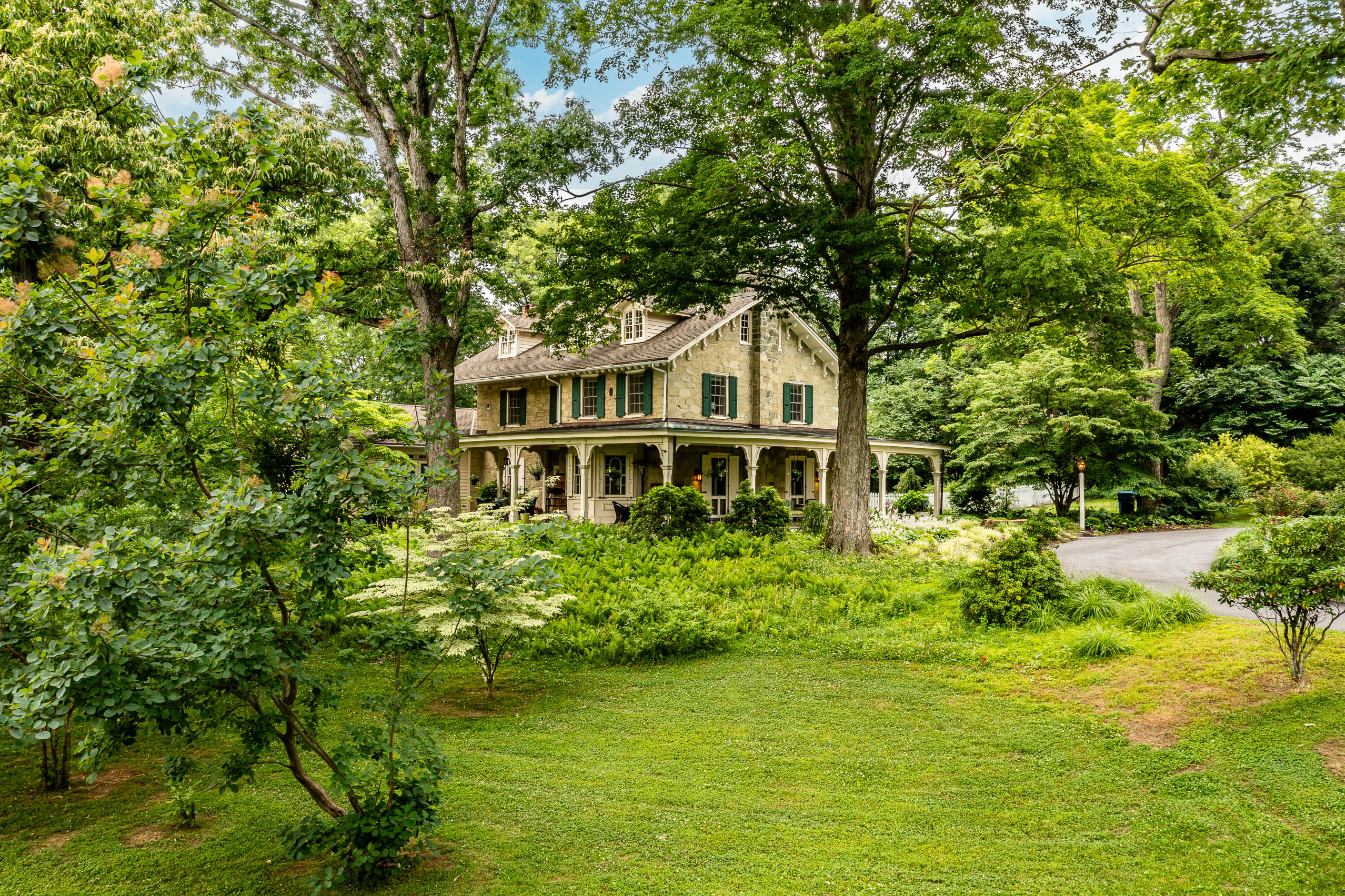
Known as Fernbank Farm, the nearly 5,400-square-foot homeat 1001 Country Club Rd. was built of green serpentine stone from the nearby defunct Brinton’s Quarry, said Stephen Gross, who shares the listing with Stewart Gross and Holly Gross, all of the Holly Gross Group.
“It’s a beautiful stone that’s just unique to the area,” he said.
An aerial view of the property, which sits on six acres.Virtual Vista | Courtesy of Holly Gross Group
A small portion of the home is believed to date back to the 1790s, said Stephen Gross. It was then expanded around 1846 by James Cheston Morris, a University of Pennsylvania alum and surgeon who invented “a number of surgical appliances,” according to a 1923 Inquirer obituary.
Morris used the property as a summer country estate retreat and also to reportedly experiment with architectural insulation techniques, including in an attached ice house, the Gross brothers said.


A former ice house has been converted into a two-story wine cellar and tasting room.Jeffrey Totaro
That space was converted about five years ago by its current owners into a two-story wine cellar and tasting room.
Situated off the breakfast room, the roughly 1,500-bottle wine cellar is accessed via a staircase that opens onto a room with vaulted ceilings and stone walls. The upper level has seating, a bar, and wine refrigeration, while the lower level is predominantly for wine storage.
“There’s no other space like that I’ve been to in Chester County,” said Stephen Gross, adding that it “would be a really neat space to entertain.” He estimates it can hold eight to 10 people seated or 10 to 15 for a standing cocktail party.
The space has a bar and incorporated millstones.Jeffrey Totaro
Old millstones have been incorporated into the space, which also has a dumbwaiter and an exterior door where blocks of ice would have once been delivered.
Elsewhere, the home has a number of original architectural details, including hardwood floors with distinctive patterns like a two-tone herringbone in the foyer and an octagonal shape in the library.
Other original details include woodwork and fireplace mantels, including the living room’s Campan rubané breccia mantel from 19th-century France.
The home’s six bedrooms are spread across two upper floors, with the primary suite on the second level. It has a fireplace, built-in storage, a sitting area, and an en suite with a soaking tub.
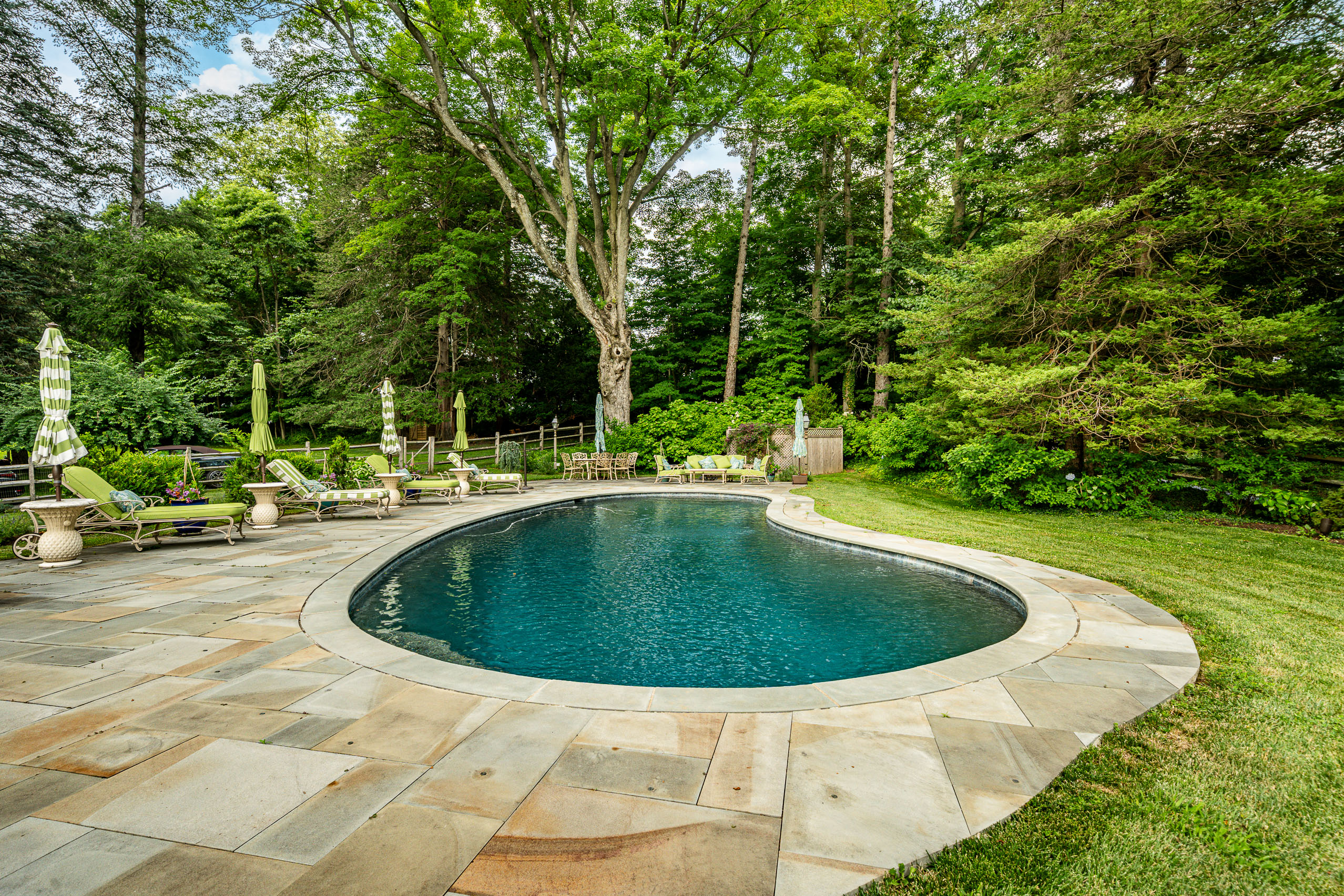
The home has a kidney-shaped heated saltwater pool and a nearby spa.Virtual Vista | Courtesy of Holly Gross Group
Situated on six acres and partly surrounded by conserved land, Fernbank Farm has several seating areas outdoors, including a wraparound veranda that overlooks old and specimen trees. It also has a spa and an in-ground heated saltwater pool, which was restored in 2018.
Elsewhere on the property is a detached three-car garage in a converted 1910 carriage house.
This suburban content is produced with support from the Leslie Miller and Richard Worley Foundation and The Lenfest Institute for Journalism. Editorial content is created independently of the project donors. Gifts to support The Inquirer’s high-impact journalism can be made at inquirer.com/donate. A list of Lenfest Institute donors can be found at lenfestinstitute.org/supporters.
A last-resort insurance policy with fewer homeowner protections and less government oversight is booming, a Washington Post analysis finds, as traditional insurers continue to back away from areas of the country most vulnerable to extreme weather.
The policies are growing fastest in California, Florida, Texas, and South Carolina because increasingly intensifying weather and massive disasters are putting more insurers on the hook for substantial claim payouts. Last year in California, insurance companies paid out $23 billion in homeowners claims, according to industry data.
The amount of premiums written under what is known as “surplus” or “excess” insurance lines has nearly tripled nationwide in the past five years, from about $1.5 billion in 2021 to $4.1 billion in 2025, according to data from the National Association of Insurance Commissioners (NAIC) — which insurers submit to the organization — and analyzed by the independent firm Weiss Ratings and provided to the Post. The Post reviewed the data and the Weiss analysis.
While this represents only a small share of the total $187 billion in premiums written in the United States each year, according to the Weiss data, industry experts say they reflect a problem where Americans living in the most weather-exposed places are becoming harder to insure.
In 2025, the Treasury Department’s Federal Insurance Office released a report showing how, due to climate-related events, millions of Americans were finding it harder to obtain insurance and had to pay more for it.
And as more insurers pull back or limit coverage, more Americans have struggled to find it and have sought out surplus line plans. Independent brokers often steer homeowners to surplus policies when they cannot obtain a traditional plan, though carriers also advertise directly to consumers.
These once-niche policies, which date to the late 1800s, historically covered commercial, high-risk, or unusual properties.
They can sometimes be more expensive and often have more limitations and restrictive clauses, including arbitration clauses stating that homeowners cannot select their own contractors or price adjusters.
Experts said they have fewer consumer protections, prompting some advocates and state regulators to warn that homeowners may get lower payouts in the event of a disaster.
California’s surplus line industry is expanding more than almost any other state, according to the Post and Weiss analysis of NAIC data, which only includes insurers based in the U.S. Since 2021, the amount of surplus premiums written in California increased tenfold from $135 million to nearly $1.3 billion, now accounting for 7% of all homeowners premiums in the state compared with just 1% five years ago.
California’s insurance crisis has been spreading beyond wildfire-prone regions, according to new Stanford University research, which found that the number of residents having to get coverage from the state’s backup insurance option, the Fair Plan, has tripled since 2020.
A Post review of domestically based surplus line carriers across the U.S. found that 10 companies account for slightly more than half of all premiums, most of which are owned by major insurance companies.
Major insurance providers, such as Lloyd’s of London and Berkshire Hathaway, dominate the industry, but smaller companies have also been proliferating.
Some industry experts say these policies fill a void created by carriers pulling out or limiting coverage, and that without them, markets would be in greater distress. These companies are exempt from certain rules, allowing them to change what their plans cover and how much they charge faster than standard carriers.
“The industry is built on two things: freedom of rate and form,” said Benjamin McKay, CEO of the Surplus Line Association of California, a nonprofit organization that advises the California Department of Insurance on law and policy. “You can charge what you want to charge and then have the contract say whatever it needs to say. You can exclude and include whatever.”
The push-pull with surplus lines, McKay explained, is that while they are needed, they are a “reactive function of what’s happening in the admitted market.”
McKay said the “proper role” for these less-conventional homeowners plans is “as a safety valve, not becoming the default option. Bottom line: We just need a healthy market.”
State officials also have less insight into surplus carriers’ financial conditions, because they are not subject to the same financial requirements and tests that states such as California impose on admitted carriers.
However, surplus lines still have to follow California laws, said Michael Soller, deputy commissioner of the California Department of Insurance’s communications and public relations branch.
The Post recently found that some major surplus line companies such as AIG had been including separate “wildfire deductibles” in their policies, which Soller said violated state consumer codes and warranted a review.
AIG — which has three subsidiaries offering surplus line policies to high-net-worth properties, all of which are operating in California — stopped offering its standard, regulated insurance for high-end properties in the state due to what the company said in a statement was “part of AIG’s multi-year transformation to streamline its portfolio.” In 2021, nearly 8,000 wildfires burned nearly 2.6 million acres of land across California.
Over the years, according to California insurance officials, AIG asked for rate increases that were substantially lower than what their own data reflected was necessary for its exposure to risk. In 2020, after the state approved two subsequent raises, AIG asked to bump rates by nearly 42% before withdrawing that request.
One of its subsidiaries, Lexington Insurance Co., is the seventh-largest surplus line carrier nationally, a Post review of data shows. AIG said its plans for “high-net-worth homeowners’ insurance” are primarily issued through that company.
From 2020 to 2025, AIG’s standard homeowners business plummeted to zero in California, according to data obtained by Weiss Ratings and reviewed by the Post. Meanwhile, its surplus line business grew from $24 million to $119 million, data shows. The carrier announced in January 2022 that it was pulling back coverage but would still offer surplus line insurance to high-net-worth, specialty clients.
“AIG has switched its entire California homeowners business to surplus line insurance,” said Martin Weiss, founder of Weiss Ratings.
Over that six-year period, the insurance company’s surplus line premiums grew by 394% in California.
“AIG has participated in California’s surplus lines market for more than 60 years, providing coverage for specialized risks that generally cannot be placed in the admitted market,” the company said. It added that while its surplus line business for high-net-worth homeowners has grown along with the rest of the market, “it represents less than one percent of total California homeowners insurance premiums.”
Isaac Park, who runs the Los Angeles-based Excel Adjusters with his father, said he has seen an increased number of clients over the past decade shifting to the state-backed Fair Plan, who are then forced to get a second policy for risks such as water damage. Park added that he has also seen more surplus line firms operating in the state.
“They have more limitations of coverage,” he said.
Some consumer advocates worry that since surplus line carriers don’t participate in state guarantor funds, which help support policyholders if their insurer goes insolvent, people are at greater risk of bad-faith behavior or not getting paid out on their claims.
Companies are paying out less to homeowners with surplus line policies compared with traditional ones, according to the NAIC data provided to the Post. In the past five years, surplus insurance lines paid out an average of 36 cents in claims for every dollar in premiums they collected, compared with 58 cents for admitted carriers. In 2024, carriers paid out 15 cents on each dollar of premiums they collected from surplus line policyholders.
Payouts from surplus line insurers spiked in 2025 because of the L.A. fires, according to experts.
“They are the perfect loophole for an insurer who wants to evade regulation,” said Amy Bach, executive director of United Policyholders.
Bach described surplus lines’ ability to avoid regulation as a “powder keg” for the industry. But she added, “They are also doing a good thing by providing protection that other insurers are not willing to provide.”
A new report from Climate Cabinet Education, a nonprofit advocacy group, charts how this explosive growth happened. Most states, for example, require insurance agents and brokers to demonstrate that they made a “diligent effort” to place policyholders within the admitted market. In California, three carriers have to deny a resident before they can seek out a surplus line plan. But last year, Florida — where surplus lines in the homeowners market grew 74% between 2020 and 2025 to $888 million, according to the NAIC data — became the fifth state to scrap that requirement.
Jayson O’Neill, spokesperson for the insurance reform advocacy group Unlocking America’s Future, said that several consumer advocacy groups are working with lawmakers in Texas and North Carolina on stronger regulations that could include barring insurers from removing some protections from basic coverage.
Park, the public adjuster who helps represent Californians in battles with their carriers over claims, said that even before last year’s fires in L.A., he was seeing “a lot of insurance companies dropping my clients after just one claim.” Now the landscape seems even more dire.
Ben Taggart lives in Oakland Hills, Calif., near the site of a massive fire in 1991 and a community identified as a high-risk zone for wildfires. He found his current surplus line insurer two years ago, which aggregator sites identified as the only other option aside from the state-backed Fair Plan.
Taggart said in an email that he wished he could get a policy through an insurer admitted into the California market, and that he is reluctant to file any claims given that his deductible is $10,000 and he worries the company would drop him if he made a claim.
“The only people I know on our block who are still with admitted insurers are boomers who have been in their house a really long time,” he said. “Everyone who moved here recently is on surplus or Fair.”
Renters in New York are looking to come to Philly and vice versa, according to an analysis of rental search trends in 50 metropolitan areas by Zillow.
The Philadelphia metro area’s top out-of-town market for rental searches was the New York area, as of July. And the New York area’s top out-of-town market for rental searches was the Philadelphia region.
Slightly more than 7% of views on rental listings in the Philadelphia area came from people in the New York metro. In the New York area, which was the market most driven by local searches, 1.6% of views came from residents of the Philadelphia region.
The Philadelphia area has long been a destination for New Yorkers looking for relatively more affordable homes.
Overall, two in five views for a rental in the Philadelphia area came from outside the region. Most searches — the other roughly 61% — came from locals.
(function(){function e(){window.addEventListener(`message`,function(e){if(e.data[`datawrapper-height`]!==void 0){var t=document.querySelectorAll(`iframe`);for(var n in e.data[`datawrapper-height`])for(var r=0,i;i=t[r];r++)if(i.contentWindow===e.source){var a=e.data[`datawrapper-height`][n]+`px`;i.style.height=a}}})}e()})();
In the Philadelphia area, the percentage of rental listing views from out of town grew slightly — by 0.6 percentage points — from last year.
Shares of out-of-town rental searches grew the most — a few percentage points — in the Buffalo, Chicago, and Houston metro areas.
“Renting is often how people try out a new community before committing,” Mischa Fisher, chief economist at Zillow, said in a statement. “When we see a market with a growing share of rental searches coming from outside the metro, that tips us off to a developing pipeline.”
In hot spots such as Raleigh, N.C.; Hartford, Conn.; and New Orleans; out-of-town rental hunters outnumber locals searching on Zillow. These places have been destinations for people living in coastal metros with higher costs.
In the New York metro, more than three in four views on rental listings came from locals. Rental markets in the Los Angeles and Chicago areas also are mostly driven by locals. These three markets are the biggest in the country, so their population sizes fuel higher local search traffic.
Icona Resorts founder Eustace Mita says he didn’t set out to change the Jersey Shore.
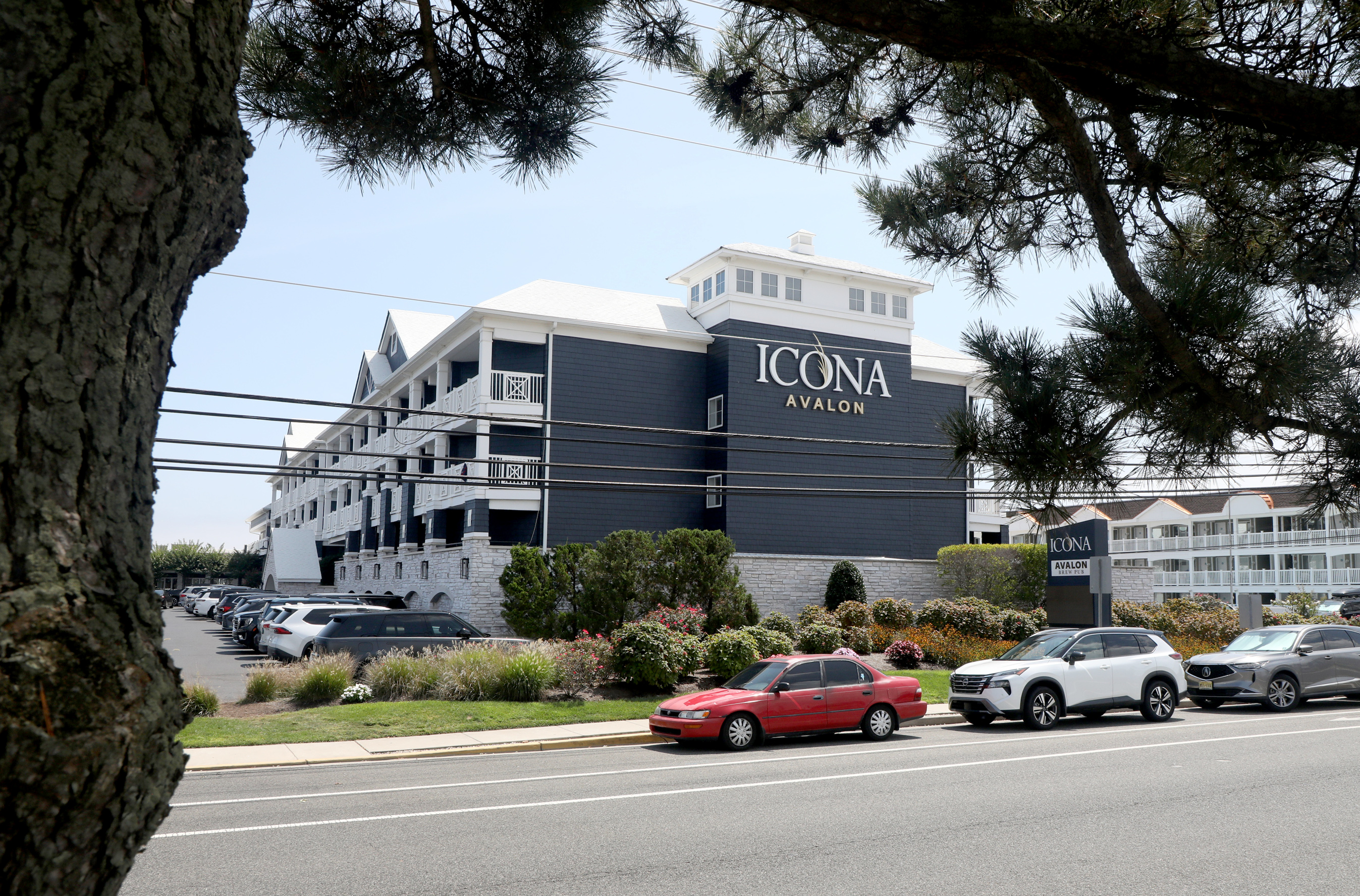
Sitting in a corner room at the Icona Avalon, the largest of Mita’s seven luxury hotels, the 72-year-old said it was the Shore, his lifelong “happy place,” that transformed him.
As Mita looked out onto the dunes, he recalled his baptism at St. Paul Catholic Church in Stone Harbor and his summer job as a teenage busboy and server at the Princeton Bar & Grill in Avalon.
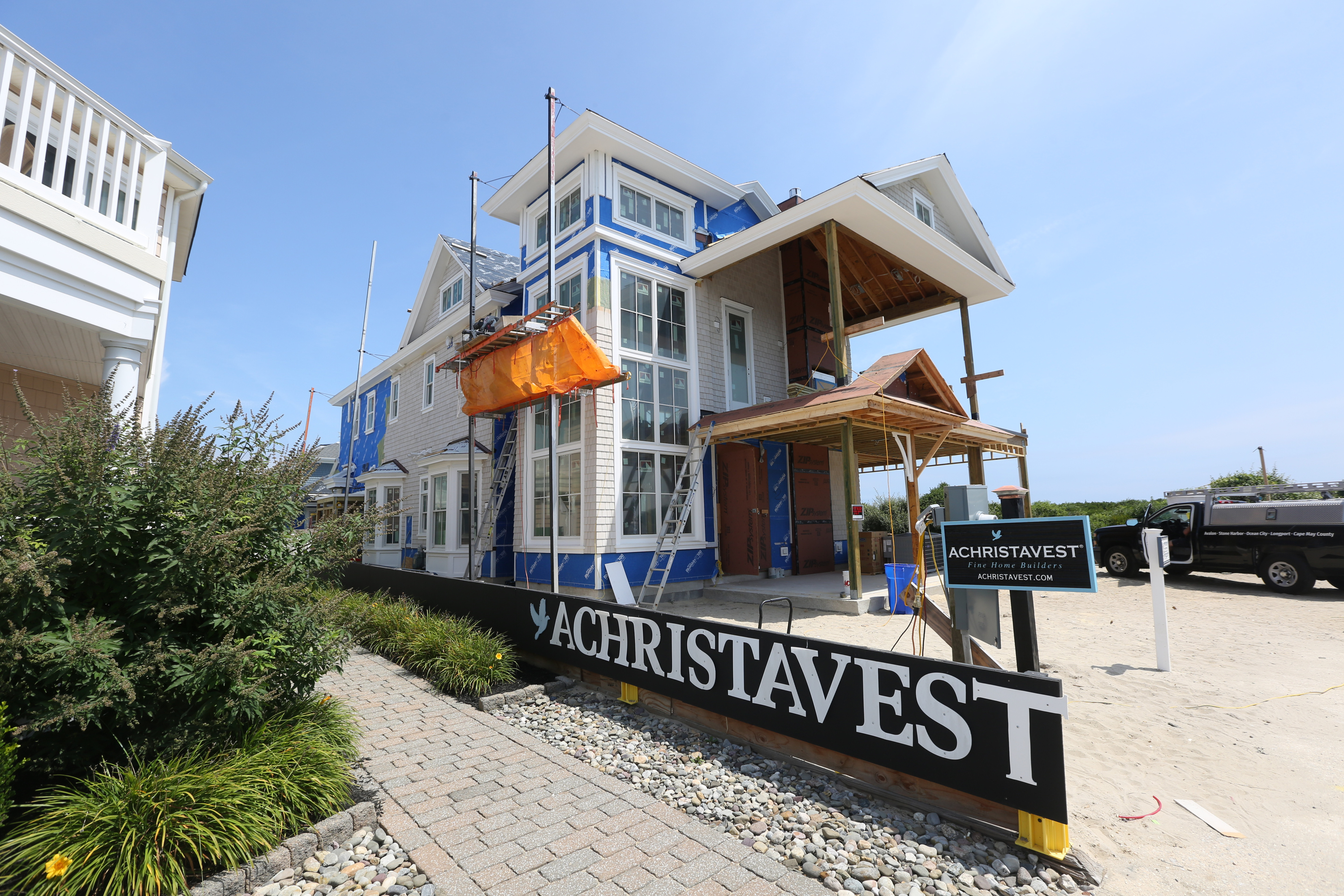
Decades later, Mita leads both Icona Resorts and Achristavest homebuilders, which constructs multimillion-dollar waterfront homes — including a controversial 18,000-square-foot mansion that would be the largest in Avalon. Built on spec, it will likely sell for several tens of millions.
His for-profit companies are all about luxury. At the same time, they are imbued with Mita’s faith: The names, Icona and Achristavest, were inspired by spiritual experiences and words, and he displays 18-inch statues of the Blessed Mother in the hotel lobbies.
On a recent August day,he greeted employees by name and chatted with guests as he walked through Icona Avalon and neighboring Icona Windrift. Later, he visited under-construction homes, rattling off details about each project and staring in awe at the ocean views, as if seeing them for the first time.
Eustace Mita takes in the view from an under-construction Achristavest home on 77th Street in Avalon.Vernon Ogrodnek / For The Inquirer
“Do what you love and the money will come,” Mita said, referencing a lesson he learned from his grandfather, Eustace Wolfington, who owned Avalon’s first beachfront hotel, the Puritan, later renamed the Whitebrier. “That has been so true in my life.”
Mita declined to share how much his companies, which are privately held,are worth, or how much he’s invested in the Shore, saying only that it’s “hundreds and hundreds of millions of dollars” — and counting.
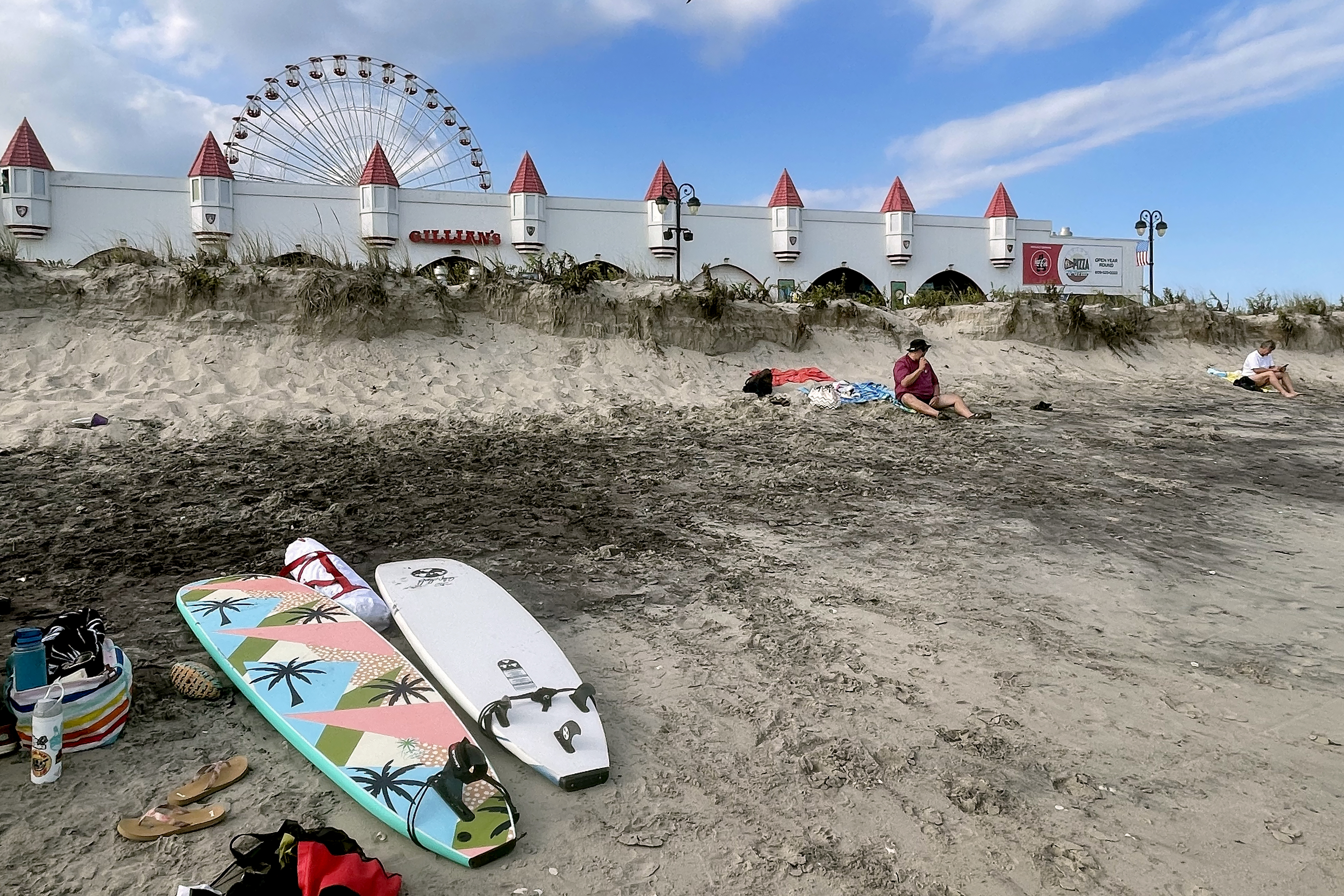
The now-closed Gillian’s Wonderland Pier rose above the dunes at Sixth Street and the Boardwalk in Ocean City during its final weekend in September 2024.Tom Gralish / Staff Photographer
For five years since he boughtthe now-shuttered Gillian’s Wonderland Pier, Mita says he has faced roadblocks and pushback, most recently from community groups who sued Ocean City and its council asking to void the site’s “in need of rehabilitation” designation. The designation allowed council to start talks with Mita about his plans to redevelop the former amusement park.
In a statement announcing the lawsuit, Jack Gutenkunst of Plaza Place Civic Association, one of the neighborhood-group plaintiffs, called the designation “deeply flawed” and said it “seeks to improperly strip away important planning protections that residents have long relied upon.”
“We have [millions] worth of real estate right here that would be degraded by this hotel, and our way of life would be degraded,” said Marie Crawford, who lives behind the pier.
Mita said the project, which has been downsized from the original proposal, would be an asset to Ocean City. The town calls itself “America’s Greatest Family Resort,” he added, but has not opened a new hotel in more than 50 years. He noted that several business owners on the boardwalk and elsewhere have spoken in favor of the project.
“We’re on the pathway now to being able to build Icona Ocean City, but we’ll see,” Mita said. “I don’t take anything for granted.”
Guests eat lunch at Icona Avalon’s Beach Bar on a weekday in August.Vernon Ogrodnek / For The Inquirer
He has his sights on two other potential hotel properties, one in Cape May County, though he wasn’t ready to share details.
Despite many offers, Mita has no interest in selling Icona Resorts. He has told his five grown children that they could do so someday — as long as they don’t sell the prime beachfront real estate where his hotels sit.
For now, his answer to the near-constant acquisition proposals is polite but firm: “Thank you, we’re not interested.”
But, he added with a laugh, “we’ll sell you a house.”
An Achristavest home is under construction on 116th Street in Stone Harbor.Vernon Ogrodnek / For The Inquirer
Mixing faith and luxury down the Shore
In a conference room off the Icona Avalon ballroom, dozens of hotel employees — many of them international workers on J-1 visas — sit facing a projection screen and white board where the company’s guiding principles are about to be reinforced.
Wearing a black Icona polo, black pants, and an unwavering smile, Mita slips into the morning meeting with little fanfare.
A manager kicks off a regular exercise: Stand, introduce yourself, and greet coworkers on either side of you by name. Seated in the back, Mita is among the last to participate, standing ramrod straight and speaking with a joyful lilt.
Randel Davis, general manager of Icona Avalon, leads an employee meeting.Vernon Ogrodnek / For The Inquirer
Whenever possible, managers remind the employees, they should call guests by their names, too.
“The sweetest sound to a person’s ears is the sound of their own name,” Mita said, referencing How to Win Friends and Influence People by Dale Carnegie, one of many books that influenced Mita’s leadership style. The most instrumental, he said, was Greatest Salesman in the World by Christian writer Og Mandino.
Eustace Mita talks about his business and life philosophy in a guest room at Icona Avalon.Vernon Ogrodnek / For The Inquirer
When Mita first placed Blessed Mother statues in his hotels, he said, some suggested it could be “a little too religious.” But he stood by it, saying the Blessed Mother is the matriarch of all people, not just Catholics.
“If you don’t like Mom,” he said, “you don’t have to stay with us.”
More often, Mita said guests compliment the statues. He sees some passersby bless themselves and say a silent prayer.
“We don’t apologize for that,” he said of the iconography. “But we honor all faiths.”
A statue of the Blessed Mother overlooks the pool at Icona Windrift.Vernon Ogrodnek / For The Inquirer
How Icona Resorts were built
In his pursuit of hotels, Mita was particularly motivated by scroll three of Mandino’s work: “I will persist until I succeed.”
After graduating from Archbishop John Carroll High School in 1973and studying for three years at Drexel University, Mita worked in the auto industry. In the 1980s, he founded Mita Leasing, then ran Half-a-Car, a lease-training company, with his uncle, Eustace Wolfington II.
Mita said he “backed into” the hotel industry around the time of the 2008 financial crisis, during which he lost about three-quarters of his net worth.
Back then, Mita’s Achristavest real estate company was knocking down small Shore hotels and building condo complexes, including the Grand at Diamond Beach, which sits between Wildwood Crest and Cape May.
Achristavest acquired the Grand’s neighbor, the Pier 6600 hotel, for $12 million in 2006, Mita said. Then, “Armageddon hit” with the recession.
Home construction at an Archistavest home in Stone Harbor in AugustVernon Ogrodnek / For The Inquirer
“Our homebuilding business didn’t slow down; it literally stopped,” Mita said. When you’re building second homes, “everybody wants one, but they don’t need one.”
While demand for Shore homes remained low, Mita said he found that families were flocking to the hotel for short beach vacations at lower prices. So he went all in on resorts.
The Pier 6600 became Icona Diamond Beach in 2012. Mita has spent $30 million renovating it, he said, including the addition of a third-floor ballroom for its thriving wedding business.
Eustace Mita bought Icona Avalon from the former owners of the Golden Inn in 2015. Vernon Ogrodnek / For The Inquirer
Then, after 16 years of knocking on the door at the Golden Inn in Avalon, Mita acquired the iconic beachfront property for $25 million, which in 2015 was the largest hotel transaction in Cape May County history, he said.
Mita renamed it Icona Avalon. He said he has spent $35 million to remodel it.
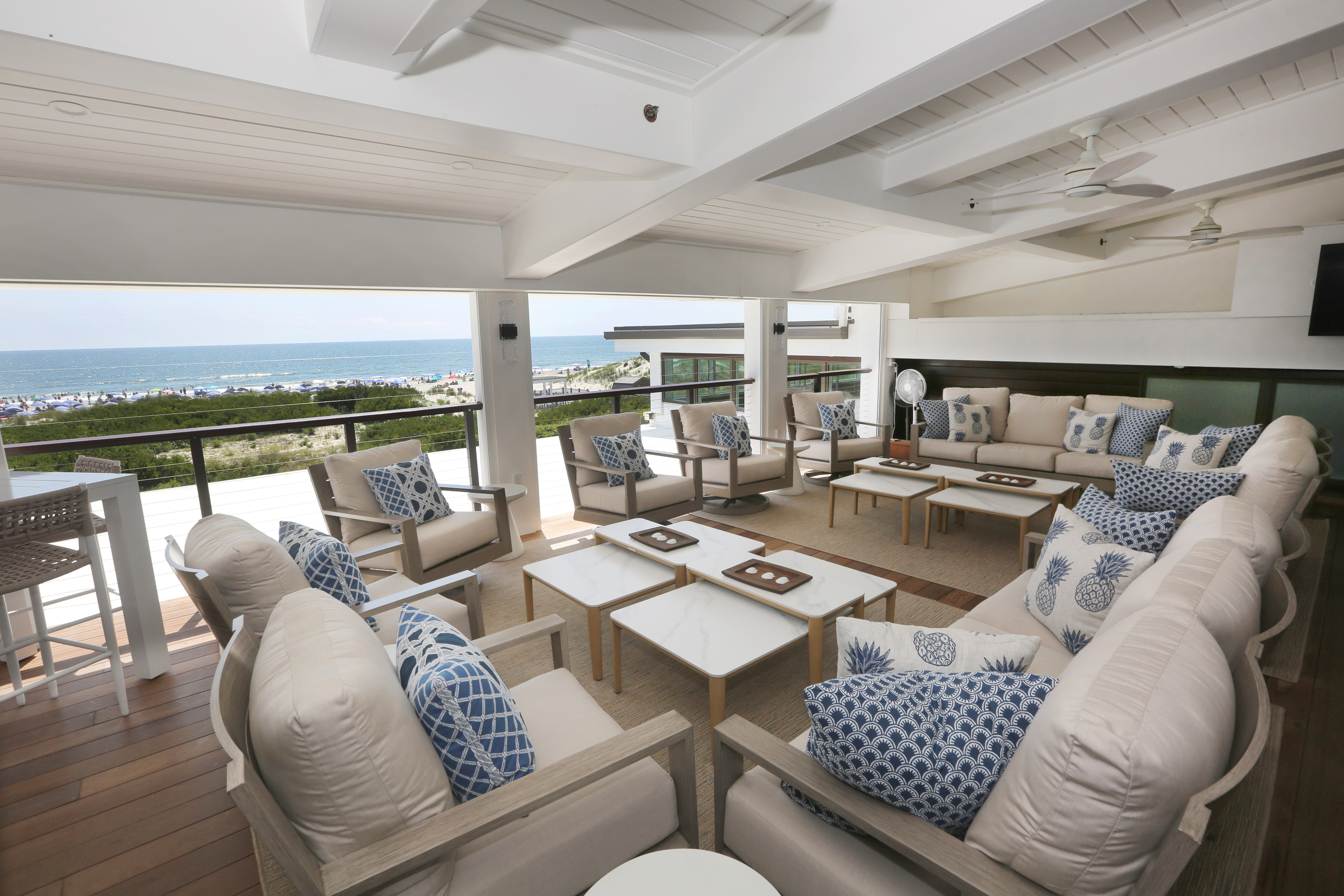
A few years later, he purchased the Windrift hotel next door for more than $30 million and spent $27 million on renovations there, which include the new Avalon Prime steakhouse and a private third-floor “sky lounge.”
The Icona Windrift in Avalon, which Eustace Mita has spent $27 million renovating since he purchased it five years agoVernon Ogrodnek / For The Inquirer
Icona Yacht & Beach Club members, who pay a $7,000 initiation fee plus $5,000 a year, can access the sky lounge, the Icona yacht, private beach service, and shuttle service.
They number about 25 now, Mita said, and he plans to cap membership at around 200 people.
It’s a similar setup as the Union League. The historic club, headquartered on South Broad Street, recently bought Avalon’s iconic Whitebrier for $23 million and last summer made it members-only. The move sparked debate over whether the Shore town was becoming too exclusive for even its wealthy homeowners.
The members-only Sky Bar at Icona Windrift in Avalon sits on the highest point on Seven Mile Beach, according to Eustace Mita.Vernon Ogrodnek / For The Inquirer
The Jersey Shore experience, elevated
While middle-class families have increasingly been priced out of the Shore, Mita said he doesn’t believe his hotels are contributing to the trend.
“We don’t cater to the wealthy,” Mita said, adding that Icona has opened two “select-service” hotels — Mahalo Diamond Beach and Mahalo Cape May — which have fewer amenities and sometimes lower prices.
Rooms there are about $200 a night on shoulder-season weekdays but can cost $500 to $700 on a summer weekend.
At Icona’s full-service resorts in Avalon and Diamond Beach, and its boutique hotel in Cape May, rooms start around $700 a night on peak summer weekends.
A corner guest room at the Icona Avalon.Vernon Ogrodnek / For The Inquirer
Outside South Jersey, Icona’s Grand Victorian boutique hotel in Spring Lake, Monmouth County, has slightly lower rates.
Icona is not the first brand to bring luxe hotel accommodations to Seven Mile Island, which contains Avalon and Stone Harbor.
The Reeds at Shelter Haven, a year-round resort in downtown Stone Harbor, opened a couple years before Icona Avalon. Rooms there start around $600 a night on midsummer weekends.
“It’s great to have healthy competition, right?” the Reeds’ general manager Carmen Russo said. “We always look at them and see what they’re doing, just as they look at us and see what we’re doing.”
Eustace Mita rattles off details about the construction of this Achristavest home on 116th Street in Stone Harbor.Vernon Ogrodnek / For The Inquirer
As for Mita’s home-building business, Achristavest builds on the beach and bay from Cape May to Longport, with properties starting at $5 million. By comparison, the median listing price for all homes — not only waterfront ones — in Stone Harbor is just under $4.7 million.
Achristavest homes being built on spec in Avalon and Stone Harbor will likely sell for $15 million to $25 million.
“I tell my children rent in Delaware County and buy in Cape May County,” said Mita, who grew up in Bala Cynwyd and now has homes in Malvern and Ocean City.
What’s ahead for Icona and Achristavest
Eustace Mita, Icona’s chairman, poses by the pool at Icona Avalon.Vernon Ogrodnek / For The Inquirer
Mita speaks often of his legacy.
“I’ll be dead and gone, but imagine the next generation and then the next generation,” Mita said. “Everything we’ve built is built to last.”
And he said he hopes the lessons he instilled in employees are just as permanent.
One employee, Rob LaScala, worked at Mita Leasing and then went on to found LaScala Restaurant Group, which has dozens of locations across the region. In just a couple years working together, LaScala said, Mita left a mark.
At his Icona Avalon hotel, Eustace Mita points to a black-and-white photo of the Puritan, Avalon’s first beachfront hotel that was founded by his grandfather, Eustace Wolfington.Vernon Ogrodnek / For The Inquirer
Mita is “just a make-you-feel-good type of person,” LaScala said. “I over the years have tried to emulate him” and create a company culture that transcends business.
Mita refers to his 1,100 employees as family but said he works to prioritize time with his actual family. He spends summer weekends with his wife, Susie, and some combination of their five children and 18 grandchildren. His oldest son, Euse, was recently named Icona’s president and CEO.
Eustace Mita (right), founder and chairman of Icona, with his son Euse, who was recently named president and CEO.Vernon Ogrodnek / For The Inquirer
But, of course, he said, work sometimes calls. On a recent weekend, with many summer staffers back at college, Mita helped clear tables at Icona Avalon while Euse was a fill-in valet.
Said Mita: “There’s no reason just because I’m a leader that I can’t bus tables, that I can’t sweep floors.”