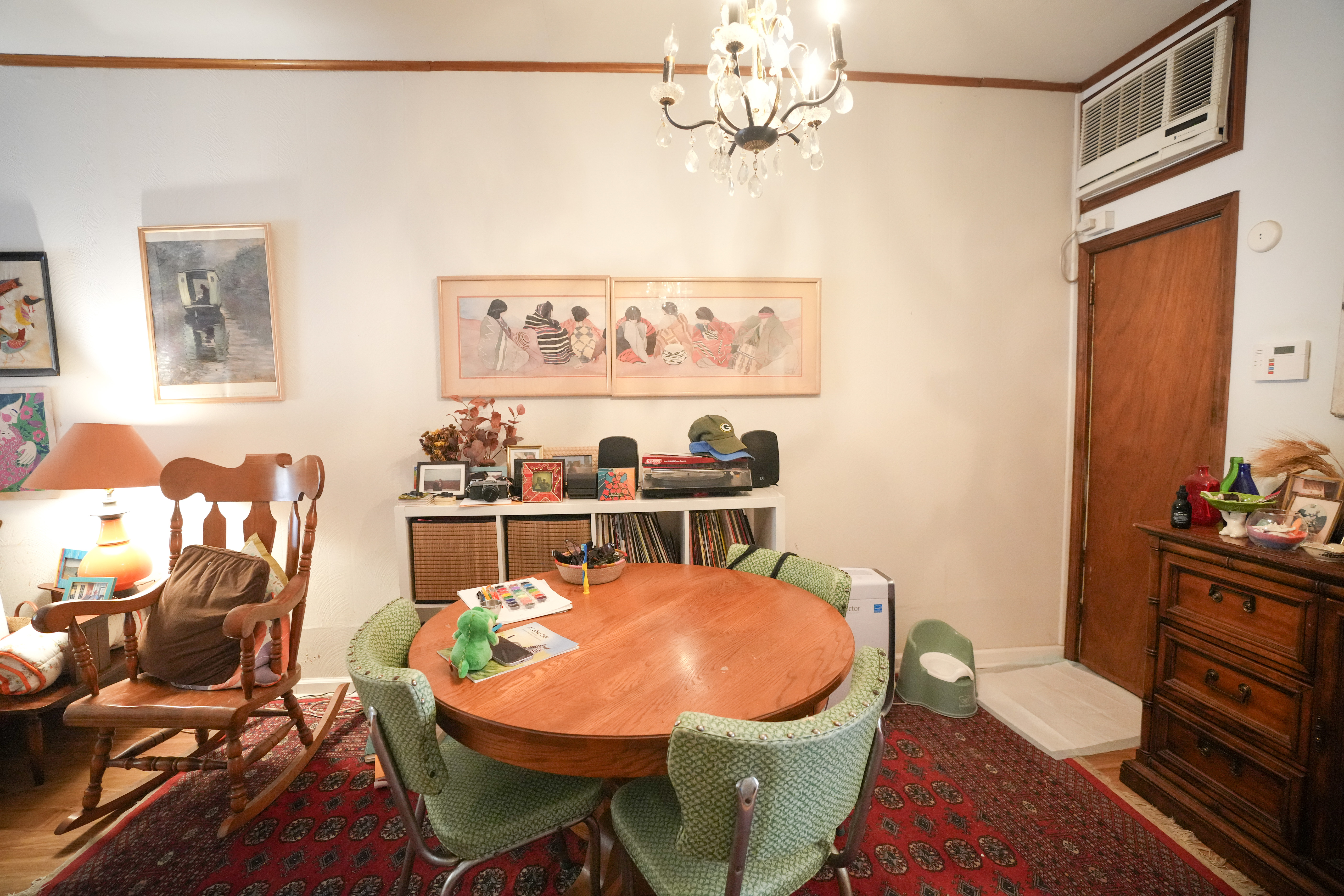
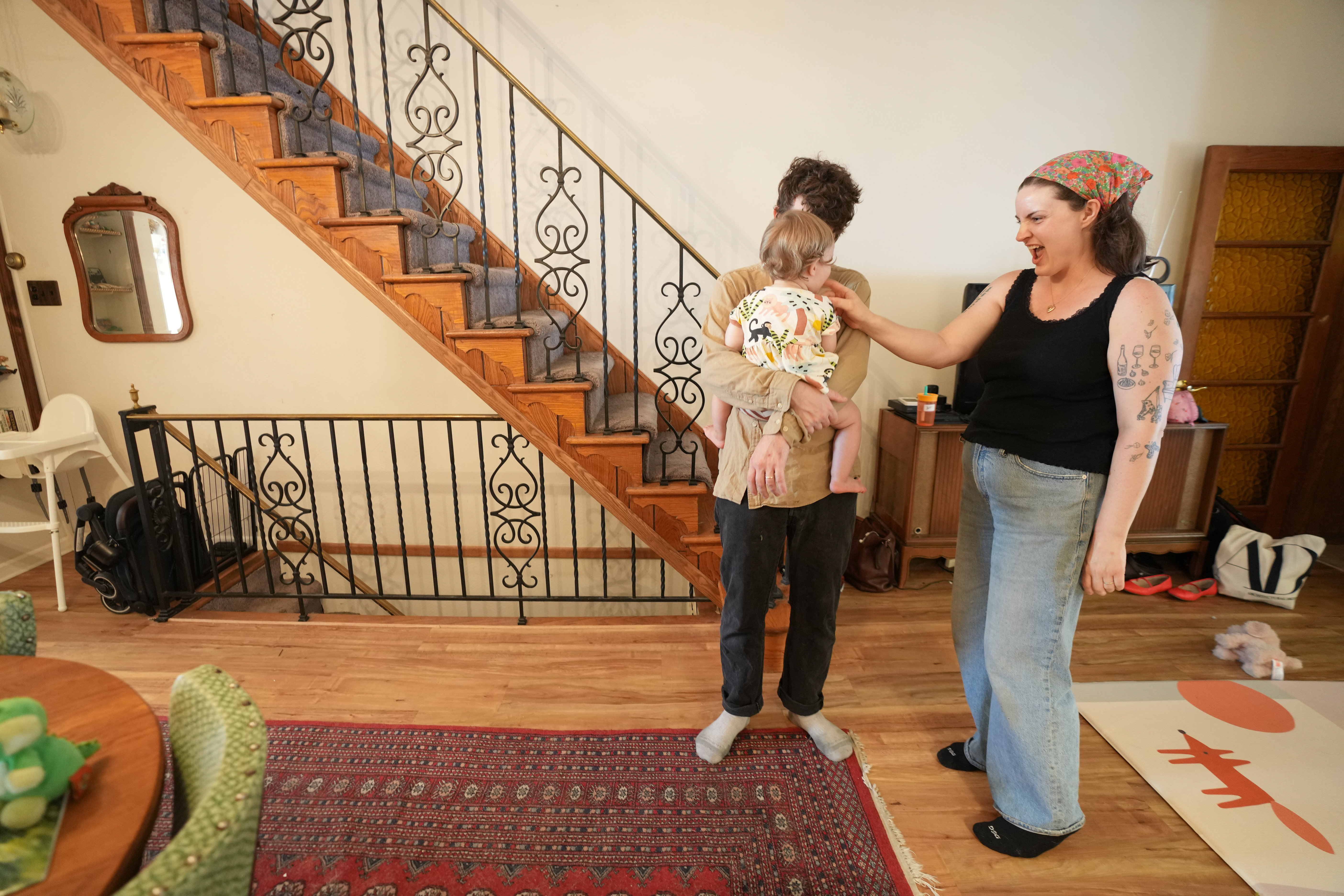
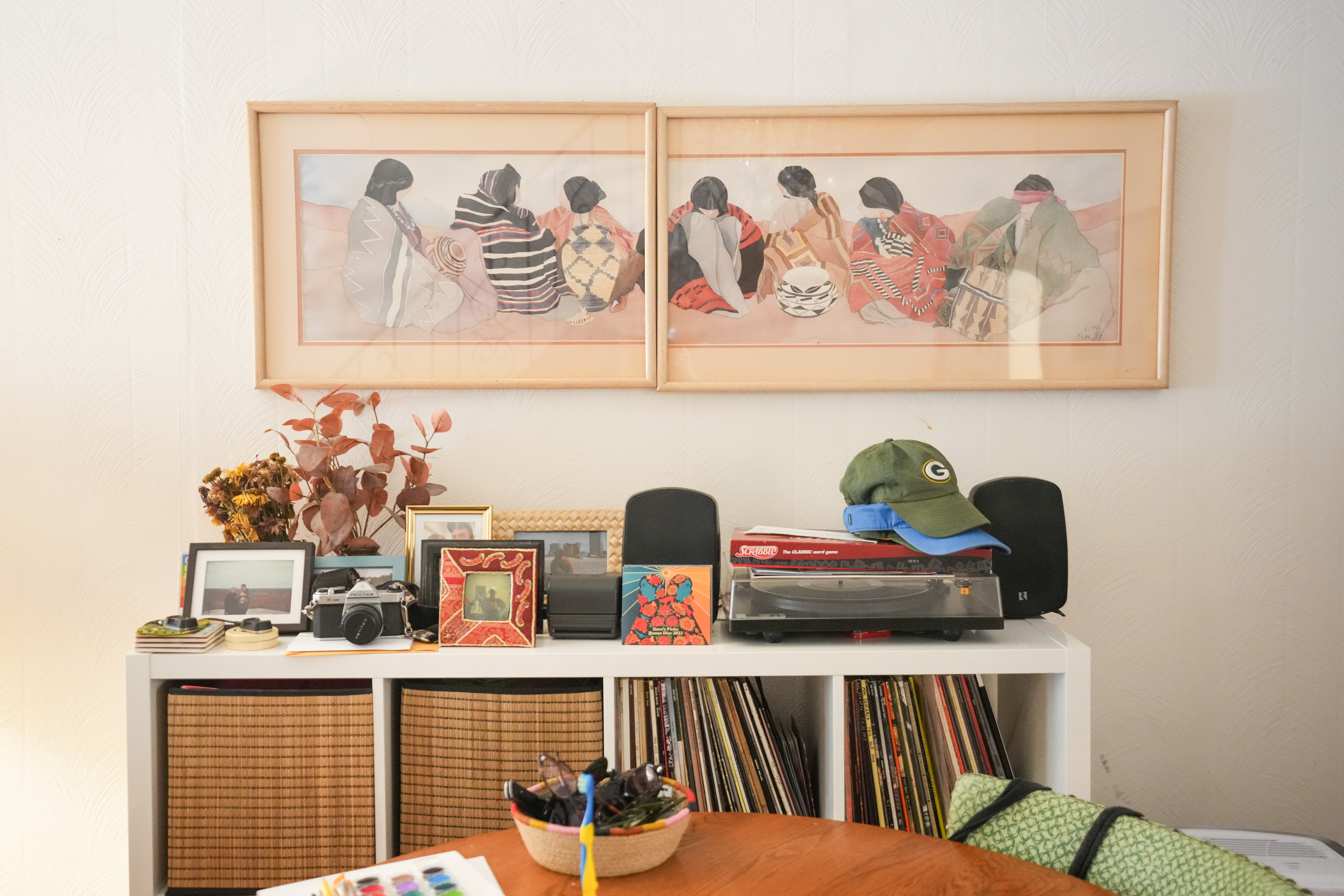
Austin Turnbull loves the idea of making necessary improvements in an older home but retaining its true character.
He found Philadelphia to be fertile ground for such projects and fell in love with the city despite his original intent to stay only a few years. He renovated and sold a house in Fairmount and now plans to sell his home in Graduate Hospital so he can do it a third time in Rittenhouse.
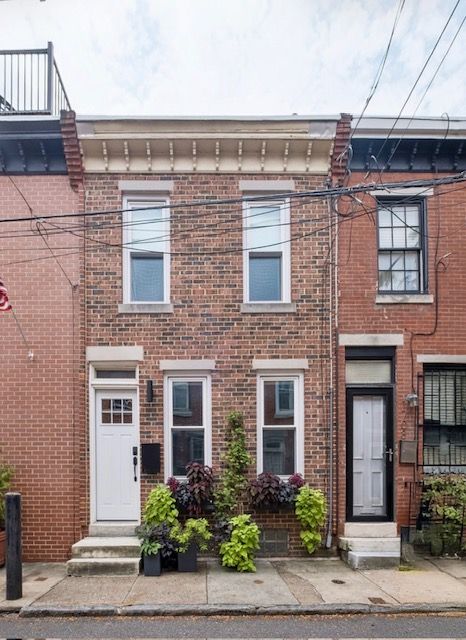
The exterior of the house at 1706 Webster St. in the Graduate Hospital neighborhood. Powelton Digital Media
“I like the concept of being a steward of history,” said Turnbull, a nurse, who does some of the work himself — “painting, demolition, light plumbing, stuff like that” — while contracting out larger jobs like electrical.
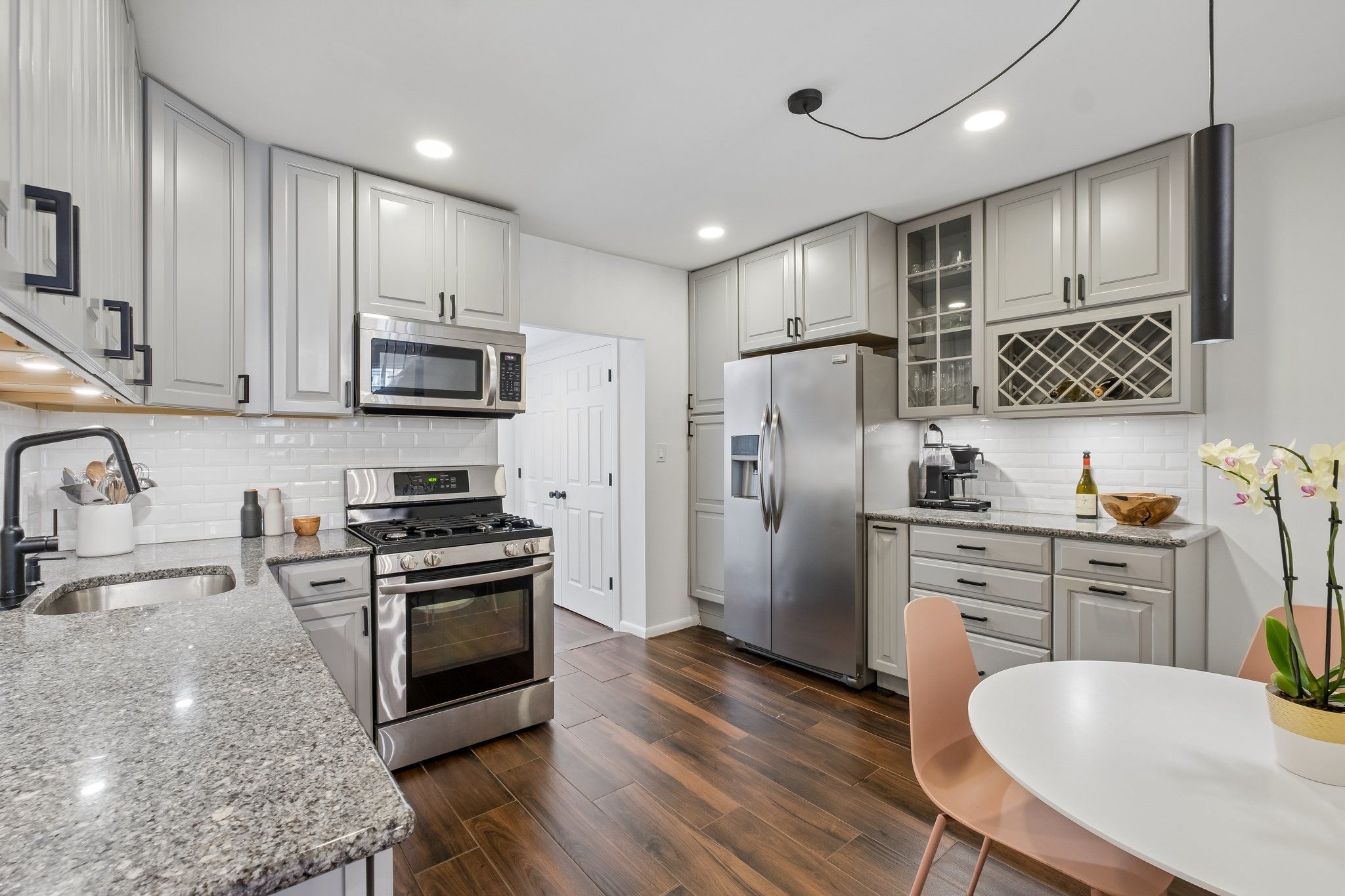
The kitchen has granite countertops.Powelton Digital Media
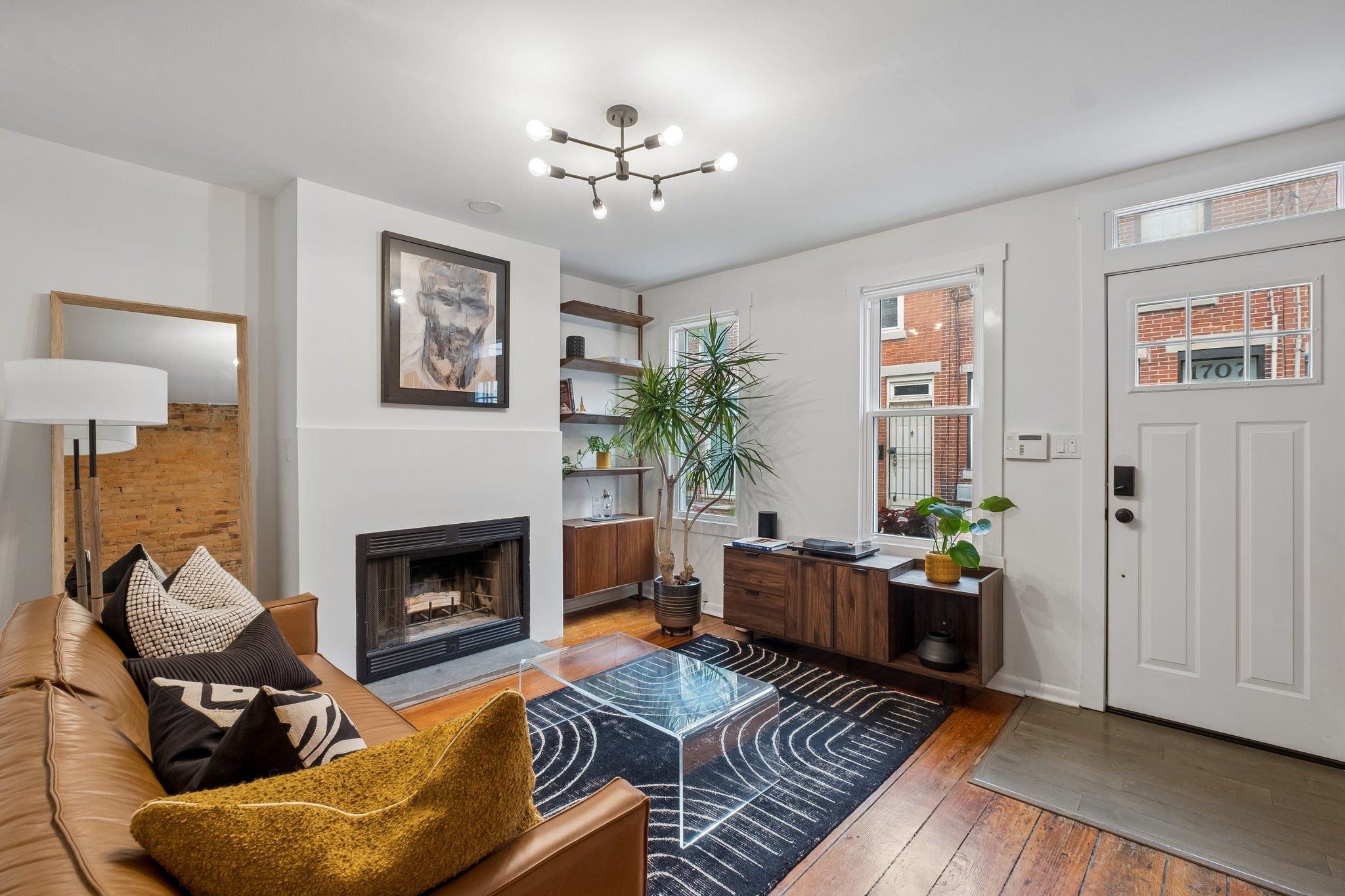
Turnbull bought the 874-square-foot Graduate Hospital house in 2022, struck by, among other things, a staircase going up the center of the two-bedroom, 1½-bathroom home. Plus it was close to his work.
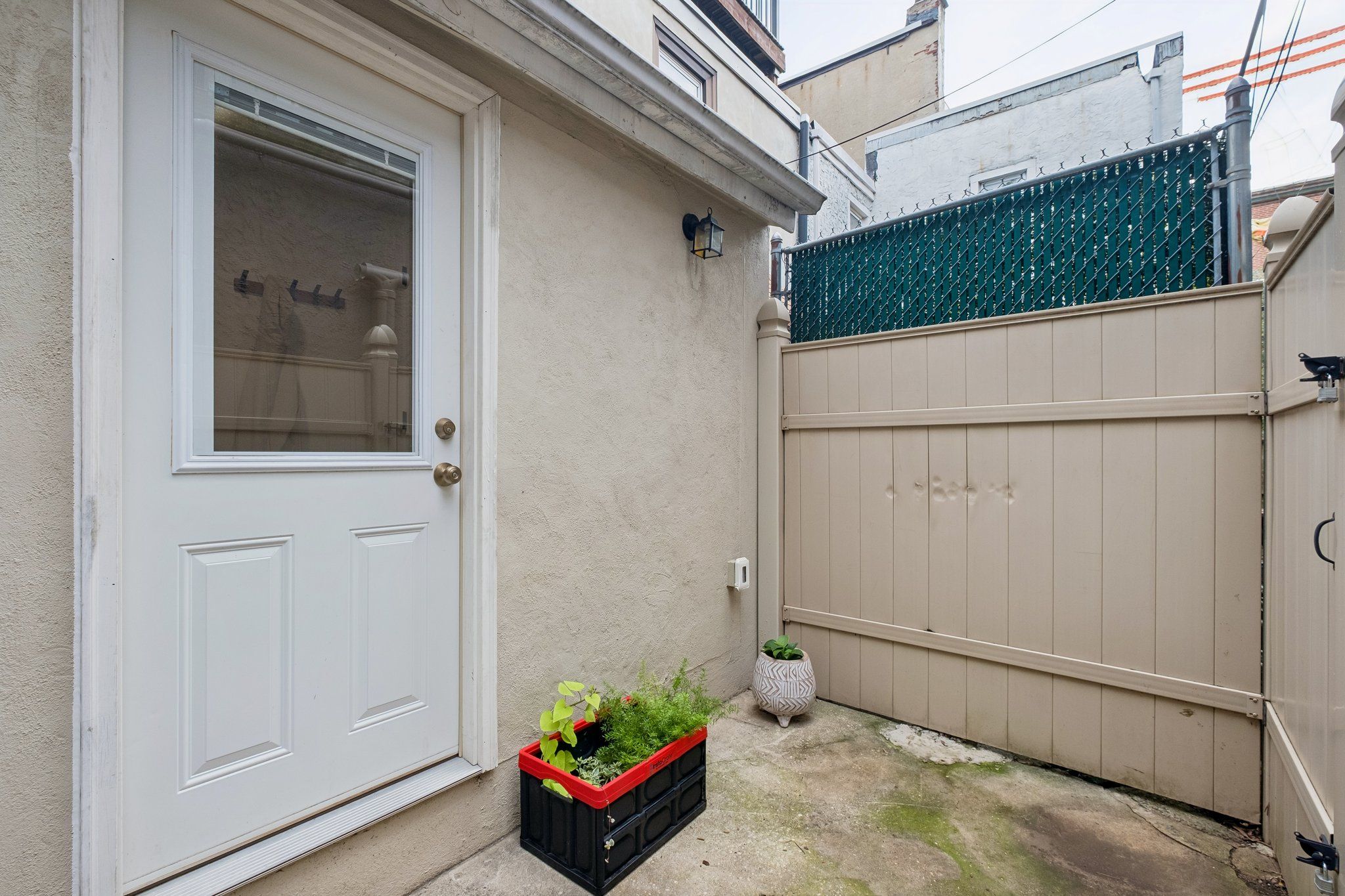
The first floor has an open layout with the living room and a kitchen with granite countertops, a laundry room, a half-bathroom and the door to a back patio and barbecue area.
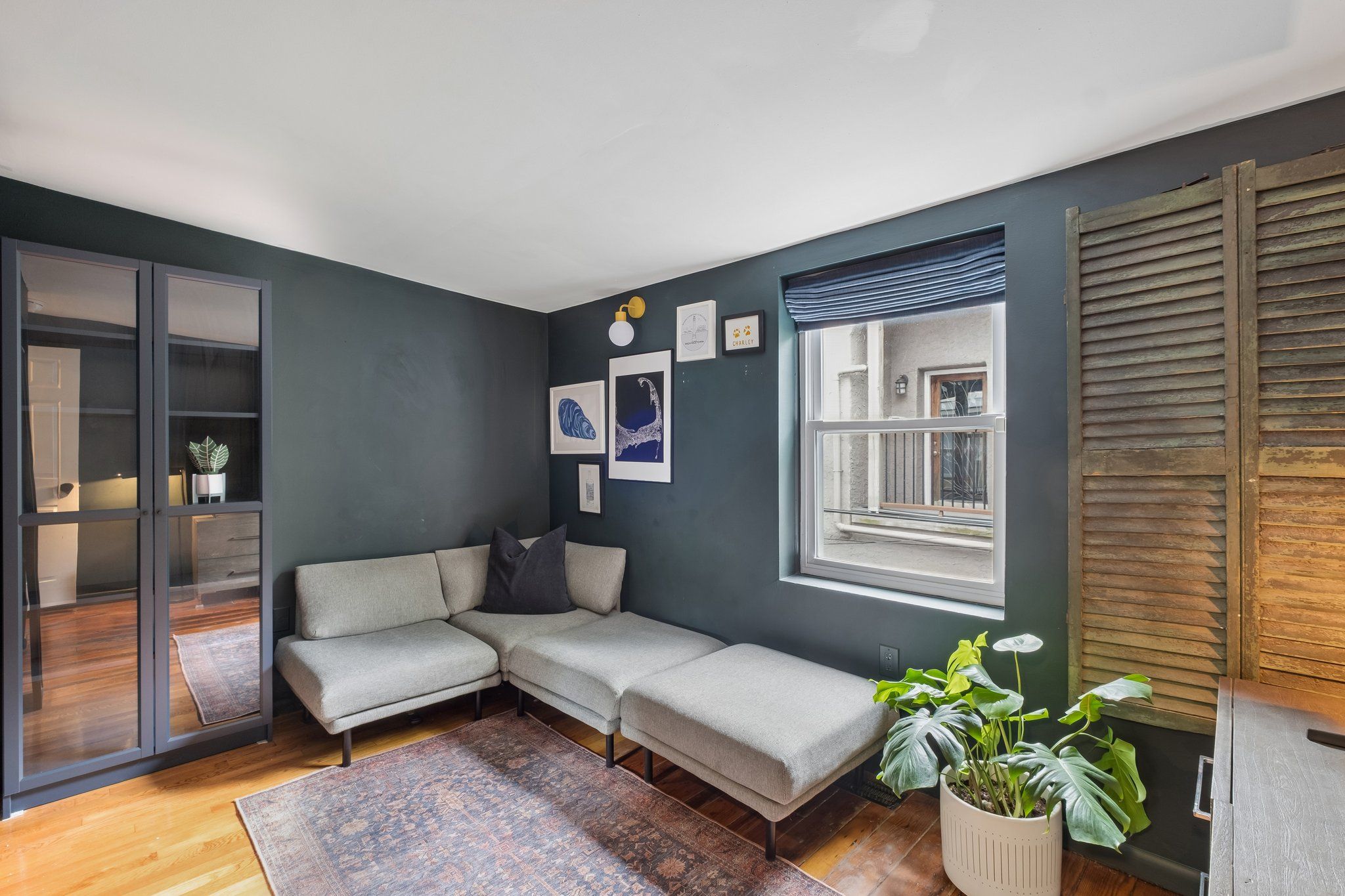
The second bedroom, which is being used as a TV and entertainment area.Powelton Digital Media
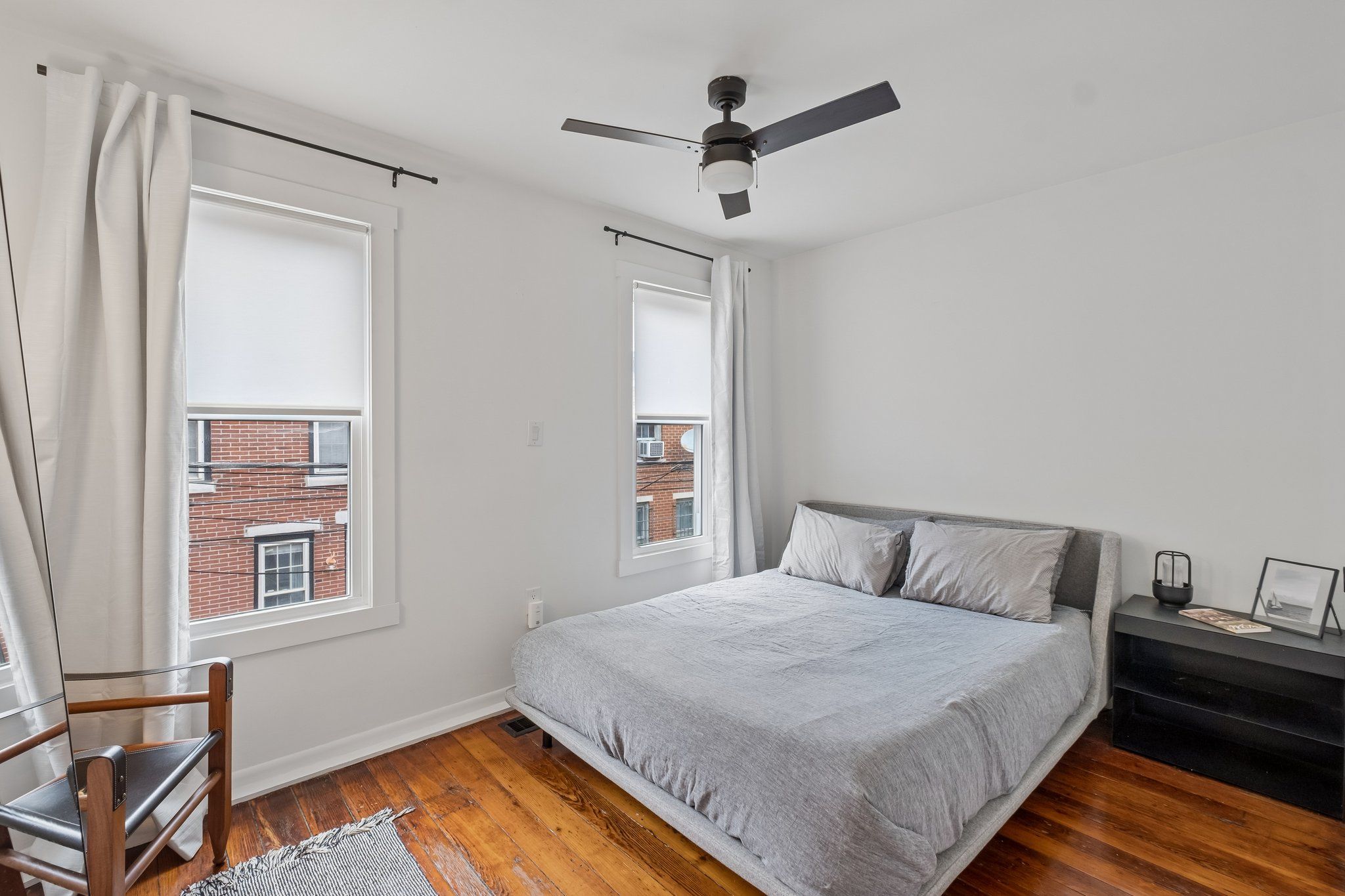
The second floor has the bedrooms, conjoined by a Jack-and-Jill bathroom with a claw-foot tub. Turnbull has used the second bedroom as a TV and entertainment area.
The primary bedroom.Powelton Digital Media
The house has an unfinished basement with storage space.
It is a walkable distance from Rittenhouse Square and Schuylkill River Trail and an easy commute to University City.
It is listed by Pamela Rosser-Thistle of BHHS Fox & Roach at the Harper Rittenhouse Square, for $485,000.
The back patio of the house.Powelton Digital Media
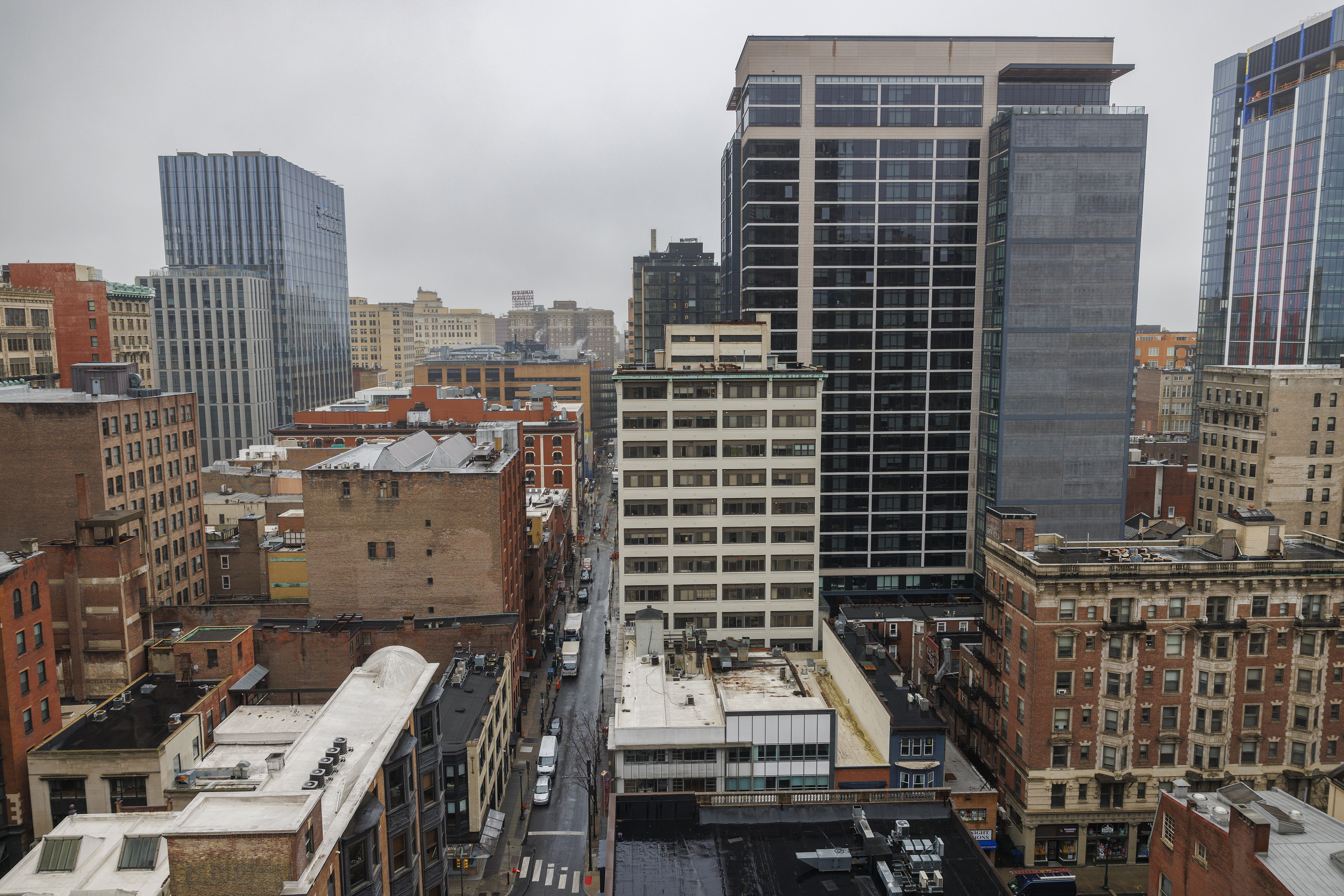
More than 4,000 homes were built in greater Center City — defined by the business improvement district as the area from Girard Avenue to Tasker Street and from the Schuylkill to the Delaware River — between Jan. 1, 2025, and June 30. Over this period, more than 10,000 homes were completed citywide.
(function() { var l = function() { new pym.Parent( ‘cc-housing__graphic’, ‘https://media.inquirer.com/storage/inquirer/ai2html/cc-housing/index.html’); }; if(typeof(pym) === ‘undefined’) { var h = document.getElementsByTagName(‘head’)[0], s = document.createElement(‘script’); s.type = ‘text/javascript’; s.src = ‘https://pym.nprapps.org/pym.v1.min.js’; s.onload = l; h.appendChild(s); } else { l(); } })();
Greater Center City represents 6% of Philadelphia’s land area. But one in eight Philadelphians — more than 206,000 — lived there in 2025.
“It’s not an accident,” said Prema Katari Gupta, Center City District’s president and CEO. She said the area’s concentration of housing reflects deliberate policy choices, the development industry’s willingness to build there, and strong demand for walkable and transit-accessible communities.
“This matters for the whole city, not just for the downtown,” she said. “When Center City and the neighborhoods around it keep adding supply, it takes pressure off rents elsewhere.”
The city’s housing, especially downtown, “has been a source of strength and resilience since the pandemic and beyond and has allowed our city a recovery and renewal that I think a lot of other cities would envy,” she said.
Recent housing construction was spurred byCenter City’s flexible land-use code and developers’ desire to start projects before the full 10-year tax abatement for new construction ended.
And the area has the capacity for much more housing to be built, said Clint Randall, Center City District’s vice president of economic development.
“Center City still has the potential to continue to be this real engine of housing production for the city at large,” he said.
New homes built
Last year was the second-most productive year for housing construction this decade, behind record-breaking 2024. In 2025, 3,175 homes were completed, compared with 3,811 in 2024.
(function(){function e(){window.addEventListener(`message`,function(e){if(e.data[`datawrapper-height`]!==void 0){var t=document.querySelectorAll(`iframe`);for(var n in e.data[`datawrapper-height`])for(var r=0,i;i=t[r];r++)if(i.contentWindow===e.source){var a=e.data[`datawrapper-height`][n]+`px`;i.style.height=a}}})}e()})();
Since the start of Mayor Cherelle L. Parker’s administration in 2024, greater Center City has added more than 7,800 homes — 26% of the mayor’s goal to build or preserve 30,000 homes during her first term.
More than 1,300 homes currently have active construction permits in greater Center City.
Housing construction has slowed as interest rates remain elevated, costs for labor and materials remain unpredictable due to federal policies, and developers complete projects that were part of the flood of permits issued before the end of the full 10-year tax abatement for new construction.
Most of the housing construction in core Center City, defined as Vine Street to Pine Street, were units in office-to-residential conversions.
The L&I data used in Center City District’s report does not distinguish between homes built as rentals and those for ownership. But downtown, most homes constructed last year and the first half of this year were in multifamily buildings, where renting is common.
More housing supply helps moderate rent growth and keep wealthy residents from pushing into more affordable sections of the city.
Compared with downtown Boston, for example, core Center City added a higher share of apartments over the last decade, and rents didn’t grow as much. Rents grewmore slowlyin greater Center City than in Philadelphia and the region.
Future housing growth
Randall said “the most meaningful thing Center City can do” to make housing more affordable for residents “is just be a place where as much housing gets built as possible.”
Core Center City has a concentration of the city’s highest-density zoning districts, but many parcels don’t have as much housing as allowed or don’t have any housing, including surface parking lots.
Center City’s core could accommodate 15,000 to 25,000 more housing units in areas where construction is already allowed, according to Center City District.
The report says: “The density that makes certain pockets of Center City so vibrant and lively can be extended to underutilized and sometimes barren blocks, allowing more people to live in amenity-rich and walkable areas.”
The business improvement district celebrated recent legislation that eliminated parking minimums — a major cost barrier to development — in high-density mixed-use zoning districts.
Downtown demand
Core Center City’s population grew by roughly 5% in 2025, according to anonymized cell phone data from Placer.ai. In the zip codes immediately to the north and south, the population grew by just over 3%. By comparison, Philadelphia’s population grew by 1.7%.
Center City’s population density of more than 24,500 residents per square mile is more than double the citywide average density.
(function(){function e(){window.addEventListener(`message`,function(e){if(e.data[`datawrapper-height`]!==void 0){var t=document.querySelectorAll(`iframe`);for(var n in e.data[`datawrapper-height`])for(var r=0,i;i=t[r];r++)if(i.contentWindow===e.source){var a=e.data[`datawrapper-height`][n]+`px`;i.style.height=a}}})}e()})();
Households in greater Center City are smaller and make more money than households across Philadelphia or in the Philadelphia metropolitan area.
A Center City District survey of apartment residents last year found that 44% of respondents moved to Philadelphia’s downtown core from outside the region, and 41% moved downtown from other parts of the city.
Strong demand has helped fill the influx of homes that have hit the market in recent years. In core Center City, 92% of homes are occupied. In the zip codes directly to the north and south, 88% of homes are occupied.
The King of Prussia building that hosts Netflix House has sold for $60 million to a developer aiming to invest in experiential business properties.
The more-than-100,000-square-foot building at 180 N. Gulph Rd. has been up for sale since 2024 — a year before the streaming company’s first immersive entertainment venue opened inside it last fall.
The 2024 listing noted that Netflix had already signed a 10-year lease to begin Dec. 31 of that year, according to the Philadelphia Business Journal.
Executives of buyer EPR Properties indicated after the sale in June that the tenancy of Netflix House, which offers activities like mini golf and virtual reality gamesinspired by its shows, including Stranger Things and Squid Game, was part of the appeal.
“We are pleased to welcome Netflix as a new partner through our acquisition of Netflix House in King of Prussia, Pennsylvania,” EPR’s CEO Gregory Silvers said on a July earnings call.
Missouri-based EPR Properties has aimed to expand its portfolio of experiential business properties, according to its website, amid a broader national shift toward experience-based commerce.
EPR bought the property from an LLC associated with the former owner of Lord & Taylor, a department store that long occupied the two-story building, but closed during the COVID-19 pandemic.
This suburban content is produced with support from the Leslie Miller and Richard Worley Foundation and The Lenfest Institute for Journalism. Editorial content is created independently of the project donors. Gifts to support The Inquirer’s high-impact journalism can be made at inquirer.com/donate. A list of Lenfest Institute donors can be found at lenfestinstitute.org/supporters.
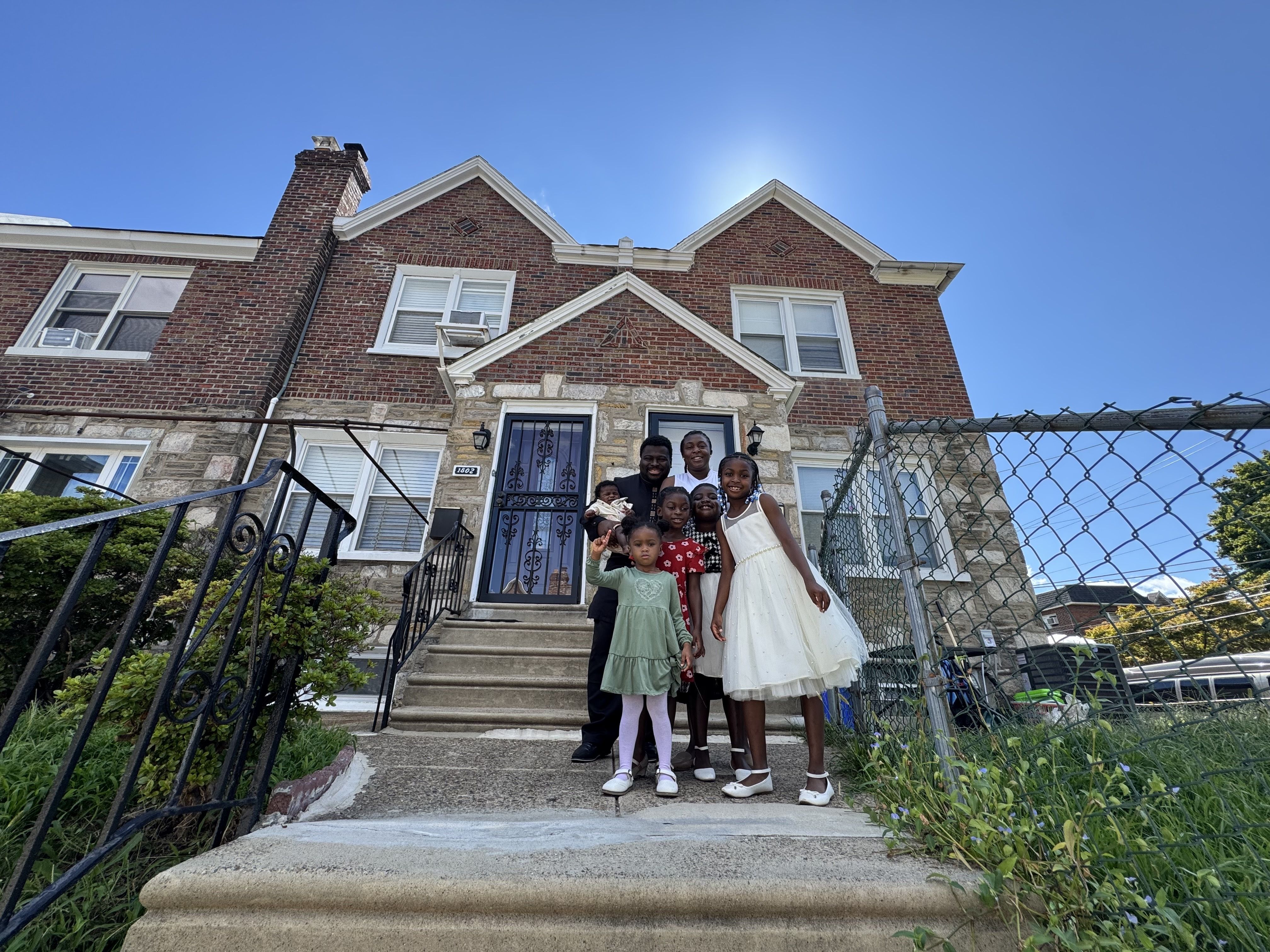
Charmira and Quincy Pilgrim wanted to become homeowners a decade ago when they got married.
But over the years, job losses, jobs that didn’t pay enough, children, unpaid maternity leave, and risingcosts of living made saving for homeownership impossible.
They were finally able to start putting money away late last year. And this spring, they found a $315,000 house they wanted to buy in West Oak Lane. But they were short thousands of dollars for their down payment and closing costs.
What got them and their five children into their new home was a $10,000 first-time homebuyer grant funded by a group of Quakers in Germantown.
“It was a blessing that I ended up getting the grant because money was tight,” said Charmira, a 32-year-old special-education teacher and case manager.
Up-front cost is a common barrier to homeownership for renters in Philadelphia and across the country. Grants for down payments and closing costs can help aspiring homeowners get in the door. Governments, mortgage lenders, and nonprofits are common funders.
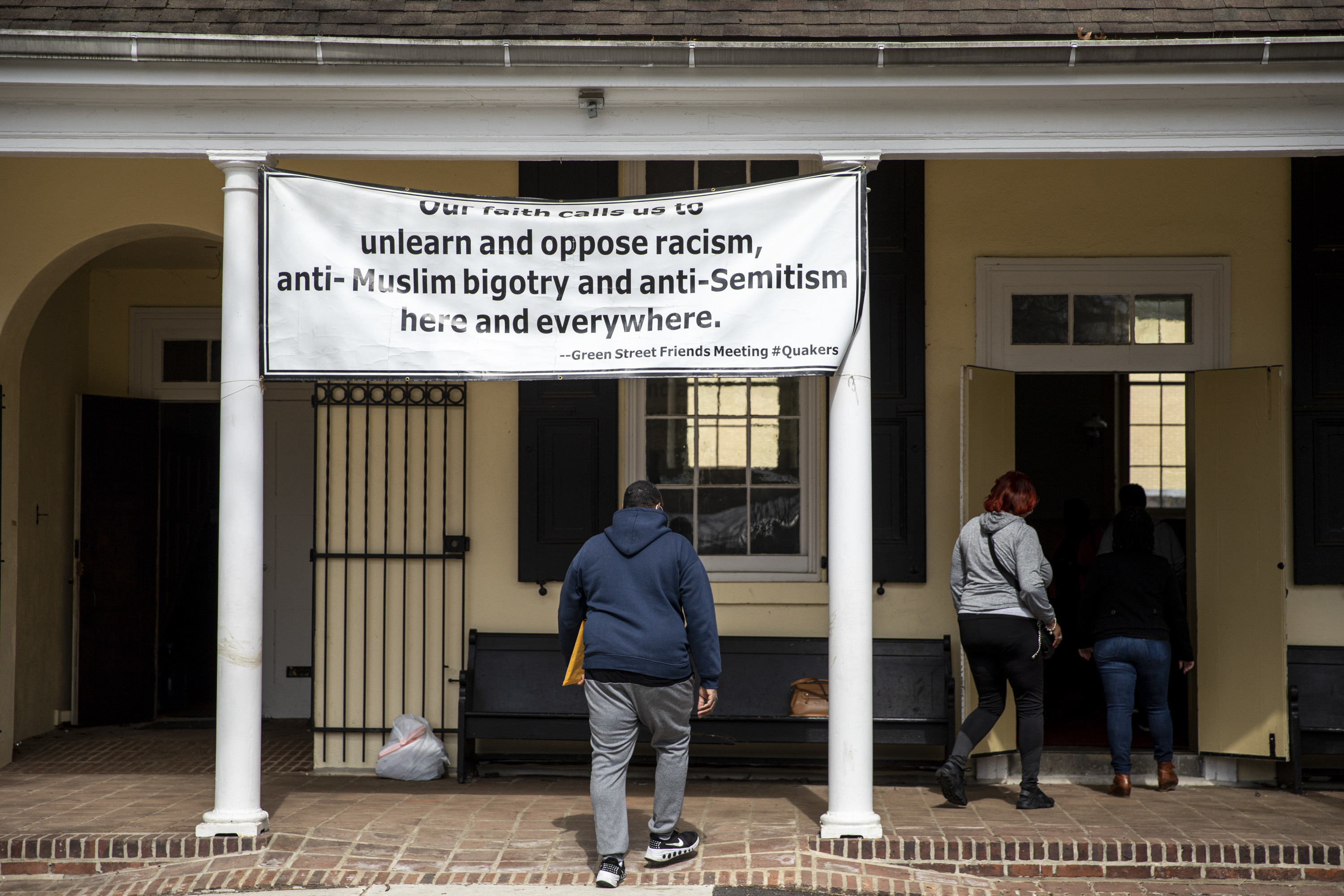
That’s what makes the Pilgrims’ grant stand out. It’s one of five $10,000 grants that Green Street Friends Meeting, a Quaker congregation in Germantown, is funding to help people buy their first homes. It’s part of the congregation’s racial justice plan to redistribute wealth to Black residents in the Germantown area as a form of reparations.
When Green Street announced the homebuyer grants in March, it said it sees reparations as “economic and spiritual repair for the intergenerational harms of slavery, Jim Crow, and their afterlives.” Reparations, it said, are “intended to address the theft and pillaging of Black wealth” for hundreds of years through systemic discrimination.
Lucy Duncan, a member of Green Street, said the homebuyer grants are “a redistribution of wealth that’s about fairness and equity.”
The goal is to keep Black residents from being priced out of their communities and “provide resources to help maintain Black Germantown,” she said.
Rebecca L. Grant, a Black member of Green Street’s reparations committee who has been a Germantown homeowner for 22 years, said the committee wanted to eliminate a hurdle to homeownership and the wealth it can create for Black residents.
“We knew these grants wouldn’t undo generations of discrimination,” Grant said, ”but we thought we could make a difference one family at a time.”
How the homebuyer grants work
To distribute the grants, Green Street partnered with birdSEED, a Washington-based nonprofit that aims to reduce racial wealth gaps in the Washington and Philadelphia areas. As part of its work, the nonprofit helps members of historically disadvantaged communities buy their first homes.
The Quaker congregation contributed funds to birdSEED’s Housing Justice Grant Program and required that its money go to Black homebuyers purchasing in the 19144 or 19138 zip codes.
West Oak Lane is one of the communities where homebuyers can use grants from Green Street Friends Meeting to purchase properties.Michaelle Bond / Staff
In the Philadelphia area, birdSEED typically awards grants of between $5,000 and $10,000 for down payments and closing costs. An advisory board reviews applications and interviews top candidates. The board scores applicants based on their readiness to purchase a home and the impact the grant would have, said Leslie Case, birdSEED’s co-executive director.
Candidates need to have lived in the area in which they are buying for at least three years. They cannot have purchased a home before. And their household can make up to $150,000 a year. Preference is given to populations who have historically faced barriers to homeownership.
The nonprofit has awarded about 40 homebuying grants so far in the Philadelphia region, which includes surrounding counties in Pennsylvania and New Jersey.
Maegan Scott, birdSEED’s co-executive director, said the grants funded by Green Street represent “momentum” as the nonprofit seeks to expand its presence in the Philadelphia area.
A majority of the nonprofit’s housing justice grants have gone to first-generation homebuyers. But a common thread ties all applicants together.
“Everyone’s looking for stability,” Scott said. “Everyone is looking ahead to the next generation, the generation after that.”
Green Street’s reparations initiative
In June 2021, Green Street pledged to spend $50,000 a year for 10 years as part of its reparations work, spurred by a moral calling and the realization that the congregation had a large pot of money in unrestricted reserves.
In about a year and a half, clinics to resolve and prevent tangled titles preserved more than $11.3 million in housing wealth for more than 85 families by protecting homes that might otherwise have been lost because of unclear legal ownership, according to Green Street. It was a massive return on the $25,000 the congregation spent on fines and legal services for families who didn’t qualify for free legal help.
Green Street Friends Meeting in Germantown welcomed neighborhood residents to its meetinghouse in April 2022 to get help with tangled titles and estate planning at a legal clinic it hosted.TYGER WILLIAMS / Staff Photographer
Over the last few years, Green Street’s reparations work has included music education for Black youth, funds for Black midwives in Germantown and a new birthing center in Mount Airy, estate planning services, and additional housing support.
“We didn’t want the reparations to just be about acknowledging a painful history,” Grant, the reparations committee member, said. “We want it to be about what we can do now.”
The Pilgrims and one other family have bought homes using Green Street’s grants so far.
Duncan, at Green Street, said that when birdSEED sent her the first pictures of the families, “I almost started to cry.”
“It’s such tangible and long-term impact for these families,” she said. “And hopefully, generational impact.”
A home of their own
Charmira and Quincy Pilgrim closed on their three-bedroom house at the end of May, about a month before their fifth child was born.
The children, the oldest of whom is 8, love playing in the side yard, backyard, and finished basement. Charmira loves to cook, and she now has a big kitchen. The house is close to biological family and church family.
Charmira said being a homeowner “means freedom.” She has started planning future upgrades for her home.
“It feels good to have ownership. It feels good to be in a space I can create a vision for,” she said. “I see this as an opportunity for my kids to have a legacy.”
The story that’s told about Germantown’s downtown is often one of disinvestment, but a small contingent of community stakeholders and business owners are hoping to spin a new yarn.
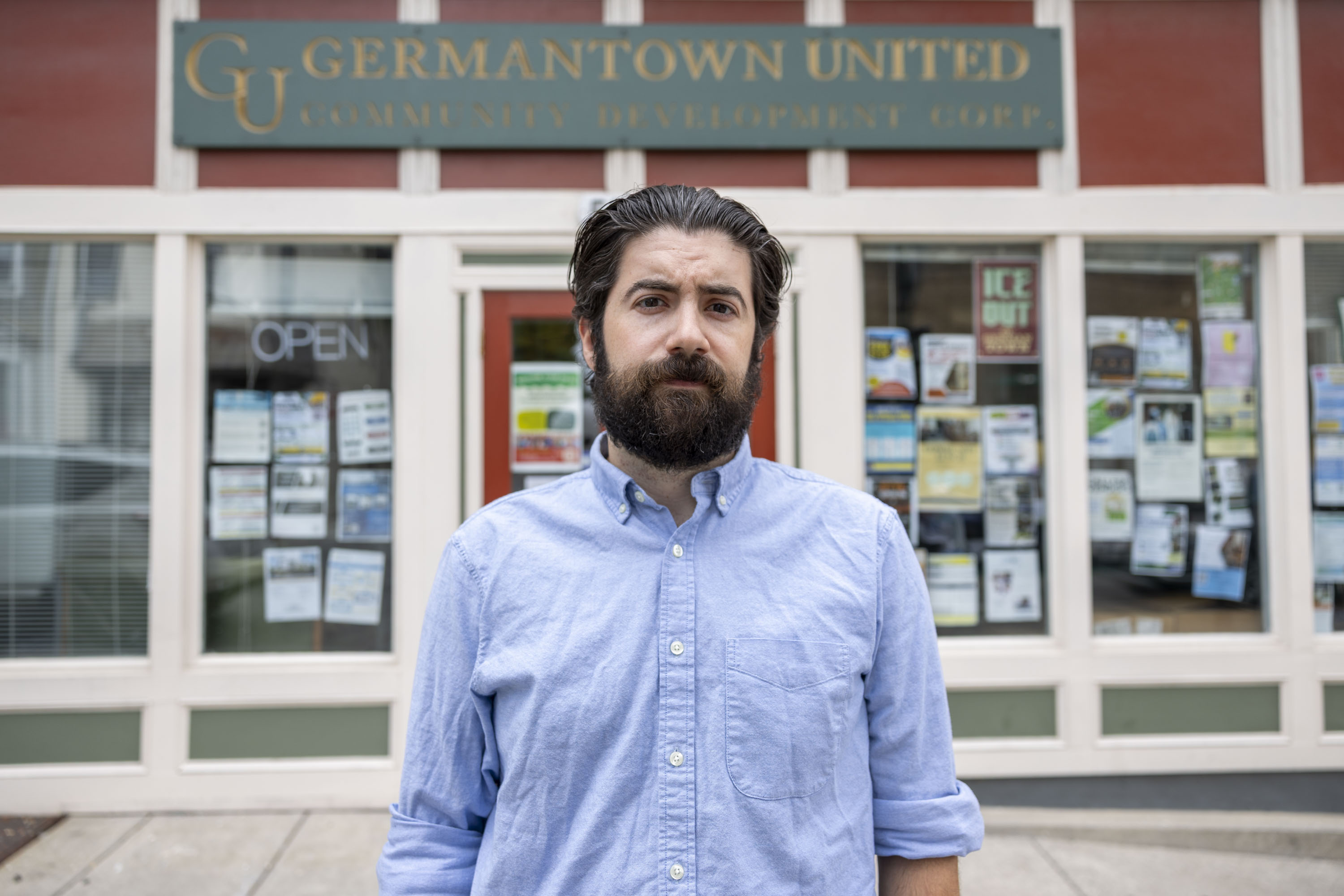
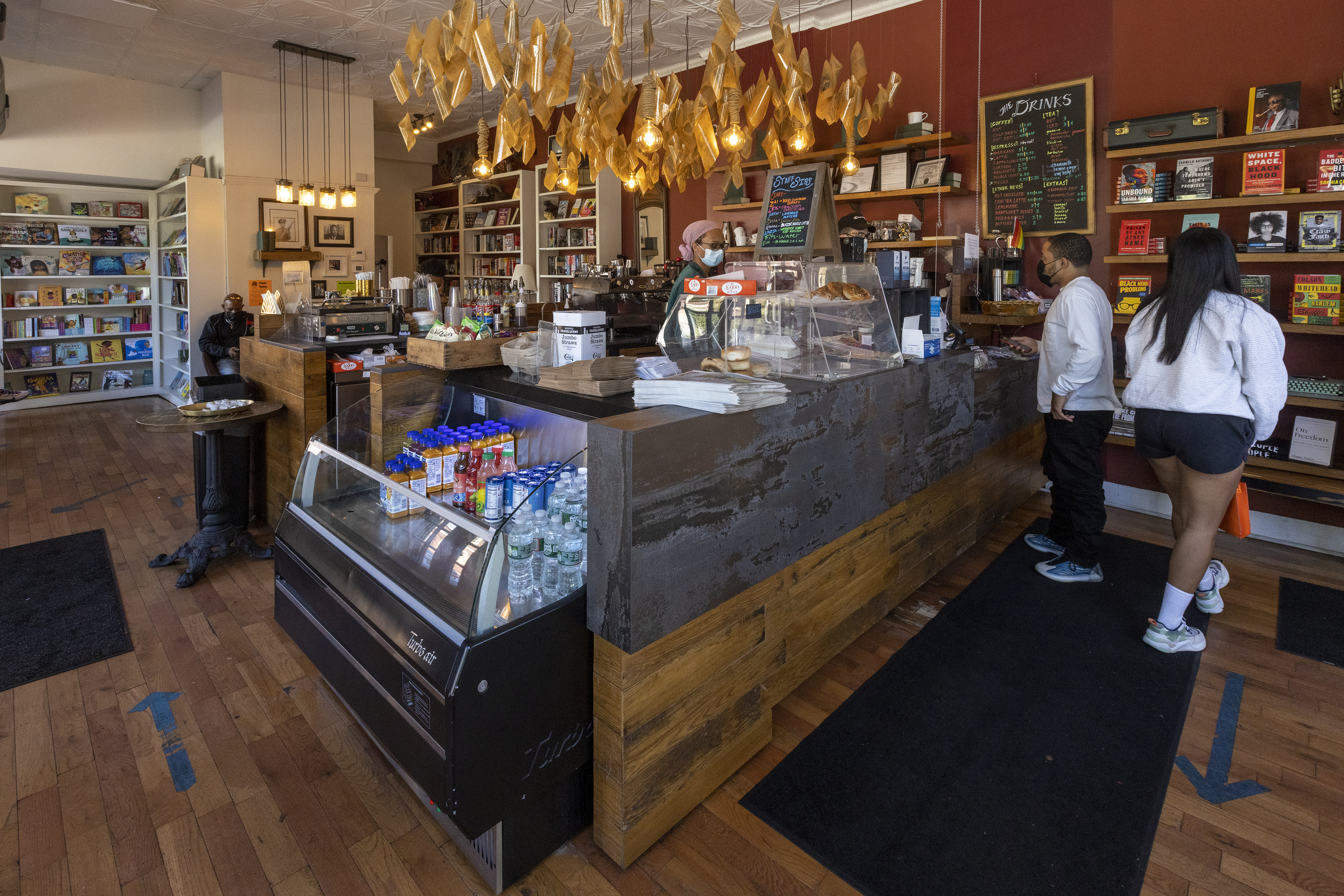
But forces big and small are working to revitalize the community: Germantown United, the neighborhood’s community development corporation (CDC), recently completed a plan to make Germantown’s business district more walkable. Historic Germantown, the neighborhood’s historical society, in July unveiled its new visitors center that aims to connect Philadelphians and visitors to the area’s deep history. And buzzy storefronts including Uncle Bobbie’s Coffee & Books, Salam Cafe, Weavers Way Co-op, Cupbearer Coffee, and Attic Brewing bring much-needed services and third spaces to the neighborhood.
Interior of Uncle Bobbie’s Coffee & Books, 5445 Germantown Ave. Alejandro A. Alvarez / Staff Photographer
Leo Dillinger IV, the executive director of Germantown United, said new businesses have been reaching out to the CDC, the first step to lifting the business district up, “but with everything, it takes time.”
“We don’t want the corridor to change like a light switch and all of a sudden it’s actively populated with a bunch of businesses that aren’t offering affordable goods and services,” Dillinger said. “That leads into the fears of gentrification and displacement that are a major concern for the Germantown community.”
Connecting corridors in Germantown
While it has the CDC, Germantown lacks a business improvement district to fund and oversee improvements to the area. And with the 2019 disbanding of the Germantown Special Services District, after accusations of mismanagement and misappropriation of funds, the neighborhood lost a body tasked with keeping its main business corridors clean.
“We lack structure in order to have a commercial district that is thriving,” said Patrick Jones, a Germantown resident who has organized community members around efforts to redevelop its public spaces and city-owned large vacant properties. “A lot of us feel as though Germantown is a forgotten community in the 8th Council District.”
Jones said residents would like to see Germantown bring in a selection of sit-down restaurants and middle-class big box stores like Target or Giant. Dillinger said the CDC gets similar feedback.
“Right now if you want to sit down and have a nice meal, you have to go outside of Germantown to do that,” Jones said. The addition of Uncle Bobbie’s and its cafe in 2017 “started moving us in the right direction, but we want to see an actual restaurant in Germantown, and it’s just difficult to do that with the way things are right now.”
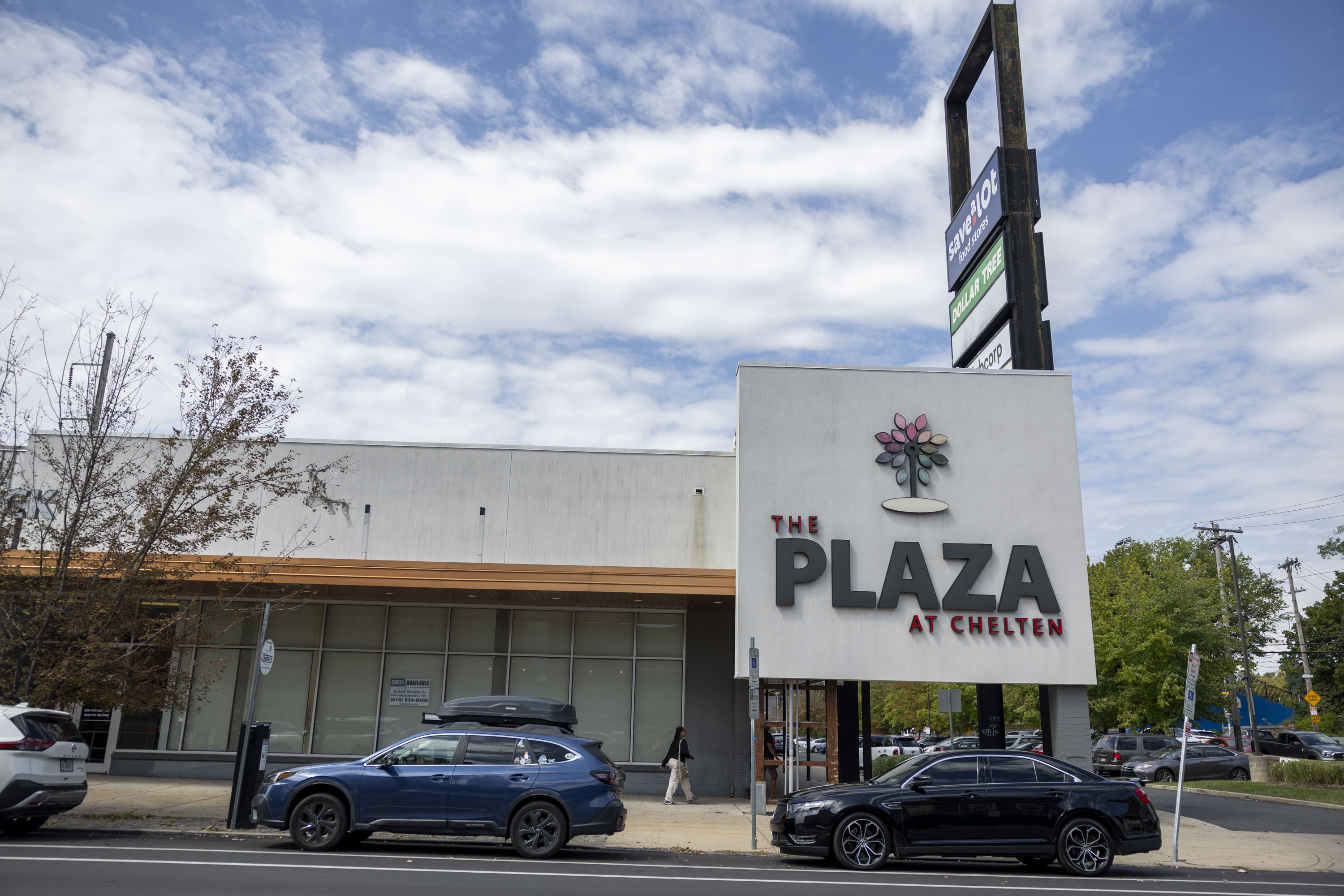
The outside of the Plaza at Chelten in Germantown.Tyger Williams / Staff Photographer
Having more organizational support beyond the CDC might allow that, he says.
“We’re lacking the resources to put attention towards advocating for ourselves,” said Laura Lacy, co-owner of Attic Brewing Co., near Wayne Junction. “You can immediately see the change when you’re driving [out of Germantown]. As you get into Mount Airy, you start to see hanging flower baskets and landscaping on corners and trash cans.”
The neighborhood’s existing business hubs also feel disconnected. That’s an issue that Germantown United is addressing with a five-year plan to better connect West Chelten Avenue, Maplewood Mall, and Market Square for pedestrians. They’re pushing for better overhead lighting, connecting business owners with the Department of Commerce’s business security camera program, and addressing cleanliness and improving greenery.
The plan also includes connecting with absentee landlords to discuss how their properties can better serve the community, Dillinger said. These landlords are at the heart of the problem, locals say.
“There’s just a lot of commercial property owners who don’t care,” Dillinger said. “There are some who do and are invested in their properties and making sure that their tenants succeed. There are also commercial properties that are sitting in a portfolio of developers’ and, as a result, they just start to deteriorate.”
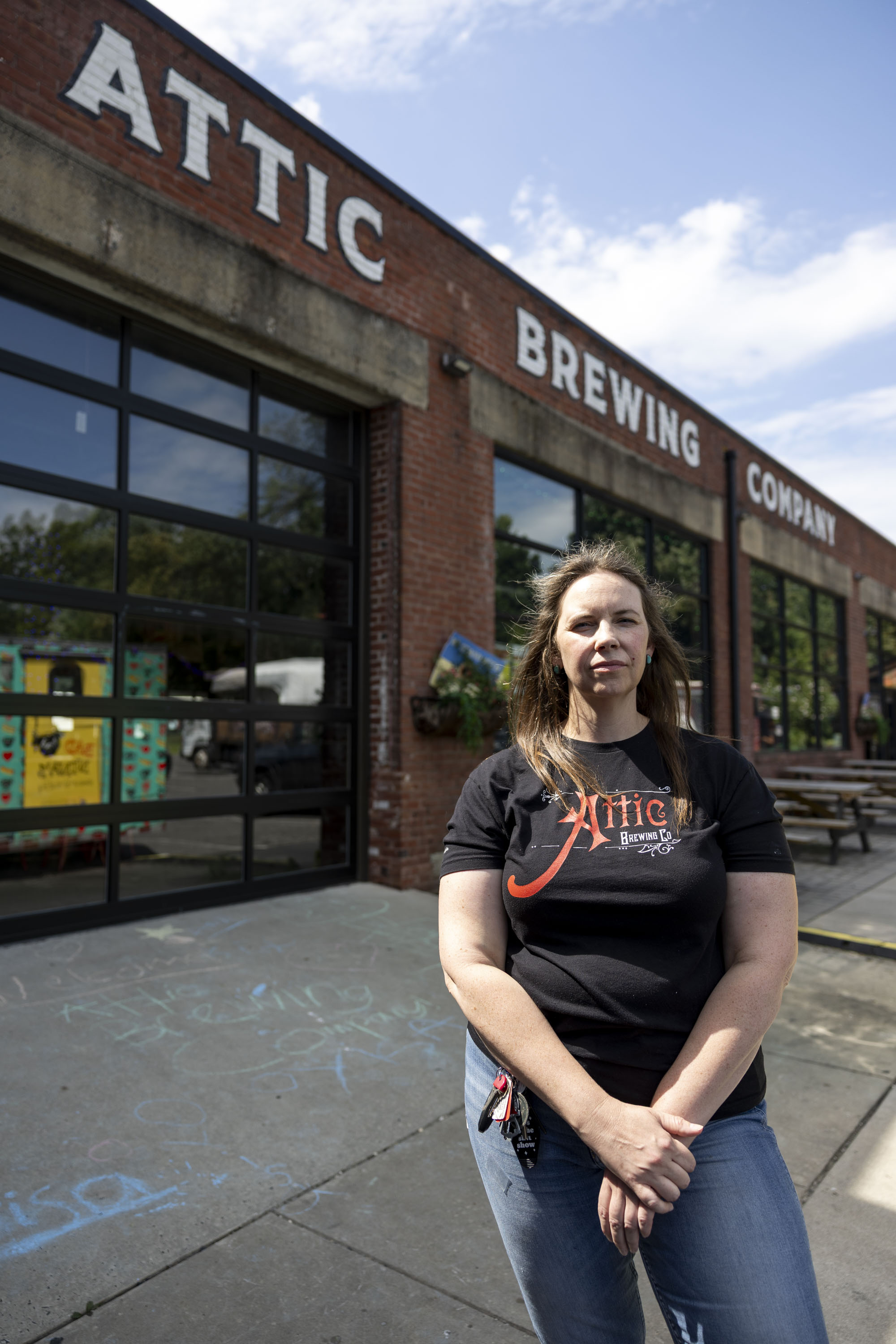
Laura Lacy, co-owner of Attic Brewing Co., outside the business in September.Tyger Williams / Staff Photographer
Street safety is also a major community concern after a spate of hit-and-run fatalities. This is a significant challenge for Attic Brewing, Lacy said.
Its location near Wayne Junction removes it from the commercial heart of the neighborhood, and her landlord’s promises to develop surrounding lots into complementary businesses never panned out. It all amounts to less visibility and awareness of pedestrians in the area.
“We’re talking about the safety of our team members. … We’re talking about the safety of our customers,” Lacy said.
Also of concern are the two vacant lots near Attic, which were part of a development plan years ago, Lacy said. “At what point does the city take it back? At what point does it become like you can’t just let this sit abandoned like this?”
Councilmember Cindy Bass, who represents the area, declined to comment for this story.
Signs of new life
Still, business activity is underway in Germantown.
Indego, Philadelphia’s bike share program, will enter Germantown this fall with 10 to 12 stations.
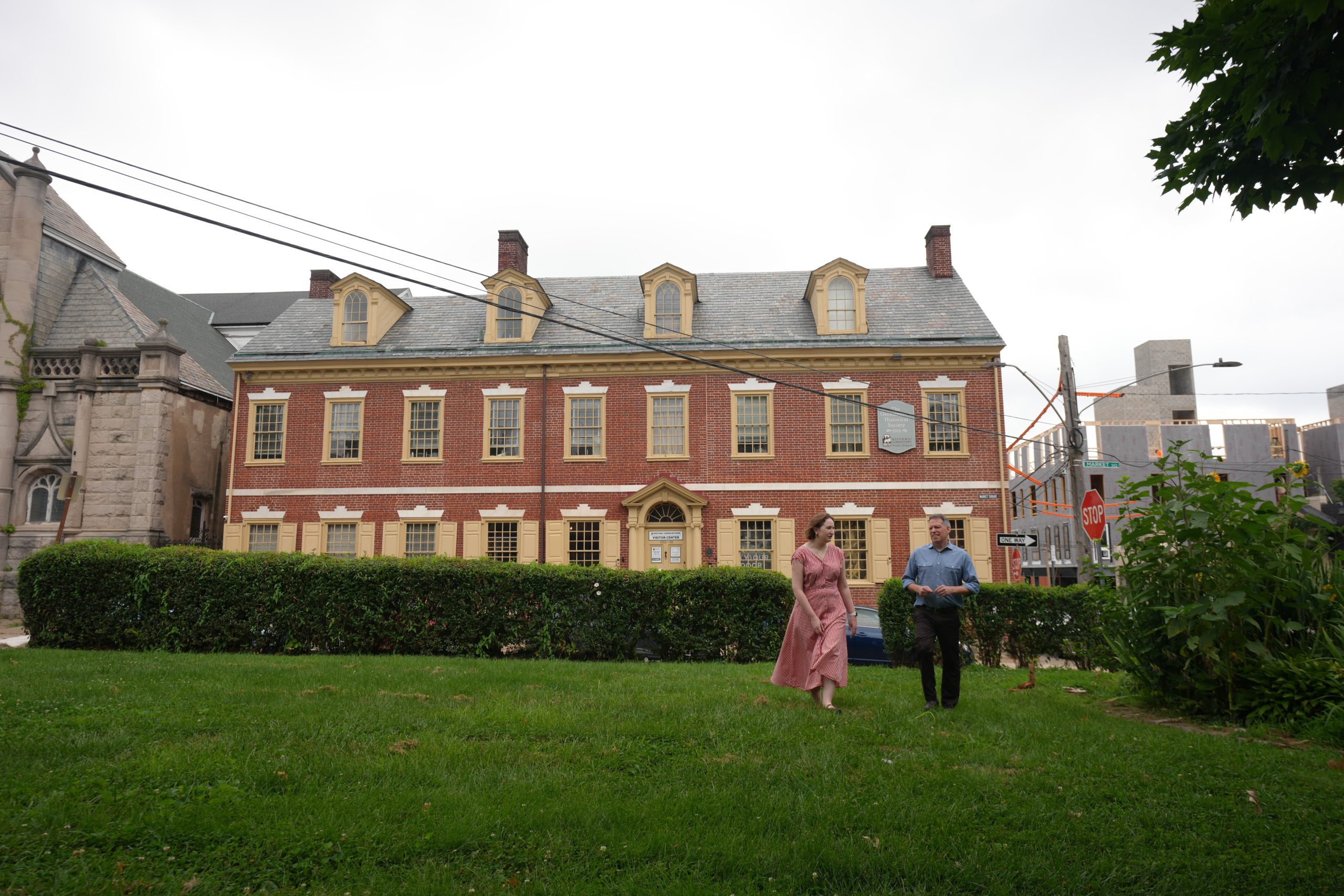
Kaila Temple, curator of collections at Historic Germantown, and Tuomi Forrest, executive director. The new Historic Germantown Visitor Center opened in July.Jessica Griffin / Staff Photographer
Historic Germantown’s Visitor Center opened in July. It’s a jumping-off point to access the neighborhood’s vast cache of historic cultural sites, which drive about 125,000 visits from the public and 25,000 from staff and volunteers annually who spend about $10 million in and around Germantown, according to Tuomi Forrest, Historic Germantown’s executive director.
“Our goal is that people get so interested and excited that they want to come back or expand their visits here,” Forrest said.
A few new businesses on West Chelten Avenue are invigorating the area. Weavers Way Co-op’s Germantown store, which opened in May 2024, has “exceeded projections since day one, and our membership in Germantown has continued to grow,” said general manager Jon Roesser. The co-op is open to the public, but its roughly 2,400 Germantown members get discounts and other benefits.
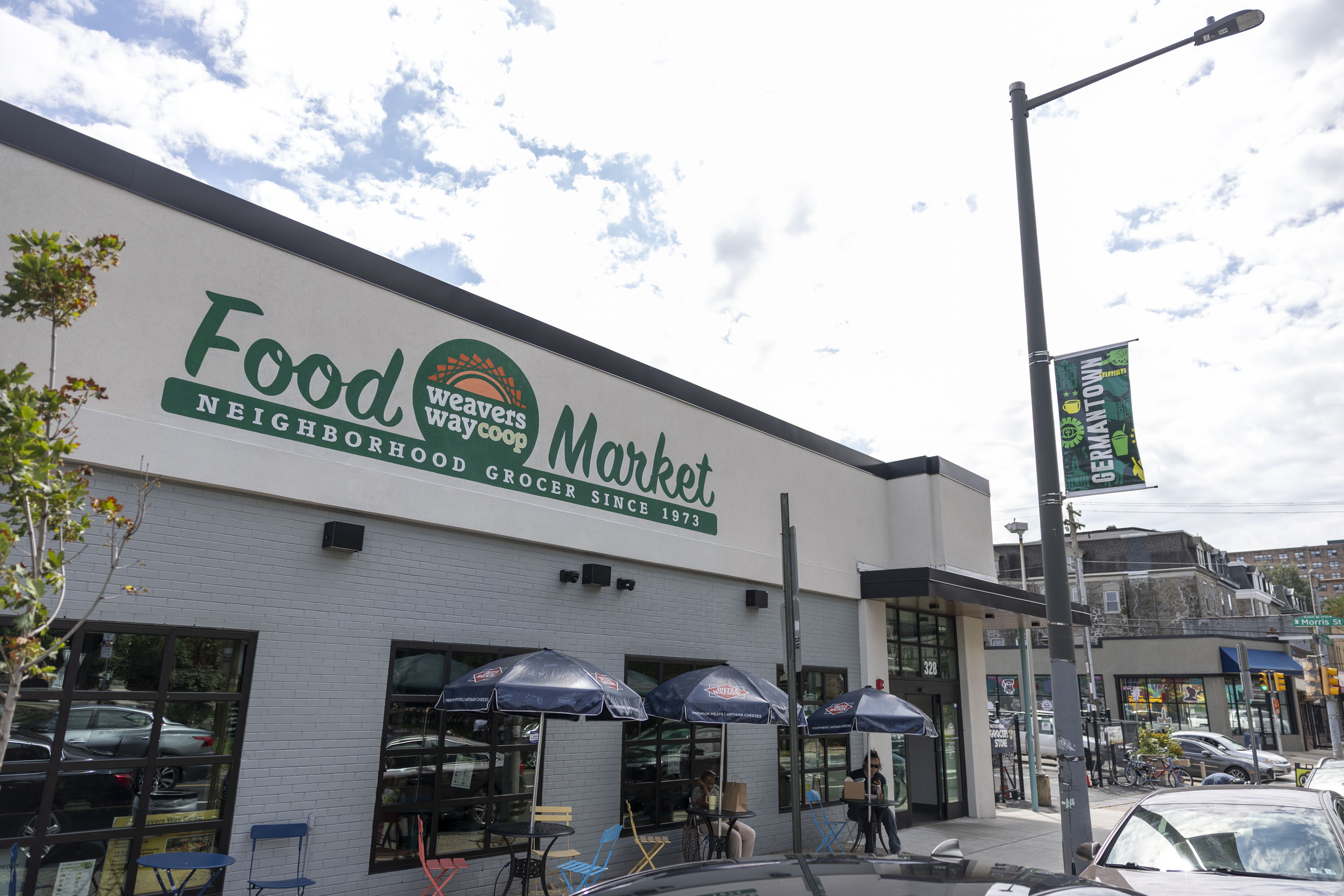
The outside of Weavers Way Co-op.Tyger Williams / Staff Photographer
“We bring a lot of foot traffic to the avenue; we have about 1,000 transactions a day,” Roesser said. “That’s 1,000 people a day coming to the corner of Chelten and Morris that previously was exactly zero because the building was abandoned.”
Complementary businesses have popped up nearby, including Cupbearer Coffee, Das Good Cafe, and Nutrition & Herbs Center.
Uncle Bobbie’s Cafe & Books is expanding its neighborhood footprint this fall and moving up Germantown Avenue from its current location at Church Lane into a 3,000-square-foot spot at the intersection of Washington Lane.
“We are excited to be in a position to grow, bring people together, and read great books,” Justin Moore, the bookstore’s general manager, told The Inquirer in April. “Most importantly, we are excited to further and deepen our ties in Germantown as a community hub.”
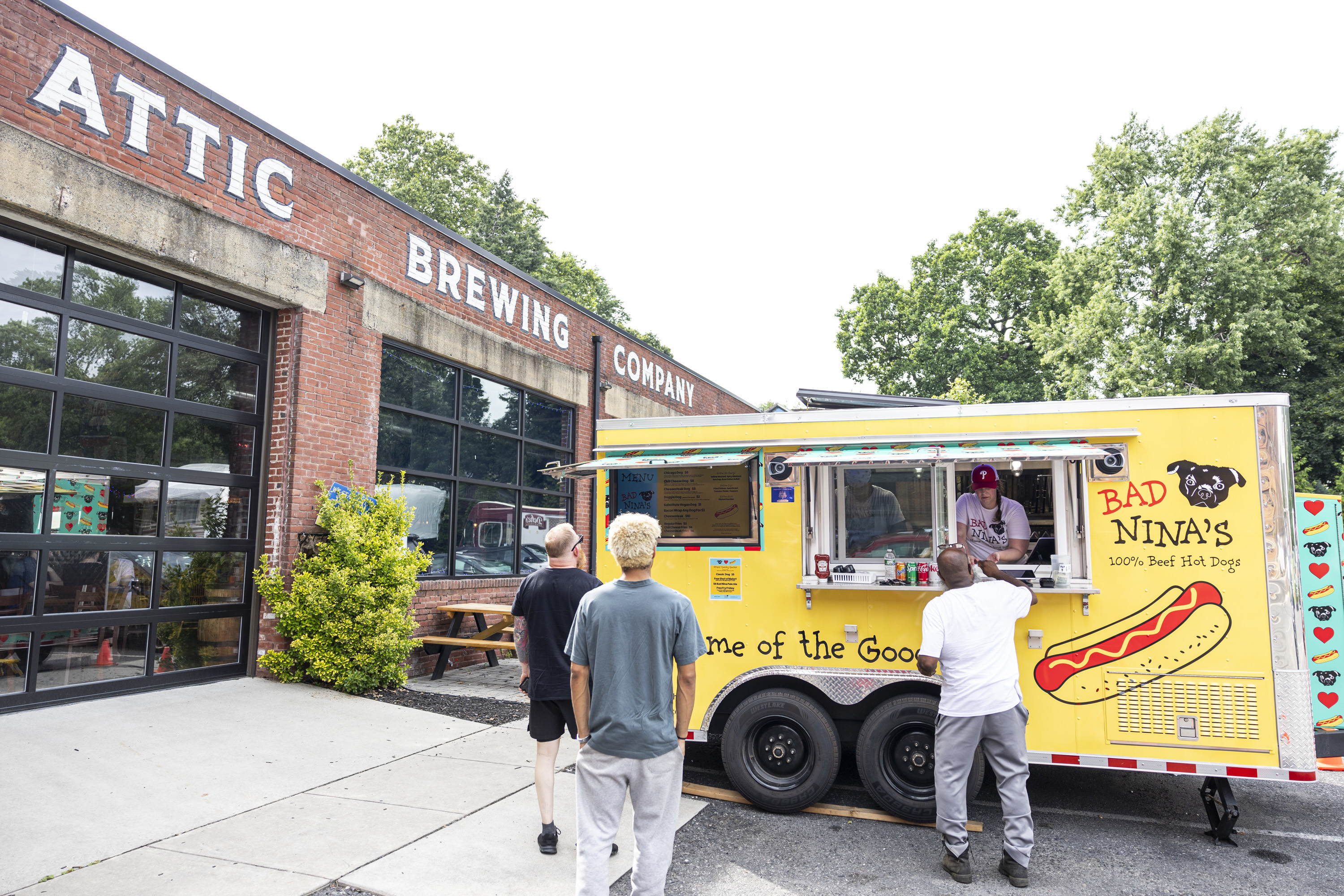
Customers line up to order hot dogs at the grand opening of Bad Nina’s outside Attic Brewing. Lacy said the hot dog stand opened because other companies did not want to bring their food trucks to the brewery.Tyger Williams / Staff Photographer
“One of the best beers in the world is brewed here in Germantown,” Lacy said. At the same time, from a financial standpoint “our business is in the worst spot it’s ever been in in six-and-a-half years.”
Attic needs to “exponentially increase the number of people” coming into the tap room to be viable, Lacy said. Getting other restaurants into the area could help. Lacy said Atticstarted Bad Nina’s gourmet hot dog cart becausefood trucks wouldn’t come to the neighborhood and the area lacks sit-down restaurant options for their patrons.
“We know that our product, our service, our space is one of the best in the city,” she said, so as the business struggles, “we start to wonder if maybe we picked the wrong location.”
As a young cop patrolling the streets of South Philadelphia, Shawn Hagan kept the Internal Affairs Division busy.
Between 2008 and 2010, Hagan, then in his late 20s, racked up a half dozen citizen complaints with allegations of physical abuse, harassment, and making racial slurs.
The city’s Law Department handled the fallout, as Hagan was named as a defendant in six excessive-force and civil-rights lawsuits between 2009 and 2015 that would later cost taxpayers more than $400,000 in settlements.
In 2024, records show, Hagan retired from the police force and decided to try his hand as a home-improvement contractor.
Now, complaints and lawsuits are rolling in again — this time accompanied by criminal charges involving the former officer’s company, Hagan Home Concepts.
Hagan, 46, is at the center of a sprawling, multijurisdictional fraud investigation that started in Bucks County and quickly spread to Delaware and Montgomery Counties.
Police in Bensalem, Upper Moreland, and Aston Townships have accused him over the last month of defrauding at least five families out of a combined $255,291 for doing a fraction of the work he had promised.
In some cases, according to court filings, he allegedly failed to use money given to him to pay for inspections, permits, and building materials.
Hagan, who lives in Northeast Philadelphia, is facing felony counts of theft, deceptive business practices, receiving stolen property, and related offenses in those cases. Police believe there may be more victims who have not yet been identified.
Neither Hagan nor his criminal defense attorney, Jeremy-Evan Alva, responded to requests for comment last week.
In January, Christopher Bilbao, who hired Hagan last year, moved out of the Levittown home he shares with his wife and three children as Hagan allegedly botched a major renovation for which they’d paid him $107,566.
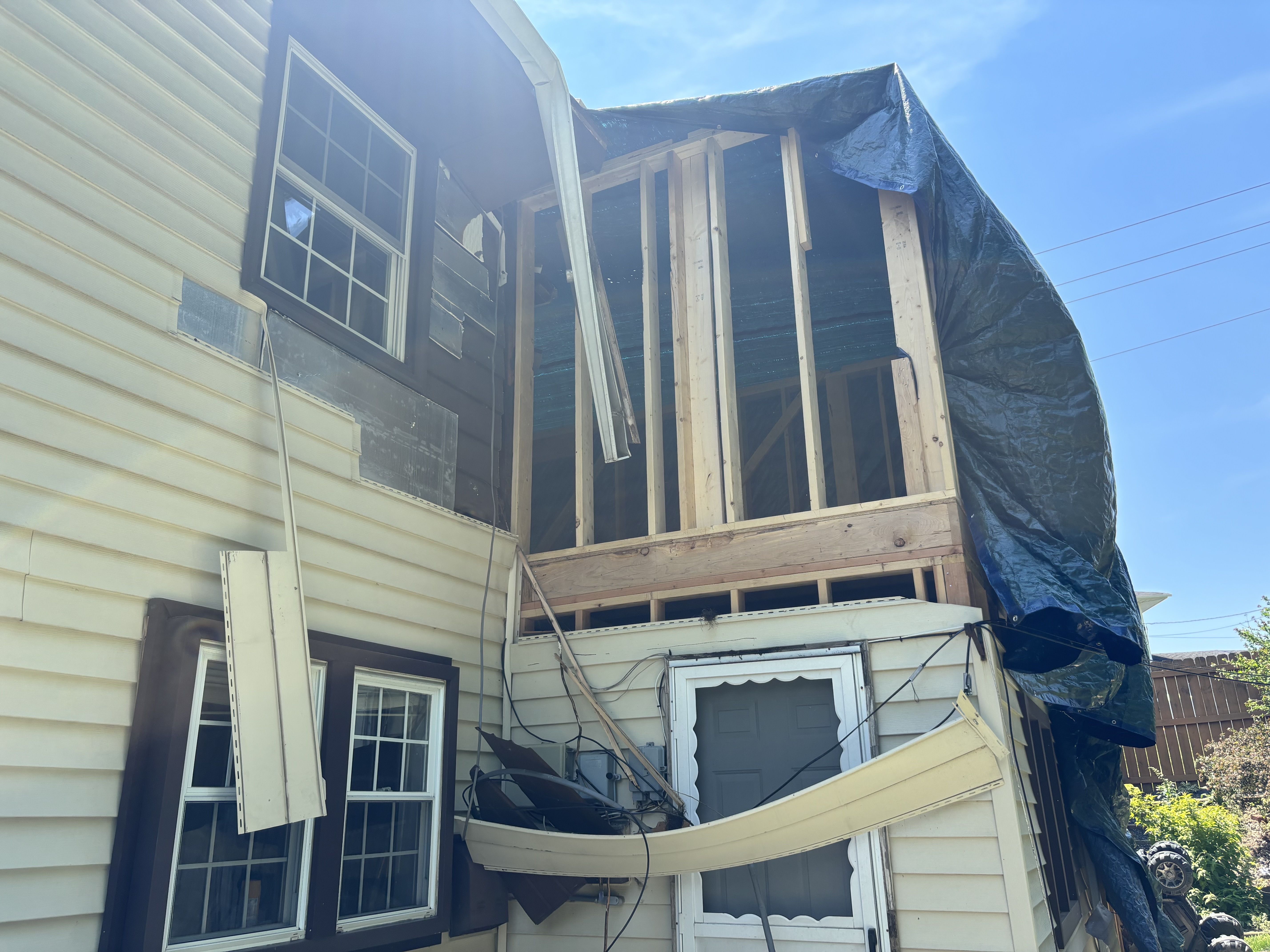
Rainwater began pouring into the house. The electrical system was destroyed. Floor joists were left unsupported. The framing didn’t follow the architect’s specs. A township inspector found that Hagan used incorrect materials, didn’t follow measurements in the plans, and left the home uninhabitable.
“We’re still renting an apartment,” Bilbao said last week. “The whole house has been gutted. The way he left it, there was no roof on half the house. We’re hoping to get back home by Thanksgiving.”
Separate from the criminal cases, a Port Richmond man is suing Hagan in Philadelphia Common Pleas Court to recover $94,800 he said he’d paid him for a home renovation and addition that was never completed.
A similar pattern is alleged in the lawsuit: rotting wood studs, crooked foundation, tilted third floor.
Nadia Silk, the lawyer for that homeowner, said Hagan had initially told her client he’d refund his money.
“Then he just went radio silent,” Silk said. “He’s getting all this money, then not doing the work. Where’s it going?”
Silk said Hagan did not respond to the lawsuit.
Trail of destruction
The criminal investigation into Hagan Home Concepts began in May, when the Bilbaos reported to police that Hagan had essentially abandoned their project, which was estimated to cost $172,700 when completed.
Bensalem police began investigating a similar complaint, in which Hagan allegedly received $46,725 from a family for an addition to their house. He poured the foundation and never returned to complete more work, according to a police report.
In an interview with a Bensalem detective in May, Hagan said “he got in over his head and never intended to defraud” that family, the criminal complaint states.
A few days later, Hagan told an Upper Moreland Township detective nearly the same thing, according to the police report. The department was investigating a complaint from Kevin and Angela Duffy, who said he had abandoned a project at their home.
They had hired him in May 2025 to build an addition to their first floor and renovate their second floor and basement, according to the affidavit for his arrest. In five and half weeks of work, police say, Hagan and his employees were at the Duffys’ home only 29 hours, and concrete footers they had installed for the addition failed inspection.
Hagan told police he tried to return the $55,200 he collected from the family, but that it had been “absorbed into the business,” according to the affidavit.
The Duffys declined to comment for this article. They are trying to recoup their losses, plus damages, through a default judgment awarded to them in May by a Montgomery County judge.
A person familiar with the case said Hagan had been hired to build wheelchair-accessible bedrooms for the Duffys’ two children, who have an inherited neurodegenerative disorder. The family had to hire another contractor to complete the project.
Hagan was also charged with fraud last month in Delaware County. An Aston Police detective wrote in the criminal complaint that Hagan accepted $21,800 from Kate Mckenna-Delagol’sfamily “while knowing his business was failing.” Hagan was also aware that a criminal investigation was underway because he had been interviewed by detectives in Bucks County, according to Aston Police.
“He tells everybody he’s a Philly cop. That’s how he earns your trust,” Mckenna-Delagol said on Friday.She’d hired Hagan to build a deck, but “he never did anything.”
Hagan filed for bankruptcy in federal court in June, identifying three of the victims mentioned in the criminal filings as creditors, including the Duffy and Bilbao families.
All told, Hagan wrote that he owes $865,059, and that Hagan Home Concepts is no longer operating. His bankruptcy attorney, Michael Cibik, did not return a request for comment.
The Bilbaos’ Levittown home was left uninhabitable after they hired Hagan Home Concepts for a major renovation. They’ve been renting an apartment since January 2026.Christopher Bilbao
Bilbao said he had hired Hagan to work on his Levittown home after another family in the neighborhood was satisfied with a recent addition he’d built for their house.
But even that job, Bilbao said, was later determined to be faulty.
“Since then, the people that recommended him realized he did all this work incorrectly,” he said. “They’re having to redo it.”
History of police complaints
Sgt. Eric Gripp, a Philadelphia police spokesman, declined to provide details about Hagan’s disciplinary history as an officer, other than to say he was hired in November 2003 and retired in February 2024.
Citizen complaints show that Hagan was repeatedly accused of assaulting and harassing people while on patrol in South Philadelphia’s 17th District.
In an April 2008 incident, for example, a man said Hagan grabbed him by the throat and dragged him to his police cruiser. Two months later, another man said Hagan used racial slurs while stopping him.
In January 2009, a complaint was filed against Hagan and his then-partner Kevin Corcoran for harassment and verbal abuse, then another that October for physical abuse. In 2010, a complainant said Hagan allegedly pushed him to the ground and called him a racial slur.
Hagan and Corcoran “received training and counseling” from two police captains in February 2009 “regarding their Internal Affairs record and professional responsibilities,” according to a note on one complaint.
Nonetheless, Internal Affairs investigators said the allegations in those cases were unfounded or not sustained, or they exonerated the officers altogether.
(Corcoran was fired in 2014 after he detained an Iraq War veteran, drove him to a dark side street near North Broad Street, then brought him back to Center City and released him. Corcoran was later acquitted of false imprisonment and official oppression, but convicted of a misdemeanor charge of obstruction of justice).
Between 2010 and 2015, Hagan was named as a defendant in three lawsuits filed in Philadelphia Common Pleas Court and three filed in federal court, including for using excessive force that caused serious injuries, illegal searches, and false imprisonment.
In one case, Raheem Holman alleged that Hagan repeatedly punched him in the face during an unlawful stop and frisk in March 2010 before Capt. Anthony Washington beat him with an expandable baton. Holman, who was later found not guilty of disarming a police officer, resisting arrest and all other related charges, required 11 staples at Methodist Hospital to close a head wound.
The city settled Holman’s case for $95,000 and the five other cases in which Hagan was a defendant for a combined $335,000.
Inquirer staff writers Ellie Rushing and Ryan W. Briggs contributed to this article.
The city’s surviving legacy organizations are now working overtime to increase their visibility and bring in new audiences with community events and crowd-pleasing programs.
Nothing captures the public imagination quite like a new building, especially one with an address on Broad Street, the long, straight boulevard branded the Avenue of the Arts. After 19 years of trying, the Philadelphia Ballet will formally open its eye-catching new home just north of the Vine Street Expressway with a gala on Sept. 17.
In times like these, any new arts building in Philadelphia is cause for jubilation, whatever its flaws.
Although the Philadelphia Ballet Center for Dance is primarily a working building that provides the company with modern practice studios and support services, it also allows the ballet to operate its own public theater for the first time in its 63-year history. Shelly Power, the group’s CEO, rightly views the 150-seat space as a major opportunity for community-building outreach.
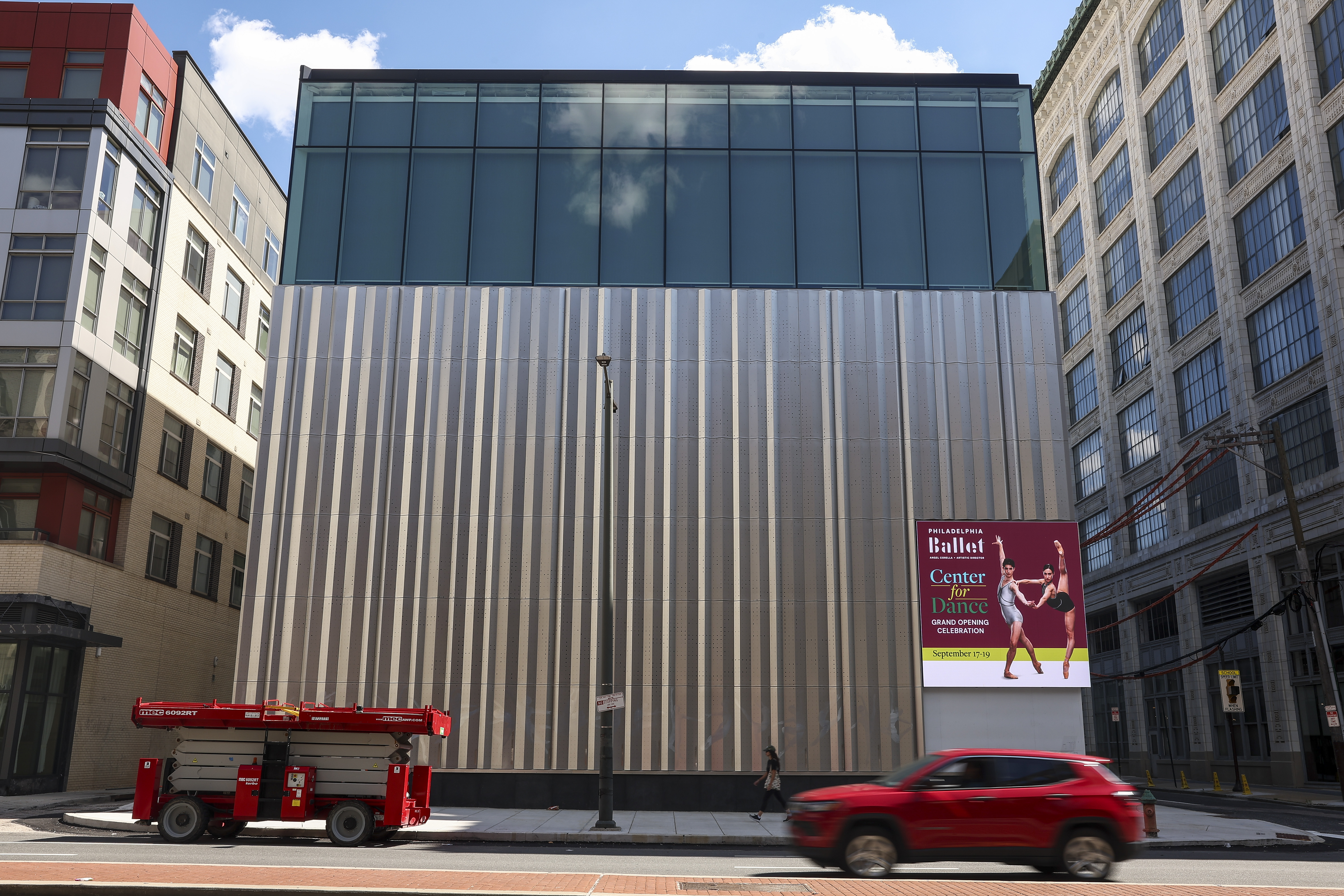
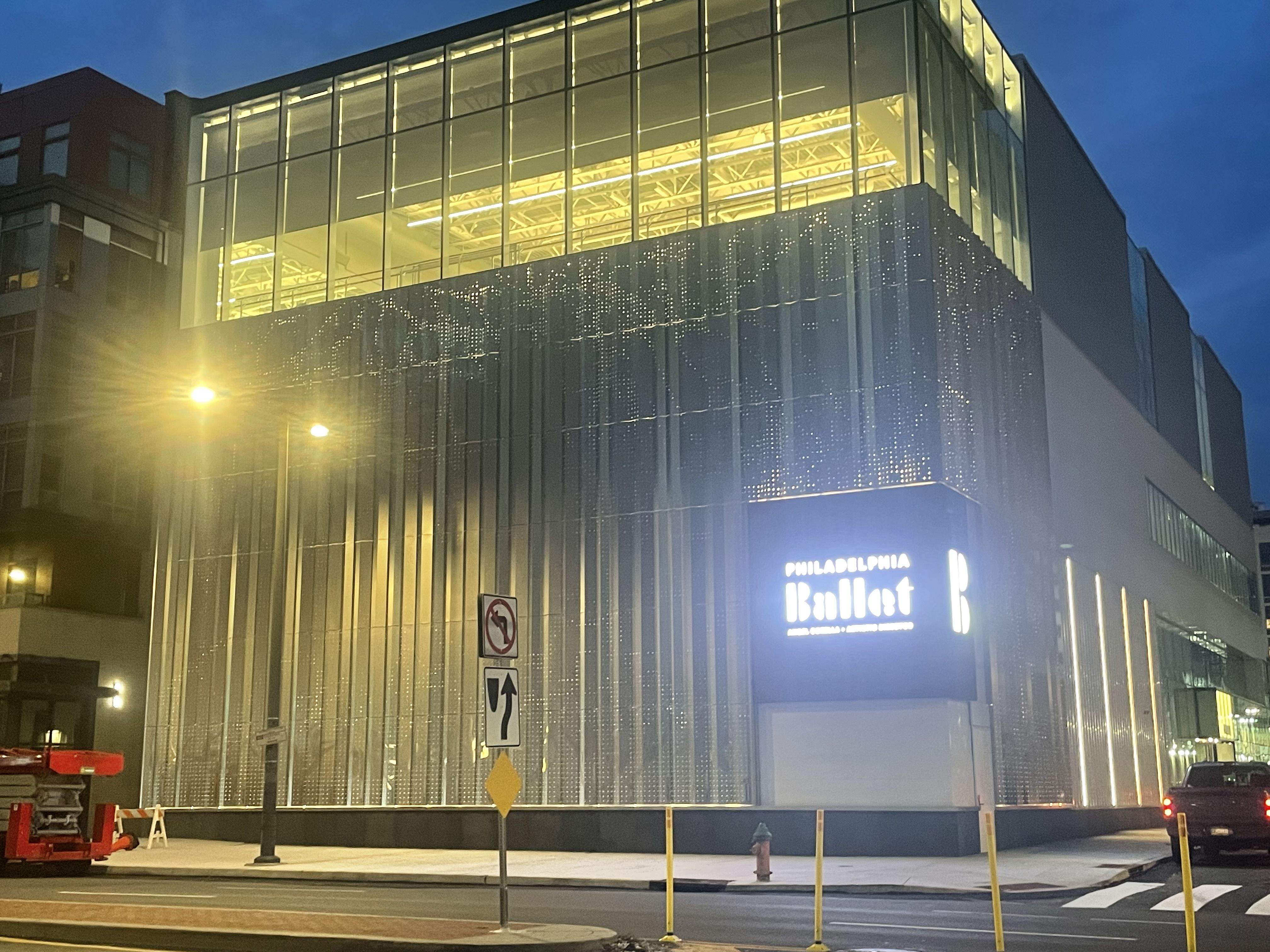
So, it’s frustrating to see the ballet repeat the architectural mistakes of an earlier generation of cultural venues. With its glass-enclosed rooftop studio and pleated metal facade, the building initially dazzles with shimmer and light, especially at night. But it quickly becomes clear that this is just another hermetic box that walls itself off and sabotages its own efforts to engage the public.
The absence of street-level windows on North Broad Street is particularly galling given the corridor’s spectacular revival over the last decade, including hundreds of apartments, the Met concert hall and the award-winning Honeysuckle restaurant.
With its glass-enclosed rooftop studio and pleated metal facade, the Philadelphia Ballet’s new Center for Dance initially dazzles us with shimmer and light, especially at night.Inga Saffron
Rising to new heights
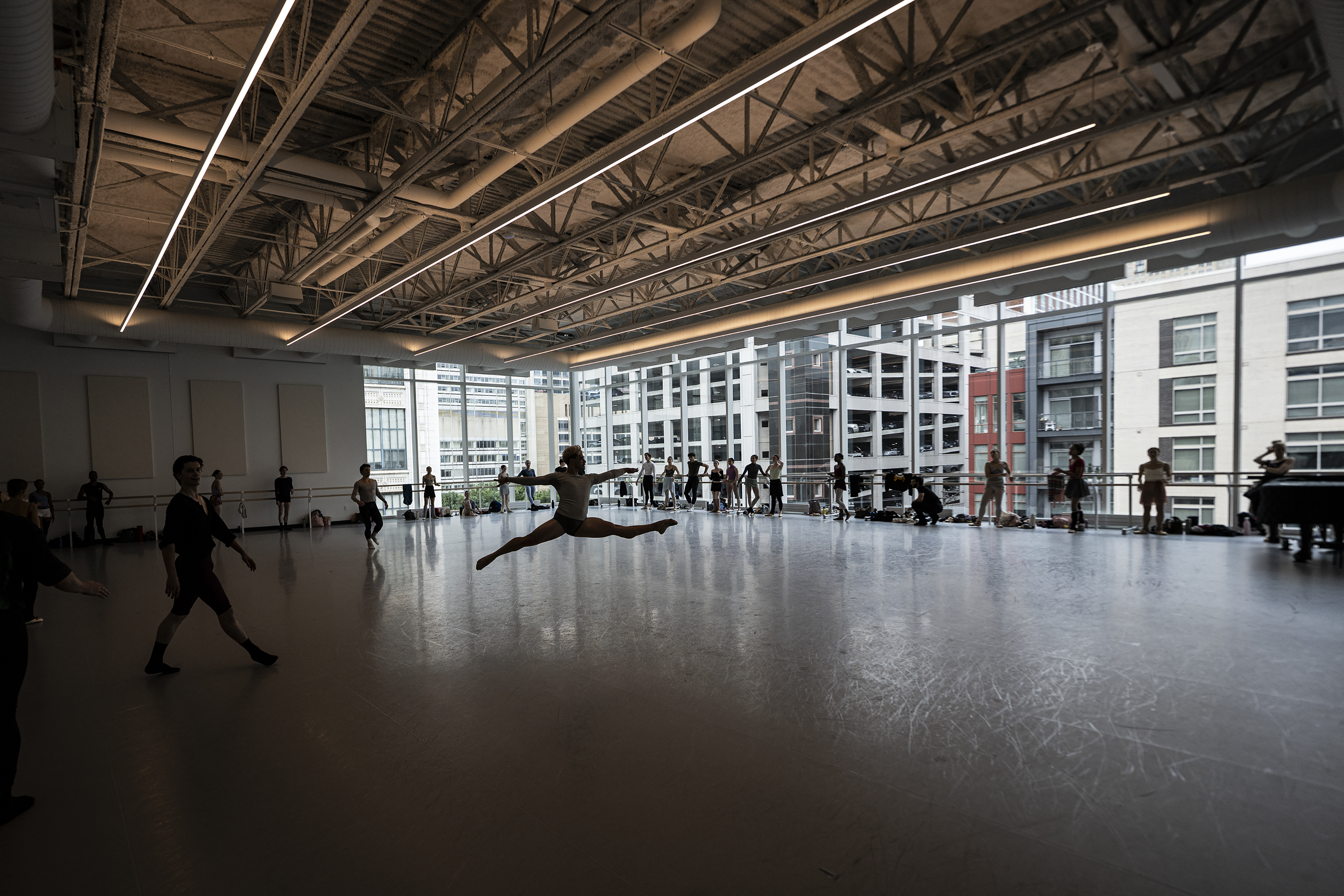
Designed by Varenhorst, a Philadelphia firm that toggles between high-end suburban homes and downtown apartments, the $45 million building is, in some ways, everything a big city ballet could want. The five-story structure does a great job at integrating the soaring, light-filled practice studios for elite dancers, with a dedicated classroom wing for the ballet’s school. Dancers are so energized by the scale of the new space, Power said, they can “jump higher.”
While the majestic Academy of Music will remain the ballet’s main performance space, the stripped-down, black box theater gives the company the opportunity to experiment with more intimately scaled works. And because the performance area is the same size as the Academy stage, the ballet can also do dress rehearsals there.
The new Philadelphia Ballet Center for Dance was built with four soaring practice studios, including this light-filled, double-height rooftop space overlooking North Broad Street.Jose F. Moreno / Staff Photographer
Having access to such an assortment of quality spaces promises to lift the ballet to new creative heights. Although the corps regularly ranks among America’s 10 best classical ballet companies, its dancers and school became itinerant after financial troubles forced the company to sell its old home at Broad and Washington in 1992. For many years, the school was housed in one location, dancers practiced in another, and administrators worked out of a third space. The lack of a stable home made it more challenging to woo top talent.
In 2007, the ballet purchased two small buildings at the corner of Wood Street with the goal of consolidating its operations under one roof. The Avenue of the Arts was just taking shape, and the location promised to give the northern stretch — always a bit of an afterthought — a marquee destination. As a longtime occupant of The Inquirer’s former North Broad Street home — the big white Tower of Truth (now the police headquarters) — I couldn’t wait to see human activity return to those sad blocks above Vine Street.
The design and the architects changed several times. The ballet, which, it is worth pointing out, received no city money for this important project, even lost its financing at one point. Architect Stephen Varenhorst, who signed on around 2016, deserves credit for sticking with the ballet through its many ups and downs.
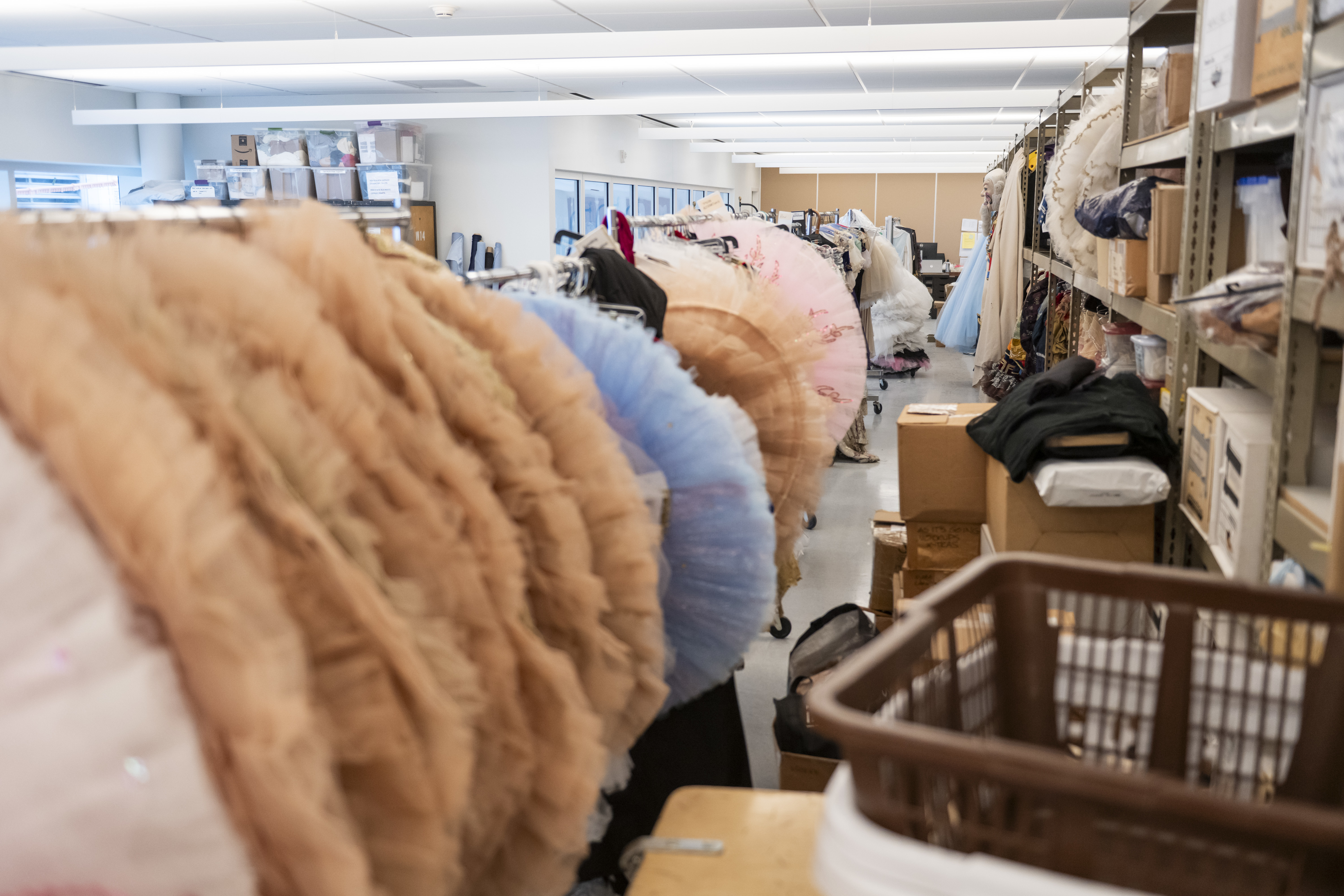
Maybe because the ballet was space-deprived for so long, his design was driven by a desire to make sure the company had the best of everything. Along with four large practice studios, the building is outfitted with a sprawling costume department, workshops for storing and dyeing dance shoes, a music room, and a generously equipped wellness spa.
Costumes line the wall in the wardrobe room in the Philadelphia Ballet’s new building on Broad Street.Allie Ippolito / For The Inquirer
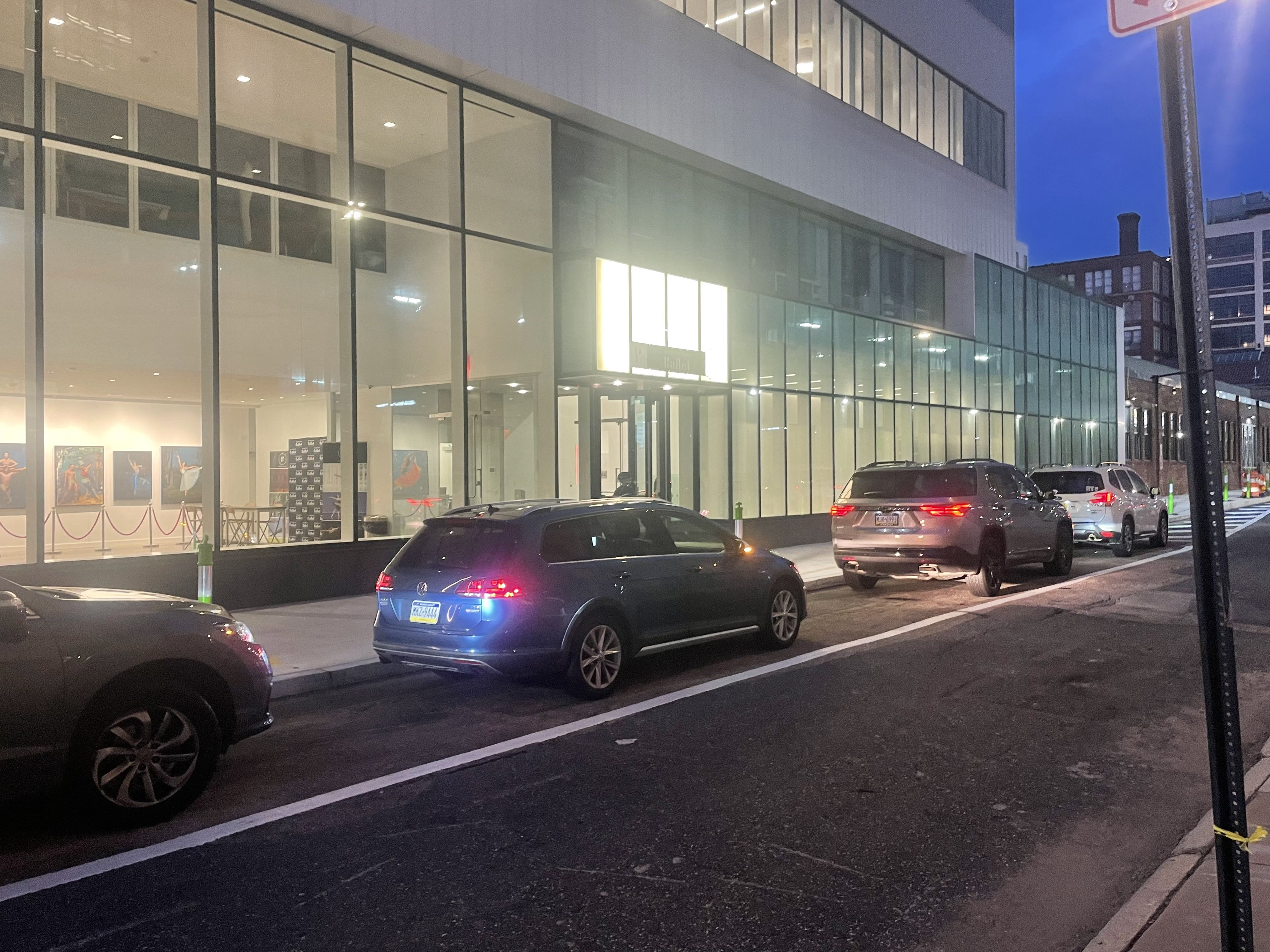
To pack all this onto the deep, narrow site, Varenhorst put the ballet’s front door on Wood Street. Architects often prefer to locate the main entrance on the long side of a building because it’s easier to organize the interior circulation.
That arrangement definitely makes things more convenient for dancers and visitors, since Wood Street now effectively serves as an automobile drop-off. But it badly shortchanges the pedestrian experience on North Broad Street.
A daunting facade
Early in the design process, the ballet decided it would install the black box theater at the Broad Street end of the building. As the name suggests, black box theaters have no windows. That meant the most important facade, the one facing the Avenue of the Arts, would be a blank wall.
By putting the main entrance to Philadelphia Ballet Center for Dance on Wood Street, instead of North Broad Street, the architects at Varenhorst were able to create an automobile drop-off, a convenience for parents dropping off their children at the ballet school.Inga Saffron
To enliven the solid, four-story expanse, Varenhorst has covered the surface with a crimped, stainless-steel screen. The treatment is meant to suggest a theater curtain. Unfortunately, it’s a closed one.
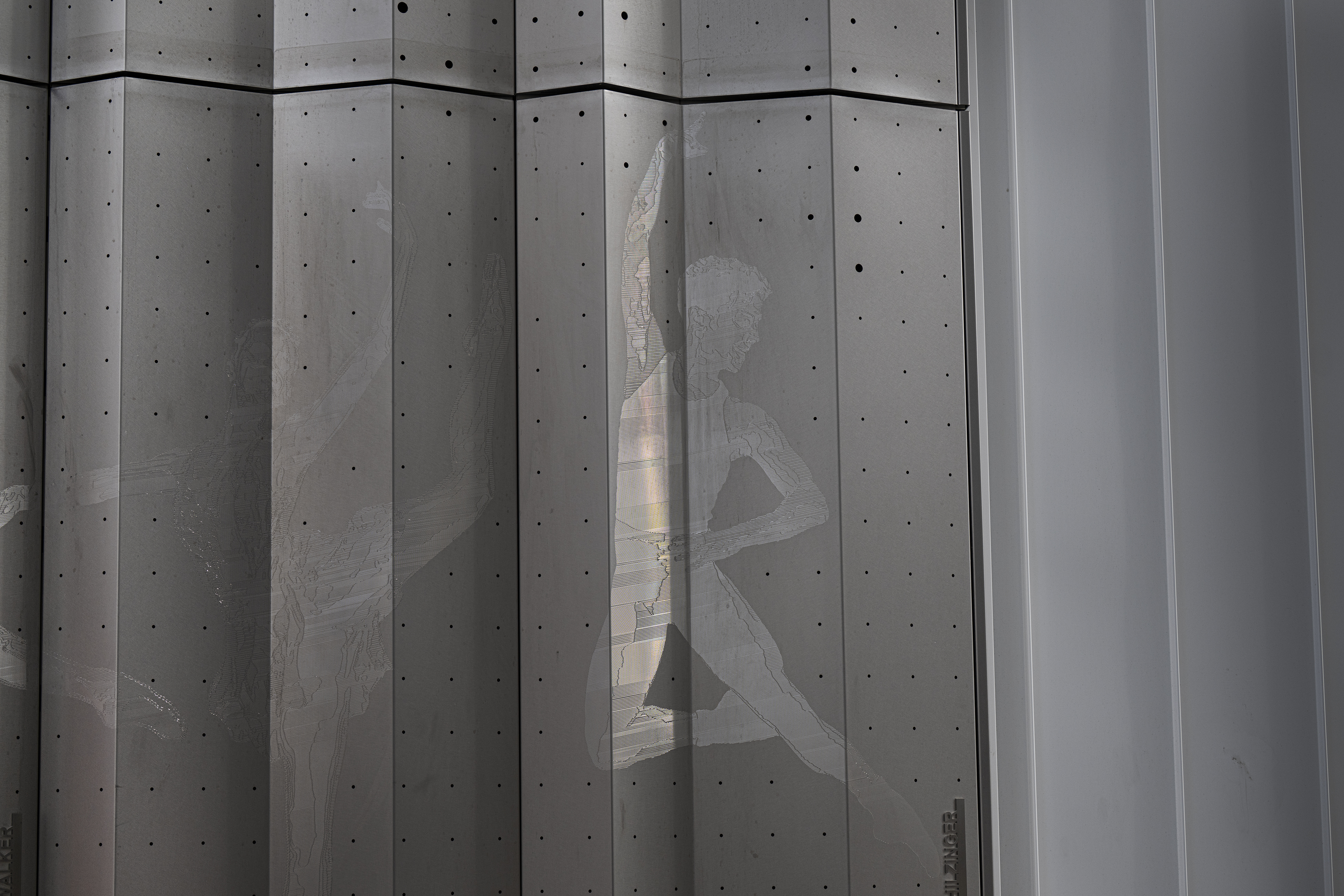
Varenhorst and the ballet have gone to great lengths to dress up the metal scrim. The stainless steel is good quality, manufactured by Zahner, the same firm that did Frank Gehry’s metalwork. The pleats are etched with ghostly figures of the corps’ dancers and perforated with pinholes that sparkle with fairy lights at night. If you crane your neck, you might be able to see dancers moving around the glass-walled studio on the top floor.
It’s about as good as a blank wall gets, but it’s still a daunting cliff.
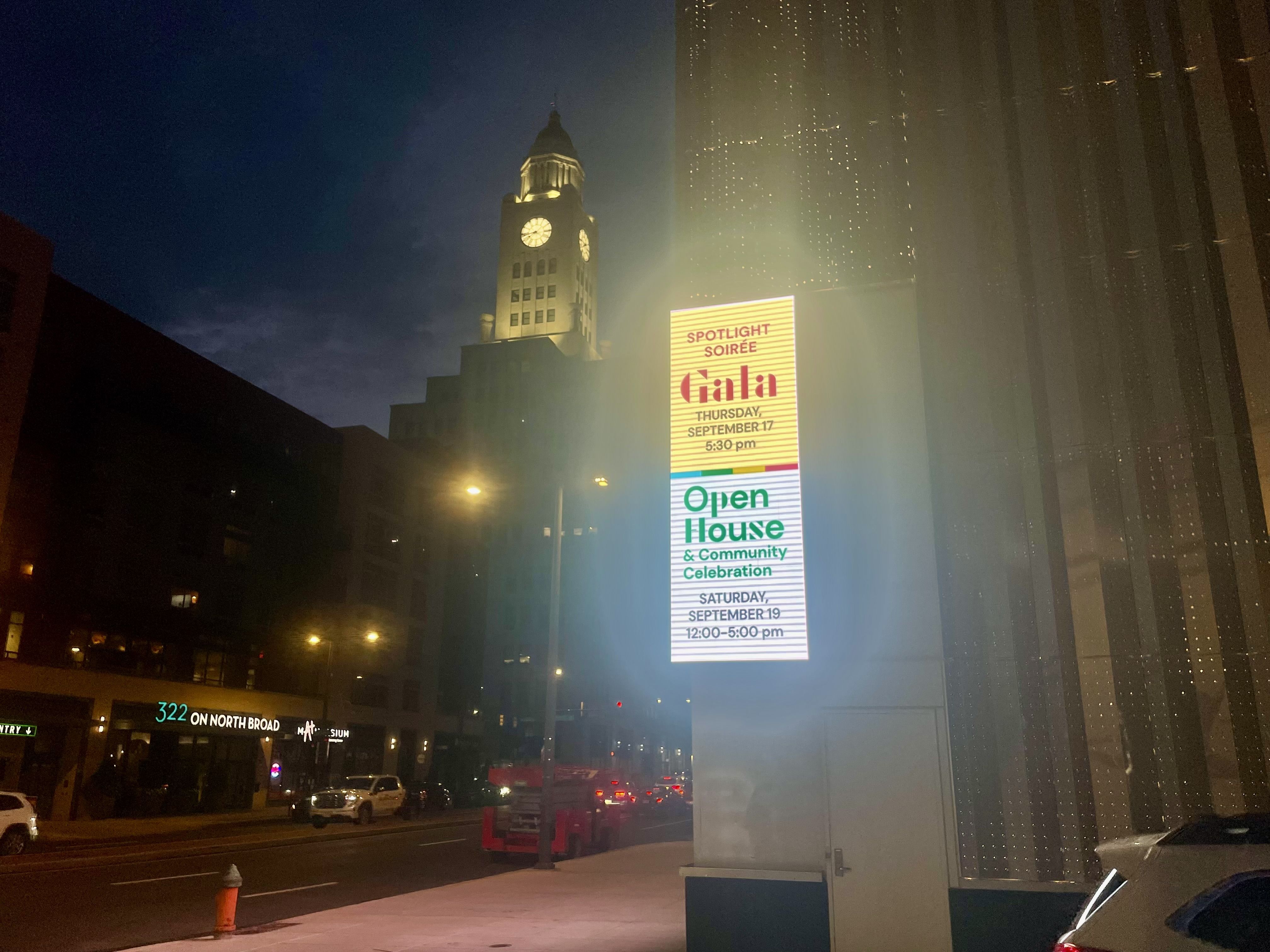
To activate the large expanse of metal, the ballet clamped a digital sign onto the corner. The dance company plans to use it to advertise upcoming shows and display videos of dancers. We could just as easily stare down at our phones to get the same content.
Ghostly images of dancers have been etched into the pleated, stainless steel facade of the new Philadelphia Ballet Center for Dance on North Broad Street.Jose F. Moreno / Staff Photographer
What’s most disappointing about the design is that the ballet is not the first venue on the Avenue of the Arts to treat Broad Street as an afterthought. Although the Kimmel Center can at least claim a Broad Street entrance, its heavy brick facade was similarly unfriendly, especially when no performances were taking place. Those solid walls were one reason the Kimmel floundered in its early years. It took a series of interventions — a cafe, restaurant, and, yes, a digital sign — to make the large building feel more alive.
Moved by the same reasoning, the Wilma Theater also retrofitted its building to create a ground-floor cafe on Broad Street.
Arts administrators always promise us lively sidewalks when they announce a new building, yet there seems to be something in Philadelphia’s architectural DNA that produces the opposite result.
Take the Weitzman National Museum of American Jewish History on Sixth Street. Although it faces Independence Mall, a symbol of democratic openness, that facade is sheathed in opaque glass. Its main entrance is around the corner on Market Street.
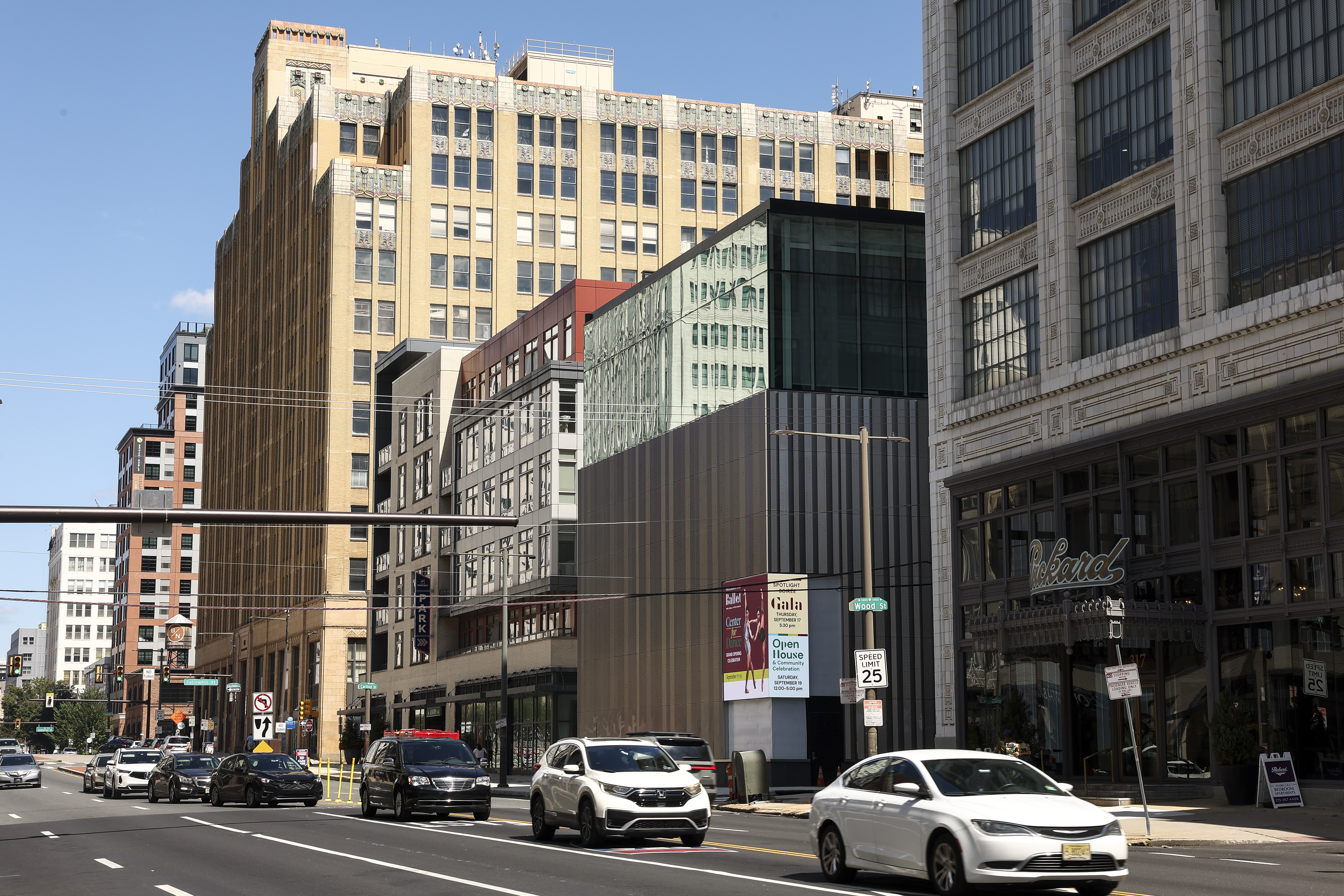
The new Philadelphia Ballet Center for Dance is bracketed (left) by the Hanover apartments, which opened in 2017, and the former Packard Motor Car building, which was converted to apartments in 1986.Monica Herndon / Staff Photographer
Ironically, the three buildings — the ballet, Kimmel, and Weitzman — all follow the same format: Each features a transparent glass structure at the top, far from the madding crowd.
Why couldn’t the ballet have reversed this arrangement and put its black box theater on the upper level? That way, a glass-fronted practice studio could have faced Broad Street. Even if Wood Street remained the main entrance, the transparency would have enlivened the ground floor and made the ballet a visible presence in the city. Instead, the blank wall reinforces the idea that ballet is an elite form of culture.
Power and Varenhorst told me they briefly considered, then rejected, the arrangement because the company’s dancers would have objected to being put on display during stressful rehearsals.
But who says that a ground-floor studio could be used only by the ballet’s professional dancers? The Alvin Ailey American Dance Theater in Manhattan, which opened a six-story practice facility and school in 2005, got around that problem by making its transparent ground-floor studio a space for public classes. Watching the dance students go through their moves there has become so popular, Alvin Ailey installed a bench outside.
To compensate for the solid facade on its new North Broad Street building, the Philadelphia Ballet Center for Dance installed a digital sign at the corner of Wood Street. The former Philadelphia Inquirer tower, now the police headquarters, can be seen across the street.Inga Saffron
Like other cultural leaders, Power is now focused on using the building to build a community of dedicated ballet supporters, much as Anthony Roth Costanzo has done at Opera Philadelphia. She wants to hold public events with dancers on Wood Street and is looking into making Carlton Street a pedestrian walkway.
“Our challenge is this: How do we activate the building?” she said.
Good question. Unfortunately, the ballet missed a big opportunity to show, as well as tell, what’s going on in the Center for Dance. In sacrificing public urbanism for its own private needs, the ballet does everyone a disservice.
The buyer: Joanna Jaeger, 32, general manager at Bart’s Bagels.
The house: A 894-square-foot rowhouse with two bedrooms and 1½ baths built in 1920 in Lower Moyamensing.
The price: Listed for $236,900; purchased for $233,000.
The agent: Martha Lutz, OCF Realty.
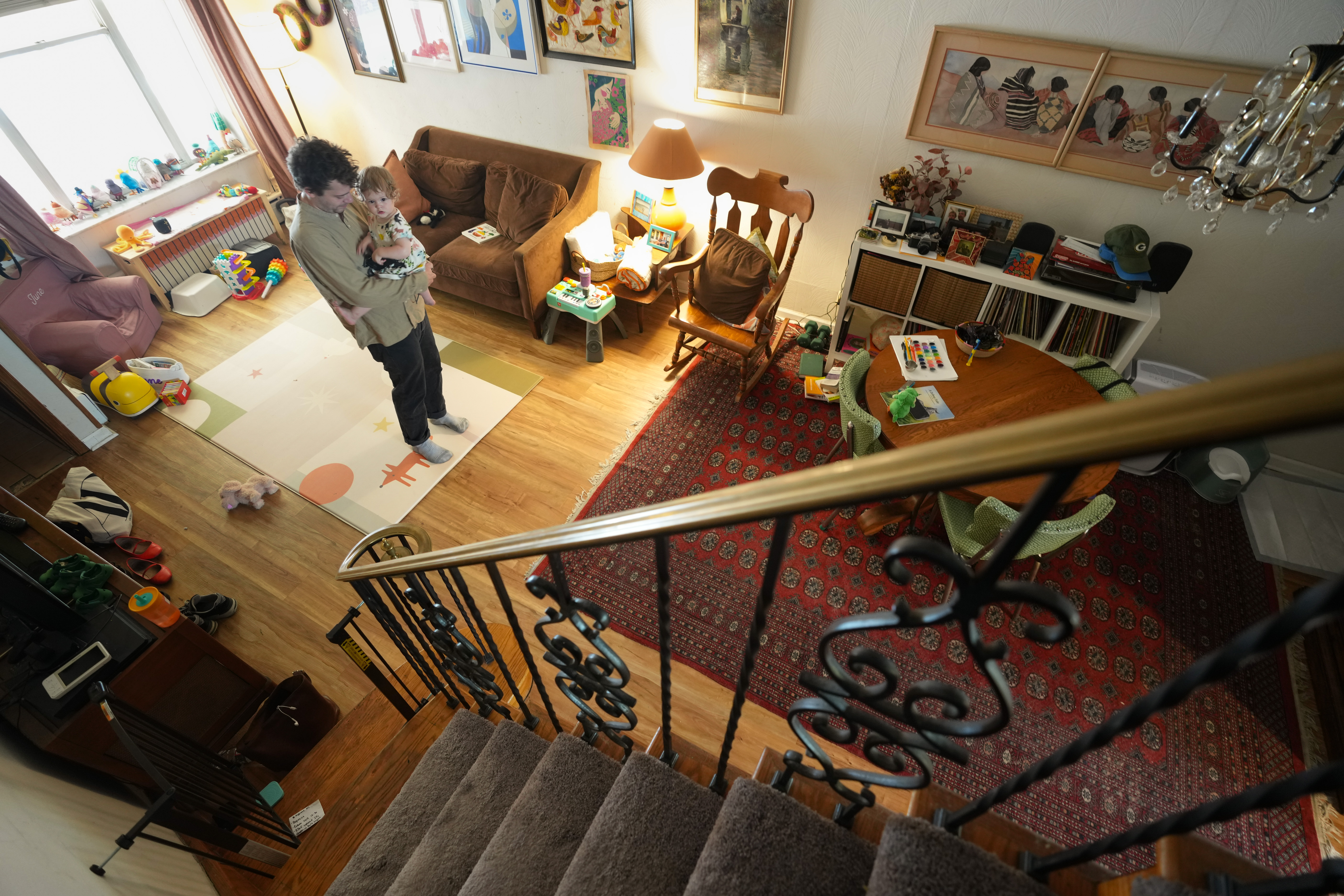
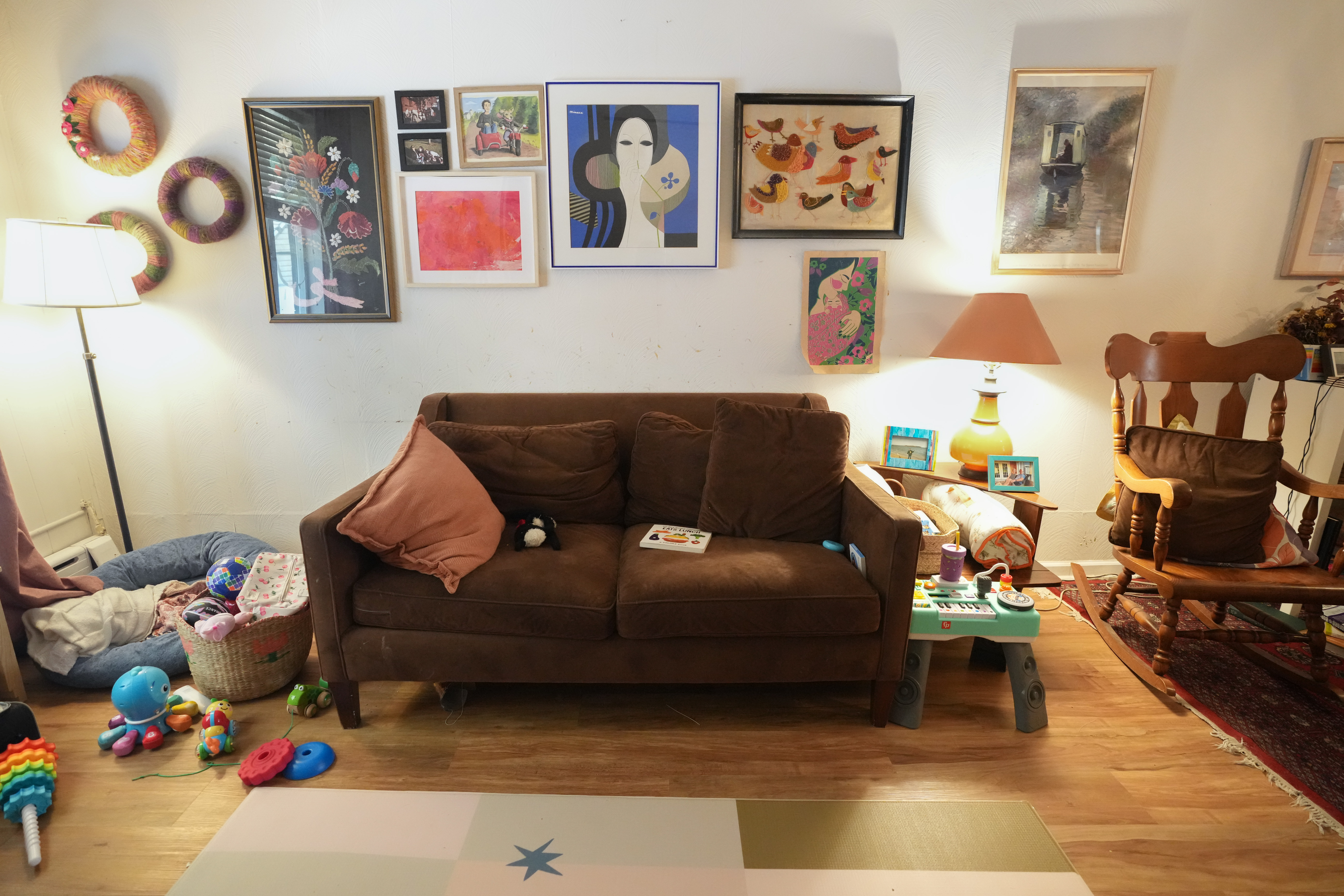
Adrian Schraufnagel and June on the first floor. Jessica Griffin / Staff Photographer
The ask: Joanna Jaegerand her boyfriend, Adrian Schraufnagel,were tired of their one-bedroom in West Philly and fed up with renting in general. When their landlord announced a $200 rent increase in 2022, they notified him they would be moving out in 90 days.
The clock was ticking to find a new home.
They wanted a move-in ready place that wouldn’t immediately require expensive repairs. And after renting in West Philly for six years, they were eager to move across the river, to be closer to restaurants and morepublic transit. They also wanted to live within walking distance of a dog park.
With a ceiling of $250,000, they hoped to find something closer to $230,000.
Joanna Jaeger’s mother paid for the floors to be redone. Jessica Griffin / Staff Photographer
The search: Jaeger enlisted a friend and coworker to be her real estate agent. They visited a series of newly renovated houses because Jaeger thought they would require the fewest repairs after move-in. She put in an offer on one but didn’t get it. She was becoming increasingly panicked.
“I was like, ‘Oh my god, we’re running out of time!’” Jaeger recalled.
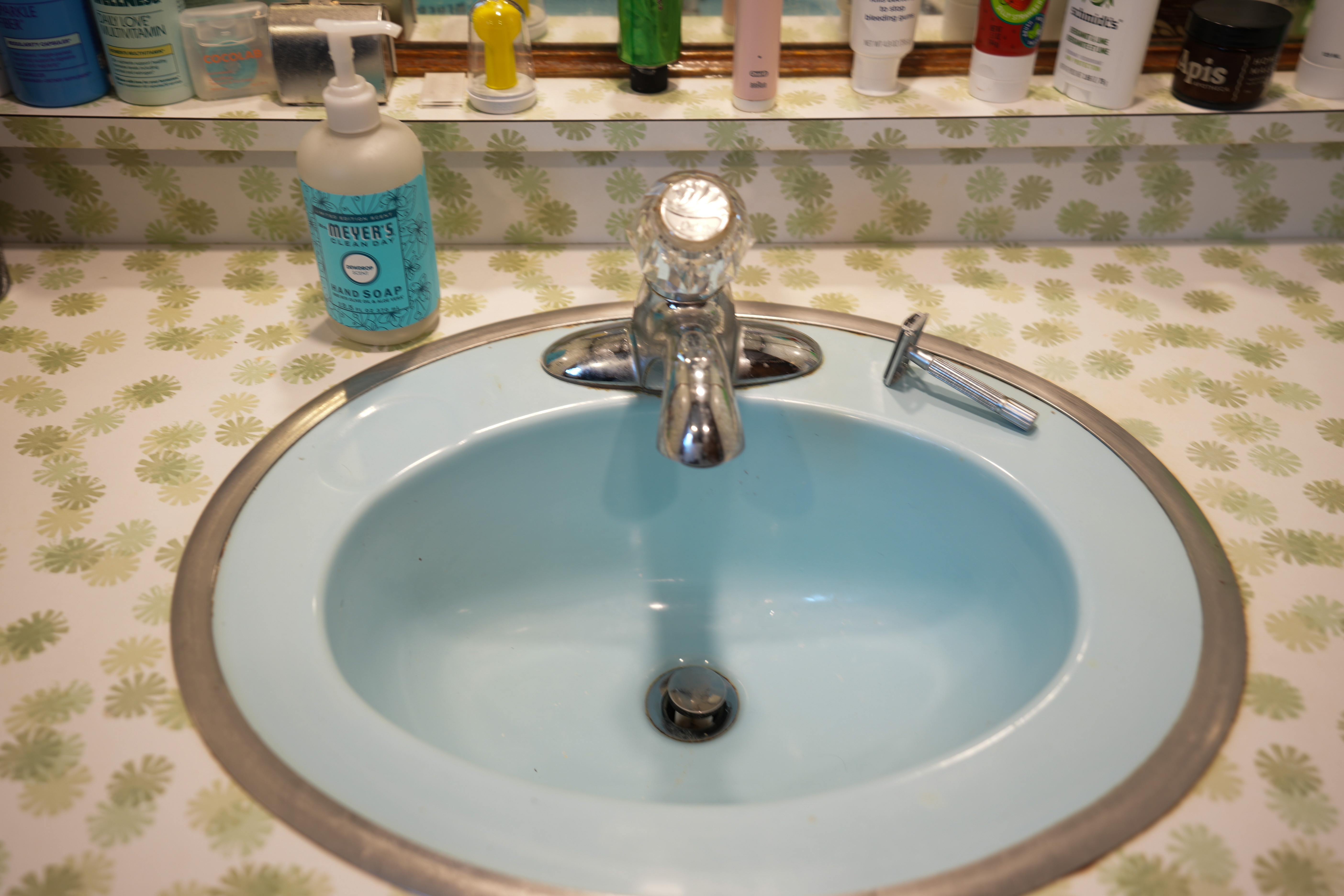
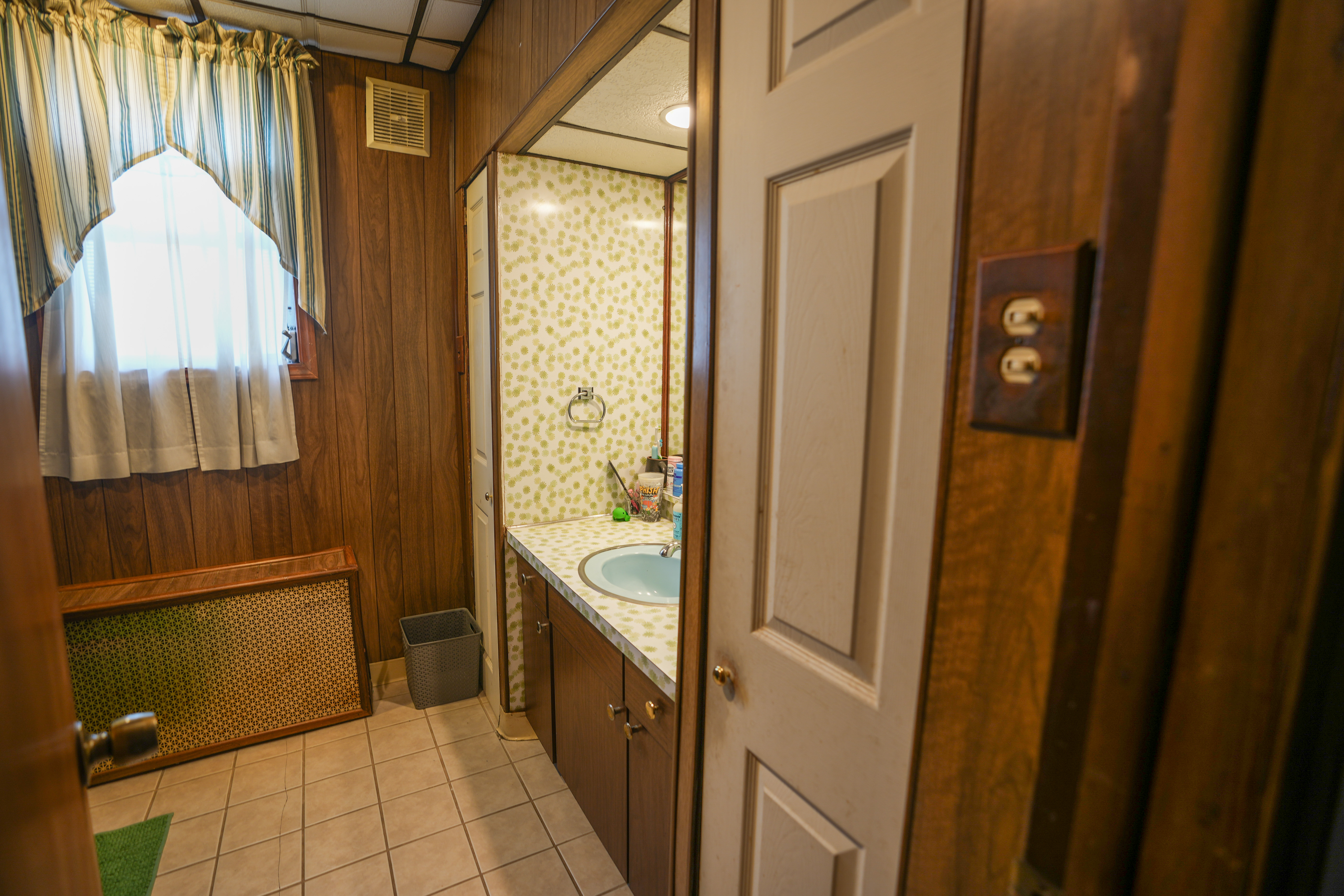
Then, in April she saw an intriguing house on Zillow. It was a “granny special,” she said, featuring wall-to-wall purple shag carpeting and an upstairs bathroom paneled in dark wood with a ’70s floral motif around the sink. When she visited, there was a framed portrait of Frank Sinatra on the basement wall.
Jaeger immediately loved the ’70s floral motif around the bathroom sink and the pale blue sink and tub. Jessica Griffin / Staff Photographer
“It felt so cozy,” Jaeger said. “You could tell whoever lived there took a lot of pride in the house.”
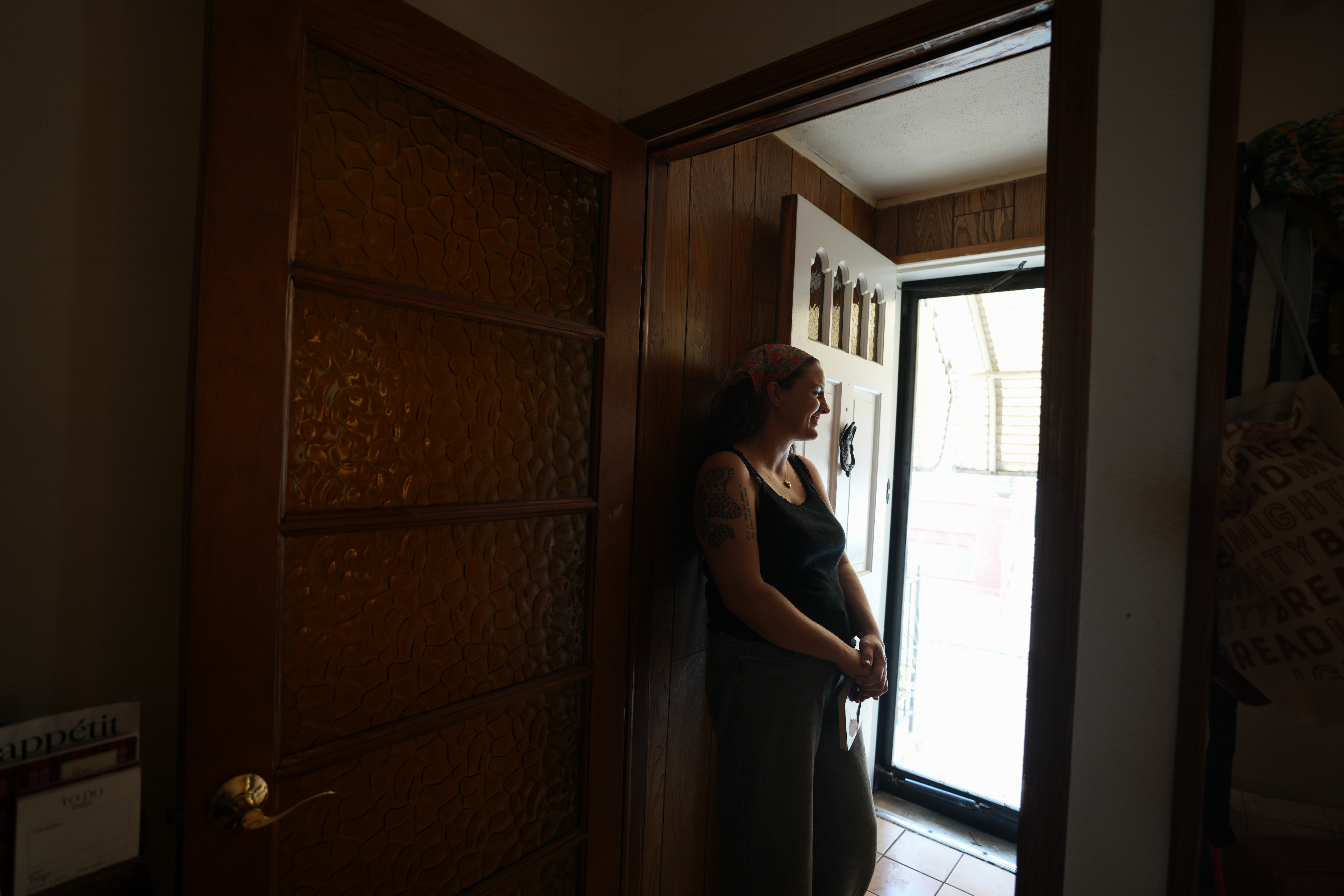
Though she had been looking at recently flipped houses, she especially liked the old-school South Philly features, including the awning out front and the amber-colored textured glass in the vestibule.
The house was walking distance to MarconiPlaza and close to the bus and the Broad Street Line.
Joanna Jaeger immediately loved the textured amber glass in the vestibule of the South Philly house. Jessica Griffin / Staff Photographer
The deal: Jaeger told Schraufnagel that because of their tight deadline, he wouldn’t get to see the house in person before she put in an offer. He trusted her.
“He usually follows the vision that I propose,” she said.
She put in an offer for $233,000, an amount slightly under asking that her agent still deemed “respectful.” The sellers accepted the next day.
Whoever lived there took a lot of pride in the house, Joanna Jaeger thought when she visited the home. Jessica Griffin / Staff Photographer
An inspection found the house in good condition. The main issues were an electrical system with cloth insulation — a feature in many older homes that would make an electrical panel upgrade more expensive — and basement tiles likely made from asbestos. They were already painted over by the previous owners.
“We’ve never tested it because we don’t really want to know,” Jaeger said.
Adrian Schraufnagel and Joanna Jaeger ripped up the purple shag carpeting on the floors themselves. Jessica Griffin / Staff Photographer
The money: A friend advised Jaeger not to buy a house with a boyfriend, and Schraufnagel’s credit score would have negatively impacted their interest rate.
So Jaeger decided to buy the house herself. She qualified for a first-time homebuyer loan for $11,650through Pennsylvania Housing Finance Agency and was able to negotiate a $2,500 seller assist after the inspection. The closing costs on the house were $13,364.
Though she had saved up $15,000 to put toward the house, she ended up withdrawing only $9,214 from her savings for a $10,000 down payment.
Schraufnagel contributes to the monthly payments, though the deed is in Jaeger’s name. With a 5.625% interest rate, the couple’s monthly payments are $1,274, plus $121 per month for mortgage insurance.
Joanna Jaeger said buying her South Philly home made her feel grounded enough to have a child. Jessica Griffin / Staff Photographer
The move: Jaegerclosed on the home in early June 2022, and she and Schraufnagel moved in the day before their West Philly lease ended.
They rented a U-Haul for large items and packed smaller ones into Jaeger’s Prius. A new neighbor saw them unloading boxes and offered to help, a sign of the close-knit community they were joining.
“They are still very fabulous neighbors,” Jaeger said.
When Jaeger’s parents visited for the first time, her dad suggested replacing the dated bathroom. “This bathroom is why we bought the house!” she told him.
The bathroom is paneled in dark wood, one of the old-school features Joanna Jaeger loved about the house. Jessica Griffin / Staff Photographer
Life after close: Jaeger and Schraufnagel ripped up the purple carpets from the first floor, the bedrooms, and the hallways themselves, and Jaeger’s mother contributed $10,000 to install new vinyl plank floors. But the work wasn’t done by the time they moved in, so they had to camp out in a corner of the living room for two days.
The house has already been a site of major life changes. Jaeger and Schraufnagel married in 2023 and welcomed their first child, June, last year.
A set of June’s paints. Jessica Griffin / Staff Photographer
“If we hadn’t bought our house, we probably would have decided not to have a kid,” Jaeger said. “Moving into our house gave me a big sense of grounded-ness.”
The house still has its quirks: The bedrooms are connected by a closet, so if both closets are open, there’s a passageway between them. And sometimes Jaeger and Schraufnagel will come across something like mismatched molding that was clearly done by an amateur in a DIY spirit.
Even so, they don’t plan to move any time soon.
“We’re gonna own this house forever,” Jaeger said, “and probably live in this house forever.”
Did you recently buy a home in the Philadelphia area or South Jersey? Share the story of how you did it. Email Inquirer real estate reporters at properties@inquirer.com.
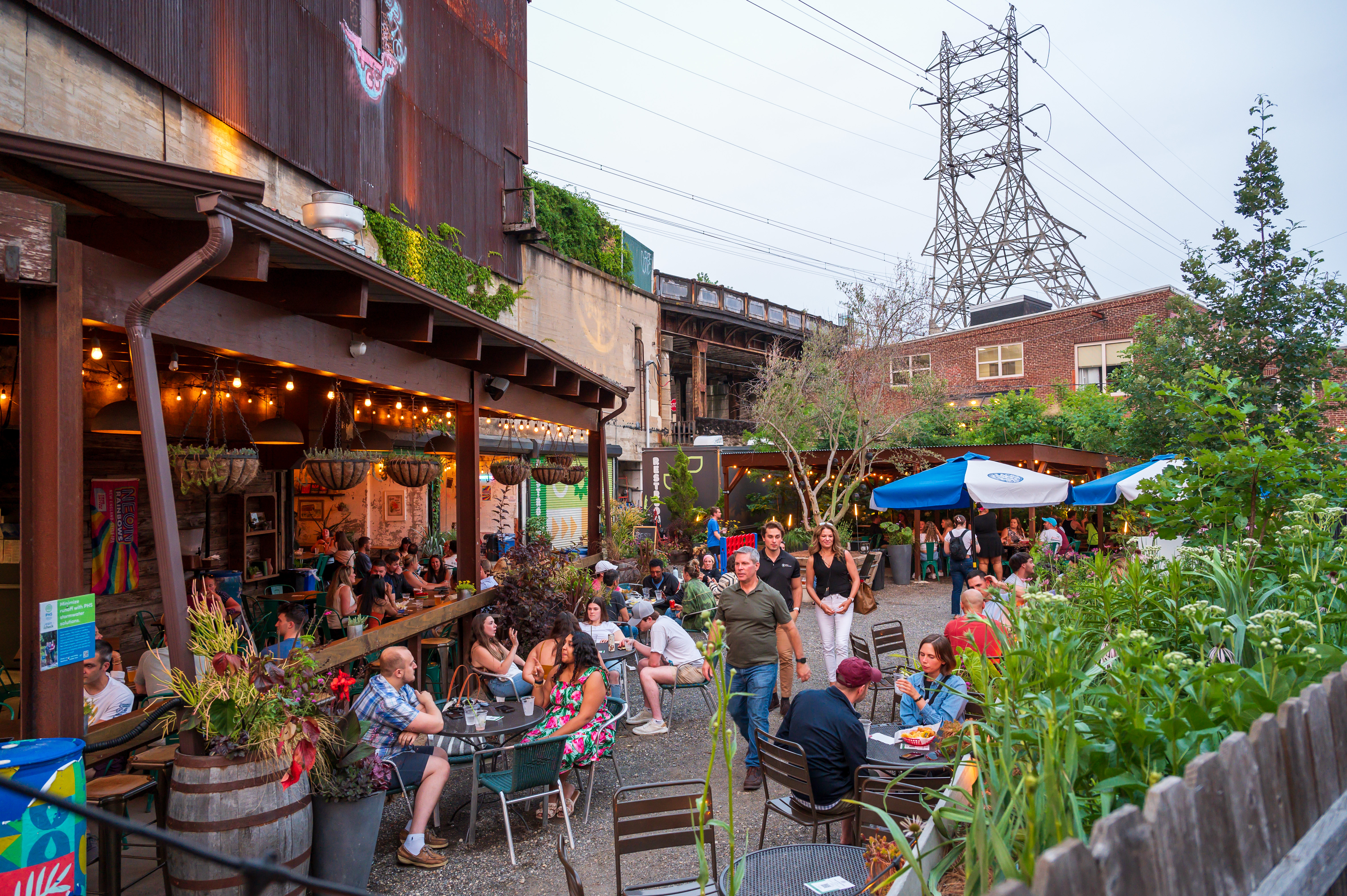
The Pennsylvania Horticultural Society (PHS) announced Wednesday that its popular pop-up beer garden in Manayunk will close permanently Oct. 5.
The property at 106 Jamestown Ave. is slated to become a six-story, 73-unit apartment building from local developer Dan Greenberg, although it faces community and political pushback.
Its hearing before the city’s Zoning Board of Adjustment was postponed last month.
“The day will serve as a celebration of PHS’s time in Manayunk and the many visitors, plant lovers, and community members who have made the garden a beloved gathering place over the years,” a PHS news release issued Wednesday said.
“PHS invites the community to come together this fall to enjoy the garden, share memories, and celebrate the lasting impact of this special green space in Manayunk,” the release said.
Since Greenberg’s plans were announced, community groups and neighbors have been pushing for the preservation of the public gathering space just off Main Street.
But PHS has emphasized that its pop-up beer gardens are not intended to be permanent.
The Manayunk location opened in 2020, while the site at 1438 South St. has been in operation since 2014.
As development plans for 106 Jamestown have advanced, PHS has been searching for another location in the city to open a new beer garden.
“Our team is actively assessing other potential sites and neighborhoods for future PHS Pop Up Gardens, but we don’t have a confirmed site to announce,” said Sin Gogolak, vice president of brand and communications for PHS.
The new location will not necessarily be in Manayunk or Northwest Philadelphia. But Gogolak confirmed they are looking in the city limits.
“PHS is grateful for the opportunity to have called Manayunk home for an extended period and is proud of what the garden has meant to the neighborhood,” PHS said in the news release.
A new zoning board hearing has not been scheduled for the apartment building at 106 Jamestown Ave.
The developer needs permission from the board to build apartments on land zoned for industrial and commercial uses and to build above the height limits set by the Main Street Manayunk zoning overlay.
Feedback from City Council and neighborhood groups will be considered by the zoning board.
“Fortunately for [Greenberg], he’s not finally purchased it yet because zoning is an essential part of the sale,” City Councilmember Curtis Jones Jr., who represents the area, said in an interview last month. The delay at the board “gives them the opportunity to talk to the community, but as it stands, I cannot support it.”
It’s not often that you see a home for sale around here that’s priced at $1 million or more.
As of last week, roughly 1,070 homes across the Philadelphia metropolitan area were for sale at this price point, according to Bright MLS. That was about 8% of all active home listings.
This week, we’re going inside three million-dollar homes for sale in Burlington County, Bucks County, and Philadelphia for the latest in the Price Point series.
Keep scrolling for that story and more in this week’s edition:
What kind of home would you buy if you had a million dollars to spend?
Listings in this segment of the market typically have some of the same features. Soaking tubs in the primary bedroom’s en-suite bathroom. Granite or quartz countertops in the chef’s kitchen. Room to spare.
Location, outdoor spaces, and special features make million-dollar homes stand apart.
In the latest Price Point story, I highlight three homes across our region that are listed for sale for $1 million:
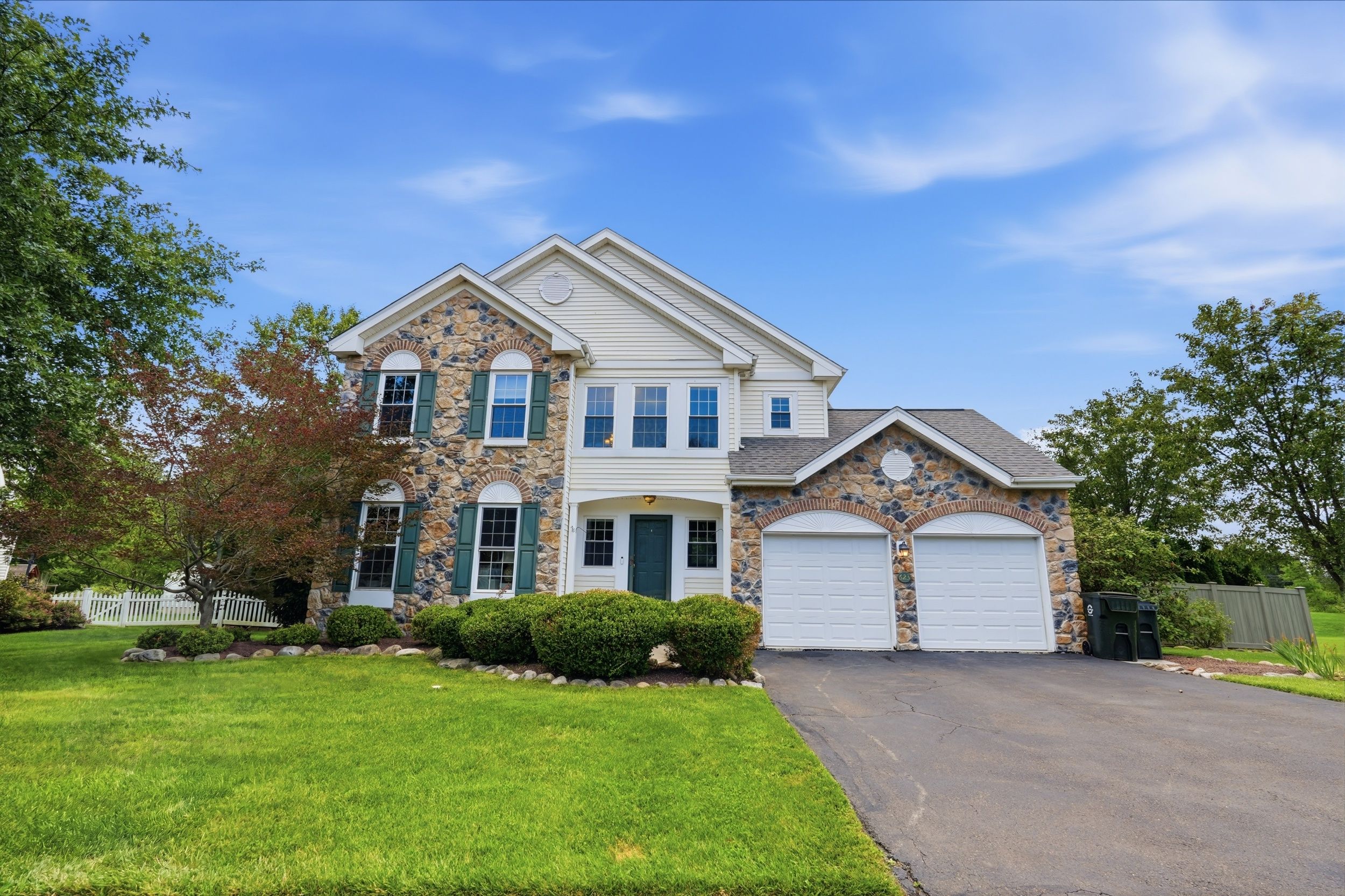
🏊🏾♀️ A Bucks County home on a large lot with a pool in an award-winning school district.
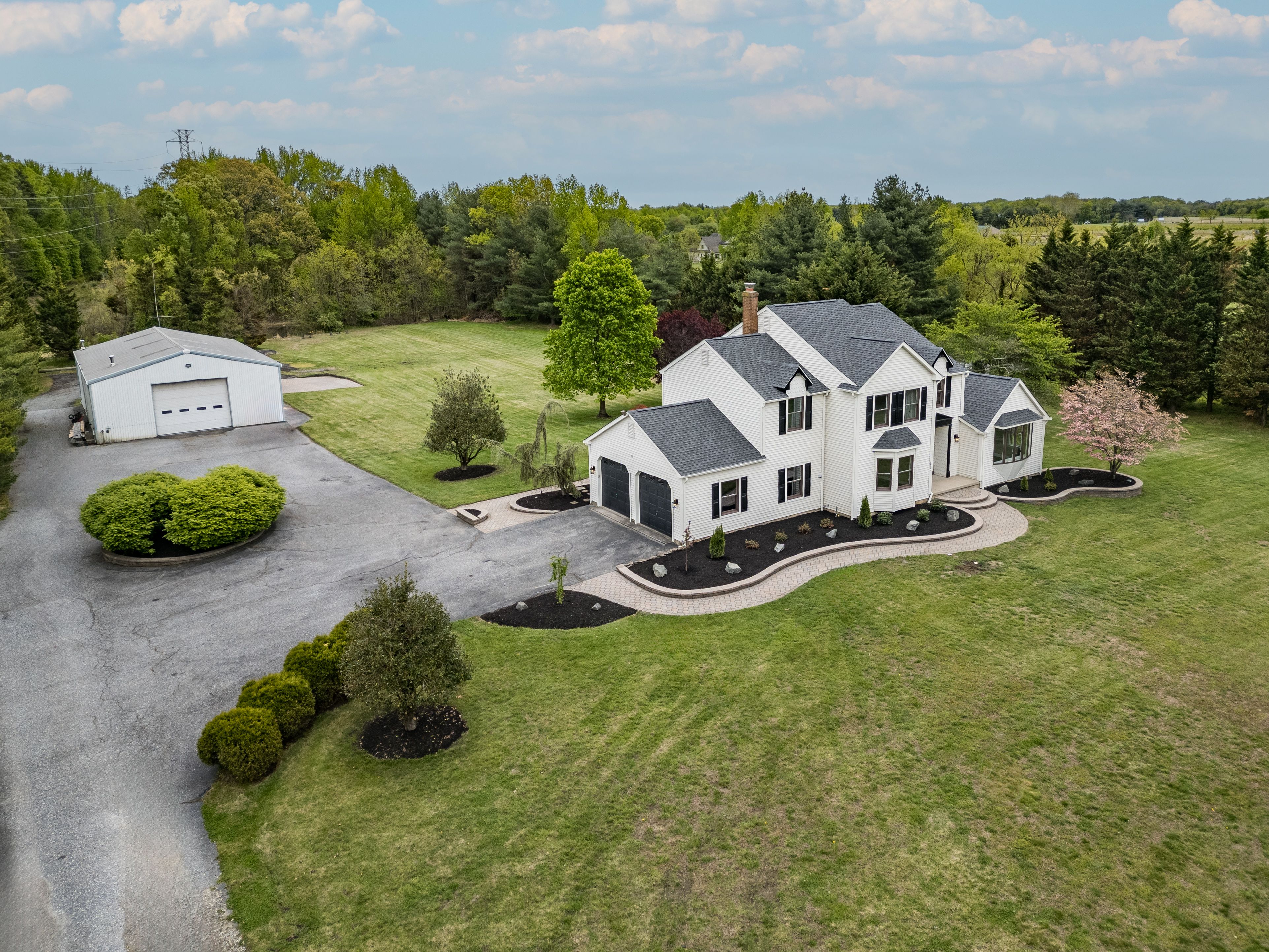
🚗 A newly renovated Burlington County home on more than four acres with a pond and a 2,400-square-foot detached garage.
🌇 A newly built townhouse in Philly’s Queen Village neighborhood with heated floors and a roof deck that offers unobstructed city views.
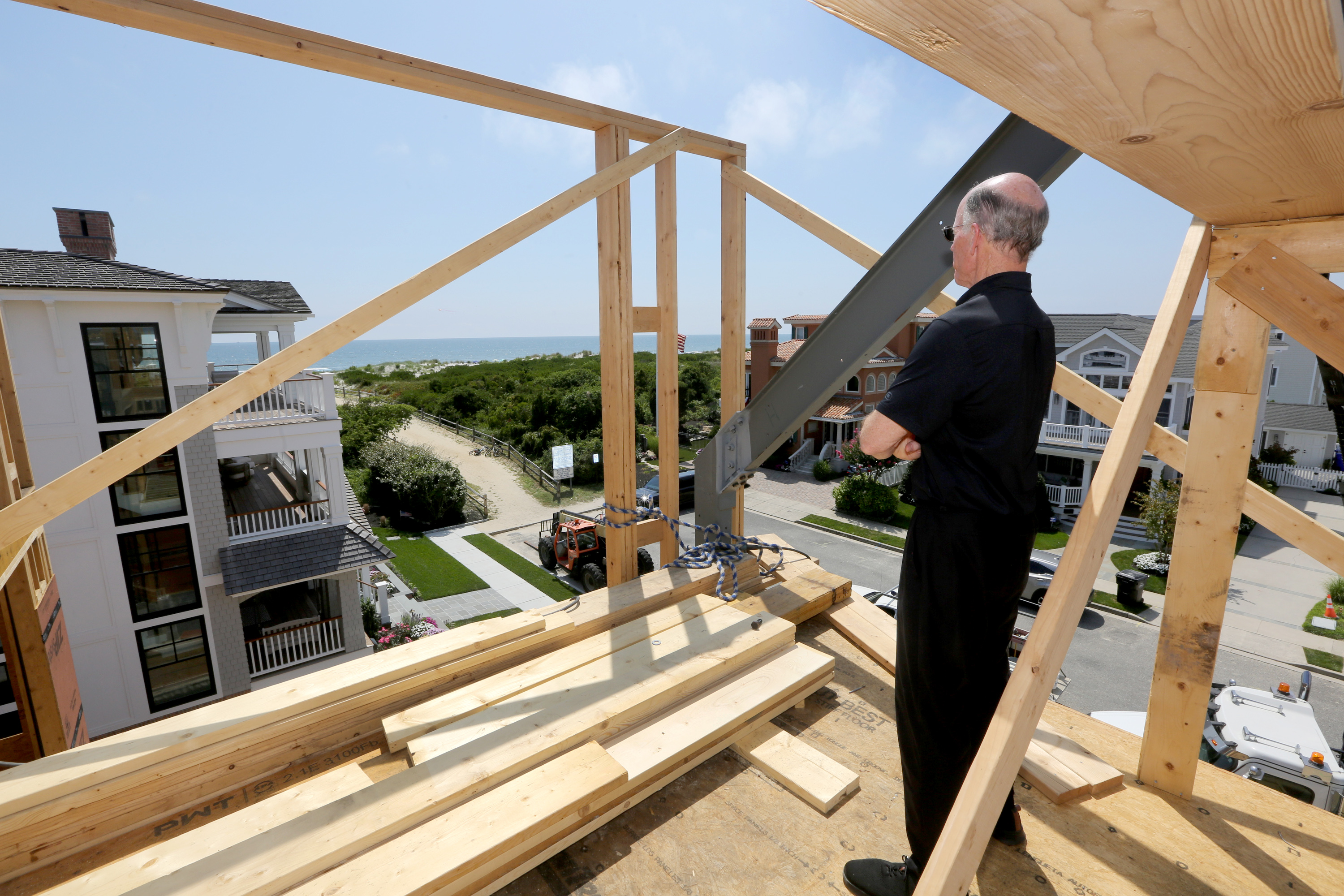
Eustace Mita has invested hundreds of millions of dollars in luxury homes and hotels at the Jersey Shore.
One of this companies, Achristavest, builds multimillion-dollar waterfront houses, including a mansion he’s planning that would be the biggest residential property in Avalon.
Two decades ago, Mita was knocking down small Shore hotels to build condo complexes. Then the 2008 financial crisis hit, and business dried up. He said he “backed into” the hotel industry.
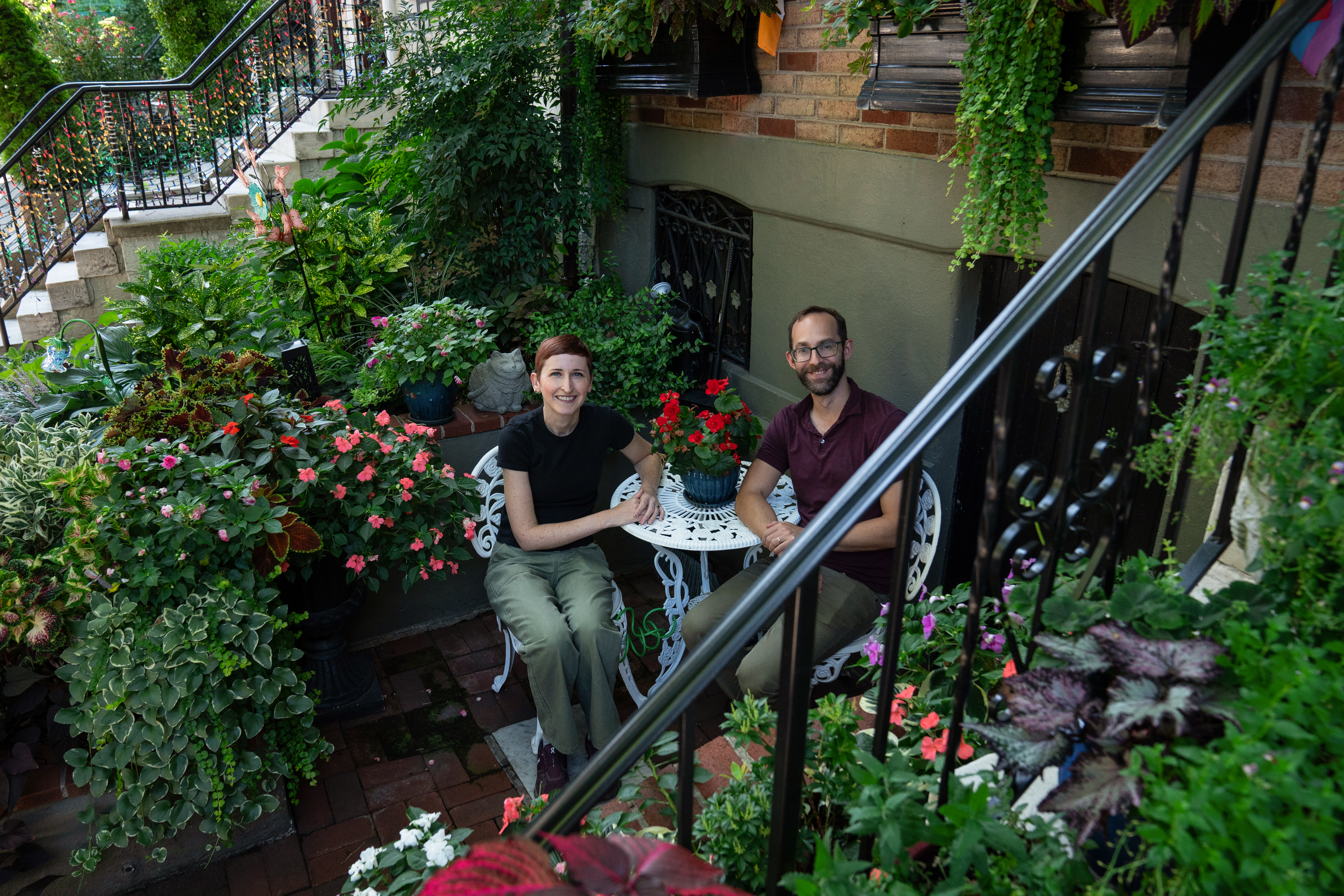
My favorite thing to do on walks in the Fairmount area is to admire the gardens that homeowners without front lawns have created. So I’m selfishly glad that this week’s tour goes behind the scenes of some of them.
I’ve stopped to stare at a mural on a garage wall that recreates a famous Claude Monet painting. Now I know it was painted by Brian Augustine, who lives next to the garage and is an amateur artist. (The mural looks professionally done to me.) Augustine planted vines in his garden that play off the mural’s water lilies.
Charlotte Burns has won local gardening accolades for her plants in the ground, in window boxes, and in ceramic pots.
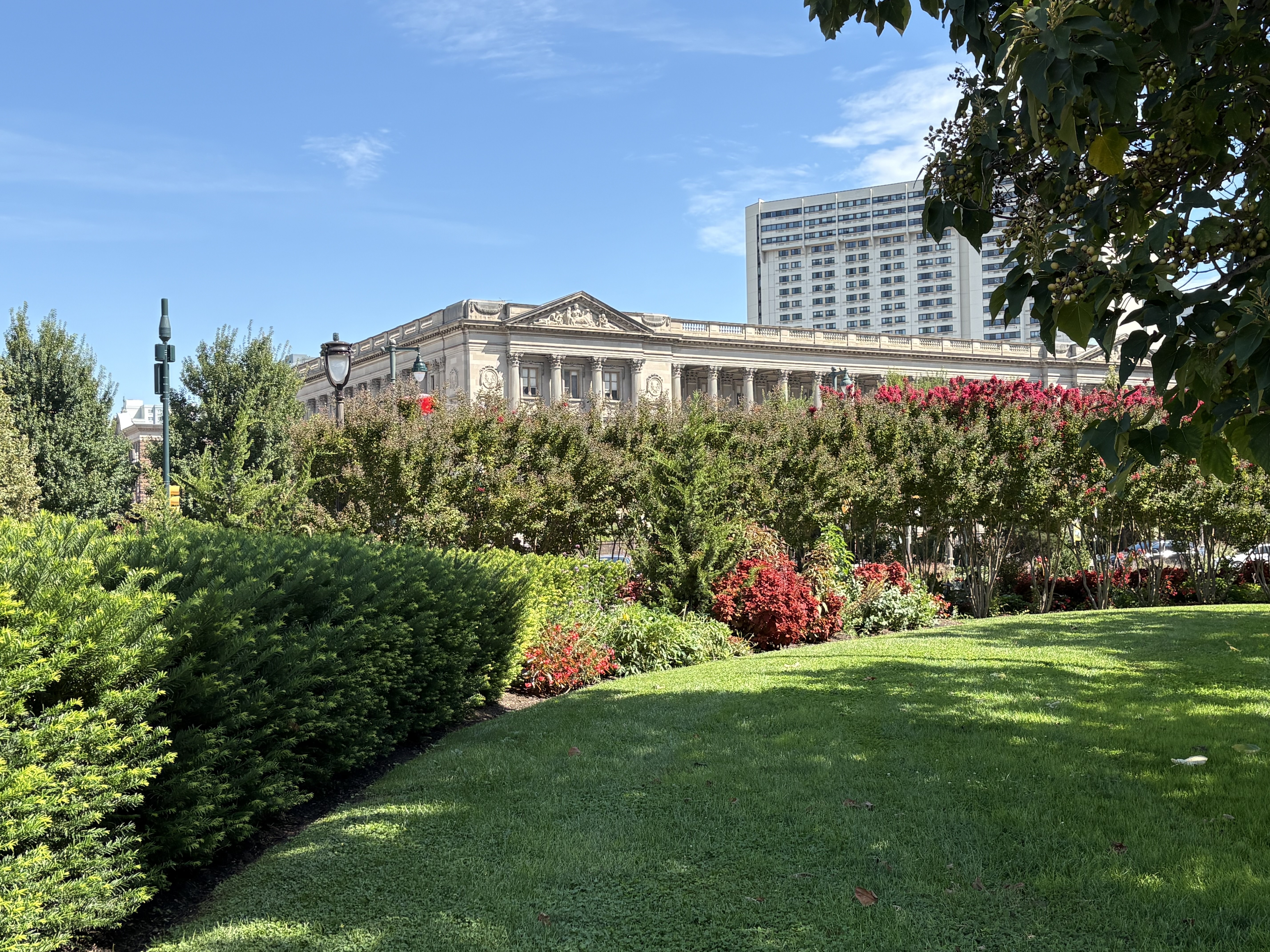
A bunch of readers recognized the Masonic Temple in Center City in last week’s quiz, even after I tried to throw you off a little by cropping a picture of it.
Good job. Shout-out to Sean R. for being the first reader to answer.
🏡 Your real estate experience
Last week, I asked how you’ve enhanced your outdoor space to make it a place where you want to be.
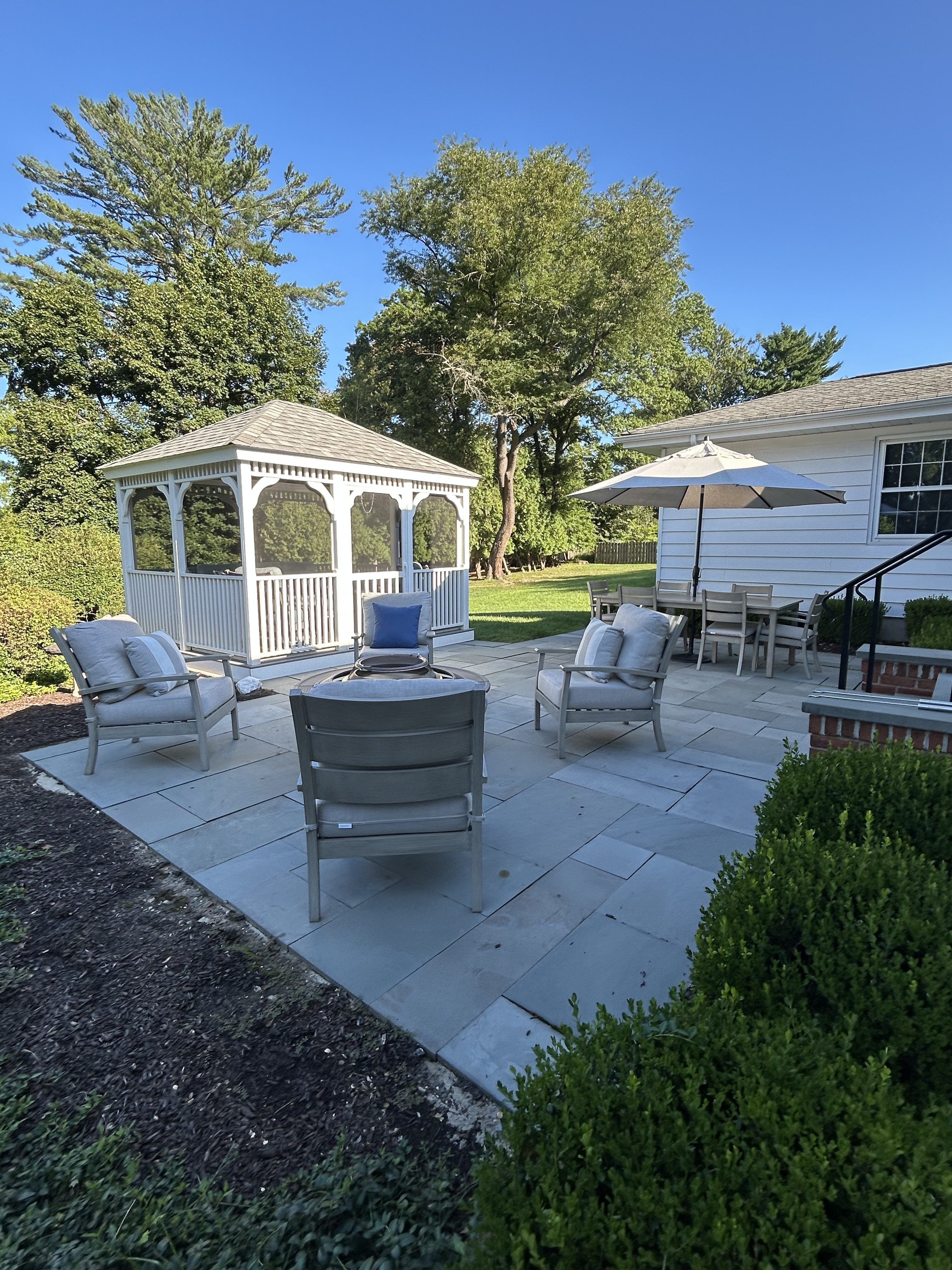
Reader Bill G. in Trenton said he furnished his front porch with cushioned chairs. And after enjoying that space, he decided to install a patio and gazebo in the backyard.
Thanks for sharing, Bill.
📹 On the street
Philadelphia is at risk of losing thousands of subsidized rental homes during the next decade as agreements to keep them affordable expire.
Affordability agreements between the federal government and the owner of 925 rentals in West and Southwest Philly have started to expire. And the owner wants to sell the properties.
Renters are afraid they’ll be forced out of their homes. Mayor Cherelle L. Parker’s administration has committed to being “part of the solution” to preserve the homes, but the details still have to be hammered out.
With the help of reporting from me and my fellow real estate reporter Jake Blumgart, our colleague Erin Reynolds made an easy-to-follow video explaining what’s going on. Join the conversation on YouTube.
And enjoy the rest of your week.
By submitting your written, visual, and/or audio contributions, you agree to The Inquirer’s Terms of Use, including the grant of rights in Section 10.