If you’re looking for a place to rent a spacious new apartment, Philly ain’t it.
Apartments across the country got slightly bigger last year, but in Philadelphia, they’reshrinking.
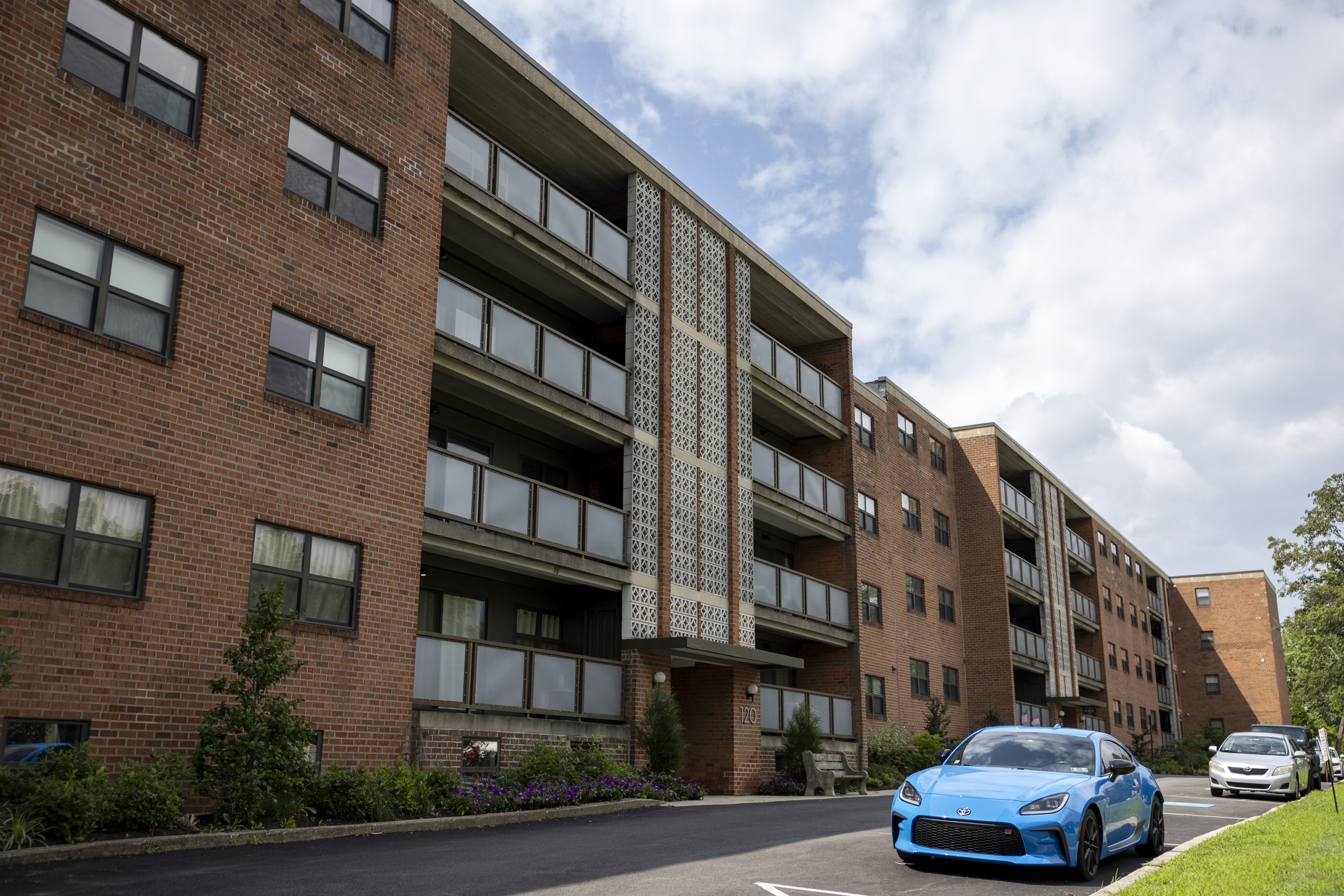
Apartments inPhilly are already relatively small. Of the country’s top 100 cities with the largest apartment supply, Philadelphia ranked 88th in apartment size, according to an analysis by the nationwide apartment search website RentCafe. The report was based on apartments in buildings with 50 or more units.
New Philly apartments, which RentCafedefined as those built between 2016 and 2025, spanan average of 747 square feet — 163 fewer square feet than the national average.
But in Philadelphia, the average new apartmentshrank by 104 square feet compared toapartments built during the previous decade — basicallythe loss of a home office, according to RentCafe.
Philadelphia’s position as a desirable rental market and demographic trends help explain the shrinking, according to Veronica Grecu, research analyst at RentCafe.
“In high-demand markets, developers often prioritize studios and one-bedrooms because they can deliver more apartments per building and meet the needs of a growing number of single-person and smaller households,” Grecu said in a statement. “… the upside is more availability in markets where inventory has historically been tight.”
Apartments currently under construction in Philadelphia average 627 square feet, according to RentCafe.
The platform found that Philadelphia’s new three-bedroom apartments actually grew in size — by 93 square feet — as studios and one- and two-bedroom apartments shrank. But not many developers are building three-bedroom units. They made up 3% of the city’s supply of new apartments, according to RentCafe.
(function(){function e(){window.addEventListener(`message`,function(e){if(e.data[`datawrapper-height`]!==void 0){var t=document.querySelectorAll(`iframe`);for(var n in e.data[`datawrapper-height`])for(var r=0,i;i=t[r];r++)if(i.contentWindow===e.source){var a=e.data[`datawrapper-height`][n]+`px`;i.style.height=a}}})}e()})();
How Philly compares to other cities
Cities in the Northeast and West dominate RentCafe’s list of places with the smallest new apartments.
Pittsburgh was one of the top 10 cities where new apartments shrank the most in the last decade. The average size decreased by 142 square feet. But the average new apartment was 804 square feet, still larger than the average in Philadelphia.
Seattle has the smallest new apartments. Those built in the last decade average 645 square feet, asmore studios and one-bedroom apartments have been built.
If you have ever considered giving up your car, now is the time.
There’s the price of gasoline, which has shot up by more than 35% since President DonaldTrump launched the war against Iran in February. Even if you never start the ignition, simply owning a car will now set you back an average of $8,000 a year in insurance, maintenance, and loan payments.
And those are just the immediate costs. As a major source of greenhouse gases, cars contribute significantly to climate change, which is already pushing up the price of food and everyday purchases.
So, let’s say you’re ready to ditch your money pit on wheels. Then what?
I’ve been struggling with this question since I moderated a panel this spring with Sarah Goodyear and Doug Gordon, the duo from the popular podcast The War on Cars, who just published a rousing call to arms, Life After Cars: Freeing Ourselves from the Tyranny of the Automobile. The event, held at the capacious Resurrection Philadelphia church in Center City, was sponsored by Philly Bike Action and 5th Square Advocacy, two groups dedicated to promoting alternatives to driving.
Resurrection’s sanctuary was packed — with the converted. When Goodyear and Gordon asked the audience who had traveled to the event by car, only a few sheepish hands went up.
While their bookdoes a great job of detailing the ways cars “ruin everything,” there is little in it to help the car-dependent kick the habit. The problem is, most people have no idea where to start.
Even in the Philadelphia region, which has better-than-average transit and cycling infrastructure, the prospect of living without a car can seem a little like trying to swim without arms and legs. How will you take the kids to sporting events, look after elderly parents, and buy groceries without a vehicle? Our local transit services — SEPTA, NJ Transit, and PATCO — don’t serve every nook and cranny of the region and don’t run as frequently as they should.
Like everything else in America these days, the debate over the role of cars in our daily lives tends toward extremes. Philadelphia urbanists can sometimes come off as unsympathetic, as if they expect people to go cold turkey and swap their vehicles for bikes and SEPTA. Meanwhile, the pro-car lobby keeps insisting, against the evidence, that the car-free life is not practical outside a few transit-rich neighborhoods, like Center City.
But who says it has to be all or nothing?
‘Habituate walking’
My advice: Keep your car — for now, at least — but look for opportunities to get around by other means. Walk to the grocery store. Ride a bike to dinner at a nearby restaurant. Think of these excursions as a trial run. Once you feel comfortable, take the train or bus to work. You may never give up your car permanently, but you will save a bundle on gas and maintenance, reduce congestion, and boost your step count.
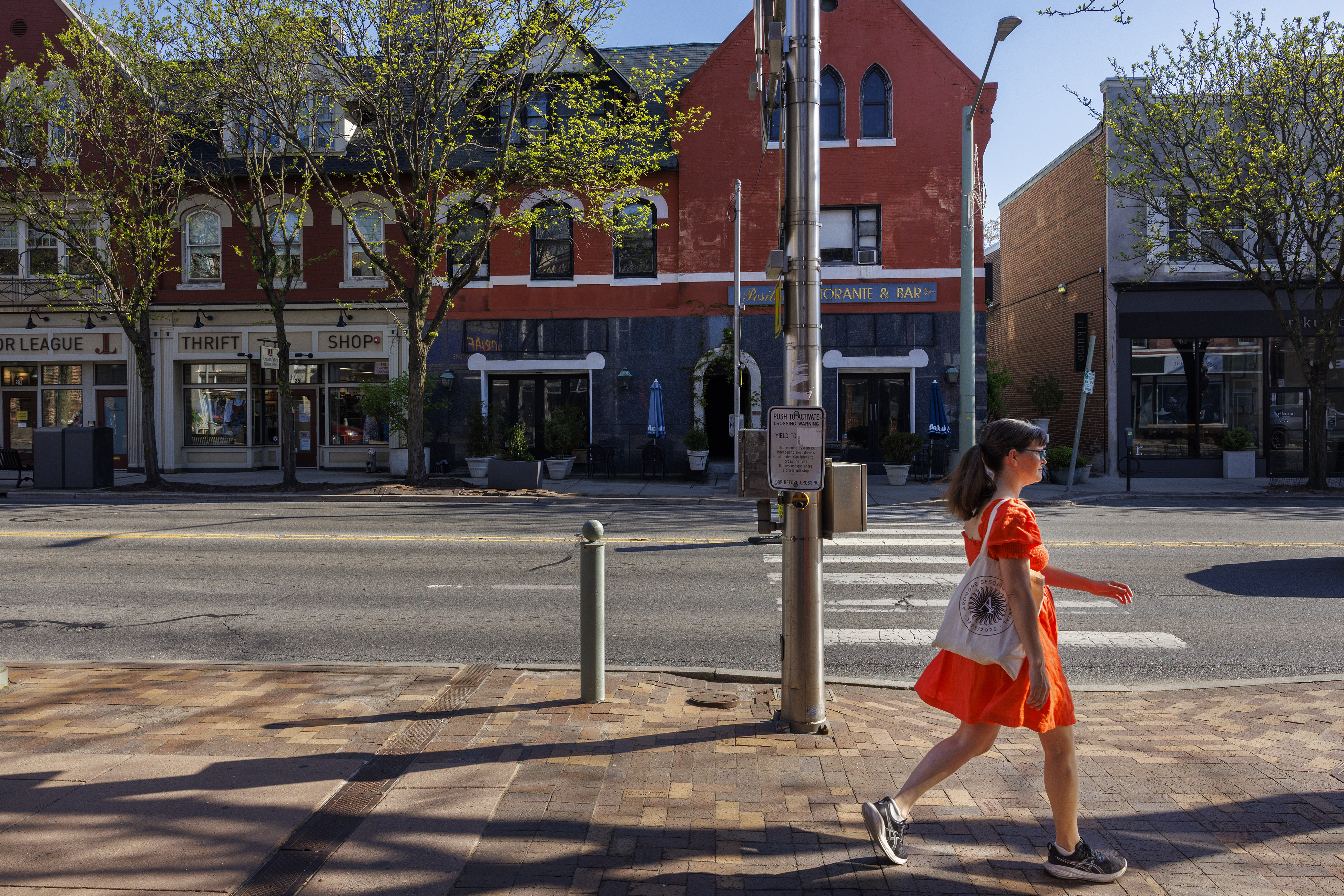
That’s how Jane Murray started weaning herself from the car. The Ardmore resident, who now runs a popular Instagram account called @Janewalksardmore, first began taking long walks as a way toexperience her Main Line town on a deeper level. To give shape to her Instagram project, she decided to visit every block in Ardmore and document her travels.
Jane Murray walks along Lancaster Avenue in downtown Ardmore, as part of a project to to walk every street in the Main Line town.Alejandro A. Alvarez / Staff Photographer
The more she walked, the more comfortable she felt leaving her car at home. She now wheels a “granny cart” to Trader Joe’s, a 15-minute walk from her house. Not long ago, she hopped a SEPTA bus to meet friends for quizzo in a pub a few towns away. At the end of the night, she took an Uber home.
Murray’s kids still have to take a bus the four miles to their middle school and she drives them to distant sporting events, but makes a conscious effort to “habituate walking” into her routine. Before leaving the house, she checks her transit apps to see if she can get to her destination without driving. Sometimes, she mixes it up: When she’s running errands, she’ll drive part of the way, then walk the last few blocks. Her Instagram has inspired her neighbors, who pepper her for tips about safe walking routes.
A mobility menu
Living in America without a car is often portrayed as a hardship, something that people on the margins are forced to endure. But, for me, living without a car has been a joy.
I didn’t know what to expect when I impulsively decided to get rid of my aging clunker 30 years ago after being presented with an expensive repair bill. Before then, I had rarely taken taxis or splurged on Amtrak to visit family in New York. Since I would no longer have to pay for car insurance, I promised to allow myself those indulgences. My husband and I were living in Center City, which certainly made our experiment more doable. (I should mention that I was pregnant at the time. I took a taxi to and from the hospital.)
Besides saving a lot of money, not having a car has liberated me in ways I never could have imagined. Bike lanes were virtually nonexistent in Philadelphia in the ’90s; today my bicycle is my main form of transportation. Thanks to the city’s mostly flat terrain, I can easily cycle to interviews and events in far-flung neighborhoods. My ride is equipped with side baskets, allowing me to do my grocery shopping by bike. When my destination is beyond biking distance, or when I have to look presentable, I’ll take SEPTA or reserve a Zipcar from the local car-sharing company. In a pinch, I can always summon an Uber, a Lyft, or a taxi. I still walk a lot, and it’s no exaggeration to say I run into people I know on every outing.
The key here is to think of mobility as a menu of options, rather than a car/no-car binary. While low-speed electric bikes have made it easier to cover long distances, not everyone can, or wants to, bike. Even transit can be daunting for a novice. The fear of crime also deters some people from using SEPTA, even though serious incidents have fallen dramatically in the last decade.
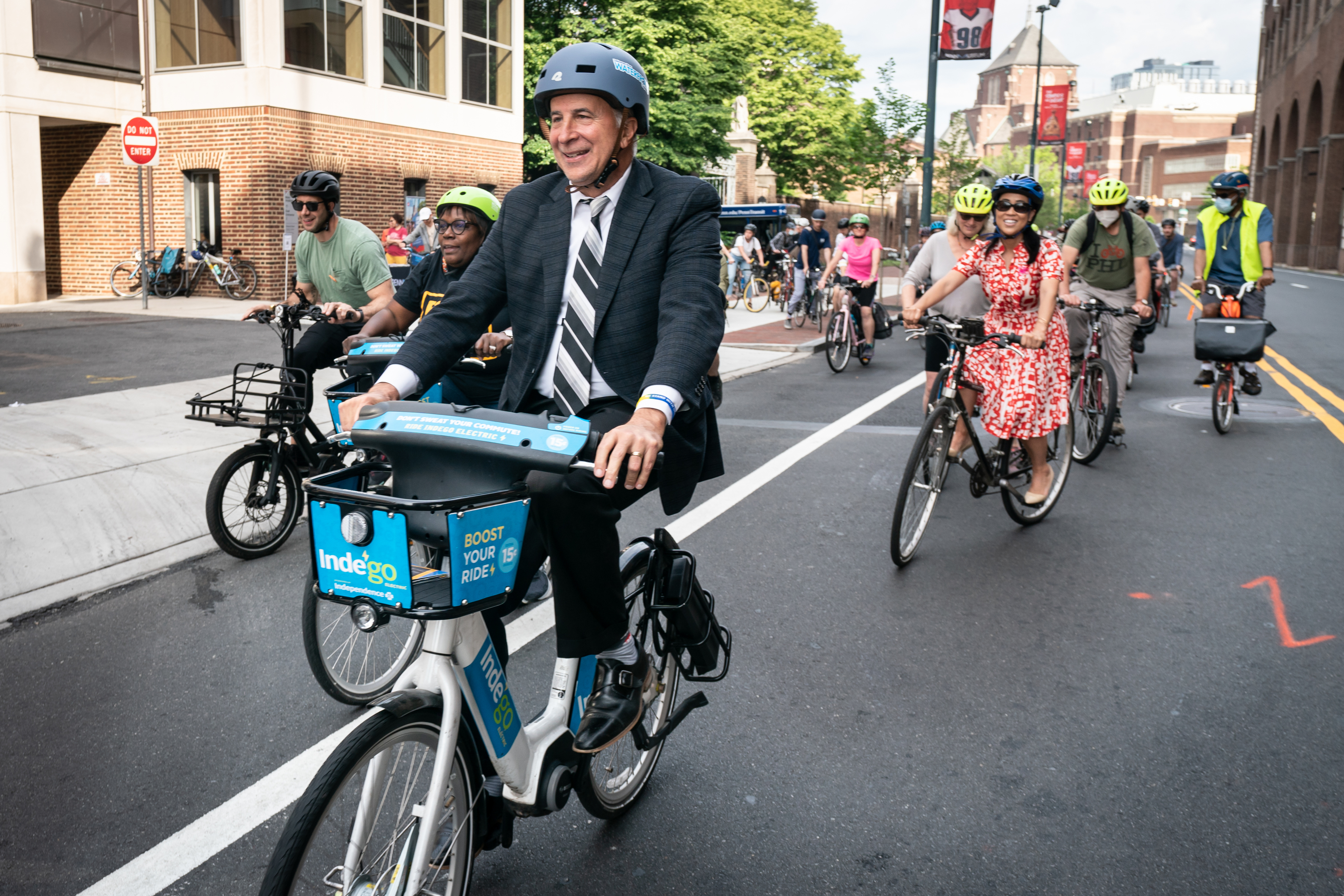
In 2022, Councilmember Mark Squilla (center), former Eagle Connor Barwin, Councilmember Kendra Brooks, and Councilmember Helen Gym took part in a Bike to Work Day event sponsored by the Bicycle Coalition of Greater Philadelphia to promote cycling as a means of transportation.JESSICA GRIFFIN / Staff Photographer
Eden MacDougall vividly remembers his trepidation when he started commuting from Langhorne, in Bucks County, to Temple University on SEPTA’s Regional Rail. “I kept thinking, how will I know it’s my stop?”
By the time MacDougall graduated in 2022, he was a super-commuter. To get to his new job at Mastery Charter School, where he is an AmeriCorps reading instructor, he had to use three forms of transportation: He started his day by biking two miles from his home to the Langhorne station. After taking a SEPTA train to Fern Rock, he changed to the Broad Street subway, getting off at Erie. The trip took an hour and 45 minutes, but MacDougall, who never learned to drive, loved it. “I’d open up my book and read the whole way.”
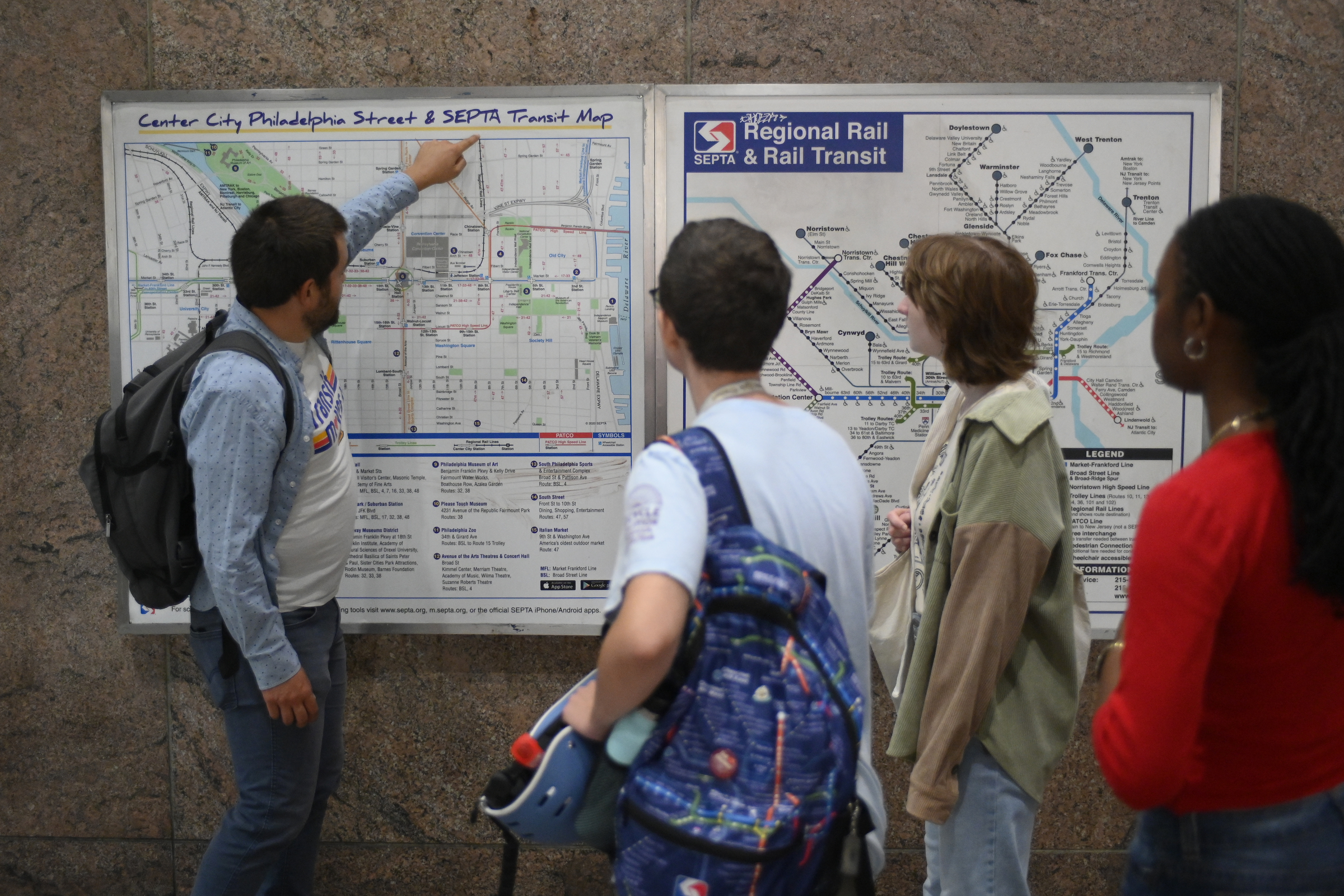
Stephen Bronskill, coalition manager for Transit Forward Philadelphia, shows incoming Temple University students how to navigate SEPTA during a tour organized at the start of the new semester. Bastiaan Slabbers / For The Inquirer
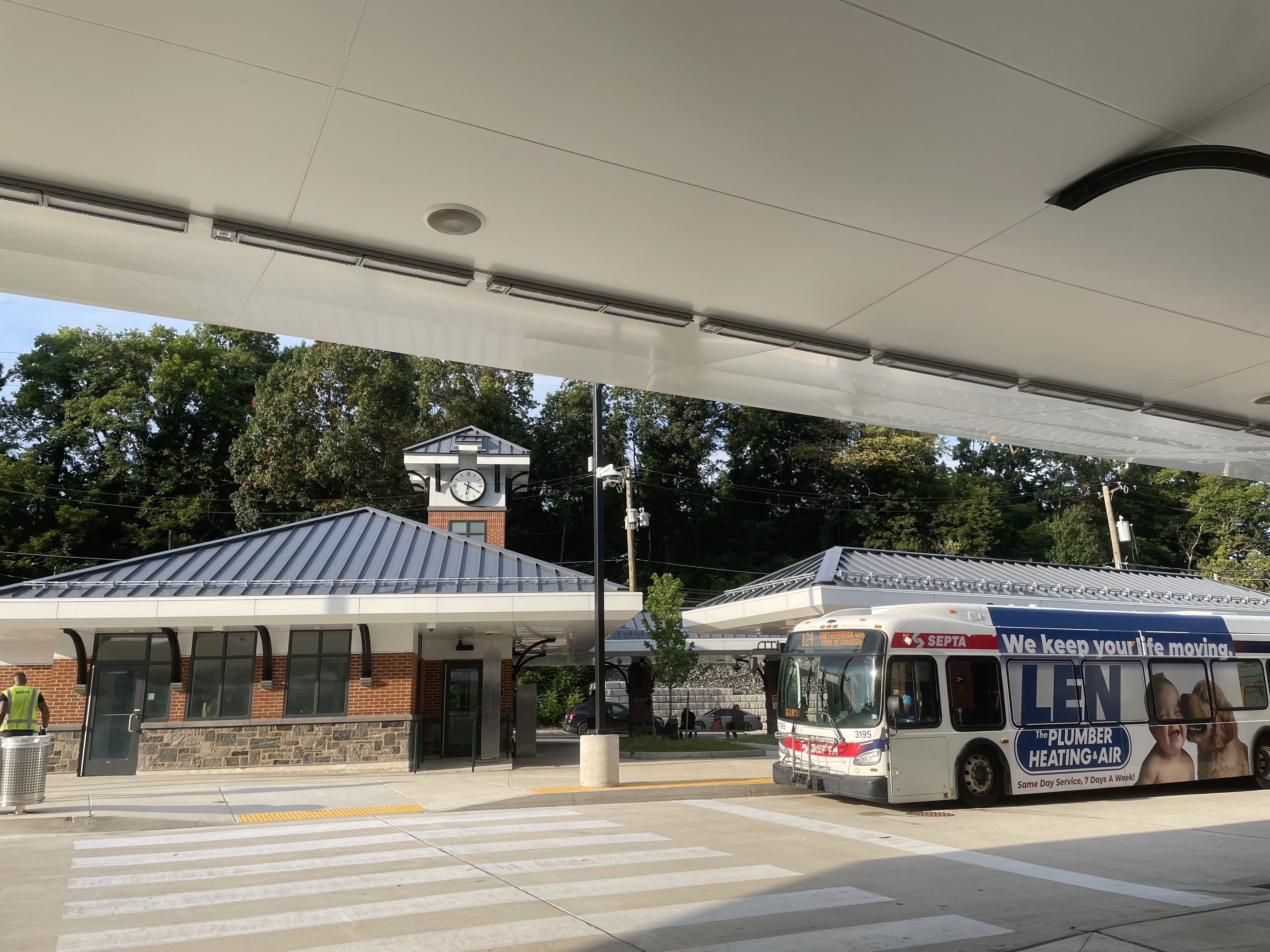
Now he lives in Philadelphia and volunteers as an instructor for Transit Forward Philadelphia and the Bicycle Coalition of Greater Philadelphia, which run Saturday tours to help people feel more confident riding SEPTA. Although the events provide practical advice, like how to use a transit app, they’re intended to be fun excursions. MacDougall recently shepherded a group from Roxborough to the Clark Park farmers market, showing them how to change from the Route 9 bus to a West Philadelphia trolley. Along the way, the group got to see SEPTA’s efficient new Wissahickon Transit Center on Ridge Avenue, where 11 bus routes converge.
The two groups, which have been lobbying the state legislature to help SEPTA secure much-needed state funding, started the Saturday tours as an extension of their advocacy work. They believe the exposure to SEPTA’s system can help reset public perceptions.
SEPTA’s new Wissahickon Transportation Center on Ridge Avenue in Manayunk is a major upgrade for the city’s bus riders. The sprawling, $50 million station opened in January 2026 and allows 5,000 passengers a day to switch between 11 bus lines. (photographeed Aug. 2026)Inga Saffron / For The Inquirer
“People had a lot of negative experiences during the pandemic,” Julio Rodriguez, the Bicycle Coalition’s policy director, told me. So, when SEPTA announced it was implementing its long-awaited schedule changes this summer, the transit advocates saw a chance to change the conversation.
Helping SEPTA boost ridership isn’t their only goal, however. Because they believe fewer cars will make Philadelphia a safer, more livable city, they’re organizing similar outings to get people comfortable with bike commuting.
Changing habits
Even while these advocates are gaining adherents, many skeptics remain convinced people will never give up their cars.
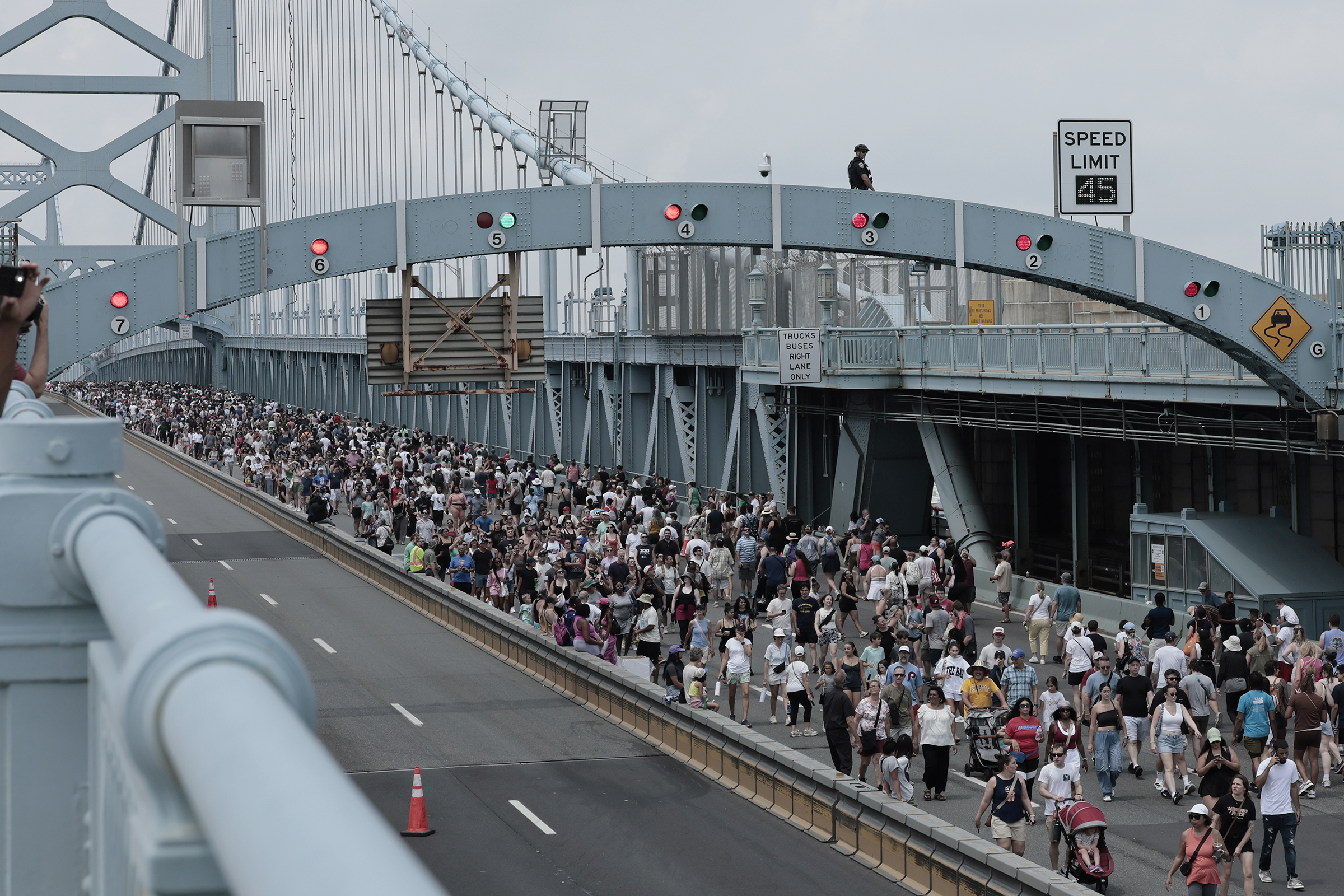
But the public’s cheerful response to this summer’s car-free celebrations around Philadelphia suggests that habits can change. Almost 600,000 people converged for World Cup watch parties at Lemon Hill in Fairmount Park during the 39-day FIFA Fan Festival — even though parking was banned. After the games ended, I saw hundreds of people streaming along the Schuylkill River Trail to 30th Street Station, a distance of 1.5 miles. Thousands took transit, rode bikes, or walked to the Ben Franklin Bridge to celebrate its centennial in July.
Thousands of people took transit, biked, or walked on July 11 to parade across the Ben Franklin Bridge to celebrate the 100th anniversary of its opening.Elizabeth Robertson / Staff Photographer
For people who switch to alternative forms of transportation, the payback is immediate. But Philadelphia and the region also have much to gain from having fewer cars racing through the streets: cleaner air, less noise, more casual social encounters with neighbors, and less wear-and-tear on infrastructure
The impact on climate change is a different story. Individual actions can only do so much to slow the dramatic shifts in global weather. It’s also a frustrating chicken-and-egg situation. People won’t see car-free living as truly feasible until there is intensive government investment in transit, bike infrastructure, and pedestrian safety.
Until that happens, carry a fare card, sign up for car-share, install a transit app on your phone — and don’t forget to wear ahelmet.
When he started as an intern 27 years ago,Mike Grigalonis never expected to become CEO at the Chester County Economic Development Council. But now he’s taken the top job, leading an organization that propels business growth in the county.
Since then, he’s seen the council grow from a six-person operation to one that boasts more than 40 employees, with teams dedicated to building out the workforce, supporting agriculture, and directing hundreds of millions of dollars to projects in the county. Grigalonis succeeds his longtime boss, Gary Smith, who stepped down July 1.
As the council has grown, so too has Chester County, which remains the richest of Pennsylvania’s 67 counties.
“I’m excited and grateful and humbled for this opportunity,” said Grigalonis, 53, who lives in Upper Uwchlan Township. “I don’t take it for granted, and I’m really excited about what’s to come.”
The Inquirer talked with Grigalonis about the current economic landscape of the county.
This conversation has been edited for clarity and brevity.
What’s changed most since you started in 1998?
In some ways there has been a lot of change, but in some ways there haven’t. I think about open space preservation, for example. … I think what this county, over generations of leaders, has done an amazing job of is balancing, making sure that we continue to have that open space, which is a big part of our culture, a big part of I think what makes us attractive and successful, but still having development and job creation and innovation and all those things happening at the same time.
How do you balance preserving the culture of Chester County while fulfilling the council’s mission?
Very carefully. … I always start by saying up front that I totally support open space preservation. I completely acknowledge the value that it’s brought to the county.
Do I feel that sometimes we sometimes lean maybe a little too heavily with the open space? Maybe. The planning commission does what they call a non-residential construction report. They look at institutional, they look at industrial, and they look at commercial. And in 2025, which is the most recent data, that was down pretty dramatically, the lowest it’s been in like 10 or 11 years. Is that a trend? Is it an aberration? It’s too early to tell.
And why is that? There’s lots of reasons — construction costs are high, borrowing rates are high. There are tariffs that maybe were at play. There’s lots of reasons, but do people sometimes shy away from doing projects in Chester County? I don’t know that.
I want to make sure that we strike the balance again.
What do you see as the future for farming in Chester County?
I think the future remains bright. I think we, as an organization, are highly committed to supporting ag[riculture]. … It’s a really strong ag team that’s grown over the last couple years. We have something called AgConnect, which is an awesome partnership with the county, and I’m seeing a lot of a lot more awareness and visibility.
We’ll see how that, longer term, translates to some of the economic metrics, but I think that awareness, engagement, visibility with the ag community is stronger because of the efforts of AgConnect and others.
What do you see as the future of suburban office development in the county?
I don’t know the answer. I wish I did. What I do see is obviously everybody’s aware of it. Developers are thinking smart about it. … Obviously, King of Prussia has the main street, adjacent to the mall. … In Philadelphia, this is a huge thing where they’re converting office buildings to residential. There hasn’t been a ton of that out here, but there’s been a few of those that have happened. … You’re probably going to see some more destination mixed-use creative amenities, maybe some conversion to residential, and then a refresh of office space.
What’s the future of Coatesville?
I think, obviously, there’s been some starts and stops, and there’s been some successes and some things that haven’t worked. But I think there’s some great people in that community. There’s a lot of people that are dedicated to making sure that redevelopment happens there. I think there are signs. The train station obviously has made tremendous progress. There’s a new energy around The Flats. There’s some things that are going to happen on Lancaster Ave[nue] that are on the verge. Ash Park was just completed, so there’s a lot of things happening there. I just don’t want it to be forgotten.
We’re seeing some proposed redevelopment of Superfund or brownfield sites. Do you see this as a viable way of reusing this land?
We’ve always been super supportive of that. … I think that will absolutely continue, and it should always be a top priority, because that enables us to strike that balance to take already developed sites and buildings and kind of repurpose them. That should be a huge part of our strategy moving forward.
Do you think the proposed data centers will actually be built here?
There are concerns that need to be addressed. I do think that data centers aren’t all evil. I think there are some positives that can come out of it. There’s construction jobs and there’s tax ratables. … We’ve always competed as a county, as a region, really as a nation, on innovation. So I think data centers, we’re going to have to figure out: How do we construct them the right way? It should not be the Wild West. It needs to be very thoughtful and very careful.
What’s the future of QVC and its campus in West Chester?
QVC is an incredible success story. So, no matter what happens, we’ll always be super proud and grateful that QVC was born in Chester County. … I don’t know how to forecast the future[as the company emerges from bankruptcy]. … We certainly want to be supportive. We certainly hope they succeed.
The typical homeowner in New Jersey has one of the highest levels of housing wealth in the country, according to a study by LendingTree, an online loan marketplace.
The state was one of the top five where homeowners reported having the most home equity in the first quarter of the year, according to an analysis of more than 965,000 anonymized inquiries for home equity loans and home equity lines of credit submitted through LendingTree.
Home equity shoppers in New Jersey reported having a median of about $295,000 in equity, meaning half had more and half had less. The Garden State tied with Washington state in the rankings, but New Jersey had a slightly higher share of homeowners with at least $200,000 in equity — almost three in four shoppers.
Home equity, also referred to as housing wealth, is the difference between how much a property is worth and how much the owner owes on their mortgage. Equity increases when home values rise and/or owners pay down their mortgage. It’s money that belongs to the owner, but it’s not the same as having cash, noted Matt Schulz, LendingTree’s chief consumer finance analyst.
“Accessing [equity] generally means selling the home or borrowing against it, and borrowing comes with costs and risks,” Schulz said in a statement. Equity fluctuates with the market. Before borrowing against a home, owners should verify how much equity they have and how much the loan will ultimately cost. And they shouldn’t borrow more than they need, he said.
Property owners take out loans and lines of credit against a home’s equity to do things like consolidate debt, pay for school, and repair or renovate the home.
How equity compares
Home equity shoppers in Hawaii reported having the most housing wealth — a median of about $425,000, according to the LendingTree analysis. More than 80% of these homeowners had at least $200,000 in home equity.
California came in at second for median housing wealth — about $350,000.
(function(){function e(){window.addEventListener(`message`,function(e){if(e.data[`datawrapper-height`]!==void 0){var t=document.querySelectorAll(`iframe`);for(var n in e.data[`datawrapper-height`])for(var r=0,i;i=t[r];r++)if(i.contentWindow===e.source){var a=e.data[`datawrapper-height`][n]+`px`;i.style.height=a}}})}e()})();
Pennsylvania ranked 34th. Home equity shoppers on LendingTree’s platform reported having a median of $180,000.
Of the 50 states, West Virginia and Iowa were tied for last place. Home equity shoppers in these states reported having a median of about $130,000 in equity.
Differences among states “are a reminder that the home equity story can look very different depending on where you live,” Schulz said.
“For some homeowners, their house can provide a huge financial cushion,” he said. “For others, there may be far less wiggle room.”
But in total, U.S. homeowners “are sitting on an extraordinary amount of housing wealth,” Schulz said.
Across the country, households had $34.9 trillion in home equity as of the first quarter of 2026 — $48.7 trillion in real estate assets and $13.8 trillion in mortgage debt, according to LendingTree’s analysis of Federal Reserve data.
The buyer: Tessa Maropis, 29, property manager for her family’s realty business in Texas.
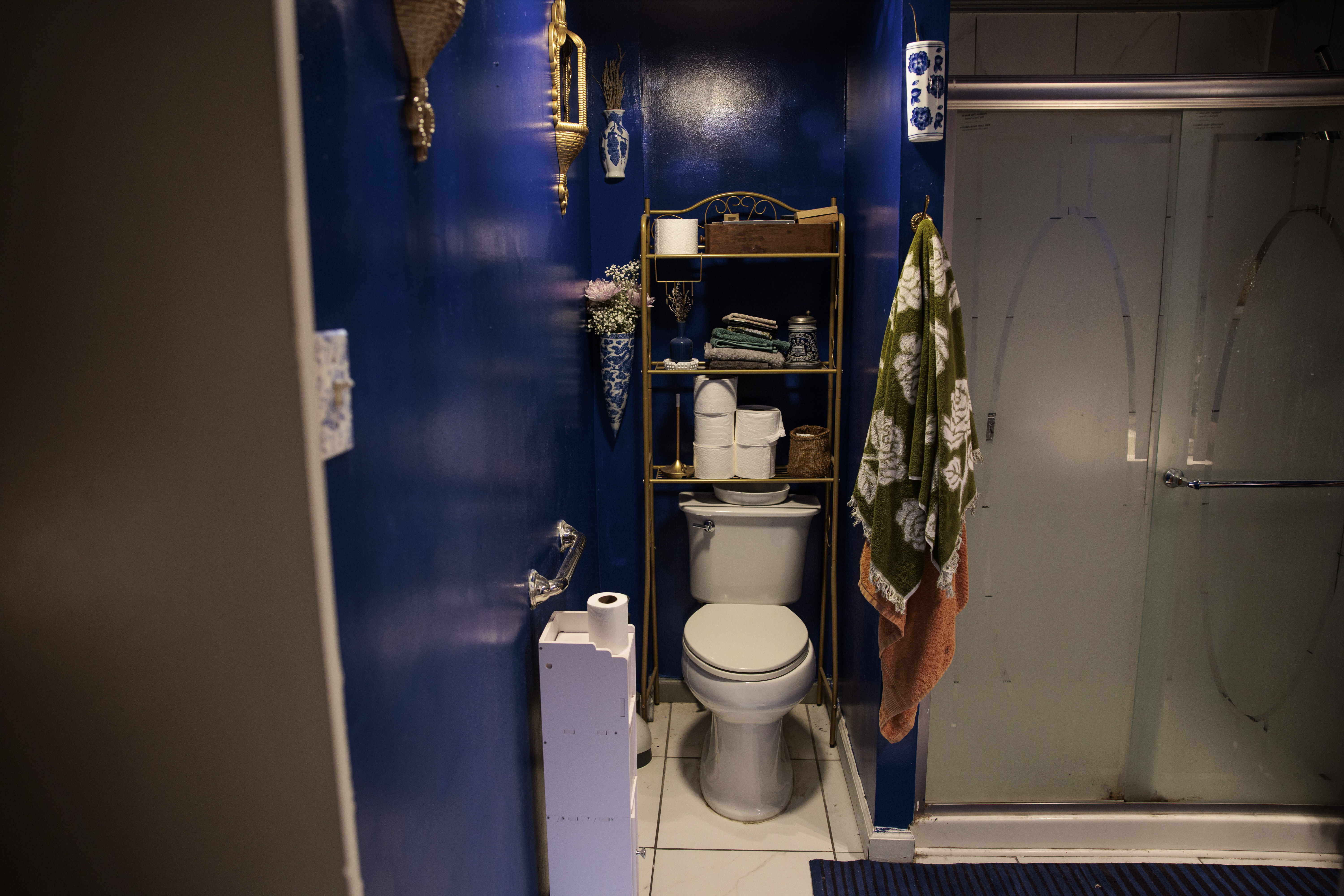
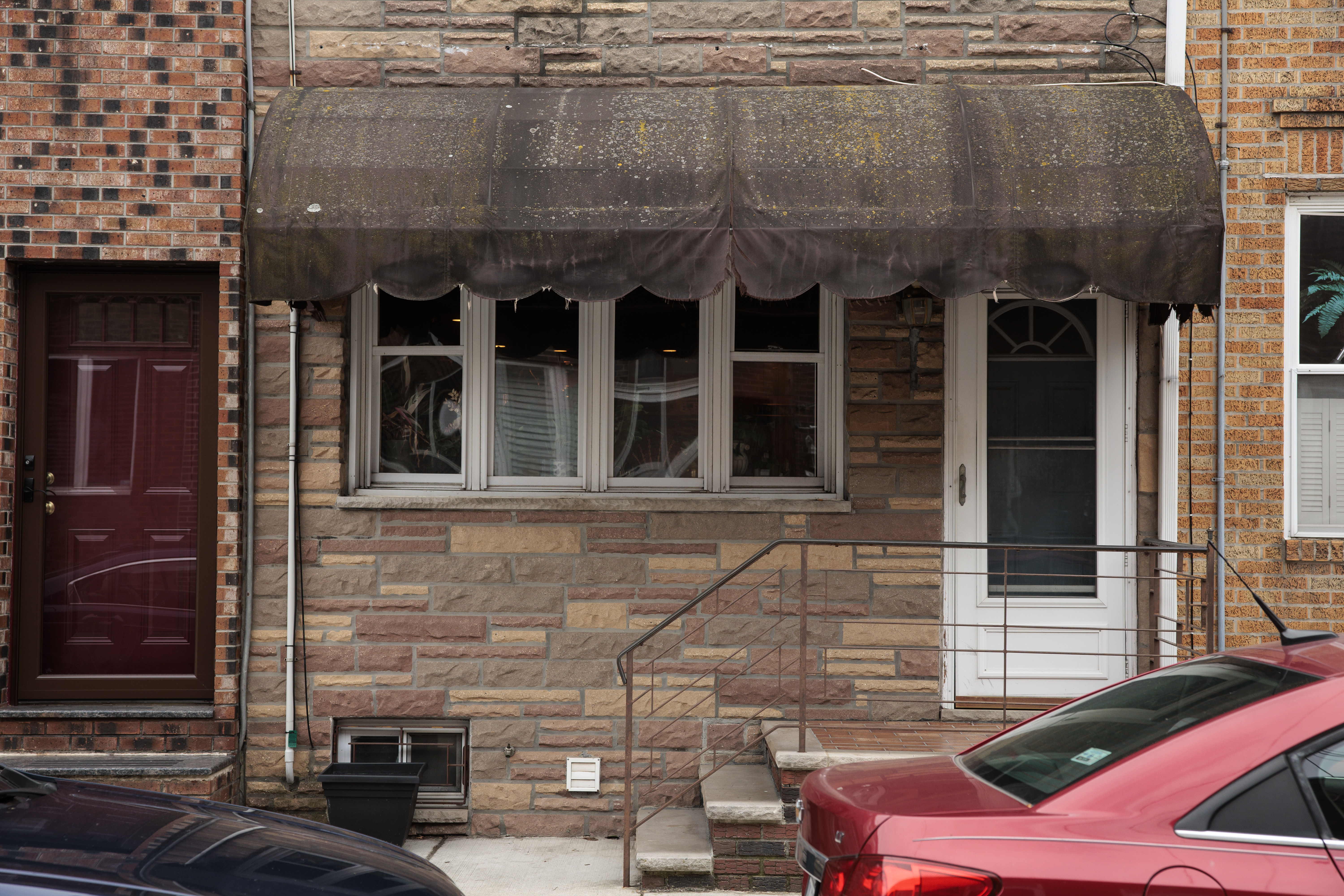
The house: An 896-square-foot rowhouse in South Philly with three bedrooms and one bath built in 1923.
The price: Listed for $280,000; purchased for the same.
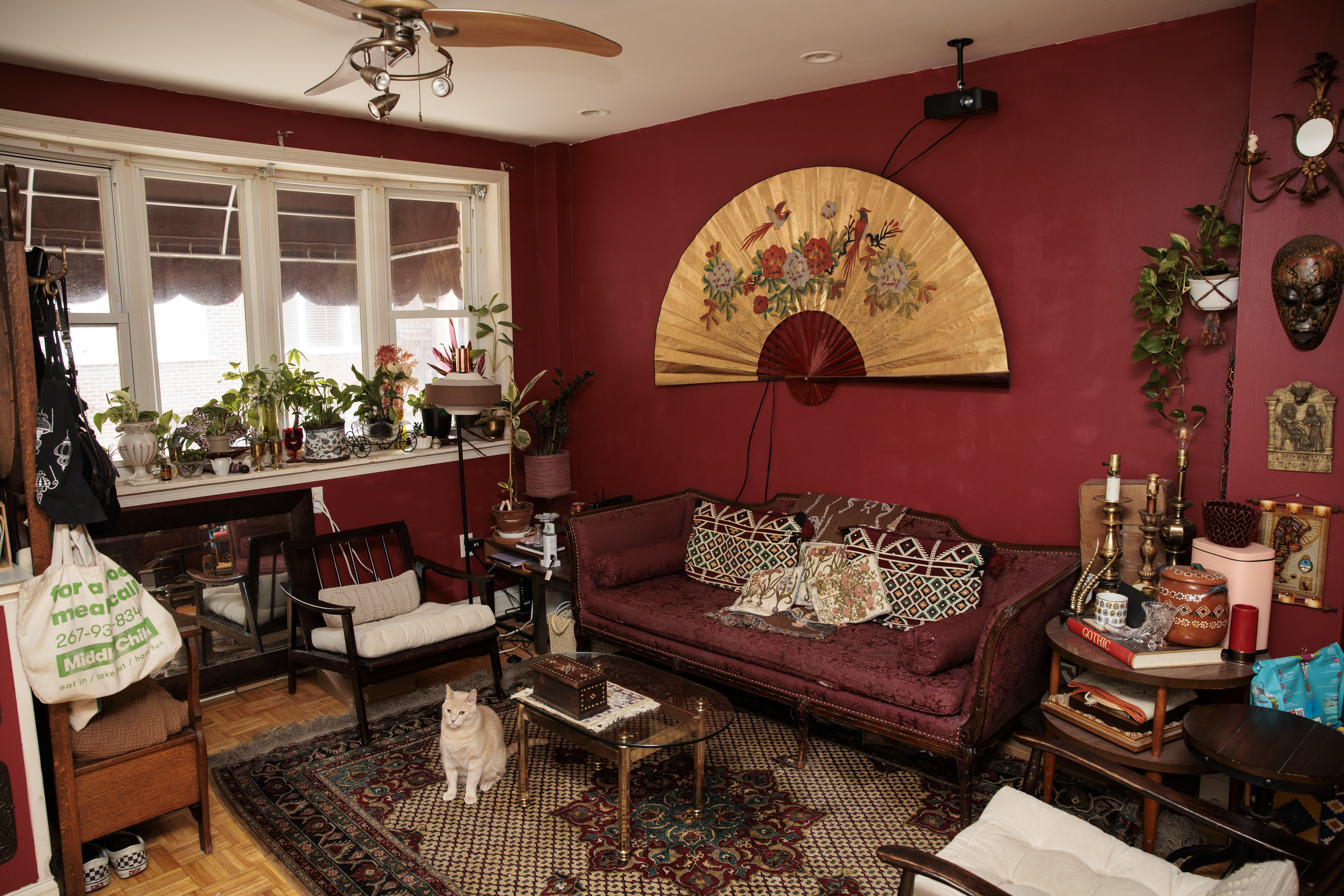
Maropis knew her mahogany and silk couch would fit perfectly in the living room. Monica Herndon / Staff Photographer
The agent: Salvatore Emma, Exit Elevate Realty.
The ask: Maropis moved to Philly from Austin, Texas, in 2022 for a job, bringing her then-boyfriend with her. They signed a 15-month lease in South Philly but broke up after five months. Then they kept living together.
When the lease finally ended, Maropis wanted to start fresh. She hoped to find a rental with a bathtub and a private outdoor space that retained its original details. She didn’t want millennial gray or a sleek Ikea remodel.
The bathroom at Maropis’ house. Monica Herndon / Staff Photographer
She also knew she wanted to stay in the 19147 zip code. A frightening incident had left her committed to the area: Two weeks after arriving in the city, Maropis was drugged at a bar and left near her house, she said. A good Samaritan found her and drove her safely home, unharmed.
“As much as something terrible happened,” she said, “it showed me how surprisingly gentle and kind the community here was.”
Maropis said she “lucked into the best community” in South Philly. Monica Herndon / Staff Photographer
The search: Maropis had bad luck on the rental market; the apartments she liked kept getting snapped up. As her search dragged on, she found what seemed like a perfect house, but the owners were offering only a short-term lease because they planned to sell soon. Not wanting to move immediately, Maropis looked into buying the house. She prequalified for a mortgage but didn’t have enough cash to make the monthly payments affordable.
It dawned on her that buying could be a real option if she found a less expensive place.
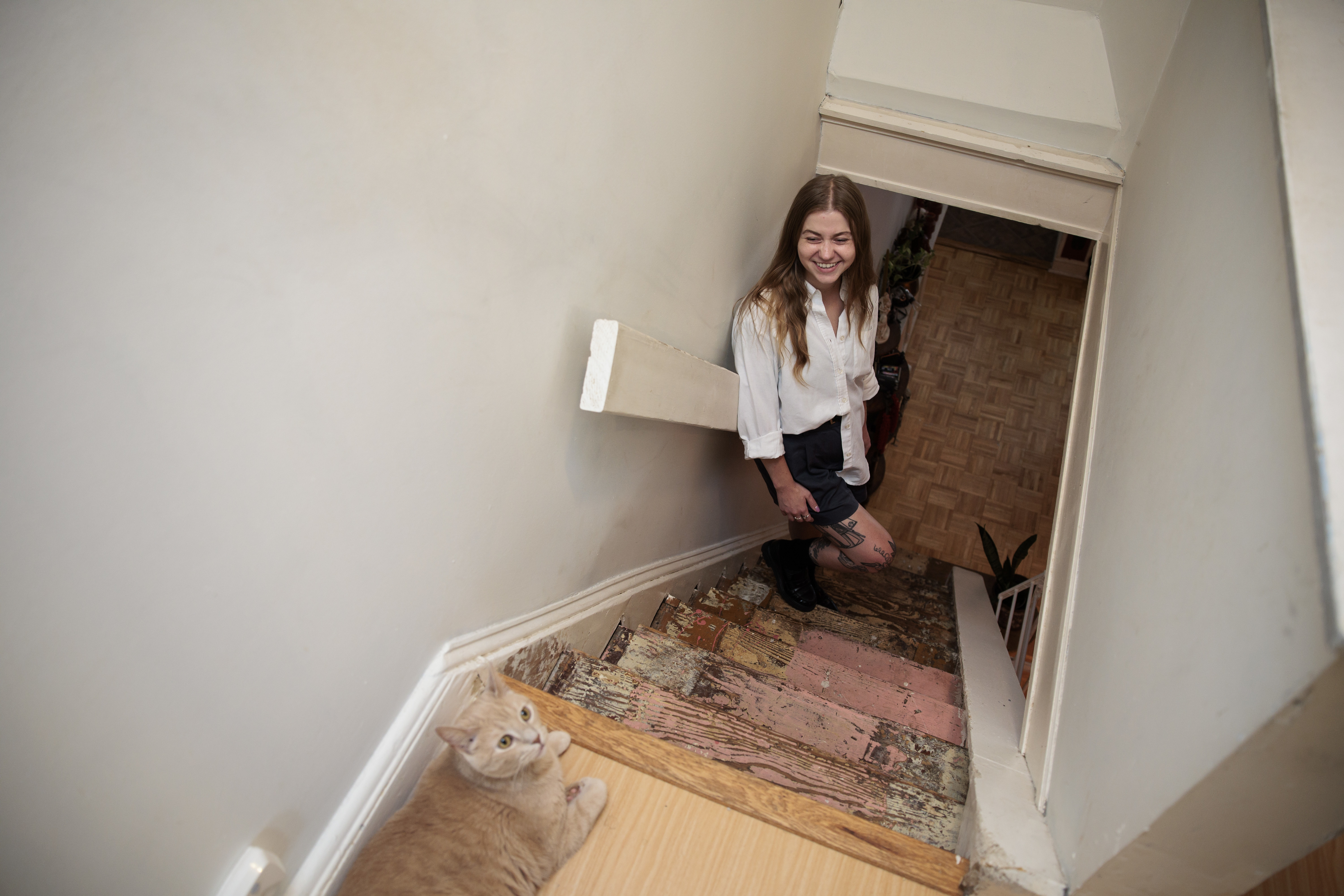
The appeal: The first house her agent showed her had attracted little interest. It was filthy; the stairs and second floor hallway were covered in poorly maintained blue shag carpeting from the1960s, and there were holes punched in the smoke-stained walls.
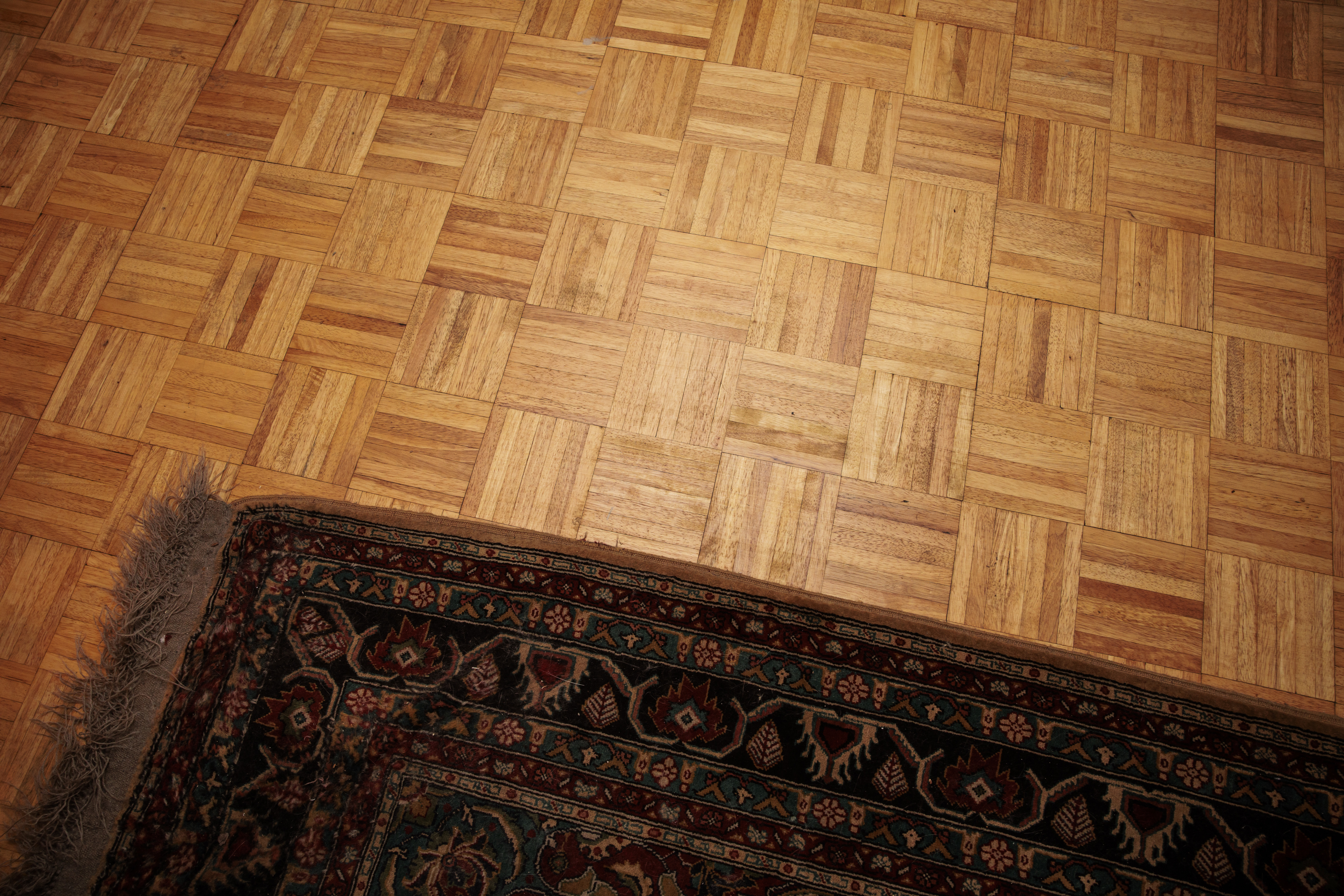
Maropis especially loved the original bamboo parquet floors in the living room. Monica Herndon / Staff Photographer
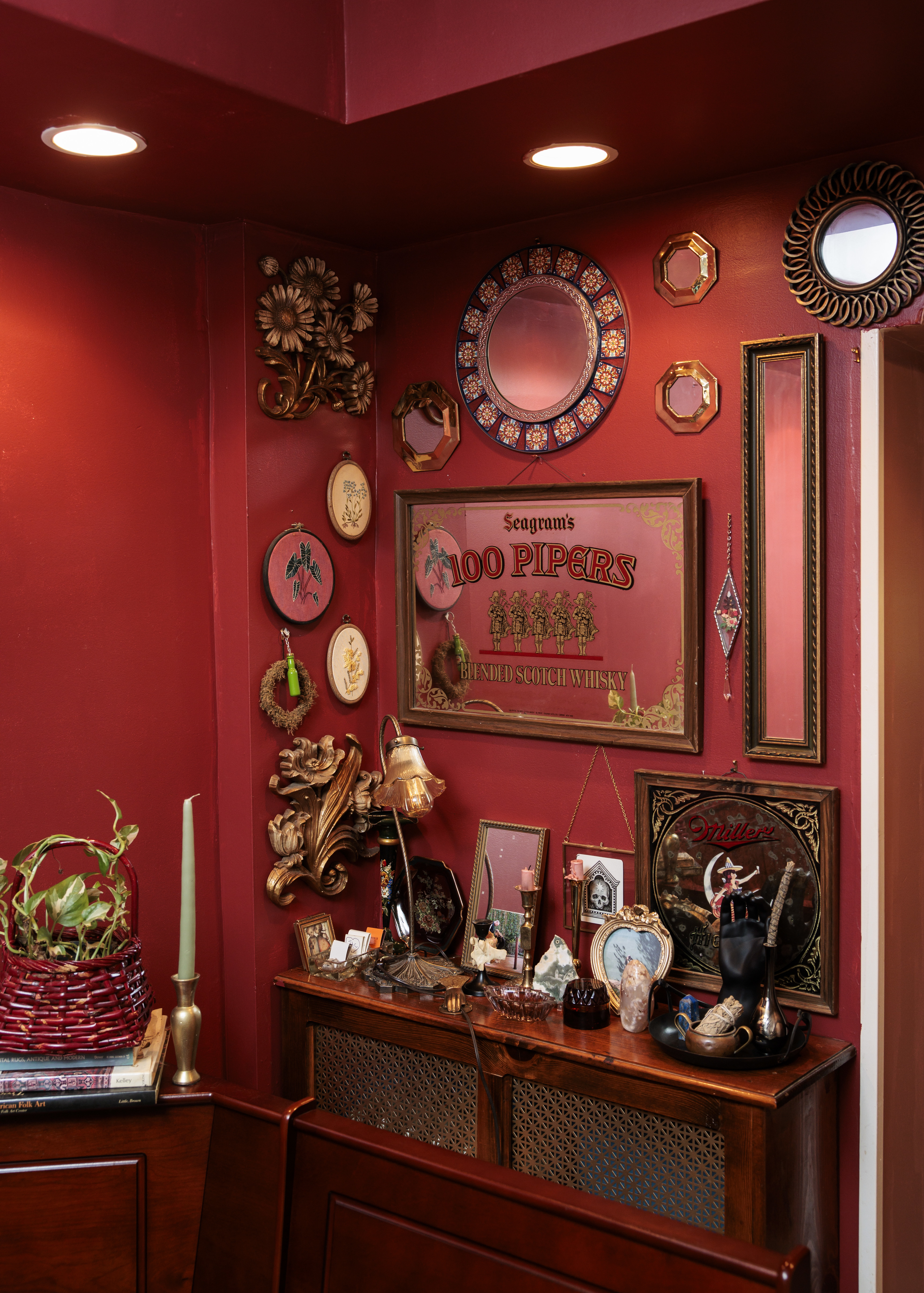
“It was a total dump, so every person who looked at it hated it,” Maropis said. Yet right away she loved the wooden radiator covers, which looked like Victorian mantelpieces with brass grates, and the bamboo parquet floor in the living room. She could already picturea place for her mahogany and silk couch.
She had grown up fixing houses, and she thought she could manage about 99% of the problems herself.
“It had great bones and just needed somebody to love it a little bit,” she said. “The first time I toured it, I had a little tingle of the feeling that maybe I could actually live here.”
The radiators have wooden covers with brass grates. Monica Herndon / Staff Photographer
The deal: From the outset, Maropis knew she was in a good position to negotiate because theowners wanted to sell quickly. Her agent was in the same brokerage as the seller’s agent, so they were both incentivized to make it work.
Maropis describes the stairs as the bane of her existence. Monica Herndon / Staff Photographer
She also had leverage because of the state of the house. The inspection revealed lead pipes in the basement, a furnace that was leakingcarbon monoxide, and a foundation partly chewed through by termites.
The house had a reverse mortgage so the sellers did not want to budge on the purchase price. But Maropis negotiated a $15,000 seller’s assist, which went partly toward her closing costs and partly toward her down payment. She visited twice more before deciding to buy.
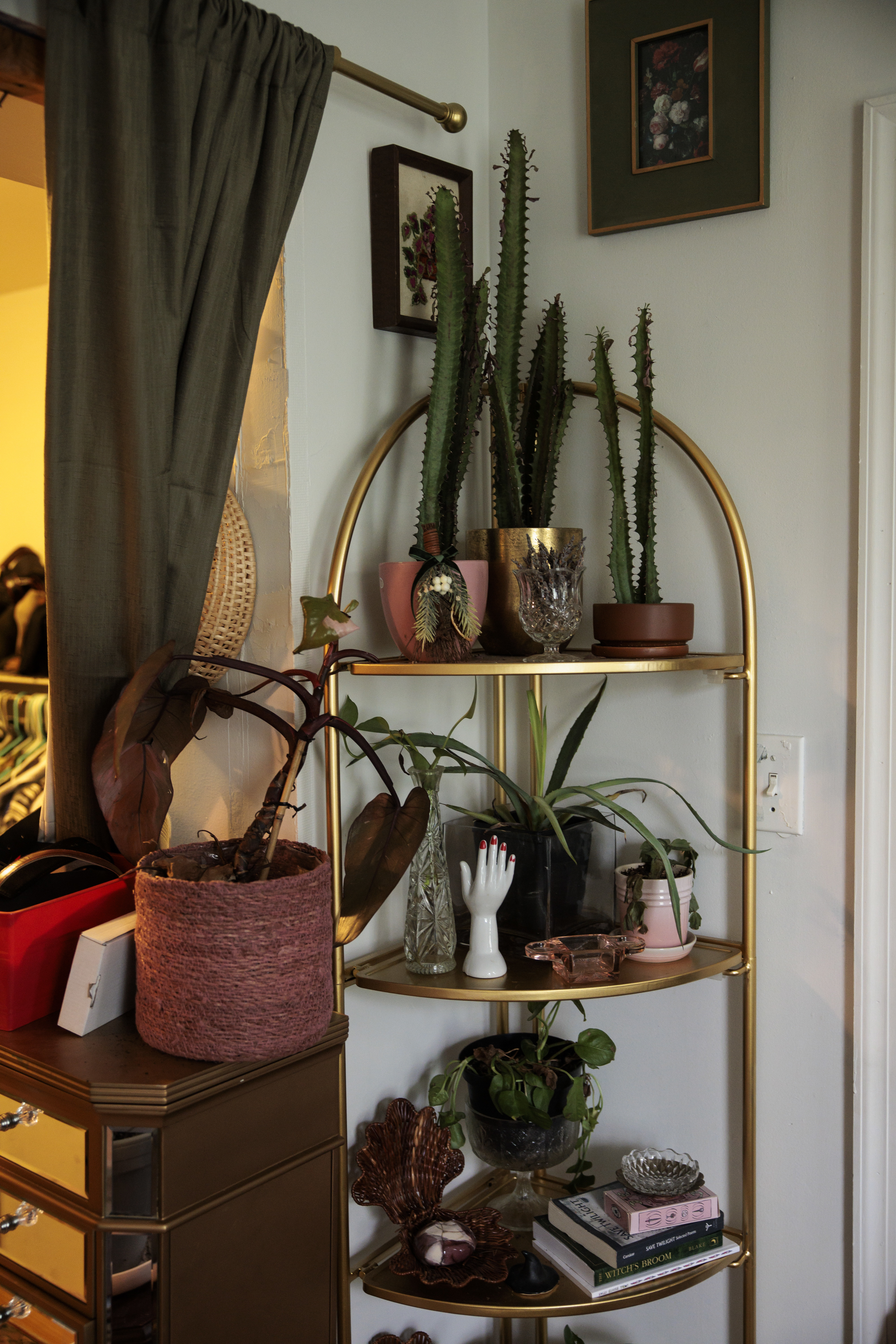
Plants fill a corner shelf. Monica Herndon / Staff Photographer
The money: Maropis’ decision to buy wasclinched when she learned she could withdraw money from her 401(k) to put toward her down payment. For three years she had been working for the consulting company GLG, contributing 7% of her salary to her 401(k), with an equivalent company match.
“I always considered my 401(k) Monopoly money because I don’t really think my generation will ever be able to retire,” she said. She ultimately withdrew $11,000 from her retirement account to buy the house.
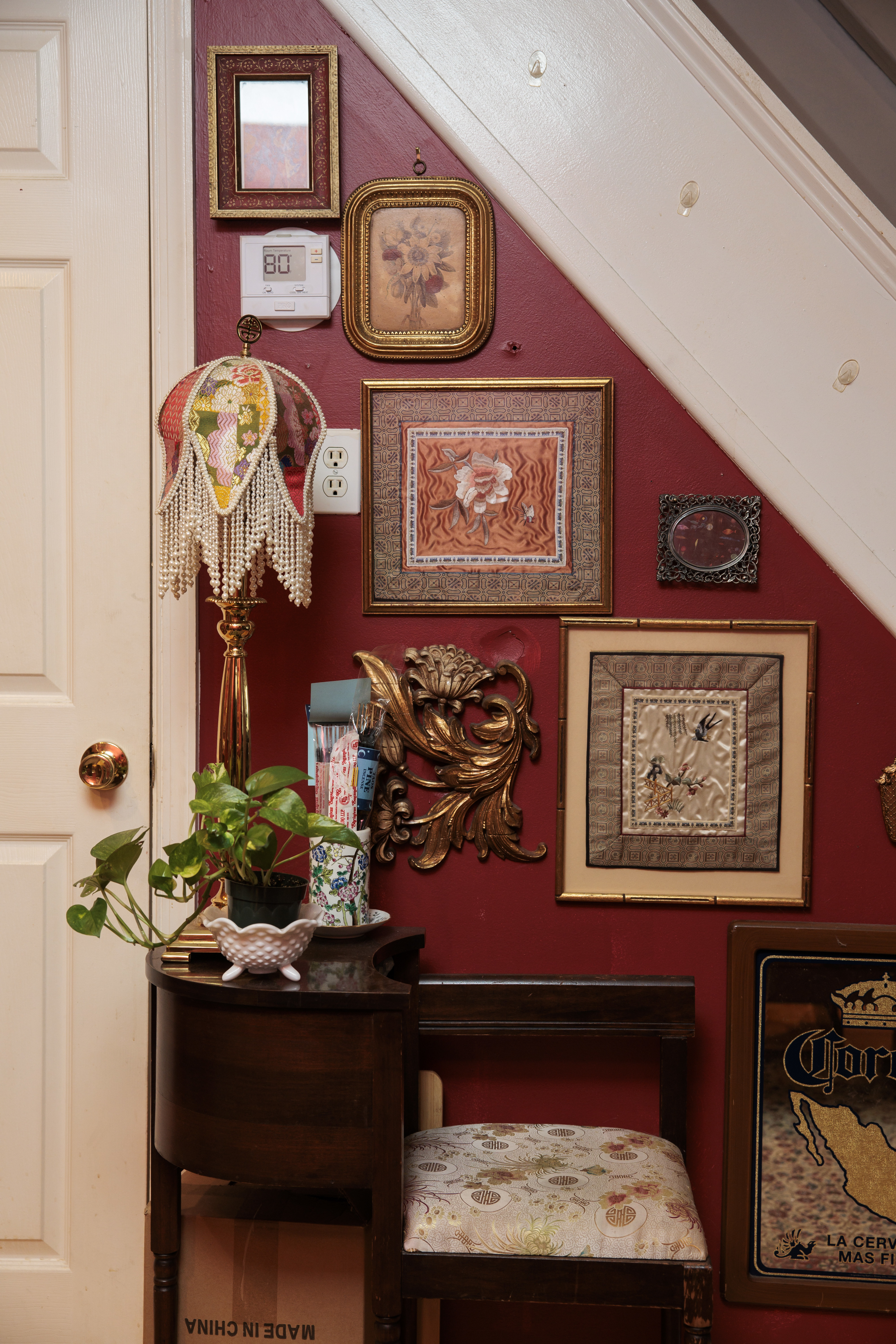
Maropis described her style as Victorian modern; she felt the house had an “old-school feel.” Monica Herndon / Staff Photographer
She then used her end-of-year bonus to put down an additional $5,000, bringing her down payment to 6%. She secured a Federal Housing Administration (FHA) loan for the rest, with an interest rate of 6.2%. Because of the seller’s assist, she paid only $2,100 in closing costs.
She wanted to keep her monthly costs under $2,000, but ended up paying $2,200 per month until she refinanced in winter 2024, bringing her monthly payments down to $1,800.
The move: Maropis closed on the house at the end of March 2023, two days after her 26th birthday.
She moved in two weeks later, with the help of Broad Street Movers and her dad, who had flown in from Texas.
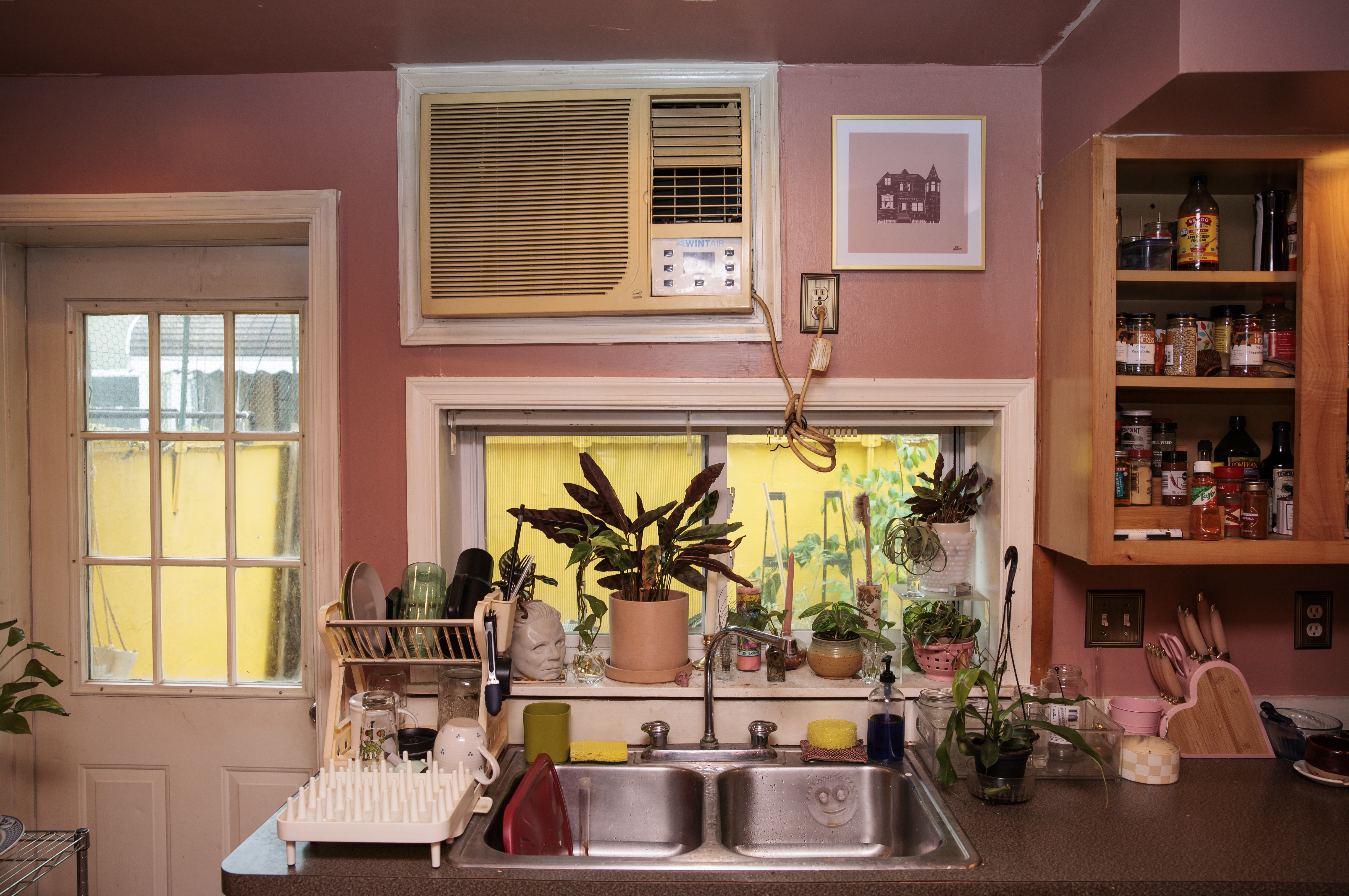
Maropis said her next project is a renovation of the tiles, countertops, and appliances in the kitchen. Monica Herndon / Staff Photographer
Life after close: Maropis’ life as a homeowner began with hours of scrubbing. She hired a contractor to tear out the carpets and replace them with luxury vinyl plank, but he did a shoddy job, and the vinyl is already peeling.
Three months after moving in, she was laid off, which scuttled some of her financial plans. She had aimed to pay back her 401(k) from her salary that same year but insteadowed a small tax penalty.
Still, she’s thrilled with her home and the community it brought her. Her now-husband moved in with her in 2024, and they share two cats, Daddy and Little Cat. Grumpy’s Tavern is nearby, and she says the dive bar regulars are like her neighbors.
Her next big project will be renovating the kitchen, replacing the counters, tiles, and appliances.
“The progress of this house,” she said, “is one of the things I absolutely love the most.”
Did you recently buy a home in the Philadelphia area or South Jersey? Share the story of how you did it. Email Inquirer real estate reporters at properties@inquirer.com.
When hundreds of Upper Merion residents came to a township planning meeting in the spring of 2026 to oppose construction of five proposed data centers in King of Prussia, they discovered that, according to the developer, they had little recourse. The plans were code compliant, Brian J. O’Neill of MLP Ventures claimed. They required no rezoning, no variances — and no vote from township officials.
Yet, the residents didn’t just roll over. Instead, they set about organizing. A petition against the proposal garnered roughly 18,000 signatures — a majority of the township’s population. After an intense three-month campaign against the plans, the township Board of Supervisors rejected them in August. O’Neill vowed to appeal, and accused the board of violating state and local planning codes (which they denied), so the fight may not be over.
The board’s action reflected how fierce blowback across the country has politicians across the ideological spectrum rushing to limit data center construction. Both Texas Republican Gov. Greg Abbott and Pennsylvania Democratic Gov. Josh Shapiro recently placed limits on data center construction.
As the campaign against data centers proceeds, opponents can learn from the experiences of towns caught up in the high-tech manufacturing boom of the mid-20th century. That history shows what happens when residents disagree with politicians on these initiatives. And, while not every locality will succeed in stopping a data center, what residents build in these campaigns can outlast the fight itself.
In the 1950s and 1960s, city councils throughout the San Francisco Bay Area eagerly courted technology industries to build campuses in their cities. Officials in these places saw high-tech as the future of American industrialization. They hoped that these new facilities would become an economic boon for their cities and sought to capture new tax dollars from businesses and new residents. Some places, like San José, went so far as to give land to companies like IBM without following the usual avenues for development.
Cities weren’t the only ones that saw high-tech industry as the economy of the future. Stanford University, under the guidance of administrators who had worked in scientific research during World War II, saw high-tech research and development as an engine for economic growth for the university. They developed new programs around electrical engineering and electronics research, created industry-university worker programs that allowed employees to enroll in Stanford classes and encouraged students to found their own companies.
In 1954, Stanford used a piece of its vast landholdings to create the Stanford Industrial Park (later, Stanford Research Park), which attracted the likes of Fairchild Semiconductor and Kodak, alongside companies founded by one-time Stanford students such as Varian Associates and Hewlett-Packard. Business developers at the university were right: within a decade, the new office park was generating millions of dollars of new revenue for the university.
In 1960, the university and City of Palo Alto announced that the Ampex Corporation planned to build an office campus in the research park outside Los Altos Hills. The city council had already approved rezoning the land for light industry, and the plan appeared poised to proceed.
Neighboring residents, however, were not so keen on the university’s plans. Stanford neglected to consider the impact of the development on the local communities. Residents expressed concern about increased traffic and smog, as well as the potential environmental degradation of the pastoral foothills. They were also irritated by Stanford’s seemingly smug attitude toward community relations.
Through community and alumni networks, residents formed the Citizens Committee on Regional Planning (CCRP) to organize resistance to the Ampex plans. Within a month, CCRP organized community meetings, editorials and letter writing campaigns so forceful that Stanford University President Wallace Sterling referred to the event as the “Battle of the Hills.” One resident expressed dismay to Sterling, noting that “we now have smog, congestion, and acres of asphalt where we once had fresh air and freedom of movement in a beautiful countryside — one of the finest climates on earth!”
Hundreds of letters in opposition to the planned construction poured into the Sterling’s office: within four months of announcing the plan, nearly 400 such letters had reached the university president. Meanwhile, residents flooded the letters-to-the-editor section of the Palo Alto Times with opposition to the plan.
Made By History sponsors. FOR USE ON MADE BY HISTORY STORIES ONLY.Inquirer Staff
In response, the university’s business manager, Alf Brandin, took to the pages of the newspaper to cast the university as a reluctant developer, writing that Stanford was “doing everything we possibly can to produce income” to support the university’s mission. Stanford also pushed back against criticism by reminding residents of the role the university had played in preserving open spaces — in the form of its campus lands — and in encouraging economic development that benefited the community.
When the letter and editorial campaigns failed to budge Stanford, residents turned to their next tool: the referendum. In June, five months after Stanford announced its plans, organizers began circulating petitions throughout Palo Alto calling on the city council to rescind its decision to rezone the land for industry and allow residents to vote on the issue. Four days before the rezoning ordinance became official, organizers filed a petition with the city clerk with 2,000 signatures, double the amount required to force a vote.
Placed on the ballot that November, the Stanford lands were now in the hands of residents. A “yes” vote would keep the city council’s rezoning in place and allow Ampex to proceed with construction, while a no vote would kill the development.
The debate continued to play out in the pages of the Palo Alto Times. The newspaper’s editorial board came out in favor of Stanford’s plans, arguing that residents’ concerns over the loss of a foothill overlooked the way in which Stanford’s landholdings “constituted a free park” for Palo Alto and its surrounding communities.
This sort of argument proved persuasive. In November, the referendum to stop the construction lost in a close vote. Stanford’s grassroots campaigning had helped to convince voters to bless the construction plans.
Yet, this win proved to be a pyrrhic victory. The yearlong political campaign had spooked Ampex, which decided to build its new facilities elsewhere.
Ultimately, the neighbors won in another way as well: their campaign against the Ampex development had created a durable organizing network. Those involved in the fight continued organizing against high-tech development plans, forming new conservation and environmental groups and galvanizing networks that successfully shaped future decisions and plans.
Within five years, new waves of conservation-minded city council candidates displaced their more developer-friendly predecessors. High-tech developers now had to contend with the concerns of communities.
The successors and offshoots of the high-tech entrepreneurs and companies who propelled the rise of high-tech industry in California in the 1950s and 1960s are now building data centers. Residents in Pennsylvania, California, Texas, Virginia, Nevada, Nebraska, Ohio and elsewhere have come out in heavy opposition to their plans, concerned over their footprint, water use, electricity needs and taxes. They see these downsides as outweighing the economic benefits and new jobs that boosters promise the data centers will bring to communities — O’Neill released an economic impact study claiming that building the King of Prussia data centers would have created 10,000 construction jobs and more than $55 million per year in local tax revenue.
States and counties across the United States have passed moratoriums on data center construction while congressional and gubernatorial candidates find themselves taking a stand on the issue as well. Congress is also getting involved. Among the most forceful proposed efforts is California Rep. Ro Khanna’s Data Center Bill of Rights, which seeks to establish zoning restrictions, require independent environmental and economic impact statements for any project, and protect residents from higher utility bills.
The history of the fight over high-tech industry in the 1950s and 1960s suggests that those crusading against data centers may not win the short-term fight. Residents and local governments might find the economic arguments of data center backers persuasive just as pro-development arguments won over the voters in Palo Alto decades ago. Yet, even when they fail in the short term, these campaigns might spook companies and can seed organizing networks that will shape local development for years to come.
Made by History takes readers beyond the headlines with articles written and edited by professional historians. Opinions expressed do not necessarily reflect the views of The Inquirer.
All my apartment searches have gone roughly the same way.
I pull up rental listing websites and play around with the filters, starting with where I want to be, how much I’m willing to pay, and how many bedrooms I want.
I scroll through tons of listings. Once I find apartments that are available when I want them and seem promising, I move over to their websites for deeper dives into the properties. Then I figure out which ones I want to tour.
But as AI chatbots have gotten more popular, some renters are going to sites like ChatGPT as their first step.
JoAnne Kim is a regular user of AI chatbots. So when the Jersey native decided to move from her home in Mexico to the Philadelphia area, her first step was to open ChatGPT.
She told the chatbot what she and her husband were looking for, and it suggested they consider Ardmore, Bryn Mawr, and Chestnut Hill. Once they settled on Ardmore, Kim asked for a list of apartment buildings that fit their requirements.
This month, the couple moved into their new home.
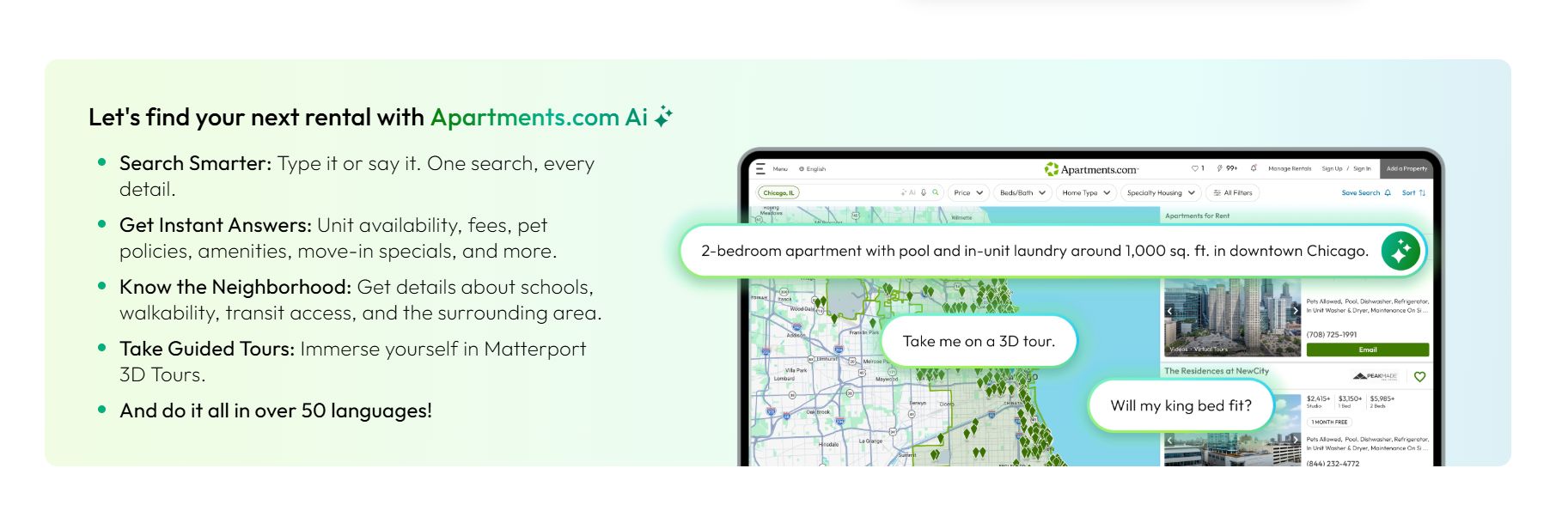
National apartment search websites have developed their own AI chatbots. Philly is one of the cities where RentCafe is testing its AI assistant, Ren. And Apartments.com launched its tool this summer.
A leasing agent at a local property management company changed its website to give its properties a boost in generative AI searches.
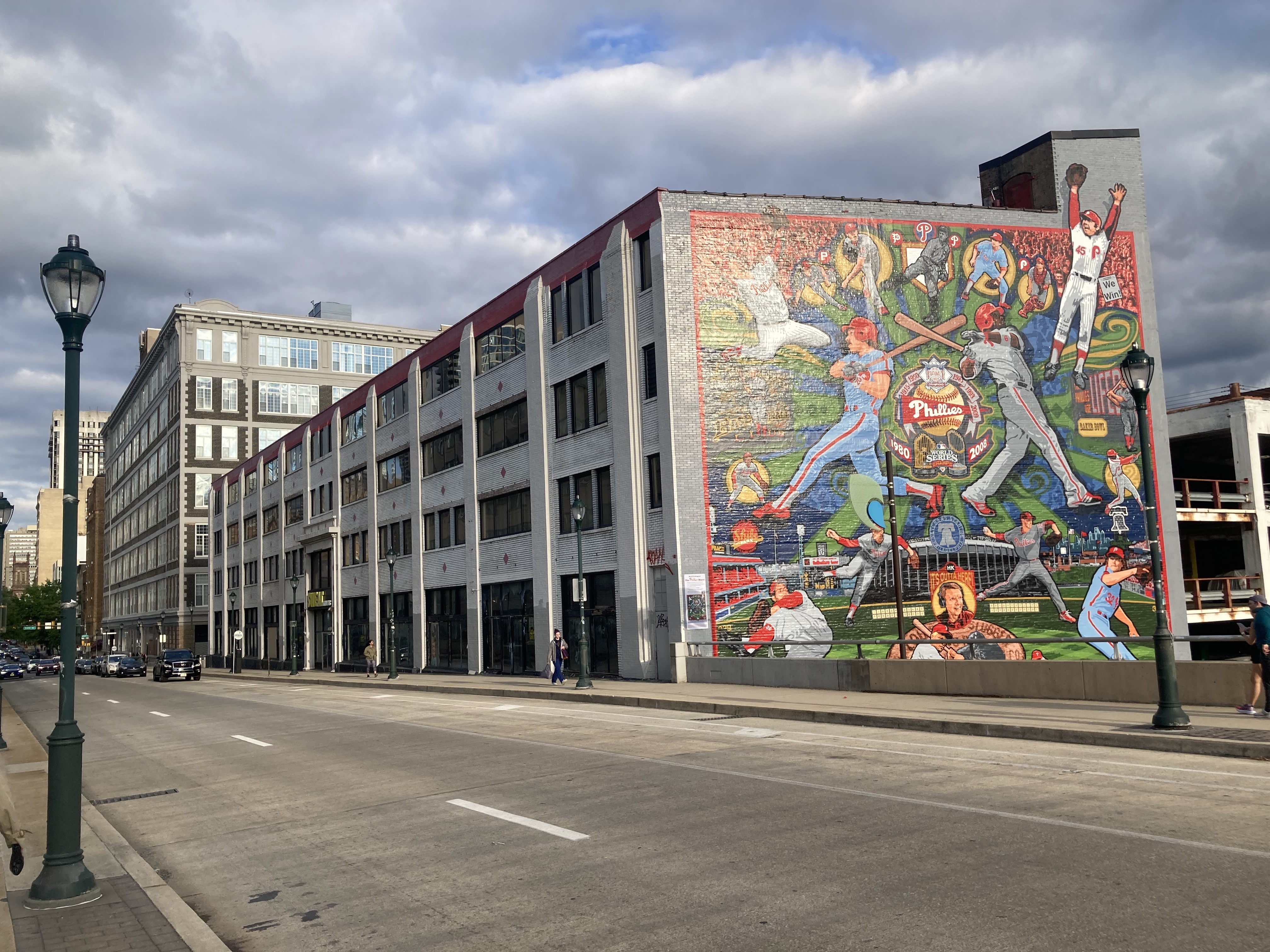
A new high-rise apartment building could be coming to the current site of a popular Phillies mural.
Philadelphia’s largest apartment owner, PMC Property Group, wants to build a 31-story tower at 24th and Walnut Streets.
The former industrial building that’s there now is best known for its mural celebrating the Phillies, created in 2015 by artist David McShane. Walnut Bridge Parking & Storage calls it home now.
PMC’s new building would include 372 apartments and overlook the Schuylkill.
In 2015, Steve and Regina Pannepacker got a call they’d been waiting for since the ’80s.
A real estate agent in Ocean City said there was a converted detached garage the couple could turn into their dream beach cottage.
It had been so long since Steve asked to be kept in mind for properties that the agent said he found the couple’s contact info in his old-schoolRolodex.
When the Pannepackers bought the former garage, it already had a two-bedroom property on top. The couple turned the garage space into three rooms: guest room, storage area, and work space.
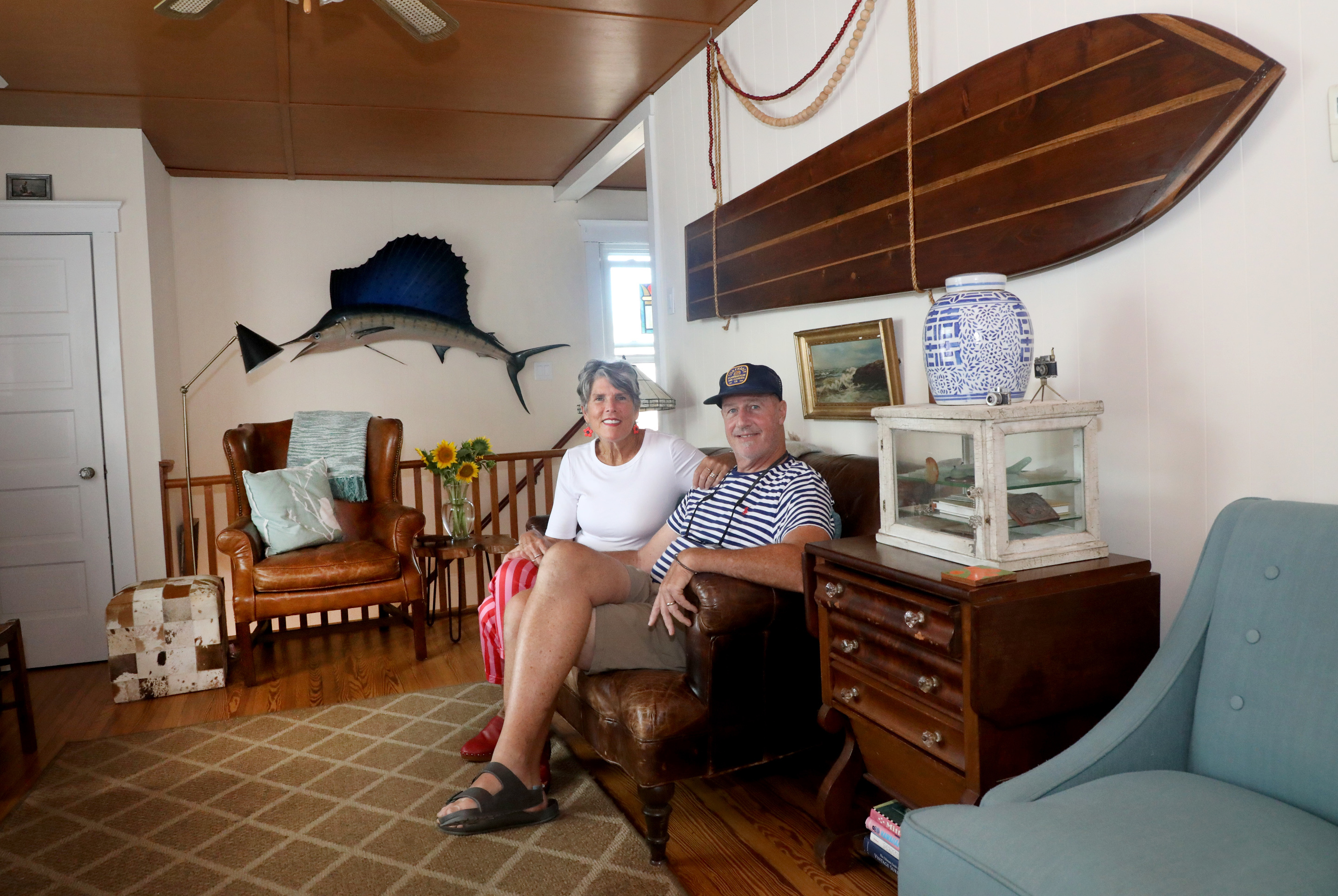
The Pannepackers have filled the home with treasures — but no TVs. There’s no Wi-Fi either.
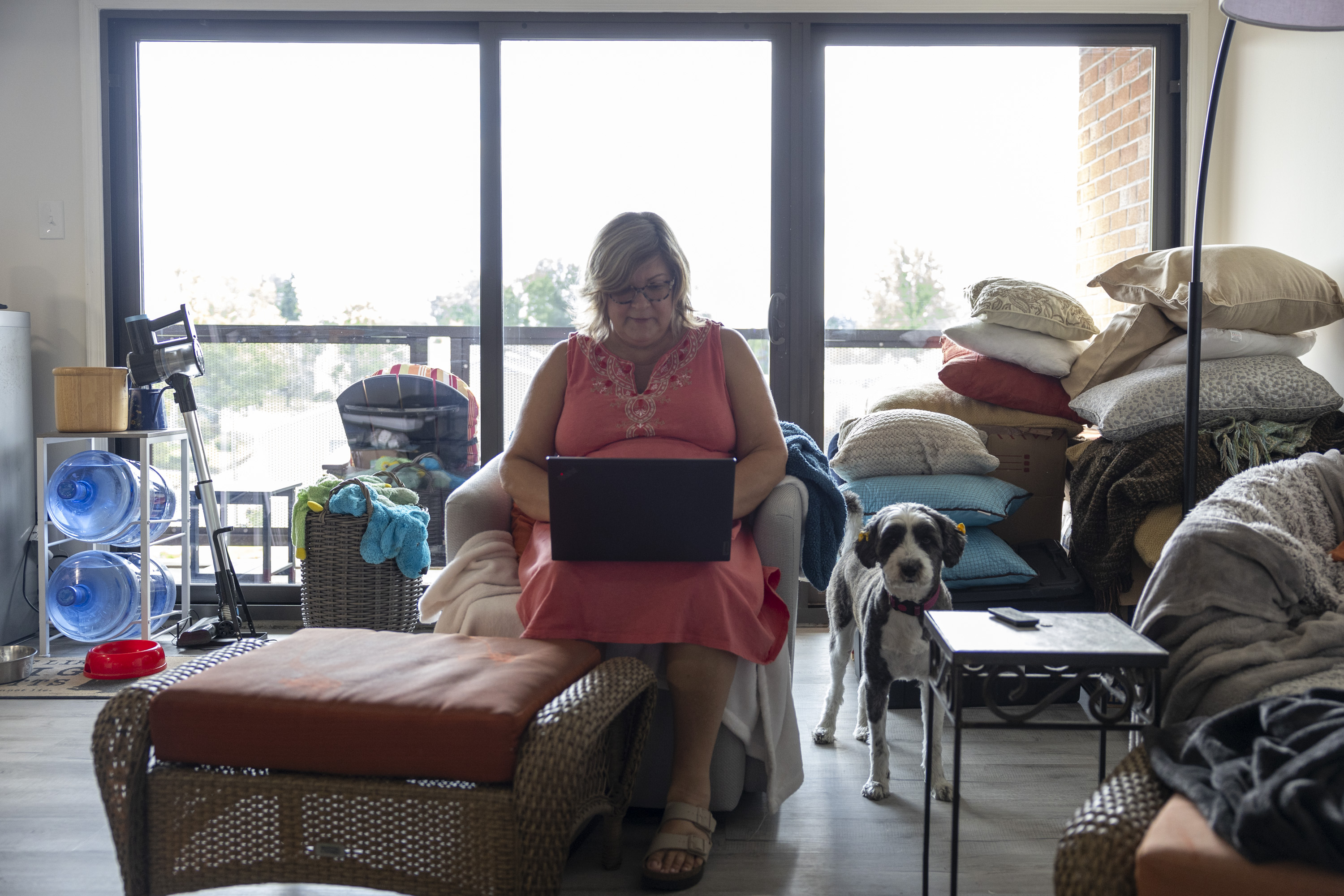
From her home in Mexico, JoAnne Kim started searching for a Philadelphia-area apartment by opening ChatGPT.
Kim, a regular user of the generative artificial-intelligence tool, told OpenAI’s chatbot what she and her husband wanted: a quiet place in Pennsylvaniathat was walkable and dog friendly with good transit access, a strong sense of community, cafes and restaurants, and a lot of things to do.
ChatGPT suggested Ardmore, Bryn Mawr, and Chestnut Hill. The couple chose Ardmore, and Kim asked the chatbot for a list of apartment communities that fit their criteria and included outdoor space.
ChatGPT “helped me become a better apartment hunter, because I was able to use all the data to help me make a decision,” said Kim, a 64-year-old career mentor for university students.
This month, the Kims moved into Montgomery Plaza near Suburban Square.
Generative AI toolsare becoming increasingly popular as more people use them to write emails, summarize documents, and recreate pictures of pets. And, like Kim, renters are also using AI chatbots to find apartments.
In Philadelphia and beyond, the growth of AI is changing the way people search for homes — and it’s prompting some in the industry to change how they do business.
JoAnne Kim used ChatGPT to find the apartment she moved into this month.Tyger Williams / Staff Photographer
In April, Philadelphia became one of 15 cities where RentCafe, a national apartment search website, rolled out its AI assistant, Ren. The platform is preparing to make the tool available nationwide. Apartments.com launched its latest AI tool — Apartments.com Ai — in June and started an advertising campaign in August to get more renters to use it.
Property managers, too, are trying to find ways to reach people who use AI.
Charlie Marshall, a leasing associate at the Ardmore-based property management company Harrison Richards, which manages Montgomery Plaza, has been tweaking the company’s website to try to get its seven properties more prominent placement in generative AI search results.
Marshall said the handful of people who said they found a building using AI tools seemed more informed and committed than other prospective tenants.
“It was immediately clear they had a good idea of the places they wanted to lease at,” he said. “It was not like some people you see that are touring seven or eight properties. They had narrowed it down to like three.”
Stuart Richens, vice president of product at Apartments.com, said because the company’s AI tool “is immersive and kind of keeps guiding you and helping you, renters are getting much deeper into the search more quickly.”
“And that’s helping them get to that short list more quickly,” he said.
Kim and her husband, a senior data analyst who uses AI, worked with ChatGPT to focus their search. But to find a place that felt like home, Kim also watched local real estate agents’ YouTube videos, read reviews, watched local news coverage, and talked to property managers.
Kim said that because she started with virtual conversations on ChatGPT, “I spent more time thinking about the kind of life we wanted to have. It wasn’t just about finding the apartment. It was the neighborhood, the vibe.”
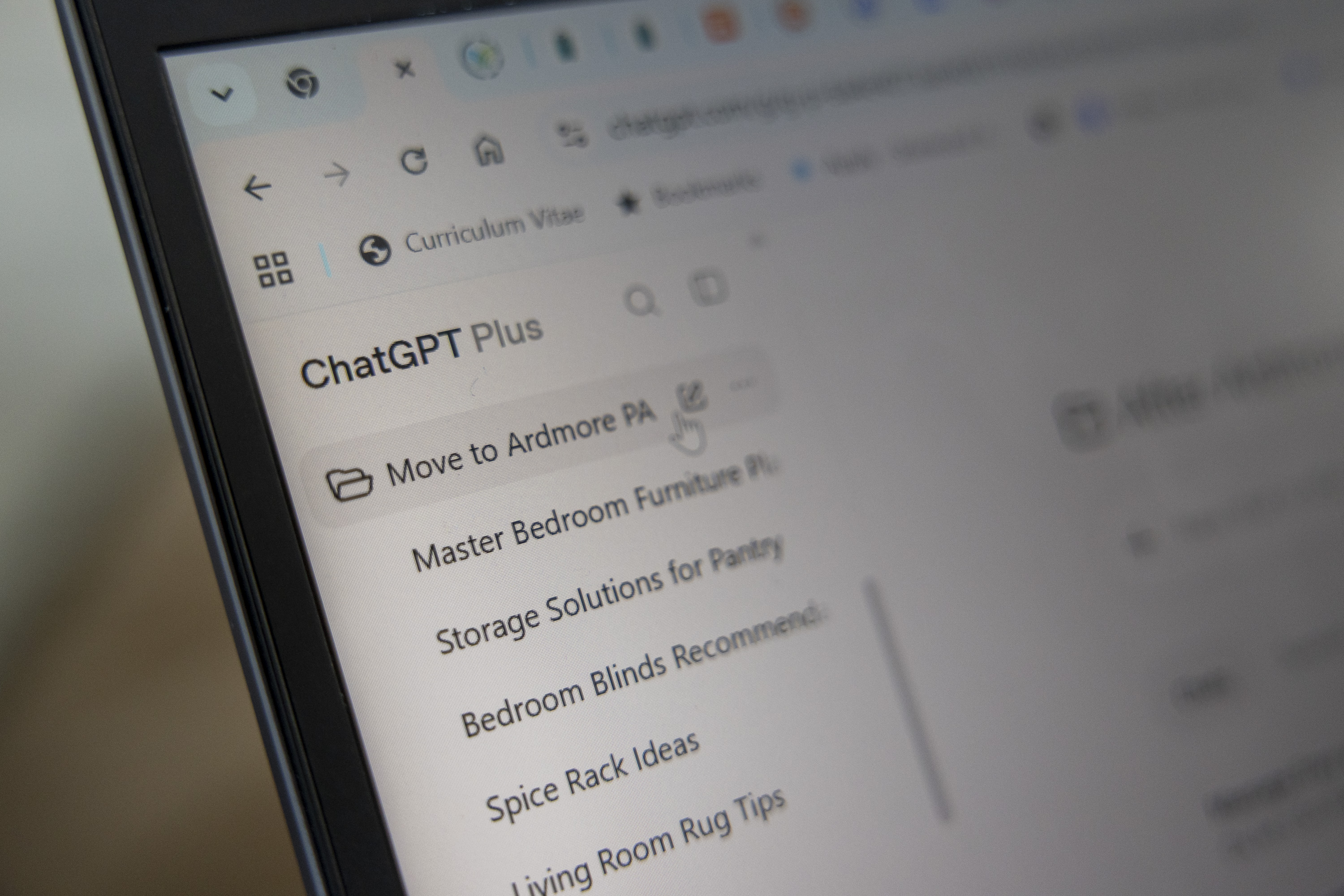
JoAnne Kim shows the ChatGPT online tool she used to find her apartment.Tyger Williams / Staff Photographer
‘A more advanced Google search’
AI tools can only do so much.
Vee Gordon, a rental agent with Philly Home Girls, said she worked this year with a New York City couple in their 20s who wanted a two-bedroom home in Philadelphia. They insisted on seeing places that were hundreds of dollars over their $6,000 monthly budget. During a meeting with Gordon, they pulled up ChatGPT.
“They were asking it how to negotiate a rental price down,” she said. “I feel I have more insight on that than what ChatGPT was saying.”
Gordon has worked exclusively with renters — many in their 20s and 30s — for four years in the city and its suburbs. She estimates she has helped sign almost 500 leases.
“This is my expertise,” she said.
The couple didn’t end up finding a place through her.
Jack Olmanson, 27, doesn’t regularly use generative AI tools. But this year, when he and his girlfriend needed to move from Washington, D.C., to the Philadelphia area for her work in the equestrian industry, he turned to Anthropic’s Claude for help.
The couple used it “as a more advanced Google search,” said Olmanson, who works in business management.
“You can be very customized in your asks,” he said. Claude “was good at giving us everything that’s out there that meets our initial criteria.”
The couple wanted a two-bedroom apartment in a walkable area and a building that welcomed Mya, their yellow Labrador retriever.
Olmanson and his girlfriend are originally from Minnesota and didn’t know the Philadelphia area, so they asked Claude to compare suburban towns here to those they knew in the Minneapolis area. They also asked it to make a map of locations with reasonable commute times.
Once they got suggestions from Claude, they did their own research, exploring websites, looking at photos, reading reviews, and taking tours. And they still reviewed Zillow listings they got through email alerts.
They moved into an Ardmore apartment building managed by Harrison Richards in May.
Olmanson recommends renters verify everything an AI chatbot tells them to make sure it’s not making things up. And remember, he said, it’s just a tool.
“You’re still in charge of making sure [a home] is the right fit for you,” he said.
How AI has changed apartment listing websites
When Philadelphia renters begin searching RentCafe’s website of home listings, a button prompts them to “Ask Ren.” Apartments.com encourages them to “Meet your Ai rental adviser.”
Renters using AI tools tend to start broadly with a location and budget and refine searches through a virtual back-and-forth to get to a smaller number of the most relevant listings. Renters can type or talk. Apartments.com’s chatbot supports about 50 languages.
RentCafe found that people who use its tool are twice as likely to click into a listing and 50% more likely to contact propertymanagers than people who use traditional search tools. Users of Apartments.com’s chatbot request 144% more tours.
“Conversational search, we’ve seen, has been very helpful for renters,” said Samantha Skrobot, renter advocate at RentCafe.
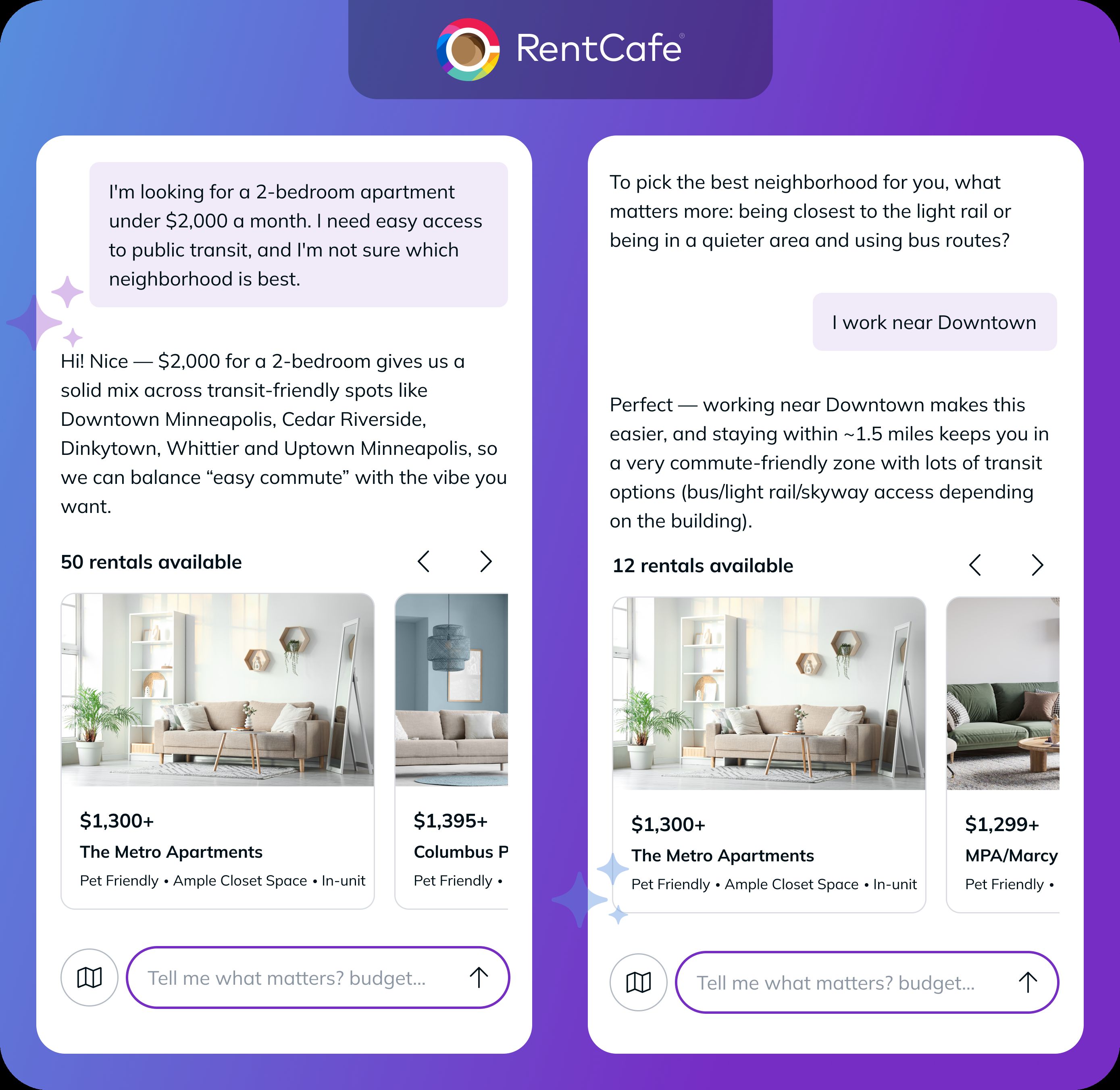
This image provided by RentCafe, a national apartment search website, demonstrates how a renter could use its AI assistant, Ren.RentCafe
Renters can use it to figure out realistic budgets anddetermine locations accessible by public transit. They can search for requirements that aren’t included in traditional filters on apartment search websites, such as proximity to a laundromat or library. Users can ask AI tools to compare properties’ amenities and tell them about nearby schools.
Through the chatbots, renters can prioritize certain property characteristics (say, gets a lot of natural light) and indicate where they’re flexible, which they can’t do with traditional search filters. AI chatbots can suggest locations a renter may not have considered that meet their requirements.
On newer 3D tours on Apartments.com, renters can tell the AI chatbot to remove furniture from a room and give dimensions of a space.
Apartments.com’s homepage encourages renters to use its generative AI chatbot, Apartments.com Ai.Screenshot
Adjusting for AI
Because of the growth of generative AI tools, Richens at Apartments.com said that for property managers, “having a very complete listing with every piece of data about the property … is very important because that’s what renters are asking for.”
“And if you don’t have it, how is the AI going to answer?” he said.
Apartments.com is working with property managers to beef up listings.
At Harrison Richards, Marshall has worked to improve how the company’s properties show up in generative AI searches. He asked questions that a renter would ask and noted when the company’s properties did and did not appear.
A Redditor posted a couple years ago looking for Ardmore-area apartments, and someone said they’d lived at the company’s Montgomery Plaza property and liked it.
“That was apparently gold for ChatGPT,” Marshall said.
The property management company has changed heading sizes and where information shows up on its website, so AI tools can more easily pull out answers for renters. Marshall has noticed a difference.
After the changes, he said, the AI tools “would draw out the things we think are important and the things people might have questions about.”
Harrison Richards, an Ardmore-based property management company, has adjusted its website to better position its properties, such as Montgomery Plaza, in generative AI search results.Tyger Williams / Staff Photographer
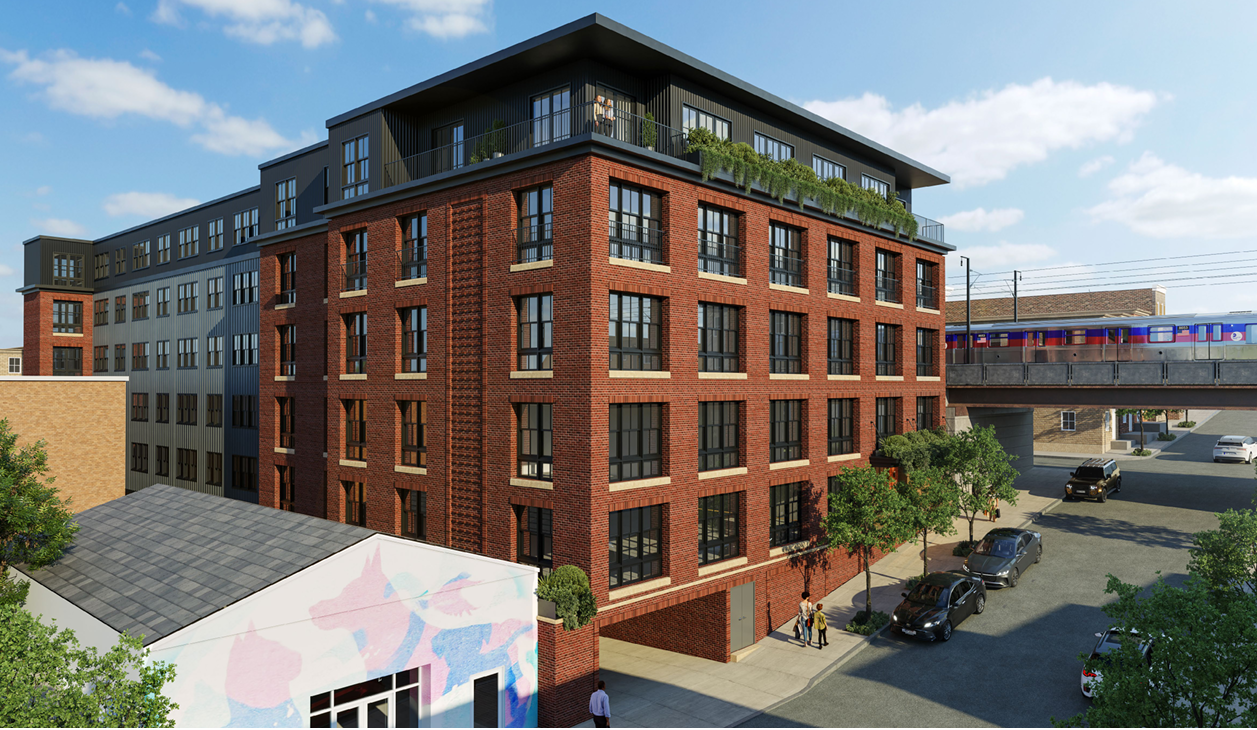
The developer of a controversial apartment project at 106 Jamestown Ave. in Manayunk requested that the Zoning Board of Adjustment delay its Wednesdayhearing.
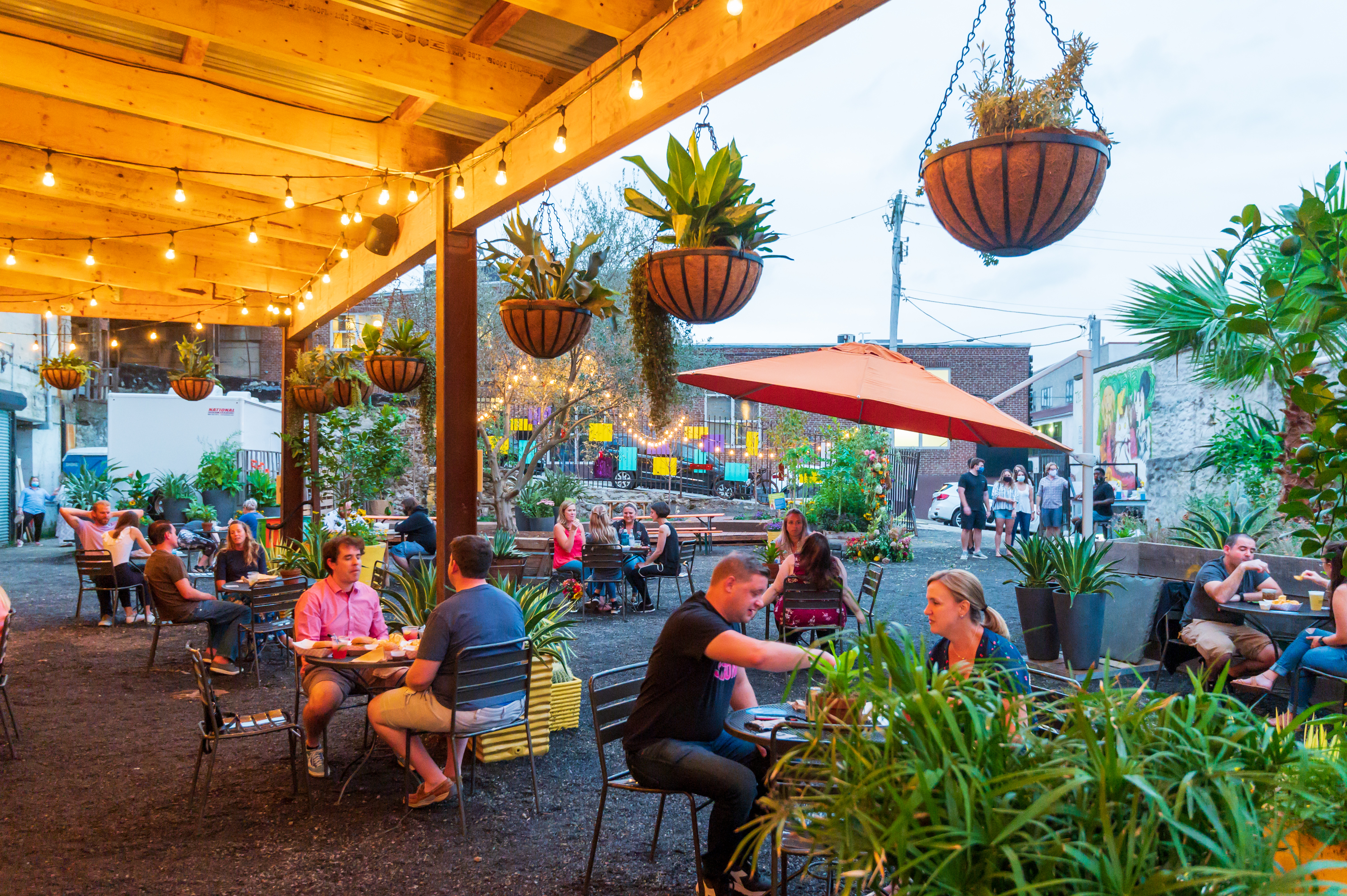
The six-story, 73-unit building would replace the Pennsylvania Horticultural Society’s pop-up beer garden that currently leases the space.
Neighborhood backlash against the project from developer Dan Greenberg has been intense.
Critics say the project doesn’t provide enough parking; offers no commercial space; and would eliminate the beer garden, a popular community gathering place.
“It was prudent that he postponed,” said Councilmember Curtis Jones Jr., who represents the area and recently came out in opposition to the project.
Jones’ opinion is relevant because the project is seeking to build taller and denser than current zoning rules would allow, and the zoning board heavily weighs the opinions of neighborhood groups and the district City Council member. (The project is 60 feet tall, above the height limits imposed by the Main Street Manayunk overlay.)
Greenberg also needs permission to build apartments in an area that is not zoned for residential development.
A rendering of the proposed 73-unit apartment building for 106 Jamestown Ave. in Manayunk.Barton Partners
“Fortunately for him, he’s not finally purchased it yet because zoning is an essential part of the sale,” said Jones. The delay “gives them the opportunity to talk to the community, but as it stands, I cannot support it.”
Greenberg’s team declined to comment, but a city staffer confirmed that Wednesday’s delay stemmed from the real estate company. A new hearing is not yet scheduled.
“This means that the applicant will contact us to reschedule the next hearing date,” wrote Ian Hegarty, a Planning Commission staffer who advises the zoning board, in a message to a questioner on the board’s Zoom on Wednesday.
The Manayunk Neighborhood Council led opposition to the project, submitting a petition against it to the zoning board with more than 500 signatures.
A community meeting earlier this year attracted 200 attendees, 97% of whom were opposed to the project, according to the neighborhood council.
“Even we are a little surprised at the universal opposition,” said John Hunter, the council’s zoning chair, in an email.
The Jamestown Avenue proposal also faced criticism from the Civic Design Review committee, an advisory-only city body.
In a June meeting, the board asked the developer to consider adding commercial space, criticism of the project also raised by the neighborhood council.
A rendering of the paused 73-unit apartment development from under the railway bridge. Barton Partners
At that meeting, Hunter criticizedthe plan’s 36 parking spaces, arguing that the standard in Manayunk is one parking space for every housing unit. The notoriously hilly neighborhood is less walkable and has fewer transit options than neighborhoods closer to Center City.
The developer’s team has repeatedly declined to speak publicly, but at a meeting in June, lawyers for the project indicated that compromise is possible.
“There have been, and there still can be [modification to this project],” Adam Laver, a land-use attorney with Blank Rome who represents the developer, said at the June design committee meeting. “This team remains very interested … in hearing your feedback and continuing to make this project, which we believe in, as good as it can possibly be.”
For now, the beer garden will remain in place until the end of the season. Although PHS says it does not yet have a final closing date, the organization typically ends its outdoor pop-ups in October.
PHS declined to comment further on the future of the beer garden in light of the project’s delay. Itopened the garden in 2020 as a temporary pop-up.
“He should consider if he can reduce the scope of the project to preserve the garden,” said Jones.
The project is part of a wave of apartment development on and around Main Street in Manayunk, with 1,800 units in the pipeline. That includes more than 800 homes slated for Venice Island, the flood-prone spit of land next to Manayunk in the Schuylkill.
Haverford Square Properties wants to transform an industrial stretch of Lancaster Avenue into a residential and small-business hub, with 420 apartments and more than 30,000 square feet of commercial space across three projects.
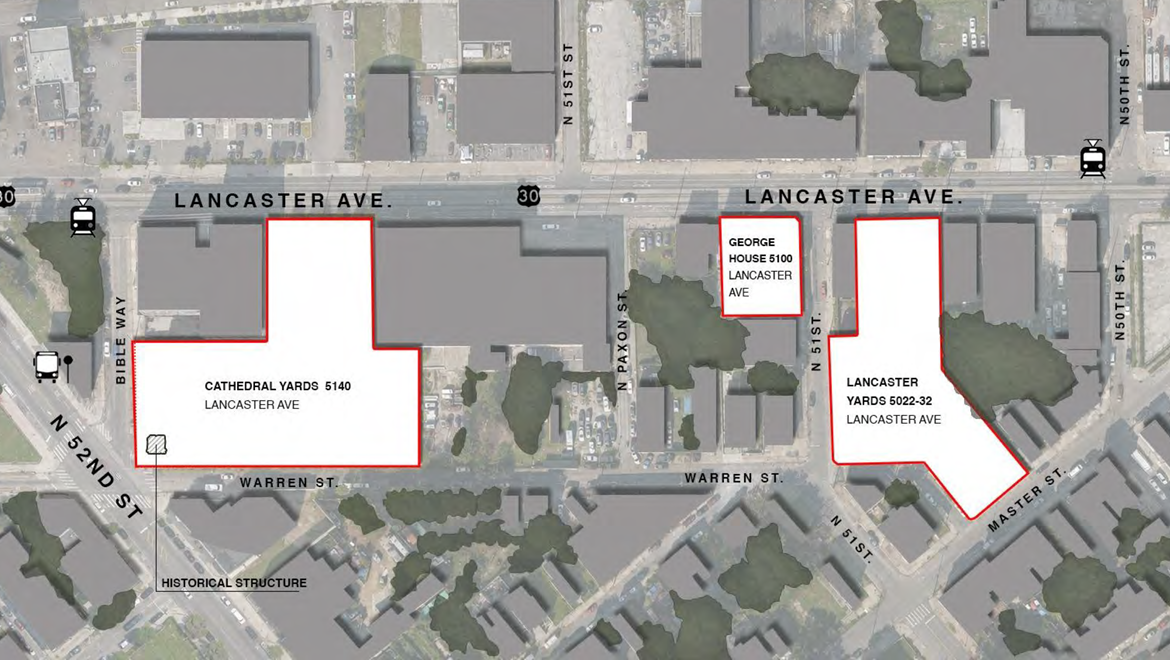
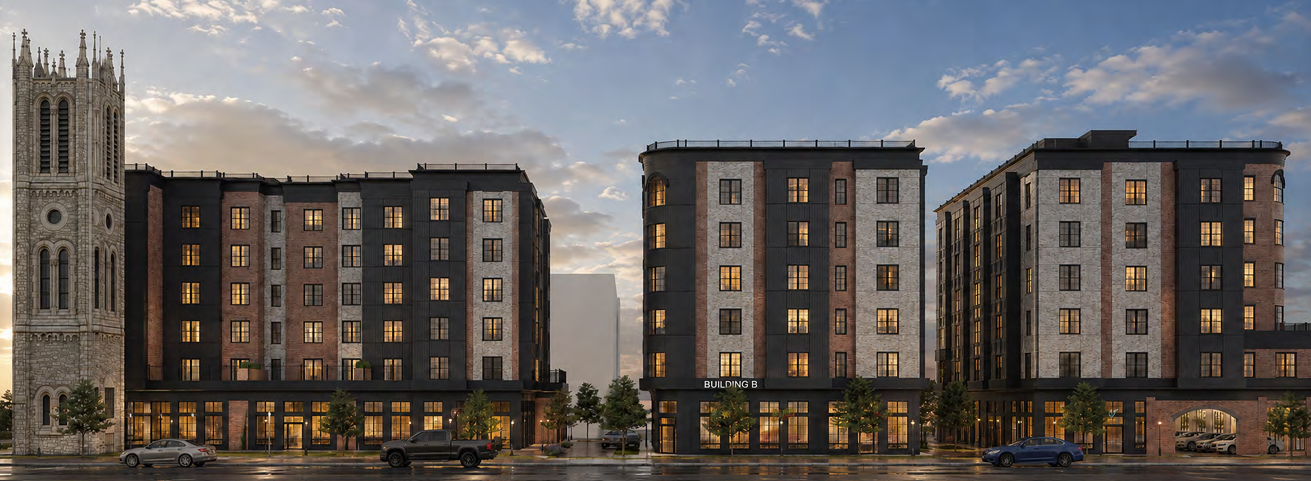
The ambitious plan would unfold between 50th and 52nd Street, with the 215-unit Cathedral Yards at 5140 Lancaster Ave. to the northwest and the 160-unit Lancaster Yards to the southeast at 5022-32 Lancaster Ave. Cathedral Yards would take the place of the Greater Bible Way Temple, a church that burned down in 2019.
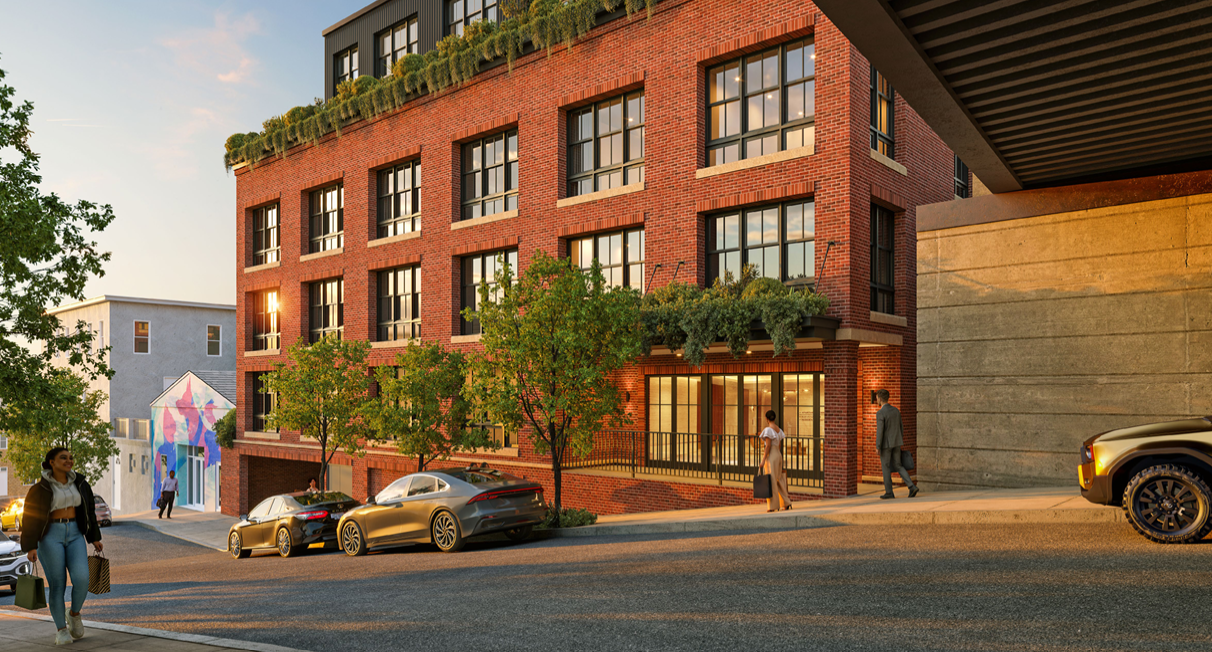
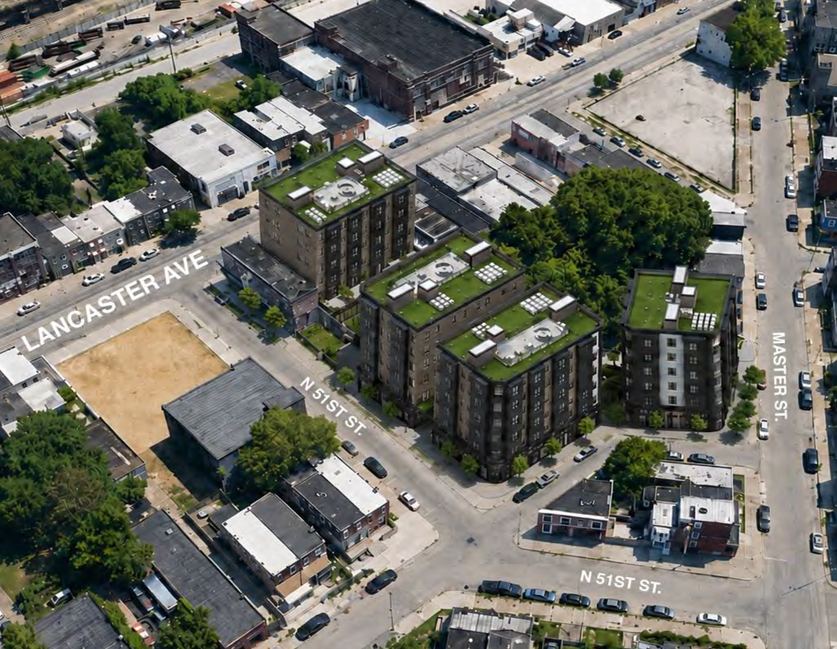
The two complexeswould comprise four connected six-story buildings, with roof decks and commercial space on the ground floors. A smaller building at 5100 Lancaster Ave. would include 45 mostly two-bedroom apartments, and Haverford Square’s headquarters.
On Tuesday, the Cathedral Park Community Development Association held a meeting about the project. Attendees shared a variety of concerns, but the chief issue was parking. The project has 65 parking spaces for more than 400 units.
“That building is gorgeous, but it has an issue and that issue is parking,” said Kim Fuller, a neighborhood leader. Haverford Square noted that because the project sits directly on a trolley line, and enjoys frequent bus service, parking is less necessary.
Rents will be kept relatively low for new construction, with a one-bedroom unit priced under $1,650 and two-bedroom units under $1,900. Sixty percent of the 420 units will be one-bedrooms, and the rest two-bedrooms.
Haverford Square will offer “workforce rents for, like, a SEPTA driver or city worker,” said German Yakubov, president of the development group.
“[Households] making between 12 and 16 bucks an hour that have two incomes can easily afford a brand new apartment with amenities that they wouldn’t otherwise be able to afford in Center City or Northern Liberties,” he said.
A map of Haverford Square Properties’ three proposed projects along Lancaster Avenue.Wisdomtree Group
“We’re able to control a lot of the costs,” said Yakubov, because Haverford Square has its own construction company and in-house architecture. “And because we’re able to build in other places, we’re able to negotiate better pricing for a lot of our material.”
For this project, low rents are also manageable because the company purchased the land for the three properties for $4.5 million, relatively cheap.
Ten percent of the apartments in Lancaster Yards and Cathedral Yards will have affordable rents as part of Philadelphia’s Mixed Income Housing Bonus program, which allows developers to build denser projects than zoning wouldtypically allow — as long as they include affordable units.
Those 42 units will be available to people making less than 50% of area median income, or under $42,000 a year for a one-person household.
Yakubov says the commercial space is key to the project, and Haverford Square plans to seeksmall businesses in the neighborhood, such asfood truck operators who want to move into a brick-and-mortar space.
“We’re really targeting businesses that have a following already, but don’t have the financial means to open up a brick-and-mortar location,” said Yakubov.
“We don’t anticipate opening any bars. We’re not going to have any places to serve alcohol or smoke shops or sell cigarettes or anything that would be a negative impact to the neighborhood,” he said.
An overhead rendering of Haverford Square’s 160-unit Lancaster Yards proposal, at 5022-32 Lancaster Avenue.Wisdomtree Group
Parking wars
At a Tuesday evening meeting, residents pushed back on the project, some saying the proposed buildings were too tall and others sharing fears of displacement.
But the most significant and frequent feedback was about parking.
Haverford Square proposed 65 parking spaces at Cathedral Yards, and none at Lancaster Yards, highlighting nearby bus and trolley routes.
“Please take it into consideration to eliminate that bottom row [of the building] and put parking in. Parking is so important,” said Fuller, an employee of Councilmember Curtis Jones Jr., who represents the area.
Audible groans rang out when Yakubov noted that many of his company’s tenants do not own cars — partly because they often have rental vouchers that are reserved for lower-income residents.
“No one bought it,” said Mark Harris, of the Cathedral Park Community Development Association, in an email following the meeting.
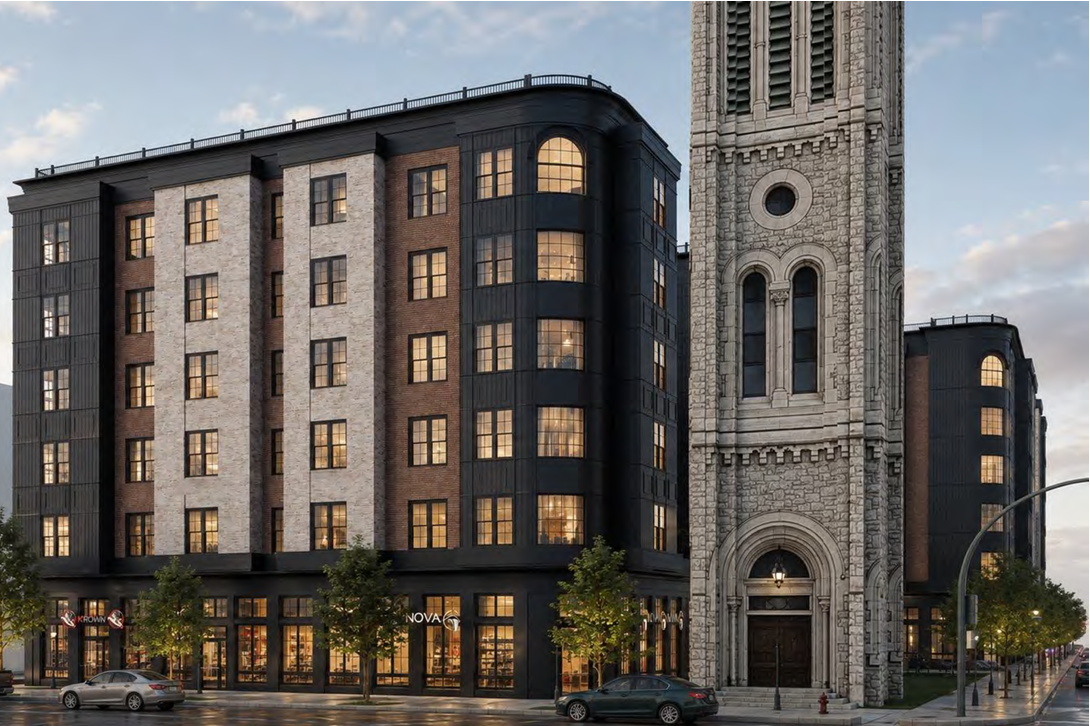
A rendering of Cathedral Yards, with the remnant tower of Greater Bible Way Temple at the left.Wisdomtree Group
At the end of the meeting, 21 attendees voted to oppose the project before the zoning board, while four were in support. Comments on Zoomwere more supportive of Haverford Square’s plans, compared with the in-person attendees.
Yakubov said on Tuesday that he would consider adding more parking in place of some commercial space.
Zoning approvals
Neighborhood support could be important for Haverford Square’s plans. Although the Philadelphia-based developer already owns the three properties on Lancaster Avenue, they need permission from the Zoning Board of Adjustment to move forward on this project. The board takes community feedback into consideration.
As currently proposed, the project exceeds the allowed number of units and is taller than existing land-use regulations allow.
Yakubov says additional height is needed to accommodate commercial space with high ceilings.
He argues that the zoning board hasrecently given other projects permission to build above height limits along Lancaster Avenue, so he is optimistic.
Although the Haverford Square project does not have many immediate residential neighbors, the nearby One Art Community Center is critical of the developer’s plans. The nonprofit organization sought to buy the Greater Bible Way Temple property to expand their services.
Greater Bible Way Temple sold to Haverford Square properties instead. In advance of Tuesday’s meeting, One Art sent an email to its supporters criticizing Yakubov.
A rendering of one of the many six-story apartment buildings Haverford Square Properties has proposed for Lancaster Avenue between 50th and 52nd Streets.Wisdomtree Group
“We’re concerned about the increased traffic. … We have questions around the increased pollution and parking issues, sanitation issues, and the rise of the cost of living for the current residents,” said Malaika Gilpin, co-director of One Art, at the Tuesday night meeting.
In response to the group’s concerns, Yakubov suggested bringing One Art programming into the commercial space in the proposed project.
Yakubov said zoning board support is not essential to the project. If the project does not get approval, Haverford Square will move forward with a smaller version of the project without commercial space.
“If for whatever reason the wheels fall off and we’re not able to get zoning relief, we’re ready to proceed,” said Yakubov. But, he added, “I think that the commercial component it would be a huge boost to the community and to the city.”
Editor’s note: This story has been edited to update the number of units in the proposed development.