Category: Real Estate

  • Philly’s historic Wanamaker Building is getting a new $4 million event venue

    Philly’s historic Wanamaker Building is getting a new $4 million event venue

    The historic Wanamaker Building in Center City will soon be home to a new $4 million event space.

    The Wanamaker Room, the latest addition to the Finley Catering portfolio, will be able to serve as a standalone venue or an expansion of the Crystal Tea Room, where Finley has held weddings and banquets for 25 years.

    The new 5,000-square-foot space, on the same floor as the Crystal Tea Room, is currently under construction, according to the Finley team, and is set to open in early 2027.

    A rendering of the bar area in the Wanamaker Room at the Crystal Tea Room, which is set to be the latest venue in Finley Catering’s portfolio when it opens in 2027.Courtesy JKRP Archiects

    “The Wanamaker Room is an investment in the guest experience and in the future of this landmark space,” owner and CEO Steve Finley said in a statement. “We’re excited to give our clients new possibilities for their events while continuing to welcome people to the heart of Philadelphia.”

    With large windows overlooking City Hall, the Wanamaker Room will serve as the new cocktail-hour space for weddings at the Crystal Tea Room, a grand ballroom that can fit up to 1,200 people.

    The Wanamaker Room will also be available to book for independent events, such as corporate functions, rehearsal dinners, and cocktail receptions, with space for as many as 400 guests.

    A rendering of the “flex space” at the Wanamaker Room at the Crystal Tea Room, which is set to be the latest venue in Finley Catering’s portfolio when it opens in 2027.Courtesy JKRP Archiects

    The new addition marks the latest change for the Wanamaker Building. Last year, its iconic Macy’s closed after occupying the bottom floors for 19 years. Like many brick-and-mortar retailers, the 435,000-square-foot location had struggled since the pandemic, and the company deemed it “underproductive.”

    The nearly 1-million-square-foot office portion of the building also took a hit from the pandemic. Its new owners, New York-based TF Cornerstone, have plans to transform the space with renovated offices, loft-style apartments, and a rooftop pool.

    The company also wants to bring new retail, entertainment, and fitness outlets to the Macy’s shell, which it has owned since 2019. TF Cornerstone has said it sees the building being “a mixed-use anchor for Center City.”

    Finley Catering, a 50-year-old family-run business with roots in the Philly suburbs, leases its ninth-floor space in the Wanamaker Building, recently renewing for another 29 years.

    The company also operates the Ballroom at the Ben and Union Trust in the city, as well as two suburban venues, The Ivy at Ellis Preserve and The Ballroom at Ellis Preserve, both in Newtown Square.

  • A Delaware County estate with a par-three golf hole and an entertaining space is on the market for $4M

    A Delaware County estate with a par-three golf hole and an entertaining space is on the market for $4M

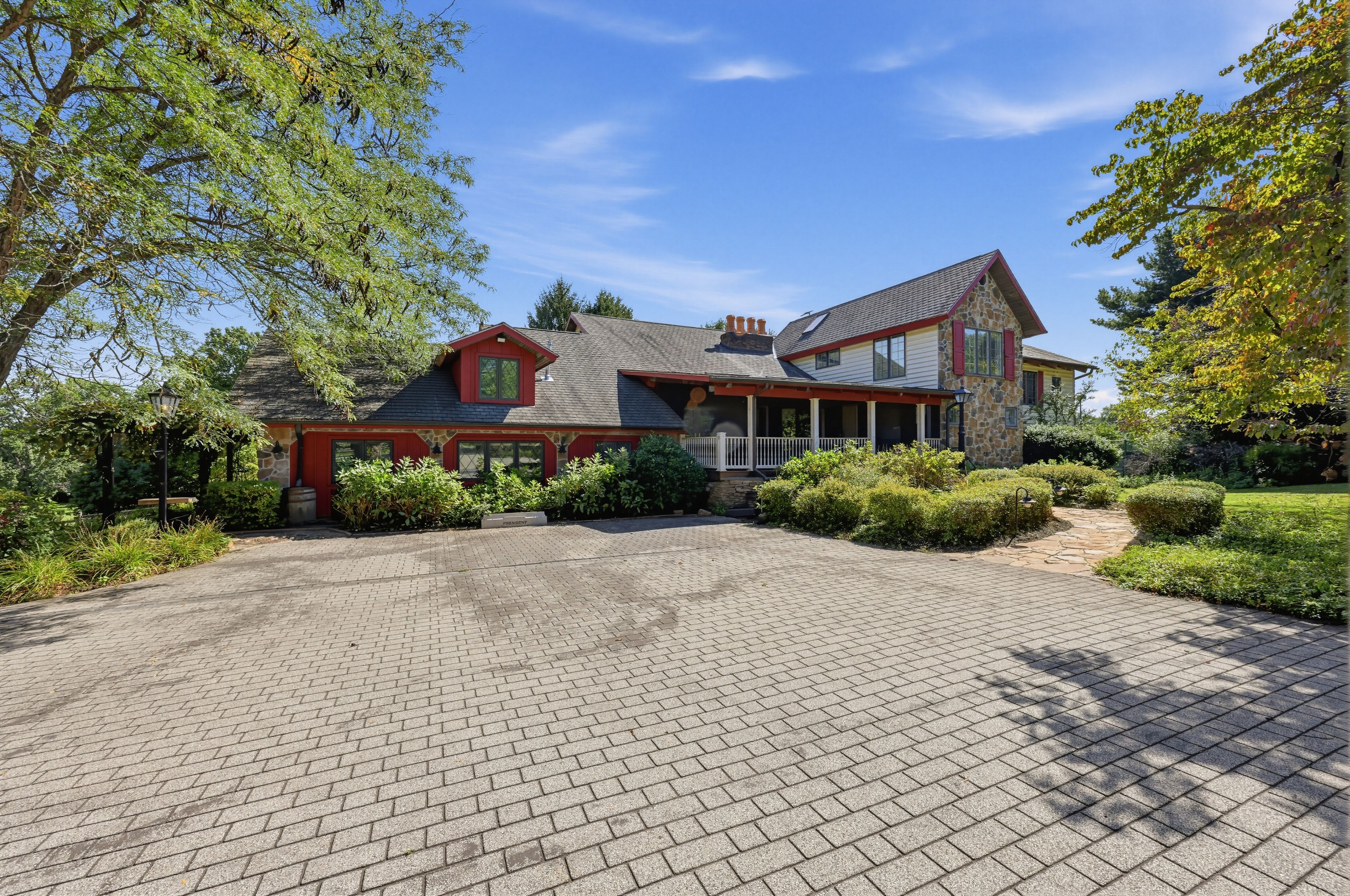
    A nearly 4-acre Delaware County estate, complete with a multi-sport court, pool, par-three golf hole, and dedicated entertainment space, is on the market for $4 million.

    Located at 1120 Clover Lane, the Glen Mills property features the primary residence, an “entertainment lodge,” a pool with a poolhouse, and additional living space over a detached garage.

    The home has been expanded and blends different architectural styles.Derrick Kunzer/HomeJab

    The main home was built around 1979 and was later expanded by previous owners, who added a second kitchen and a second story with three bedrooms. The roughly 4,500-square-foot home — a blend of Craftsman- and Tudor-style architecture — has six bedrooms, five full bathrooms, multiple living areas with fireplaces, and a bar in the walkout basement that leads to a poolside patio.

    The three upstairs bedrooms include a primary suite with a walk-in closet and access to a sunroom that overlooks the grounds.

    With two kitchens and multiple living spaces, the home could be reconfigured to include a separate suite.

    “It is an opportunity to customize to the buyer’s wants,” listing agent Robert Capps of Coldwell Banker Realty said.

    The property also has multiple sports amenities, including a lighted, multi-sport court for tennis, pickleball, and basketball, as well as an in-ground pool. A poolhouse has a full bathroom, a kitchenette, and a sauna. Nearby is an area for grilling, Capps said.

    Elsewhere is a par-three golf hole, with a tee box near the house.

    The living space above the detached garage, which has a full bathroom and kitchenette, is currently configured as an office.Derrick Kunzer/HomeJab

    There’s a four-car detached garage with living space above it. The open-concept area is currently configured as an office, and also has a living area with a fireplace, a kitchenette, a full bathroom, and its own deck.

    Rounding out the property’s structures is a dedicated “entertainment lodge” complete with two bars, a “restaurant-quality” kitchen, a brick patio, and a second floor loft with a projector.

    “I think anyone that likes to entertain would love this space,” said Capps of the lodge, which is slightly separated from the main home.

    A separate entertainment lodge has two bars, a kitchen, and a projector, as well as a bedroom and full bathroom.Derrick Kunzer/HomeJab

    The space has exposed stone walls, brick floors, large chandeliers, and a row of skylights.

    In addition to space for entertaining, the lodge has a bedroom and full bathroom, providing additional accommodations.

    “You’d be hard pressed to replicate this property starting from scratch just because of the size of the lot and all the other amenities,” Capps said, adding “there’s nothing like it for sale or that sold like this recently.”

    This suburban content is produced with support from the Leslie Miller and Richard Worley Foundation and The Lenfest Institute for Journalism. Editorial content is created independently of the project donors. Gifts to support The Inquirer’s high-impact journalism can be made at inquirer.com/donate. A list of Lenfest Institute donors can be found at lenfestinstitute.org/supporters.

  • EPA will spend $2.5M in Camden to clean up site where giant dirt pile caused underground contamination

    EPA will spend $2.5M in Camden to clean up site where giant dirt pile caused underground contamination

    A 45-foot-high pile of illegally dumped construction fill that once marred Camden’s Bergen Square neighborhood was removed several years ago.

    But contamination still lurks beneath, including lead, arsenic, and PFAS — known as “forever chemicals.”

    Now, the U.S. Environmental Protection Agency has awarded a $2.5 million grant to excavate and clean up the 1.6-acre site by scooping out and disposing of a four-foot-deep layer of ground, now leveled with crushed stone.

    The grant was announced Thursday at a news conference with regional EPA administrator Michael Martucci, Camden Mayor Victor Carstarphen, U.S. Rep. Donald Norcross (D., N.J.), and other officials.

    “It’s a brownfield grant,” Martucci said, noting the money would be used to assess the site and clean it so it can be used for a productive purpose.

    “There’s underground contamination,” he said. “To return the site to beneficial reuse, we need to complete the environmental cleanup.”

    Martucci said the money would be awarded after Camden finds a developer for the site and submits plans for its new use.

    The site of a former tower of dirt at 7th and Chestnut Streets in Camden, N.J. is now covered in crushed stone.Frank Kummer

    Hope for a neighborhood

    Carstarphen said the cleanup brings more hope to the blighted neighborhood.

    “This is a great day for our community,” Carstarphen said. “It’s been a long, long journey.”

    The pile, the result of years of dumping construction fill and other material at the site, grew so big that it loomed over a lone home on the 600 block of Chestnut Street.

    Covered with weeds, it towered above an intersection with debris, including tires and broken concrete. Some of the waste spilled onto city property.

    The pile was removed by the city in 2024. In all, crews removed 4,000 tons of solid waste, 100 tons of tires, and 15 drums.

    Camden Mayor Victor Carstarphen speaks during a press conference about the cleanup of the site on Chestnut Street. Next to the mayor, from left, are U.S. Rep. Donald Norcross, U.S. Environmental Protection Agency regional administrator Michael Martucci, Camden County Commissioner Jeffrey Nash, Camden Redevelopment Agency executive director Olivette Simpson, and BRS Inc. engineer Jennifer Taylor.Frank Kummer

    Long a blight on Bergen Square

    The New Jersey Department of Environmental Protection sued one former owner and longtime operator of the site, S. Yaffa & Sons Inc.

    The 2021 suit alleged the company “unlawfully imported and stockpiled solid waste on their Camden property, including contaminated fill material, construction and demolition debris, and waste tires,” and resisted taking action after receiving numerous violation notices and an order to stop. The company sold the property in 2019, according to the suit.

    The suit also noted that Camden, with a “significant low-income and minority population,” has “been disproportionately exposed to high-polluting facilities.”

    The city shut down the site in April 2021 as an illegal dump.

    It entered into an agreement with multiple agencies in July 2022 to authorize action to take the land through foreclosure. In September 2022, officials seized the land, then owned by a contractor. Some of the land was on both sides of the street.

    Officials began removing the pile in 2023 and finished in June 2024, leaving a large open space that immediately changed the character of the neighborhood.

    File: When the dirt pile still stood next to a home on Chestnut Streets in Camden. Frank Kummer

    Next steps

    Olivett Simpson, executive director of the Camden Redevelopment Agency, said an estimated 11,800 tons of soil will be removed and the site will then be covered with clean soil.

    Camden is currently assessing what kind of redevelopment will work on the site, which is zoned for industrial and commercial buildings. Simpson said the city has already held meetings to engage the community on the site’s future, which will likely include retail and housing.

    Jennifer Taylor, an engineer with BRS Inc., a brownfield consulting firm, is working with the city to evaluate redevelopment opportunities and expects a plan to be adopted by the end of the year.

    The ground underneath must be made suitable for people to use the property, Taylor said.

    “We want the momentum of this site not to go away,” Taylor said.

    A new home was being built less than a block from the site as she spoke, something officials said would have been unlikely had the pile still stood.

  • Philly sheriff’s office reneges on court-supervision deal, tells judge it found $20 million in city money

    Philly sheriff’s office reneges on court-supervision deal, tells judge it found $20 million in city money

    A top aide to Philadelphia Sheriff Rochelle Bilal revealed in court that an internal audit had recently uncovered $20 million in undisbursed money — including tax revenue and utility payments that should have gone into city coffers.

    The stunning disclosure of misplaced sheriff-sale proceeds — which amount to more than half the office’s annual budget — came during a two-day hearing as Bilal and her staff sought to back out of a judge’s plan to appoint an independent supervisor to monitor the office’s troubled process.

    That tentative deal, struck after an August hearing before Common Pleas Court Judge Paula Patrick, was meant to resolve years of delays in issuing deeds and distributing sale proceeds.

    But Patrick, supervisor of the court’s commerce division, ordered Bilal and her deputies back into her courtroom on Wednesday after the sheriff’s office reneged on the agreement.

    The judge insisted that Bilal be in the room before the hearing began.

    “You need to have your client here,” the judge told Jonathan Rardin, a lawyer the city retained to represent Bilal. “She needs to be here to get started.”

    Bilal then walked in and took a seat behind the defense table without speaking.

    Steven Wakefield, a new deputy undersheriff hired in June to streamline the office’s property auctions, testified Wednesday morning that he had already fixed many of the operational issues that had caused the backlog.

    Under questioning from the judge, Wakefield also detailed the discovery that “checks had not been written” for some $20 million in sales proceeds, including uncollected property taxes and water bills that are meant to be recouped through sheriff sales.

    “A lot of that was money that was supposed to go to the city,” Wakefield said.

    The money was found during an audit that so far has gone only as far back as August 2025. Wakefield did not provide an explanation for why the money had remained in the sheriff’s office, but said it was recently transferred to the city.

    New procedures in the office allow executive staff to track when checks are written, he said.

    “We have much more robust information,” Wakefield said.

    Patrick appeared stunned by the revelation.

    “Twenty million dollars is a lot of money,” the judge said. Wakefield agreed.

    Patrick also questioned why Wakefield had not included that information in the records she had ordered the sheriff’s office to produce over the summer, including a list of every sheriff sale since Bilal took office in 2020 and how the money was distributed.

    On Wednesday afternoon, Bilal took the stand for the first time, testifying that she had not known about the backlog of unprocessed deeds until “2024 or 2025,” when she started receiving emails from real estate agents and City Council members about deeds not being recorded.

    “It was like Spidey senses. I’m getting more than one,” Bilal said of the emails. “Then every week.”

    The Inquirer first reported on the problem in July 2024, based on an analysis of city property records. Bilal’s staff initially denied there was a deed backlog, then weeks later said they would take corrective action. Yet the delays continued, and in some cases got worse, with banks, real estate agents, and investors saying as recently as May 2026 they have waited more than a year after auctions to receive their deeds.

    Bilal has repeatedly provided inaccurate information about sheriff sales and her office’s finances, including telling City Council in April that post-auction delays had been resolved.

    But under oath in court, Bilal said she agreed with Rardin’s assessment that the sheriff’s office had not been fulfilling its obligations until recently.

    “That’s what I’m starting to find out, yes,” Bilal said.

    While Bilal campaigned as a reformer in 2019, she testified she had only a rudimentary understanding of what the job entailed when she took office. She said she spent an extended amount of time interviewing staff to “figure out what the sheriff’s office actually does.”

    Now more than halfway into her second term, Bilal blamed the ongoing problems on chronic underfunding from City Hall, poor decisions by managers under her, antiquated technology, and staffers who struggled to handle the new office software that went live in 2024.

    Bilal’s testimony continued Thursday morning. Asked whether she would permit an outside compliance examiner to come into the office, she refused to answer the question.

    “We are in compliance,” Bilal said. “We got control of this.”

    A deal collapses

    This week’s hearing was not supposed to happen.

    Judge Patrick, frustrated with an onslaught of litigation over sheriff sales, ordered the August hearing at which Bilal’s staff was required to demonstrate why a “special master” or someone with similar expertise in real estate should not be brought in to temporarily oversee the auctions.

    That hearing was cut short after Bilal’s staff said it would allow the monitoring and report back to the court in six months. “It’s better that we come together, and make an agreement,” Bilal told reporters at the time.

    But Daniel Bernheim, the lawyer representing plaintiff JSB Property Group, whose March lawsuit over deed delays triggered the legal showdown, said in an interview Tuesday that Bilal’s legal team went silent after Patrick submitted a draft of a stipulated order that called for appointing a team to evaluate the office’s practices.

    Bernheim said Rardin then told him he could not reach “the key decision makers” in the office.

    “The ‘key decision maker,’” Bernheim said, “is the sheriff.”

    Then, Bernheim said, the sheriff’s office submitted what he described as “ludicrous” changes to Patrick’s proposal, including, according to Bernheim: requiring 48 hours’ notice for the independent supervisor to interview any sheriff’s office employee; removing the word comprehensive before review; and automatically terminating the supervision after six months regardless of the results.

    What happened?

    It is unclear why the sheriff’s office changed direction.

    Bilal did not respond to questions Wednesday during a break in the court proceedings. Standing near the defense table, she pointed her phone at an Inquirer reporter’s face and appeared to take a photograph. Her staff then formed a barricade around her.

    On Tuesday, Rardin submitted a memo arguing that Patrick had overstepped her authority. He wrote that the 2003 consent order at the center of the case — which requires the sheriff to issue deeds within 40 days from settlement — does not apply to Bilal because it had been brought against a previous sheriff, John Green, who was later imprisoned on federal bribery charges.

    Even if the order did apply to Bilal, Rardin wrote, the court’s legal authority was limited to holding her in contempt, not “open-ended structural oversight.”

    On the stand Wednesday, Wakefield told Patrick that sheriff-sale proceeds are now being distributed and deeds issued within weeks of settlement. He said the office has reorganized its workforce and is crafting new regulations for auctioning properties that will remain in place for future sheriffs.

    “I have personally signed hundreds and hundreds of deeds,” Wakefield said.

    Much of Wakefield’s and Bilal’s testimony over two days involved past practices in the sheriff’s office, as they guided attorneys through reams of financial and personnel records.

    At one point, Bernheim questioned why a sworn deputy sergeant was needed to, in Wakefield’s term, “babysit” staffers in the real estate division to make sure they were doing their jobs.

    “If we could trust everyone to do their job 100%,” Wakefield said, “we wouldn’t be here today.”

    “Amen to that,” Patrick responded.

    At the conclusion of the hearing Thursday, the judge said would take the new testimony under advisement and issue a ruling shortly.

  • Mortgage rates keep climbing, leading some buyers to riskier loans

    Mortgage rates keep climbing, leading some buyers to riskier loans

    Mortgage rates continue to creep higher, compounding an affordability crunch that has squeezed many Americans’ wallets. Now soaring rates are prompting some homebuyers to roll the dice that they will fall in a few years.

    The average 30-year, fixed-rate mortgage, the most popular home loan in the United States, rose to 7.28% this week, up from 7.03% last week and the highest since November 2023, mortgage financing giant Freddie Mac said Thursday.

    “Mortgage rates jumped to their highest level in almost three years, pushing borrowers to the sidelines,” said Joel Kan, deputy chief economist at the Mortgage Bankers Association, a trade group.

    Mortgage rates had fallen below 6% at the end of February but began to inch higher after the United States and Israel attacked Iran on Feb. 28. The war in Iran has driven up energy costs, which in turn has stoked inflation fears. In response, investors have pushed up the yield on the 10-year Treasury note, which on Thursday reached its highest level since 2002.

    The 10-year Treasury yield underpins a wide range of consumer and corporate borrowing, including mortgages. With the yield climbing quickly, the jump in mortgage rates this week was the biggest since October 2022.

    Adjustable-rate mortgages can be significantly lower than their fixed-rate counterparts, real estate experts say, sometimes as much as a full percentage point, a difference that can potentially save homebuyers thousands of dollars annually. The ARM, as the loan is known, also comes with the risk that rates will continue to climb, hurting owners when the loan resets.

    ARMs are an increasingly enticing option among buyers put off by the jump in fixed-rate mortgages, Kan said, adding, “They are looking for more ways to get into that home.”

    The association reported a recent uptick in the share of ARM applications, to 10.3% of overall mortgage applications, the highest in a year.

    Here’s what you need to know about adjustable-rate mortgages.

    How does an adjustable-rate mortgage work?

    Fixed-rate mortgages lock in one rate over the lifetime of the loan, usually 30 years. ARMs, on the other hand, offer a low “teaser” rate for a set time, typically five, seven, or 10 years, after which they readjust to the market rate, often annually, for the remainder of the loan. This helps owners keep their monthly payments lower during the introductory period.

    Borrowers who use ARMs are betting that mortgage rates will eventually fall, giving them the opportunity to refinance their loan at a lower rate or sell their home before the introductory period ends and the rate begins to fluctuate.

    ARMs make up a small portion of the overall mortgage market, which is dominated by fixed-rate products. But now that fixed-rate mortgages have climbed above 7%, interest in ARMs is starting to grow, said Archana Pradhan, the principal economist at Cotality, a provider of housing market data.

    The national average rate for an ARM with a five-year introductory rate that resets annually is 6.56%, according to Bankrate.com.

    “The wider the gap between ARM rates and the fixed rates, the stronger the incentive to choose an ARM,” Pradhan said.

    How safe is an ARM?

    ARMs offer savings for borrowers, but they also introduce market volatility.

    The loans were popular during the early 2000s housing bubble, peaking at around 36% of overall mortgage applications in 2005, according to data from the Mortgage Bankers Association. After the housing market crashed in 2008, the share of applications for ARMs plunged to about 6%.

    Stricter underwriting standards have made ARMs safer for consumers, who are protected by regulatory limits that prevent the variable rate from jumping too high.

    Still, they are not for everyone, said Nick Rocco, a mortgage loan officer in the Baltimore area. Borrowers need to have a plan for what to do after the introductory period ends regardless of where mortgage rates are. “There is no crystal ball,” he said.

    Who should apply for an ARM?

    Nearly 72% of homebuyers who take out an ARM have a chance within five years to refinance it into a 30-year fixed-rate mortgage that is at least 0.5 percentage points lower than their original rate, according to a report from Redfin, an online real estate marketplace.

    That can translate into big savings every month for some borrowers, Pradhan said. “It’s more meaningful for higher loans, because they are able to save hundreds of dollars compared to the lower amount of loans,” she said.

    Rocco said he recently worked with a couple who used an ARM to finance the purchase of a $750,000 home. The buyers had experience with ARMs, he said, and knew to put 20% down, which lowered their introductory rate.

    “They have a little more risk tolerance, and they’re a little bit more comfortable knowing the fact that they can refinance out of that adjustable rate,” he said.

    But Pradhan said ARMs made better sense for buyers who intended to sell after the introductory period ended. “You are not intending to live in the house forever,” she said.

    “Refinancing may be an exit strategy, but it’s not a guarantee,” she added. “One of the risks of an ARM is the higher payment in the future.”

    This article originally appeared in the New York Times.

  • Mortgage rates reached 7.28%. If you have to move right now, here are some tips.

    Mortgage rates reached 7.28%. If you have to move right now, here are some tips.

    The average interest rate for the popular, fixed-rate 30-year mortgage shot up to 7.28% this week, the highest it’s been since November 2023.

    Elevated mortgage rates and high home prices are making homebuyers cautious about entering the market in the Philly area and beyond.

    “They’re not jumping in with two feet,” said Patrick Lopez, a Philadelphia-based mortgage banker at Quaint Oak Mortgage.

    At the same time, some people need to move. They’re driven by personal factors such as job relocations, growing households, and plans for the future.

    Mortgage rates are unlikely to slide back down to pandemic-era levels of 3% or lower. And waiting for rates to drop significantly is often a losing game, Lopez said.

    While interest rates fluctuate, home prices overall have historically moved in one direction: up.

    “What I tell people is if you can afford it and you can buy, the least expensive the property is going to be 99% of the time was yesterday or today, because prices keep trending higher,” Lopez said.

    When aspiring homebuyers tell him they are waiting for interest rates to drop into the 5% range, for example, he asks, “Do you also understand how many other people are waiting for that?”

    A significant drop in rates would likely flood the market with buyers, increasing competition for properties.

    Here’s what real estate pros are telling buyers now.

    Don’t assume your rate

    Individual mortgage rates depend on a bunch of factors, including credit scores and participation in homebuyer assistance programs.

    “The good news is that people have more power over interest rates than they think they do,” said Matt Schulz, chief consumer finance analyst at LendingTree, an online loan marketplace.

    Taking steps to get a lower rate, he said, “can make a really unaffordable situation a little less so.”

    One of the first steps a homebuyer should take is to shop around to compare loan offers from several lenders, he said.

    “People would be surprised how much difference there can be,” Schulz said. And even a slight difference in the interest rate can mean tens of thousands of dollars in savings over the life of a mortgage.

    Get your credit score in shape

    Buyers with higher credit scores get lower mortgage rates, so improving those scores can help a lot.

    “There’s very little in life that’s more expensive than having crummy credit, and that’s especially true when you’re buying a home,” Schulz said.

    Jeffrey Ruben, the Bryn Mawr-based president of WSFS Home Lending, said that “first and foremost,” homebuyers should make credit card payments on time. They also need to control their credit card debt, so they’re not carrying over large balances from month to month.

    They should cap how much they spend on a card to maximize how much credit they have available at any given time. Keeping total outstanding charges under 30% of the card limit gives people better credit scores, Ruben said.

    Do your homework

    Before buyers start looking at homes, they should sit down with a professional to determine how much they’re comfortable spending up front and monthly, said Peter Buchsbaum, manager of the mortgage brokerage Good Cents Financial, which is based in Bucks County and does most of its business in Philadelphia.

    “Start the process earlier than you want to,” he said. “And it should begin with the financial piece.”

    Schulz said homebuyers should factor in elevated mortgage rates when they calculate “what they can afford and what sort of homes they should be looking at and whether they should be in the market, period.”

    An increase in mortgage rate from 6.5% to 7% on a $300,000 home in Philadelphia would mean a monthly payment that grows by about $130, Buchsbaum said.

    “If that’s stopping me from buying a house, I probably shouldn’t be shopping for houses,” he said.

    Buyers should also look into assistance programs they may qualify for.

    First-time homebuyer programs, such as those offered through the Pennsylvania Housing Finance Agency, can come with lower rates.

    Make a down payment plan

    Households should go into home buying with a plan for making their down payment, which can include saving more of their own money or getting grants or loans from governments, lenders, and nonprofits.

    “The down payment is a challenge for many buyers,” Ruben said. “There’s no question about that.”

    But buyers who can make bigger down payments get lower mortgage rates.

    Be flexible, if possible

    Rates can vary by location, so buyers with more flexibility in where they live can get lower rates.

    Rates also can vary by loan type. Mortgages backed by the Federal Housing Administration and the U.S. Department of Veterans Affairs come with slightly lower interest rates than conventional loans.

    Rates also vary by property type. Condos and duplexes come with higher interest rates than single-family homes, Lopez said.

    Be prepared to compromise

    With mortgage rates elevated, buyers should also keep in mind that a home they purchase now might not be their forever home, Schulz said. They may need to dial back their expectations and their budget in order to purchase.

    First-time buyers, especially, can get on the first rung of the market ladder and start building home equity with the understanding that they can buy another home later that checks all their boxes.

    “Tough times require compromise sometimes,” Schulz said.

    The rate doesn’t tell the whole story

    Homebuyers shouldn’t jump on a low interest rate without question.

    Recently, a homebuyer asked Buchsbaum whether he could match an interest rate of 6.5% for a mortgage the buyer saw online. But in the fine print, the buyer would have had to pay discount points, or up-front fees to a lender, to buy down the rate to that level.

    The buyer didn’t know about that caveat.

    Buyers can get mortgage rates down fairly low if they pay enough points, Buchsbaum said, but “the juice isn’t worth the squeeze” in many cases. Buyers have to weigh whether they’ll stay in their home long enough that savings will make up for the up-front expense.

    You don’t have to be stuck with one rate

    Buyers who purchase homes now and get an elevated mortgage rate can pay to refinance their mortgage later if rates drop.

    Also, more borrowers now are opting for adjustable-rate mortgages (ARMs) to get into homes, according to the Mortgage Bankers Association. These loans come with lower initial interest rates than fixed-rate loans. After a period of time, rates adjust up or down based on the market.

    Ruben said seven-year ARMs for 30-year periods are currently popular among WSFS’s mortgage borrowers. The interest rate stays the same for seven years and can adjust twice a year after that.

    There’s a reason borrowers get a better initial rate: “They are assuming the risk of potentially higher rates in the future,” Ruben said.

    But Ruben said WSFS is hopeful that rates will drop over the next several years to pre-pandemic norms. Rates in the high-4% to low-5% range for 30-year fixed-rate loans weren’t uncommon, he said.

    Don’t expect mortgage rates to drop

    Mortgage rates aren’t likely to drop significantly anytime soon, thanks to surging energy prices, government debt, and inflation.

    “It’s a really unfortunate situation because home buying was already really unaffordable for an awful lot of people,” Schulz said.

    WSFS tells mortgage borrowers “there are things they can control and there’s things that they can’t,” Ruben said. They can change their financial standing to some extent, but they can’t change broader market forces.

    Buyers have to be realistic about their financial situations and the rates they’re likely to get, he said.


  • Average long-term U.S. mortgage rate churns upward to its highest level in nearly 3 years at 7.28%

    Average long-term U.S. mortgage rate churns upward to its highest level in nearly 3 years at 7.28%

    NEW YORK — The average long-term U.S. mortgage rate jumped this week to its highest level in nearly three years.

    The benchmark 30-year fixed-rate mortgage rose to 7.28% from 7.03% last week, mortgage buyer Freddie Mac said Thursday, the biggest leap in four years. A year ago, the average rate was 6.34%.

    It is the sixth consecutive week that mortgage rates have increased.

    The average rate is now the highest it’s been since Nov. 22, 2023, when it reached 7.29%, and it’s not climbed this fast week-to-week since October 2022.

    Borrowing costs on 15-year fixed-rate mortgages, often sought by borrowers refinancing a home loan, also climbed this week. That average rate increased to 6.60% from 6.42% last week. A year ago, it was at 5.55%.

    Higher mortgage rates can add hundreds of dollars a month to borrowers’ costs, limiting homebuyers’ purchasing power. As rates rise, that can also lead prospective home shoppers to delay buying.

    In late February, the average rate on a 30-year mortgage briefly dipped to 5.98%, its lowest level going back to late 2022. The roughly 1 percentage point increase in the rate since then translates roughly into an additional $276 a month cost for a borrower financing a $400,000 home loan at the current average rate.

    Depending on a borrower’s income, credit, and other factors, they may qualify for a rate on a 30-year mortgage that is below or above the current average.

    The housing market has been stuck in a rut this year in large part because of elevated mortgage rates, which have been climbing in the months since the U.S. and Israel attacked Iran in late February.

    Mortgage rates are influenced by inflation, Federal Reserve policy, and bond-market investors’ expectations for the economy, among other factors. They generally follow the trajectory of the 10-year Treasury yield, which lenders use as a guide to pricing home loans.

    Expectations of higher inflation amid surging oil prices have pushed up the 10-year Treasury yield, which was at 3.97% in late February, before the war began. It surged to 5.34% in midday trading but then pulled back to 5.23% Thursday.

    High yields slow the overall economy by making it more expensive for everyone to borrow money, while undercutting prices for stocks and other investments.

    The U.S. housing market has been in a slump since 2022, when mortgage rates began to climb from pandemic-era lows. Sales of previously occupied U.S. homes were essentially flat last year, stuck at a 30-year low.

    Last month the National Association of Realtors said that existing home sales fell 2% in August from July to a seasonally adjusted annual rate of 3.98 million units. That was their slowest annual pace in more than a year.

    And many potential homeowners are now hitting the brakes.

    Mortgage applications, which include loans to buy a home or refinance an existing mortgage, tumbled 6% last week from the previous week, according to the Mortgage Bankers Association. This marks the fourth straight weekly drop.

    Applications for loans to refinance existing mortgages also declined.

    The elevated mortgage rates are driving more prospective homebuyers to adjustable-rate mortgages, or ARMs. Such loans, which typically offer lower initial interest rates than traditional 30-year, fixed-rate mortgages, accounted for more than 10% of all mortgage applications last week, MBA said.

  • Home-buying mistakes | Real Estate Newsletter

    Home-buying mistakes | Real Estate Newsletter

    You probably know Abigail Covington, my colleague who regularly helms the How I Bought This House column. In the year since she joined the team, she’s become one of The Inquirer’s home-buying experts.

    So I couldn’t believe it when she told me that she’d opted for an information-only inspection when she bought her first home a few weeks ago.

    I wanted to shake her by the shoulders and say: Haven’t you learned anything from all the real estate stories you’ve written?!

    But in a new essay, Abigail explains why. Keep scrolling for that story and more in this week’s edition:

    — Erica Palan

    If someone forwarded you this email, sign up for free here.

    Real estate reporter bought a house. Here’s what she got wrong.

    Buying a home is a huge financial decision — and an emotional one. Balancing the two can be tricky when your head knows what to do but your heart is pulling you in the opposite direction.

    After a year writing about real estate, my colleague Abigail Covington felt prepared to stand up to sellers and get a great deal. But when her dream house came along, she ditched her careful plans to make sure she got it.

    See what she got wrong (and right!) as a first-time homebuyer.

    Airbnb tension in Jenkintown

    In Jenkintown, neighbors are disagreeing over Airbnbs. The town’s zoning board denied its first short-term rental request last week after residents complained about noise and unexpected visitors.

    It made me wonder how I’d feel if my next-door neighbor was a rotating cast of visitors. On the one hand, I’ve stayed in dozens of Airbnbs and had memorable, comfortable travel experiences. On the other, I understand being worried about safety.

    Read more about how Jenkintown is dealing with these issues.

    📮 Would you be comfortable living next to an Airbnb? For a chance to be featured in next week’s newsletter, email me.

    The latest news to pay attention to

    Home tour: A haven in Havertown

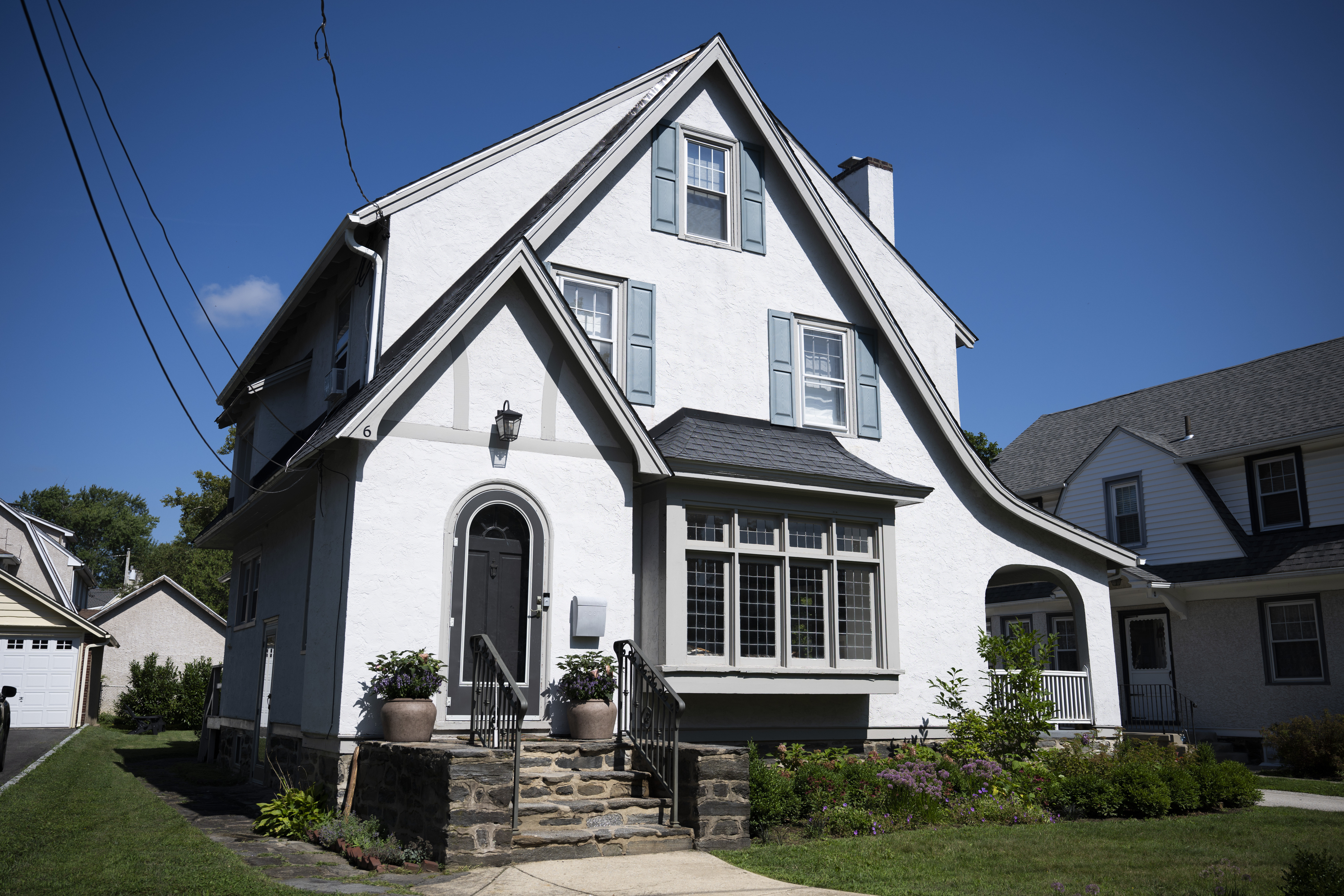
    There is just something about a Tudor-style home that feels so cozy — the steeply pitched roofs, the storybook arches, the tall windows. Talk about curb appeal.

    The interior of this Havertown home is just as warm and comfy with unexpected color combinations, a grandfather clock, and a lot of floral wall paper.

    The Finnegan family moved in five years ago and have spent that time redesigning their home to be a haven. Take a peek inside.

    📷 Photo quiz

    Do you know the location this photo shows?

    📮 If you do, email me back. You and your memories of visiting this spot might be featured next week.

    Shout out to Don L. who correctly guessed that last week’s image depicted workers cleaning the glass pavilions over the subway stairs at Dilworth Park.

    ++

    Have a great week. Michaelle will be back next Thursday.

    By submitting your written, visual, and/or audio contributions, you agree to The Inquirer’s Terms of Use, including the grant of rights in Section 10.

  • They moved to Havertown for the community. The house was a bonus.

    They moved to Havertown for the community. The house was a bonus.

    Caroline and Kevin Finnegan needed a larger home for their growing family and had specific goals: a community feel, lots of neighborhood kids, and walkability to a park, shopping, and restaurants.

    Though house hunting during the pandemic was difficult, they found the perfect place in Havertown nearly five years ago, a 2,300-square-foot Tudor-style home built in 1920.

    “We had always loved Havertown as a community,” said Caroline, owner and principal designer of Hendren House Interior Design in Havertown. “The house was an extra bonus when we saw its character and history.”

    She also saw signs that this was her forever home. Caroline had been very close with her grandfather, Francis “Frank” Grandizio. She and Kevin bought the house in 2021, 100 years after her grandfather was born and the same year he died.

    The outside of Caroline and Kevin Finnegan’s Tudor-style home in Havertown.Joe Lamberti / For The Inquirer

    “A family who lived here previously had written all their names in the cement in the foundation of the garage,” she recalled. “There are so many stories to this house that I don’t even know and I find that so wonderful.”

    And, she added, “I love that we get to create our own stories here.”

    Prior to moving in, the Finnegans removed the carpet and refinished the floors on the second level of the four-bedroom, two-bathroom house. They also gave the bathroom a facelift. In 2024 they embarked on a larger renovation, swapping the locations of the kitchen and dining room and outfitting those new rooms.

    A designer for more than 10 years, Caroline enjoyed the process of creating a home for her family, including sons James, 7, and Hudson, 5, and daughter Charlotte, 1.

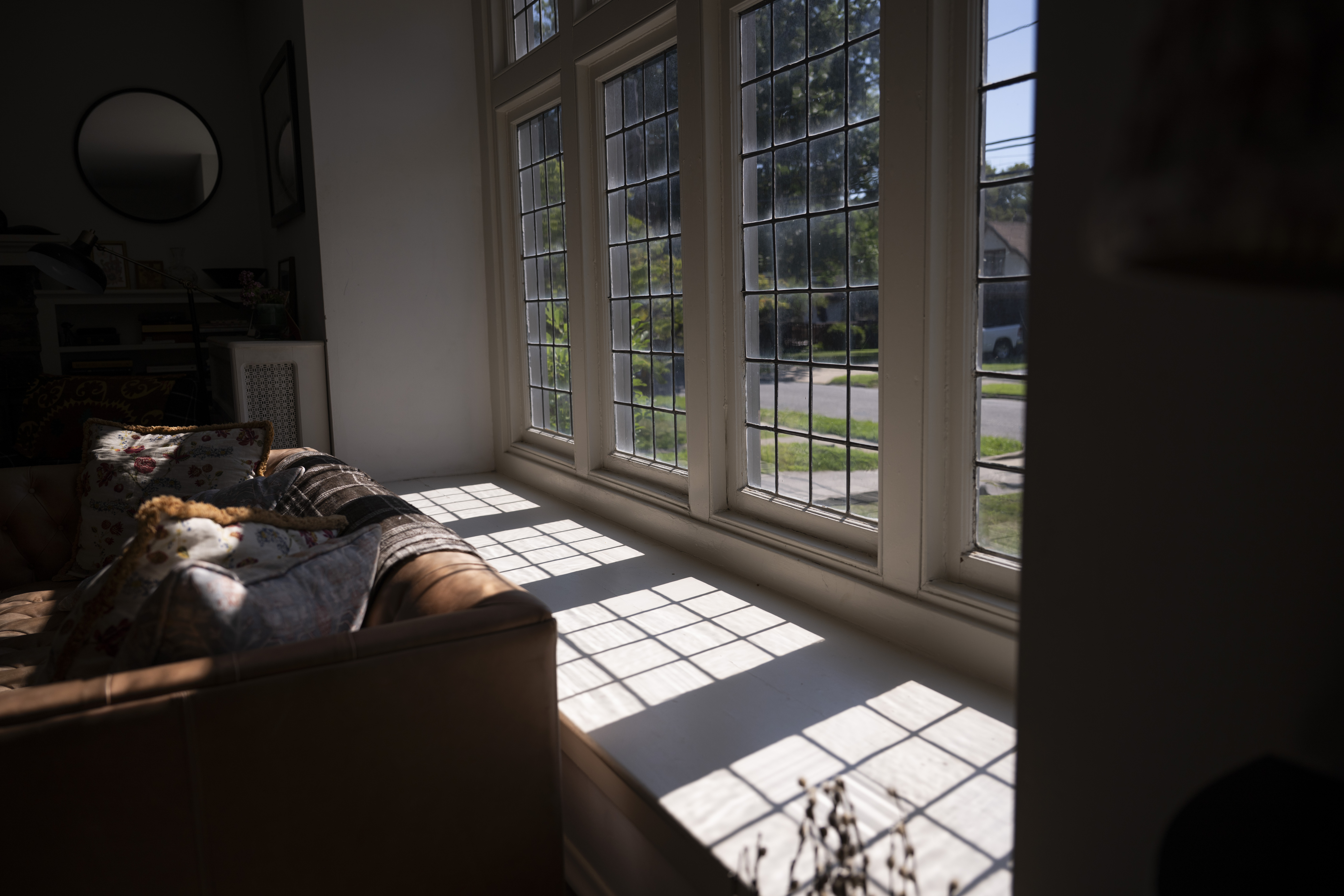
    The living room features a wall of leaded glass windows that cast a grid of light and shadows.Joe Lamberti / For The Inquirer
    Caroline Finnegan’s grandfather’s blue plaid chair is a favorite item of hers.Joe Lamberti / For The Inquirer

    “I’m inspired by classic, timeless, traditional design that has a bit of a modern twist, that entails layering, patterns, texture, and color,” said Caroline. “I like unexpected color combinations.”

    She often chooses wallpaper instead of paint, particularly nature-inspired designs. A blue-and-white botanical print, a contemporary interpretation of toile, greets visitors in the foyer, while a lush mural transforms the dining room.

    The powder room is wrapped in a paper featuring oversized blue blooms and delicate foliage, a hand block print from Michael S. Smith’s Jasper line — Smith is one of her favorite designers. A sweet pink and gray pastel paper sets the tone for Charlotte’s room.

    “I love florals,” said Caroline. “My aunt, Kathleen Gallagher Standeven, was a big inspiration for me. She put floral prints on everything. If I’m allowed to pick a floral wallpaper, I always will.”

    The foyer is wallpapered with a blue and white toile-like print. Joe Lamberti / For The Inquirer
    The bedroom of the Finnegans’ daughter, their youngest child. The wallpaper and shades both feature a colorful pattern.Joe Lamberti / For The Inquirer

    The living room, bathed in light from a wall of leaded glass windows, is home to Caroline’s favorite chair that once belonged to her beloved grandfather. Now reupholstered in blue plaid, it has become a favorite resting spot for Kevin.

    “I like sitting there in the morning with a cup of coffee, looking out through the glass windows in the front,” he said.
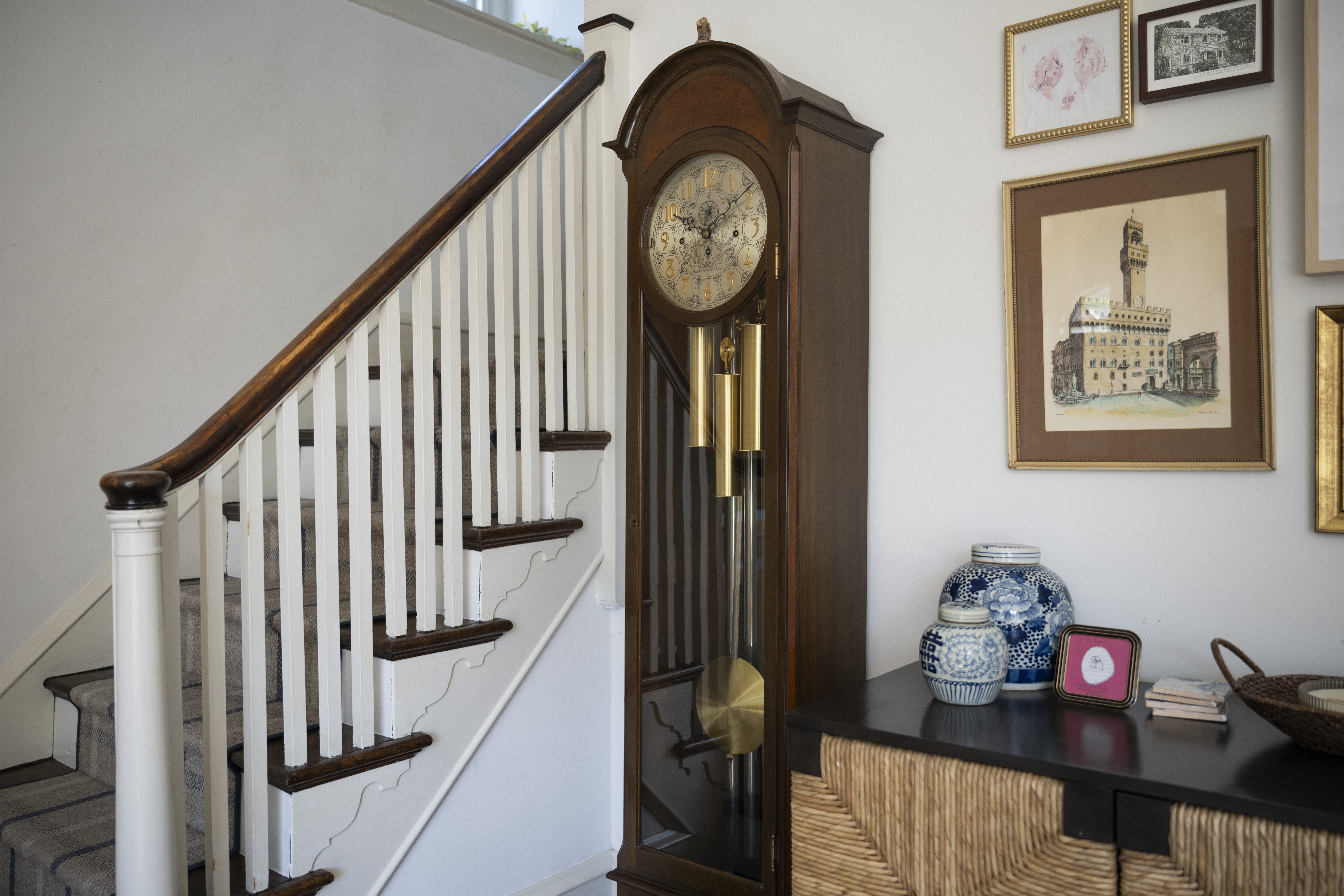
    Nearby sits the grandfather clock that originally belonged to Caroline’s maternal grandfather.

    “My husband and sons crank it every Saturday, which has become a special, fun tradition,” said Caroline.

    A grandfather clock is another heirloom, which the family enjoys cranking each week to keep it running.Joe Lamberti / For The Inquirer

    Though Kevin has little say in the design of the home, he is thrilled with his wife’s choices.

    “I don’t have much taste, and Caroline obviously knows what she is doing,” joked Kevin, a detective in Upper Darby. “I trust her, and just let her do her thing.”

    Though admittedly not an avid cook, Caroline especially appreciates her kitchen, where soft off-white and green hues create a connection to nature. The perimeter cabinets are painted Old White by Farrow & Ball, the island is Benjamin Moore Colonial Verdigris in the Williamsburg Paint Color Collection, and the pantry is a custom stain.

    The Carrara marble island is surrounded by stools where the children sit to enjoy weekend lunches and snacks. Well-organized drawers and shelves store food and kitchen gear. The custom-built cabinet, made by woodworker Nate Wagner, owner of Wagner’s Wood Specialties in Chalfont, does double duty as a coffee bar and storage unit, and is easy to close for an uncluttered look.

    The children enjoy snacks and lunches at the kitchen island.Joe Lamberti / For The Inquirer
    A custom kitchen cabinet serves as a coffee bar and storage solution.Joe Lamberti / For The Inquirer

    The dining room is the venue for the family’s important shared mealtime, when they catch up on the highlights of each member’s day.

    Grassy yards make up the front and back of the house, where the kids play with their neighborhood buddies while their parents watch from the side porch.

    “This neighborhood has been wonderful for our family,” said Caroline. “Havertown has such a deep sense of community.”

    Is your house a Haven? Nominate your home by email (and send some digital photographs) at properties@inquirer.com.

  • Chester County estate with a five-story tower and literary roots is hitting the market for $3.1M

    Chester County estate with a five-story tower and literary roots is hitting the market for $3.1M

    The former Chester County home of a renowned 19th-century author and diplomat is hitting the market this week with an asking price of $3.1 million.

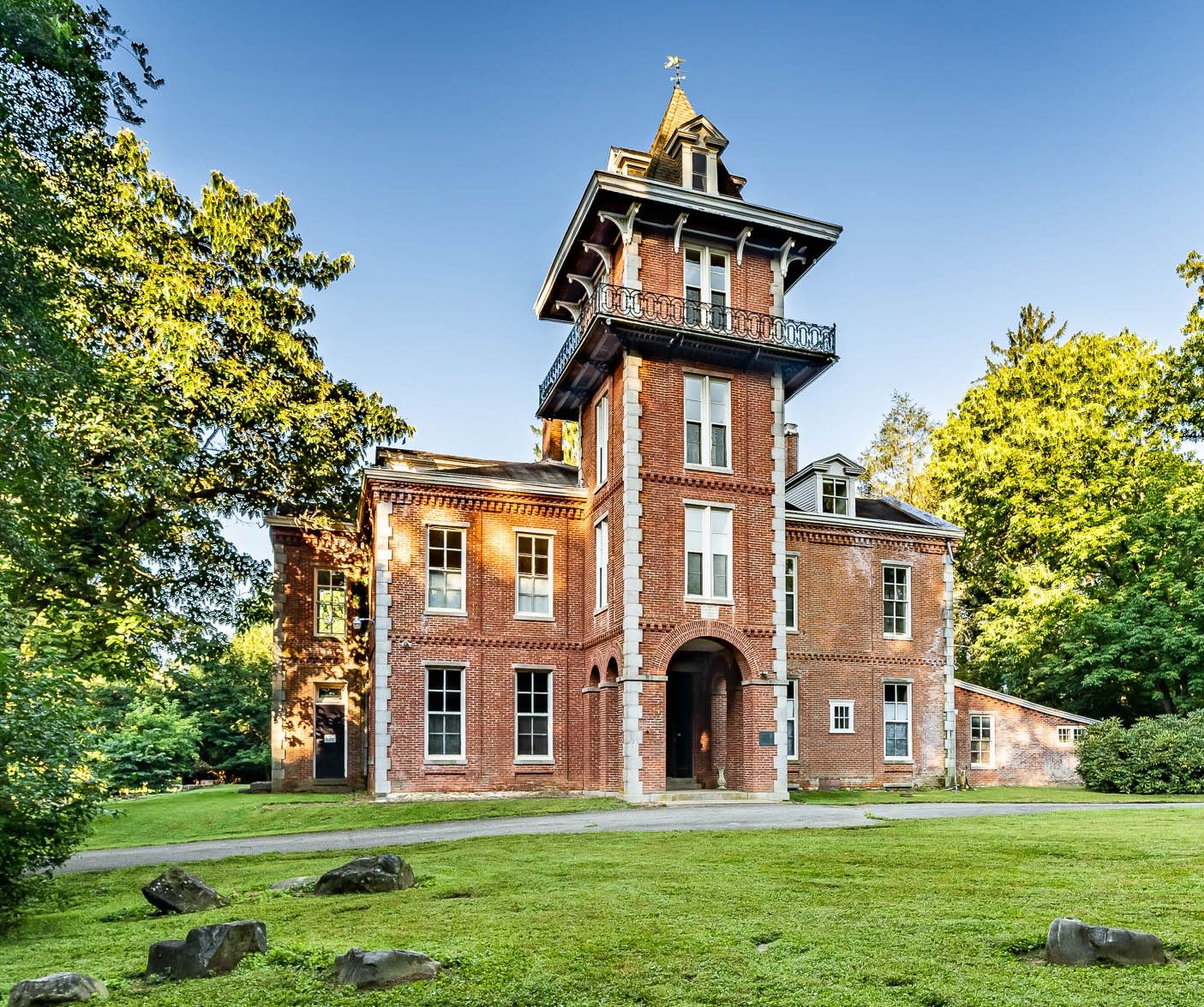
    Known as Cedarcroft, the sprawling Kennett Square brick home spans over 7,100 square feet, sits on 2.4 acres, and has a distinctive five-story, Italianate-style tower overlooking the grounds and surrounding community.

    The tower extends over the home’s covered entryway and is accessible by stairs from the second floor. It has a room with windows on each of the third- and fourth-floor landings. It also has a balcony off the fourth floor and a fifth floor accessible by ladder.

    The home has a five-story, Italianate-style tower.Virtual Vista | Courtesy of Holly Gross Group

    The rooms on the third and fourth floors could serve a number of uses, including as a library, said listing agent Stewart Gross, who is brokering it with Stephen Gross and Holly Gross, all of the Holly Gross Group.

    “It’s breathtaking,” he said of the vantage, where both sunrise and sunset can be seen.

    It’s believed that the home’s original owner, Bayard Taylor, used the tower spaces to write, enjoy cocktails, and survey the surrounding land, Gross added.

    A Kennett Square native, Taylor built the 108 Gatehouse Dr. home between 1859 and 1860. He gained acclaim as a poet and travel writer, publishing a number of works inspired by his global escapades. He also served as the chargé d’affaires of the Russian legation in St. Petersburg.

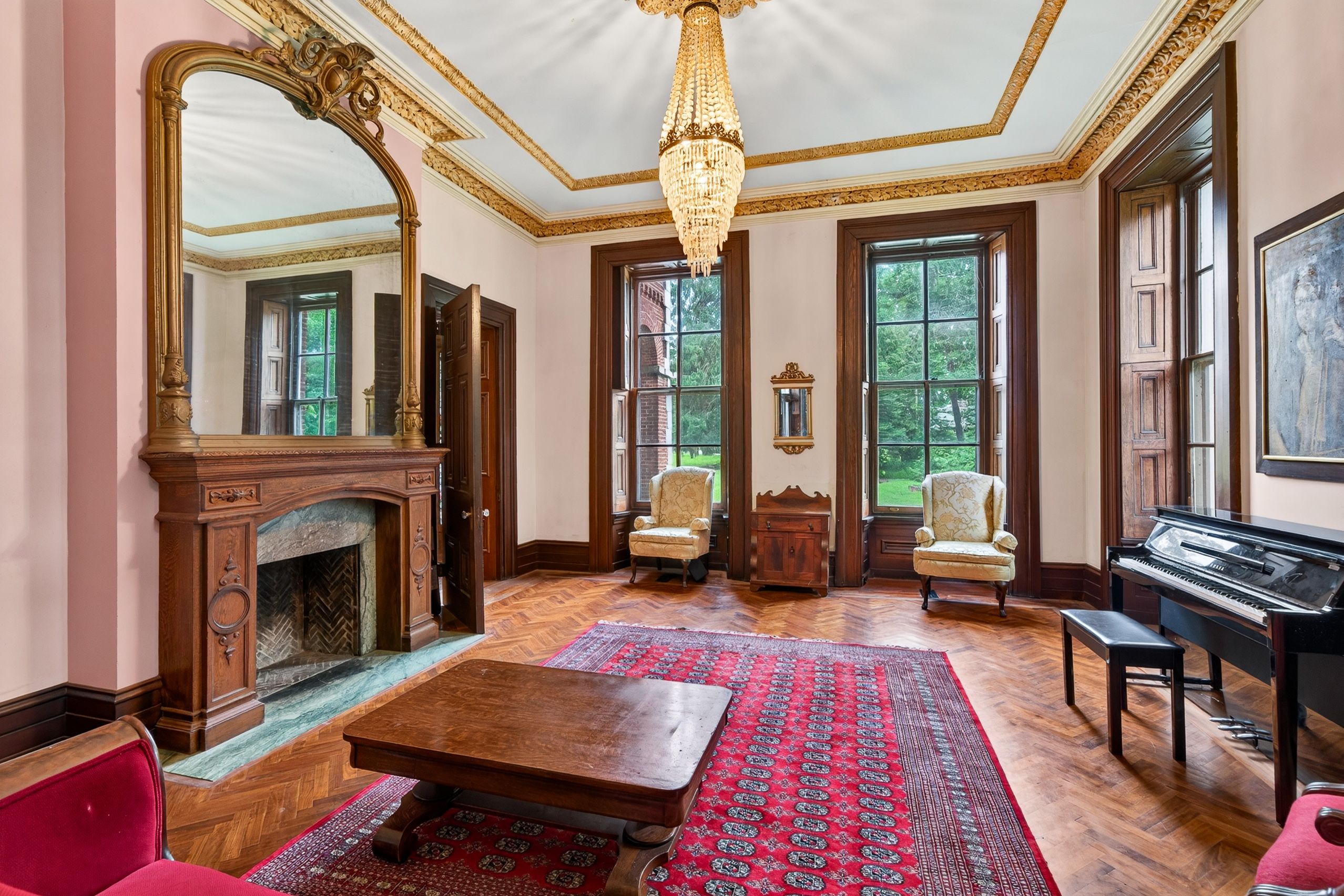
    One of the living spaces on the first floor.Virtual Vista | Courtesy of Holly Gross Group

    During his tenure at Cedarcroft, Taylor reportedly hosted a number of literary figures, including Ralph Waldo Emerson and Horace Greeley, according to a Kennett Library biography.

    Some of the home’s first-floor features include 13-foot ceilings and “grand” spaces including a living room, a dining room, and a library, as well as a billiards room, Gross said.

    The home has seven bedrooms — six on the second floor, with a seventh on the third level — including a primary suite with a fireplace and a walk-in closet.

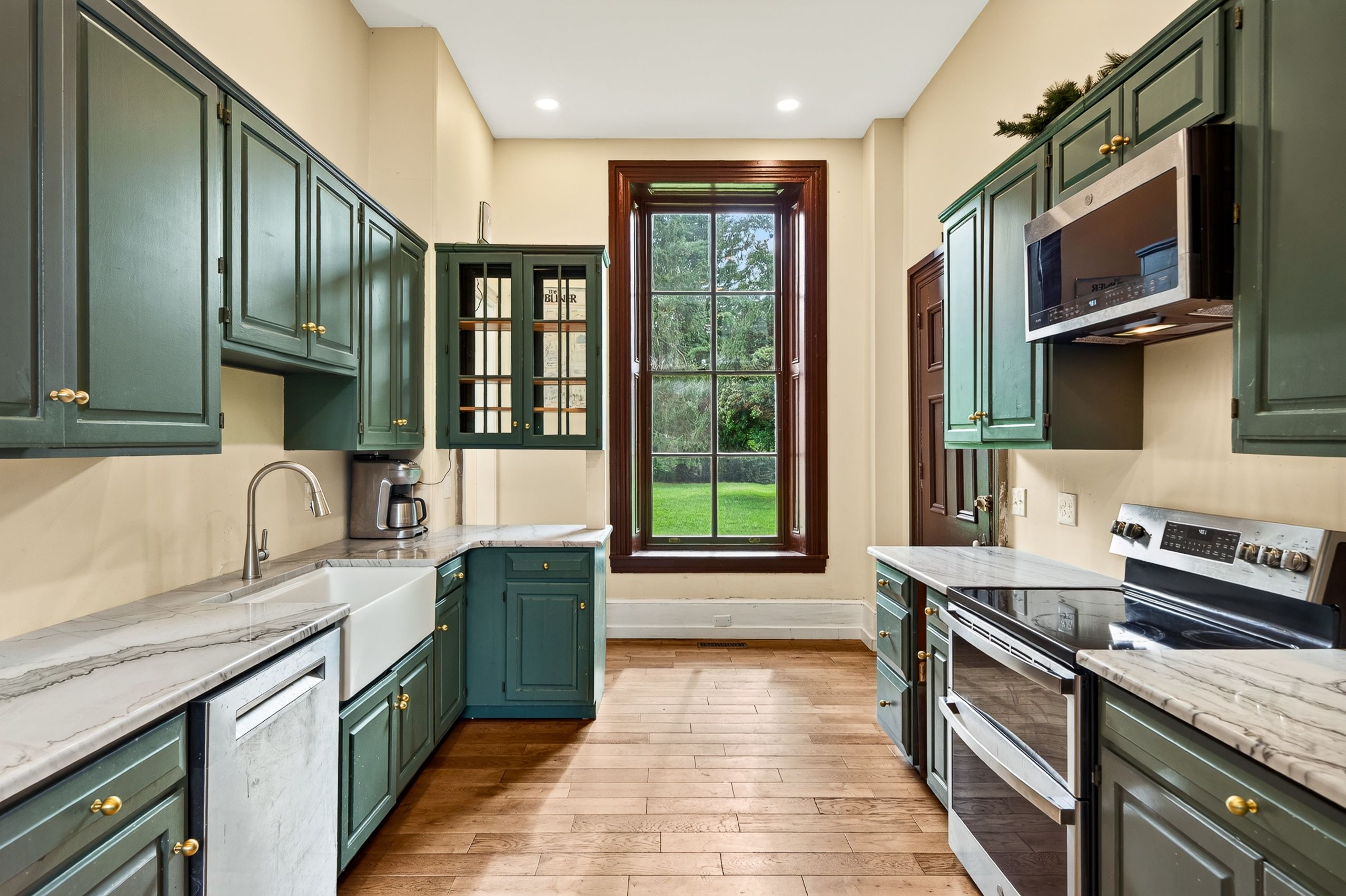
    The home has a new kitchen.Virtual Vista | Courtesy of Holly Gross Group

    The home was added to the National Register of Historic Places in 1971. It retains many elements of its early roots, such as hardwood flooring, milling, and molding details, while having undergone a number of updates by its current owners. Those include overhauling household systems and bathrooms, updating the roof, and adding a new kitchen, which has stainless steel appliances and Italian quartzite countertops.

    This suburban content is produced with support from the Leslie Miller and Richard Worley Foundation and The Lenfest Institute for Journalism. Editorial content is created independently of the project donors. Gifts to support The Inquirer’s high-impact journalism can be made at inquirer.com/donate. A list of Lenfest Institute donors can be found at lenfestinstitute.org/supporters.