More than 13,000 Philadelphia homeowners were receiving assistance on their property taxes from the city despite not being eligible, according to city officials who conducted a review of thousands of properties to identify people fraudulently receiving tax breaks.
Those homeowners — most of whom received the popular homestead exemption that can save owners an average of $1,400 a year — have been kicked off the programs, officials said Wednesday. And they will be charged back taxes, in some cases dating back multiple years, resulting in $33.5 million in additional revenue for the city and the Philadelphia School District.
That is welcome news for the cash-strapped public school system, which is facing a $300 million structural deficit and is the only district in Pennsylvania that cannot legally raise taxes on its own.
Instead, the district receives 56% of property tax revenue, with the remainder going into the city’s coffers. The current property tax rate is 1.3998% of assessed value, which has not changed for nearly a decade.
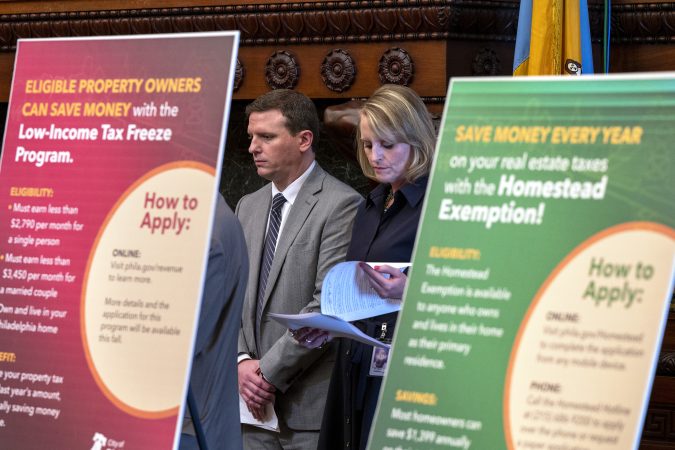
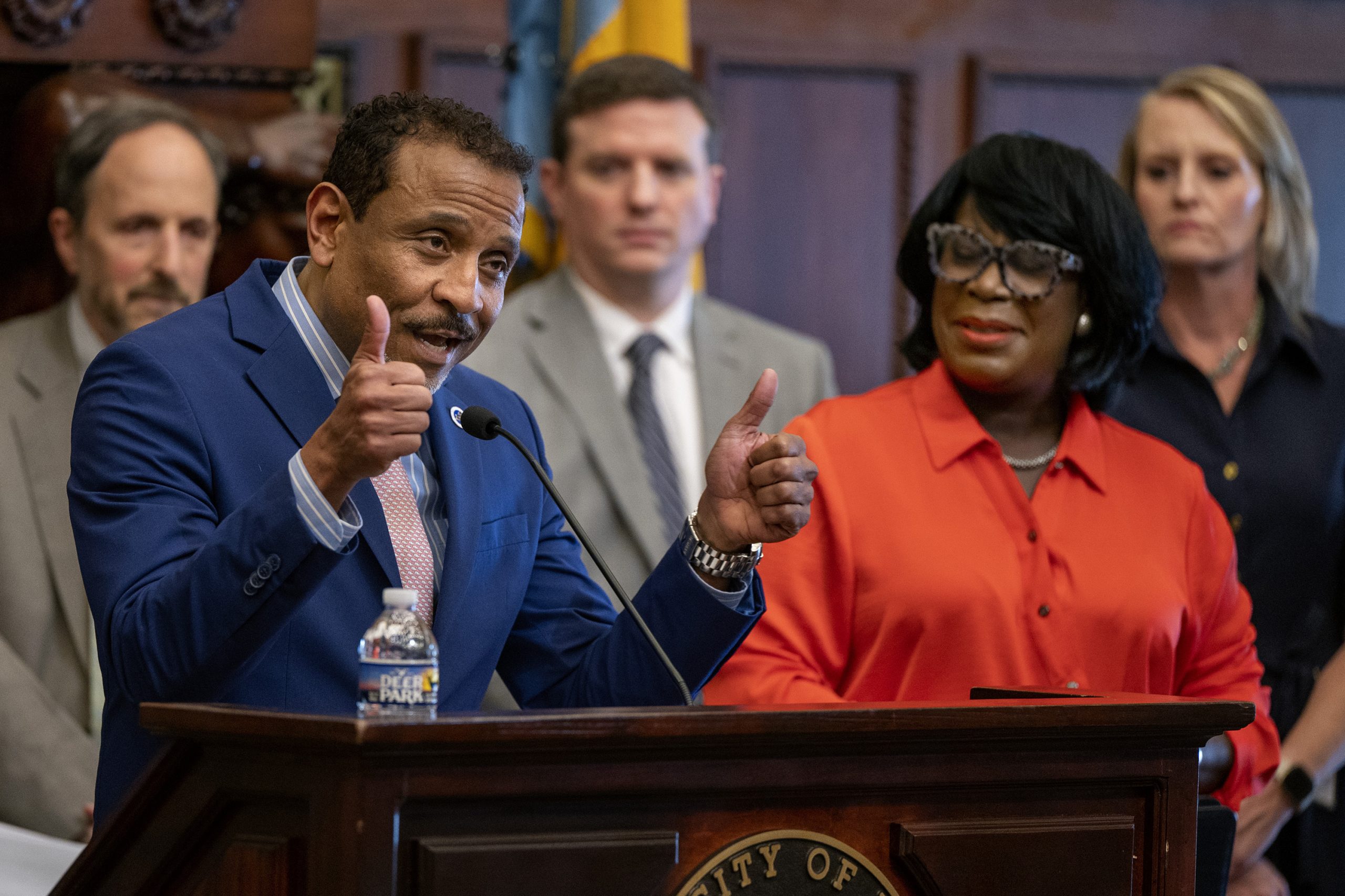
Philadelphia School Superintendent Tony Watlington joins Mayor Cherelle L. Parker and her finance team at City Hall on Monday Aug. 5, 2024, as they prepare to release the first citywide real estate reassessment in two years. Behind them, from left are: Finance Director Rob Dubow; James Aros, Jr., Chief Assessment Officer at the Office of Property Assessment; and Revenue Commissioner Kathleen McColgan.Tom Gralish / Staff Photographer
Philadelphia has a variety of property tax relief programs that are intended to help homeowners weather changes in valuations and avoid displacement. The most popular is the homestead exemption, which exempts the first $100,000 in home value from property taxes. Only homeowners who live in their house as their primary residence are eligible.
That means that, in some cases, homeowners are eligible to receive the exemption while they live in their homes, but no longer qualify if they move and rent out their space.
In 2024, Mayor Cherelle L. Parker’s administration launched a review to identify properties that might no longer meet the eligibility requirements. According to a news release, the Philadelphia Revenue Department reviewed about 22,000 tax accounts, or less than 10% of all the households enrolled in the homestead exemption.
Christian Crespo, a spokesperson for the department, said officials used a variety of data indicators to identify those properties that were up for review. For example, he said, some property owners were claiming homestead benefits at multiple properties.
As a result of the investigation, 13,355 homeowners were removed from a property tax assistance program. There are several other tax breaks for homeowners that are targeted toward low-income people and seniors, but most of those removed were improperly receiving the homestead exemption.
Homeowners were sent two notices and given 60 days to prove their eligibility before they were kicked off an assistance program. They may still appeal the decision.
“We want eligible homeowners to get the relief they deserve,” Revenue Commissioner Kathleen McColgan said in a statement. “These compliance projects help ensure that program participation is accurate, fair, and accessible to residents who truly qualify.”
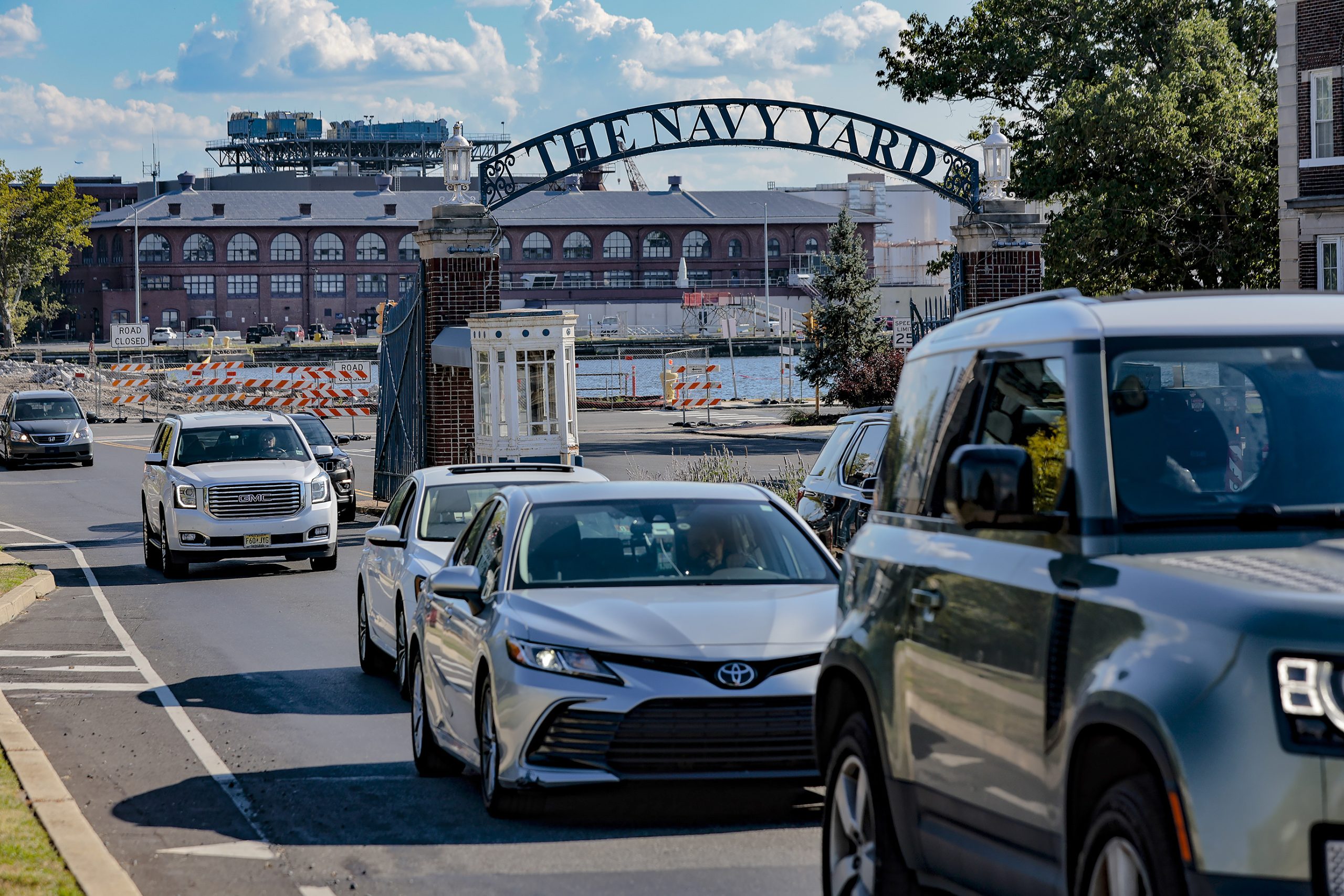
The Navy Yard is not your typical Philly neighborhood. But that’s partly why its first apartment renters say they like it.
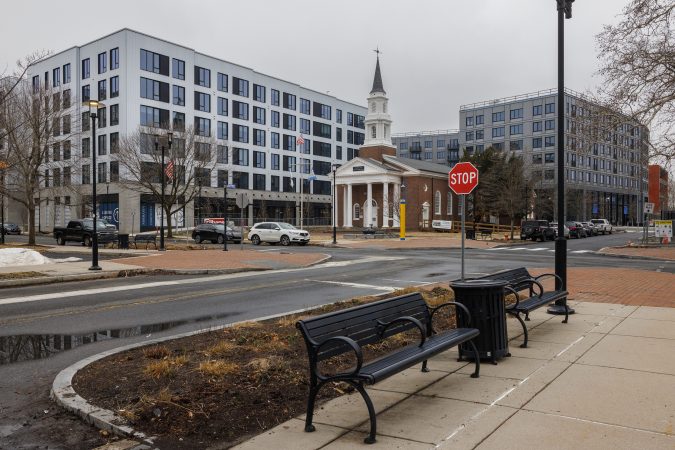
The decommissioned military base at the southernmost edge of the city is now mostly a hub for offices and laboratories and is home to more than 150 companies. The first homes for people opened there late last year.
Sure the neighboring buildings are the only ones that house residents and you have to drive to get groceries, but some of the first residents of the apartments say that’s fine.
I visited the property in early March when the first tenants were moving in. My colleague Erin McCarthy went back this month. More people live in the buildings now, but about 70% of the 614 units still await tenants.
Renter Integra Feliciano told me the area is “still up-and-coming in terms of having more restaurants and stuff” but called the Navy Yard “a little gem.”
She and another resident Erin and I talked to said they’re not really city people, which is why they like living at the Navy Yard. There’s a lot of open space, and free parking is plentiful.
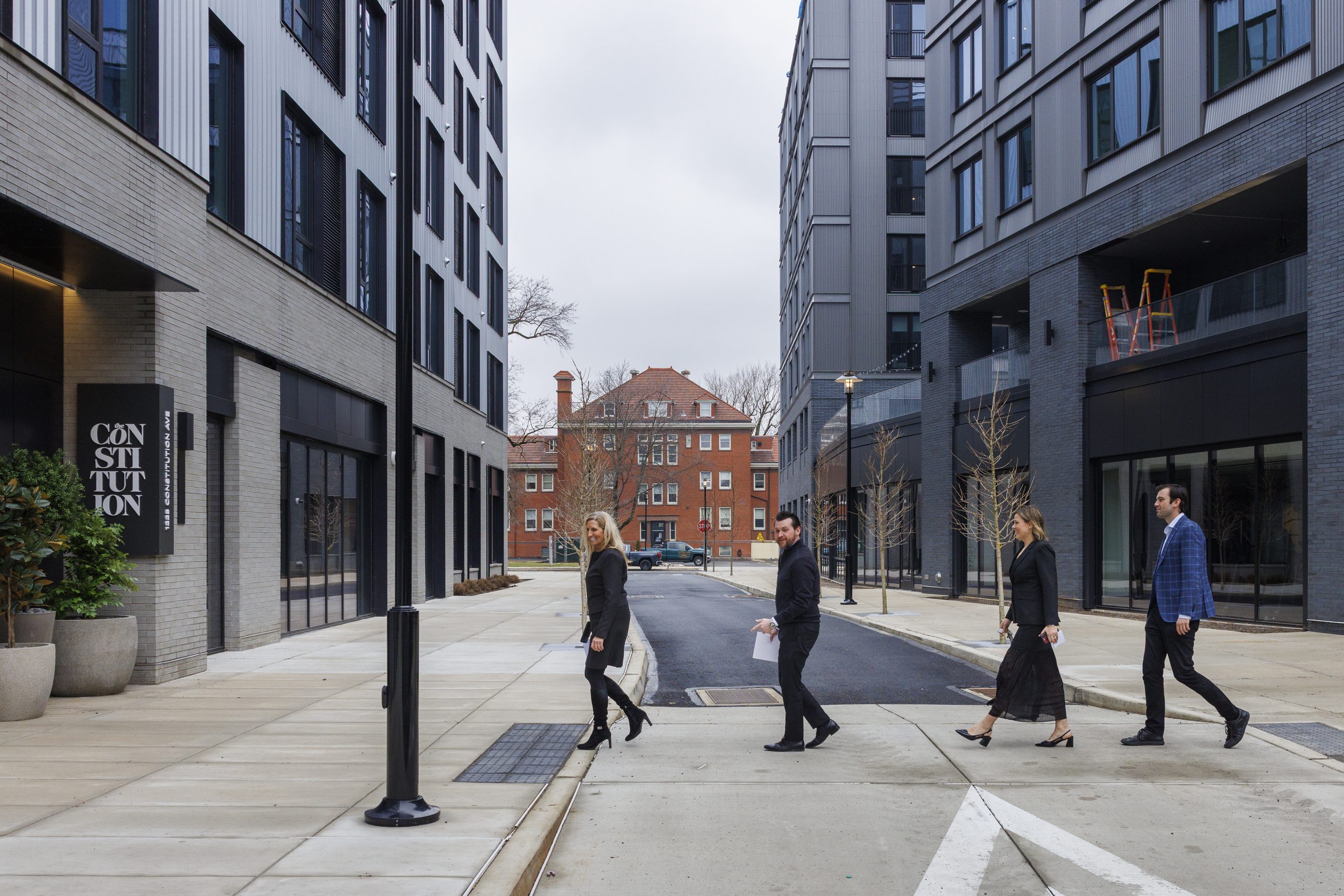
The national apartment brand AVE opened the Constitution building late last year and the Normandy building this spring. Normandy includes both unfurnished apartments and furnished units marketed to business travelers.
Navy Yard stakeholders eventually want to see thousands of apartments in the area.
Have you seen orange signs around your neighborhood that say “Their Profit. Your Loss!”?
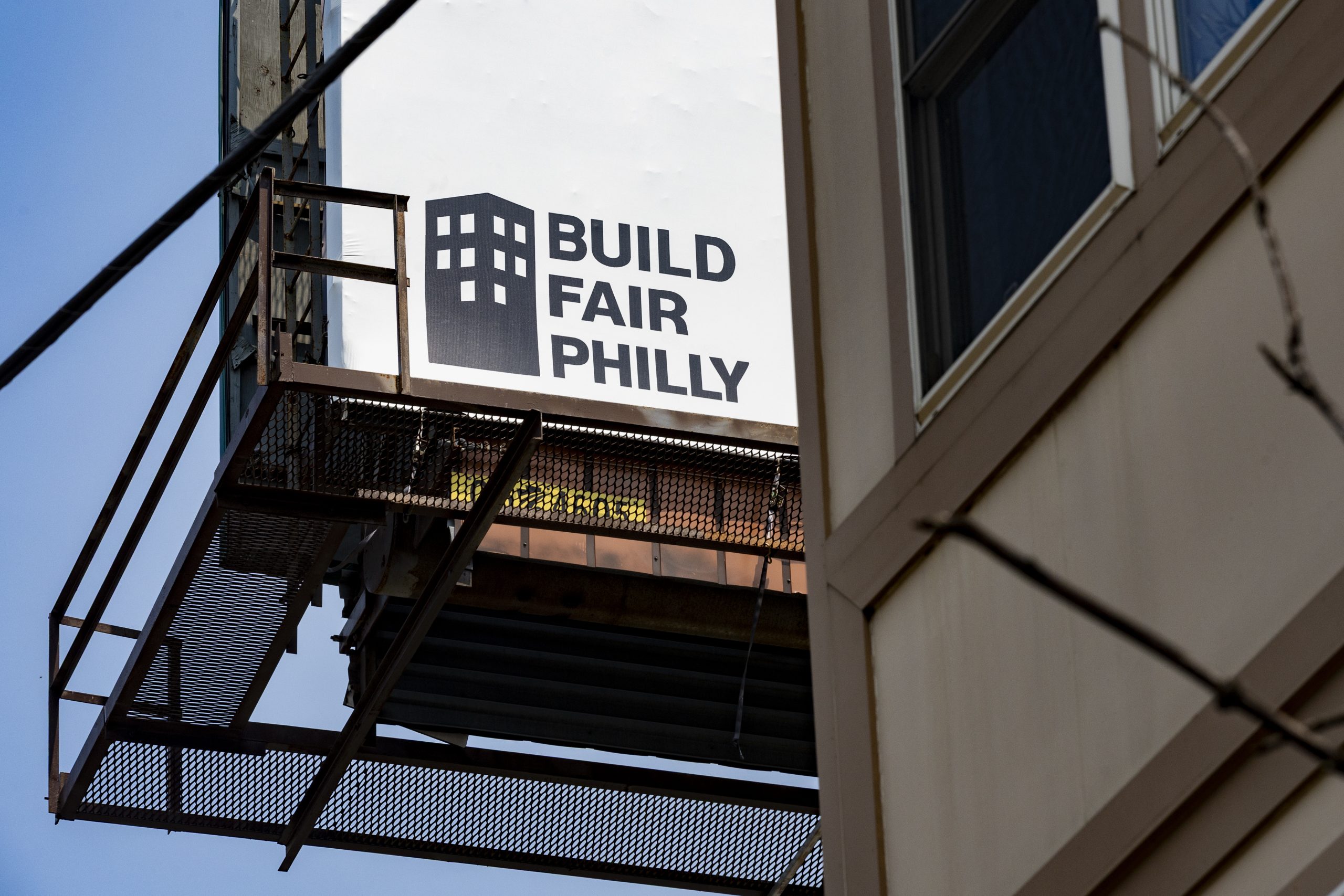
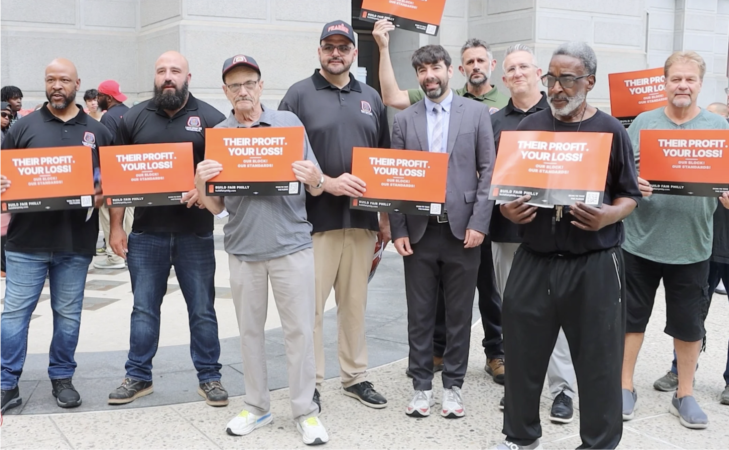
In recent months, “Build Fair Philly” signs have popped up on rowhouses and lawns across the city. The campaign calls out the practice of shoddy and harmful real estate development.
Peter Kim in Passyunk said that when he found a flyer on his door, he figured it was from “some NIMBY [not in my backyard] anti-housing group.”
But the organization behind the campaign is actually the Eastern Atlantic States Regional Council of Carpenters.
The union is generally pro-development since building means work for its members. But the Carpenters are encouraging Philly residents to join its push for more regulation in the construction industry.
Come for the cute dog; stay for the energy efficiency.
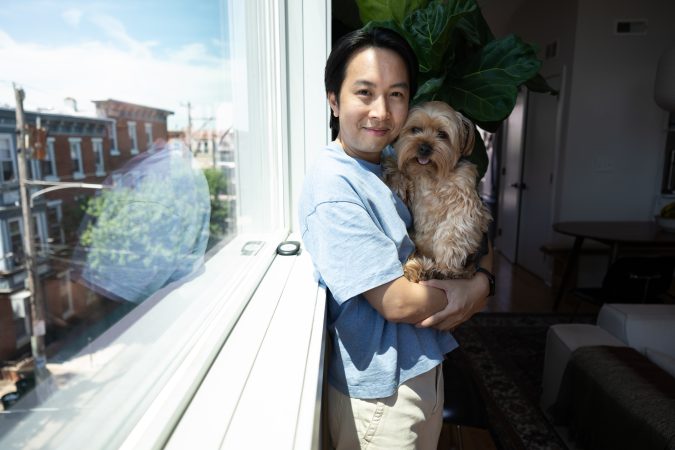
With utility prices as high as they are, I’m always interested to hear about how folks are keeping costs down. Chuong Nguyen says he pays almost nothing to heat his Brewerytown house and about $100 a month total for all his utilities.
It all comes down to Nguyen’s focus when he was house hunting. He chose his home because it was a rare find: a multiunit Zero Energy Ready house.
He doesn’t have to turn on the heat until the outside temperature dips well below freezing, he said, because his home is well insulated, and windows let in sunlight all year.
Nguyen’s passion for living with a low carbon footprint stems from his childhood in Vietnam and eight years living in France.
In Brewerytown, Nguyen lives with his Yorkie poodle, Milo, in the two-bedroom upper unit and rents the two-bedroom lower unit on Airbnb. He furnished the house with secondhand items, mostly from Facebook Marketplace.
When Chuong Nguyen saw the listing for his Brewerytown home, he knew without a doubt it was the one.
Unlike other emotional tales of fraught homebuying searches ending in showings that feel kismet, Nguyen‘s connection to this house was rooted in one clear reason: It had the rare distinction of being a Zero Energy Ready multifamily home in Philadelphia. For Nguyen, a devotee to living with a small environmental footprint, an energy-efficient home was a must.
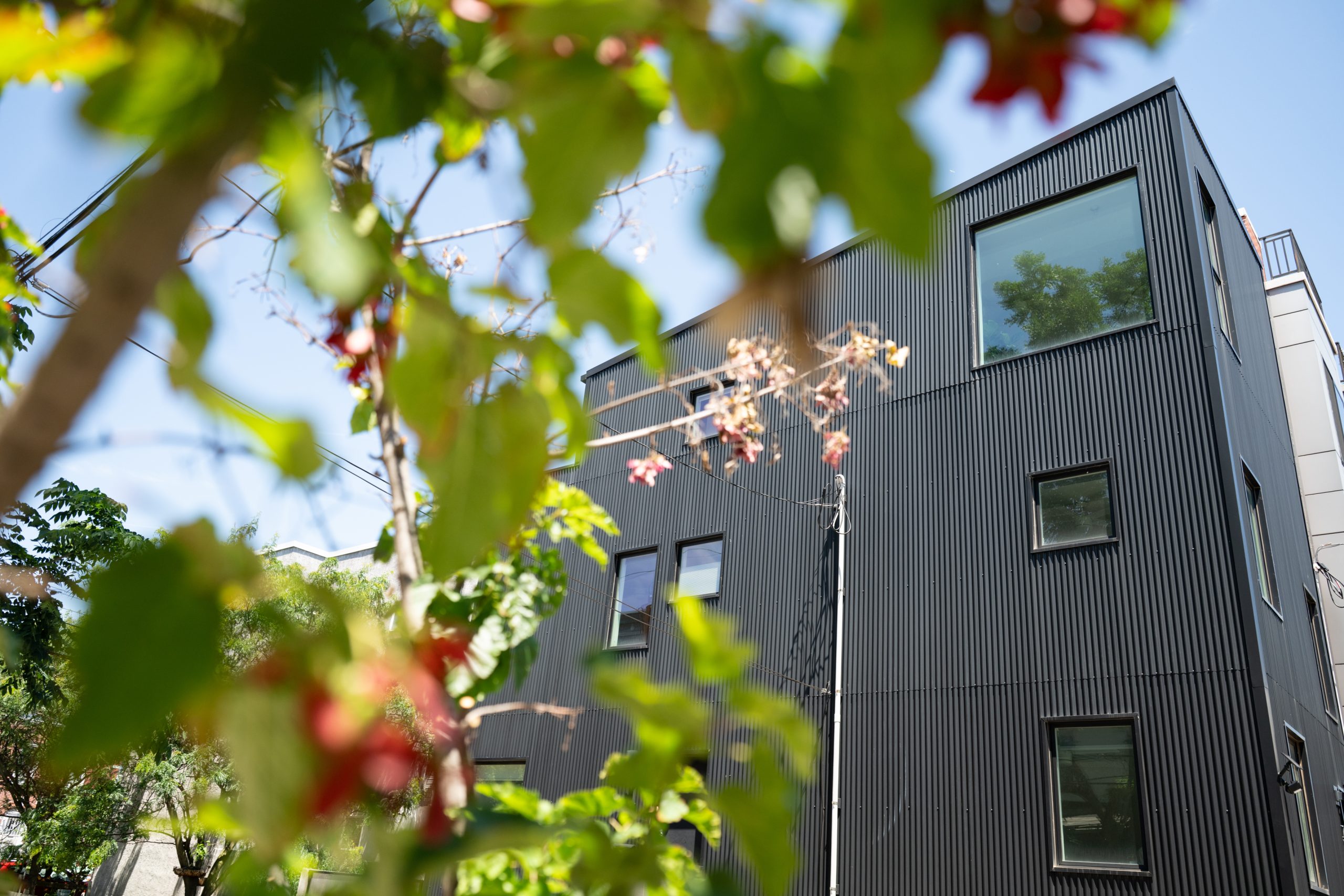
The aesthetic of the home, however, was a bonus. Designed by Bright Common, a Philadelphia studio devoted to creating low carbon emission buildings, the sleek two-unit building completed in 2018 is sheathed in black corrugated metal. That gives it a Scandinavian vibe that appealed to Nguyen, who works as a design strategist with Vanguard. Inside, the all-electric building is equally sleek and modern.
Nguyen’s home, completed in 2018, is designed to be energy efficient.Erin Blewett / For The Inquirer
Nguyen lives with his Yorkie-poo, Milo, in the top unit, a two-bedroom with massive windows that not only frame views of Philly’s skyline but also invite in enough sunlight to heat the home throughout the year. (More on that later.)
He rents the bottom two-bedroom unit on Airbnb as The Dubbel, a pun coined by Bright Common that references both the building’s Brewerytown location and its two-unit configuration.
Nguyen, 36, has honed his low carbon footprint philosophy since childhood. Growing up with two parents and two siblings in a one-bedroom house in Ho Chi Minh City, Vietnam, he learned that life could happen happily in small spaces. An eight-year stint in France for university and the beginning of his career backed that up and also introduced Nguyen to thinking about his carbon footprint.
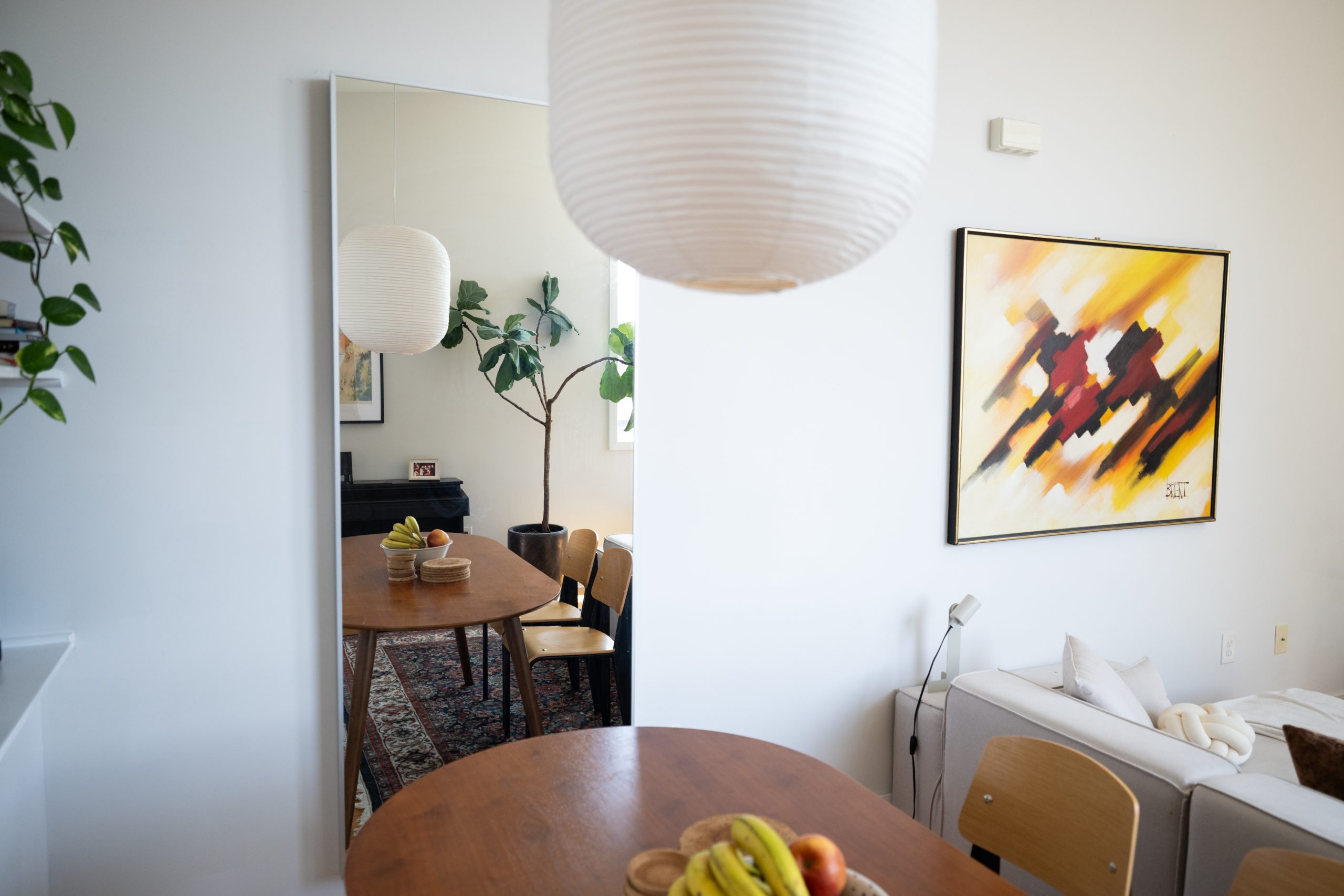
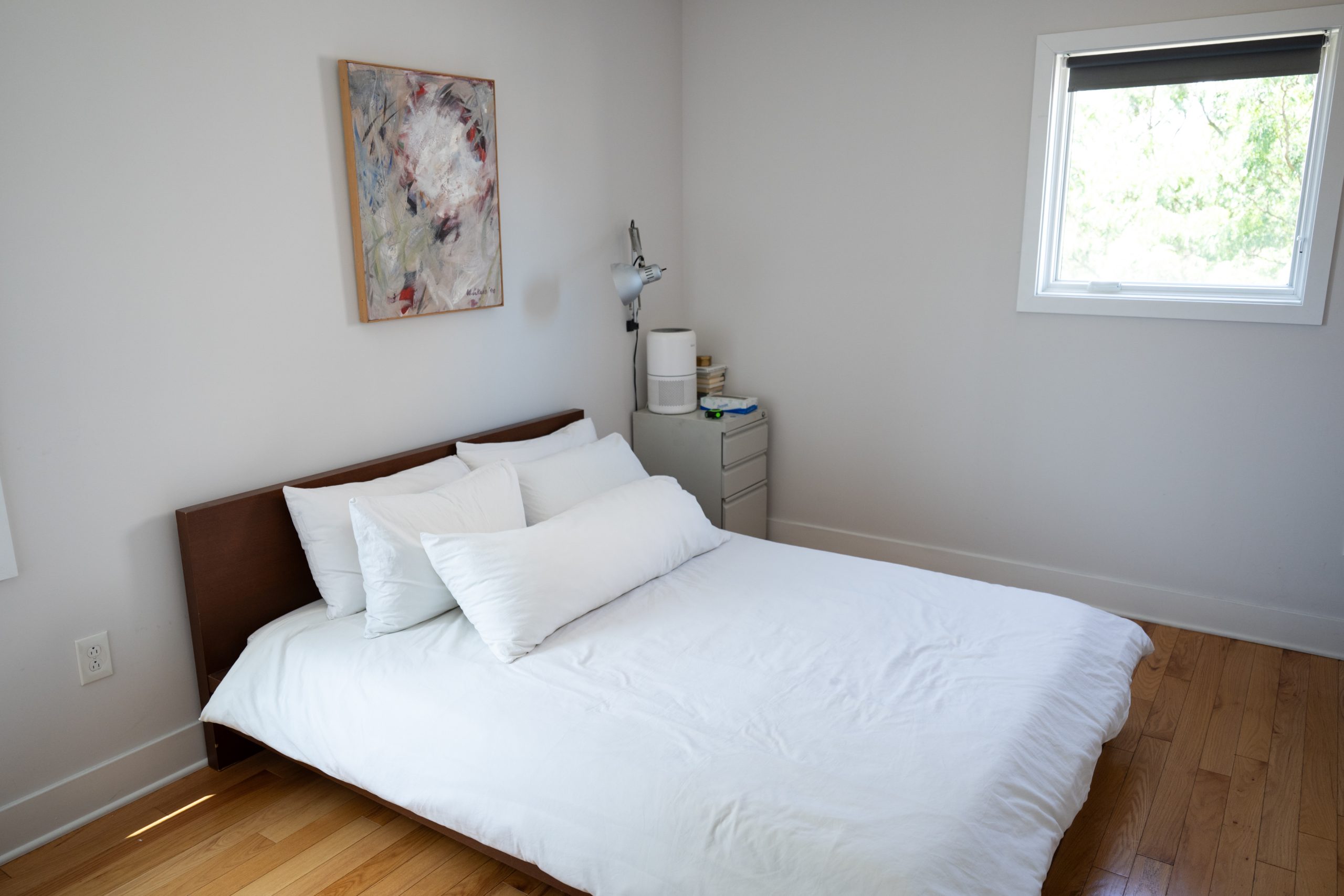
The dining area gets a spacious feel thanks in part to a tall mirror against the wall.Erin Blewett / For The InquirerThe primary bedroom has a simple design. Erin Blewett / For The Inquirer
“Living in France for so long, they really have ways to live small and be conscious about energy, be conscious about the environment,” he said. “Living small provides a coziness. It’s kind of a mindset I carry with me all along the way.”
Nguyen landed in the Philadelphia area after a one-year layover in Houston, which he hated because of its urban sprawl and oversized McMansions. After six years living with a roommate in South Philly as he saved for a home of his own, he purchased his Brewerytown house in October 2022 for $600,000.
Energy-efficient homes like Nguyen’s often cost more up front, but there’s relief down the line in reduced utility costs. Nguyen said he spends about $100 a month on all his utilities throughout the year. The cost to heat the home is almost nil, he said, as the windows provide warming sunlight year-round, and the home’s insulation keeps it temperate.
“Unless it’s under 22 degrees, I don’t even need to turn on the heat,” he said. The house doesn’t have solar power, but it was built for it, with all the necessary infrastructure and an ideal roof pitch for solar panels.
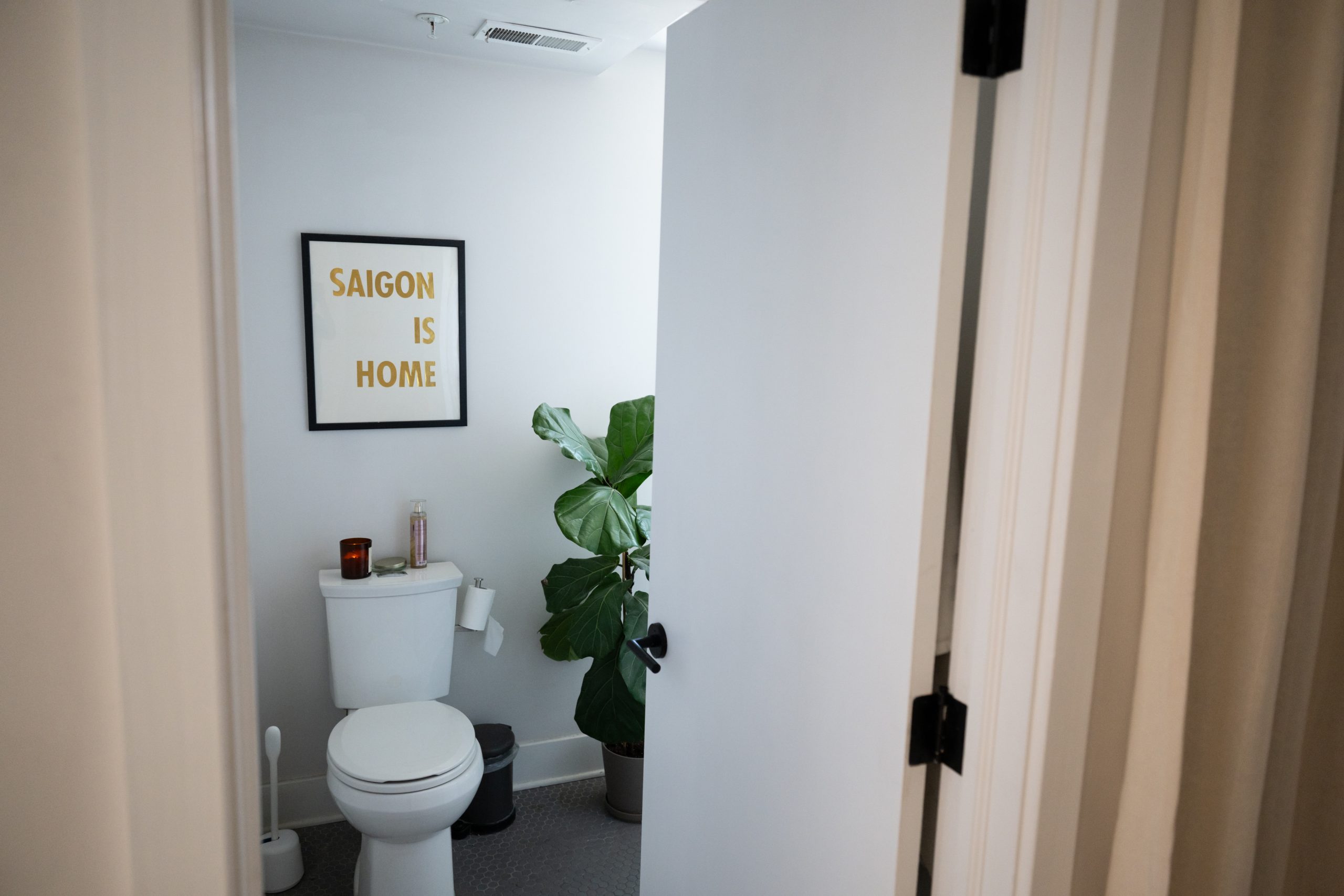
Magnets on the refrigerator include a reminder of Vietnam, where Nguyen grew up.Erin Blewett / For The InquirerThe bathroom continues a theme of clean lines, with another nod to Nguyen’s childhood home.Erin Blewett / For The Inquirer
Nguyen did have an unexpected cost right after buying the house when he learned he needed to replace the energy recovery ventilator (ERV) system to the tune of $6,000. It exchanges stale indoor air with fresh outdoor air while transferring heat and moisture between the air streams. Its functioning is essential to the home’s energy-efficient design.
Nguyen said his home inspector missed that it wasn’t working properly before the sale closed because he didn’t recognize the system — one downside to owning a first-of-its-kind, energy-efficient building.
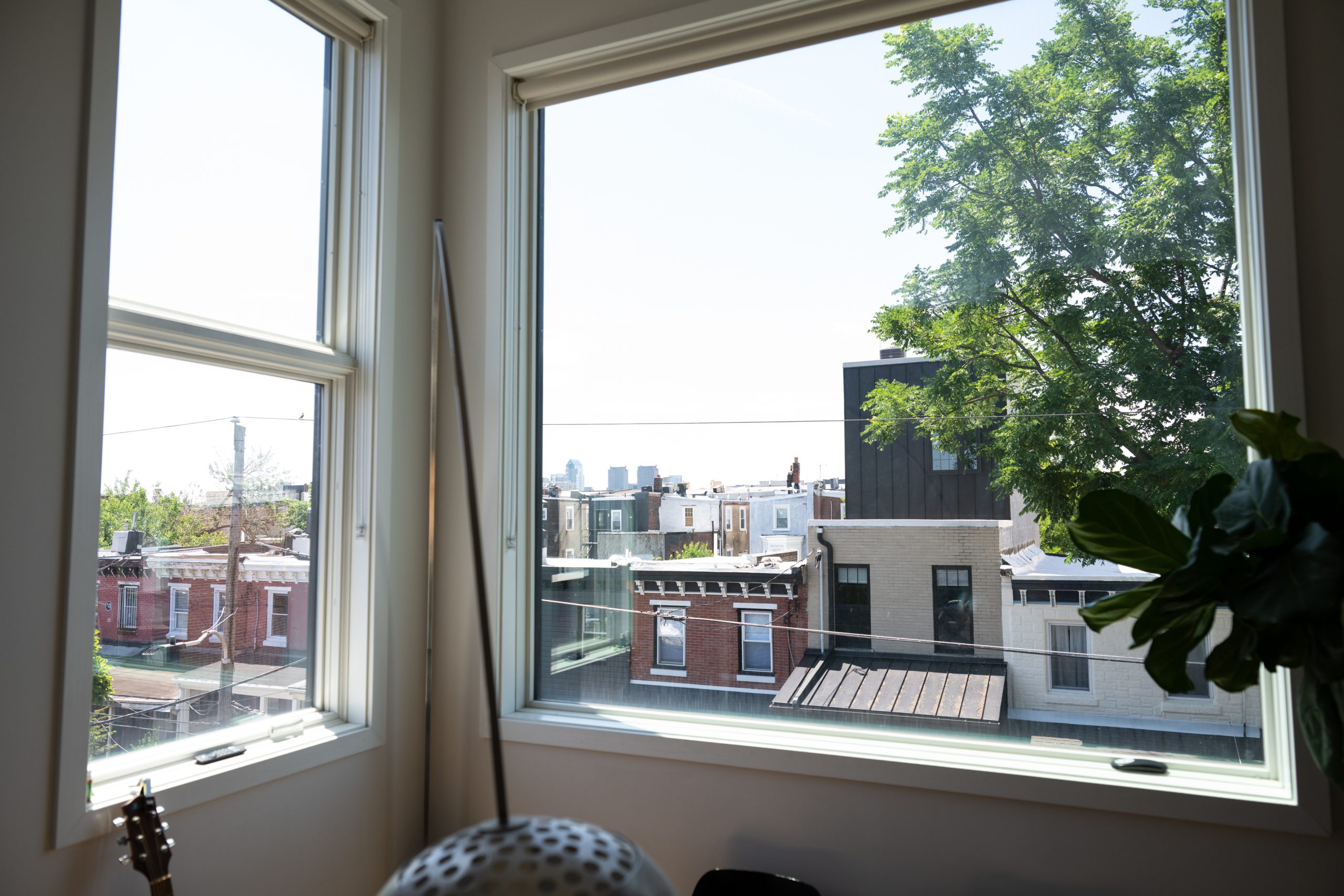
Large windows in the living area provide a view of the neighborhood.Erin Blewett / For The Inquirer
But still, the expenditures were worth it to Nguyen because they speak to his beliefs.
“It was a lot of investment, but I feel like it’s worth that for my lifestyle, for what I want to do and the ethics I believe in,” he said.
Adding to the home’s eco-friendliness, Nguyen furnished it in secondhand finds, mainly from Facebook Marketplace.
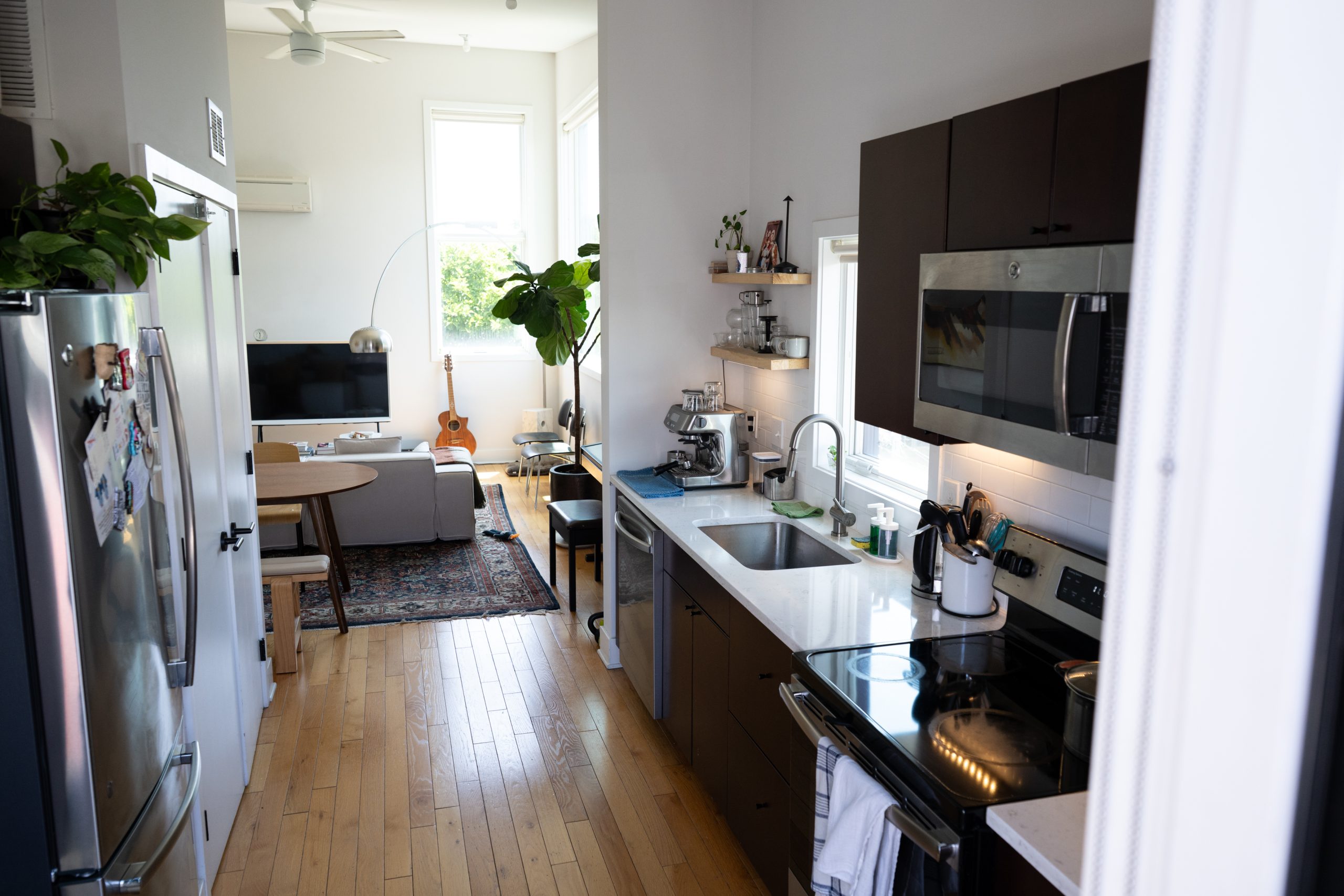
The kitchen leads into the living area.Erin Blewett / For The InquirerThe view from Nguyen’s balcony.Erin Blewett / For The Inquirer
He made a day trip to Princeton to pick up the Flos Arco lamp that lights his living room. He had to carry it up the long flight of stairs into his apartment alone, one step at a time, owing to its heavy marble base. Nguyen also scored a Hay patio set — usually over $1,000 from Design Within Reach — from a Facebook Marketplace seller in Mount Airy for $200.
Another huge perk for him is the home’s location just a 15-minute walk from the Art Museum and Fairmount Park. He said the neighborhood knows him and Milo for the orange booties Milo wears throughout the year and the sound they make trotting down the street.
Nguyen’s dog Milo enjoys the Brewerytown area, and is well known by his neighbors.Erin Blewett / For The Inquirer
He loves the neighborhood and the community on his block, recalling the long table his neighbor sets up on Halloween to paint banners and how the lot that backs up to his, unbuilt on and dotted with trees, was saved by his neighbors from future development because it provides a green reprieve for the area.
Nguyen added of his community, “It’s really lovely to have that.”
Is your house a Haven? Nominate your home by email (and send some digital photographs) at properties@inquirer.com.
A West Philadelphia renter has filed a class-action lawsuit against his property manager and a national company that sells property management software, alleging that his landlord used price-setting algorithms that Philadelphia has banned.
Since early 2025, Philadelphia has prohibited rental home providers from coordinating to set prices and using software that facilitates the practice. Officials argued that price coordination, especially among large corporate landlords, can lead to artificially inflated rents.
This month, renter Yiyao Liu sued Willow Bridge Property Co., which manages his apartment building and is one of the country’s largest residential property managers, and RealPage, an industry leader in software for landlords. Liu alleges that Willow Bridge used RealPageservices to getrent recommendations based on information from competing landlords that is not available to the public, in violation of a Philadelphia ordinance.
The lawsuit, filed in Philadelphia’s Court of Common Pleas, is the first known case brought under the city’s ban, according to the office of City Councilmember Nicolas O’Rourke, who introduced legislation in 2024.
At the time, O’Rourke said his bill was a preemptive move based on corporate landlords’ use nationwide of software to coordinate rental prices. City Council unanimously passed the legislation in October 2024, and the ordinance went into effect in February 2025.
Liu, who lives in the Vue32 apartment building, asks in his lawsuit to represent as a class other tenants of Philadelphia rental units managed by Willow Bridge.
A representative from RealPage said Monday that the company does not comment on active litigation, and Willow Bridge’s general counsel did not immediately respond to a request for comment.
Last month, Washington, D.C.’s Office of the Attorney General announced that it had reached settlements with two landlords it accused of conspiring to inflate rents using RealPage software. The landlords agreed to pay a total of $1.4 million. These were the latest settlements to come from the district’s 2023 lawsuit against RealPage and 14 of the district’s largest residential landlords.
The association said algorithm-based technologies improve operational efficiency, which “directly benefit[s] residents and rental communities.” And it argued that algorithmic software “encourages pricing competition within the marketplace through greater transparency.”
As mason William Clark was driving around Wyncote in 1988, he spotted a six-bedroom Queen Anne Victorian house that had great potential but needed a lot of work.
He spent much of the next 30-plus years working on the 19th-century house, which is in the Wyncote Historic District, until he died in 2024.
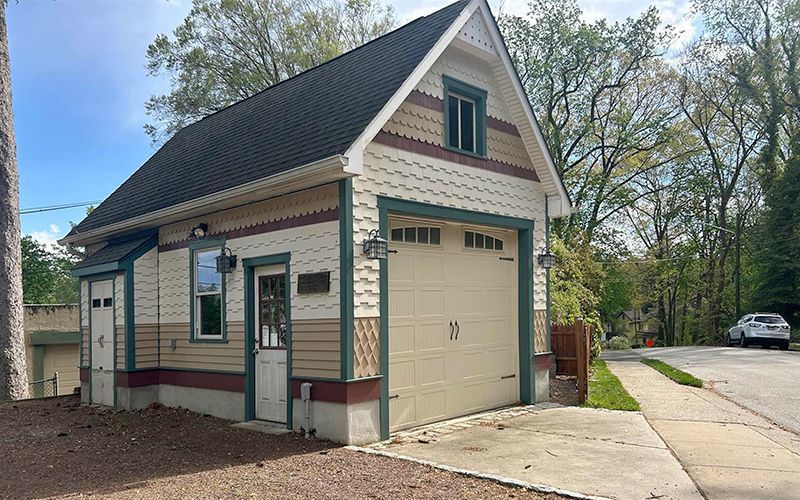
Clark redid the kitchen, put in a four-car driveway, and added a garage in 2017 to match the style of the original house.
KitchenBright House Photo
“It was a labor of love for him,” said his wife, Patti, a programmer for an investment planning firm. But at 3,679 square feet, “it’s a great big house for one person.”
So with the couple’s three children all moved out and married, she is moving to a much smaller home in Blue Bell.
GarageBright House Photo
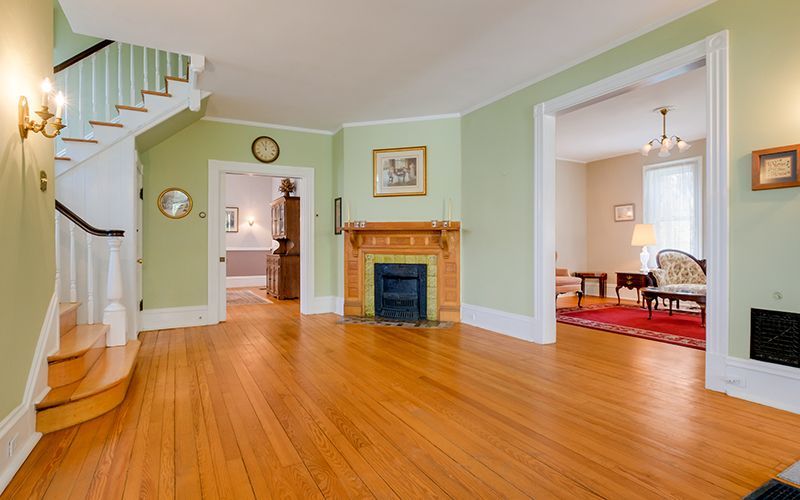
The Wyncote home features original hardwood floors, stained glass windows, pocket doors, two ornamental fireplaces, and front and rear staircases.
It has a side yard and a wraparound porch. The basement contains William’s workroom.
Living roomBright House Photo
The first floor has the kitchen with a built-in range and microwave, self-cleaning oven, granite countertops, and stainless-steel appliances.
The second floor has four bedrooms, including the primary. The third floor has two bedrooms and an office.
Dining roomBright House Photo
The home is close to SEPTA’s Jenkintown-Wyncote Regional Rail station. Thomas Williams Park and Robinson Park are also nearby.
The house is in the Cheltenham School District.
It is listed by Pat and Mike Jula of Long & Foster Real Estate for $675,000.
A year ago, Priya Brown spent many weekday afternoons sitting in traffic, inching home to Northern Liberties from her job in the Navy Yard.
Since moving into the new apartments at South Philly’s converted military base in January, the 27-year-old said her daily routine has gotten much more relaxing — with far fewer brake lights. An assistant buyer at Anthropologie, Brown walks 10 minutes to her office at Urban Outfitters’ Navy Yard headquarters.
“My life is so much easier,” Brown said last week as she walked her tiny basset hound, Momo, around her building, AVE Constitution. The air was quiet, save for an occasional bird chirping and the steady hum of planes making their descent into Philadelphia International Airport.
“I’m not a city person,” added Brown, an Annapolis native who moved to Philly for work. In Northern Liberties, “I missed grass a lot.”
The Navy Yard has open space and paths for walking and running, as seen in this 2022 file photo.Yong Kim / Staff Photographer
Brown pays about $2,400 a month for her one-bedroom, she said, and takes advantage of the free and abundant street parking, a rarity elsewhere in the city.
It also includes more than 20 acres of parks and miles of walking paths, some along the Delaware River, as well as a restaurant and hotel.
Now, it is also home to a small but growing number of residents.
More than a third of the 347 units in Constitution are leased, according to Sam Korman, AVE’s director of operations. Next door at Normandy, which opened this spring, more than 20% of the 267 units are leased, according to Korman. Normandy includes unfurnished apartments for tenants, as well as furnished ones that are marketed to business travelers. Lease-ups for buildings of this size typically take about 18 months, a spokesperson for the company said.
“We are extremely pleased with the reception to AVE Navy Yard through our first few months of operations,” Korman said last month in a statement. “This past month has been our most successful for both furnished and unfurnished leasing, a positive trend that we expect to continue throughout the summer,” a busy season for rentals.
Navy Yard stakeholders eventually want the property to have 4,000 apartments, along with more retail space and a second hotel, according to its 2022 redevelopment plan.
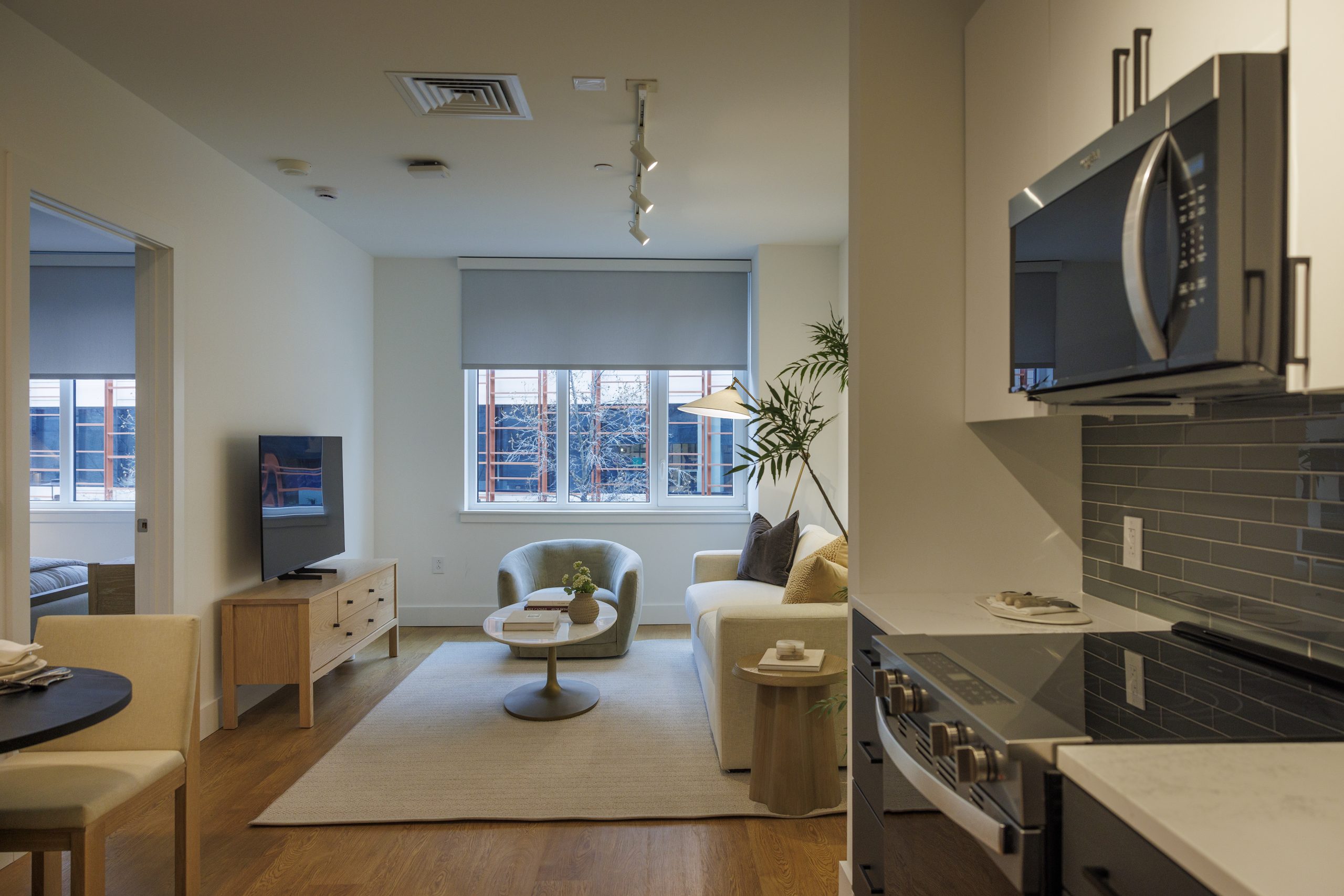
A one-bedroom apartment at AVE Normandy as seen in March.Alejandro A. Alvarez / Staff Photographer
Some Navy Yard residents love their ‘secluded spot’
As cars drove by from the Navy Yard office complexes, headed toward I-76 and I-95 on a recent afternoon, only a handful of people were out and about near the apartment buildings.
Several food couriers dropped off orders in the Normandy lobby. Nearby, in front of floor-to-ceiling windows, someone walked on the treadmill in an otherwise-empty gym. On an outdoor deck above, people could be heard splashing in the pool.
Otherwise, passersby were few.
Brown said she enjoys the suburban-esque solitude, though she’s glad more tenants are moving in. This winter, it felt like only a handful of other people lived in the building, she said, but now her floor seems like it’s almost full, making it “less spooky.”
A communal space at AVE Normandy in March.Alejandro A. Alvarez / Staff Photographer
Across the street at Normandy, resident Integra Feliciano has picked up a similar vibe.
“I have the sense that I’m definitely one of the earlier tenants,” said the 29-year-old, who moved in April and was drawn to the area’s tranquility after living near Passyunk.
Feliciano commutes to her job at a life sciences company in West Philly. She looked at apartments in Center City but couldn’t find anything as quiet and luxurious — without “ridiculously expensive” parking.
At her last apartment, she said, she paid more than $300 a month for parking, a rate that was set to hit $500 around the time she moved. Like Brown, she now parks on the street for free.
The Navy Yard is “a secluded spot, a little gem,” said Feliciano, who pays $2,510 for her one-bedroom. “I like being in proximity to the city, but I don’t like being right in it.”
The Navy Yard itself is “still up-and-coming in terms of having more restaurants and stuff,” Feliciano said, but there’s plenty to do.
People leave the Navy Yard at rush hour in August 2022.Steven M. Falk / Staff Photographer
In the spring, she said, she and her boyfriend bought last-minute tickets to a Sixers playoff game and walked over to Xfinity Mobile Arena. While out for a run one day, she discovered the Southeast Asian Market in FDR Park.
She swims in her building’s pool whenever she can, she said, and often invites family and friends over. And she said her guests love that they don’t have to “circle the block for an hour” to find a parking spot.
“I had a friend come over, and she just parked right in front,” Feliciano said. “She said, ‘Oh, that’s it?’”
Why the first resident was drawn to AVE Navy Yard
Gokul Krishnan is glad more people are discovering the Navy Yard apartments. The 51-year-old, who works as the chief sourcing and global trade compliance officer for URBN brands, was the first person to sign a lease and move into Constitution last November.
“It feels like home,” said Krishnan, who moved to Philly from the San Francisco area. “It’s so calm.”
AVE Navy Yard executives walk between the Constitution and Normandy apartment buildings in March.Alejandro A. Alvarez / Staff Photographer
He enjoys taking walks around the Navy Yard, using the gym, and spending time in the building’s lounge and outdoor courtyard. The AVE staff is kind and communicative, he said, and he, too, enjoys a 10-minute walking commute to his office at the Urban Outfitters headquarters.
Krishnan signed an 18-month lease, he said, and pays about $3,000 a month for his one-bedroom, plus parking in the complex’s covered garage. He may upgrade to a larger unit next year, he said. His wife plans to move from California once their son graduates high school, and she’s bringing the couple’s 6-year-old goldendoodle, Simba.
Editor’s note: This story has been updated with additional information about leasing plans.
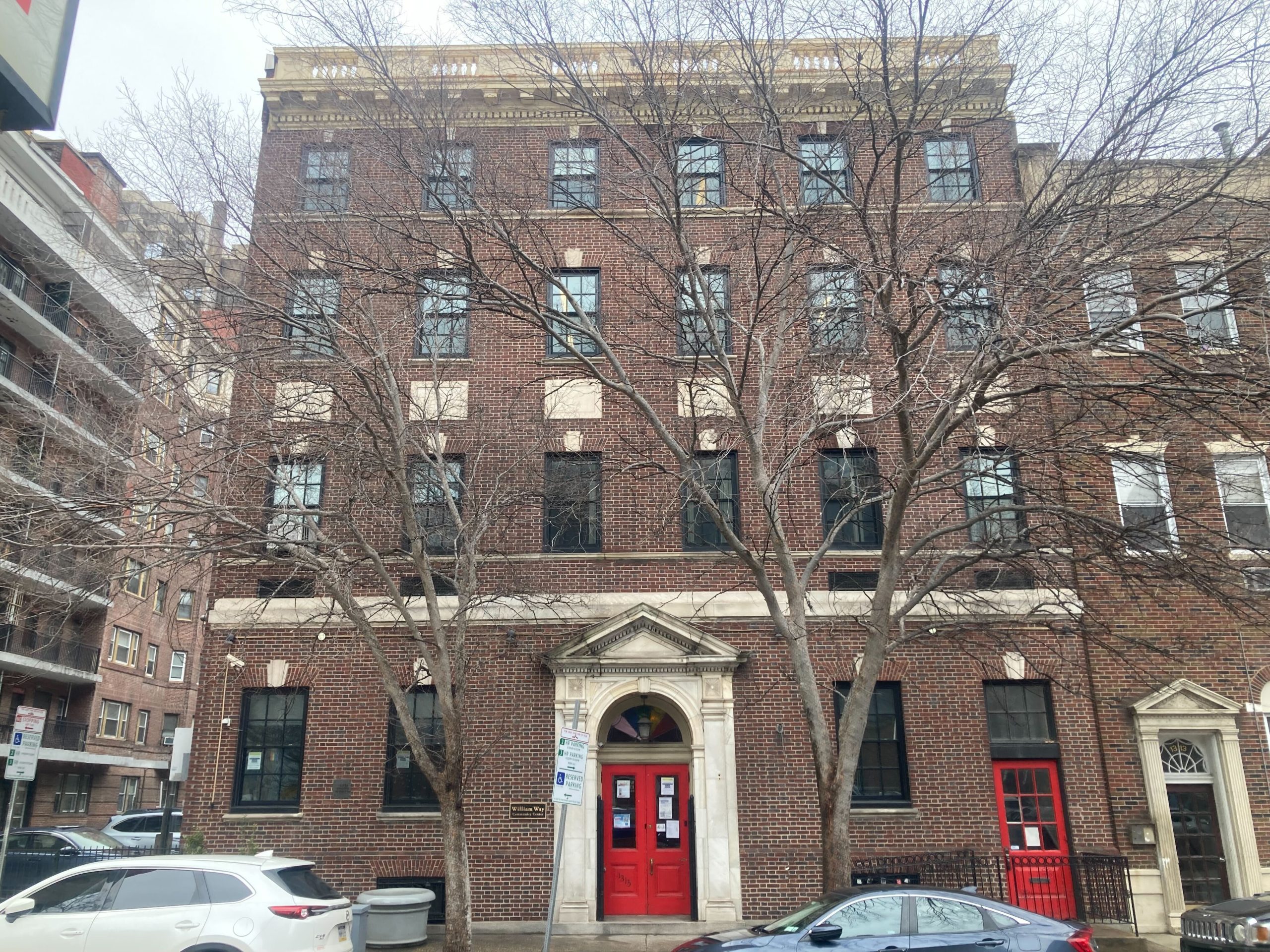
The first time people openly referred to the pocket of Center City between Jefferson University and Broad Street as the “Gayborhood” was 1995. Within a year, the William Way LGBT CommunityCenter made it official by purchasing a stately, Georgian-style clubhouse at Juniper and Spruce. The building has been a refuge for Philadelphia’s LGBTQ+ community ever since.
Sadly, that groundbreaking haven is now closed. It was shuttered in December to address maintenance issues, including an outbreak of black mold. At the time, the board said it was gearing up for a major renovation and would temporarily relocate its core services to St. Luke’s church on 13th Street.
Just three months later,William Way’s boardabruptly changed course and revealed the center would be demolished to build subsidized housing aimed at LGBTQ+ seniors.
The announcement came not from William Way’s board, but from Mark Segal, a longtime activist who founded the Philadelphia Gay News and oversees a nonprofit that has built affordable housing, the dmhFUND. The timing was noteworthy: The plan was made public a few days after a Common Pleas Court judge overturned the neighborhood’s historic district protections.
Segal’s announcement stunned William Way regulars, including many former board members. Sure, COVID-19 had scrambled the organization’s finances, as it did for many Philadelphia nonprofits. Revenue and donor gifts fell precipitously. The center laid off nearly a third of its staff in 2024, and its longtime director, Chris Bartlett, retired soon after.
The building was known to be in poor condition. But total demolition? Nothing suggested that the building was unsalvageable, including a major facilities assessment by Metcalfe Architecture& Design in late 2024.
While there is no doubt that the building requires extensive renovations, demolition is the wrong solution. It would rob all of Philadelphia — not just its LGBTQ+ community — of a major cultural touchstone.
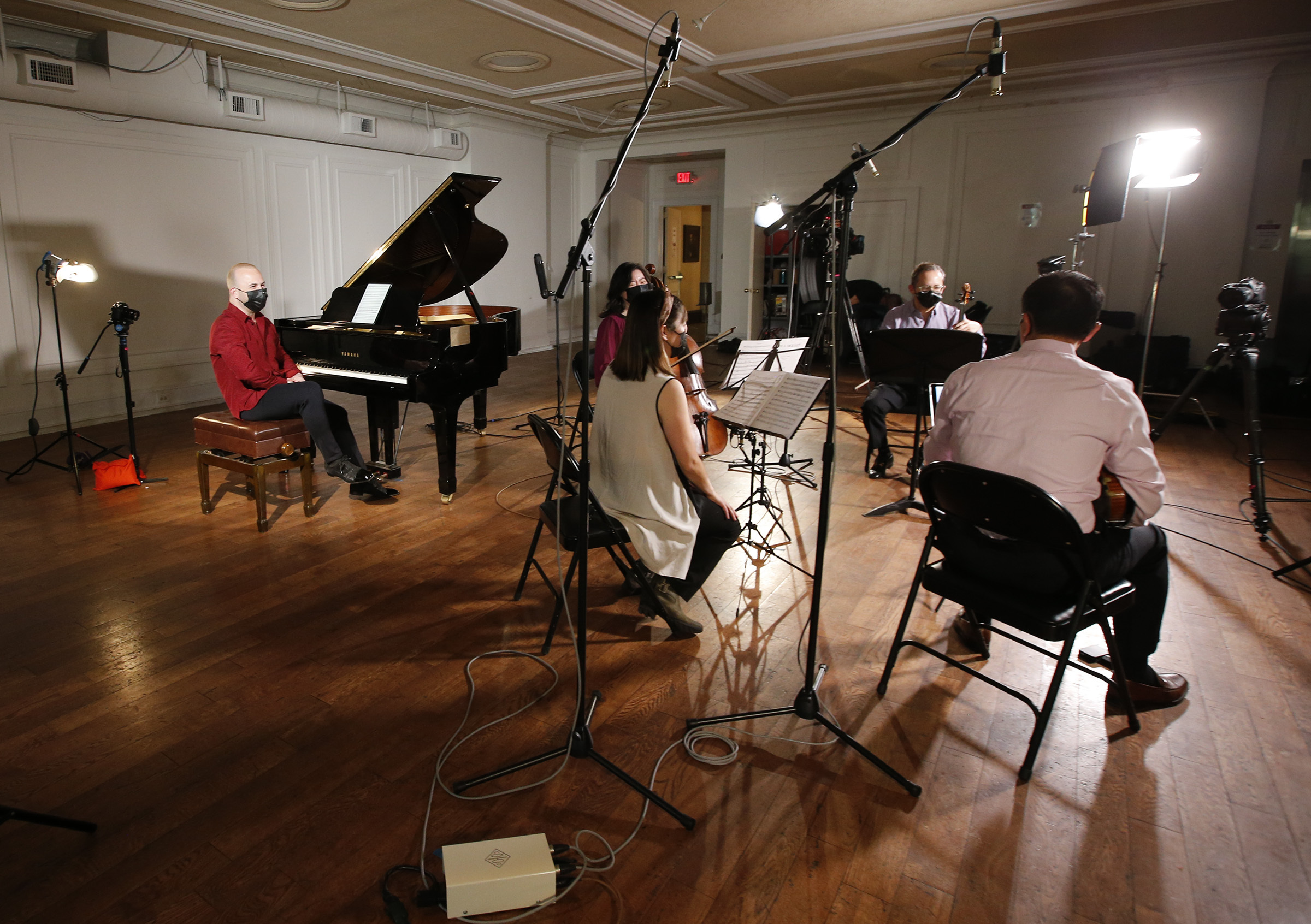
Philadelphia Orchestra music director Yannick Nézet-Séguin filmed a series called “Our City, Your Orchestra” in the William Way center ballroom in 2021, along with violist Pierre Tourville and other musicians.YONG KIM / Staff Photographer
A civil rights landmark
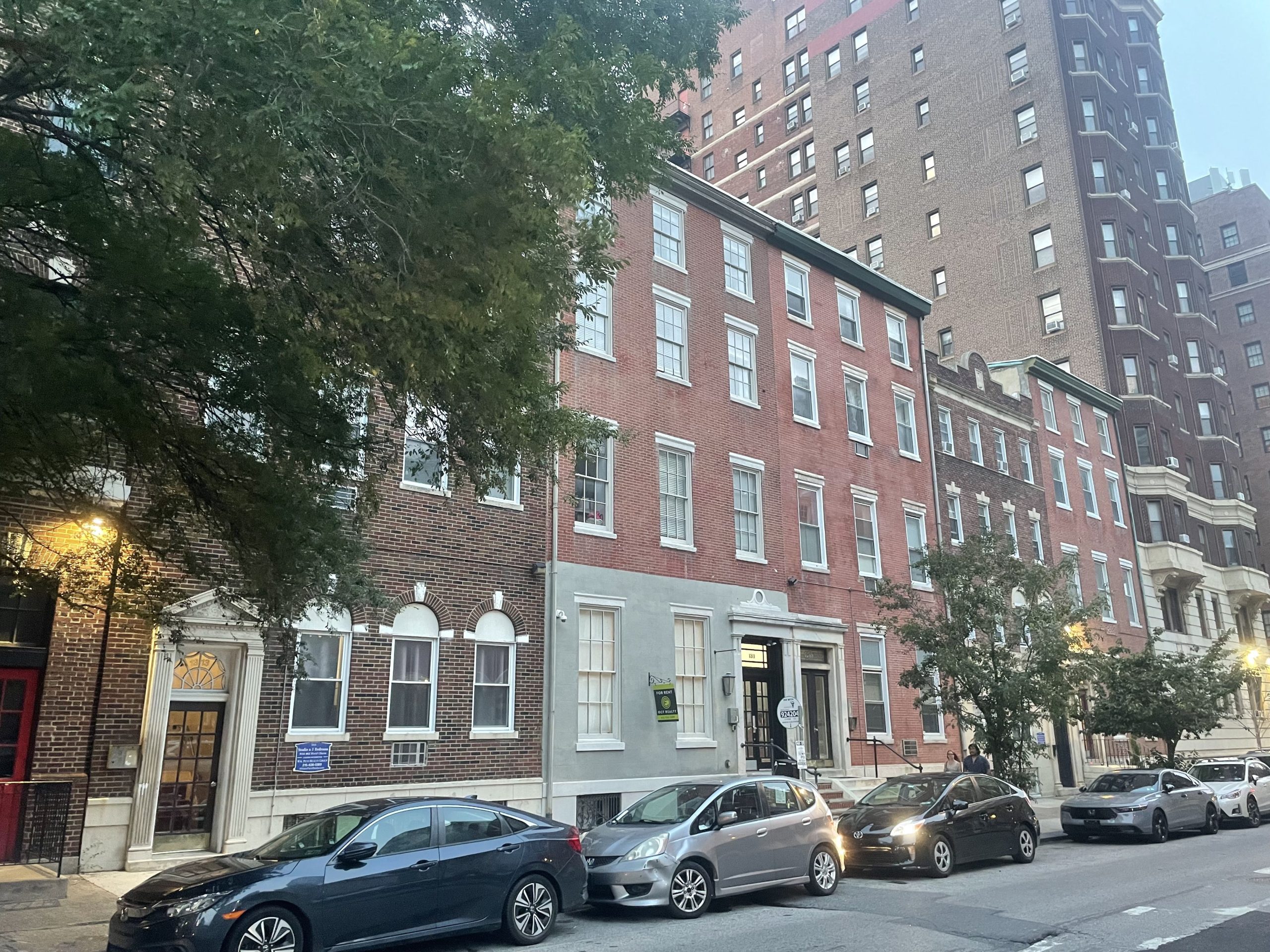
Although the William Way center has called 1315 Spruce St. home for only three decades, its presence has transformed the 19th-century building — originally a private club for engineers — into a civil rights landmark.
This is where Philadelphia’s LGBTQ+ community fought to address the AIDS crisis, advance marriage equality, and be accepted into the mainstream of American life. It’s where they attended cabarets in the elegant ballroom and art exhibits in the wood-trimmed parlor. The building’s visibility makes it the architectural equivalent of being out.
Beyond losing a place with profound cultural resonance, the demolition would break up the historic 1300 block of Spruce Street, a stretch that is still remarkably intact despite the presence of two unsightly parking lots at the Juniper Street corners.
Although the block’s large townhouses, which were built for lawyers and doctors in the 1840s, have been divided into apartments, the row retains most of its original architectural features and reads as a single ensemble. The William Way building, which was created in 1929 by fusing two townhouses behind a single facade, was designed to blend in with its neighbors.
No one would consider demolishing other community anchors, such as Christ Churchin Old City, Mother Bethel A.M.E. Churchin Center City, Rodeph Shalom synagoguein Spring Garden. So why is this one being written off so casually?
The 1300 block of Spruce Street, where the William Way Center is located, remains a largely intact architectural ensemble. The townhouses date from the 1840s and were originally private homes occupied by doctors and lawyers.Inga Saffron
I couldn’t get any of William Way’s board members or employees to answer that question. A communications consultant did provide written responses to several queries, but eventually directed me to Segal.
He told me that the financially strapped nonprofit had reached out to him because of his development experience, as well as his long association with the center. The second-floor ballroom is named in his honor.
Segal was also the guiding force behind the John C. Anderson Apartments on 13th Street, the first subsidized housing in the United States marketed to low-income LGBTQ+ seniors. After the building opened to raves in 2014, Segal began searching for another Gayborhood site for a second affordable project. But land prices in the desirable Washington Square West neighborhood were just too high.
Completed in 2014, the John C. Anderson apartments at 13th and Spruce Streets were the first subsidized housing in the U.S. marketed to low-income LGBTQ+ seniors.
A new plan for William Way
William Way’s troubles provided a solution.
Segal told the board he could replace its 180-year-old clubhouse with a mid-rise building that would include both subsidized apartments and a new home for William Way. Theboard chairs, Dave Huting and Laura Ryan, readily accepted the deal and signed a letter of intent with the dmhFUND earlier this year. In exchange for providing the land, William Way would be given a condo space large enough to accommodate its programs for a dollar.
Completing that project won’t be easy, however. To raise money for the apartments, Segal and the dmhFUND will have to cobble together a mix of federal, state, city, and private grants. Most affordable housing projects rely heavily on Low Income Housing Tax Credits from Washington, and there is stiff competition for those funds. Any new construction on the site would also require Philadelphia Historical Commission approval, eventhough the historic district is currently in limbo.
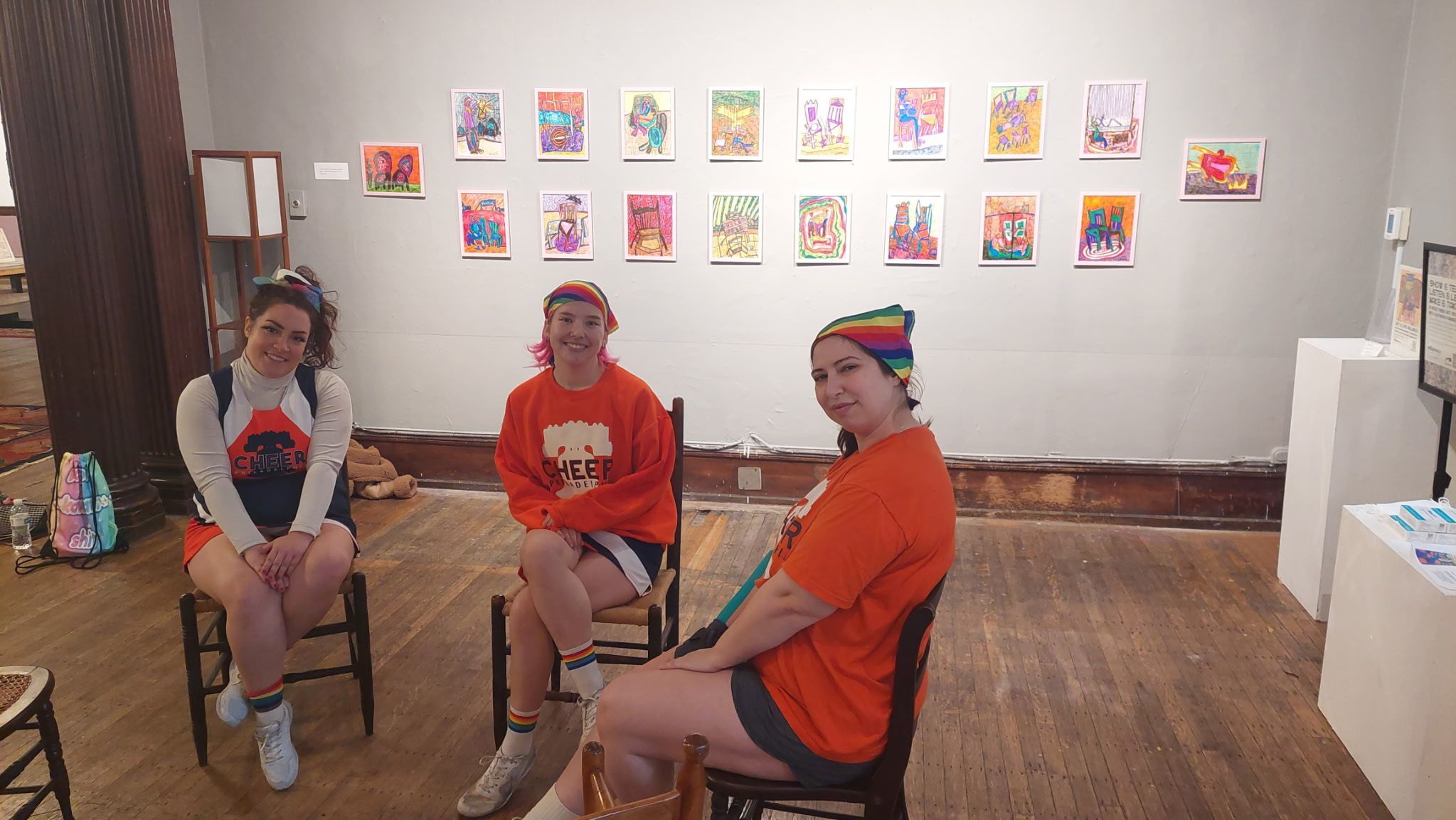
Artist Kathryn Pennepacker staged one of the last art exhibits in the William Way center’s wood-trimmed reception area. Titled “You are welcome here. I saved a chair for you,” it encouraged visitors to sit, talk and view her artwork.Courtesy of Kathryn Pennepacker
Because of those hurdles, Segal told me, it could take five to seven years to complete the apartments. During that time, William Waywould be without a permanent home. And once it moves back to Spruce Street, it’s unlikely the new space will have the same level of visibility as the existing building.
Segal says he is undaunted by the challenge. “People told me John C. Anderson was impossible,” he said. “People told me all the things I’ve fought for were impossible.”
Despite the Metcalfe report’s conclusions and a more upbeat assessment from J&M Preservation Studio, Segal maintains that the building is too far gone to be saved at a reasonable price. In his view, William Way must now choose between saving itself or saving the building.
Alternatives to demo?
It’s hard to believe the situation is that binary. Several people who have been involved in the center’s programs told me that the decision to go with Segal’s plan was made by a small circle of board members, without consulting the larger William Way community and its longtime donors.
Demolition “wasn’t even mentioned” as an option at the organization’s 50th anniversary gala celebrations in February, held just a week before the arrangement with Segal became public, noted Paul Steinke, executive director of the Preservation Alliance for Greater Philadelphia and a former William Way board member.
In a guest essay published last month in the Philadelphia Gay News, Steinke and a group of activists urged the board to hold a community meeting where the issues could be aired and debated. Segal has responded by forming an advisory board composed of a handpicked group of William Way staff, activists, elected officials, and neighborhood residents.
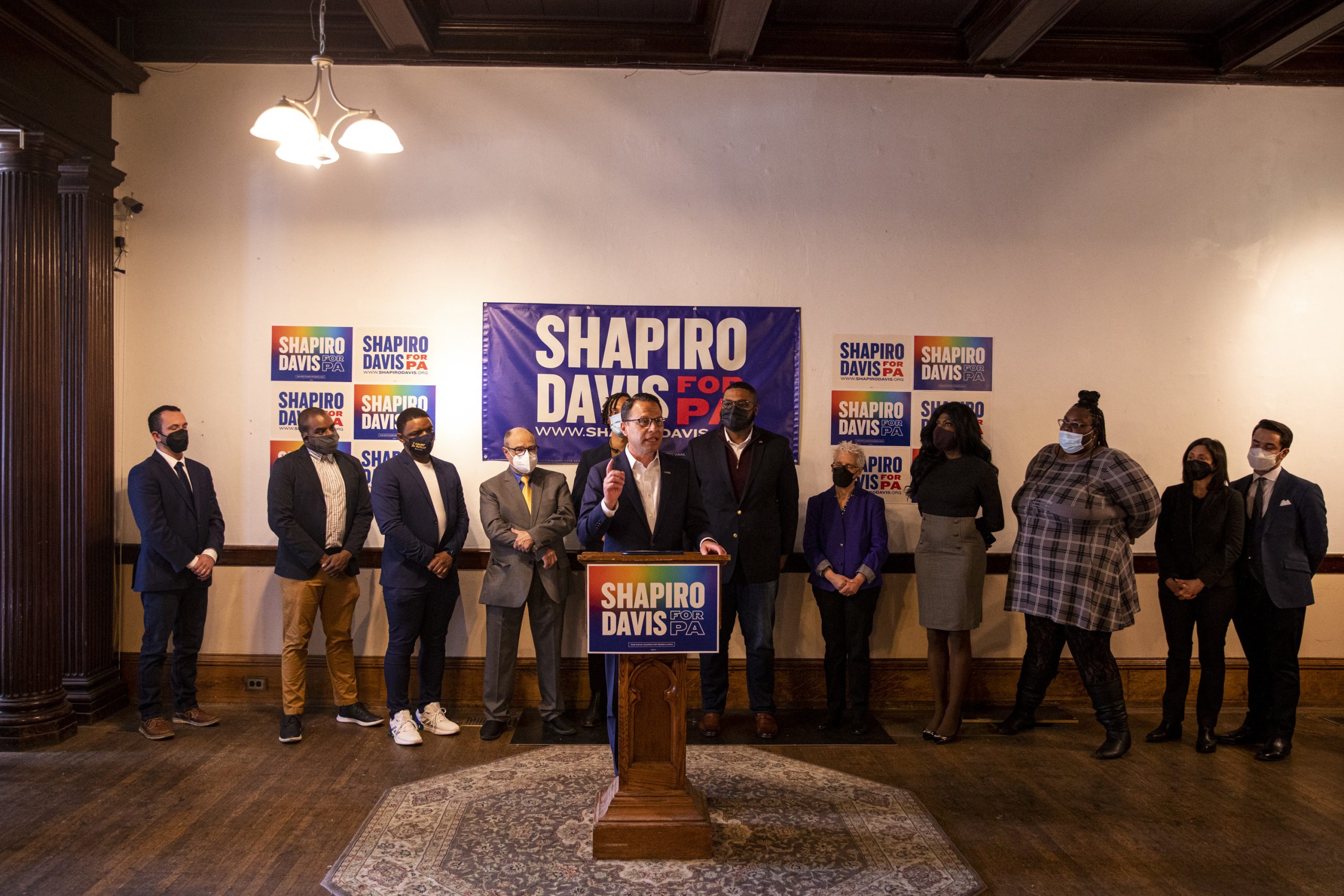
In 2022, Gov. Josh Shapiro spoke in the parlor of the William Way center, where he received endorsements from a variety of LGBQT+ leaders. TYGER WILLIAMS / Staff Photographer
Before COVID interfered, the board had been working on a design to reconfigure the building to address longstanding circulation issues. The plan called for slicing off the back of the structure and inserting a small tower with space for offices or apartments. The arrangement would have preserved the facade and the two most important ceremonial rooms, the ballroom and the large lobby area.
Why not use that idea to create affordable housing?
Segal argues that it would be difficult to insert two separate entrances — one for the William Way center, the other for the apartments. But there are plenty of narrow rowhouses in Philadelphia that have separate entrances serving apartments. I know it’s heresy in progressive circles to say this, but how about partnering with a market-rate developer who could finish the overbuild in less than five years?
An even faster option? Renovate the existing building. It can be done in stages so the center could move back sooner.
The William Way LGBT Community Center already has two entrances, which could be repurposed to serve an apartment tower inserted behind the front rooms.Jake Blumgart / Staff
Building affordable housing in Center City, close to transit, is a noble goal, and Segal deserves praise for making it a priority. But there is something seriously wrong when we demolish a building rich in Philadelphia history, while leaving the surface parking lots that flank it in place.
Since COVID, Philadelphia has lost a series of legacy cultural institutions that shaped the city’s identity. The Painted Bride. The Atwater Kent history museum. And, most painful of all, the University of the Arts.
William Way worked too hard for visibility to now be erased.
In May, Passyunk resident Peter Kim found a vivid orange flyer on his door that read, “Their Profit. Your Loss!”
The messaging on the material inveighed against shoddy and irresponsible real estate development, without naming any particular company or specific foe.
It encouraged residents to sign the Build Fair Philly pledge and attend registered community organization (RCO) meetings, which developers have to hold in advance of large projects or a zoning change.
Kim is a pro-housing advocate, and after checking out the website he at first thought that some new antidevelopment political organization had come to town.
“While on the surface, the talking points sound reasonable, I think because I’ve become so conditioned to NIMBY [not in my backyard] groups finding any reason to oppose new development, I just assumed this campaign was from some NIMBY anti-housing group,” Kim said.
But Build Fair Philly’s website lists as its address 1803 Spring Garden St., which is the Philadelphia headquarters for the Eastern Atlantic States Regional Council of Carpenters until its forthcoming move to the Navy Yard.
The Carpenters, like the rest of Philadelphia’s building trades unions, are generally pro-development. After all, the more projects — especially big ones — that get built, the more their members work.
“[I] was surprised to learn it’s the Carpenters union because, obviously, they’re not anti-housing,” Kim said.
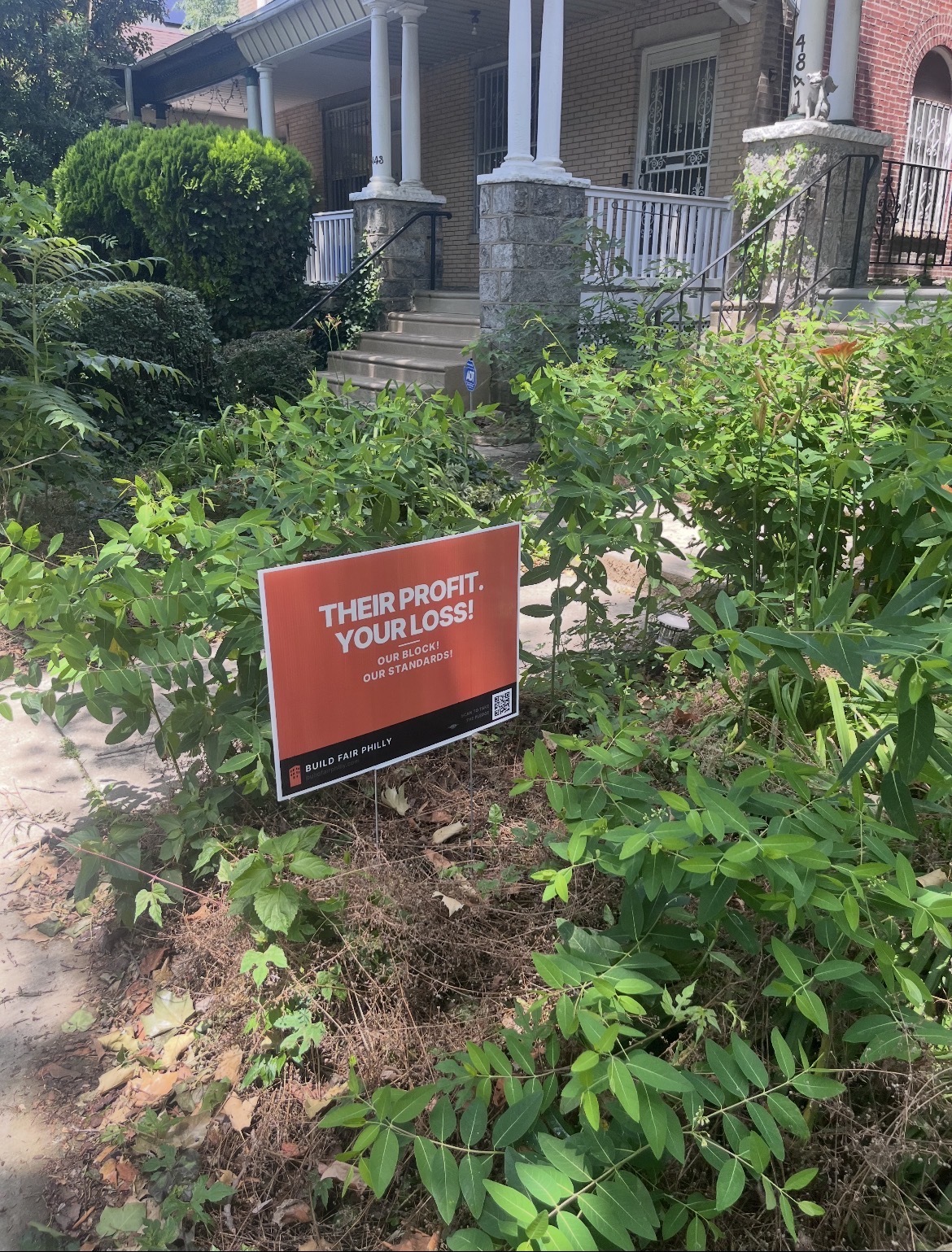
In recent months, conspicuous orange Build Fair Philly lawn signs have been popping up on rowhouses and lawns around Philadelphia, decrying harmful real estate development. (Another common message: “Our block! Our standards!”)
A Build Fair Philly sign in West Philadelphia.Zoe Greenberg
The campaign’s sponsor is not listed on its material, leaving many recipients wondering what the notices are about.
In an interview, leaders of the Carpenters said that the Build Fair Philly campaign is an attempt to raise popular consciousness about irresponsible construction — which Philadelphia’s rowhouse neighborhoods are very familiar with.
“We are not against development; if anything, we want more development,” said James Hocker, assistant executive secretary-treasurer with the Eastern Atlantic States Regional Council of Carpenters.
“But we want more responsible development, development that’s built in a fair way that is creating opportunities,” Hocker said. “We want to see licensed contractors on these projects. We want to see contractors that are paying their workers a responsible wage.”
The Carpenters say Build Fair Philly is an effort to give community members a way to get involved in a campaign to better regulate the construction industry, forging alliances with community groups to ensure quality building and get pro-labor laws enforced.
The move comes amid a difficult environment for Philadelphia’s building trades unions. (The Carpenters are not part of the Philadelphia AFL-CIO or the Philadelphia Building and Construction Trades Council.)
After interest rates spiked in 2022, construction slowed. The commercial sector, which is most likely to employ union labor, has taken a hit from the remote work-induced cessation of new office construction. That is part of why the trades fought so hard on behalf of the proposed, then abandoned, 76ers Center City arena.
The website Unionstats.com shows a steady downward trend in union representation in the Philadelphia metropolitan area’s private construction market since the pandemic.
“I think it’s part of a general campaign by unions in the Northeast to reverse their declining market share,” said Stephen Jacob Smith, executive director of the Center for Building in North America.
“Exactly what they have in mind as the mechanism, I do not know,” Smith said of the Carpenters. “They have a bunch of political levers, and I don’t know which of them they’re trying to pull with this.”
But Hocker says the effort is not only about winning more work for the Carpenters members. It is also about holding contractors and developers accountable for not hiring in the city.
After all, the building trades unions have been criticized for having memberships that do not represent the demographic makeup of Philadelphia. Why are developers not getting attacked if they are also not doing representative hiring?
“We want development that’s going to create opportunities, whether it’s union or nonunion, for individuals that live in the city of Philadelphia,” Hocker said. “We feel that the development that happens in these communities should reflect what the community looks like. It shouldn’t be a bunch of out-of-state license plates.”
Build Fair Philly’s Instagram account includes footage of a rally with City Council members, including Quetcy Lozada, Jeffery Young, and a cigar-wielding Jimmy Harrity.
Eastern Atlantic States Regional Council of Carpenters senior council representative Joseph Lockley talks about Build Fair Philly outside of City Hall.Eastern Atlantic States Regional Council of Carpenters
But the union leadership says that the campaign is not necessarily about passing new legislation — which many other trades have successfully won before — but about getting the city to enforce the regulations that are already on the books.
“We’re not asking for elected officials or anybody in any kind of position to create new laws and policies,” said Joseph Lockley, senior council representative for the Carpenters. “These are laws, policies, and procedures that are already in place that are just not being pushed and enforced, or even prioritized.”
As of early July, the Carpenters said, they had already had 10,000 people sign on to Build Fair Philly’s pledge. “I believe Philadelphia’s development should be safe, fair, and built for all of us — not just for investors and insiders,” it reads.
They had distributed 6,536 signs and canvassed 17,537 people, knocking on doors and interacting with people on the street.
They have also put up nine billboards attacking Post Bros., a major Philadelphia developer. (“Philly’s Worst Neighbors. Stop Post Brothers,” the signage reads.)
A variety of contractors that work with the Carpenters are currently in a legal dispute with Post over the company’s large apartment development at Broad Street and Washington Avenue.
The Carpenters Union’s Build Fair Philly campaign billboard across from I-95 on Richmond Street. The union hopes the campaign will rally community members to push back against shoddy development.Aidan T. Gallo / Staff Photographer
As part of the canvassing effort for Build Fair Philly, the Carpenters have been engaging with community members to hear about their experiences of development in the city. They said they are using that information to formulate the next steps for Build Fair Philly.
“This is also a social justice issue,” said Mungu Sanchez, deputy political director for the Carpenters.
“This is about fairness and this is about making sure that we’re organized with other community groups who also care about growth and care about making sure that communities are able to have the same options and the same sort of resources that every American should have,” Sanchez said.
SEPTA is embarking on an experiment to extend its all-access transit pass, SEPTA Key Advantage, to apartment building residents.
Currently employers and schools can buy into the benefit program. The institutions pay for the passes, and then workers and students sign up toreceive a SEPTA Key card that is free for them to use.
Since its creation in 2022, beneficiaries have used SEPTA Key Advantage for 25 million rides.
Now SEPTA has received a $150,000grant from the Delaware Valley Regional Planning Commission (DVRPC) for a pilot program extending the benefit to apartment building owners.
The two-year program will be open to a handful of apartment buildings so SEPTA can study how tenants use it. The first company to sign on is the HOW Group, a large multifamily developer and owner in Philadelphia.
“A lot of our properties are located near SEPTA stations, and with a lot of our buildings, their biggest amenity is their location,” said Kelli Tomczak, vice president of property management at the HOW Group. “It was a great opportunity to emphasize how big of an amenity that is coupled with the SEPTA pass.”
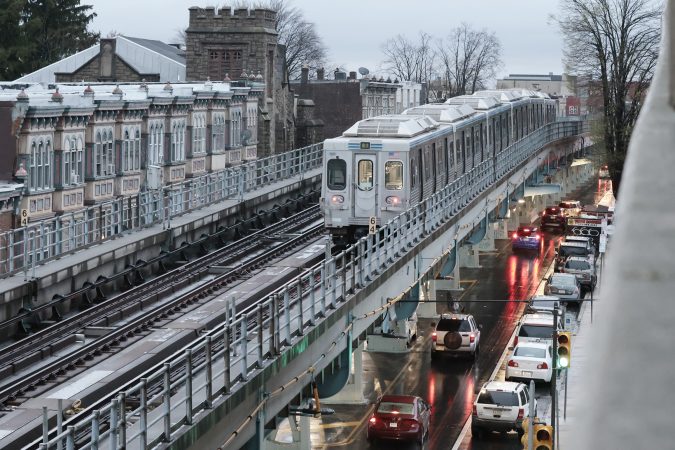
The SEPTA Key Advantage will be offered first to tenants in the HOW Group’s 104-unit apartment building at 1900 N. Front St. known as the Isaac. It has no parking but is directly across the street from SEPTA’s Berks Stationon the Market-Frankford Line.
“A lot of people who are living there are already utilizing the El. That’s what makes this a great amenity,” Tomczak said.
SEPTA says it is in talks about bringing the benefit to another HOW building in University City, which has frequent bus lines to Center City, trolleys, and the Market-Frankford line.
The transit agency also wants to try the pilot in a couple suburban buildings and are searching forpartners with 50- to 100-unit buildings near stations in Philadelphia’s collar counties.
“We are really trying to hone in and really understand, when you have this free pass, do you start to take transit more?” said Gabrielle Pristera, senior sales development specialist with SEPTA.
“We want to really build the case to show other multifamily properties that there is value in adding Key Advantage as an amenity through this pilot,” Pristera said.
The HOW Group’s 100+ unit apartment building at 1900 Front St., on the Market-Frankford line, where tenants will be eligible for free SEPTA cards.HOW Group
The program wascreated to get more people riding SEPTA regularly, while raising revenue for the service. SEPTA estimates that it saves regular riders $110 a month.
Today SEPTA Key Advantage has 60,000 members, 63 participating employers (including the City of Philadelphia), and four participating colleges and universities.
Roughly half the eligible students and workers have taken advantage of the benefit and SEPTA has found that at small companies 80% of employees sign up.
The transit authority has long wanted to expand the program to apartment owners and tenants.
“Especially within Center City, with development being so costly, this is just one of the easiest amenities to get started,” Pristera said. “You don’t have to have space for it. You just can just distribute key cards and go.”
DVRPC’s grant money will pay for the administrative costs of the pilot, as property managers don’t have the same kind of human resources departments as employers and higher education institutions.
The grant from DVRPC will last until 2028. SEPTA will evaluate the results of the program and decide how to proceed from there.
The fast-rising costs of owning a home have some young Americans questioning whether buying a house is still a good investment.
Take Tony Zhang, 34, who bought a $950,000 townhouse in Irvine, Calif., in 2021 and says he now regrets it. The supply-chain manager says investing his down payment of roughly 30% in the stock market instead would have left him with a portfolio worth as much as $1 million today.
“Had I just taken my down payment and bought Meta, Nvidia, or any growth stock, I probably wouldn’t even be working my 9-to-5,” he said. Even with a more conservative investment that mirrored the S&P 500, he estimates he’d have an extra couple of hundred thousand dollars. In the meantime, renting a comparable two-bedroom apartment in his area would be about $800 cheaper than his $4,300 monthly housing costs, which don’t include maintenance.
Zhang is among many people under 40 who feel that homeownership isn’t the wealth-building tool it used to be. Less than a quarter of Americans aged 18 to 39 say buying a home is a very good investment, compared with 38% of those over 60 years old, a recent survey by the Pew Research Center found. A further 38% of under-40s see property as a “somewhat good” place to park their money.
A separate survey by the Federal Reserve Bank of New York found the proportion of under-50s who consider housing to be a “very good” investment had fallen to about 16% in February, from about 25% five years earlier.
Broadly speaking, homes are a worse investment for first-time buyers today because wages haven’t kept up with surging prices and ownership costs, said Susan Wachter, a professor of real estate and finance at the University of Pennsylvania’s Wharton School.
The median sale price of a U.S. home jumped 53% to $379,000 in the six years to May 2026, Zillow data show, while borrowing costs more than doubled. Those who can afford to buy face outlays including property taxes, insurance, and maintenance bills, which cost the average U.S. homeowner $15,979 in 2025 — a 4.7% increase from the previous year, while household incomes rose just 3.8% over the period.
More than half of U.S. homes also lost value last year — the highest share since 2012, according to Zillow, when the effects of the global financial crisis were still playing out.
“Younger Americans’ more negative view on homeownership reflects the economics of their lived experience, ” said Wachter. “They face an affordability problem and they don’t get the returns.”
Almost nine in 10 Americans agree that buying a home is harder for young adults today than it was for their parents’ generation, the Pew research found.
That said, only 16% of survey respondents aged under 40 went as far as saying a house is a bad investment. Owning a home can provide families with stability and, for those who can afford to hang onto it, a source of intergenerational wealth. Returns vary widely based where a homeowner buys their property and how long they own it, noted Pew senior researcher Richard Fry.
“It’s a complicated calculation and probably one of the most expensive things young adults will ever buy,” he said. “It’s not a one-size-fits-all answer.”
Even those who snag a deal on a property can find the math gets complicated.
Atalyia Ferrara, a 28-year-old teacher, bought a $230,000 four-bedroom Philadelphia townhouse in July 2021 with a $1,485 down payment, thanks to the city’s Keystone Home Loan Program. Her monthly mortgage and taxes have gone up just $335 a month since then, but the maintenance costs have forced her to dip into her savings instead of building a nest egg. She’s already poured more than $28,000 into home improvements, with another $25,000 for electrical repairs looming.
Ferrara now works in neighboring New Jersey and says the house has become a money pit in an inconvenient location. She and her husband are considering selling so they can rent in an area with better access to work and childcare.
“I bought the house at 23, just trying to get my foot in the door of building equity,” said Ferrara. “Instead, I’m stuck with a house that’s kept me where I’m at and paying thousands for repairs.”
Zhang, in California, is planning to stay put until his 8-year-old daughter goes to college, hoping to cash in on his home’s appreciation down the line. After that, he plans to sell up and “rent for sure.”
Still, he can’t help but think of what he could have made in the short term on a different investment.
“Just looking at how the stock market has performed, the opportunity cost of putting that money into a home has absolutely screwed me over,” Zhang said.