Category: Real Estate

  • Philadelphia filed stop-work orders for Mole Street’s redevelopment. What happens next?

    Philadelphia filed stop-work orders for Mole Street’s redevelopment. What happens next?

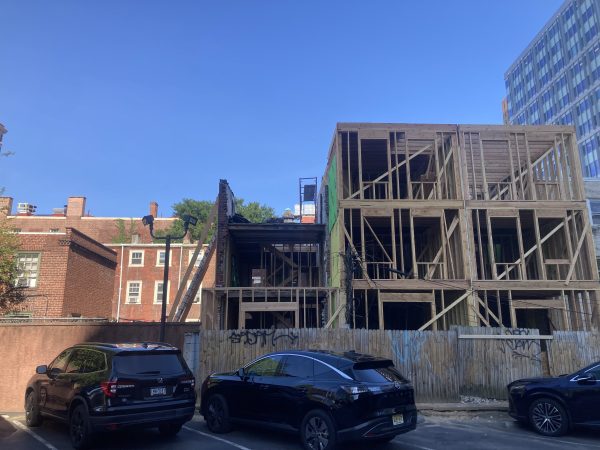
    The work has stopped on the 100 block of North Mole Street, where developers have been attempting to remake this redoubt of historically protected below-market-rate housing.

    The developer Purity Homes Inc. and its architect Canno Design got permission from the city’s Historical Commission last year to redevelop a handful of these almost 200-year-old rowhouses.

    They planned to build expansive additions on the rear of the houses to allow for more square footage and rentable space and to eventually transform the rest of the block.

    However, following an Inquirer article about the project, the Department of Licenses and Inspections issued stop work orders in June for “work not according to approved plans.”

    “The Historical Commission had approved modest alterations to the properties,” said city spokesperson Karen Guss.

    “The PHC staff member who managed the process of reviewing the developer’s proposed alterations observed out the window that the work actually going on seemed way out of line,” Guss said, referring to the fact that the 100 block of North Mole Street is visible from the offices of the commission, a block to the site’s south.

    Armando Ahmad, whose name and address in Arlington, Texas, is listed on several permits for the project, did not respond to requests for comment. Further attempts to reach Purity Homes were unsuccessful as well.

    Last year, Purity Homes bought eight of the 30 North Mole Street homes for $3.1 million. More purchases are in the works, although the original architect has left the project.

    “We have terminated our agreement with the client, no further comment at this point,” said Carey Jackson Yonce of Philadelphia-based Canno Design.

    A Department of Licenses and Inspections spokesperson noted that work continued on the house at 127 N. Mole St., despite the city’s order.
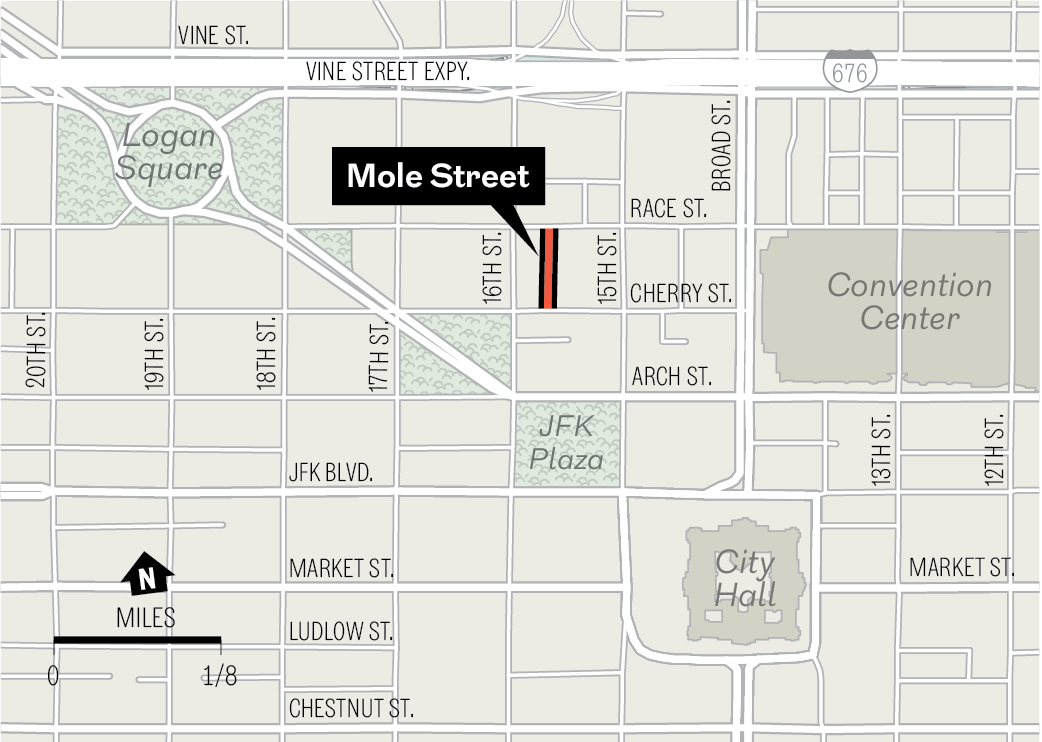
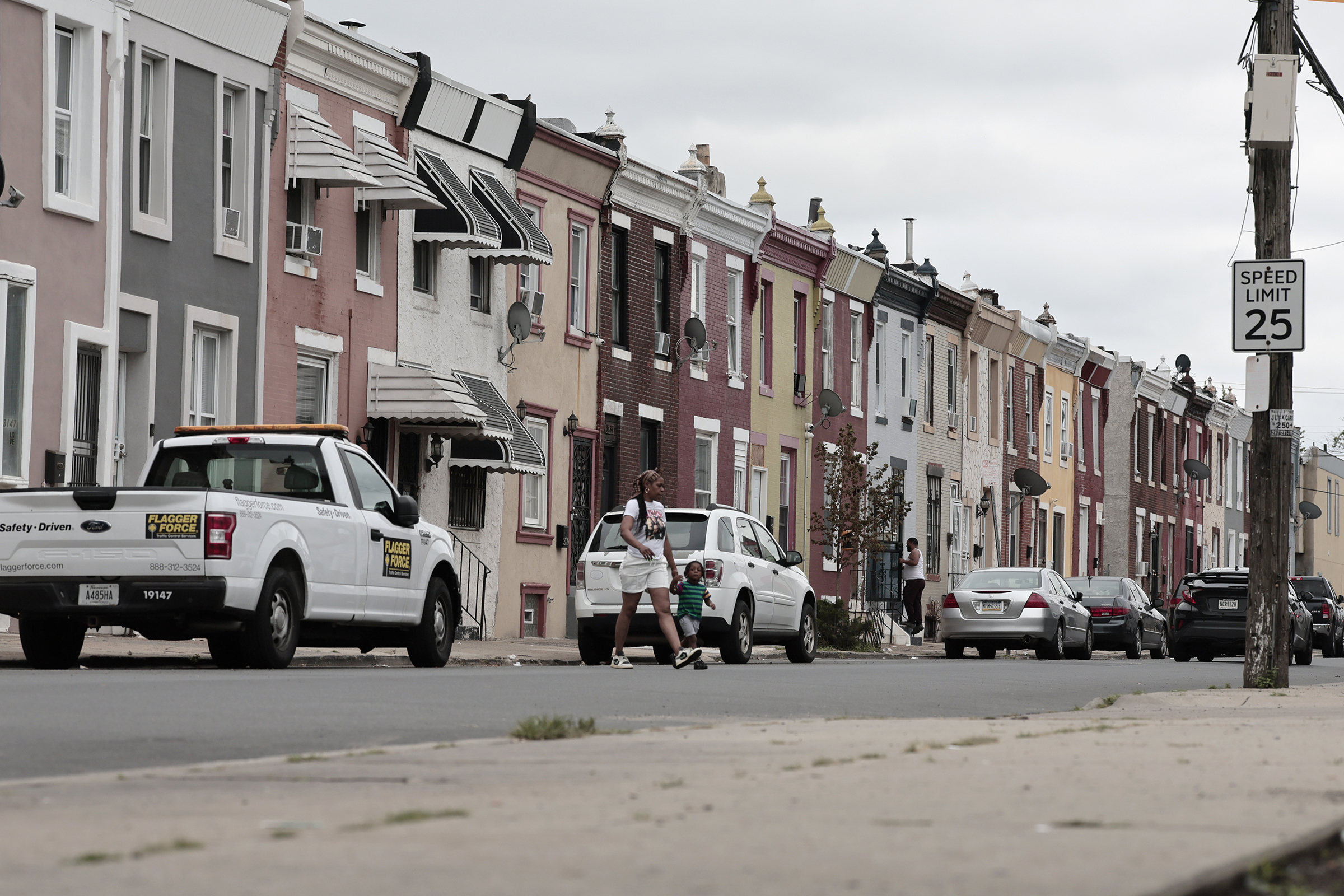
    Mole Street in Center City.John Duchneskie

    “The police have been assisting with enforcement efforts,” L&I spokesperson Shemeka Moore wrote in a June 26 email.

    She also noted that 108 N. Mole had been approved for only a small addition and that a new construction permit would be required for the company’s more expansive plans.

    However, following the stop work orders, preservationists and the Historical Commission said Purity Homes was reacting to city regulators in good faith.

    “The Historical Commission’s staff is engaged in ongoing, productive discussions with the development team for the 100 block of North Mole Street,” said Jon Farnham, executive director of the Historical Commission. “The developers have acknowledged their missteps and are working diligently to develop a plan to bring the block into compliance.”

    For decades, this block of North Mole Street has been a holdout of inexpensive rental rowhouses in an area of Center City otherwise dominated by tall buildings and surface parking lots.

    Just west of the Central Friends Meeting, the street has been owned by a family trust, which dates to the 1800s and belongs to descendants of founding father Robert Morris. In 1960, the 30 homes on the block were given historic preservation protections.

    The buildings were largely carved into group houses, where airline workers, artists, students, and journalists (including Inquirer reporters) have made their homes.

    The block had a reputation for a vigorous party scene, culminating in an annual bacchanalia at the Molestice Festival block party. The celebration began when Jimmy Carter was president and was ended by the COVID-19 pandemic.
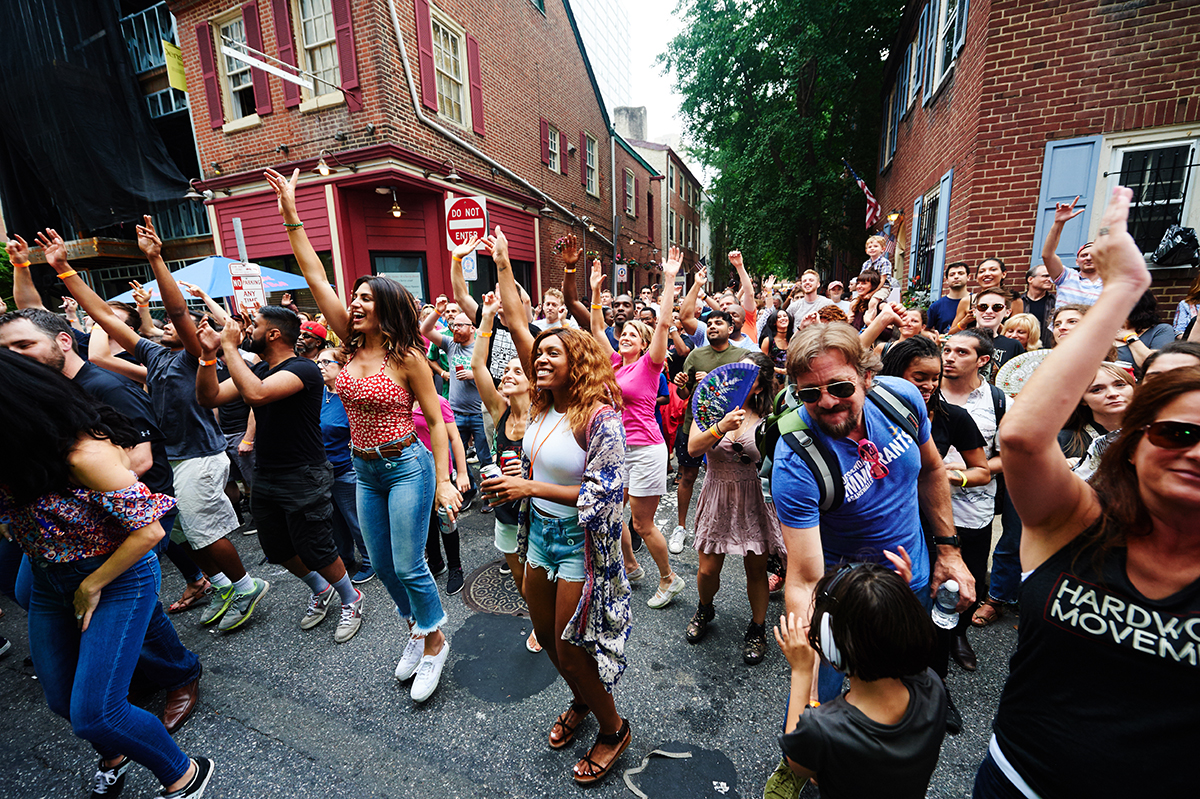
    Molestice 2019 takes over the 100 block of Mole Street, in what would prove to be the final iteration of the decades-long tradition. Philip Gabriel Photography

    As Purity moved on to the block, the company wrote letters to tenants promising to “minimize disruption.” Leases have not been renewed for residents living in the houses controlled by the company.

    Tenants who remain have complained about developers starting work extremely early in the morning, parking trucks on the sidewalk in front of their homes, and cutting down all the trees before a scorching summer.

    “They definitely don’t mean what they said about minimizing disruption,” said Alex Numan, a resident whose home is not yet owned by Purity, although his lease has been switched to month-to-month in preparation for a sale.

    A cartoon by The Inquirer and Daily News’ Signe Wilkinson, dating to the 1980s when many reporters lived on the block.Signe Wilkinson

    Since the stop work orders, construction has paused, but many longtime tenants still anticipate being made to leave their homes.

    “The planning is still underway, and nothing has been submitted to the Historical Commission yet, but we will ensure that the revised plans preserve the historic character of the designated buildings,” Farnham said.
  • Planning Commission considers how — and if — data centers should be built in Philly

    Planning Commission considers how — and if — data centers should be built in Philly

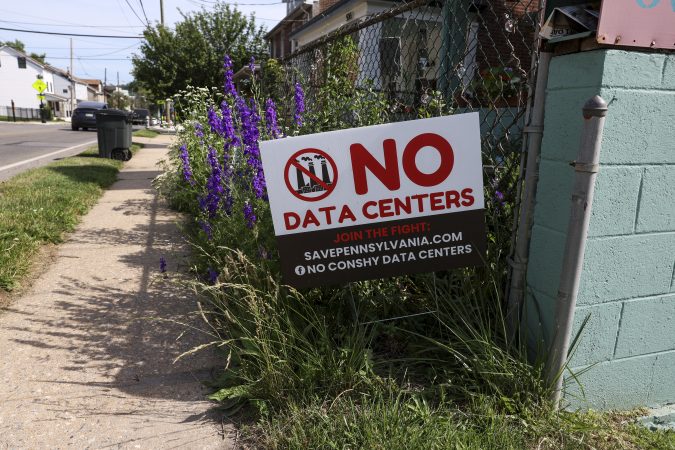
    An information-only presentation about data centers before the Philadelphia Planning Commission provoked a firestorm of controversy Thursday, with more than a dozen community groups and other activists rejecting the idea of bringing this energy-intensive use to the city.

    Demand for data centers has soared in recent years, as tech companies have invested heavily in artificial intelligence products that require vast amounts of computing power.

    Several large projects have been proposed in Philadelphia’s suburban counties and South Jersey.

    Data center foes, who dominated the public comment section of Thursday’s presentation, repeatedly called for a moratorium akin to the policy recently enacted in New York State.

    “Data centers are a hot topic in land use around the country,” said Amy Boyd, a city planner who presented the research to the commission. “Staff wants to stay up to date on this issue, so that when the topic becomes more pressing in our city, we can be prepared.”

    Thursday’s presentation is not a reaction to a particular proposal. Instead, the Planning Commission presented research on the employment, energy, and health effects of data centers, the current state of zoning law in the city, and what parts of Philadelphia could accommodate them.

    The Planning Commission found there are only two sites in Philadelphia that could accommodate the largest size of data center, the kind currently being built to support the artificial intelligence boom. Any other possible sites would require consolidating properties and changing zoning.

    One possible location is the former refinery site in South Philadelphia known as the Bellwether District, 3143 W. Passyunk Ave., which contains 1,300 acres of mostly undeveloped land zoned for industrial uses and has long been rumored as a potential data center site.

    The other possible site is 2600 Grant Ave., a city-owned property by the airport in Northeast Philadelphia.

    The idea of municipally owned land being used for a data center drew protests from citizen attendees of the commission meeting.

    But policymakers emphasized that the presentation was just meant to highlight parcels that were large enough to accommodate the use — and were not meant to indicate support for such an idea.

    “We are not currently considering that site. We have not been asked to consider that site,” Octavia Howell, director of the Planning Commission, said about the Grant Avenue property.

    “We were strictly looking at industrial land that is of a size that could be attractive … to someone who is looking at Philadelphia and curious about data centers,“ Howell said. “There is no proposal that this research is responding to.”
    Boyd’s presentation noted that Philadelphia already hosts eight smaller data centers from an era when they were not such a controversial topic.

    These include 365 Data Center, which operates at 3701 Market St. in University City, and 4775 League Island Blvd. in the Navy Yard. At 25,000 square feet, that South Philly building is only a quarter of the size of the smallest contemporary “hyperscale” data centers.

    Boyd’s presentation also emphasized the amount of resources that are required to keep huge, new data centers going.

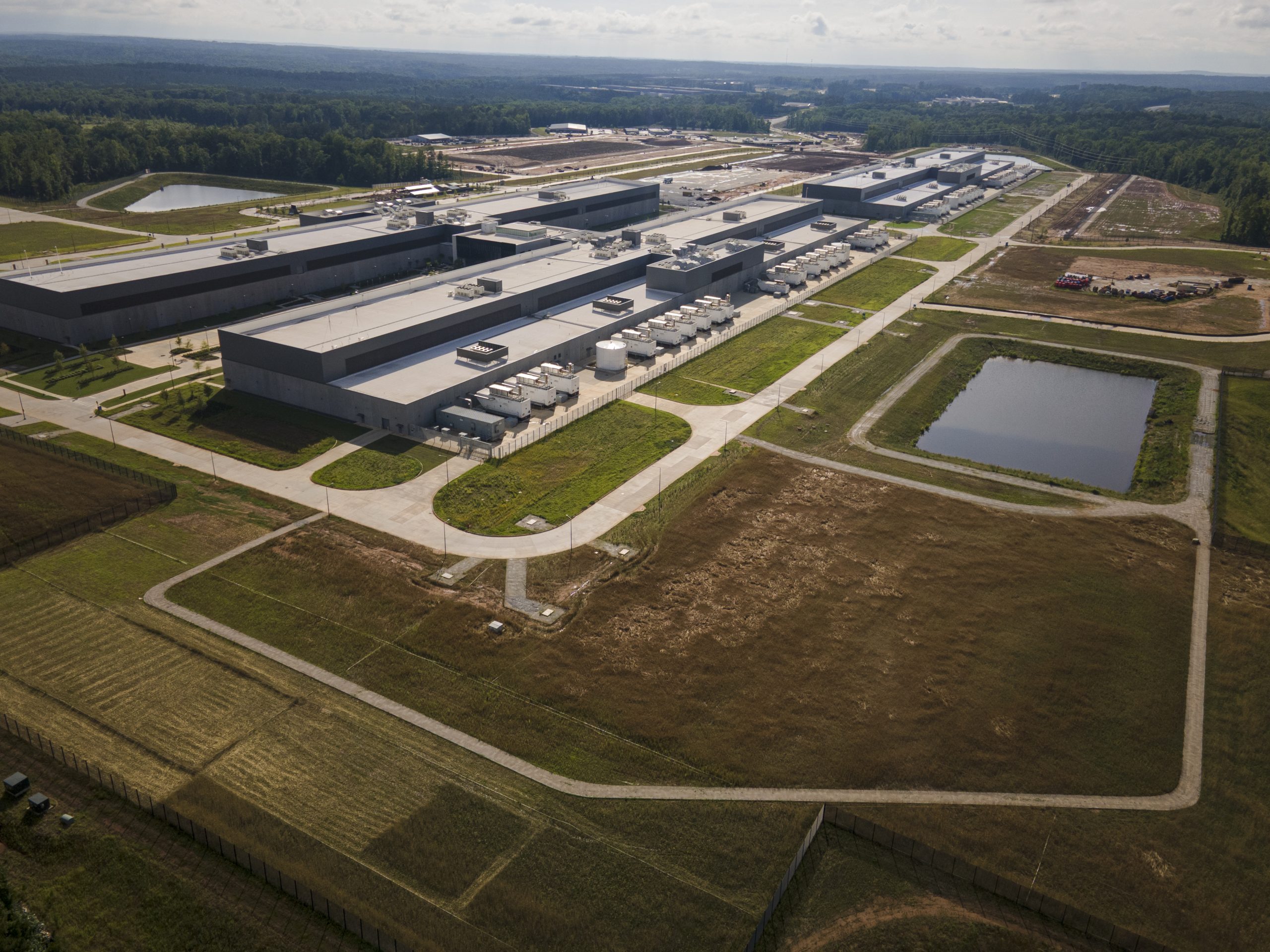
    A Meta data center in Covington, Ga.DUSTIN CHAMBERS

    She reported that data centers are now among the 10 largest water-consuming industries in the United States and use 4% of the nation’s electricity — with that figure expected to grow to 12% by 2035. Local energy providers have had to make large capital investments to accommodate the industry.

    Boyd noted that many of the jobs and tax benefits to data centers take place during construction, when up to 1,500 well-paid union workers are employed.

    Afterward some well-paid positions will still exist, including tech and maintenance staff, but she found that data centers employ only one worker per 5,000 square feet — roughly 13% of the jobs that would be expected in a standard warehouse of a similar size.

    But Planning Commissioner Pat Eiding said he thought that might undercount the job-creation potential.

    “I don’t know if it considers the amount of maintenance that goes on in these critical facilities,” said Eiding, former head of the Philadelphia AFL-CIO. “As we go forward, I’d like to see research on how many man hours are needed for maintenance and keeping a facility going.”

    Public response to the Planning Commission’s report was wholly oppositional to data centers. No one spoke in favor.

    Potential health effects were highlighted, and many speakers expressed concern that the amount of electricity used by potential centers would likely be powered by fossil fuels.

    Others expressed concerns about surging electricity costs, as capital improvements are paid for by increased consumer costs.

    “It’s what’s causing people to not be able to pay their bills,” said Linnea Bond, environment and health education director at Physicians for Social Responsibility Pennsylvania. “It’s a huge health issue, and it’s a huge affordability issue.”

    The Planning Commission staff emphasized that data centers are not currently specifically regulated in Philadelphia’s zoning code and suggested the possibility of a new law creating a specific category for them.

    While talk of a potential data center moratorium swirled around City Council earlier this year, only two nonbinding resolutions have been passed related to the topic so far.

    One from Councilmember Rue Landau called for hearings on data centers, which have not been held yet. Councilmember Isaiah Thomas held hearings late last year about rising energy costs, citing data centers as one of the driving forces.

  • N.J. apartments back from the brink | Real Estate Newsletter

    N.J. apartments back from the brink | Real Estate Newsletter

    “Everybody complains about traffic.”

    That’s what real estate lawyer Mark Kaplin told The Inquirer’s Chester County reporter Brooke Schultz this week when she asked about pushback to development projects.

    It made me laugh out loud. After years of editing real estate stories, I’ve learned that he is so right.

    Kaplin talks about his latest work with Exton Square Mall and how it’s becoming harder to to get stuff done in the city and the burbs.

    Keep scrolling for that story and more in this week’s edition:

    — Erica Palan

    If someone forwarded you this email, sign up for free here.

    From ‘deplorable’ to ‘simply remarkable’

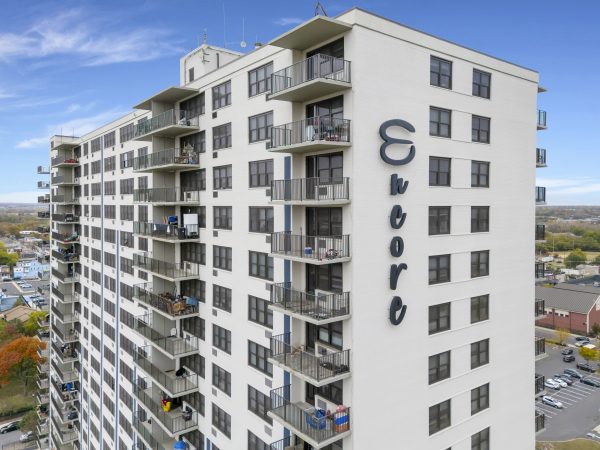
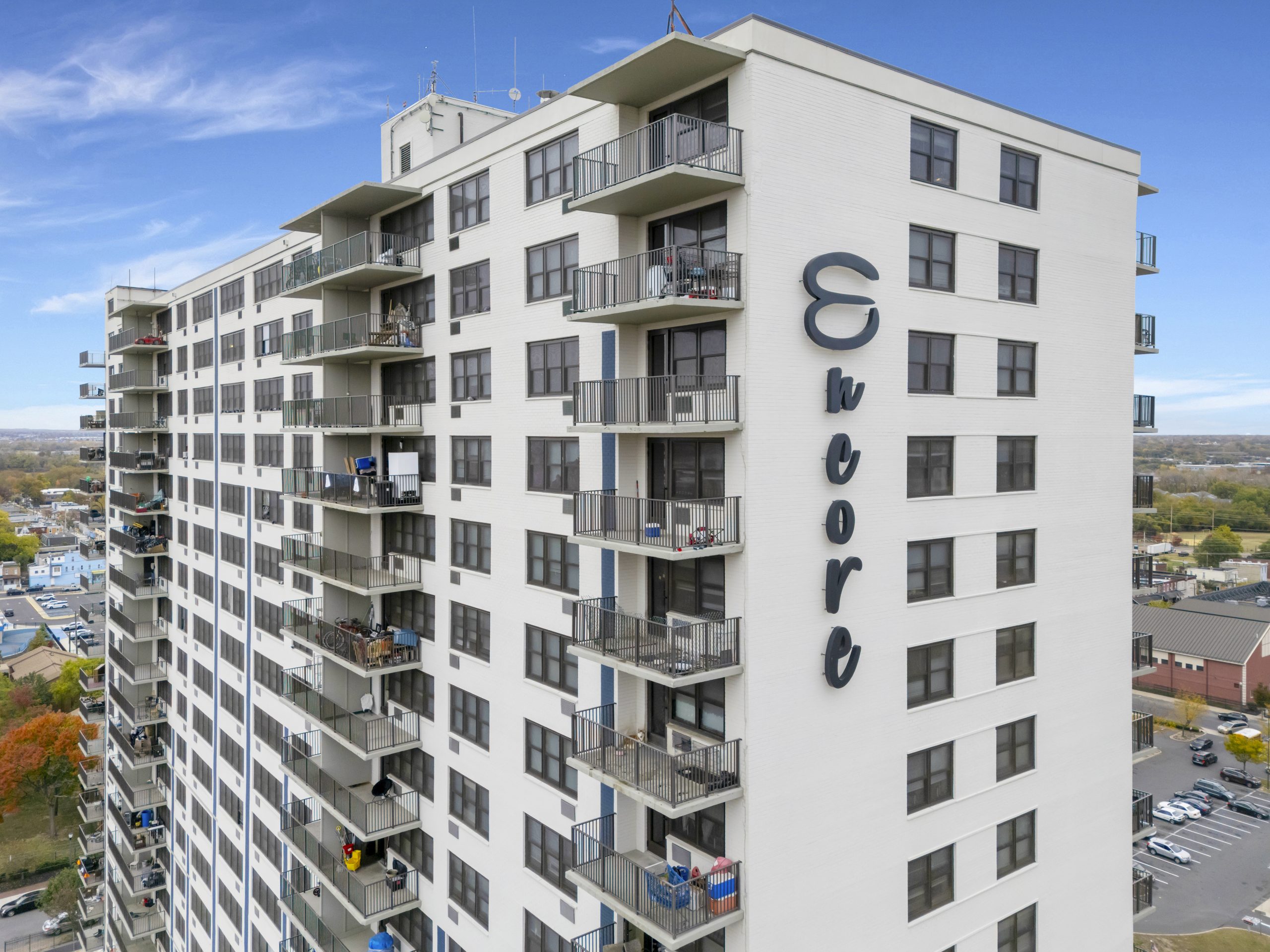
    Karen Merricks, a nearly 30-year resident of a Camden apartment building once known as Northgate 1, is finally feeling safer in her home.

    After years of poor conditions, a new owner purchased the building in 2024. Renamed the Encore and given a complete overhaul, the building now offers tenants:

    👚 a working laundry room for the first time in years

    🛜 free internet access for 15 years

    🥕 an urban farm where residents get first dibs at veggies

    🛝 an indoor playground and children’s room

    🔍 increased security

    The building’s future as affordable housing has also been secured for the next 20 years.

    Read more about how the property, originally planned as a luxury residence, fell into disrepair and then came back from the brink.

    ‘Hitting the lottery’

    Is there anything more heartwarming than a dream realized? One thing I enjoy about real estate stories is that people often talk about how hard they worked to buy their homes. It reminds me that we can do tough things.

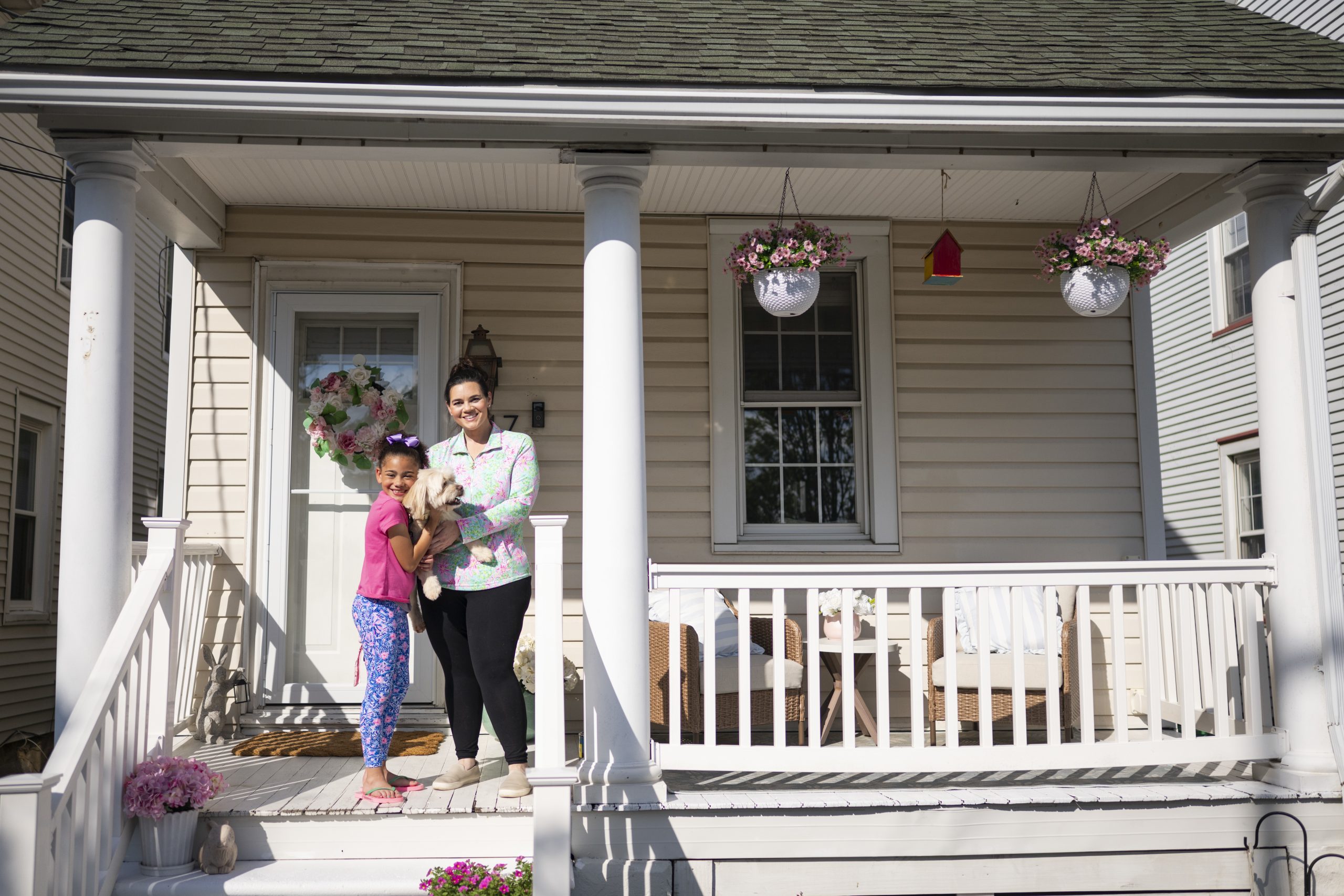
    Amanda Caroccio, a single mom in South Jersey, is a perfect example. “For a long time I didn’t think it was going to happen,” she said of homeownership. But little by little, she saved, sometimes working a whole month without a day off, and last year, she was able to purchase her dream home in Haddonfield.

    She calls it “one of the greatest accomplishments of my life.”

    Read more about how she did it and what it means to her family.

    📮 Did you recently buy a home in the Philadelphia area or South Jersey? Share the story of how you did it. Email Inquirer real estate reporters at properties@inquirer.com.

    The latest news to pay attention to

    Home tour: A Shore house to remember

    ‘Tis the season to fantasize about owning a Shore house. In my dreams, I have an outdoor shower, a covered porch, and a dining table big enough for my whole family to sit comfortably.

    This week’s homeowners took that last point seriously and had two kitchens put into their house when they rebuilt it.

    That’s just one of the special details in this spacious abode. There’s also a secret wine cave, custom book cases, stained glass transoms, whimsical light fixtures, and two bedrooms with decks.

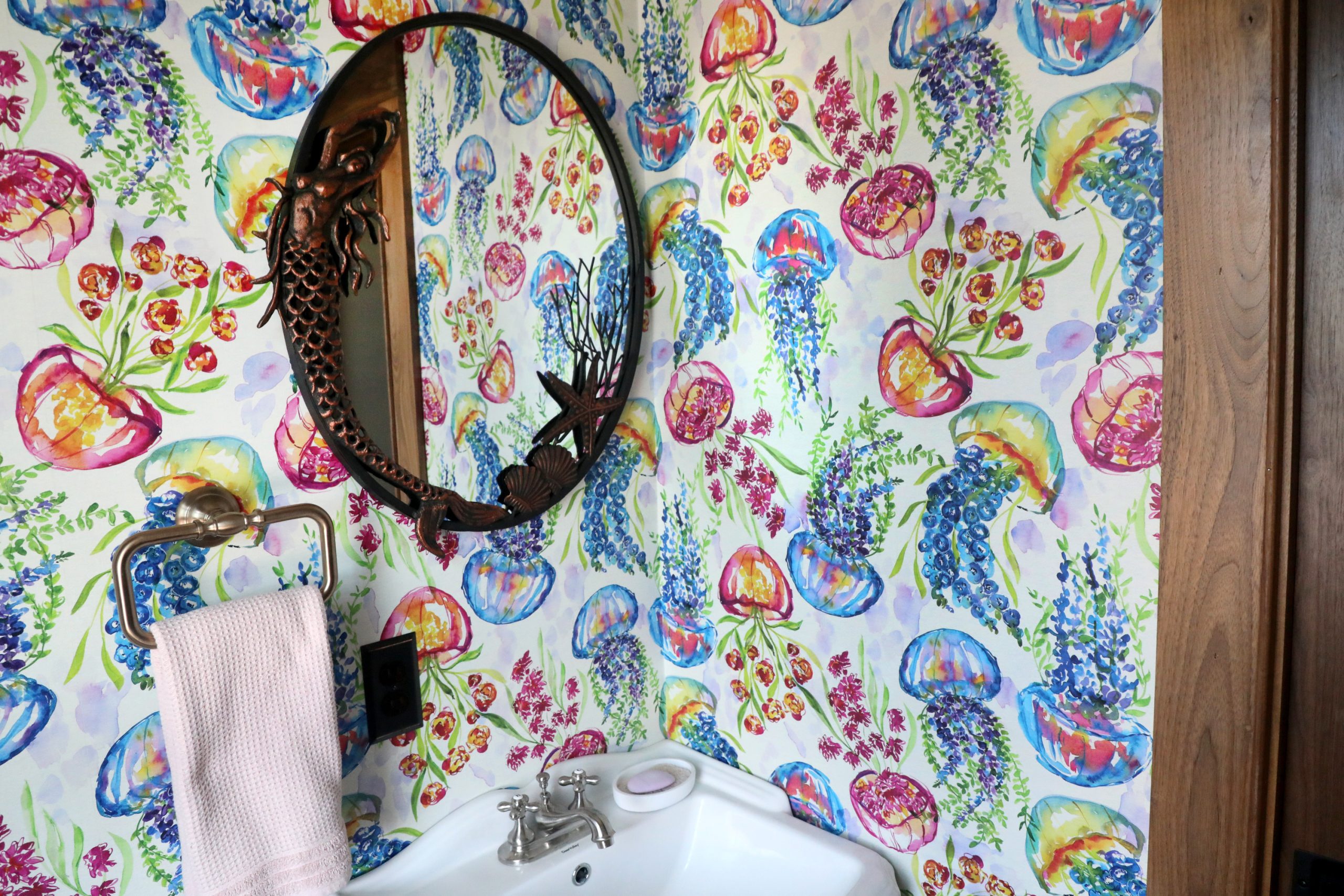
    See more photos of this Strathmere stunner, including my favorite detail: the just-quirky-enough jellyfish wallpaper pictured above.

    📷 Photo quiz

    Do you know the location this photo shows?

    📮 If you think you do, email me back. You and your memories of visiting this spot might be featured in the newsletter.

    And congrats to Diane B. and Michele G. for correctly guessing last week’s photo location: the fountain at Logan Square. Lars W. gets bonus points for knowing its proper name: Swann Memorial Fountain.

    –

    I pride myself on knowing a lot of Philly trivia, but I learned something new in choosing last week’s photo.

    The fountain was designed by Alexander Stirling Calder (no, not the same Calder as the new Parkway museum; that’s his son). Tuck that one away for your next Quizzo night.

    By submitting your written, visual, and/or audio contributions, you agree to The Inquirer’s Terms of Use, including the grant of rights in Section 10.

  • See inside a $1.2M house for sale in Abington thought to have ties to a famous shoe heir

    See inside a $1.2M house for sale in Abington thought to have ties to a famous shoe heir

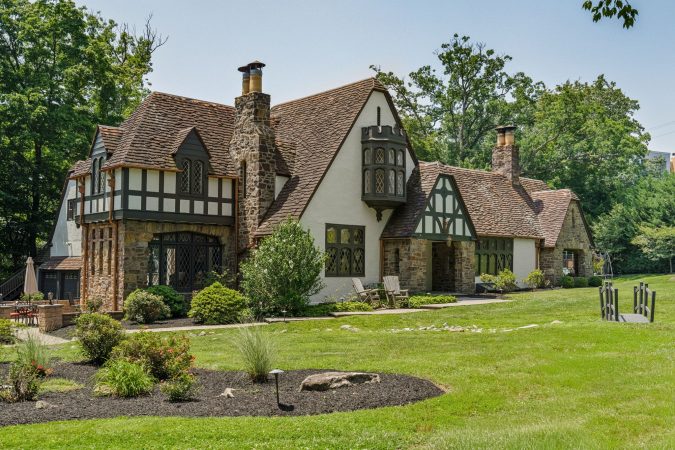
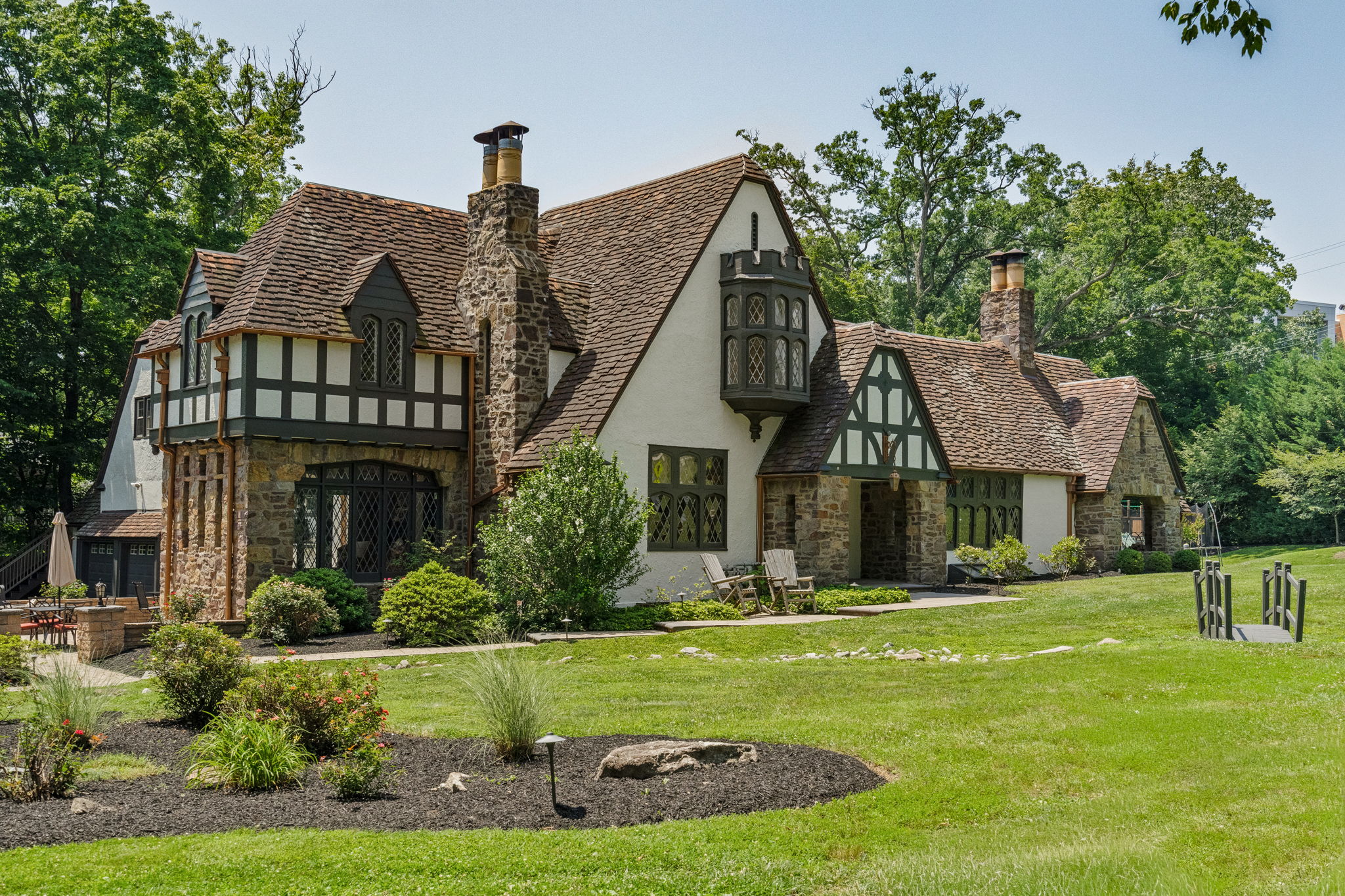
    There’s a 1920s house for sale in Abington whose previous residents may have included a shoe heir.

    The 4,328-square-foot-home has five bedrooms, three full bathrooms and two half bathrooms on just under an acre across from Abington Senior High School. One of the bedrooms sits separately above the three-car garage as a suite with a half-bath and a kitchenette. The asking price is $1.2 million.

    The Canterbury Road house sits beside a wooded area owned by a property management company, according to county records, which describe the house as a Tudor.

    But the house also has Norman Revival features, said Brian Whetstone, a historian at the University of Pennsylvania, including a rounded tower and stucco elevations: “This building is certainly taking a grab bag of references from Tudor and Norman influences in the final product.”

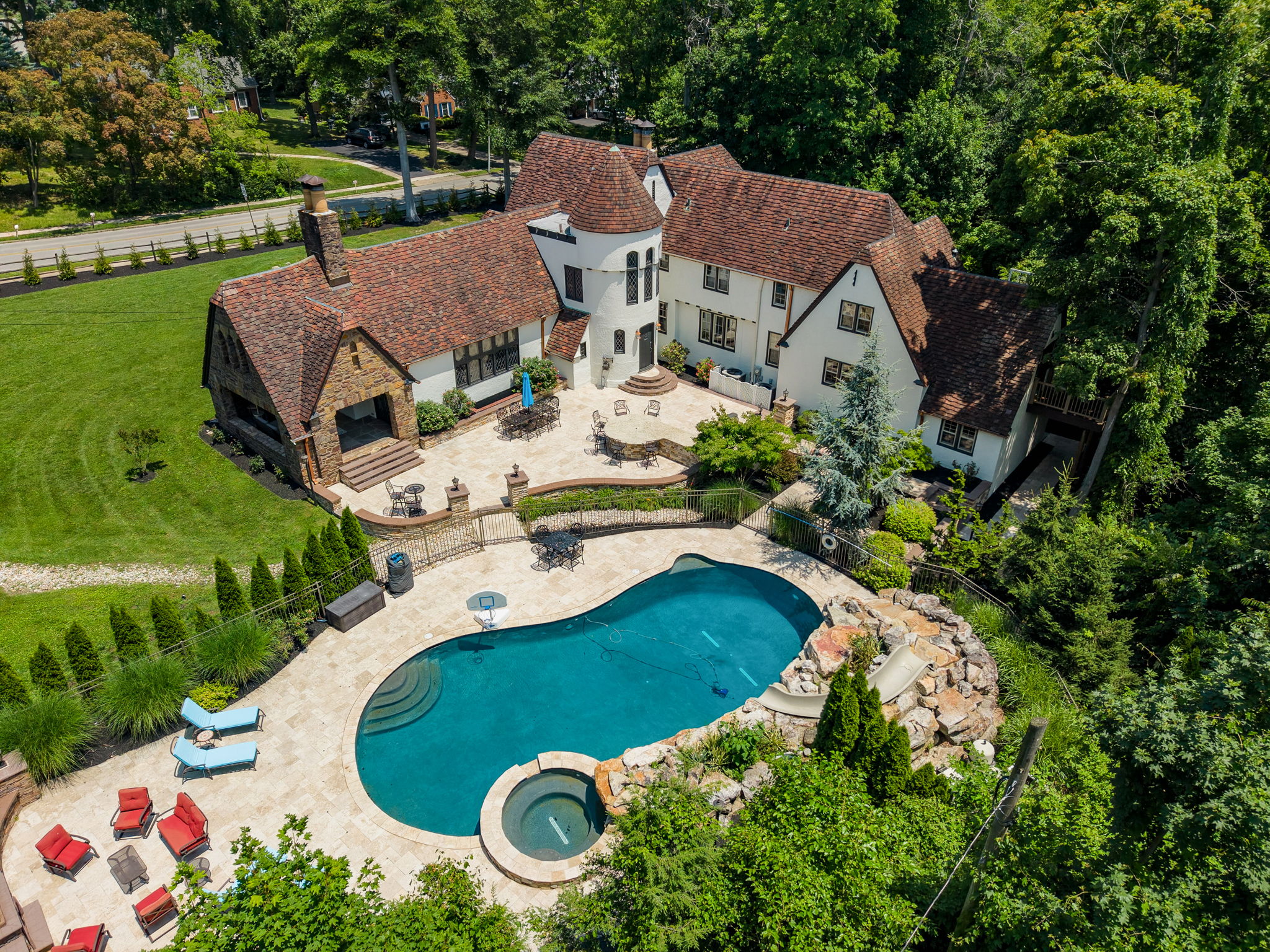
    A 1920s Tudor home is for sale on Canterbury Road across from Abington Senior High School.Donkin Media Group

    The two-story house is nicknamed “Tall Trees” for the woodsy feel it used to have, but anyone who’s ever paid an arborist can rest easy — the current owners have removed many of the trees.

    An added bonus is how much sunlight now enters the house, said Tim Owen of Compass Real Estate.

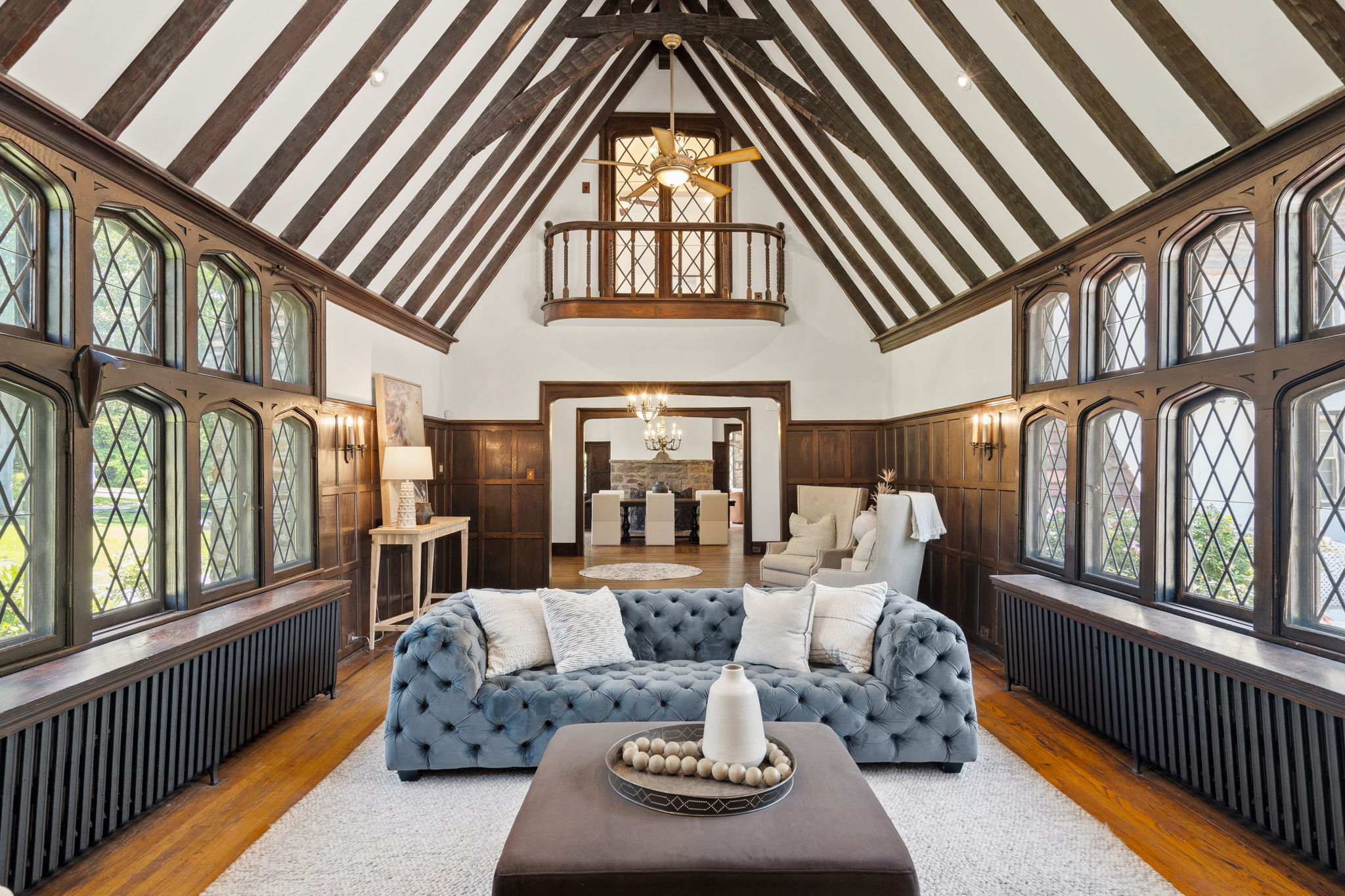
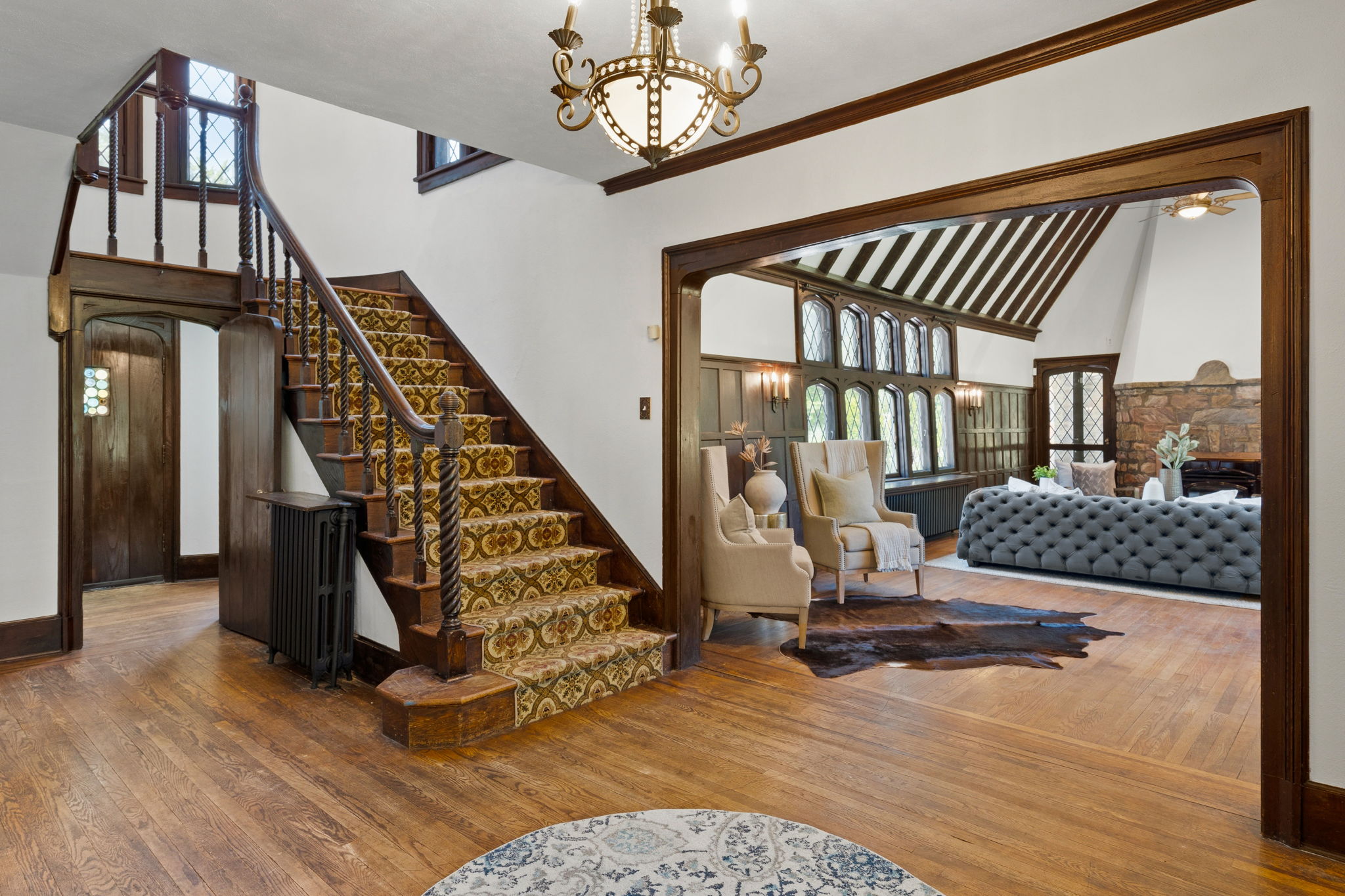
    The main floor of the 1920s Tudor for sale in Abington Township.Donkin Media Group

    “Often with Tudors, the houses feel really dark with the wood and all,” Owen said, but several potential buyers have mentioned how bright it feels inside, even on a gloomy day.

    The home is filled with original amenities, including wood-burning stone fireplaces, hardwood floors, carved woodwork, and sconces that may date back to the late 1920s. The house was built by Tudor-loving real estate mogul Wayne Herkness.

    An interior view of a 1920s Tudor for sale in Abington.Donkin Media Group

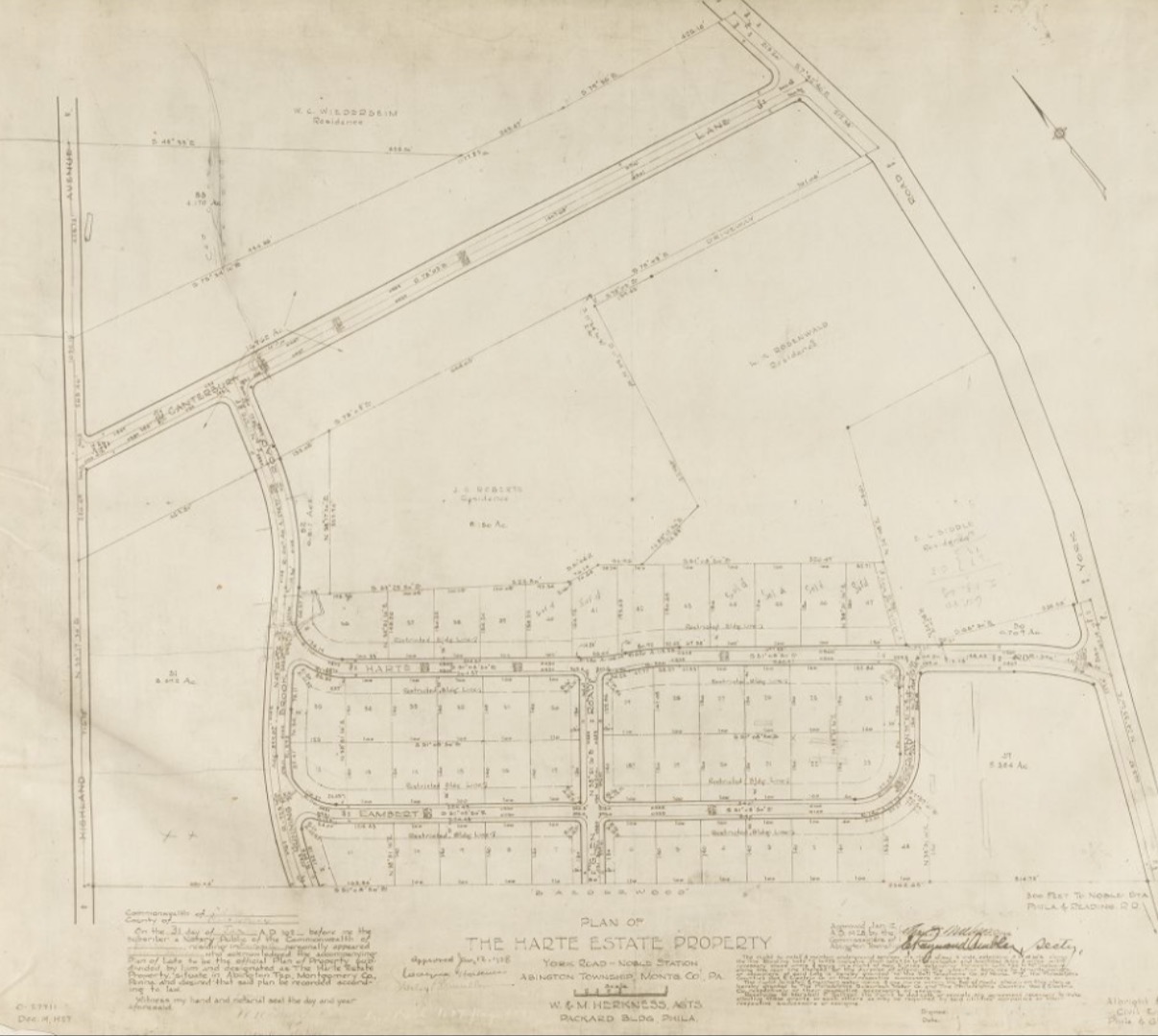
    Herkness “studied a great deal from books about English architecture,” reads the description of survey plans held in the Penn State University Libraries collection. “He developed the houses in his favorite styles, English Tudor and stone colonial, with grand center halls and on large lots.”

    A 1920s real estate survey by Albright & Mebus for the former Harte property in Abington includes Canterbury Road, where a Tudor home is on the market.W&M Herkness

    The current owners have restored original features and made several updates, Owen said, adding high-velocity central air-conditioning and a heated, in-ground, saltwater pool, replacing the windows, and re-staining the wood moldings.

    “They’ve definitely been very busy in the 13 years they’ve been there,” Owen said. “It truly is a move-in ready home.”
    The current owners of the Tudor home for sale on Canterbury Road in Abington added an in-ground, saltwater pool to the property.Donkin Media Group

    The previous owners who sold the house in 2013 passed on a framed print from the early days of Laird & Schober Shoes, a Philadelphia company that rose to international prominence in the early 20th century, Owen said.
    The company won an award from the Franklin Institute in 1900 for shoe manufacturing, and collaborated with famed Italian designer Elsa Schiaparelli.

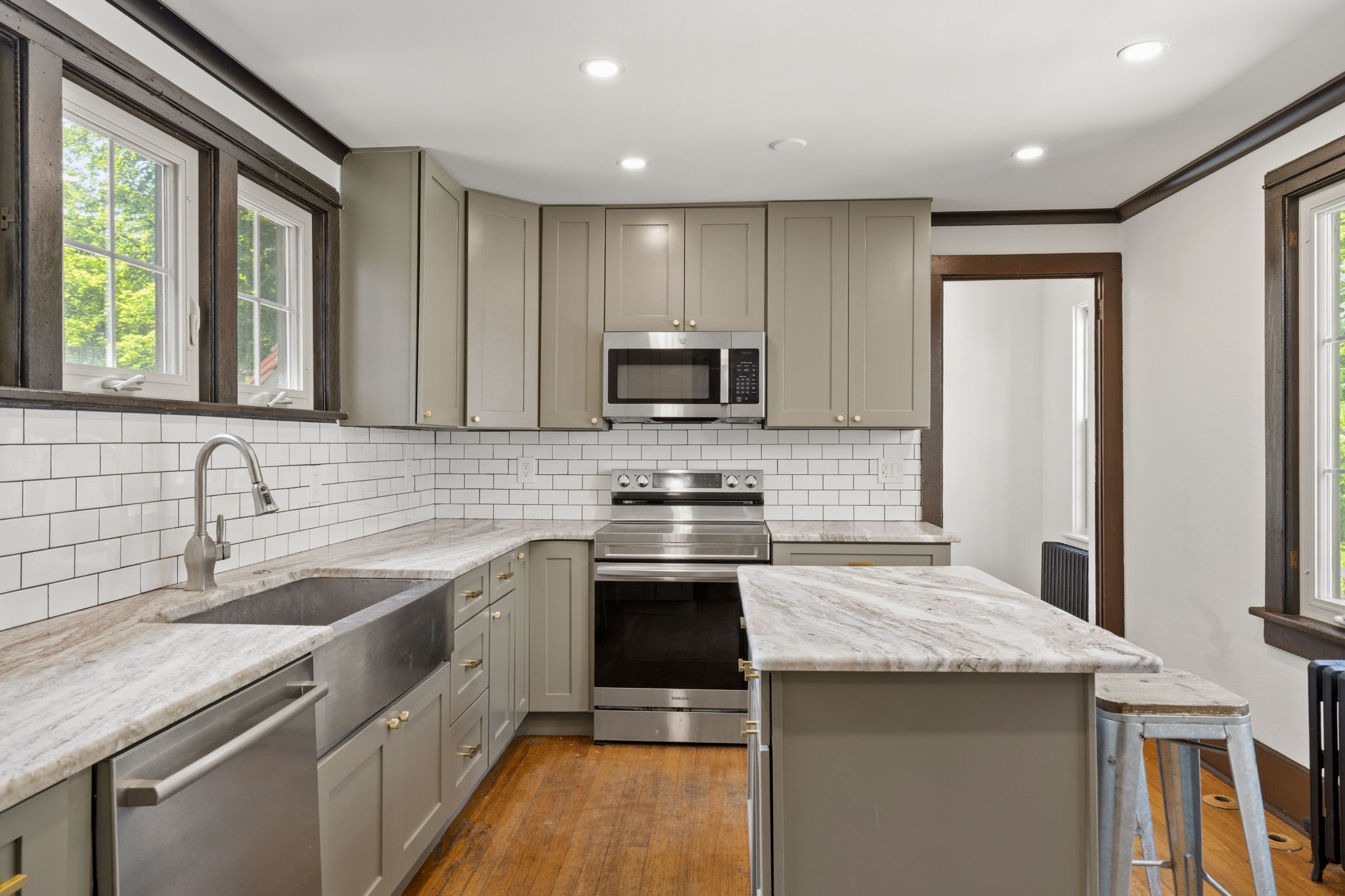
    The kitchen of the home for sale on Canterbury Road in Abington.Donkin Media Group

    The print may be a nod to one of the home’s first owners, George S. Laird. The name matches the son of the shoe company’s founder who also worked for the family business, according to a 1920 passport application.

    “It’s a cool house and has a cool story as well,” Owen said.
    This suburban content is produced with support from the Leslie Miller and Richard Worley Foundation and The Lenfest Institute for Journalism. Editorial content is created independently of the project donors. Gifts to support The Inquirer’s high-impact journalism can be made at inquirer.com/donate. A list of Lenfest Institute donors can be found at lenfestinstitute.org/supporters.

  • Philly City Council members probe Parker administration on rising property assessments: ‘Owners deserve answers now’

    Philly City Council members probe Parker administration on rising property assessments: ‘Owners deserve answers now’

    Members of Philadelphia City Council say they are concerned that the city’s recently released property reassessments will mean tax hikes for thousands of residents, and they are demanding to know more about the methodology used to determine property values.

    Councilmember Mike Driscoll, a Democrat who represents the Lower Northeast, authored a letter sent Monday to Chief Assessment Officer James Aros Jr. and other top officials in Mayor Cherelle L. Parker’s administration, expressing concerns on behalf of a half dozen Council members.

    He wrote that his office has received “numerous” calls from constituents whose homes will see sharp increases in valuation, the measure that is used to calculate property tax bills.

    “Many residents are struggling to grasp how their assessments were calculated. Others are worried about what these increases will mean for their property tax bills,” Driscoll wrote. “At a time when families are already facing higher costs for housing, utilities, groceries, and other daily expenses, these concerns need clear answers.”
    He outlined six questions for the Philadelphia Office of Property Assessment related to its process and methodology, and set an Aug. 15 deadline for the administration to reply, saying “property owners deserve answers now as they review their assessments and consider whether to file an appeal.”

    The 3100 block of C Street in Philadelphia on Tuesday, July 7, 2026. Property values sharply increased on this Kensington block.Elizabeth Robertson / Staff Photographer

    The letter — which was signed by six Council members who are cosponsors of previously introduced legislation to probe the city’s property assessment process — is one of the first formal steps that lawmakers have taken to challenge the citywide revaluation since last month, when property owners received notices of their new assessments.

    Citywide, there was a 3% median change in valuations from the 2025 tax year, the last time there was a mass reassessment, according to an Inquirer analysis of assessments of single-family homes.

    But some neighborhoods saw much steeper increases. The biggest jump was in Kensington, where median values increased 15.3%. Driscoll represents part of the neighborhood, which has been long beleaguered by the open-air drug market there and where the city has made a concerted effort to improve the quality of life.

    There was also a 15% median increase in property assessments in Mantua and a 12% rise in Kingsessing, both of which are in West Philadelphia and border University City.

    Parker administration officials have said that the city offers a variety of property tax relief programs, including the popular homestead exemption, which erases the first $100,000 in valuation from being taxed for owners who live in their home as their primary residence. Property owners must sign up for the free program.

    But for years, dating back long before Parker took office in 2024, Council members have criticized the city’s property reassessment process, saying its methodology is opaque and its results have a disproportionate impact on low-income homeowners.

    Multiple reviews are already underway.

    In addition to a yet-to-be-scheduled Council hearing, the city controller is conducting a performance audit of the property assessment office and the city’s appeal process, according to Driscoll’s letter. Controller Christy Brady’s office has sought feedback from residents and left flyers in neighborhoods where property values are rising.

    The Parker administration convened a task force in 2024 to develop recommendations for how the city can improve its appraisal practices.

    And the city is in the process of hiring an outside consultant to examine the fairness of its reassessments. According to city records, that analyst will be expected to draft a report by the end of this year.

    Data reporters Yaelle Tang and Lizzie Mulvey contributed to this article.

  • Real estate ‘pit bull’ Marc Kaplin says Exton Square Mall pushback is an ‘anomaly’

    Real estate ‘pit bull’ Marc Kaplin says Exton Square Mall pushback is an ‘anomaly’

    Marc Kaplin takes “pit bull” as a compliment when it’s used to describe him. The longtime real estate lawyer who has championed property rights for developers in the region takes it to mean “aggressive, prepared, knowledgeable.”

    He’s using that tenacity right now in court, battling over whether his client’s plan to redevelop the recently shuttered Exton Square Mall into a mixed-use town center can go forward despite the town supervisors’ denial.

    For decades, Kaplin, 82, has been behind dozens of regional development projects, with clientele spanning the Delaware Valley, into the Lehigh Valley, the Poconos, Delaware, and New Jersey.

    Kaplin’s interest in real estate law kicked into high gear when his family moved to Blue Bell in 1978, near Wings Airways. It was still “a prairie” with little development, he recalls. The airway owners wanted to expand the runway, challenging the township’s ordinance. He was hired by a group of neighbors to oppose it.

    Marc Kaplin, a real estate powerhouse, talked to The Inquirer about the Exton mall redevelopment project and more.Courtesy of Marc Kaplin

    That led to his role as township solicitor for Whitpain Township in Montgomery County in the early 1980s. Eventually, he moved into development: First working for his landlord, Bud Hansen of Hansen Properties, which became one of the biggest developers in Montgomery and Chester Counties.

    When Toll Brothers started, Kaplin was there. He’s represented the home construction company for more than 40 years. Other clients, like retail developers Wolfson Group, have also spent decades alongside Kaplin.

    With the closure of the Exton mall, and his client’s proposed redevelopment plan still in the courts, Kaplin spoke with The Inquirer about the downfall of the indoor mall, the challenges of building more affordable housing, and the rise in AI data center development.

    This conversation has been edited for clarity and brevity.

    You’ve worked in the city and the suburbs. Where is it easier to get projects done?

    They’re both extremely difficult and getting more and more difficult for different reasons.

    Philadelphia, if you don’t have a by-right project, you’ve got to go to the neighborhoods, the RCOs [registered community organizations]. You got to spend a lot of time, and it’s more political and satisfying people, than it is complying with every small [thing].

    Not only do you have to make sure that all the I’s are dotted and T’s are crossed in the suburbs, you got to know what to look for.

    There’s often community pushback in development projects. What are you hearing now when communities oppose a project?

    Just seems like everybody is against almost everything for a variety of reasons. Everybody complains about traffic. That’s the biggest thing. It’s ‘We’re here, we live here, we don’t need any more stores. We don’t need any more of this or that.’ But a lot of times you get a mixed bag.

    Now the Exton mall, we got very good reception to the Exton mall. It’s only a small group of people who are against the redevelopment of the Exton mall.

    Does the pushback to Exton Square Mall feel representative of larger trends in the region?

    It’s an anomaly for a project like that. When you look at the malls that are in really bad shape, townships are reaching out and want them redeveloped. Montgomery Mall. Plymouth Meeting Mall. Some over in New Jersey. I’m working on the Berkshire Mall up in the Reading/Wyomissing area, and we’re getting tremendous cooperation.

    These malls are 1,500-pound gorillas. They killed tax base, millions and millions of dollars that were coming in before. … I can’t give you a logical reason why two supervisors in West Whiteland are putting up this fight. I’m waiting for a judge to make a decision.

    We’re pretty optimistic that we’ll be able to go ahead, but it ain’t over until it’s over.

    You’ve been quoted as saying ‘indoor malls don’t work,’ but we are seeing some success in King of Prussia and Cherry Hill. What do you think sets them apart from places like Exton mall?

    They are the super regional malls, and they do work, and Simon controls many, many of them. They work, but the Plymouth Meeting Mall doesn’t work, the Exton mall doesn’t work, the Willow Grove mall doesn’t work, and many, many more.

    There’s a whole long history of why that’s so. There were, in the ’60s and ’70s, department stores we no longer have: Wanamakers, Strawbridge’s, Snellenburg’s, and on and on. … And then you had J.C. Penney and Sears, and it was much easier way back then to get three large anchors. Then the Kmarts came along, and the Walmarts, the big boxes that didn’t have all of the infrastructure. The common operating expenses are much less, because you have all interior halls — heating, air-conditioning, and all that.

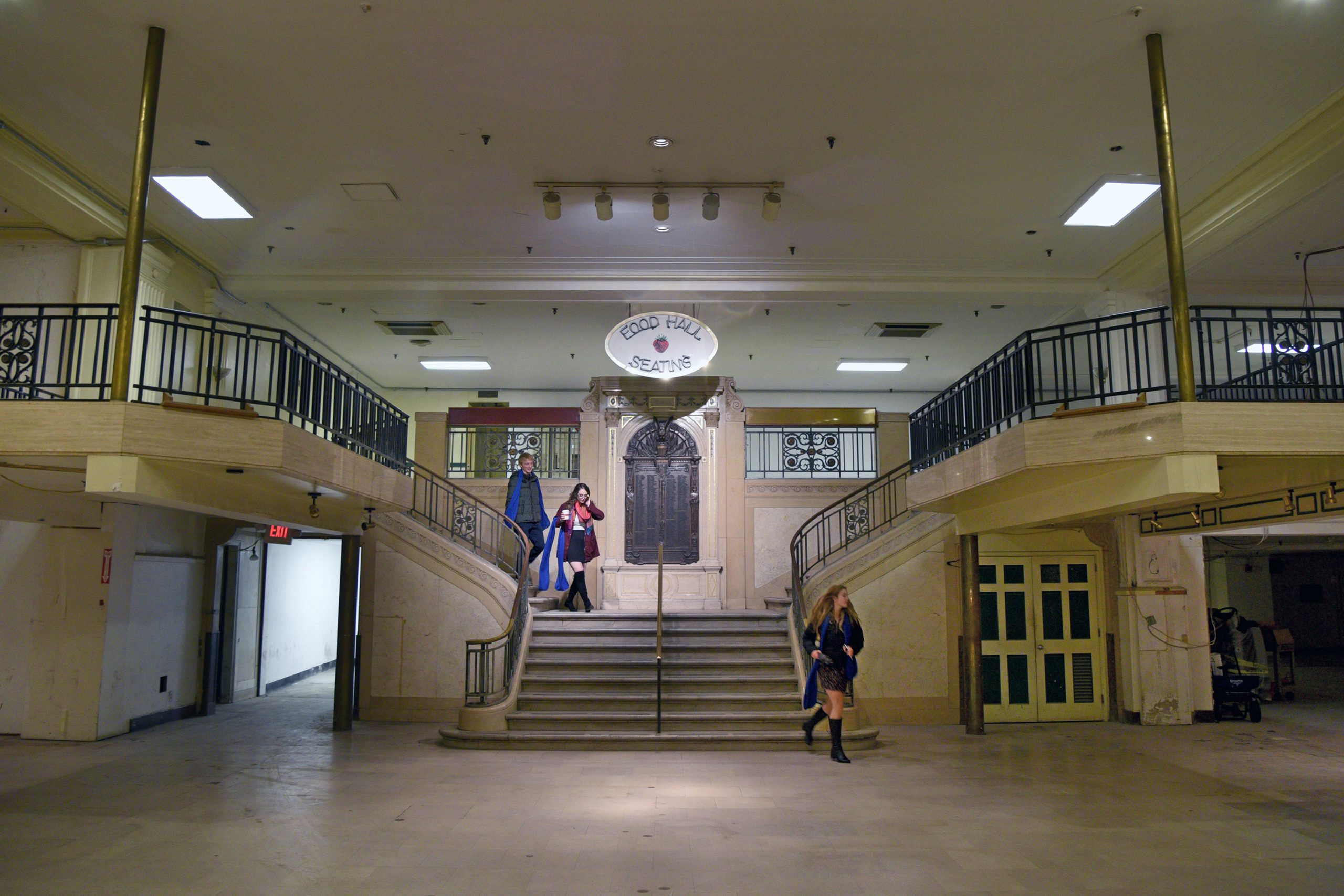
    Members of the Strawbridge family explore the old Food Hall on the first floor of the former Strawbridge & Clothier department store site on the north side of the 800 block of Market Street Dec. 17, 2019.Tom Gralish / Staff Photographer
    Why do you think Main Street at Exton, a mixed-use shopping center that opened in the 2000s, has been such a success?

    Because it’s run by the best operator around. That’s my client, Steve Wolfson. It’s had a[n] … anchor for now over 20 years.

    In Exton, there was about a 10-year period when there were two supervisors who were against everything. So you didn’t see a great deal more development, but the Main Street at Exton used the new urbanist approach 22, 23 years ago and made huge improvements to the roads. There are great roads there, and it was right in the path of development.

    Are there any cases or projects that have shaped Chester County as we know it today?

    Exton has always been called the crossroads of Chester County. You’ve also got the Hankin Group that has done all the development in Chester County. … You had very big companies come in — Vanguard — and you had good school systems and relatively decent roads. I think it’s just the continued outward development from Philadelphia.

    Many suburbs are facing affordable housing crises. How do you predict municipalities will overcome NIMBYism when it comes to those projects?

    It’s a very, very, very difficult problem. There are very few places in the entire country where it’s been solved. New Jersey has the most extensive program in the country to cause the development of affordable housing … that’s really the Mount Laurel doctrine, and where the townships are required not only to make affordable housing available, but also to make it happen.

    The market cannot create affordable housing without governmental help. Just can’t be done. It’s not enough land. Regulations are enormous, expensive.

    It’s a societal problem that can’t be solved just by municipalities and homebuilders and homebuyers.

    Do you think all of the proposed data centers will actually get built?

    I’m involved in a couple of data centers. … At first the communities were dead set against more warehouses, particularly up in the Lehigh Valley, and then when this particular community heard ‘data center,’ they were ecstatic — for a whole variety reasons: very little traffic, very few people in schools, high-paying jobs, and now there’s this national swell attacking data centers.

    The data centers we’re seeing now, in one fashion or another, are creating their own energy. So my own particular opinion is that it’s just blown up, overblown, over-exaggerated, and we’re going to need all this computing power as we move into the next technology age.

  • A new Pa. Turnpike ramp connects the Fort Washington exit to a 536-acre multiuse development

    A new Pa. Turnpike ramp connects the Fort Washington exit to a 536-acre multiuse development

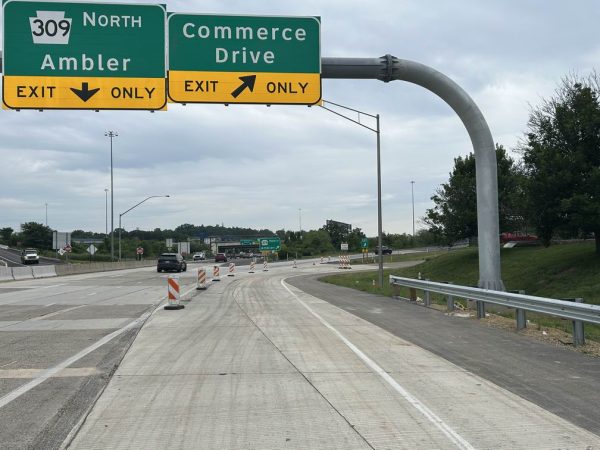
    The ribbon was snipped Tuesday, and the first car, a green Audi S5 convertible, rolled down the new “zip ramp” providing direct access from the Pennsylvania Turnpike’s Fort Washington interchange to a 536-acre office park redevelopment in Upper Dublin.

    “This is a milestone day for Upper Dublin,” said Kurt Ferguson, executive director of the township’s municipal authority, which for 10 years has managed the ongoing transformation of the underused office buildings of the former Fort Washington Industrial Park into the multiuse Greater Fort Washington District.

    The authority has invested about $45 million in infrastructure to support the revitalization project, about 70% from state and county transportation and development grants, Ferguson said. That includes the 2,100-foot ramp, designed and built for about $3 million.

    A Lifetime Fitness complex, new retail outlets, and TruMark Credit Union headquarters have been built in the district.

    Three former office properties have been converted to apartment buildings, with a fourth turned into a storage facility, Ferguson said. Upper Dublin moved the township library to Virginia Drive in the district, which includes a segment of the Cross County Trail operated by Montgomery County.

    The new ramp was made possible by the turnpike’s move to open-road tolling, in which motorists pay tolls by E-ZPass or by plate while passing under gantries. Toll booths are being torn down, leaving more room at interchanges for direct-connect projects like the zip ramp.

    “Open-road tolling enables us to be a better neighbor,” turnpike CEO Mark Compton said. “In terms of today’s transportation dollars, this project is not large money … [but] it opens up economic opportunity for this community.”

    The Pennsylvania Turnpike Commission is designing a roundabout off the Mahoning Valley Interchange (Exit 74) on the Northeast Extension and plans a park-and-ride lot there.

    It is also looking to develop truck parking at the Gateway interchange (Exit 2), near the Ohio state line in Western Pennsylvania, spokesperson Marissa Orbanek said.

  • Michelle Widgins-Lewis, singer-songwriter and founder and CEO of Northwest Counseling Service, has died at 69

    Michelle Widgins-Lewis, singer-songwriter and founder and CEO of Northwest Counseling Service, has died at 69

    Michelle Widgins-Lewis, 69, of Philadelphia, singer-songwriter, founder, president, and executive director of Northwest Counseling Service Inc., longtime community housing and education advocate, lecturer, and mentor, died Monday, June 29, of endometrial cancer at Jefferson Abington Hospital.

    Inspired to educate and counsel underserved potential homebuyers about predatory mortgage lending, foreclosure, and other important real estate and housing issues, Ms. Widgins-Lewis founded Northwest Counseling Service on North Broad Street in 1982. For the next 44 years, until recently, she interviewed nearly 5,000 people each year seeking mortgage prequalification and, funded by the Philadelphia Division of Housing and Community Development, advised them about insurance, eviction, credit rating, grants, conflict mediation, and inspections.

    “She helped transform homeownership in Philadelphia,” her family said in a tribute.

    Ms. Widgins-Lewis was appointed to the Pennsylvania Housing Advisory Committee in the 1990s by then-Gov. Ed Rendell and served as a technical adviser on real estate matters for the Philadelphia Division of Housing and Community Development. She worked closely with the Pennsylvania Housing Finance Agency and continually lobbied local, state, and federal government officials for better borrowing and foreclosure laws.

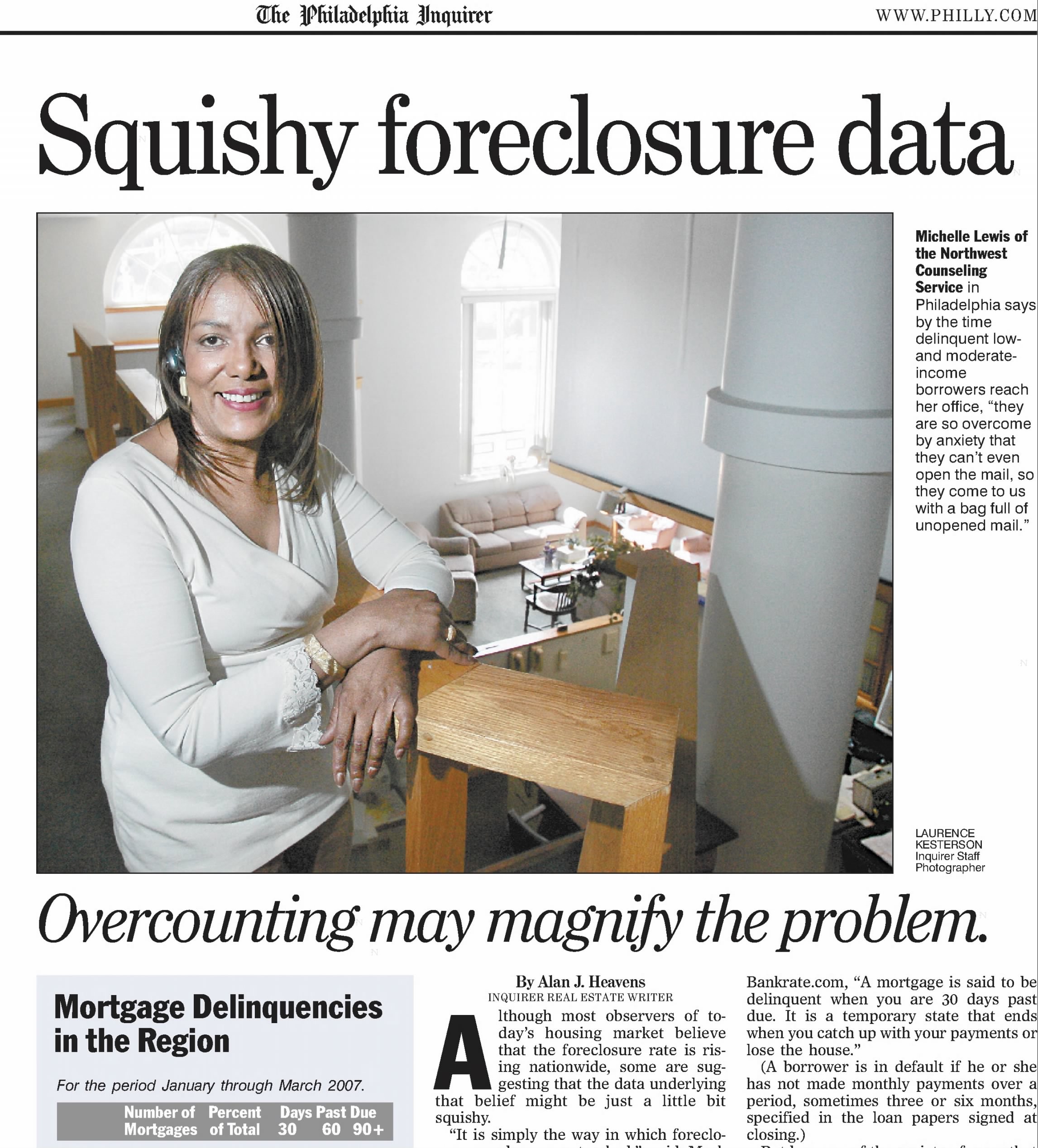
    This photo and article about Ms. Widgins-Lewis appeared in The Inquirer in 2007.Newpapers.com

    She examined property disputes as a forensic real estate specialist, scrutinized scams as a fraud examiner, testified in federal court as a qualified expert, and was licensed as a real estate broker and appraiser. She monitored local landlord-tenant mediation cases closely and told The Inquirer in 1996 that many tenants “end up with an agreement they can’t live up to.”

    People, she said often, are rarely ready to buy their first house. “Instead of considering whether they are prepared to buy a home, people are being propelled into the market by economic pressure that says they should buy because it’s cheaper than renting,” she told The Inquirer in 1995. “That’s not always true.”

    She also founded and chaired the Philadelphia Predatory Lending Task Force, which collected and publicized data about unfair lending practices. “This gives us a picture of the type of problems going on in our neighborhoods,” she told the Daily News in 2001.

    Ms. Widgins-Lewis was an instructor for the National Real Estate Institute and a leader for the American Society of Certified Housing Executives, the Real Estate Educators Association, and other groups. She wrote articles for journals and forged educational partnerships with colleges and universities.

    Ms. Widgins-Lewis performed in several bands and with her sister Dionne.Courtesy of the family

    She spoke on panels and at conferences and workshops about homeownership, and was quoted often in The Inquirer and Daily News. Friends called her “truly inspiring” and “a true champion in the mortgage industry” in online tributes. One friend said: “She was a beast in the housing world.”

    Ms. Widgins-Lewis sang often as a young girl, got rave reviews on karaoke night when she was older, and went on to perform in several bands and with her sister Dionne at local clubs and festivals. She sang rhythm and blues, pop, standards, and jazz, and wrote at least one song that was recorded and released.

    Daily News columnist Stu Bykofsky wrote about her dual career as a singer-songwriter and executive in 1995 and said: “She still has trouble calling herself an artist but feels, at the very least, she’ll always be able to get up and sing at fundraisers for her agency.”

    Her family said: “From childhood, Michelle drew people in with her light and her voice.” Her daughter Tracey Thomas said: “She would light up the room.” Her son Mike said: “Everybody loved her.”

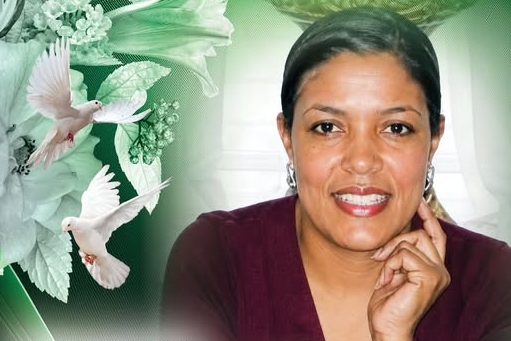
    Her family said Ms. Widgins-Lewis had “an unwavering commitment to education, integrity, and service.”Courtesy of the family

    Michelle Widgins was born May 29, 1957, in Philadelphia. She graduated from Martin Luther King High School and earned a bachelor’s degree at La Salle University and a master’s degree in human services at Lincoln University.

    She married Michael Brown, and they had a daughter, Anji, and a son, Mike. After a divorce, she married Tyrone Lewis, and they had a daughter, Tracey, and a son, Richard. They divorced later.

    Ms. Widgins-Lewis enjoyed reading and writing. She belonged to the Pi Gamma Mu international honor society, was close with Mayor Cherelle L. Parker and former Mayor Wilson Goode, and was guided, her family said, by “an unwavering commitment to education, integrity, and service.”

    Her family is hoping to rename a Northwest Philadelphia street in her honor.

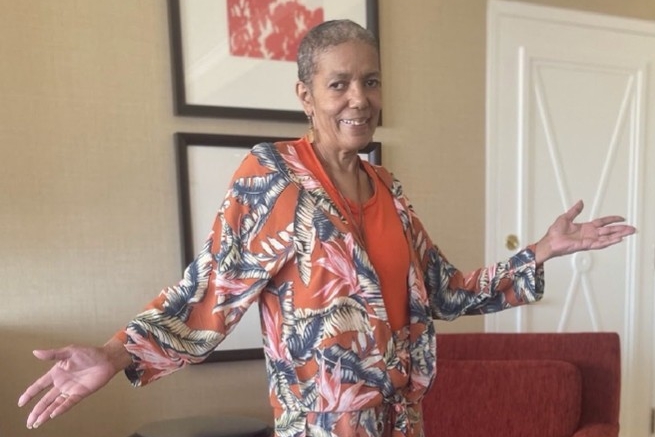
    Ms. Widgins-Lewis lived with cancer for 10 years.Courtesy of the family

    “She was humble but had drive and determination,” her son Mike said. Her daughter Tracey said: “The world was her stage. I can only imagine how her light will shine in heaven.”

    In addition to her children and former husbands, Ms. Widgins-Lewis is survived by eight grandchildren, a sister, two brothers, and other relatives. A sister and a brother died earlier.

    Services are to be at 11 a.m. Thursday, July 16, at Verity Church, 2017 W. Diamond St., Philadelphia, Pa. 19121.

    Donations in her name may be made to Northwest Counseling Service Inc., 6521 N. Broad St., Philadelphia, Pa. 19126.

    Ms. Widgins-Lewis “was humble but had drive and determination,” her son Mike said. Courtesy of the Family
  • House of the week: A 19th-century twin in Chestnut Hill for $699,900

    House of the week: A 19th-century twin in Chestnut Hill for $699,900

    When Gretchen Ellis saw photos of the four-bedroom, two-bathroom twin on a cul-de-sac in Chestnut Hill, she said, “I knew it was ‘the house.’ I felt a deep sense of calm.”

    With her two sons in college, she moved from Maple Glen in 2017. Now, her sons are in Pittsburgh and Ellis is joining them.

    “I wish I could pick up my house and my neighbors and move them there,” Ellis joked.

    The kitchen has marble countertops, stainless steel appliances, and a breakfast bar. Gary Schempp

    The 1,520-square-foot home was built in 1887, designed by architect Robert R. McGoodwin.

    Hardwood flooring covers most of the home; the living room has a gas fireplace; and the kitchen has marble countertops, stainless steel appliances, and a breakfast bar with scenic views of the grounds.

    The living room has a gas fireplace.Gary Schempp

    The second floor has two bedrooms, including the primary, which has a built-in closet system, and share a full bathroom. The second bedroom can also serve as a home office.

    The two bedrooms on the third floor share a full bathroom with a claw-foot tub.

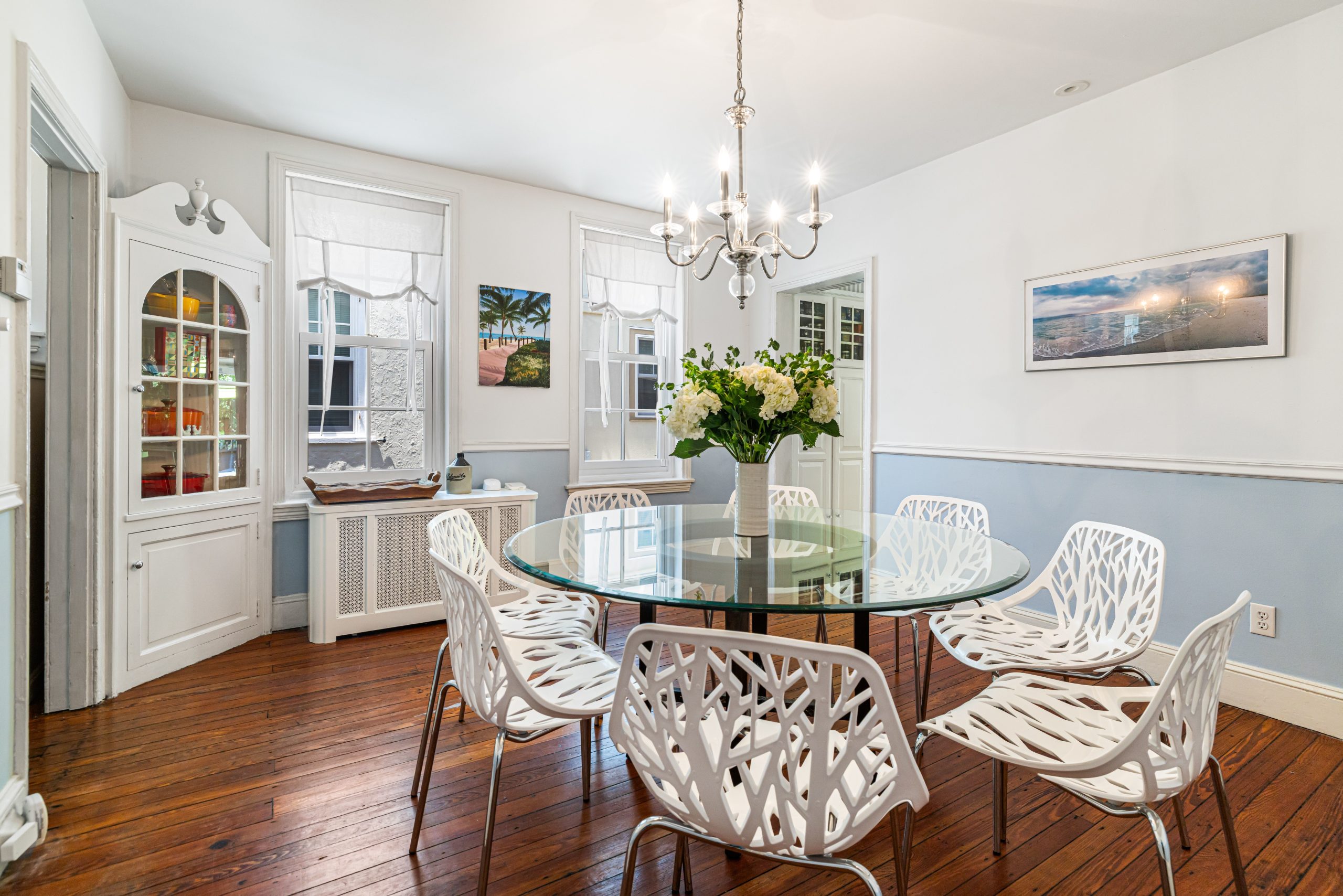
    The dining room.Gary Schempp

    Recent improvements include roof flashing reinforcement, metal roof coating, replacement of a cedar shed, and a new sump pump.

    There is a full basement with a French drain system, laundry facilities, and an exterior exit with a full set of stairs and a brick patio.

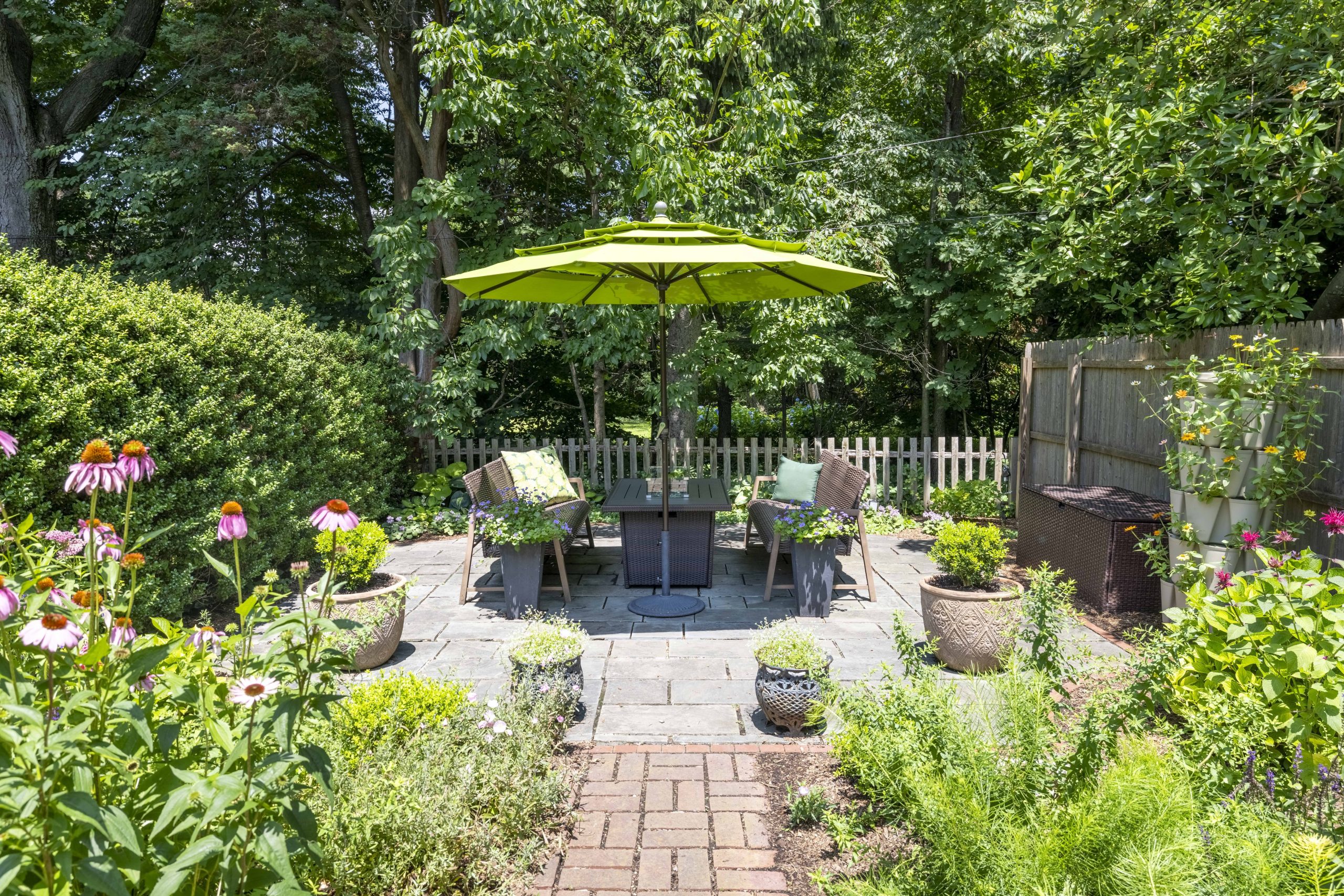
    The back patio.Gary Schempp

    The house is a short walk from SEPTA’s Chestnut Hill East and Chestnut Hill West Regional Rail lines, and the shopping corridor of Germantown Avenue.

    It is listed by Diane Reddington of Coldwell Banker Realty for $699,900.

  • They wanted to recreate childhood Shore memories. So they rebuilt a house in Strathmere

    They wanted to recreate childhood Shore memories. So they rebuilt a house in Strathmere

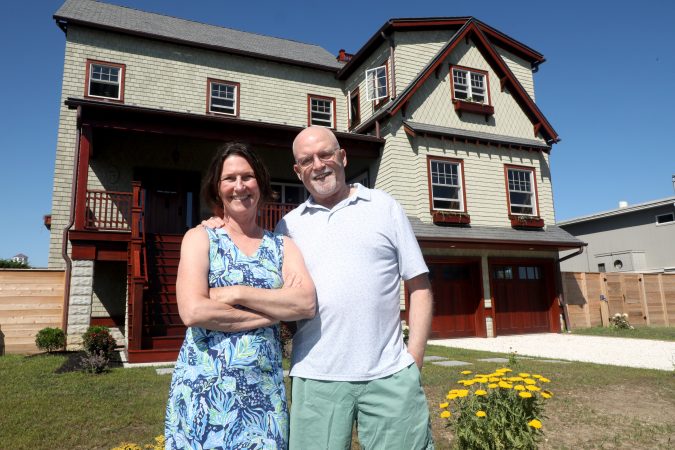
    Creating their forever home was a labor of love for Wendy Whittington and Fred Duffy.

    The couple, on the cusp of retiring from medical careers in Dallas, spent several years designing the Strathmere home they moved into this summer. It’s a showcase of their passions: family, books, travel, and wine.

    “We wanted to recreate an old beach house with the feel of the Shore we knew from growing up,” said Whittington. She grew up in nearby Dennis Township and Duffy visited Long Beach Island in his youth.

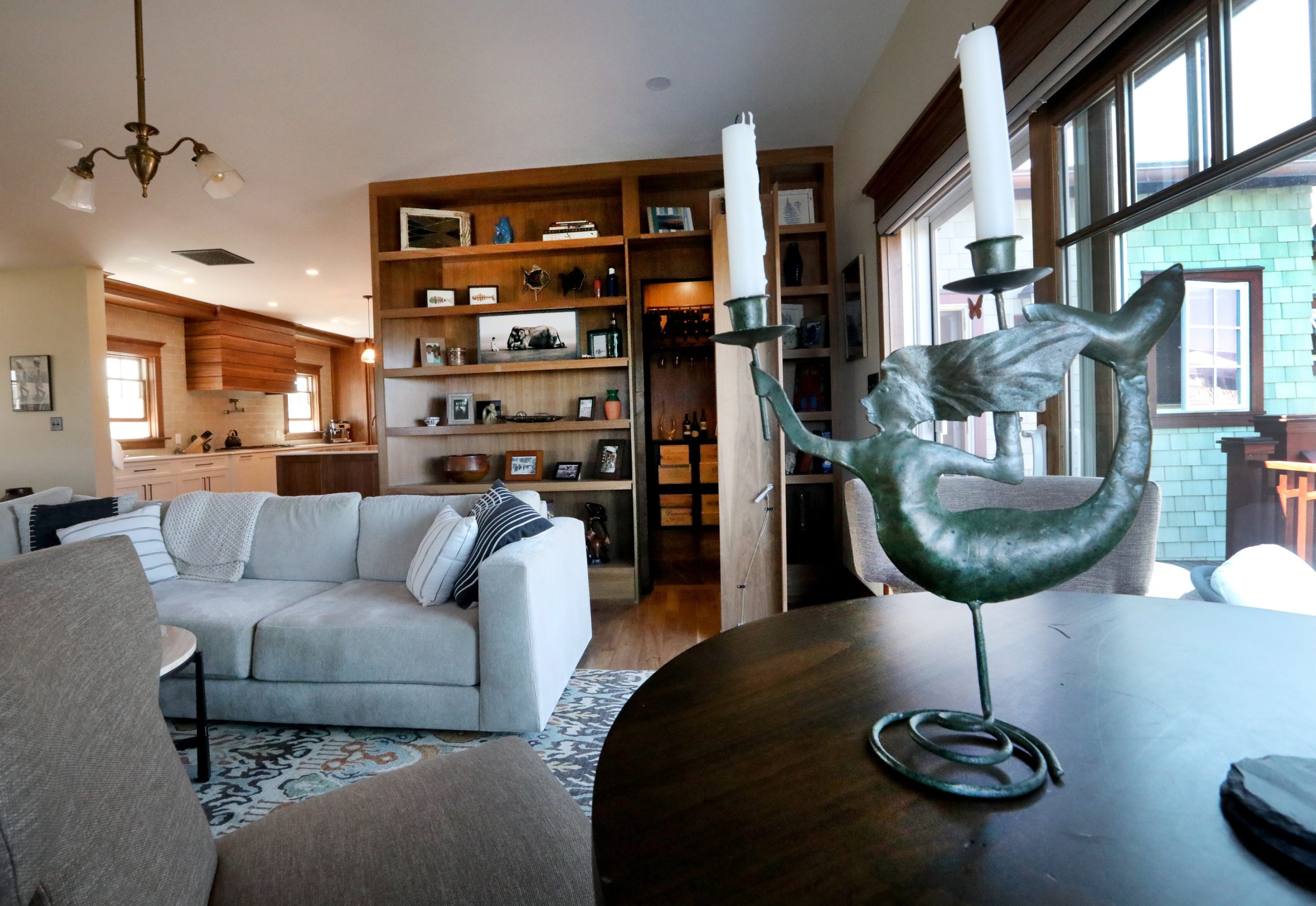
    An ornate candle holder, a gift from Wendy Whittington for her husband, Fred Duffy, sits in a nook in the living space.Vernon Ogrodnek / For The Inquirer
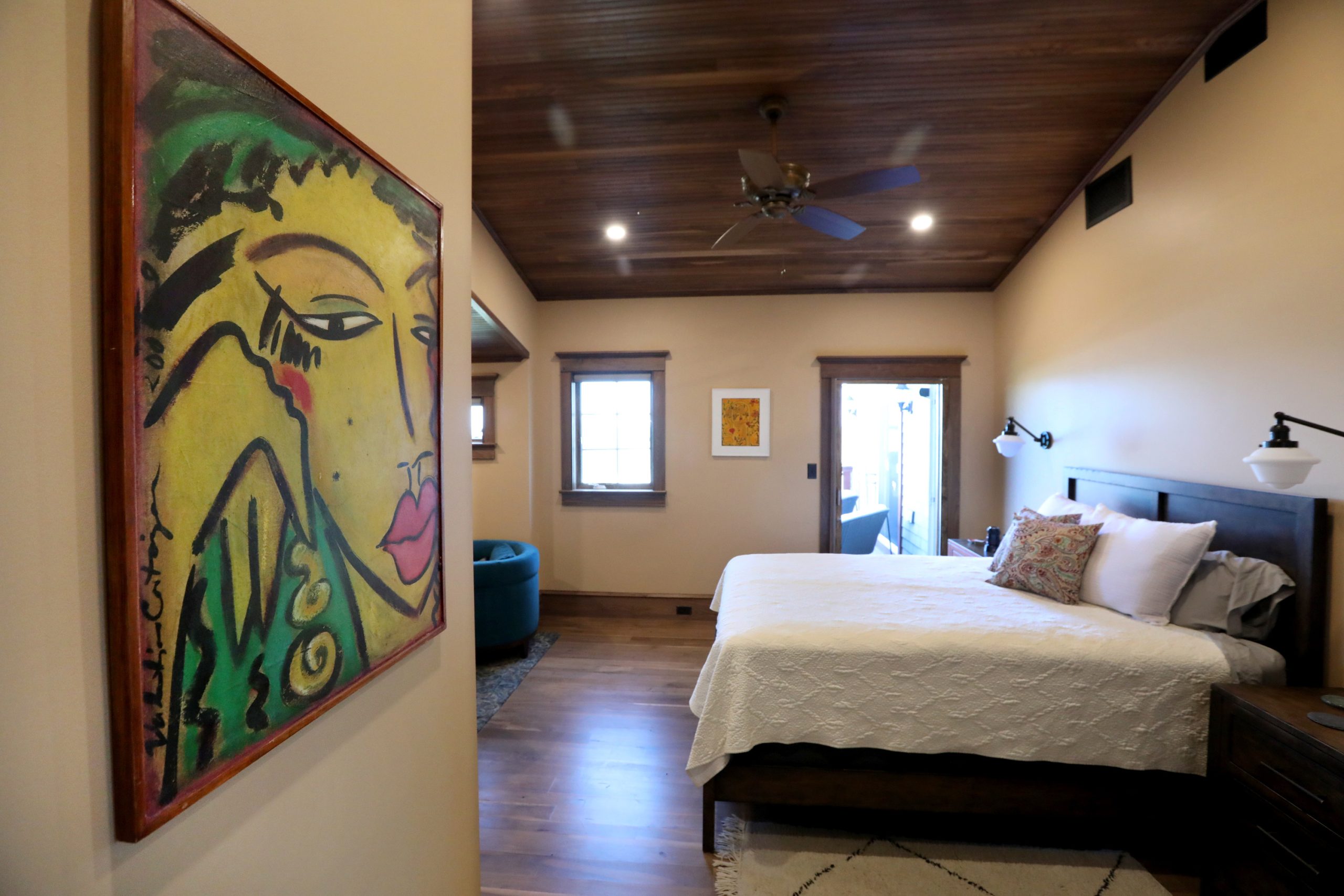
    The main bedroom of the Strathmere home.Vernon Ogrodnek / For The Inquirer

    “We have a big family and wanted a place that was welcoming,” Whittington said, “a gathering place.”

    So they razed and rebuilt the house they had bought a decade earlier. They had purchased the rundown two-bedroom ranch as a rental property, with a plan to replace it later.

    “We had an affinity for coming back to the beach and Strathmere worked for both of us,” said Whittington. “It felt like coming home.”

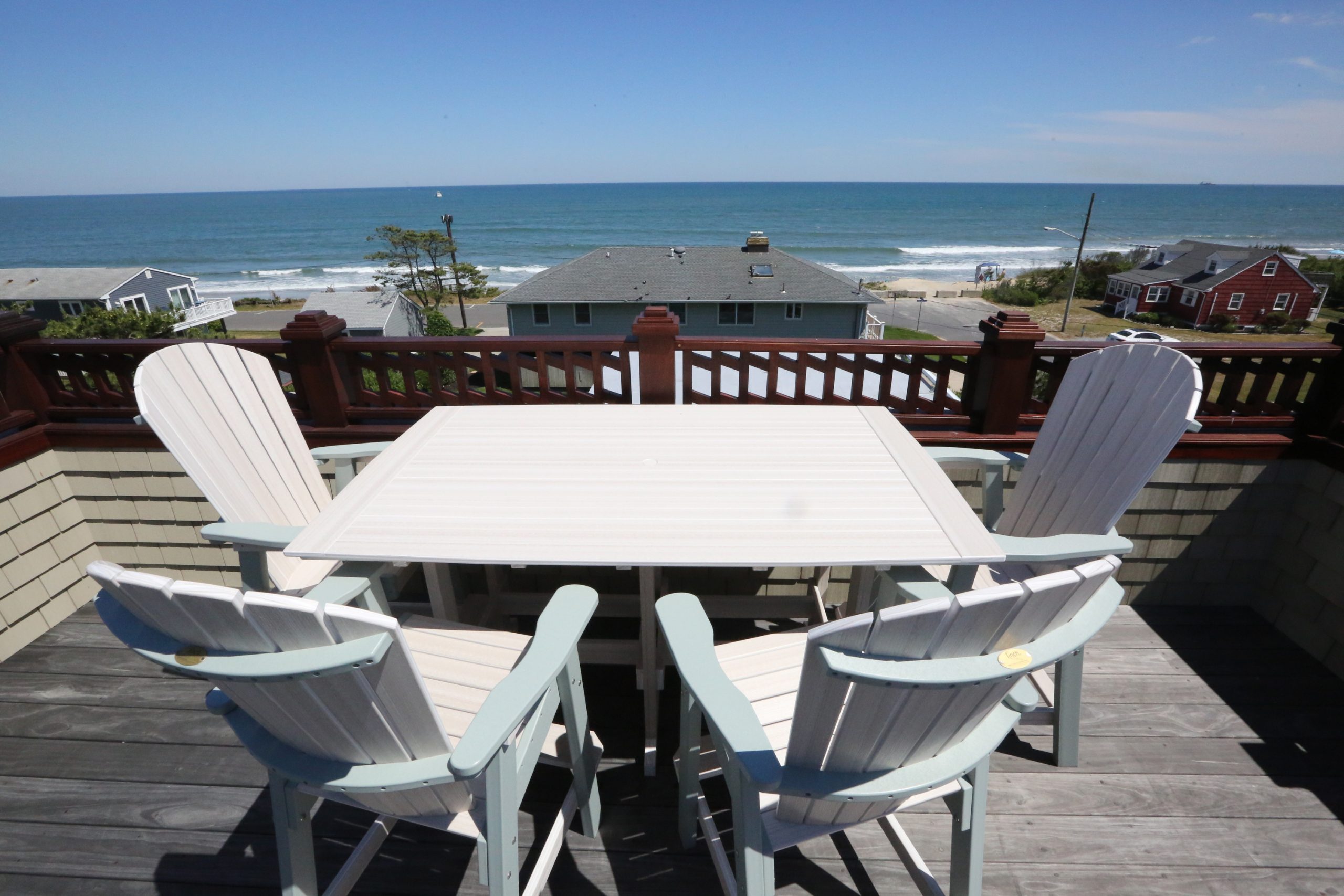
    The uppermost deck offers a view of the ocean.Vernon Ogrodnek / For The Inquirer

    But the house was too small for their large blended family. Together they have eight children, four of whom now have spouses.

    Working with Halliday Architects and Oliver Custom Home Builders, they spent about four years designing and almost two years building the new house. The roughly 4,000-square-foot home has two main floors. The second floor, where the couple spend most of their time, includes a spacious kitchen and den, primary bedroom and sitting area, Duffy’s office, and a secret wine cave.

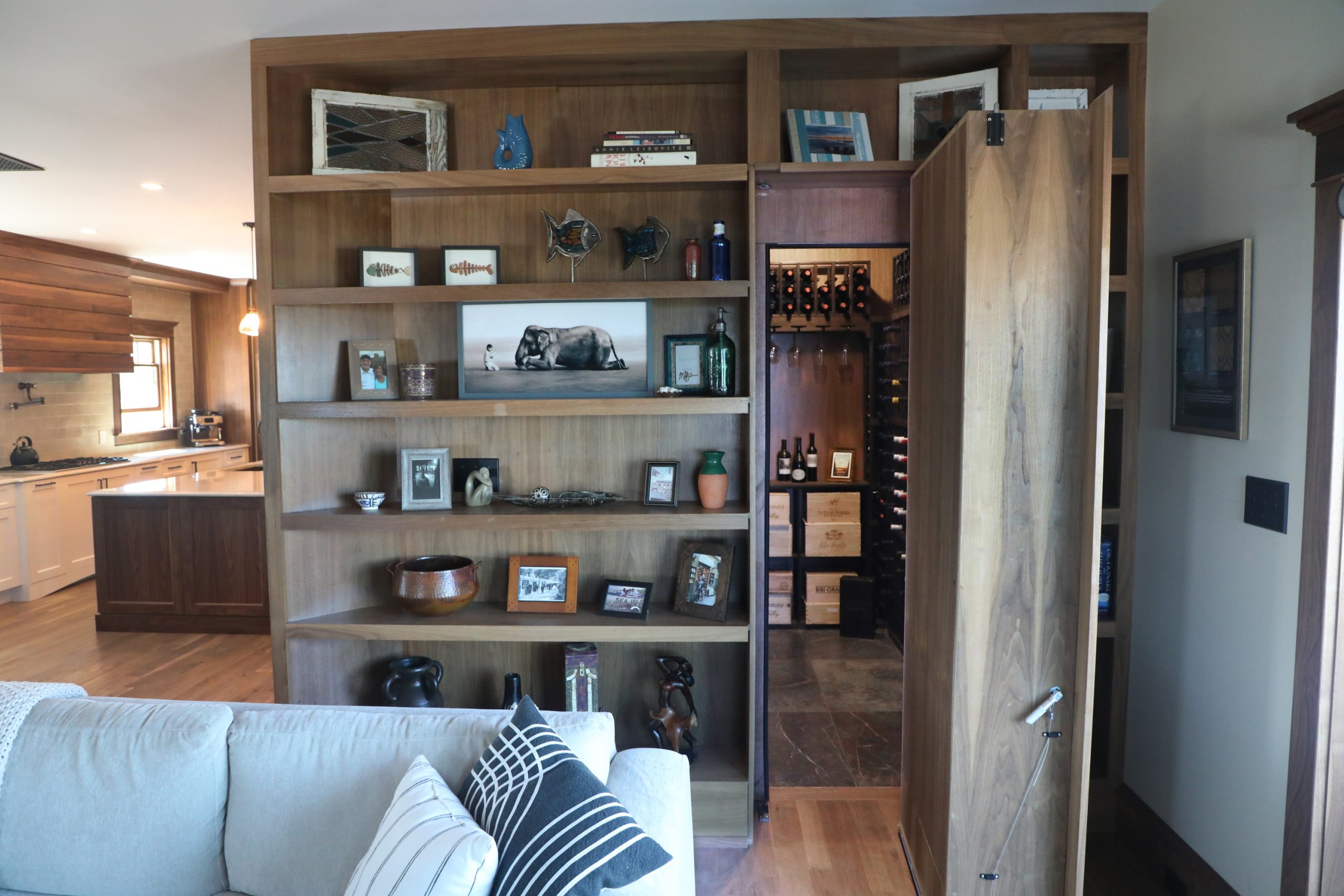
    A custom-made bookcase has a hidden door that leads to a refrigerated wine storage area.Vernon Ogrodnek / For The Inquirer
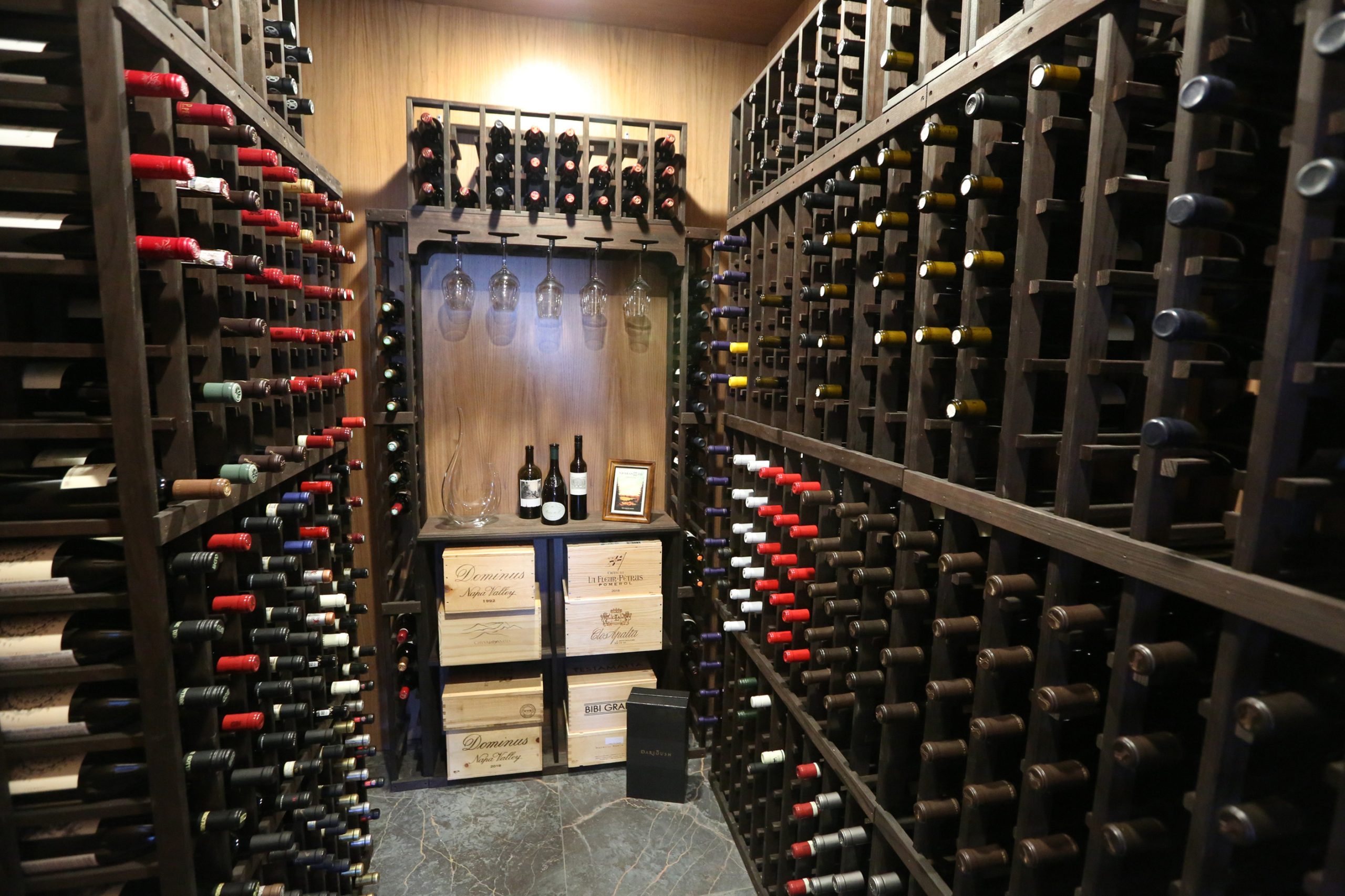
    Whittington and Duffy enjoy collecting and tasting wine.Vernon Ogrodnek / For The Inquirer

    The first floor is where their kids hang out. It has three bedrooms, a second kitchen, and Whittington’s study.

    “The kids are welcome upstairs, but they aren’t encouraged to come up,” joked Duffy. “That’s our sanctuary.”

    Despite the boundary, “everybody always ends up in the kitchen anyway,” Whittington said. So “we wanted a kitchen big enough to allow for that.”

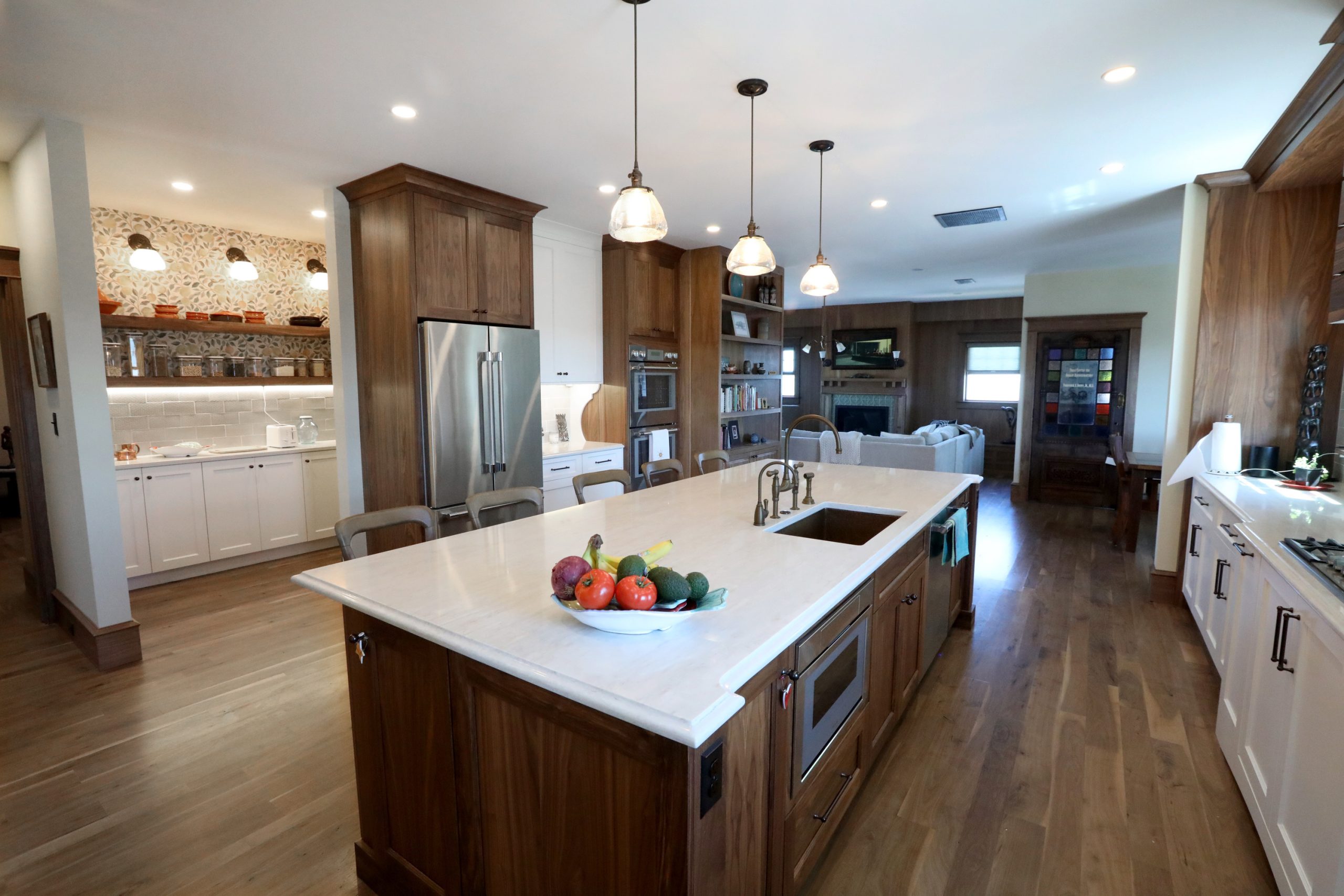
    Whittington and Duffy both enjoy cooking. Their main kitchen was designed with functionality in mind, and includes a large quartz island, Thermador appliances with a five-burner gas stove, double ovens, a pot filler, a copper sink, and lots of storage space.

    The second-floor main kitchen, one of two, is spacious, with ample seating and a large pantry area.Vernon Ogrodnek / For The Inquirer

    The open-concept layout allows guests to mingle in the sitting area, a cozy room with a fireplace, comfortable couches, and a stunning view of the ocean. Large walnut bookcases are filled with books, evidence of their passion for reading. Hidden behind one of the bookcases is the temperature-controlled wine grotto.

    The pair often eat at the bistro table in the corner. When the house is full of guests, they eat in the dining room at an oak table they bought from Land & Sea Furniture in Ocean View. Custom made by Amish woodworkers, it seats 14.

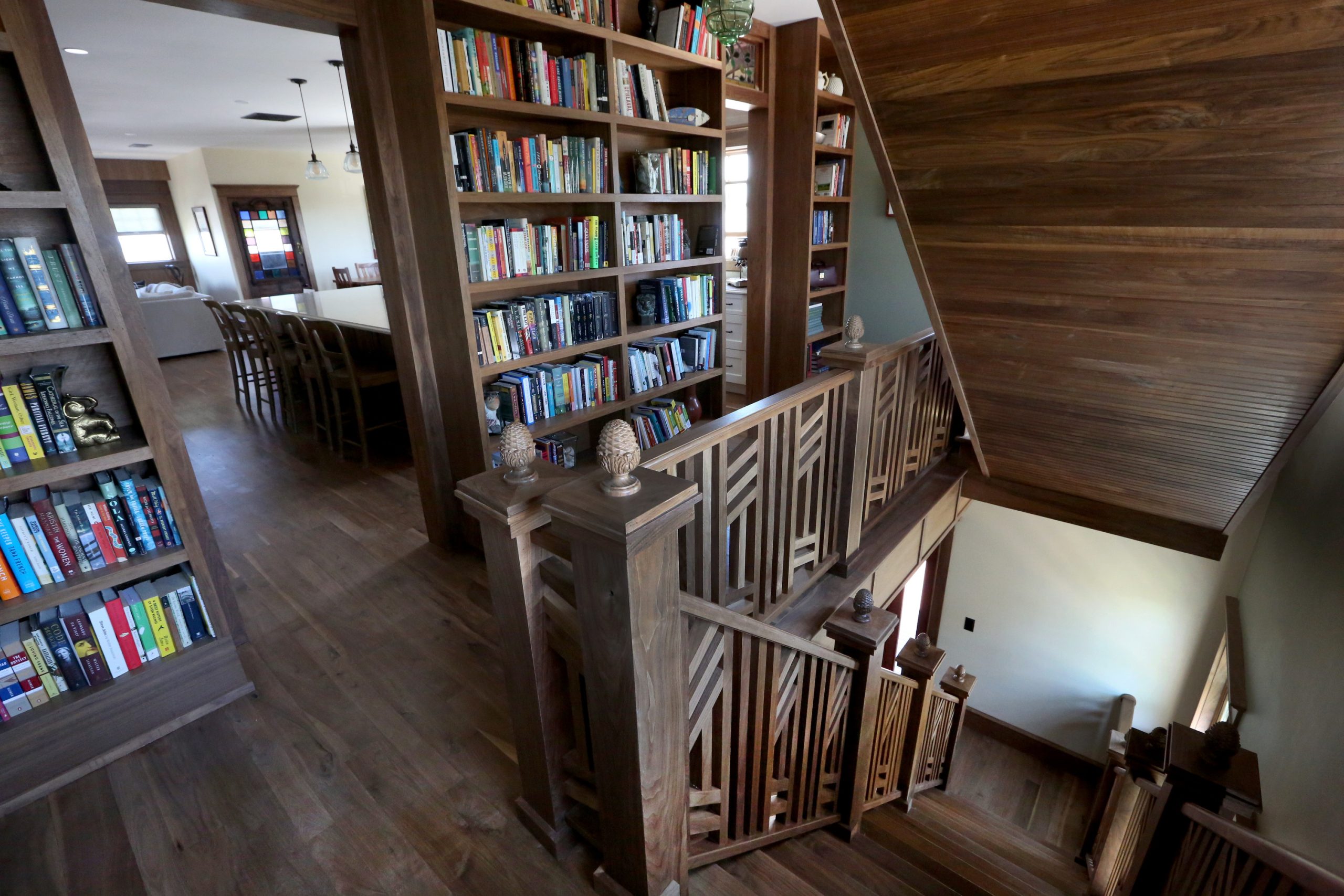
    The extensive use of wood throughout the home is one of its most striking features. Rich mahogany defines the exterior trim and extends to the ceiling of the couple’s primary bedroom. Inside, walnut takes center stage, featured in the flooring, trim, and distinctive banisters.

    Whittington and Duffy, passionate readers, built a library area with a custom bookcase and a custom walnut banister.Vernon Ogrodnek / For The Inquirer

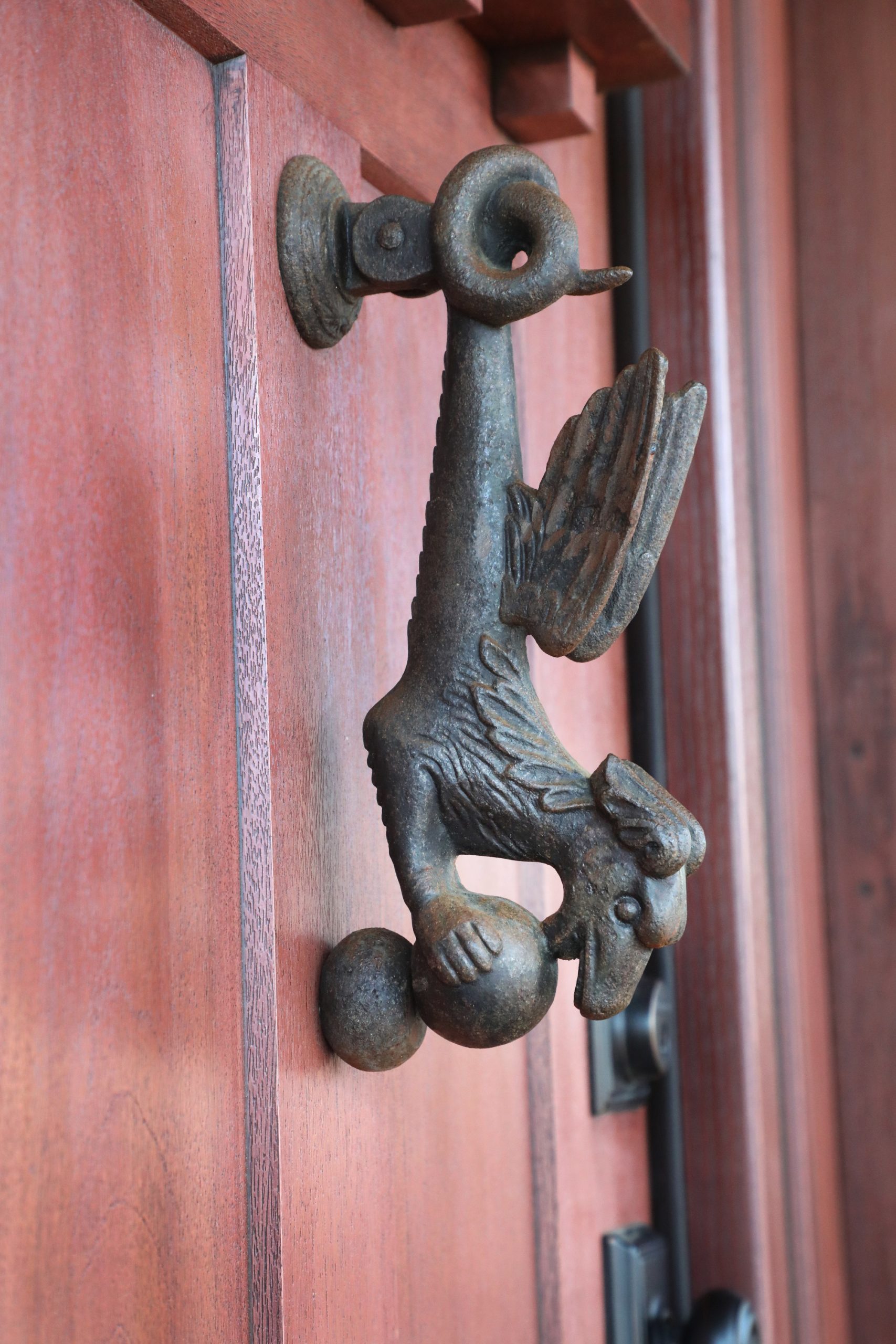
    The home is filled with treasures from their travels, as well as finds from stores in Philadelphia, antique shops in Cape May, and Etsy. The door knocker, which dates back to the 18th century, was found on a trip to Barcelona and the fish-shaped outdoor shower handles came from Uruguay. They discovered several hammered steel pieces of art in Haiti.

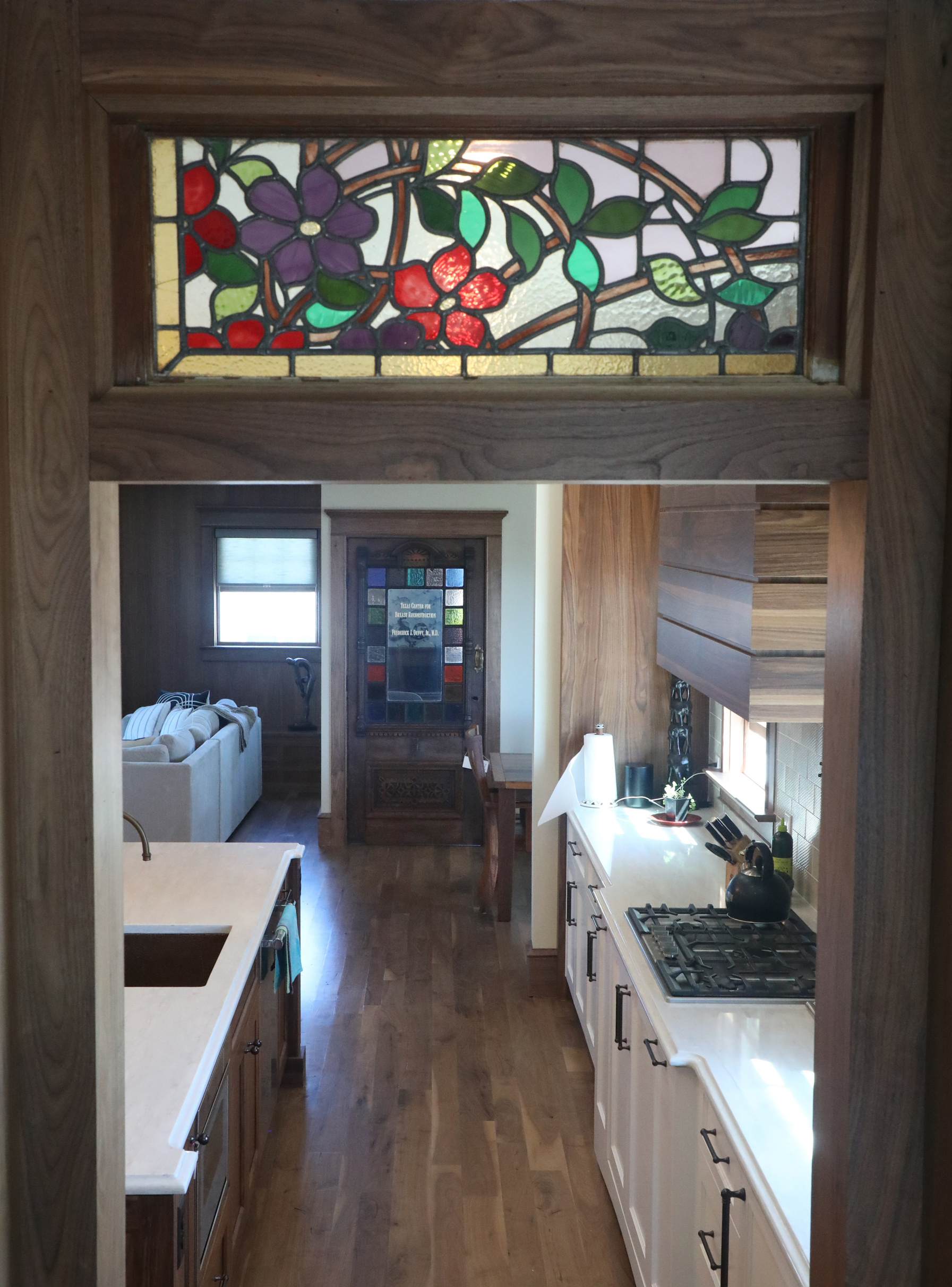
    At Architectural Antiques Exchange in Philadelphia, they found the Belgian cabinet they converted into the powder room vanity, the stained glass for the transoms in the kitchen, and the stained glass door for Whittington’s study.

    “Everything is personal and has a story,” said Duffy.

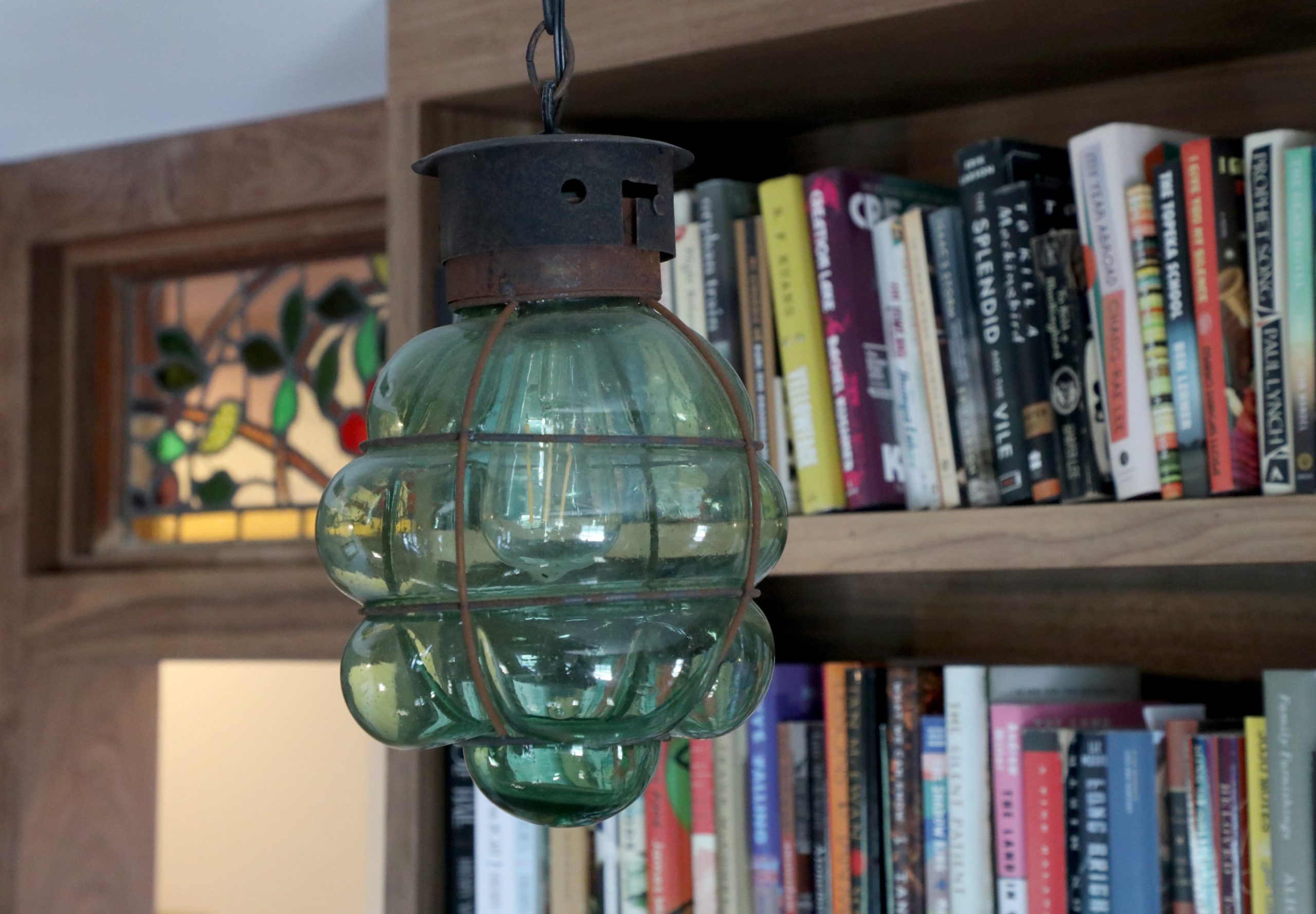
    The light fixtures are among their favorite accents. They aimed for period-appropriate pieces with a whimsical flair. For example, the dining room lights are original milk glass and the second-floor living room chandelier is brass. The two matching stairwell lights are vintage Venetian mouth-blown Murano caged-glass bubble lanterns.

    Whimsical wallpaper brings fun and funky beach designs into the home, featuring fish, octopus, crabs, and seagulls.

    Light fixtures believed to be over 100 years old hang in the library area.Vernon Ogrodnek / For The Inquirer
    The vibrant jellyfish pattern in this bathroom is one of several eye-catching wallpaper treatments in the house.Vernon Ogrodnek / For The Inquirer
    An antique door knocker greets visitors to the home.Vernon Ogrodnek / For The Inquirer
    A stained glass window above a doorway off the second-floor kitchen.Vernon Ogrodnek / For The Inquirer

    The home boasts several outdoor spaces, including a grassy backyard. From the large roof deck, Duffy and Whittington can take in both sunrises and sunsets, and the cozy front porch is where they read and relax. The primary bedroom and a guest bedroom also have walk-out decks.

    “We enjoy sitting on the deck, looking at the stars, listening to the ocean, and having a bottle of wine,” said Whittington. “That’s blissful.”

    Is your house a Haven? Nominate your home by email (and send some digital photographs) at properties@inquirer.com.