Category: Politics

  • Ro Khanna, a potential presidential contender in 2028, joins Chris Rabb in Philly as he pitches a ‘Progressive New Deal’

    Ro Khanna, a potential presidential contender in 2028, joins Chris Rabb in Philly as he pitches a ‘Progressive New Deal’

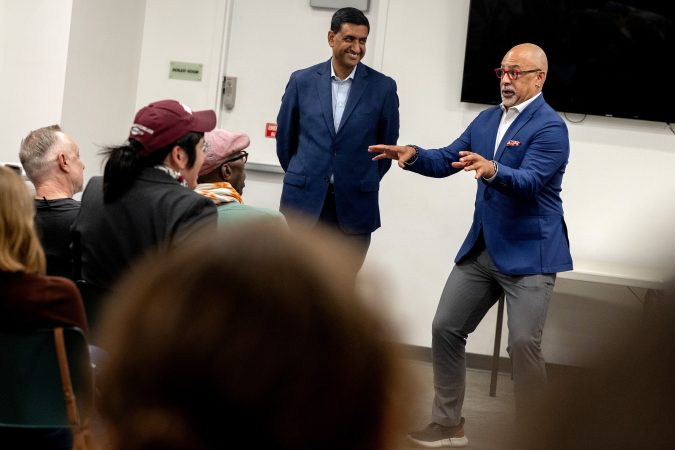
    Two months after winning a primary to likely become the first democratic socialist representing Philadelphia in Congress, State Rep. Chris Rabb on Tuesday joined forces in the city with U.S. Rep. Ro Khanna, a California progressive kicking off a week of events across the state as he considers running for president in 2028.

    The like-minded Democrats share a similar progressive platform, and Khanna endorsed Rabb ahead of the competitive primary to replace U.S. Rep. Dwight Evans (D., Philadelphia) in May.

    In a sign that the alliance might continue when Rabb enters Congress in January — and potentially beyond as the party considers its options for the next presidential race — the two kicked off Khanna’s statewide tour Tuesday in Philadelphia.

    Khanna, a Bucks County native who has represented parts of the Bay Area since 2017, is pitching a “Progressive New Deal,” invoking President Franklin D. Roosevelt’s platform, which led to the creation of Social Security and other programs.

    The California lawmaker called for the U.S. to end military aid to Israel and recognize Palestinian statehood as the war in Gaza nears its third year. And he called for progressive economic reforms and the tackling of corruption, which Khanna framed around the case of notorious sex offender Jeffrey Epstein and his associations with the rich and powerful.

    “I believe we need a ‘New Deal’ for the 21st century,” Khanna said. “We’re going to have people like Chris [Rabb] and others that are building that momentum. We need bold progressive Democrats: morality on foreign policy, morality on [Jeffrey] Epstein, and a bold economic vision to make this country work not just for the few but for all of us.”

    Khanna is among a slate of Democrats who have branded their platform as “New Economic Patriotism” with a focus on affordability and corruption issues during the first two years of President Donald Trump’s second term.

    Rabb, a five-term state lawmaker from East Mount Airy who ran an unabashedly progressive campaign, has said he is eager to join allies in Congress after the November election, in which he faces no Republican opponent to represent about half of Philadelphia.

    On Tuesday with Khanna, he outlined some of the platform that helped propel him to defeat a pair of more centrist candidates, and that he hopes to carry to Capitol Hill.

    “The issues we’re talking about resonate with a lot of people when you remove the labels,” Rabb said. “Medicare for All. You know, universal childcare. Federal jobs guarantee. No more endless wars. Acknowledging the genocide [in the war between Israel and Gaza].”

    At the Philadelphia City Institute library in Center City, where about 50 people listened and asked questions, Khanna spoke of his upbringing and how he watched people around him struggle after the closure of the Fairless Works steel factory in 2001.

    “My values were shaped in Bucks County,” said Khanna, who has described his week of events in Pennsylvania as a homecoming. “It’s shaped who I am. And I think Bucks County is a symbol for America.”

    But he sees the current anxiety and frustration of achieving the American dream. “I really want to offer a vision about how we can have the economic prosperity,” he said.

    Now, Khanna said, he represents the district that houses Silicon Valley and holds one-third of the nation’s wealth. He said he hopes his advocacy there to tax the billionaires who live in his district helps people all the way to Pennsylvania.

    “We’re in a second Gilded Age,” Khanna said. “I’m saying tax the billionaires in my district and in California so we can pay for free healthcare, so we can have free childcare in this country, so that we can have free college in this country.”

    His itinerary this week included two planned stops in Philadelphia and others across the state, including a Thursday event in Pittsburgh with U.S. Rep. Chris Deluzio, a potential primary challenger to Democratic Sen. John Fetterman in 2028 who shares Khanna’s economic platform.
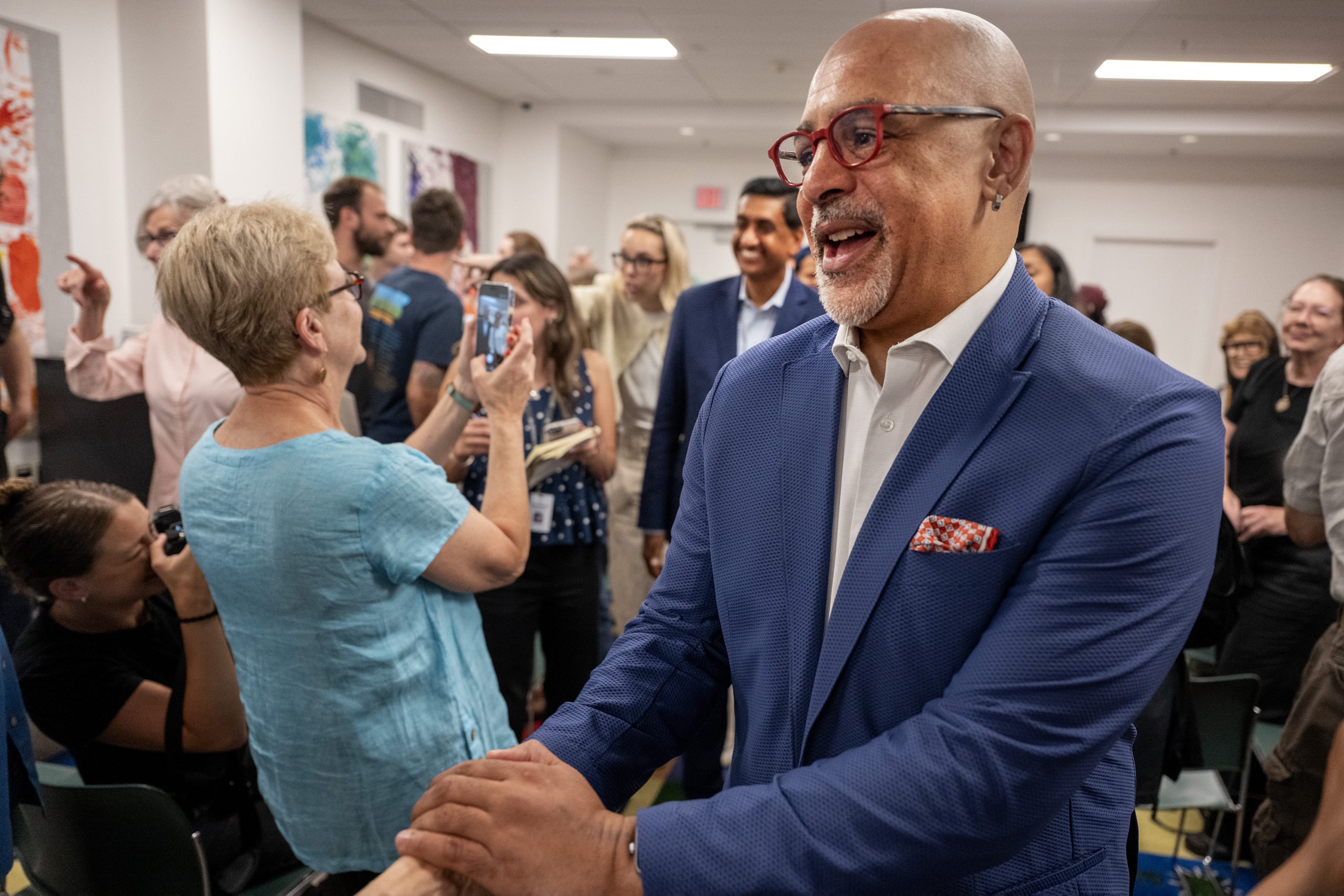
    State Rep. Chris Rabb greets supporters after appearing with U.S. Rep. Ro Khanna (rear) at the City Institute Library on Rittenhouse Square.Tom Gralish / Staff Photographer

    Rabb has advocated for a similar economic populism, including universal basic income and the Green New Deal.

    Since the primary, Rabb has both campaigned for other similar candidates and visited Washington, where he appeared on stage with Deluzio in June to discuss the surging left — a theme expounded upon again Tuesday.

    Several democratic socialists have won congressional primaries this year in blue districts, including Claire Valdez and Darializa Avila Chevalier in New York. Rabb endorsed them, as well as Melat Kiros, who beat 30-year incumbent U.S. Rep. Diana DeGette in a Colorado primary.

    Rabb said he would want to see a viable progressive candidate in the 2028 presidential election, but he did not specifically endorse Khanna, who could be among several such candidates in a crowded field.

    U.S. Rep. Alexandria Ocasio-Cortez (D., N.Y.), who also campaigned for Rabb in May, and Pennsylvania Gov. Josh Shapiro, who has had a frosty relationship with him, are also expected to be among the contenders for the nomination.

    “It’s coming up in a moment where there’s extraordinary organizing among folks who are very, very concerned about where we’re going as a nation, and the extent to which we can rely on conventional Democrats to deliver the type of justice and the result we seek,” Rabb said.
  • Philadelphia’s top lawyer is resigning from the Parker administration

    Philadelphia’s top lawyer is resigning from the Parker administration

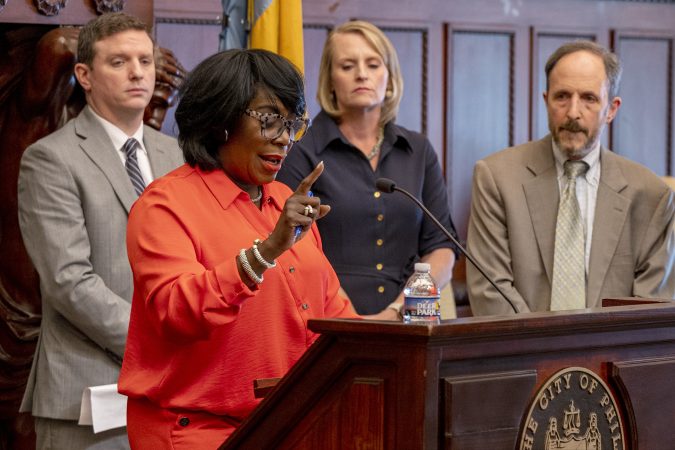
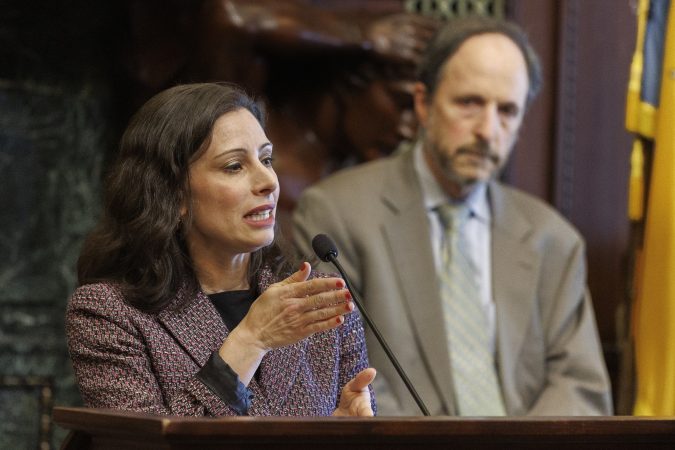
    Renee Garcia, the top lawyer in Mayor Cherelle L. Parker’s administration, is resigning from her job as city solicitor to work in the private sector, the mayor announced Tuesday.

    The reason for Garcia’s departure was not clear Tuesday, and she was not present at a news conference announcing the staff change.

    Garcia, who served in the Parker administration since the mayor took office in 2024, has recently led the city’s strategy in several high-profile matters, including a protracted legal battle with President Donald Trump’s administration over slavery exhibits at the President’s House Site at Independence National Historical Park.

    In some ways, Garcia carried out Parker’s approach to the Trump administration, which has largely been cautious and conflict-averse. At Garcia’s urging, the mayor did not sign legislation supported by City Council that bans federal immigration enforcement officers from wearing masks in the city. But the legislation took effect without Parker’s signature, and the federal government last month sued the city over the provision.

    Garcia will be replaced at the top of the city’s law department by Monique Galloway, who most recently worked as an assistant U.S. attorney in Philadelphia. Galloway’s resume also includes stints as counsel at the federal General Services Administration and the Federal Transit Authority.

    Parker said Galloway’s experience working in the federal government was a key reason for her selection as the next city solicitor.

    “These are challenging times for cities and states as we all have to interact with the federal government,” Parker said. “On any given day, we can never be sure if we’re going to face a legal filing, a summons, or a subpoena out of Washington on a range of different issues.”

    She added that Garcia’s law department has been “Philadelphia’s frontline defense on many of these issues.”

    Galloway said she was “moved by this moment.”

    “Integrity, sound judgment, excellence, and a key focus on public service are who I am,” she said. “And they are the anchor through everything that I do.”

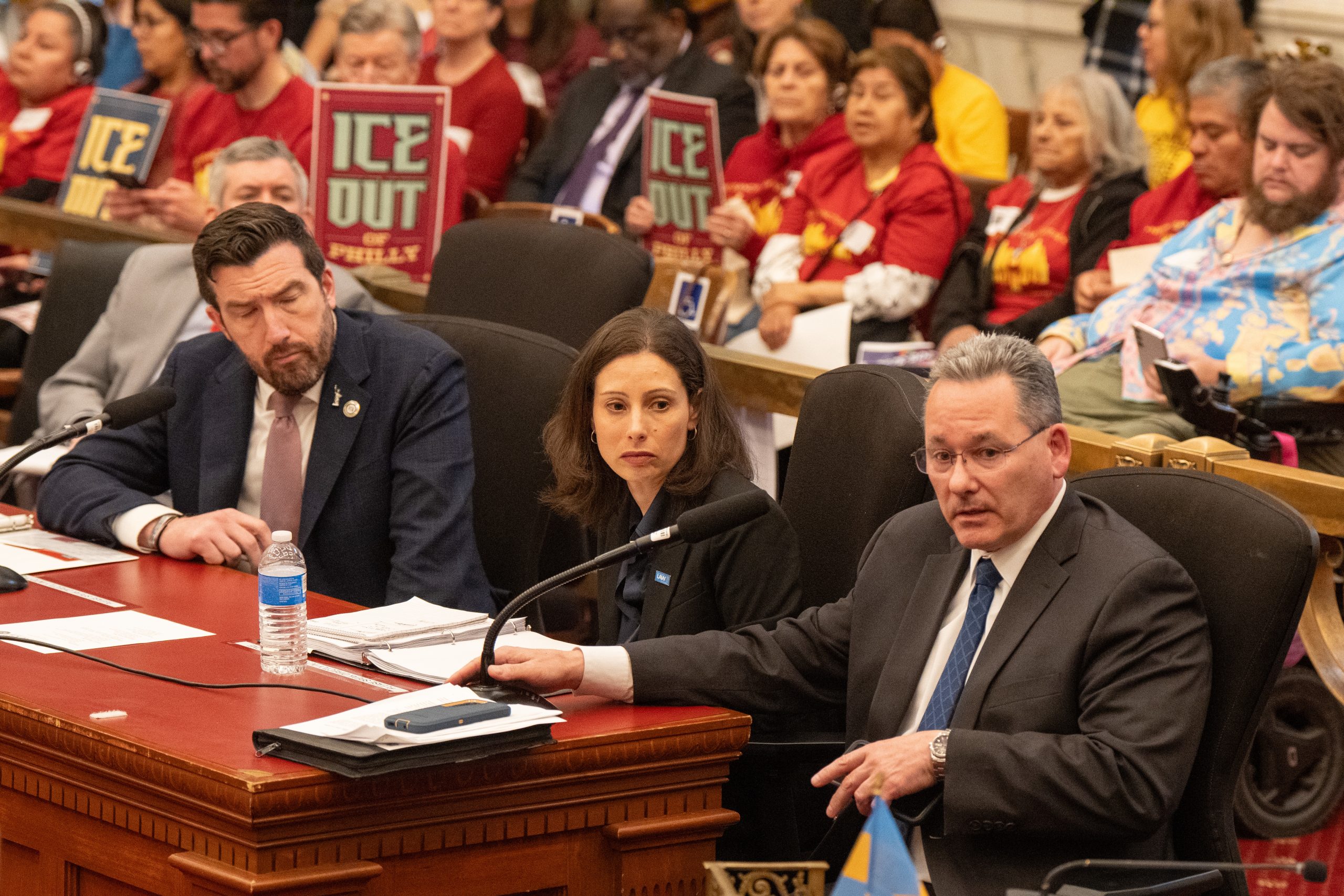
    (left to right) Charlie Ellison, Director of the Office of Immigrant Affairs, Renee Garcia, City Solicitor, Francis Healy, Deputy Police Commissioner, at the City Council hearing about ICE Out legislation, in Philadelphia City Council, Monday, April 13, 2026.Jessica Griffin / Staff Photographer

    Garcia’s departure was the second major leadership change Parker announced Tuesday. Managing Director Adam K. Thiel, who oversees much of the city’s day-to-day operations, is also resigning to take a job in the private sector. He will be replaced by Carlton Williams, a longtime city official who most recently led the Philadelphia Office of Clean and Green Initiatives.

    Taken together, the changes represent a significant shift in the top rungs of Philadelphia’s government. The managing director is in charge of implementing much of the mayor’s agenda, and the city solicitor is responsible for a host of matters, including overseeing litigation and advising both the mayor and City Council on legislation and policy.

    Parker also on Tuesday formalized her appointment of Ralph DiPietro, a deputy commissioner in the Philadelphia Department of Licenses and Inspections. The administration announced last month that DiPietro would replace Basil L. Merenda as commissioner.

    The mayor said Tuesday that she is “excited to welcome this next generation of leadership.”

  • Philadelphia Managing Director Adam Thiel resigns from Parker administration

    Philadelphia Managing Director Adam Thiel resigns from Parker administration

    Philadelphia Managing Director Adam K. Thiel, a top mayoral appointee who supervises many of the government’s day-to-day operations, is resigning from his job in Mayor Cherelle L. Parker’s administration, the mayor announced Tuesday.

    Parker said Thiel is leaving his city role to “reenter the private sector” after serving as managing director for about 2½ years.

    Thiel will be replaced by Carlton Williams, a longtime city official who currently leads the Philadelphia Office of Clean and Green Initiatives. Williams, 57, will assume oversight of a 550-person staff and a vast portfolio of city operations, including health agencies, homeless services, the streets department, parks and libraries, prisons, and the fire department.

    Parker praised Williams’ work implementing new initiatives such as twice-weekly trash collection, and she called him “the individual with all of the attributes the position requires.”

    “Whenever we’ve had a crisis of any kind in this city, he has been on my speed dial,” she said.

    The transition, Parker said, will take place over the next “four to six weeks.” It was not immediately clear who will lead the Philadelphia Office of Clean and Green Initiatives.

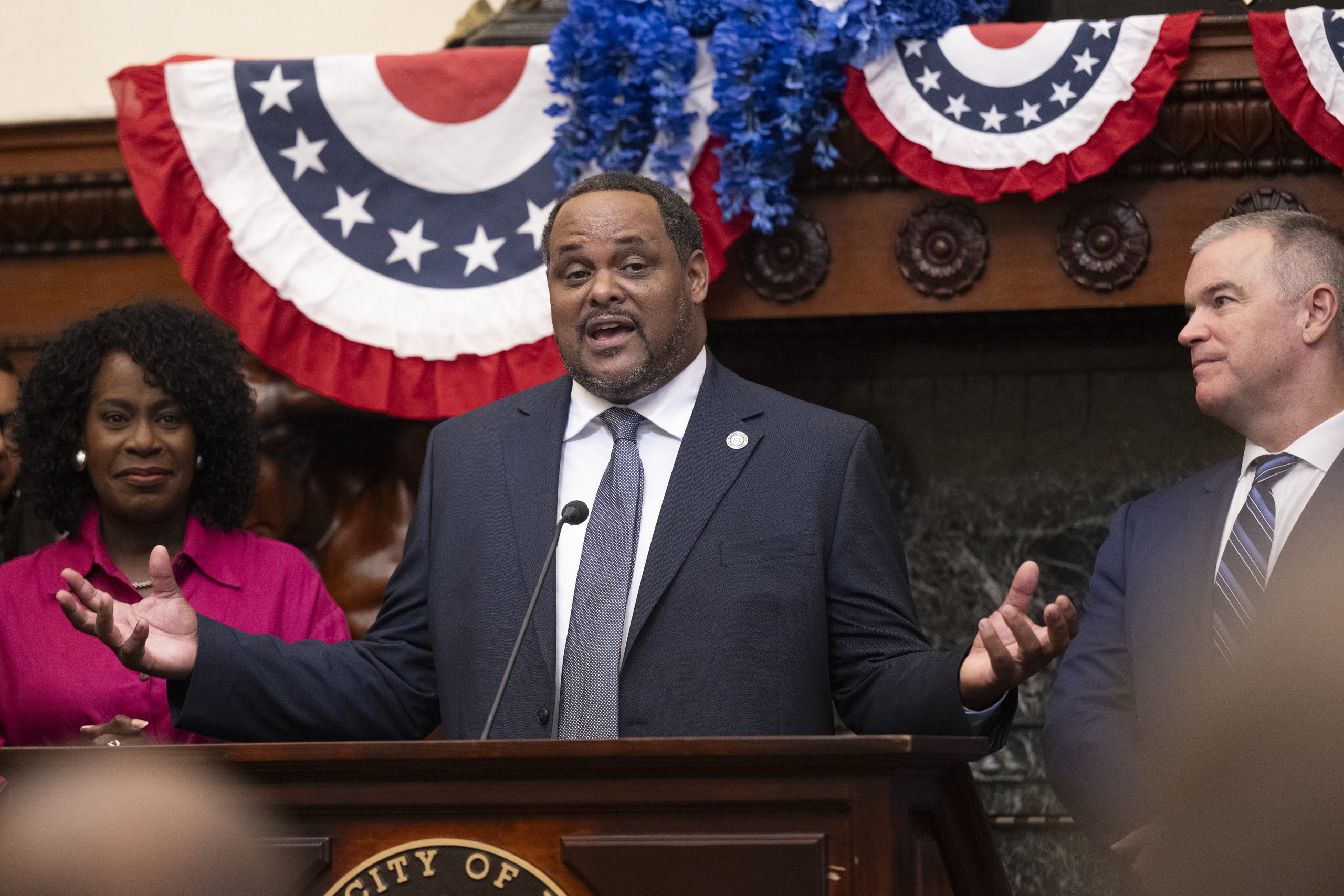
    New Philadelphia Managing Director, Carlton Williams speaks at the podium after being announced by Philadelphia Mayor Cherelle L. Parker, left, during a news conference at City Hall in Philadelphia on Tuesday, July 28, 2026.Jose F. Moreno / Staff Photographer

    Thiel, 54, has been the city’s managing director since Parker took office in January 2024. Prior to being appointed to the role, Thiel spent eight years as the city’s fire commissioner under former Mayor Jim Kenney.

    In the early days of Parker’s tenure, Thiel emerged as a key crisis manager, often flanking the mayor when she responded to emergencies. He was the face of the administration’s strategy in Kensington, where Parker campaigned on ending the sprawling open-air drug market that has persisted in the neighborhood for decades.

    His office also played a critical role in preparing for an array of major events that the city hosted this summer, including FIFA World Cup games and events related to the 250th anniversary of the nation’s founding.

    Details of Thiel’s new job were not immediately clear. He is a major in the Army Reserve, and he has worked as a consultant and an adjunct professor, in addition to his role as managing director. His city salary is $310,000, and last year, he made more than half a million dollars in additional income through his other jobs, according to his financial disclosure.

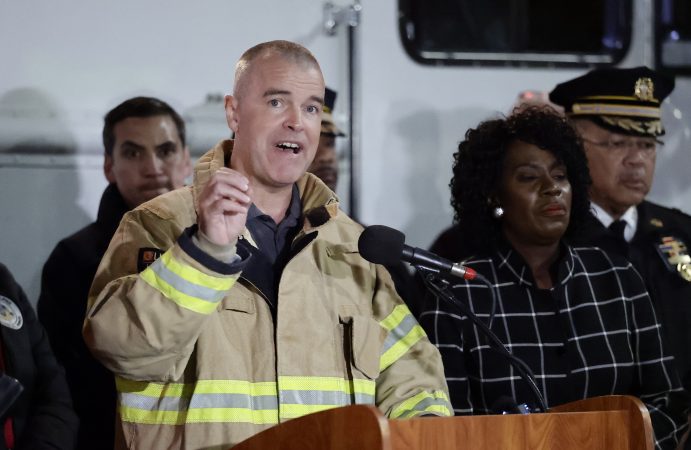
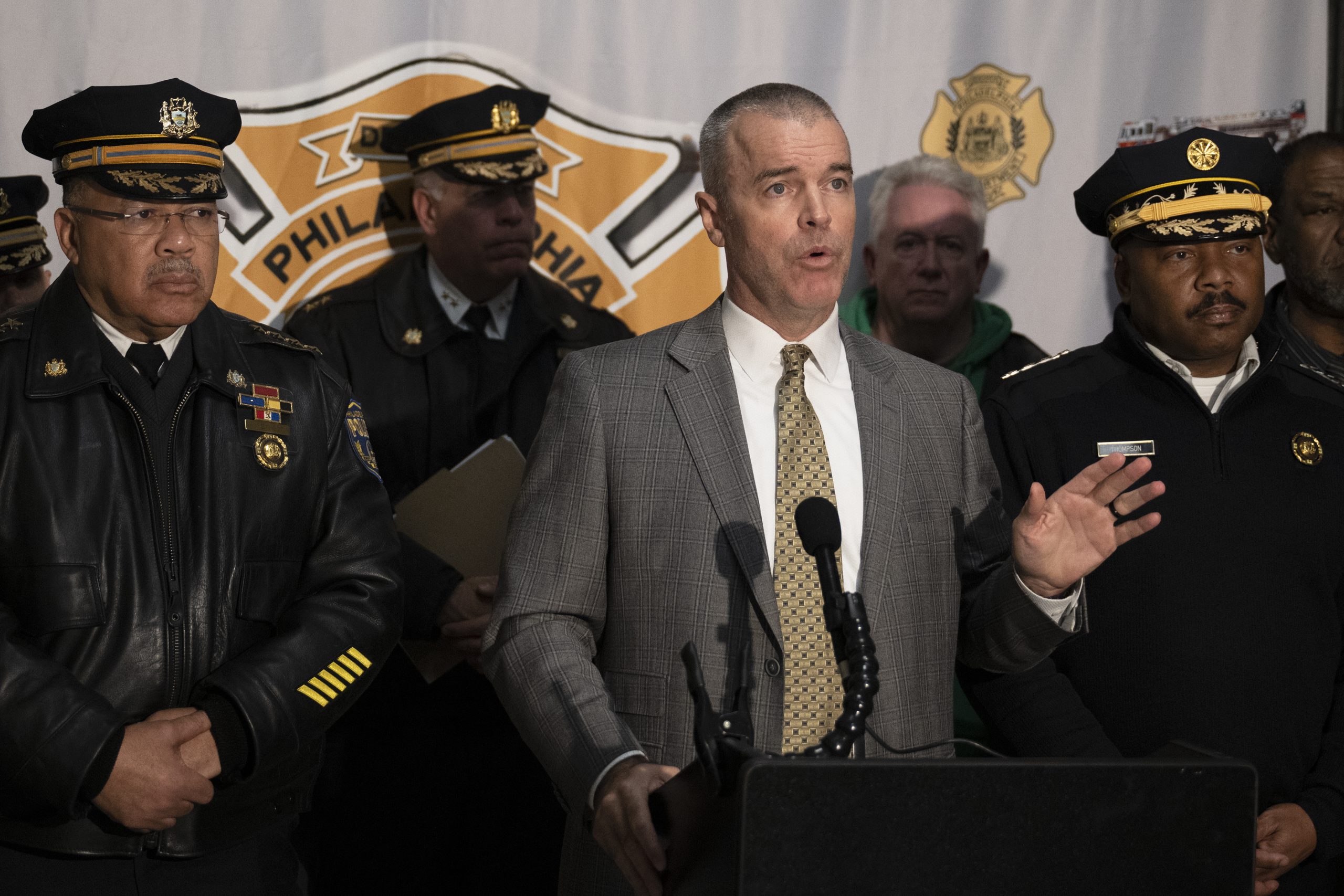
    Managing Director Adam Thiel, center, gives an update on the Northeast Philly plane crash, during a press conference on Tuesday Feb 4, 2025 at the Fire Administration Building in Philadelphia, Pa.Jose F. Moreno / Staff Photographer

    Since Thiel joined the Reserve in August 2024, he has been one of the administration’s least visible senior officials and was frequently on leave. He did not oversee the response to a January snowstorm that was the city’s worst in five years — despite emergency services falling under his purview — and parts of the Kensington strategy are now led by other offices.

    The Inquirer reported in February that Thiel was absent for a total of about five months last year. Of that, six weeks were for military leave — the maximum the city covers for employees — and an additional 13 weeks were for general paid leave, according to city records obtained by The Inquirer. A spokesperson for Thiel said he used most of that time off for military service.

    Thiel refused to discuss his role in the Army Reserve with The Inquirer. A spokesperson for the Army said Thiel is a major assigned to a civil affairs unit based in Staten Island, N.Y. Last year, the Army Reserve paid Thiel about $32,600, according to his financial disclosure paperwork.

    In addition to his jobs with the city and the Army, Thiel has worked on the side as a consultant. Last year, he earned $390,000 as president of Pantheon Global Strategies, an opaque company with little in the way of an online footprint. Thiel has in the past refused to discuss the business in detail.

    He also earned $120,000 last year from FACETS Consulting LLP, an Arizona-based firm that is publicly advertised as a fire safety consultancy. Thiel is a founding partner.

    Philly city managing director Adam Thiel in the bowels of the stadium during the France vs. Iraq 2026 FIFA World Cup Group 1 soccer match at Philadelphia Stadium on Monday, June 22, 2026.Elizabeth Robertson / Staff Photographer

    Thiel has said his consulting work takes fewer than 10 hours per week and did not interfere with his responsibilities as Philadelphia’s managing director. When The Inquirer first reported on Thiel’s consulting work in 2024, he would not disclose his clients but said he followed the city’s ethics guidelines related to conflicts of interest.

    Before coming to Philadelphia in 2016, Thiel worked in a variety of firefighting, disaster response, and emergency preparedness roles around the country, including as Virginia’s deputy secretary of public safety and homeland security.

    He is the third top official to leave Parker’s administration since she took office in January 2024. Former chief deputy mayors Aren Platt and Sinceré Harris, the architects of Parker’s mayoral campaign, each left their posts for jobs in politics outside government.

    In some administrations, the managing director has been the mayor’s clear No. 2, while other mayors have preferred for power to be concentrated among deputy mayors or other staffers in their office.

    Under Parker, chief of staff Tiffany W. Thurman is seen as the mayor’s top adviser and the central figure in her administration. Parker has called Thurman her “chief air traffic controller.”

    She has also placed the execution of much of her agenda on Williams’ shoulders. Earlier this year, he oversaw the city’s response to a major snowstorm, despite that work in the past falling squarely in the managing director’s scope.

    Mayor Cherelle L. Parker walks along Kensington Avenue with Adam Thiel, managing director of city, on Thursday, April 11, 2024. Mayor Parker took the El to attend an event in the Kensington neighborhood in Philadelphia.Heather Khalifa / Staff Photographer

    Still, Thiel oversaw a large team, and the leaders of more than 30 city agencies and offices reported to him.

    One of his major initiatives was coordinating the administration’s efforts to improve quality of life in Kensington. Thiel’s office worked to expand homeless shelter and recovery bed space throughout the city, and he led the development of the Riverview Wellness Village, a city-run recovery house in Northeast Philadelphia that dramatically grew the city’s capacity to house people with substance use disorder.

    Initially, Thiel absorbed scrutiny from community groups and, at times, members of City Council. Lawmakers grilled Thiel on the efforts in Kensington, and they occasionally criticized what they saw as a lack of details coming from the Parker administration about the plan.

    Despite those early hiccups, more than 200 people live at Riverview, which has been open to residents in recovery for more than a year.

    “I’m grateful for what you did,” Parker told Thiel on Tuesday. “And I’m grateful that you had thick skin.”

    And while the drug market in Kensington persists, there have been other markers of success in the neighborhood, including a plummeting shooting rate and a reduction in the number of people living on the street.

    Williams recently toured parts of Kensington alongside Parker and other administration officials to get a sense of the challenges ahead. He said Tuesday that his goal is to be accessible to all residents and to look at the delivery of city services “through the eyes of everyday residents.”

    “You just don’t take these jobs because of the glamour,” he said. “You take the job because you believe that you can make a change.”

    Staff writer Sean Collins Walsh contributed to this article.

  • More than 2,000 of N.J.’s ‘noncitizen voters’ could actually be citizens, Gov. Sherrill says

    More than 2,000 of N.J.’s ‘noncitizen voters’ could actually be citizens, Gov. Sherrill says

    About 2,000 New Jersey voters identified last week as noncitizens could actually be citizens after all, Gov. Mikie Sherrill said Tuesday, a week after her disclosure of a voter registration glitch put the state at the center of a heated national debate over election security.

    Sherrill announced last week that approximately 6,600 noncitizens had been registered to vote ahead of the 2024 election due to a software glitch with the New Jersey Motor Vehicle Commission’s automatic voter registration program. She said fewer than 400 of those people had voted and there is no evidence that they affected the results of any election. The finding came in the midst of a political fight over President Donald Trump’s claims of widespread voter fraud, including by noncitizens, and his aggressive push for an overhaul of the country’s election system.

    The first-term governor said Tuesday that the New Jersey Department of State’s Division of Elections has begun a process to remove more than 4,500 individuals who were registered because of the software error, but that the rest of the registrations will be referred to county election officials for further review “to ensure that any lawfully registered voters are not being disenfranchised.”

    “We are taking this extra step because our initial review indicates that a number of these individuals may be citizens,” she said in a statement. “That has been the case in other states where clerical and administrative voter registration errors have occurred, and we’re determined to get this right.”

    Her office announced the discovery a little more than one hour after celebrating New Jersey’s new John R. Lewis Voter Empowerment Act, which Sherrill signed July 2. Lewis was a civil rights leader who represented Georgia in Congress from 1987 until his death in 2020.

    The law, which is based on a federal proposal that former President Joe Biden unsuccessfully tried to pass, promotes equal opportunity to voting and voter outreach to communities that do not speak English proficiently, and prohibits intimidation, deception, violence, or restraint of voters or election workers.

    The law lays out a process for individuals who want to file a complaint over voting rights and requires public hearings for redistricting.

    If jurisdictions have a history of discrimination, the law requires approval from the attorney general before they can make changes to their election administration. It also gives the attorney general authority to enforce the law through litigation, investigations, and studies, and by representing the public in federal court.

    “Here in New Jersey, if your rights are violated, you have a right of action,” Sherrill said at Union Baptist Church in Trenton.

    Sherrill said New Jersey is the 10th state to enact the model, but the first to do so since an April Supreme Court ruling that weakened part of the Voting Rights Act as the court’s conservative majority ruled against a majority-Black district in Louisiana.

    Supporters of the bill said they had been advocating for it for four years in New Jersey.

    Sherrill’s Tuesday celebration at the church shows the governor is not shying away from the issue of voting rights even as the state becomes a talking point for Republicans who want enact new national restrictions — including requiring voters to provide proof of citizenship to register with documents like a birth certificate or passport.

    Sherrill opposes the national legislation, known as the SAVE America Act, which has been championed by Trump as a way to make elections more secure but which opponents warn could make it tougher to vote for millions of Americans.

    “Trump has only one concern: winning at any cost, and he’s willing to put the right to vote at risk,” Sherrill said Tuesday. “There’s no line he won’t cross, no rule he won’t break, no norm he won’t violate. But we will not stand idly by.”

    The former member of Congress will likely continue to have a role in the debate as Republicans ramp up their advocacy ahead of November’s midterm elections.

    U.S. Rep. Jeff Van Drew, a South Jersey Republican who was elected as a Democrat in 2018 before vowing his loyalty to Trump a year later, led a public letter with other House Republicans calling on Sherrill to answer a series of questions about the noncitizen voting issue. He questioned how she knows it was “just a software glitch and not a nefarious act.”

    Van Drew, who chairs the House Judiciary Subcommittee on Oversight, said he plans to hold hearings over the issue and is “absolutely exploring” the possibility of subpoenas, Politico reported.

    On Tuesday, Sherrill said Van Drew “has a very sordid history as far as elections go.” She said Van Drew’s campaign had hired a political operative who was a “known ballot harvester” — referring to Craig Callaway, who worked on Van Drew’s 2022 bid.

    Callaway, a former Atlantic City Council president, had previously served prison time for blackmail and bribes when Van Drew’s campaign hired him. In 2025 under former U.S. Attorney Alina Habba, Callaway pleaded guilty in connection with fraudulent mail-in ballots during the 2022 election, but Van Drew said he was not aware of any illegal activity and was not accused of wrongdoing.

    Sherrill said her administration hired the CSG law firm to conduct an independent investigation into the voting registration glitch. One of the firm’s main partners, Jeffrey Chiesa, served as attorney general under former Republican Gov. Chris Christie, who later appointed him to the Senate.

    “We have a bipartisan, independent investigation going on right now because we have nothing to hide,” Sherrill said.

  • Ex-Olympian charged with damaging Reflecting Pool sees ‘irregularities’ in grand jury proceedings

    Ex-Olympian charged with damaging Reflecting Pool sees ‘irregularities’ in grand jury proceedings

    WASHINGTON — A former Olympian charged with deliberately damaging the Lincoln Memorial Reflecting Pool is seeking access to all of the closed-door testimony that led to his indictment, pointing to “irregularities” in those grand jury proceedings.

    In a court filing Monday, David Hearn’s attorneys requested an order for the government to turn over a complete transcript of all grand jury proceedings. They also want prosecutors to disclose the legal instructions they gave to grand jurors about the elements of Hearn’s alleged crime.

    Hearn pleaded not guilty earlier this month to one felony count of property destruction and has a trial scheduled to start Sept. 28 in D.C. Superior Court. The charge, which carries a maximum prison sentence of 10 years upon conviction, accuses Hearn of causing at least $1,000 in damage to the pool.

    But his lawyers question whether prosecutors properly presented the grand jury with adequate evidence to support the amount of damage alleged in Hearn’s indictment. A National Park Service official testified that the pool already was damaged before Hearn allegedly touched it, couldn’t quantify any damage attributable to Hearn and said the same repairs would have been required regardless of his conduct, defense attorneys said.

    “The witness’s testimony established that the pool had substantial preexisting damage requiring repair before any alleged conduct by Mr. Hearn,” his lawyers wrote. “According to the witness, the pool was leaking more than one million gallons of water per week; its expansion joints had exceeded their service life; and the liner already contained a rip.”

    Hearn’s attorneys are basing those arguments on their limited review of grand jury testimony. They want court-ordered access to all the proceedings.

    A spokesperson for U.S. Attorney Jeanine Pirro’s office in Washington didn’t immediately respond to an email seeking comment on Hearn’s arguments.

    Hearn previously asked the court to dismiss the case, which stems from the troubled multimillion-dollar renovation project championed by President Donald Trump. His attorneys argued the government has failed to properly preserve important physical evidence from the Reflecting Pool.

    Trump, a Republican, has claimed that vandals have damaged the pool, but administration critics attribute the problems to shoddy repair work. During a speech Monday at General Motors in Michigan, Trump claimed a “sick” person cut the liner in the pool but said the attraction is receiving treatment.

    “It’s in the hospital now, but it’s going to get better very soon,” Trump said. “It’s almost ready to open.”

    Hearn and his supporters claim his prosecution is a politically motivated attempt by the Trump administration to deflect blame and scapegoat others.

    Hearn told The Associated Press he was detained by National Guard troops and U.S. Park Police for five hours after stopping by the pool during a bike ride on June 19. He said he reached in to examine the pool’s newly peeled coating and briefly touched a chunk attached to the side of the pool, but said he obeyed a park worker who told him to let go of it.

    Hearn, 67, of Bethesda, Maryland, competed in three Summer Olympics, earning his best finish, ninth, at the 1996 Atlanta Olympic Games, the U.S. Olympic and Paralympic Committee says on its website.

    At least three other people have been charged in the same court with misdemeanors for allegedly removing pieces of paint from the pool.

  • Lawmakers seek ban on using campaign funds to fight sexual harassment claims

    Lawmakers seek ban on using campaign funds to fight sexual harassment claims

    Federal politicians would be barred from using campaign contributions to fight or settle sexual misconduct allegations under a bill announced Tuesday by two House members from opposite sides of the political spectrum.

    The proposal, from Reps. Ro Khanna (D-California) and Anna Paulina Luna (R-Florida), aims to further shape the debate over how Congress should move forward from a spate of sexual misconduct scandals this spring, which prompted the creation of a bipartisan working group to revise the policies protecting Capitol Hill staffers. Both Khanna and Luna have been active on the issue.

    Khanna said politicians would behave better if they had to rely on their own financial resources when they get into trouble rather than being able to dip into campaign accounts or legal-defense funds.

    “That creates this culture of impunity where people think they’re untouchable,” Khanna said in an interview.

    “There’s such a power asymmetry,” he said, because of “the extraordinary legal advantage that elected officials have.”

    The progressive Khanna came into national prominence last fall as he helped force the release of federal investigative files related to financier and sex offender Jeffrey Epstein, over the objections of President Donald Trump.

    Khanna is collaborating on the bill with the conservative Luna, one of several Republican women lawmakers who have begun demanding more consequences for alleged sexual misconduct by their colleagues. She led the charge in April against Sen. Ruben Gallego (D-Arizona), filing a complaint with the Senate that was dismissed last month with no findings that he violated federal law or broke Senate rules.

    The bill would prohibit elected officials and candidates for federal office from using campaign donations or a legal-defense fund to cover legal fees related to claims of sexual assault, sexual abuse or sexual harassment. If they are not held liable, they could be reimbursed for expenses.

    Luna said the proposed change is overdue and would serve as a “massive deterrent” amid a culture of sexual misconduct on Capitol Hill that has gotten out of hand.

    “It is not what the Founding Fathers intended for members of Congress,” she said. “It’s a perversion of the system.”

    The proposal would also make campaign contributions off-limits for paying settlements or court-ordered judgments for sexual misconduct claims, as well as for private investigators and other research into the accusers.

    Khanna said that politicians would still be able to tap into their savings to defend themselves like most other Americans but that they should not be allowed to fundraise for what frequently amounts to public relations activities more than actual legal work.

    “In most of the cases, they’re being used to smear survivors,” he said.

    The bill emerged from conversations with activists supporting women who have come forward in recent months with accusations of sexual misconduct by politicians, including former congressman Eric Swalwell (D-California).

    In April, the San Francisco Chronicle spoke to a former Swalwell staffer who said he sexually assaulted her. CNN reported more allegations of inappropriate behavior, and a second woman accused Swalwell of raping her. He has categorically denied the allegations of sexual misconduct, calling them a political hit job, though he acknowledged some “mistakes in judgment.”

    Swalwell dropped out of the race for California governor and then resigned from office within days. But he has since spent $50,000 from an old congressional campaign account, as well as hundreds of thousands from contributions to his gubernatorial bid, on prominent defense attorney Sara Azari. Her firm hired a private investigator to look into the allegations, according to NOTUS.

    “Many of those women were forced back into hiding, and this ordeal is still not over for them,” said Cheyenne Hunt, an influencer who worked with some of the accusers and subsequently launched the advocacy group Reckoning Action.

    That’s retaliation, Hunt said, and a “bad-faith use” of campaign funds.

    “No donor gives to a campaign thinking, ‘Yes, I want my money to go toward harassing a survivor,’” she said. “This truly feels like such a no-brainer.”

    Despite bipartisan support for the bill, its prospects are uncertain. Congress has struggled to pass major legislative priorities this year, and only two months of floor time remain for the rest of the session.

    Other ideas for improving how Capitol Hill handles sexual misconduct complaints are also circulating. A group that says it represents more than 1,500 congressional staffers released a letter this month calling to expand legal representation for employees, make independent investigations easier to trigger, and provide more time to file workplace claims.

    With the blessing of congressional leadership, the Republican and Democratic women’s caucuses united in the spring to develop recommendations for making Congress a safer work environment. Their proposed solutions are forthcoming.

    House Speaker Mike Johnson (R-Louisiana) recently said he would support banning lawmakers from having sexual relationships with any congressional staffers, not just their own subordinates.

  • Kentucky governor demands that McConnell prove he is fit to serve or resign

    WASHINGTON — Kentucky Gov. Andy Beshear, a rising national figure in the Democratic Party, is calling on the state’s Republican Sen. Mitch McConnell to either prove that he is fit to continue serving after his lengthy hospital stay or resign from office.

    Beshear made the demand in a letter after McConnell’s office said Monday that the 84-year-old senator had not yet been medically cleared to leave the rehabilitation facility where he has been undergoing physical therapy. The office said he would miss a major Kentucky political event and upcoming Senate votes. McConnell was hospitalized June 14 and disclosed weeks later that it was the result of a fall.

    Beshear, who is widely viewed as a potential presidential candidate in 2028, first urged McConnell in early July to release more information about his condition after weeks of public silence. His letter Tuesday marked a significant escalation.

    “I am calling on you to directly and verbally address the people of Kentucky and provide proof of your capacity to serve, or resign,” Beshear wrote to McConnell.

    Beshear also sent a letter to Senate Majority Leader John Thune, urging him to investigate McConnell’s condition if the senator does not demonstrate that he is capable of continuing to serve.

    McConnell and Thune’s offices did not provide comment on the letter.

    McConnell, who led Senate Republicans for nearly two decades, has long guarded his personal life. Since he was hospitalized last month, his office has issued major updates on July 12 and July 27, each accompanied by a single photograph.

    But public scrutiny of aging elected officials has intensified after several recent health episodes and deaths in office, including the deaths of California Sen. Dianne Feinstein in 2023 and South Carolina Sen. Lindsey Graham earlier this month, as well as President Joe Biden’s decision not to seek reelection after concerns about his age and health became a dominant political issue.

    In the absence of regular public updates from McConnell himself, speculation about his condition has grown online.

    “All of this speculation and even this letter could have been avoided with a minimal amount of transparency,” Beshear wrote to Thune.

  • Philly’s city budget is balanced, but structural deficit and federal funding concerns loom, board warns

    Philly’s city budget is balanced, but structural deficit and federal funding concerns loom, board warns

    A state board that oversees the City of Philadelphia’s finances signed off on Mayor Cherelle L. Parker’s five-year financial plan on Tuesday, despite a structural deficit and significant uncertainty about future federal funding.

    The Pennsylvania Intergovernmental Cooperation Authority, which was established in the early 1990s to monitor the city’s finances amid a severe fiscal crisis, must every year approve the five-year budget plan agreed to by the mayor and passed by City Council. The board voted 5-0 to green-light the plan.

    In June, Parker and Council agreed to a $7.1 billion budget for the fiscal year that began on July 1, as well as a five-year financial plan in which the city is projected to spend more than it generates in four of those years. This fiscal year, the city is projected to spend about $550 million more than it brings in.

    As has been common in recent years, the city’s budget relies on reserves and an existing surplus to avoid a significant deficit. The city is projecting that this year it will have a $364.6 million fund balance, which is the amount of money left over in the city’s general fund after liabilities are accounted for. That balance is set to decline in each of the next five years.

    Parker administration Finance Director Rob Dubow said the city is on track to unlock hundreds of millions of dollars in additional revenue once its pension fund is fully funded, a major milestone that is projected to take place in fiscal year 2033.

    Also on Tuesday, Alan C. Kessler was unanimously elected to serve as chair of the PICA board after Kevin Vaughn, who has chaired the board for a decade, announced he would not seek reelection to the position. He intends to remain a board member, he said.

    Kessler, who has also served on the board for about a decade, is a commercial litigation attorney. He is a prominent fundraiser in the Democratic Party and has long been active in local and national politics.

    As for the city’s financial position, board members on Tuesday also discussed potential risks that are largely outside the Parker administration’s control, such as the funding issues that both SEPTA and the Philadelphia School District have faced in recent years. The transit authority has warned of the possibility of debilitating service cuts, and the public school system is borrowing hundreds of millions of dollars just to pay its bills.

    Parker had earlier this year proposed implementing a tax on rideshare services to generate about $50 million a year for the district, but Council members rejected her plan.

    Administration officials identified existing funding for the district to stave off planned staff cuts. Dubow said Tuesday that cuts were made in each year of the five-year plan to make up for that money, but that the hope is to reach an alternative, recurring revenue generation plan before the cuts would take effect.

    The biggest uncertainty for Philadelphia’s finances, the board said, is the federal government and potential policy shifts affecting funding under President Donald Trump. PICA officials warned in a report that while the city has so far sustained only limited losses as a result of slashed grants under the Trump administration, the city “will not be able to absorb federal funding reductions at a greater scale without significant service reductions.”

    The city received more than $2.2 billion in aid from the federal government in fiscal year 2024, the most recent data available. More than half that money was for healthcare and other social safety net programs for poor and disabled residents.

    The president has repeatedly threatened to cut off federal funding to cities like Philadelphia that are led primarily by Democrats and have relatively permissive local immigration policies. However, those efforts have been tied up in litigation.

    A more pressing concern for the city, PICA officials wrote, could be the changes made last year to the enrollment criteria for social programs like Medicaid and the Supplemental Nutrition Assistance Program (SNAP).

    Philadelphia is one of the poorest big cities in the nation, and hundreds of thousands of residents rely on government assistance. The Pennsylvania Department of Human Services has estimated that changes to Medicaid instituted under the Trump administration will leave more than 73,000 Philadelphians without coverage by next year.

    And, the PICA report warned: Changes to federal programs can have ripple effects.

    “The fiscal crisis that precipitated the creation of PICA in the 1990s,” officials wrote, “was in part due to dramatic reductions in federal programs for vulnerable individuals that the City tried to manage but was incapable of replacing.”

  • Joe Biden interviews with memoir ghostwriter reveal him discussing sensitive information

    Joe Biden interviews with memoir ghostwriter reveal him discussing sensitive information

    Newly released audio tapes, disclosed by a conservative activist group, appear to show Joe Biden sharing classified information with a biographer and sometimes claiming memory lapses during interviews that occurred before his election to the presidency in 2020.

    About three hours of audio and 117 pages of transcripts — with many redactions — were released by the Oversight Project, an arm of the Heritage Foundation, after Biden lost a prolonged legal fight to keep his conversations with his memoir ghostwriter, Mark Lewis Zwonitzer, private.

    “They didn’t even know I had this,” Biden told Zwonitzer in October 2016, near the end of his second term as Barack Obama’s vice president, as he talked about sensitive foreign policy matters handled by the administration.

    In one 2017 session, after Biden had left the West Wing and before he’d launched his own presidential campaign, he appeared to admit retaining classified information from his time as vice president.

    “I just found all the classified stuff downstairs,” Biden said. “I wrote the President a handwritten 40-page memorandum arguing against deploying additional troops to Iraq — I mean, to Afghanistan on the grounds that it wouldn’t matter, that the day we left would be like the day before we arrived.”

    The potentially classified information itself is redacted in both the audio and transcripts that the Oversight Project released.

    The right-wing group first sued to obtain the tapes after Special Counsel Robert Hur decided in 2024 not to charge Biden for how he handled classified information. Biden cooperated with Hur’s inquiry and told the special prosecutor during his presidency that he did not intentionally mishandle any classified material.

    Hur, who obtained the tapes as part of his inquiry, said in announcing his decision that he believed a jury would find Biden a sympathetic figure because of his age and what Hur described as a “poor memory” — a statement that became a flashpoint in public debate about Biden’s age and fitness for the presidency.

    Biden was 74 when the interviews began. He was 81 and seeking reelection when Hur released his report in early 2024, though Biden later ended his campaign for a second term after a halting debate performance against Republican Donald Trump.

    The tapes contain instances of Biden being unable to recall some dates and details of topics he was discussing with Zwonitzer. Biden also showed a command of many details, recalling meetings and details of conversations referenced in the notes he shared.

    At the Oversight Project, vice president of litigation Jeff Clark insisted the tapes prove Biden’s decline.

    “The tapes have always belonged to the American People, the Oversight Project just delivered them to their rightful owner,” Clark said in a statement. “The knowledge of his deterioration was well-established.”

    A Biden spokesperson blasted the release as politically motivated.

    “President Biden’s conversations for a book a decade ago that discussed his late son are private, and were provided to the Department of Justice on the express condition they stay that way,” said TJ Ducklo. “Reversing course and making them public is just the latest example of this Administration weaponizing the DOJ for political retribution.”

    Biden initially sued to stop the Department of Justice from releasing the material, claiming the conversations were private. But he dropped his suit after a divided panel of appeals court judges rejected his bid. Biden could have petitioned the Supreme Court to intervene or asked for a rehearing by the full U.S. Court of Appeals for the District of Columbia Circuit.

    In a 2-1 ruling, a three-judge panel from the circuit court found a “substantial” public interest in disclosing the material.

  • John Fetterman campaigned on ending the filibuster. Here’s why he changed his mind.

    WASHINGTON — U.S. Sen. John Fetterman, doubling down on a position that has already added to Democrats’ frustrations with him in recent months, offered a more detailed explanation this week for his change of heart about eliminating the Senate filibuster.

    The Pennsylvania Democrat wrote in an op-ed for the Washington Post that he had been “horribly wrong” to support ending the practice that requires bills to win 60 votes rather than a 51-vote majority.

    The rule frequently allows members of the minority party to block policies that fail to win bipartisan support, including some of each party’s top priorities — like abortion protections when Democrats have been in control, or the voting restrictions that Republicans are now attempting to pass at President Donald Trump’s urging.

    Fetterman was among many Democrats in recent years to campaign on eliminating the filibuster in order to secure those bigger wins. During his 2022 campaign, he specifically referred to passing abortion protections established under Roe v. Wade as a reason for that position after the Supreme Court overturned its landmark 1973 decision that year.

    “I became one of the first candidates in the country to call for abolishing the filibuster for a reason: it stands in the way of getting things done for [Pennsylvanians],” his active campaign website still read on Tuesday, nearly four years after he won.

    But as he has more frequently sided with Republicans and criticized his fellow Democrats, Fetterman has said repeatedly this year that he had been “wrong.”

    “We were very wrong about that to nuke the filibuster, and we should really humble ourselves,” he said on Fox News in February. In that interview and others, he needled Democrats who opposed the filibuster but now, he said, express a “love” for it as they find themselves in the minority and try to reject Republican policies.

    In the Washington Post this week, Fetterman wrote that Americans who are “horrified” at the policies coming out of the Republican-led Congress and Trump’s administration would be alarmed if the filibuster had been eliminated and every proposal could become law with a simple majority.

    “We’d have the Save America Act by now, which I do not support,” Fetterman wrote. “We could have extreme policies such as nationwide abortion restrictions, backpedaling on LGBT rights, repeal of birthright citizenship and limited voting rights across the country. With a government trifecta firmly in place, many provisions of Project 2025 would have easily been enacted. Republicans could fundamentally change the entire government and country with a simple majority vote.”

    Fetterman’s reference to the SAVE America Act comes as Trump has pressured Senate Republican leaders to eliminate the filibuster in order to pass the bill, which would enact sweeping election changes. It would require individuals to provide proof of citizenship when registering to vote and to show photo ID at the polls, and it would scale back mail voting.

    Opponents of the bill say it would make registering and voting more difficult for millions of people. And Fetterman has opposed the bill because of the changes to mail voting, though he has changed his position to support requiring a photo ID at the polls.

    The bill has failed to receive support from 60 senators, and Trump has demanded that Republicans bypass the filibuster to force it through with only GOP support. U.S. Sen. Dave McCormick (R., Pa.), a Trump ally, has said such a scenario is “very tempting” even though he campaigned against ending the filibuster in 2024.

    “It’s a path to get more things done,” McCormick said during a telephone town hall with constituents last week.

    Fetterman, in his op-ed, called the filibuster “a critical line of defense that prevents President Donald Trump from having a fill-in-the-blank government with new laws, deregulation or procedures of its choosing.”

    He wrote that “history has vindicated” former U.S. Sens. Kyrsten Sinema (D., Arizona) and Joe Manchin (D., W.Va.) for voting with Republicans to block reforming the filibuster when Democrats were in control in 2022.

    Fetterman could potentially play a similar role after the midterm elections this fall if Democrats win control of the Senate with a slim, potentially one-vote majority. Some observers have said Fetterman could also leave his party, becoming a Republican or — as Sinema and Manchin did after serving as Democrats — become an independent.

    “Some of my colleagues, including myself, have been frustrated when engaging with the minority,” Fetterman wrote. “But that process isn’t a bug — it’s one of the best features of the Senate. We have a great democracy that is imperfect, but it requires working together.”

    As Fetterman works more often with Republicans, though, Democrats have become more frustrated with him and vowed to mount a challenge if he seeks a second term in 2028.

    Former U.S. Rep. Conor Lamb — one of the Democrats who has not ruled out another campaign after losing to Fetterman in the 2022 primary — has said the senator’s switch on the filibuster “is probably the worst Fetterman story yet” that most people don’t realize.

    In a social media video in early June, Lamb said eliminating the filibuster was essential for Democrats to “put Roe v. Wade back into law” and to pass legislation on voting rights, gun control, and raising the minimum wage if they regain control of the Senate.

    “When we ran against each other, he promised he would fight for women on this issue and get rid of the filibuster,” Lamb said. “And of course, like so many things, he’s changed his mind.”