Category: Politics

  • Lawmakers mourn Lindsey Graham ahead of his funeral at Washington National Cathedral

    Lawmakers mourn Lindsey Graham ahead of his funeral at Washington National Cathedral

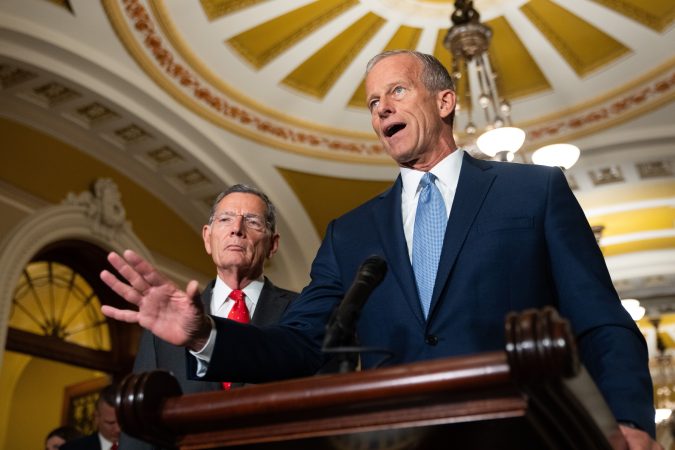
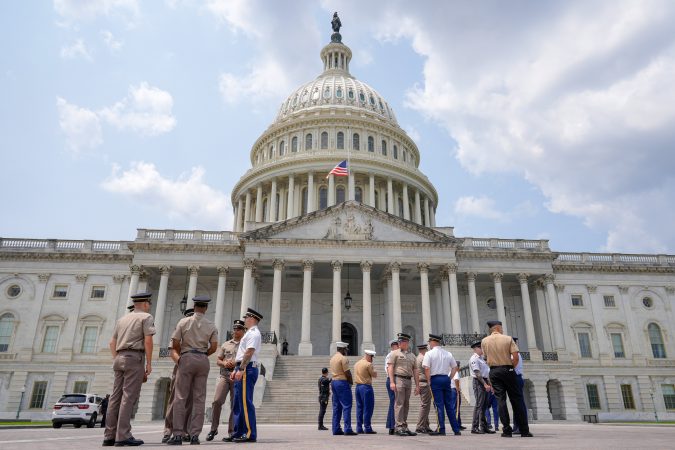
    The body of Sen. Lindsey Graham (R-South Carolina) arrived at the Capitol in Washington on Tuesday morning following his sudden death on July 11, as lawmakers from both parties gathered to commemorate his life.

    The ceremony in the Capitol Rotunda kicks off two days of mourning for Graham, who died at 71 after three decades in Congress, including more than 23 years in the Senate. A team of military body bearers brought his body into the Capitol in recognition of Graham’s service in the Air Force.

    A funeral service at which President Donald Trump is set to speak is scheduled Tuesday afternoon at Washington National Cathedral.

    Fox News host Sean Hannity and Emillie Roberts, one of Graham’s nieces, are also expected to speak at the funeral. Tony Perkins, a politically involved pastor who leads the Family Research Council; Marjorie Dannenfelser, a prominent antiabortion activist; and the Rev. Franklin Graham are scheduled to give readings.

    A second funeral service will be held Wednesday in Columbia, South Carolina, with a procession from the State House to First Baptist Church. Graham will be buried in a private ceremony in Pickens County.

    The Senate is preparing to take up legislation that Graham had championed to impose new sanctions on Russia and its allies to help Ukraine in its war effort. Graham worked for more than a year to pass the bill and announced the day before he died that the White House had agreed to support it.

    Sen. Darline Graham (R-South Carolina), Graham’s sister, whom South Carolina Gov. Henry McMaster (R) appointed to replace Graham in the Senate, introduced a revised version of the bill with Sen. Richard Blumenthal (D-Connecticut) days after taking office. The Senate is set Tuesday evening to take the first procedural vote on the legislation, renamed the Lindsey O. Graham Sanctioning Russia Act of 2026.

    Graham’s funeral also coincides with Tuesday’s filing deadline in the Republican primary for his Senate seat.

    Darline Graham, whom Trump has endorsed, is running for the seat, along with Reps. Ralph Norman and Russell Fry; former South Carolina governor Mark Sanford; and Mark Lynch, a businessman whom Graham defeated in the Republican primary in June, among others.

    Graham was the first sitting senator to die to since Dianne Feinstein, the California Democrat who died in 2023. Feinstein was 90 and had been ailing.

    Graham was a singular figure in the Senate. He was willing to work with Democrats even as he forged a close relationship with Trump. He was the Senate’s most aggressive foreign policy hawk, pushing Trump to take a harder line on Iran and Russia – but he won the respect of Democrats who vehemently disagreed with him.

    “I had a million disagreements with Lindsey on these very issues, but I kind of valued the fact that he always placed a real importance on the role of America in the world,” Sen. Tim Kaine (D-Virginia), a leading critic of the war in Iran that Graham strongly supported, told reporters Monday. “Fewer and fewer senators take that on as part of their job description.”

  • Democrat’s TV ad targets data centers in drive to oust Republican from swing Pennsylvania House seat

    Democrat’s TV ad targets data centers in drive to oust Republican from swing Pennsylvania House seat

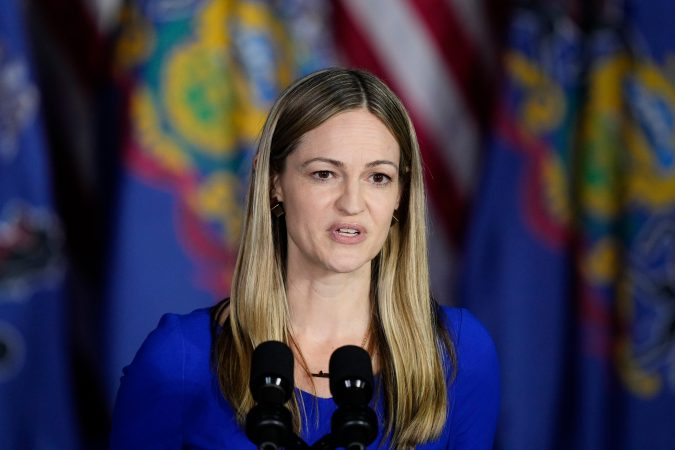
    HARRISBURG — Democrat Paige Cognetti is taking a shot at artificial intelligence data centers in her challenge to freshman Republican Rep. Rob Bresnahan, saying “we’re not for sale” in a new TV ad in a swing Pennsylvania congressional district where communities are fighting data center projects.

    The race between Cognetti, the mayor of Scranton, and Bresnahan is considered one of the Democratic Party’s best opportunities to pick up a seat in the November election in its bid to take control of the U.S. House and block President Donald Trump’s agenda.

    Cognetti is airing the ad in a district that’s been buffeted by AI data center projects and as the opposition to data centers that has upended races for local offices across the country is spreading to top-of-the-ticket contests.

    Speaking to the camera, Cognetti invokes the region’s industrial heritage as a coal and shale gas powerhouse, saying, “Big companies have come before, taken what they wanted and left us with their mess to clean up. Now it’s data centers.”

    She then criticizes the secrecy that developers often use to veil details of projects from the public, the tax breaks developers often get from states and the rising electric bills that have hit the mid-Atlantic region to satisfy the growing energy demand of data centers, which house rows of computers for storing, processing and transmitting data.

    “Big Tech needs to pay their own way. Not hide behind NDAs. No tax breaks. Don’t raise our electric bills, don’t poison our water. And hire local, union labor,” Cognetti says.

    If not, “then get out,” she says. “This is our home. We are not for sale.”

    Trump has made data centers a top priority to help the U.S. compete against China for AI superiority.

    However, communities across the U.S. have fought many of the projects, including in northeastern Pennsylvania, where complexes of data centers and new high-voltage transmission lines are planned. Fights between communities and developers have landed in court.

    The 30-second ad will run on broadcast TV channels, cable and digital platforms, Cognetti’s campaign said. It is costing about $200,000 for the initial run of two weeks.

    Bresnahan has introduced legislation called the Local Control Protection Act, which he says would put limits on a corporation’s right to sue over local zoning decisions denying an application to build a data center.

    “We should never let billion-dollar corporations supersede the voices of those who live in the community,” Bresnahan said in a statement accompanying the bill’s introduction in June.

    The bill has yet to move out of committee or gain a cosponsor.

    Republicans have made protecting Bresnahan a high priority. Both Trump and Vice President JD Vance visited the district last year.

  • New Burlington County shuttle bus will connect Philly suburbs with regional transportation options

    New Burlington County shuttle bus will connect Philly suburbs with regional transportation options

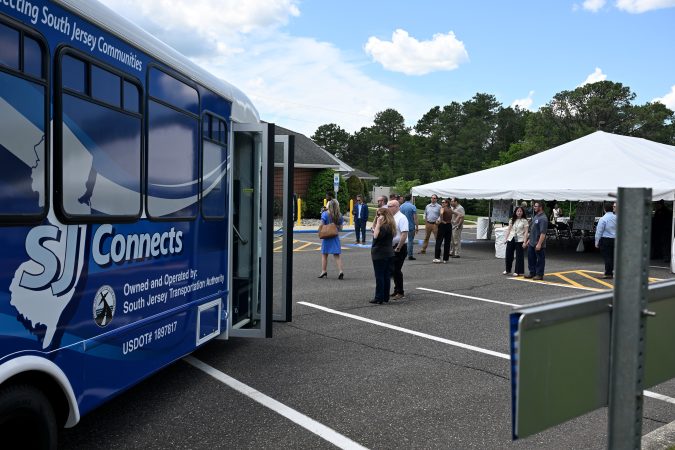
    A new free shuttle bus in Burlington County will be concentrated in a small slice of the county in some of the places closest to Philadelphia and Camden, according to a draft brochure for the service.

    But it’ll also serve as a transfer point for other residents in the area.

    SJ Connects, a free shuttle bus service run by the South Jersey Transportation Authority (SJTA), was granted $5 million under former Gov. Phil Murphy’s administration for an 18- to 24-month trial run to improve transit in the region. All of the service’s routes already began running except for Burlington County’s bus, which is expected to start service in September despite being included in a June 1 launch announcement.

    The SJTA has not yet posted the details of the Burlington County route but The Inquirer obtained its draft brochure through a public records request. The document shows that the planned 11-stop route connects Burlington County’s Palmyra, Moorestown, Cinnaminson, Mount Laurel, and Maple Shade with the Pennsauken Transit Center in Camden County.

    While it will most directly service the residents who live along the route, the planned route will also connect with existing transportation centers in the area to serve as a transfer point for riders.

    Locally, the bus is slated to stop at Cooper University Health Care‘s Moorestown campus, Moorestown Library and Town Hall, Cinnaminson Shop Rite, Fox Meadow Apartments, and the Mount Laurel Walmart Supercenter.

    Stops at the Moorestown Mall and Pennsauken Transit Center will connect riders to NJ Transit buses that go to Philadelphia’s 30th Street Station, Trenton, Camden County municipalities such as Cherry Hill, Haddonfield and Gloucester City, and other Burlington County locations such as Mount Holly and Willingboro. It will also link riders with the RiverLine and Atlantic City Rail.

    (function() {
    var l2 = function() {
    new pym.Parent(‘BURLCO28-A’,
    ‘https://media.inquirer.com/storage/inquirer/projects/innovation/arcgis_iframe/BURLCO28-A.html’);
    };
    if (typeof(pym) === ‘undefined’) {
    var h = document.getElementsByTagName(‘head’)[0],
    s = document.createElement(‘script’);
    s.type = ‘text/javascript’;
    s.src = ‘https://pym.nprapps.org/pym.v1.min.js’;
    s.onload = l2;
    h.appendChild(s);
    } else {
    l2();
    }
    })();

    Dominic D’Amico, director of transportation services at the SJTA, said the agency designed the routes to connect with NJ Transit’s existing infrastructure and the region’s “eds and meds.”

    Some parts of Burlington County that are excluded from SJ Connects — such as Pemberton and Mount Holly — have access to a separate, existing system called the BurLINK shuttle, which is administered by the county and run by a private company.

    The new SJ Connects route is not slated to directly connect with BurLINK. But riders can transfer between the two services using the River Line, for example.

    Assembly member Andrea Katz, a Burlington County Democrat, said in an interview earlier this month that she hopes SJ Connects will expand further into her district in the future. The long-term viability for the program will likely depend on whether its advocates can convince Democratic Gov. Mikie Sherrill and legislative leaders that it’s worth funding in future state budgets.

    “We have very little down here in Burlington County, and in South Jersey as a whole, but folks still have those issues that they need a ride to the hospital, they need a ride to a grocery store,” Katz said. “They need to get access to these things, and we’re finally starting to see this expansion into South Jersey.”

  • Shapiro, Democrats blasted Trump’s ‘conspiracy theories.’ That message has not changed after New Jersey’s noncitizen voting revelation.

    Shapiro, Democrats blasted Trump’s ‘conspiracy theories.’ That message has not changed after New Jersey’s noncitizen voting revelation.

    The day after President Donald Trump delivered a prime-time speech contending, among other claims, that 250,000 noncitizens were registered to vote in just four states, Pennsylvania Gov. Josh Shapiro derided it as “a whole bunch of conspiracy theories that are just simply not connected to reality.”

    A week later, when New Jersey revealed that 6,600 noncitizens were improperly registered to vote in the state and nearly 400 cast a ballot due to a glitch, Shapiro’s message was nearly identical — that Trump is pushing “baseless conspiracy theories” as he seeks more power over state-run elections.

    Pennsylvania and New Jersey were both on the list of Democratic-led states that Trump claimed had thousands of noncitizens on their voter rolls. The methodology of how the Trump administration arrived at that figure remained unclear, but his administration has sought to leverage the New Jersey disclosure as evidence of a larger problem.

    But Shapiro and other national Democrats have not shifted their messaging on the issue ahead of the high-stakes midterm elections. They are refusing to cede to the GOP any suggestion that New Jersey’s voter rolls are evidence of widespread voter fraud and are warning that the changes Republicans seek would make it tougher for many Americans to vote.

    Shapiro, a likely presidential contender in 2028, joined 25 other Democratic officials from across the nation in a lawsuit last Thursday challenging the administration’s ramped-up attempts to coerce states to share their raw voter data by threatening to withhold money for homeland security and disaster preparedness.

    “Withholding this funding will make our communities less safe and would be dangerous under any circumstance, but doing this in an attempt to undermine states’ authority over elections is reckless and unconstitutional,” Shapiro said.

    Kentucky Gov. Andy Beshear, another potential 2028 candidate, also joined the suit. (Both Shapiro and Beshear lead states with Republican attorneys general.)

    The day after Trump’s speech, Shapiro challenged the administration to present “real evidence” of noncitizen voting, which Pennsylvania election officials say is extremely rare.

    In addition to Pennsylvania and New Jersey, the White House also targeted Nevada and California for additional scrutiny over their voter rolls, according to a document posted to the White House website last week shortly after Trump’s speech.

    California Gov. Gavin Newsom, one of Trump’s most vocal critics in the Democrats’ potential 2028 field, said the president’s speech was fueled by debunked lies.

    “It was unhinged. Unfounded allegations of election fraud — it’s madness. But he’s setting it up. He’s setting you all up. You know what he’s doing. He’s doing it in plain sight. He’s socializing all of this to normalize all of this,” Newsom said last week, during a news conference that took place the same day as New Jersey’s announcement.

    Trump has repeatedly promoted conspiracy theories about California elections in recent weeks — including in two Pennsylvania speeches — despite no evidence that fraud occurred.

    For U.S. Sen. Cory Booker (D., N.J.), pushing back against Trump presents a tougher challenge.

    Booker, also a likely 2028 aspirant, must balance the governing changes he sees as needed in New Jersey with the larger politics of the moment. He said the failure of the software was “not acceptable” but rejected Trump’s efforts to portray the entire election system as faulty.

    “There are those who will choose to weaponize this issue to undermine confidence in our elections,” Booker said in a statement. “We cannot allow that.”

    But Republicans have pointed to New Jersey as proof that a sweeping overhaul is needed for November’s results to be trusted.

    Trump’s allies are pushing the SAVE America Act, which would require voters to provide proof of citizenship when registering to vote and to show photo ID at the polls. The effort has stalled in Congress amid concern, even among Republicans, that the bill’s restrictions on mail voting could make it harder to cast a ballot and that many citizens could wrongly be blocked from voting if they do not have access to required paperwork.

    Vice President JD Vance, widely viewed as a 2028 Republican candidate and a potential political heir to Trump, seized on New Jersey’s revelations as a renewed opportunity for the legislation’s relevance.

    “If only there was a way to stop this type of ‘software error’ that allowed non citizens to vote in our elections,” he wrote in a post on X that targeted Booker and Sen. Andy Kim (D., N.J.), both of whom are unlikely to support the Republican-led bill.

    But the registration glitch happened despite these individuals answering “no” when asked on a keypad whether they were U.S. citizens. They were added to the system “through no fault of their own,” New Jersey Gov. Mikie Sherrill said last week, so it is not clear that showing additional documentation would have prevented the error.

    Sherrill ordered her chief counsel to investigate the issue, which occurred under her predecessor, former Democratic Gov. Phil Murphy, and promised to hold those responsible for the error accountable.

    Talking about this issue can pose an obstacle for both parties now that New Jersey’s glitch has been identified, said Sam Chen, a Pennsylvania strategist who has worked for former Gov. Tom Corbett and other Republicans.

    Republicans have overplayed their hand and are not seen as an authoritative voice on voter fraud, but Democrats have spent the same amount of time dismissing all of Republicans’ concerns, including some that are legitimate, Chen said.

    “When you’ve got an entire party saying, ‘No, this is never happening,’ and now you see what you see in New Jersey, it is going to leave a serious credibility issue for them,” Chen said.

    Democrats, like Shapiro, could build more credibility if they acknowledged the positive parts of the SAVE Act, he contended.

    “Grab what’s good, vehemently oppose what’s bad, and states can blaze their own path,” he said.

    But J.J. Balaban, a Philly-based Democratic ad maker, said it does not make sense for Democrats to go along with the SAVE Act because the charges are being made in bad faith.

    While many Democrats would support efforts to make election systems more secure, Balaban said, that is not what the Trump administration is trying to do — and New Jersey does not change that.

    “Voter fraud was shockingly rare a month ago. It remains shockingly rare today,” he said.

  • Trump defends his economic policies in Michigan, where new Canadian tariffs may sting

    Trump defends his economic policies in Michigan, where new Canadian tariffs may sting

    MILFORD, Mich. — In a visit to Michigan on Monday, President Donald Trump argued that his economic policies have revived the auto industry and American manufacturing even as many businesses contend that the sweeping tariffs he’s imposed against Canada and the rest of the world have hurt the state.

    Trump defended his policies while visiting a General Motors facility in the Detroit suburb of Milford that is a testing ground for its vehicles. He pumped a fist after watching Corvette, Cadillac, and Hummer vehicles compete in a series of drag races.

    In a speech, Trump cheered GM’s plans to expand production domestically in coming years and declared himself a president who was standing up for auto workers “at long last.”

    “I’ve done more for you than your parents, OK?” he said.

    After being led on a tour of vehicles from different eras of GM, some of which he sat in, Trump claimed the tariffs have helped the automaker.

    “They’ve come a long way,” he said to reporters about the Detroit-based automaker. “It’s amazing what tariffs are doing for GM.” Trump said he’s been good to the company but he declined to say more.

    “The rest of the world doesn’t love me, but that’s OK,” he said, alluding to tariffs. “It’s called ‘America first.’”

    Trump’s visit is close to Michigan primary on Aug. 4

    Trump called out several Republican candidates and invited them onstage during his remarks Monday.

    Republican Mike Rogers is unopposed in the Senate primary, but the GOP gubernatorial contest pits Trump-backed Rep. John James against Perry Johnson, a businessperson turned politician who has launched unsuccessful campaigns before, including for president in 2024.

    Johnson is now trying to style himself in the president’s mold — despite missing out on his endorsement.

    The Democratic Senate primary between Rep. Haley Stevens and progressive Abdul El-Sayed has drawn national attention for the right to face Rogers, who was narrowly defeated by Democrat Sen. Elissa Slotkin in 2024.

    Early voting is underway.

    Trump’s new Canada tariffs could hurt Michigan

    Michigan was one of the 2024 battlegrounds Trump flipped after it backed Democrat Joe Biden in 2020. But the state has seen parts of its economy affected by the president’s tariffs, including those on imported cars and auto parts.

    A new round of steep import levies is taking effect on dozens of U.S. trading partners. But Trump has singled out Canada with tariffs as high as 50% on a wide array of its products, including cars.

    The GM facility is in Oakland County, which encompasses much of Detroit’s northern suburbs. Once a Republican stronghold, it has increasingly leaned Democratic, backing Biden against Trump in 2020 and Vice President Kamala Harris against Trump four years later.

    GM says its facility is the oldest dedicated vehicle testing operation in the United States, where 4,200 employees work to refine nearly every vehicle the company makes before they reach consumers.

    Michigan’s economy relies heavily on Canada, however, meaning the new tariffs — coupled with inflation still running high and gas prices rising again as the already unpopular war in Iran continues — have created additional economic concerns statewide.

    Those come at a time when voters across the country were already increasingly dissatisfied with Trump’s handling of the economy.

    Jason Roe, a former executive director of the Michigan Republican Party who tried unsuccessfully to distance it from Trump’s Make America Great Again movement in 2021, said that more than coinciding with his new round of tariffs, Trump’s visit is a function of Michigan’s relatively late primary and is meant to ensure that James secures the nomination.

    But Roe also said it was a risk for the president to tie himself too closely to top Republicans before the general election, calling it “kryptonite to November voters.”

    Trump, who won the White House on a promise to lower the cost of living, also has seen his approval ratings sag, meaning kitchen table issues could be a liability for Republicans trying to hold control of Congress in the Nov. 3 elections.

    “We’re happy to have the president here, campaigning with Republicans. We think it highlights the fact that the only thing they care about is Donald Trump and refuse to stand up to him,” said Curtis Hertel, chairperson of the Michigan Democratic Party. ”It’s good for us every time the president is here because he’s incredibly unpopular.”

    U.S. and Canada have squabbled over a new border bridge

    The Supreme Court struck down many of Trump’s sweeping tariffs, but his administration has tried to find ways around that, including by arguing that he can impose them on Canada because that country is discriminating against American exports of products including automobiles.

    But Trump’s latest round of tariffs came after he voiced frustration with Canada for having retaliated and imposed its own levies on U.S. imports in response to Trump’s initial tariffs last year. Trump launched the first round after alleging Canada should do more to stop fentanyl smuggling.

    It is Trump’s third trip to Michigan in his second term.

    In January, he visited a Ford plant in Dearborn and addressed the Detroit Economic Club, offering a defense of tariffs even as auto industry leaders blamed them for increasing the cost of doing business.

    The president marked his second term’s first 100 days with a rally in Warren, where he mostly mentioned grievances left over from the 2024 campaign,

    His latest visit coincides with tensions between his administration and Canada that have marred the opening of a new bridge linking Detroit and Windsor, Ontario.

    Canada on Friday held its own event hailing the opening of the $4.7 billion Gordie Howe International Bridge instead of a planned celebration with officials in the U.S. after Trump announced the new Canadian tariffs.

    An earlier, joint ceremony had been set for June but was scrapped after Trump suggested the U.S. wanted a “better” deal on the bridge it co-owns with Canada.

    That eventually led to an agreement on splitting tolls that was supposed to allow for the rescheduled joint U.S.-Canada celebration — until the new tariffs derailed that, too.

  • Trump administration urges Supreme Court to allow order targeting mail-in voting before midterms

    Trump administration urges Supreme Court to allow order targeting mail-in voting before midterms

    WASHINGTON — The Trump administration asked the Supreme Court on Monday to clear the way for an executive order from President Donald Trump that could dramatically change mail-in voting ahead of November’s midterm elections.

    The Justice Department asked the justices to halt for now lower court decisions blocking work to implement the sweeping changes in nearly half the country.

    The request comes shortly after Trump delivered a primetime address elevating his yearslong push to raise doubts about the legitimacy of elections, and could be one of several voting-related challenges before the court ahead of the high-stakes midterm contest.

    Trump ordered the government in March to create a “state citizenship list” of eligible voters and deliver mail ballots only to people on that list.

    Democratic officials in 23 states and the District of Columbia sued, saying the Constitution gives states and Congress the authority to set election rules, not the president. Their attorneys have said Trump’s proposed changes are ripe for abuse and could cause chaos.

    A judge in Massachusetts blocked the order for the plaintiff states, and a divided 1st U.S. Circuit Court of Appeals panel left her ruling in place over the weekend.

    The executive order issued in March calls for U.S. Citizenship and Immigration Services and the commissioner of the Social Security Administration to create a federal list of eligible voters. It tells the U.S. Postal Service to deliver mail ballots only to people on that list.

    The order also calls for ballots to have secure envelopes with unique bar codes for tracking. Federal funding could be withheld from states and localities that don’t comply.

    The appeal argues that Trump’s order lays out “general policy guidance” and doesn’t directly dictate how states run their elections. Solicitor General D. John Sauer asked the high court to freeze the judge’s order as lawsuits play out, calling it indefensible.

    “And the injunction is especially indefensible because the agencies are still deliberating over how (if at all) to implement the Order, yet the district court preemptively decided that whatever the agencies may choose to do will necessarily be unlawful,” Sauer wrote.

    He urged the high court to move quickly, arguing that any new policies would have to be in place as soon as August to be effective for the November elections.

    A response to the appeal is due Aug. 3.

    Trump promoted the proposed changes as safeguards to keep non-U.S. citizens from voting. Noncitizen voting has been shown to be rare, and is a felony that can be punishable by deportation.

    U.S. District Court Judge Indira Talwani in Boston, who was nominated by Democratic President Barack Obama, agreed in June to halt implementation for the Nov. 3 elections.

    Her ruling differed from that of another federal judge based in Washington. U.S. District Judge Carl Nichols, who was appointed by Trump, found in May it was too early to block the order because it had not yet been implemented.

    The office of California Attorney General Rob Bonta, who is leading the lawsuit, did not immediately comment on the Trump administration’s appeal. New York Attorney General Letitia James’ office declined to comment.

    the Postal Service also would not discuss its plans regarding implementing Trump’s order or its rule, citing the ongoing litigation. In Kansas, Secretary of State Scott Schwab’s office said it has not yet heard from the Postal Service about plans going forward.

  • McConnell not medically cleared to leave rehab yet, Capitol physician says

    McConnell not medically cleared to leave rehab yet, Capitol physician says

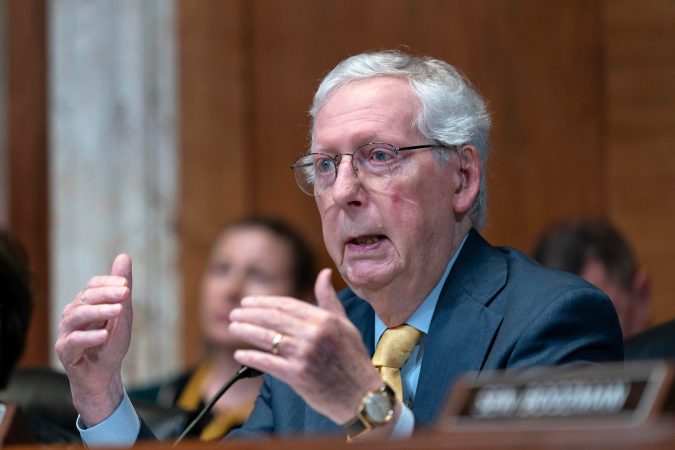
    Sen. Mitch McConnell (R., Ky.) has not been medically cleared to leave a rehabilitation facility, the Capitol physician’s office said Monday, and will miss Kentucky’s Fancy Farm Picnic on Saturday as he continues recovering from a June fall.

    McConnell, 84, was hospitalized June 14 after suffering a fall at home and has not returned to the Senate. He said earlier this month that he had moved to a rehabilitation facility but has not provided a timetable for his return.

    “I’m still working hard to get back to my full schedule of work in the Senate and in Kentucky, keeping up with intense physical therapy per my doctors’ orders,” McConnell said Monday in a statement. “Unfortunately, that means I won’t be able to make it to Fancy Farm, Kentucky this Saturday.”

    In an accompanying statement, Congress’ Office of the Attending Physician said McConnell was “not yet medically cleared to leave the rehab facility and return to the office.” Its physicians visit him daily, the office said, and he is undergoing multiple physical therapy sessions each day to rebuild his strength and reduce the risk of future falls. The office said childhood polio “continues to be a significant factor in his mobility.”

    McConnell has been a regular speaker in the past at Fancy Farm, a picnic in rural western Kentucky that draws politicians from across the state every August.

    McConnell shared a photo of him with his wife, Elaine Chao, which his office said was taken on Sunday.

    McConnell has faced growing questions about his health and when he will return to the office over the past six weeks, which occasional updates from his office have not silenced. Scott Jennings, a former McConnell campaign aide, urged McConnell last week to “routinely update his constituents on how he’s doing.”

    “When you’ve been in a hospital for a month and you’ve missed all the votes … you owe your boss, like anybody else out there who works, an explanation of what’s been going on and when you’ll get back,” Kentucky Gov. Andy Beshear, a Democrat, said earlier this month.

    McConnell’s office has said that he continues to work as he recovers. David Popp, a McConnell spokesperson, said Friday that McConnell “continues to meet with staff regarding Senate and Kentucky business, including discussions on defense appropriations, foreign policy, the farm bill, constituent services, and constituent federal grant requests.”

  • Trump demands Senate cancel August break until it passes voting bill

    Trump demands Senate cancel August break until it passes voting bill

    WASHINGTON — President Donald Trump on Monday demanded that Senate Majority Leader John Thune cancel the chamber’s upcoming August break until senators pass a strict proof-of-citizenship voting bill, even as Republicans lack the votes to advance it.

    Trump has repeatedly urged Thune to scrap the legislative filibuster, which effectively sets a 60-vote threshold for most legislation in the 100-member Senate, or find another workaround to pass the voting bill, known as the SAVE America Act. But Republicans hold only a 53-47 majority, and Thune has consistently said they don’t have the votes to pass the bill or change the rules to get around the filibuster.

    “John Thune should not allow the United States Senate to ‘leave town’ until it passes The Save America Act or, far better still, TERMINATES THE FILIBUSTER,” Trump wrote on social media.

    He later insisted to reporters Monday that he has a good relationship with the Senate majority leader but said Thune has “got to get his job done.”

    It’s the latest escalation in a monthslong pressure campaign by Trump and others in the GOP base to pass the SAVE Act ahead of the midterms. A small but vocal group of Republican senators has also increasingly pressed Thune to find a way forward.

    House Republicans have also attempted to create another path for the legislation through the budget reconciliation process, which would allow grant money associated with voting rules to pass the Senate with a simple majority.

    The House last week approved a budget framework that included $10 billion for voting-related changes aligned with the SAVE America Act. But Thune has said Republicans don’t currently have the votes for that approach, either.

    Trump’s pressure comes during an important period

    The fight threatens to complicate the Senate’s final legislative sprint before the August break, when Thune had hoped to focus on a long list of priorities that includes government funding, cryptocurrency legislation and sanctions on Russia. The August break, scheduled to start on Aug. 7, is a pivotal stretch for senators to return home and campaign ahead of the midterm elections.

    Several Republican senators are facing competitive races, including Maine Sen. Susan Collins, Ohio Sen. Jon Husted and Alaska Sen. Dan Sullivan. Republicans currently hold a 53-47 Senate majority. Republicans are confronting broader political headwinds as well, including an unpopular war in Iran, surging gas prices and costs that remain high for voters.

    Thune has enjoyed broad support from his GOP conference all year as he’s pushed back on Trump’s demands. He previously kept the SAVE Act on the Senate floor for weeks in an effort to build additional support, but was unable to secure the votes needed to advance it.

    Utah Sen. Mike Lee, who has led the push for the bill in the Senate, escalated his pressure late last week, warning that how Republicans handle the SAVE America Act “could impact not only the November midterm elections, but also the Senate GOP leadership elections.”

    “Leaders must lead. And if they don’t, they’re not leaders,” Lee wrote on social media Friday.

    Frustrated by the pressure when he doesn’t have a route to pass the bill, Thune has urged Trump, Lee and others to help him find the votes. Trump on Friday said he’d “certainly be willing” to help call senators.

    Asked last week if Trump is frustrated with Thune, White House press secretary Karoline Leavitt said that “his patience is running out.” But Trump told reporters on Air Force Once Monday while traveling to an event in Michigan, that he hasn’t “even thought” about potential replacements for Thune.

    The late-summer dispute echoes a similar fight before last year’s August recess, when Trump pressed Thune to keep senators in Washington to clear a backlog of his nominees. The Senate ultimately left town without a deal after negotiations with Democrats collapsed.

    The SAVE America Act would create new national rules

    The SAVE America Act, which stands for Safeguard American Voter Eligibility, would require Americans to prove they are citizens when they register to vote, mostly through a valid U.S. passport or birth certificate. It would also require a valid photo identification before voters can cast ballots, which some states already demand.

    Voting experts have said the bill could disenfranchise some 20 million American voters who don’t have birth certificates or other documents readily available.

    Trump has made it his legislative priority in 2026, saying it would “guarantee the midterms” and falsely claimed that election cheating is “rampant.” He previously declined to sign any other legislation until it was passed.

  • Shapiro planned to flat fund rape crisis centers. They convinced him to double their line item.

    Spotlight PA is an independent, nonpartisan, and nonprofit newsroom producing investigative and public-service journalism that holds power to account and drives positive change in Pennsylvania. Sign up for our free newsletters.

    HARRISBURG — After years of asking for more funding, Pennsylvania’s rape crisis centers saw their funding nearly doubled in this year’s state budget, a lifeline that the resource-starved organizations say will allow them to restore staff and services.

    The $12 million increase brings total annual funding for the state’s 47 rape crisis centers to just over $24 million, and comes after they were left flat-funded for six of the past 10 budget cycles.

    Administrators at and advocates for these centers say they had to convince Gov. Josh Shapiro and his administration that the situation was dire.

    “I listened,” Shapiro said at a Monday news conference. “These people are true public servants, the work they do every day,” he said. “They deserve more, and they got it.”

    The lack of new state funding, along with federal cuts, the budget impasse of 2025, and ongoing inflation, has troubled crisis centers in recent years, leaving the majority financially strained to the point of cutting staff and services, administrators and advocates told Spotlight PA.

    They said the influx of dollars will help reinstate cut programs and workers, but cautioned there’s still a long way to go to mend years of underfunding.

    “Sexual assault centers have been ringing this bell with our legislators for the past two to three years, trying to explain that we are really coming into the precipice of a real risk for crisis services declining or crumbling in many different parts of our state and of our counties,” said Ali Perrotto, chief executive of the Sexual Assault Resource and Counseling Center serving Lebanon and Schuylkill Counties.

    The commonwealth’s 47 rape crisis centers provide services to around 26,000 survivors of sexual violence annually, according to the state Department of Human Services. These services include 24/7 hotlines and crisis counseling; prevention education; housing; and training on sexual assault-related issues.

    State funding for these centers is distributed through a formula that takes into account population density, number of victims served, and hours of direct service provided. Centers also receive federal dollars, as well as grants and donations. Funding streams vary drastically by center: While some larger ones have relatively diverse finances, others are highly dependent on the state to operate.

    In 2025, lawmakers approved a 2% funding bump amounting to around $250,000 more for all crisis centers. Advocates said this was not enough to meet the needs of organizations already in deep financial straits due to the four-month impasse that preceded the budget deal.

    Rape crisis centers are among the nonprofits and other entities whose state payments get frozen when there is no budget. Perrotto said the situation forced SARCC to cut its prevention services and put off a capital purchase that would have provided housing for survivors in Lebanon County. The decision came after the center had to decide between investing in property or paying its staff, she said.

    Other centers, she added, had to dip into reserve funds or use lines of credit to keep paying wages. When the budget finally passed last year, the number of workers had dwindled to the point where centers were unable to restore everything. And organizations that did take out loans or use lines of credit still have to pay interest, which can only be financed through fundraised dollars, not grants.

    The impasse wasn’t the only difficulty. Rape crisis centers receive funding from the federal Victims of Crime Act fund. Money in the fund comes from fines paid by people who are federally convicted and goes to a range of services for crime victims. However, administrative changes at the federal level have lowered the fund’s balance. A state guide published this spring said money is now “critically low,” a dip that has caused a 45% decrease in victim services funding since 2022.

    At the same time, the number of survivors seeking services at rape crisis centers increased, Perrotto said.

    That uptick stems from lawmakers expanding the responsibility of local law enforcement, who now must directly refer victims to service agencies. This has increased the number of people coming through the doors of crisis centers.

    “We had more influx into the systems, even though we had fewer staff to meet the need and less funding to provide the services locally,” Perrotto said.

    There was often little rape crisis centers could do to tighten their belts further.

    Perrotto said that over the past five years, SARCC has cut 50% of its staff. Those who remained working provided constant access to services, including a 24-hour support line along with counseling, legal, and medical support.

    “The longer an impasse goes, the more of a tax there is on survivors and on the centers who are providing services to them,” Perrotto said.

    The fight for more funding

    When Shapiro first made his budget pitch in February, it didn’t address these issues; he proposed keeping funding flat once again.

    This caused an uproar from rape crisis centers. Advocates and administrators at centers across the commonwealth signed on to a letter asking for a $12.5 million bump.

    “Every year, flat funding has been equal to a budget cut, forcing centers to stretch already-thin resources even further as inflation and demand rise,” the letter said.

    It wasn’t until Shapiro listened to advocates and heard their testimonies that he realized the magnitude of the issue, he said during a Monday news conference at the YWCA in Carlisle.

    Joyce Lukima, director of the Pennsylvania Coalition to Advance Respect, which distributes state funding and advocates for rape crisis centers, said center leaders from across the state also met with lawmakers in May to discuss the need for funding.

    She said this year is the first time she believes advocates’ concerns were actually listened to.

    “After so many years of talking about this, I feel that we were heard and heard in a way that caused someone who was in a position to be able to take action to help move our cause forward,” she said.

    Perrotto was part of that effort. She compiled data about crisis centers’ needs across the commonwealth and presented it to Val Arkoosh, head of the state Department of Human Services.

    Detailed information on centers’ services and various funding streams was necessary to clearly illustrate to legislators the magnitude of the problem, said Arkoosh at the Monday event. Perrotto said the data she gathered showed the “buying power cut” of rape crisis centers — a loss in ability to pay for bills, staff, and services while still helping the same number of people.

    While the money alone is a step in the right direction, Lukima said there’s going to be a lot of necessary rebuilding to right the wrongs of previous years’ funding difficulties.

    She added there’s also a need to ensure that funding keeps pace with inflation to prevent centers from reaching their limits before getting more state resources.

    Perrotto echoed that point. “There’s going to be a build-up period, so we have to build back and restore what was lost or what was kind of crumbling in the current system, and we’re doing that with less staff,” Perrotto said.

    Along with rehiring furloughed workers, she said the new money will also go toward properly paying people who worked through underfunding. In 2022, her most recent analysis, Perrotto said the average wage for prevention educators and advocates working at sexual assault programs was $16 to $18 an hour.

    Increasing wages will ensure survivors are taken care of by workers who aren’t stretched too thin, or who need to work multiple jobs to make ends meet. Centers will also put funding toward restoring programs to ensure the caseload is not as heavy, she said.

    Lukima said she also predicts centers’ money will be allocated toward reinstating sexual abuse prevention programs that were cut in favor of maintaining services seen as more critical.

    At the end of the day, she said, rape crisis centers are essential for survivors of sexual violence, and lawmakers should treat them that way.

    “There isn’t a necessity for people to get to a breaking point before they get that increased allocation,” Lukima said, “recognizing how critical and important services are to the community, to the state, and making sure that that increase comes — just like it does for many other professions, just like it does for our legislatures — without having to have a multiyear struggle.”

    BEFORE YOU GO… If you learned something from this article, pay it forward and contribute to Spotlight PA at spotlightpa.org/donate. Spotlight PA is funded by foundations and readers like you who are committed to accountability journalism that gets results.
  • Medicare was one of the most successful civil rights laws in history

    Medicare was one of the most successful civil rights laws in history

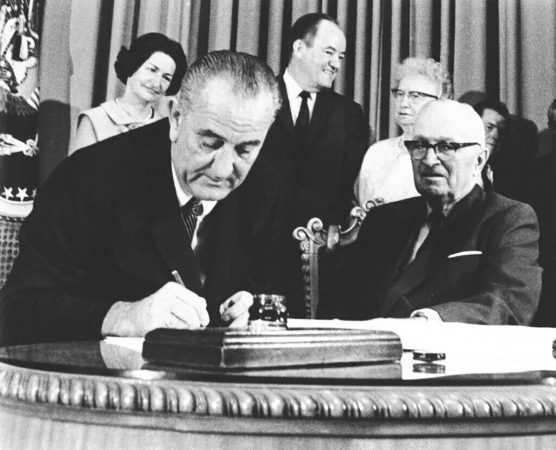
    When Americans think of the seminal Civil Rights legislation of the 1960s, they think of laws like the 1964 Civil Rights Act and the 1965 Voting Rights Act. Yet, there is one piece of historic 1960s legislation that unleashed a powerful civil rights tool that rarely gets remembered as “civil rights” legislation: Medicare.

    Hospitals desegregated — some almost overnight — worried that they would get cut off from Medicare funds. “White Only” signs came down, white-only facilities and segregated wards admitted patients without regard to race and Black clinicians received admitting privileges.

    And yet, a racial healthcare crisis persists. Over the past two decades, Americans have made no progress in narrowing racial disparities in medical care, although we know more about them today than ever.

    Black patients are less likely than white patients to receive pain medication, emergency cardiology care, lung cancer surgery, a kidney transplant, an appropriate mental health diagnosis and end-of-life home hospice care. Black people are disproportionately hospitalized for psychiatric services, excessively diagnosed with schizophrenia and more likely to have amputations. Surgery is more likely to kill Black patients, including children, than white patients, and Black mothers are three times as likely to die in childbirth as white mothers.

    These disparities remain after accounting for other characteristics that influence health.

    The history of Medicare, which turns 60 this year, offers a suggestion of how to rectify some of these problems. The desegregation of hospitals didn’t come when experts recognized that they were segregated, or even when courts declared such practices unlawful. Instead, the changes came when the government required hospitals to do better, verified compliance and withheld Medicare funding when they failed.

    This transformation forged by Medicare was as unexpected as it was abrupt.

    Hospitals, especially in the South, had been segregated before the Civil Rights Act. The federal government didn’t formally even document the practices and, in many cases, willfully ignored them.

    Title VI of the 1964 Civil Rights Act aimed to address this problem. It prohibited discrimination in federally funded institutions. Medical school-affiliated hospital facilities, which received much of their funding from federal government training and research grants, quietly began taking steps toward integration. Yet, at all other facilities, passage of the law changed little.

    Nationwide, but most dramatically in the South, Black patients continued to struggle to get care. Hospitals still hung “White” and “Colored” signs, separated patient records by race and shunted Black patients into basements or separate buildings, if they’d treat Black patients at all. Black women continued to give birth in dangerous conditions. Sometimes, while in labor, they had to solicit care from multiple white-only hospitals or facilities with limited beds for Black patients until one perhaps admitted them.

    Civil rights organizations filed hundreds of Title VI complaints. Yet, the federal government had no staff assigned to enforce compliance. As a result, the complaints accomplished very little.

    There were also several other impediments preventing progress. While healthcare facilities had long received federal funds through programs like the Hill-Burton Act, which paid for the construction of segregated hospitals, mostly in the South, Washington could not easily claw back federal dollars that had already been distributed to hospitals. Further, Title VI had no built-in enforcement mechanism. The Johnson administration, which in its first two years had been consumed with passing and implementing an array of ambitious legislation like the Civil Rights Act and the Voting Rights Act, was faced with going after individual hospitals on a case-by-case basis.

    Everything changed after Congress passed Medicare in 1965. Urged on by civil rights organizations, John Gardner, secretary of the Department of Health, Education, and Welfare (HEW), announced that to receive Medicare dollars, hospitals must comply with the Civil Rights Act. The new health insurance program covered 19 million seniors and promised to pay billions to healthcare facilities — but only if they complied. To Gardner, it was an unprecedented enforcement tool.

    HEW devised a process for determining compliance. Federal workers would inspect facilities. Were patients admitted and assigned the first bed available, regardless of race? Did hospitals extend admitting privileges to Black doctors? Were there disparities between their patient population’s racial composition and that of their service area?

    Made By History sponsors. FOR USE ON MADE BY HISTORY STORIES ONLY.Inquirer Staff

    Hospitals clearly in compliance would receive Medicare dollars. Others clearly out of compliance would not.

    Gardner did not have enough HEW staff to dispatch to inspect the nation’s 4,000 hospitals. So he put out a call for federal employees willing to volunteer in his department and conduct inspections. Over 1,000 came forward including tax accountants, veterinarians and scientists.

    In April 1966, civil rights movement activists trained them. Some violations would be obvious. That included “whites only” signs above entrances, bathrooms and in cafeterias, racially separate medical records and infants segregated by race.

    But trainers warned that hospital administrators might disguise a facility as integrated for the visit. Some did. One put a white administrator in a patient gown in a room with a Black patient. Another placed four comatose patients, each a different race, next to each other.

    Doing the “HEW shuffle” of fixing signs and shifting a few patients was insufficient, the inspectors explained. Facilities needed to be race-blind.

    The combination of a strict standard coupled with inspections worked.

    In three months, nearly all hospitals ended formal segregation and had been Title VI-certified as Medicare providers. After July 1, hospitals that had not been certified as Title VI compliant — those that lagged transforming their facility or refused on principle to do so — could not provide care for Medicare patients.

    The lives of Black people in the South radically changed. Before the intervention Black infants below the Mason-Dixon line died at twice the rate of whites. By 1971, however, Black infant mortality halved, largely because they more readily received care for treatable conditions and their mothers had access to hospitals for the first time.

    Yet, even as Medicare proved enormously successful in erasing formal segregation, racial stratification patterns remained apparent in hospitals throughout the U.S., exacerbated by residential segregation and referral networks systems.

    Ironically, we know this from Medicare itself. The program has long served as a tool for researchers to investigate disparities in healthcare: beneficiaries share a common insurance which makes it easier to isolate inequities.

    And racial separation persists among Medicare patients. Black Medicare patients are disproportionately treated at hospitals with fewer resources and worse outcomes. In some hospitals, certain teams treat only Black Medicare patients. Other teams treat only white ones.

    Starting in 2003, Medicare Advantage expanded the enrollment of Medicare recipients in commercial insurance alternatives. In Medicare Advantage, the federal government pays insurance companies fixed amounts for each enrollee and the companies then manage benefits. These programs, separate and unequal, also expose racial double standards.

    Even within the same Medicare Advantage plan, care is worse for Black and poor enrollees. Black enrollees tend to have worse follow-up care and chronic disease management than white enrollees. Additionally, they experience higher rates of preventable hospitalizations than white beneficiaries and are more likely to be readmitted.

    The 60th anniversary of Medicare should remind us that our greatest advance in health equity came from enforceable commitments to providing equal care, regardless of race. Racial disparities in healthcare can be eliminated if the federal government requires compliance — and then enforces it.

    For hospitals and physicians in 1966, equal treatment suddenly became a condition of financial survival. The immediate gains Black patients received suggest that if the federal government required healthcare systems and insurers to make real, measurable progress toward addressing racial health disparity, it would produce immediate and significant gains once more.

    The question is whether Americans — and their government — are willing to demand such accountability as they did 60 years ago?

    David Barton Smith is emeritus professor of health management and policy at Temple University. He was the recipient of a Robert Wood Johnson Health Policy Research Investigator Award and is author of three books and numerous articles related to this topic.

    Leila Morsy is an economic justice research fellow at the Legal Defense Fund Thurgood Marshall Institute and a senior lecturer at Flinders University. She is writing a book about the history of the exclusion of Black doctors and its contemporary consequences.

    Made by History takes readers beyond the headlines with articles written and edited by professional historians. Opinions expressed do not necessarily reflect the views of The Inquirer.