Category: Politics

  • Trump’s attacks on mail balloting and concerns over delays turn midterms spotlight on Postal Service

    Trump’s attacks on mail balloting and concerns over delays turn midterms spotlight on Postal Service

    Roughly six weeks before the first midterm ballots are mailed out, the U.S. Postal Service is emerging as a pivotal player in an election season that will determine control of Congress.

    President Donald Trump is seeking greater control over mail balloting through an executive order while a change to how the agency processes mail is leading to criticism that it’s failing to deliver ballots on time.

    Democratic officials have raised concerns over the past week about how quickly the Postal Service will process ballots after tens of thousands of them in California and hundreds in Wisconsin arrived at local election offices too late to be counted in elections earlier this year. The top election offices in Kansas and Michigan are urging voters who want to cast their ballots early to avoid the mail and instead drop them off in person.

    The Postal Service replied to those concerns by saying it remains “committed to fulfilling our role in the electoral process.”

    “We provide a secure, efficient, and effective way for citizens to participate when policymakers decide to use mail as part of their elections,” it said in a statement Tuesday.

    Trump’s order puts more focus on mail ballots

    The Postal Service faced similar questions about mail delivery in 2024, but the scrutiny this year is heightened because of an executive order Trump issued in March that seeks to create a national voter list to guide the Postal Service in deciding who gets a mail ballot.

    The order has sparked multiple lawsuits and federal court orders, leading to a case now before the U.S. Supreme Court in which the administration is asking the justices to allow it to impose its restrictions on mail balloting.

    Trump has lied for years about voter fraud to try to explain away his loss to Democrat Joe Biden in 2020, and mail balloting is a favorite target, even though he has used the method himself. During a recent stop in Michigan, he falsely characterized mail balloting as “inherently corrupt” and added, “Hopefully there will be no mail-in ballots.”

    A 2025 report from the research group Brookings identified about four cases of fraud for every 10 million mail ballots cast.

    Despite Trump’s attacks, the method remains popular with voters of both major parties. In 2024, nearly 30% of U.S. voters cast their ballots by mail, according to federal data. In Michigan, where competitive U.S. House and Senate races could help determine the balance of power in Congress, the state said it has sent out more than 2 million absentee ballots for the state’s Aug. 4 primary.

    “We want to keep vote by mail. We want to protect it. We want to expand it,” said Jonathan Smith, president of the 200,000-member American Postal Workers Union, which launched a campaign in April promoting it and is opposed to turning the Postal Service into an election administrator. “Why? Because it works.”

    Legal battles intensify over Trump’s order

    The Postal Service proposed a rule in June in line with Trump’s executive order that would create a national list of eligible voters, based on databases kept by other federal agencies. Only those on the list would be eligible to receive mail ballots.

    Democratic officials in nearly two dozen states filed a federal lawsuit in Massachusetts. A federal judge there blocked Trump’s order last month, and an appeals court upheld that ruling, prompting Trump’s appeal to the Supreme Court. But the appeals court for the District of Columbia refused Tuesday to block the order in a separate case, calling a legal challenge premature.

    Democratic senators and governors have written to the Postal Service urging it to abandon efforts to implement Trump’s order.

    “Donald Trump has shown he’ll stop at nothing to meddle in our upcoming elections,” Wisconsin Sen. Tammy Baldwin said in a statement to The Associated Press. ”At best, this new push will exacerbate already severe delays for mail-in voters and at worst, it will stop eligible Americans from casting their ballots.”

    In a letter to Democratic senators earlier this month, the heads of the Postal Service said they were abiding by the court rulings that had halted the executive order. But Smith, of the postal workers union, told the AP on Tuesday that USPS information technology staffers who are union members are working on a planned portal for the list of eligible voters “behind the scenes.”

    The Postal Service declined to respond to Smith’s statements and said it could not comment about whether it’s moving forward with work related to Trump’s order because of the litigation.

    The postal workers’ union opposes the plan for a portal, a national list of eligible voters and using that list to determine who can receive a mail ballot. Smith said it shouldn’t be postal workers’ responsibility “to decide who can vote and who can’t vote.”

    A plan to consolidate mail processing centers upsets officials

    The Postal Service has been under financial stress for years and has been consolidating mail processing into fewer regional centers. Mail travels an average of 139 miles to reach one and sometimes 500 miles, according to a recent Brookings report.

    In January, a group of mostly Democratic senators said it was concerned about a decision to end twice-daily mail dispatches from local post offices to regional processing centers. The result is that mail arriving after the only daily dispatch would go out the next day.

    California officials said the change was a factor in the state rejecting more than 148,000 ballots from its June primary, with 63% of them arriving too late despite a seven-day grace period. Officials worried that some ballots were postmarked at processing facilities the day after they were dropped off at a post office, possibly invalidating them. Wisconsin officials also said hundreds of ballots from an election in April arrived late.

    The Postal Service said postmarks generally are being applied with automated equipment at processing centers, “in the same manner and to the same extent as before.” It said someone who wants to make sure their ballot envelope gets a timely postmark can get a free one applied by a postal worker.

    A report on the 2024 election by the USPS Office of Inspector General said the Postal Service handled more than 59 million pieces of ballot mail from Sept. 1 to Nov. 15 that year and that 97.3% arrived on time.

    Some state election officials advise voters to avoid the mail

    The Michigan secretary of state’s office is advising voters to hand-deliver ballots to their local clerk’s office or a drop box.

    “We’ve seen these issues over a number of election cycles now — they’re always concerning, and that’s why we’ve put out that guidance,” said Deputy Secretary of State Aghogho Edevbie.

    The Postal Service said its Michigan centers are not seeing processing delays.

    In Kansas, concerns about late ballot deliveries in the state’s 2024 primary election prompted a quip on the social platform X from Secretary of State Scott Schwab, a Republican: “The Pony Express is more efficient at this point.” Asked his view now, spokesperson Whitney Tempel said Schwab still believes “keeping your ballot out of the hands of the federal government is best.”

    Jamie Shew, a Democrat elected to oversee elections in Douglas County, home to the main University of Kansas campus, said his office is trying to change voters’ perceptions.

    “I think voters are used to, you can drop it off on Friday and we’re going to receive it by Election Day,” Shew said Tuesday. “That’s just not the reality.”

    California’s state budget includes $10 million for social media campaigns and other efforts to discourage last-minute ballot mailings.

    And the Postal Service said it hasn’t changed its own longstanding advice for voters: They should get their ballots in the mail at least a week before their state’s deadline for receiving them.
  • Federal judge dismisses Trump administration’s lawsuit seeking New Jersey voter records

    A federal judge on Wednesday dismissed a lawsuit from President Donald Trump’s administration that sought New Jersey’s unredacted voter files.

    The case — one of more than two dozen lawsuits filed by the Trump administration against states ahead of the midterm election — predates New Jersey’s recent disclosure that thousands of noncitizens had been registered to vote in 2023 and 2024 due to a glitch in the motor vehicle system.

    The Justice Department attempted to use that news as leverage in the case, but it was unsuccessful.

    U.S. District Judge Zahid N. Quraishi ruled the department did not have the authority to compel New Jersey to hand over its unredacted records.

    “The Constitution’s architects chose to delegate election administration to the states, recognizing local governments have the deepest understanding of their constituents’ circumstances,” Quraishi wrote in the ruling, which granted New Jersey’s motion to dismiss the lawsuit.

    Quraishi has become the 18th U.S. District Court judge to rule against the Trump administration on the issue, according to data from the Brennan Center for Justice.

    The Trump administration will likely appeal the case, as the president and his allies have made election security a focal point ahead of the November midterms. It is mounting an appeal in a similar case in Pennsylvania.

    The ruling in the state’s favor came a day after New Jersey Gov. Mikie Sherrill formally told the Justice Department she would not release personal information about noncitizen voters who had been mistakenly added to the state’s voter rolls ahead of the 2024 election.

    Sherrill announced last week that about 6,600 noncitizens had been registered to vote due to a glitch in the automatic voter registration system at the New Jersey Motor Vehicle Commission. She said fewer than 400 had cast ballots and there was no evidence they had affected election results.

    On Tuesday, she said the New Jersey Department of State had begun removing 4,500 voters from the rolls. But there is a chance the rest could actually be citizens, so counties will review those about 2,000 individuals to ensure no eligible voters are disenfranchised, she said.

    Following Sherrill’s disclosure last week, Assistant U.S. Attorney General Harmeet Dhillon requested the full names, dates of birth, nationalities, and home addresses of the individuals who were erroneously registered, as well as additional information about the noncitizens who voted, within a week.

    Sherrill had publicly indicated she would not hand over the data, but her letter Tuesday put it on the books.

    The Justice Department’s request has no legal basis, Sherrill said in a Tuesday letter to Dhillon, and sharing “extensive personal information about thousands of New Jersey residents” is limited by state and federal privacy laws.

    “Here and always, I remain committed to protecting New Jerseyans’ personally identifying information,” Sherrill wrote, reiterating her stance from the previous week, when she cited concerns about federal data breaches under Trump.

    In response to Sherrill’s rebuffing, Dhillon said the Justice Department’s request was rooted in the legal authority to “keep ineligible voters off its rolls” and vowed to obtain the information “through all legal means!”

    Sherrill’s “refusal to cooperate with federal law enforcement does nothing to protect law-abiding NJ voters,” Dhillon said on X.

    Sherrill on Tuesday criticized the Trump administration for “weaponizing the government against individuals that disagree with them.”

    She pointed to an issue during her campaign last year in which the federal government provided personal information about her that should have been redacted, like her Social Security number, to an ally of her Republican opponent. The National Personnel Records Center director apologized at the time and called it a rare error, but Sherrill claims her data were “weaponized” against her.

    Sherrill has not shied away from the issue of voter access in New Jersey as it becomes a national talking point in the debate over election security after last week’s revelation that thousands of people had been improperly added to the voter rolls when applying for driver’s licenses and identification cards.

    On Tuesday, she championed a new law, the John R. Lewis Voter Empowerment Act, that offers a slew of policies meant to increase voter participation.

    The erroneous registrations took place between June 2023 and June 2024 under former Gov. Phil Murphy’s administration due to a software glitch in New Jersey’s motor vehicle system, which processes the automatic registration when citizens obtain an ID or a license unless they decline.

    Even though they checked “no” when asked if they were a U.S. citizen, the noncitizens were registered anyway.

    Sherrill pointed a finger at her predecessor but a spokesperson for Murphy said the former governor had “no knowledge” of the glitch.

    U.S. Rep. Jeff Van Drew, a South Jersey Republican, said he planned to hold hearings over the issue and called on Sherrill to answer a slate of questions.

    Sherrill said Tuesday that her administration had hired a law firm to conduct an independent bipartisan investigation. One of the firm’s main partners worked under former Republican Gov. Chris Christie as attorney general and was later appointed by Christie to the Senate, she noted, saying “we have nothing to hide.”

    Christie said in a post on X that Sherrill “made the right choice tapping my former AG Jeff Chiesa to lead the independent investigation into New Jersey’s voter rolls.”

    “Jeff won’t hide anything from the public,” he said. “You can count on it.”

    But the New Jersey GOP questioned Wednesday why Sherrill would not comply with the Justice Department if she “has nothing to hide.”

    “She ran on transparency and accountability,” the party said in a post online. “Apparently, those were campaign promises that expired the moment she was sworn in.”

    Republicans have seized on the noncitizen voter registrations to make the case for the SAVE America Act, which would require proof of citizenship like a passport or birth certificate to register to vote.

  • Senate confirms Jay Clayton as new intelligence czar

    The Senate confirmed Jay Clayton as the director of national intelligence Tuesday, ending the tenure of Bill Pulte, a housing official and Trump loyalist, who held the role for more than a month.

    The 51-to-47 vote was more partisan than expected after Trump nominated Clayton in June. Many Democrats initially welcomed the pick and signaled they would support him.

    But their attitude changed after Clayton’s July confirmation hearing, where multiple Democrats pressed him to acknowledge that Joe Biden won the 2020 presidential election. Clayton repeatedly said that Biden had been “certified” as the victor but declined to answer the question directly.

    The question became a flash point for Democrats concerned about President Donald Trump’s use of the intelligence community to further his baseless claims that the 2020 election was rigged.

    Clayton previously served as the U.S. attorney for the Southern District of New York and chaired the Securities and Exchange Commission during the first Trump administration.

    His background has been less controversial than that of Pulte, who used his time leading the Federal Housing Finance Agency to further allegations of mortgage fraud against Trump’s perceived political enemies. But some Democrats have still argued that Clayton, like Pulte, lacks the national security experience required by law for the position.

    The director of national intelligence oversees the 18 agencies that span the U.S. intelligence community. Lawmakers established the role after the 9/11 terrorist attacks to try to prevent future lapses in intelligence sharing and interagency coordination.

    Pulte used his five weeks as acting intelligence chief to cut positions in the Office of the Director of National Intelligence, fulfilling Trump’s desire to vastly reduce its size. Since June 1, The Washington Post has reported, he has eliminated about 200 jobs within the ODNI.

    Pulte said in a posting on X on Tuesday that he had conducted “a 5th and Near Final Round of TERMINATIONS, an approximately 30% Staff Reduction from Weeks Ago.” ODNI has shrunk from around 2,000 people at the start of Trump’s second term to less than 1,300. The workforce’s precise size is classified.

    Clayton will take over an organization that has endured near nonstop upheaval in recent weeks, since the departure of former DNI Tulsi Gabbard in mid-June. Morale is low, former senior intelligence officials have said, noting they fear that ODNI’s recent politicized leadership and the firing of veteran analysts have discouraged independent analysis that clashes with White House narratives.

    Clayton’s confirmation could unlock a deal to renew Section 702 of the Foreign Intelligence Surveillance Act, a warrantless spy program that lapsed for the first time in June after Democrats protested Pulte’s temporary appointment and voted down the legislation. Civil libertarians and privacy advocates have long opposed the tool, arguing it needs firmer guardrails to protect American citizens from government surveillance.

    Lawmakers from both parties had sought to accelerate Clayton’s confirmation hearing in June to avoid having Pulte ever step into the acting director role. Trump abruptly canceled the previously scheduled session only hours before it was set to begin, instructing Clayton not to appear.

    The president instead called on the Senate to pass a voting restrictions bill and threatened to blockade future legislation without it. The Senate has not yet done so.

  • Mayor Parker’s former DEI chief sues the city for discrimination in tell-all lawsuit

    Philadelphia’s former chief diversity, equity, and inclusion officer has said before that Mayor Cherelle L. Parker and top administration officials scapegoated her after she reported sexual harassment in City Hall and then fired her “unjustly.”

    But in an explosive new lawsuit filed in federal court in Philadelphia this week, that officer, Brandee Anderson, claimed her termination was part of a coordinated effort to “suppress” or rebrand diversity work and came as a top Parker administration official made derisive comments about other DEI leaders.

    She claimed Parker — a centrist Democrat who is Black and the city’s first female mayor — said in 2025 that she “did not care about Ms. Anderson’s ‘DEI ideology,’ only minority business.”

    And she alleged in the lawsuit that the mayor threatened to remove any administration official who expressed dissenting views, telling a gathering of senior officials that no one “has a right to have an opinion about where we are going.”

    The suit, filed Monday in U.S. District Court for the Eastern District of Pennsylvania, seeks unspecified damages and payment of lost wages as a result of her firing. Parker is named as a defendant, as are Deputy Mayor Vanessa Garrett Harley, Inspector General Alexander DeSantis, and communications director Joe Grace. Anderson claimed DeSantis and Grace defamed and retaliated against her in statements to the media after her firing.

    Anderson served as Parker’s chief DEI officer beginning in 2024, advising the mayor and administration on matters such as workforce diversity, community engagement, equitable budgeting, and minority business opportunities. She also oversaw offices that serve LGBTQ+ residents and people with disabilities.

    She was fired in 2025 after Tyrell Brown, then the director of the Philadelphia Office of LGBTQ+ Affairs, reported to Anderson that they had received a “semi-nude” photo from a senior administration official. Anderson says in the lawsuit that she was fired days after elevating the matter to Garrett Harley and human resources officials.

    The city declined to comment on the lawsuit and generally does not answer questions about pending litigation.

    The lawsuit was the second filed against the city by a former DEI official during Parker’s tenure. Leslie Marant, the Philadelphia Police Department’s first DEI chief, who was fired in the first days of Parker’s administration, said in a federal lawsuit filed in October that she was a victim of the systemic discrimination that she was tasked with addressing. That litigation is ongoing.

    It was also the second time this month that a former Parker administration official accused senior administration members of fostering a toxic work environment.

    Shania Bennett, the former director of the Philadelphia Office of Youth Engagement, last week posted on social media that working for the city was “the worst experience of [her] life” and that she had quit her job after “unprofessional harassment.”

    Bennett could not be reached for comment.

    ‘Stand down’ on DEI matters

    Anderson, an attorney who founded a firm that creates anti-racist trainings, was hired in October 2024 to lead the city’s DEI efforts. In the lawsuit, she alleges that Parker officials undermined her authority from the outset.

    She claimed Parker forbade her from contacting members of City Council with whom she had existing relationships. And she said Garrett Harley, one of Parker’s most senior officials, told her and other DEI leaders to “stand down” if they expressed dissenting views, saying “if you can’t align with the mayor’s strategy, DEI may not be the job for you.”

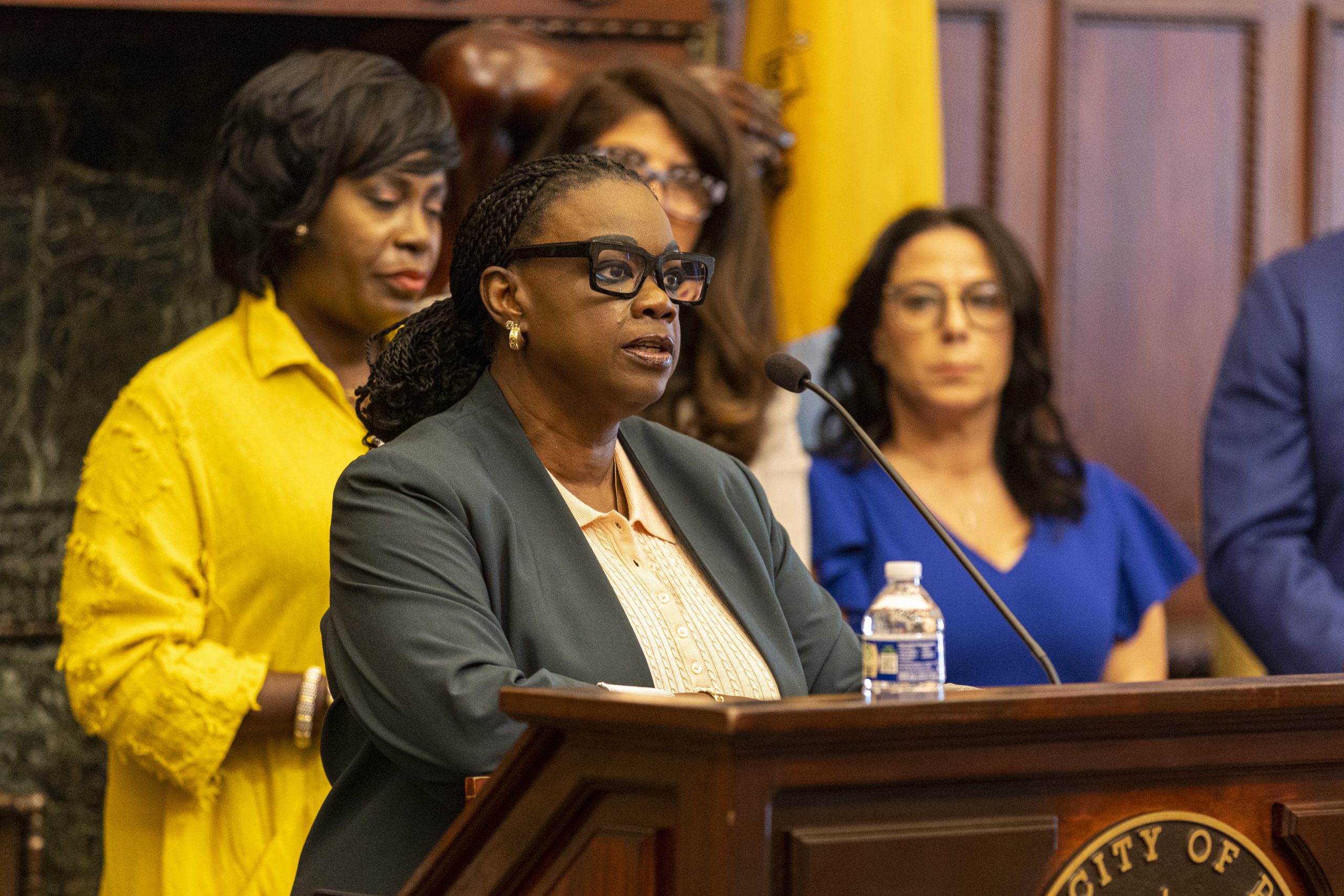
    Deputy Mayor Vanessa Garrett Harley speaks during a news conference in Philadelphia, Pa., in June 2024.Tyger Williams / Staff Photographer

    Anderson also claimed Garrett Harley made discriminatory comments about a transgender official, Celena Morrison-McLean, former director of the Philadelphia Office of LGBTQ+ Affairs, who reported to Anderson. Garrett Harley, the lawsuit alleges, instructed Anderson to “document Celena [Morrison-McLean] out,” or create a paper trail leading to her dismissal.

    According to the lawsuit, the deputy mayor also mocked Morrison-McLean during a meeting with several other officials, saying she used a “deep male tone” to intimidate staff.

    Morrison-McLean left her post in November 2024, roughly eight months after she was pulled over by a Pennsylvania State Police trooper in a traffic stop that went viral and resulted in her and her husband’s arrest.

    She is now a consultant, according to her LinkedIn profile. She could not be reached for comment.

    Celena Morrison-McLean reads a statement with Darius McLean (rear) Thursday, Mar. 7, 2024. The married LGBTQ leaders were arrested during a contentious traffic stop over the weekend.Tom Gralish / Staff Photographer

    Anderson said in the lawsuit that Garrett Harley also made comments to her in early 2025 that she saw as fostering a hostile work environment. She claims she disclosed to Garrett Harley that she was the victim of rape and asked for time off to attend a hearing in the criminal case against her alleged assailant.

    “Ms. Garrett-Harley responded,” the lawsuit says, “by questioning how one woman could rape another.”

    In a separate instance, Garrett Harley also instructed Anderson to delete emails documenting dangers to children in the city’s care, according to the lawsuit. The lawsuit did not elaborate on the content of the emails.

    Harassment report and press fallout

    Brown was appointed in March 2025 to succeed Morrison-McLean as the city’s director of LGBTQ+ affairs. In July 2025, Brown reported to Anderson that Christopher Dailey, then a deputy chief of staff in the mayor’s office, had sent them a sexual image on a cruising app.

    At the time, Anderson said Brown told her they did not feel harassed by the photo, partly because it was not clear whether Dailey knew to whom he had sent the image, which included Dailey’s face. Brown’s profile was anonymous, Anderson said, but the app used geolocation, meaning that users would have known they were contacting someone in or near City Hall.

    Anderson elevated Brown’s report to human resources roughly a week later, the complaint says, leading DeSantis, the city’s inspector general, to launch an investigation.

    By July 22, Anderson was fired. DeSantis has said Anderson never possessed the photo, but allowed Brown to display it while another employee besides Anderson, their supervisor, was in the room. That decision, DeSantis said, constituted a violation of the city’s sexual harassment policy.

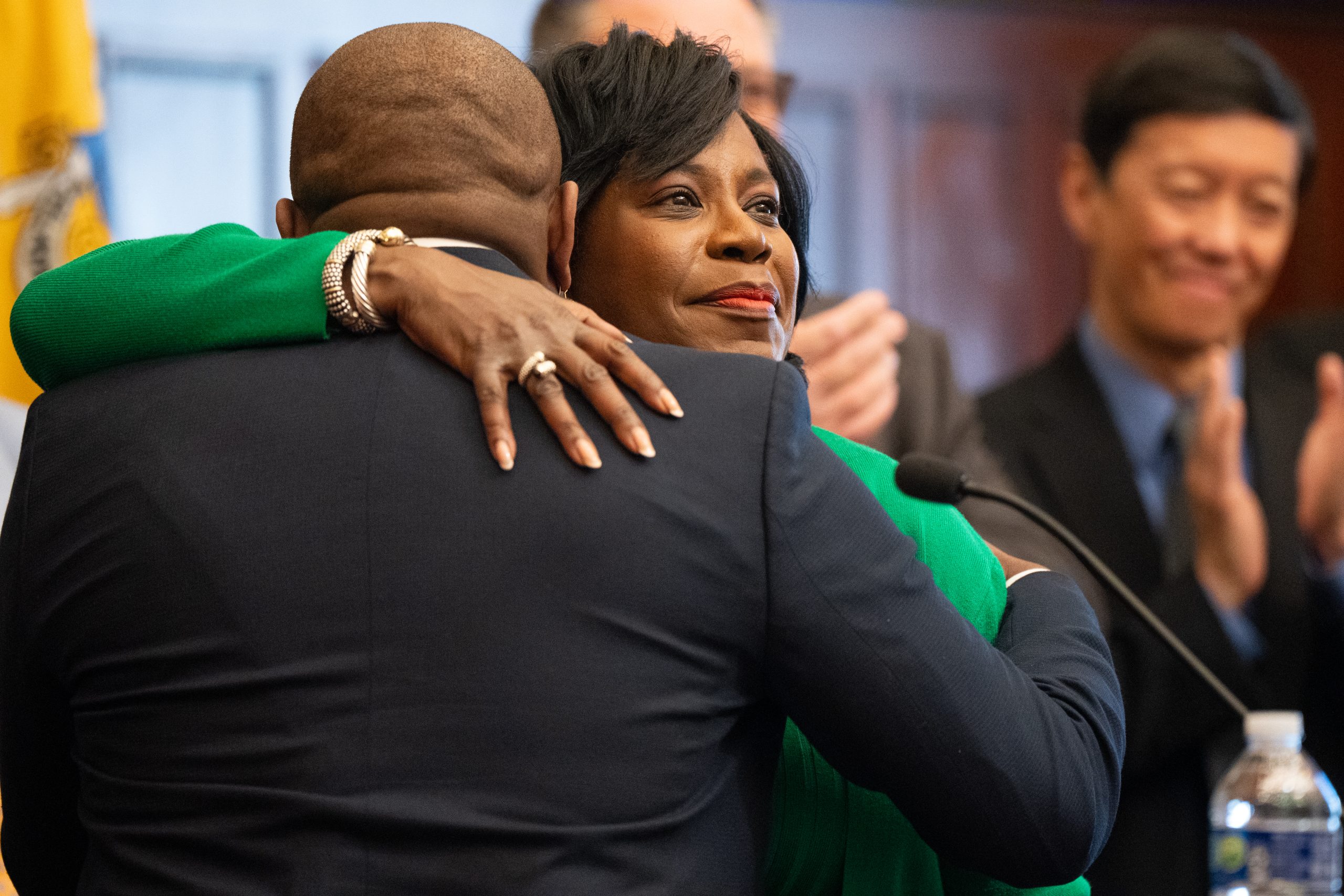
    Mayor Cherelle Parker, right, hugs Tyrell Brown, left, the new Director of LGBTQ+ Affairs, during a press conference to announce new appointments, at City Hall, in Philadelphia, March 21, 2025.Jessica Griffin / Staff Photographer

    Brown was fired the same week as Anderson. Parker tasked Garrett Harley with handling the office’s work through March, when the administration named a replacement.

    Anderson’s lawsuit claims racial discrimination, noting that Dailey, who is white, was not fired, but was instead moved to a new role in a different office. Brown and Anderson are both Black.

    Brown could not be reached for comment.

    Additionally, Anderson claimed that Parker, DeSantis, and Grace each made “false and defamatory” statements in the media after she was fired.

    She cited a July 2025 Inquirer article in which Grace said Anderson’s allegations about the reason for her termination included “outright misstatements of fact.”

    The lawsuit also mentioned an interview with iHeart Radio’s WDAS 105.3 FM that DeSantis participated in last year about the firings, during which he said that Anderson had “mishandled the photograph” and “did something wrong.”

    Anderson, in the lawsuit, said those statements were false.

  • A new live stream camera at the Liberty Bell increases access, but raises questions for privacy experts

    A new live stream camera at the Liberty Bell increases access, but raises questions for privacy experts

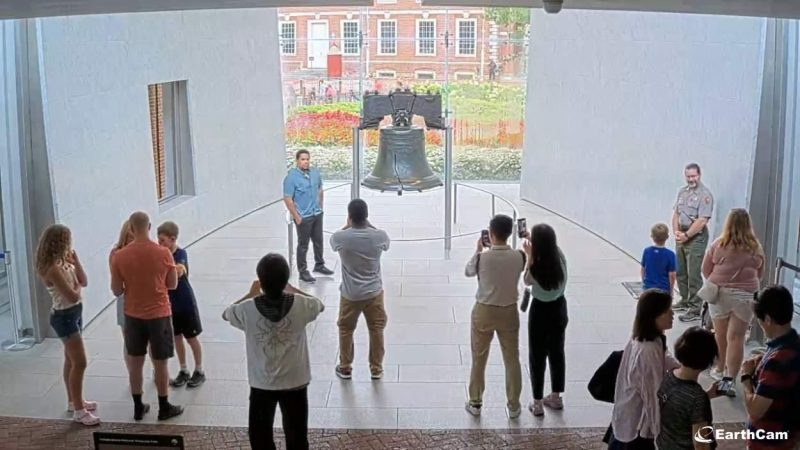
    Strangers took photos of families in front of the Liberty Bell, as others took close-up photos of the iconic symbol of U.S. independence.

    A little boy in blue shorts and curly hair ran up to the bell to point out the crack. A National Park Service staffer looked at his watch. It was almost closing time at the Liberty Bell Center and the crowd began to dwindle as 5 p.m. approached Tuesday.

    The boy posed next to a little girl for the last photo of the day, and the room cleared.

    The bell received a reprieve from visitors until 9 a.m. Wednesday, when it all started back up again.

    These moments were captured by a new camera that transmits a 24-7 live stream of the Liberty Bell on EarthCam, a website that live streams various iconic sites around the world.

    “At Independence National Historical Park, the livestream provides the public with a real-time virtual view of one of the nation’s most iconic historic sites, expanding public access and engagement,” said a spokesperson for Independence National Historical Park in a statement.

    The Liberty Bell live stream is Philadelphia’s second on EarthCam. A camera set at the Franklin Institute that points toward the Central Library of the Free Library of Philadelphia on the Benjamin Franklin Parkway has been live on the internet since 2018.

    The Eagles Super Bowl parade down the Benjamin Franklin Parkway as captured by EarthCam from the Franklin Institute. February 14, 2025.EarthCam

    The camera pointing at the Revolutionary-era relic was set up ahead of the United States’ 250th anniversary celebration earlier this month, and adds to the website’s collection of iconic travel destinations that includes Times Square in New York City, the Temple Bar in Dublin, and the crosswalk at Abbey Road, London. There is also a camera streaming Andy Warhol’s grave in Bethel Park, Pa., outside Pittsburgh.

    The streams, while an effort to increase access to historic sites, also raise questions for surveillance experts and are part of a growing number of live streams in public places.

    “The general trend of video surveillance [is] becoming pretty ubiquitous in common public spaces and across cities,” said Jake Laperruque, deputy director of the Security and Surveillance Project at the nonprofit Center for Democracy and Technology.

    EarthCam, a New Jersey-based web-camera technology company, installed the Liberty Bell camera and live stream as part of a donation of 250 cameras for the United States’ 250th birthday.

    “Taking people to that park and showing that view is amazing,” said Brian Cury, EarthCam’s founder and CEO.

    The Liberty Bell cam has racked up more than a quarter million streams since it was installed about a month ago, Cury said, including 80,000 virtual visits on July Fourth.

    Cury said EarthCam donated the camera to the National Park Service at no cost. The company streams from national parks throughout the country, including the Flight 93 National Memorial in the Shanksville, Pa., area.

    The streams are a way to bring iconic sites to people in a way that is more compelling than a photo, Cury said. And hopefully, he said, they can entice people to step outside.

    “There are lots of kids that should get out of the house and go explore our amazing country,” the CEO said. “But they are online.”

    Visitors to the EarthCam website can view the live stream, a video archive of the last 24 hours, and a collection of still images from previous days since the camera has been installed (a “hall of fame” of sorts, Cury says.)

    Still images from recent days show the bell at night, families visiting, and groups gathering in front of the bell for photos.

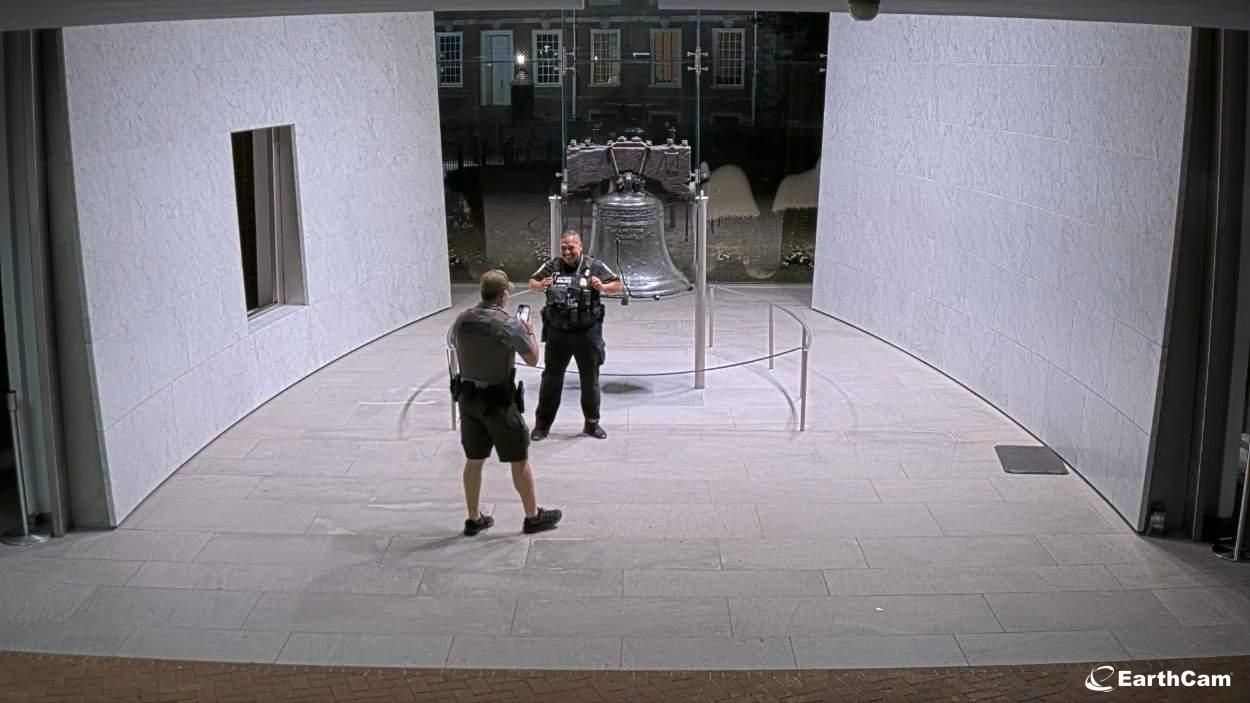
    Also on the “hall of fame”: a park ranger taking a photo of a law enforcement officer in a black uniform posing in front of the bell after hours.

    A law enforcement officer poses in front of the Liberty Bell after hours.EarthCam

    Some surveillance experts say the archive raises privacy concerns, especially because people are identifiable in the image.

    “The longer those pictures are kept, the more it makes me uneasy,” said Rachel Levinson-Waldman, director of the Brennan Center for Justice’s Liberty and National Security Program.

    “The more it’s susceptible to even a private company just collecting those pictures and using them for some other purpose,” she said. “Or just people scrolling through and seeing the pictures for who knows what purposes people might use them.”

    There is no information posted at the site about the live stream, but a security sign at the center’s entrance advises: “video surveillance in effect.” Online, the live stream is advertised via a small link at the top of the National Park Service’s Liberty Bell web page.

    EarthCam does not place cameras in private locations where people have an expectation of privacy, Cury said. And the camera itself — on the wall in front of the bell — is not hidden, he said. Visitors, the CEO said, view the camera as an attraction.

    “When you are looking at a lot of our cameras,” Cury said, “people are standing in front of them and waving.”

  • Fauci repeatedly invokes the Fifth Amendment in a contentious Senate committee hearing

    Fauci repeatedly invokes the Fifth Amendment in a contentious Senate committee hearing

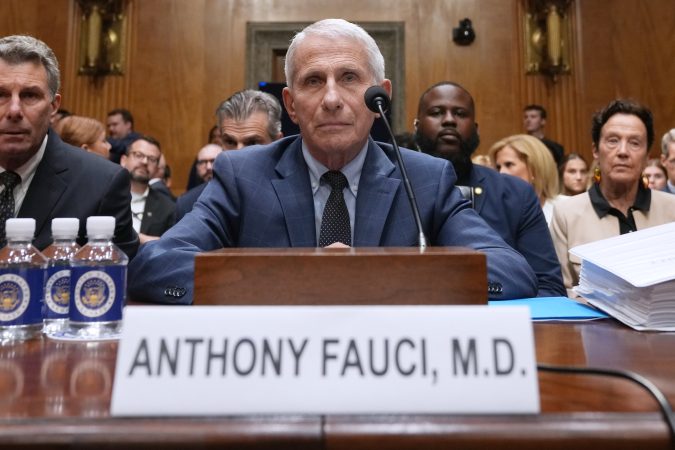
    WASHINGTON — Dr. Anthony Fauci on Wednesday repeatedly invoked the Fifth Amendment and declined to answer dozens of questions from senators in a Republican-led committee hearing about his handling of the COVID-19 pandemic.

    The decision, at least for now, shielded Fauci from answering questions that could expose him to accusations of lying under oath. Though he received a pardon in early 2025 from Democratic President Joe Biden, some Republicans pursuing a yearslong campaign for his arrest had suggested he could still face charges for any perjury committed during Wednesday’s hearing.

    The scientist, who helped lead the nation’s COVID-19 response, was subpoenaed to testify under oath by Republican Sen. Rand Paul of Kentucky, who has long had an antagonistic relationship with Fauci.

    In response to angry, sometimes mocking, questions from Republican senators, Fauci declined to answer more than 100 times, injecting new drama into partisan divides that have festered for years about the origins and handling of the pandemic. Fauci himself has become a polarizing figure, even receiving death threats that prompted him to seek security.

    In his opening statement, Fauci said Paul has an “obvious obsession with calling for my prosecution.”

    “The only conclusion I can reach is that the sole reason he is calling me before this committee is to get me to say something, anything, that could vindicate his repeated public pledges that I end up, in his words, quote, behind bars, unquote,” Fauci said, adding that while it pained him to do so, he was following his attorney’s advice by taking the Fifth.

    Republicans accuse Fauci of lying

    In the combative hearing, Paul and other Republicans accused Fauci of lying in earlier testimony about the origins of the coronavirus, something the longtime National Institutes of Health scientist has forcefully denied. Democrats called the hearing a politically motivated attempt at entrapping Fauci and praised the scientist for his work during the pandemic.

    With Fauci declining to answer questions throughout, Paul dominated the approximately three-hour hearing, listing a litany of accusations and detailed questions.

    “Today will be the capstone to Anthony Fauci’s 40 years of abuse of power at NIH,” Paul said. “History will judge, but the facts as we now know them paint a sordid tale of dishonesty, misjudgment and ultimately the hubris, the likes of which the world has never seen.”

    In one heated moment of the hearing, Paul ejected Fauci attorney David Schertler from the room after he tried to speak without being recognized. In a statement, Schertler said the removal was “outrageous and demonstrates the completely biased and baseless nature of this proceeding.” In another statement, he called Paul’s accusations about Fauci “false and disgraceful.”

    Democratic senators praised Fauci and said he didn’t deserve the treatment he was getting.

    “This hearing is designed to entrap you,” said Sen. Maggie Hassan of New Hampshire.

    Paul has long argued Fauci should be criminally investigated based on his belief that the scientist was dishonest in previous testimony to Congress.

    The senator announced late in the hearing that the committee would vote next week on whether to hold Fauci in contempt for declining to answer questions. He did not say whether he would push for a criminal contempt referral to federal prosecutors or another charge. He also raised questions about whether Fauci’s pardon affects his eligibility for Fifth Amendment protections.

    Paul released some of Fauci’s diary

    Leading up to the hearing, Paul released more than 1,000 pages of Fauci’s personal diary covering the pandemic years. Pointing to some notes about early efforts at understanding how the virus emerged, Paul said on social media that what Fauci “wrote privately and what he told the country are two different stories.”

    Some of the diary entries — including Fauci’s uncertainty in the pandemic’s earliest days as scientists around the world raced to understand the new virus and how best to curb it before vaccines could be created — already were reflected in a 2024 memoir and in interviews at the time.

    But they have nonetheless drawn attention from people who blame Fauci for mask mandates, school closures, and other policies they believe infringed on their rights as hundreds of thousands of people were dying.

    Earlier Wednesday, President Donald Trump wrote on social media that he stopped relying on Fauci over the course of the pandemic because he felt the scientist made bad decisions on masks, shutdowns, and other issues.

    Health Secretary Robert F. Kennedy Jr., a longtime anti-vaccine activist before entering public office, said on social media that his department found the diary entries in government property and gave them to the committee.

    Dozens of disease experts defend Fauci

    Scientists also scrambled to Fauci’s defense ahead of the unusual hearing — the second time he has been back before Congress to discuss pandemic origins since leaving the government in 2022. While the COVID-19 pandemic introduced him to millions of Americans, he talked the nation through numerous outbreaks over decades, including HIV, Ebola, and the 2001 anthrax attacks, while advising seven presidents.

    In a public letter, more than 150 infectious-disease experts and other scientists wrote that “no credible evidence has been produced to support these absurd charges” and that they are “urging our elected representatives in Congress stop these witch-hunts.”

    Among topics discussed at Wednesday’s hearing was whether NIH-funded research in China may have played a role in how the pandemic started.

    Many scientists believe the virus most likely emerged in nature and jumped from animals to people, coming to light when it spread at a wildlife market in the Chinese city of Wuhan. There’s no new scientific information supporting that the virus might instead have leaked from a laboratory, a theory Paul champions. A GOP-led subcommittee that studied the question in 2024 did not find any evidence linking Fauci to wrongdoing.

    Fauci has long said publicly that he was open to both theories but that there’s more evidence supporting COVID-19’s natural origins.

    Republicans also have accused Fauci of lying about whether his agency funded what’s known as gain of function research — the practice of enhancing a virus in a lab to study its potential real-world impact — at a lab in Wuhan.

    The NIH for years gave grants to a New York nonprofit called EcoHealth Alliance, which used some of the funds to work with a Chinese lab studying coronaviruses commonly carried by bats. But the definition of gain of function covers both general research and especially risky experiments to enhance the ability of potential pandemic viruses to spread or cause severe disease in humans. Fauci has previously stressed he was using the risky experiment definition and that “it would be molecularly impossible” for those bat virus experiments to have turned into the pandemic virus.

    Trump, a Republican, last year paused some federally funded gain of function research, and on Tuesday his administration announced new rules to tighten oversight.

  • Trump asks Supreme Court to overturn $83 million verdict in E. Jean Carroll case

    Trump asks Supreme Court to overturn $83 million verdict in E. Jean Carroll case

    President Donald Trump asked the Supreme Court on Tuesday to overturn an $83 million judgment against him for defaming advice columnist E. Jean Carroll, who accused him of sexually assaulting her decades ago.

    Trump’s attorneys asserted in court filings that the Supreme Court’s 2024 decision granting presidents sweeping immunity for actions taken in office shields him from liability in the high-profile case.

    “This is the first case in our Nation’s history in which a court has imposed damages liability on a President for his conduct in office,” the attorneys wrote.

    Separately, the Justice Department petitioned the high court Tuesday to allow the federal government to replace Trump as the defendant in the case.

    Should the justices permit the swap, it would potentially clear the way for the Trump administration to ask for the massive judgment to be voided because the federal government cannot be sued for defamation. Lower courts have denied similar requests by the agency.

    Justice officials argue that the United States should be substituted as the defendant under a law that grants federal employees some immunity from civil damages for actions taken within the scope of their employment.

    They said that some of the comments at issue in Carroll’s defamation claim occurred during Trump’s first presidency.

    “Absent this Court’s intervention, the sitting President is facing nearly a hundred million dollars of personal liability for conduct that was well within the scope of his federal office,” the Justice Department wrote. “That alone deserves this Court’s attention.”

    Trump’s and Carroll’s attorneys declined to comment on the appeal Tuesday night.

    A Manhattan jury awarded Carroll the money in 2024, following a civil trial in which she testified that Trump attacked her in a dressing room at the Bergdorf Goodman department store in Manhattan in the mid-1990s. Trump denies the allegations.

    Carroll first went public with the claims in 2019, prompting angry rebukes by Trump. Trump said the allegation that he had sexually assaulted Carroll was a “complete con job,” a “Hoax” and a “Scam” concocted to sell her memoir.

    At other points, he said she was too unattractive for him to take an interest in her and accused her of lying. The comments prompted years of threats and attacks against Carroll by Trump’s supporters.

    An appeals court panel upheld the $83.3 million verdict in September and denied Trump’s request in April for the full court to rehear the case. The moves paved the way for Trump’s appeal to the Supreme Court.

    In November, Trump appealed to the Supreme Court a $5 million verdict in a separate defamation case Carroll brought against the president.

    The jury found Trump liable for sexually abusing and defaming Carroll. In June, the Supreme Court let stand that verdict against Trump.

  • What the midterms mean for Pennsylvania Gov. Josh Shapiro’s 2028 hopes

    What the midterms mean for Pennsylvania Gov. Josh Shapiro’s 2028 hopes

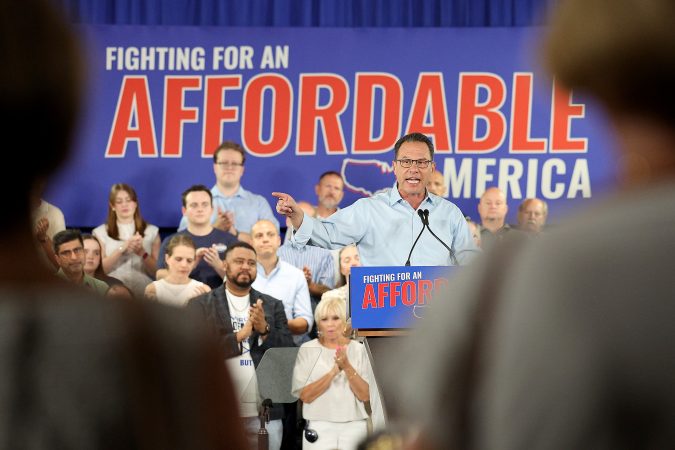
    BETHLEHEM — It was not by happenstance that House Minority Leader Hakeem Jeffries (D-New York) chose a union hall here in the Lehigh Valley to launch the final 100-day sprint toward the midterm election. “This is ground zero for the battle to control Congress,” the speaker-in-waiting declared.

    The same could be said for the centrality of this state — and this election — to the presidential aspirations of a Democrat who shared the stage Sunday with Jeffries: Pennsylvania Gov. Josh Shapiro.

    Were the popular governor to run nationally in 2028, and the current assumption is he will, what happens in his crucial state in November could be a compelling argument not only for his electability but for his ability to carry others over the finish line.

    This year, Pennsylvania holds four of the House races that Democrats consider to be among their top opportunities for flipping Republican-held seats. That’s more competitive races than in any other state, according to the House Democrats’ campaign operation.

    President Donald Trump carried three of those districts in 2024. But in the 2022 gubernatorial election, Shapiro, then the state’s attorney general, won all four by double digits against a far-right opponent.

    “Pennsylvania is always the ultimate swing state, the state that kind of decides it all,” Shapiro, who is running for a second term, said in an interview. “And so it is not a stretch to imagine if we win these races here, that’ll create a Democratic majority in the U.S. House.”

    Shapiro is a heavy favorite against the Republican gubernatorial nominee, State Treasurer Stacy Garrity. He has raised more than $50 million to run up the score, and create an updraft that could help candidates lower on the ballot.

    He has also had a hand in who those candidates are. Shapiro endorsed the Democratic candidates in all four of Pennsylvania’s most hotly contested congressional districts in their primaries. One of them, Bob Brooks, spent 20 years as a firefighter in Bethlehem and was Shapiro’s pick in a hard-fought primary to take on Republican incumbent Ryan Mackenzie. In 2024, Mackenzie beat Democratic Rep. Susan Wild by one percentage point.

    As he prepared to introduce Shapiro here on Sunday, Brooks emphasized his background as an outsider who can relate to the pressures that ordinary people are under: “I have to be honest. Running for Congress was not on my Bingo card. I’m not a politician. Far from it, actually. I’m a regular working person, like so many of the faces that I see in this room.”

    Meanwhile, Keystone State Democrats are also hoping to flip the state senate, where Republicans have a 27-23 majority, while also maintaining their narrow hold on the House. If they can do it, they would be looking at their first unified hold on state government in more than three decades.

    Shapiro has pledged he would use that power to raise the minimum wage to $15 an hour, from its current $7.25; fund mass transit; build more housing and codify abortion rights into state law.

    All of which could be rolled into a national message, the outlines of which became apparent as the governor talked about his agenda. “We all need to do our part to stop the chaos and cruelty and corruption of Donald Trump,” he said, “and that’s going to require us here at the state level having a trifecta so that we can pass policies that help the people of Pennsylvania while Trump is hurting them.”

    Having seen his state vote twice for Trump, in 2016 and 2024, Shapiro is working to build up the Democratic infrastructure. He recently unveiled a multimillion-dollar effort that party officials say is the largest coordinated midterm operation in the state’s history. It boasts having opened 27 offices across the state and hiring nearly 100 full-time organizers.

    The governor has also addressed one of the more worrisome trends for Pennsylvania Democrats: Their voter registration advantage over Republicans had dropped precipitously over recent election cycles.

    Between 2020 and 2024, the registration gap between the two parties had fallen by more than half, to 325,000 Democrats from 686,000 Republicans. It was a warning sign that Trump was going to win the state and its 19 electoral votes.

    This year, with the midterms approaching, the numbers are starting to turn around; Democrats have added nearly 25,500 to the registration rolls, while Republican numbers have dropped by more than 4,500, according to voter registration data analyzed by PennLive.com.

    Retooling and professionalizing the party is a project that Shapiro began almost a year ago, he said, and now, “I’m investing millions of dollars in helping elevate other Democrats on the ballot, spending my time campaigning for people like Bob Brooks and others.”

    If all of this works as he hopes, it might be the foundation for a presidential campaign. Unknowable at this point, however, is whether the Democratic base in 2028 will be looking for a Mr. Fix-It whose appeal stretches across party lines, or will move further leftward in its fury at the establishment.

    Shapiro insists — as presidential candidates nearly always do at this stage of the game — that none of this is his concern at the moment.

    “What I’m focused on are these midterms,” which in Pennsylvania “will be decided on a razor’s edge,“ Shapiro said. “Folks are fed up and angry and frustrated. The best way to demonstrate that, the best way to show that we’re against what Trump is doing, is to show up and vote in record numbers.”

  • The Trump administration is halting a Medicare drug subsidy. Will premiums rise?

    The Trump administration is halting a Medicare drug subsidy. Will premiums rise?

    Medicare drug coverage premiums are expected to rise in 2027 after the Trump administration said Tuesday it would end a temporary subsidy that reduced monthly premiums by an average of $16.

    But it’s not yet clear how much they’ll increase, or whether they will increase for all Medicare beneficiaries.

    The loss of the subsidy does not translate directly to how much premiums will rise, because companies that sell Medicare Part D drug coverage take into account many factors when setting rates.

    The cost to the government of the subsidy was $3.6 billion in 2026, according to KFF, a nonpartisan health policy organization. About 25 million people enrolled in Part D plans in 2026, up from 23 million two years ago.

    “It’s certainly possible that without this enhanced financial support in place for 2027, some Medicare beneficiaries enrolled in [Part D plans] could face relatively steep premium increases for drug coverage next year,” said Juliette Cubanski, director of KFF’s program on Medicare policy.

    Insurance companies received notice of the move late Tuesday and were examining the impact. Expected Medicare Part D rates for 2027 will be publicly announced in September.

    “We are closely reviewing today’s announcement. At a time of sharply rising prescription drug costs, health plans are focused on keeping Part D coverage and benefits as affordable as possible for seniors,” said Chris Bond, spokesman for AHIP, the insurance industry’s Washington trade group.

    The average estimated monthly Part D premium in 2026 was $34.50, according to the National Council on Aging. Part D premiums were already four times higher than the $8 average premium under Medicare Advantage, the privatized version of Medicare. Cubanski said higher Part D premiums in Part D in 2027 could accelerate beneficiary enrollment in the privatized plans.

    The Department of Health and Human Services, which oversees the Center for Medicare and Medicaid Services, did not respond Tuesday night to a question about the amount of expected increases.

    CMS said it ended the subsidy, which was intended to stabilize premiums after the agency made changes to the benefits, because “plan sponsors had sufficient experience” under the new program to support their cost assumptions.

    UnitedHealthcare, which offers Part D plans, said loss of the subsidy was not unexpected. “We are committed to working with CMS, ensuring seniors have access to affordable prescription medicines,” UnitedHealthcare spokesman Eric Hausman said.

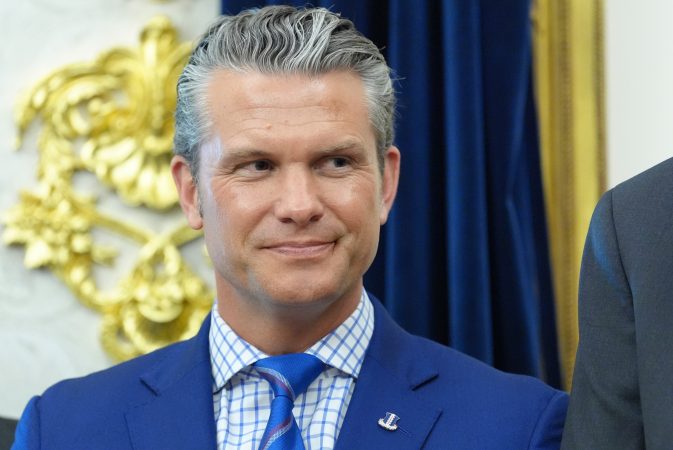
  • Pete Hegseth is resurrecting a brand of military masculinity that dominated debates a century ago

    Pete Hegseth is resurrecting a brand of military masculinity that dominated debates a century ago

    On July 15, Defense Secretary Pete Hegseth announced that his department will test all military personnel over the age of 30 for low testosterone. In his video posted on X, he explained the move in terms of military dominance. It would give U.S. soldiers an “edge of lethality” and ensure they “have the biological foundation” to maximize their performance.

    This decision ties into larger concerns on the political right about the need to foster manhood, emphasizing aggression and physical strength. Testosterone has long served as a cultural marker of traditional masculinity, so it’s not surprising that Hegseth would focus on the hormone. After all, he’s performed pull ups on camera and issued a DOD-HHS fitness challenge with Secretary Robert F. Kennedy Jr.

    Yet, Hegseth’s move isn’t just a reflection of his personal priorities for the military. It’s also part of a long history of rhetoric about American manhood in military medicine that has elevated traditional ideas about masculinity and aimed to exclude gay men and women from military service. Indeed, dating back to the late 19th century, decisions about U.S. soldiers’ health have exposed fierce debates over definitions of American manhood.

    At the dawn of the 20th century, disagreements over imperialism dominated American politics. Proponents of American expansionism, like Sen. Albert J. Beveridge (R-Ind.), wanted to see the U.S. acquire territories in the Caribbean and the Pacific.

    Worries about manhood and the health of military personnel were at the core of these debates. Many Americans linked military power to the male body and, in turn, the inability or unwillingness to fight or govern “dependents” to boyhood. Champions of imperialism like Beveridge associated the physical strength of enlisted men as synonymous with the strength of the nation, and they framed territorial acquisitions as a way for the U.S. to demonstrate its manliness to other nations.

    Even anti-imperialists, who opposed territorial expansion, worried about American manhood. One of their main arguments against acquiring the Philippines was that it would degrade both individual and national manhood. They feared an imperial project in the Pacific would mean American soldiers would succumb to drunkenness and venereal infections in the tropics.

    Army officers, for their part, argued that the military could improve the nation’s men. During the 19th century, many people had seen military service as debasing partly because low pay and harsh punishments meant those who joined the Army were men on the margins of society with few alternatives. But now, medical officers explained, through efficient military hygiene, soldiers would become better citizens as they learned discipline, cleanliness and order.

    The imperialists won the foreign policy debate. After the Spanish-American War of 1898, Spain relinquished all claims on Cuba and the U.S. gained sovereignty over Puerto Rico, Guam and the Philippine Islands. Yet, that didn’t end the contest over manhood.

    In fact, once the U.S. took over these lands and sent military personnel abroad, concerns over soldiers’ behavior and masculinity only intensified.

    Gendered rhetoric saturated debates about whether enlisted men’s consumption of alcohol would improve or harm their health. Purity Reformers cheered the passage of legislation that ended the sale of alcohol at the army canteen. They saw drunkenness as unmanly. Additionally, inebriated men contracted sexually transmitted infections (STIs) at higher rates, which, the reformers believed, emasculated soldiers by rendering their bodies weak and infertile.

    Military medical officers who opposed the anti-canteen law feminized their male political opponents, complaining that these “abstinence ladies” were trying to tell officers how to run the army.

    These debates became especially intense over the Philippines, which U.S. troops oversaw in the years after the war. The problem was, by 1907, roughly one in three enlisted men serving in the Philippines had an STI. For those who saw the experience of military service not only as a place to prove one’s manhood but also to improve it, these rates of infection posed a problem that was at once medical and gendered.

    In response, the U.S. military followed in the footsteps of European colonizers and launched a system of regulated prostitution whereby medical officers inspected women who sold sex to soldiers, sent them to a designated hospital if they found signs of infection and, otherwise wrote “free from disease” on their inspection booklets. The Army thus sanctioned a manhood marked by heterosexual sex with Asian women in a colonized territory.

    When reports of this approach hit the anti-imperialist and temperance press in America, however, the public outcry pressured political and military leaders to stop the most visible aspects of this program. Progressive Era reformers fiercely opposed what they saw as government-run prostitution. They decried the sexual double standard that punished women suspected of selling sex but did nothing to stop either the men profiting from women’s sexual labor nor the male consumers. They also challenged claims that men had to have sex with women in order to be healthy.

    Made By History sponsors. FOR USE ON MADE BY HISTORY STORIES ONLY.Inquirer Staff

    While the efforts to regulate prostitution didn’t completely abate, the military also launched a push to divert enlisted men in the Philippines away from sex and the risk of STIs, especially by creating alternative avenues for recreation. Military authorities built boxing rings and established baseball diamonds to fill men’s leisure time with traditionally masculine physical activities marked by aggression, strength and speed.

    By the time the U.S. joined the First World War in 1917, social reformers had formed the American Social Hygiene Association to fight prostitution and stop the spread of STIs. Many occupied positions of leadership in the Army, and a definition of military masculinity based on restraint held political sway.

    General John J. Pershing, for example, who led the American Expeditionary Force, declared the French maisons tolérées off-limits to his soldiers. The military also enacted strict protocols requiring men who admitted to sexual activity with women in France to report to prophylaxis stations immediately following “exposure” to prevent the spread of disease.

    At the same time, Raymond B. Fosdick, a Progressive reformer, served as chairman of the Commission on Training Camp Activities (CTCA) overseeing educational and recreational programming for enlisted men. He promoted competitive sports as crucial to ensuring soldiers’ health. Fosdick claimed, “it does not do any good in dealing with red-blooded young men merely to erect a series of verboten signs along the roadside; you must have something positive for them to do.”

    As in the Philippines, U.S. troops constructed arenas for boxing and wrestling, along with football and baseball fields at camps in France. In 1917, the Army released Fit to Fight, an educational film for soldiers. The film’s hero Billy Hale was a former college quarterback who refused contact with prostitutes, embodying the ideal of strength in chastity.

    It was a vivid example of how military leaders tried to frame the combination of athletic pursuits and sexual restraint as the key to healthy manhood and military success. They also argued that living up to this ideal was a necessity so that soldiers could become husbands and fathers after the war.

    As reformers and officers openly discussed manhood and soldiers’ health they simultaneously painted a bleak portrait of womanhood. They saw women near training camps as sexual predators with dangerous intentions and as the locus of disease. Meanwhile, women at “home” had a purity that needed protection from soldiers who had worked elsewhere. In neither case were women “fit to fight.”

    A full century later, testosterone testing is resurrecting many of the stereotypes that saturated these debates. It paints a picture of soldiers as masculine and virile in a way that excludes openly gay men and women. And this is coming only a decade after all combat jobs opened to women and 15 years after the end of Don’t Ask Don’t Tell, which had required gay and lesbian soldiers to hide their sexual orientation. Additionally, it links the health of male soldiers — through their sex drives and sexual activities — to the bodies of women.

    Hegseth’s emphasis on testosterone follows on the heels of striking women from promotions lists in both the Army and Navy. Testosterone testing, in tandem with this move, as well as Hegseth’s criticisms of women in combat roles and his aversion to openly gay men in the military, bolsters a manhood that reserves power for cisgender, heterosexual men and relegates women to roles with less authority.

    Experts have pointed out the decision’s departure from evidence-based medicine. Testosterone levels are actually poor indicators of actual strength. But the decision nevertheless has political purchase thanks to longstanding images about what constitutes the ideal soldier.

    Pamela Maddock is an affiliate of the History Department at the University of Sydney and is working on a book, “Access to Women: Sex, Race, and Disease in the U.S. Army, 1853-1919,” that examines the U.S. Army’s management of sexually transmitted infections in different geographic contexts outside the US. She teaches at the Williston-Northampton School.

    Made by History takes readers beyond the headlines with articles written and edited by professional historians. Opinions expressed do not necessarily reflect the views of The Inquirer.