Category: Politics

  • 13,000 Philly homeowners have been kicked off tax break programs that they weren’t eligible for

    13,000 Philly homeowners have been kicked off tax break programs that they weren’t eligible for

    More than 13,000 Philadelphia homeowners were receiving assistance on their property taxes from the city despite not being eligible, according to city officials who conducted a review of thousands of properties to identify people fraudulently receiving tax breaks.

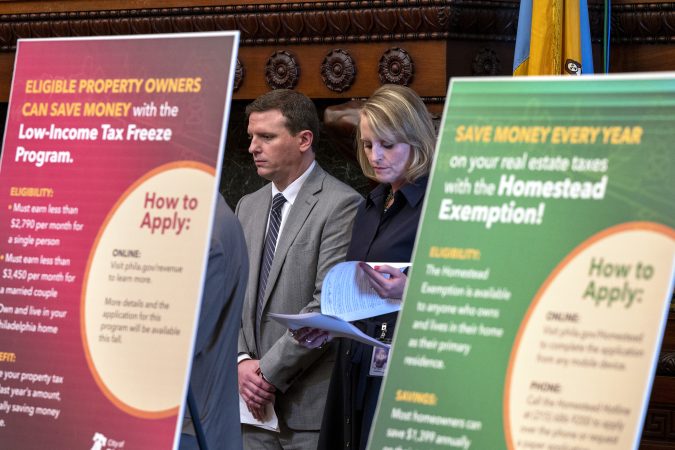
    Those homeowners — most of whom received the popular homestead exemption that can save owners an average of $1,400 a year — have been kicked off the programs, officials said Wednesday. And they will be charged back taxes, in some cases dating back multiple years, resulting in $33.5 million in additional revenue for the city and the Philadelphia School District.

    That is welcome news for the cash-strapped public school system, which is facing a $300 million structural deficit and is the only district in Pennsylvania that cannot legally raise taxes on its own.

    Instead, the district receives 56% of property tax revenue, with the remainder going into the city’s coffers. The current property tax rate is 1.3998% of assessed value, which has not changed for nearly a decade.

    Last month, the city released new property assessments that resulted in a 3% median increase in valuations from the 2025 tax year, the last time there was a mass reassessment.

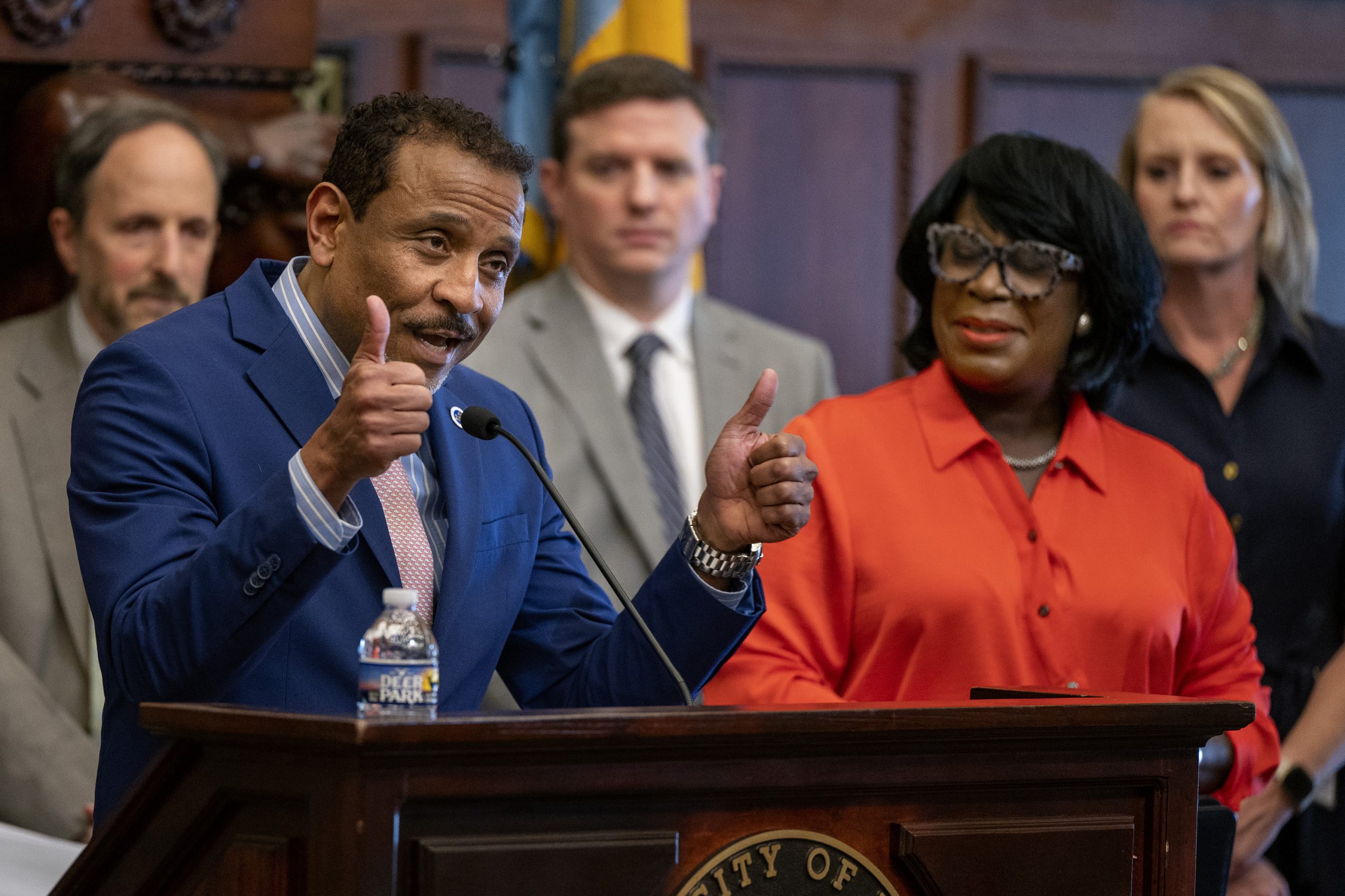
    Philadelphia School Superintendent Tony Watlington joins Mayor Cherelle L. Parker and her finance team at City Hall on Monday Aug. 5, 2024, as they prepare to release the first citywide real estate reassessment in two years. Behind them, from left are: Finance Director Rob Dubow; James Aros, Jr., Chief Assessment Officer at the Office of Property Assessment; and Revenue Commissioner Kathleen McColgan.Tom Gralish / Staff Photographer

    Philadelphia has a variety of property tax relief programs that are intended to help homeowners weather changes in valuations and avoid displacement. The most popular is the homestead exemption, which exempts the first $100,000 in home value from property taxes. Only homeowners who live in their house as their primary residence are eligible.

    That means that, in some cases, homeowners are eligible to receive the exemption while they live in their homes, but no longer qualify if they move and rent out their space.

    In 2024, Mayor Cherelle L. Parker’s administration launched a review to identify properties that might no longer meet the eligibility requirements. According to a news release, the Philadelphia Revenue Department reviewed about 22,000 tax accounts, or less than 10% of all the households enrolled in the homestead exemption.

    Christian Crespo, a spokesperson for the department, said officials used a variety of data indicators to identify those properties that were up for review. For example, he said, some property owners were claiming homestead benefits at multiple properties.

    As a result of the investigation, 13,355 homeowners were removed from a property tax assistance program. There are several other tax breaks for homeowners that are targeted toward low-income people and seniors, but most of those removed were improperly receiving the homestead exemption.

    Homeowners were sent two notices and given 60 days to prove their eligibility before they were kicked off an assistance program. They may still appeal the decision.

    “We want eligible homeowners to get the relief they deserve,” Revenue Commissioner Kathleen McColgan said in a statement. “These compliance projects help ensure that program participation is accurate, fair, and accessible to residents who truly qualify.”

  • Trump’s support for Graham’s sister stirs GOP backlash in South Carolina

    Trump’s support for Graham’s sister stirs GOP backlash in South Carolina

    President Donald Trump has put his weight behind Sen. Darline Graham in her bid to succeed her late brother, Lindsey Graham, for a full term. But rather than embracing the president’s endorsed candidate in a whirlwind election less than two weeks away, influential conservative activists in South Carolina say they’re not swayed.

    Trump’s conservative base could again reject one of his chosen candidates this year — as they did in South Carolina’s GOP gubernatorial primary in June — as his supporters question whether the president is acting with their top priorities in mind.

    “People are going to be independently minded in this, and I don’t think that Trump is the end all, be all that he used to be,” said CJ Westfall, chairperson of the Dorchester County Republican Party.

    Many conservative activists say they aren’t sold on Graham because of her lack of a political record, besides her public support for her brother.

    Trump initially called for Graham to be appointed to serve the remaining six months of her brother’s term, then quickly backed her after she unexpectedly decided to seek a full term. A dozen GOP candidates filed to run in the Aug. 11 primary election before this week’s deadline. They include Reps. Ralph Norman and Russell Fry, who have conservative voting records in Congress, and former governor Mark Sanford.

    The crowded special election is expected to go to an Aug. 25 runoff. And runoff elections, Westfall said, “typically bring out the hard core of the hard core.”

    Even national Republican operatives sympathetic to Darline Graham, and who were aligned with her brother, are privately conceding that her odds of success in the primary race appear slim.

    In interviews, more than a dozen South Carolina Republican operatives and activists described three issues working against Graham: She had never held office and is little-known across the state, despite her brother’s high profile. Her association with her brother could have downsides in a primary; Lindsey Graham had struggled to please many in Trump’s MAGA-aligned base in recent years because of his hawkishness and willingness to work with Democrats, and he had spent $20 million to fend off a primary challenge this year from the right. And some are simply irked that Trump wants to hand off a coveted six-year term to someone based on family ties, rather than a proven conservative record.

    Chad Walldorf, a longtime Republican donor and activist in South Carolina, said he respects Darline Graham’s long career as an advocate in the state for people with disabilities.

    “But it’s just hard for that to suddenly translate into a six-year Senate term in a month,” Walldorf said. “And that’s the leap voters are being asked to make.”

    Graham, who previously led South Carolina’s Commission for the Blind, has taken steps to demonstrate her conservative bona fides since she was sworn in two weeks ago. She has worked to pass legislation that her brother championed to sanction Russia, and she has announced support for bills to defend gun rights, oppose abortion, support law enforcement, and limit birthright citizenship.

    In an interview with Sean Hannity on Fox News, she suggested she would focus more on domestic policy than the national security issues her brother emphasized. Darline Graham also endorsed Trump’s demand on Monday that Senate Majority Leader John Thune (R., S.D.) keep senators in Washington until they approve the Save America Act, a voting bill that Trump has pressured Thune for months to pass.

    Following Lindsey Graham’s funerals this week, Darline Graham planned to resume campaigning Thursday, seeking to portray herself as more conservative than her brother, according to a person familiar with her campaign, who spoke on the condition of anonymity to discuss strategy.

    “Darline is really in for a dogfight,” said one Republican official working on Senate races, who spoke on the condition of anonymity because they were not authorized to discuss the matter publicly. The person said private polling has not shown Graham pulling significantly ahead in the crowded field. The national official — like many in South Carolina conservative political circles — said they do not expect Graham to win the runoff election, given her limited time to introduce herself to voters.

    Randy Page, executive vice president of the socially conservative Palmetto Family Council, cited the low 10% turnout in the party’s June runoff election as he predicted lower participation in the special Senate primary and even lower turnout for a special runoff. Page said that such small electorates tend to favor someone who, “frankly, is known as a movement conservative.”

    Norman, who has name recognition and a statewide campaign operation after finishing third in the GOP primary for governor, is widely considered to be the favorite for the nomination. Trump intended to endorse Fry for the six-year term, until Graham decided she wanted to run, according to two people with knowledge of Trump’s decision who spoke on the condition of anonymity to discuss private deliberations.

    Norman has secured the endorsements of conservative Republican Sens. Rick Scott (Fla.) and Mike Lee (Utah), along with upstate sheriffs, while Fry has the backing of 40 Republican state legislators. Rep. William Timmons (R., S.C.) has endorsed Graham.

    While Graham has received endorsements from several Republican Senate colleagues, she has yet to secure the public backing of two key Senate leaders — Sen. Tim Scott (R., S.C.), who chairs the National Republican Senatorial Committee, the Senate GOP’s campaign operation, and Thune. Much of Lindsey Graham’s remaining campaign cash will be transferred to the NRSC to be spent on behalf of his sister, according to a person with knowledge of the arrangement who spoke on the condition of anonymity because they were not authorized to discuss it publicly. But the person said those funds will be limited and probably well under $1 million.

    Some grassroots conservative activists in the state have noted that Darline Graham, according to election records, did not cast a vote in the 2024 presidential primary. South Carolina is a key early state in the process of determining a party’s presidential nominee, and Trump defeated a former governor, Nikki Haley, in that primary election.

    The White House did not respond to a request for comment, including on whether Trump intends to travel to South Carolina to campaign for Graham.

    Trump was forced to issue a co-endorsement in the state’s June gubernatorial primary runoff to avoid a political loss after his first pick, Lt. Gov. Pam Evette, failed to gain the support of the majority of his base. Her opponent, state Attorney General Alan Wilson, who came in second behind Evette in the primary, ultimately consolidated supporters of the other Republican candidates in the race and won the runoff by 37 percentage points.

    Evette’s loss followed similar rejections of Trump-endorsed primary candidates by Republican voters in the Georgia and Iowa governor’s races, as well as outrage from Trump’s base this spring after he was reported to be considering endorsing the reelection of Sen. John Cornyn (R., Texas). Trump ultimately abandoned the plan to endorse Cornyn — whom he had once labeled a “RINO,” or a Republican in name only — instead putting his 11th-hour support behind MAGA candidate Ken Paxton, the state’s attorney general.

    “Trump’s endorsements haven’t always been correct in the voters’ eyes,” said Mark Lynch, Graham’s main primary challenger this spring, who is again running to succeed him. “We’re not going to have a coronation in this state and elect Darline as the queen, underneath the king, Lindsey.”

  • Disney hits back as Trump administration targets 6abc’s TV license

    Disney hits back as Trump administration targets 6abc’s TV license

    Disney has come out swinging in its defense of 6abc and seven other owned-and-operated ABC TV stations the Trump administration is threatening to take off the air.

    In a new filing Thursday, Disney claims President Donald Trump is using the Federal Communications Commission to go after the local stations’ broadcast licenses in “retaliation” for comments made by ABC late-night host Jimmy Kimmel.

    “There is no question why the commission is singling out these eight stations: Each is owned by ABC, and the administration has openly and repeatedly called for the revocation of ABC’s licenses, because it dislikes the content and viewpoints expressed on ABC network programs,” Disney wrote.

    The FCC did not address Disney’s criticism, but in a statement a spokesperson said the agency “is going to hold broadcasters accountable to the full extent of the law.”

    In April, the FCC ordered an unprecedented early review of the broadcast license for 6abc and the seven other stations shortly after Trump called for Kimmel to be fired over a joke he made involving first lady Melania Trump. Disney called the early review “extraordinary” and an attempt at censorship.

    “The retaliation against ABC is a signal to every media company in the country: accommodate the administration’s view of what news coverage should look like or pay the price,” Disney wrote.

    The FCC has said the review stems from an earlier investigation into diversity, equity, and inclusion initiatives at Disney, citing “the agency’s prohibition on unlawful discrimination.” The agency is conducting a similar investigation of Comcast, which owns NBC.

    FCC chairman Brendan Carr also said the agency would include in its review the network’s decision not to air Trump’s prime-time address on election security earlier this month, in which the president repeated the baseless claim he won the 2020 election, despite losing to former President Joe Biden.

    “I think that’s something that broadcasters should be carrying,” Carr said.

    NBC also passed on carrying the speech live, while some local Fox affiliates picked up cable coverage from Fox News. CBS aired Trump’s address, but broadcast networks are not required to preempt their programming when the president addresses the nation.

    Could the Trump administration really take 6abc off the air?

    Rick Williams anchors 6abc’s 11 p.m. edition of “Action News.” 6ABC

    The short answer is yes, but experts say it would be a messy, complicated battle that could take years, a process likely extending beyond the end of Trump’s second term in office.

    6abc’s current broadcast license, renewed in 2023, runs through 2030. The FCC’s next step would be a referral for an official hearing, which could take place as early as next month.

    So far, the FCC has not presented evidence 6abc or the other seven ABC stations owned by Disney have violated any public interest requirements.

    “The FCC has spent the last 18 months searching for some pretext for revoking the Stations’ licenses,” Disney wrote. “The commission has found none, because the Stations easily meet the standard for license renewal — which under the law means that the Commission cannot revoke their licenses or order a hearing on their renewal applications.”

    The last time the FCC revoked a TV station’s broadcast license was in 1987, when RKO General Inc. lost its licenses in Boston, New York, and Los Angeles because of business misconduct.

    If the FCC does move to revoke all eight of ABC’s local broadcast licenses, the case would be decided by an administrative law judge, according to the FCC’s website. Even then, the decision would be subject to appeals to the full commission and federal courts.

    6abc going dark would be ‘a significant loss to the Philadelphia region’

    6abc’s “Action News” has been the city’s most-watched local news program for decades. Tom Gralish / Staff Photographer

    Last month, 6abc called on viewers to weigh in on the early review of its broadcast license and support the station. That public comment period ended Wednesday, with over 152,000 people sounding off on the FCC’s move.

    Responders overwhelmingly supported the station, according to an analysis of public comments posted to the FCC’s website, with 6abc widely praised for its local news coverage.

    U.S. Rep. Brian Fitzpatrick (R., Pa.), who represents Bucks County, called on the FCC to give 6abc “full and fair consideration” on its early license renewal, calling the station “an important part of our region’s public safety, cohesion, and civic life.”

    Among the organizations weighing in was the Philadelphia Zoo, which called 6abc a “steady, trusted presence in this community for decades.”

    “The loss of 6ABC would be a significant loss to the Philadelphia region and to organizations like ours that rely on the station’s local news, weather, and community coverage to reach the public,” Jo-Elle Mogerman, the Philadelphia Zoo’s president and CEO, wrote in a letter to the FCC.

    The Philadelphia Police Foundation called 6abc an “indispensable partner” and “vital contributor” to the quality of life across the city, praising the station’s support of police officers, first responders, and Philly children.

    “The loss of 6ABC broadcasting would deeply impact the Philadelphia region, removing a trusted journalistic voice and a critical pillar of support that local nonprofits and public safety organizations rely upon,” the organization wrote.

    Local residents were also overwhelmingly against removing 6abc from the air. Faith Paffett-Lugassy cited 6abc’s coverage of weather events and emergency information, pointing to Action News’ live coverage during severe thunderstorms that swept through the Philadelphia region earlier this month.

    “ABC stayed on the news channel the entire time until a tornado watch was finally canceled,” Paffett-Lugassy wrote. “ABC is my favorite channel to watch, please don’t take it off the air.”

    Bucks County resident Donald O’Keefe is not a cable TV subscriber, and said he relies on 6abc’s broadcast signal for local news and weather updates. According to O’Keefe, taking the station off the air “would directly compromise the public safety and awareness of Lower Makefield Township” and deprive residents of “critical safety warnings.”

    Others, like David DeGrace, looked beyond Action News to all the other programming on ABC that would be unavailable if the FCC followed through on its threat.

    “Don’t take away my Jeopardy!” DeGrace wrote. “This is ridiculous.”

  • Trump says he may pull Blanche’s attorney general nomination until dissenting senators leave office

    Trump says he may pull Blanche’s attorney general nomination until dissenting senators leave office

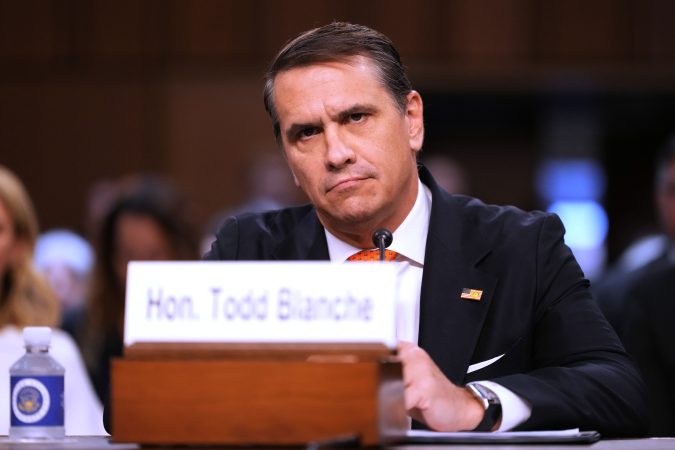
    President Donald Trump suggested Thursday that he might withdraw Todd Blanche’s nomination to become attorney general until next year amid a standoff with two Republican senators who are demanding concessions from the administration in exchange for their votes.

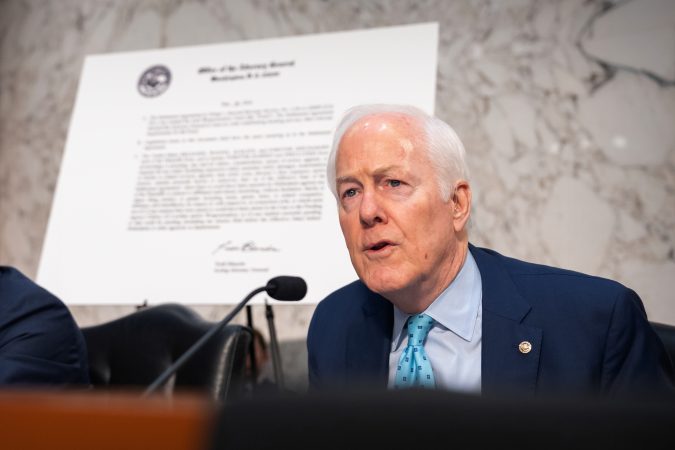
    Sens. John Cornyn (Texas) and Thom Tillis (N.C.) have called for changes, in writing, to the controversial deal the Justice Department struck earlier this year to resolve a lawsuit Trump filed against the IRS. Despite days of negotiations with the Justice Department, an agreement appeared far from likely.

    In a social media post Thursday, Trump called out the senators, both of whom are set to leave their elected positions at the end of the year, and suggested their resistance to supporting Blanche stemmed from Trump’s refusal to back them for reelection.

    “John Cornyn, of Texas, and Thom Tillis, of North Carolina, both of whom I refused to Endorse, and whose political careers have been ended by my action, are refusing to vote for this Great Nominee,” Trump wrote.

    He added: “I have no objection to temporarily withdrawing Todd’s name, if they do not do the right thing, and putting him back after Cornyn and Tillis are out of office.”

    If Trump follows through on that threat, Blanche could remain the head of the Justice Department on an acting basis for the foreseeable future.

    Still, the fact that two senators from the president’s own party had brought Trump to consider such a move signified the extent to which Republican lawmakers are showing an increased willingness to buck the president’s demands as his popularity falls and the midterms approach.

    Cornyn lost his bid for reelection in May after the president endorsed his primary opponent, Texas Attorney General Ken Paxton. Tillis opted not to seek reelection this year after a dispute with Trump. Since then, both senators have opposed the president on occasion, but their stand on Blanche’s nomination is the most significant break so far.

    Despite Trump’s pronouncement, there is no guarantee that Blanche’s path to nomination would become easier if the president waits for the senators to leave office. Analysts from both sides expect Democrats to make gains in the midterm elections, potentially retaking one or both chambers of Congress.

    Responding to Trump’s threat Thursday, Cornyn shot back with a social media post of his own saying the president “is mistaken if he believes concerns about the provisions in his tax lawsuit settlement are limited to me and Senator Tillis.”

    “This is not just a problem with just Thom Tillis and me — we just happen to be on the front lines on the Judiciary Committee,” Cornyn later told reporters. “I think there’s a serious question whether — if this goes unresolved — whether he could ever get confirmed. And I think that’s too bad, because I think he’s basically a good guy.”

    “After the midterms, who knows who’s going to be the next United States senator from North Carolina or Texas?” Cornyn said.

    Earlier in the day, the senator dismissed the notion that his and Tillis’ position stems from hostility to Trump. “This is about making sure that we maintain the integrity of our justice system and fairness for everybody involved,” Cornyn said.

    That back-and-forth came hours after Sen. Chuck Grassley (R., Iowa), chairperson of the Senate Judiciary Committee, was forced to postpone a committee vote on Blanche’s nomination that had been scheduled for Thursday morning or risk a losing outcome.

    Republicans enjoy a 12-10 advantage on the Judiciary Committee, including Sen. Darline Graham of South Carolina, who recently replaced her late brother, Sen. Lindsey Graham. Either Cornyn or Tillis voting against Blanche would be enough to force a tie, stalling the nomination before it could reach the Senate floor. “No” votes from both senators would kill the nomination in committee.

    “Chairman Grassley works to set President Trump’s nominees up for success in committee, not failure,” Grassley’s office said of the decision to postpone the vote.

    Cornyn and Tillis are demanding changes to two aspects of the Justice Department’s deal with Trump, which resolved the lawsuit the president had filed against the IRS over the leak of his tax returns to the media.

    They want Blanche to codify in writing his public pledge that the administration will not move forward with the “Anti-Weaponization Fund,” a nearly $1.8 billion payout fund to compensate people who claim they are victims of politically motivated prosecutions.

    They are also seeking to limit a separate provision that offered Trump, his family members, and their businesses protection from past tax claims — a potentially lucrative benefit for a president who has often complained of burdensome IRS audits. That aspect of the deal has led to accusations of corruption and self-dealing.

    The federal judge who oversaw Trump’s lawsuit recently denounced it as an improper attempt to “manipulate” the court process. She said it was not a legitimate legal dispute between two independent parties, given that both sides ultimately reported to Trump, but rather a pretext to come up with a questionable deal, which was reached without court approval.

    Blanche has said he did not play a direct role in overseeing the negotiations between the Justice Department and Trump’s legal team. However, his signature is the only one that appears on the documents relating to the deal’s tax provisions.

    Cornyn, among other things, wants the administration to clarify in writing that those protections do not apply to the Trump family’s future actions.

    Neither side is offering specifics on the status of their ongoing negotiations, but talks continued into Thursday morning, with the Justice Department and the senators swapping proposals and counteroffers.

    A Justice Department official, speaking on the condition of anonymity to share details on the talks, said the department had sent a new proposal to Cornyn and Tillis late Wednesday.

    “The Department has been in regular communication with Committee members for weeks, and we look forward to continuing to work productively with Senators to address any concerns,” the department said in a statement.

    Cornyn sent a proposal of his own Thursday morning but told reporters that he had not heard back and had no scheduled meetings or calls with White House or Justice Department officials.

    Trump is generally not inclined to make concessions to lawmakers who he thinks are not on his side, said one Trump adviser, speaking on the condition of anonymity to discuss the president’s mindset. Trump does not think he needs Senate Republicans as much as they think he does, the adviser added.

    Cornyn suggested that the $1.8 billion payout fund was no longer the main source of the impasse. Instead, he said, the latest hang-up involved the senators’ requested revisions to the part of the deal containing tax protections for Trump.

    Tillis said separately that Trump’s threat to withdraw Blanche’s nomination rather than formally rescind the payout fund casts doubt on Blanche’s promise that the fund is dead.

    “It doesn’t add up,” Tillis told reporters. “It suggests to me that there’s at least one or two people in the White House that wanted to have this latent capability for future use.”

    Both senators blamed the White House, not Blanche, for the impasse.

    “I’m happy to solve the problem,” Cornyn said. “I thought we had solved it last night. … I think as far as Blanche and the Department of Justice, we were pretty much on the same page. But then when the president got wind of it, he wasn’t.”

  • Johnny Doc will remain in prison after a judge again denied his request to be released on house arrest

    Johnny Doc will remain in prison after a judge again denied his request to be released on house arrest

    Convicted former Philadelphia labor leader John Dougherty will remain in prison after a federal judge again denied Dougherty’s request to be released on house arrest to provide care for his gravely ill wife.

    U.S. District Judge Jeffrey L. Schmehl wrote in a memorandum filed Thursday that Dougherty and his lawyers had failed to demonstrate that he was the only person who could provide adequate care for his wife, Cecelia, who for years has suffered from a debilitating brain injury.

    In addition, Schmehl wrote, Dougherty did not sufficiently specify when a trust fund established to support his wife’s care would run out of money. Those factors, coupled with the “minimal amount of time” Dougherty has served in his six-year sentence, Schmehl wrote, “do not weigh sufficiently in favor of relief.”

    The decision was a blow to Dougherty, 66, who for months has been contending in court documents and in testimony before Schmehl that his wife’s condition has significantly worsened while he has been imprisoned, and that if he is not released to care for her, she will likely die.

    Dougherty’s attorney, George Bochetto, said in an interview Thursday that he was “deeply, gravely disappointed” by the ruling, and that he disagreed they had not shown the acute nature of the emergency that should qualify Dougherty for release.

    “I thought the evidentiary hearing we had in front of Judge Schmehl was extraordinary, and it left no doubt in anybody’s mind” about the merits of Dougherty’s petition, Bochetto said.

    The ruling followed another rejection in Dougherty’s ongoing bid for freedom. Earlier this month, President Donald Trump denied Dougherty’s request for a commutation, a legal avenue that could have cut Dougherty’s prison term short.

    Schmehl, in his memorandum, did say that Dougherty could file a renewed motion in the future, “should the facts materially change.”

    Bochetto said he would not wait that long. He was already working on his notice of appeal to the U.S. Court of Appeals for the Third Circuit, he said, and he intended to ask the court to consider the case on an emergency basis.

    “This is why God invented appellate courts,” Bochetto said.

    Dougherty was sentenced in 2024 to six years in prison after being convicted in separate bribery and embezzlement trials that centered on actions he took while serving as the head of his politically powerful union, Local 98 of the International Brotherhood of Electrical Workers.

    But last year, Dougherty — known colloquially as Johnny Doc — filed emergency motions asking Schmehl to allow him to serve the remainder of his prison term on house arrest so he could be his wife’s primary caregiver.

    In his first request, filed in the summer, Dougherty said that the trust fund established to pay for her care was about to run out of money, and that his daughters and other relatives were unable to provide the kind of around-the-clock assistance she needed.

    Then, in December, he filed another motion, saying the situation had become more dire after the death of his father-in-law, who had been serving as the primary caregiver in his absence.

    Prosecutors opposed Dougherty’s requests, saying that although they were sympathetic to his wife’s plight, they did not believe he had served enough of his sentence to merit release.

    And in January, Schmehl denied Dougherty’s request, writing that he, too, recognized the significant health challenges, but that they did “not outweigh, at this point in time, the need for punishment that has been adjudged.”

    Bochetto appealed that ruling. And in May, Schmehl held an evidentiary hearing to learn more.

    At the hearing, Dougherty took the stand for more than an hour, and occasionally choked back tears as he described his wife’s myriad complications and detailed the efforts he had made in prison to help her, including by sending her dozens of letters and using all of his allotted monthly phone minutes to call her.

    But prosecutors argued that Dougherty and his relatives had not sufficiently looked into alternative care arrangements that might be covered by Medicaid or other insurance. And they said that while many families across the country could benefit from having an incarcerated defendant released to help care for their relatives, Dougherty had not shown that he was the only person who could do so for his wife.

    Schmehl, in his order, said that Dougherty’s wife is being cared for by private nurses and her two daughters, and that “neither party suggests that her current care is inadequate.” Beyond that, the judge said, Dougherty did not sufficiently specify when her trust fund would run out of money and did not adequately explain what would happen once it did.

    The ruling will leave Dougherty, for now, to serve out the remainder of his term, which he is serving at a federal prison in Lewisburg, Pa. His projected release date is in June 2029, according to the Bureau of Prisons website.

  • 5 takeaways from the Senate hearing where Fauci refused to answer questions

    5 takeaways from the Senate hearing where Fauci refused to answer questions

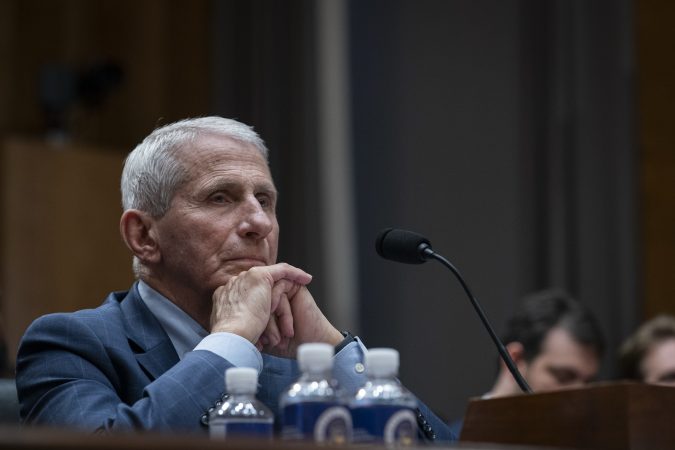
    For almost three hours Wednesday, Republican senators grilled Anthony S. Fauci with dozens of questions at a hearing focused on the origins of the covid-19 pandemic and whether Fauci previously lied under oath to Congress. Again and again, the 85-year-old former government scientist gave the same response.

    “On the advice of counsel, I respectfully decline to answer based upon my rights under the Fifth Amendment to the Constitution,” Fauci said. He delivered variations of that answer more than 100 times.

    Fauci was subpoenaed to appear before the Senate’s government oversight committee by its chairman, Sen. Rand Paul (R-Kentucky), who has spent years alleging that Fauci participated in a cover-up of the possible origins of the covid-19 pandemic. Paul has also blamed Fauci for inadvertently sparking the pandemic – noting that Fauci’s agency previously funded coronavirus research in Wuhan, China, where the outbreak was first detected in late 2019 – and has called for him to be put in prison.

    Fauci has denied the allegations in repeated appearances before Congress, most recently in a combative 2024 hearing. Infectious-disease experts have also insisted to Paul and other Republicans that while Fauci’s former agency, the National Institutes of Health, funded virus research in Wuhan, the work could not have caused the pandemic.

    Fauci said Wednesday that he refused to testify because he believed Paul was seeking to wrongly trap him.

    “The only conclusion I can reach is that the sole reason he is calling me before this committee is to get me to say something – anything – that could vindicate his repeated public pledges that I end up, in his words, ‘behind bars,’” Fauci said, before announcing his plan to invoke the Fifth Amendment.

    Here are five takeaways from the hearing.

    Republicans tore into Fauci

    Senate Republicans did not miss their chance to lace into Fauci. They inquired. They mocked. They goaded. At times, they flat-out insulted. Beyond asking about covid-19’s origins, senators accused Fauci of mishandling pandemic guidance and accused him of using his growing profile during the pandemic for personal benefit.

    Paul, a longtime adversary of Fauci, was visibly frustrated with Fauci’s nonanswers. Paul warned the former official that it was against the law to obstruct an investigation and threatened “repercussions” for Fauci’s unresponsiveness. When Fauci’s attorney, David Schertler, asked to make a comment, a back-and-forth led to Paul removing the lawyer from the room.

    It was the first of many tense moments.

    “Nothing says honesty like taking the Fifth, huh, Doc,” Sen. Josh Hawley (R-Missouri) said, leaning forward in his seat. The senator grew heated in his questioning, raising his voice and pointing with both hands as he accused Fauci of enriching himself.

    A Hawley staffer propped up an image of a magazine cover for which Fauci posed in September 2020. “You became a narcissist and a megalomaniac and a liar,” Hawley said.

    Fauci leaned forward, looking down at the table in front of him, hands fidgeting in his lap, glancing up occasionally at the senators accosting him.

    At one point, Sen. Bernie Moreno (R-Ohio) asked audience members to stand up if they had disagreed with or been harmed by policies such as mask requirements and school closures. More than a dozen stood. Moreno asked Fauci to turn around and look at them. Fauci turned to confer with his lawyers, then faced forward again.

    Sen. James Lankford (R-Oklahoma) adopted a warmer tone toward Fauci than his colleagues did. “I know you’re invoking your Fifth Amendment right, which you have the right to be able to do constitutionally,” he said. “Thanks for coming to be a part of this.”

    Democrats defended Fauci – mostly

    Democrats portrayed Fauci as a hero and said the GOP attacks were baseless. They also criticized Republicans for attacking public health officials like Fauci while supporting the Trump administration’s cuts to public health research and funding.

    Sen. Gary Peters (Michigan), the committee’s top Democrat, called Paul’s efforts biased. “One-sided investigations designed to validate predetermined conclusions do not serve the American people,” Peters said.

    Fauci and other public health officials have saved lives, said Sen. Richard Blumenthal (D-Connecticut). “Today, we are demeaning and degrading their lifesaving service,” he added.

    One Democrat struck a different note.

    Sen. John Fetterman (D-Pennsylvania) was not going to attack Fauci, he said, but he wouldn’t defend him, either. Instead, Fetterman shared a regret: that the lab-leak theory came to be seen by some as a right-wing conspiracy theory, preventing people like himself from taking it seriously.

    “I hope … the next time our nation’s facing something like this, we are not … as I might have been, blinded by the partisan idea that maybe the truth might come from a side that’s different than you are,” Fetterman said.

    The hearing shows how divisions have calcified

    Wednesday was the latest example in a years-long trend: Congressional lawmakers have been unable to work together on a probe of the pandemic’s origins.

    A House investigation of the government’s pandemic response began in early 2023 with the top Republican and Democrat pledging to work together. It descended into partisan bickering and dueling reports about what the investigation found, and whether Fauci was personally culpable.

    In the Senate, a bipartisan plan to set up a commission investigating the nation’s covid response repeatedly stalled out. Democrats have accused Republicans of promoting conspiracy theories about Fauci’s role and other aspects of the response, while GOP officials say liberals and the media have not been sufficiently transparent about mistakes that government officials made.

    Paul, particularly, has long vowed to hold Fauci accountable for his “crimes” – a claim that Fauci and his allies say made it impossible to cooperate with him Wednesday.

    Paul’s threat to hold Fauci in contempt raises new legal questions

    The chairman said his committee plans to hold a vote next week on whether Fauci was in contempt of Congress. But he and his colleagues acknowledged legal uncertainty about how to proceed, complicated by President Joe Biden’s preemptive pardon for Fauci before Biden left office.

    Lankford asked Paul if there is guidance on whether Fauci could be held in contempt for refusing to answer questions after making an opening statement. Lankford noted a 2013 episode in the House in which an IRS official made an opening statement and then invoked her Fifth Amendment right to not answer questions about whether her agency had wrongly targeted conservative groups. The GOP-led House concluded that the official had waived her Fifth Amendment rights by making an opening statement, and she was ultimately found in contempt.

    “Are we dealing with the same issue here?” Lankford asked.

    Paul said that was among the legal questions lawmakers would consider. He added that the courts may need to settle whether, with “a presidential pardon that offers you complete immunity, you can still claim that you need protection” in a congressional hearing.

    “Dr. Fauci isn’t liable for anything as long as he tells the truth,” Paul added.

    Some past congressional witnesses have also repeatedly pleaded the Fifth. Martin Shkreli, a controversial pharmaceutical investor, refused to answer questions in front of a House Oversight Committee hearing in 2016, annoying lawmakers with his smirking. While lawmakers discussed holding Shkreli in contempt of Congress, they ultimately did not.

    Regina Wallace-Jones, the head of the Democratic fundraising engine ActBlue, also repeatedly invoked the Fifth Amendment during a congressional hearing last month in which Republicans pressed her on the platform’s process for vetting foreign donations.

    “It is the only reasonable response to a proceeding that from the beginning has been about harassing a political opponent’s fundraising platform, not genuine oversight,” she wrote in The Washington Post.

    House Republicans have threatened to hold ActBlue in contempt.

    Evolving perceptions of Fauci

    Fauci was initially seen as a unifying figure, particularly in the early days of the pandemic as Americans looked for answers – and the highly visible doctor provided them in TV interviews, podcast appearances and other forums.

    About 8 in 10 Americans in April 2020 said they trusted Fauci to provide reliable information on the pandemic, including similar shares of Republicans and Democrats, according to polling by KFF, a nonpartisan health care research and polling organization. But within two years, only about 5 in 10 Americans had trust in Fauci, a decline driven by plunging GOP support: Just one-quarter of Republicans said they trusted the doctor, according to KFF.

    Some of that was fueled by relentless criticism of Fauci in conservative media, which blamed him for pandemic policies that were increasingly viewed as too harsh. It was also driven by President Donald Trump, who empowered Fauci in early 2020 and followed his advice on imposing shutdowns and other measures, before distancing himself from the doctor later that year and repeatedly criticizing his guidance.

    “I didn’t mind him, I didn’t find him to be bad personally, as a person,” Trump told “Fox & Friends” on Tuesday. “But I didn’t agree with what he was saying or what he was doing.”

    Fauci has previously said that Trump soured on him as the pandemic stretched on and the 2020 presidential election drew closer, with Trump telling the scientist to be more optimistic about the virus’s risks in his media appearances.

    Fauci still retains more trust than some current leaders.

    Fifty-four percent of Americans in February said they were confident that Fauci had provided the public with trustworthy medical information, according to a February poll by the Annenberg Public Policy Center of the University of Pennsylvania. That exceeded the level of trust in current Health Secretary Robert F. Kennedy Jr., who was at 38 percent.
  • Lawmakers will investigate Iranian attack that killed 6 U.S. troops

    Lawmakers will investigate Iranian attack that killed 6 U.S. troops

    Democratic lawmakers announced Thursday that they are opening an investigation into the Iranian drone strike that killed six U.S. service members in Kuwait earlier this year, citing doubts over the objectivity of the military’s internal review of the attack.

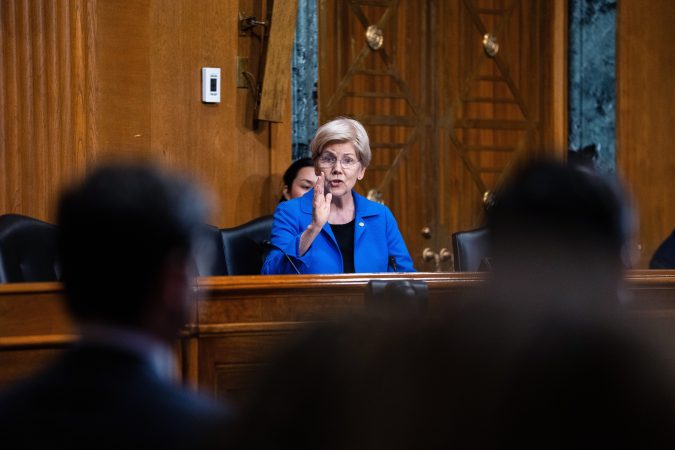
    In a letter to Defense Secretary Pete Hegseth, Sen. Elizabeth Warren (D., Mass.) and Rep. Pat Ryan (D., N.Y.) — along with almost a dozen other House and Senate Democrats — cited recent reporting by the Washington Post and other media outlets scrutinizing the March 1 strike, saying they want answers to whether the military had adequate protections in place before the attack and whether the troops received proper medical care afterward.

    “The need for this investigation goes beyond the Shuaiba attack — it’s about taking accountability and protecting our service members,” Ryan, an Army and Iraq War veteran, said in a statement to the Post. He was referring to Port Shuaiba, the facility along the Persian Gulf where the deadly strike occurred. “It’s our job as members of Congress to force [Hegseth] to give us real answers and make sure something like this never happens again.”

    Reached for comment, the Pentagon did not address whether it would cooperate with lawmakers’ investigation, saying in a brief statement that “as with all Congressional correspondence, we will respond directly to the sender.”

    It was just the second day of Operation Epic Fury, the name the Trump administration has given the conflict, when an Iranian Shahed drone crashed into the center of an Army operations center at Port Shuaiba. Dozens of service members were injured in the attack along with the six who died.

    In the months since, survivors have alleged that military leaders failed to take appropriate action after being warned the facility lacked adequate defenses. Some have said, too, that troops wounded in the strike faced considerable difficulty obtaining treatment.

    Military officials have contested both assertions.

    As the Post reported this month, several soldiers who were at Port Shuaiba have said they doubt the Army’s internal review will hold anyone accountable. Citing a U.S. official familiar with the review, the Post also reported that the initial findings did not assign fault for the attack or address any punitive action.

    The Army has shared its findings with the families of some of the fallen service members but has not released that information publicly.

    In their letter to Hegseth, lawmakers questioned the seriousness and independence of the Army’s internal review, citing other reporting by the Post that revealed the task was assigned initially to a midgrade officer within the affected unit instead of an outside investigator.

    The matter was later elevated to a more senior officer at U.S. Army Central, the affected unit’s parent command. Outside observers have said they were skeptical of the move, noting that it still left the review to be overseen by personnel in the same chain of command.

    The lack of an independent investigator, coupled with new concerns about the Pentagon’s transparency and recordkeeping, raise questions about “whether investigations into service member casualty incidents will be conducted objectively,” Warren wrote in the letter.

    Citing Democrats’ concerns about the Defense Department’s “failures to provide service members that sustained injuries in this war with adequate care and its inability to honestly and openly inform the American people about the consequences of this war,” the lawmakers have chosen to pursue answers on their own, the letter says.

    They requested a response from the Pentagon by Aug. 12.

  • Worker was ‘impaled’ by blow torch while dismantling an old crane at EMR Camden

    A worker at EMR was impaled by a blow torch while taking apart a crane for scrap metal, according to Camden Fire Department incident reports.

    Camden County had confirmed that a worker at the scrap metal plant had been transported to the hospital after suffering life-threatening injuries less than two weeks ago on July 18. The man remains in the hospital in stable condition and conscious.

    The incident took place less than a week after the company announced its phased reopening after a string of fires. A judge had allowed EMR to resume operations after the company sued the city of Camden for suspending its operations.

    Fire department documents obtained by The Inquirer through a public records request reveal that worker was injured while dismantling a crane.

    He was on a stretcher with “what appeared to be a large Oxy-Acetylene blowtorch handle impaled into his left bicep and into his torso,” when Camden City Fire Department Battalion Chief Ezequiel Tirado arrived on the scene to respond to a burn victim, according to his report.

    Another worker who could not speak English had cuts on his face, and blood and mud on his hands, according to Tirado’s report. They spoke in Spanish, and the man said he was hurt but declined to be brought to the hospital, stating that he’s an undocumented worker.

    “I told him, ‘Don’t worry about that. Let’s get you some help,’” Tirado wrote. “He stared at me then ran away.”

    He was later found at the hospital, Tirado said.

    William Scott, the night time operations manager for EMR, said he did not know what caused the workers’ injuries, according to Tirado’s report. Scott said they were using a cutting torch to cut an old crane for scrap metal.

    Tirado described the site of the incident as “very dark with no lighting equipment” and lots of debris. He said emergency responders set up lighting and discovered a pool of blood near the crane and under a lift.

    Camden County spokesperson Dan Keashen said Wednesday that the now-stabilized man who was impaled with the blow torch was transported to the hospital in critical condition. He said the county police department is still investigating the incident.

    Joe Balzano, the CEO of EMR, said on the phone Wednesday that the workers were subcontractors hired to demolish an old crane and not employees of EMR.

    He said the injured worker is “a very hardworking nice man, unfortunately who was involved in a workplace injury.”

    “We’re just glad that he’s doing well,” the CEO said. “It’s unfortunate, heavy industry situations have, you know, unfortunate accidents … we just hope he does continues to progress well.”

  • Blanche nomination at risk of delay as senator seeks assurances on Trump settlement

    Blanche nomination at risk of delay as senator seeks assurances on Trump settlement

    WASHINGTON — A planned vote to move forward with Todd Blanche’s nomination for attorney general appeared in doubt Wednesday as a key Republican senator demanded more assurances from the Justice Department about the settlement of President Donald Trump’s lawsuit against the Internal Revenue Service.

    GOP Sen. John Cornyn, a crucial swing vote, called off a scheduled Wednesday meeting with Blanche, who has been serving as acting attorney general since Pam Bondi’s firing in April. Cornyn told reporters that the Justice Department has not adequately addressed in writing his concerns about the settlement that afforded Trump and members of his family protection from tax audits.

    The dispute threatened to upend plans for the Senate Judiciary Committee to vote Thursday on whether to advance Blanche’s nomination to the full Senate. Another Republican on the committee, Thom Tillis of North Carolina, has backed Cornyn’s position, and just one Republican holdout could sink Blanche’s prospects.

    “They know what they need to do but they simply refuse to do it,” Cornyn, who lost the Texas Republican primary in May, said of the Justice Department.

    At the center of the fight is the settlement of Trump’s $10 billion lawsuit against the IRS that included a deal to drop tax claims against the president and a now-scrapped plan to create a $1.776 billion “Anti-Weaponization Fund” to compensate people who believe they were wronged by the Justice Department. The Justice Department said in June that it was no longer moving forward with the “Anti-Weaponization Fund” amid bipartisan outrage but officials have said the audit immunity agreement remains in place.

    Trump on Wednesday downplayed any concerns about Blanche’s path to confirmation, calling his attorney general pick and former personal attorney “outstanding.”

    “Maybe John Cornyn’s upset with me because I didn’t endorse him,” Trump told reporters in response to questions about the senator’s demands.

    Texas Attorney General Ken Paxton won the state’s Republican nomination for the U.S. Senate, easily defeating Cornyn. Trump had endorsed Paxton.

    Some lawmakers have raised concerns that the fund could be resurrected absent a commitment in writing from the Trump administration that it is dead, especially since Trump has expressed continued support for the idea. Blanche had previously resisted requests for a formal written retraction, though he told senators at his confirmation hearing earlier this month that the administration would be willing to help craft legislation to bar the creation of the fund.

    Cornyn has also demanded clarification from the Justice Department on the scope of the tax immunity deal. He has pressed the administration to modify that piece of the settlement to make clear that it covers only existing audits and does not protect the president from examination of future tax filings.

    “We’re been trying to help them get to a conclusion here and they won’t let us. It’s befuddling to me,” Cornyn said.

    A person familiar with the matter said the Justice Department provided Cornyn’s office with a written proposal seeking to address his concerns around the audit immunity agreement and the fund. The person spoke on the condition of anonymity to talk about sensitive discussions surrounding Blanche’s confirmation.

    The settlement resulting from Trump’s lawsuit over his leaked tax returns has drawn intense scrutiny both in Congress and in court. The judge handling the case said in a scathing ruling earlier this month that Trump had effectively engaged in self-dealing through the lawsuit and that she was troubled Blanche had signed the settlement, given his prior representation of Trump.

    Blanche has said he disagrees “with the judge’s insinuations” about him.

  • The EPA halted a study on gas stoves and asthma. But even partial results were striking.

    The EPA halted a study on gas stoves and asthma. But even partial results were striking.

    Paul Moore’s house is old. It was built around 1900 as a hunting lodge near where Cleveland would develop, and his grandparents bought the home around 50 years later, converting it over the years into a three-bedroom ranch that included what Moore called an “old school” gas stove.

    When he moved into the house in 2020 with his wife and six children, Moore already had debilitating asthma. He got winded walking up hills and couldn’t play basketball with his children. He slept poorly and couldn’t hold steady employment, instead doing odd jobs like fixing neighbors’ cars and houses. He was hospitalized multiple times with severe asthma attacks and almost died from being unable to breathe.

    “My asthma was a real hindrance at the time. And I couldn’t figure out why, you know?” Moore said. “Just couldn’t pinpoint one thing or another. Was it me? Is it something going on with my body? Is it something else?”

    It turned out that researchers at Case Western Reserve University in Cleveland and a local hospital network were studying asthma sufferers like Moore. He signed up to have his gas stove swapped out for an electric one in June 2025. That research would end up providing vital evidence on gas stoves’ health impacts, amid fierce debate between fossil fuel advocates and climate change activists.

    Moore said without the study, he has no clue how long it would have taken him to save the money to change it himself. The researchers spent an average of about $10,000 per household, as many old homes needed to be completely rewired to handle the larger electrical load of an induction stove.

    What Moore didn’t know is that he would be one of the last people to get a new stove as part of that work.

    Ash Sehgal, a Case Western medical professor who led the study, had received an $18 million grant from the Environmental Protection Agency in December 2024 to replace the stoves in 1,200 homes of asthma sufferers in the Cleveland and Akron, Ohio, areas. A month before Moore’s stove was replaced, Sehgal received a letter stating that the grant had been terminated.

    It was one of thousands cut short after President Donald Trump took office and launched aggressive efforts to reduce government spending.

    But unlike many others forced to halt their research, Sehgal and his co-authors released their study anyway, publishing it in the Journal of Allergy and Clinical Immunology in Practice this month with a fraction of the intended sample size. Still, removing the gas stoves relieved the participants’ asthma so much that the results were clear even with only 85 of them, according to two scientists who reviewed the methodology but were not involved in the study.

    “What really surprised me is that the improvement in the asthma symptoms was similar to or even larger than the improvement in asthma symptoms that’s reported in clinical trials of commonly used asthma medications,” Sehgal said.

    Participants recorded far fewer asthma attacks, emergency room visits and missed days of work after the stove was removed, and levels of nitrogen dioxide in their kitchens plummeted by 70 percent.

    “They were able to see some important results, even with the grant getting canceled, even with the sample size being less than a tenth of what they’d intended,” said Julian Marshall, an environmental engineering professor at the University of Washington.

    “It’s also an actionable finding. People who have asthma would want to know, ‘What can I do about this?’” he added. “This is a major problem facing thousands and thousands of people across the U.S.”

    Sehgal said that while it can help to replace gas stoves that exacerbate symptoms, it is not a cure for asthma. Asthma sufferers still need to work with a doctor, take their medications and avoid triggers like pollen and cigarette smoke.

    Rob Jackson, an environmental scientist at Stanford University who was not involved in the research, said many studies on indoor air pollution from gas stoves rely on models to estimate the impact on people’s health, whereas this study makes real-life observations.

    “It’s important because the extent to which indoor air pollution from stoves harms people’s health is still debated in state houses, federally, in courtrooms, and so every piece of the puzzle, even if it’s only 85 individuals, strengthens that story,” he said.

    In recent years, conservatives have championed gas stoves and fought Biden-era policies that sought to reduce the use of fossil fuels driving climate change. Trump has championed fossil fuel development, seeking to boost the oil and gas industry by rolling back environmental protections and opening new areas to exploration.

    Politicizing science

    Scientists have lamented the loss of federal funding following the Trump administration’s dramatic cuts last year to grants across the government, including those awarded by the National Institutes for Health and Centers for Disease Control and Prevention.

    The EPA has terminated $28.5 billion in grants, according to Grant Witness, a tracking project, with much of that money intended to focus on helping communities respond to climate change or reduce pollution. That included funding projects that installed rooftop solar or sealed up houses against wildfire smoke, as well as scientific studies that had real-life applications, like evaluating the replacement of gas stoves.

    The agency closed the Office of Environmental Justice and External Civil Rights, which awarded Sehgal’s grant, amid its broader purge of programs related to climate change, environmental justice and diversity, equity and inclusion.

    Despite court challenges, including a district judge ruling earlier this month that the cancellations were illegal, many researchers were forced to end their studies early.

    EPA spokesperson Brigit Hirsch said in an email that the agency’s internal scientists continue to conduct vital research.

    “EPA’s core mission is protecting human health and the environment, and at the Trump EPA, gold-standard science supported by our excellent career scientists is happening like never before to ensure clean air, land, and water for all Americans,” she said.

    The cancellation of the gas stoves research grant “seems to be a political decision, not necessarily based on science-based or public health priorities,” said Darya Minovi, a public health researcher at the Union of Concerned Scientists, an advocacy group.

    The administration is looking to expand its ability to shape scientific funding, she said. The White House’s Office of Management and Budget proposed a new regulation in late May that would demand grants across the federal government align with the president’s policy priorities or face cancellation.

    While presidents often set the general direction of agencies by appointing their leadership, Minovi said this new policy would give the president more control over decisions typically made by staffers at institutions such as the NIH.

    “This is really making it government-wide policy to politicize grant-making that should not be subject to the whims of a president, but really should be decided on scientific merit,” she said.

    What was lost

    Based on the results that were published, Sehgal can estimate how much damage halting the study caused. If 1,100 more households had participated as originally planned, it would have resulted in 900 people with better-controlled asthma and 84 fewer people who would go to the emergency room or be hospitalized.

    Many of those people probably don’t even realize the connection between their asthma and their gas stove, said Angela Bland, a 38-year-old stay-at-home mom in Akron who also participated in the study. She said the impact of replacing her stove was almost immediate, and she didn’t feel her throat closing up as much while cooking.

    “It was kind of heartbreaking because I was like here’s something that can really help people and get information out there to help people, and they cut it so quick,” she said.

    Similar to Bland, Moore said he quickly felt the impact of removing his gas stove.

    “It was just like, ‘Huh, I feel a little bit better. It’s not like how it used to be.’ It was a slow realization over the first week,” he said.

    He remembers waking up to his daughter cooking, smelling the food and feeling good for once, so much so that his family noticed.

    “They felt the difference. It was a magical moment,” Moore said.

    After his health improved, Moore found a new job locating gas lines so that major construction projects don’t rupture them.

    “There’s a whole lot of people out there probably feeling just like how I felt,” he said. “A lot more people deserve to feel good when they cook or when they eat or when they are able to sit down with their families.”