Category: Politics

  • In the national debate around affordability, the politics are personal for Chester County’s U.S. Rep. Chrissy Houlahan

    In the national debate around affordability, the politics are personal for Chester County’s U.S. Rep. Chrissy Houlahan

    In the back of a classroom where she had just read to 20 attentive preschool kids, U.S. Rep. Chrissy Houlahan was concerned about what the staff of the West Chester YMCA was telling her.

    Nearly a third of the families who rely on the facility’s childcare programs — in the richest county in Pennsylvania, and one of the wealthiest in the country — receive financial assistance to cover the $1,900 monthly cost, the staffers said.

    Houlahan, a Democrat who is soft-spoken when she is not grilling President Donald Trump’s cabinet secretaries or House Speaker Mike Johnson (R., La.) on Capitol Hill, asked about the income qualifications for financial aid. At a certain point, the YMCA staff told her, some parents have a disincentive to earn more, lest they become disqualified and then stuck with a higher bill.

    “It’s terrible, no matter how you do the math,” Houlahan said a few hours later at a Malvern restaurant, relaying the story to her daughter, Molly Rosa Houlahan, and daughter-in-law, Kristen Rosa Houlahan.

    The YMCA’s fee was about the same amount the couple were paying for their 18-month-old, Lucy. With another child due in September, it is also an amount they still are unsure how to afford twice over.

    “We’re very fortunate in our jobs, and we’re both trying to get promotions in order to be able to afford a second daycare,” said Molly Rosa Houlahan, 33, a local theater director and producer. “But we are not in that position yet. I don’t totally know what will happen when this second child arrives.”

    From childcare to healthcare, groceries to gas prices, affordability concerns have remained top of mind for Americans this year — dominating discussions on Capitol Hill ahead of the high-stakes midterm elections.

    Republicans, who control Congress and the White House, say they have made real progress in raising wages and lowering costs. They marked the first anniversary of Trump’s One Big Beautiful Bill Act — since rebranded by Republicans as the Working Families Tax Cut Act — this month by celebrating the law’s more generous tax refunds and other benefits, like new investment savings accounts for children under 18.

    Democrats have pointed to the bill’s simultaneous cuts to Medicaid spending and food assistance for low-income families. They say Trump signaled he has no interest in lowering costs when he refused to sign a bipartisan housing bill and said he doesn’t “think about Americans’ financial situation” when handling the war in Iran.
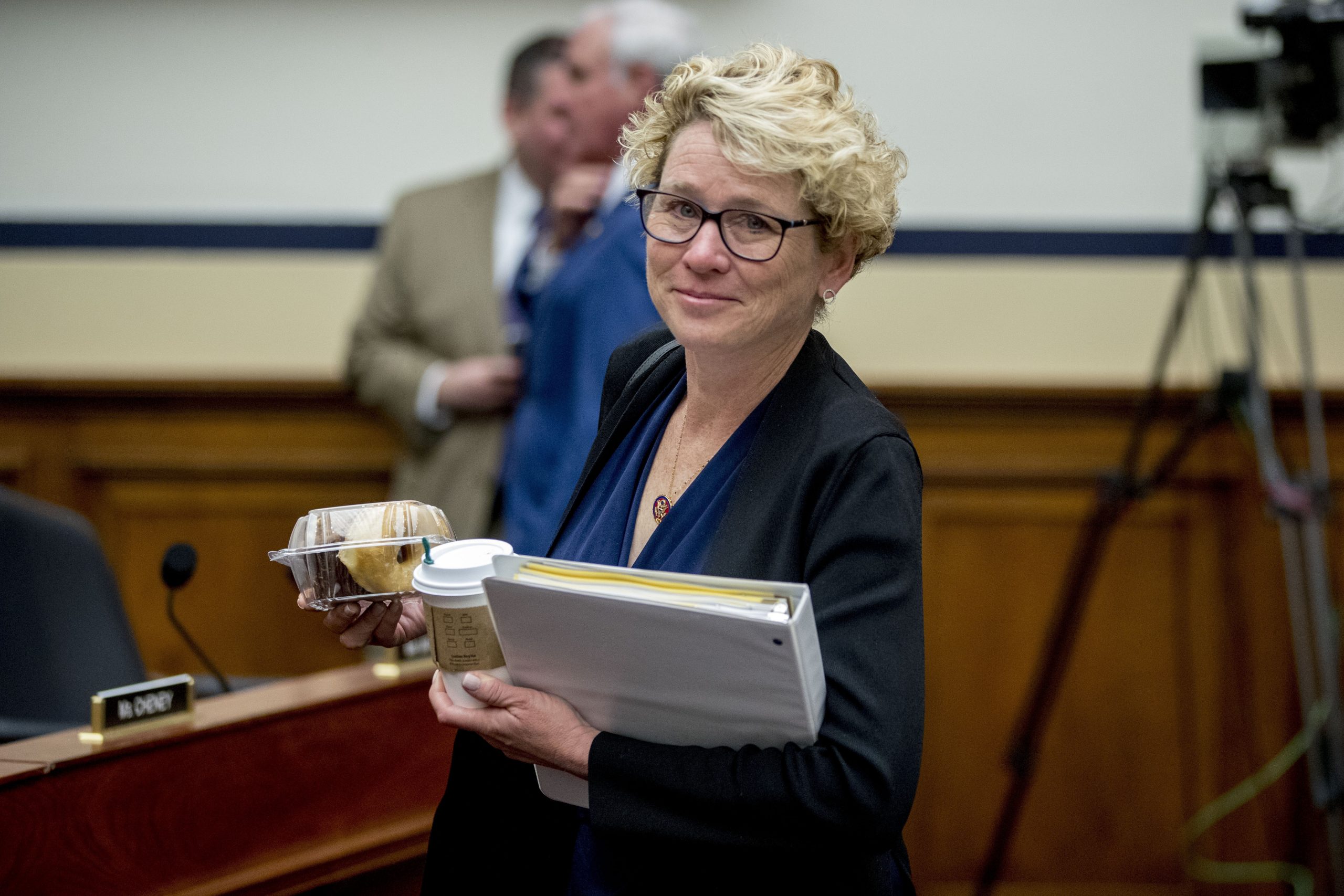
    In this 2019 file photo, U.S. Rep. Chrissy Houlahan (D., Pa.) arrives for a House Armed Services Committee budget hearing for the Departments of the Army and Air Force on Capitol Hill in Washington.Andrew Harnik

    Houlahan, who has represented most of Chester and Berks Counties since 2019, routinely highlights the broader scope of cost-of-living issues alongside her colleagues. She has taken a leading role among centrist House Democrats to help craft a detailed “affordability agenda.”

    Whether her party can advance any of those policies in Washington, even if it wins control of one or both chambers of Congress in November, remains an open question as Trump remains in office and the International Monetary Fund warns of a worsening global economy.

    But as the fight drags out, it has also become increasingly personal for Houlahan and her family.

    In addition to occasionally helping fill the gaps in their granddaughter’s care, Houlahan and her husband’s own home in Devon, Chester County, has transformed into a version of a so-called sandwich generation household within the last year. The couple’s other adult daughter, her husband, and both of Houlahan’s parents, who are 80 and 84, have all moved in.

    The underlying circumstances for the multigenerational home, as they would be for any family, are various and personal. And Houlahan emphasized across multiple interviews that she is fortunate to have the means to welcome her family under her roof. (Houlahan is an Air Force veteran and a former executive at the athletic apparel company AND1. Her husband, Bart, is a partner at an investment research firm.)

    But the larger realities — like skyrocketing costs for childcare and senior living — have also now played a role in her own life. Her mother has a Parkinson’s diagnosis, and her parents were unable to find a one-floor living space that was affordable and fit their other needs as they looked to move closer to their family.

    “We’re having these conversations, and you know people all over our community are having these conversations,” she said. “It’s an acute issue for families in our area: How do you balance all of this?”
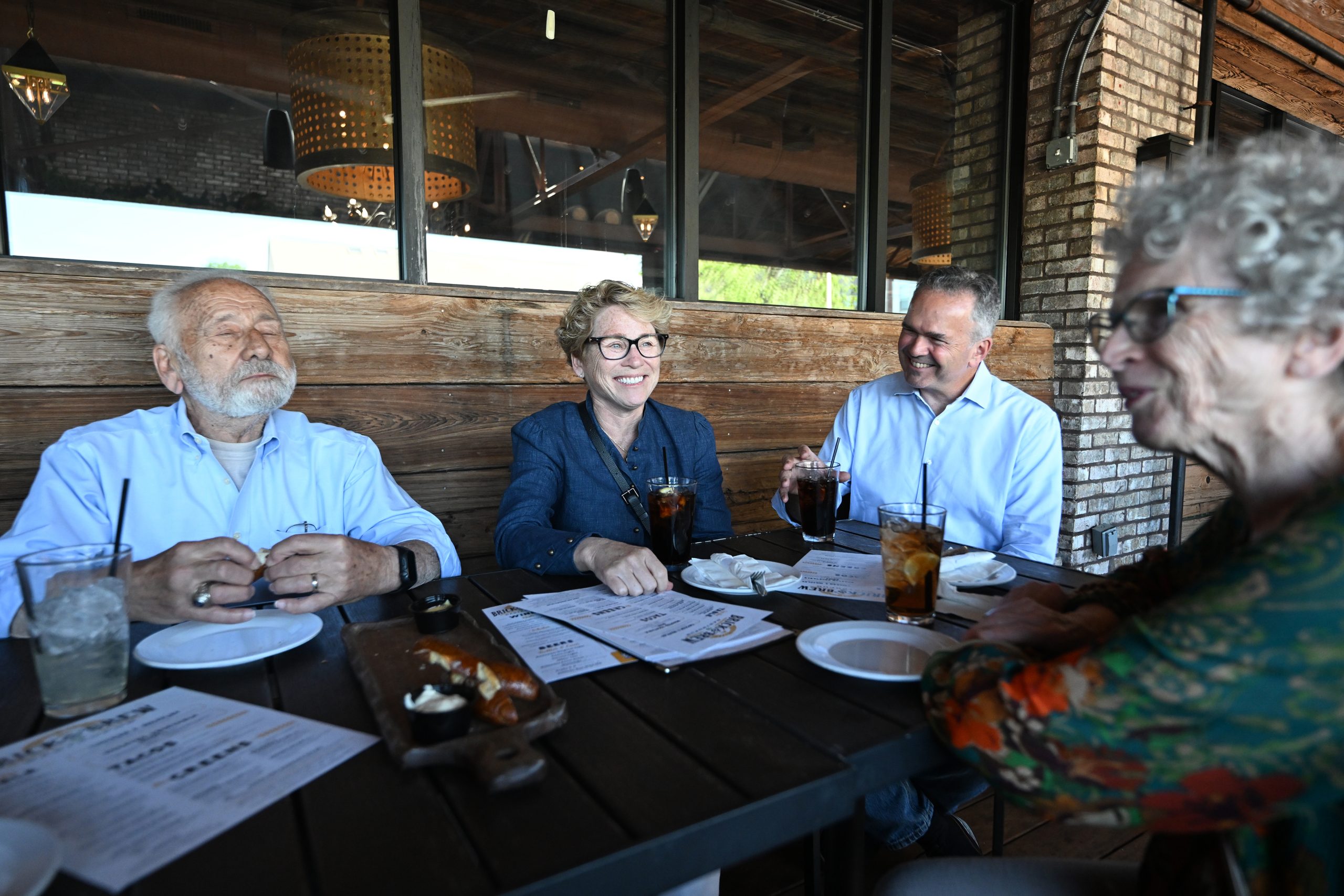
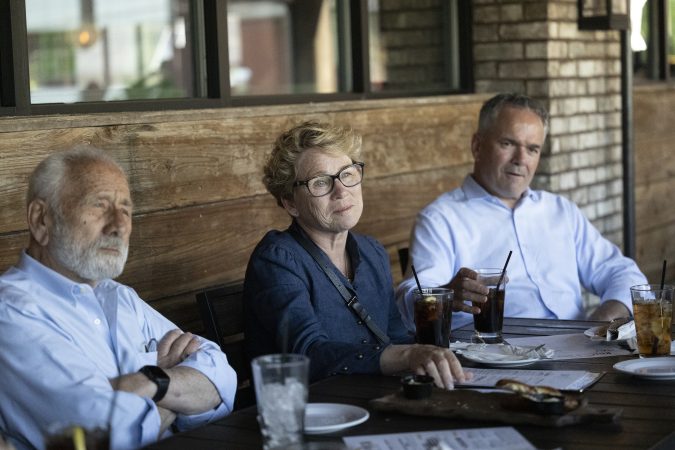
    U.S. Rep. Chrissy Houlahan (center) has dinner with her family at Brick & Brew in Malvern, including her father, Andy Jampoler (left), her husband, Bart Houlahan, and her mother, Suzy Jampoler.Jose F. Moreno / Staff Photographer

    ‘A big balancing act’

    Houlahan has shared parts of her family’s story as she has traveled her district this year — prioritizing events and meetings that aim for a deeper understanding of an affordability crisis that has not spared her home county, where the median household income is about $131,000, or 40% more than the statewide average.

    On back-to-back days this spring, that meant a focus on the kinds of childcare and senior-care issues she has become familiar with.

    “We call it ‘from zero to Edna,’” Laura Schoefield-Pierson, executive director of the YMCA of Greater Brandywine, said of the facility’s programs aimed at all ages, from infants to seniors.

    Walking Houlahan through the pre-K classes and a gym with a dozen seniors playing table tennis, Schoefield-Pierson spoke about the organization’s exercise programs aimed at offsetting symptoms of Alzheimer’s or Parkinson’s, and about the complexities of providing assistance for families with young children.

    In addition to the “many children” whose care is subsidized through the state’s Child Care Works program — set for families earning 200% or less of the federal poverty level, or $66,000 for a family of four — others receive aid through the YMCA, Schoefield-Pierson said. The facility’s fundraising goal this year is $237,000, she said. On the day of Houlahan’s visit, Schoefield-Pierson said “the kiddos” were writing thank-you notes to donors.

    U.S. Rep. Chrissy Houlahan (D., Pa.) interacts with teachers and children at a childcare center at the YMCA in West Chester.Jose F. Moreno / Staff Photographer

    Though the U.S. Department of Health and Human Services recommends childcare should not exceed 7% of household income, Houlahan said she was surprised to learn a family would have to earn $327,000 to meet that benchmark at the YMCA for one child.

    Nationally, the average annual cost of childcare in 2024 was $13,128, an increase of 29% over the previous five years and far exceeding the national recommendation for the average household’s budget.

    “It’s crazy how much healthcare and childcare plays into your family planning,” said Helena Cordoba, a 35-year-old mother of two who said at a roundtable hosted by Houlahan that she had been hoping to grow her family.

    A Colombian immigrant who owns Café Com Leite in Phoenixville, Cordoba said she thought she had been living the American dream. But a recent miscarriage and the rising costs of both childcare and healthcare, which she does not currently have, have made her rethink her family’s plans.

    “I never thought I was going to say, ‘Maybe the miscarriage is a blessing.’ That thought on its own is very saddening,” Cordoba said. “I don’t know if we were going to be able to afford another baby. Our life would have been completely turned upside down.”

    Others voiced similar struggles while Houlahan sympathized and shared her daughter’s own experience with a $2,000 monthly daycare bill.

    Karessa, Amelia, and Zack Hathaway, pictured here in 2023, at Sweet Amelia’s in Kennett Square.Monica Herndon / Staff Photographer

    Zack Hathaway, who owns the restaurant Sweet Amelia’s in Kennett Square with his wife, Karessa, said their business “makes just enough” to cover the $700 to $800 weekly cost for their babysitter amid a demanding restaurant schedule. Thomas Smith, who works at the Cleveland-Cliffs steel plate production facility in Coatesville, said he makes too much to qualify for subsidies for his grandchildren but still struggles to cover the cost.

    “It’s like a big balancing act to be able to put your kids in a place that you want to feel comfortable with them being and with being able to afford it,” said Amarte Grove, another Cleveland-Cliffs employee and a father of five daughters.

    In another tour focused on the other end of the age spectrum, Houlahan peppered staffers at Brandywine Valley Active Aging in Downingtown about their work to offer free meals, housing services, and activities to about 120 seniors daily.

    According to the organization, Chester County’s homeless population has decreased in recent years — from 916 in 2023 to 747 in 2025. But the percentage of that population that is over 60 has increased from 9% in 2023 to 14% in 2026. About 45 older adults in the county were homeless as of early May, according to the organization, which works alongside other independent and government groups to connect seniors with stable housing.

    “It is really difficult to live in Chester County,” said Jen Manthey, BVAA’s director of information and assistance. “It takes a long time for them to get out of homelessness, partly because it takes a long time for us to build the trust with them and get that rapport — that they trust what we’re saying, and there aren’t $400 room rentals out there that we’re just hiding from you.”

    U.S. Rep. Chrissy Houlahan (D. Pa.) visits with senior citizens at the YMCA in West Chester. She shares the burden of the “sandwich generation” caring for her elderly parents, opening her home to her adult daughter and son-in-law, and helping to care for her other daughter’s toddler.Jose F. Moreno / Staff Photographer

    Nick Popov, BVAA’s chief operating officer, said demand remains high for the 5,000 free lunches the organization provides every month to individuals age 60 and older. The cost for those meals is reimbursed through the Pennsylvania Department of Aging, though the organization raises most of its funding in total, he said.

    “The services are out there. We’re doing everything we can to provide them,” Popov said. “But it’s always a struggle to kind of balance the bottom line between our goals and what we can actually affordably accomplish.”

    Houlahan’s parents said they had never expected to move in with their daughter. Even as they looked to move closer to their family and could not find a spot that fit their financial and physical needs, it took some convincing, mostly from their son-in-law, Bart Houlahan.

    “It was an inspiration that permits us to enter old age — serious old age, not just the kid stuff right now — with greater confidence that our health will be sustained,” said Andy Jampoler, Houlahan’s father, a Holocaust survivor born in German-occupied Poland in 1942.
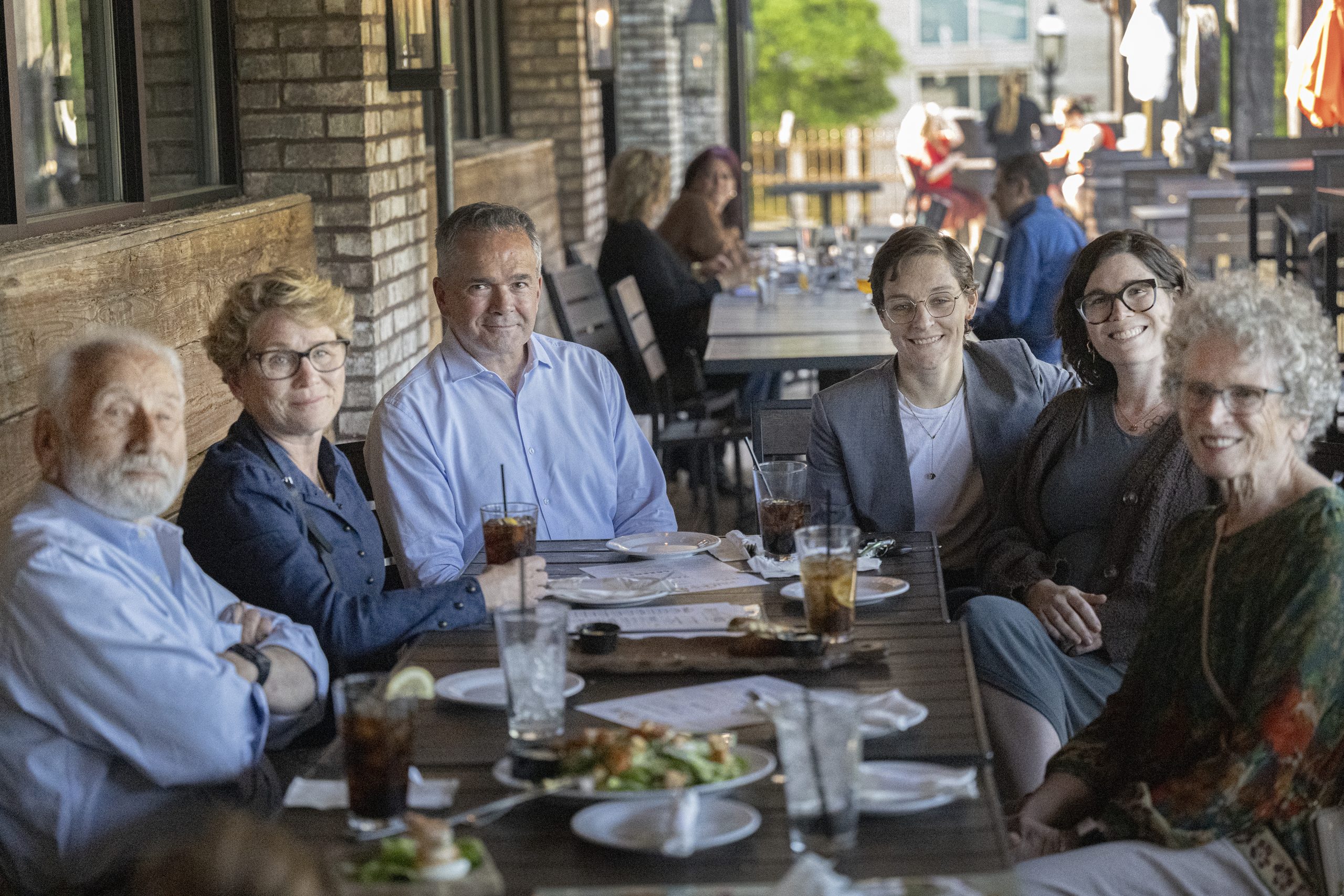
    U.S. Rep. Chrissy Houlahan poses at a family during dinner at Brick & Brew in Malvern, including her father, Andy Jampoler (left), her husband, Bart Houlahan, daughter Molly Rosa Houlahan, daughter-in-law Kristen Rosa Houlahan, and Houlahan’s mother, Suzy Jampoler.Jose F. Moreno / Staff Photographer

    Turning experience into policy

    In May, Houlahan introduced legislation that would require the federal government to collect data on the sandwich generation, a step she said is critical to creating better policies for an “undervalued role in the nation’s economy.”

    It would require at least one federal survey to ask whether individuals provide unpaid care to both children and older adults. U.S. Sen. Andy Kim (D., N.J.), who has two young sons and cares for his father with Alzheimer’s, sponsored a companion bill in the Senate.
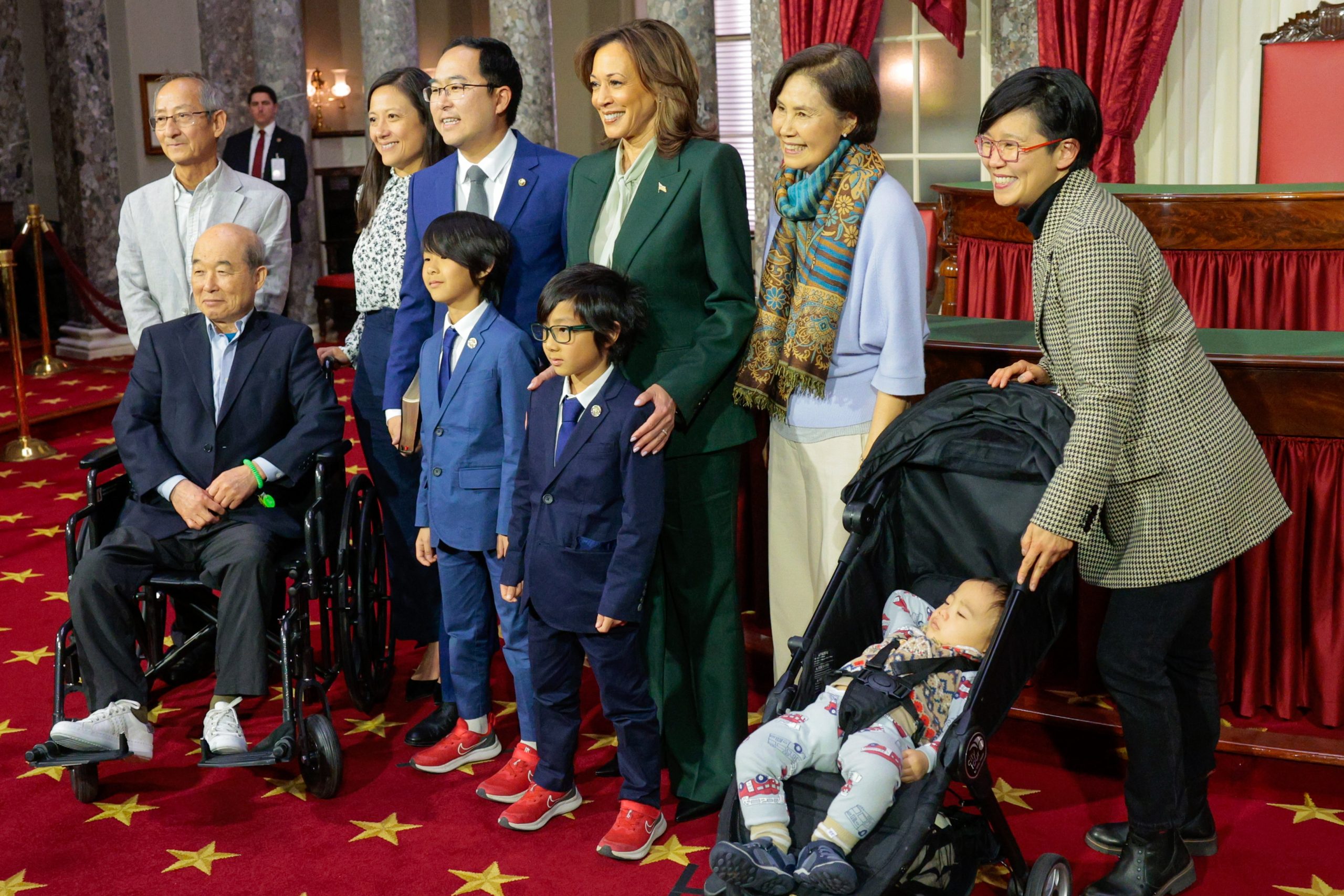
    Sen. Andy Kim (D., N.J.) poses with his family and Vice President Kamala Harris after taking the ceremonial oath of office in the old Senate chamber on Jan. 3, 2025, in Washington.Steven M. Falk / Staff Photographer

    Houlahan is also the chair of an “economic growth and cost of living” working group within the New Democrat Coalition, a group of self-described centrist Democrats that includes about half of the entire caucus. The group rolled out an “affordability agenda” earlier this year that is considered a framework for how Democrats would tackle housing, healthcare, energy, paid family leave, and much more if they win control of the House.

    U.S. Rep. Brad Schneider (D., Ill.), chair of the New Democrat Coalition, credited Houlahan for her leadership with the agenda, describing her as having a “quiet wisdom that focuses on the core of a problem” while bringing her own life experience to the work.

    “Everyone’s experience is unique, but her experience shares many of the aspects of what people across the country are facing,” Schneider said. “The sandwich generation, taking care of kids and parents, for whatever circumstance, while at the same time seeing the cost of just everyday living … is putting a burden on families.”

    Houlahan said she has been aggravated by the pace of progress in Washington, including Trump’s decision to not sign the bipartisan 21st Century ROAD to Housing Act in an attempt to force a vote on stricter voter-ID laws.

    The legislation aims to incentivize housing construction, restrict large investors from buying single-family homes, help families with home repairs, and more. The president reiterated Friday that he would not sign it, allowing the bill to become law without his signature.

    In her Capitol Hill office about an hour after Trump canceled that bill signing late last month, Houlahan described the president as “so obtuse that he can’t see in front of him that this is something that the people want.” After spending much of the last year calling out Johnson, the House speaker, for not standing up to Trump, she said there should be “counterinsurgents” and an “uprising” in the Republican Party.

    At the same time, she expressed some hope. The housing bill may have been a rare moment of bipartisanship, but it was also a sign that Congress can still act on affordability even before the end of the year, she said.

    “We don’t have time, for all of this stuff, to wait until somebody else is in charge,” Houlahan said. “We can do this ourselves.”
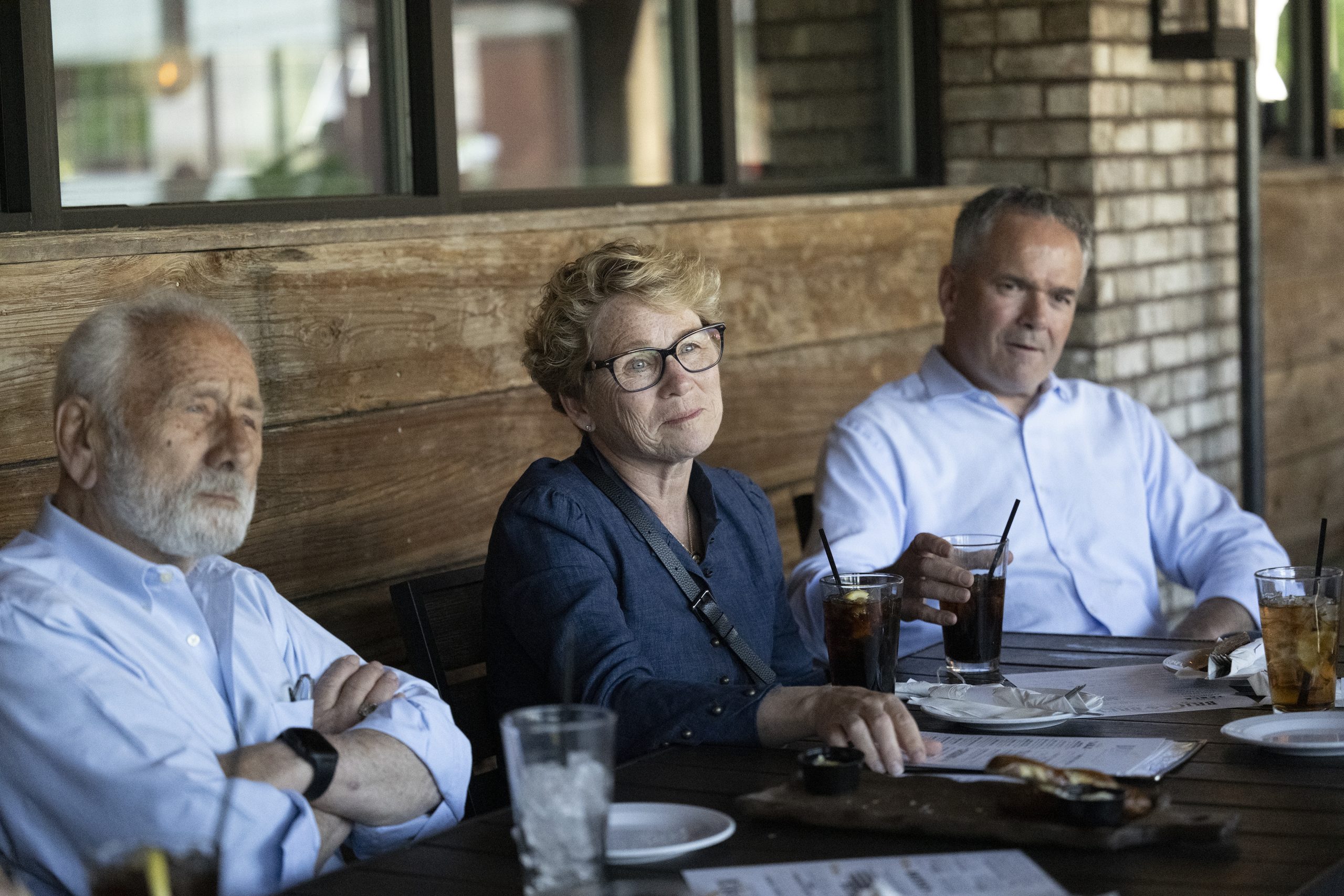
    U.S. Rep. Chrissy Houlahan (D., Pa.) sits between her father, Andy Jampoler, and her husband, Bart Houlahan, at Brick & Brew in Malvern. Houlahan’s parents recently moved in with her. Jose F. Moreno / Staff Photographer
  • Pa. lawmakers and Gov. Josh Shapiro have approved a $50.8 billion state budget, delaying action on key issues

    Pa. lawmakers and Gov. Josh Shapiro have approved a $50.8 billion state budget, delaying action on key issues

    HARRISBURG — Gov. Josh Shapiro signed a $50.8 billion state budget on Sunday following the rushed passage of the overall deal by the General Assembly that lawmakers said helps address the state’s affordability crisis but delays action on some of the most significant issues before the legislature.

    The agreement, which was due at the beginning of the month, marks an improvement from last year’s nearly five-month budget impasse in the split legislature that required school districts, counties, and social service providers to take out expensive loans or close altogether.

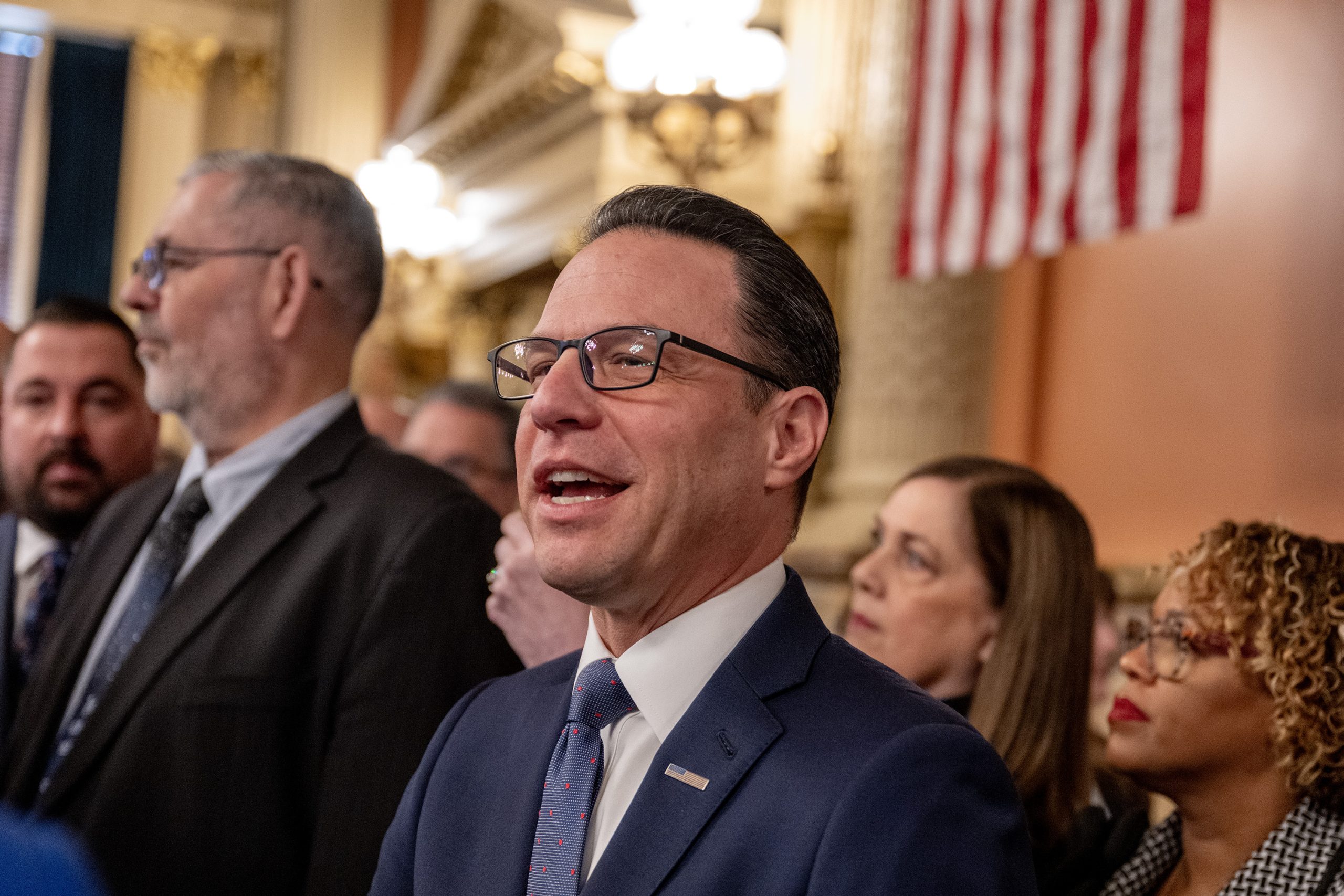
    “We managed, as the [vote count] indicates, to find compromise without compromising our core values,” Shapiro said during a news conference Sunday evening, before signing his fourth budget as Pennsylvania’s governor.

    The deal was hashed out over weeks in closed-door meetings among top leaders and includes new transparency requirements for data centers, publicly funded housing projects, and public transit agencies. Lawmakers also agreed to a long-sought cost-of-living adjustment totaling approximately $168 million per year for some Pennsylvania retired teachers, police officers, and firefighters — some of whom have not seen an increase to their monthly pension payments in more than 20 years.

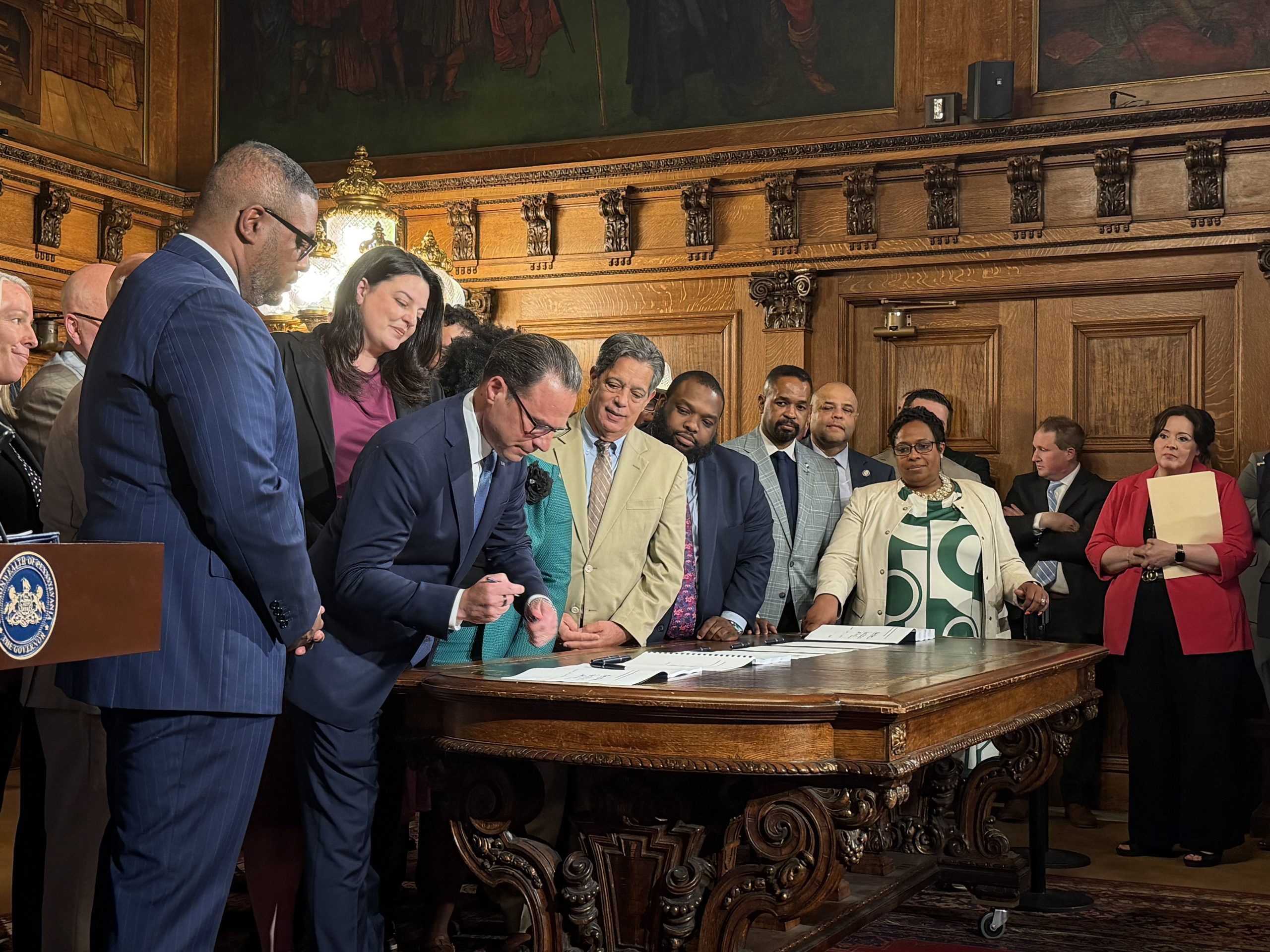
    Gov. Josh Shapiro, flanked by fellow state Democrats, signs the 2026-27 Pennsylvania state budget in Harrisburg, Pa. on Sunday, July 12, 2026.Gillian McGoldrick / Staff

    More education funding, data center requirements

    Pennsylvania will have invested nearly $2 billion in new school funding through its adequacy and tax equity formulas since 2024. That’s when lawmakers first employed the new calculations to close a $4 billion “adequacy gap” after a landmark court ruling that found the state was illegally underfunding students in low-income districts. This year’s installment of adequacy funding topped $565 million, as part of an effort to prevent districts from having to raise property taxes on already low-income residents. The additional investment sends $136 million more this year to the School District of Philadelphia.

    Legislative leaders failed to agree in the final budget on other issues that have seen broad support in both chambers, such as repealing a sales tax exemption for data center projects, allowing local moratoriums on data center projects, or banning cell phones in K-12 schools. They may revisit the issues during the fall legislative session.

    Instead, they approved a new reporting requirement that will force data centers to submit annual reports detailing their water and energy usage. The companies will face a $10,000-a-day fine for failing to submit their reports.

    The General Assembly also voted to close a sales-tax loophole that allowed online sellers to avoid paying Philadelphia’s local 2% sales tax on items sold in the city. Mayor Cherelle L. Parker had requested that the loophole be closed as part of her own budget pitch in a move estimated to bring an additional $1.5 million to the city.

    No decision on skill games

    But the budget does not address some of the most pressing issues before the General Assembly, including whether to tax and regulate skill games or allow the more than 70,000 gambling machines in Pennsylvania bars, corner stores and fraternal organizations to become illegal come October. The state has until then to decide how to approach the machines after the state’s Supreme Court last month determined that skill games, which have for years operated in a legal gray area, are slot machines and should be regulated as such. They also punted on finding a long-term funding solution to fund mass transit until next year, when a two-year fail-safe runs out.

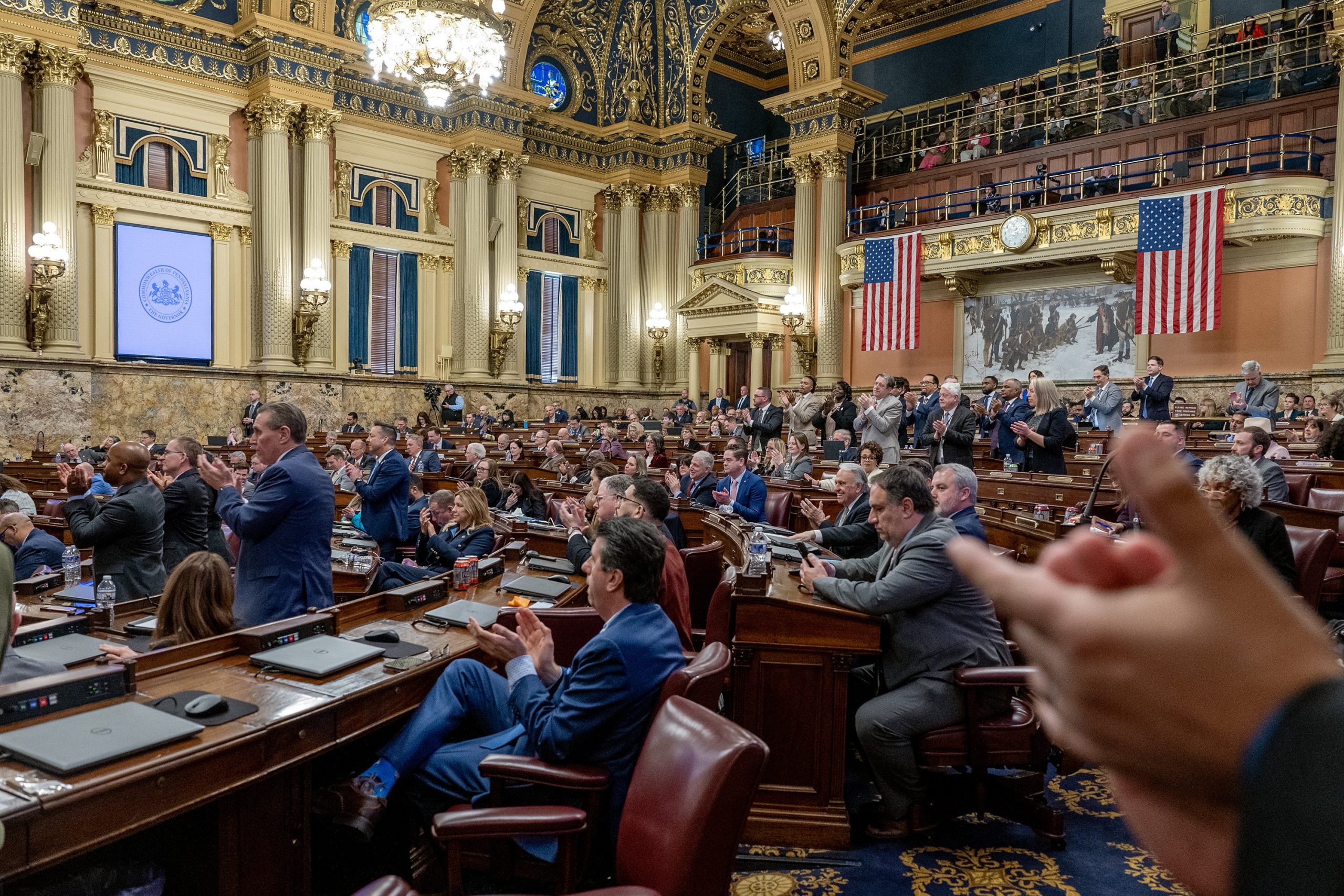
    The state House chamber as Gov. Josh Shapiro makes his annual budget proposal in Harrisburg Tuesday, Feb. 3, 2026.Tom Gralish / Staff Photographer

    Shapiro, a first-term Democrat facing reelection this year, proposed a $53.3 budget in February that for a fourth time emphasized top Democratic initiatives such as raising the state minimum wage to $15 per hour or legalizing recreational marijuana. He also proposed other initiatives, such as a $1 billion critical infrastructure fund to help the state drive out public dollars to build more housing and energy generation, which did not see funding in the final budget deal.

    State Sen. Nikil Saval (D., Philadelphia) was among the two Democrats who opposed the state budget, in part because it did not make the ambitious investments needed to address the state’s limited affordable housing stock.

    “We cannot defer at this moment,” added Saval, the chair of the Philadelphia delegation in the Senate, in his floor remarks before the vote.

    Lawmakers also declined to create any new generators of revenue for Pennsylvania, and deferred addressing the state’s multibillion dollar structural deficit until future years.

    ‘Met in the middle’

    The overall deal passed with bipartisan support in the GOP-controlled Senate, 44-6, and in the House, where Democrats hold a narrow majority, 167-35.

    “We have met in the middle,” said Senate Majority Leader Joe Pittman (R., Indiana). “I am proud of this product, despite what some naysayers may say.”

    The 2026-27 budget, which is a 1.4% increase in spending over the prior fiscal year, has no widespread tax increases. It also largely relies on accounting maneuvers like spending down unused or underused dedicated funds to address the structural deficit instead of pulling from the state’s emergency savings account.

    One of the accounting moves to balance Pennsylvania’s budget includes delaying two months of payments totaling $1.3 billion to insurance companies that fulfill the state’s ballooning Medicaid programs until the next fiscal year. Without those delayed payments, the budget would total closer to $52.1 billion.

    Several GOP House members opposed the budget, arguing it is unbalanced and only postpones tax increases to future years if spending isn’t cut.

    State Rep. Brad Roae (R., Crawford), called the final budget a “fake number.” State Rep. Charity Grimm Krupa (R., Fayette) called it “voodoo math.” And State Rep. Marc Anderson (R., York) said the state was “cooking the books.”

    But broadly, both Democratic and Republican members called the budget a reasonable compromise, acknowledging that they will have additional work to do in the fall legislative session and during next year’s budget negotiations to balance the state’s finances. During speeches on the Senate floor, several Republican senators quoted The Rolling Stones’ song “You Can’t Always Get What You Want,” emphasizing the second half of the refrain: “You might find you get what you need.”

    State Rep. Jordan Harris (D., Philadelphia) also turned to music to represent his position on the budget deal, paraphrasing Anthony Hamilton’s “Do You Feel Me” as a response to his constituents’ concerns about affordability by sending more state dollars to school districts to help them avoid property tax increases and raising monthly pension payments for retirees.

    “I am glad to stand today to support it, to let the people of Pennsylvania know, baby, the message is getting through,” Harris added.

    Pennsylvania Legislative Correspondents’ Association Intern Ethan Young contributed to this article.

  • Lindsey Graham was facing reelection in November. What happens now?

    Lindsey Graham was facing reelection in November. What happens now?

    The sudden death of Sen. Lindsey Graham (R., S.C.) comes less than four months before he was set to appear on the ballot as a strong favorite to win a fifth term.

    Now, South Carolina Republicans are facing a fast-paced scramble to replace him on the general election ballot. (Graham won the Republican primary by a wide margin this year.)

    South Carolina law sets out a timeline for replacing him on the ballot. Its provisions suggest a special primary election will take place Aug. 11, according to the schedule set out in the law.

    Candidates can file for the seat as soon as July 21, the second Tuesday after Graham’s death, and the filing period will close on July 28. State law says that the election must happen on the second Tuesday after that deadline. If no candidate secures a majority, a runoff between the top two finishers would take place two weeks later, on Aug. 25.

    Gov. Henry McMaster, a Republican, can appoint a replacement to serve out the rest of Graham’s Senate term, through Jan. 3, 2027, under state law. The replacement could choose to compete for the Republican nomination in the special primary.

    Graham, 71, died of “a brief and sudden illness” Saturday evening, his office said in a statement just after 2 a.m. ET Sunday.

    Rep. Nancy Mace is looking at a potential run for the seat, according to four people familiar with her thinking, who spoke on condition of anonymity to describe private talks. Mace ran for governor this year, finishing a distant fifth in the Republican primary.

    While Graham drew Republican primary challengers this year, he won the nomination by a wide margin, avoiding a runoff. President Donald Trump supported Graham, a onetime critic of the president who had shifted to a supportive posture in recent years.

    One of Graham’s opponents in the primary was businessperson Mark Lynch, who finished second with nearly 29% of the vote. He said on social media Sunday morning that “while we had our political disagreements, today is not a day for politics.”

    Previously, Lynch had strongly criticized Graham for his support of U.S. military intervention abroad, seeking to appeal to more isolationist members of Trump’s MAGA base.

    The third-place finisher was Thomas Keith Dismukes, a motivational speaker who campaigned on “faith, family, limited government, and the restoration of principles that make America great.” Other Republican contenders included Pat Herrmann, a county Republican Party chair and small-business owner, and Calvin Cowen, an engineer and city council member.

    The Democratic nominee for Senate is Annie Andrews, a pediatrician who has been a strong fundraiser in the race.

    “I hope that South Carolinians will join me in setting partisanship aside and offering gratitude to Senator Lindsey Graham for his service to the great state of South Carolina,” Andrews said Sunday morning, praising him as a “man of great faith who proudly served our nation as a JAG officer and Air Force colonel.”

    This article originally appeared in the New York Times.

  • Sen. Lindsey Graham, Trump critic turned ally and foreign policy hawk, dies after a brief illness

    Sen. Lindsey Graham, Trump critic turned ally and foreign policy hawk, dies after a brief illness

    Sen. Lindsey Graham, a longtime Republican lawmaker from South Carolina who went from being one of Donald Trump’s harshest critics to positioning himself in the front ranks of the president’s most deferential supporters, died Saturday. He was 71.

    The senator had a remarkable political trajectory that included election to the House in the 1994 Republican takeover, a high-profile role as an impeachment manager against President Bill Clinton, a Senate career featuring foreign policy hawkishness and bipartisan collegiality, and a prominent position as a confidant of President Donald Trump who epitomized Trump’s capture of the Republican Party.

    On Sunday, the Associated Press reported that a statement from Sen. Graham’s office said the Medical Examiner of the District of Columbia’s preliminary findings are the senator died of aortic dissection due to arteriosclerotic cardiovascular disease. That is an aorta rupture stemming from hardening of Sen. Graham’s arteries. A final report will be issued later.

    Over his more than three decades in the House and the Senate, Sen. Graham became nationally known because of a near-constant presence in the news media, where his folksy manner and talent for a good quote put a soft edge on his sometimes hard-line views. On Sunday, he was scheduled to have made what would have been his 64th appearance on NBC’s Meet the Press, following his return from a trip to Ukraine.

    The senator also had a talent for winning elections despite regular attacks from the right and the left. Last month, Sen. Graham won the South Carolina Republican nomination over five challengers in his pursuit of a fifth Senate term, avoiding what many had anticipated would be a runoff and placing him on a glide path to reelection in his deeply Republican home state.

    In celebrating his primary win, Sen. Graham paid tribute to Trump, whom he had in 2016 called “a nut job” unfit to be commander in chief. “I want to thank the big guy, God. Trump comes later. Mr. President, you’re not far behind God, but we’re going to start with him,” he said in the June speech.

    Although Sen. Graham was criticized throughout his political career as a shape-shifter and attention-seeking opportunist, there were some areas in which he was steadfast. Among them was his advocacy of a hawkish foreign policy, often as an ally of Sen. John McCain (R., Ariz.), a longtime friend.

    Sen. Graham championed using the U.S. military and government money to support global allies and confront foreign adversaries, supporting the wars in Iraq and Afghanistan and condemning the withdrawal of troops from both countries.

    Sen. Graham had also pushed both the Biden and Trump administration to provide greater support for Ukraine in its fight against Russia’s invasion. A staunch ally of Israel, Sen. Graham had pressed Trump toward war with Iran and warned him against making a premature deal.

    Israeli Prime Minister Benjamin Netanyahu, speaking Sunday morning on Fox News, praised Sen. Graham as “a great friend” to Israel. “He was absolutely clear. He didn’t bend to fashion, the winds of fashion. He knew who the good guys were, and he knew who the bad guys were. He never confused the two,” Netanyahu said.

    In a social media post written in the predawn hours Sunday, Trump also lauded Sen. Graham — among the few who managed to make it into the president’s good graces after having denounced him — as “one of the greatest people and Senators I have ever known” and “a true American Patriot.”

    A childhood growing up behind a bar

    Lindsey Olin Graham was born on July 9, 1955, in Central, S.C., a town in Pickens County that gets its name for being the midway point of a rail line between Charlotte and Atlanta.

    The future senator grew up in the rooms behind the Sanitary Cafe, a pool hall, restaurant, bar, and liquor store owned by his parents, Millie and Florence James “F.J.” Graham. While his father, also known as “Dude,” tended bar for the millworker clientele, the son racked balls and answered phones.

    He would later say jokingly that he learned everything he really needed to know about politics there, often having to tell a wife who called looking for her husband, “He says he’s not here.”

    The first member of his family to attend college, Sen. Graham set his sights on a military career, joining the ROTC at the University of South Carolina, although a bad ear and his dismal math scores got in the way of his ambition to become a pilot.

    He was still a student when his plans for the future suffered a bigger disruption. His parents died within two years of each other, leaving him to provide for his 13-year-old sister, Darline, who went to live with an aunt and uncle with Sen. Graham as her guardian. After graduating from law school, Sen. Graham legally adopted her, so that she would be eligible for his military benefits.

    “You assume everything’s going to be like Ozzie and Harriet — that doesn’t mean it’s going to turn out that way,” he told the Washington Post in 1998. “So here I’ve got a teenager on my hands. She’s turned out great in spite of me. I was probably a nut. I never let her date. I smelled her clothes if she smoked. I listened in on her phone calls. I was probably pressing too hard, just ’cause I felt such responsibility for her.”

    For her part, Darline Graham Nordone would later describe Sen. Graham as “a brother, a father, and a mother rolled into one.” She survives Sen. Graham, who never married.

    As a newly minted lawyer in 1981, Sen. Graham joined the Air Force’s Judge Advocate General staff, spending four years as a prosecutor and defense attorney in Europe. His defense of an Air Force pilot accused of marijuana use brought him national attention when he was featured in a CBS 60 Minutes report on the Air Force’s faulty drug-testing procedures.

    Upon leaving active duty in 1989, Sen. Graham returned to South Carolina and entered politics. After two years in the state legislature, he was elected to the U.S. House in the Republican wave of 1994, when the GOP recaptured the House after decades in the wilderness.

    The junior member of the House Judiciary Committee enjoyed a star turn as a House manager in Clinton’s 1999 impeachment trial in the Senate chamber. “Where I come from,” he drawled as he described a phone call the president had made to White House intern Monica Lewinsky, “You call somebody at 2:30 in the morning, you’re up to no good.”

    Meanwhile, his military career had continued. He was a member of the South Carolina Air National Guard, called to active duty stateside during the 1991 Persian Gulf War. He joined the U.S. Air Force Reserves in 1995, retiring 20 years later as a colonel. During that time, he did numerous stints in Iraq and Afghanistan, and was the first sitting member of the Senate in decades to do military duty in a combat zone.

    Sen. Graham’s growing celebrity helped propel him when a South Carolina Senate seat opened up in 2002 with the retirement of 100-year-old Strom Thurmond. Sen. Graham won it, in what became the most expensive Senate race in state history.

    Once in the Senate, Sen. Graham became known for working across the aisle and developed a friendship with then-Sen. Hillary Clinton (D., N.Y.) — an unlikely one, given his recent history as one of her husband’s impeachment managers. The two traveled together frequently and co-sponsored legislation.

    Sen. Graham’s independent reputation was boosted by his closeness to McCain, whose presidential candidacy he supported during the bitter 2000 South Carolina GOP primary against the eventual winner, George W. Bush. McCain, the ultimate political maverick and one who shared Sen. Graham’s interventionist foreign policy views, referred to his colleague as “my illegitimate son.”

    As a result, Sen. Graham, like McCain, periodically found himself at odds with the Bush administration. When a scandal broke over torture allegations at Abu Ghraib, a prison run by the U.S. military in Iraq, he demanded accountability up the chain of command. “What are we fighting for?” Sen. Graham asked at a hearing. “To be like Saddam Hussein?”

    On Sunday, Bush issued a statement lauding Sen. Graham as “a knowledgeable Senator who understood how the world works and how important America’s international engagement is to resist tyranny.”

    Hillary Clinton, the Democrats’ 2016 presidential nominee, would later express dismay over Sen. Graham’s transformation during the Trump era. In 2019, she told radio host Howard Stern that he had been someone she “admired and liked enormously” before he became a devotee of Trump, whose bullying, name-calling approach to politics was abhorred by Democrats.

    “I saw him as somebody who, you know, had been working to try to figure out what he believed and how he could do things,” Clinton said. “It’s like he had a brain snatch, you know?”

    From Trump antagonist to Trump loyalist

    In 2015, Sen. Graham announced what would become a quixotic campaign for president.

    Outside of his views on foreign policy, he was seen as a moderate Republican. A year before, he had survived an effort by the tea party movement and right-wing commentators to force him out of office. They branded him “Flimsy Lindsey” and “Grahamnesty” over such apostasies as working with Democrats on climate change and immigration, where he supported widening a path to citizenship for undocumented people.

    “I want to be president to protect our nation that we all love so much from all threats foreign and domestic,” Sen. Graham said in announcing his candidacy. “So, get ready. I know I’m ready.”

    He and Trump, who was running his first and ultimately victorious presidential campaign, clashed often on the debate stage, and Trump at one point gave out Sen. Graham’s personal cellphone number on television, after Sen. Graham called him a “jackass.” As it turned out, the senator was the wrong candidate for the moment in a party that was turning toward Trump’s brand of nativist populism. Sen. Graham left the race in December 2015, before the first votes were cast.

    He subsequently endorsed former Florida governor Jeb Bush and, later, Sen. Ted Cruz (R., Texas), only to see their campaigns go down in flames against Trump.

    Once Trump was in office, Sen. Graham’s began cozying up to the new president, looking past Trump’s demeaning of the Vietnam heroism of Sen. Graham’s friend and idol McCain, who had been a prisoner of war for 5½ years and was diagnosed with deadly brain cancer in 2017.

    Sen. Graham insisted his evolution on Trump was based on acceptance, not opportunism. “I said he was a xenophobic, race-baiting religious bigot,” he told CBS News in 2018. “I ran out of adjectives. Well, the American people spoke, and they rejected my analysis.”

    He and Trump bonded over golf outings, and Sen. Graham constantly fed the president’s famous appetite for flattery.

    “I think Lindsey likes the president a lot more than he thought he would,” Steve Largent, a former congressman and confidant of Sen. Graham, told New York Magazine in 2018. “I think Lindsey feels a little bit like the adult in the room, speaking with the president. … There’s something about, I’m not going to say innocence, but the president’s affability as well as his naiveté that Lindsey is drawn to.”

    Sen. Graham wavered after the Jan. 6, 2021, riot at the U.S. Capitol by Trump supporters seeking to overturn the result of the 2020 presidential election, after Trump did little to stop the violence.

    “Trump and I, we’ve had a hell of a journey — I hate it to end this way. Oh my God, I hate it. From my point of view, he’s been a consequential president, but today … all I can say is count me out. Enough is enough,” Sen. Graham said at the time.

    Still, Sen. Graham did not join seven other Republican senators the following month in voting to convict Trump of inciting an insurrection after he was impeached by the House.

    With the resurrection of Trump’s political career during the 2024 election cycle, Sen. Graham quickly made his way back into the fold. Last month, with his primary approaching, the senator made his pitch to South Carolina voters by noting that he had Trump’s endorsement: “If you want somebody who can go to Washington to help him, I’m your best choice.”

  • Top Pennsylvania leaders have reached a $50.8 billion state budget deal, sources say

    Top Pennsylvania leaders have reached a $50.8 billion state budget deal, sources say

    HARRISBURG — Pennsylvania’s top legislative leaders and Gov. Josh Shapiro have reached a $50.8 billion budget deal, more than a week after a new state budget was due at the start of the fiscal year, according to two sources briefed on the closed-door conversations.

    Details of the contents of the overall budget deal were not immediately available on Saturday, as lawmakers are expected to begin reviewing the bills in the coming days and a final budget is expected to reach Shapiro’s desk by early next week. The state Senate was scheduled to advance parts of the budget on Saturday evening, and the House was scheduled to do the same on Sunday afternoon.

    Though the deal comes more than a week past due, the agreement on the state budget framework among Pennsylvania’s Democratic-controlled House, Republican-led Senate, and Democratic governor marks an improvement from last year’s nearly five-month budget impasse that required school districts, counties, and social service providers to take out expensive loans or close altogether.

    But budget negotiations were less contentious this year, with several major issues taken off the table, including whether the state will tax and regulate skill games, whether the state should create additional school choice programs for students in low-income school districts, and how Pennsylvania will fund mass transit when a two-year fail-safe runs out next year.

    Half of the state Senate and all 203 state representatives are up for reelection this year, and many are eager to approve a state budget and return to their districts to campaign. Many of the more contentious issues before the legislators appear to have been kicked to the General Assembly’s fall legislative session or will resurface in budget talks next year, when lawmakers are not scheduled to face voters. Shapiro, too, is up for reelection this year; his Republican challenger is State Treasurer Stacy Garrity.

    Pennsylvania’s budget deal was crafted largely in secret over weeks of closed-door meetings involving top legislative staff and leaders including Shapiro, House Majority Leader Matt Bradford (D., Montgomery), and Senate Majority Leader Joe Pittman (R., Indiana).

    The overall budget deal presented to the General Assembly will feature a state spending plan, in addition to some policy changes as part of horse-trading of legislative priorities by top leaders.

    One major policy change that appeared to be advancing as part of the overall deal on Saturday evening is a bill to allow local municipalities to pass ordinances placing a moratorium on data center development for no longer than 18 months. That bill, Senate Bill 1345, sponsored by Sen. Jarret Coleman (R., Bucks/Lehigh), was scheduled for a committee vote Saturday evening, when amendments to the bill were possible.

    Gov. Josh Shapiro arrives on the state House chamber to make his annual budget proposal in Harrisburg Tuesday, Feb. 3, 2026.Tom Gralish / Staff Photographer

    Shapiro hinted that a deal was near on Thursday at a news conference in Altoona, saying, “You’re going to see a lot of activity in the Capitol this weekend.”

    “We’ve been working hard, really hard, to bring both sides together, to bring together Democrats and Republicans, and I think you’re going to see a result that benefits the good people of Pennsylvania really soon,” Shapiro added.

    It was not immediately clear how legislative leaders and Shapiro agreed to fill the state’s billion-dollar structural deficit without creating any new revenue streams as part of the 2026-27 fiscal year budget. Even if lawmakers did not increase spending this year — which they are expected to do — the state would need to make up $1.2 billion to balance the budget.

    The deal’s 1.4% increase over last year’s $50.1 billion budget does not allow much room for new spending, unless other existing programs have been cut.

    In new spending, the deal appeared to include an increase to the state’s funding for public education through its adequacy and tax equity formulas, which were designed by lawmakers in 2024 to close a $4 billion “adequacy gap” following a landmark court ruling that found Pennsylvania was illegally underfunding students in low-income districts.

    “If the adequacy number was not agreed to, we wouldn’t be having this conversation,” said State Sen. Vincent Hughes (D., Philadelphia), who is the minority chair of the powerful Senate Appropriations Committee, on Friday evening. “I think the adequacy number will be consistent with what the governor proposed.”

    Shapiro proposed a $53.2 billion budget in February, which included a $565 million increase to adequacy funding for public schools. He also included new potential revenue generators from taxing and regulating skill games, legalizing recreational marijuana, and increasing the state’s minimum wage to $15 per hour. None of these potential revenue generators appeared to make it into the final deal.

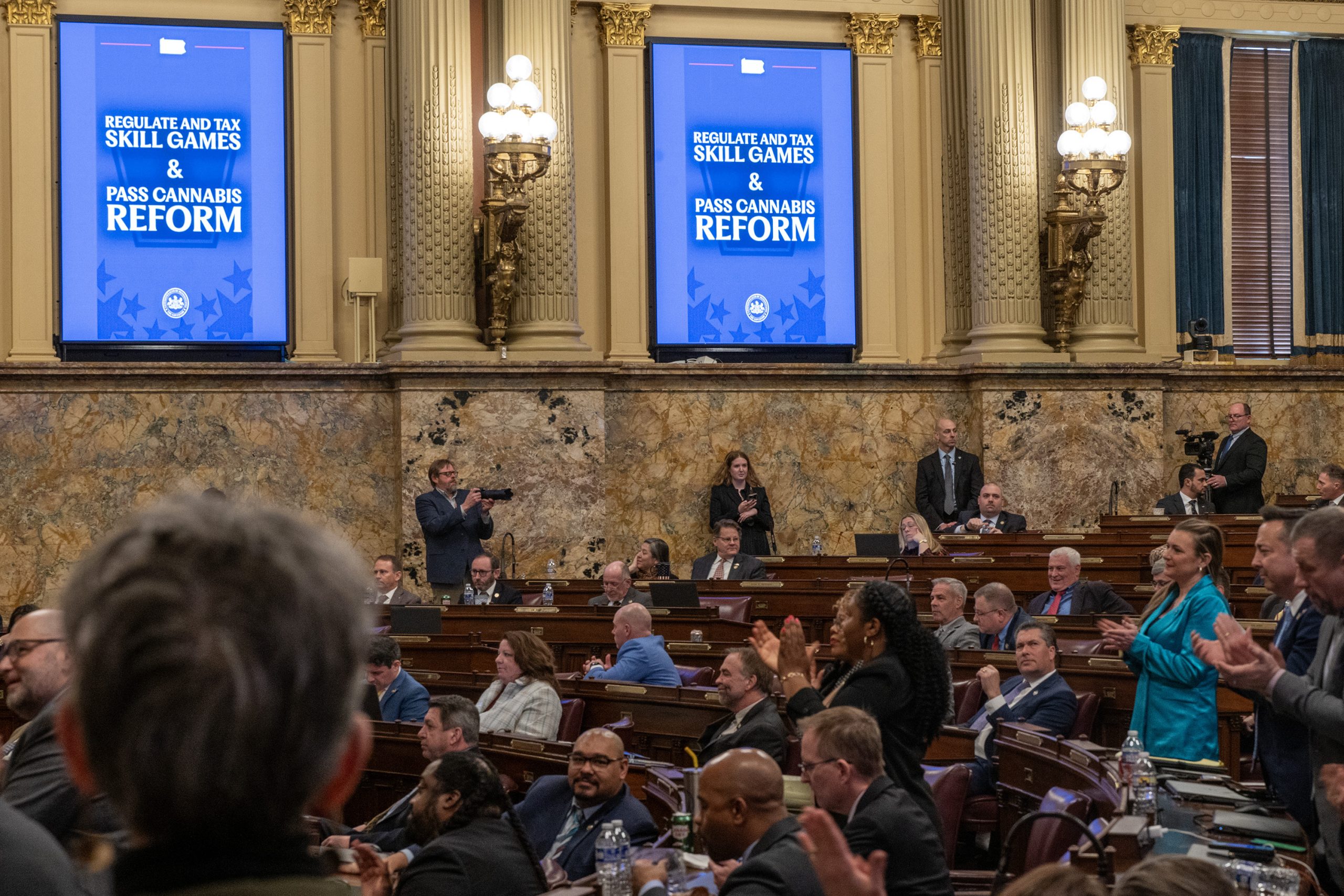
    Screens shows skill games and cannabis regulation and reform as Gov. Josh Shapiro makes his annual budget proposal in the state House chamber in Harrisburg Tuesday, Feb. 3, 2026.Tom Gralish / Staff Photographer

    The state is on track to bring in $48.9 billion this year in revenue, according to the Pennsylvania Independent Fiscal Office’s latest projections. Pennsylvania also maintains a $7.7 billion Rainy Day Fund that Senate Republicans have tried to prevent the state from tapping into. It is unclear whether lawmakers will agree to access some of the reserve dollars as many Pennsylvanians face an affordability crisis. Tapping into the Rainy Day Fund requires a two-thirds majority vote by both chambers.

    The state budget topped $50 billion for the first time last year and has increased by 25% — approximately $10 billion — over a five-year period.

    Pennsylvania Legislative Correspondents’ Association intern Ethan Young contributed to this article.

  • Democrat Mark Pinsley’s former campaign manager enters guilty plea for fraudulent petitions in 2024 auditor general race

    Democrat Mark Pinsley’s former campaign manager enters guilty plea for fraudulent petitions in 2024 auditor general race

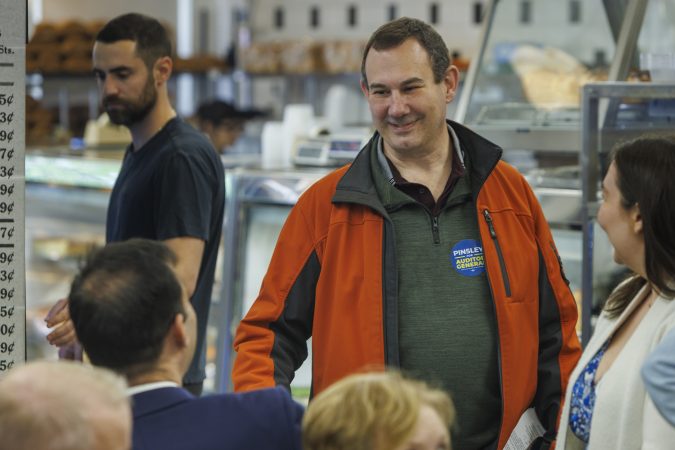
    A Democratic campaign manager for Mark Pinsley’s 2024 campaign for auditor general agreed to a guilty-plea deal in Chester County over fraudulent petitions in that race last week.

    Mariel Kornblith-Martin, 41, of Philadelphia, was charged earlier this year by the Chester County District Attorney’s Office with filing fraudulent nomination petitions while working for Pinsley, the Lehigh County controller, during his unsuccessful 2024 primary campaign against State Rep. Malcolm Kenyatta (D., Philadelphia). Kenyatta went on to lose in the general election to the Republican incumbent, Timothy DeFoor.

    Kornblith-Martin was accused of paying college students to sign off on campaign petitions with forged signatures on them. Those signatures included the names of multiple elected officials, including a Chester County judge.

    She pleaded guilty to one charge of criminal solicitation, specifically unsworn falsification to authorities. She had been charged with 50 crimes: 40 counts of criminal solicitation and 10 counts of breaking election law.

    The political operative was sentenced Tuesday to two years’ probation and ordered to pay a $1,000 fine plus costs associated with the case.

    Pinsley is now the Democratic nominee for a key state Senate seat that includes parts of Bucks and Lehigh Counties.

    The Inquirer reported in 2024 that his petitions for the auditor general race contained the names of multiple elected officials who said they had never signed them, including Coatesville City Council members Carmen Green and Khadija Al-Amin, and West Goshen Township Supervisor Nate Wolman.

    Perhaps most striking was a fraudulent signature for Chester County Court Judge Alita Rovito. Rovito, a Democrat, told The Inquirer in 2024 that she had reported the forgery to the district attorney’s office. She said at the time that “the use of my name and signature is concerning to me due [to] the potential implications on my role as a member of the independent judiciary.”

    Ironically, Rovito initially had been assigned to Kornblith-Martin’s case in May. She recused herself and Judge Sarah Black took over the case.

    Kornblith-Martin had given three college students “stacks of pages containing signatures of supporters” and asked them to sign the required sworn declaration at the bottom of each page in exchange for money, according to the district attorney’s complaint. The Inquirer previously identified these young people as Temple University students.

    Al-Amin, one of the local elected officials and a member of the county’s Democratic committee, said in an interview Friday she was satisfied that the campaign manager was “held accountable for her actions.”

    “I’ve sat on many campaigns in different positions: consultant, chair, manager,” she said. “I would never even think about doing something like that. If you can’t win an election honestly, then the position is not for you.”

    But she questioned what she sees as a failure in oversight on Pinsley’s part. In his current role, he is responsible for overseeing audits in Lehigh County.

    “As her boss, I think he should have known what she was doing. … She ran his campaign,” she said. “He should have had regular contact with her.”

    Gary Masino, Pinsley’s current campaign manager, said in a statement Friday that “Mark believes the justice system worked effectively and fairly in this case.”

    “He was disheartened to learn about Mariel’s crime, but respects that she took responsibility by pleading guilty and that the matter is resolved,” he said.

    Pinsley previously told The Inquirer that his campaign had reviewed the signature issue after concerns were raised but lacked “enough verified information” to reach a conclusion.

    The petitions had glaring red flags, Al-Amin noted, such as the town of Downingtown being written as “Downtown.” She pointed out at the time that the geographic routes on the petitions did not make sense. And petitions had dates on them prior to the petitioning period, names written oddly, and signatures in strikingly similar handwriting.

    “You could look at the pages and you could tell that there was really something wrong,” she said Friday.

    Back in 2024, Martin had told The Inquirer that the campaign was doing an internal investigation and declined to comment further. She has not responded to requests for comment since a text message in February of that year in which she said: “We are still doing an investigation internally. I have no further statement until our investigation is over.”

  • Philly Democrats call Trump-promoted Freedom Fuel stations a ‘PR stunt’ that won’t solve high gas prices

    Philly Democrats call Trump-promoted Freedom Fuel stations a ‘PR stunt’ that won’t solve high gas prices

    Philadelphia-area Democrats criticized President Donald Trump’s recent promotion of Freedom Fuel gas stations in Pennsylvania and New Jersey as an effort to fool people about the high price of fuel rather than a long-term solution to the problem.

    “This appears to be a PR stunt of some sort, which is designed to distract people from the fact that gas prices have gone up because the president started a war against Iran,” said Democratic U.S. Rep. Mary Gay Scanlon, who represents Delaware County and parts of South Philadelphia.

    Questions still abound about who is behind the Freedom Fuel Network, which popped up around the region earlier this month with 25 gas stations sporting the branding.

    No entity is registered in Pennsylvania or New Jersey with the name, but an application for a trademark was filed in Delaware on July 1, two days before the July 3 launch that was heavily promoted by the White House.

    Trump was posting about it on Truth Social ahead of the launch, praising the retailer’s patriotism and promising that gas prices nationally would soon fall after they surged following his decision to attack Iran earlier this year.

    “This Retailer is taking the lead, and others should follow. They are doing this because they love the U.S.A. We are proud to celebrate America’s 250th Birthday in the Great Commonwealth of Pennsylvania, the Birthplace of our very special, one-of-a-kind Declaration of Independence, and where I won BIG in the Presidential Election!” Trump said on Truth Social on July 1.

    The stations started selling gas at $3.47 a gallon on July 3, with the price a nod to the 47th president, according to the White House. Scanlon said that when she stopped by Friday morning, prices were already going up just seven days later.

    “I actually went to one this morning just to get a sense of what was going on,” Scanlon said. ”They may have started with a price of $3.47, but it’s already going up; this one was at $3.57,″ she added, without identifying the location.

    U.S. Rep. Brendan Boyle, a Democrat who represents Philadelphia, said these stations are too little, too late for constituents who have been feeling squeezed by gas prices.

    “Gas was $2.98 a gallon before Trump’s disastrous Iran War. Prices then jumped 50% — the biggest jump in gas prices in American history. These few discounted gas stations are a band-aid on a gunshot wound,” Boyle said in a statement to The Inquirer.

    U.S. Rep. Brendan F. Boyle holds a news conference at a Philadelphia gas station to announce legislation to suspend the federal gas tax whenever the national average price of gasoline exceeds $4.00 per gallon.Jessica Griffin / Staff Photographer

    Boyle has been outspoken about gas prices while in office. In April, he announced a bill to suspend the federal gas tax when gas prices exceed $4 per gallon.

    The average gas price in Philadelphia as of Saturday was $3.99 per gallon, about 11 cents above the national average, according to AAA’s fuel price tracker.

    Gas prices peaked in May but have remained volatile because of the ongoing conflict with Iran. Following U.S. attacks, Iran closed the Strait of Hormuz — an essential trading route — causing gas prices to spike. Recently, the U.S. and Iran resumed attacks, marking the end of a three-week ceasefire.

    “In no uncertain terms, the Cease Fire is OVER!” Trump posted on Truth Social on Friday.

    U.S. Rep. Dwight Evans, a retiring Philadelphia Democrat, said that ending the war in Iran would be the long-term solution for lowering gas prices.

    “As of now, it [the Freedom Fuel Network] doesn’t sound like a long-term solution,” Evans said. “Gas prices are high because Trump has been more focused on vanity projects like a ballroom than on ending his over-four-month illegal war of choice — a war which both houses of Congress have now voted to stop.”

    According to the White House, Freedom Fuel is an independent company that the Trump administration does not fund, and it says the company was not buying gas at a discounted price.

    But the White House has been heavily promoting the effort. It posted a video to social media Tuesday featuring patrons at Freedom Fuel gas stations crediting Trump.

    “I thought gas was more expensive, but it’s not. So thanks Trump for saving me some money!” a man says in the opening of the video, which touts the prices as being 50 cents lower than the Pennsylvania average.

    Scanlon said that identifying the people funding the initiative would make clear the motive for the low prices and whether they would be there to stay.

    “Someone is making it worthwhile for these independent stations to rebrand themselves and sell at under market rates,” she said. “I mean, they’ve got to be making up that money somehow. So the question just is, who is doing it and why? Although it seems there can be no other reason than to prop up the president’s faltering poll numbers.”

  • Trump denies this Congress what could be its last major bill-signing ceremony

    Trump denies this Congress what could be its last major bill-signing ceremony

    Invitations were sent. American flags lined the back of the red stage set in Statuary Hall. Bright spotlights lit the signing table donned with the presidential seal.

    President Donald Trump so abruptly canceled what might have been the last major presidential signing ceremony of this Congress that it caught lawmakers, top aides and housing industry officials all completely by surprise.

    Trump said he would not sign the bipartisan 21st Century Road to Housing Act, but it went into law anyway on Friday without his signature.

    The axed signing ceremony delivered Trump’s punishment of lawmakers for failing to pass his bill to limit voting rights ahead of the midterms, even though the housing bill represents the most significant housing legislation since the aftermath of the financial crisis.

    Trump doubled down on his decision not to sign the bill in a Truth Social post Friday morning.

    “I will not sign the Housing Bill, which has been fully approved by Congress and sent to the White House, in PROTEST over the fact that the United States Senate is not capable of passing THE SAVE AMERICA ACT,” Trump wrote. “THE SAVE AMERICA ACT’S non-passage is CRAZY, and a serious threat to any politician who votes against it!”

    Trump’s decision to ax the signing ceremony, and his comments referring to the bill as a “yawn,” represent a missed opportunity for lawmakers and the president to demonstrate to Americans that they are addressing their affordability concerns, some congressional watchers say.

    “This is the exact kind of bill they want to point to and say Republicans are working on issues that their voters care about, and Democrats would want the same,” said Julian Zelizer, a history and public affairs professor at Princeton University. “That’s not the signal that the administration is sending.”

    One housing leader who received an invite to the ceremony from House Speaker Mike Johnson’s office said they were on the way to the event in their Lyft when they received a text with a screenshot of Trump’s post that read: “Today’s Housing News Conference and Signing is hereby cancelled until such time as we pass the desperately needed SAVE AMERICA ACT.”

    The housing leader, who spoke on the condition of anonymity, said they then received an email from the speaker’s office shortly after. The housing leader’s first reaction: “incredibly disappointed, but not shocked.”

    One business lobbyist who was set to attend the signing ceremony was standing on the Capitol steps, when another attendee told them to check their email, as the event was canceled. Seconds later they received a message with a screenshot of Trump’s Truth Social post.

    “When I found out the reason why, it was disappointing, but it wasn’t shocking,” said the lobbyist, who spoke on the condition of anonymity. “With the president in the White House, things can happen on a dime.”

    Trump’s last-minute decision to cancel the signing ceremony represents a broader pattern of the president suddenly reversing course on policies previously deemed a priority, including a canceled public signing ceremony in May for an executive order to create a system to vet powerful new AI models before they are released publicly. Trump ultimately signed a revised version of the order weeks later.

    Lawmakers were equally blindsided by Trump’s decision on the housing bill. Especially considering that Senate Republicans had already expressed they lacked enough support to pass the Save America Act, which would impose stricter election rules.

    House GOP leadership was in the middle of a news conference when Trump canceled the ceremony on social media. House Financial Services Committee Chairman French Hill (R., Ark.) had just discussed his work with Senate Banking Committee Chairman Tim Scott (R., S.C.) to get the bill through both chambers.

    When Johnson opened the floor for questions, a reporter notified him of Trump’s social media post. When asked if Trump would sign the bill at a later date, Johnson said, “It’s my estimation he’ll do it within that 10-day window.”

    A president has 10 days, excluding Sundays, to either veto or sign a bill after they receive it from Congress. If the president does not act within the window, the bill automatically becomes law if Congress is in session. So Congress is poised to notch a concrete legislative achievement to tout on an issue widely expected to loom large in the midterm elections.

    Johnson sent the bill to Trump on Monday, June 29, which meant the 10-day window closed at the end of Friday at midnight.

    While many housing advocates have said the bill does not go far enough to address the nation’s housing shortage, they argue it is an important first step.

    The bill, which received overwhelming bipartisan support in Congress, would bar institutional investors from buying more than 350 single-family homes, expand federal grant programs to give cities money for building new homes and eliminate an outdated federal construction rule to make manufacturing mobile homes cheaper, among other measures.

    Zelizer said Trump’s negative comments about the bill could make it more difficult for some lawmakers, particularly vulnerable Republicans, to sell that idea to voters.

    The business lobbyist who was planning to attend the signing ceremony said the cancellation and Trump’s comments hurt the positive momentum around the bipartisan success in passing the bill, but they don’t see that having much sway on Americans’ minds on the matter.

  • Graham Platner withdraws from Maine Senate race, kicking off Democrats’ quest for nominee

    Graham Platner withdraws from Maine Senate race, kicking off Democrats’ quest for nominee

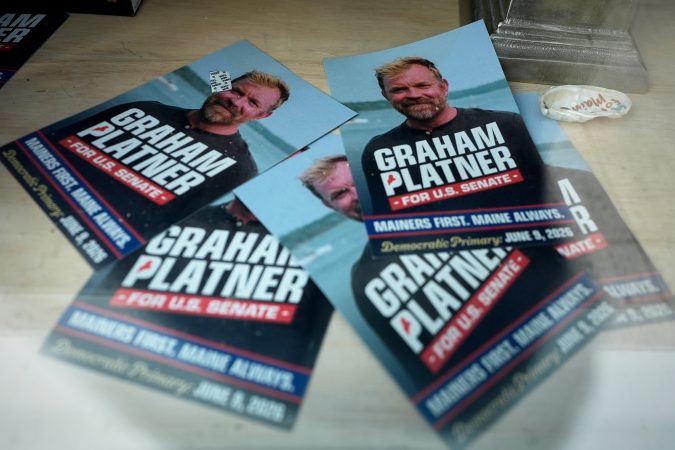
    PORTLAND, Maine — Graham Platner on Friday submitted his paperwork to formally withdraw from Maine’s U.S. Senate race, officially ending an upstart yet troubled campaign whose dissolution threatens Democrats’ pursuit of chamber control.

    Platner’s paperwork was received by the Maine secretary of state’s office and reflected shortly thereafter in its online withdrawal list.

    In a letter to the secretary of state’s office, which Platner also posted on social media, he wrote that the Mainers who had nominated him “voted for a new kind of politics” that is “representative of people down here in the real world — not billionaires, oligarchs, or the political establishment.” It was the same outsider chord that had been a trademark of his tumultuous campaign, in which Platner drew backing from progressive leaders including Vermont Sen. Bernie Sanders and U.S. Rep. Ro Khanna of California.

    “I seek to further the movement we have built together and the future we believe in,” he went on, without detailing what that meant.

    Maine is considered a key state for control of the narrowly divided Senate, and Democrats were desperate for a candidate capable of defeating Republican Sen. Susan Collins.

    The formal withdrawal comes two days after Platner said he would quit the race, facing an allegation of sexual assault that he has denied. Maine Democrats are seeking a new nominee, and several hopefuls have already begun jockeying for position.

    State law includes a provision for Democrats to replace Platner before the general election but the replacement must by named by July 27.

    Just before Platner’s Wednesday announcement, more than 100 state Democratic Party committee members signed off on holding a nominating convention, in the event of his withdrawal, to choose the nominee. The state party has not publicly released details of when the convention will be held.

    Several Democrats have announced runs for the Senate nomination this week. They include three candidates who lost the June primary for the governor nomination — former Maine Center for Disease Control and Prevention director Nirav Shah, Secretary of State Shenna Bellows, and former Maine Senate President Troy Jackson.

    Others who have announced runs include Maine Beer Company co-founder Dan Kleban; former 2nd Congressional District candidates Jordan Wood and Paige Loud; state Rep. Valli Geiger; and former Maine Senate candidates David Costello and Andrea LaFlamme.

  • This Philly-based political firm is at the center of the Graham Platner fallout

    This Philly-based political firm is at the center of the Graham Platner fallout

    As Democrats grapple with the fallout from Graham Platner’s scandal-plagued and ultimately canceled bid for U.S. Senate in Maine, a political consulting firm that worked on his race and that’s been heavily involved in Pennsylvania politics is at the center of many of the party’s frustrations.

    FIGHT — a firm whose operatives were credited with helping elect U.S. Sen. John Fetterman in 2022 and that has worked on a pair of high-profile U.S. House races in Pennsylvania this year — has received a barrage of criticism as revelations about Platner’s past came to light in recent months.

    Members of the firm weren’t the only ones advising Platner’s campaign. National operatives such as Daniel Moraff, who has also worked in Pennsylvania, have also fielded criticism for recruiting and not thoroughly vetting Platner, an unknown political outsider.

    But both before and after the allegations of sexual assault that led to Platner’s exit from the race this week, other Democratic consultants and political observers blamed FIGHT for continuing to support him through multiple public setbacks.

    Platner’s issues have also reignited anger about and drawn parallels to Fetterman, another candidate who ran as a working-class progressive. The Pennsylvania Democrat has lost much of the support from the base that elected him as he’s more frequently sided with Republicans in ways that some have described as a betrayal. He has not been accused of the same types of issues that plagued Platner’s run.

    “I supported Graham at the beginning, despite the nagging voice in my head that kept saying ‘this feels familiar,’” Adam Jentleson, Fetterman’s first chief of staff who has become a staunch critic of the Pennsylvania Democrat, wrote on social media.

    Jentleson was among those who questioned the FIGHT agency and the rest of the Platner team’s work and its handling of the collapse.

    When Morris Katz, the FIGHT strategist on Platner’s campaign, said on social media that his team advised to end the campaign immediately after hearing the allegations Platner had raped a former girlfriend, Jentleson replied that the argument “strains credulity.” Platner and his team had continued to deny the allegations, Jentleson and others noted.

    “Shading a narrative toward the positive is standard, lying is not,” Jentleson wrote, comparing the experience to working with Fetterman.

    Fetterman, for his part, has heavily criticized Platner in recent months and celebrated his downfall this week.

    “You will only be remembered as the accused rapist that got pushed out of your election. … Go back under the rock that you came from,” Fetterman said Wednesday on Fox News.

    The Democratic Socialists of America, in a letter that mentioned the FIGHT staff’s work for Fetterman, called on candidates to refuse to work with Katz, The Intercept reported Friday.

    FIGHT declined to comment for this story.

    As Democrats look to regain their footing in this year’s midterm elections, the Platner saga and FIGHT’s role has also touched on the party’s broader goals of cultivating candidates who can win over the kinds of working-class voters President Donald Trump captured in recent years.

    Platner, an oyster farmer and former bartender who suffered PTSD after serving in the U.S. Marines, pitched himself as deeply in-tune with working class voters in Maine. It was the type of profile, many Democrats hoped, would lead to a victory over longtime Republican incumbent U.S. Sen. Susan Collins and help the party win control of the U.S. Senate.

    Democrats in Pennsylvania have taken a similar approach.

    In a Lehigh Valley-based congressional district considered one of the likeliest seats in the country to flip from Republican to Democrat, the party has rallied behind Bob Brooks, a union leader and retired firefighter who coaches high school baseball and drives a snowplow.

    “When you look at Brooks, one of the reasons he was recruited into this race and why Democrats have rallied around him is that there’s a belief that he might capture some of the [working-class Democratic] energy,” said Chris Borick, an adjunct professor of politics at Lehigh University.

    The FIGHT agency, which primarily makes candidates’ television ads, has worked on Brooks’ campaign as well as the campaign of Paige Cognetti, the Scranton mayor and Democratic nominee in the Scranton-based 8th Congressional District.

    There are no signs that Brooks or Cognetti are being advised by Katz, who has primarily worked on Platner’s campaign. In response to requests for comment Friday, Brooks’ campaign only confirmed that FIGHT makes its ads, and Cognetti’s campaign said, “Paige is glad Platner dropped out of the race.”

    The Pennsylvania candidates have not faced the same type of intense criticism for parts of their personal histories as Platner did throughout his 10-month campaign.

    Brooks’ opponents in the 7th Congressional District primary criticized him for old social media posts that, for instance, downplayed the role of guns in a mass shooting. Brooks said the posts were “silly, maybe stupid.” He, like Platner, also faced accusations that he could be “another John Fetterman,” given his background and similar appearance.

    Mike Mikus, a Pittsburgh-based Democratic strategist who has long opposed Fetterman, said Brooks was “the real deal” at a time when Democrats are “desperate” to correct their problem with white, working-class voters. Platner, on the other hand, appeared to be an “overcorrection” that involved consultants dismissing “obvious red flags,” Mikus said.

    He said FIGHT may lose some future clients because of the misstep, which he largely blamed on Moraff, a consultant who does not work for FIGHT and has also been widely criticized for recruiting Platner.

    “Everybody’s looking for authenticity,” Mikus said. “And you can’t workshop somebody into something they’re not.”

    Created after Trump and the Republican Party’s sweeping victories in 2024, the FIGHT agency’s pitch since its launch has focused on authenticity. Its candidates have reflected not just voters’ desires for candidates outside the traditional political establishment, but campaigns intent on fighting Trump and advancing economic populism. Zohran Mamdani, the Democratic socialist who won New York’s mayoral race in 2025, has marked their largest success to date.

    “Among progressives there’s a sense that the party has not been effective in trying to counter Trump … and we have to fight this battle internally in order to resist Trump,” said Stephen Medvic, an associate professor of government at Franklin and Marshall College. “So you’re getting groups in the last couple of years, like FIGHT Agency, being put together to try to tip the balance in their direction.”

    But their approach — finding someone who meets the profile and aligns with their ideology — may not necessarily always produce a winning formula. Limitations may depend on the type of assessment and vetting that goes into recruitment, he said.

    “You might get an AOC, but … you might get a Platner,” Medvic said. “A lot of Democrats are now regretting that they were so excited about Fetterman because he turned out to be something so different.”