Category: Politics

  • Here’s what’s in — and not in — Pennsylvania’s $50.8 billion state budget

    Here’s what’s in — and not in — Pennsylvania’s $50.8 billion state budget

    HARRISBURG — Pennsylvania’s new $50.8 billion state budget was sprawled across more than 600 pages of legislation and signed into law on Sunday. New data center regulations, education funding, and more were approved in the wide-ranging spending package.

    But some of the most pressing issues facing the General Assembly were noticeably absent from the final deal, as Gov. Josh Shapiro and lawmakers in the split legislature were unable to reach a compromise — or did not want to touch the contentious issues until after they are up for election in November, sidelining some of Shapiro’s top budget priorities.

    Here’s a look at what is in — and what was left out of — the 2026-27 Pennsylvania state budget.

    In: Education funding increases

    Pennsylvania took another jump toward filling a multibillion-dollar funding gap between wealthy and poor school districts, after a court found that the state’s old system of funding education was unconstitutional. Since 2024, when the state first implemented new adequacy and tax equity formulas in efforts to fill the $4.5 billion “adequacy gap,” lawmakers have put nearly $1.9 billion toward funding lower-income districts, with plans to fill it by 2032.

    “It keeps our promise to our school districts,” said State Rep. Jordan Harris (D., Philadelphia), who serves on the powerful appropriations committee responsible for allocating state dollars, in remarks on the House floor Sunday.

    The latest installment of adequacy and tax equity payments — $565 million — will largely go to low-income districts that already have high property taxes. The Philadelphia School District, Pennsylvania’s largest district and the only one in the state that is unable to raise its own revenue, will get $136 million of that funding increase.

    Out: Revenue generators

    Shapiro proposed generating new revenue streams to help the state fix its multibillion-dollar structural deficit in his last four budget addresses. But the ways he wants to raise that cash have drawn resistance from Senate Republicans, who argue they are not policies that will improve the state’s economic standing — or cannot reach agreement within their caucus on how to address the issues.

    Shapiro this year did not get the hefty minimum wage increase he asked for, seeking to raise the hourly rate from $7.25 to $15 — and counting on the higher wage for $80 million in higher income tax revenues. Nor was he able to get the General Assembly, where Democrats control the House and Republicans lead the Senate, to approve adult-use cannabis, which his office estimated would bring in $729.4 million in its first year, largely through licensing. (House Democrats have approved plans for a minimum wage increase and recreational marijuana legalization, but the Senate has not voted on the bills.)
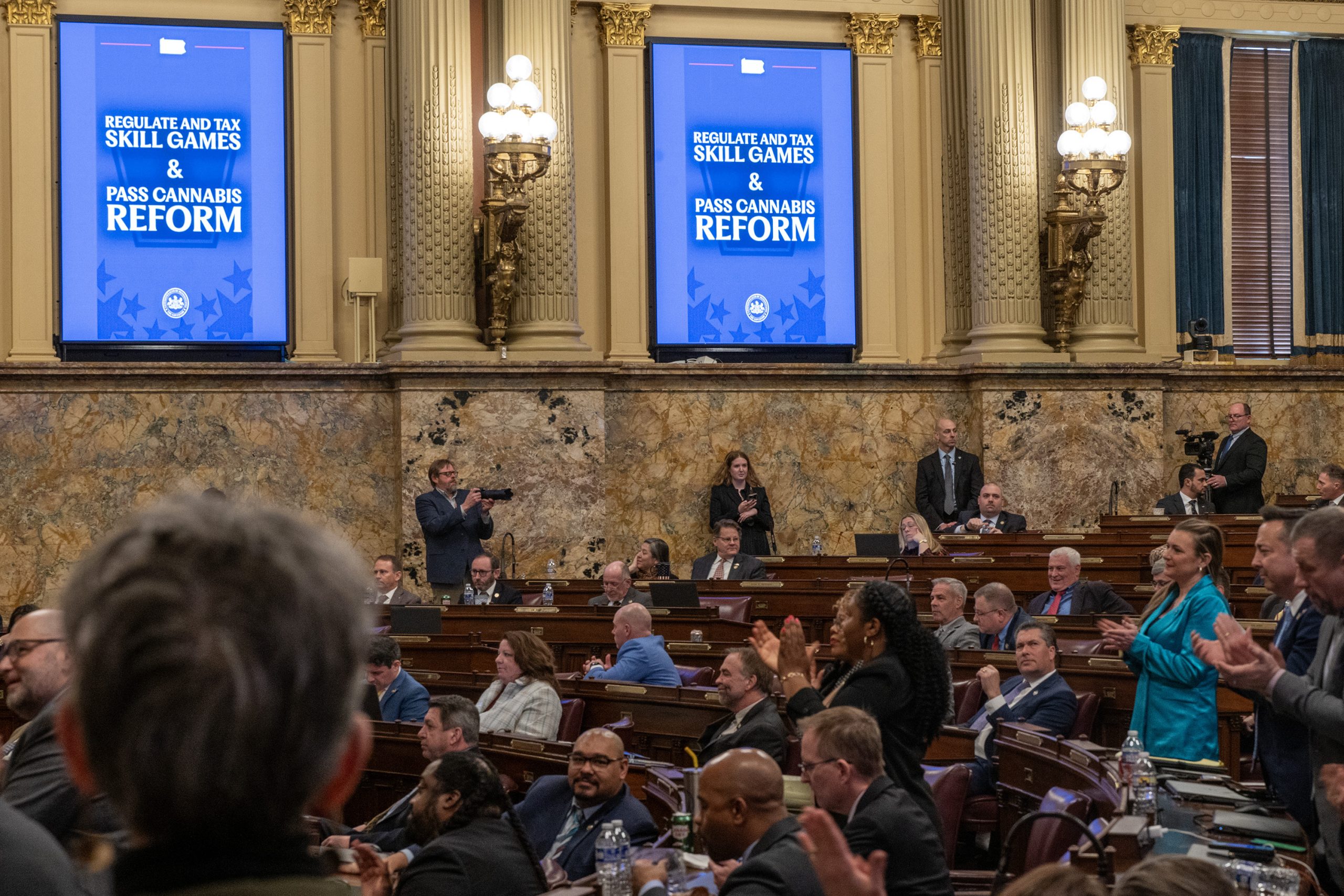
    Screen shows skill games and cannabis regulation and reform as Gov. Josh Shapiro makes his annual budget proposal in the state House chamber in Harrisburg Tuesday, Feb. 3, 2026.Tom Gralish / Staff Photographer

    Shapiro, in his February budget proposal, also called on the General Assembly to regulate and tax skill games at the same rate as casinos, a move that he has estimated could generate nearly $800 million in revenue in its first year. But any regulation of skill games — slot machine look-alikes that the state Supreme Court ruled last month are a form of gambling — was left out of the budget.

    Lawmakers have until October to decide whether skill games will be taxed and regulated, under a grace period in the high court’s ruling. Otherwise, the devices found in many corner stores, gas stations, and bars will become illegal gambling machines. The issue has been the target of more than $8 million in lobbying and $9 million in campaign spending in Harrisburg, mostly funded by one company.
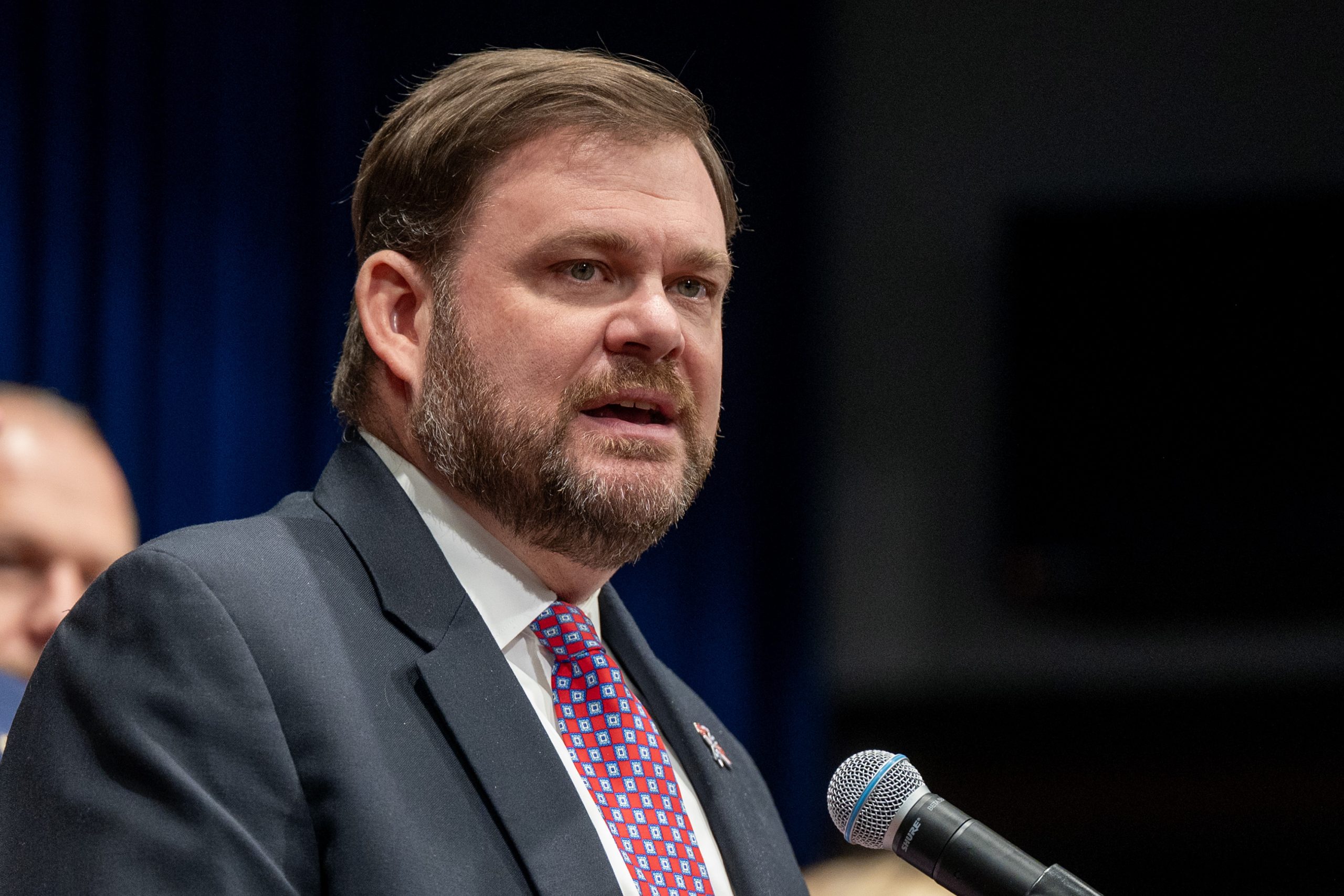
    State Senate Majority Leader Joe Pittman (R., Indiana) during a press conference at the Capitol in Harrisburg Feb. 3, 2026.Tom Gralish / Staff Photographer

    “We can act within the 120 days; we can act after the 120 days,” Senate Majority Leader Joe Pittman (R., Indiana) said Sunday. “But the choice is now quite simple. These machines are illegal, and in less than 120 days, they will be leaving the marketplace.”

    In: Data center reporting requirements

    Data centers — which are seeing a boom in Pennsylvania as artificial intelligence usage increases and communities push back on where the centers are being built — will be required to submit information about their energy and water usage.

    Beginning next summer, data centers in the state with a peak energy demand greater than 10 megawatts will be required to submit information annually to the Pennsylvania Department of Environmental Protection.

    Outlined as part of this year’s fiscal code, those reports will be publicly accessible. Data centers that do not submit information about their resource usage will be fined $10,000 a day.
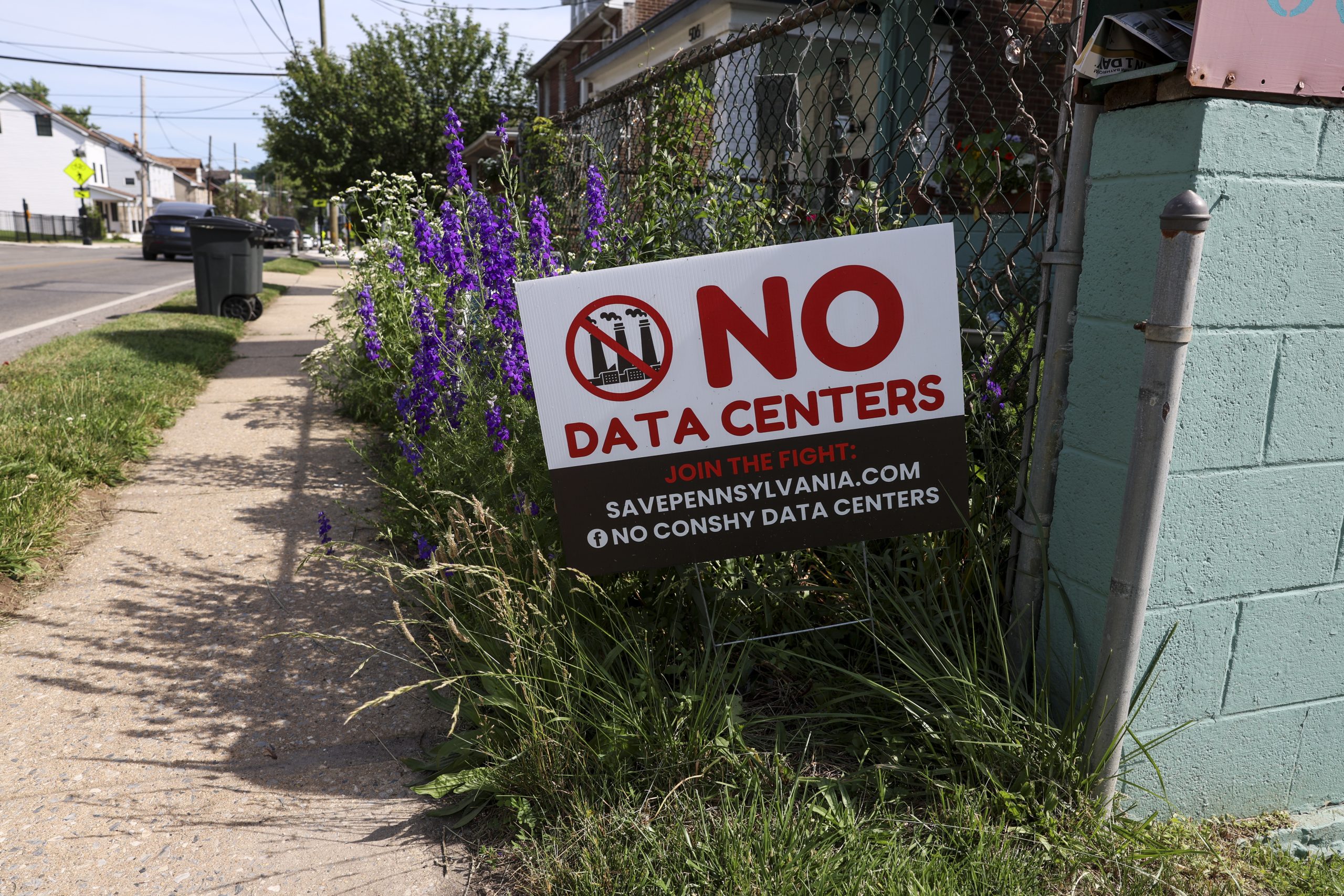
    A yard sign protests the proposed data center on New Elm Street near the Closed Cleveland-Cliffs steel mill photographed on Thursday, June 4, 2026 in Conshohocken, Pa.Monica Herndon / Staff Photographer

    Out: Data center regulations

    A data center regulation bill, which would have limited state benefits for data center developers and was championed by Shapiro, was not included in the final budget deal. The governor called for limiting a sales and use tax exemption and expediting permitting to projects that comply with a set of transparency and environmental standards.

    And several other data center regulation efforts that have received bipartisan support in recent weeks were also absent from the final spending package.

    Those included efforts to repeal the sales tax exemption afforded to data center developers and attempts to enact a local or statewide moratorium on new data center development.

    Both chambers passed language repealing the tax exemption and advanced differing bills to freeze development. One Democratic-sponsored bill would have given municipalities the option to implement a 180-day moratorium on new centers. The other, a Republican-sponsored measure, would allow for local moratoriums of up to 18 months.

    In: Compromise

    Compromise was the word of the day around the Capitol on Sunday, when the legislature swiftly passed the more than 600-page budget deal hashed out behind closed doors by Shapiro, Pittman, and House Majority Leader Matt Bradford (D., Montgomery) and passed with bipartisan support in both chambers.

    The legislative leaders and Shapiro emphasized that they did not get exactly what they wanted in the budget, as a symptom of dealing with divided government. And leaders were proud to have reached the deal less than two weeks after their July 1 deadline, rather than the nearly five months it took to hash out an agreement last year.
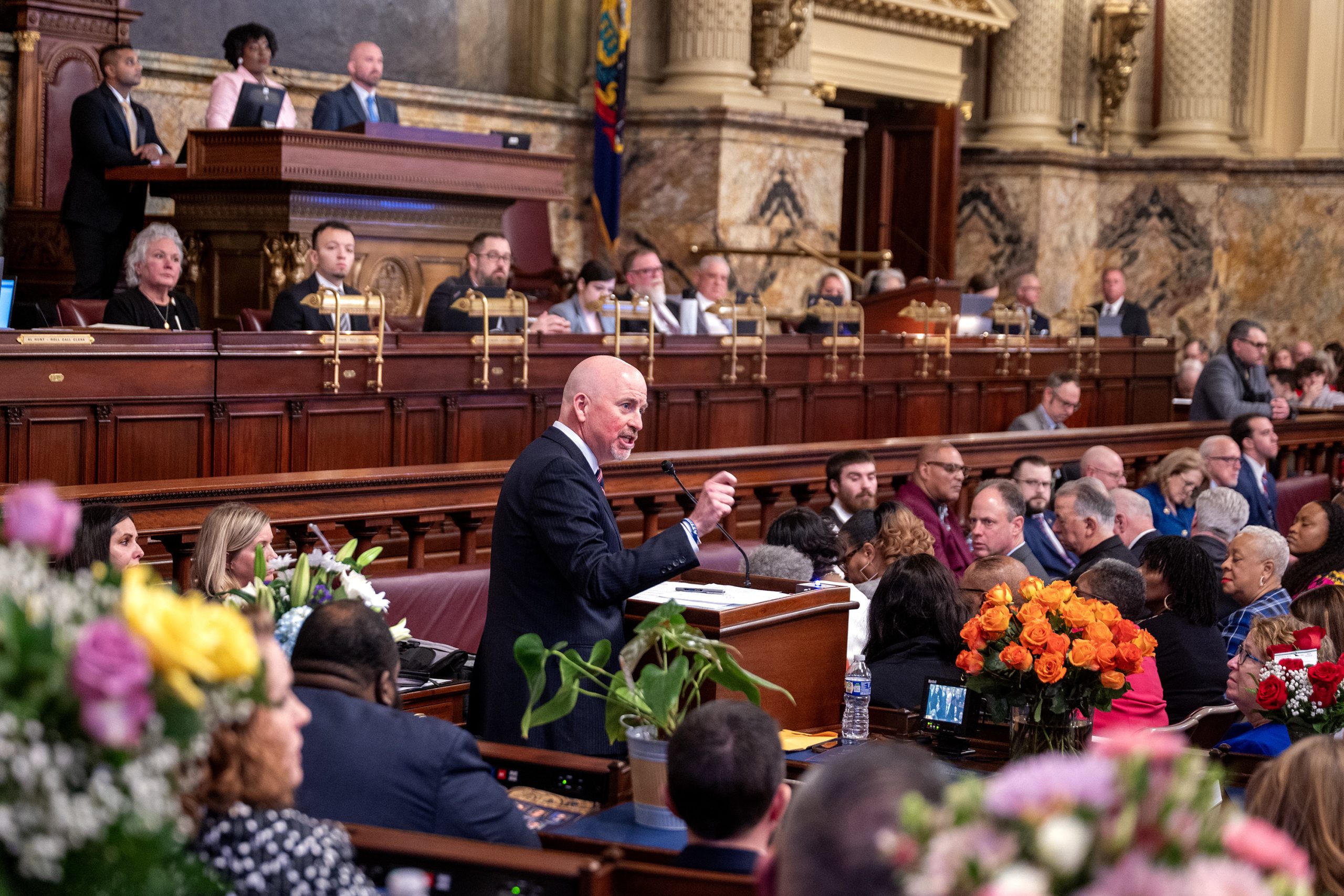
    House Majority Leader Matt Bradford (D., Montgomery) speaks on Tuesday, Jan. 7, 2025.Tom Gralish / Staff Photographer

    Lawmakers had agreed to work over the weekend to hurriedly approve the budget deal, with members of the Senate coming in on Saturday night to begin advancing parts of the budget deal and the House joining them Sunday afternoon. By 6:15 p.m. Sunday, Shapiro had signed it.

    Among the inspirations for the weekend of productivity, Bradford said: making it to the MLB All-Star Game in Philadelphia, for which he had tickets.

    Out: Typical budget math

    Leaders returned to some old accounting maneuvers to address the state’s multibillion-dollar structural deficit and avoid pulling from the state’s emergency savings account.

    They spent down unused and underused dedicated funds, and rolled some of the state’s Medicaid payments totaling $1.3 billion to the next fiscal year, a move lawmakers typically resorted to before the state saw an influx of federal dollars during the COVID-19 pandemic.

    Without those delayed payments, the state budget would total closer to $52.1 billion, and several GOP members criticized the total as being disingenuous.

    In: Cost-of-living bumps for pensioned workers

    More than 80,000 retired public-sector employees will receive a cost-of-living adjustment to their pensions, something advocates have sought for years.

    Public school teachers and other state employees who retired before July 1, 2002, will receive a tiered monthly payment based on the date of their retirement. Similarly, police officers and firefighters who retired more than five years ago will receive monthly payments ranging from $50 to $300, depending on how long they have been retired.

    Lawmakers from both parties had called for the cost-of-living increase.

    In: Closing Philly’s sales tax loophole

    Legislators also agreed to close a loophole that allowed online sellers to avoid paying Philadelphia’s local 2% sales tax on purchases made in the city.

    Mayor Cherelle L. Parker had asked the General Assembly to close it as part of her own city budget pitch in a move estimated to bring an additional $1.5 million to Philadelphia.
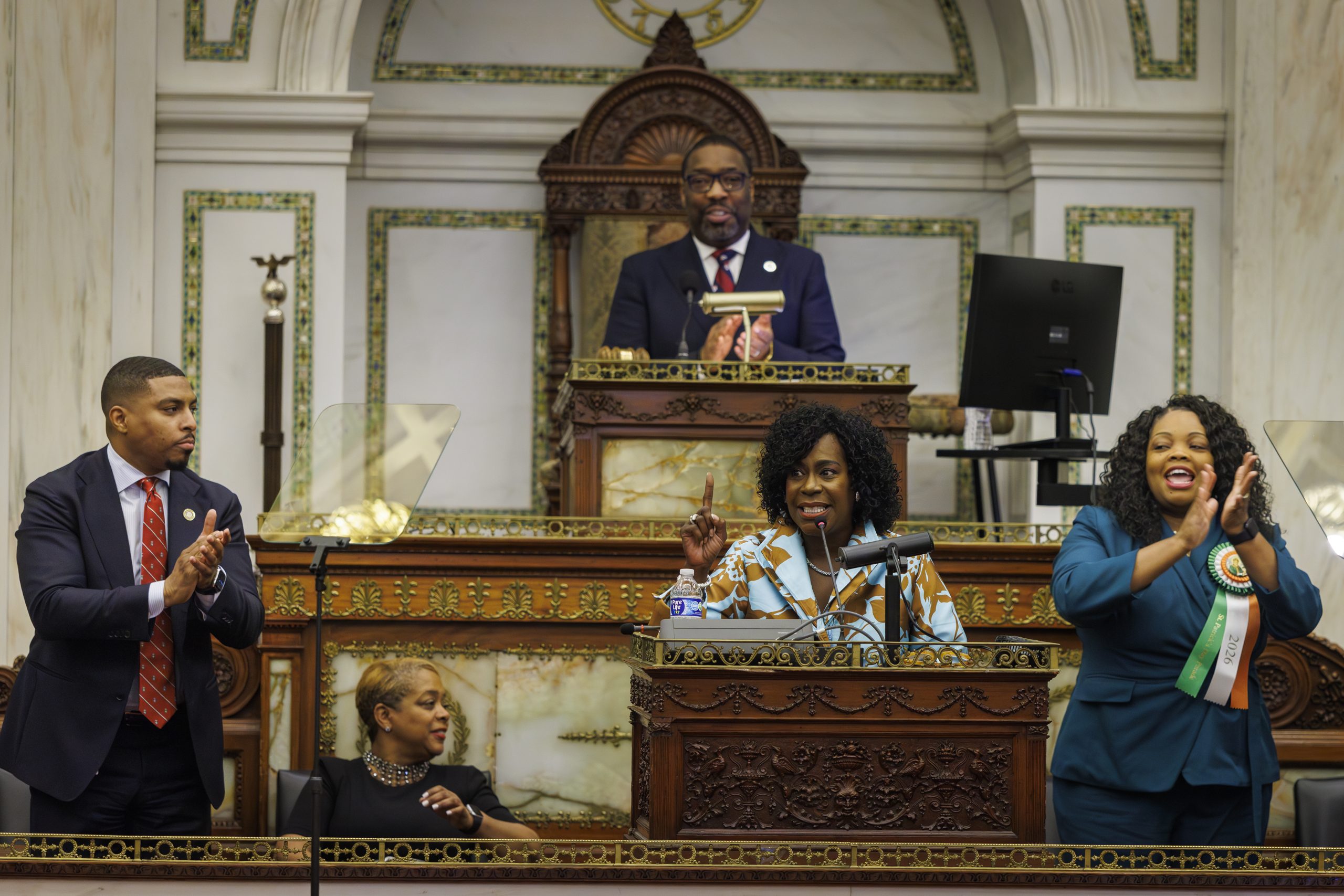
    Philadelphia Mayor Cherelle L. Parker is cheered by members of Philadelphia City Council at conclusion of her budget address, Thursday, March 12, 2026.Alejandro A. Alvarez / Staff Photographer

    Out: Banning cell phones in schools

    Twenty-nine states have bell-to-bell cell phone bans. This year, Pennsylvania will not join them, despite the passage of two separate phone ban bills — one in each chamber of the legislature.

    In: Mandatory recess for students K-5

    Recess is now law in Pennsylvania.

    Another education policy change championed by Shapiro, a mandatory, 30-minute recess for students in kindergarten through fifth grade was established in this year’s budget as a way to improve learning outcomes.

    Out: Addressing looming problems — with looming deadlines

    Several Pennsylvania funding issues that have gone years without being addressed were left out of the latest budget, some with more pressing deadlines than others.

    Lawmakers did not address a need for mass transit funding — which led to last year’s bitter budget stalemate among legislators — but are expected to identify a long-term funding stream for the transit agencies next year when a two-year fail-safe runs out.
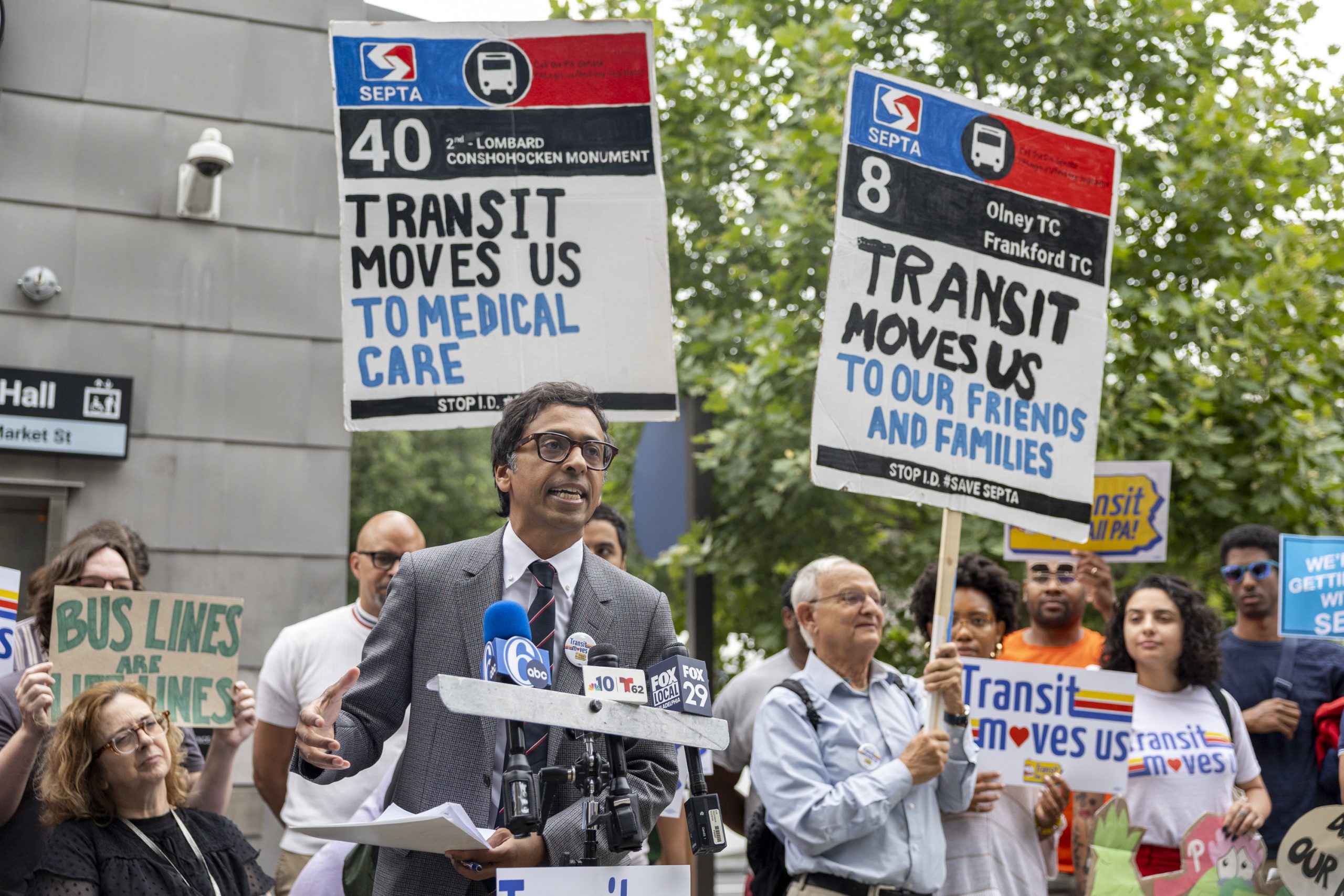
    Senator Nikil Saval, speaks at a press conference calling for more SEPTA funding from the state at Independence Hall in Philadelphia, Pa., on Friday, June 26, 2026.Tyger Williams / Staff Photographer

    Other local governments and service providers said their needs are more pressing.

    The County Commissioners Association of Pennsylvania released an urgent plea after the state budget was signed, noting that counties still have not received the critical mental health funding they need, or a surcharge increase used to fund 911 call systems. Home-health service providers also continued their calls for increased state funding they say is needed, as the industry faces serious staffing issues due to low state reimbursement rates.

    In: More funding for rape crisis centers

    Rape crisis centers got a much-needed funding increase, from $12 million to just over $24 million.

    Philadelphia’s only rape crisis center had to lay off its employees and rely on volunteer work during last year’s monthslong state budget impasse.

    Republican and Democratic lawmakers championed the organizations in this budget, making it the largest single-year increase for the critical services in state history, according to the Pennsylvania Coalition to Advance Respect.

    “Today marks a turning point for survivors and rape crisis centers across Pennsylvania,” said Joyce Lukima, the organization’s coalition director, in a news release.

    Ethan Young is an intern with the Pennsylvania Legislative Correspondents’ Association.

  • Narberth, Lower Merion residents and officials grapple with afternoon of vicious microburst storms

    Narberth, Lower Merion residents and officials grapple with afternoon of vicious microburst storms

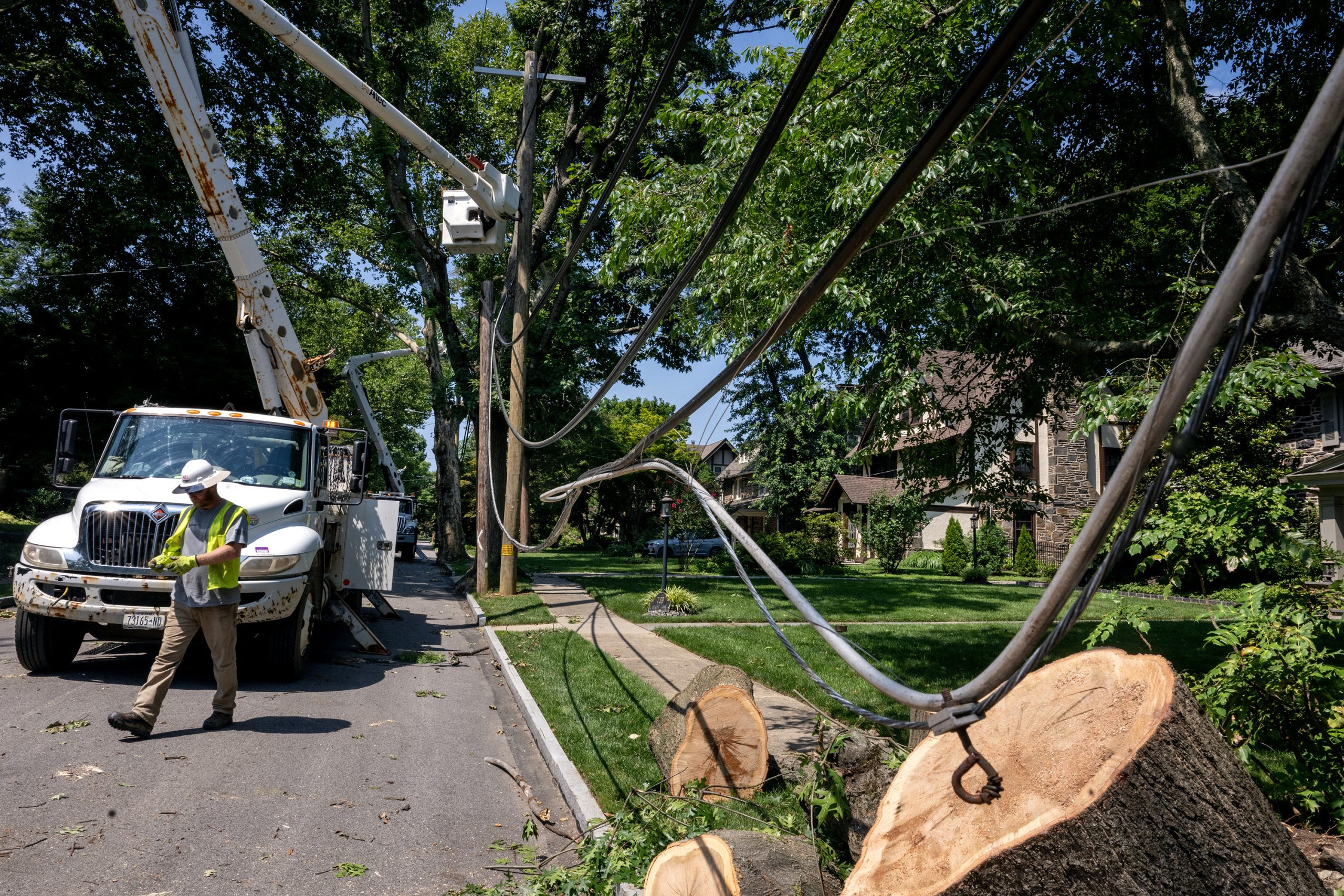
    When a violent microburst storm slammed into Narberth on Saturday, it brought down a 120-year-old Sycamore tree onto a home in the historic Narbrook Park neighborhood.

    The fire department in the surrounding Lower Merion Township responded to 98 incidents over the weekend, making numerous water rescues.

    And residents are still grappling with the aftermath of a violent storm shaking their communities.

    Communities in Montgomery County, along with other spots in the Philadelphia region, suffered vast amounts of damage Saturday afternoon as microburst storms ripped through the area.

    A microburst is a highly-localized column of sinking air during a thunderstorm that can produce strong winds and extensive damage and, in some instances, can be life-threatening, according to the National Weather Service.

    Peco has continued to restore power to affected households, as of roughly 5:30 p.m. Monday, with 119 outages affecting a little more than 1,500 customers.

    Narberth Council Vice President Cyndi Rickards said the skies went from clear to stormy in just a matter of minutes Saturday before a microburst ripped through the Montgomery County community.

    Then, just as quickly as it arrived, came the downed trees, power lines, flooding, and power outages.

    It was something Rickards, a more than 20-year resident of the community, had never seen before.

    “It became apparent that nearly every street in Narberth had a tree down, a substantial tree on a car,” Rickards said. “I believe we had two that fell on or near houses. Many that narrowly missed houses.”

    One of those near misses happened at Hugh Parker’s residence while he was spending time with relatives down the Shore. Once he and his family heard about the 40-foot tree knocked down in their front yard — covering their driveway and the car of his wife, Grace, they rushed home.

    Their basement had also been flooded and the family’s newly reconnected power lines started a fire, which eventually went out on its own.

    Hugh and Grace Parker continue the cleanup in the basement of their Narberth home Monday, July 13, 2026, following the weekend’s storm. They weren’t home so don’t know why it flooded, as the house had not had any water enter since it was built in the 1990s. They also had a tree fall in front, crushing one of their cars.Tom Gralish / Staff Photographer

    Rickards described the local government’s response to the storm as “such a comprehensive disaster response for a small little borough,” adding that Jeff Eldon, the public works director, closed down any streets where he suspected downed wires or trees.

    Narberth Mayor Dana Edwards also declared a state of emergency, which has since been lifted, and has facilitated a spot at the borough hall where residents can cool off and charge their devices. He also indicated that the borough had “great support” from Peco.

    “It was really everything we could do just to keep everybody as comfortable as possible,” Edwards said.

    In the surrounding Lower Merion Township, commissioner Ray Courtney reported similar issues as Narberth’s, especially when it came to old trees that were toppled by the storm.

    A pickup truck is left crushed Monday, July 13, 2026, after the tree that fell on it had been cleared as the cleanup continued following the weekend’s microbursts that ripped through parts of the city and Montgomery County, downing trees and power lines and causing outages and road closures. This was along Wynnewood Avenue by the baseball fields in Narberth.Tom Gralish / Staff Photographer

    When the storm was over, the public works department closed the roads, some of which continued into Sunday morning, said Courtney, who represents parts of Ardmore and Wynnewood. As of Sunday night, crews had cleared 59 downed trees and there were 38 remaining.

    For local officials, the episode also underscored a need for further discussions regarding improving local infrastructure and resources for extreme weather events.

    Many communities, like Narberth and Ardmore, for instance, have historic infrastructure that cannot always handle aggressive storms.

    “I think this is the reality of storms now,” Courtney said. “They are hard, they are intense, and they dump a lot of precipitation in a short period of time, and all local governments, and our state and federal government, need to be thinking about improvements to our infrastructure, and the resiliency against this kind of weather event.”

    In the immediate aftermath of Saturday’s storm, residents — especially those whose property has been damaged — are hoping for incremental improvements.

    Utility workers restore power on Beacom Lane in Merion Station, Monday, July 13, 2026, as cleanup continues following the weekend’s microbursts that ripped through parts of the city and Montgomery County, downing trees and power lines and causing outages and road closures.Tom Gralish / Staff Photographer

    A neighbor’s tree fell on the roof of Robert Hilton’s home on Merion Avenue. Water started dripping into his second-floor bedroom and the carpet remained soaked.

    “I’ve lived here for 41 years, and I’ve never seen anything like this,” said Hilton.

    The fallen tree, Hilton says, had been a concern for more than 20 years. It was old, unhealthy, and situated at the top of a bank, making it prone to structural instability. The microburst was the final piece of the puzzle, and the uprooted trunk now lays tangled with power lines in the middle of the street.

    Hilton lost power during Saturday’s storm, but it was reconnected on Monday at 2:30 p.m. “It’s baby steps,” he said. “That’s all we can hope for.”

  • Darline Graham Nordone, sister of Lindsey Graham, picked to fulfill remainder of his U.S. Senate term

    Darline Graham Nordone, sister of Lindsey Graham, picked to fulfill remainder of his U.S. Senate term

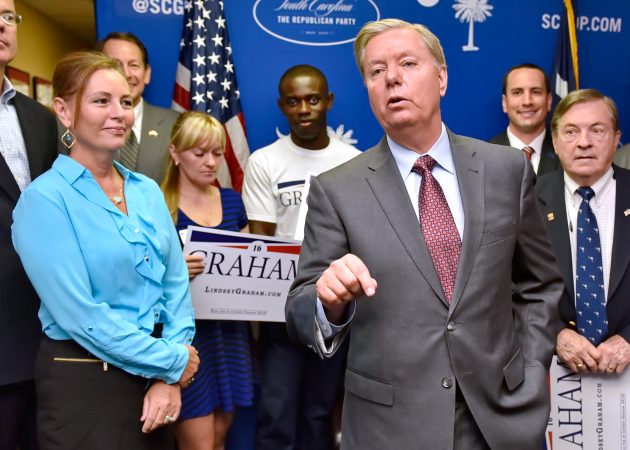
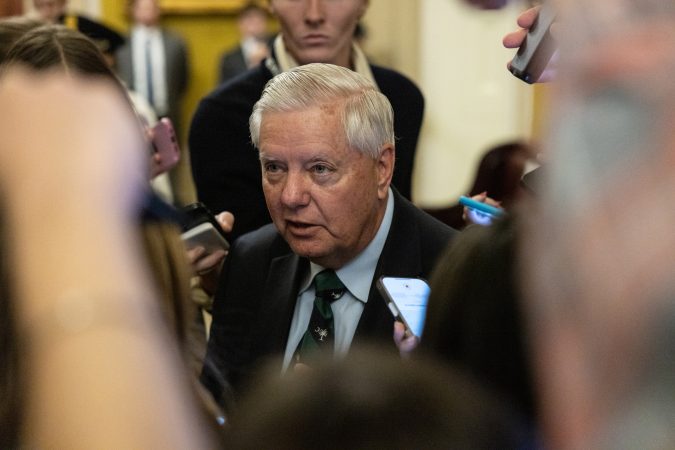
    COLUMBIA, S.C. — Lindsey Graham’s sister, Darline Graham Nordone, has been named as her late brother’s temporary replacement in the U.S. Senate.

    South Carolina Gov. Henry McMaster announced at a news conference at the Statehouse on Monday that Nordone would serve the remaining months on Graham’s current term, which expires in January. A person familiar with the appointment process but not authorized to speak about it publicly said Nardone would be sworn in Wednesday. She will be the first woman to represent the state in the U.S. Senate.

    “It is such an honor,” Nordone said. “Lindsey has always been there for me. And now, I will be there for him.”

    Graham died over the weekend at age 71. He never married or had a family of his own, but Nordone was often by her brother’s side for the political touch points of his career, speaking at events and appearing in some of his campaign ads.

    After their parents died at a young age, Graham was left to raise his sister, for whom he later became legal guardian. They were very close, and she was there as he filed reelection paperwork earlier this year, along with her children and grandchildren.

    A special election will be held next month to pick a new Republican nominee in the general election for Graham’s seat. He had been seeking a fifth term this year.

    The rare open Senate seat has ignited a scramble among South Carolina’s most ambitious conservatives, who have been eager to climb the political ladder.

    Republicans just finished a sprawling and bruising contest to figure out their nominee for succeeding McMaster, who is wrapping up his second term. State Attorney General Alan Wilson won the nomination, overcoming a field that included Lt. Gov. Pamela Evette, Rep. Nancy Mace, and Ralph Norman — all of whom are now eyeing Graham’s seat following his death over the weekend.

    How will a special primary work?

    According to South Carolina law, a one-week filing period for a special primary election begins on the second Tuesday after the candidate’s death, or July 21.

    The special primary election would be held on the second Tuesday after that filing period closes, or Aug. 11. Any necessary runoff would follow two weeks after that, or Aug. 25.

    From that point, the new nominee would have just over two months to campaign for the general election on Nov. 3.

    All of this is problematic according to federal law, which requires military and overseas ballots to go out 45 days before any federal election. For the special election primary, that would have been June 27. Federal Election Commission officials didn’t immediately return a message seeking clarity about the process.

    Who could replace Graham permanently?

    Graham died on Saturday night, and a preliminary medical examiner report said he suffered a tear in his aorta, known as an aortic dissection.

    In the hours after Graham’s death was announced, South Carolina’s Republican circles were already swirling with rumors about possible replacements.

    Evette, who has served nearly eight years alongside McMaster and received his endorsement in the governor’s race, is one possibility. She lost the June 23 runoff to Wilson.

    A person with knowledge of Evette’s thinking but not authorized to discuss it publicly said that she was getting encouragement from across the state and feels she would have good chances in the special primary.

    A person with knowledge of Mace’s thinking but not authorized to speak about it publicly said she was considering the race. Mace is not running for reelection to the House.

    But another Republican from the state, Rep. Russell Fry, could be a possibility. The two-term lawmaker represents the growing area around Myrtle Beach, and he’s been a top Trump ally.

    Businessperson Mark Lynch, whom Graham defeated in the primary, could also jump into the race. A person familiar with but not authorized to speak publicly about the thinking of Mark Sanford — South Carolina’s former governor who also served two separate stints in the U.S. House — said he was considering it, too.

    Treasury Secretary Scott Bessent, who lived in South Carolina before joining the Trump administration, has fielded calls about potentially replacing Graham but doesn’t have interest in the role and enjoys working for the president, according to a person who insisted on anonymity to describe private conversations.

    How does Graham’s death affect the general election?

    No Democrat has won a Senate seat in South Carolina in decades, and Republicans in recent history typically take statewide seats by double digits. When he last ran in 2020, Graham defeated his Democratic opponent, Jaime Harrison, by a 10 percentage-point margin.

    So while history suggests that Graham was en route to a fifth term, Republicans are carefully surveying the landscape.

    Charleston pediatrician Annie Andrews won the Democratic nomination last month and has raised more than $8 million in the race, and she had just under $3 million cash on hand at the end of May, according to federal filings. Graham had taken in $6 million, with just over $4 million on hand.

    In a statement Sunday, Andrews called on South Carolinians to join her “in setting partisanship aside and offering gratitude” to Graham for his service.

    What happens to South Carolina’s Republican clout?

    Graham leaves a major void in the Senate, where seniority can determine influence. He served more than two decades in the chamber, positioning himself to lead committees and set the agenda.

    Tim Scott, South Carolina’s junior senator, has been in office only since 2012 — short by the state’s standards. Fritz Hollings served for 38 years, and Strom Thurmond was there for 47.

    Scott, who co-chaired Graham’s reelection effort, described his former colleague as “irreplaceable.”

    “America lost a statesman, but I lost a friend,” he told ABC’s This Week.

  • Blanche stares down confirmation hurdle of lingering GOP doubts

    Blanche stares down confirmation hurdle of lingering GOP doubts

    WASHINGTON — Sen. Thom Tillis (R., N.C.), who is still undecided about Todd Blanche’s nomination as permanent attorney general, drew a red line last month: He would vote no if Blanche was too soft on the rioters who had ransacked the Capitol on Jan. 6, 2021.

    Soon after, Tillis, a moderate on the Senate Judiciary Committee, said he had a “positive predisposition” after meeting with Blanche, despite the fact that the acting attorney general had recently signed off on a $1.8 billion fund that could have been funneled to those who stormed Congress.

    Just a single no vote from a Republican would deadlock the committee and effectively sink the confirmation of Blanche, who became the Justice Department’s acting leader after Pam Bondi was fired in April. That gives Republicans on the panel rare leverage to extract concrete concessions from Blanche, 51.

    Whether they will use that leverage is arguably the biggest wild card before Blanche’s high-stakes confirmation hearing on Wednesday.

    It is not yet clear how the death of a committee member, Sen. Lindsey Graham (R., S.C.) late Saturday, will affect the timing of the hearing — or who will be chosen by leadership to replace him on the panel.

    “Blanche tries to dress it up, but at the end of the day, he’s just Donald Trump’s personal lawyer, and that is all he will ever be,” said Sen. Chris Van Hollen (D.,Md.), who squared off in May against Blanche in a contentious hearing that centered on creation of the compensation fund.

    Republicans are not in revolt, but they are restless. During a testy confrontation in late May, Republican senators lambasted Blanche for agreeing to create what critics have described as a “slush fund.” The deal forced them to defend a related provision shielding Trump and his family from tax investigations that might be worth more than $100 million to the president.

    Blanche quickly backtracked from the fund proposal, telling lawmakers during a June 2 hearing before the House, “We are not moving forward with the fund, period.” But Democrats have pointed to his flat refusal to put his reversal in writing as an indication that he could devise an alternative.

    In private meetings, Blanche has repeatedly told senators the fund plan was “dead,” at times repeating the word three times for emphasis, according to people familiar with the conversations. But he has given no indication that he intends to scrap the part of the agreement offering immunity on past IRS audits.

    On Monday the federal judge who oversaw the case, Kathleen M. Williams, issued a scathing decision calling the lawsuit an improper exercise in self-dealing, and criticizing Blanche for his actions.

    The tax provision has emerged as a major sticking point for another Republican on the Judiciary Committee, Sen. John Cornyn of Texas, who lost a primary election this spring.

    Unlike Tillis, Cornyn has not yet indicated how he is leaning and has requested a follow-up briefing on the tax issue. “I will not make a decision on confirmation until after that briefing and completion of his hearing before the committee,” Cornyn wrote in a recent social media post.

    Cornyn and Tillis have also questioned Blanche’s independence from White House control. Tillis, who is retiring next year, warned Blanche during an interview on CNN that he would oppose his nomination if he detected “even a whiff of a lack of independence.”

    Democrats say there has been a waft, not a whiff. They see the hearing as an opportunity for the committee’s Republican majority to reassert legislative authority over a department they regard as a cabal of Trump’s former personal lawyers acting in his interests, rather than for the public good.

    “A lot depends on how much Trump baggage Republicans want to carry into the November election,” said Sen. Sheldon Whitehouse (D., R.I.), who serves on the committee.

    The committee, led by Sen. Chuck Grassley of Iowa, has pushed through Trump appointees, even those Republicans have criticized — like FBI Director Kash Patel — after extracting vague assurances from the nominees that they would safeguard the department’s tradition of independence and abide by the rule of law.

    Blanche is unique among recent Cabinet nominees in that he is basically seeking confirmation for a job he has already been doing for a year and a half, first as the deputy attorney general, then as acting attorney general.

    Allies of Blanche believed he could simultaneously restore stability and competence to the department in the wake of Bondi’s turbulent tenure — and take a handful of calibrated actions sufficiently drastic to convince Trump he was tough enough.

    He has been a compliant if not always gung-ho executor of Trump’s demand that the department open investigations against his perceived enemies and let friends off the hook. He played a major role, along with Bondi, in protecting the president during the furor over the Jeffrey Epstein files, vetting documents for Trump-related material and personally interviewing Epstein’s longtime associate, Ghislaine Maxwell, in prison.

    During his monthslong audition for the job, he trumpeted Trump’s false claims of election fraud and greenlit the prosecution of former FBI Director James Comey, for posting an image of seashells on a beach spelling out “86 47.” He oversaw the drafting of the $1.8 billion fund that spurred a powerful backlash in his own party.

    Blanche has a mixed record when it comes to the attacks on the Capitol in the wake of Trump’s defeat in 2020, the issue Tillis has identified as dispositive for his support.

    It is not clear what Blanche, a former federal prosecutor in New York, thought of Trump’s decision to offer broad clemency or pardons to hundreds of rioters convicted of crimes. He has not talked about it much. But there is no indication he protested to anyone in the White House, and he has often diverted questions about its moral and political implications, citing Trump’s nearly unrestricted pardon power under the Constitution.

    No one can last long in Trump’s orbit while offering frank criticism about the Jan. 6 rioters — or, for that matter, the riot itself.

    But as Bondi’s deputy, he repeatedly clashed with the department’s most outspoken defender of the Jan. 6 rioters, Ed Martin, a right-wing lawyer from Missouri who raised money for many of the participants and even defended some in court.

    Martin, who now serves as the department’s pardon attorney, was one of the first officials to back the idea of paying restitution to the Jan. 6 rioters, claiming they had been wronged by the criminal justice system. But Blanche shut down that proposal, according to allies of Martin and lawyers who helped the rioters file claims against the government.

    He has since been more equivocal, however, holding up the presidential pardons during an appearance in March at the Conservative Political Action Conference as a prime example of the Trump administration helping those rioters who faced excessively aggressive prosecution.

    Nonetheless, criticism from Martin’s allies persists. Jonathan Gross, a rabbi and lawyer who represented several Jan. 6 defendants before working in the Justice Department’s civil rights division, has been particularly vocal. Gross, who has left the department, claimed that Blanche stood in the way of efforts to investigate and expose wrongdoing by the prosecutors who worked on Jan. 6 cases.

    Even if Blanche’s nomination were to make it out of the Judiciary Committee, he would still face the uncertainties of a floor vote. He could only afford to lose four Republicans if all Democrats vote no — three if Sen. Mitch McConnell (R., Ky.), who has remained hospitalized, is a no-show.

    Another senator on the committee who could complicate the confirmation is Josh Hawley (R., Mo.,) who is typically in lock step with the White House. Hawley has criticized the department for failing to restrict access to abortion pills by mail — part of a campaign spearheaded by his wife, a conservative lawyer who argued a case involving the medication before the Supreme Court.

    Blanche has met with many of the Republicans on the committee and said he was open to meeting with all the Democrats, too. Only a couple have taken him up on his offer, including Sens. Richard Blumenthal of Connecticut and Alex Padilla of California.

    Blanche also met with Sen. Lisa Murkowski of Alaska, one of the few Republicans to criticize Trump publicly. Their conversation was cordial, but Murkowski asked him pointed questions about his handling of the Epstein files, a person with knowledge of the exchange said.

    Blanche made his first visit to the state last week, for a previously scheduled listening tour aimed at addressing violent crime, fentanyl traffic, and cutting regulations on the state’s critical energy sector. Questions about his confirmation followed him north.

    During a sit-down interview with a local TV station, Blanche wryly dismissed a scathing letter, signed by 1,200 former department employees, calling on the Senate to reject his nomination.

    “There’s 1,200 former DOJ employees, I think, out of what — 40,000?” he said. “I’m not a math guy, but that’s not a very high percentage.”

    This article originally appeared in the New York Times.

  • Mayor Parker moves to renew Philadelphia’s contract with controversial Chester incinerator

    Mayor Parker moves to renew Philadelphia’s contract with controversial Chester incinerator

    Philadelphia last week took a step toward renewing its contract with a controversial Chester trash incinerator after a high-profile bill to ban the city from doing so failed to garner enough support in City Council.

    Mayor Cherelle L. Parker’s administration issued a notice on Friday that it intends to enter into a new four-year contract for waste processing and disposal with Reworld, which operates a waste-to-energy facility in Chester. The city sends about a third of its garbage to the incinerator, the Delaware Valley Resource Recovery Facility.

    Carlton Williams, who leads Parker’s Office of Clean and Green Initiatives, said in a statement that the city’s contracting process resulted in a deal that is “financially sound, environmentally safe, and includes the best option for the city to explore alternative methods for disposal.”

    But advocates, local officials in Chester, and some City Council members have accused the company of severe pollution and environmental racism, saying it releases toxic chemicals into the air that cause adverse health effects in the majority-Black city that’s about 15 miles south of Philadelphia.

    The amount of money the city intends to pay Reworld was not immediately clear on Monday. Parker administration officials issued a notice that they intend to renew the city’s existing contract with the company, but did not publish the contract itself.

    Reworld was one of three companies selected to process and dispose of the city’s waste. The other two, Republic Services and Waste Management, operate landfills.

    Council will need to approve legislation to greenlight the new contract with Reworld. The next scheduled meeting is in September.

    It’s unclear what fate the bill might meet in Council. Last year, Councilmember Jamie Gauthier, a Democrat who represents parts of West Philadelphia, introduced the Stop Trashing Our Air act, which would have banned the city from entering into contracts with companies that burn trash or recyclables.

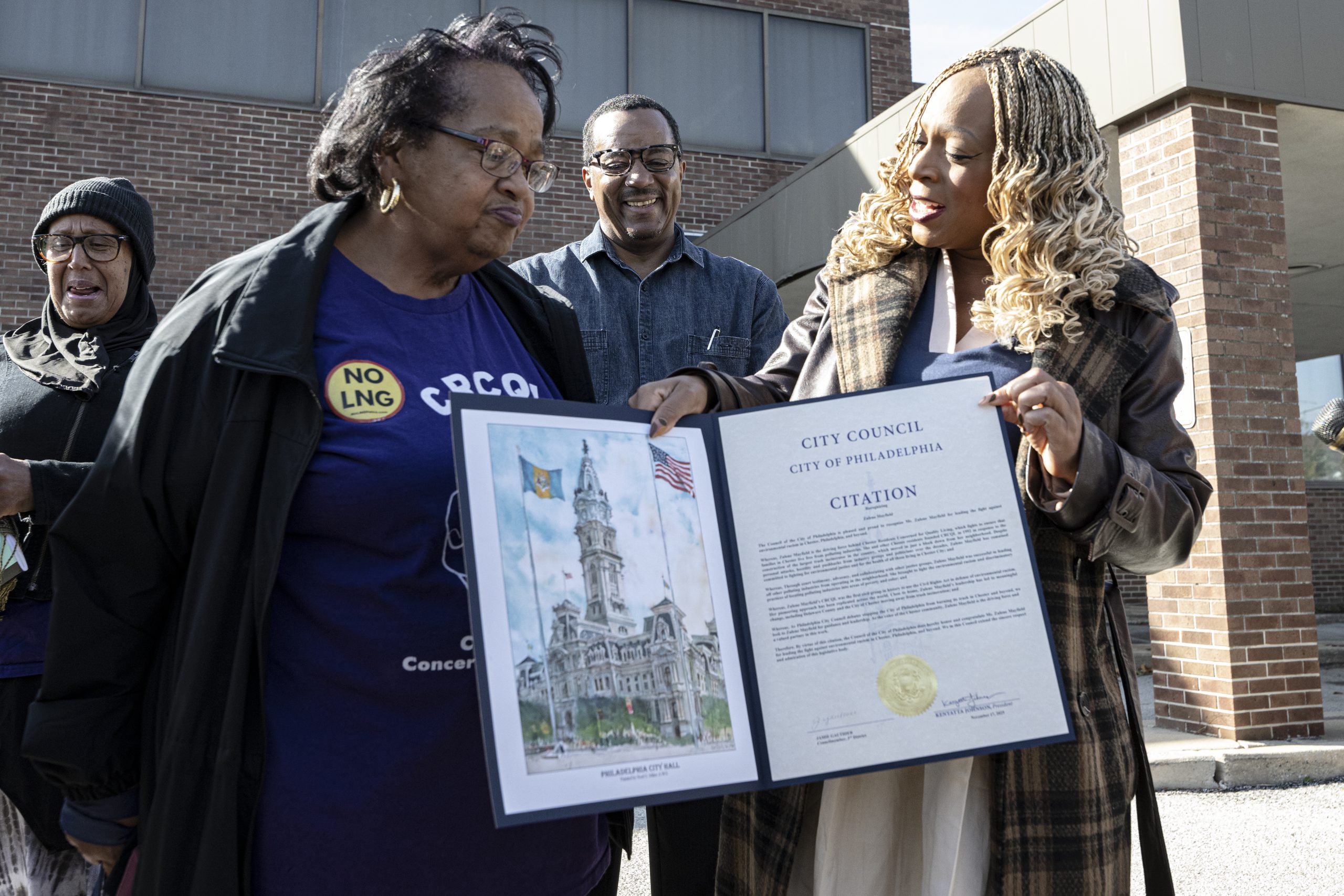
    Chester resident Zulene Mayfield (left), Philadelphia Councilmember Jamie Gauthier (right), and Chester Mayor Stefan Roots meet to discuss Gauthier’s “Stop Trashing Our Air Act,” which would ban the city from incinerating waste, during a visit with lawmakers and staff in Chester on Nov. 7, 2025.Jose F. Moreno / Staff Photographer

    But she never called the bill up for a vote, and ultimately put it on hold after it failed to garner support from a majority of the 17-member body.

    Gauthier said in a statement Monday that dirty air causes asthma and cancer, and that Parker’s administration is “condemning Philly and Chester to at least four more years of toxic air and ash.”

    “This is a choice. A choice that breaks Mayor Parker’s own campaign promise,” Gauthier said. “A choice that disproportionately harms Black and brown communities. A choice that makes every Philadelphian and Chester resident sicker.”

    The incinerator became something of a flashpoint when Parker ran for mayor in 2023. During a debate, one of her rivals, businessman Jeff Brown, made comments dismissive of complaints about the environmental impact of burning trash in Chester.

    Parker, who ran on a platform of making the city “safer, cleaner, and greener” seized on it and told Brown: “That response is the same way you treat the Black and brown community.”

    But Parker’s administration opposed Gauthier’s legislation, saying it would hamstring the city from being able to choose the best value waste disposal contractor through its typical competitive bidding process.

    That process, city officials said in a news release Friday, included considerations of cost, as well as impacts on transportation in the region and the environment. The administration hired two independent firms to conduct environmental impact analyses.

    The city previously held a seven-year contract with Reworld, which expired in June. Parker’s administration extended it for six months, ahead of selecting the company for a four-year renewal with the potential for three additional one-year extensions.

  • More than 80,000 Pa. retired teachers, police officers, and firefighters will get a pension bump — some for the first time in decades

    More than 80,000 Pa. retired teachers, police officers, and firefighters will get a pension bump — some for the first time in decades

    HARRISBURG — For the first time in two decades, more money will soon be flowing into the pockets of Pennsylvania’s retired public school teachers, firefighters, police officers and other state employees.

    Negotiated as part of this year’s state budget, more than 80,000 retired public sector employees will receive monthly increases to their pension plans as part of a cost-of-living adjustment that advocates have sought for years.

    Passing a pension bump has long been an objective of state lawmakers in both parties. And after legislators and Gov. Josh Shapiro approved the spending plan on Sunday, both Democratic and Republican leaders claimed credit for the pension boost, saying it was a product of their advocacy during negotiations.

    Public school teachers and other state employees who retired before July 2, 2001, will receive a tiered monthly payment based on their date of retirement. Similarly, police officers and firefighters who retired more than five years ago will receive additional monthly payments ranging from $50 to $300 dollars depending on how long they have been retired.

    In 2001, the state legislature passed Act 9, which gave a pension boost to public sector workers who retired after 2002, but it was not retroactive and does not increase with inflation.

    “Nobody gets into public education to become rich, they do it because they have a great love for the educating of our public school students,” said Aaron Chapin, president of the Pennsylvania State Education Association. “We know that when we get into education that we’re not going to retire very wealthy and be millionaires. We understand that. But we also need to make sure that these pensions are keeping up with the cost of living.”

    Retired teachers and other former public workers will begin seeing the cost-of-living increase to their pensions this month, while retired police officers and firefighters will see the bump starting next month.

    The state’s largest teachers union has advocated for the adjustment for many years. Those efforts included a union-coordinated campaign for teachers who retired before 2001 and did not receive a pension bump to share their stories with lawmakers, through meetings, letters, and media appearances.

    Chapin said the former teachers told their representatives “the stories of how challenging this has been for them and their colleagues, whether it was paying the mortgage or the rent, paying the electricity bills, maybe not taking medication that month.”

    At a news conference on Sunday evening before signing the $50.8 billion state budget, Shapiro called the pension increase “real money back in people’s pockets.”

    Democratic lawmakers in the state House, he said, “made crystal clear that they wanted to stand up and put more money back in the pockets of workers who had given our commonwealth so much.”

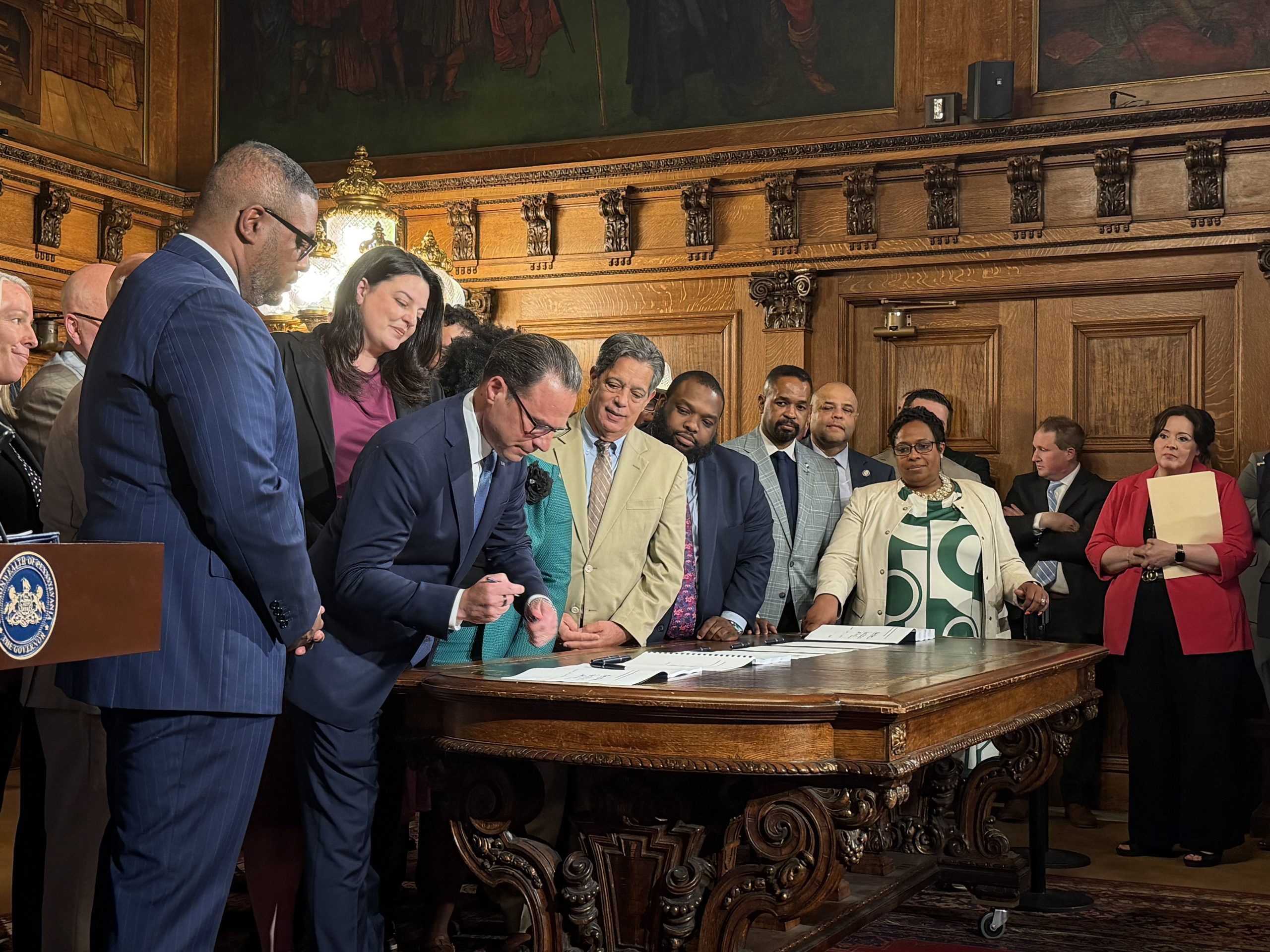
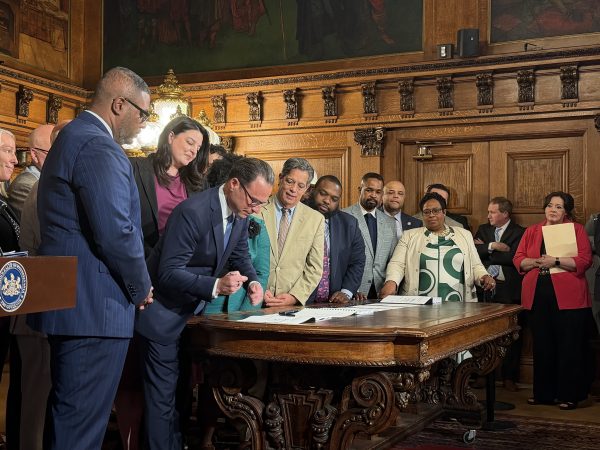
    Gov. Josh Shapiro, flanked by fellow state Democrats, signs the 2026-27 Pennsylvania state budget in Harrisburg on Sunday.Gillian McGoldrick / Staff

    “It’s definitely something our retirees have said to us for years,” said Kevin Ressler, the secretary of the Pennsylvania Professional Fire Fighters Association. “When you think about what things cost just 10 years ago until now, everything has gone up.”

    State legislators last approved a cost-of-living adjustment for police and firefighters in 2002. Since then, inflation has resulted in a 86% price increase, according to the U.S. Bureau of Labor Statistics.

    State Sen. Frank Farry (R., Bucks), a volunteer fire chief in Lower Bucks County, said members of both parties felt that it was time to pass the pension increase.

    First responders “dedicated decades of work to the community, just like our educators who dedicated decades of work to helping our young people grow and learn,” he added.

    While municipalities pay a portion of the pensions for first responders and public school teachers, the state will pay for all costs associated with the pension increase, Farry said. The increase, estimated to cost around $168 million annually, will come from revenue generated from an existing tax on internet gaming, he said.

    The state’s Fraternal Order of Police said in a statement that while no adjustment “can fully repay the commitment these men and women made throughout their careers,” the increase “restores a measure of fairness by helping ensure their retirement benefits better reflect today’s economic realities.”

    State Sen. Katie Muth (D., Montgomery) said the pension increases are the “high point” of this year’s policy changes negotiated as part of the overall budget deal.

    “These are our oldest retirees, many of them living in poverty,” she said. “This is a good moment, but a late moment. This should have been done quite some time ago.”

    The average age of retirees eligible for the cost-of-living increase in the state’s main two pension funds is just over 81 and 84 years old, respectively.

    The new pension bump, meted out monthly, is not set to automatically increase next year. Lawmakers from both parties have pushed for pensions to increase annually, indexed to inflation.

    State Sen. Tracy Pennycuick (R., Montgomery) — who sponsored a bipartisan bill to provide the pension increase to first responders — said that she hopes Harrisburg can now work to pass legislation to provide a yearly cost-of-living adjustment.

    “This is sending a very powerful message to young professional firefighters and police officers that we will continue to take care of you with cost-of-living adjustments in retirement,” she added.

    Ethan Young is an intern with the Pennsylvania Legislative Correspondents’ Association.

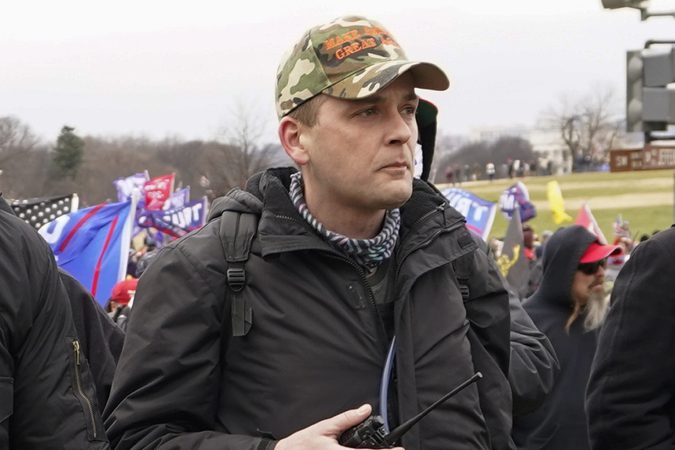
  • The landmark Jan. 6 criminal case against former Philly Proud Boys leader Zach Rehl was officially dismissed by a judge

    The landmark Jan. 6 criminal case against former Philly Proud Boys leader Zach Rehl was officially dismissed by a judge

    A federal judge has officially dismissed the seditious conspiracy case against former Philadelphia Proud Boys leader Zach Rehl, putting an end to a landmark prosecution that had at one point served as a leading example of the Justice Department’s effort to seek criminal consequences for people who attacked the U.S. Capitol on Jan. 6, 2021.

    U.S. District Judge Timothy Kelly wrote in a memorandum Friday night that he effectively had no other choice but to dismiss the case against Rehl and his three codefendants, Proud Boys Ethan Nordean, Joseph Biggs, and Dominic Pezzola.

    An appeals court earlier this year had already granted a Justice Department request to vacate the men’s convictions because prosecutors said they no longer believed in them, Kelly said.

    And in 2025, President Donald Trump — the intended beneficiary of the Jan. 6 melee — also signed an executive order that prohibited prosecutors from continuing to pursue any cases against Jan. 6 defendants in court.

    Against that backdrop, Kelly wrote, he had “no grounds” to rule that the case against Rehl and his codefendants remain open, and he granted the government’s request to dismiss all charges.

    “President Trump’s views about the prosecution of those who attacked the U.S. Capitol on January 6 — whether those views are based on fact or fiction — are well known, as is his intention to extend clemency to them through the Executive Order,” Kelly wrote. “The Government’s request to dismiss this case is consistent with that general approach.”

    Rehl celebrated the ruling on social media, writing: “Finally, it’s ALL OVER! January 6th can now be a thing of the past for me!”

    Kelly’s ruling serves as the latest example of how Trump has consistently sought to rewrite the history of what occurred at the Capitol more than five years ago — and how he has attempted to use the levers of power since he returned to the White House last year to effectively undo any consequences for those who participated in it.

    Rehl, of Port Richmond, was one of the most prominent figures from the attack. A jury in 2023 concluded that he and his codefendants had spearheaded a plan to try to block Congress’ certification of Joe Biden’s win in the 2020 presidential election by riling up a mob that went on to violently storm the Capitol.

    The verdict served as one of the most significant examples of a sprawling Justice Department investigation. Prosecutors charged more than 1,500 people in connection with the attack, some of whom faced only misdemeanor trespassing offenses while others were accused of serious felonies, including assaulting police officers.

    Rehl, his codefendants, and several other leaders of the Proud Boys and Oath Keepers were convicted of the rarely used sedition charge and cast as ringleaders. And when Rehl was sentenced to 15 years behind bars, prosecutors at the time said a lengthy sentence was warranted because he had “threatened the bedrock principles of our country.”

    But in the years after the attack, Trump consistently downplayed the gravity of what happened that day, and he said the Justice Department’s investigation into it was politically motivated and corrupt.

    Then, last year, just hours after he was sworn back into office to begin his second term, Trump issued blanket pardons to nearly everyone who was charged in connection with the riot. He also ordered the Justice Department to to drop and dismiss hundreds of other cases that were still pending.

    Rehl was one of the few defendants who received a commutation instead of a pardon, meaning his prison sentence was cut short but his conviction remained intact.

    But Kelly’s decision last week — made at the urging of Trump’s Justice Department — has now wiped out Rehl’s conviction as well, effectively clearing him of all criminal culpability from the episode.

    Kelly — who was appointed by Trump during his first term — did not shy away from describing Jan. 6 in stark terms, writing in his memorandum that it was “a perilous event,” and an “attack” on people, police officers, Congress, and the peaceful transfer of power.

    “Moving forward,” the judge wrote, “if this Nation’s experiment in self-government is to last another 250 years, the American people — no matter their partisan preferences — will have to act together to preserve, protect and defend that miracle through our constitutional framework.”

  • Lindsey Graham died of an aortic dissection. What does that mean?

    Lindsey Graham died of an aortic dissection. What does that mean?

    On Saturday night, Sen. Lindsey Graham, R-S.C., died of an aortic dissection — a rip in the aorta, the main artery carrying blood from the heart to the rest of the body.

    Such a tear is a medical emergency. Fifty percent of patients make it to the hospital, and about half survive, said Dr. Michael Mack, a heart surgeon who is chair of the research institute Baylor Scott & White Health in Dallas.

    Mack added that an aortic dissection is the first thing that comes to mind when a patient who is feeling well dies suddenly.

    The wall of the aorta has three layers, said Dr. Kendra J. Grubb, a heart surgeon formerly at Emory University and now at Medtronic, the medical device company. A dissection occurs in the inner layer, allowing blood to pour in between the layers of the tubelike vessel.

    It’s most likely caused by an underlying aortic aneurysm — a bubble in the vessel, similar to what can occur in old bicycle tubes. Aortic aneurysms can be caused by high blood pressure, atherosclerosis or some rare underlying genetic conditions, like bicuspid aortic valves.

    Patients usually describe an excruciating pain, from the chest to the back, “like a knife to the heart,” Grubb said.

    Treatment depends on where in the artery the tear is. If it occurs after the section that goes to the brain, doctors can try to repair it, threading a wire from the groin to the aorta that carries material on the vessel to seal the rip.

    If the tear occurs in the part of the aorta that carries blood to the brain, treatment involves emergency open-heart surgery. The patient is put on a heart-lung machine, the body is cooled, and a surgeon cuts out the torn section of the aorta. The surgeon then inserts a graft made of fabric.

    This article originally appeared in The New York Times.

  • With Lindsey Graham gone, Ukraine loses an ally in Trump’s ear

    With Lindsey Graham gone, Ukraine loses an ally in Trump’s ear

    Hours before his sudden death, Sen. Lindsey Graham returned to Washington from his 10th wartime trip to Ukraine, the latest visit in a four-year campaign he had waged to persuade Americans, often including his close ally President Donald Trump, to treat that country’s fight against Russia as their own.

    Since the war began, the South Carolina Republican had been among a small group of senators whose trips to Kyiv had mirrored those often undertaken by senior diplomatic officials within the administration.

    He met repeatedly with President Volodymyr Zelenskyy, toured towns and communities that had been reduced to rubble by Russian bombardment, and would return to Washington with fresh zeal and firsthand accounts of the war as he pressed fellow Republicans to sustain military and economic support.

    Graham’s death leaves Ukraine without its most influential champion inside Trump’s political orbit. He was one of the few lawmakers who had both an unwavering belief in a muscular American role abroad and a direct line to the president. It was a rare combination in the era of Trump, who has surrounded himself with advisers keen on withdrawing from the global stage in favor of a more inward-looking, “America-first” approach to foreign policy.

    Graham was not alone among Republicans in his support for Ukraine, and he almost always deferred when the president resisted supporting the nation’s battle for survival. But his closeness with Trump gave him a unique perch that he used to urge an often reluctant president to confront Russia directly and to ensure Ukraine had the weapons and resources it needed to continue fighting.

    He was doing so in the hours before he died, reaching what he said was a breakthrough with fellow senators in both parties and the White House to impose harsh new sanctions on Russia.

    “I’ve never been more optimistic today that we have the formula to end this war,” Graham said during a news conference in Kyiv on Friday before traveling back to Washington.

    Graham’s commitment to Ukraine was rooted in a worldview he embraced throughout his career. A military lawyer stationed in West Germany during the final years of the Cold War, he often described himself as “a Ronald Reagan Republican,” arguing that the United States should shape world events according to its values rather than retreating from them.

    Alongside his close friend Sen. John McCain, who died in 2018, he became one of Congress’ leading defenders of the trans-Atlantic alliance and an interventionist foreign policy hawk, warning repeatedly that American disengagement would embolden authoritarian adversaries.

    “When America leads, the world is safer,” he said in a speech on the Senate floor last May. “When we disengage and when we retreat, like we saw for the last four years under the Biden administration, chaos fills the void.”

    His focus on Ukraine far predated Russia’s full-scale invasion. After Moscow illegally annexed Crimea in 2014, Graham was as an early advocate for providing Ukraine with defensive weapons, arguing that helping Kyiv resist Russian aggression was both a strategic necessity and a moral obligation.

    “If Putin’s actions in Crimea are permitted, it will set a dangerous global precedent that will damage international stability and U.S. national security interests,” he said in a statement at the time, along with former Sen. Kelly Ayotte. “The U.S., working with our international partners, must make clear that Putin will incur increasingly severe diplomatic and economic consequences if he does not end his aggression in Ukraine.”

    His support was often paired with public criticism of Democratic administrations that he said had created the conditions for authoritarian leaders such as President Vladimir Putin to act with impunity.

    “Putin basically came to the conclusion after Benghazi, Syria, Egypt — everything Obama has been engaged in — he’s a weak indecisive leader,” Graham wrote in a social media post in 2014.

    Through a number of administrations, and as control of Congress changed partisan hands, Graham remained one of the Senate’s most consistent voices pressing administrations of both parties to move faster on a number of military aid packages and foreign assistance programs.

    When Trump returned to the White House last year for his second term, Graham ascended to an important, if often informal, role as an intermediary between Kyiv and the White House. Before the explosive Oval Office confrontation between Trump and Zelenskyy earlier this year, Graham met privately with the Ukrainian president in an effort to smooth tensions and encourage a productive meeting.

    In the months that followed, he continued speaking with both leaders, attempting to bridge deep disagreements over military aid and negotiations even as the administration adopted a more skeptical posture toward Ukraine.

    During a meeting with Zelesnkyy in Kyiv last week, his influence was noted after Trump announced a pledge to give Ukraine a license to produce Patriot air-defense systems.

    Zelesnkyy told Graham that it was a “positive signal” and “very important.”

    Trump, who said Sunday that he had spoken with Graham shortly before his death, described the senator as tired after returning from Ukraine but praised him as one of his closest advisers.

    “He was a very strong military person,” Trump said in an interview on CNN after the announcement of Graham’s death.

    In mourning Graham, Zelenskyy recalled not only his repeated visits but his steadfast support throughout the war, describing him as a true friend of Ukraine who never stopped advocating for the country’s freedom.

    “We will always be especially grateful for the recognition of our people and words of admiration for the courage of Ukraine’s defenders,” Zelenskyy said in a statement. “America and the world have lost a determined leader.”

    This article originally appeared in The New York Times.

  • Philly’s public toilets are important in lots of ways. We need more of them.

    Philly’s public toilets are important in lots of ways. We need more of them.

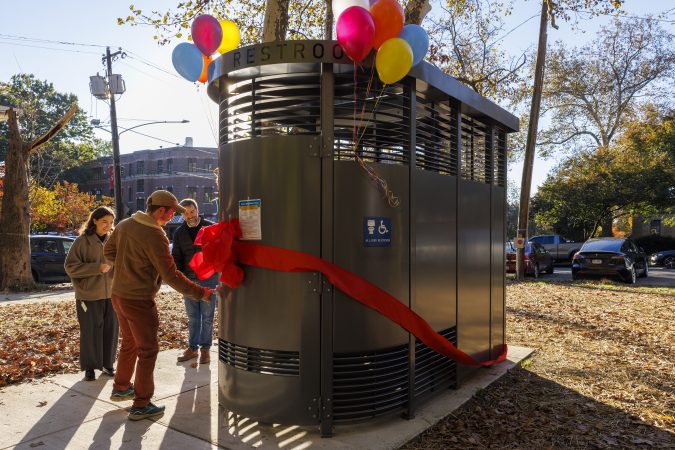
    I am a toilet scholar, and I live in West Philly. No surprise, then, that my interest was piqued when I read about, Philly Phlush, the city’s cheekily named new public bathroom program. Starting in 2023, the city promised to build six stand-alone, single-user “Portland Loos.” I was even more interested the next year when I heard that one of these new public toilets would be opened near my house in Clark Park.

    By that time, I had been looking into the history of public bathrooms in the United States for more than five years, digging through archives and pouring over digital records, including countless Philadelphia Inquirer articles from over the past century.

    My research revealed that public bathrooms in Philly (and everywhere else) mattered because they were a prerequisite for making the city accessible. That meant where city leaders placed these facilities was critical and reflected which residents and communities they cared about the most.

    But also, I knew that the state of public bathrooms is a kind of real-time test of how far governments are willing to go, or not go, in the service of the most basic needs of their citizens. Really, public bathrooms uncover who is included and excluded at a given moment. These same dynamics made clear why that Portland Loo in my neighborhood said something about what Philly is currently doing right, and what other cities can learn from it.

    The story of public bathrooms, toilets built and maintained by local governments and generally open to all, started 150 years ago as the United States was set to celebrate another milestone, its 100th birthday. Like other cities, Philadelphia was getting bigger and denser as the 19th century ended. Bricklayers heading to a ball game or a job, the faithful in search of a charismatic preacher, and nickelodeon patrons went further from home each day for work, worship and fun. As they did, they needed bathrooms. But many quickly realized that the existing network of privately-operated toilets in restaurants, department stores, hotels and saloons were not extensive enough, or clean enough, to support the growth of the city. Temperance groups, ethnic clubs, women’s organizations and business associations in Philadelphia, as in other cities, pressed for municipal leaders to filled in the gaps with new, publicly-financed “comfort stations,” as the first public bathrooms were called.

    Cities responded, and not begrudgingly. Local officials held ribbon-cutting ceremonies and bragged to reporters about the marble countertops and hand-crafted mahogany doors in the new facilities.

    Few of these comfort stations reached into working-class, immigrant or Black neighborhoods. The sparkling new facilities were meant for salesmen, bankers and bakers, train travelers and female shoppers. These people comprised “the public” that turn-of-the-century city officials had in mind when they allocated funds for well-appointed, away-from-home toilets.

    But they weren’t the only people who showed up at the stall doors and urinals of newly-built public bathrooms. As early as 1905, police officers and civil servants complained that the costly new comfort stations attracted an unanticipated crowd of drinkers, smokers, slackers, vagrants and sex-seekers. They pushed for more surveillance and more arrests, and they learned, without openly admitting it, what officials would learn again at the end of the 20th century: it is difficult to arrest your way out of a problem. In the face of failure, municipal leaders shifted gears; they pulled back funding and cut back on maintenance for public bathrooms, making these places unacceptable to the middle-classes.

    Eventually, they took a final, drastic step to keep the unwanted away. City officials across the country closed public bathrooms to stop men and LGBTQ people from having sex in the relative privacy of stalls and out-of-the-way facilities. They closed them to prevent angry teens and drunken adults from also taking advantage of the privacy of these places and smashing sinks and pulling down towel dispensers. By the 1980s, as Reagan-era budget cuts ripped holes into the social safety net and drained the coffers for public housing, cities closed even more public bathrooms to try to “disappear” the unhoused, and bathroom-less, from downtown streets and up-and-coming financial districts.

    But in the drive to edit the public, municipal leaders made the city inaccessible for workers, students, families and shoppers, as well as those deemed undesirable.

    With no public bathrooms near Independence Mall or Rittenhouse Square, the private sector that had failed decades before once again took over. But only to the advantage of some. Those who could paid for bathrooms, first with coins slipped into lock boxes drilled onto toilet stall doors, and later with credit cards for lattes and iced coffees for a “free” trip to the bathroom. Those who couldn’t afford the “latte tax” or lived in an area without a Starbucks or a Bass Pro Shop had only the street, bushes and the spaces between cars “to go.”

    Toward the end of the 20th century, American cities experienced something that they hadn’t dealt with since before the American Revolution: open defecation and public urination, all day long and not just when the bars emptied in the early morning hours. This forced the hand of policymakers. They once again had to fund public bathrooms or face capital and population flight. But they didn’t put funds into public toilets to make the city more open or accessible; they did it, largely, to contain the unhoused and their bodies and to clean up central business districts and keep commerce flowing.

    That’s what Los Angeles did. That’s what Albuquerque, N.M., and Cambridge, Mass., did. They built new public bathrooms—not the ornate facilities of the past, but functional ones, like Portland Loos with steel toilets, or hard plastic porta potties. These new toilets, unlike their early 20th century predecessors, weren’t meant for middle-class tourists visiting the Constitution Center, suburban lawyers in town for a trial, or even for Walnut Street shoppers. They weren’t there to solve the housing crisis or to deal with the problems of addiction or cuts in spending on mental health—some of the key factors leading to jumps in homelessness. They were there to contain the failures of the system and the bodies of the poor and unhoused, and to make the city look and smell better for everyone else.

    Philly joined in this trend but with a twist.

    The first Philly Phlush toilet opened in Fotterall Square, a revitalized park with basketball courts, walking trails and movie nights on 11th Street in North Philadelphia. The second was located at 15th and Arch Streets in Center City across from Love Park, not far from bustling Suburban Station. The third was the one in my neighborhood, just north of the corner of 43rd Street and Woodland Avenue.

    Made By History sponsors. FOR USE ON MADE BY HISTORY STORIES ONLY.Inquirer Staff

    By placing public toilets in North and West Philly, Philadelphia did something markedly different from most other cities. It sited its bathrooms not just so they could control people considered problematic, but to meet the needs of city residents in their neighborhoods. These toilets outside of Center City promised to make parks and squares available to parents and kids; they made it easier to stroll through a farmer’s market, watch a film on a summer’s night and play basketball all day long without the risk of discomfort, embarrassment or even arrest.

    Philly, and every other city, should fund and maintain public bathrooms. The more the better. They should put them where people are and where they live. They should maintain them, because infrastructure needs ongoing care, and everyone needs clean spaces to attend to their bodies away from home.

    Public bathrooms can’t solve every problem created by decades of government neglect, and they shouldn’t be expected to. But they can address the health and safety of city residents right now. Even more, away-from-home toilets, situated both in business districts and neighborhoods, are fundamental building blocks to a city open and equal to all, to a Philadelphia that shows through investment and maintenance that it cares about the people who visit and live here.

    Bryant Simon is the academic chair of the Honors Program and a history professor at Temple University. He is the author of the forthcoming book, For Customers Only: Public Bathrooms and the Making of American Inequality.

    Made by History takes readers beyond the headlines with articles written and edited by professional historians. Opinions expressed do not necessarily reflect the views of The Inquirer.