Category: Politics

  • History shows how negotiations with Iran can achieve American goals

    The memorandum of understanding (MOU) between the United States and Iran is far from peace. It hasn’t even ended the fighting.

    But that is not the right way to judge the MOU.

    The real question is whether it eventually creates a political process that can do what force and pressure have repeatedly failed to do: give both sides a way to step back from escalation without appearing to surrender. For the United States, that means restraining Iran’s nuclear capabilities and behavior in the region. For Iran, it means something just as important: preserving sovereignty and political dignity, while moving from confrontation to negotiation.

    History provides a pathway for both sides to achieve what they want. At key moments in the past, Iran has engaged in constructive diplomacy because it could present negotiation not as a capitulation to outside powers, but as a means of defending national rights, territorial integrity and political independence.

    In other words, Iran will negotiate for sovereignty, not surrender. And this insight from the past should guide the current negotiations.

    After World War II, Soviet troops remained in northern Iran and supported separatist movements there. Tehran resisted the fragmentation of its territory and brought the issue before the newly created United Nations.

    For Iran, this was not a passive appeal for outside rescue. It was an effort by a weaker state to use international diplomacy to resist the pressure of a much stronger power. Tehran’s strategy mattered because it allowed Iran to defend its sovereignty through political means rather than by accepting fragmentation or relying on force alone.

    The crisis ended with Soviet withdrawal and became one of the earliest tests of the postwar international system.

    The outcome did not erase the imbalance between Iran and the great powers, but it showed that diplomacy didn’t mean accepting humiliation. Instead, it could offer Iran a forum in which its territorial integrity and political independence could be asserted and protected. That, in turn, allowed Tehran to frame compromise and de-escalation as the defense of its sovereignty.

    Forty years later, the newly declared Islamic Republic again used diplomacy to counter a threat — this time to end a war.

    Iran and Iraq had been at war for most of the 1980s. The conflict was devastating. Iran suffered enormous human and economic losses, and the fighting was increasingly difficult to sustain.

    In 1988, Iranian leaders accepted a ceasefire under the auspices of the United Nations.

    That decision was painful. It did not reflect trust in Iraq, the United States or the broader international system. Nor did it mean that Iran had suddenly abandoned the revolutionary language through which it had justified years of sacrifice. Instead, it reflected a sober recognition that endless war no longer served Iran’s survival, sovereignty or national welfare.

    Iranian leaders weren’t eager for compromise. But it became possible, because they could sell the ceasefire as a way to preserve the state rather than to surrender it. It allowed Tehran to move from war to diplomacy while still claiming to have defended the nation.

    This pattern of diplomacy continued after the Sept. 11, 2001 terrorist attacks. Despite decades of hostility, the United States and Iran found overlapping interests in Afghanistan. Both opposed the Taliban, and Iranian diplomats played a constructive role following the Taliban’s initial defeat. Iran wanted a stable Afghanistan that would not again become a Taliban sanctuary on its eastern border; the United States wanted help building a post-Taliban order without getting bogged down immediately in another regional confrontation.

    Made By History sponsors. FOR USE ON MADE BY HISTORY STORIES ONLY.Inquirer Staff

    The episode demonstrated something important: Iran could work with the United States — a bitter adversary — when it could pursue its concrete interests, and when the U.S. was not demanding that the Iranian regime humiliate itself.

    Cooperation over Afghanistan did not require Iran to surrender sovereignty or accept an American-dominated regional order. It allowed Tehran to advance a security interest while being treated, however briefly, as a political actor whose interests mattered. For the United States, it showed that limited engagement with Iran could serve American goals without requiring trust or friendship.

    This cooperation did not produce a new era of U.S.-Iranian friendship. Rather, it soon collapsed under the weight of mistrust, ideological hostility and American domestic politics.

    Fourteen years later, the 2015 nuclear agreement offered a more formal version of the same lesson. It did not end disagreements between Washington and Tehran over sanctions and Iran’s role in the Middle East. But it showed that verification, sequencing and reciprocal concessions could reduce one of the world’s most dangerous nuclear confrontations.

    The agreement was possible because it gave both sides something they could defend politically. Iran could say it had preserved its right to a civilian nuclear program and won sanctions relief. The United States and its partners could argue they had imposed limits, inspections and verification mechanisms on Iran’s nuclear activities. Each side could present the deal as a hard bargain that protected national interests.

    As in 2001, the agreement eventually collapsed. That exposed how diplomacy with Iran will always be vulnerable because mistrust runs deep, domestic opponents on both sides can always repackage compromise as surrender and powerful regional actors continue pressing for conflict.

    Despite these vulnerabilities, those working on the current MOU should recognize that diplomacy has been the only thing that has worked in the past — so long as Iranian leaders can sell negotiations as defending national rights and sovereignty, and outside powers like the U.S. can show that they have made Americans and their allies safer.

    While history does not guarantee success, it does suggest that it’s possible to forge an outcome in which the conflict between the U.S. and Iran can be managed politically — if each side recognizes the other side’s political constraints.

    Zach Battat is a historian of the modern Middle East whose work examines diplomacy, empire and external power politics in the region.

    Made by History takes readers beyond the headlines with articles written and edited by professional historians. Opinions expressed do not necessarily reflect the views of The Inquirer.
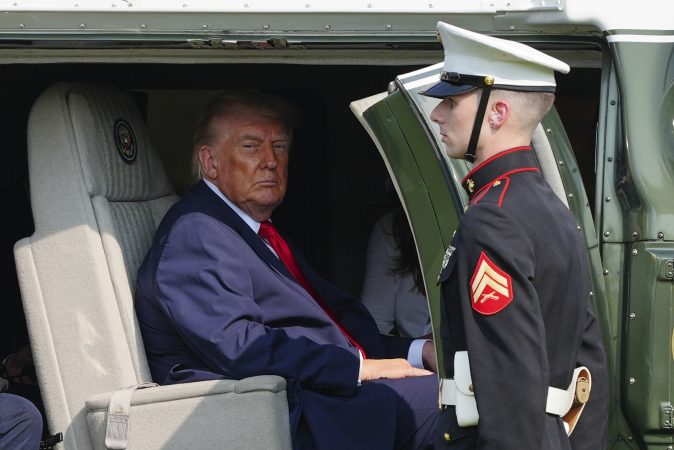

  • Trump uses primetime address to the nation to once again raise doubts about past elections

    Trump uses primetime address to the nation to once again raise doubts about past elections

    WASHINGTON — President Donald Trump used a primetime address to the nation Thursday to once again raise doubts about the results of past elections, reviving a subject he’s long used to make unproven claims and deny his loss in the 2020 election.

    Trump’s fixation on his loss to Democrat Joe Biden six years ago and the long-debunked theories he’s circulated about it are things he still brings up regularly when discussing other subjects. But elevating the deeply political and conspiratorial topics to a presidential primetime address underscores the lengths to which Trump has used his second term to both blow past norms and fixate on old grievances.

    Trump began Thursday night with a stark warning about what he described as flaws in the voting system and said he was releasing previously classified documents related to the 2020 and 2018 elections.

    “America is back and doing really well, but we still have a major challenge that must be urgently addressed, because no country can be great without fair and honest elections,” he said.

    He said all Americans should be assured their elections are free of cheating and interference.

    “Unfortunately, the system we have today falls catastrophically short of that standard,” Trump said.

    Trump used the remarks to justify his push to pass a strict voter ID bill in Congress.

    Primetime presidential addresses are typically reserved for major milestones or nationally significant events.

    Trump last did it in April to speak on the Iran war, a month after it started. He said then that the U.S. would accomplish its objectives “very shortly” and that “the hard part is done, so it should be easy.” The war, however, has dragged on and strikes between the U.S. and Iran have intensified this week.

    Trump also delivered a politically charged primetime speech in December in which he sought to blame the challenging economic climate on Democrats.

    Some networks did not air it live

    At least some TV networks said Thursday they would not carry the speech live but would air it on their streaming services. ABC, NBC and CNN decided not to air the remarks live but to carry them in full on their streaming services and break into network coverage as needed.

    CBS said it was “airing a special report” during the address, but it wasn’t clear if the network would carry it live.

    Trump called out the media outlets for not carrying it live and accused them of being “part of a plot.”

    Networks typically but don’t always choose to carry presidential addresses to the nation live. In 2022, when then-President Joe Biden delivered a primetime address full of warnings about Donald Trump and his adherents’ “extreme ideology,” the networks did not carry it live.

    In 2014, the major networks chose to stick with their primetime programming instead of airing an address by then-President Barack Obama on his plans for immigration reform.

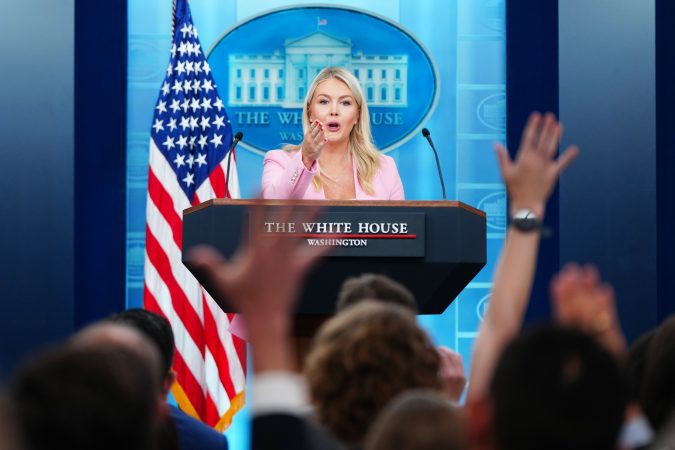
    White House press secretary Karoline Leavitt on Thursday afternoon seemed to be still trying to persuade networks to carry the remarks live, saying, “I think that the mainstream media should air the president’s speech and allow the American people to draw their own conclusions from it.”

    Raising questions about the midterms

    Democrats warned that Trump was trying to revive false claims of past stolen elections in order to delegitimize the 2026 midterm elections, in which Trump’s Republican Party is facing headwinds.

    “Trump is going to use a primetime address to stoke misleading claims about our elections in order to justify interfering in our midterms. It’s on all of us to follow the facts and not accept his constant stream of misdirections and lies,” Virginia Democratic Sen. Mark Warner said in a statement on X.

    “Trump is again trying to drum up baseless election conspiracies ahead of the November elections,” New Jersey Democratic Sen. Andy Kim said in a post on X. “Americans are tired of endless war, skyrocketing gas prices, and a president that isn’t looking out for them. Voters will make their voices heard, whether Trump wants them to or not.”

    Leavitt didn’t answer a question Thursday about whether Trump would accept the results of the midterms, though Vice President JD Vance told reporters on Capitol Hill a day earlier that “of course we’re gonna support the results of the midterm elections.”

    Vance bristled Wednesday when asked if he’d encourage Trump in his Thursday remarks to stay focused on November’s midterm elections rather than relitigate past elections. “‘The unfounded claims,’” Vance said, repeating the reporter’s language. “You’re basically assuming an answer in the very question that you ask.”

    “The president is going to talk about a number of things tomorrow night. I’m obviously not going to get ahead of his remarks,” Vance said. “But we can talk about a number of the American people’s problems. We can solve a number of the American people’s problems.”

    Before he began speaking about elections, Trump started his speech by ticking through a long list of what he said were his administration’s accomplishments — including cutting drug prices.

  • Mayfair man charged in arson attack against Northeast Philly mosque

    Mayfair man charged in arson attack against Northeast Philly mosque

    A 60-year-old Mayfair man was arrested Thursday and charged in connection with the arson fire last week at a Northeast Philadelphia mosque, U.S. Attorney David Metcalf said Thursday.

    On July 5 around 2 a.m., Vincent Lang allegedly threw an incendiary device into the entrance of the Northeast Philadelphia Islamic Center on the 1400 block of Tyson Avenue. The mosque was unoccupied and no injuries were reported.

    Two days later, investigators received a tip that Lang allegedly was the perpetrator.

    Federal investigators conducted surveillance at Lang’s home and observed his black 2009 Hyundai Santa Fe had handwritten messages on the rear and passenger side windows that included “White Pride” and “F- Islam,” the criminal complaint said.

    The aftermath of a July 5 arson attack at the Northeast Philadelphia Islamic Center.CAIR

    Stickers on the back of Lang’s vehicle included one that appeared to say “Federal Terrorist Hunting License,” the complaint said.

    Investigators found what they believed was a Facebook account allegedly used by Lang. On July 10, a post was created on the account that included anti-Islamic comments and also a comment using racial slurs about the rape of a young girl.

    Lang also allegedly commented on posts about the arson investigation: “How can it be a hate crime they might have done it out of love,” the comment said with a red heart emoji.

    Lang was charged with one count of maliciously damaging or destroying by means of fire any building or property used in interstate commerce, or attempting to do so.

    If convicted, Lang faces a maximum possible sentence of 20 years in prison, with a mandatory minimum of five years’ imprisonment, Metcalf said.

    After the attack, Masukul Islam Khan, the mosque’s president said: “Our mosque is more than a place of worship. It is a welcoming community center that has served families, neighbors, and people of all backgrounds for many years.”

    He added: “Any act of violence or hatred directed at a house of worship is an attack on the values of safety, religious freedom, and unity that our city cherishes.”

    Metcalf said the case was investigated by the Bureau of Alcohol, Tobacco, Firearms and Explosives, Arson and Explosives Task Force, with assistance from the FBI, Philadelphia Fire Department Fire Marshal’s Office Special Investigations Unit, Philadelphia Police Department, and the Pennsylvania Office of Attorney General.

    The case is being prosecuted by Assistant United States Attorneys Amanda R. Reinitz and J. Jeanette Kang, with the assistance of the Department of Justice Civil Rights Division, Metcalf said.

  • DHS chief faces crisis moment amid mounting arrests, fatal shootings

    DHS chief faces crisis moment amid mounting arrests, fatal shootings

    Homeland Security Secretary Markwayne Mullin was speaking to reporters this month in New York when one asked whether he was under pressure from the White House to increase immigration arrests. Mullin replied that his department was in lockstep with the president’s team and boasted that arrests and deportations were rising.

    “When we go after the worst of the worst, which is exactly what we’re doing, we’re saving lives,” he said.

    Just over two weeks later, Mullin is facing his biggest political and managerial crisis since taking office in March as he scrambles to respond to two deadly shootings involving U.S. Immigration and Customs Enforcement officers. The violence has drawn harsh denunciations from Democrats and immigration advocates, as well as criticism from one prominent Republican senator, and the situation has threatened to reignite the wide public backlash that arose in January when immigration officers killed two U.S. citizens during a surge of operations.

    Mullin’s attempt to quell the uproar over the shootings this week — ordering a moratorium on vehicle-stop arrests by ICE officers — has exposed the precarious position he is in while trying to comply with President Donald Trump’s demands. Less than 48 hours after Mullin issued the directive on traffic stops, a White House official confirmed that it had been reversed.

    Mullin promised to rebuild public trust in the Department of Homeland Security after replacing Kristi L. Noem, and he has undone some of his predecessor’s moves, taking a quieter approach in an effort to stay out of the headlines.

    At the same time, he has doubled down on Trump’s deportation agenda. Data provided to Congress and reviewed by the Washington Post show that under Mullin’s leadership, ICE officers have been making record numbers of arrests. Through July 12, ICE had arrested more than 200,000 people in 2026, a more than 40% increase compared with the same period last year.

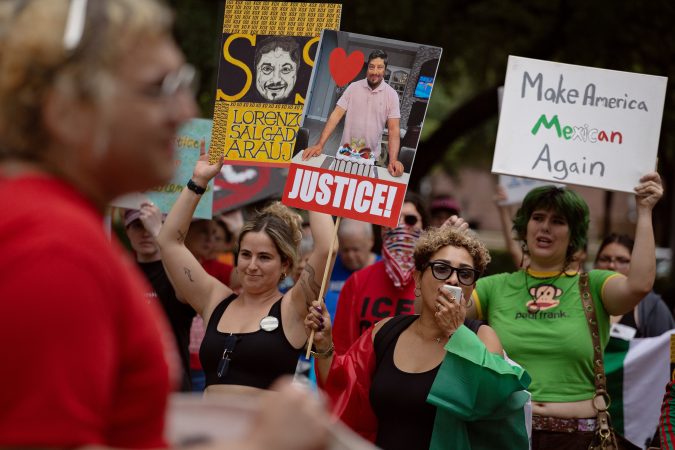
    Those arrests were largely happening outside public view until last week, when an ICE officer shot and killed a 52-year-old Mexican man, Lorenzo Salgado Araujo, in Houston. Salgado had been driving to work, and DHS officials said he was not the target of the ICE operation. His family said he had lived in the United States as an undocumented immigrant for more than 35 years and had no criminal record. Surveillance footage has raised questions about DHS’s account of the events surrounding the shooting.

    Less than a week later, a 25-year-old Colombian man, Johan Sebastián Durán Guerrero, was shot and killed by an ICE officer in Biddeford, Maine. He was also shot while driving, was the father of a young child and does not appear to have had a criminal record.

    Mullin’s apparent predicament illustrates the competing incentives within the Trump administration over immigration enforcement ahead of the midterm elections in November that will determine whether Democrats win back control of Congress and establish a meaningful check on Trump’s power for his final two years.

    Trump abruptly undercut Mullin on Wednesday by praising vehicle stops as one of ICE’s most important tools, and Trump’s far-right base revolted over Mullin’s leadership on enforcement, calling him weak and ineffective. After the policy was reversed, Mullin wrote on social media that there was no conflict between himself and the president.

    “President Trump and I are on the same page,” he wrote. “We want our @ICEgov officers to have all options available to keep them safe while executing our mission of deporting as many illegal alien criminals from our country as possible.”

    Some Republican allies and Trump political advisers are wary about the potential for a broader public backlash to the president’s immigration agenda in an election year. But the administration’s immigration hawks, including White House deputy chief of staff Stephen Miller, have continued to push for mass deportations to make good on the president’s campaign promise and appeal to his hard-line base.

    “The president’s supporters reacted absolutely as they should have, and I think the president saw that,” said Mike Howell, president of the Oversight Project and a visiting fellow at the Heritage Foundation, in regards to Mullin’s pause on traffic stops. “Everyone is now seeing another example of the walk-back instinct of DHS leadership.”

    ICE earlier this month had topped 2,000 arrests per day several times, a DHS official said, after setting that figure as a daily arrest target. The official spoke on the condition of anonymity to share internal information not authorized for release.

    In June, ICE arrested and detained more than 39,500 individuals, topping the previous monthly high of 37,800 in December, according to the data reviewed by the Post. DHS is on pace to exceed that number in July.

    The agency has added thousands of new officers, as well as surveillance technology and other resources, thanks to more than $170 billion in new immigration enforcement funding approved by congressional Republicans last year.

    During his news conference in New York this month, Mullin called that funding “the most consequential bill — definitely of President Trump’s tenure and possibly in recent history.” He accused Democrats, including New York Mayor Zohran Mamdani, of being soft on crime and immigration enforcement, and said DHS “might have to flex a little bit more” to respond to the policies in places such as New York.

    Yet Mullin’s pullback on the vehicle stops, which came after he spoke with Sens. Susan Collins (R) and Angus King (Ind.) of Maine, has left him open to criticism from immigration hawks inside and outside the administration.

    One former DHS official suggested that Mullin made the policy change amid pressure from Collins, who is facing a difficult reelection campaign, without consulting the White House.

    “A cabinet secretary just went 180 degrees from the policy of both Trump administrations,” said the former official, who spoke on the condition of anonymity to frankly discuss his former agency.

    In an interview with Fox News on Tuesday, White House border czar Tom Homan said Mullin had made the decision to pause vehicle stops after consulting with ICE leadership.

    “I’m confident that ICE is well trained in vehicle stops,” Homan said. “This is a temporary pause while they look at the incidents.”

    Mullin has said little publicly about the shootings. When asked about the Houston incident in a brief phone interview with Atlanta News First, he expressed regret that ICE officers were not wearing body cameras and blamed a 76-day partial shutdown of DHS in the spring as Congress was deadlocked over a funding bill for slowing efforts to distribute more cameras.

    Wednesday on X, Mullin reposted Trump’s message in support of ICE and added his own statement, saying DHS is focused on keeping officers safe and removing criminals.

    “Illegal aliens will be arrested and deported wherever they are. If you are here illegally, LEAVE NOW,” Mullin wrote, adding that officers are facing a major increase in attacks by people using vehicles to threaten them. (In fact, federal prosecutors in several cases have dropped charges against people accused of assaulting officers in light of contradictory evidence.)

    “We remind illegal aliens attempting to evade arrest is dangerous,” Mullin wrote.

    A former ICE official said Mullin was chosen for the role because he would follow White House directives, and had predicted that Mullin would walk back the pause on vehicle stops or water it down if Trump demanded he do so.

    “He’s not going to do anything counter to what the president wants,” the former official said, speaking on the condition of anonymity to offer a frank assessment of internal deliberations.

    Immigrant rights advocates expressed skepticism that Mullin is committed to softening ICE’s image to restore broader public trust in the agency.

    Nayna Gupta, policy director at the American Immigration Council, said the Trump administration “may have moved away from the more theatrical displays of force that characterized operations in places like Minneapolis and Chicago, but the basic objective has not changed: a fixation on increasing detentions and deportations simply for the sake of numbers.”

    Gupta said that effort has accelerated as ICE has begun to spend the money from the congressional funding bill, and that it’s leading to more violence by federal officers.

    Yet some business leaders who have worked with Mullin, who previously owned a large plumbing company in Oklahoma, say he has taken a measured approach to enforcement and been far more receptive than Noem to hearing their concerns over the impact of mass deportations on their companies, many of which rely on immigrant labor.

    To the immigration hard-liners, any sign that Mullin is appeasing more moderate interests reads as a betrayal of the president and his voters.

    “Secretary Mullin comes from the Senate, and when it comes to that body, there’s an overeagerness to please other people in that body,” said Howell, of the Heritage Foundation. “So when Senator Collins calls and asks him to do something, then he does it, and it looks bad.”

  • Democrats are outraising Republican incumbents in competitive Pa. House districts — except for one

    Democrats are outraising Republican incumbents in competitive Pa. House districts — except for one

    With control of the U.S. House on the line in November, Pennsylvania’s swing-district candidates are stocking up their war chests for a critical election — but one Democrat is lagging behind his counterparts.

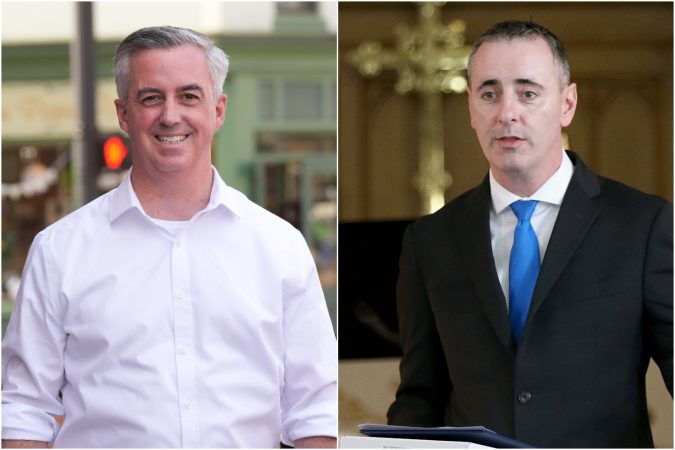
    Bucks County Commissioner Bob Harvie, who is challenging longtime incumbent Republican U.S. Rep. Brian Fitzpatrick in the 1st Congressional District, raised almost $552,300 between April 30 and June 30, according to new campaign finance reports filed Wednesday, putting him at a little over $2 million raised since he launched his campaign in April 2025.

    But Harvie’s sum for this two-month period is almost half a million less than Fitzpatrick, and roughly $915,000 on average less than the other Democratic candidates.

    Fellow swing–district Democrats Bob Brooks, Paige Cognetti, and Janelle Stelson all outraised the Republican incumbents in the 7th, 8th, and 10th Districts respectively, each gathering more than $1 million during this two-month period, a sign national Democrats say is proof of their strength in these competitive Pennsylvania seats.

    The reporting period covers the final weeks before the May 19 primary and the six weeks that followed.

    Bucks County Commissioner Bob Harvie hosts a veterans roundtable on May 4 at Middletown Township Building in Langhorne.William Thomas Cain / For The Inquirer

    Harvie is seen by Democrats as the party’s best chance in a decade to beat Fitzpatrick, a five-term moderate with a massive fundraising operation, who has raised $6.7 million so far this campaign, bringing in over $1 million this period.

    The Bucks County Republican has been tough to beat, thanks to his name recognition and ability to garner support from voters across the political spectrum, but Democrats believe Harvie’s roots in the county, and his electoral record as county commissioner, make him their strongest candidate to date.

    (function(){function e(){window.addEventListener(`message`,function(e){if(e.data[`datawrapper-height`]!==void 0){var t=document.querySelectorAll(`iframe`);for(var n in e.data[`datawrapper-height`])for(var r=0,i;i=t[r];r++)if(i.contentWindow===e.source){var a=e.data[`datawrapper-height`][n]+`px`;i.style.height=a}}})}e()})();

    And their outlook on the race hasn’t budged. Democrats believe all four swing district Democrats will be successful in November but understand it will take continued investments, including more money, to get all of them across the finish line.

    Bucks County’s 1st Congressional District “is a winnable race, and Democrats should be all in on investing in Harvie so that he can help take back control of Congress,” said Dan McCormick, Harvie’s campaign manager, in a statement.

    He also added that Harvie doesn’t “take a dime” of corporate PAC money. McCormick did not comment on the contrast between Harvie’s fundraising and that of his counterparts in the other targeted districts.

    “Fitzpatrick sees the same polling we do, that’s why he’s busy lighting his money on fire lying about Bob,” McCormick said.

    Fitzpatrick began funding ads against Harvie before the May 19 primary, underscoring the significance of Harvie’s challenge in a year Republicans are expected to lose seats nationally. Fitzpatrick’s campaign spent nearly $2 million between May and June, compared with about $360,000 in spending by Harvie’s campaign.

    Both parties are targeting the seat, which includes all of Bucks and a sliver of Montgomery County, as they battle to secure control over the U.S. House.

    In a pre-primary report that covered April 1 through 29, Harvie had raised about $107,000, in addition to his stockpile reported Wednesday. Fitzpatrick raised $246,000 during that same period.

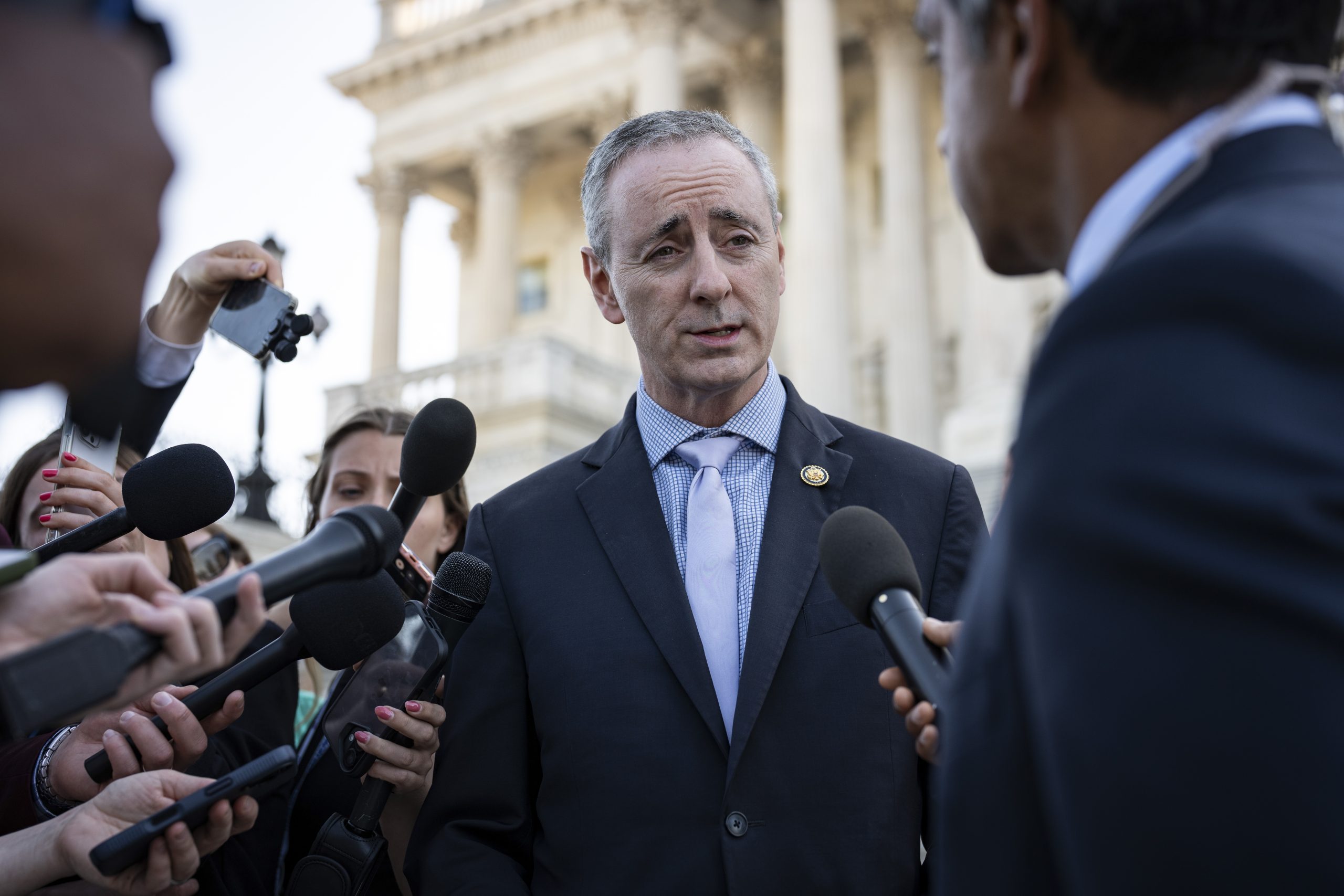
    Rep. Brian Fitzpatrick (R., Pa.) speaks to reporters June 3 after the House passed an Iran war powers resolution.Haiyun Jiang

    The nonpartisan Cook Political report has rated the 1st Congressional District as “likely” Republican, and the three other swing districts are considered toss-ups.

    In a high stakes election year — and with popular Pennsylvania Gov. Josh Shapiro at the top of the ticket and a sinking approval rating for President Donald Trump — Harvie’s fundraising numbers at this point are mostly on par with the last Democrat to take on Fitzpatrick.

    Former challenger Ashley Ehasz, who ran against Fitzpatrick in 2022 and 2024, raised more than $767,000 during this period two years ago, bringing her campaign total to $2.1 million as of June 30, 2024.

    Brittany Crampsie, a Democratic strategist in Pennsylvania, said donors may be doing “a little bit of hedging” their spending for Harvie at the moment, waiting to see more information on Shapiro’s poll numbers, Trump’s approval rating, and the national mood before investing more in the 1st District.

    “Democratic donors absolutely want to beat Fitzpatrick,” Crampsie said. “We want to control Congress by large margins. But PA-1 is an expensive race. I mean, you might want to be looking at a little bit more information.”

    The 1st and 7th Congressional Districts are part of the expensive Philadelphia television market, meaning both Harvie and Brooks will be competing for airtime.

    Brooks, who is taking on freshman Republican U.S. Rep. Ryan Mackenzie in the Lehigh Valley, has raised $2.3 million over the entire span of his campaign — getting a boost this period after winning a competitive primary — but it’s not too far off from Harvie’s $2 million total haul.

    Christopher Nicholas, a GOP consultant who grew up in Bucks County, said that Harvie is not just in a competition against Fitzpatrick, but also with the three other Democratic contenders in Pennsylvania.

    “If you’re some official at the DCCC, and you say ‘Let’s see, get me the report on Pennsylvania,’ and you see this, where is Harvie going to be in the rankings? Is he going to be moving up or moving down? I think that’s a pretty easy question to answer,” Nicholas said.

    Eli Cousin, a spokesperson for the Democratic Congressional Campaign Committee, emphasized that Pennsylvanians are wholeheartedly behind all four candidates who he says are “on the front lines of our path back to the House majority and will shake up a broken Washington in order to put Pennsylvania families first.”

    Donors still have a lot of time to realize that Harvie is “the right candidate” and to contribute to TV and other ad spends that will come later this summer into the fall, Crampsie said. Some may already be writing checks to the Democratic Congressional Campaign Committee and other Democratic aligned-issues to support their cause of flipping the House blue.

    “Fitzpatrick has won several times after being called the number one target, and stakeholders may be less likely to oppose him publicly and want to put their money into spending for Harvie that’s not necessarily into PAC spending … but I don’t think that it’s a sign that people are not supporting Harvie,” Crampsie said.

    But even in the races where Democrats are outraising incumbents victory isn’t guaranteed in districts where Republicans have previously managed to prevail despite a cash disadvantage.

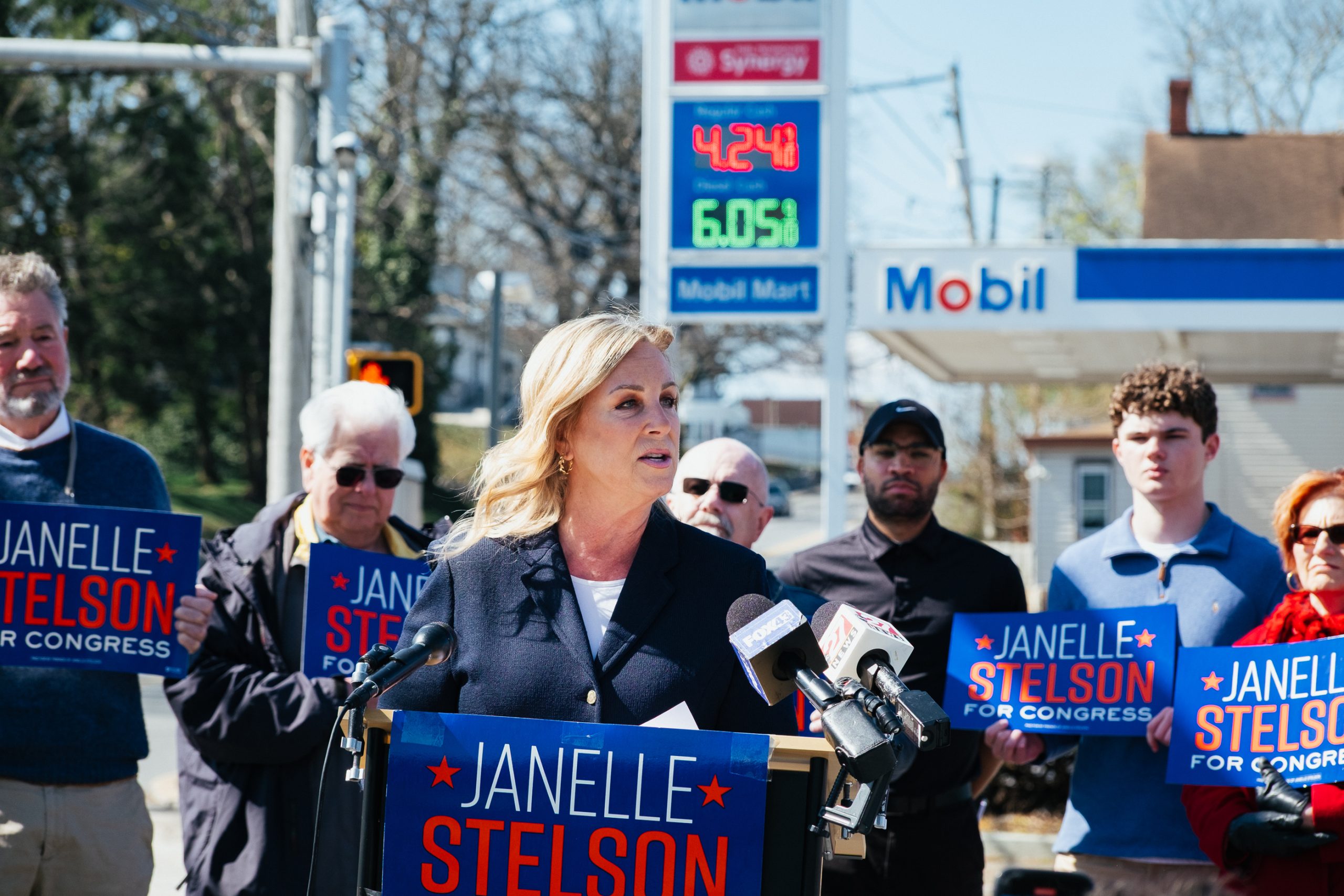
    Janelle Stelson, running to represent Pennsylvania in Congress, campaigns at a gas station. Michelle Gustafson

    In 2024, Stelson raised about $6.5 million during the entire cycle, roughly $2.1 million more than Republican U.S. Rep. Scott Perry, and still lost. Republicans are hoping Perry can prevail again when they have a rematch in November.

    And Republicans see other signs of hope in these races despite Democrats’ momentum. For example, Mackenzie has more than $2.9 million cash on hand, roughly $1.9 million more than Brooks.

    “Republicans remain in a strong position to defend our House majority after excellent quarters by our incumbent Members across Pennsylvania,” Reilly Richardson, a spokesperson for the National Republican Congressional Committee, said in a statement.

  • Inquirer journalist’s notes appeared in files of N.J. Attorney General’s Office in a case against Norcross

    Inquirer journalist’s notes appeared in files of N.J. Attorney General’s Office in a case against Norcross

    An Inquirer staffer’s interview notes came into the possession of the New Jersey Attorney General’s Office during an investigation that led to the high-profile, and recently abandoned, racketeering indictment against South Jersey power broker George E. Norcross III.

    News organizations typically treat unpublished reporting material as confidential and often fight government demands for it in court.

    Inquirer editor and senior vice president Gabriel Escobar on Wednesday confirmed that state investigators had obtained interview notes typed in 2019 by Nancy Phillips, who currently edits the Justice and Injustice Team. The Inquirer “did not turn over notes to state prosecutors” and was never subpoenaed by authorities for them, Escobar wrote in a note to the newsroom.

    “We do not definitively know how the notes ended up with the state, but we do know it was not from us,” Escobar said in response to questions from an Inquirer reporter.

    A person with firsthand knowledge of how the notes came into the possession of the authorities said Phillips had shared the notes with someone outside The Inquirer.

    “Nancy Phillips shared the notes with a third party. It was not for the purpose of sharing the notes with authorities. It was for her own edification,” said the source, who is not an Inquirer employee and requested anonymity due to ongoing litigation threats related to the case. “The state did not receive the notes from Nancy Phillips directly.”

    A second source with direct knowledge of the evidence discovery file related to the Norcross investigation said the interview notes were included in an electronic file titled “Stier Documents.”

    Edwin Stier, a former state and federal prosecutor in New Jersey, has been quoted previously in The Inquirer, including as part of its coverage of Norcross. He is mentioned elsewhere in the discovery file, said the source, who spoke on the condition of anonymity because he was not permitted to publicly discuss the discovery material.

    Stier declined to comment on why his name appears in the evidentiary documents.

    Phillips declined to comment, saying she was “not comfortable talking about the process of newsgathering.”

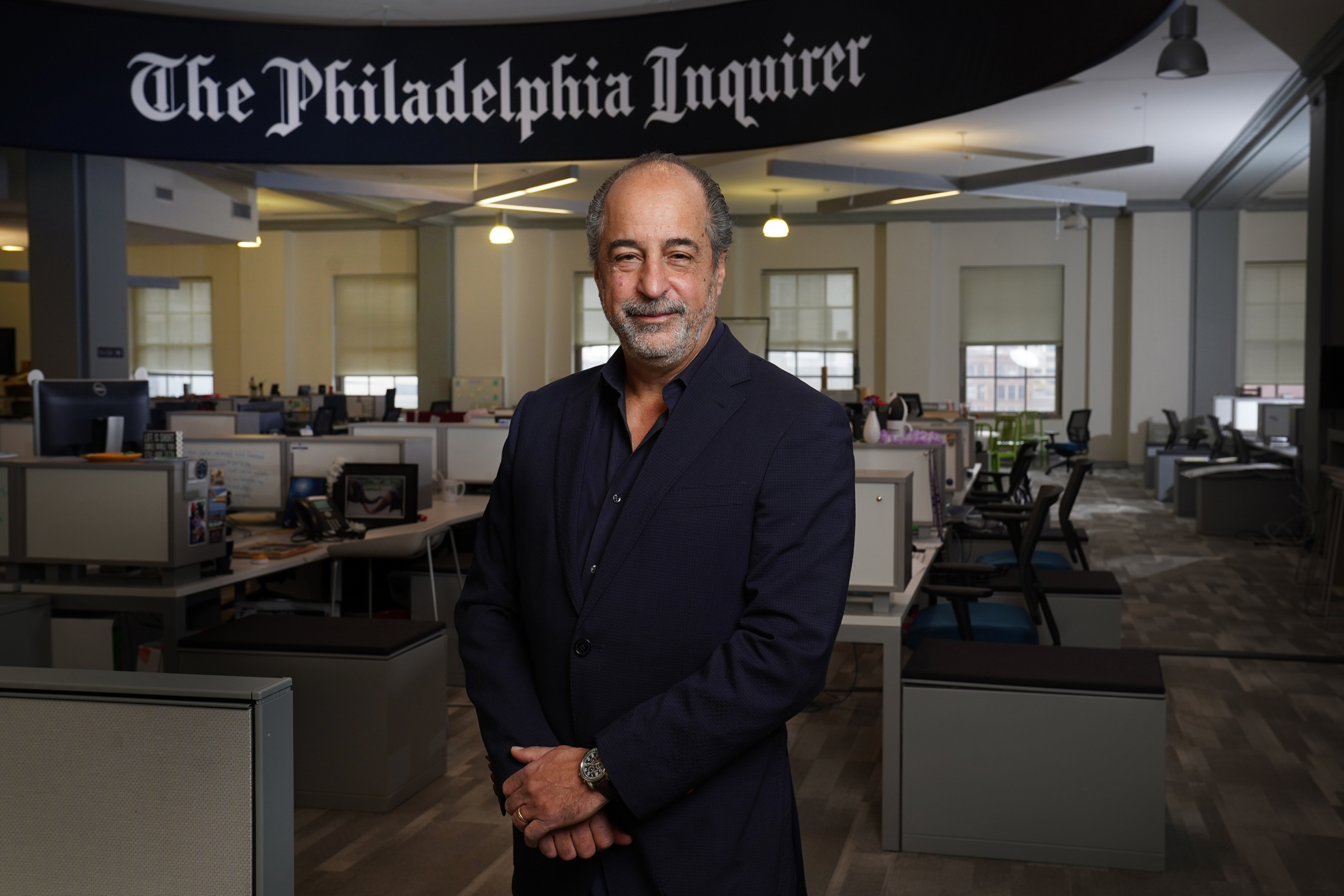
    Gabriel Escobar became The Inquirer’s top editor in 2020.JESSICA GRIFFIN / Staff Photographer

    Escobar — who joined The Inquirer in 2007 as metropolitan editor and was appointed its top editor in 2020 — declined to respond to questions about whether Phillips shared the notes with anyone outside the newsroom, including Stier. Escobar did not respond to a request for a phone interview and instead answered questions in writing.

    ‘False and outrageous’

    BigTrial, a blog authored by former Inquirer reporter Ralph Cipriano, first reported on Wednesday that the 10-page typed interview notes were in the state’s hands. Norcross’ legal team obtained the notes from the state through evidence discovery, and Norcross is considering a lawsuit against the state for malicious prosecution, BigTrial reported.

    The notes do not indicate the name of the author but appeared to summarize August 2019 meetings between a journalist and longtime Cherry Hill mayor Susan Bass Levin, who shared information critical of Norcross, according to the BigTrial report. Bass Levin is the former president and CEO of Cooper University Health System’s Cooper Foundation, where Norcross serves as a board member.

    “I have never seen the notes,” Bass Levin said. She declined to comment further.

    An Inquirer reporter was not able to obtain a copy of the notes. Escobar said he did not have a copy of them.

    Cipriano’s report claims that there are “only a couple possible explanations” for how prosecutors obtained the notes: The Inquirer supplied the notes in response to a subpoena; or Phillips was “voluntarily helping the investigators trying to pin a racketeering indictment on Norcross and associates.”

    Cipriano included no evidence to support either claim.

    In his email to the newsroom, Escobar wrote that Cipriano’s theories amounted to “unfounded and irresponsible speculation.”

    “Speculation that Nancy Phillips, who has a long and distinguished track record as a reporter and editor, was working with state prosecutors is both false and outrageous,” Escobar wrote. “When we learned that state investigators had the notes, we conducted an inquiry and determined that the material was not provided to them by The Inquirer.”

    He declined to give further details.

    (Escobar recused himself from involvement in this story, as did the reporters and editors who led The Inquirer’s coverage in 2019 of the investigation into Norcross.)

    Asked whether Phillips or any other staffer had faced discipline after the internal inquiry, Escobar wrote: “We do not comment on personnel matters.”

    Norcross spokesperson Dan Fee said Norcross’ legal team was not aware of how the state obtained the notes.

    The New Jersey Attorney General’s Office declined to comment.

    The Norcross investigation

    New Jersey state prosecutors, led by then-Attorney General Matthew Platkin, in 2024 indicted Norcross and five others in a racketeering case centered on alleged corruption in economic development tax breaks for projects connected to Norcross in Camden.

    A judge in 2025 dismissed the charges. The prosecution, now led by acting Attorney General Jennifer Davenport, effectively dropped the case earlier this year when it declined to appeal a state appellate court decision upholding the dismissal.

    Beginning in 2019, Inquirer reporters Andrew Seidman and Catherine Dunn wrote a series of articles on the tax break deals and the investigation into Norcross.

    Norcross spokesperson Fee said Seidman told him at the time that Phillips was not involved in the coverage. Phillips had a longtime romantic relationship with the late New Jersey billionaire Lewis Katz, who clashed with Norcross when both were co-owners of The Inquirer in the early 2010s.

    The combination of the notes and subsequent stories in The Inquirer indicate that Phillips had not just met with Bass Levin but also passed her notes to the reporters covering the story, showing that Phillips did play a role in coverage of Norcross, Fee said.

    Fee said Wednesday that Escobar’s statement “confirms the two most important things in the BigTrial story: Nancy Phillips’ notes ended up in the hands of prosecutors and that despite her bias against George Norcross being clear and known, Phillips was part of the reporting on stories involving him.”

    He called on Inquirer leadership to conduct a “public investigation” and questioned whether “there will be some effort to cover everything up.”

    Cipriano’s report quoted brief portions of the notes, including that Bass Levin suggested requesting certain public records, and that an Inquirer reporter later requested those records.

    Escobar’s note to the newsroom Wednesday said that Phillips “was not directly involved in the [Norcross] coverage but served as a conduit for information only she could access.”

    “Nancy has established a network of sources in her long career, and the information she has been able to gather has aided our journalism across many fronts,” Escobar wrote. “In 2019, she was approached by a source who was offering unique insights on a significant and running story. Nancy conducted an interview, typed up the notes, and then shared them with two Inquirer reporters who were working on the story.”

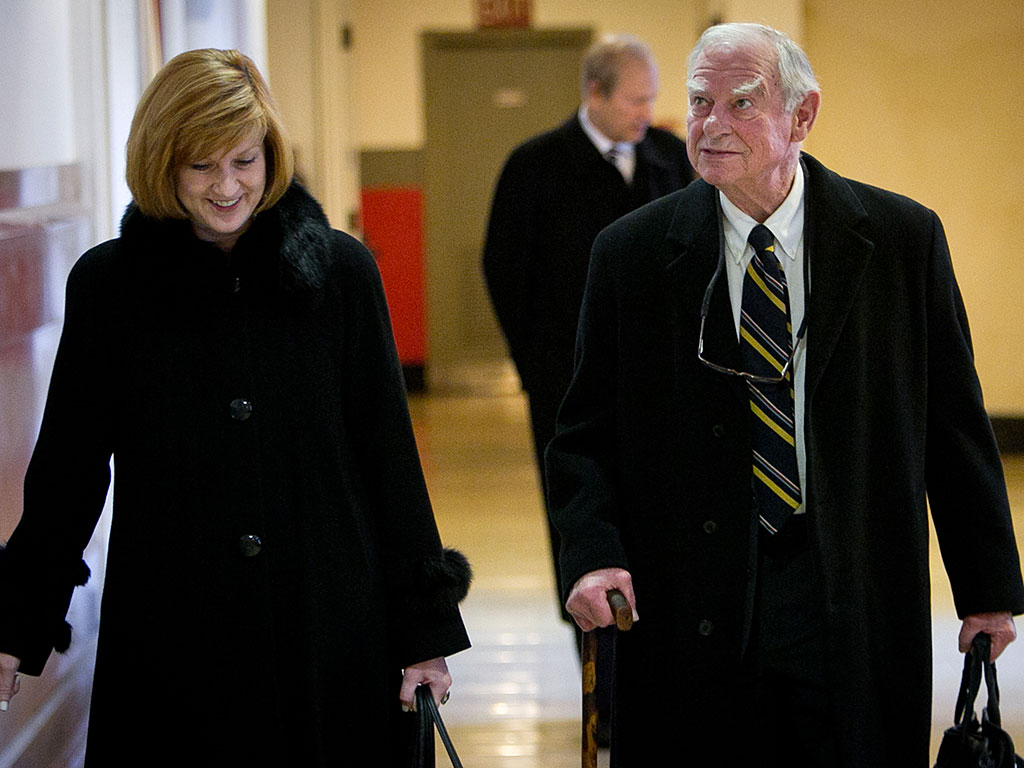
    Inquirer staffer Nancy Phillips walks alongside H.F. “Gerry” Lenfest, the newspaper’s late owner. ALEJANDRO A. ALVAREZ / Staff Photographer

    Cipriano, Norcross, and Phillips each have complicated Inquirer tenures.

    Cipriano, who was fired from The Inquirer in 1998, sued his editor for libel following a dispute over his coverage of the Archdiocese of Philadelphia. The suit was settled in 2001 with both sides declining to disclose the terms of the agreement, according to a New York Times report. Cipriano frequently criticizes The Inquirer’s coverage and its reporters and editors on his blog.

    Norcross was a co-owner of The Inquirer from 2012 to 2014, a tumultuous period in which he battled with Katz over control of the company.

    And Phillips, who scored legendary scoops as a crime reporter and now edits the Justice and Injustice Team, was involved in a relationship with Katz during his public fight with Norcross.

    Katz and cable mogul-turned-philanthropist H.F. “Gerry” Lenfest ultimately prevailed in the dispute over who would own The Inquirer. Katz died in a 2014 plane crash, just days after he and Lenfest bested Norcross in an auction organized to settle the ownership matter. (The Inquirer since 2016 has been owned by the Lenfest Institute for Journalism, a nonprofit endowed by its namesake before he died in 2018.)

    Camden coverage

    Escobar, who did not become The Inquirer’s top editor until a year after Phillips’ meeting with Bass Levin, said that he “did not have firsthand knowledge” of any arrangement barring Phillips from involvement in Norcross coverage.

    “But I could see a situation where a judgment call was made that placed priority on gathering information in a limited way,” Escobar said.

    He added in a separate response: “Gathering information from all quarters on a story always yields better and more complete journalism and, as the [newsroom] note says, this particular source was in a position to know and would only provide it to Nancy.”

    At the time of the 2019 interview, Phillips was a deputy regional editor overseeing reporters covering the Pennsylvania and New Jersey suburbs. In that role, Phillips would not normally be involved with stories concerning the Norcross investigation, which was handled by reporters from the politics and business desks.

    In a statement, Seidman noted that Norcross and the Camden tax breaks became a matter of public debate in the spring of 2019 and that he and Dunn began their reporting in May of that year — three months before Phillips met with Bass Levin.

    “Our reporting was based on interviews, emails, bank documents, property records, appraisals, and other government documents,” Seidman said. “I stand by it 100%.”

    Dunn, who left The Inquirer in 2022 and has been a reporter at Barron’s for about four years, declined to comment.

    Fee said he repeatedly disputed Seidman’s and Dunn’s coverage of Norcross, including an October 2019 article Cipriano highlighted regarding a land deal in Camden.

    The Inquirer publishes corrections when it discovers that its reporting contained factually inaccurate information. No corrections were made to the 2019 article.

    Former Inquirer editor John P. Martin, who was the lead editor on that story, said he and the reporters “talked at length with Mr. Norcross’ spokesman and several lawyers representing him.”

    “At no point, to my recollection, did Nancy Phillips offer input, advice, editing help, ask questions, or even engage in small chat about that story or any involving Mr. Norcross,” said Martin, who is now with Bloomberg.

    Escobar concluded his note to the newsroom by saying the episode offered “an important lesson.”

    “The information we gather in the course of reporting should always be safeguarded,” he said. “And no matter how well established a source-reporter relationship is, each interaction should establish clear parameters for the use of the information.”

    Asked for clarity on how those comments related to prosecutors obtaining Phillips’ notes, Escobar wrote: “The notes ended up with the state so something went awry. That part of the message is intended as a general reminder and not specific to the circumstances.”

  • Doug Mastriano wouldn’t say if he believes all American leaders should be Christian as he’s vetted for an ambassadorship

    Doug Mastriano wouldn’t say if he believes all American leaders should be Christian as he’s vetted for an ambassadorship

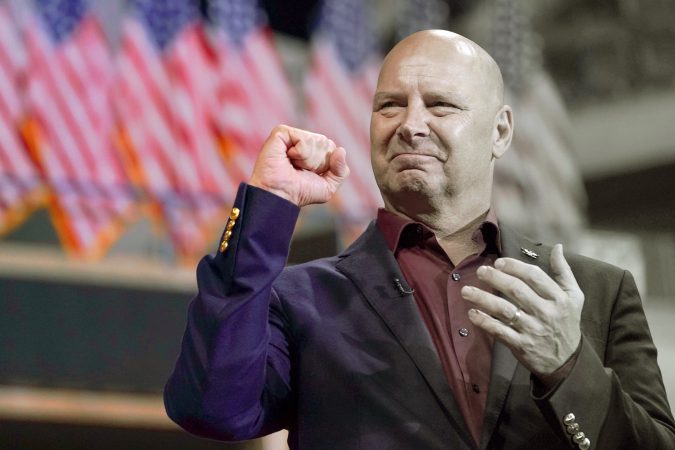
    WASHINGTON — Doug Mastriano, the far-right Pennsylvania lawmaker whom President Donald Trump nominated to become the U.S. ambassador to Slovakia, refused to tell senators during his confirmation hearing on Thursday whether he believes all American political leaders should be Christian.

    A key Trump ally during the president’s attempt to overturn the 2020 election, Mastriano also rejected claims that he is a conspiracy theorist who assisted in the Jan. 6, 2021, attack on the U.S. Capitol.

    And while he said he regretted some of his past statements about the Holocaust and his associations with individuals considered antisemitic, he repeatedly pushed back on Democratic senators’ concerns about his fitness for the role.

    “I’ve never been involved in conspiracies,” he said during a heated exchange with U.S. Sen. Tim Kaine (D., Va.), who at different points referred to Mastriano as “gullible” and someone who needs to “look in the mirror a little bit.”

    Trump nominated Mastriano for the ambassadorship in May.

    The Republican state senator from Franklin County is a retired U.S. Army colonel who deployed three times to Afghanistan after 9/11 and previously served in Eastern Europe.

    He was the Republican nominee for Pennsylvania governor in 2022 with Trump’s backing, but he lost to Democrat Josh Shapiro by nearly 15 percentage points. Mastriano’s nomination for the ambassadorship came as his supporters were promoting him as a write-in candidate for governor ahead of the May Republican primary, in which Treasurer Stacy Garrity was unopposed.

    U.S. Sen. Dave McCormick (R., Pa.), who pushed for Mastriano’s nomination and chaired his confirmation hearing during the Senate Foreign Relations Committee hearing Thursday, said Mastriano’s military career made him “highly qualified” for the role.

    “This position needs a leader with strategic judgment, intimate knowledge of NATO’s inner workings, and firsthand experience working alongside our allies with an unwavering commitment to advancing America’s interest,” McCormick said during the hearing. “Doug brings that experience, and I’m confident that he’ll represent the United States with great professionalism and integrity.”

    Mastriano also leaned on his experience, which he said involved planning operations in the Baltic states and fending off Russian aggression. He said he hoped to strengthen America’s relationship with Slovakia and encourage the country to contribute to Ukraine’s defense.

    But Democrats on the committee said they had serious concerns about both Mastriano’s past comments on foreign policy and a range of other issues — including an ideology that has been described as Christian nationalist.

    U.S. Sen. Jacky Rosen (D., Nev.) said Mastriano had spoken often about his Christian identity and his belief that the separation of church and state is a “myth.” Rosen, who is Jewish, asked Mastriano to look her in the eye and say whether all U.S. political leaders should be Christian.

    Mastriano said that he believed “religious liberty applies to every American” and that it was “why our country was founded.” After Rosen said it was “deeply problematic” that he would not say America is a pluralistic nation where leaders do not need to be Christian, Mastriano responded, “I will look you in the eye and repeat even simpler language” — though he did not answer the original question.

    “We are absolutely a pluralistic society and I have worked for non-Christians in the military and the government, and I’ve had them working for me,” Mastriano added.

    Rosen also questioned him about previous comments comparing abortion and his loss to Shapiro in the 2022 Pennsylvania governor’s race to the Holocaust.

    “There was a social media post that I would not post today,” Mastriano said, calling any comparisons to the Holocaust “unwise.”

    Asked about his associations with Andrew Torba, founder of the online platform Gab, which has been used to share extremist and antisemitic views, Mastriano said he “immediately” returned a campaign donation from Torba and cut off advertising on the platform when he learned about the Gab founder’s views.

    “You can denounce your past associations with antisemites. You can point to your support of Israel,” Rosen said. “But for me, I’m not sure that either excuses you or erases your record.”

    U.S. Sen. Jeanne Shaheen (D., N.H.) questioned Mastriano while displaying a giant poster with his picture and a 2018 quote in which he said European Union leaders were “political, diplomatic enemies of the United States of America.”

    She said staff who had interviewed him recently had also quoted him as saying he believed the European Union was a “rising rival comparable to China and that it would eventually create a standing army to challenge the United States.” Visibly frustrated during her questioning, Shaheen said that the EU should be treated as allies, not rivals, and that Mastriano “should absolutely know better.”

    The most contentious exchange came between Mastriano and Kaine, who started by saying that he respected the nominee’s military service and that the nomination brought him “a real sense of sadness.”

    “You’ve associated with antisemites and Holocaust deniers. You’ve associated with 9/11 conspiracy theorists. You’ve made comments about foreign leaders that are not diplomatic in quality. And you and I share a very special day in American history,” Kaine said. “We were both here on Jan. 6, 2021.”

    Mastriano was Trump’s top ally in Pennsylvania as the president contested his 2020 election loss to Democrat Joe Biden. He worked both publicly and privately to contest the vote, and he was near the Capitol on the day that a mob broke in to stop the certification of the results. The Republican lawmaker was not charged with a crime related to any of those activities, which he reminded Kaine about on Thursday.

    “That is incorrect,” he said as Kaine pressed and said he had been at the Capitol to overturn the results. “I was here to hear the president. I was here with my wife to hear the president of the United States speak. We didn’t do anything illegal. We came, we saw, we left.”

    Asked if he would say, now, that Biden had won the election, Mastriano said only that Biden had been certified as the winner — a phrase that other Trump nominees have used in nomination hearings and that Democrats have described as a pre-negotiated script to appease a president who still stands by the fraudulent claims.

    “Conspiracy theorists generally are gullible people. They might have master’s degrees and Ph.D.s, and you’ve got them,” Kaine said to Mastriano, referring to his degree in history.

    “I don’t know what you’re talking about, senator,” Mastriano said, denying that he subscribes to conspiracy theories as the two talked over each other.

    Kaine said Mastriano could claim, if he wanted, that he only held a public hearing on the 2020 election — an event in Gettysburg that helped spread false claims that there was widespread fraud in the election — but he could not erase his record.

    “No, sir, there’s no erasing,” Mastriano said. “Facts are stubborn things.”

  • Trump’s teleprompter operator on unpaid leave for alleged prediction market bets on Trump speeches

    Trump’s teleprompter operator on unpaid leave for alleged prediction market bets on Trump speeches

    ATLANTA — President Donald Trump’s teleprompter operator is on unpaid leave after reports that he used his inside knowledge to make bets about the president’s speeches on the online prediction market Kalshi, the White House said Thursday.

    The firm’s enforcement chief said Kalshi contacted federal regulators about bets allegedly made about what the president would say in public addresses.

    White House press secretary Karoline Leavitt said the president is aware of the situation, which she described as “unfortunate” and “a disgrace.”

    “The White House has extremely strict ethical guidelines with respect to issues like this,” Leavitt told reporters, saying the aide is on unpaid leave.

    ABC News reported Thursday that Gabriel Perez, who has been operating Trump’s teleprompter since 2016, used his inside knowledge to win more than $100,000 betting on what the president would say in big speeches, including the State of the Union address earlier this year.

    Robert Denault, Kalshi’s lawyer and head of enforcement, said on X that the “Kalshi surveillance team promptly flagged, investigated and referred these trades” to the U.S. Commodity Futures Trading Commission that has regulatory authority over such matters.

    His statement did not name Perez.

    “We have been assisting regulators on this matter and provided all evidence that we collected, as we do with any referral,” Denault added.

    ABC based its report on multiple sources who have knowledge of the matter but spoke on condition of anonymity to discuss the details.

    The ABC report described suspicious activity on Kalshi’s “Mentions” market, in which users can place bets on what phrases and specific words might be used in public speeches. Kalshi recently began requiring users to disclose their place of employment, and the platform’s policy prohibits betting based on information that users gain because of their job.

    Attention on members of the administration profiting from the presidency has reached all the way to Trump himself.

    On Thursday, his media company announced it would charge for special high-speed access to Truth Social posts, including possibly his own affecting national security and financial markets.

    In his most recent financial disclosures, Trump reported making $1.2 billion from his crypto businesses in 2025, raking in profits while his investors suffered losses in marketplaces that Trump has sought to shield from tighter federal regulation.

    Trump got more than $500 million from his World Liberty Financial business selling new crypto products, including “governance tokens,” according to the required annual disclosure report with the Office of Government Ethics. It also showed another crypto business, CIC Digital LLC, took in more than $600 million from sales of souvenir-type “meme” coins stamped with his face. Both the tokens and the coins have plunged in value since the sales.

    The president has also profited from merchandising deals and high-dollar political and official events at his properties, significantly increasing his net worth since returning to power.

    Trump’s aides have stood by his personal and family business practices.

    “The president is abiding by all conflict-of-interest laws that are applicable to the president,” Leavitt said earlier this year. It’s “absurd for anyone to insinuate that this president is profiting off of the presidency.”

  • Blanche to meet with Epstein accusers after demand from Republican senator crucial to confirmation

    Blanche to meet with Epstein accusers after demand from Republican senator crucial to confirmation

    WASHINGTON — Acting Attorney General Todd Blanche was expected to meet Thursday with accusers of Jeffrey Epstein after a key Republican senator said it was necessary to earn his support for Blanche’s nomination to lead the Justice Department.

    Sen. Thom Tillis had indicated during Blanche’s confirmation hearing on Wednesday that he was leaning toward backing Blanche, who has been leading the department in an acting capacity since April. But after an Epstein accuser testified a day later, Tillis said he expects a meeting to occur before he’s “willing to vote out of this committee.”

    Shortly after Tillis’ remarks, Blanche — who had been meeting with senators on Capitol Hill — told reporters he had tried to meet the Epstein accusers in a Senate office building but “it didn’t work out” and they were working to coordinate schedules. The Justice Department said later that the meeting was rescheduled for Thursday afternoon, adding: “He looks forward to their discussion.”

    “The Department of Justice will always meet with victims or their representatives, and if those victims or their representatives have evidence that anybody committed a crime — whether it has to do with Jeffrey Epstein or anybody else — we will of course move forward and investigate and prosecute,” Blanche told reporters.

    Epstein’s case and the Justice Department’s handling of millions of files related to his sex trafficking investigation have been a persistent political headache for the Trump administration.

    After missteps by then-Attorney General Pam Bondi that enraged Trump’s base, Blanche as deputy attorney general oversaw a massive review and release of millions of files related to the investigation into the disgraced financier with connections to wealthy and powerful people.

    Without Tillis’ support, Blanche’s nomination won’t make it through the Senate Judiciary Committee, which questioned Blanche for hours on Wednesday about the Epstein files as well as the creation of a fund to compensate Trump’s allies, a tax immunity deal for the president and a slew of other issues.

    Another Republican on the committee who says he has not made up his mind whether to support Blanche — Sen. John Cornyn — conveyed concerns that the Trump administration has yet to commit in writing that the fund is dead and could therefore conceivably be resurrected.

    One Epstein accuser, Dani Bensky, told lawmakers earlier Thursday that women harmed by Epstein repeatedly asked to meet with Blanche “through multiple channels and he never responded.”

    “We deserve to be heard directly, not dismissed and ignored,” Bensky said.

    Blanche has pushed back on suggestions that the Justice Department has been dismissive of the late financier’s accusers, saying Wednesday that officials have spoken with more than 30 representatives of the women over the course of its sweeping review of the files.

    Blanche has also defended the department’s staggered release of the Epstein files, a process beset by problems, including redaction errors that left exposed nude photos showing the faces of potential victims.

    Blanche said during his confirmation hearing on Wednesday that he takes responsibility for mistakes that were made, but noted that department lawyers were given a “herculean task” to quickly review millions of files for release. Blanche said department lawyers took pains to protect the women involved, and quickly fixed any errors that were found.

    “I am sorry that in about 1% of the documents mistakes were made,” Blanche said Wednesday. “But what I will say on top of that is we put tons of resources to rectifying those mistakes immediately, including pulling down documents within minutes of being informed that there were mistakes.”

    The political firestorm over the Epstein files dogged the Trump administration for much of last year, with lawmakers eventually passing a measure that compelled the release of a massive trove of documents in the government’s possession related to its investigation.

    The Justice Department began releasing the documents in late December, which included photos, call logs, grand jury testimony, and interview transcripts. The release did little to tamp down skepticism from conspiracy theorists and online sleuths, who have long pushed allegations of a government cover-up, without evidence.

  • White House faces stiff pushback on subjecting grants to political review

    White House faces stiff pushback on subjecting grants to political review

    WASHINGTON — Some of the nation’s top law enforcement officials were not pleased when the White House embarked on its push to assert more political control over more than $1 trillion in annual federal grants.

    The proposal, unveiled in May, stood to enable the administration to steer significant funding to causes and organizations aligned with President Donald Trump — and to cancel grants if recipients did not conform to his political views. That troubled a set of groups representing sheriffs, narcotics officers, and district attorneys, which said this month that the “undefined expectations” in Washington could interfere with public safety.

    The letter was one of roughly 500,000 formal comments that have flooded the Trump administration in recent weeks. Many of the posted submissions expressed misgivings with the draft White House plan to take greater control of federal spending.

    The opposition has been wide-ranging, spanning academic researchers, artists, city leaders, civil engineers, congressional lawmakers, housing experts, state attorneys general and regular Americans, who have warned that the White House could imperil public services if it subjects federal grants to political review.

    The administration proposal, which is not final, targets a vast set of federal funding for climate, education, health, housing, and infrastructure. If carried out, the regulation would require Trump’s political appointees to approve grants before they are awarded to cities, states, nonprofits, and other institutions. The review would primarily aim to ensure that the money supports purposes that “demonstrably advance the president’s policy priorities.”

    Recipients of federal funding would also be subject to broad political handcuffs. Taxpayer dollars could not “promote anti-American values,” for example, or be doled out to nonprofits that engage in some kinds of “issue advocacy” or that have certain “memberships and affiliations.” And a large set of topics would be off-limits, especially for scientists and researchers, who could face some of the most severe restrictions.

    The White House budget office has described the changes as necessary to eliminate waste, fraud and abuse, including spending that the office’s director, Russell T. Vought, deems to be “woke.” To achieve that goal, the administration has adopted an expansive view of its budgetary powers, even though Congress possesses the power of the purse under the Constitution.

    Many recipients of federal grants told the White House over the last two months that the proposed changes could be debilitating and that they cannot afford to have their aid revoked if Trump does not agree with their agenda.

    “This will put a lot of things up in the air,” said Andy Schor, mayor of Lansing, Mich., a Democrat. He added that the plan would affect “policing to housing to all the dollars we get from the feds.”

    Such interruptions have already plagued Schor’s community. The mayor recalled a series of incidents in which federal grants to the city and local nonprofits, including money to address redlining and combat violence, had been interrupted or canceled under Trump.

    Schor said the consequences could be greater if White House officials could more easily cancel a larger set of grants simply because “they suddenly decide they don’t like something.” In that case, the mayor said he would face a dilemma that could force him to choose between “staff we have to lay off or dollars we can’t get into the community for these important things that are needed.”

    A spokesperson for the Office of Management and Budget did not respond to a request for comment.

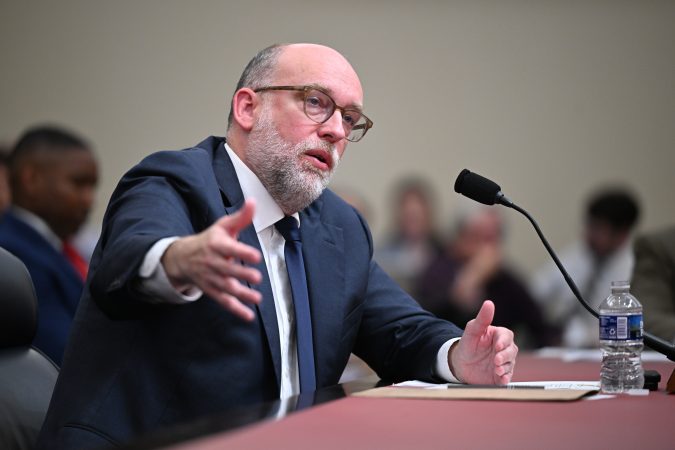
    Testifying at a Senate hearing Thursday, Vought said the proposal aimed to ensure “that we have democratic control of the spending that is going out.”

    But the stakes of his approach became clear when Sen. Tina Smith (D., Minn.) asked Vought how the administration might approach federally funded cancer research. She raised the example of a grant devoted to identifying the source of high cancer rates among Black people — and the extent to which the administration would disallow the money because of the president’s long-stated opposition to diversity, equity, and inclusion.

    Vought began by saying the White House was “against DEI policies,” adding, “How that would impact with that particular grant would be a decision for a political official, policy official, at NIH,” referring to the National Institutes of Health. He said administration appointees would “make the final decisions,” though they would take expert views into account.

    Smith said that revealed the “absurdity and the bias of this proposed rule, and the danger of what happens when you bring political ideology into grant-making processes, particularly around healthcare.”

    The proposed rules are the latest step in Trump’s contentious campaign to recalibrate how the government spends its money. With the help of Vought, the administration has fired thousands of federal workers while taking steps to hold up or cancel billions of dollars in congressionally approved aid, arguing that the spending was unnecessary or misaligned with Trump’s beliefs.

    Lawmakers from both parties sharply criticized some of Trump’s moves, and federal judges have repeatedly declared the president’s actions illegal. Yet the White House has continued pressing ahead and has taken steps to formalize some of its practices with its proposal targeting federal grants.

    The roughly 400-page blueprint, which the White House aims to put into effect in October, quickly stoked broad opposition.

    In Pennsylvania, the United Way, a network of nonprofit providers, warned that the grant rules could create “unpredictable financial and legal risks” for organizations that provide food, housing and other essential services. The group warned that those entities probably did not have the resources to comply or contest the government’s proposed restrictions.

    The Los Angeles County Department of Arts and Culture took issue with the way the administration tried to restrict the political activities of grant recipients. The agency said that approach could “chill free speech, creative expression, and activities supportive of diverse cultures and communities,” including at museums.

    The National Sheriffs’ Association and other law enforcement groups said they did not have the resources to incorporate all of the changes the White House had envisioned. A national network of civil engineers said the plan would impinge on its ability to collaborate with foreign counterparts on infrastructure research.

    And scientists, researchers and health providers expressed some of the loudest opposition. More than 300 organizations — many representing practitioners working on cancer cures, ALS and HIV treatments and pediatric medicine — urged the Trump administration to slow down because of the risks to their work and patients.

    The White House proposal reserved some of its strictest rules for academics funded by federal dollars. It aimed to limit the research they pursue, the conferences where experts can appear, and the organizations and foreign labs with which they are allowed to collaborate.

    Entire research areas would also be restricted if the rules were to take effect as drafted: Grants could not support work related to diversity, equity or inclusion, for example, or projects or groups that “deny the biological reality of sex or the sex binary in humans.”

    The strictures amounted to a major “escalation” from the president’s previous attempts to slash and control funding at agencies like the NIH and the National Science Foundation, according to Sudip S. Parikh, CEO of the American Association for the Advancement of Science, a nonprofit that promotes scientists.

    “It overemphasizes the political at the expense of scientific opportunities and the needs of the American people,” he said.

    Despite the president’s pursuit of deep cuts, Democratic and Republican lawmakers have ignored the requests and opted to keep most health and science funding intact. So the renewed push by Trump to cement his control over federally funded research enraged many Democrats, who view the proposed regulation as another encroachment of their spending powers.

    Rep. Rosa DeLauro (D., Conn.), who leads her party on the Appropriations Committee, said that the president, if successful, could undermine the idea enshrined in the Constitution that “money is directed based upon the needs of the American people, and that is transmitted through elected representatives.”

    DeLauro also joined with the 11 other House Democrats who serve in leadership positions on key appropriations committees this week to express deep reservations with the administration’s plans. The lawmakers estimated that the White House effort would affect more than $1 trillion every year.

    Democrats were not alone in airing frustration. In a separate letter last week, Sen. Susan Collins of Maine, the Republican chair of the Appropriations Committee who is facing a tough midterm election race, said the White House could imperil much-needed funding in ways that “harm small and rural communities.”

    The proposal drew support among Trump’s conservative allies. Daniel West, the government relations director for Heritage Action, said that some of the backlash had been “hyperbolic” and that he did not expect the White House budget office to retreat.

    “Everything I’ve seen indicates that OMB cares deeply about ensuring the proper stewardship of federal dollars, and they are moving this rule with that intention in mind,” West said.

    Some opponents still seemed to be readying for a legal battle. Citing the implications for education, healthcare, housing, science and other “critical services to hundreds of millions of people,” a group of governors and attorneys general from two dozen states told the White House on Monday that its proposed changes to grants would violate the Constitution. Many of the same states, including New York, California, and Colorado, have successfully fought Trump in the past over budget cuts enacted without the express permission of Congress.

    “The rule offends the Constitution,” the states argued at one point in their missive.

    This article originally appeared in The New York Times.