Category: Politics

  • The largest teachers union in Pennsylvania endorsed Brian Fitzpatrick in high-stakes Bucks County reelection bid

    The largest teachers union in Pennsylvania endorsed Brian Fitzpatrick in high-stakes Bucks County reelection bid

    The largest union representing Pennsylvania teachers and school support staff, including most in Bucks County, has endorsed Republican U.S. Rep. Brian Fitzpatrick in his high-stakes reelection bid to represent the key swing district.

    The Pennsylvania State Education Association, by way of its affiliate National Education Association, informed Fitzpatrick of the organizations’ endorsement in a letter Friday, telling the Bucks County lawmaker that “you have demonstrated a commitment to collaboration and problem solving, earning respect for constituents across the political spectrum.”

    “We value the relationships you have built with the public school employees throughout the district and your efforts to support policies that strengthen public education and protect the rights of working people,” wrote Aaron F. Chapin, the president of PSEA, which is also the largest labor union in Pennsylvania.

    Fitzpatrick, who is facing a challenge from Democratic County Commissioner Bob Harvie in the 1st Congressional District, is the only GOP candidate for federal office to be recommended by the NEA this year, according to its website.

    The NEA and PSEA have endorsed Fitzpatrick before, but in a crucial election year, when party control of the U.S. House is on the line, the organizations are the latest labor unions to not leave Fitzpatrick’s side.

    Harvie spent two decades as a social studies teacher and department chair at Bucks County Technical High School. He has received backing from the American Federation of Teachers Pennsylvania, which is affiliated with union locals in higher education, the School District of Philadelphia, and Bucks County’s Neshaminy School District. He has also been endorsed by Transport Workers Union Local 234, representing SEPTA employees. His campaign is expecting additional support from labor in the coming months.

    Fitzpatrick, in a statement, said that he is “deeply honored to earn the trust of the educators and school employees who serve our children and hold our communities together.”

    “They see the challenges facing students before those challenges ever reach Washington,” he said. “They know what is working, what is failing, and what our schools need to give every child a real opportunity to succeed.”

    The 1st Congressional District, which represents all of purple Bucks County and a sliver of Montgomery County, is one of four critical Pennsylvania swing districts that both parties are eyeing this year as they battle for control of the U.S. House.

    PSEA represents nearly 95% of the local school district unions in the 1st Congressional District, amounting to 11,489 public school employees, retirees, and educator-hopefuls, Chapin said.

    The endorsement comes after both Harvie and Fitzpatrick posted their most recent fundraising hauls.

    Between April 30 and June 30, Fitzpatrick spent nearly $2 million and raised more than $1 million, bringing his total gathered to $6.7 million. Harvie spent $360,000 during that time and raised almost $552,300, pushing him just over $2 million raised for the entire span of his campaign.

  • The SEPTA special prosecutor in Philly is set to expire this year. Will state lawmakers extend it into Larry Krasner’s third term?

    The SEPTA special prosecutor in Philly is set to expire this year. Will state lawmakers extend it into Larry Krasner’s third term?

    The special prosecutor for crimes on or near SEPTA property will be funded through the end of the year as part of the newly approved state budget, Pennsylvania lawmakers said this week.

    After that, the office’s fate is uncertain.

    The controversial position is set to expire in December. It was championed by GOP lawmakers in Harrisburg, who for years have tried to limit Philadelphia District Attorney Larry Krasner’s powers and contended that the position was necessary because Krasner failed to prosecute crimes on the state’s largest transit system.

    Legislators set aside another full year of funding for the office — $1.2 million — but haven’t agreed whether they will extend it further into Krasner’s third term, which began in January.

    Senate Majority Leader Joe Pittman (R., Indiana), the top Republican leader in Pennsylvania’s split legislature, where Democrats narrowly control the state House and Republicans lead the state Senate, said Democratic leaders repeatedly rejected GOP efforts to extend the position as part of the closed-door budget talks.

    Krasner’s office has strongly opposed the law that created the special prosecutor position, calling it a “shocking usurpation of power” that unconstitutionally singled out Philadelphia and stripped an elected officials’ authority.

    He could not be reached for comment Thursday.

    The post has also faced opposition from Philadelphia-area lawmakers who say the effort is an affront to city voters who have reelected Krasner, a progressive prosecutor, three times.

    “This is nothing more than voter suppression and an attempt to circumvent some of the extremely popular criminal justice reforms under this DA,” said Sen. Nikil Saval (D., Philadelphia), who chairs the city’s Senate delegation to Harrisburg.

    Pittman, by contrast, said extending the special prosecutor is a critical component for Senate Republicans to agree to a new long-term funding source for SEPTA, which is approaching another fiscal cliff that could cause service disruptions when the state’s current short-term fix runs out next year.

    Asked about the future of the special prosecutor’s office, House Majority Leader Matt Bradford (D., Montgomery) said at Shapiro’s budget signing earlier this week that he hadn’t “given it much thought.”

    Pennsylvania Attorney General Dave Sunday, a Republican who is tasked with overseeing the office, has lauded the special prosecutor’s work so far.

    He said his office supports extending the position, calling it a “force multiplier” that has been effective in combating violent crimes against both SEPTA employees and riders.

    “Our caseload reflects a range of very serious conduct — including murder and aggravated assaults — and we have secured results through convictions,” he said.

    In one example of that effort, the special prosecutor will oversee the case of a 22-year-old woman charged with simple assault after authorities said she pepper-sprayed and punched a conservative social media influencer during a viral confrontation on a SEPTA bus.

    While legislators approved the special prosecutor’s office in 2023, it has been mired in legal challenges from the district attorney’s office in years since and did not begin taking on cases until last year.

    Some House Democrats supported creating the role in 2023, as part of a state budget deal with the Senate GOP and Democratic Gov. Josh Shapiro, who was critical of Krasner when he served as attorney general.

    Saval said Democrats shouldn’t use the position as a bargaining chip again.

    “House Democrats who voted to suppress the will of Philadelphians should be ashamed of themselves, and should not support other attempts to do so,” Saval added. “This has nothing to do with the essential task at hand, which is to secure funding for mass transit.”

    A spokesperson for Bradford said the House needs to “take a critical look” at whether the SEPTA special prosecutor is necessary. She noted SEPTA’s success in reducing crime and the size of its police force, but said the money used to fund the position may be better spent to reduce fare evasion by replacing gates to full-length ones that cost $40,000 each.

    The funding was approved in the 2026-27 fiscal year budget “in the case of reauthorization,” and would be used to wind down the office, said Beth Rementer, Bradford’s spokesperson. Any unused funds would be returned to the general fund, she said.

    A spokesperson for Shapiro declined to comment on the prosecutor role, but said Senate Republicans “need to do their jobs” to find a long-term funding solution for mass transit.

    The office

    The office is overseen by Special Prosecutor Michael Untermeyer, a former deputy attorney general and real estate investor who ran against Krasner in the 2017 primary.

    Untermeyer did not respond to a request for comment.

    The single lawyer employed by his office is investigating about 15 cases, including charges of homicide, aggravated assault, and robbery, according to a spokesperson for the attorney general’s office. That figure does not include cases the special prosecutor is considering taking on or are still under investigation, the spokesperson said.

    Lawmakers could still choose to extend the position as part of their fall legislative session. It is among the several time-sensitive issues before the General Assembly ahead of the November election, in which Democrats hope to flip control of the state Senate for the first time in decades.

    Krasner’s office has challenged the special prosecutor role from the beginning. His office filed a lawsuit in 2024 in an attempt to nullify the law, but was rebuffed by a 4-3 Commonwealth Court ruling that said legislators had not violated the state constitution in creating the post.

    The office then appealed to the state Supreme Court, which has yet to decide the matter. As the high court heard oral arguments in the case last year, justices cited the Pennsylvania Constitution when suggesting that the legislature had been free to pass such a law, even if it interfered with the duties of an elected county official.

    And lawyers for the attorney general’s office argued that the special prosecutor role did not strip Krasner’s power, but rather offered additional powers to a prosecutor appointed by the attorney general to handle cases involving crimes in and around SEPTA property.

  • Trump administration ups security at President’s House after exhibit swap, citing ‘safety concerns’

    Trump administration ups security at President’s House after exhibit swap, citing ‘safety concerns’

    After quietly installing a new exhibit at the President’s House overnight this week, President Donald Trump’s administration is upping security at the embattled site on Independence Mall.

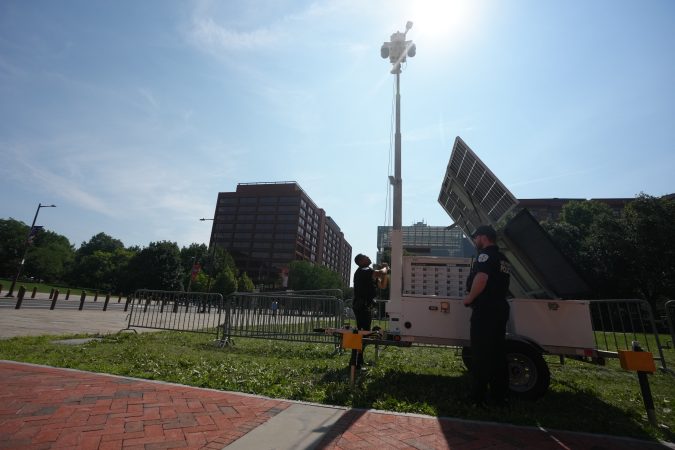
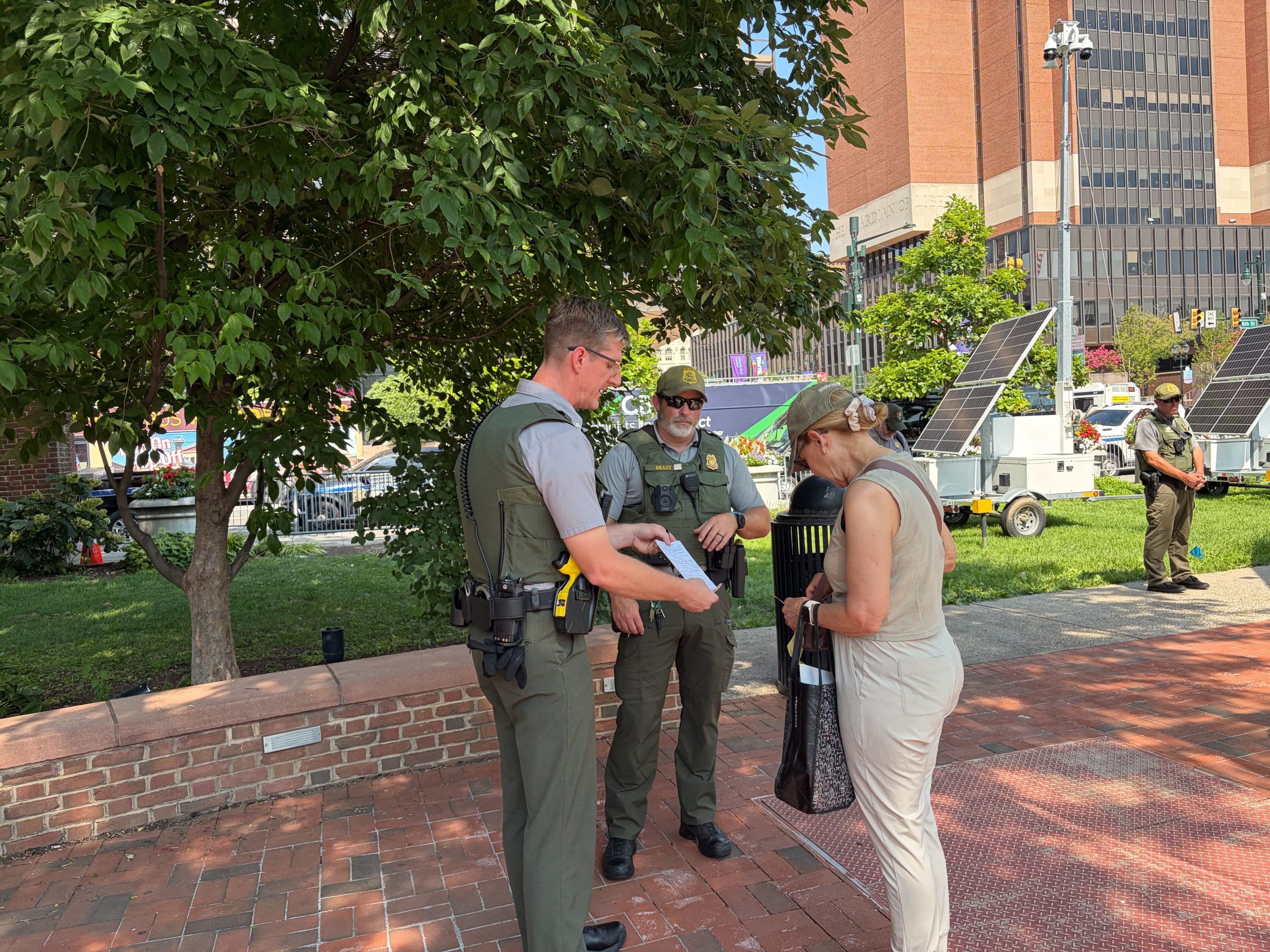
    George Washington’s Philadelphia mansion is flanked by three mobile surveillance trailers. And in an unusual deployment, U.S. Park Police officers in black uniforms are guarding the site alongside National Park Service rangers, who are a familiar fixture at Independence National Historical Park.

    Security is necessary for reducing the risk to the park’s staff and visitors after the installation of new panels to replace the slavery exhibit the Trump administration removed in January, the department said in a notice of intent to make an urgent purchase of two surveillance trailers published Thursday on a federal database.

    “The replacement of these interpretation panels is creating a lot of security concerns … because it requires 24/7 monitoring to ensure the panel replacement is completed, and prevent and limit potential damages outside of normal park operations,” the Department of Interior said in its justification to not review multiple bids.

    The Interior Department intends to purchase the surveillance equipment from Verkada Inc., a California-based security systems company, through distributor Carahsoft Technology Corp.

    The published notice does not include a cost estimate but indicates it will be more than $50,000.

    Park employees installed two surveillance trailers on the west side of the site last week, which they said were for MLB All-Star Game events nearby. In the early morning after the game, the Trump administration swapped the President’s House exhibit.

    The two trailers remained at the very politically sensitive President’s House Site, as the Interior Department refers to it in new public records.

    Park Police officers installed a third on the east side of the site Wednesday morning.

    The presence of Park Police at the site is also a notable change.

    Officer O’Hanlon’s uniform at the site of the President’s House on Thursday.Aidan T. Gallo / Staff Photographer

    The federal law enforcement agency was established by Washington in 1791 to protect federal property in the District of Columbia. It has since been absorbed into the Interior Department, but remains located in the New York City, Washington, D.C., and San Francisco metropolitan areas to “investigate and detain persons suspected of committing offenses against the United States,” according to the National Park Service.

    “Officers also carry out services for many notable events conducted in the national parks,” according to Park Service.

    Interior Secretary Doug Burgum placed the force under his direct control in 2025. And the administration has been pushing to hire new recruits as part of an effort to make Park Police “the premier law enforcement agency in D.C.,” the Washington Post reported.

    The National Park Service’s budget justification for this upcoming fiscal year notes that U.S. Park Police are tasked with enhancing security at “iconic national parks” such as at the Liberty Bell and Independence Hall “to address intrusions, vulnerabilities, and potential terrorist threats.”

    But until recently, there has not been a regular U.S. Park Police presence at the President’s House, which is steps from the Liberty Bell, since the Trump administration began scrutinizing the site last summer.

    The president instructed the Interior Department to review all national park displays and flag those that “inappropriately disparage Americans past or living.” The Interior Department’s purchase notice notes that security of the site is important to comply with the order, or else the “White House will elevate issues.”

    The Philadelphia Police Department is not aware of any credible threats to the President’s House Site, spokesperson Sgt. Eric Gripp said, but “federal agencies are also not required to notify us of arrests, citations, staffing decisions, or other enforcement activity.”

    An Interior Department spokesperson declined to answer questions about the Park Police deployment, surveillance system, or the risk assessment.

    Temperature rising

    Brian Wallace has been visiting the site nearly every day since January to post protest signs on the walls that once displayed an exhibit about the nine people Washington enslaved at the executive mansion.

    Park staff would remove the poster almost every night — he even uses masking tape to make the task easier, he said — but no one bothered the 65-year-old.

    But Tuesday, he was approached by a group of officers wearing black, unlike the gray-and-green uniforms of the Park rangers he is accustomed to seeing.

    After taping five or six posters, a U.S. Park Police officer instructed him to stop.

    When Wallace invoked his First Amendment right to free speech, the situation got “a lot more confrontation.”

    “A bunch more officers arrived,” he said. “At that point I was threatened with arrest.”

    Sandra Shachar, 72, cited for vandalism at the President’s House Site on Wednesday for attempting to post news articles on the walls.Abraham Gutman

    Wallace eventually left without an arrest or citation, but Sandra Shachar wasn’t so lucky the next day.

    Shachar, 72, has been taping news articles about the litigation surrounding the President’s House since January too. But Wednesday, hours after the Trump administration swapped the exhibit, she was fined $305 for vandalism by two park rangers.

    “I think it highlights the state that we’re in as a country, where our right to free speech is now impeded,” the local psychologist said.

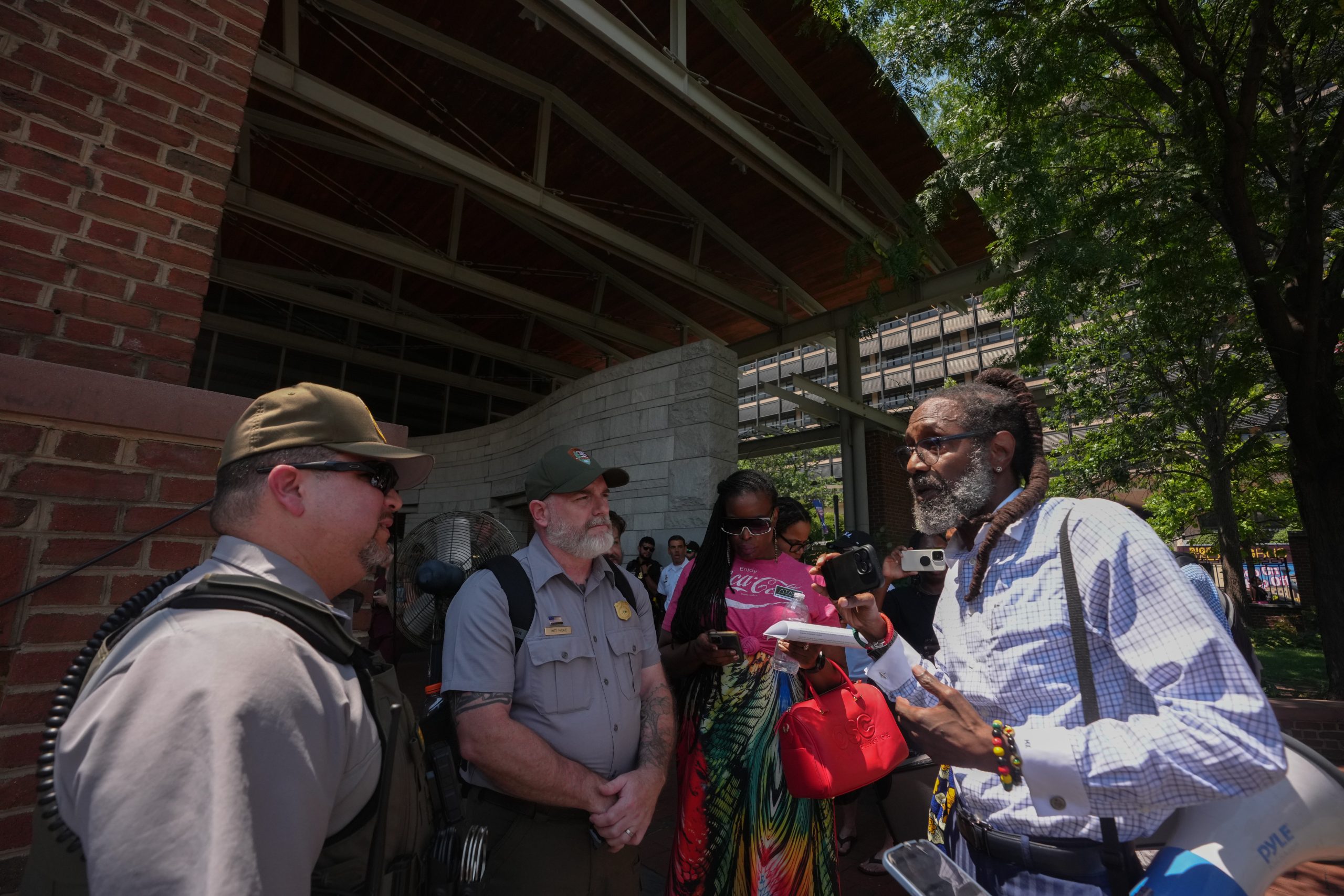
    And a couple hours later, park rangers did not allow Michael Coard, a leader of Avenging the Ancestors Coalition, a group that has fought to develop and protect the President’s House exhibit, to deliver remarks from the site.

    The rangers said they would cite speakers if the event proceeded within the site’s parameters.

    “I gotta tell you, I’ve been doing this since June of 2002,” Coard said to the officer. “Never heard of it.”

    Lawyer Michael Coard advocates for his First Amendment rights to gather and speak freely at the President’s House Site, where Coard and others planned a news conference Wednesday to address the installation of new panels.Jessica Griffin / Staff Photographer

    The group moved closer to the Liberty Bell Center’s entrance, and the rangers allowed the event to take place.

    Later Wednesday night, the President’s House Coalition, composed of a group of advocates and stakeholders who have been working to protect the site, told its Instagram followers to “be mindful of Trump’s administration’s tactics” and the “heavy presence” of federal officers at the site.

    “Don’t let them bait you into getting arrested,” the activist group account said. “We’d fight to get you out of jail *laughing emoji* but we’d rather spend out energy on fighting against Trump’s administration.”

  • Trump urges Darline Graham to run for full Senate term as funeral scheduled for Lindsey Graham

    Trump urges Darline Graham to run for full Senate term as funeral scheduled for Lindsey Graham

    COLUMBIA, S.C. — President Donald Trump said Friday that Darline Graham, the sister of the late Lindsey Graham, has his support to run for a full term to replace her brother in the U.S. Senate.

    He wrote on social media that she “has been a WINNER all of her life and, should she accept, has my Complete and Total Endorsement.”

    “RUN, DARLINE, RUN!” Trump added.

    The president said he had discussed a potential campaign with Darline Graham at the White House. Four people familiar with the deliberations, none of whom were authorized to speak publicly, had previously said that she privately expressed interest in running.

    Trump’s endorsement dramatically reshapes the scramble to fill Lindsey Graham’s seat after he died last weekend. The president had previously suggested he could back a potential candidacy from Rep. Russell Fry. Several other noteworthy politicians — including Fry, Rep. Nancy Mace, Rep. Ralph Norman, and Lt. Gov. Pamela Evette — have been eyeing a run.

    The filing period for a special primary runs from July 21 to July 28, and the primary is scheduled for Aug. 11.

    Plans for Lindsey Graham’s funeral were also announced Friday. There will be a service in Washington on July 28 and more in South Carolina on July 29.

    South Carolina Gov. Henry McMaster appointed Darline Graham to serve the remainder of her brother’s term, which ends in January.

    The first woman to represent the state in the Senate, Darline Graham called it “such an honor,” as dozens of her brother’s staffers and campaign advisers stood behind her, some with eyes glassy from welling tears.

    “Lindsey has always been there for me. And now, I will be there for him,” she said.

    Lindsey Graham died July 11 at age 71. A preliminary report from the medical examiner said he suffered a tear in his aorta.

    He never married or had a family of his own, but his sister was often by his side for the political touch points of his career, speaking at events and appearing in some of his campaign ads. After both of their parents died when Darline Graham was only 13, her older brother became her legal guardian and later adopted her, to ensure his military benefits would flow to her.

    In forging a relationship with Darline Graham — who is new to politics but was a constant in her brother’s political career — Trump could be angling to develop another ally to help steer his agenda through the Senate.

    Although they had at times a tumultuous relationship, Lindsey Graham had been one of Trump’s top Senate confidants, and the day after his death, the president said he was “like a member of the family.”

    In his announcement Monday, McMaster made no reference to Darline Graham as a placeholder or symbolic appointment.

    However, a person familiar with McMaster’s thinking but unauthorized to speak publicly said the governor, in selecting Darline Graham, had never contemplated that she would run for the seat herself.

    Sen. Tim Scott, another South Carolina Republican, said he would not endorse any candidate in the primary because he also serves as chairperson of the National Republican Senatorial Committee.

    But, he said, “as Tim Scott, the voter of South Carolina, I might indeed wade into the water at some point.”

    “I think the truth of the matter is that Darline has so far been off to a remarkable start,” Scott told reporters, asking about her as a possible special primary contender. “‘Why not her?’ would be my question.”

    When he died, Lindsey Graham had millions in his campaign account and was expected to raise much more heading into the general election. But those aren’t funds that Darline Graham could directly access, if she were to run, according to Bradley A. Smith, a former chairperson of the Federal Election Commission.

    Under federal rules, Lindsey Graham’s campaign would be limited to transferring just $2,000 to a potential Darline Graham candidacy. However, Smith said there is no limit on how much it could transfer to the National Republican Senatorial Committee, which could — thanks to a Supreme Court decision last month — “spend an unlimited amount in coordination with Darline’s campaign.”

    “It can’t be earmarked for Darline’s campaign, but in those circumstances I’m sure that the party will make sure she’s not short of cash,” said Smith, now serving as a professor at Capital University Law School in Ohio.

  • Touring Camden’s Cathedral Kitchen, Andy Kim calls Trump’s cuts to SNAP ‘devastating and cruel’

    Touring Camden’s Cathedral Kitchen, Andy Kim calls Trump’s cuts to SNAP ‘devastating and cruel’

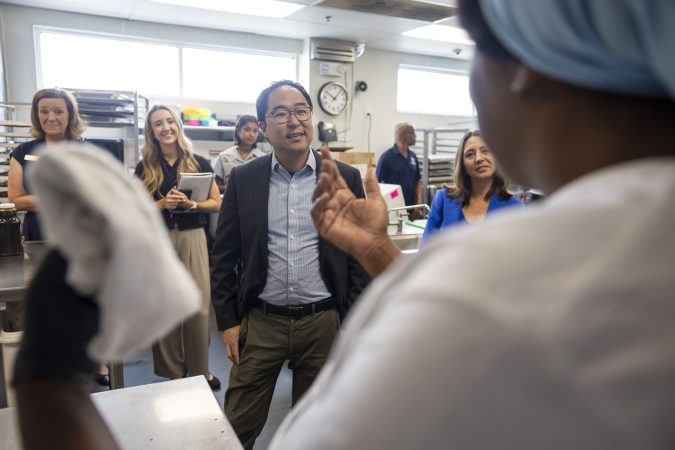
    Touring Cathedral Kitchen, the largest emergency meal supplier in South Jersey, Democratic Sen. Andy Kim praised the 50-year-old Camden institution Friday for the food it has served and the people it has saved.

    “The Kitchen is building community, right here in New Jersey,” said Kim, who noted that the nonprofit distributes 28,000 meals a month while training low-income people to be chefs and restaurant workers. Cathedral Kitchen also works to help people obtain IDs, apply for jobs and benefits, and find housing.

    Its work is needed more than ever, the New Jersey lawmaker said, with hunger on the rise because of high food prices and President Donald Trump’s One Big Beautiful Bill Act, which reduced federal food assistance such as SNAP (the Supplemental Nutrition Assistance Program) beginning July 4 of last year.

    Cutting SNAP benefits and changing eligibility requirements, Kim said, is a “devastating and cruel thing to do” at a time when cost of living has been climbing.

    “Why are we taking away necessary support at this time?” Kim asked. “I mean, we’re talking about food, the basics of being a human. Why is this happening now, at a time when people are struggling with affordability?”

    New Jersey Sen. Andy Kim visits Cathedral Kitchen in Camden, speaking to the workers who provide food for their community and those in need.Tyger Williams / Staff Photographer

    The food assistance cuts are coinciding with the economic fallout from tariffs and the Iran war, Kim noted.

    Nationwide, between January 2025 and January 2026, SNAP rolls decreased by more than 4 million people — from 42 million to 38 million — according to USDA figures.

    In New Jersey, SNAP participation has fallen by more than 50,000 individuals between March 2025 and March of this year, New Jersey Department of Human Services figures show.

    And in Pennsylvania, nearly 90,000 people lost SNAP benefits between July 2025 and April due to new eligibility requirements, according to an analysis by the Pennsylvania Department of Human Services (DHS).

    At the same time, food prices have risen more than 3% in the last year.

    As a result, in Camden, Burlington, Gloucester, and Salem Counties, the number of meals distributed to help those in need grew by 34% over the last four years, according to the Food Bank of South Jersey

    “I know the Camden area,” said Kim, who grew up in nearby Marlton and Cherry Hill. “I’ve seen the struggles that have been here and still persist.”

    The Trump administration has said the cuts it’s made to SNAP, Medicaid, and other programs were necessary to staunch “waste, fraud, and abuse.” It maintains that it’s instituted strict work requirements for SNAP to move more people into the workforce and reduce dependency on government support.

    Kim said many Americans don’t understand that a large number of people who live in poverty also work. “Millions with jobs are still poor, and this country needs a mindset shift to understand that,” Kim said.

    Sen. Andy Kim (D., N.J.) speaks with Naimah Rutling, executive chef at Cathedral Kitchen in Camden, N.J., on Friday.Tyger Williams / Staff Photographer

    As he continued his Tour of Cathedral Kitchen, Kim invariably found himself in the organization’s actual kitchen, bustling with food workers slicing carrots and onions, preparing for meals ahead.

    Clearly enjoying the moment, Kim said that at home, he makes his own bread, including pizza dough.

    Kim asked executive chef Naimah Rutling what her favorite food is. “Grilled cheese,” she said without hesitating. Kim laughed and said, “I have a 9-year-old and a 10-year-old. About 90% of what we eat is grilled cheese.”

    Before leaving, Kim praised workers in the kitchen for their diligence and dedication in preparing food for those who need it.

    “It gives meaning and purpose to their lives,” he said. “I love the passion I see.”

  • Mullin pushes states to comply with election demands, echoing Trump’s claims about midterm risks

    Mullin pushes states to comply with election demands, echoing Trump’s claims about midterm risks

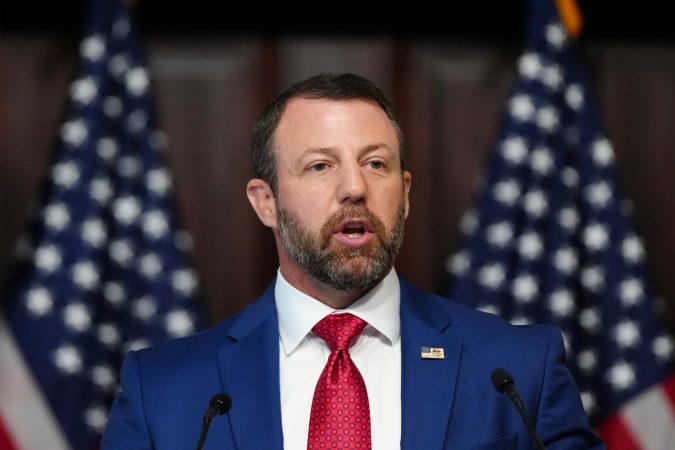
    WASHINGTON — Homeland Security Secretary Markwayne Mullin on Friday warned that state officials could lose funding or face investigations if they fail to go along with President Donald Trump’s election security demands, part of the Republican president’s longstanding attempt to undermine Americans’ confidence in the vote.

    Experts said the threats — issued just months before midterm elections that will determine control of Congress — were likely hollow because Trump’s voting initiatives have been stalled by judges and the Constitution gives states control over how elections are run.

    Nevertheless, Mullin’s remarks, delivered from the White House complex one day after Trump’s primetime address on the topic, could further doubts about election processes and create headaches for states as they prepare for November.

    “We absolutely can build confidence in the American people, but the states have to do their part,” Mullin said.

    Trump continues to falsely claim that Democrat Joe Biden won only because of fraud in 2020, and he’s tried to marshal the powers of the federal government to rewrite that history since he returned to office last year — even though judges and his own attorney general in his first term concluded the election was legitimate.

    Mullin insisted that the president was not relitigating the 2020 election, “although he definitely could at this point.”

    “This is just about exposing what took place and making sure it never happens again,” he said.

    Mullin’s claims of noncitizen voters rely on incomplete data

    During his remarks, Mullin advanced an unsubstantiated claim Trump made Thursday that the federal government had found 250,000 noncitizen voters on the rolls in California, Nevada, New Jersey, and Pennsylvania. He said the Department of Homeland Security’s investigation was conducted using public data, which election experts say is insufficiently detailed and updated to properly identify whether a registered voter is a noncitizen.

    Election officials in California and Pennsylvania said they would review the Trump administration’s findings but noted that they conduct their own voter list maintenance and noncitizen voting is exceedingly rare. Research has supported that finding.

    California Gov. Gavin Newsom, a Democrat, responded to Mullin’s threats with a post on social media.

    “California has free, fair, and secure elections and we will fight for them,” he wrote. “Try us.”

    In Nevada, Secretary of State Cisco Aguilar, also a Democrat, said he was confident in the integrity of the state’s voter file.

    “We are constantly looking at the information to figure out how many registered voters in Nevada don’t have a Social Security number on file,” he said. “We have done significant work to make sure our voter rolls are as clean as possible.”

    Mullin also pledged to aggressively monitor public voter lists to pursue potential voter fraud cases before and after the 2026 election.

    “If you are an illegal or you are voting illegally, we will hunt you down, we will find you, and we will prosecute you,” he said.

    He urged states to participate in DHS’ recently overhauled SAVE program, a federal tool central to the Trump administration’s efforts to nationalize elections. At least 25 states have used it to check their voter rolls since April 2025, after the Trump administration significantly expanded its search abilities, and the Trump administration has demanded that states submit their sensitive voter data to the program to fully audit their voter lists.

    Mullin said if state officials don’t participate in SAVE, they could face fines, penalties, or prison time.

    But the overhauled program’s use was recently blocked by a federal judge over concerns about privacy and wrongful purges of eligible voters. The case included voters whose registrations were wrongly flagged by the program, temporarily threatening their place on the rolls.

    David Becker, the executive director of the nonprofit Center for Election Innovation and Research, said Mullin was making empty threats.

    “Every court to consider the DOJ’s demands — 15 of them to date, six of those judges appointed by President Trump — have confirmed that the federal government cannot legally demand access to states’ sensitive voter data,” he said. “What he’s suggesting is illegal.”

    In addition, Trump’s efforts to pass the SAVE Act, federal legislation that would require proof of citizenship for voter registration, has stalled in the Senate. Republicans don’t have enough votes to change the filibuster rules and pass it without Democratic support.

    Cybersecurity support for election officials diminished

    Mullin also elevated Trump’s concerns about vulnerabilities in electronic voting machines — which voting experts have long acknowledged. While Trump suggested Thursday that these risks make it possible to “rig” the vote, election officials say there are numerous safeguards in place to prevent that, including physical security, voting machine tests, postelection reviews, and paper ballot backups in most of the country.

    To address the concerns, Mullin said the nation’s Cybersecurity and Infrastructure Security Agency, which sits under DHS, would release an updated election infrastructure plan within 30 days and provide cyber threat resources to election officials if they participate in SAVE.

    However, Trump has broadly dismantled the agency’s election security operation.

    CISA was largely absent from its long-held role assisting states in last year’s elections after the Trump administration conducted a review of its election work, placed more than a dozen election-focused staffers on administrative leave, and slashed $10 million from two cybersecurity initiatives, including one dedicated to helping state and local election officials. The agency is also still without a Senate-confirmed director and has cycled through a series of acting leaders.

    Aguilar said his state has stepped up and will protect its own elections in the absence of federal help.

    “The fact that they think they’re going to come in prior to the general election in November and provide us infrastructure, that’s nuts,” he said. “Actions speak louder than words, and in their case, it’s all been talk.”

  • What’s changed at the President’s House with the Trump administration’s new exhibit

    What’s changed at the President’s House with the Trump administration’s new exhibit

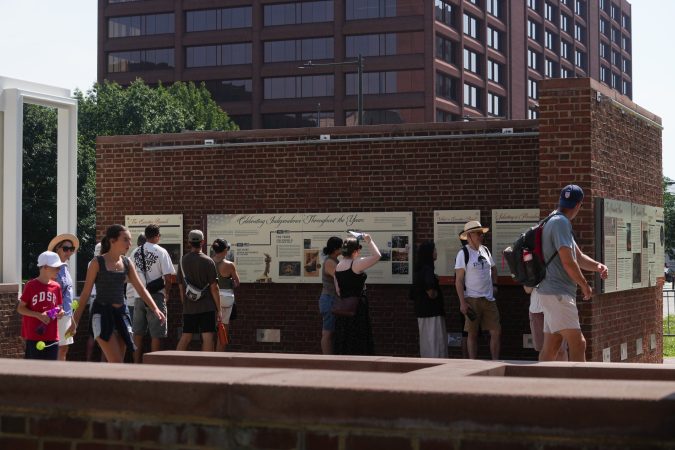
    The National Park Service removed early Wednesday the few panels that remained from the slavery exhibit at the President’s House, and replaced them with new panels.

    The original displays were deemed to “inappropriately disparage Americans past or living” following President Donald Trump’s 2025 executive order on “restoring truth and sanity to American history.”

    The newly installed panels include 11 whose renderings were published on the National Park Service’s website and first reported by The Inquirer in April, as well as smaller panels that weren’t previously made public. Among those are additional references to the nine people George Washington enslaved in his Philadelphia home.

    Historians previously criticized the panels for minimizing the brutality of slavery and whitewashing Washington’s culpability in the institution.

    And according to advocates, the additions don’t change much.

    Telling a blatant lie, such as claiming slavery didn’t exist, would be too easily exposed, said Michael Coard, a founding member of Avenging Our Ancestors, a group that advocated for the development of the site.

    “The best lie is one that has a little bit of truth,” Coard said.

    The new panels make light of slavery, the attorney said, and focus on Washington’s “discomfort” instead of the experience of the nine people the United States‘ first president enslaved in Philadelphia.

    Others criticized the panels for drifting away from the site’s original purpose.

    When the site open in 2010, the city and National Park Service said the President’s House exhibit “pays tribute” and “honors lives of enslaved Africans in presidential household.”

    The Department of Interior said Wednesday the new panels “acknowledge the evils of slavery, including its injustices and hypocrisies, and, by telling the stories of the nine slaves that Washington kept in the President’s House, remind us of their essential humanity.”

    The Inquirer photographed the original panels before their removal and the new panels that were installed this week. Here are the differences in the exhibit.

    What’s gone

    The original exhibit included five screens across the site that played reenactments depicting the daily lives of those enslaved at Washington’s Philadelphia home.

    “The site had to tell the stories that are not often told and share the perspectives of the people who up to now have been nameless and voiceless,” said Rosalyn McPherson, the site’s project director, in the 2010 news release.

    Those screens were turned off.

    Also gone are the artistic panels, which included a portrait of Ona Judge, who escaped from slavery at the house, and another about Washington’s signing of the Fugitive Slave Act.

    Workers remove the display of panel for Ona Judge at the President’s House in Independence National Historical Park in January.Tom Gralish / Staff Photographer

    What’s replaced

    The removed panels included information about the suffering of enslaved people.

    A panel titled “The Dirty Business of Slavery” included information about the slave trade, the constitutional compromise to appease slaveholders, the growth of the enslaved population during the presidencies of Washington and John Adams (who also lived at the President’s House), and a timeline of slavery from 1619 and through emancipation.

    Another panel, titled “Life Under Slavery,” discussed the brutality of the notorious institution, resistance efforts, and slavery in Philadelphia.

    It told the story of Absalom Jones and Richard Allen, men who were born into slavery and managed to buy their own freedom.

    “Enslaved people of African descent in the North, deprived of fundamental freedom, endured profoundly difficult lives,” the panel read. ”Controlled by others, their families were always threatened by forced separation, and their work, often exhausting, was nearly always unpaid.”

    Those panels were replaced with ones that include broad descriptions of slavery that do little to unpack the experience of those subjected to it, and focus on the triumph of emancipation.

    The new “Fighting for Freedom” panel discusses the Underground Railroad, quotes Frederick Douglass, Abraham Lincoln’s rise to the presidency, and the Emancipation Proclamation.

    Another panel about “The Constitution and Slavery” begins by stating: “The words ‘slave’ and ‘slavery’ are not in the U.S. Constitution as ratified, nor the word ‘property’ in connection with language alluding to slavery.”

    It discusses “compromises with pro-slavery delegates,” and ends with a section titled “fulfilling the promise” that quotes the Rev. Dr. Martin Luther King Jr.’s “I Have a Dream” speech.

    A panel about “Slavery in the British Colonies” pays homage to Benjamin Franklin and Black abolitionists, and shows the declining numbers of enslaved people in Philadelphia between 1767 and 1847.

    And in a trio of displays called “History Lost & Found,” the Trump administration focuses on how the 2007 archaeological dig of the site worked and discovery of primary sources documents it presents as non-controversial: Washington’s letters and a map of the property.

    Unlike the original panels about the archaeological dig, the new ones have no mention of slavery, the nine people Washington enslaved, or the National Park Service’s initial apprehension about helping to develop the memorial.

    But starkest difference comes in the treatment of slavery at the President’s House itself.

    An original panel included a timeline of the site’s history from the time Indigenous people lived in the area and through the 2002 discovery of slavery at Washington’s household.

    It continued to discuss the collaboration between the city, federal government, and community groups to develop the site.

    The panel’s section on slavery at the house focused on George and Martha Washington ownership of enslaved people, the president’s secret efforts to evade Pennsylvania’s Gradual Abolition Act, and the escapes of Ona Judge and Hercules.

    In contrast, the new panel titled “The Executive Mansion” follows a mention of slavery at the house with a statement that Washington’s views evolved and that he freed his slaves in his will.

    Another new panel that addresses “Presidents Washington and Adams on Slavery” head on says Washington was “caught between his private doubts about slavery and his public responsibilities as president” and privately “often expressed discomfort with the institution.”

    “Slaves living in the President’s House experienced a greater modicum of autonomy than elsewhere in the South such as to explore the city and sometimes even attend the theater, with Washington buying the tickets,” the panel reads.

    On the same wall, a new smaller panels lists the nine people Washington enslaved alongside short bios. The panel tells visitors that Washington “knew and trusted his enslaved house staff,” and repeats that he used to “buy them tickets to the circus and the theater.”

    The wall also includes a smaller panels that briefly tells escape stories of Judge and Hercules, and references Washington’s attempt to recapture them.

    What’s new

    Multiple panels throughout the exhibit share facts about U.S. history, but bear no connection to the site or slavery. These include “Celebrating Independence” and “Throughout the Years,” which denote the nation’s 100, 150, and 200 year celebrations.

    And a series of panels provide a civic lesson about the history, powers, and role of the commander in chief. Another panel discusses “the need for an executive branch.”

    New panels detail the biographies of George and Martha Washington, John and Abigail Adams, and Benedict Arnold. The biography of William Howe, a British commander who occupied Philadelphia during the Revolutionary War and lived at the President’s House, is also attached to the wall.

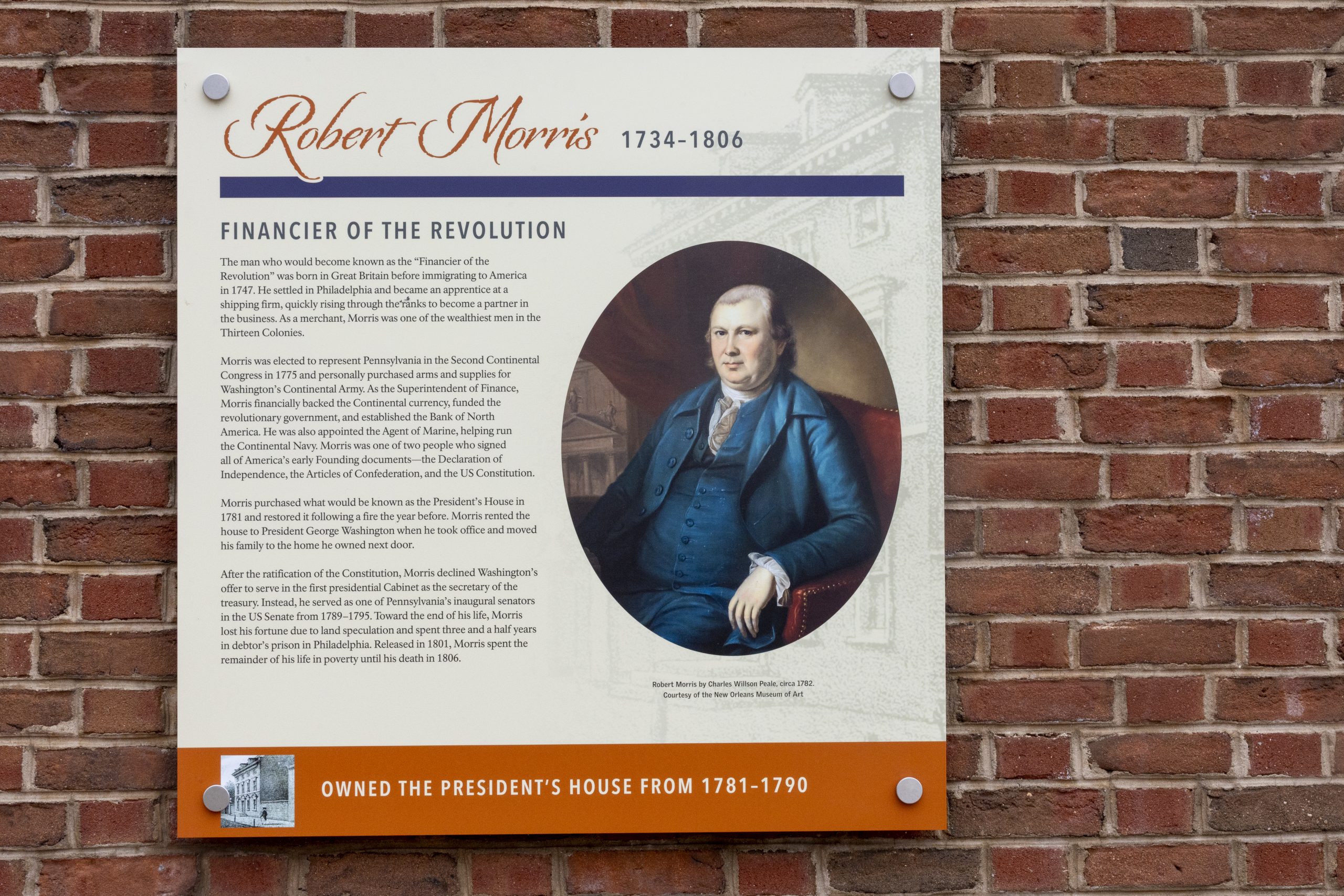
    Finally, the new exhibit pays homage to Robert Morris, known as the “financier of the American revolution” and offered Washington the house as the executive mansion with a panel dedicated to his biography.

    Morris’ ownership of a company that traded slaves is never mentioned.

    A detailed image of one of the new panels installed by the National Park Service at the President’s House this week.Aidan T. Gallo / Staff Photographer
  • Shapiro says Trump’s claims of widespread noncitizen voting are ‘not connected to reality’

    Shapiro says Trump’s claims of widespread noncitizen voting are ‘not connected to reality’

    Gov. Josh Shapiro blasted President Donald Trump Friday morning, a day after the president used a prime-time speech to reignite a series of conspiracy theories about his 2020 election loss that intelligence and voting experts have both warned are based on misrepresentations and falsehoods.

    “It was an unfortunate day for America to have really an unhinged president in the White House spewing a whole bunch of conspiracy theories that are just simply not connected to reality,” Shapiro said on MS NOW’s Morning Joe Friday morning.

    The speech comes less than four months ahead of the November election, which will determine control of Congress and the Pennsylvania governor’s office. As Trump administration looks to usher in sweeping national changes to election administration, Shapiro and other Democrats have promised to continue resisting those efforts.

    Shapiro, a potential Democratic contender for the presidency in 2028, noted his role in battling Trump’s team in court as Pennsylvania attorney general in the aftermath of the 2020 election — which Trump continues to insist he won, without evidence, six years later.

    “I went 43-0,” Shapiro said, calling Trump’s assertions baseless.

    DHS targets Pennsylvania and New Jersey

    While the president did not directly reference Pennsylvania in the speech, the White House did target the state — along with New Jersey, California, and Nevada — in a document it posted online Thursday evening in support of the president’s claims.

    The document claims that the Department of Homeland Security has identified more than 250,000 noncitizens registered to vote spread across the four Democratic-led states, but it provides little explanation of the methodology used.

    Pennsylvania Secretary of State Al Schmidt, a Republican appointed by Shapiro, rejected the allegation in a statement.

    “Pennsylvania follows all state and federal laws when it comes to our elections, and our voter rolls are properly maintained and updated,” Schmidt said in a statement Thursday. “All evidence has shown that noncitizen voting is extremely rare across the country, including in Pennsylvania.”

    The assertions, which Trump said were made in concert with the nation’s top intelligence agency chiefs, are included in memos on the White House homepage that together weave broad allegations of fraud surrounding the 2020 presidential election that remain unproven despite multiple audits and investigations six years later.

    “These disclosures reveal an election system so broken and so vulnerable that no one can possibly defend it. It is not defensible,” Trump said Thursday.

    But none of memos show evidence that would change the outcome of the election and a broad range experts have pointed that some contain information that undercut Trump’s claims.

    The document targeting Pennsylvania and New Jersey is a one-page summary of a Department of Homeland Security investigation, which the White House says identified, a total of 278,000 noncitizens across the country who are registered to vote in federal elections.

    The White House document suggests the number was derived from putting voter files through the federal government’s Systematic Alien Verification for Entitlements (SAVE) tool, which has previously been used to further false claims of widespread voter fraud.

    “While the Department has made clear that we cannot share Pennsylvanians’ private, personal information, we welcome DHS sharing their methodology and list of potential ineligible voters so we can carefully review the validity of their claims,” Schmidt said in the statement.

    The announcement also comes as Pennsylvania and other states have pushed back against requests from the Department of Justice to hand over unredacted voter rolls. Schmidt has argued that sharing the rolls would put voters’ personal information at risk.

    The Trump administration has insisted doing so is the best way to avoid criminal prosecution for “aiding and abetting the violation” of federal voting laws.

    DHS Secretary Markwayne Mullin said 23 states already work with the department to screen for noncitizen voters, in a news conference Friday, and those who continue to resist could face legal consequences.

    States that want to be reimbursed for the cost of running federal elections must implement the department’s requests, he said.

    “We will make sure that we make those states a priority to look at who voted in their states, and hold the election officials accountable,” Mullin said. “If the election officials — once we gave them the information they need to secure their elections — chose not to, then those individuals can also be held accountable by fines, by penalties, and even depending on how far it goes, prison time.”

    But funding from the federal government to run elections “is modest at best and neither reliable nor consistent,” according to the Center for Election Innovation & Research.

    Schmidt, who investigated noncitizen voting in his previous role as Philadelphia’s Republican city commissioner, has repeatedly rebuffed the department’s demands and said it is extremely rare for noncitizens to vote and already prohibited by state law.

    There have been only 77 instances of noncitizens voting in the entire United States between 1999 and 2023, according to an analysis from the Bipartisan Policy Center, and authorities investigated in each instance.

    To vote in Pennsylvania, you must be a U.S. citizen, a resident of the state for 30 days, and 18 years old by Election Day. Registration must be done 15 days prior to an election.

    There are three main ways to register: online, via a paper form handed into a county board of elections, or at PennDot or another state agency. Some people register when obtaining a driver’s license, if eligible, or after a naturalization ceremony.

    But the SAVE system doesn’t always catch up with those changes, said Ben Geffen, a senior attorney at the Public Interest Law Center in Philadelphia who reviews elections. That means, results might show “false positives” that evaporate upon “even a little bit of investigation” into individual circumstances.

    Pennsylvania will be crucial in determining control of the House with four swing districts being targeted by both parties, meaning that the state’s election is likely to fall under the microscope as they repeatedly have since the 2020 election when Trump sought to overturn Joe Biden’s victory.

    “We are prepared here in the Commonwealth of Pennsylvania to once again have a free and fair, safe and secure election,” Shapiro said.

    State audit found only one noncitizen on Pa. voter rolls

    Shapiro said he trusts Schmidt, a Republican, “because we believe here in Pennsylvania the administration of elections is nonpartisan.”

    In 2017, Schmidt, then a Philadelphia city commissioner, identified a glitch in PennDot’s system that had allowed 168 noncitizens to register to vote in the city, and likely a couple hundred statewide.

    The voter rolls were updated in 2018, Geffen said, so none of the glitches would have impacted the 2020 election or any beyond.

    A 2026 audit from Pennsylvania Auditor General Timothy DeFoor, a Republican, found that just one noncitizen was improperly registered to vote at PennDot due to human error. The individual never cast a ballot.

    New Jersey has also fought against the full release of its voter rolls.

    Gov. Mikie Sherrill joined other Democratic governors in calling Trump’s speech “alarming” in a statement issued Thursday.

    “Democratic governors stand ready to fight back against the Trump administration and stop any and all unlawful attacks on every American’s constitutional right to vote,” said the statement from the Democratic Governors Association.

    Sen. Andy Kim, (D., N.J.) referred to Trump’s address as “25 minutes of conspiracy theories from a man who still can’t get over 2020” in a post on X.

    Trump also used the speech, which was not carried live on ABC, NBC, or CNN, to advocate for the SAVE Act, the elections bill that would require people to prove that they are U.S. citizens when registering to vote.

    “Addressing this crisis of election security demands that Congress must pass the SAVE America Act,” Trump said. “How easy is that to do unless you want to cheat?”

    The legislation, which has stalled in Congress, is unpopular among Democrats and even some Republicans. Among the concerns that have been raised from opponents is that it could block married people who take their spouse’s surname from registering to vote because of the mismatch with their birth certificates.

    Sen. Dave McCormick (R., Pa.) urged passage of the bill on social media Thursday, but he did not respond to a question Friday about the Trump administration’s claims about noncitizen voting in Pennsylvania.

    But as November approaches, another Pennsylvania Republican, Philadelphia City Commissioner Seth Bluestein, said voters can be sure their votes will be counted accurately.

    “Prior to every election, we conduct logic and accuracy testing on every piece of equipment that is used for the election,” said Bluestein, the sole Republican on the three-member board that oversees Philadelphia elections.

    “Voters, when they cast their ballots, have a verifiable paper ballot for every single vote that gets cast, and then after the election, we conduct two audits of a random sampling of ballots to verify that they were tabulated accurately,” he said.
  • Tom Kean is back in Congress but still isn’t talking

    Tom Kean is back in Congress but still isn’t talking

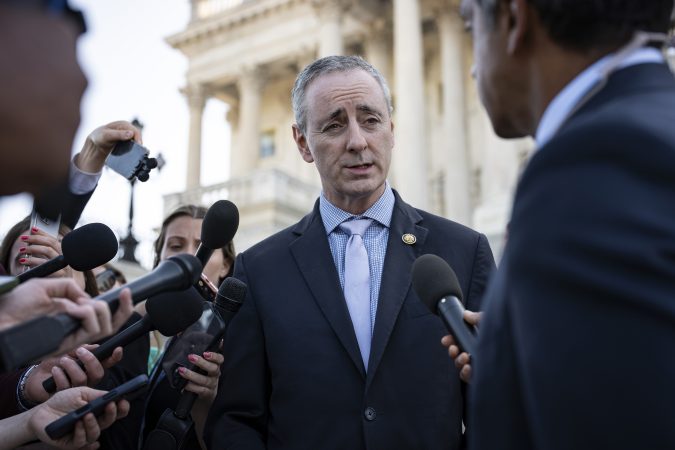
    Rep. Thomas Kean Jr. is back at work — and back to avoiding the spotlight.

    On Monday, Kean, a New Jersey Republican, silently refused to even acknowledge a reporter as he hustled out of the Capitol toward Independence Avenue. He did much the same on Thursday, when he was one of the last lawmakers to descend the Capitol steps after the House recessed for the week.

    Asked about his return to Congress after a monthslong absence and his schedule as he runs for reelection in one of the country’s most competitive contests, Kean stared straight ahead.

    If Kean has been on the campaign trail in New Jersey, it is hard to tell. Aides have refused repeated requests for his campaign schedule in the two weeks since Kean reappeared in Congress and explained that he had been hospitalized for depression.

    He did not follow up a June 30 speech on the House floor with media interviews. And even some of his staunchest allies in New Jersey said they were unaware of his plans to campaign locally.

    The Republican chair in Sussex County, a region seen as crucial to Kean’s victory, says he is “waiting on dates” for a hoped-for visit from the congressman. State Sen. Doug Steinhardt, the chair of the Republican Party in Warren, a neighboring county and conservative part of Kean’s district, said Kean was expected to attend the county fair at the end of July. But he was aware of no other scheduled campaign events.

    “I hope he intends to be more visible,” said Steinhardt, who previously led the New Jersey Republican Party.

    Harrison Neely, a spokesperson for Kean, said that the congressman was “full speed ahead with a campaign.”

    “You can see that the congressman is active,” Neely said. “His social media is active.”

    Since his June 30 return to Congress, Kean’s social media accounts have shared only a handful of posts that include recent photos of the congressman. One shows him marching with his wife in a parade. Another features him in an office, beside a family concerned about Lyme disease, an increasing worry in the area. There are also images of him with winners of an elementary school essay-writing contest and speaking at recent House committee hearings.

    In some ways, Kean, 57, is operating as he always has. He has refused to hold in-person town hall meetings during his two terms. And he has shunned most media attention during his tenure. Neely noted that it was not unusual for Kean to decline to share his schedule of upcoming public appearances, as he had not done so during his previous congressional campaigns, either.

    But Kean’s recent mental-health struggle and long absence — which he declined to explain in any detail for nearly four months — have increased his profile and brought a higher level of scrutiny to his campaign as he makes his pitch to voters. He is facing a tough race for a third term against Rebecca Bennett, the Democratic nominee, in a swing district that both parties consider a must-win in the midterm battle for control of Congress. His fate in November may depend in part on how he manages to shape the narrative of his return.

    It may also hinge on how shrewdly he can navigate new headwinds. President Donald Trump’s low approval ratings and voter dissatisfaction over the prices of gas and food have made Republicans like him vulnerable. In New Jersey, Kean, who was endorsed by the president, has had to fend off claims that he failed to stand up to Trump when the president tried to cancel funding for a Hudson River train tunnel vital to commuters in the district.

    He has also had to weather the administration’s abrupt changes in policy tied to a proposed migrant detention facility in Roxbury, New Jersey, a Republican stronghold in Kean’s district. The Trump administration last month said it had abandoned its expensive quest to build the detention center in a vacant warehouse, but last week signaled plans to revive the project. Republican leaders in the township, who have sued to block the 1,500-bed jail and months ago criticized Kean for failing to do enough to try to stop it, again began raising the alarm.

    The mayor of Roxbury, Shawn Potillo, also contacted Kean’s office.

    “As he resumes his official duties, we welcome any support he may be able to provide,” Potillo said in an email.

    Kean’s most recent campaign finance filings point to the ground he lost while out of the public eye from March through June.

    A report his campaign filed Wednesday with the Federal Election Commission showed that donors had chipped in roughly $300,000 in the last quarter, far short of the nearly $1.6 million in contributions Bennett reported.

    Kean nonetheless continues to hold a sizable fundraising edge, with $3.6 million left on hand to spend in the run-up to the Nov. 3 election for his 7th District seat. Bennett, a former U.S. Navy helicopter pilot who has worked for healthcare companies, has less than half as much: $1.4 million.

    The congressman also has the advantage of name recognition in a district where registered Republicans outnumber Democrats by roughly 19,000 voters. His father, who is also named Thomas Kean, was one of the state’s most popular governors and later steered the 9/11 Commission.

    And he does still have time. Jeanette Hoffman, a Republican political strategist, noted that summertime is a typically slow season for campaigning. She said she was confident that Kean would run a “vigorous campaign when it matters most.”

    “I don’t think anybody’s looking at his calendar and saying, ‘Oh my gosh where is he?’” Hoffman said. “That’s an insider’s game right now.”

    This article originally appeared in The New York Times.

  • A Trump obsession that carries a cost for democracy

    A Trump obsession that carries a cost for democracy

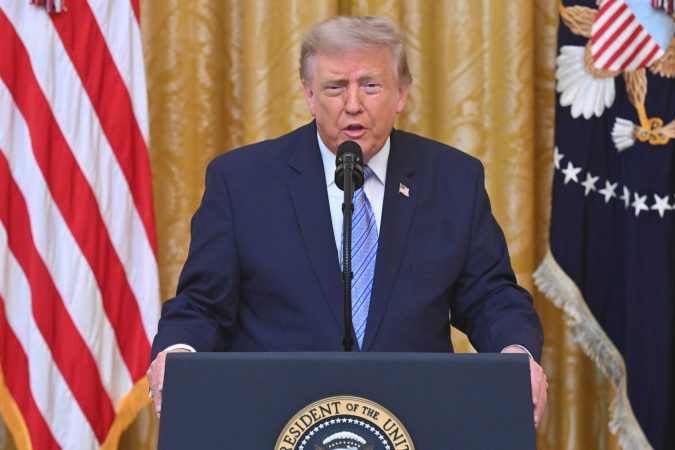
    WASHINGTON — President Donald Trump used a lot of alarming words on Thursday night as he addressed the American people about threats to the integrity of elections in the United States: “Deep state.” “Rigged and stolen.” “Conspiring.” “Manipulation.” “Corrupt.” “Fraud.” “Cover up.”

    But the bottom-line message he clearly wanted to leave with the public was this: He is not a loser, regardless of the result of the 2020 election. There were dark forces at work to thwart him. And if his party loses this fall’s midterm election, he intimated, that may not be an honest outcome either.

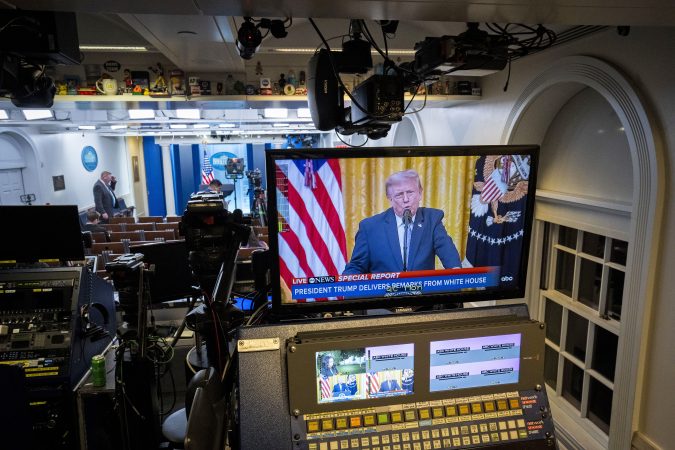
    Trump’s primetime speech from the East Room of the White House was an astonishing spectacle featuring a president intent on persuading the country that its elections cannot be trusted, at least not the ones where he or his allies fall short. He cited selectively declassified documents to make sensational claims about vulnerabilities of the election system, although nothing he revealed proved any outcomes were actually changed.

    The exercise underscored how much Trump in his second term has come to be obsessed with relitigating the 2020 election and finding ways to cast doubt on the 2026 election. In the 18 months since he returned to office, he has installed election deniers in key positions, sought to change the rules to make it harder to cast ballots, seized voting records in a bid to prove his conspiracy theories and purged officials who investigated his efforts to overturn his election defeat six years ago.

    “It does feel a little like Captain Ahab in ‘Moby Dick,’” said Trevor Potter, a Republican former chair of the Federal Election Commission. “He is just fixated on his claim that he didn’t lose the 2020 election. Armchair psychiatrists can say he doesn’t like losing, he can never admit he lost anything. But it’s clearly become an important part of his psyche and in some ways an important part of this administration.”

    On one level, according to people close to him, Trump’s fixation on rewriting the history of 2020 is about salving the wounded ego of a man who constitutionally resists ever admitting that he has lost anything. He has made it a litmus test for anyone working for him to accede to, or at least not contradict, the lie that he won back then, not Joe Biden.

    Trump has authorized investigations to revisit his many claims that have previously been debunked, inquiries seemingly aimed not at following wherever the facts may take them but in search of facts to back up his own unsubstantiated certitudes. It is hard to imagine that he would accept any investigation concluding that he lost fair and square.

    But while part of this is about looking backward, it also is about looking forward. With Trump deeply unpopular, according to polls — just 37% approve of his performance in the latest Washington Post-Ipsos survey — his party faces a possible drubbing in congressional races in November. So Trump seems intent on laying a predicate that, at the least, could explain away a defeat and, at most, his critics fear, potentially justify direct intervention aimed at changing the results.

    “It’s the standard approach to cast doubt on the electoral rules of the game where many populist authoritarians feel threatened by unpopularity at the polls or if the results declare them the loser at the ballot,” said Pippa Norris, who has taught political science at Harvard University for three decades and was the founding director of the Election Integrity Project. “Indeed, it’s been a leitmotif which the president has used for more than a decade now.”

    Trump’s allies insist that he has well-founded reasons for his election conspiracy hunt, that Democrats, the news media, career officials and foreign governments all had cause to try to stop him from winning a second term and then hide their tracks. A self-serving establishment, they say, is protecting its own power and eager to take down a disruptive outsider in the form of Trump.

    “The president passionately believes he was wronged in the 2020 election,” said Christopher Ruddy, his friend and CEO of Newsmax Media, “and I think he is motivated for two reasons, to get vindication and to prevent future election irregularities.”

    But some Republicans wish Trump would move on, seeing the issue as politically unhelpful in a campaign season when voters are focused on the cost of living and other matters close to home.

    An Economist-YouGov poll last month found that Trump has persuaded 50% of Republicans that the 2020 election was rigged, but that is more of an article of faith among the president’s base than the broader electorate. While 66% of self-identified MAGA Republicans share that view, just 32% of other Republicans do and only 23% of independents.

    Trump’s repeated forays into election denialism this term also reflect the change in his inner circle. While there were powerful voices in his first term who told him that his claims of election fraud were not true, most notably William Barr, then the attorney general, Trump this time is surrounded by advisers who either cheer him on or keep quiet.

    “Clearly, there’s nobody in the White House who can say no to him; there’s no adult in the room,” said former Rep; Barbara Comstock, R-Va., and a longtime Trump critic. “They won’t say to him, ‘Mr. President, you lost the damn election. Why are we doing this again?’”

    Indeed, would-be administration officials at the start of this term were asked point-blank during job interviews if they believed Trump won the 2020 election. Those who said no were generally not welcomed into the fold. Conversely, Democrats have now made a point of asking the same question during confirmation hearings of Trump nominees, leaving them struggling to find an answer under oath that does not anger the president.

    “Do you deny that Joe Biden won the 2020 election?” Sen. Mark Warner, D-Va., asked Jay Clayton, the president’s nominee for director of national intelligence, during a hearing this week.

    “Senator, I’m not an election denier,” Clayton responded. “Joe Biden was certified as the president of the United States.”

    Democrats noticed the use of the word “certified,” as opposed to “elected” or “won.” That has become an escape word for Trump nominees. Even the president does not deny that Biden was certified; he just claims that he should not have been.

    Sen. Jon Ossoff, D-Ga., tried to pin Clayton down. “Who won the 2020 election?” he asked directly.

    “I’ve answered it,” Clayton said. “I’ve answered it.”

    “Isn’t it humiliating to be unable to answer this question, to have to indulge the president’s delusions?” Ossoff replied.

    Trump’s laser focus on 2020 was evident in his speech Thursday night. As he spun out assertions of Chinese hacking, illegally registered voters and cover-ups, Trump referred seven times to the 2020 election that he lost, albeit without an explicit claim that he won. He offered no concerns about the validity of the 2016 or 2024 elections that he won.

    And while he suggested that China intervened in the election six years ago because it “wanted me to lose,” he made no mention of Russia’s intervention four years before that on his behalf. He used the words “China” or “Chinese” 20 times and mentioned Russia only once as part of a list of nations that have the capacity to hack election machines.

    In fact, U.S. intelligence agencies have concluded that while China made nascent efforts to influence American opinion during the 2020 election, it largely stayed on the sidelines, while Russia mounted an expansive and aggressive campaign to help Trump win in 2016.

    With just less than 16 weeks until the next election, the pressing issue is where Trump plans to take the matter. He used the speech to announce that he has ordered the FBI and other agencies to investigate election interference. He also pushed Congress again to pass legislation to require proof of citizenship to register and photo identification to cast ballots. But Senate Republicans have made clear to him again and again that there are not enough votes to pass it.

    The idea that Trump might opt to take action if the election does not go the way he wants it to is not unthinkable. In an interview with The New York Times in January, Trump said he regretted not heeding advisers who urged him to order the National Guard to seize voting machines in swing states that he lost in 2020.

    “Great damage has been done to our country,” he said Thursday night. “Our elections were left vulnerable to being rigged and stolen and the trust of the American people was lost. This cannot be allowed to continue.”

    The question for many Americans will be who do they trust.

    This article originally appeared in The New York Times.