President Donald Trump announced Monday that he will impose 50 percent tariffs on most Canadian goods effective in 30 days unless Canada drops what the administration called “discriminatory” trade barriers against U.S. products.
The move comes one day after Trump threatened to impose tariffs in retaliation for wildfires in Ontario that sent thick smoke pouring into the United States late last week. After watching Sunday’s World Cup final alongside Canadian Prime Minister Mark Carney, Trump told reporters that the subject had come up.
“Our air has been poisoned. Have a good relationship with Mark Carney, but you know we got to stop the fires up there. If we can help them, we’ll help them. But maybe they should pay us some damages or something, or we should do some tariffs,” the president said Sunday.
On Monday, however, a senior administration official said the president’s latest tariff action was unrelated to his irritation over the wildfires. Instead, the official said, the president was acting in response to Canada’s retaliation for emergency tariffs Trump imposed in April 2025, when U.S. alcohol was removed from Canadian store shelves. The administration has also complained about Canadian limits on auto imports and dairy products.
Monday’s action relies on a never-before-used provision of a 1930 trade law, which provides for tariffs of up to 50 percent against countries that discriminate against U.S. goods. The 30-day delay provides time for the two nations to resolve the dispute before tariffs take effect.
If the tariffs do take effect, they will apply to most Canadian goods, including those that qualify for duty-free treatment under the United States-Mexico-Canada Agreement that Trump negotiated during his first term. Energy, potash fertilizer, critical minerals, fish and products covered by existing national security tariffs will be exempt, said the administration official, who briefed reporters under ground rules that did not allow them to be identified.
That would probably hit consumers with higher prices ahead of the Nov. 3 midterm elections, exacerbating the administration’s political challenges with affordability, said Ed Gresser, vice president of the Progressive Policy Institute in D.C. and a former U.S. trade official.
“If you as a family or you as a business were hoping for some relief this fall, you’re not going to get it. Things are going to get more expensive,” Gresser said.
But it’s not clear that will ever happen. “The fact that it’s delayed 30 days makes me think it’s a negotiating tactic,” said Ryan Majerus, a partner at King & Spalding, who served in the U.S. Trade Representative’s Office during the first Trump administration. “It seems like leverage.”
The administration has been negotiating revisions in USMCA, which the president hailed upon signing in 2020 as the “fairest, most balanced, and beneficial trade agreement we have ever signed.” Talks with Mexico have been proceeding apace, but negotiations with Canada have yet to begin.
Jamieson Greer, the president’s chief trade negotiator, has made no secret of the administration’s irritation with the Canadian government. The impact of the Canadian wildfires has only aggravated the situation.
Though the administration denied any link between Monday’s tariff announcement and the fires, the president has asked for potential measures that he can take in retaliation, the administration official said.
Greer is scheduled to visit Mexico City starting Wednesday to continue talks with Mexico.
WASHINGTON — U.S. Sen. Andy Kim (D., N.J.) is introducing a plan to provide free healthcare to every child in the country, an idea he thinks could become a strategic step toward universal healthcare while addressing the urgent needs of an estimated — and likely undercounted — 4.6 million uninsured children.
Enrollment in MediKids, as he calls it, would be automatic at birth and extend until age 26. It aims to provide comprehensive benefits to uninsured children and young adults while also tackling the larger affordability crisis and the healthcare cuts under President Donald Trump that are expected to lead to further disenrollment in the coming years.
Strategically, Kim said, he also hopes the idea will be a politically popular jumping-off point as his party prepares to regain some level of control in Washington during the midterm elections this year and then fight for the White House in 2028.
“It really kind of brings that debate about healthcare to its core essence,” Kim said. “Who is going to stand in the way? Who could possibly say that we shouldn’t provide healthcare to every child in this country?”
Kim, speaking to reporters in his office on Capitol Hill last week, said he was in the early stages of figuring out and advocating for the program. He also said he was clear-eyed about the “political realities” that will make it difficult to pass.
Even if Democrats win control of the House and Senate this year, finding a bipartisan agreement with Trump during the remaining two years of his term would be an uphill battle.
Beyond that, Democrats have had their own internal debates on the issue — symbolized by Joe Biden’s opposition to Medicare for All during his 2020 campaign as progressives like U.S. Sen. Bernie Sanders (Ind., Vt.) championed the idea.
Kim said he sees MediKids as a steppingstone toward universal government-backed healthcare, which he expects to be part of his party’s debates again heading into the 2028 presidential election. He said he introduced it now because of the “urgency” of the affordability crisis and a “hunger for ideas” that he hears from voters in New Jersey and elsewhere.
Critically, he said, it is also a personal issue for him and his family. Trump’s attempt to roll back the ACA during his first term coincided with the birth of Kim’s son, who had immediate medical needs.
“I would not be here in Congress had it not been for that experience,” Kim said. “No parent should have to experience what I had to, and what many parents right now have to, which is worry about whether or not they’re going to be able to get healthcare for their kid if they lose a job, or change jobs, or any number of other issues.”
MediKids as introduced would operate as an extension of Medicaid, which currently covers about 35.5 million kids, including through the Children’s Health Insurance Program. It would provide access to comprehensive screening and early treatment benefits that experts say improve overall health outcomes for children.
Kim said he did not have even a rough estimate of what it would cost to extend the benefits to every child and young adult through age 26. Though the price tag is likely to be significant — and play a role in the program’s ability to gain political support in Washington — he said the long-term investment in healthier kids will have “real savings over time.” Identifying a funding source would come later as Democrats figure out how to pay for a long list of priorities if they win control of Congress and the presidency, he said.
“When you think of our healthcare system, writ large, children are very inexpensive,” said Joan Alker, a research professor and executive director of the Center for Children and Families at the Georgetown McCourt School of Public Policy.
Alker said research has shown that providing healthcare for kids creates a“great return on investment, both from the perspective of taxpayer dollars and, more importantly, from the perspective of having children who are going to grow and thrive.”
MediKids, she said, would be an effective and in some ways novel way of tackling an “extraordinarily worrying” trend.
After steady declines in the number of uninsured children both before and after the passage of the Affordable Care Act in 2010, the figures have fluctuated in the last decade. The 4.6 million children without insurance in 2024 represented about 6% of all children, an increase from about 5.1% in 2022. That period coincided with changes in Medicaid after the pandemic, a period known as the unwinding.
But child enrollment in Medicaid and CHIP has also decreased dramatically since Trump took office again in January 2025 — declining by more than 2 million through May of this year, according to the center at Georgetown.
Enrollment has decreased in Pennsylvania by about 130,000, or 4.1%, and in New Jersey by about 28,000, or 1.5%. Indiana has seen the worst fallout, with about 360,500, or about 20%, fewer children enrolled.
Alker said most children remain eligible. The drop-offs are due to a variety of reasons, including families with mixed immigration statuses being less willing to participate in federal government programs under Trump, less outreach by the federal government to connect individuals with healthcare options, and more administrative red tape for Medicaid, she said.
“I think this is a harbinger of what’s to come next year,” Alker said, referring to the changes to Medicaid eligibility that were passed in the One Big Beautiful Bill Act and will begin to be implemented after the midterm elections.
“There’s a lot of conversation about children being protected,” she said. “But when you start cutting off parents and other adults, when you start adding red tape, then children are going to be impacted.”
According to the Kaiser Family Foundation, a nonprofit healthcare-focused think tank, about 26.7 million people — adults and children — were uninsured in 2024. That is about the same amount as in 2016, which marked a high-water mark after the Affordable Care Act passed.
Kim said he set the upper eligibility limit for MediKids at age 26 because of the popular piece of the ACA that allows young adults to stay on their parents’ insurance until that age. He said he is still working through all aspects of the program, though, and his priority remains on the growing number of children who are uninsured.
“That should be unacceptable for everybody,” Kim said. “I honestly did not realize the number was that high when I first set out to do this. But it’s shocking in the richest, most powerful country in the world that we have that level of problem that is out there right now.”
How the United States’ first “White House” became a flash point in the 21st century
Judge Cynthia M. Rufe pauses under in the entrance to the reconstructed "ghost" structure with partial walls and windows officially titled, “Freedom and Slavery in the Making of a New Nation” as she visits the open-air President’s House installation in Independence National Historical Park on Feb. 2.Tom Gralish / Staff Photographer
The United States’ first “White House” was lost to history more than once. But after it was rediscovered by an amateur historian in 2002, there was an effort to ensure that this time the site would be remembered.
In the years since, the President’s House has been a source of controversy at every stage of its development. The site at the doorstep of the Liberty Bell serves as a painful reminder to the flaws of the nation’s Founding Fathers, and George Washington’s own culpability in slavery.
story continues after advertisement
President Donald Trump’s administration in January abruptly dismantled the exhibit memorializing the nine people Washington kept in bondage at his Philadelphia home, deeming its displays to “inappropriately disparage Americans living or past.”
A monthslong court battle ensued leading to the partial restoration of the site, pause of the work, and the involvement of multiple courts — all taking place leading up to the nation’s Semiquincentennial, and culminating in the installation of a new exhibit under the cast of darkness less than two weeks after the 250th celebration.
Robert Morris, a financier whose company participated in the slave trade, offered the site to Washington as the nation’s first executive mansion. The first president moved to the house in 1790 and resided there until the end of his time in office in 1797.
After Washington, John Adams lived at the house until Washington, D.C., became the nation’s capital in 1800.
1804 to 1951
The site demolished, twice
The house was used for commercial purposes, including a hotel, until it was largely demolished in 1832.
The President’s House location in Independence National Historical Park.
The entire block on Sixth and Market Streets was razed in 1951 to create Independence Mall, demolishing portions of the walls that remained intact and burying the foundation of the President’s House underground. The location of the house was forgotten to history.
2002
Discovering the site, protest immediately starts
Independent historian Ed Lawler uncovered the true location of the residence — adjacent to the new Liberty Bell Center. Other historians and The Inquirer’s reporting at the time highlighted the history of slavery at the site. Protests, led by the Avenging the Ancestors Coalition, immediately began encouraging the National Park Service, under then-President George W. Bush, to memorialize the nine people Washington enslaved at his Philadelphia home. The government was, at first, strongly hesitant to do so.
story continues after advertisement
2007 to 2010
Excavation and construction
Guests and dignitaries gather in Independence National Historical Park at the President’s House Site before the start of a ceremonial ground-breaking on March 21, 2007.Tom Gralish / Staff Photographer
On Dec. 15, 2010, the President’s House officially opened. Former Philadelphia Mayor Michael Nutter, under whom the project was finished, highlighted the importance of the site and its role in highlighting the contradictory experiences of liberty and slavery during the founding of the United States. After the ceremony, the site became Independence National Historical Park’s responsibility.
Municipal Judge Charles Hayden, Michael Coard, Independence National Historic Park Superintendent Cynthia MacLeod, and Mayor Michael Nutter at the dedication of the President's House.Clem Murray / Staff Photographer
2015
Philadelphia hands the site to Park Service
The President’s House was in a state of disrepair, marked by intermittently blank and soundless video screens, leaking glass, and fogged up windows. The city, which owned the exhibit, transferred the site to the hands of the National Park Service, as Philadelphia and the federal government agreed during the site’s development.
.
March 2025
Trump signs executive order
Trump signed the “restoring truth and sanity to American politics” executive order that instructed the Department of Interior to flag displays in national parks and historical sites that “inappropriately disparage Americans past or living” ahead of the country’s 250th celebration.
July 2025
Park Service flags President’s House
More than a dozen exhibits throughout Independence National Historical Park — all referencing slavery — were flagged for a Trump administration content review. The President’s House had the most exhibits flagged, though some panels were thought to be spared from the content review. Local stakeholders began ramping up advocacy efforts aimed at protecting the President’s House.
September 2025
Plans for changes
Reports emerged that the Trump administration intended to alter the President’s House. The Department of Interior said at the time that “Interpretive materials that focus solely on challenging aspects of U.S. history, without acknowledging broader context or national progress, may unintentionally provide an incomplete understanding rather than enrich it.”
Jan. 22, 2026
NPS dismantles exhibit; Philadelphia sues
After months of scrutinization and anxiety over the fate of the President’s House, the Trump administration dismantled the entire exhibit. Workers took wrenches and crowbars to the site and loaded the removed panels into the back of a white pickup truck, leaving behind swaths of faded brick.
Workers remove displays from the President’s House Site in Independence National Historical Park.Tom Gralish / Staff Photographer
Shortly after the removal, the City of Philadelphia filed a lawsuit against the Interior Department, the National Park Service, and its leaders. Advocacy efforts continued and Independence Park employees were given talking points on how to address visitors’ questions about the President’s House.
Jan. 31, 2026
Trump and Philly clash in court
Attorneys for Mayor Cherelle L. Parker’s administration argued in federal court in Philadelphia that the removal of the exhibit was unlawful. The city found a receptive audience in U.S. District Judge Cynthia M. Rufe, who called the Justice Department’s argument that the federal government can unilaterally change history “dangerous” and “horrifying to listen to.”
Feb. 16, 2026
Injunction
Rufe ordered the Trump administration to immediately restore the exhibit. In a blistering opinion, published on Presidents Day, which celebrates George Washington’s birthday, the George W**.** Bush-appointed judge compared the actions of the Trump administration to the Ministry of Truth from George Orwell’s novel warning of authoritarianism, 1984.
“Each person who visits the President’s House and does not learn of the realities of founding-era slavery receives a false account of this country’s history.”
U.S. District Judge Cynthia M. Rufe
Feb. 20, 2026
Restoration starts, and quickly stops
Rufe, who ordered the restoration of the site “forthwith,” gave the federal government a hard deadline to restore the site after no work to reinstall the exhibit had taken place. National Park Service staff returned some panels to the walls, but as the deadline neared the federal government appealed and won an administrative stay that paused the restoration. The site’s wall remained half bare for months.
Workers reinstall the displays at the President’s House in Independence National Historical Park.Tom Gralish / Staff Photographer
April 2026
Proposed new exhibit
The National Park Service published 11 digital renderings of new panels proposed at the President’s House. The new exhibit would provide a broad timeline of U.S. history that included slavery, but would be less focused on George Washington’s role and frame the Founding Father’s enslavement of nine individuals at his Philadelphia home during the first presidency in a more sympathetic light. Only two of the 11 newly proposed panels at the time referenced those enslaved at the site, drawing criticism from historians.
Panel for Ona Judge at the President’s House in Independence National Historical Park.Tom Gralish / Staff Photographer
Born into slavery in Mount Vernon, Washington’s Virginia estate, Judge was kept in bondage as Martha Washington’s personal assistant and seamstress. She escaped from the President’s House on May 21, 1796, and made her way to New Hampshire with the help of Philadelphia’s free Black community. Despite Washington’s growing support of emancipation in private communications throughout his life, the first commander-in-chief made multiple attempts to recapture Judge. She was never caught and outlived her enslavers.
June 2, 2026
Trump and Philly clash in court, again
A three-judge panel of the U.S. Court of Appeals for the Third Circuit heard arguments on the Justice Department’s appeal. The judges pushed the city’s attorney to point to language in the cooperative agreement that said Philadelphia maintained rights over the site after the transfer of ownership to the federal government. But the city came short and was left pointing to statements by National Park Service officials that emphasized the collaborative effort to develop the site.
The Justice Department attorney representing the Trump administration told the judges that if the city wanted to maintain control over the exhibit, it “should have bargained for that.”
The half-bare walls of the President's House.Tom Gralish / Staff Photographer
June 18, 2026
Third Circuit sides with Trump
The Third Circuit delivered a blow to the city, ruling that Philadelphia had no rights over the site or its displays. The unanimous decision, signed by judges appointed by George W. Bush, Barack Obama, and Donald Trump, also dismissed all but one claim from the city’s initial lawsuit. The judges further found the Trump administration’s proposed panels “acknowledge the evil of slavery, including its injustices and hypocrisies, and, by telling the story of the nine slaves that Washington kept in the President’s House, remind us of their essential humanity.” The site was in limbo as the order out of Boston conflicted with the Third Circuit ruling.
“The duty to ‘maintain’ is better understood as a general management obligation that accompanies ownership, not a promise that the exhibits will forever remain in place regardless of the owner’s wishes.”
U.S. Park Police Officer Patrick O’Hanlon reads the new panels alongside visitors at the site of the President’s House in Philadelphia.Aidan T. Gallo / Staff Photographer
COLUMBIA, S.C. — Sen. Darline Graham said Monday she’s running for a full term filling her late brother Lindsey Graham’s Senate seat.
“I’ve made a decision,” Darline Graham told Fox News Channel host Sean Hannity, according to a clip released of an interview set to air later Monday. “I’m in.”
The entrance of Darline Graham — sworn in last week to fulfill the remaining months of her late brother’s term, which expires in January — into the Republican scramble to select a new Senate nominee further complicates an already rushed process following Lindsey Graham ‘s death earlier this month.
A weeklong filing period opens Tuesday for the special Republican primary, which will be Aug. 11. On Friday, President Donald Trump said that Darline Graham had his “Complete and Total Endorsement” to seek the nomination, adding, “RUN, DARLINE, RUN!”
Last week, Gov. Henry McMaster appointed Darline Graham to serve the remainder of her brother’s term, which ends in January. In his announcement, McMaster made no reference to Darline Graham as a placeholder or symbolic appointment, although a person familiar with McMaster’s thinking but unauthorized to speak publicly said the governor, in selecting Darline Graham, had never contemplated that she would run for the seat herself.
Before the emergence of Darline Graham — and their Oval Office meeting after she was sworn in — Trump had previously suggested he could back a potential candidacy from Rep. Russell Fry, who said Monday he would officially enter the special primary.
Several other noteworthy politicians, including Rep. Ralph Norman, have already gotten in, and others like Lt. Gov. Pamela Evette have been eyeing a run. Rep. Nancy Mace announced Monday she would not enter the contest.
Darline Graham told Hannity said she had been “praying a lot” about how to navigate her new role.
“It is a tremendous amount of pressure,” she said.
“I know I’m a hard worker. I learned that from Lindsey,” Darline Graham said. “I feel like I can do it. I feel an inner peace about it. Will it be difficult? Yes.”
Funeral services for Lindsey Graham are scheduled to be held next week in Washington and South Carolina. A preliminary report from the medical examiner said he suffered a tear in his aorta.
The millions in Lindsey Graham’s campaign account aren’t funds that Darline Graham could directly access in a run of her own, according to Bradley A. Smith, a former chairperson of the Federal Election Commission.
Under federal rules, Lindsey Graham’s campaign would be limited to transferring just $2,000 to a potential Darline Graham candidacy. However, Smith said, there is no limit on how much it could transfer to the National Republican Senatorial Committee, which could — thanks to a Supreme Court decision last month — “spend an unlimited amount in coordination with Darline’s campaign.”
For weeks, President Donald Trump had privately floated the idea of delivering a televised address to detail claims of foreign interference and purported election fraud — “shocking” new discoveries, he’d go on to say, that had been covered up by the so-called “Deep State” and should be a central focus of elected officials.
Advisers initially steered him away from the idea for a primetime address, but it was quickly resurrected. Dozens of cabinet members and close aides gathered to watch his speech in the East Room on Thursday, dutifully standing and applauding when he finished. The next morning, Trump bragged about the “great reviews” and “big audience” for the address.
But outside of the president’s list of frequently dialed contacts and the clips assembled of White House-aligned influencers praising his speech, the primetime address failed to galvanize conservatives, with some publicly questioning his focus on 2020 as the midterms approach. Republicans fighting to maintain congressional control this fall largely sidestepped the message.
By the weekend, the White House-aligned commentators and members of Congress who had pushed the Trump team’s talking points about the speech had seemingly moved on. The muted response underscored a broader political reality: Many Republicans facing voters this fall have shown little interest in making Trump’s renewed focus on the 2020 election central to their campaigns as they head into a midterm complicated by the president’s weak standing with independent voters.
As Trump’s favorite cable network Fox News largely ignored the address Friday morning, former Republican National Committee chair Michael Whatley, the Trump-endorsed GOP nominee for Senate in battleground North Carolina, held a 34-minute campaign event largely focused on public safety.
‘We’re going to talk about the economy and what I’m going to do to make sure everybody makes more and keeps more. We’re going to talk about our military and our national security,” Whatley said. “But the number one issue that we want to talk about in this election cycle, that we need to talk about in this election cycle, is keeping our kids and our communities safe.”
Asked by a reporter afterward about Trump’s latest messaging, Whatley, who has previously boosted some of Trump’s 2020 election fraud claims, said he is a “big proponent of election integrity,” and of the signature election legislation Trump has pressed Congress to pass.
Whatley predicted that his race will be “decided within a percentage point,” though he has consistently trailed former Democratic Gov. Roy Cooper in polling by much more than that. He is fighting to succeed retiring Sen. Thom Tillis, a moderate Republican who has had a turbulent relationship with Trump and regularly asserts his independence from the president.
The “clear and simple” explanation for why most Republican candidates aren’t clamoring to talk about the 2020 election is that voters are focused elsewhere, said Paul Shumaker, a veteran Republican strategist and longtime political adviser to Tillis, who declined to comment directly on Trump’s speech.
“If candidates are not talking about the economy, if candidates are not talking about affordability, if they’re not talking about how they’re going to make people’s lives at home cheaper and less expensive, then they’re not talking about the issues that voters care about,” he said.
Democrats seized on the address, which Trump promoted as revealing “really big news,” to accuse the president of laying the groundwork to challenge election results if Republicans lose this fall. Some of Trump’s own hard-right allies, meanwhile, complained the speech amounted to little more than rhetoric, lacking a concrete plan to hold anyone accountable for the purported fraud.
Trump had initially wanted to give the televised address a few weeks earlier, in late June, according to two people with knowledge of White House deliberations about the speech, but advisers managed to put it off. As an alternative idea — and to avoid a primetime address — the president’s team also mulled the idea of presenting the declassified information to reporters during a White House briefing to be held soon after press secretary Karoline Leavitt returned to work late last month.
Ultimately, Trump got his way.
Briefings with Trump on the new material continued into last week. Administration officials, in consultation with some outside Trump allies, reexamined old FBI files and other records dating back to the first Trump administration. But the documents later posted to the White House website largely reflected information that was publicly known and still did not prove foreign countries had hijacked votes or that election officials in the United States conspired to rig the 2020 election against Trump.
Matthew Bartlett, who served as a State Department appointee in Trump’s first term and is now a Republican public affairs strategist, described Trump’s Thursday speech as “mess,” and said the lack of new evidence undercut Trump’s broader effort to pressure Republicans into passing the Save America Act, “which he has oddly weaponized against his own party.” He said many Republicans seem to be thankful Trump’s message didn’t successfully break through.
The pervasive sentiment afterward, Bartlett said, seems to be, “If the president makes outrageous claims about an election and no one is listening, did it even happen?”
Two Republicans opposed to Trump’s Save America Act, Tillis and Sen. Lisa Murkowski (R., Alaska), indicated in interviews afterward that Trump’s speech did not change their position. Senate Republican leadership has long maintained the legislation does not have the votes to pass, but Trump has continued to lambast senators for not doing so.
Sen. John Cornyn (R., Texas), a co-sponsor of the Save America Act who is retiring after losing his primary election this spring to a Trump-backed challenger, was similarly dismissive. “There wasn’t a whole lot new” in Trump’s speech, he said Friday at the Aspen Security Forum. Foreign adversaries have long tried to “sow discord” and influence American elections, Cornyn said, “but the bottom line is none of this would have changed the outcome.”
“We have 109 days until the midterm elections, and I don’t understand talking about what happened six years ago in light of these upcoming elections,” Cornyn said.
The speech also fell short with Trump’s hard-right supporters who wanted a more aggressive response.
Former Trump adviser Stephen K. Bannon, who hosts the popular MAGA War Room show, said the president’s focus on passing his election bill is no longer enough, arguing the legislation could not take effect before the midterms even if Congress passed it immediately. He said arrests should be made in connection with the “cover-up” of alleged election fraud in 2020, and that Trump should issue a “national security emergency executive order.”
“It’s too late for the Save America Act,” Bannon said Friday. After Homeland Security Secretary Markwayne Mullin gave a news conference Friday following up on Trump’s claims from his speech about large numbers of illegal immigrants on voter rolls, Bannon told his listeners that he was “decidedly unimpressed” and didn’t hear “any sense of urgency or any real action plan.”
Prominent right-wing ally Laura Loomer questioned on social media as Trump spoke whether any of the information he was sharing was new.
The White House did not respond to a request for comment.
Americans continue to give Trump largely negative reviews on his job performance, as they have for months, according to a recent Washington Post-Ipsos poll. Trump’s renewed focus on his 2020 election loss comes as polls continue to register voters’ frustration with his handling of the economy and the Iran war.
And while Republicans are not losing by a wide margin on a hypothetical midterm ballot, despite Trump’s deep unpopularity, Republican voters currently aren’t as energized to turn up at the polls, the survey found.
Democrats are 10 points more likely to be certain to vote this year than Republicans, compared with their two-point edge in 2018.
Prediction markets are rewriting the rules of American gambling.
These platforms have taken the country by storm, enabling users to stake money on the outcome of real-world events — everything from who will win a baseball game to the location of Taylor Swift’s wedding.
For users, prediction markets operate almost indistinguishably from online betting platforms. However, they are technically investment sites. As such, they are not constrained by state and tribal gaming law. They are available in all 50 states — even those with no gambling — and the prediction market companies pay no state taxes.
States have been fighting back. Twenty-six states are engaged in active litigation against prediction market companies, and several have passed increasingly creative laws attempting to restrict or remove them. Yet, most of these attempts have been thwarted by the Commodities Futures Trading Commission (CFTC), the federal regulator that oversees prediction markets. The Commission insists that, as investment platforms, companies like Kalshi and Polymarket need not concern themselves with state regulation.
The CFTC position reverses over a century of precedent in terms of how the federal government approached gambling policy. Throughout American history, gambling has generally been treated as a state issue. Where the federal government has intervened, it has been to protect states from gambling — even if doing so meant protecting states from themselves.
But the current CFTC has flipped this equation. A federal agency is doing its utmost to effectively nationalize gambling, leaving states powerless to control what has historically been under their domain.
The first federal foray into national gambling policy came in response to an interstate lottery scheme.
In the 1700s, lottery tickets were almost as easy to find in the U.S. as they are today. “Every part of the United States abounds in lotteries” a Boston newspaper observed in 1791.
Around the turn of the 19th century, however, the public soured on lotteries. A surge of religious fervor brought with it a wave of anti-gambling furor. By the late 1870s, only a single state licensed a lottery: Louisiana.
The Bayou State did not just run any lottery. The state government licensed its operation to an entity known as the Louisiana State Lottery Company, better known as “the Serpent” or “the Golden Octopus.” It came by these monikershonestly.
The LSLC was notoriously corrupt, having slithered its way to political invulnerability through bribes to state officials. The lottery, which nominally existed to raise money for a children’s hospital, actually lined the pockets of its proprietors on the back of $28 million in sales in 1890 alone (modern equivalent: $1.02 billion).
The Golden Octopus nickname was fitting for another reason: the Louisiana lottery’s tentacles reached well beyond the state’s borders. Operating through the U.S. mail, the LSLC sold roughly 90% of its tickets to residents of other states. The Golden Octopus filled the market void for people without other access to legal lottery tickets, becoming a de facto national lottery.
This created an uproar because other states were powerless to do anything to stem the tide of lottery tickets into their states. The Louisiana legislature was beyond their control, and it was impractical to crack down on every dreamer clutching a ticket or every piece of mail with a Louisiana return address.
In late 1890, President Benjamin Harrison condemned how the mail system overflowed with “fraudulent and demoralizing appeals and literature emanating from the lottery companies.”
The only body truly capable of slaying the Golden Octopus was Congress. It did so with bills in 1890 and 1895 that prohibited the mailing and interstate transportation of lottery tickets, advertisements or paraphernalia.
States could decide the question of lotteries for themselves, but other states could not decide the question for them. Congress overrode Louisiana’s state gambling law to protect gambling laws in the 43 other states.
The anti-lottery bills set a clear precedent — one that would be replicated almost exactly a century later, when congressional involvement in gambling even more clearly overrode state authority.
Made By History sponsors. FOR USE ON MADE BY HISTORY STORIES ONLY.Inquirer Staff
In the 1960s, states once again began operating lotteries. By the late 1980s, as states experimented with new lottery games, a few began considering sports pools. These were games in which players could attempt to predict the outcome of between three and 14 football or basketball games, with the payout dependent on the amount put up both by the bettor and by all other players.
The only trouble was that, to the professional sports leagues, these games represented a dangerous wedge that could open the door to legalized sports betting. At the time, the leagues were deeply opposed to all things gambling, viewing any association between it and their product as a threat to the integrity of American sports.
The leagues mobilized in multiple states to attempt to stamp out sports pools. But by going to Congress, they could pull the weeds out by the root. In 1992, Congress obliged, passing the Professional and Amateur Sports Protection Act (PASPA). The bill did not ban gambling. Rather, it banned states from legalizing sports gambling, leaving a few exceptions for states that had already authorized a form of betting, most notably Nevada.
Anyone who has watched a sporting event in the last eight years knows that PASPA did not last. In 2018, the Supreme Court overturned the bill on the grounds that, according to Justice Samuel A. Alito Jr.’s majority opinion, Congress had usurped state authority as enshrined in the Tenth Amendment: “A more direct affront to state sovereignty is not easy to imagine.”
Congress could regulate sports gambling. But in creating a patchwork set of rules that banned states from deciding the issue for themselves, it had gone too far in asserting authority over states’ rights. The decision has led to an explosion in online sports betting, with the major sports leagues now embracing gambling and integrating it into their telecasts.
A few years after legal sports betting took off, prediction markets endeavored to broaden the base of gambling options. Though the Biden administration tried to restrict them, the Trump White House has taken a different approach, authorizing the platforms to expand their offerings from bets on political events like elections to sports, pop culture and seemingly every imaginable topic. It has done so with the direct support of President Donald Trump, whose son, Donald Trump Jr. has financial stakes in both Kalshi and Polymarket.
For some states, the federal government has once again gone too far on gambling, this time in the opposite direction. Instead of prohibiting states from legalizing gambling, the CFTC has created a national system of de facto gambling in contravention of state and tribal gambling law.
One direct result is that while most states set the legal gambling age at 21, investment platforms are available to anyone over the age of 18, meaning the CFTC has effectively lowered the national age to legally bet.
The current CFTC rules are even more vulnerable than PASPA was. Because they’re regulations, not laws, a change in presidential administrations — and by extension, the leadership of the CFTC — could lead to an overhaul of the Commission’s approach to prediction markets. Additionally, passage of any one of the bipartisan bills that have been proposed in Congress to rein in prediction markets could swiftly constrain the experiment in federally-mandated gambling.
As history shows, gambling law is not forever. States have generally been left to decide for themselves how much gambling they want to offer, with the federal government setting a limit as it sees fit. Odds are that arrangement could return.
Jonathan D. Cohen leads gambling policy for the American Institute for Boys and Men. He is the author ofLosing Big: America’s Reckless Bet on Sports Gambling. Made by History takes readers beyond the headlines with articles written and edited by professional historians. Opinions expressed do not necessarily reflect the views of The Inquirer.
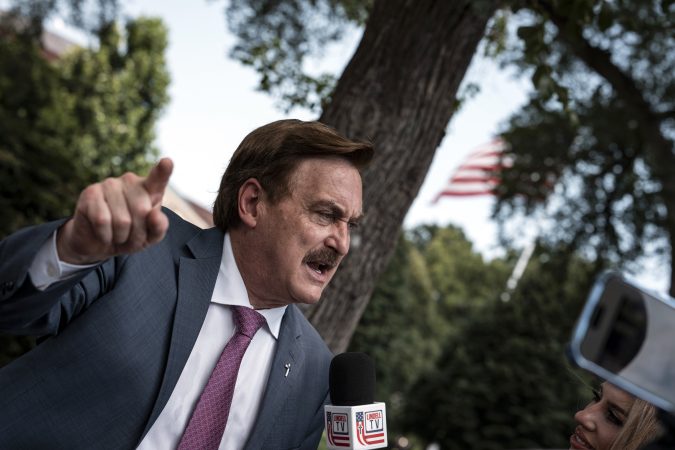
Mike Lindell, the CEO of MyPillow and a leader of the election denial movement who was endorsed by President Donald Trump for Minnesota governor this week, acknowledged that he is not registered to vote in the state he seeks to lead.
Lindell, 65, said his biggest problem was not his registration status but that the Minnesota Republican Party had not supported his campaign, even after Trump publicly endorsed him.
“They are saying, ‘Mike Lindell can’t win,’” Lindell said in an interview Saturday morning. He pointed to a statement from the Minnesota Republican Party that raised skepticism around Lindell’s electability.
“It’s disgusting,” he said. “They are trying to discredit the endorsement.”
In Minnesota, voters are allowed to register to vote on Election Day. Lindell, who is registered in Texas, said he was not concerned that he was not yet registered in his home state, something first reported by the Minnesota Star Tribune.
Lindell said he was registered to vote in Texas when he moved there for one year in 2024, soon after he married his current wife, Kendra. He said he returned to Minnesota, where he was born and raised, the following year, because he wanted to run for governor.
“Obviously I’m going to vote,” he said.
Since 2021, Lindell has tirelessly pushed, without evidence, claims that the 2020 presidential election was “rigged” to prevent Trump from winning reelection.
He has been sued for defamation over his claims that voting machines were manipulated in 2020. Dominion Voting Systems, a manufacturer of voting machines, recently settled its lawsuit against Lindell, but last year, he was ordered to pay $2.3 million in damages to a former employee of Dominion after a federal jury found him guilty of defamation. A federal judge also found that Lindell defamed Smartmatic, another voting company, but has not specified how much he owed in damages.
The mounting legal fees have contributed to Lindell’s financial troubles. According to Hennepin County property records, Lindell owed $27,000 in unpaid taxes in 2025. He said on Saturday that he had recently paid off the debt, and that his financial situation was irrelevant to his campaign. The Times could not immediately verify if the property taxes had been paid.
Minnesota has not elected a Republican to statewide office in two decades, and Sen. Amy Klobuchar is seen as the leading Democratic candidate to replace the state’s current governor, Tim Walz, who dropped out of the race last year. Lindell faces two main rivals in the Aug. 11 primary: Kendall Qualls, a businessperson who was endorsed by the state Republican Party, and Lisa Demuth, speaker of the Minnesota House of Representatives.
Lindell said he was running because there was “rampant fraud” in Minnesota and it was becoming unaffordable to live there. “Minnesota needs a business person running this state,” he said. “We are going downhill in every category.”
WASHINGTON — He was like a kid with a new toy. As President Donald Trump began flying the new Air Force One, he raved about the luxury plane donated by Qatar. “Truly magnificent,” he said. “Truly spectacular,” he added. “There’s just nothing like it,” he emphasized.
And in a sense he was right. The new plane, with its gold fixtures and reclining massage chairs, was unlike the old one that presidents have traveled in for generations: It is believed to lack the same defensive countermeasures that the old model had to keep the flying commander in chief safe, as the New York Times has reported.
The furor over the new plane and its security drawbacks serves as a reminder of the evolution in presidential travel and efforts to keep the country’s leaders safe when they leave the fortresslike confines of the White House.
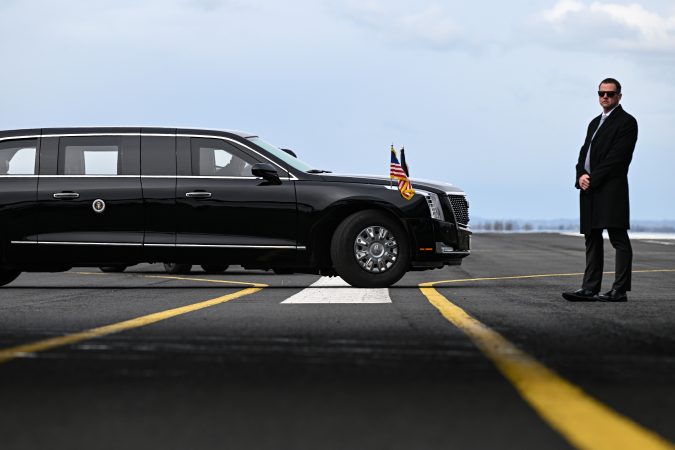
The modern president rides in an armored limousine nicknamed “the Beast” that in theory could survive explosions, and flies in specially designed Marine helicopters designed to defend against attacks from the ground.
But nothing has projected the political majesty that Air Force One has over the years. With its blue-and-white design and the words “UNITED STATES OF AMERICA” emblazoned on the side, the plane has become a grand symbol of American power, recognized around the world. It’s even the star of its own action-adventure movie named after it.
When they have left office, presidents as disparate as George W. Bush and Barack Obama have lamented that one of the things they miss most about their time in power was the plane. (“Never lost my baggage,” Bush noted. No TSA lines and “taking your shoes off and all that,” Obama pointed out.)
But none fixated on the aircraft as much as Trump. In his first term, he was so intent on replacing it with a new, splashier plane that he had a model of what it would look like in the Oval Office, then took the model with him when he left and displayed it in the lobby at Mar-a-Lago. Now in his second term, he finally has the real thing, which he had painted red, white, and blue.
What would George Washington have thought? The first president, after all, had only a horse at his disposal. Here is a short history of presidential travel.
Washington enjoyed a little pomp at his first inauguration, arriving for the ceremony in a horse-drawn carriage. But by the end of the day, when he was trying to return to the presidential mansion to rest, the streets were so crowded that he had to abandon the carriage and walk the rest of the way.
When Trump arrived at the White House on the first day of his first term, by contrast, he was carried in a hermetically sealed, bulletproof limousine. Officially code-named Stagecoach by the Secret Service, the car is more commonly called the Beast, the nickname bestowed by the news media when the first version of it was introduced in 2001 for Bush’s first inauguration.
The latest version came into service in 2018 during Trump’s first term. And in situations where the terrain is more rugged, the president rides in an SUV version of the Beast, called the “Camp Package” after Camp David. A new version was introduced this year.
The history of presidential travel has a long arc bent toward isolation and heightened security measures. During the Civil War, President Abraham Lincoln often commuted alone by horse from the Soldiers’ Home retreat to the White House; at some point Mary Todd Lincoln grew concerned and insisted that soldiers ride along with him.
President Franklin D. Roosevelt loved to drive himself in a car using special hand controls because of his polio. Following the assassination of President John F. Kennedy, open presidential motorcades were a thing of the past, and with few exceptions, modern presidents never drive themselves.
A turning point in presidential security was the 1901 assassination of President William McKinley, who was gunned down at the Pan-American Exposition in Buffalo, N.Y. After that, the Secret Service, which had only protected the president part time, took on the duty of guarding him full time.
But this was also a time of immense change on the presidential travel front. McKinley was the first president to ride in a motor vehicle and President Theodore Roosevelt the first to ride in an automobile owned by the government. His successor, President William Howard Taft, bought a few cars for the White House and converted the stables into a garage.
Woodrow Wilson was the first president to visit Europe while in office, crossing the Atlantic on the SS George Washington twice to negotiate the Treaty of Versailles, which formally ended World War I.
Many Americans might be surprised that presidents had their own yacht for about a century. From 1880 to 1977, a succession of ships acted as the “Floating White House.” The 273-foot-long USS Mayflower was the first luxury version, and Theodore Roosevelt used it during his efforts to broker an end to the Russo-Japanese War.
His distant cousin Franklin D. Roosevelt discussed D-Day plans with Gen. Dwight D. Eisenhower aboard the USS Sequoia. But President Jimmy Carter sold the Sequoia shortly after taking office as a gesture to presidential modesty following Watergate.
Franklin D. Roosevelt was the first sitting president to travel by plane, a Douglas VC-54C Skymaster nicknamed “the Sacred Cow.” He flew to overseas summit meetings with Prime Minister Winston Churchill of Britain and, eventually, Soviet dictator Josef Stalin, including in Casablanca, Morocco; Tehran, Iran; and Yalta on the Crimean Peninsula.
But it was Kennedy who made the president’s plane an international icon. It was he who directed that a Boeing 707 reserved for presidential use be painted blue and white. He also wanted the lettering of “UNITED STATES OF AMERICA” to mirror the look of the words on the Declaration of Independence.
Every president since then flew in planes with the same design, but Trump did not like it and insisted on the red, white, and blue paint job.
Air Force One is actually the official code name for any plane in which the president flies, but for decades there have been two primary planes, specially equipped Boeing 747-200Bs that presidents flew, until Trump’s donated Qatari luxury jet. They were delivered in 1990 during President George H.W. Bush’s administration.
Trump complains that the current planes are old and not as impressive as the luxury jets flown by Arab royals. “It’s like from a different planet,” he said.
White House officials have tried for years to replace them with newly converted modern aircraft, but the $3.9 billion project has been repeatedly delayed. The first of the new pair of Boeing 747-8s is scheduled to be delivered in mid-2028. Rather than wait, Trump accepted the Qatari jet as a bridge until they are finally ready.
Many critics, including Republicans, have found it unseemly or even corrupt for a U.S. president to accept a plane as a gift from a foreign country, deeming it to be an obvious payoff to curry favor and an embarrassment that the United States could not provide its own aircraft.
But Trump cares little about such complaints. He wants a plane that he can show off and that he considers befitting of the most powerful person in the world.
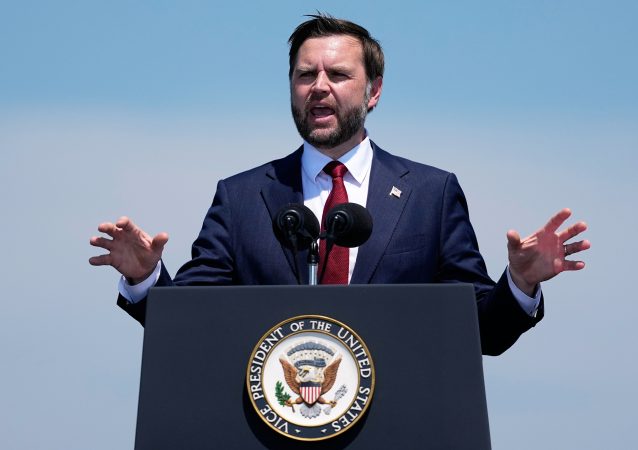
Vice President JD Vance embraced claims that there were ties between convicted sex offender Jeffrey Epstein and the “highest levels” of Israeli intelligence, echoing conspiracy theories that have been a source of tension among conservatives.
During an episode of his popular podcast, Joe Rogan said there was a widespread perception that Epstein’s financial support and drive to influence thinking at American universities stemmed from links to Mossad, Israel’s foreign intelligence service. Vance agreed that such a view exists, before asserting his own perspective.
“Most people think he was Mossad,” Rogan, a frequent promoter of conspiracy theories, said of Epstein in an episode of The Joe Rogan Experience released Wednesday.
“Yeah, Mossad or CIA, or some other deep state, whether in America or Israel or another country,” Vance replied.
“He clearly had connections to the upper — the highest — levels of American intelligence,” the vice president added. “He clearly had connections to the highest levels of Israeli intelligence.”
Although Epstein did have ties to a top Israeli leader, the millions of files released by the U.S. government related to Epstein have not turned up any conclusive proof that he was an intelligence agent or asset for Mossad, as Vance acknowledged.
“I’ve asked, Were there like, were there documents connecting Jeffrey Epstein directly to our intelligence agencies or anybody else’s, and the answer is no,” Vance said. “But if that s— existed, it wouldn’t exist in 2026.”
The comments, made during a nearly three-hour episode that covered a broad range of issues, marked a striking embrace of conspiracy theories from an official in one of the highest perches of the U.S. government. Such claims have been promoted by some powerful conservative figures, including Tucker Carlson, a longtime ally of Vance. They’ve also drawn accusations of antisemitism.
Former Rep. Peter T. King (R., N.Y.), who strongly supports Israel, described Vance’s remarks as a “dog whistle” to a wing of the Republican Party that he said “is antisemitic, is anti-Israel, is conspiratorial, and is unhinged.”
“It’s not like you’re a junior congressman,” King said in an interview on Saturday, referring to Vance. “You’re the vice president of the United States. Unless you know what you’re talking about, unless you have absolute facts to back it up, before you undermine an ally — before you undermine your own intelligence agencies — you better know what you’re talking about.”
Asked for comment, Vance’s office provided a statement, attributed to an unnamed White House official, asserting that everything the vice president had said was true and to suggest otherwise was “in bad faith, stupidity, or both.” Aides from his office declined to clarify his remarks.
The Israeli prime minister’s office, which also oversees the Mossad intelligence agency, did not immediately respond to a request for comment on Vance’s remarks. Prime Minister Benjamin Netanyahu has pushed back in the past on the idea that Epstein had worked for Israel.
Some Republicans have wanted to see Vance take a more aggressive approach to denouncing antisemitism and show stronger support for Israel. His latest comments appeared to intensify concerns about his posture.
Ben Shapiro, a prominent conservative podcaster who is Jewish and strongly supportive of Israel, wrote in a newsletter that Vance’s appearance on Rogan’s podcast had left him “concerned.”
On his own show, Shapiro said Vance’s commentary had been “unworthy of the office” of vice president and had undercut core tenets of conservatism.
“Conservatives, generally, are not in favor of baseless conspiracy theorizing,” Shapiro said, “because that undermines the idea that you have capacity in the world to act.”
The online publication Tablet, which focuses on Jewish news and culture, published a column headlined “JD Vance’s Big Crashout” by journalist Lee Smith. It said the vice president had “attacked Jews and spread baseless rumors, for which he admits to having zero evidence, about some kind of dark plot involving Jeffrey Epstein.”
Epstein, who cultivated associations with powerful people, including officials, from across the globe, had a yearslong friendship and business relationship with Ehud Barak, the center-left former Israeli prime minister.
“Epstein seemed to be connected to the elements of the Israeli deep state that were left of center,” Vance told Rogan. “I’ve always found that fascinating.”
Barak has said that Israeli leader Shimon Peres first introduced him to Epstein in 2002. Barak attended lunches and dinners at Epstein’s New York City town house and received some $2.3 million in payments from a foundation associated with Epstein. Epstein also invested a reported $1 million in a limited partnership established by Barak in 2015.
Barak has said he did not witness or take part in any sexual abuse. “I now deeply regret having any association with him,” he said.
And top Israeli officials have staunchly denied any formal relationship between the Israeli government and Epstein.
“Jeffrey Epstein’s unusual close relationship with Ehud Barak doesn’t suggest Epstein worked for Israel. It proves the opposite,” Netanyahu posted on social media in February, after disclosures of emails between Epstein and Barak.
Naftali Bennett, the former Israeli prime minister, denounced the theories of a clandestine relationship even more forcefully last year, after Carlson promoted them at a conference hosted by Turning Point USA, a major conservative organization. From the stage, Carlson said the question of whether Epstein had worked for Mossad was one “that every U.S. citizen has a right to an answer on.”
At the time, Bennett wrote on social media, “The accusation that Jeffrey Epstein somehow worked for Israel or the Mossad running a blackmail ring is categorically and totally false.”
Bennett added: “Epstein never worked for the Mossad. This accusation is a lie being peddled by prominent online personalities such as Tucker Carlson pretending they know things they don’t.”
In his recent podcast appearance, Vance did not entertain all of the ideas about Israeli influence suggested by Rogan.
Vance pushed back when Rogan raised an unfounded theory that the Epstein files had been used to blackmail the Trump administration into going to war.
The vice president also cast himself as a “reasonable moderate” in the debate over Israel’s relationship with the United States, expressing confusion over why “many people” have accused him of being antisemitic.
“I’ve never heard a good compelling argument for why I am an antisemite, even though I’ve been accused of being an antisemite by many people,” he said.
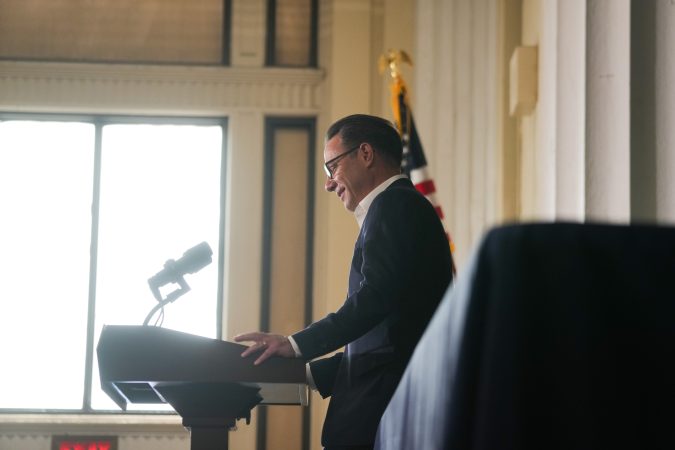
Ahead of the 2026 midterm elections, Gov. Josh Shapiro is using his broad popularity and giant cash stockpile to boost Democratic candidates downballot in competitive elections across Pennsylvania while he campaigns for his own reelection bid.
At a union hall in Harrisburg, Shapiro joined Pennsylvania Democratic Party members Saturday to launch a new effort that will pool donations to fund field offices, signage, and volunteers to support Democrats in key state Senate seats and congressional districts.
“We have an opportunity here in the Commonwealth of Pennsylvania, the birthplace of our democracy, the swingiest swing state in the country, to decide what the future of the Congress of the United States looks like, and to be a model for good governance right here in Harrisburg,” he said.
He referred to the effort, called Rise Up Pennsylvania, as “the most coordinated, well-funded, well-organized campaign in the history of the Democratic Party here in the commonwealth.”
Shapiro, a first-term Democrat, is in a strong position as he faces a challenge from his Republican opponent, State Treasurer Stacy Garrity, for the governor’s mansion. He’s leading Garrity 53% to 40%, according to a poll of registered Pennsylvania voters released this week from Quinnipiac University. Both Shapiro and Garrity faced no opposition in their party’s primary.
And he remains popular in the state, with 51% of respondents in the poll reporting a favorable opinion, and 56% approving of the way he is handling his job as governor.
He also boasts a massive war chest that continues to grow. Between April and June, Shapiro brought in $12 million toward his reelection bid, bringing his total fundraising to $50 million since January 2025, his campaign told The Inquirer this week. Garrity’s campaign did not share its fundraising numbers, which are not due to the state until Sept. 22. During the last cycle, he outraised her 10-1.
But the larger test this November for Shapiro, widely expected to be considering a run for president in 2028, will be whether he can translate his political influence to other candidates. If Democrats flip the state Senate, four Democratic congressional candidates Shapiro backs beat Republican incumbents, and he wins, the governor could become somewhat of a Democratic kingmaker in one of the nation’s biggest battlegrounds.
And his efforts in these races are not just a simple show of support.
Earlier this week, Shapiro’s campaign announced he has given more than $3.3 million to the state party and its election effort since the fall of 2025, with $1.5 million of that since April.
The party, which is operating Rise Up Pennsylvania, can use the money toward door-knocking and phone-banking efforts.
Shapiro has endorsed union leader and firefighter Bob Brooks in the Lehigh Valley-based 7th Congressional District. Brooks is running against Republican U.S. Rep. Ryan Mackenzie. He has also endorsed Scranton Mayor Paige Cognetti, who is running to unseat Republican U.S. Rep. Rob Bresnahan in the 8th District. And he has backed Bucks County Commissioner Bob Harvie in his quest to defeat Republican U.S. Rep. Brian Fitzpatrick in the Bucks County-based 1st District.
On Saturday, Shapiro appeared alongside former local TV anchor Janelle Stelson, who is challenging Republican U.S. Rep. Scott Perry for the second time in the Harrisburg-based 10th District.
“I know we’re frustrated right now. I know we’re angry right now,” Shapiro said. By “making sure Janelle is our next congressman, we can stop this chaos, this cruelty, and this corruption in D.C.”
Stelson blasted Perry for his votes on supporting U.S. military action in Iran and for his involvement in the Jan. 6, 2021, riots at the U.S. Capitol. She said voters have been concerned about corruption and wants to institute age limits for members of Congress.
Shapiro has also sought to strengthen Democrats’ chances by installing his allies to lead the state party.
“From now through Election Day, we are going to keep our foot on the gas to make sure that we are not only taking advantage of the moment that the delusional president has given us with this political opportunity, but also expanding on our state House, flipping the state Senate, reelecting our governor, and making Donald Trump a lame duck president,” said Eugene DePasquale, chair of the Pennsylvania Democratic Party.
Democrats have already opened 27 field offices across Pennsylvania, hired 100 full-time organizers, and knocked on 63,000 doors, DePasquale said.
A moderate Democrat who boasts about his success cutting taxes, Shapiro has struggled to get top Democratic priorities through the Pennsylvania legislature, where the GOP controls the Senate.
Also on stage Saturday were State Sen. James Malone, who is running for reelection, and Sarah Agerton, a former Mechanicsburg Borough Council member who is running for the state House.
If Democrats flip the Senate, Shapiro said his priorities would be raising the state minimum wage, codifying access to abortion, and funding more affordable housing.
“All of this is possible, and this, in many ways, is the center of what is going to decide whether we have a trifecta in Harrisburg and a Democratic majority in Washington,” Shapiro said.