Category: Politics

  • Democrats pick new Senate candidate in Maine in aftermath of Platner debacle

    Democrats pick new Senate candidate in Maine in aftermath of Platner debacle

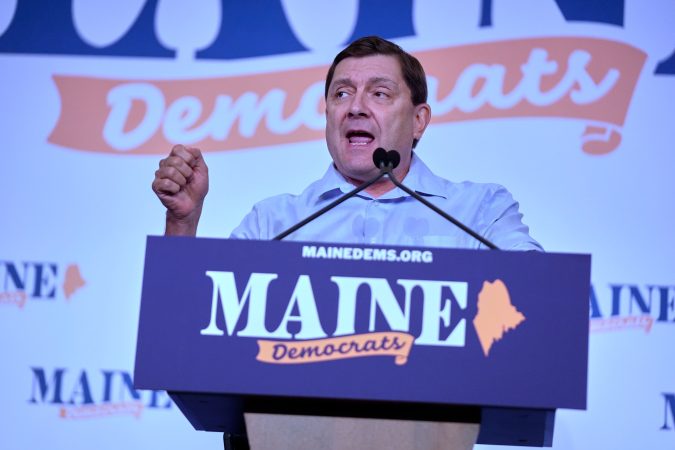
    BANGOR, Maine — The Maine Democratic Party formally selected Troy Jackson as its new Senate nominee on Saturday, ending three tumultuous weeks that nearly derailed the party’s quest to unseat veteran Republican Sen. Susan Collins.

    With just 101 days remaining until the November election, Democrats must now unify a party riven by the spectacular collapse of Graham Platner’s campaign following a sexual assault allegation and refocus attention on the long-indomitable Collins, whose defeat is key to long-shot Democratic hopes of retaking control of the U.S. Senate.

    Accepting the nomination from a convention center in downtown Bangor with a 31-foot-tall statue of Paul Bunyan outside, Jackson repeatedly framed the election not as a partisan fight but an opportunity for the working class to stand up to a creature of Washington who had grown more loyal to her corporate benefactors than her constituents.

    “This movement is not from the left. It’s not from the right,” he said, as supporters waved “Retire Susan” signs in the crowd. “It’s from the bottom — and we are growing.”

    Jackson is a 58-year-old logger and former leader of the Maine Senate who aligned with Platner and Sen. Bernie Sanders (I., Vt.) during an unsuccessful run for governor this year.

    He won the nomination by commandeering the progressive movement that had propelled Platner. Jackson’s supporters swept the delegate selection process for a hastily organized convention to choose Platner’s replacement, compelling most of Jackson’s rivals to drop out ahead of the meeting Saturday in Bangor.

    Jackson’s challenge is to forge a broad coalition that can win in November, including the independent and crossover Democratic voters who have helped Collins hold on for five terms in an increasingly blue state.

    Jackson has his own vulnerabilities — including a long history of opposing abortion rights and a temper that undercut his legislative leadership in Augusta — that could hurt his appeal with women voters who have been critical to Collins’s victories. He has also been reluctant to align with the national Democratic Party, which could provide critical resources in a marquee race.

    Ahead of the convention, Democratic-leaning voters in Bangor remained wary of Jackson but highly motivated to beat Collins.

    “Progressives and Democrats are often put in this position where we have to vote for whoever is put up against the greater evil,” Molly Wunderli, a 36-year-old graphic designer, said Friday as she left the library downtown.

    An unenrolled voter who considers herself to the left of the Democratic Party, Wunderli expressed frustration that Platner was not properly vetted and about the rushed process to choose his replacement, which put the decision in the hands of just 600 people. But given the stakes, she said there was no question she would vote for Jackson in November.

    “I hope he’s as advertised,” Wunderli said. “I’m always worried now about the other shoe dropping.”

    The campaign has been clouded since the beginning by a bitter ideological battle among Democrats. While the national party establishment recruited Maine Gov. Janet Mills to run, the progressive base in Maine rallied around Platner, a combat veteran and oyster farmer whose populist outsider platform electrified liberal voters.

    Mills’ candidacy fizzled before the June primary, even as Platner was beset by an escalating series of scandals that he largely attributed to poor mental health following his military service: old social media posts dismissive of sexual assault, a tattoo resembling a Nazi symbol, sexually explicit text messages he sent to other women after he married, and allegations by ex-girlfriends who described volatile relationships with him. Efforts by national Democrats to push Platner aside only infuriated his supporters, and he won the nomination handily last month.

    Then came an accusation of sexual assault from a woman Platner used to date, which he has denied. Under pressure from allies and threats from national Democrats to withhold financial support, Platner withdrew on July 10, setting off a scramble to find a new Democratic candidate.

    That was demoralizing for progressive Democrats like Percy Williams, a 29-year-old middle school English teacher from Bangor. She was excited not only by Platner’s policies but also a persona that she believed carried a wide appeal in Maine.

    “Some of my family members are Republicans, and they liked him because he talks like them,” Williams said.

    While she had hoped Secretary of State Shenna Bellows, another unsuccessful gubernatorial candidate this year, would replace Platner, Williams said she came around on Jackson because “he’s the best that has a shot at actually winning.”

    The Platner scandals still cast a pall over the race — and Collins will inevitably try to tie Jackson to the man with whom he shared such close political ties.

    A Republican super PAC released its first ad on Saturday, highlighting Jackson’s temper and history of clashing with female colleagues. “Troy Jackson is like Graham Platner, but worse,” the narrator warns.

    Jackson never mentioned Platner during the convention, but he did nod to the concerns about his anger. He was introduced by a former state legislator he once fought with, who praised his passion. Jackson told reporters later that “I do wear my heart on my sleeve,” but he always apologized to “anyone that I may have argued with that I might have went too far.”

    But even Democratic voters unenthusiastic about Jackson are furious at Collins. A common criticism is that Collins, who presents herself as a moderate who will stand up to President Donald Trump, only breaks with him on votes that she knows Republicans will win anyway.

    “She’s had multiple opportunities to be a Margaret Chase Smith and stand up for what’s right,” said Frank Bragg, an 85-year-old retired physician, referencing the former Maine senator who delivered a famous floor speech in 1950 denouncing McCarthyism. “And she’s just gone along with Trump.”

    Bragg pointed to Collins’ support of the Save America Act, a Trump priority that would require photo identification to vote and roll back most mail voting, despite Maine overwhelmingly rejecting a similar ballot measure in November.

    A Republican-turned-Democrat who once supported Collins in her early elections, Bragg said he appreciated what the senator had done for Maine, “but it’s also about standing up for the country.” He will vote for Jackson in November, though Bragg considers him “sort of another machine politician. It’s a bit of the same old, same old.”

    With his nomination essentially sewn up before the convention, Jackson has already begun consolidating Democratic support in Maine and shifting his message to attacking Collins.

    He secured endorsements from most of his opponents for the Senate nomination ahead of Saturday, as well as from Hannah Pingree, who defeated Jackson in the gubernatorial primary in June. Social media accounts for his campaign are pumping out posts slamming Collins for her closeness to the Trump administration and for confirming to the Supreme Court Brett M. Kavanaugh, who provided a decisive vote to overturn the constitutional right to abortion.

    But an ongoing rift with national Democrats could complicate the campaign. Despite his extensive history in elected office, Jackson is, like Platner, running as a disrupter — emphasizing his roots in conservative northern Maine while favoring progressive policies to rein in corporate power, expand healthcare access, and dismantle U.S. Immigration and Customs Enforcement, the controversial federal agency involved in a fatal shooting in Biddeford this month.

    Jackson told the New York Times this week that, if elected, he would not support Sen. Chuck Schumer (N.Y.) continuing as Democratic leader of the Senate. He also expressed doubt about accepting help from Schumer, who has thus far declined to endorse Jackson, in the general election.

    That could be an enormous handicap for Jackson, who is not a prolific fundraiser. Conservative groups have already lined up tens of millions of dollars to defend Collins.

    Elizabeth Hannigan, a 33-year-old data analyst from the Bangor area, recalled seeing a Collins ad nearly every commercial break during the World Cup, touting all of the money she’s brought home to Maine. Hannigan said she worries whether Jackson will have enough time to mount a victorious campaign.

    She wants Jackson to “get the national party behind him, not just the Sanders wing.” Hannigan, who considers herself to the center of the Democratic Party, said it would provide a signal of trust; she does not want to elect another Sen. John Fetterman (D., Pa.), a onetime progressive champion who has increasingly broken with his party since he arrived in Washington in 2023.

    “I want someone who will vote with the general Democratic agenda,” Hannigan said.

  • Trump’s insult-laden speech to press dinner draws mostly stunned silence

    Trump’s insult-laden speech to press dinner draws mostly stunned silence

    President Donald Trump attacked a slew of journalists and some of his favorite political foils at a slimmed-down redo of the White House correspondents’ dinner on Friday, comparing one female reporter to a transgender social media star, mocking politicians’ physical appearances, and bringing his audience to mostly stunned silence for more than an hour before pulling out a red Trump 2028 cap and declaring he was running for another term.

    Three months after a gunman exchanged fire with authorities outside the first correspondents’ dinner, throwing the event into chaos, Trump addressed reporters even as he embraced an aggressive stance that favors targeting journalists to root out leakers in his administration.

    Trump veered on and off his prepared script for the evening, at one point calling it a “fricking stupid speech.”

    The fraught event put the president on the dais with reporters who have covered him aggressively. Trump rarely speaks to audiences that aren’t packed with his supporters, leading to an unusual dynamic in a ballroom of reporters who are professionally bound to maintain poker faces.

    Some of his first jokes drew laughs, including one that acknowledged the interrupted first run of the meal.

    “I hope that everyone finally got to enjoy their entire, very delicious beef tenderloin, very special beef. And I want you all to know that Bobby Kennedy, who’s right here, personally ran over the cow with his car,” he said.

    But the tone quickly shifted to a far more caustic attack on his favorite foils, including some of the reporters in the room. The bitterness was sharper even than some of his political rallies, where attacks on his enemies are leavened with boasts of his accomplishments. On Friday, he had little to sell, and a lot to complain about.

    He said that he had once mixed up CNN reporter Kaitlan Collins, whom he said “never smiles,” with a transgender social media personality, Dylan Mulvaney, after he called the 34-year-old cable news star a “young, attractive woman.”

    He said he planned to host twice-weekly fights at the White House.

    “We will have sloppy Chris Christie, one of the sloppiest human beings, fighting,” Trump said to silence. “I could mention the governor of Chicago, but I’m going to mention instead Jerry Nadler. Oh my God! They’re fighting for a big piece of cheesecake, big fat piece of cheesecake.”

    Then he told a joke about Sen. Adam Schiff (D., Calif.).

    “I hate some people,” he said to groans. “He’s a liar, and I called him watermelon head because he has the largest head I’ve ever seen with the smallest neck, pencil neck. How does that make a fat, ugly head on a little pencil neck?”

    Commerce Secretary Howard Lutnick laughed at that one, putting his hand on his forehead.

    “This night is all about the First Amendment. Tonight was a full display,” CBS chief White House correspondent Weijia Jiang said after Trump finished talking. As the outgoing president of the White House Correspondents’ Association, Jiang led the event. She complimented Collins and a Wall Street Journal reporter whom Trump also attacked during his speech.

    The speech took place as the administration has stepped up its legal pursuit of journalists who report on subjects that the White House views as national security threats, with Trump saying Friday that he believed journalists were legitimate targets for investigation.

    A federal judge offered a withering takedown a day earlier of the Justice Department’s effort to subpoena New York Times journalists over their reporting about security concerns around a new, Qatari-gifted Boeing 747 the president has been using as Air Force One. Trump was unrepentant.

    “We’re not after journalists. We’re after leakers. We’re after people that are cowards, people that are unpatriotic, people that are treasonous in many cases,” Trump said in the Oval Office a few hours before the correspondents dinner. “And the way you find them is through the journalists. When the journalists probably know they shouldn’t write, they shouldn’t be giving information out like that.”

    He said that even though the Justice Department withdrew the subpoenas on Thursday, “we have a long way to go with that case,” suggesting that the New York Times reporters’ legal peril was not over.

    Trump had offered mixed messages about his plans for a dinner that traditionally has involved presidents giving lighthearted speeches that poke fun at themselves and at the people who cover them.

    In the event, he offered a mix of barbs directed at the press and his political opponents, with a few toward his own administration.

    “We’ll do a little ripping, if you don’t mind,” he said, saying that “this place is the really largest group of Trump derangement syndrome people ever put together at one time.”

    He said that the speech he had originally planned to deliver, “I’m telling you, I had something. I was going to go after you.”

    Media critics have long questioned the White House correspondents’ dinner, which was first held in 1921, saying that it is an overly cozy moment of socializing between the president and reporters who cover the White House. Trump skipped the event during his first term.

    Trump acknowledged that Friday’s speech was his first to the annual dinner. And he joked that he didn’t plan to do it again, unless the event was renamed the “Trump White House Correspondents’ Dinner” — a line he delivered with a chuckle, before later saying that he planned to come next year.

    Trump came to the dinner once before, as the guest of the Washington Post during the Obama administration. President Barack Obama mocked Trump that year over his questioning of Obama’s citizenship. Many analysts have credited that moment with sparking Trump’s decision to run for president, but Trump said Friday that wasn’t true, and that he had enjoyed the moment because of all the attention.

    Before the president took the stage, he was confronted with reporters whom he has attacked and who have won awards for aggressive coverage of his administration.

    He greeted one of the lead Associated Press reporters who was kicked out of the White House press pool because the outlet refused to relabel the Gulf of Mexico to Trump’s preferred “Gulf of America.”

    He shook the hands of a team of Wall Street Journal reporters who won an award for their coverage of his connections to convicted sex offender Jeffrey Epstein. He shrugged his shoulders and smiled as CNN anchor Wolf Blitzer recounted how he had sued the Journal for $20 billion and how one reporter was forced to relocate her family because of threats against them.

    Then he greeted Tyler Pager, a New York Times reporter who was served with a subpoena this month for his coverage of security issues around Air Force One.

    The Society of Professional Journalists called this week for the White House Correspondents’ Association to use the dinner to condemn the Trump administration’s attacks on journalists.

    “We believe it is hypocritical to celebrate the First Amendment in front of the man who relentlessly attacks it,” the group said in an open letter.

    Trump never delivered the speech he planned for the April 25 dinner at the Washington Hilton before it was interrupted by a gunman who attempted to storm the basement ballroom where the dinner was being held. Cole Tomas Allen, 31, has been charged with attempting to assassinate the president, and an FBI special agent said in an affidavit that Allen had set an email to be sent to friends and family with “targets, prioritized from highest-ranking to lowest.”

    Trump acknowledged the risks around the event, saying, “It was not easy finding shoes to go on with your bulletproof vest, which many people didn’t want to wear, because they’d rather die than look 20 pounds heavier. … They put one on me. I said: ‘Are you sure? I’m not wearing this.’”

    Security was high at the event, which was held at the Waldorf Astoria in downtown Washington. Trump’s family company operated that venue as the Trump International Hotel during the president’s first term, then sold their lease on the property in 2022 for $375 million.

    The guest list had shrunk to fewer than 700, a stripped-down affair with attendees including mostly just the journalists who cover the president, rather than the more than 2,500 — including government officials, political operatives, and mostly B-list celebrities — who attended in April.

    But many of the original tensions remained.

    In the hours following the April shooting, Trump was unusually conciliatory toward reporters, making an appearance in the White House briefing room still dressed in his tuxedo as he took questions from many of the reporters who had been at the dinner earlier in the evening.

    But that tone dissipated by the next day, when he called CBS News anchor Norah O’Donnell “a disgrace” after she read excerpts from the alleged gunman’s manifesto to him.

    Since then, his administration has returned to attacks on the press.

    Trump last week called for stripping broadcast licenses from networks that didn’t air his primetime speech about election integrity. And the Justice Department this month issued the subpoenas to New York Times journalists who had reported on security concerns surrounding the luxury Boeing 747 that the Qatari government gifted for use as Air Force One, seeking their phone records in pursuit of leaks.

    One element of the dinner was consistent with April: Entertainer and magician Oz Pearlman was once again on the program, a selection that sidesteps the politics of humor. This time he guessed correctly that acting attorney general Todd Blanche had $85 in his pocket.

  • New Jersey enacts law to prevent surveillance pricing of groceries. Here’s what to know.

    New Jersey enacts law to prevent surveillance pricing of groceries. Here’s what to know.

    New Jersey Gov. Mikie Sherrill signed a surveillance pricing ban into law on Thursday as she champions herself as a fighter for lower costs in New Jersey.

    The Democrat lauded the initiative as part of her broader agenda and campaign promise of making life more affordable in the state. Also in line with her messaging, she blamed President Donald Trump’s tariffs and the war in Iran for high grocery prices at a news conference announcing the new law.

    “Surveillance pricing essentially gives Big Brother a look into your shopping cart,” she said. “It’s incredibly invasive and it’s expensive.”

    Several states across the country have similar bills under consideration, but New Jersey is just the third to write the ban into law, after Maryland and Connecticut.

    Here’s what to know about the new law.

    What is surveillance pricing?

    Essentially, it’s when grocery stores or apps create individualized pricing based on shoppers’ personal data.

    As defined by the new law, it’s a pricing strategy in which food prices are adjusted, optimized, or recommended by an algorithm or automatic system that uses personal data, such as through biometrics, cameras, sensors, device tracking, or other forms of observing consumers’ personal attributes.

    What does this law do?

    The new law, called the Fair Price Protection Act, bans surveillance pricing or other pricing strategies that determine the cost of groceries based on consumers’ data. The law takes aim specifically at groceries and not at restaurants or other places that sell food or beverage for immediate consumption.

    It also implements a one-year ban on new electronic shelf labels and requires the state to study the use of such labels. The New Jersey Innovation Authority is required to submit findings no more than six months before the end of the moratorium along with policy recommendations surrounding the practice. Companies are allowed to repair or replace existing electronic shelf labels during this moratorium.

    These labels allow companies to update prices more efficiently and do not mean surveillance pricing is being used. But a group that has lobbied for a surveillance pricing ban — the United Food and Commercial Workers International Union — has also called for bans on electronic price tags and called them “the missing piece of the surveillance pricing puzzle.”

    The surveillance pricing ban will not take effect for a year, but the electronic shelf label moratorium will begin in six months.

    A violation of the new law carries penalties of up to $10,000 for the first offense and up to $20,000 for further violations, and the attorney general can pursue additional civil penalties.

    What did lawmakers think of this bill?

    Earlier this year, some South Jersey legislators said they wish the bill had gone further and banned the practice across other industries.

    The bill passed both chambers of the legislature on June 30 as part of a slew of last-minute actions before the budget deadline.

    It passed largely along party lines, though two Democrats voted against it in the Senate, including Sen. James Beach, a Camden County Democrat who had been listed as a cosponsor on the bill. He did not immediately respond to a request for comment Friday.

    In the Assembly, seven Democrats did not vote on the bill, and one Republican voted for it.

    Does Instacart use surveillance pricing?

    At her news conference, Sherrill cited figures from a Consumer Reports study that found Instacart used artificial intelligence-driven pricing that left customers with price tags differing as much as 23% per item for an annual household cost difference of $1,200 per year.

    However, Instacart has said it did not use personal information to set those prices, and therefore it did not involve surveillance pricing — a practice the company said it does not use. The company also said it has changed its practices outlined in the study.

    That being said, experts have warned that the combination of AI pricing models and the mass amounts of data collected on U.S. shoppers paves the way for surveillance pricing, per Consumer Reports.

    Will this law interfere with your loyalty discounts?

    Opponents of the bill, such as business groups and Republican lawmakers, have argued that the bill will have the opposite effect than intended, leading to higher prices because of negative effects on loyalty discount programs.

    “The reason so many businesses pushed back on ‘The Fair Price Protection Act’ wasn’t because they want to price gouge customers, it’s because the bill threatens the loyalty programs, discount apps, and member pricing that brings in customers and actually brings prices down for everyday shoppers. … This law threatens to take that all away,” Assembly Republicans said in a post on X on Thursday.

    But Sherrill insists the new law will not go after those discounts.

    “Deals are fine,” Sherrill said. “Surveillance-driven surcharges driving up costs are not. If companies violate your privacy to try and make a buck, they’ll be held accountable under our state’s Consumer Fraud Act.”

    The law specifically says it does not prevent discounts with publicly shared eligibility requirements, such as being a teacher or veteran. It also allows companies to offer discounts through loyalty programs that shoppers opt in to and provide discounts based on customers’ purchases as long as all members of the program are eligible to receive them under the same conditions.

  • A high-ranking official in Bucks County Sheriff’s office resigns after violating department rule

    A high-ranking official in Bucks County Sheriff’s office resigns after violating department rule

    A high-ranking official resigned from the Bucks County Sheriff’s Office earlier this month after having a few sips of beer at a reception then driving home in a county car, which violated department policy, county sources said.

    Lieutenant Deputy George McClay stepped down from his role after the incident, which occurred during a department reception held at Chambers 19, a Doylestown restaurant, after a July 9 promotion and new hire ceremony at the nearby county courthouse, according to county sources familiar with the incident but not authorized to comment on personnel matters.

    Operating a county vehicle after drinking is a policy violation. McClay, 63, was not accused of driving under the influence, nor wearing his uniform during the incident.

    Sheriff Danny Ceisler, a Democrat who took office in January, confirmed that McClay had stepped down, but would not provide details on an “HR situation.” McClay handled standards enforcement and discipline in the office and there was a conversation among command staff around July 11 as to whether he could properly do that job given the policy infraction, Ceisler said.

    “The collective group felt that he would not be able to do it,” Ceisler said. “He offered his resignation.”

    “It’s pretty difficult once someone has publicly committed a policy violation to have credibility to do that job,” he added.

    Ceisler said he expects to eventually fill McClay’s position.

    McClay denied being asked to step down in an interview Friday, saying the decision to leave was his own.

    “I’m retired,” he said in a call from his home in Ocean County. “I’m 63, and it was time to go.”

    When asked about the policy violation, McClay said he had “no idea” what a reporter was referring to. He chose to retire now, he said, because it’s summertime and he wanted to enjoy the season.

    McClay’s seven-month stint with the sheriff’s office capped off a 40-year career in law enforcement, more than half of which he spent as a Philadelphia Police officer.

    “Lt. McClay has spent over four decades in public service and deserves the opportunity to relax with his family and enjoy life,” Ceisler said.

    Most recently, McClay served as the chief of police in Morrisville, a Bucks County municipality across the Delaware River from Trenton.

    His nine-year tenure in Morrisville ended in a contentious dispute with the borough council, who terminated him in November 2023 amid allegations he had mistreated other borough officials and influenced matters that were beyond his authority as police chief, according to a report from The Bucks County Courier-Times.

    Residents spoke out in favor of McClay at the time, criticizing the council for voting to fire him while he was on vacation and defending his record as a public servant.

    McClay appealed his termination, calling it illegal, and was eventually awarded a $200,000 settlement by the borough council.

  • Democrats select South Carolina for their first presidential nominating contest in 2028 election

    Democrats select South Carolina for their first presidential nominating contest in 2028 election

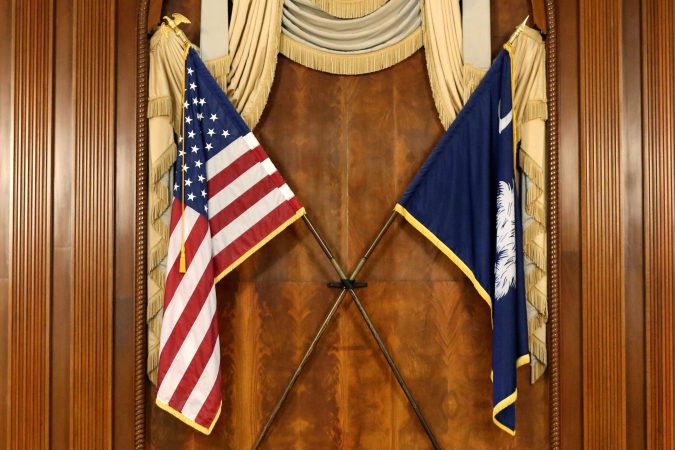
    WASHINGTON — South Carolina was selected Friday to once again lead off the Democratic Party’s 2028 presidential nominating schedule, most likely cementing a dramatic break from decades of tradition by keeping Iowa off the top of the calendar and elevating more racially diverse states.

    The decision by the Democratic National Committee’s Rules and Bylaws Committee will need to be approved by the full organization, which is scheduled to meet in August.

    South Carolina or Nevada had been expected to go first, with each state aggressively campaigning for the coveted spot.

    President Joe Biden successfully pushed to move South Carolina to the front of Democrats’ 2024 calendar after the state revived his struggling 2020 presidential campaign. South Carolina has long been the first Southern contest and has served as a key test of candidates’ support among Black voters.

    Jaime Harrison, a former DNC chairperson in attendance Friday, told the Associated Press after the vote that keeping his home state first on Democrats’ nominating calendar signaled to Black voters the value they bring to the party, especially after a Supreme Court decision aimed at weakening their voting power.

    “I think we needed a strong statement to say to the most loyal members of our party, which are Black voters, that we’re going to stand up with you,” said Harrison, who also chaired South Carolina’s Democratic Party. “It was just really important for us to stand up and say, ’We see you, we hear you, but most importantly, we’re going to fight like hell for you. And your voices are important.’”

    Democratic leaders in a handful of Southern states had lobbied for South Carolina to reprise its role as the party’s first-in-the-nation contest holder, arguing in a letter to the DNC that the state best represents the initial playing field for presidential candidates to build the coalitions needed to win and serves as “a moral and political compass for our party and our nation.”

    Democrats wanted more influence for diverse states

    The overhaul reflects Democrats’ effort to give greater influence to states that better mirror the party’s diverse coalition, particularly Black and Latino voters, after years of a calendar led by Iowa and New Hampshire, two states with overwhelmingly white electorates.

    Much of Friday’s debate stood as a contrast on several fronts. South Carolina proponents argued they had the experience to stand up a lead-off primary and serve as a showcase for the Black voters whose support has become vital for Democrats.

    “Black voters didn’t just show up for this party in 2020. They saved us,” Nebraska Democratic Party Chairperson Jane Kleeb said, in making her argument for South Carolina. “They saved our entire country from Donald Trump.”

    Nevada’s supporters, meanwhile, portrayed their state as the party’s future, in which they argued Latino voters play a larger and larger role.

    “We are the battleground state,” said Artie Blanco of Nevada, a DNC vice chair. ”We win elections because we leave no voter untouched.”

    The decision will also shape the opening stage of what is expected to be a crowded Democratic presidential primary. Without an incumbent or clear front-runner, the states that vote first could once again play an outsized role in determining which candidates gain momentum, attract donors, and emerge as viable contenders.

    Republicans still need to do their calendar. They’re expected to stick with their traditional early-state lineup led off by Iowa and New Hampshire.

    The calendar decision is one of the first milestones in what’s expected to be a tumultuous two-year sprint to the Democratic nomination.

    There has not been a truly open Democratic presidential primary — without an incumbent president or a dominant front-runner — in almost two decades.

  • Knives are out for Vance in the GOP. His allies say it’s a coordinated ‘op.’

    Knives are out for Vance in the GOP. His allies say it’s a coordinated ‘op.’

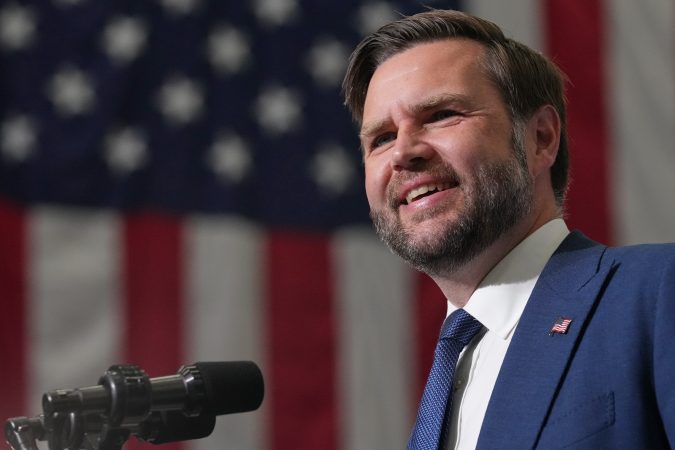
    As JD Vance prepares to make a decision about his 2028 plans, the vice president is facing a barrage of online attacks from within his party, criticism his allies say appears to be part of a coordinated attempt to poison the well for him politically.

    His detractors have adopted the “Never Vance” slogan and flooded social media, especially over the past week, with attacks including claims that Vance is “unfit” to be vice president due to his efforts to negotiate a peace deal with Iran. They have asserted, without evidence, that Vance is making policy decisions not supported by President Donald Trump. They have likened him to former President Barack Obama and Sen. Bernie Sanders (I., Vt.).

    The sustained public hostility from Vance’s own side of the aisle is unlike that faced by other vice presidents in decades, both in intensity and in the early timing — two years before the party will choose its next presidential nominee. The unusual nature is a product of the central role that social media plays in today’s political discourse, as well as the high stakes as Republicans prepare to select a new standard-bearer after Trump, Vance allies and critics say.

    Vance’s political team remains dismissive of the social media onslaught and its impact on Republican voters, believing that many of the attacks are not organic, a close ally of the vice president told the Washington Post — a sentiment echoed by two other people with knowledge of Vance’s strategy. The ally and other advisers spoke on the condition of anonymity to discuss internal deliberations.

    Vance’s allies are keenly aware of and monitoring the online attacks, but his team says the criticism sends a signal to the conservative base that establishment Republicans and opponents they label as neoconservatives hate Vance. That, they say, could ultimately strengthen his standing in a GOP primary.

    “Loud Washington establishment voices form an online cacophony,” said Steve Cortes, a conservative commentator supportive of Vance, “but they do not remotely represent the consensus views of Republican voters.”

    Vance, whose brand of politics is populist and skeptical of foreign wars, has remained the front-runner in 2028 Republican primary polling. Secretary of State Marco Rubio, the favorite of many more traditional, business-minded Republicans, has gained ground in recent months, however, although Rubio has insisted he will support Vance if he runs.

    The knives have long been out for Vance within the GOP, since before Trump selected him as his running mate. At the time, hawkish donors and conservative media personalities lobbied for Trump to reject Vance in favor of Rubio or Doug Burgum, now secretary of the interior.

    Polling of Republican voters shows Vance’s favorability within the party as roughly on par with Trump’s.

    Intense criticism from some Republicans, largely over Vance’s foreign policy views, has ebbed and flowed since the start of the second Trump term. The criticism reached a first peak in the fall as neoconservatives and pro-Israel activists portrayed Vance as antisemitic for sympathizing with figures who expressed skepticism over the U.S. relationship with Israel. More recently, attacks ticked up again after Vance sat for a nearly three-hour interview July 15 on Joe Rogan’s widely watched podcast.

    During the show, Vance described himself as a “reasonable moderate” in the debate over the U.S.-Israel relationship. He also cited a recent Time report about an online pro-Israel influence operation run by a former Trump campaign official, through which Vance said he was being attacked “in dishonest ways” by paid influencers.

    “You know, my response to that is, ‘Well, go to hell,’” Vance told Rogan. “I’m going to do what I have to do for the American people. I represent Americans first, and that’s the way that I’ve tried to do this job.”

    Pro-Israel conservatives erupted. A Washington Post analysis of conservative influencers’ posts on X found that criticism of Vance spiked immediately after his appearance on Rogan’s podcast.

    Critical posts poured in from prominent commentators including Ben Shapiro, Marc Thiessen, and Batya Ungar-Sargon, as well as online right-wing influencers and little-known X users whose anti-Vance posts quickly gained traction. Some of the users who pledged to oppose Vance and support Rubio in 2028 had profiles that strongly suggested they aren’t American voters and are based in other countries.

    It was “obvious to anyone with an IQ above 70″ that the barrage of attacks has been “totally inauthentic and probably coordinated to a certain extent,” the close Vance ally said.

    The upsurge in online criticism “hasn’t been reflected in any data correlating with Vance’s image among GOP voters, which currently tracks President Trump’s image to a T,” the person said. “If it were organic, authentic, or effective,” Vance’s favorability rating with Republican voters would have cratered over the past nine months, since the intense online criticism first peaked, the person said. “And that just hasn’t happened.”

    A spokesperson for the vice president said Vance’s only focus is “fighting for the president’s agenda and delivering wins for the American people,” and that he is not concerned with social media.

    Vance allies have pushed back publicly against some of the attacks, at times calling attention to common language used among those posting insults.

    Jon Schweppe, a Vance supporter and senior adviser at the American Principles Project, who worked for Trump’s Federal Trade Commission until earlier this year, posted a chart on X last week that showed the vice president’s favorability among Republicans had remained steady despite an “anti-Vance op.” His post quickly received dozens of replies from accounts that didn’t follow him — all attacking Vance. Schweppe described the response as curious, since his post had not been shared by any high-follower accounts.

    “Primary season — I guess it’s beginning before the midterms this year,” Schweppe said, adding that Vance’s detractors are “trying to create a divide and separate him from the president.”

    “There’s going to be folks within the party structure, within the influencer structure, who are going to try to knock him down a few pegs in hope that a challenger can emerge to beat him, and that’s just what we’re seeing,” Schweppe said. “But it’s absolutely organized.”

    The intense focus on the vice president is unusual. Trump’s first vice president, Mike Pence, didn’t face intense backlash from Republicans until the final weeks of his term, as the president and his supporters blamed Pence for failing to act to overturn the 2020 election results. Before that, Pence had been widely liked by Republicans, with few prominent conservatives raising their heads to harshly criticize him.

    For a significant stretch of her vice presidency, Kamala Harris faced a version of the succession anxiety now surrounding Vance. Democratic donors, strategists, and commentators questioned whether her low favorability ratings, uneven political performance and widely reported management problems left her prepared to become president — an especially consequential concern given President Joe Biden’s age.

    But there are significant differences: Vance is confronting a public, ideological revolt from prominent figures within the conservative coalition. The criticism of Harris, by contrast, generally was framed around competence and electability with jabs at what critics considered misstatements and gaffes. Few major Democratic figures publicly demanded that Biden remove her.

    Marc Short, who served as chief of staff to Pence in the White House, acknowledged that the attacks against Vance are far more intense than what Pence endured for nearly four years in office — at least until Trump turned against him at the end of his term.

    Pence, however, was adamant throughout that term not to show any distance between himself and Trump, even to staff or other cabinet officials, Short said. Vance has at times signaled a different perspective regarding the war with Iran, he noted.

    Trump has confirmed that Vance is “philosophically a little bit different” than him on Iran, and “maybe less enthusiastic about going” to war, although Vance has publicly expressed support for Trump’s decisions.

    “I think that there’s been a difference in the way that the current team has made clear their policy differences,” Short said. “So I think that does create more scrutiny when you do that.”

  • Nearly 150,000 mail ballots rejected in California’s primary despite efforts to count every vote

    Nearly 150,000 mail ballots rejected in California’s primary despite efforts to count every vote

    LOS ANGELES — Nearly 150,000 California voters had their mail-in ballots rejected for the state’s June primary, a spike from recent elections even as the state attempts to make voting easier with the goal of boosting participation and counting every ballot.

    California has become notorious for its ponderously slow vote counts that can drag on for weeks and sometimes longer, largely the result of multiple changes over the years that were intended to increase turnout but have done little to achieve that. Among the changes: Every voter receives a mail-in ballot that can arrive at an election office seven days late and still be counted, provided the envelope is postmarked by Election Day.

    Yet even with that generous weeklong window, the primary driver of the higher rejection numbers is late-arriving ballots, according to data compiled by the secretary of state’s office. Voting experts suspect the main problem is postmarks on ballots that came after Election Day, making them ineligible to be counted. The culprit could be U.S. Postal Service changes that might affect the timing of when postmarks are applied.

    Late-arriving ballots drove the rejections

    According to state data, 148,241 mail ballots were rejected in the June election, or a rate of 1.73% of all mail ballots.

    In raw numbers, that’s up from the 2024 primary, when 108,982 mail ballots were rejected, or a 1.56% rate. In 2022, 105,818 mail ballots were voided during the primary, or a rate similar to 2024.

    Lateness accounted for 93,479 rejected ballots in June, by far the largest category for disqualifying a ballot. That was up from about 70,000 in the 2022 primary and about 76,000 in the 2024 primary, though turnout in those elections was smaller compared to last June.

    Kim Alexander, president of the nonpartisan California Voter Foundation, said the jump in rejected ballots because of lateness is a major concern that — along with postal procedures — might also be connected to a late surge in ballots in June. Many voters waited until the final days to make a decision in a wide-open and chaotic race for governor.

    “Ballots rejected due to lateness are caused primarily to being postmarked too late to count, not because they arrived too late to count,” Alexander wrote in an email.

    Rejection rates have fluctuated over time, but the growing number of those set aside for lateness compared to recent elections “does really demand the question why this is happening,” said Mindy Romero, director of the Center for Inclusive Democracy, a nonpartisan research group.

    Lawmakers concerned about USPS postmark changes

    In January, a group of mostly Democratic U.S. senators sent a letter to the U.S. Postal Service, alarmed that mail-processing changes might affect postmark dates for mail-in ballots during an election year that will determine control of Congress.

    Updated agency policy says postmarks might not indicate the first day the Postal Service received the mail, but rather the day it was handled in one of its processing centers. Those centers are increasingly likely to be further away from certain communities because of recent consolidations within the Postal Service, which could further delay postmarks.

    On Thursday, two Wisconsin Democrats, U.S. Sen. Tammy Baldwin and Gov. Tony Evers, called on the Postal Service to address delays that caused hundreds of ballots to arrive after Election Day in the state in April. In June, a federal judge halted President Donald Trump’s executive order that sought to create a federal voter list and limit who can receive a mail ballot.

    Earlier this year, California election officials urged voters to send their mail ballots early, warning that Postal Service changes could lead to slower mail service.

    In California, the highest mail ballot rejection rate in June — 3.52% — was in Tulare County, in the agriculture-heavy Central Valley. It was followed by Alpine County, south of Lake Tahoe, and Merced County, also in the Central Valley, which both notched a 3.36% rejection rate.

    Mismatched signatures and multiple ballots in an envelope

    Nearly 44,000 ballots were set aside because the voter’s signature didn’t match the one on record with county officials. Over 8,300 ballots were rejected because there was no signature on the returned ballot envelope.

    In 743 cases, the voter had already cast a ballot, so the mail ballot was voided. Other reasons for rejection included a ballot being missing from the return envelope, or multiple ballots were sent back in a single envelope.

    The data didn’t break down the uncounted ballots by party registration.

    Florida, Texas and other large population states quickly wrap up vote counting, while California is a national laggard.

    After the June primary, President Donald Trump seized on California’s reputation as the national slowpoke in vote counting to renew his long-standing criticism of the state’s elections, while the Republican’s Department of Justice launched an investigation into Los Angeles County’s elections.

    There is no indication of any widespread problems with mail voting, which has gained in popularity among Democrats and Republicans alike. A report by the Brookings Institution published in 2025 found that the number of cases of mail voting fraud was minuscule — about four cases per 10 million mail ballots.

  • Gov. Josh Shapiro’s admin consulted with Amazon and data centers on his marquee protections, records show

    Gov. Josh Shapiro’s admin consulted with Amazon and data centers on his marquee protections, records show

    Gov. Josh Shapiro spent months preparing a set of standards he promised would “hold data center developers accountable.”

    But behind the scenes, top Shapiro administration aides were drafting the framework with the input of Amazon and the powerful data center lobby and sharing early drafts with company officials before making them public, records show.

    The emails, first reported by climate change media outlet HeatMap earlier this year and obtained by an anti-data center activist in Montour County through the state’s open records law, show a cozy relationship between Shapiro’s administration and data center developers. But they also show the role the technology giants played in influencing the final version of Shapiro’s guardrails — though that influence only went so far.

    Shapiro in May introduced the initiative as the Governor’s Responsible Infrastructure Development, or GRID, which are a set of transparency and environmental standards data center developers would need to meet to access state tax breaks and other incentives Shapiro asked the General Assembly to write into law. The Democratic-controlled state House approved these standards, but it’s stalled in the GOP-controlled Senate, as legislators struggle to find common ground on one of the most hot-button issues facing them today.

    A spokesperson for Shapiro said the administration consulted numerous stakeholders as part of the drafting of the policies, including the Pennsylvania Building & Construction Trades Council, the Pennsylvania Environmental Council, the Natural Resources Defense Council, and more. Data center development is supported by many building trade unions across the state, which are likely to benefit from the major projects.

    Environmental groups broadly support Shapiro’s proposal and want stronger regulations on data center projects. Some groups want to ensure the provisions are mandatory, instead of voluntary, as Shapiro proposed.

    “As finalized, the Governor’s GRID standards set firm guardrails to protect Pennsylvania communities and hold data center developers accountable to strict standards requiring them to take additional action to ensure Pennsylvania communities benefit — and are not harmed — by these projects,” said Rosie Lapowsky, Shapiro’s press secretary, in a statement.

    Shapiro, a Democrat seeking reelection this year and a possible 2028 presidential contender, has remained data-center friendly and emphasized that Pennsylvania should play a core role in the “battle for AI supremacy.”

    But he has sharpened his rhetoric in recent months, citing his own personal evolution on the issue, as public opinion has also shifted with roughly 76% of Pennsylvanians across party lines opposing the projects.

    “Too many of these projects have been shrouded in secrecy, with local communities left in the dark about who is coming in and what they’re building,” Shapiro said in his budget address in February.

    Yet as other states like New York have put moratoriums on data center development, Shapiro has chosen to fast-track permits and support tax breaks to incentivize the massive projects, though he now believes they should meet certain voluntary standards.

    Amazon has already committed to a $20 billion investment in Pennsylvania — the biggest investment in state history — to build two data center campuses in Luzerne and Bucks counties and will access the state’s sales tax exemption for data centers as approved by the General Assembly in 2021.

    The Data Center Coalition — the powerful industry group made up of data center developers like Amazon, Google, Anthropic, OpenAI, and Microsoft — shared feedback on several drafts of Shapiro’s GRID principles and approved of most of its measures. But the industry still has “some significant concerns” with the voluntary program, including its clean energy provisions requiring certain percentages of its power to be from low- or zero-carbon sources.

    Dan Diorio, the Data Center Coalition’s executive vice president of state policy and government affairs, described the proposed GRID program’s requirements to access tax breaks as “extensive” compared to the 37 other states that offer sales tax exemptions.

    “We look forward to continuing to work with the legislature and the governor’s office on outlining what would ensure Pennsylvania remains a strong and competitive data center market,” Diorio said.

    Fengqi You, an energy systems engineering professor at Cornell University and data center expert, said it’s best practice for governments to consult all stakeholders, including industry leaders. But data center developers and local communities have opposing viewpoints that must be balanced, he said.

    “The right model, in my view, is to consult widely all the stakeholders, decide independently, and disclose transparently,” You said. “The standards are only as strong as the conditions and the consequences.”

    But some of the conditions should not be voluntary incentives, like Shapiro proposed, You said. This has been echoed by some environmental and anti-data center groups, which argue that the provisions don’t go far enough if compliance is ultimately voluntary for the tech giants.

    “It’s a useful starting point, but the incentive conditions should not substitute a minimum public protection for all,” You said. “If a company is receiving a tax exemption, then the state should have every reason to attach some very strong public interest conditions.”

    ‘Not ban or discourage data centers’

    Ahead of Shapiro announcing his plans for GRID as part of the state budget address, Shapiro administration officials went further in their efforts to reassure companies like Amazon, which they’ve courted for years, records show.

    In a Feb. 3 email, Department of Community and Economic Development Secretary Rick Siger wrote to Amazon Web Services staff that Shapiro would not “ban or even discourage data centers” and that “this new approach will not look back at projects or agreements already in place.”

    Other emails, sent in March by Sam Robinson, a deputy chief of staff to Shapiro, request that Amazon and the Data Center Coalition submit their feedback and mark up drafts. Shapiro’s administration declined to share those earlier feedback drafts.

    Legislators in Pennsylvania’s split General Assembly did not write Shapiro’s GRID proposal into law as part of this year’s $50.8 billion budget deal, and only enacted one new data center requirement despite near-unanimous support to repeal tax breaks for the projects. Shapiro now says he’s “considering all executive actions” he can do without the legislature.

    Colby Wesner, a pediatrician in Montour County, received troves of emails from top Shapiro administration officials, top Amazon staff, and more as part of several Right-to-Know Law requests he submitted to find out more about a now-blocked project near his home.

    “It’s a really insincere attempt,” Wesner said of the GRID principles. “It’s a public relations stunt.”

    Now that Shapiro is considering acting on his own, Wesner said he wants to know whether Shapiro will add restrictions or continue to welcome the projects into Pennsylvania.

    “Maybe he is listening to constituents and an executive action will demonstrate that he is listening to citizens,” Wesner added. “If it is, then great for him. But to date, everything he has done has been pro-data center industry.”

    Amazon , for its part, declined to comment on its role in the drafting of the GRID principles, which, if approved, would not apply to their ongoing projects. Becky Ford, a principal for global infrastructure expansion at Amazon Web Services, replied to Robinson on March 18 that they “look forward to providing feedback.”

    “We’re committed to being good neighbors in the communities where we build and operate, and will continue working with state and local leaders to invest responsibly and to keep creating good jobs across the Commonwealth,” an Amazon spokesperson said in a statement.

  • U.S. military says it’s launching new strikes on Iran as clashes escalate over shipping routes

    U.S. military says it’s launching new strikes on Iran as clashes escalate over shipping routes

    CAIRO — The U.S. military announced Thursday that it is conducting the 13th night of strikes against Iran as clashes escalate over shipping routes. Earlier Yemen’s Iran-backed Houthi rebels said they attacked two Saudi oil tankers in the Red Sea, potentially widening the Iran war as international oil topped $100 a barrel.

    U.S. Central Command said the latest attacks are designed to “further degrade Iran’s ability to threaten civilian mariners and commercial vessels transiting regional waters” as the Americans push to regain control over the Strait of Hormuz and restore the flow of international shipping.

    A short time later, Iranian state media reported explosions along the strait in Bandar Abbas and Qeshm, as well as to the northwest near Andimeshk and Omidiyeh.

    Meanwhile, the Houthis threatened to shut down another key trade route, with the world economy already reeling from Iran’s closure of the Strait of Hormuz. The threat came as Iran and the U.S. have stepped up attacks as they vie for control of the strait, through which a fifth of the world’s oil and gas transited in peacetime, setting off a scramble for alternative routes.

    President Donald Trump threatened “major military punishment” against the Houthis if their attacks on ships continue.

    “If they do this again, the U.S. will hold Iran responsible, in that the Houthis are a Surrogate and/or Proxy of Iran, and major military punishment will be inflicted upon Iran and, of course, the Houthis, themselves,” Trump wrote on social media.

    As the rhetoric escalated, so did the economic fallout. The price of Brent crude oil, the international standard, spiked more than 6% Thursday, to about $100 a barrel. That is the highest level since May, before the two sides reached a preliminary peace agreement last month that has since collapsed.

    Prime Minister Ali al-Zaidi of Iraq, which has close ties to both the U.S. and Iran, was in Tehran on Thursday to call for peace and dialogue, and he promised not to allow Iraqi territory to be used for attacks on Iran, his office said. Al-Zaidi met with Trump earlier this month in Washington.

    U.N. Secretary-General António Guterres warned Thursday that the region is being pulled “into an ever-widening circle of confrontation” with one crisis feeding another and every escalation triggering the next.

    “Diplomacy is the only way forward,” Guterres told the U.N. Security Council. He called for Pakistan’s efforts to mediate an end to the war to be strengthened.

    Houthi attacks are a ‘double whammy’ on oil shipments

    The Houthis’ SABA news agency said the rebels had struck two tankers, the Encelia and the Layla, in the Red Sea, causing fires on both. There were no reports of casualties.

    It was the first reported Houthi attack on a vessel since they announced a blockade of Saudi-linked shipping through the Bab el-Mandeb Strait earlier this week in retaliation for the kingdom’s blockade on Yemen and a recent attack on the international airport in Yemen’s rebel-held capital, Sanaa.

    Bab el-Mandeb, at the southern tip of the Arabian Peninsula, is a vital shipping chokepoint connecting the Red Sea to the Gulf of Aden. Around 12% of the world’s trade, including a fourth of global container traffic, passes through there, moving between Europe and Asia via Egypt’s Suez Canal.

    The state-run Saudi Press Agency reported an attack set the Encelia ablaze overnight in the Red Sea. It did not mention the Layla.

    The United Kingdom Maritime Trade Operations Center said it received a report of a tanker being struck by “an unknown projectile” 80 miles southwest of Al Shuqaiq, Saudi Arabia, in the Red Sea.

    The Houthi attacks put at risk oil shipments from Saudi Arabia’s Yanbu port on the Red Sea and present a “double whammy” on top of the disruption in the Strait of Hormuz, said maritime data and analysis firm Lloyd’s List Intelligence.

    Saudi Arabia has diverted millions of barrels a day of oil exports to Yanbu via an overland pipeline as the war has bottled up the Persian Gulf.

    The Houthi threat “raises questions on the viability of this route,” Lloyd’s said in slides accompanying an online webinar Thursday.

    The rebels say they are blockading Saudi Arabia, but during their announced blockade of Israel at the height of the war in Gaza, they targeted many vessels with little or no connection to that conflict, disrupting global trade.

    Both sides dig in over Strait of Hormuz

    Iran says it has the right to manage traffic and potentially charge fees in the Strait of Hormuz, which was open to all toll-free before the war. It has attacked ships using a route through the strait that is overseen by U.S. forces and intended to be outside Tehran’s control.

    Trump said on social media Thursday that sanctioned Iranian funds in the possession of the U.S. will cover the expense of fixing boats damaged in the war.

    “Please let this statement serve to represent, until further notice, that from this point forth, any and all damages done to Ships, Cargo, or anything related thereto, will be paid for by Iranian Money that the United States has in its possession, and controls,” Trump said.

    It was unclear what legal mechanisms Trump would use to access and spend the funds, but he said that doing so would be “the fair and equitable thing to do.”

    In response to Iran’s attacks, the U.S. began the widening campaign of strikes across Iran and restored a naval blockade of Iran’s ports. U.S. Central Command said it has redirected about a dozen commercial vessels and disabled one since the blockade resumed.

    The war of words has also escalated. Iranian Foreign Minister Abbas Araghchi said Tehran would adopt an “eye for an eye” policy on U.S. strikes against its infrastructure. U.S. Secretary of State Marco Rubio retorted that Trump’s policy is “a head for an eye.”

    “The price will continue to get higher every single night until they come to their senses,” Rubio told reporters while traveling in the Philippines for a regional summit.

    Iran’s health ministry said Thursday that 55 people have been killed and 629 have been wounded since renewed U.S. airstrikes began on June 27.

    Iran has responded to U.S. attacks by targeting energy infrastructure and desalination plants providing drinking water in parched neighboring Gulf countries.

    Polls have shown the war is unpopular among Americans, a fact reflected in the narrow passage Thursday of a resolution in the U.S. House to halt the war. Though a handful of Republicans crossed party lines to support the measure, the vote remained largely symbolic.

  • Pa. lawmakers can’t agree on how to sentence second-degree murder cases. The state Supreme Court may extend their deadline.

    Pa. lawmakers can’t agree on how to sentence second-degree murder cases. The state Supreme Court may extend their deadline.

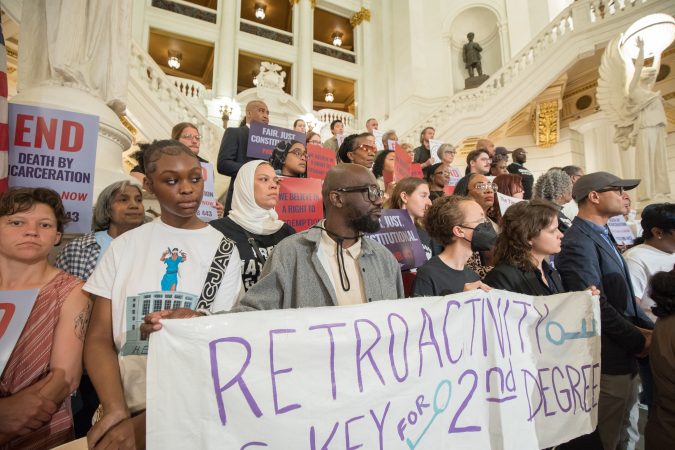
    HARRISBURG — As state legislators failed to reach an agreement on a new sentencing structure for second-degree murder convictions on the eve of a deadline imposed by Pennsylvania’s highest court, the Allegheny County district attorney has asked the Pennsylvania Supreme Court to extend its deadline 120 days.

    Unless the court agrees, the state’s divided legislature is all but guaranteed to not reach a deal by the Friday evening deadline set by the court, which ruled in March that mandatory life sentences for crimes of that category were ruled unconstitutional.

    That means that judges would begin to sentence individuals across the state without legislative guidance — and likely tees up about 1,100 individuals already serving life sentences for lengthy litigation over what comes next.

    In a filing with the court Thursday afternoon, Stephen Zappala, the Allegheny County district attorney, requested that the judges give the General Assembly the ability to continue debating new sentencing guidelines when they return in September from summer recess.

    Lawmakers were not due back to Harrisburg until the fall, but Senate and House Republicans lambasted House Democrats for failing to pass any legislation on second-degree murder. The House returned to the Capitol for a special session Thursday to vote on a Democrat-backed plan for second-degree murder sentencing.

    The passage of that bill, however, did not bring lawmakers closer to a deal.

    “We still want to have a legislative solution, we believe it is going to be the most equitable way statewide to address the issue of people who are currently serving unconstitutional sentences,” said Roxanne Horrell, the legislative director for Straight Ahead, a decarceration advocacy organization. “We are ready and willing to come to the negotiating table.”

    The House-advanced plan, which passed 102-100, would allow individuals who have already been convicted of second-degree murder to seek parole after serving 30 years. A decision on new sentencing guidelines would be left to the state’s Sentencing Commission.

    In a brief statement to reporters, House Majority Leader Matt Bradford (D., Montgomery) said that bill “is a real attempt in the House to meet the Senate more than halfway.”

    In floor arguments that at times grew heated, House Republicans took issue with the outlining no minimum sentence for future cases and instead placing that decision in the hands of the Sentencing Commission.

    Republicans also criticized Democratic leadership for not taking a vote on the Senate-passed plan.

    That bill — which several Senate Democrats voted for — creates a sentencing minimum of 35 years to life for future cases. Individuals would be eligible for parole after serving 35 years, or after serving 20 years for those older than 70.

    “This is one of those issues that requires a great deal of thought, and it requires bringing in some of the stakeholders that we are hearing from that was opposed to this legislation today,” House Minority Leader Jesse Topper (R., Bedford) said. “Those are people who need to be in a room to come up with a solution, and unfortunately, that’s not what happened.”

    He called for party leaders, the state’s Fraternal Order of Police, Gov. Josh Shapiro, and Attorney General Dave Sunday to come together and reach an agreement instead of shuttling bills back and forth between both chambers.

    “When you don’t have that kind of collaboration to deal with an issue such as this,” Topper said, “nothing will be done.”

    Horrell said the decarceration organization would support discussions that include their input.

    In a letter on Thursday, the attorney general urged state representatives to vote against the plan backed by House Democrats.

    “This approach does not foster appropriate and thoughtful re-entry initiatives or put individuals on a path to success,” wrote Sunday, a Republican. “Thoughtful re-entry initiatives are necessary and important, and I support those initiatives. But not this approach, which ultimately fails to hold dangerous offenders accountable.”

    The plan advanced Thursday is the latest development in months of back and forth between Republicans and Democrats who have advanced differing visions for what the new sentencing parameters should be.

    Lawmakers were unable to reach a deal as part of budget negotiations that concluded earlier this month.

    “Today, the House took important action prior to the court-imposed deadline by passing a package to address this issue and it’s time for Senate Republicans to return to Harrisburg and bring this matter to conclusion rather than grandstand,” Shapiro said in a statement.

    The House-passed bill also expands the state’s compassionate release program. Under existing law, incarcerated individuals can only be candidates for release if doctors determine that they have less than a year to live.

    The bill would allow for an individual to be released if they have been diagnosed by a doctor with a terminal or life-threatening illness, or if a physician diagnoses them with an illness that could be treated better outside of a correctional facility.

    Democratic Rep. Rick Krajewski, who represents West Philadelphia, said that the program is designed for incarcerated individuals who are facing serious illnesses “that require real, complex medical care” that can’t be provided while an individual is serving out their sentence.

    “I am glad that the House was able to put a vision forward about how to fulfill our constitutional mandate and reform our carceral system generally,” he added.

    Several Republicans had supported Krajewski’s initial bill, which passed the house 111-92. The program is estimated to save $15 million a year in healthcare costs for incarcerated individuals, he said.

    Now that both the House and Senate have passed a bill, either could be amended and voted on by both chambers in a single day.

    “Instead of allowing a vote on either of the bipartisan bills passed by the Senate, [House Democrats] chose to engage in political theater and failed to produce any feasible product to protect our communities and victims’ families,” Senate Republican leaders wrote in a statement.

    A spokesperson for Senate Republican leadership did not respond to a request for comment on whether the chamber planned to return for a vote Friday.

    On Thursday morning, Topper morning said that he hoped the legislature could come to an agreement in the coming weeks if an agreement could not be reached by the deadline.

    However, speaking to reporters after the House adjourned, Topper said the decision to advance the House bill without a vote on the Senate bill on Thursday “sets things back considerably.”

    Ethan Young is an intern with the Pennsylvania Legislative Correspondents’ Association. He can be reached at ethanmyoung@gmail.com.