Category: Politics

  • Lawmakers seek ban on using campaign funds to fight sexual harassment claims

    Lawmakers seek ban on using campaign funds to fight sexual harassment claims

    Federal politicians would be barred from using campaign contributions to fight or settle sexual misconduct allegations under a bill announced Tuesday by two House members from opposite sides of the political spectrum.

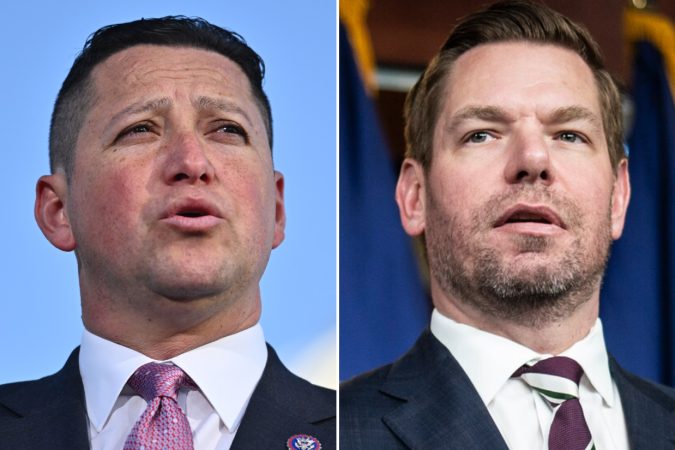
    The proposal, from Reps. Ro Khanna (D-California) and Anna Paulina Luna (R-Florida), aims to further shape the debate over how Congress should move forward from a spate of sexual misconduct scandals this spring, which prompted the creation of a bipartisan working group to revise the policies protecting Capitol Hill staffers. Both Khanna and Luna have been active on the issue.

    Khanna said politicians would behave better if they had to rely on their own financial resources when they get into trouble rather than being able to dip into campaign accounts or legal-defense funds.

    “That creates this culture of impunity where people think they’re untouchable,” Khanna said in an interview.

    “There’s such a power asymmetry,” he said, because of “the extraordinary legal advantage that elected officials have.”

    The progressive Khanna came into national prominence last fall as he helped force the release of federal investigative files related to financier and sex offender Jeffrey Epstein, over the objections of President Donald Trump.

    Khanna is collaborating on the bill with the conservative Luna, one of several Republican women lawmakers who have begun demanding more consequences for alleged sexual misconduct by their colleagues. She led the charge in April against Sen. Ruben Gallego (D-Arizona), filing a complaint with the Senate that was dismissed last month with no findings that he violated federal law or broke Senate rules.

    The bill would prohibit elected officials and candidates for federal office from using campaign donations or a legal-defense fund to cover legal fees related to claims of sexual assault, sexual abuse or sexual harassment. If they are not held liable, they could be reimbursed for expenses.

    Luna said the proposed change is overdue and would serve as a “massive deterrent” amid a culture of sexual misconduct on Capitol Hill that has gotten out of hand.

    “It is not what the Founding Fathers intended for members of Congress,” she said. “It’s a perversion of the system.”

    The proposal would also make campaign contributions off-limits for paying settlements or court-ordered judgments for sexual misconduct claims, as well as for private investigators and other research into the accusers.

    Khanna said that politicians would still be able to tap into their savings to defend themselves like most other Americans but that they should not be allowed to fundraise for what frequently amounts to public relations activities more than actual legal work.

    “In most of the cases, they’re being used to smear survivors,” he said.

    The bill emerged from conversations with activists supporting women who have come forward in recent months with accusations of sexual misconduct by politicians, including former congressman Eric Swalwell (D-California).

    In April, the San Francisco Chronicle spoke to a former Swalwell staffer who said he sexually assaulted her. CNN reported more allegations of inappropriate behavior, and a second woman accused Swalwell of raping her. He has categorically denied the allegations of sexual misconduct, calling them a political hit job, though he acknowledged some “mistakes in judgment.”

    Swalwell dropped out of the race for California governor and then resigned from office within days. But he has since spent $50,000 from an old congressional campaign account, as well as hundreds of thousands from contributions to his gubernatorial bid, on prominent defense attorney Sara Azari. Her firm hired a private investigator to look into the allegations, according to NOTUS.

    “Many of those women were forced back into hiding, and this ordeal is still not over for them,” said Cheyenne Hunt, an influencer who worked with some of the accusers and subsequently launched the advocacy group Reckoning Action.

    That’s retaliation, Hunt said, and a “bad-faith use” of campaign funds.

    “No donor gives to a campaign thinking, ‘Yes, I want my money to go toward harassing a survivor,’” she said. “This truly feels like such a no-brainer.”

    Despite bipartisan support for the bill, its prospects are uncertain. Congress has struggled to pass major legislative priorities this year, and only two months of floor time remain for the rest of the session.

    Other ideas for improving how Capitol Hill handles sexual misconduct complaints are also circulating. A group that says it represents more than 1,500 congressional staffers released a letter this month calling to expand legal representation for employees, make independent investigations easier to trigger, and provide more time to file workplace claims.

    With the blessing of congressional leadership, the Republican and Democratic women’s caucuses united in the spring to develop recommendations for making Congress a safer work environment. Their proposed solutions are forthcoming.

    House Speaker Mike Johnson (R-Louisiana) recently said he would support banning lawmakers from having sexual relationships with any congressional staffers, not just their own subordinates.
  • Kentucky governor demands that McConnell prove he is fit to serve or resign

    Kentucky governor demands that McConnell prove he is fit to serve or resign

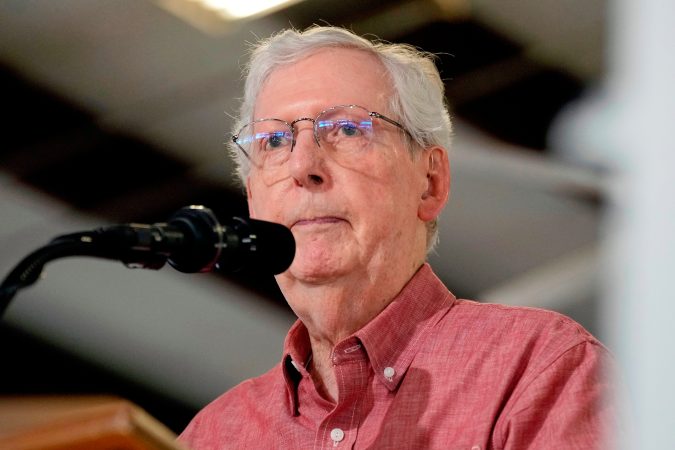
    WASHINGTON — Kentucky Gov. Andy Beshear, a rising national figure in the Democratic Party, is calling on the state’s Republican Sen. Mitch McConnell to either prove that he is fit to continue serving after his lengthy hospital stay or resign from office.

    Beshear made the demand in a letter after McConnell’s office said Monday that the 84-year-old senator had not yet been medically cleared to leave the rehabilitation facility where he has been undergoing physical therapy. The office said he would miss a major Kentucky political event and upcoming Senate votes. McConnell was hospitalized June 14 and disclosed weeks later that it was the result of a fall.

    Beshear, who is widely viewed as a potential presidential candidate in 2028, first urged McConnell in early July to release more information about his condition after weeks of public silence. His letter Tuesday marked a significant escalation.

    “I am calling on you to directly and verbally address the people of Kentucky and provide proof of your capacity to serve, or resign,” Beshear wrote to McConnell.

    Beshear also sent a letter to Senate Majority Leader John Thune, urging him to investigate McConnell’s condition if the senator does not demonstrate that he is capable of continuing to serve.

    McConnell and Thune’s offices did not provide comment on the letter.

    McConnell, who led Senate Republicans for nearly two decades, has long guarded his personal life. Since he was hospitalized last month, his office has issued major updates on July 12 and July 27, each accompanied by a single photograph.

    But public scrutiny of aging elected officials has intensified after several recent health episodes and deaths in office, including the deaths of California Sen. Dianne Feinstein in 2023 and South Carolina Sen. Lindsey Graham earlier this month, as well as President Joe Biden’s decision not to seek reelection after concerns about his age and health became a dominant political issue.

    In the absence of regular public updates from McConnell himself, speculation about his condition has grown online.

    “All of this speculation and even this letter could have been avoided with a minimal amount of transparency,” Beshear wrote to Thune.

  • Philly’s city budget is balanced, but structural deficit and federal funding concerns loom, board warns

    Philly’s city budget is balanced, but structural deficit and federal funding concerns loom, board warns

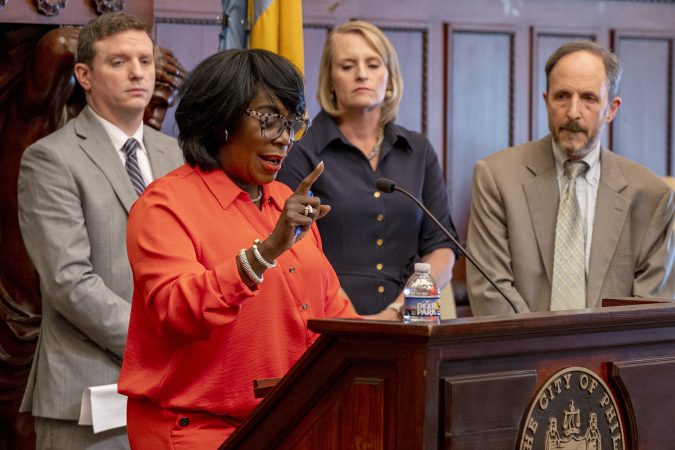
    A state board that oversees the City of Philadelphia’s finances signed off on Mayor Cherelle L. Parker’s five-year financial plan on Tuesday, despite a structural deficit and significant uncertainty about future federal funding.

    The Pennsylvania Intergovernmental Cooperation Authority, which was established in the early 1990s to monitor the city’s finances amid a severe fiscal crisis, must every year approve the five-year budget plan agreed to by the mayor and passed by City Council. The board voted 5-0 to green-light the plan.

    In June, Parker and Council agreed to a $7.1 billion budget for the fiscal year that began on July 1, as well as a five-year financial plan in which the city is projected to spend more than it generates in four of those years. This fiscal year, the city is projected to spend about $550 million more than it brings in.

    As has been common in recent years, the city’s budget relies on reserves and an existing surplus to avoid a significant deficit. The city is projecting that this year it will have a $364.6 million fund balance, which is the amount of money left over in the city’s general fund after liabilities are accounted for. That balance is set to decline in each of the next five years.

    Parker administration Finance Director Rob Dubow said the city is on track to unlock hundreds of millions of dollars in additional revenue once its pension fund is fully funded, a major milestone that is projected to take place in fiscal year 2033.

    Also on Tuesday, Alan C. Kessler was unanimously elected to serve as chair of the PICA board after Kevin Vaughn, who has chaired the board for a decade, announced he would not seek reelection to the position. He intends to remain a board member, he said.

    Kessler, who has also served on the board for about a decade, is a commercial litigation attorney. He is a prominent fundraiser in the Democratic Party and has long been active in local and national politics.

    As for the city’s financial position, board members on Tuesday also discussed potential risks that are largely outside the Parker administration’s control, such as the funding issues that both SEPTA and the Philadelphia School District have faced in recent years. The transit authority has warned of the possibility of debilitating service cuts, and the public school system is borrowing hundreds of millions of dollars just to pay its bills.

    Parker had earlier this year proposed implementing a tax on rideshare services to generate about $50 million a year for the district, but Council members rejected her plan.

    Administration officials identified existing funding for the district to stave off planned staff cuts. Dubow said Tuesday that cuts were made in each year of the five-year plan to make up for that money, but that the hope is to reach an alternative, recurring revenue generation plan before the cuts would take effect.

    The biggest uncertainty for Philadelphia’s finances, the board said, is the federal government and potential policy shifts affecting funding under President Donald Trump. PICA officials warned in a report that while the city has so far sustained only limited losses as a result of slashed grants under the Trump administration, the city “will not be able to absorb federal funding reductions at a greater scale without significant service reductions.”

    The city received more than $2.2 billion in aid from the federal government in fiscal year 2024, the most recent data available. More than half that money was for healthcare and other social safety net programs for poor and disabled residents.

    The president has repeatedly threatened to cut off federal funding to cities like Philadelphia that are led primarily by Democrats and have relatively permissive local immigration policies. However, those efforts have been tied up in litigation.

    A more pressing concern for the city, PICA officials wrote, could be the changes made last year to the enrollment criteria for social programs like Medicaid and the Supplemental Nutrition Assistance Program (SNAP).

    Philadelphia is one of the poorest big cities in the nation, and hundreds of thousands of residents rely on government assistance. The Pennsylvania Department of Human Services has estimated that changes to Medicaid instituted under the Trump administration will leave more than 73,000 Philadelphians without coverage by next year.

    And, the PICA report warned: Changes to federal programs can have ripple effects.

    “The fiscal crisis that precipitated the creation of PICA in the 1990s,” officials wrote, “was in part due to dramatic reductions in federal programs for vulnerable individuals that the City tried to manage but was incapable of replacing.”

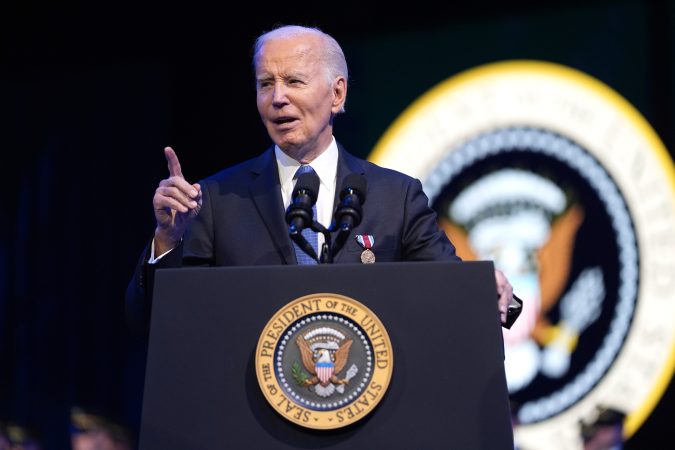
  • Joe Biden interviews with memoir ghostwriter reveal him discussing sensitive information

    Joe Biden interviews with memoir ghostwriter reveal him discussing sensitive information

    Newly released audio tapes, disclosed by a conservative activist group, appear to show Joe Biden sharing classified information with a biographer and sometimes claiming memory lapses during interviews that occurred before his election to the presidency in 2020.

    About three hours of audio and 117 pages of transcripts — with many redactions — were released by the Oversight Project, an arm of the Heritage Foundation, after Biden lost a prolonged legal fight to keep his conversations with his memoir ghostwriter, Mark Lewis Zwonitzer, private.

    “They didn’t even know I had this,” Biden told Zwonitzer in October 2016, near the end of his second term as Barack Obama’s vice president, as he talked about sensitive foreign policy matters handled by the administration.

    In one 2017 session, after Biden had left the West Wing and before he’d launched his own presidential campaign, he appeared to admit retaining classified information from his time as vice president.

    “I just found all the classified stuff downstairs,” Biden said. “I wrote the President a handwritten 40-page memorandum arguing against deploying additional troops to Iraq — I mean, to Afghanistan on the grounds that it wouldn’t matter, that the day we left would be like the day before we arrived.”

    The potentially classified information itself is redacted in both the audio and transcripts that the Oversight Project released.

    The right-wing group first sued to obtain the tapes after Special Counsel Robert Hur decided in 2024 not to charge Biden for how he handled classified information. Biden cooperated with Hur’s inquiry and told the special prosecutor during his presidency that he did not intentionally mishandle any classified material.

    Hur, who obtained the tapes as part of his inquiry, said in announcing his decision that he believed a jury would find Biden a sympathetic figure because of his age and what Hur described as a “poor memory” — a statement that became a flashpoint in public debate about Biden’s age and fitness for the presidency.

    Biden was 74 when the interviews began. He was 81 and seeking reelection when Hur released his report in early 2024, though Biden later ended his campaign for a second term after a halting debate performance against Republican Donald Trump.

    The tapes contain instances of Biden being unable to recall some dates and details of topics he was discussing with Zwonitzer. Biden also showed a command of many details, recalling meetings and details of conversations referenced in the notes he shared.

    At the Oversight Project, vice president of litigation Jeff Clark insisted the tapes prove Biden’s decline.

    “The tapes have always belonged to the American People, the Oversight Project just delivered them to their rightful owner,” Clark said in a statement. “The knowledge of his deterioration was well-established.”

    A Biden spokesperson blasted the release as politically motivated.

    “President Biden’s conversations for a book a decade ago that discussed his late son are private, and were provided to the Department of Justice on the express condition they stay that way,” said TJ Ducklo. “Reversing course and making them public is just the latest example of this Administration weaponizing the DOJ for political retribution.”

    Biden initially sued to stop the Department of Justice from releasing the material, claiming the conversations were private. But he dropped his suit after a divided panel of appeals court judges rejected his bid. Biden could have petitioned the Supreme Court to intervene or asked for a rehearing by the full U.S. Court of Appeals for the District of Columbia Circuit.

    In a 2-1 ruling, a three-judge panel from the circuit court found a “substantial” public interest in disclosing the material.

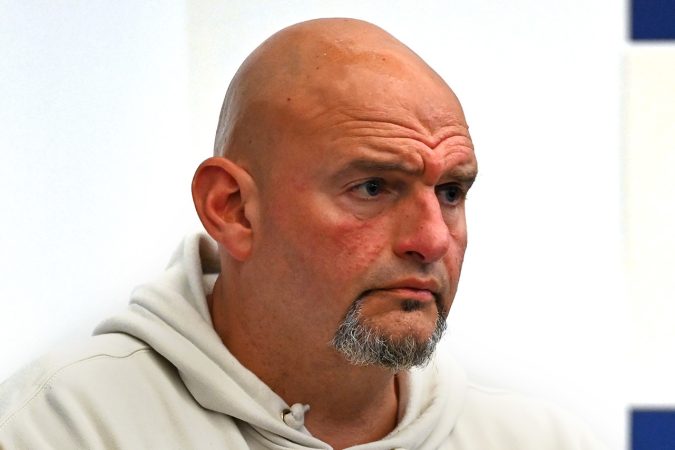
  • John Fetterman campaigned on ending the filibuster. Here’s why he changed his mind.

    John Fetterman campaigned on ending the filibuster. Here’s why he changed his mind.

    WASHINGTON — U.S. Sen. John Fetterman, doubling down on a position that has already added to Democrats’ frustrations with him in recent months, offered a more detailed explanation this week for his change of heart about eliminating the Senate filibuster.

    The Pennsylvania Democrat wrote in an op-ed for the Washington Post that he had been “horribly wrong” to support ending the practice that requires bills to win 60 votes rather than a 51-vote majority.

    The rule frequently allows members of the minority party to block policies that fail to win bipartisan support, including some of each party’s top priorities — like abortion protections when Democrats have been in control, or the voting restrictions that Republicans are now attempting to pass at President Donald Trump’s urging.

    Fetterman was among many Democrats in recent years to campaign on eliminating the filibuster in order to secure those bigger wins. During his 2022 campaign, he specifically referred to passing abortion protections established under Roe v. Wade as a reason for that position after the Supreme Court overturned its landmark 1973 decision that year.

    “I became one of the first candidates in the country to call for abolishing the filibuster for a reason: it stands in the way of getting things done for [Pennsylvanians],” his active campaign website still read on Tuesday, nearly four years after he won.

    But as he has more frequently sided with Republicans and criticized his fellow Democrats, Fetterman has said repeatedly this year that he had been “wrong.”

    “We were very wrong about that to nuke the filibuster, and we should really humble ourselves,” he said on Fox News in February. In that interview and others, he needled Democrats who opposed the filibuster but now, he said, express a “love” for it as they find themselves in the minority and try to reject Republican policies.

    In the Washington Post this week, Fetterman wrote that Americans who are “horrified” at the policies coming out of the Republican-led Congress and Trump’s administration would be alarmed if the filibuster had been eliminated and every proposal could become law with a simple majority.

    “We’d have the Save America Act by now, which I do not support,” Fetterman wrote. “We could have extreme policies such as nationwide abortion restrictions, backpedaling on LGBT rights, repeal of birthright citizenship and limited voting rights across the country. With a government trifecta firmly in place, many provisions of Project 2025 would have easily been enacted. Republicans could fundamentally change the entire government and country with a simple majority vote.”

    Fetterman’s reference to the SAVE America Act comes as Trump has pressured Senate Republican leaders to eliminate the filibuster in order to pass the bill, which would enact sweeping election changes. It would require individuals to provide proof of citizenship when registering to vote and to show photo ID at the polls, and it would scale back mail voting.

    Opponents of the bill say it would make registering and voting more difficult for millions of people. And Fetterman has opposed the bill because of the changes to mail voting, though he has changed his position to support requiring a photo ID at the polls.

    The bill has failed to receive support from 60 senators, and Trump has demanded that Republicans bypass the filibuster to force it through with only GOP support. U.S. Sen. Dave McCormick (R., Pa.), a Trump ally, has said such a scenario is “very tempting” even though he campaigned against ending the filibuster in 2024.

    “It’s a path to get more things done,” McCormick said during a telephone town hall with constituents last week.

    Fetterman, in his op-ed, called the filibuster “a critical line of defense that prevents President Donald Trump from having a fill-in-the-blank government with new laws, deregulation or procedures of its choosing.”

    He wrote that “history has vindicated” former U.S. Sens. Kyrsten Sinema (D., Arizona) and Joe Manchin (D., W.Va.) for voting with Republicans to block reforming the filibuster when Democrats were in control in 2022.

    Fetterman could potentially play a similar role after the midterm elections this fall if Democrats win control of the Senate with a slim, potentially one-vote majority. Some observers have said Fetterman could also leave his party, becoming a Republican or — as Sinema and Manchin did after serving as Democrats — become an independent.

    “Some of my colleagues, including myself, have been frustrated when engaging with the minority,” Fetterman wrote. “But that process isn’t a bug — it’s one of the best features of the Senate. We have a great democracy that is imperfect, but it requires working together.”

    As Fetterman works more often with Republicans, though, Democrats have become more frustrated with him and vowed to mount a challenge if he seeks a second term in 2028.

    Former U.S. Rep. Conor Lamb — one of the Democrats who has not ruled out another campaign after losing to Fetterman in the 2022 primary — has said the senator’s switch on the filibuster “is probably the worst Fetterman story yet” that most people don’t realize.

    In a social media video in early June, Lamb said eliminating the filibuster was essential for Democrats to “put Roe v. Wade back into law” and to pass legislation on voting rights, gun control, and raising the minimum wage if they regain control of the Senate.

    “When we ran against each other, he promised he would fight for women on this issue and get rid of the filibuster,” Lamb said. “And of course, like so many things, he’s changed his mind.”

  • Lawmakers mourn Lindsey Graham ahead of his funeral at Washington National Cathedral

    Lawmakers mourn Lindsey Graham ahead of his funeral at Washington National Cathedral

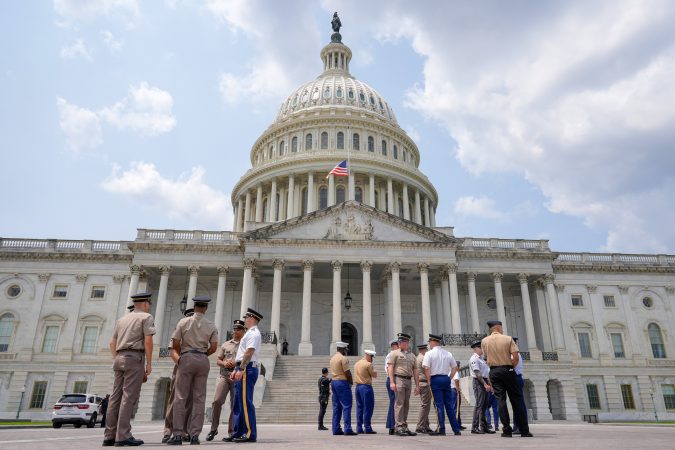
    The body of Sen. Lindsey Graham (R-South Carolina) arrived at the Capitol in Washington on Tuesday morning following his sudden death on July 11, as lawmakers from both parties gathered to commemorate his life.

    The ceremony in the Capitol Rotunda kicks off two days of mourning for Graham, who died at 71 after three decades in Congress, including more than 23 years in the Senate. A team of military body bearers brought his body into the Capitol in recognition of Graham’s service in the Air Force.

    A funeral service at which President Donald Trump is set to speak is scheduled Tuesday afternoon at Washington National Cathedral.

    Fox News host Sean Hannity and Emillie Roberts, one of Graham’s nieces, are also expected to speak at the funeral. Tony Perkins, a politically involved pastor who leads the Family Research Council; Marjorie Dannenfelser, a prominent antiabortion activist; and the Rev. Franklin Graham are scheduled to give readings.

    A second funeral service will be held Wednesday in Columbia, South Carolina, with a procession from the State House to First Baptist Church. Graham will be buried in a private ceremony in Pickens County.

    The Senate is preparing to take up legislation that Graham had championed to impose new sanctions on Russia and its allies to help Ukraine in its war effort. Graham worked for more than a year to pass the bill and announced the day before he died that the White House had agreed to support it.

    Sen. Darline Graham (R-South Carolina), Graham’s sister, whom South Carolina Gov. Henry McMaster (R) appointed to replace Graham in the Senate, introduced a revised version of the bill with Sen. Richard Blumenthal (D-Connecticut) days after taking office. The Senate is set Tuesday evening to take the first procedural vote on the legislation, renamed the Lindsey O. Graham Sanctioning Russia Act of 2026.

    Graham’s funeral also coincides with Tuesday’s filing deadline in the Republican primary for his Senate seat.

    Darline Graham, whom Trump has endorsed, is running for the seat, along with Reps. Ralph Norman and Russell Fry; former South Carolina governor Mark Sanford; and Mark Lynch, a businessman whom Graham defeated in the Republican primary in June, among others.

    Graham was the first sitting senator to die to since Dianne Feinstein, the California Democrat who died in 2023. Feinstein was 90 and had been ailing.

    Graham was a singular figure in the Senate. He was willing to work with Democrats even as he forged a close relationship with Trump. He was the Senate’s most aggressive foreign policy hawk, pushing Trump to take a harder line on Iran and Russia – but he won the respect of Democrats who vehemently disagreed with him.

    “I had a million disagreements with Lindsey on these very issues, but I kind of valued the fact that he always placed a real importance on the role of America in the world,” Sen. Tim Kaine (D-Virginia), a leading critic of the war in Iran that Graham strongly supported, told reporters Monday. “Fewer and fewer senators take that on as part of their job description.”

  • Democrat’s TV ad targets data centers in drive to oust Republican from swing Pennsylvania House seat

    Democrat’s TV ad targets data centers in drive to oust Republican from swing Pennsylvania House seat

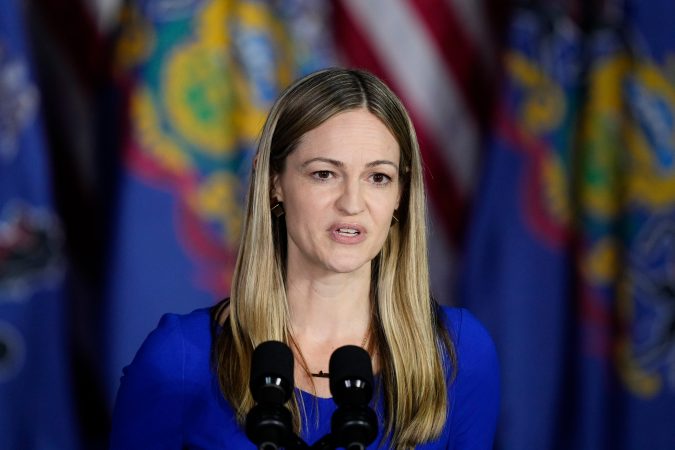
    HARRISBURG — Democrat Paige Cognetti is taking a shot at artificial intelligence data centers in her challenge to freshman Republican Rep. Rob Bresnahan, saying “we’re not for sale” in a new TV ad in a swing Pennsylvania congressional district where communities are fighting data center projects.

    The race between Cognetti, the mayor of Scranton, and Bresnahan is considered one of the Democratic Party’s best opportunities to pick up a seat in the November election in its bid to take control of the U.S. House and block President Donald Trump’s agenda.

    Cognetti is airing the ad in a district that’s been buffeted by AI data center projects and as the opposition to data centers that has upended races for local offices across the country is spreading to top-of-the-ticket contests.

    Speaking to the camera, Cognetti invokes the region’s industrial heritage as a coal and shale gas powerhouse, saying, “Big companies have come before, taken what they wanted and left us with their mess to clean up. Now it’s data centers.”

    She then criticizes the secrecy that developers often use to veil details of projects from the public, the tax breaks developers often get from states and the rising electric bills that have hit the mid-Atlantic region to satisfy the growing energy demand of data centers, which house rows of computers for storing, processing and transmitting data.

    “Big Tech needs to pay their own way. Not hide behind NDAs. No tax breaks. Don’t raise our electric bills, don’t poison our water. And hire local, union labor,” Cognetti says.

    If not, “then get out,” she says. “This is our home. We are not for sale.”

    Trump has made data centers a top priority to help the U.S. compete against China for AI superiority.

    However, communities across the U.S. have fought many of the projects, including in northeastern Pennsylvania, where complexes of data centers and new high-voltage transmission lines are planned. Fights between communities and developers have landed in court.

    The 30-second ad will run on broadcast TV channels, cable and digital platforms, Cognetti’s campaign said. It is costing about $200,000 for the initial run of two weeks.

    Bresnahan has introduced legislation called the Local Control Protection Act, which he says would put limits on a corporation’s right to sue over local zoning decisions denying an application to build a data center.

    “We should never let billion-dollar corporations supersede the voices of those who live in the community,” Bresnahan said in a statement accompanying the bill’s introduction in June.

    The bill has yet to move out of committee or gain a cosponsor.

    Republicans have made protecting Bresnahan a high priority. Both Trump and Vice President JD Vance visited the district last year.

  • New Burlington County shuttle bus will connect Philly suburbs with regional transportation options

    New Burlington County shuttle bus will connect Philly suburbs with regional transportation options

    A new free shuttle bus in Burlington County will be concentrated in a small slice of the county in some of the places closest to Philadelphia and Camden, according to a draft brochure for the service.

    But it’ll also serve as a transfer point for other residents in the area.

    SJ Connects, a free shuttle bus service run by the South Jersey Transportation Authority (SJTA), was granted $5 million under former Gov. Phil Murphy’s administration for an 18- to 24-month trial run to improve transit in the region. All of the service’s routes already began running except for Burlington County’s bus, which is expected to start service in September despite being included in a June 1 launch announcement.

    The SJTA has not yet posted the details of the Burlington County route but The Inquirer obtained its draft brochure through a public records request. The document shows that the planned 11-stop route connects Burlington County’s Palmyra, Moorestown, Cinnaminson, Mount Laurel, and Maple Shade with the Pennsauken Transit Center in Camden County.

    While it will most directly service the residents who live along the route, the planned route will also connect with existing transportation centers in the area to serve as a transfer point for riders.

    Locally, the bus is slated to stop at Cooper University Health Care‘s Moorestown campus, Moorestown Library and Town Hall, Cinnaminson Shop Rite, Fox Meadow Apartments, and the Mount Laurel Walmart Supercenter.

    Stops at the Moorestown Mall and Pennsauken Transit Center will connect riders to NJ Transit buses that go to Philadelphia’s 30th Street Station, Trenton, Camden County municipalities such as Cherry Hill, Haddonfield and Gloucester City, and other Burlington County locations such as Mount Holly and Willingboro. It will also link riders with the RiverLine and Atlantic City Rail.

    (function() {
    var l2 = function() {
    new pym.Parent(‘BURLCO28-A’,
    ‘https://media.inquirer.com/storage/inquirer/projects/innovation/arcgis_iframe/BURLCO28-A.html’);
    };
    if (typeof(pym) === ‘undefined’) {
    var h = document.getElementsByTagName(‘head’)[0],
    s = document.createElement(‘script’);
    s.type = ‘text/javascript’;
    s.src = ‘https://pym.nprapps.org/pym.v1.min.js’;
    s.onload = l2;
    h.appendChild(s);
    } else {
    l2();
    }
    })();

    Dominic D’Amico, director of transportation services at the SJTA, said the agency designed the routes to connect with NJ Transit’s existing infrastructure and the region’s “eds and meds.”

    Some parts of Burlington County that are excluded from SJ Connects — such as Pemberton and Mount Holly — have access to a separate, existing system called the BurLINK shuttle, which is administered by the county and run by a private company.

    The new SJ Connects route is not slated to directly connect with BurLINK. But riders can transfer between the two services using the River Line, for example.

    Assembly member Andrea Katz, a Burlington County Democrat, said in an interview earlier this month that she hopes SJ Connects will expand further into her district in the future. The long-term viability for the program will likely depend on whether its advocates can convince Democratic Gov. Mikie Sherrill and legislative leaders that it’s worth funding in future state budgets.

    “We have very little down here in Burlington County, and in South Jersey as a whole, but folks still have those issues that they need a ride to the hospital, they need a ride to a grocery store,” Katz said. “They need to get access to these things, and we’re finally starting to see this expansion into South Jersey.”

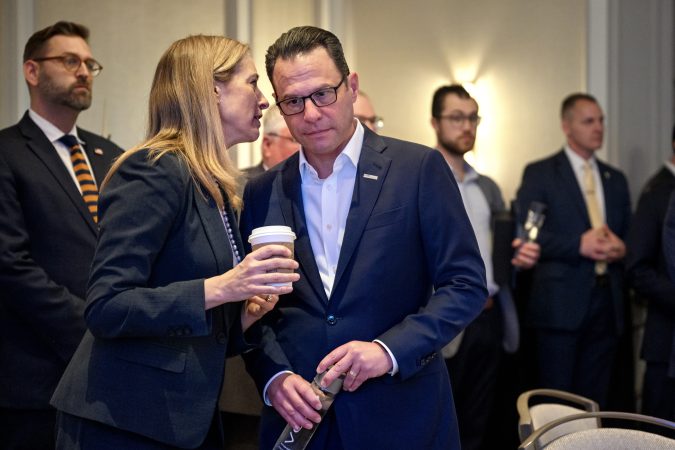
  • Shapiro, Democrats blasted Trump’s ‘conspiracy theories.’ That message has not changed after New Jersey’s noncitizen voting revelation.

    Shapiro, Democrats blasted Trump’s ‘conspiracy theories.’ That message has not changed after New Jersey’s noncitizen voting revelation.

    The day after President Donald Trump delivered a prime-time speech contending, among other claims, that 250,000 noncitizens were registered to vote in just four states, Pennsylvania Gov. Josh Shapiro derided it as “a whole bunch of conspiracy theories that are just simply not connected to reality.”

    A week later, when New Jersey revealed that 6,600 noncitizens were improperly registered to vote in the state and nearly 400 cast a ballot due to a glitch, Shapiro’s message was nearly identical — that Trump is pushing “baseless conspiracy theories” as he seeks more power over state-run elections.

    Pennsylvania and New Jersey were both on the list of Democratic-led states that Trump claimed had thousands of noncitizens on their voter rolls. The methodology of how the Trump administration arrived at that figure remained unclear, but his administration has sought to leverage the New Jersey disclosure as evidence of a larger problem.

    But Shapiro and other national Democrats have not shifted their messaging on the issue ahead of the high-stakes midterm elections. They are refusing to cede to the GOP any suggestion that New Jersey’s voter rolls are evidence of widespread voter fraud and are warning that the changes Republicans seek would make it tougher for many Americans to vote.

    Shapiro, a likely presidential contender in 2028, joined 25 other Democratic officials from across the nation in a lawsuit last Thursday challenging the administration’s ramped-up attempts to coerce states to share their raw voter data by threatening to withhold money for homeland security and disaster preparedness.

    “Withholding this funding will make our communities less safe and would be dangerous under any circumstance, but doing this in an attempt to undermine states’ authority over elections is reckless and unconstitutional,” Shapiro said.

    Kentucky Gov. Andy Beshear, another potential 2028 candidate, also joined the suit. (Both Shapiro and Beshear lead states with Republican attorneys general.)

    The day after Trump’s speech, Shapiro challenged the administration to present “real evidence” of noncitizen voting, which Pennsylvania election officials say is extremely rare.

    In addition to Pennsylvania and New Jersey, the White House also targeted Nevada and California for additional scrutiny over their voter rolls, according to a document posted to the White House website last week shortly after Trump’s speech.

    California Gov. Gavin Newsom, one of Trump’s most vocal critics in the Democrats’ potential 2028 field, said the president’s speech was fueled by debunked lies.

    “It was unhinged. Unfounded allegations of election fraud — it’s madness. But he’s setting it up. He’s setting you all up. You know what he’s doing. He’s doing it in plain sight. He’s socializing all of this to normalize all of this,” Newsom said last week, during a news conference that took place the same day as New Jersey’s announcement.

    Trump has repeatedly promoted conspiracy theories about California elections in recent weeks — including in two Pennsylvania speeches — despite no evidence that fraud occurred.

    For U.S. Sen. Cory Booker (D., N.J.), pushing back against Trump presents a tougher challenge.

    Booker, also a likely 2028 aspirant, must balance the governing changes he sees as needed in New Jersey with the larger politics of the moment. He said the failure of the software was “not acceptable” but rejected Trump’s efforts to portray the entire election system as faulty.

    “There are those who will choose to weaponize this issue to undermine confidence in our elections,” Booker said in a statement. “We cannot allow that.”

    But Republicans have pointed to New Jersey as proof that a sweeping overhaul is needed for November’s results to be trusted.

    Trump’s allies are pushing the SAVE America Act, which would require voters to provide proof of citizenship when registering to vote and to show photo ID at the polls. The effort has stalled in Congress amid concern, even among Republicans, that the bill’s restrictions on mail voting could make it harder to cast a ballot and that many citizens could wrongly be blocked from voting if they do not have access to required paperwork.

    Vice President JD Vance, widely viewed as a 2028 Republican candidate and a potential political heir to Trump, seized on New Jersey’s revelations as a renewed opportunity for the legislation’s relevance.

    “If only there was a way to stop this type of ‘software error’ that allowed non citizens to vote in our elections,” he wrote in a post on X that targeted Booker and Sen. Andy Kim (D., N.J.), both of whom are unlikely to support the Republican-led bill.

    But the registration glitch happened despite these individuals answering “no” when asked on a keypad whether they were U.S. citizens. They were added to the system “through no fault of their own,” New Jersey Gov. Mikie Sherrill said last week, so it is not clear that showing additional documentation would have prevented the error.

    Sherrill ordered her chief counsel to investigate the issue, which occurred under her predecessor, former Democratic Gov. Phil Murphy, and promised to hold those responsible for the error accountable.

    Talking about this issue can pose an obstacle for both parties now that New Jersey’s glitch has been identified, said Sam Chen, a Pennsylvania strategist who has worked for former Gov. Tom Corbett and other Republicans.

    Republicans have overplayed their hand and are not seen as an authoritative voice on voter fraud, but Democrats have spent the same amount of time dismissing all of Republicans’ concerns, including some that are legitimate, Chen said.

    “When you’ve got an entire party saying, ‘No, this is never happening,’ and now you see what you see in New Jersey, it is going to leave a serious credibility issue for them,” Chen said.

    Democrats, like Shapiro, could build more credibility if they acknowledged the positive parts of the SAVE Act, he contended.

    “Grab what’s good, vehemently oppose what’s bad, and states can blaze their own path,” he said.

    But J.J. Balaban, a Philly-based Democratic ad maker, said it does not make sense for Democrats to go along with the SAVE Act because the charges are being made in bad faith.

    While many Democrats would support efforts to make election systems more secure, Balaban said, that is not what the Trump administration is trying to do — and New Jersey does not change that.

    “Voter fraud was shockingly rare a month ago. It remains shockingly rare today,” he said.

  • Trump defends his economic policies in Michigan, where new Canadian tariffs may sting

    Trump defends his economic policies in Michigan, where new Canadian tariffs may sting

    MILFORD, Mich. — In a visit to Michigan on Monday, President Donald Trump argued that his economic policies have revived the auto industry and American manufacturing even as many businesses contend that the sweeping tariffs he’s imposed against Canada and the rest of the world have hurt the state.

    Trump defended his policies while visiting a General Motors facility in the Detroit suburb of Milford that is a testing ground for its vehicles. He pumped a fist after watching Corvette, Cadillac, and Hummer vehicles compete in a series of drag races.

    In a speech, Trump cheered GM’s plans to expand production domestically in coming years and declared himself a president who was standing up for auto workers “at long last.”

    “I’ve done more for you than your parents, OK?” he said.

    After being led on a tour of vehicles from different eras of GM, some of which he sat in, Trump claimed the tariffs have helped the automaker.

    “They’ve come a long way,” he said to reporters about the Detroit-based automaker. “It’s amazing what tariffs are doing for GM.” Trump said he’s been good to the company but he declined to say more.

    “The rest of the world doesn’t love me, but that’s OK,” he said, alluding to tariffs. “It’s called ‘America first.’”

    Trump’s visit is close to Michigan primary on Aug. 4

    Trump called out several Republican candidates and invited them onstage during his remarks Monday.

    Republican Mike Rogers is unopposed in the Senate primary, but the GOP gubernatorial contest pits Trump-backed Rep. John James against Perry Johnson, a businessperson turned politician who has launched unsuccessful campaigns before, including for president in 2024.

    Johnson is now trying to style himself in the president’s mold — despite missing out on his endorsement.

    The Democratic Senate primary between Rep. Haley Stevens and progressive Abdul El-Sayed has drawn national attention for the right to face Rogers, who was narrowly defeated by Democrat Sen. Elissa Slotkin in 2024.

    Early voting is underway.

    Trump’s new Canada tariffs could hurt Michigan

    Michigan was one of the 2024 battlegrounds Trump flipped after it backed Democrat Joe Biden in 2020. But the state has seen parts of its economy affected by the president’s tariffs, including those on imported cars and auto parts.

    A new round of steep import levies is taking effect on dozens of U.S. trading partners. But Trump has singled out Canada with tariffs as high as 50% on a wide array of its products, including cars.

    The GM facility is in Oakland County, which encompasses much of Detroit’s northern suburbs. Once a Republican stronghold, it has increasingly leaned Democratic, backing Biden against Trump in 2020 and Vice President Kamala Harris against Trump four years later.

    GM says its facility is the oldest dedicated vehicle testing operation in the United States, where 4,200 employees work to refine nearly every vehicle the company makes before they reach consumers.

    Michigan’s economy relies heavily on Canada, however, meaning the new tariffs — coupled with inflation still running high and gas prices rising again as the already unpopular war in Iran continues — have created additional economic concerns statewide.

    Those come at a time when voters across the country were already increasingly dissatisfied with Trump’s handling of the economy.

    Jason Roe, a former executive director of the Michigan Republican Party who tried unsuccessfully to distance it from Trump’s Make America Great Again movement in 2021, said that more than coinciding with his new round of tariffs, Trump’s visit is a function of Michigan’s relatively late primary and is meant to ensure that James secures the nomination.

    But Roe also said it was a risk for the president to tie himself too closely to top Republicans before the general election, calling it “kryptonite to November voters.”

    Trump, who won the White House on a promise to lower the cost of living, also has seen his approval ratings sag, meaning kitchen table issues could be a liability for Republicans trying to hold control of Congress in the Nov. 3 elections.

    “We’re happy to have the president here, campaigning with Republicans. We think it highlights the fact that the only thing they care about is Donald Trump and refuse to stand up to him,” said Curtis Hertel, chairperson of the Michigan Democratic Party. ”It’s good for us every time the president is here because he’s incredibly unpopular.”

    U.S. and Canada have squabbled over a new border bridge

    The Supreme Court struck down many of Trump’s sweeping tariffs, but his administration has tried to find ways around that, including by arguing that he can impose them on Canada because that country is discriminating against American exports of products including automobiles.

    But Trump’s latest round of tariffs came after he voiced frustration with Canada for having retaliated and imposed its own levies on U.S. imports in response to Trump’s initial tariffs last year. Trump launched the first round after alleging Canada should do more to stop fentanyl smuggling.

    It is Trump’s third trip to Michigan in his second term.

    In January, he visited a Ford plant in Dearborn and addressed the Detroit Economic Club, offering a defense of tariffs even as auto industry leaders blamed them for increasing the cost of doing business.

    The president marked his second term’s first 100 days with a rally in Warren, where he mostly mentioned grievances left over from the 2024 campaign,

    His latest visit coincides with tensions between his administration and Canada that have marred the opening of a new bridge linking Detroit and Windsor, Ontario.

    Canada on Friday held its own event hailing the opening of the $4.7 billion Gordie Howe International Bridge instead of a planned celebration with officials in the U.S. after Trump announced the new Canadian tariffs.

    An earlier, joint ceremony had been set for June but was scrapped after Trump suggested the U.S. wanted a “better” deal on the bridge it co-owns with Canada.

    That eventually led to an agreement on splitting tolls that was supposed to allow for the rescheduled joint U.S.-Canada celebration — until the new tariffs derailed that, too.