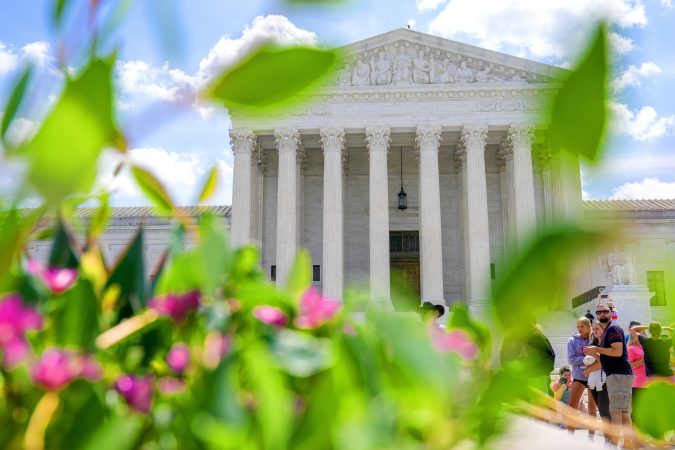
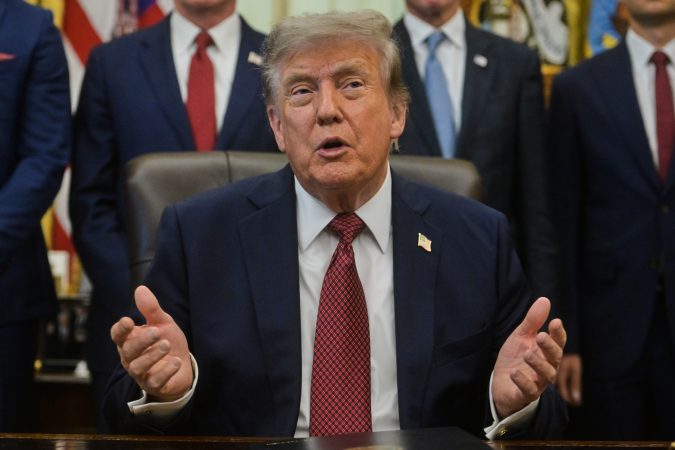
WASHINGTON — The Trump administration asked the Supreme Court on Monday to clear the way for an executive order from President Donald Trump that could dramatically change mail-in voting ahead of November’s midterm elections.
The Justice Department asked the justices to halt for now lower court decisions blocking work to implement the sweeping changes in nearly half the country.
The request comes shortly after Trump delivered a primetime address elevating his yearslong push to raise doubts about the legitimacy of elections, and could be one of several voting-related challenges before the court ahead of the high-stakes midterm contest.
Trump ordered the government in March to create a “state citizenship list” of eligible voters and deliver mail ballots only to people on that list.
Democratic officials in 23 states and the District of Columbia sued, saying the Constitution gives states and Congress the authority to set election rules, not the president. Their attorneys have said Trump’s proposed changes are ripe for abuse and could cause chaos.
A judge in Massachusetts blocked the order for the plaintiff states, and a divided 1st U.S. Circuit Court of Appeals panel left her ruling in place over the weekend.
The executive order issued in March calls for U.S. Citizenship and Immigration Services and the commissioner of the Social Security Administration to create a federal list of eligible voters. It tells the U.S. Postal Service to deliver mail ballots only to people on that list.
The order also calls for ballots to have secure envelopes with unique bar codes for tracking. Federal funding could be withheld from states and localities that don’t comply.
The appeal argues that Trump’s order lays out “general policy guidance” and doesn’t directly dictate how states run their elections. Solicitor General D. John Sauer asked the high court to freeze the judge’s order as lawsuits play out, calling it indefensible.
“And the injunction is especially indefensible because the agencies are still deliberating over how (if at all) to implement the Order, yet the district court preemptively decided that whatever the agencies may choose to do will necessarily be unlawful,” Sauer wrote.
He urged the high court to move quickly, arguing that any new policies would have to be in place as soon as August to be effective for the November elections.
A response to the appeal is due Aug. 3.
Trump promoted the proposed changes as safeguards to keep non-U.S. citizens from voting. Noncitizen voting has been shown to be rare, and is a felony that can be punishable by deportation.
U.S. District Court Judge Indira Talwani in Boston, who was nominated by Democratic President Barack Obama, agreed in June to halt implementation for the Nov. 3 elections.
Her ruling differed from that of another federal judge based in Washington. U.S. District Judge Carl Nichols, who was appointed by Trump, found in May it was too early to block the order because it had not yet been implemented.
The office of California Attorney General Rob Bonta, who is leading the lawsuit, did not immediately comment on the Trump administration’s appeal. New York Attorney General Letitia James’ office declined to comment.
the Postal Service also would not discuss its plans regarding implementing Trump’s order or its rule, citing the ongoing litigation. In Kansas, Secretary of State Scott Schwab’s office said it has not yet heard from the Postal Service about plans going forward.
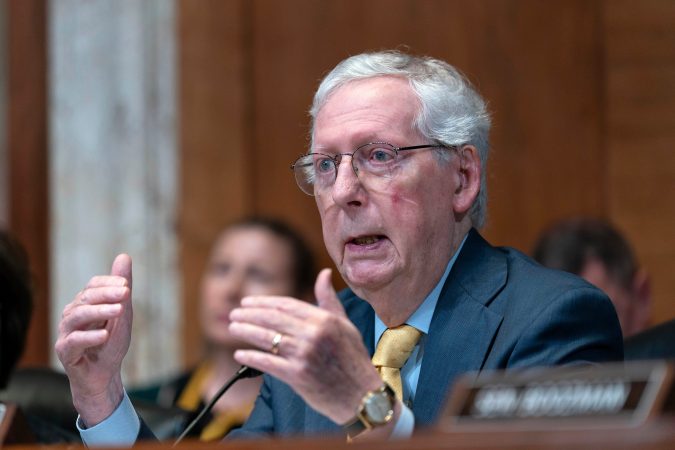
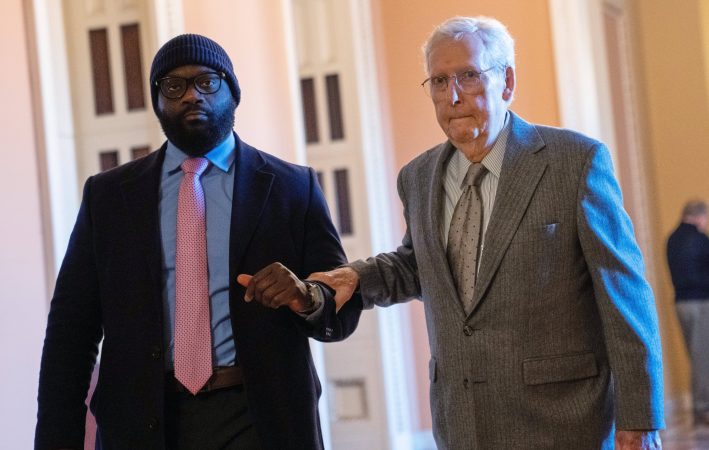
Sen. Mitch McConnell (R., Ky.) has not been medically cleared to leave a rehabilitation facility, the Capitol physician’s office said Monday, and will miss Kentucky’s Fancy Farm Picnic on Saturday as he continues recovering from a June fall.
McConnell, 84, was hospitalized June 14 after suffering a fall at home and has not returned to the Senate. He said earlier this month that he had moved to a rehabilitation facility but has not provided a timetable for his return.
“I’m still working hard to get back to my full schedule of work in the Senate and in Kentucky, keeping up with intense physical therapy per my doctors’ orders,” McConnell said Monday in a statement. “Unfortunately, that means I won’t be able to make it to Fancy Farm, Kentucky this Saturday.”
In an accompanying statement, Congress’ Office of the Attending Physician said McConnell was “not yet medically cleared to leave the rehab facility and return to the office.” Its physicians visit him daily, the office said, and he is undergoing multiple physical therapy sessions each day to rebuild his strength and reduce the risk of future falls. The office said childhood polio “continues to be a significant factor in his mobility.”
McConnell has been a regular speaker in the past at Fancy Farm, a picnic in rural western Kentucky that draws politicians from across the state every August.
McConnell shared a photo of him with his wife, Elaine Chao, which his office said was taken on Sunday.
McConnell has faced growing questions about his health and when he will return to the office over the past six weeks, which occasional updates from his office have not silenced. Scott Jennings, a former McConnell campaign aide, urged McConnell last week to “routinely update his constituents on how he’s doing.”
“When you’ve been in a hospital for a month and you’ve missed all the votes … you owe your boss, like anybody else out there who works, an explanation of what’s been going on and when you’ll get back,” Kentucky Gov. Andy Beshear, a Democrat, said earlier this month.
McConnell’s office has said that he continues to work as he recovers. David Popp, a McConnell spokesperson, said Friday that McConnell “continues to meet with staff regarding Senate and Kentucky business, including discussions on defense appropriations, foreign policy, the farm bill, constituent services, and constituent federal grant requests.”
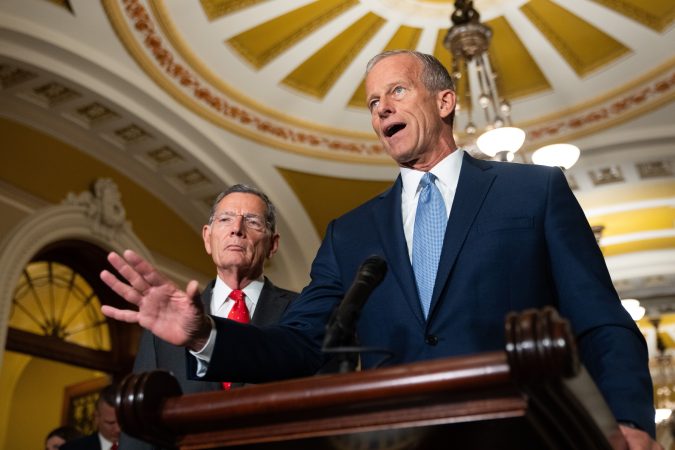
WASHINGTON — President Donald Trump on Monday demanded that Senate Majority Leader John Thune cancel the chamber’s upcoming August break until senators pass a strict proof-of-citizenship voting bill, even as Republicans lack the votes to advance it.
Trump has repeatedly urged Thune to scrap the legislative filibuster, which effectively sets a 60-vote threshold for most legislation in the 100-member Senate, or find another workaround to pass the voting bill, known as the SAVE America Act. But Republicans hold only a 53-47 majority, and Thune has consistently said they don’t have the votes to pass the bill or change the rules to get around the filibuster.
“John Thune should not allow the United States Senate to ‘leave town’ until it passes The Save America Act or, far better still, TERMINATES THE FILIBUSTER,” Trump wrote on social media.
He later insisted to reporters Monday that he has a good relationship with the Senate majority leader but said Thune has “got to get his job done.”
It’s the latest escalation in a monthslong pressure campaign by Trump and others in the GOP base to pass the SAVE Act ahead of the midterms. A small but vocal group of Republican senators has also increasingly pressed Thune to find a way forward.
House Republicans have also attempted to create another path for the legislation through the budget reconciliation process, which would allow grant money associated with voting rules to pass the Senate with a simple majority.
The House last week approved a budget framework that included $10 billion for voting-related changes aligned with the SAVE America Act. But Thune has said Republicans don’t currently have the votes for that approach, either.
Trump’s pressure comes during an important period
The fight threatens to complicate the Senate’s final legislative sprint before the August break, when Thune had hoped to focus on a long list of priorities that includes government funding, cryptocurrency legislation and sanctions on Russia. The August break, scheduled to start on Aug. 7, is a pivotal stretch for senators to return home and campaign ahead of the midterm elections.
Several Republican senators are facing competitive races, including Maine Sen. Susan Collins, Ohio Sen. Jon Husted and Alaska Sen. Dan Sullivan. Republicans currently hold a 53-47 Senate majority. Republicans are confronting broader political headwinds as well, including an unpopular war in Iran, surging gas prices and costs that remain high for voters.
Thune has enjoyed broad support from his GOP conference all year as he’s pushed back on Trump’s demands. He previously kept the SAVE Act on the Senate floor for weeks in an effort to build additional support, but was unable to secure the votes needed to advance it.
Utah Sen. Mike Lee, who has led the push for the bill in the Senate, escalated his pressure late last week, warning that how Republicans handle the SAVE America Act “could impact not only the November midterm elections, but also the Senate GOP leadership elections.”
“Leaders must lead. And if they don’t, they’re not leaders,” Lee wrote on social media Friday.
Frustrated by the pressure when he doesn’t have a route to pass the bill, Thune has urged Trump, Lee and others to help him find the votes. Trump on Friday said he’d “certainly be willing” to help call senators.
Asked last week if Trump is frustrated with Thune, White House press secretary Karoline Leavitt said that “his patience is running out.” But Trump told reporters on Air Force Once Monday while traveling to an event in Michigan, that he hasn’t “even thought” about potential replacements for Thune.
The late-summer dispute echoes a similar fight before last year’s August recess, when Trump pressed Thune to keep senators in Washington to clear a backlog of his nominees. The Senate ultimately left town without a deal after negotiations with Democrats collapsed.
The SAVE America Act would create new national rules
The SAVE America Act, which stands for Safeguard American Voter Eligibility, would require Americans to prove they are citizens when they register to vote, mostly through a valid U.S. passport or birth certificate. It would also require a valid photo identification before voters can cast ballots, which some states already demand.
Voting experts have said the bill could disenfranchise some 20 million American voters who don’t have birth certificates or other documents readily available.
Trump has made it his legislative priority in 2026, saying it would “guarantee the midterms” and falsely claimed that election cheating is “rampant.” He previously declined to sign any other legislation until it was passed.
Spotlight PA is an independent, nonpartisan, and nonprofit newsroom producing investigative and public-service journalism that holds power to account and drives positive change in Pennsylvania. Sign up for our free newsletters.
HARRISBURG — After years of asking for more funding, Pennsylvania’s rape crisis centers saw their funding nearly doubled in this year’s state budget, a lifeline that the resource-starved organizations say will allow them to restore staff and services.
The $12 million increase brings total annual funding for the state’s 47 rape crisis centers to just over $24 million, and comes after they were left flat-funded for six of the past 10 budget cycles.
Administrators at and advocates for these centers say they had to convince Gov. Josh Shapiro and his administration that the situation was dire.
“I listened,” Shapiro said at a Monday news conference. “These people are true public servants, the work they do every day,” he said. “They deserve more, and they got it.”
The lack of new state funding, along with federal cuts, the budget impasse of 2025, and ongoing inflation, has troubled crisis centers in recent years, leaving the majority financially strained to the point of cutting staff and services, administrators and advocates told Spotlight PA.
They said the influx of dollars will help reinstate cut programs and workers, but cautioned there’s still a long way to go to mend years of underfunding.
“Sexual assault centers have been ringing this bell with our legislators for the past two to three years, trying to explain that we are really coming into the precipice of a real risk for crisis services declining or crumbling in many different parts of our state and of our counties,” said Ali Perrotto, chief executive of the Sexual Assault Resource and Counseling Center serving Lebanon and Schuylkill Counties.
The commonwealth’s 47 rape crisis centers provide services to around 26,000 survivors of sexual violence annually, according to the state Department of Human Services. These services include 24/7 hotlines and crisis counseling; prevention education; housing; and training on sexual assault-related issues.
State funding for these centers is distributed through a formula that takes into account population density, number of victims served, and hours of direct service provided. Centers also receive federal dollars, as well as grants and donations. Funding streams vary drastically by center: While some larger ones have relatively diverse finances, others are highly dependent on the state to operate.
In 2025, lawmakers approved a 2% funding bump amounting to around $250,000 more for all crisis centers. Advocates said this was not enough to meet the needs of organizations already in deep financial straits due to the four-month impasse that preceded the budget deal.
Rape crisis centers are among the nonprofits and other entities whose state payments get frozen when there is no budget. Perrotto said the situation forced SARCC to cut its prevention services and put off a capital purchase that would have provided housing for survivors in Lebanon County. The decision came after the center had to decide between investing in property or paying its staff, she said.
Other centers, she added, had to dip into reserve funds or use lines of credit to keep paying wages. When the budget finally passed last year, the number of workers had dwindled to the point where centers were unable to restore everything. And organizations that did take out loans or use lines of credit still have to pay interest, which can only be financed through fundraised dollars, not grants.
The impasse wasn’t the only difficulty. Rape crisis centers receive funding from the federal Victims of Crime Act fund. Money in the fund comes from fines paid by people who are federally convicted and goes to a range of services for crime victims. However, administrative changes at the federal level have lowered the fund’s balance.A state guide published this spring said money is now “critically low,” a dip that has caused a 45% decrease in victim services funding since 2022.
At the same time, the number of survivors seeking services at rape crisis centers increased, Perrotto said.
That uptick stems from lawmakers expanding the responsibility of local law enforcement, who now must directly refer victims to service agencies. This has increased the number of people coming through the doors of crisis centers.
“We had more influx into the systems, even though we had fewer staff to meet the need and less funding to provide the services locally,” Perrotto said.
There was often little rape crisis centers could do to tighten their belts further.
Perrotto said that over the past five years, SARCC has cut 50% of its staff. Those who remained working provided constant access to services, including a 24-hour support line along with counseling, legal, and medical support.
“The longer an impasse goes, the more of a tax there is on survivors and on the centers who are providing services to them,” Perrotto said.
The fight for more funding
When Shapiro first made his budget pitch in February, it didn’t address these issues; he proposed keeping funding flat once again.
This caused an uproar from rape crisis centers. Advocates and administrators at centers across the commonwealth signed on to a letter asking for a $12.5 million bump.
“Every year, flat funding has been equal to a budget cut, forcing centers to stretch already-thin resources even further as inflation and demand rise,” the letter said.
It wasn’t until Shapiro listened to advocates and heard their testimonies that he realized the magnitude of the issue, he said during a Monday news conference at the YWCA in Carlisle.
Joyce Lukima, director of the Pennsylvania Coalition to Advance Respect, which distributes state funding and advocates for rape crisis centers, said center leaders from across the state also met with lawmakers in May to discuss the need for funding.
She said this year is the first time she believes advocates’ concerns were actually listened to.
“After so many years of talking about this, I feel that we were heard and heard in a way that caused someone who was in a position to be able to take action to help move our cause forward,” she said.
Perrotto was part of that effort. She compiled data about crisis centers’ needs across the commonwealth and presented it to Val Arkoosh, head of the state Department of Human Services.
Detailed information on centers’ services and various funding streams was necessary to clearly illustrate to legislators the magnitude of the problem, said Arkoosh at the Monday event. Perrotto said the data she gathered showed the “buying power cut” of rape crisis centers — a loss in ability to pay for bills, staff, and services while still helping the same number of people.
While the money alone is a step in the right direction, Lukima said there’s going to be a lot of necessary rebuilding to right the wrongs of previous years’ funding difficulties.
She added there’s also a need to ensure that funding keeps pace with inflation to prevent centers from reaching their limits before getting more state resources.
Perrotto echoed that point. “There’s going to be a build-up period, so we have to build back and restore what was lost or what was kind of crumbling in the current system, and we’re doing that with less staff,” Perrotto said.
Along with rehiring furloughed workers, she said the new money will also go toward properly paying people who worked through underfunding. In 2022, her most recent analysis, Perrotto said the average wage for prevention educators and advocates working at sexual assault programs was $16 to $18 an hour.
Increasing wages will ensure survivors are taken care of by workers who aren’t stretched too thin, or who need to work multiple jobs to make ends meet. Centers will also put funding toward restoring programs to ensure the caseload is not as heavy, she said.
Lukima said she also predicts centers’ money will be allocated toward reinstating sexual abuse prevention programs that were cut in favor of maintaining services seen as more critical.
At the end of the day, she said, rape crisis centers are essential for survivors of sexual violence, and lawmakers should treat them that way.
“There isn’t a necessity for people to get to a breaking point before they get that increased allocation,” Lukima said, “recognizing how critical and important services are to the community, to the state, and making sure that that increase comes — just like it does for many other professions, just like it does for our legislatures — without having to have a multiyear struggle.”
BEFORE YOU GO… If you learned something from this article, pay it forward and contribute to Spotlight PA at spotlightpa.org/donate. Spotlight PA is funded by foundations and readers like you who are committed to accountability journalism that gets results.
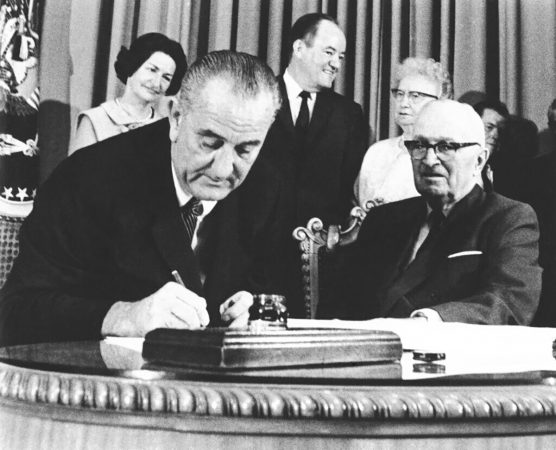
When Americans think of the seminal Civil Rights legislation of the 1960s, they think of laws like the 1964 Civil Rights Act and the 1965 Voting Rights Act. Yet, there is one piece of historic 1960s legislation that unleashed a powerful civil rights tool that rarely gets remembered as “civil rights” legislation: Medicare.
Hospitals desegregated — some almost overnight — worried that they would get cut off from Medicare funds. “White Only” signs came down, white-only facilities and segregated wards admitted patients without regard to race and Black clinicians received admitting privileges.
And yet, a racial healthcare crisis persists. Over the past two decades, Americans have made no progress in narrowing racial disparities in medical care, although we know more about them today thanever.
These disparities remain after accounting for other characteristics that influence health.
The history of Medicare, which turns 60 this year, offers a suggestion of how to rectify some of these problems. The desegregation of hospitals didn’t come when experts recognized that they were segregated, or even when courts declared such practices unlawful. Instead, the changes came when the government required hospitals to do better, verified compliance and withheld Medicare funding when they failed.
This transformation forged by Medicare was as unexpected as it was abrupt.
Hospitals, especially in the South, had been segregated before the Civil Rights Act. The federal government didn’t formally even document the practices and, in many cases, willfully ignored them.
Title VI of the 1964 Civil Rights Act aimed to address this problem. It prohibited discrimination in federally funded institutions. Medical school-affiliated hospital facilities, which received much of their funding from federal government training and research grants, quietly began taking steps toward integration. Yet, at all other facilities, passage of the law changed little.
Nationwide, but most dramatically in the South, Black patients continued to struggle to get care. Hospitals still hung “White” and “Colored” signs, separated patient records by race and shunted Black patients into basements or separate buildings, if they’d treat Black patients at all. Black women continued to give birth in dangerous conditions. Sometimes, while in labor, they had to solicit care from multiple white-only hospitals or facilities with limited beds for Black patients until one perhaps admitted them.
Civil rights organizations filed hundredsofTitle VIcomplaints. Yet, the federal government had no staff assigned to enforce compliance. As a result, the complaints accomplished very little.
There were also several other impediments preventing progress. While healthcare facilities had long received federal funds through programs like the Hill-Burton Act, which paid for the construction of segregated hospitals, mostly in the South, Washington could not easily claw back federal dollars that had already been distributed to hospitals. Further, Title VI had no built-in enforcement mechanism. The Johnson administration, which in its first two years had been consumed with passing and implementing an array of ambitious legislation like the Civil Rights Act and the Voting Rights Act, was faced with going after individual hospitals on a case-by-case basis.
Everything changed after Congress passed Medicare in 1965. Urged on by civil rights organizations, John Gardner, secretary of the Department of Health, Education, and Welfare (HEW), announced that to receive Medicare dollars, hospitals must comply with the Civil Rights Act. The new health insurance program covered 19 million seniors and promised to pay billions to healthcare facilities — but only if they complied. To Gardner, it was an unprecedented enforcement tool.
HEW devised a process for determining compliance. Federal workers would inspect facilities. Were patients admitted and assigned the first bed available, regardless of race? Did hospitals extend admitting privileges to Black doctors? Were there disparities between their patient population’s racial composition and that of their service area?
Made By History sponsors. FOR USE ON MADE BY HISTORY STORIES ONLY.Inquirer Staff
Hospitals clearly in compliance would receive Medicare dollars. Others clearly out of compliance would not.
Gardner did not have enough HEW staff to dispatch to inspect the nation’s 4,000 hospitals. So he put out a call for federal employees willing to volunteer in his department and conduct inspections. Over 1,000 came forward including tax accountants, veterinarians and scientists.
In April 1966, civil rights movement activists trained them. Some violations would be obvious. That included “whites only” signs above entrances, bathrooms and in cafeterias, racially separate medical records and infants segregated by race.
But trainers warned that hospital administrators might disguise a facility as integrated for the visit. Some did. One put a white administrator in a patient gown in a room with a Black patient. Another placed four comatose patients, each a different race, next to each other.
Doing the “HEW shuffle” of fixing signs and shifting a few patients was insufficient, the inspectors explained. Facilities needed to be race-blind.
The combination of a strict standard coupled with inspections worked.
In three months, nearly all hospitals ended formal segregation and had been Title VI-certified as Medicare providers. After July 1, hospitals that had not been certified as Title VI compliant — those that lagged transforming their facility or refused on principle to do so — could notprovide care for Medicare patients.
The lives of Black people in the South radically changed. Before the intervention Black infants below the Mason-Dixon line died at twice the rate of whites. By 1971, however, Black infant mortality halved, largely because they more readily received care for treatable conditions and their mothers had access to hospitals for the first time.
Yet, even as Medicare proved enormously successful in erasing formal segregation, racial stratification patterns remainedapparent in hospitals throughout the U.S., exacerbated by residential segregation and referral networks systems.
Ironically, we know this from Medicare itself. The program has long served as a tool for researchers to investigate disparities in healthcare: beneficiaries share a common insurance which makes it easier to isolate inequities.
And racial separation persists among Medicare patients. Black Medicare patients are disproportionately treated at hospitals with fewer resources and worse outcomes. In some hospitals, certain teams treatonly Black Medicare patients. Other teams treat only white ones.
Starting in 2003, Medicare Advantage expanded the enrollment of Medicare recipients in commercial insurance alternatives. In Medicare Advantage, the federal government pays insurance companies fixed amounts for each enrollee and the companies then manage benefits. These programs, separate and unequal, also expose racial double standards.
The 60th anniversary of Medicare should remind us that our greatest advance in health equity came from enforceable commitments to providing equal care, regardless of race. Racial disparities in healthcare can be eliminated if the federal government requires compliance — and then enforces it.
For hospitals and physicians in 1966, equal treatment suddenly became a condition of financial survival. The immediate gains Black patients received suggest that if the federal government required healthcare systems and insurers to make real, measurable progress toward addressing racial health disparity, it would produce immediate and significant gains once more.
The question is whether Americans — and their government — are willing to demand such accountability as they did 60 years ago?
David Barton Smith is emeritus professor of health management and policy at Temple University. He was the recipient of a Robert Wood Johnson Health Policy Research Investigator Award and is author of three books and numerous articles related to this topic.
Leila Morsy is an economic justice research fellow at the Legal Defense Fund Thurgood Marshall Institute and a senior lecturer at Flinders University. She is writing a book about the history of the exclusion of Black doctors and its contemporary consequences.
Made by History takes readers beyond the headlines with articles written and edited by professional historians. Opinions expressed do not necessarily reflect the views of The Inquirer.
With 100 days until Election Day in Pennsylvania and across the country, top Democratic leaders rallied in the Lehigh Valley Sunday to support a Democrat they hope will defeat the Republican incumbent and help take control of Congress during the midterm elections this November.
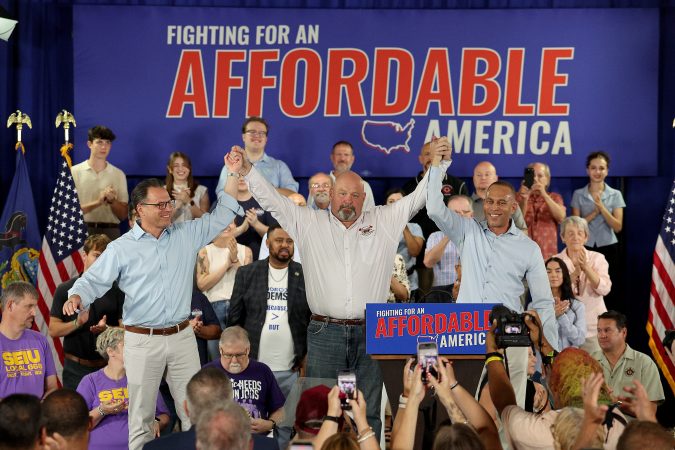
Pennsylvania Gov. Josh Shapiro and U.S. House Minority Leader Hakeem Jeffries stood on a union hall stage with Democrat Bob Brooks, a firefighter and union leader who is running for a House seat in a key Pennsylvania swing district, in front of a crowd of about 150 people.
“We have just 100 days until the midterm election, 100 days to change direction in this country. This is no longer a marathon; it’s a sprint,” Jeffries said. “And there’s no better place to begin that sprint than right here in the steelworkers union hall in Bethlehem.”
Jeffries is poised to become the speaker of the House — and the first Black speaker — if his party wins control in the midterms. Democrats see winning Pennsylvania’s 7th Congressional District as a critical step in making Jeffries’ ascension happen, and taking action on a range of issues, from lowering gas prices to banning stock trading among members of Congress.
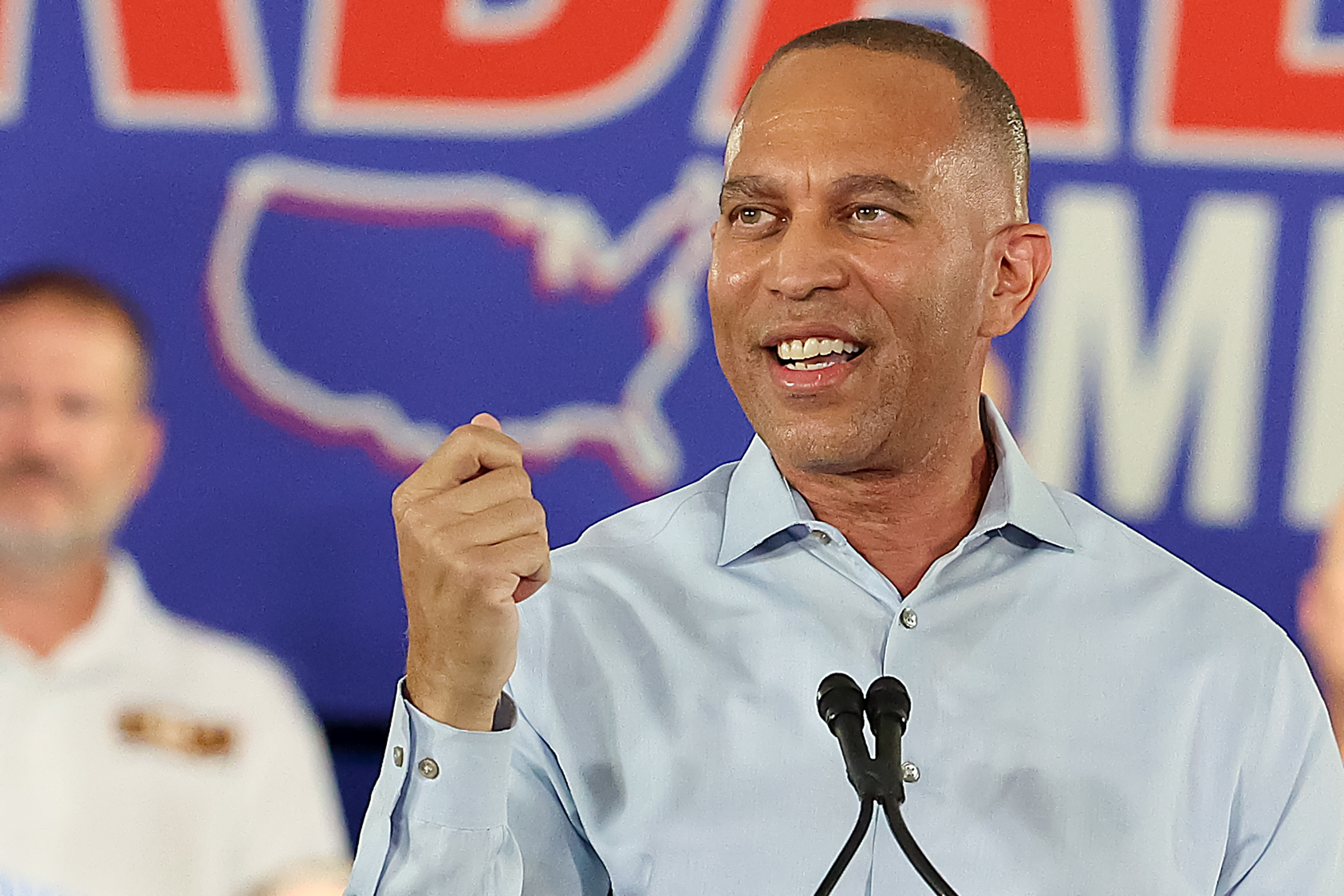
House Minority Leader Hakeem Jeffries addresses the audience during a rally for congressional candidate Bob Brooks at the United Steelworkers Union Hall in Bethlehem, Pa., on Sunday, July 26, 2026.David Maialetti / Staff Photographer
The visit comes as Republicans seek to bolster GOP Rep. Ryan Mackenzie, the district’s vulnerable freshman, who won his seat by just 1 percentage point in 2024, when President Donald Trump defeated Democrat Kamala Harris statewide. Trump visited the district in June, giving a speech about manufacturing, and a rambling range of other subjects, at the Macungie-based Mack Trucks facility — though he took nearly an hour to even mention Mackenzie by name.
Mackenzie has a financial edge over Brooks. He has raised a total of nearly $4.5 million, compared to Brooks’ $2.3 million. But Brooks outdid Mackenzie handily between April 30 and June 30, after Brooks’ first-place finish in the robust and competitive Democratic primary. He added roughly $1.2 million to his stockpile during that time period, while Mackenzie only took in about $631,000.
During the primary, Brooks was able to attract support from many ideological corners, including Shapiro, former Transportation Secretary Pete Buttigieg, and U.S. Sens. Bernie Sanders (Ind., Vt.) and Elizabeth Warren (D., Mass.), who saw him as an unpolished outsider committed to the party’s values.
Brooks, who dropped out of college after a baseball injury, worked as a bartender and beer truck driver in the Lehigh Valley before later becoming a firefighter in Bethlehem. He also mowed lawns and plowed snow on the side.
After his retirement from the fire department after more than 20 years of service, Brooks continues to serve as the president of the Pennsylvania Professional Fire Fighters Association, where he’s represented about 8,000 firefighters across the state since 2021.
“I’ve lived in public housing. I’ve relied on food stamps when times were hard. I’ve had to choose between paying the medical bills and paying the mortgage. I’ve worked hard, and I made it out of a fire. I’m proud to be standing here today,” Brooks said.
“Now I want to take that experience with me to the halls of Congress, so we can actually pass laws that work for working people,” he said.
His first foray into politics began with a lobbying effort to lower the standards for first responders to have post-traumatic stress injuries covered by workers’ compensation, legislation that Shapiro signed in 2024.
Shapiro, the first-term Democrat, has also been using his broad popularity to support Democratic candidates downballot in competitive elections across Pennsylvania while he campaigns for his own gubernatorial reelection bid.
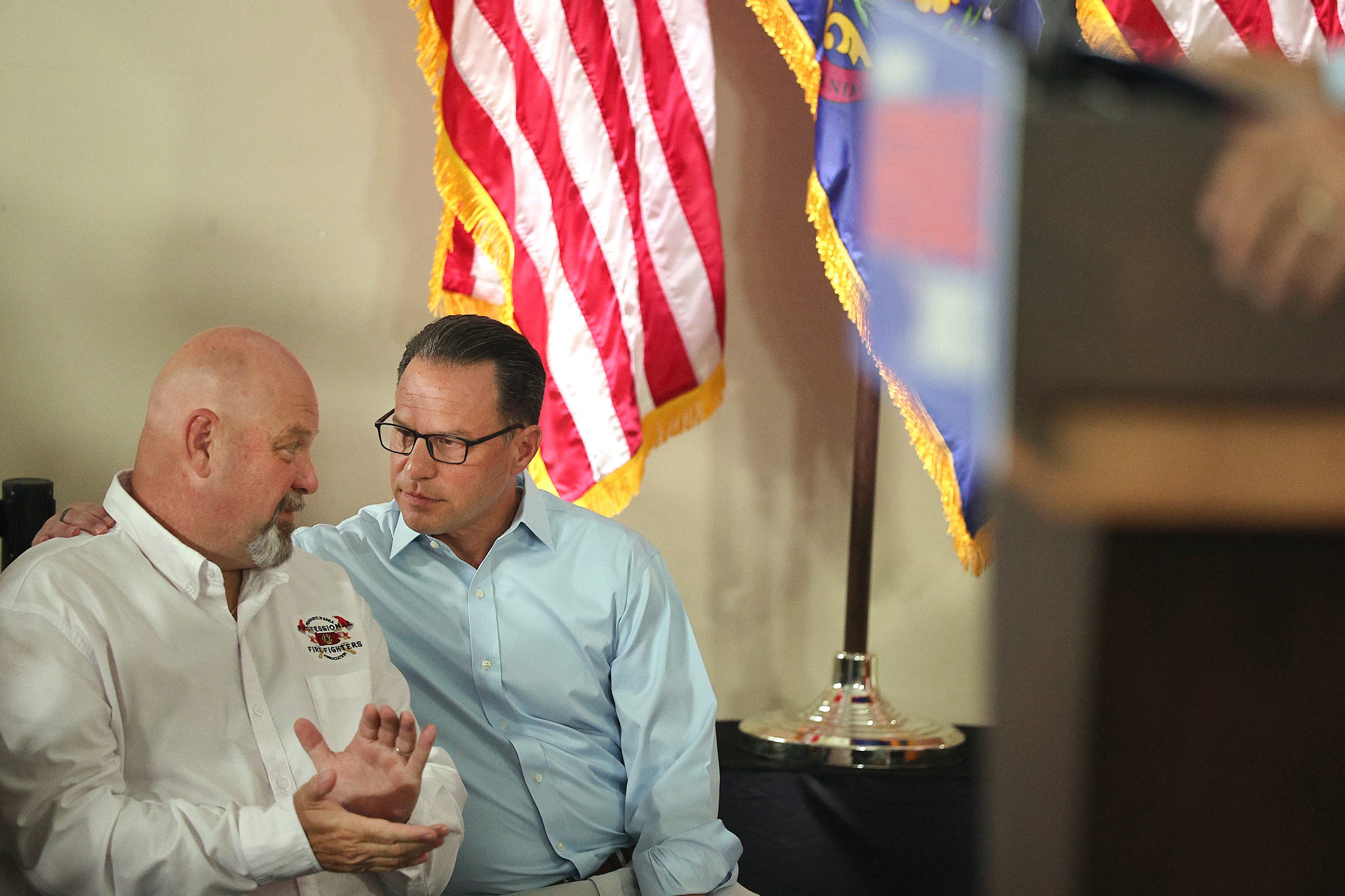
Congressional candidate Bob Brooks (left) and Gov. Josh Shapiro talk during a rally at the United Steelworkers Union Hall in Bethlehem Sunday.David Maialetti / Staff Photographer
Last weekend near Harrisburg, Shapiro joined Pennsylvania Democrats to launch a campaign for candidates in key state Senate seats and congressional districts, both of which he hopes to flip to Democrats as a show of his political influence ahead of a widely expected run for the presidency in 2028. He also boosted former local TV anchor Janelle Stelson, who is challenging Republican U.S. Rep. Scott Perry for the second time in the Harrisburg-based 10th District.
“One reason why we need Bob Brooks in the Congress of the United States is he’s a firefighter, and firefighters are always there for you,” Shapiro said, who referenced his gratitude to firefighters after an arsonist attacked his residence last year.
“When you spend a lifetime being there for people when they’re young, being there for people when they are hurting, being there for people when they need help …. You have compassion in your heart. You’ve got a servant’s heart, and that’s the kind of people we need in the Congress of the United States,” he said.
Shapiro’s campaign said it has given more than $3.3 million to the state party and its election effort since the fall of 2025, as part of his signature effort to “put a check on Donald Trump’s chaos, cruelty, and corruption.”
Brooks’ and Stelson’s races are two of the four most competitive congressional contests in Pennsylvania this year. Republican U.S. Rep. Bob Bresnahan is facing a challenge from Scranton Mayor Paige Cognetti in the 8th District, and Republican U.S. Rep. Brian Fitzpatrick is running against Bucks County Commissioner Bob Harvie in the 1st District.
Republicans are fighting to keep the competitive seats in GOP control. Mackenzie’s campaign manager blasted Brooks’ “dumpster fire candidacy” ahead of Sunday’s event.
“At every step of his career, Bob Brooks has put himself first, his politician buddies next, and his own workers last,” Andres Weller said, in a statement.
Among other news, Weller mentioned a leaked audio recording of Brooks that alleged Shapiro pushed his union to support the GOP candidate for Pennsylvania treasurer in the 2024 election.
Shapiro has denounced claims that he dissuaded the state firefighter’s union from backing the then-Democratic nominee Erin McClelland because of a personal grudge, and Brooks later said he misspoke in the recording.
All three men blasted Mackenzie for supporting cuts to Medicaid, as part of Trump’s 2025 One Big Beautiful Bill Act.
Jeffries, who had last appeared in Pennsylvania on July 2 to commemorate the 250th anniversary of the vote for the Declaration of Independence, said if Democrats take the majority, they will also tackle “rampant corruption” and make life more affordable.
“As House Democrats, we will build an economy that works for everyday Americans and drive down the high cost of living in every possible area because life is too expensive,” he said. “That means the grocery store, the gas pump, and your housing costs. It also means that you should be able to go see a doctor and get the care that you need.”
Republican pollsters and political groups are raising the alarm that their party faces a listless and demotivated base ahead of November’s midterm elections.
A raft of discouraging data from polling, door knocking, and focus groups is unsettling Republicans as their party heads into a midterm election season that would be challenging no matter what, given President Donald Trump’s low standing in polls and the fact that the party in control in Washington almost always loses seats.
The lack of enthusiasm is reaching deep into Republicans’ loyal base, spreading to the party’s most consistent voters — who have shown up to vote in all of the past four primaries and general elections, according to an analysis done by Americans for Prosperity Action, a conservative super PAC that was founded by billionaire Charles Koch. This new issue with the base adds to the party’s more enduring problem of turning out less-frequent voters who support Trump but often skip midterm elections.
About 1 in 5 reliable Republican base voters are at risk this November, according to Nathan Nascimento, executive director at AFP Action. Those voters in Iowa, Ohio, North Carolina, Montana, New Hampshire, and Michigan are either saying they may stay home or are weighing voting for Democrats, according to their data, which is based on polling and extensive efforts to engage targeted Republican voters by knocking on their doors. The voters are primarily worried about inflation and the economy.
“This is a big chunk,” Nascimento said. “This is a scary number.”
The group has found that reaching these voters at the door usually moves them toward Republican candidates — or at least away from Democratic ones and toward undecided, he said.
The 20% of Republican base voters the group sees this issue with does not take into account low-propensity conservative voters who tend to turn out in general election years to support Trump but skip other elections. Motivating those Trump voters is a separate issue Republicans face in November.
“We have a high-propensity base problem,” Nascimento said.
Washington Post and Ipsos polling shows that Democrats have a 10-percentage-point advantage over Republicans among voters who say they are absolutely certain to vote in November. If that number doesn’t narrow, it could lead to a decisive advantage for Democrats, even though overall they lead by just three percentage points over Republicans on a generic ballot.
Mitchell Brown, a Republican pollster at the firm Cygnal, said Democrats are as enthusiastic about voting as they were at the same time ahead of the 2018 midterm elections, when they swept back into power in the House. But Republicans are far less excited to vote at this point than they were then, posing an issue for the party.
“It’s not that the Democrats are outperforming a topline number that we’d expect, it’s that Republicans are underperforming,” Brown said.
He pinpointed men under 40 as the group that is most at risk among Republican voters, saying they have concerns about the economy and prices. This group proved pivotal to Trump’s 2024 electoral victory, which included a sweep of some of the same battleground states holding critical elections this year.
The decline in support among those voters may change closer to the elections, once more people tune in, Republican strategists stressed. And Trump’s unprecedented redistricting efforts have also sought to give the party a structural advantage that could mitigate GOP losses.
“Republicans are united, on offense, and armed with our largest war chest in party history because voters are energized and understand what’s at stake in November’s election,” said Natalie Baldassarre, a spokesperson for the Republican National Committee, in a statement.
This dynamic is playing out in the red state of Iowa, where Republicans face open races for governor and a Senate seat that polling shows are surprisingly competitive. A recent door-knocking session in the Des Moines suburb of Urbandale with AFP Action turned up voters critical of the war in Iran and high inflation, with a handful saying they planned to support Democrats in the fall.
In western Iowa, three-time Trump voter Lance Sulentic, a resident of Iowa’s rural Harrison County, described the past three presidential elections as “the worst three mistakes I’ve ever made in my life,” saying that the president has failed to fulfill his campaign promises. Higher gas prices have been costing him an extra $300 to $500 every month to ride his motorcycle, he said.
“We voted for Trump, and he did the opposite of what he said he was going to do,” said Sulentic, a 56-year-old retired insurance agent. “Gas prices were going to be two dollars, food was going to be cheaper, energy prices was going to be in half, we were going to get two rebate checks to the American people, and we weren’t going to have any new wars, and we were going to build a wall and deport 30 million illegal aliens, and he did none of it.”
He said he would either sit out this year’s election or vote for Democrats.
Republican lawmakers are worried about such comments as their party remains mired in internal disagreements in Washington that have hampered them from passing signature agenda items that could motivate core supporters.
“We need to do something to re-energize our base,” said Sen. Ron Johnson (R., Wis.). Johnson, who does not face reelection until 2028, has triumphed in tough races in his closely divided state.
Johnson said GOP base voters may think the lawmakers “haven’t been … trying hard enough.” The party has been unable to pass a law to require ID to vote and proof of citizenship to register to vote called the Save America Act, which Trump has lambasted them for. They also have done little to tackle cost-of-living issues since the bill extending tax cuts in 2025.
A spokesperson for Trump, Abigail Jackson, called the voting legislation a top priority but added that the administration “continues to deliver on the President’s affordability agenda by lowering drug prices, reshoring American jobs, lowering gas prices, and more.”
Other senators have pressed Trump to use his large platform and $400 million MAGA Inc. war chest to activate lower-propensity voters. Trump has had far more success motivating supporters when he is on the ballot.
Sen. Kevin Cramer (R., N.D.) said he told the president in the Oval Office last week that Trump is the key to turning out his voters.
“Well, they will [turn out] if you pass the Save America Act,” Trump retorted, according to Cramer.
The White House is hopeful the Republican Party’s planned midterm convention in September in Texas will help juice enthusiasm among the base as well.
Sen. Thom Tillis (R., N.C.), who declined to run for reelection in his purple state, said he believes the traditional Republican base will ultimately turn out in November. But he fears the party’s brand has been damaged among moderates by the economy and inflation, and that the Iran war is becoming an additional political drag. Low-propensity Trump voters need to turn out to close that gap, he said.
“The question is whether the coalition he has that’s unique to the president, if he can mobilize them to come out and vote for others,” Tillis said.
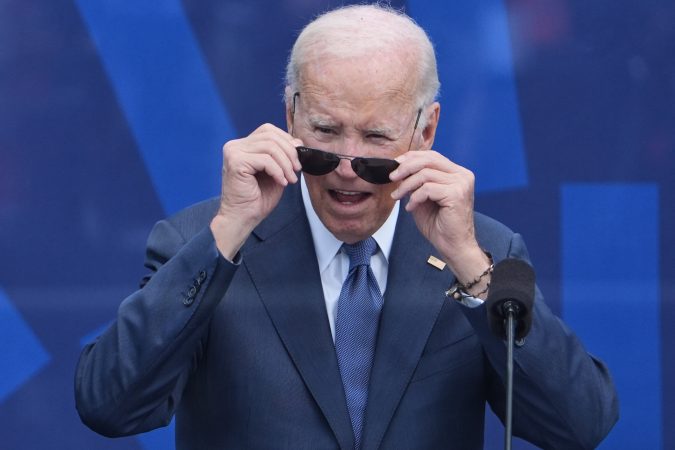
Eighteen months after leaving the White House, the 83-year-old former president moves within a narrowed circle of relatives, old friends, and longtime aides as he undergoes treatment for metastatic cancer.
The treatment appears to be working, according to five former aides and others close to Biden, many of whom spoke on the condition of anonymity to candidly discuss his health and private life. But the disease — and the toll of treating it — has left him visibly frail.
Those around Biden describe a post-presidency constrained by illness with his days increasingly organized around treatment, family, and efforts to shape his legacy.
Unlike some recent predecessors, Biden has maintained a limited public schedule, has yet to build a sprawling philanthropic or policy operation, and has struggled to raise money for a presidential library, leaving him with fewer avenues to influence how his presidency is remembered.
That frailty is likely to become harder to keep private this fall, when Biden begins promoting a memoir scheduled for publication on Nov. 17, two weeks after the midterm elections. The timing has unsettled some friends and former advisers, who worry not only about Biden’s well-being, but also about how much his visible health struggle could revive the bitter arguments of 2024 just as Democrats are trying to make the election a referendum on President Donald Trump.
Trump has repeatedly mocked Biden’s age and acuity and replaced his portrait along a White House colonnade with an image of an autopen, a visual taunt built on the unsupported allegation that aides used the device to exercise presidential authority for a debilitated commander in chief.
Those close to Biden bristle at the way his illness and physical decline have become part of his critics’ case against him and his party.
Hunter Biden gave voice to the family’s frustration last month after a critic attacked his father’s cancer diagnosis on social media.
“Listen man — I understand if you don’t like my Dad’s politics and you hate me because you believe everything Fox News has told you,” he wrote. “I’m fine with that, but my Dad has cancer. How is that an issue you want to attack. What sickness is in you that makes that fair game?”
The Biden health debate may soon be reignited. On Tuesday, a federal appeals court cleared the way for the Heritage Foundation, a conservative think tank, to obtain redacted transcripts and audio recordings that were among the evidence a special prosecutor used to portray Biden as an “elderly man with a poor memory.”
Questions about Biden’s age, stamina, and mental acuity shadowed much of his presidency and eventually overwhelmed his campaign for a second term.
The health concerns became an acute political crisis after Biden’s June 27, 2024, debate against Donald Trump. Speaking in a weak, hoarse voice, Biden repeatedly lost his train of thought, struggled to complete answers and at times appeared unable to press a forceful case against his opponent.
Biden’s performance intensified doubts among Democratic lawmakers, donors, and voters about both his ability to campaign and his capacity to serve through January 2029. Biden initially rejected calls to withdraw, attributing the performance to a cold, exhaustion, and a bad night. But after more than three weeks of mounting pressure, he ended his reelection bid on July 21.
Biden’s planned return to the spotlight presents an awkward political challenge for Democrats. Many remain personally fond of Biden, grateful for the accomplishments of his presidency, and sympathetic to a man battling a serious illness. But they are also trying to distance themselves from a 2024 campaign in which questions about his age, health, and decision to seek reelection damaged public trust and divided the party.
“President Biden has every right to tell his story. But Democratic candidates are already working their tails off to overcome the political damage he left behind,” said Sawyer Hackett, a Democratic strategist who worked on presidential campaigns for Barack Obama and Hillary Clinton. “The best thing Biden could do to help that effort is to get as far away from the spotlight as possible.”
In May 2025, four months after leaving the White House, Biden was diagnosed with an aggressive form of prostate cancer that had spread to his bones. He is undergoing treatment for the disease, which can be managed but is not considered curable.
In media interviews, former first lady Jill Biden has described her husband’s diagnosis as deeply unexpected, saying the family was shocked to learn that the cancer had already reached Stage 4 and metastasized to his bones. Since then she has offered a cautiously optimistic assessment of her husband’s health, saying his treatment is working and that he is maintaining a regimented schedule.
Since leaving office, Biden has addressed the issue intermittently, generally offering upbeat but limited public accounts of his condition. He has made a handful of appearances, at Democratic Party events in South Carolina and South Dakota, and at the dedication of Obama’s presidential library, where he beamed alongside several other former occupants of 1600 Pennsylvania Ave.
“Given all the health diagnoses, he was energetic, in good spirits,” former Democratic National Committee chair Jaime Harrison said of Biden at the South Carolina Democratic Party convention in May. Like many Democrats, Harrison knew the seriousness of Biden’s prognosis and wondered whether he would seem like his old self. Instead, the former president — also the convention’s keynote speaker — moved through a full slate of events, many of them organized to honor him.
“He was fired up,” Harrison said. “You sure as hell couldn’t tell he was an 83-year-old man battling cancer.”
Biden’s post-presidential office declined to answer questions about his day-to-day activities, medical treatment, or ongoing prognosis. Through a spokesperson, the former president declined an interview. His office disclosed in fall 2025 that he was receiving radiation and hormone therapy and that he had undergone Mohs surgery to remove cancerous skin cells. When he announced his forthcoming memoir earlier this month, Biden offered another brief update, saying that he was undergoing treatment and that it was going “really well.”
The fallout from Biden’s 2024 campaign also sharpened scrutiny of how his aides — and even his successor, Vice President Kamala Harris — had managed his public exposure. Subsequent reporting described a presidency increasingly structured around shorter meetings, tightly controlled appearances, and greater reliance on senior advisers to serve as intermediaries.
The public, jarring image of his shaky debate presentation made some voters feel that they had been misled — not only by the White House, but by a broader Democratic establishment that had defended his reelection bid and discouraged a competitive primary.
Republicans have seized on those lingering questions, portraying Biden’s decline as evidence not only of the former president’s failings but of a coordinated effort by Democratic leaders they accuse of concealing his condition.
In speeches, posts, anecdotes, and asides, Trump has repeatedly mentioned Biden’s health — often using the nickname “Sleepy Joe,” according to a Washington Post analysis.
Last month, he referenced it nearly every other day, compared with about 1 in 5 days during the previous June, according to the Post’s review of Trump’s speeches, interviews, social media posts, and other public remarks.
Biden’s aides and other Democrats reject the idea that a book tour by a former president who has not shaped policy in more than a year — and is now undergoing cancer treatment from his Delaware home — will meaningfully influence the midterm elections.
“No one is going to be thinking about Joe Biden in November,” said one former aide, who requested anonymity to speak candidly about a former boss. “They’re going to be thinking about filling up their tank and putting food on their table, and Joe Biden has nothing to do with that.”
Harrison, the former DNC chair, argued that voters have more immediate questions about the health of the man now occupying the Oval Office, who turned 80 in June.
“It was amplified, it was even caricaturized when Biden was president, but Trump falls asleep during meetings. He is literally sleeping,” Harrison said. “But yet it’s like a blip. The man has more blemishes and marks on his skin — that says something is going on.”
The White House has consistently pushed back on such criticism, insisting Trump remains in strong health and dismissing questions about his physical condition.
Trump has made three trips to Walter Reed National Military Medical Center since April 2025 as persistent bruising on his hands and swelling in his lower legs have drawn scrutiny. His most recent examination involved 22 medical specialists — an unusually large team — though his physician pronounced him in “excellent health,” attributing the swelling to chronic venous insufficiency and the bruising to frequent handshaking combined with aspirin use.
Health inevitably shapes what presidents can do after leaving office.
Before age and illness restricted his public life, Jimmy Carter devoted decades to election monitoring, diplomacy, public health, and Habitat for Humanity — work that transformed his reputation and earned him the Nobel Peace Prize.
Bill Clinton, who will turn 80 next month, remained highly visible, building a global foundation, writing books, delivering paid speeches, and campaigning for Democrats, including his wife. George W. Bush largely stepped away from partisan politics, focusing on veterans, the Bush Institute, and painting. Obama has been more selective, emerging for major political moments while devoting much of his time to books, media projects, his foundation, and, most recently, the Obama Presidential Center.
Biden’s allies are raising money for a presidential library in Delaware, imagined as a center for public service and civic life. But his library effort has so far attracted only a fraction of the money raised for the legacy projects of recent presidents: His foundation expected to collect about $11 million by the end of 2027, compared with the hundreds of millions raised by Bush and Obama in the first years after they left office.
In the opening pages of the book he published between losing and then winning a Pennsylvania seat in the U.S. Senate, Dave McCormick painted the picture of an uncomfortable scene at Mar-a-Lago.
It was early 2022. McCormick, a former hedge fund CEO running in a tough Republican primary against celebrity doctor Mehmet Oz, had made the pilgrimage to meet with then-former President Donald Trump and ask him not to endorse Oz. Trump had maintained a firm grip on the party after leaving office and avoiding conviction for “incitement of insurrection” at his second impeachment trial.
According to McCormick’s retelling, Trump pulled up a television interview McCormick gave after the Jan. 6, 2021, attack on the U.S. Capitol in which he said the president was partially responsible for political divisiveness.
“Then the former president looked me in the eyes and warned, ‘You know you can’t win unless you say the election was stolen,’” McCormick wrote. “I made it clear to him that I couldn’t do that. Three days later, Trump endorsed Mehmet Oz.”
McCormick lost the race but ran again and won with Trump’s support two years later — when they shared a ballot. Now, three years after McCormick penned the book, he has become a prominent cheerleader in the Senate for an election reform proposal — the SAVE America Act — that Trump has advocated for while continuing to falsely say the 2020 election was rigged against him.
The Pennsylvania Republican has still not echoed the president’s debunkedclaims of widespread fraud in 2020. He also has not disputed them as he lobbies for the bill, which he and other Trump allies argue will build confidence in elections and which critics say will do the opposite while potentially disenfranchising millions of voters.
Other Pennsylvania Republicans in Congress — some of whom tried to block the state’s electoral votes hours after the Capitol attack— have similarly stayed quiet as Trump has both resurfaced old allegations and introduced new ones.
In a prime-time speech earlier this month, Trump claimed that China had secretly obtained U.S. voter information and that a “large-scale voter registration operation” led to fraud in Michigan six years ago. His administration also released a document alleging Pennsylvania was among four states where the Department of Homeland Security had identified more than 250,000 noncitizens registered to vote.
Pennsylvania Secretary of State Al Schmidt, a Republican appointed by Democratic Gov. Josh Shapiro, has forcefully rejected those claims.
But adding more fuel to the rhetoric about election integrity, New Jersey officials said last week that about 6,600 people who were not citizens were registered to vote before the 2024 election, and fewer than 400 cast a ballot.
Still, many of the claims Trump made in his speech have been refuted by election experts and, in many cases, were not new.Meanwhile, none of the 11 Republicans representing Pennsylvania in Congress have commented directly on them, including some who responded to certain questions for this story but did not answer others specifically about the new claims.
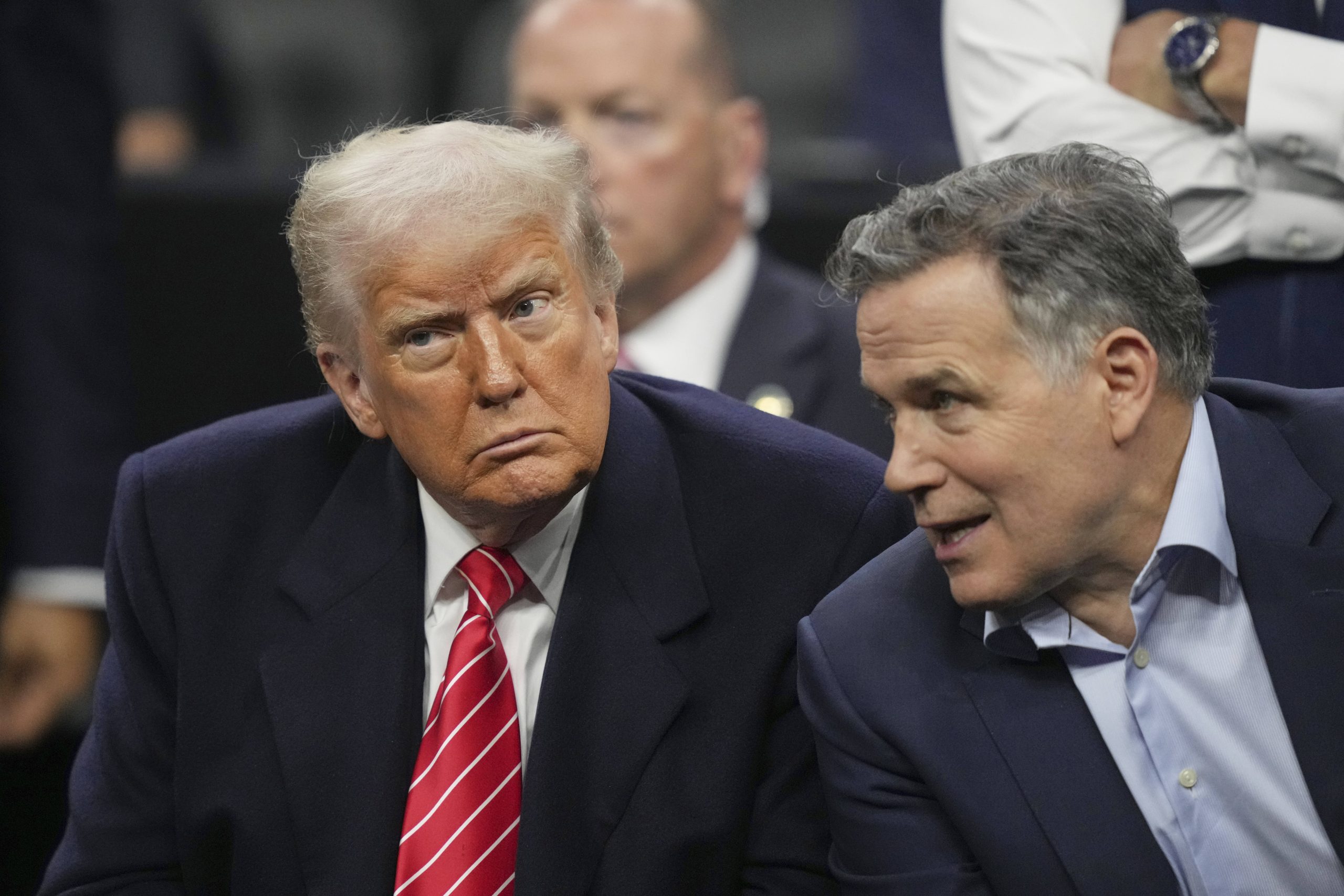
President Donald Trump, left, and Sen. Dave McCormick, R-Pa., attend the finals at the NCAA wrestling championship, Saturday, March 22, 2025, in Philadelphia. (AP Photo/Matt Rourke)Matt Rourke
McCormick’s spokesperson said only that the senator’s position on 2020 “remains unchanged.”
A spokesperson for U.S. Rep. Brian Fitzpatrick, a moderate Bucks County Republican who voted to certify President Joe Biden’s 2020 win, said the lawmaker “completely disagrees with the president’s allegations of interference in the 2020 election.” She did not answer a question about the new and specific claims, such as the 250,000 noncitizens registered, but said Fitzpatrick “has full faith and confidence [in] our election officials.”
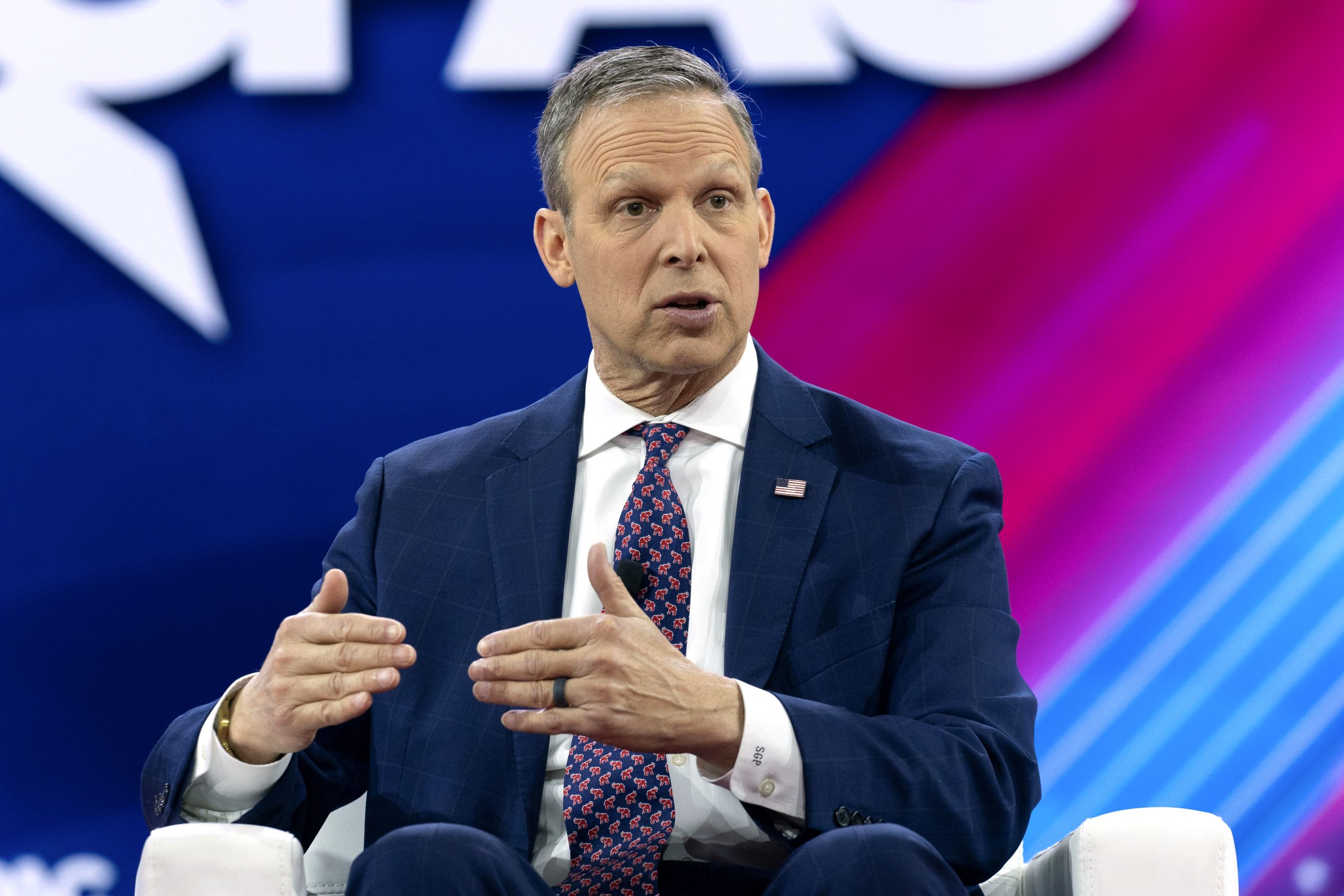
Rep. Scott Perry, R-Pa., speaks during the Conservative Political Action Conference, CPAC 2024, in Oxon Hill, Md., Feb. 22, 2024. (AP Photo/Jose Luis Magana, File)Jose Luis Magana
U.S. Rep. Scott Perry, a York County Republican who tried to overturn election results and became a subject of investigations into Jan. 6, reposted comments online that raised alarm about the White House’s claims of noncitizen voters.
Perry’s office did not respond to a request for comment. He is one of four Republicans in the state facing a competitive reelection this fall — putting Pennsylvania in the national spotlight as Democrats push to gain control of the narrowly divided U.S. House, and potentially at the center of concerns about Trump’s attempts to control the election process.
Republicans point to N.J. as they call for new voting law
Every Pennsylvania Republican in Congress, meanwhile, has supported the SAVE America Act. The bill would require voters to provide proof of citizenship when registering to vote and to show photo ID at the polls. It would also scale back mail voting, which has become increasingly popular since the COVID-19 pandemic but has remained a focus of Trump’s false claims of fraud.
Supporters of the legislation say that voter ID is widely popular and that eliminating even a few noncitizens from the voter rolls is worth ensuring elections are legal and secure. Opponents say that the issues the bill is trying to solve are either nonexistent or statistically irrelevant, and that it would effectively make registering more difficult for about 21 million people who do not have easy access to the paperwork that would be required, like a passport or birth certificate.
“It would upend voter registration and our democracy and, on its own terms, is an extraordinarily harmful policy that would hurt millions of American citizens,” said Eliza Sweren-Becker, a voting rights expert at the Brennan Center for Justice. “It is being advanced on the backs of lies about our election system that are themselves harmful to our democracy and trust in election administration.”
Though he has not addressed Trump’s latest claims, McCormick renewed his public push for the SAVE America Act after Trump’s prime-time address — writing, “Let’s act now,” on social media following the speech.
Last week, he and others also grasped on to both a nearly decade-old voter registration issue in Pennsylvania and the fresh problem in New Jersey to underscore the need for the law.
“This isn’t a harmless ‘software error,’” McCormick wrote on social media after Gov. Mikie Sherrill said a technical mistake led to noncitizens registering to vote. “This is why we must confirm citizenship before anyone registers. Only U.S. citizens should vote in our elections.”
McCormick also elevated a statement from the Department of Homeland Security that referred to an issue that Schmidt, then a Philadelphia city commissioner, discovered in 2017. Schmidt found 168 noncitizens were registered in Philadelphia, and likely hundreds more were registered statewide, due to an error by the Pennsylvania Department of Transportation. State Auditor General Tim DeFoor, a Republican, has said fixes to the system were largely successful.
U.S. Rep. Ryan Mackenzie, a Lehigh County Republican who is running in one of the most competitive districts in the country, also pointed to the Pennsylvania example and the New Jersey developments while justifying his support for the SAVE America Act during a telephone town hall with constituents Wednesday.
But while trying to remember the details on the call, Mackenzie potentially overstated the problem.
“I believe it was about 8,000 people here in Pennsylvania made their way onto the voter rolls, who were not supposed to be there and weren’t asked those proper questions. So these things do happen,” Mackenzie said before stressing the need for the SAVE America Act.
Asked about that number, a spokesperson for Mackenzie pointed to the Pennsylvania Department of State’s additional review in 2018 that found 8,698 voters whose eligibility needed to be determined. Those voters, however, were not necessarily noncitizens or otherwise ineligible to vote, and the state never released a more detailed analysis.
The spokesperson did not answer questions about whether Mackenzie agrees with Trump’s old or new claims about election fraud in 2020, or whether Pennsylvanians should have confidence in the state’s current system.
“This case from Pa., and from N.J. more recently, highlight the lack of appropriate checks taking place when people initially register to vote. We should have appropriate checks to verify the citizenship status when someone initially registers, which is what the SAVE Act provides. The absence of these safeguards, as well as the egregious errors that have been seen in states like New Jersey, are key reasons for the bipartisan frustration with our elections.”
Sweren-Becker said overstated claims of noncitizen voters have contributed to spreading distrust. The Pennsylvania situation, she said, was also not an example of a scheme to defraud the system, and “not the basis for a policy that would block millions of Americans from being able to cast their ballots.” Both that case and the one in New Jersey are instead examples of administrative errors that occasionally happen in a complex election system and represent “an extraordinarily small fraction” of voters, she said.
The Cato Institute, a libertarian Washington-based think tank, has also thrown cold water on the idea that the SAVE America Act would have prevented the New Jersey error. Legal fellow and former Arizona Republican official Stephen Richer, in a post that referred to McCormick’s advocacy, wrote that the current structure of the bill “likely wouldn’t have prevented” the software error.
“Be wary of politicians who say, ‘All of these problems will be fixed with my simple legislation,’” Richer wrote. “That’s often not the case.”
‘Deeply unhelpful’
McCormick, in response to questions for this story, did not directly say if the law would have prevented the issue in New Jersey. But he stressed that the paperwork requirement “helps stop noncitizens from getting registered.” It would also require states to set up a program to “continuously check voter rolls to find noncitizens” using different datasets — which he noted some states already have.
In a telephone town hall with constituents on Wednesday, the senator also acknowledged concerns about the bill when asked about it by voters on both sides of the issue.
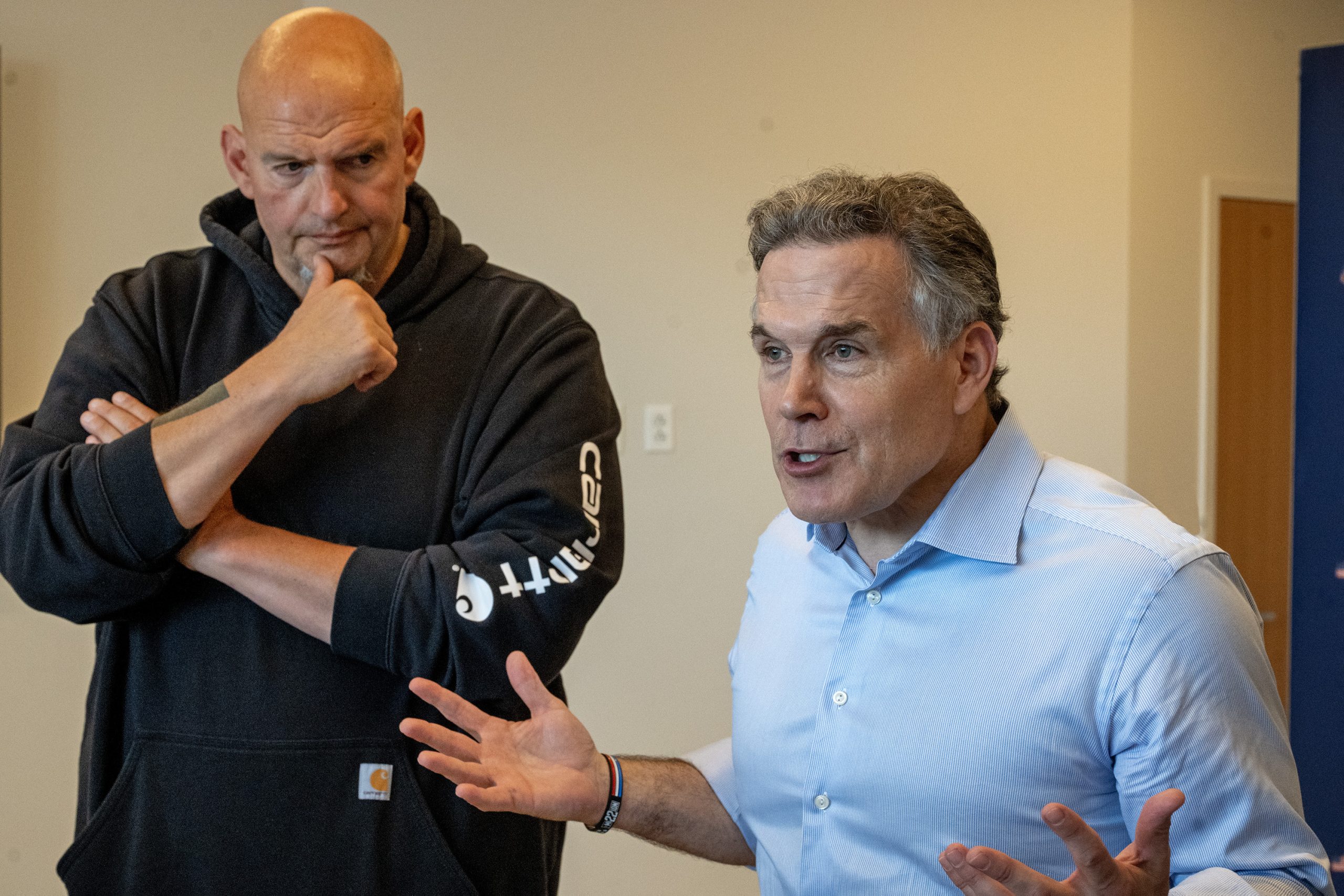
Pennsylvania’s U.S. Senators John Fetterman (left) and Dave McCormick appear together Monday, June 29, 2026 to promote the savings accounts for kids that were a signature piece of President Trump’s Big Beautiful Bill.Tom Gralish / Staff Photographer
He said he believed the law would “make it as easy as possible” for people to obtain valid forms of ID if they do not have them. And as someone who lost his first race against Oz by 950 votes and won his second race against Democratic U.S. Sen. Bob Casey by about 15,000 votes, he said even rare cases of noncitizen voting could make a difference in close elections. Eligibility for mail ballots also needs “to tighten up dramatically,” he said, though he did not fully explain his thoughts on the issue or if he believes there has been fraud associated with them.
As Democrats block the bill in the Senate, he called on them to “defend the indefensible” and said “there should be a political cost in objecting to something that most Americans agree with.”
One of the Democrats opposing the bill is McCormick’s close friend and ally — U.S. Sen. John Fetterman.
Though he has frequently broken with his party — and now supports voter ID after previously calling it “insidious and unnecessary” — Fetterman has said the bill’s changes to mail voting are “a nonstarter” for him.” In a CNN interview last week, he also said that the 2020 election in Pennsylvania was fair, that there is “no evidence” of 250,000 noncitizens registered, and that Trump was unnecessarily fixated on the 2020 election.
“In Pennsylvania, out of 67 counties, the vast, vast, vast majority of them are deep red counties, and they’ve never encountered any kinds of fraud,” Fetterman said. “I don’t know why the president is dragging up all of this stuff. You’re the president. Do something positive. And you are talking about 2020. That’s been settled over six years ago. It’s deeply unhelpful.”
Other Pennsylvania Democrats have lambasted Trump for dredging up the old claims, and they have blamed GOP “enablers” for supporting him and pushing the bill.
“The only thing it would ‘save’ is Trump and his Republican enablers from voters holding them accountable,” U.S. Rep. Dwight Evans (D., Philadelphia) said.
U.S. Rep. Chris Deluzio, an Allegheny County Democrat who worked on election security issues before running for Congress in 2022, said the bill “will do nothing to improve election security” and would instead harm married women — whose birth certificates might not have their current name — and people without passports. He said those who lie about the 2020 election are “cowards” who should not have a place in elected office.
“The fact that some Republican politicians are so scared of Donald Trump that they lie for him just to keep their jobs is spineless and pathetic,” Deluzio said.
McCormick, for his part, said during the telephone town hall that the bill is unlikely to pass as Democrats continue to block it from getting the required 60 votes in the Senate, and as Republicans decline to eliminate the filibuster rule to let it move forward with just 50 votes.
“Where does that leave us? That leaves us in a position where I think we should be constantly talking about this, and I try to do this every single week, multiple times, [saying] why the SAVE America Act is important,” said McCormick, whose staff said he was unavailable for an interview.
Sen. Mitch McConnell (R., Ky.) is facing growing calls to be more transparent about his health nearly six weeks after he was hospitalized.
McConnell, 84, has been absent from the Senate since he said he suffered a fall June 14. His office shared a photo of McConnell holding the Washington Post on July 12, and McConnell said in a statement that he had left the hospital and moved to a rehabilitation center — but he did not say when he planned to return, offering only that he would not “be able to return to the Senate floor to vote quite yet.”
Those scant details have not quieted rampant rumors and online speculation about McConnell’s condition.
Kentucky Gov. Andy Beshear (D) said last week that he had heard nothing from McConnell since he was hospitalized, despite sending a letter seeking an update on his condition. He urged McConnell to call into a news station for a few minutes or put out a short video to reassure his constituents.
“When you’ve been in a hospital for a month and you’ve missed all the votes … you owe your boss, like anybody else out there who works, an explanation of what’s been going on and when you’ll get back,” Beshear said.
Scott Jennings, a longtime McConnell ally who worked on some of his reelection campaigns, urged McConnell on Thursday to “routinely update his constituents on how he’s doing” and be transparent about the work he’s doing while recovering. He said he expected McConnell to share an update on how he’s doing in the coming days.
“Truthfully, I think a little transparency on the front end here would have saved him a whole lot of grief,” Jennings told CNN’s The Arena with Kasie Hunt. “But that didn’t happen and they are where they are now.”
David Popp, a McConnell spokesperson, said McConnell has continued to work during his absence.
“The Senator continues to meet with staff regarding Senate and Kentucky business, including discussions on defense appropriations, foreign policy, the farm bill, constituent services, and constituent federal grant requests,” Popp said in a statement to the Washington Post. “As the Senator continues to improve in rehab, we will be sure to keep you updated.”
McConnell said July 12 that he did not break any bones when he fell and did not suffer a heart attack, a stroke, a hemorrhage, or a concussion, but he has said little else about what happened to him.
Popp referred to McConnell’s earlier statement when asked when McConnell might return to the Senate or whether he planned to attend Tuesday’s funeral for Sen. Lindsey Graham (R., S.C.), his longtime colleague, at Washington National Cathedral.
McConnell said in his statement that “folks of my generation often hesitate to share the vulnerability that comes with growing older.”
“Even in the public eye, I feel that same instinct — I can’t help it,” he said.
McConnell spent 18 years as the Republican leader in the Senate before stepping down early last year. He remained in the chamber to serve the final two years of his term, which ends in January.
Rep. Andy Barr (Ky.) won the Republican primary to succeed McConnell in May and is heavily favored to win his seat in November. The Senate is scheduled to be in session for only 10 more weeks during McConnell’s term as senators head home to campaign ahead of the midterm elections.
McConnell’s absence has narrowed Republicans’ edge in the Senate, giving them an effective 52-47 majority as long as he is absent.
Senate Majority Leader John Thune (R., S.D.) and Sen. John Barrasso (Wyo.), the No. 2 Senate Republican, said earlier this month that they had spoken with McConnell, but some other Republican senators have raised questions about McConnell’s absence.
Earlier this month, Sen. Ron Johnson (R., Wis.) cast doubt on the legitimacy of the photo that McConnell shared of himself — only to dismiss his comments later, saying he was just repeating a rumor he had heard. (The Post reviewed the photo’s metadata and found it appeared it was taken July.)
“It’s not fun watching anybody age,” Johnson told reporters. “We’re all hoping Mitch recovers fully and comes back. I haven’t talked to him, so I have no knowledge.”
Last week, Sen. Josh Hawley (R., Mo.) wished McConnell a speedy recovery but also suggested he should disclose more about his condition.
“At a certain point you do have an obligation to your constituents and the country to tell them what’s going on,” Hawley told Fox News, saying he felt “totally in the dark” about McConnell’s status.
McConnell is hardly the first senator to be away for an extended stretch at a time while ailing or in recovery.
Sen. John Fetterman (D., Pa.) was absent for two months in 2023 while seeking treatment for depression. Sen. Dianne Feinstein (D., Calif.) missed votes for nearly three months that year while battling shingles and faced calls to resign. She returned to the Senate but died months later.
Sen. John McCain (R., Ariz.) did not vote during his final eight months in office before he died in 2018. And Sen. Mark Kirk (R., Ill.) did not vote for nearly a year after suffering a stroke in 2012. He released videos of himself relearning how to walk before returning to the Senate and served out the rest of his term.
Lester Munson, Kirk’s chief of staff at the time, said Kirk was able to keep working even though he was not in the Capitol voting.
Kirk worked with Sen. Bob Menendez (D., N.J.), for instance, on an amendment to a defense policy bill to tough sanctions on Iran. Senators in both parties — includes Sens. Dick Durbin (D., Ill.), Jon Tester (D., Mont.) and Joe Manchin III (D., W.Va.) and McConnell — stepped up to help Kirk’s office carry on, Munson said.
“I think people kind of just assume — not really correctly — that if the senator’s in the hospital or something like that, that they can’t do their job,” Munson said. “That’s not entirely true. There’s obviously some things they can’t do … but a lot of other things continue to be carried on.”
Kirk did not have to contend with social media speculation about his health and other online pressures in the same way that McConnell has, Munson said.
The prediction market Polymarket, for instance, allows users to bet on whether McConnell will vote in the Senate by July 31. (The odds stood at 11% Friday evening.)
McConnell is also much better-known than Kirk or other senators who have had extended absences from the chamber. His decades of service should earn him some grace while he recovers, Munson said.
“As far as I’m concerned, this guy has given so much to the Senate over time and therefore so much to America, God bless him,” Munson said. “He’s got all the latitude in the world to deal with this problem.”