Category: Politics

  • Fauci repeatedly invokes the Fifth Amendment in a contentious Senate committee hearing

    Fauci repeatedly invokes the Fifth Amendment in a contentious Senate committee hearing

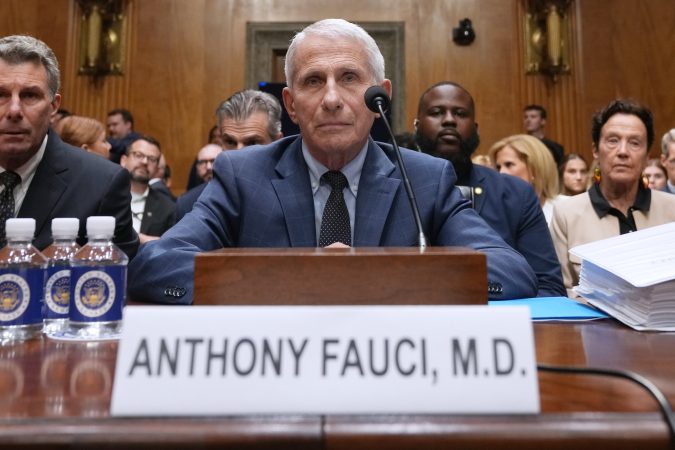
    WASHINGTON — Dr. Anthony Fauci on Wednesday repeatedly invoked the Fifth Amendment and declined to answer dozens of questions from senators in a Republican-led committee hearing about his handling of the COVID-19 pandemic.

    The decision, at least for now, shielded Fauci from answering questions that could expose him to accusations of lying under oath. Though he received a pardon in early 2025 from Democratic President Joe Biden, some Republicans pursuing a yearslong campaign for his arrest had suggested he could still face charges for any perjury committed during Wednesday’s hearing.

    The scientist, who helped lead the nation’s COVID-19 response, was subpoenaed to testify under oath by Republican Sen. Rand Paul of Kentucky, who has long had an antagonistic relationship with Fauci.

    In response to angry, sometimes mocking, questions from Republican senators, Fauci declined to answer more than 100 times, injecting new drama into partisan divides that have festered for years about the origins and handling of the pandemic. Fauci himself has become a polarizing figure, even receiving death threats that prompted him to seek security.

    In his opening statement, Fauci said Paul has an “obvious obsession with calling for my prosecution.”

    “The only conclusion I can reach is that the sole reason he is calling me before this committee is to get me to say something, anything, that could vindicate his repeated public pledges that I end up, in his words, quote, behind bars, unquote,” Fauci said, adding that while it pained him to do so, he was following his attorney’s advice by taking the Fifth.

    Republicans accuse Fauci of lying

    In the combative hearing, Paul and other Republicans accused Fauci of lying in earlier testimony about the origins of the coronavirus, something the longtime National Institutes of Health scientist has forcefully denied. Democrats called the hearing a politically motivated attempt at entrapping Fauci and praised the scientist for his work during the pandemic.

    With Fauci declining to answer questions throughout, Paul dominated the approximately three-hour hearing, listing a litany of accusations and detailed questions.

    “Today will be the capstone to Anthony Fauci’s 40 years of abuse of power at NIH,” Paul said. “History will judge, but the facts as we now know them paint a sordid tale of dishonesty, misjudgment and ultimately the hubris, the likes of which the world has never seen.”

    In one heated moment of the hearing, Paul ejected Fauci attorney David Schertler from the room after he tried to speak without being recognized. In a statement, Schertler said the removal was “outrageous and demonstrates the completely biased and baseless nature of this proceeding.” In another statement, he called Paul’s accusations about Fauci “false and disgraceful.”

    Democratic senators praised Fauci and said he didn’t deserve the treatment he was getting.

    “This hearing is designed to entrap you,” said Sen. Maggie Hassan of New Hampshire.

    Paul has long argued Fauci should be criminally investigated based on his belief that the scientist was dishonest in previous testimony to Congress.

    The senator announced late in the hearing that the committee would vote next week on whether to hold Fauci in contempt for declining to answer questions. He did not say whether he would push for a criminal contempt referral to federal prosecutors or another charge. He also raised questions about whether Fauci’s pardon affects his eligibility for Fifth Amendment protections.

    Paul released some of Fauci’s diary

    Leading up to the hearing, Paul released more than 1,000 pages of Fauci’s personal diary covering the pandemic years. Pointing to some notes about early efforts at understanding how the virus emerged, Paul said on social media that what Fauci “wrote privately and what he told the country are two different stories.”

    Some of the diary entries — including Fauci’s uncertainty in the pandemic’s earliest days as scientists around the world raced to understand the new virus and how best to curb it before vaccines could be created — already were reflected in a 2024 memoir and in interviews at the time.

    But they have nonetheless drawn attention from people who blame Fauci for mask mandates, school closures, and other policies they believe infringed on their rights as hundreds of thousands of people were dying.

    Earlier Wednesday, President Donald Trump wrote on social media that he stopped relying on Fauci over the course of the pandemic because he felt the scientist made bad decisions on masks, shutdowns, and other issues.

    Health Secretary Robert F. Kennedy Jr., a longtime anti-vaccine activist before entering public office, said on social media that his department found the diary entries in government property and gave them to the committee.

    Dozens of disease experts defend Fauci

    Scientists also scrambled to Fauci’s defense ahead of the unusual hearing — the second time he has been back before Congress to discuss pandemic origins since leaving the government in 2022. While the COVID-19 pandemic introduced him to millions of Americans, he talked the nation through numerous outbreaks over decades, including HIV, Ebola, and the 2001 anthrax attacks, while advising seven presidents.

    In a public letter, more than 150 infectious-disease experts and other scientists wrote that “no credible evidence has been produced to support these absurd charges” and that they are “urging our elected representatives in Congress stop these witch-hunts.”

    Among topics discussed at Wednesday’s hearing was whether NIH-funded research in China may have played a role in how the pandemic started.

    Many scientists believe the virus most likely emerged in nature and jumped from animals to people, coming to light when it spread at a wildlife market in the Chinese city of Wuhan. There’s no new scientific information supporting that the virus might instead have leaked from a laboratory, a theory Paul champions. A GOP-led subcommittee that studied the question in 2024 did not find any evidence linking Fauci to wrongdoing.

    Fauci has long said publicly that he was open to both theories but that there’s more evidence supporting COVID-19’s natural origins.

    Republicans also have accused Fauci of lying about whether his agency funded what’s known as gain of function research — the practice of enhancing a virus in a lab to study its potential real-world impact — at a lab in Wuhan.

    The NIH for years gave grants to a New York nonprofit called EcoHealth Alliance, which used some of the funds to work with a Chinese lab studying coronaviruses commonly carried by bats. But the definition of gain of function covers both general research and especially risky experiments to enhance the ability of potential pandemic viruses to spread or cause severe disease in humans. Fauci has previously stressed he was using the risky experiment definition and that “it would be molecularly impossible” for those bat virus experiments to have turned into the pandemic virus.

    Trump, a Republican, last year paused some federally funded gain of function research, and on Tuesday his administration announced new rules to tighten oversight.
  • Trump asks Supreme Court to overturn $83 million verdict in E. Jean Carroll case

    Trump asks Supreme Court to overturn $83 million verdict in E. Jean Carroll case

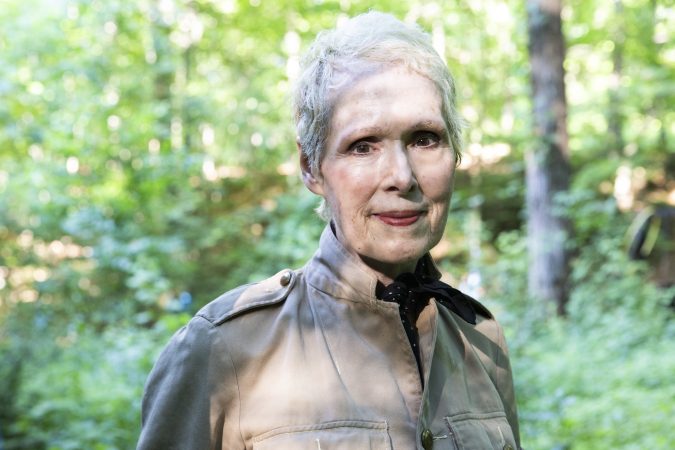
    President Donald Trump asked the Supreme Court on Tuesday to overturn an $83 million judgment against him for defaming advice columnist E. Jean Carroll, who accused him of sexually assaulting her decades ago.

    Trump’s attorneys asserted in court filings that the Supreme Court’s 2024 decision granting presidents sweeping immunity for actions taken in office shields him from liability in the high-profile case.

    “This is the first case in our Nation’s history in which a court has imposed damages liability on a President for his conduct in office,” the attorneys wrote.

    Separately, the Justice Department petitioned the high court Tuesday to allow the federal government to replace Trump as the defendant in the case.

    Should the justices permit the swap, it would potentially clear the way for the Trump administration to ask for the massive judgment to be voided because the federal government cannot be sued for defamation. Lower courts have denied similar requests by the agency.

    Justice officials argue that the United States should be substituted as the defendant under a law that grants federal employees some immunity from civil damages for actions taken within the scope of their employment.

    They said that some of the comments at issue in Carroll’s defamation claim occurred during Trump’s first presidency.

    “Absent this Court’s intervention, the sitting President is facing nearly a hundred million dollars of personal liability for conduct that was well within the scope of his federal office,” the Justice Department wrote. “That alone deserves this Court’s attention.”

    Trump’s and Carroll’s attorneys declined to comment on the appeal Tuesday night.

    A Manhattan jury awarded Carroll the money in 2024, following a civil trial in which she testified that Trump attacked her in a dressing room at the Bergdorf Goodman department store in Manhattan in the mid-1990s. Trump denies the allegations.

    Carroll first went public with the claims in 2019, prompting angry rebukes by Trump. Trump said the allegation that he had sexually assaulted Carroll was a “complete con job,” a “Hoax” and a “Scam” concocted to sell her memoir.

    At other points, he said she was too unattractive for him to take an interest in her and accused her of lying. The comments prompted years of threats and attacks against Carroll by Trump’s supporters.

    An appeals court panel upheld the $83.3 million verdict in September and denied Trump’s request in April for the full court to rehear the case. The moves paved the way for Trump’s appeal to the Supreme Court.

    In November, Trump appealed to the Supreme Court a $5 million verdict in a separate defamation case Carroll brought against the president.

    The jury found Trump liable for sexually abusing and defaming Carroll. In June, the Supreme Court let stand that verdict against Trump.

  • What the midterms mean for Pennsylvania Gov. Josh Shapiro’s 2028 hopes

    What the midterms mean for Pennsylvania Gov. Josh Shapiro’s 2028 hopes

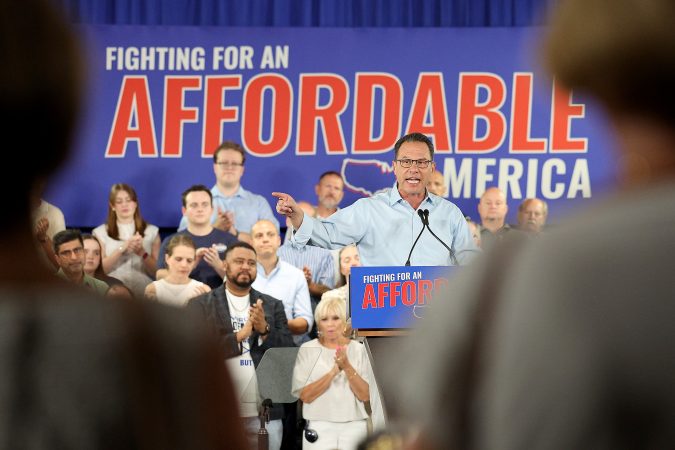
    BETHLEHEM — It was not by happenstance that House Minority Leader Hakeem Jeffries (D-New York) chose a union hall here in the Lehigh Valley to launch the final 100-day sprint toward the midterm election. “This is ground zero for the battle to control Congress,” the speaker-in-waiting declared.

    The same could be said for the centrality of this state — and this election — to the presidential aspirations of a Democrat who shared the stage Sunday with Jeffries: Pennsylvania Gov. Josh Shapiro.

    Were the popular governor to run nationally in 2028, and the current assumption is he will, what happens in his crucial state in November could be a compelling argument not only for his electability but for his ability to carry others over the finish line.

    This year, Pennsylvania holds four of the House races that Democrats consider to be among their top opportunities for flipping Republican-held seats. That’s more competitive races than in any other state, according to the House Democrats’ campaign operation.

    President Donald Trump carried three of those districts in 2024. But in the 2022 gubernatorial election, Shapiro, then the state’s attorney general, won all four by double digits against a far-right opponent.

    “Pennsylvania is always the ultimate swing state, the state that kind of decides it all,” Shapiro, who is running for a second term, said in an interview. “And so it is not a stretch to imagine if we win these races here, that’ll create a Democratic majority in the U.S. House.”

    Shapiro is a heavy favorite against the Republican gubernatorial nominee, State Treasurer Stacy Garrity. He has raised more than $50 million to run up the score, and create an updraft that could help candidates lower on the ballot.

    He has also had a hand in who those candidates are. Shapiro endorsed the Democratic candidates in all four of Pennsylvania’s most hotly contested congressional districts in their primaries. One of them, Bob Brooks, spent 20 years as a firefighter in Bethlehem and was Shapiro’s pick in a hard-fought primary to take on Republican incumbent Ryan Mackenzie. In 2024, Mackenzie beat Democratic Rep. Susan Wild by one percentage point.

    As he prepared to introduce Shapiro here on Sunday, Brooks emphasized his background as an outsider who can relate to the pressures that ordinary people are under: “I have to be honest. Running for Congress was not on my Bingo card. I’m not a politician. Far from it, actually. I’m a regular working person, like so many of the faces that I see in this room.”

    Meanwhile, Keystone State Democrats are also hoping to flip the state senate, where Republicans have a 27-23 majority, while also maintaining their narrow hold on the House. If they can do it, they would be looking at their first unified hold on state government in more than three decades.

    Shapiro has pledged he would use that power to raise the minimum wage to $15 an hour, from its current $7.25; fund mass transit; build more housing and codify abortion rights into state law.

    All of which could be rolled into a national message, the outlines of which became apparent as the governor talked about his agenda. “We all need to do our part to stop the chaos and cruelty and corruption of Donald Trump,” he said, “and that’s going to require us here at the state level having a trifecta so that we can pass policies that help the people of Pennsylvania while Trump is hurting them.”

    Having seen his state vote twice for Trump, in 2016 and 2024, Shapiro is working to build up the Democratic infrastructure. He recently unveiled a multimillion-dollar effort that party officials say is the largest coordinated midterm operation in the state’s history. It boasts having opened 27 offices across the state and hiring nearly 100 full-time organizers.

    The governor has also addressed one of the more worrisome trends for Pennsylvania Democrats: Their voter registration advantage over Republicans had dropped precipitously over recent election cycles.

    Between 2020 and 2024, the registration gap between the two parties had fallen by more than half, to 325,000 Democrats from 686,000 Republicans. It was a warning sign that Trump was going to win the state and its 19 electoral votes.

    This year, with the midterms approaching, the numbers are starting to turn around; Democrats have added nearly 25,500 to the registration rolls, while Republican numbers have dropped by more than 4,500, according to voter registration data analyzed by PennLive.com.

    Retooling and professionalizing the party is a project that Shapiro began almost a year ago, he said, and now, “I’m investing millions of dollars in helping elevate other Democrats on the ballot, spending my time campaigning for people like Bob Brooks and others.”

    If all of this works as he hopes, it might be the foundation for a presidential campaign. Unknowable at this point, however, is whether the Democratic base in 2028 will be looking for a Mr. Fix-It whose appeal stretches across party lines, or will move further leftward in its fury at the establishment.

    Shapiro insists — as presidential candidates nearly always do at this stage of the game — that none of this is his concern at the moment.

    “What I’m focused on are these midterms,” which in Pennsylvania “will be decided on a razor’s edge,“ Shapiro said. “Folks are fed up and angry and frustrated. The best way to demonstrate that, the best way to show that we’re against what Trump is doing, is to show up and vote in record numbers.”

  • The Trump administration is halting a Medicare drug subsidy. Will premiums rise?

    The Trump administration is halting a Medicare drug subsidy. Will premiums rise?

    Medicare drug coverage premiums are expected to rise in 2027 after the Trump administration said Tuesday it would end a temporary subsidy that reduced monthly premiums by an average of $16.

    But it’s not yet clear how much they’ll increase, or whether they will increase for all Medicare beneficiaries.

    The loss of the subsidy does not translate directly to how much premiums will rise, because companies that sell Medicare Part D drug coverage take into account many factors when setting rates.

    The cost to the government of the subsidy was $3.6 billion in 2026, according to KFF, a nonpartisan health policy organization. About 25 million people enrolled in Part D plans in 2026, up from 23 million two years ago.

    “It’s certainly possible that without this enhanced financial support in place for 2027, some Medicare beneficiaries enrolled in [Part D plans] could face relatively steep premium increases for drug coverage next year,” said Juliette Cubanski, director of KFF’s program on Medicare policy.

    Insurance companies received notice of the move late Tuesday and were examining the impact. Expected Medicare Part D rates for 2027 will be publicly announced in September.

    “We are closely reviewing today’s announcement. At a time of sharply rising prescription drug costs, health plans are focused on keeping Part D coverage and benefits as affordable as possible for seniors,” said Chris Bond, spokesman for AHIP, the insurance industry’s Washington trade group.

    The average estimated monthly Part D premium in 2026 was $34.50, according to the National Council on Aging. Part D premiums were already four times higher than the $8 average premium under Medicare Advantage, the privatized version of Medicare. Cubanski said higher Part D premiums in Part D in 2027 could accelerate beneficiary enrollment in the privatized plans.

    The Department of Health and Human Services, which oversees the Center for Medicare and Medicaid Services, did not respond Tuesday night to a question about the amount of expected increases.

    CMS said it ended the subsidy, which was intended to stabilize premiums after the agency made changes to the benefits, because “plan sponsors had sufficient experience” under the new program to support their cost assumptions.

    UnitedHealthcare, which offers Part D plans, said loss of the subsidy was not unexpected. “We are committed to working with CMS, ensuring seniors have access to affordable prescription medicines,” UnitedHealthcare spokesman Eric Hausman said.

  • Pete Hegseth is resurrecting a brand of military masculinity that dominated debates a century ago

    Pete Hegseth is resurrecting a brand of military masculinity that dominated debates a century ago

    On July 15, Defense Secretary Pete Hegseth announced that his department will test all military personnel over the age of 30 for low testosterone. In his video posted on X, he explained the move in terms of military dominance. It would give U.S. soldiers an “edge of lethality” and ensure they “have the biological foundation” to maximize their performance.

    This decision ties into larger concerns on the political right about the need to foster manhood, emphasizing aggression and physical strength. Testosterone has long served as a cultural marker of traditional masculinity, so it’s not surprising that Hegseth would focus on the hormone. After all, he’s performed pull ups on camera and issued a DOD-HHS fitness challenge with Secretary Robert F. Kennedy Jr.

    Yet, Hegseth’s move isn’t just a reflection of his personal priorities for the military. It’s also part of a long history of rhetoric about American manhood in military medicine that has elevated traditional ideas about masculinity and aimed to exclude gay men and women from military service. Indeed, dating back to the late 19th century, decisions about U.S. soldiers’ health have exposed fierce debates over definitions of American manhood.

    At the dawn of the 20th century, disagreements over imperialism dominated American politics. Proponents of American expansionism, like Sen. Albert J. Beveridge (R-Ind.), wanted to see the U.S. acquire territories in the Caribbean and the Pacific.

    Worries about manhood and the health of military personnel were at the core of these debates. Many Americans linked military power to the male body and, in turn, the inability or unwillingness to fight or govern “dependents” to boyhood. Champions of imperialism like Beveridge associated the physical strength of enlisted men as synonymous with the strength of the nation, and they framed territorial acquisitions as a way for the U.S. to demonstrate its manliness to other nations.

    Even anti-imperialists, who opposed territorial expansion, worried about American manhood. One of their main arguments against acquiring the Philippines was that it would degrade both individual and national manhood. They feared an imperial project in the Pacific would mean American soldiers would succumb to drunkenness and venereal infections in the tropics.

    Army officers, for their part, argued that the military could improve the nation’s men. During the 19th century, many people had seen military service as debasing partly because low pay and harsh punishments meant those who joined the Army were men on the margins of society with few alternatives. But now, medical officers explained, through efficient military hygiene, soldiers would become better citizens as they learned discipline, cleanliness and order.

    The imperialists won the foreign policy debate. After the Spanish-American War of 1898, Spain relinquished all claims on Cuba and the U.S. gained sovereignty over Puerto Rico, Guam and the Philippine Islands. Yet, that didn’t end the contest over manhood.

    In fact, once the U.S. took over these lands and sent military personnel abroad, concerns over soldiers’ behavior and masculinity only intensified.

    Gendered rhetoric saturated debates about whether enlisted men’s consumption of alcohol would improve or harm their health. Purity Reformers cheered the passage of legislation that ended the sale of alcohol at the army canteen. They saw drunkenness as unmanly. Additionally, inebriated men contracted sexually transmitted infections (STIs) at higher rates, which, the reformers believed, emasculated soldiers by rendering their bodies weak and infertile.

    Military medical officers who opposed the anti-canteen law feminized their male political opponents, complaining that these “abstinence ladies” were trying to tell officers how to run the army.

    These debates became especially intense over the Philippines, which U.S. troops oversaw in the years after the war. The problem was, by 1907, roughly one in three enlisted men serving in the Philippines had an STI. For those who saw the experience of military service not only as a place to prove one’s manhood but also to improve it, these rates of infection posed a problem that was at once medical and gendered.

    In response, the U.S. military followed in the footsteps of European colonizers and launched a system of regulated prostitution whereby medical officers inspected women who sold sex to soldiers, sent them to a designated hospital if they found signs of infection and, otherwise wrote “free from disease” on their inspection booklets. The Army thus sanctioned a manhood marked by heterosexual sex with Asian women in a colonized territory.

    When reports of this approach hit the anti-imperialist and temperance press in America, however, the public outcry pressured political and military leaders to stop the most visible aspects of this program. Progressive Era reformers fiercely opposed what they saw as government-run prostitution. They decried the sexual double standard that punished women suspected of selling sex but did nothing to stop either the men profiting from women’s sexual labor nor the male consumers. They also challenged claims that men had to have sex with women in order to be healthy.

    Made By History sponsors. FOR USE ON MADE BY HISTORY STORIES ONLY.Inquirer Staff

    While the efforts to regulate prostitution didn’t completely abate, the military also launched a push to divert enlisted men in the Philippines away from sex and the risk of STIs, especially by creating alternative avenues for recreation. Military authorities built boxing rings and established baseball diamonds to fill men’s leisure time with traditionally masculine physical activities marked by aggression, strength and speed.

    By the time the U.S. joined the First World War in 1917, social reformers had formed the American Social Hygiene Association to fight prostitution and stop the spread of STIs. Many occupied positions of leadership in the Army, and a definition of military masculinity based on restraint held political sway.

    General John J. Pershing, for example, who led the American Expeditionary Force, declared the French maisons tolérées off-limits to his soldiers. The military also enacted strict protocols requiring men who admitted to sexual activity with women in France to report to prophylaxis stations immediately following “exposure” to prevent the spread of disease.

    At the same time, Raymond B. Fosdick, a Progressive reformer, served as chairman of the Commission on Training Camp Activities (CTCA) overseeing educational and recreational programming for enlisted men. He promoted competitive sports as crucial to ensuring soldiers’ health. Fosdick claimed, “it does not do any good in dealing with red-blooded young men merely to erect a series of verboten signs along the roadside; you must have something positive for them to do.”

    As in the Philippines, U.S. troops constructed arenas for boxing and wrestling, along with football and baseball fields at camps in France. In 1917, the Army released Fit to Fight, an educational film for soldiers. The film’s hero Billy Hale was a former college quarterback who refused contact with prostitutes, embodying the ideal of strength in chastity.

    It was a vivid example of how military leaders tried to frame the combination of athletic pursuits and sexual restraint as the key to healthy manhood and military success. They also argued that living up to this ideal was a necessity so that soldiers could become husbands and fathers after the war.

    As reformers and officers openly discussed manhood and soldiers’ health they simultaneously painted a bleak portrait of womanhood. They saw women near training camps as sexual predators with dangerous intentions and as the locus of disease. Meanwhile, women at “home” had a purity that needed protection from soldiers who had worked elsewhere. In neither case were women “fit to fight.”

    A full century later, testosterone testing is resurrecting many of the stereotypes that saturated these debates. It paints a picture of soldiers as masculine and virile in a way that excludes openly gay men and women. And this is coming only a decade after all combat jobs opened to women and 15 years after the end of Don’t Ask Don’t Tell, which had required gay and lesbian soldiers to hide their sexual orientation. Additionally, it links the health of male soldiers — through their sex drives and sexual activities — to the bodies of women.

    Hegseth’s emphasis on testosterone follows on the heels of striking women from promotions lists in both the Army and Navy. Testosterone testing, in tandem with this move, as well as Hegseth’s criticisms of women in combat roles and his aversion to openly gay men in the military, bolsters a manhood that reserves power for cisgender, heterosexual men and relegates women to roles with less authority.

    Experts have pointed out the decision’s departure from evidence-based medicine. Testosterone levels are actually poor indicators of actual strength. But the decision nevertheless has political purchase thanks to longstanding images about what constitutes the ideal soldier.

    Pamela Maddock is an affiliate of the History Department at the University of Sydney and is working on a book, “Access to Women: Sex, Race, and Disease in the U.S. Army, 1853-1919,” that examines the U.S. Army’s management of sexually transmitted infections in different geographic contexts outside the US. She teaches at the Williston-Northampton School.

    Made by History takes readers beyond the headlines with articles written and edited by professional historians. Opinions expressed do not necessarily reflect the views of The Inquirer.

  • Ro Khanna, a potential presidential contender in 2028, joins Chris Rabb in Philly as he pitches a ‘Progressive New Deal’

    Ro Khanna, a potential presidential contender in 2028, joins Chris Rabb in Philly as he pitches a ‘Progressive New Deal’

    Two months after winning a primary to likely become the first democratic socialist representing Philadelphia in Congress, State Rep. Chris Rabb on Tuesday joined forces in the city with U.S. Rep. Ro Khanna, a California progressive kicking off a week of events across the state as he considers running for president in 2028.

    The like-minded Democrats share a similar progressive platform, and Khanna endorsed Rabb ahead of the competitive primary to replace U.S. Rep. Dwight Evans (D., Philadelphia) in May.

    In a sign that the alliance might continue when Rabb enters Congress in January — and potentially beyond as the party considers its options for the next presidential race — the two kicked off Khanna’s statewide tour Tuesday in Philadelphia.

    Khanna, a Bucks County native who has represented parts of the Bay Area since 2017, is pitching a “Progressive New Deal,” invoking President Franklin D. Roosevelt’s platform, which led to the creation of Social Security and other programs.

    The California lawmaker called for the U.S. to end military aid to Israel and recognize Palestinian statehood as the war in Gaza nears its third year. And he called for progressive economic reforms and the tackling of corruption, which Khanna framed around the case of notorious sex offender Jeffrey Epstein and his associations with the rich and powerful.

    “I believe we need a ‘New Deal’ for the 21st century,” Khanna said. “We’re going to have people like Chris [Rabb] and others that are building that momentum. We need bold progressive Democrats: morality on foreign policy, morality on [Jeffrey] Epstein, and a bold economic vision to make this country work not just for the few but for all of us.”

    Khanna is among a slate of Democrats who have branded their platform as “New Economic Patriotism” with a focus on affordability and corruption issues during the first two years of President Donald Trump’s second term.

    Rabb, a five-term state lawmaker from East Mount Airy who ran an unabashedly progressive campaign, has said he is eager to join allies in Congress after the November election, in which he faces no Republican opponent to represent about half of Philadelphia.

    On Tuesday with Khanna, he outlined some of the platform that helped propel him to defeat a pair of more centrist candidates, and that he hopes to carry to Capitol Hill.

    “The issues we’re talking about resonate with a lot of people when you remove the labels,” Rabb said. “Medicare for All. You know, universal childcare. Federal jobs guarantee. No more endless wars. Acknowledging the genocide [in the war between Israel and Gaza].”

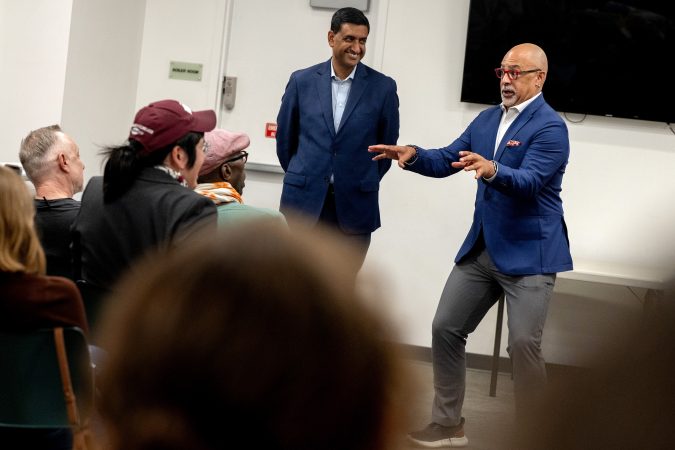
    At the Philadelphia City Institute library in Center City, where about 50 people listened and asked questions, Khanna spoke of his upbringing and how he watched people around him struggle after the closure of the Fairless Works steel factory in 2001.

    “My values were shaped in Bucks County,” said Khanna, who has described his week of events in Pennsylvania as a homecoming. “It’s shaped who I am. And I think Bucks County is a symbol for America.”

    But he sees the current anxiety and frustration of achieving the American dream. “I really want to offer a vision about how we can have the economic prosperity,” he said.

    Now, Khanna said, he represents the district that houses Silicon Valley and holds one-third of the nation’s wealth. He said he hopes his advocacy there to tax the billionaires who live in his district helps people all the way to Pennsylvania.

    “We’re in a second Gilded Age,” Khanna said. “I’m saying tax the billionaires in my district and in California so we can pay for free healthcare, so we can have free childcare in this country, so that we can have free college in this country.”

    His itinerary this week included two planned stops in Philadelphia and others across the state, including a Thursday event in Pittsburgh with U.S. Rep. Chris Deluzio, a potential primary challenger to Democratic Sen. John Fetterman in 2028 who shares Khanna’s economic platform.

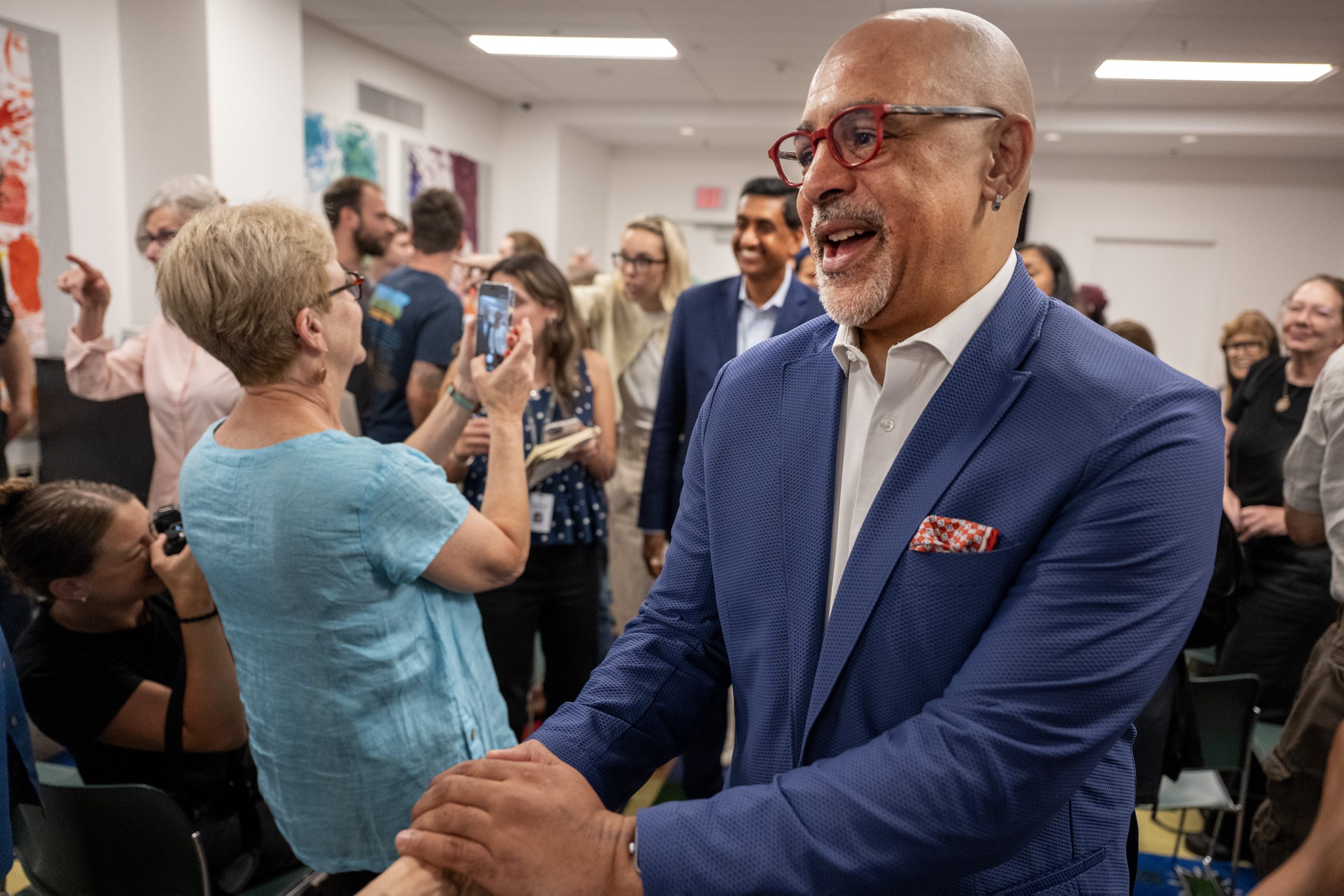
    State Rep. Chris Rabb greets supporters after appearing with U.S. Rep. Ro Khanna (rear) at the City Institute Library on Rittenhouse Square.Tom Gralish / Staff Photographer

    Rabb has advocated for a similar economic populism, including universal basic income and the Green New Deal.

    Since the primary, Rabb has both campaigned for other similar candidates and visited Washington, where he appeared on stage with Deluzio in June to discuss the surging left — a theme expounded upon again Tuesday.

    Several democratic socialists have won congressional primaries this year in blue districts, including Claire Valdez and Darializa Avila Chevalier in New York. Rabb endorsed them, as well as Melat Kiros, who beat 30-year incumbent U.S. Rep. Diana DeGette in a Colorado primary.

    Rabb said he would want to see a viable progressive candidate in the 2028 presidential election, but he did not specifically endorse Khanna, who could be among several such candidates in a crowded field.

    U.S. Rep. Alexandria Ocasio-Cortez (D., N.Y.), who also campaigned for Rabb in May, and Pennsylvania Gov. Josh Shapiro, who has had a frosty relationship with him, are also expected to be among the contenders for the nomination.

    “It’s coming up in a moment where there’s extraordinary organizing among folks who are very, very concerned about where we’re going as a nation, and the extent to which we can rely on conventional Democrats to deliver the type of justice and the result we seek,” Rabb said.

  • Philadelphia’s top lawyer is resigning from the Parker administration

    Philadelphia’s top lawyer is resigning from the Parker administration

    Renee Garcia, the top lawyer in Mayor Cherelle L. Parker’s administration, is resigning from her job as city solicitor to work in the private sector, the mayor announced Tuesday.

    The reason for Garcia’s departure was not clear Tuesday, and she was not present at a news conference announcing the staff change.

    Garcia, who served in the Parker administration since the mayor took office in 2024, has recently led the city’s strategy in several high-profile matters, including a protracted legal battle with President Donald Trump’s administration over slavery exhibits at the President’s House Site at Independence National Historical Park.

    In some ways, Garcia carried out Parker’s approach to the Trump administration, which has largely been cautious and conflict-averse. At Garcia’s urging, the mayor did not sign legislation supported by City Council that bans federal immigration enforcement officers from wearing masks in the city. But the legislation took effect without Parker’s signature, and the federal government last month sued the city over the provision.

    Garcia will be replaced at the top of the city’s law department by Monique Galloway, who most recently worked as an assistant U.S. attorney in Philadelphia. Galloway’s resume also includes stints as counsel at the federal General Services Administration and the Federal Transit Authority.

    Parker said Galloway’s experience working in the federal government was a key reason for her selection as the next city solicitor.

    “These are challenging times for cities and states as we all have to interact with the federal government,” Parker said. “On any given day, we can never be sure if we’re going to face a legal filing, a summons, or a subpoena out of Washington on a range of different issues.”

    She added that Garcia’s law department has been “Philadelphia’s frontline defense on many of these issues.”

    Galloway said she was “moved by this moment.”

    “Integrity, sound judgment, excellence, and a key focus on public service are who I am,” she said. “And they are the anchor through everything that I do.”

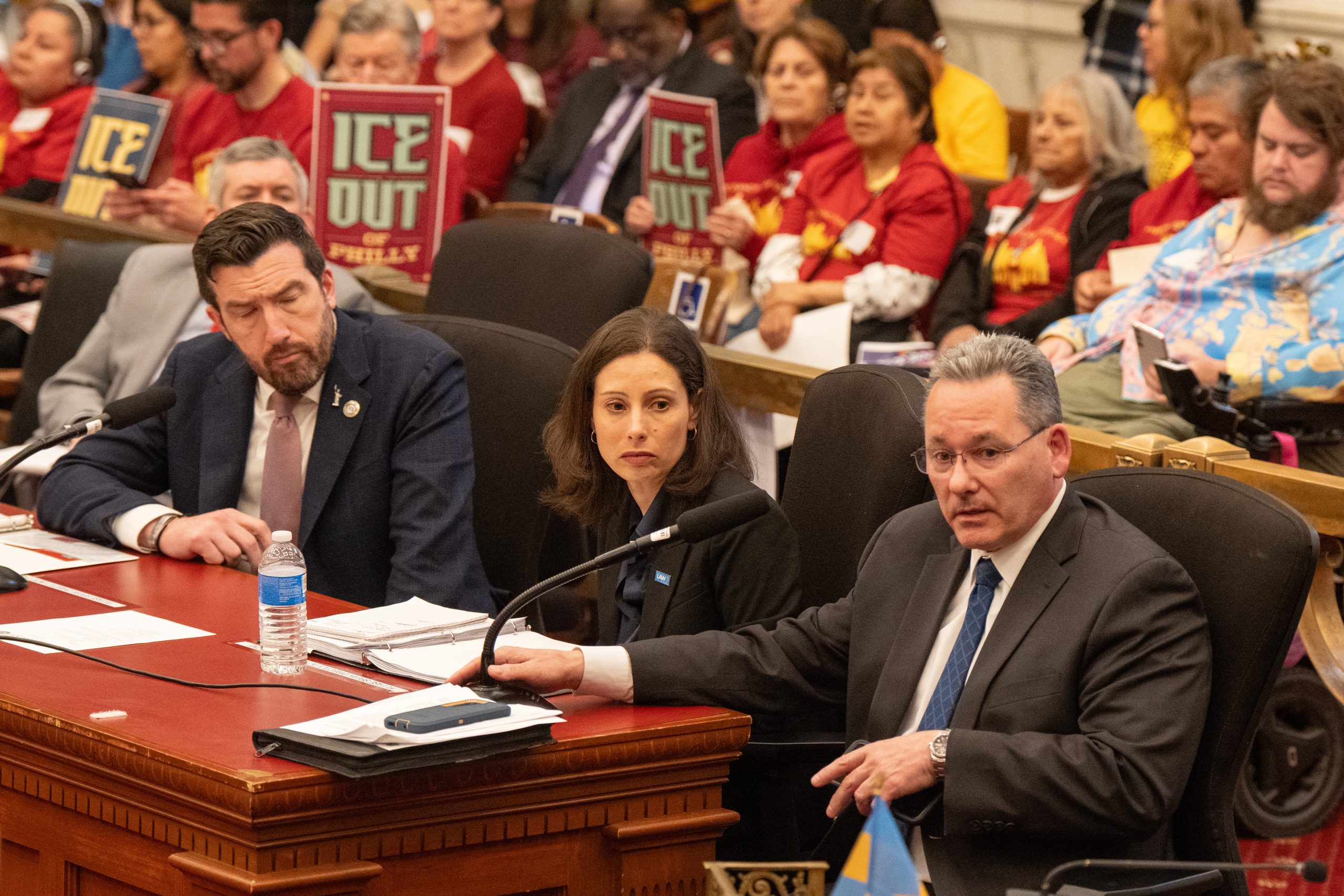
    (left to right) Charlie Ellison, Director of the Office of Immigrant Affairs, Renee Garcia, City Solicitor, Francis Healy, Deputy Police Commissioner, at the City Council hearing about ICE Out legislation, in Philadelphia City Council, Monday, April 13, 2026.Jessica Griffin / Staff Photographer

    Garcia’s departure was the second major leadership change Parker announced Tuesday. Managing Director Adam K. Thiel, who oversees much of the city’s day-to-day operations, is also resigning to take a job in the private sector. He will be replaced by Carlton Williams, a longtime city official who most recently led the Philadelphia Office of Clean and Green Initiatives.

    Taken together, the changes represent a significant shift in the top rungs of Philadelphia’s government. The managing director is in charge of implementing much of the mayor’s agenda, and the city solicitor is responsible for a host of matters, including overseeing litigation and advising both the mayor and City Council on legislation and policy.

    Parker also on Tuesday formalized her appointment of Ralph DiPietro, a deputy commissioner in the Philadelphia Department of Licenses and Inspections. The administration announced last month that DiPietro would replace Basil L. Merenda as commissioner.

    The mayor said Tuesday that she is “excited to welcome this next generation of leadership.”

  • Philadelphia Managing Director Adam Thiel resigns from Parker administration

    Philadelphia Managing Director Adam Thiel resigns from Parker administration

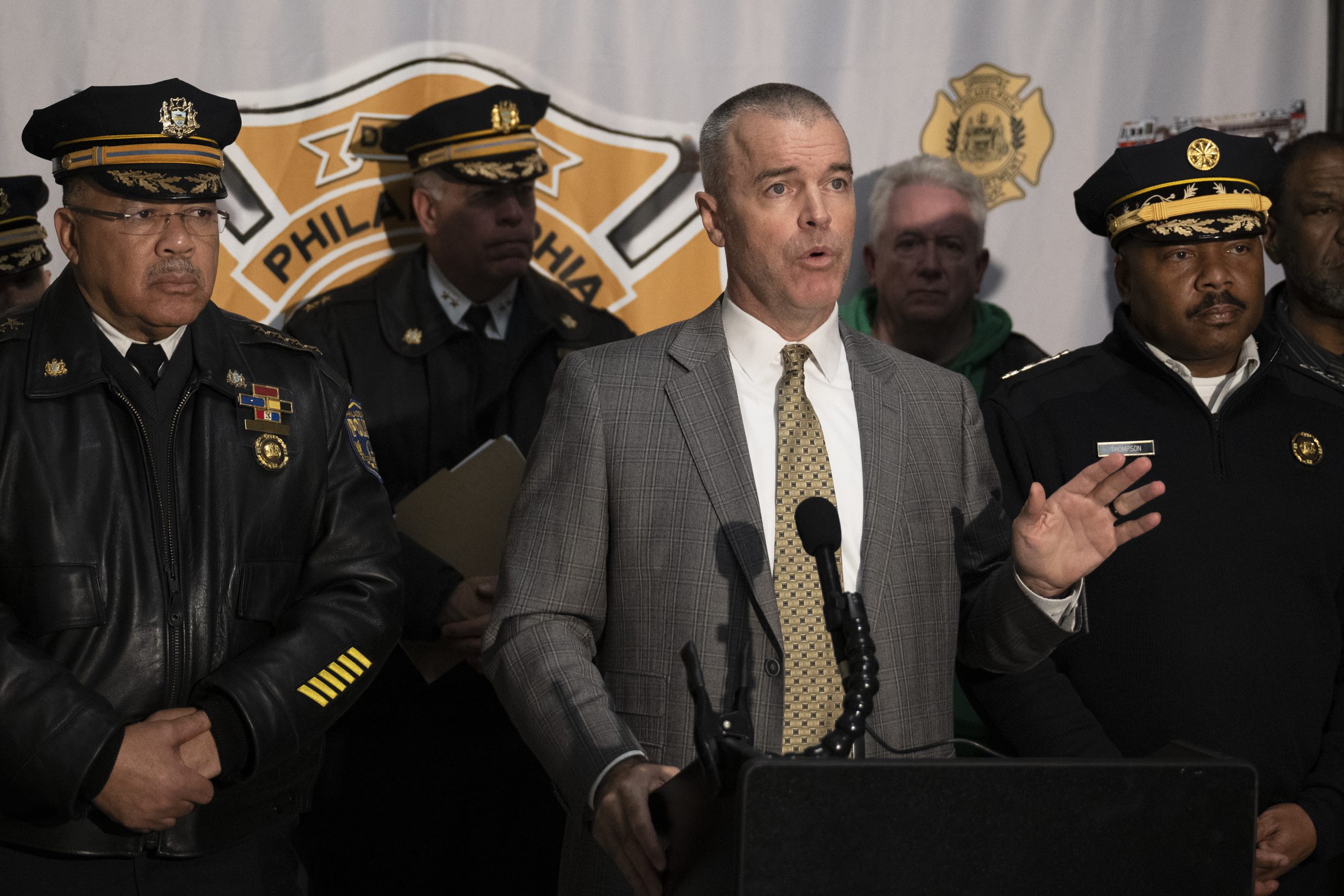
    Philadelphia Managing Director Adam K. Thiel, a top mayoral appointee who supervises many of the government’s day-to-day operations, is resigning from his job in Mayor Cherelle L. Parker’s administration, the mayor announced Tuesday.

    Parker said Thiel is leaving his city role to “reenter the private sector” after serving as managing director for about 2½ years.

    Thiel will be replaced by Carlton Williams, a longtime city official who currently leads the Philadelphia Office of Clean and Green Initiatives. Williams, 57, will assume oversight of a 550-person staff and a vast portfolio of city operations, including health agencies, homeless services, the streets department, parks and libraries, prisons, and the fire department.

    Parker praised Williams’ work implementing new initiatives such as twice-weekly trash collection, and she called him “the individual with all of the attributes the position requires.”

    “Whenever we’ve had a crisis of any kind in this city, he has been on my speed dial,” she said.

    The transition, Parker said, will take place over the next “four to six weeks.” It was not immediately clear who will lead the Philadelphia Office of Clean and Green Initiatives.

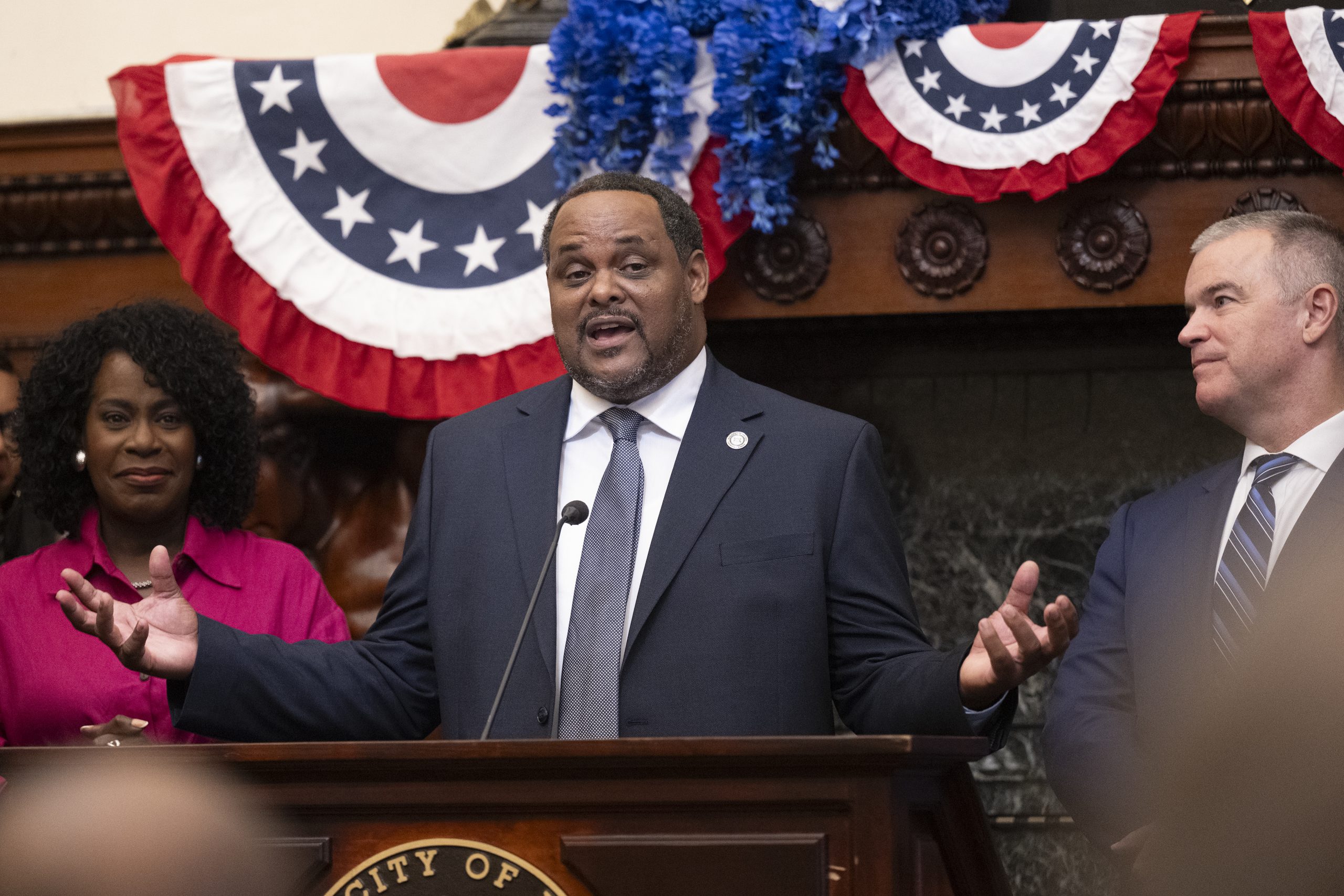
    New Philadelphia Managing Director, Carlton Williams speaks at the podium after being announced by Philadelphia Mayor Cherelle L. Parker, left, during a news conference at City Hall in Philadelphia on Tuesday, July 28, 2026.Jose F. Moreno / Staff Photographer

    Thiel, 54, has been the city’s managing director since Parker took office in January 2024. Prior to being appointed to the role, Thiel spent eight years as the city’s fire commissioner under former Mayor Jim Kenney.

    In the early days of Parker’s tenure, Thiel emerged as a key crisis manager, often flanking the mayor when she responded to emergencies. He was the face of the administration’s strategy in Kensington, where Parker campaigned on ending the sprawling open-air drug market that has persisted in the neighborhood for decades.

    His office also played a critical role in preparing for an array of major events that the city hosted this summer, including FIFA World Cup games and events related to the 250th anniversary of the nation’s founding.

    Details of Thiel’s new job were not immediately clear. He is a major in the Army Reserve, and he has worked as a consultant and an adjunct professor, in addition to his role as managing director. His city salary is $310,000, and last year, he made more than half a million dollars in additional income through his other jobs, according to his financial disclosure.

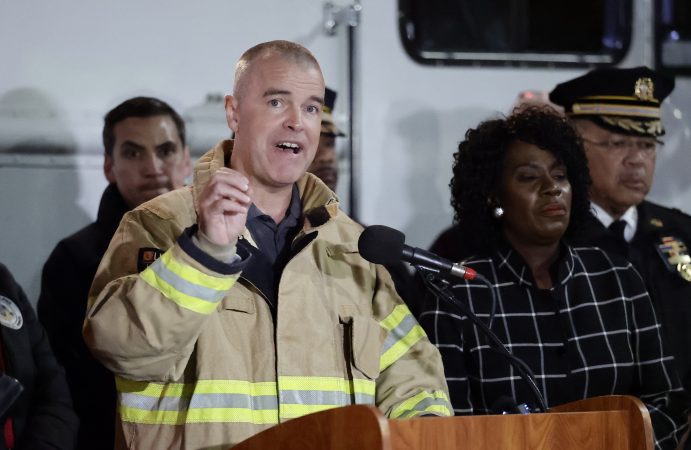
    Managing Director Adam Thiel, center, gives an update on the Northeast Philly plane crash, during a press conference on Tuesday Feb 4, 2025 at the Fire Administration Building in Philadelphia, Pa.Jose F. Moreno / Staff Photographer

    Since Thiel joined the Reserve in August 2024, he has been one of the administration’s least visible senior officials and was frequently on leave. He did not oversee the response to a January snowstorm that was the city’s worst in five years — despite emergency services falling under his purview — and parts of the Kensington strategy are now led by other offices.

    The Inquirer reported in February that Thiel was absent for a total of about five months last year. Of that, six weeks were for military leave — the maximum the city covers for employees — and an additional 13 weeks were for general paid leave, according to city records obtained by The Inquirer. A spokesperson for Thiel said he used most of that time off for military service.

    Thiel refused to discuss his role in the Army Reserve with The Inquirer. A spokesperson for the Army said Thiel is a major assigned to a civil affairs unit based in Staten Island, N.Y. Last year, the Army Reserve paid Thiel about $32,600, according to his financial disclosure paperwork.

    In addition to his jobs with the city and the Army, Thiel has worked on the side as a consultant. Last year, he earned $390,000 as president of Pantheon Global Strategies, an opaque company with little in the way of an online footprint. Thiel has in the past refused to discuss the business in detail.

    He also earned $120,000 last year from FACETS Consulting LLP, an Arizona-based firm that is publicly advertised as a fire safety consultancy. Thiel is a founding partner.

    Philly city managing director Adam Thiel in the bowels of the stadium during the France vs. Iraq 2026 FIFA World Cup Group 1 soccer match at Philadelphia Stadium on Monday, June 22, 2026.Elizabeth Robertson / Staff Photographer

    Thiel has said his consulting work takes fewer than 10 hours per week and did not interfere with his responsibilities as Philadelphia’s managing director. When The Inquirer first reported on Thiel’s consulting work in 2024, he would not disclose his clients but said he followed the city’s ethics guidelines related to conflicts of interest.

    Before coming to Philadelphia in 2016, Thiel worked in a variety of firefighting, disaster response, and emergency preparedness roles around the country, including as Virginia’s deputy secretary of public safety and homeland security.

    He is the third top official to leave Parker’s administration since she took office in January 2024. Former chief deputy mayors Aren Platt and Sinceré Harris, the architects of Parker’s mayoral campaign, each left their posts for jobs in politics outside government.

    In some administrations, the managing director has been the mayor’s clear No. 2, while other mayors have preferred for power to be concentrated among deputy mayors or other staffers in their office.

    Under Parker, chief of staff Tiffany W. Thurman is seen as the mayor’s top adviser and the central figure in her administration. Parker has called Thurman her “chief air traffic controller.”

    She has also placed the execution of much of her agenda on Williams’ shoulders. Earlier this year, he oversaw the city’s response to a major snowstorm, despite that work in the past falling squarely in the managing director’s scope.

    Mayor Cherelle L. Parker walks along Kensington Avenue with Adam Thiel, managing director of city, on Thursday, April 11, 2024. Mayor Parker took the El to attend an event in the Kensington neighborhood in Philadelphia.Heather Khalifa / Staff Photographer

    Still, Thiel oversaw a large team, and the leaders of more than 30 city agencies and offices reported to him.

    One of his major initiatives was coordinating the administration’s efforts to improve quality of life in Kensington. Thiel’s office worked to expand homeless shelter and recovery bed space throughout the city, and he led the development of the Riverview Wellness Village, a city-run recovery house in Northeast Philadelphia that dramatically grew the city’s capacity to house people with substance use disorder.

    Initially, Thiel absorbed scrutiny from community groups and, at times, members of City Council. Lawmakers grilled Thiel on the efforts in Kensington, and they occasionally criticized what they saw as a lack of details coming from the Parker administration about the plan.

    Despite those early hiccups, more than 200 people live at Riverview, which has been open to residents in recovery for more than a year.

    “I’m grateful for what you did,” Parker told Thiel on Tuesday. “And I’m grateful that you had thick skin.”

    And while the drug market in Kensington persists, there have been other markers of success in the neighborhood, including a plummeting shooting rate and a reduction in the number of people living on the street.

    Williams recently toured parts of Kensington alongside Parker and other administration officials to get a sense of the challenges ahead. He said Tuesday that his goal is to be accessible to all residents and to look at the delivery of city services “through the eyes of everyday residents.”

    “You just don’t take these jobs because of the glamour,” he said. “You take the job because you believe that you can make a change.”

    Staff writer Sean Collins Walsh contributed to this article.

  • More than 2,000 of N.J.’s ‘noncitizen voters’ could actually be citizens, Gov. Sherrill says

    More than 2,000 of N.J.’s ‘noncitizen voters’ could actually be citizens, Gov. Sherrill says

    About 2,000 New Jersey voters identified last week as noncitizens could actually be citizens after all, Gov. Mikie Sherrill said Tuesday, a week after her disclosure of a voter registration glitch put the state at the center of a heated national debate over election security.

    Sherrill announced last week that approximately 6,600 noncitizens had been registered to vote ahead of the 2024 election due to a software glitch with the New Jersey Motor Vehicle Commission’s automatic voter registration program. She said fewer than 400 of those people had voted and there is no evidence that they affected the results of any election. The finding came in the midst of a political fight over President Donald Trump’s claims of widespread voter fraud, including by noncitizens, and his aggressive push for an overhaul of the country’s election system.

    The first-term governor said Tuesday that the New Jersey Department of State’s Division of Elections has begun a process to remove more than 4,500 individuals who were registered because of the software error, but that the rest of the registrations will be referred to county election officials for further review “to ensure that any lawfully registered voters are not being disenfranchised.”

    “We are taking this extra step because our initial review indicates that a number of these individuals may be citizens,” she said in a statement. “That has been the case in other states where clerical and administrative voter registration errors have occurred, and we’re determined to get this right.”

    Her office announced the discovery a little more than one hour after celebrating New Jersey’s new John R. Lewis Voter Empowerment Act, which Sherrill signed July 2. Lewis was a civil rights leader who represented Georgia in Congress from 1987 until his death in 2020.

    The law, which is based on a federal proposal that former President Joe Biden unsuccessfully tried to pass, promotes equal opportunity to voting and voter outreach to communities that do not speak English proficiently, and prohibits intimidation, deception, violence, or restraint of voters or election workers.

    The law lays out a process for individuals who want to file a complaint over voting rights and requires public hearings for redistricting.

    If jurisdictions have a history of discrimination, the law requires approval from the attorney general before they can make changes to their election administration. It also gives the attorney general authority to enforce the law through litigation, investigations, and studies, and by representing the public in federal court.

    “Here in New Jersey, if your rights are violated, you have a right of action,” Sherrill said at Union Baptist Church in Trenton.

    Sherrill said New Jersey is the 10th state to enact the model, but the first to do so since an April Supreme Court ruling that weakened part of the Voting Rights Act as the court’s conservative majority ruled against a majority-Black district in Louisiana.

    Supporters of the bill said they had been advocating for it for four years in New Jersey.

    Sherrill’s Tuesday celebration at the church shows the governor is not shying away from the issue of voting rights even as the state becomes a talking point for Republicans who want enact new national restrictions — including requiring voters to provide proof of citizenship to register with documents like a birth certificate or passport.

    Sherrill opposes the national legislation, known as the SAVE America Act, which has been championed by Trump as a way to make elections more secure but which opponents warn could make it tougher to vote for millions of Americans.

    “Trump has only one concern: winning at any cost, and he’s willing to put the right to vote at risk,” Sherrill said Tuesday. “There’s no line he won’t cross, no rule he won’t break, no norm he won’t violate. But we will not stand idly by.”

    The former member of Congress will likely continue to have a role in the debate as Republicans ramp up their advocacy ahead of November’s midterm elections.

    U.S. Rep. Jeff Van Drew, a South Jersey Republican who was elected as a Democrat in 2018 before vowing his loyalty to Trump a year later, led a public letter with other House Republicans calling on Sherrill to answer a series of questions about the noncitizen voting issue. He questioned how she knows it was “just a software glitch and not a nefarious act.”

    Van Drew, who chairs the House Judiciary Subcommittee on Oversight, said he plans to hold hearings over the issue and is “absolutely exploring” the possibility of subpoenas, Politico reported.

    On Tuesday, Sherrill said Van Drew “has a very sordid history as far as elections go.” She said Van Drew’s campaign had hired a political operative who was a “known ballot harvester” — referring to Craig Callaway, who worked on Van Drew’s 2022 bid.

    Callaway, a former Atlantic City Council president, had previously served prison time for blackmail and bribes when Van Drew’s campaign hired him. In 2025 under former U.S. Attorney Alina Habba, Callaway pleaded guilty in connection with fraudulent mail-in ballots during the 2022 election, but Van Drew said he was not aware of any illegal activity and was not accused of wrongdoing.

    Sherrill said her administration hired the CSG law firm to conduct an independent investigation into the voting registration glitch. One of the firm’s main partners, Jeffrey Chiesa, served as attorney general under former Republican Gov. Chris Christie, who later appointed him to the Senate.

    “We have a bipartisan, independent investigation going on right now because we have nothing to hide,” Sherrill said.

  • Ex-Olympian charged with damaging Reflecting Pool sees ‘irregularities’ in grand jury proceedings

    Ex-Olympian charged with damaging Reflecting Pool sees ‘irregularities’ in grand jury proceedings

    WASHINGTON — A former Olympian charged with deliberately damaging the Lincoln Memorial Reflecting Pool is seeking access to all of the closed-door testimony that led to his indictment, pointing to “irregularities” in those grand jury proceedings.

    In a court filing Monday, David Hearn’s attorneys requested an order for the government to turn over a complete transcript of all grand jury proceedings. They also want prosecutors to disclose the legal instructions they gave to grand jurors about the elements of Hearn’s alleged crime.

    Hearn pleaded not guilty earlier this month to one felony count of property destruction and has a trial scheduled to start Sept. 28 in D.C. Superior Court. The charge, which carries a maximum prison sentence of 10 years upon conviction, accuses Hearn of causing at least $1,000 in damage to the pool.

    But his lawyers question whether prosecutors properly presented the grand jury with adequate evidence to support the amount of damage alleged in Hearn’s indictment. A National Park Service official testified that the pool already was damaged before Hearn allegedly touched it, couldn’t quantify any damage attributable to Hearn and said the same repairs would have been required regardless of his conduct, defense attorneys said.

    “The witness’s testimony established that the pool had substantial preexisting damage requiring repair before any alleged conduct by Mr. Hearn,” his lawyers wrote. “According to the witness, the pool was leaking more than one million gallons of water per week; its expansion joints had exceeded their service life; and the liner already contained a rip.”

    Hearn’s attorneys are basing those arguments on their limited review of grand jury testimony. They want court-ordered access to all the proceedings.

    A spokesperson for U.S. Attorney Jeanine Pirro’s office in Washington didn’t immediately respond to an email seeking comment on Hearn’s arguments.

    Hearn previously asked the court to dismiss the case, which stems from the troubled multimillion-dollar renovation project championed by President Donald Trump. His attorneys argued the government has failed to properly preserve important physical evidence from the Reflecting Pool.

    Trump, a Republican, has claimed that vandals have damaged the pool, but administration critics attribute the problems to shoddy repair work. During a speech Monday at General Motors in Michigan, Trump claimed a “sick” person cut the liner in the pool but said the attraction is receiving treatment.

    “It’s in the hospital now, but it’s going to get better very soon,” Trump said. “It’s almost ready to open.”

    Hearn and his supporters claim his prosecution is a politically motivated attempt by the Trump administration to deflect blame and scapegoat others.

    Hearn told The Associated Press he was detained by National Guard troops and U.S. Park Police for five hours after stopping by the pool during a bike ride on June 19. He said he reached in to examine the pool’s newly peeled coating and briefly touched a chunk attached to the side of the pool, but said he obeyed a park worker who told him to let go of it.

    Hearn, 67, of Bethesda, Maryland, competed in three Summer Olympics, earning his best finish, ninth, at the 1996 Atlanta Olympic Games, the U.S. Olympic and Paralympic Committee says on its website.

    At least three other people have been charged in the same court with misdemeanors for allegedly removing pieces of paint from the pool.