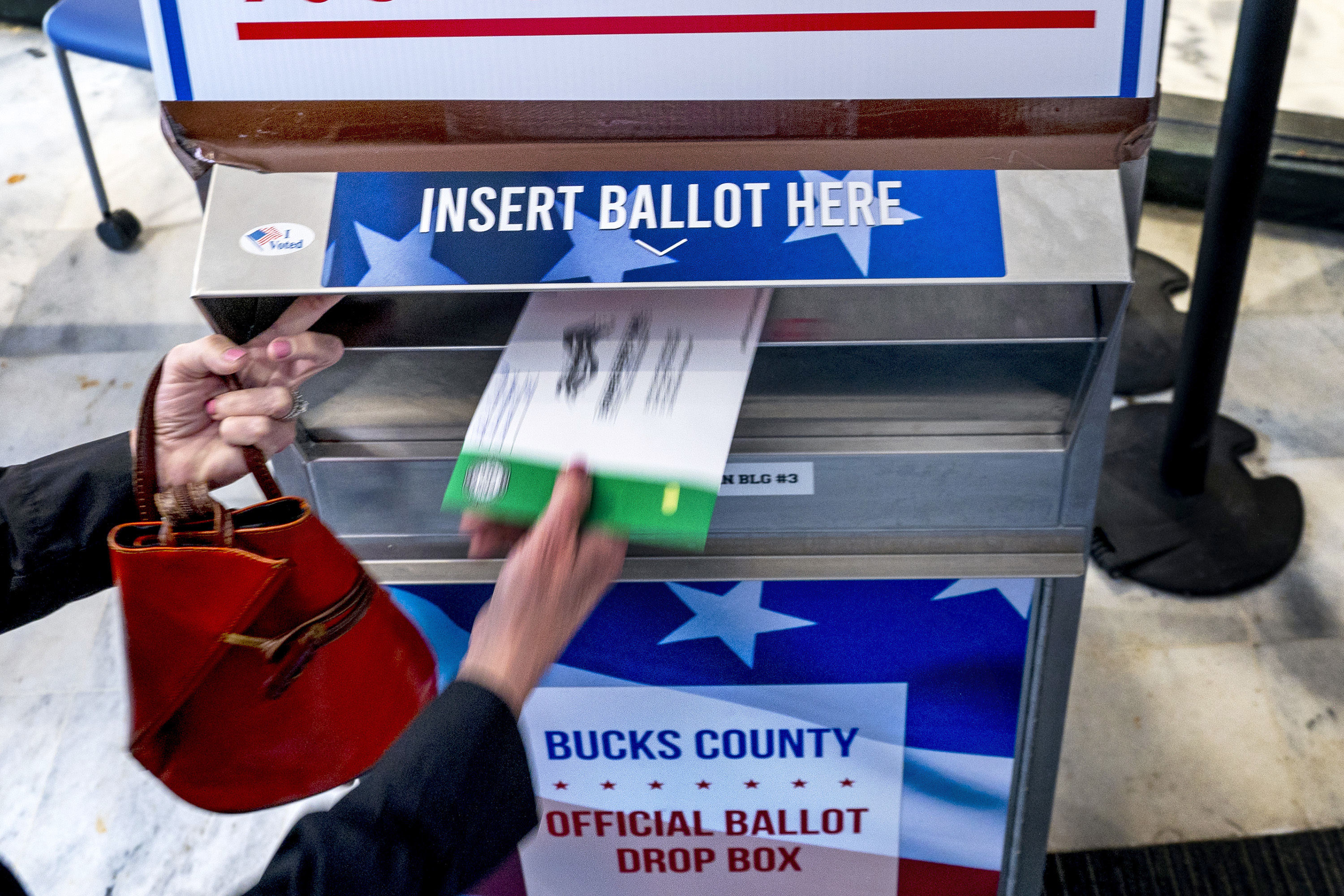
Category: Politics

  • Bucks and Montgomery Counties could determine which party gets control of the Pa. state Senate

    Bucks and Montgomery Counties could determine which party gets control of the Pa. state Senate

    Gov. Josh Shapiro’s hope for a Democratic state Senate likely hinges on the Philadelphia suburbs, where three swing districts could give his party the majority in the chamber for the first time in 33 years.

    And that includes two seats in purple Bucks County — forever the focal point of Pennsylvania’s political landscape — where Shapiro will be campaigning for downballot candidates in key races on Saturday at a canvass launch organized by Planned Parenthood’s state PAC.

    Democrats in the Keystone State have zeroed in on the GOP-held seats in the 6th District in Bucks County, the 16th in Bucks and Lehigh, and the 24th in Montgomery and Berks Counties as three of the districts they’re hoping to flip to create a Democratic trifecta in Harrisburg with a possible blue wave in November.

    The competitive races in Bucks and Montgomery Counties are unfolding ahead of this November’s midterm elections when Pennsylvania will also be in the spotlight for Shapiro’s reelection bid and four congressional contests that could determine party control of the U.S. House.

    Like most Democrats across the country, Eileen Hartnett Albillar in the 6th District, Mark Pinsley in the 16th District, and Chris Thomas in the 24th are centering their pitch to voters around affordability as Pennsylvanians’ signal their overwhelming disapproval of President Donald Trump’s handling of economic issues and gas prices.

    “Individual candidates matter, campaigns matter … but I do think it’s pretty clear that all these elections, to one extent or another, wind up being a referendum on President Donald Trump, and I think that puts Democrats in a very strong position,” said State Sen. Santarsiero, the chair of Bucks County’s Democratic Party. Santarsiero is also running for reelection this year.

    Republicans currently hold 27 seats in the 50-member state Senate. Democrats would need to flip at least two seats and hold the governor’s office to take control with the lieutenant governor’s tie-breaking vote.

    A Democratic trifecta in Harrisburg — if the party maintains its House majority and flips the Senate — would allow Shapiro in a second term to usher through a minimum wage increase and more transportation funding among other priorities that have been blocked by the GOP Senate.

    But Democratic candidates will have to win over independent and even some Republican voters to prevail in the swing districts against GOP incumbent State Sens. Frank Farry in the 6th, Jarrett Coleman in the 16th, and Tracy Pennycuick in the 24th. The GOP has a registration advantage in all three districts, according to state data.

    Farry, Coleman, and Pennycuick did not respond to requests for an interview, but the state party projected confidence about their ability to hold their seats.

    “Maintaining the majority in the Senate is a top priority for Republicans in Pennsylvania,” said James Markley, executive director of the PA GOP.

    He also praised Farry, Pennycuick, and Coleman for their work to lower costs and improve the state’s education system.

    “When it comes to majorities in the State House or the State Senate, every seat matters,” he said.

    Here’s what to watch.
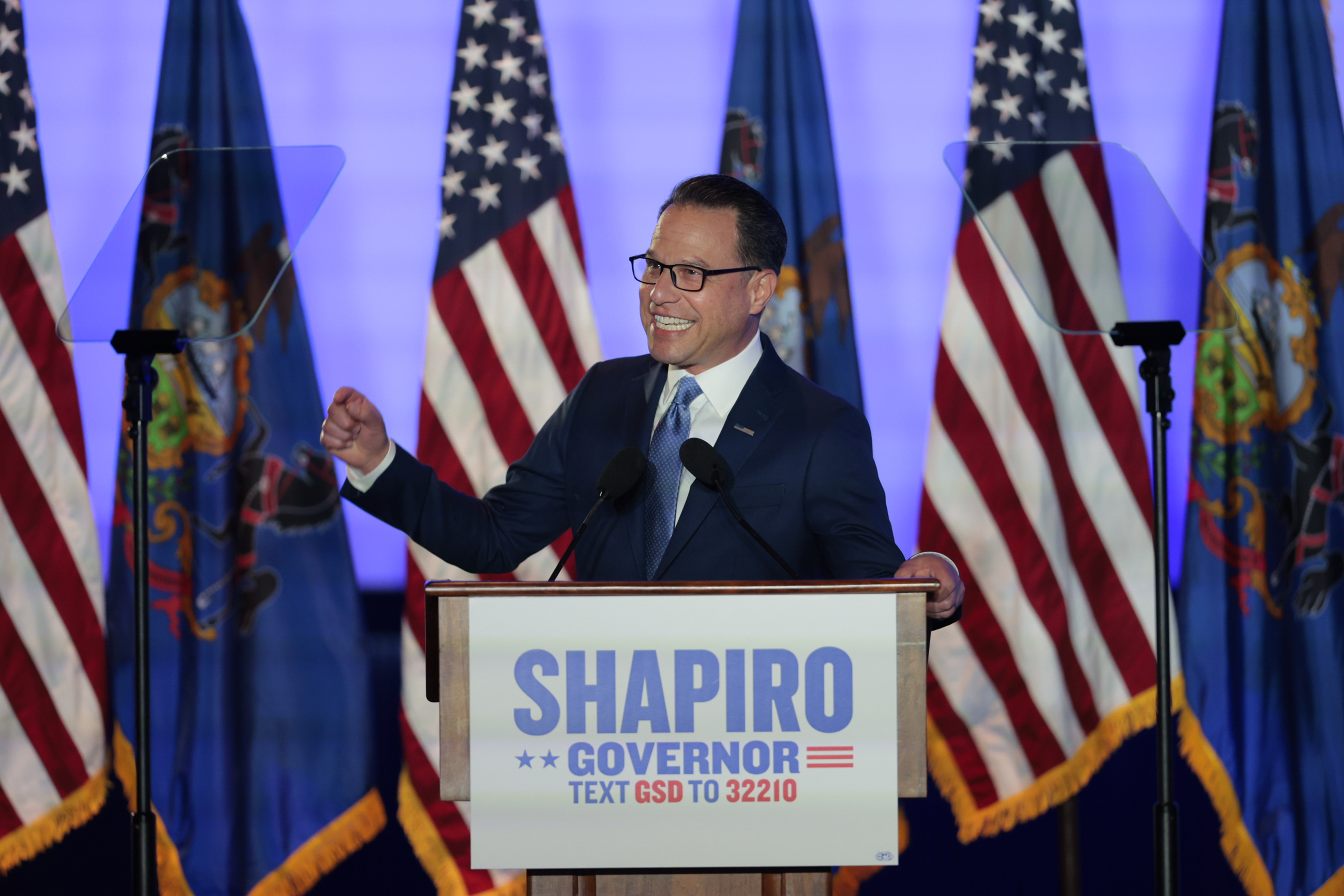
    Gov. Josh Shapiro addresses supporters at a primary night part in Warminster on Tuesday, May 19, 2026Steven M. Falk / For The Inquirer

    ‘You don’t take for granted anything in Bucks County’

    Bucks County’s importance ahead of November has been clear for months.

    In Warminster last May, Shapiro held a primary night party at a former space centrifuge where he promoted his reelection campaign and a slew of downballot candidates. There, Hartnett Albillar, who is also the county’s clerk of courts and a social worker by trade, declared: “The path to flipping the Senate runs right through Bucks County.”

    As she continues knocking on doors and courting voters in the 6th District, which includes most of the middle of the county, that reality could not be more obvious. But, Hartnett Albillar said, despite Shapiro’s support (he has endorsed all three candidates) and a blue wave in the forecast, she’s not thinking of her election as a shoo-in.

    “We know that you don’t take for granted anything in Bucks County,” she said in an interview last month.

    That’s because the suburb is notorious for split-ticket voting, she said.

    “Democrats have won here in other races, but I believe you have to make your case to voters individually,” Hartnett Albillar said, adding that voters in her district don’t look at party labels.

    It’s a dynamic that has, for example, allowed GOP U.S. Rep. Brian Fitzpatrick to maintain his congressional seat even in years Democrats do well — like in 2022 when Shapiro won the county by nearly 20 points.

    Pinsley is trying to make that argument in the Upper Bucks County portion of the 16th where voters are less familiar with the Lehigh County controller and where Republicans have a roughly 22,000 voter registration advantage — the largest gap of the three districts.

    Eileen Hartnett Albillar (center) is challenging State Sen. Frank Farry in Bucks County’s 6th District.Hartnett Albillar Campaign

    This race is also a rematch for Pinsley after he lost by 8 points against Coleman in 2022.

    But the Democrat was given another chance by voters this year after he succeeded in a heated primary without the Bucks County Democratic Committee’s backing.

    Now that he has the party’s support, he says it’s helped him reach a whole new circle of people for his events, including “Pastries with Pinsley,” a regular meet-and-greet at various coffeehouses in the district, but especially in Bucks. This weekend, he’s headed to the So Fresh So Green Cafe in Perkasie.

    “60% of the vote is in Lehigh County, and 40% of the vote is from Bucks County,” Pinsley said in an interview last month. “We need Bucks. We need Bucks to win. You’re not going to win in just Lehigh.”

    Across county lines into Montgomery County — Shapiro’s home county, which has a reputation for being deep blue — also lies another swing district that Democrats are investing in as Thomas, a volunteer firefighter and community organizer, hopes to bring Pennycuick’s tenure in the state Senate to a close.

    Until now, the 24th District, a hodge-podge of suburban and rural communities in Montco and Berks County that Thomas calls “all-encompassing of Pennsylvania” has “always been just out of reach in terms of how the district was drawn.”

    But this year, with a combination of voters’ frustrations and Shapiro on the ballot, Thomas believes “a lot of the stars are aligning.”

    “There’s a slim path to the majority without this district,” he said.

    But Republicans won’t be giving up these suburban swing districts so easily.

    Michael Straw, a spokesperson for the Pennsylvania Senate Republican Campaign Committee, said the GOP is “ready to compete for every vote in Bucks County.”

    Straw said in a statement that candidates will highlight the bipartisan bills that lawmakers have introduced and have since been signed into law, including Farry’s legislation to reduce cost barriers for breast cancer screenings and Coleman’s bill to address school safety and increase parental transparency.

    “We are making these legislative accomplishments known to voters across the political spectrum,” Straw said.

    Both parties are betting on affordability

    Heading into November, both Democrats and Republicans are trying to make the case to voters in these key swing districts that they are the party of affordability.

    Straw said that Republicans view these elections as an opportunity to emphasize affordability and fiscal responsibility to put “an important check on the Democrats overspending.”

    “Senate Republicans have helped to prevent wasteful spending, stop the Democrats’ electricity tax that would have cost Pennsylvanians more, and have supported reducing taxes on working families,” Straw said. “PA Senate Republicans have made affordability the priority while Democrats have repeatedly stood in the way.”
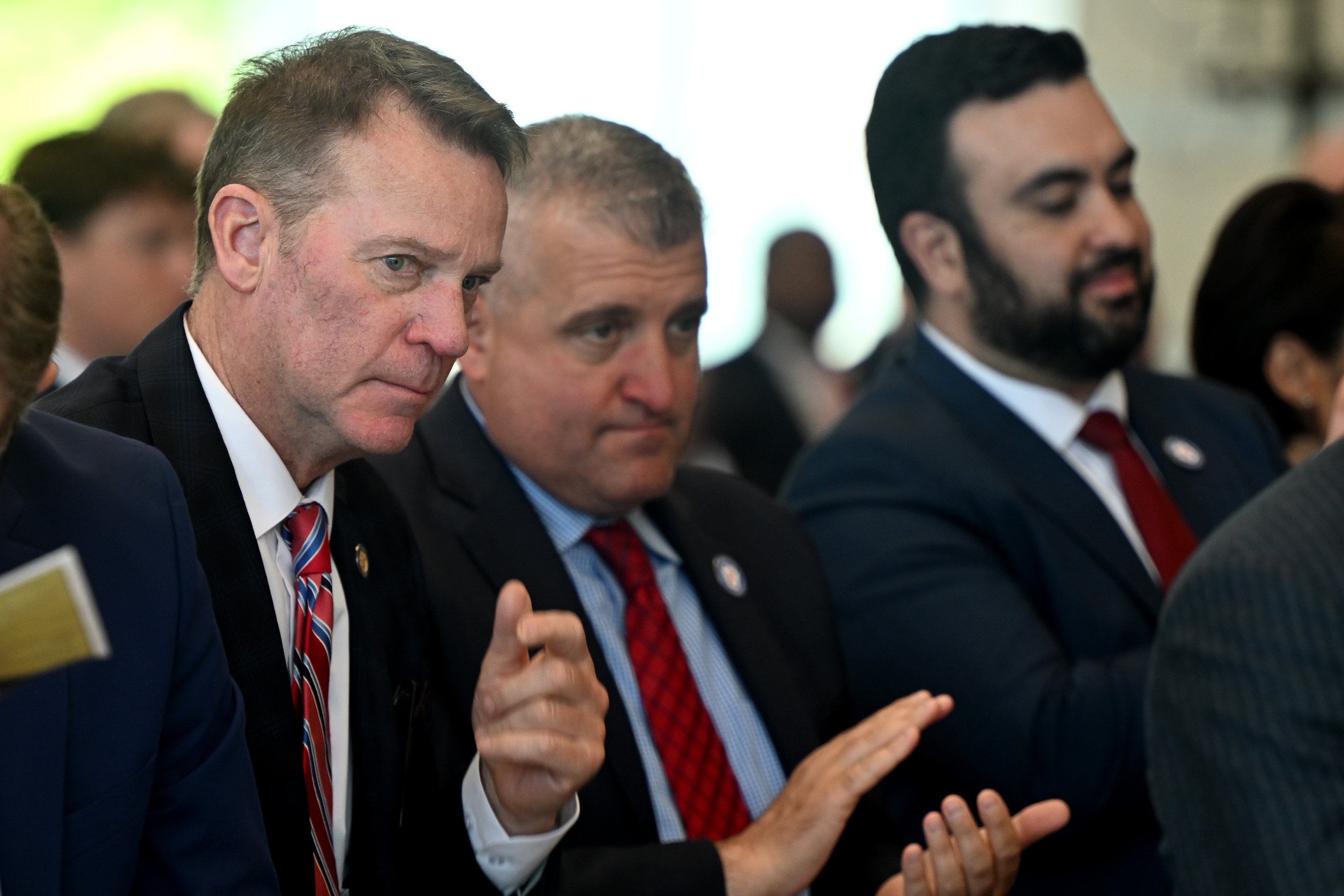
    Bucks County GOP State Sen. Frank Farry (center) during a ceremonial meeting of the Pennsylvania Senate at the National Constitution Center May 5, 2026.Tom Gralish / Staff Photographer

    And for Democrats, that means addressing voter frustrations that have trickled down from federal policies.

    Trump — who has urged voters to think of him as being on ballot — is getting worsening marks on the economy from Pennsylvania voters. The president’s own voters in 2024 are also dissatisfied with his handling of gas prices, polling shows.

    “They’re not happy about the Iran war. They’re not happy about the cost of gas. There are other costs that are going up, and many of them do blame the president, and all of these races have been federalized in many ways,” Pinsley said.

    In response to the rising costs of living, affordability has taken up most of the oxygen in Democrats’ messaging as the party shifts away from issues that have been prevalent in previous campaigns, such as abortion.

    With a focus on prices, the three swing district candidates have not had to switch up their stump speech even when chatting with Republican or independent voters that they’ll need to win over to be successful in November.

    Hartnett Albillar said that all voters are simply looking for a “functional” and competent government.

    Other key issues popping up in these races include funding for SEPTA and data centers; the latter of which has sparked contentious ads, including one by Hartnett Albillar’s campaign in the 6th District that provoked Farry’s campaign to file a cease-and-desist.

    “I’ve heard many times that folks are not looking at whether there’s a ‘D’ or an ‘R’ next to the name,” she said. “They’re looking at the person who will be able to bring change and bring fresh ideas because the current system is not working for us. Costs are way too high, and they want someone who’s going to do the work.”
  • As violence falls, crime isn’t paying as a Republican line of attack

    As violence falls, crime isn’t paying as a Republican line of attack

    A central line of attack in the waning weeks of the 2026 midterms comes straight out of the tried and true Republican playbook: Democrats are soft on crime.

    But as crime rates plummet across the country, it’s been a hard case to make. In Michigan and Georgia, North Carolina and Texas, Republicans have struggled to pull voters back to the violence and disorder that followed the onset of COVID-19.

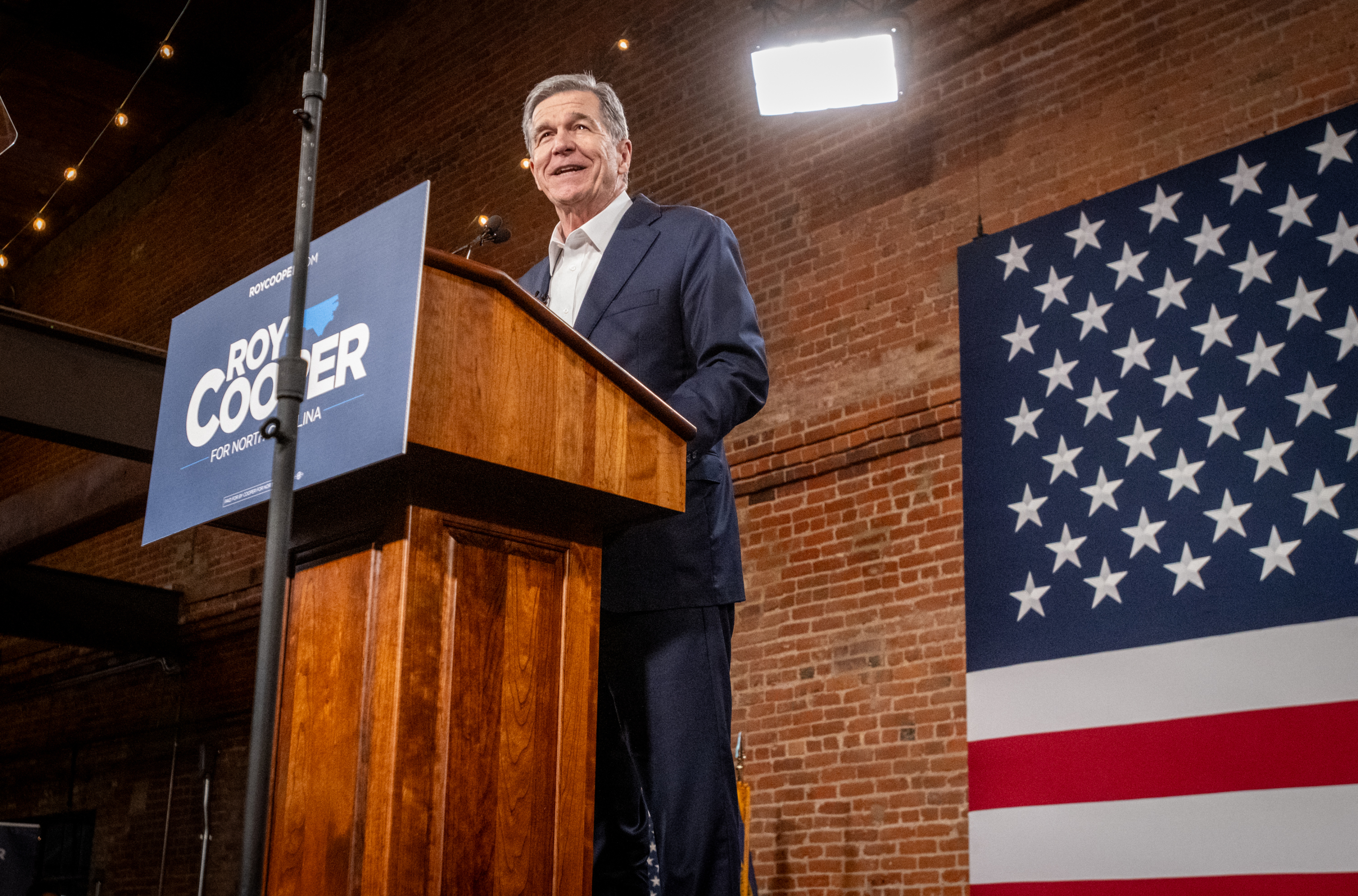
    Nowhere is that clearer than in the Senate race in North Carolina. One Republican ad there tried to blame Roy Cooper, the former governor running for Senate, for a murder that took place in the wrong Carolina, the one to the south. Another asserted that he had given the man who fatally stabbed a Ukrainian woman on a light rail train in Charlotte, N.C., last year an early release from prison; he did not.

    A third presented the story of a man whose son had been murdered, implying that Cooper’s policies were responsible. After it was released, the father, a Democrat, complained that he had been “swindled, hoodwinked” into making a political endorsement when he had been told the topic was gun violence.

    Republicans have soldiered on, spending $18.5 million in North Carolina on ads about lawlessness and murder. But polls show Cooper, a former governor and attorney general, consistently leading his Republican opponent, Michael Whatley.

    “It really does not seem to be having much traction at this point, and the folks who are long schooled and well versed in North Carolina politics have wondered why Michael Whatley didn’t take a different approach,” said Mitch Kokai, a senior political analyst at the John Locke Foundation, a free-market think tank based in Raleigh, N.C..

    For Republicans, that different approach is proving elusive. The chaos at the border — a reliable political target since 2018 — has calmed. State laws barring transgender students in athletics have taken some of the sting out of that issue as well. The war on Iran is unpopular. Voters say they are most concerned about the high costs of everyday necessities.

    And crime — usually a winning issue for Republicans, who are generally more trusted to keep law and order — is seeing a staggering drop. The downward trend that began during the Biden administration has only accelerated. One analysis found that the murder rate last year was the lowest it has been since 1900.

    “This is the first election really in my lifetime where I have felt that it’s not an issue,” said Holly Harris, a veteran Republican strategist who is now the executive vice president of advocacy at Arnold Ventures, a philanthropy with a focus on criminal justice. “I remember when I was at the Republican Party years ago, every ad that we wrote was focused on crime. And it’s just not hitting the same mark.”

    The good news on crime has posed a challenge for Republicans. How do you take credit for the peace while simultaneously blaming the other side for what President Donald Trump has called “American carnage?” At a recent campaign rally in Gastonia, N.C., Trump pivoted from blaming Cooper for the “blood-soaked killing fields” of North Carolina to hailing his own record within half an hour.

    “Last year, we achieved the largest drop in violent crime ever recorded,” he said.

    In The Charlotte Observer, Andrew Dunn, a conservative political commentator, wrote that the president’s description of the state as “one of the most violent and one of the worst in the whole nation” would backfire, even with those who agreed that Cooper had a poor record on crime.

    “Who is buying that description of North Carolina?” Dunn asked.

    Violent crime in North Carolina this year is down 22% compared with the same period in 2024, outpacing the national decline of 14%, according to data collected by the Crime Index. Property crime is down 18% compared with 2024, about the same rate as the national decline.

    Republicans have spent $105 million on ads about crime, more than a quarter of total spending, compared with $35.5 million spent by Democrats, according to an analysis of spending on federal races in the general election by AdImpact, a media tracking firm.

    In the previous two election cycles, attempts to tie all Democrats to far-left positions like defunding the police and abolishing prisons proved effective, in part because crime had spiked to alarming highs right after the pandemic and the police brutality protests in 2020.

    Such attacks were often met with an uncomfortable silence, and Republicans were able to connect crime to a border that appeared to be exceptionally porous. Candidates repeatedly raised examples of violence committed by immigrants without permanent legal status and rising rates of fentanyl overdoses.

    Those links have broken as drug overdoses drop, the border grows quiet, and even some Republican lawmakers say the president’s immigration crackdown has gone too far.

    In the current climate, soft-on-crime attacks risk looking out of tune with the electorate’s deeper concerns, “especially when voters feel that they’re getting robbed at the gas station every day,” said Jim Kessler, the executive director of Third Way, a centrist Democratic organization in Washington.

    Cooper, who was first elected to statewide office 26 years ago, as attorney general, has noted that many of Whatley’s accusations were found to be false and has defended his record. A campaign spokesperson said, “Roy spent his career putting rapists and violent criminals behind bars and signing tough-on-crime laws.”

    “Most people look at Cooper, they don’t see somebody that is soft on crime,” said Carter Wrenn, a veteran Republican political consultant.

    But for candidates without Cooper’s profile, strategists have counseled against trying to out-tough Republicans on crime. “If you’re going to be Republican lite, then people are going to pick Republicans,” said Celinda Lake, a longtime Democratic strategist.

    The Vera Institute, a nonprofit that works to reduce mass incarceration and has used focus groups to test messaging on criminal justice policies, has offered “serious about safety” as a rival slogan. The idea was initially met with some mockery — one social media post said it sounded like a college sex talk — but candidates have increasingly adopted safety as a buzzword, with a new set of talking points to go with it.

    James Talarico in Texas and Dr. Abdul El-Sayed in Michigan, both Democratic candidates for the Senate, talk about recruiting and training police officers and explicitly link public safety to increased spending on housing, education, mental health care, and drug treatment.

    El-Sayed, the former health director for Wayne County, Mich., has gone from praising the “defund the police” movement for wanting to devote more resources to fighting poverty, to offering “a vision for public safety that I think all of us can agree with.”

    “We want to know that we can get home safely,” he told CNN in June. “We don’t want to worry about being the victim of somebody’s violence, whether it’s from a neighbor or the state itself.”

    Harris, the veteran GOP strategist, said, “Democrats are adopting some of the Republican talking points, to be candid.” Both sides are retreating from more extreme positions, she said, creating an opportunity for lawmakers to return to more nuanced, evidence-based policies. She characterized tough-on-crime attacks as “outliers.”

    This week, El-Sayed’s Republican opponent, Mike Rogers, who has touted his experience as a former FBI agent, dropped his own crime attack ad. “It’s Abdul El-Sayed who would surrender our borders to the drug cartels,” a father whose son died as a result of opioid use says.

    But Democrats are also playing offense this year, with ammunition from the Jeffrey Epstein scandal. Republicans, they charge, are protecting child predators, and Trump’s pardons of drug traffickers, fraudsters, and the rioters of Jan. 6, 2021, have been grist for their own soft-on-crime attacks.

    In Nebraska a political action committee supporting Dan Osborn, an independent, unveiled an ad this week attacking the Republican incumbent, Sen. Pete Ricketts, for pardoning a man who had raped a woman three decades earlier.

    Talarico has accused his Republican opponent, Ken Paxton, Texas’ attorney general, of an “Epstein-style sweetheart deal” that initially would have allowed a child molester to spend just one day in jail. Paxton’s office has said that the deal, which required the man to surrender his law license for five years but did not require him to register as a sex offender, was reached because the victim was unwilling to testify.

    In North Carolina, skirmishes over “pedophile protectors” have proliferated, spurring lengthy examinations of the sex crime rap sheets of pastors, board presidents, and party operatives.

    In July, a Democratic PAC spent more than $2 million on ads about Harvey Lee West Jr., a child sex offender who did time in prison and then ascended the ranks of the state Republican Party, winning influence and committee appointments while Whatley was the chair.

    Whatley’s campaign spokesperson said that the candidate had never hired West for a paid position. But the ads accuse Whatley of “putting politics over safety.”

    FILE — Michael Whatley, Republican’s candidate for a U.S. Senate seat in North Carolina, joins President Donald Trump on stage during a campaign rally at the airport in Gastonia, N.C., Sept. 16, 2026. Across the country, and especially in the North Carolina Senate race, Republicans have charged opponents with being soft on crime, even as President Trump brags over plunging crime rates. (Kenny Holston/The New York Times)KENNY HOLSTON
  • Senate committee advances Nicole Saphier’s nomination for surgeon general

    Senate committee advances Nicole Saphier’s nomination for surgeon general

    WASHINGTON — Nicole Saphier, President Donald Trump‘s third nominee for surgeon general, moved a step closer to confirmation after a Senate committee voted to advance her nomination on Wednesday.

    Saphier, a radiologist and former Fox News Channel contributor, was advanced out of the Senate Committee on Health, Education, Labor and Pensions on a 12-to-11 vote to serve as surgeon general after she was grilled at her confirmation hearing earlier this month about her stance on childhood vaccines.

    She expressed support for vaccines and told lawmakers she didn’t believe they cause autism. The Trump administration has sought to revisit claims about a link between vaccines and autism, although widespread scientific consensus and decades of studies have firmly concluded there is none.

    Timothy Westlake, who was nominated to serve as assistant secretary for mental health and substance use at the Department of Health and Human Services was also advanced out of committee on the same en bloc vote.

    It was not immediately clear when the officials would face a full Senate vote for their confirmation but they are expected to be approved.

    During her confirmation hearing, Republican Sen. Bill Cassidy pressed Saphier to declare whether she believed there was a link between vaccines and autism. Saphier responded that she does “not believe childhood vaccines cause autism,” adding that “the MMR vaccine is our greatest tool for combating measles,” in response to a question by Cassidy over whether parents should give children that shot.

    MMR stands for measles, mumps and rubella, and the president recently called for the shots to be spaced out, against the guidance of medical groups.

    The surgeon general position carries limited policymaking power but serves as a loud megaphone as the nation’s top communicator to Americans on public health issues.

    Cassidy, who led the inquiry into Saphier’s views on vaccines, ultimately voted in support of her nomination.

    Sen. Bernie Sanders, the ranking member of the Senate HELP committee, said ahead of Saphier’s vote that he would vote down her nomination because in part Saphier “has questioned the need for the hepatitis B vaccine at birth, when the data science has been clear.”

    “We need a surgeon general who will tell the truth about vaccines, not someone who misleads the public,” Sanders said. At her confirmation hearing, Saphier said the universal birth dose of hepatitis B was safe and effective.

    Chris Klomp, who was nominated to serve as deputy secretary of the Department of Health and Human Services, was advanced out of the Senate Finance Committee last week on a 15 to 12 vote. He was questioned during the same hearing as Saphier about his duties associated with the role as the current chief counselor of the Department of Health and Human Services under the leadership of Health Secretary Robert F. Kennedy Jr. as well as about his vaccine stance.

    In protesting Klomp’s nomination at the Senate Finance Committee, Sen. Ron Wyden said Klomp “tried to create the impression that he will be the adult in the room on vaccines. Yet, as we sit here today, the vaccine chaos that we’ve come to expect from Robert Kennedy’s HHS continues.”

  • Camden County voters will decide whether to pay more taxes to prevent sewage from entering the Cooper River

    Camden County voters will decide whether to pay more taxes to prevent sewage from entering the Cooper River

    The temperature was in the low 70s with a light breeze and clear skies. It was perfect boating weather. A group of students from Philadelphia’s Maritime Academy were excited to paddle out onto the Cooper River.

    But Don Baugh from the Upstream Alliance had to cancel the trip. The water was still too dirty from the weekend’s heavy rain, which can cause sewage to spit out into the river from old pipes in Camden.

    “Our goal is that we don’t have to cancel at all … we’d be able to say anybody can recreate, play, swim, on this water 365 days of the year, whether it rained or not,” Baugh said from his motorboat on Tuesday, surrounded by greenery and mud-colored water.

    That is why Baugh hopes voters will support a ballot referendum in Camden County that would increase the open space tax by one cent per $100 of property owned. That one-cent increase would go toward the county’s ambitious plan to rehabilitate its sewers and waterways through a multifaceted initiative that is slated to cost about $400 million across the next 10 years. It has become more urgent, county officials say, as powerful storms and flooding become more commonplace due to climate change.

    The nonprofit Upstream Alliance provides free kayaking to the public, but the organization has had to cancel about 20% of its programming due to concerns about water cleanliness, Baugh said. His rule of thumb is to wait 48 hours after half an inch of rain falls before allowing people in the water, so the bacteria from the sewage can die. But even that was not enough time following the weekend’s storm.

    Put frankly, the water still looked “yucky,” Baugh said, so he was not going to expose people to it.

    Olivia Liu with Upstream Alliance on the Cooper River in Camden County on Tuesday. A tax increase ballot referendum would fund projects like sewer rehabilitations aimed at improving the county’s waterways.Tom Gralish / Staff Photographer

    What is the referendum?

    Camden County voters have already been receiving their mail ballots for the Nov. 3 election. One of the decisions they face is whether to raise the county’s open space tax by one cent — bringing it to $0.03 per $100 of assessed property value. If it passes, the tax will still be one cent lower than in neighboring Burlington and Gloucester Counties.

    This means that someone with property assessed at $500,000 would pay $150 a year toward open space, up from $100 at the current $0.02 rate.

    The county’s open space tax is used to preserve parks, farmland, and historic sites. But the one-cent increase would be dedicated to the county’s $400 million clean water plan, which includes sewer repairs along the Cooper River, green infrastructure, dredging in local lakes, and recreation programs.

    “The county is making a very bold step doing this now, and, frankly, nobody wants a tax, right? But everybody wants a higher quality of life,” Baugh said. “Everybody wants a safe and clean environment today and for tomorrow.”

    Scott Schreiber, the executive director of the Camden County Municipal Utilities Authority (CCMUA) — the entity overseeing the project — believes the county could raise about $7 million from the tax increase, which could result in approximately $100 million worth of project funding through the New Jersey Water Bank, which offers the entity very low interest rates and principal forgiveness.

    The existing user rate that residents pay to the CCMUA will go toward the projects, Schreiber said, and the county will also seek out funds from the state and federal governments, as well as philanthropies.

    “It’s not one entity that can fix this,” Schreiber said. “This is going to take a combination of local government, state, federal government, advocacy groups, and the regular public to make this work. Without that combination of people and funding, it’s going to be really impossible to fix any of this stuff.”

    Here is what the $400 million effort, which the tax increase would go toward funding, entails.

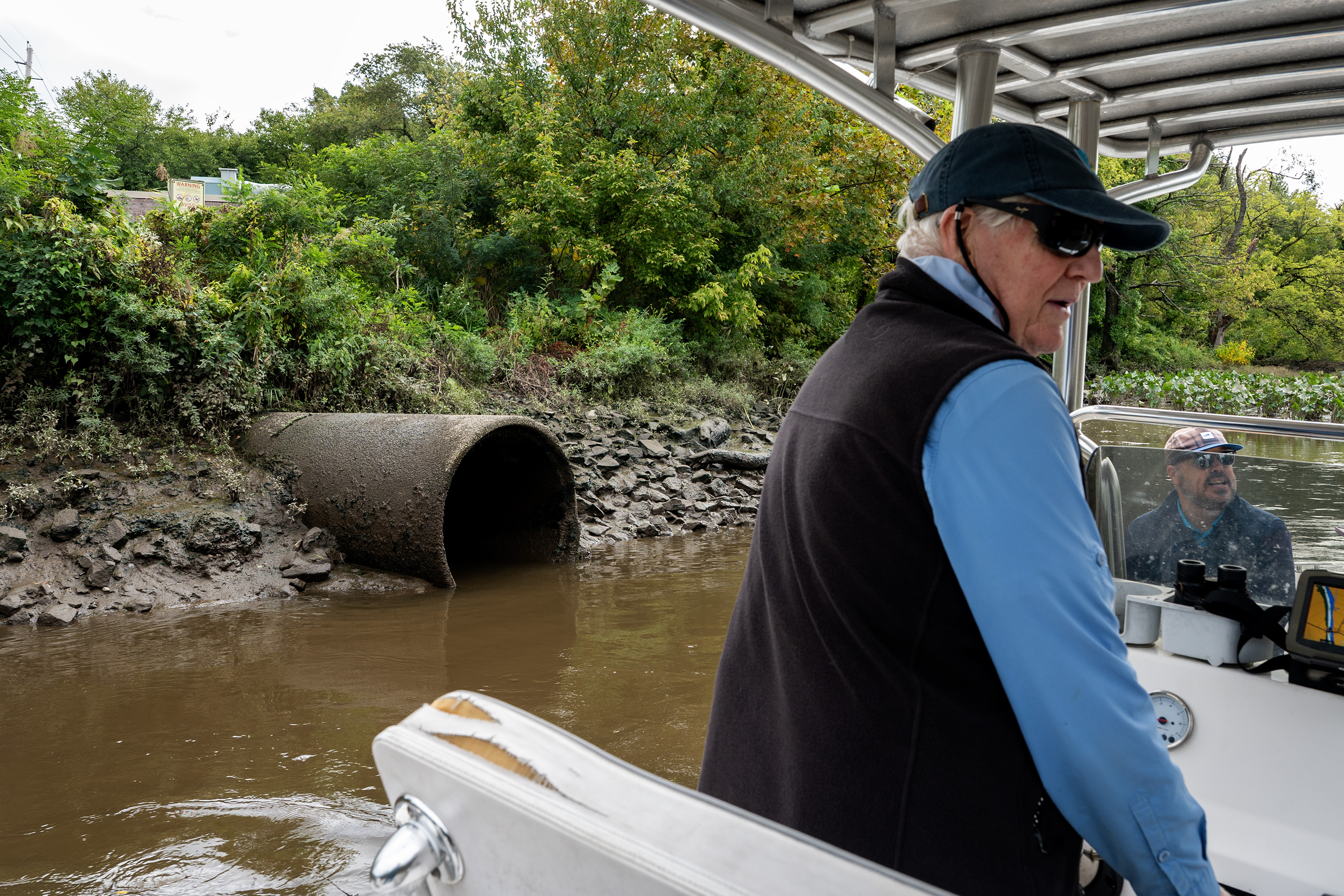
    A combined sewer overflow site during low tide on Tuesday. This 60-inch discharge pipe spits out untreated wastewater and stormwater during heavy rain events, which flow directly into the back channel of the Delaware River.Tom Gralish / Staff Photographer

    The sewer problem

    The cities of Camden and Gloucester have an antiquated sewage system that combines stormwater and sewage in the same pipes. The pipes are designed to carry the combined liquid to the wastewater treatment plant, but when there is heavy rain, they can overflow and the contaminated water spits into the Cooper and Delaware Rivers. The overflow from the combined pipes can cause flooding — and then residents are subjected to sewage-infested waters in their streets and homes.

    “These are the old stone pipes that were built before the current technology,” Camden County Commissioner Jeffrey Nash said.

    “But as both cities grew, and the storms have become more violent, and rain has become more excessive … flooding has been a large problem,” he added.

    On top of the risks to humans, the nutrients from the human waste are harmful for aquatic life.

    There are 30 combined sewage overflow spots in the two cities, Schreiber said, that dump waste into the river when there is heavy rain and the system cannot handle it. Just one of the larger combined pipes pours out about 200 million gallons of sewage-filled water a year, he said, and the two cities dump out about 800 million gallons on average altogether.

    The county wants to spend $200 million to upgrade this system.

    The rest of the county has separate stormwater and sewage pipes, but they still need to be maintained. Leaky pipes can also cause sewage to spill into the river.

    The county plans to spend about $50 million for the rehabilitation of these sewer systems across multiple municipalities. The county has already begun the design process for lining some of these pipes, Schreiber said.

    The bottom line is, the Cooper River — which runs from Gibbsboro and Voorhees out to the Delaware River — does not meet state and federal water quality standards, he said, so the county is taking a “holistic approach” to fix the waterway that flows through multiple municipalities.

    Wildlife along the back channel of the Delaware River near the Cooper River on Tuesday.Tom Gralish / Staff Photographer

    Green infrastructure

    The plan also includes $25 million for green infrastructure, like rain gardens or bioswales, which are typically sloped channels covered with vegetation.

    Green infrastructure gets water directly into the ground, which helps with flooding and decreases the amount of water going through the pipes to the treatment plant, overall alleviating the system. This infrastructure, however, requires expensive and ongoing maintenance, Schreiber said.

    “The more that you contain the water on the land, the better it is for the water,” Baugh said.

    Dredging

    The project also includes $75 million for dredging and other methods of removing sediment from public waterways. This sediment includes toxins that end up in the water from residential and business areas, and if it is not removed, waterways can become defunct. It is part of what makes Camden County’s waterways brown after heavy rain, because “a lot of not-good stuff on the bottom” gets stirred up, Schreiber said.

    “We really want to make sure that we’re taking that sediment out, so that even if it does get disturbed and move, it’s moving clean sediment and not polluting or contaminating,” he added.

    Cleaning up Evans Pond and Wallworth Lake, Cooper River Lake, and Kirkwood Lake are priorities for the county.

    Newton Lake Park, which runs through Haddon Township, Collingswood, and Oaklyn, finished a two-year, $23 million dredging process in 2023 that rehabilitated the lake after it became clogged. And just on Tuesday, the county unveiled the results of a $1.3 million project to improve fishing piers at the rejuvenated lake.

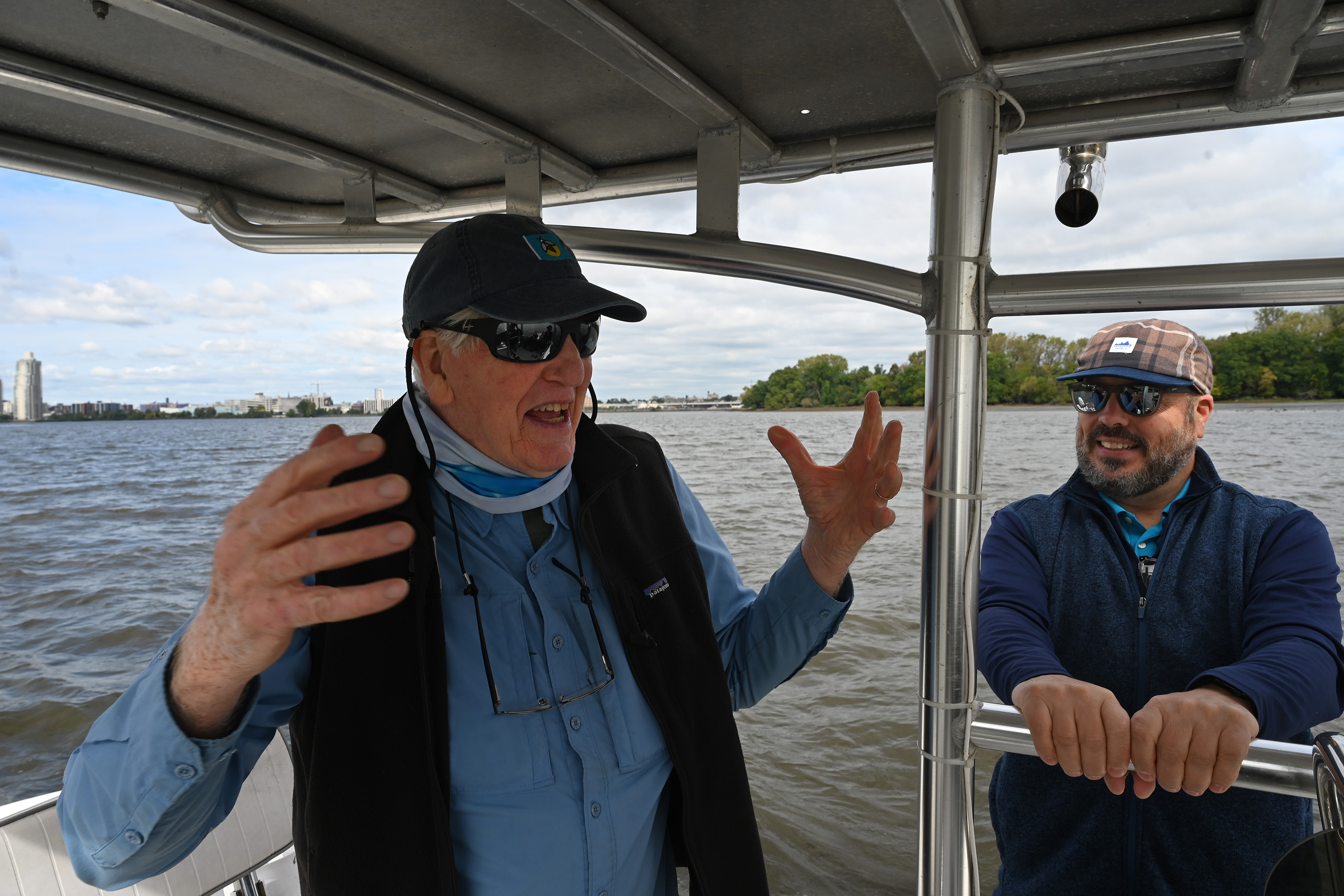
    Don Baugh, president and founder of Upstream Alliance is on the Delaware River on Tuesday with Scott Schreiber (right), executive director of the Camden County Municipal Utilities Authority, looking at sewage runoff from Camden’s waterways.Tom Gralish / Staff Photographer

    Parts of Camden’s waterways are littered with lead and arsenic that was used in apple orchards decades ago in places like Cherry Hill and Voorhees, as well as toxins from the Sherwin-Williams/Hilliards Creek Superfund site, the location of a former paint manufacturer in Gibbsboro.

    Recreation

    Baugh said local families who do not have experience on the water and might not know how to swim show up to his free Saturday kayaking program disappointed that they cannot go out on a nice day. As the county gradually addresses its sewage issues, he expects to feel better putting people out on the water under his 48-hour rule and one day get rid of it completely.

    And the county’s plan would give more options for residents to enjoy their local waters, with $50 million allocated to restoring recreational lake areas. This effort aims to bring more fishing piers, kayak rentals, boat launches, and water trail systems, Schreiber said. The county is prioritizing rehabilitating Atco Lake, Lake Worth, and Audubon Lake, according to its planning document.

    Nash described exploring the county’s urban waterways as a “great thrill.” He wants more residents in Camden to enjoy it, too.

    Each of the plan’s components has distinct advantages, but taken together their benefits amplify, Schreiber said.

    “And if you do that holistically from the top of the county all the way down, you’re going to have a much more clean and friendly park system and river water system,” he added.

  • Here’s what a 34% hike in health costs could mean for Camden and hundreds of other N.J. school districts in 2027

    Here’s what a 34% hike in health costs could mean for Camden and hundreds of other N.J. school districts in 2027

    Health insurance premiums will cost 34.4% more for 300,000 public school and county college employees and their families across New Jersey next year as medical costs continue to escalate and the popularity of costly prescription drugs soars.

    The change will affect teachers and other school staff in Camden, Pemberton, Evesham, and nine other South Jersey districts, as well as six unions at four local colleges.

    What is to come for students, employees, and taxpayers may be just as dire. Cutting jobs, reducing transportation and student extracurricular activities, and raising property taxes are the most likely options school districts and colleges will consider, said Jonathan Pushman, advocacy director for the New Jersey School Boards Association.

    “The dilemma is there are limited options we can turn to,” Pushman said. “A lot of difficult decisions are ahead.”

    On Friday, the New Jersey School Employees Health Benefits Commission voted 4-2 to accept the premium increases forecast by the state’s actuary. Democratic Gov. Mikie Sherrill’s administration had warned that if the commission did not act, it would have closed down the insolvent program at the start of the new year.

    Instead, the rate hikes will take effect in January.

    The School Employees’ Health Benefits Program serves 212 school districts and county colleges, representing 300,000 employees, retirees, and their dependents.

    The local districts covered by the plan are Camden, Brooklawn, Beverly, Delanco, Evesham, New Hanover, Pemberton, Willingboro, Elk, Newfield, Camden County Technical Schools, and the Burlington County Board of Special Services, which serves special-needs students.

    It also provides coverage for employees of Camden County College, Rowan College at Burlington County, Rowan College at Gloucester County, and Rowan College of South Jersey, according to the New Jersey Treasury Department.

    There are a total of 590 school districts in New Jersey, with the majority of them, including Cherry Hill, obtaining health coverage outside the state plan. In recent years, steeper costs have compelled many districts to leave in search of a more affordable option. Those who stay tend to serve an older and sicker — and therefore a more expensive — population and cannot afford a better deal on the open market.

    These conditions have created a “death spiral” for the plan, actuarial and state officials say. The State Health Benefits Plan for state and local workers faces a similar crisis.

    As it is, the health benefits program owes the state $70 million to cover midyear shortfalls, according to Aon, the state’s healthcare actuary.

    The union-affiliated members on the commission voted against the premium hikes, insisting there had to be a way to cut costs.

    After the vote, New Jersey Education Association president Steve Beatty and other top officials said in a statement that their members on the commission “requested information, proposed specific steps to reduce the rates and sought greater transparency about the factors driving these increases. Unfortunately, the division has refused to meaningfully engage in that effort.”

    The rate hikes “threaten the resources available for students,” the union officials’ statement said. “They should not lose out because health care costs are out of control. When districts are forced to spend significantly more on health care, that leaves less money for the programs, staff and services our students rely on every day.”

    School officials huddled this week to consider the array of unpalatable options. Few were ready to say what comes next.

    Rowan College of South Jersey “will continue to evaluate the situation and make adjustments as necessary while keeping student success our priority,” said Susan Nardelli, vice president of communications, marketing, and enrollment management. “Every industry is facing the same healthcare struggle.”

    Union leaders said they are counting on state lawmakers to find a solution. They said they seek action on a proposed bill that would create a new health benefits trust, composed of union and management leaders, and establish a three-doctor medical advisory panel. Districts that join would not be permitted to leave, according to the bill.

    The new insurance trust would “provide greater transparency and accountability and is focused on controlling costs,” the union’s statement said.

    School boards agree that dramatic changes are necessary, Pushman said. This must include “honest conversations with unions,” he said.

    Schools — which are funded by taxpayers — bear 98% of the cost of health insurance compared with the 2% covered by employees, Pushman said. In the private sector, employers pay about 90% of the cost.

    A law enacted during the pandemic set specific limits on what school employees must pay for healthcare, based on their income level. That law, which expires at the end of next year, has limited the options for savings, Pushman said.

    “As much as we want to provide quality healthcare coverage, bearing the costs of these incredibly rich plans is getting to the point of unsustainability,” he said.

    State Sen. Troy Singleton (D., Burlington) agreed.

    “We have to be honest with … what the state can afford to provide sufficient coverage for employees. It’s not a bottomless pit for taxpayers,” Singleton said. “It’s become a frustrating point for all parties.”

  • Judge blocks U.S. from tying emergency grants to election changes

    Judge blocks U.S. from tying emergency grants to election changes

    The Trump administration cannot withhold emergency preparedness grants from states that do not change how they conduct elections, a federal judge ruled Monday.

    The Federal Emergency Management Agency warned state and local governments in June it would withhold up to 20% of some terrorism-preparedness grants unless officials demonstrated that they were exploring a transition to paper ballots or verifying voters’ citizenship. The grants, totaling $1 billion each year, help harden urban areas against terrorist attacks, develop anti-terrorism plans, and conduct terrorism drills.

    The changes to elections that FEMA sought were in line with President Donald Trump’s false and largely debunked claims of widespread voter fraud.

    A group of local governments in Tennessee, Texas, and Ohio sued FEMA and the Department of Homeland Security, its parent agency, over the move last month, arguing the federal government did not have the power to force changes to how they conduct elections. They also said the rules would disenfranchise eligible voters.

    Judge Amir H. Ali of the U.S. District Court for the District of Columbia, an appointee of President Joe Biden, agreed that the conditions exceeded the administration’s power over elections and ordered them stricken from the grant programs’ application process.

    FEMA and Homeland Security officials did not immediately respond to a request for comment on the ruling.

    The ruling follows several actions by the Supreme Court addressing Trump’s push to exert more control over elections before the midterms. This month, the court blocked changes to mail-in voting but approved increased screenings for ineligible voters.

    This article originally appeared in the New York Times.

  • How a planned steel mill in Iowa reveals Trump’s midterm strategy

    How a planned steel mill in Iowa reveals Trump’s midterm strategy

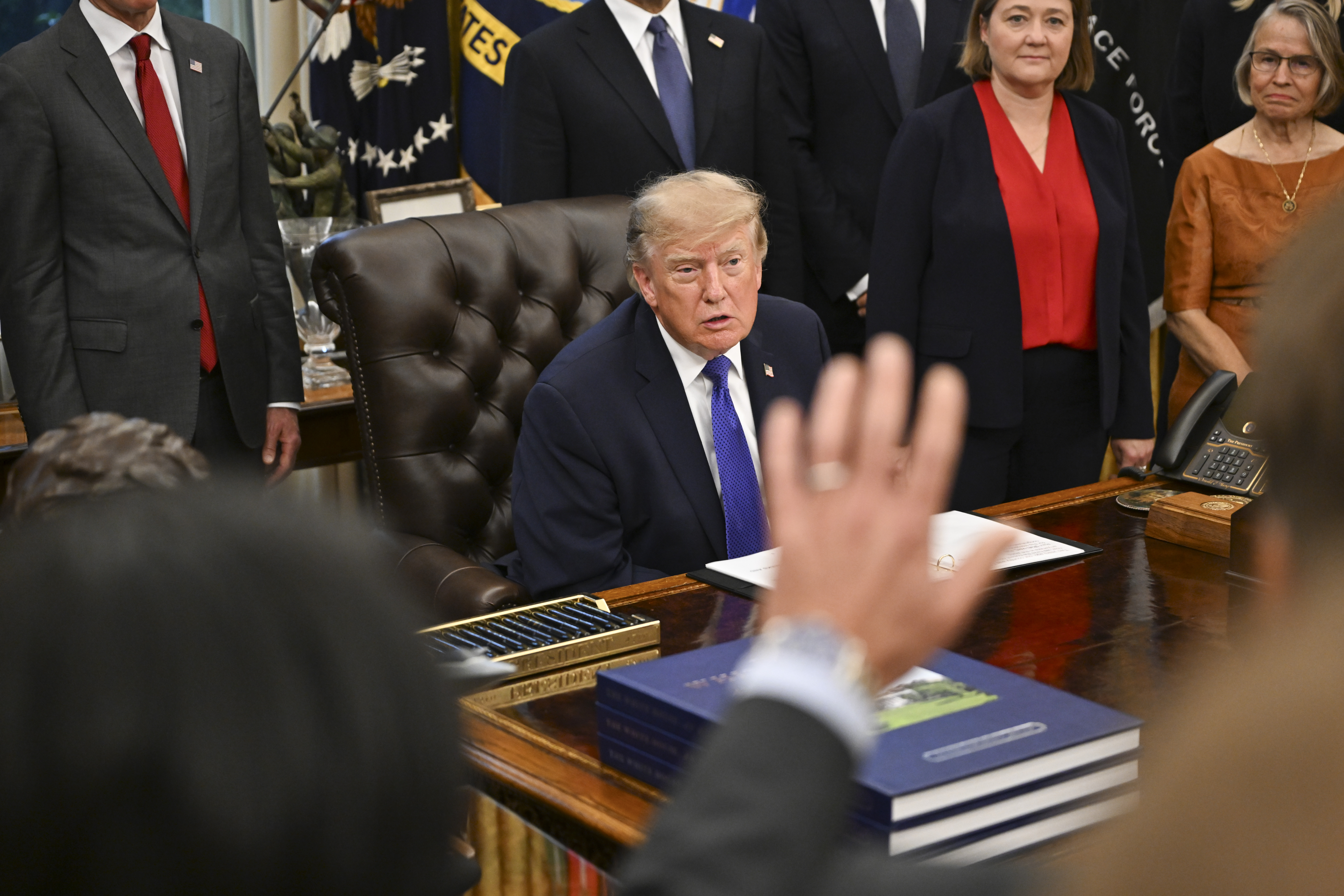
    President Donald Trump, staring down a rough midterm season for Republicans, unveiled plans for an Iowa steel mill project Monday that he said would plug billions into the economy and create construction jobs in a state hit hard by his policies.

    Voters in Midwestern states were crucial to delivering a second election win to Trump, but now, those voters are among the hardest hit by tariff-driven manufacturing costs and a rise in fuel prices driven by the war in Iran. When a reporter in the Oval Office asked him Monday why several Republican candidates in Iowa were working so hard to protect their seats, Trump seemed mystified.

    “I don’t know,” said Trump, who is traveling to several states this week ahead of the midterm elections. “I love Iowa. I’ve always been very strong with Iowa.”

    The project in Iowa is one of several job-creation announcements Trump is expected to make as he traverses the country. He will travel to several reliably conservative states this week, including Oklahoma and Alabama. He is also scheduled to visit Ohio this weekend in support of Republican Sen. Jon Husted, an embattled incumbent facing several challenges, including a lack of name recognition among some of the state’s most devoted conservatives.

    Trump said Monday that he would also visit Iowa, where he hopes the planned steel mill will boost prospects for Republicans in tight races — and perhaps his own fortunes as a kingmaker who has asked supporters to pretend he is on the ballot in November. Americans have signaled that they are doing just that, but in a way that could backfire on him. The war in Iran and the cost of living have both eroded his support.

    So Trump has leaned into the promise of the mill, which is part of an $18 billion investment from Mesabi Metallics. Supporters of the project say it will be one of the largest steel mills in the world when it is completed.

    In the Oval Office on Monday, Trump, several Cabinet members and Iowa Republicans said the project would remind voters that Trump’s policies have created jobs. Rep. Mariannette Miller-Meeks, R-Iowa, who is facing a tough reelection race and who last week voted to curb Trump’s war powers, appeared to be behind Trump, telling reporters that the steel mill could create some 6,000 construction jobs and 1,750 permanent jobs, with salaries that could exceed $100,000 a year.

    “We’re going to mine it in America. We’re going to mill it in America, and we’re going to make it in America,” Miller-Meeks said.

    Mesabi Metallic is owned by Essar Group, a Mumbai-based conglomerate controlled by one of India’s wealthiest families. The Iowa mill project follows another initiative led by Mesabi: a $2.5 billion iron-ore mine and pellet plant in Nashwauk, Minnesota.

    That project, described as the first new operation of its kind in the state in about 50 years, has been supported by EXIM Bank, a U.S. federal import-export bank that announced it would extend loans to the company worth up to $10 billion. Some analysts consider the EXIM loan to be risky because Mesabi has faced financial problems and significant delays over the years.

    Alec Varsamis, a spokesperson for EXIM, said that Mesabi had so far been granted a $770 million loan for the iron-ore mine in Minnesota.

    “We are operating at no cost to the taxpayer, and we are on track to repay our congressional appropriations to the U.S. Treasury,” Varsamis said.

    In the Oval Office on Monday, Trump said that the project would go forward even if control of Congress changed hands, or if a “less friendly” president took over. Rewant Ruia, chair of Mesabi’s executive board, and Ravi Ruia, co-founder and vice-chair of the Essar Group, were also in the Oval Office for the announcement.

    The company filed for bankruptcy protection in 2016 and has been entangled in a lawsuit with Cleveland Cliffs, another steel manufacturer.

    Mesabi executives have leaned on a Trump-world insider as the company has sought to expand its footprint in the United States. The company hired Jason Miller, a longtime Trump adviser, as its lobbyist, paying him at least $240,000 through his company SHW Partners, according to lobbying disclosure records. The government of India also hired Miller’s company, paying $150,000 per month for “strategic counsel, tactical planning and government relations assistance on policy matters before the U.S. government,” according to federal filings under the Foreign Agent Registration Act.

    On Monday, Miller said in a text message that he had stopped his work as a lobbyist for Mesabi and deregistered at the end of July. He has since joined the administration as an unpaid special government employee. He was not present in the Oval Office.

    Rewant Ruia, chair of Mesabi Metallics, spoke in the Oval Office on Monday, and said the new steel plant in Iowa “will use the latest technology and will compete head-to-head with any steel plant in the world on size, quality and on cost.”

    Robert Weissman, co-president of Public Citizen, a nonprofit consumer advocacy organization that tracked Miller’s lobbying on behalf of Mesabi and the Indian government, said that the extension of potentially billions in taxpayer-backed loans from EXIM Bank deserved more scrutiny because of Miller’s role.

    “In any other administration, this would be treated as a monumental scandal,” Weissman said. “But in this one, it’s just another day.”

    Iowa Gov. Kim Reynolds, a Republican who attended the Oval Office event, said in a statement that the deal would be transformative for her state.

    “Our commitment in Iowa to fiscal responsibility, tax competitiveness, and long-term economic stability has created one of the nation’s strongest environments for business investment,” she said. “Now, this opportunity will fundamentally change the economic trajectory of our state and the entire region for decades to come.”

    The steel mill project is part of a broader election-season attempt by Trump to push back against widespread voter frustration with his policies, including tariffs that have been punishing for American manufacturers, particularly in the Midwest.

    Trump and his advisers believe that any polling predicting a blowout for Democrats is overrated, and to some degree, they have history on their side. On Monday, Trump again called recent polling “fake,” and complained that the news media had not appropriately trumpeted employment numbers, 401(k) account gains and a host of other accomplishments.

    “Nobody talks about all of the incredible things,” Trump said.

    But this is not 2016, or 2024. In 2026, Americans are deeply unhappy with the cost of living and frustrated with the war in Iran, which has driven up prices further. In response, Trump has taken to calling the concept of affordability a Democratic hoax, while promising that prices will come down as soon as the war ends.

    “We’re going to win that war very soon. That’ll be over, and the gasses, gas prices, will come tumbling down,” Trump said, forecasting the future. “So nobody else could have done that. Nobody else.”

    Trump’s self-congratulatory messaging on the war has done little to help GOP candidates in tough races across the country. In the past week, Republicans running for Senate seats in Iowa and Michigan have called on Trump to end the conflict. A slate of other candidates, including two running for governor in Wisconsin and Michigan, and Husted in Ohio, also have said that the war needs to end, and soon.

    This article originally appeared in The New York Times.

  • News organizations ask court to bar White House enforcement of access ban until case is resolved

    News organizations ask court to bar White House enforcement of access ban until case is resolved

    Three news outlets that President Donald Trump abruptly banished from White House grounds this month asked a federal court to block the action until the case is resolved, saying the administration has “persisted in unpredictably and inconsistently implementing its ban” despite a judge’s restraining order — including selectively keeping CNN from participating in White House pool duties.

    “The White House’s words and actions leave little doubt that it will immediately reinstitute a complete ban of CNN, MS NOW, and POLITICO if allowed the opportunity,” lawyers for CNN, MS NOW, and Politico wrote in a filing late Monday.

    ”Because the ban is an unlawful assault on the most fundamental First Amendment freedoms and will inflict irreparable harm on Plaintiffs and the public if not restrained, this Court should preliminarily enjoin its enforcement pending the resolution of this case,” the filing said.

    It was the latest development in the back-and-forth saga of the Trump administration and the news media during the second term of his presidency. It has been a contentious relationship that has raised multiple First Amendment questions, produced sanctions and restrictions on White House and Pentagon reporters and led to several lawsuits that are winding their ways through the federal court system.

    A two-week temporary restraining order on Trump’s ban of the three organizations, issued by U.S. District Judge Timothy Kelly last week, restored the outlets’ White House access, but expires Oct. 8. The preliminary injunction requested in Monday’s filing would extend the White House access until the case is finally resolved.

    In a statement emailed to the Associated Press immediately after the filing, the lead attorney for the three news outlets called the ban “a blatant violation of the First Amendment and due process.”

    “The president and his administration have continued to make clear that this ban has only one purpose: to punish reporting he doesn’t like,” said the lawyer, Theodore J. Boutrous Jr.

    “That’s retaliation and viewpoint discrimination, pure and simple,” Boutrous said. “With the district court’s temporary restraining order expiring this week, it is critical to ensure that the White House continues to be prevented from implementing this unconstitutional ban on the free press.”

    On Tuesday, the ACLU of the District of Columbia filed a friend-of-the-court brief supporting the news outlets and suggesting the president’s residence is different from a private property.

    “The White House is the people’s house, not the president’s private golf club,” wrote Arthur Spitzer, senior counsel for the ACLU of D.C.

    White House still says access is a privilege, not a right

    The filing came a day after the Trump administration made clear it was not backing down from its contention that the sudden ban, which began Sept. 19, was justified.

    “When it comes to the White House, it is the people’s house,” Attorney General Todd Blanche said on ABC on Sunday, invoking an argument the administration has made since the beginning. “It is a privilege, and not a right, to be there.”

    Monday’s 42-page filing reiterated many of the arguments that the news outlets made in their original lawsuit against Trump and the White House, filed two days after the reporters were banned.

    It also added mention of the White House broadcast pool rotation, which has become a battleground in the last few days in the standoff between Trump and the media.

    The White House, it said, “has persisted in unpredictably and inconsistently implementing its ban, including by barring CNN from fulfilling its role as designated television network pooler on Sept. 26 — to the detriment of CNN, its fellow pool members and, ultimately, the American public.”

    When the ban was implemented, CNN was removed from its duties as part of the broadcast pool, which consists of the five main networks: CNN, ABC, CBS, NBC, and Fox News. In solidarity, the other networks decided to suspend the pool until CNN was allowed back in.

    On Friday, CNN was allowed to cover the president with Chinese leader Xi Jinping at the National Archives. But in a new setback Saturday, the White House banned the network from Air Force One, preventing it from covering Trump’s trip to a college football game in Tennessee. The rest of the pool declined to provide a replacement, in solidarity with CNN.

    Blanche defended that decision, too. “The president has every right to decide who gets to fly on his plane,” he said in the Sunday interview. He added that Trump was “sick and tired of certain media outlets just refusing to report accurate news.” He added that news coverage he described as “misinformation” amounted to a national security issue.

    “That is what is a national security problem, when you have complete misinformation coming out of the White House,” he said.

    Kelly threw cold water on that argument in his ruling last week granting the temporary restraining order against the White House ban. “The court is skeptical … that defendants’ interest in safeguarding national security is the actual motivation” for removal of access, Kelly wrote.

    His ruling did not directly address the TV pool rotation. In the new filing, the plaintiffs describe the important function the pool provides and make the case that it’s an important part of the regular access to the president, and his activities, that the media has traditionally had — and must be restored.

    It singles out the Air Force One case. “CNN received no official communication from the White House explaining its exclusion,” the filing says. “Because CNN was excluded and no replacement designated, no primary television network pooler accompanied the President on the trip.”

    Pool access issue has presented tough choices

    For now, networks in the pool have decided to address the ongoing standoff on a case-by-case basis, according to a person familiar with the pool’s operation, speaking on condition of anonymity to give details of ongoing discussions.

    On Sunday, Fox covered a pool event; on Monday, NBC was covering the president in the Oval Office. CNN is not in the rotation until Thursday. If the network is again barred from a pool event, the networks will decide together, presumably based on the newsworthiness of the situation, whether to provide a replacement or to refrain from coverage as they did previously.

    The issues at stake are difficult. On the one hand, the networks want to take a stand on behalf of press freedom and against efforts to intimidate coverage. On the other, media outlets have an obvious purpose of providing news to their audiences.

    “There are not a lot of good options,” said David A. Schulz, director of the Media Freedom and Information Access Clinic at Yale Law School.

    Should the White House continue to bar CNN, Schulz said, networks may choose “to exert their market power and say, ‘We’re not going to play ball with you.’”

    The question, Schulz added, is: “Who’s going to back down first?”

    The networks “may well feel like they’re between a rock and a hard place,” noted RonNell Andersen Jones, a law professor at the University of Utah.

    “Capitulation might be perceived as abandonment of core components of press freedom,” Andersen Jones said. “But the practicalities of lengthy White House news blackouts are also complicated, and refusing to cover major news at the highest levels of government might itself feel like a failure to serve the goals of democracy.”

  • Pa. Democrats have mostly positive view of socialism as progressive candidates secure wins

    Pa. Democrats have mostly positive view of socialism as progressive candidates secure wins

    With recent victories by democratic socialists nationwide prompting a fierce debate about the future of the Democratic Party, most Democrats in Pennsylvania have a positive view of socialism — and nearly 40% consider themselves to be a democratic socialist, a new poll found.

    Still, socialism remains broadly unpopular among all voters in the key swing state, according to the poll, conducted by Siena University on behalf of The Inquirer and the New York Times.

    About one-third of likely voters in the midterm elections this fall have a favorable view of socialism and 56% have an unfavorable view. That result closely mirrors a recent national poll from the New York Times and Siena University, raising questions about the appeal of socialism to a wider swath of voters.

    But as Philadelphians prepare to send a democratic socialist to Congress for the first time — and also as talk builds of a larger wave of progressivism across the state — 57% of Democratic likely voters in Pennsylvania have a favorable view of socialism and 24% have an unfavorable view, the poll found.

    “We’re more popular than ever,” said Dan Parker, cochair of Philadelphia’s chapter of the Democratic Socialists of America (DSA). “But we still have a long way to go.”

    (function(){function e(){window.addEventListener(`message`,function(e){if(e.data[`datawrapper-height`]!==void 0){var t=document.querySelectorAll(`iframe`);for(var n in e.data[`datawrapper-height`])for(var r=0,i;i=t[r];r++)if(i.contentWindow===e.source){var a=e.data[`datawrapper-height`][n]+`px`;i.style.height=a}}})}e()})();

    The survey of 615 likely Pennsylvania voters conducted from Sept. 15 through 21 comes amid a surge of leftist victories both locally and across the country.

    State Rep. Chris Rabb defeated a pair of more moderate candidates in Philadelphia’s highly competitive congressional primary in May. A democratic socialist, Rabb is highly favored to win in the general election and has spent the months since his primary campaigning for other like-minded candidates.

    Nearly all of those candidates — from Abdul El-Sayed in the high-stakes Michigan U.S. Senate race to a pair of New York candidates boosted by Mayor Zohran Mamdani — have also won their primaries as Rabb and his allies look to grow the ranks of progressives starting on Capitol Hill in January.

    Beyond the next Congress, the leftist wing of the party is hoping for momentum heading into the 2028 races for president and Pennsylvania’s U.S. Senate seat held by Democratic Sen. John Fetterman, who has antagonized socialists and made appeals to Republicans.

    “The mainstream Democratic establishment candidates are telling us time and time again to settle for less, to expect nothing other than the status quo,” Parker said. “People are looking for a different set of politics that speaks to their material needs and to the values of freedom that many are striving for.”

    Parker said Philadelphia DSA has been “exploding” since Rabb’s victory. The group mobilized hundreds of volunteers to knock between 75,000 and 100,000 doors during his campaign, and more than 750 new members have joined since May to put the chapter’s total ranks at about 3,000, he said.

    Councilmember Kendra Brooks speaks with colleague Nicolas O’Rourke during a March 12 caucus session. Alejandro A. Alvarez / Staff Photographer

    Rabb’s success follow that of Pittsburgh’s U.S. Rep. Summer Lee, who was first elected to Congress with DSA support in 2022. Other DSA-backed elected officials include Philadelphia City Councilmembers Kendra Brooks and Nicolas O’Rourke, as well as State Sen. Nikil Saval, while new primary victories this year include Mark Pinsley and Ce-Ce Gerlach in Lehigh Valley-based legislative races.

    Further growth, Parker said, will come with DSA-backed candidates working in office to “prove that government can exist to serve ordinary people.”

    On that agenda: Advocating for universal healthcare, affordable housing, progressive tax policies, defunding and ultimately abolishing ICE, and ending the wars in Iran and Gaza.

    “What makes DSA distinct — and democratic socialism as a political movement distinct — is that it’s not really just about who has the right ideas,” Parker said. “It’s about a theory of change that puts the vast majority of society in the driver’s seat.”

    (function(){function e(){window.addEventListener(`message`,function(e){if(e.data[`datawrapper-height`]!==void 0){var t=document.querySelectorAll(`iframe`);for(var n in e.data[`datawrapper-height`])for(var r=0,i;i=t[r];r++)if(i.contentWindow===e.source){var a=e.data[`datawrapper-height`][n]+`px`;i.style.height=a}}})}e()})();

    As Democrats look to retake control of Congress and the White House, how much influence that movement will yield remains an open question.

    Moderates like Gov. Josh Shapiro, a potential 2028 Democratic presidential candidate, have acknowledged the energy on the left while advocating for a more centrist approach. Shapiro said this summer that the progressive candidates were practicing “performative politics” and would need to deliver if elected. He has also said he expects the party to have the most significant “battle over what we believe in” in more than three decades as the next presidential race gets underway.

    The latest poll shows the party’s base remains divided in Pennsylvania.

    While Democrats in the state remain split in their views of socialism, 38% consider themselves to be a democratic socialist while 57% do not, the poll found. Just over half of Democrats see their party as divided and 45% believe it’s united.

    ‘A tiny, tiny fraction’

    Some observers also cautioned that the number of self-identifying democratic socialists across all of Pennsylvania — a swing state that has largely elected moderates to statewide office — may appear larger than reality. The poll did not define democratic socialism, for one. And progressives have been overrepresented in other polling this year, including in Wisconsin and Michigan, said Lew Irwin, a political science professor at Duquesne University in Pittsburgh.

    “A lot of people will claim an affiliation when they actually have an affinity,” Irwin said, adding that it’s still become “increasingly mainstream and acceptable inside the Democratic Party” to identify as socialist.

    J.J. Balaban, a Philadelphia-based ad maker for more moderate Democrats like U.S. Rep. Brendan Boyle, pointed to the fact that even with the additional energy on the left, the vast majority of Democrats in Washington next year will not be socialist.

    “We’re talking about a tiny, tiny fraction of the Democratic caucus,” he said.

    Balaban said that is one of the reasons why Republicans’ campaign messaging may also not be effective as they try to defend their majorities in the November midterm elections. Republicans have branded all kinds of Democrats as socialists — repeatedly denouncing the entire party as far left and “communist” in its agenda.

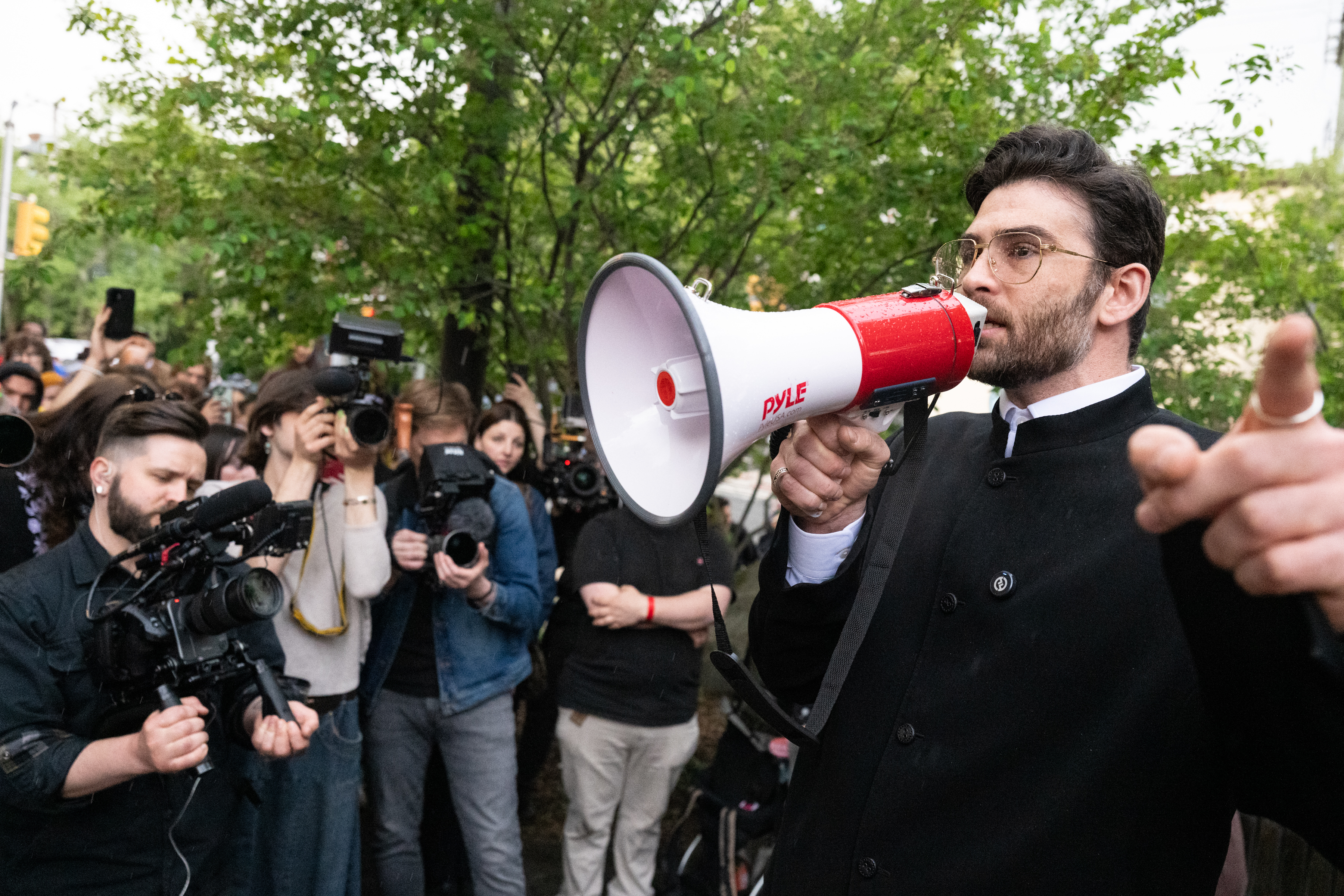
    One of the main characters featured in those attacks has been Hasan Piker, the controversial leftist streamer who campaigned with Rabb and other candidates this year. His visit to Philadelphia in April drew hundreds of young progressives but was condemned by Rabb’s opponents and Jewish groups who consider his views antisemitic.

    Online influencer Hasan Piker speaks to attendees at an April 30 fundraiser for State Rep. Chris Rabb’s 2026 congressional campaign at Renata’s Kitchen in West Philadelphia.Erin Blewett / For The Inquirer

    Piker’s support of El-Sayed has become a dominant issue in the Michigan race, but the poll of Pennsylvania voters shows he is mostly unknown in the Keystone State.

    Among Pennsylvania likely voters, 23% had an unfavorable view of Piker and 6% had a favorable view. Two-thirds said they had not heard of him — and a higher share of Republicans knew him compared to Democrats.

    “He is a much greater part of the discourse in the Fox cinematic universe than he is in actual Democratic discourse,” Balaban said.

    With polls increasingly showing Democratic momentum this fall, even some conservatives appear to be pushing for Republicans to shift their messaging away from socialism.

    Former U.S. Rep. George Santos, a Republican who has reportedly lived at least partially in the Poconos since President Donald Trump commuted his sentence last year, posted a video Thursday in which he criticized a mailer for U.S. Rep. Rob Bresnahan, a freshman Republican in a tight reelection campaign. The mailer claims Bresnahan will “stop the socialists” and lists his Democratic challenger, Paige Cognetti, alongside the “socialist dream team” of progressives Mamdani, U.S. Sen. Bernie Sanders (Ind., Vt.), and U.S. Rep. Alexandria Ocasio-Cortez (D., N.Y.).

    “Please stop sending me this. It’s silly,” Santos said in the video, adding colorful language to say Pennsylvania Republicans should be focusing on the cost of living.

    “No more rhetoric!” he added.

    Staff writer Joe Yerardi contributed to this article.

  • Senate passes college sports bill that would rein in athlete payments and transfers

    Senate passes college sports bill that would rein in athlete payments and transfers

    WASHINGTON — The Senate passed a sweeping bipartisan bill on Monday that would regulate college sports, an attempt to end “chaos” in an industry that has been upended by skyrocketing athlete payments and near-unrestricted transfers between schools.

    The overwhelming 77-22 vote to pass the legislation is the strongest effort yet by Congress to set national regulations governing payments to college athletes for their name, image and likeness and how often they can transfer. It would give the NCAA new authority over those rules and limited antitrust protections to enforce them.

    The bill is the product of years of Senate negotiations that intensified after a 2025 lawsuit settlement uprooted the college sports landscape by allowing colleges to pay their players. The legislation, which would still have to pass the House, would codify the settlement into law but also establish new guardrails around the system in an attempt to rein in the runaway costs for colleges.

    “It would be nice if college sports could somehow magically fix itself, but this is a matter of law, federal law, and only Congress can fix it,” said Senate Commerce Committee Chairman Ted Cruz, R-Texas, who negotiated the bill with the top Democrat on the panel, Washington Sen. Maria Cantwell.

    The bill’s backers — more than 70 senators from both parties — say it aims to curtail constant litigation and uncertainty across college sports for athletes, schools and fans. It would also give hundreds of thousands of student athletes new health and labor protections.

    But critics say the bill doesn’t do enough to protect athletes or curtail the enormous sums of money flowing to coaches, colleges and conferences.

    “This is a bill that essentially ensconces a system of exploitation, and it doesn’t fix the broader problems,” said Connecticut Sen. Chris Murphy, a Democrat who has worked with labor and civil rights groups to rally opposition to the bill.

    The bill’s future is still unclear.

    President Donald Trump has repeatedly expressed an interest in the legislation, and the White House formally endorsed the bill last month. But it could face an uphill battle in the House, which failed repeatedly over the last year to get a different version to the floor and is in recess until after the November elections.

    Lawmakers will have to start over in the next Congress if the bill doesn’t pass both chambers by the end of the year.

    Bill addresses skyrocketing spending, unlimited transfers

    College sports have been reeling in the wake of the 2025 court settlement allowing colleges to directly pay players for their name, image and likeness. The fallout has reshaped the industry and led to football roster payrolls that can exceed $40 million.

    The bill would codify the court settlement, including a revenue cap that allows schools to share up to $21.5 million in revenue with their players. The legislation would more than double that amount for some schools, allowing up to an additional $27.5 million in payments through a retention fund — a change that helped win the support of the two largest conferences, the Big Ten and Southeastern Conference.

    To help schools raise more revenue, the bill would give schools and conferences the option of pooling their TV media rights.

    The legislation also aims to stabilize the NCAA transfer portal that has led to players constantly switching teams. It would restrict player transfers to one “free” move over five years without sitting out a year, with some exceptions, and also would restrict players to five years of total eligibility.

    The proposed eligibility limit comes amid backlash to schools that have increasingly pushed boundaries, including LSU’s now-canceled plans to place players on the roster who had participated in NFL training camps.

    “That was probably like a big lamp for some people who saw it and said, ‘Oh my God, this is so out of control,’” Cantwell said in a recent interview with The Associated Press.

    The bill also would restrict coaches from leaving their schools during the season, force schools that want to switch conferences to spend three years as an independent and prevent conferences from growing larger than 20 programs — an effort to prevent so-called “superleagues” from taking over sports. A last-minute amendment proposed by Florida Sen. Ashley Moody raised that cap from 19 in the original legislation.

    The vote was delayed several hours on Monday as senators negotiated Moody’s amendment and others that were eventually adopted, including provisions to make it easier for athletes to sue over sexual assault and a requirement to disclose foreign financing.

    The Senate rejected an amendment by Sen. John Kennedy, R-La., that would have put limits on ticket prices for fans and two by Sen. Cory Booker, D-N.J., that would have capped coaches’ salaries at $5 million a year and increased compensation for athletes who have catastrophic injuries.

    Critics say it wouldn’t do enough to help athletes

    The legislation includes new protections for athletes, including caps on agent fees and guarantees for health insurance and scholarships. It would also require schools to maintain a minimum number of sports and roster spots — an effort to ensure that women’s and Olympic sports are not cut in favor of football, basketball and other sports that generate more revenue.

    Still, some Democrats say it wouldn’t do enough to limit the big money in college sports.

    The legislation “places a cap on the students’ cut of the revenues, but there are no caps on coaches’ salaries or on the size of donations to athletic programs,” Murphy said last week.

    Groups like the NAACP, Congressional Black Caucus and AFL-CIO have also opposed the bill, in part, because it leaves unresolved whether athletes should be considered employees with the ability to collectively bargain.

    All four Black Democrats in the Senate — Booker, Raphael Warnock of Georgia, Lisa Blunt Rochester of Delaware and Angela Alsobrooks of Maryland — have opposed the bill.

    Booker, who played football at Stanford in the late 1980s on a scholarship, noted the “outsized role” that Black athletes play in college sports. He said it wasn’t until college athletes were able to begin to win cases in court that the power started to shift, “and now the NCAA is coming here to the United States Senate, asking for sweeping powers” to exempt antitrust laws.

    “We know who this bill is protecting,” Booker said.

    House passage is uncertain

    Despite strong bipartisan support in the Senate, the bill faces a murky path in the House.

    House lawmakers won’t return to Washington until mid-November, after the elections. And it’s unclear what will be on Republican leaders’ agenda in the chaotic last few weeks of the session.

    Pressure from Trump could help push the bill to passage. But some House Republicans have insisted on language explicitly stating that athletes are not employees, which the Senate bill does not have — a key concession to Cantwell to win enough Democratic support.