Category: Politics

  • A former Philly woman who voted twice in the 2024 election was sentenced to three years of probation

    A former Philly woman who voted twice in the 2024 election was sentenced to three years of probation

    A former Philadelphia woman who voted twice in the 2024 presidential election was sentenced Thursday to three years of probation.

    Miya Pack, 40, who now lives in Georgia, pleaded guilty earlier this year to voting more than once in a federal election after prosecutors said she cast ballots in 2024 in Bergen County, N.J. — where she grew up — and in Philadelphia.

    Pack was not affiliated with any political party at the time, according to Pennsylvania voter records. And prosecutors did not specify which candidate she voted for.

    Pack also did not name her preferred candidate Thursday while addressing U.S. District Judge Joshua D. Wolson. Instead, she simply said she was “nervous” about the election’s outcome, but recognizes now that that was no excuse for voting twice.

    “I was wrong,” she said. “I’m very, very sorry.”

    Pack voted in-person in North Jersey on Oct. 26, 2024, court documents said, and then cast another ballot in-person in Philadelphia 10 days later, on Election Day.

    Assistant U.S. Attorney Nancy Potts said Pack’s crime “violates the trust that we have in one another to abide by the basic rules of society.”

    And Wolson, the judge, said Pack’s offense “strikes at the heart of democracy in many respects.”

    “There’s a degree of honor code in voting, and breaches of that undermine the public confidence in elections,” he said. “And our elections function in no small part because they rely on a public perception of confidence.”

    Pack said she understood. And both she and her attorney said Pack has been left “mortified” and “embarrassed” by the case, which has been covered by a variety of news outlets, making her name and background easy to find online.

    President Donald Trump has repeatedly made questionable or false statements about the prevalence of voter fraud, particularly in places like Philadelphia, where Democrats heavily outnumber Republicans.

    Election officials and other experts generally agree that voter fraud has not historically occurred on a large scale, or at rates that might undermine electoral results — particularly in national elections, such as presidential contests.

    Pack’s indictment was announced last year alongside the indictment of another man, Matthew Laiss, who voted twice for Trump in 2020. Laiss was sentenced earlier this year to six months of house arrest and three years of probation.

  • Philly sheriff’s office reneges on court-supervision deal, tells judge it found $20 million in city money

    Philly sheriff’s office reneges on court-supervision deal, tells judge it found $20 million in city money

    A top aide to Philadelphia Sheriff Rochelle Bilal revealed in court that an internal audit had recently uncovered $20 million in undisbursed money — including tax revenue and utility payments that should have gone into city coffers.

    The stunning disclosure of misplaced sheriff-sale proceeds — which amount to more than half the office’s annual budget — came during a two-day hearing as Bilal and her staff sought to back out of a judge’s plan to appoint an independent supervisor to monitor the office’s troubled process.

    That tentative deal, struck after an August hearing before Common Pleas Court Judge Paula Patrick, was meant to resolve years of delays in issuing deeds and distributing sale proceeds.

    But Patrick, supervisor of the court’s commerce division, ordered Bilal and her deputies back into her courtroom on Wednesday after the sheriff’s office reneged on the agreement.

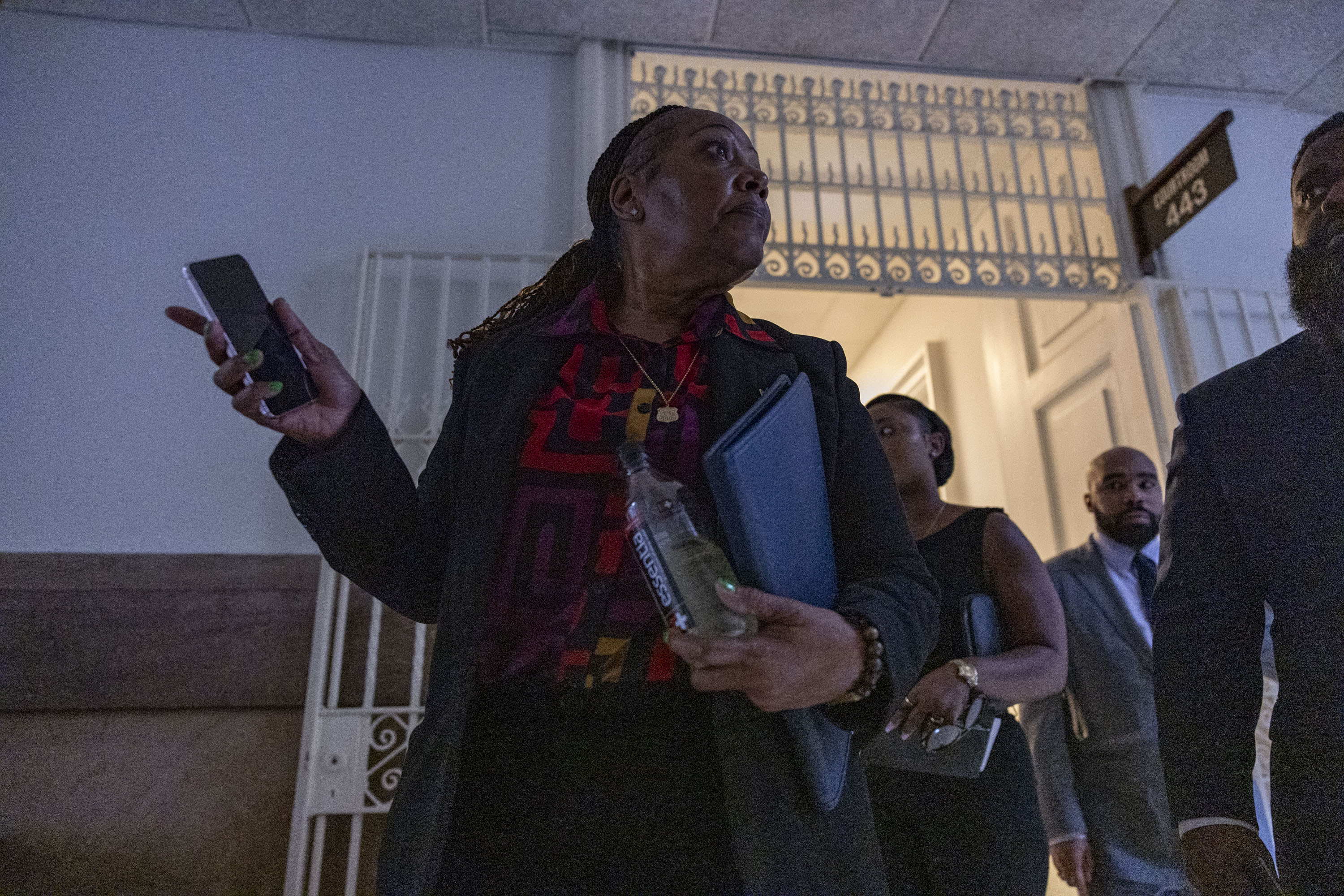
    The judge insisted that Bilal be in the room before the hearing began.

    “You need to have your client here,” the judge told Jonathan Rardin, a lawyer the city retained to represent Bilal. “She needs to be here to get started.”

    Bilal then walked in and took a seat behind the defense table without speaking.

    Steven Wakefield, a new deputy undersheriff hired in June to streamline the office’s property auctions, testified Wednesday morning that he had already fixed many of the operational issues that had caused the backlog.

    Under questioning from the judge, Wakefield also detailed the discovery that “checks had not been written” for some $20 million in sales proceeds, including uncollected property taxes and water bills that are meant to be recouped through sheriff sales.

    “A lot of that was money that was supposed to go to the city,” Wakefield said.

    The money was found during an audit that so far has gone only as far back as August 2025. Wakefield did not provide an explanation for why the money had remained in the sheriff’s office, but said it was recently transferred to the city.

    New procedures in the office allow executive staff to track when checks are written, he said.

    “We have much more robust information,” Wakefield said.

    Patrick appeared stunned by the revelation.

    “Twenty million dollars is a lot of money,” the judge said. Wakefield agreed.

    Patrick also questioned why Wakefield had not included that information in the records she had ordered the sheriff’s office to produce over the summer, including a list of every sheriff sale since Bilal took office in 2020 and how the money was distributed.

    On Wednesday afternoon, Bilal took the stand for the first time, testifying that she had not known about the backlog of unprocessed deeds until “2024 or 2025,” when she started receiving emails from real estate agents and City Council members about deeds not being recorded.

    “It was like Spidey senses. I’m getting more than one,” Bilal said of the emails. “Then every week.”

    The Inquirer first reported on the problem in July 2024, based on an analysis of city property records. Bilal’s staff initially denied there was a deed backlog, then weeks later said they would take corrective action. Yet the delays continued, and in some cases got worse, with banks, real estate agents, and investors saying as recently as May 2026 they have waited more than a year after auctions to receive their deeds.

    Bilal has repeatedly provided inaccurate information about sheriff sales and her office’s finances, including telling City Council in April that post-auction delays had been resolved.

    But under oath in court, Bilal said she agreed with Rardin’s assessment that the sheriff’s office had not been fulfilling its obligations until recently.

    “That’s what I’m starting to find out, yes,” Bilal said.

    While Bilal campaigned as a reformer in 2019, she testified she had only a rudimentary understanding of what the job entailed when she took office. She said she spent an extended amount of time interviewing staff to “figure out what the sheriff’s office actually does.”

    Now more than halfway into her second term, Bilal blamed the ongoing problems on chronic underfunding from City Hall, poor decisions by managers under her, antiquated technology, and staffers who struggled to handle the new office software that went live in 2024.

    Bilal’s testimony continued Thursday morning. Asked whether she would permit an outside compliance examiner to come into the office, she refused to answer the question.

    “We are in compliance,” Bilal said. “We got control of this.”

    A deal collapses

    This week’s hearing was not supposed to happen.

    Judge Patrick, frustrated with an onslaught of litigation over sheriff sales, ordered the August hearing at which Bilal’s staff was required to demonstrate why a “special master” or someone with similar expertise in real estate should not be brought in to temporarily oversee the auctions.

    That hearing was cut short after Bilal’s staff said it would allow the monitoring and report back to the court in six months. “It’s better that we come together, and make an agreement,” Bilal told reporters at the time.

    But Daniel Bernheim, the lawyer representing plaintiff JSB Property Group, whose March lawsuit over deed delays triggered the legal showdown, said in an interview Tuesday that Bilal’s legal team went silent after Patrick submitted a draft of a stipulated order that called for appointing a team to evaluate the office’s practices.

    Bernheim said Rardin then told him he could not reach “the key decision makers” in the office.

    “The ‘key decision maker,’” Bernheim said, “is the sheriff.”

    Then, Bernheim said, the sheriff’s office submitted what he described as “ludicrous” changes to Patrick’s proposal, including, according to Bernheim: requiring 48 hours’ notice for the independent supervisor to interview any sheriff’s office employee; removing the word comprehensive before review; and automatically terminating the supervision after six months regardless of the results.

    What happened?

    It is unclear why the sheriff’s office changed direction.

    Bilal did not respond to questions Wednesday during a break in the court proceedings. Standing near the defense table, she pointed her phone at an Inquirer reporter’s face and appeared to take a photograph. Her staff then formed a barricade around her.

    On Tuesday, Rardin submitted a memo arguing that Patrick had overstepped her authority. He wrote that the 2003 consent order at the center of the case — which requires the sheriff to issue deeds within 40 days from settlement — does not apply to Bilal because it had been brought against a previous sheriff, John Green, who was later imprisoned on federal bribery charges.

    Even if the order did apply to Bilal, Rardin wrote, the court’s legal authority was limited to holding her in contempt, not “open-ended structural oversight.”

    On the stand Wednesday, Wakefield told Patrick that sheriff-sale proceeds are now being distributed and deeds issued within weeks of settlement. He said the office has reorganized its workforce and is crafting new regulations for auctioning properties that will remain in place for future sheriffs.

    “I have personally signed hundreds and hundreds of deeds,” Wakefield said.

    Much of Wakefield’s and Bilal’s testimony over two days involved past practices in the sheriff’s office, as they guided attorneys through reams of financial and personnel records.

    At one point, Bernheim questioned why a sworn deputy sergeant was needed to, in Wakefield’s term, “babysit” staffers in the real estate division to make sure they were doing their jobs.

    “If we could trust everyone to do their job 100%,” Wakefield said, “we wouldn’t be here today.”

    “Amen to that,” Patrick responded.

    At the conclusion of the hearing Thursday, the judge said would take the new testimony under advisement and issue a ruling shortly.

  • Philly is one of the first cities in the country to formally support boycotting Starbucks | Council roundup

    Philly is one of the first cities in the country to formally support boycotting Starbucks | Council roundup

    Just in time for pumpkin spice latte season, Philadelphia City Council members are giving up Starbucks — and they want you to do the same.

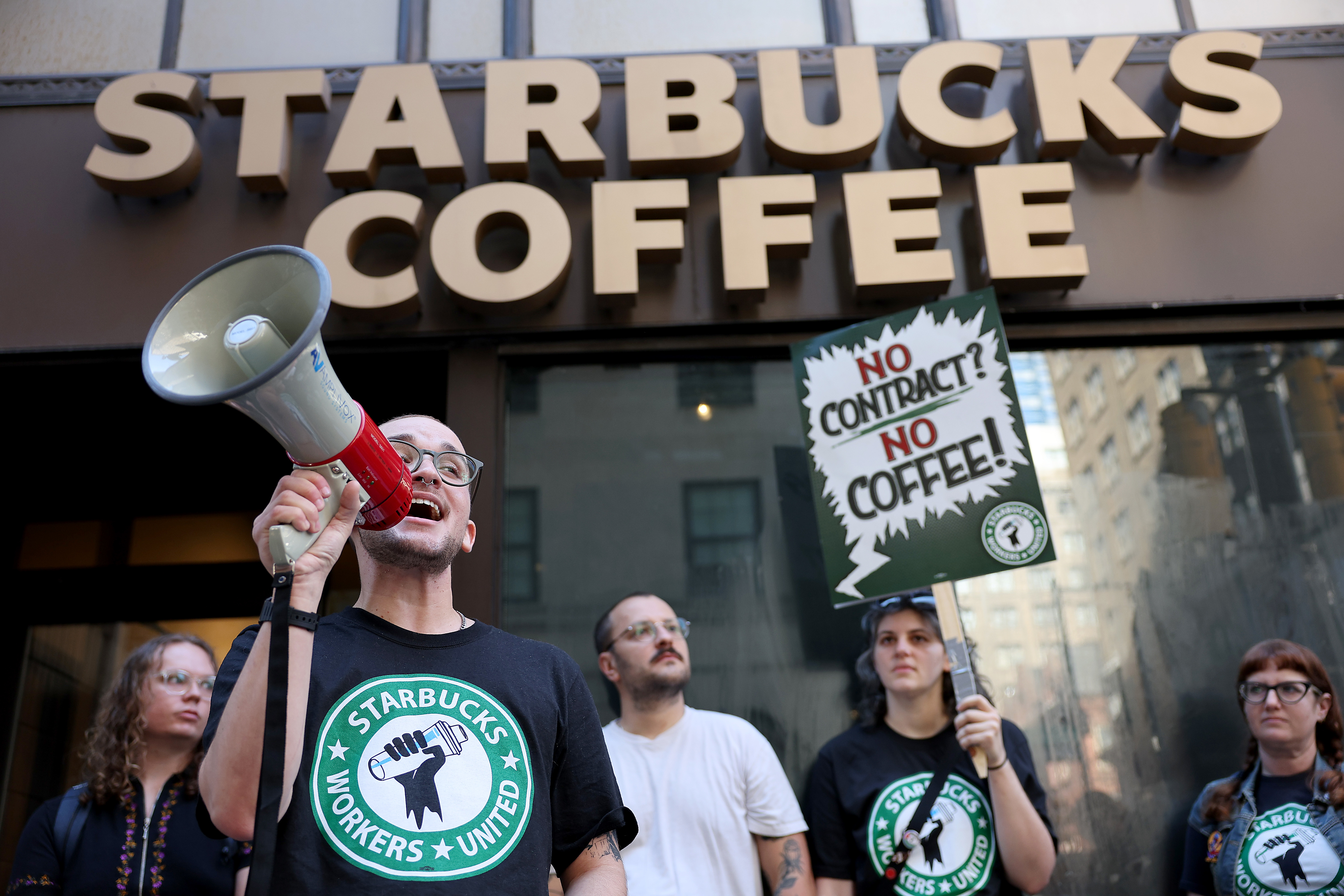
    Council voted unanimously on Thursday to make Philadelphia one of the first cities in the country to explicitly endorse a nationwide boycott of Starbucks amid a unionization drive, and to pledge not to use city funds at the coffee chain until it reaches a contract agreement with its workers.

    Also during Council’s session on Thursday: Councilmember Jamie Gauthier introduced controversial legislation to approve a contract with a trash incinerator that she doesn’t support. We’ll explain.

    What was this week’s highlight?

    Council puts Starbucks on ice: The expression of solidarity with Starbucks workers is a ceremonial resolution that does not carry the weight of law and does not require approval from Mayor Cherelle L. Parker.

    Still, Council’s vote was a formal endorsement of the boycott orchestrated by Starbucks Workers United and targeting the world’s largest coffee chain, which is already reducing its footprint in the city. Starbucks closed six Philadelphia locations last year, and two additional branches — one at 2201 South St. in Southwest Center City and the other at 1018 N. Second St. in Northern Liberties — closed on Sunday.

    The only other city to formally support the unionization effort is St. Louis, where last week the city’s board of aldermen approved a resolution to “express solidarity with Starbucks Workers United as they call for a boycott of Starbucks.”

    People staying dry at the Starbucks Coffee at Dilworth Park near City Hall in Philadelphia, Pa., on Thursday, July 9, 2026.Tyger Williams / Staff Photographer

    Over the last five years, baristas have unionized at hundreds of individual Starbucks locations, but the company has not agreed to a nationwide contract that the union has sought. The union in August called for a nationwide boycott to last until an agreement is reached.

    Councilmember Nicolas O’Rourke, a member of the progressive Working Families Party who represents the city at-large, authored the legislation and said its passage is “another affirmation of Philadelphia being a union town.”

    “I am always interested in making sure that businesses in the city of Philadelphia and people are thriving,” O’Rourke said. “But my first priority is always to make sure that workers and workers’ conditions are right and that they are respected.”

    Council is controlled by a supermajority of Democrats, and the body is largely supportive of organized labor.

    Council President Kenyatta Johnson said he backs the Starbucks boycott, even though he is generally not a big coffee drinker.

    “Unfortunately, they do have a vegan breakfast sandwich,” said Johnson, who follows a plant-based diet. “But I won’t be having those any time soon.”

    A spokesperson for Starbucks said in a statement Thursday that the company is “committed to engaging in productive bargaining.”

    What else happened today?

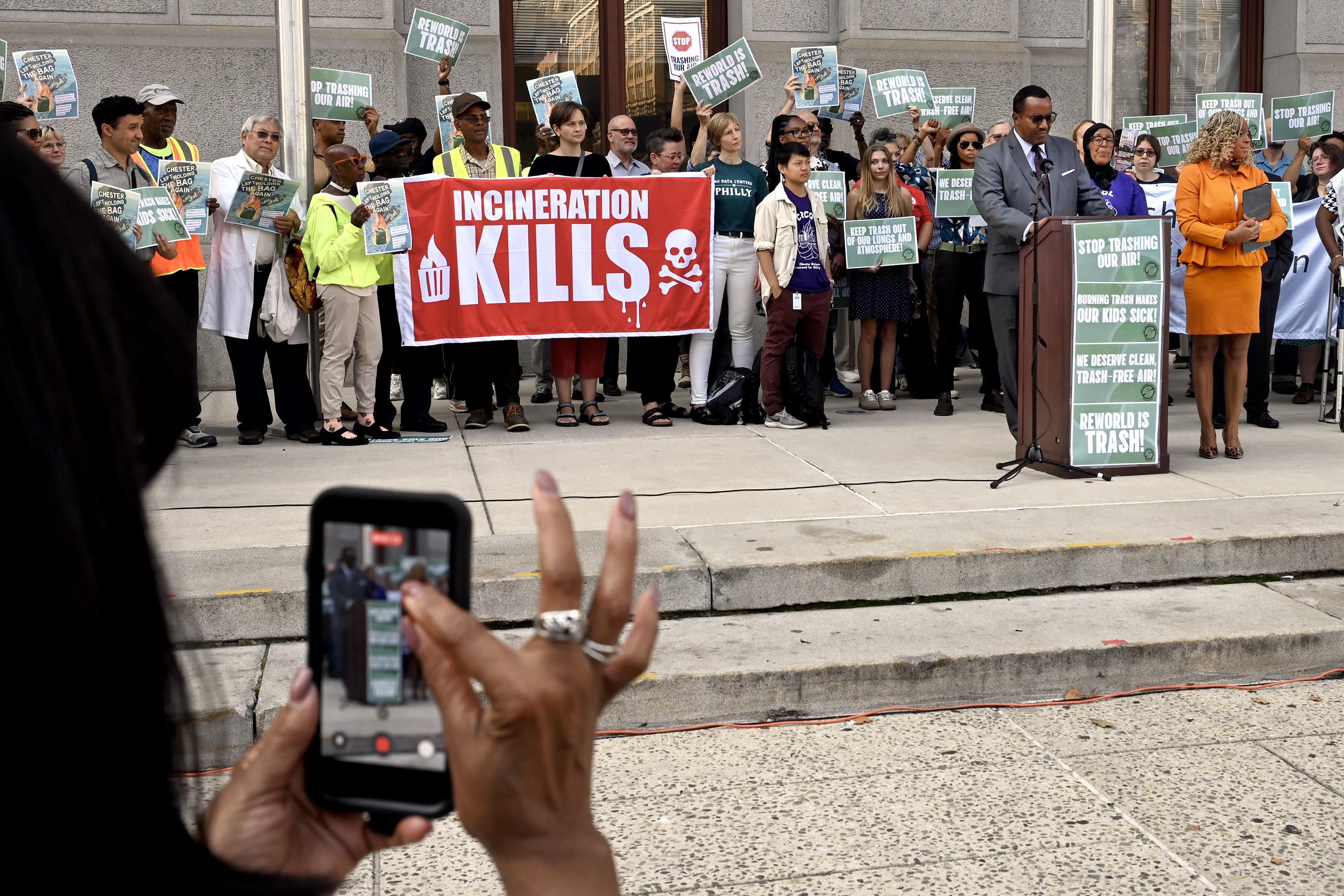
    Introducing legislation she doesn’t support: Thursday’s meeting featured another twist in the long-running debate over a Chester trash incinerator and how Philadelphia gets rids of its garbage. Gauthier, a progressive Democrat who has advocated for the city to stop burning its trash, introduced legislation that would allow the city to continue doing so.

    Here’s why: The Parker administration is looking to renew its long-held contract with Reworld, the Chester waste-to-energy facility where the city ships about one-third of its trash to be burned. (The rest of the trash is sent to landfills.)

    In order to renew the multiyear contract, Council must approve authorizing legislation. Gauthier, who previously floated a bill to ban the city from incinerating trash but did not garner enough support to pass it, is asking her fellow lawmakers to vote against the contract renewal.

    Chester Mayor Stefan Roots (at lectern) is joined by Philadelphia City Councilmember Jamie Gauthier (right) at a rally outside City Hall early Thursday morning Sept. 17, 2026.Tom Gralish / Staff Photographer

    Although it may seem like a reversal of her position, Gauthier introducing the legislation herself — even when she does not support it — will allow her to have some say when a committee holds a hearing on the legislation. She hopes to amend it to strike Reworld from the deal so that the city processes all trash and recycling through landfills.

    “It gives me and my coalition an opportunity to be at the table on something that we fought really hard on for more than a year now,” she said in an interview. “We’ve been working really hard to make sure that we’re protecting the health of folks in Chester and in Philadelphia, and protecting our environment.”

    Johnson will decide which committee will hear the bill. He said Thursday that he is still reviewing the legislation.

    Mamdani-fication: Create a Philly Medicaid Supplement Program. Expand access to programs that provide transit subsidies to low-income Philadelphians. Use city money to buy properties with expiring federal affordable housing subsidies.

    These were some of the recommendations included in the Affordable Philly Now report, which was recently released by the Cost of Living Task Force.

    O’Rourke, who convened the task force, held a committee hearing Wednesday examining the report’s findings, and he was not shy about noting that it was partly inspired by another progressive a few miles up I-95.

    “You cannot deny the profound impact that … Mayor Zohran Mamdani has had,” O’Rourke said, praising the New Yorker for “mixing moonshot municipal goals with sewer socialism” and working to build a “protective hedge” of social safety net programs.

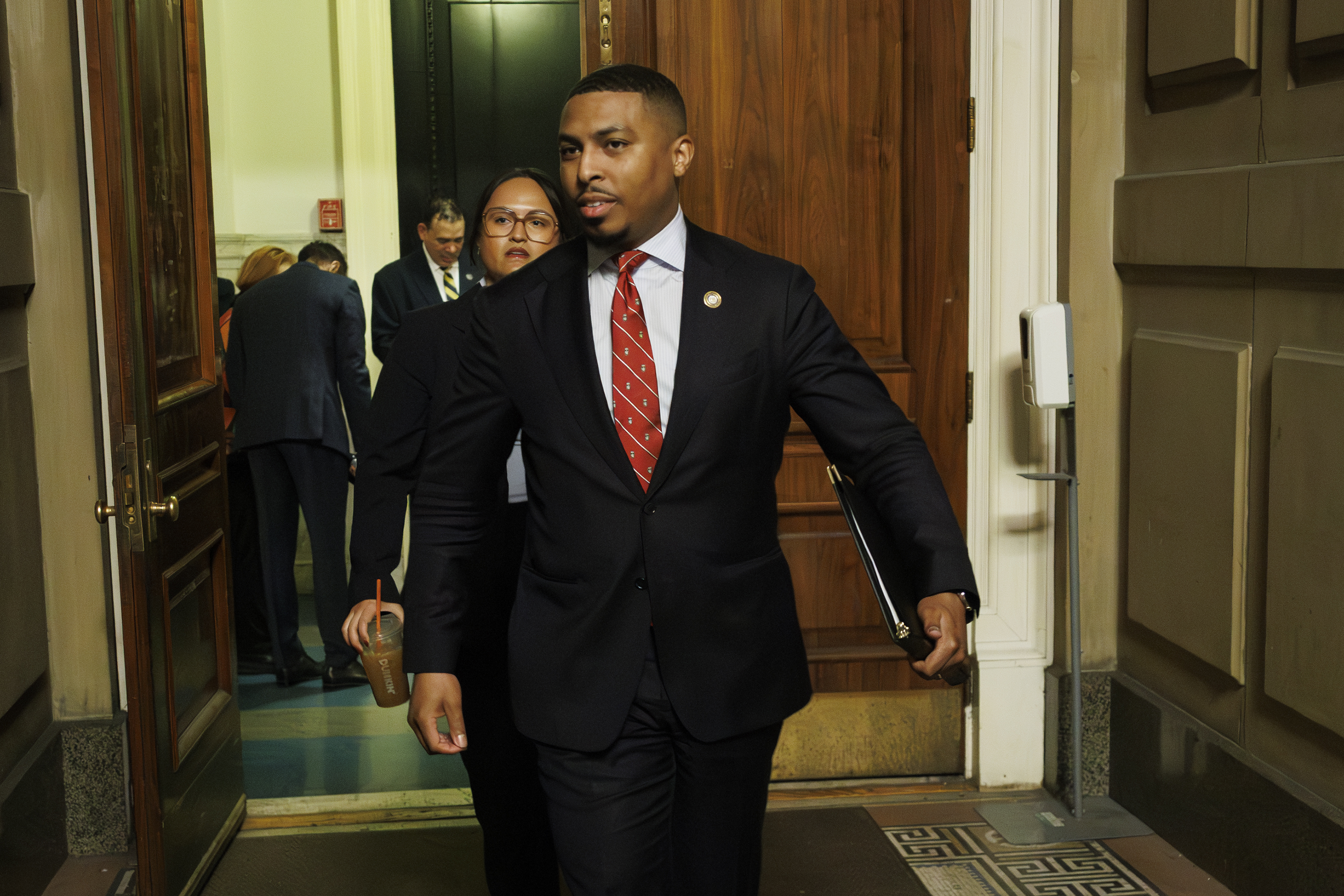
    Nicolas O’Rourke, Philadelphia City Council member, during the mayor’s budget address on March 12.Alejandro A. Alvarez / Staff Photographer

    Wednesday’s hearing was a meeting of the Committee on Global Opportunities and the Creative/Innovative Economy, which O’Rourke chairs. As a freshman and a member of a minority party, O’Rourke does not have a high-profile committee leadership post like some of the more senior Democratic lawmakers on Council. His committee was previously led by former GOP Councilmember David Oh and does not naturally align with O’Rourke’s progressive politics.

    O’Rourke said at the committee hearing Wednesday — the first time he chaired a Council hearing — that he was shifting the panel’s work.

    “The prior version of this committee revolved around corporate investment fitting into global value chains and making Philadelphia an international destination,” O’Rourke said. “In my reflection on the meaning of the committee, I have spent more time focusing on a part of the committee’s mandate that actually seems more in its merit — that is, to consider all matters related to making Philadelphia a world-class city. … And in some seasons, world-class cities show themselves by being bold in providing a protective hedge for its people.”

    Quote of the week

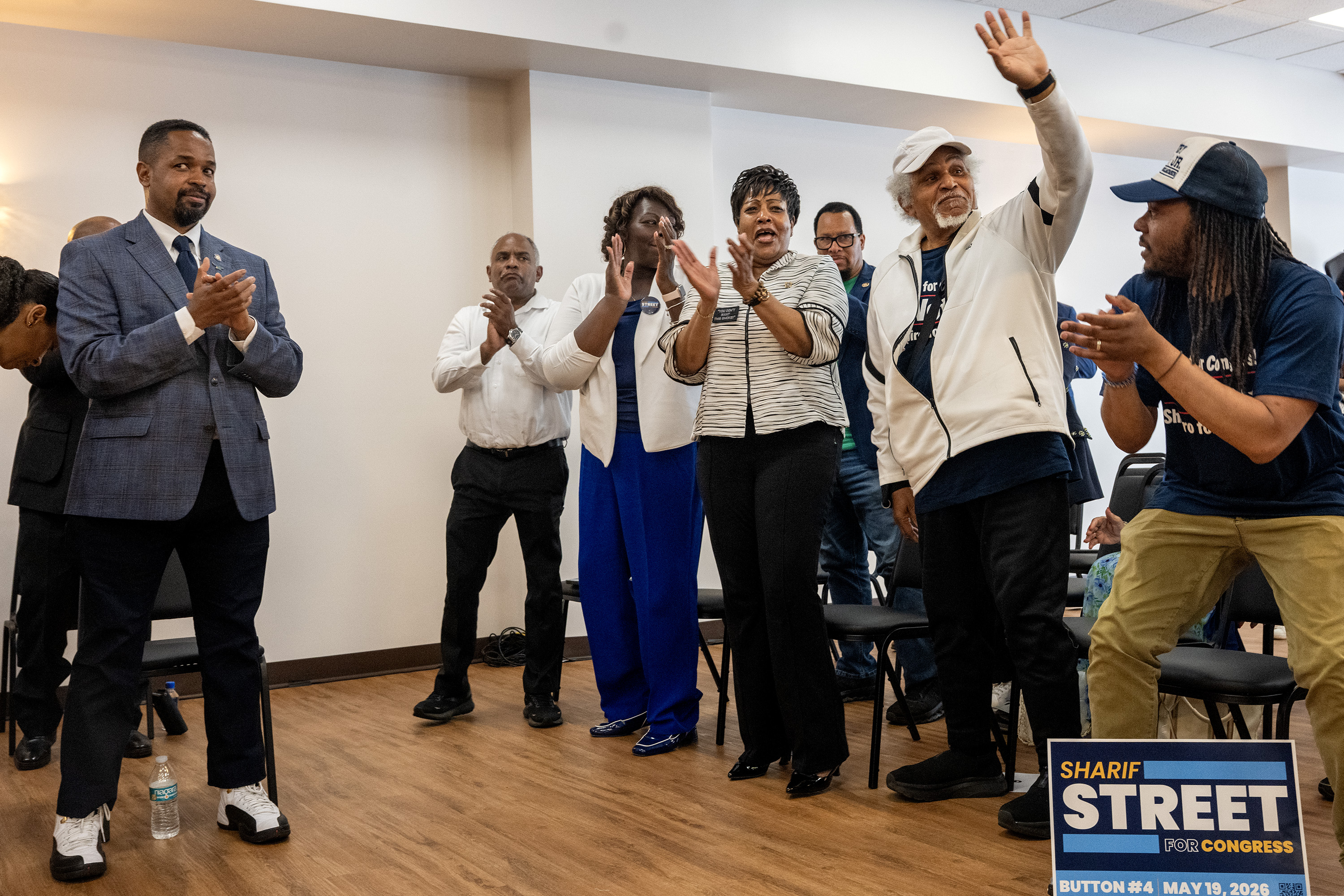
    Former Mayor John F. Street (right) is acknowledged by supporters of his son, State Sen. Sharif Street (left), in West Philadelphia Monday, May 18, 2026.Tom Gralish / Staff Photographer

    That was former Mayor John F. Street, the erstwhile City Council president, who returned to his old workplace Thursday to speak during public comment. He was testifying in support of a resolution to honor Philadelphia Police Lt. Greg Brown, who was, among other assignments, a member of Street’s security detail and is now retiring.

    Street said Brown was one of the few people he never got to humiliate, because Brown “always got it right.”

    “I never had a chance to put him on any list,” Street said.

  • Trump and Vance hit the campaign trail in deep-red areas where GOP candidates seek a boost

    Trump and Vance hit the campaign trail in deep-red areas where GOP candidates seek a boost

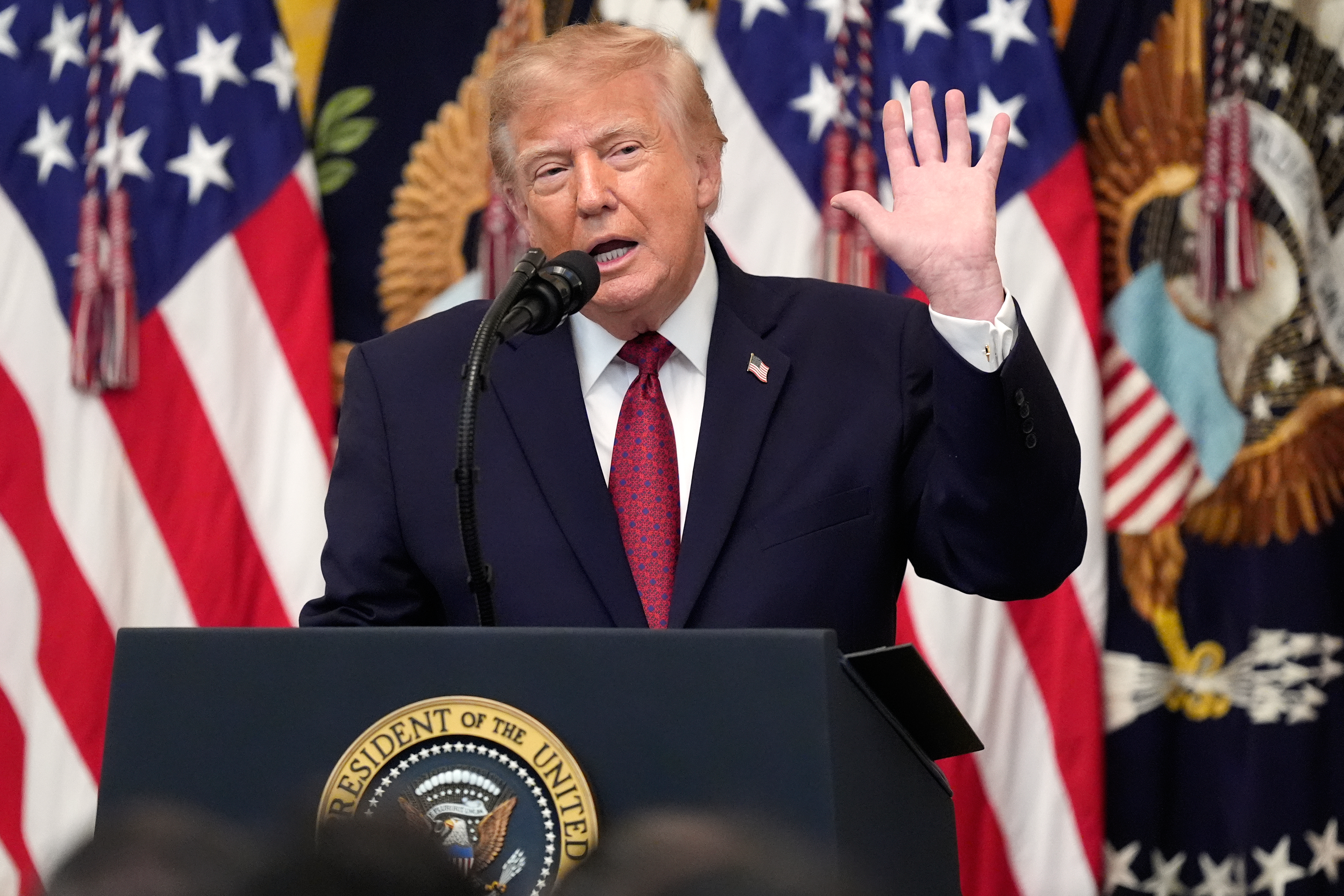
    WASHINGTON — President Donald Trump and Vice President JD Vance both hit the campaign trail on Thursday, but they headed to heavily Republican areas to shore up lagging enthusiasm in their party ahead of next month’s midterm elections.

    Trump’s travel to Texas and Oklahoma kicks off what the president said will be a 32-day campaign blitz leading up to Nov. 3.

    Vance stumped in Florida, putting the Republican Party’s highest-ranking officials in areas where GOP candidates once expected to have glide paths to victory but are now facing tougher races. The vice president tried to cast the GOP as representing common sense in the face of a Democratic push to the left.

    “I have the easiest job in the world,” Vance said in Lakeland, Florida. “I get to talk about how crazy the Democrats are.”

    Trump and Vance could have their work cut out for them, though.

    A new poll from The Associated Press-NORC Center for Public Affairs Research finds that only 17% of U.S. adults approve of Trump’s handling of the cost of living. Just 26% approve of his handling of the economy overall, marking a new low.

    Republicans have expressed growing pessimism about their chances in the election, which will determine control of Congress, as the president has repeatedly dismissed concerns about high costs and gas prices as his unpopular war in Iran drags on.

    According to Trump, his party’s headwinds are merely a matter of poor public relations about a job he says is well done.

    “I give us an A+ on the government, on economics, on everything,” Trump said Thursday, as he left the White House, while blaming the press for not covering the positive aspects of his administration.

    Landing in Texas, he said “we have to get the message” out, while vowing “to go campaigning all over the country.”

    Democrats say Trump and the Republicans are desperate

    Delanie Bomar, a spokesperson for the Republican National Committee, said in a statement that “the president is barnstorming the country, energizing our base, and supercharging Republican candidates in battleground districts and beyond.”

    The Democratic National Committee said Trump and Vance are “desperately trying to rally their base as the midterm elections approach and Republicans face defeat.”

    “Donald Trump and JD Vance started a deadly and costly war with Iran that sent the economy spiraling and pushed prices even higher, and now — in the final stretch to the midterms — they’re desperately pleading with voters to ‘give (them) another chance,’” said DNC deputy communications director Kendall Witmer.

    In Oklahoma, Trump will campaign with Republican Mike Mazzei, who is running against Democratic state House Minority Leader Cyndi Munson in the race for governor.

    Democratic Governors Association spokesperson Kevin Donohoe said Trump’s campaign rally shows that Republicans “are in full-on panic mode.”

    “This race continues to get more competitive — and national Republicans are right to be worried about Mazzei,” he said.

    The event will be held on the Choctaw Nation of Oklahoma, putting Trump in the company of just a handful of U.S. presidents who have visited tribal nations while in office.

    Before his evening Oklahoma stop, Trump toured a truck manufacturing facility and chatted briefly with workers in Texas, where Republicans are spending heavily to try to bolster state Attorney General Ken Paxton in a Senate race. Paxton faces a very competitive challenge from Democratic state Rep. James Talarico.

    Paxton planned to attend the event.

    Vance also stumped for GOP candidates

    Trump will be campaigning in more politically competitive areas in the days and weeks ahead as he embarks on his travel blitz, but Republican officials will not send him to places where they think his presence could drag down their candidates, according to a person familiar with the party’s strategy who was not authorized to speak publicly and spoke on the condition of anonymity.

    Trump’s Oklahoma visit, and likewise one on Friday to Alabama, are aimed at hitting two targets with one stop, the person said.

    Republican officials have noted that Durant is close to the Dallas and Fort Worth media market, meaning Trump’s message will also be carried to Texas voters, and he’s expected to talk about Paxton even while addressing voters in the neighboring state.

    His Friday stop in Mobile, Alabama, is aimed not only at boosting Sen. Tommy Tuberville as he runs for Alabama governor but also at shoring up support in Florida’s adjacent panhandle for Republican Rep. Byron Donalds. Donalds is running for Florida governor against David Jolly, the Republican-turned-independent who is now running as a Democrat.

    Donalds’ campaign in heavily GOP Florida comes as Republicans there have faced some turbulence and voter concerns about affordability and artificial intelligence data centers have become central issues.

    While Trump is in Oklahoma and Texas, Vance campaigned for Donalds in central Florida. That came a day after the vice president campaigned in Texas, rallying with Republican candidate Eric Flores, who is in a tight U.S. House race in south Texas.

    Vance, speaking in Harlingen, Texas, on Wednesday, acknowledged broader discontent over the high prices in the U.S. but shifted the blame away from Trump and Republicans.

    “I know that there are people out there who are frustrated by the pace of progress,” he said, but “we have spent every single day fighting for you, digging ourselves out of the hole that Joe Biden left us in.”

    Trump will also campaign on Saturday in Vandalia, Ohio, and on Monday in Grand Island, Nebraska.

    Trump is expected to campaign for the GOP almost daily

    In a meeting on Capitol Hill this week, White House chief of staff Susie Wiles described privately to GOP senators that Trump will have a near-daily sprint of campaigning ahead of the Nov. 3 midterms.

    Wiles showed Republicans the president’s upcoming travel schedule, which attendees described as extensive and almost every day, all across the country.

    West Virginia Republican Sen. Shelley Moore Capito said that White House officials are “acknowledging the headwinds” but that “they have a strategy, and we have a strategy,” including money that the president’s operation will continue to deploy.

    Capito also defended the White House’s plan to send Trump to traditionally conservative territory, arguing that he can motivate the Republican base not just where he travels but elsewhere in the country because he has such a broad reach.

    “He can get more of his voters out — that are going to be our voters — than anybody else,” Capito said.

  • Mikie Sherrill is less popular in South Jersey than she is in the rest of the state, new poll finds

    Mikie Sherrill is less popular in South Jersey than she is in the rest of the state, new poll finds

    New Jersey residents generally support how Gov. Mikie Sherrill handled the sexual harassment investigation into her lieutenant governor, which led to his resignation last week, a Rutgers University poll found.

    The overall approval rating for the first-term Democratic governor also remains steady eight months into her tenure, the poll said.

    The poll found 44% of New Jerseyans approve of the way Sherrill is handling her job, 34% disapprove, and 22% are unsure. The poll was conducted from Sept. 24 through 27, a period covering the investigation’s release and former Lt. Gov. Dale Caldwell’s resignation.

    South Jersey residents were less supportive of Sherrill, however, with 33% approving of her performance, 47% disapproving, and 21% unsure.

      (function() {
        var l2 = function() {
          new pym.Parent(‘SHERRILLPOLL3.html’,
                         ‘https://media.inquirer.com/storage/inquirer/projects/innovation/arcgis_iframe/SHERRILLPOLL3.html’);
        };
        if (typeof(pym) === ‘undefined’) {
          var h = document.getElementsByTagName(‘head’)[0],
            s = document.createElement(‘script’);
          s.type = ‘text/javascript’;
          s.src = ‘https://pym.nprapps.org/pym.v1.min.js’;
          s.onload = l2;
          h.appendChild(s);
        } else {
          l2();
        }
      })();

    “Gov. Sherrill’s approval numbers look much like they did at 100 days, which in this political climate — and after a challenging summer — is itself an accomplishment,” said Ashley Koning, an assistant research professor and director of the Eagleton Center for Public Interest Polling at Rutgers University-New Brunswick.

    ”She continues to draw more positive reactions than negative ones, and more New Jerseyans have formed an impression of her than had of Phil Murphy at this same point in his first term,” Koning said. “But a quarter of residents still have no opinion of her almost a year in, and how those New Jerseyans eventually break will decide whether her net positive ratings hold.”

    Stephen Sigmund, a spokesperson for Sherrill, said the poll reflects how the governor has approached the job.

    “Since day one, Gov. Sherrill has been taking action to drive down costs, build a stronger future for our kids, make Trenton more accountable, and stand up to Donald Trump’s attacks on our state. That work is resonating with New Jerseyans, and her focus will always be on delivering for them,” Sigmund said.

    The pollster asked participants to evaluate how well she had handled the independent investigation into claims that Caldwell used his job to meet women.

    The center had to adjust the question to reflect Caldwell’s resignation last Friday, but there was no statistically significant difference in how people responded. The poll found 68% saying she handled the situation “very well” or “somewhat well,” 14% “not very well” or “not well” at all, and 19% were unsure, the poll said.

    Sherrill released the independent counsel’s report, which corroborated allegations of sexual harassment, last Thursday. Caldwell resigned the following day. He and his attorney, Thomas Calcagni, denied any wrongdoing and called the investigation flawed.

    “She brought in an outside investigator and then called publicly for her own lieutenant governor to resign, and most residents read that as accountability rather than protecting her own or politics as usual,” Koning said.

    The governor released a 61-page report from a monthlong investigation conducted by an outside law firm late Thursday afternoon. The report said Caldwell had made inappropriate comments to women and violated ethics rules. Caldwell, a minister, is the former president of Centenary University.

    According to the report, Caldwell made a “romantic advance toward a female staffer’s friend.” When she turned him down, Caldwell told the staffer that ambitious women like her and her friend needed a man in his position to help them “but you young women are looking for young sperm,” according to the report.

    Although Sherrill’s marks are favorable, participants were less optimistic on the direction of the state, with 43% saying New Jersey was on the wrong track, 37% on the right track, and 20% unsure.

    The poll also asked residents their opinion on President Donald Trump. He remained overwhelmingly unpopular in New Jersey, with 24% saying they had a favorable impression of him, 66% unfavorable, and 10% no opinion.

    In South Jersey, 60% of residents had an unfavorable opinion, 30% had a favorable opinion, and 10% had no opinion. The poll defined South Jersey as Camden, Burlington, Gloucester, Cumberland, Salem, and Cape May Counties.

    The results are based on a survey of 1,004 adults. The poll has a margin of error of plus or minus 4.1 percentage points.

  • Supreme Court grants review of Trump administration’s mandatory detention policy for immigrants

    Supreme Court grants review of Trump administration’s mandatory detention policy for immigrants

    WASHINGTON — The Supreme Court on Thursday agreed to review a Trump administration policy denying bond hearings for immigrants as the government carries out a sweeping crackdown.

    The justices will consider whether immigrants who have been living in the U.S. have a right to a hearing to determine if they should remain detained while challenging their possible deportation.

    The case will test a key pillar of the Trump administration’s hard-line immigration agenda.

    Most appeals courts to have considered the issue have found that it violates federal law to detain immigrants, including those living in the U.S. illegally, without a bond hearing. Those decisions conflict with rulings by the 5th and 8th circuits, which held that immigrants accused of illegally entering and remaining in the U.S. must be detained while their deportation cases are pending.

    The high court agreed to hear the case of Ricardo Aparecido Barbosa da Cunha, a citizen of Brazil. Authorities say he entered the United States illegally two decades ago and applied for asylum in 2016. He sought a bond hearing after an immigration judge determined that his detention was mandatory following his September 2025 arrest.

    He has never been charged or convicted of a crime, his attorneys said. The court is expected to hear the case in the coming months.

    President Donald Trump’s administration had urged the high court to take up a different but related case that involves the broader constitutional implications of the new policy.

    Attorneys from the Republican administration argue the circuits’ split is “disrupting the orderly administration of immigration law.” They say the nation’s courts have been inundated with thousands of petitions filed by immigrants challenging the government’s legal interpretation.

    “The result is an unworkable patchwork of inconsistent immigration enforcement, where aliens present without admission are subject to mandatory detention in some circuits but are entitled to bond hearings and often released in others,” lawyers for the administration wrote.

    The plaintiffs are immigrants represented by the American Civil Liberties Union, which says hundreds of district court judges have joined most circuits in rejecting the Trump administration’s new reading of the statutes. Plaintiffs’ lawyers say the administration is trying to deny bond hearings for immigrants apprehended anywhere in the U.S. — no matter how long they’ve lived in the country — rather than limiting the restriction to noncitizens stopped at the border.

    “Millions of noncitizens could be affected by the government’s new interpretation,” ACLU attorneys wrote.

    The Trump administration says its new mandatory detention policy is legal under a 1996 immigration law. The policy change departs from the practices of prior administrations, which typically allowed most noncitizens without criminal records to request a bond hearing if they were arrested away from the border.

  • Renee Good’s family sues U.S. government and immigration officials over her killing in Minneapolis

    Renee Good’s family sues U.S. government and immigration officials over her killing in Minneapolis

    Renee Good’s family sued the U.S. government and the architects of President Donald Trump’s immigration crackdown on Thursday, saying “the time is absolutely now for accountability” after her killing in January by a federal agent in Minneapolis.

    Good’s partner, Becca Good, and brother, Brent Ganger, accused the government and the Immigration and Customs Enforcement officer who shot into her SUV and killed her, Jonathan Ross, of unjustified and excessive use of force.

    The Jan. 7 shooting, captured on bystander video, was “the predictable and intended product” of the Trump administration’s crackdown on Somali and other immigrants in Minnesota, an exercise that officials dubbed Operation Metro Surge, the lawsuit said.

    “I’m here today because last January the whole world had to watch as our entire universe was destroyed,” Becca Good said at a news conference announcing the lawsuits.

    The killings of Good, a 37-year-old mother, and another U.S. citizen, Alex Pretti, in Minneapolis just weeks later sparked outrage across the country and calls to rein in immigration enforcement. At least 10 people have died in encounters with immigration officers during Trump’s second term.

    “What happened to Rene was completely senseless,” Ganger said. “And the fact that there’s been no accountability, no investigation, no expression of condolence, no change in policy is completely mind blowing.”

    “The hole in my family and myself created by my sister’s passing is hauntingly apparent,” he added.

    The lawsuits — one against the government, the other against Ross and officials including White House Deputy Chief of Staff Stephen Miller, ex-Homeland Security Secretary Kristi Noem and White House border czar Tom Homan — seek unspecified damages for wrongful death, conspiracy and other violations.

    “Our government has become a grave and mortal threat to its own citizens,” the family’s lawyer, Antonio Romanucci said.

    The Justice Department didn’t immediately respond to an email seeking comment.

    Officer shot Good as she turned her car away from him

    Renee Good was fatally shot Jan. 7 as protests against immigration raids flared across the city. According to Becca Good, her partner stopped their car in a street to support neighbors during an immigration operation.

    Bystander video shows Renee Good in the driver’s seat of a red SUV blocking part of the road and repeatedly honking her horn.

    Two immigration officers get out of a truck, their faces covered, and one orders Good to get out of the car. She reverses briefly, then turns the steering wheel as the officer says again, “get out of the car.”

    Almost simultaneously, Becca Good, standing in the street, shouts: “Drive, baby, drive!”

    One officer standing in front of the vehicle pulls his weapon and fires into the windshield. He lurches back as the car turns away from him. The officer, who is now very close to the open window on the driver’s side, fires two more times, fatally shooting Renee Good, according to an analysis of the videos by The Associated Press and others.

    Federal officials at the time said the officer acted in self-defense and that Good had engaged in “an act of domestic terrorism.”

    One lawsuit alleges wrongful death

    The lawsuit against the United States of America seeks damages for Good’s wrongful death and “the immense suffering Renee endured in the final moments of her life and for the profound and permanent losses that her death has inflicted upon her family,” according to a news release by lawyers for Ganger and Good.

    The lawsuit, which seeks a bench trial, also alleges “intentional infliction of emotional distress and negligent infliction of emotional distress” on Becca Good.

    Becca and Renee Good, the mother of three children, were not legally married, according to a family lawyer, but referred to one another as wives. They had only recently relocated to Minneapolis from Kansas City, Missouri.

    Another lawsuit alleges conspiracy to conceal evidence

    The other lawsuit alleges a conspiracy to interfere with civil rights and seeks a jury trial. It says the federal government moved to hide the evidence of what actually happened on Jan. 7.

    It describes a “carefully planned, coordinated effort between senior federal officials and private actors to make two ethnic communities — Minnesotans of Somali and Hispanic descent and origin — the object of aggression and abduction, and to silence by intimidation, arrest and violence the neighbors and allies of those targeted communities who observed, documented and warned of that campaign.”

    Other defendants include: Corey Lewandowski, a Trump campaign manager who also served as one of Noem’s advisers; former acting director of U.S. Immigrations and Customs Enforcement Todd Lyons; former U.S. Border Patrol commander Gregory Bovino; and 10 unnamed federal agents.

    Good’s partner acknowledges other lives lost in immigration crackdown

    In social media accounts, Renee Good described herself as a “poet and writer and wife and mom.” On Pinterest, a profile picture shows her smiling and holding a young child, alongside posts about tattoos, hairstyles and home decorating.

    In an interview shortly after her death, Renee Good’s mother, Donna Ganger, told The Associated Press: “She had this way of making you feel special and loved that I didn’t even understand that until we lost her.”

    Good’s partner noted the broader loss to communities nationwide.

    “As we have tried to navigate our own massive loss, I am also devastated by how many other lives have been destroyed in this darkest of times,” Becca Good said in a news release Thursday. “So many other families are dealing with the loss of their loved ones; to everyone who has had to witness it — the pain of this moment extends far beyond our family. What happened to us should never happen to any family.”

  • Bipartisan bill seeks to ban cellphones in schools nationwide

    Bipartisan bill seeks to ban cellphones in schools nationwide

    A new bipartisan effort could create a national ban on cellphones during the school day, the most sweeping attempt yet to keep screens out of classrooms.

    The bill, filed Wednesday by Sen. Mark Kelly (D-Arizona) and Sen. Tom Cotton (R-Arkansas), would send money to states that adopt policies barring students from using personal devices – including cellphones, smartwatches, tablets and similar technology – during the school day.

    If the legislation is approved by lawmakers, states would be able to use the funding to enforce device bans, including paying for lockers, lockboxes or pouches for students to store their devices. The legislation makes exceptions for children who need devices for special education or medical needs.

    “Arkansas kids deserve classrooms free of distractions,” Cotton said in a statement. “This bill would support Arkansas public schools that choose to tailor their classroom cellphone guidance to ensure students have the most productive school days possible.”

    Cellphone bans have become popular in recent years, with most states enacting policies designed to restrict cellphone use in schools. Students are often required to stow their devices in lockers or locked pouches during the school day.

    Supporters of these rules hoped keeping phones out of the classroom would help students focus, boost test scores and improve mental health. But the results have been mixed.

    While cellphone bans have reduced unauthorized usage in schools, there has been little academic benefit, according to research by the National Bureau of Economic Research.

    “There is clearly justifiable enthusiasm for school phone bans, but it’s important to recognize that building effective, phone-free learning environments does not appear to be a simple or quick fix,” according to Thomas Dee, a Stanford University professor and one of the authors of the report.

    “The very early experience schools have with phone bans is sobering, but there are also indicators that as schools adjust to phone-free policies, the benefits of these bans may be realized,” he said in an interview posted on a Stanford website.

    And, in some cases, teens reported using their phones more often at school, particularly at schools with lax enforcement, according to a Brookings Institution survey. Students in that survey also said cellphone bans had no impact on their happiness, stress or relationships with teachers.

    A spokesperson for Kelly said the measure is intended to give schools the resources to make phone bans work and enforce them consistently. While no single policy will solve every challenge in the classroom, reducing distractions can help, the spokesperson said.

    “Phones in schools have been a disaster for learning,” the senator said in a statement emailed to The Post. “Getting phones out of classrooms will mean fewer distractions and more time for kids to focus on their teachers and lessons. We’re giving schools the tools to make that happen.”

    Some advocates continue to link cellphone use with grades. Amid declining math and reading scores among teenagers, more than half of public school leaders say cellphone usage hurts a student’s academic performance, federal survey results show.

    The U.S. Surgeon General’s office has also warned that excessive screen use can lead to anxiety, depression, lower grades and weakened interpersonal relationships.

  • Most Americans blame Trump for high prices as midterms approach, a new AP-NORC poll finds

    Most Americans blame Trump for high prices as midterms approach, a new AP-NORC poll finds

    WASHINGTON — Americans are deeply frustrated with President Donald Trump’s handling of the economy and rising prices, with most panning his performance and blaming his policies as higher costs threaten his party’s chances in November.

    A new poll from The Associated Press-NORC Center for Public Affairs Research finds that only 17% of U.S. adults approve of the Republican president’s handling of the cost of living. Just 26% approve of his handling of the economy overall, marking a new low.

    A majority, 65%, of U.S. adults now blame Trump’s policies for persistently high costs more than factors outside of his control, signaling growing weariness over his aggressive use of tariffs and continued unhappiness with the war with Iran.

    The dismal numbers come just weeks before midterm elections that will determine whether Republicans maintain control of Congress and while Trump is hitting the campaign trail with an aggressive schedule of rallies. But Trump — who has asked voters to pretend that he is on the ballot as he tries to bolster turnout — remains deeply unpopular, with even many Republicans faulting him for failing to deliver on promised relief.

    “I was hoping it would be better or different, but it’s not really good,” said Robert Gault, 66, a retired factory worker from Bradford, Pennsylvania, who describes himself as a Republican.

    “Our president, I thought, was going to help the country, and so far he has not really seemed to have done that with the economy or in general. He’s not really done what I was hoping he would,” said Gault. ”He said, ‘Make America Great Again.’ And I have not seen him do that.”

    Costs drag on Trump as the economic pain keeps coming

    Over the last few months, Americans have grown more worried about being able to afford basics like groceries and gas. About half of U.S. adults now say they are “extremely” or “very” concerned about being able to fill their tanks, up from 39% in July. About half are also highly concerned about being able to afford food.

    Prices are “extremely exorbitant. Just the cost of everything is going up as a result of fuel,” said Pedro Sanchez, 52, of Perris, California, who voted for Trump and works in law enforcement. “I used to have a lot more disposable income. I don’t have that any more. It’s gotten eaten up because of all these increases in the cost of everything.”

    Trump’s current approval on the economy is a 14 percentage point drop from March 2025, just after he took office for the second time. His struggles on the issue mark a significant departure from his first term, when the economy was often a point of strength.

    Trump spent much of the 2024 campaign hammering President Joe Biden and Vice President Kamala Harris, Democrats, on inflation and promising to lower prices. Now, there’s widespread disappointment with his performance. About 7 in 10 Americans say Trump’s handling of the cost of living has been “worse than expected.” That includes roughly half of Republicans, who are also broadly concerned about being able to afford groceries and gas.

    “Groceries are just like kind of out of control. It seems like everything is going up,” said Bethany Lnenicka, 41, who operates a small farm in Fairfax, Iowa. “It’s just one thing and the next week it’s another thing. It’s just insane. And of course your income doesn’t go up.”

    A political independent who typically votes Republican and has voted for Trump three times, Lnenicka said she had hoped his second term would be more like his first.

    “I just do not feel like it has gotten a lot better,” she said.

    About 6 in 10 Republicans disapprove of Trump’s handling of the cost of living, according to the new poll, up from about half in April.

    “It definitely doesn’t feel like we have trended in the right direction,” agreed Kristen Slaven, 41, a mental health therapist who lives in Gluckstadt, Mississippi, and typically votes Republican. She said Trump is focused on the wrong things.

    “Obviously wars don’t help. When they’re necessary, I understand. But our focus on renaming bodies of water and pieces of land, that’s just stupid to me when people can’t feed their family,” she said.

    “I had hoped that it would be better,” Slaven added.

    Some Republicans are still willing to cut Trump some slack

    Despite their frustration, most Republicans, 67%, say factors outside of Trump’s control are more to blame for high prices.

    “I think inflation is a very difficult thing to tackle,” said Fred Naumann, 51, a Republican and longtime Trump supporter who lives in Green Bay, Wisconsin.

    Though he would like to see interest rates come down, Naumann, who works in the automotive industry, supports tariffs and the war with Iran, believing it was necessary.

    Overall, however, most Americans, 69%, continue to say the war has not been worth fighting, up slightly from 64% in July. Only 28% approve of how Trump is handling Iran.

    Americans are also unhappy with Trump’s trade wars. Only about 3 in 10 U.S. adults approve of how he is handling trade negotiations with other countries, down from about 4 in 10 in March. And 64% say he has “gone too far” on imposing new tariffs on other countries, up from 58% in January.

    Overall, the picture is not better. Only about 3 in 10 Americans approve of how Trump is handling his job as president. And about 6 in 10 say the country as a whole is “much” or “somewhat” worse off than when he began his second term.

    The issue on which Trump maintains relative strength is border security, with about half of Americans saying they approve of his performance.

    Trump faces more blame than Biden did

    Trump’s low grade on the economy rivals Biden’s 28% approval rating in June 2022, when there was record-high inflation during the COVID-19 pandemic.

    But Americans were less likely to blame Biden in the lead-up to that year’s midterm elections, a sharp contrast with the solid majority who hold Trump responsible now. In October 2022, 44% of Americans said Biden’s policies were responsible for high prices, while 55% blamed factors outside of his control.

    Sanchez, a Republican who voted for Trump, blames him, at least in part.

    “I think he has a lot to do with it. This war in Iran, the tariffs that he’s placing on other countries, obviously are affecting us. Those two things are things he’s been directly involved in that directly affect the economy,” he said. “I think with Biden, a lot of the stuff was outside of his control. It was all the COVID and how that affected everything else. I don’t think that there was much that he could have done.”

    He had high hopes for Trump’s return. Now, things seem worse than under Biden.

  • Hegseth talks tough as Republican doubts about his leadership grow

    Hegseth talks tough as Republican doubts about his leadership grow

    WASHINGTON — Defense Secretary Pete Hegseth has survived in office by projecting an image of strength.

    His combative style has won praise from President Donald Trump and support from the Republican base. “He loves war,” Trump said earlier this year, slapping Hegseth on the biceps.

    By many measures, though, Hegseth has never been weaker. He is leading the military through an unpopular war. Republicans in Congress complain privately — and increasingly in public — that he and his staff are dismissive of their questions and frequently unprepared for briefings.

    If Democrats win a majority in the House, Hegseth will likely face new calls for his impeachment.

    Hegseth’s firing and sidelining of senior military officers, often with no explanation, has fed mistrust and led many in the top ranks to question his leadership.

    How Hegseth manages the contradiction between his tough guy image and his growing vulnerabilities in Washington and around the world could determine whether Trump — the person Hegseth must ultimately please — keeps him in the job.

    Hegseth’s most immediate problems are in Iran, where the U.S. war shows no signs of ending, and on Capitol Hill. In the aftermath of the midterm elections, Hegseth will have to persuade a skeptical Congress to pass a $1.5 trillion defense budget and confirm nominees for key Pentagon posts. Several of his choices are being blocked by Republicans in the Senate.

    He will also have to persuade Congress to keep paying for the war, which the American people broadly oppose.

    On Wednesday, Hegseth focused on the part of the job that plays to his strengths. Onstage at a military base outside Washington, with a giant American flag behind him, he attacked the media and promoted his victories in the culture wars.

    “The complainers, the ideologues, and the poor performers are no longer in the driver’s seat. No more silly PowerPoint trainings or drag queen shows,” Hegseth said. “No more gender pronouns. No more identity months. Only the warrior ethos.”

    He also laid out an ambitious agenda that included building a massive military base and establishing a major new command focused on preparing the military for wars dominated by robots and artificial intelligence.

    Most of those initiatives will require support from lawmakers who view him with unease, if not disdain.

    A year ago, Hegseth stood on the same stage outside Washington and delivered a similar speech to a room full of more than 800 generals. He blamed them for acceding to overly restrictive rules of engagement intended to protect civilian lives. He bashed them for allowing liberal ideas, which he called “toxic ideological garbage,” to infect the force. And he accused them, without evidence, of lowering standards to accommodate women in the ranks.

    The senior officers sat stone-faced. Many said privately that they found Hegseth’s speech insulting.

    This time Hegseth’s audience included about 600 junior officers and enlisted leaders.

    Since taking office last year, Hegseth has overseen a purge of generals and admirals unlike anything the military has experienced in decades. He has fired or blocked the promotions of more than 80 generals and admirals.

    On Wednesday, Hegseth made clear that his work was not done.

    “The number-crunchers say we fired 10% of the generals and admirals across the force, and that number sounds about right,” said Hegseth, citing figures first tabulated by The New York Times. Almost half of those fired or removed were women or minority officers.

    Hegseth’s day began outside the Pentagon, where he led the 600 junior troops in pushups, stretching, and a morning run, just as he would have when he was an Army captain two decades earlier.

    To drive home Hegseth’s message of toughness and lethality, the service members traded in their military-issued workout gear for “This is War” T-shirts of the sort that Hegseth has recently modeled during his workouts, which his staff members regularly post on social media.

    But Hegseth is no longer a junior officer, and the biggest challenges he faces are not among the frontline formations.

    The war in Iran, which Trump started and Hegseth now leads, has drained the military’s stockpile of critical munitions that it needs to defend U.S. troops and allies in the Middle East, and to deter an even larger conflict with China or Russia. Replenishing those magazines could take two to three years, according to defense experts.

    The war is also creating economic problems at home. The average American could tune out the wars in Iraq and Afghanistan. “We’re at war; America’s at the mall,” U.S. troops fighting overseas often bitterly complained.

    By contrast, the war against Iran and the battle over the Strait of Hormuz have caused fuel and food prices to surge. Republican congressional candidates in Iowa, Nebraska, Ohio, and Michigan have increasingly questioned the rationale for continuing the conflict.

    “The war in Iran needs to end, and end quickly,” said Mike Rogers, the Republican Senate nominee in Michigan and an early supporter of the war.

    Hegseth’s stewardship of the military, particularly his firing of generals and admirals, has alienated Republican national security hawks in Washington.

    “It’s not the right way to treat people,” Rep. Don Bacon (R, Neb.) an Air Force veteran, said in a recent interview. “It’s not decent.”

    Hegseth’s clashes with lawmakers extend beyond the firings. Republicans in Congress have complained that he and his staff have misled or lied to them about recent decisions to pull Army brigades out of Poland and Romania.

    “We didn’t think we were treated honestly,” Bacon said.

    And lawmakers from both parties have said that they cannot get answers to basic questions about the conduct of the war in Iran, or about the Pentagon’s budget requests.

    “You want to sell people on your needs,” said Sen. Thom Tillis (R, N.C.), who cast a key vote in confirming Hegseth as defense secretary. “You want to sell people on your priorities. Then you have to engage.”

    He added: “I don’t think Hegseth has developed any productive relationships, even with Republican members.”

    The Pentagon’s recent $67 billion request to pay for operations in Iran was only seven pages, compared to the Iraq and Afghanistan spending bills, which typically ran more than 100 pages and included detailed accounting of the department’s needs.

    In his speech to the troops Wednesday, Hegseth answered some of his critics by suggesting, as he had previously, that the war against Iran had already been won.

    “Allow me to lay it out simply for the anti-American losers in our media,” he said. “These Americans, right here, and their peers, these have destroyed Iran’s navy, destroyed Iran’s air force, destroyed their air-defense systems, their leadership and their military industrial capacity, their entire defense base.”

    His analysis did not account for Iran’s large stockpile of missiles, which it continues to fire at its neighbors and oil tankers transiting the Strait of Hormuz. Nor is it likely to satisfy skeptics in Congress.

    “He’s not working with Democratic senators,” said Sen. Joni Ernst (R, Iowa). “He works very little with Republican senators.”

    Ernst added: “We need more transparency for the good of the Defense Department and the good of the nation.”

    The result is that many of Hegseth’s top priorities in Congress are going nowhere. Earlier this year, Hegseth fired or forced out the Army chief of staff, the Army secretary and the Navy secretary. Senators are refusing to confirm the leaders Hegseth has chosen as replacements.

    The defense secretary also has struggled to persuade lawmakers in the House and Senate to pay for any of the Pentagon’s spending bills. In the near term, the Pentagon will have to make do with last year’s budget of about $890 billion, or about 40% less than it is currently budgeting.

    The difference will force the Pentagon to reallocate money set aside to repair barracks, train troops and buy weapons to pay for more pressing needs, such as sustaining 50,000 troops in the Middle East. In the coming months, some of Trump’s top priorities, such as his proposed Golden Dome missile shield for the United States, will likely come to a halt.

    None of those setbacks seemed to dissuade Hegseth from sketching out an even more ambitious and costly agenda. He spoke of standing up a new autonomous weapons command led by a four-star general.

    He laid out a plan to make all U.S. military bases energy independent. “If an adversary takes down the grid by cyberattack, by sabotage, or by any means, our bases stay lit,” Hegseth said.

    He promised to launch a competition among all 50 states and governors for the new military base, which would house as many as 25,000 troops.

    “We’re talking hundreds of thousands of acres with organic power generation, modern air defenses and cutting-edge technology,” Hegseth said. “Think a fortress.”

    Hegseth barely spoke of the $1.5 trillion defense budget that the Trump administration sent to Congress earlier this year. It is a budget that even Republicans concede has little chance, in its current form, of passing.

    At some point Trump may have to make a choice.

    “Trump really likes Hegseth, and I think that’s based on style,” said Todd Harrison, a senior fellow focusing on defense at the American Enterprise Institute.

    Trump chose Hegseth in part for his bravado, which was on full display Wednesday. The question now is whether pressure from Republican lawmakers will force the president to find a leader for the Pentagon who is less politically combative and more eager to make peace with a frustrated Congress.