Category: Politics

  • AI groups are spending millions to influence the midterms

    AI groups are spending millions to influence the midterms

    Artificial intelligence companies racing to shape how the federal government might regulate their industry amid rising safety and economic concerns are spending heavily to influence which candidates make it to Congress.

    A New York Times analysis of federal campaign finance data shows that the political groups aligned with the two leading AI developers, OpenAI and Anthropic, have quietly but decisively intervened in key 2026 races, spending on campaign advertising and outreach to voters to the tune of $55.7 million.

    So far, the spending has been concentrated almost entirely in the primaries. The two groups have spent $52.6 million on safe seats — those that are unlikely to change party hands but that often feature intense intraparty contests.

    The big AI players have also spent more heavily for Democrats than Republicans. They have bolstered candidates who align with their agendas, helped defeat those they see as hostile to them, and ingratiated themselves with front-runners who are likely to be in positions of power in the next Congress to make decisions critical to their bottom lines.

    But with voters quickly souring on their industry — including demanding that lawmakers do more to regulate AI and halt or mitigate the proliferation of data centers — they have taken pains to obscure their involvement. With few exceptions, they have intervened without ever explicitly mentioning AI or data centers in the TV and digital ads they have purchased.

    (The Times has sued OpenAI and Microsoft, claiming copyright infringement of news content related to AI systems. The two companies have denied those claims.)

    The Times reviewed 95 unique ads bought by four AI super political action committees heavily funded by the two biggest players — the OpenAI-aligned Leading the Future and the Anthropic-aligned Public First Action — each of which funnels its money through separate Republican and Democratic groups. None of the ads mentioned data centers. Only seven mentioned AI or an AI company directly.

    An ad for Rep. Barry Moore (R., Ala.) featured the phrase “CHAMPION AMERICAN INNOVATION” as he shook hands with firefighters in a garage — one of several AI-backed advertisements that used that phrase over images of workplaces that appeared to have nothing to do with AI.

    Another was in support of former Rep. Jesse Jackson Jr., a Democrat running for an open House seat in Illinois. It was paid for by Think Big, which is aligned with OpenAI, and praised him as committed to reducing gun violence and supporting law enforcement.

    And in some instances, both the Republican and Democratic groups funded by the same big AI player created advertisements advocating opposing sides of an issue. For example, two spots for House candidates in Texas, a Democrat and a Republican, praise opposite positions on immigration. Both are funded by the Anthropic-aligned super PACs.

    “It’s so cynical,” said Nate Blouin, a state senator in Utah who lost a Democratic primary to an opponent who had been backed by more than $1 million in AI-funded ads. “They’re coming into races in safe seats that they know that they’re going to be decided in the primaries, and they are spending millions of dollars on things that are unrelated to the core issue that they are pushing for.”

    It is a strategy that has also been deployed this cycle by the American Israel Public Affairs Committee, another major interest group whose brand has become a liability in recent years and has spent in the midterms to the tune of tens of millions of dollars while rarely mentioning its top issue.

    The companies behind the spending have somewhat different policy agendas. Anthropic generally supports stricter regulation of AI development, while OpenAI tends to push for fewer guardrails to allow for the acceleration of AI development. But they both share the same goal: promoting AI and electing policymakers who hold a favorable view of it.

    In a statement, Anthony Rivera-Rodriguez, a spokesperson for Public First Action, vehemently denied that the Anthropic-aligned group had a parallel agenda to the political group affiliated with OpenAI.

    “We reject any suggestion that we have anything in common with Leading the Future, a group that exists to gut every serious attempt to regulate artificial intelligence,” he said. His organization, he added, “was founded to be the counterweight to Big Tech’s political machine” and stands “with the people willing to fight for real rules on this technology and protect kids, workers and families from AI harms.”

    Jesse Hunt, a spokesperson for Leading the Future, said the group was “focused on building a bench of champions who understand the need for a national AI framework that keeps America at the forefront of innovation while putting responsible safeguards in place to protect workers, families and communities.”
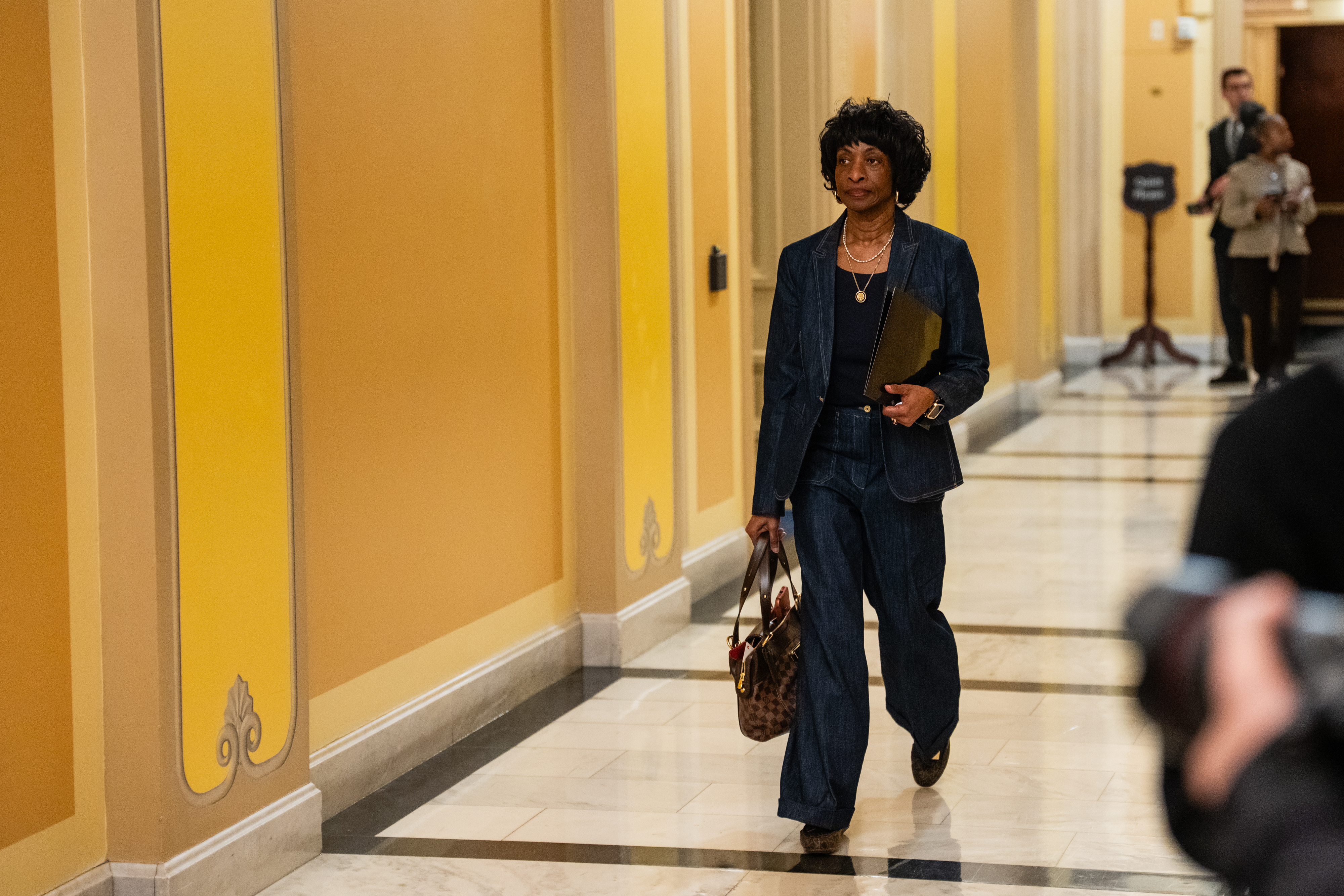
    A PAC aligned with Anthropic spent $1.6 million to help Rep. Valerie Foushee (D., N.C.) win her primary.ERIC LEE

    Helping the AI-friendly

    Late last year, Rep. Valerie Foushee, a Democrat who represents most of North Carolina’s Research Triangle, was staring down a formidable primary challenge.

    Then, two days before Nida Allam, a younger, more progressive candidate who had challenged her in the past, announced that she was running again against Foushee, Rep. Hakeem Jeffries of New York, the Democratic leader, named Foushee as co-chair of the party’s new Commission on AI and the Innovation Economy.

    Two months later, the Anthropic-aligned Jobs and Democracy PAC spent $1.6 million in support of Foushee. She won narrowly, defeating Allam by less than 1 percentage point.

    “These committees and task forces — they’re basically a flag or indicator to the lobbyist industry that these are people who will have decision-making power over your industry and so you need to go spend money on their campaigns,” Allam said in a recent interview. “No one is spending that amount of money unless they’re getting something in return.”

    In a statement, Foushee denied that the money had bought any favorable treatment for AI, saying that her work on the issue “has centered on establishing guardrails, holding corporations accountable and protecting our children, communities and jobs.”

    In Washington state, American Mission, an OpenAI-aligned PAC, waded into the GOP primary to replace Rep. Dan Newhouse, who is retiring at the end of this Congress, to back Amanda McKinney. McKinney, a Yakima County commissioner, won President Donald Trump’s endorsement this cycle but was running against a former race car driver who had won Trump’s endorsement in 2024 when he challenged Newhouse.

    “She believes the United States must lead in artificial intelligence and advanced technologies, not surrender leadership to China or other adversaries,” her campaign website says. “Amanda opposes heavy-handed regulation that stifles innovation or drives jobs overseas.”

    American Mission spent about $780,000 to support McKinney. She advanced from her primary with 35% of the vote.

    Punishing the skeptics

    With other seats, in Utah, Illinois and New York, the PACs moved to undercut candidates who had established themselves as opponents of AI.

    The most prominent example was in the primary to succeed Rep. Jerrold Nadler (D., N.Y.). The race was inundated by outside spending after Alex Bores, an Assembly member, sponsored legislation seeking to regulate advanced AI models. That set off a multimillion-dollar influx from rival AI interests, with Think Big, aligned with OpenAI, attacking Bores and Jobs and Democracy, aligned with Anthropic, defending him. He narrowly lost the race.

    Along with Foushee’s contest in North Carolina and a primary in the Florida district of Rep. Debbie Wasserman Schultz, the former chair of the Democratic National Committee, the race drew the most money from the AI PACs this cycle.

    In Utah, Think Big intervened to back Ben McAdams, a former Democratic member of Congress.

    It was not expected to be a highly competitive primary, and was made even less so after Punchbowl News unearthed a series of old posts in which his opponent, Blouin, joked about sexual assault and made offensive comments about women and Mormons. McAdams made no mention of AI on his campaign website, though he wrote an opinion essay arguing that schools “should begin treating AI fluency as a basic form of literacy.” He said he opposed the construction of a 40,000-acre AI data center campus proposed in the district.

    But Blouin, the state senator, described himself as a “leading skeptic of the push for unchecked growth of data centers,” and grew increasingly vocal about AI and data center regulation as the race went on.

    Think Big spent about $1.1 million on television and digital ads and text message blasts supporting McAdams. Asked for comment, McAdams reiterated a previous statement he made during a June debate, in which he said that “every member of Congress needs to be proactive in providing oversight of AI in order to protect jobs, our kids, the environment and the fabric of our communities.”

    “That will require federal guardrails to make sure this technology happens carefully and transparently, with appropriate regulation, strong oversight, human accountability, and safeguards for data privacy and civil rights,” he said. “AI could potentially cure cancer, but it could also destroy our kids. I believe thoughtful policy can unleash the good and stop the bad.”

    Backing front-runners

    The AI groups spent in support of clear front-runners in primaries all across the country, including favorites of party leaders, many of them Republican. Rep. Kevin Hern of Oklahoma, who was widely expected to win the nomination to replace Markwayne Mullin in the Senate, was backed by nearly $1.3 million spent by American Mission and Defending Our Values, an Anthropic-aligned PAC, before his victory in June.
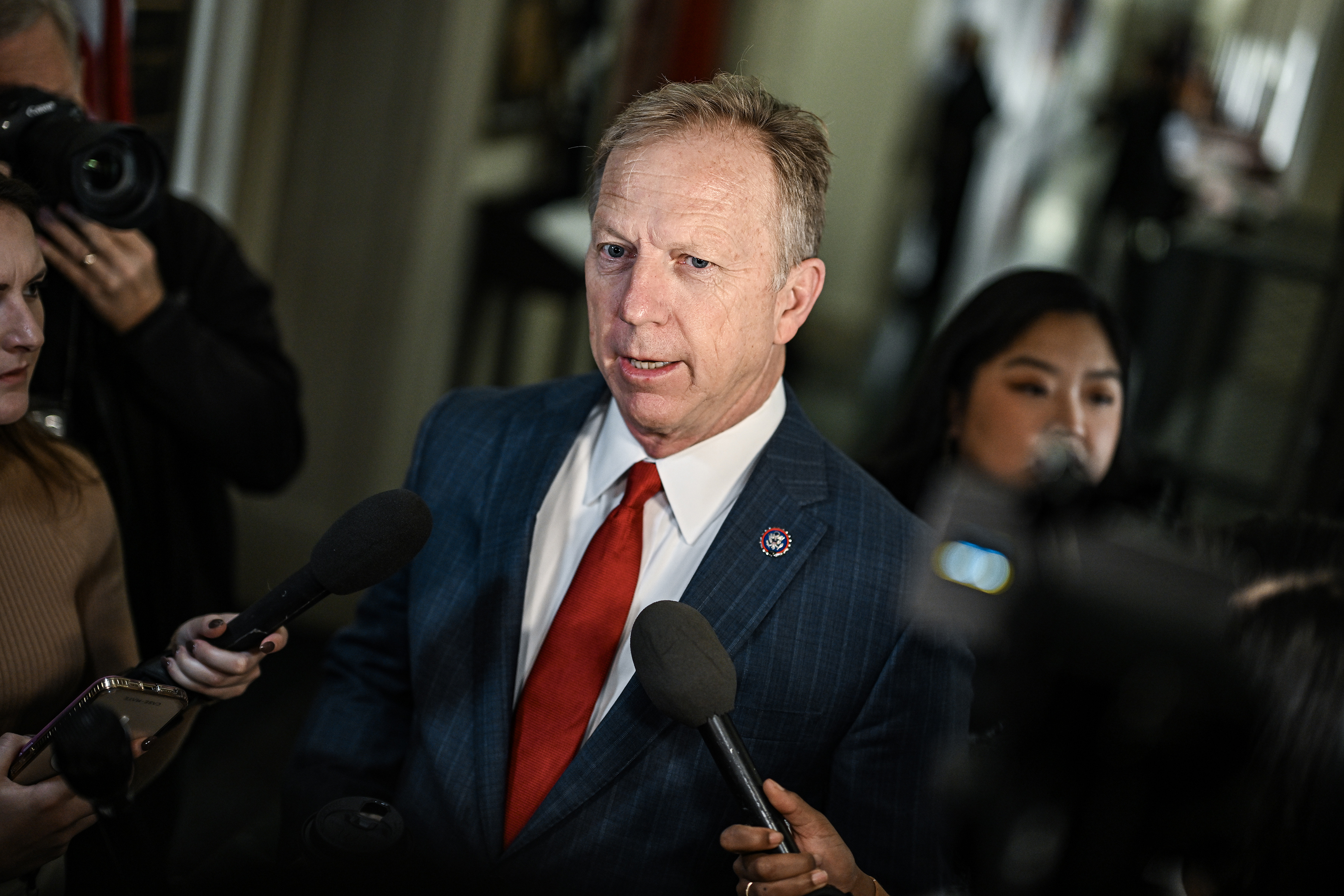
    Rep. Kevin Hern (R., Okla.) prevailed in his primary to replace Markwayne Mullin in the Senate. He received backing from Anthropic and OpenAI.KENNY HOLSTON

    Defending Our Values also supported Carlos De La Cruz, the brother of Rep. Monica De La Cruz of Texas, who both received speaking slots at the midterm convention in Dallas. Carlos De La Cruz is favored to win his election; the nonpartisan Cook Political Report recently rated Monica De La Cruz’s race as a “toss-up.”

    American Mission spent about $375,000 to support Sen. Lindsey Graham for his primary campaign in South Carolina, though it was never expected to be particularly competitive. After he died, the super PAC spent nearly $1.2 million supporting his sister, Darline, in the primary and general contests.

    A vanishing money trail

    With about a month until the midterms, the AI groups have yet to wade into many general election contests.

    American Mission has doled out roughly $500,000 each on behalf of three Republican candidates for Senate who are running in less competitive races: Rep. Julia Letlow in Louisiana, Graham in South Carolina, and Cindy Hyde-Smith in Mississippi. Think Big, the Democratic super PAC, has spent nearly $300,000 to support three House candidates: Reps. Greg Stanton of Arizona, Emilia Sykes of Ohio and Steven Horsford of Nevada — as well as roughly $50,000 to support Rep. Joseph Morelle in New York.

    The amounts could grow. But political operatives closely following their spending believe that the groups will have to shift their strategy amid the furious outpouring of anti-AI sentiment, and will instead move money through other means. That could include donating directly to the major political PACs associated with House Democrats or Republicans, or establishing smaller, more obscure groups to move the money through, as AIPAC has done.

    Usamah Andrabi, the communications director for Justice Democrats, the ultraprogressive organization that backed many candidates whom AI groups spent against, said the industry’s influence was already becoming as difficult to track as that of AIPAC and other pro-Israel groups.

    “There was a time where I could tell you every Israel lobby super PAC, and I cannot tell you that anymore because there’s so many pop-up PACs, there’s so many shell PACs, there’s so many pass-throughs,” Andrabi said. “And I think the same thing is happening with the AI lobby.”

    This article originally appeared in The New York Times.
  • 🗳️ It’s Bucks season | PA 2026 Newsletter

    🗳️ It’s Bucks season | PA 2026 Newsletter

    📅 There are 32 days until Election Day.

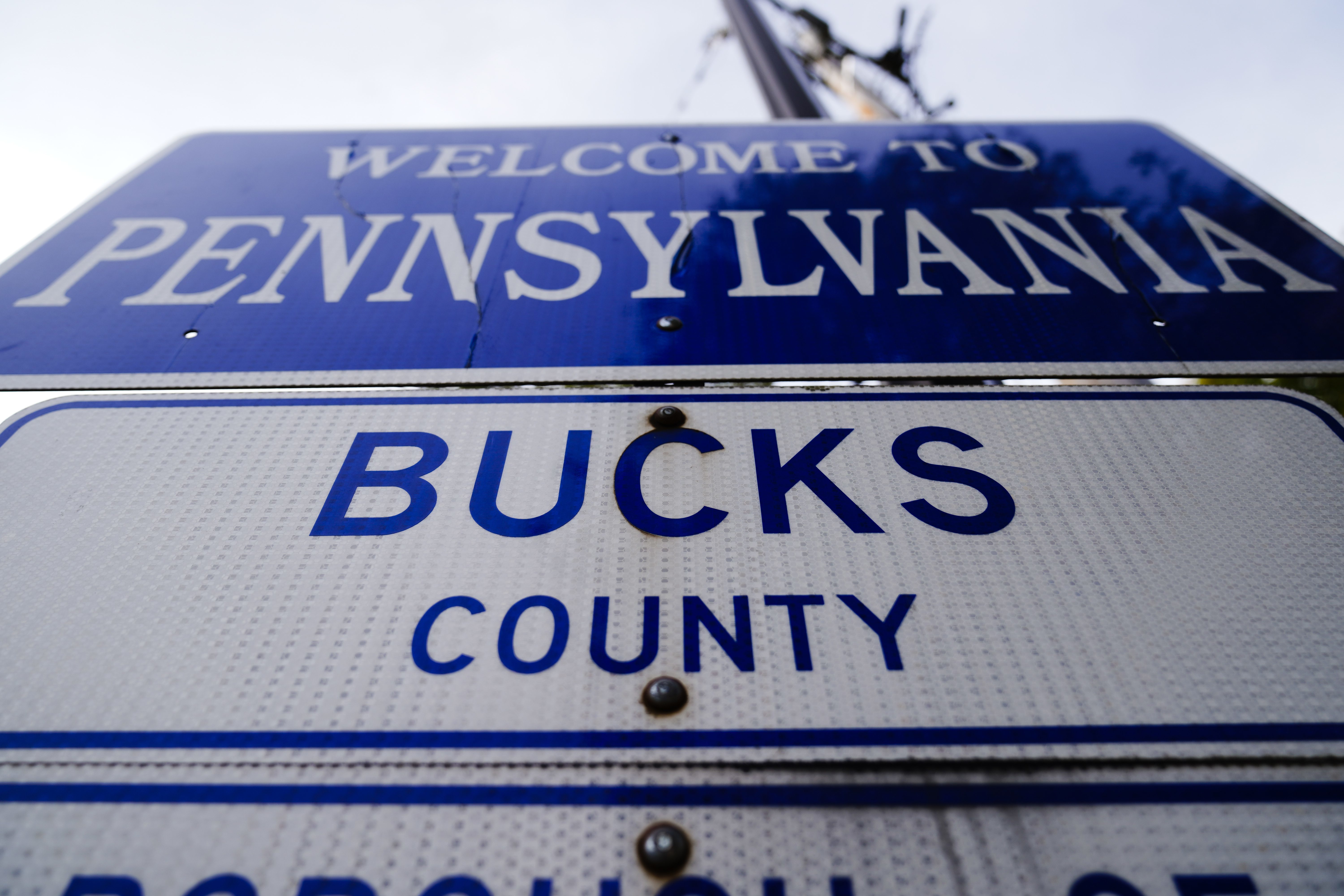
    It wouldn’t be a Pennsylvania election without Bucks County becoming the star of the show.

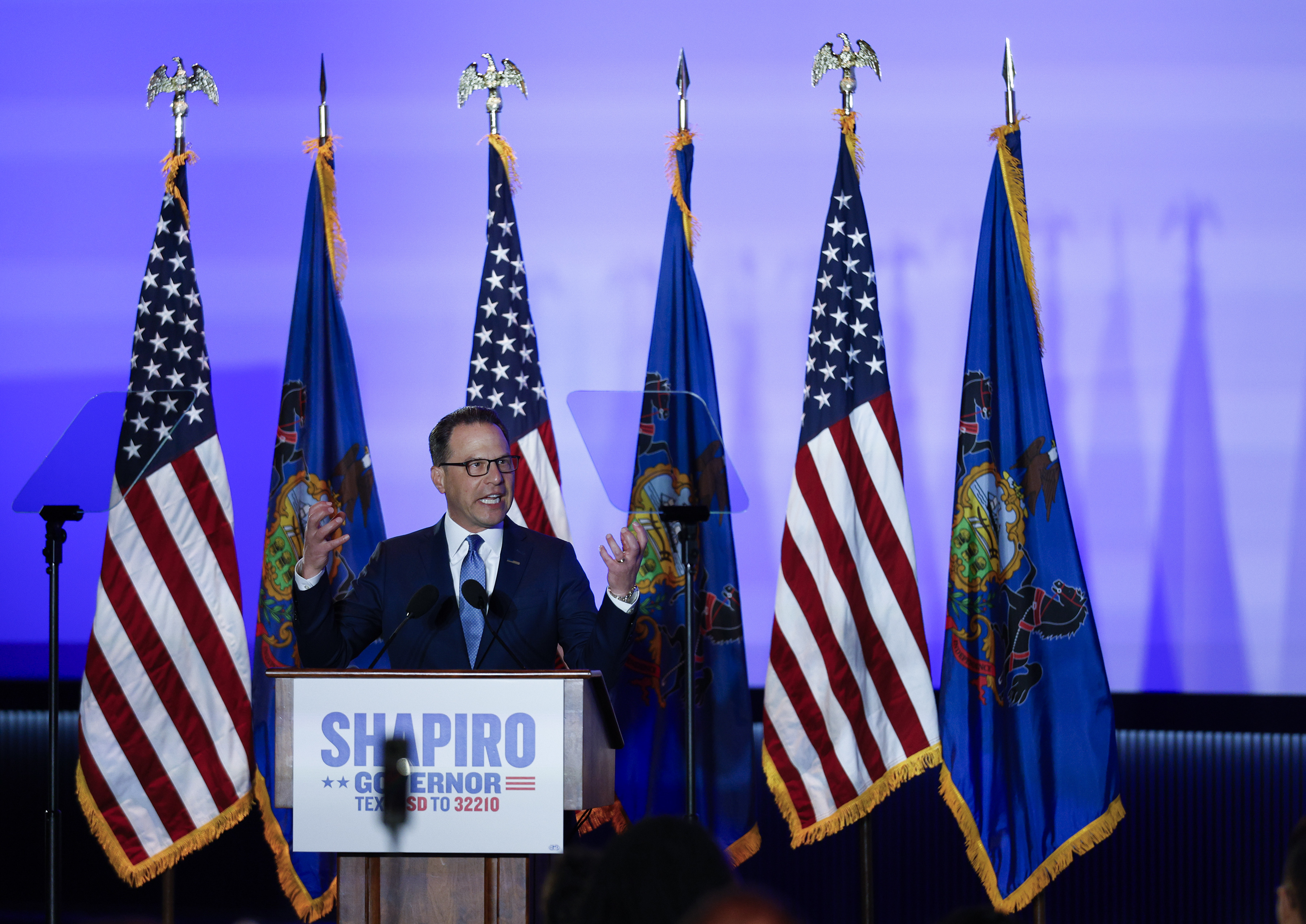
    And that’s exactly what’s happening this weekend, when Gov. Josh Shapiro travels to the swingiest of the swing counties to stump for Democrats up and down the ballot in key races.

    🎤 I’m Fallon Roth, the suburban politics reporter at The Inquirer, coming to you live from Bucks (my home county) as we dig into how the suburb will be the make-or-break place for Democrats’ wishlist next month, including a win for Bob Harvie in the 1st Congressional District and shift in party control in the state Senate, which could only happen with help from the Philly suburbs.

    We’ll also explore whether Pennsylvania voters would support Shapiro turning his attention to a bid for the White House in 2028.

    In this edition:

    🗳️All hands on deck: Shapiro will be in Bucks County Saturday to launch a day-of-action for Democrats, organized by Planned Parenthood’s state-level PAC.

    🗳️ The Bucks stops here: Two Bucks County swing districts and another in Montco could determine which party controls the state Senate.

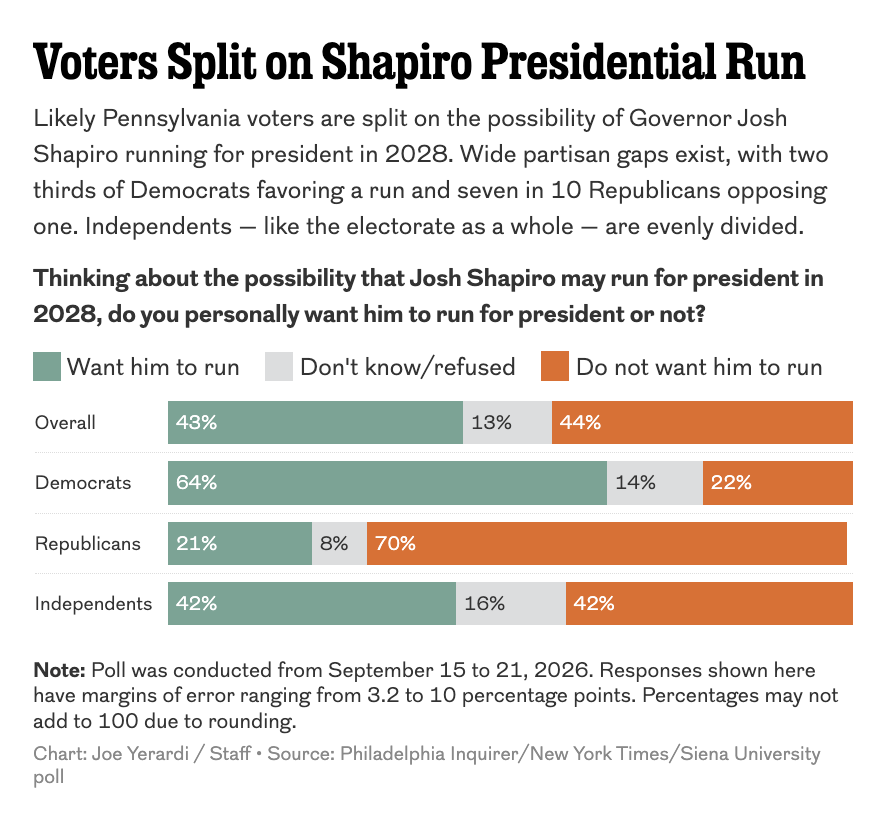
    🗳️Homefield (dis)advantage?: Pennsylvania voters are split on whether Shapiro should run for president in 2028.

    -Fallon Roth, Michelle Baruchman, Sam Janesch, Gillian McGoldrick (pa2026@inquirer.com)

    The latest

    • The price of gas, groceries and, well, living is on the rise and Pennsylvania’s swing district voters will have affordability on their minds as they head to the ballot box next month.
    • As democratic socialist candidates become more mainstream — including in Philly — most Pennsylvania Democrats said in a recent Inquirer/New York Times/Siena University poll that they have a positive view of socialism.
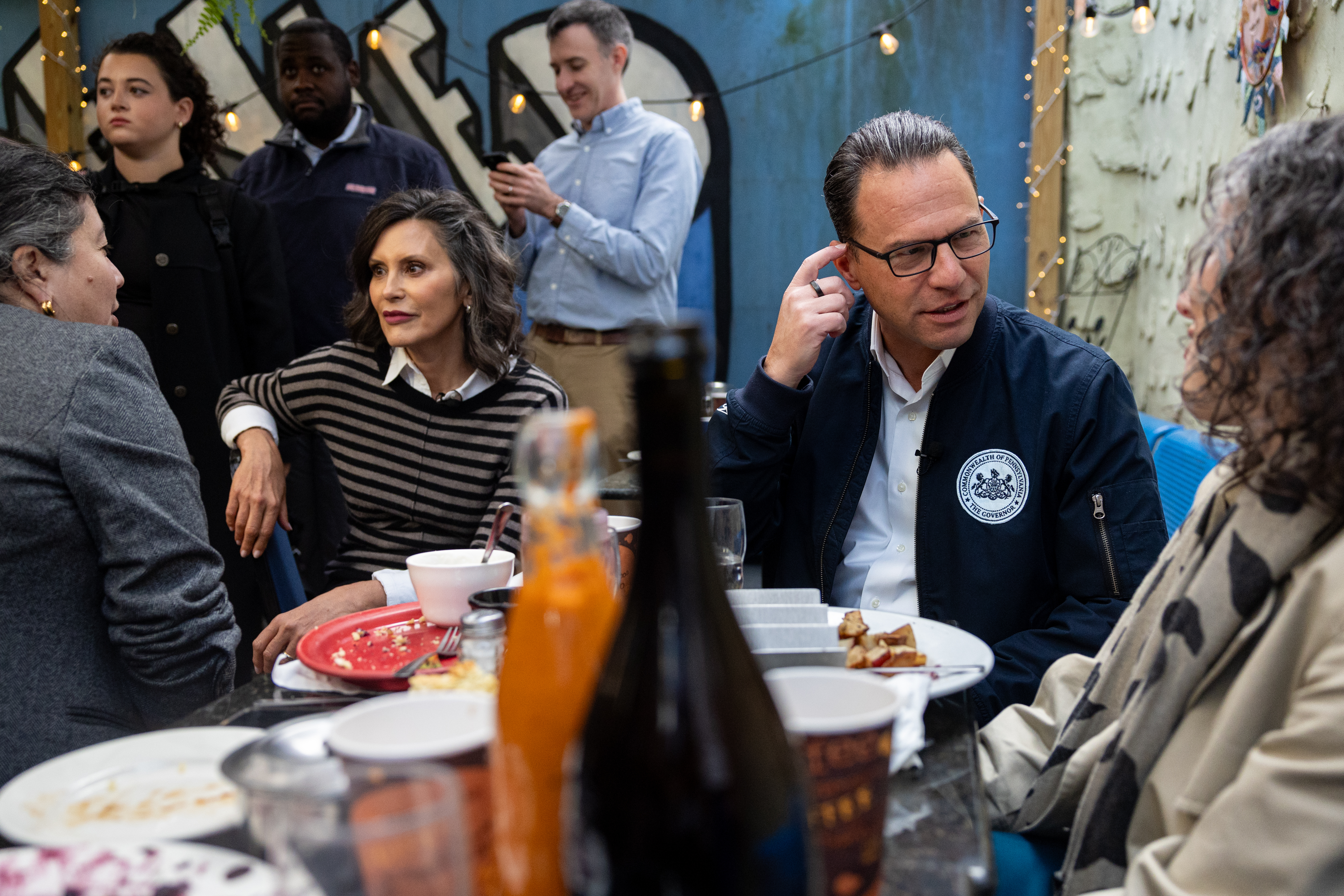
    • Shapiro and Michigan Democratic Gov. Gretchen Whitmer (possible 2028 rivals) went to Sam’s Morning Glory Diner in Philly to energize voters ahead of the midterms.
    • Robert F. Kennedy Jr., President Donald Trump’s health and human services secretary, is even less popular than the president with Pennsylvania voters.

    Data dive

    📊 Without a doubt, Shapiro is a popular governor. He’s viewed favorably by Democrats, independents and even some Republicans — no small feat in a swing state that voted for President Donald Trump in 2024. But whether these likely Pennsylvania voters want Shapiro to run for president in 2028 is an entirely different question.

    Voters, in a poll conducted by Siena University on behalf of The Inquirer and the New York Times, were split on whether Shapiro, who is expected to pursue a White House bid, should run: 43% of respondents want him to run, and 44% don’t.

    Of those supporting a potential presidential campaign, 41% ranked his character and competence as their reasons, and nearly one in five said they were satisfied with Shapiro’s performance as governor. But for those who oppose a run, it’s not necessarily because they don’t like him (although that is the case for 21% of respondents).

    About one in 10 said they would prefer Shapiro, who is up for reelection this November with a commanding lead against his competitor, to remain in Pennsylvania. Campaigning and presidential debates would likely begin soon into his second term.

    Others, however, said they are worried that the U.S. is not ready for a Jewish president. Shapiro has spoken openly about his faith and experiences with antisemitism.

    “I like his views. I like his policies. I like everything. I just think his religious affiliation will stop him from winning because I think the rest of the country, especially the middle of the country, will rally against him,” said Michael Biello, a 68-year-old Democrat in Philadelphia.

    Campaign scrapple

    🏥 Is the U.S. ready for Medicare for All?

    Democrat Bob Harvie thinks there needs to be more trust in the federal government first before it starts running the healthcare system, he told The Inquirer on Tuesday evening.

    Harvie, a Bucks County commissioner challenging GOP U.S. Rep. Brian Fitzpatrick in the swingy 1st Congressional District, has focused his campaign on addressing rising costs and increasing access to healthcare, such as advocating for 55-year-olds to be able to buy into Medicare.

    Congressional candidate Bob Harvie (D, Pa.) speaks on Friday, September 11, 2026 at the Garden of Reflection in Yardley, Pennsylvania.William Thomas Cain / For The Inquirer

    “My worry is you start talking to people about well, ‘We’re going to take away the healthcare system you have, and we’re going to give you another one, and the government’s going to run it,’” Harvie said of Medicare for All. “We’ve got a lot of work to do to rebuild trust in the government, just like we have a lot of work to do to rebuild how this healthcare system works.”

    Harvie was joined Tuesday by Democrats Eileen Hartnett Albillar, running in the key 6th state Senate district, and U.S. Rep. Lauren Underwood, of Illinois.

    📸 Behind the scenes snapshot

    Michigan Gov. Gretchen Whitmer (second from the left) and Pennsylvania Gov. Josh Shapiro chat with diners at the Morning Glory. The two Democrats have grown close in recent years, but they could become rivals in 2028 if they both pursue the presidency. Aidan T. Gallo / Staff Photographer

    👀 What we’re watching

    Shapiro and Garrity will face off in a live, televised debate this coming Wednesday, Oct. 7. The Harrisburg-based TV station ABC27 is hosting the debate, which will air on several stations owned by Nexstar across Pennsylvania, including WPHL-TV in Philadelphia. Politics reporters Gillian McGoldrick and Michelle Baruchman will break the major moments down at inquirer.com/politics.

    Quote of the week

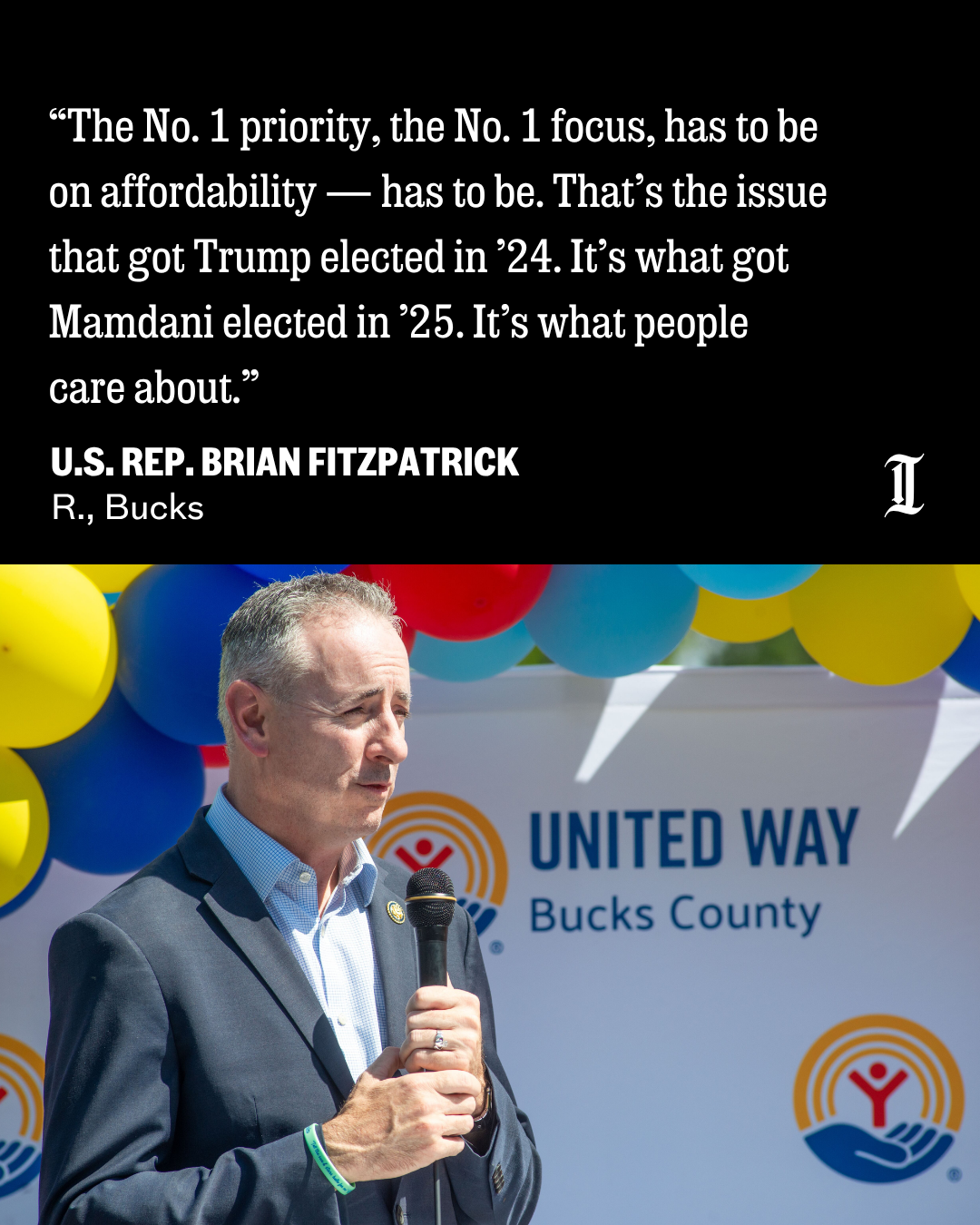
    U.S. Rep. Brian Fitzpatrick weighs in on the No. 1 issue this election. William Thomas Cain / For The Inquirer

    Fitzpatrick agrees with his opponent, Harvie, on one thing: this election will hinge on which party voters think will do a better job lowering the cost of living.

    Voters in the four key congressional swing districts have repeatedly expressed frustration that their dollar doesn’t go as far as it used to and that could be trouble for incumbents this fall.

    👋 Thanks for reading, and don’t forget to check back as we enter a final campaign month packed with debates, candidate events and maybe even a few October surprises. You can follow The Inquirer politics team’s coverage here, and we’ll see you in your inbox next Friday.

  • Josh Shapiro will be in Bucks County this weekend to campaign for Democrats in key races

    Josh Shapiro will be in Bucks County this weekend to campaign for Democrats in key races

    Gov. Josh Shapiro will be in Bucks County on Saturday to campaign for Democrats up and down the ballot in the key swing county.

    Shapiro, who kicked off Democrats’ general election campaigns at a space centrifuge in Warminster this past spring, is returning to Bucks, emphasizing the important role that the perennially purple county will play in November’s midterms with competitive contests for Congress and state Senate on the ballot.

    The governor will appear at a canvass launch in Langhorne organized by Planned Parenthood PA PAC, the organization’s state-level political action committee. The PAC has endorsed Bucks County Democrat Eileen Hartnett Albillar, who is running for state Senate in the 6th District, a crucial seat for the party, and state House candidates Bryan Allen, Kristin Egan, and Monica Weninger.

    Shapiro will also appear alongside Democratic County Commissioner Bob Harvie, who is challenging GOP U.S. Rep. Brian Fitzpatrick in the Bucks-based 1st Congressional District — one of four seats in the state being targeted by both parties. Harvie is endorsed by Shapiro and Planned Parenthood’s federal PAC.

    Democratic U.S. Reps. Madeleine Dean, of Montgomery County, and Mary Gay Scanlon, of Delaware County, will also be in attendance.

    Democrats are hoping to win control of the state Senate — which they haven’t had for 33 years. The GOP currently holds 27 seats in the 50-member state Senate.

    To take control of the chamber with the lieutenant governor’s tie-breaking vote, Democrats would need to flip at least two seats and maintain control of the governor’s office. With a trifecta in Harrisburg, Democrats hope to advance legislation on issues that haven’t gained support in the Republican-controlled Senate, like codifying abortion protections.

    The Shapiro-endorsed candidates have an opportunity, if successful in November, to give Democrats more governing power, whether that’s winning party control in the U.S. House, the state Senate, or giving Democrats an expanded majority in the state’s lower chamber.

    Shapiro is running for a second term as governor, but he’s spending much of his time using his political prowess to bolster other Democrats ahead of the midterms. Recently, he was in Philadelphia with Democratic Michigan Gov. Gretchen Whitmer to energize volunteers. Earlier this month, he was in Montgomery and Chester Counties campaigning for down-ballot candidates.

    Shapiro has invested more than $5.7 million in the state party since fall 2025, his campaign said last month.

    Gov. Josh Shapiro poses with Democratic Pa. Senate candidate Chris Thomas (left) and his supporters after a rally in Towamencin, Montgomery County before heading out to canvass Sunday, Sept. 29, 2026.Tom Gralish / Staff Photographer

    In July, he launched an effort — “Rise Up Pennsylvania” — that is aimed at pooling donations to fund campaign resources for key state Senate and U.S. congressional races.

    Abortion protections remain a key piece of the party’s platform, even as Democrats have refocused their messaging on affordability ahead of November.

    “Bucks County will be critical to building a pro–sexual and reproductive health care trifecta in Pennsylvania,” Signe Espinoza, executive director of Planned Parenthood PA PAC, said in a statement Friday.

    “We endorsed these candidates because we know they will stand up to fight to protect every Pennsylvanian’s freedom to make their own decisions about their body, health and future.”

  • Affordability is on voters’ minds in Pa. swing districts as the cost of gas and groceries skyrockets

    Affordability is on voters’ minds in Pa. swing districts as the cost of gas and groceries skyrockets

    SCRANTON — Four of Mike Parry’s tenants can no longer afford to pay their rent. Suddenly, their financial pain is his.

    “It’s the affordability of everything that’s the problem,” said Parry, 60, of Clarks Summit, Lackawanna County. “We’re all feeling it now.”

    With the war in Iran rocketing gas to almost $5 a gallon, inflation surging to 3.4% from 2.6% in 2025, and food prices up nearly 3% over last year, the high cost of living is weighing on the minds of many voters — and candidates — as the midterm elections draw near.

    Nowhere is that more critical than in four tightly contested Pennsylvania congressional districts that could decide the control of the U.S. House — in Bucks County, the Lehigh Valley, the Harrisburg area, and Northeast Pennsylvania.

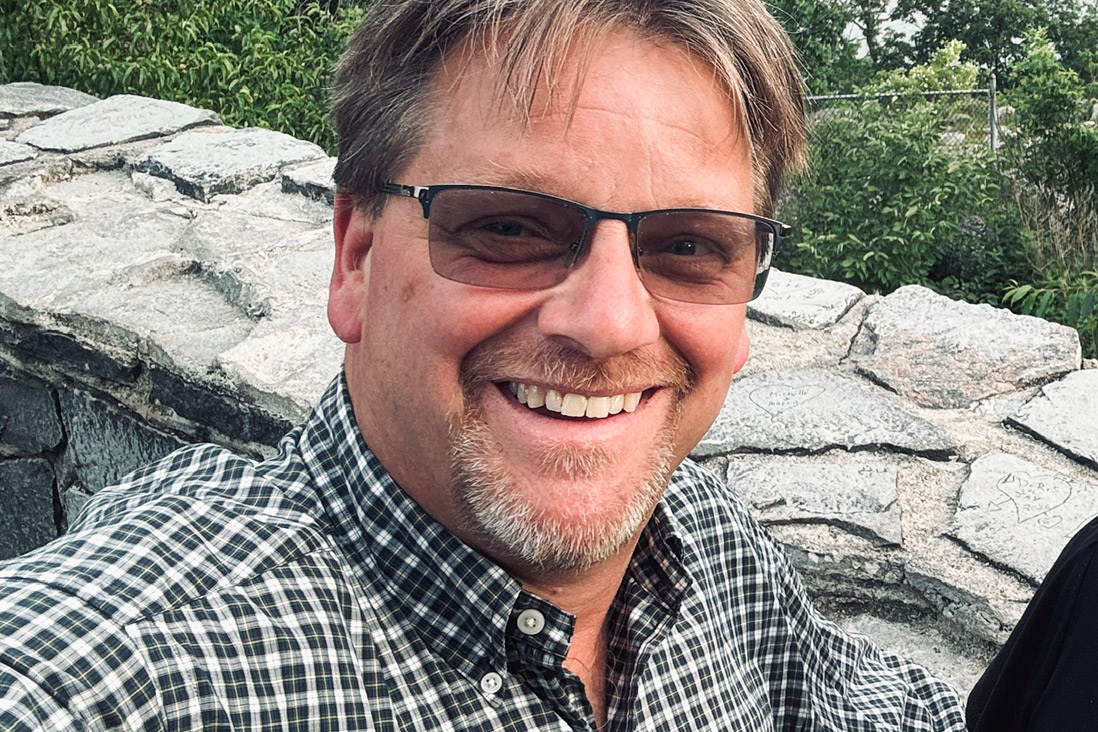
    Mike Parry of Clark Summit, Lackawanna County.Courtesy of Mike Parry

    Parry, a Republican and supporter of President Donald Trump, said he is aware that many Americans hold the president and his party accountable for the affordability crisis, including in the 8th Congressional District, where Parry plans to back GOP U.S. Rep. Rob Bresnahan over Scranton Mayor Paige Cognetti, the Democratic nominee.

    But other voters might not be so kind to Trump-aligned incumbents this fall.

    Among likely voters in Pennsylvania, 75% disapprove of how Trump is handling the cost of living, compared with just 25% who approve, according to a recent poll from The Inquirer, the New York Times, and Siena University. And 73% disapprove of how he has handled gas prices, vs. 24% who approve. About 65% disapprove of his handling of the economy, vs. 34% who approve.

    “It doesn’t matter what party you’re in,” Parry said. “We’re all getting hammered the same.”

    ‘Spend less’

    At his local Wawa gas station in Allentown, P.J. Santos, 32, removed his finger from the pump trigger before his tank filled.

    “Now I tell myself to spend less,” said Santos, a Democrat who is supporting former firefighter Bob Brooks over Republican U.S. Rep. Ryan Mackenzie in the Lehigh Valley’s 7th Congressional District.

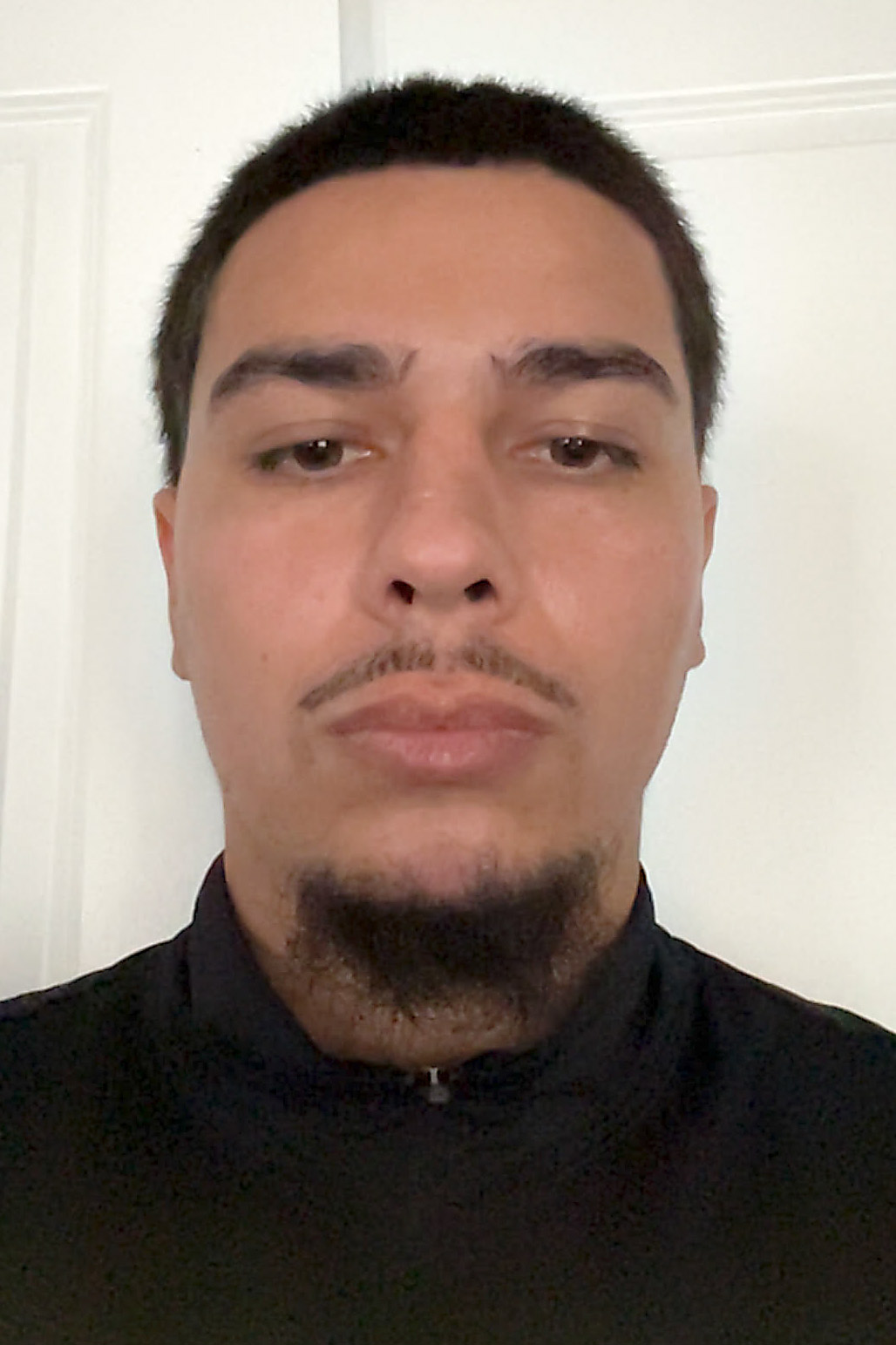
    P.J. Santos of Allentown.Courtesy of P.J. Santos

    “So I buy less than I need,” he added, tightening his gas cap. “Same goes for date nights with my wife: Spend less.”

    That is harder when you’re buying food, said Tammy McCoy, 52, of Easton, in the same district. “Walk into any grocery store,” said McCoy, a Democrat and professional cook. “It’s like you have to hand them $50 at the door.”

    (function(){function e(){window.addEventListener(`message`,function(e){if(e.data[`datawrapper-height`]!==void 0){var t=document.querySelectorAll(`iframe`);for(var n in e.data[`datawrapper-height`])for(var r=0,i;i=t[r];r++)if(i.contentWindow===e.source){var a=e.data[`datawrapper-height`][n]+`px`;i.style.height=a}}})}e()})();

    Trump, she remembered, promised to lower prices on Day 1 of his presidency. Not only did that not happen, she added, he raised tariffs, making imported staples like coffee, nuts, and olive oil more expensive. “Because of that,” McCoy added, “I’m against him and Republicans.”

    Tapping into the frustration over food prices, Democrat Janelle Stelson’s campaign is pointing to the cost of hamburgers as she seeks to oust Republican U.S. Rep. Scott Perry in the 10th Congressional District.

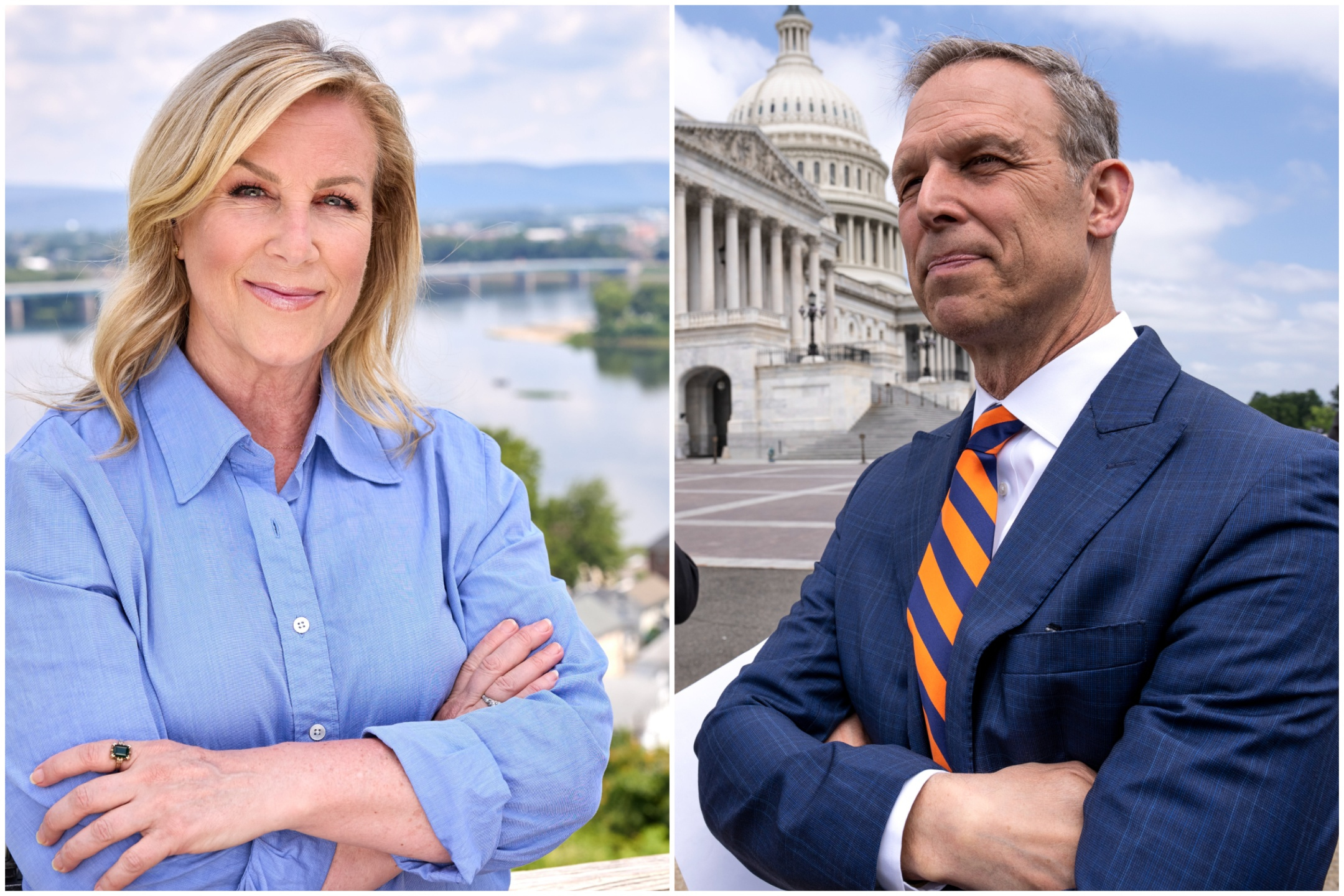
    Janelle Stelson (left) and Rep. Scott Perry, R-Pa.(right) from a Stelson campaign photo in 2024, the last time the two squared off against each other in a bid to represent the 10th Congressional District. Stelson Campaign, AP

    Stelson eats a burger in a TV ad that says Americans now pay $7.29 for a pound of ground beef — a result of tariffs Trump imposed and Perry supported.

    But criticism of Trump’s tariffs will not sway Tammy Green, 60, a Republican voter in the 8th Congressional District who supports Bresnahan over Democrat Cognetti.

    “Because he’s a businessman, President Trump understands the economy. … He’s negotiating fair prices with tariffs,” said Green, a former travel agent who lives in West Wyoming, Luzerne County.

    More households need help

    On a hot September day in Levittown, people gathered to celebrate the grand opening of the new headquarters of the United Way of Bucks County. Focused on helping anyone experiencing financial hardship, the building features an expanded HELP Center, where diapers, fresh produce, and clothing are available at no charge.

    As need skyrockets, the nonprofit expects a 40% to 50% increase in demand this year, Marissa Christie, president and CEO, said in an interview.

    “Folks are telling us that in the grocery store, their budget is not going as far as it used to,” Christie said. “When they go to fill up their gas tank, their money is not going as far as they expected.”

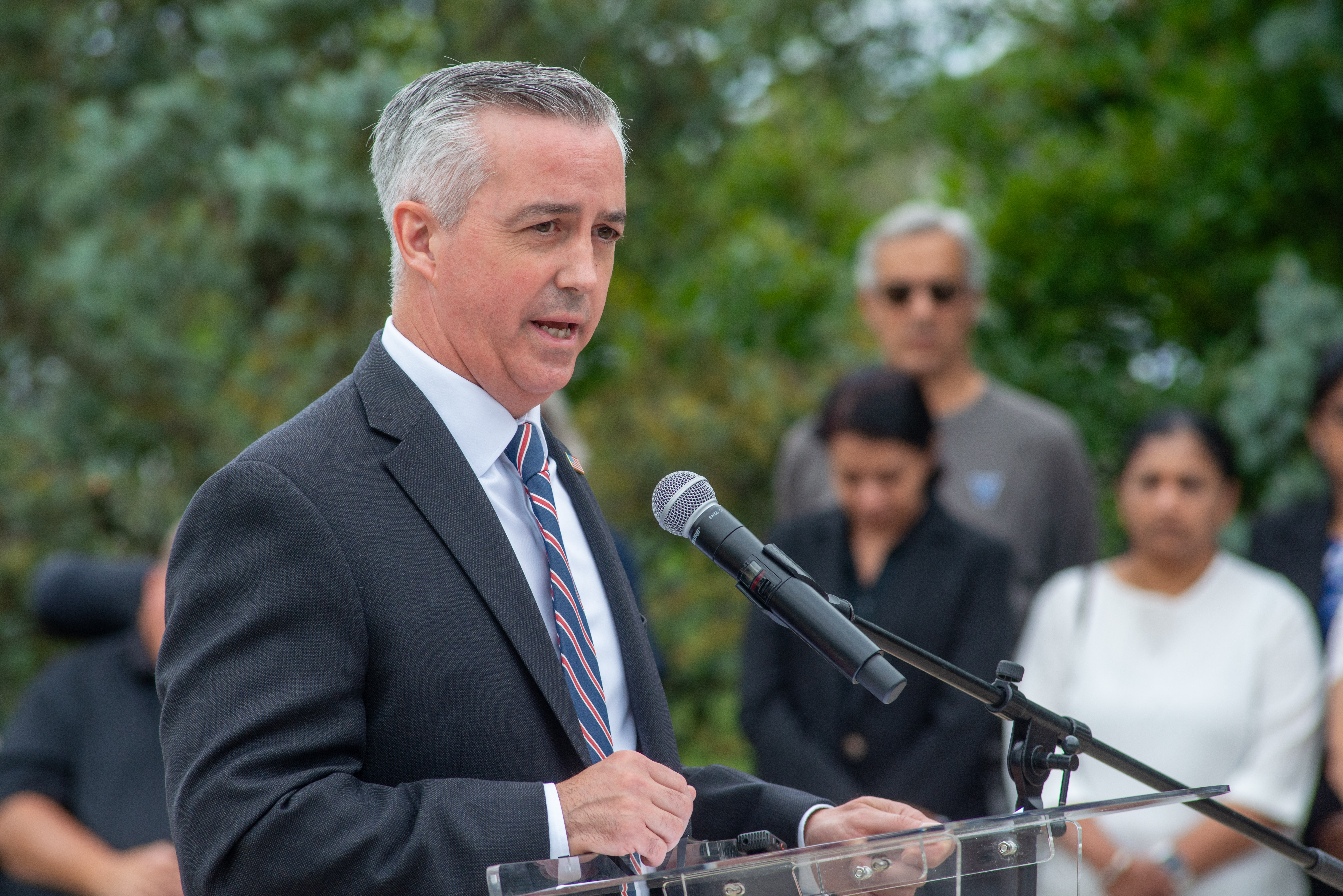
    Attending the event alongside other local lawmakers was U.S. Rep. Brian Fitzpatrick (R., Bucks), who secured $4.15 million in federal funds for the building and said the agency will “always be in that top-10 list” of key nonprofits helping those in need.

    U.S. Rep. Brian Fitzpatrick (R., Bucks) speaks outside the U.S. Capitol about legislation to put national restrictions on gerrymandering on Sep. 16, 2026.Sam Janesch / Staff

    The cost of living has become a focal point in the 1st Congressional District race as Fitzpatrick fends off a challenge from Democratic County Commissioner Bob Harvie in the Bucks County-based swing district.

    Pennsylvania Democrats, including Harvie, have centered their campaign messaging on affordability in hopes of appealing to voters across the political spectrum.

    “Costs are what affect people every single day … whether it’s at the pump, whether it’s in the grocery store,” Harvie said in an interview with The Inquirer’s Editorial Board. “Housing costs obviously are huge. It’s a major issue here in this district, especially in the county.”

    (The Editorial Board, which runs The Inquirer’s opinion pages and decides endorsements, operates independently from the newsroom. Newsroom editors and reporters have no role in endorsements, and opinion staffers have no role in news coverage.)

    Fitzpatrick, too, acknowledged in an interview at the U.S. Capitol last month that affordability is the top issue not just in this election, but in every election.

    “The No. 1 priority, the No. 1 focus, has to be on affordability — has to be,” he said. “That’s the issue that got Trump elected in ’24. It’s what got [New York Mayor Zohran] Mamdani elected in ’25. It’s what people care about.”

    ‘Affordability front and center’

    Demonstrating their awareness of voter focus on the high cost of living, Trump administration officials and local Republicans repeatedly emphasized “affordability” as they touted their work to combat rising electricity prices at a PPL Electric Utilities facility in Allentown last week.

    “This is a quick way to lower electricity prices and increase reliability,” U.S. Energy Secretary Chris Wright said as he announced up to $71.5 million in federal funding for PPL, which was among $2 billion in new spending aimed at improving the electric grid.

    Upgrades to existing transmission lines will include new technology like sensors to detect weather conditions, improving efficiency and ultimately lowering electricity costs, according to the Energy Department.

    Asked how quickly consumers might see those improvements, Wright did not specify a timeline but noted that new, large-scale energy users — like data centers — are negotiating with utilities about how much of the increased demand they will cover.

    Mackenzie, a freshman lawmaker whose district includes the Lehigh Valley and Poconos, also emphasized a bill he supports that would set federal standards for data centers to pay for their electricity use, and another to promote transparency around retail electric costs.

    President Donald Trump invites 7th District U.S. Rep. Ryan Mackenzie (right) to the stage to visit Mack Trucks in Macungie, outside Allentown in the Lehigh Valley, in June.Tom Gralish / Staff Photographer

    Mackenzie said energy policy needs to keep “affordability front and center.”

    The war’s economic consequences

    Some Trump voters say they are willing to pay more for gas and other essentials as the president pursues his policy goals at home and in Iran.

    “We incur a cost that stinks now to avoid another Sept. 11 later,” said T.J. Fitzgerald, 60, a Republican bail bondsman from Nanticoke, Luzerne County, in the 8th Congressional District. “Fighting Iran, a terrorist organization, is worth inflation at the pump.”

    Ryan Kavulich, a 37-year-old project manager from Dunmore in nearby Lackawanna County, disagreed with that logic.

    “The war’s a nightmare with what it’s costing for diesel,” said Kavulich, a Democrat who plans to back Cognetti in November.

    (function(){function e(){window.addEventListener(`message`,function(e){if(e.data[`datawrapper-height`]!==void 0){var t=document.querySelectorAll(`iframe`);for(var n in e.data[`datawrapper-height`])for(var r=0,i;i=t[r];r++)if(i.contentWindow===e.source){var a=e.data[`datawrapper-height`][n]+`px`;i.style.height=a}}})}e()})();

    People in the 8th District know that Bresnahan voted against ending the war with Iran in September, Kavulich said.

    “And that makes voting for Paige [Cognetti] in November the easiest choice ever,” he said. “So many people around Scranton have a blue-collar, kitchen-table, commonsense vibe. They know going into Iran isn’t what you do. They know it’s time to be over Bresnahan and Trump.”

    As the cost of fuel continues to climb, even some longtime Republicans in the district are expressing their doubts about the economic consequences of Trump’s war.

    “I voted for Trump three times,” said Greg Kerrick, 58, a Republican voter from Scranton.

    “But I don’t like him pushing up gas prices,” added Kerrick, who is unemployed. “And I feel for anyone paying over $4 a gallon.”

  • Democrats are calling for the resignation of a GOP lawmaker who reportedly hurled a homophobic slur at Philly’s Malcolm Kenyatta

    Democrats are calling for the resignation of a GOP lawmaker who reportedly hurled a homophobic slur at Philly’s Malcolm Kenyatta

    The Pennsylvania House Republican Caucus chastised a GOP state legislator Thursday after he reportedly hurled a homophobic slur earlier in the week at Democratic State Rep. Malcolm Kenyatta of Philadelphia, who is gay.

    State Rep. Aaron Bernstine, a Republican who represents portions of Butler and Lawrence Counties in Western Pennsylvania, also allegedly said in a Harrisburg bar that Kenyatta had lost weight, which Bernstine allegedly attributed to AIDS, according to reporting by PennLive. Kenyatta was not present when the alleged remarks were made.

    “The alleged conduct is troubling and does not comport with the values and professionalism Pennsylvanians expect of their state lawmakers,” Republican Caucus spokesperson Jason Gottesman said in a statement.

    “All elected officials, regardless of party or position, must act in a manner consistent with the expectations of their constituents. When they fall short of that standard, it is upon them to take personal and individual responsibility for their actions quickly and appropriately.”

    Kenyatta didn’t respond to several requests for comment, but other Democrats expressed their outrage on his behalf, including the Democratic National Committee, for which Kenyatta serves as vice chair.

    “Hateful, homophobic, and racist attacks like this have absolutely no place in our politics, our communities, or our country,” DNC chair Ken Martin said in a statement.

    The Democratic leaders of Pennsylvania’s Legislative LGBTQ Equality Caucus, as well as the Black Caucus, demanded Berstine’s immediate resignation in a joint statement Thursday, saying that Bernstine’s “unacceptable” conduct has rendered him “unfit to serve.”

    “We are calling on all House members, but especially Republican leaders, to denounce his behavior, to join us in demanding his resignation, and for Republican leaders to identify the steps they will take to guard against this kind of pathetic behavior within their caucus,” said the statement from Black Caucus Chair Napoleon Nelson (Montgomery County), and LGBTQ Equality co-Chairs Ismail Smith-Wade-El (portions of Lancaster County), and Jessica Benham (portions of Lancaster County).

    Bernstine denied that he made the comments.

    “The allegations attributed to me are false. This is a political attack,” he said in a statement Thursday.

    He also referenced an altercation he had at the bar that same night with individuals he identified as being with the Pennsylvania Building Trades Council. Saying he was the subject of threats, he added that he alerted local police.

    Berstine went on to criticize reporters who initially broke the story. “Reporters should scrutinize elected officials, including me,” he said. “But scrutiny is not a license to publish falsehoods or omit critical context. We are exploring all available legal remedies.”

    The Philadelphia House Delegation posted a statement on X Thursday afternoon, calling for Bernstine’s resignation in response to his “alleged disgusting, hate-filled tirade.”

    House Democratic leadership said it was “exploring potential next steps” and that majority party looks forward to “hearing what repercussions Republican House leadership will impose for his abhorrent behavior.”

    Expulsion requires two-thirds majority in the House, which could happen if some Republicans crossed the aisle in the narrowly divided chamber.

    In 2020, House Republican leaders called for Bernstine’s resignation after videos of him encouraging his young son to smoke and curse surfaced. Soon after, Bernstine was reelected, and the demands quieted.

    Three years earlier, in the midst of Black Lives Matter demonstrations in which motorists were blocked, Bernstine posted on X, “If anyone EVER tries to stop my car on a highway with negative intentions… I will not stop under any conditions.”

    Staff writers Gill McGoldrick and Michelle Baruchman contributed reporting.

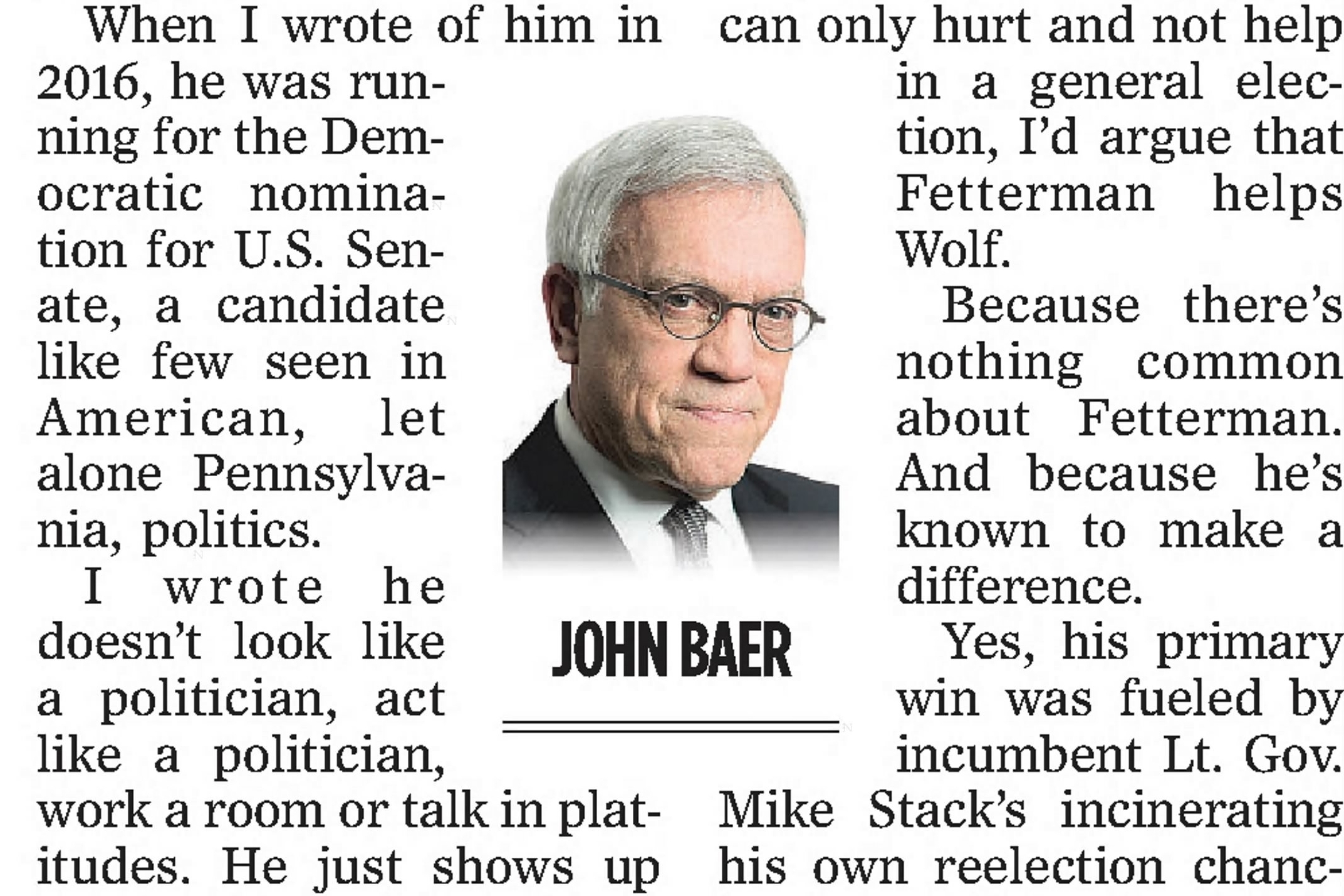
  • John Baer, award-winning longtime Inquirer and Daily News political reporter and columnist, has died at 79

    John Baer, award-winning longtime Inquirer and Daily News political reporter and columnist, has died at 79

    John Baer was the son of a Harrisburg newspaperman. He literally grew up in the Pennsylvania state Capitol. And he never left.

    His father, John H. Baer, was a political reporter for what is now the Patriot-News in Harrisburg, and Mr. Baer spent many Sunday afternoons hanging around the old Capitol press room while his father worked on stories. Decades later, in 1972, Mr. Baer joined the Evening News in Harrisburg as a reporter and went on to work for nearly 50 years in that same press room.

    “I’m probably unique in Pennsylvania politics and journalism,” Mr. Baer said in a 2020 oral history interview for Pennsylvania State University. “I dare say there probably aren’t any who can say they worked in the same state capitol newsroom that their father did.”

    In 1987, the Daily News hired Mr. Baer to cover state politics in Harrisburg. He became a political columnist for the newspaper in 2000, and his plainspoken, no-holds-barred stories later appeared in The Inquirer as well. Before he left the papers in 2019, he covered hundreds of political campaigns, conventions, and elections, and wrote about thousands of local, state, and national politicians.

    Mr. Baer’s column on politics appeared in The Inquirer and Daily News from 2000 to 2019. Newspapers.com

    “He was the most feared reporter in my eight years in Harrisburg,” former Gov. Ed Rendell said. “He did his work. He did his digging. He really cared about the issues.”

    On Thursday, Sept. 24, Mr. Baer died of cancer at his home in New Cumberland, Pa. He was 79.

    For 32 years, Mr. Baer was a hard-hitting, award-winning political reporter and columnist for The Inquirer and Daily News. He was also a columnist for PennLive and the Patriot-News, onetime public TV producer and show host, former press secretary, author, teacher, and mentor.

    Many of those Mr. Baer covered in Harrisburg, Philadelphia, and Washington praised his “deep integrity” and “fierce independence,” and called him a “keen observer of Pennsylvania politics” and “a heavyweight in Pennsylvania political reporting” in online tributes. State Rep. Ben Waxman called Mr. Baer a “legendary Capitol journalist.” U.S. Rep. Dwight Evans said he was “authentic and a one-of-a-kind journalist.”

    Mr. Baer told Penn State he wanted to “let people see the inside of the game in Harrisburg.” His Inquirer.com online profile reads: “John Baer has written about politics and government since 1987. Neither subject ever fails to provide him with stories of policies and politicians walking on or skirting by paths to perdition.”

    In addition to covering nine Pennsylvania governors, the impeachment trial of President Bill Clinton, and the ascensions of Presidents Barack Obama and Donald Trump, Mr. Baer wrote about the execution of serial killer Gary Heidnik, the pleas for more research funding by a cancer victim, and the battle of a state policeman’s widow to receive her husband’s pension benefits.

    He said some of his favorite columns were the mea culpa pieces he wrote at the end of each year that highlighted things he got wrong. “I truly just had a ball at the Daily News,” he told Penn State. “I just loved it. … I’ve always said I had no adult supervision, and it was wonderful.”

    Mr. Baer joined PennLive in 2019, and his last column was published in July. “The depth and breadth of his knowledge was beyond compare,” said Amy Worden, his editor at PennLive.

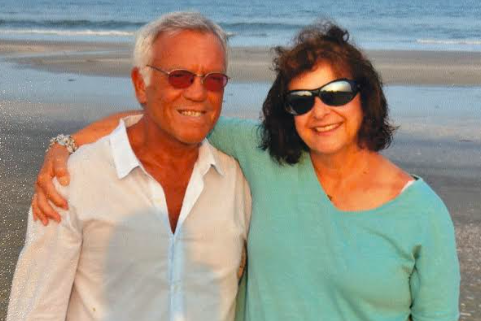
    Mr. Baer and his wife, Rosemary, married in 1969.Courtesy of the family

    Before the Daily News, Mr. Baer spent 14 years in total as a reporter for the Patriot-News, an award-winning public TV producer and show host for WITF in Harrisburg, and a press secretary during Lt. Gov. Bill Scranton’s unsuccessful run for governor in 1986.

    He wrote freelance stories for Philadelphia Magazine and national publications. He was a frequent guest on political TV and radio shows and moderated several statewide candidate debates.

    A lifelong foodie, he also reviewed Harrisburg-area restaurants for a magazine under the pseudonym “the Phantom Diner.” His book, On the Front Lines of Pennsylvania Politics, was published in 2012.

    “He was so good at writing strong opinions with depth,” Paul Vigna, a retired Daily News editor, said.

    Mr. Baer earned awards for his journalism and was inducted into the Pennsylvania News Media Hall of Fame in 2024. He was cofounder of the Pennsylvania Press Club and onetime president of the Pennsylvania Legislative Correspondents Association.

    In tributes, colleagues praised his “sharp wit” and called him a “journalism giant,” “terrific writer,” and “mentor to many of us.” The internship program at the Pennsylvania Legislative Correspondents Association is named in his honor.

    “He was an All-Star, a Hall of Famer,” Vigna said. Rendell said: “He didn’t take any BS.”

    John Baer was born June 25, 1947, in Harrisburg. He graduated from Bishop McDevitt High School in 1965 and earned a bachelor’s degree in English at Mount St. Mary’s University in Maryland and a master’s degree in education later from Temple University.

    He coached basketball and football teams while teaching English for three years at Trinity High School in Harrisburg after college. He married Rosemary Ruggieri in 1969, and they had sons Johnny and James.

    Mr. Baer and his wife hosted many memorable Christmas parties and enjoyed road trips to Georgetown University basketball games, New York Mets baseball games, and their sons’ many sporting events. He played racquetball and tennis, and ran a marathon at 50.

    He was a longtime member of St. Theresa Catholic Church in New Cumberland. “He liked interesting people and had lifelong friendships,” his family said in a tribute. “He loved his friends.”

    On Facebook, colleague Diana Robinson said: “Here’s to you, John Baer. You’ll always be The Most Interesting Man in Harrisburg.”

    In addition to his wife and sons, Mr. Baer is survived by three grandchildren and other relatives.

    Services were held earlier.

    Donations in his name may be made to Vickie’s Angel Foundation, 511 Bridge St., Box 174, New Cumberland, Pa. 17070.

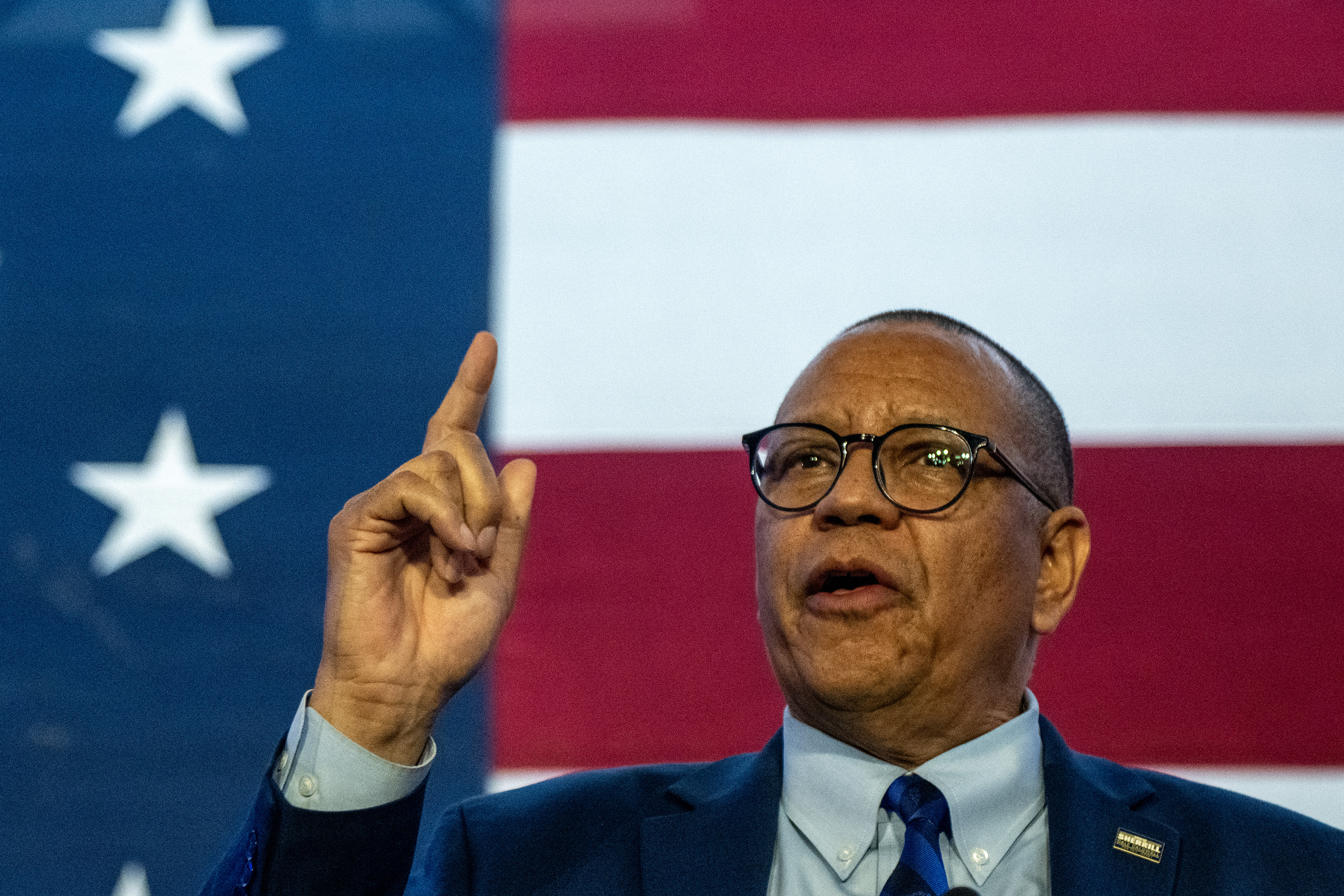
  • Former N.J. Lt. Gov. Dale Caldwell suspended from his church duties as he faces another investigation into his conduct

    Former N.J. Lt. Gov. Dale Caldwell suspended from his church duties as he faces another investigation into his conduct

    Former New Jersey Lt. Gov. Dale Caldwell, who resigned last week after investigators found that he had made inappropriate and sexually charged comments to women and violated ethics rules, is now being investigated by his church, according to an email from a bishop reviewed by The Inquirer.

    Cynthia Moore-Koikoi, the bishop of the Eastern Pennsylvania and Greater New Jersey Episcopal Area, sent a brief email to colleagues on Sept. 25, just hours after Gov. Mikie Sherrill announced Caldwell’s resignation that day.

    “I write to inform you that I have received a complaint concerning Rev. Dale Caldwell, Lt. Governor of New Jersey and licensed pastor. The complaint is being processed according to the policies and procedures of the United Methodist Church,” the bishop’s email said.

    In an email to the Inquirer Thursday night, Moore-Koikoi elaborated, saying she had suspended Caldwell from his pastoral duties until the investigation was done.

    “Because we hold clergy to a high standard, we take the allegations made in the report seriously,” Moore-Koikoi’s statement said. “Following the publication of the report about the former Lt. Governor, I received a complaint based on the concerns raised in the report. In order to protect the well-being of Rev. Caldwell, the congregation, and all those involved, Rev. Caldwell has been placed on suspension while the complaint is processed.”

    A spokesperson for the bishop clarified that the complaint “is based on what was already under investigation.”

    In her email to members, Moore-Koikoi asked that they pray for him “and all those impacted by this process,” the email said. Moore-Koikoi included a Bible verse, 1 Corinthians 4:5a: “Therefore judge nothing before the appointed time; wait until the Lord comes.”

    In an interview earlier Thursday, Caldwell said he was not facing any new allegations of impropriety. He said the Eastern Pennsylvania and Greater New Jersey Episcopal Area was simply “investigating the investigation, based on the same information.”

    “It’s a piling on, and it’s crazy,” said Caldwell, the senior pastor at Covenant United Methodist Church in Plainfield.

    At the time, he said no one has asked him to step aside. Caldwell could not immediately be reached for comment on the bishop’s statement saying she had suspended him.

    Caldwell and his attorney have vociferously denied the former lieutenant governor and secretary of state did anything wrong and have criticized the findings of the four-month investigation by former Attorney General Christopher Porrino, who served under Gov. Chris Christie.

    Caldwell, 66, left his job as president of Centenary University to run with Sherrill last year. The investigation found that Caldwell hit on a female staffer’s friend, and that when she turned him down, he told the staffer that ambitious women like them needed a man in a position to help them “but you young women are looking for young sperm.”

    Caldwell denied making the comments, “but we did not find his denial credible,” Porrino’s report said. The state trooper accompanying Caldwell that day told investigators he never heard Caldwell make that statement.

    Caldwell said Thursday he could not understand why they “disregarded” the testimony of the trooper, ”who was two feet away.”

    The report said Caldwell also repeatedly brought personal guests to ticketed events without clearing it with the ethics officer and without paying for the extra tickets. The practice continued even after warnings, attending an ethics training, and being told about the investigation.

    In releasing the report, Sherrill said it “lays out a pattern and practice of long-term concerning behavior.”

    His attorney said when Caldwell “learned that reimbursement was appropriate in one particular situation, he reimbursed $175 for the event.”

    Caldwell said he resigned “for the good of the state of New Jersey” because the matter distracted from the Sherrill administration’s important work.

    When asked to comment, a Sherrill spokesperson referred to the governor’s earlier comments defending the thoroughness of Porrino’s investigation.

    Caldwell and his attorney have said they are weighing their legal options. When asked what he might do, he said he could “sue for harassment.” He lamented “there was something wrong with the American system of justice” because it would take an enormous amount of money to prove he did nothing wrong.

    “I can leave with my head up. I have a 22-year-old daughter and she was seeing all these people attack her dad,” Caldwell said. “I have a good life and opportunities. The number of supporters are many more than the detractors.”

    Staff writer Aliya Schneider contributed to this article.

    This story has been updated to reflect Caldwell’s suspension from his pastoral duties.

  • A Pa. coroner doubted a measles-linked death, sparking anti-vaccine outcry. Records show the state tried to reach him.

    A Pa. coroner doubted a measles-linked death, sparking anti-vaccine outcry. Records show the state tried to reach him.

    Over five days in August, Pennsylvania health officials called the Lancaster County Coroner’s Office at least three times and sent an email asking to discuss the death of an infant who had tested positive for measles.

    They did not connect with coroner Stephen Diamantoni before Gov. Josh Shapiro came to the county to announce at an Aug. 25 news conference that two unvaccinated Lancaster residents had died in a growing measles outbreak, the state’s first measles-associated deaths in 35 years.

    Soon after, the county coroner — an elected Republican who has presided over the office for nearly two decades — was telling reporters the state had not talked to him directly, raising questions about the state’s communications.

    His comments, coupled with his position that he did not believe one of the two infants affected had died from measles, kicked off a viral exchange of misinformation cited by anti-vaccine activists — and spiraling up to federal health leaders — to discredit the dangers of Pennsylvania’s growing measles outbreak.

    Now emails from the coroner’s office, obtained by The Inquirer through an open-records request, show that state officials made significant outreach to Diamantoni, far beyond his prior statements acknowledging only that his deputy spoke with state officials shortly before the news conference.

    In fact, doctors from the state health department had tried to contact his office about the case for days, with increasing urgency. At one point, a doctor told one of Diamantoni’s staffers that they were ready “24/7” to speak with someone from the office.

    Yet two weeks after the announcement, he continued to emphasize the state’s lacking communication in an in-person interview with The Inquirer. “I have not received any information directly from the state [health] department,” he said on Sept. 9.

    By then, his statements had enabled President Donald Trump’s health secretary, Robert F. Kennedy Jr., to question whether the deaths reported in Pennsylvania were real.

    The Centers for Disease Control and Prevention for weeks omitted the first two deaths and those subsequently reported by the state in its national reporting, marking an extraordinary departure from public health norms. As of Thursday, the agency had updated its tally to recognize two deaths nationally this year, while Pennsylvania has reported five measles-related deaths.

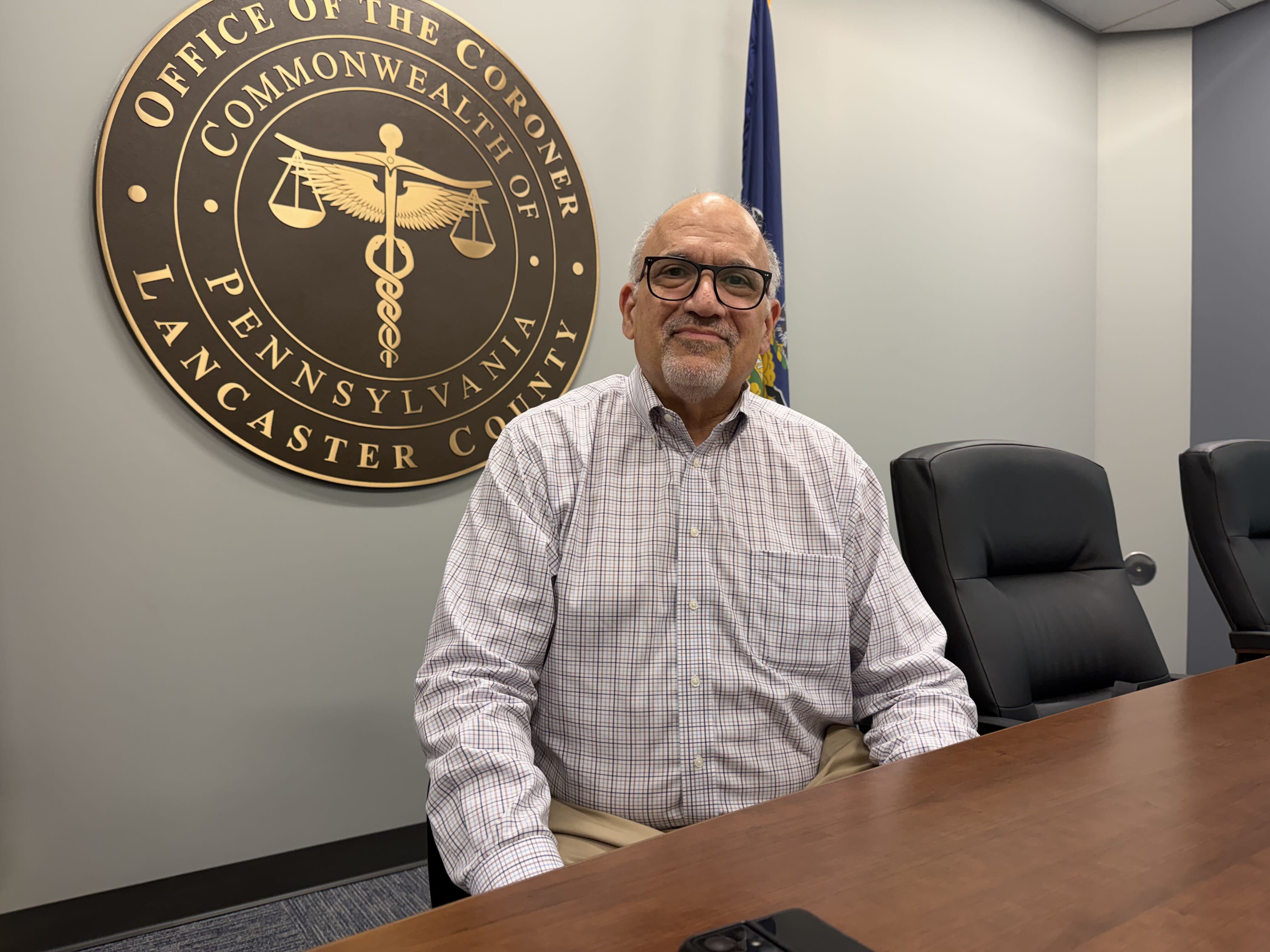
    Lancaster County coroner Stephen Diamantoni poses for a photo in his office in September.Gillian McGoldrick

    Asked to comment on the records, Diamantoni said he was not aware of the state’s outreach ahead of Shapiro’s announcement.

    He said state officials should have been more explicit in the calls they made to his office staffers, who sent him and his deputy emails relaying messages. The communications did not make it clear that they needed to speak to him about a measles-associated death, Diamantoni said, adding that he is easy to reach.

    “It didn’t sound like there was urgency. It didn’t sound like anyone indicated that there was a measles death that we want to talk to the coroner about,” he said.

    Public officers like Diamantoni have an obligation to ensure staff can get timely messages to him, especially in a public health emergency like a measles outbreak, said Kathleen Hall Jamieson, director emerita of the Annenberg Public Policy Center at the University of Pennsylvania. Likewise, she noted, state officials must ensure communications with the public are transparent and easy to understand.

    State officials did not immediately say how they define a “measles-associated death” and have provided few details on the deaths themselves, leaving county coroners to fill in the blanks.

    Public health experts have noted that the politically charged back-and-forth and competing narratives around the deaths risks confusing the public at a time when clarity is crucial — amid the largest measles outbreak in the country, with state officials reporting nearly 1,000 cases and five measles-associated deaths.

    (function(){function e(){window.addEventListener(`message`,function(e){if(e.data[`datawrapper-height`]!==void 0){var t=document.querySelectorAll(`iframe`);for(var n in e.data[`datawrapper-height`])for(var r=0,i;i=t[r];r++)if(i.contentWindow===e.source){var a=e.data[`datawrapper-height`][n]+`px`;i.style.height=a}}})}e()})();

    The contradictory communications from the state and the local coroner’s office around the initial Lancaster deaths set the stage for Kennedy to attack Shapiro in an X post, claiming the Democratic governor may have “fabricated” two of the deaths in Pennsylvania.

    Shapiro has sharply criticized Kennedy, a longtime anti-vaccination advocate, for spreading misinformation about vaccine safety and Pennsylvania’s outbreak, now the largest in the nation this year, with the most deaths reported by any state since 1992.

    Asked for comment on communications with Diamantoni, state officials provided a statement by email saying Pennsylvania law bars them from providing further information on the initial measles-associated deaths.

    The health department’s epidemiology team “thoroughly investigates and verifies” measles-associated deaths to ensure that they meet the state’s definition, and does not announce deaths until they have finished an investigation, health department press secretary Neil Ruhland said in an email.

    He said state law does not require the department to report deaths to a coroner’s office; rather, coroners and “other certifiers” report deaths to the state health department.

    “PA DOH has followed this explicit process for all measles-associated deaths in Pennsylvania,” Ruhland wrote.

    ‘No one looks good’

    News outlets began calling Diamantoni as soon as the first measles-related deaths were reported in Lancaster, where he is a family medicine doctor and former Lancaster City Council president. First elected to the coroner’s office in 2007, he said he views his duties as apolitical and describes himself as a strong advocate for vaccination.

    He told media outlets he had been surprised by the state’s announcement, as his office had not identified any deaths from measles.

    The office had investigated the death of an infant who tested positive for the disease, but Diamantoni has maintained that the child had died from a lacerated spleen, not the highly contagious illness.

    As his claims were widely reshared on social media and in national media stories, state officials said they stood by their findings that both deaths were measles-related. They were not told that the infant’s death was not associated with measles, they said.

    Diamantoni told The Inquirer repeatedly that state health officials had never spoken personally with him about the death of an infant later identified as Ivan Miller, who was hours old when he died on Aug. 14.

    He said that state health officials had only reached out hours before their news conference, and that his deputy, Eric Bieber, had spoken to them.

    (function(){function e(){window.addEventListener(`message`,function(e){if(e.data[`datawrapper-height`]!==void 0){var t=document.querySelectorAll(`iframe`);for(var n in e.data[`datawrapper-height`])for(var r=0,i;i=t[r];r++)if(i.contentWindow===e.source){var a=e.data[`datawrapper-height`][n]+`px`;i.style.height=a}}})}e()})();

    Internal office records reveal that five days before the news conference, a staffer in the coroner’s office e-mailed Diamantoni, saying that an infectious-disease doctor with the state health department was looking to speak to “one of you” about “the positive measles case with the infant we just had.”

    The state health department followed up on its initial Aug. 20 call with subsequent emails and calls on Aug. 21, a Friday, and Aug. 24, the following Monday, records show.

    One doctor included his state-issued cell phone number in an email to a coroner’s office staffer and Bieber and emphasized that he was available “24/7” to discuss the case.

    When Bieber spoke to representatives from the state health department on Aug. 25, the office did not realize that the state was about to announce two measles-associated deaths, according to Diamantoni.

    Diamantoni added that since he did not believe Ivan Miller’s death was caused by measles, he had not been expecting any outreach from the state.

    “I don’t think it would have brought a red flag to me. It just looked like a request we usually receive from different individuals, different agencies, requesting cause and manner information,” Diamantoni said.

    Yet it is the responsibility of public officials to establish communication procedures at their offices, especially when a contagious disease is spreading and the public needs clear information, according to Penn’s Jamieson.

    In public offices, she said, “you shouldn’t be seeing a situation in which the person doesn’t get the information, or is able to say, ‘I didn’t get it.’”

    State officials could have communicated more clearly in announcing the deaths as well, she said, noting that they did not immediately define “measles-associated death” in an initial news release.

    Jamieson said it is important for health officials to explain “what we know, what we don’t know, and how we’re finding out what we don’t know” in terms the public can understand.

    “Anytime the public is listening to voices that are supposed to be speaking with authority, and the public, instead of hearing a clear message, is confused, you have a problem,” she said. “No one looks good.”

    Measles-associated deaths in Pennsylvania

    State officials have repeatedly cited state privacy laws in response to criticism of their communications, saying they cannot provide detail about how they investigated the measles-associated deaths.

    The state defines a measles-associated death as one that occurs within 30 days of symptom onset in a person with clinical evidence of infection and a positive laboratory test for measles, and who did not die of another unrelated cause, like a car crash.

    Officials have provided little information beyond the fact that none of the five people who have died were vaccinated, and their county of residence.

    Local coroners like Diamantoni have offered more details.

    For example, in early September, Jefferson County’s coroner, also an elected Republican, confirmed the death of a 40-year-old woman from measles. He disclosed that the woman also had severe respiratory conditions, including chronic obstructive pulmonary disease, that made her vulnerable to serious complications from a respiratory illness like measles.

    Later in the same week, the Mifflin County coroner, another Republican, confirmed that an unvaccinated 18-year-old had died from a rare neurological complication of measles.

    Diamantoni has shared that Ivan Miller, who died at a birthing center in Lancaster County, tested positive for a measles infection acquired before birth. His family, who is Amish, told the Atlantic that his mother had a severe case of measles and gave birth early.

    Although Diamantoni did not consider measles to have caused the death, he said, measles was included on the boy’s death certificate in a section that lists “significant conditions contributing to death but not resulting in the underlying cause.”

    Physicians have noted that measles can weaken the spleen, putting it at risk of rupture. Diamantoni cited a lacerated spleen as the primary cause of death.

    The second death, another Amish infant, was not initially reported to Diamantoni; Lancaster’s Clinic for Special Children, which treats Amish children with genetic conditions, had treated the baby until her death.

    Diamantoni’s office investigated the death about a week after the state’s news conference; he later told reporters that the baby was 6 weeks old and had Amish lethal microcephaly, a fatal genetic condition that makes respiratory illnesses particularly risky. Diamantoni said measles caused the baby’s death.

    On Wednesday, state health officials announced a fifth death, a Lancaster County resident who tested positive for measles and died. Diamantoni told The Inquirer that he had not handled that death, but that state health officials had informed him about it. He said they provided no further information.

    State officials did not say whether the person, who was unvaccinated, died in Lancaster County.

    Diamantoni told an Inquirer reporter in early September that he was proud that his office was one of the first in the country to be certified by the International Association of Coroners and Medical Examiners.

    “People may not always agree with our findings, but they’re well investigated and well thought out,” he said.

    Staff writer Gillian McGoldrick contributed to this article.

  • Stop airing Brian Fitzpatrick’s TV ads, Bob Harvie’s campaign asks Philly area stations

    Stop airing Brian Fitzpatrick’s TV ads, Bob Harvie’s campaign asks Philly area stations

    Bucks County Democrat Bob Harvie is asking TV stations in the Philadelphia area to stop airing advertisements from U.S. Rep. Brian Fitzpatrick, calling them misleading to viewers.

    In letters sent Thursday, an attorney for the Democrat’s campaign highlighted two attack ads from Fitzpatrick’s campaign related to Harvie’s time as a county commissioner.

    He said the ads relied on dubious reporting from a source who has personal connections to Fitzpatrick, the incumbent Republican who has represented the 1st Congressional District for five terms. Harvie is challenging Fitzpatrick for the Bucks County-based seat, one of four in the state that both parties are targeting ahead of November.

    In one of the ads, for example, Fitzpatrick’s campaign cited a headline from Patch.com, the hyperlocal news organization, that said “Bob Harvie was the lone vote to abolish local police funding on the Board of Commissioners.”

    Harvie opposed a roughly $43,000 purchase of “civil unrest protective equipment” for the Bucks County Sheriff’s Office in a 2024 vote, attorney Timothy Ford said in the letter, but voted to approve every other law enforcement spending request, including about $31,000 for a sheriff’s deputy vehicle and about $44,000 for a police interceptor utility vehicle.

    The legal action comes after revelations from Politico that the author of multiple Patch articles Fitzpatrick is using in his campaign ads is Dave Sommers, who received occasional payments from Fitzpatrick’s campaign over the years, though not in the most recent financial reporting cycle.

    “Sommers’ claim that Mr. Harvie voted to ‘abolish local police funding’ is a deliberately false characterization of the official and public record of the Bucks County Commissioners’ Meeting,” Ford wrote.

    Harvie’s campaign asked the TV stations to scrutinize any future advertisements that refer to Sommers’ work.

    “These advertisements rely on reporting from a highly uncredible and biased source with a penchant for publishing out-of-context, false statements that mislead voters and damage Mr. Harvie’s reputation in the community,” Ford wrote.

    Sommers had previously been charged with stealing an election sign for a previous Fitzpatrick primary challenger and attended the lawmaker’s June wedding, Politico reported.

    Representatives for the Fitzpatrick campaign did not respond to The Inquirer.

    Thursday’s letter is the latest effort by the Harvie campaign to use legal means to thwart an ad blitz from Fitzpatrick, who led Harvie in fundraising, according to campaign finance reports this summer. The next round of financial disclosures will be available Oct. 15.

    Several public polls put Harvie and Fitzpatrick in a tight race, but the Cook Political Report, a nonpartisan group that provides election analysis, indicates the seat will likely remain in Republican control.

    This summer, Harvie’s campaign sent a cease-and-desist letter to Fitzpatrick and his campaign for what it said were defamatory allegations that falsely suggest Harvie was the subject of an FBI investigation. A PAC supporting Fitzpatrick that used similar language in its social media posts, news releases, and video content also received a cease-and-desist order and was slapped with a lawsuit.

    The practice of sending these kinds of letters is common for campaigns, and some go ignored.

    In another ad Harvie’s campaign complained about in the letter, Fitzpatrick referenced a Patch headline that said “Bob Harvie Voted to Give Himself a Significant Taxpayer-Funded Pay Raise.”

    As chair of the Bucks County Board of Commissioners, Harvie approved an annual 1% increase in salaries beginning in 2024 for commissioners and several other local offices. State law requires commissioners to set salaries prior to a forthcoming election year for most county-level roles, including their own.

    “There was nothing ‘significant’ or unusual about the pay raise that Mr. Harvie and his fellow Commissioners approved,” Ford wrote. He added that the raises were approved across party lines, including support from the Republican commissioner.

  • Trump says Secret Service wants him to ‘take down’ Oval Office

    Trump says Secret Service wants him to ‘take down’ Oval Office

    President Donald Trump said that Secret Service officials have encouraged him to replace the current Oval Office, according to a new interview with Time magazine.

    “‘Sir, we think the Oval Office should be taken down, and we’ll build a new one, sir,’” said Trump, quoting a Secret Service official. “I said, ‘My ass, you can’t build a new one. This is a special place.’”

    The Secret Service has encouraged prior administrations to take steps to fortify the Oval Office, said four former officials, who spoke on the condition of anonymity to detail sensitive security matters. Past presidents have declined to do so because it would require them to relocate.

    A White House spokesman declined to offer further comment. A spokesman for the Secret Service did not immediately respond to questions about Trump’s remarks.

    The current Oval Office was constructed by President Franklin D. Roosevelt and become synonymous with high-profile events and speeches. Trump, who has redecorated it with gold as part of his sweeping changes to the White House, has called it the most intimidating office in the nation.

    Trump has listened to the Secret Service on other projects to fortify the presidential grounds, such as plans to build a permanent fence around Lafayette Square, the public park across the street from the mansion. The president also has invoked national security reasons to defend his most controversial construction projects, including a new White House ballroom and his planned triumphal arch.

    In the Time interview, the president said he was exploring the possibility of a new federal designation for the Oval Office, which he suggested could protect the office from being torn down and preserve his changes to it.

    “I’ve been asking Susie for six months to give me a statement. Will we save this room? Will we make it a federal landmark?” Trump said, invoking his chief of staff, Susie Wiles.

    The White House is already designated a National Historic Landmark, a federally conferred status that is intended to offer protections against sudden changes. But Congress exempted the White House from the National Historic Preservation Act, which has allowed presidents – including Trump – to swiftly remake parts of the building when they assume office.

    “The discussion of making it a landmark is legally meaningless,” said Greg Werkheiser, founding partner of Cultural Heritage Partners, a law firm focused on historical preservation. He also questioned why Trump was invoking historical preservation after disregarding it to tear down the White House’s East Wing, pave over the Rose Garden and make other changes.

    “There’s some irony of the president suggesting that he might use historic designation to protect the property after ignoring it so far,” Werkheiser said.