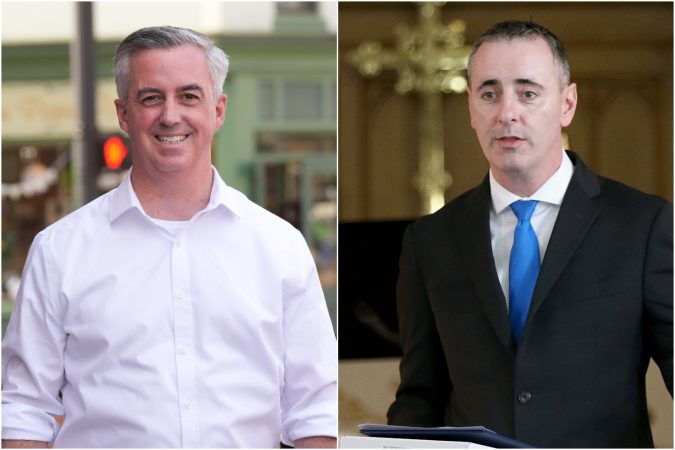
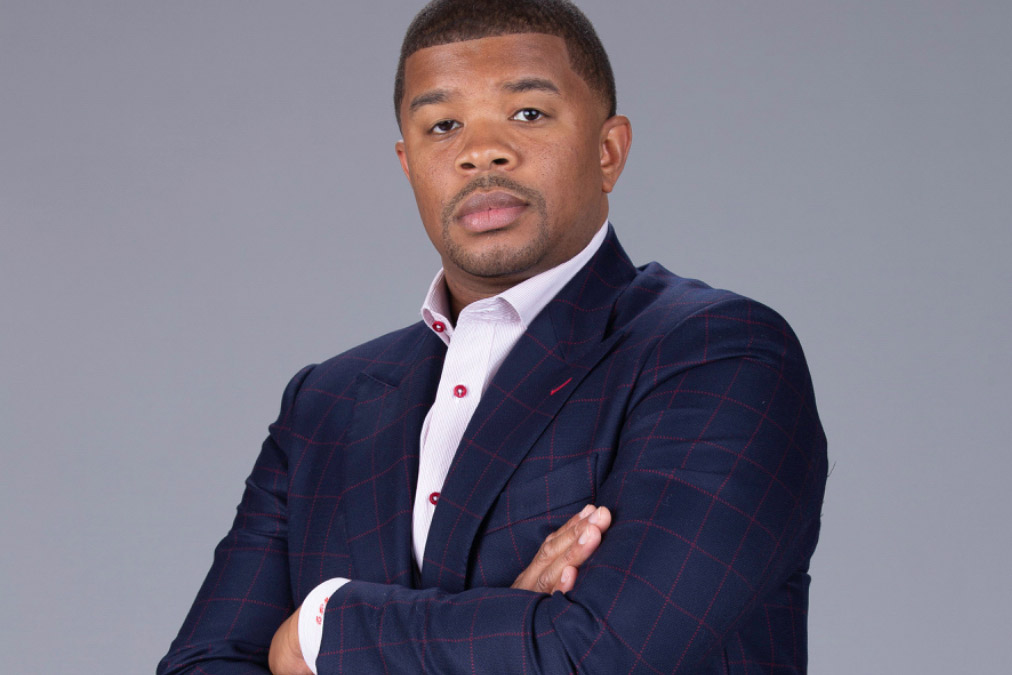
Candidates are trading debate challenges in a contentious congressional race in a key swing district in the Philadelphia suburbs.
Democrat Bob Harvie is challenging Republican U.S. Rep. Brian Fitzpatrick to four debates, his campaign told The Inquirer.Fitzpatrick, after learning of Harvie’s challenge from The Inquirer, countered with 10 debates — but only if Harvie releases files related to an FBI investigation that Fitzpatrick and allies have routinely alleged focuses on the Democrat.
Harvie does not have files to release, said Dan McCormick, the candidate’s campaign manager. Harvie also has never been under investigation, lawyers for his campaign said. And he has already filed a defamation lawsuit against a pro-Fitzpatrick super PAC for making the same claim.
“Bob would be happy to participate in 10 debates,” McCormick said. “Bob has no files to release and Brian Fitzpatrick knows it. If Fitzpatrick has proof as he says he does, he should put up or shut up.”
The back-and-forth emerged Monday when the Harvie campaign told The Inquirer that the two-term Bucks County commissioner would be challengingthefive-term GOP lawmaker to three debates in Bucks — one each in the lower, central, and upper parts of the county — and a fourth in the Montgomery County portion of the 1st Congressional District.
Harvie said that Fitzpatrick“refuses to answer questions here at home” and “has nothing to show for his nearly 10 years in Washington.”
The increasingly heated race is one of four marquee congressional contests in Pennsylvaniathat could decide which party controls the U.S. House in November.
“It’s time for Fitzpatrick to show up in Bucks and Montgomery County — not Manhattan or the Lavender Fields in France,” Harvie said in a statement, referring to the venues for Fitzpatrick’s wedding and engagement to Fox News senior White House correspondent Jacqui Heinrich. “I’ll be there whether or not he shows, because I will never forget who I am fighting for.”
Heather Roberts, a spokesperson for Fitzpatrick, said as soon as Harvie releases “his full FBI files,” the campaign will move forward with date and venue selections for 10 debates.
“If the Subject of an FBI Corruption investigation is asking to be provided a platform by the only FBI Agent in Congress, he sure as hell will be required to come clean with the public and release these documents in their entirety,” Roberts said in a statement. “If he has nothing to hide, this should be an easy decision for him.”
Roberts also proposed a joint sit-down interview with Harvie and Fitzpatrick, conducted by The Inquirer, to discuss the allegations.
Roberts said that Fitzpatrick, who served 15 years as an FBI agent and a federal prosecutor, “is extremely familiar with this specific grand jury protocol and the documents that are generated.”
The debate drama is the most recent development in what has become an increasingly combative race, filled with personal jabs and legal filings related to controversial ads making allegations that Harvie is the subject of an FBI investigation.
Harvie, a former Falls Township supervisor, and other officials testified as witnesses to a grand jury in an FBI probe in 2022 into political donations and union contracts related to the Pennsbury School District. In 2020, the FBI interviewed several people connected to Falls Township and Pennsbury.
It has been fouryears since voters have been able to see a general election debate in the 1st Congressional District. In 2024, Fitzpatrick did not debate Democratic challenger Ashley Ehasz, after doing so in 2022.
The Harvie campaign said that it would be willing to work with the Fitzpatrick campaign on logistics and other event details, but that the commissioner’s preference is a town hall-style debate so voters can hear from him directly.
Fitzpatrick has held tele-town halls, including one in June, for constituents, and frequently posts on social mediarecapping the meetings and events he attends in the community.
SEOUL, South Korea — The South Korean and U.S. militaries view their annual drills in South Korea as more critical than ever. The stakes have risen dramatically as North Korea has gained battlefield expertise with drones and modern warfare by deploying troops to support Russia’s war in Ukraine.
The summer exercise had barely begun Monday when President Donald Trump denounced it, dealing yet another blow to the seven-decade-old alliance between Washington and Seoul. Under Trump, bilateral relations have already come under immense strain from his punishing tariffs on South Korean exports. And his transactional diplomacy has frustrated South Korea, most recently when he appeared to put Saudi Arabia on the path to enriching nuclear fuel on its own soil, a demand Seoul has made for years.
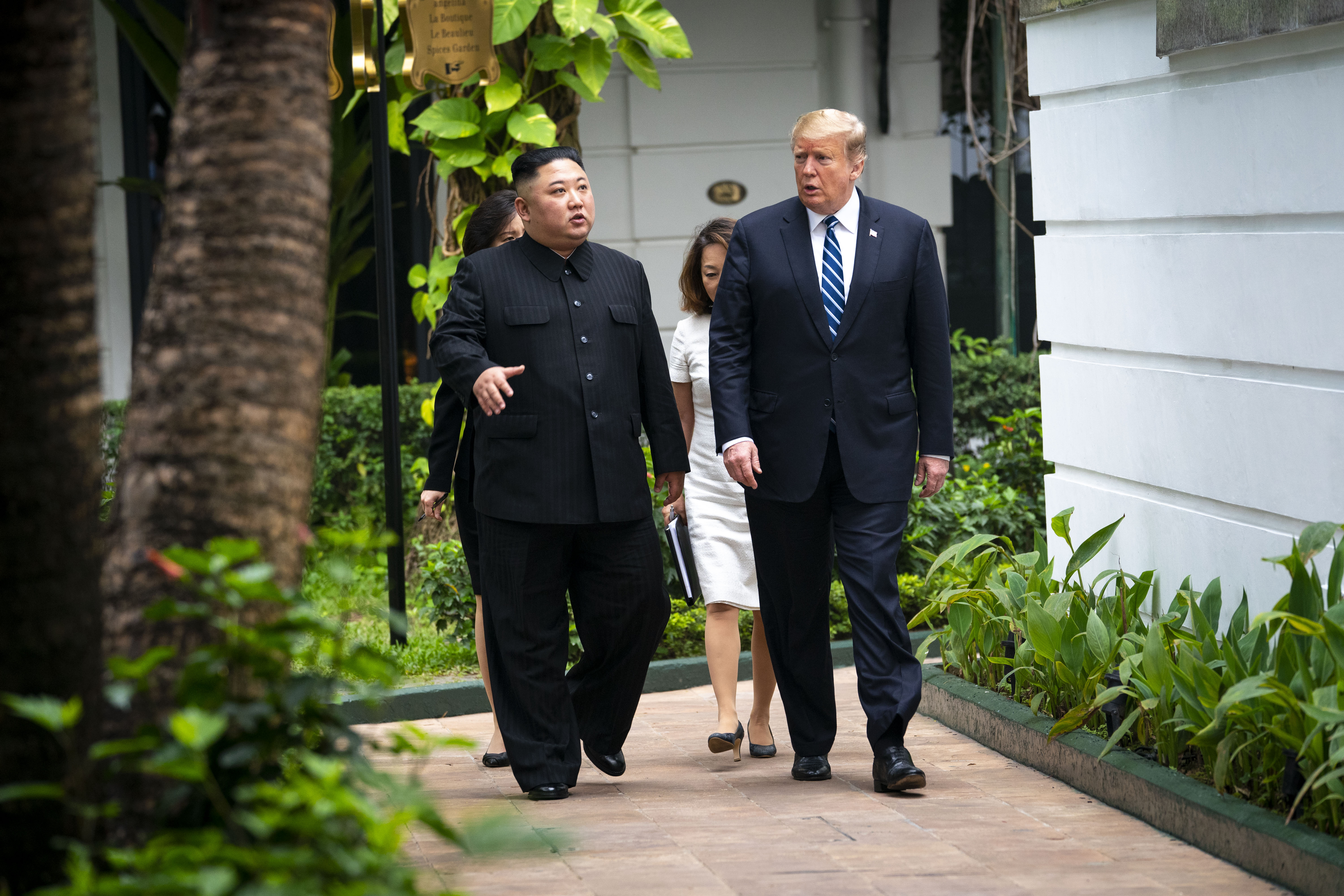
In recent years, North Korea has not only expanded its nuclear arsenal but also repeatedly threatened to use it against South Korea, labeling its neighbor a “most hostile enemy.” Its leader, Kim Jong Un, has also forged a mutual defense treaty with Moscow, dispatching troops and weapons to support Russia’s war against Ukraine. Despite these escalations, Trump, in a social media post, characterized North Korea as “unthreatening and respectful” while boasting of his “very good relationship” with Kim.
In the same post, he also criticized the decades-old joint military drills with South Korea as “not only costly” but “totally inappropriate and hostile” toward North Korea.
“I am not happy with the fact that the United States has, long ago, agreed to participate in Joint Military Exercises with South Korea,” he said. “Based on the fact that it is too late to cancel, I have instructed Secretary of War, Pete Hegseth, to substantially reduce the Joint Military Exercises!”
If implemented, the directive would mark Trump’s first-known concrete overture toward North Korea in his second term. However, it remains unclear whether Kim will embrace the gesture.
Throughout his political career, Trump has treated the alliance as a bad bargain for Americans, frequently accusing Seoul of failing to pay its fair share for the U.S. troops stationed in South Korea — who act as a deterrent to North Korea. During his first term, he unilaterally canceled or downscaled major drills, calling them “tremendously expensive” and “very provocative.” That concession helped facilitate three summit meetings with Kim but failed to roll back his nuclear ambitions.
Since returning to the White House, Trump has signaled a desire to renew that personal diplomacy. Over the weekend, he posted a 2019 photograph of himself and Kim at the inter-Korean border, writing, “Kim Jong Un and I get along GREAT!”
“Trump’s description of the DPRK as ‘unthreatening and respectful’ is alarming to allies, who have watched the regime steadily improve its missile and nuclear capabilities, while also gaining an additional patron in Russia for its support in the war on Ukraine,” said Emma Chanlett-Avery, the deputy director at the Asia Society Policy Institute, referring to North Korea’s full name, the Democratic People’s Republic of Korea.
This summer’s 11-day Ulchi Freedom Shield exercise was designed to adapt to these shifting dynamics, incorporating lessons learned from recent conflicts, including from Ukraine. Lt. Gen. Joseph E. Hilbert of the U.S. 8th Army noted that the maneuvers would also test “the alliance’s ability to rapidly project combat power and secure key terrain within the First Island Chain” — a long Pacific archipelago seen by the U.S. military as a strategic frontier against China’s expansive territorial claims.
But Trump found fault with South Korea on another front; in his post, he also criticized Seoul for failing to help “denuclearize” Iran.
South Korea’s Foreign Ministry on Monday pledged continued coordination with the United States on both joint military exercises and Iran.
While South Korea’s government confirmed that the drills had begun as scheduled, its defense establishment was deeply rattled. Trump’s directive fueled growing fears that the alliance was hollowing out.
“South Korean conservatives, in particular, will see the alliance turning into a zombie, considerably losing its old strategic objectives and political energy under Trump,” said Lee Byong-chul, an analyst at the Institute for Far Eastern Studies in Seoul.
Trump’s overture toward North Korea, however, is not entirely unwelcome for his South Korean counterpart, Lee Jae Myung, analysts said. A staunch proponent of inter-Korean reconciliation, Lee has urged Trump to ease tensions on the Korean Peninsula through direct talks with Kim. North Korea has long cited the joint drills as a major stumbling block to such efforts, calling them “a rehearsal for an aggressive war.”
On Monday, South Korea reiterated its hopes that the rapport between Trump and Kim would foster “meaningful dialogue.”
But a second round of Trump-Kim diplomacy faces much steeper hurdles than it did in 2018. North Korea is now a de facto nuclear state that has been bolstered by economic lifelines and diplomatic leverage from Moscow and Beijing. While Kim has noted that he retains “a good memory” of Trump, he has emphasized that North Korea would resume talks only if Washington abandons its insistence on denuclearization.
Seated behind his desk in the Oval Office earlier this month, President Donald Trump spoke directly to the camera in front of him. He turned to his right and looked up at the Pennsylvania Republican who, as he had indicated just a few weeks earlier, might very well lose her race for governor this fall.
“I think you can win,” he said this time, extending his hand to Stacy Garrity. It was a change in tune for Trump, who last month at an event in Pennsylvania said Garrity’s opponent, Democratic Gov. Josh Shapiro, was “expected to” and might win.
The president’s confidence in Garrity — and whether his support will extend beyond a handshake and a 17-second video with her at the White House — has become a critical question in the final stretch of the Pennsylvania governor’s race.
Down in the polls and lagging behind Shapiro’s unprecedented fundraising, Garrity has cultivated the president’s support and the potential boost, both financially and in Republican enthusiasm, that could come with it.
It is a risky strategy for a swing-state candidate whose party holds the White House, and particularly as polls show Trump becoming increasingly unpopular. Shapiro and his allies have enthusiastically promoted instances when Garrity, the twice-elected state treasurer, has leaned into Trump’s agenda and brand of politics.
But with less than three months before Election Day, it is not clear to what extent Trump or other key national Republicans will pitch in on her campaign.
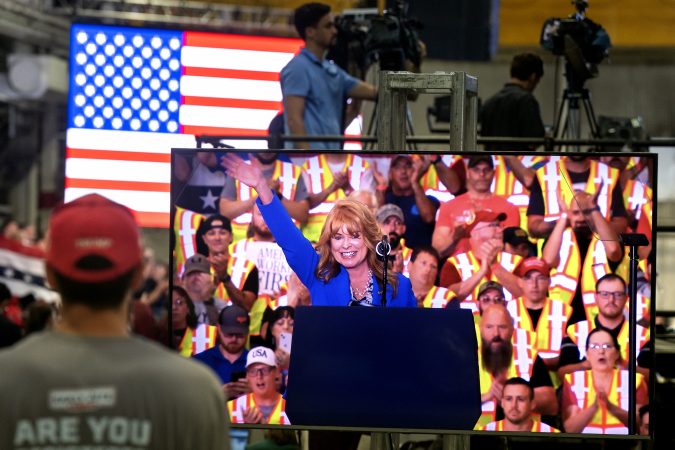
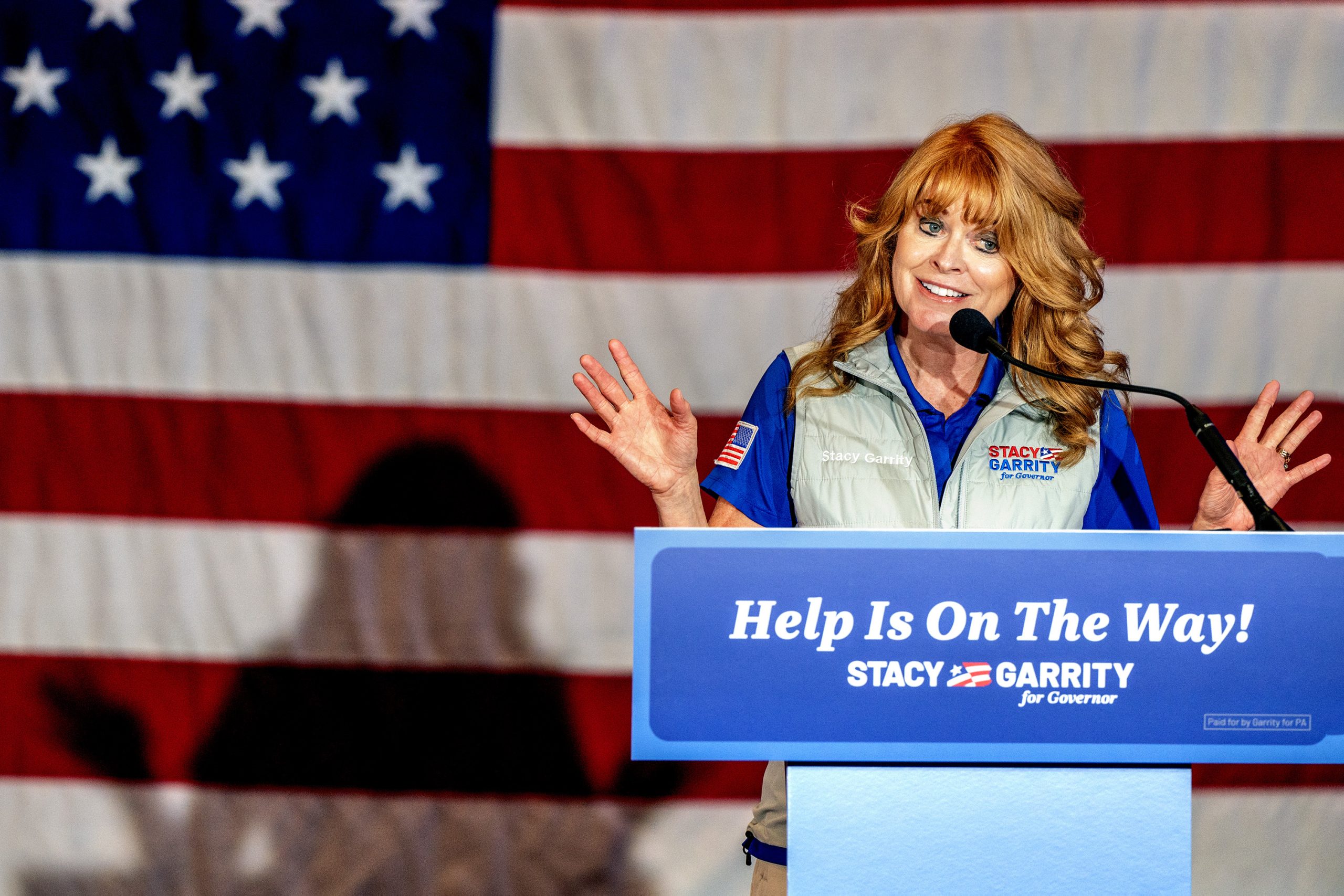
State Treasurer and Republican candidate for governor Stacy Garrity holds a rally in Bucks County at the Newtown Sports & Events Center in this 2025 photo. Tom Gralish / Staff Photographer
Trump has not yet stumped in any significant way for Garrity in Pennsylvania, a swing state where he was a near-constant presence during his winning 2024 campaign. And he has not lent his vast political resources — including a Trump-aligned super PAC flush with $400 million — to Garrity or other Republican candidates as his party faces tough campaigns across the country in the midterm elections that will determine control of Congress.
Several gubernatorial races around the country are consideredcompetitive, a reality that also pits Garrity against GOP nominees who polling suggests have better shots of success. The same circumstances have doomed the most recent other Trump-endorsed Pennsylvania Republican nominees for governor — former State Sen. Scott Wagner in 2018 and State Sen. Doug Mastriano in 2022 — who never ended up with national support and lost by double digits.
Campaigns typically heat up after Labor Day, and there is still time for Garrity’s national allies to converge to boost her. But observers say the political reality is also evident.
“The president kind of looks toward two things,” said Samuel Chen, an Allentown-based Republican strategist who is not affiliated with Garrity andwho previously worked for Tom Corbett, Pennsylvania’s most recent GOP governor.
“One is loyalty to him. Garrity has been loyal, but has not necessarily been as vocal as some others have. The other side of it is he likes winners. He wants to endorse people who win,” Chen said. “Everyone in Trump’s orbit knows that Garrity has a very uphill climb.”
Not supporting ‘lost causes’?
The level of involvement from groups like the Republican Governors Association has been a key indicator of whether the party believes its nominee has a chance at winning recent gubernatorial elections in Pennsylvania.
The RGA is made up of GOP governors who collectively support one another’s agendas and campaigns. Democratic governors have a similar alliance.
In 2010 — the last time a Republican won the governor’s mansion in Harrisburg — the group was the largest donor to then-Attorney General Corbett’s gubernatorialcampaign, giving him $6 million starting in August of that year. Four years later and helmed by then-New Jersey Gov. Chris Christie, the RGA was once again Corbett’s biggest donor. It donated more than $5.8 million as Corbett became the first sitting Pennsylvania governor in decades to lose a reelection bid. Christie, preparing to run for president in 2016, stumped with Corbett multiple times.
The picture was starkly different in 2018 and 2022, when Republican voters nominated two candidates closely associated with Trump. Neither Wagner’s campaign against Democratic Gov. Tom Wolf nor Mastriano’s campaign against Shapiro ever became highly competitive — and the RGA and other national groups decided to sit out.
“We’re watching Pennsylvania very closely,” Arizona Gov. Doug Ducey, then the chair of the RGA, said in September 2022. He added that the group would not support “lost causes” or “landslides.”
The RGA would spend nothing in the state that year, even with Mastriano and former Trump lawyer Jenna Ellis pleading for assistance. Shapiro went on to trounce Mastriano by nearly 15 percentage points.
This year, RGA chair and Montana Gov. Greg Gianforte has not publicly weighed in on Garrity’s chances since issuing a brief, generic statement congratulating her after her unchallenged primary in May.
And the competitive landscape Republicans are facing across the country may mean Pennsylvania’s GOP nominee once again gets the short end of the stick. The RGA did not respond to requests for comment.
Even with Pennsylvania’s status as a preeminent swing state that went for Trump two years ago, there are nearly a dozen more competitive gubernatorial races across the country this fall, according to the Cook Political Report, a nonpartisan group that provides election analysis.
Georgia, Iowa, Nevada, Ohio, and Wisconsin — some of which voted overwhelmingly for Trump just two years ago — are all considered toss-ups. Four other states with Democratic governors — Oregon, Arizona, Michigan, and Kansas — are also considered more competitive than Pennsylvania, which is ranked as “solid Democratic,” according to Cook, despite Republicans like Garrity and Trump having won statewide two years ago.
The RGA, according to its most recent filing with the Federal Election Commission, had less than $1.7 million in its RGA Right Direction super PAC after spending about $16 million so far in the current election cycle.
Its recent spending has focused on Iowa, where Democrats are attempting to capture the governor’s office for the first time in two decades, and Kansas, where the RGA launched an ad this month.
“There’s always competition for limited resources,” Charlie Gerow, a longtime Harrisburg-based Republican strategist who also ran for governor in 2022, said of the intraparty competition for donors. “There’s only so much campaign funding to go around as everybody’s trying to get a piece of it.”
In July, Shapiro’s campaign announced he had raised $50 million since January 2025. The next financial filing deadline for statewide candidates is in September, but as of the last reporting cycle, he had outraised Garrity 10-1.
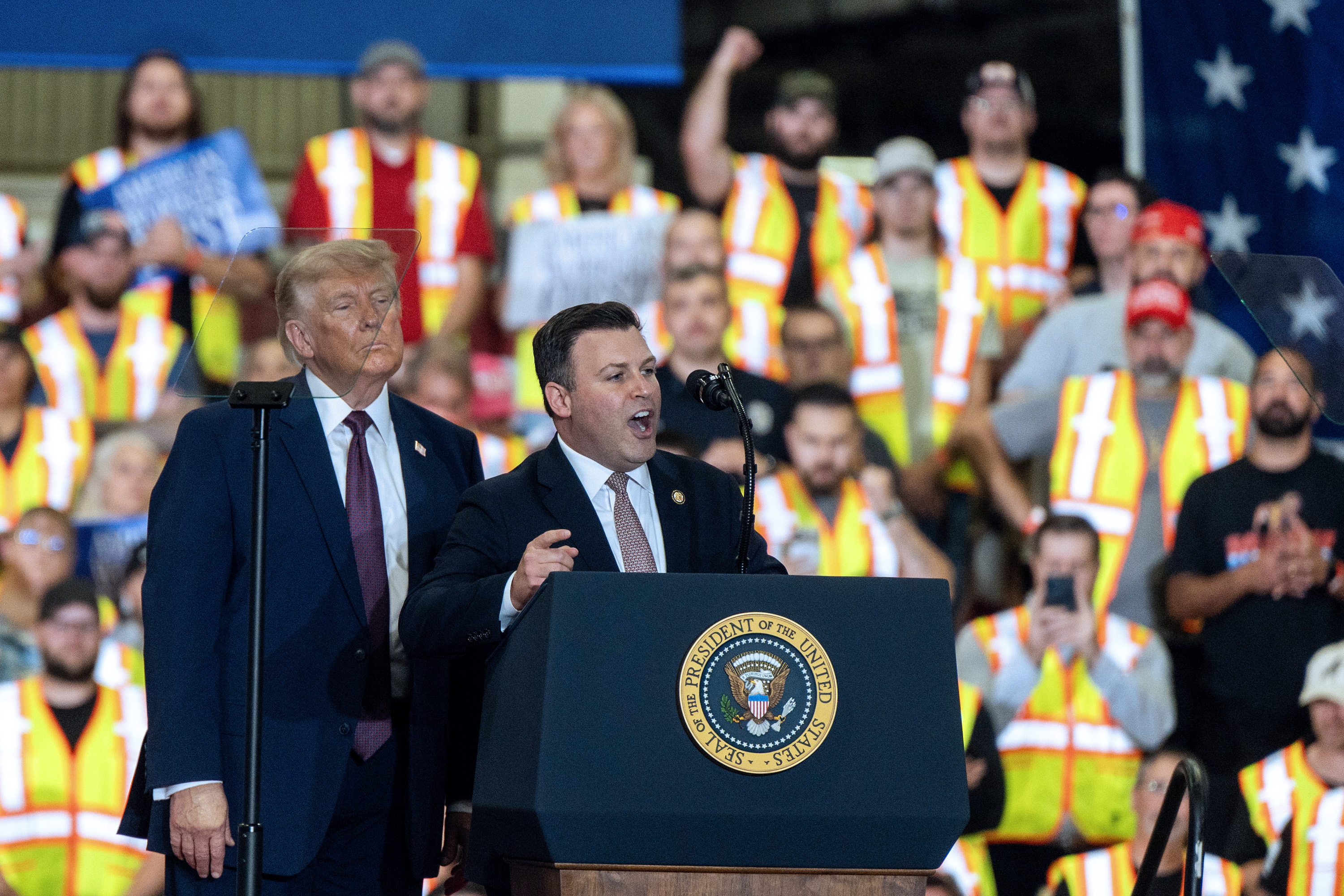
President Donald Trump brings U.S. Rep. Ryan Mackenzie (right) to the stage as he holds an event in Mackenzie’s Lehigh Valley district at Mack Trucks in Macungie Tuesday, June 23, 2026.Tom Gralish / Staff Photographer
But Matthew Beynon, a spokesperson for Garrity’s campaign, said she “does not expect, nor does she need, to go dollar-for-dollar with Josh Shapiro.” Instead, he said, she “just needs the resources to prosecute her case against Josh Shapiro … and she is on pace to be able to do so.”
Garrity looks forward to “continued support” from the RGA, he said.
Other national attention on Pennsylvania
After Mastriano’s disastrous performance in 2022, Republicans coalesced around Garrity — whose 3.5 million votes in 2024 were the most ever for a statewide candidate in Pennsylvania — as their best shot at defeating Shapiro.
But in the year since she received the party’s endorsement, Garrity has barely moved the needle. A Quinnipiac University poll in July found Shapiro leading Garrity 53% to 40% among registered Pennsylvania voters. Trump saw even lower scores: Just 39% of those polled approved of the president’s job performance.
A poll from a Republican-leaning firm promoted by Garrity showed her down, 50% to 43%.
Across Pennsylvania, she has also competed for attention and resources as her party prioritizes other major election battles this fall.
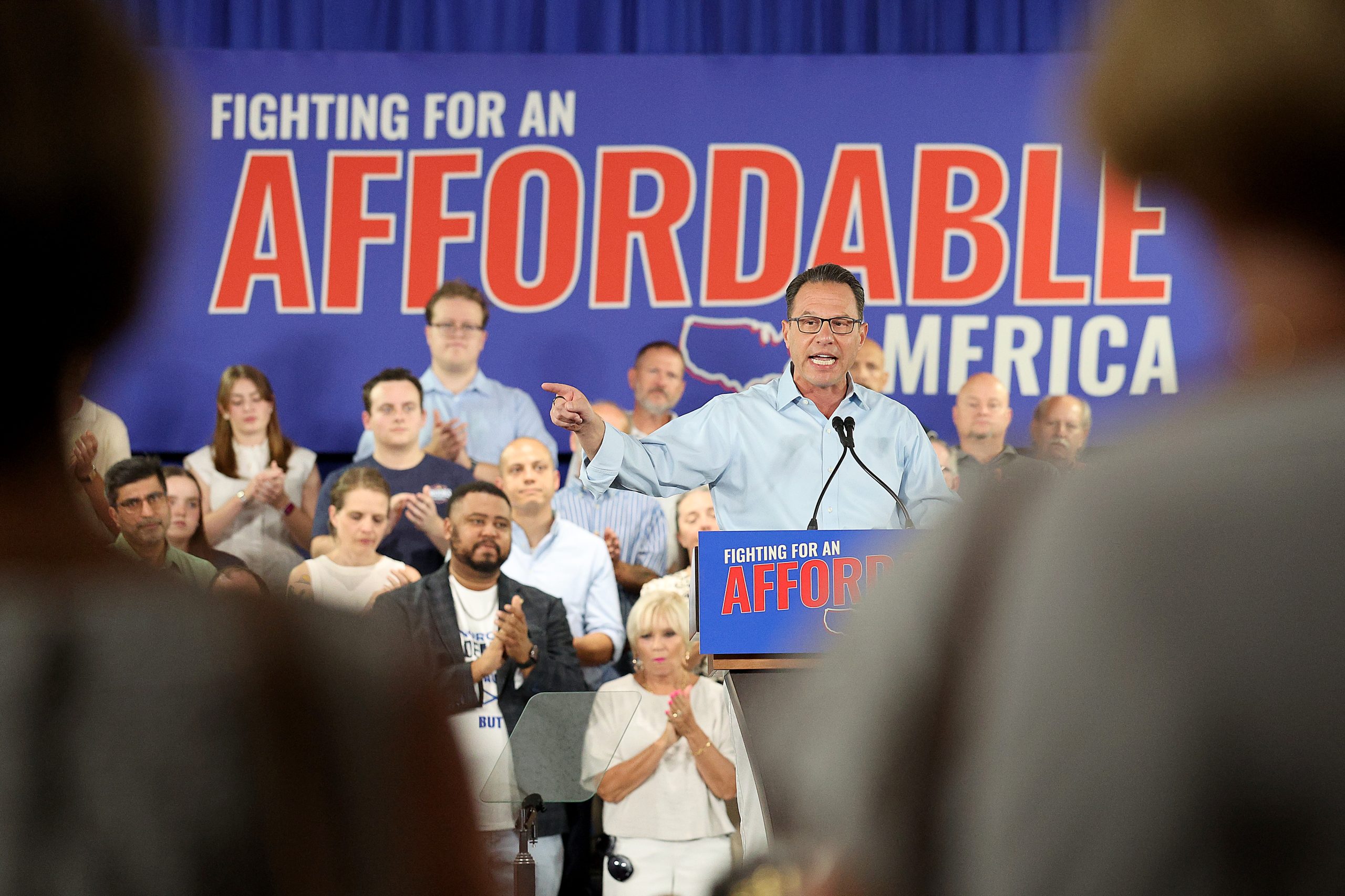
Pennsylvania Gov. Josh Shapiro addresses the audience during a rally for Democratic congressional candidate Bob Brooks at the United Steelworkers Union Hall in Bethlehem, Pa. on Sunday, July 26, 2026.David Maialetti / Staff Photographer
On the other side of the aisle, Pennsylvania’s top elected Republican — U.S. Sen. Dave McCormick — has endorsed Garrity but has not appeared to join in her public campaign efforts so far. A Trump ally and former hedge fund leader, McCormick has raised millions since his election in 2024, and political action committees associated with him have donated to other PACs working to elect Pennsylvania Republicans in Congress.
McCormick has hosted events and campaigned for Garrity, and he “will keep doing everything he can to help her win,” said Mike DeVanney, a spokesperson for the senator.
“He believes she demonstrates the kind of leadership we need and the kind that President Trump and many others have recognized as one that can move our commonwealth forward,” DeVanney said.
Gerow said McCormick undoubtedly could help Garrity down the stretch.
“He’s a prolific fundraiser. He has the connections, and he has the personality to raise large amounts of money. And he can be very, very helpful with the Garrity campaign if he weighs in with full weight,” Gerow said.
Garrity’s campaign said McCormick has been an “incredible supporter,” including with his earlyendorsement and connections to supporters.
Shapiro has also cultivated across-the-aisle relationships with some Pennsylvania Republicans who would be expected to promote Garrity.
In an April interview with Punchbowl News, U.S. Rep. Brian Fitzpatrick, a Bucks County Republican running for reelection in the nationally watched 1st Congressional District, said he thought Shapiro would win his reelection contest and should run for president, adding: “I think Josh is very, very smart.”
And during his 2022 run, Shapiro collected endorsements from other prominent Republicans, including Jim Schultz, a former Trump White House lawyer, and former Republican U.S. Rep. Charlie Dent.
The final stretch
Though the November election is less than three months away, that is still plenty of time in politics. Most ad spending does not start until September, and ground game efforts — door knocking, phone banking, and get-out-the-vote campaigns — get underway in the fall.
Winning Pennsylvania is a priority for Trump in the midterms, and Garrity’s campaign said she is “grateful” for his continued support.
On the state level, James Markley, a spokesperson for the Pennsylvania GOP, said the party is “fully invested” in helping Garrity beat Shapiro. Those efforts include training “thousands” of volunteers and working on education programs around early voting and casting mail-in ballots.
“The more Pennsylvania voters learn about Stacy Garrity, the more they love her,” he said in a statement. “The more Pennsylvania voters learn about Josh Shapiro, they realize he has no record to stand on.”
Gerow said Garrity’s challenge, with limited funds compared with Shapiro, is whether she has enough money to get her message out.
“The major concern for her immediately is to be able to tell her story,” Gerow said. “She doesn’t have the resources to tell that story effectively right now, and she has a great story.”
Buttons for State Treasurer Stacy Garrity and President Trump are left on a table following a VIP reception before a Garrity rally in Bucks County Thursday, Sept. 25, 2025. Tom Gralish / Staff Photographer
Throughout her campaign, Garrity has hammered Shapiro on several issues she said reveal his lack of transparency as a public official. She has held roundtable discussions blasting Shapiro for his early embrace of data centers, a position he has since distanced himself from after calling for new guidelines for their development. Her campaign released a video series online that questions his handling of criminal investigations. And she has repeatedly insisted that Shapiro, who is widely rumored to be running for president in 2028, is “more interested in Pennsylvania Avenue than helping Pennsylvania families.”
Samantha Reposa, a spokesperson for Shapiro’s campaign, disputed Garrity’s framing and emphasized that she has stood in lockstep with Trump on most of his positions.
“Garrity is now running to be nothing more than a rubber stamp for Trump and his agenda that’s hurting Pennsylvania families — and we will continue to hold her accountable,” Reposa said.
Given Garrity’s fundraising deficit, Chen said, he would advise her to focus on meeting individual people in the community, if he were running her campaign.
“Forget the GOP dinners. Start going to fairs. Start going to places that Republicans don’t show up. Start retail politics, and start introducing yourself to the state outside of Donald Trump, outside of modern Republicanism,” he said. “Tell the state what you’ve done for them and what you would do differently [as governor].”
Staff writer Joe Yerardi contributed to this article.
PLANO, Texas — Talking about Jesus is pretty routine for Texans running for office. But usually not Democrats.
State Rep. James Talarico is changing the script, leaning into his background in a progressive Presbyterian seminary.
It’s a playbook that has helped propel his political career. Before he was the Democrats’ hope to flip a Republican Senate seat in Texas, the state lawmaker often invoked the Bible to justify progressive policy positions in the Texas Capitol. Past floor speeches and sermons on abortion, gender equity, and religious pluralism helped give him the online platform that launched his Senate run.
He is now making his faith a central part of his Senate campaign, telling voters “it’s time to start flipping tables” and take back faith from the religious right — a reference to the biblical story of Jesus flipping over tables in the Temple of Jerusalem to purge merchants profiting off a house of worship. Talarico boils down his core message to two commandments from the Bible: Love God and love your neighbor.
His allies say Talarico’s approach could help win over faith-based voters in the Bible Belt’s largest state. But Talarico’s past remarks regarding the Bible have infuriated some evangelical voters, and attacking Talarico’s comments is now a regular part of his Republican opponent’s stump speech.
“First of all, he said God is nonbinary. He also said, ‘I’m a Christian, but I hate Christianity.’ How many Christians do you know have said that?” Texas Attorney General Ken Paxton (R) recently told an audience of supporters in North Texas. “I’ve never met one.”
Talarico, 37, and Paxton, a 63-year-old staunch evangelical Trump ally, are engaged in a competitive general election race that could be pivotal in Democrats’ attempt to retake control of the Senate.
Texas has not elected a Democratic senator in nearly four decades, but Democrats are optimistic, given Talarico’s prodigious fundraising and novel campaign message, as well as Paxton’s past of personal and legal scandals. Public polling has had the two candidates neck and neck for weeks.
Rep. Christian Menefee (D., Texas), a Talarico supporter who grew up in Baptist and nondenominational churches, said an appeal to faith could be a key ingredient to break the Democrats’ drought. Talarico’s openness about faith could attract Christian voters who have voted Republican in the past because they never saw Democrats address their faith publicly before, Menefee said.
“When James came onto the scene, and this was before this race, when he worked in the teachings of the Bible into some of his opposition to bills while he’s at the state legislature, people immediately took notice,” Menefee said. “Anybody who thinks that it won’t play a role in this election has not spent much time in Texas.”
Brooke Kemp, a schoolteacher from Arlington, Texas, said she resonated with Talarico’s emphasis on biblical teachings of caring for others rather than some of the cultural issues that have motivated the state’s religious right.
“He has it right,” Kemp said. “I’m just practicing what Jesus told us is the tenets of my faith as a Methodist: Loving my neighbor, caring for others.”
But conservative evangelicals have expressed dismay at Talarico’s use of biblical text to justify positions they view as morally reprehensible.
Talarico has previously invoked the Annunciation, the biblical event when the archangel Gabriel told Mary that she would carry the baby Jesus, to justify abortion. Speaking on the Joe Rogan Experience podcast, Talarico claimed that God asked for Mary’s consent before she became pregnant with Jesus.
He has also said during a 2021 legislative floor debate that “God is nonbinary” while opposing a bill barring trans children from participating in sports aligned with their self-identified gender. And Talarico said in 2021 that he was a Christian who hates Christianity in an expression of frustration with some elements of organized religion that peddle Christian nationalism apart from teachings of Jesus.
“It is blasphemous,” said Republican state Rep. Matt Shaheen, a deacon at the influential Prestonwood Baptist Church. Shaheen dismissed the idea that Talarico could convert evangelicals to voting Democratic as “naive,” saying “if anything, it probably frustrates evangelicals” to see their faith misrepresented.
Talarico acknowledges that his progressive positions, particularly his stance on abortion, put him at odds with many voters of faith. But he asserts those disagreements shouldn’t block Democrats from building coalitions with voters who are driven by the same Biblical tenets that drive his campaign.
“People of good faith can arrive at different moral conclusions,” Talarico said on a podcast appearance last spring. Talarico noted that even though Pope Francis and Pope Leo XIV hold opposite views from him on abortion he still holds them as spiritual heroes.
He has also walked back some of his most provocative remarks, saying he regrets some of his comments that he said could be “cringy.” He told CBS News that he called God nonbinary to emphasize that God can’t be categorized in human terms and cited Galatians 3:28, which teaches that all are equal before God, regardless of nationality, gender, or class.
The divergent takes on Talarico can be explained in part by differences between the mainline Protestantism he espouses and the evangelical Christianity that makes up a plurality of Christian voters in Texas.
Mainline Protestants tend to view faith as part of a pluralistic religious and social landscape that can adapt to the needs of the people it serves. Evangelicals recognize only one form of salvation — through Jesus — and the infallibility of the literal text of the Bible.
Roughly 67% of Texas adults identify as Christian, with roughly 27% identifying as evangelical, compared to only 10% identifying as mainline Protestant, according to Pew Research Center. Catholics make up about 22% of Texas adults, making them the second largest denomination in the state.
Evangelical voters have been some of the Republican coalition’s most reliable supporters. Nearly 70% of white evangelicals nationally approve of President Donald Trump’s performance, according to Pew.
Paxton identifies as an evangelical and has invoked his faith throughout his time in office as a major motivator for his conservative beliefs.
He and his wife were longtime members of the influential Prestonwood Baptist Church, and he worked at its pregnancy and family care center, which ministers to women while discouraging them from having abortions. He has also questioned the constitutionality of separating church and state and called for encouraging public school students to pray and read the Bible in school.
“Faith is the driver of my life, and so it animates everything that I do. It animates, hopefully, how I treat people,” Paxton said. “I hope that when I’m in office, I’m thinking about what’s best for my constituents and that in the end, I’m here to represent my neighbors and do the best thing I can for my neighbors because that’s what my faith would ask me to do.”
But Paxton has also had personal scandals that are at odds with church doctrine. Those include a spate of legal controversies, including alleged corruption involving an extramarital affair that led to his impeachment by the Texas House. (He was later acquitted by the Senate.) Paxton and his wife, state Sen. Angela Paxton, divorced in July of last year over alleged adultery.
Angela Paxton cited “biblical grounds” for the separation, writing in a social media: “I believe marriage is a sacred covenant and I have earnestly pursued reconciliation. But in light of recent discoveries, I do not believe that it honors God or is loving to myself, my children, or Ken to remain in the marriage.”
Ken Paxton no longer attends Prestonwood Baptist Church, the sprawling North Texas megachurch he and his wife attended together for years. When asked where Paxton now goes to church, his campaign said in a written response: “The Attorney General has been worshipping at churches in communities all across the state. Right now, our focus is on meeting Texans where they are and visiting churches throughout Texas as he continues to travel across the state.”
Some of Paxton’s evangelical supporters say forgiving lapses in judgment is easier than looking past fundamental disagreements on doctrine.
“I say, Here for the grace of God go I. There is nobody without a past,” said Jennie Evans, a nondenominational Christian and Paxton supporter from Dallas, reflecting the core evangelical belief that humans are all equally sinners and in need of redemption. Evans said all elected leaders have fallen short personally, but she felt Paxton’s core values still aligned with hers. Talarico’s did not, she said.
When asked about Paxton’s past conduct, Shannon Markle, another evangelical Paxton supporter from Dallas, quoted from Romans and II Corinthians and said: “No one runs for office that is a saint. No one. Every one of us is just jars of clay. Every one of us has sinned and fallen short of the glory of God.”
But when asked about Talarico’s interpretation of the Bible, she was much less receptive.
“I think it is blasphemous. I think he is ignorant. But I do think that he will be judged,” Markle said. “We all will.”
One bill proposes increasing the number of Supreme Court justices from nine to 13. Another would cut their lifetime terms to 18 years. Others would create an enforceable ethics code and place standards on how the court rules from its relatively opaque “shadow docket.”
The latest wave of proposals to overhaul the Supreme Court have reached something of a fever pitch over the past few months, as Democrats grow increasingly frustrated with the court’s rightward turn. While the court blocked several of President Donald Trump’s key initiatives this past term, it also delivered significant conservative victories that pared back the 1965 Voting Rights Act, loosened campaign finance rules, and increased presidential power.
Democrats’ anger is fueled by a conviction that many of these rulings are more about politics than the law.
“There’s constant and building dismay about the increasingly appalling record of the court,” Sen. Sheldon Whitehouse (D., R.I.), who recently introduced a term limits bill, said in an interview. “And I think the continuing interest in reform springs from continued dismay and concern about the court’s misbehavior.”
The pitches coincide with record levels of disapproval of how the Supreme Court is doing its job, as well as perceptions that the justices are ruling based on their ideology — a viewpoint largely embraced by liberals, according to a July Washington Post-Ipsos poll.
Those perceptions have only magnified as the justices have weighed in on issues that could directly affect the upcoming midterm elections. House Minority Leader Hakeem Jeffries (D., N.Y.) said Thursday that there are a “variety of different options that are on the table, and I think we can’t foreclose on any single one of them.”
Conservatives dismiss the proposals as efforts by liberals to intimidate and undermine a court that is not ruling the way they want.
“All of these ‘reforms’ are because the left doesn’t like the decisions coming out of the Court,” Mike Fragoso, a former chief counsel to Sen. Mitch McConnell (R., Ky.), said in an email. “The goal is to intimidate the Court into changing the course of decisions. It’s reprehensible.”
Liberals concede that the measures cannot succeed without Democrats solidly in control of Congress, and even then, only if the filibuster is eliminated — otherwise any proposal would require 60 votes in the Senate, which is highly unlikely.
Last month, Whitehouse and other Senate Democrats proposed a law that would limit justices’ terms to 18 years. Under that system, a president would nominate a justice every other year — a design intended to maintain a measure of ideological balance on the bench.
Some advocates say specified terms also would lower the stakes of Supreme Court confirmation battles, since they would not be for lifetime appointments. These battles in recent years have become all-out, nasty, and often personal.
“Even in a Congress like this one, where these bills have no chance of passage, it’s really important to file them and to stand by them, because they reassure people that there is in fact a mechanism by which the court could be restored to some degree of better order,” Whitehouse said.
Democrats in 2020 also offered a flurry of plans to overhaul the Supreme Court, angered that Trump was able to name three justices thanks to maneuvering by McConnell, who at that time was the Senate majority leader.
But President Joe Biden did not pursue those proposals. And the court’s solidified conservative majority has since overturned a string of precedents — including those guaranteeing the right to an abortion and upholding key parts of the Voting Rights Act — prompting fresh fury among liberals.
Congressional Democrats have introduced about a dozen proposals in recent months for revamping the court.
They call for expanding its size, requiring the justices to place certain assets into blind trusts, and creating standards for the court’s emergency docket, critically referred to as the “shadow docket.” In emergency docket cases, the justices have been criticized for ruling on consequential matters based on a limited record while offering relatively brief explanations for their decisions.
Democrats outside the Beltway are also pitching court reform. Former Vice President Kamala Harris, whom some Democrats expect to run again for president in 2028, said at a recent event at that “we need to revisit” the notion of expanding the court to 13 justices.
James Talarico, a Democrat running for U.S. Senate against Republican Ken Paxton, has called for an “overhaul” of the Supreme Court, including term limits and a binding code of conduct. In an interview with TheGrio, Talarico described the court’s recent rulings on civil rights, including a recent decision that weakened the Voting Rights Act, as a “five-alarm fire.”
“Black Texans, Black Americans, have been ringing the alarm about the Supreme Court,” Talarico said. “And I think it’s time for all of us to realize the crisis that we face on the highest court in this country.”
Tom Jipping, a senior fellow at Advancing American Freedom, an advocacy organization founded by former Vice President Mike Pence, argued that such criticisms only highlight Democrats’ fixation with results rather than the law, exposing their calls for reform as superficial.
“They never say how the Supreme Court got it wrong on the law,” Jipping said. “The only the thing they do is mention the result and tack on a few bombastic pejoratives.”
The court has regularly undergone periods of fierce scrutiny. Under Chief Justice Earl Warren in the 1950s and 1960s, conservatives complained bitterly that it was making up new liberal doctrines. Most notably, President Franklin D. Roosevelt, frustrated by the justices’ rejection of many elements of the New Deal, in 1937 proposed expanding the court, leading to pushback from Republicans as well as many fellow Democrats.
Still, some academics say the current Supreme Court faces real problems unrelated to its ideological composition.
The high court has turned into a political football in which justices on both sides are expected to vote along ideological lines on the most controversial issues, said Daniel Epps, a law professor at Washington University who has advocated for efforts to “depoliticize” the court.
Gone are the days of the “swing” justices like Anthony M. Kennedy, Sandra Day O’Connor, and Lewis F. Powell Jr., all Republican-appointed justices whose votes were less predictable when it came to hot-button issues such as affirmative action, abortion, and LGBTQ+ rights, Epps noted.
“This is the first time where you have a court where the ideology really maps onto partisan affiliation,” Epps said.
Epps and Vanderbilt Law School professor Ganesh Sitaraman argued in a 2019 paper against popular proposals such as term limits and expanding the court’s size. They say both risk further politicizing the court.
Instead, Epps and Sitaraman have suggested a “lottery” model, in which cases would be decided by panels of justices selected randomly from a pool — similar to the way federal appeals courts decide cases.
They have also recommended a “balanced bench” structure, in which the court would be composed of an equal number of justices selected by Democrats and Republicans, with an additional judge selected from a lower court to break ties.
Chief Justice John G. Roberts Jr. and his colleagues have repeatedly said they issue rulings based on the law, not their political biases. But critics argue that the growing perception, among liberals at least, that the court is politically driven risks hurting its credibility in a way that could be damaging for the long term.
“The court only works as an institution if it is capable of deciding the hard cases in ways that seem credible to the country,” Epps said. “And if you have half the country that just sees the court as a partisan institution — and the court behaves in a way that seems largely consistent with that — half the country just can be like, ‘Screw these guys.’”
AUSTIN, Texas — Democrats seeking the party’s presidential nomination in 2028 will need to prove themselves early on in states where Black and Latino voters and union members are key supporters, under an election-year calendar approved Saturday.
The primary lineup pushes Iowa from the traditional top spot and makes South Carolina the leadoff state, voting on Jan. 22, 2028, followed by Nevada on Feb. 1. New Hampshire, New Mexico, Michigan, and Virginia round out the early states throughout February, according to the plan endorsed by the Democratic National Committee at its meeting in Texas.
DNC Chairperson Ken Martin said that to win the general election, “You have to be battle-tested in a way that you already have campaigned in front of and for the support of various communities throughout the country.” That is why the calendar designed by the party matters, he said in an interview.
Some potential candidates in what is expected to be a large field have visited early-voting states such as South Carolina. Party leaders have said the order gives candidates the best shot at winning back the White House after Republican President Donald Trump’s second term.
“They have to show that they can go to the South and talk to Black voters and rural voters, as well as out West, talking ranching and mining issues, to a border state, to union members,” said party strategist Karen Finney, who has worked on multiple presidential campaigns. “Whoever survives will be battle-tested.”
Former presidential candidate Howard Dean, a onetime Vermont governor, recalled his tenure as national party chairperson, when Democrats solidified Nevada and South Carolina as early states behind Iowa and New Hampshire. The latest change is even better, he said.
“These states look more like the country” as a whole, he said, “whereas Iowa and New Hampshire don’t.”
Rita Hart, chairperson of the Iowa Democratic Party, said bypassing her state in the early going would sideline important voter voices and give a political edge to Republicans, who are expected to keep Iowa atop their calendar.
Nonwhite voters claim top billing
As the first-in-the-South primary, South Carolina was more decisive than Iowa and New Hampshire for nominees Barack Obama in 2008, Hillary Clinton in 2016, and Joe Biden in 2020. All three dominated among South Carolina’s large Black population, which can yield more than half the state’s Democratic primary electorate.
With Nevada and New Mexico following, candidates will be required to court more Latino voters early in the process.
Shifting from Iowa and New Hampshire does not mean little-known candidates cannot catch fire, as Pete Buttigieg did in Iowa and New Hampshire in 2020, when he was a 37-year-old former mayor. They just will not be able to do it with an almost entirely white audience.
“If you can’t go to every part of this country and make your case, you should not be running for president,” Finney said.
The progressive vs. establishment dynamics may shift
There is disagreement over how Democrats’ split between progressives and mainstream liberals may or may not surface in the nominating calendar.
“I think our primary voters up north are probably a little different than primary voters in South Carolina,” said Boyd Brown, a former DNC member from South Carolina. “It’s not the woke ideologies that we just can’t get away from” in other places.
Nina Smith, a former Buttigieg adviser who now works closely with progressive causes, disagreed. Smith said Black South Carolinians, especially, have gravitated to more moderate candidates — twice rejecting Vermont Sen. Bernie Sanders in favor of Clinton and Biden.
But, she said, “Southern Black voters are more progressive than they’re given credit for” on policy but also “realists” about what is possible.
“Living through Jim Crow and other oppressive structures will force you to be take that approach,” she said.
Smith said that with South Carolina leading off and many Southern states following on Super Tuesday soon after the early lineup concludes, progressives will have to take the time to listen and then tailor their messages.
“A lot of Black voters don’t necessarily see themselves in the ideas and arguments that progressives put forward,” she said.
Unions will get a spotlight in the early-voting states
Nevada has the service industry unions because of Las Vegas; Michigan has the auto industry and associated manufacturing support industries; Virginia is home to more federal workers than any other state.
“Labor is still so important,” Dean said.
Beyond seeking the backing of organized labor, the campaigns and the party will look to unions for help in spreading Democrats’ message to voters and getting people to the polls.
More scheduling efficiency for candidates
Campaigns struggle to balance many demands such as meeting voters in person, raising money, and dealing with the logistics of travel. As a result, places such as Nevada have gotten short shrift in the past because candidates, most from the eastern part of the country, have concluded the investment of time is not worth it.
An expanded calendar offers more clustering opportunities.
A swing to the West could hit two early states — Nevada and New Mexico — and include a fundraising stop in California, full of Democratic donors. A South Carolina trip could mean fundraisers and public appearances in Atlanta, Charlotte, and Raleigh, both in North Carolina. Virginia offers proximity to donors and national TV studios in Washington; the same options are available by adding a New York City stop on the way to New Hampshire.
Bre Maxwell is a DNC member from South Carolina who said the state’s smaller size and lower media costs are a financial equalizer, allowing not only the best-funded candidates to have an impact.
“They can campaign from the top to the bottom in a day,” Maxwell said.
It’s about primaries, with a clear look to November
Of the six early states, all but South Carolina have been competitive in general elections.
That means that even before Super Tuesday, the Democratic candidates will have spent significant time and resources in states worth a combined 43 Electoral College votes. That is not insignificant on the way to the 270 needed to win.
Television ads and news coverage can spill over, as well. Markets targeting parts of South Carolina also reach portions of North Carolina and Georgia.
After all, Brown said, the point is to put a Democrat in the White House.
“This is not a social or a debate club. It is a political party,” he said.
The marred fields of Lemon Hill Park are the remaining signs of the longest summer party the city has ever seen. Half a million people gathered in the park for 39 days straight, dancing to the All-American Rejects, cheering on World Cup matches, and sharing meals on blankets across more than a million square feet of the Fairmount park.
The FIFA Fan Festival, by most accounts from the city, tourists, and residents, was a resounding success, offering a premium World Cup experience at a sliver of the cost of attending a game. Philly’s fan experience was considered one of the most affordable and popular in the country.
Soccer fans gather to watch Mexico play South Africa on a giant screen during the opening day of the FIFA Fan Festival at Lemon Hill on June 11.Jose F. Moreno / Staff Photographer
Now that the party is wrapped, the caretakers of Lemon Hill and nearby residents are hoping the city makes good on a promise to restore the park to its former glory, if not better.
Philadelphia Soccer 2026, organizer of the FIFA Fan Festival, committed $4 million to park upgrades, from new picnic pavilions and a playground to safer sidewalks and traffic-calming measures at intersections. Additional funding will come from the city, but when asked, a city spokesperson declined to reveal the total budget and said more details will come during a groundbreaking celebration in September.
The city gathered input from the community across nine public engagement sessions beginning in 2024 that netted 350 comments from 200 participants that helped shape which improvements would be prioritized.
While residents and caretakers welcome park improvements, it is not lost on them that financial backing comes only after large companies use the space, though locals have been requesting help for years, said Shaun Cerborino, a co-organizer of Lemon Hill’s volunteer parks group. What’s more, without long-term maintenance funding, the upkeep of the park and its new upgrades will fall to caretakers once again.
Large grass-less sections remain following FIFA Fan Festival at Lemon Hill on July 28. Fan Fest wrapped up on July 19.Monica Herndon / Staff Photographer
Deferred maintenance billed as ‘legacy projects’
A month after the World Cup ended, the largest Lemon Hill field thatstaged the festival is still mostly filled with dirt, patches of wilting grass, and the occasional leftover screw and other small construction waste. The city began aerating and preparing the soil for regrowth in July.
The grass will grow back, said Cerborino and Nissa Eisenberg, Fairmount residents and co-organizers of the Lemon Hill Neighbors Association, which provides regular volunteer maintenance to the park. But what caretakers truly are concerned about is long-term support after the city finishes its upgrades months from now.
Additionally, many of the improvements considered legacy projects are really “deferred maintenance” that had been requested for years, and came about only when corporations needed to use the park, Cerborino said.
Large grass-less sections remain following FIFA Fan Festival at Lemon Hill on July 28. Fan Fest wrapped up on July 19.Monica Herndon / Staff Photographer
“Instead of properly funding Parks and Recreation, the city looks toward private ventures to help keep the lights on and generate enough money to maintain — which we’re barely doing anyway,” Cerborino said.
In Philadelphia, there is no dedicated budget for parks and open space; instead, the city and volunteers rely on the Philadelphia Parks and Recreation budget to maintain parks. They also look to grants, private nonprofits, and thousands of volunteers who weed, fix, and maintain trails and park space as part of “Friends” groups. Philadelphia relies on volunteers at more than twice the national average.
Since taking office, Mayor Cherelle L. Parker has raised the parks and recreation department’s budget each year, doubling its spending from $53 per resident on parks in 2024 to $110 per resident in 2026. And while 97% of Philadelphians can walk 10 minutes and find a park, far exceeding the national average, Philadelphia still spends about half as much on its parks as the national average, according to the Trust for Public Land.
Improvements like upgraded sidewalks, lighting, signage, and recreation areas are standards that should already be met by the city, which is home to some of the highest-ranked parks in the country, Cerborino said.
Small holes line sections of the park, possibly following aeration, after FIFA Fan Festival at Lemon Hill on July 28. Fan Fest wrapped up on July 19.Monica Herndon / Staff Photographer
Residents may have their park back, but restoration is far from over
Fairmount residents are all but back to their usual park routines after the festival equipment was removed, but they say it is still a long way before Lemon Hill is back to normal.
Last month,Samantha Tartaglino was walking her German shepherd, Marley, through the flattened fields. Marley sprinted through swaths of dead, brown grass, unfazed by the patches. Tartaglino said Marley was just happy to be back in wide-open spaces, as the dog had to make do with a smaller park nearby for weeks.
Lemon Hill’s open fields are a key reason for why many move to this part of Fairmount, Tartaglino said, but even before the fan festival, residents felt the park was not being supported to its fullest potential.
“I feel like FIFA and World Cup put the city under pressure and kicked them into gear,” Tartaglino said.
The city has already put into place many of its legacy commitments, like new ADA-compliant sidewalks and ramps along Sedgley Drive, traffic-calming measures at the intersection of Sedgley and Poplar Drives, and additional lighting fixtures.
But the community’s request for permanent bathrooms, water fountains, and portable water stations has gone unanswered, Eisenberg said. The city says those things can happen only if there is an on-site park staffer due to concerns about maintenance and vandalism.
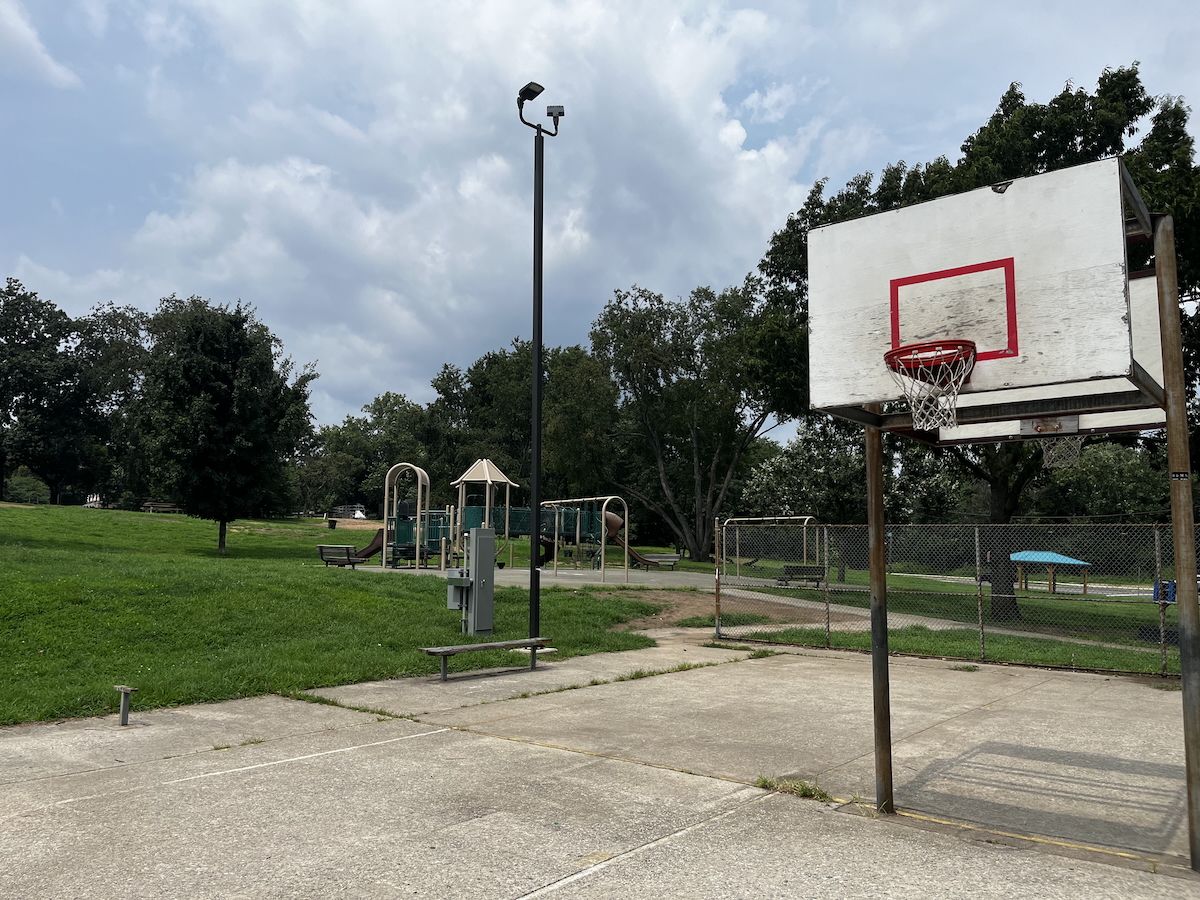
A project with a longer timeline will be a new 43,500-square-foot playground, with construction expected to stretch into April 2027, according to Philadelphia Soccer 2026 and the city. And while construction is underway, the playground and basketball courts will be closed.
Eisenberg lamented that. What was once presented as a plan for residents to give up park space for two months during the World Cup will now last much longer, she said, as grass fields will need to grow back and other amenities are closed for renovation.
“The basketball court is one of the most heavily used assets of the park, but they’re planning to use the court as a staging area for the construction,” Eisenberg said. “Which I get because it’s conveniently located, but you just put on this multimillion-dollar event; I’m sure you can find another area to stage construction materials so that at least the basketball court isn’t offline all winter.”
City officials say the plan is worth the wait.
“We expect the legacy improvements to be completed next spring and are excited for neighbors and future visitors to enjoy a renewed Lemon Hill … that builds on the excitement of this summer while serving Philadelphians for years to come,” acity spokesperson said.
The playground and basketball courts at Lemon Hill Park in the Fairmount neighborhood of Philadelphia. Since the 2026 World Cup has ended and the FIFA Fan Festival staged at the park has left, restoration efforts are underway with funding from various private and public stakeholders.Henry Savage / Staff
Lack of long-term maintenance funding
While projects such as renovating the playgrounds, basketball courts, and baseball fields are welcome, the Lemon Hill Neighbors Association fears that once city crews finish the work, the caretakers will be right back where they started — working off “love and duct tape” with little financial support.
This means park improvements come only after long periods of push and pull between Philadelphia Parks and Recreation staffers and volunteer park caretakers, leaving long-termmaintenance to fall to volunteer groups that dedicate their time and money to keeping parks usable.
“We understand that a lot of times Parks and Recreation is understaffed or underfunded, but then that means we’re going to have to pick up that role,” Eisenberg said. “We need help, and the Parks and Recreation budget needs to reflect it.”
Earlier this week, Temple graduate student Kyle McCurly was lounging in the undamaged grass surrounding the large field that just housed the festival. Having grown up in rural Georgia and recently back from a trip to Austin, Texas, McCurly said Philly’s parks could be so much more with long-term maintenance, and not just at Lemon Hill. Henoted that Austin invests twice as much money as Philadelphia does in its parks per resident, according to the Trust for Public Land.
“Everyone’s going to have different opinions on how the funding itself is created,” McCurly said. “But I think that it’s worth consistent investment to make green spaces more accessible and enjoyable in the city.”
Federal investigators last summer issued subpoenas for documents and financial records related to William F. Dunbar Sr., a Philadelphia lobbyist who was a close confidant of Mayor Cherelle L. Parker during her 2023 campaign, according to three people with direct knowledge of the probe.
Dunbar, who has extensive political ties, was a key member of Parker’s informal “kitchen cabinet” of unpaid advisers during her 2023 run, and he ran her campaign, People for Parker, for most of 2024, the mayor’s first year in office. He has also raised money for U.S. Sen. Cory Booker of New Jersey and members of Philadelphia City Council, and he co-chaired Gov. Josh Shapiro’s 2023 inaugural committee.
The sources, who spoke on the condition of anonymity to discuss a sensitive legal matter, said federal investigators in the summer of 2025 issued subpoenas to multiple associates of Dunbar’s, compelling them to produce records related to his business and political dealings. One source described the investigation as “fairly broad.”
None of the sources said they were aware of an investigation centered on Parker.
Dunbar, 42, declined to comment Thursday.
A spokesperson for the U.S. Attorney’s Office in Philadelphia declined to comment. No charges have been filed in relation to the probe.
A Parker campaign spokesperson declined to comment on her behalf.
Records show that Parker’s campaign increased its spending on legal services in 2025, around the time that the sources said the subpoenas were issued. The Inquirer reported this week that the campaign has paid its law firm, Dilworth Paxson, about $108,000 since the start of 2025, according to campaign finance reports. It paid the firm less than $15,000 during the 2023 election year and about $19,000 in 2024. People for Parker did not respond to a request for comment on what was driving the increased legal bills.
In 2024, Dunbar officially joined the campaign for the first time after Platt and Harris became chief deputy mayors in Parker’s administration. Both have since resigned from city government. Platt later returned to the campaign to serve as executive director of People for Parker.
Dunbar has never been personally paid by People for Parker, according to campaign finance records. The campaign made rent payments to his firm, Dunbar Public Affairs & Associates, totaling $22,850 from March 2024 to November 2024.
Parker’s campaign parted ways with Dunbar in late July 2024. Dunbar at the time said it was the mayor’s decision to take the campaign in a different direction.
“I’m very much still an informal senior adviser but because of a different set of priorities, the mayor has decided to manage her politics herself,” Dunbar told The Inquirer at the time. “My business has continued to grow as we work to support our clients.”
Parker added: “Will has been a valued friend to me, and let me just say that life is good right now [for Dunbar] and business is good and it’s growing.”
Dunbar, an Overbrook Park native who got his start in politics working for former U.S. Rep. Chaka Fattah (D., Philadelphia), has developed an extensive political network through fundraising and advising campaigns. He worked in government affairs for Comcast before expanding his lobbying portfolio after Parker’s victory in the 2023 election.
Dunbar in recent years registered as a city government lobbyist on behalf of several clients, including Comcast, the Philadelphia School District, the Chamber of Commerce for Greater Philadelphia, Jackmont Hospitality, and several other companies, according to public disclosures. Dunbar’s lobbying registration had been listed as “expired” in city records Friday, but was changed to “submitted” after the initial publication of this story.
Dunbar worked with the school district as a subcontractor for a Harrisburg lobbying firm, DT Firm.
“In June, the DT Firm informed the District [that] Mr. Dunbar was no longer a subcontractor with the firm,” district spokesperson Naima DeBrest said in a statement.
DeBrest did not respond to a question about whether the district received a subpoena. The DT Firm declined to comment.
LONDON — Nigel Farage, the leader of Reform U.K., Britain’s populist right-wing party, won a special election on Thursday that he initiated when he resigned amid a parliamentary investigation into possible financial impropriety.
As expected, Farage easily defeated dozens of fringe and novelty candidates, including Count Binface, who wears a trash-can-themed costume. None of Britain’s other major parties participated in the race, calling it a political stunt engineered by the Reform leader to distract from the investigation.
Farage, who did not attend the official announcement of the result in a departure from political tradition in Britain, received 22,239 votes. Count Binface, a character played by Jon Harvey, 46, a writer and comedian, received 9,455 votes.
Turnout was slightly higher than expected, with 35,401 voters — 44% of those eligible — participating in the election, the BBC said.
The Reform leader is under investigation by the parliamentary standards commissioner for failing to declare a 5 million pound gift, about $6.7 million, that he received in the weeks before the 2024 general election. Farage has given varying explanations for the gift, which he received from Christopher Harborne, a British crypto-billionaire based in Thailand. At one point Farage said it was a reward for Brexit, while at other times he has said it was to pay for his personal security.
Last month, Farage abruptly resigned the seat, which he had held since 2024, and immediately announced he would run again in the ensuing by-election, saying he wanted a new mandate from his constituents in Clacton, a coastal area in Essex, England, to show that his voters did not care about the allegations.
“The people of Clacton should be the judges of my actions,” he said in his resignation speech in July. “This will be a people-versus-the-establishment by-election.”
Farage referred in the speech to the standards investigation into the Harborne gift, and also said that “yet another standards investigation is underway.” Days before, the Sunday Times of London had reported that one of Farage’s close aides, George Cottrell, had provided undisclosed benefits to Farage, including security, social media employees, and accommodation. Farage has since said he did not need to report the benefits because they were received before his election to Parliament.
The parliamentary code of conduct says that lawmakers must register any benefits received in the 12 months before they are elected, unless they could be considered “purely personal gifts.” It adds: “Both the possible motive of the giver and the use to which the gift is to be put should be considered. If there is any doubt, the benefit should be registered.”
Farage is an ally of President Donald Trump who has long warned of an “invasion” of migrants and railed against “the establishment.” In May, Reform won almost 1,500 seats on municipal councils. But its overall share of the vote was only about 26%, down from more than 30% the previous year.
Several recent polls have shown support for the party falling to under 25% and Labour taking the lead. The polls have shown a continued decline as the accusations about improper disclosure of financial support have increased.
Reform officials were always very confident, however, that Farage would recapture his seat in Clacton, which voted by a large margin for Brexit, his signature cause. The last time he ran there, during the 2024 general election, he won with 46.2% of the vote, and the Conservative Party candidate came second with 27.9%.
Since Israel and the United States bombed Iran’s nuclear facilities in June 2025, President Donald Trump has vacillated between war, sanctions, and diplomatic negotiations in order to thwart Iran’s nuclear capabilities. Trump opened his second term by signing National Security Presidential Memorandum 2, which imposed maximum pressure on Iran as multiple rounds of indirect talks continued. In February, the U.S. and Israel struck Iran again, this time killing Supreme Leader Ali Khamenei and targeting nuclear and military infrastructure.
No U.S. missiles over the decades had ever directly struck the Iranian mainland itself.
A ceasefire followed within days, but subsequent fighting and failed attempts at diplomacy have made it impossible to sustain.
It is unsurprising that the Trump administration is struggling to reach a deal on nuclear proliferation with Iran that matches the scope of the 2015 Joint Comprehensive Plan of Action (JCPOA), more commonly called the Iran nuclear deal. President Barack Obama’s negotiators secured not just Iran’s cooperation but also Russia’s, China’s, and Europe’s to effectively and broadly secure U.N. Security Council authorization and policy. In return for JCPOA-related sanctions relief, Iran reduced its enriched-uranium stockpile by 98%, capped enrichment at 3.67%, and accepted expanded atomic monitoring.
Over the past three and a half decades,American presidents have created a system to pressure Iran that works through relationships with everyone but Iran.
Sanctions let presidents extract cooperation, concessions, and leverage on a variety of issues from other nations and corporations in the process. War extracts nothing from anyone but Iran.
The system of selective pressure against Iran took shape during the 1990s. After the Cold War came to a close, the George H.W. Bush and Bill Clinton administrations worked with Congress to forge a range of options short of war for handling Iran. American sanctions traditionally traced a simple logic: punish whoever sold Tehran weapons and the means to build them.
The first measures focused on proliferation. In the aftermath of the Iran-Iraq War, Congress worried that Tehran was rebuilding its military by acquiring sophisticated weapons and dual-use technology abroad. The 1992 Iran-Iraq Arms Non-Proliferation Act, signed by President Bush, made it U.S. policy to oppose transfers that could contribute to Iranian acquisition of chemical, biological, or nuclear weapons.
This law continued a convention of giving Washington a way to penalize weapons transfers without going to war, but its limits soon became apparent. Weapons sanctions could harm suppliers after the transfer, but they did not necessarily deprive Tehran of the money to purchase the technology or expertise in the first place.
By 1996, Congress went after ordinary trade. Congress and President Clinton increasingly viewed Iran’s energy sector as the financial bedrock that allowed Tehran to fund the actions Washington sought to deter. Rather than solely punish whoever supplied Iran with weapons, Congress sought to limit the revenue and investment.
The Iran and Libya Sanctions Act (ILSA) threatened any foreign company with complete exclusion from American credit, export licenses, and government contracts if it invested more than $40 million in Iran’s oil and gas sector — regardless of whether the company did anything weapons-related.
For the first time, ordinary commerce with Iran became a foreign relations trigger with the United States. The leverage was not a naval blockade, but access to the American economy itself.
The Russian-American relationship led to the testing and development of these new mechanisms. Washington and Moscow had three main issues over Iran: nuclear reactor technology and training, a multibillion-dollar natural gas field, and missiles.
The two governments did not have identical agendas. Americans wanted to prevent Iran from acquiring nuclear weapon expertise and missile technology, while also maintaining its relationship with Russia. Russians wanted to preserve valuable commercial and strategic ties with Tehran, including nuclear and energy contracts, without sacrificing its relationship with the United States.
They both aligned on a functional U.S.-Russian relationship with some limits on proliferation, but differed sharply over how much Russian cooperation with Iran was acceptable.
Nuclear reactors, gas, and missiles all received different political treatments. Classic diplomatic negotiations led to Russian President Boris Yeltsin agreeing to remove the uranium enrichment feature from Russia’s contract, even though the Bushehr reactor’s sale was legal under international law. As a light-water plant under International Atomic Energy Agency safeguards, it fell under the long-standing international nonproliferation treaty, leaving the United States unable to block the sale but still able to negotiate parts.
When Russia’s state-owned natural gas company Gazprom, alongside other international companies, sought a contract to develop the South Pars gas field, the largest natural gas field in the world, it put ILSA to its first real test. The $2 billion project involved several state-owned energy companies: France’s Total, Russia’s Gazprom, and Malaysia’s Petronas.
In response, Clinton issued a waiver for the international gas companies investing in Iranian energy. The administration pointed specifically to increased cooperation from the European Union on counterterrorism and nonproliferation to issue the waiver.
While the United States never formally used ILSA to sanction a company during this period, the atmosphere could then help the Clinton administration to negotiate with Russia on missile concessions.
Deputy Secretary of State Strobe Talbott captured the strategy in a sentence: “In a sense we are linking the two [missiles and energy], and in another sense we are not.” The vagueness was deliberate and useful for the differences in agendas on both sides.
Talbott pressed Russian Foreign Minister Yevgeny Primakov to blacklist Sanam, the Iranian missile entity attempting to acquire the technology, and the Russians did. Russia enacted new laws to pursue weapons and nuclear proliferation crimes, while increasing arrests and coordination between the FBI and Russia’s Federal Security Service. Clinton’s veto and the related tools gave American negotiators something to offer and Russia something to gain.
These policies helped the American-Russian relationship endure. Every waiver, every delay, every selectively enforced sanction since 1992 had been less a negotiation with Iran than a negotiation with someone else about Iran.
Waiving petroleum sanctions became the unspoken rule for the next 12 years. Until 2010, no American administration ever sanctioned a foreign company for investing in Iran’s energy sector.
The ILSA was renamed the Iran Sanctions Act (ISA) and expanded under the Comprehensive Iran Sanctions, Accountability, and Divestment Act in 2010 (CISADA); the Iran Freedom and Counter-Proliferation Act of 2012 (IFCA) toughened the consequences even more. These later acts added stricter enforcement measures and sanctioned major non-Western oil providers from China, Belarus, and Venezuela, while a special rule exempted allied companies in exchange for promises to halt investments.
By 2015, Washington could bargain with a sanctions system far broader than the ILSA. The JCPOA, or the Iran nuclear deal, either waived portions or removed designated Iranian institutions from the ISA, CISADA, and IFCA. The relief was substantial and conditional: Foreign firms and nations could again partake in specified oil, banking, shipping, and investment transactions with Iran while the underlying American statutes remained available if the bargain collapsed.
Made By History sponsorsInquirer Staff
Meanwhile, sanctions tied to terrorism, human rights abuses, and ballistic missiles continued.
Discretion applied to war, as well. Bush considered strikes and held back for more nuclear enrichment proof. Obama rejected the military option as a matter of philosophy by arguing that war would buy less than diplomacy and cost the international coalition to enforce sanctions. Trump himself, in his first term, ordered a strike and called it off 10 minutes before execution, and Joe Biden sought to de-escalate. These four administrations had varying rationales and scenarios, but all were aligned in keeping force as a reserve option.
In his second term, Trump had access to the same policy options, including specific sanctions on industry sectors, supply-chain options laws, and relational pressure.
The lesson? A mix of pressure and exemption — not blanket coercion — worked. It allowed American presidents to lean hard on some part of a foreign nation’s relationship with Iran while tolerating others. Even the JCPOA, for all the criticism it drew, followed this strategy: it converted decades of accumulated third-party pressure into a deal. War trades a system built on the compliance of others for a strike that compels nothing from anyone but Iran itself.
Holly Harris is a doctoral candidate in history at Southern Methodist University, where she studies the collapse of the post-Cold War security relationship between the United States and Russia.
Made By History takes readers beyond the headlines with articles written and edited by professional historians. Opinions expressed do not necessarily reflect the views of The Inquirer.