Category: Politics

  • The data center backlash bursts into the midterms

    The data center backlash bursts into the midterms

    The fight over data centers is suddenly at the epicenter of the midterm elections.

    One new ad in Texas begins with someone typing into a chatbot, “Why is my electric bill going up?” Another in Ohio blames one of the state’s Republican senators for a proliferation of data centers, calling them “a total scam.” And in top House battlegrounds in Michigan, Wisconsin, and Pennsylvania, the Democratic challengers are all running ads against the server warehouses powering the artificial intelligence boom.

    Data centers have become unlikely fault lines in the broader fight over an AI revolution that is remaking the global economy and threatening to disrupt the job market. Now politicians are racing to tap into the backlash — or inoculate themselves — as political strategists in both parties described the issue as an unusually fast-moving force that is already reshaping races for the House, the Senate, and governor’s mansions.

    “It’s very much a bottom up, organic movement,” said Anna Greenberg, a veteran Democratic pollster, who said that while people’s views on data centers were largely tied to how close they live to them, the facilities were also becoming symbols of the excesses of Silicon Valley.

    “Data centers are a physical manifestation,” she said. “Billionaires are building them, and it feeds into all of the Big Tech skepticism that is there. It’s very symbolic of everybody’s issues with AI.”

    There are signs that the emerging data center debate is scrambling the usual partisan divisions.

    So far, Democrats have chiefly been the ones racing to harness voter anger about data centers over rising electricity prices, water use, and mistrust of the tech sector. They aim to punish Republicans for cozying up to industry by approving many of these projects.

    But in recent weeks, a growing number of Republican candidates have scrambled to shield themselves from any fallout. They have voiced skepticism about data centers, despite President Donald Trump’s full-throated cheerleading for the AI industry and fears among party leaders in Washington that blocking construction of the centers could slow the economy and make the United States less competitive against China.

    Some Republicans are now using “data center” as an epithet, and casting themselves as the real opponents of corporate tax breaks and unfettered construction. Last week, Mike Rogers, the Republican nominee for Senate in the key swing state of Michigan, said that he supports a one-year moratorium on data center construction.

    Polls show a revolt brewing against data centers. A Gallup poll conducted in March showed 71% opposed local construction of the centers, and a summer survey from the Annenberg Public Policy Center of the University of Pennsylvania showed that the number of people opposing new data centers in their areas had risen by 12 percentage points since February and March.

    The fallout has been so swift that in some races, including the governor’s contests in Pennsylvania, Wisconsin, and Florida, both Democrats and Republicans are airing television ads about data centers.

    On Wednesday, a remarkable memo from the National Republican Senatorial Committee warned that data center politics was endangering Sen. Jon Husted (R., Ohio). His challenger, Sherrod Brown, the state’s former Democratic senator, has aired millions of dollars worth of ads, calling Husted “the face of data centers in Ohio.”

    “More than any other thing in this race, data centers are the anchor hanging around Husted’s neck,” the memo said.

    The one-page document, which was earlier reported by Axios, amounted to a desperate plea for the well-heeled industry to finance an advertising campaign — lest a Husted loss serve as “a cautionary lesson” for politicians elsewhere.

    Zac McCrary, a Democratic pollster, said that opposing data centers offered Democrats a rare chance to make inroads in rural areas and small towns that are resisting the developments.

    “It absolutely shakes up the snow globe on the partisan coalitions in a part of the world where Republicans have been dominant,” he said. “It’s one of the few issues today that does not immediately code as red or blue, left or right.”

    In Florida, Rep. Byron Donalds, the Republican nominee for governor, spent more than $2 million on one ad in his primary, vowing to “protect” the state from data centers that “jack up utility rates.” In the ad, he tried to cast that position as standing with Trump, whose administration sought to blunt some of the opposition earlier this year by proposing a “ratepayer protection pledge,” in which data centers promise not to drive up electricity costs.

    His Democratic opponent in the fall, David Jolly, said, “We don’t want crime or data centers in our neighborhoods” in one of his first ads of the general election.

    In a sign of how top-of-mind data centers have become, Donalds brought up the topic unprompted at an event this month in Naples, Fla. “Listen, I know people have concerns,” he said. “I’ve seen the polling. But leadership isn’t just looking at polling.”

    He then tried to thread the needle between selling the importance of artificial intelligence for the United States’ competitive future and addressing boiling anger at local data centers. “I don’t want it near your home, just like I don’t want it near my home,” Donalds said.

    Jolly’s position is less complicated. In an interview Thursday, he said Florida should impose a moratorium on data center construction until the full impacts could be studied.

    The fierceness of the mounting opposition has startled some in the tech sector.

    “This is a powder keg,” warned Chamath Palihapitiya, a public-facing venture-capital investor, in a post on the social platform X last week, responding to the dire warning in the NRSC memo. He wrote that the AI industry had “failed miserably in doing the basics” of selling itself.

    Political strategists and pollsters in both parties said that voters have linked the facilities to concerns over higher electricity prices, water use, the fate of farmlands, and general fears about the advent of artificial intelligence and Big Tech.

    “They didn’t do a good enough job explaining anything,” Ryan James Girdusky, a Republican political strategist and podcaster, said of the industry.

    In Texas, the Democratic candidate for Senate, James Talarico, and for governor, Gina Hinojosa, have held recent events about data centers, accusing their Republican rivals of pocketing data center donations while backing expansions.

    “Texans are mad,” Hinojosa said in an interview. “It is hard to convey what feels like an invasion by data centers with no rules, no laws to protect Texas. They’re popping up everywhere.”

    It was her advertisement that featured a chatbot being asked about the cause of rising electricity prices. The answer it provides? Blaming Republican Gov. Greg Abbott and data centers.

    Even before that ad, Abbott had been shifting his stance on data centers. Less than a year ago, Abbott bragged that Google’s $40 billion investment made Texas “the epicenter of AI development,” bringing both construction jobs and tax revenues.

    But this summer he announced new standards for data centers on water use and electricity and called to end some tax incentives. This month he directed the state’s utility commission to audit all data centers seeking permits before they could move forward.

    “Data center growth cannot come at the expense of Texans’ livelihoods,” said Catherine Frazier, a spokesperson for Abbott.

    Abbott is hardly the only politician pivoting.

    Gov. Josh Shapiro of Pennsylvania, a potential Democratic candidate for president in 2028, had been a booster of AI investments. In June 2025, Shapiro said he was “proud” of Amazon’s $20 billion data center investment, bragging it would be the largest private sector investment in the state’s history.

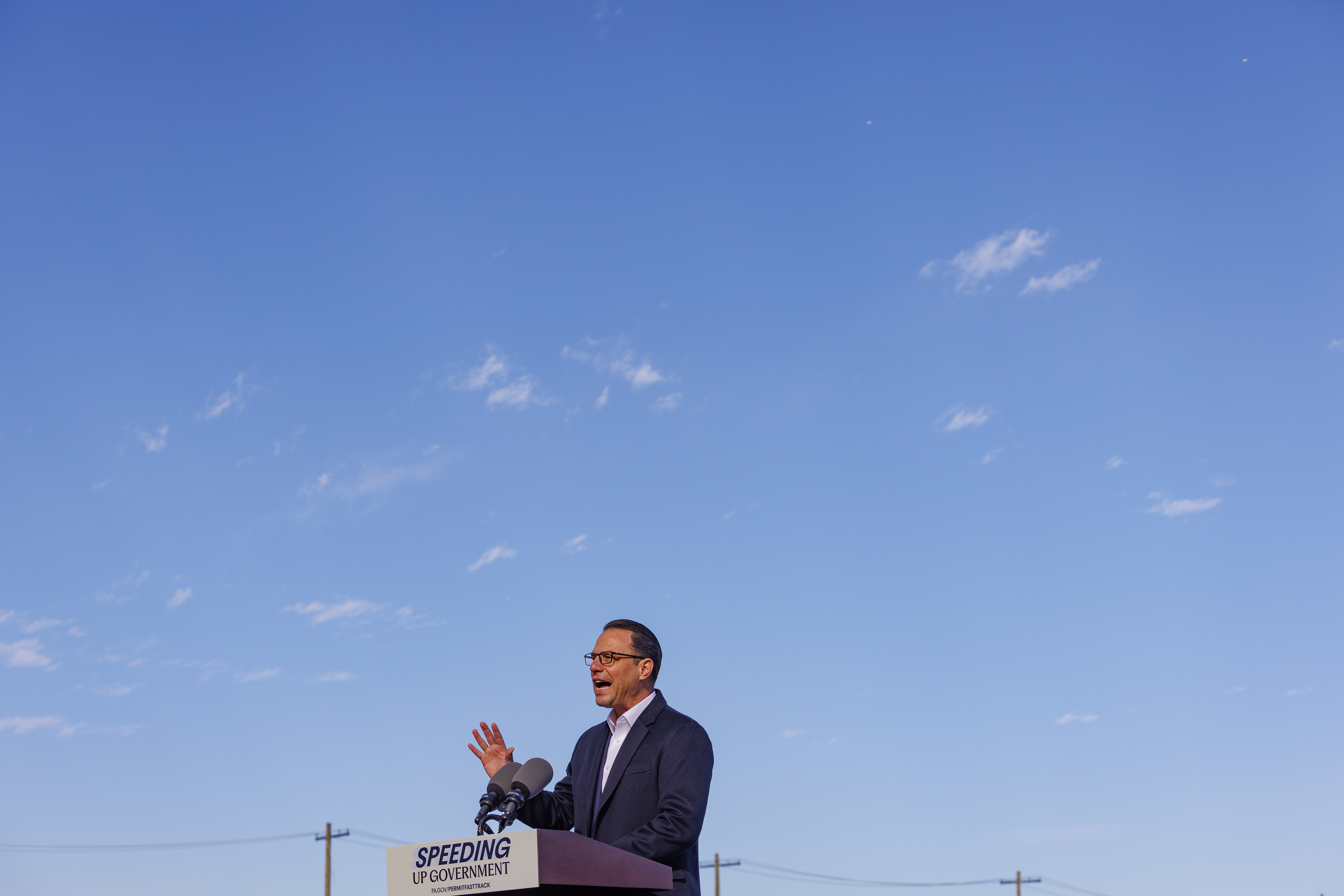
    On Tuesday, Shapiro signed an executive order imposing what he called the “strictest guardrails in the nation” to stop “predatory developers.”

    “I’ve heard loud and clear from the people of Pennsylvania,” said Shapiro, who is up for reelection this year.

    Now Shapiro has started airing a television ad attacking his Republican challenger, Stacy Garrity, as the “number one fan of data centers.” Garrity has her own ad hitting Shapiro for “data centers in our backyards,” but her campaign can afford only a small fraction of the airtime.

    Another Republican candidate for governor running on data center politics is Rep. Tom Tiffany of Wisconsin, who has attacked his Democratic rival as “Data Center David Crowley.” Crowley narrowly won the nomination over a democratic socialist, Francesca Hong, who had demanded a data center moratorium.

    Neither Crowley nor Tiffany has called for a moratorium.

    Crowley has preferred to let local communities decide, with a number of guardrails and restrictions. Tiffany, who called data centers “exciting new technology” just a few months ago, is now calling for a repeal of tax incentives.

    In Michigan, William Lawrence, a progressive activist, rode an anti-data center message to win the Democratic nomination for a key Michigan House seat this month and then immediately made a general election ad targeting Rep. Tom Barrett, the Republican incumbent, on the issue.

    Barrett campaigned Tuesday with House Speaker Mike Johnson in Michigan, who warned that, while “community concerns” needed to be accounted for, “a broad moratorium against data centers is kind of a dangerous prospect right now.”

    The next day Barrett began airing a new data center ad of his own, in which he claimed that “I stood up to my own party and voted against giving your tax dollars to data centers.”

    In an interview, Lawrence, who supports a moratorium, called the ad “outrageous” and said voters would not be satisfied with half measures. Data center opposition, he said, was “number one in terms of intensity” in the district.

    “It’s bringing together three-time Trump voters, anti-vaxxers, environmentalists, independents, nonvoters, people who are in our cities, people who are in the rural areas,” Lawrence said. “And it’s bringing together all these people because none of us trust Big Tech to do right by our communities.”

    This article originally appeared in the New York Times.
  • Jeffries and Kushner meet privately as midterm attacks fly

    Jeffries and Kushner meet privately as midterm attacks fly

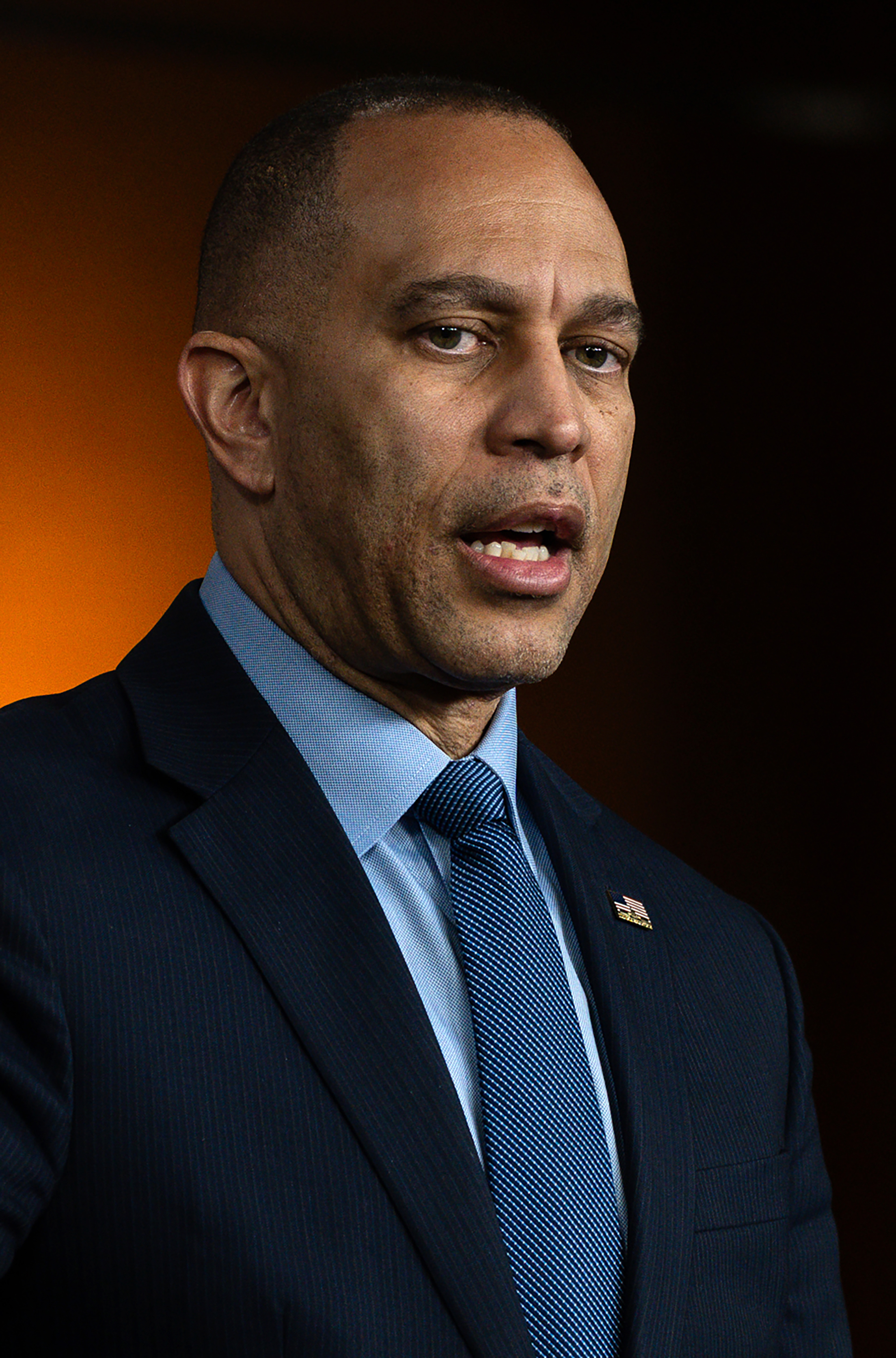
    Rep. Hakeem Jeffries (D., N.Y.), the House minority leader, met privately in recent weeks with Jared Kushner, President Donald Trump’s son-in-law and top outside adviser, and discussed potential areas of common ground, according to five people with knowledge of the meeting.

    The rare engagement was held in a private space in New York City, offered up by a mutual friend of the two men, according to two people with knowledge of the meeting and a third who was briefed on it. They and others were granted anonymity to discuss a meeting about which they were not authorized to speak publicly.

    Through aides, neither man would comment on the session, which was described by one person with knowledge of it as a broad conversation on a range of topics. Still, its timing underscored that those around Trump were well aware of the likelihood of a Democratic-led House, and trying to foster as much of a working relationship as possible before any change. Jeffries is in line to be the speaker, were Democrats to win the majority.

    Democrats and the president have been savaging each other on the campaign trail with increasing fury as the midterm elections approach, and as Republicans are fighting to retain their thin House and Senate majorities.

    Trump has called Jeffries a “thug,” and at a May campaign event referred to him as a “low IQ” person who had inspired him to deride Democrats as the “Dumocrats.” Jeffries routinely suggests that Trump is not only extreme but corrupt, vowing that Democrats would “hold the crooks accountable” if they won control.

    The private get-together was described by one of the people as a catch-up for Kushner and Jeffries. The two men have stayed in touch since they worked together on a criminal justice bill midway through Trump’s first term.

    During the recent meeting, the pair discussed housing, immigration, and the high cost of living as potential areas of common ground. Kushner suggested that Jeffries should meet with the White House chief of staff, Susie Wiles, two people with knowledge of the meeting said.

    The likelihood of any compromises between the White House and Democrats on those issues seems remote.

    Trump this year refused to sign a bipartisan housing bill in part because he said it was “Warren centric,” referring to Sen. Elizabeth Warren of Massachusetts, its top Democratic champion. And he has repeatedly expressed openness to a deal with Democrats on immigration, only to back away from any such agreement. He successfully lobbied Republicans to abandon a bipartisan border-security bill in 2024.

    White House officials and an aide to Kushner did not respond to messages seeking comment.

    In a statement, Jeffries did not acknowledge the meeting, but suggested that the only way Democrats would cut deals with the administration would be if Republicans were willing to come their way on cost-of-living issues, his party’s top priority.

    “Throughout this Congress, Republicans have adopted a my-way-or-the-highway approach to governing that has failed the American people,” he said.

    He added: “In every conversation that we have with the Trump administration, we will continue to make it explicitly clear that the affordability crisis is not a hoax, and nothing short of transformational policy change is acceptable. We are fighting for an affordable America. The question is whether Republicans will join us.”

    Kushner, who worked as a senior West Wing adviser in the president’s first term, is no longer formally part of Trump’s government. He has been deeply involved in the president’s efforts to resolve the war with Iran that Trump began, to enforce a ceasefire in the Gaza Strip, and to bring an end to the Russian invasion of Ukraine. He and Jeffries also met last year, according to two people with knowledge of that conversation.

    The meeting came as nearly all polls revealed Republicans to be at a disadvantage in the midterms, and showed how members of Trump’s inner circle were digesting what a Democratic majority next year could look like.

    Should that happen, Jeffries would be under intense pressure from progressives to use his power as a check on Trump, including through aggressive oversight.

    Kushner is frequently consulted by a number of Trump’s advisers, and he has told people that if anything bipartisan is to get done with Congress, Jeffries is the most serious person among Democratic leaders. Wiles, he has said, is the most serious inside the West Wing.

    But with Republicans in control of both chambers, Trump has mostly steered around Congress in his second term, trampling its powers and prerogatives. He has faced little pushback from Republican leaders.

    Should Democrats win the House, Jeffries would have to balance the need to keep the government funded with Democratic calls to defy Trump at every turn, and possible pleas to impeach him for a third time.

    Jeffries and Trump have danced around questions about what their relationship could look like next year should Democrats take control.

    “I think he’s a nice guy,” Trump told Punchbowl News in a recent interview, when asked about Jeffries. “I’d probably get along with him very well.”

    Trump pointed to a meeting with Jeffries in the Oval Office last fall — the only one they have had in his second term — and described it as a positive one.

    In fact, during that meeting, which was billed as a bid to avert a government shutdown, the president positioned hats with a “Trump 2028” logo directly in front of Jeffries and Senate Minority Leader Chuck Schumer of New York, trolling the Democrats with the suggestion that he would run for a third term in violation of the Constitution.

    Afterward, Trump posted an AI-generated meme of a mustachioed Jeffries wearing a sombrero, drawing an angry response from the House minority leader, who called the image racist and dared Trump to insult him next time “to my face.”

    Soon after the meeting, the government shutdown began.

    This year, Jeffries has remained noncommittal about any plans to pursue a third impeachment of the president, and has not discussed publicly what oversight could look like if his party were to win the majority.

    “We’ve not ruled anything in and not ruled anything out in terms of accountability,” he told the New York Times in an interview last month, noting that his focus would be on forcing out major Trump officials.

    “We’ve got to make sure we continue to get rid of toxic Trump Cabinet secretaries,” he said. “Pete Hegseth, in my view, should be next on the list.”

    This article originally appeared in the New York Times.

  • Postal Service publishes finalized plan to restrict mail ballots

    Postal Service publishes finalized plan to restrict mail ballots

    WASHINGTON — The Postal Service on Friday published regulations that would restrict mail voting, its latest effort to comply with President Donald Trump’s call to restrict the popular practice just months before the midterm elections.

    In a 95-page final rule, the Postal Service clarified how it would carry out an executive order Trump signed in March, which sought to restrict mail ballots and create state-by-state lists of citizens to help determine voting eligibility.

    In the rule, the Postal Service said that it would deliver mail ballots only in states that shared voter data with the federal agency.

    Before the Postal Service accepts ballots into its system, the agency would review every envelope for compliance with the new standards, including by checking that the recipient was enrolled with the Postal Service to receive a mail ballot.

    If the regulations are enacted, the Postal Service would not deliver mail ballots to states that do not comply.

    Trump’s executive order was largely blocked by federal courts this summer, and the Postal Service said in its rule published Friday that it would “not take actions to implement the rule specifically for the 2026 election unless and until the government obtains relief from those injunctions.” In a filing to the Supreme Court, the Justice Department said that the government would not enforce the final rule unless the court ruled in its favor.

    The Supreme Court is reviewing the issue and could rule at any time.

    A Postal Service spokesperson on Friday declined to comment, citing pending litigation.

    Trump has repeatedly made unfounded claims that mail voting is “cheating,” even as he has voted by mail in multiple elections, including earlier this week.

    The president has acknowledged that combating fraud is not the only reason to target the practice. In March, he told Republican lawmakers that passing a strict voter identification law cracking down on mail ballots, which Democrats now use more than Republicans, would “guarantee the midterms” for his party.

    This article originally appeared in the New York Times.
  • New Jersey Gov. Sherrill signs a law to protect reproductive and gender-affirming healthcare. Here’s what to know.

    New Jersey Gov. Sherrill signs a law to protect reproductive and gender-affirming healthcare. Here’s what to know.

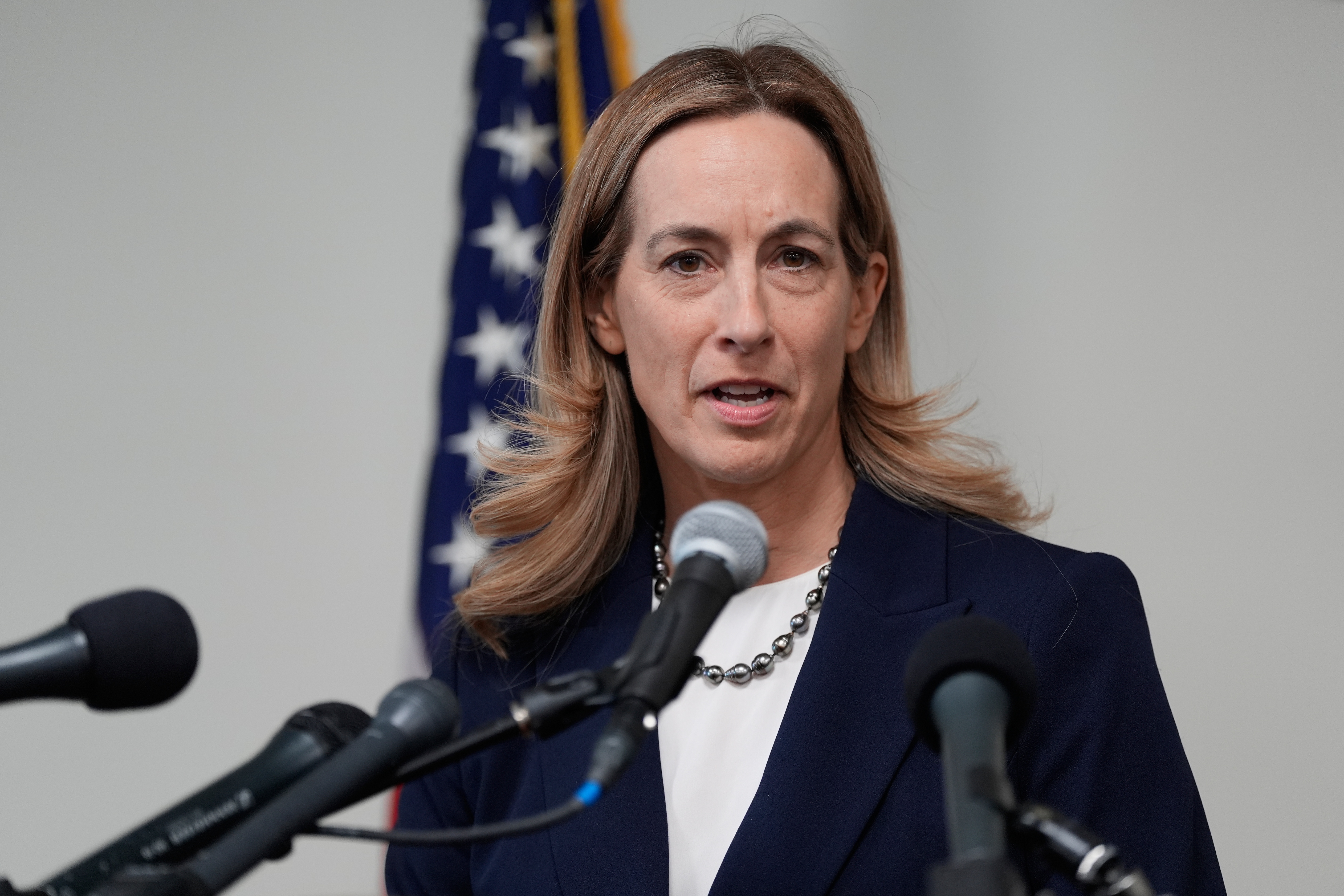
    New Jersey Gov. Mikie Sherrill signed a bill Thursday that offers greater protections for reproductive and gender-affirming healthcare — both for patients and for providers in the state — by making it a crime to intervene against such care.

    The new law strengthens existing reproductive healthcare protections and also broadens them to now include gender-affirming care. It is meant to cover residents as well as people traveling to the state.

    “This is a very big deal. It’s amazing,” said Martha Madrigal, a transgender woman who leads the Collingswood chapter of PFLAG, a national advocacy group for the families of LGBTQ+ people.

    She added that the law is a “solid declaration” that interfering with transgender rights “does not stand in New Jersey. We’re letting out an enormous sigh of relief today.”

    The legislation expands New Jersey’s shield laws by expressly including gender-affirming care in the definition of “protected reproductive healthcare services.”

    Essentially, the law creates a new crime for interfering with someone trying to access reproductive healthcare, such as an abortion, or gender-affirming care.

    It is now a fourth-degree crime (a low-level felony like shoplifting, punishable by up to 18 months in prison) to injure, threaten, intimidate, or physically block patients or providers, or to damage property in an effort to interfere with such care.

    The law would also protect providers from extradition to other states that have banned abortion or gender-affirming care for minors.

    Sherrill said New Jersey is “standing firm in defense of reproductive freedoms — including the right to choose and the right to receive gender-affirming care.”

    In comments after the signing, Sherrill referenced “attacks” and efforts to impose restrictions on access to abortion and gender-affirming healthcare by the Trump administration and Republican-led states.

    She said the transgender community has been “relentlessly attacked” by the Trump administration.

    “They’ve pulled tactics straight out of the ‘Red Scare’ playbook to restrict transgender people’s healthcare,” Sherrill contended.

    Since returning to office last year, President Donald Trump has issued orders to block federal funding for gender-affirming care for people under 19, oust transgender military personnel, and prevent transgender people from using the gender they self-identify as on passports.

    “We are not going to pay for our innocent children to undergo these barbaric surgeries and practices, which result in unthinkable and irreversible harm to their young bodies,” Trump said on Truth Social earlier this month after Medicaid ended reimbursement for hormone treatment and surgeries for minors.

    Surgeries for minors are extremely rare. And fewer than 1 in 1,000 U.S. adolescents receive medication for gender-affirming care, according to a Harvard University study released last year.

    State Sen. Teresa Ruiz (D., Essex), a chief sponsor of the bill and the Senate’s majority leader, said the bill makes New Jersey “a beacon of hope” in the nation.

    “You can’t tell us what we can read on a library shelf but want to be up in our uterus in an exam room,” she said.

    The law empowers patients and providers to take legal action against individuals who interfere with their access to or delivery of protected care.

    And it protects healthcare providers from professional penalties or adverse actions involving their medical malpractice insurance for providing care that is legal in New Jersey.

    Speaking for healthcare providers in New Jersey, Kristyn Brandi and Catherine Obando, doctors from Union who are preparing to open a clinic providing abortions and gender-affirming care, praised the law as an assurance that providers could deliver care without “risking their freedom or professional license” in the state.

    “We are grateful to know that our patients and staff will be protected from criminalization and harassment,” Brandi and Obando said in a statement as founders of the Luminosas Wellness Collective.

  • Philly kids in Head Start would have fewer teachers and English-only instruction under Trump administration plan

    Philly kids in Head Start would have fewer teachers and English-only instruction under Trump administration plan

    Like scattered billiard balls, 16 Early Head Start children scampered across a rubber-matted playground in Southwest Philadelphia last week.

    Vigilant for tumbles or conflicts, four teachers calmly monitored the 1- and 2-year-olds in their high-energy frolic at an early learning center run by KenCrest, a nonprofit that operates Head Start and other programs in seven neighborhoods throughout Philadelphia.

    Head Start’s low ratio of one teacher for every four toddlers is a hallmark of standards for the 61-year-old federal program that provides free education, health, nutrition, family support, and daycare services for low-income children from birth to age 5.

    But now, advocates say, Head Start risks being eviscerated by changes proposed by the Trump administration.

    The vaunted teacher-child ratio, along with other foundational principles that make Head Start unique, is being threatened by plans to “deregulate” the program — overhauling the way it operates by eliminating more than 1,400 regulatory mandates that dictate how the program is administered.

    “We could be going to two staff members for 25 toddlers and two for 30 older kids,” said Melanie Brennan, executive director of early learning programs at KenCrest.

    “What’ll bathroom time look like?”

    The Trump administration defends its proposed changes as the building blocks for a better Head Start, which serves 700,000 low-income children nationwide, including an estimated 7,500 in Philadelphia.

    “We are removing unnecessary bureaucracy, strengthening nutrition and physical health, trusting parents and local communities,” said Health and Human Services Secretary Robert F. Kennedy Jr., whose department administers Head Start at the federal level.

    That does not ring true to Head Start professionals in Philadelphia.

    “It’s laughable to say all they’re trying to do is take away some bureaucracy,” Brennan said. “By ending rules that guide Head Start’s high, uniform standards, the administration’s real goal is to leave the education business.”

    In Philadelphia, more than $70 million in federal funding for Head Start goes through the Philadelphia School District, the program’s largest provider in the city, said Diane Castelbuono, the district’s deputy chief for early learning.

    KenCrest Director Josie Jones with staff and Early Head Start students.Jessica Griffin / Staff Photographer

    The district uses that money to directly operate Head Start programming in more than 60 school buildings, mostly elementary schools, throughout the city, she said. It also works with approved contractors who run Head Start classrooms at approximately 75 childcare sites in Philadelphia, Castelbuono added.

    Asked for comment on the proposed changes, the school district said in a statement that the Head Start program has “positively impacted” students and that district officials “remain committed to preserving the robust standards that have proven essential to our program’s success.”

    ‘Stunned and sad’

    While only Congress can repeal the statutory authorization for Head Start, which has an annual budget of about $12 billion, opponents of the Trump administration’s proposal warn the new rules would weaken the program to the point it became unrecognizable — or stopped existing altogether.

    The plan, called “Reducing Federal Burden for Head Start Programs,” was released Aug. 7.

    Public comment will be accepted until October, when the administration hopes to finalize the rules.

    Kush Desai, a spokesperson for the White House, said the changes would enable the government to provide a stronger program that ensures services “are delivered effectively to children and families in need” by reducing “unnecessary administrative burden.”

    Advocates who have spent their late-summer vacations reading the complex, nearly 200-page document say they are in the process of marshaling opposition, which they hope will delay or alter the administration’s plans.

    “There’s so much to unpack,” said Kara McFalls, executive director of the Pennsylvania Head Start Association in Harrisburg. “We’re checking with experts to see if Head Start becomes gravely harmed.”

    Advocates say initial readings of the new rule justify their concerns.

    Beyond altering teacher-child ratios, the administration would lower the cap on Head Start administrative program costs from 15% to 5%, which means local programs could spend only up to 5% of their total budget on operational overhead like management, human resources, IT, and administrative salaries.

    That would be “devastating,” McFalls said, making it harder for programs to pay staff working in these departments.

    An Early Head Start student plays with a doll at KenCrest in Southwest Philadelphia.Jessica Griffin / Staff Photographer

    Additionally, the administration would require instruction to be conducted in English only — which could hit several Head Start programs across the city that offer bilingual education.

    “That policy would be ridiculous and biased,” said Rachel Sanders, executive director of Your Child’s World Learning Center, which includes Head Start programs in Southwest and Northeast Philadelphia, as well as in West Oak Lane. “Our children speak multiple languages.”

    While all primary instruction is in English, Sanders said, children who speak Spanish, Mandarin, Arabic, or another language are taught the lessons either by teachers fluent in those languages or by translators brought in to help. She added that 50% of the students in the Northeast location do not speak English on the first day of instruction, but that the additional support helps them eventually learn the language.

    “No way would we ever discontinue translating,” she said.

    Under the Trump administration plan, requirements for math and literacy curricula would be removed. Also gone would be stipulations that programs check on whether families have provided their children with immunizations, dental visits, wellness checks, and mental health consultations.

    And hygiene training — including the Head Start tradition that children brush their teeth in class — would end.

    The proposed changes “left me stunned and sad,” said Chandell Craig-Cromwell, 39, of West Philadelphia, a mother of two Head Start graduates who works in human resources in a city agency.

    “This isn’t just education, or babysitting. It’s developmental support,” she said. “I’m upset for all the moms who’ll get this new version of Head Start.”

    If the administration alters Head Start so profoundly, said Sharon Wolf, an early education expert at the University of Pennsylvania, she questioned whether the program should still keep its name.

    “I fear we could be moving to weakened, ordinary childcare,” she said. “Then, is it Head Start anymore?”

    Madison Marino Doan, a policy analyst in the Center for Education Policy at the conservative Heritage Foundation, disputed the notion that the administration’s proposal represented an effort to eliminate Head Start.

    “The current proposal under consideration is an effort to deregulate the program and give states greater flexibility to design programs that reflect the needs of their communities while maintaining current funding,” she said.

    Doan added that Congress should simply end the program — a recommendation made in the foundation’s Project 2025, a conservative blueprint for a second Trump administration.

    Some advocates warn the administration’s push to change the program has more to do with ideology than concerns about efficiency.

    Tyrone Scott, a director at First Up, a Philadelphia-based early education nonprofit, said he often runs into people who self-identify as conservatives at public forums who say that part of Head Start’s true mission is to “indoctrinate kids with a political ideology that includes ideas like racial justice.”

    But, he said, the mission of Head Start is a lot simpler than that.

    “It teaches kindness,” he said. “That isn’t a political philosophy.”

  • Does Pennsylvania now have ‘the strictest guardrails in the nation’ for data centers?

    Does Pennsylvania now have ‘the strictest guardrails in the nation’ for data centers?

    HARRISBURG — As part of his new, hard-line stance on regulating data centers in Pennsylvania, Democratic Gov. Josh Shapiro said during a news conference last week that his sweeping executive order has the “strictest guardrails in the nation” on data center development.

    Fact check: That is technically true, if you exclude moratoriums, or the full-stop pauses on development that have been implemented in two other states.

    States around the country have taken different approaches to data centers in the race for AI supremacy — and, subsequently, how to rein in the increasingly unpopular massive developments that some fear will disrupt their communities, drain resources, and increase energy costs.

    Governors, including Shapiro, initially welcomed companies who had come knocking on their states’ doors offering billion-dollar investments to build there. And as the political tide has transformed data centers into widely unwelcome developments among most Americans, leaders have had to adapt — or even change their positions.

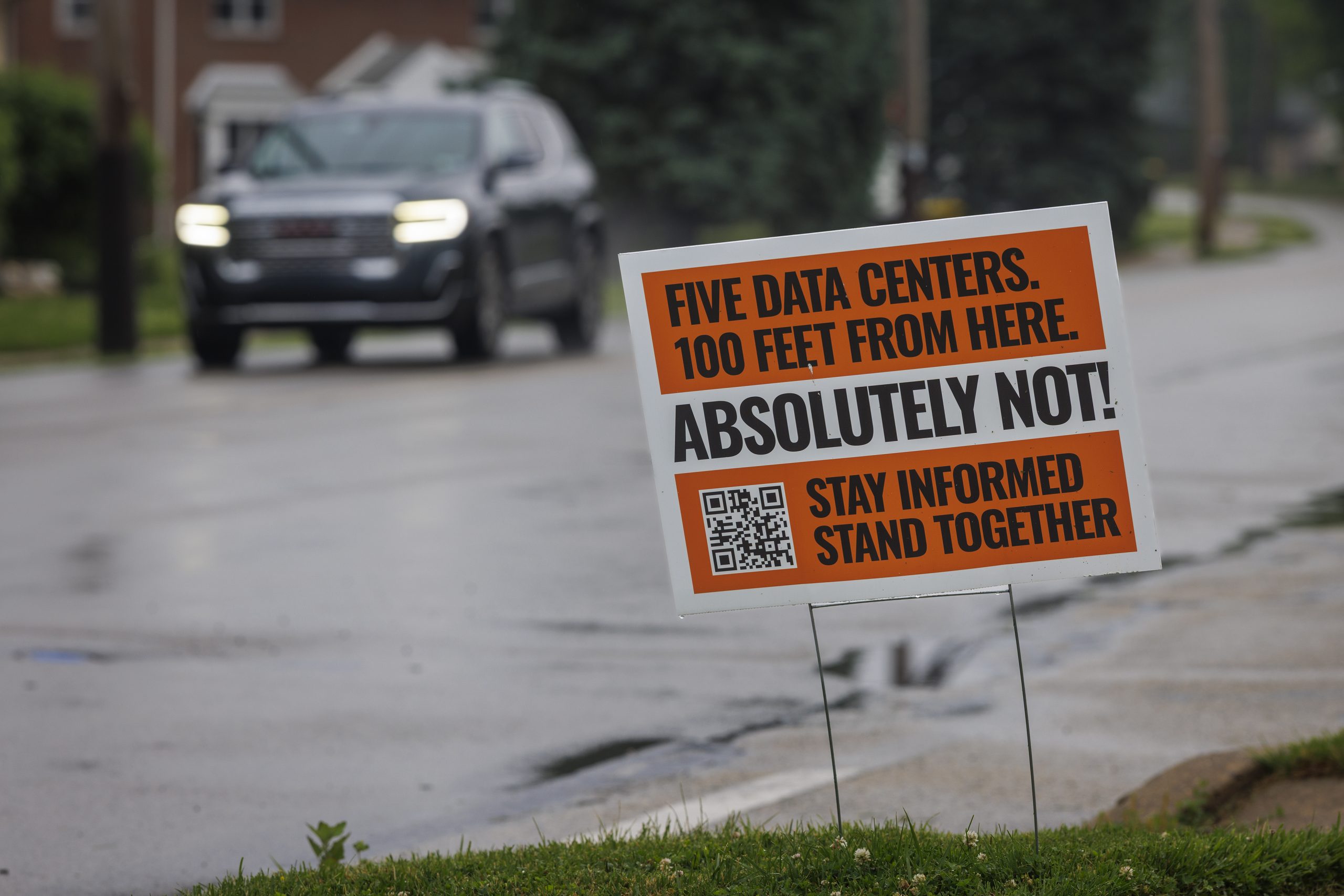
    Lawn sign along Crooked Lane in King of Prussia, Wednesday, May 27, 2026. Some residents are standing in opposition to building a data center in their community.Alejandro A. Alvarez / Staff Photographer

    To build a data center in Pennsylvania — where Shapiro just 14 months ago trumpeted a $20 billion commitment from Amazon to build at least two data center campuses in Bucks and Luzerne Counties — developers will now be required to sign a consent agreement detailing how it will follow new guidelines in four key areas: transparency, energy affordability, workforce development, and environmental protection.

    Many top Pennsylvania Democratic leaders and environmental groups lauded Shapiro’s order, while some Republicans called it a disingenuous flip-flop in an election year. And some of the loudest data center opponents said it did not go far enough — and they still want a moratorium.

    Thirty-eight states, including Pennsylvania, offer tax breaks for data centers. Many of these tax incentives were approved years ago, as the emerging artificial-intelligence industry began to come online. Pennsylvania’s legislature first approved its benefit in 2021.

    Some states, like New York, have halted all data center development for periods of time, while others, like New Jersey, have singled out specific areas, such as consumer protections, in which lawmakers want to curb data centers’ impact.

    Shapiro’s administration argues it is unfair to compare its multipronged requirements for developers to build in Pennsylvania to states with moratoriums. In other words, officials say, Pennsylvania has the toughest enforceable barriers for data center development, while moratoriums are a total stop.

    Most state legislatures are weighing proposals to restrict data center development through moratoriums or energy generation requirements. Pennsylvania has near-unanimous support among lawmakers to end tax breaks for data center developers, but legislators in the politically split General Assembly failed to do so before leaving Harrisburg for the summer.

    In absence of new state laws, a handful of governors, including Shapiro, have taken executive action to restrict data center development in their states. Here is a look at how several states, including Pennsylvania and its neighbors, are approaching data centers.

    Pennsylvania

    Moratorium: No

    Tax credit available: Yes

    Restrictions: After previously embracing data center development as a potential economic driver for Pennsylvania, Shapiro changed his position and signed a wide-ranging executive order last week requiring data centers to get local approval, bring their own power, hire and train local workers, and more. The order does not include a moratorium on data center development. However, its requirements for local approval may, in effect, block many from moving forward.

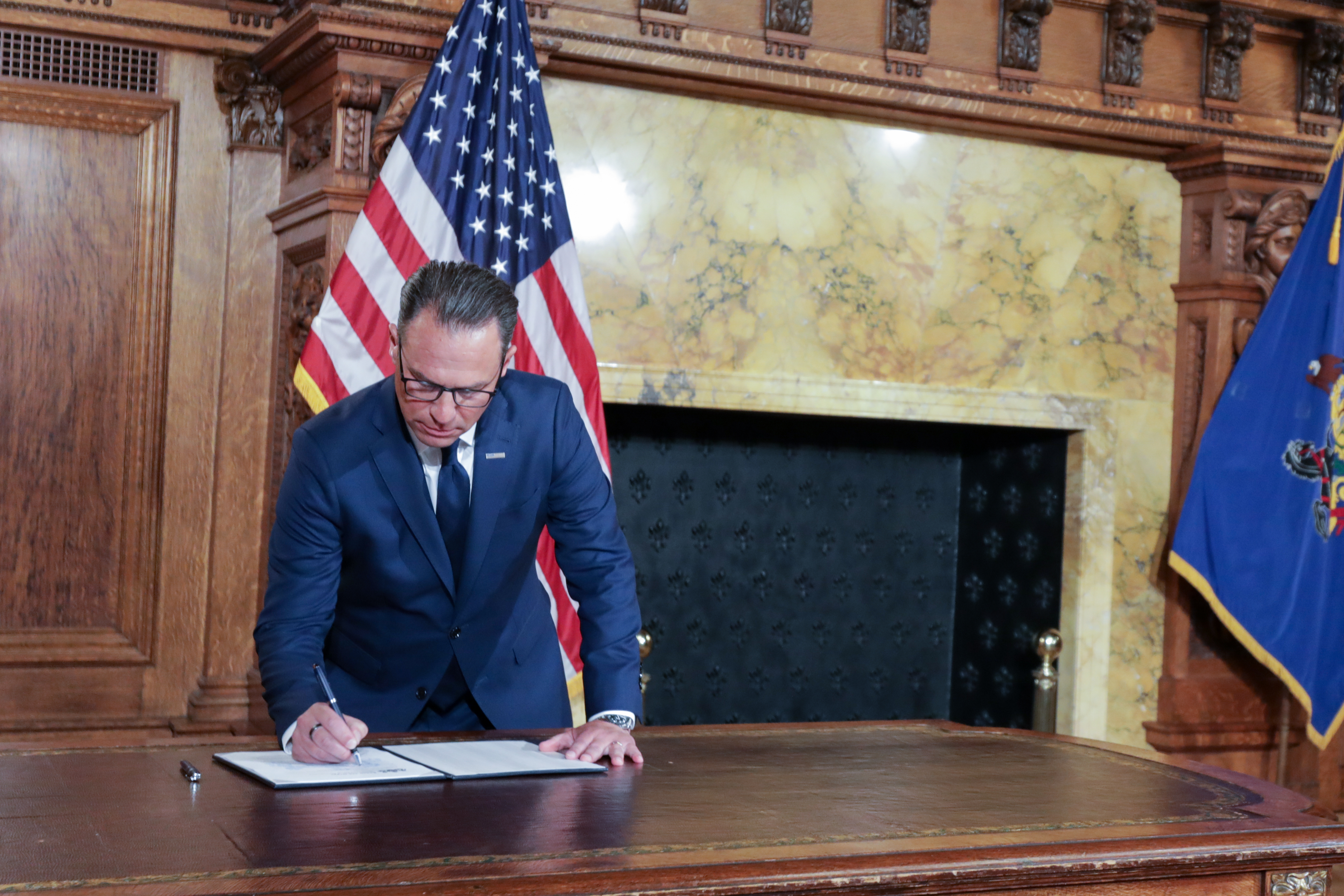
    Gov. Josh Shapiro signs an executive order restricting data centers in Pennsylvania during a ceremony in the Capitol in Harrisburg, Pa., Tuesday August 18, 2026.Kalim A. Bhatti / For The Inquirer

    Any developer looking to build a data center in Pennsylvania must sign a 33-page, legally binding consent agreement that follows Shapiro’s multifaceted and detailed requirements about the facility’s projected energy generation and water usage and a community benefits agreement in order to receive state-level permit approvals. If the developer does not agree to Shapiro’s rules, its project will be held up by the state indefinitely.

    Current projects that have received state permits will be allowed to proceed, but developers will need to sign the agreements for any future approvals.

    New Jersey

    Moratorium: No

    Tax credit available: Yes

    Restrictions: In July, Gov. Mikie Sherrill signed several bills into law to protect consumers from increased costs associated with data center development, including the creation of a new tax and rate structure specific to data centers so that the projects pay for their own energy usage and grid updates.

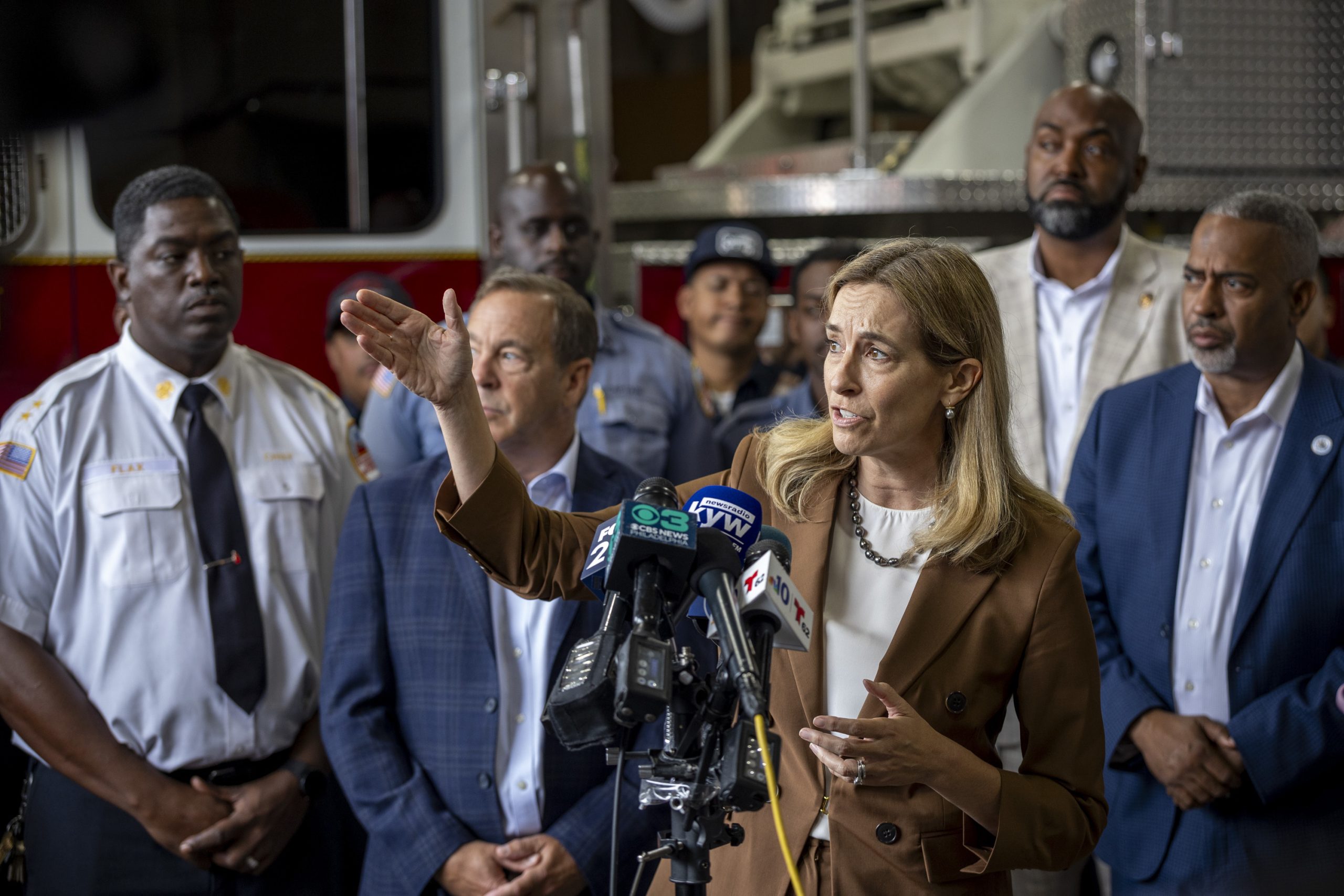
    Gov. Mikie Sherrill answers questions from press about the recent rainfall and flooding in Camden at the Fire Administration Building in Camden, N.J., on Tuesday, July 7, 2026.Tyger Williams / Staff Photographer

    Sherrill has released a plan with a framework similar to the regulations outlined in Shapiro’s executive order — including requirements for energy generation, community input, workforce development, and environmental protection — but unlike an executive order or legislation, it does not appear to be enforceable.

    Sherrill, a Democrat, began her first term earlier this year after running on a campaign promise to bring down utility costs.

    New York

    Moratorium: Yes

    Tax credit available: Yes

    Restrictions: Gov. Kathy Hochul in July signed the first statewide data center ban in the nation, blocking new construction for any project using 50 megawatts or more of electricity for up to one year. Fewer projects were proposed in New York, one of the nation’s most populous states that relies heavily on surrounding regions to generate its energy consumption, than in its neighbors. Hochul said she will lift the order once her administration develops guardrails for future projects.

    Hochul, a Democrat, took specific aim at hyperscale data center proposals, the main projects intended to power emerging AI technologies.

    Maryland

    Moratorium: No

    Tax credit available: Yes

    Restrictions: There has been no statewide action on data centers yet, as Maryland is limited on how much energy it can produce due to its size and dense population. Unlike in Pennsylvania, county and local governments in Maryland are allowed to pass their own moratoriums on data center development, which Baltimore and other densely populated counties near Washington have done.

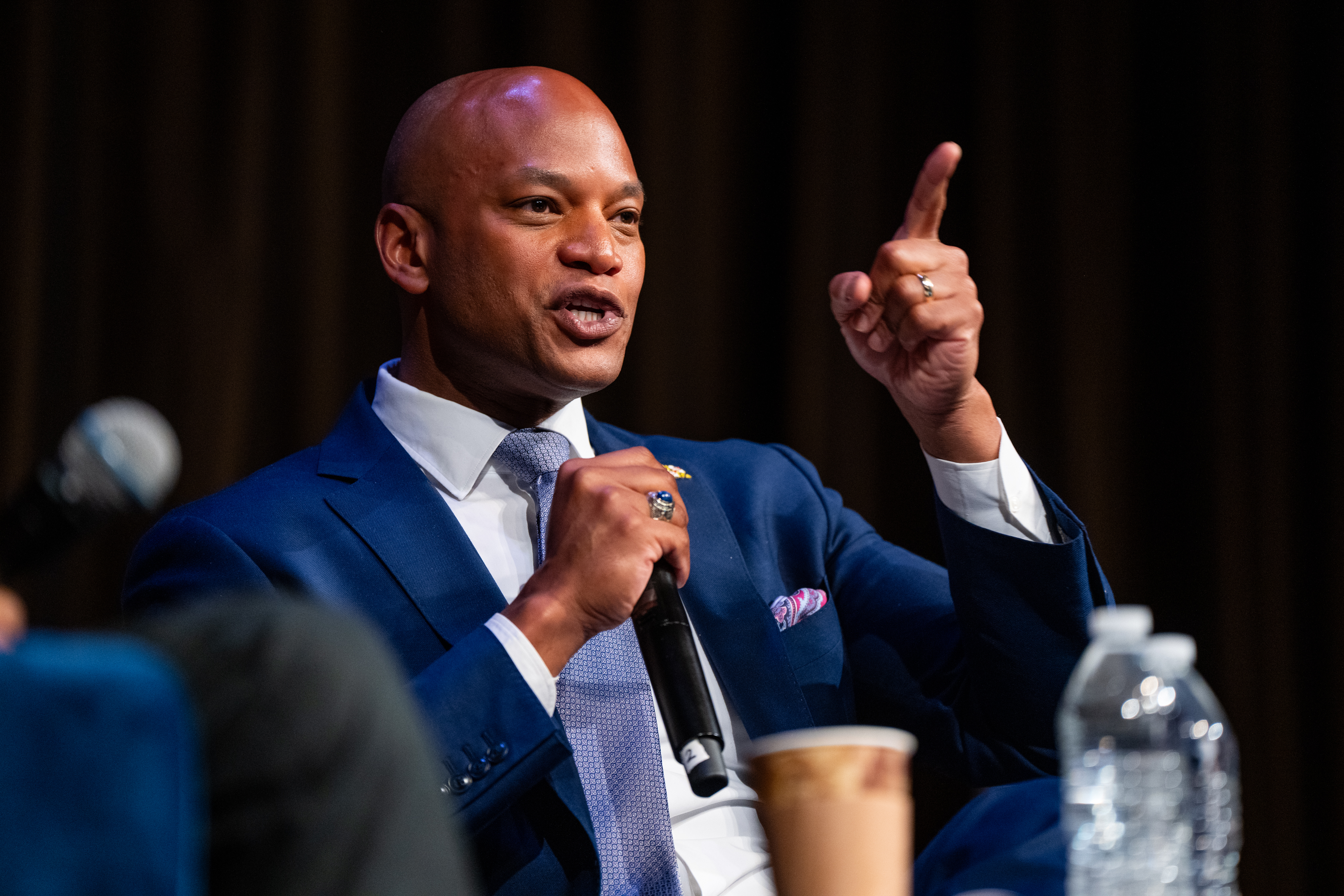
    Wes Moore, Governor of Maryland, speaks during the National Action Network (NAN) Convention in New York, Thursday, April 9, 2026. (AP Photo/Angelina Katsanis)Angelina Katsanis

    Gov. Wes Moore, a Democrat running for reelection, backs a number of legislative proposals in the Maryland statehouse that would require the centers to bring their own power and hire local union workers. But he has mostly demurred on a statewide moratorium, saying it is up to local governments to decide, online news outlet Maryland Matters reported.

    Similar to Shapiro’s Republican opponent, Stacy Garrity, Moore’s GOP challenger, Dan Cox, has called for a statewide moratorium on the projects.

    Virginia

    Moratorium: No

    Tax credit available: Yes

    Restrictions: Virginia is among the hottest spots for data center development in the country, with more than 340 data centers in operation and hundreds more proposed. In July, the Virginia General Assembly imposed a new electricity-use tax set to run out in two years.

    Virginia is also seeing massive tax revenues from its burgeoning data center industry. One wealthy county just south of Washington is home to 250 data centers. The local government there is expected to bring in $1.3 billion in additional tax revenue from data centers, allowing the county to reduce property taxes by 30%, the New York Post reported.

    Like Moore, Gov. Abigail Spanberger, a Democrat for whom Shapiro campaigned last year, has bucked calls for a statewide moratorium and urged local governments to decide.

    Ohio

    Moratorium: No

    Tax credit available: Yes

    Restrictions: Ohio has the fifth-most data centers in the country, with more than 200 already operating, according to the state’s consumer protection office.

    The GOP-controlled state broadly still welcomes data center development. But its utilities commission approved a tariff for large data centers, requiring them to pay for at least 85% of their electricity capacity.

    It is also a top issue on the campaign trail in the state’s hotly contested U.S. Senate race that could decide control of the chamber: Top Republicans warned AI developers that they need to fix their public image or lose supportive candidates, Axios reported.

    Texas

    Moratorium: Yes, for future development

    Tax credit available: Yes

    Restrictions: In what was once the most welcoming state in the country for data center development, new developments in Texas are now indefinitely on hold.

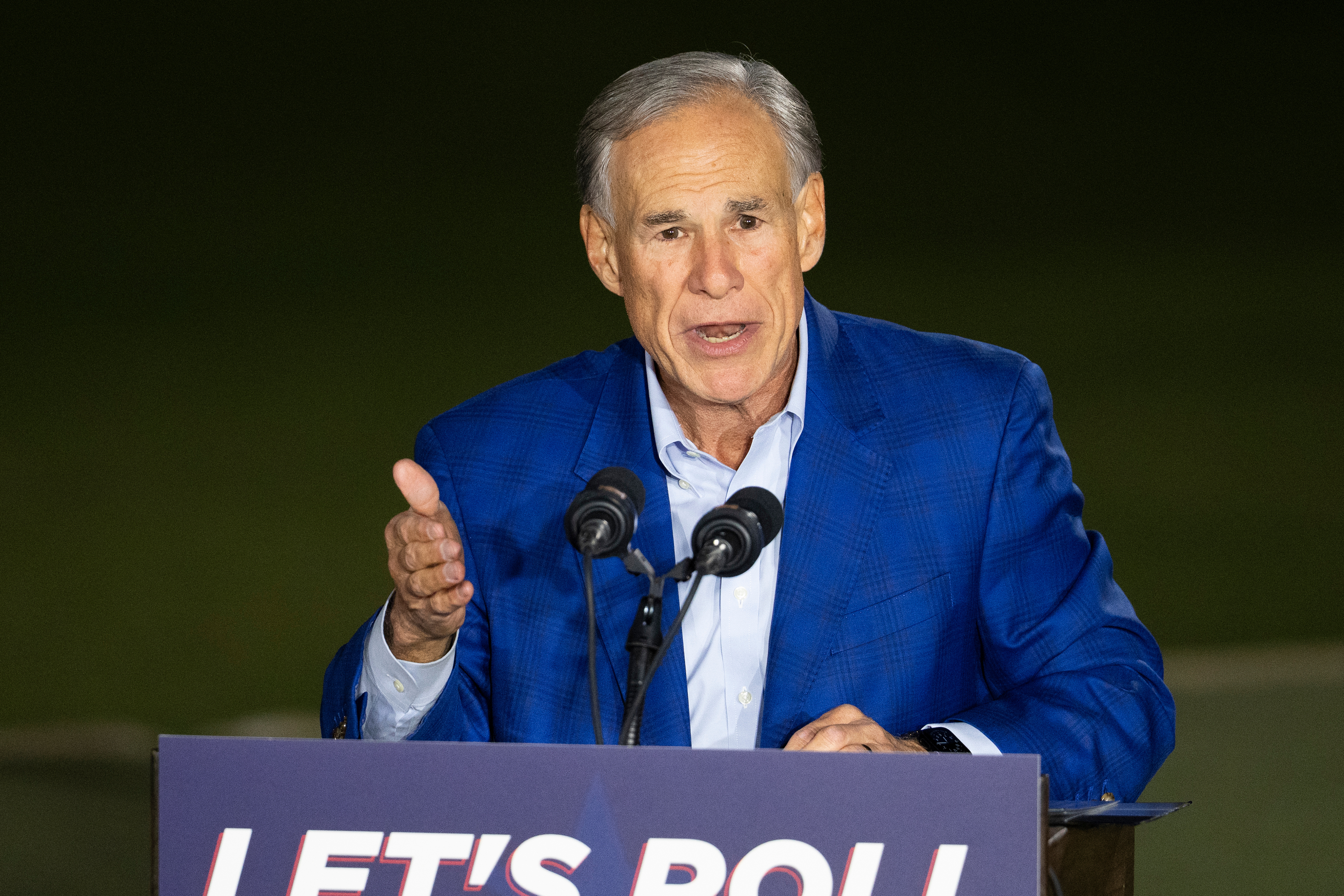
    Gov. Greg Abbott announces his re-election campaign for Texas governor in Houston, Sunday, Nov. 9, 2025. (Jason Fochtman/Houston Chronicle via AP)Jason Fochtman

    This month, Gov. Greg Abbott, a Republican, announced a moratorium on future data center projects while the state’s utility commission and electricity council audit the current projects’ power and water use, and more.

    Kentucky

    Moratorium: No

    Tax credits available: Yes

    Restrictions: Gov. Andy Beshear, like Shapiro an ambitious Democrat and a potential 2028 presidential contender, also signed an executive order earlier this month that requires data center developers to submit an energy plan that outlines that the project will not raise prices for ratepayers. He also directed the state’s utility commission to deny any rate increases to cover increased costs from data centers.

    Beshear’s order was met with criticism from some experts who claim his order was not enforceable, particularly for its inclusion of a directive to an independent agency not under the governor’s discretion, the Kentucky Lantern reported.

  • Philly is one of three finalists to host the 2028 Democratic National Convention

    Philly is one of three finalists to host the 2028 Democratic National Convention

    Philadelphia is one of three finalist cities to host the 2028 Democratic National Convention, the party announced Thursday.

    In addition to Philadelphia, the Democratic National Committee said it is also considering Denver and Boston on its narrowed short list of cities to hold the next presidential nominating convention. The announcement means that Atlanta and Chicago, which were on a previous list of five potential host cities, have been eliminated from contention.

    Ken Martin, the chair of the Democratic National Committee, said in a statement that the three finalist cities put forward “incredibly strong bids.” He did not say why the party is no longer considering Atlanta or Chicago.

    If Philadelphia is picked, the convention would take place from Aug. 7 to 10, 2028, at Xfinity Mobile Arena in the South Philadelphia stadium complex. The Republican Party’s 2028 convention will be held in Houston.

    Democrats in 2028 will choose from an array of potential candidates to succeed President Donald Trump. No major candidate has formally launched a campaign, but Pennsylvania Gov. Josh Shapiro is widely considered to be a contender.

    The announcement comes as Martin has faced criticism for his leadership of the party, especially as it relates to fundraising. Democrats trail Republicans ahead of this year’s midterm elections when it comes to money in the bank.

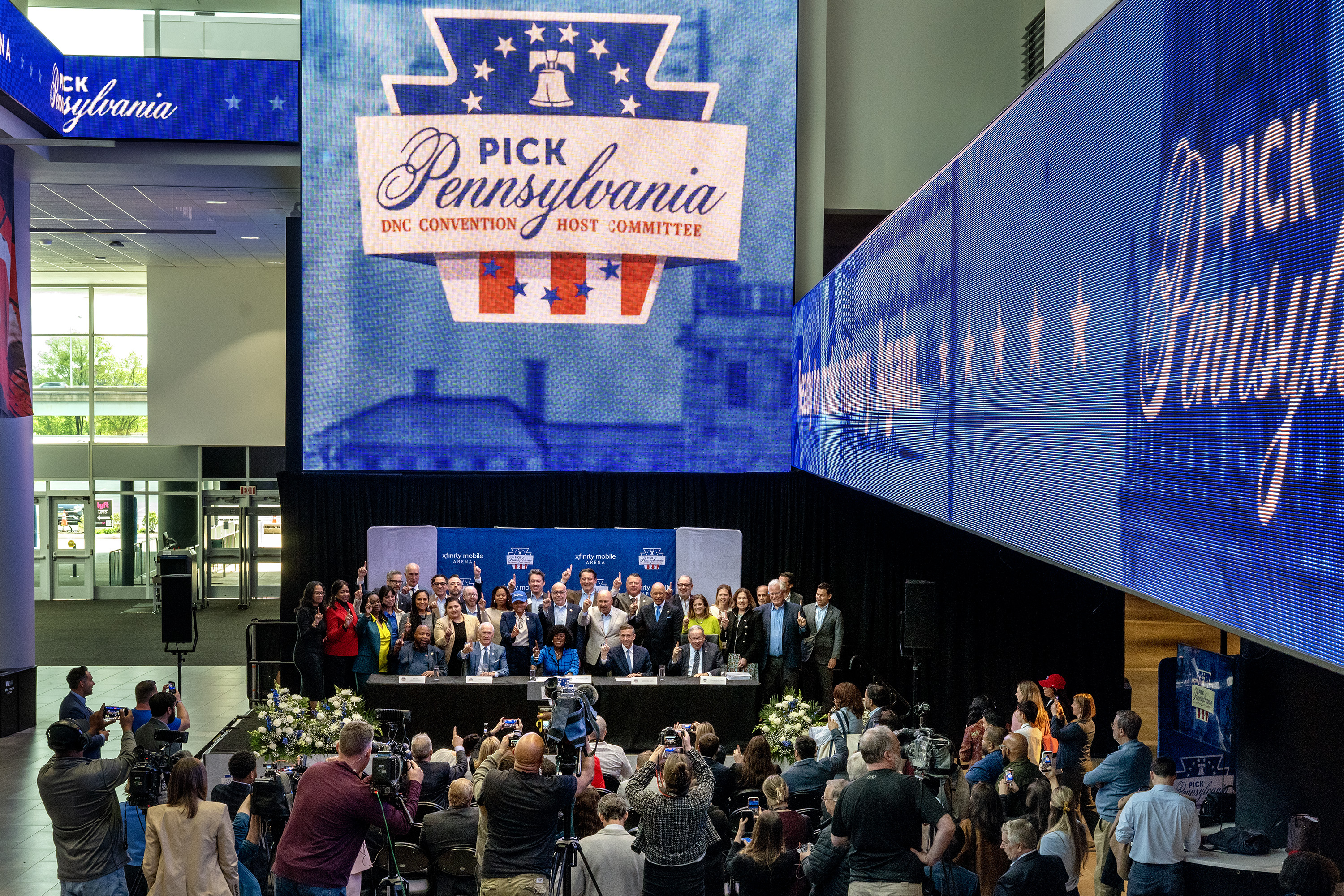
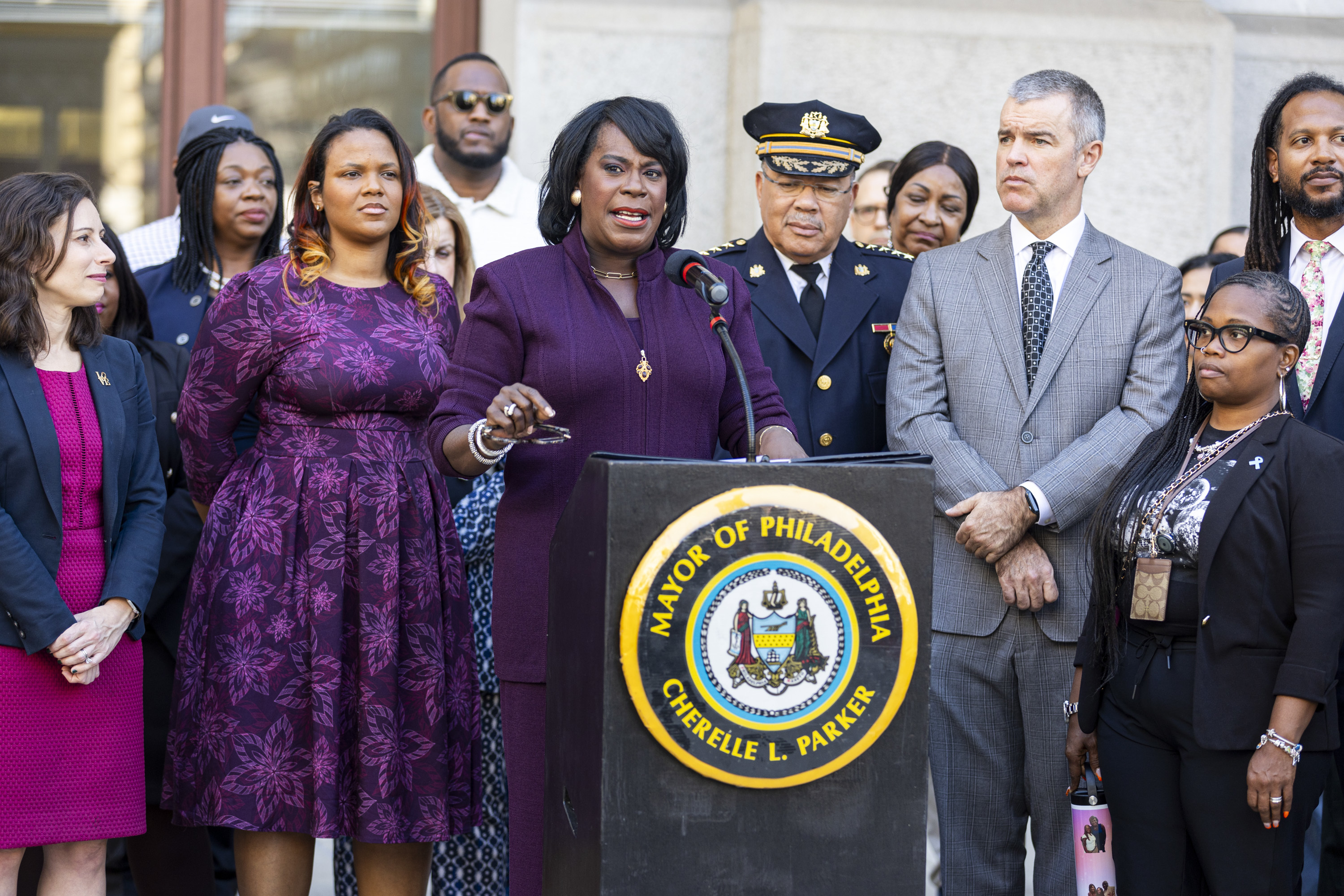
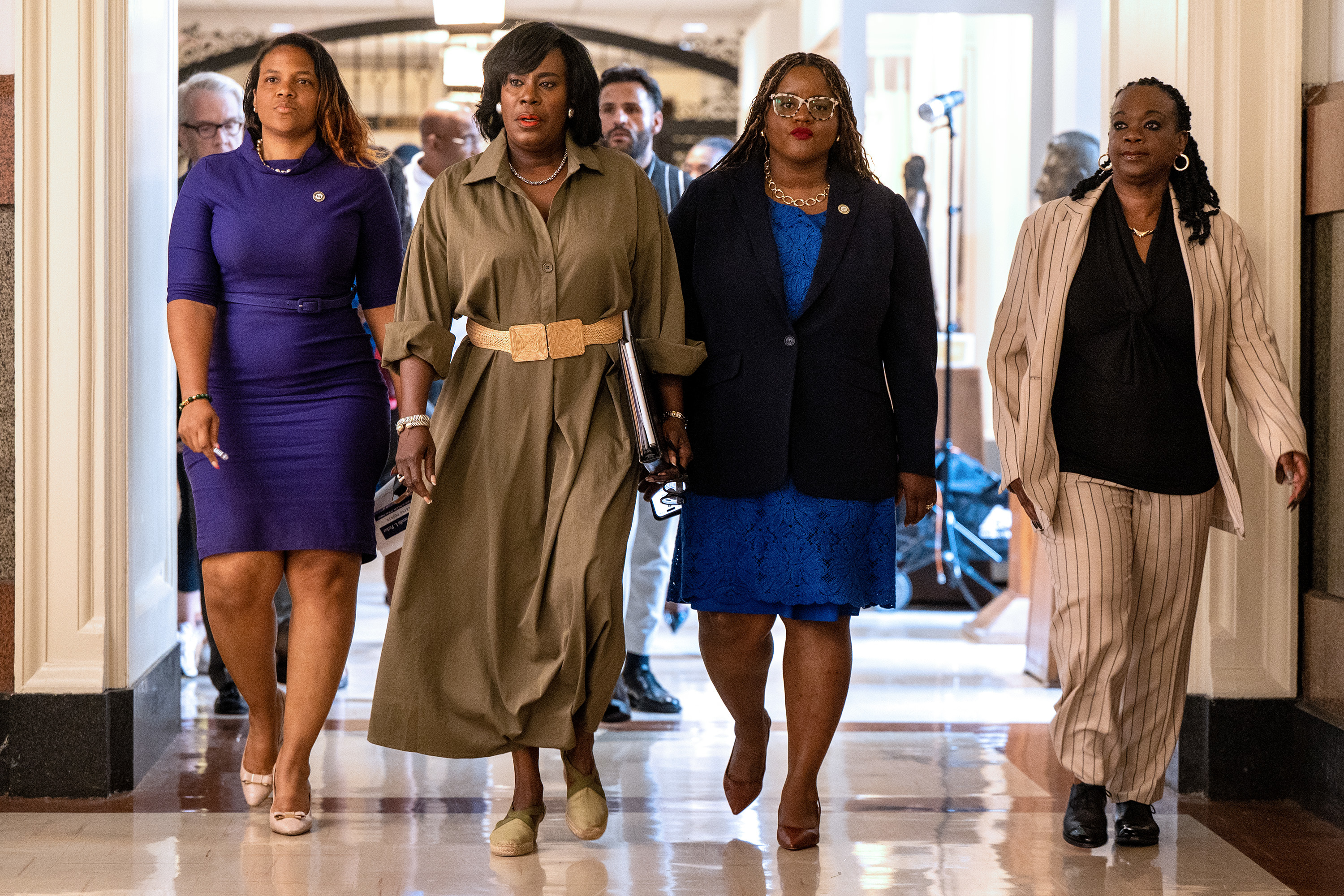
    Mayor Cherelle L. Parker is joined by city leaders and Democratic National Committee Chair Ken Martin and his team for a “One City” salute group photo Thursday, April 30, 2026, after they toured the Xfinity Mobile Arena facilities as the city makes its bid to host the 2028 Democratic National Convention.
    Tom Gralish / Staff Photographer

    The party’s decision to narrow its 2028 convention short list comes after Martin and other top officials traveled to the five finalist cities in the spring to assess logistical readiness, including arena capacity, technological capabilities, transportation and security infrastructure, and more.

    In April, local Democratic officials and some of the city’s biggest boosters wooed Martin over the course of a three-day trip and presented the city as an improved tourist destination since 2016, the last time the party hosted its major convention in the city. That year, Democrats nominated former Secretary of State Hillary Clinton, who lost the general election to Trump.

    The 2016 DNC was one of 10 major-party nominating conventions that Philadelphia has hosted since the 1800s. The city hosted the Republican National Convention in 2000.

    The events draw thousands of party members and journalists from around the world, putting the host region in the spotlight for several days. Proponents of hosting the convention also argue that it will generate business as visitors eat, shop, and play; the true economic impact of conventions, however, is up for debate.

    Mayor Cherelle L. Parker, who has led the city’s effort to bid for the 2028 convention, said in a news release that Philadelphia this year has “proven that we can do big things better than any other city in the country.”

    She cited this summer’s litany of big events in the city, including FIFA World Cup games, the MLB All-Star Game and Home Run Derby, and events associated with America’s 250th birthday.

    “We are ready to welcome the Democratic Party and the nation back to our city,” she said.

    David L. Cohen, the longtime Democratic Party stalwart and president of Pick Pennsylvania, the city’s host committee, said in a statement that Philadelphia’s selection as a finalist “is a testament to the ongoing strength of our bid and our record of success.”

    “We have presented an unmatched case,” he said, “built on experience, preparation, strong partnerships, and a proven ability to deliver major national and international events.”

  • Mayor Parker has seen higher turnover among her top appointees than her recent predecessors

    Mayor Parker has seen higher turnover among her top appointees than her recent predecessors

    Mayor Cherelle L. Parker has seen more than twice as much turnover among top officials in her administration than her most recent predecessors had at the same point in their tenures, according to an Inquirer analysis of personnel moves.

    Come September, when City Solicitor Renee Garcia’s resignation takes effect, more than half of Parker’s highest-level appointees will have departed in the two years and nine months since she took office in January 2024.

    Following last month’s announcement that Managing Director Adam K. Thiel and Garcia would soon be leaving Parker’s administration, The Inquirer compared turnover at the top level of city government under Parker with former Mayors Jim Kenney and Michael A. Nutter. The analysis included chiefs of staff, deputy mayors, and the half-dozen other positions designated by the Philadelphia Home Rule Charter as part of the mayor’s cabinet.

    The analysis found:

    • Of the 11 people Parker appointed to those jobs, six have already left the administration or are poised to leave by September. Kenney had lost three of his 11 top appointees by the same point in his tenure, and Nutter had lost two of the nine officials in comparable positions.
    • Most strikingly, Parker has lost three of the top four officials in her government: Chief Deputy Mayors Aren Platt and Sinceré Harris, the architects of her 2023 campaign, and Thiel, who oversaw most of the city’s operational departments. By this point, Kenney and Nutter both had lost two of the six people who held comparable roles in their tenures.
    • For the director of the Philadelphia Department of Labor, a cabinet position, Parker is on her third appointee, after her first two left city government after short stints leading the agency. (Parker has also had three directors of LGBTQ+ affairs, a non-cabinet position, after firing the first two people who served in that role.)
    • In another cabinet role, that of commerce director, Karen Fegely has been serving on an interim basis since May 2025, when Parker’s original appointee, Alba Martinez, resigned to produce a musical.

    Tiffany W. Thurman, Parker’s chief of staff, said the turnover has not raised “any red flags or alarms internally.”

    “It’s cyclical, and it’s part of the process,” Thurman said in an interview Thursday morning, after the initial publication of this story. “The work is continuing, and it’s strong and it’s good, and the vision hasn’t wavered despite the turnover, and so I’m very, very pleased with the team that we have right now.”

    (function() { var l = function() { new pym.Parent( ‘parker-staff__graphic’, ‘https://media.inquirer.com/storage/inquirer/ai2html/parker-staff/index.html’); }; if(typeof(pym) === ‘undefined’) { var h = document.getElementsByTagName(‘head’)[0], s = document.createElement(‘script’); s.type = ‘text/javascript’; s.src = ‘https://pym.nprapps.org/pym.v1.min.js’; s.onload = l; h.appendChild(s); } else { l(); } })();

    Although the top rung of Parker’s administration has seen high turnover, the analysis found that the next two tiers of city government leaders under Parker have seen less churn.

    • Of 18 key department heads not included in the charter-designated cabinet under Parker, three have resigned from or been forced out of city government. (A fourth, former Fire Commissioner Craig Murphy, stepped down as part of a scheduled retirement after Parker appointed him on an interim basis.)
    • Of the 76 additional political appointees, smaller department leaders, and deputies identified by The Inquirer — including all of the officials whose appointments Parker publicly announced as she filled out her administration — at least 12 have resigned, been fired, or moved to a new role in a discipline-related transfer. (Others have received promotions or switched roles to fill vacancies.)
    • Major officials who remain in the administration hold some of the most critical posts in city government, such as Police Commissioner Kevin J. Bethel, the first appointment Parker announced after her election, and Finance Director Rob Dubow, who has held his role since the start of Nutter’s administration in 2007.

    While smaller in number, the departures among the second and third tiers of city government leadership under Parker have included losses in important positions, including Water Commissioner Randy Hayman, Licenses and Inspections Commissioner Basil Merenda, Chief Policy Officer Sophie Bryan, and Budget Director Robert McDermott.

    (function() { var l = function() { new pym.Parent( ‘parker-staff2__graphic’, ‘https://media.inquirer.com/storage/inquirer/ai2html/parker-staff2/index.html’); }; if(typeof(pym) === ‘undefined’) { var h = document.getElementsByTagName(‘head’)[0], s = document.createElement(‘script’); s.type = ‘text/javascript’; s.src = ‘https://pym.nprapps.org/pym.v1.min.js’; s.onload = l; h.appendChild(s); } else { l(); } })();

    There is always turnover in administrations, but it is often clustered around the end of mayors’ four-year terms. (There are exceptions: A majority of Philadelphia city solicitors since 1992, for instance, have served around two to three years, putting the length of Garcia’s tenure on par with her predecessors.)

    Traditionally, deputy mayors and chiefs of staff work most closely with the mayor, and the posts have often been filled by people in the mayor’s inner circle or top campaign aides. They often do not have deep city government experience, which was the case for Harris and Platt, both of whom have since returned to politics.

    Appointments for operational positions, such as managing director and police commissioner, usually go to people with experience in their fields. Thiel led the fire department and the office of emergency management under Kenney. Bethel was a former deputy police commissioner.

    Parker, at the helm of City Hall, has said she has a demanding leadership style.

    “With my team, am I always stretching and pushing and requiring that homework is done?” Parker said in a 2024 interview. “Yes, but I also believe I have the best and the brightest people with me. So naturally I have very high expectations for them because, quite frankly, they’re smart.”

    Candi Jones, the administration’s chief human resources officer, said that Thiel and Garcia’s tenures are roughly in line with the average length of their predecessors’ over the last four administrations.

    “Turnover is not turmoil,” Jones said Thursday during the interview with Thurman. “What is of most importance is that the city has an obligation for operational continuity. … Everyday, our operations are continuing to be managed daily, weekly, monthly. There has been no gaps in service.”

    She also emphasized that key officials like Bethel, Dubow, and Thurman “since day one have been in place and really have been moving the government forward.”

    The Inquirer attempted to reach all of the former administration officials mentioned in this article. Many declined to comment for this article or did not respond to interview requests. Attempts to reach several others were unsuccessful.

    ‘Big Three’ loses two

    Even before Parker took the oath of office, intrigue over personnel matters became a defining aspect of her administration.

    After winning the mayor’s race, Parker announced in late 2023 that she would appoint a “big three” of senior advisers to lead her administration, rather than a single “big mahoff,” an all-important aide who touches almost all major decisions, as had been the case in past administrations.

    “No one like me has ever been elected mayor of our city, and no one has ever organized their senior staff this way,” Parker, the city’s first Black female mayor, said at the time.

    It didn’t last.

    Platt resigned unexpectedly in October 2024 after just 10 months on the job, and has since returned to Parker’s political campaign as executive director. Harris stepped down in March to join the political consulting firm GPS Impact.

    Parker tapped City Hall veteran Vanessa Garrett Harley to fill Platt’s role, while Harris has not been directly replaced.

    Despite Parker’s initial vision for a triumvirate of top aides, Thurman has by all accounts become Parker’s indispensable No. 2. Parker has referred to Thurman as her “chief air traffic controller.”

    Mayor Cherelle L. Parker walks from her office at City Hall on Wednesday, Jul. 9, 2025, to speak hours after her administration struck a tentative contract agreement with District Council 33 leaders overnight, ending a workers strike. With her are: Chief Deputy Mayor Sinceré Harris (from left); Chief of staff Tiffany W. Thurman; and Chief Deputy Mayor Vanessa Garrett-Harley.Tom Gralish / Staff Photographer

    Thiel’s tenure with the city, meanwhile, has been one of the most perplexing sagas of Parker’s first term. In the administration’s early days, he often appeared alongside the mayor at news conferences during emergencies and major announcements.

    But his public role overseeing many of the city’s day-to-day operations faded over time, and his obligations outside City Hall grew. In addition to working as a high-paid consultant and adjunct professor — as he had since the start of the administration — Thiel joined the U.S. Army Reserve in 2024 and took multiple leaves from the city for military service, including during this winter’s prolonged snow and ice emergency.

    In July, Parker announced Thiel’s resignation, noting that he is leaving to “reenter the private sector.”

    Philadelphia Managing Director Adam Thiel updates the latest from garage collapse at 30th and Grays Ferry with Mayor Cherelle L. Parker on Thursday, April 9, 2026.Yong Kim / Staff Photographer

    New positions, new faces

    Parker, who has also greatly expanded the mayor’s office staff and increased salaries, created numerous new roles after taking office. Several people left those positions shortly after becoming the first people to hold them.

    Kafi Lindsay resigned as director of the Philadelphia Office of Strategic Partnerships just nine months after being appointed, according to her LinkedIn profile. Rachel E. Branson resigned as the director of the Philadelphia Office of Minority Business Success after a year and three months, according to her LinkedIn profile. And Hassan Freeman last fall was let go as director of neighborhood and community engagement after an altercation with Councilmember Isaiah Thomas outside City Hall.

    Some signs of strain within the administration emerged during Parker’s second year in office.

    Parker last summer fired Brandee Anderson, who was the chief diversity, equity, and inclusion officer, and Tyrell Brown, the director of LGBTQ+ affairs, amid a thorny personnel issue that also led to the deputy chief of staff, Chris Dailey, moving to the managing director’s office in a disciplinary transfer.

    Last month, Anderson sued the city, alleging her termination was part of an effort to “suppress” DEI work in the administration. Around the same time, Shania Bennett, Parker’s former director of youth engagement, a non-cabinet position created by Parker, posted on social media that her time with the mayor’s administration was “the worst experience of [her] life” and that she resigned due to “unprofessional harassment” from a fellow staffer.

    ‘What’s the bench?’

    George R. Burrell, a lawyer and former City Council member who held senior roles under two mayors, said the personnel churn under Parker will test the leadership skills of the behind-the-scenes city officials who have been elevated to fill vacancies.

    “The question you have, when you have this kind of turnover, is, ‘Well, what’s the bench?’” said Burrell, who served in the administrations of former Mayors William J. Green III and John F. Street. “The question of what happens next and the quality of what happens next is the quality of the bench.”

    Veteran city staffers now occupy four of the six top roles originally held by Parker appointees who have since left City Hall. Harris’ position was not directly replaced.

    The exception is former Assistant U.S. Attorney Monique Galloway, a newcomer to Philadelphia government, who will replace Garcia as the city’s top lawyer next month.

    Burrell said he expects longtime city bureaucrat Carlton Williams, who has replaced Thiel as managing director after serving as Parker’s director of clean and green initiatives, to succeed in his new role.

    “I watched him evolve into what is a productive public servant,” Burrell said. “So I think that’s a bench member who is going to perform at the level that’s needed.”

    Philadelphia Mayor Cherelle L. Parker announces Carlton Williams as the new Philadelphia Managing Director, replacing Adam Thiel during a news conference at City Hall in Philadelphia on Tuesday, July 28, 2026.Jose F. Moreno / Staff Photographer

    Once in office, Parker took nearly a full year to fill out her administration with appointments to key positions. She did not announce her selection of Kehinde “Kenny” Solanke to lead the Philadelphia Department of Behavioral Health and Intellectual disAbility Services, or DBHIDS, until July 2025, a year and a half into her tenure.

    During that process, Parker said she was seeking the “best and brightest” and conducted national searches for some roles. A vast majority of her appointees, however, had strong ties to Philadelphia.

    In 2024, when Parker was filling out her administration, she said she attended a training for new mayors at Harvard University. Some leaders from other cities, she said, were interested in recruiting Hayman, who had been appointed water commissioner by Kenney in 2019.

    When Parker took office, it was unclear if she would keep Hayman in command of the water department. She announced she was retaining him in March 2024, and relayed the Harvard anecdote to demonstrate how Philly already had some of the country’s top public servants.

    “He’s not going anywhere,” Parker said at the time. “We were able to hold on to some of the best talent in the nation.”

    In July 2025, Hayman left Philadelphia to become the executive director of the New Orleans Sewerage and Water Board.

    Staff writers Ryan W. Briggs and Anna Orso contributed to this article.

  • ‘Political earthquake’ in Western Pennsylvania as Democrats flip deep-red district in special election

    ‘Political earthquake’ in Western Pennsylvania as Democrats flip deep-red district in special election

    Pennsylvania Democrats, including Gov. Josh Shapiro, are pointing to a stunning upset in a special election for a deep-red state House district as proof that the party has momentum while campaigning this fall for a trifecta in Harrisburg.

    Butler County Democrat Brandon Dukes said his apparent victory over Republican Scott Timko, by fewer than 100 votes as of Wednesday afternoon, was thanks to his focus on local issues, such as a major corridor perennially under construction to the frustration of residents.

    “We kept it local, we kept it practical, and we kept it common sense,” Dukes said in an interview.

    The 12th Pennsylvania House District, just north of Pittsburgh, went for President Donald Trump by more than 18 percentage points just two years ago and had been held by Republicans since 1999.

    Dukes’ apparent win attracted national attention Wednesday as both a sign of the backlash to the president’s party heading into November and as a north star for centrist Democrats as they seek a path forward.

    “We won that district last night with a middle-of-the-road community leader, who I backed, who won this improbable race,” Shapiro told CBS Mornings, contrasting Dukes with the party’s more left-leaning candidates this cycle.

    “What we’re seeing are commonsense folk from the community who, I think, reflect a lot more my values and my approach to governing who are winning and are upsetting Republicans in these deeply Republican districts,” said Shapiro, a moderate Democrat widely expected to run for president in 2028.

    Shapiro recorded a robocall urging voters to cast ballots in the race, his campaign confirmed.

    Recipe for November

    Democrats are aiming to flip four congressional districts in Pennsylvania this fall and win control of the state Senate for the first time in 30 years with Shapiro, a popular governor, at the top of the ticket.

    Dukes, who will compete to win the seat again in November in a rematch with Timko, shattered previous Democratic runs in the Butler County district.

    “The fact we just flipped this seat tonight is a political earthquake,” U.S. Rep. Brendan Boyle, a Philadelphia Democrat, said on X.

    The district had been represented for more than two decades by one of the Pennsylvania House’s most conservative members, former State Rep. Daryl Metcalfe, who retired in 2023 and was known for his anti-LGBTQ+ rhetoric and actions.

    State Rep. Malcolm Kenyatta, a Philadelphia Democrat, said that the seat is one the party “should not have had a chance to come within sneezing distance of,” but that Dukes’ performance provides a blueprint that can be replicated throughout the state.

    “Winning here means there is not a single safe seat for the GOP,” Kenyatta, a vice chair of the Democratic National Committee, said on X.

    The Associated Press had not called the race as of Wednesday evening, but both parties made statements indicating that they expected Dukes’ lead to hold.

    Chantell McCurdy, the director of Butler’s election bureau, said the initial count has been completed and there is a five-day period to challenge the results.

    James Markley, a spokesperson the Pennsylvania Republican Party, said in a statement that the race needs to be a “wake up call for Republican voters,” and warned against policies from the Democratic Party’s more leftward flank.

    While expressing confidence that the party would win the seat back in November, he also lamented the party’s inability to turn out voters this election.

    “The General Election will come down to which party does a better job getting their voters to participate in the election using any legal means of casting a ballot. Democrats did a better job of this,” he said.

    Voters in Pennsylvania have two methods of casting a ballot: voting in person or voting by mail. Trump has long railed against mail voting and promoted conspiracy theories around it. But Pennsylvania Republican officials have urged more use of the voting method in recent years, most notably in 2024, when Trump took the White House thanks in part to a higher rate of GOP mail voting.

    Pennsylvania Republican House Leader Jesse Topper of Bedford County downplayed the significance of the special election, calling the results “disappointing but unsurprising” because of demographic change in the district, the timing of the vote during the summer, and the unpredictable electorate for such contests.

    “There is much more yet to unfold in the final months of the 2026 election cycle and we will continue carrying out vision for positive growth in Pennsylvania through November,” he said.

    But Democrats noted that Dukes’ victory in the district would not have been possible if he did not work to win over Republican voters.

    “You cannot win a deep-red district like this without getting at least a big chunk of independents and at least some Republicans” who are “rejecting the chaos and high prices of Donald Trump,” said Pennsylvania Democratic chair Eugene DePasquale.

    “I think this is a recipe for a big November for the Democratic Party,” he said.

    Dukes, a loan administrator, said he listed affordability, infrastructure, and education as the key issues for his campaign.

    DePasquale said Dukes’ campaign worked because he “focused on issues that mattered in the district,” such as high prices and cuts to Medicaid and food assistance under Trump.

    But DePasquale dismissed the idea that Democrats should run only certain kinds of candidates to win.

    “We need to be a big-tent party, and we need to have candidates that reflect their districts,” he said. “We are embracing candidates that spread the ideological spectrum of the Democratic coalition, and you’re going to see that lead to success this November.”

    Statehouse campaigns often do not receive as much money or attention as congressional and statewide races, but Dukes received a boost from several major figures in the party.

    In addition to Shapiro’s robocall, Dukes campaigned with Lt. Gov. Austin Davis and U.S. Rep. Chris Deluzio of Western Pennsylvania.

    He also boasted an endorsement from former Transportation Secretary Pete Buttigieg, another possible Democratic presidential contender, who said Wednesday that Dukes’ win “reflects voters’ readiness for change.”

    Rematch ahead

    After he is sworn in, Dukes will serve a roughly 2½-month term, following the resignation of former State Rep. Stephenie Scialabba, a Republican.

    As an incumbent, he will then face a rematch with Timko in November for a full two-year term.

    Dukes said he plans to “stick with what worked best” for his November campaign, which will include maintaining face-to-face contact with voters.

    A graduate of the University of Pittsburgh, Dukes lives with his wife and daughter in Cranberry Township and describes himself as an “avid Star Wars fan” on his campaign website.

    House Speaker Joanna McClinton, a Philadelphia Democrat, said Dukes’ win builds momentum for the party to make the case to voters about how electing Democrats achieves their goals on issues like codifying abortion protections and raising the minimum wage.

    When state lawmakers return to Harrisburg in September, several issues await, including whether to tax and regulate skill games, finding a long-term funding solution to fund mass transit, and the use of cell phones in K-12 schools.

    “When he gets started in Harrisburg in September, he’s going to be a part of the larger House Democratic agenda that’s been focused on affordability and on opportunities for all Pennsylvanians,” she said. “Voters were very motivated to make their values and their frustrations known at the ballot box.”

    Dukes will provide votes that he can take back to constituents to further his reelection argument.

    “It’s important to tell voters what you’re going to do to make their lives easier because that’s what we did, and we spoke about how we were going to do that,” he said. “It resonated pretty well last night.”

  • Kennedy Center tells court it won’t try to restore Trump’s name to the building before Sept. 8

    Kennedy Center tells court it won’t try to restore Trump’s name to the building before Sept. 8

    WASHINGTON — The Kennedy Center has told a federal court that it would not attempt to return President Donald Trump’s name to the building’s facade before at least Sept. 8 as another legal battle over the performing arts venue’s future takes shape.

    In a status report filed late Tuesday, opponents of the move said members of the Kennedy Center’s Trump-aligned board “seem intent” on defying an earlier court order requiring the Republican president’s name to be removed from the building. The Kennedy Center said it would not move forward with the plans until after Labor Day “at the earliest” to allow time for legal arguments.

    Lawyers for Rep. Joyce Beatty, an Ohio Democrat who is an ex officio member of the board, pressed U.S. District Judge Christopher Cooper for an earlier ruling, arguing there is “every reason to believe that Defendants will attempt to effectuate some or part of this latest unlawful resolution at the earliest opportunity after September 8.”

    A board meeting this month that was expected to largely focus on options to close the Kennedy Center for renovations instead transformed into another push to attach Trump’s name to the building, part of a broader move by the president and his supporters to leave a physical mark on the nation’s capital.

    The board passed a resolution to name the plaza in front of the building after Trump and add his name to the venue’s facade so it would read “The John F. Kennedy Center for the Performing Arts Restored and Renovated By President Donald J. Trump.” In the filing, Beatty said the board also agreed to add an additional reference to the president if the Trump Kennedy Center Fund reached $100 million.

    In that event, the facade would read “The John F. Kennedy Center for the Performing Arts Restored and Renovated By President Donald J. Trump Endowed by the Trump Kennedy Center Fund.”

    The board also voted to back a two-year closure for renovations, while some of the institution’s signature programming, including the Kennedy Center Honors and the Mark Twain Prize for American Humor, would take place at off-site locations. The National Symphony Orchestra announced this week it would split its upcoming season between six venues in and around Washington.

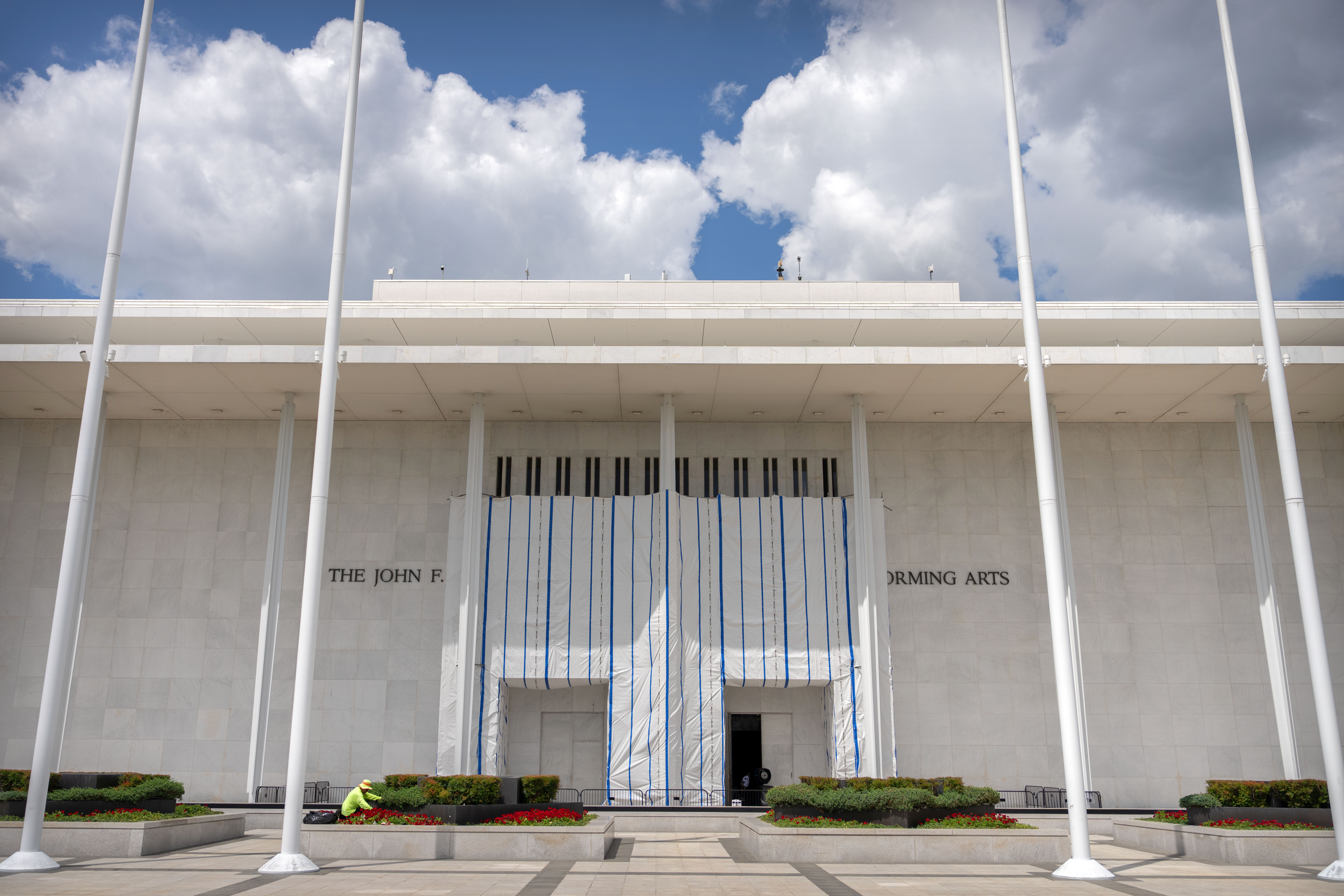
    Cooper ruled in May that letters affixed to the building spelling out Trump’s name were added illegally and he ordered their removal, a decision that the administration failed to persuade courts to overturn. Since then, a tarp has covered the area where the letters were once installed, frustrating those who sought to remove the president’s name from the building.

    Kennedy Center makes no commitment to removing tarp

    In the latest filing, the Kennedy Center made no commitment to remove the tarp, saying the covering was in place to facilitate the removal of Trump’s name and is part of a broader system needed for “water testing and structural repairs to the roof overhang.”

    More broadly, Beatty’s lawyers, Norm Eisen and Nathaniel Zelinsky, questioned the integrity of the board’s vote this month, echoing concerns Cooper raised when he called a March vote to shutter the building “ill-informed and seemingly preordained.”

    Heading into the August meeting, the Kennedy Center’s management said it would provide the board with three options, including a complete closure or a partial closure that would allow “some continued public access and limited programming in spaces unaffected” by the work. A third option would “consider a highly limited series of phased closures to address only the Center’s most serious infrastructure needs while scheduling and maintaining a full slate of programming.”

    In Tuesday’s filing, the Kennedy Center said a Delta Consulting Group analyst concluded that a partial closure that would play out over four years “would increase the length and cost of construction and lead to substantial safety concerns.”

    The analyst “recommended that the Board proceed with a full closure for two years, which would minimize total cost, minimize the amount of time that programming would be subject to disruptions from construction, and best preserve the Center’s reputation as world-class performing-arts venue,” the Kennedy Center said.

    Eisen and Zelinsky, however, noted that materials were provided to the board just two days before the meeting. They said some documents appeared to have been created before Cooper’s May ruling and referred to the Kennedy Center’s closure that was initially set to take effect on July 6.

    The August vote to close the Kennedy Center, Beatty’s lawyers argued, “exhibits the same flaws as the first vote.”