Category: Politics

  • Why Democrats’ priorities shifted from abortion to affordability in Bucks County’s key midterm races

    Why Democrats’ priorities shifted from abortion to affordability in Bucks County’s key midterm races

    In what might have been unheard of just two years ago, the Democrat in Bucks County’s key congressional race does not mention abortion or reproductive rights by name on his campaign website.

    Instead, Bob Harvie, the county commissioner challenging U.S. Rep. Brian Fitzpatrick (R., Bucks) in the crucial 1st Congressional District race, largely highlights affordability issues, like tax cuts for the middle class and raising the minimum wage, on his list of 12 priorities.

    It’s not that Harvie is suddenly against abortion — he has been vocal about his support for reproductive rights — but it exemplifies a broader shift in how Democrats are fine-tuning their message for must-win races in the county this fall.

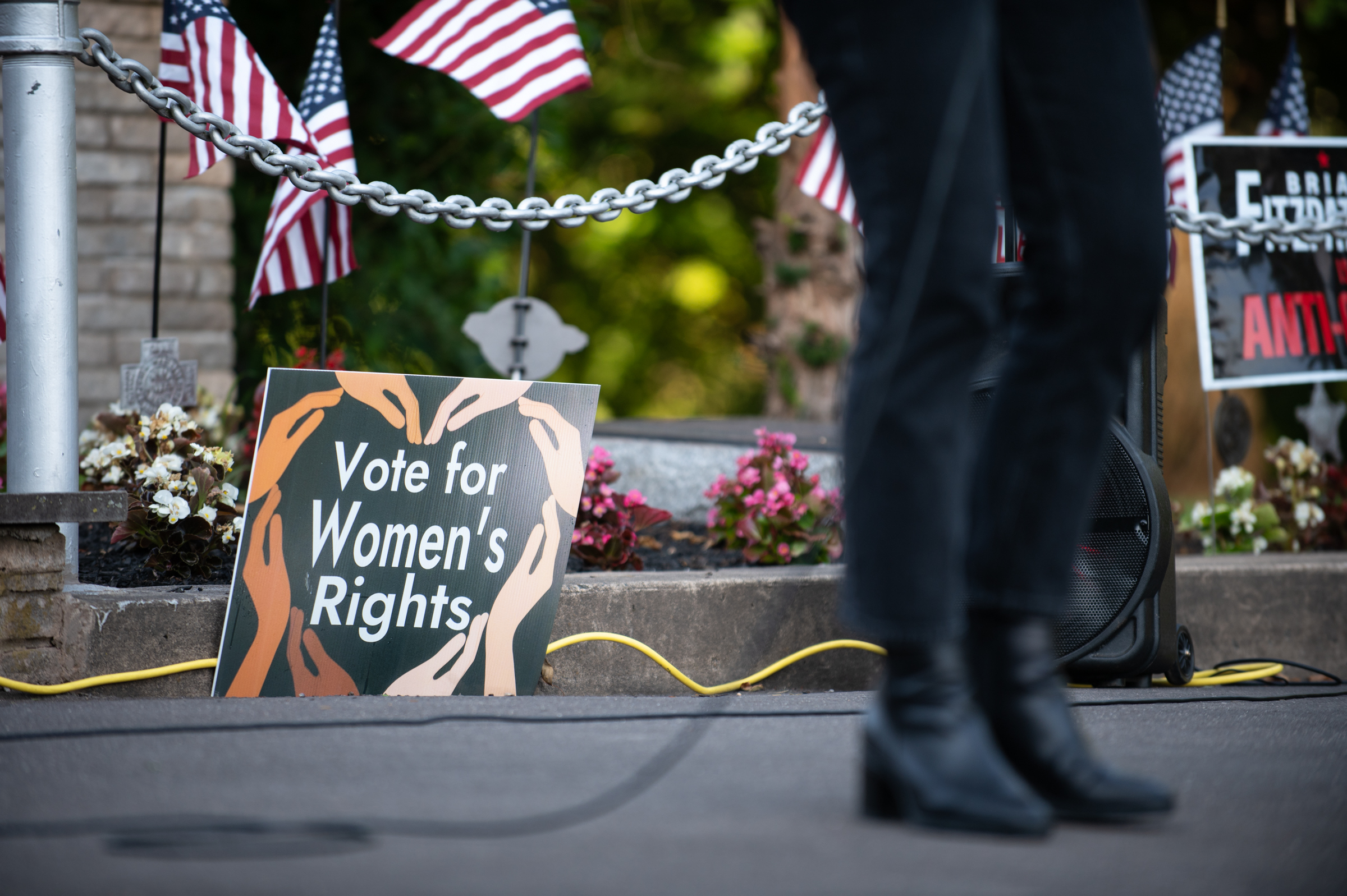
    Once a top-line issue for Democratic candidates in Bucks — one of the swingiest counties in Pennsylvania — discussion of abortion and reproductive rights has faded into the background in local political campaigns in favor of issues related to the economy and the cost of living.

    “People [are] feeling that right now they’re living in an America that’s not fair for them,” Harvie said.

    The issue has also been so far been absent from Fitzpatrick’s campaign and his website. The Republican currently holds a moderate view on abortion, though he has previously voted for restrictions.

    For Harvie, discussions surrounding access to affordable healthcare — which is his No. 1 listed campaign priority — includes abortion. All of these issues reflect a broader struggle, he argued.

    “They’re losing their rights, they’re losing their power over their own futures, they’re losing the American dream, all of that is combined,” Harvie said.

    It’s a noticeable shift from Fitzpatrick’s last challenger Ashley Ehasz’s strategy in 2022 and 2024 when abortion and reproductive rights served as the focal point in both of her campaigns, which followed the backlash to the U.S. Supreme Court’s decision to strike down Roe v. Wade in 2022.

    She lost to Fitzpatrick in both elections, the second time by a wider margin than the first.

    “Folks are pretty pragmatic when it comes to the politics here, and if something isn’t working, we’re not going to just keep doing it over and over again,” said Kierstyn Zolfo, co-leader of the progressive group Indivisible Bucks County, which supported Ehasz and is now backing Harvie.

    Pennsylvania voters’ overwhelming disapproval of President Donald Trump and his handling of economic-related issues, as highlighted in a recent Inquirer/New York Times/Siena University poll, offers Democrats an opportunity as they target key state Senate seats in addition to the congressional contest.

    “The point is to move the needle with the voters,” Zolfo said.
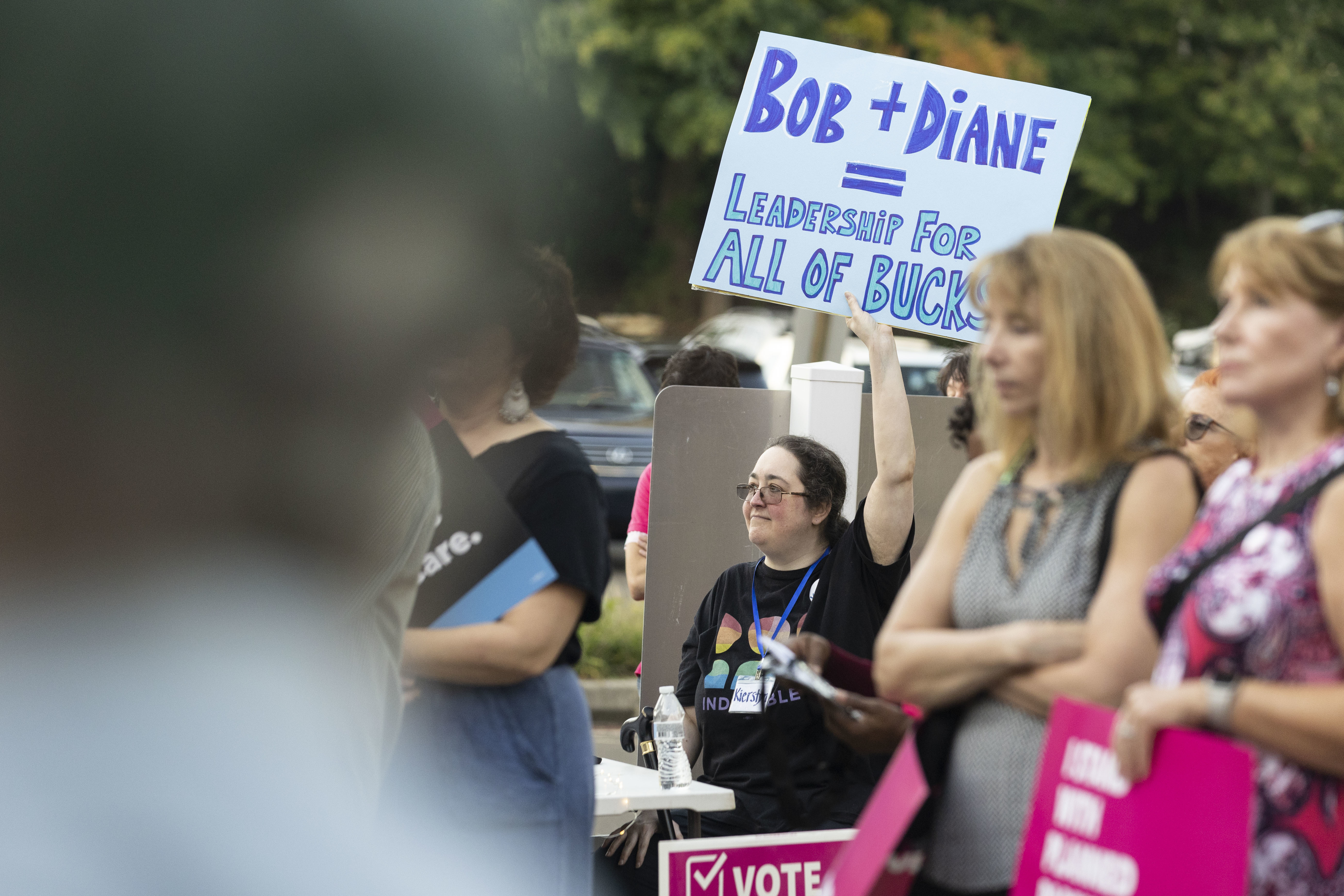
    Kierstyn Zolfo, from Indivisible Bucks County, holds a sign that reads “Bob + Diane = Leadership for All of Bucks,” during a rally outside of the Middletown Township Police Department and Administrative Offices in Langhorne on Oct. 5, 2023. Harvie was running for county commissioner.Monica Herndon / Staff Photographer

    How abortion became a ‘dormant’ issue in the midterms

    The League of Women Voters of Pennsylvania has thousands of volunteers and members talking to voters across the state ahead of the midterm elections.

    And leaders of the nonpartisan organization are hearing very little about reproductive rights. Instead, they’re getting feedback on crucial cost-of-living issues and concerns about democracy.

    Abortion has become a “dormant” issue, said Amy Widestrom, executive director of the League of Women Voters of Pennsylvania.

    “Nobody’s coming to us saying I need talking points on reproductive health in Pennsylvania,” Widestrom said.

    The shift reflects a national trend, with ads related to abortion drastically receding amid Democrats’ focus on bread-and-butter issues, NOTUS reported.

    The midterms are mainly about serving as a “referendum” on Trump’s economic agenda and foreign policy, said State Sen. Steve Santarsiero, chair of the Bucks County Democrats, though reproductive rights “must always be a central plank” of the party and its candidates, noting that majority of the country support a woman’s right to choose.

    “Affordability is really the key issue, so you would expect candidates to talk about that, and then you know they’re obviously going to talk about other issues as well, and abortion rights would be one of those,” said Santarsiero, who is also up for reelection this year.

    In The Inquirer/New York Times/Siena poll, Pennsylvania’s likely voters in November’s gubernatorial election between Shapiro and Republican challenger Stacy Garrity indicated that the economy and the cost of living were the two most important issues.

    Abortion was ranked fourth.

    Democrat Eileen Hartnett Albillar, a social worker and the county’s clerk of courts who is running to unseat state Sen. Frank Farry in the 6th state Senate district, said she doesn’t see abortion and the economy as “competing issues,” though conversations with voters have primarily focused on making ends meet. People, she said, will engage in discussion over protecting abortion rights and related topics if she raises the issue.

    “They want to protect reproductive freedom,” Hartnett Albillar said. “But you know, the cost of living is just so incredibly crushing for so many people. Just because they’re quiet about it, doesn’t mean it’s not important.”

    Reproductive rights took center stage in the 2022 election after several GOP-led states enacted restrictions on abortion following the Supreme Court’s decision to overturn Roe v. Wade.

    In Pennsylvania, the issue helped motivate voters to turn out for Democrats Josh Shapiro and John Fetterman in the contests for governor and Senate. But as the procedure remains protected in the state under Shapiro, the topic has faded from focus.

    Lehigh County Controller Mark Pinsley, a Democrat who is challenging GOP State Sen. Jarrett Coleman in the 16th district straddling Bucks and Lehigh Counties, still believes reproductive rights can motivate voters. But while he thinks his party doesn’t talk about abortion enough, he acknowledged the dynamic is different now than it was then.

    “I think you could win on that issue by itself,” Pinsley said. “I don’t think that’s true in the moment.”

    Brianna Twofoot, vice president of organizing, elections and campaigns at Planned Parenthood Votes, said abortion and reproductive rights still matter to voters even if it’s not taking center stage this year.

    “We’re not asking for anyone to make abortion or reproductive healthcare the number one issue, but we do think that voters want to hear about it,” Twofoot said. “And we do think that elected officials should be standing publicly on the issue.”

    But any discussion of abortion will come amid what’s shaping up to be an apparent rebrand of the topic, folded into conversations about access to basic needs.

    Signe Espinoza, executive director at Planned Parenthood Pennsylvania Advocates, said it’s key to look at reproductive rights through the lens of affordability, especially if health centers are defunded or closed.

    “If Planned Parenthood doors close, where are you going to get your healthcare?” said Espinoza, whose organization is planning some days-of-action in Bucks. “It’s going to become more expensive. Everything’s going up.”
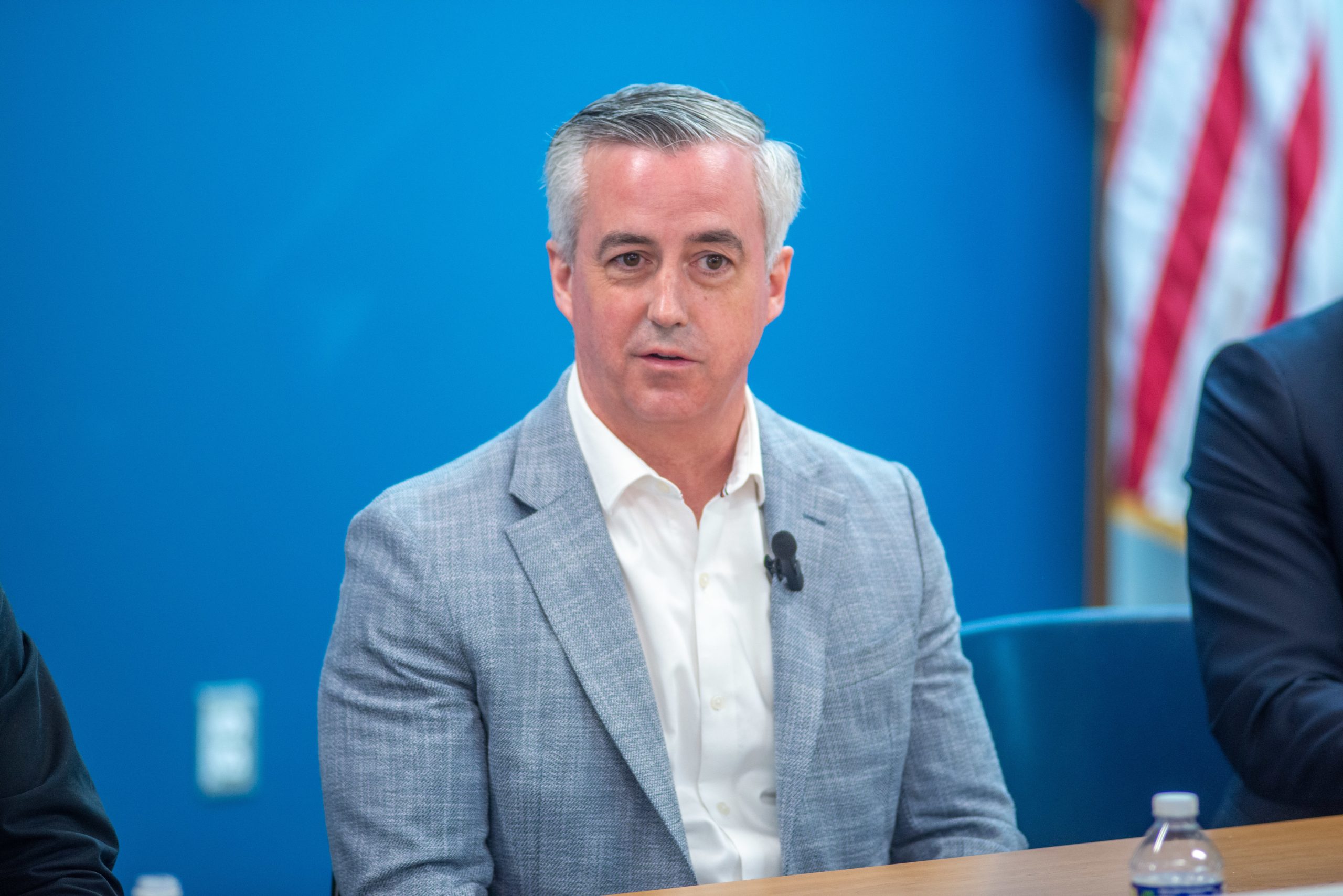
    Bucks County Commissioner Bob Harvie hosts a veterans roundtable in May at Middletown Township Building in Langhorne.William Thomas Cain / For The Inquirer

    How is the issue playing out in Harvie vs. Fitzpatrick?

    Past elections in the Bucks County swing district have shown the abortion argument does not work against Fitzpatrick, who has been known to survive blue wave after blue wave.

    Harvie, a twice-elected county commissioner backed by groups like Reproductive Freedom For All and Planned Parenthood Action Fund, said voters in the district already know where he and Fitzpatrick stand on abortion. The Democrat criticized Fitzpatrick and the Republican Party for supporting “pretty extreme restrictions on abortion.”

    “I think that’s the reason why you’re not hearing it very much because everybody knows the positions and knows who’s on what side,” Harvie said.

    Heather Roberts, a spokesperson for Fitzpatrick, said the Bucks County Republican has long supported “full reproductive freedom” for the first five to six months of pregnancy, as is outlined by Pennsylvania law.

    “We also note that the Congressman’s position is the position held by the overwhelming majority of PA-1 residents,” Roberts said.

    His campaign also noted Fitzpatrick’s backing of legislation in recent years that aimed to protect the right to cross state lines for an abortion as well as bills that protect access to contraception and in vitro fertilization and support of pregnant workers and women’s rights.
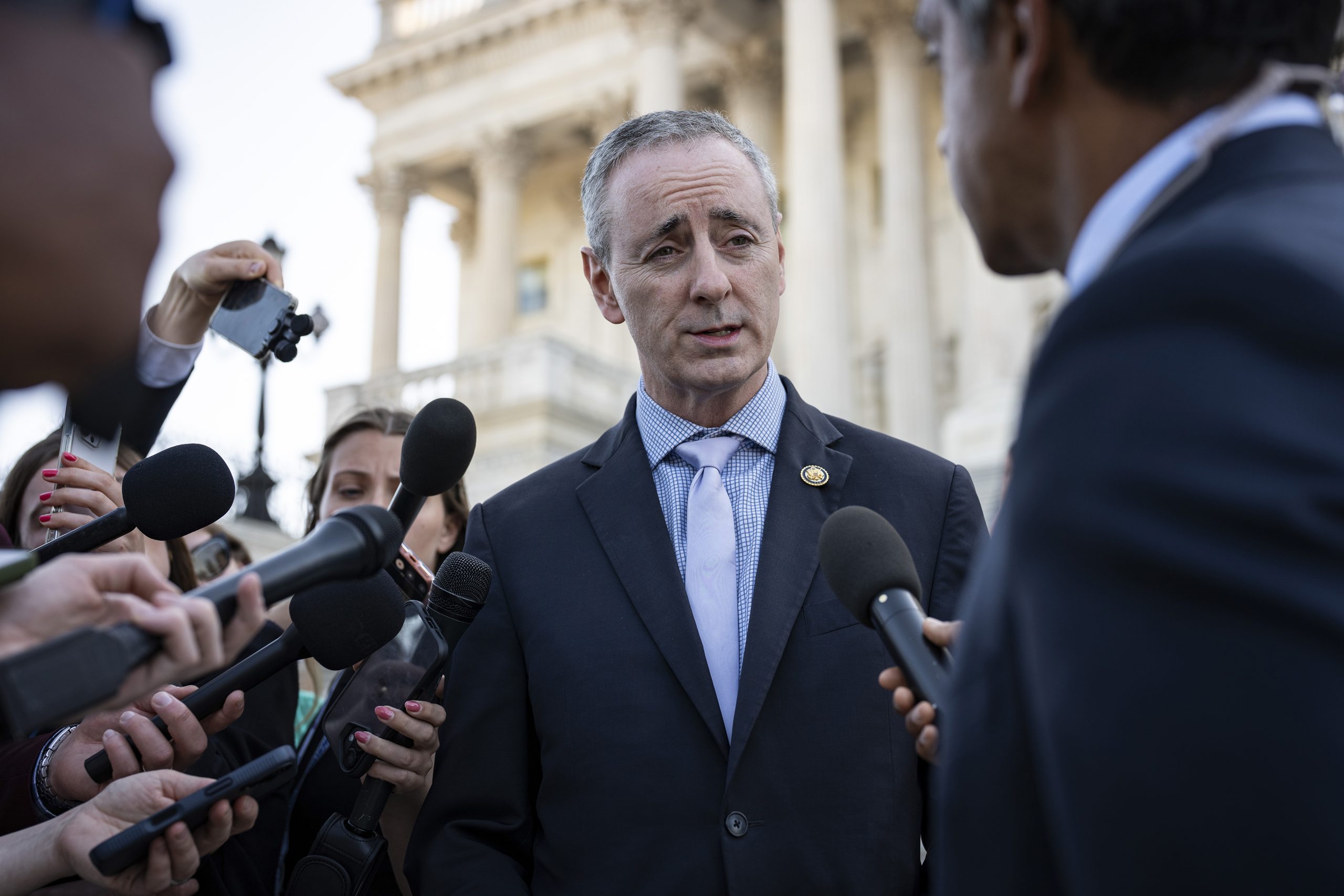
    Rep. Brian Fitzpatrick (R., Pa.) speaks to reporters on June 3 on Capitol Hill after the House passed an Iran war powers resolution.Haiyun Jiang

    But he has also voted for abortion restrictions, including a 20-week abortion ban in 2017 and twice against the Women’s Health Protection Act, which would have codified protections to access abortion into law.

    The issue is absent from Fitzpatrick’s campaign website, which does not reference abortion in sections about healthcare or empowering women.

    Widestrom, the executive director of Pennsylvania’s League of Women Voters, said Fitzpatrick has found a way to “neutralize” issues related to his position on abortion by continuing to win races where his opponents wage such arguments and refraining from touting a “hardcore pro-life” agenda.

    “By not staking a claim, by not talking about it, it loses saliency in voters’ minds,” Widestrom said.

  • Why Amy Klobuchar wants to run a state beleaguered by Trump

    Why Amy Klobuchar wants to run a state beleaguered by Trump

    ST. PAUL, Minn. — On a sweltering summer morning, Sen. Amy Klobuchar (D.,Minn.) was making small talk with merchants at the St. Paul farmers market when a cheesemaker expressed a sentiment that has kept coming up as Klobuchar campaigns for Minnesota governor.

    “We’re going to miss you in Washington,” the cheesemaker, Brenda Carlson, told Klobuchar while bagging a piece of Tilsit.

    Klobuchar acknowledged having mixed feelings about leaving her seat as the chamber’s third highest-ranking Democrat. “But we need to get this sorted out,” she said, frowning slightly.

    By “this,” Klobuchar meant the current condition of Minnesota, which has become a punching bag in the Trump administration’s quest to portray Democratic-run states and cities as hopelessly dysfunctional.

    As she gears up for what could be the capstone of a decades-long political career, Klobuchar is pitching herself as uniquely qualified to clean up the messes at home and reset the state’s poisonous relationship with the White House.

    Her reputation makes the case, supporters say: She is known as both a hard-charging workaholic who scrutinizes program details to a fault and a centrist with allies on both sides of the aisle in Washington, including in President Donald Trump’s administration.

    But both qualities could also cause friction. Minnesota agencies are bracing for turbulence as Klobuchar vows to audit every state program. And many residents remain shell shocked from the Trump administration’s immigration crackdown early this year, which paralyzed the Twin Cities for weeks and left two U.S. citizens dead.

    When it comes to relations with the president, some residents say they want a fighter in the governor’s office, not a conciliator.

    Nekima Levy Armstrong, a civil rights lawyer who is facing trial over her role organizing a protest against Immigration and Customs Enforcement at a church, said Klobuchar did not speak out stridently enough about the wintertime deportation campaign.

    “Many of us felt abandoned by our elected officials during Operation Metro Surge,” Levy Armstrong said. “We felt abandoned by Amy Klobuchar in particular.”

    In an interview, Klobuchar said she was “as angry about some of the things Trump has done as anyone.”

    “But I have decided that I’m going to get us to a higher place and not act like him,” she said. Her first goal, she added, “is to earn back the trust of the people of Minnesota in state government.”

    For now, Minnesota Democrats have expressed almost uniform relief that Klobuchar is their nominee rather than current Gov. Tim Walz.

    They began 2026 in panic mode as a scandal over widespread fraud in state-run safety net programs dogged Walz’s bid for a third term. State lawmakers openly fretted that his name at the top of the ballot in this year’s midterm elections would give Republicans a strong shot at winning the governor’s mansion for the first time in two decades and controlling the tightly divided Legislature.

    “I would definitely be lying if I said that the worry meter wasn’t ticking up, up, up by the week,” said state Rep. Mike Howard, a Democrat from the Twin Cities.

    They exhaled when Walz dropped his reelection bid in early January, as the Trump administration was sending thousands of immigration agents to the state in what the president called a campaign of “RECKONING & RETRIBUTION.”

    Klobuchar announced her run for governor later that month as Minnesotans were reeling from the killings of Renee Good and Alex Pretti, two American citizens shot by immigration agents in Minneapolis. “These times call for grit and resilience,” Klobuchar proclaimed.

    The announcement amounted to a reversal of fortunes for Democrats, making Klobuchar the clear favorite in the general election race against Lisa Demuth, the Republican speaker of the Minnesota House. Even far-left lawmakers in the state Capitol — where the party has a one-seat majority in the Senate and is tied in the House — have emerged as enthusiastic surrogates for Klobuchar.

    “People in the Democratic Party here in Minnesota understand she’s our best path to winning a majority and defending ourselves from Donald Trump,” said state Sen. Zaynab Mohamed, a member of the democratic socialist wing of the party.

    Klobuchar kicked off her run by calling all 101 Democrats in the Legislature, keeping several on the phone for more than an hour. There was talk of campaign strategy, lawmakers said, but Klobuchar was most interested in their policy goals.

    When she ran for president in 2020, Klobuchar was the subject of several critical articles depicting her as a perfectionist and difficult boss whose office had among the highest turnover in the Senate.

    Klobuchar has a tendency to personally tackle tasks most elected officials delegate and to fire off all-caps emails to aides, which often land in inboxes between midnight and dawn.

    Some supporters now call that feverish approach an asset.

    State Rep. Zack Stephenson, the Democratic leader in the Minnesota House, recalled being startled by a 3 a.m. email from Klobuchar in 2006 when he served as a lowly aide in her first Senate campaign.

    “The lesson I took away from that race is that to be successful in politics, the secret is to work really hard,” he said.

    The sense of relief extends to Democratic voters like Carlson, the cheesemaker, who says she has soured on Walz, a former schoolteacher and coach who oversaw the adoption of a raft of progressive policies and made a splash on the national stage by running for vice president in 2024.

    In recent years, Carlson said, small-business owners like herself have grown frustrated by tax increases and red tape that seem to grow each year. Then came revelations about rampant fraud in state programs meant to feed low-income children, treat minors with autism, and help people at risk of homelessness.

    “I just think things got away from him when he did the whole run,” said Carlson, 54, who lives in Center City, a conservative town 40 miles north of the Twin Cities. “He couldn’t keep a watchful eye, and whoever was wasn’t doing their job.”

    She said she hoped Klobuchar would be different.

    That is the senator’s pitch.

    Having enthusiastically backed Walz’s vice-presidential bid two years ago, Klobuchar has now distanced herself from him.

    She kicked off her campaign in May by announcing a detailed plan to combat fraud. Evoking the years she served as the elected county prosecutor in Minneapolis, she stood alongside the former U.S. attorney in Minnesota against a backdrop of law books.

    “You are right to be angry about the fraud,” Klobuchar said at the time.

    Klobuchar has also questioned how Walz and allied lawmakers spent a $17 billion surplus in 2023. After Walz granted a pardon in June to a man convicted of child sexual abuse who was facing deportation to Laos, Klobuchar said she would have let the conviction stand.

    A spokesperson for Walz did not respond to a request for comment.

    Demuth, the Republican candidate for governor, has sought to portray Klobuchar’s bid as a de facto third term for Walz, questioning why she wasn’t outspoken about the fraud problem before jumping into the race.

    “She will not be able to enact the changes that are desperately needed,” Demuth said in an interview.

    Klobuchar has called Demuth a “rubber stamp for Donald Trump.”

    But how Klobuchar will approach the Trump administration — and whether that will satisfy Democrats in a state with a strong leftist streak — remains unclear.

    Activists have pressed her to adopt a statewide sanctuary policy for immigrants without legal status, which would ban local jurisdictions from signing cooperation agreements with ICE. One activist recently confronted Klobuchar about the issue as she marched in a small town parade.

    So far she has refused. In the interview, Klobuchar, who has long championed a broad overhaul of the immigration system, said she intended to make a case that immigrants are vital to Minnesota’s economic growth.

    “I cannot tell you the number of small businesses that we have run by immigrants in our state,” she said.

    Klobuchar trounced a handful of little-known candidates in the Aug. 11 primary, winning nearly 90% of the vote. That dominance meant she avoided being meaningfully drawn into fraught policy debates playing out in other national races, said Kobey Layne, 26, a democratic socialist who placed a distant second.

    Layne said she worried that as governor, Klobuchar would prioritize bipartisan cooperation and incremental change over bold overhauls, such as the creation of a state-run, single-payer healthcare system.

    Asked about the growing clout of democratic socialists, Klobuchar said she welcomed intraparty policy debates and expected pushback from all sides if elected. She also acknowledged rumors that she was considering appointing Republicans to her cabinet.

    “Spoiler alert,” she said. “You’re not going to like everything I do.”

    This article originally appeared in the New York Times.

  • Armed man charged toward Democratic candidate for Ohio governor at fair, law enforcement says

    Armed man charged toward Democratic candidate for Ohio governor at fair, law enforcement says

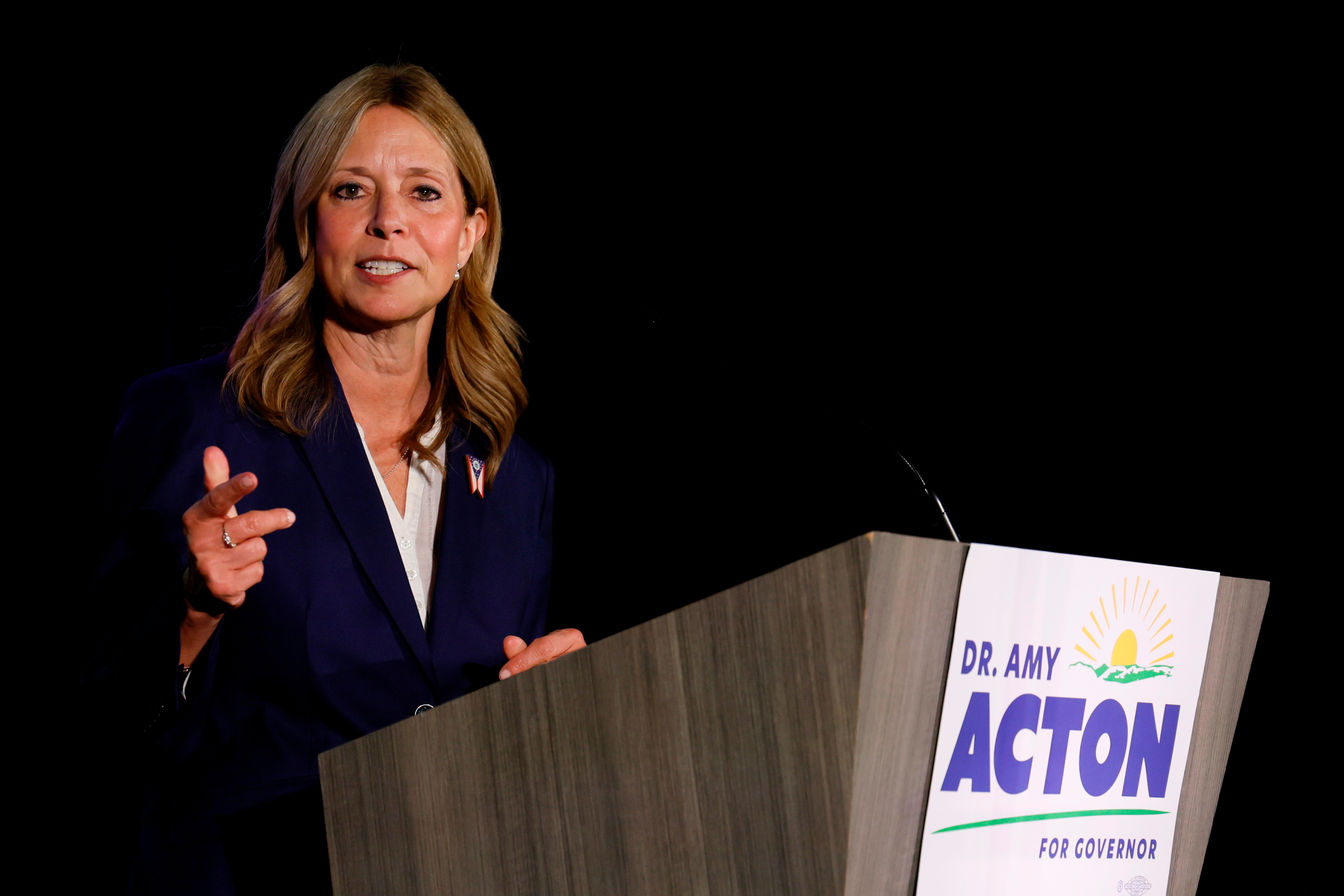
    WASHINGTON — An armed assailant charged toward the Democratic candidate for Ohio governor, Amy Acton, on Sunday during a campaign stop at the Canfield Fair, injuring several people before he was stopped by troopers, the Ohio State Highway Patrol said.

    The Ohio State Highway Patrol said in a statement that a man it identified as Patrick Havas, 38, forced his way through a crowd, knocking over multiple members of the audience as he moved toward Acton, the state’s former public health director. He had a taser and two pistols, the statement said.

    The Mahoning County Sheriff’s Office said two handguns and a set of brass knuckles were recovered after his arrest, and “no weapons were ever brandished or even removed from their holsters.”

    Havas was taken to the county jail and booked on charges of disorderly conduct and two counts of assault, the highway patrol statement said, adding that no other details were available pending an investigation. Online court records didn’t yet list the case, and it wasn’t clear as of Sunday night whether Havas has an attorney.

    Republican Gov. Mike DeWine said in a statement.that the man “tried to forcefully push himself” toward Acton as she was speaking at the fair in Canfield, in northeastern Ohio. “Violence or the threat of violence at political or public events is always unacceptable,” he added.

    The attempted attack is the latest political violence to roil the United States. And the Ohio gubernatorial race is one of the most high-profile races this year as the campaigns enter the final six weeks of campaigning before the election in November.

    Acton is facing Republican Vivek Ramaswamy, who has parlayed his national name recognition, tech industry connections, and alliance with President Donald Trump into a record fundraising haul that he is tapping for advertising spots aimed at the November election. He is using campaign rallies and advertising to criticize Acton.

    Ramaswamy’s campaign called the incident Sunday unacceptable.

    “Candidates should be able to meet with voters without having to worry about threats or violence. What happened today is completely unacceptable and has no place in politics, and we hope that no one was hurt,” Ramaswamy’s communications director, Connie Luck, said in a statement.

    Addie Bullock, communications director for Acton’s campaign, said in a statement that the suspect “lunged” at Acton. She said the Democratic candidate “will always stand up to the chaos, hate, and vitriol that pits us against one another.”

    The incident brought condemnation from Ohio Republican Sen. Jon Husted, who said on X that he and his wife were “disturbed by the attempted attack on Amy Acton today at the Canfield Fair. We are grateful for law enforcement’s quick response. There is no place for this kind of behavior, and it must never be tolerated.”

    The country has seen a rise in political violence over the past decade. That includes the 2017 shooting at a Republican congressional baseball team practice in Alexandria, Va.; the 2022 hammer assault on the husband of Democratic then-House Speaker Nancy Pelosi in California; the 2024 assassination attempt on Donald Trump at a Pennsylvania rally during his presidential campaign as well as another on the president at this year’s White House Correspondents’ Association Dinner in April; and the assassinations last year of a Democratic Minnesota state lawmaker and her husband and of conservative commentator Charlie Kirk in Utah.

    Federal political committees spent more than $40 million on expenses labeled as security during the 2023-24 campaign cycle, the most recent one for which data is publicly available, according a report released in April from the Public Service Alliance, a nonpartisan group that focuses on security for public officials.

    Before running for governor, Acton was recruited by DeWine in 2019 to lead the Ohio Department of Health while serving as an associate professor of public health at Ohio State University. As the COVID-19 pandemic ramped up in early 2020, she was thrown into the state and national spotlight — becoming a source of comfort to many viewers of the governor’s daily news conferences.

    For her service as health director, Acton earned the John F. Kennedy Library Foundation’s Profile in COVID Courage Award, the Columbus Foundation’s Spirit of Columbus Award, and Ohio State’s highest alumni honor, the Alumni Medalist Award.

    Her position as the face of the DeWine administration’s aggressive stance against the virus also earned Acton many enemies, among them statehouse Republicans and average Ohioans who opposed pandemic restrictions.

  • Here’s how Pa. and the Secret Service are fighting EBT skimming

    Here’s how Pa. and the Secret Service are fighting EBT skimming

    By the time state and local law enforcement in Northumberland County, Pa., connected a device stealing people’s food assistance benefits from a 7-Eleven to Patricia Bogdan and George Lazar, the pair had already fled to New Jersey.

    Authorities allege Bogdan and Lazar placed the contraption on a point-of-sale terminal in February, which went undiscovered for days. Bogdan and Lazar then allegedly retrieved the stolen electronic benefit transfer card data in a process known as skimming and spent people’s benefits at BJ’s and Sam’s Club locations in Pennsylvania and New Jersey.

    Authorities would later learn Bogdan had multiple aliases and fake passports, while Lazar had a warrant out for an attempted murder charge in Belgium.

    “It illustrates how quickly they’re moving, the type of individuals that are involved in this, and just their ability to get in and out, that makes these really complex cases,” said State Inspector General Michelle Henry, whose office investigates EBT thefts in Pennsylvania.

    With the help of authorities in New Jersey and North Carolina, Henry’s office was able to find Bogdan and Lazar in March and later bring them back to Pennsylvania, where the cases are ongoing. A small win in what victim advocates argue has risen to a nationwide crisis because the federal government has failed to invest in more secure card technology. The magnetic strips on the cards are too easy to exploit.

    Still, a seismic disruption to these scam operations is slated to come to Pennsylvania before Jan. 1, 2028.

    The latest state budget appropriated $7 million in funds that would pay for chip-enabled EBT cards, giving the outdated magnetic stripe technology, which the federal government required states to use until 2024, a sorely needed upgrade.

    The chip cards are not invulnerable to scammers but exploiting them requires more sophisticated technology, according to the Secret Service. Early adopters of the chip technology, such as California and Alabama, have reported significant drops in thefts already.

    To the victims of this sort of fraud, scarred by the memories of an unexpected zero balance while trying to pay for groceries, the change is long overdue. There are countless stories of families learning about how the scam works and having to scrape meals together with the aid of food pantries. Benefits were reimbursed between October 2022 and December 2024, but that ended when Congress did not extend funding.

    For now, law enforcement in Pennsylvania continues to confiscate skimming devices and prosecute perpetrators, even when it can feel like a high-stakes game of whack-a-mole, while preparing for the next iteration of scammers.

    An ever-evolving scheme that knows no borders

    Much of the skimming scam — from recruiting to reselling the goods purchased with EBT data— happens online through the dark web and social media platforms such as Facebook and Instagram.

    Transnational criminals, more recently from Eastern European countries, will send already assembled skimmers to partners stateside or provide instructions on how they can piece together the devices themselves. The local partners stick the contraptions onto a point-of-sale machine, steal data, and use the stolen benefits to purchase high-ticket items such as baby formula, which is then offloaded by word of mouth or on social media networks like Facebook and Instagram.

    Michael Ross, special agent in charge of the Philadelphia field office for the United States Secret Service, said the advent of Bluetooth technology has made it much harder to catch people in the act since they can digitally collect the stolen data, instead of taking back the physical machine where police might be waiting for them.

    Combating these crimes requires a multipronged approach, from the use of digital forensics to old-school public awareness efforts.

    “We will send out a small group, not necessarily a formal task force, with state and local law enforcement representatives, and we will go to businesses,” Ross said. “We will go in, we’ll educate, we’ll show what some of these devices look like, things that can be done to make sure that the EBT fraud is mitigated.”

    Various states have responded in a similar fashion, educating businesses and placing the onus of protecting food assistance benefits on recipients, who are encouraged to download apps on their phones that allow them to lock their cards until they’re ready to pay for groceries.

    Still, Pennsylvania has aimed to be more aggressive in its fight against skimming.

    The Office of State Inspector General piloted “Skimmer Response Teams” last year. Since its inception, the six- to eight-person group that works with the broader office on cases, seized more than 55 of these devices before scammers could come back and drain more than $20.5 million in benefits from more than 40,000 accounts.

    Despite these strides in prevention, the state reported more than 5,100 skimming incidents that accounted for more than $2.5 million in stolen food assistance benefits in the first five months of the year.

    It’s one of the reasons the task force pilot is now permanent and is expected to stay even as the EBT cards switch to chips.

    “In my experience as a longtime prosecutor, anything that makes it more difficult to complete the crime is a deterrent,” said Henry. “If it’s super easy, you’re going to have more of it.”

    And Pennsylvania wants to make stealing people’s food assistance benefits as difficult as possible.

  • Assailant lunged at Democratic candidate for Ohio governor at fair, campaign says

    Assailant lunged at Democratic candidate for Ohio governor at fair, campaign says

    WASHINGTON — An armed assailant lunged at the Democratic candidate for Ohio governor, Amy Acton, on Sunday during a campaign stop at the Canfield Fair, injuring several people, campaign officials said.

    The suspect knocked volunteers to the ground and was arrested with “multiple weapons,” Mahoning County Democratic Party chairperson Chris Anderson said in a statement.

    Acton, the state’s former public health director, was not injured, but her campaign said multiple people were hurt.

    “Dr. Acton will always stand up to the chaos, hate, and vitriol that pits us against one another,” said Addie Bullock, communications director for the campaign.

    Ohio State Highway Patrol and other authorities at the fair quickly responded “when a man tried to forcefully push himself toward Dr. Acton as she was speaking and injured other attendees at the Mahoning County Democrat booth,” Republican Gov. Mike DeWine said in a statement.

    “Violence or the threat of violence at political or public events is always unacceptable,” he added.

    The attempted attack is the latest political violence to roil the United States. And the Ohio gubernatorial race is one of the most high-profile races this year as the campaigns enter the final six weeks of campaigning before the election in November.

    Acton is facing Republican Vivek Ramaswamy, who has parlayed his national name recognition, tech industry connections, and alliance with President Donald Trump into a record fundraising haul that he is tapping for advertising spots aimed at the November election. He is using campaign rallies and advertising to criticize Acton.

    Ramaswamy’s campaign called the incident Sunday unacceptable.

    “Candidates should be able to meet with voters without having to worry about threats or violence. What happened today is completely unacceptable and has no place in politics, and we hope that no one was hurt,” Ramaswamy’s communications director, Connie Luck, said in a statement.

    The fairground’s police department referred inquiries to the Mahoning County Sheriff’s Department, which didn’t immediately return a message seeking comment. The Ohio State Highway Patrol didn’t immediately respond to a request for information.

    The incident brought condemnation from Ohio Republican Sen. John Husted, who said on X that he and his wife were “disturbed by the attempted attack on Amy Acton today at the Canfield Fair. We are grateful for law enforcement’s quick response. There is no place for this kind of behavior, and it must never be tolerated.”

    The country has seen a rise in political violence over the past decade. That includes the 2017 shooting at a Republican congressional baseball team practice in Alexandria, Va.; the 2022 hammer assault on the husband of Democratic then-House Speaker Nancy Pelosi in California; the 2024 assassination attempt on Donald Trump at a Pennsylvania rally during his presidential campaign as well as another on the president at this year’s White House Correspondents’ Association Dinner in April; and the assassinations last year of a Democratic Minnesota state lawmaker and her husband and of conservative commentator Charlie Kirk in Utah.

    Federal political committees spent more than $40 million on expenses labeled as security during the 2023-24 campaign cycle, the most recent one for which data is publicly available, according a report released in April from the Public Service Alliance, a nonpartisan group that focuses on security for public officials.

    Before running for governor, Acton had been recruited by DeWine in 2019 to lead the Ohio Department of Health while serving as an associate professor of public health at Ohio State University. As the COVID-19 pandemic ramped up in early 2020, she was thrown into the state and national spotlight — becoming a source of comfort to many viewers of the governor’s daily news conferences.

    For her service as health director, Acton earned the John F. Kennedy Library Foundation’s Profile in COVID Courage Award, the Columbus Foundation’s Spirit of Columbus Award and Ohio State’s highest alumni honor, the Alumni Medalist Award.

    Her position as the face of the DeWine administration’s aggressive stance against the virus also earned Acton many enemies, among them Statehouse Republicans and average Ohioans who opposed pandemic restrictions.

  • The ex-salesman bringing the far right to the cusp of power in Germany

    The ex-salesman bringing the far right to the cusp of power in Germany

    TANGERMÜNDE, Germany — During the coronavirus pandemic, a little-known German state lawmaker with an upbeat patter and a telegenic smile started railing on TikTok against pandemic regulations. Complaining about masks, vaccinations, and other government requirements that he deemed “crazy,” the lawmaker attracted millions of viewers with his videos by using an affable tone to deliver an antiestablishment message.

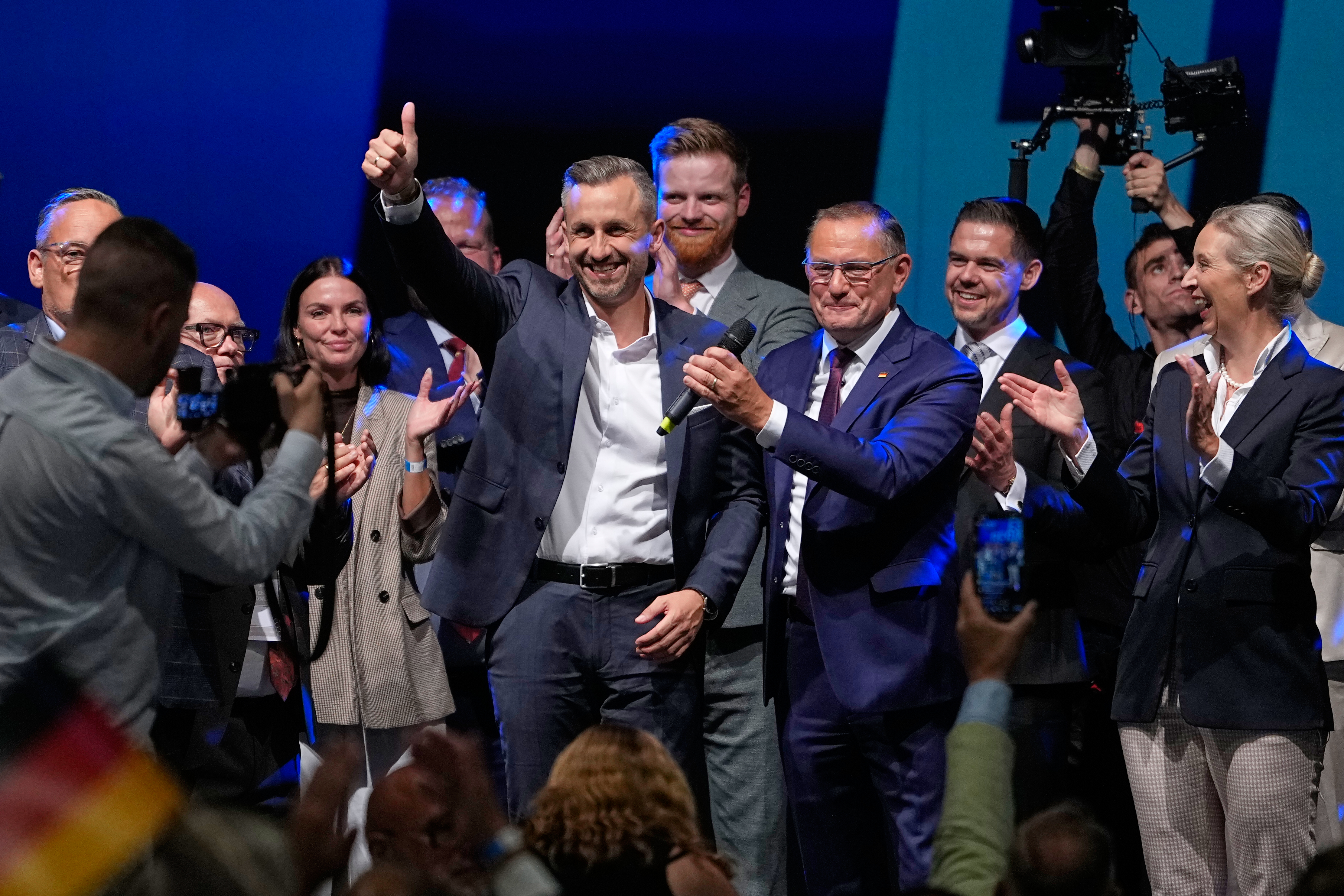
    Now, that lawmaker, Ulrich Siegmund, has harnessed his online popularity to come closer to power than any other far-right politician in Germany since the Nazi era ended in 1945.

    Siegmund, 35, a former air freshener salesperson, is the lead candidate for the Alternative for Germany party in Saxony-Anhalt, a state in eastern Germany where the party was projected to finish first in a statewide election on Sunday.

    If the party, known by its German initials, AfD, wins an outright majority, Siegmund will become the first far-right politician to govern a German state since the reestablishment of the country’s democracy nearly eight decades ago. That would be a convulsive moment for Germany’s postwar political system, which was designed in the aftermath of World War II to prevent politicians deemed extremist from ever taking office.

    To the political establishment in Berlin, Siegmund’s party is an outcast. The domestic intelligence agency has labeled it as “suspected extremist,” an accusation it rejects as politically motivated. The party has said that Islam is incompatible with the German Constitution and has vowed mass deportations of immigrants. Several of its leaders are close to Russia, and some have made dog whistle comments about the Nazi era, such as minimizing the Holocaust and repeating Nazi slogans.

    Siegmund himself has said, in a podcast interview with Politico, that he could not “presume to judge” if the Holocaust was humanity’s worst-ever crime, “because I can’t possibly come to terms with the entirety of human history.” He also declined to condemn supporters who chanted his surname, Siegmund, in the style of the Nazi salute, “Sieg Heil.”

    Still, Siegmund has won over voters in Saxony-Anhalt, experts say, through his ability to present the party’s hard-line policies in a more approachable and optimistic tone than many of his AfD colleagues, without distancing himself from extremists. In addition to deporting immigrants, the party has proposed cutting funding for public broadcasters, banning gay pride flags in schools, and teaching more Russian, as well as providing tax breaks for large families and free childcare.

    “I can provide motivation, create a sense of optimism, and get things moving forward again,” Siegmund said in an interview with the New York Times this year. (He declined more recent interview requests.)

    That affability has made him more acceptable to voters beyond his hard-right base, said Steffen Mau, a prominent sociologist at Humboldt University of Berlin.

    “He’s a canvas onto which people can project some kind of promise for the future,” Mau said.

    Many mainstream politicians, who have said Siegmund and the AfD are dangerous, also call his proposals unrealistic. “Whenever the topic turns to substance, when people actually ask how you intend to move our country forward economically, you’re nowhere to be found,” Sven Schulze, the incumbent governor of Saxony-Anhalt, said to Siegmund during a televised debate last month.

    An August cover story in Germany’s premier newsmagazine, Der Spiegel, called him “the most dangerous man in Germany,” partly because his sunny disposition makes his party’s hard-line goals more palatable to some voters. Siegmund’s followers took it as a badge of honor and, during campaign stops, asked him to sign copies of the edition.

    Siegmund is “so approachable and charming,” said Wolfram Adler, 67, a retired train driver who attended one of those rallies.

    From air fresheners to politics

    Born in 1990, weeks after the reunification of East and West Germany, Siegmund was raised in the picturesque medieval town of Tangermünde, in eastern Germany.

    Growing up in the east, he came of age amid increasing resentment about how reunification played out for his home region. The east’s economy, employment rates, and population ebbed after 1990, leading many East Germans to feel excluded in the new Germany. It was a sense of grievance on which the AfD would later capitalize, particularly in Saxony-Anhalt where the unemployment rate of roughly 8% is well above the national average.

    In his 20s, Siegmund worked as an account manager at a healthcare provider before starting his own business in Berlin selling room deodorizers.

    He joined the Christian Democratic Union, a mainstream conservative party that currently leads the national coalition government.

    But he soon grew tired of the party’s rigid leadership structures, he has said in past interviews with the news media, and joined the AfD in 2014. He was drawn to the AfD, he said, because the party stood against what he perceived as the high-handed policies of the national government in Berlin.

    The AfD was founded in opposition to Germany’s adoption of the euro. After it shifted to an anti-immigrant message, Siegmund ran on the party’s slate for the statehouse in 2016. He won a seat as the party netted 24% of the state vote, profiting from growing concerns about Germany’s decision to welcome roughly 1 million refugees during the European migrant crisis. He also served on his local council alongside his father and brother.

    He rose to national fame in 2021 with his personable videos about pandemic restrictions, helping to project both the party and himself as the voice of voters who felt disenfranchised by mainstream parties.

    Now, Siegmund has more than 850,000 followers on TikTok, an astronomical number for any German politician, giving him a platform that helped to amplify his stump speeches on the campaign trail this summer.

    When speaking to sizable crowds, he has often filmed the scene on his phone, turning the camera toward the crowds to show viewers how big they were.

    “When you see all of Siegmund’s campaign appearances, it becomes perfectly clear: They’re not primarily intended for the live audience, they’re primarily for the internet,” said Paula Diehl, a professor who studies populist leaders at Kiel University.

    His preppy shirts and his trademark tuft of graying hair have made him instantly recognizable in Tangermünde, his hometown of 10,000 residents. During the Times interview this year, passersby repeatedly greeted him, wished him luck or smiled.

    Throughout the conversation, he combined a measured, even tolerant tone with a hard-line, exclusionary message.

    He said that he did not blame immigrants for coming to Germany — before, seconds later, vowing to make their lives in his state “very uncomfortable.”

    Combining nostalgia with optimism

    The backgrounds of his campaign team also highlight his contradictions. The production company behind Siegmund’s genial campaign videos is led by a far-right activist with the Identitarians, a movement that German intelligence has accused of extremism. Siegmund’s spokesperson was once part of a banned extremist group inspired by the Hitler Youth.

    Siegmund did not reply to requests for comment about these links. In interviews with other outlets, he dismissed their relevance.

    Siegmund, said Diehl, “pretends to engage in an inclusive discourse and then immediately shatters it.”

    Part of his strategy has been to tap into nostalgia for East Germany among some residents, even though he was born after it collapsed. Though many remember Communism as a dictatorship, some recall it as a time of full employment and stability.

    One campaign event featured a comedian who sang the East German national anthem — an act so contentious, because it appeared to validate an authoritarian regime, that even some AfD politicians distanced themselves from it.

    At some events, Siegmund rode through the countryside on a Simson, an anemic two-stroke East German motorcycle that has long been associated with life during Communism. His machine was painted baby blue to match the AfD’s colors.

    At other times, he has sought to look forward instead of back. Tapping into widespread disenchantment with high unemployment and living costs, he has painted a picture of a better, if ill-defined, future under AfD leadership.

    “Things are going downhill everywhere, and that’s a bad and demotivating place to start,” he said in the Times interview. “I want things to start moving uphill,” he said.

    Critics say he is simply selling false hope, pointing to his past life as a salesperson.

    “I discovered my strength in sales early on,” Siegmund told a business magazine in 2014. “I love to sell.”

    This article originally appeared in the New York Times.

  • As midterms approach, Republicans find there is no escape from Trump

    As midterms approach, Republicans find there is no escape from Trump

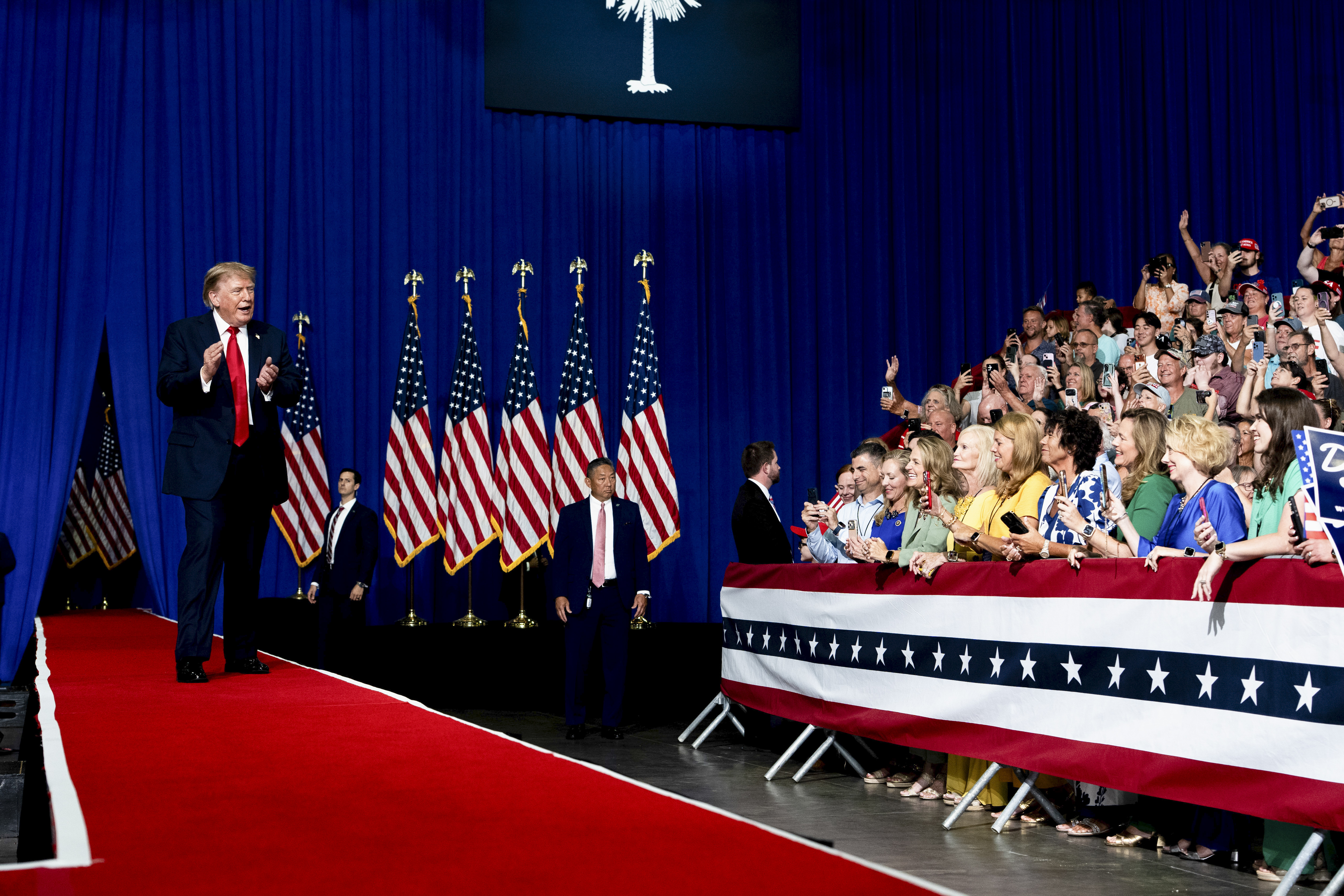
    WASHINGTON — In the White House Rose Garden, President Donald Trump recently gathered some of the most politically endangered House Republicans for a dinner where he promised to make himself the face of the party’s uphill battle to keep control of Congress.

    He was with them “100% — all the way until November,” Trump told the roughly two dozen lawmakers as they dined on prime aged beef burgers at tables adorned with bouquets of yellow roses. The president said he would travel to 35 key districts “to see if we can get everyone elected.”

    The scene encapsulated the box that GOP lawmakers have found themselves in as they stare down a bleak political environment.

    They cannot afford to snub Trump, needing help from his enormous financial reserves and strong turnout from his base to win their campaigns. But they also do not want the election to be a referendum on the president, whose popularity is at a record low. And so far, he has shown little appetite for focusing on anyone’s political needs besides his own.

    Two months before the midterm elections, Trump and the Republicans who have long tied their political fortunes to him appear to be at cross-purposes as the party struggles to keep the House and Senate in GOP hands.

    As Republicans work to distance themselves from the president’s unpopular decisions, Trump is headlining a splashy convention in Dallas this week and has said that voters should “pretend, please, that I’m on the ballot.” As the candidates work to show they are focused on the concerns of everyday Americans, the president is spending much of his time in Washington focused on the construction of a White House ballroom, a 250-foot arch, and a golf course on a public park alongside the Potomac River. And as they brace for the final costly weeks of their campaigns, he has yet to dole out hardly any of the nearly $1 billion he says his political action committee has raised.

    “This is my money that I control,” Trump said Friday, suggesting he would spend between $400 million and $500 million on “Republicans that I think are good.” His political operation reported Saturday that it had made its first expenditure, to defend a Senate seat in Texas. But beyond that, Republicans have received little information about when or where the money may come.

    For now, Trump appears to be focused primarily on promoting himself and boosting his popularity.

    The first 30-second television spot released by his political team, the launch of a post-Labor Day ad blitz, was a case in point. It touted the president as “the toughest, most resilient person” and made no mention of Democrats, the midterm elections, or any Republican candidates.

    And as Trump gathers Republicans in Dallas on Wednesday for the unprecedented two-day midterm party convention, the festivities will be as much about boosting his own approval ratings and public self-esteem as it is the candidates who are actually on the ballot, a person involved with the planning said.

    “The president called me two nights before Thanksgiving last fall, and he said, ‘Mike, we got to do a midterm convention,’” House Speaker Mike Johnson said. “And I said, ‘That’s not a thing.’ And he said, ‘Make it a thing.’ OK. So we’re going to do a midterm convention.”

    ‘A ball and chain’

    Many vulnerable Republicans are steering clear of this week’s convention, choosing instead to spend time campaigning in their states and districts. And while some see a benefit in the confab as a way to raise money for the party — tickets cost $25,000, including for lawmakers — they also worry that it will do exactly what candidates most want to avoid: turn the election into a national conversation about Trump.

    After 10 years of tying themselves to Trump, Republicans have little room to maneuver around him. Candidates up and down the ballot have embraced his lies about American elections, while few have publicly broken with him on signature issues such as spending cuts, tariffs, or the war with Iran.

    A White House spokesperson disputed that there was any fissure between the president and his party.

    “President Trump is the unequivocal leader of the Republican Party, who is committed to maintaining Republicans’ majority in Congress,” Olivia Wales, the spokesperson, said.

    But some Republicans fear the party has little to campaign on after two years that have yielded few legislative achievements and a spare congressional schedule that involved weeks on end at home. Some of Trump’s moves, they argue, have made things worse.

    “I’m fearful that the president’s numbers are a ball and chain that will be hard to overcome,” said Rep. Don Bacon of Nebraska, a moderate Republican who is not running for reelection in his battleground district. “I’m worried that we’ve lost a lot of our swing voters. In the Midwest, tariffs aren’t popular. Ukraine polls at 70% — why aren’t we doing more for them? Nebraskans don’t like chaos and all the name-calling and treating our allies bad.”

    Republicans are banking instead on portraying Democrats as socialist extremists and themselves as the sane and sober alternative. (A handful of democratic socialists have won primaries this year, though their numbers in Congress are likely to remain in the single digits.)

    Johnson, who has raised $135 million this cycle, has been leaning heavily on that contrast.

    “Imagine a nightmare scenario with these insurgent, Marxist Democrats taking over the Congress,” Johnson said this past week while campaigning in Texas. “They would impeach the president on the first day.”

    Placing bets, but when?

    The biggest question for Republicans has been when — and if — Trump will begin spending down his political operation’s prodigious resources.

    Trump’s super PAC, MAGA Inc., has so far stayed almost entirely on the sidelines and has not communicated its plans, even privately.

    Two of Trump’s political advisers, James Blair, a former top White House aide, and Tony Fabrizio, a longtime pollster, briefed Republican senators last month and left a strong impression that money was coming imminently, according to two people who attended the private meeting and spoke on the condition of anonymity. But little has been spent as some Republicans are growing anxious that races in North Carolina and Georgia may be falling further out of reach.

    Apart from the new investment in Texas, so far Trump’s super PAC has only spent this year to boost Sen. Darline Graham in last month’s Republican primary in South Carolina. The president had put his reputation on the line in that contest by endorsing Graham, but its outcome in a solidly Republican state was unlikely to affect his party’s chances of holding the Senate.

    Trump’s advisers, people familiar with their thinking said, are reluctant to spend his money when House and Senate leaders have yet to drain their own campaign coffers.

    Blair has been in regular contact with counterparts in the Republican leaders’ political operations to strategize about how to most effectively use the president’s funds in the midterms.

    But there have been some major splits. Trump’s decision to back Ken Paxton, the scandal-tarnished Texas attorney general who defeated Sen. John Cornyn in a primary this year, angered Sen. John Thune of South Dakota, the majority leader, and other Republicans who saw it as making that state far more costly for the party to defend.

    Thune has all but begged Trump to put some of his own resources into the race. On Saturday, MAGA Inc. reported it had begun doing so, spending $10 million on television and digital advertising in Texas.

    Separation is hard

    A handful of vulnerable Republicans have sought to carefully create some distance between themselves and Trump. Unlike previous presidents who have made themselves scarce when politics demanded it, Trump has not made it easy.

    Rep. Mike Lawler of New York recently aired a digital advertisement that features the president calling him a “pain in the a—” for advocating the repeal of the cap on the state and local tax deduction. But Lawler is also planning to speak at the convention.

    Rep. Tom Barrett of Michigan bought ads on Facebook touting his votes to limit Trump’s war powers in Iran. But in July, Trump held a rally in his district and called the congressman to the stage alongside him. “I’m proud to stand with you today,” Barrett said.

    A handful of other Republicans, including the party’s nominees for governor of Georgia and Maine and several running for Congress, have quietly scrubbed photos of Trump from their campaign websites or removed mentions of his endorsement — which they were happy to promote during primary contests.

    But there are not many examples of Trump-era Republicans successfully distancing themselves from the president in the eyes of voters. In 2018, the last midterm election with Trump in office, he celebrated the defeat of House Republicans like then-Rep. Mia Love of Utah, who had been critical of him.

    “The idea that you can run away from him is silly,” said Corry Bliss, who ran the House Republican super PAC in 2018. “Republicans need to have a thoughtful conversation with their voters about what they’ve accomplished. Some of them won’t have a single thing to say, and they’re the ones who will lose.”

    This article originally appeared in the New York Times.

  • Trump appeals to Supreme Court as time runs out on push to restrict mail voting

    Trump appeals to Supreme Court as time runs out on push to restrict mail voting

    MADISON, Wis. — President Donald Trump is running out of time in his quest to limit voting by mail, even as he filed another last-ditch appeal to the Supreme Court on Sunday.

    A judge has consistently held up the administration’s plans, and election officials have begun sending ballots to voters in two swing states and are gearing up to send them across the country.

    Nearly a third of voters used mail ballots in 2024, and last-minute changes to how they are handled could lead to undelivered ballots and uncounted votes.

    Trump has long argued that mail ballots are prone to fraud, though evidence over many elections and independent investigations suggests that mail-in balloting is secure and that any fraud is exceedingly rare. Trump regularly votes by mail, including in last month’s primaries in Florida.

    A lower-court judge has blocked Trump’s plans for now in a legal fight that has made its way to the Supreme Court once and could soon be before the justices again. On Sunday, the Trump administration asked the Supreme Court to pause the injunction, saying its reasoning is “baseless” and erroneously blocks the president’s goals.

    The Supreme Court could still upend mail ballot rules, but the president and the U.S. Postal Service are running out of options that don’t involve significant upheaval because tens of thousands of voters will be getting ballots in their mailboxes in the coming days.

    New rules are ‘effectively impossible’

    Wisconsin’s bipartisan elections board told local officials on Aug. 31 they could start putting ballots in the mail, and by Tuesday at least a few already had. And officials in North Carolina mailed ballots to voters on Friday. Election clerks in other states plan to do the same soon.

    Those ballots are getting placed in the mail under long-standing policies, not the new ones Trump has spent months trying to impose. Some officials said they wanted to mail ballots as soon as possible because they considered the new rules — which require new approvals and the use of technology that has not yet been deployed — impossible to follow.

    “There’s no practical way for Wisconsin clerks to comply,” said Don Millis, chairperson of Wisconsin’s elections board.

    Millis, a Republican who has helped oversee Wisconsin elections for years, said the president’s proposal would “hurt the Republican turnout more than the Democratic turnout.”

    Cities that are home to large numbers of Democratic voters can easily expand early in-person voting opportunities if mail voting is curtailed. Republican-leaning rural communities in Wisconsin don’t have the staffing or budgets to do the same, he said.

    Even if the president can win in court, he will have tremendous difficulty changing how ballots are mailed because of timing constraints and logistical obstacles, according to election officials and those who work closely with them.

    In a court filing, Tammy Patrick, chief programs officer at the National Association of Election Officials, called making required changes in time for this year’s election “effectively impossible.”

    Under Trump’s plans, the Postal Service is seeking to have state and local officials submit lists of voters — possibly multiple times a day — through an online portal that has not yet been made public. An anonymous whistleblower has submitted a report to Congress describing the portal as riddled with errors and at risk of a catastrophic failure.

    The plans would also require thousands of jurisdictions to get approval for the design of their ballot envelopes. It’s unclear how long the approvals would take, and election officials say there’s not enough time to redesign them and print new ones if they’re rejected.

    Election officials would have difficulty updating the Postal Service on their voter lists because they change so frequently, said Gerry Cohen, a Democrat on the elections board in Wake County, N.C. His county receives about 1,500 voter registrations a week, he said.

    “Tell me you don’t know anything about elections without telling me you don’t know anything about elections,” he said after reviewing the Postal Service’s plans.

    The online portal will probably be made available to states this week, according to the Postal Service, which has said its plans will ensure that mail ballots “will be handled securely and delivered reliably.” White House spokesperson Lauren Bis said the technology the Postal Service plans to deploy “is neither complex nor unique” and would help make elections “safe, transparent, and honest.”

    Ballots are in the mail

    Officials across North Carolina mailed ballots to tens of thousands of voters on Friday under a state law that requires them to be promptly sent to those who request them starting 60 days before an election. The swing state is home to one of the most closely watched Senate races this year.

    In Wisconsin — a battleground state with a marquee race for governor — ballots don’t need to be mailed under state law until mid-September. But local officials can send them before then, and state officials are recommending they do so.

    “It’s more important that we get the ballots out because there are other ways at least to return them” in ballot drop boxes or at government offices, said Ann Jacobs, a Democrat on Wisconsin’s elections commission. “But if you can’t even get the ballots out, people can’t vote.”

    By Tuesday, the tiny Wisconsin towns of Alban and Lanark had mailed out ballots, said Portage County Clerk Maria Davis. Others, including larger cities such as Madison, plan to follow soon, local officials said.

    Richard Hasen, a UCLA law professor and director of the school’s Safeguarding Democracy Project, said “it is already too late” to implement the president’s executive order.

    “I cannot see how any court in good conscience could allow them to be implemented for the midterm elections,” Hasen said.

    That may be true of some courts, but the Supreme Court has shown a willingness to disregard local timelines, even after warnings of chaos. In April, the conservative majority on the court hollowed out a major section of the Voting Rights Act, eliminating the need to preserve Black-majority districts. The ruling prompted several red states to redraw their congressional districts to benefit Republicans, in one case after thousands of primary election ballots had been cast.

    The Supreme Court revived the fight over mail ballots last month, issuing a ruling that gave the administration a temporary lifeline in imposing the new rules. The administration’s plans have since been blocked again, and it is trying to get the Supreme Court to allow them to go into effect.

    The most recent setback to Trump’s plans came Friday, when U.S. District Judge Indira Talwani in Massachusetts issued an injunction barring the new postal rules for the midterm elections. She wrote that the postal policy “threatens disenfranchisement of millions of United States citizens who seek to vote by mail.”

    In appealing to the Supreme Court on Sunday, Solicitor General D. John Sauer disputed that characterization, saying the Postal Service was well within its authority. The new rule, he wrote, “simply imposes reasonable preparation requirements for certain election-related mail.”

    Officials in some states want to follow the new postal policies even if they are not required to do so. Missouri Secretary of State Denny Hoskins (R) said in a court filing that he was “figuring out some details of implementation” but believed it would be “straightforward” to adhere to the rules for the midterm elections.

    Hoskins did not respond to questions about what he had done to voluntarily comply. It’s unclear how voters in that state would be affected if Hoskins carries out such plans — or whether local officials would go along with them.

    Talking to FedEx and UPS

    Even if Trump’s executive order remains blocked, election officials fear more mail ballots will be discounted because of delays in postmarking them. In 19 counties in Washington state, more than twice as many primary ballots were rejected this year compared with two years ago, according to state officials. For instance, in Mason County, 258 ballots were rejected this year for having a late postmark, compared with 60 in the primary two years ago.

    Election officials have said they don’t expect Trump’s executive order to go into effect but are developing contingency plans in case they do. Some are considering establishing pickup locations where voters can get their ballots. Others are planning to deploy more ballot drop boxes so voters have more options to return them.

    New Mexico officials are talking to FedEx and UPS about using their companies to deliver mail ballots instead of the Postal Service, said Secretary of State Maggie Toulouse Oliver (D). The cost would be manageable because the state sends out a relatively small number of mail-in ballots, she said.

    “We are still planning for plan B in a worst-case scenario,” she said. “There are other ways to deliver ballots.”

  • Report: Fetterman called Wall Street Journal story ‘a hit piece’ and apologized for a text message dismissing CHOP leaders

    Report: Fetterman called Wall Street Journal story ‘a hit piece’ and apologized for a text message dismissing CHOP leaders

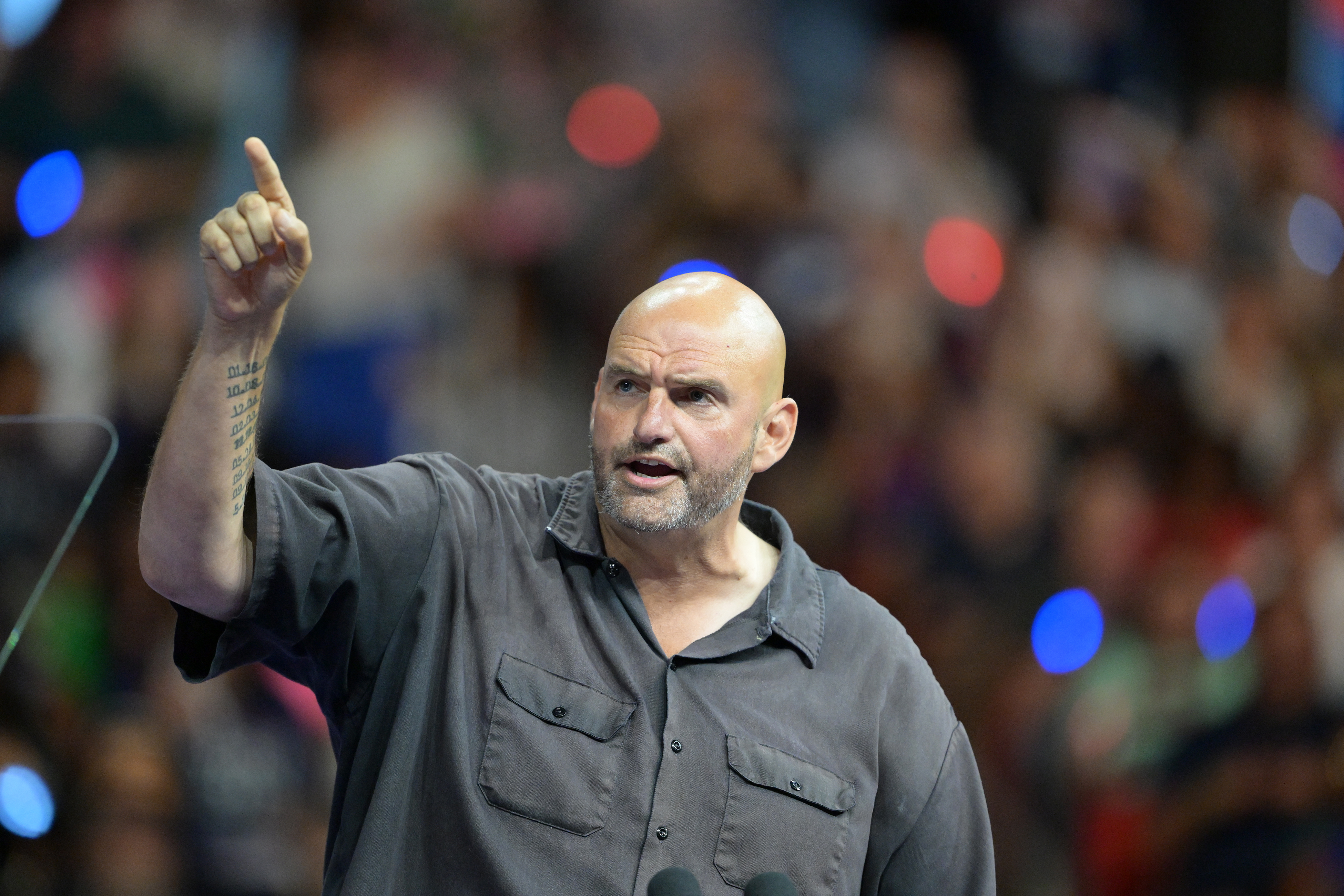
    A curt text message privately rejecting concerns from leaders at the Children’s Hospital of Philadelphia about Medicaid cuts was a “dumb joke,” U.S. Sen. John Fetterman (D., Pa.) told CNN this weekend.

    In his statement to CNN, Fetterman called a recent report from the Wall Street Journal — which reignited claims that he’s not fully performing the role of a U.S. senator — a “hit piece from disgruntled staffers.”

    “Per usual — lies, half-truths, innuendos, smears, and anonymous,” Fetterman said. He later added: “No matter how many smears or stories, I’m proud to continue to deliver for Pennsylvania.”

    The Wall Street Journal report included text messages between Fetterman and his staff and detailed several meetings or events that Fetterman tried to get out of attending, including the meeting with CHOP leaders and a funeral for three York County police officers who were killed while on duty.

    Fetterman said the leaked text messages were “stripped of any context and circumstances.”

    According to the Wall Street Journal, while discussing the meeting with CHOP officials last September, Fetterman asked in a text, “Why do I have to keep having to meet with chop.”

    An aide responded, “Because they’re worried about Medicaid cuts.” Fetterman wrote back, “Well, I’m not.” He then wrote, “I’m convinced they just want free trips to DC.”

    Fetterman told CNN that comment was a “dumb joke,” and “for that, I sincerely apologize.”

    “My office and I always have, and always will, advocate for CHOP, support their requests and any other needs that we can assist with,” Fetterman told CNN.

    The newspaper’s report also included text messages in which Fetterman questioned the length of the funeral for the three York County police officers, writing “3 hours??,” and said attending “may be a nonstarter.” Fetterman, who grew up in York County, did not attend the funeral, according to the report.

    Fetterman told CNN that he “privately ordered flowers to be delivered for their families and expressed my condolences publicly” on the day of the fatal shooting. He also said he privately attended a fundraiser for the officers’ families in June, saying, “I met with their chief and the family members directly to express my personal condolences.”

    The first-term senator’s tenure has been plagued with criticism. Former staffers have said he often cancels meetings at the last minute, and he has increasingly isolated himself from Democrats in Washington, according to the Wall Street Journal. He regularly appears on conservative media and attacks his own party, and he does not make regular public appearances in the Keystone State.

    And pressure on the senator appears to be mounting. After the Wall Street Journal article, an X profile claiming to be former Fetterman staffers said it would post accounts of working for the senator.

    “If you were troubled by yesterday’s Wall Street Journal story… trust us, that’s just the tip of the iceberg,” the account posted. “It’s even worse than you thought.”

    Staff writer Sam Janesch contributed to this article.

  • Affordability takes center stage as Shapiro and Garrity craft their economic pitch for Pennsylvania voters

    Affordability takes center stage as Shapiro and Garrity craft their economic pitch for Pennsylvania voters

    Ben Hummer would like to own a house one day in Pittsburgh. He dreams of a two-bedroom, one-bathroom town house where he can live near his job.

    But for now, Hummer, 29, rents his 500-square-foot, one-bedroom apartment, and his monthly rate since he moved in has continued to increase by $50 each year, making the goal seem further out of reach.

    “Anything that could increase the supply and affordability of housing in the Pittsburgh area would be massive,” said Hummer, who works in human resources.

    Like most voters in Pennsylvania, according to a recent poll from The Philadelphia Inquirer, the New York Times, and Siena University, the economy and cost-of-living concerns are the most important issues deciding Hummer’s vote in the 2026 governor’s race between incumbent Democratic Gov. Josh Shapiro and his Republican challenger, state Treasurer Stacy Garrity.

    And as Election Day draws nearer, both campaigns are focusing their messaging on these kitchen table issues.

    (function() { var l = function() { new pym.Parent( ‘nyt-afford__graphic’, ‘https://media.inquirer.com/storage/inquirer/ai2html/nyt-afford/index.html’); }; if(typeof(pym) === ‘undefined’) { var h = document.getElementsByTagName(‘head’)[0], s = document.createElement(‘script’); s.type = ‘text/javascript’; s.src = ‘https://pym.nprapps.org/pym.v1.min.js’; s.onload = l; h.appendChild(s); } else { l(); } })();

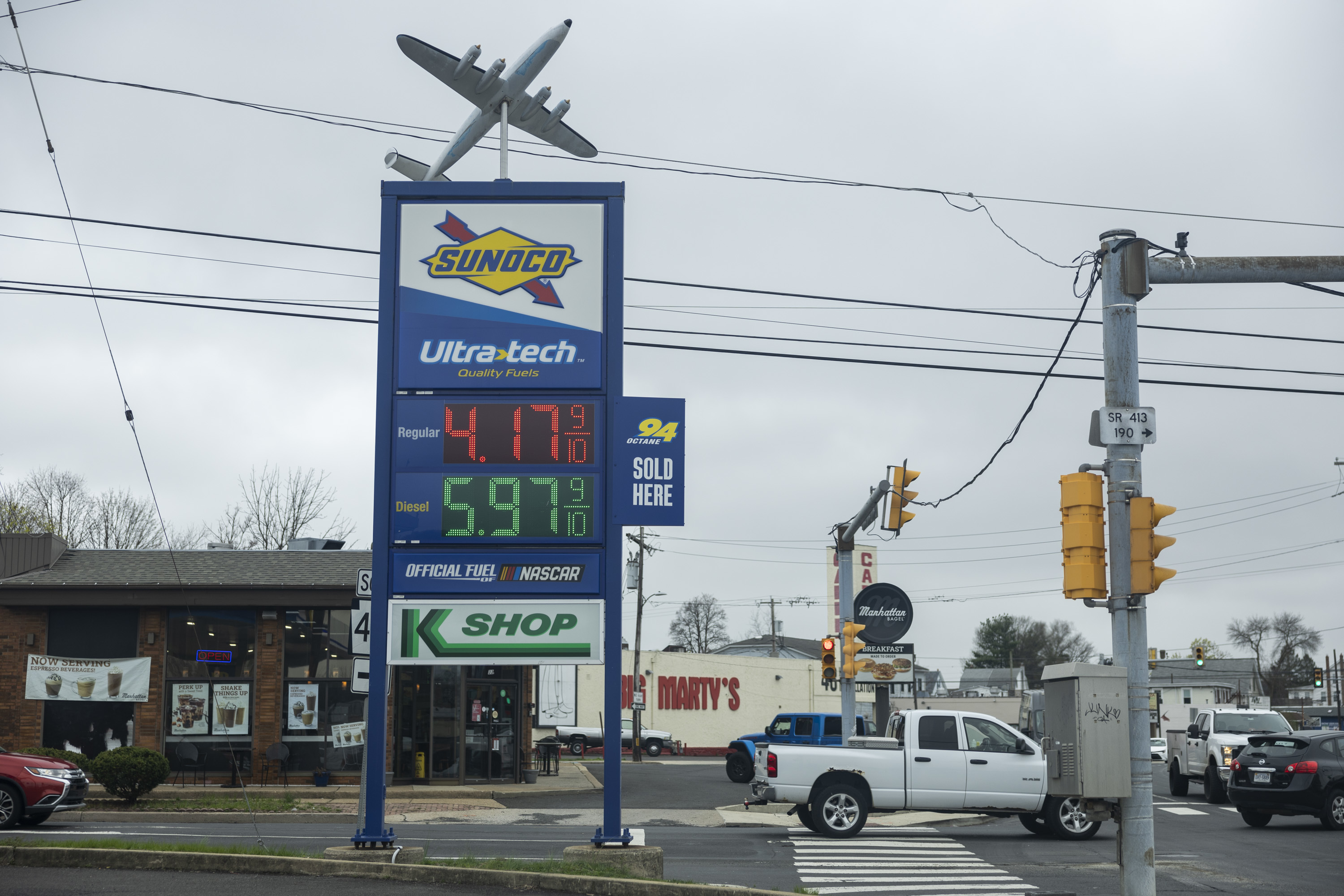
    Two years ago, it was the cost of eggs, gas, and groceries that were top priorities among the electorate in Pennsylvania and elsewhere. Voters’ trust in President Donald Trump’s ability to bring down high prices propelled him back to the White House, sending Democrats scrambling to hone an affordability pitch that could land in time for the high-stakes 2026 midterm elections. But in that same time, prices have continued to climb; gas prices have topped $4 per gallon; and tariffs instituted by Trump — who called affordability “a hoax” at a Pennsylvania rally last year — have driven up the cost of every day life. Now both parties are latching on to a focus on affordability.

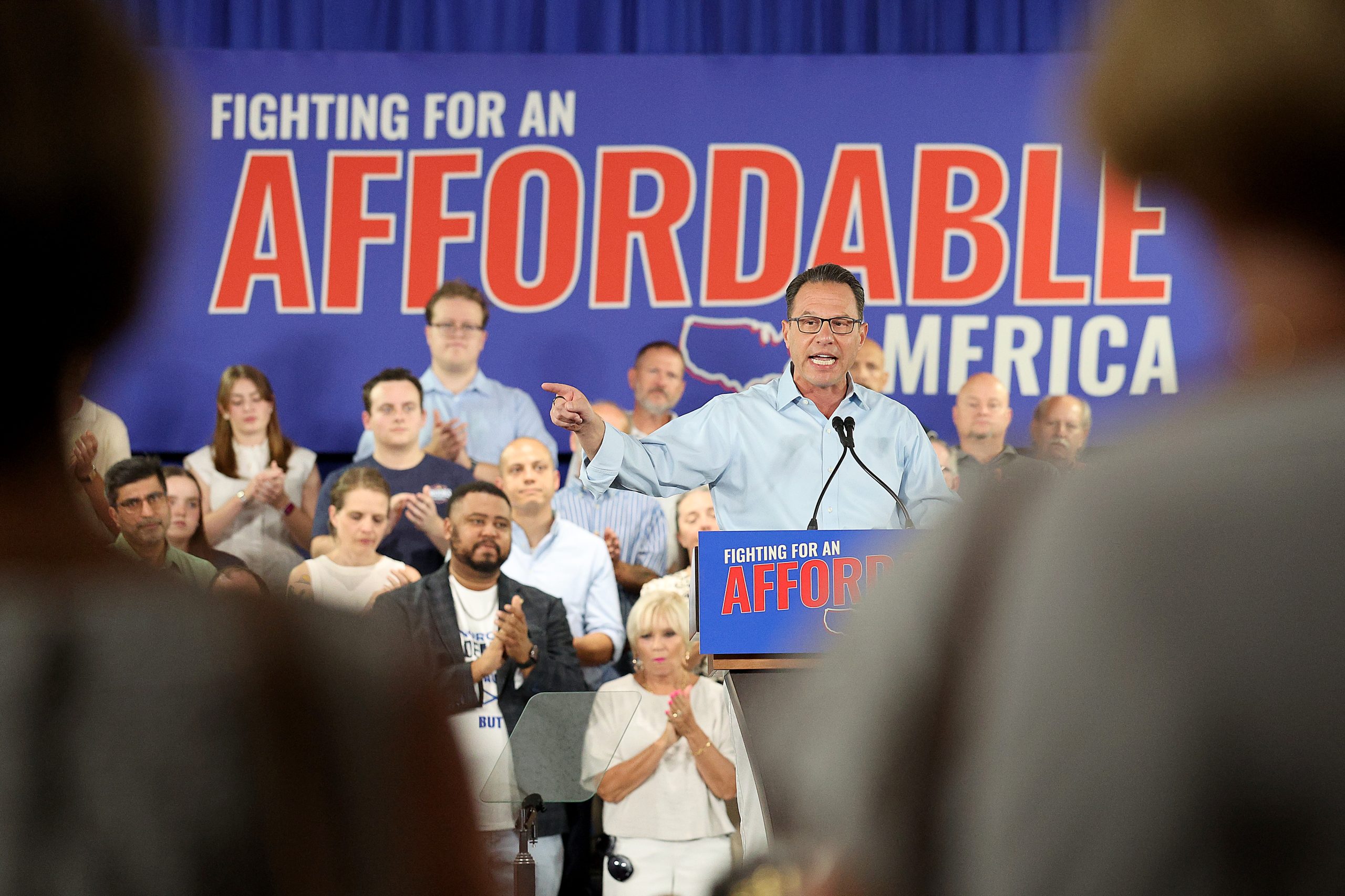
    As he mounts a reelection campaign, Shapiro — who holds a commanding lead in polls — is highlighting his accomplishments during his first term that his campaign says has given Pennsylvanians more money back through tax cuts and wage increases for childcare workers.

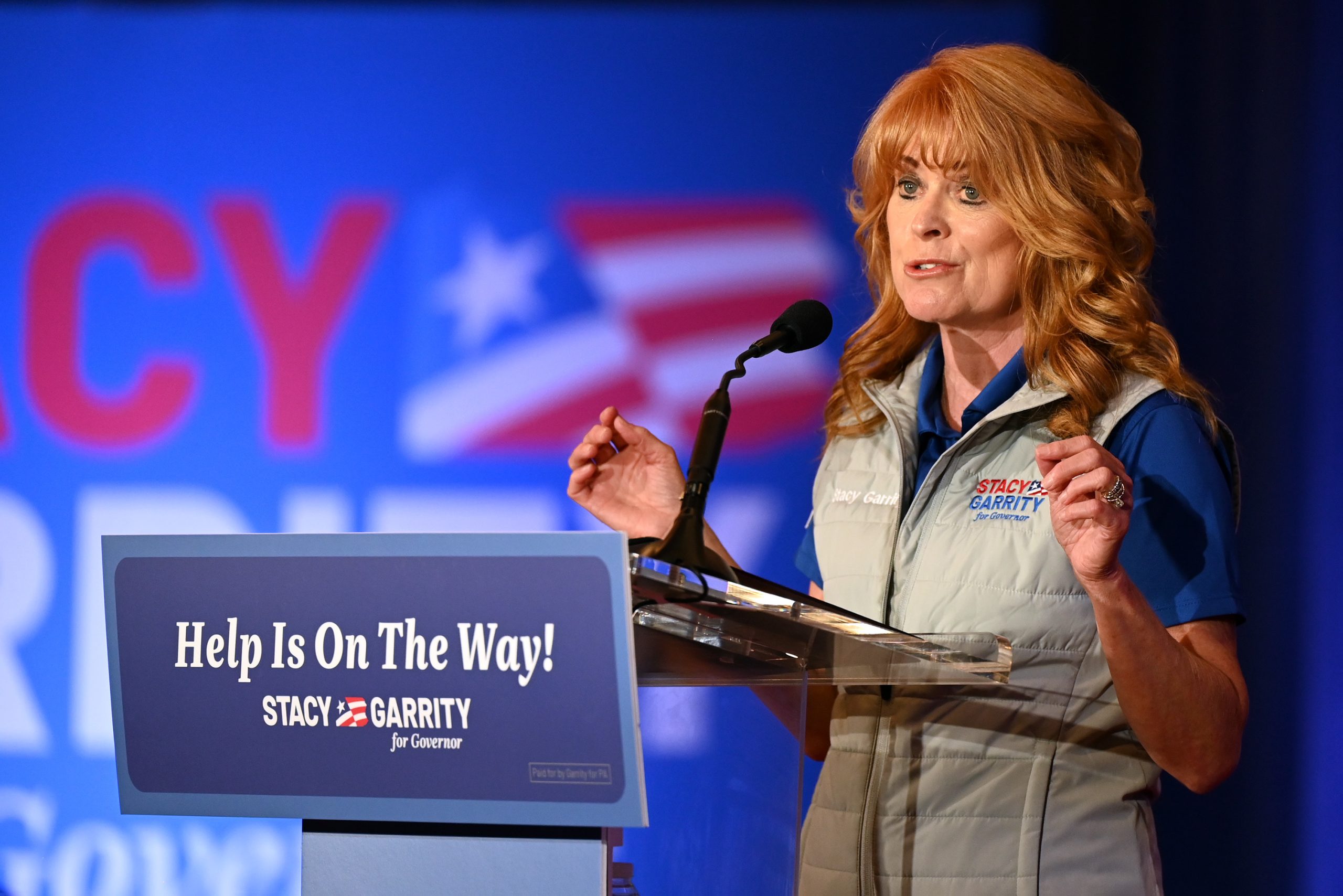
    Meanwhile, Garrity has recently shared her own plan, called “Turnaround PA,” to make living more affordable with an outline of how she’d lower prescription drug costs, reduce property taxes, and aim to cut energy bills to get there. But she’s also closely aligned with Trump, who has endorsed her in the race and has dismal markings from voters on two of their top priorities: the economy and cost of living.

    (function(){function e(){window.addEventListener(`message`,function(e){if(e.data[`datawrapper-height`]!==void 0){var t=document.querySelectorAll(`iframe`);for(var n in e.data[`datawrapper-height`])for(var r=0,i;i=t[r];r++)if(i.contentWindow===e.source){var a=e.data[`datawrapper-height`][n]+`px`;i.style.height=a}}})}e()})();

    That puts her in a difficult spot to challenge Shapiro, said Mark Zandi, the chief economist at Moody’s Analytics.

    There’s no easy answer for Republicans to win on economic issues in the midterms, but Zandi said his best advice is to focus on what is in the governor’s control and draft ideas that mitigate the fallout from Trump’s policies.

    Hummer, a Democrat who plans to vote for Shapiro this fall, said he trusts the governor to handle the economy and cost of living issues better. More than half of likely Pennsylvania voters in the Inquirer/New York Times/Siena poll agree.

    Fifty-five percent said Shapiro would do a better job of handling the state’s economy, and 56% said they think Josh Shapiro would do a better job of handling cost-of-living issues.

    “I’m well aware he’s limited in his options to do things, but I would say he’s kept a steady hand on the wheel of the Pennsylvania economy — to the extent that he can,” he said.

    Garrity pitches affordability as Republicans seek to overcome Trump’s ratings

    Among other proposals, Garrity has pitched a “first-time homebuyer assistance initiative,” which could help house seekers like Hummer and would provide qualified buyers 3% mortgage interest rate support from the state.

    She also has proposed cutting taxes by seeking a constitutional amendment that exempts Pennsylvania seniors from paying school property taxes and gives voters the final say over whether to increase property taxes. Her plan would also “reprioritize state spending for property tax relief.”

    State Treasurer and Republican candidate for governor Stacy Garrity holds a rally in Bucks County on Sept. 25, 2025, at the Newtown Sports & Events Center.Tom Gralish / Staff Photographer

    But there’s no free money, Zandi said. “If you’re giving tax cuts over here,” he said, “you’ve got to figure out how to pay for it … and that means you’re cutting spending.”

    Garrity’s plan also would address rural healthcare, and she would “aggressively pursue available federal funding to strengthen rural healthcare.”

    But there’s little money left in the pot after Trump cut government spending in last year’s federal budget. His One Big, Beautiful Bill Act directed a reduction in Medicaid spending by $1 trillion over 10 years, starting after the midterm elections, and rural hospitals and nursing homes are more dependent on federal funds. Additional dollars would likely need to come from Harrisburg.

    For Pennsylvanians like Caitlyn Needham, 28, the consequences of an unexpected medical bill on top of a limited income meant she went without substantial meals for weeks.

    “I have a rabbit, and she had a medical emergency [in November],” she said. “So for two months, the only thing I could afford to eat while paying off those bills was peanut butter and jelly sandwiches for breakfast, lunch, and dinner.”

    Needham, a cake decorator in Pittsburgh, said she’s always been frugal and saved a little bit of money from each paycheck, but increasing expenses are pushing her budget to the limit. She said she plans to vote for Shapiro this November.

    “Pennsylvanians need a relief valve before things get worse,” she said. “So many people are one bad week away from not being able to keep their housing, or losing their medical coverage, or losing their job because their car broke down and they can’t afford to get service. It’s like everyone is just one accident away from not being able to live.”

    (function(){function e(){window.addEventListener(`message`,function(e){if(e.data[`datawrapper-height`]!==void 0){var t=document.querySelectorAll(`iframe`);for(var n in e.data[`datawrapper-height`])for(var r=0,i;i=t[r];r++)if(i.contentWindow===e.source){var a=e.data[`datawrapper-height`][n]+`px`;i.style.height=a}}})}e()})();

    Garrity has remained politically loyal to Trump, even as his popularity has sunk among Pennsylvania voters. She has endorsed Trump’s tariffs and supported the war in Iran. That support has remained even as gas prices in July spiked to more than $4 per gallon, up more than $1 since the beginning of the year — and a point Shapiro has repeatedly emphasized.

    “If you’re trying to infer I’m out of line with the president, I don’t think I am,” she said last month during a news conference she held on data centers.

    In a statement, she blasted Shapiro’s handling of the economy, saying he has put a tax burden on families and tied businesses up with unnecessary regulations.

    “Josh Shapiro’s Pennsylvania is simply unaffordable for the commonwealth’s hardworking families,” Garrity said. “He allowed utility and energy costs to skyrocket due to his unwillingness to expand generation capacity and instituting policies that benefit our neighboring states instead of us.”

    Shapiro emphasizes his record is separate from national picture

    Shapiro, the incumbent, is leaning on his record on economic policy.

    According to his campaign, his administration created more than 25,000 jobs during his first term and brought in $41 billion in private-sector investment.

    “Governor Shapiro is fighting for all Pennsylvanians — and he has a track record of creating jobs and economic opportunity, putting money back in Pennsylvanians’ pockets, and standing up to Washington’s reckless, cost-raising policies,” said Samantha Reposa, a spokesperson for the campaign. Garrity, she said, “fully supports the failed economic policies that are raising costs and hurting working families across the commonwealth.”

    Gov. Josh Shapiro addresses the audience during a July 26 rally for congressional candidate Bob Brooks at the United Steelworkers Union Hall in Bethlehem.David Maialetti / Staff Photographer

    His campaign released a Spanish-language digital ad focused on benefits of the Working Pennsylvanians Tax Credit and the Property Tax/Rent Rebate Program, which is targeted toward seniors and people with disabilities.

    “If you’re working, you get to keep more of your money. Up to $800 more, more money in your pocket. And right now, every little bit helps,” a woman in the commercial said in Spanish.

    Ultimately, Zandi said, “it’s very difficult for lawmakers at any level of government to change the picture on affordability, at least any time quickly,” because those issues are due to broader national and international forces.

    There’s also no one-size-fits-all approach for a governor to tackle the costs of education, housing, energy, childcare, elder care, healthcare, and groceries.

    “Each issue that makes up the affordability crisis requires its own set of solutions and efforts, so it feels like a laundry list of policy steps, and it is,” he said. “But that actually is probably the only way to make a difference.”

    For many Pennsylvanians, paychecks feel like simply treading water: By the time all expenses are covered, there’s little money left to save and build toward the future.

    “It just seems that money doesn’t go as far as it used to,” said Thomas Schank, 49, of Scranton. “I’ve gotten raises at work over the last two years, but everything else went up also, so really, no net gain.”