Category: Politics

  • Mayor Parker’s election put lobbyist William Dunbar at the center of Philly politics. Now he’s awaiting sentencing on tax fraud charges.

    Mayor Parker’s election put lobbyist William Dunbar at the center of Philly politics. Now he’s awaiting sentencing on tax fraud charges.

    When Mayor Cherelle L. Parker took office in early 2024, William F. Dunbar Sr. became one of the most important people in Philadelphia politics.

    A confidant of Parker who played an important advisory role in her 2023 campaign, Dunbar was also a registered lobbyist with a growing client list.

    When other key figures in Parker’s campaign took top roles in her administration, Dunbar stepped into an official, but unpaid, role managing People for Parker, the mayor’s political committee.

    Those dual roles created an unusual circumstance: Someone who raised money from donors for the mayor’s campaign was also a lobbyist whose clients paid him to influence her administration.

    And they were physically embodied in a 2,250-square-foot office in the Penn Center complex one block west of City Hall. Dunbar’s lobbying firm, Dunbar Public Affairs & Associates, rented the space in March 2024, and People for Parker paid half of the $3,750 rent through a sublease agreement, according to lease documents obtained by The Inquirer.

    But the heady days for Dunbar didn’t last. Parker let Dunbar go from her campaign in August 2024. Neither side has publicly explained what led to the separation. And last week, he pleaded guilty to federal tax fraud charges unrelated to Parker’s campaign.

    A plea agreement Dunbar signed allows U.S. District Court Judge Kelley B. Hodge to consider three instances of “additional misconduct” — separate from the tax fraud scheme — that did not result in charges when she decides his sentence in January.

    One instance stemmed from a dispute over the sublease agreement for the Penn Center office. (In the other incidents, prosecutors said Dunbar falsified a document for a mortgage application and submitted false financial information to receive additional financial aid at a private school.)

    In the plea agreement, Dunbar stipulated that he “falsely modified the terms of the lease agreement” to increase the notice the campaign was required to give him to terminate the lease, a move that could have resulted in the campaign paying him money he was not owed had it not been discovered.

    City law prohibits officials from using government resources, including City Hall office space, for political purposes. By renting space with Dunbar’s firm, Parker and her team could pop across the street and attend to political tasks without running afoul of ethics rules.

    In a letter from March 2025 that was obtained by The Inquirer, an attorney for Dunbar wrote that his firm “had no need for an office space that was close to City Hall other than to support the Mayor’s needs.”

    The dispute culminated in the final breakdown of their already-strained relationship, an exchange of emails between lawyers for Parker and Dunbar shows.

    “It has come to our attention that Mr. Dunbar has misrepresented that he continues to have relationships with People for Parker to current and prospective clients,” Timothy J. Ford, an attorney for Parker, wrote to Dunbar’s lawyer, Mark Jaffe, in March 2025. “Mr. Dunbar must cease and desist immediately from making incorrect statements of any affiliation with People for Parker, Mayor Parker in her political or personal capacity, or staff or consultants related to People for Parker.”

    Jaffe fired back.

    “Respectfully, my client asks that the Mayor cease and desist from contacting all donors and personal/business contacts that Dunbar Public Affairs supplied her immediately,” Jaffe wrote Ford in response. “It has come to Mr. Dunbar’s attention that the Mayor continues to misrepresent that Dunbar is still supportive of her efforts and that said relationships should still support her.”

    Dunbar asked for “a letter of formal apology from the Mayor [for] the harm she has caused as to his reputation and financial losses to his company.”

    Dunbar declined to comment for this story.

    From Lincoln to ‘kitchen cabinet’

    Dunbar, 42, first met Parker, 53, around 2005, when he was a student at Lincoln University, he said in a 2023 interview. Parker, a Lincoln alum, was a Pennsylvania state representative, and she visited her alma mater to speak to political science students.

    “She was a star to the folks at Lincoln then,” Dunbar said in the interview. “Cherelle is the big sister. She sometimes call me the big little brother. I’m very, very protective of Cherelle.”

    Both were elected student government presidents during their time at the historically Black university in Chester County.

    They maintained a connection over the years as they made their way up the ladder in local politics, Parker as an increasingly high-profile elected official and Dunbar as a well-connected operator.

    By the time Parker began preparing to launch her mayoral campaign, Dunbar had become a lobbyist for Comcast. He volunteered as part of her “kitchen cabinet” of informal advisers, and he made a key contribution by championing a strategy of Parker leaning into her life experience, from growing up in a household that needed public assistance to being a single mother.

    “I always would come back to that we need to continue to define Cherelle as the authentic Black woman working mom,” he said. “Cherelle is able to live with that every day, so I knew and believed that the message would always resonate more, in particular with Black women, who obviously are the No. 1 voting bloc in our city.”

    An unexplained separation

    When the top aides in Parker’s campaign joined her administration, preventing them from managing or being paid by a political group, the mayor turned to Dunbar to run People for Parker in 2024.

    Although Parker is not up for reelection until 2027, her campaign has remained active, raising and spending hundreds of thousands of dollars each year since she became mayor.

    Meanwhile, Dunbar’s lobbying practice grew: the School District of Philadelphia, which employed him a subcontractor, and an ATM company became clients in January 2024, according to the public records. (Dunbar is no longer representing the district because the primary contractor terminated their agreement, according to the district.)

    But his arrangement with Parker didn’t make it through the summer. Parker acknowledged the separation in an interview while she was at the 2024 Democratic National Convention in Chicago.

    “Will has been a valued friend to me, and let me just say that life is good right now [for Dunbar] and business is good and it’s growing,” she said.

    Dunbar said at the time: “I’m very much still an informal senior adviser but because of a different set of priorities, the mayor has decided to manage her politics herself. … My business has continued to grow as we work to support our clients.”

    In the March 2025 letter, Dunbar’s attorney said Parker in August 2024 had “agreed to continue a business relationship for public perception” after the split.

    The sublease dispute that unfolded over the next six months eliminated that possibility.

    Two documents, one lease

    The Inquirer has obtained two versions of the sublease agreement, one with a 30-day termination window and one lasting a year. Both versions include electronic signatures from Dunbar on March 2, 2024, and Gabrielle Cook-Frazier, on behalf of the campaign, on March 8, 2024.

    Parker’s attorney said it only ever had the version with a 30-day window. Federal prosecutors alleged Dunbar forged the version with a one-year window to squeeze more rent payments out of the campaign.

    “People for Parker is particularly concerned that Mr. Dunbar produced a different version of the Document containing a term to which People for Parker did not and never would have agreed,” Ford wrote.

    Ford said the campaign was willing to make rent payments through the end of 2024 to “soften” Dunbar’s separation, but not after. The campaign made rent payments totaling $22,850 to Dunbar Public Affairs between March 2024 and November 2024, according to campaign finance records.

    In the letter, Dunbar’s attorney suggests Parker’s aides could have violated city ethics laws by doing political work “on City time using said space for political meetings with the Mayor.”

    The Parker campaign declined to answer questions for this story, but sent a statement rejecting Jaffe’s assertion in the 2025 letter.

    “The allegation is patently false,” Ford said in a statement. “Neither the Mayor nor her team engaged in political activity on City time or using City resources.”

    It’s far from clear that the arrangement would be a violation of ethics rules. The top officials in Parker’s administration were salaried employees for the city who worked far more than 40 hours per week, making it difficult to assess when they were on the clock. They are allowed to participate in political meetings so long as they are not paid by the campaign and have only “minimal input” on strategy, communications, or finance, the city’s ethics regulations state.

    Despite the breakdown in their relationship, Dunbar held out hope for a reconciliation.

    “Notably, if the Mayor or her political team would ever like to reconcile and restore this relationship, my client would welcome that and he stands ready to continue to be a selfless supporter of the Mayor and her administration,” Jaffe wrote, adding that Dunbar would no longer seek additional rent payments.

    Weeks later, Dunbar learned that federal agents were investigating him for tax fraud.

  • Johnny Doc is a free man after President Donald Trump cut his six-year prison term short

    Johnny Doc is a free man after President Donald Trump cut his six-year prison term short

    Johnny Doc is free.

    Convicted former Philadelphia labor leader John Dougherty was released Friday afternoon from a federal penitentiary in Lewisburg, his lawyer said, capping a surprise outcome that was the result of President Donald Trump’s decision to commute the remainder of Dougherty’s six-year prison term.

    Dougherty’s lawyer, George Bochetto, said he was released around 3 p.m. Attempts to reach Dougherty for comment Friday were unsuccessful.

    Dougherty — widely known as Johnny Doc — had served less than two years of that sentence, which came after he was convicted in two high-profile trials: The first in which he was found guilty of bribing former Philadelphia City Councilmember Bobby Henon, the second over his participation in an embezzlement scheme that cost his union nearly $600,000.

    For much of the past year, Dougherty had been petitioning U.S. District Judge Jeffrey L. Schmehl to release him on house arrest so he could provide care for his gravely ill wife. But Schmehl had repeatedly denied those efforts.

    Trump’s decision to commute Dougherty’s sentence instead will result in a more sweeping form of relief: His conviction will remain intact, but he will not be subject to any monitoring or house arrest, and he will no longer have to pay about $1.6 million in restitution to the union he was convicted of defrauding.

    Bochetto called Trump’s decision “a magnificent gesture of compassion.” And he said it came after he’d been in regular communication with White House staff members about the dire and longstanding health challenges faced by Dougherty’s wife, Cecilia.

    A White House official said Friday that those circumstances figured into Trump’s decision — particularly because Dougherty’s father-in-law, who had been serving as the primary caretaker, died last year.

    Bochetto said there was “absolutely no reason” to keep Dougherty behind bars while his wife’s health was continuing to decline.

    Dougherty, while testifying before Schmehl earlier this year, said he had done everything he could from prison to lift his wife’s spirits — mailing her letters, routinely calling her, and even singing to her over the phone.

    But he said he was desperate to get home and help her manage a set of challenges that have left her paralyzed and largely nonverbal. He said his adult daughters and private aides were struggling to provide the type of intensive, round-the-clock care she requires.

    “I just want to take care of Celia,” he said.

    The U.S. Attorney’s Office had opposed Dougherty’s efforts to be released. A spokesperson said the office had no comment on Trump’s decision to set Dougherty free.

    Beyond caring for his wife, it was not immediately clear Friday what Dougherty’s future might hold — or whether he’d use his newfound freedom to try to return to the political stage.

    Before he was prosecuted, Dougherty was a bona fide power broker while running Local 98 of the International Brotherhood of Electrical Workers, which he turned into the biggest independent source of campaign money in Pennsylvania. That funding helped elect mayors, City Council members, and members of Congress. It also helped bolster the judicial candidacy of Dougherty’s brother, Kevin Dougherty, who won a seat on the Pennsylvania Supreme Court in 2015.

    Even if John Dougherty did want to seek a return to the spotlight, it would have to come from a different perch.

    Not only is Local 98 under new leadership, Dougherty’s convictions on counts of bribery and embezzlement make him ineligible to hold an elected union office for 13 years under U.S. Department of Labor laws.

    Labor leader Ryan Boyer, who replaced Dougherty as chair of the Philadelphia Building and Construction Trades Council, said he nonetheless expected Dougherty to end up back in the mix in some fashion.

    “If I know John the way I know John,” he said, “he’s not going to sit on his hands.”

    Staff writers Sean Collins Walsh and Maggie Prosser contributed to this article.

  • Green Party candidate Andrew Tupone is removed from ballot in Lehigh Valley congressional race

    Green Party candidate Andrew Tupone is removed from ballot in Lehigh Valley congressional race

    A candidate vying for one of the nation’s most competitive congressional seats who said he represented the Green Party — but who the Green Party and Democrats both accused of election meddling — has been disqualified from the November ballot, a Pennsylvania judge ruled Friday.

    Andrew Tupone, 37, of Northampton County, had gathered nearly 11,000 signatures to run as a third-party candidate for Pennsylvania’s 7th Congressional District after previously running for local office as a Republican and switching his party registration earlier this year.

    His petition for ballot access implied that he had the Green Party’s official support, though the organization said it did not know him and had questions about his motives. His actions denied the Green Party its right as a political body to select candidates who match their values, the organization argued.

    “The Court’s analysis respects the internal governance of political bodies and protects political bodies from external forces hijacking those bodies,” Commonwealth Court Judge Stella M. Tsai wrote in the court document.

    In a statement to The Inquirer, Tupone vowed to push his campaign forward, despite the significant legal setback.

    “The establishment parties are fighting to keep me off the ballot but I’m not backing down,” he said. “I will continue this fight and appeal this decision because the people of the 7th congressional district deserve a real choice and a true progressive candidate who will stand up for them. This fight isn’t over. I’m going to keep fighting for the voters to have an option and for the representation our community deserves.”

    Tupone’s quest for ballot access came as Democrats — who have said Green Party candidates pull votes from their nominees — have targeted the Lehigh Valley-based congressional seat as one of the state’s most flippable in their effort to regain control of Congress. Democratic candidate Bob Brooks, a retired firefighter and union leader, is challenging Republican U.S. Rep. Ryan Mackenzie, who won his seat two years ago by 1 percentage point.

    But while the Green Party of Pennsylvania — which considers itself an ecosocialist party — rejects accusations of spoiling, leaders distanced themselves from Tupone’s candidacy, and the party was among the plaintiffs arguing for his removal.

    “It sounds a lot like somebody’s just fooling around and trying to use the Green Party name,” Tim Runkle, co-chair of the state party, previously told The Inquirer.

    Democrats have also accused Tupone, who was registered as a Republican until 2025 and said he previously voted for President Donald Trump, of attempting to spoil the contest. They furthered their argument after independent journalist Sean Kitchen identified Tupone’s attorney as Wally Zimolong, a Pennsylvania election lawyer who said on his website that he represented Trump, the Republican National Committee, and other Republican candidates. Zimolong also donated to Mackenzie’s reelection campaign in 2025.

    Zimolong also represented the neighbors of Democratic Gov. Josh Shapiro in a federal lawsuit against him in a property dispute.

    Tupone, however, has said he no longer supports Trump. During his testimony before the state court, he said he became progressive after consuming social media posts from The Young Turks, a left-wing news program. He changed registration to the Democratic Party in February to run in the 7th District’s primary and to the Green Party in April after becoming “fed up with both parties” and wanting “to give voters another choice on the ballot.”

    The Green Party, which held its state committee meeting in March, formally supported Lancaster resident Tony Dastra for governor and Philadelphia resident Craig Bolton for lieutenant governor — but they will not appear on the ballot after failing to receive enough signatures.

    Tupone, who could not remember the name of the lieutenant governor during the court hearing, was the only candidate who filed to represent the Green Party in a Pennsylvania race for Congress.

    A former Republican candidate for local office, Tupone has rejected accusations from Democrats and the Green Party that he was asked by Republicans to run for Congress, or that he paid individuals to collect the signatures to get him on the ballot. Of the 22 individuals who gathered signatures for his Green Party candidacy, only one is from Pennsylvania and multiple have previously worked for Republican campaigns, public records showed.

    Tupone also said in court that he did not pay for any nomination papers to be circulated and was not aware of anyone being paid to circulate his papers. He said Runkle called him in July asking “weird questions” and “attempted to intimidate him not to run,” but he did not ask about the party’s process for endorsement or receiving support during the call.

    Runkle said in the Green Party has declined to run candidates in the past who are unable to articulate the party’s values or have values that contradict the party’s.

    Democrats celebrated the news Friday.

    “(Republicans) have now tried and failed twice to meddle in the Lehigh Valley because they know weak incumbent Ryan Mackenzie can’t run on his own record. Firefighter Bob Brooks will smoke him in November,” said Eli Cousin, a spokesperson for the Democratic Congressional Campaign Committee.

  • Lieutenant governor of New Jersey is reportedly under an internal investigation

    Lieutenant governor of New Jersey is reportedly under an internal investigation

    Dale Caldwell, lieutenant governor of New Jersey, is reportedly under internal investigation for allegations involving his behavior toward women and possible ethics violations.

    The New Jersey Globe reported Friday that Gov. Mikie Sherrill’s administration called on Christopher Porrino, a former New Jersey attorney general, to conduct the investigation.

    Porrino served as attorney general under Republican Gov. Chris Christie. The New Jersey Globe reported that Porrino and a former federal prosecutor who is now one of his law partners have been conducting interviews for the investigation.

    Sean Higgins, spokesperson for Sherrill, said in an emailed statement Friday that the administration “cannot confirm or deny potential personnel matters.”

    Higgins also said: “The Governor would take any reports of inappropriate behavior or misconduct extremely seriously and expects our public officials to hold themselves to the highest standards.”

    Caldwell could not be reached for comment.

    Anthony Bucco, the Republican leader in the New Jersey Senate, said in a statement posted on social media that Caldwell “should temporarily step down from his duties as Lieutenant Governor.”

    Bucco said the reported allegations against Caldwell “are deeply concerning and disappointing. Our elected officials must hold themselves to the highest possible standards of conduct, character, and integrity. The public deserves transparency and timely information about matters of this magnitude.”

    Bucco added that “there are legitimate questions about why this information was not disclosed sooner and why we are just learning about this late on Friday heading into a holiday weekend.”

    The New Jersey Globe reported that the investigation had already begun when Caldwell assumed the duties last week of acting governor while Sherrill was out of state.

    The allegations include a purported offer of state jobs, the news outlet reported. No other details were provided.

    Caldwell also serves as the New Jersey secretary of state, New Jersey’s chief election official.

    President Donald Trump’s administration has been trying to compel Caldwell to release voter registration data ahead of the upcoming midterm elections. The U.S. Department of Justice is appealing a lower court judge who dismissed the federal government’s lawsuit.

    Sherrill selected Caldwell as her running mate in July 2025. He was the first Black president of Centenary University, a small, private institution in North Jersey, and pastor at Covenant United Methodist Church in Plainfield, Union County. He also served on the New Brunswick school board for 26 years, including six as president.

    “Mikie Sherrill and I represent a different kind of leadership that sees possibilities, not a blind commitment to doing things the way they’ve always been done,” Caldwell said after his selection was announced.

    Caldwell graduated from Princeton University in 1982 and from the Wharton School of the University of Pennsylvania in 1988. He received a doctorate in education administration from Seton Hall University in 2017.

  • Tom Corcoran, retired president of the Delaware River Waterfront Corp., has died at 82

    Tom Corcoran, retired president of the Delaware River Waterfront Corp., has died at 82

    Tom Corcoran, 82, of Philadelphia, retired president of the Delaware River Waterfront Corp., founding president and former chief executive officer of the old Cooper’s Ferry Development Association in Camden, former business administrator for the city of Camden, onetime Peace Corps program director in West Africa, mentor, and poetry enthusiast, died Sunday, Aug. 30, of complications from dementia at his home in Center City.

    Born in Chicago and a graduate of Loyola University Chicago, Mr. Corcoran earned a master’s degree in public administration at the University of Pennsylvania’s Wharton School in 1975 and never strayed far from the Delaware River after that. He spent 25 years, from 1984 to 2009, as president and CEO of the Cooper’s Ferry Development Association on the Camden waterfront, and eight years, from 2009 to 2017, as president of the Delaware River Waterfront Corp. in Philadelphia.

    He championed what he called “the two cities, one waterfront strategy” and was especially adept, former colleagues said, at political maneuvering and marshaling funds and projects. Former colleagues on both sides of the Delaware called him “a tireless public servant,” “a visionary urban planner,” and an “economic development strategist with short-term practicality and long-term vision.”

    In Camden, Mr. Corcoran added more than $550 million of investments to the waterfront area and oversaw the development of what is now the Freedom Mortgage Pavilion, the Adventure Aquarium, Wiggins Waterfront Park, the Riverlink Ferry, several office buildings, and other projects. Another New Jersey developer called him a “cult figure” among state lawmakers.

    Mr. Corcoran talks at City Hall in 2011 about creating a string of parks along the Delaware River.Akira Suwa / Staff Photographer

    He said education as well as development was key to building a strong local economy and told The Inquirer in 2006: “Until Camden has a good-quality education system, we’re not going to be able to attract families with school-age children back to the city.”

    Dana L. Redd, former Camden mayor and current president and CEO of Camden Community Partnership, said on Facebook that Mr. Corcoran often slept on a cot in his Camden office and left daily handwritten messages that his project managers called “love notes.” Redd said: “He challenged a generation of urban leaders to think bigger, believe in Camden, and dream about what the city could become.”

    In Philadelphia, he initiated the Race Street and Washington Avenue pier parks, the Spruce Street Harbor Park, a miles-long bike and walking trail, and the I-95 overpass park to reconnect Center City with its waterfront. “The more we look at the concept of one waterfront, two states, the more opportunities we’re going to find,” he said when he left Camden for Philadelphia in 2009.

    When he retired in 2017, he said: “Instead of swinging for the fences, we decided we would hit singles and doubles and bunts and sacrifices, steal bases, and do whatever we could. Eventually, we thought, we’d always get back to the center.”

    Mr. Corcoran (left) shakes hands with then-Mayor Michael Nutter in 2009 after joining the Delaware River Waterfront Corp. Alejandro A. Alvarez / Staff Photographer

    Longtime colleague and friend Bill Hankowsky said: “It is truly unique that a single individual could have the vast impact across two facing waterfronts in the center of one of the country’s major urban metros.”

    Earlier, Mr. Corcoran served nine years, from 1975 to 1984, in Camden city government, rising from administrative aide to business administrator. In 2001, he earned a Good Neighbor Award from the Camden County chapter of the American Red Cross for his “integral role in the revitalization of the city.”

    In the 1960s, Mr. Corcoran joined the Peace Corps after college and spent seven years in Africa building dams and wells with local farmers. He spoke French and the local African language, and rose to program director.

    “What an exemplary life he led,” a former Peace Corps colleague said in a tribute, “without fanfare or drama and always with service to others.”

    Mr. Corcoran (right) led visitors on a tour of the Washington Avenue pier park in 2014.Viviana Pernot / Staff Photographer

    Off the waterfront, Mr. Corcoran was enthralled by poetry and his Irish heritage. He liked to recite lines from Ulysses and other poems, and sing songs from the old country.

    “He was a true Renaissance man who had a remarkable vision for communities and people,” a former colleague said. Former colleague John Grady said: ”Tom was a giant, unassuming, persistent force for the local community.”

    Thomas Patrick Corcoran was born May 13, 1944. He earned a bachelor’s degree in political science at Loyola in Chicago and rode camels to work in Africa during his time in the Peace Corps.

    He met Robin Lowey at a dinner society event, and they married in 2003, and lived in Camden and Philadelphia. They enjoyed traveling and dining together, and hashing over world affairs.

    Mr. Corcoran and his wife, Robin Lowey, married in 2003. Courtesy of friends

    In 2009, he said he often peered through a telescope at the Philadelphia waterfront from his home in Camden and wondered how he would develop Penn’s Landing. “He’s the one who brought together the business leaders and was able to steer through difficult political waters,” then-Camden County freeholder Jeffrey Nash said in 2009.

    His wife said: “He was a kind and generous gentleman. He was a good, nice person.”

    In addition to his wife, Mr. Corcoran is survived by three sisters, a brother, and other relatives.

    Services were held Thursday.

    Donations in his name may be made to the Caplan Caring Difference Fund at the Penn Memory Center, Office of the Treasurer, Box 71332, Philadelphia, Pa. 19176.

    Mr. Corcoran spent seven years in the Peace Corps after college. Courtesy of friends
  • Key Pennsylvania races to watch in the midterm elections this November

    Key Pennsylvania races to watch in the midterm elections this November

    In the country’s premier battleground state, Pennsylvania Democrats believe they’re in striking distance of a tidal-wave victories that would dramatically shift the balance of power in both Washington and Harrisburg.

    For the first time in decades, the party could take full control of the legislature. That would give Democratic Gov. Josh Shapiro — seeking reelection with a wide polling gap on his Republican challenger Stacy Garrity — significantly more power to shape the direction of the state as he potentially pursues a White House bid in 2028.

    Democrats also see a chance to flip four congressional seats and take control of the U.S. House. Republicans, meanwhile, are prioritizing defending the Pennsylvania seats with their House majority on the line as President Donald Trump, who won the state just two years ago, sinks in popularity.

    The path for power in Washington in the high-stakes midterms runs through Pennsylvania and its results will be closely watched as both parties prepare for a presidential race in two years when the state promises to play a pivotal role.

    Voters across Pennsylvania will head to the polls in November to cast their ballots for races that will decide the balance of power in the state and nation.

    Here are the races to watch and how to vote.

    Shapiro’s November could dictate his 2028

    Shapiro, widely viewed as a likely contender for the 2028 presidency, has big ambitions this fall when he’ll stand for reelection against Garrity, the state’s treasurer.

    More than just securing his own reelection, Shapiro hopes to run up the margin and carry downballot Democrats across the finish line.

    Another double-digits win and a string of coattail victories would be a show of strength about his ability to perform in a key swing state that his party lost in the last presidential election. In a presidential primary, Shapiro could use that result to make an argument that he’s a strong general election candidate who can boost the Democratic brand.

    Two months out from the election, all signs point to a Shapiro win. He holds a historically large campaign war chest and a commanding 55-39% lead in the race against Garrity, according to a recent Philadelphia Inquirer/New York Times/Siena University poll.

    Garrity, who has been endorsed by Trump, broke the record in 2024 for the most number of votes received by a candidate running for state-level office in Pennsylvania. But support from the national GOP establishment has been limited, and as she faces off against a formidable incumbent, the question is: Can she overcome her stark cash disadvantage and low name recognition to become the state’s first female governor?

    Will Republicans hold on in competitive congressional seats?

    There are four U.S. House districts in the eastern portion of Pennsylvania, targeted by both parties as must wins. In each, the Republican incumbents are seeking to fend off highly financed challengers amid deep frustration among voters with the leader of their party that could translate into a wave of Democratic victories down ballot.

    1st Congressional District: Five-term Republican U.S. Rep. Brian Fitzpatrick faces a challenge from Bucks County Commissioner Bob Harvie in the district, which covers all of Bucks County and a portion of Montgomery. Fitzpatrick, a moderate who has survived previous blue waves, has maintained a fundraising advantage on Harvie unlike the other swing-district incumbents.

    7th Congressional District: Freshman Republican U.S. Rep. Ryan Mackenzie narrowly flipped the Lehigh Valley district two years ago and is widely seen as one of most vulnerable incumbents in Congress. He’s facing a challenge Democrat Bob Brooks, a retired firefighter and union leader whose blue-collar campaign has attracted support across the party’s ideological spectrum with endorsements from Shapiro and U.S. Sen. Bernie Sanders.

    8th Congressional District: Freshman Republican U.S. Rep. Rob Bresnahan ousted a six-term incumbent in this district centered in former President Joe Biden’s hometown of Scranton two years ago. But as he faces a tough challenge from Scranton Mayor Paige Cognetti, Bresnahan has faced scrutiny over his stock trades and his vote to cut Medicaid — to pay for Trump’s tax cuts — despite a promise to protect the program.

    10th Congressional District: Republican U.S. Rep. Scott Perry, a close ally of Trump, faces a November rematch against Democrat Janelle Stelson, a former TV anchor, in the Harrisburg area district. Stelson has consistently outraised Perry after narrowly losing in 2024.

    In addition to these four races both national parties have targeted, Shapiro has argued that the 9th Congressional District, where Democrat Rachel Wallace is taking on incumbent GOP U.S. Rep. Dan Meuser, is flippable — despite the strong GOP lean in the district, which stretches from Berks County to the New York state border. The district is home to two warehouses that ICE was planning to convert into detention centers before abandoning the plan after a backlash from residents.

    Will Democrats flip the Pennsylvania Senate?

    In Harrisburg, Democrats hold an extremely narrow majority in the state House, but the Pennsylvania state Senate has been under Republican control for more than 30 years.

    This year, Shapiro wants to flip the chamber and win a trifecta to push forward his key priorities, such as codifying abortion access, raising the state’s minimum wage, and increasing funding for transit.

    Republicans currently hold 27 of the chamber’s 50 seats. Democrats, who currently hold 23 seats, need to win at least two additional seats and the governor’s office to win control of the chamber with the lieutenant governor as a tiebreaking vote.

    The seats, drawn advantageously for Republicans, have been stubbornly resistant to political change for decades.

    But this year a blue wave could usher in Democratic pickups in Philadelphia suburbs and the Lehigh Valley.

    Races to watch include:

    • Bucks County’s 6th District, where Republican incumbent State Sen. Frank Farry faces a challenge from Democrat Eileen Hartnett Albillar.
    • Montgomery County’s 24th District, where incumbent Republican State Sen. Tracy Pennycuick is up for reelection against Democrat Chris Thomas.
    • Bucks and Lehigh County’s 16th District, which will see a rematch race between incumbent Republican State Sen. Jarrett Coleman and Democrat Mark Pinsley, the Lehigh County controller.

    What are the important dates to know?

    Election Day is Nov. 3.

    The deadline to register to vote is Oct. 19. You must be at least 18 years old, a resident of Pennsylvania and a citizen of the United States to vote. You can register online, by mail, at your county elections office, or at one of several other government buildings.

    You can check your voter registration on the Department of State’s website.

    Pennsylvanians can vote by mail with no excuse required. To apply, fill out an application by mail, online, or in-person and send it into your county election office. Applications must be received by Oct. 27 at 5 p.m. and the completed mail ballot must be received — not just postmarked — by 8 p.m. on Election Day.

    An application and mail ballot can be completed in one visit at an election office, essentially functioning as early voting.

    Staff writer Fallon Roth contributed to this article.

  • John Fetterman reportedly dismissed CHOP leaders, rejected other meetings as he avoids Senate duties

    John Fetterman reportedly dismissed CHOP leaders, rejected other meetings as he avoids Senate duties

    U.S. Sen. John Fetterman privately rejected the concerns of leaders at the Children’s Hospital of Philadelphia who requested a meeting to talk about vaccine policy and Medicaid cuts, speculating to an aide that they “just want free trips to DC,” according to a new report that sparked another wave of criticism aimed at the first-term senator.

    The report from The Wall Street Journal details several meetings or events that while routine for many senators in Washington Fetterman frequently tried to get out of, including the meeting with CHOP and a funeral for three York County police officers who were killed while on duty.

    Claims that Fetterman is not fully performing the role of a U.S. senator have plagued much of his nearly four years in office. His former staffers have publicly and privately said he often cancels meetings at the last minute, including with constituent groups and Pennsylvania officials who would normally be considered allies.

    As he increasingly attacks his own party, the Pennsylvania Democrat has instead appeared regularly on conservative media. He’s prioritized meetings and events about Israel, whose war in Gaza had been a flashpoint in his break with former Democratic allies and supporters, and he does not make regular public appearances across the state he represents.

    Among the new revelations in The Wall Street Journal story is an interaction the senator had with Yechiel Leiter, the Israel ambassador to the U.S. last year.

    After Fetterman said he wanted to craft a Senate resolution that would require his colleagues to vote on whether the war in Gaza was a genocide, Leiter suggested Fetterman instead write an op-ed about why he supported Israel, The Wall Street Journal reported. Leiter’s embassy later “sent over drafted points for Fetterman to consider,” but Fetterman’s staff withheld them from him out of concerns that writing the op-ed based on the talking points “risked violating the Foreign Agents Registration Act,” according to the report.

    Trump administration official comes to Fetterman’s defense as critics react

    Fetterman’s office did not immediately respond to The Inquirer about the claims in the report or about the reactions to it.

    “John Fetterman is a disgrace,” U.S. Rep. Brendan Boyle (D., Phila.) wrote on social media in response to the story. “Our state deserves better than a lazy trust fund baby who is too lazy to do the job.”

    U.S. Rep. Chris Deluzio (D., Allegheny) called Fetterman’s behavior “pathetic.”

    “[B]etween the laziness, disrespect, and willingness to carry water for a foreign government, it shows us something we already know: this man has no sense of duty,” Deluzio wrote on social media. “He is not up for the high office he was elected to — and we in Pennsylvania will do something about it in 2028.”

    Former U.S. Rep. Conor Lamb and State Rep. Malcolm Kenyatta, Fetterman’s opponents in the 2022 Democratic primary, also condemned him.

    “This report is horrifying, but not new to many of us in PA. John barely showed up as [lieutenant governor] and is constantly MIA as our Senator,” Kenyatta, vice chair of the Democratic National Committee, wrote on social media.

    Boyle, Deluzio, Lamb and Kenyatta are among the Pennsylvania Democrats who are considered potential candidates when Fetterman’s seat is on the ballot again in 2028. Fetterman has not said whether he will seek a second term, and he’s rejected speculation that he will switch parties to become a Republican.

    A robust Democratic primary is likely either way. Just one out of every five likely Democratic voters have a favorable view of him, an Inquirer/New York Times/Siena University poll found last month. At the same time, his favorability among Republicans had grown to a higher level than Pennsylvania’s Republican senator, Dave McCormick.

    The Working Families Party, a left-leaning organization that backed Fetterman in the general election in 2022, has said since late last year that it will recruit a Democratic challenger to replace him. And State Rep. Chris Rabb’s sweeping win in Philadelphia’s race to succeed retiring U.S. Rep. Dwight Evans last spring has given some members of the party hope about the chances for a progressive, anti-establishment candidate for the position.

    Fetterman, meanwhile, has also isolated himself from other Democrats in Washington, according to The Wall Street Journal and other reports this year. The party is looking to capture the Senate majority in the midterm elections this fall — a tall task considering the map of competitive races, but one that could make Fetterman a key swing vote depending on how narrow the majority is for either party. Senate Minority Leader Chuck Schumer, who has called Fetterman “an important member of our caucus,” had dinner with Fetterman last month, according to The Wall Street Journal.

    But Fetterman’s detractors in the party — and his former staffers — have indicated they will continue to put pressure on the senator.

    On Friday as the latest story was circulating, an X account claiming to be a group of the senator’s former staffers launched with the message that it would share their experiences.

    “It’s even worse than you thought,” the first post stated, calling the latest news “the tip of the iceberg.”

    One former staffer with insight into the project, and who spoke with The Inquirer on the condition of anonymity, said it was a legitimate group of former staffers who plan to share real accounts of working for the senator.

    The account quickly gained tens of thousands of followers on Friday afternoon, even drawing the attention of a Trump administration official.

    “I’m disgusted by anonymous leakers, actually,” Harmeet Dhillon, an assistant attorney general for the Civil Rights Division of the U.S. Department of Justice, wrote in a response on X.

    Tré Easton, a former legislative director for Fetterman who has frequently criticized him since leaving his staff in early 2025, said it was “sort of extraordinary” to see other former staffers create such an account. He said he is not involved in the effort.

    Easton said the claims in the story aligned with his experience working for Fetterman.

    “A lot of ink has been spilled about John and his time in office,” Easton said. “What this Journal story captured that these other stories really haven’t is how completely disconnected he is from the work and how he just doesn’t care about it — how he doesn’t care about his constituents and doesn’t care about Pennsylvania in a worthwhile way.”

    ‘Why do I have to keep having to meet with chop’

    The newspaper’s report includes text messages between Fetterman and his staff as they discuss meetings and events that senators would normally attend.

    “3 hours??” Fetterman wrote in response to an aide who told him about the length of a funeral last year for three police officers who were killed while serving a warrant in York County, where Fetterman grew up.

    Fetterman wrote that the time “may be a nonstarter” and did not attend, the Journal reported.

    Discussing the meeting with CHOP officials last September, Fetterman wrote, “Why do I have to keep having to meet with chop,” and an aide responded it was to talk about vaccines and Medicaid cuts, according to the report.

    Along with children’s hospitals and health systems nationally, CHOP faces financial pressure from Medicaid cuts starting next year. While the internationally prominent research institution remains financially strong, around half its patients rely on Medicaid for coverage.

    During the debate over President Donald Trump’s signature budget legislation, CHOP circulated form letters to federal lawmakers that warned about the potential for the cuts to harm families, asking staff and patient families to sign them in opposition.

    Vaccines have also become increasingly political as Trump’s health secretary, Robert F. Kennedy Jr., a longtime anti-vaccine activist, has sought to upend longstanding federal recommendations about the timing and number of immunizations that children receive.

    Fetterman has not weighed in publicly about vaccine changes. But he has loudly rejected the Medicaid changes — saying in a statement last year that he was voting “HELL NO” on the Republican bill, which he called “a disaster.”

    About two months later, he wrote to an aide while discussing the CHOP meeting that he was not concerned about, the Journal reported.

    “I’m convinced they just want free trips to DC,” he wrote.

    Asked for comment on Friday, CHOP, in a statement to The Inquirer, did not comment on that text or its relationship with Fetterman in general.

    “We value the productive conversations we have with legislators and government officials at a local, state and federal level,” the statement read. “Their decisions have a direct impact on children’s ability to thrive in Pennsylvania and beyond, and we take our role as a voice for children very seriously.”

    Staff writer Wendy Ruderman contributed to this article.

  • Former Labor Secretary oversaw hostile work environment, misused funds, report says

    Former Labor Secretary oversaw hostile work environment, misused funds, report says

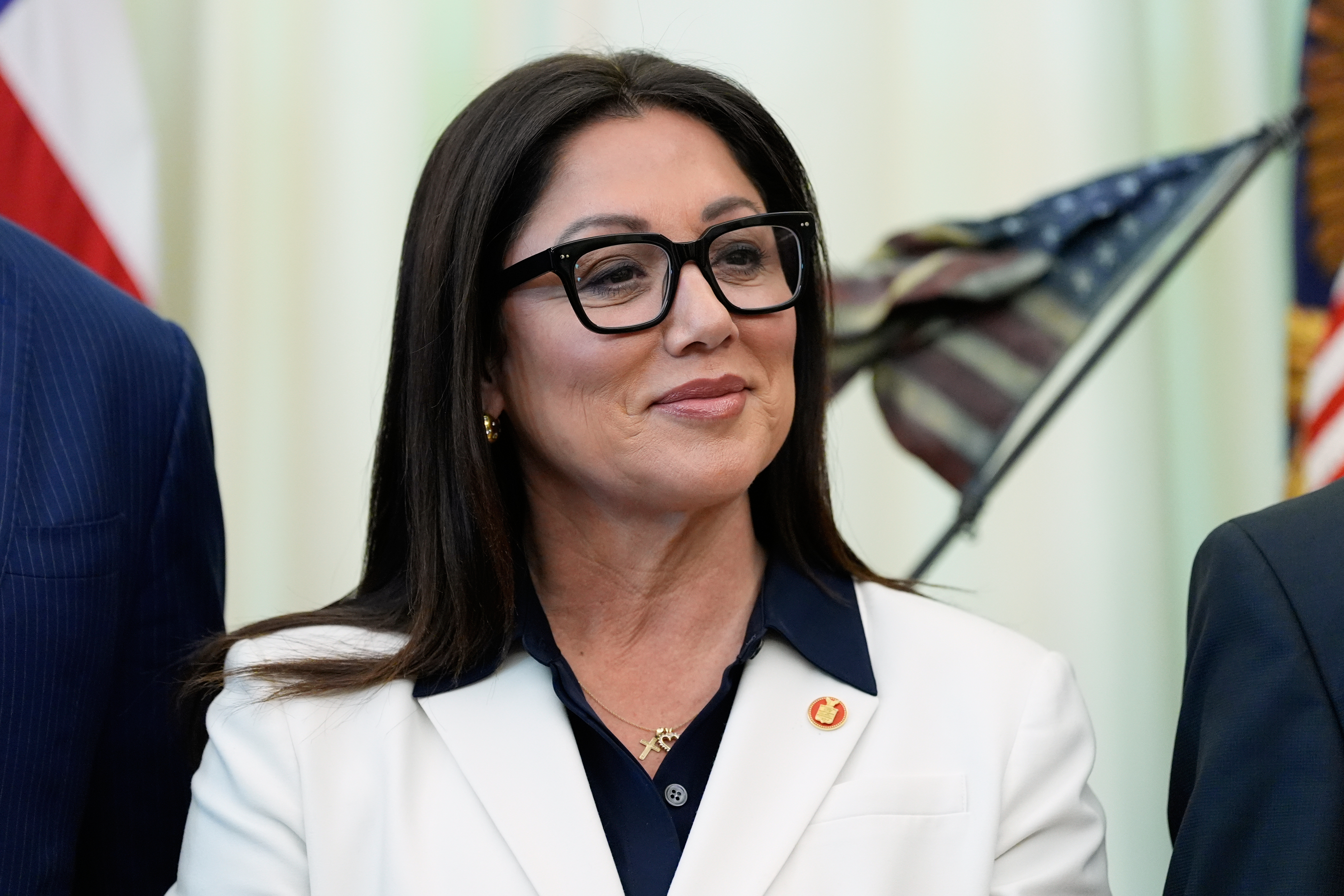
    NEW YORK — Former Labor Secretary Lori Chavez-DeRemer oversaw a “toxic, intimidating, and humiliating” work environment and engaged in numerous violations of department policy, according to a new report from the department’s Office of Inspector General.

    The report alleges that Chavez-DeRemer “engaged in an inappropriate relationship” with a member of her security detail and repeatedly directed staff to perform personal tasks on government time. It also accuses her of inappropriately combining personal and official travel, violating the department’s alcohol policies, and failing to report gifts through proper channels.

    Based on interviews with dozens of current and former labor department staffers and a review of more than 500 documents, images, and videos, the report includes several striking allegations.

    During a personal trip to Oregon, it reports, Chavez-DeRemer allegedly stopped at a strip club featuring partially nude dancers and directed her limousine driver to come inside and give money to a performer, despite his hesitation. She then “took additional money from her purse and asked the agent to drop the bills one by one onto the partially nude woman,” despite his protests.

    Chavez-DeRemer, who resigned earlier this year, could not immediately be reached for comment.

    She is also accused of repeatedly directing staff to perform personal tasks during work hours. That included, at one point, directing her personal aide and executive assistant to travel to her home and organize her bedroom closet. After completing the task, they were asked to provide a video documenting their work. The report includes a photo of neatly hung, colorful blazers, alongside purses and shoes.

    In other instances, it alleges, she sent staffers to her home to retrieve packages from the mail room, instructed them to make personal purchases that weren’t always reimbursed, and directed a Hispanic federal employee to communicate with Spanish-speaking workers, including a house cleaner and movers.

    The report alleges Chavez-DeRemer developed and maintained an inappropriate and unprofessional relationship with a senior agent on her security detail, documenting in extensive detail witness reports of her massaging the agent’s shoulder, the two golfing and gambling together, and leaving an event walking arm-in-arm.

    Investigators obtained electronic hotel door lock records that suggested the two were spending time overnight in each other’s rooms. And they obtained key fob records and video footage to document his visits to her home.

    The relationship, they said, “appeared to continue even after he was placed on administrative leave and was suspended from his official duties.”

    The office also concluded that the former secretary and senior staff consumed and stored alcohol on federal property without permission, and that she combined personal and official travel, including visits to family, personal residences, and Las Vegas. And it identified a handful of gifts that were not reported, including tickets to attend a rodeo, an alligator-hide wallet, and cowboy hats.

    The report also alleged that Chavez-DeRemer oversaw a hostile workplace, with senior staff “routinely engaged in threatening, demeaning, and abusive verbal and written communication” that she was seemingly aware of but did not take action to stop.

    Witnesses described the work environment as “toxic, intimidating, and humiliating,” with staff accused of berating employees in front of colleagues, openly discussing performance issues in the presence of other staff, and frequently making threats of termination.

    Senior staff were also accused of making staffing decisions based on physical appearance instead of qualifications, including relocating one employee’s desk because they did not want a “fat person” seen in the front office.

  • Will the real William Howard Taft please stand up?

    Will the real William Howard Taft please stand up?

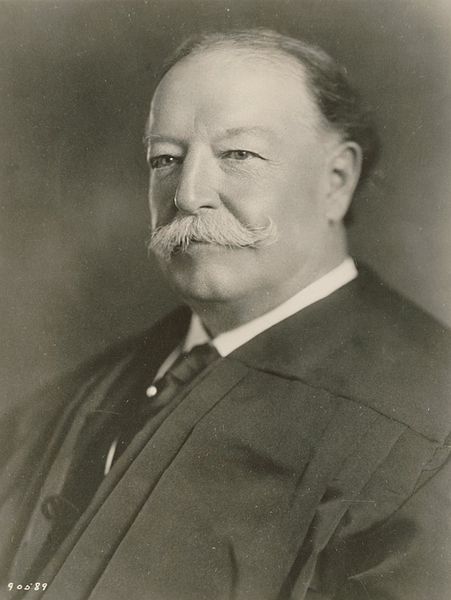
    Chief Justice John Roberts and his conservative majority like to cosplay as historians when they write court opinions that determine what rights we get to have and exercise. In August, though, Roberts tried the real thing. He took to the In Pursuit project’s Substack to write a brief history of a man he admires: former president and chief justice, William Howard Taft.

    Roberts’ version of Taft is a sober, steady president (1909-1913) to be hailed for his refusal to unduly use executive power. And for Roberts, Chief Justice Taft (1921-1930) is “one of [the nation’s] great Chief Justices” because he started modernizing the Supreme Court by growing the institution’s status and constitutional authority — a project Roberts continues to make his own.

    But Roberts’ history of Taft is irresponsibly shoddy; he cherry-picks facts, ignores narratives that don’t fit with his rosy portrait of Taft’s presidency, and he completely omits Taft’s damning record on race relations and civil rights.

    In truth, Taft was a white supremacist. He admitted as much on the campaign trail in 1906, when he told Republican voters in North Carolina that Black people were “a class of persons so ignorant” and likened them to the “mental stature” of children.

    Taft’s racism was partly opportunistic. In 1908 he was running as the Republican standard-bearer against Democrat William Jennings Bryan to succeed President Theodore Roosevelt. Since Reconstruction, the southern states had voted exclusively for Democrats. But Taft believed he could find a way to “break” the “Solid South” by luring away racist white voters to vote Republican. His preferred tactic was a racist dog-whistle.

    And so, while Taft once lamented the arsenal of racist laws that disenfranchised Black Americans throughout the country, he didn’t think Jim Crow discrimination was a very big deal. After all, it was merely “the ignorant colored voter,” he believed, who was being kept away from the polls — downplaying the violence that upheld disenfranchisement. Perhaps things might change, he added, if Black men got smarter and worked harder. For Taft, Black Americans needed to earn the vote and prove to white society that they could be entrusted with that privilege.

    Taft’s electoral strategy never panned out. Even though he handily won the 1908 election, the “Solid South” stuck with Democrats. Nonetheless, as president, Taft continued to side with white supremacy.

    In 1911, the Ninth Cavalry Regiment of Black troops — the famed “Buffalo Soldiers” — were stationed in San Antonio, where they encountered Jim Crow streetcar laws that mandated segregated seating. The troops refused to obey, destroying the segregation signs and standing up to streetcar conductors who demanded compliance. Democratic congressman and future Vice President John Nance Garner lobbied Taft to punish the U.S. soldiers, and the Taft eagerly complied, dispatching the Buffalo Soldiers to the desert to monitor the U.S.-Mexican border.

    President Taft also did nothing to confront the lynching epidemic that claimed roughly 250 Black lives during his presidency. In his first Annual Message to Congress — the forerunner to today’s State of the Union address — Taft explained that he sympathized with those who might choose to become part of the lynch mob. Yes, he conceded, lynchings involved “lawless violence and cruelty.” But Taft excused this, arguing that white people conjured the lynch mob because they were sick and tired of waiting for the ponderous court system to deal with Black people that supposedly broke the law. Faced with this “injustice,” the white lynch mob’s actions were justified, according to Taft.

    Taft’s forgiving attitude toward the lynch mob wasn’t just theoretical. On April 20, 1911, a white lynch mob in Livermore, Kentucky murdered a Black pool hall manager named Will Potter inside the local opera house. For the supposed crime of kicking white ruffians out of the pool hall, Potter “was dragged before the footlights and his body riddled with bullets from the guns of an audience of half a hundred determined avengers,” according to the New York Times. Rumor had it that witnesses were charged admission. Those who wanted to be part of the firing squad had to pay extra. When the shooting stopped, “the lights were then extinguished, the curtain lowered, and the mob then filed out.”

    The NAACP’s executive committee dispatched a plea to leading government officials, including Taft, demanding action. An NAACP committee even visited Taft to request that he condemn lynching. According to an NAACP internal document dated June 11, 1911, “The President assured the Committee that he could do nothing, that it was a matter to be left to the individual states.”

    Taft’s refusal to use executive authority to confront lynching is shocking. However, it is this type of inaction that Chief Justice Roberts believes made Taft a model chief executive. Roberts’ favorable interpretation of the Taft presidency highlights his restraint. “Steady competence, self-restraint, and respect for the other branches were the hallmarks of the Taft Administration,” writes Roberts.

    Taft’s contemporaries were less impressed with his presidency.

    Taft was one of the few incumbent presidents to lose reelection, somehow coming in third in what should have been a two-way race in the 1912 contest. He’d promised to lower tariffs but ended up raising them, and Taft’s unwavering support for an ultra-conservative Supreme Court all but doomed progressive reforms in areas like labor rights. So dire was Taft’s record that his former mentor, Teddy Roosevelt, came out of retirement to challenge him for the Republican nomination. In the general election, Democrat Woodrow Wilson trounced Roosevelt — running as the Progressive Party candidate — as well as Taft and Socialist Eugene Debs.

    Roberts reserves his greatest appreciation for Taft’s contributions as chief justice between 1921 and 1930, which grew the “prestige” and “authority” of the Supreme Court. Namely, Taft pushed passage of the Judiciary Act of 1925, “which gave the Supreme Court control over its own docket,” and oversaw construction of the court’s august building on Capitol Hill.

    But what about the Taft Court’s actual decisions? Here Roberts has little to say, but recent scholarship by law professors Nikolas Bowie and Daphna Renan shows that, at best, Taft and most of his colleagues had a studied disinterest in civil rights. At worst, Taft used his opinion in the 1926 case Myers v. United States to stamp the Supreme Court’s imprimatur on the white supremacist version of the history of Reconstruction.

    The case concerned a Reconstruction-era law that prevented President Andrew Johnson from firing federal officers committed to implementing the Reconstruction Acts after the Civil War. For Taft, Reconstruction wasn’t an attempt to use the law to right the wrongs of slavery and legislate equality, but an attempt “to reverse” the Constitution.

    Of all his contributions on the bench, this was the decision of which Chief Justice Taft was most proud. Taft’s prized decision was of a piece with an emerging white supremacist revisionist history of the Civil War and Reconstruction seen, for example, in D.W. Griffith’s film Birth of a Nation (1915) and in the explicitly pro-slavery, pro-Confederacy approach to writing American history pioneered by William Dunning and his students, whose work was used to bolster Jim Crow.

    Made By History sponsors. FOR USE ON MADE BY HISTORY STORIES ONLY.Inquirer Staff

    So the question, then, is: why did Roberts write this fluffy, mythological history of Taft? Is it because Roberts’ selective historical method ignored Taft’s abysmal record on civil rights and lynching? Or perhaps Roberts has never heard of Taft’s Myers decision.

    A less generous answer might be that while Roberts chose to airbrush Taft’s race relations and civil rights story out of his history, the current chief justice knows more than he’s letting on. After all, in cases like Callais v. Louisiana (2026), Brnovich v. Democratic National Committee (2021), and Shelby County v. Holder (2013), Roberts led the charge to destroy the single most significant civil rights legislation ever enacted: the Voting Rights Act.

    If Taft’s legacy was to retrench the freedoms won during the Civil War and Reconstruction, Roberts’ legacy may one day be recognized as an assault on the victories of the Civil Rights Movement.

    It doesn’t take much digging in the history of race relations and civil rights to see that Taft’s executive restraint and court stewardship that Roberts so admires served the agenda of perpetuating Jim Crow white supremacy. This is bad history. But perhaps Roberts’ methodological sins of omission tell us exactly why the sitting chief justice sees so much to admire in his predecessor.

    Gautham Rao is Associate Professor of History at American University, and author of “White Power: Policing American Slavery.”

    Made by History takes readers beyond the headlines with articles written and edited by professional historians. Opinions expressed do not necessarily reflect the views of The Inquirer.

  • College loans were late due to new federal rules. Students are paying the price.

    College loans were late due to new federal rules. Students are paying the price.

    Mikiah Roberson expected to receive her federal $6,700 student loan disbursement sometime between May 27 and June 3, just in time to make her rent and car payments. Instead, June 3 came and went. Days, weeks and finally over a month passed.

    Roberson, a graduate student in University of Maryland Global Campus’s digital forensics and cyber investigation program, said the stress only compounded as her eight-week summer semester continued without any of her expected financial aid. As a disabled veteran, Roberson’s tuition is covered, but she relies on federal student loans to pay for living expenses while in school.

    “It had a major impact on my mental and emotional health,” Roberson said, as she struggled to get clear answers on when or if she might receive the money. “Just constantly stressing out whether an eviction notice would be coming, if my lights would be turned off, if my car would be repossessed.”

    Federal student loan disbursements for many students, like Roberson, were delayed over the summer session after new federal rules kicked in on July 1 that required major updates to the systems colleges use to administer aid. While no one is tracking the full scale of the problem, experts are worried about whether delays will persist into the fall semester that is underway. That could have severe impacts for the nearly 60 percent of students who already experience some form of housing or food insecurity.

    When loan money gets held up, students have no recourse against either their school or the federal government. Instead they must find ways to temporarily cover personal budget gaps of thousands of dollars — at a time when the cost of housing and other basic needs are rising rapidly.

    Delayed student loan disbursements are “incredibly significant in terms of whether a student is able to remain enrolled and remain housed and cover their own basic needs,” said Aissa Canchola Bañez, policy director at Protect Borrowers, a nonprofit that advocates for student loan borrowers. “Everything is more expensive, and so that just makes financial aid and the loans that these students are eligible for and entitled to even more consequential.”

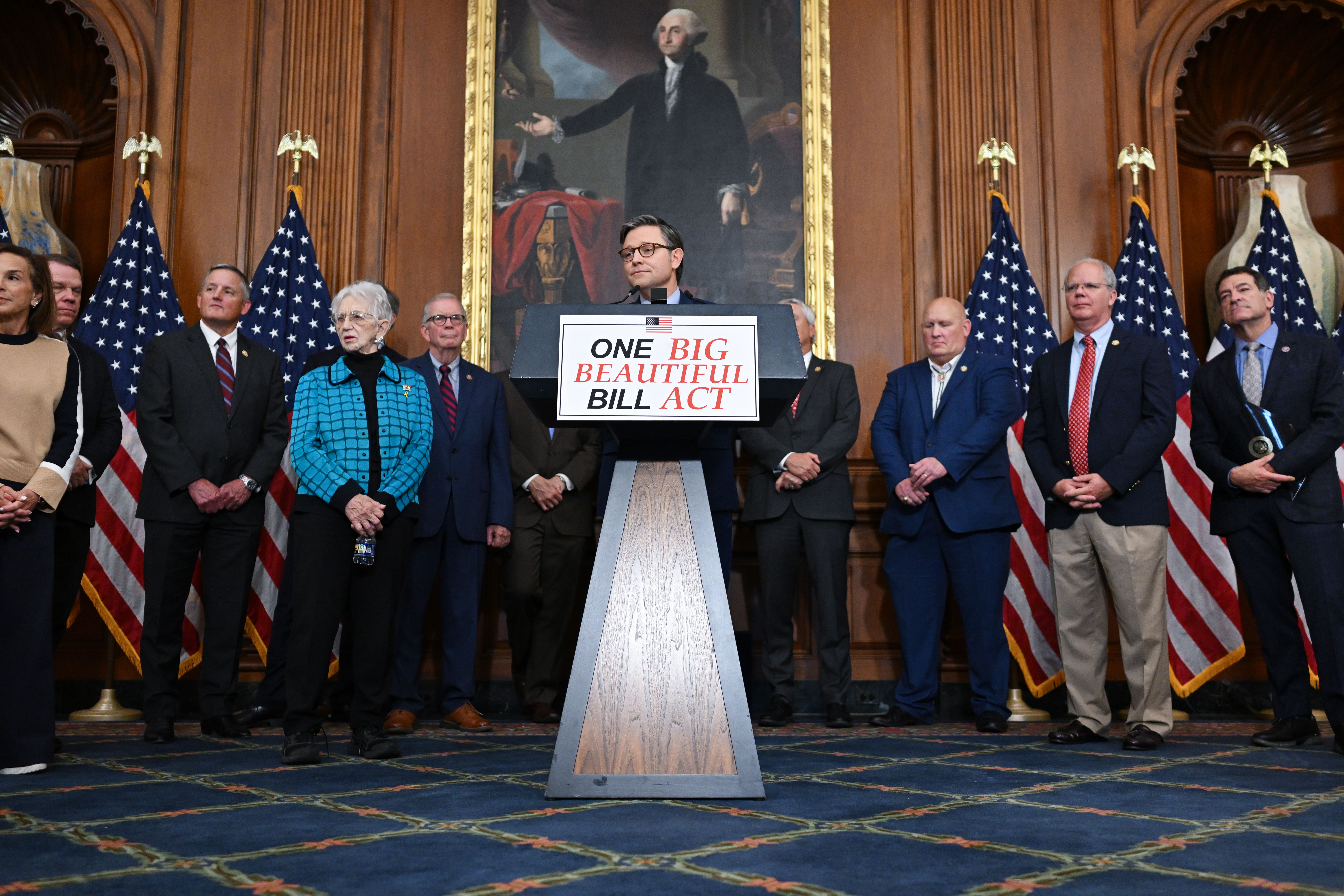
    Experts, advocates and financial aid administrators place the blame on atypical planning from Congress when it passed the One Big Beautiful Beautiful Bill Act. The legislation didn’t give the Education Department enough time to issue full guidance on new student loan regulations, leaving many colleges struggling to adapt. In some cases they are waiting on third-party software vendors to make needed changes or are calculating and administrating aid by hand.

    Ellen Keast, a spokesperson for the Education Department, said in an email that the department worked within the deadlines set by the One Big Beautiful Bill Act, which required the changes to take effect on July 1, 2026.

    “Congress gave the Department less than a year to implement these changes,” Keast said.

    She noted that the agency released the final rules in May, which she said provided “time for schools to prepare.”

    Rep. Tim Walberg (R-Michigan), chairman of the House Committee on Education and Workforce, said in an emailed statement that the legislation significantly overhauled a “broken system” and praised the work the Education Department had done.

    “Delaying needed reforms would have negative consequences for students and taxpayers,” he said.

    The One Big Beautiful Bill Act, signed by President Donald Trump on July 4, 2025, includes a number of provisions that reshape federal student loans, including a new lifetime borrowing limit and lowered limits on outstanding aggregate debt for graduate students. The bill also placed new limits on Parent PLUS loans and eliminated the Graduate PLUS loan program. Another provision, starting the 2026-27 school year, requires schools to prorate loan amounts based on how many credits a student is taking. Altogether, the changes are expected to impact a significant number of the roughly 13 million students annually who rely on federal financial aid.

    When students don’t receive their money on time, the delays set off an avalanche of financial problems.

    One student in National University’s graduate program in marriage and family therapy told The Hechinger Report she expected a $5,000 disbursement sometime around June 1. The student (whose name is being withheld out of concern of retaliation from her university) relies on these disbursements every three months to cover two months of rent, as she slowly saves up to pay the third month’s rent through her part-time job as a nanny.

    “I had to reach out to family members and get help, and that was also really stressful for them because I was hoping to be able to pay them back with my refund, and nobody knew when the refund was coming,” she said. “And so that just kind of created a cascade of tough situations.”

    She didn’t receive her funds until mid-July. By that point, she’d paid rent late in June and July, with a $100 late fee each time.

    National University did not respond to requests for comment.

    When it comes to disbursing financial aid, the relationship between the federal government and higher education institutions is complex. To help mitigate that, the Higher Education Act lays out a “master calendar,” which outlines formal dates and deadlines the Education Department must follow.

    Under the master calendar, the department has to start the rulemaking process a full year and a half before the academic school year starts. After negotiations, months of public comment and department review, a final rule needs to be issued in November of the preceding year. But because the One Big Beautiful Bill Act was signed in July 2025 with an effective date of July 1, the department couldn’t follow this timeline. And that gave colleges less time to adjust.

    Colleges normally spend the months between November and the start of the next academic year understanding any new regulations, getting clarifying questions answered by the Education Department, and making sure their software vendors have what they need to update their systems, according to Sarah Austin, a policy analyst at the National Association of Student Financial Aid Administrators.

    “Just having enough time to get the information, make sure the software vendors have the information, make sure they can then reprogram everything, getting the specs that they need — all of that takes time,” Austin said. “What we’ve seen here is a condensed version of that.” As of August, some of the major software vendors used by colleges still weren’t caught up, she noted.

    The National Association of Student Financial Aid Administrators and over 40 other higher education organizations had previously called on the Education Department to delay implementation until July 1, 2027, to allow the process to follow the normal timeline.

    “That is not a minor inconvenience. It is a fundamental breakdown in the infrastructure that supports federal student aid delivery,” wrote Kenneth Ferreira, then-president of the Eastern Association of Student Financial Aid Administrators, in an April op-ed.

    Institutions also say that the federal government has been slow to roll out guidance and clarifications about some of these changes, and some details are still up in the air, said Austin. The Department released formal guidance on prorating loans for students who aren’t enrolled full-time, for instance, in early August, just a couple of weeks before classes began at many institutions.

    Some of the guidance has also been conflicting, with differing information across some of the Education Department’s written materials and webinars, according to the National Association of Student Financial Aid Administrators. On Aug. 20, a group of 16 congressional Democrats sent a letter calling on the Education Department to issue additional guidance clarifying how schools should prorate loans.

    “We ended up seeing a lot of last-minute changes, and not enough guidance. And the reason why we have a master calendar provision is it is difficult for colleges to adapt to new regulations when there’s not enough time,” said Mark Kantrowitz, a student loan and financial aid expert.

    To Keast, though, the final rule should not have come as a surprise to any colleges. She noted that last November, the department reached consensus on the proposed rules, an early stage in the process.

    “If institutions waited until the final rule was issued to start preparing, that was their decision,” Keast said. She also pointed to available published guidance, Q&As, webinars and other resources from the department.

    This rift between the department and many of the major organizations representing colleges and financial aid administrators is trickling down to students like Roberson.

    “There was a whole lot of passing the buck,” Roberson said on her attempts to get answers on what happened to her financial aid. University of Maryland Global Campus directed her to the Education Department’s Federal Student Aid office. Employees there told her to contact her school.

    “Nobody had answers for when the funds would be released,” said Roberson, who said she often received conflicting information.

    In an emailed statement, Kaitlin O’Connor, vice president of University Communications at the University of Maryland Global Campus, said the university has been working on the federally required processing changes.

    “The university has continued processing and awarding aid, reviewing individual student cases and working closely with federal and higher education partners to ensure compliance with applicable requirements while supporting students throughout the process,” the statement said.

    Roberson negotiated partial payments with her landlord and entered payment arrangements for other bills. But the wait stretched into its second month. “You’re telling them, ‘Hey, the money’s coming,’ but weeks are passing and nothing changes,” she said. “I kept pushing out the dates and saying next month I’ll be good, and then here we are at month two, and it’s like now things are getting very detrimental.”

    Roberson continued, “You have to start to decide between do I pay a bill or do I get groceries? Do I get gas or do I get food?”

    Meanwhile, the stress took a toll on her studies. “I knew that I didn’t want to fail, but it was very, very hard,” she said. “Me and a lot of my classmates were expressing to each other how difficult it is to focus on schoolwork when you have bills piling up and all these things you need to pay.”

    Experts predict the crunch will continue into the fall semester as schools try to catch up with the new rules.

    Nick Prewett, executive director of financial aid and scholarship services at Stony Brook University and the president of the Eastern Association of Financial Aid Administrators, said so far the delayed disbursement has mostly impacted the school’s medical students, who start in the summer.

    But with fall semester underway at most schools, he said, “I think we’re going to see some delays in aid getting out to students. And I think you’re going to hear that kind of message across the country that students, particularly graduate students, are waiting,” Prewett said.

    Prewett added that for students enrolled part-time, Stony Brook plans on waiting until the end of the add/drop period (a couple of weeks after school starts) to adjust student loans based on the number of units students end up with. “And I think that’s going to cause a little bit of confusion and maybe a little bit of panic on behalf of the student,” he said.

    Roberson eventually received her summer disbursement in mid-July, about six weeks late into an eight-week summer program. She’s supposed to receive another $6,700 disbursement in early September, but she’s no longer counting on getting those funds on time. She’s taking on work as a delivery driver for Amazon — a challenge with her back pain from her disability.

    “I’m nervous because I don’t know if we’re going to hit this situation again,” Roberson said. “It’s very nerve-racking just trying to prepare ahead of time for if an issue arises, which is unfair when you’re trying to focus on class.”

    This story about student loan changes was produced by The Hechinger Report, a nonprofit, independent news organization focused on inequality and innovation in education.