Category: National Politics

  • Tom Kean Jr. backs Trump on Iran and tariffs, if not local issues

    Tom Kean Jr. backs Trump on Iran and tariffs, if not local issues

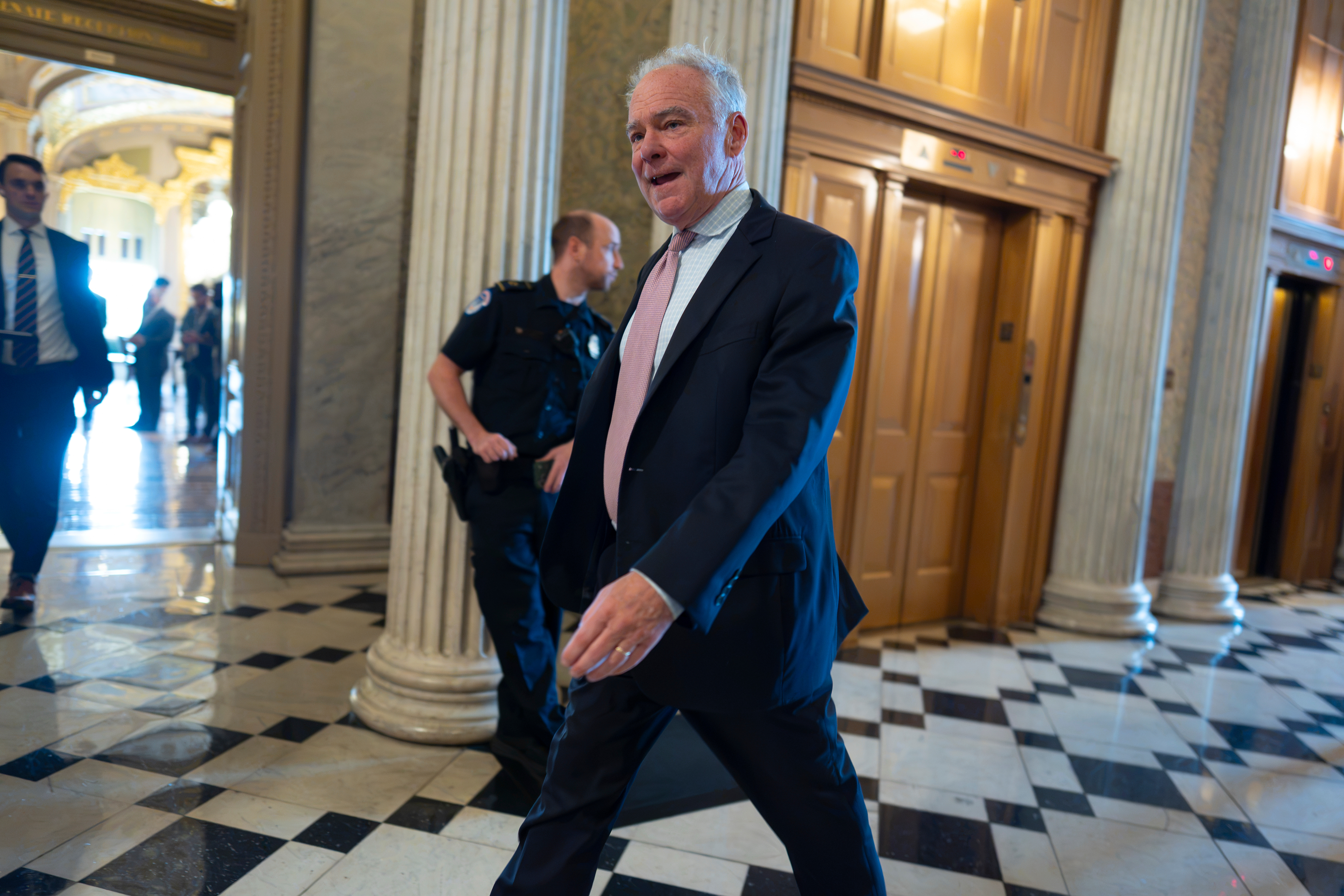
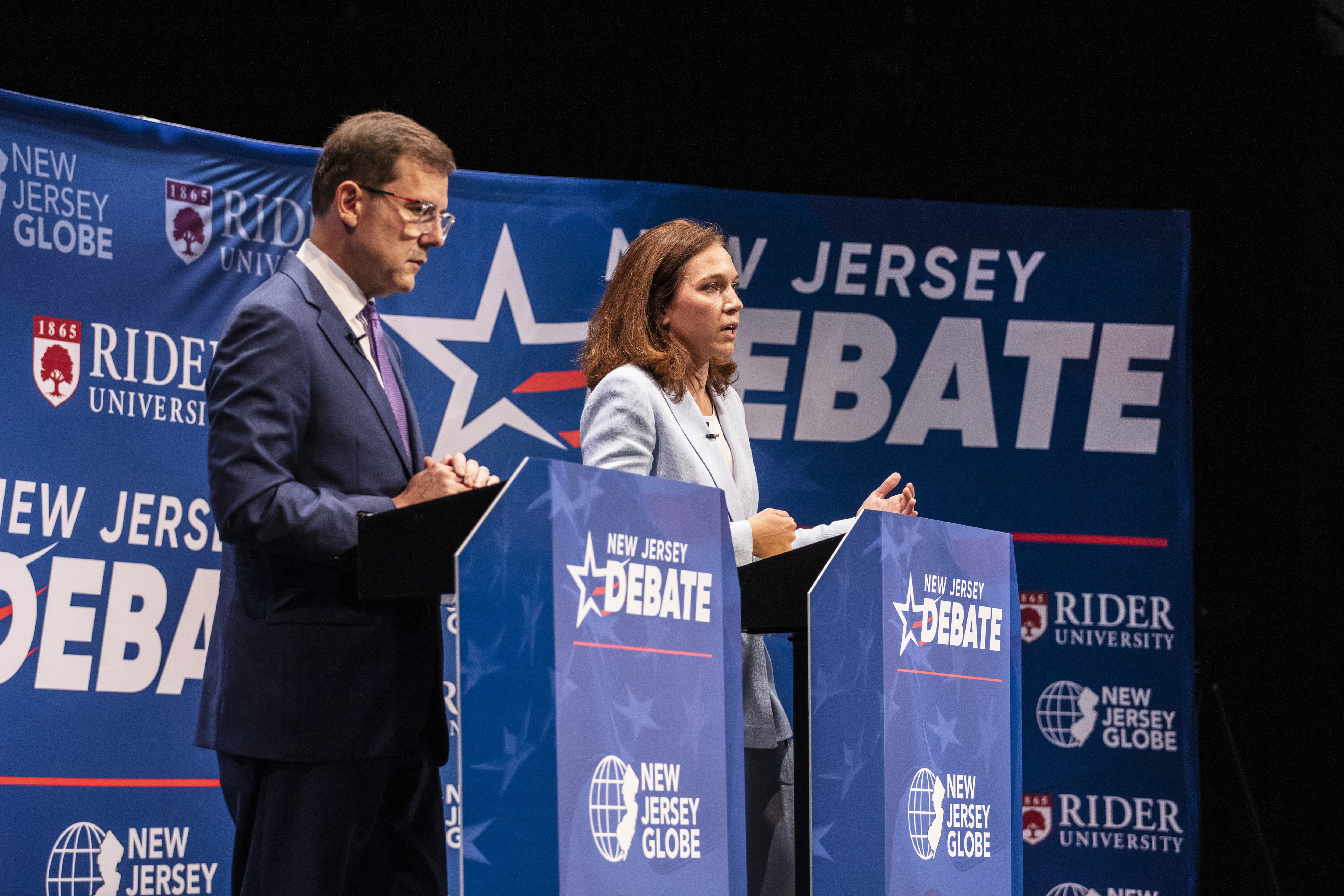
    Rep. Thomas Kean Jr., a New Jersey Republican in a tight reelection battle, sought to distance himself slightly from President Donald Trump on Sunday as his Democratic opponent, Rebecca Bennett, pelted him with reminders of his years of loyalty to the unpopular president.

    Kean began his opening comments during a debate in Rahway, New Jersey, by stating that he was willing to stand up to Trump’s efforts to strip funding from a critical Hudson River rail tunnel. “I will make sure that I counter anybody who gets in my way, including this president,” he said.

    And for the first time, Kean clearly stated his opposition to the Trump administration’s plan to convert a warehouse in Roxbury, New Jersey, into an Immigration and Customs Enforcement detention center.

    He also said he opposed Trump’s decision to change the name of Lake Ontario to “Lake America.” On key issues such as the war in Iran and the president’s tariffs, however, he maintained strong support for Trump’s policies.

    “The president is justifiably using that to reduce costs for consumers,” Kean said of the tariffs.

    His seat in New Jersey’s 7th Congressional District, which has seesawed between the two parties three times since 2018, is considered a prime pickup opportunity for Democrats as they try to retake control of Congress in November.

    On Friday, in a sign of the volatility of the contest, The Cook Political Report shifted the race from “toss-up” to “leans” Democratic, despite the Republican Party’s 16,600-voter registration edge. An independent poll taken this month showed Kean trailing Bennett, a former Navy helicopter pilot.

    Groups aligned with the Republican Party are pumping millions of dollars into the race. Kean and his Republican allies have booked $17.4 million in advertising, far outpacing Democrats’ $4.9 million, according to AdImpact, an ad analytics firms.

    Sunday’s debate was the first time that Kean, 58, had subjected himself to extensive public questioning since being absent from Congress for nearly four months while being treated for what he has said was depression. The first question Kean was asked dealt with the lack of information he shared while hospitalized and missing from Congress from March through June.

    “Nobody can plan a medical emergency,” he said. “And that was a medical emergency.”

    Neither the debate’s moderators nor Bennett pressed him for additional details about his treatment or his fitness to continue to hold office for a third term.

    “I’m glad that you got access to the care that you need,” Bennett said, “and I wish you a continued speedy recovery.”

    Kean — the son and namesake of a former New Jersey governor — has never been known as a graceful speaker, even after 25 years as a politician. But he appeared confident Sunday as he parried for 90 minutes with Bennett. His wife, father and twin brother sat in the front row behind the moderators.

    He stressed his experience and his unconditional support for Israel, noting that he would support sending U.S. troops to defend the country, if needed. He also tried to depict Bennett, a first-time candidate, as a puppet of the Democratic Party.

    “You have not heard my opponent once tonight differ from the average Democratic member of Congress, who always votes the party line,” he said.

    Bennett, 39, focused on Kean’s support for Trump’s policies, including his vote to slash Medicaid funding, as she worked to present him as out of touch with his constituents’ concerns.

    She repeatedly mentioned his active stock portfolio and the trades he signed off on while absent from Congress, as well as the fact that he had not put his assets in a blind trust when he entered Congress, as he had promised to do. (Kean’s lawyer has said that doing so would preclude him from also taking “principled and pragmatic stands” against investing with foreign adversaries and selling American stocks short.) Bennett said she had sold all of her individual stocks before the race — although she refused, when pressed, to disclose the value of those sales or her net worth.

    Bennett also spoke forcefully about the need to end the war in Iran.

    “Any time we are going to put American service members in harm’s way, there needs to be a clear motivation, a clear objective and a clear exit strategy,” she said. “And we have not seen any of that from this administration.”

    She repeatedly linked the war to the high price of gas as she stressed her goal of bringing down costs if elected. “The reason that we are seeing this increase in our gas prices,” she said, “is because of this unnecessary war.”

    The two did share a moment of bipartisan agreement when asked about pineapple on pizza.

    “I find that perfectly acceptable,” Kean said.

    “I’ll eat it,” Bennett said. “But I wouldn’t put it on there myself.”

    After the debate, the challenger lingered to take questions from reporters. Bennett said that if Kean opposes Trump’s efforts to block funding for the Hudson River tunnel, which is known as Gateway, he hasn’t been effective.

    “Donald Trump has tried to hold up the funding for the Gateway tunnel,” she said, “and Tom Kean Jr. has been unable to do anything to make sure we’re actually going to get the funding back.”

    Minutes after the debate ended, Kean quickly exited through a side back door, flanked by family members and aides.

    He ignored a question about his differences with Trump as he climbed into a silver sport utility vehicle that was waiting for him near the exit.

    This article originally appeared in The New York Times.
  • Supreme Court lets Trump administration use revamped federal voter eligibility database for now

    Supreme Court lets Trump administration use revamped federal voter eligibility database for now

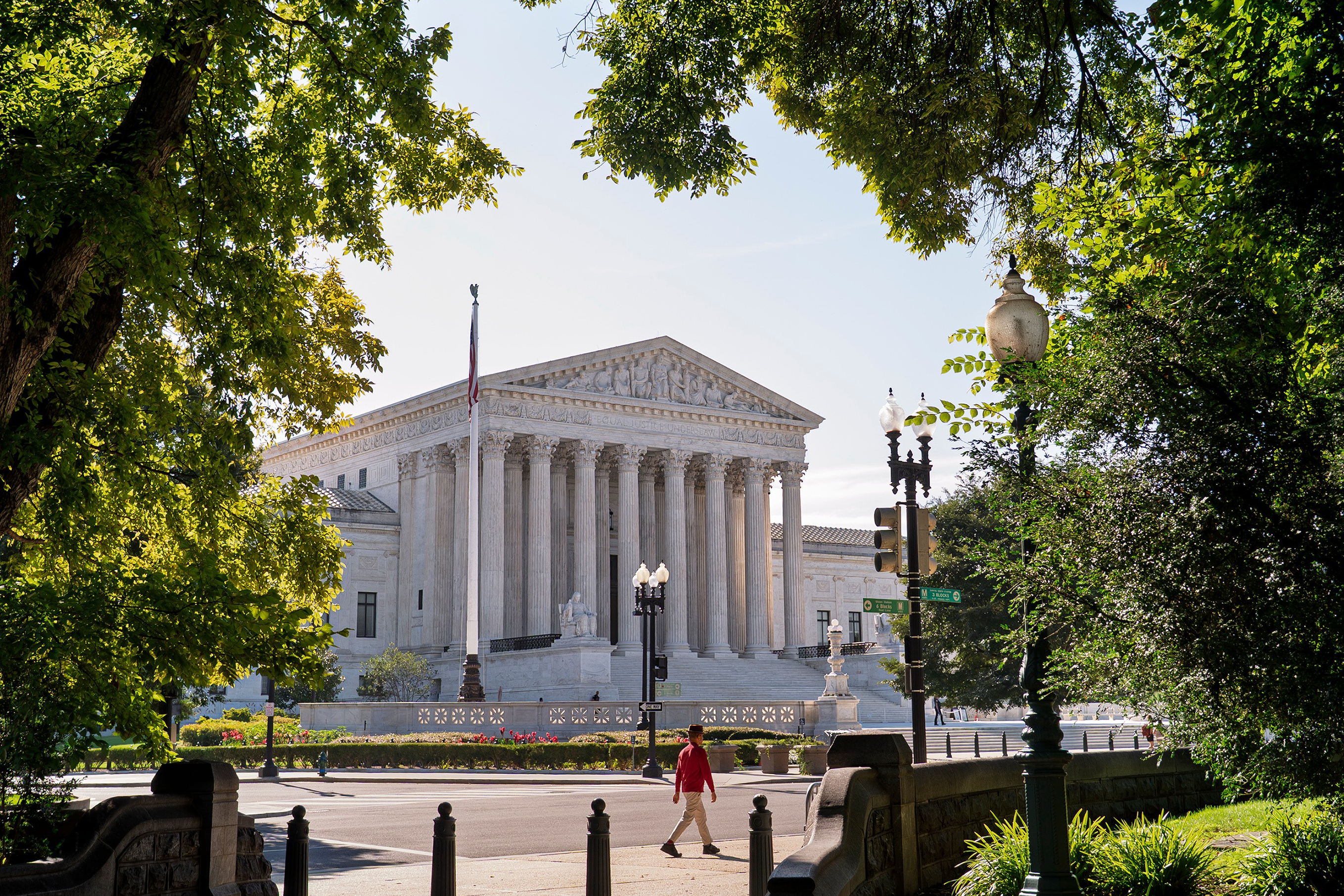
    NEW YORK — The Supreme Court on Friday lifted restrictions on a controversial federal voter database before November’s elections, granting President Donald Trump a temporary win in his aggressive campaign against noncitizen voting.

    The emergency order allows states, for now, to use the Department of Homeland Security program, called Systematic Alien Verification for Entitlements, or SAVE, in their efforts to verify the eligibility of voters on their rolls. But because existing law blocks most states from systematically purging voters from their rolls within 90 days of an election, the immediate impact on the upcoming midterms is likely limited.

    States’ use of the SAVE program is voluntary.

    The court’s order puts on hold a federal judge’s June ruling that had deemed the Republican administration’s recently revamped version of SAVE illegal. U.S. District Court Judge Sparkle L. Sooknanan had blocked the use of the tool, saying it violated Americans’ privacy rights and could result in voters being wrongly removed from the rolls.

    A federal appeals court declined to pause Sooknanan’s ruling, prompting the administration’s appeal to the Supreme Court.

    The SAVE program was created under an immigration law mandating that DHS help federal, state and local agencies prevent government benefits from going to noncitizens. The Trump administration last year moved to significantly expand its search abilities. Since then, at least 67 million registrations have been scanned through the program, but critics worry it could end up purging valid voters from the rolls.

    Some registrants have already been wrongly flagged. In Travis County, Texas, for example, officials said they investigated 97 voters flagged by SAVE as apparent noncitizens and found that at least 10% of them — and likely up to 21% — were U.S. citizens. The county urged the Supreme Court to reject the administration’s appeal, while the state of Texas submitted its own brief defending the database.

    Even though the use of the SAVE program has been blocked for months, the administration said in court filings that DHS officials have continued using Social Security Administration data “in certain cases to verify information and help determine whether illegal voting may have occurred.”

    DHS in August launched its own investigation to find noncitizen voters on state rolls, according to a federal whistleblower statement that said the effort is rushed, filled with errors and potentially violates state laws. DHS has defended that investigation as being conducted “diligently and professionally.”

    The effort to create a national voter list is among numerous steps Trump has taken during his second term to try to overhaul the way elections are run. Most of those steps have been blocked by various courts, in part because the Constitution gives states and Congress the authority to set election rules, but provides no such power to the president. In mid-September, the Supreme Court rejected a bid from Trump to restrict mail ballot procedures before the midterms.

    Research shows that noncitizen voting, which is already illegal and punishable as a potential felony that could lead to deportation, is exceptionally rare. But Trump has remained fixated on the idea that massive numbers of noncitizens are voting in U.S. races.

  • What U.S.-Vietnam reconciliation can teach us about Afghanistan

    What U.S.-Vietnam reconciliation can teach us about Afghanistan

    After the Taliban captured Kabul on Aug. 15, 2021, numerous news articles compared Washington’s withdrawal from Afghanistan to similar events in Vietnam on April 30, 1975. Some articles highlighted differences in the conflicts, such as media coverage and troop motivations, while others underlined similarities, including the evacuation of nearly identical numbers of Afghans and Vietnamese in the days leading up to collapse of Kabul and Saigon.

    It’s been five years since America’s withdrawal from Kabul — and the experience of the United States leaving Vietnam still resonates as Afghanistan has become one of the poorest countries in the world.

    In Vietnam, Hanoi’s counterproductive domestic and foreign policy stifled the economy, undermined diplomacy, and caused a mass exodus of millions of Vietnamese from the country. And yet, 20 years later, Vietnam normalized relations with the United States and embraced a global market system that has since made it one of the world’s fastest-growing economies.

    Two main factors explain U.S.-Vietnam reconciliation. The first stemmed from Hanoi’s moderation in foreign policy, which downplayed Cold War rhetoric and acknowledged the need to integrate into the international system. The second stemmed from Washington’s diplomatic strategy toward Vietnam, which maintained consistent conditions for normalizing relations.

    When the United States left in 1975, Vietnamese Communist Party leader General Secretary Le Duan implemented socialist policies, including agricultural collectivization and forced relocation to New Economic Zones. Hanoi also imprisoned hundreds of thousands of South Vietnamese who had cooperated with Americans during the war in order to “re-educate” them in Marxist thought.

    Relations deteriorated with China and Cambodia, two countries that cooperated with Vietnam to resist America’s presence in Indochina. Hanoi invaded Cambodia in December 1978, following Pol Pot’s repeated incursions into Vietnam. China responded by sending 200,000 soldiers into northern Vietnam, leading to a three-week border war. The nation became one of the poorest countries in the world, kept afloat only by subsidies from the Soviet Union. The U.S. embargo did not help.

    The Carter administration attempted to normalize relations with Vietnam without preconditions prior to Hanoi’s occupation of Cambodia. Vietnam refused to do so, demanding the United States pay $3.25 billion in war reparations. After the December 1978 invasion, Jimmy Carter conditioned normalization on Vietnam’s signing of a peace agreement on Cambodia. Ronald Reagan upheld his predecessor’s stipulation, adding that Vietnam must make significant progress on locating and repatriating approximately 2,500 American prisoners of war (POW) and missing in Action (MIA). Hanoi’s leadership cooperated, hoping to secure economic and political concessions from Washington.

    During the Reagan years, numerous other humanitarian issues compelled Washington and Hanoi to sustain a diplomatic dialogue, including the resettlement of refugees, Amerasians, and former Vietnamese political prisoners. Diplomacy on these issues helped foster a favorable atmosphere prior to reconciliation.

    Such negotiations begot economic opportunities as long as Vietnam remained in Cambodia.

    It wasn’t until 1986, after General Secretary Le Duan’s death, that the Communist Party changed course and pursued a market economy. In 1989, Vietnam withdrew from Cambodia and began pursuing new economic policies. Sustained U.S. pressure during negotiations and consistent conditions for establishing economic and diplomatic ties contributed to Vietnam’s moderation.

    Lastly, U.S. businesses wanted Washington to lift the economic embargo to give American companies access to Vietnam’s resources. Hanoi’s leadership eventually moderated its domestic and foreign policy, advancing negotiations and proving to U.S. policymakers that Vietnam could manage bilateral and multilateral relations.

    Made By History sponsors. FOR USE ON MADE BY HISTORY STORIES ONLY.Inquirer Staff

    In April 1991, President George H.W. Bush provided the Vietnamese with a road map to normalization outlining economic and political concessions in exchange for progress on the POW/MIA issue. The road map gave both sides a diplomatic plan to follow. President Bill Clinton continued Bush’s plan, and in 1994, he lifted the economic embargo. The following year, the United States and Vietnam normalized diplomatic relations.

    Certainly, the postwar conditions that fostered U.S.-Vietnamese dialogue are different for Afghanistan. There are no American POW/MIAs listed in Afghanistan. While Washington welcomed nearly 200,000 Afghan refugees since the fall of Kabul, refugee admissions are currently suspended for most nationalities, including Afghans.

    Kabul has not invaded any of its neighbors, but the United States remains committed to its partnership with Pakistan. Washington does not currently have Kabul under an embargo, but fewer countries are interested in investing in Afghanistan than at a similar time for Vietnam. Nor does it help that Hibatullah Akhundzada, leader of Afghanistan, is wanted by the International Criminal Court for imposing severe restrictions on women and girls in the country.

    But diplomatic exchange could be fruitful, politically and economically. The Taliban are increasingly desperate to modernize its economy and end its international isolation. Rather than cutting off diplomacy entirely, the example of U.S.-Vietnam reconciliation suggests that a new phase of U.S.-Afghan relations could benefit both the people of Afghanistan and U.S. interests.

    Zachary Tayler is a doctoral candidate in history at Ohio University, specializing in U.S.-Vietnam postwar relations.

    Made by History takes readers beyond the headlines with articles written and edited by professional historians. Opinions expressed do not necessarily reflect the views of The Inquirer.

  • Senate rejects resolution to halt the Iran war as gas prices upend midterms

    Senate rejects resolution to halt the Iran war as gas prices upend midterms

    WASHINGTON — Despite rising political anxiety over the Iran war, senators on Thursday narrowly rejected a war powers resolution seeking to halt President Donald Trump‘s military action, which has been largely blamed for the spike in gas prices and become a flashpoint in the midterm election.

    The Senate tally, 49-50, coming days after Trump’s bombastic address to the United Nations in which he threatened to “annihilate” Iran, was likely the last chance for lawmakers to go on record about the war ahead of November. More Republicans are peeling away from the president as the war drags on and as they campaign for control of Congress. The Senate outcome fell short, with four GOP senators joining most Democrats in favor of the resolution.

    “They have been carrying water for this ridiculous and illegal war for months and months and months and not listening to their constituents,” said Sen. Tim Kaine (D, Va.), who pushed the war powers resolution forward.

    About half of rural American voters believe the economy is worse off now than when Trump returned to office, according to a new survey from The Associated Press in partnership with KFF. The costs of groceries, gas, and healthcare rank as top pain points for the rural voters.

    “We’ve got to break the cycle,” said Sen. Thom Tillis (R, N.C.), who joined in voting yes.

    Republican Sens. Susan Collins of Maine, Lisa Murkowski of Alaska, and Rand Paul of Kentucky also voted for the resolution to end the war, as they have in many previous tallies. Sen. John Fetterman (D., Pa.) voted against.

    This was the 14th time the Senate has considered a war powers resolution, since Trump launched the conflict on Feb. 28.

    War powers resolutions are largely political statements, without the full force of law, but stand among the sharper tools the House and Senate have to express disapproval of the White House, short of halting funds for Trump’s military actions. As resolutions, they do not go to the president’s desk for his signature.

    As gas prices climb, Republicans start to question the war

    Republicans in control of Congress have shied away from directly confronting Trump over the war, now stretching past the seven-month mark. But their unrest is surfacing as stubbornly high gas prices leave voters in a cash crunch back home.

    Diesel costs, in particular, have almost doubled, topping $6 a gallon, according to AAA.

    Just returning from a swing through Iowa, Kansas, and Nebraska stumping for GOP candidates who are suddenly at risk in their elections, Sen. John Kennedy of Louisiana called on Trump to hold a prime-time address to the nation to explain the Iran war strategy and the end game.

    “People are confused about the war and upset about the cost of living,” he said.

    But he and others were not yet ready to vote against the war.

    “My own view is that the focus right now needs to be on attacking the cost-of-living issues,” said Sen. Josh Hawley (R, Mo.) who opposes the war powers resolution and believes the president is acting within his authority to conduct the military action.

    House Democratic Leader Hakeem Jeffries scoffed at the handful of Republicans now trying to distance themselves from what he called Trump’s failed economy. “Now all of a sudden they’re waking up,” he said.

    Democrats keep pushing war powers votes in Congress

    Earlier this month, the House for a third time approved a war powers resolution, this time with seven Republicans joining the Democrats, including two from battleground Iowa, Rep. Zach Nunn and Rep. Mariannette Miller Meeks, where affordability issues among rural voters are dominating the campaigns.

    Senators, though, have rarely been able to confront Trump by passing a war powers resolution.

    In June, the Senate approved a war powers resolution after four GOP senators joined Democrats, but Republicans abruptly reversed course the next day after Trump berated them during a private lunch over the outcome.

    At the time, Sen. Bill Cassidy of Louisiana, stood up to defend his vote only to end up in a shouting match with Trump. He later switched to oppose the war powers resolution after receiving a personal briefing from the White House.

    Thursday’s vote was on a resolution that had passed the House in July with GOP support. Rep. Pramila Jayapal, D-Wash., who authored the House resolution, said the Senate outcome was “a slap in the face to the millions of American people who want this war to end.”

    Other options to halt the Iran war

    As the war drags on, costing $43.5 billion so far, Congress is also seeking other ways to force Trump to rethink his military strategy in Iran.

    Rep. Thomas Massie, the renegade Republican from Kentucky, pushed forward articles of impeachment against Secretary of Defense Pete Hegseth before the GOP leadership abruptly adjourned the House and sent lawmakers home to campaign for the election, avoiding any potential vote on the matter.

    Lawmakers also have the power of the purse to curtail military spending, something Republicans have been reluctant to do but Democrats are sure to tackle if they win power in the midterm election. The White House’s request for an additional $87.6 billion funding package for the war and other needs has idled in Congress.

    First created in the aftermath of the Vietnam War as a way to hold a president accountable for military actions, the war powers act has long posed a test of the balance of power between the executive and legislative branches of government.

    While the Constitution says only Congress can declare war, the president as commander-in-chief is also able to engage the military. The war powers act seeks to provide clarity by requiring the president, within 60 days of any such action, to seek approval — or risk disapproval — from Congress.

  • FDA nominee voices support for vaccines at Senate hearing scrutinizing Trump administration efforts

    FDA nominee voices support for vaccines at Senate hearing scrutinizing Trump administration efforts

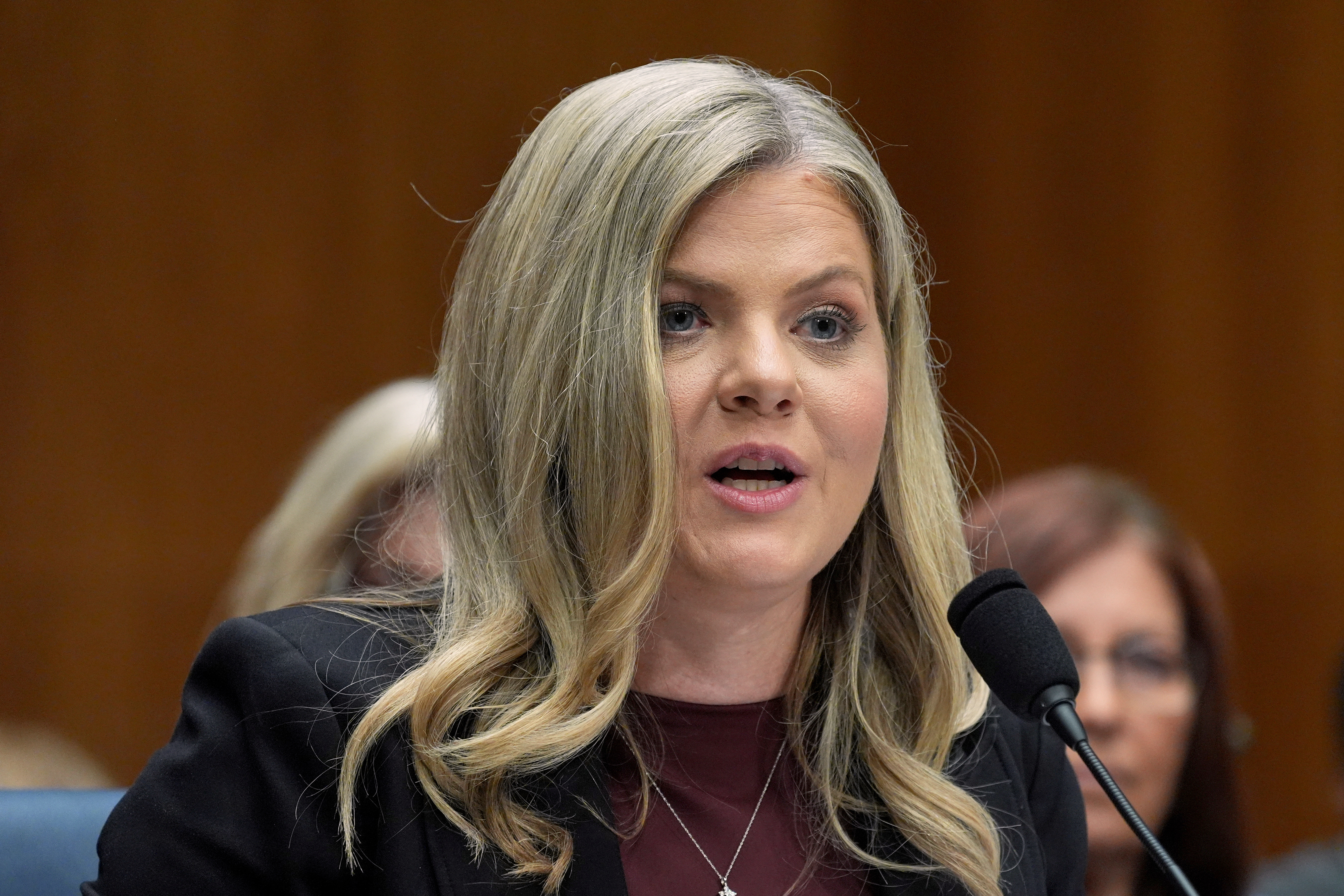
    WASHINGTON — President Donald Trump’s pick to lead the Food and Drug Administration voiced support for the safety of long-established vaccines at a hearing Thursday, even as senators questioned her about the White House’s efforts to upend childhood immunizations.

    Heidi Overton is currently serving as a White House adviser and has worked on a series of Trump health initiatives, including an executive order last month that called for splitting up and spacing out childhood vaccinations, bucking decades-old guidelines. Overton, a physician, stood beside Trump in the Oval Office when he falsely remarked that the combined measles, mumps and rubella vaccine could be “quite lethal.”

    Senate Health Committee Chairman Sen. Bill Cassidy, a physician from Louisiana, pushed Overton to reject that statement and affirm the safety of FDA-approved vaccines.

    “Right now every vaccine that is on the market has been determined to be safe and effective,” including the MMR vaccine, Overton said.

    Cassidy has repeatedly tried to extract commitments from Trump health nominees to uphold vaccine standards, including from Health Secretary Robert F. Kennedy Jr., only to see the Republican administration push forward with efforts undermining their use.

    “Kennedy gave me guarantees, and he did not keep them,” said Cassidy, a Republican. “If the president asks you to do something that goes against those guarantees you give us today, what will you do?”

    Overton said she would “follow the statutory requirements” for FDA commissioners and give Trump her best advice. Later in the hearing, Overton declined to explicitly say that Trump was wrong about the MMR vaccine’s safety.

    “This committee needs to know whether you will be radically honest, whether you will use your authority to stand up for sound science and protect children’s health,” Cassidy said. He didn’t indicate whether he’d support Overton’s nomination or when he might schedule a committee vote on it.

    If confirmed, Overton would inherit a raft of other controversial projects at the agency, including a safety review of the nation’s principal abortion drug and new rules that make it easier to sell flavored electronic cigarettes. Both issues were a focus for Republicans and Democrats on the panel.

    Overton sidesteps past statements on abortion pill

    The FDA approved the abortion pill mifepristone in 2000 and has repeatedly affirmed its safety while broadening access, including allowing it to be sent through the mail. But Kennedy ordered an FDA review of the drug’s safety last year, following calls from anti-abortion groups and lawmakers favoring abortion restrictions.

    While working at the Trump-aligned America First Policy Institute, Overton wrote that the FDA decision to allow mail delivery of mifepristone was “dangerous to women,” referring to the practice as “chemical abortion on demand.”

    In response to questions from Washington Sen. Patty Murray, Overton sidestepped her personal views on the drug, stating that it “has met the safety and efficacy determinations of the FDA.” Overton said she didn’t want to “prejudge” the FDA’s ongoing safety review of the pill.

    “The FDA has said this is safe,” responded Murray, a Democrat. “We need someone in FDA to make sure this is done by science.”

    Republicans on the health committee, including Cassidy, recently published a report suggesting the handful of companies that sell mifepristone may not be complying with rules for overseeing doctors who prescribe the drug.

    “If I’m confirmed as commissioner I would be committed to making sure every company is following the law,” Overton told Republican Sen. Jim Banks of Indiana.

    Overton’s abortion views could complicate her efforts to win over two moderate Republicans on the panel: Maine Sen. Susan Collins and Alaska Sen. Lisa Murkowski. Both have bucked their party on the issue, supporting federal access to abortion. Collins is currently locked in a tight reelection race in which abortion access is a central issue.

    But Collins focused her questions Thursday on a different issue: recent FDA decisions allowing new flavored e-cigarettes onto the market. Under previous administrations, including Trump’s first term, the agency had restricted sweet vaping flavors due to their potential appeal to kids.

    Overton pointed out that approval of several fruit-flavored vapes had the backing of FDA scientists, who determined the products met the standard of “appropriate for the protection of public health,” by helping adult smokers quit cigarettes.

    “They believed that standard was met because so many adult smokers are using flavors preferentially,” Overton said.

    To become commissioner, Overton will need a majority of votes from the 21-member health committee, followed by a positive vote from the full Senate.

    Under the current administration, leading the agency has involved balancing Trump’s demands for slashing regulations — such as those for vaping products — alongside Kennedy’s interests in scrutinizing vaccines, drugs and food ingredients.

    The previous FDA head faced numerous challenges before quitting

    Those challenges dogged the tenure of the previous FDA head, Marty Makary, who resigned in May. Makary’s time at the agency was defined by scientific disputes, leadership changes and a string of media stories detailing low morale and internal dysfunction among staffers. The FDA has lost about 20% of its employees to layoffs, buyouts, retirements or resignations since Trump took office.

    Overton studied under Makary at Johns Hopkins University, where she received a doctoral degree in clinical research after earning her medical degree at the University of New Mexico.

    Like Makary, Overton has no experience running a large bureaucracy, a critical skill for steering the FDA’s 16,000 staffers spread across numerous U.S. and international locations.

    In financial disclosure forms, Overton reported no investments in healthcare or food companies. That’s a stark contrast to Makary and other recent FDA nominees who have had to divest investments or cut other financial ties with companies regulated by the FDA.

    Overton reported $50,000 to $100,000 in student loans.

  • Trump ad airing with government funding despite law against ‘propaganda’

    Trump ad airing with government funding despite law against ‘propaganda’

    A television ad promoting President Donald Trump began airing on cable Wednesday saying it was paid for by the U.S. government, despite a federal prohibition on using taxpayer dollars for “publicity or propaganda.”

    The ad is similar to spots released earlier by the nonprofit arm of Trump’s political operation to promote his record in the midterms campaign. But this one includes a tag reading, “Paid for by the U.S. Government.”

    Since the 1950s, annual appropriations legislation — including the funding bill Trump signed in February — has routinely included a ban on using federal funds for “publicity or propaganda purposes.” The Government Accountability Office has said the prohibition applies to communications that are “purely partisan” and “designed to aid a political party or candidates.”

    The ad consists of a supercut of Trump photos and videos interspersed with text of campaign slogans. The soundtrack features snippets of Trump speeches and a chorus of women singing, “I’ll make them love me.” It ends with Ultimate Fighting Championship CEO Dana White praising Trump over footage of the June match on the White House lawn and military flyovers.

    It has aired so far on Newsmax in Chicago and Fox News in Los Angeles, according to ad-tracking firm AdImpact. More details about who bought the airtime were not available.

    The White House and representatives of Trump’s political team did not immediately respond to questions about the ad.

    Rep. Jamie Raskin (D, Md.), the top Democrat on the House Judiciary Committee, said on social media that the ad could amount to “felony criminal theft and conversion of government property for political campaign purposes.” He also cited the Hatch Act, which prohibits government employees from using their positions or official resources for political activities.

    There is no immediate precedent for a government-sponsored political ad during a campaign.

    In 2004, the administration of President George W. Bush was criticized for releasing ready-to-air video segments showing Bush signing a Medicare prescription drug law, complete with hired contractors posing as reporters. The GAO said the materials violated the propaganda prohibition.

    In the first Trump administration, the Department of Health and Human Services commissioned a $250 million coronavirus ad campaign that congressional Democratic investigators found included partisan interests. The agency backed off using pro-Trump celebrities in the ads.

    Last year, the Department of Homeland Security under then-Secretary Kristi L. Noem spent more than $200 million on ads promoting her and Trump’s immigration policies. In March, Noem testified that Trump approved the campaign, prompting him to fire her.

  • From 16,000 to 185 to zero: Trump’s claims of illegal voting in Nevada fizzle

    From 16,000 to 185 to zero: Trump’s claims of illegal voting in Nevada fizzle

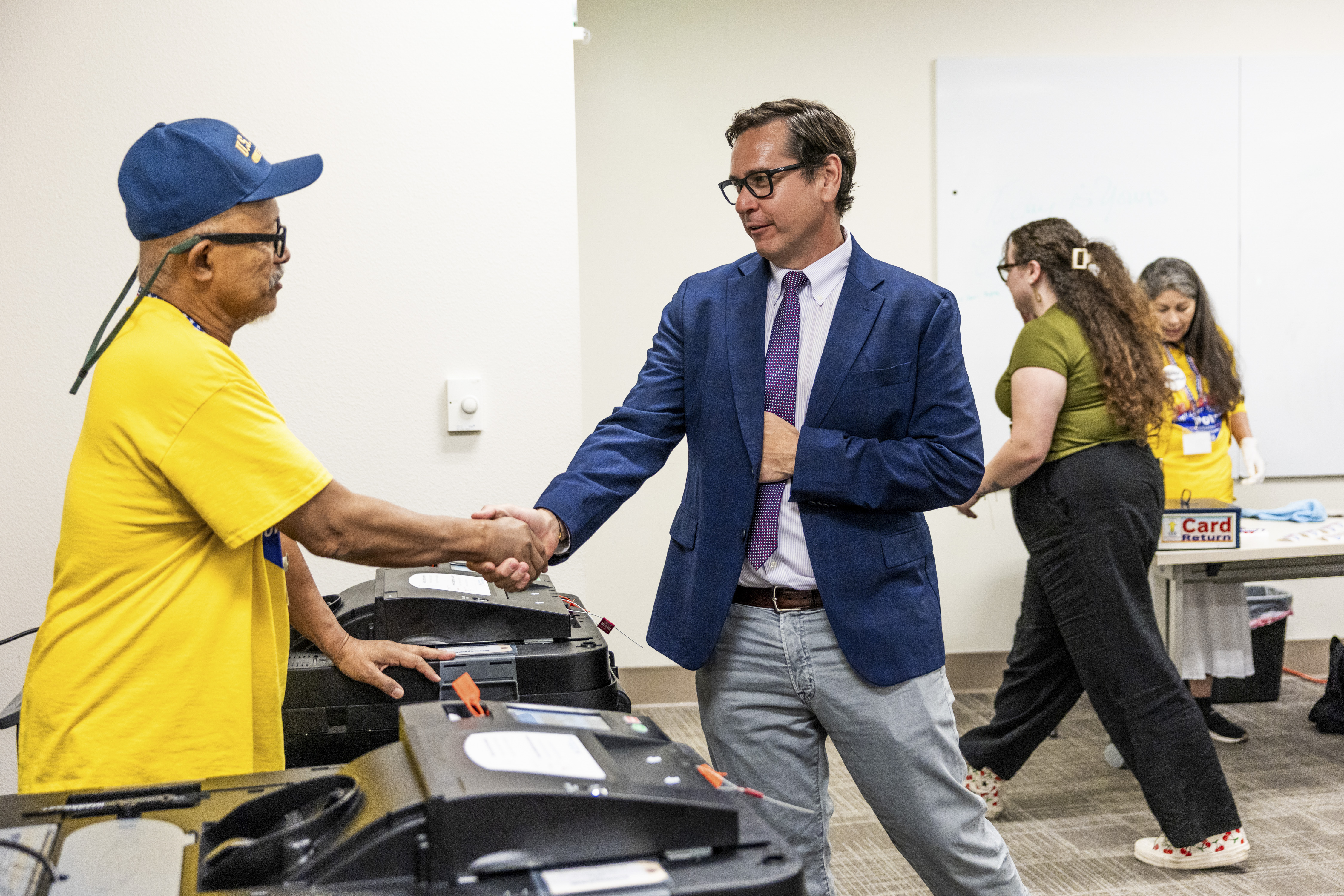
    When the Department of Homeland Security sent Nevada a list of 185 names last month that it claimed identified noncitizens who had been improperly allowed to register to vote, state election officials got to work.

    On Tuesday, the state sent a strongly worded rebuke to the federal government: Every single person on the list was a lawful citizen.

    “As for the 185 individuals, our records indicate that they were citizens,” Greg D. Ott, a deputy attorney general in Nevada, wrote, according to a copy of a letter sent to Department of Homeland Security officials obtained through open records requests. “You have provided nothing of substance to suggest otherwise.”

    Ott also stated that DHS officials had still not provided enough data for election officials to investigate their claims. Nor have they turned over the list of nearly 16,000 individuals they claim may be noncitizens.

    “Our records do not support DHS’s claims, and DHS has still not provided evidence to change that,” Francisco Aguilar, the Democratic secretary of state in Nevada, said in a statement. “Instead, DHS officials continue their attempts to intimidate election officials into compliance and deter voters with huge claims of fraud with no evidence. Repeating unsupported claims does not make them true.

    It was the Trump administration’s latest stumble in a broad campaign to find proof of widespread noncitizen voting in U.S. elections, despite decades of evidence that it is extremely rare.

    The Department of Homeland Security said in a statement that Nevada’s characterization was “false” and “the list of 185 were simply a subset of individuals that had gone through a rigorous manual review process” at the time of the last meeting between the two agencies.

    The back and forth began in July, when President Donald Trump and Markwayne Mullin, the homeland security secretary, said they had identified more than 270,000 noncitizens on voter rolls in just four states: Nevada, California, New Jersey, and Pennsylvania.

    Both men stated the claims as fact, yet letters sent to election officials in the four states in the days that followed indicated that the numbers may have been inflated. Each letter qualified Trump’s concrete assertions with the phrase “there may be as many as.” None offered actual proof of noncitizens on voter rolls.

    In Nevada’s case, Mullin initially claimed that there were as many as 15,903 noncitizens on the voter rolls. But in a meeting between Nevada election officials and the Department of Homeland Security last month, department leaders admitted that their initial claim was unsubstantiated. That prompted some pointed questions from Nevada election officials, according to a video recording of the virtual meeting.

    “So what you’re saying is the 15,000 number has not been vetted?” asked C. Murphy Hebert, the chief deputy in the Nevada secretary of state’s office.

    “I probably wouldn’t use the sentence, ‘It hasn’t been vetted,’” replied Kimberley Vogt, an official with Homeland Security. “Because definitely we’ve done something with it to get down to 15,000. So I wouldn’t say that. But it hasn’t had a full manual review of each one.”

    Following the meeting, Vogt sent a clarifying email to Nevada officials. “I also wanted to be sure I clarified that we did not reduce the 15,903 to 185,” she wrote. “We’ve manually reviewed some of the 15,903 and confirmed 185 are not U.S. Citizens.”

    Now, Nevada officials are saying even that 185 number is wrong. They also took issue with a letter DHS sent them in early September, in which the agency reiterated its initial claims about nearly 16,000 noncitizens on the rolls and pressured state officials to review each case in a letter to Nevada officials in early September.

    “Each one of the 15,903 individuals identified should be carefully reviewed by your state to determine eligibility for voting in a federal election,” read a letter from the Department of Homeland Security sent Sept. 9.

    But Nevada election officials said in their letter that DHS “has never provided Nevada with a list of 15,903 individuals.” Instead, they said, the department sent them a smaller batch of roughly 6,000 individuals, identified only by what Homeland Security called a voter case number.

    “DHS still has not provided any additional verifiable information for the individuals it suggests are noncitizens,” they wrote.

    The Department of Homeland Security said in a statement that the 6,218 individuals had “the highest number of matching attributes” to a potential noncitizen in their records, and that the smaller tranche of voters “was at the request of Nevada. They wanted to start with a subset less than the 15,903 registrants DHS originally identified.”

    Nevada officials disputed that claim, and records reviewed by the Times did not show Nevada making that request.

    Ott also said the use of so-called voter case numbers, which Nevada officials took to mean voter registration numbers, was imprecise.

    Using only “voter case numbers” without any other information such as a name, date of birth, address, or another verifiable data point could lead to the identification of multiple individuals, Ott said. This is because Nevada recently transitioned to a statewide voter registration system that was previously run by counties. So an individual may have been assigned one number by a county in the past and a different number under the new statewide system.

    “The number also doesn’t tell us whether an individual was born in the United States, naturalized, derived citizenship through a parent, or holds any particular immigration status,” Ott wrote. “A number that matches a voter record thus establishes only that a number exists in, or once existed in, a voter registration system.”

    Trump’s demand for evidence of fraud has prompted multiple governmental efforts. The New York Times this month reported that hundreds of agents with Homeland Security had been temporarily pulled from their duties investigating international crimes and terrorism for a roughly three-week intensive search for noncitizens on voter rolls. The methodology was criticized by Democrats as faulty and potentially illegal, and the Virginia attorney general wrote a letter demanding more information.

  • 3 U.S. news outlets return to White House after judge orders Trump to lift ban

    3 U.S. news outlets return to White House after judge orders Trump to lift ban

    NEW YORK — Three news organizations banned from the White House for days were back Thursday after a judge handed CNN, MS NOW, and Politico a reprieve in an extraordinary showdown between President Donald Trump and outlets whose coverage he dislikes.

    But media coverage of Trump’s White House was hardly normal. On a high-profile day when Chinese leader Xi Jinping was visiting Washington and planning to attend a state dinner, no major American network was airing live coverage.

    After the White House banned CNN from a rotation of five major U.S. broadcast outlets who take turns shooting and sharing video, the other four — in a show of solidarity — were still declining to participate in the so-called video pool.

    It was part of a chaotic day at the White House and in court.

    Initially, in the morning, CNN, MS NOW, and Politico journalists were denied entry. A Secret Service agent had confiscated their credentials as part of the ban. After the ruling for the outlets in the early hours Thursday, White House operations officials were notified to restore access to the affected reporters, but said they needed time to find, reactivate and deliver their entry badges. The process took over two hours, according to an administration court filing.

    In his decision to provisionally lift the ban, U.S. District Judge Timothy Kelly ordered the White House to “immediately return, reinstate, and restore” the three outlets’ access. He said they had met the legal thresholds to obtain a temporary restraining order and were likely to succeed in showing that their press passes were revoked without due process.

    The ruling did not address CNN’s removal from the White House video pool. The White House did not respond to an email seeking comment.

    The judge’s ruling issued a temporary order

    Kelly — whom Trump nominated in 2017 and who ordered a CNN journalist’s access restored in a similar case in 2018 — said the government must have clear standards for conduct that would lead to revoking a press pass. He called the standard of objectionable reporting outlined in letters that the White House sent the outlets “so vague it hardly does the trick.”

    The judge also made clear he did not buy the administration’s argument that the news outlets’ reporting endangered national security — and noted that Trump himself had not used that argument in the beginning, focusing solely on what he called negative coverage.

    Theodore Boutrous Jr., the news outlets’ attorney, said the judge’s quick ruling vindicated the freedom of the press, due process and the rule of law.

    “I think we’re going to end up stronger because of this, and this tactic of just attacking the press, attacking individual journalists, is going to be discredited,” Boutrous said in an interview on MS NOW Thursday afternoon. “The law is just clearly on our side here,” he said.

    The temporary restraining order — typically designed to preserve the status quo pending a closer review of the case by the court — expires in two weeks. The judge gave both sides until Oct. 5 to file their arguments over whether he should consider issuing a longer-lasting ruling called a preliminary injunction. Kelly said he “intends to rule expeditiously” on the preliminary injunction request.

    Attorneys debated access to the White House and any risk to national security

    Boutrous argued in the hearing that there was an urgent need for renewed access, saying that the ban caused irreparable harm to the outlets at a time of momentous news events. “We’re at war,” he told the judge. “We have world leaders coming to Washington.”

    Justice Department attorney Michael Velchik, in his argument, reiterated the administration’s point that the president has the right to choose who gets into the White House.

    “Access to the White House is a privilege, not a right,” Velchik said.

    In arguing that Trump was not engaging in viewpoint discrimination — the government singling out specific media outlets for the content of what they say or publish — Velchik said the president had criticized other news organizations, but not banned them. He noted, for example, that Trump had called ABC “the worst.”

    Major networks refrained from covering Trump for the media pool

    On Wednesday, after the hearing, the major networks refused to air footage of Trump without assurances that CNN would be permitted back into the video pool.

    At Joint Base Andrews, where the president formally welcomed Xi, journalists from Fox News, CBS and NBC were present but not shooting video.

    Other television outlets whose crews were present, according to signs on their tripods and cameras, were NewsNation, Newsmax, Right Side Broadcasting Network, One America News and LindellTV.

    The Associated Press said it provided video coverage of Trump greeting Xi to its customers, so they could decide whether to broadcast. “We did not stream the coverage on our own platforms, including APNews.com or our YouTube channel,” said an AP spokesman, Patrick Maks.

    In an advisory to customers, AP said it would not have independent video coverage of meetings between Trump and Xi. It noted that a U.S. government handout live feed could be accessed on the White House website.

    The AP was one of some 50 groups filing an amicus brief ahead of Wednesday’s hearing, urging the court to immediately restore the three outlets’ White House access.

  • Eliminating a key radiation regulation would hinder hopes of a nuclear power revival

    Eliminating a key radiation regulation would hinder hopes of a nuclear power revival

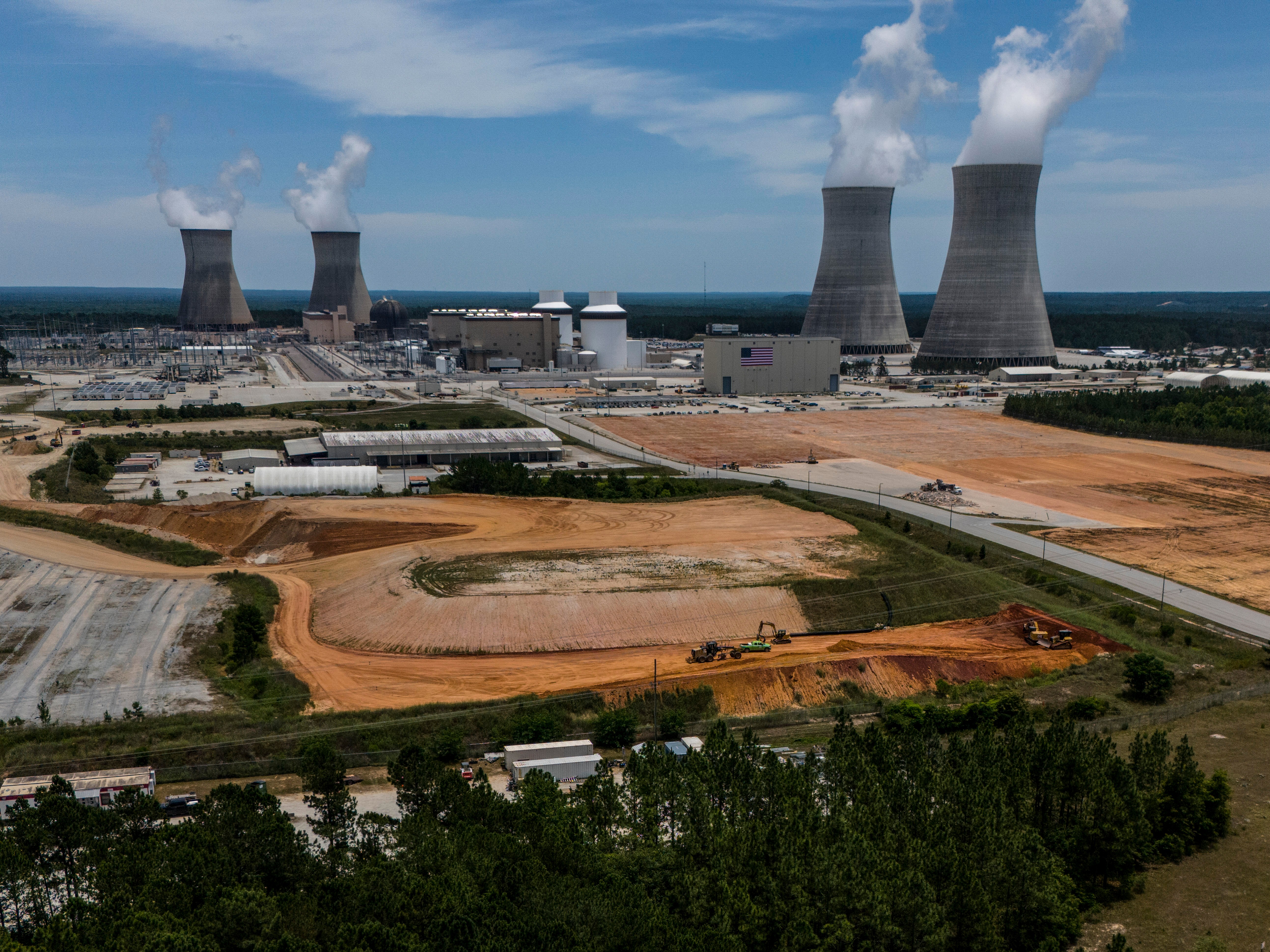
    Driven by the surging energy demands of artificial intelligence, America is resurrecting its nuclear past. Earlier this month, the Department of Energy finalized a $1.9 billion loan to restart Iowa’s Duane Arnold Energy Center, idle since 2020, so it can power Google’s expanding AI operations.

    Yet, as the United States prepares for this nuclear revival, regulators are rethinking a principle that has governed radiation protection for more than a half century. In July, the Nuclear Regulatory Commission (NRC) proposed eliminating the requirement that radiation exposure remain “as low as reasonably achievable” — what is known as the ALARA standard. That would leave some limits on radiation exposure in place, but it would remove the expectation that the operators of nuclear plants continually work to reduce unnecessary exposure.

    Supporters argue that this change simply does away with a standard that added little value. NRC Chairman Ho Nieh compared ALARA to setting a 55-mile-per-hour speed limit and then telling drivers to go “as slow as reasonably achievable.” If regulators have already set a safe limit, why insist that workers stay even further below it?

    The analogy is persuasive — and historically misleading.

    During the 1950s and 1960s, regulators employed a system with only a limit on exposure. And as Americans learned that staying under it didn’t necessarily keep people safe, they demanded more stringent limits and lost faith in regulators and the safety of nuclear reactors.

    ALARA emerged to assuage such fears, and it has successfully reduced exposure in the half century since. History suggests that eliminating it will hinder the public’s willingness to go along with a nuclear power revival.

    The question of how much radiation exposure is too much emerged almost as soon as radiation entered modern life. Physicians who embraced the diagnostic power of X-rays in the late 19th century quickly discovered their dangers, as doctors, technicians and researchers suffered burns, tissue damage and cancers after prolonged exposure. Clarence Dally, an assistant to Thomas Edison who tested X-ray tubes on his own hands for years, had both arms eventually amputated and died of cancer in 1904.

    Rather than abandon the promising technology, however, experts tried to determine how much radiation the body could tolerate. By 1934, the International X-ray and Radium Protection Committee had settled on numerical “tolerance doses,” premised on the belief that a threshold existed below which radiation caused no harm.

    The Atomic Age tested that confidence. The Manhattan Project turned radiation from a specialized medical hazard into an industrial one, as thousands of workers handled uranium, plutonium and other radioactive materials. At the same time, geneticist Hermann Muller and others warned that radiation could damage genes in ways that might not surface for years or generations.

    Given these warnings, and the newly expanded pool of people facing the risks of radiation, confidence in the ability of experts to set a safe limit for radiation exposure collapsed.

    In 1934, the protection committee had set a tolerance dose of roughly 0.2 roentgens a day. Within two decades, fear of risk had driven that number down by three-quarters. But even this lower figure came with no claim of safety. Authorities had stopped believing any single number could mark a clean line between safe and unsafe exposure.

    They also understood the perils of public concern continuing to rise. An internal Atomic Energy Commission memo from 1948 flagged the risk of a “shattering effect on morale” should employees learn how uncertain the safety standards were. Accordingly, the agency kept much of the research quiet.

    Instead of trying to reduce risk, regulators tried to reframe how people thought of radiation risks. They scrapped the language of “tolerance doses” and instead focused on the concept of a “maximum permissible dose.”

    The shift sounded technical, but it marked a real change in thinking: no longer would authorities guarantee that a permissible dose was a safe dose. Rather, as historian Shannon Cram has written in her history of U.S. radiation-worker regulation, officials were setting a level that they judged to involve an acceptable risk, given radiation’s benefits and the practical costs of reducing exposure further.

    The limits of that guarantee became clear in the uranium mines that supplied the Manhattan Project and, later, civilian reactors. For years, miners worked under exposure guidelines that officials considered acceptable, though no binding federal limit applied. By the early 1960s, however, a Public Health Service study of Colorado Plateau miners found lung cancer rates several times higher than expected, rising sharply with cumulative exposure.

    Made By History sponsors. FOR USE ON MADE BY HISTORY STORIES ONLY.Inquirer Staff

    The lesson was blunt: the exposure level deemed permissible had not protected miners, and those who set it knew the ground under that number was shakier than they let on. In 1967, amid press exposure and growing unrest among miners, Secretary of Labor W. Willard Wirtz proposed a binding federal radon limit; it did not take effect until 1971.

    As nuclear power grew rapidly throughout the 1960s and 1970s, the concerns about radiation exposure spread from miners and industrial workers to the general public. People in areas around nuclear plants wondered if only having a maximum exposure limit truly protected them adequately.

    In 1969, Northern States Power sought to open its new Monticello plant on the Mississippi River. But in response to public concern, Minnesota’s Pollution Control Agency tried to impose radioactive-release limits tighter than the AEC allowed.

    The dispute sparked a court fight, in which 20 states sided with Minnesota. The battle became a flashpoint for the burgeoning environmental movement. Activists had doubts about whether the federal ceiling on releases was protective enough for the communities living near reactors.

    In 1971, recognizing the need to reassure the public, the AEC responded by requiring plants to keep releases “as low as practicable.” A few years later, the NRC, the successor to the AEC, refined that standard into ALARA: exposures should stay “as low as reasonably achievable.”

    The word “reasonably” did real work. As historian J. Samuel Walker has explained, ALARA never demanded eliminating every conceivable exposure regardless of cost; it accepted that nuclear work carried risk. What it rejected was the idea that staying under a number settled the question of safety.

    The importance of this new standard was evident on shop floors. The earlier “maximum permissible dose” had simply told plants when they crossed legal lines. ALARA, by contrast, made managers ask a harder question: can this job be done with less exposure?

    Plants started engineering exposure away, shielding jobs in advance, sending in robots instead of people and timing shifts so no one lingered in a hot zone. Compliance stopped being enough on its own.

    ALARA has been successful: even as the maximum permissible dose never moved, the average dose of radiation exposure for workers has fallen. Regulators didn’t lower the bar; plants just kept clearing it by more.

    The nation’s most infamous nuclear accident illuminated the importance of ALARA: during the 14-year, billion dollar operation to clean up the 100 tons of ruined fuel from the contaminated plant at Three Mile Island, workers were never exposed to more radiation than they’d have encountered operating ordinary reactors.

    This history exposes the problem with Nieh’s analogy. A dose limit marks the point at which regulators judge the risk to workers unacceptable, not the point at which risk begins. The NRC itself still relies on a radiation-risk model that assumes any dose carries some risk. ALARA is the rule that acts on that assumption, requiring plants to use available technology to cut exposure wherever the cost is reasonable.

    At a moment when the U.S. faces rising energy demands thanks to AI, and nuclear power offers a way to meet them without driving up carbon emissions, maintaining ALARA is important. The regulation was crucial for reassuring skeptical Americans that nuclear power could be safe.

    Abandoning ALARA would mean returning to a system in which meeting the limit is the whole obligation, and in which Americans see compliance as a guarantee of safety. No regulator can honestly make that guarantee. History suggests that letting people believe otherwise risks destroying regulators’ credibility and turning workers and communities against nuclear operations. As the industry works to meet America’s growing demand for power, that is a bet it can ill afford.

    Thomas Bishop is a senior lecturer in American and environmental history at the University of Lincoln and author of “Every Home a Fortress: Cold War Fatherhood and the Family Fallout Shelter” (2020). He is currently writing “A People’s History of the Permissible Dose,” a history of radiation risk and worker activism in the United States.

    Made by History takes readers beyond the headlines with articles written and edited by professional historians. Opinions expressed do not necessarily reflect the views of The Inquirer.

  • Judge hears arguments without immediately ruling in lawsuit over White House ban on 3 news outlets

    Judge hears arguments without immediately ruling in lawsuit over White House ban on 3 news outlets

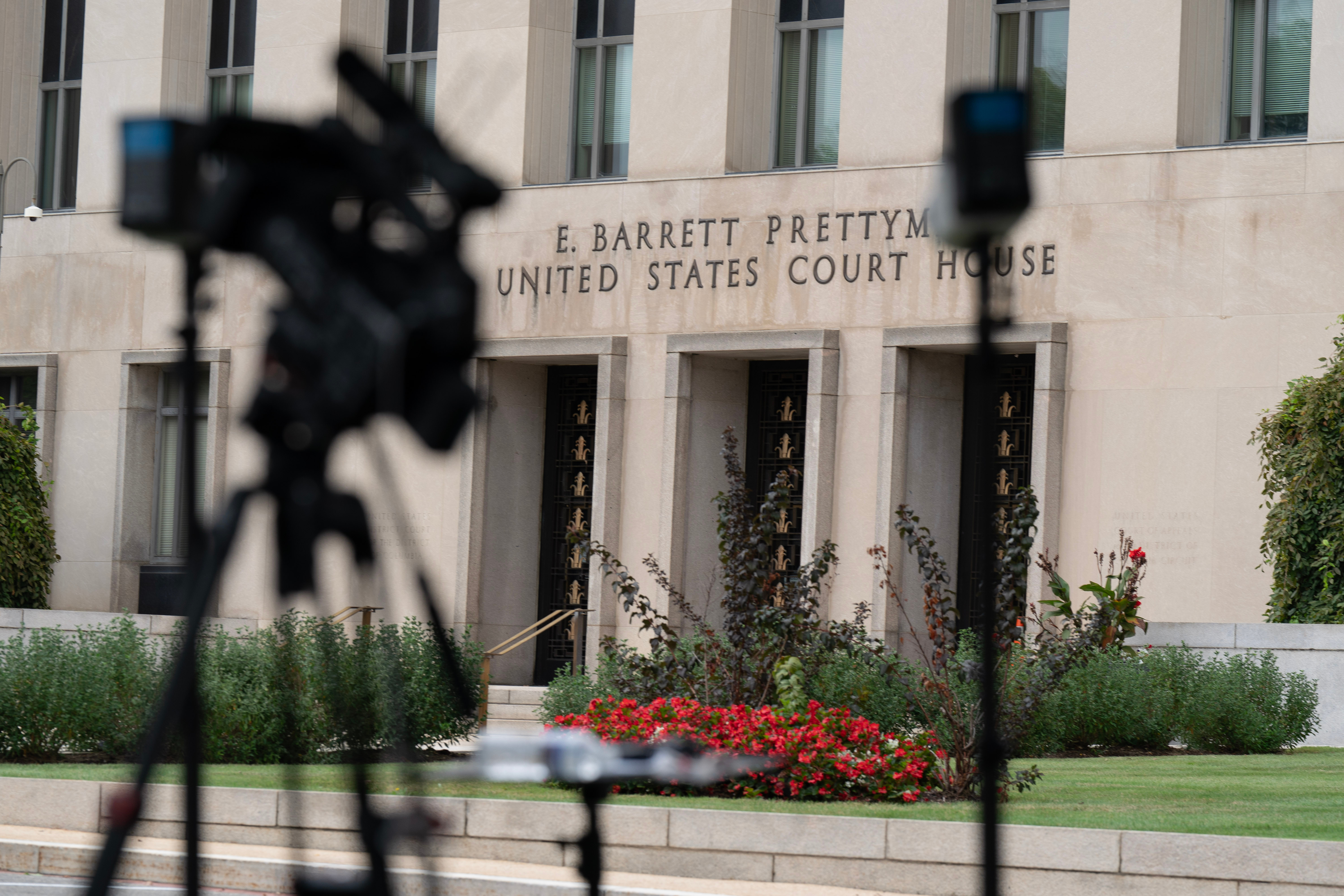
    WASHINGTON — A federal judge weighing whether to block President Donald Trump’s ban of three news outlets from White House grounds expressed some skepticism Wednesday in response to the government’s defense of the move.

    U.S. District Judge Timothy Kelly, who was nominated by Trump in 2017, didn’t rule from the bench after hearing arguments in an extraordinary showdown between Trump and media outlets whose coverage he dislikes.

    But the judge questioned whether the administration met its legal responsibilities and provided the news outlets with adequate due process before banning them on Friday, assailing what he called “fake news.” More recently, the president has said negative coverage was dangerous for the country.

    The news outlets argued they were singled out because of the content of their coverage — in other words, viewpoint discrimination — and called the ban a “blatant violation” of the First Amendment.

    Kelly said his decision must be guided by courts’ prior rulings in comparable First Amendment cases, even if the government disagrees with them.

    “I think it is fair to say that the processes that the court laid out wasn’t followed here,” Kelly said.

    It wasn’t clear when Kelly, who ordered a CNN journalist’s access restored in a similar case in 2018 — would issue a decision on the news outlets’ request for a restraining order. But he said he’d rule as soon as possible.

    CNN, Politico and MS NOW each told The Associated Press they’d have no comment on the emergency hearing.

    Prior rulings indicate journalists should be heard before press passes are revoked

    Kelly opened by reminding both sides that he’s required to apply case precedent.

    The rulings in two prior cases over press access — including one that went to the U.S. Supreme Court — made clear that journalists were entitled to an opportunity to be heard before they have their press passes revoked.

    Justice Department attorney Michael Velchik argued that the rulings in the earlier cases were wrong.

    “Access to the White House is a privilege, not a right,” Velchik said.

    Theodore Boutrous Jr., attorney for the outlets, called the ban an “unprecedented, unreasonable punishment” and said there was “not a semblance of due process.”

    The administration doubled down on its contention that it has the right to decide who can set foot in the White House.

    “The president should be able to take immediate action to protect national security,” Velchik told the court.

    In response, Boutros said, “Suddenly it’s a national security case,” arguing that the president brought up that point only after the lawsuit was filed.

    The Trump administration outlined ‘reporting incidents’ of each news outlet

    In a filing late Tuesday, administration lawyers argued that the ban does not violate the First Amendment, which guarantees the right to a free press. It contended that the outlets, in their reporting, violated “standards of professionalism and decorum expected of those given access to the White House complex, including by trafficking in verifiable falsehoods about national security and other issues and publishing sensitive or classified information.”

    The administration went on to detail letters that were sent to each outlet that identified “a non-exhaustive list of reporting incidents, including those that have threatened national security and spread falsehoods.”

    The “reporting incidents” cited in the filing included: CNN reporting on “‘top-secret’ construction details related to the East Wing bunker”; MS NOW reporting “on an alleged leak investigation”; and Politico publishing “a document detailing funding for the White House ballroom containing intricate descriptions of how the Secret Service would invest in security improvements.”

    Further examples were given in individual letters. Politico’s letter detailed six incidents of reporting, including in June citing a “senior administration official … granted anonymity” predicting whether a preliminary deal would end the conflict with Iran.

    That item appeared to reference a background briefing set up by the White House, where an official briefed reporters on condition of anonymity under ground rules set by the White House itself. Several other outlets also reported the official’s remarks.

    Major networks continue to refrain from covering Trump for the media pool

    The ban prompted other media outlets to take action in solidarity. The five-network U.S. network press pool — a rotating cast of news outlets that covers the president, and to which CNN belongs — decided to suspend coverage of Trump events until further notice.

    After the hearing Wednesday, the networks were poised to continue their ban on filming Trump coverage. At Joint Base Andrews, where the president was to formally welcome Chinese President Xi Jinping later, journalists from Fox News, CBS and NBC were present but not shooting video, and some appeared to be breaking down their cameras.

    Other television outlets whose crews were present, according to signs on their tripods and cameras, were NewsNation, Newsmax, Right Side Broadcasting Network, One America News and LindellTV.

    Ahead of Wednesday’s hearing, an amicus brief was filed by other news groups, urging the court to immediately restore the three outlets’ White House access.

    The brief — filed by the Reporters Committee for Freedom of the Press, the White House Correspondents’ Association and 49 media outlets and industry groups, including The Associated Press, The New York Times and Reuters — says “the targeted expulsion of news media from White House grounds injures the public interest” and ”unassailable First Amendment law makes any viewpoint-based decision to bar reporters from a nonpublic forum constitutionally repugnant.”

    The proceedings are historic, said Katie Fallow, deputy litigation director at the Knight First Amendment Institute at Columbia University.

    “No president has taken this explicit of a step” to ban entire news outlets because he doesn’t like their reporting, she said. “There have been various presidents throughout history who have grumbled about the press or threatened to take more major steps, but really there was nothing at this level before Trump.”