Category: National Politics

  • Edwin López Cornejo prayed for another year to see his daughter grow up. He died in ICE custody.

    Edwin López Cornejo prayed for another year to see his daughter grow up. He died in ICE custody.

    Half a year into fatherhood, Edwin Jeovanny López Cornejo found the sight of his daughter, Ashley, revitalizing after a long day at work.

    It was 2014. López Cornejo, an immigrant from El Salvador, had been working at a packaging company in South Plainfield, N.J., for about seven years. He came to the United States in 2007, filed an asylum claim, and received employee authorization from the federal government after being deported the year prior, according to court documents.

    As he would often do in the years that followed, he took to Facebook to express his gratitude to God and his love for his daughter.

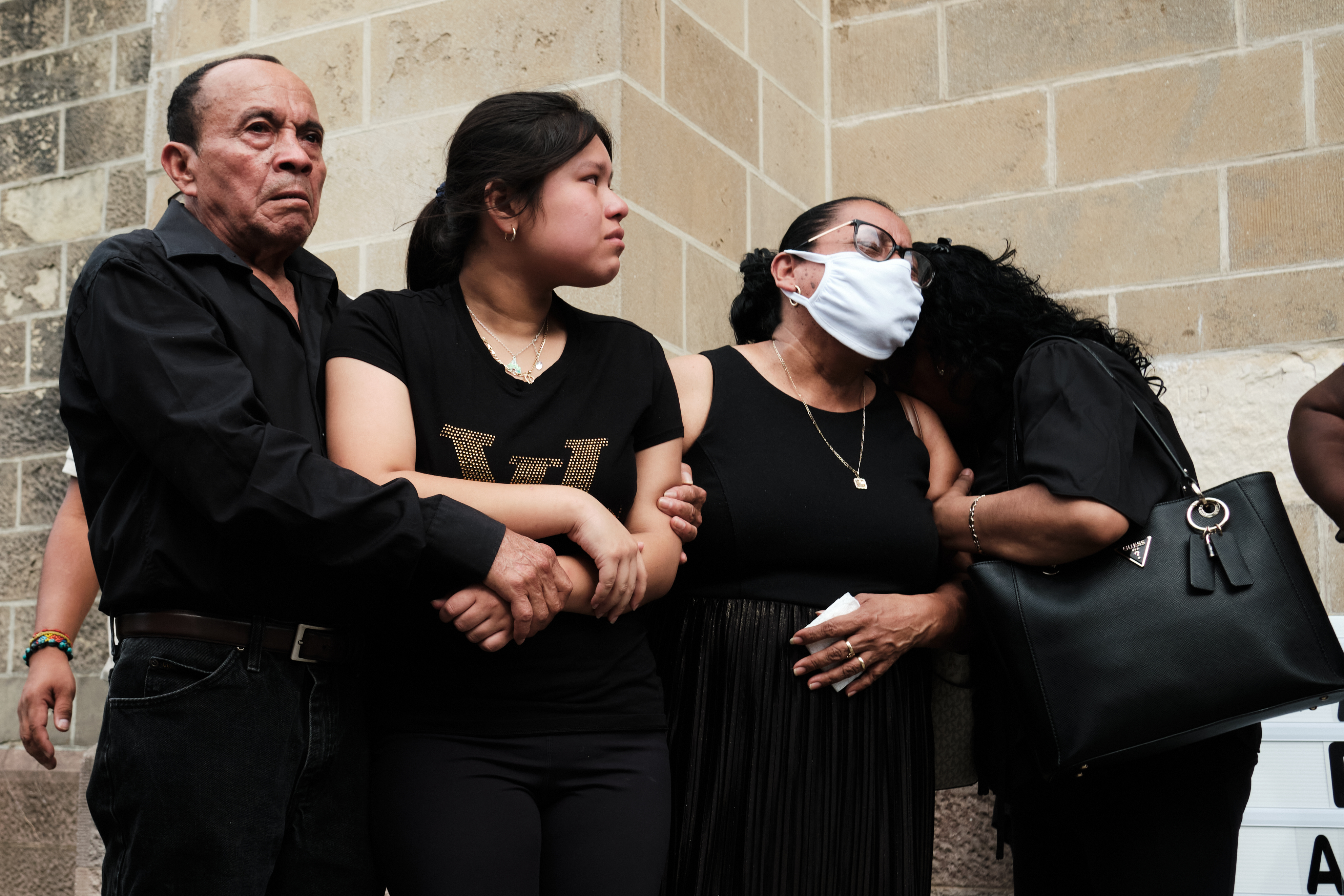
    This past Friday, Ashley Lopéz, now 12, wore all black. She stood between her paternal grandparents as they held each other and wept at her father’s wake at Crescent Avenue Presbyterian Church in Plainfield.

    López Cornejo had died in ICE custody just under a week earlier at the age of 39 after experiencing what the federal agency called a medical emergency at Delaney Hall, an ICE detention center in Newark run by the private company GEO Group.

    Ashley has barely been speaking. Or eating. And she does not want to be around people, María Cornejo, her paternal grandmother, told The Inquirer in an interview on Monday, speaking in Spanish.

    Letters of support submitted to the court after his June arrest, remarks from his family, and more than a decade of public Facebook posts written in Spanish paint the picture of a father who deeply loved his daughter.

    Twelve years ago, Lopéz Cornejo and his then-girlfriend were expecting twins, but the boy died in the fifth month of pregnancy, Cornejo said.

    “She is the only child he had. You should have seen him when she was born. That man was the most joyful man with his daughter in his arms,” Cornejo said. “It was his first time being a father, and he wouldn’t even sleep so he could watch her sleep and make sure she was OK.”

    López Cornejo was unable to see his daughter at Delaney Hall. He had been there for about six weeks.

    Delaney Hall has been the site of high-profile political clashes representing the national conflict between Trump’s supporters and immigrant rights advocates. The detention center serves a critical role for the president’s mass deportation agenda, and complaints of poor and unsanitary conditions have sparked continuous protests, uproar from Democratic lawmakers, and a reported hunger strike inside, which the Trump administration denied happened.

    In December, a 41-year-old Haitian national named Jean Wilson Brutus died one day after entering Delaney Hall, and U.S. Rep. Rob Menendez (D., N.J.) recently said another person died at the hospital after a potential seizure at the facility earlier this summer. Nationally, at least 23 fatalities in ICE custody have been reported this year as the rate has increased during Trump’s second term.

    López Cornejo’s asylum claim was still pending — 19 years after he filed it — when ICE agents arrested him, according to a habeas corpus petition challenging his detention.

    An undated photo of Edwin López Cornejo and his daughter, Ashley, in a pool.Courtesy family of Edwin López Cornejo

    Around 9 a.m. June 18, López Cornejo headed out to pick up his car from a towing company, where it had been taken for being parked for too long, his mother recounted Monday. She urged him to take a taxi and avoid walking, given a heightened fear of running into ICE in the community.

    She said goodbye, unaware it would be the last time she would hug her son.

    Lopéz Cornejo ended up walking because roads were closed.

    Masked agents stopped him and asked for his ID. When he produced his Salvadorian identification, they put him in an unmarked vehicle with two other people who had already been detained, his lawyer Ingrid Echeverria recounted in the habeas corpus petition.

    Cornejo said her son called her from inside Delaney Hall that evening. The first question he asked was about Ashley.

    According to his family and court documents, he took medicine for diabetes, epilepsy, and high blood pressure. Interruption of his strict medication schedule carries the risk of breakthrough seizures and associated harm, according to the petition. That July 24 court document did not accuse ICE of denying him his medication but expressed concern over potential medical risks if he was transferred to another facility, as the agency at one point planned.

    On. Aug. 1, Cornejo got a call from University Hospital in Newark. The person on the phone told her that her son’s heart was not beating by the time he arrived, after he collapsed at Delaney Hall. ICE has not released an official cause of death, but U.S. Sen. Andy Kim (D., N.J.) said it was a heart attack and cardiac arrest. Days after his death, Kim and fellow New Jersey Democratic U.S. Sen. Cory Booker put forward legislation that would require the shuttering of Delaney Hall.

    New Jersey Attorney General Jennifer Davenport said last week that her office was launching a civil rights investigation into Delaney Hall, citing reports of “alarming conditions” and recent deaths.

    Sen. Andy Kim (D., N.J.) stands between federal agents and demonstrators in an attempt to prevent a clash outside the Delaney Hall migrant detention center in Newark, N.J., on May 25.DAKOTA SANTIAGO

    In response to López Cornejo’s death, ICE put out a statement saying that everyone in ICE detention gets proper, around-the-clock medical care, and that López Cornejo “was seen by medical professionals.”

    His family doesn’t buy it. They blame ICE for detaining him and accuse the agency of failing to provide him proper medical care. Danilo López, his brother, said at a news conference that his brother told him over the phone that he had to fill out a form to just get Tylenol at Delaney Hall and it could be days before he received it, a claim ICE did not directly address when asked.

    “He lived a normal life and worked normally while taking his medicine and with a proper diet, working more than eight hours a day, and had no problem,” Cornejo said in the interview.

    Just days after her father died, Ashley López said at a news conference: “On the same day, we were both dead. The only difference was his heart stopped beating. I am going to grow up without a father.”

    Family members of Edwin López Cornejo including (from left) his mother Maria Cornejo, daughter, Ashley, and his former wife, attend a news conference on Tuesday, Aug. 4, 2026, in Highland Park, N.J. Yuki Iwamura

    ‘The true love of my life’

    On his daughter’s first birthday, López Cornejo wrote on Facebook that Ashley gave him “one more reason to live.”

    “I want to tell you that when I learned you were going to be born it felt like it would be forever before I had you in my arms,” he wrote. “I will never forget the first day that I changed you and gave you a feeding bottle. Wow my girl, those moments I will never forget and now you are turning one. Wow how the time passes.”
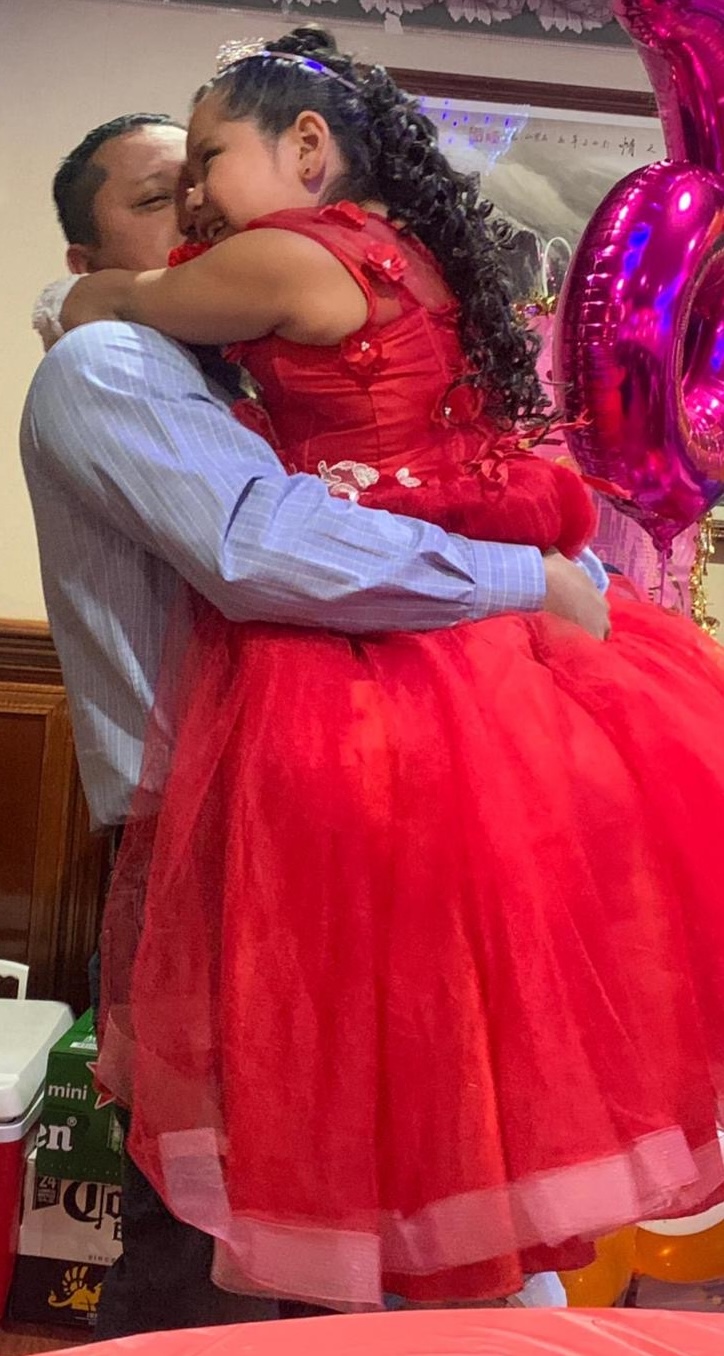
    An undated photo of Edwin López Cornejo with his daughter, Ashley.Courtesy family of Edwin López Cornejo

    On her third birthday, he called her “the true love of my life,” and said she motivated him to be strong and keep moving forward.

    “I would be willing to give my life for yours,” he wrote.

    On his own birthday, he often thanked God for another year of life. And as a birthday wish, he asked for another year to see his daughter grow.

    Ashley, a U.S. citizen, was born in New Jersey, according to the petition, which includes her birth certificate and public school records to support his lawyer’s argument that López Cornejo has community ties. The documents show she received a certificate of achievement for math at 9 years old “for demonstrating fluency of division” in less than six seconds. And shortly after she turned 10, she was crowned “Art Leader of the Week.”

    Ashley lived with her dad half the week, but he picked her up from school every day, and she would run into his arms to greet him, Cornejo said. He took pride in her success in school.

    “He would tell her, ‘I want you to be a doctor so you can cure me one day,’” she said.
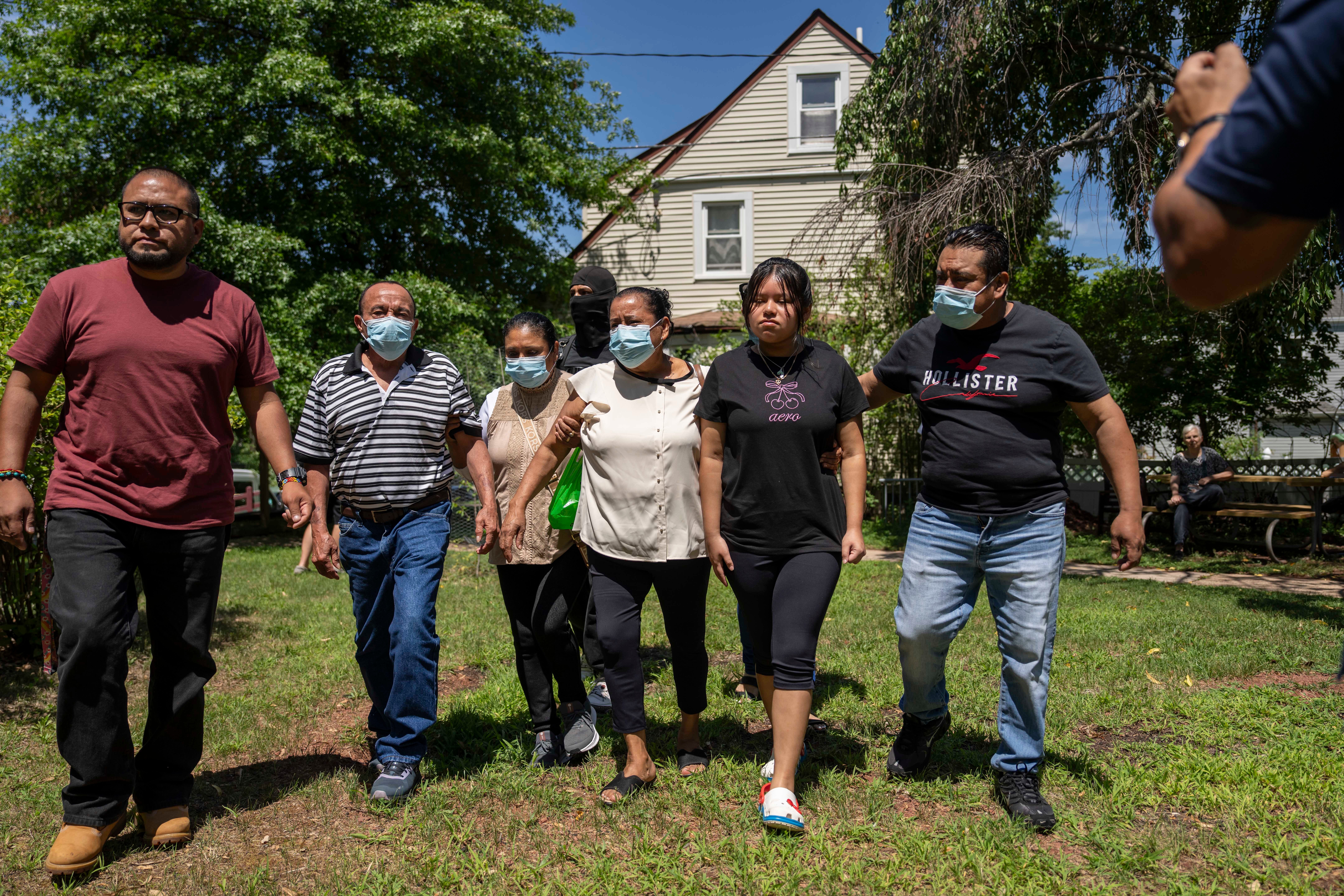
    Family members of Edwin López Cornejo arrive at an Aug. 4 news conference in Highland Park, N.J.AP Photo/Yuki Iwamura

    A hard worker

    López Cornejo started working in construction just three weeks before his detention after the warehouse he worked at changed locations, his mother said.

    Court documents show he worked at UpperClass Warehouse in South Plainfield from March 2021 until this May, and he previously worked multiple restaurant jobs in New Jersey. He paid taxes to the state of New Jersey and the federal government.

    Jesse Fischbein, vice president of finance at Just Packaging, where López Cornejo worked from 2007 to 2015, said in a letter of support attached to the petition filed with the court last month that he “truly was a company-first employee, who didn’t believe that the workday was simply 7 AM to 3:30 PM.”

    “He was punctual, always pitching in to help other employees when his tasks were completed, and always asked management if there was more to be done,” Fischbein wrote.

    People detained inside Delaney Hall stand at windows in Newark, N.J., as demonstrators gather outside on May 28, 2026. The protests were fueled by reports of detainees staging a hunger strike over the conditions of their confinement.TODD HEISLER

    But Fischbein said there was one thing López Cornejo would always be better at than his job: being a father.

    “From what I know about him outside of work — he is a father, and that is the job he excels at more than any function he performs for my company,” Fischbein said.

    A coworker-turned-friend, Juan Zavala, said in another letter of support that López Cornejo had “earned the respect of everyone around him” through kindness, compassion, respect, and honesty.

    “He is a loving, responsible, and caring parent who is deeply involved with his daughter’s life and always puts her well-being first. It is very clear that his family means everything to him,” Zavala wrote.

    One of the ways López Cornejo expressed himself to his loved ones was by sharing links to music on Facebook. He dedicated love songs to his daughter and others, he shared reflections during the pandemic with a Christian worship song, and he said the music video for “Pose” by Daddy Yankee — the singer known for the hit song “Gasolina” — inspired him to learn to dance reggaeton.

    López Cornejo and Ashley dreamed about dancing together at her quinceañera, a celebration for her 15th birthday.

    “He just wanted to dance the waltz with his little girl, and they so looked forward to that party,” Cornejo said, crying. “Now my little girl won’t have her dad.”
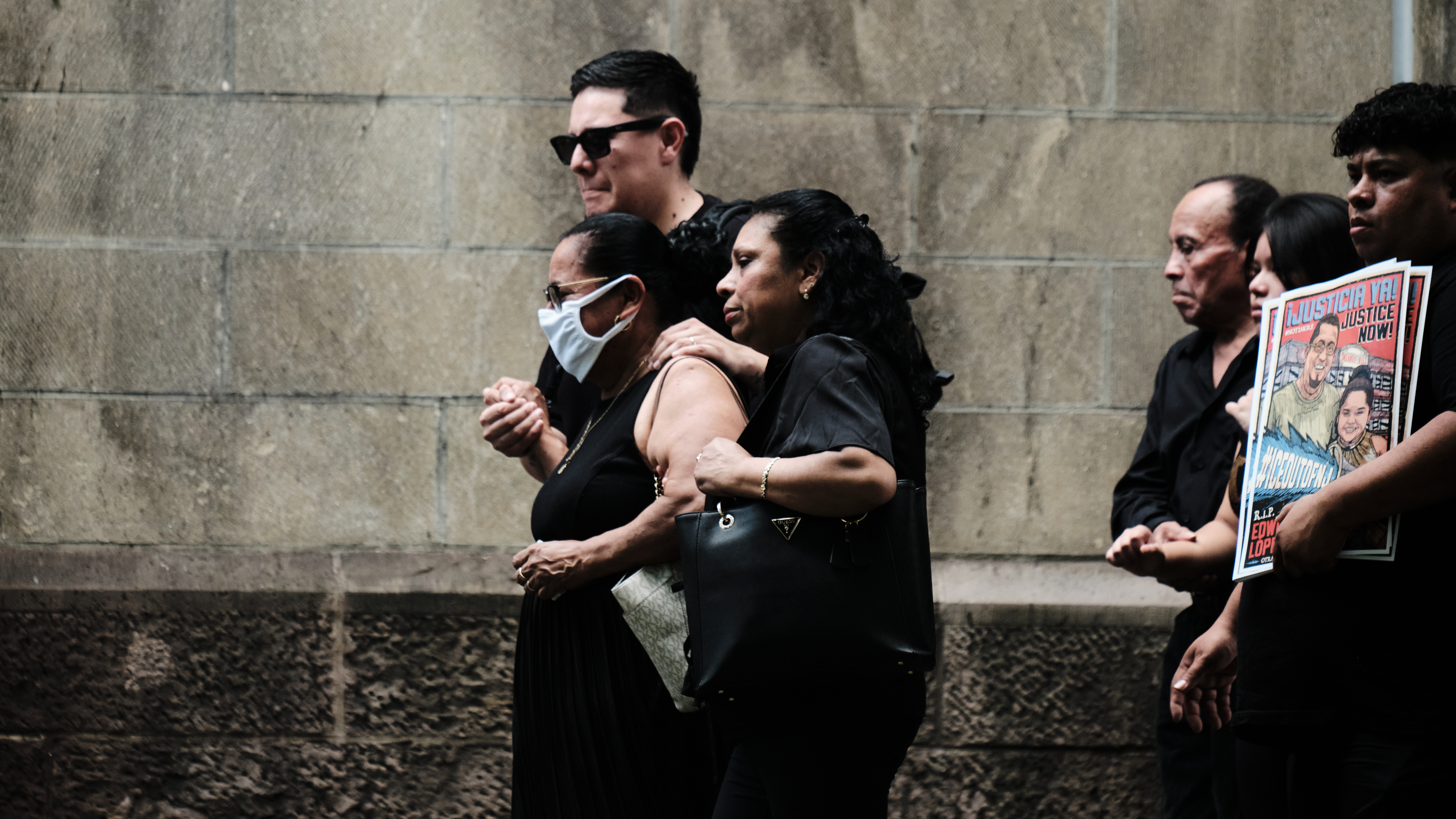
    Family members walk to the church side entrance during the wake of Edwin López Cornejo, after his death in ICE custody in New Jersey on Aug. 7 in Plainfield N.J.Max Blease / For The Inquirer

    ‘Profoundly difficult consequences’

    In the July 24 petition, his lawyer called on ICE to explain why he was detained, and consider either his immediate release or a hearing in front of an immigration judge.

    His lawyer said that he was served with documents in English he could not read, and that he did not have a criminal record and always showed up for his court dates.

    His friends and family described him in similar terms in letters of support submitted to the court last month.

    Kelvin E. Urquilla Flores, who met López Corneja at Just Packaging nearly 20 years ago, described him as “a peace-loving, law-abiding individual” who is “an asset to this country and to his community.”

    Edgar Fabián Guaman, who said he had known López Cornejo for almost two decades, said that his family friend did not present a risk to the community — but instead improves the well-being of those around him.

    “I respectfully express that a possible separation of Mr. López Cornejo from his family unit would have profoundly difficult consequences for his daughter and his mother, who depend on his presence, support, and emotional stability,” Guaman wrote.
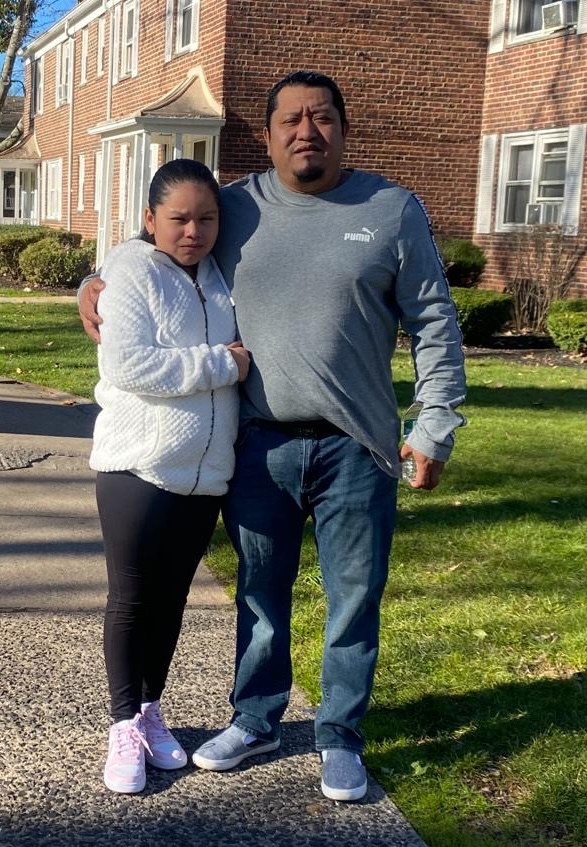
    An undated photo of Edwin López Cornejo and his daughter, Ashley.Courtesy family of Edwin López Cornejo

    Through his Facebook posts, López Cornejo shared a deep appreciation for his parents. In May 2016, he thanked God for giving him “an exemplary mother,” whom he also described as a “second mother” to his own daughter.

    “Maybe I’m not the perfect son, but I try to behave at your level, mother,” he wrote. “I know you gave me the greatest gift, life, and I will never be able to repay you, mother.”

    The last post that shows up on López Cornejo’s Facebook page was a message directed to God and his daughter on her 12th birthday last November.

    Staff writer Abraham Gutman contributed to this article.
  • GOP lawmakers release Fauci texts discussing COVID vaccine and pregnancy

    GOP lawmakers release Fauci texts discussing COVID vaccine and pregnancy

    Two Republican senators on Monday released the first in a trove of text messages from Anthony S. Fauci’s former government cell phone, including a discussion with health officials about whether the COVID vaccine posed a risk for pregnant women.

    The messages were released by Sens. Ron Johnson (R., Wis.) and Rand Paul (R., Ky.), who lead panels investigating Fauci, the longtime infectious-disease scientist who left government at the end of 2022 after becoming a highly visible official helping lead the pandemic response.

    The texts appear to show an exchange between Fauci and top health officials in January 2021 related to the safety of the COVID-19 vaccine for pregnant women.

    In one message, according to screenshots the senators released, Fauci wrote: “Since many people have significant cytokines storm and fever after the 2nd dose. this theoretically could be associated with miscarriage in the 1st trimester.”

    “Definitely a good point, esp after dose two,” then-Centers for Disease Control and Prevention Director Rochelle Walensky responded.

    In a news release, the senators pointed to several subsequent public statements from Fauci and other administration officials in which they said the benefits of pregnant women getting vaccinated appeared to outweigh the risks.

    In February 2021, for instance, Fauci said the Food and Drug Administration has “found, thus far — and we’ve got to be careful — but thus far, no red flags about that, about pregnant women.”

    Some of the statements cited by Johnson and Paul occurred after the CDC officially recommended pregnant women get the vaccine in August 2021, citing an agency analysis that found no increase in miscarriage in pregnant women.

    In a statement, Johnson said the release of the texts “could have an immediate impact on public health.” He added that “you don’t wait a day, months, or years, to inform the public of potential dangers.”

    The CDC states that with more than a million pregnant women vaccinated globally, studies have not shown increased risk for complications like miscarriage, preterm delivery, and more. Health officials have said such past exchanges reflect the evolving nature of the science and debate at the time.

    Fauci declined to comment on the released messages. Walensky and Vivek H. Murthy, at the time a member of President Joe Biden’s COVID advisory board who was also included in the texts, did not immediately respond to a request for comment.

    Pregnant women are historically excluded from clinical trials, including those for the coronavirus vaccine. But it became clear that contracting the virus during pregnancy could be associated with increased risk of preterm birth and other adverse outcomes, and so health officials concluded that the benefits of vaccination appeared to outweigh the risks, according to a former public health official who spoke on the condition of anonymity to speak candidly.

    The senators said the texts are among more than 34,000 recovered from a copy of Fauci’s former iPhone. It also contains 522 voicemails, they said. The phone was obtained from the Department of Health and Human Services, now led by fellow Fauci critics, including Health Secretary Robert F. Kennedy Jr.

    “Now that we have the documents and Fauci’s government-issued phone, my investigation has only just begun,” Johnson, the chairperson of the Senate’s permanent subcommittee on investigations, wrote Monday on social media.

    As part of Paul’s investigation of Fauci, HHS also turned over years of Fauci’s personal diary entries that were collected from government servers.

    Last week, a Senate committee that Paul chairs voted along party lines to hold Fauci in contempt of Congress after he declined to answer its questions and accused Paul of trying to wrongly entrap him. The Justice Department, which is not obligated to prosecute Fauci, said it received Paul’s letter referring the matter but did not confirm whether it planned to pursue any criminal charges.

    In April 2021, a New England Journal of Medicine article written by CDC officials stated that preliminary findings “did not show obvious safety signals” among pregnant women who received the vaccines — meaning there wasn’t an unusual number of adverse events — but added that more follow-up was needed.

    “Our societies [American College of Obstetricians and Gynecologists and Society for Maternal-Fetal Medicine] were strongly recommending and advocating for pregnant women to have access to COVID vaccines in the earliest stages of the pandemic because those of us who were dealing withCOVID in pregnancy were seeing exceptionally high rates of complications,” said Neil S. Silverman, a member of the Society for Maternal-Fetal Medicine’s Infectious Disease and Emerging Threats Committee and maternal-fetal medicine faculty at the David Geffen School of Medicine at UCLA.

    Fauci has faced numerous legal threats from Republicans, including Paul and Johnson, who accuse him of covering up his agency’s funding of risky coronavirus research in Wuhan, China, before the virus was first detected there. Fauci has dismissed those claims as “preposterous.”

    Kennedy, his allies, and some Republicans in Congress have expressed concerns about vaccine safety.

    Kennedy, the founder of a prominent anti-vaccine group, has been an outspoken critic of mRNA-based shots, and once called the coronavirus shots “the deadliest vaccine ever made.” Medical experts say COVID-19 vaccines are effective at protecting people from getting seriously ill, being hospitalized, and dying.

    Last year, Kennedy sought to no longer recommend the coronavirus vaccine for healthy pregnant women. The American College of Obstetricians and Gynecologists said it was “concerned” and “extremely disappointed” by the move, and the medical society has continued to recommend the shot for pregnant women.

    On Monday, President Donald Trump signed an executive order that called for cutting the number of recommended childhood vaccines, spacing out those shots and making other changes that would upend decades of federal guidance on vaccines for children.

    Speaking in the Oval Office, the president reiterated his long-held claim that childhood vaccines have led to a rise in U.S. autism cases, an idea that outside researchers have largely debunked.

  • Trump refuses to back down as Supreme Court blocks major policies

    Trump refuses to back down as Supreme Court blocks major policies

    Over the past few weeks, President Donald Trump has made it clear that he will not take Supreme Court decisions as the final word on some of his most cherished priorities.

    The president has introduced new tariffs, renewed efforts to fire Federal Reserve governor Lisa Cook, and issued new executive orders to limit birthright citizenship. While experts said the moves do not signal outright defiance of the high court, they nonetheless push the limits of the rulings that Trump lost earlier this summer.

    “Without question, President Trump is challenging the bounds of the court’s opinions,” particularly regarding Cook’s firing and birthright citizenship, said Richard Lazarus, a law professor at Harvard University.

    The high court’s opinion affirming that nearly everyone born in the United States is a citizen does not allow Trump to create exceptions like some set out in his recent executive orders, Lazarus said. Those orders say children are ineligible for birthright citizenship if born to “alien enemies,” foreign terrorists, foreign lobbyists, or people who fraudulently request tourist visas in order to give birth in the U.S.

    In signing the orders, Trump referred to the Supreme Court decision on birthright citizenship, saying, “We’re ending it a different way.”

    The Trump administration has always followed court orders, said White House spokesperson Lauren Bis. “All actions taken by the president since the recent Supreme Court rulings are consistent with the holdings and analysis set forth by the court,” she said.

    As for Cook, the justices ruled that she deserved notice and a chance to respond before being fired, and Trump’s latest move seeks to provide that. The White House sent a letter to Cook last week renewing the threat to fire her, giving her 21 days to respond, and directing her to submit any response to the White House by Aug. 26.

    “The Supreme Court’s ruling on the Cook case required notice and an opportunity for a hearing in considering whether the president should take certain adverse employment actions,” Bis added. “The president’s notice sent to Fed. Governor Cook offers exactly that within the precise structure enunciated by the Court.”

    Still, Trump’s underlying rationale for dismissing Cook — that she engaged in mortgage fraud — remains unproved, and she has not been charged. While the renewed push to fire her does not “repudiate” the Supreme Court’s opinion, Lazarus said, it “certainly confronts it by challenging its limits.”

    Trump is not the first president to look for ways around adverse Supreme Court rulings. Most recently, when President Joe Biden’s plan to forgive student loan debt was struck down by the Supreme Court, Biden within hours announced a separate plan to forgive the debt.

    Two decades earlier, President George W. Bush wrestled with the court over procedures for detainees seeking freedom from the military prison at Guantánamo Bay, Cuba.

    But such instances appear to be historical exceptions rather than the rule, said David Super, a professor at Georgetown Law.

    “Most presidents treated Supreme Court rulings as dispositive of the issues involved rather than as technical documents to be evaded,” Super said.

    That includes an earlier version of Trump. During his first term, the president was more willing to accept losses at the Supreme Court and move on, Super said. He cited rulings against Trump’s efforts to end the Deferred Action for Childhood Arrivals (DACA) program and to add a question on citizenship status to the 2020 Census.

    “The second-term President Trump appears to have much less regard for the other branches of the federal government than the first-term one did,” Super said.

    Similarly, the Trump administration last month imposed new tariffs on U.S. imports from 60 economies under an authority different from the one the Supreme Court rejected in February. The new duties, imposed under Section 301 of the Trade Act of 1974, purport to penalize countries that fail to curb imports produced by forced labor.

    That does not directly go against the Supreme Court’s decision. But critics call the forced-labor rationale a pretext for reimposing the sweeping tariffs struck down by the court, and small businesses have sued to block them for that reason.

    Some experts say Trump, far from challenging the Supreme Court, is working within the bounds of the justices’ rulings.

    “The court ruled against Trump in these three big cases, and all of them sort of left openings to do something else — and in all three cases he did something else,” said Josh Blackman, a law professor at South Texas College of Law at Houston.

    “Trump is more aggressive because he views rulings as political,” Blackman added. “He’s willing to push back, especially with conservative judges, three of whom he appointed.”

    Still, Trump has added to the sense that he is challenging the court by using heated rhetoric against it.

    After the court overturned his tariff regime in February, the president called the conservative justices who ruled against him “fools and lapdogs.” Last week, when Trump introduced his new birthright measure, he called the court’s decision “a bad decision, very unfair decision,” saying the “country suffers because of it.”

    President Barack Obama criticized the court in his 2010 State of the Union address, though he did so in a more genteel manner. “With all due deference to the separation of powers,” Obama said in criticizing the Citizens United decision (which lifted limits on independent political expenditures by corporations and unions), the court has “reversed a century of law that I believe will open the floodgates for special interests.”

    The Trump administration has also had a tense relationship with the federal judiciary more broadly.

    A Washington Post analysis last year found that Trump and his appointees were accused of flouting the courts in more than a third of the 160-plus lawsuits against the administration in which a judge had issued a substantive ruling. The administration has also sparred with the judiciary over Trump’s picks to lead federal prosecutor’s offices.

    But Mike Fragoso, a former chief counsel to Sen. Mitch McConnell (R., Ky.), said Trump’s responses to the Supreme Court’s most recent decisions do not appear out of the norm.

    Instead, particularly with regard to the new birthright order, Trump appears to be adopting the longtime conservative view that a Supreme Court decision binds the president only to the specific case at issue, not necessarily to its broader reasoning, he said.

    Fragoso, now an attorney at Torridon Law, pointed to President Abraham Lincoln’s rejection of the Supreme Court’s logic in its infamous 1857 decision Dred Scott v. Sandford, which held that African Americans were not citizens.

    “On birthright, it’s a question testing the limits of what the Supreme Court said” while not being inconsistent with the opinion, Fragoso said, adding that Trump’s actions could be described as “Lincolnian.”

  • Surprise nominees, candidate scandals scramble the battle for Congress

    Surprise nominees, candidate scandals scramble the battle for Congress

    The final stretch of primary season has scrambled the battle for Congress, as scandals, insurgent victories, and voters’ rejection of party leaders’ preferred candidates reshape a small but critical set of races.

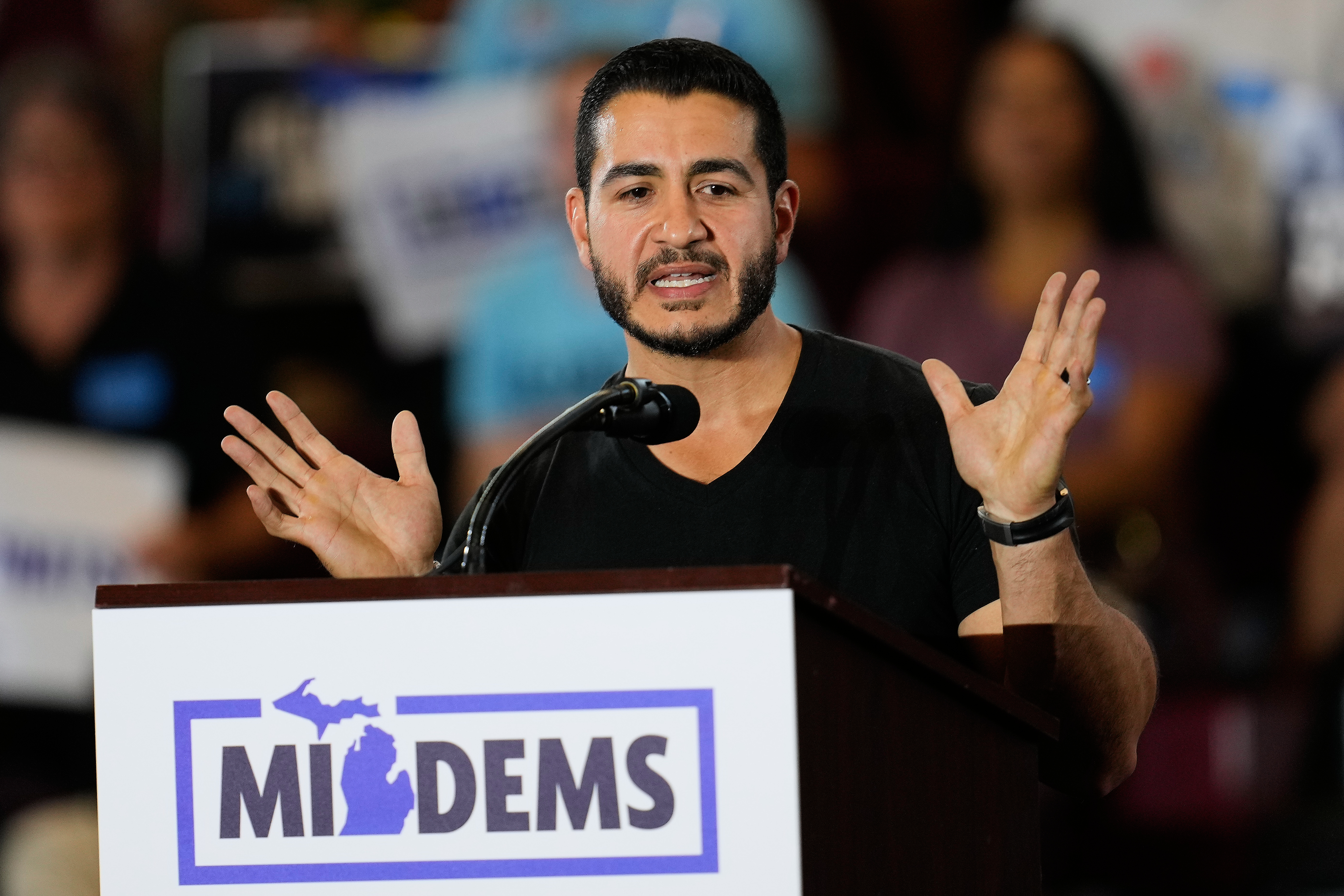
    Democrats’ path to a Senate majority narrowed with the triumph of progressive insurgent Abdul El-Sayed in Michigan, whom polls show faring worse against former Rep. Mike Rogers (R) than his primary rival. Republicans suffered their own setbacks as a Trump-endorsed congressional candidate in Michigan lost to a rival who had suspended his campaign, while misconduct allegations drove a vulnerable North Carolina incumbent from the race.

    Republicans are eager to face several Democrats they believe are too far left for their districts, while Democrats see new openings where GOP candidates have suffered from controversies. With control of Congress potentially turning on a handful of seats, both parties are betting individual candidates will matter as much as the political terrain — though operatives’ judgments about electability often prove wrong.

    “It’s really hard to tell you what the board’s going to be like,” said Democratic strategist Andrew Acosta, noting that antiestablishment fervor among grassroots organizers has made prognosticating harder for consultants and pollsters, and scandals are adding more volatility.

    For Trump, the stakes include the fate of his policy agenda for the rest of his term, as well as burdensome oversight and possibly a third impeachment. But he has taken a hands-off approach to the midterms, frustrating some Republicans who want him to help mobilize his supporters and dip into his super PAC’s $400 million war chest.

    “I said to somebody, ‘Wait a minute, you don’t understand — I won, I’m not campaigning,’” Trump said in an interview with Punchbowl News released Friday. “If I don’t run, will those people go out and vote? … Because a lot of them are very angry at Republicans.”

    Senate candidates scramble the usual map

    To win the Senate, Democrats need to defend their seats in Michigan and Georgia, pick up North Carolina and Maine, plus win in two more states that Trump won by more than 10 points in 2024 — a tall order even in a year expected to favor them.

    The latest polls show how individual candidates can defy a state’s typical partisan makeup. Democrats are currently leading in red states like Ohio, Iowa, and Texas by more than in left-leaning Michigan or Maine.

    Without Michigan, Democrats would have to win in a third state that Trump won by at least 10 points in 2024. Polls showed Rep. Haley Stevens (D., Mich.), who was endorsed by Senate Minority Leader Chuck Schumer (D., N.Y.), faring at least slightly better against Rogers than El-Sayed. But he edged her out in Tuesday’s primary by about one percentage point.

    “There’s a serious distinction, a big difference between somebody like Haley Stevens, who has far-left positions — and we would hammer her every day and litigate those positions — and somebody like Abdul,” said Alex Latcham, who runs Senate Leadership Fund, the flagship Republican super PAC in Senate races.

    Schumer, who spoke to El-Sayed on Wednesday, said in an interview that he was confident Democrats would hold Michigan. No Republican has won a Senate race there in more than three decades, and Trump is not popular there.

    El-Sayed just needs to “keep talking about jobs, talking about lower costs, talking about corruption — the same things that our candidates talk about across the country,” Schumer said.

    Texas Attorney General Ken Paxton beat incumbent Sen. John Cornyn over the objection of GOP leaders and now trails Democratic state Rep. James Talarico in most polls.

    In Maine, establishment favorite Gov. Janet Mills stalled out against Graham Platner, who later withdrew amid sexual assault allegations. The Democrats’ new nominee, Troy Jackson, is in a tight race against five-term incumbent Sen. Susan Collins (R).

    Republicans had already largely written off Georgia after no formidable challenger to Sen. Jon Ossoff (D) emerged. Their nominee, Rep. Mike Collins, trailed by 13 points in a Fox News poll conducted in late June and came under further pressure after CNN reported that his live-in son-in-law shared white supremacist and neo-Nazi content online.

    Collins disavowed those views but did not distance himself from his son-in-law. The campaign argued the race remains competitive by pointing to $60 million commitments from outside groups to help Collins.

    “Political ‘experts’ and the news media were laughingly wrong — just this week — about the competitiveness of the Senate primary in Michigan,” Collins spokesperson Corbin Keown said. “Mike Collins will beat Jon Ossoff in November, and the media will once again be left wondering how they got it so wrong.”

    The primary calendar could still reshape another Senate race. Alaska generally votes Republican, but Sen. Dan Sullivan faces a competitive race against former Rep. Mary Peltola (D), so Republicans are hoping a second candidate named Dan Sullivan does not make the top four and advance to the November ballot, where he could confuse voters and siphon off votes from the incumbent.

    House primaries create openings for both parties

    While midterms are historically tough on the sitting president’s party, Republicans moved the House map in their favor by gerrymandering additional states to eliminate blue seats and narrow the competitive field to only a couple of dozen districts. Democrats are hoping Trump’s unpopularity can push them deeper into red territory.

    The Senate result in Michigan immediately spilled into House races. Trump and other Republicans immediately moved to cast El-Sayed as a new party standard-bearer, seeking to make his progressive positions a drag on the entire Democratic ticket.

    “Michigan Democrats proved that their party has been completely taken over by the radical socialist left,” Rep. Bill Huizenga (R., Mich.) said in response to Tuesday’s results, linking El-Sayed with his own Democratic challenger, Sean McCann.

    The controversy around El-Sayed may have also hurt the Trump-endorsed candidate in Michigan’s 8th Congressional District, Amir Hassan. Republican operatives said voters may have confused him with controversial podcaster Hasan Piker, who campaigned with El-Sayed.

    Hassan lost Tuesday’s primary to another Republican named Tom Smith who raised almost no money and suspended his campaign last month. In lieu of a campaign finance report, he sent the Federal Election Commission a handwritten letter.

    Smith acknowledged his race got far less attention than the Senate contest and said his win surprised him too. In a statement Friday, he echoed national GOP attacks on left-leaning candidates, saying he and Trump-aligned Michigan Republicans would be a foil to the “failed socialist policies” of progressives like El-Sayed.

    Incumbent Rep. Kristen McDonald Rivet’s (D) campaign manager, Bobby Bennett, said the campaign didn’t see either Republican as harder to run against. The Cook Political Report rates the race as leaning Democratic.

    Voters also rejected Trump’s endorsement in Tennessee by ousting incumbent Rep. Andy Ogles. Still, national Republicans did not rue his roughly six-point loss to Charlie Hatcher on Thursday, since Ogles had faced ethics investigations and raised less money than Democrat Chaz Molder. Ogles lost much of his incumbency advantage when Republican-led redistricting replaced about 80% of the district’s voters as part of an effort to eliminate a Democratic-held Black-majority seat.

    Trump endorsed Hatcher on Friday, saying he had stuck with Ogles “even though he had virtually no chance of winning.”

    Elsewhere, both parties seized on primary results they argued had strengthened their prospects in competitive House races. Republicans cheered when national Democrats lost their preferred candidates in California’s 22nd District, where Bernie Sanders-endorsed Randy Villegas will take on incumbent Rep. David G. Valadao, and Arizona’s 1st District, where failed 2024 nominee Amish Shah beat ex-Republican Marlene Galán-Woods to take on Trump-endorsed Jay Feely.

    Democrats also acknowledged a tougher road against Rep. Tom Barrett (R., Mich.) with their nomination of William Lawrence, a progressive activist who co-founded the Sunrise Movement. “Even Democrats admit that Socialist William Lawrence is too extreme for Mid-Michigan and that he will be rejected this fall,” National Republican Congressional Committee spokesperson Zach Bannon said Thursday.

    A few consequential House primaries remain. In Florida’s primary on Aug. 18, some House Republicans are backing a challenger to Rep. Cory Mills (R), whom they view as unusually vulnerable amid a House Ethics investigation and assault allegation.

    Democrats see several Republican-held seats becoming more competitive because of scandals or candidate vulnerabilities. Rep. Max Miller (R., Ohio) faces pressure to resign over domestic abuse allegations, and Rep. Chuck Edwards (R., N.C.) dropped his reelection bid after the Ethics Committee found inappropriate conduct toward female staff. Rep. Tom Kean Jr. (R., N.J.), also drew criticism for missing almost four months of votes while struggling with depression. Cook rates Kean’s race a toss-up.

    Rep. Rob Bresnahan (R., Pa.), running in another toss-up district, is facing scrutiny over extensive stock trading after campaigning on banning the practice among lawmakers. Democrats are also bullish about flipping Texas’s 23rd District after Tony Gonzales admitted to an affair and resigned. The replacement Republican nominee, Brandon Herrera, known on YouTube as “The AK Guy,” faces San Antonio attorney Katy Padilla Stout.

    The odds of Rep. Marcy Kaptur (D., Ohio) hanging onto her seat, after Republicans redrew her district to favor them, improved in Democrats’ eyes when the GOP nomination went to former state Rep. Derek Merrin, whom she beat in 2024.

    Staffers of candidates who defeated national Democrats’ preferred contenders dismissed electability concerns and pointed to the quick postelection support of the party’s House campaign arm, a typical practice. In Maine’s 2nd Congressional District, state Auditor Matthew Dunlap defeated state Sen. Joe Baldacci, whom the Democratic Congressional Campaign Committee had included in its “Red to Blue” program. Since the primary, Dunlap’s campaign has built working relationships with the national group, spokesperson Matt Herdman said.

    “It’s going to be a difficult race, everyone knows that, but we feel like we’re on a good path,” Herdman said.

  • A new federal ‘Data Center Bill of Rights’ took lessons from Philly suburbs and Western Pa. fracking country

    A new federal ‘Data Center Bill of Rights’ took lessons from Philly suburbs and Western Pa. fracking country

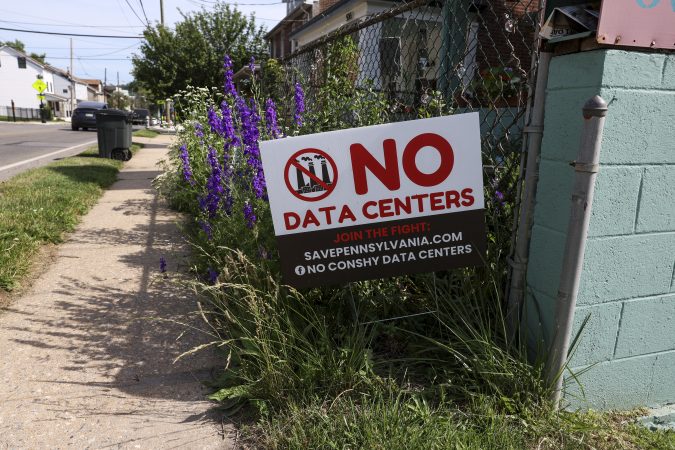
    WASHINGTON — A new federal proposal to enact protections for communities opposed to the proliferation of data centers has drawn inspiration from both the Philadelphia suburbs and Western Pennsylvania fracking country.

    The Data Center Bill of Rights is one of several national efforts to address a growing dissatisfaction with data centers, which have so far faced few restrictions at either the federal or state level in Pennsylvania.

    U.S. Rep. Ro Khanna, a California Democrat and Bucks County native considering running for president in 2028, said his home state should be doing more.

    He introduced the federal legislation after a recent tour across Pennsylvania that he said was designed to hear from communities that have lost manufacturing jobs and other economic opportunities.

    Data center concerns came up more than any other issue, he said — leading him to incorporate new ideas into the bill he already had in the works, and to call for a pause on data center development in Pennsylvania until further protections and local controls are enacted.

    A statewide pause would be more than what Gov. Josh Shapiro — another potential 2028 Democratic contender — has proposed as he seeks to enact data center guidelines. It would also be less than other Democrats, both in Pennsylvania and nationally, who have called for more robust moratoriums. Shapiro’s Republican challenger this year, Treasurer Stacy Garrity, has also called for a pause but not for an extended moratorium.

    “I was surprised by the anger about it in Pennsylvania,” Khanna said in an interview after his 15-county tour. “In other states, people are sometimes opposed in local communities, local pockets. But not this widespread anger.”

    Khanna, a Council Rock High School graduate who has represented Silicon Valley in Congress since 2017, spoke about the Data Center Bill of Rights during his tour but said afterward that it was “partly inspired” by the concerns he heard in the communities similar to the ones where he grew up.

    He said he was alarmed by the complaints he heard outside Philadelphia, where five data centers have been proposed in close proximity to each other in King of Prussia and another 2-million-square-foot data center is proposed in Conshohocken.

    “As a kid, I used to go to Conshohocken and the King of Prussia Mall. I’m familiar with that area,” Khanna said. “You can’t ride roughshod over what Delaware County wants or when Montgomery County wants.”

    The legislation would declare that communities have the right to reject data centers through a “transparent community process” or allow them with specific protections. That includes demanding that data centers don’t lead to higher electricity rates, that they use renewable energy sources and disclose their water consumption, and “pay their fair share of state and local taxes.”

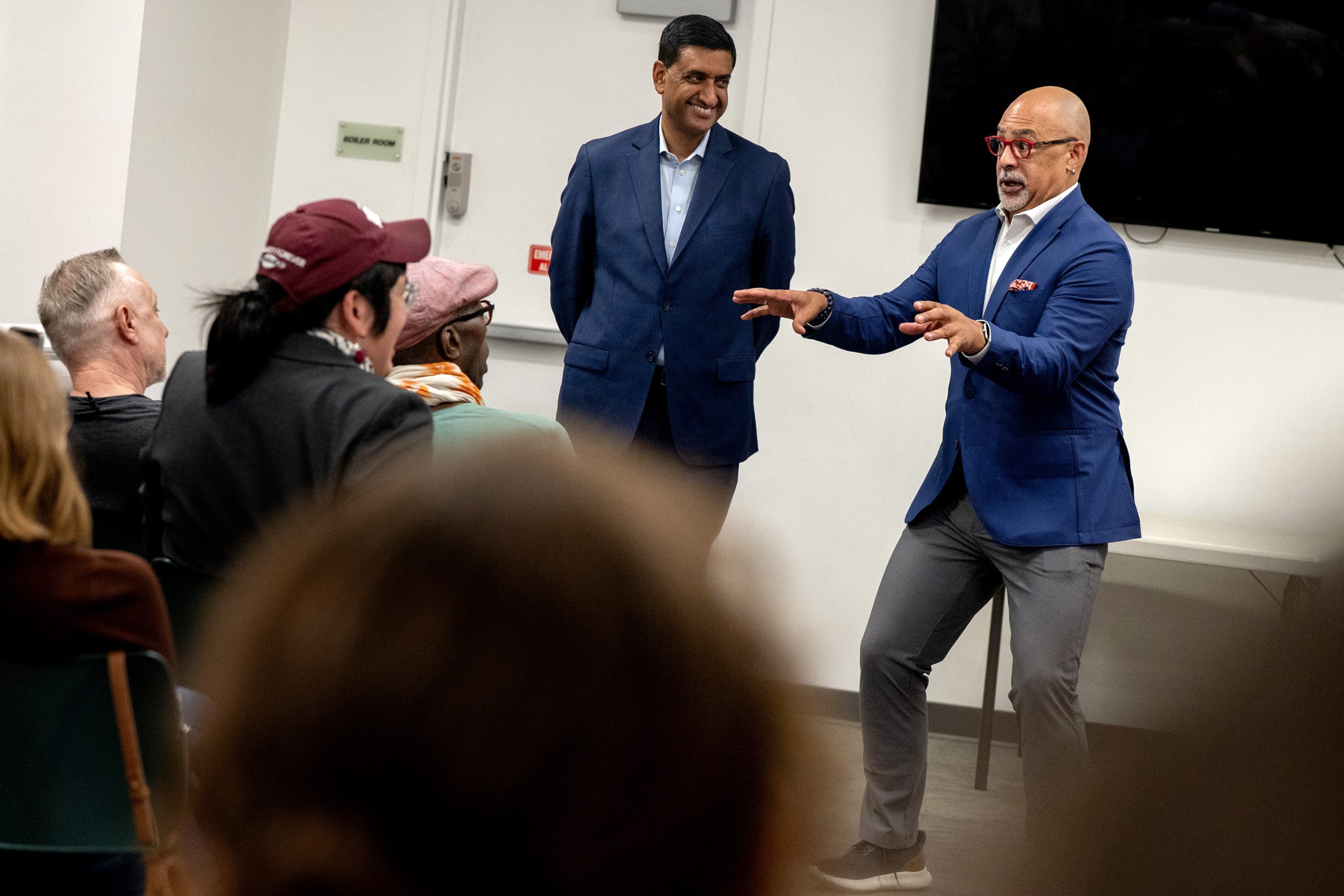
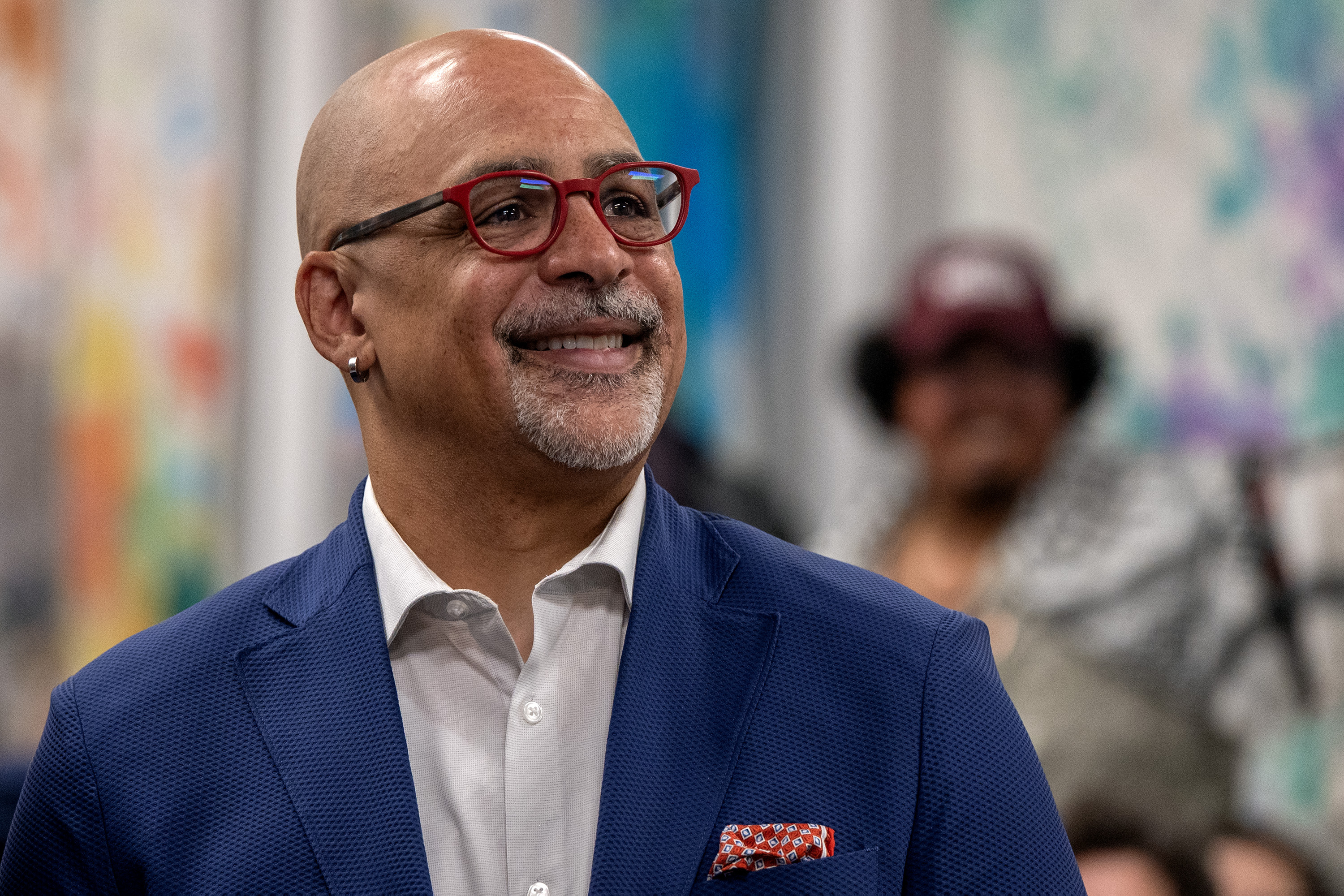
    State Rep. Chris Rabb (right) joins U.S. Rep. Ro Khanna (left) Tuesday, July 28, 2026, as he stops on his “Made in PA: New Economic Patriotism Tour” at the City Institute Library on Rittenhouse Square.Tom Gralish / Staff Photographer

    One specific provision, Khanna said, was informed by his visit in Washington County with individuals who are paid to host natural gas wells on their properties. It was there that he said he learned of community demands for oil and gas well sites to be at least 2,500 feet from residences. That buffer was a recommendation from a 2020 grand jury report released by Shapiro when he was serving as attorney general and that outlined health and safety issues caused by fracking in the Marcellus Shale region.

    The recommendation was not followed, and advocates are continuing to push for extending the buffer from the current distance of 500 feet, according to Inside Climate News.

    Khanna’s bill of rights would call for data centers to be built no closer than 2,500 feet from residences, schools, childcare facilities, hospitals or nursing homes. He said the environmental and health hazards for data centers aren’t the same as fracking but they should be kept at a distance from communities that don’t want to live directly next to them.

    “At least they were offering royalty checks in the cases of fracking,” Khanna said. “[Data center developers are] not even giving the communities checks. It’s just kind of like, ‘OK, we’re going to build.’ What does the community get out of it? I literally don’t understand it.”

    Data center advocates have argued their development is critical in winning an artificial intelligence war with China, and that they will bring construction and some skilled jobs to communities that need them.

    Even the staunchest advocates, though, have acknowledged the public blowback.

    “I do think that data centers in Pennsylvania have raised legitimate concerns,” U.S. Sen. Dave McCormick (R., Pa.) said during a recent telephone town hall as he continued to promote them in the competition with China and their creation of “thousands of jobs.”

    When developers are making their pitch, McCormick said they should come with commitments to protect energy costs and overuse of water, use local labor, invest in the community and pay taxes.

    “That should be part of the deal up front,” McCormick said during the telephone town hall in late July. “With all those facts, then the local community can decide whether they want the data center or not. And if they choose not to, that’s their choice.”

    Khanna said he’s hoping for bipartisan support as he introduces the bill of rights idea. He’ll also be competing with other proposals — like one from fellow progressives U.S. Rep. Alexandria Ocasio-Cortez (D., N.Y.) and U.S. Sen. Bernie Sanders (I., Vt.) called the AI Data Center Moratorium Act. The bill would enact an immediate federal moratorium on data center construction until other safeguards are passed into law, including some of the ideas Khanna and McCormick have proposed, like around utility costs.

    Several Pennsylvania state-level laws have been proposed, though the legislature did not address them during its busy budget season earlier this spring and summer. Lawmakers also left Harrisburg without ending tax breaks aimed at incentivizing data center construction even though the idea had garnered widespread support.

    “They shouldn’t be getting these tax breaks to build,” Khanna said. “That’s absurd when you’ve got hyperscalers that are making trillions of dollars.”

    The fact that many of those ultra-wealthy corporations are based in his district made the issue a politically dicey situation for him, but also one that the possible presidential hopeful said he was willing to take on.

    “We’ve got to pause it in states like Pennsylvania,” Khanna said. “Some of my own constituents aren’t going to like that.”

  • Senate narrowly approves Blanche as attorney general, capping a tough confirmation fight

    Senate narrowly approves Blanche as attorney general, capping a tough confirmation fight

    The Senate narrowly voted to confirm Todd Blanche as attorney general early Saturday morning, cementing President Donald Trump’s former criminal defense lawyer as the head of the Justice Department despite rare pushback from Republicans that had left his nomination in doubt.

    Sen. Bill Cassidy (R., La.) provided the crucial vote for Blanche as two other Republicans — Sens. Lisa Murkowski of Alaska and Susan Collins of Maine — sided with Democrats against the nominee. Sen. Mitch McConnell (R., Ky.), who has been absent from the Senate since he suffered a fall in June, missed the vote.

    The 50-49 vote at 4:31 a.m. — right before the Senate left for a five-week recess — gives Blanche the imprimatur of Senate confirmation in a job he has held on an acting basis since Trump fired former attorney general Pam Bondi in April.

    But it hardly amounted to a full-throated endorsement.

    Cassidy, despite voting in Blanche’s favor, joined Murkowski and Collins in publicly raising questions about the politicization of the Justice Department under Trump. The three also voiced concerns about Blanche’s role in a controversial deal struck this spring to resolve the president’s legal claims against the IRS — an agreement that included a now-scuttled proposal for a $1.8 billion fund to compensate people who claimed they were victims of political prosecutions.

    Two other Republican senators — John Cornyn of Texas and Thom Tillis of North Carolina — expressed similar reservations and threatened earlier in the process to vote against the nomination, although both ultimately backed Blanche.

    Explaining his decision, Cassidy described it as a choice between Blanche — who before his time as Trump’s personal lawyer had spent years as a federal prosecutor and a partner at a prestigious Manhattan law firm — and the possibility that Trump might pick someone worse.

    “Mr. Blanche is not perfect, and he will tell you this, but the choice is not between perfection and Mr. Blanche,” Cassidy said on the Senate floor Friday. “It is between Mr. Blanche and another acting attorney general who may not run the department as effectively under President Trump and who, indeed, may not be as good as Mr. Blanche.”

    For his part, Blanche said after the vote that he was “deeply honored by the trust and confidence President Trump has placed in me” and thanked the Senate for staying late for the vote.

    “To the dedicated public servants of the Department of Justice,” he said in a post to social media, “thank you for your work each day to uphold the law and keep our country safe.”

    With the confirmation fight now behind him, Blanche sheds the “acting” part of his title and, with it, any doubt about his authority as the head of a cabinet agency that Trump has made central to his second-term agenda.

    Since returning to the White House last year, the president has eroded the Justice Department’s long tradition of independence, demanding it pursue prosecutions of his political enemies and directing resources toward rewarding his allies.

    Meanwhile, the department has been ravaged by vacancies, low morale among career staff, and increasing credibility problems with federal judges.

    Blanche, first as Bondi’s No. 2 and then as the department’s acting leader, has played a central role in that transformation, although his boosters in Congress have praised his efforts to step up fraud enforcement, prosecute illegal immigration and combat violent crime.

    “America is safer with Todd Blanche at the helm of the Justice Department,” said Sen. Chuck Grassley of Iowa, the Republican chair of the Senate Judiciary Committee.

    Cassidy called aspects of Blanche’s track record troubling, but he cited the bond Blanche built with Trump as he defended him in four criminal cases during his years out of office. The senator said he hoped that trust would strengthen Blanche’s ability to talk the president out of decisions that run contrary to the rule of law.

    But Democrats insist that, at every turn, Blanche has proven unable — or unwilling — to do just that.

    Since becoming acting attorney general, Blanche has defended the president’s “right” to intervene in criminal investigations and his controversial pardons of those who attacked the U.S. Capitol on Jan. 6, 2021. He has breathed new life into probes of Trump critics, including investigations of former FBI Director James B. Comey, former CIA Director John Brennan and Cassidy Hutchinson, a former White House aide from the president’s first term who testified against him in Congress.

    “This nation deserves an Attorney General who loves the Constitution more than he loves the President. Sadly, for our nation, Todd Blanche, is not that person,” Sen. Dick Durbin of Illinois, the top Democrat on the Senate Judiciary Committee said in a statement Saturday.

    But it is the out-of-court deal Blanche announced this spring to resolve a lawsuit the president filed against the IRS earlier this year, over the leak of his tax returns to the media, that has drawn the most unified criticism from lawmakers.

    In addition to the taxpayer-backed nearly $1.8 billion payout fund, the deal also extended unusual tax protections to Trump, two of his sons and their businesses, shielding them from any preexisting tax audits.

    Lawmakers from both parties decried the agreement, describing the proposed payouts as a “slush fund” designed to reward Trump’s allies, and denouncing the tax provisions as a corrupt exercise in self-dealing from a president who has often complained of burdensome audits.

    Facing bipartisan pressure, Blanche walked back plans for the fund. But Cornyn and Tillis, both of whom are not running for reelection after Trump declined to support them, demanded written assurances from Blanche that the president would not later reverse that decision before they agreed to support his nomination.

    Blanche ultimately relented, issuing statements late last Sunday declaring the fund officially dead and clarifying that the deal’s tax provisions protected the Trumps only from past tax audits and would not prevent the IRS from reviewing their finances in the future.

    But critics have questioned whether Blanche’s written pledges hold any legal weight, given that they were not signed by Trump and his legal team, and could be ignored by the president at any point.

    Murkowski raised that possibility in a statement Friday announcing her decision to vote against Blanche’s nomination. The only reason the payout fund was now off the table, she said, was because Blanche needed Senate support for his nomination.

    “Once we vote, that will end, and there is no telling what the future holds,” she said.

    “The country needs an attorney general who will check the worst impulses of this administration,” Murkowski added. “I hope Mr. Blanche is able to achieve that if confirmed, but I simply do not have confidence that will be the case.”

  • New Trump-promoted Freedom Fuel station pops up in Philly. Another could be shut down.

    New Trump-promoted Freedom Fuel station pops up in Philly. Another could be shut down.

    Philadelphia drivers looking to save a few bucks at the pump streamed into the city’s newest Freedom Fuel station Friday afternoon, even while the station’s deep discounts remain a mystery.

    The station, located in Bustleton on Roosevelt Boulevard, is one of four new Freedom Fuel locations added this week. The other three are in New Jersey, including one all the way up in Morris County.

    The gas network, which was promoted by both the White House and President Donald Trump last month, is now up to 29 stations across the Philadelphia region, stretching east to the Jersey Shore.

    (function(){function e(){window.addEventListener(`message`,function(e){if(e.data[`datawrapper-height`]!==void 0){var t=document.querySelectorAll(`iframe`);for(var n in e.data[`datawrapper-height`])for(var r=0,i;i=t[r];r++)if(i.contentWindow===e.source){var a=e.data[`datawrapper-height`][n]+`px`;i.style.height=a}}})}e()})();

    Nearly all the pumps were full at Philly’s newest Freedom Fuel spot Friday afternoon, with the station selling a gallon of regular gas for $3.79 a gallon. That’s nearly 35 cents a gallon less than a Wawa just up Roosevelt Boulevard, where a gallon of regular gas went for $4.13 on Friday.

    A nearby Lukoil was a bit closer to Freedom Fuel’s prices, offering a gallon of regular gas for $3.99.

    An enduring mystery remains how Freedom Fuel has been able to consistently offer lower prices than nearby competitors.

    Experts told The Inquirer Freedom Fuel was likely suffering losses for selling fuel at such a low price, especially since many of the company’s stations don’t have robust convenience stores or car washes to create revenue.

    “It becomes unsustainable,” Eliezer Fich, a finance professor at Drexel University’s LeBow College of Business, told The Inquirer last month. “Unless prices go down. But if they do, they go down for everybody.”

    According to public records, the newest Freedom Fuel station is owned by Celik Plaza II l.l.c., which had previously run it under a “Red Lion Fuel” banner. Engin Celik, who is listed as a principal with the company, according to documents reviewed by The Inquirer, did not respond to a request for comment.

    Philly Freedom Fuel station faces closure after failing inspection

    The Freedom Fuel station on Bustleton Ave. in Philadelphia. Dana Munro / staff

    While Freedom Fuel is adding locations, it could soon lose one in Philadelphia.

    The station on Bustleton Avenue, one of at least six locations linked to Cherry Hill developer Shamikh Kazmi and his brother Syed Kazmi, has an expired fuel dispensing license and failed an inspection last week, according to city records.

    If unresolved, the station could be forced to close by Sept. 4, according to a city spokesperson.

    The Kazmi brothers, who have been embroiled in at least two lawsuits related to previous gas station ventures, could not be reached for comment.

    Freedom Fuel owners remain quiet

    Ravens special teams coach Randy Brown signed Freedom Fuel’s formation papers. Terrance Williams

    While Freedom Fuel’s launch was proudly promoted last month by Trump, the company’s owners have remained quiet about the enterprise and how they’re able to maintain low fuel prices.

    A White House spokesperson previously told The Inquirer Freedom Fuel is a private company receiving no government subsidies and not accessing fuel at a lower cost.

    “Freedom Fuel Network is a privately owned and proudly patriotic company — along with its convenience store operators, haulers, sign companies, and operational partners — that answered President Trump’s call to action to lower prices at the pump,” the company said in a statement on its website.

    Baltimore Ravens assistant coach Randy Brown, the former mayor of Evesham Township, N.J., and a self-proclaimed “proud Trump supporter,” signed Freedom Fuel’s certificate of formation in Delaware on June 23. Brown has declined to comment on the enterprise.

    Former commodities trader Yoni Gontownik also signed the certificate of formation, and has not responded to requests to comment. Gontownik and his wife, Bellen, have hosted Republican fundraisers through NORPAC, a New Jersey-based political action committee supporting pro-Israel lawmakers in both parties.

    Staff writer Ryan W. Briggs contributed to this article.
  • N.J. attorney general announces investigation into detainee deaths at Delaney Hall

    N.J. attorney general announces investigation into detainee deaths at Delaney Hall

    New Jersey Attorney General Jennifer Davenport announced Friday that her office’s civil rights division is investigating the operation of Delaney Hall, the privately run ICE facility in Newark where several detainees have died.

    Davenport said the investigation will look into how the facility is run by the GEO Group Inc. and whether its employees have violated the civil rights of people detained there, citing reports about conditions and the deaths.

    On Aug. 1, Edwin Jeovanny López Cornejo, 41, died in ICE custody after having a medical episode at Delaney Hall. His family said he had been living in the United States for two decades.

    Concerns have been raised about the death in December of Jean Wilson Brutus, a 41-year-old Haitian, shortly after he arrived at Delaney Hall.

    Congressional Democrats this week alleged that a third person at the facility had died.

    Critics say detainees at Delaney Hall endure poor conditions. The facility has been the subject of ongoing protests and clashes between federal officials and elected Democrats.

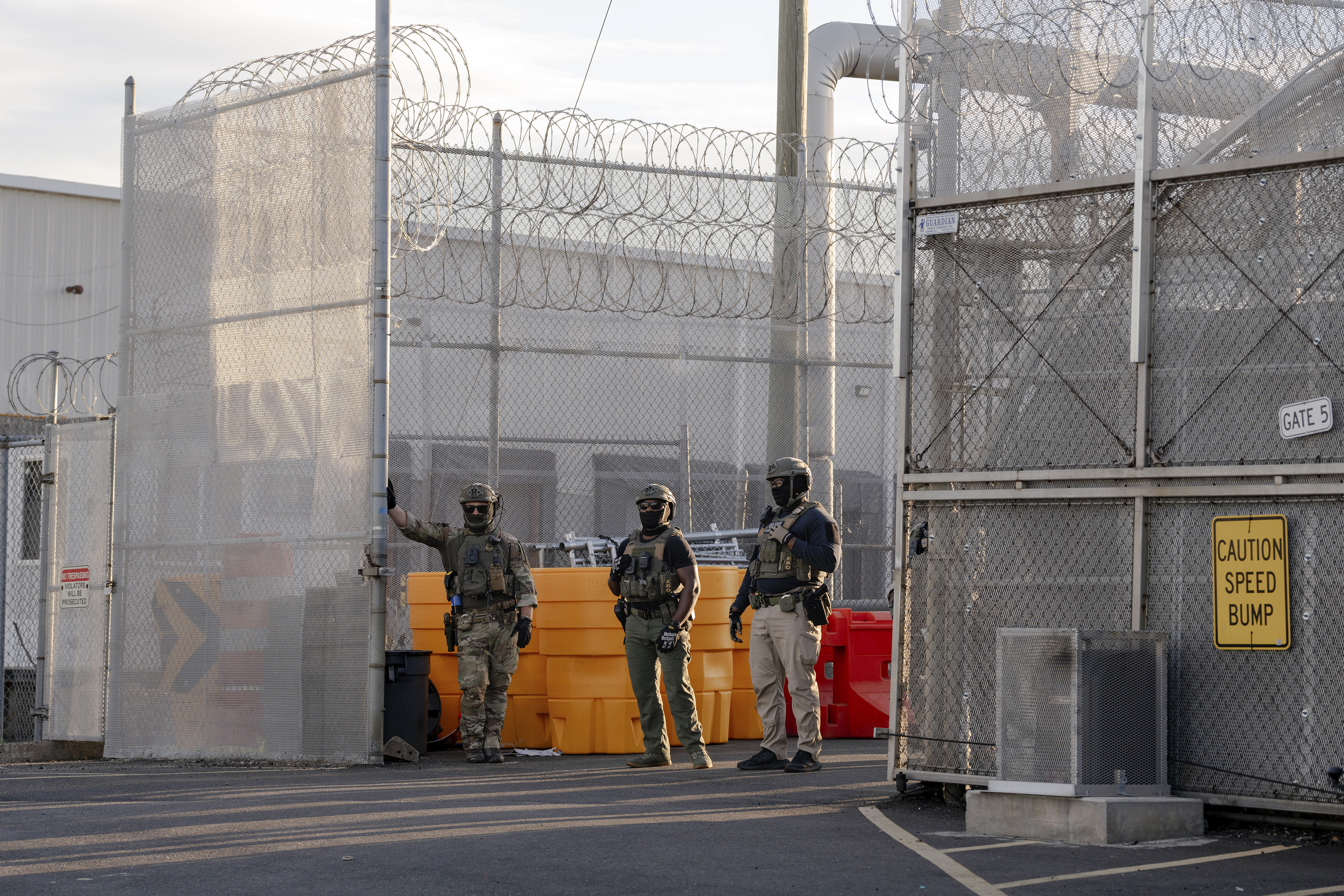
    File photo of Immigration and Customs Enforcement agents watching protesters at Delaney Hall, an immigration detention center, in Newark, N.J., on June 7, 2026.LEXI PARRA

    “New Jersey has both a legal and a moral duty to stand up for the civil rights of people within our state,” Davenport said in a statement.

    “For people who are held involuntarily, including by a private corporation like GEO Group, those rights include the right to humane treatment and adequate medical care,” Davenport said.

    “We will take every action available under law to safeguard these core legal principles. We ask individuals to share their personal experiences with us so that we can take action to ensure that rights are protected,” she said.

    Anyone with information that could be helpful for the investigation can contact the New Jersey Attorney General’s Office Division of Civil Rights at AffirmativeEnforcement@njcivilrights.gov.

    A spokesperson for the GEO Group referred questions to U.S. Immigration and Customs Enforcement.

    Spokespersons for ICE and the U.S. Department of Homeland Security could not be reached for comment Friday evening.

    The Trump administration has previously rejected calls for Delaney Hall to be closed as it pursues mass deportations.

    Gov. Mikie Sherrill said in a statement that the investigation was necessary.

    “We’ve heard the reports of disturbing conditions and have been heartbroken by recent deaths of detainees at the facility,” Sherrill said.

    “ICE and The GEO Group have continued to block our efforts for a full health inspection and there are now reports that visitations have been stopped. We will not tolerate a facility that abdicates any transparency and accountability,” Sherrill said.

    “I have long opposed private detention facilities, and my position is clear that Delaney Hall should be closed. My administration will continue to do everything in our power to hold ICE and The GEO Group accountable to New Jersey laws,” the governor said.

    On Thursday, U.S. Sen. Cory Booker (D., N.J.) called for the closure of Delaney Hall but was rebuffed by Senate Republicans.

    “A body count is not normal. A mother’s son whose face went numb the night before is not normal. Edwin Lopez Cornell’s death was preventable. Keeping Delaney Hall open is another deliberate decision to let it continuing,” Booker posted on social media.

    Also on Thursday, all nine House Democrats in New Jersey sent a letter to Homeland Security Secretary Markwayne Mullin and acting ICE Director David J. Venturella asking for detailed information about the deaths and conditions at the facility.

    “Three deaths, repeated allegations of medical neglect, restricted oversight, and less public transparency are a terrible track record of care for individuals in your custody,” the Democrats wrote.

    “At this point, the question is no longer whether ICE knows what is happening inside Delaney Hall. It is, ‘why does ICE continue to allow the GEO Group to put lives at risk?’” they wrote.

  • Chris Rabb warns of ‘great peril’ for Democrats if party ignores Michigan’s Abdul El-Sayed and other progressive wins

    Chris Rabb warns of ‘great peril’ for Democrats if party ignores Michigan’s Abdul El-Sayed and other progressive wins

    WASHINGTON — Chris Rabb is on a winning streak.

    Since his victory in Philadelphia’s highly contested Democratic congressional primary in May, the state lawmaker and presumptive successor to retiring U.S. Rep. Dwight Evans has campaigned across the country — going nine for 10 in races where he’s supported progressives against more establishment-backed, moderate Democrats.

    That wave of momentum — for a left-leaning faction hoping to transform the next generation of the Democratic Party — culminated this week in Michigan, where Dr. Abdul El-Sayed won a consequential U.S. Senate primary in the key swing state.

    Though not a self-described democratic socialist like Rabb, El-Sayed ran on a similar anti-corporation, anti-Israel platform that focused on enacting policies like Medicare for All and dismantling U.S. Immigration and Customs Enforcement.

    Rabb, who was on the ground in Detroit for the final push of the campaign and at El-Sayed’s victory party on Tuesday, said the Michigander prevailed “against extraordinary odds.”

    U.S. Rep. Haley Stevens, with establishment support and about $62 million in outside spending on her behalf, had a roughly 9-to-1 spending advantage over El-Sayed, according to The New York Times. Her loss amid that kind of massive spending “is a testament to the power of economic populism and the growing frustration with incrementalism,” Rabb said.

    “His primary win proves that economic populism and bold progressivism has growing support across the ideological spectrum among Democrats whether they’re voting in Michigan or Pennsylvania,” Rabb said.

    The five-term state representative from East Mount Airy has thrown his energy into other campaigns as his own is pretty much complete. In one of the bluest in the country, he defeated a pair of more moderate Democrats — State Sen. Sharif Street and physician Ala Stanford — and will not face a Republican opponent in the November election. The district covers about half of the city, from South Philadelphia through the Northwest.

    Rabb began looking beyond his district borders almost immediately after the primary.

    In New Jersey’s Trenton-based congressional district, he campaigned for Dr. Adam Hamawy, a former combat surgeon who has also provided medical care to Gazans during the war with Israel. In New York, he threw his weight behind Darializa Avila Chevalier and Claire Valdez, two of the democratic socialists also backed by New York Mayor Zohran Mamdani.

    He turned to other candidates in California, Colorado and Michigan as he door-knocked, called voters and appeared in virtual events.

    “Ever since May 19, which was the night I won, I’ve been paying it forward with so many amazing candidates,” Rabb said during a recent virtual fundraiser for El-Sayed in which Rabb said he was signing and giving away the pink “Philadelphia” baseball hat he was wearing to a lucky donor.

    Rabb hasn’t weighed in on every battle between progressives and moderates. He did not endorse Cori Bush, the former member of Congress and democratic socialist who failed in her attempt at a comeback in Missouri this week. He also has not endorsed every congressional candidate promoted by two key national coalitions that supported him — Justice Democrats, which has been a force behind the election of U.S. Rep. Alexandria Ocasio-Cortez and others, and the Democratic Socialists of America.

    The one candidate he endorsed who did not win was Saikat Chakrabarti, a former campaign manager and chief of staff to Ocasio-Cortez who tried to beat former House Speaker Nancy Pelosi’s hand-picked successor in San Francisco.

    And not all of Rabb’s endorsees are guaranteed to join him in Congress next year. Justin Pearson, a Tennessee state lawmaker who won a U.S. House primary on Thursday, will be the nominee in a state where Republicans redistricted this year in an attempt to root out Democratic incumbents. Pearson’s district is considered “solid Republican” by the Cook Political Report, a nonpartisan group that rates competitive districts.

    While some Democrats have questioned whether progressives can win competitive general election races, Rabb said he was “confident that strategically supporting anti-establishment populist candidates who bring with them new, more active and enthusiastic voters will significantly increase turnout in November.”

    “Ignoring the unique strengths of such candidates and campaigns will be at the Democratic Party’s great peril,” he added.

    That sentiment echoed other comments he’s made in recent months as more centrist leaders in his party questioned the progressive momentum. In June, he responded to an interview in which Gov. Josh Shapiro called the democratic socialists who won in New York an example of “performative politics.” Those candidates would now need to govern effectively, he said, adding that they were not indicative of the types of Democrats winning in Pennsylvania.

    “You’re seeing very different-looking congressional races, and certainly very different Democratic candidates here in Pennsylvania,” Shapiro told CNN, prompting Rabb to respond on social media with, “Ummm…”

    Shapiro, a popular figure as he seeks reelection this fall, has been lending his support to Democrats in four competitive congressional seats in Pennsylvania that are held by Republicans, including a swing district in suburban Bucks County. Flipping those seats in a way that could help Democrats capture the U.S. House majority has been a top priority and has further fueled speculation that Shapiro is eyeing a run for the White House in 2028.

    At the same time, Shapiro has not appeared with or supported Rabb during his campaign, though his team has said the governor looks forward to working with whoever replaces Evans.

    As Rabb has crisscrossed the country, he’s also drawn more ire from the state’s other most nationally prominent Democrat — U.S. Sen. John Fetterman, who Rabb dismissively refers to as “the F word.”

    Fetterman has included Rabb in his broad denouncements of progressives who are winning Democratic primaries. Progressives like Rabb, meanwhile, have indicated they hope to replace Fetterman with a progressive candidate in 2028.

    “Rabb, he won, and he ran on being a very, very anti-Israel guy,” Fetterman said in early June at an American Jewish Committee conference in Washington. “It’s actually a virtue (in the modern Democratic Party)… It’s heartbreaking for me.”

    After El-Sayed’s win this week against a candidate who received more money from the American Israel Public Affairs Committee than possibly any other candidate on record, Rabb and the coalition behind him have shown no signs of slowing down.

    “Ground Zero was Chris Rabb in Pennsylvania, winning a key congressional primary,” Adam Green, co-founder of the Progressive Change Campaign Committee said on the livestreamed fundraiser with Rabb this week.

    The “ripple effects of winning a battleground Senate contest,” like in Michigan, Green said, will be significant.

    “The message will be undebatable that we won, that we’re on the rise, and that we can win anywhere,” he said.

  • Cassidy backs Blanche for attorney general, appearing to clear way for confirmation

    Cassidy backs Blanche for attorney general, appearing to clear way for confirmation

    Sen. Bill Cassidy (R., La.) said Friday that he will vote to confirm Todd Blanche as attorney general, giving President Donald Trump’s pick to lead the Justice Department the last expected vote he needs to be approved by the full Senate.

    Cassidy made the announcement on the Senate floor just hours after Sen. Lisa Murkowski of Alaska, another critical GOP vote, said she would oppose Blanche’s nomination. Sen. Susan Collins (R., Maine) announced earlier this week that she would also be voting no.

    But with Cassidy’s support now in hand, the Senate’s Republican leadership is expected to move forward with a vote on Blanche’s confirmation as soon as Friday after weeks in which the acting attorney general’s prospects appeared to be in doubt.

    With all Democrats expected to oppose Blanche and Sen. Mitch McConnell (R., Ky.) absent for health reasons, a no vote by Cassidy would at minimum have forced an embarrassing delay in the full Senate’s confirmation vote.

    Cassidy said Friday he shared concerns raised by Murkowski and Collins over the “politicization” of the Justice Department under Trump and the controversial deal Blanche oversaw this spring to settle Trump’s claims against the IRS, which included a now-scuttled plan for a nearly $1.8 billion fund to compensate people who claim they were victims of political prosecutions.

    But the senator couched his decision to back Blanche, who previously served as Trump’s personal defense lawyer, as a choice between the current nominee and the prospect that Trump could pick someone worse.

    “Mr. Blanche is not perfect, and he will tell you this, but the choice is not between perfection and Mr. Blanche,” Cassidy said. “It is between Mr. Blanche and another acting attorney general who may not run the department effectively under President Trump and who, indeed may not be as good as Mr. Blanche.”

    He added: “I’ll be criticized for this vote. What’s new?”

    The fact that Blanche’s nomination was in doubt at all early Friday and hinging on Cassidy’s vote underscored the growing unease that has emerged in some corners of the president’s party over the Justice Department’s direction.

    It also highlighted the extent to which Trump’s attacks on GOP lawmakers whom he deems insufficiently loyal have prompted an increased willingness among Republicans to buck his demands.

    Cassidy lost his bid for reelection this year after Trump backed his GOP primary rival, Rep. Julia Letlow (R., La.). He has repeatedly criticized the president since then and threatened to vote against administration priorities.

    “I have a history with Mr. Trump, but that history does not matter one bit,” Cassidy said Friday in explaining his vote on Blanche.

    The senator said he came to his decision after weeks of conversation with Blanche and current and former Justice Department officials, including former attorney general William P. Barr. Barr resigned late in Trump’s first term amid disagreements over the president’s false claims that the 2020 election had been stolen.

    Barr, Cassidy said, advised him to back Blanche’s nomination, suggesting that as the lawyer who guided Trump through the criminal prosecutions he faced during his years out of office, Blanche had established a unique trust with the president, which could enable him to talk Trump out of bad decisions.

    “I am realistic that President Trump can be unrelenting,” Cassidy said. “This will be true no matter who the attorney general is. And this is the rationale for having a Senate-confirmed attorney general with more leverage to push back.”

    Since returning to the White House last year, Trump has eroded the Justice Department’s long-standing tradition of independence while demanding it pursue prosecutions of his political enemies and reward his political allies.

    Blanche has overseen many of those efforts serving first as the No. 2 official under then-Attorney General Pam Bondi and then as the department’s acting head after Trump fired Bondi in April. He has defended the president’s “right” to interfere with criminal investigations and his controversial pardons of those who attacked the U.S. Capitol on Jan. 6, 2021.

    Democrats have decried Blanche as a uniquely dangerous nominee who thus far has proved unable or unwilling to talk the president out of decisions that run contrary to the rule of law. As his confirmation battle has worn on, more and more Republicans have expressed similar concerns.

    Earlier this week, Sens. John Cornyn (R., Texas) and Thom Tillis (R., N.C.), two members of the Senate Judiciary Committee, had threatened to kill Blanche’s nomination in committee over reservations they harbored about the out-of-court deal Blanche oversaw to resolve Trump’s lawsuit against the IRS over the leak of his tax returns to the media.

    In addition to the taxpayer-backed payout fund, the deal also provided unusual tax protections to Trump, two of his sons, and their businesses, shielding them from any preexisting tax audits.

    The fund proposal drew immediate bipartisan backlash with Democrats deriding it as a “slush fund” designed to reward Trump’s allies, forcing Blanche to walk back the proposal days after its announcement.

    But Cornyn and Tillis, who are leaving the Senate after this year after tangling with Trump, demanded written assurances from Blanche that the president would not later reverse that decision before they agreed to support him.

    Blanche ultimately relented, issuing statements late Sunday declaring the fund officially dead and clarifying that the deal’s tax provisions protected the Trumps only from past tax audits and would not prevent the IRS from reviewing their finances in the future.

    But critics have questioned whether Blanche’s written pledges hold any legal weight, given they weren’t also signed by Trump and his legal team, and could be ignored by the president at any point.

    Murkowski raised that possibility in her statement announcing her decision to vote against Blanche’s nomination Friday. The only reason the payout fund was now off the table, she said, was because Blanche needed Senate support for his nomination.

    “Once we vote, that will end, and there is no telling what the future holds,” she said, adding later: “The country needs an attorney general who will check the worst impulses of this administration. I hope Mr. Blanche is able to achieve that, if confirmed, but I simply do not have confidence that will be the case.”

    Despite pledging his support for Blanche, Cassidy echoed Murkowski’s concerns. He said Blanche showed “poor judgment” in signing off on Trump’s IRS deal and added that he was “particularly concerned about episodes of apparent lawfare — DOJ bringing suits against political enemies.”

    The Justice Department has, at the president’s demand, launched probes of critics including former FBI director James B. Comey, New York Attorney General Letitia James (D), former CIA director John Brennan, ex-White House aide Cassidy Hutchinson, and Democratic lawmakers who recorded a video this year calling on military service members to resist illegal orders.

    “A never-ending cycle of prosecuting political enemies undermines the rule of law, degrades the public’s trust in our institutions, and makes our politics more extreme when we need to unite to solve the big problems of our time,” Cassidy said.