Category: National Politics

  • Abdul El-Sayed wins Michigan Senate primary in major victory for Democrats’ progressive wing

    Abdul El-Sayed wins Michigan Senate primary in major victory for Democrats’ progressive wing

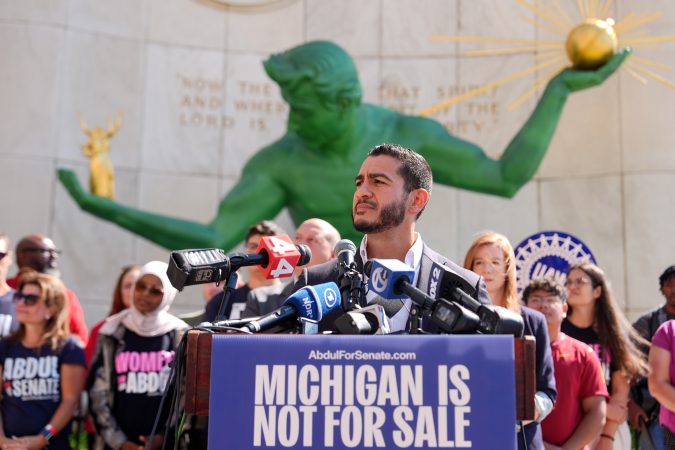
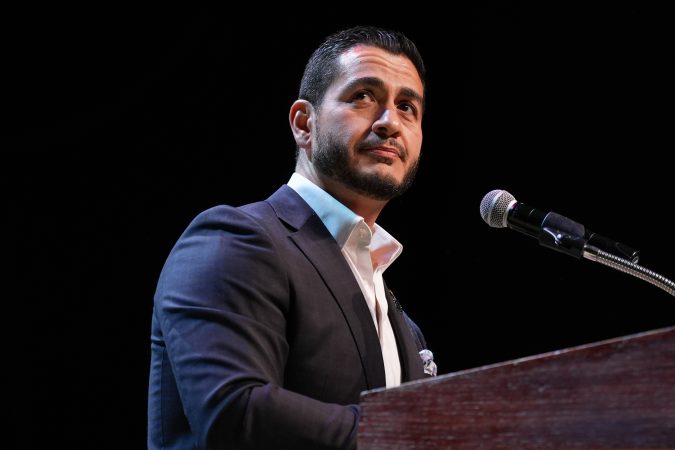
    DETROIT — Abdul El-Sayed has won Michigan’s Democratic nomination for U.S. Senate, defeating U.S. Rep. Haley Stevens in a massive victory for the party’s progressive wing in a battleground state.

    The real test of El-Sayed’s and progressives’ strength will now come in a November matchup against Republican Mike Rogers, a former congressman who ran unopposed for the GOP nomination. The seat is pivotal to Democrats’ chances of flipping the Senate and El-Sayed will face the challenge of uniting a divided Democratic base after a bruising primary.

    The race remained tight throughout Tuesday night, with a winner not declared until early Wednesday. In his final remarks at a primary night party before the race was called, El-Sayed said “tomorrow we begin to mend fences.”

    El-Sayed’s campaign said Stevens called to concede Wednesday.

    El-Sayed’s win represents a significant shift for the Democratic Party; in 2018 he lost the gubernatorial primary to now-Gov. Gretchen Whitmer by 21 percentage points.

    El-Sayed, a former health official, campaigned on “Medicare for All,” halting military aid to Israel and campaign finance reform. He had support from progressive leaders including Sen. Bernie Sanders and U.S. Rep. Alexandria Ocasio-Cortez, who framed the race as a grassroots-focused movement and a broader fight against the establishment and big-money spending.

    Stevens, a more moderate candidate, was backed by Senate Minority Leader Chuck Schumer and tens of millions in outside spending, including the American Israel Public Affairs Committee’s largest outlay ever in a single race.

    Now comes the more difficult challenge for Democrats: uniting the party to defeat Rogers, for whom Republicans have already reserved large sums of money ahead of the general election. Democrats consider the seat a must-win if they are to flip control of the Senate this year.

    El-Sayed called for unity to defeat Rogers

    Early Tuesday evening, El-Sayed’s supporters in Detroit’s Majestic Theatre cheered at the first batches of votes, before mellowing. Hours later Stevens’ previously subdued partygoers roared as she narrowed the margin.

    “Whatever happens tonight,” El-Sayed told a thinned but still energetic crowd, “we have a responsibility to ensure that we unite, unite to make sure that Mike Rogers never sees the inside of the U.S. Senate.”

    El-Sayed, a former Wayne County health director, campaigned on “Medicare for All,” campaign finance reform and ending military aid to Israel.

    Stevens, a four-term congresswoman, focused on manufacturing and the economy. She stressed her past victories in tough races, saying she would be best positioned to beat Rogers.

    Stevens benefited from tens of millions of dollars in outside spending, including the largest investment in a race ever from the American Israel Public Affairs Committee, which supports pro-Israel candidates.

    Michigan is a must-win Senate race for Democrats

    The race will help decide which party controls the chamber in the last two years of President Donald Trump’s term. Those stakes have added heat to the rivalry, with moderates arguing that El-Sayed would have a harder time than Stevens against a Republican in the general election.

    Stevens won election to Congress in 2018 after serving as chief of staff to President Barack Obama’s auto task force, which helped oversee the federal rescue of General Motors and Chrysler. Her campaign and allied groups have repeatedly highlighted that experience.

    El-Sayed cast himself as the anti-establishment candidate and argued that Democrats need to reject corporate influence and embrace a more progressive agenda.

    While the candidate has said he is not a democratic socialist, he found support from some of the group’s members. That included Melat Kiros, who recently beat a longtime incumbent in a Democratic primary for a Denver-based House seat and was at El-Sayed’s watch party. Also there was Hasan Piker, a progressive and controversial influencer online.

    The candidates’ differences were clear to some voters.

    Kenneth Woodside, 87, of West Bloomfield, said he voted for El-Sayed over Stevens because “the nation is ready for someone who wants to take some more action rather than on the road we are now, which is on the road to an oligarchy and authoritarianism.”

    Nessa Fuller, 51, of Birmingham, said she voted for Stevens because she will “fight to get the right things done, and she’ll work with other people, which is really important to me.”

    Outside influences spent millions on the Senate race

    National groups poured unprecedented sums into the race, making it one of the country’s biggest tests of outside spending.

    Groups backing Stevens spent more than $50 million, led by more than $30 million from AIPAC and its affiliates.

    The spending thrust Israel policy into the center of the race even though the ads never mentioned it. While El-Sayed called for ending military aid to Israel, Stevens maintained strong support for the relationship.

    Israel became a contentious issue within the Democratic Party amid a war in Gaza that killed more than 73,000 Palestinians in its retaliatory offensive after about 1,200 people were killed and 251 hostages were taken in attacks by the militant group Hamas.

    McKinney wins Detroit US House primary

    In a heavily Democratic district representing Detroit, the 13th, state Rep. Donavan McKinney defeated Rep. Shri Thanedar. McKinney argued that the city should once again have a Black representative in Congress.

    After Thanedar won election in 2022, Detroit had no Black representation in Congress for the first time since the early 1950s.

  • Judge dismisses Jan. 6 seditious conspiracy charges against Oath Keepers

    Judge dismisses Jan. 6 seditious conspiracy charges against Oath Keepers

    A federal judge on Tuesday agreed to dismiss the seditious-conspiracy case against the leader of the Oath Keepers, Stewart Rhodes, and seven other members of the extremist group who planned to storm the U.S. Capitol on Jan. 6, 2021.

    The ruling by U.S. District Judge Amit P. Mehta is the last step in the legal process to wipe out penalties from the Jan. 6 riot, cementing President Donald Trump’s bid to unravel the largest federal investigation in U.S. history.

    Mehta had sentenced Rhodes to 18 years in prison and imposed lesser prison terms on other top Oath Keepers who were convicted at jury trials. Trump commuted those prison sentences on his first day in office last year, and he pardoned more than 1,500 rioters.

    In a written ruling Tuesday, Mehta said he was dismissing the Oath Keepers’ charges reluctantly at the request of the Justice Department. He criticized prosecutors for claiming in a court filing that wiping out the most serious convictions from the Jan. 6 riot was in the public interest.

    “The government does not say that the charges were legally deficient or that the evidence presented is insufficient to sustain Defendants’ convictions,” Mehta wrote. “It confesses to no prosecutorial misconduct, nor does it assert any denial or compromise of a defendant’s rights.”

    The Justice Department, Mehta said, was simply bestowing the ringleaders behind the riot “unearned grace by wiping their records clean” after juries found them guilty of committing “crimes against the United States itself.”

    The riot, during a joint session of Congress that was being held to certify Joe Biden’s victory over Trump in the 2020 presidential election, left more than 140 police officers injured and caused an estimated $3 million in damage.

    Rioters marched on the Capitol after a rally in which Trump repeated his false claims that he had won the election. Lawmakers were forced to evacuate, delaying Biden’s certification as the winner.

    In his ruling, Mehta recounted how the Oath Keepers stocked firearms at a hotel outside D.C. and exchanged encrypted messages about using violence to thwart the congressional proceedings. The Oath Keeper with the guns, Edward Vallejo, was not called into action, Mehta added.

    When the rioters breached the Capitol, about 10 members of the Oath Keepers wearing military gear entered the building. One half of that group ended up in then-House Speaker Nancy Pelosi’s office. The other half headed to the Senate chamber, where they tried with other rioters to “storm past a line of police officers,” wrote Mehta, who was nominated to the bench by President Barack Obama.

    A second contingent of Oath Keepers later entered the Capitol and clashed with police trying to clear the building, according to the trial evidence Mehta cited in his ruling.

    In addition to Rhodes and Vallejo, the other Oath Keepers whose charges were dismissed are Kelly Meggs, Kenneth Harrelson, Jessica Watkins, Roberto Minuta, Joseph Hackett, and David Moerschel. Harrelson and Watkins were acquitted of seditious conspiracy but convicted of other riot-related offenses.

    An attorney for Rhodes, James Lee Bright, said in a post on X that Mehta’s ruling to dismiss the Oath Keepers’ case “personalizes his reasoning.”

    Rhodes, he said, was convicted of a “thought crime” that “should never have been charged.”

    “This chapter is now over,” the attorney wrote. “Congrats to the remaining defendants.”

    In a court filing Tuesday, attorneys for Vallejo maintained that he was not guilty of a crime. “The Court correctly granted the motion to dismiss with prejudice based on the government’s exercise of discretion but incorrectly injected advisory opinions that are contrary to the presumption of innocence and unfair to an innocent man,” the attorneys wrote.

    Trump pardoned nearly all the rioters — more than 1,500 — who were charged by the Justice Department in the wake of Jan. 6. But that blanket pardon, issued on the president’s first day in office last year, did not extend to about a dozen leaders and prominent members of two extremist groups behind the violence, the Proud Boys and the Oath Keepers.

    Those defendants were convicted of carrying out a seditious conspiracy against the United States or related offenses. Trump initially commuted their prison terms, stopping short of a full pardon. But this year, while those cases were being appealed, Justice Department officials filed legal papers to vacate the convictions altogether.

    The D.C. Circuit federal appeals court granted that request in May. U.S. Attorney Jeanine Pirro, a Trump ally who serves as the top federal prosecutor in D.C., then filed motions to dismiss the underlying charges in U.S. district court.

    Judge Timothy J. Kelly similarly ruled last month to dismiss seditious conspiracy charges against the Proud Boys. Like Mehta, Kelly said judges are constrained to dismiss charges once prosecutors ask to drop them.

    Under Supreme Court precedent, prosecutors have “exclusive authority and absolute discretion to decide whether to prosecute a case,” and they may drop charges “in the interests of justice” even after defendants have been convicted.

    Trump’s efforts to reframe the riot have continued. Even in recent days, he has asserted that those charged in the case “were treated so badly.”

    “This is the last of the prosecutions seeking to hold accountable those responsible for the events of January 6,” Mehta wrote in his 15-page order dismissing the charges Tuesday.

    “That book is now closed. Today’s epilogue diminishes the gravity of that day, denigrates the work of the prosecutors and law enforcement officers who secured these convictions, and excuses criminal acts that caused a centuries-long pillar of our democracy — the peaceful transfer of presidential power — to buckle.”

    He added, “The court cannot write a different ending.”

  • Trump’s immigration crackdown has detained more than 50 military spouses and parents

    Trump’s immigration crackdown has detained more than 50 military spouses and parents

    President Donald Trump’s administration has detained dozens of parents and spouses of active-duty U.S. troops as it rolls back immigration protections for military families to pursue its mass deportation agenda, an Associated Press investigation found.

    More than 50 parents and spouses of active-duty service members have been detained since Trump took office for a second term, and at least six have been deported, the AP found in the first accounting of such detentions, which the government does not track. At least eight immediate family members of U.S. service members remain in federal immigration custody.

    Parents and spouses of people in the military have generally been shielded from deportation under bipartisan consensus for decades. But the AP found they’re now routinely being detained for months as they try to adjust their legal status through the policies available to service members’ close relatives and even as the military continues to recruit by advertising immigration benefits for enlistees’ families. Experts warn that the reversal could undermine military preparedness even as the U.S. is at war in Iran. It’s left military members without emotional support and caretakers for their children, delayed deployments, and forced some to take leave.

    “How can I even focus on my military career because I have to worry about how my wife is doing?” said Army Sgt. Hedar Leonel Turcios Juarez, who was stationed in Fort Bliss, Texas, when his wife was detained outside a Walmart in front of their 6-year-old daughter in July.

    A handful of detentions of service members’ spouses have prompted public backlash and led to intervention by Homeland Security Secretary Markwayne Mullin to secure their release.

    The Department of Homeland Security has said it does not compile data on these cases. The AP obtained information by analyzing thousands of federal court records compiled by Habeas Dockets, a project run by the Immigration Justice Transparency Initiative; by reviewing existing media coverage; and by verifying information with family members and attorneys. The actual number is likely much higher than the 51 cases AP found.

    The AP asked for comment from DHS on each case, including the individuals’ immigration and criminal history. The agency did not provide specific information about the majority of cases but noted that at least seven people had been removed from the U.S. before, at least eight had removal orders, and at least two had drunken driving or drug-related convictions.

    “DHS and ICE value the contributions of all those who have served in the U.S. military,” DHS said in a statement. “U.S. military service alone does not automatically grant lawful immigration status, or exempt aliens from the consequences of violating U.S. immigration laws.”

    The Pentagon declined to comment on the AP’s findings.

    Service members are losing their safety net

    Air Force Tech. Sgt. Wendy Gbeve, 30, said she hasn’t had a good night’s sleep since her father, Luis Alberto Ramirez Zavala, was detained by immigration officials last month. Gbeve was there when he was arrested at a routine interview with U.S. Citizenship and Immigration Services in Missouri about his pending application for legal status.

    She spent hours refreshing the USCIS page to track where the government was taking her father: from a county jail in Missouri to an Immigration and Customs Enforcement detention facility in Texas. Finally, roughly two weeks after he was detained, she found out he had been deported to his native Mexico.

    “It’s the most frustrating, helpless feeling,” Gbeve said.

    Gbeve said ICE still hasn’t informed her family why her father was removed so quickly. Ramirez Zavala spent most of his life in the U.S. working as a ranch hand in rural Illinois.

    Ramirez Zavala’s wife of 30 years, a legal permanent resident, is considering returning to Mexico to be with her husband. For Gbeve, whose husband is also in the Air Force, that would leave no one to watch their children, ages 2 and 4, if both were deployed.

    “That would be our entire safety net,” she said.

    Military members have had to take leave or delay a deployment

    Some service members have been left caring for children alone.

    Army Staff Sgt. Alexis Jaramillo, an aviation operations specialist who has served for more than a decade, said he would normally be involved in training soldiers at Fort Polk, La. Instead, he is on administrative leave, caring for his 5-year-old stepson, Noah, after his Brazilian wife, Maisa Lopes Eliaser, was detained in early July.

    It happened during what the family thought was a routine appointment at a USCIS office in Alabama. Eliaser arrived in the U.S. on a tourist visa in 2019, and the couple was trying to change her status.

    Immigration officials asked Jaramillo and his stepson to leave the room. Minutes later, they were told that Eliaser had been detained. The next time they saw her was inside a detention facility.

    “It is really overwhelming because I need to take care of my kid by myself. No one is here to help me out,” Jaramillo said.

    At least one active-duty soldier halted her imminent deployment after her husband was detained by immigration officers, leaving no one to care for their then-5-year-old son, court records show. A judge eventually ordered the husband released.

    Trump’s policy is a reversal even from his first administration

    A new policy, implemented in April 2025, states that “military service alone does not exempt aliens from the consequences of violating U.S. immigration laws.”

    Experts in military immigration law said this marks a stark shift from previous administrations across the political spectrum, including Trump’s first administration.

    Dan Gividen, who served as ICE’s deputy chief counsel from 2016 to 2019 under Trump, represents a soldier’s father who has been in ICE custody for more than eight months. He said that during his time as an ICE prosecutor, immigration authorities rarely detained service members’ immediate family members unless they had committed violent crimes.

    “We would not place them into removal proceedings, period. That’s insane,” Gividen said. “The fact that they’re doing it now is just outrageous.”

    ICE previously generally canceled past removal orders and allowed parents or spouses of troops to adjust their legal status, said Margaret Stock, an immigration attorney and retired lieutenant colonel in the Army Reserve. She said that’s because the government wanted to ensure troops focused on their duties.

    “It’s the same thing that happens if you don’t provide healthcare to the troops, or you don’t provide housing to the troops,” she said. If soldiers are preoccupied with detained or deported family, “they’re not concentrating on their job anymore.”

    Even some congressional Republicans who are otherwise largely supportive of Trump’s aggressive immigration crackdown have pushed for the release of service members’ relatives.

    “The immigration system is failing the honorable and good Americans,” Florida Republican Rep. Maria Elvira Salazar said at a news conference in July advocating for the release of the wife of retired Staff Sgt. Wilmer Trujillo, who served in Iraq and Afghanistan. DHS said she illegally reentered the U.S. after being deported in 2005.

    Although DHS said it does not have data on active-duty troops, it has released figures for former service members, who also qualify for immigration benefits along with their immediate families. From Jan. 20, 2025, through Jan. 26, 2026, immigration authorities detained 125 military veterans — placing 34 into removal proceedings — and arrested more than 150 immediate family members, DHS said in a letter to several Democratic senators.

    Anh Dung Cong Tran, known as “Tony,” had both a father and son who served in the military. Tran came to the U.S. in 1990 through a program for children of American military personnel born in Vietnam. Tran, 56, was deported in July, having lived in the U.S. for decades with regular check-ins with immigration authorities after an assault conviction soon after his arrival.

    His son Antonio Tran said his father persuaded him to enlist in the military in 2022. “He has a totally different view on America now,” said Tran, who was discharged as an Army specialist in March after a serious injury.

    Benefits for service members include what’s known as parole-in-place

    Military recruiters tout immigration benefits for troops’ families as a selling point to enlist.

    One of the military’s most highly advertised immigration benefits is “military parole-in-place,” which allows the spouses, children, and parents of active-duty service members and veterans to obtain legal immigration status from within the country. Not everyone qualifies: Those who overstayed visas or who already applied for legal status at the border, for example.

    The policy was implemented under Republican President George W. Bush during the U.S. war with Iraq in 2007 and codified under Democratic President Barack Obama. DHS agencies can grant it on a case-by-case basis.

    Under Trump, the average time it takes to receive military parole-in-place has more than doubled to 12 months, according to USCIS data. That leaves military families more vulnerable to being placed in ICE custody.

    Recruiters are still promoting immigration benefits

    The AP found that troops’ immediate family members have repeatedly been detained by ICE while applying for parole-in-place or seeking to adjust their status, including during immigration appointments.

    Marine Cpl. Jose Manuel Vilchis-Valle’s mother, Ursula Borja Valle, was detained at an appointment in August 2025 and deported to Mexico within a week. She had lived in the U.S. since the 1990s without a known criminal record. Her son was attempting to help her clear up a decades-old removal order through the immigration benefits that military recruiters had used to help convince him to enlist.

    “They basically told me that if you serve, and if you served honorably, you can help your parents,” said Vilchis-Valle, 23, who was honorably discharged shortly after his mother was deported. “In a perfect world, I wished, because of my service, they could have pardoned her.”

    In other cases, ICE has detained people who had already been granted protection, with the agency later arguing in court filings that their parole status had been revoked.

    In June 2025, the Marine Corps officially stopped advertising enlistment as a way to protect immigrant family members, in response to inquiries from the AP. But recruiters for the Army and the National Guard still promote it.

    “For some service members, enlisting isn’t just about serving their country,” read an Instagram post published in late July by an official Army recruiter based in California. “It’s also about doing everything they can to help protect their parents who sacrificed everything for them.”

    Recruiters are expected to highlight the benefits of service to attract applicants and military parole-in-place remains in effect, Army spokesperson Christopher Surridge said.

    The National Guard said it does not track detentions of its troops’ relatives or which recruiters advertise immigration benefits and referred additional comment to DHS.

    Soldier who helped patrol the border grapples with his father’s detention

    For U.S. Army Specialist Romero Ralios, his father’s detention has left him remorseful about his deployment last year to the Joint Task Force Southern Border, where he spent nine months supporting U.S. Customs and Border Patrol.

    His father, Sebastian Ralios Tino, a Guatemalan landscaper with no known criminal record, was detained this summer. He lived in the U.S. for nearly two decades without legal status.

    Ralios’ commanding officer, Capt. Mohamed Elmaola, told the AP he wanted to speak up because Ralios is a “phenomenal soldier” whose father should receive due process.

    “It’s very hard to communicate and to have credibility as a leader when your own subordinates are unable to get support,” Elmaola said. “Considering he enlisted his time and his life into supporting and defending the United States Constitution, it is the right thing to do to support soldiers and their families.”

    Romero Ralios now struggles to sleep at night due to the stress and wishes he had not been involved in immigration enforcement, even though he was just following orders.

    “It was karma. I should’ve known,” Ralios told the AP. “All those families I broke. I have regrets.”

  • Fauci’s decision to invoke the Fifth Amendment tees up a legal debate and a contempt vote

    Fauci’s decision to invoke the Fifth Amendment tees up a legal debate and a contempt vote

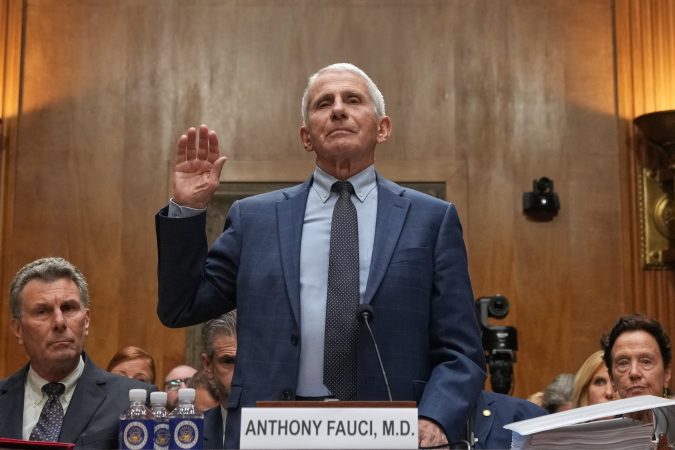
    WASHINGTON — Anthony Fauci’s decision to invoke the Fifth Amendment before Congress will be put to the test this week as a Republican-led committee prepares to vote to hold him in contempt and refer the matter to the Justice Department.

    A contempt finding could open the door to an investigation into whether Fauci had a valid constitutional right against self-incrimination when he refused to answer dozens of questions from lawmakers at a committee hearing last week focused on his handling of the COVID-19 pandemic.

    Republican senators including Rand Paul of Kentucky, who subpoenaed Fauci and has called a contempt vote for Thursday, insist that a pardon the doctor received early last year from Democratic President Joe Biden left him ineligible for Fifth Amendment protections. A Senate resolution released Tuesday asserts that Paul found Fauci’s privilege claims “unsupported.”

    But some legal experts say Fauci had reasons to invoke the Fifth Amendment, given the threat of potential state prosecutions and questions from President Donald Trump’s administration about the validity of Biden’s pardons. Any testimony from Fauci could have also prompted false-statement investigations like the ones the current Justice Department has repeatedly initiated against the Republican president’s perceived adversaries.

    No matter what happens, the episode raises fresh and complicated questions about Congress’ ability to compel testimony from previously pardoned witnesses — and the outcome could resonate beyond Fauci.

    “This is an important case because I think a lot of people anticipate that President Trump is going to issue similar pardons to many people in his administration who will end up being called before Congress, and the precedent here is important,” said Mark Osler, a St. Thomas University law professor and pardon power expert.

    Paul’s committee is moving to transmit the contempt referral from his Republican-led committee directly to the Justice Department. Whether the Justice Department would act on the referral is unclear.

    Fauci’s pardon protects him for past, not future, acts

    Fauci, a longtime National Institutes of Health scientist and the nation’s top infectious-disease expert, left the federal government in 2022 after more than five decades. He was among a group of perceived adversaries of Trump to be pardoned by Biden in one of the Democrat’s final acts in office. The clemency covered acts from 2014 to the date in January 2025 when the pardon was issued.

    Republicans on the Senate Homeland Security and Governmental Affairs Committee say the pardon lifted the specter of criminal prosecution and left Fauci without a valid basis to invoke the Fifth Amendment — a bedrock constitutional protection found in the Bill of Rights but one typically available only to those who have a reasonable basis to believe they risk being charged over their testimony.

    While a blanket pardon theoretically removes a threat of prosecution, Fauci made clear he thought he had a good-faith basis to fear criminal charges. He invoked his Fifth Amendment rights more than 100 times.

    Before the hearing. Fauci said that Paul, the committee chairperson, had an “obvious obsession with calling for my prosecution.” The purpose of his forced appearance “is to get me to say something, anything, that could vindicate his repeated public pledges that I end up, in his words, quote, behind bars, unquote,” Fauci said.

    In the run-up to the hearing, Paul made dozens of Fauci-related posts on X, including ones teasing that he was going to confront the doctor for having earlier given false testimony — something Fauci has denied.

    “I think his invoking the Fifth makes sense because he was invited into a situation where everyone in the country understood that Rand Paul was trying to set him up for a criminal prosecution,” said Michael Gerhardt, a University of North Carolina law professor. “In that circumstance, one of the smartest things to do would be to make yourself a very small target and say as little as possible, and that’s obviously what he did.”

    In announcing the contempt vote, Paul noted on X that “Fauci refused to answer a single question, even though he knew he couldn’t be charged for crimes” during the decade covered by his pardon. Fauci’s deflections encompassed even seemingly harmless questions, such as the color of the tie he was wearing — a reflection of an apparent belief that it was safer to refuse any testimony.

    There are factors that could tilt in favor of Fauci’s strategy, including the fact that his pardon would not protect him from potential state prosecutions or from a federal prosecution related to any testimony that investigators deemed false. That may not be an idle concern given the number of false-statement investigations prosecutors have opened against Trump’s political opponents.

    Trump’s administration also has repeatedly called into question the validity of the Biden pardons, given Biden’s frequent use of an autopen for official business. Legal experts say the pardons are valid.

    “The question is do you have a reasonable fear of prosecution, and Fauci’s argument would be — yes, I received a pardon, yes, I believe that pardon covers and prevents prosecution but there have been statements from lots of people including Trump and other administration officials … raising questions about the validity of that pardon,” said Ross Garber, a lawyer and expert in political investigations who has represented multiple clients who have invoked the Fifth Amendment.

    “That,” he added, “is potentially a very viable argument.”

    Paul has discussed trying to fast-track a contempt referral

    Paul said in an interview with Fox News Channel last week that he did not think “there’s any rule” requiring that a contempt referral from a committee go through the entire Senate. His committee is instead working to send the referral straight to the Justice Department.

    The contempt resolution states that the president of the Senate, Vice President JD Vance, “shall certify” the committee’s referral and the accompanying report to the U.S. attorney for the District of Columbia.

    That fast-tracking of the process avoids the need for a vote in the full 100-member Senate, where Republicans likely lack the 60 votes required to move a contempt referral to passage.

  • Takeaways from a big primary night in Michigan, Kansas, Missouri and more

    Takeaways from a big primary night in Michigan, Kansas, Missouri and more

    Democrats in Michigan signaled their eagerness for a new political direction as voters advanced progressive Abdul El-Sayed over Rep. Haley Stevens for a key Senate seat and two left-wing candidates in key House primaries.

    The Senate race in Michigan exposed deep rifts among Democrats in how they approach Israel and money in politics, and how they deem candidates electable.

    Across the country, similar ideological battles were waged with mixed results. And in two red states, voters rejected GOP-led ballot measures that would have given state legislators more power to reshape the law on key issues, including abortion.

    Here’s a rundown from Tuesday’s primaries.

    Michigan’s marquee race ends in win for progressives

    In November, El-Sayed will face former Republican Rep. Mike Rogers, who narrowly lost his first Senate bid in 2024 and received an endorsement from President Donald Trump. Democrats will have a tougher time retaking the chamber if they lose the Michigan seat.

    The primary divided the Democratic Party between progressives, who saw El-Sayed’s left-wing politics as a way to energize voters, and establishment leaders, who viewed Stevens as a stronger candidate to win over independents and Republicans.

    The two candidates also personified Democrats’ struggle with Israel. Like others on the party’s left, El-Sayed called the war in Gaza a genocide and said he wanted the U.S. to end its military aid to Israel. Stevens, an Israel supporter, benefited from more than $30 million spent by the super PAC of the American Israel Public Affairs Committee. The group’s support, sometimes even rumors of it, fuels tensions as Democrats wrestle with articulating their stance on Israel without alienating voters.

    Left-wing candidates win key House primaries in Michigan

    In Michigan’s 7th Congressional District, voters chose a progressive over two centrist candidates in the Democratic primary. The district is among the 18 House races classified by the Cook Political Report, a nonpartisan election analysis site, as a toss-up this year.

    Sunrise Movement co-founder William Lawrence defeated Bridget Brink, former U.S. ambassador to Ukraine, and Matt Maasdam, a retired Navy SEAL, and notched another big win for the surging left flank of the Democratic Party.

    “Tonight the people of Michigan’s 7th district sent a clear message: they are tired of Silicon Valley billionaires and DC insiders determining the future of our towns and our country,” Lawrence said in a statement. “They want an unbought representative who isn’t afraid to stand up to leaders of both parties and fight for working people.”

    Lawrence will run against incumbent Rep. Tom Barrett (R).

    In Michigan’s 13th District, Rep. Shri Thanedar lost the Democratic primary contest to Donavan McKinney, a member of the Democratic Socialists of America.

    Virginia Democrats choose contenders for key races

    Virginia’s 2nd Congressional District is headed for a rematch between incumbent Rep. Jen Kiggans (R) and former Rep. Elaine Luria, who won a crowded Democratic primary. The district, anchored in Virginia Beach, is considered the most competitive in the state.

    Luria held the seat for two terms before she lost to Kiggans in 2022. Of incumbent Republicans in Virginia, Kiggans is most in jeopardy this year as Democrats look to flip red districts narrowly won by Trump.

    Incumbent Rep. Rob Wittman (R) is defending GOP territory with better odds in Virginia’s 1st Congressional District. In November, he will face Shannon Taylor, a prosecutor who won another crowded Democratic primary Tuesday.

    Tom Perriello, who won the Democratic nomination in the 5th Congressional District he once represented, faces much tougher odds. Perriello will face the incumbent Rep. John McGuire (R) in a district Trump won by 12 percentage points in 2024.

    A rematch sees a familiar end in Missouri

    Rep. Wesley Bell again defeated former Rep. Cori Bush in the Democratic primary in Missouri’s 1st Congressional District. Bell’s win against Bush, a member of the Democratic Socialists of America, is a setback for the party’s left wing that has succeeded in defeating other incumbents.

    The Missouri race assessed the power of AIPAC as it did when the duo competed in 2024. AIPAC’s spending that year made the race one of the most expensive primaries in U.S. history and helped Bell unseat Bush. The former congresswoman, an ex-member of “the Squad” of several progressive lawmakers, harshly criticized Israel over the war in Gaza before some Democrats even began to question their stance. On the night of her 2024 loss, Bush hinted at a comeback bid: “AIPAC, I’m coming to tear your kingdom down.”

    The group spent about $3 million this year on lifting Bell to a second victory. He is favored to win in the solidly blue district.

    Washington sets up battleground contest

    On the West Coast, Washington’s most competitive district held a nine-way primary race that also featured a progressive-versus-moderate showdown among the Democrats. Washington uses an open primary system, meaning the top two vote-getters advance to the general election regardless of party.

    Republican John Braun, a former state senator who had Trump’s endorsement, and the incumbent Democratic Rep. Marie Gluesenkamp Perez will compete in November. Gluesenkamp Perez, a centrist who is seeking a third term, overcame a challenge from the left by Democrat Brent Hennrich.

    The district, which went for Trump in 2024, is considered a toss-up.

    Voters deny GOP-led ballot measures

    Kansans rejected an effort to start electing state Supreme Court justices, delivering a blow to Republican state lawmakers who have long been frustrated by their rulings.

    For 68 years, Kansas governors have been required to appoint justices through a merit-based system. GOP legislators asked voters to scrap that system through a ballot measure that would have allowed the state to elect its justices directly. Critics viewed it as a gambit to remake the Kansas Supreme Court and enable its justices to revisit high-profile rulings that angered conservatives — including a decision that guaranteed a right to abortion.

    In Missouri, voters turned down another measure pitched by GOP lawmakers that would have made it harder to pass citizen-led constitutional amendments. Voters in recent years have used such amendments to pass liberal policies, including preserving abortion access and legalizing marijuana.

    The failure of both measures from Republican lawmakers in red states shows the limits in trying to persuade voters to change election rules or cede political power, even at the behest of lawmakers they may support.

  • After a high-profile snub in Pa., President Donald Trump meets with Stacy Garrity at the White House

    After a high-profile snub in Pa., President Donald Trump meets with Stacy Garrity at the White House

    Clad in a royal blue, two-piece suit, Pennsylvania Treasurer Stacy Garrity stood next to a seated President Donald Trump in the Oval Office on Tuesday, in a video message posted to his social media platform, Truth Social.

    “Pennsylvania is very lucky because you have somebody running for governor who’s going to do a fantastic job,” Trump said to the camera, while shaking Garrity’s hand. “She really is a spectacular person. And I just want to wish you luck. I think you’re going to win.”

    The White House appearance signaled a closer public alliance between Trump and Garrity, and the latest chapter in her campaign challenging Gov. Josh Shapiro as she seeks to draw Trump’s loyal fan base to the polls in November.

    Trump, who endorsed Garrity in January, followed the video message by posting a photo with Garrity, writing: “Stacy is running to be the next Governor of the GREAT Commonwealth of Pennsylvania. She has my Complete and Total Endorsement. She will do a fantastic job!”

    Garrity’s campaign said in a statement that she was visiting the White House alongside the Penn State wrestling team, which was being honored for its 2026 national championship.

    The Oval Office meeting represented a repair of sorts between Garrity and Trump after he has displayed little enthusiasm toward her campaign in recent months.

    Garrity entered the race against Shapiro, the Democratic incumbent, last summer as Republicans — disappointed with their 2022 performance — sought to consolidate support early around one strong candidate. When Trump endorsed Garrity, he called a “true America First Patriot” who “WILL NOT LET YOU DOWN!”

    In March, Garrity hosted a fundraising dinner at Trump’s Mar-a-Lago Club in Florida, where, beneath a wrought-iron doorway at his private golf club, the president said “she should win.”

    But when Trump visited Pennsylvania in June and Garrity introduced him onstage, he seemed to forget her altogether.

    During a speech meant to focus on manufacturing in Macungie, Trump spent over an hour talking about weight-loss drugs, immigration, firearms, the role of transgender athletes in women’s sports, and the UFC fight recently held on the White House lawn. But Garrity never received a mention, and Trump instead celebrated U.S. Rep. Dan Meuser, a Pennsylvania Republican who considered a run for governor before ultimately opting against it. Trump even name-checked Shapiro.

    Three months out from Election Day, Garrity has struggled to gain traction among voters. A Quinnipiac University survey of 895 registered Pennsylvania voters in July found 53% would vote for Shapiro, while 40% said they would vote for Garrity.

    At right is Pennsylvania Governor Josh Shapiro listening to Stacy Garrity, 78th State Treasurer, Forum Auditorium in Harrisburg, Pa., Tuesday, Jan. 21, 2025.Alejandro A. Alvarez / Staff Photographer

    Garrity has stuck with Trump, supporting his political decisions like efforts to nationalize elections and his signature tax cut law, under which 300,000 Pennsylvanians are expected to lose Medicaid, according to state estimates.

    Trump’s latest show of support for Garrity comes as Shapiro — who is rumored to be eyeing a run for the White House in 2028 — has set his sights beyond the governor’s office, lending his time and spending his money to support Democrats up and down the ballot, in an attempt to flip the Pennsylvania state Senate and four swing districts in Congress.

    Last month, in another stop in Pennsylvania, Trump attempted to lend more support to Garrity during Republican U.S. Sen. Dave McCormick’s Defense and Innovation Summit.

    “I hear things about Stacy, and I’m hearing some poll numbers that are very good,” he said.

    Regarding her opponent, however, Trump had stronger words.

    “This guy Shapiro is totally overrated. … He doesn’t have what it takes,” Trump said.

    President Donald Trump visits Mack Trucks in Macungie in the Lehigh Valley Tuesday, June 23, 2026.Tom Gralish / Staff Photographer

    In Pennsylvania, Trump remains deeply underwater in popularity. The Quinnipiac survey found only 39% of Pennsylvania voters would give him a positive job approval. Elsewhere in the country, Trump has remained Republicans’ most effective energizer to the polls — though some are concerned about GOP success without his name on the ballot in November.

    Pennsylvania Democrats on Tuesday seized on Garrity’s appearance with the president.

    “Stacy Garrity always sprints to any chance she gets to pledge her 100% loyalty to Donald Trump and his disastrous agenda,” Ava Pitruzzello, a spokesperson for the Pennsylvania Democratic Party, said in a statement.

    Last week, Shapiro’s campaign launched a new ad calling Garrity “100% MAGA.” Garrity’s campaign, in a statement, called the ad “a dishonest, lying attack.”

  • Democrats accuse Green Party candidate in Lehigh Valley district of Republican meddling

    Democrats accuse Green Party candidate in Lehigh Valley district of Republican meddling

    WASHINGTON — In a Pennsylvania election where a few thousand votes could make all the difference, the last-minute entrance of a Green Party candidate with a background in Republican politics has sparked the second allegation of election meddling in three months and complicated one of the nation’s most competitive U.S. House races this fall.

    The Lehigh Valley-based 7th Congressional District matchup features U.S. Rep. Ryan Mackenzie, a Republican who won the seat by 1 percentage point in 2024, and Bob Brooks, a Democratic union leader and retired firefighter.

    Both parties are prioritizing the race as control of the U.S. House could come down to a few seats nationwide.

    But the emergence of a third-party candidate has alarmed both Democrats — who have long claimed that Green Party candidates pull votes from their nominees — and the Green Party of Pennsylvania, which said it does not know the person now representing its platform in one of the state’s highest-profile races.

    “It sounds a lot like somebody’s just fooling around and trying to use the Green Party name, which is a well-known thing that happens in many states,” said Tim Runkle, cochair of the state party.

    Andrew Tupone, 37, of Northampton County, filed his nomination papers with the state last week ahead of a Monday deadline for third-party candidates. He was the only candidate to file to represent the Green Party in a Pennsylvania race for Congress.

    Unlike the Green Party’s endorsed candidate for governor — Tony Dastra of Lancaster County — Tupone does not have a long association with the party or its left-leaning policies. In 2021, he was the Republican nominee for a Northampton County magisterial court seat. Voter registration records show he changed his party affiliation from Republican to Democrat in February, and then from Democrat to Green in April.

    In an interview, Tupone rejected accusations that he remained affiliated with the Republican Party or that he was asked to run in a way that would draw votes away from the Democratic nominee. He described a leftward shift in his political views after voting for President Donald Trump in 2020, though he said he could not recall whom he voted for in the 2024 presidential race between Trump and Democratic Vice President Kamala Harris.

    “A lot of people are disillusioned with both parties,” Tupone said. “They’re sick of all the stuff that’s going on.”

    Tupone also said he did not pay anyone to help gather signatures for his nominating papers, which he turned in with upward of 9,000 signatures — more than twice as many as required. Runkle said Green Party members encountered paid canvassers for Tupone who declined to say who was funding the effort.

    According to a copy of the nominating papers obtained by The Inquirer, only one of the 22 individuals who gathered signatures is from Pennsylvania. The rest are from all over the country. Multiple have worked for Republican campaigns, according to public records.

    Colin McEvers, who gathered signatures for Tupone in Lehigh County, is a Republican candidate for the Maryland General Assembly who is also listed as the contact for the Maryland White Republican Council. Others — including individuals from Illinois and Michigan — have been paid to canvas for GOP campaigns, according to Federal Election Commission records.

    Tupone said he had no knowledge of anyone paying his canvassers.

    “I went around and I gave a lot of my nominating papers to friends to give to other people, and I sent it to them as well,” Tupone said. “And as I went around, I recruited people and asked them.”

    While the signatures appear to be based in the district — which stretches from the cities of Allentown, Bethlehem, and Easton into the more Republican-leaning Poconos — the other candidates have until Aug. 10 to challenge their legitimacy.

    Such challenges are common, and the Brooks campaign is reviewing its options to decide whether to bring a challenge, according to a source familiar with the campaign’s thinking.

    ‘No one’s paying me to run’

    Jenna Kauffman, Brooks’ campaign manager, in a statement described the situation as a GOP-initiated and “desperate scheme to meddle in this race.”

    She connected it to a last-minute $1.7 million advertising campaign against Brooks in the May primary that appeared to be run by Democrats but was actually funded by a Republican political organization.

    The spending, by a political action committee called Lead Left, was aimed at boosting another Democrat who observers considered to have a worse shot at beating Mackenzie in the November election. But the effort was anonymous, and records that became public only after Brooks won show that it was funded by the Conservative Americans PAC.

    The effort to prevent Brooks from emerging from the Democratic primary came as he coalesced support from across the ideological spectrum with high-profile endorsements ranging from moderate Democratic Gov. Josh Shapiro to U.S. Sen. Bernie Sanders (Ind., Vt.), a democratic socialist.

    “Voters deserve to know who is paying for this effort and whether Ryan Mackenzie and his Republican backers are involved,” Kauffman said, painting Tupone’s candidacy as a continuation of the move in the primary.

    Mackenzie’s campaign did not address that comment when asked about it Monday.

    Tupone said that the inference was “just false,” and that he instead likes the values of the Green Party, which he said included supporting the environment, social justice, and “stopping the corruption and also the genocide in Gaza.”

    “No one’s paying me to run. No one’s asked me to run for this office. I’m running on my own, hopefully with a lot of hope from everyone who wants to volunteer,” Tupone said. “I’m not associated with the Republican Party anymore. I’m not a candidate for them.”

    For years, Democrats have voiced concerns about the Green Party and other third-party candidates “spoiling” elections, from Jill Stein in the 2016 presidential race that first put Trump in power to the 2024 U.S. Senate race in Pennsylvania, when Democratic U.S. Sen. Bob Casey lost to Republican Dave McCormick by about 15,000 votes. In that 2024 election, a Green Party candidate won about 66,000 votes, a Libertarian candidate won almost 90,000, and a Constitution Party candidate won more than 23,000.

    In the 7th District in 2024, Mackenzie defeated incumbent Democrat Susan Wild by 4,062 votes out of more than 403,000 cast. That was the narrowest margin out of any of the state’s 17 districts, making it a key tossup district this year.

    That margin is also significantly different from the one Shapiro potentially faces during his reelection campaign this year as he maintains a sizable lead over Republican Stacy Garrity, and as a Green candidate officially filed to run on Monday. Shapiro defeated Republican Doug Mastriano in 2022 by almost 793,000 votes; the Green Party candidate won just over 24,000 votes.

    Runkle said that nobody solicited the Green Party’s endorsement in a Pennsylvania congressional race this year, and that a conversation he had with Tupone left “a lot of questions.”

    He said the party is concerned about its reputation and about being targeted in ways that do not lift up its platform, which focuses on environmental protections and liberal positions on healthcare. But he also pushed back on concerns that the party should be considered a spoiler.

    “I do solidly believe that the Green Party policies and the values we represent has a solid bloc of voters,” Runkle said. “If people think that’s spoiling the race, then they should try harder to speak to the issues that we speak to.”

  • Senate leaders reach funding deal to avoid shutdown during campaign season

    Senate leaders reach funding deal to avoid shutdown during campaign season

    WASHINGTON — Key senators unveiled a short-term spending bill on Sunday that would keep federal agencies funded past the midterm elections and into early December as they look to avoid a government shutdown during the middle of campaign season.

    The Senate is likely to vote on the measure before leaving Washington at week’s end for its traditional August recess, a period that many lawmakers want to spend shoring up their reelection prospects rather than working in the nation’s capital.

    The bill generally funds the federal government at current levels though Dec. 11. The House has passed a similar measure, but it did not include various exceptions sought by the White House. Senators have been spending recent days negotiating which of those exceptions to include.

    One exception that did not make it into the bill, Democrats noted, was the administration’s request to include $1 billion to build “Trump-class” battleships.

    In another major difference with the House bill, Democrats say they also were able to include language that will ensure the administration cannot transfer funds from other programs to the Border Patrol.

    The late-summer action on a funding fix is unusual. Normally, Congress waits until the final days or hours of a funding deadline to pass short-term funding extensions, but this time senators are acting two months before the end of the fiscal year on Sept. 30.

    Senate Majority Leader John Thune said passing the measure was his top priority going into the August recess. He noted that the American people have already experienced two record-breaking government shutdowns in the past 10 months.

    “We need to ensure that they do not face a third,” Thune said.

    Both parties want to avoid another shutdown

    A short-term funding extension is needed because Congress has struggled to get the dozen annual appropriations bills negotiated and approved before the Sept. 30 deadline. By extending government funding now, lawmakers can use the ensuing months to work out their differences on full-year funding.

    It won’t be an easy lift as Republicans seek a dramatic increase in defense spending while cutting non-defense spending. Trump proposed a 10% cut in non-defense programs overall. Meanwhile, he called for boosting defense spending by some 44%.

    A potential shutdown before voters go to the polls is a scenario that both parties are looking to avoid, as polling indicated that neither party evaded blame for last fall’s record 43-day shutdown. Democrats sought to extend an expiring health insurance tax credit and refused to go along with a short-term spending bill that did not include that priority. But Republicans said that was a separate policy fight to be held at another time.

    A second spending battle over funding for the Department of Homeland Security took 76 days to resolve when Democrats refused to fund U.S. Immigration and Customs Enforcement and the Border Patrol without changes to those operations.

    The bill delays a controversial policy on grants

    Sen. Susan Collins, the Republican chair of the Senate Appropriations Committee, along with Democratic senators, are seeking to block a proposed rule from President Donald Trump’s administration related to grants. The rule would require a senior political appointee at each agency to review grant proposals through criteria that include “ensuring that discretionary awards advance the President’s policy priorities.”

    Collins and Sen Patty Murray, the top Democrat on the Appropriations Committee, said the rule would not take effect during the course of the stopgap spending bill. Collins said she advocated for significant changes to the rule, “citing its potential to politicize grants and harm small, rural communities, families, and biomedical research.”

    Democrats want to kill the administration’s effort altogether. Senate Democratic leader Chuck Schumer said it was a “disgraceful” effort that would “further politicize all federal grants.”

    “While Republicans rejected killing the proposed rule outright, I’m going to keep fighting to put a stop to it once and for all, and I will keep pressing my Republican colleagues to do exactly that,” Murray said.

    Democrats fear Trump would turn federal grants into a cudgel to punish perceived political foes and reward allies, while also undermining Congress’s constitutional power of the purse. The White House Office of Management and Budget says its effort is about improving accountability to ensure taxpayer dollars aren’t wasted or misused.

  • GOP holdouts agree to support Blanche’s nomination after he rescinds settlement fund

    GOP holdouts agree to support Blanche’s nomination after he rescinds settlement fund

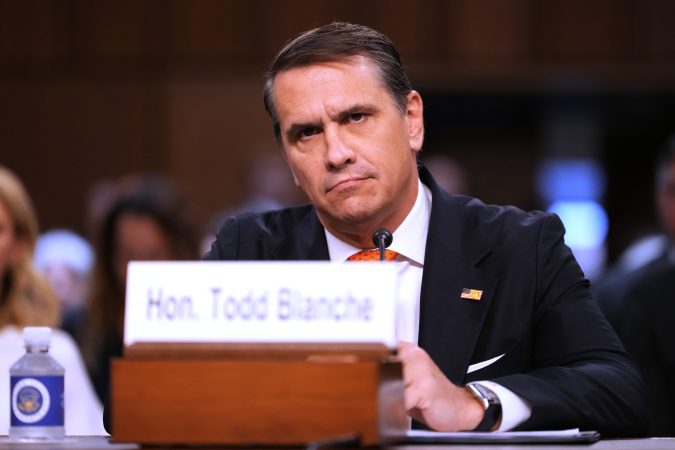
    WASHINGTON — Two Republican senators who threatened to block acting Attorney General Todd Blanche’s confirmation to lead the Justice Department said Monday that they will support his nomination, ending an impasse over plans to create a fund to compensate allies of President Donald Trump.

    The endorsement from GOP Sens. John Cornyn and Thom Tillis paves the way for the Senate Judiciary Committee to advance Blanche’s nomination on Tuesday after the Justice Department and lawmakers reached a deal to formally rescind the $1.8 billion “Anti-Weaponization Fund” proposed to settle Trump’s lawsuit against the Internal Revenue Service.

    Cornyn and Tillis had refused to back Blanche’s bid for the permanent post without official confirmation killing the fund meant to compensate people who believe they were unfairly prosecuted by the Justice Department. Blanche’s written order, issued late Sunday, came after days of negotiations between the Justice Department and the Republican senators, who are leaving Capitol Hill when their terms end in January.

    “We want to express our gratitude to Mr. Blanche and his staff for working with us on this, and we look forward to voting to advance his nomination out of the Senate Judiciary Committee soon,” Cornyn, of Texas, and Tillis, of North Carolina, said in a statement.

    DOJ order says ‘beyond any doubt’ that fund is dead

    Blanche has repeatedly said that the Justice Department was scrapping plans for the fund, which sparked bipartisan outcry over the possibility that violent rioters who attacked police at the U.S. Capitol on Jan. 6, 2021, could be considered for payments. But skeptical lawmakers said they were concerned that could be revived without a commitment in writing, especially because Trump has continued to defend the idea.

    In his order posted on social media late Sunday, Blanche wrote that the department was confirming “beyond any doubt, that there is no Fund.”

    Since the settlement of the president’s lawsuit against the IRS was announced, “No Members were appointed; no funds were transferred; no process for receiving claims was established; no claims were paid,” the order said. “This order establishes, beyond any doubt, that there is no Fund.”

    Cornyn and Tillis had also pressed the Justice Department to limit the scope of a separate piece of the settlement that provided broad immunity for Trump and members of his family from tax audits.

    Under the deal, the Justice Department clarified in writing that the tax audit immunity agreement “applies by its terms only retroactively” to claims open at the time of the settlement and does not protect the president from examination of future tax filings. It also makes clear that only the parties that brought the lawsuit — Trump, two of his sons, and the Trump Organization — are covered by the tax agreement.

    Cornyn and Tillis said in their statement that they were “pleased” with the concessions made by Blanche.

    “From the outset, we were clear that we needed a written document addressing our concerns on the IRS audit agreement and the anti-weaponization fund that included constraining the scope of audit protection by limiting it to the parties of the Settlement Agreement and legally ending the anti-weaponization fund,” they wrote.

    Democrats, however, noted that the order rescinding the fund doesn’t stop the Trump administration from compensating Jan. 6 rioters through a previously established process that allows people to file claims for damages if they believed they were wronged by the government.

    “This supposed ‘deal’ doesn’t prevent payouts to violent insurrectionists in the future,” Democratic Sen. Adam Schiff said in a social media post. Schiff added that it also “leaves in place a tax-immunity deal that could help Trump skip taxes on the $2.3 billion he made last year, and still leaves it vague who and what is covered.”

    Cornyn, Tillis echo GOP colleagues’ concerns

    Blanche’s nomination was thrown into doubt last week after the Judiciary Committee postponed a vote that had been scheduled for Thursday morning as Tillis and Cornyn said they needed more from the administration before they could provide the necessary votes.

    After the Thursday vote was delayed, Trump said in a social media post that he might pull Blanche’s nomination and resubmit it after Cornyn and Tillis leave office next year. And on Saturday the president threatened to push forward with the fund if the two Republicans blocked Blanche’s nomination.

    On Sunday evening, Trump said that people who had faced charges from the Jan. 6, attack on the Capitol and could have benefited from the fund had “their lives destroyed.”

    “This would be a reimbursement for the pain that they suffered,” Trump said. “A lot of people like it.”

    Blanche, who served as Trump’s defense lawyer in his criminal cases, entered the Justice Department last year as deputy attorney general. He was elevated to the top post after Pam Bondi was fired in April by Trump, who was frustrated by her failure to successfully prosecute his political enemies.

    Though Blanche insisted he wasn’t auditioning for the permanent job, he has moved quickly since taking the reins of the department to promote the Trump administration’s agenda and accelerate investigations into the president’s perceived foes.

  • N.J. Democratic delegation asks President Trump to reverse FEMA aid rejection for deadly February snowstorm

    N.J. Democratic delegation asks President Trump to reverse FEMA aid rejection for deadly February snowstorm

    Every Democrat in the New Jersey congressional delegation signed a letter to President Donald Trump asking him to reverse his rejection of disaster aid for a deadly blizzard earlier this year.

    The lawmakers sent the letter, which was first obtained by The Inquirer, to the White House on Friday in support of Gov. Mikie Sherrill’s appeal of the president’s rejection. Their plea comes after Trump denied an $84 million request to the Federal Emergency Management Agency (FEMA) for relief for a late February blizzard earlier this month.

    “Severe blizzard conditions led to widespread damage—overwhelming State and local capacity,” the lawmakers wrote. “Tragically, this fatal event resulted in 12 confirmed weather-related fatalities across nine counties, the most out of any impacted state.”

    The letter was led by U.S. Sens. Cory Booker and Andy Kim, both Democrats. All members of the New Jersey delegation were invited to join, Booker’s office said, but all three of the state’s Republican members opted out. Even U.S. Rep. Jeff Van Drew, a South Jersey Republican, sat out of the effort despite initially backing the request in April.

    Van Drew joined Booker, Kim, and six Democratic House members in an April letter of support for the request in which they said the public assistance and hazard mitigation funds “are crucial to the recovery of the communities” impacted by the storm.

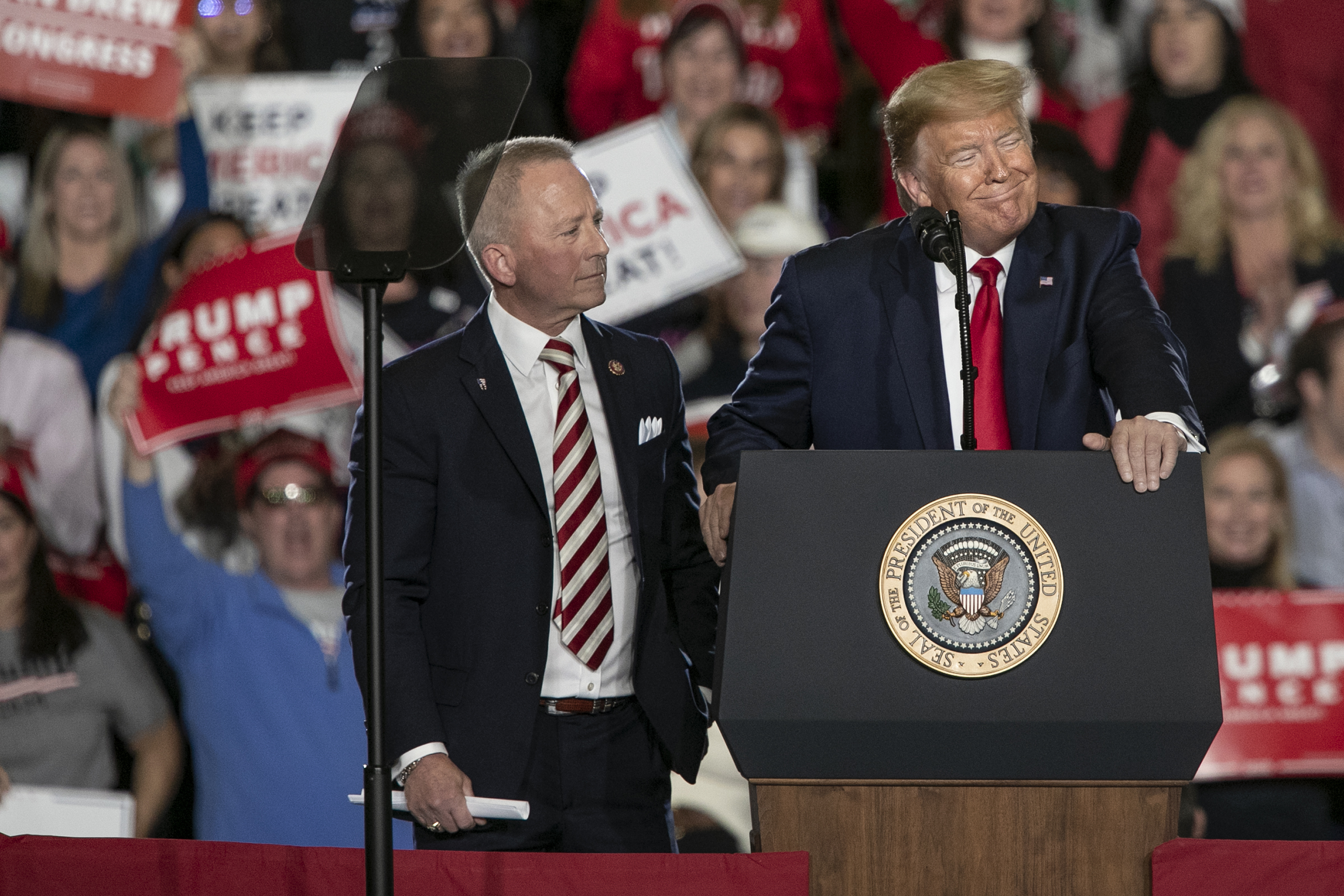
    President Donald Trump smiles while Rep. Jeff Van Drew (R-NJ) stands next to him at a Keep America Great campaign rally in Wildwood, NJ on Tuesday, Jan. 28, 2020.HEATHER KHALIFA / Staff Photographer

    The request sought money for every county in Van Drew’s district for costs related to the snowstorm, including damage from moderate coastal flooding in Atlantic County and his home county of Cape May. Van Drew, a Trump ally and former Democrat, faces a challenge from Cape May Mayor Zack Mullock for his reelection in November.

    Van Drew did not respond to a request for comment.

    In the Friday letter, the Democratic lawmakers’ tone was direct but they did not reference accusations that Trump’s decision was politically motivated. Those concerns come amid a revelation that the Trump administration has been rejecting Democratic states at a particularly high rate. A Wednesday Politico report found Trump recently overrode regional FEMA assessments when he rejected aid for four Democratic states.

    The request included assistance for the vast majority of the state’s counties – including all of South Jersey – as well as hazard mitigation funding statewide, according to the Friday letter. Preliminary damage assessments across those 19 counties documented “extensive emergency work” such as snow and debris removal and “damage to critical infrastructure and public facilities.”

    The New Jersey Office of Emergency Management estimates that disaster costs will exceed $100 million, which is more than five times more than the state’s threshold of about $18 million to qualify for federal disaster assistance.

    Covered Bridge Road in Cherry Hill is Monday Feb. 23, 2026 after a power line was knocked down by the Sunday night snorwstorm.Tom Gralish / Staff Photographer

    “The extent of the damage, the operational burden throughout the State, and the cumulative impacts of recent and related extreme weather all provide overwhelming evidence that New Jersey’s request must be granted,” they wrote. “While we commend the actions of the State and local governments to respond thus far, full recovery will require your approval of federal resources.”

    The lawmakers cite National Oceanic Atmospheric Administration data that found approximately 24 inches of snow fell in less than 24 hours across central and eastern parts of the state, and eight of the state’s 21 counties recorded record or near-record snowfalls.

    Power outages during the storm impacted more than 127,000 customers in the state and there were 544 motor vehicle accidents and 1,518 motor vehicle-related assists, according to the letter.

    They also argued that Trump should consider that the state already had a “strained capacity to respond” because of another severe snow and ice storm weeks earlier, as well as six open federal disaster declarations — in reference to prior disasters for which the state is still working on recovery projects.

    “We look forward to working with you to ensure all Americans receive protection and support from the federal government in the aftermath of a serious disaster,” they wrote.

    On Thursday, Sherrill spokesperson Sean Higgins noted in a statement that the costs of the February snowstorm “didn’t care about political boundaries” and that the governor will fight for funding “regardless of political party,” in a nod to the accusations Trump is putting his thumb on the scale based on partisan favoritism.

    White House spokesperson Abigail Jackson said in a statement Thursday, before receiving the letter, that the president “provides a more thorough review of disaster declaration requests than any Administration has before him” and that he responds to FEMA requests “with great care and consideration, ensuring American tax dollars are used appropriately and efficiently by the states to supplement—not substitute, their obligation to respond to and recover from disasters.”

    She also said the Trump administration is committed “to empowering and working with State and local governments to invest in their own resilience before disaster strikes, making response less urgent and recovery less prolonged.” The Trump administration previously tried to cut disaster prevention funding because it was too “focused on ‘climate change” before a group of states including New Jersey sued.

    Kim, the ranking Democrat on the committee that oversees FEMA, said in an interview Thursday that he is concerned that politics were involved in the latest rejection but couldn’t say for sure.