Category: National Politics

  • Democratic socialism has been rising in the U.S. for over 50 years

    Democratic socialism has been rising in the U.S. for over 50 years

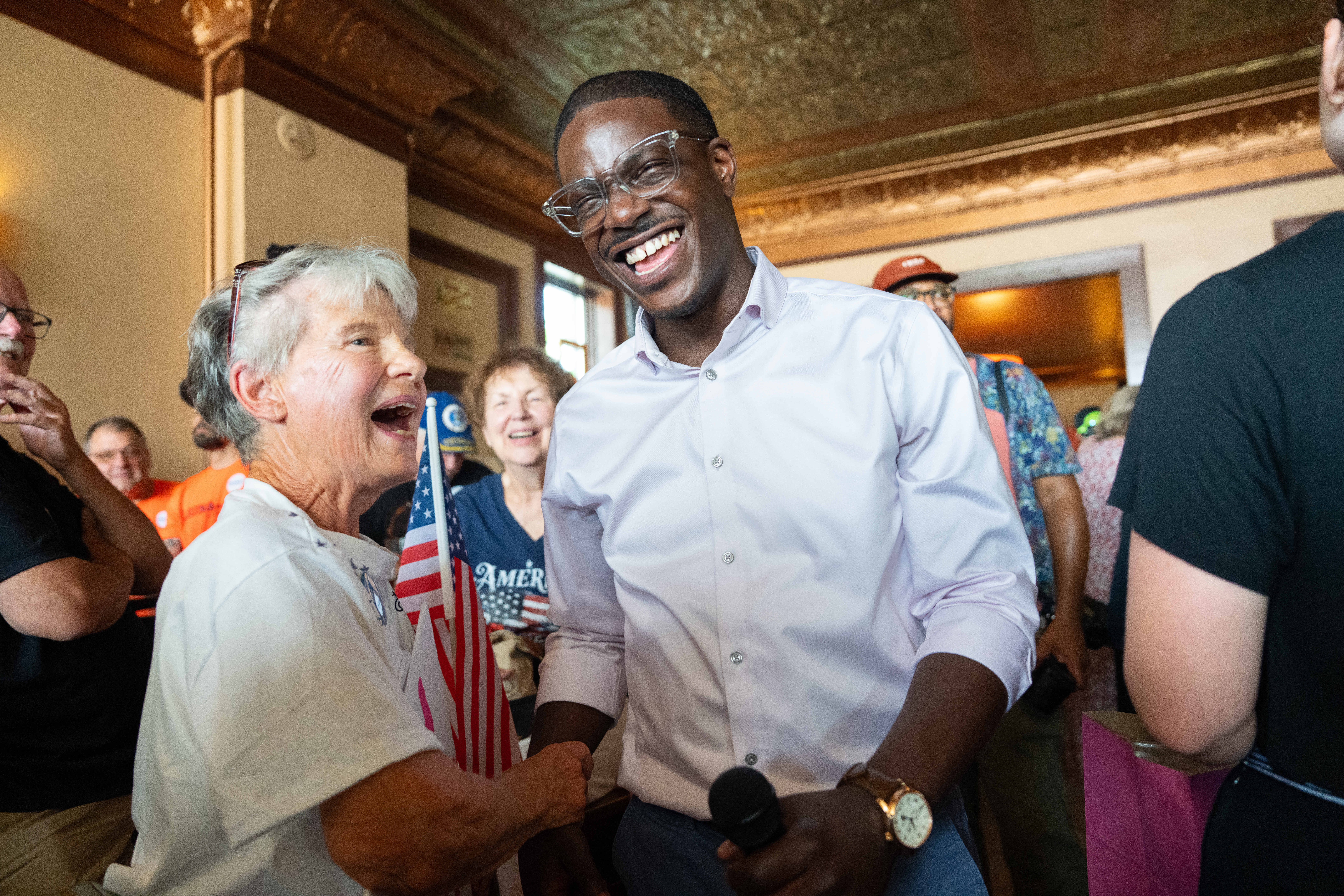
    The Democratic primaries leading up to the midterm elections in November have so far been a high point for the American left. Building on the momentum produced by Mayor Zohran Mamdani’s election last year, three insurgent congressional candidates on the left won their primaries in New York City in June. Two of these candidates were endorsed by the local chapter of the Democratic Socialists of America (DSA), while the third ran with Mayor Mamdani’s strong support. Weeks later, a DSA-endorsed candidate defeated a longtime Democratic member of Congress in Colorado. And although the Democratic U.S. Senate nominee from Michigan, Abdul El-Sayed, did not seek DSA’s endorsement, he won on a platform similar to those of several DSA challengers — including the candidate who unseated the Democratic incumbent in the state’s 13th Congressional District on the same night.

    These advances for democratic socialists, along with numerous victories at the state and local level, have spooked establishment Democrats protective of their positions — as well as moderate-to-liberal commentators worried about the party’s chances in November. A new and alien force, they claim, has entered the Democratic Party, displacing its traditional constituencies and candidates.

    Except nothing could be further from the truth. DSA’s strategy is not new, and democratic socialists made inroads in the Democratic Party decades ago.

    There are many historical moments to which we can trace the origins of the present democratic socialist moment, but 1973 may be the most pertinent. That year, a new democratic socialist organization sought pragmatic ways to engage with electoral and party politics, racking up achievements that have been long overlooked.

    In the early 20th century, the Socialist Party of America, founded in 1901, ran its own candidates in U.S. elections, famously Eugene V. Debs in 1912 and 1920, and Norman Thomas between 1928 and 1948. But by the 1960s, members of the party disagreed about how to achieve a democratic form of socialism during the Cold War. In general, the American left was undergoing tumult and conflict, with the emergence of the New Left, associated with the student movements of the ‘60s. The Vietnam War and nationwide urban crises added more pressures, and Nixon’s defeat of George McGovern in 1972 brought the party to a breaking point.

    The 1972 election exposed fault lines within the Democratic Party and within the Social Democrats, USA (SDUSA), the successor organization of the Socialist Party. Most SDUSA members were militantly anti-communist and believed McGovern’s foreign policy agenda was tantamount to appeasement of global communism. Organized labor was also not enthused, and the AFL-CIO refused to endorse the Democratic nominee.

    In 1973, the public intellectual and social activist Michael Harrington broke with SDUSA and founded the Democratic Socialist Organizing Committee (DSOC), taking with him a number of prominent leftists as well as labor leaders who dissented from the AFL-CIO’s neutrality in 1972. Harrington had come up in the anti-communist Old Left and clashed with Tom Hayden at the famous 1962 Students for a Democratic Society convention in Port Huron, Mich. Figures associated with this Old Left like Harrington and Dissent editor Irving Howe (who joined DSOC) rejected the New Left’s tactics as well as what they saw as its most extreme elements, including supporting revolutionary movements in Cuba, China, and the Middle East that were not democratic.

    But while DSOC was to the right of this New Left, they were decidedly to the left of the Democratic establishment. They believed that neither the mainstream of the labor movement nor the liberals in the Democratic Party, both tainted by support for the Vietnam War, would be able to mobilize the broad center-left coalition necessary to expand economic opportunity in the 1970s as the long postwar boom entered into crisis.

    DSOC, in Harrington’s words, sought to be “the left-wing of the possible” in the Democratic Party, and pursued what he and socialist leader Bayard Rustin called “realignment.” (Rustin himself, however, did not join Harrington’s new group.) Building on alliances with allies in the labor movement, DSOC sought to shape the Democratic Party at a time when the liberal accomplishments of the 1960s were coming under threat. As Harrington’s biographer Maurice Isserman writes, “Michael and his comrades were doing for liberalism what it could not seem to do for itself, which was to set forth a coherent response to the conservative attack on the welfare state.” This took the form of, for example, the Democratic Agenda conferences that DSOC held in Washington. At these confabs, DSOC brought together activists, elected officials, and progressive labor leaders to apply pressure on Democrats on issues ranging from full employment to universal healthcare to affordable housing.

    DSOC participated in Democratic Party midterm conventions, electing delegates and working the room to influence the party platform. Both the party establishment and the “New Democrats,” an insurgent group of centrist, market-oriented Democrats elected in the wake of Watergate, opposed them. But DSOC found allies among traditional liberals like Sens. Ted Kennedy (D., Mass.) and Hubert Humphrey (D., Minn). They also gained allies in Congress who were willing to affiliate with the organization, including Reps. Ron Dellums (D., Calif.) and John Conyers Jr. (D., Mich.), leading members of the Congressional Black Caucus.

    The 1976 nomination of Jimmy Carter, a moderate Democrat from Georgia, was a disappointment to Harrington and DSOC. But it was during the Carter administration that its strategy began to bear some fruit.

    The economic crisis of the 1970s had hit poorer and minority communities especially hard, producing disproportionately high unemployment rates. In response, civil rights activists like Coretta Scott King promoted the Humphrey-Hawkins bill, named after sponsors Sen. Humphrey and Rep. Augustus Hawkins (D., Calif.), that committed the federal government to achieving full employment, with the creation of new public sector jobs as a last resort. The Carter administration was reluctant to get behind this effort, fearing that more spending would fuel inflation, and Harrington and DSOC played a key role in the coalition to pressure the president into supporting the measure. Although the bill was watered down by the time it reached Carter’s desk — the mandate it imposed on the administration lacked teeth — the campaign for a full employment bill demonstrated the promise of the realignment strategy.

    At the start of the Reagan administration, DSOC merged with the New American Movement, a post-New Left formation, to form DSA. This attempt to heal the wounds of the 1960s with those on the New Left who now accepted working within the Democratic Party, however, foundered on the shoals of the 1980s. Historical circumstances, particularly hyperinflation, meant that the Democratic Leadership Council, an organization of the “New Democrats,” ended up pushing the Democratic Party to the right on issues like support for public programs, taxation, and urban crime, rather than DSA moving the party to the left, as Harrington envisioned.

    Made By History sponsorsInquirer Staff

    It would take a new economic crisis, that of 2007, and its aftermaths to revive democratic socialism in mainstream politics, in the form of Bernie Sanders’ 2016 presidential campaign. Following Trump’s election, many volunteers for Sanders joined DSA in 2017, where they found both an organization and a strategy with which to continue their work. In 2018, DSA member Alexandria Ocasio-Cortez shocked the establishment by ousting the high-ranking incumbent Rep. Joe Crowley from his House seat in Queens. While some in the DSA membership do not favor working within the Democratic Party, the organization, through its local chapters, has continued the realignment strategy favored by Harrington and DSOC in the 1970s.

    The victories of democratic socialists in Democratic primaries echo the 1970s in an important respect. Then, as now, Democratic leaders in Congress struggled to respond to a right-wing movement intent on drastically reshaping American society in its image. With the Cold War now in distant memory, American democratic socialists have been much more successful in filling the leadership void and capturing the discontent of Democratic primary voters. But they are nevertheless building on the political and strategic foundations of those who came before them.

    Abe Silberstein is a doctoral student in the joint program in history and Hebrew and Judaic studies at New York University. He is researching socialism and Jewish politics during the Cold War. He is also a member of DSA in New York City.

    Made By History takes readers beyond the headlines with articles written and edited by professional historians. Opinions expressed do not necessarily reflect the views of The Inquirer.

  • Chatbots are doing the work of Congress with little oversight

    Chatbots are doing the work of Congress with little oversight

    The amendment was one of hundreds filed this summer to an annual defense bill making its way through Congress. Along with her proposed change, Rep. Anna Paulina Luna’s office had sent a summary of what it would do.

    But the first line made no sense.

    “increasing example specific factors. Identical to H.R. 100 (118th Congress).11:25 AM????Claude responded:”

    One of Luna’s staffers had copied a chatbot’s answer — time-stamp and all — and pasted it into the public record of the National Defense Authorization Act.

    As a screenshot of the garbled text circulated on social media, the Florida Republican was nonchalant.

    “Not a shocker,” she wrote. “Most staff use it.”

    Asked later about the incident, Luna went further. “A lot of staff will use ChatGPT, Claude, Grok. I personally like Grok better, but my staffer prefers Claude,” she told The Washington Post. “I’m not gonna knock him for that. There’s nothing illegal about him doing a summary.”

    Across the Capitol, lawmakers and staffers are using artificial intelligence to write speeches and news releases, sort constituent mail, prepare questions for congressional hearings and draft amendments.

    Even as politicians are debating how to govern AI for the rest of America, Congress has already settled how it will use the technology: quickly, broadly and with little oversight.

    Both chambers have cleared members and staff to use chatbots — Copilot, ChatGPT, Gemini and, in the House, Claude — for official work, with more under review. The House bought 6,000 Microsoft Copilot licenses last year and encouraged staff to use them.

    Having someone else put words in a lawmaker’s mouth is nothing new. For almost as long as Congress has existed, staffers have been ghostwriting speeches for their bosses. But a speechwriter can be summoned or fired. Chatbots are products built by the tech companies lawmakers are in charge of regulating.

    Amid the rapid adoption of AI on the Hill, lawmakers face a key question: How much of their responsibilities are they willing to hand over?

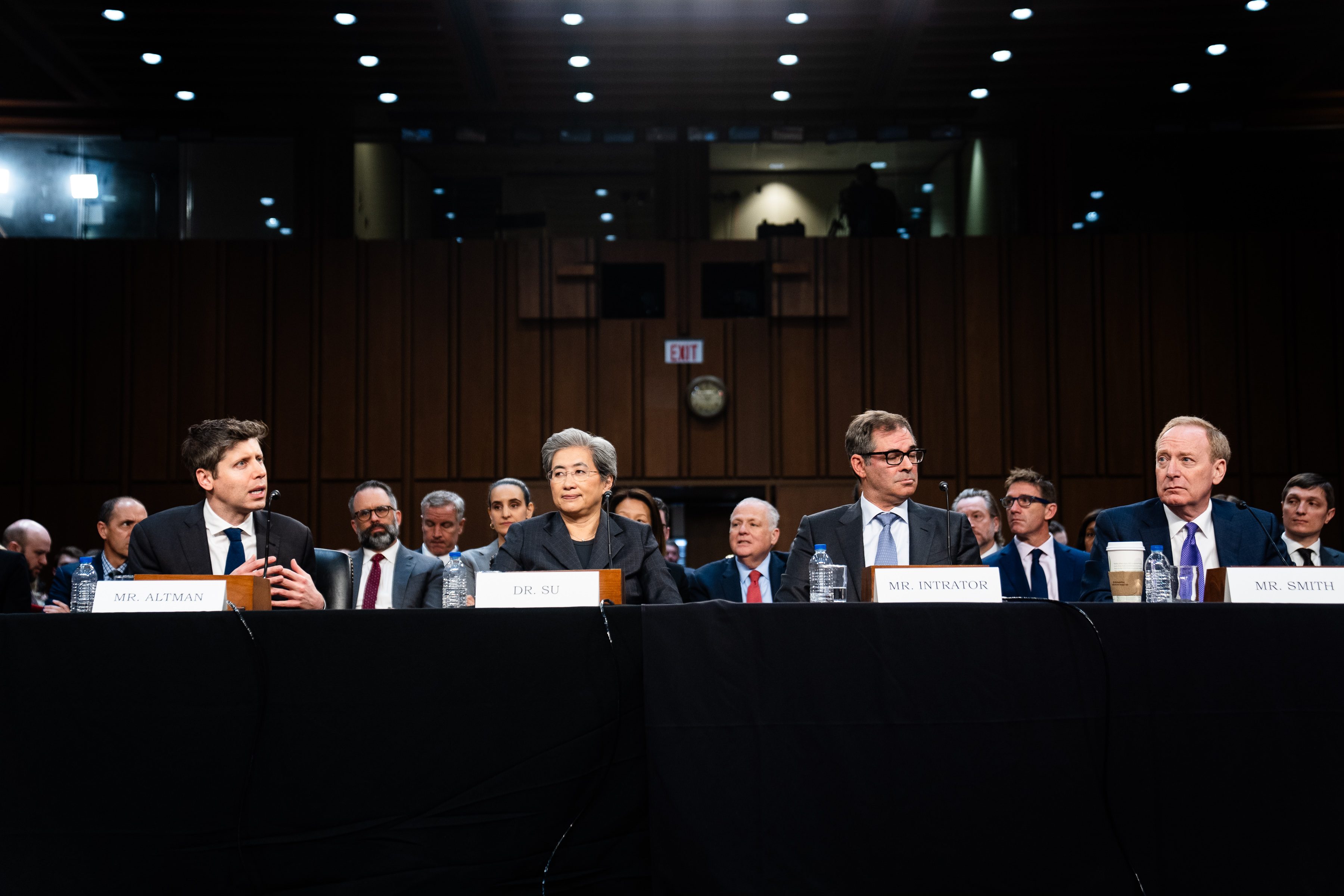
    Interviews with more than two dozen lawmakers and staffers — some of whom spoke on the condition of anonymity to discuss internal operations — along with internal House and Senate policies obtained by The Post, show that the institution has left that question largely unanswered. The few House and Senate rules that exist are poorly understood and seldom enforced. In practice, AI use is left up to the hundreds of individual congressional offices to settle for themselves. It’s not clear how many offices have internal written policies on AI.

    And no one The Post asked knew of any instance where a staffer was formally disciplined by the House or Senate for breaking its rules.

    Luna was right. There was nothing illegal about having AI edit, spell-check — or even write — legislative materials. It wasn’t against House rules, either.

    Her staffer’s only mistake was letting Claude sign its work for others to see.

    Congress’s newest staffer

    Sen. Tommy Tuberville has found a new way to pass the long drives across Alabama: talking to ChatGPT.

    He asks it about Medicare and Medicaid, and listens as the machine’s voice talks back.

    “It’s kind of like you can sit there and talk to an expert,” said the Alabama Republican. “You don’t know whether or not they’re 100 percent correct. But they put you on the right path.”

    Rep. Mike Flood (R-Nebraska) said he consulted a chatbot while working on a bipartisan housing bill that passed this year, asking it where private equity was buying up single-family homes. Sen. Elizabeth Warren (D-Massachusetts), who has proposed stricter legislation on tech companies, uses ChatGPT to look up demographic information.

    One GOP staffer’s boss uses chatbots to generate the occasional cartoon of himself, she said with a laugh. Her explanation: “He’s a boomer.”

    But the real power users are the thousands of staffers who do most of Congress’s work.

    Earlier this year, Rep. Cleo Fields (D-Louisiana) had a town hall coming up in Natchitoches, a city in his district that his press secretary didn’t know well.

    So that aide, Sydney Broome, asked Claude for a list of TV stations in town, its newspapers, and reporters’ names and contacts. Then, she started calling each one.

    At 22, Broome is the youngest full-time staffer and only press secretary for Fields. AI saves her three or four hours of work a week, she said. Her boss does not use it at all.

    ChatGPT first emerged when Broome was still in college. Her professors, unable to stop students from using AI, urged restraint and ran their assignments through AI detection. Students could use it for research, they warned, but never to write from scratch.

    Congress has no such checks. So Broome has imposed them herself.

    She’ll use Claude to find a reporter’s email, but not to write to them. She doesn’t use it to produce anything in her boss’s name. “That’s just kind of a bit of a gray area,” she said.

    Many staffers say they are aware of AI’s limitations. The tools occasionally invent nonexistent bills. Other times, the writing is formulaic and clunky. Still, chatbots help speed up their work.

    A GOP aide in another office said he uses Copilot to write appropriations amendments. The subcommittee he works for used AI to suggest witnesses for a hearing and to help generate the questions lawmakers should ask them.

    Another Republican aide has taken AI even further. He exported all his phone contacts and text messages — years of conversations — into a personal Claude account and told it to build a database of every reporter he has ever dealt with: what he pitched them, which ones they accepted, which exchanges went badly. The chatbot auto-updates itself with each new conversation.

    Recently, his boss wanted to do a TV interview about surveillance law. The aide asked Claude whether he had ever pitched a TV booker on that topic and how it went. It came back instantly with a contact.

    Claude also runs that staffer’s office’s communications budget — the taxpayer-funded mail and ads sent to constituents. “I don’t really have to touch the data in Excel much anymore,” he said.

    The aide said he’s not sure what exactly is permitted by congressional rules. “You’re still not supposed to put constituent data into AI,” he said. “There are weird things around where the rules are. I don’t know all of them.”

    When nobody’s looking

    In 2024, the House Administration Committee convened a private, bipartisan meeting with House officers and outside AI experts to talk through how far to let AI into the legislative process. About 150 chiefs of staff attended.

    Out of it came the first AI guidance for Capitol Hill.

    Internal House and Senate policies obtained by The Post and interviews with people familiar with them show how Congress has embraced the use of AI.

    Last summer, the House bought 6,000 Copilot licenses. The tool was a natural fit for a chamber that already ran on Microsoft and a more secure way to keep congressional work inside a single system, officials believed. Starting in January, offices could sign up for access.

    They came with a major guardrail built into the system: Copilot is designed to refuse political requests. Ask it to criticize a party, politician or political group, and the machine declines.

    “I can’t create content that criticizes or condemns political parties, politicians, or political groups,” read one Copilot response shared by a staffer. “That includes writing tweets that attack Democrats, Republicans.”

    Roughly half the licenses are now in use, and House officials have extended the deal.

    The rules Congress wrote for itself are loose. Off limits under current House guidance: putting sensitive material such as constituent information into a chatbot, generating deepfakes, making personnel decisions and finalizing legislation.

    A machine may help write a bill but may not be the last hand on it. It may draft a reply to a constituent but can’t be told who the constituent is.

    In theory, a staffer breaking those rules can be stripped of access to AI tools, suspended, fired, even fined and imprisoned.

    But no one could name a single case of that happening. People familiar with House operations said they’re not aware of any enforcement action by the chief administrative officer. A spokesperson for the CAO said the office can’t comment on potential enforcement actions. A spokesperson for the Senate sergeant at arms didn’t respond.

    Catching violations largely falls on staffers, who would have to report a colleague, or themselves.

    Most said in interviews that they don’t know the rules. A former senior Republican House staffer said that his office subscribed to both ChatGPT and Claude and that staff used them however they liked. He wasn’t sure what the rules were, or whether his team followed them. “We just had a free-for-all,” he said.

    The House and Senate encourage individual offices to implement their own written AI policies. If a House office wants Copilot, in theory, it must have a policy in place.

    One reason Congress has moved so quickly to adopt AI tools is to keep pace with the executive branch, said people familiar with internal House operations. The Trump administration has spent the past year and a half pushing AI into every corner of the government.

    “If we are not keeping pace with how the executive branch is functioning,” one person said, “then we’re not performing effective oversight.”

    AI for everything

    The new frontier has left some lawmakers pondering how to proceed.

    “We want to make sure we’re using AI, and AI isn’t using us,” said Rep. Jamie Raskin (Maryland), a constitutional law professor and the top Democrat on the House Judiciary Committee.

    Sen. Elissa Slotkin (D-Michigan) recently worked with her staff on a new policy for her office. They can use AI to “enhance and streamline” work but not to generate “final products” — like floor speeches or public remarks. They have to take AI training. Nothing with personal information about constituents or the senator can be uploaded. And her office is holding unannounced “spot check” inspections.

    “We didn’t want to prohibit the use of the newest tools, but we also didn’t want absolute schlock showing up in my memos,” Slotkin said. “What I’m not willing to do is put my head in the sand and pretend that my young staff aren’t going to find new and interesting ways of doing this.”

    In recent months, one Democratic staffer said his office has been exploring something new: feeding AI his boss’s past statements so the tool can write in the lawmaker’s voice. He heard another office was pulling it off and wanted to try himself.

    In the same building, a GOP press secretary whose office has stricter AI limits said it’s unfair other offices get an advantage. “We could churn out so many op-eds if we were more comfortable with AI,” she said.

    Recently, she found her own press assistant using AI in violation of their office’s policy. “We had to have a very robust conversation about how not to use AI for things in [the boss’s] voice,” she said.

    A preview of what more rampant AI use could look like already exists in state legislatures — many of which have no rules or policies at all.

    Amber Hulse serves in the South Dakota state Senate, where money is tight and lawmakers have no full-time staff. Hulse, a Republican, uses AI for almost everything — policy research, constituent email, speeches, writing legislation.

    Lately, she said, the signs of AI’s effects are getting easier to spot.

    “It’s funny,” Hulse said, “how your ears will start to pick up on the floor someone who’s giving a speech that was very clearly written by AI.”

  • White House press secretary Karoline Leavitt, youngest person to hold role, to leave at month’s end

    White House press secretary Karoline Leavitt, youngest person to hold role, to leave at month’s end

    WASHINGTON — White House press secretary Karoline Leavitt, the youngest person to hold the role, will leave at month’s end, President Donald Trump announced Wednesday.

    Leavitt, 28, just recently returned to the White House after taking a brief leave for the birth of her second child in May.

    Leavitt has been one of the most visible advocates of Trump’s “Make America Great Again” movement. The Republican president described her as one of his “most trusted aides” in a social media post announcing her departure.

    He said Leavitt “will be departing her role at the end of the month so she can spend more time with her beautiful young children and family, a decision I totally understand and respect! Karoline will now be one of my top outside advisors, and an influential voice within the Republican Party, as we work to defy History, and conclusively win the Midterm Elections.”

    Leavitt recently returned to work after taking leave following the birth of her second child, a daughter, in May. She also has a 2-year-old son.

    “The truth is since returning to the White House after the birth of my daughter, I have felt in my heart that I cannot be the best mom my two young children deserve while devoting the constant time, energy, and attention required of the White House Press Secretary — and that is why I have ultimately made the bittersweet decision to depart the White House and embark on a new chapter in my life,” Leavitt said in a social media post.

    Trump did not outline plans for who might replace her in the high-profile role.

    She worked as a spokesperson for MAGA Inc., a super PAC supporting Trump, before joining his 2024 campaign. In 2022, she ran for Congress in New Hampshire, winning a 10-way Republican primary before losing to incumbent Democratic Rep. Chris Pappas.

    During Trump’s first term in office, Leavitt worked as a press aide in the White House press office. She then became communications director for New York Republican Rep. Elise Stefanik.

    Leavitt briefed from the White House press room less frequently than some of her recent predecessors. Trump, who regularly engages with reporters during White House events and during his travels, primarily deployed Leavitt to Fox News and other conservative news outlets to trumpet his agenda and take shots at Democrats and the mainstream media.

    Trump’s first-term press secretaries were Sean Spicer and Sarah Huckabee Sanders, who were known for quarreling with reporters. Another, Stephanie Grisham, never held a briefing. Her successor, Kayleigh McEnany, often lectured the news media during her appearances in the press briefing room.

  • Forget left vs. center. Democratic voters are making clear they just want change

    Forget left vs. center. Democratic voters are making clear they just want change

    WASHINGTON — Democrats remain mixed over what ideological direction the party should take. But across a series of closely watched primaries, they are sending a clearer message about the party’s path forward: They want change.

    In marquee Senate primaries in Michigan and Minnesota, progressive candidates defeated two members of Congress with significant backing from party leaders. Wisconsin voters narrowly rejected a democratic socialist but still chose a 40-year-old county executive who is seeking to become the state’s first Black governor. And in Connecticut, voters ousted one of the longest-serving Democrats in Congress for a challenger who campaigned on generational change.

    The results so far this month deliver no clear ideological mandate. Instead, they add to mounting evidence from this year’s primaries of a Democratic appetite for turnover that is cutting across the party’s traditional divisions.

    “The through line between these races isn’t ideology. It’s impatience with this political system that feels disconnected from the urgency voters feel,” said Lis Smith, a national Democratic strategist. “The demand for change is much broader than the demand for socialism.”

    The immediate challenge for Democrats is whether they can harness the frustration fueling revolts against their own party and turn it against Republicans in November. Beyond that looms the 2028 presidential race, when a new generation of leaders will compete to shape a changing Democratic Party.

    “If leaders in our party don’t recognize that we need to make changes, then the changes are going to come from the ground up,” Luke Bronin, a former mayor who defeated 14-term Connecticut Rep. John Larson in Tuesday’s primary, said in his victory speech. “That’s a message our party needs to hear.”

    Progressives are ascendant, but Wisconsin shows their limits

    Progressive leaders touted Tuesday’s results as further proof that their message is working after victories in Minnesota and Michigan.

    “What we are seeing is that people are sick and tired of establishment politics and establishment policies,” Sen. Bernie Sanders told the Associated Press on Wednesday, pointing to a string of progressive victories around the country.

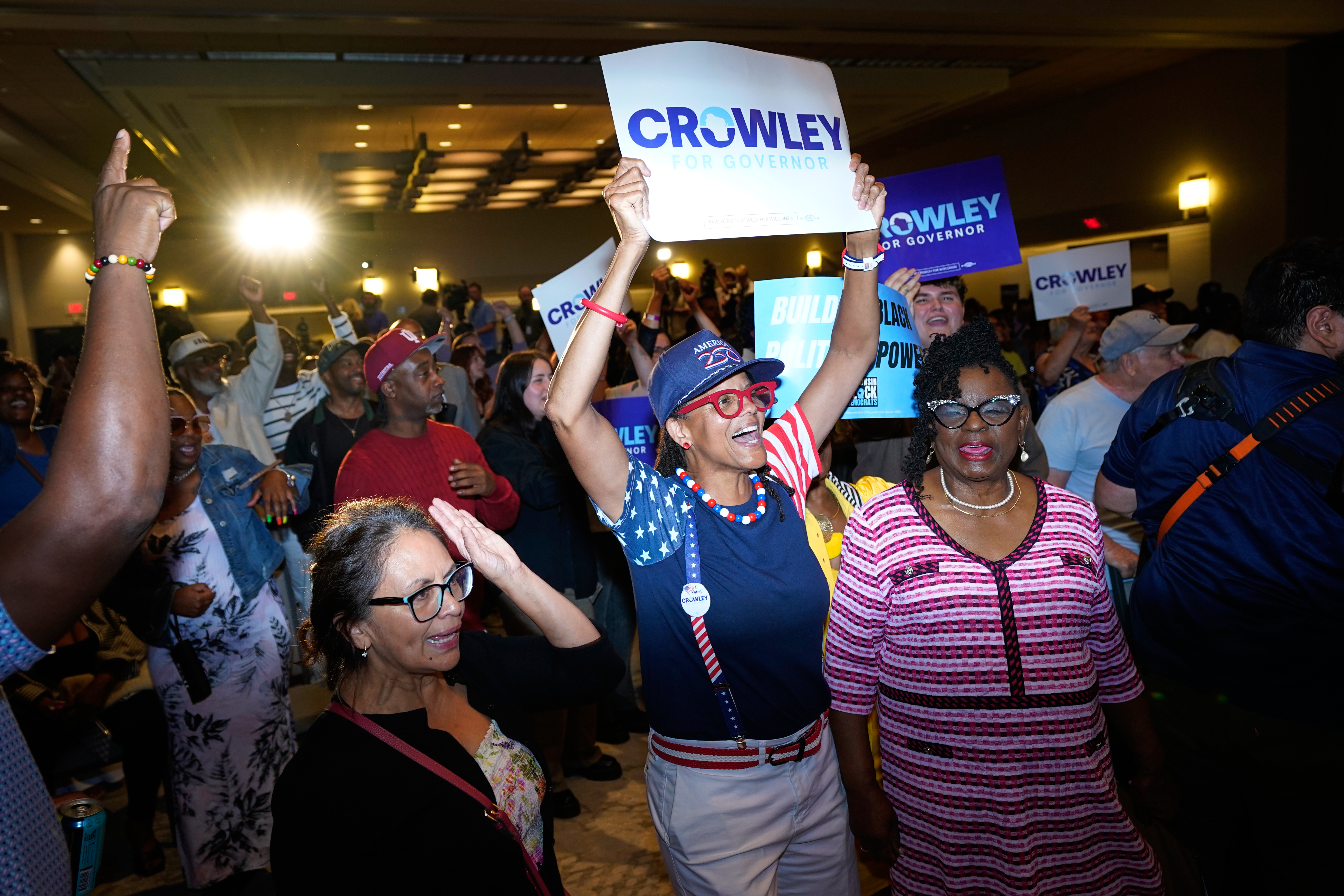
    In Wisconsin, Democratic socialist Francesca Hong had hoped to also ride the wave of recent progressive victories to the Democratic nomination for governor. Instead, she narrowly lost to Milwaukee County Executive David Crowley, a more moderate Democrat who had the backing of outgoing Gov. Tony Evers.

    Hong’s defeat also came after a number of her past comments resurfaced, including support for defunding the police and a call to cancel Thanksgiving, which she said was a joke. Unlike El-Sayed, Hong didn’t receive the backing of some of the nation’s most prominent progressive leaders, including Sanders and Rep. Alexandria Ocasio-Cortez.

    Sanders said Wednesday that he didn’t endorse Hong because his team lacks the resources to “get involved in every single race. Period. And that’s about it.” He nevertheless praised her “very strong grassroots campaign” for getting “a whole lot of people excited.”

    The result illustrates a tension for the party’s ascendant left flank. Candidates running on populist economic messages have found growing success with Democratic voters. But some positions associated with the progressive movement’s recent past remain vulnerabilities — particularly among voters worried about electability in November.

    “A lot of Democrats are traditionalists on things like culture issues. This is not about culture, it’s about economics. It’s about corruption,” said David Axelrod, who was an adviser to President Barack Obama. “The closer that candidates hew to those issues, the larger the base they’re going to be able to accumulate.”

    That tension was evident Tuesday for Sarah Atkins Hoggatt, 61, who said she agreed with Hong on some issues but worried that Hong’s deeply progressive politics and the democratic socialist label would make it harder for her to defeat Republican Tom Tiffany. She voted for Crowley.

    “I didn’t vote my heart,” Atkins Hoggatt said.

    Progressives scored a much clearer victory in Minnesota, where Lt. Gov. Peggy Flanagan resoundingly defeated centrist Rep. Angie Craig. Craig had the backing of House Democratic Leader Hakeem Jeffries and other prominent Democrats, while Flanagan was supported by Sanders and Sen. Elizabeth Warren.

    Flanagan, similar to El-Sayed in Michigan, highlighted her opponent’s support from wealthy donors while also attacking her vote for a Trump-backed immigration bill that became a liability after immigration agents shot and killed Renee Good and Alex Pretti in Minneapolis.

    As in Michigan, the winning progressive candidate was significantly outspent.

    “Super PACs spent over $80 million trying to defeat El-Sayed and Peggy Flanagan,” Sanders said. ”They lost both elections. I think what people are saying is, we’re sick and tired of billionaires and their super PACs buying elections.”

    Democrats are hungry for change

    Flanagan is 46 years old. Crowley is 40. And El-Sayed is 41. But nowhere was the demand for generational change more explicit Tuesday than in Connecticut.

    Bronin, 47, defeated the 78-year-old Larson — who was first elected to Congress in 1998. A central theme of Bronin’s campaign was the need for a new generation of leadership in Washington.

    Larson became the seventh Democratic House incumbent to lose a primary this year, many of them to younger challengers. The defeated incumbents and the Democrats replacing them span ideological lines, making the wave of losses difficult to explain simply as a shift to the left.

    The push for generational turnover has taken on greater urgency since Democrats’ defeats in 2024, when concerns about President Joe Biden’s age ultimately ended his reelection campaign and forced the party into an uncomfortable reckoning over a generation of leaders who had remained in power for decades.

    Bronin himself has connected his challenge to that experience. Earlier this year, he argued that Democrats needed “new members of Congress, new Democratic leaders who have the energy and courage and clarity of mission that this moment demands.”

    That sentiment was evident among voters in Larson’s district. Dan Schnaidt, a 73-year-old Democrat, said he appreciated Larson’s service but believed it was time to move on.

    “It’s time for new blood, for new ideas,” Schnaidt said.

    The generational divide extends to the electorate

    While Hong fell just short in Wisconsin, the strength of her insurgent campaign highlighted another force reshaping Democratic politics: younger voters.

    Cody Chandler, a 35-year-old software engineer, voted for Hong and called her “probably the most exciting candidate I’ve seen.” Unlike in elections past, Chandler said, he voted for the candidate he most wanted to win rather than the one he considered most electable.

    Jesse Heer, a 32-year-old Madison business owner, also backed Hong, citing her focus on affordability.

    That support showed up geographically. Hong won Madison, home to the University of Wisconsin’s flagship campus, by nearly 7 percentage points, though it wasn’t a big enough of a margin to help her win the nomination.

    A similar pattern helped propel El-Sayed to victory a week earlier in Michigan.

    El-Sayed won Washtenaw County, home to the University of Michigan, by nearly 25 percentage points and Ingham County, home to Michigan State University, by 23 points. He also won Grand Rapids, with its large population of younger, college-educated voters, by nearly 26 points.

    Jordan Snyder, a 20-year-old Michigan voter who supported El-Sayed, said she backed him because of his progressive positions and because she viewed him as someone she could trust, rather than “someone who I feel could be bought and sold.”

    “People are feeling like a lot of the people that they’ve trusted that have been in government haven’t really been living up to expectations,” Snyder said.

  • Rural Texas conservatives love free markets but not when it comes to data centers

    Rural Texas conservatives love free markets but not when it comes to data centers

    CENTERVILLE, Texas — Nikki Meador grew up here in East Texas. She’s a lifelong conservative and a three-time Trump voter unaccustomed to activism. That’s mostly because there’s never been much to protest in rural Leon County.

    That changed when the nurse practitioner heard data centers were coming.

    “We are the people who built this community, and we intend to pass it down to our children. We deserve protection, not to be sacrificed for outside investment. Industrialization is irreversible,” said Meador, 43.

    Meador, wearing a camo green T-shirt bearing the state’s unofficial motto, “Come and take it,” was among several dozen attending the county commissioners’ regular meeting on a recent Monday.

    “We’re asking you to consider the long-term cost to taxpayers, the environmental and safety risks, the permanent loss of what makes this place home,” she said.

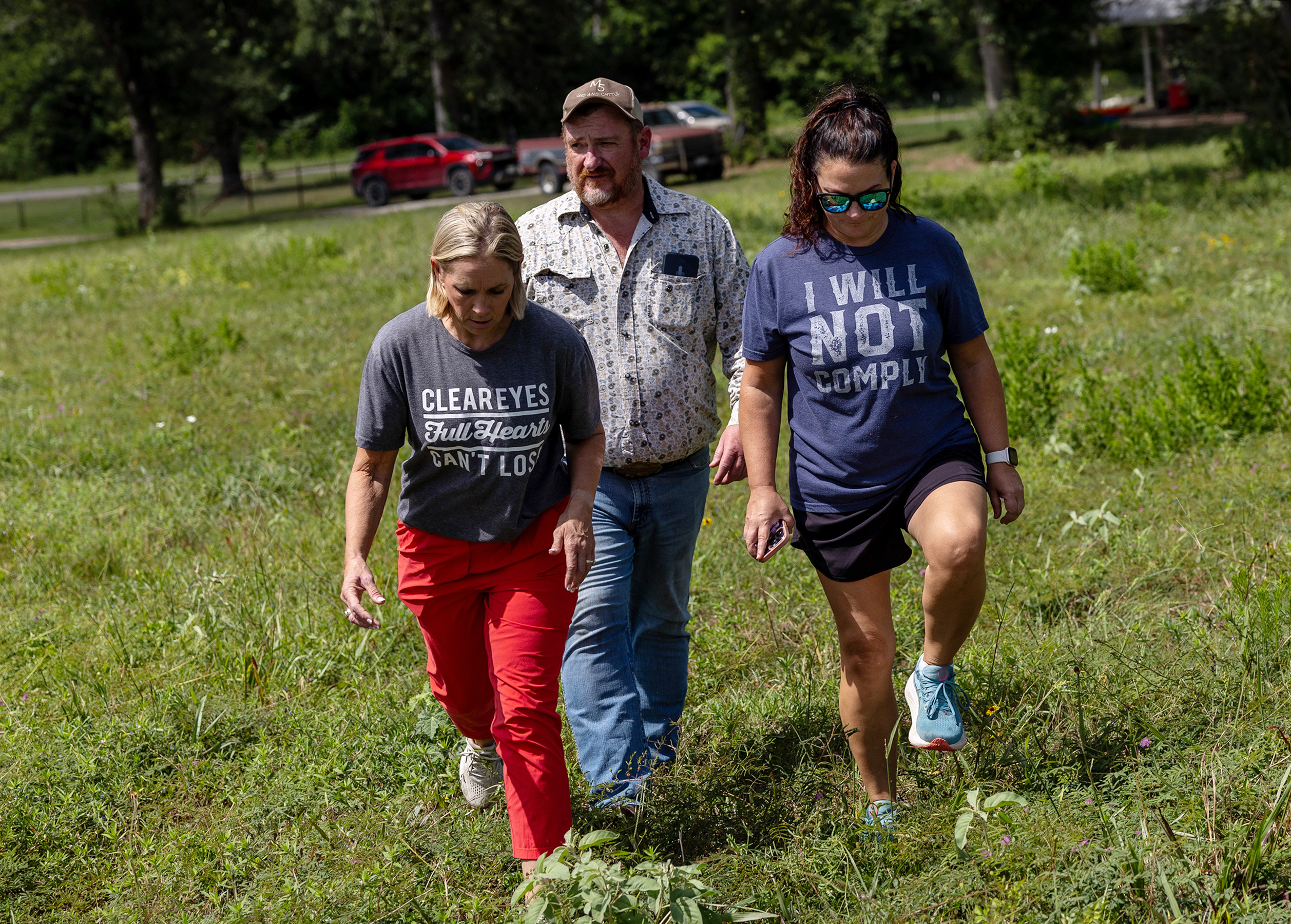
    Ann McCoslin (from left), her cousin Daniel McCoslin, and Nikki Meador walk on Meador’s Leon County property, which is next to the proposed site of a power plant expected to fuel a proposed data center. Antranik Tavitian

    Texas conservatives love free markets, the energy industry, development, and small government. But in scores of deep-red Texas communities such as Leon County, longtime Republican voters are setting aside those principles to battle an onslaught of data center projects that pro-business GOP leaders initially welcomed.

    Opposition to data centers has been notably bipartisan in communities across the country. But the fierce pushback from conservatives in Texas has required no help from liberal groups, and it has been felt everywhere from the state GOP’s new party platform to the campaigns of Lt. Gov. Dan Patrick and Gov. Greg Abbott, Republicans who now support varying degrees of increased data center regulation.

    At the GOP convention in June, the platform included a new plank that would require data centers to disclose and finance infrastructure needs without shifting costs to residents; prioritize the use of reclaimed water; and protect aquifers and the state’s electrical grid.

    Patrick, a staunch Trump ally, has made AI regulation a priority for the next legislative session in January.

    On the campaign trail, Abbott and other elected officials speak openly about restraining data centers. On Aug. 3, Abbott announced he is requiring audits of every data center seeking power from the Texas grid before they can connect. On Aug. 6 and 7, he announced that several data center companies had agreed to state audits.

    “I established clear guardrails to ensure data centers protect our electric grid, conserve our water, respect our neighborhoods and pay their own way,” Abbott said in a Monday post on X, noting OpenAI had agreed to comply with the new Texas standards. “They must not pass costs on to Texas families or interfere with their quality of life.”

    Still, Meador said Abbott has not done enough to stop data centers.

    “He’s just trying to scramble because he realizes he’s basically making rural Texas mad, and that’s where a lot of his votes come from,” she said, dismissing the governor’s audits as “very vague.”

    Meador said she won’t vote for Abbott and instead might vote for a Democrat for the first time — Gina Hinojosa, a state representative from Austin and South Texas — because “she’s against data centers in rural areas.”

    Donna Hull stakes an anti-data-center sign on her property, which is next to a proposed data center, in Leon County. Antranik Tavitian

    In Leon County, population 17,000, where 88% of voters like Meador chose Donald Trump last election, residents have been frustrated to learn how little their local GOP elected officials can do to stop the projects being proposed. Until now, the largest industries Leon County had were oil and gas, a steel plant, and chicken farms, which drew much less opposition.

    Last month, commissioners refused an application from Crusoe Technologies for tax breaks for its proposed 800-acre, $34 billion data center, citing an incomplete submission. But Crusoe can reapply or build without the tax breaks, and commissioners said they’ll be helpless to block the project because the county — unlike many cities — has only narrow zoning authority to regulate places like landfills, liquor stores, and adult video stores.

    Commissioners attempted to reassure residents that they, too, were troubled by the Crusoe project, which is expected to break ground within a year and cost the county $4 million to $5 million in added services.

    Commissioner Thomas Jefferson “T.J.” Foley noted that he is responsible for the volunteer fire department, lives within 600 feet of one of the proposed power plants expected to fuel the data center, and worries about how the county will cope with their increased demand for resources and services, especially if there’s a disaster at the massive sites.

    “Leon County and no rural county is prepared to handle this,” he said. “Until there is a catastrophe and one of these things blows up, there’s probably nothing we can say.”

    “That’s not very comforting,” a man shouted from the audience.

    Residents listen during a town hall meeting about data centers at the Jewett Civic Center in Leon County last month.Antranik Tavitian

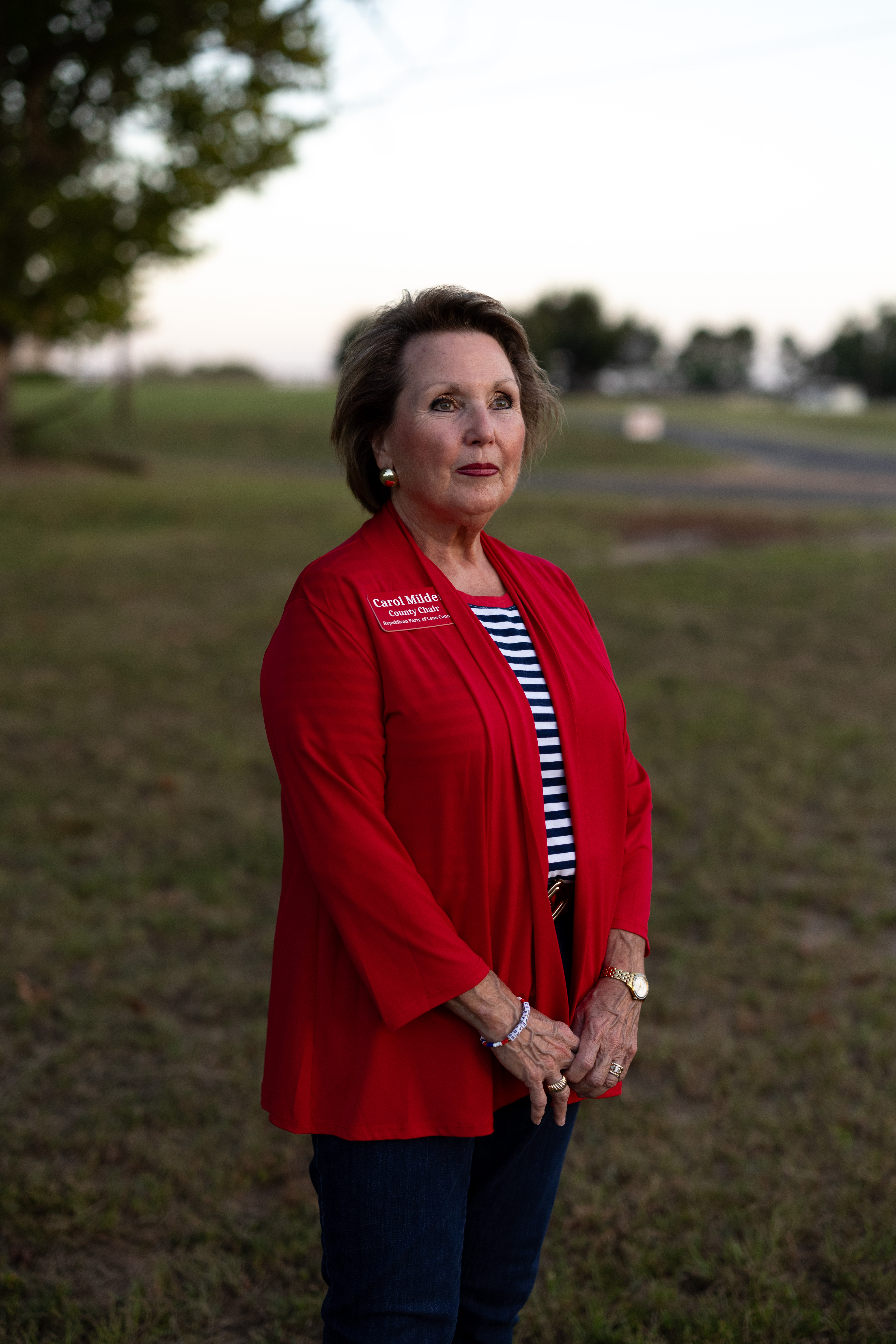
    Leon County GOP Chair Carol Milder is emblematic of the shift among conservatives when it comes to opposition to data centers.

    The retired real estate appraiser’s father worked on an oil rig. Growing up in Houston, she saw the oil and gas industry build the middle class. But attending a panel on data centers at the state GOP convention in June in Houston awakened her to the differences between the industries.

    Panel experts, including her neighbor Michael Rice, 46, who used to work at an Austin data center, explained that unlike oil rigs and refineries, data centers bring few jobs — 40 proposed so far in Leon County — and even those are often staffed by workers from elsewhere. Milder and others at the commissioners’ meeting said they resented paying taxes only to see data centers initially get tax exemptions, effectively subsidized by residents the way manufacturing and solar industries have been.

    She told the commissioners: “We’re being held hostage for the money for them to build.”

    “We’re trying to be as prepared as we can,” said Commissioner Kyle Workman, a construction consultant. He said that unlike in Texas cities, the unincorporated community’s limited government — which many in the audience historically favored — left commissioners with few tools to block the data centers. “Leon County has kept government down over the years,” Workman said. “There’s limits to what we can do.”

    Michael Rice points out proposed data center sites during the town hall meeting at the Jewett Civic Center last month.Antranik Tavitian

    Residents said they thought that was precisely why data center companies were targeting rural areas. Of the nearly 248 data center projects proposed statewide, nearly half are in unincorporated rural areas where zoning and other restrictions cannot be used to block them.

    And residents worried that any state legislation that might help defend against the projects would not pass until late next year — too late to block the data center proposed by Crusoe and others expected to follow. Belltown Power has proposed building a 900-acre data center in Leon County, and Black Mountain — another North Texas-based company — bought property and announced plans to build a massive power plant there.

    Milder said she alerted an adviser to the governor this year about growing local opposition in counties such as Leon. She reminded him that a majority of the state’s 254 counties are rural and that they are a key part of Abbott and the GOP’s conservative base.

    “Texas is red because of rural Texans, and we need to be listened to,” Milder told him. “You need to be concerned with what concerns us. And we’re being raped and pillaged.”

    Leon County GOP Chair Carol Milder. Antranik Tavitian

    Texas is poised to overtake Virginia as the nation’s top data center hub by 2030. A recent poll found 56% of Texans oppose data centers being built in their communities.

    “They love our farmland because it’s flat, it’s clear, there’s water and electricity there, and they can just come in and start building,” GOP Agriculture Commissioner Sid Miller said at an anti-data-center protest outside the state Capitol in Austin recently. The small crowd chanted, “Special session now!”

    After hailing Texas as “the epicenter of AI development” last fall, Abbott recently reversed course as he campaigns for reelection to a record fourth term, urging state lawmakers to repeal the centers’ sales tax exemptions and regulate where they can be built. Last month, he ordered the state Public Utility Commission and council managing the electrical grid that covers most of the state to enforce restrictions on data centers, including requiring them to “fully fund the costs of electric infrastructure.”

    “We must prohibit them from building AI data centers in rural Texas neighborhoods,” Abbott said at a campaign stop about 90 miles north of Centerville on June 30.

    By the end of July, the governor announced that the state had “begun sweeping changes to how data centers pay for the infrastructure needed to serve them, ensuring data centers do not shift those costs onto everyday Texans or place unnecessary strain on our state’s resources.”

    But Miller and Leon County conservatives said those stepped-up regulations are not enough. They want Abbott to call a special legislative session — as he has in recent years for conservative priorities such as school vouchers, congressional redistricting and property tax cuts — to pause data center development and increase regulations and oversight.

    A spokesman for the governor declined to comment about whether Abbott will call for a special session on data centers.

    “Governor Abbott has been clear that data centers cannot come before Texas families,” spokesman Andrew Mahaleris said in a statement, noting that the state regulators’ new requirements “protect Texans from higher costs and negative impacts on their communities.”

    Andrew Schmitt, a spokesman for Crusoe, said: “Crusoe is committed to protecting the natural resources and character of every community where we operate, while ensuring local families benefit from our economic investment for generations to come. We are working closely with local leaders as we evaluate development in Leon County to address community needs and deliver jobs for local workers along with significant new tax revenue for schools, public safety, and infrastructure.”

    Daniel McCoslin stands next to family photos dating back to when his ancestors settled Texas. Antranik Tavitian

    Daniel McCoslin, 48, is a retired railroad engineer who fought with the Marines in Iraq. He ranches land that’s been in his family since the 1800s and that abuts the proposed Belltown data center site. A relative’s ranch borders the Crusoe site. That’s why McCoslin — a libertarian who voted for Trump three times — organized a local anti-data-center group to educate neighbors.

    McCoslin dismissed Abbott’s recent data center regulations as “pandering.” In November he plans to vote for a Democrat for the first time in his life. Clayton Tucker, a rancher running for agriculture commissioner as the anti-data-center candidate, has called for a data center moratorium.

    When data center companies started offering neighbors up to $50,000 an acre — “life-changing money” — McCoslin recalls talk at the feed store turning to whether folks would take the millions. McCoslin was adamant he would not.

    “Family means a lot more than money,” he said.

    The evening after the commissioners’ meeting, McCoslin helped organize a town hall to update neighbors. The crowd that settled into folding chairs at a local community center included plenty of retirees, at least one of them in a MAGA hat. There were also workers, some in volunteer firefighter T-shirts, others in straw cowboy hats and boots with spurs.

    Mandy Williams holds onto her daughter Violet as she gets out of a hay harvester in Centerville. Antranik Tavitian

    Organizers used a projector to display maps of the proposed data centers and power plant, and fielded questions about potential environmental and economic effects: How many jobs will they bring, and for whom? Will they pollute the ground and water? Are they expected to decrease property values? Can they be stopped?

    Organizers displayed phone numbers and emails for Abbott and other state and local GOP lawmakers. They urged residents to contact the officials with data center concerns.

    “We’ll be calling,” said Mandy Williams, 46, as she left the meeting with her husband and towheaded 4-year-old daughter, Violet, in a “Cowgirl forever” T-shirt.

    The couple live on the eastern side of the county on a cattle ranch of more than 200 acres. Stephen Williams’s ancestors settled the land when Texas gained independence from Mexico in 1836, nine years before it became a state. Like many other Texans, owning land is part of his identity, a birthright he feels a duty to steward.

    “Hopefully we get enough pressure on him,” Stephen Williams, 46, said of the governor.

    When commissioners met Monday, they did not take action on the tax breaks and told residents that Crusoe had yet to reapply, Milder said.

    Back at his modest ranch house, McCoslin pointed to turn-of-the-century black-and-white portraits of his ancestors taken under the oaks just steps away.

    “At night, you can hear how quiet it is and see so many stars,” he said, describing his evening routine of settling outside to smoke a cigar and sip bourbon, his only soundtrack the crickets, frogs and occasional coyote. “We don’t want 24-hour industrial hum and lights destroying the sky. If I wanted that, I’d live in Houston.”

  • Pirro, in rare move, convenes special grand jury in Washington

    Pirro, in rare move, convenes special grand jury in Washington

    The Justice Department has convened a special grand jury in Washington, a rare legal body that officials say could pave the way for federal prosecutors in the nation’s capital to investigate some of its biggest and most controversial cases.

    Unlike a typical grand jury, a special grand jury can release a potentially critical report about the subject of an investigation, even if prosecutors do not find enough evidence to bring the person to trial.

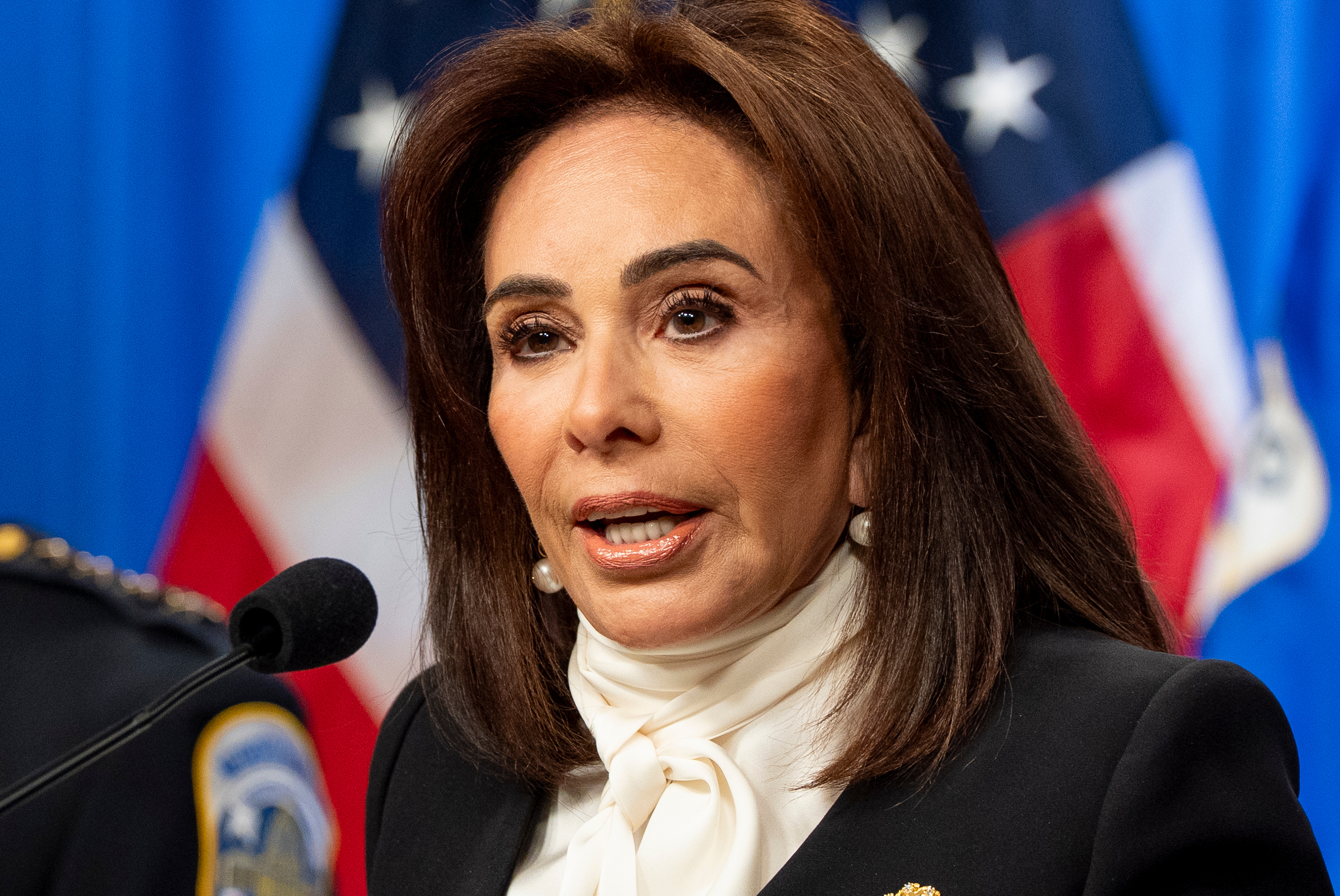
    D.C.’s special grand jury is to be overseen by Steven Vandervelden, one of U.S. Attorney Jeanine Pirro’s top allies in her office, according to three government officials familiar with the matter, who spoke on the condition of anonymity to discuss a matter that has not been made public.

    Pirro has relied on Vandervelden to investigate some of her office’s most controversial cases, including a probe into then-Federal Reserve Chair Jerome H. Powell and an inquiry into allegations that the D.C. police force purposely skewed its crime statistics.

    It is unclear what the new special grand jury will be tasked with probing, but those interviewed said it is a notable move, especially given President Donald Trump’s interest in prosecuting his adversaries.

    Special grand juries, on the rare occasions when they are convened, are typically used to pursue investigations of government officials or probe broad conspiracy cases and organized criminal activity. (A group of corruption cases that prosecutors deem to be linked could qualify as the latter.)

    Steve Friedland, a law professor at Elon University, said strict procedures govern how special grand juries can be used — but that there is also flexibility.

    “This could be very interesting,” Friedland said. “Each administration has its own approach to how it enforces the law and how it uses the tools available to it.”

    The U.S. attorney’s office in D.C. declined to comment.

    There is no known recent precedent for a special grand jury in Washington, legal experts said, although they said they could not entirely rule out that one has escaped public notice.

    They are more common in larger jurisdictions home to more than 4 million people, including in New York and Texas, where federal guidelines says one must always be available, under the belief that organized crime is more common in larger areas.

    On the state level, Georgia prosecutors convened a special grand jury to investigate alleged interference in the 2020 presidential election by Trump allies in the state. On the federal side, a special grand jury was empaneled in Houston more than 20 years ago to investigate Enron, a powerful energy company that was engulfed in a massive fraud scandal.

    “They are very unusual,” said Niki Kuckes, a professor at Roger Williams University with expertise in the grand jury process. “Sometimes they can issue a report, which a regular grand jury can’t do.”

    The convening of the special grand jury comes as Pirro and top Justice Department officials face pressure to deliver on cases that Trump wants prosecuted. Todd Blanche, Trump’s former personal lawyer, was recently confirmed as attorney general, solidifying his position atop the department.

    Pirro’s record in moving against the administration’s perceived enemies has been mixed at best. Her office has failed to successfully prosecute a man accused of throwing a Subway sandwich at a federal agent; six Democratic lawmakers who released a video advising service members to reject illegal orders; and Powell, whom Trump accused of mishandling a renovation project.

    Last week, the president suggested Pirro’s job was in jeopardy after she dismissed charges against a former Olympian who had been accused of vandalizing the Lincoln Memorial Reflecting Pool. The officials familiar with the convening of the special grand jury said that prosecutors submitted the paperwork for it before Pirro dropped the Reflecting Pool-related charges.

    In general, grand jury proceedings are a secretive part of the legal process in which prosecutors present evidence and jurors vote on whether there is evidence to charge someone with a crime.

    A special grand jury has several unique characteristics. The 23 members focus only on a single case — or a string of cases that prosecutors present as related — instead of juggling a variety of matters like most grand juries. And a special grand jury’s ability to issue a report at the end of an investigation sets it apart.

    That report can name specific individuals even if prosecutors do not find enough evidence to bring the people to trial, as long as the report shows that there is a “preponderance of evidence” of wrongdoing. That is a significantly lower standard than the “guilt beyond a reasonable doubt” that is needed to convict someone.

    Anyone named in a report has the opportunity to testify before the special grand jury and present witnesses for their defense. And according to Kuckes, a judge must sign off on the report before it is publicly released, ensuring the report meets the requirements for citing someone by name.

    “It’s a very protective scheme. A majority of the grand jurors have to decide to issue the report,” Kuckes said. “And a special grand jury has to be set up to investigate some criminal wrongdoing. You can’t just have one to issue a report.”

    In other ways, special grand juries resemble ordinary ones. To win an indictment, prosecutors must convince a simple majority of the jurors that there is “probable cause” to believe a crime was committed. Grand jury proceedings also take place in private, to protect the privacy of those who are interviewed but not implicated in a crime.

    The law recognizes that special grand juries are only to be convened in unusual cases. In most jurisdictions, including D.C., they must be requested by the U.S. attorney general or their designee. Paperwork to establish them must go through the district’s chief judge; in Washington’s case, that is James E. Boasberg.

    A special grand jury generally runs for 18 months, although it can wrap up its work sooner — or its tenure can be extended in six-month increments by a judge, with the total time not to exceed 36 months.

    Pirro has regularly found herself caught between Trump, who has publicly demanded that his adversaries be prosecuted, and the liberal Democrats who live in Washington and populate its legal system. The flash point has often been grand juries, whose members in the Trump era have sometimes declined to indict people despite prosecutors urging them to do so, something that traditionally is very unusual.

    Those people include the six Democratic lawmakers who appeared on the video about illegal orders, as well as several defendants whom Pirro tried to charge with felonies during last year’s federal law enforcement surge.

  • Trump’s vaccine order hands some MAHA voters a win. It also gives Democrats an attack line

    Trump’s vaccine order hands some MAHA voters a win. It also gives Democrats an attack line

    NEW YORK — President Donald Trump pivoted the nation’s attention back to vaccines this week with an executive order that aims to scale back the childhood immunization schedule and space out shots into separate visits.

    After acting to overhaul the nation’s vaccine policy and guidance, the Trump administration had recently largely stepped back from additional changes to focus on less controversial subjects, raising questions over the political impetus behind and implications of the Republican president’s renewed focus on vaccines.

    For well over a decade, Trump has expressed his view — against medical groups’ guidance — that childhood vaccines should be administered in smaller doses over a long period of time. The executive order sought to bear out that discredited theory.

    While the move could endear Trump to some “Make America Healthy Again” voters who want more flexibility on immunizations, it’s also already attracting attacks designed to hurt Trump’s aligned candidates in November’s midterm elections.

    Jayme Franklin, a 28-year-old conservative activist who appeared with the president to promote his executive order on Monday, said she thinks the action is “going to go a long way” for MAHA mom voters like herself.

    But Shaughnessy Naughton, president of the left-leaning political action committee 314 Action, which aims to elect doctors to office, said she sees the order as “one more data point” in support of Democrats’ cause.

    “Our organization and our candidates are certainly going to hammer that message home — that if you want healthcare that’s accessible and affordable, if you want medical advice that is science-based, we need to have accountability in Washington,” she said.

    Trump has long called for shots spread out in separate visits

    Trump’s doubt in the number and cadence of vaccines dates back at least to 2014, when he posted to social media the disproven claim that combination shots can cause autism and said if he were president he would spread them out.

    While he’s since shown pride in his first-term Operation Warp Speed effort to disseminate COVID-19 vaccines quickly and praised certain other shots like the polio vaccine, he also has repeatedly called for reforming the childhood vaccine schedule. While his administration released an assessment comparing U.S. childhood vaccine schedules to peer nations’, several of his suggestions have come without any new scientific evidence.

    “This is based on what I feel,” Trump said last September when he called for splitting the measles, mumps and rubella, or MMR, vaccine into three single-disease vaccines.

    On Monday, he again pushed for separating the MMR shot into three, ordering the U.S. Department of Health and Human Services to work on developing that option for children, since it doesn’t currently exist in the United States. Public health experts have warned that spacing out shots could increase the risk of infection with a vaccine-preventable disease before a child returns for the next visit.

    Most Americans don’t see reevaluating vaccine safety as a top issue

    Trump’s views have aligned him with Health Secretary Robert F. Kennedy Jr., a longtime anti-vaccine activist before he entered politics.

    The president credits Kennedy’s diverse coalition of MAHA followers — whose priorities range from regulating pesticides to ending vaccine mandates — with helping him win back the White House in 2024.

    Even as the Trump administration has handed several wins to the MAHA coalition, including changing the federal dietary guidelines and loosening restrictions on peptides, some in the movement have grown impatient as their other priorities remain unfinished. It’s unclear whether Trump’s action to loosen vaccine recommendations, an issue some MAHA supporters are passionate about, will be enough to shore up those voters ahead of the midterms.

    Franklin, who runs a conservative magazine, said she had talked with Trump about making vaccine recommendations more flexible at a MAHA roundtable earlier this year. She was pleased when the administration informed her that her requests were coming true.

    “I think it just really shows he loves to hear from everyday Americans on how his policies and his administration affect the lives of people who are raising kids in this country,” she said.

    But political strategists and Trump’s own pollster Tony Fabrizio have warned that efforts to shave down vaccine recommendations may not matter much to most voters this fall.

    Polls show most Americans believe children should be vaccinated to attend school, though Republicans are less likely to see vaccines as important. And as rising prices on things like groceries, gas and healthcare tighten Americans’ budgets, many view the economy as a top issue they care about.

    “Nothing in America matters more than affordability,” pollster Frank Luntz said. “And anytime the administration or Republicans goes off affordability, they’re not talking about what Americans really care about.”

    Whit Ayres, a Republican pollster, said with most Americans viewing vaccines positively, Trump’s announcement “does not strike me as the most persuasive political message.”

    Recent polling from the healthcare research nonprofit KFF suggests that even among MAHA supporters, only 10% rank reevaluating vaccine safety as their top priority for the federal government. Higher-ranking priorities included lowering health costs (42%) and restricting chemical additives in the food supply (21%).

    Democrats are seizing on Trump’s message

    Asked about the timing of the order with the midterms approaching, a White House official who insisted on anonymity to brief reporters said that the move was a longstanding presidential priority and that other health issues voters care about were still being addressed.

    To that effect, on the day Trump signed the order, the Food and Drug Administration announced an effort to require more transparency from food manufacturers about new ingredients or additives in foods — something many in the MAHA movement had been calling for.

    The administration has also touted its efforts to lower drug prices and crack down on federal health program fraud, which it argues will save taxpayers money.

    Still, Democratic candidates, including doctors linked to Naughton’s group 314 Action, seized on Trump’s order in messages to voters this week.

    Richard Pan, a physician running as a Democrat for the U.S. House in Northern California, reposted the American Medical Association’s condemnation of Trump’s vaccine falsehoods, among other fact checks. He told the Associated Press he thinks voters are deciding between electing people who choose not to hold the administration accountable and those who “stand for the science.”

    Annie Andrews, a pediatrician and Democrat running for the U.S. Senate in South Carolina, pleaded with voters not to take health information from Trump in a video posted on Instagram in collaboration with the left-leaning Courier Newsroom.

    “Do whatever you can to help elect scientists up and down the ballot in November, including sending me to the U.S. Senate,” she said to the camera. “I cannot think of a more urgent time for us to have a pediatrician in the room where these conversations are happening.”

  • Trump administration set to spend at least $900 million on White House construction

    Trump administration set to spend at least $900 million on White House construction

    The Trump administration plans to spend at least $900 million for construction projects on the White House grounds, a significantly larger price tag than has been previously reported and one that would be covered primarily by taxpayers, according to records reviewed by the Washington Post.

    Instead of securing money directly from Congress, the records show, the administration has pieced together funding from other agencies and private donors and directed it to a little-known account that typically holds a few million dollars for routine maintenance of the executive mansion.

    Confidential contracts and related planning documents indicate that the administration plans to use money in that account for White House “modernization projects” — the administration’s term for President Donald Trump’s planned overhaul of the property, at the center of which is a gilded East Wing ballroom.

    Together, the records reveal in the greatest detail yet how the Trump administration has sidestepped Congress and shielded visibility into what would become the most expensive overhaul of the White House in more than 80 years.

    A federal appeals court struck a blow to Trump’s plans on Friday, ruling that the administration needed congressional approval to continue building the East Wing ballroom. Trump vowed to appeal the ruling, which applied only to the ballroom, setting up a Supreme Court battle over the limits of his authority to remake the White House.

    “Congress has exclusive authority to regulate the construction and demolition of White House structures,” Judges Patricia A. Millett and Bradley N. Garcia wrote in the accompanying opinion.

    In the past, administrations planning major changes to the White House grounds have done so by submitting budget requests to Congress, receiving appropriations, and directing agencies to seek approvals and hire contractors, according to historians and budget records.

    The Trump administration has not disclosed the total cost of all planned White House construction or shared details about the sources or original intended purposes of most of the money it has assembled. Trump has repeatedly said that the East Wing ballroom project would be covered by private donations.

    The Post previously reported that the projected cost of the East Wing construction alone was $600 million, with half coming from taxpayers. The confidential contracting documents include the costs of upgrades to nearby Lafayette Square, construction of a helipad, a new visitor screening center, and other previously reported projects that would drive the total cost of work on the grounds to at least $927 million.

    The contracts reviewed by the Post leave open the possibility that the work will not move forward as planned and that the money will not be spent. As of the end of June, administration officials had issued orders for over $100 million of work to be paid from the White House maintenance account, budget office records show.

    The White House did not answer questions from the Post about the source of all the funding or the total cost of the planned work, but said the money is being spent in a “manner consistent with” Congress’ original intent.

    “President Trump continues to implement long-overdue and necessary renovations to beautify the People’s House as we celebrate our great Nation’s 250th anniversary of independence,” White House spokesman Davis Ingle said in a statement. “Thanks to the Builder-in-Chief, the White House will be properly glorified and remain in excellent condition for generations to come.”

    The contracts and money for the work are being routed through the Executive Residence, a White House office with fewer than 100 employees that maintains the president’s private home. The office is not subject to rules that require most federal agencies to disclose government records, rendering the contracts confidential.

    The Executive Residence, which employs housekeepers, curators, calligraphers, and carpenters, has not previously managed major construction efforts, experts said. In recent years, Congress has appropriated $2.5 million annually to its maintenance account, known as “White House Repair and Restoration.”

    Since Trump took office, the administration has directed $875 million to that account, public budget records show.

    “That is incredibly unusual,” said Cerin Lindgrensavage, counsel for Protect Democracy, an advocacy group that is suing the Trump administration for allegedly withholding public information about federal spending.

    To assemble funding in that account, the White House budget office authorized a series of transfers from the U.S. Secret Service and the White House Military Office totaling $500 million, planning and budget documents indicate, while an additional $305 million came from private donations. The documents reviewed by the Post show another $70 million directed to that account but do not identify the source.

    Most of the $415 million in Secret Service funding was directed to the account in June after Trump allies on Capitol Hill were unable to pass legislation that would have allocated $400 million toward the East Wing and the visitor screening facility.

    That Secret Service funding was appropriated by Congress in part to recruit and train Secret Service agents, the Post previously reported, raising concerns from members of both parties on Capitol Hill that the administration was improperly using funds.

    After his confirmation hearing in June, Hal Duncan, Trump’s pick to be deputy budget officer, wrote in response to questions from Sen. Gary Peters (D., Mich.) that using the money for White House construction was consistent with the Secret Service’s mission because the project “includes security enhancements related to the East Wing Modernization Project, to include structural hardening.”

    Ingle, the White House spokesman, told the Post that the ballroom itself would be paid for by $400 million in private donations and that it was appropriate for the Secret Service and the White House Military Office to be involved in providing security infrastructure on the campus.

    “Recent events such as the foiled attack on the historic UFC Freedom 250 event at the White House proves exactly why the East Wing Modernization Project is severely needed for large scale events, which include drone proof structures and drone ports among other critical security enhancements,” Ingle said.

    A Secret Service spokesman referred questions to the White House.

    The Constitution reserves for Congress the power to decide how tax dollars should be spent. The White House budget office is permitted to move funds from one account to another, for purposes that are consistent with the original appropriation, but experts said the extent to which the Trump administration has relied on such transfers is unusual.

    “If the executive can do anything they want with appropriated funds, then the executive can do anything they want, period,” said Joe Carlile, who served as an associate director of the Office of Management and Budget during the Biden administration and now runs a firm that analyzes federal appropriations data.

    In scope, Trump’s plans rival those of Franklin D. Roosevelt, who oversaw the completion of the East Wing in 1942. Trump’s vision dwarfs all White House construction projects since, according to Ed Lengel, former chief historian for the White House Historical Association.

    Roosevelt’s successor, Harry S. Truman, carried out what Lengel said was the most extensive overhaul of the private residence of the White House, where the president and his family live. At Truman’s request, Congress approved around $80 million in today’s dollars to refurbish and bolster the structure, which had fallen into disrepair, and established a six-person commission to oversee the work.

    To fund the most recent major White House construction project, in 2009 the Obama administration requested $376 million over multiple years for electrical upgrades and structural repairs to the East and West wings. Congress appropriated money over the next several years to fund the work, and it was largely managed by the General Services Administration, which typically oversees government real estate projects.

    The federal lawsuit now headed to the Supreme Court alleges that the Trump administration illegally circumvented Congress when it demolished the East Wing in December. In response, government lawyers argued that the president is permitted by law to spend funds on “the care, maintenance, repair, alteration, refurnishing, improvement” of the executive mansion.

    The D.C. Circuit court disagreed, upholding a lower court’s decision.

    “Whether or not a massive ballroom should be constructed is for Congress to decide and is not a matter for Executive self-help,” the judges wrote.

  • Close Trump aides — but no cabinet officials — made secret catering truck move

    Close Trump aides — but no cabinet officials — made secret catering truck move

    As President Donald Trump secretly left an Air Force One jet on a catering truck last month in response to a potential Iranian assassination threat in Turkey, he was accompanied by some of his most loyal and longest-serving aides but no cabinet officials.

    Other passengers on the truck included Dan Scavino, the White House deputy chief of staff; Natalie Harp, the president’s executive assistant; and Walt Nauta, the director of Oval Office operations, according to a U.S. official familiar with the operation and corroborating material reviewed by the Washington Post. The official spoke on the condition of anonymity because he was not authorized to talk to the media.

    A few lower-profile aides also were present, but the group did not include Secretary of State Marco Rubio or other officials at the highest level of the government, according to the official and the material. Together, those aboard the catering truck moved under concealment from the legacy Air Force One aircraft to a smaller Air Force C-32A before flying to Britain separately from the White House press corps and senior officials.

    The account adds a new level of understanding to a July 8 operation that was first reported by the Post on Monday and has triggered calls from congressional Democrats for an immediate briefing. White House officials withheld the secret move from journalists traveling with the president that day and for more than a month afterward.

    Among those on the smaller jet was Defense Secretary Pete Hegseth, who boarded the C-32A using external stairs in a manner that made him look like the senior-most official on the flight, the Post reported Monday.

    Scavino, Harp, and Nauta were among an inner circle of supporters who worked for Trump at his Mar-a-Lago estate in Florida during the four years between his presidencies, after many other officials who served in the first Trump White House distanced themselves following his two impeachments and multiple criminal investigations.

    Other senior administration officials, military personnel, Secret Service agents, and journalists remained on the legacy Air Force One plane, which had been deemed too risky for the president’s travel.

    More than a month after the operation and two days after the Post first revealed the ruse involving the military aircraft, the White House has declined to say which administration officials remained on that jumbo jet, which the White House falsely claimed Trump used to leave Turkey.

    In his first public comments about the operation, Trump said the decision for him to take an alternative flight was made by the Secret Service.

    “It’s really just up to Secret Service. I just follow what they like to do,” Trump told reporters at Joint Base Andrews on Tuesday night. “They wanted me to go on a different flight, a different plane, equal safety. … I do what they say.”

    It remains unclear whether all the top administration officials involved were aware they were flying on a different plane than the president or whether they, like the reporters assigned to be in the pool covering him, were kept in the dark.

    When asked Tuesday why it was too dangerous for him to fly on the legacy Air Force One but not the press, Trump asserted that he still faced a greater threat than those on the other plane.

    “The plane that I was on was at greater risk,” Trump said. “Because that would be the plane that I think that they would be more likely to go for.”

    The White House did not provide the media with a list of passengers leaving Turkey — information that it commonly does share. Treasury Secretary Scott Bessent and Rubio were among the officials listed on the manifest on the way to Turkey, where they attended a NATO summit. Other officials on that flight included White House Deputy Chief of Staff Stephen Miller, Communications Director Steven Cheung, deputy national security adviser Michael Needham and staff secretary Will Scharf, who was promoted this week to White House counsel.

    Scavino, Harp, and Nauta did not respond to requests for comment about accompanying Trump on the catering truck and the ensuing flight from Ankara to Britain.

    Scavino has worked for Trump for more than a decade, managing his social media presence and running the White House Presidential Personnel Office. Harp, known as the “human printer,” constantly accompanies Trump with hard copies of emails, news articles, and social media posts. Nauta, a Navy veteran who served as a valet in the first Trump White House, was a key witness in the Justice Department’s probe of Trump’s handling of classified documents at Mar-a-Lago.

    The journalists flying on the old Air Force One were unaware of the operation, though they asked Trump later in the day why staff directed them to keep their windows closed throughout the flight.

    Trump responded that it was “because you’re probably on a dangerous flight because of the sleaze bags that we have to deal with.” Trump said that he has a “threat all the time” against his life and that he is “number one” on Iran’s “list.”

    Democrats have raised concerns that the maneuver left the press and some White House staff unwittingly in harm’s way. They’ve called for the administration to brief Congress on the operation.

    “There has to be a congressional briefing because it involves not just the safety of the president,” Sen. Richard Blumenthal (D., Conn.) said in an interview with CNN.

    “I want to know what precautions were taken to make sure that all of the passengers on that Air Force One, which was judged too dangerous for the president to fly on, what precautions were taken to keep the staff and reporters on that plane safe.”

    Trump told reporters Tuesday that he was not surprised by the Secret Service operation because he faces “a lot of threats that you don’t know about.”

    “Any consequential president has a lot of threats,” he said. “Non-consequential presidents don’t get threatened. And I think that I may be the most consequential.”

  • Takeaways from the primaries in South Carolina, Wisconsin, Minnesota and Connecticut

    Takeaways from the primaries in South Carolina, Wisconsin, Minnesota and Connecticut

    Progressive Democrats notched another big victory in Tuesday’s Minnesota Senate primary. But a moderate Democrat narrowly won the high-profile governor’s race in Wisconsin, defying expectations of an easy win for the party’s surging democratic socialist wing.

    President Donald Trump, meanwhile, suffered a defeat after the candidate he endorsed for Minnesota governor fell short in the Republican primary.

    Here are five takeaways from Tuesday’s primaries:

    Crowley upsets Hong in Wisconsin governor’s race

    Milwaukee County executive David Crowley defeated Francesca Hong, a State Assembly member and democratic socialist, in the Democratic primary for governor after an unusually unpredictable — and unexpectedly close — primary.

    Crowley initially dropped out last month, saying it was clear he could not win. Lt. Gov. Sara Rodriguez dropped out the following week, citing irregularities with her campaign’s financial reports. Then Crowley returned to the race with the endorsement of Wisconsin Gov. Tony Evers (D). After that, yet another Democrat — Mandela Barnes, a former lieutenant governor — dropped out, further scrambling the race. To add to the confusion, Barnes and Rodriguez remained on the ballot.

    Hong was the latest democratic socialist to catch fire after several other democratic socialists defeated House Democrats in primaries earlier this year. She led in polling in the final weeks of the race but attracted criticism for calling years ago for the cancellation of Thanksgiving, which she described as a holiday “celebrating colonialism.” Evers warned that Hong probably could not defeat Rep. Tom Tiffany, who won the Republican nomination.

    Progressives prevail in Minnesota

    Another progressive, Lt. Gov. Peggy Flanagan, won the Democratic primary for an open Senate seat in Minnesota, defeating a more moderate rival, Rep. Angie Craig. Flanagan had the backing of Sens. Elizabeth Warren (D-Massachusetts) and Bernie Sanders (I-Vermont) and other progressives in Congress. She will face Michele Tafoya, a former sideline reporter for NBC’s “Sunday Night Football” who easily won the Republican nomination.

    Republicans view Flanagan as vulnerable due to the welfare-fraud scandal that rocked the state while Flanagan was in office, and they have expressed enthusiasm that Tafoya could put the seat in play.

    However, no Republican has won a Senate seat in Minnesota since 2002, and Republicans are more optimistic about flipping Democratic-held seats in Michigan, New Hampshire and Georgia than Minnesota. The Cook Political Report, which rates the race as “likely Democratic,” said it would maintain its rating regardless of which Democrat won the nomination.

    Another progressive, Matt Little, won the Democratic primary to succeed Craig in the House. Little, a former state senator and Lakeville mayor, was endorsed by Rep. Greg Casar (D-Texas), the chairman of the Congressional Progressive Caucus, among others.

    Another Democrat falls to a primary challenge

    Luke Bronin, a 47-year-old former Hartford mayor, ousted Rep. John B. Larson, 78, from his House seat representing central Connecticut in the latest generational clash to convulse the Democratic Party.

    Larson is not the only older House Democrat to lose a primary this year. Reps. Al Green (D-Texas), who is 78; Adriano Espaillat (D-New York), who is 71; Diana DeGette (D-Colorado), who is 69; and Shri Thanedar (D-Michigan), who is 71, all lost primaries to younger challengers. (Green lost his seat to another House Democrat, Rep. Christian Menefee, after redistricting reshaped their districts.)

    Unlike some of those races, Larson’s primary did not feature a strong ideological divide. Instead, Bronin campaigned on “energy, urgency and change,” and urged Larson to “pass the torch,” though he did not explicitly criticize Larson as too old.

    Larson, in turn, tried to cast himself as more progressive than Bronin and emphasized his experience representing the solidly Democratic district.

    “It’s not about age, generational change,” Larson said at a recent rally alongside Connecticut Gov. Ned Lamont (D) and labor groups. “This campaign … is about who has the record of delivering in this community.”

    Lamont, 72, who is running for a third term, also faced a younger primary challenger on Tuesday. He prevailed, easily defeating state Rep. Josh Elliott, 41.

    Graham, Norman advance to runoff in South Carolina

    Sen. Lindsey Graham (R-South Carolina) defeated a primary challenger in June, avoiding a runoff by winning a majority of the vote. But his sudden death last month forced South Carolina to hold a second Republican primary, pitting Graham’s sister, Sen. Darline Graham — whom Gov. Henry McMaster named to succeed him — against nine other Republicans.

    Graham won 33 percent of the vote on Tuesday, leading her rivals. But she did not win a majority of the vote, forcing an Aug. 25 runoff. She will face Rep. Ralph Norman, who trailed Graham with 25 percent of the vote.

    Trump endorsed Graham ahead of the primary, giving her an edge in the runoff — but it’s not clear whether it will be enough to defeat Norman.

    Consider what happened in the Republican primary for South Carolina governor. Trump endorsed Lt. Gov. Pamela Evette, who made the June runoff along with Alan Wilson, the state attorney general. When it appeared that Evette might lose to Wilson ahead of the runoff, though, Trump also endorsed Wilson, allowing him to claim victory days later when Wilson won.

    Trump could be more reluctant to back Norman, who endorsed former South Carolina governor Nikki Haley over Trump in 2024 in the presidential primary. It is also unclear whether Rep. Russell Fry — who finished third in the primary — will endorse Norman or Graham.

    Asked Tuesday night whether he would campaign for Graham in South Carolina, Trump told reporters, “I think so.” He added that he also liked “the other people” in the race, without naming them.

    “They’re all Trumpers,” he said.

    Norman told The Washington Post last week that he wasn’t sure Trump would issue a dual endorsement again. “I think people see it for what it is,” Norman said. “Double endorsement, really, is problematic to me.”

    But, he added, “I’d love to have it at any time.”

    Lindell loses primary despite Trump’s endorsement

    Trump endorsed Mike Lindell, the MyPillow chief executive who enthusiastically supported his efforts to overturn the 2020 election results, for governor of Minnesota.

    But Trump’s endorsement wasn’t enough. Lisa Demuth, the state House speaker, defeated Lindell on Tuesday. She will face Sen. Amy Klobuchar, who easily won the Democratic nomination, in November.

    Lindell’s loss was the latest blow to Trump’s endorsement record. The candidates he backed for governor in Georgia and Iowa also lost. So did Rep. Andy Ogles (R-Tennessee) and Amir Hassan, whom Trump backed for an open House seat in Michigan.

    Other Trump picks prevailed on Tuesday.

    Graham led in South Carolina. Tiffany won in Wisconsin. Michael Alfonso won the Republican primary for a House seat in northern Wisconsin that his father-in-law, Transportation Secretary Sean P. Duffy, once represented. And former congressman Jerry L. Carl and state Rep. Rhett Marques won primaries for House seats in Alabama that the state legislature redrew earlier this year following a Supreme Court ruling that weakened the Voting Rights Act.

    Natalie Allison, Matthew Choi and Ben Binday contributed to this report.