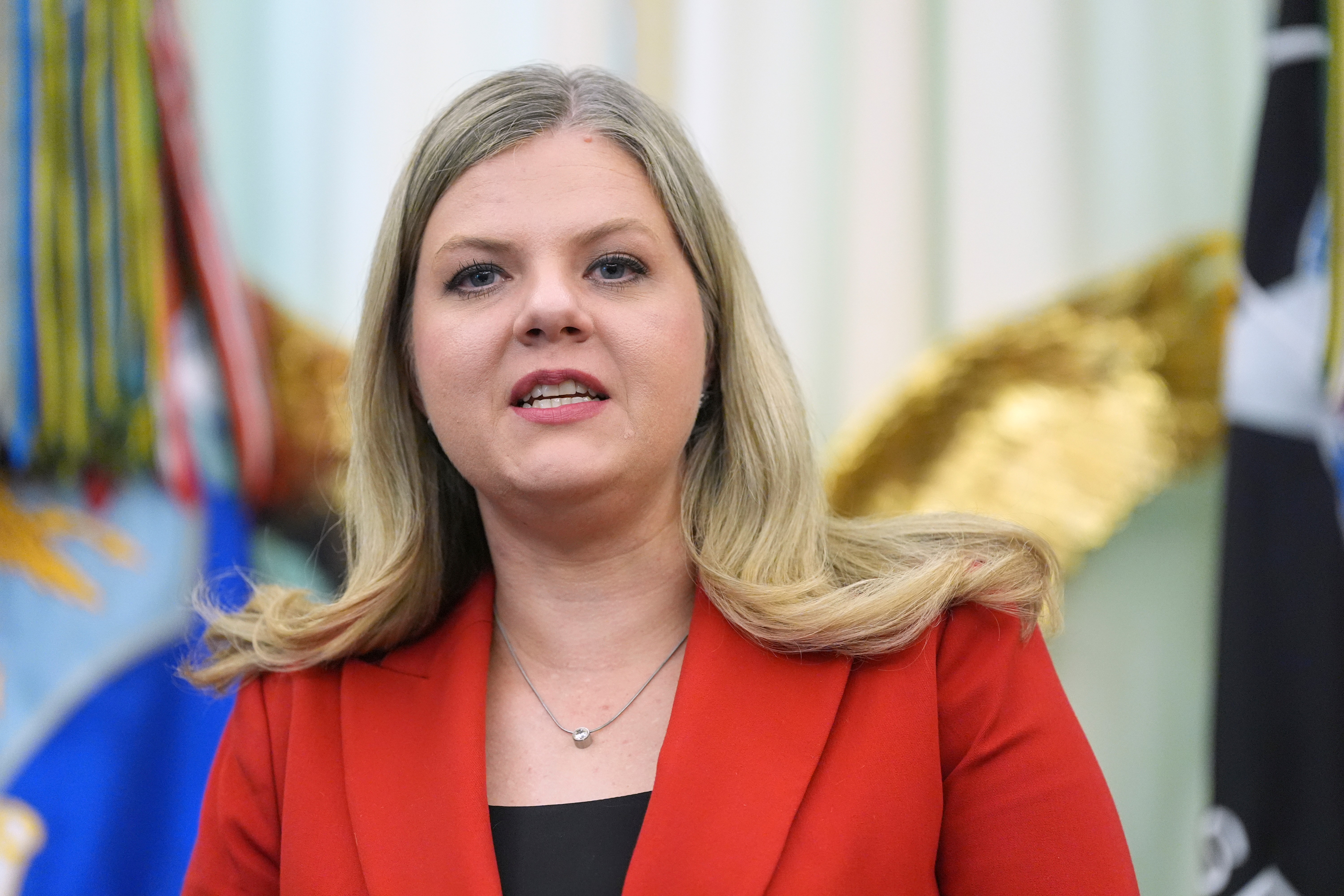
WASHINGTON — Heidi Overton, a top White House aide, has been picked to lead the Food and Drug Administration, President Donald Trump announced Wednesday.
Overton is a medical doctor and deputy director of the White House Domestic Policy Council who has worked on several of Trump’s second-term health initiatives. She has become a trusted administration figure and a champion of the Republican president’s goals.
If confirmed by the Senate, she would have to balance a raft of competing priorities, including Trump’s fixations, the anti-regulatory interests of traditional Republicans, and the anti-corporate posture of Health Secretary Robert F. Kennedy Jr.
Those challenges dogged the tenure of the previous FDA head, Marty Makary. He resigned in May, leaving behind unfinished projects such as work on ultraprocessed foods, antidepressants, and COVID-19 shots.
Referring to her as “Dr. Heidi” in a Truth Social post, Trump said Overton was a smart and respected “rockstar” who would deliver on his priorities of faster cures, innovation, lower drug prices and more wins for Kennedy’s “Make America Healthy Again” movement.
Kennedy posted on X that Overton has “exceptional judgment, professionalism, discipline and an unwavering commitment to the American people.”
Overton has promoted Trump’s health priorities
Overton attended medical school at the University of New Mexico and has a doctoral degree in clinical investigation from Johns Hopkins University, according to her LinkedIn profile. Before joining Trump’s second administration, she was the chief policy officer at the America First Policy Institute, a conservative think tank.
In recent months, she has appeared with the president to announce major projects, including some of his “most favored nation” deals with drug companies to lower prices to those of other developed countries and his recent vaccine order that sought to split the combined measles, mumps and rubella (MMR) vaccine into three separate immunizations — against the advice of medical groups.
At an Oval Office event to promote that order, she stood by Trump as he falsely suggested the number or timing of vaccines could play a role in rising rates of autism spectrum disorder. Scientific consensus and decades of studies have firmly concluded there is no link.
Overton has been critical of abortion pills and, if confirmed, would be positioned to roll back FDA rules that made them more accessible. U.S. abortion opponents have expressed frustration that the administration has not acted to stem the flow of such pills prescribed online, a situation they view as undermining state abortion bans.
Mifepristone is typically used with misoprostol in medication abortions that make up close to two-thirds of abortions in the U.S. Medical professionals call it “among the safest medications” ever approved by the FDA.
To be confirmed, Overton must seek approval from a narrowly Republican-led Senate and face questions from the Senate Health, Education, Labor and Pensions Committee. Its chair, Republican Sen. Bill Cassidy, a physician from Louisiana, has been a vocal critic of some of Trump’s actions to sow doubt in vaccinations, including the MMR order.
Democratic senators slammed the nomination on social media.
“Heidi Overton is a far-right, anti-abortion extremist who has no business leading the FDA,” posted Washington Sen. Patty Murray, a committee member.
Makary’s replacement will face challenges he left behind
Before he left the FDA, Makary had drawn complaints from health industry executives and anti-abortion activists. The frustration with him came to a head over the agency’s lack of movement on flavored e-cigarettes. Companies such as R.J. Reynolds are seeking to market to adult smokers, but sweet-flavored vapes have long been blamed for the trend of teenage vaping. FDA scientists have hesitated to endorse those products to curb adult smoking.
Pharmaceutical companies will be looking for changes at the agency, too, after rejections or reversals of biotech drugs intended for rare diseases. Complaints from biotech companies, investors and patient groups have grown and been taken up by conservative lawmakers.
Makary tried to assuage industry grievances, in part by announcing new programs designed to streamline or accelerate drug approvals. Some of those initiatives, however, have meant new headaches for the agency.
Several of Makary’s deputies also exited the agency.
Vinay Prasad, the vaccine and biotech chief, stepped down in April following intense criticism from drugmakers, patients and investors. Tracy Beth Hoeg, who was involved in scrutinizing the safety of antidepressants, COVID-19 vaccines, and other widely used therapies, was replaced as FDA’s acting drug center director.
MAHA has high expectations of FDA’s next head
Overton would also need to tend to the priorities of Kennedy’s health movement, some members of which are already skeptical of her.
Kelly Ryerson, an activist critical of pesticides who is known to her supporters as “Glyphosate Girl,” told The Associated Press that Overton parroted pesticide manufacturer Bayer’s talking points in a MAHA roundtable at the White House in April.
“I was stunned by the blatant, undisguised corruption,” Ryerson said.
One major decision for the next commissioner is what to do about peptide regulation. A panel of federal health advisers selected by Kennedy recently recommended easing access to several peptides that are popular with wellness influencers and celebrities, despite warnings from FDA scientists that the chemicals have not been shown to be safe or effective.
The agency recently proposed a rule change that would require food manufacturers to notify regulators before introducing new ingredients or additives into processed or packaged foods. But it is still working with the White House to finalize a first-of-its-kind definition of ultraprocessed foods, which Kennedy blames for elevated rates of diabetes, obesity and other chronic conditions.
Under Kennedy, the FDA has set up extra hurdles for vaccine testing and blocked the publication of research into the effectiveness of COVID-19 shots. Kennedy stood by Trump recently as the president signed the executive order aimed at upending childhood vaccinations in the U.S. despite unprecedented financial and logistical challenges.
The FDA also has an ongoing review of widely used antidepressants, including whether they may increase the risk of autism and other disorders when used during pregnancy. The medicines have long been a target of Kennedy, who was a leader in the anti-vaccine movement before joining the government.
In recent weeks, the agency has been investigating two summertime foodborne illness outbreaks: a cyclospora outbreak linked to tainted iceberg lettuce that has sickened thousands of people and a multistate salmonella outbreak linked to jalapeño peppers.
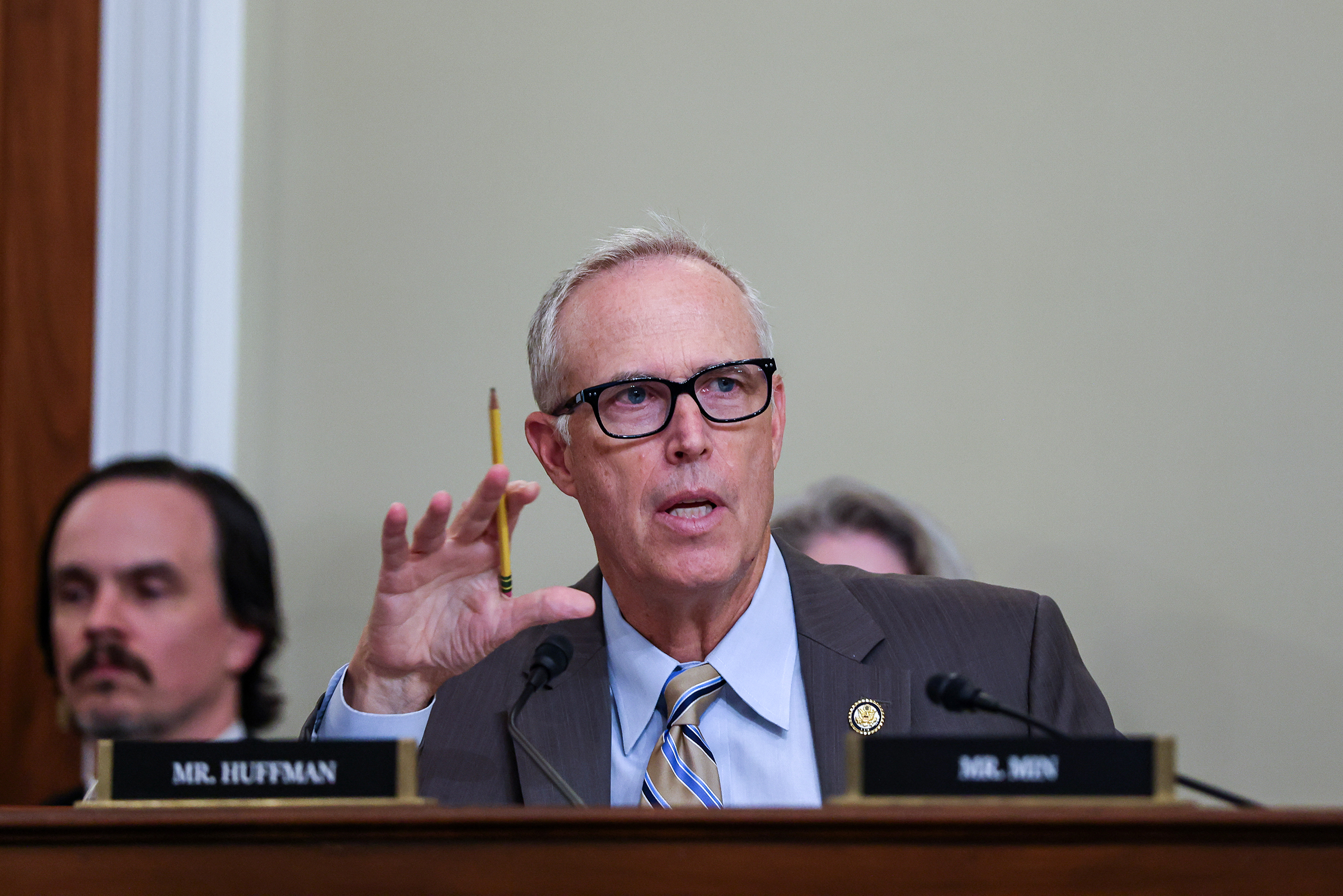
When Rep. Jared Huffman came out publicly in 2017 as a “nonbeliever,” he was only the second member of Congress in modern times to do so — even though a quarter of U.S. residents identified as nonreligious.
Things have changed since for the secular cause on Capitol Hill.
The Freethought Caucus, which Huffman launched in 2018 to promote church-state separation, has grown to 37 members — more House lawmakers than the uber-conservative Freedom Caucus (32) or the Congressional Prayer Caucus (34), according to the platform LegiStorm.
And the percent of lawmakers who choose not to give a religious affiliation or say the unspecific “other” has more than doubled in the past decade, from 16 to 40.
Along the way Huffman, a Northern California Democrat who is a Humanist, has become a kind of national spokesperson for promoting a secular government. And as some data shows many Americans increasingly displeased with the way religion and politics are mixing, he sees an opportunity for his cause, and for his party.
“I think the game has changed,” Huffman said. “Republicans have made a losing bet. Democrats need to understand that and be ready to connect.”
The data is somewhat more complex. Chip Rotolo, senior researcher at Pew Research, said growing majorities of Americans want congregations and pastors to stay out of partisan politics but also approve of some unspecific religiosity having influence in public life.
“It does seem people are more reluctant to see [organized religion] engaging with politics.” Rotolo said. “But at a national level they’d like to see ‘religious values,’ broadly spoken, incorporated.”
President Donald Trump’s administration has vigorously pressed the idea that the United States is a Christian nation, sponsoring a massive evangelical jubilee on the National Mall in May and a June report that described church-state separation as a legal error.
Those efforts have thrilled many Christian conservatives but also prompted concern from others, Huffman among them. He is taking aim at Christian nationalists on his biggest-ever stage, with a book “No Prophets” published this week.
The book argues that extreme Christian nationalism, which fuses Christian and national identities, is the country’s most dangerous political movement. Huffman, 62, accuses his congressional colleagues — including Democrats — of being far too timid on confronting the issue. At the same time, he argues that religious nationalists are “sailing headlong into a failing wind.”
Lance Wallnau, a MAGA influencer who has described himself as a Christian nationalist, rebuffed the idea that his worldview is dangerous.
“I’m looking for a leader whose values align with the transcendent values of when we were founded as a nation,” he said, noting that multiple early U.S. states officially aligned with various Protestant denominations. “They weren’t concerned about a Christian government. What I’m advocating isn’t some oddball thing. We shouldn’t shift the foundation of the house.”
As far as whether secularism is rising, Wallnau said: “Is it possible for America to get more un-Godly? Sure. The Bible talks about gross darkness covering the people.”
Majorities of Americans say houses of worship should not endorse candidates (79%, according to Pew Research) and should “keep out of political matters” (66%). And those numbers have grown. A decade ago, 66% opposed endorsing candidates and 49% said congregations should keep out of politics.
Just 10% of Americans say their views of Christian nationalism are favorable, while 31% are unfavorable (most Americans say they aren’t very familiar with the term). Sixty percent of Americans in 2024 told Gallup they would vote for an atheist, up from 49% in 1999.
University of Notre Dame political scientist David Campbell said Huffman is probably right that secularism’s impact in the U.S. is growing. He called the change “one of the most significant developments in American society in the last generation.”
However, Americans’ attitudes are complex and don’t point in only one direction.
Pew recently found that 37% of Americans say religion’s influence in the U.S. is growing — the highest percentage in 24 years. And 55% of Americans see that as a positive thing, compared with 22% who see it as negative.
Even as Huffman’s caucus is growing, Congress still significantly overrepresents Christians (87% versus 62% of American adults) and significantly underrepresents those who say they have no religion (28% of the U.S., 0.6% of Congress).
Experts who measure Christian nationalism say about a third of Americans embrace or sympathize with the movement. According to a PRRI survey last year, that one-third number has been stable since 2022.
Robert George, who teaches law, religion and philosophy at Princeton University, wrote in an email that Huffman and the Freethought Caucus are actually advocating for socially liberal causes — on abortion, gender and others — and dressing that up as neutrality.
The caucus, and Huffman’s political allies in general, want to further their own “doctrine” or worldview — just like those on the religiously conservative side, George wrote in an email.
“Neither side is violating the ‘separation of church and state’ when they do that, irrespective of whether their advocacy relies on secular or religious rhetoric,” he said.
In “No Prophets,’” Huffman argues that the Religious Right movement of the 1970s was focused on engaging the democratic system to attain culture war wins. Now, he writes, religious nationalists have morphed into a “scorched earth insurgency,” with crowds carrying crosses during the Jan. 6, 2021, assault on the U.S. Capitol, states passing laws mandating the Ten Commandments on display in public schools and Trump administration officials launching and taking part in Christian prayer services inside federal agencies. Huffman sees this movement as actively seeking “to destroy” democracy.
His book aims to be a call to action for fellow Democrats, whom he calls his “greatest frustration” on this topic. In his view, Democratic lawmakers and public officials have done far too little to push back against Christian nationalist ideas.
The Humanism that Huffman affiliates with is a loose philosophy based on the idea that humans should work to improve society and live ethically, guided by reason, not necessarily by anything supernatural.
He doesn’t reject the label “atheist” but says he prefers “leaving room” for new discoveries.
“We all want to understand our place in the universe and what all this means. You can see that — especially the younger generation — some are really struggling,” he said.
But to Huffman, who was raised in a very religious home in an offshoot of the Church of Jesus Christ of Latter-day Saints, personal questions of faith are very different from what he sees as government overreach.
“Reckoning with Christian nationalism is unavoidable,” he writes in his book. “This movement is forcing us to make urgent choices.”
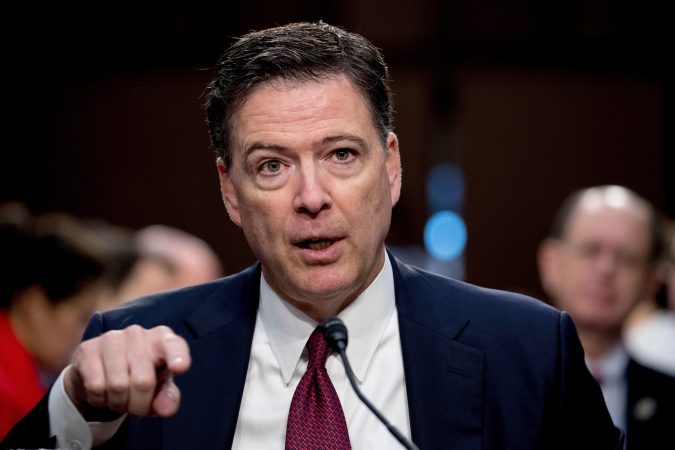
Prosecutors also called into question Comey’s account that he had found the seashells in the numerical arrangement of “86 47” while walking on a beach in North Carolina and suggested that his May 2025 post on Instagram was an effort to generate attention for a forthcoming novel about a social media personality whose words inspire his fans to attack his foes.
The arguments in motions late Tuesday represent the government’s most detailed explanation of its indictment and were filed in response to wide-ranging defense efforts to dismiss the case on grounds including that it constitutes a vindictive prosecution and that Comey’s post did not amount to a true threat. Comey’s lawyers contend that investigators in the case misled judges, submitted documents containing false statements, withheld key facts, and repeatedly came up empty in their efforts to prove that Comey intended a physical threat or knew that the number 86 could suggest violence.
The entry for “86” from Merriam-Webster, the dictionary used by The Associated Press, says its meaning is “to throw out,” “to get rid of” or “to refuse service to.” Trump, a Republican, is the 47th president.
The Justice Department maintains that the post constituted a real threat
Federal prosecutors maintain that the photo of the seashells, which Comey said he found on the beach, constituted a threat against Trump. Comey deleted the post shortly after he put it up, saying he did not know that anyone interpreted the numbers as a call to violence. His lawyers have said that the slogan has long meant to “get rid of” or “eject” and has been featured on thousands of items sold online and regularly displayed at protests.
But the department sought in its filings to place the post against the backdrop of assassination plots or attempts against Trump in the months before and after Comey’s post. Prosecutors say that two minutes before the post was made, Comey’s wife texted him a screenshot of a definition of “86” that said “to get rid of or refuse service.”
“There is no serious dispute that an objective viewer of Comey’s post could read it to mean ‘Kill President Trump,’” prosecutors wrote.
The photo was posted days before Comey was set to release a novel he wrote titled “FDR Drive,” in which a prosecutor pursues a far-right social media personality who has called out his adversaries by name and inspired violence against them by his fans, the department said.
After the Instagram post provoked an outcry, according to the government’s filings, Comey’s publishing agent observed in a text message to him that he had “gone viral.” Comey responded that that was “not my intention, but I’ll be OK if it sells books.” The agent replied, ”Music to an agent’s ears.”
Prosecutors also asserted there was “reason to doubt” Comey’s account of having come upon the seashells while on a walk, saying they were located 4 miles (6 kilometers) “down from the beach from beachfront property where Comey was staying, in an area separated from the ocean by a sand dune.” They said there was “no evidence that anyone else arranged, photographed, or even saw the shells.”
Comey has called the case vindictive, but prosecutors deny that
But the Justice Department denied allegations of vindictiveness, saying the decision to indict Comey was made by the U.S. attorney in the area and did not stem from a directive from the president or the attorney general.
To bolster their claims that Comey was unjustly targeted, defense team argued that investigators struggled to develop compelling evidence from witnesses that Comey had intended the post as a threat, but they concealed that from federal magistrates as they applied for warrants to search digital accounts associated with Comey and his wife
For instance, defense lawyers have said, the FBI searched an internal database of information about open and closed investigations for any indication of an association between Comey and the term “86” but found inconclusive results. An FBI agent also requested a review of the FBI file for the case against reputed mobster John Gambino, which Comey worked on as a young prosecutor, but found no references to the term “86.”
Investigators also interviewed a key government cooperator in the case, Salvatore “Sammy the Bull” Gravano, who said he did not recall ever discussing the term “86” with Comey or hearing it in connection with the trial.
The latest filings made clear that the administration was standing behind the premise of the case.
“No Government theory was disproved at that time, or now. No intentionally false omission exists, much less one made with reckless disregard for the truth,” prosecutors wrote. “The evidence still supports that Defendant acted at least recklessly by consciously disregarding a substantial risk that his coded message of “8647” that he sent to his 200,000 or so Instagram followers, and the millions of secondary social media users who would view this as threatening violence against the President of the United States.”
Many of the highest-profile elections on Tuesday night went just as expected. But across the country and down the ballot in four states, there were some surprises.
In a onetime battleground state that has shifted firmly to the right, Florida Democrats took dueling approaches as they attempt to win statewide for the first time since 2018. They picked a democratic socialist to run for Senate and a former Republican to run for governor.
GOP voters picked one House incumbent to succeed Gov. Ron DeSantis, a Republican, and ousted another mired in scandal whom DeSantis declined to support.
A Democrat is locked in a tight race for a special election for a heavily Republican Pennsylvania state House district, and President Donald Trump’s pick for Wyoming governor lost to a state lawmaker.
Here’s a rundown from Tuesday’s elections.
Scandal in Washington topples a GOP incumbent in Florida
Of eight Florida House incumbents who faced primary challenges, only one lost: Republican Cory Mills.
Mills, a two-term lawmaker from the Daytona Beach area, faces mounting allegations of sexual misconduct, domestic abuse, and campaign finance violations. The House Ethics Committee said it authorized more than 20 subpoenas as it investigates him.
As DeSantis stayed out of the race, Trump stopped publicly backing Mills, and some of Mills’ House GOP colleagues endorsed a challenger. Primary voters in his district followed suit: They picked former news anchor Ryan Elijah by a margin of 13 percentage points, signaling voter distaste for incumbents’ scandals.
In a Truth Social post Wednesday morning, Trump endorsed Elijah.
“I told Congressman Cory Mills of Florida, a friend of mine, to get out of the Race, but he wouldn’t listen,” Trump wrote. “He thought he could win, so who can blame him? We now have a great candidate, Ryan Elijah, running in his place! Ryan stands for EVERYTHING MAGA, and is respected by ALL.”
Democrats pick a former Republican and a new DSA member
Democrats haven’t won statewide in Florida since 2018, and they face long odds this year. A pair of wild cards who won over primary voters will try to reverse the party’s losing streak.
David Jolly, a Republican turned independent Trump critic turned Democrat, beat challengers from the left to take on Rep. Byron Donalds (R) in the governor’s race.
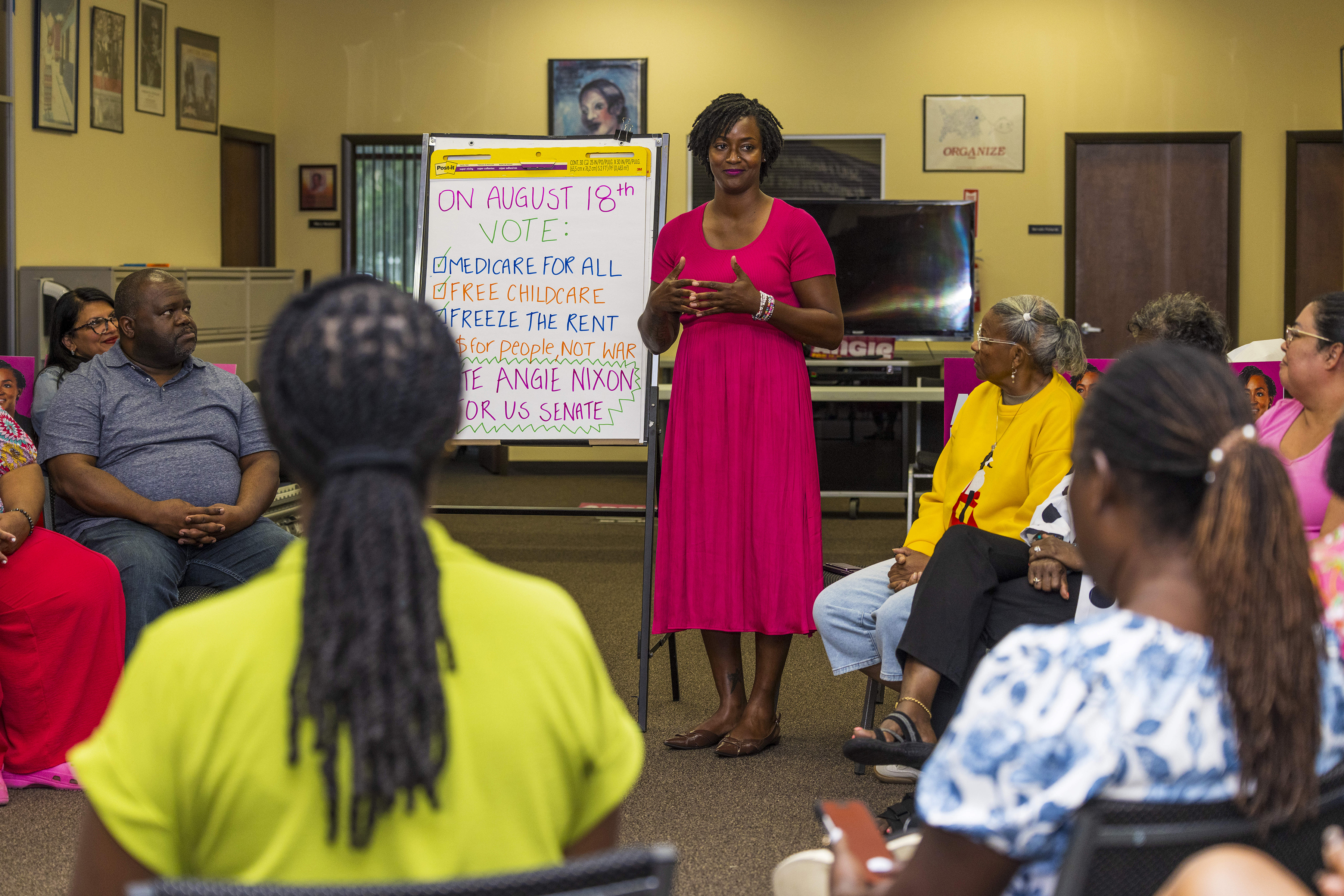
He’ll be on the ballot alongside Angie Nixon, a progressive state lawmaker from Jacksonville who recently joined the Democratic Socialists of America but had not been endorsed by the group or any of its chapters. Facing Alexander Vindman, a key witness in Trump’s first impeachment trial, she overcame a massive disadvantage in fundraising and spending. She will face Sen. Ashley Moody (R), who is in her second year in Congress after being appointed to fill the seat left open when Marco Rubio became secretary of state.
Donalds and Moody will be heavily favored. Although this election will herald the end of DeSantis’ ironfisted leadership in Florida, he has managed to turn the former swing state into a conservative bastion.
Florida House Democrats hold on for now
DeSantis’s move to redraw the state’s congressional map and give the GOP a boost scrambled the field for many House races.
But some of the incumbents whose districts were splintered managed to hang on: Rep. Debbie Wasserman Schultz (D), who faced criticism for shifting to run in a predominantly Black seat, beat four Black candidates.
Rep. Jared Moskowitz (D), a moderate, ran in a new district, a battleground where he defeated a democratic socialist. He will now face a self-described “America First” mayor.
As in that race, Democrats are expected to fight for other seats that were redrawn to favor Republicans: In Tampa, Rep. Kathy Castor (D) is facing former state lawmaker Mike Beltran, while an empty seat in southern Florida pits restaurant franchisee Casey Askar (R) against Pia Dandiya (D), a tech executive and former teacher.
The GOP’s best flip opportunity is likely to come in the Orlando area, where the Republican primary to take on Rep. Darren Soto (D) was too close to call early Wednesday.
Another loss for Trump in a governor’s race
The power of Trump’s endorsement took another blow after his preferred candidate in Wyoming’s gubernatorial primary, Megan Degenfelder, lost to state Sen. Eric Barlow.
Degenfelder, the state’s superintendent of public instruction, secured Trump’s endorsement before she even announced her campaign. But Barlow had years of experience in party leadership in the state legislature, as well as the cash advantage.
Gubernatorial candidates in Iowa, Minnesota, South Carolina, and Georgia also lost GOP primaries despite Trump’s backing.
Mixed results for Wyoming’s right wing
In a deep red state like Wyoming, political fights are usually about how far right Republicans should go.
State Rep. Rachel Rodriguez-Williams, chair of the ultraconservative Wyoming Freedom Caucus, accused Barlow of being insufficiently conservative during his time as House speaker and opposed his gubernatorial run. Others in Wyoming’s right flank did well on Tuesday.
Rep. Harriet Hageman, Trump’s pick for the open Senate seat vacated by the retiring Sen. Cynthia Lummis, won her race handily. Secretary of State Chuck Gray, aligned with the Freedom Caucus, won the crowded primary for the state’s sole House seat, vacated by Hageman, a conservative who unseated the fierce Republican Trump critic Liz Cheney in 2022.
A surprising showing for Democrats in Pennsylvania
In a Pennsylvania special election, Democrat Brandon Dukes held a narrow lead over Republican Scott Timko in a state House district that Trump carried by 18 percentage points in 2024. The race remained uncalled early Wednesday morning.
The district includes parts of Butler County close to the site where Trump was shot at during a campaign rally two years ago. Tuesday’s winner will complete the months left in the term of a lawmaker who stepped down. Dukes and Timko are also competing in November for a full term.
While special elections generally have low turnout, Tuesday’s contest could be an early sign of shifting political sentiments in the swing state. Pennsylvania is home to several battleground congressional districts in the fight for control of the U.S. House.
Democrats have won or overperformed expectations in special elections in the past year, including an upset in a Florida state legislative district that includes the president’s Mar-a-Lago estate.
AIPAC makes a difference
The force of the American Israel Public Affairs Committee was on display in a California special election where the pro-Israel lobby’s last-minute intervention may have thinned the margin between two Democrats competing for the seat vacated by Eric Swalwell (D).
AIPAC’s super PAC, the United Democracy Project, swooped in and spent millions of dollars on advertising in the final two weeks of the race. The election was too close to call Tuesday despite state Sen. Aisha Wahab, a critic of Israel, finishing with a double-digit lead over her opponent, Melissa Hernandez, in the primary.
AIPAC’s involvement in races has become controversial, including in Michigan, where Democratic Senate nominee Abdul El-Sayed turned its super PAC’s massive spending against him into a rallying cry for his supporters. Tuesday’s outcome showed that despite its polarizing brand, AIPAC still wields power in congressional races.
Alaska sets up competitive Senate showdown
Sen. Dan Sullivan (R) and former representative Mary Peltola (D) advanced to the general election in Alaska’s Senate race.
The state’s unusual ranked-choice system means two additional candidates who finished lower in the primary will also make the general election ballot. But it remained unclear Wednesday morning who the final two candidates will be.
Sullivan is one of Democrats’ biggest targets this year in their bid to retake control of the Senate. Peltola, who was previously the state’s sole House member, was recruited by Senate Minority Leader Chuck Schumer (New York) and has been an adept fundraiser.
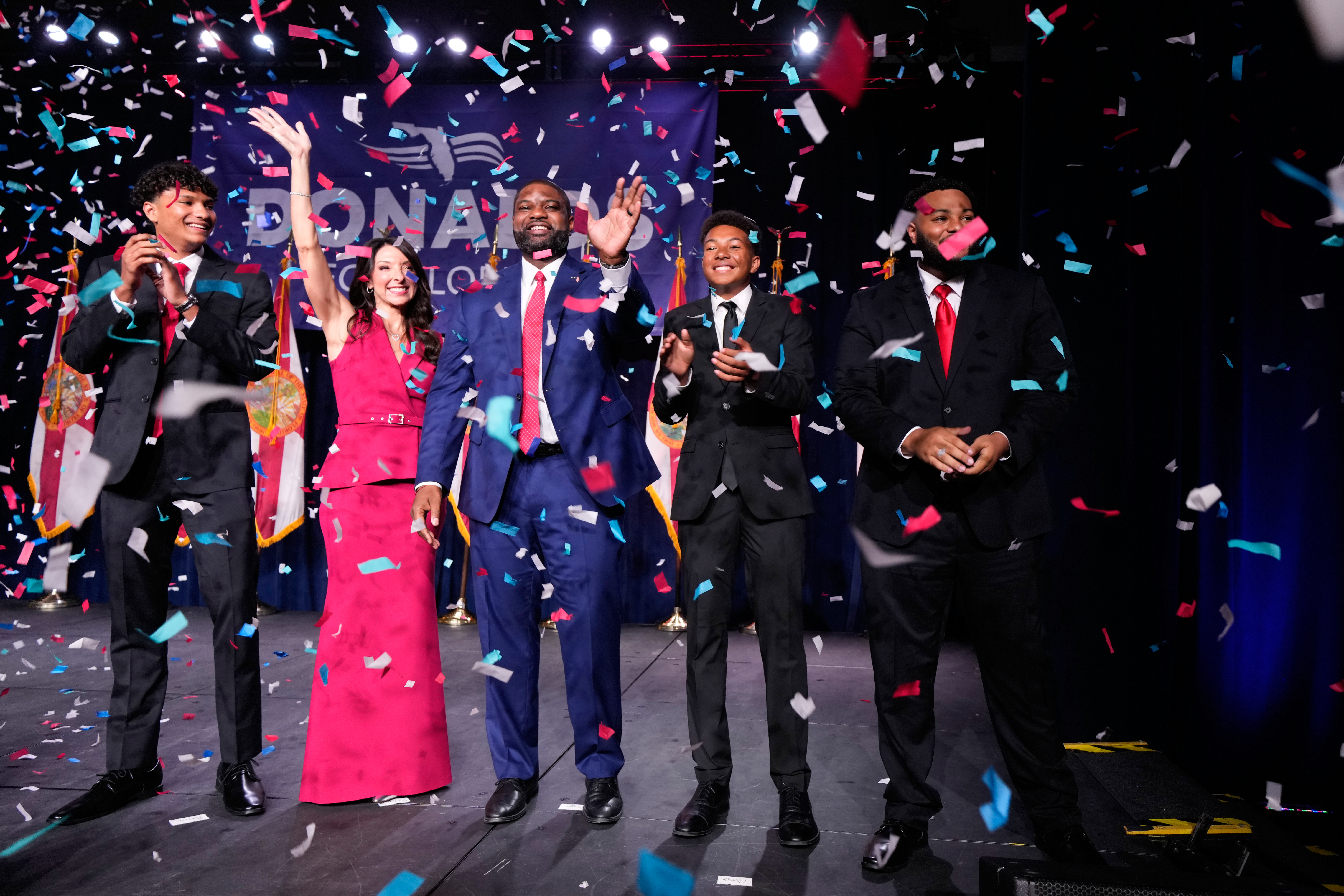
ORLANDO — U.S. Rep. Byron Donalds won the Republican nomination for Florida governor and former Rep. David Jolly picked up the Democratic nod in Tuesday’s primaries, setting the stage for a fall campaign to replace outgoing Gov. Ron DeSantis and decide the state’s future political direction.
November’s election will test President Donald Trump’s grip on his adopted state and Democrats’ ability to resurrect Florida as a national political battleground. Florida has moved notably to the right since Trump’s victory in 2016, though Democrats hope to regain ground from his slumping popularity ratings.
DeSantis, a leading conservative figure who has both clashed and collaborated with Trump over the years, is barred from running for a third consecutive term.
Also Tuesday, progressive state Rep. Angie Nixon won the Democratic nomination for a U.S. Senate special election, defeating retired Army Lt. Col Alexander Vindman, a onetime National Security Council official who testified in Trump’s first impeachment in 2019.
Nixon, who was heavily outspent by Vindman, will face Sen. Ashley Moody, winner of the Republican nomination, in November to fill the last two years of Marco Rubio’s Senate term. Rubio left the seat to become Trump’s secretary of state last year.
Donalds could be a historic figure in Florida
Donalds would be Florida’s first Black governor if he wins in November. He defeated a former DeSantis running mate, Lt. Gov. Jay Collins, political newcomer James Fishback and others Tuesday.
The 47-year-old congressman Donalds told his supporters at a Universal Studios resort hotel that he’d heard from Republican rivals who pledged their help in winning the general election.
“The primary is over,” Donalds said. “Tonight we put aside our differences. Tonight we are one united Republican Party.”
Donalds described Trump’s backing as important but not determinative.
“Obviously, he has the strongest following of anybody in our party,” he said. However, he added, “you can’t just sit back and think the president’s endorsement is going to carry you.”
Donalds has promised to push tax cuts, overhaul Florida’s insurance regulations to lower consumer costs and seek greater price transparency from healthcare providers.
The Democrats’ candidate for governor, Jolly, is a former Republican congressman who switched parties last year. He did not shy away from his partisan history as he addressed supporters Tuesday night.
“To my Democratic friends, thank you for welcoming me into the party,” he said.
Jolly’s speech detailed a platform that balances between both political parties: an embrace of capitalism and a lean government, but one that “needs to do its part to fill the gaps,” such as with education and housing.
“As an old-school Republican, I talk about ending the culture wars not to celebrate some progressive platform,” he said, “but because I still believe in the old school Republican, Libertarian policy that government should simply stay out of your life, and stay out of your bedroom.”
It’s the second time in a row that Democrats have nominated a onetime Republican for governor.
Four years ago, they backed former Gov. Charlie Crist, only to see him lose by nearly 20 percentage points to DeSantis.
Rich Chamberlin, a retiree in Port St. Lucie, said he supported Jolly in Tuesday’s primary, spurred on by attack ads against him.
“I saw anti-Jolly ads. I said ‘OK, if they are against him, then I must be for him,’” Chamberlin said, adding it didn’t matter to him that Jolly was once a Republican.
A progressive gets Democratic nomination for Senate
Florida voters haven’t sent a Democrat to the U.S. Senate since 2012, and this year’s race was always going to be an uphill climb.
Moody, a former state attorney general, was appointed by DeSantis to fill Rubio’s seat last year after he became Trump’s secretary of state. She’s now running to finish the last two years of his term.
Moody will face Nixon, a progressive state lawmaker who scored an upset victory over the Army veteran Vindman. Nixon would be Florida’s first Black U.S. senator if elected in November.
“Rep. Nixon ran a strong campaign,” Vindman posted on social media. “I will be standing by her side in the fight against Ashley Moody. I hope you’ll join me.
Wasserman Schultz wins in a new plurality Black district
In U.S. House primaries, Tuesday’s biggest contest saw longtime Democratic U.S. Rep. Debbie Wasserman Schultz defeat former U.S. Rep. Sheila Cherfilus-McCormick and others in a redrawn South Florida district.
Wasserman Schultz, who is white, urged voters in the new, plurality Black district to help her return to Washington for a 12th term. Cherfilus-McCormick had sought a comeback after resigning earlier this year under a pending federal indictment and threat of House ethics sanctions.
Wasserman Schultz entered a new district after DeSantis’ successful push for new congressional maps intended to boost Trump’s midterm election prospects.
Her four Black primary opponents — including Cherfilus-McCormick — had argued that the district should have a Black representative. But the voters went with a candidate who touted long experience from serving in Congress since 2005.
Surrounded by her campaign staff Tuesday night, Wasserman Schultz tearfully thanked voters for having confidence in her. She said she wanted to “make all of you proud, to make sure that the people we spoke to all across this district know that I will fight so they can pay their rent.”
Republican Rep. Cory Mills is ousted by a challenger
Former television news reporter Ryan Elijah won the Republican nomination for Florida’s 7th Congressional District, ousting the scandal-plagued Mills.
A two-term congressman, Mills has denied allegations of domestic violence against a former girlfriend and other controversies.
But Florida Republicans including DeSantis had abandoned Mills ahead of the primary and the congressman was not included on Trump’s final list of Florida endorsements. Elijah advances to the general election in a central Florida district that is considered reliably Republican.
The 2026 midterm election cycle has hinged on a demand for reform, amid an unpopular war and an administration mired in ethics scandals. It’s not the first time midterms have generated such substantive demands for change.
Against the backdrop of the increasingly costly and unpopular Vietnam War and the Watergate scandal, the 1974 election produced one of the largest freshman classes in congressional history and stirred significant institutional change. Their road map for change provides us with important lessons on how to translate campaign promises into substantive reform in a dysfunctional institution resistant to change.
The first lesson: harnessing momentum. In a body where influence is currency, the incoming freshman class recognized that steps toward meaningful reform would require decentralizing Congress’ power structure. Between November 1974 and January 1975, new members of Congress provided key votes for opening up avenues for junior members. They weakened the “seniority” system guiding committee assignments by shifting that responsibility from the Ways and Means Committee to the Party Steering Committee. That led to a legislative process in which junior members could more easily rise through the ranks.
Lawmakers also increased the size of the powerful Ways and Means Committee. That committee has long been responsible for drafting bills that raised money, including taxes and tariffs, and programs such as Social Security and Medicare. Providing greater opportunities for new members to join gave them a powerful seat at the table. Serving on the committee also gave these new members an opportunity to address their economic campaign promises and to have a legislative impact for their constituents.
“We realized we were a large enough group to make a difference,” former New York Rep. Tom Downey told the Atlantic, adding that support from more senior members of Congress helped to “mold” the class “into the effective tool they wanted to modify the seniority system.”
Former Connecticut Rep. Toby Moffett, a member of the 1974 class, agreed, recalling that some senior members vocalized how central the freshman class was to getting critical reforms across the finish line. “I remember once … in some hearing on government operations … [former New York Rep.] Bella Abzug pushed the button on her mic and she said, ‘Reinforcements have arrived,’” he said.
As a result of these structural changes and strategic networking, former members like Moffett, Steve Neal of North Carolina, and Henry Waxman of California rose from freshmen in 1974 to be committee chairs relatively quickly, as others gained seats on powerful committees and subcommittees.
Building alliances with more experienced members also mattered. Waxman leveraged his relationship with senior member Phil Burton, a representative from California, to get onto the Energy and Commerce Committee, which he believed proved crucial to his impact on health policy, one of his major priorities. Relationships were also important for freshman members of the Republican minority. Former Ohio Rep. Willis “Bill” Gradison built relationships on the Banking Committee and was dedicated to working with the majority in order to craft monetary policy.
Made By History sponsors. FOR USE ON MADE BY HISTORY STORIES ONLY.Inquirer Staff
Yet, 1974’s freshmen were also careful to thread the needle between cooperating with senior leaders and standing up for their own positions. “This system still works on knowledge … You can’t be totally intransigent, but you don’t want leadership to think they can count on you automatically either,” Moffett said.
Another equally important factor in the class’s success was coalition building. “Patience and a knack for finding allies (especially unlikely ones) are two of the most important qualities of being a legislator,” Waxman told the Atlantic.
For example, when former California Rep. Leo Ryan was killed in the Jonestown massacre, it left the chairmanship of the Government Operations subcommittee vacant. Moffett described how he and other junior members like Massachusetts Rep. Barney Frank, Waxman, and Michigan Rep. John Conyers joined forces to back his campaign for the chairmanship against more senior members.
It worked. Under Moffett’s leadership, the committee took on oversight. In 1975, the newly minted subcommittee chairman helped to defeat President Gerald Ford’s request for additional military aid to Cambodia and South Vietnam. Later, Moffett pressed President Ronald Reagan’s Environmental Protection Agency to publicly disclose contaminated water sites when EPA chief Anne Gorsuch and Interior Secretary James Watt refused to hand over subpoenaed documents.
There are clear lessons here for current and future members. Today’s Congress is hypercentralized, with rank-and-file members becoming increasingly dependent on their relationships with senior members to see legislative priorities through. If 2026 is another wave election, that could create openings for new ideas and opportunities and incentives for new members to build coalitions and get Congress working again. It might even open the door to addressing major structural changes: expanding the size of the U.S. House, restoring much of the lost staff expertise in Congress, ethics reforms, and establishing an upper age limit for Congress, among other key reforms.
It is not enough to just be elected to Congress. Members of the Class of 2026 will have to apply lessons from their predecessors to achieve the change they are campaigning on.
Editor’s note: This article has been updated to reflect the fact that Tom Downey’s and Henry Waxman’s remarks were made to the Atlantic.
Maya Kornberg is a senior research fellow in the elections and government program at the Brennan Center for Justice at New York University Law and author most recently of “Stuck: How Money, Media, and Violence Prevent Change in Congress” (Johns Hopkins University Press, March 10).
Made By History takes readers beyond the headlines with articles written and edited by professional historians. Opinions expressed do not necessarily reflect the views of The Inquirer.
Candidates are trading debate challenges in a contentious congressional race in a key swing district in the Philadelphia suburbs.
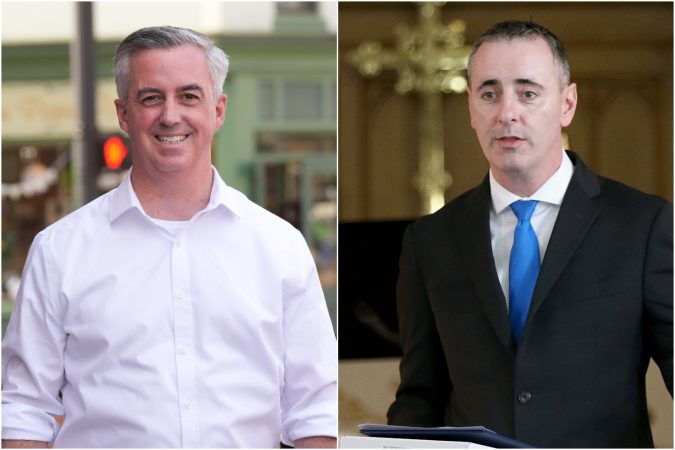
Democrat Bob Harvie is challenging Republican U.S. Rep. Brian Fitzpatrick to four debates, his campaign told The Inquirer.Fitzpatrick, after learning of Harvie’s challenge from The Inquirer, countered with 10 debates — but only if Harvie releases files related to an FBI investigation that Fitzpatrick and allies have routinely alleged focuses on the Democrat.
Harvie does not have files to release, said Dan McCormick, the candidate’s campaign manager. Harvie also has never been under investigation, lawyers for his campaign said. And he has already filed a defamation lawsuit against a pro-Fitzpatrick super PAC for making the same claim.
“Bob would be happy to participate in 10 debates,” McCormick said. “Bob has no files to release and Brian Fitzpatrick knows it. If Fitzpatrick has proof as he says he does, he should put up or shut up.”
The back-and-forth emerged Monday when the Harvie campaign told The Inquirer that the two-term Bucks County commissioner would be challengingthefive-term GOP lawmaker to three debates in Bucks — one each in the lower, central, and upper parts of the county — and a fourth in the Montgomery County portion of the 1st Congressional District.
Harvie said that Fitzpatrick“refuses to answer questions here at home” and “has nothing to show for his nearly 10 years in Washington.”
The increasingly heated race is one of four marquee congressional contests in Pennsylvaniathat could decide which party controls the U.S. House in November.
“It’s time for Fitzpatrick to show up in Bucks and Montgomery County — not Manhattan or the Lavender Fields in France,” Harvie said in a statement, referring to the venues for Fitzpatrick’s wedding and engagement to Fox News senior White House correspondent Jacqui Heinrich. “I’ll be there whether or not he shows, because I will never forget who I am fighting for.”
Heather Roberts, a spokesperson for Fitzpatrick, said as soon as Harvie releases “his full FBI files,” the campaign will move forward with date and venue selections for 10 debates.
“If the Subject of an FBI Corruption investigation is asking to be provided a platform by the only FBI Agent in Congress, he sure as hell will be required to come clean with the public and release these documents in their entirety,” Roberts said in a statement. “If he has nothing to hide, this should be an easy decision for him.”
Roberts also proposed a joint sit-down interview with Harvie and Fitzpatrick, conducted by The Inquirer, to discuss the allegations.
Roberts said that Fitzpatrick, who served 15 years as an FBI agent and a federal prosecutor, “is extremely familiar with this specific grand jury protocol and the documents that are generated.”
The debate drama is the most recent development in what has become an increasingly combative race, filled with personal jabs and legal filings related to controversial ads making allegations that Harvie is the subject of an FBI investigation.
Harvie, a former Falls Township supervisor, and other officials testified as witnesses to a grand jury in an FBI probe in 2022 into political donations and union contracts related to the Pennsbury School District. In 2020, the FBI interviewed several people connected to Falls Township and Pennsbury.
It has been fouryears since voters have been able to see a general election debate in the 1st Congressional District. In 2024, Fitzpatrick did not debate Democratic challenger Ashley Ehasz, after doing so in 2022.
The Harvie campaign said that it would be willing to work with the Fitzpatrick campaign on logistics and other event details, but that the commissioner’s preference is a town hall-style debate so voters can hear from him directly.
Fitzpatrick has held tele-town halls, including one in June, for constituents, and frequently posts on social mediarecapping the meetings and events he attends in the community.
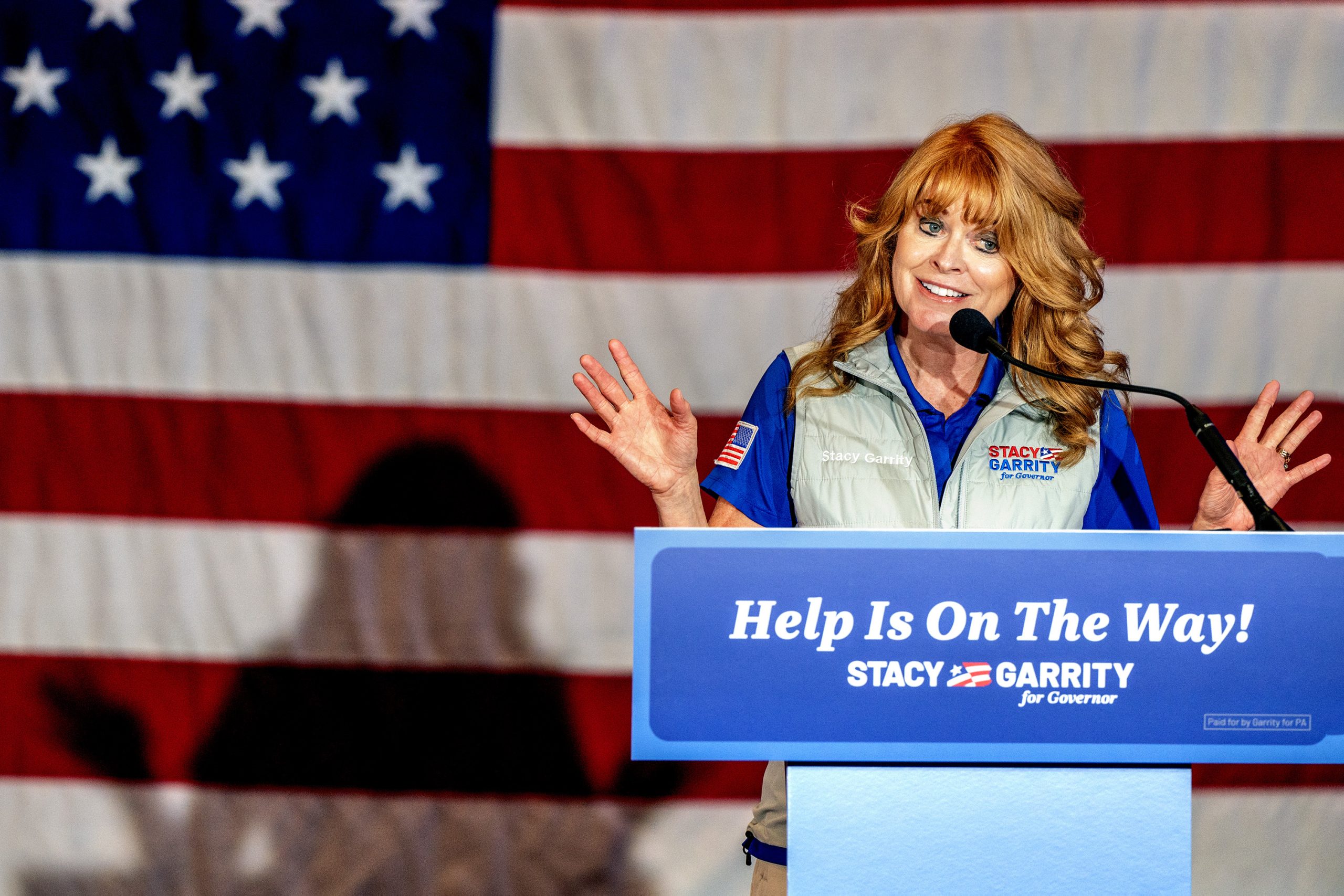
Seated behind his desk in the Oval Office earlier this month, President Donald Trump spoke directly to the camera in front of him. He turned to his right and looked up at the Pennsylvania Republican who, as he had indicated just a few weeks earlier, might very well lose her race for governor this fall.
“I think you can win,” he said this time, extending his hand to Stacy Garrity. It was a change in tune for Trump, who last month at an event in Pennsylvania said Garrity’s opponent, Democratic Gov. Josh Shapiro, was “expected to” and might win.
The president’s confidence in Garrity — and whether his support will extend beyond a handshake and a 17-second video with her at the White House — has become a critical question in the final stretch of the Pennsylvania governor’s race.
Down in the polls and lagging behind Shapiro’s unprecedented fundraising, Garrity has cultivated the president’s support and the potential boost, both financially and in Republican enthusiasm, that could come with it.
It is a risky strategy for a swing-state candidate whose party holds the White House, and particularly as polls show Trump becoming increasingly unpopular. Shapiro and his allies have enthusiastically promoted instances when Garrity, the twice-elected state treasurer, has leaned into Trump’s agenda and brand of politics.
But with less than three months before Election Day, it is not clear to what extent Trump or other key national Republicans will pitch in on her campaign.
State Treasurer and Republican candidate for governor Stacy Garrity holds a rally in Bucks County at the Newtown Sports & Events Center in this 2025 photo. Tom Gralish / Staff Photographer
Trump has not yet stumped in any significant way for Garrity in Pennsylvania, a swing state where he was a near-constant presence during his winning 2024 campaign. And he has not lent his vast political resources — including a Trump-aligned super PAC flush with $400 million — to Garrity or other Republican candidates as his party faces tough campaigns across the country in the midterm elections that will determine control of Congress.
Several gubernatorial races around the country are consideredcompetitive, a reality that also pits Garrity against GOP nominees who polling suggests have better shots of success. The same circumstances have doomed the most recent other Trump-endorsed Pennsylvania Republican nominees for governor — former State Sen. Scott Wagner in 2018 and State Sen. Doug Mastriano in 2022 — who never ended up with national support and lost by double digits.
Campaigns typically heat up after Labor Day, and there is still time for Garrity’s national allies to converge to boost her. But observers say the political reality is also evident.
“The president kind of looks toward two things,” said Samuel Chen, an Allentown-based Republican strategist who is not affiliated with Garrity andwho previously worked for Tom Corbett, Pennsylvania’s most recent GOP governor.
“One is loyalty to him. Garrity has been loyal, but has not necessarily been as vocal as some others have. The other side of it is he likes winners. He wants to endorse people who win,” Chen said. “Everyone in Trump’s orbit knows that Garrity has a very uphill climb.”
Not supporting ‘lost causes’?
The level of involvement from groups like the Republican Governors Association has been a key indicator of whether the party believes its nominee has a chance at winning recent gubernatorial elections in Pennsylvania.
The RGA is made up of GOP governors who collectively support one another’s agendas and campaigns. Democratic governors have a similar alliance.
In 2010 — the last time a Republican won the governor’s mansion in Harrisburg — the group was the largest donor to then-Attorney General Corbett’s gubernatorialcampaign, giving him $6 million starting in August of that year. Four years later and helmed by then-New Jersey Gov. Chris Christie, the RGA was once again Corbett’s biggest donor. It donated more than $5.8 million as Corbett became the first sitting Pennsylvania governor in decades to lose a reelection bid. Christie, preparing to run for president in 2016, stumped with Corbett multiple times.
The picture was starkly different in 2018 and 2022, when Republican voters nominated two candidates closely associated with Trump. Neither Wagner’s campaign against Democratic Gov. Tom Wolf nor Mastriano’s campaign against Shapiro ever became highly competitive — and the RGA and other national groups decided to sit out.
“We’re watching Pennsylvania very closely,” Arizona Gov. Doug Ducey, then the chair of the RGA, said in September 2022. He added that the group would not support “lost causes” or “landslides.”
The RGA would spend nothing in the state that year, even with Mastriano and former Trump lawyer Jenna Ellis pleading for assistance. Shapiro went on to trounce Mastriano by nearly 15 percentage points.
This year, RGA chair and Montana Gov. Greg Gianforte has not publicly weighed in on Garrity’s chances since issuing a brief, generic statement congratulating her after her unchallenged primary in May.
And the competitive landscape Republicans are facing across the country may mean Pennsylvania’s GOP nominee once again gets the short end of the stick. The RGA did not respond to requests for comment.
Even with Pennsylvania’s status as a preeminent swing state that went for Trump two years ago, there are nearly a dozen more competitive gubernatorial races across the country this fall, according to the Cook Political Report, a nonpartisan group that provides election analysis.
Georgia, Iowa, Nevada, Ohio, and Wisconsin — some of which voted overwhelmingly for Trump just two years ago — are all considered toss-ups. Four other states with Democratic governors — Oregon, Arizona, Michigan, and Kansas — are also considered more competitive than Pennsylvania, which is ranked as “solid Democratic,” according to Cook, despite Republicans like Garrity and Trump having won statewide two years ago.
The RGA, according to its most recent filing with the Federal Election Commission, had less than $1.7 million in its RGA Right Direction super PAC after spending about $16 million so far in the current election cycle.
Its recent spending has focused on Iowa, where Democrats are attempting to capture the governor’s office for the first time in two decades, and Kansas, where the RGA launched an ad this month.
“There’s always competition for limited resources,” Charlie Gerow, a longtime Harrisburg-based Republican strategist who also ran for governor in 2022, said of the intraparty competition for donors. “There’s only so much campaign funding to go around as everybody’s trying to get a piece of it.”
In July, Shapiro’s campaign announced he had raised $50 million since January 2025. The next financial filing deadline for statewide candidates is in September, but as of the last reporting cycle, he had outraised Garrity 10-1.
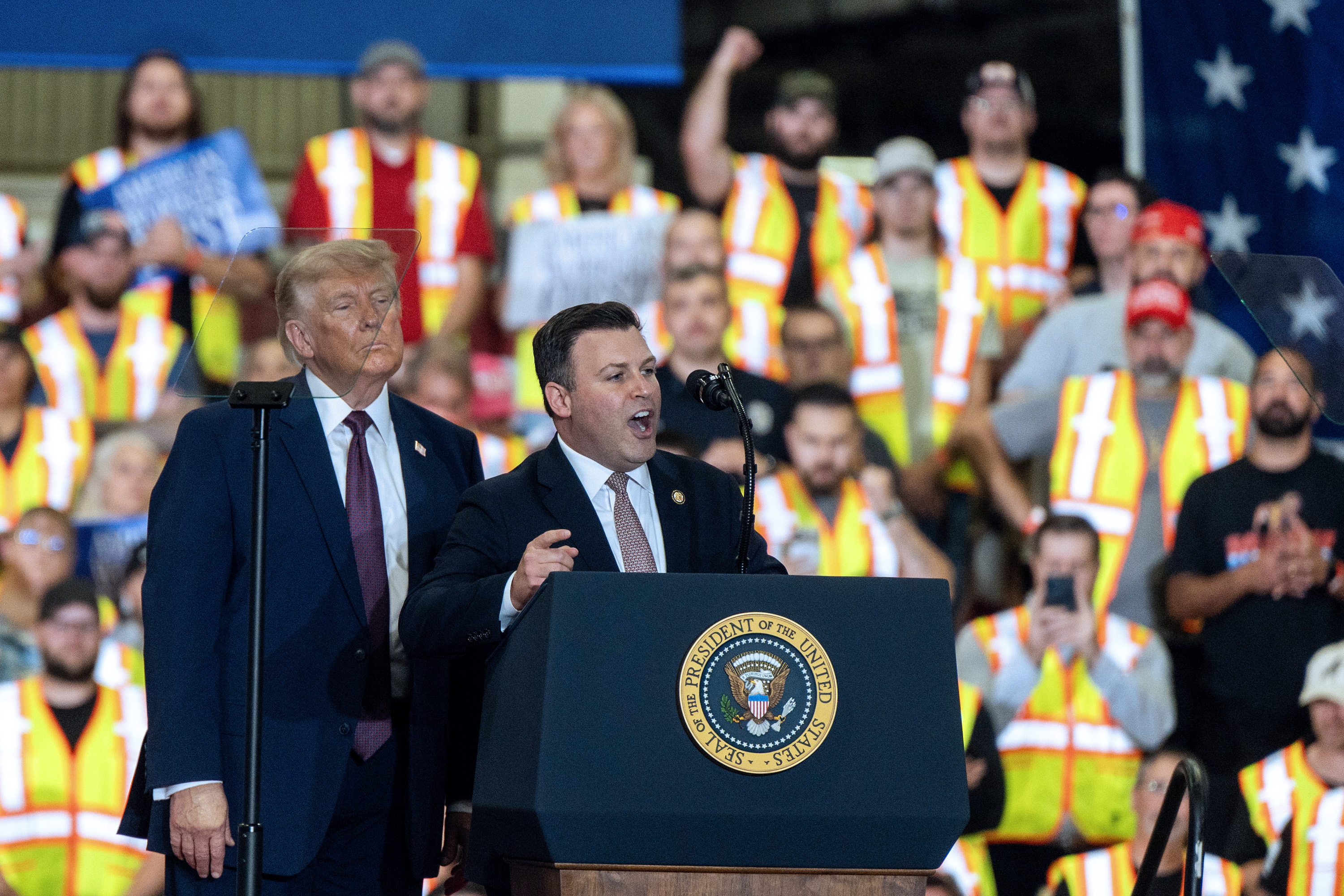
President Donald Trump brings U.S. Rep. Ryan Mackenzie (right) to the stage as he holds an event in Mackenzie’s Lehigh Valley district at Mack Trucks in Macungie Tuesday, June 23, 2026.Tom Gralish / Staff Photographer
But Matthew Beynon, a spokesperson for Garrity’s campaign, said she “does not expect, nor does she need, to go dollar-for-dollar with Josh Shapiro.” Instead, he said, she “just needs the resources to prosecute her case against Josh Shapiro … and she is on pace to be able to do so.”
Garrity looks forward to “continued support” from the RGA, he said.
Other national attention on Pennsylvania
After Mastriano’s disastrous performance in 2022, Republicans coalesced around Garrity — whose 3.5 million votes in 2024 were the most ever for a statewide candidate in Pennsylvania — as their best shot at defeating Shapiro.
But in the year since she received the party’s endorsement, Garrity has barely moved the needle. A Quinnipiac University poll in July found Shapiro leading Garrity 53% to 40% among registered Pennsylvania voters. Trump saw even lower scores: Just 39% of those polled approved of the president’s job performance.
A poll from a Republican-leaning firm promoted by Garrity showed her down, 50% to 43%.
Across Pennsylvania, she has also competed for attention and resources as her party prioritizes other major election battles this fall.
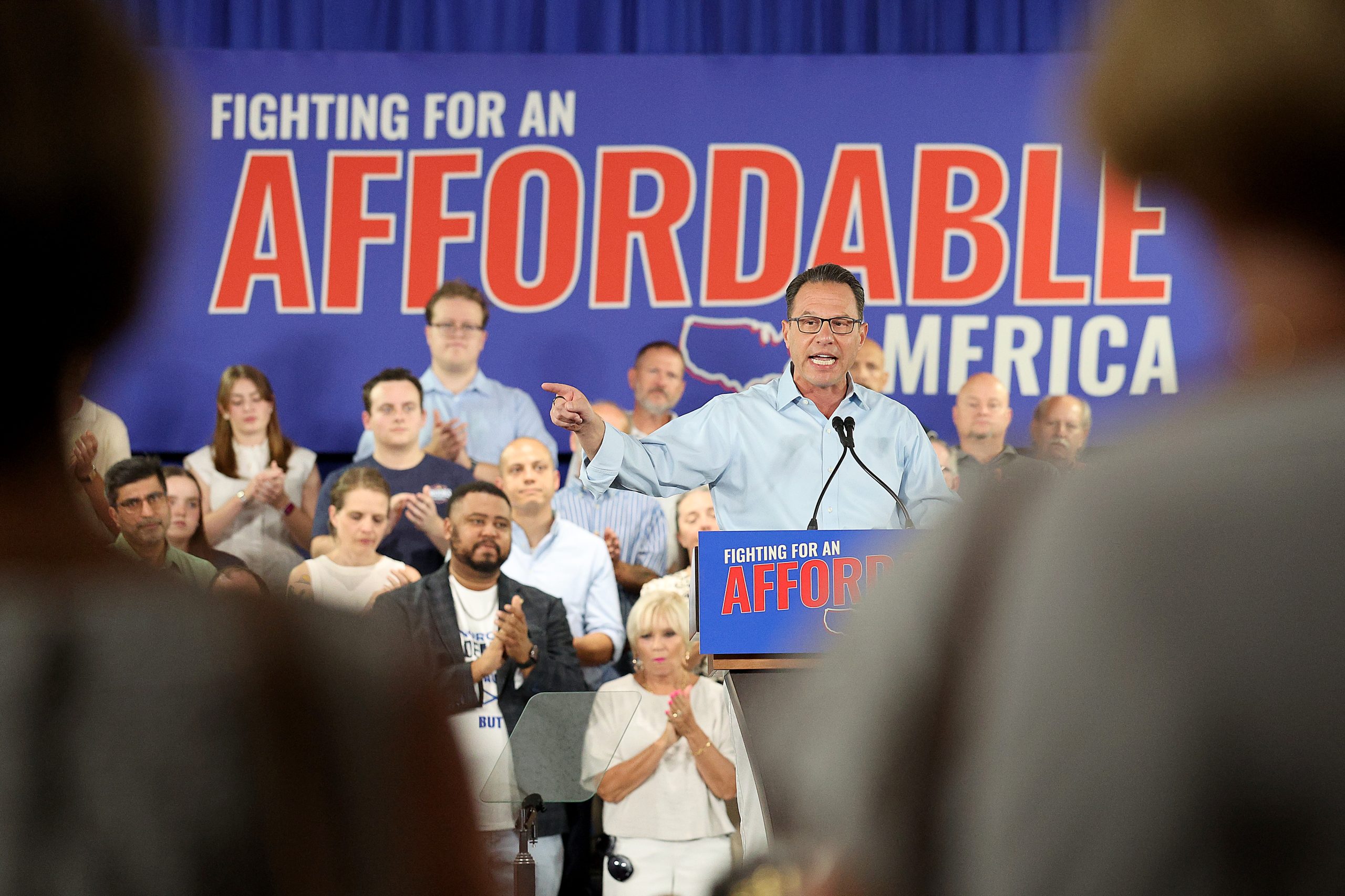
Pennsylvania Gov. Josh Shapiro addresses the audience during a rally for Democratic congressional candidate Bob Brooks at the United Steelworkers Union Hall in Bethlehem, Pa. on Sunday, July 26, 2026.David Maialetti / Staff Photographer
On the other side of the aisle, Pennsylvania’s top elected Republican — U.S. Sen. Dave McCormick — has endorsed Garrity but has not appeared to join in her public campaign efforts so far. A Trump ally and former hedge fund leader, McCormick has raised millions since his election in 2024, and political action committees associated with him have donated to other PACs working to elect Pennsylvania Republicans in Congress.
McCormick has hosted events and campaigned for Garrity, and he “will keep doing everything he can to help her win,” said Mike DeVanney, a spokesperson for the senator.
“He believes she demonstrates the kind of leadership we need and the kind that President Trump and many others have recognized as one that can move our commonwealth forward,” DeVanney said.
Gerow said McCormick undoubtedly could help Garrity down the stretch.
“He’s a prolific fundraiser. He has the connections, and he has the personality to raise large amounts of money. And he can be very, very helpful with the Garrity campaign if he weighs in with full weight,” Gerow said.
Garrity’s campaign said McCormick has been an “incredible supporter,” including with his earlyendorsement and connections to supporters.
Shapiro has also cultivated across-the-aisle relationships with some Pennsylvania Republicans who would be expected to promote Garrity.
In an April interview with Punchbowl News, U.S. Rep. Brian Fitzpatrick, a Bucks County Republican running for reelection in the nationally watched 1st Congressional District, said he thought Shapiro would win his reelection contest and should run for president, adding: “I think Josh is very, very smart.”
And during his 2022 run, Shapiro collected endorsements from other prominent Republicans, including Jim Schultz, a former Trump White House lawyer, and former Republican U.S. Rep. Charlie Dent.
The final stretch
Though the November election is less than three months away, that is still plenty of time in politics. Most ad spending does not start until September, and ground game efforts — door knocking, phone banking, and get-out-the-vote campaigns — get underway in the fall.
Winning Pennsylvania is a priority for Trump in the midterms, and Garrity’s campaign said she is “grateful” for his continued support.
On the state level, James Markley, a spokesperson for the Pennsylvania GOP, said the party is “fully invested” in helping Garrity beat Shapiro. Those efforts include training “thousands” of volunteers and working on education programs around early voting and casting mail-in ballots.
“The more Pennsylvania voters learn about Stacy Garrity, the more they love her,” he said in a statement. “The more Pennsylvania voters learn about Josh Shapiro, they realize he has no record to stand on.”
Gerow said Garrity’s challenge, with limited funds compared with Shapiro, is whether she has enough money to get her message out.
“The major concern for her immediately is to be able to tell her story,” Gerow said. “She doesn’t have the resources to tell that story effectively right now, and she has a great story.”
Buttons for State Treasurer Stacy Garrity and President Trump are left on a table following a VIP reception before a Garrity rally in Bucks County Thursday, Sept. 25, 2025. Tom Gralish / Staff Photographer
Throughout her campaign, Garrity has hammered Shapiro on several issues she said reveal his lack of transparency as a public official. She has held roundtable discussions blasting Shapiro for his early embrace of data centers, a position he has since distanced himself from after calling for new guidelines for their development. Her campaign released a video series online that questions his handling of criminal investigations. And she has repeatedly insisted that Shapiro, who is widely rumored to be running for president in 2028, is “more interested in Pennsylvania Avenue than helping Pennsylvania families.”
Samantha Reposa, a spokesperson for Shapiro’s campaign, disputed Garrity’s framing and emphasized that she has stood in lockstep with Trump on most of his positions.
“Garrity is now running to be nothing more than a rubber stamp for Trump and his agenda that’s hurting Pennsylvania families — and we will continue to hold her accountable,” Reposa said.
Given Garrity’s fundraising deficit, Chen said, he would advise her to focus on meeting individual people in the community, if he were running her campaign.
“Forget the GOP dinners. Start going to fairs. Start going to places that Republicans don’t show up. Start retail politics, and start introducing yourself to the state outside of Donald Trump, outside of modern Republicanism,” he said. “Tell the state what you’ve done for them and what you would do differently [as governor].”
Staff writer Joe Yerardi contributed to this article.
Since Israel and the United States bombed Iran’s nuclear facilities in June 2025, President Donald Trump has vacillated between war, sanctions, and diplomatic negotiations in order to thwart Iran’s nuclear capabilities. Trump opened his second term by signing National Security Presidential Memorandum 2, which imposed maximum pressure on Iran as multiple rounds of indirect talks continued. In February, the U.S. and Israel struck Iran again, this time killing Supreme Leader Ali Khamenei and targeting nuclear and military infrastructure.
No U.S. missiles over the decades had ever directly struck the Iranian mainland itself.
A ceasefire followed within days, but subsequent fighting and failed attempts at diplomacy have made it impossible to sustain.
It is unsurprising that the Trump administration is struggling to reach a deal on nuclear proliferation with Iran that matches the scope of the 2015 Joint Comprehensive Plan of Action (JCPOA), more commonly called the Iran nuclear deal. President Barack Obama’s negotiators secured not just Iran’s cooperation but also Russia’s, China’s, and Europe’s to effectively and broadly secure U.N. Security Council authorization and policy. In return for JCPOA-related sanctions relief, Iran reduced its enriched-uranium stockpile by 98%, capped enrichment at 3.67%, and accepted expanded atomic monitoring.
Over the past three and a half decades,American presidents have created a system to pressure Iran that works through relationships with everyone but Iran.
Sanctions let presidents extract cooperation, concessions, and leverage on a variety of issues from other nations and corporations in the process. War extracts nothing from anyone but Iran.
The system of selective pressure against Iran took shape during the 1990s. After the Cold War came to a close, the George H.W. Bush and Bill Clinton administrations worked with Congress to forge a range of options short of war for handling Iran. American sanctions traditionally traced a simple logic: punish whoever sold Tehran weapons and the means to build them.
The first measures focused on proliferation. In the aftermath of the Iran-Iraq War, Congress worried that Tehran was rebuilding its military by acquiring sophisticated weapons and dual-use technology abroad. The 1992 Iran-Iraq Arms Non-Proliferation Act, signed by President Bush, made it U.S. policy to oppose transfers that could contribute to Iranian acquisition of chemical, biological, or nuclear weapons.
This law continued a convention of giving Washington a way to penalize weapons transfers without going to war, but its limits soon became apparent. Weapons sanctions could harm suppliers after the transfer, but they did not necessarily deprive Tehran of the money to purchase the technology or expertise in the first place.
By 1996, Congress went after ordinary trade. Congress and President Clinton increasingly viewed Iran’s energy sector as the financial bedrock that allowed Tehran to fund the actions Washington sought to deter. Rather than solely punish whoever supplied Iran with weapons, Congress sought to limit the revenue and investment.
The Iran and Libya Sanctions Act (ILSA) threatened any foreign company with complete exclusion from American credit, export licenses, and government contracts if it invested more than $40 million in Iran’s oil and gas sector — regardless of whether the company did anything weapons-related.
For the first time, ordinary commerce with Iran became a foreign relations trigger with the United States. The leverage was not a naval blockade, but access to the American economy itself.
The Russian-American relationship led to the testing and development of these new mechanisms. Washington and Moscow had three main issues over Iran: nuclear reactor technology and training, a multibillion-dollar natural gas field, and missiles.
The two governments did not have identical agendas. Americans wanted to prevent Iran from acquiring nuclear weapon expertise and missile technology, while also maintaining its relationship with Russia. Russians wanted to preserve valuable commercial and strategic ties with Tehran, including nuclear and energy contracts, without sacrificing its relationship with the United States.
They both aligned on a functional U.S.-Russian relationship with some limits on proliferation, but differed sharply over how much Russian cooperation with Iran was acceptable.
Nuclear reactors, gas, and missiles all received different political treatments. Classic diplomatic negotiations led to Russian President Boris Yeltsin agreeing to remove the uranium enrichment feature from Russia’s contract, even though the Bushehr reactor’s sale was legal under international law. As a light-water plant under International Atomic Energy Agency safeguards, it fell under the long-standing international nonproliferation treaty, leaving the United States unable to block the sale but still able to negotiate parts.
When Russia’s state-owned natural gas company Gazprom, alongside other international companies, sought a contract to develop the South Pars gas field, the largest natural gas field in the world, it put ILSA to its first real test. The $2 billion project involved several state-owned energy companies: France’s Total, Russia’s Gazprom, and Malaysia’s Petronas.
In response, Clinton issued a waiver for the international gas companies investing in Iranian energy. The administration pointed specifically to increased cooperation from the European Union on counterterrorism and nonproliferation to issue the waiver.
While the United States never formally used ILSA to sanction a company during this period, the atmosphere could then help the Clinton administration to negotiate with Russia on missile concessions.
Deputy Secretary of State Strobe Talbott captured the strategy in a sentence: “In a sense we are linking the two [missiles and energy], and in another sense we are not.” The vagueness was deliberate and useful for the differences in agendas on both sides.
Talbott pressed Russian Foreign Minister Yevgeny Primakov to blacklist Sanam, the Iranian missile entity attempting to acquire the technology, and the Russians did. Russia enacted new laws to pursue weapons and nuclear proliferation crimes, while increasing arrests and coordination between the FBI and Russia’s Federal Security Service. Clinton’s veto and the related tools gave American negotiators something to offer and Russia something to gain.
These policies helped the American-Russian relationship endure. Every waiver, every delay, every selectively enforced sanction since 1992 had been less a negotiation with Iran than a negotiation with someone else about Iran.
Waiving petroleum sanctions became the unspoken rule for the next 12 years. Until 2010, no American administration ever sanctioned a foreign company for investing in Iran’s energy sector.
The ILSA was renamed the Iran Sanctions Act (ISA) and expanded under the Comprehensive Iran Sanctions, Accountability, and Divestment Act in 2010 (CISADA); the Iran Freedom and Counter-Proliferation Act of 2012 (IFCA) toughened the consequences even more. These later acts added stricter enforcement measures and sanctioned major non-Western oil providers from China, Belarus, and Venezuela, while a special rule exempted allied companies in exchange for promises to halt investments.
By 2015, Washington could bargain with a sanctions system far broader than the ILSA. The JCPOA, or the Iran nuclear deal, either waived portions or removed designated Iranian institutions from the ISA, CISADA, and IFCA. The relief was substantial and conditional: Foreign firms and nations could again partake in specified oil, banking, shipping, and investment transactions with Iran while the underlying American statutes remained available if the bargain collapsed.
Made By History sponsorsInquirer Staff
Meanwhile, sanctions tied to terrorism, human rights abuses, and ballistic missiles continued.
Discretion applied to war, as well. Bush considered strikes and held back for more nuclear enrichment proof. Obama rejected the military option as a matter of philosophy by arguing that war would buy less than diplomacy and cost the international coalition to enforce sanctions. Trump himself, in his first term, ordered a strike and called it off 10 minutes before execution, and Joe Biden sought to de-escalate. These four administrations had varying rationales and scenarios, but all were aligned in keeping force as a reserve option.
In his second term, Trump had access to the same policy options, including specific sanctions on industry sectors, supply-chain options laws, and relational pressure.
The lesson? A mix of pressure and exemption — not blanket coercion — worked. It allowed American presidents to lean hard on some part of a foreign nation’s relationship with Iran while tolerating others. Even the JCPOA, for all the criticism it drew, followed this strategy: it converted decades of accumulated third-party pressure into a deal. War trades a system built on the compliance of others for a strike that compels nothing from anyone but Iran itself.
Holly Harris is a doctoral candidate in history at Southern Methodist University, where she studies the collapse of the post-Cold War security relationship between the United States and Russia.
Made By History takes readers beyond the headlines with articles written and edited by professional historians. Opinions expressed do not necessarily reflect the views of The Inquirer.
The Democratic field for president is still wide open and unsettled. The very early list includes former presidential candidates, governors, senators, House members and celebrities. While no one on this list has officially declared, some candidates have been more open than others about wanting to run.
Ahead of November’s midterm elections, the field is starting to take shape as a major debate roils the party: Is the surging progressive movement helping or hurting Democrats’ chances to take back the White House in two years?
Some Democrats argue it’s time to embrace bold, progressive policies to boost their party’s popularity among working-class voters. Others think centrists will stand out.
“I think Democratic voters are going to get incredibly pragmatic when it comes to 2028,” said John Anzalone, who served as the chief pollster for President Joe Biden’s winning 2020 campaign.
Here’s how the field is shaping up. (This is our fourth ranking so far. Our most recent ranking of potential Republican candidates is here.)
The standouts
Jon Ossoff, Wes Moore, Raphael Warnock and other newish names: The Democratic base seems hungry for new leaders right now. Ossoff, the 39-year-old Democratic senator from Georgia, is fitting that bill in a big way. He’s getting millions of views for his sharp social media posts and campaign speeches that mercilessly criticize President Donald Trump.
“This is the cruelest and most arrogant group of people who have ever ascended to high office in modern American history,” Ossoff told supporters in July.
He is running for reelection in Georgia, and his race will be one of the most competitive in the country.
Other Democrats point to Ossoff’s fellow senator from Georgia, Raphael Warnock, as a potentially strong contender. (Warnock is not up for election in November.)
“For the first time since Obama, there’d be a candidate that unites the progressive Democratic lane and Black voters,” Texas-based Democratic pollster Nancy Zdunkewicz said.
Moore, the first-term Maryland governor and only sitting Black governor, is described by some Democrats as young and vibrant.
“Ossoff is currently on fire,” Anzalone said, “and Moore is also the type of guy who could really catch fire.”
Kamala Harris: This summer, Democrats recommended South Carolina vote first in the 2028 Democratic nominating process. That boosts Black voters’ representation in picking the nominee and Harris’s fortunes, given the former vice president and 2024 nominee is probably the candidate on this list with the most support among Black women. She’s been rallying voters for the midterm elections by touting her “controversial” plan to abolish the electoral college and add justices to the Supreme Court. “They are ruthless! We need to be ruthless too,” she said recently of Republicans. Some Democratic insiders don’t see her as a viable candidate, given she lost to Trump.
Gavin Newsom: The other California Democrat on this list aside from Harris has used his position as governor of the largest Democratic-run state to consistently oppose Trump. This summer he announced he and his wife were under federal investigation. (The Post has reported prosecutors are looking into potential tax crimes related to a nonprofit Newsom’s wife is linked to.) Newsom framed it as a compliment: “He’s coming after me because I’m considering running for president,” Newsom said of Trump.
Josh Shapiro: The popular Pennsylvania governor has had a relatively low-profile summer compared to other candidates on this list. He appeared in a music video. He has declined to take sides on the progressive-versus-centrist split in the party (at least for now). His breakout moment may be coming. He’s up for reelection in November and is trying to help Democrats take back control of the House by helping his party win four of the most competitive races in the nation, all in his state.
Alexandria Ocasio-Cortez: Democratic socialists are having their own moment. After helping elect New York City’s mayor earlier this year, they and the broader progressive movement ousted longtime members of Congress in deep blue cities and won a hard-fought primary in Michigan. Ocasio-Cortez, a congresswoman from New York, was one of the first members of the Democratic Socialists of America to win federal office, and she’s an obvious pick for the broader progressive movement to get behind if she runs for president. She hasn’t ruled it out, though she could also run for Senate.
Mark Kelly: The senator from Arizona has emerged as a forceful pushback against his party’s turn to the left. He’s also a candidate some Republicans say scare them: He’s a former astronaut (at a time when astronauts are cool again) and an astronomical fundraiser from a swing state.
Pete Buttigieg: President Joe Biden’s transportation secretary is cited by Democrats as one of the party’s best messengers and another young candidate who can catch fire. Despite not currently holding office, he’s near the top of several polls of Democratic primary voters.
The middle of the pack
Any other number of governors: JB Pritzker, the billionaire governor of Illinois, has urged his party to focus more on economic issues than Trump: “You don’t win elections talking to the public about democracy,” he said.
Kentucky’s Democratic governor Andy Beshear has been pitching himself as someone who can turn rural America against Trump. When Sen. Mitch McConnell (R-Kentucky) was hospitalized for weeks without many updates, Beshear demanded McConnell prove his “capacity to serve” or resign his seat.
Jared Polis is on his final year as governor of Colorado. He’s a wealthy businessman who has received some credit for turning a reddish state more blue. He recently shocked his party by commuting the prison sentence of former election official Tina Peters, who was convicted on charges tied to Trump’s efforts to stay in power after losing the 2020 presidential election.
No longer on our list is Gretchen Whitmer. This year marks her final term as governor of Michigan, and she’s repeatedly indicated she’s not interested in running.
Any other number of U.S. senators: Sen. Cory Booker of New Jersey is a fiery presence in the Senate. Last year he broke the Senate record for the longest individual floor speech. This month, in a committee hearing he declared Republicans’ food stamp cuts as “effing ridiculous.”
Sen. Elissa Slotkin of Michigan, one of the few women on this list, served combat tours as a CIA analyst and represents a swing state. She’s crisscrossing the Midwest to connect with voters. The centrist could play an interesting role in trying to help left-wing Democrat Abdul El-Sayed win the state’s other Senate seat in November.
Sen. Chris Murphy of Connecticut has been a prominent Democratic voice on foreign policy for many years. Like many candidates on this list, he’s been critical of Israel’s violence in the Gaza Strip. He also made headlines recently saying he’d support a “bad deal” with Iran to end the war.
“There’s only a couple of Democrats that are thinking of running for president that have won red states,” Sen. Ruben Gallego of Arizona said recently. “I’m one of them. There’s only a couple of Democrats that can speak to working-class America, especially Latino men. I’m one of them.”
Rahm Emanuel: The former Chicago mayor was previously President Barack Obama’s chief of staff. Emanuel is leaning hard on policy. He outlined a proposal for Israeli-Arab peace while traveling to Israel last month. Back home, he’s proposed a national social media ban for children, a mandatory retirement age for federal politicians and judges, and bringing back accountability systems for teachers.
Ro Khanna: The congressman from California has the eye of some progressives for being one of the first voices in the House to speak out against Israel’s military action in Gaza, for playing a leading role in bringing the Justice Department’s Jeffrey Epstein files to light, and for being willing to regularly go on Fox News.
The dark horses
A celebrity or other political figure: ESPN commentator Stephen A. Smith is considering a run as a centrist. United Auto Workers president Shawn Fain is popping up as a possibility among some on the left.
Democrats I’ve talked to say to leave room for surprise candidates. “There may be someone running we’ve never thought of,” Anzalone said.